
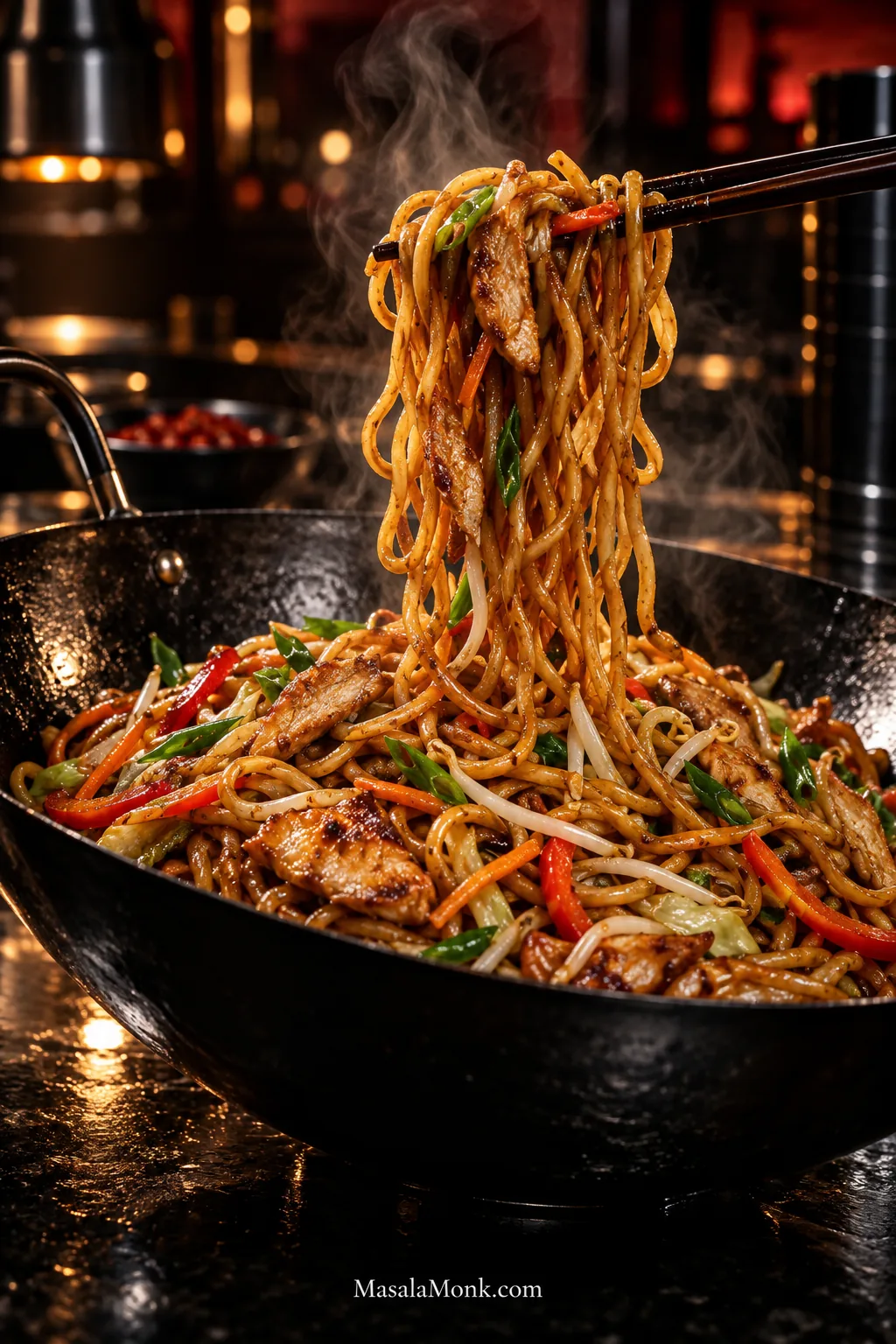
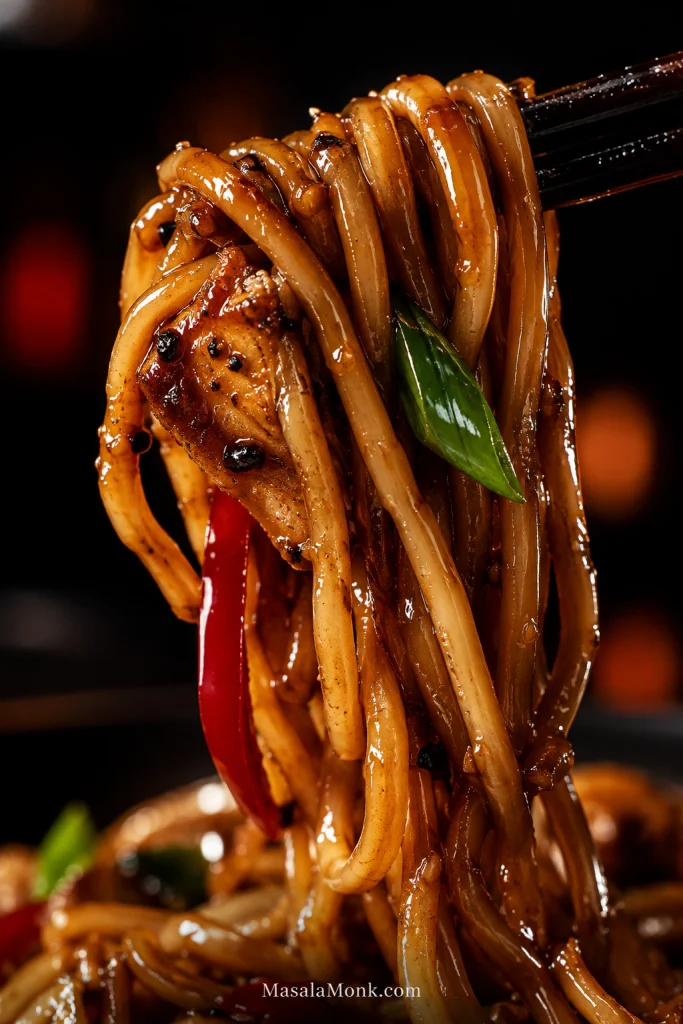
Lift a tangle of chicken lo mein from the bowl and the strands should separate as they rise, carrying their brown sauce with them instead of dragging up one sticky mass. The noodles bend easily but still push back when you bite, the chicken stays tender, and the vegetables keep enough snap to break up all that soft, slippery noodle texture.
Homemade lo mein can miss that mark in several directions at once. Noodles cooked until completely tender can soften too far during the final toss. Adding regular soy sauce just to make the pan darker can leave dinner overwhelmingly salty. Wet noodles and an overcrowded skillet cool everything down just when the sauce should be tightening around the strands.
This version takes about 30–35 minutes and gives you the saucier Chinese-American takeout-style lo mein many people are trying to recreate at home. A wide skillet works; you do not need a restaurant wok burner. What matters most is the state of the noodles you bought, how much water reaches the pan, and how much sauce you want those strands to carry.
Before You Start
Stop the noodles while they still have some chew, drain them exceptionally well, and do not create a saucier bowl by pouring in extra soy. Those three decisions matter more than owning a wok.
The chicken’s 10–15 minute marinade happens while you cut the vegetables and get the noodle water ready, so it does not add another quarter-hour to dinner. Fresh and dried noodles are not a gram-for-gram swap; the recipe gives separate quantities for each.
Table of Contents
Chicken Lo Mein Recipe
The ingredient list looks longer than the actual cooking. Most of it gets mixed or chopped before the skillet is hot; once cooking starts, you are mostly adding prepared things in order.
The base recipe lands in the takeout-saucy middle of the range. Cook it this way the first time. The variations farther down are for anyone who already knows they prefer the noodles more lightly coated or noticeably wetter.
Easy Chicken Lo Mein
Equipment
- Wide skillet or wok
- Pot and colander for the noodles
- Tongs, chopsticks or two spatulas
For the Chicken
- 12 oz / 340 g boneless skinless chicken breast or thighs
- 2 teaspoons / 10 ml low-sodium soy sauce
- 1 tablespoon / 15 ml Shaoxing wine or dry sherry
- 2 teaspoons / about 5 g cornstarch
- 1 tablespoon / 15 ml water
- 1 teaspoon / 5 ml neutral cooking oil
- ¼ teaspoon ground white pepper
For the Lo Mein Sauce
- 2 tablespoons / 30 ml low-sodium soy sauce
- 2 teaspoons / 10 ml dark soy sauce
- 2 tablespoons / 30 ml oyster sauce
- 2 tablespoons / 30 ml Shaoxing wine or dry sherry
- ¼ cup / 60 ml unsalted or low-sodium chicken stock or water
- 2 teaspoons / about 8 g sugar
- 1½ teaspoons / about 4 g cornstarch
- 1 teaspoon / 5 ml toasted sesame oil
- ¼ teaspoon ground white pepper
- ¼ teaspoon MSG, optional
For the Noodles and Vegetables
- 12 oz / 340 g fresh Chinese lo mein or egg noodles or 7 oz / 200 g dried Chinese wheat or egg noodles
- 2 tablespoons / 30 ml neutral high-heat cooking oil, divided, plus another teaspoon only if needed
- 2 cups / about 140 g thinly shredded green or napa cabbage
- 1 medium carrot, about 3½ oz / 100 g, cut into fine matchsticks
- 1 medium bell pepper, about 5 oz / 140–150 g, thinly sliced
- 1 cup / about 3½ oz / 100 g bean sprouts
- 3 scallions, sliced, white and green parts separated
- 3 garlic cloves, about 9 g, finely chopped
- 2 teaspoons / about 4 g finely grated or minced fresh ginger
Set yourself up before the skillet gets hot. Mix the sauce, start the chicken marinating and cut the vegetables first. Prepare and drain the noodles as your final prep job so they spend as little time as possible sitting around warm.
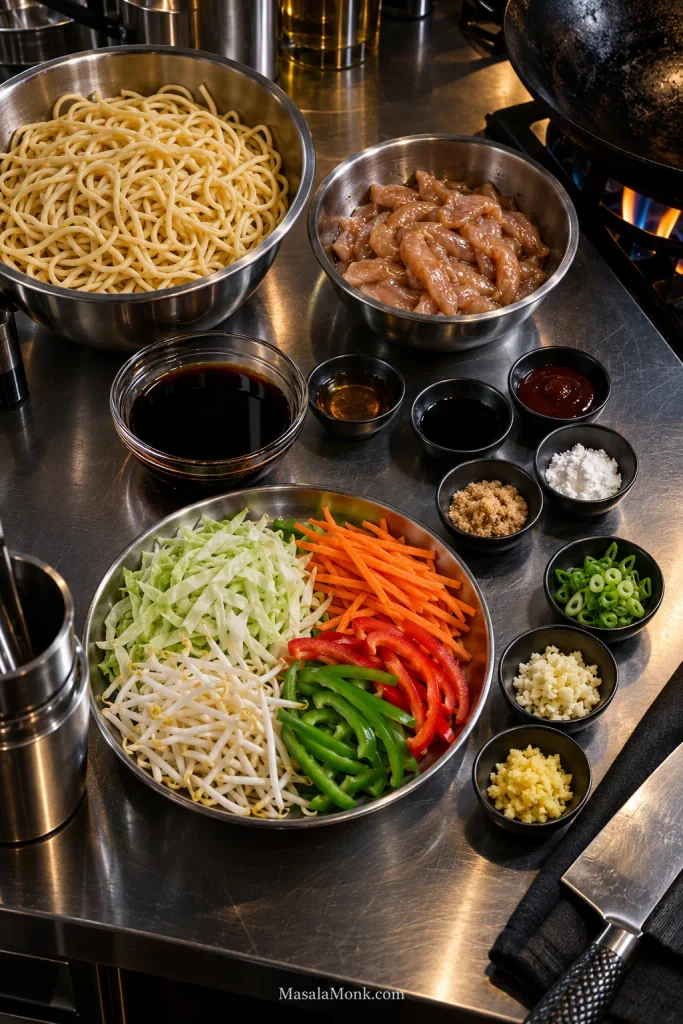
How to Make Chicken Lo Mein
1. Mix the Sauce
Whisk together all of the sauce ingredients. Stir again just before using because the cornstarch settles as it sits.
2. Marinate the Chicken
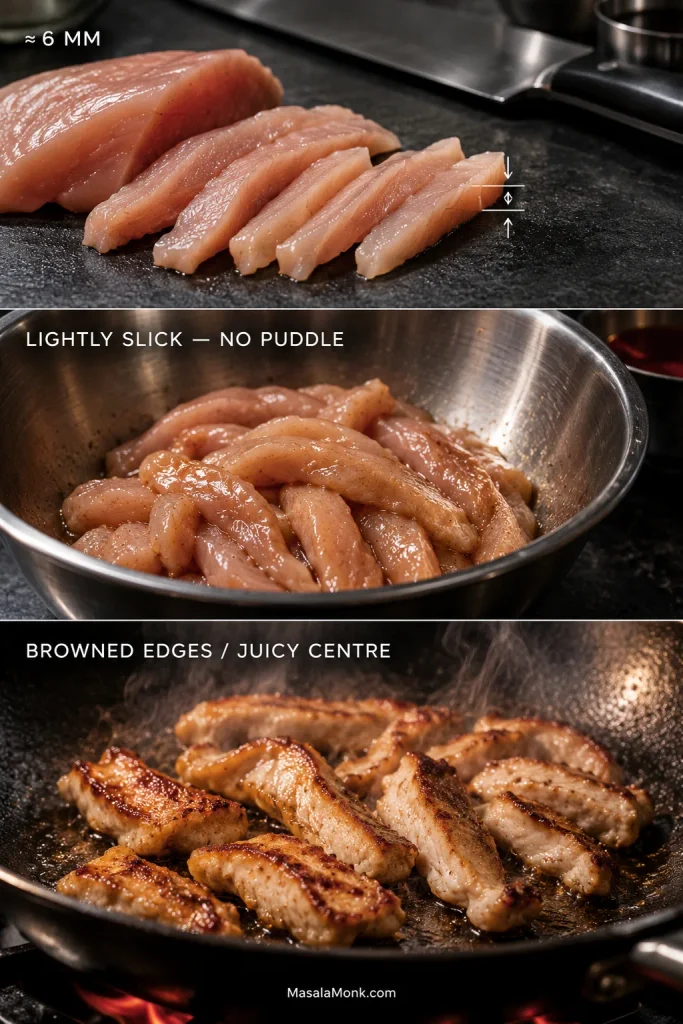
Slice the chicken across the grain about ¼ inch / 6 mm thick. Mix with the soy sauce, Shaoxing wine, cornstarch, water, oil and white pepper. Stir until the pieces look lightly slick and there is no puddle of thin marinade. Rest 10–15 minutes while you prepare the vegetables.
3. Prepare the Vegetables
Shred the cabbage, cut the carrot into fine matchsticks and slice the bell pepper. Keep the bean sprouts and scallion greens aside for the end.
4. Prepare the Noodles Last
Cook dried noodles until just shy of tender. Raw fresh noodles usually need much less time; already cooked or oily noodles may need only loosening or a brief hot-water treatment.
Floury fresh noodles often arrive pressed into a stubborn block. Loosen the bundle gently before boiling, then tease the strands apart as soon as they hit the water.
Drain extremely well and keep the strands loose in the colander. They should be a little firmer than you ultimately want. Move on to the skillet without leaving them packed together while warm.
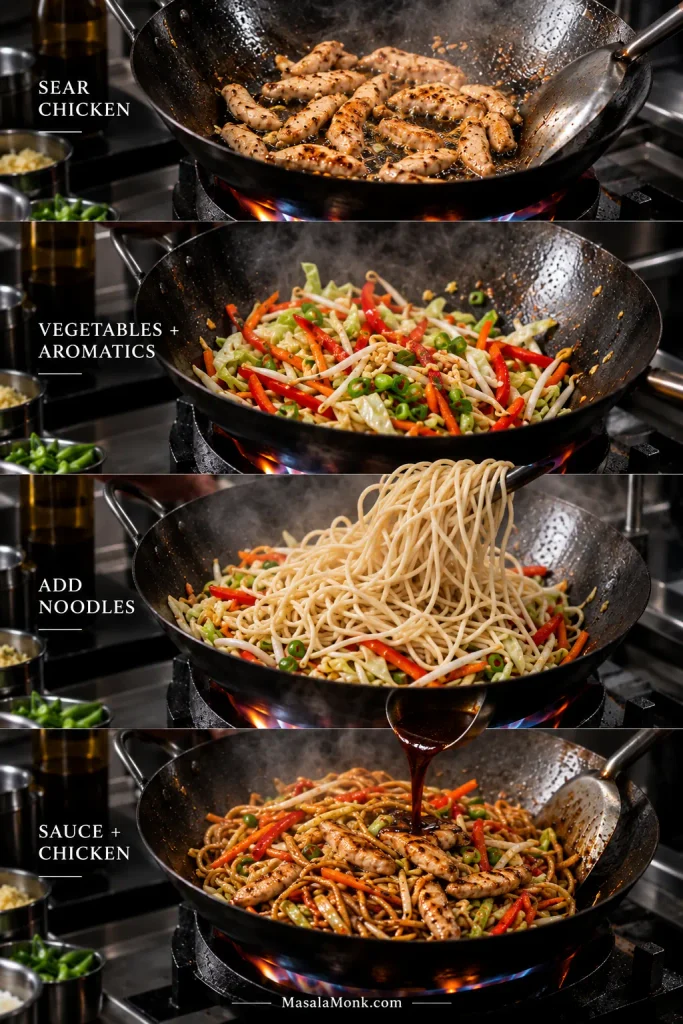
5. Sear the Chicken
Heat the skillet or wok over medium-high to high heat. Add 1 tablespoon / 15 ml oil. When it shimmers, add the chicken in a loose layer. Let it sit about 30 seconds, then stir-fry another 1½–2 minutes, until mostly opaque with some browning at the edges.
Transfer to a clean plate. Heavy overlap means two quick batches.
6. Cook the Vegetables and Aromatics
Add the remaining tablespoon / 15 ml oil, carrot, bell pepper and cabbage. Stir-fry about 2 minutes. The cabbage should begin to soften while the pepper stays bright and the carrot keeps some bite.
Add the scallion whites, garlic and ginger. Twenty or thirty seconds is enough. The aroma should sharpen almost immediately.
Visible water in the pan needs another moment to cook away.
7. Add the Noodles
Add the drained noodles and toss for about 30 seconds. Lift and turn them so the strands start slipping past one another instead of sitting in one dense mound.
8. Add the Sauce and Return the Chicken
Stir the sauce again, pour it into the pan, and return the chicken. Toss for 1–2 minutes. The noodles should deepen in color and the thin liquid should turn into a coating that moves with the strands.
9. Finish With Bean Sprouts and Scallion Greens
Add the bean sprouts and scallion greens and toss for 30–60 seconds, until heated through while the sprouts retain some crunch. Chicken should reach at least 165°F / 74°C; see the USDA safe minimum temperature chart for food-safety guidance.
Bean sprout safety: for anyone at higher risk of serious foodborne illness, cook the sprouts thoroughly until steaming hot or leave them out instead of serving them lightly cooked.
10. Taste, Then Stop When the Sauce Coats
Taste a noodle before changing anything. Flat flavor needs a little more seasoning; start with low-sodium soy a teaspoon at a time. A sauce that tastes good but feels too concentrated needs liquid instead—add 1 tablespoon / 15 ml stock or water.
Lift a few strands. They should separate easily and still push back a little when you bite. Drag a spatula through the bottom of the pan: a little sauce may slowly creep back into the gap, but watery liquid should not flood it.
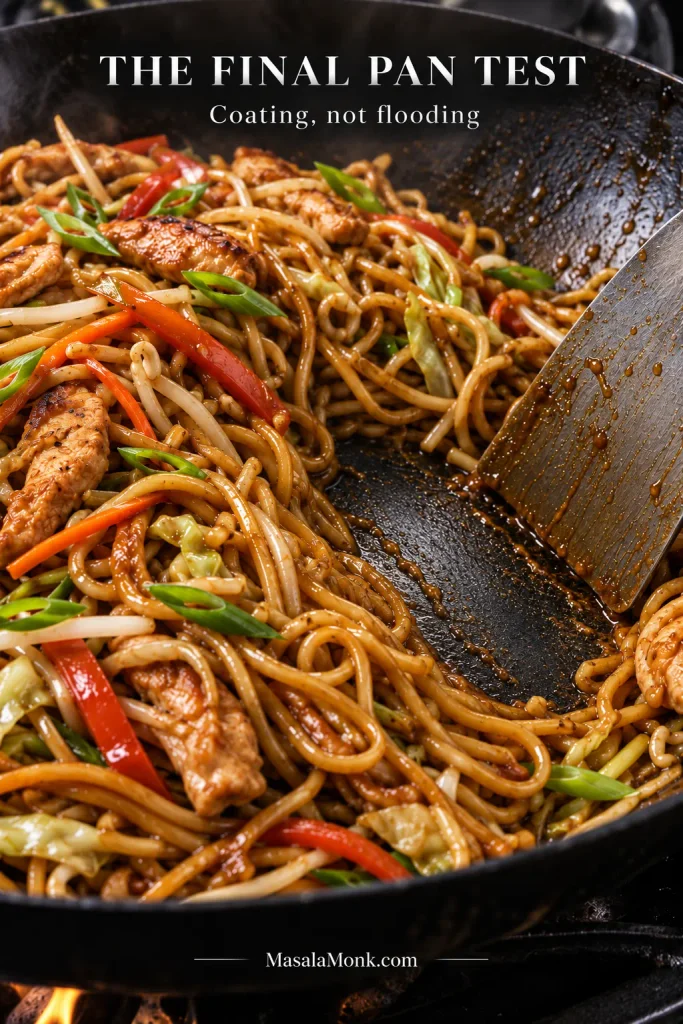
That’s the finish you’re looking for.
Serve immediately.
Doubling the recipe? Cook two batches unless you have an unusually large pan and powerful burner. A skillet can physically hold all the food and still be too crowded to cook it well.
Chicken Lo Mein or Chicken Chow Mein?
Chicken lo mein is tossed with sauce; chicken chow mein gets more direct frying.
In the Chinese-American takeout context we’re using here, lo mein starts with cooked or softened wheat or egg noodles that are tossed with chicken, vegetables and sauce. The strands stay springy, slippery and sauce-forward.
Chow mein generally gives the noodles more contact with the hot pan, producing a drier, toastier texture that can turn crisp around the edges. The terminology varies across regions and traditions, but that practical difference is useful when deciding which bowl you actually want.
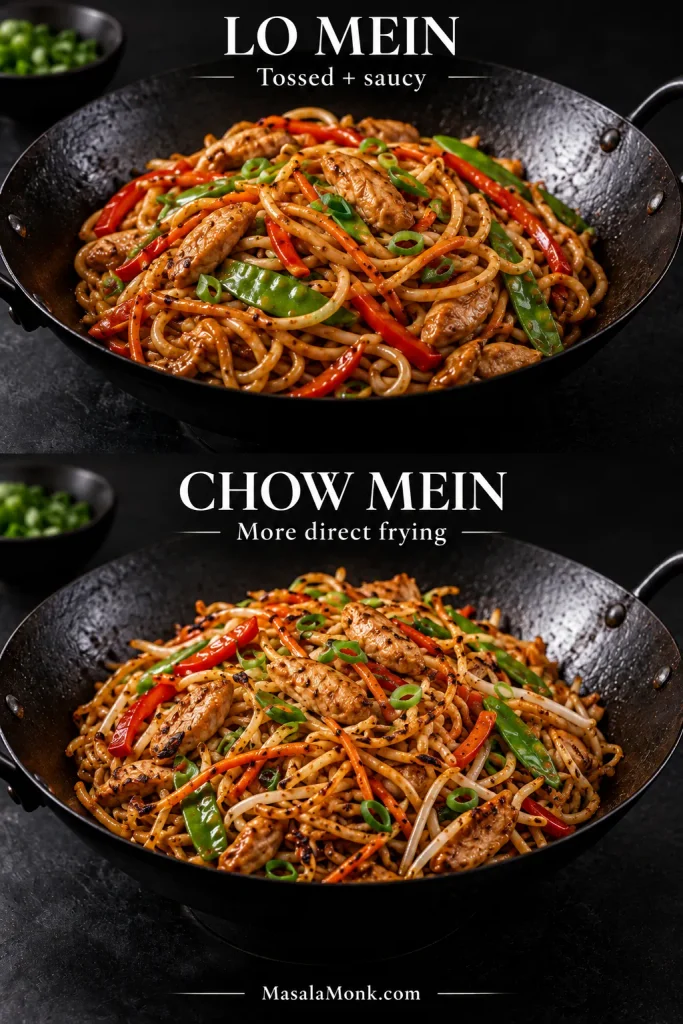
For the fried, toastier version, use the Chicken Chow Mein Recipe.
Which Noodles Should You Use for Chicken Lo Mein?
Fresh Chinese wheat or egg noodles are the best fit for takeout-style chicken lo mein. Look for them in the refrigerated or freezer section of an Asian grocery. Dried Chinese wheat or egg noodles are the easiest shelf-stable substitute and work very well.
Noodle packages are frustratingly inconsistent. Some tell you exactly what you’ve bought; others barely tell you whether the noodles are raw.
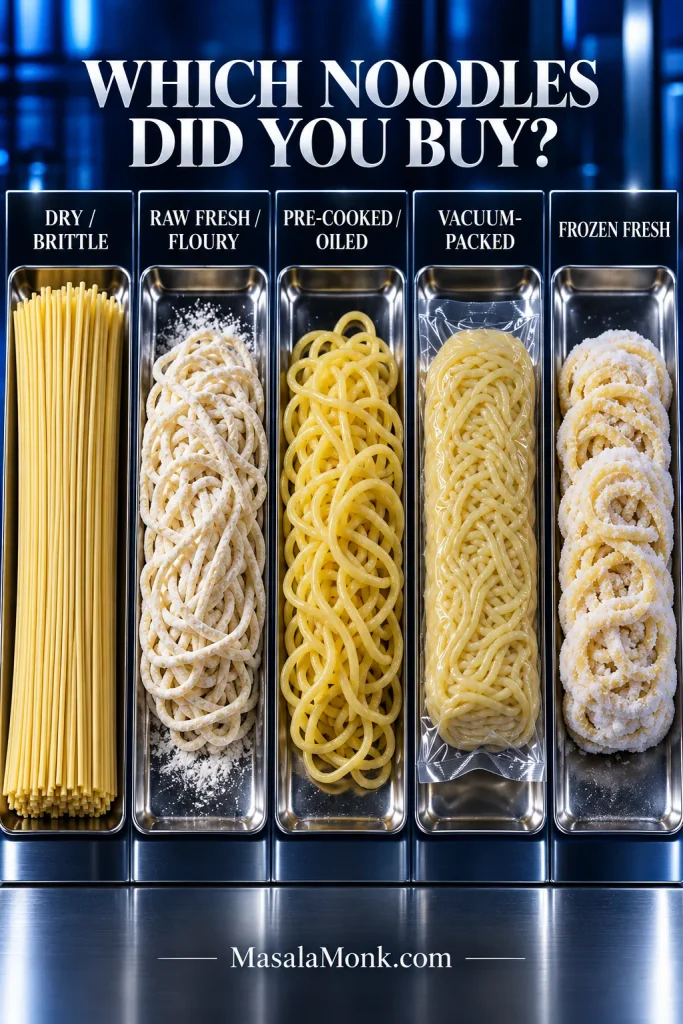
| What you see | What you probably have | Best way to handle it |
|---|---|---|
| Dry, brittle strands | Dried Chinese wheat or egg noodles | Boil until just shy of fully tender |
| Soft but dusty or floury | Raw fresh noodles | Loosen first; cook briefly and check early |
| Soft, shiny or lightly oily | Pre-cooked or oil noodles | Usually need loosening or a short hot-water treatment |
| Compressed vacuum-packed noodles | Partially cooked shelf-stable noodles | Follow the package and separate gently |
| Frozen noodle bundle | Frozen fresh noodles | Use the package directions instead of dried-noodle timing |
Raw fresh noodles deserve the most attention. A floury, compressed bundle can move from pleasantly chewy to doughy very quickly, so loosen it first and start checking early.
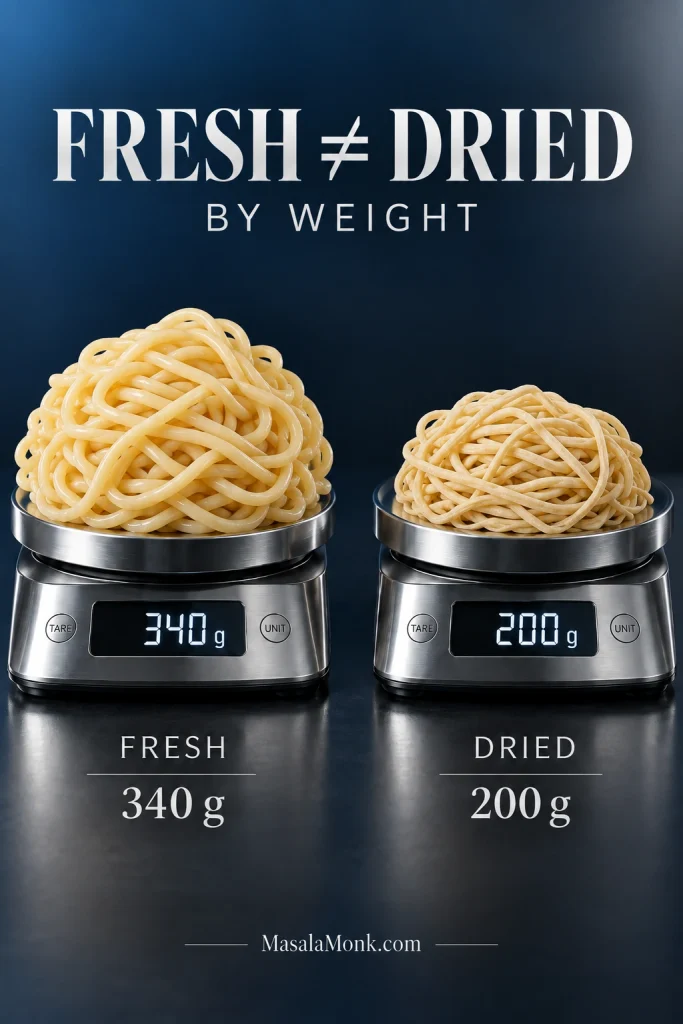
Fresh and Dried Noodles Are Not a Gram-for-Gram Swap
Fresh noodles already contain much more water. For this recipe, use about 12 oz / 340 g fresh noodles or 7 oz / 200 g dried noodles. Using the same dry weight as fresh would produce far more cooked noodle than this sauce and pan are designed to handle.
Thin or Thick Lo Mein Noodles?
There is no single correct width. Medium Chinese wheat or egg noodles are an easy takeout-style choice. Thin strands soften quickly; thicker noodles need longer and can carry a little more sauce.
Cook the noodle in front of you.
No Lo Mein Noodles? Use What You Can Find
| Noodle | How well it works | What to expect |
|---|---|---|
| Fresh Chinese wheat or egg noodles | Best fit | Springy, chewy and closest to familiar takeout texture |
| Dried Chinese wheat or egg noodles | Excellent | Firm, dependable and easy to store |
| Yakisoba or Hokkien-style noodles | Very good | Convenient; check whether they are already cooked |
| Ramen | Good | Usually thinner and springier; discard the seasoning packet |
| Spaghetti or linguine | Useful supermarket fallback | Different chew but still makes a satisfying lo mein-style dinner |
| Rice noodles | Possible | The sauce works, but the finished texture is distinctly different |
Spaghetti is a perfectly sensible supermarket fallback when that’s what you can actually buy. The chew is different, but cooking it firm and finishing it in the skillet gets you much closer than abandoning dinner because the specialty noodles aren’t there.
For another noodle dinner built around flexibility, Peanut Noodles can work with spaghetti, ramen, udon and several other noodles.
What the Noodles Should Feel Like Before the Skillet
Forget another universal minute count. Bite one strand.
Too firm: the middle still feels chalky or distinctly raw.
Ready: the noodle bends easily and is already edible, but the center has some chew left. Drain it here.
Too soft: there is almost no resistance left before the noodle even reaches the skillet.
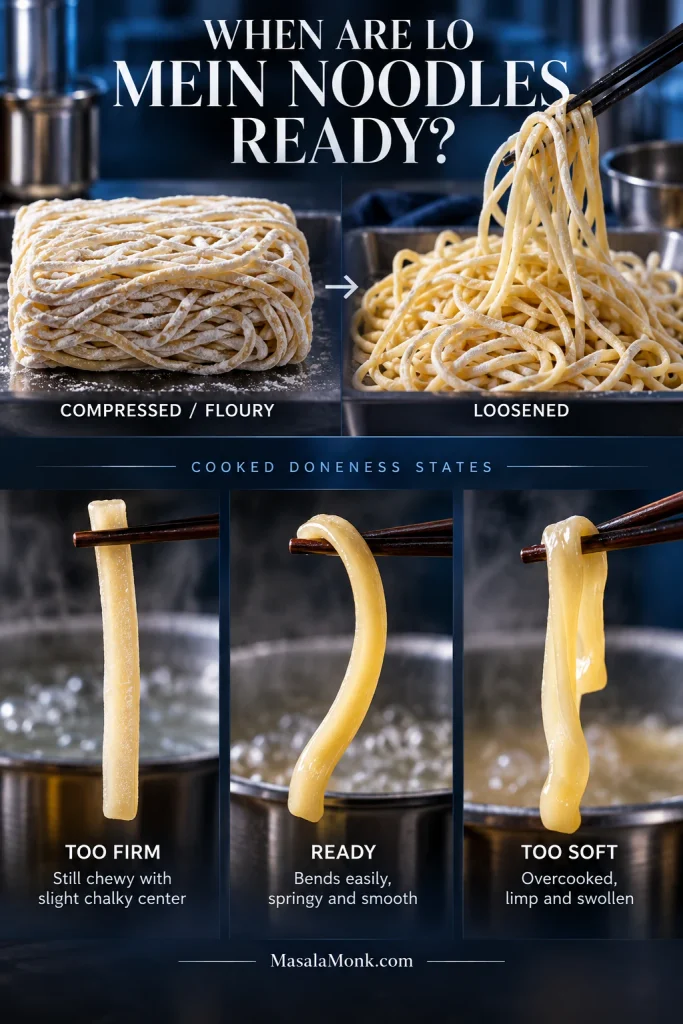
Shake the colander firmly. Water dripping freely from the noodles is water that would otherwise land in the skillet and thin the sauce.
Chicken Lo Mein Sauce: How Saucy Do You Want It?
Chicken lo mein sauce is a savory brown sauce built from soy sauce, oyster sauce, Shaoxing wine, stock and sesame oil; dark soy deepens the color while cornstarch helps the sauce stay on the noodles.
Some people want the noodles lightly coated with almost nothing underneath. Others want the last forkful dragging a little sauce up from the bottom of the bowl.
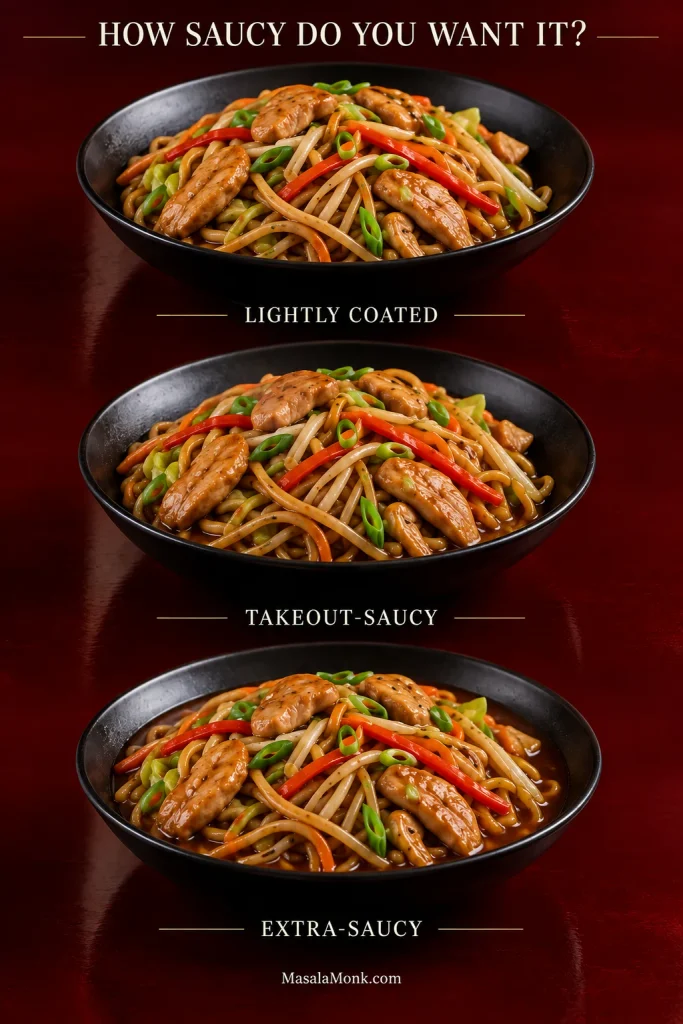
| Style | What it looks like | Adjustment |
|---|---|---|
| Lightly Coated | Every strand coated; almost no loose sauce | Use 2 tbsp / 30 ml stock instead of ¼ cup / 60 ml and reduce sauce cornstarch to 1 tsp |
| Takeout-Saucy | Generous coating with a little sauce moving between the noodles | Use the recipe exactly as written |
| Extra-Saucy | Noticeably wetter but still clearly a noodle dish | Add the extra-sauce mixture below |
For Extra-Saucy Lo Mein
- ¼ cup / 60 ml additional unsalted or low-sodium chicken stock or water
- 1 tablespoon / 15 ml additional oyster sauce
- 1 teaspoon / 5 ml additional low-sodium soy sauce
- ½ teaspoon / about 1.5 g additional cornstarch
This gives you more sauce without simply doubling the concentrated seasonings. A loose-looking pan often needs another 20–30 seconds of heat before it needs more starch.
What Actually Changes the Sauce
Stock is the easiest lever for sauce volume: more makes the noodles wetter, less gives you a tighter coating. Cornstarch controls how readily that liquid clings once it gets hot. Toasted sesame oil is there for fragrance, so adding more will not make the sauce richer in the same way that oyster sauce or stock will.
Hoisin isn’t required in this version. Some takeout-style recipes use it for extra sweetness and body. Oyster sauce plus a little sugar keeps this one more savory.
For other combinations of meat, tofu and vegetables, the Stir Fry Sauce Recipe goes further into adjusting sauce around whatever is actually in the pan.
Keep the Salt and Color in Balance
Don’t sacrifice a properly seasoned bowl just to make it browner. A small amount of dark soy gives the noodles much deeper color, so regular soy does not need to carry that job.
Light soy does not mean low-sodium soy. In Chinese cooking, “light soy sauce” generally distinguishes the thinner everyday seasoning soy from dark soy; it does not mean reduced sodium. A full-sodium Chinese light soy may need a smaller starting quantity than the low-sodium soy used here. This guide to Chinese soy sauces is useful when the labels in the store are confusing.
Shaoxing cooking wine deserves a label check too because some bottles contain added salt. Leave the noodle water unsalted or only very lightly salted; plenty of seasoning arrives later.
About MSG: the ¼ teaspoon in the recipe is optional. A small amount can deepen the savory flavor without requiring another splash of soy sauce.
Keep the Chicken Tender While the Noodles Finish
Thin slicing, a short cornstarch marinade and removing the chicken before the final toss keep lo mein chicken tender. Slice it about ¼ inch / 6 mm thick, marinate for 10–15 minutes, then sear it quickly and take it out before it finishes cooking.
Thighs stay juicy a little longer when the timing runs over. Breast works beautifully too; it simply has less patience for an extra few minutes in the skillet.
Look for browned edges while the center is still juicy. The chicken comes back with the sauce, so the first sear is not the moment to chase complete doneness.
The same broad technique works in Chicken Fried Rice, where the chicken also leaves the pan while the rest of dinner catches up.
Baking soda isn’t necessary here. Carefully measured baking soda can tenderize meat, but excess leaves an alkaline or soapy taste. Thin slicing and the short cornstarch marinade are more forgiving.
Best Vegetables for Chicken Lo Mein: Add Them by Cooking Speed
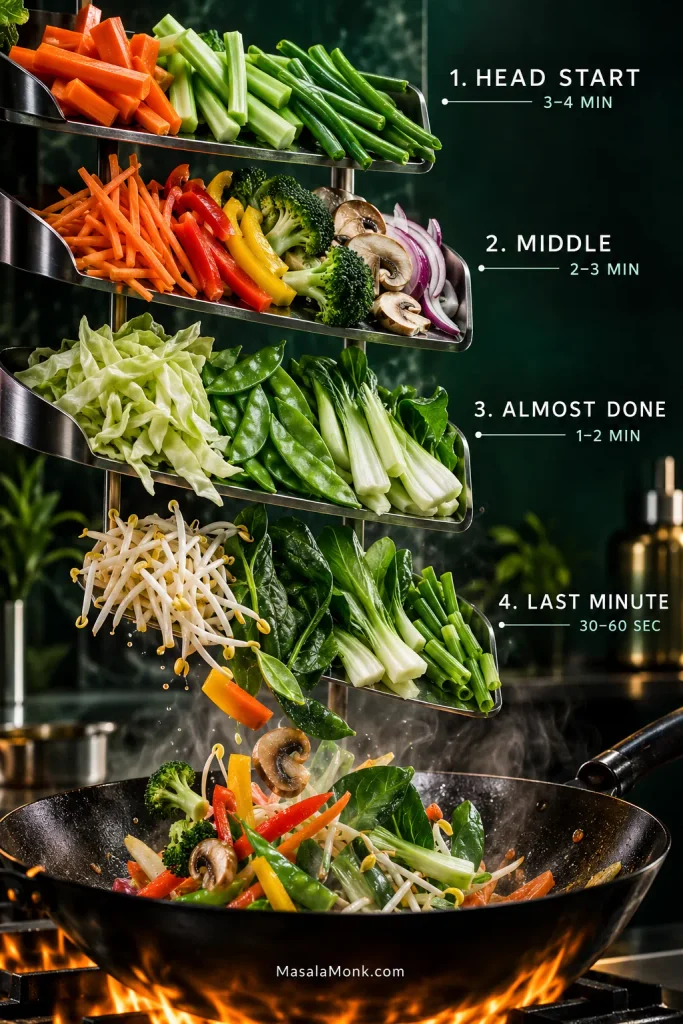
Cabbage, carrot, bell pepper and bean sprouts make a balanced default. Half a bell pepper left in the fridge, a handful of broccoli, mushrooms or snow peas can all join in. The order matters more than matching one prescribed vegetable list.
| When it goes in | Good choices | Typical time |
|---|---|---|
| Needs a head start | Thicker carrot slices, broccoli stems, firm green beans | About 3–4 minutes depending on size |
| Middle | Fine carrot matchsticks, broccoli florets, mushrooms, bell peppers, onion | About 2–3 minutes |
| Almost done | Cabbage, snow peas, bok choy stems | About 1–2 minutes |
| Last minute | Bean sprouts, spinach, bok choy leaves, scallion greens | About 30–60 seconds |
A good bowl has contrast: cabbage softened around the edges, peppers still lively, sprouts with enough snap to be noticed against the noodles.
Broccoli works especially well. Keep the florets fairly small and give them a head start so the stems become crisp-tender before the noodles are finished.
For a dinner where broccoli really is the point, Beef and Broccoli goes deeper into keeping stalks and florets crisp-tender while the brown sauce stays concentrated.
Adding another couple of cups of vegetables? Mix up to 25% extra sauce and keep it beside the stove. Add only as much as the finished noodles need; mushrooms, spinach, cabbage and broccoli all change the pan differently.
Frozen Vegetables and Mushrooms
Frozen stir-fry vegetables are completely workable, but they release more water. Give that water time to disappear before adding the noodles and sauce.
Mushrooms are worth watching. They can dump enough liquid into the skillet to undo otherwise good work. Let them cook until the pan looks lively again and their flavor has deepened.
Why Doesn’t Homemade Chicken Lo Mein Taste Like Takeout?
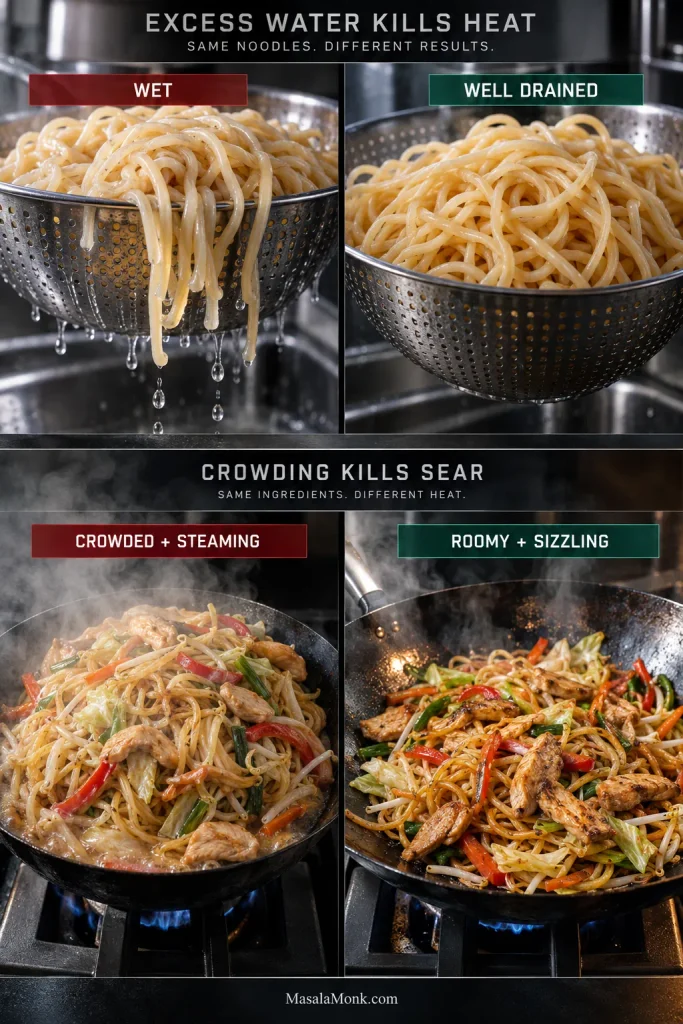
Homemade lo mein often tastes flatter than takeout because the home skillet gets wetter and cooler: wet noodles, crowded ingredients and weak heat recovery dilute the sauce before it can properly coat the strands.
Water Dilutes More Than the Sauce
Water clinging to noodles or released by vegetables cools the skillet before it ever weakens the seasoning. A pan can contain all the right ingredients and still taste flat because the heat is busy boiling off water.
Give the Pan Room to Recover
A 12-inch skillet can make good lo mein; it just gives you less room than a 13- or 14-inch pan.
Listen to the pan. The active sizzle should return as you cook. A skillet buried under too much cold food stays quiet and steamy.
A Pale Batch Isn’t Necessarily Underseasoned
A pale pan that already tastes properly seasoned does not need another pour of regular soy. Use a small amount of dark soy next time if you want deeper color—or let the noodles stay a little paler.
High Heat Helps; Smoke Is Not the Goal
A very hot wok can add toasted aroma, but convincing lo mein does not require a smoke-filled kitchen. Properly drained noodles, enough cooking surface and fast tossing matter far more on an ordinary home stove.
When the sauce hits a properly hot pan, the smell should become richer almost at once—soy, ginger, scallion and toasted sesame carried by the steam coming off the noodles.
Fix Your Lo Mein
Find the problem that looks like yours and make the smallest correction first.
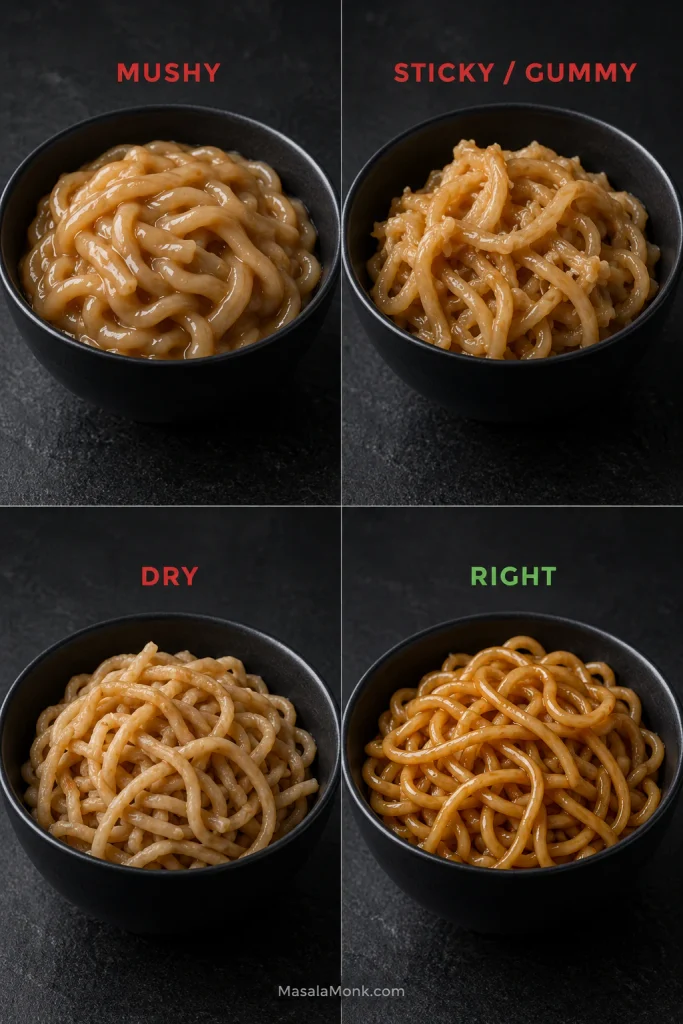
Mushy, Sticky or Gummy Noodles
Mushy: get them off the heat and serve. Next time, stop cooking the noodles earlier.
Sticking together: loosen them gently with tongs or chopsticks. A very starchy noodle may benefit from a brief rinse next time, followed by thorough draining.
Gummy after the sauce went in: toss with a tablespoon or two of hot stock or water. Noodles that were tacky before the skillet were already too soft or starchy.
Dry Noodles
Add 1–2 tablespoons / 15–30 ml unsalted stock or water and toss over heat. Strands that immediately loosen and shine again simply needed more free liquid.
Prefer that wetter finish? Start with the extra-saucy formula next time.
Too Salty—or Pale but Already Salty
Too salty: add a little unsalted stock or water and extra plain noodles or vegetables when available.
Pale but already salty: stop adding seasoning soy. Color and seasoning are separate problems.
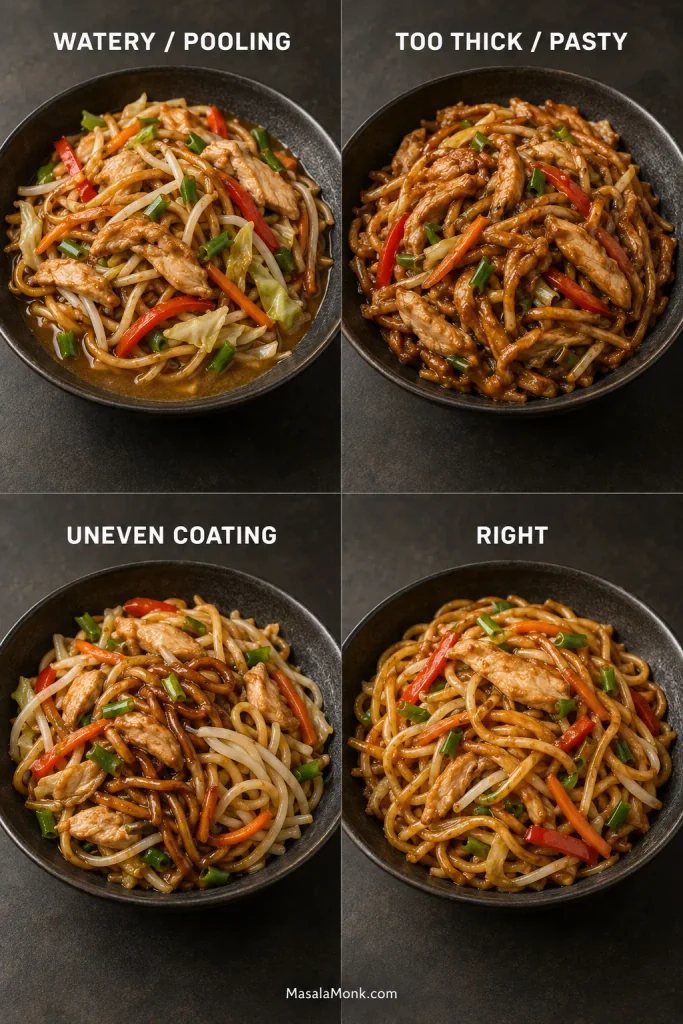
Sauce Too Thin, Too Thick or Pooling
Too thin: keep the pan hot and uncovered for another 20–30 seconds. A tiny cornstarch slurry can help after obvious excess water is gone.
Too thick: add stock or water 1 tablespoon / 15 ml at a time while tossing.
Pooling underneath: toss briefly over heat. A puddle that quickly becomes a coating needed another moment; persistent watery liquid points to excess moisture in the pan.
The Noodles Taste Plain or the Whole Pan Is Watery
Thick sauce sitting unevenly on the noodles: add 1 tablespoon / 15 ml stock or water and toss again.
Sauce moves freely but tastes flat: add a teaspoon of low-sodium soy or a small spoonful of reserved sauce.
Watery and bland: evaporate first. Keep the skillet uncovered and hot for 30–60 seconds, then taste again.
Dry Chicken or Limp Vegetables
Dry chicken: use the tender-chicken technique: slice it about ¼ inch / 6 mm thick, shorten the first sear, and get it out of the skillet earlier.
Limp vegetables: return to the vegetable cooking-order guide: give firm vegetables their head start and keep sprouts, leafy greens and scallion tops for the end.
Baking Soda Taste or an Oily Finish
Alkaline or soapy chicken: skip the baking soda next time and rely on thin slicing plus the cornstarch marinade.
Greasy noodles: use less neutral cooking oil. Toasted sesame oil is there for aroma, not as the main frying fat.
Practical Ingredient Swaps
| If you don’t have… | Use… | What changes |
|---|---|---|
| Shaoxing wine | Dry sherry or plain sake; unsalted stock/water for alcohol-free | Sherry is the closest easy substitute; stock loses some aromatic depth |
| Oyster sauce | Mushroom-based vegetarian oyster-style sauce | Closest swap for savory body; hoisin is sweeter and changes the profile more |
| Dark soy sauce | Leave it out instead of replacing all of it with regular soy | The noodles will be paler but easier to keep properly seasoned |
| Toasted sesame oil | Omit it | The recipe still works, with less nutty aroma at the finish |
| Bean sprouts | Extra cabbage, snow peas or bok choy | You lose some juicy crunch but not the structure of the dish |
Missing bean sprouts or one specialty bottle shouldn’t stop dinner. These swaps change the edges of the dish, not its basic shape.
Making It Gluten-Free
Use gluten-free noodles, tamari or another certified gluten-free soy sauce, plus verified gluten-free dark soy and oyster-style sauces. Many Shaoxing wines contain wheat, so replace the bottle with a verified gluten-free dry sherry or another gluten-free cooking wine.
Gluten-free noodles vary enormously in how quickly they soften. Their texture gets the final vote on timing.
For a sweeter, stickier direction: changing the sauce makes more sense than adding extra sugar to this one. Homemade Teriyaki Sauce deliberately moves toward a sweeter, shinier glaze.
Adding shrimp: cook it separately until just shy of done, remove it, then return it near the end. Shrimp spends far less time in the pan than chicken.
Make Ahead, Store and Reheat
The easiest make-ahead wins are the sauce and vegetables. Mix the sauce and refrigerate it covered, then stir or shake it before cooking because the cornstarch settles. Slice the vegetables ahead and keep them chilled. The chicken can be cut in advance too; its marinade only needs 10–15 minutes.
Cooking the noodles ahead: possible, but not ideal. Stop them while they are still firm, cool them promptly and keep the strands loose instead of pressing them into one warm mound. If you are unsure where to stop, use the noodle doneness guide. A very small amount of neutral oil can help a particularly sticky batch.
Store and Reheat
Refrigerate leftovers promptly—within 2 hours—in an airtight container and use them within 3–4 days.
The next-day skillet version can be excellent. Add 1–2 tablespoons / 15–30 ml water or unsalted stock, cover briefly to loosen the cold noodles, then uncover and toss until everything is steaming hot. Reheated leftovers should reach 165°F / 74°C.
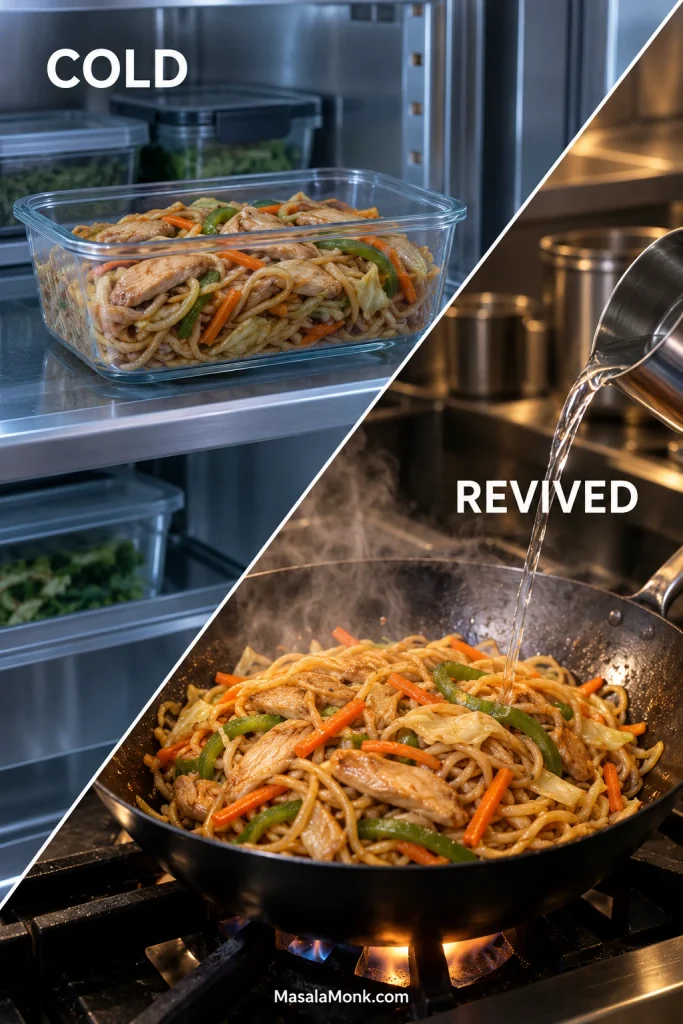
For the microwave, add a small splash of water, cover loosely and heat in short intervals, stirring between them, until the food reaches 165°F / 74°C throughout.
Freezing: possible, though not preferred. Noodles soften further after thawing and crisp vegetables lose much of their bite. Refrigeration gives you a much better second bowl.
What to Serve With It
Chicken lo mein already brings noodles, meat and plenty of vegetables to the bowl. It doesn’t need a parade of sides.
For something cold and crisp, Cucumber Salad makes a refreshing contrast. Its rice-vinegar, sesame, ginger and scallion variation sits especially well beside the warm savory noodles.
A small bowl of Egg Drop Soup takes the meal in the other direction: warm broth, soft egg ribbons and no extra heavy starch.
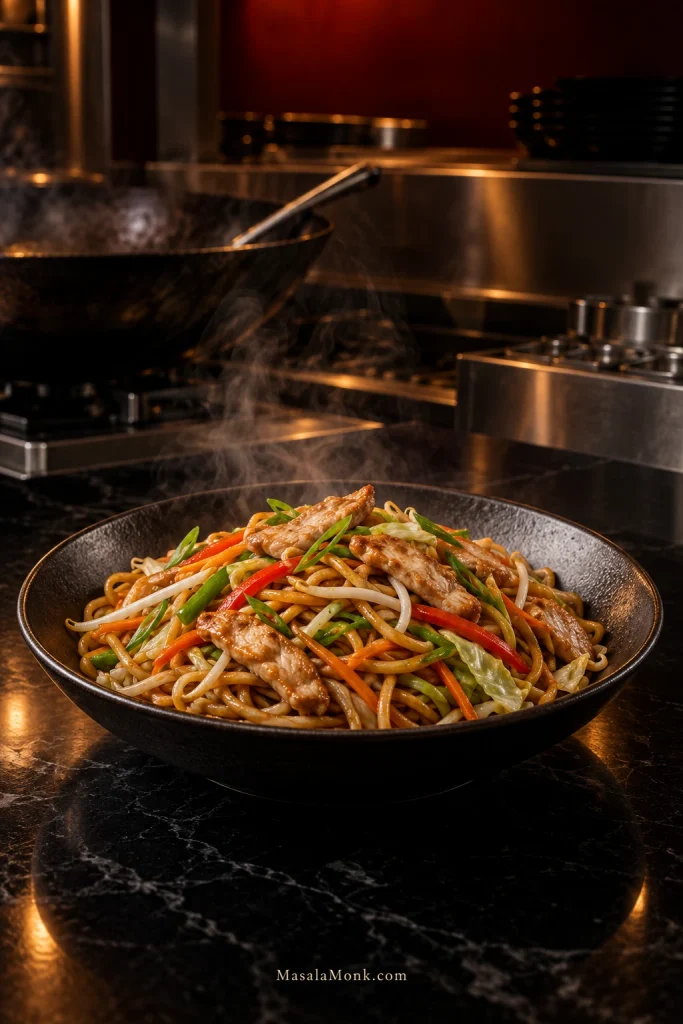
Serve the lo mein straight from the pan while the strands are loose and shining, the vegetables still have bite and the bean sprouts still crunch. Once you recognize that finish—the sauce riding with the noodles, the center still springy—you do not need a restaurant burner or one perfect brand of noodle to find your way back to it.








