
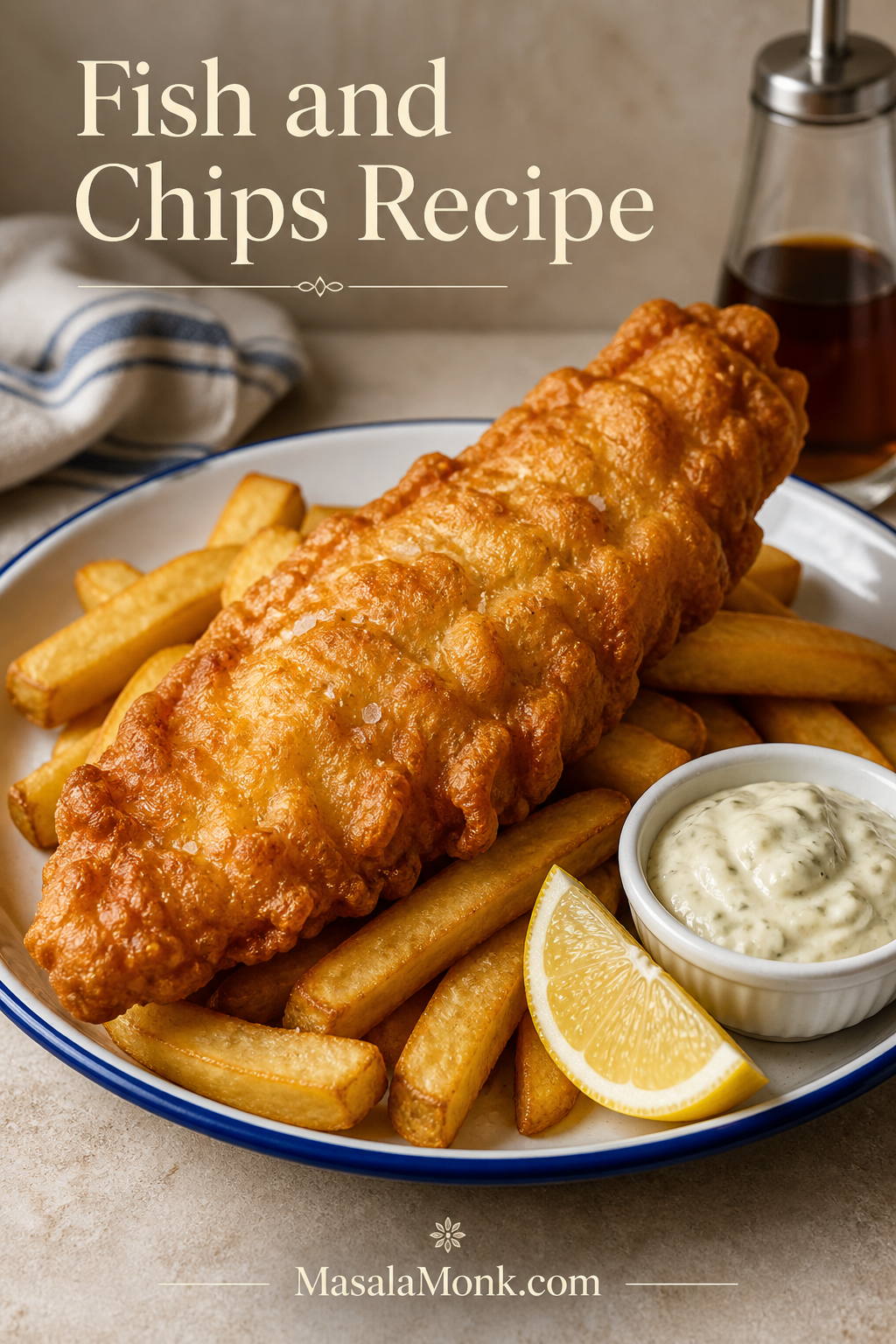
This fish and chips recipe is built for the plate everyone actually wants: crisp beer-battered cod or haddock, thick golden chips, tartar sauce, malt vinegar, optional curry sauce, and no soggy coating sliding off the fish.
The method is classic, but the instructions are practical for a home kitchen. You will dry the fish properly, mix the batter cold, keep the oil in the right temperature range, and time the chips so the whole plate lands hot instead of one part waiting while the other goes soft.
Use the fried version as the main recipe. Then use the no-beer batter, air fryer, baked, and gluten-free notes when you want a different route without pretending every method gives the exact same chip-shop crunch.
In This Fish and Chips Guide
Quick Answer: How to Make This Fish and Chips Recipe
To make crispy fish and chips, use firm white fish like cod or haddock, pat the fish very dry, dust it lightly with flour, dip it in cold beer batter, and fry it in hot oil at about 365°F to 375°F / 185°C to 190°C. Meanwhile, cut floury potatoes into thick chips, rinse or soak them, dry them well, and fry until crisp and golden.
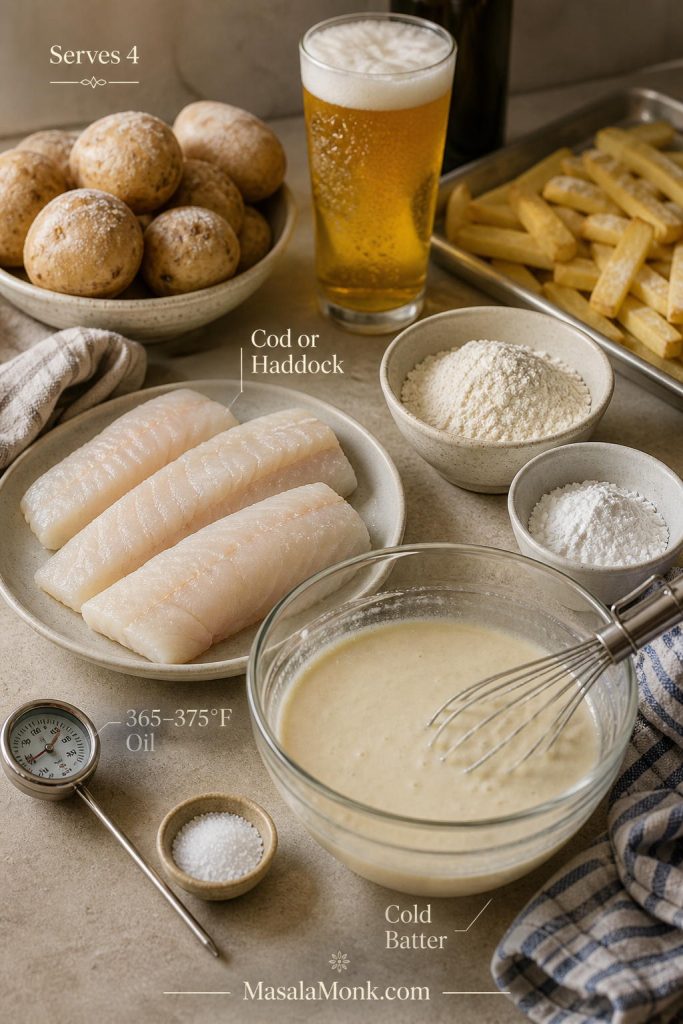
Serve everything immediately with tartar sauce, malt vinegar, lemon wedges, and optional curry sauce. Fish is best checked with a thermometer and should reach 145°F / 63°C, or be opaque and flaky.
Need the exact method? Jump to the recipe card, or check the batter guide and oil temperature table first.
Why This Fish and Chips Recipe Works
A great plate of fish and chips is not about a complicated ingredient list. Instead, it comes down to moisture control, cold batter, hot oil, and good timing.
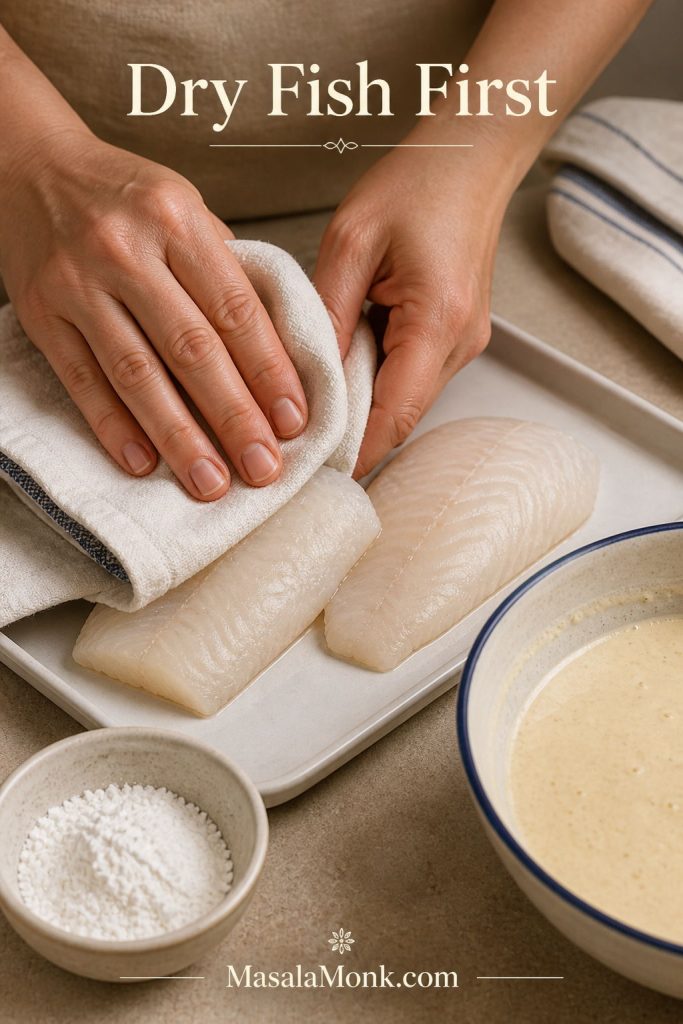
- Dry fish holds batter better. Moisture on the surface makes batter slide off, so the fish is patted dry before seasoning and dusting.
- A light flour dusting gives the batter grip. The coating clings instead of peeling away in the oil.
- Cold beer or sparkling water makes a lighter batter. Cold carbonated liquid helps the batter puff quickly when it hits hot oil.
- Rice flour, cornflour, or cornstarch improves crispness. A little starch lightens the coating and helps avoid a heavy, doughy crust.
- Baking powder gives lift. It helps the batter puff instead of lying flat against the fish.
- A thermometer protects the texture. Oil that is too cool makes greasy fish; oil that is too hot browns the batter before the fish cooks.
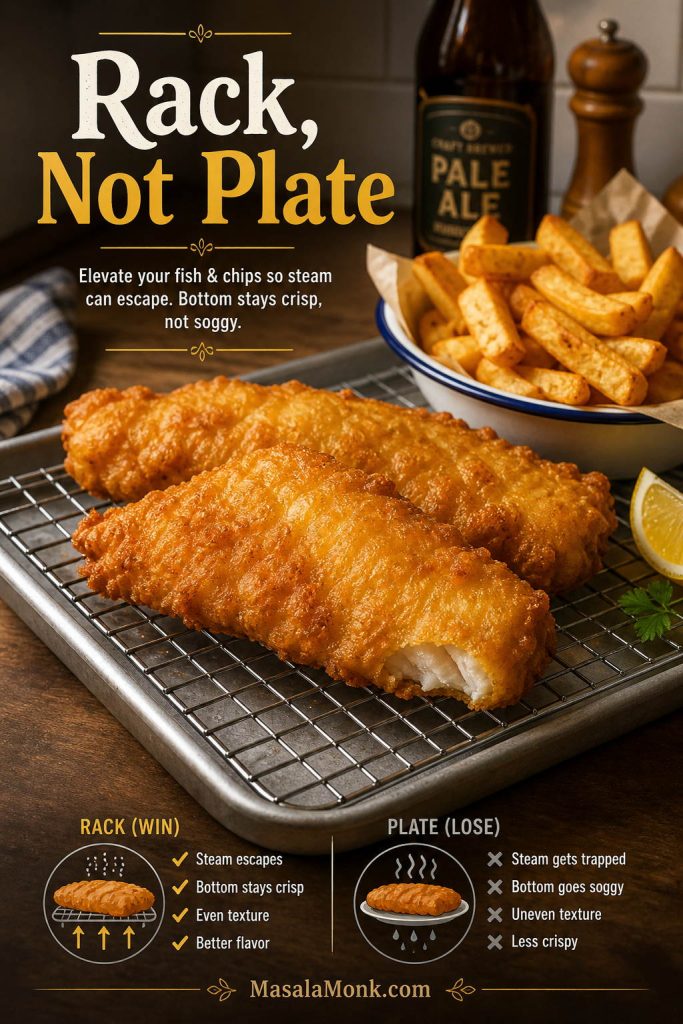
- A wire rack keeps the underside crisp. Draining fried fish on a plate traps steam underneath.
Fish and Chips Recipe Ingredients
The ingredients are simple, but each one affects the final crunch: firm white fish, floury potatoes, very cold liquid, starch, baking powder, and clean high-heat oil.
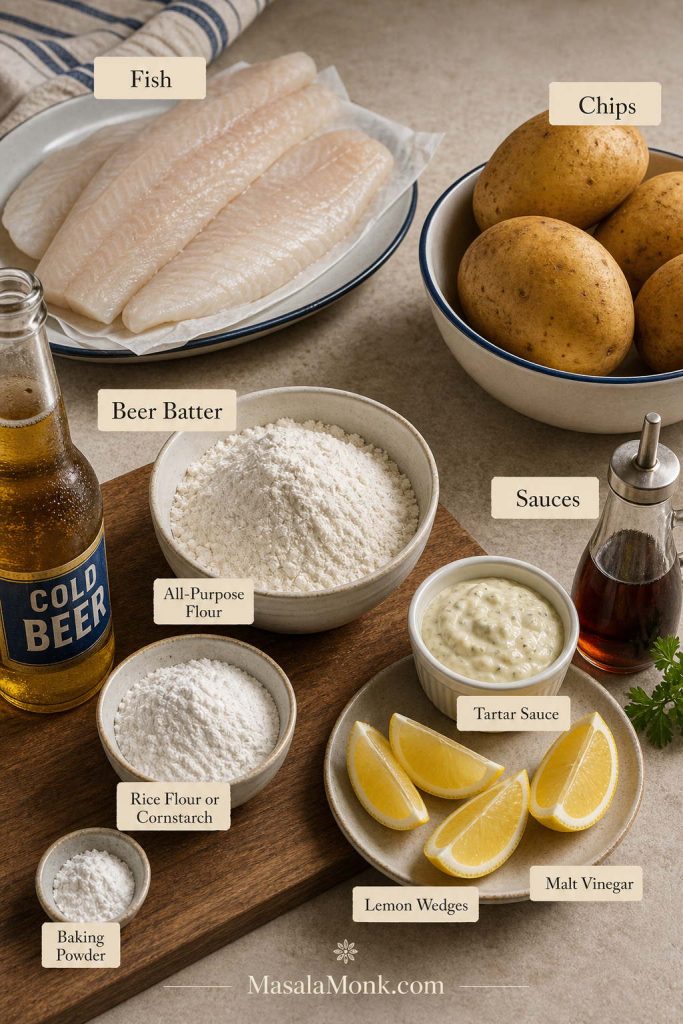
Fish
- Cod or haddock: Cod is the easiest all-purpose choice. However, haddock gives a more classic British-style fish and chips flavor.
- Salt and black pepper: Season the fish directly before battering.
- Rice flour, cornflour/cornstarch, or all-purpose flour: This is used for dusting the fish so the batter clings.
Beer Batter
- All-purpose flour: Gives the batter structure.
- Rice flour, cornflour, or cornstarch: Keeps the coating lighter and crisper.
- Baking powder: Adds lift.
- Fine salt: Seasons the batter.
- Very cold lager or pale beer: Adds carbonation and lightness.
- Optional turmeric or paprika: Adds a warmer golden color and mild flavor.
Chips
- Russet potatoes, Maris Piper, or another floury potato: These give a fluffy inside and crisp outside.
- Neutral oil: Use sunflower, canola, vegetable, or peanut oil.
- Salt: Add it immediately after frying.
- Optional malt vinegar: A small amount in the chip water can help the potatoes hold together before frying.
Serving Sauces and Sides
- Tartar sauce
- Malt vinegar
- Lemon wedges
- Chip-shop-style curry sauce
- Mushy peas
- Pickles or coleslaw
Best Fish for Fish and Chips
The best fish for fish and chips is a firm white fish that stays moist inside while the batter crisps outside. Cod and haddock are the two most common choices, although they are not the only options.
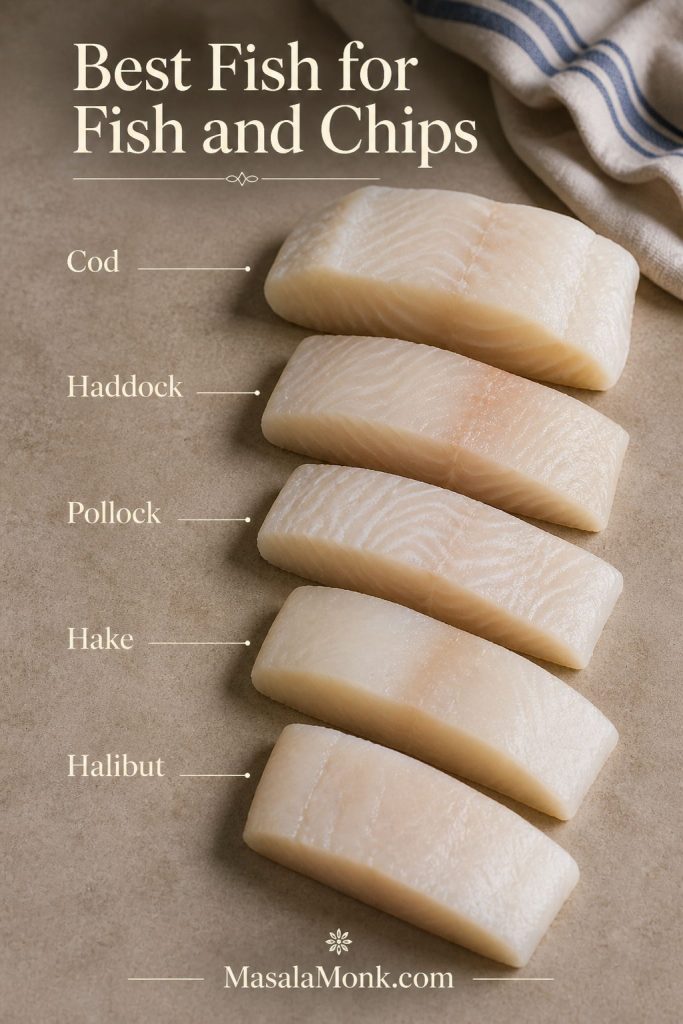
| Fish | Best For | Notes |
|---|---|---|
| Cod | Easiest first choice | Mild, flaky, widely available, and very beginner-friendly. |
| Haddock | Classic British-style fish and chips | Slightly stronger flavor than cod and excellent in beer batter. |
| Pollock | Budget-friendly batches | Good texture when battered and fried, usually more affordable. |
| Hake | A softer, delicate version | Works well, but handle gently because it can be more delicate. |
| Halibut | Premium fish and chips | Firm, thick, and excellent, but more expensive. |
| Whiting or ling | Traditional-style alternatives | Good options where available, especially for thinner fillets. |
For the main version, cod is the safest first choice. However, haddock is better when you want a more classic pub-style flavor. The same fish also works beautifully in Baja-style fish tacos, where it is paired with slaw, lime crema, and a lighter taco-style build.
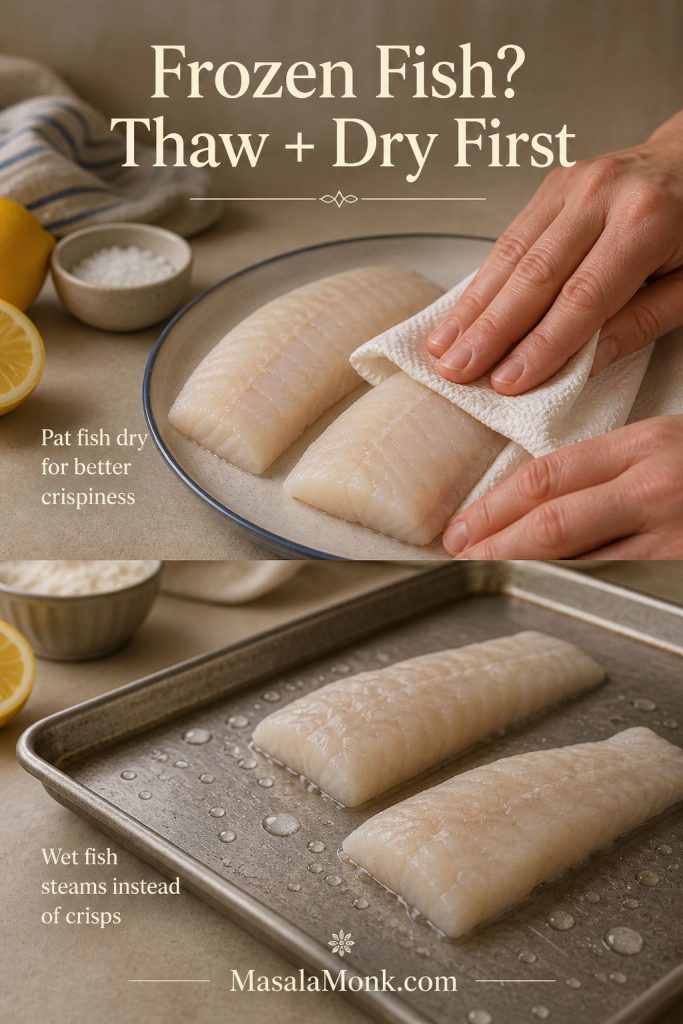
Can You Use Frozen Fish?
Yes, frozen cod or haddock can work well, but thaw it completely and pat it very dry before seasoning. Frozen fish releases extra moisture as it thaws, and that moisture can make the batter slide off or turn soft in the oil.
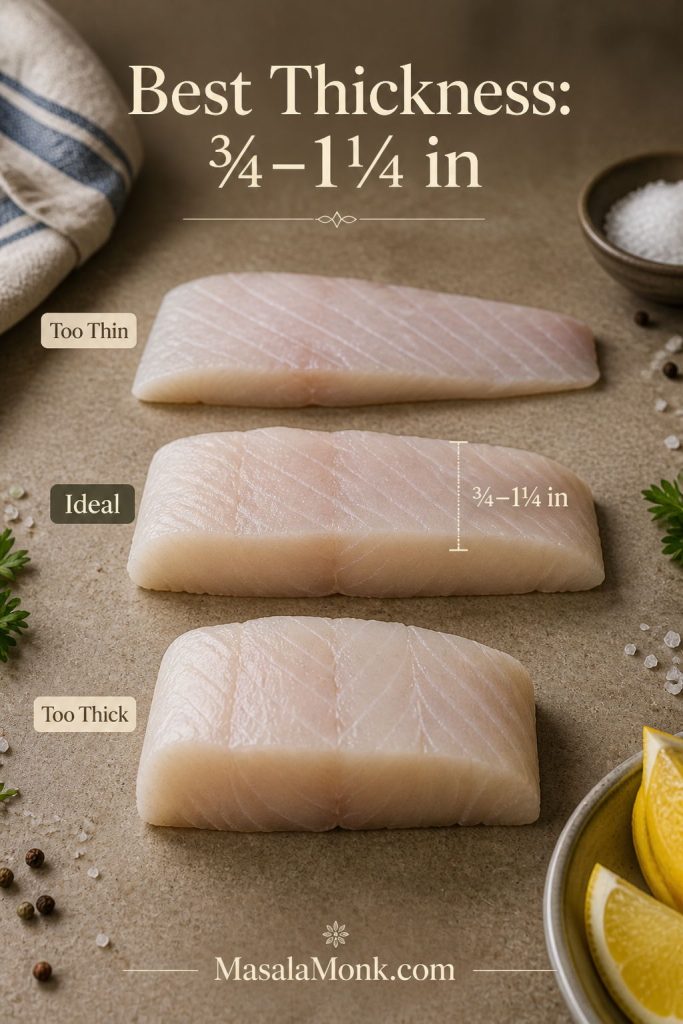
Fish thickness cue: Aim for pieces that are thick enough to stay moist, but not so thick that the batter browns before the center cooks.
Once you’ve chosen your fish, move to the fish and chips batter guide or go straight to how to make fish and chips step by step.
Fish and Chips Batter
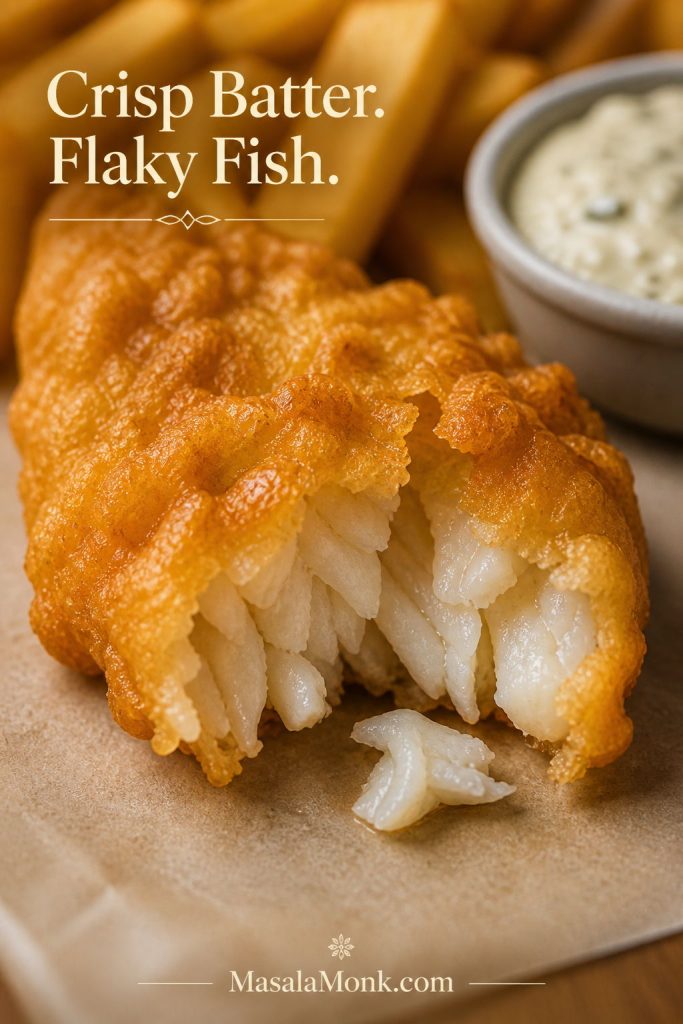
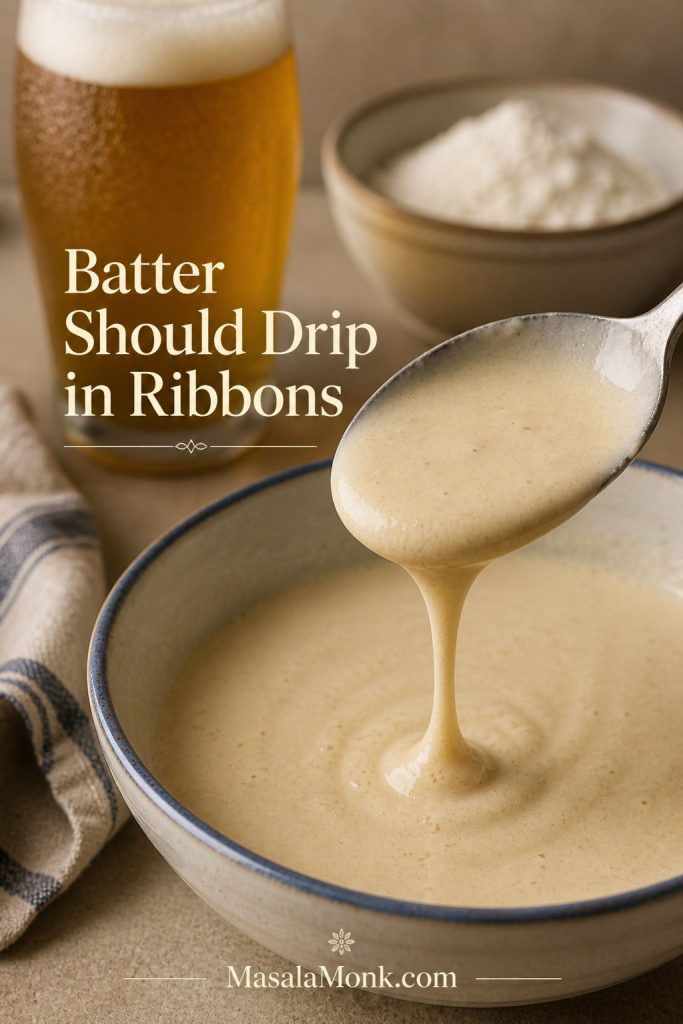
The batter should shatter lightly when you bite into it, not sit on the fish like a thick doughy coat. You are looking for a mixture that feels loose but not watery — closer to thin pancake batter or double cream than a heavy fritter mix.
It should coat the back of a spoon, then drip off in ribbons. If it runs off like water, it is too thin. If it clings in a heavy layer, it is too thick.
Batter texture cue: The batter should coat the spoon and drip in slow ribbons before you dip the fish.
Beer Batter for Fish and Chips
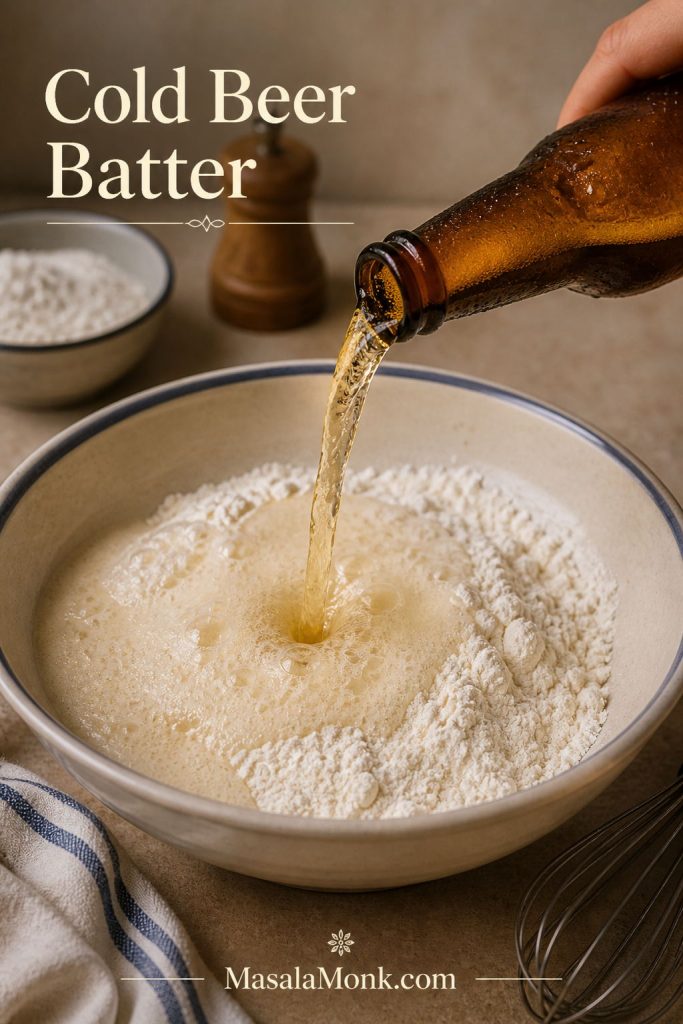
For the main version, use cold lager or pale beer. The beer should be chilled, and the batter should be mixed just before frying. Do not overmix it; a few tiny lumps are fine.
A good basic beer batter for fish and chips uses:
- ¾ cup / 95 g all-purpose flour
- ¼ cup / 40 g rice flour, cornflour, or cornstarch
- 1¼ teaspoons baking powder
- ½ teaspoon fine salt
- 1 cup / 240 ml very cold lager or pale beer
Lighter beers give the cleanest flavor and the most classic golden color. Save stout or porter for a darker, more bitter batter.
Fish and Chips Batter Without Beer
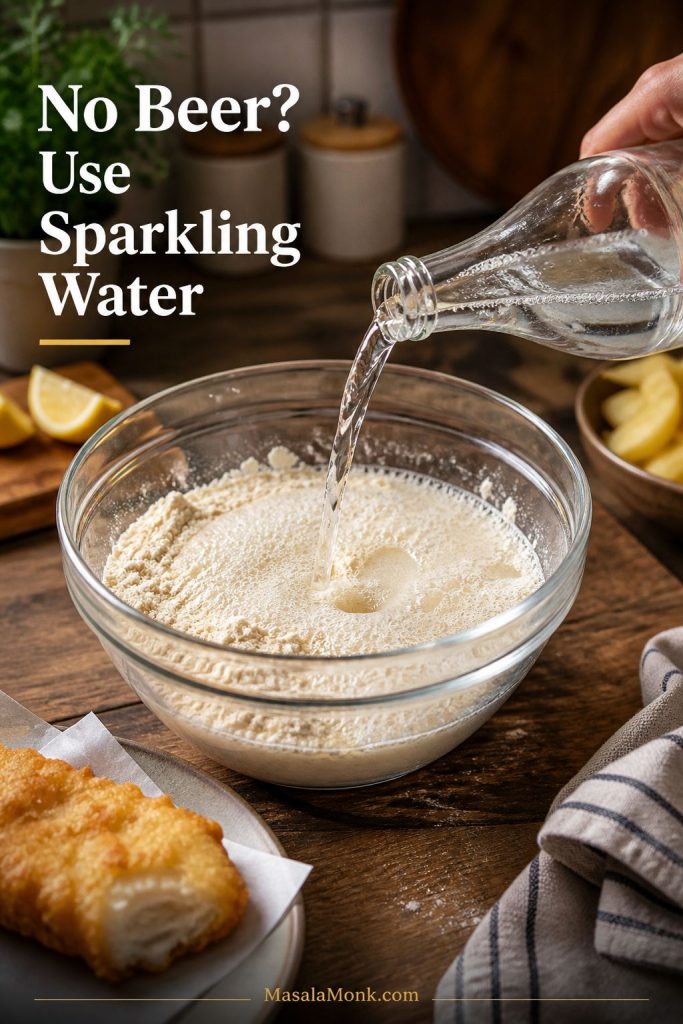
To make fish and chips batter without beer, use the same dry ingredients and replace the beer with 1 cup / 240 ml ice-cold sparkling water or club soda. Then add an extra ¼ teaspoon baking powder to help the batter puff.
The no-beer version tastes less malty, but it can still fry up crisp if the liquid is ice-cold and the oil is hot.
Should Fish and Chips Batter Have Egg?
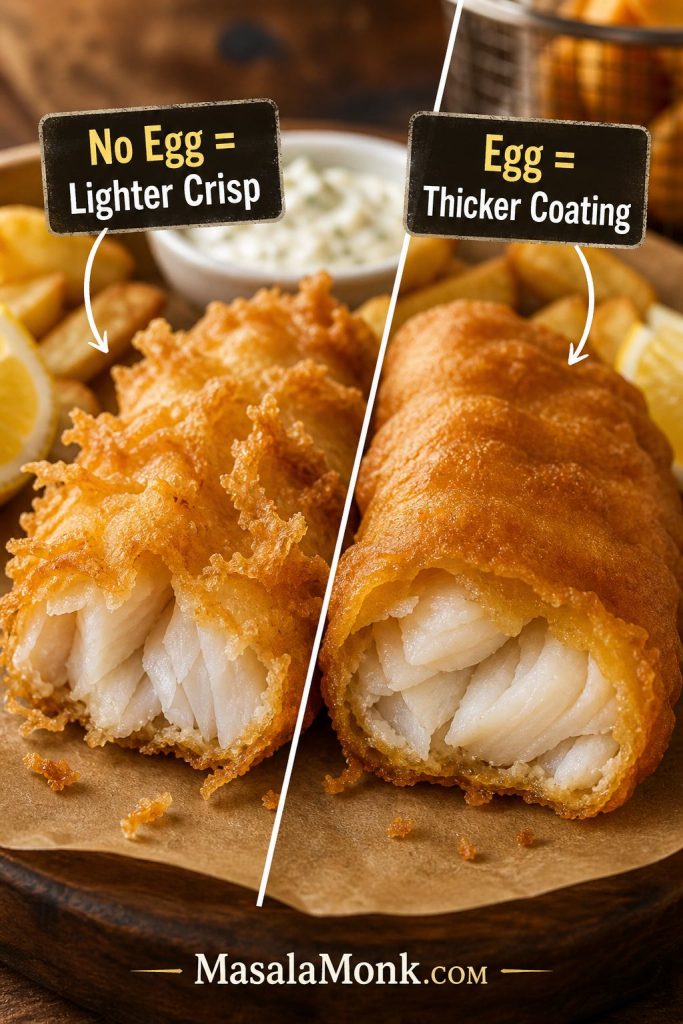
For the crispiest classic fish and chips batter, skip the egg. Egg can make the coating richer and sturdier, but it also pushes the batter toward a heavier, chewier, more cakey texture. This recipe uses flour, rice flour or cornstarch, baking powder, salt, and very cold beer or sparkling water for a lighter crisp shell.
If you prefer a thicker, more old-fashioned coating, you can add 1 beaten egg, but start with 2 to 3 tablespoons less beer or sparkling water and thin the batter only if needed. For a crisp pub-style finish, the egg-free batter is the better first choice.
Optional Extra-Crisp Batter Upgrade
For an extra-crisp batter, replace 2 to 4 tablespoons / 30 to 60 ml of the beer with vodka. This is optional, not required. The standard beer batter already works well for a home kitchen.
How to Fix Batter Thickness Before Frying
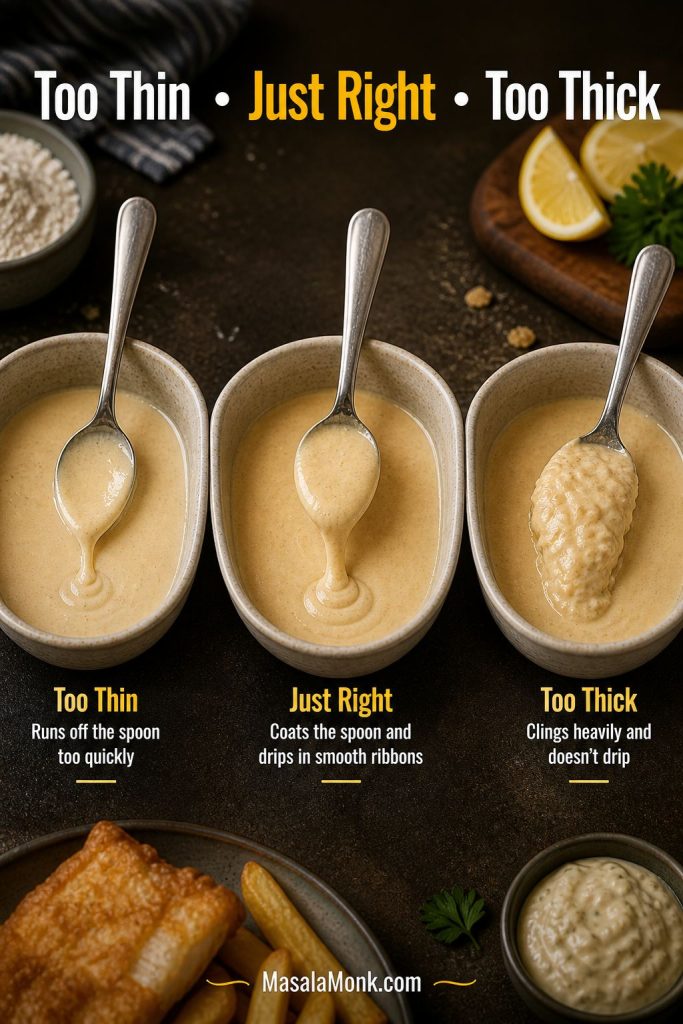
| Batter Problem | What It Looks Like | Fix |
|---|---|---|
| Too thin | Runs straight off the fish and leaves bare patches. | Add flour or rice flour 1 tablespoon at a time. |
| Just right | Coats the fish and drips slowly in ribbons. | Use immediately while cold. |
| Too thick | Clings in a heavy, doughy layer. | Add cold beer or sparkling water 1 tablespoon at a time. |
Batter ready? Check the oil temperature and frying timing before you fry, or use the troubleshooting table if your batter feels too thick, thin, or loose.
Equipment You’ll Need
You do not need a restaurant fryer for homemade fish and chips, but the right setup makes a big difference. A heavy pot, thermometer, and wire rack will do more for crispness than extra batter ever will.
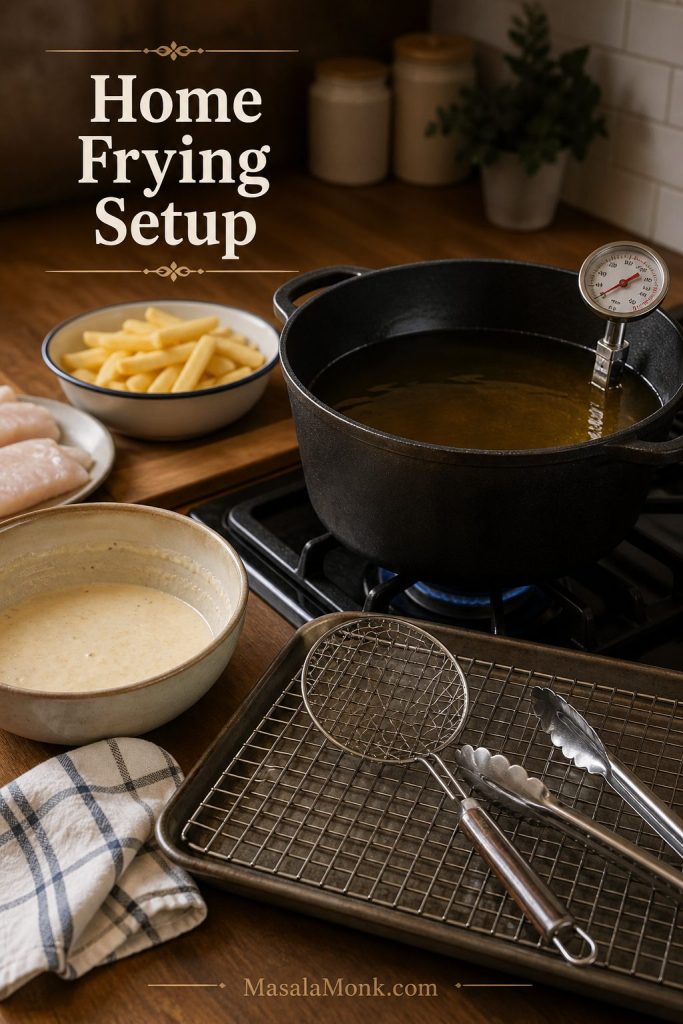
| Equipment | Why It Helps |
|---|---|
| Dutch oven, deep heavy pot, wok, or deep fryer | Holds heat better and gives the fish enough room to fry. |
| Deep-fry thermometer | Keeps the oil in the crisp zone instead of guessing. |
| Wire rack and rimmed baking sheet | Lets steam escape so the underside of the fish stays crisp. |
| Spider skimmer or tongs | Makes lowering and removing fish safer. |
| Mixing bowls | Useful for dredging flour, batter, and sauces. |
| Kitchen towels or paper towels | Dry fish and potatoes before frying. |
| Kitchen scale | Gives better accuracy for flour and fish weight. |
| Instant-read thermometer | Confirms the fish has reached 145°F / 63°C. |
How to Make Fish and Chips Step by Step
This homemade version works best when you cook in the right order. Prepare the sauce first, start the chips next, mix the batter only when the oil is ready, then fry the fish and finish the chips close to serving.
- Make the sauce first. Tartar sauce and curry sauce can sit while you fry.
- Cut the potatoes. Slice them into thick chips about ½ to ⅝ inch / 1.2 to 1.5 cm thick.
- Rinse or soak the chips. This removes excess starch.
- Dry the chips very well. Wet potatoes splatter and soften in the oil.
- Pat the fish dry. This is one of the most important steps.
- Season the fish. Use salt and black pepper before dusting.
- First-fry or par-cook the chips. This softens the inside before the final crisping step.
- Mix the cold batter. Do this just before frying the fish.
- Dust the fish with flour or starch. Use rice flour, cornflour, cornstarch, or plain flour.
- Dip the fish in batter. Let excess batter drip off.
- Fry the fish. Cook until deeply golden, crisp, and flaky inside.
- Finish the chips. Fry or final-fry them hot until crisp and golden.
- Serve immediately. Add salt, tartar sauce, malt vinegar, lemon, and curry sauce if using.
How to Make Crispy Chips for Fish and Chips
The chips need to earn their place on the plate: crisp-edged, fluffy inside, salted while hot, and sturdy enough for malt vinegar or curry sauce.
Best Potatoes for Fish and Chips
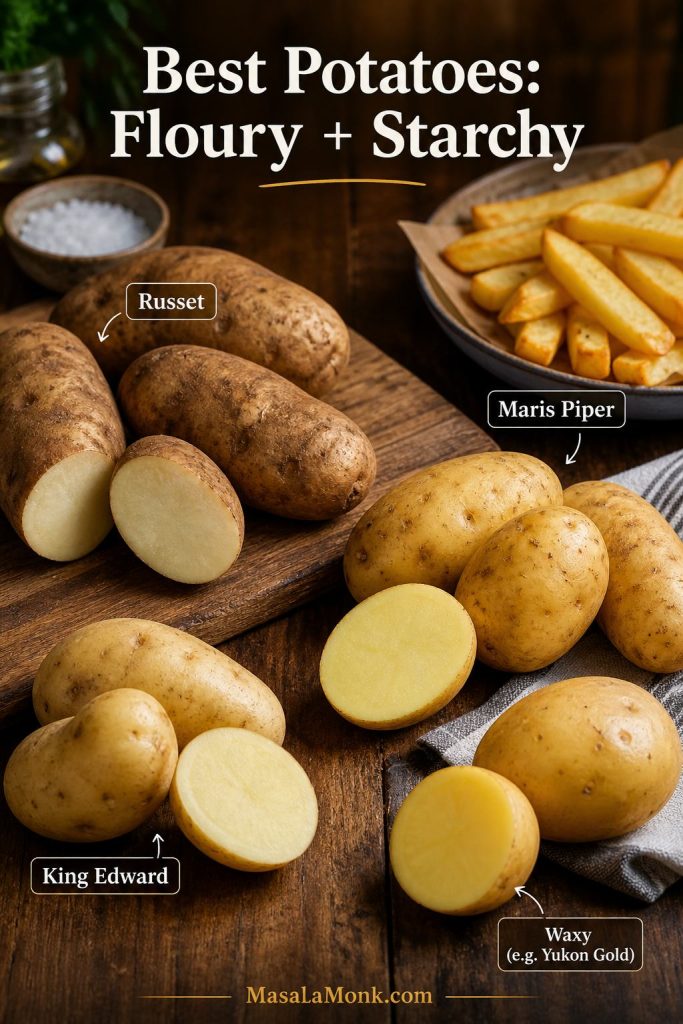
The best potatoes for fish and chips are floury or starchy potatoes because they cook up fluffy inside and crisp outside. Use russet potatoes in the U.S., Maris Piper or King Edward in the U.K., or another floury potato where you live. Waxy potatoes can work, but they usually make denser chips with less fluffy centers.
There are two good ways to handle the potatoes: double-fry them, or parboil them first and then fry. You do not have to do both unless you want the extra step.
Option 1: Double-Fry Chips
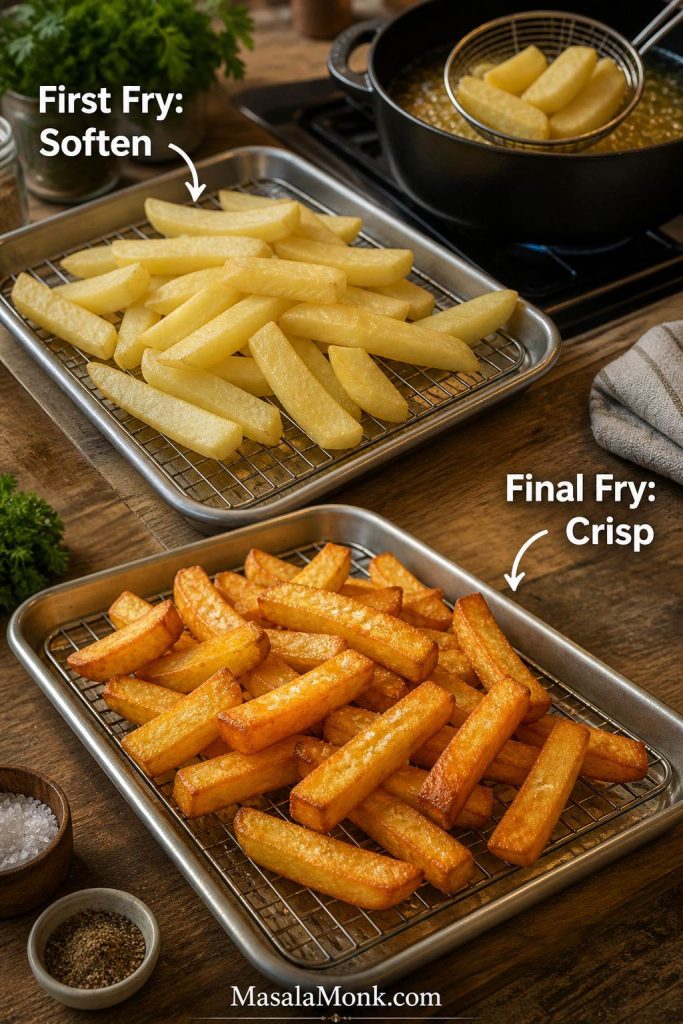
- Cut chips about ½ to ⅝ inch / 1.2 to 1.5 cm thick.
- Rinse or soak until the water is mostly clear.
- Dry the chips very well before frying.
- First-fry at 325°F / 160°C until softened but pale.
- Rest briefly, then final-fry at 375°F / 190°C until golden.
- Salt immediately after frying.
Option 2: Parboil, Dry, Then Fry
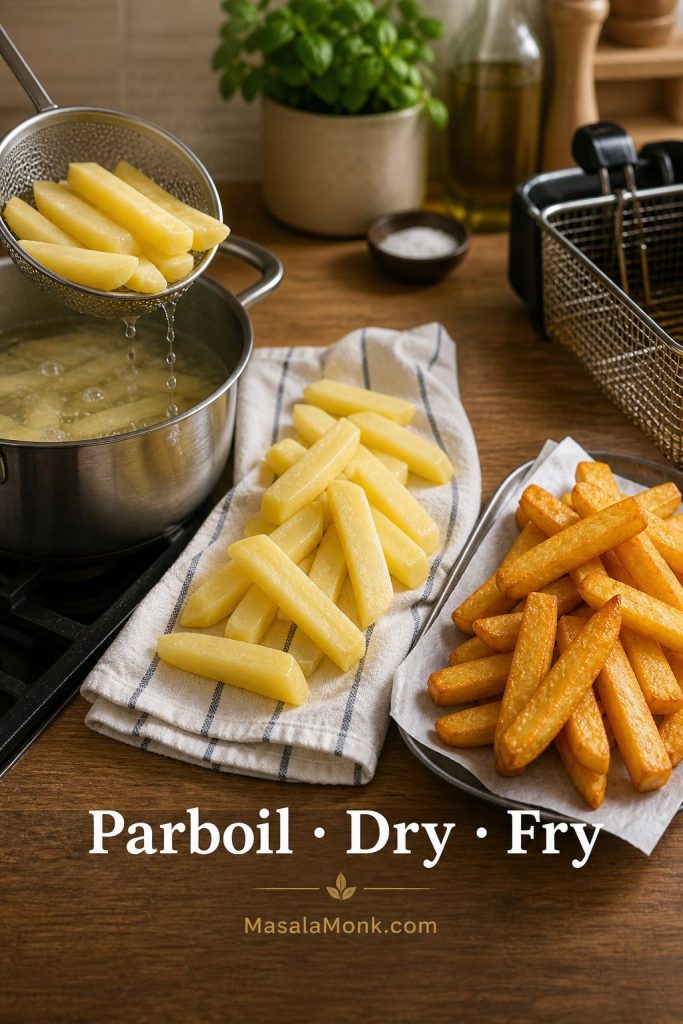
- Cut the potatoes into thick chips.
- Simmer in salted water with 1 teaspoon malt vinegar for 8 to 10 minutes, until just tender at the edges but not falling apart.
- Drain carefully and dry very well.
- Chill if you have time, then fry once at 375°F / 190°C until crisp and golden.
- Salt immediately after frying.
For a deeper potato-only guide with double-fry timing, air fryer fries, oven fries, cuts, coatings, and seasoning ideas, use MasalaMonk’s crispy homemade French fries guide alongside this fish and chips recipe.
To time the chips with the fish, use the serve everything hot sequence before starting the final fry.
Best Oil Temperature for Fish and Chips
Oil temperature is where homemade fish and chips usually succeed or fail. Too cool, and the batter drinks oil. Too hot, and the coating browns before the fish turns flaky inside.
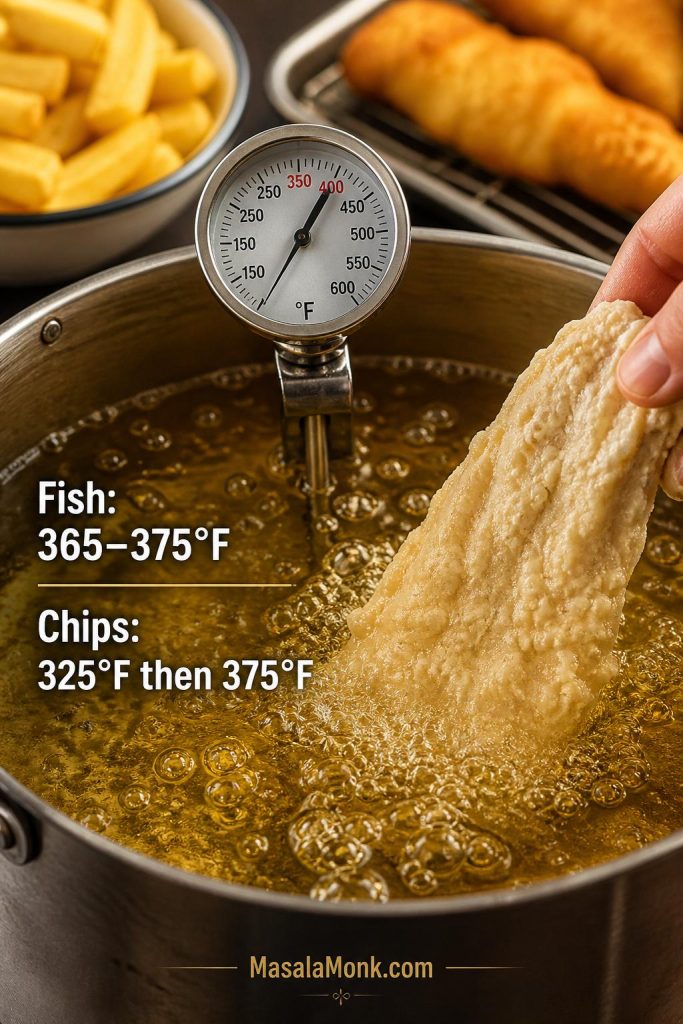
| Item | Temperature | Time |
|---|---|---|
| First-fry chips | 325°F / 160°C | 3 to 5 minutes |
| Final-fry chips | 375°F / 190°C | 2 to 4 minutes |
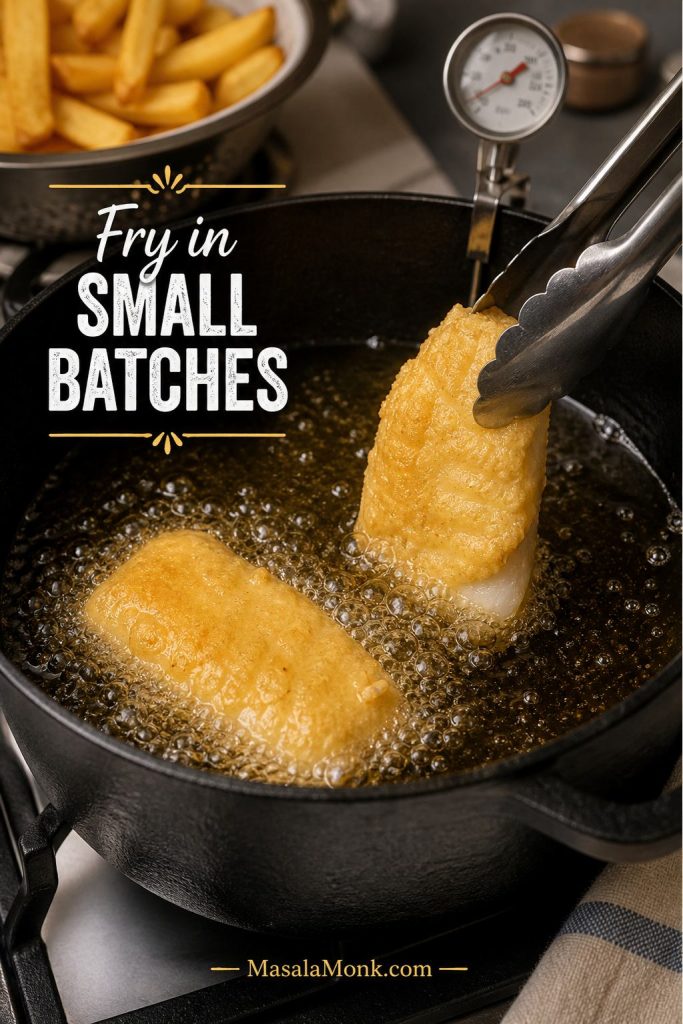
| Fry fish | 365°F to 375°F / 185°C to 190°C | 4 to 6 minutes for 5 to 6 oz pieces |
| Fish doneness | 145°F / 63°C internal temperature | Until opaque and flaky |
Start the oil slightly hotter than your minimum target because the temperature drops when cold battered fish goes in. Then fry in small batches and let the oil recover between batches.
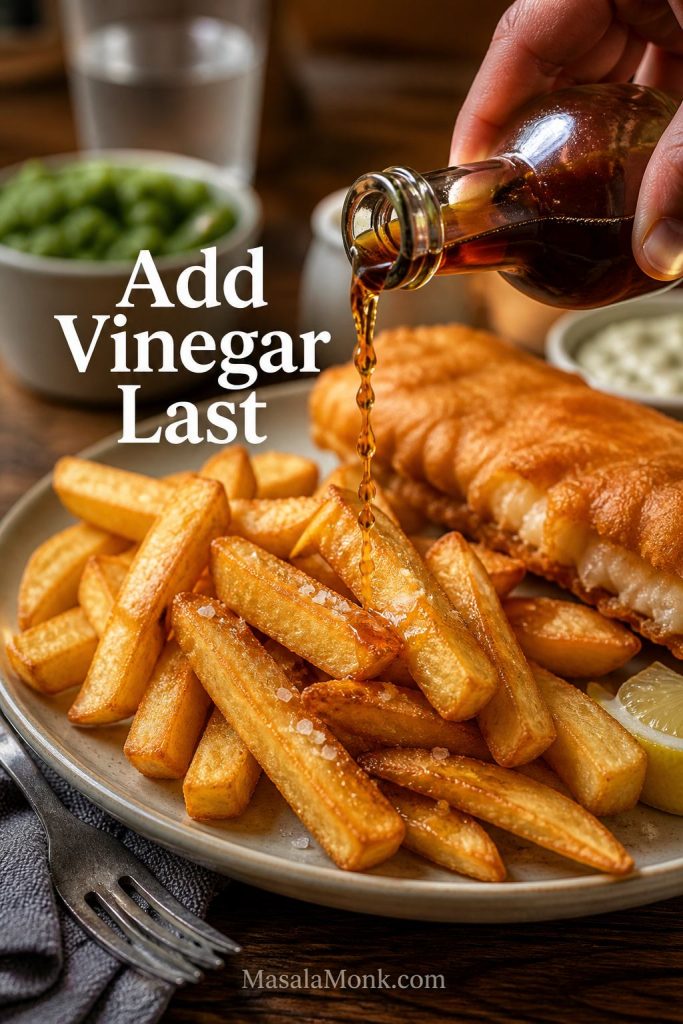
Vinegar timing cue: Add malt vinegar at the table or right before eating so the chips keep their crisp edges longer.
If your oil temperature keeps dropping or the coating turns greasy, jump to common fish and chips fixes.
How to Serve Fish and Chips Hot at the Same Time
The danger zone is not the frying itself; it is letting one part of the meal sit while the other finishes. Fish and chips should land on the plate hot, crisp, and uncovered, with the chips salted while they are still fresh from the oil.
Use this order:
- Make tartar sauce and curry sauce first.
- Cut, rinse, and dry the chips.
- Pat the fish dry and portion it.
- First-fry or par-cook the chips.
- Heat the oil for fish.
- Mix the cold batter right before frying.
- Fry the fish and drain it on a wire rack.
- Final-fry or finish the chips while the fish rests briefly.
- Salt the chips and serve everything immediately.
If needed, keep cooked chips warm in a low oven around 250°F / 120°C while you finish the fish. However, do not cover fried fish tightly or it will steam and soften.
Ready to cook? Use the full recipe card below, and keep the oil temperature table handy while frying.
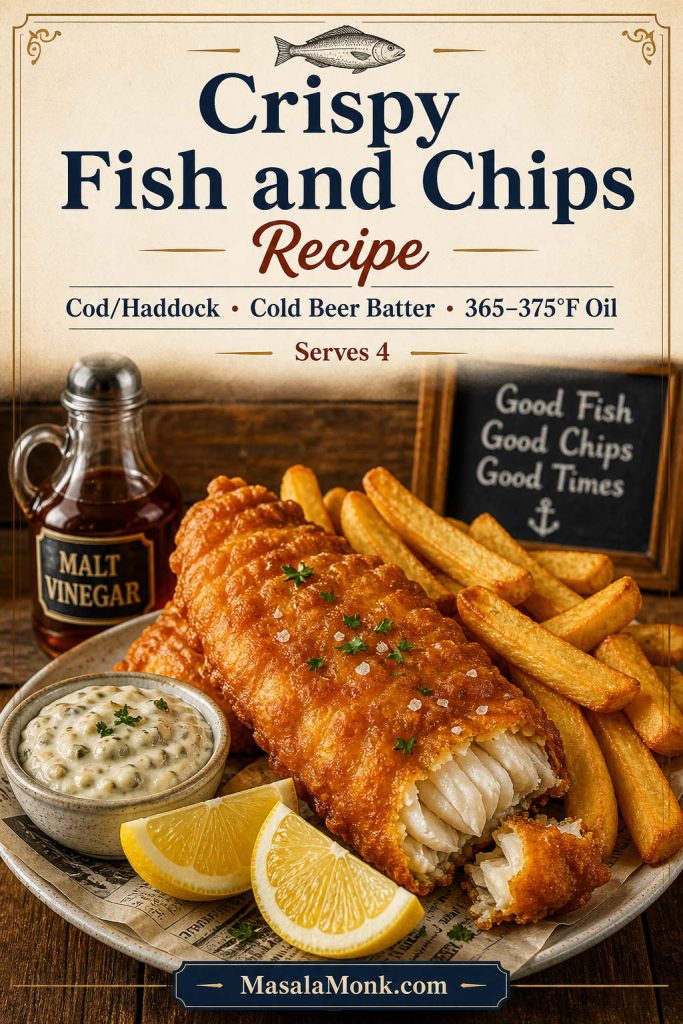
Crispy Fish and Chips Recipe
This homemade fish and chips recipe uses cod or haddock, a cold beer batter, thick-cut chips, and a clear frying method so the fish turns crisp outside and flaky inside. It also includes no-beer, air fryer, baked, and gluten-free notes.
Ingredients
Fish
- 1½ lb / 680 g cod or haddock fillets, cut into 4 large pieces or 6 to 8 smaller pieces
- ½ teaspoon fine salt
- ¼ teaspoon black pepper
- ¼ cup / 40 g rice flour, cornflour, cornstarch, or all-purpose flour, for dusting
Chips
- 2 lb / 900 g russet potatoes, Maris Piper, or other floury potatoes
- 1 teaspoon malt vinegar, optional for parboiling
- Fine salt, to taste
- 1½ to 2 litres neutral high-heat oil, or enough for 2 to 3 inches / 5 to 7 cm depth
Beer Batter
- ¾ cup / 95 g all-purpose flour
- ¼ cup / 40 g rice flour, cornflour, or cornstarch
- 1¼ teaspoons baking powder
- ½ teaspoon fine salt
- ¼ teaspoon turmeric, optional for color
- ½ teaspoon paprika, optional
- 1 cup / 240 ml very cold lager or pale beer
Serving Sauces and Sides
- Tartar sauce
- Malt vinegar
- Lemon wedges
- Curry sauce, optional
- Mushy peas, optional
Instructions
Prep the Sauces, Chips, and Fish
- Start with the sauces. Prepare tartar sauce and curry sauce, if using, before anything comes out of the oil.
- Cut the chips. Peel if desired, then cut the potatoes into thick chips, about ½ to ⅝ inch / 1.2 to 1.5 cm wide.
- Rinse or soak. Rinse until the water is mostly clear, or soak in cold water for 20 to 30 minutes.
- Dry well. Drain and dry the potatoes thoroughly with a clean kitchen towel.
- Prepare the fish. Pat the fish very dry, then season with salt and black pepper.
Cook the Chips
- Choose your chip method. For double-fried chips, first-fry at 325°F / 160°C until softened, then final-fry at 375°F / 190°C until crisp. Alternatively, parboil with 1 teaspoon malt vinegar for 8 to 10 minutes, until just tender at the edges, dry very well, then fry once at 375°F / 190°C until crisp and golden.
- Heat the oil safely. Keep the pot no more than halfway to two-thirds full. Use 325°F / 160°C for the first fry, or 375°F / 190°C for the parboil-and-fry method.
- Cook the chips. Use your chosen method, transfer to a rack or tray, and salt while hot.
Mix the Batter and Fry the Fish
- Raise the oil temperature for fish. Aim for 365°F to 375°F / 185°C to 190°C.
- Mix the batter just before frying. Whisk together the flour, rice flour or cornstarch, baking powder, salt, turmeric, and paprika. Add the cold beer and whisk briefly. Do not overmix; a few small lumps are fine.
- Dust the fish. Coat each piece lightly in rice flour, cornflour, cornstarch, or plain flour, then shake off the excess.
- Batter the fish. Dip the fish into the batter and let the excess drip off in ribbons.
- Fry the fish. Fry for 4 to 6 minutes for 5 to 6 oz pieces, turning once after the batter has set. The coating should be deep golden, crisp at the edges, and firm enough that it does not dent easily when lifted from the oil; the fish inside should be opaque, flaky, and 145°F / 63°C if checked with a thermometer.
- Drain properly. Move the fish to a wire rack set over a baking sheet. Do not stack or cover tightly.
Finish and Serve
- Finish the chips if needed. If you double-fried them, do the final fry now at 375°F / 190°C for 2 to 4 minutes. If you used the parboil method and already fried once, briefly refresh in hot oil only if needed.
- Serve hot. Salt the chips immediately and serve this fish and chips recipe with tartar sauce, malt vinegar, lemon wedges, and curry sauce if using.
No-Beer Batter Note
Replace the beer with 1 cup / 240 ml ice-cold sparkling water or club soda. Add an extra ¼ teaspoon baking powder. The batter will be lighter and less malty but still crisp.
Egg Note
For the crispiest coating, skip the egg. If you prefer a thicker, sturdier batter, add 1 beaten egg but start with 2 to 3 tablespoons less beer or sparkling water.
Frozen Fish Note
Frozen cod or haddock can work, but thaw it completely and pat it very dry before seasoning, dusting, and battering.
Air Fryer Note
For air fryer fish and chips, do not use wet beer batter. Use a flour, egg, and panko coating instead. Air fry at 375°F to 400°F / 190°C to 200°C for about 10 to 12 minutes, flipping halfway.
Baked Note
For baked fish and chips, use a panko coating and bake in a 400°F / 200°C oven. Bake the chips first, then add the coated fish and bake until crisp and flaky.
Gluten-Free Note
Use a gluten-free flour blend, rice flour or cornstarch, gluten-free baking powder, and gluten-free beer or club soda. Start with 1 cup / 240 ml liquid, then add 1 to 3 tablespoons more only if needed. Dust the fish with rice flour before battering.
Storage Note
This fish and chips recipe is best fresh. Refrigerate leftovers up to 2 days and reheat in an oven or air fryer. Avoid microwaving if you want the coating to stay crisp.
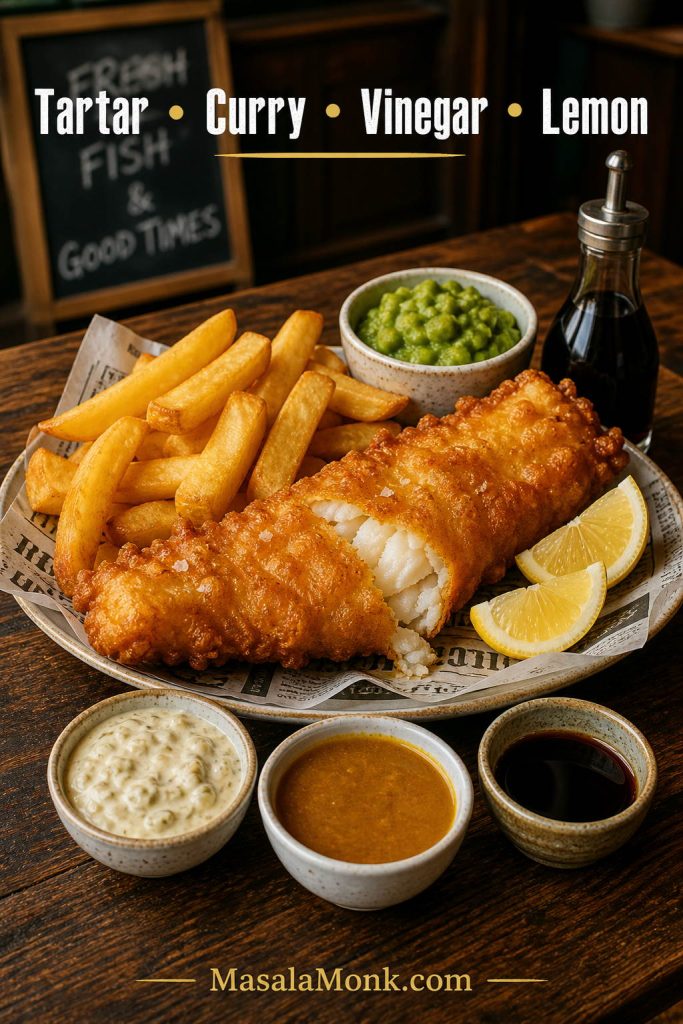
Fish and Chips Sauce: Tartar Sauce, Curry Sauce, and Vinegar
Fish and chips need contrast: creamy tartar sauce, sharp malt vinegar, lemon for brightness, and curry sauce if you want that proper chip-shop comfort-food finish.
Tartar Sauce for Fish and Chips
For a quick tartar sauce, stir together:
- ½ cup mayonnaise
- 2 tablespoons finely chopped cornichons or pickles
- 1 teaspoon chopped capers
- 1 tablespoon lemon juice
- 1 tablespoon chopped parsley or dill
- ½ teaspoon Dijon mustard, optional
- Black pepper, to taste
If you want to make the creamy base from scratch, start with this homemade mayonnaise guide, then fold in pickles, capers, lemon, herbs, and mustard for tartar sauce.
Curry Sauce for Fish and Chips
For a simple chip-shop-style curry sauce, use:
- 1 tablespoon butter or neutral oil
- ¼ small onion, finely chopped
- 1 small garlic clove, grated or minced
- ½ teaspoon grated ginger, optional
- 1½ teaspoons mild curry powder
- ¼ teaspoon turmeric
- ¾ cup stock
- 1 teaspoon malt vinegar
- 1 teaspoon cornstarch mixed with 1 tablespoon water
- Salt, pepper, and a small pinch of sugar, to taste
First, soften the onion in butter or oil. Next, add the garlic, ginger, curry powder, and turmeric, then stir in the stock. After that, simmer for a few minutes, add the cornstarch slurry, and cook until glossy and pourable. Finally, finish with malt vinegar and adjust salt, pepper, and sweetness.
This does not need to be fiery. A good fish and chips curry sauce should be warm, savory, lightly sweet, and loose enough to spoon over chips.
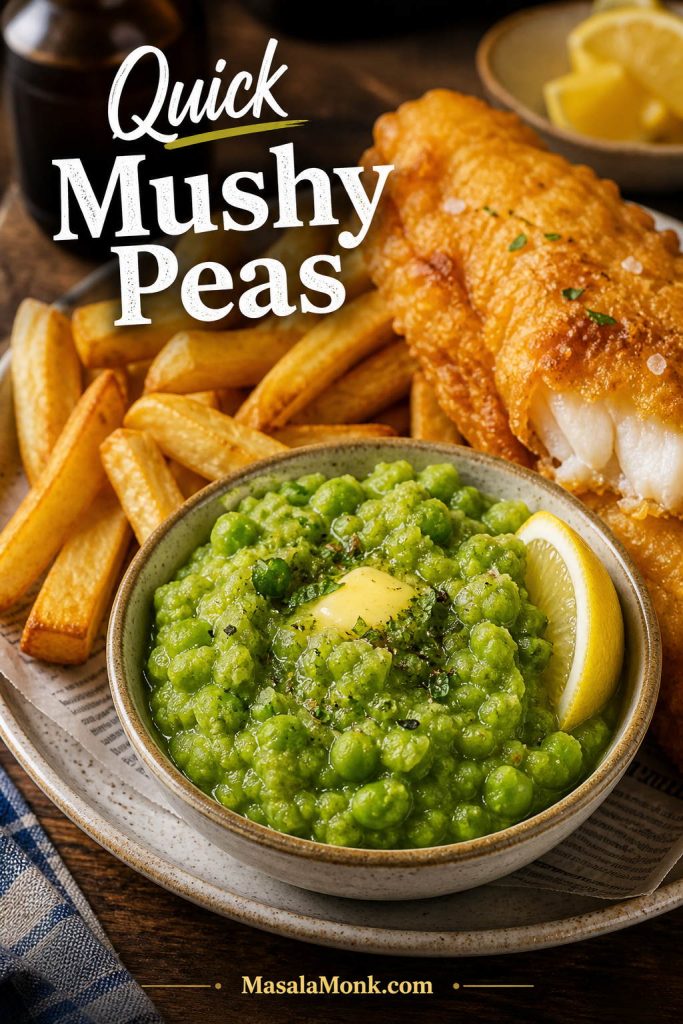
Quick Mushy Peas
For a quick green-pea version, simmer 2 cups peas with 1 tablespoon butter, a pinch of salt, black pepper, and 1 to 2 tablespoons water until hot. Mash roughly with lemon juice and chopped mint or parsley. Keep them chunky rather than completely smooth so they feel like a proper side, not a puree.
Other Serving Ideas
- Malt vinegar
- Lemon wedges
- Garlic mayo or aioli
- Ketchup for a family-friendly plate
- Coleslaw
- Pickled onions or gherkins
Sauces sorted? Go back to the full fish and chips recipe or see what to serve with fish and chips.
Air Fryer Fish and Chips
For air fryer fish and chips, switch from wet beer batter to a panko coating. Wet batter needs hot oil to set instantly; in an air fryer, it drips before it crisps.
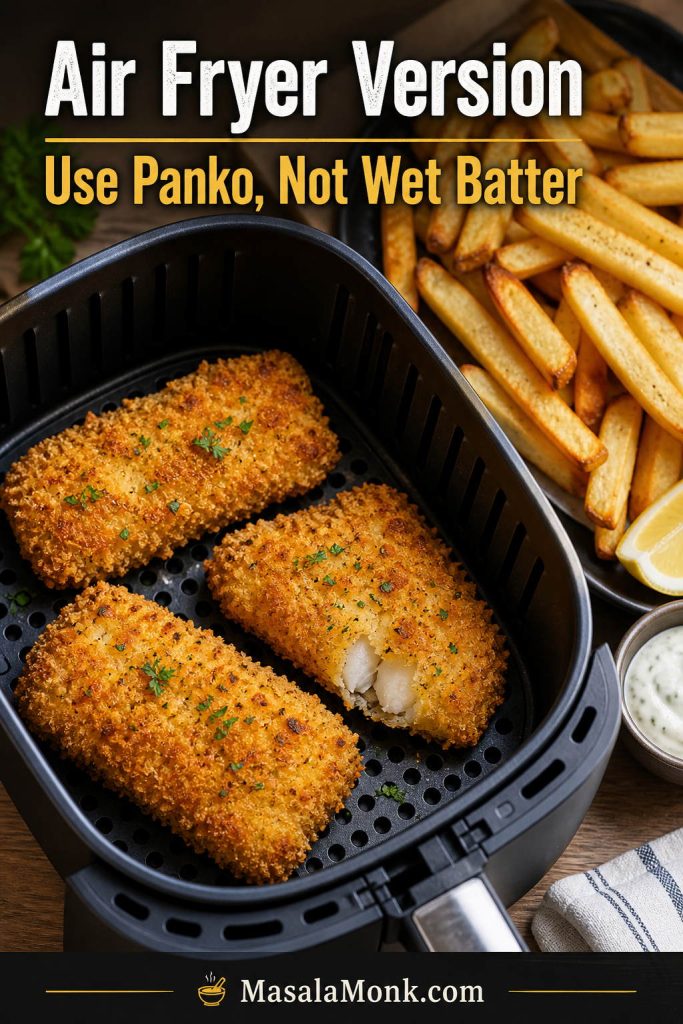
Instead, use a breadcrumb or panko coating:
- Pat cod or haddock dry and cut into pieces.
- Season flour with salt, pepper, paprika, and garlic powder.
- Dip fish in flour, then beaten egg, then panko breadcrumbs.
- Spray lightly with oil.
- Air fry at 375°F to 400°F / 190°C to 200°C for about 10 to 12 minutes, flipping halfway, until the coating is crisp and the fish is opaque, flaky, and 145°F / 63°C inside.
- Cook air fryer chips separately or start them first so they finish around the same time.
If air-fried food often turns pale, soft, or uneven in your kitchen, check these common air fryer mistakes before adjusting the fish recipe itself.
Want the classic fried version instead? Go back to the beer batter guide. Having air fryer issues? Check the fixes section.
Baked Fish and Chips
Baked fish and chips works best as its own version: panko-coated fish, a hot oven, a lightly oiled tray, and chips or wedges that crisp while the fish cooks. It will not mimic deep-fried beer batter, but it can still be a very good weeknight version.
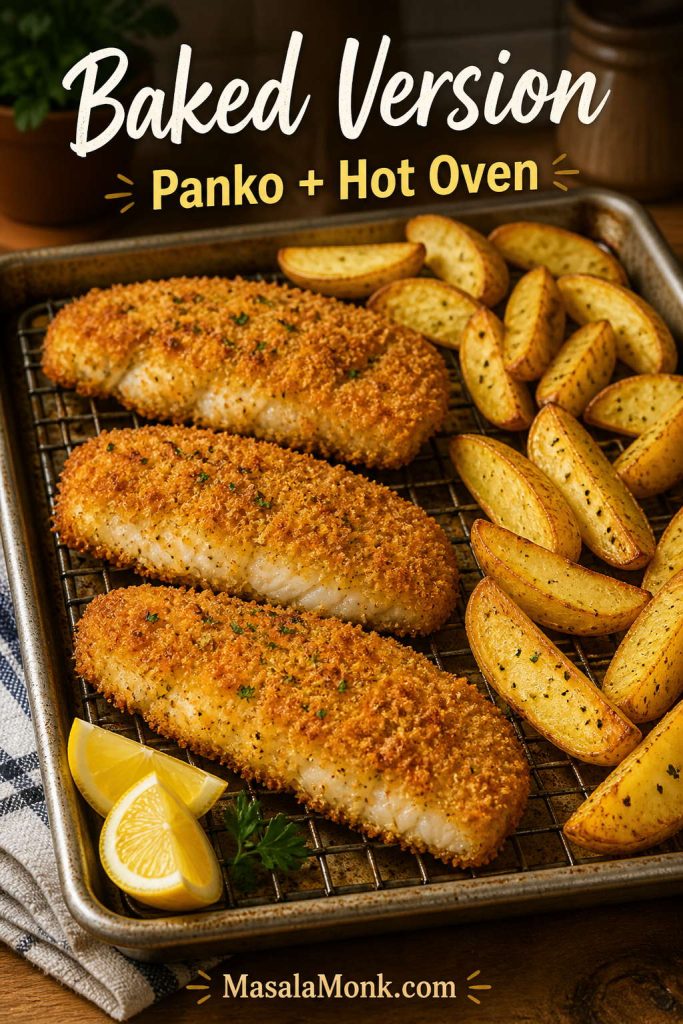
Use this method:
- Heat the oven to 400°F / 200°C.
- Cut potatoes into wedges or thick fries, toss lightly with oil and salt, and bake until partly tender.
- Coat the fish in flour, egg, and panko breadcrumbs.
- Place fish on a lightly oiled rack or lined tray.
- Bake until the coating is crisp and the fish is opaque, flaky, and 145°F / 63°C inside.
For better browning, spray or brush the coated fish lightly with oil before baking.
Gluten-Free Fish and Chips
For a gluten-free version of this fish and chips recipe, build the batter around rice flour, cornstarch, gluten-free flour, and cold carbonated liquid.
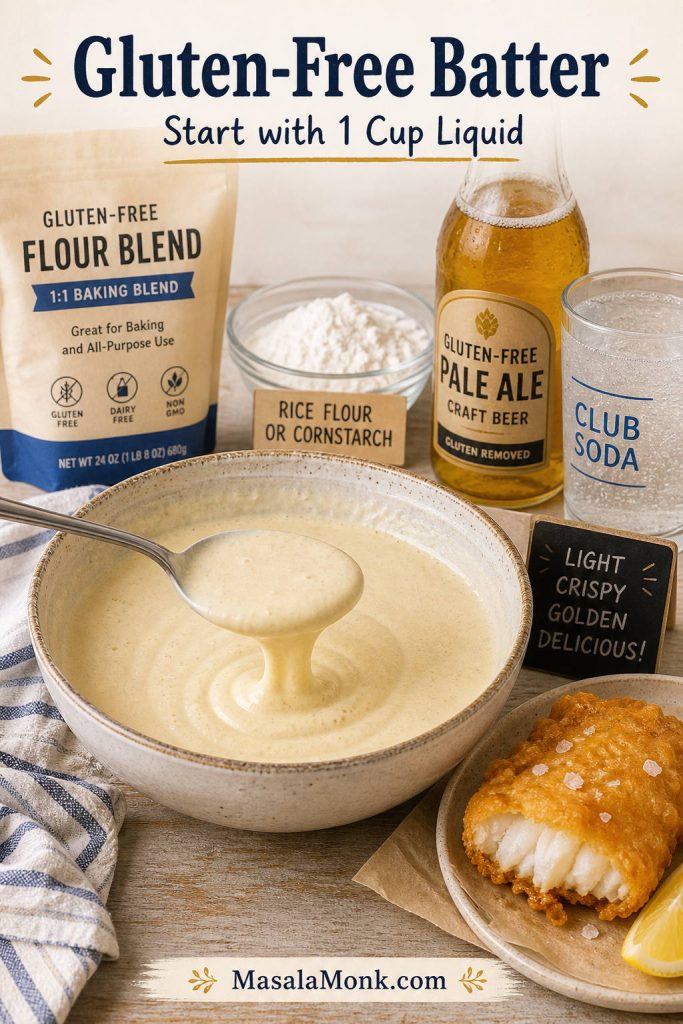
Use:
- 1 cup gluten-free flour blend
- ¼ cup white rice flour or cornstarch
- 1 teaspoon baking powder
- ½ to 1 teaspoon salt
- Paprika, garlic powder, or black pepper, optional
- 1 cup / 240 ml gluten-free beer or club soda, plus 1 to 3 tablespoons more only if needed
Start with 1 cup / 240 ml liquid, then add more only until the batter coats the back of a spoon and drips off in ribbons. Gluten-free flour blends vary, so the texture matters more than the exact final tablespoon count.
Before battering, dust the fish with rice flour. Then fry in small batches at about 375°F / 190°C, knowing the oil will drop once the fish goes in.
Also, check that your baking powder, sauces, and serving sides are gluten-free.
How to Fix Common Fish and Chips Recipe Problems
Most fish and chips problems come from moisture, batter thickness, or oil temperature. Before changing the whole recipe, use this table to identify the likely issue.
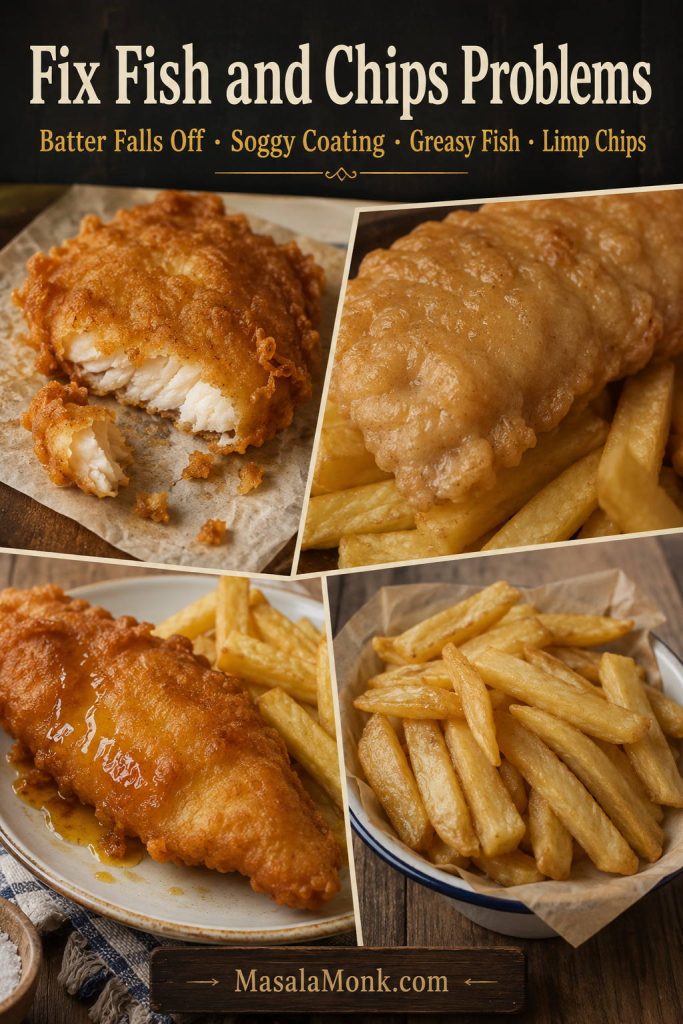
| Problem | Likely Cause | Fix |
|---|---|---|
| Batter falls off | Fish was too wet or not dusted first. | Pat fish very dry and dust lightly with flour or rice flour before battering. |
| Batter is soggy | Oil was too cool or the pot was crowded. | Fry fewer pieces and keep oil above 350°F / 175°C. |
| Fish is greasy | Oil temperature dropped too much. | Let the oil recover between batches. |
| Batter browns too fast | Oil was too hot. | Lower heat slightly and use pieces that are not too thick. |
| Fish is undercooked | Pieces were too thick or oil was too hot outside. | Cut fish into thinner portions and check for 145°F / 63°C inside. |
| Batter is too thick | Too much flour or not enough liquid. | Add cold beer or sparkling water 1 tablespoon at a time. |
| Batter is too thin | Too much liquid. | Add flour or rice flour 1 tablespoon at a time. |
| Chips are limp | Potatoes were wet or only fried once. | Dry thoroughly and double-fry, or parboil, dry, and fry. |
| Fish tastes bland | Only the batter was seasoned. | Season the fish, the dredge, and the batter lightly. |
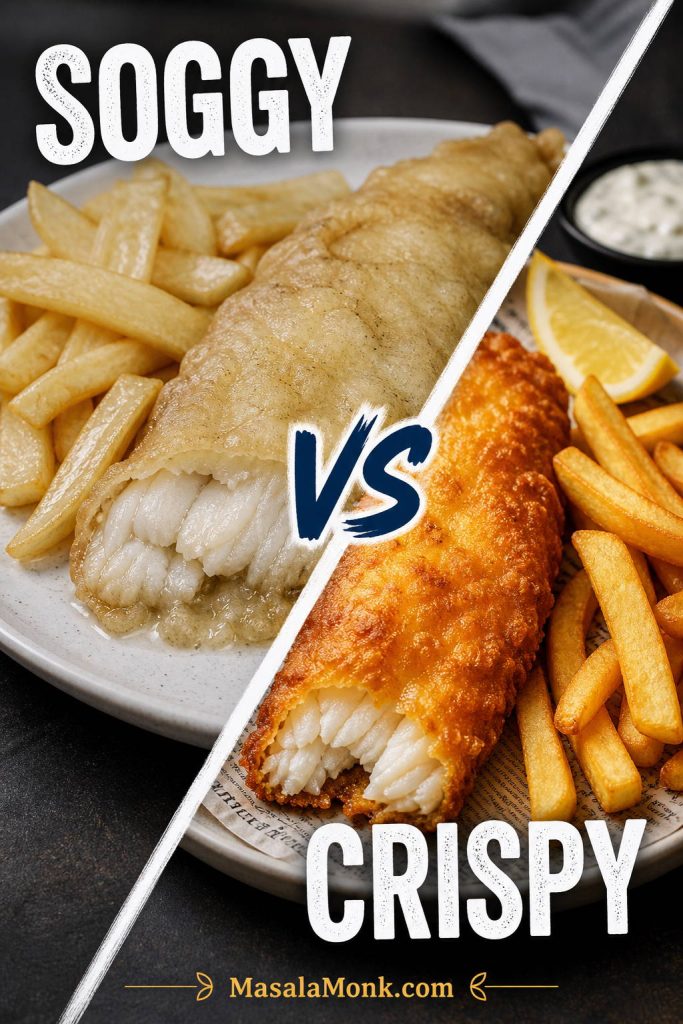
Soggy vs crispy cue: If the coating turns pale, greasy, or soft, check moisture, oil temperature, batch size, and draining method first.
What to Serve with Fish and Chips
Classic fish and chips can be served simply with tartar sauce, malt vinegar, lemon, and salt. To make the plate fuller, add mushy peas, coleslaw, pickles, or curry sauce.
A cold cucumber salad recipe works especially well on the side because it is crisp, tangy, and quick enough to make while the potatoes soak.
When you want a bolder version with masala batter, chutney dips, and chaat-style chips, try MasalaMonk’s Indian twists on fish and chips. Keep this classic version as the base, then use that guide for a spicier variation.
Storage and Reheating
Fish and chips are best eaten fresh. Over time, the batter softens, especially if the fish is stacked or covered while hot.
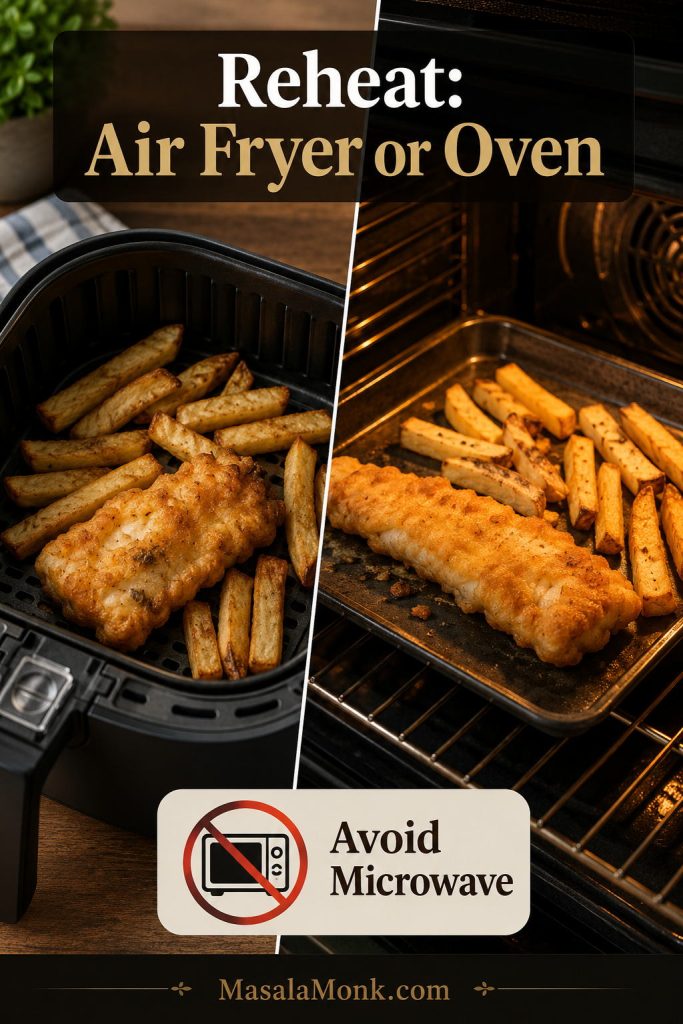
- Fridge: Store leftover fish and chips in separate airtight containers for up to 2 days.
- Air fryer reheating: Reheat at 350°F / 175°C for 4 to 6 minutes, or until hot and crisp.
- Oven reheating: Reheat on a wire rack at 375°F / 190°C until hot.
- Avoid the microwave: It makes the batter and chips soft.
Leftover cooked fish or extra potatoes can also be folded into patties or a croquettes recipe, especially when the pieces are still flavorful but no longer crisp enough to serve as fish and chips.
Fish and Chips Recipe FAQs
What is the best fish for fish and chips?
Cod is the easiest all-purpose fish for fish and chips because it is mild, flaky, and widely available. Haddock is the classic British-style choice with a slightly stronger flavor. Pollock, hake, halibut, whiting, and ling can also work.
Is cod or haddock better for fish and chips?
Cod is milder and easier to find, while haddock has a more traditional fish-and-chip-shop flavor. Use cod for the easiest first batch and haddock when you want a more classic taste.
How do you make fish and chips batter crispy?
To make this fish and chips recipe crisp, use very cold beer or sparkling water, add rice flour or cornstarch to the batter, avoid overmixing, pat the fish dry, dust it before battering, and fry at the correct oil temperature.
Can I make fish and chips batter without beer?
Yes. Replace the beer with ice-cold sparkling water or club soda and add an extra ¼ teaspoon baking powder. The batter will be lighter and less malty but still crisp.
Should fish and chips batter have egg?
For a lighter crisp coating, skip the egg. Egg makes the batter richer and sturdier, but it can also make the coating heavier or more cakey. If you add one, reduce the beer or sparkling water slightly and thin only if needed.
What beer is best for fish batter?
A cold lager or pale ale is best for fish batter. Avoid very dark beers for the main recipe because they can make the batter taste heavier and look darker.
Can I use frozen fish for fish and chips?
Yes, but thaw it completely and pat it very dry before seasoning and battering. Extra surface moisture can make the batter slide off or turn soft.
Why is my fish batter soggy?
Soggy batter usually means the oil was too cool, the pot was crowded, or the fish was too wet before battering. Keep the oil hot, fry in small batches, and dry the fish well.
Why does batter fall off fish?
Batter falls off when the fish is wet or not dusted first. Pat the fish dry and coat it lightly in flour, rice flour, cornflour, or cornstarch before dipping it in batter.
Can I make fish and chips in an air fryer?
Yes, but use a breadcrumb or panko coating instead of wet beer batter. Wet batter can drip in an air fryer before it sets.
Can I bake fish and chips instead of frying?
Yes. Baked fish and chips work best with panko-coated fish and oven-baked potato wedges or chips. It will be lighter than deep-fried fish and chips, but not exactly the same texture.
What sauce goes with fish and chips?
Tartar sauce, malt vinegar, lemon, curry sauce, mushy peas, garlic mayo, ketchup, and coleslaw all work well with fish and chips.
Is fish and chips the same as fish and fries?
In British-style fish and chips, “chips” usually means thicker fried potatoes. In the U.S., the same dish is sometimes described as fish and fries, especially when served with thinner fries.
Can I make gluten-free fish and chips?
Yes. Use a gluten-free flour blend, rice flour or cornstarch, gluten-free beer or club soda, and gluten-free baking powder. Also check sauces and sides for hidden gluten.
What temperature should oil be for fish and chips?
For the fish, aim for 365°F to 375°F / 185°C to 190°C. Do not let the oil fall below 350°F / 175°C, or the batter can turn greasy.
How do I reheat fish and chips?
Reheat fish and chips in an air fryer at 350°F / 175°C for 4 to 6 minutes, or in an oven at 375°F / 190°C until hot and crisp. Avoid the microwave if you want the batter to stay crisp.








