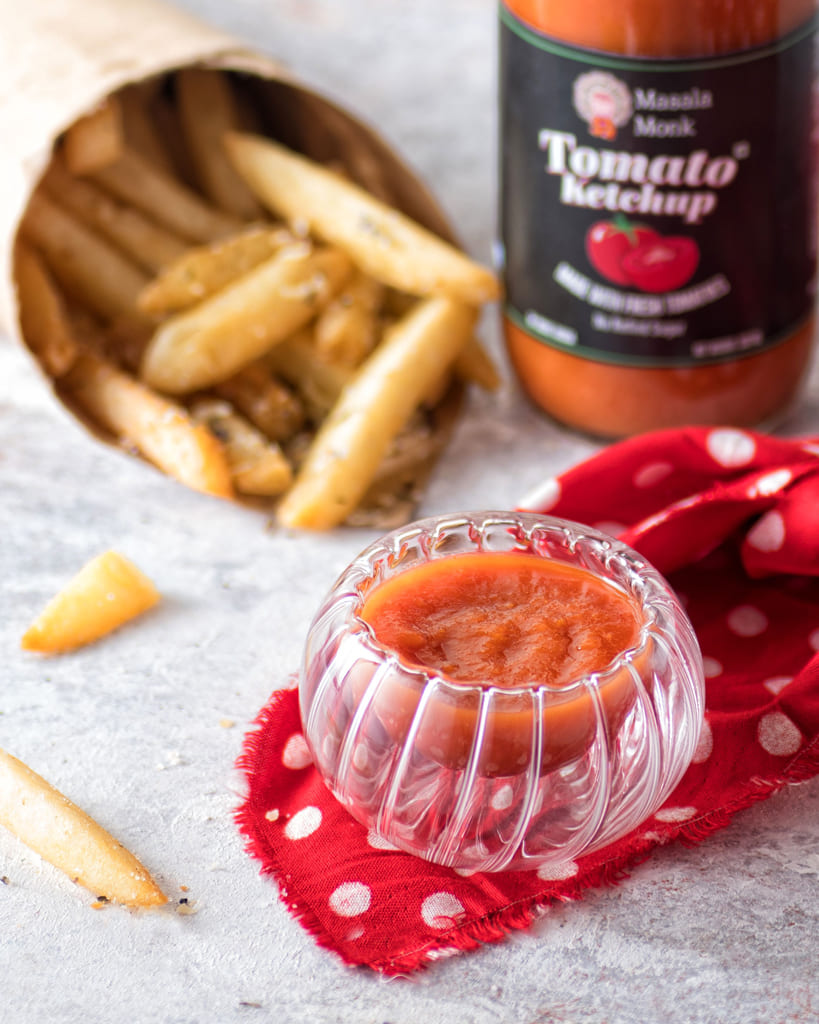
There’s a special kind of joy in biting into crispy homemade french fries that you made yourself. The outside is shatteringly crisp, the inside is fluffy and hot, and you can taste actual potato instead of just salt and grease. Once you learn how to do diy french fries at home, it becomes hard to go back to limp, lukewarm fast-food versions.
In this guide, we’ll walk through:
- A straightforward french fries ingredients and procedure section you can follow every time
- The best way to cook fries using a classic double-fry method
- Easier options like oven fries at 425°F and air fryer frozen french fries
- Fun variations: seasoned fries, garlic parmesan french fries, chili cheese french fries, truffle fries, and more
- Smarter choices for healthy potato fries, from oil selection to veggie alternatives
The aim is simple: by the end, you’ll be able to make perfect french fries in several styles, whether you’re cooking for movie night, a party tray of loaded fries, or just a snack for one.
Also Read: Simple Bloody Mary Recipe – Classic, Bloody Maria, Virgin & More
Why Bother Making Crispy French Fries at Home?
At first glance, buying a bag of frozen fries or grabbing a portion from a takeaway seems easier. However, at home french fries come with a few big advantages.
To begin with, you control the ingredients. You choose the potatoes, the oil, and the salt level. You can keep things minimal for a simple fries recipe, or go wild with flavors like cajun french fries or cheese french fries. When you’re in charge, “quality fries” actually means something.
Moreover, you get to decide how indulgent you want your fries to be. Potatoes themselves are not villains. According to Potatoes USA’s nutrition overview, a medium potato has around 110 calories, zero fat, and offers vitamin C, potassium, and fiber when you keep some peel on. Deep frying adds fat and energy, of course, but with homemade fries, you can:
- Use better oils
- Fry at the right temperatures
- Or choose oven fries potatoes and air fryer french fries most of the time
A typical restaurant portion of fries can be high in fat and sodium. Overviews like Verywell Fit’s french fries nutrition facts break down just how quickly calories add up when fries are cooked in old oil and then heavily salted. Making real potato fries at home lets you adjust all of that.
Finally, the flavor is simply better. Fresh potato fries have a clean, sweet, potato-forward taste that frozen fries rarely match. Once you’ve had real french fried potatoes straight from your own kitchen, it’s hard not to feel a tiny bit smug.
Also Read: Homemade Hot Chocolate with Cocoa Powder Recipe
Best Potatoes for Crispy Homemade French Fries
The heart of any good potato french fries recipe is, unsurprisingly, the potato. Not all varieties behave the same in hot oil or a hot oven, so it’s worth thinking about the type you buy.
Starchy vs “gold” potatoes
For classic crispy fries with fluffy interiors, starchy potatoes are ideal:
- Russet / Idaho potatoes: High starch and low moisture. These are perfect for french fries from russet potatoes if you want that restaurant-style contrast between crisp outside and soft inside.
- Yukon Gold and other yellow potatoes: Slightly waxier, with more moisture, but very creamy. These are excellent for gold potato fries or yukon gold french fries when you want a rich, buttery interior and deep golden exterior.
Side-by-side comparisons, like this piece on Russet vs Yukon Gold, point out that Russets crisp up more dramatically than yellows because of their starch and lower moisture, whereas Yukon Golds keep their shape and feel denser and creamier. That matches what you’ll see in your pan: Russets are your friend for the crispiest french fries, while golds are great when you lean toward golden potato french fries that feel more substantial.
In short:
- For extra crispy french fries or skinny fries → choose Russet/Idaho.
- For rich, slightly softer thick cut fries or steak fries → try Yukon Gold or another yellow potato.
You can mix them too, especially if you like serving a variety of textures on one platter.
Also Read: Mimosa Recipe: 10 Easy Versions from Classic to Caramel Apple
Oils, Heat, and Tools for Homemade French Fries that are Crispy
Once you’ve got your potatoes sorted, the next question is: what do you fry them in, and how?
Oils that work well for fries
When you’re deep-frying, you want oils that can handle high temperatures and stay reasonably stable:
- Refined peanut or sunflower oil
- Canola or rapeseed oil
- Rice bran oil
- High-oleic vegetable blends
- Light or refined olive oil (for fries in olive oil, not extra virgin)
Articles on the healthiest oils for cooking and frying highlight avocado, refined olive, peanut, and similar oils because they combine decent smoke points with more monounsaturated fats. They’re not magic health potions, but they’re a smarter choice than repeatedly overheated, low-quality oils.
For full-on indulgence, some people love beef tallow fries or duck fat french fries. Both fats give incredible flavor, but they are obviously richer and make the most sense for occasional “wow” dinners. On the other end of the spectrum, you can choose very light oil coatings in the oven or air fryer for healthier french fries.
Helpful tools (and what you can skip)
You do not need a dedicated “french fry fryer” to make excellent fries. You can absolutely make french fries at home using basic tools:
- A heavy pot or deep frying pan
- A thermometer (to manage that best way to fry fries temperature window)
- A large bowl for soaking
- A colander or sieve
- A clean towel for drying
- A wire rack and tray for draining cooked fries
A dedicated fryer can make things more convenient if you make home made fries often, but it’s not a requirement. A sharp knife is also plenty for cut fries, although a mandoline or fry cutter can be fun if you often crave french fries shoestring, crinkle cut french fries, or thick cut french fries.
Also Read: French 75 Cocktail Recipe: 7 Easy Variations
Ingredients for Classic French Fries
The nice part about a simple french fries recipe is how short the shopping list is. Here’s a good base for four people.
Core ingredients
- 1 kg (about 2.2 lb) potatoes (Russet for crispiest; Yukon Gold for creamier)
- Oil for frying (enough to fill your pot 5–7 cm / 2–3 inches deep)
- 2–3 teaspoons fine salt
That’s your essential french fries ingredients list: nothing fancy, just the basics that define fresh french fries.
Optional extras for crunch and flavor in Crispy Homemade French Fries
If you’d like to push things toward the crunchy fries recipe end of the spectrum or turn out seasoned fries, keep these on hand:
- Cornstarch or rice flour (for french fries with crispy coating)
- Garlic powder, onion powder, smoked paprika, chili powder (for seasoned french fries or cajun french fries)
- Grated Parmesan, cheddar, or other cheese (for parmesan french fries or cheesy french fries)
- Truffle oil and fresh parsley (for truffle french fries recipe)
- Fresh garlic and butter or olive oil (for garlic french fries recipe)
With these extras, the same basic batch of fries can become restaurant style fries, garlic parmesan fries, or loaded french fries without much extra effort.
Also Read: Tres Leches – Mexican 3 Milk Cake Recipe
Step-by-Step Crispy Homemade French Fries (Stovetop)
Let’s start with the classic version: crispy homemade french fries cooked in oil on the stove. This method gives you extra crispy fries if you follow the temperatures and timing closely.

Step 1: Cut and soak the potatoes
First, scrub your potatoes well. You can peel them if you prefer, but leaving the skins on makes more rustic real potato fries and adds a touch of fiber.
Cut the potatoes into sticks about 8–10 mm thick. For skinny french fries or french fries shoestring, go thinner; for steak fries or thick cut fries, cut chunky batons or wedges.
As soon as you cut them, drop the sticks into a big bowl of cold water. This rinses away surface starch and stops oxidation. Swish them around, then drain and refill with fresh cold water. If you like, add a spoonful of vinegar or lemon juice; it can help them hold their structure during cooking.
Soaking for 20–30 minutes helps prevent the outside from turning gummy and gives you a better chance at truly crispy french fries rather than soggy ones. Once you’re done soaking, drain the potatoes thoroughly and spread them out on a clean towel. Pat them dry until they feel matte. Water on the surface is the enemy here: it lowers oil temperature and encourages splattering.
Step 2: First fry (par-cooking)
Heat your oil to around 150–160°C (300–320°F). At this stage, the goal is to cook the potatoes through without browning them much. For deep frying, a two-stage cook—first at a lower temperature, then at a higher one—is key to combining a fluffy interior with crisp exterior.
Working in small batches, gently lower the dried potato sticks into the hot oil. Fry for about 4–6 minutes. They should turn from opaque to slightly translucent and feel tender if you poke them with a knife, but they should not yet be golden.
Lift them out with a slotted spoon and place them on a rack set over a tray. Repeat with the remaining batches. At this point, you have par-cooked fries: soft, pale, and flexible. You can pause here, cool them, and even refrigerate for several hours if you want to fry just before serving. That’s how many restaurant style french fries are prepped.
Step 3: Second fry (crisping and coloring)
For the second fry, raise the oil temperature to 185–190°C (365–375°F). That hotter environment is where you’ll develop the golden crust that makes crispiest french fries such a pleasure.
Again in small batches, slide the par-cooked fries back into the oil. Fry for 2–4 minutes, until they’re uniformly golden, with little blistered areas and crisp edges. Keep an eye on their color; you’re aiming for golden potato french fries, not dark brown or burnt ones.
There’s a health reason for that, too. When starchy foods like potatoes are fried or baked at high heat, they can form acrylamide, a compound that health agencies monitor. The US FDA’s guidance on acrylamide in foods suggests aiming for light golden colors and avoiding burnt bits whenever possible. The National Institute of Environmental Health Sciences also notes that french fries and similar foods can be significant acrylamide sources when heavily browned. So, aim for gold, not mahogany.
Once the fries are ready, lift them onto the rack or a paper-towel-lined tray. Immediately sprinkle them with salt while they’re still sizzling, so the crystals cling. If you like seasoned fries, this is the moment to toss with paprika, garlic powder, or any spice mix you enjoy.
And just like that, you’ve completed the core french fries procedure: cut, soak, dry, par-fry, then finish hot.
Also Read: High Protein Overnight Oats | 5 Recipes (Low Calorie, Vegan, Bulking & More)
Slightly Smarter, Still Crispy: Health Notes and Oil Choices
Even though fried fries recipes are not exactly health food, you can still make better choices without losing all pleasure.
First, use fresh or properly filtered oil and avoid letting it smoke. Overheated, repeatedly reused oil isn’t just unpleasant in flavor; it can contribute to off flavors and degraded fats. A thermometer makes it much easier to maintain that best way to fry french fries temperature range, whether you’re in a pot or a countertop fryer.
Second, consider how often you go for fully deep-fried crispy french fries versus lighter versions. You might save deep-fried extra crispy french fries for weekends, while turning to oven fries or air fryer homemade fries on busy weeknights.
Third, balance your plate. Fries alongside grilled chicken, salad, or roast vegetables feel different from fries plus more fried items. That’s where side dishes and smarter recipes around your fries come in—and we’ll circle back to those in a bit.
Also Read: 10 High Calorie Protein Shakes & Smoothie Recipes for Healthy Weight Gain
Oven Fries at 425°F: Baked, Seasoned, and Easy
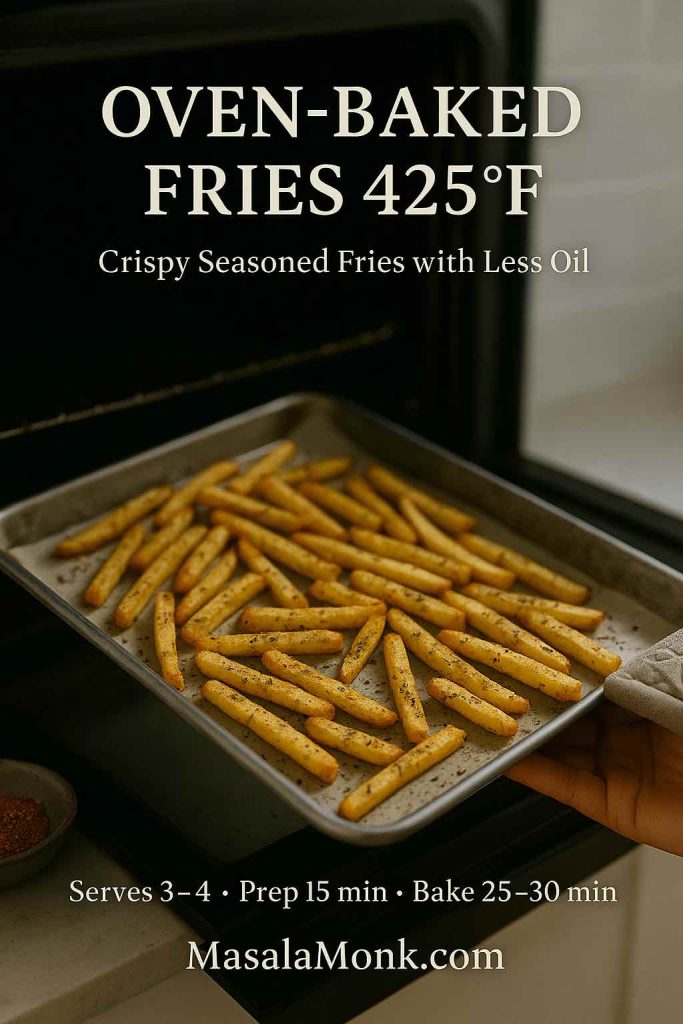
When you’d rather not deal with a pot of hot oil, oven fries 425°F are a great compromise. They won’t be identical to deep-fried fries, yet you can get delicious baked seasoned fries with crisp edges and tender middles.
Basic oven fries method
- Preheat your oven to 220°C / 425°F.
- Cut your potatoes into wedges or sticks, just as before.
- In a bowl, toss them with 1–2 tablespoons of oil—this can be olive, avocado, or any neutral oil you like.
- Season generously with salt, pepper, and any spices you enjoy: garlic powder, smoked paprika, dried thyme, or a ready-made seasoning blend.
- Spread the fries out in a single layer on a baking sheet, leaving a bit of space between pieces. Crowding leads to steaming rather than crisping.
- Bake for about 20–25 minutes, turning once halfway through, until the edges are golden brown and the fries are tender inside.
At this point, you’ve made seasoned oven fries that work beautifully with the same sauces and toppings you’d use for deep-fried versions. They’re particularly nice as a side to oven-baked mains or as part of a lighter tray meal.
If you’re planning a party spread that doesn’t revolve solely around fries, you can point guests toward other potato-centric snacks too. A collection like MasalaMonk’s potato appetizers fits naturally alongside oven fries on a buffet table, giving people more variety while still leaning into that potato comfort.
Also Read: How to Cook Perfect Rice Every Time (Recipe)
Air Fryer Fries: Crispy Homemade French Fries With Less Oil
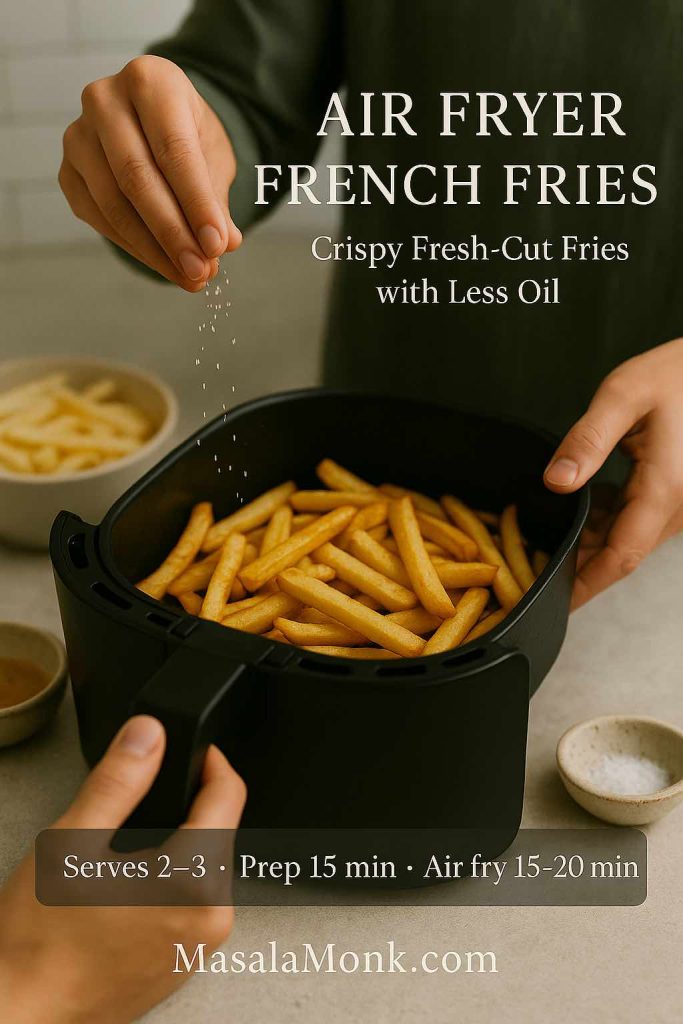
Next, let’s move to fries airfryer style. Air fryers circulate very hot air around food, using far less oil than deep frying. Comparative work on deep-fried vs air-fried potatoes has shown that air-fried samples can have dramatically less fat and slightly fewer calories per serving, which makes them a handy tool when you’d like healthier french fries more often.
Fresh potato fries in the air fryer
For easy french fries recipe done in the air fryer:
- Cut your potatoes into sticks and soak them as you would for deep frying.
- Drain and dry thoroughly.
- Toss with 1–2 teaspoons of oil, salt, and seasonings.
- Place them in the air fryer basket in a loose, even layer.
- Cook at 190°C / 375°F for 15–20 minutes, shaking every 5 minutes so they brown evenly.
- For extra crispy french fries, finish with a final 3–5 minutes at 200°C / 400°F.
This method gives you healthy potato fries that still feel indulgent. They’re especially good as skinny fries, where the higher surface area means lots of crunchy bits.
Frozen Crispy Homemade French Fries in the air fryer
For those nights when you want the best frozen fries for air fryer with minimal fuss:
- Preheat the air fryer to 200°C / 400°F.
- Tip frozen shoestring fries, straight cut fries, frozen waffle fries, or other shapes into the basket. Try not to overstack them.
- Air fry for 10–18 minutes depending on thickness, shaking halfway through.
- Season as soon as they come out of the basket.
Most brands are already partially fried in oil, so you often don’t need extra. However, a light spray of oil can help paler brands crisp a little better. This technique works well if you want to focus your kitchen time on main dishes but still end up with crispy fries recipe results.
If you’re fond of multitasking with your air fryer, ideas like air fryer hard-boiled eggs fit nicely into the same workflow. You might prepare homemade fries for dinner and a batch of eggs for breakfast with very little extra effort.
Also Read: Béchamel Sauce for Lasagna: Classic, Vegan & Ricotta Sauce Recipe
Playing With Shapes: Shoestring, Thick Cut, Steak, and Crinkle
Once you have a reliable french fries recipe, the next step is having fun with shapes. Different cuts give you different textures and cooking times.
Skinny and shoestring fries
Thin skinny fries or french fries shoestring are all about extreme crispness:
- Cut the potatoes into matchsticks.
- Soak, dry, and fry exactly as for the classic recipe.
- Shorten the par-fry to keep them from overcooking, and watch carefully during the second fry—they go from golden to too dark very quickly.
Shoestring fries are fantastic when you’re making loaded french fries recipe variations like chile-topped fries, because so many edges catch sauce and cheese.
Thick cut fries and steak fries
On the opposite end, thick cut french fries and steak fries are all about a soft, potato-y center:
- Cut the potatoes into chunky batons or wedges.
- Lengthen the par-fry slightly or start them in the oven with a bit of water in the pan, then finish in hot oil or under the broiler.
- Because there’s more potato in each piece, they stay creamy inside even when the exterior is thoroughly crisp.
Thick cut fries shine alongside robust dishes: grilled steak, roasted chicken, or as part of a plate with gravy and vegetables.
Crinkle cut and waffle fries
For crinkle cut french fries, fries crinkle cut, or french fries crinkle, you’ll need a crinkle cutter or a mandoline that makes ridges. The technique stays the same—soak, dry, par-fry, then crisp—but the ridges create extra surface area. That means more crunch, and it also means they hold onto seasonings and sauces really well.
Similarly, frozen waffle fries from the store become great canvases for fancy fries toppings. Their lattice structure acts like a little basket for cheese, carne asada, or creamy sauces.
Also Read: Peanut Butter Cookies (Classic Recipe & 3 Variations)
Veggie Fries: Sweet Potato, Yuca, Jicama, and Rutabaga
While classic french fries from white potatoes are iconic, you can also explore veggie french fries when you’re craving variety or want to shift the nutrition profile a bit.
Sweet potato fries
Sweet potato french fries deserve their own shout-out. They bake and air fry beautifully, and they pair well with both sweet and savory seasonings, from cinnamon and chili to garlic and smoked paprika. You can even make crinkle cut sweet potato fries for added texture.
Sweet potatoes tend to be softer and more prone to burning at high heat, so a light coating of cornstarch and oil, plus slightly lower temperatures, often work best. For more detail on how sweet potatoes differ nutritionally from white potatoes, you might enjoy MasalaMonk’s sweet potato nutrition breakdown and their piece on the potato debate: white vs sweet. Those articles go into fiber, vitamins, and even blood sugar considerations in a way that helps you decide when to reach for which.

Yuca, jicama, and rutabaga fries
Beyond sweet potatoes, you can experiment with:
- Yuca french fries: dense, starchy, and very satisfying. They need peeling and careful boiling before frying, but the final texture is almost creamy.
- Jicama french fries: lower in carbs, with a fresh crunch and a subtle sweetness. These are typically best baked or air fried with strong seasonings.
- Rutabaga french fries: slightly earthy and sweet, good roasted until caramelized and then tossed with spices.
These alternatives work well when you want healthy potato fries style sides on repeat without always using white potatoes. They’re also fun for guests who’ve never tried such variations.
Also Read: Chicken Alfredo Pasta, 5 Ways (Classic to Cajun, Veg, 15-Minute Jar, Healthy)

Seasoned, Spiced, and Coated Fries
Once you’ve mastered the basics, it’s time to play with seasoned fries, homemade seasoned french fries, and light coatings for texture.
Basic seasoned Crispy Homemade French Fries
For a straightforward seasoned fries recipe, start with fresh, hot fries and toss them with:
- Fine salt
- Garlic powder
- Onion powder
- Smoked paprika
- A pinch of black pepper or chili powder
This base mix instantly transforms simple french fries into something closer to best seasoned fries, and you can adjust the heat level to taste.

Cajun and herby variations
To steer your fries toward cajun french fries, blend:
- Paprika
- Cayenne
- Garlic powder
- Oregano
- Thyme
- A bit of brown sugar and black pepper
Toss this through hot fries and you’ll have spicy, deeply flavored seasoned homemade fries that go especially well with tangy dips like tzatziki or yogurt-based sauces.
Alternatively, if you’d rather lean into herbs, use rosemary, thyme, cracked black pepper, and flaky salt. These herby seasoned french fries feel more rustic and pair beautifully with roast meats and vegetables.
Crispy coatings for Homemade French Fries
If you want french fries with crispy coating without turning them into full battered french fries, a light dusting of starch can help. After soaking and drying, toss the raw potato sticks in a spoonful of cornstarch or rice flour, shake off the excess, and then fry as usual. The coating makes subtle bubbles and ridges on the surface, giving you extra crispy fries that stay crunchy a little longer.
Also Read: Crock Pot Lasagna Soup (Easy Base + Cozy Slow-Cooker Recipes)
Cheesy, Loaded, and Fancy Fries
Now comes the most playful part: turning a bowl of fries into a full meal or an irresistible shareable plate.
Garlic parmesan fries
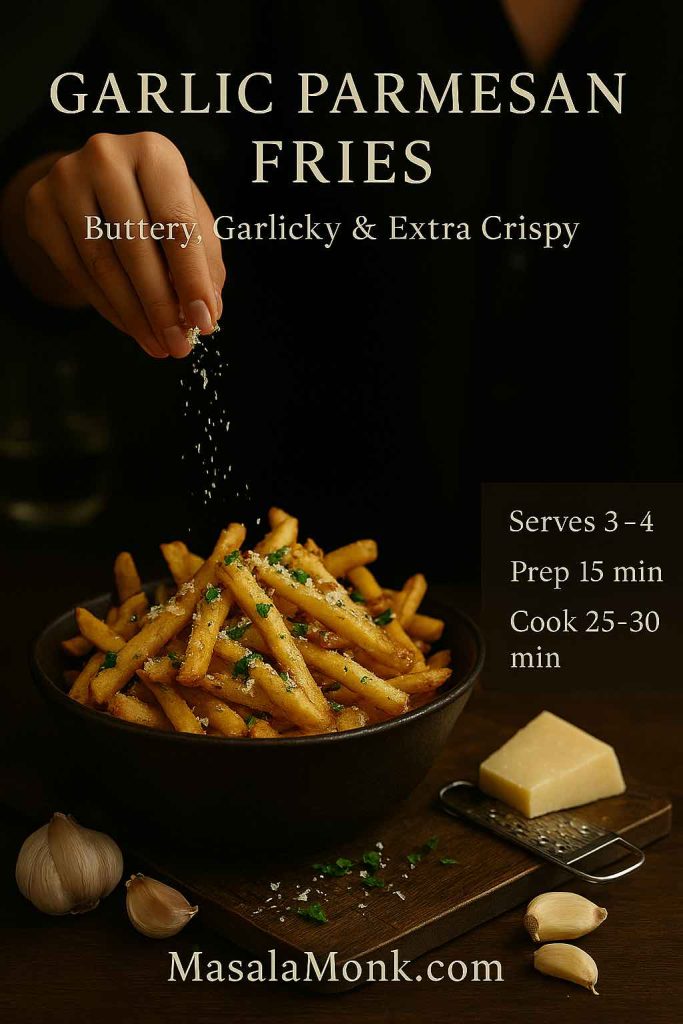
To create garlic parmesan french fries, start with a batch of hot, freshly fried fries.
- In a small pan, gently warm a bit of butter or olive oil with minced garlic until fragrant, not browned.
- Toss the hot fries with this garlic mixture.
- Add a handful of grated Parmesan and chopped parsley.
- Season with salt and pepper as needed.
This same approach also works for simple parmesan french fries if you skip the garlic or for sweet french fries if you play with honey and chili flakes instead.
Chili cheese and carne asada fries
For fully loaded chili cheese french fries, layer:
- A bed of crispy fries
- A ladle of hot chili (vegetarian or meaty)
- Grated cheddar or Monterey Jack
- Jalapeños, scallions, maybe a drizzle of sour cream
Slide the whole thing under the broiler for a minute until the cheese melts. Suddenly, your crispy fries have become serious comfort food.

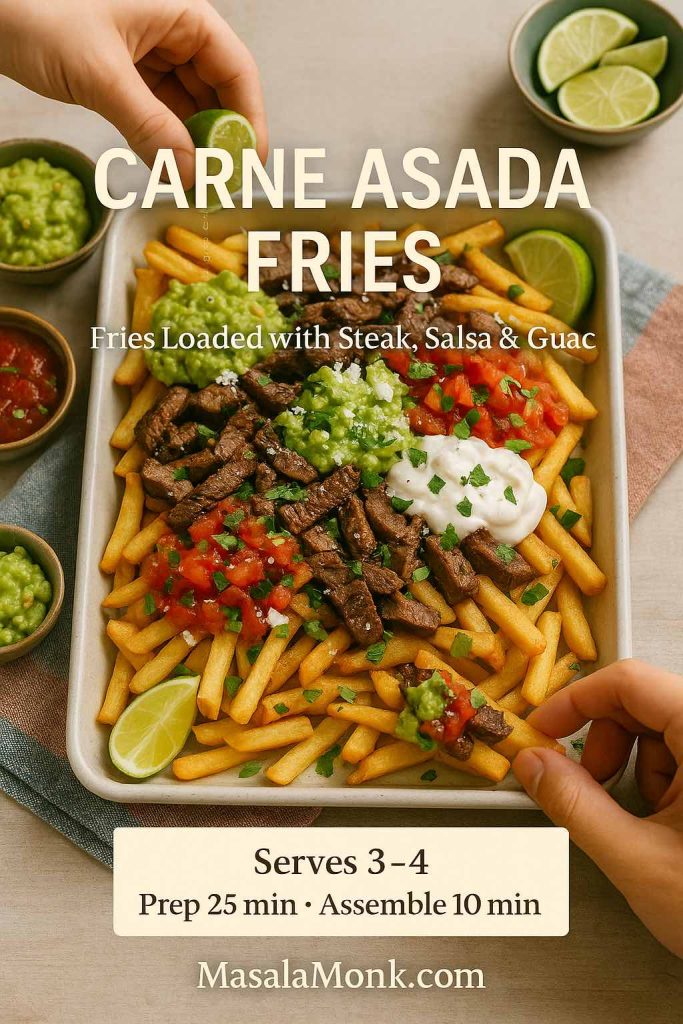
Similarly, carne asada french fries combine:
- Fries
- Chopped grilled steak
- Pico de gallo or salsa
- Guacamole
- Sour cream or crema
- Fresh coriander
They’re messy, delicious, and perfect for sharing.
Truffle and “fancy” fries
When you want fancy fries without too much effort, truffle french fries recipe style toppings make a big impression.
- Toss hot fries with a little truffle oil (a few drops go a long way).
- Add grated Parmesan and parsley.
- Season with salt and cracked pepper.
Because truffle oil can dominate, it’s best used with neutral, simply salted fries rather than heavily seasoned ones.
If you’d like more ideas for dips and cheesy sides that pair well with loaded fries, MasalaMonk’s spinach dip collection and their buffalo chicken dip recipes offer plenty of inspiration. Both kinds of dip are excellent alongside loaded french fries or even spooned over the top.

Sauces and Dips for Crispy Homemade French Fries
Good fries deserve good sauces. Beyond ketchup, you can easily mix and match flavors for your own french fry dip recipe collection.
Creamy dips
For creamy dipping sauce for french fries, try ideas like:
- A simple garlic mayonnaise with lemon juice
- A smoky paprika mayo
- A yogurt-based dip with herbs and garlic
These work especially well with seasoned fries and cajun fries, where the spices already bring a lot of personality.
If you want to branch out further, the cool, garlicky punch of tzatziki is a great contrast to hot fries. A guide like MasalaMonk’s Greek tzatziki sauce recipes shows how versatile that sauce can be across different herbs and add-ins, and every version is happy to share a plate with crispy fries.

Cheesy and baked dips for Crispy Homemade French Fries
Meanwhile, cheesy dips make perfect companions to french fries loaded with toppings. Spinach and artichoke dip, hot cheese dips, or buffalo chicken dip can all sit in the center of a platter surrounded by straight cut french fries, curly french fries, or crinkle cut fries for dipping.
Because fries and rich dips can be quite substantial, you may find it useful to round out your menu with lighter but still indulgent favorites. Dishes like classic deviled eggs with variations or high-protein snacks and breakfasts, such as overnight oats recipes, help keep things balanced over the course of a day, even if dinner is definitely in “treat” territory.
What to Serve With Crispy Homemade French Fries
Rather than thinking of fries as an afterthought, you can build entire meals around them in a way that feels intentional and satisfying.
Classic comfort plates
On one hand, there’s the timeless pairing of chicken and french fries:
- Grilled or fried chicken
- Homemade fries (deep-fried, oven-baked, or air fried)
- Coleslaw or a fresh salad
You can also swap chicken pieces for sandwiches. A platter of fries next to juicy sandwiches from a range like MasalaMonk’s chicken sandwich recipe collection makes a complete, crowd-pleasing spread.
For full comfort food mode, consider serving fries alongside creamy classics:
Those casseroles and bakes give you vegetables and dairy in forms people love, while the fries bring crunch and a salty edge to balance the creaminess.
Party spreads and grazing boards
For parties or movie nights, a fries-centric board can be a huge hit. You might:
- Offer multiple shapes: thick cut fries, skinny fries, crinkle cut fries
- Provide several seasonings: plain salted, cajun, garlic herb
- Add bowls of dips: tzatziki, spinach dip, buffalo chicken dip, ketchup, mustard-based sauces
Alongside that, including a few extra nibbles from potato-focused ideas like MasalaMonk’s potato appetizers roundup keeps everyone happy without making fries the sole attraction.
Leftovers, Crispy Homemade French Fries, and Casseroles
Every now and then, you might find yourself with cooked fries left over. They won’t be as crisp the next day, but they are far from useless.
Turning fries into home fries
One option is to make a sort of shortcut home fries recipe:
- Chop leftover fries into bite-sized pieces.
- Heat a skillet with a spoon of oil or butter.
- Add onions or peppers if you like, then the chopped fries.
- Cook over medium-high heat until the edges crisp and the pieces heat through.
- Season again and serve with eggs for breakfast.
These cooking home fries from leftover fries are especially good with runny yolks or as part of a brunch plate.

Casseroles with Crispy Homemade French Fries
Another route is to layer leftover fries into a bake:
- Assemble a cheeseburger casserole with french fries: fries on the bottom, cooked ground meat or meat alternative, cheese, and pickles or onions, then bake until bubbly.
- Create a riff on shepherd’s pie using fries as a topping instead of mashed potatoes.
These dishes aren’t traditional, but they’re a fun way to avoid waste and to reimagine fries in a new context.
Also Read: Coconut Water Cocktails: 10 Easy, Refreshing Drinks
Bringing It All Together
To sum everything up, making french fries at home doesn’t need to be complicated. You start with good potatoes, a sensible approach to oil and heat, and a simple french fries recipe that you can repeat without thinking too hard. From there, the world opens up: you can lean toward healthy potato fries most days, then indulge in deep-fried extra crispy french fries when the mood hits.
You’ve seen how to:
- Choose between Russet and Yukon Gold for the best french fry potato
- Use soaking, drying, and double frying to achieve reliably crispy homemade french fries
- Swap in oven fries, air fryer fries, or veggie french fries like sweet potato, yuca, jicama, and rutabaga
- Turn plain fries into seasoned fries, garlic parmesan fries, chili cheese fries, carne asada fries, and truffle fries
- Build full meals and snack boards around fries with dips, casseroles, sandwiches, and brunch ideas
Whether you keep it simple with a plate of lightly salted fresh french fries, or go all out with a giant platter of loaded french fries recipe piled high with cheese and toppings, you now have the tools to make them taste the way you want, every time you crave them.
Also Read: Cottage Cheese Lasagna Recipe | Chicken, Spinach, & Ricotta
FAQs about Crispy Homemade French Fries
1. What is the best potato for crispy homemade french fries?
For truly crispy homemade french fries, starchy potatoes work best. Russet or Idaho potatoes are usually considered the best french fry potato because they have a high starch, low moisture content that turns fluffy inside and crisp outside after frying. Yukon Gold or other “gold” potatoes also make excellent golden potato french fries, although they come out a little creamier and denser. If you prefer extra crunch and light interiors, reach for Russets; if you like a richer bite, go for Yukon Golds.
2. How do I keep fries crispy and not soggy?
To keep fries crunchy instead of limp, several small steps matter. Dry the potatoes thoroughly after soaking so you’re not dropping water into the oil. Then, cook them twice: a gentle first fry to cook the potato through, followed by a hotter second fry that creates the crisp crust. Avoid crowding the pan, since too many fries at once will cool the oil and make everything greasy. Salt and season fresh french fries right after the second fry while they are still hot, and serve them soon so the crust stays crisp.
3. Why do recipes tell me to soak potatoes before frying?
Soaking sliced potatoes in cold water helps pull out surface starch, which can otherwise form a gummy coating and prevent crispy fries from developing. A soak of 20–30 minutes is usually enough for a simple french fries recipe. After soaking, draining and drying thoroughly is just as important. When excess starch and moisture are removed, the fries brown more evenly and stay crisp longer, which is essential for the crispiest french fries.
4. Can I make crispy homemade french fries without a deep fryer?
Yes, you absolutely can make homemade fries without a dedicated fryer. A deep, heavy pot or a sturdy frying pan works fine as long as you use enough oil to submerge the potatoes and maintain consistent heat. A thermometer helps you hit the right temperature range. In addition, you can make oven fries and air fryer fries with just a thin coating of oil if you’d rather skip deep-frying altogether. The technique changes slightly, yet you still end up with easy french fries that taste fantastic.
5. What is the best way to fry french fries for perfect results?
A classic double-fry method is often considered the best way to fry french fries. First, fry the potatoes at a lower temperature so they cook through without much color. Then, after a short rest, fry them again at higher heat so the outside turns crisp and golden. During both steps, keep the oil temperature steady and avoid crowding the pan. Using this approach, even a beginner can turn out perfect french fries from a straightforward easy french fries recipe.
6. How hot should the oil be for french fries?
For the first fry, aim for oil around 150–160°C (300–320°F). This lets the interior of the potato cook gently without the outside browning too quickly. For the second fry, raise the temperature to about 185–190°C (365–375°F). At this higher heat, the surface dries out and browns into a crisp shell. Keeping the oil in this range is one of the main secrets behind extra crispy french fries and prevents the fries from soaking up too much oil.
7. Can I make french fries without oil?
You can make french fries without oil in the strict sense by baking or air frying plain potato sticks, though they will taste more like roasted potatoes than true fries. More realistically, very small amounts of oil—just enough to lightly coat the potatoes—create healthy potato fries that still feel indulgent. Oven-baked oven fries 425 and air-fried potatoes both work well with only a teaspoon or two of oil per serving, especially when you add bold seasonings.
8. Are homemade fries healthier than fast food fries?
While fries are still an occasional treat, homemade fries can be a better option than many fast-food versions. You decide the portion size, which oil to use, and how much salt to add. You can also make french fries from fresh potatoes instead of relying on heavily processed products. If you alternate deep-fried batches with oven fries or air fryer homemade fries, and you pair them with protein and vegetables, french fry meals can fit more comfortably into a balanced way of eating.
9. What’s the difference between shoestring, thick cut, steak fries, and crinkle cut?
All these names refer mainly to shape and thickness. Shoestring fries and skinny fries are very thin and cook quickly, giving you lots of crunchy texture. Thick cut fries and steak fries are chunkier sticks or wedges with a soft, fluffy center. Crinkle cut french fries have wavy ridges that increase surface area and help hold onto sauce and seasoning. You can use the same basic french fries recipe for each style; just adjust cooking time so the inside cooks before the outside browns too much.
10. How do I make seasoned fries at home?
To make a seasoned fries recipe at home, start with freshly cooked, hot fries. Immediately toss them with salt, then add your favorite flavors. A simple mix might include garlic powder, onion powder, smoked paprika, and black pepper. For cajun french fries, you can add cayenne, oregano, and thyme. If you prefer herby seasoned homemade fries, try rosemary, thyme, or mixed Italian herbs. Because you apply the spices while the fries are hot, they cling well and create deeply flavorful seasoned french fries.
11. How can I make fries extra crispy with a coating?
For french fries with crispy coating, a light starch layer helps. After soaking and drying the potatoes, toss them in a spoonful of cornstarch or rice flour until just lightly dusted. Shake off the excess, then fry using the usual two-step method. The starch forms tiny bubbles and ridges on the surface, leading to extra crispy fries. You still get the flavor of real potato fries, but with a more pronounced crunch that holds up better under sauces and toppings.
12. Can I make french fries in the air fryer from frozen?
Yes, air fryer frozen french fries are one of the easiest weeknight options. Place frozen fries in air fryer—whether they are shoestring, waffle, or steak-cut—in a single layer, set the temperature around 200°C / 400°F, and cook until they’re crisp and hot, shaking the basket once or twice. Many people look for the best frozen fries for air fryer because par-fried frozen fries crisp quickly and take well to extra seasonings. With this method, you still get satisfying crunch without using much additional oil.
13. Can I microwave french fries?
You can microwave fries, yet they rarely come out crisp. Microwave french fries tend to steam rather than brown, so they soften instead of staying crunchy. If you want to use the microwave, you can briefly pre-cook thick wedges or steak fries, then finish them in a hot oven, pan, or air fryer to reintroduce crispness. For reheating leftovers, a skillet or air fryer generally gives better results than the microwave alone.
14. How do I reheat leftover fries so they don’t turn floppy?
To revive fries, spread them in a single layer in a hot pan with a thin film of oil, or place them in a preheated air fryer basket. Heat until the outside becomes crisp again and the centers are warmed through. This method works for frozen fried potatoes, french fries and chips, or leftover home made fries from the day before. Reheating on a baking sheet in a hot oven also helps, though it may take slightly longer to recapture the original crunch.
15. How can I make fries healthier without losing too much flavor?
If you want healthier french fries without giving them up entirely, there are several strategies. Bake or air fry potato sticks with just a small amount of oil instead of deep-frying. Switch between white potatoes and alternatives like sweet potato french fries, yuca french fries, jicama french fries, or rutabaga french fries for more variety in fiber and nutrients. Additionally, serve your crispy homemade french fries as a side with lean protein, salads, or vegetable-rich dishes rather than pairing them only with other heavy foods.
16. What sauces go well with homemade fries?
Although ketchup is classic, homemade fries welcome a wide range of sauces. Garlic mayonnaise, mustard-based dips, smoky paprika mayo, yogurt-and-herb sauces, and spicy chili dips all pair beautifully with crispy fries. Cheese-based sauces turn simple fries into french fries loaded with flavor, while lighter dips like tzatziki give a refreshing contrast. By keeping a few favorite sauces on hand, you can turn one basic easy fries recipe into many different experiences just by changing what you serve alongside.