Posted on Leave a comment

Coffee and Testosterone ☕

Coffee & Testosterone:

Whether you’re an athlete, a busy professional, or simply a coffee lover, you might have wondered: Does my daily cup (or three) of coffee help or hurt my testosterone? With “testosterone boosting” supplements everywhere, and coffee being the world’s most popular legal stimulant, this is a question that blends science with real-life curiosity.

Let’s dive deep into the latest research, bust some myths, and see how you can optimize your coffee habit for better hormonal health—without giving up your favorite brew.


What is Testosterone & Why Does It Matter?

Testosterone isn’t just about muscles and masculinity. It’s a vital hormone for both men and women, impacting energy, mood, libido, muscle mass, bone strength, and overall vitality. Low testosterone can mean fatigue, poor mood, brain fog, and struggles with fitness. But what role does coffee play in this hormonal orchestra?


Coffee & Caffeine: The Basics

  • Coffee is more than caffeine; it’s a complex blend of antioxidants, polyphenols, and bioactive compounds.
  • Caffeine is the main active ingredient—an adenosine receptor antagonist that wakes up your brain, sharpens alertness, and even improves workout performance.

But when it comes to testosterone, the answer isn’t as simple as “caffeine up, testosterone up.” The science is nuanced.


The Science: Coffee, Caffeine & Testosterone—What Do Studies Say?

1. Acute Effects: The Pre-Workout Boost

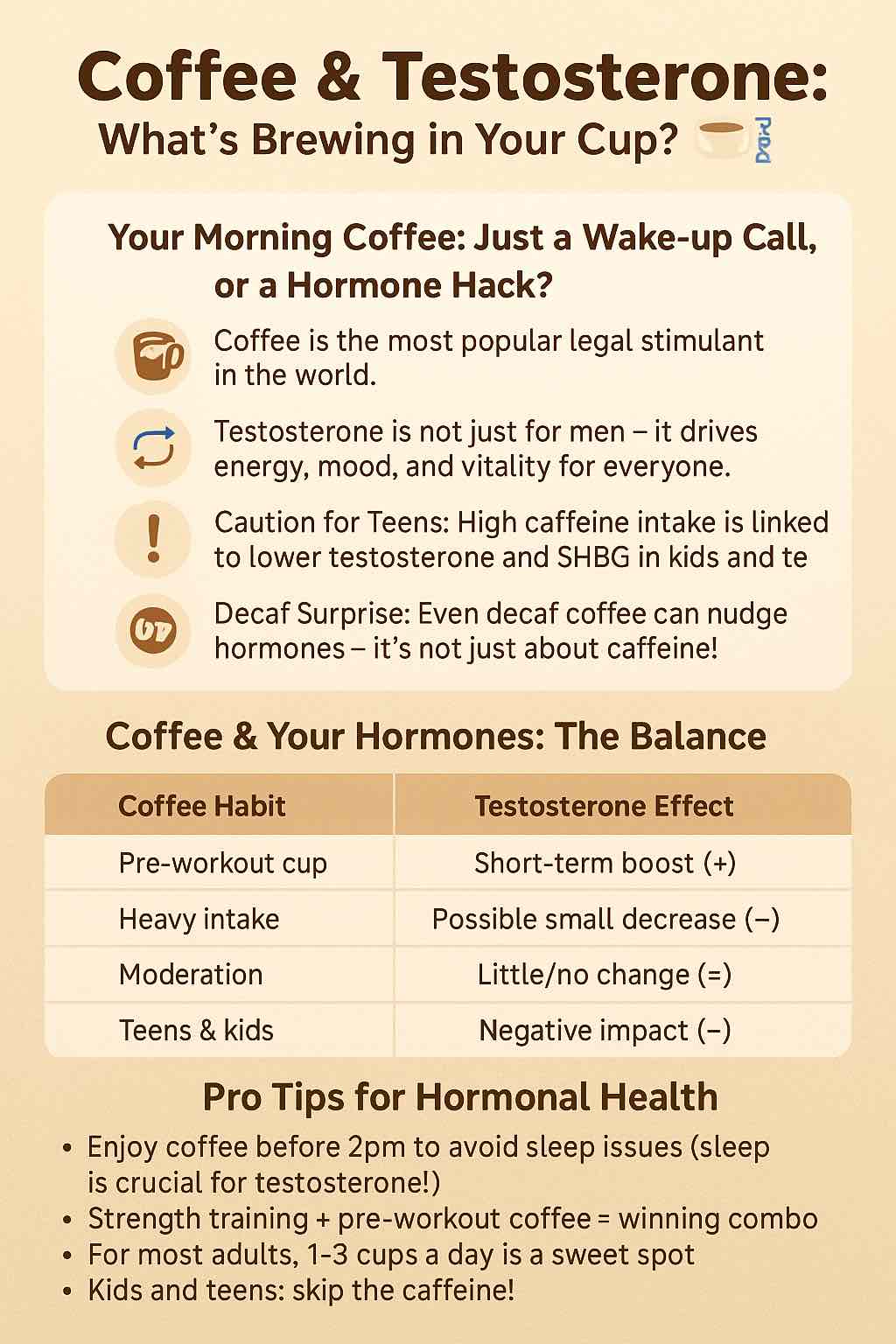
  • Short-term caffeine intake (200–400mg or 2–4 cups of strong coffee, taken 30–60 minutes before exercise) has been shown to boost testosterone by about 10–20% immediately after intense workouts, especially in men.
  • However, this spike is usually paired with a similar (or larger) cortisol increase. Since high cortisol can blunt testosterone’s benefits, the overall anabolic effect is more subtle.
  • Takeaway: If you love a pre-workout coffee, you might get a short-lived testosterone bump—just don’t expect miracles.

2. Long-Term Coffee Consumption: Mixed Messages

  • Observational studies (including large U.S. NHANES datasets) show mixed results:
    • Some suggest moderate daily coffee (2–3 cups) is associated with slightly higher testosterone.
    • Others, especially newer studies looking at caffeine metabolites in urine (i.e., how your body breaks down caffeine), find higher caffeine breakdown products = lower testosterone and lower SHBG (the hormone that carries testosterone in the blood).
    • The effect seems more pronounced in children, teens, and people with very high caffeine intake.

3. Is It Caffeine or Something Else?

  • Both regular and decaf coffee have shown hormone effects, suggesting it’s not just the caffeine. Polyphenols, antioxidants, and other coffee compounds might play a role—sometimes even raising testosterone post-exercise.

The Mechanisms: Why Would Coffee Affect Testosterone?

  • Caffeine blocks adenosine receptors in the brain and testicular cells, indirectly raising cAMP and calcium, which can trigger more testosterone during physical stress.
  • However, caffeine also stimulates cortisol, a stress hormone that can suppress testosterone if chronically elevated.
  • Metabolism matters: Some people (fast metabolizers) break down caffeine quickly, while slow metabolizers may experience more hormonal disruption.
  • New research suggests certain caffeine metabolites (like paraxanthine) may have different or even protective effects compared to caffeine itself.

Special Populations: Kids, Teens, Women, Older Adults

  • Kids & Teens: Latest studies show high caffeine exposure is linked to lower testosterone and SHBG in young people. Caution is warranted here.
  • Women: Caffeine can affect other hormones (like estrogen and progesterone), but current evidence doesn’t suggest dramatic testosterone swings in women.
  • Older Adults: Hormonal impacts seem milder, but coffee can interact with medications and sleep (which both influence testosterone).

Practical Advice: How to Drink Coffee for Hormonal Health

1. Timing is Everything

  • For a testosterone boost (and performance edge), drink coffee 30–60 minutes before your workout.
  • Avoid caffeine too late in the day—it can disrupt sleep, and poor sleep is a major testosterone killer.

2. Mind the Dose

  • Moderation is key: Stick to ≤400mg caffeine/day (about 4 cups of brewed coffee) for most adults.
  • Going much higher may backfire, raising cortisol and reducing baseline testosterone over time.

3. Know Your Genetics

  • If you get jittery, anxious, or have trouble sleeping after coffee, you may be a slow caffeine metabolizer. In that case, less is more—for both hormone balance and wellbeing.

4. Kids & Teens: Caution!

  • There’s no safe reason for regular caffeine in children or young teens, especially for hormonal development.

5. Overall Lifestyle Wins

  • Coffee alone won’t make or break your testosterone. Focus on:
    • Sleep: 7–8 hours/night.
    • Strength training: Regular resistance exercise is a proven T-booster.
    • Balanced diet: Good fats, adequate protein, veggies, and micronutrients.
    • Manage stress: Chronic stress (and thus cortisol) is a real testosterone robber.

The Bottom Line

Your morning coffee isn’t going to make or break your testosterone. A couple cups can give you a short-term edge—especially before a workout—but don’t expect miracles. Stay moderate, listen to your body, and focus on sleep, exercise, and nutrition for real hormonal health.

Coffee is a tool, not a magic bullet. Savor it, enjoy the boost—and use it wisely.

Frequently Asked Questions (FAQ)

1. Does drinking coffee every day lower my testosterone?
For most adults, moderate coffee consumption (2–3 cups/day) has minimal or no significant effect on long-term testosterone. Some studies even suggest a slight increase, while others show a minor decrease at very high intake. Individual response varies.


2. Will quitting coffee boost my testosterone levels?
If you’re a heavy caffeine user (5+ cups/day), quitting or reducing might slightly raise baseline testosterone, especially if it helps your sleep or lowers your stress. For most people, moderate coffee has little impact.


3. Is there a difference between coffee and energy drinks when it comes to testosterone?
Yes. Coffee contains antioxidants and other compounds that may buffer negative effects. Energy drinks often have much higher caffeine plus sugar and additives, which can disrupt hormones and health more than coffee alone.


4. Is it safe for teenagers to drink coffee for testosterone?
No. Recent research shows caffeine exposure in kids and teens is associated with lower testosterone and SHBG, potentially affecting development. It’s best to avoid regular caffeine at a young age.


5. Does decaf coffee affect testosterone too?
Surprisingly, yes. Some studies show decaf can also influence testosterone—sometimes more positively than regular coffee, possibly due to other bioactive compounds. So, if you love coffee but want to avoid caffeine, decaf is a good option.


6. Should I drink coffee before my workout for a testosterone boost?
Drinking coffee (or caffeine) 30–60 minutes before strength training can give a short-term testosterone bump—but it also increases cortisol. The performance benefits may outweigh hormonal changes for most people.


7. How does coffee affect testosterone in women?
Current evidence suggests coffee doesn’t dramatically alter testosterone in women, though it can influence other hormones. If you have PCOS or hormone concerns, consult a healthcare provider.


8. Can too much coffee hurt my sleep and lower testosterone?
Absolutely. Poor sleep is a strong testosterone killer. If coffee or caffeine after noon affects your sleep, reduce intake or keep it to mornings only.


9. What’s the best amount of coffee for hormonal health?
For most adults: 1–3 cups/day, preferably before 2pm. Individual tolerance varies, so listen to your body and watch for sleep or anxiety effects.


10. Are there safer caffeine alternatives for boosting energy and testosterone?
For some, switching to paraxanthine (a caffeine metabolite supplement, now available in some markets) may offer a gentler energy boost with less hormone disruption. Otherwise, try green tea, adequate hydration, and good sleep hygiene.

Posted on 2 Comments

Cardamom in Coffee: A Delightful Fusion of Aromas

Cardamom Coffee

Coffee—that daily ritual, a comforting aroma that kickstarts mornings across the globe.
But what if you could take your cup further, adding a centuries-old spice that transforms the experience both sensorially and, possibly, for your health?
Enter cardamom, a jewel among spices, revered for its perfume-like flavor and myriad benefits.

In this in-depth post, we explore how and why you should try cardamom in your coffee, what the research says, how to brew it right, and practical tips for making it your own.


1. A Journey Through Time: Cardamom & Coffee in Culture

The marriage of cardamom and coffee isn’t new—it’s deeply rooted in tradition.

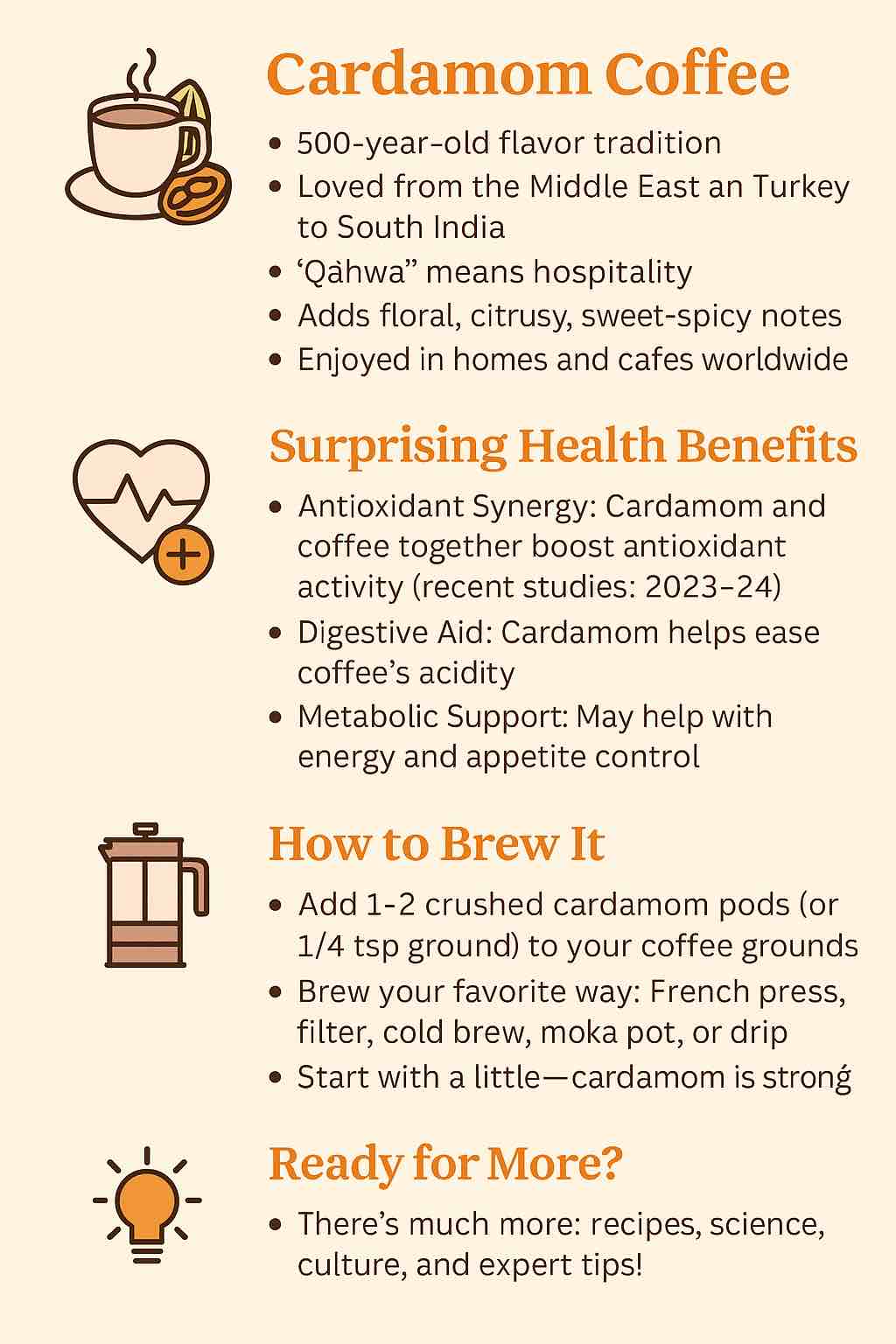
  • Middle Eastern Origins: In the Arabian Peninsula, serving “Qahwa” (Arabic coffee spiced with cardamom) is a centuries-old sign of hospitality. The blend has traveled from Bedouin tents to bustling modern cafes.
  • Ritual & Respect: In Saudi Arabia and neighboring Gulf countries, offering cardamom coffee to guests is a mark of honor.
  • Global Spread: Turkish and Persian coffee cultures also embrace cardamom. Even in parts of South India, cardamom adds an aromatic twist to filter coffee.

Why cardamom? Beyond flavor, it’s a symbol of warmth, generosity, and connection.


2. Science in Your Cup: What Happens When Cardamom Meets Coffee?

Flavor Chemistry

  • Aromatic Powerhouse: Cardamom’s essential oils (cineole, limonene, terpinene) mingle with coffee’s roasted notes, smoothing bitterness and lifting the cup with sweet, floral, and citrus hints.
  • Balanced Brew: Properly balanced, cardamom can mellow acidity and create a cup that’s simultaneously bold and soothing.

Health & Wellness: The Latest Research

Recent studies (2023–2025) illuminate intriguing benefits:

  • Synergistic Antioxidants: Combining cardamom with coffee may amplify antioxidant activity, helping reduce inflammation and cellular stress.
  • Heart & Metabolic Health: Cardamom has been shown to lower blood pressure and inflammation, though a few studies suggest high cardamom intake in coffee might modestly raise LDL cholesterol. Moderation is key.
  • Digestive Ease: Cardamom’s traditional use as a digestive aid can help counter coffee’s acidity, reducing bloating or discomfort for some.
  • Antimicrobial Boost: Cardamom’s natural compounds also display antimicrobial action, supporting overall health.
  • Energy & Appetite: Animal research shows cardamom may stimulate appetite while also boosting energy expenditure, suggesting a possible role in weight regulation.

Note: While the synergy is promising, individual responses vary—especially with underlying health conditions. When in doubt, consult your healthcare provider.


3. How to Make Cardamom Coffee: Practical Brewing Guide

Ready to try this ancient-modern fusion at home?
Here are practical methods, from traditional to quick hacks:

Classic Arabic Cardamom Coffee (Qahwa)

You’ll Need:

  • 2 cups water
  • 2 tbsp lightly roasted, coarsely ground Arabica coffee
  • 4–6 green cardamom pods, lightly crushed
  • Optional: pinch of saffron, rose water, or a few cloves

Method:

  1. Bring water to a boil.
  2. Add cardamom pods (and saffron, if using); simmer 2–3 minutes.
  3. Add coffee; bring just to a gentle boil, then reduce heat.
  4. Simmer (don’t boil hard) for 5–10 minutes.
  5. Let grounds settle. Pour carefully into a serving pot, leaving grounds behind.
  6. Serve in small cups, optionally sweetened or with dates on the side.

Turkish or Indian-Style Cardamom Coffee

  • Mix ¼–½ tsp ground cardamom with ground coffee before brewing in a cezve (Turkish pot) or stovetop moka pot.
  • For French press or drip, simply add ground or lightly crushed pods to the coffee grounds before brewing.

Espresso or Quick Add-In

  • Add a pinch (⅛ tsp) of ground cardamom to your portafilter before pulling a shot.
  • Or, stir a pinch into your finished cup—great for cold brew, too!

Pro Tip:
Start with less cardamom and increase to taste. Cardamom’s flavor is potent—too much can overwhelm!


4. Variations & Modern Twists

  • Iced Cardamom Coffee: Brew strong coffee with cardamom, cool, and serve over ice with a splash of milk.
  • Cardamom Coffee Syrup: Make a simple syrup with cardamom pods and sweeten your coffee or desserts.
  • Coffee Cocktails: Cardamom pairs brilliantly in espresso martinis or spiked coffee drinks.

5. Cardamom in Coffee: Buying, Storing, and Blending

  • Buying: Always choose fresh, green cardamom pods over pre-ground. Pods lock in oils and flavor.
  • Storing: Keep pods airtight, away from light and heat.
  • DIY Blend: Grind pods with your coffee beans just before brewing for the freshest taste.

6. FAQs & Practical Tips

Q: How much cardamom should I use?
A: For an 8 oz cup, 1–2 pods or a generous pinch (⅛–¼ tsp) of ground cardamom is a good starting point.

Q: Can I use pre-ground cardamom?
A: Yes, but flavor fades quickly. Whole pods, freshly crushed or ground, are best.

Q: Any health risks?
A: Cardamom is safe for most people in culinary amounts. High doses may not suit those with gallstone issues or certain allergies. Moderation is your friend.


7. The Future of Cardamom Coffee: Trends & Products

  • Resurgence: Specialty cafes and global coffee shops are rediscovering traditional recipes.
  • Ready-to-Drink: Look for bottled cardamom cold brews, instant blends, and even cardamom coffee pods.
  • DIY Movement: At-home baristas are blending spices into their morning routines, inspired by both nostalgia and novelty.

8. Conclusion: Why You Should Try It

Cardamom in coffee is more than just a flavor hack.
It’s a celebration of culture, a possible health booster, and a way to personalize your daily ritual with a touch of ancient wisdom. Whether you crave the classic or the creative, this fusion is an invitation to slow down, savor, and explore.

Have you tried cardamom in your coffee? Share your experience, recipes, or tips below!


Ready to take your coffee on a flavor adventure? Try cardamom—and taste history, science, and delight in every sip.

Posted on 1 Comment

Side Effects of Coffee on Females: how caffeine affects women?

HOW COFFEE AFFECTS WOMEN What Every Woman Should Know

Coffee is woven into the fabric of daily life for millions of women worldwide. Whether it’s a morning ritual or an afternoon pick-me-up, that cup of coffee offers a sense of comfort, alertness, and pleasure. But beneath the comforting aroma lies a complex biochemical interaction — one that’s often quite different for women compared to men.

Emerging science has shown that caffeine interacts with women’s hormones, reproductive health, sleep, mental well-being, bone density, and more — sometimes in helpful ways, but sometimes not.

In this in-depth article, we’ll explore how caffeine affects women at every stage of life based on the latest available research.


☕ Caffeine 101: How It Works

Caffeine is a natural stimulant that primarily works by blocking adenosine receptors in the brain, which prevents drowsiness and promotes alertness. It also stimulates the central nervous system, increasing levels of dopamine, norepinephrine, cortisol, and adrenaline.

While caffeine metabolism occurs mainly in the liver via the CYP1A2 enzyme, not everyone processes it the same way. Factors such as sex hormones, genetics, pregnancy, contraceptive use, and racial differences significantly alter how caffeine is metabolized in women.


🌸 Hormonal Fluctuations & the Menstrual Cycle

Estrogen Interactions

  • Caffeine’s relationship with estrogen is complex and ethnicity-dependent.
    • White women may see a slight decrease in estrogen levels with caffeine consumption.
    • Asian women may experience increased estrogen levels.
  • These hormonal shifts can affect menstrual regularity, PMS symptoms, and even long-term reproductive health.

Menstrual Cycle Length and Symptoms

  • High caffeine intake has been linked to:
    • Shorter cycle lengths (fewer than 24 days).
    • Possible reduced duration of menstrual bleeding.
    • Exacerbation of PMS symptoms, such as breast tenderness, mood swings, and irritability.
    • Increased likelihood of dysmenorrhea (painful periods) in some women.

Luteal Phase Sensitivity

  • In the second half of the menstrual cycle (luteal phase), caffeine clearance may slow due to progesterone dominance.
  • This can make women more sensitive to the stimulant effects of caffeine just before menstruation.

🤰 Fertility & Pregnancy

Trying to Conceive

  • High caffeine intake (>300 mg/day) may:
    • Prolong the time it takes to conceive.
    • Potentially increase the risk of early pregnancy loss.
    • Emerging data even suggests that male partners’ caffeine intake may affect miscarriage risk.

Pregnancy Risks

  • Caffeine freely crosses the placenta.
  • The fetus has limited ability to metabolize caffeine.
  • Studies consistently show increased risks for:
    • Miscarriage (with dose-dependent risk escalation).
    • Fetal growth restriction and low birth weight.
    • Stillbirth at very high caffeine intakes.
  • The consensus recommendation:
    Limit caffeine to ≤200 mg/day during pregnancy.

😴 Caffeine, Sleep, and Anxiety

Women are often more vulnerable to the sleep-disrupting and anxiety-provoking effects of caffeine due to biological and hormonal differences.

Sleep Disturbance

  • Caffeine can reduce total sleep time, diminish deep (slow-wave) sleep, and fragment REM sleep.
  • Even when consumed up to 6 hours before bedtime, caffeine can delay sleep onset and reduce sleep quality.
  • These effects may be amplified during PMS, pregnancy, and menopause when hormonal shifts alter sleep patterns.

Anxiety

  • Women have higher rates of caffeine-induced anxiety and panic attacks, particularly at doses over 300 mg/day.
  • Those with pre-existing generalized anxiety disorder or panic disorder are especially prone to caffeine-related exacerbations.

🦴 Bone Health and Osteoporosis

Postmenopausal women face increased risks for osteoporosis, and caffeine may worsen bone loss through:

  • Reduced calcium absorption.
  • Increased urinary calcium excretion.
  • Accelerated bone demineralization at very high intakes.

However, moderate caffeine consumption (up to 300 mg/day) poses minimal risk if adequate calcium intake is maintained.


🧬 Genetic Differences in Caffeine Metabolism

Genetic variations in the CYP1A2 gene influence how quickly caffeine is metabolized:

  • Fast metabolizers may tolerate higher intakes without adverse effects.
  • Slow metabolizers retain caffeine longer, increasing risks for:
    • Palpitations
    • Anxiety
    • Insomnia
    • Hypertension

Women using oral contraceptives or hormone replacement therapy (HRT) also experience slower caffeine clearance, as estrogen suppresses CYP1A2 activity.


🩸 Caffeine and Chronic Female Conditions

Polycystic Ovary Syndrome (PCOS)

  • Limited and conflicting data:
    • Some studies suggest caffeine may improve insulin sensitivity (a benefit for PCOS).
    • Others suggest it may worsen anxiety and hormonal imbalances.

Endometriosis

  • Some observational data suggest high caffeine intake might worsen endometriosis symptoms, likely through hormonal dysregulation and increased inflammation.

Fibrocystic Breast Disease

  • Caffeine can aggravate breast pain and tenderness in women with fibrocystic breast changes.

🩺 Cardiovascular Considerations

  • Moderate coffee intake is generally not associated with increased cardiovascular disease risk.
  • High caffeine intake can temporarily raise blood pressure and trigger palpitations, especially in sensitive women or those with pre-existing hypertension.

💡 The Ideal Caffeine Intake for Women (by Life Stage)

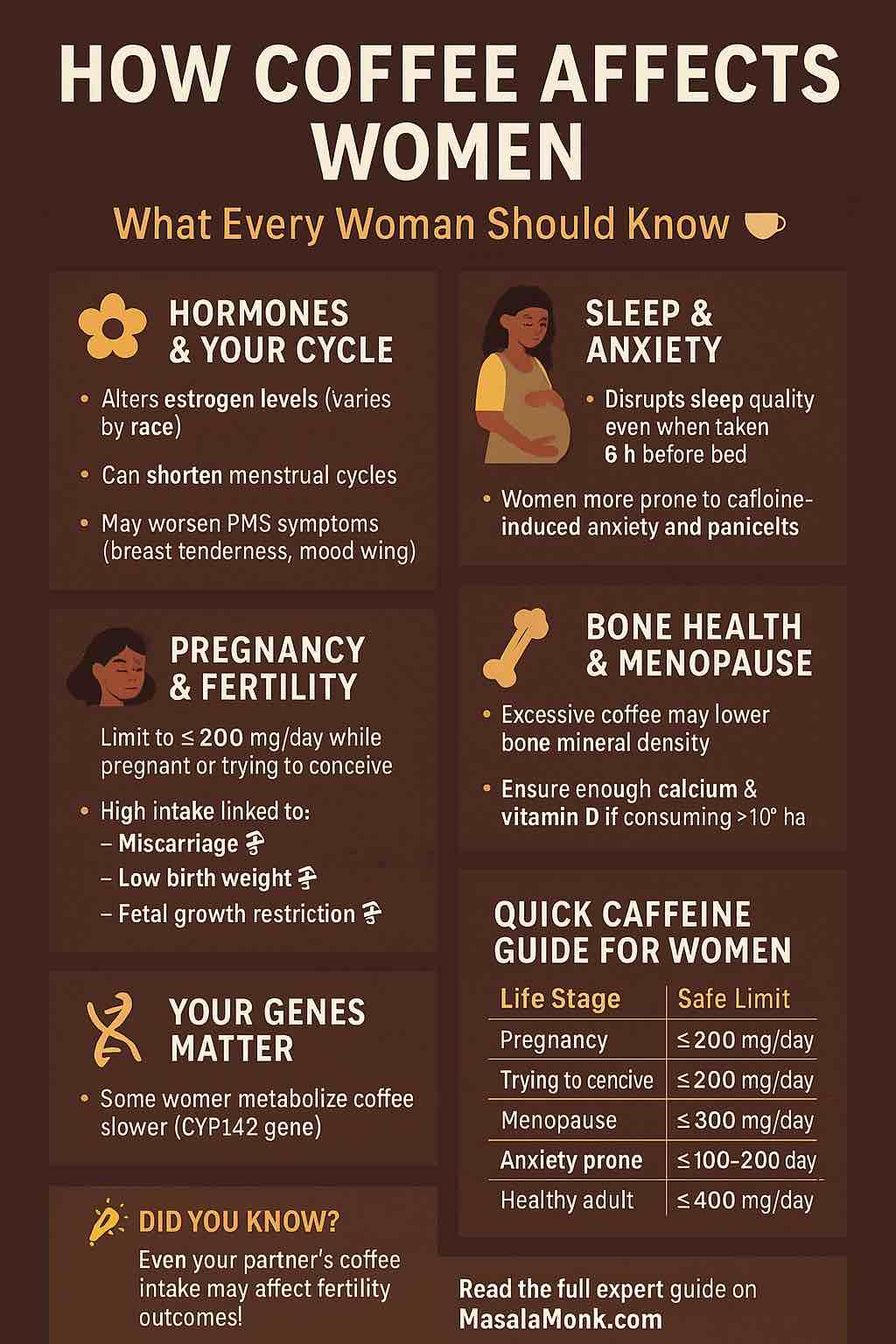
Life Stage or ConditionSafe Upper LimitNotes
General Adult Women≤ 400 mg/day~3-4 cups
Trying to Conceive≤ 200 mg/dayMay benefit fertility
Pregnancy≤ 200 mg/dayReduce miscarriage, stillbirth, growth restriction risk
Postmenopausal Women≤ 300 mg/dayEnsure adequate calcium intake
Anxiety Disorders≤ 100–200 mg/dayMinimize risk of anxiety/panic
Sleep DisordersAvoid caffeine after noonPrevent insomnia
PCOS / EndometriosisIndividualizedConsult healthcare provider

🔬 Areas Where More Research Is Needed

While much is known, important research gaps remain:

  • How caffeine interacts with racial and genetic differences.
  • The precise effects on fertility and conception rates.
  • Long-term effects on bone health and menopause.
  • Deeper understanding of caffeine’s role in PCOS and endometriosis.
  • Impacts of paternal caffeine intake on pregnancy outcomes.

✅ Bottom Line

Caffeine can absolutely be part of a woman’s healthy lifestyle — but context matters greatly. Hormonal status, life stage, personal sensitivity, and overall health conditions all influence how caffeine behaves in the female body.

For most women, moderation remains key:

  • Pregnant or trying-to-conceive? Keep it under 200 mg/day.
  • Menopausal? Stay aware of bone health and calcium.
  • Struggle with anxiety or sleep? Consider lowering caffeine intake.
  • Otherwise healthy? Most can enjoy 200–300 mg/day safely.

Being mindful of your individual response — and adjusting intake accordingly — allows you to enjoy your coffee without compromising your health.


Always speak to your healthcare provider for personalized advice, especially during pregnancy or while managing chronic conditions.

10 FAQs About Coffee and Women’s Health

1️⃣ Is coffee safe for women to drink daily?

Yes, for most healthy adult women, moderate coffee consumption (200–300 mg caffeine per day, about 2–3 cups) is considered safe. Individual tolerance varies based on genetics, hormones, and health conditions.


2️⃣ Does caffeine affect women’s hormones?

Yes. Caffeine may influence estrogen levels, menstrual cycle length, PMS symptoms, and hormonal fluctuations. The effect can differ by ethnicity and life stage, with some studies showing elevated estrogen levels in Asian women and slightly decreased levels in White women.


3️⃣ Can coffee affect fertility or the ability to get pregnant?

High caffeine intake (>300 mg/day) may prolong time to conception and slightly increase the risk of miscarriage. Both partners may benefit from limiting caffeine to ≤200 mg/day while trying to conceive.


4️⃣ How much coffee is safe during pregnancy?

Most guidelines recommend pregnant women limit caffeine to 200 mg per day or less to minimize risks of miscarriage, low birth weight, and fetal growth issues.


5️⃣ Does caffeine worsen PMS symptoms?

For some women, yes. Caffeine may exacerbate PMS symptoms like breast tenderness, irritability, and mood swings, particularly in sensitive individuals or at higher doses.


6️⃣ Can caffeine cause anxiety in women?

Yes. Women tend to be more sensitive to caffeine-induced anxiety and panic attacks, especially when consuming over 300 mg/day. Those with pre-existing anxiety disorders should monitor intake closely.


7️⃣ Is caffeine harmful for women in menopause?

Postmenopausal women can generally consume caffeine safely, but high intake may contribute to reduced bone mineral density. Adequate calcium and vitamin D intake can help mitigate bone loss risks.


8️⃣ Does caffeine interact with birth control or hormone replacement therapy (HRT)?

Yes. Estrogen from birth control or HRT slows caffeine metabolism, making its effects last longer. Women on these medications may experience prolonged stimulation from typical caffeine doses.


9️⃣ Is coffee helpful or harmful for women with PCOS?

Research is mixed. Some studies suggest caffeine may improve insulin sensitivity (beneficial for PCOS), while others note potential drawbacks like increased anxiety and hormonal fluctuations. Individual response should guide intake.


🔟 When should women avoid caffeine entirely?

Women may benefit from avoiding caffeine:

  • Late in pregnancy
  • If experiencing insomnia or sleep issues
  • If prone to severe anxiety
  • If advised by a healthcare provider for specific medical conditions

Posted on Leave a comment

Decoding the Buzz: Is Your Coffee High in Oxalates?

Introduction:

Are you a coffee aficionado who’s recently stumbled upon concerns about oxalates in your favorite morning brew? You’re not alone. Amidst the myriad of health discussions surrounding coffee, one burning question often pops up: Does coffee contain high levels of oxalates, and should this be a cause for concern? Let’s sift through the facts to find out.

Understanding Oxalates:

What are Oxalates?

Oxalates are natural compounds found in many foods. They play a varied role in human health, particularly regarding kidney health and the potential formation of kidney stones. When oxalates bind with calcium in the body, they can form crystals, potentially leading to kidney stones, a painful condition that might require medical intervention.

Health Implications of High Oxalate Intake

Consuming foods high in oxalates can be a health concern, especially for individuals prone to kidney stones or those with hyperoxaluria, a condition characterized by excessive urinary oxalate. Common high-oxalate foods include spinach, nuts, and chocolate, but what about coffee? The belief that coffee is a significant source of oxalates has been a topic of debate among health enthusiasts and medical professionals.

The Truth About Coffee and Oxalates:

Debunking the Myth

Contrary to popular belief, coffee is not a high-oxalate drink. In fact, most types of coffee, including instant, typically contain less than 3mg of oxalates per cup, making it a low-oxalate beverage.

Solid Scientific Backing

Recent studies and analyses have consistently shown that coffee’s oxalate content is minimal. This includes research indicating that both regular and instant coffee are low in oxalates. For those who are vigilant about their oxalate intake due to health concerns, this is reassuring news.

Coffee Types and Oxalate Levels:

Regular Coffee

Whether it’s your home-brewed cup or a grab-and-go from your favorite café, regular coffee is generally low in oxalates, ensuring that your daily ritual doesn’t pose a risk to your kidney health.

Decaffeinated Coffee

For those who prefer a caffeine-free experience, the good news is that decaf coffee also falls into the low-oxalate category, offering a safe alternative without compromising on oxalate intake.

Espress

Espresso lovers might wonder about their favorite concentrated brew. While espresso is made by forcing hot water through finely ground coffee beans, it’s only considered a moderate-oxalate drink. Each espresso shot contains around 5mg of oxalate, still a relatively low amount, but something to keep in mind if you consume it frequently.

Cold Brew Coffee

For those who enjoy their coffee cold, cold brew is another low-oxalate option. Made by steeping coffee grounds in cold water, it maintains a low oxalate level, similar to regular hot coffee, making it a safe choice for those monitoring oxalate intake.

Instant Coffee

Instant coffee, often a convenient choice, has been a topic of confusion. While some studies suggest it may have slightly higher levels of oxalates than regular brewed coffee, it still falls well within the low-oxalate range. Therefore, enjoying an instant coffee shouldn’t significantly impact your oxalate intake.

Practical Tips for Coffee Drinkers:

  1. Moderation Is Key: While coffee is low in oxalates, moderation is always a good practice. This is especially true for individuals with specific health conditions like a history of kidney stones.
  2. Consider Your Total Diet: Remember to consider your total oxalate intake from all sources, not just coffee. A balanced diet with a variety of foods can help manage oxalate levels.
  3. Stay Informed: Keep up-to-date with the latest research on coffee and health. As we continue to learn more, guidelines and recommendations may evolve.

Conclusion:

So, can you still relish your daily coffee without worrying about oxalates? Absolutely. Coffee, in its many forms, is generally low in oxalates and can be enjoyed as part of a healthy diet. Whether you’re sipping a latte, an espresso, or a comforting cup of home brew, you can do so with the knowledge that coffee is not a major contributor to oxalate intake.

Over to You!

Do you have any coffee rituals or preferences? How do you balance your love for coffee with health considerations? Share your thoughts and experiences in the comments below!


Posted on Leave a comment

Coffee and Kidney Stones

crop faceless woman raising glass of iced coffee latte

Are you a coffee lover concerned about kidney stones? You’re not alone. The relationship between coffee consumption and kidney stones has been a topic of much debate. Let’s brew through the myths and facts to see what the latest research says.

The Perplexing Question: Does Coffee Cause Kidney Stones?

The Myth:

Many believe that coffee, being a diuretic, could lead to dehydration and thereby increase the risk of kidney stones. But is there more to this story?

The Facts:

Recent studies have painted a more complex picture:

  • Research Insights: Some studies suggest that coffee may have preventive properties that could lower the risk of kidney stones. This is attributed to its diuretic nature, which helps flush out potential stone-forming minerals from the system.
  • Caffeine’s Role: While caffeine does increase calcium excretion, which in theory could contribute to kidney stones, the overall evidence leans towards coffee having a protective effect against their formation.

Coffee’s Protective Shield

A study highlighted by the National Kidney Foundation using genetic data of hundreds of thousands of people suggests that daily coffee and caffeine consumption can prevent kidney stones. The diuretic effect of coffee, rather than dehydrating, may actually help in preventing stone formation by increasing urine volume and flushing out kidney stones’ constituents.

Moderation is Key

While research from sources like PMC and Kidney.org indicates no direct link between moderate coffee consumption and increased kidney stone risk, moderation remains crucial. Excessive coffee drinking, especially for those with blood pressure issues, should be avoided.

Individual Responses Matter

Remember, these findings aren’t one-size-fits-all. Personal health conditions and histories of kidney stones can significantly influence how your body reacts to coffee.

Practical Tips for Coffee Lovers

  1. Stay Hydrated: Balance your coffee intake with plenty of water to avoid any potential dehydration.
  2. Moderate Consumption: Aim for no more than 3-4 cups a day, especially if you have other health concerns.
  3. Consult Your Doctor: If you have a history of kidney stones, it’s best to seek personalized advice from a healthcare professional.

Conclusion

So, can you still enjoy your daily cup of joe without worrying about kidney stones? For most people, the answer seems to be yes, with a side of moderation and mindful hydration. As we continue to filter through the research, it’s clear that coffee’s relationship with kidney stones is not as straightforward as once thought.

Over to You!

Are you a coffee enthusiast with experiences to share? How does your love for coffee align with your health considerations? Pour your thoughts in the comments below!