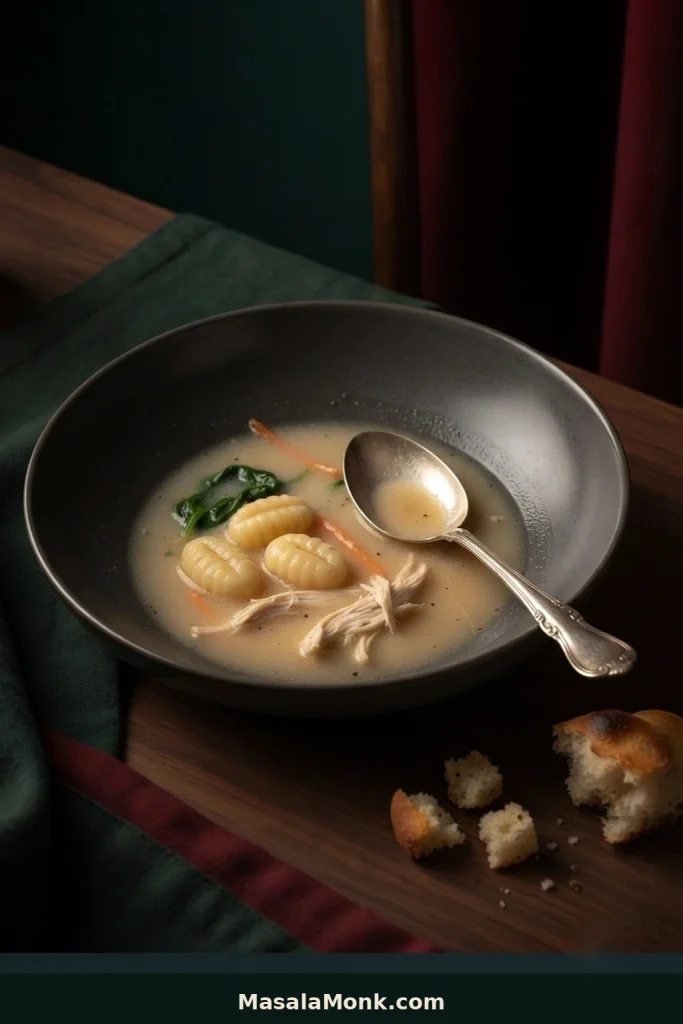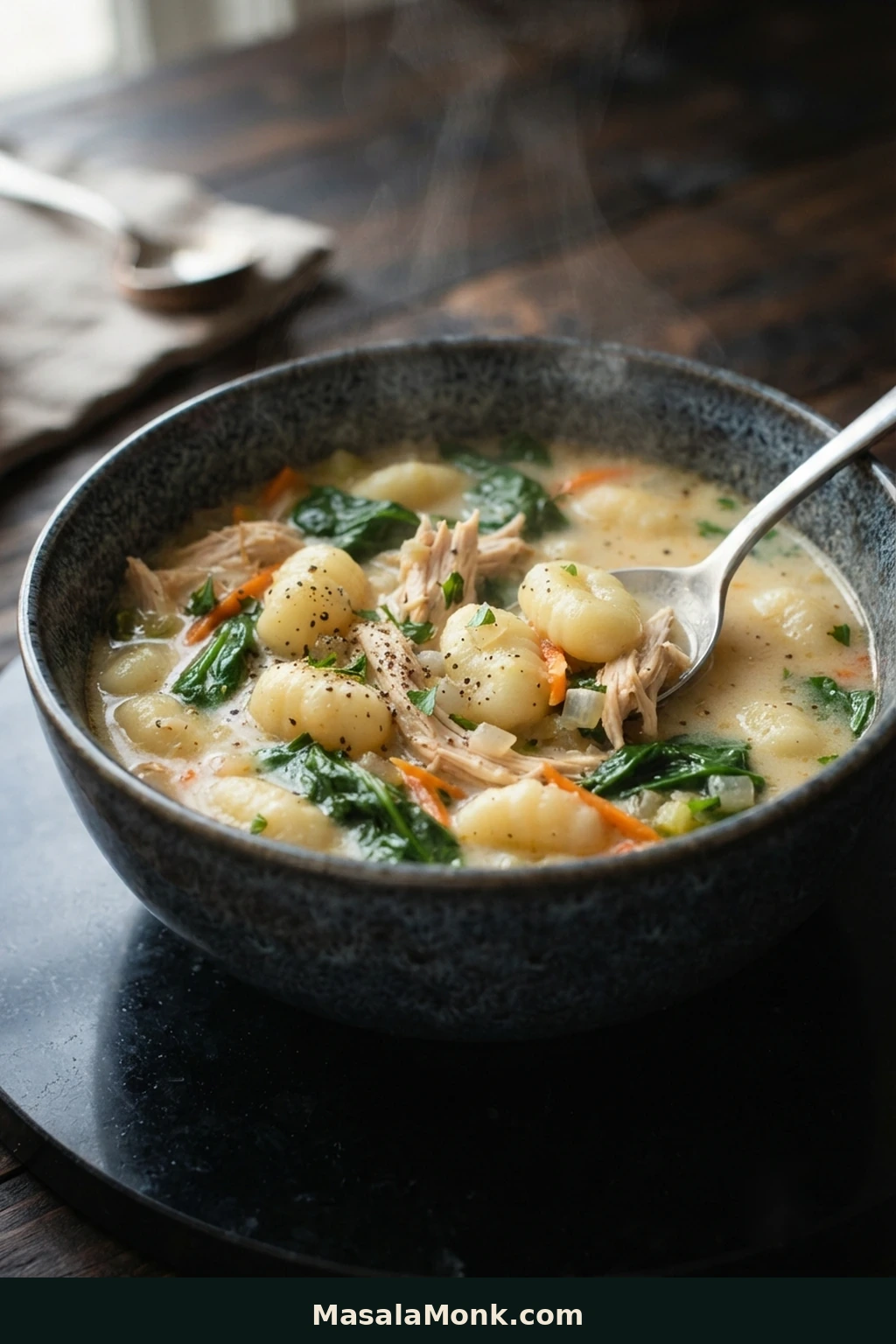
Plump potato gnocchi, juicy chicken and spinach sit in a warm ivory broth that is creamy without feeling heavy. Finely shredded carrot adds sweetness and color, while thyme, garlic and black pepper keep the broth savory.
If Olive Garden chicken gnocchi soup is the bowl you have in mind, this lands in familiar territory. The difference at home is control: chicken in most spoonfuls, tender gnocchi and enough creamy broth moving around them that it still feels unmistakably like soup.
The rule worth remembering: stop slightly loose. Gnocchi release starch as they cook and keep absorbing broth afterward. Let them finish, give the pot a short rest, then decide whether the soup actually needs thickening.
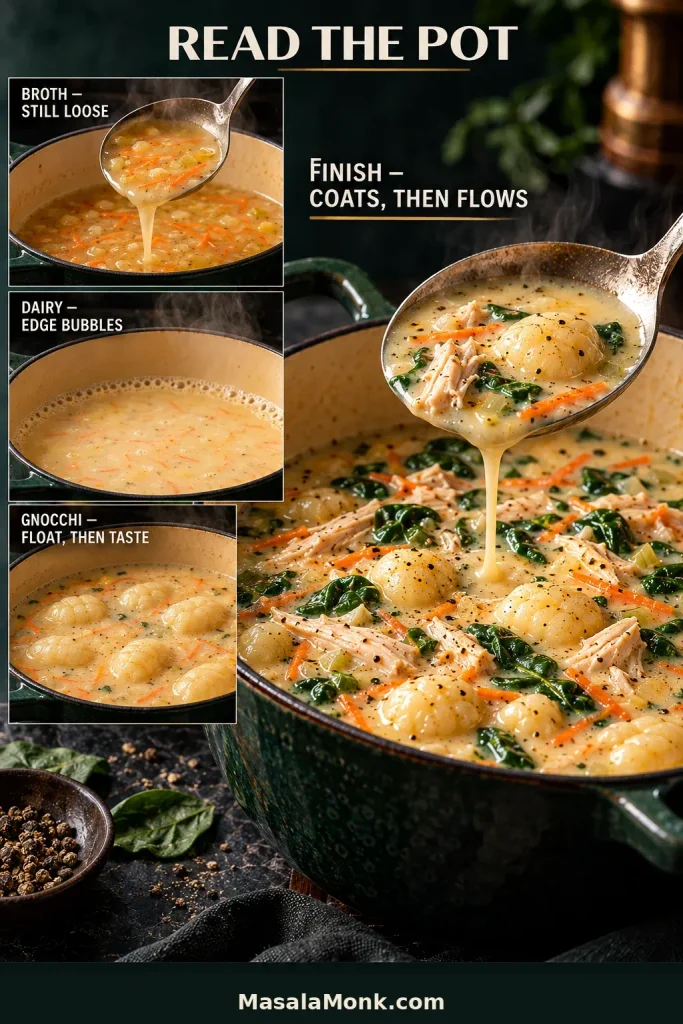
Read the Pot
| Stage | What you’re looking for |
|---|---|
| Broth | Lightly thickened, still loose |
| Dairy | Steaming with small edge bubbles, never boiling hard |
| Gnocchi | Beginning to float—now taste one |
| Finish | Lightly spoon-coating but flowing |
Chicken Gnocchi Soup Recipe
Chicken gnocchi soup is a creamy one-pot soup with potato gnocchi, chicken, spinach, onion, celery and carrot in a lightly thickened chicken broth. This version stays silky and flowing instead of becoming gravy-thick.
Prep: about 15 minutes
Cook: about 30 minutes
Total: about 45 minutes
Yield: about 6 generous servings
Equipment
- 5- to 6-quart (4.7- to 5.7-liter) Dutch oven or heavy soup pot
- Whisk
- Box grater, if shredding the carrot
Ingredients
- 3 tablespoons (42 g) unsalted butter
- 1 medium yellow onion, finely diced, about 1 cup (140 g)
- 2 celery ribs, finely diced, about ¾ cup (85 g)
- 1 medium carrot, shredded or cut into fine matchsticks, about ½ cup (60 g)
- 3 garlic cloves, minced, about 9 g
- ¾ teaspoon dried thyme
- 3 tablespoons all-purpose flour, about 24 g
- 4 cups (32 fl oz / 950 ml) low-sodium chicken broth, plus more as needed
- 2 cups (16 fl oz / 475 ml) half-and-half
- 16 oz (454 g) potato gnocchi
- 12–14 oz (340–400 g) cooked or rotisserie chicken, shredded or cut into bite-size pieces
- 2 packed cups baby spinach, about 2 oz (60 g)
- ½ teaspoon freshly ground black pepper, plus more to taste
- Fine salt, to taste
Keep the vegetables small. Aim for onion and celery around ¼ inch (6 mm) or smaller, and shred the carrot or cut it into fine matchsticks. They should settle into the broth and leave the gnocchi and chicken as the substantial bites.
Build the Base
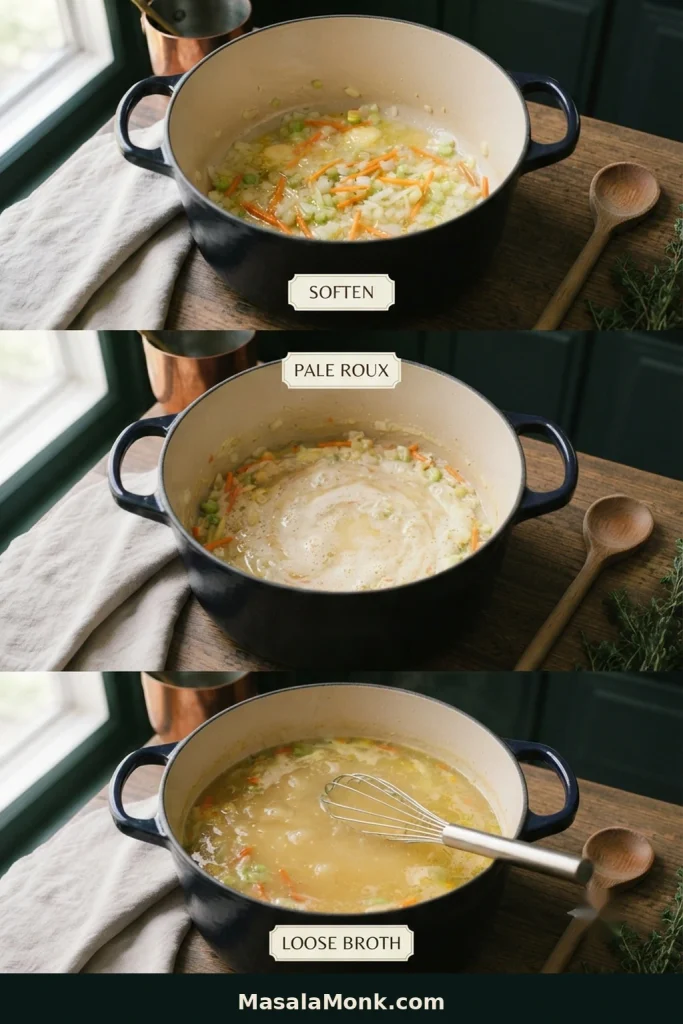
- Soften the vegetables. Melt the butter over medium heat. Add the onion, celery and carrot and cook for about 5–7 minutes, stirring occasionally. The onion should turn translucent and the vegetables should soften without taking on much color.
- Add the garlic and thyme. Stir for about 30 seconds. As soon as the garlic smells fragrant, move on.
- Cook the flour. Sprinkle it over the vegetables and stir continuously for 1–2 minutes. The dry flour should disappear and the mixture should look pale and a little foamy, not toasted brown.
- Add the broth. Pour in a small splash first and whisk until smooth, then gradually add the rest while scraping the bottom of the pot. Bring it to a gentle simmer. It should have some body but look a little too loose for the finished soup. That’s where you want it.
Add the Dairy and Gnocchi
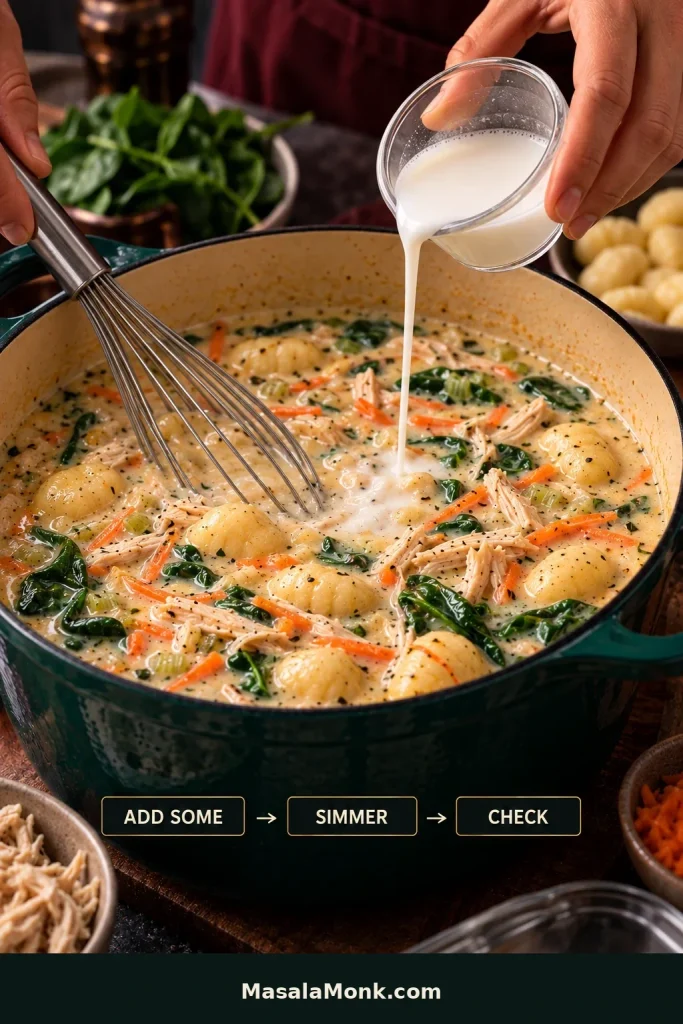
- Lower the heat and add the half-and-half. Bring the soup gently back up to temperature. Look for steam and an occasional small bubble around the edge. Don’t wait for a rolling boil.
- Add the gnocchi. Keep the soup at a gentle simmer. Many packaged potato gnocchi take about 3–5 minutes, but use that as a starting point. Once they float, taste one. It should be tender through the center and hold its shape. Dense in the middle? Give it another minute.
Finish the Soup
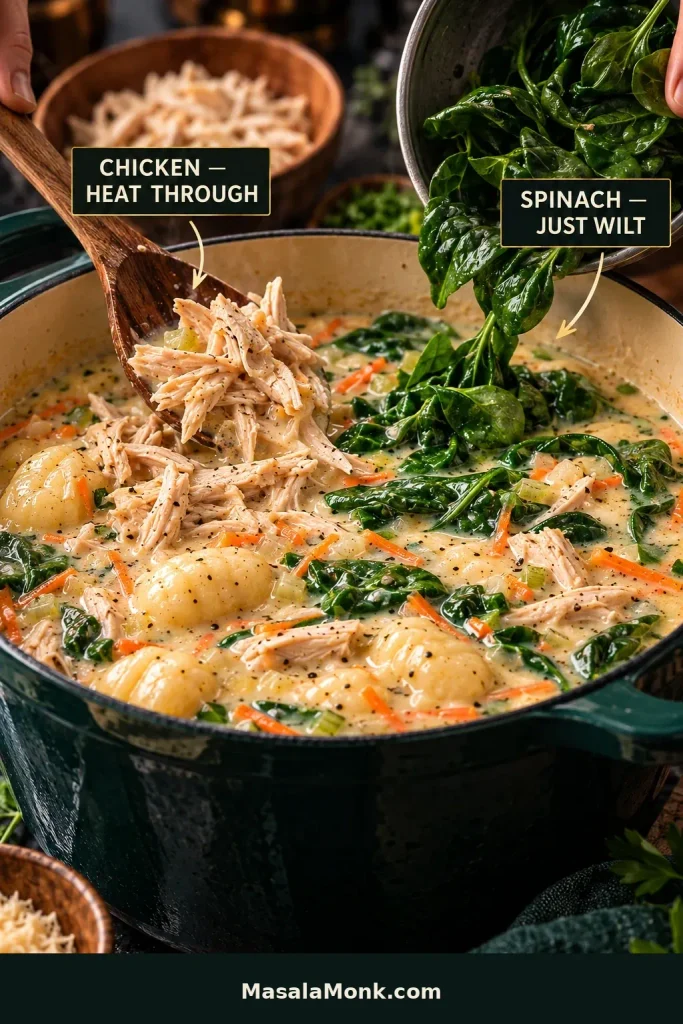
- Add the cooked chicken. Heat it through without simmering it longer than necessary. If you’re using chilled leftover chicken, reheat it to 165°F (74°C).
- Add the spinach. Stir for about 30–90 seconds, just until the leaves collapse and stay green.
- Turn off the heat. Let the soup rest for a few minutes before judging the consistency.
- Tip the spoon. A thin creamy film should remain while the broth slides back into the pot. If it sits like chicken pot pie filling, stir in warm broth ¼ cup (60 ml) at a time until it flows again.
- Taste a spoonful of broth. Add salt as needed and more black pepper if you want it. Rotisserie chicken and packaged broth may already bring plenty of salt, so taste first. The finished broth should taste clearly of chicken, with thyme and garlic in the background.
Still Too Thin?
First make sure the gnocchi are tender and the soup has rested. If it is watery after that, mix 1 tablespoon (about 8 g) cornstarch with 1 tablespoon (15 ml) cold water. Whisk it again just before using, stir about half into the soup and simmer gently for a minute. Check the spoon before adding the rest.
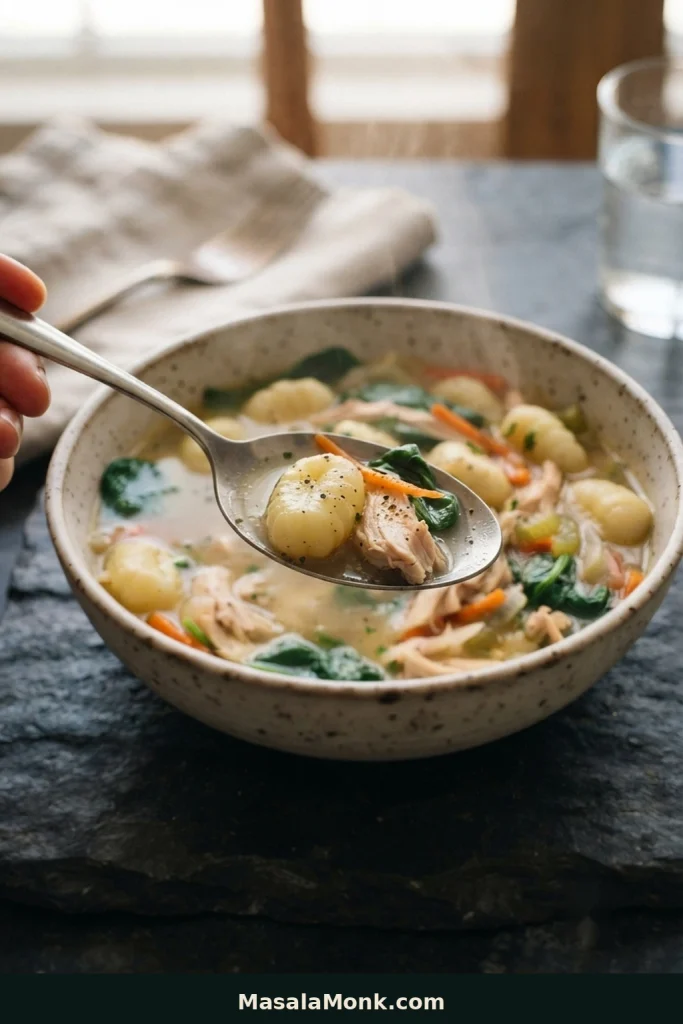
Before serving, check one complete spoonful with gnocchi, chicken, spinach and broth together. The bowl should taste balanced and savory, with enough broth around the substantial ingredients that it still eats like soup.
Making a substitution, using raw chicken or cooking ahead? These are the places where the soup changes most.
Which Gnocchi Work Best?
How to Tell When Gnocchi Are Done
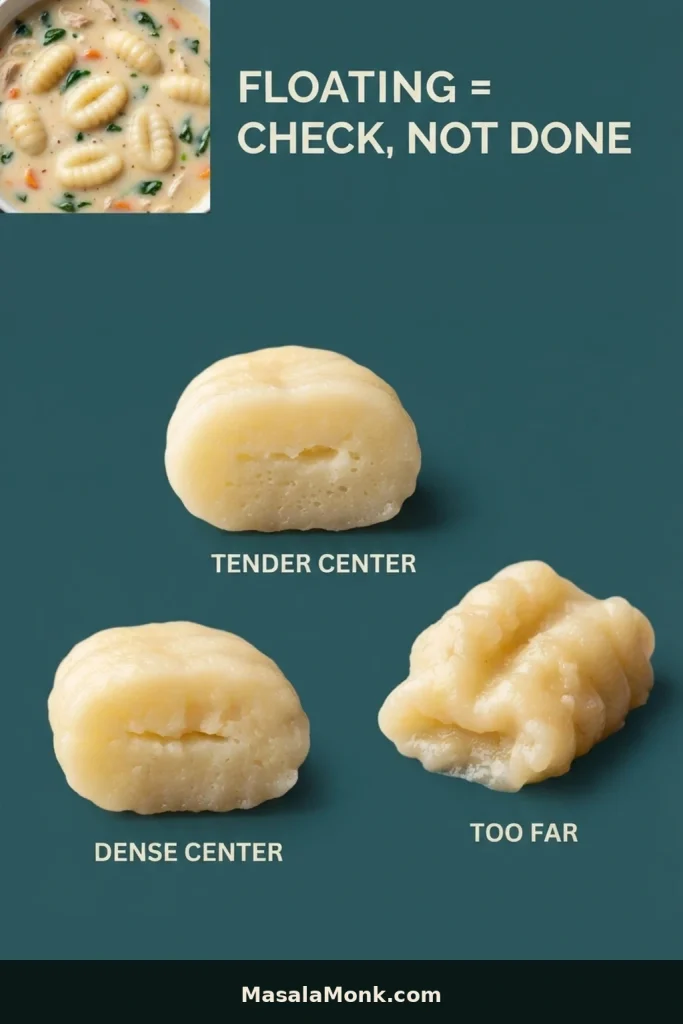
Floating is a cue to check the gnocchi, not proof that they’re done. Potato gnocchi are small Italian dumplings typically made from potato and flour, often with egg. The type you buy changes how quickly they soften, so use the table below as a starting point and let tasting decide.
| Type | What to watch |
|---|---|
| Refrigerated or fresh | Often cooks quickly; start checking early |
| Shelf-stable | Some brands stay firmer in the center |
| Frozen | Start with package guidance, then taste |
| Homemade | Handle gently and avoid a long simmer |
Bite through one. At its best, the center feels soft and potatoey while the gnocchi stays intact in the broth. A dense middle needs another minute; gummy or collapsing gnocchi have gone too far.
Once the gnocchi are tender, you can judge what they’ve done to the broth.
Creamy, Not Gravy-Thick
Chicken gnocchi soup should lightly coat a spoon but remain fluid enough for the gnocchi and chicken to move through the broth. The finished soup should still look like soup, not filling that sits still in the pot.
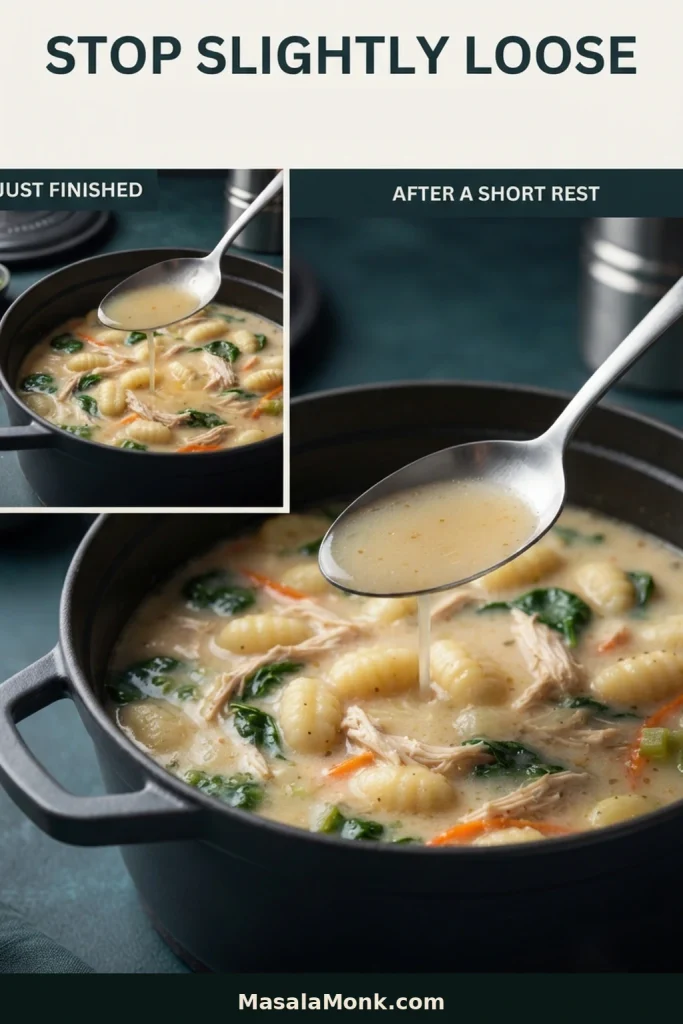
The Spoon Test
After the pot has rested for a few minutes, tip the spoon. A light creamy film should remain on it, while most of the broth slides back into the pot.

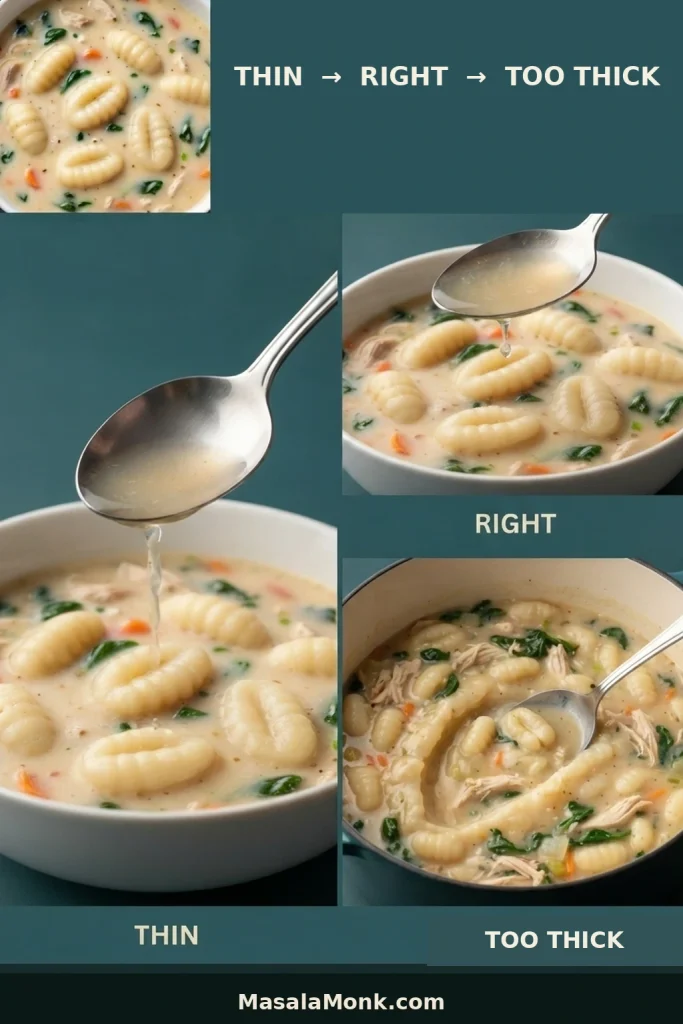
Thin, Right or Too Thick?
A deep trench that stays open after the spoon passes through means the soup has gone too far. Loosen it gradually with warm chicken broth, stirring and giving the pot a moment before checking again.
If the soup seems thin, finish cooking the gnocchi and let the pot rest before reaching for the slurry. Quite often, that’s all it needs.
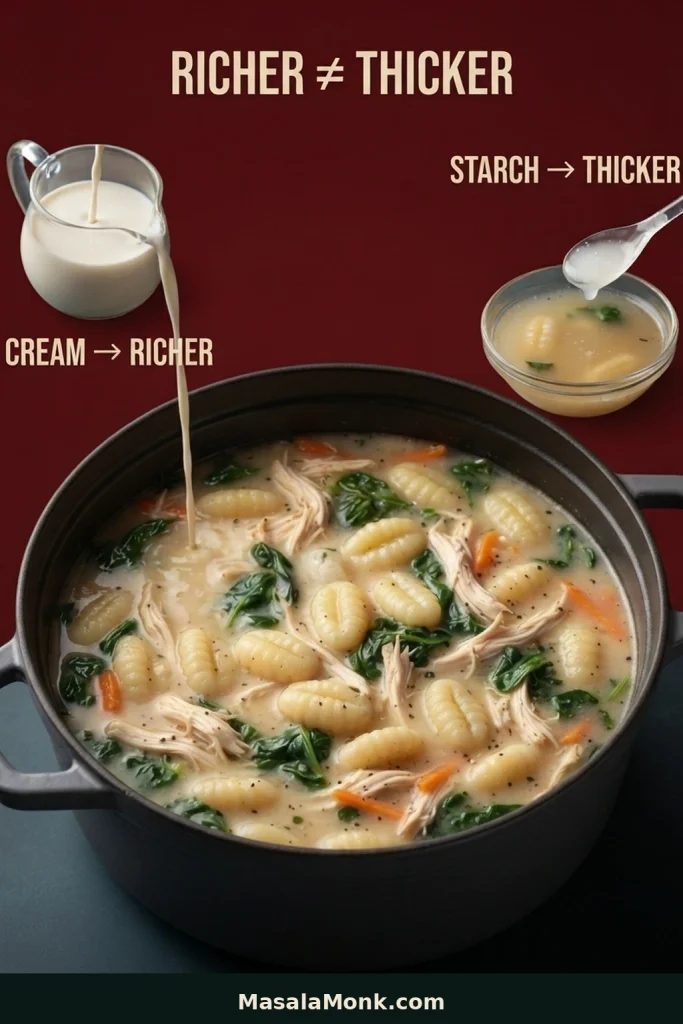
Richness vs Thickness
More cream makes the soup richer. More starch makes it thicker. Those aren’t the same fix.
Half-and-Half, Milk or Cream?
Half-and-half gives the broth richness while leaving room for the chicken, thyme and garlic. Whole milk makes a lighter, slightly looser bowl. For something richer, replace up to 1 cup (240 ml) of the half-and-half with heavy cream.
Taste the broth before adding the dairy. Weak broth only gets quieter once the half-and-half goes in. A small amount of concentrated chicken base can deepen a weak broth; add it cautiously.
Rotisserie, Breast or Thigh?
Rotisserie chicken is the easiest option here. Remove the skin, shred or chop the meat and stir it in near the end so it only heats through.
Breast meat is leaner; thigh meat is richer and tends to stay juicy. Either works within the 12–14 oz (340–400 g) cooked-chicken target—enough chicken without crowding out the gnocchi.
Using Raw Chicken
Start with about 1 lb (450 g) boneless skinless chicken breast or thigh and cut it into bite-size pieces. Heat 1 tablespoon (15 ml) olive or neutral oil in the soup pot, add the chicken and cook, turning as needed, until the thickest pieces reach 165°F (74°C). Transfer the chicken to a plate.
Leave the browned bits in the pot; the vegetables and broth will pick them up as the soup comes together. Return the cooked chicken near the end. If you prefer to cook the meat separately, our baked chicken breast can be chopped or shredded and added near the end in the same way.
Crock-Pot Chicken Gnocchi Soup
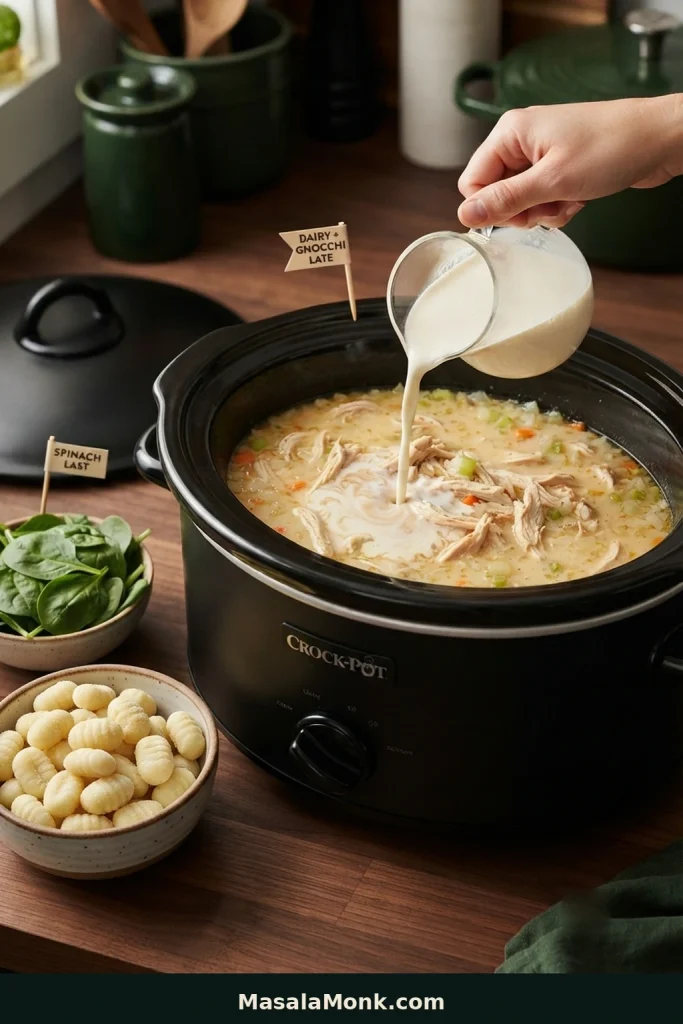
The slow cooker works well as long as the dairy, gnocchi and spinach stay out of the long cooking phase. Use the same vegetables, broth, half-and-half, butter and seasonings as the stovetop recipe, but omit the 3 tablespoons of flour. The cornstarch slurry below takes its place.
Start with about 1 lb (450 g) boneless skinless chicken breast or thigh. Add the chicken, onion, celery, carrot, garlic, thyme, butter and broth to the slow cooker. Cook until the chicken is tender and reaches 165°F (74°C) in the thickest part, then remove and shred it. Use your slow cooker’s usual poultry timing as a guide; appliances and chicken thickness vary.
Near dinner, whisk 2 tablespoons (16 g) cornstarch with 2 tablespoons (30 ml) cold water. Stir about three-quarters of the slurry into the hot broth, then add the half-and-half and gnocchi. Cook the gnocchi until tender.
Return the chicken and add the spinach just long enough to wilt. Let the soup rest for a few minutes before judging the consistency. If it remains thin, add some or all of the remaining slurry and cook briefly before checking again.
Using the stovetop instead? Return to the main recipe. If the soup is already made but the texture is off, jump to troubleshooting.
Substitutions That Change the Soup
| Swap | What changes |
|---|---|
| Kale for spinach | Add it earlier; kale needs more time to become tender |
| Gluten-free gnocchi | Timing and starch release may differ; omit the all-purpose flour and use the cornstarch-slurry approach from the Crock-Pot method |
| Extra gnocchi | They absorb more broth; keep extra broth ready instead of automatically adding more flour |
When the Soup Isn’t Turning Out Right
| What you see | What to do |
|---|---|
| Broth runs like milk | Finish cooking the gnocchi and let the soup rest first. If it’s thin after that, use some slurry. |
| Spoon leaves a deep trench | The soup has become too thick. Loosen it gradually with warm broth. |
| Gnocchi are dense inside | They’re underdone. Give them another minute, then taste again. |
| Gnocchi are gummy or breaking | They’ve cooked or held too long. Stop the heat and check earlier next time. |
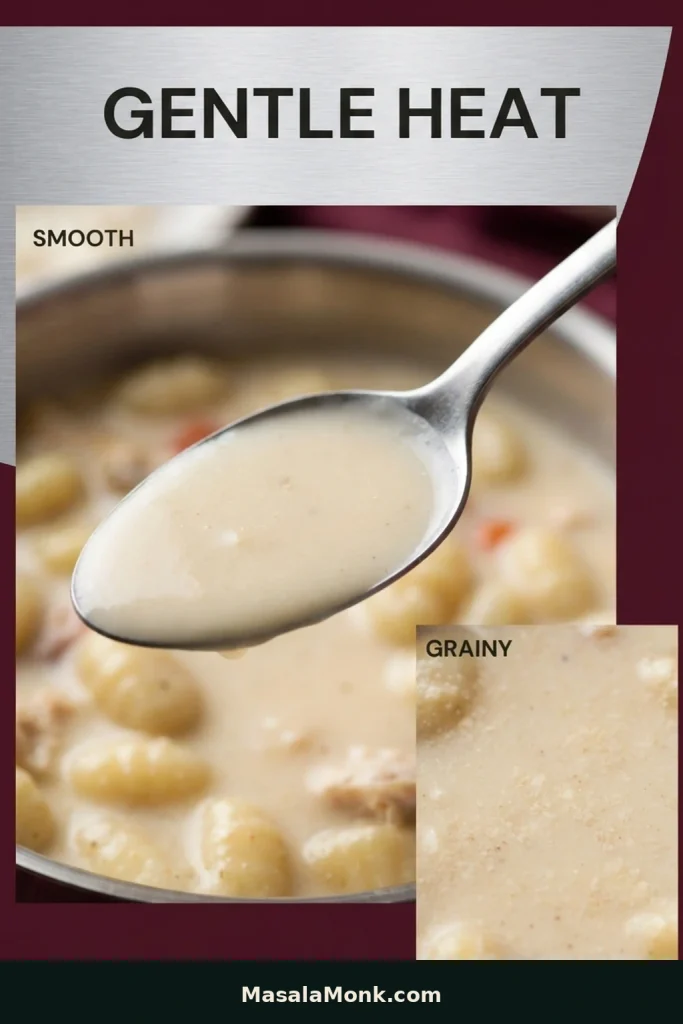
| Dairy looks grainy | The heat was too aggressive. Remove the pot from the heat; next time keep the soup below a hard boil. |
| Soup tastes floury | The roux needed longer. Next time cook the flour for the full 1–2 minutes. |
| Creamy but bland | Taste for salt first. If the broth itself is weak, add a small amount of chicken base. |
| Chicken is dry | Cooked chicken simmered too long. Add it later next time. |
| Spinach is dark and limp | It went in too early. Add it only at the finish. |
| It was perfect, then got thick | The gnocchi kept absorbing broth. Loosen the soup with more broth. |
If the Dairy Looks Grainy
Grainy dairy is a heat problem rather than a thickness problem. If the broth loses its smooth, uniform look after the half-and-half goes in, pull the pot away from aggressive heat before changing the amount of cream or starch. Next time, keep the soup at steaming heat with only small edge bubbles instead of a hard boil.
Got the soup back on track? Return to the recipe, or see how to store, reheat and freeze it.
Make Ahead, Leftovers and Freezing
Leftovers and Meal Prep
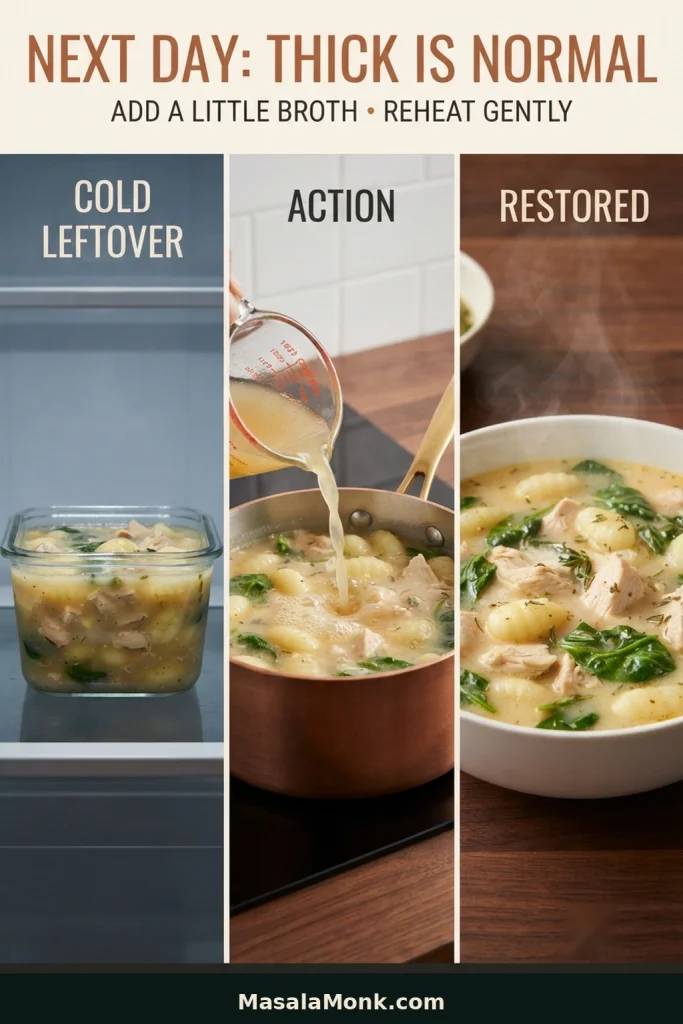
Chicken gnocchi soup keeps in the refrigerator for 3–4 days, although the gnocchi soften and the soup thickens as it sits.
Reheating Next-Day Leftovers
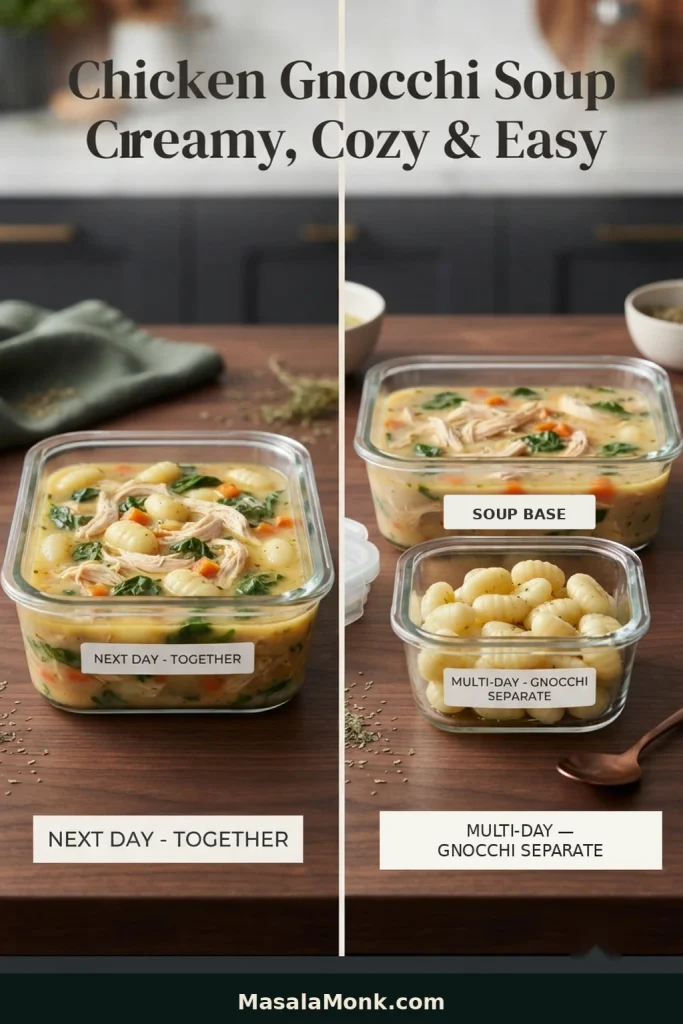
For ordinary next-day leftovers, keep everything together. If the soup looks almost too thick to spoon straight from the refrigerator, nothing has gone wrong. Reheat it on the stovetop, stirring often, until it is piping hot throughout and reaches at least 165°F (74°C). Avoid prolonged boiling. Add chicken broth as needed; for one bowl, start with 1–2 tablespoons (15–30 ml) and see how it loosens.
Meal Prep for Several Days
If you’re deliberately cooking for several days, you can cook the gnocchi separately and add them while reheating individual portions. They’ll hold their texture better, but the soup base will stay a little looser because those gnocchi aren’t releasing their starch into the pot. Judge the consistency after reheating each portion with the gnocchi.
Divide leftovers into shallow containers, cover and refrigerate promptly, following USDA leftover-safety guidance.
Make Ahead and Freezing
For dinner later, prepare the vegetable-and-broth base ahead, before adding the dairy, gnocchi, chicken and spinach. Near dinner, reheat it and finish those ingredients in the pot. The last few minutes are quick.
Freezing Chicken Gnocchi Soup
You can freeze chicken gnocchi soup, but the texture is better if you freeze that base before adding the dairy, gnocchi, chicken and spinach. Finished soup may lose some smoothness after freezing, while the gnocchi soften considerably and the spinach becomes softer and darker.
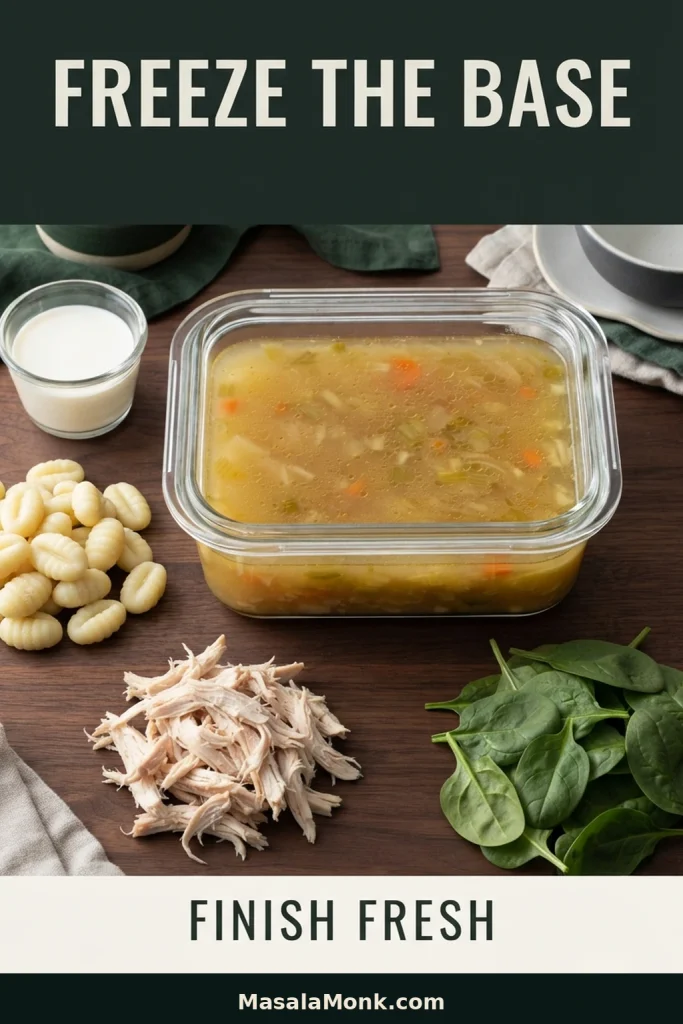
Thaw and reheat the base, then finish the remaining ingredients close to serving.
Making it today? Go back to the recipe, or jump to serving ideas.
What to Serve with Chicken Gnocchi Soup
This is already a full bowl, so the best sides bring contrast. Crisp romaine with our homemade Caesar dressing adds lemon, pepper and crunch alongside the soft gnocchi and creamy broth.
For bread, our no-knead focaccia has an airy middle that catches the broth and browned edges that still have some bite.
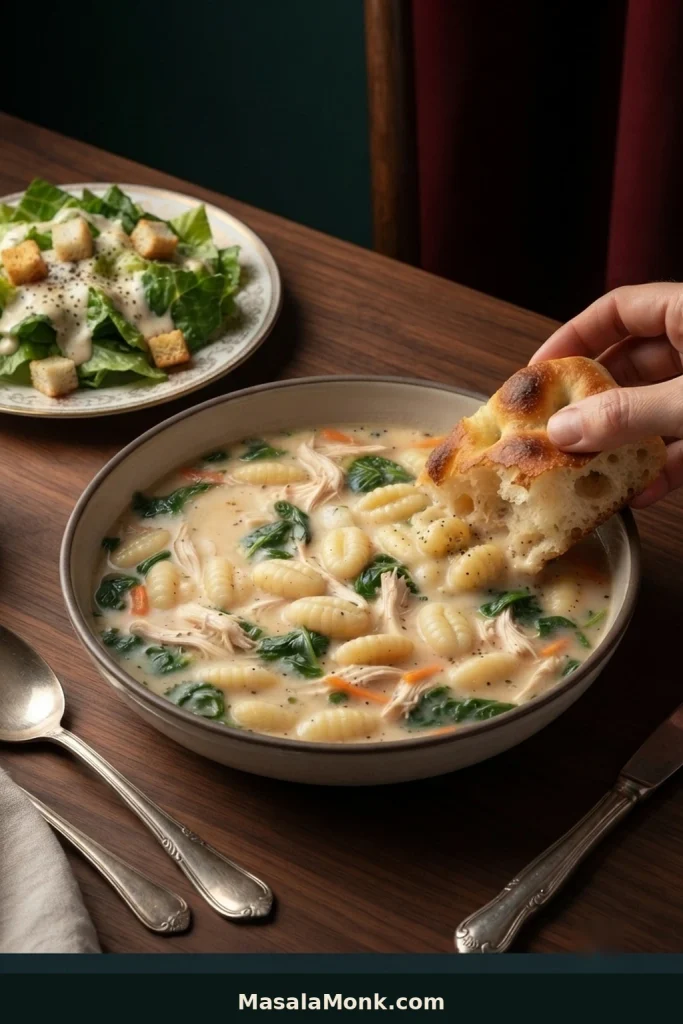
The best bowl isn’t the thickest one. You want tender gnocchi, juicy chicken in the next spoonful and green ribbons of spinach moving through a broth that clings lightly without sitting still.
Eat it hot, while the gnocchi are still plump. And when only a little creamy broth is left underneath them, that’s the part the bread is for.