Posted on 4 Comments

Mimosa Recipe: 10 Easy Versions from Classic to Caramel Apple

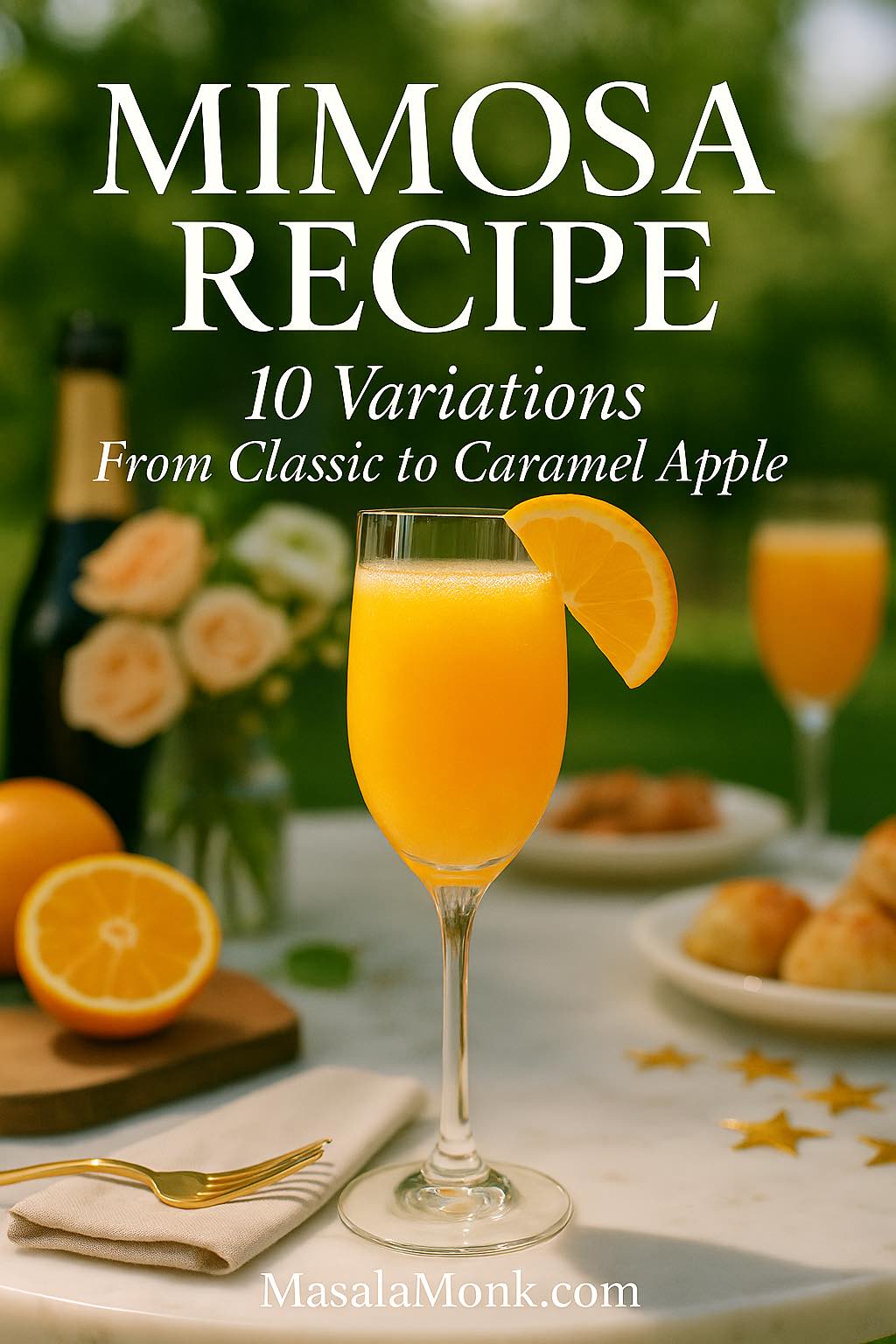
Tall mimosa cocktail in a champagne flute on an outdoor brunch table, with oranges, pastries and flowers, promoting a mimosa recipe with 10 variations from classic to caramel apple.

There are very few drinks that say “slow, happy morning” as clearly as a glass of mimosa. It looks sunny, tastes bright, and somehow makes even a regular Sunday feel like a small celebration. At the same time, a good mimosa recipe is almost ridiculously simple: chilled sparkling wine, chilled juice, and a moment’s care when you pour.

Yet once you start playing with that basic formula, things get interesting fast. A splash of orange liqueur suddenly turns your drink into something restaurant-worthy. A bit of pineapple or strawberry purée sends it straight to the tropics. Apple cider and caramel transform it into a cosy fall treat. In other words, there isn’t just one mimosa recipe—there are dozens, and most of them are only a tiny tweak away from the classic.

Before we jump into all the fun twists, it’s worth grounding ourselves in what a mimosa actually is and where it came from. That way, every variation feels like part of a story rather than just a random splash of juice.


What Is a Mimosa?

At its core, a mimosa is a simple mixed drink made with sparkling wine and orange juice, usually served in a champagne flute. Most sources agree that it’s closely related to the Buck’s Fizz, a drink created in the 1920s at Buck’s Club in London. The Buck’s Fizz tends to use more Champagne and less juice, whereas the mimosa often leans toward equal parts. Over the years, the mimosa has become tightly linked with brunch, weddings, and leisurely daytime events.

Consequently, the mimosa picked up a reputation as the “acceptable” morning drink. Because the orange juice feels familiar and breakfast-y, the bubbles don’t come across as heavy or “too much.” This combination of freshness and festivity is why the mimosa recipe remains such a favourite.

However, there’s nothing in the original idea that says the juice must be orange, or that you can’t add a small splash of something extra. Once you accept that, a whole world of variations opens up. Still, everything begins with one foundational drink.

Also Read: 10 Best Chicken Sandwich Recipes (BBQ, Parm, Buffalo & More)


Classic Mimosa Recipe (Champagne and Orange Juice)

Think of this as the blueprint. Once you can make this with your eyes half-closed, every other version will feel easy and natural.

Ingredients (Per Glass)

  • 2 ounces (60 ml) chilled orange juice
    • Freshly squeezed is wonderful; good-quality not-from-concentrate works too.
  • 4 ounces (120 ml) chilled dry sparkling wine
    • Brut Champagne, cava, or prosecco are all excellent choices.
  • 1 thin orange slice or twist, to garnish (optional)
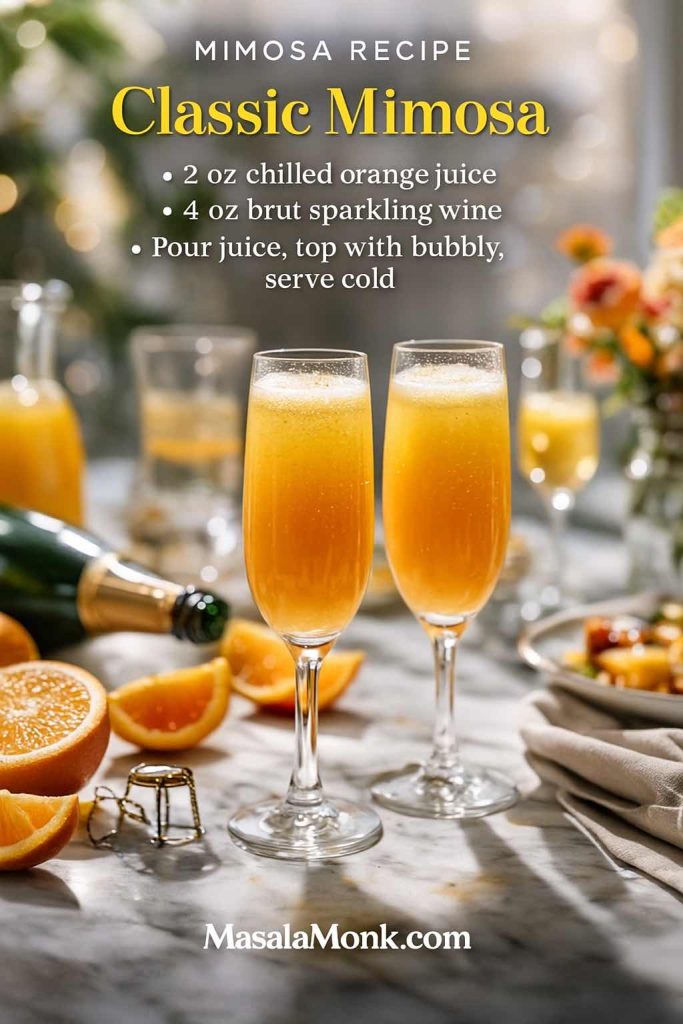
Classic mimosa recipe card with two champagne flutes of orange juice and brut sparkling wine on a vibrant brunch table, MasalaMonk.com branding.
Classic Mimosa – 2 oz chilled orange juice topped with 4 oz brut sparkling wine. This simple 1:2 ratio is the base recipe for all the mimosa variations below, perfect to save or pin for your next brunch.

Step-by-Step Method

  1. Chill everything thoroughly
    First of all, get the temperature right. Pop the orange juice and sparkling wine into the fridge for several hours, or even overnight, so they’re properly cold. If you have room, you can even chill the glasses. A cold base means the bubbles last longer and the drink tastes much cleaner.
  2. Pour the orange juice first
    Next, pour the orange juice into the flute. Beginning with juice gives you more control and keeps the carbonation from going wild right away.
  3. Top with sparkling wine
    After that, tilt the glass slightly and pour the sparkling wine in a thin stream down the side. Many detailed guides, such as this classic mimosa recipe from Love & Lemons, recommend this order for exactly that reason—it preserves the delicate fizz.
  4. Garnish and serve immediately
    Finally, garnish with an orange slice or twist if you like, and serve right away. Mimosas aren’t meant to sit around; they’re brightest and most effervescent in the first 10–15 minutes.

What’s the Best Ratio for a Mimosa Recipe?

Although plenty of traditional recipes suggest a 1:1 ratio of orange juice to sparkling wine, modern tastes often drift toward a slightly drier drink. For that reason, a lot of bartenders and home hosts now prefer 1 part juice to 2 parts bubbly. It still tastes familiar and citrusy, yet it doesn’t feel heavy or overly sweet.

That said, the “best” ratio depends on your guests:

  • Equal parts for people who like a juicier, softer drink
  • 1:2 juice-to-wine for a crisper, more Champagne-forward profile
  • Just a splash of juice in a tall glass of bubbles for those who mainly want sparkling wine with a hint of orange

You can even set up a small card at your brunch that suggests all three options, then let people choose their style.

Choosing Sparkling Wine for a Mimosa Recipe

Because you’re mixing the wine with juice, there’s no need to splurge. In fact, a number of tastings suggest that an affordable, well-made cava or similar sparkling wine beats expensive Champagne once you add orange juice. Pieces like the roundup on The Kitchn’s best Champagne for mimosas and the expert picks in Simply Recipes’ guide to sparkling wines for mimosas both lean toward dry, budget-friendly options.

As a rule of thumb:

  • Look for “brut” or “extra dry” to balance the sweetness of the juice.
  • Choose bottles with good acidity; they cut through the fruit and keep each sip refreshing.
  • Save vintage Champagne for drinking on its own, where all those subtle flavours can shine.

Once you’re comfortable with this classic mimosa recipe, you’re ready to branch out into more playful territory.

Also Read: Chicken Alfredo Pasta, 5 Ways (Classic to Cajun, Veg, 15-Minute Jar, Healthy)


10 Easy Mimosa Recipe Variations from Classic to Caramel Apple

The beauty of a mimosa is that you can change its personality just by switching juices or adding a small splash of liqueur. Nevertheless, the basic technique stays the same, so you never have to relearn the whole process.

Below you’ll find ten versions that cover everything from summer pool days to winter holidays, from soft and fruity to stronger, cocktail-style flavours. You can serve them one at a time, or mix and match several as part of a mimosa bar.


1. Classic Mimosa Recipe for Laid-Back Weekends

The very first variation is the one you’ve already seen, yet it deserves a spot in the lineup. Sometimes you just want the original.

Per glass:

  • 2 oz orange juice
  • 4 oz dry sparkling wine

Pour the juice, then the wine, garnish, and you’re done. You can make a whole tray of these to greet guests as they come in, and then move on to other mimosa recipe experiments once everyone’s settled.

If you’re planning a whole range of Champagne-style drinks, you might later enjoy stepping up to something slightly stronger and more sophisticated, such as the French 75 cocktail recipe on MasalaMonk, which blends gin, lemon, and bubbly in a beautifully balanced way.


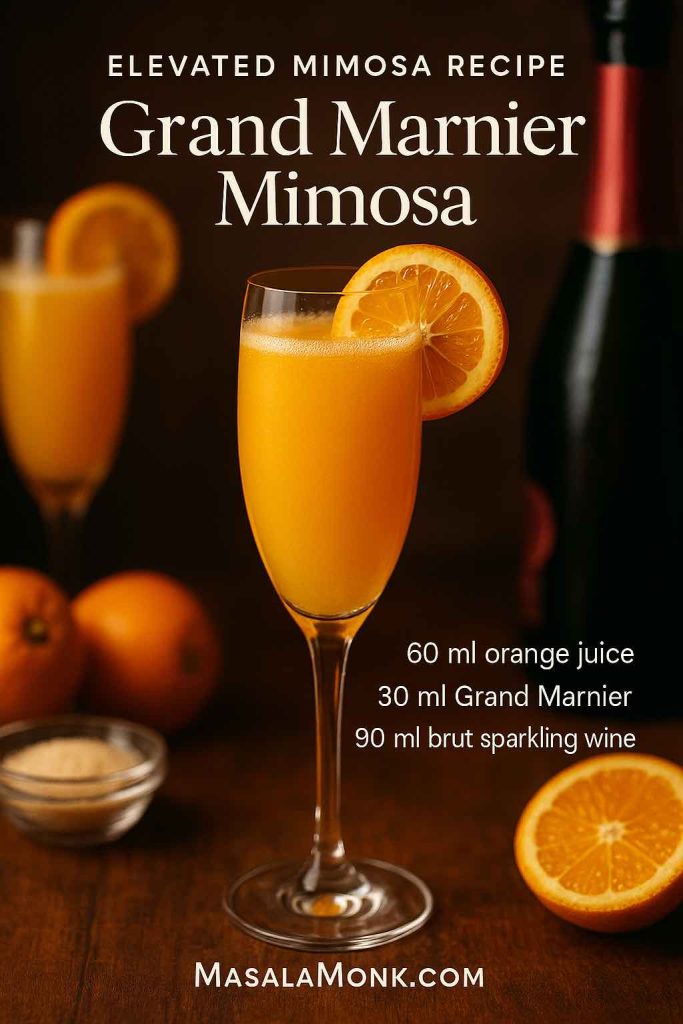
2. Grand Marnier Mimosa Recipe (Grand Mimosa)

Now let’s upgrade that simple base. By adding a little orange liqueur, you create a “grand” mimosa that feels like it belongs on a hotel brunch menu.

Ingredients (per glass):

  • 2 oz orange juice
  • ½–1 oz Grand Marnier or Cointreau
  • 3–4 oz dry sparkling wine
  • Orange twist, to garnish
Grand Marnier mimosa recipe card with an elegant Champagne flute filled with a golden orange cocktail made from 60 ml orange juice, 30 ml Grand Marnier and 90 ml brut sparkling wine, MasalaMonk.com branding.
Grand Marnier Mimosa – 60 ml orange juice, 30 ml Grand Marnier and 90 ml brut sparkling wine for a richer, hotel-style brunch mimosa.

How to build it:

  1. Start by pouring orange juice into your glass.
  2. Then add Grand Marnier. If you’d like more warmth and depth, go closer to 1 ounce; for a gentler effect, ½ ounce is plenty.
  3. Next, pour in the sparkling wine, slowly and at an angle.
  4. Finally, garnish with a twist of orange peel.

Because Grand Marnier brings both orange and a subtle cognac base, this mimosa recipe feels richer and more layered than the original. On the other hand, if you prefer a cleaner citrus profile, you might swap Grand Marnier for Cointreau. Either way, this is an effortless way to impress guests without making your life harder.

Also Read: Béchamel Sauce for Lasagna: Classic, Vegan & Ricotta Sauce Recipe


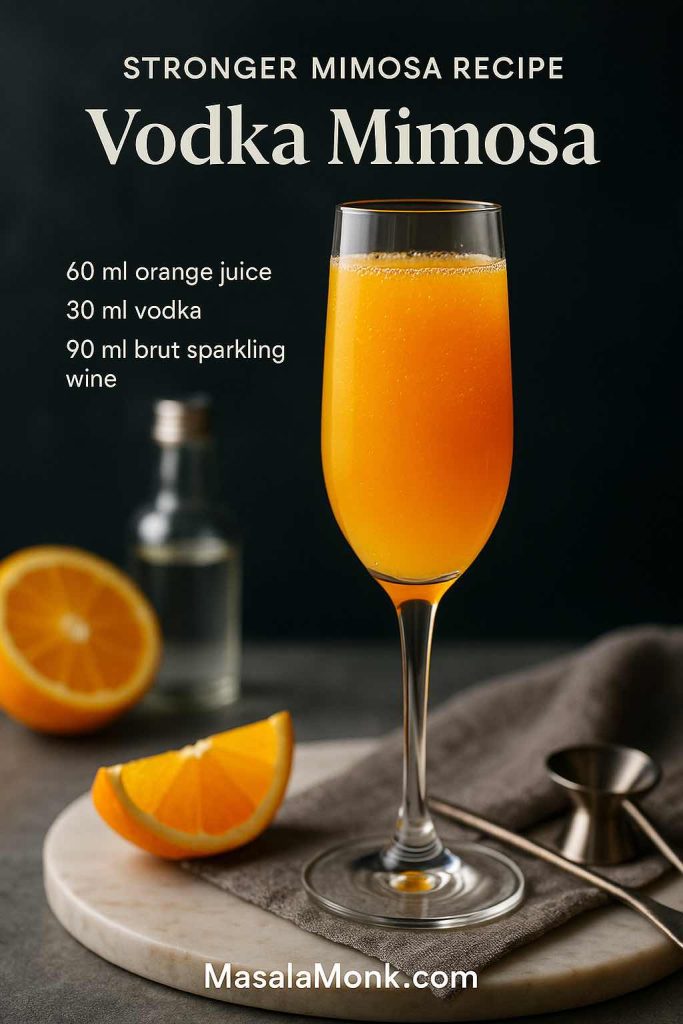
3. Vodka Mimosa Recipe (Playful Manmosa)

Occasionally, the table wants something a little stronger. That’s where a vodka mimosa recipe comes in. It’s still bubbly and citrusy, yet it carries more of a cocktail-style punch.

You’ll need:

  • 2 oz orange juice
  • 1 oz vodka
  • 3–4 oz sparkling wine
Vodka mimosa recipe card showing a bright orange Champagne flute cocktail made with 60 ml orange juice, 30 ml vodka and 90 ml brut sparkling wine on a modern brunch table, MasalaMonk.com branding.
Vodka Mimosa – 60 ml orange juice, 30 ml vodka and 90 ml brut sparkling wine. A stronger, cocktail-style mimosa for guests who like a little extra kick with their brunch.

Method:

  1. Pour orange juice and vodka into the flute.
  2. Stir briefly to blend the vodka into the juice.
  3. Top with sparkling wine and serve at once.

Some people call this a “manmosa,” although the name is more joke than rule. It’s simply a bright, easy-drinking cocktail with added backbone from the vodka. If you have guests who enjoy vodka-based drinks, you could, later on, direct them toward more complex options like the vodka with lemon cocktails or the mango vodka cocktail drinks on MasalaMonk for after-brunch sipping.


4. Pineapple Mimosa Recipe with Malibu Option

As soon as the weather warms up, a pineapple mimosa recipe feels almost essential. It’s juicy, sunny, and incredibly refreshing.

Classic Pineapple Mimosa

Per glass:

  • 2 oz pineapple juice
  • 4 oz prosecco or cava
  • Pineapple wedge or lime wheel, for garnish

Pour the pineapple juice, then add the sparkling wine. A squeeze of lime over the top lifts the flavour beautifully.
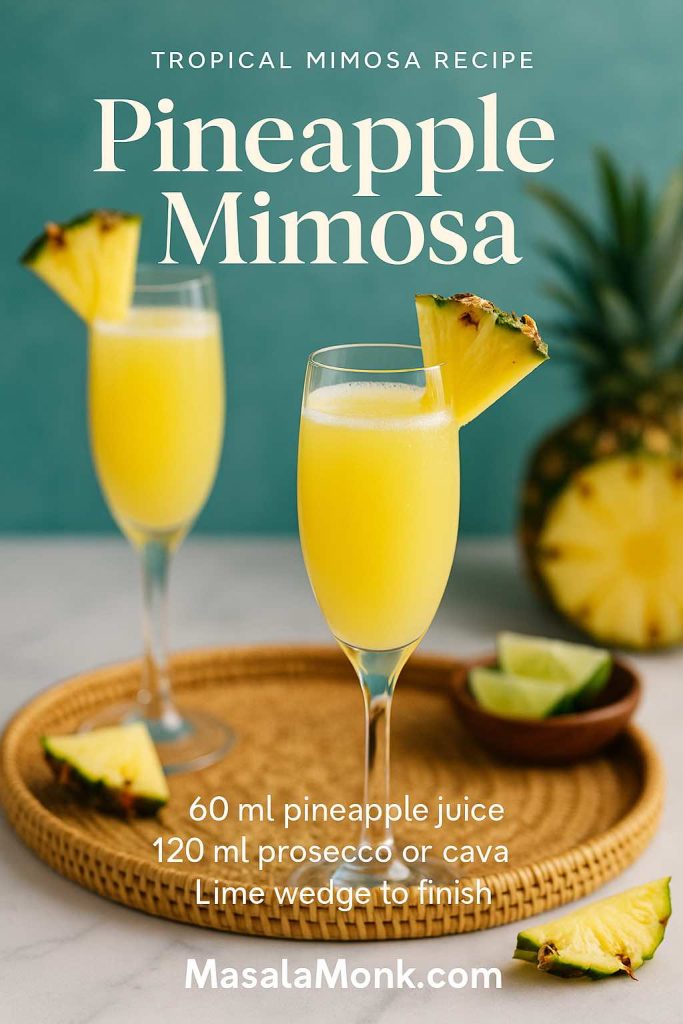
Pineapple mimosa recipe card with a bright yellow Champagne flute cocktail made from 60 ml pineapple juice and 120 ml prosecco, garnished with a pineapple wedge on a sunny tropical-style brunch table, MasalaMonk.com branding.
Pineapple Mimosa – 60 ml pineapple juice topped with 120 ml prosecco or cava and a squeeze of lime. A sunny, tropical twist on the classic mimosa that’s perfect for warm-weather brunches.

Pineapple Mimosa with Malibu

For a more tropical twist, add a bit of coconut rum:

  • 2 oz pineapple juice
  • 1 oz Malibu or another coconut rum
  • 3 oz sparkling wine

Mix the juice and Malibu first, then top with bubbly and garnish with pineapple. Suddenly, your mimosa recipe tastes like a tiny vacation in a glass.
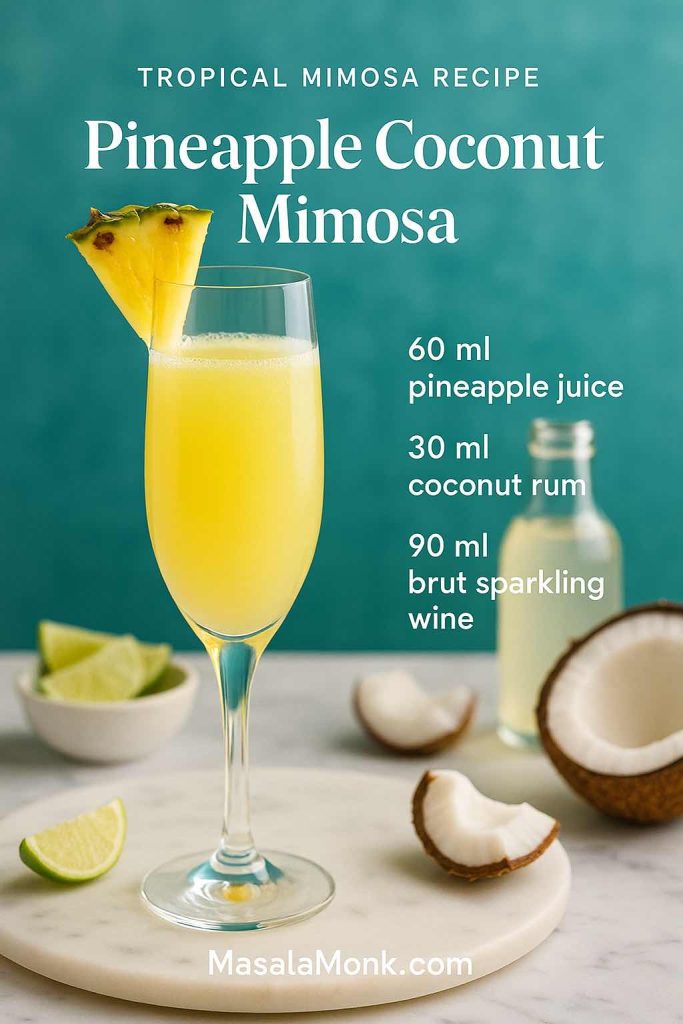
Pineapple coconut mimosa recipe card with an elegant Champagne flute filled with a tropical yellow cocktail made from 60 ml pineapple juice, 30 ml coconut rum and 90 ml brut sparkling wine, garnished with pineapple and coconut on a bright brunch table, MasalaMonk.com branding.
Pineapple Coconut Mimosa – 60 ml pineapple juice, 30 ml coconut rum and 90 ml brut sparkling wine. A Malibu-style tropical mimosa that tastes like a beach holiday in a Champagne flute.

If you’d like to build a full tropical-themed drinks menu, you can easily combine these pineapple mimosas with coconut water cocktails and some playful piña colada variations as the day goes on.


5. Cranberry Mimosa Recipe (Holiday Pink Mimosa)

When autumn and winter roll around, a cranberry mimosa recipe fits the mood perfectly. It’s tart, jewel-toned, and very festive.

Ingredients:

  • 2 oz cranberry juice (100% juice if possible)
  • 4 oz sparkling wine
  • Optional: ¼ oz orange liqueur
  • Fresh cranberries and orange slice, to garnish
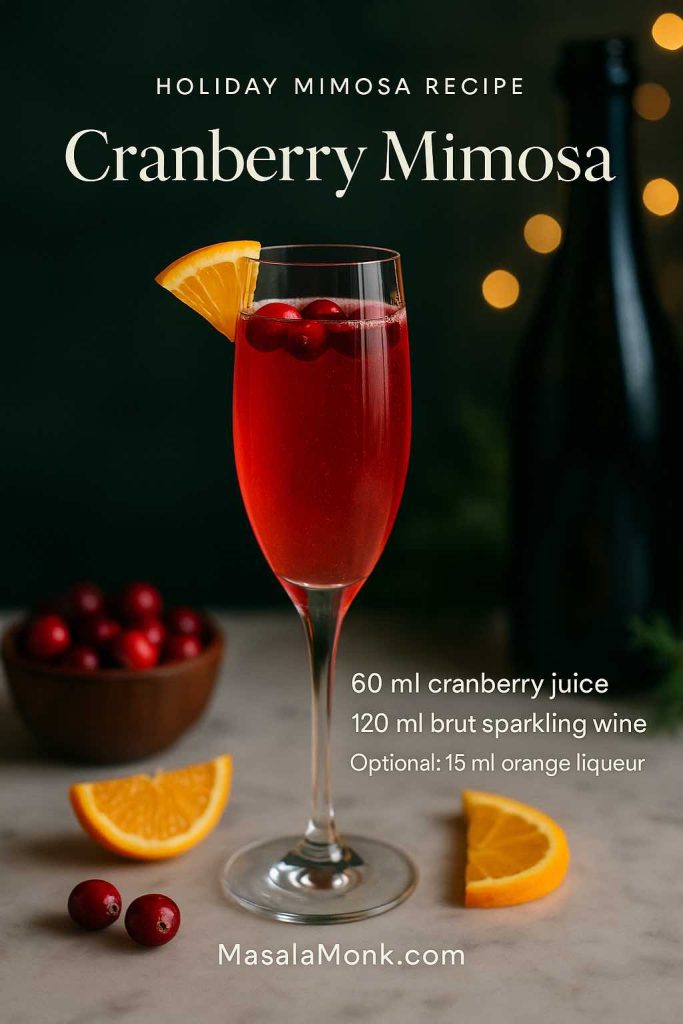
Cranberry mimosa recipe card with a festive pink Champagne flute cocktail made from 60 ml cranberry juice, 120 ml brut sparkling wine and an optional 15 ml orange liqueur, garnished with cranberries and orange on a holiday-style table, MasalaMonk.com branding.
Cranberry Mimosa – 60 ml cranberry juice, 120 ml brut sparkling wine and an optional 15 ml orange liqueur. A jewel-toned holiday mimosa that’s perfect for Christmas morning, New Year’s brunch or any winter celebration.

How to make it:

  1. Pour cranberry juice into the flute.
  2. Add the orange liqueur if you like a slightly richer profile.
  3. Top with sparkling wine.
  4. Drop a few cranberries into the glass and hang an orange slice on the rim.

Because of its colour, this mimosa recipe works beautifully for Christmas morning, holiday brunch, or even New Year’s Day. If you blend equal parts cranberry and orange juice instead, you’ll get a softer pink mimosa that still looks glamorous but tastes a bit less sharp.

Also Read: Natural Detoxification: Cranberry Juice and Apple Cider Vinegar for Weight Loss


6. Strawberry Mimosa Recipe (Plus Watermelon Twist)

Next, we turn to strawberries. A strawberry mimosa recipe feels romantic and celebratory—ideal for Mother’s Day, birthdays, or any spring gathering.

Strawberry Purée

To begin with, make a simple purée:

  • 1 cup strawberries (fresh or thawed frozen)
  • 1–2 tablespoons sugar or honey, to taste
  • 1–2 teaspoons lemon juice

Blend everything until smooth. If you prefer a very silky drink, strain the mixture to remove seeds.

Strawberry Mimosa

Per glass:

  • 1½–2 oz strawberry purée
  • 3–4 oz sparkling wine

Spoon the purée into your glass, then add the sparkling wine carefully. If the purée is thick, you might stir once, gently, to combine.
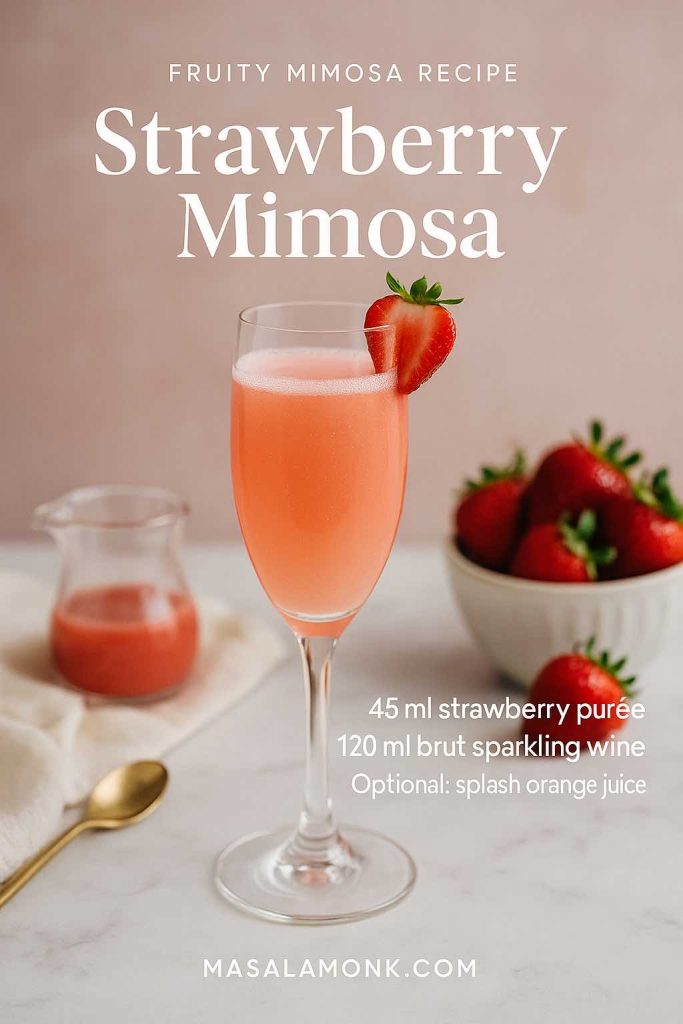
Strawberry mimosa recipe card with a blush pink Champagne flute cocktail made from 45 ml strawberry purée and 120 ml brut sparkling wine, garnished with fresh strawberries on an elegant brunch table, MasalaMonk.com branding.
Strawberry Mimosa – 45 ml strawberry purée topped with 120 ml brut sparkling wine and an optional splash of orange juice. A soft, pink mimosa that’s perfect for spring brunches, Mother’s Day and romantic celebrations.

For extra brightness, feel free to add a small splash of orange juice or lemonade between the purée and the sparkling wine.

Watermelon Variation

If you’re craving something even more summery, you can adapt this mimosa recipe to watermelon. Simply blend cubes of seedless watermelon, strain the juice, and use that instead of the strawberry purée. A touch of lime juice makes the flavour pop.

Later on, if your guests fall in love with watermelon in their drinks, you can steer them toward a whole set of watermelon margarita variations for evening cocktails.
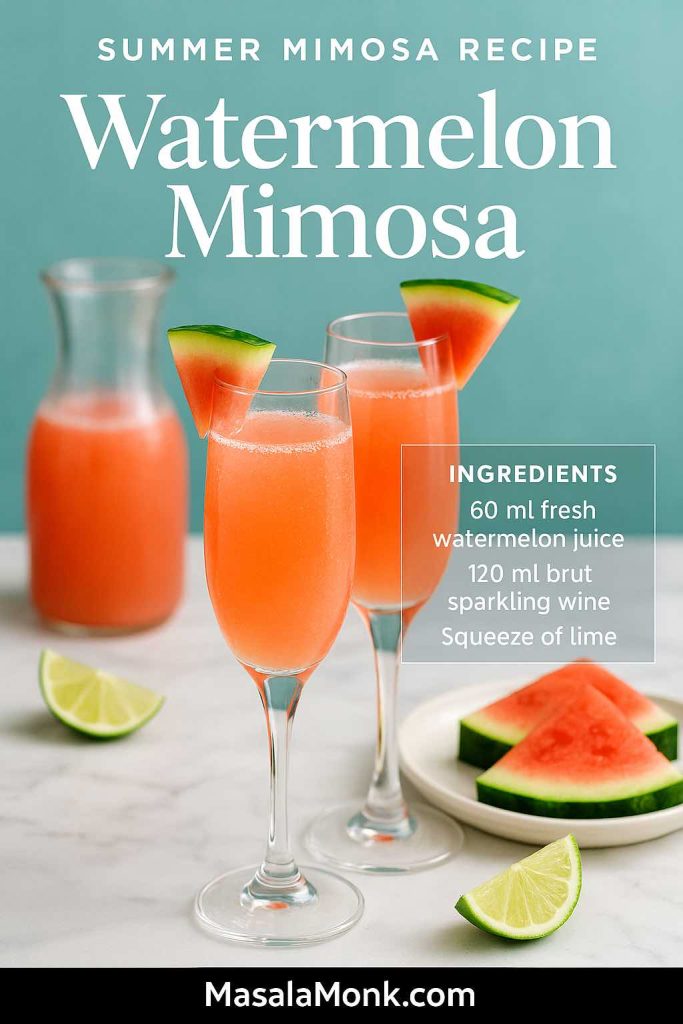
Watermelon mimosa recipe card with a coral pink Champagne flute cocktail made from 60 ml fresh watermelon juice and 120 ml brut sparkling wine, garnished with a watermelon wedge and lime on a sunny summer brunch table, MasalaMonk.com branding.
Watermelon Mimosa – 60 ml fresh watermelon juice topped with 120 ml brut sparkling wine and a squeeze of lime. A super-refreshing, summery twist that’s perfect for hot-weather brunches and pool parties.

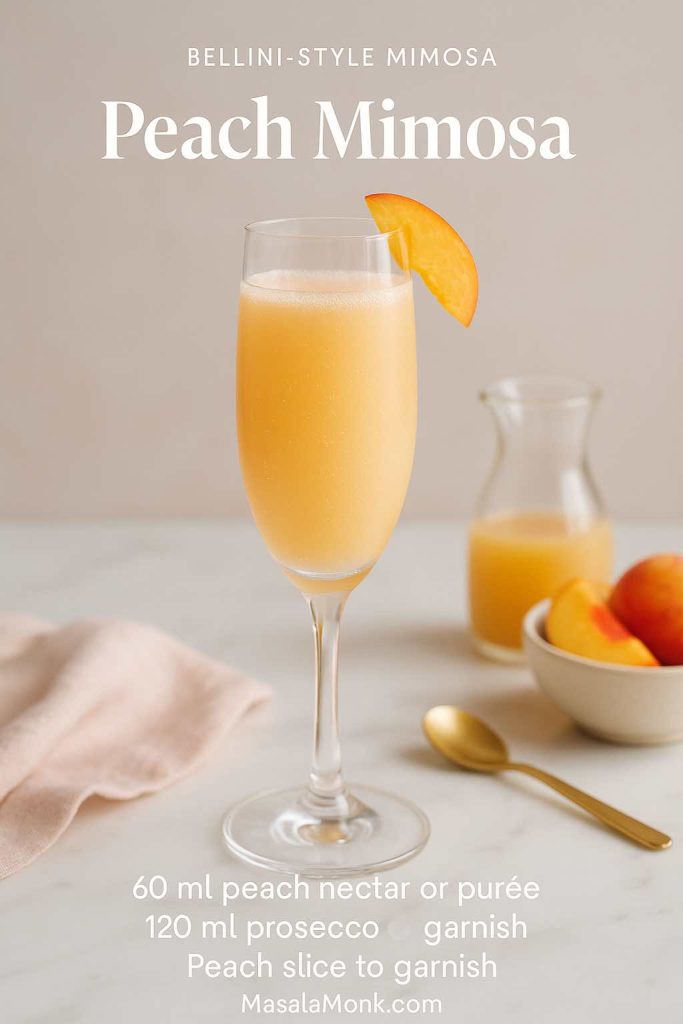
7. Peach Mimosa Recipe (Bellini-Style)

This peach mimosa recipe slides very close to the classic Bellini, and that’s exactly why people adore it. It’s soft, fragrant, and just a little decadent.

Ingredients:

  • 2 oz peach nectar or peach purée
  • 4 oz prosecco
  • Peach slice, to garnish
Peach mimosa recipe card with an elegant Champagne flute filled with a pastel peach Bellini-style cocktail made from 60 ml peach nectar and 120 ml prosecco, garnished with a peach slice on a light marble brunch table, MasalaMonk.com branding.
Peach Mimosa – 60 ml peach nectar or purée topped with 120 ml prosecco and finished with a peach slice. A Bellini-style mimosa that’s perfect for bridal showers, engagement brunches and any soft, romantic celebration.

Instructions:

  1. Pour the peach nectar or purée into the flute.
  2. Top slowly with prosecco so it foams gently rather than exploding over the rim.
  3. Garnish with a thin peach slice.

Because it feels so elegant, this mimosa recipe is lovely for bridal showers, engagement brunches, or any gathering where you want something a bit special. It also pairs nicely with light desserts and fruit-forward sweets, especially something creamy like a tres leches cake.


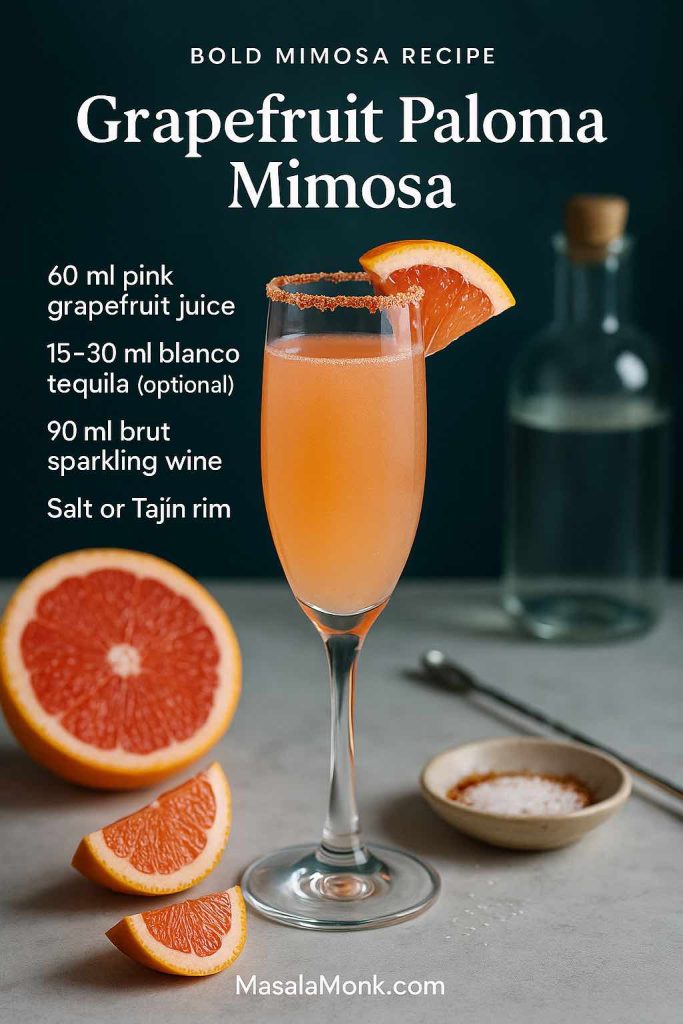
8. Grapefruit Paloma Mimosa Recipe

If you enjoy a slightly bitter edge in your drinks, this grapefruit Paloma mimosa recipe will be right up your street. It’s bright, zesty, and just bold enough to wake everyone up.

Per glass:

  • 2 oz pink grapefruit juice
  • ½–1 oz blanco tequila (optional)
  • 3 oz sparkling wine
  • Salt or Tajín, for the rim
  • Grapefruit wedge, to garnish
Grapefruit Paloma mimosa recipe card with a pale pink Champagne flute cocktail made from 60 ml pink grapefruit juice, 90 ml brut sparkling wine and optional 15–30 ml tequila, served with a salted Tajín rim and grapefruit wedge on a modern brunch table, MasalaMonk.com branding.
Grapefruit Paloma Mimosa – 60 ml pink grapefruit juice, 90 ml brut sparkling wine and an optional 15–30 ml tequila with a salted or Tajín rim. A bright, slightly bitter mimosa that bridges brunch and taco-hour perfectly.

How to assemble:

  1. First, run a grapefruit wedge around the rim of the glass, then dip it in salt or Tajín.
  2. Next, pour grapefruit juice and tequila into the prepared flute.
  3. After that, top with sparkling wine.
  4. Finally, garnish with a small grapefruit wedge.

This mimosa recipe straddles the line between breakfast drink and cocktail, so it’s ideal for brunch that stretches into an afternoon filled with snacks and tacos. Later in the day, once people are in a more “cocktail hour” mood, you might bring out classics such as a Negroni recipe for those who love bitters.


9. Caramel Apple Cider Mimosa Recipe (Cozy Fall Favourite)

As soon as the air turns chilly, it’s time for a caramel apple mimosa recipe. It tastes like dessert but looks just as elegant as the classic.

Ingredients:

  • Cinnamon sugar, for rimming the glass
  • 2 oz chilled apple cider
  • 1 oz caramel vodka
  • 3 oz sparkling wine
  • Thin apple slice, for garnish
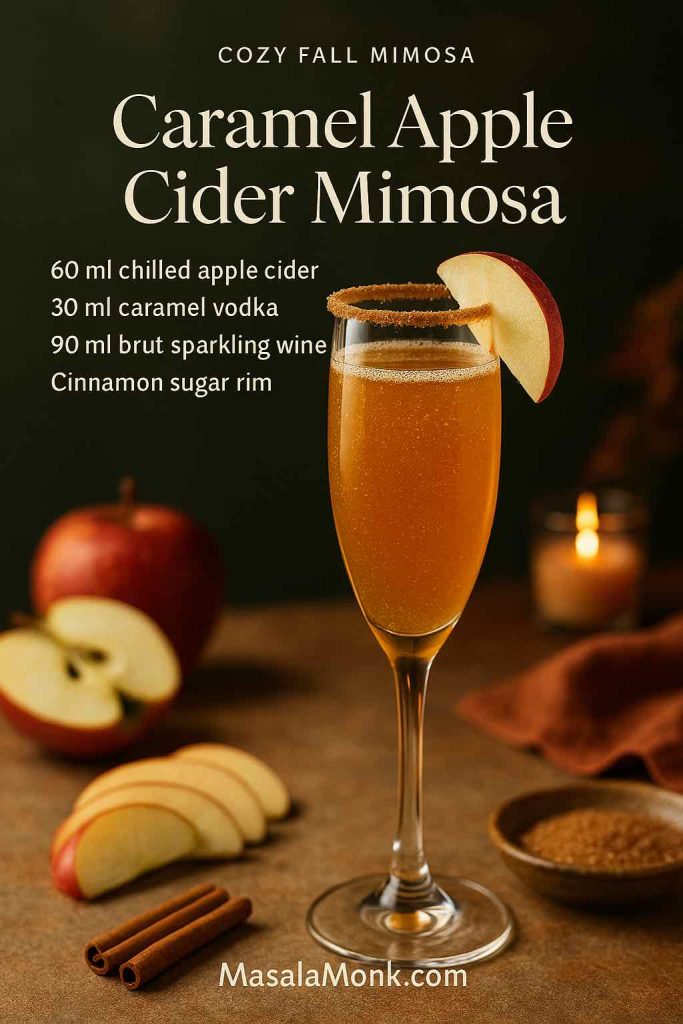
Caramel apple cider mimosa recipe card with a golden Champagne flute cocktail made from 60 ml apple cider, 30 ml caramel vodka and 90 ml brut sparkling wine, served with a cinnamon sugar rim and apple slice on a cozy fall brunch table, MasalaMonk.com branding.
Caramel Apple Cider Mimosa – 60 ml chilled apple cider, 30 ml caramel vodka and 90 ml brut sparkling wine with a cinnamon sugar rim. A dessert-like fall mimosa that’s perfect for chilly weekend brunches and holiday mornings.

Method:

  1. Pour a little apple cider onto a plate and dip the rim of the glass in it. Then roll the rim in cinnamon sugar.
  2. Add the apple cider and caramel vodka to the glass.
  3. Top gently with sparkling wine.
  4. Add a thin apple slice as garnish.

If you’d like a lighter apple cider mimosa recipe, you can skip the vodka and simply enjoy the cider and bubbles with that fragrant cinnamon rim. Alongside this drink, you could serve dishes leaning into the same cosy mood: maybe something seasoned with homemade pumpkin pie spice, or a warm side like green bean casserole or crock pot lasagna soup.


10. Non-Alcoholic Mimosa Recipe (Sparkling Mock Mimosa)

Lastly, no mimosa collection feels complete without a non-alcoholic mimosa recipe. Everyone deserves a pretty, bubbly drink, whether they’re drinking alcohol or not.

Mock mimosa (per glass):

  • 2 oz orange juice
  • 2–3 oz sparkling water, club soda, or non-alcoholic sparkling wine
  • Optional: splash of pineapple juice or white grape juice
  • Orange slice, to garnish
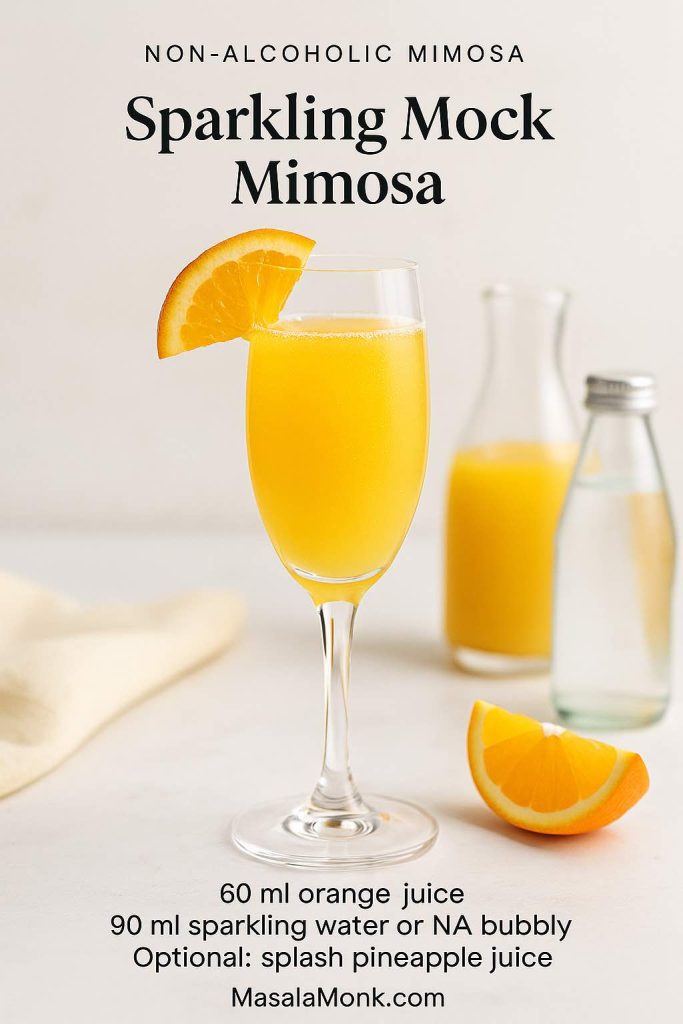
Non-alcoholic sparkling mock mimosa recipe card with a bright orange Champagne flute drink made from 60 ml orange juice and 90 ml sparkling water or alcohol-free bubbly, garnished with an orange slice on a light brunch table, MasalaMonk.com branding.
Sparkling Mock Mimosa – 60 ml orange juice topped with 90 ml sparkling water or alcohol-free bubbly and an optional splash of pineapple juice. A zero-proof mimosa that looks just as festive as the classic so everyone can join the toast.

Instructions:

  1. Pour orange juice into the flute.
  2. Add the optional extra juice if you’d like more complexity.
  3. Top with sparkling water or alcohol-free bubbly.
  4. Garnish and serve.

Some mocktail versions use ginger ale and citrus-flavoured sparkling water, as in this mimosa mocktail idea, while others mix several juices and flavoured sparkling water, as in this non alcoholic mimosa version.

Meanwhile, if you’d like to round out your zero-proof options, you can add a margarita mocktail or a few keto mocktails to keep everyone happy all day.


How to Make Any Mimosa Recipe Taste Its Best

Although the recipes above give you plenty to play with, a few general habits will make every mimosa recipe you pour taste better, no matter which variation you choose.

Keep Everything Cold, Not Just the Wine

To begin with, treat the juice with as much respect as the bubbly. Store juices and purées in the coldest part of the fridge, and don’t leave them on the counter too long while you set up. Cold ingredients:

  • Preserve the fizz in the sparkling wine
  • Keep flavours bright and refreshing
  • Make each mimosa recipe feel more polished and intentional

If you can, chill the glassware too. Even a quick 20 minutes in the fridge or freezer helps.

Use the Right Order and Gentle Pours

Furthermore, the sequence in which you pour makes a noticeable difference. Juice goes in first, then any spirit or liqueur, then sparkling wine. This order:

  • Stops the fizz from erupting and overflowing
  • Makes it easier to estimate your ratio
  • Keeps the drink visually neat

Moreover, always pour the sparkling wine slowly and at an angle. You’re not just filling a glass; you’re preserving bubbles.

Choose Good, Not Fancy, Sparkling Wine

As mentioned earlier, there’s broad agreement that you don’t need expensive bottles for a mimosa recipe. Guides such as the mimosa-focused tasting on The Kitchn and expert opinions on Simply Recipes consistently favour dry, affordable options.

Therefore, you can happily:

  • Reach for cava, a dry prosecco, or any well-made brut sparkling wine
  • Keep a couple of different bottles on hand for variety
  • Save the top-shelf Champagne for sipping later in the day

Add Spirits Sparingly

Because it’s tempting to think “more is more,” it’s easy to overdo vodka, bourbon, or tequila. However, the charm of a mimosa recipe lies in its gentle nature. For that reason:

  • ½ ounce of spirit is enough for a subtle twist
  • 1 ounce is plenty for a stronger brunch cocktail
  • Anything beyond that risks turning the drink into something harsh and unbalanced

Think of the spirit as seasoning—just a touch to shift the mood, not the main feature.

Also Read: How to Cook Perfect Rice Every Time (Recipe)


Building a Mimosa Bar Around Your Favourite Mimosa Recipe

Once you’ve tried a few variations, you might feel inspired to put it all together into a full mimosa bar. That way, guests can customise their own drinks, and you can relax and enjoy your own glass.

Step 1: Arrange the Juices

Start with a few chilled carafes or jugs. At minimum, you might offer:

  • Orange juice
  • Pineapple juice
  • Cranberry juice

In addition, if you’d like more variety, you can add:

  • Pink grapefruit juice
  • Peach nectar
  • Apple cider (especially in autumn)
  • Strawberry or watermelon purée in small bottles or jugs

Label each one clearly so people know what they’re choosing. You can also add a small sign with suggested combinations, such as “cranberry + orange,” “peach + prosecco,” or “apple cider + caramel vodka.”

Step 2: Offer a Couple of Bubbly Options

Next, set out the sparkling choices in an ice bucket or large bowl filled with ice and water. You don’t need a huge lineup. Two or three options are plenty:

  • One dry cava
  • One prosecco
  • One non-alcoholic sparkling wine or citrus-flavoured sparkling water

That way, people can create an alcoholic or non-alcoholic mimosa recipe with exactly the same flavours.

If you’re expecting a large crowd, you might also mix a big pitcher of pineapple-based punch to sit alongside the mimosa bar. The ideas in these punch recipes with pineapple juice give you easy ways to extend the menu without much extra work.

Step 3: Add Spirits and Liqueurs as “Upgrades”

After that, you can create a small “upgrade station” with a few carefully chosen bottles:

  • Grand Marnier or Cointreau, for a grand mimosa
  • Vodka, for stronger orange or cranberry mimosa recipes
  • Malibu or another coconut rum, for tropical pineapple mimosas
  • Blanco tequila, for grapefruit Paloma mimosas
  • Bourbon, for cosy apple or orange-bourbon variations

Place tiny jiggers or measuring spoons nearby to encourage moderation. A small card can list combinations like “orange + Grand Marnier + bubbles,” “grapefruit + tequila + bubbles,” or “apple cider + bourbon + bubbles.”

Step 4: Finish with Garnishes and Glassware

Finally, add the finishing touches that make everything feel polished:

  • Orange slices, wedges, and twists
  • Lemon and lime wheels
  • Pineapple wedges
  • Strawberry halves and raspberries
  • Fresh cranberries in a little bowl during the holidays
  • Herbs such as mint or rosemary
  • Dishes of cinnamon sugar and Tajín for rimming glasses

Set out plenty of flutes, coupes, or even sturdy wine glasses if you expect people to be moving around. A small tray for used garnishes or toothpicks helps keep the table tidy.

Also Read: Homemade Hot Chocolate with Cocoa Powder Recipe


What to Serve with Any Mimosa Recipe

A great mimosa recipe becomes even more memorable when you serve it alongside simple, comforting food. Furthermore, you don’t need restaurant-level skills to create a spread that feels thoughtful and generous.

Classic Brunch Companions

To start, think about familiar breakfast favourites and lean into those.

  • French toast sticks
    They’re easy to eat with your hands and always a hit. A batch of French toast sticks with maple syrup on the side works beautifully with citrusy drinks.
  • Crispy oven bacon
    Instead of standing over a pan, bake your bacon. A tray of oven-cooked bacon gives you crisp, evenly cooked strips with almost no mess.
  • Fluffy pancakes
    For something sweet and soft, serve a stack of fluffy buttermilk pancakes with stewed cinnamon apples. The cinnamon and apple flavours mirror the caramel apple mimosa recipe wonderfully.
  • Mediterranean-inspired plates
    If you’d rather go a little lighter, create brunch boards inspired by these popular Mediterranean breakfasts: think eggs, olives, tomatoes, cucumbers, cheese, and good bread. These flavours are vibrant but not too rich, which makes them ideal partners for all kinds of mimosas.

Heartier Party and Holiday Ideas

On the other hand, if your mimosa recipe is showing up at a party or holiday gathering rather than a pure breakfast, you can reach for more substantial dishes.

  • Potato appetisers
    Little bites always disappear quickly when people have a glass in hand. A selection of snacks inspired by these easy potato appetizers pairs nicely with both classic and fruity mimosas.
  • Mac and cheese
    A bubbling baking dish of macaroni and cheese feels comforting and familiar. Guests can spoon out a scoop whenever they need something hearty between refills.
  • Casseroles and soups
    Especially in cooler months, dishes like green bean casserole, cottage cheese lasagna, or crock pot lasagna soup work beautifully alongside richer mimosa recipes like the caramel apple or bourbon twists.
  • Sweet finishes
    Once people are ready to move from mimosas to coffee, desserts such as tres leches cake or a plate piled with homemade churros round off the gathering in a very satisfying way.

Bringing It All Together

In the end, a mimosa recipe is one of the most forgiving and flexible things you can make for guests. At its simplest, it’s just orange juice and sparkling wine in a cold glass. However, with a little curiosity and a few extra ingredients, that same idea can stretch into Grand Marnier mimosas, vodka manmosas, pineapple and strawberry spins, grapefruit Paloma mashups, caramel apple cider creations, and even non-alcoholic mock mimosas that look just as celebratory.

Because the method hardly changes—chill, pour juice, add spirit if using, top with bubbles—you can focus on enjoying the process rather than worrying about perfection. Meanwhile, a small selection of brunch dishes or party snacks turns those drinks into a full experience, whether you’re hosting a quiet weekend breakfast, a loud holiday brunch, or a relaxed evening get-together.

So the next time you reach for a bottle of sparkling wine, you don’t have to stop at one standard mimosa. Instead, you can choose any mimosa recipe from this collection, set out a few juices and garnishes, and let the people you care about mix, sip, and linger as long as they like.

Also Read: Peanut Butter Cookies (Classic Recipe & 3 Variations)

FAQs

1. What is the classic mimosa recipe ratio?

To begin with, the most popular mimosa recipe ratio is 1 part orange juice to 2 parts sparkling wine. This gives you a drink that tastes bright and citrusy without becoming too sweet or heavy. However, if you prefer a softer, more juice-forward mimosa recipe, you can absolutely go for a 1:1 ratio instead. Conversely, if you like your drink drier, use just a splash of juice in a flute mostly filled with bubbles.


2. How are mimosas made, step by step?

Firstly, chill your orange juice, sparkling wine, and glasses thoroughly. Next, pour the juice into the glass so you can easily control the amount. After that, add any optional liqueur or spirit if you’re upgrading your mimosa recipe. Finally, tilt the flute slightly and slowly top it with sparkling wine to preserve the fizz. Serve right away, because mimosas are at their best when they’re freshly poured and still dancing with bubbles.


3. What is the best champagne or sparkling wine for a mimosa recipe?

Generally, the best choice is a dry, affordable sparkling wine rather than an expensive bottle. In particular, brut cava, dry prosecco, and other brut “champagne-style” wines work brilliantly in a mimosa recipe. They bring crisp acidity and subtle fruit without clashing with the sweetness of the juice. On the other hand, very sweet sparkling wines can make the drink taste cloying, so it’s wiser to keep those for desserts.


4. Can I make a mimosa recipe ahead of time?

Strictly speaking, you shouldn’t fully assemble mimosas in advance, because the bubbles will fade. Instead, prepare everything except the sparkling wine beforehand. For example, you can chill juices, mix juice blends (like cranberry–orange or pineapple–orange), and even rim glasses with sugar or cinnamon. Then, just before serving, you pour the juice and top each glass with bubbly. That way, your mimosa recipe still tastes fresh but your prep work is mostly done.


5. How do I make a pitcher of mimosas for a crowd?

For a pitcher, it’s usually easiest to start with the juice. As a guideline, combine about 3 cups of chilled juice in a large jug (plain orange or a mix) and keep it in the fridge. When guests arrive, gently pour in one 750 ml bottle of chilled sparkling wine, taste, and adjust if you want more bubbles or more juice. Alternatively, you can keep the pitcher filled just with juice and let everyone top their glass with sparkling wine individually, which keeps every mimosa recipe fizzy from first pour to last.


6. What juices work best for different mimosa recipes?

In most cases, orange juice is the classic starting point. Nevertheless, many other juices make fantastic variations. For instance, pineapple is perfect for tropical mimosas, cranberry suits holidays and “pink mimosa recipe” versions, grapefruit creates a slightly bitter, grown-up twist, peach nectar gives Bellini-style vibes, and apple cider turns a mimosa recipe into a cosy fall drink. Additionally, purées like strawberry or watermelon add colour, texture, and a dessert-like feel without needing much extra effort.


7. How do I make a stronger “manmosa” or vodka mimosa recipe?

If you’d like something a bit bolder, you can build a vodka mimosa recipe very easily. Simply start with 2 ounces of orange juice, then add about 1 ounce of vodka. Afterward, top the glass with 3–4 ounces of sparkling wine. This variation is sometimes called a “manmosa,” although anyone who enjoys a stronger brunch drink can absolutely order it. Just remember, because the spirit adds extra alcohol, it’s wise to sip slowly and serve some food alongside.


8. How do I set up a simple mimosa bar at home?

To create a mimosa bar, first arrange several chilled juices in labelled carafes—orange, pineapple, cranberry, grapefruit, peach nectar, and perhaps apple cider. Next, place two or three bottles of chilled sparkling wine in an ice bucket, including at least one dry option and one non-alcoholic bubbly or sparkling water. Then, add a few optional spirits like Grand Marnier, vodka, Malibu, or tequila for guests who want to upgrade their mimosa recipe. Finally, provide garnishes such as orange slices, berries, pineapple wedges, herbs, and rimming mixes like sugar or Tajín. Guests can then pick a juice, add bubbles, and customise their own glass.


9. Can I make a non-alcoholic mimosa recipe?

Absolutely, and it’s kinder to include one. For a mock mimosa, simply combine 2 ounces of chilled orange juice with 2–3 ounces of sparkling water, club soda, or alcohol-free sparkling wine in a flute. Optionally, you can also introduce pineapple juice, white grape juice, or cranberry juice for extra flavour. This non-alcoholic mimosa recipe still looks festive and bubbly, so everyone at the table can join in the toast without feeling left out.


10. Is prosecco or cava better for a mimosa recipe?

Both options work extremely well, although they offer slightly different personalities. Prosecco often tastes fruitier and softer, which suits lighter, fruit-forward variations such as strawberry or peach. Cava, by contrast, usually brings higher acidity and a more “Champagne-like” structure, making it ideal for a very classic mimosa recipe or anything with sweeter juice like orange or pineapple. Ultimately, you can keep one bottle of each and experiment to see which style your guests prefer.


11. How sweet should a mimosa recipe be?

Ideally, a mimosa should taste refreshing rather than sugary. Consequently, you want the sweetness of the juice balanced by the dryness of the sparkling wine. If your drink feels too sweet, try one of these quick fixes: add more brut sparkling wine, squeeze in a bit of lemon or lime, or switch to a less sugary juice blend. Conversely, if the drink seems too sharp, a tiny extra splash of juice will soften it. Over time, you’ll find a personal sweet spot that makes your favourite mimosa recipe feel just right.


12. How many mimosas can I get from one bottle of sparkling wine?

Roughly speaking, a 750 ml bottle of sparkling wine will pour about five to six standard mimosas, depending on your ratio and glass size. For example, if you use 4 ounces of sparkling wine and 2 ounces of juice per glass, you usually get six servings. Therefore, if you’re hosting, it helps to estimate one bottle for every two to three guests, especially when you’re planning multiple mimosa recipe variations and expect people to try more than one flavour.


13. What food goes best with a mimosa recipe?

Generally, mimosas pair beautifully with classic brunch dishes. Soft scrambled eggs, crispy bacon, French toast, pancakes, and breakfast casseroles all work wonderfully. Additionally, fresh fruit, yoghurt parfaits, and pastry baskets give people something light to snack on between sips. For heartier occasions, you can also serve potato appetisers, small sandwiches, or even pasta bakes. As long as the food isn’t overwhelmingly spicy or smoky, it will usually play nicely with a citrusy, sparkling mimosa recipe.


14. Can I use rosé or red wine in a mimosa-style drink?

Yes, although the drink will feel a bit different. A rosé mimosa recipe can be delightful: just replace the usual sparkling wine with dry sparkling rosé and pair it with juices such as orange, cranberry, or pomegranate. In contrast, red wine generally isn’t used in traditional mimosas, yet you could experiment with light, chilled reds in sangria-style brunch cocktails instead. If you do try rosé in place of white bubbly, keep the juice ratio similar so the drink stays balanced and refreshing.
Posted on 10 Comments

French 75 Cocktail Recipe: 7 Easy Variations

Woman in a green dress holding a French 75 cocktail in a champagne flute with a lemon twist, with text overlay reading ‘How to Make a French 75 Plus 7 Refreshing Variations’ above MasalaMonk.com.

There’s something wonderfully sneaky about a French 75. It looks delicate in the glass, but it drinks like a tiny, sparkling cannon. Gin, lemon, sugar, Champagne: that’s it. This French 75 cocktail recipe is your base. From there, we’ll walk through the most-loved variations people actually look for—vodka French 76, Mexican 75 with tequila, bourbon French 95, cognac, elderflower, lavender, Prosecco/Italian 75, batch versions and a mocktail—so you can pour exactly the kind of 75 you’re in the mood for.


What Is a French 75?

At its core, a French 75 is a classic sour (spirit + citrus + sugar) lengthened with Champagne. In most modern bars that means:

  • Gin
  • Fresh lemon juice
  • Simple syrup
  • Dry sparkling wine (usually Champagne or another Brut)

Served in a flute or coupe, garnished with a lemon twist, it’s bright, bubbly and deceptively easy to drink.

The drink’s name comes from the French 75mm field gun used during World War I. According to Wikipedia’s French 75 entry, the idea was that this pretty little cocktail hits with the power of artillery when you aren’t paying attention. Meanwhile, the International Bartenders Association recognises it as an official contemporary classic, listing a stripped-back recipe of gin, lemon, sugar and Champagne.

You’ll see slight differences in ratios from one book to the next, and some early recipes even used cognac instead of gin. That’s actually good news for home bartenders: once you understand the pattern, you can comfortably switch spirits, bubbles and flavours without losing the soul of this French 75 cocktail recipe.


Classic French 75 Cocktail Recipe (Gin, Lemon & Champagne)

Let’s start with the template every other riff builds on.

Ingredients

Makes one drink

  • 1½ oz (45 ml) gin
  • ¾ oz (22 ml) fresh lemon juice
  • ½–¾ oz (15–22 ml) simple syrup (1:1 sugar and water)
  • 3 oz (90 ml) Brut Champagne or other dry sparkling wine
  • Ice, for shaking
  • Lemon twist or thin lemon wheel, for garnish

A juniper-forward London Dry gin like Beefeater or Tanqueray gives the most classic profile, although softer, more aromatic gins absolutely work. If you enjoy exploring gin in general, you might also like the ideas in these creative gin cocktail recipes, which use similar sour-style ratios in very different ways.

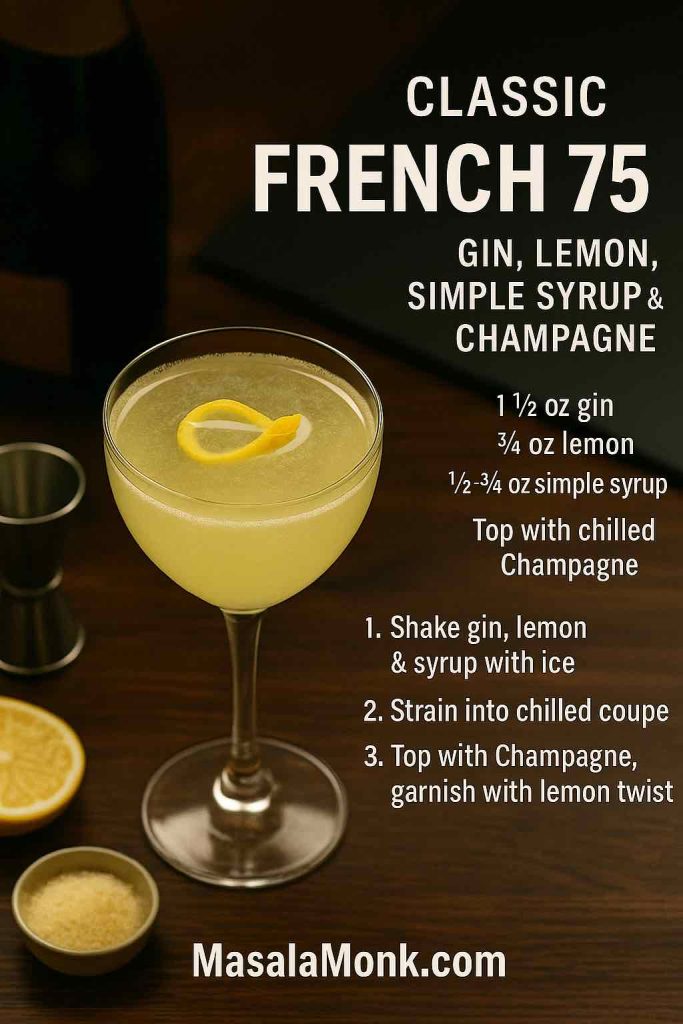
Classic French 75 cocktail recipe card showing a coupe glass with a lemon-twist garnish on a wooden bar, surrounded by lemon, sugar and jigger, with text listing gin, lemon, simple syrup, Champagne and three simple preparation steps.
Classic French 75 at a glance – gin, lemon, simple syrup and Champagne with quick step-by-step instructions so you can mix this bubbly favourite in seconds.

Step-by-step French 75 Cocktail Recipe

  1. Chill your glass
    Slide a Champagne flute or coupe into the freezer for a few minutes. Cold glass, cold drink, happy you.
  2. Build the sour base
    In a cocktail shaker, combine the gin, fresh lemon juice and simple syrup.
  3. Shake with ice
    Fill the shaker with ice and shake for about 10–15 seconds. You want the metal to frost over and the contents to be very cold, with just enough dilution to soften the lemon’s sharpness.
  4. Strain into your chilled glass
    Fine-strain the mixture into the flute or coupe. A fine strainer catches ice shards and pulp so the drink stays silky and elegant.
  5. Add the bubbles
    Gently top with Champagne or another dry sparkling wine. Pour slowly, letting the foam settle as you go—you don’t want to lose half the drink in a fizzy overflow.
  6. Garnish and serve
    Express a strip of lemon peel over the surface to release the oils, rake it around the rim, then drop it in or curl it along the edge. Serve straight away, while the drink is icy and effervescent.

The Liquor.com French 75 recipe follows almost this exact pattern: gin and lemon balanced with sugar, brought to life by Champagne. It’s a simple combination, but when everything is fresh and cold it feels like you’ve stepped into a classic hotel bar.


Choosing Ingredients for the Best French 75 Cocktail Recipe

The French 75 is incredibly sensitive to ingredient quality. Small tweaks make a big difference, so this section walks through the main choices and how they change the drink.

Picking a gin

For a classic French 75 cocktail recipe, start with:

  • London Dry gin – crisp, juniper-led, slightly peppery. Tanqueray, Beefeater or similar will give you that familiar structure.
  • Softer, floral gins – brands like Hendrick’s can work beautifully if you like cucumber and rose notes playing with the lemon.

If this drink becomes a favourite, you’ll probably enjoy branching out into gin-forward recipes like the Negroni and its variations, which show how the same bottle behaves when stirred with vermouth and bitters instead of shaken with citrus.

Champagne vs Prosecco vs other bubbles

The IBA specifies Champagne for the official build, but in a home kitchen your options are broader:

  • Champagne (Brut) – toasty, bready, layered. Ideal when you want the drink to feel extra special.
  • Cava – usually very dry, clean and great value; perfect for parties and batch servings.
  • Prosecco – slightly fruitier and often a touch sweeter; we’ll lean into this in the Italian/Prosecco variations later.

Whichever you use, stay in the Brut or Extra Brut range. If the sparkling wine is sweeter (often labelled “Extra Dry” in Prosecco), you might want to reduce the simple syrup slightly so the French 75 doesn’t become cloying.

For inspiration on how sparkling wine behaves in bigger, party-ready bowls, have a look at the pineapple punch recipes that add prosecco or Champagne right at the end; the same timing works brilliantly when you batch French 75s, too.

Balancing lemon and sweetness in French 75 Cocktail Recipe

Lemon juice is non-negotiable here. Bottled lemon tends to taste flat and harsh; fresh juice brightens the drink without turning it sour for the wrong reasons.

As for sugar, think of the simple syrup range like this:

  • ½ oz (15 ml) – sharp, spritzy, more “adult”.
  • ¾ oz (22 ml) – rounder, more approachable, likely to please a mixed crowd.

You can use that same idea in other lemon-based cocktails. A good example is the lemon drop martini recipe: it leans a little sweeter because there’s no sparkling wine to help with balance, so the sugar has to do more work.


A Quick Look at the French 75’s History

The story behind the French 75 is messy in a charming way. Different books claim different origins, and arguments rage about whether the “real” drink uses gin or cognac.

Early printed recipes in the early 20th century show the drink appearing in Paris around World War I. The Wikipedia article on the French 75 mentions Harry’s New York Bar in Paris as an important early home, and notes that some of the earliest written versions were brandy-based, with champagne and lemon added. Later, gin versions became far more widespread, and today those are what most people recognise.

Writers at Difford’s Guide dig into old bar manuals and argue that cognac versions (sometimes called French 125s) have a strong claim to authenticity as well. Meanwhile, Jeffrey Morgenthaler’s essay on the French 75 walks through a tangle of recipes that includes gin, apple brandy, orgeat, grenadine and more. The takeaway? The drink has always been more like a family of Champagne cocktails than a single fixed formula.

Even Ultimate Mai Tai’s discussion of gin vs cognac in the French 75 concludes that while the IBA gives the modern gin-based template its stamp of approval, cognac versions are arguably more “French” and luxuriously dessert-friendly.

All of that means you have permission to treat this French 75 cocktail recipe as a flexible sketch. Gin is the starting point, not a prison.


French 75 Cocktail Recipe Variations

Once you’ve made a few classic French 75s, it becomes very natural to bend the recipe. Swap the spirit, change the sweetener, or alter the bubbles and you have something new that still feels like part of the family.

The pattern stays the same:

  • Around 1½ oz spirit
  • Around ¾ oz citrus
  • ½–¾ oz sweetener (syrup or liqueur)
  • 2½–3 oz sparkling wine

From here on, we’ll walk through seven prominent variations, plus a few bonus twists that are worth trying at least once.


1. Cognac French 75 (French 125) Cocktail Recipe

This variation sits closest to some of the earliest printed versions of the drink. Cognac brings warmth, dried-fruit notes and a plush mouthfeel that make the French 75 lean toward dessert.

Ingredients

  • 1½ oz cognac (VS or VSOP)
  • ¾ oz fresh lemon juice
  • ½–¾ oz simple syrup
  • 3 oz Brut Champagne or dry sparkling wine
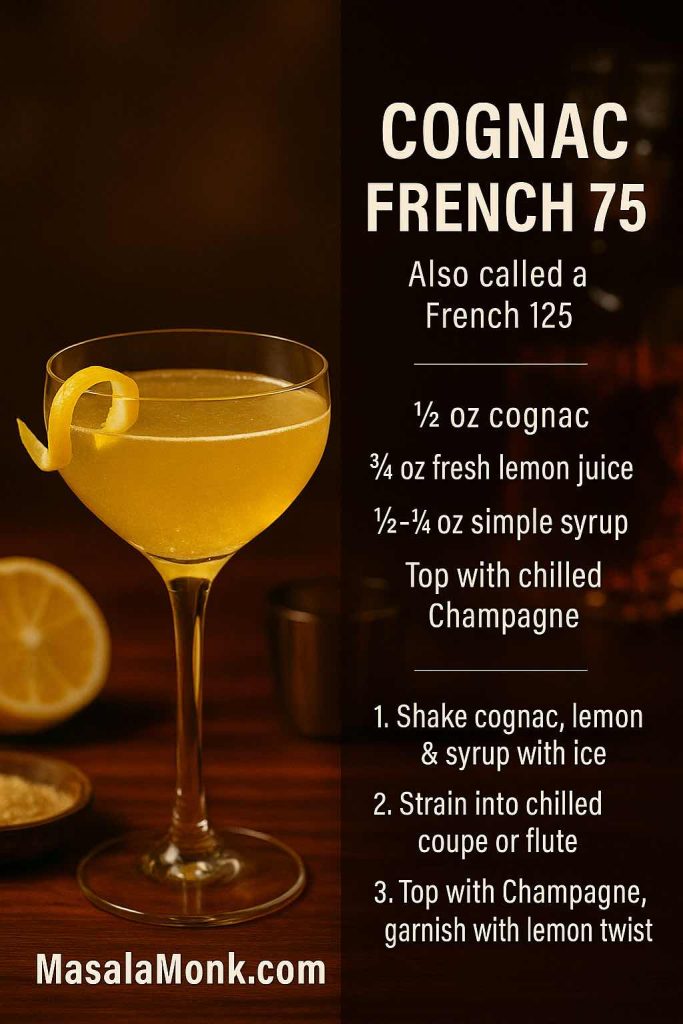
Recipe card for a Cognac French 75, also called a French 125, showing a golden cocktail in a coupe glass with lemon twist on a dark wooden bar, plus text listing cognac, lemon, simple syrup, Champagne and three simple preparation steps.
Cognac French 75 (French 125): a richer take on the classic, made with cognac, fresh lemon, simple syrup and Champagne for a silky, dessert-worthy sparkle.

Method

Shake the cognac, lemon and syrup with ice. Fine-strain into a chilled flute or coupe, top with Champagne and garnish with a lemon twist or even a thin orange peel if you want a slightly richer aroma.

The cognac version works beautifully with after-dinner desserts. Pair it with something creamy like tres leches cake or even a plate of authentic churros dusted with cinnamon sugar for an indulgent end to the evening.


2. Vodka French 75 (French 76) Cocktail Recipe

Replace the gin with vodka and you have a French 76. The structure is identical, but the flavour shifts: cleaner, more neutral, less herbal. This is a great choice when you want the lemon and Champagne to shine without the botanical kick of gin.

Several mainstream recipes, such as the ones from Simple Joy or Southern Living, keep the ratios almost identical to the gin-based French 75. You can follow that same logic at home.

Ingredients

  • 1½ oz vodka
  • ¾ oz fresh lemon juice
  • ¾ oz simple syrup
  • 3 oz dry sparkling wine
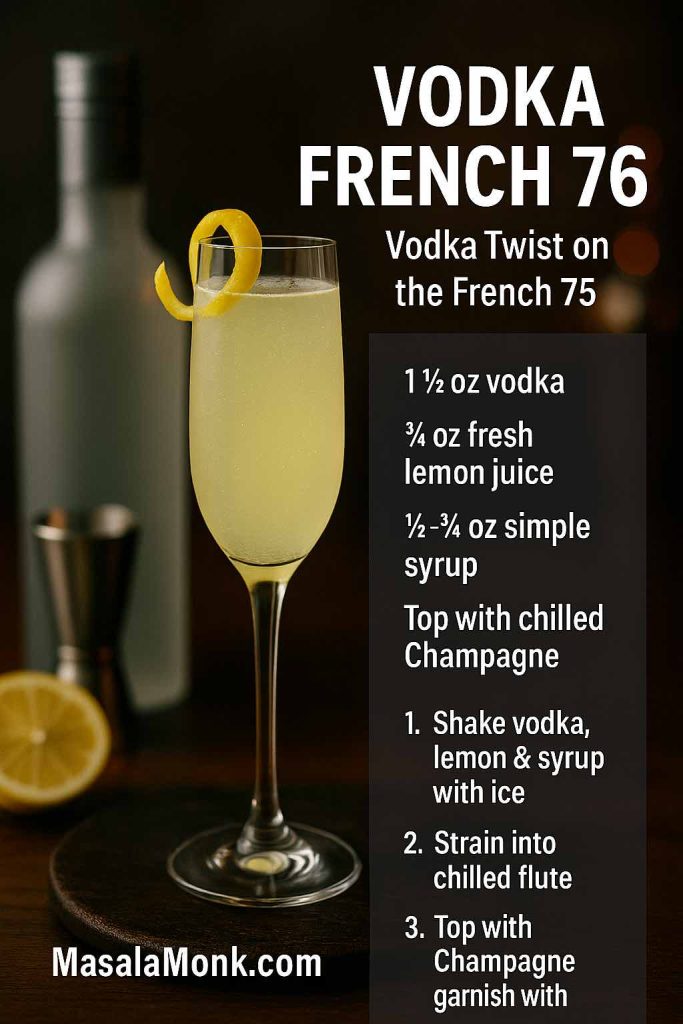
Vodka French 76 cocktail recipe card showing a tall champagne flute with a pale yellow vodka French 76 garnished with a lemon twist, next to a frosted vodka bottle and jigger, with text listing vodka, lemon, simple syrup, Champagne and three simple preparation steps.
Vodka French 76: a clean, citrusy twist on the French 75 made with vodka, fresh lemon, simple syrup and a Champagne top-up for easy sparkle.

Method

Shake vodka, lemon juice and syrup with ice until well chilled. Strain into a cold flute, top with Champagne or another dry sparkling and garnish with a lemon twist.

If you like this direction, you’ll probably also enjoy other vodka–lemon combinations, such as the drinks in this guide to vodka with lemon cocktails and infusions, which stretches that pairing into everything from martinis to long, refreshing highballs.


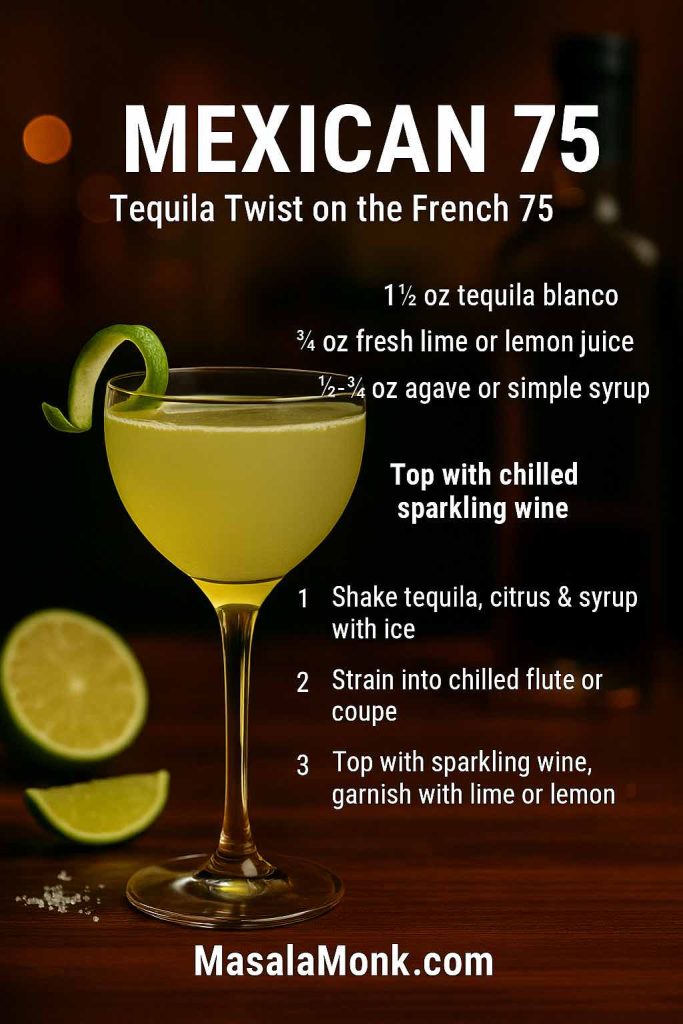
3. Tequila French 75 (Mexican 75) Cocktail Recipe

When tequila joins the party, you get a Mexican 75—essentially a sparkling margarita. Tequila, lime or lemon, a touch of agave, and bubbly on top. Several recipes online, including those from tequila brands themselves, stick to that pattern.

Ingredients

  • 1½ oz tequila blanco (or a gentle reposado)
  • ¾ oz fresh lime or lemon juice
  • ½–¾ oz agave syrup (or simple syrup)
  • 3 oz sparkling wine
Recipe card for a Mexican 75 cocktail showing a pale yellow-green tequila French 75 in a coupe glass with a lime twist, set on a wooden bar with lime wedges and salt, plus text listing tequila, lime or lemon juice, agave or simple syrup, sparkling wine and three easy preparation steps.
Mexican 75: a lively tequila twist on the French 75, shaken with citrus and agave, then topped with sparkling wine for a bright, bubbly fiesta in a coupe.

Method

Add tequila, citrus and syrup to your shaker, fill with ice and shake until properly cold. Strain into a flute or coupe, then top with prosecco, cava or Champagne. Garnish with a lime wheel or a thin strip of lime peel.

For a summer party, you might serve Mexican 75s alongside something more relaxed and fruity such as these watermelon margarita variations. Together they give your guests a choice between sparkling and on-the-rocks tequila drinks.

And if some of those guests prefer to skip alcohol, it’s very easy to offer a zero-proof but equally zesty option using the margarita mocktail guide.


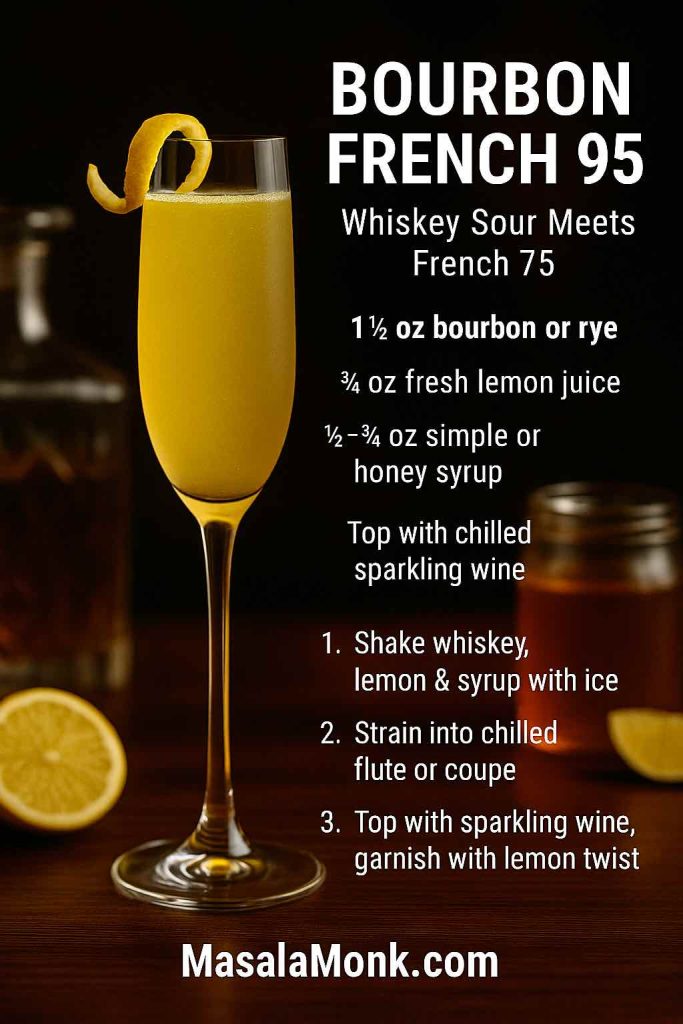
4. Bourbon or Whiskey French 75 (French 95) Cocktail Recipe

Swap in bourbon or rye and you’ll arrive at a French 95. Think of it as a whiskey sour in a party dress: lemon, sweetness and whiskey lengthened with sparkling wine.

Ingredients

  • 1½ oz bourbon or rye whiskey
  • ¾ oz fresh lemon juice
  • ½–¾ oz simple syrup or honey syrup
  • 3 oz sparkling wine
Bourbon French 95 cocktail recipe card showing a golden whiskey French 75 in a champagne flute with a lemon twist, set on a dark wooden bar with whiskey decanter, honey jar and lemon, plus text listing bourbon or rye, lemon juice, simple or honey syrup, sparkling wine and three simple preparation steps.
Bourbon French 95: a whiskey sour–style French 75 made with bourbon or rye, fresh lemon, a touch of simple or honey syrup and a sparkling wine top for rich, bubbly comfort.

Method

Combine the whiskey, lemon and syrup in your shaker with ice. Shake until chilled, strain into a flute and finish with Champagne or similar. A lemon twist is classic, though an orange twist can complement the caramel and vanilla notes in bourbon.

Honey syrup (one part honey to one part hot water) makes this feel cosy and comforting, almost like a festive, sparkling hot toddy—just cold. For a look at how those flavours play without bubbles, you can refer to the classic whiskey sour recipe, which uses a very similar balance of whiskey, lemon and sweetness.


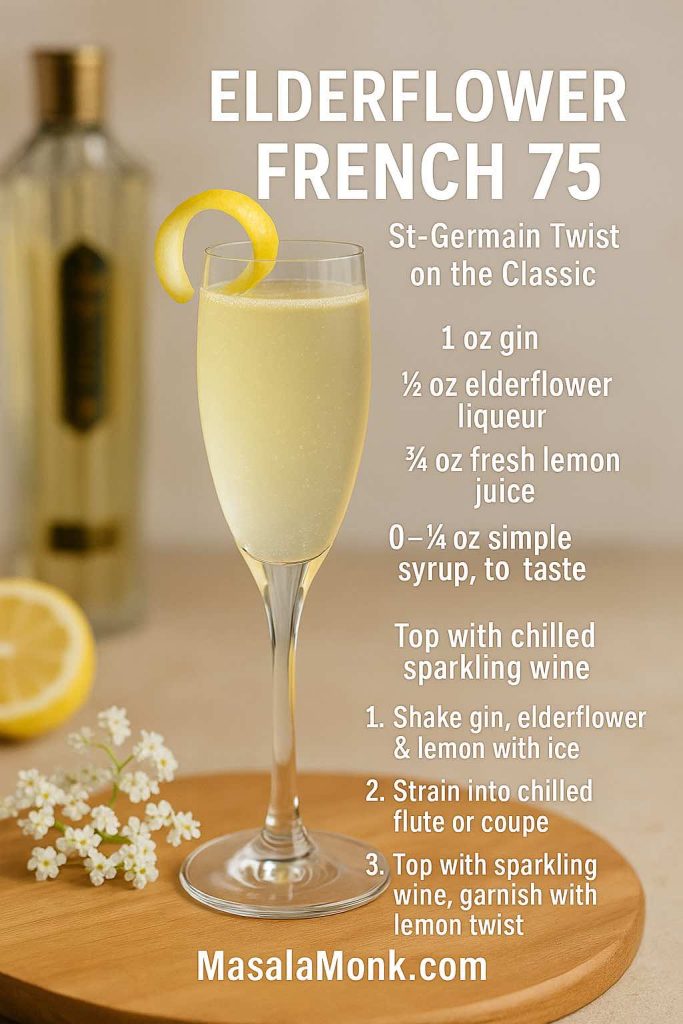
5. Elderflower French 75 (St-Germain / “Saint 75”) Cocktail Recipe

Elderflower liqueur, such as St-Germain, slips easily into the French 75 template, adding floral, lychee-like sweetness. This riff is often nicknamed a “Saint 75”.

Ingredients

  • 1 oz gin
  • ½ oz elderflower liqueur (St-Germain or similar)
  • ¾ oz fresh lemon juice
  • ¼–½ oz simple syrup (optional, to taste)
  • 3 oz sparkling wine
Elderflower French 75 cocktail recipe card showing a pale golden drink in a slender champagne flute with lemon twist and white blossoms, plus text listing gin, elderflower liqueur, lemon juice, optional simple syrup, sparkling wine and three simple preparation steps.
Elderflower French 75: a soft, floral twist on the classic French 75 with gin, St-Germain, fresh lemon and sparkling wine for a brunch-ready sparkle.

Method

Shake the gin, elderflower liqueur, lemon and any additional syrup with ice. Strain into your glass and top with chilled sparkling wine. A thin lemon twist or even a few edible flowers make beautiful garnishes.

Because this variation is so brunch-friendly, it’s a smart one to batch. You can pre-mix the still ingredients in a jug, keep it chilled, then pour individual servings and top with bubbles as guests arrive—similar to how some of the coconut water cocktail recipes approach batching.


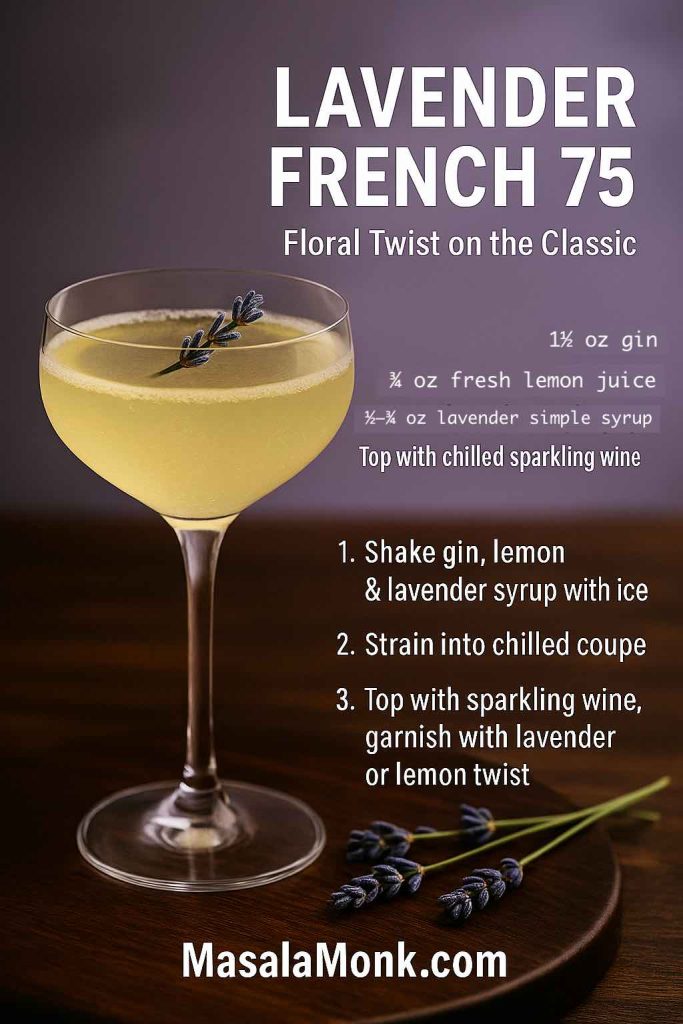
6. Lavender French 75 Cocktail Recipe

Lavender plays beautifully with gin’s botanicals, but it’s potent, so a little goes a long way. The safest way to bring it into a French 75 is via lavender simple syrup.

Lavender syrup

  • Combine equal parts sugar and water in a small saucepan.
  • Add a small spoonful of culinary lavender.
  • Warm gently until the sugar dissolves, then switch off the heat and let it steep.
  • Strain when it smells fragrant and cool before using.

Ingredients

  • 1½ oz gin
  • ¾ oz fresh lemon juice
  • ½–¾ oz lavender simple syrup
  • 3 oz sparkling wine
Lavender French 75 cocktail recipe card showing a pale golden drink in a coupe glass with a lavender sprig garnish on a wooden bar, soft purple background, and text listing gin, lemon juice, lavender simple syrup, sparkling wine and three simple preparation steps.
Lavender French 75: a soft, floral riff on the classic French 75, shaken with lavender syrup and lemon, then topped with sparkling wine for a romantic, spring-ready sip.

Method

Shake gin, lemon and lavender syrup with ice, strain, top with bubbles and garnish with a small lavender sprig or lemon twist.

If colour is your thing, you might enjoy going even further with vibrant drinks like the ones in this collection of purple cocktails and mocktails, many of which play the same visual tricks that Empress 1908 gin does.


7. Prosecco / Italian 75 (with Limoncello Option) Cocktail Recipe

The easiest Prosecco version simply substitutes Champagne for Prosecco in the classic French 75 cocktail recipe. That alone gives you a slightly more fruit-driven, often more affordable drink.

Simple Prosecco French 75

  • Classic French 75 specs
  • Swap Champagne for a dry Prosecco

If your Prosecco label reads “Extra Dry” (which paradoxically means a little sweeter than Brut), you may want to reduce the simple syrup to ½ oz so the drink still tastes bright.

To push things further into Italian territory, add limoncello.

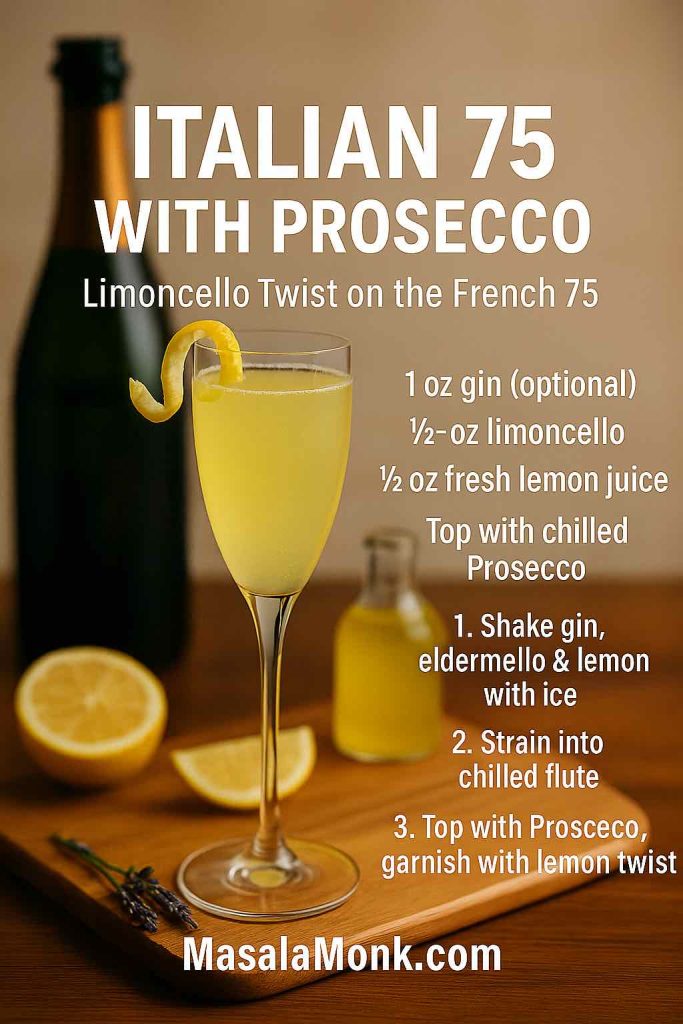
Italian 75 cocktail recipe card showing a tall flute filled with a bright yellow Prosecco French 75 garnished with a lemon twist, set on a wooden board with Prosecco bottle, limoncello bottle and lemon slices, plus text listing gin, limoncello, lemon juice, Prosecco and simple preparation steps.
Italian 75 with Prosecco: a sunny limoncello twist on the French 75, shaken with gin and fresh lemon, then topped with chilled Prosecco for a zesty, sparkling aperitivo.

Italian 75 with limoncello

  • 1 oz gin (optional, for extra backbone)
  • ½–1 oz limoncello (taste yours and adjust)
  • ½ oz fresh lemon juice (or less, if the limoncello is very tart)
  • Top with Prosecco

Shake the still ingredients with ice, strain into a flute and complete with Prosecco. The result sits somewhere between a French 75 and a sparkling lemon dessert. It pairs nicely with creamy cakes and citrus sweets, especially if you already enjoy the flavours in a lemon drop martini.


Bonus Twists: Fruit, Colour & Seasonality

Beyond the core seven, there are a few other ways to personalise this French 75 cocktail recipe without much extra effort.

Strawberry French 75

Muddle one or two ripe strawberries in your shaker before adding the classic gin, lemon and syrup. Shake, fine-strain (to catch the seeds) and top with sparkling wine. The colour becomes a soft blush pink, and the flavour leans toward strawberry lemonade with bubbles.

Cranberry French 75

Replace part of the lemon juice and syrup with unsweetened cranberry juice:

  • 1¼ oz gin
  • ½ oz lemon juice
  • ½ oz cranberry juice
  • ½ oz simple syrup
  • 3 oz sparkling wine

Shake the still ingredients, strain, top and garnish with a few floating cranberries. For more ideas on colourful, fizzy non-alcoholic drinks in this style, you might like the mocktails in this overview of grenadine-based mocktails, which often use the same flute-and-bubbles presentation.

Fall spice and honey

In cooler months, a “fall 75” can be as simple as switching the gin to bourbon, the syrup to honey syrup, and adding a very small pinch of ground cinnamon or a dash of spiced bitters before you shake. It still feels like a French 75; it just leans into sweater weather.


Batch French 75 for a Crowd

When you’re making French 75s for more than a couple of people, shaking each one individually can turn you into a full-time bartender. Fortunately, this recipe scales neatly.

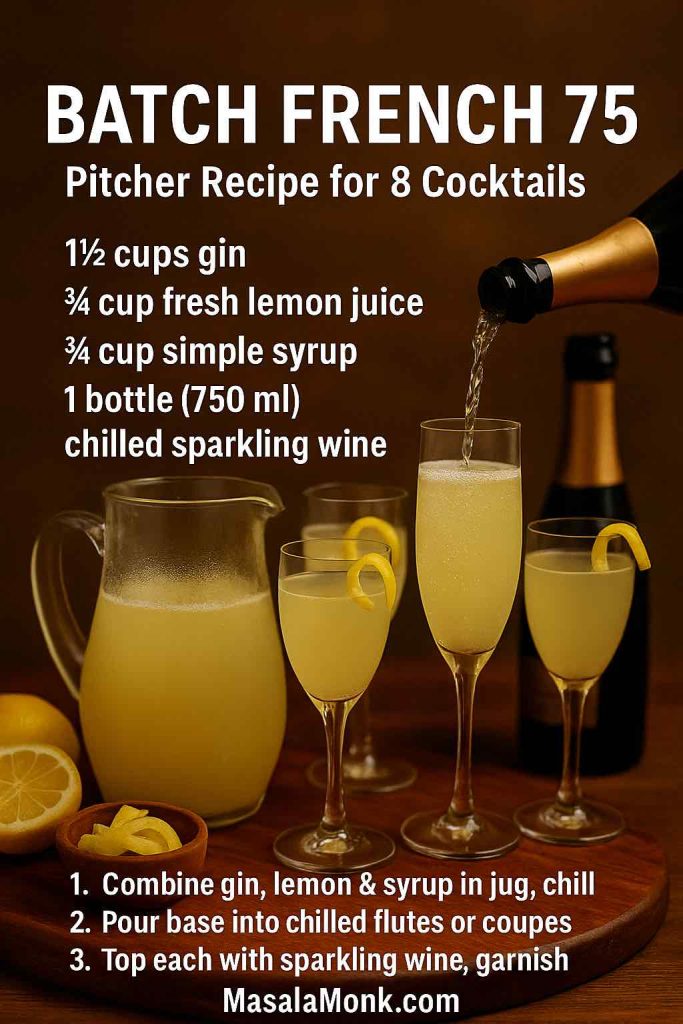
Here’s a starting point for about 8 drinks:

  • 1½ cups (360 ml) gin (or another base spirit)
  • ¾ cup (180 ml) fresh lemon juice
  • ¾ cup (180 ml) simple syrup
  • 1 bottle (750 ml) chilled Champagne, Cava or Prosecco
Batch French 75 cocktail recipe card showing a frosty pitcher of French 75 base on a wooden table with several champagne flutes being filled and garnished with lemon twists, along with text listing gin, lemon juice, simple syrup, a bottle of sparkling wine and three simple steps to serve eight cocktails.
Batch French 75: an easy pitcher recipe for about eight cocktails—mix gin, lemon and syrup in advance, then top each glass with chilled sparkling wine and a lemon twist when guests arrive.

How to batch

  1. In a large jug, combine gin, lemon juice and syrup. Stir and refrigerate until very cold.
  2. Just before serving, pour the base into flutes or coupes, filling each glass about one-third full.
  3. Top each serving with sparkling wine, then garnish with lemon twists.

The key is to add the bubbles at the last moment, just as you would with prosecco-based punches like the ones in these pineapple punch recipes. That way the carbonation doesn’t fade while the jug sits on the table.


Virgin French 75 Mocktail

Not everyone at the table will want alcohol, but it’s easy to make a French 75–style drink that looks and feels just as celebratory.

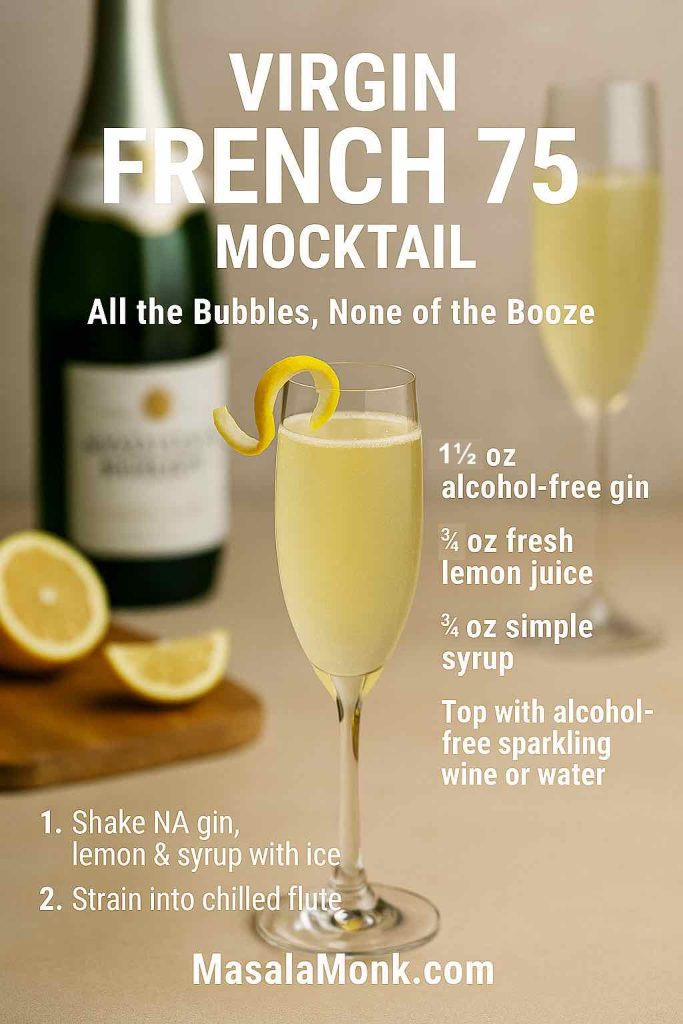
Option 1: With non-alcoholic gin

  • 1½ oz alcohol-free gin
  • ¾ oz fresh lemon juice
  • ½–¾ oz simple syrup
  • 3 oz alcohol-free sparkling wine or sparkling water

Shake the non-alcoholic gin, lemon and syrup with ice. Strain into a flute or coupe, then top with your chosen bubbles. Garnish with a lemon twist so it visually matches the alcoholic version.

Virgin French 75 mocktail recipe card showing a pale yellow non-alcoholic French 75 in a champagne flute with a lemon twist, alcohol-free sparkling bottle and lemon halves in the background, plus text listing alcohol-free gin, lemon juice, simple syrup, alcohol-free sparkling wine and simple preparation steps.
Virgin French 75 Mocktail: all the bubbles and citrusy sparkle of a French 75, made with alcohol-free gin, fresh lemon and fizzy zero-proof bubbles so everyone gets a celebratory glass.

Option 2: Simple citrus sparkle

If you don’t have non-alcoholic gin to hand:

  • 1 oz lemon juice
  • 1 oz simple syrup
  • Chilled sparkling water or alcohol-free prosecco

Add lemon and syrup to a flute, stir gently, then top with sparkling water. A twist of lemon peel on top keeps the same look and aroma.

From there, it’s easy to suggest other zero-proof options so guests don’t feel restricted to just one style. The margarita mocktail guide offers another citrus-forward, salt-friendly choice, while these keto mocktails show how to keep sugar lower without sacrificing flavour.


What to Serve with a French 75

A French 75 has three main traits that drive food pairing: acidity from the lemon, bubbles from the Champagne, and a hint of sweetness from the syrup. Together they make it incredibly forgiving with snacks and starters.

Savoury snacks

Anything salty and a bit fatty will sing next to this French 75 cocktail recipe:

Charcuterie and cheese

French 75s are naturals alongside a small cheese and charcuterie spread. The acidity cuts through creamy brie and cured meats, while the bubbles keep everything feeling light. If you’d like a simple rule for arranging the board, you can follow the “3-3-3-3” framework in this guide to building a charcuterie board.

To add a touch of sweetness, a good fig preserve or marmalade is lovely next to blue cheese and goat’s cheese. It works as a bridge between savoury bites and your French 75, echoing both the citrus and the softness.

Desserts

Because a French 75 cocktail recipe leans bright rather than heavy, it’s particularly good with:

  • Citrus desserts (lemon tarts, lemon drizzle cake, key lime bars)
  • Light sponge cakes soaked in milk or syrup, such as tres leches cake
  • Crisp fried sweets like homemade churros that like having their richness cut by acid and bubbles

Glassware and Presentation

Most recipes serve a French 75 in a Champagne flute, but coupes and even stemmed wine glasses are perfectly acceptable. Each option comes with trade-offs:

  • Flute – preserves bubbles longer, very classic look.
  • Coupe – feels more vintage, but the wider surface means the bubbles escape a bit faster.
  • Stemmed wine glass – ideal for bigger, more relaxed servings or when you’re pouring a batch for a crowd.

If you’re curious about how different glass shapes affect aroma and bubble retention, you might enjoy this broader guide to choosing the right wine glass. The same principles apply to sparkling cocktails: taller, narrower bowls keep carbonation around longer; wider bowls emphasise aroma and feel a touch more glamorous.

Regardless of the glass you pick, a well-cut lemon twist and icy cold temperature will do as much for the drink’s appeal as any fancy stemware.


After the French 75: Where to Go Next

Once you’re comfortable making this French 75 cocktail recipe and a few of its variations, you’ve essentially learned a reusable template:

  • Sour structure – spirit, citrus, sweetener
  • Sparkling lengthener – Champagne, Cava, Prosecco or alcohol-free bubbles
  • Aromatic garnish – usually a simple twist of lemon or lime

From there, you can branch into other families:

In the end, that’s the real charm of the French 75. It’s not just a single drink; it’s a doorway into a whole world of sparkling, citrusy cocktails. Master this French 75 cocktail recipe once, and you’ll have a reliable party starter, a flexible template for experimentation, and an easy way to make any gathering feel just a bit more celebratory.

FAQs

1. What is a French 75, and how is it different from other Champagne cocktails?

A French 75 is a classic Champagne cocktail made with gin, fresh lemon juice, simple syrup, and dry sparkling wine. Unlike a plain glass of Champagne, this drink starts with a sour-style base—spirit, citrus, and sugar—then is lengthened with bubbles. Compared with cocktails like a Bellini or Mimosa, a French 75 is stronger, more citrus-forward, and built around a clear spirit rather than fruit purée or juice alone. This is why a good French 75 cocktail recipe feels both refreshing and surprisingly potent.


2. What are the main ingredients in a French 75 cocktail recipe?

A traditional French 75 cocktail recipe uses four core ingredients: gin, lemon juice, simple syrup, and Champagne (or another dry sparkling wine). Typically, the drink is shaken with ice using the gin, lemon, and syrup, then strained into a chilled flute or coupe before topping with bubbles. A lemon twist finishes it off. Because there are so few elements, using fresh lemon juice and decent sparkling wine makes a noticeable difference.


3. What is the best gin for a French 75?

For a classic French 75 cocktail recipe, a London Dry gin is usually the best choice. Brands with a clear juniper backbone and crisp profile help the drink taste structured rather than vague. However, you can also choose a more floral gin if you’d like softer botanicals or cucumber and rose notes. As a rule, avoid heavily flavoured or very sweet gins, since they can clash with the lemon and Champagne.


4. Do I have to use Champagne, or can I make a French 75 with Prosecco or other sparkling wine?

You absolutely can use other sparkling wines. While Champagne is traditional, many home bartenders make a French 75 with Cava or Prosecco instead. Dry (Brut) styles keep the drink bright and balanced. If the sparkling wine is slightly sweeter, you might reduce the simple syrup a little so the cocktail doesn’t end up too sugary. Consequently, choosing a good but affordable bottle is often more important than insisting on Champagne every time.


5. Is gin or cognac the “original” spirit in a French 75 cocktail recipe?

The answer depends on which historical recipe you look at. Some early versions used cognac with lemon, sugar, and Champagne, while others called for gin. Over time, the gin-based build became dominant and is now the standard in most bars. Nevertheless, a cognac French 75 (often called a French 125) is still very much part of the same family. In practice, think of gin as the modern default and cognac as a richer, more luxurious variant rather than a completely different drink.


6. What is a French 76, and how does it differ from a French 75?

A French 76 swaps the gin for vodka. The rest of the structure is identical: lemon juice, simple syrup, and sparkling wine on top. As a result, a French 76 tastes cleaner and less botanical, with the citrus and bubbles standing out more clearly. If you have guests who aren’t fond of gin but still want a sparkling cocktail, offering the vodka-based version alongside your main French 75 cocktail recipe is a simple solution.


7. What is a Mexican 75, and how do I make it?

A Mexican 75 is essentially a French 75 made with tequila instead of gin. Usually, tequila blanco pairs with fresh lime or lemon, a touch of agave or simple syrup, and sparkling wine. The build is shaken and then topped with bubbles just like the original. Because of the agave and citrus, it feels a bit like a sparkling margarita, which makes it especially suited to summer parties or taco nights.


8. What is a French 95, and what other “French number” cocktails exist?

A French 95 substitutes bourbon or rye for gin and keeps the rest of the blueprint: lemon, sweetener, and sparkling wine. It tastes like a whiskey sour that has been extended with Champagne, making it rounder and more comforting. Beyond that, you may come across names like French 45, 55, 57, 65, 74, 76, and 85; these typically indicate different spirit bases or subtle ratio tweaks. Instead of memorising every number, it’s easier to remember the core French 75 cocktail recipe and view those cocktails as variations on the same sparkling sour theme.


9. Can I make a French 75 with bourbon, whiskey, or brandy?

Yes. Bourbon and rye are the base spirits in a French 95, which is a recognised variant and a favourite among whiskey drinkers. Similarly, using cognac or another brandy gives a French 125-style drink that feels richer and more dessert-friendly. In each case, the process remains the same: shake the spirit with lemon and sugar, then add sparkling wine. Therefore, you can adapt the drink to the bottles you already have without learning an entirely new method.


10. How do I make an elderflower or St-Germain French 75?

To make an elderflower French 75, you simply replace part of the simple syrup with elderflower liqueur such as St-Germain. For instance, you can use gin, lemon juice, a small amount of syrup, and a splash of elderflower liqueur, then finish with sparkling wine. The result is a French 75 cocktail recipe that tastes softer, more floral, and very brunch-friendly. Just be mindful of sweetness; elderflower liqueur is already sugary, so you may not need much extra syrup.


11. What about a lavender French 75 or other floral versions?

A lavender French 75 usually relies on lavender-infused simple syrup. You keep the typical gin and lemon base but swap plain syrup for one that has been gently steeped with culinary lavender. The key is moderation, since too much lavender can make the drink taste perfumed. Beyond lavender and elderflower, you can also experiment with rose, hibiscus, or other floral syrups, always starting with small amounts and adjusting gradually.


12. Can I use Prosecco instead of Champagne in my French 75 cocktail recipe?

Prosecco works very well in a French 75, especially in casual settings or when you’re making several cocktails at once. To keep everything balanced, look for a Brut style and consider reducing the simple syrup slightly if the wine tastes notably sweet. Interestingly, combining Prosecco with limoncello and a little gin creates an Italian-inspired twist that still follows the French 75 pattern but leans even more into lemon and fruitiness.


13. How strong is a French 75 compared with a glass of wine or a typical cocktail?

A French 75 is stronger than it looks. It contains a full measure of spirit plus sparkling wine, so its alcohol content sits somewhere between a standard cocktail and a large glass of wine. Because the lemon and bubbles make it taste very refreshing, people sometimes underestimate its strength. Consequently, it’s wise to treat a French 75 as you would any other mixed drink: enjoy slowly, sip water between rounds, and keep track of how many you’ve had.


14. Can I batch French 75s for a party?

You absolutely can batch them. To do so, mix the spirit, lemon juice, and simple syrup in a large jug and chill this base thoroughly. Then pour individual portions into glasses and top each one with sparkling wine just before serving. In this way, the carbonation stays lively, and you avoid shaking every single drink to order. As a bonus, batching lets you offer several versions—gin-based, vodka-based, or tequila-based—while keeping the workflow simple.


15. Is there a way to make a non-alcoholic or low-alcohol French 75?

A non-alcoholic French 75 is easy to create. You can shake alcohol-free gin (or simply lemon juice and syrup) with ice, then strain into a flute and top with alcohol-free sparkling wine or fizzy water. The look, aroma, and basic flavour profile stay similar, but the drink is safe for anyone avoiding alcohol. For a low-alcohol route, you can reduce the amount of base spirit and rely more on the sparkling wine, or choose a lower-ABV sparkling option and keep the rest of the French 75 cocktail recipe unchanged.


16. What glass should I use for a French 75?

Traditionally, a French 75 is served in a Champagne flute, which preserves bubbles and gives that tall, elegant silhouette. Nevertheless, many people prefer coupes for a more vintage feel, especially at home. Stemmed wine glasses work as well, particularly when you’re pouring batch cocktails or larger servings. Whatever glass you choose, chilling it beforehand and adding a neat lemon twist will make the drink feel polished.


17. Can I prepare a French 75 in advance?

You can prepare the still components in advance but not the finished cocktail. For best results, mix and chill the spirit, lemon juice and simple syrup together in the refrigerator. Then, when it’s time to serve, shake with ice if you want extra aeration, strain into glasses, and top with sparkling wine. If you were to add the bubbles too early, they would lose their fizz and the French 75 would taste flat by the time you pour it.


18. Why is this drink called a French 75 if I’m using gin instead of cognac?

The name references the French 75mm field gun rather than a specific spirit, so it doesn’t actually depend on cognac being the base. Early recipes used both brandy and gin at different times, and the drink shifted shape as it travelled and evolved. Now, the gin-based build is widely accepted as the standard French 75 cocktail recipe, while cognac versions sit alongside it as legitimate, closely related variations.