
If you love the way mayonnaise turns simple ingredients into something rich and satisfying, learning a good vegan mayo recipe might honestly change how you cook. You still get that silky texture, the comforting tang, and the way it pulls burgers, salads, and sandwiches together. Yet now everything is entirely plant-based, adaptable to allergies, and open to endless flavour experiments. Whether you tend to call it vegan mayo, vegan mayonnaise or simply egg-free mayo, the idea is the same: a rich, creamy, completely plant-based spread that behaves like classic mayo but fits vegan, dairy-free and egg-free diets.
Although store-bought vegan mayo is easy to find, homemade versions give you far more control. You decide the base, the oil, the flavour, the thickness, and even the level of richness. You can create a classic-style vegan mayonnaise recipe that tastes like the kind you grew up with, or you can build lighter, high-protein, cashew-based or avocado-based versions that fit a more whole-food approach.
In this guide, you’ll walk through:
- What vegan mayo actually is and how it compares to regular mayonnaise
- A classic soy milk vegan mayo recipe that behaves just like traditional mayo
- A vegan mayo recipe with aquafaba (chickpea liquid) that feels airy and eggless
- A tofu vegan mayo recipe for high-protein, lower-fat spreads
- A cashew vegan mayo recipe for rich, gourmet-style creaminess
- An avocado-based vegan mayo recipe for fresh, whole-food fat
- Over fifteen variations and ways to twist each recipe of vegan mayo into new flavours
- Practical ideas for using these vegan mayo recipes in real meals
- Honest talk on whether vegan mayo is healthier than regular mayo
- Storage, safety, and how long homemade vegan mayonnaise really lasts
- Smart substitutes for days when you want a creamy element but not mayo at all
Along the way, you’ll see places where vegan mayo naturally plugs into other MasalaMonk recipes – such as eggless mayo, potato salad variations, spinach dips, vegan Som Tam salad, Thai-style vegan bowls, tzatziki and pesto variations.
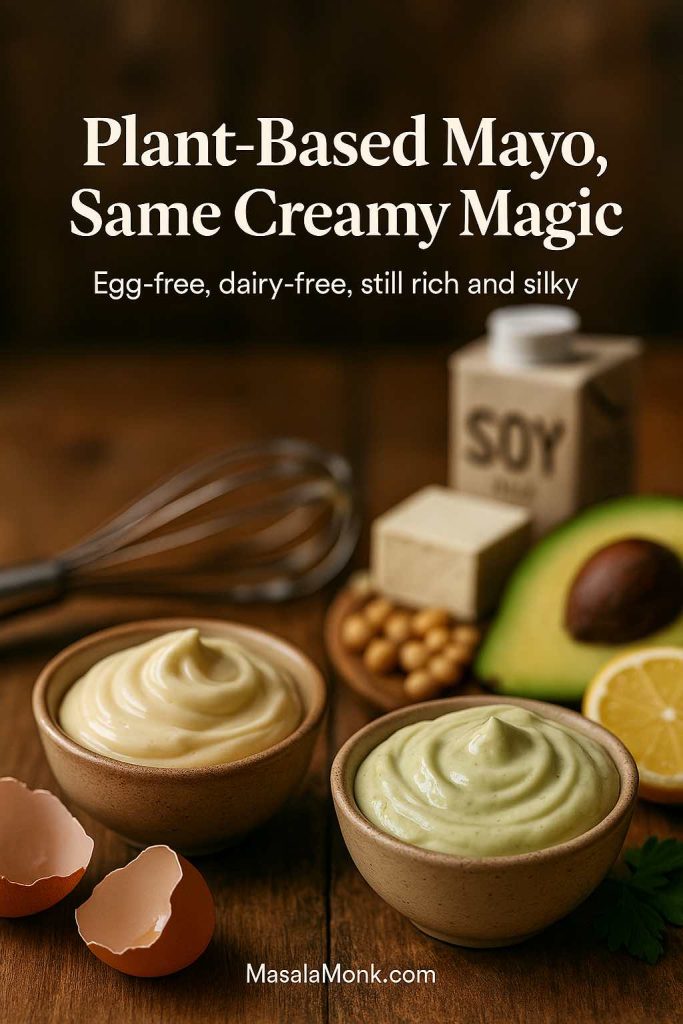
Vegan Mayo Recipe Basics: What Exactly Is Vegan Mayonnaise?
How Classic Mayonnaise Works
Before you look at any detailed vegan mayo recipes, it really helps to understand what mayonnaise actually is. At its core, traditional mayonnaise is an emulsion: a stable mixture of oil and water-based liquid that normally don’t want to mix.
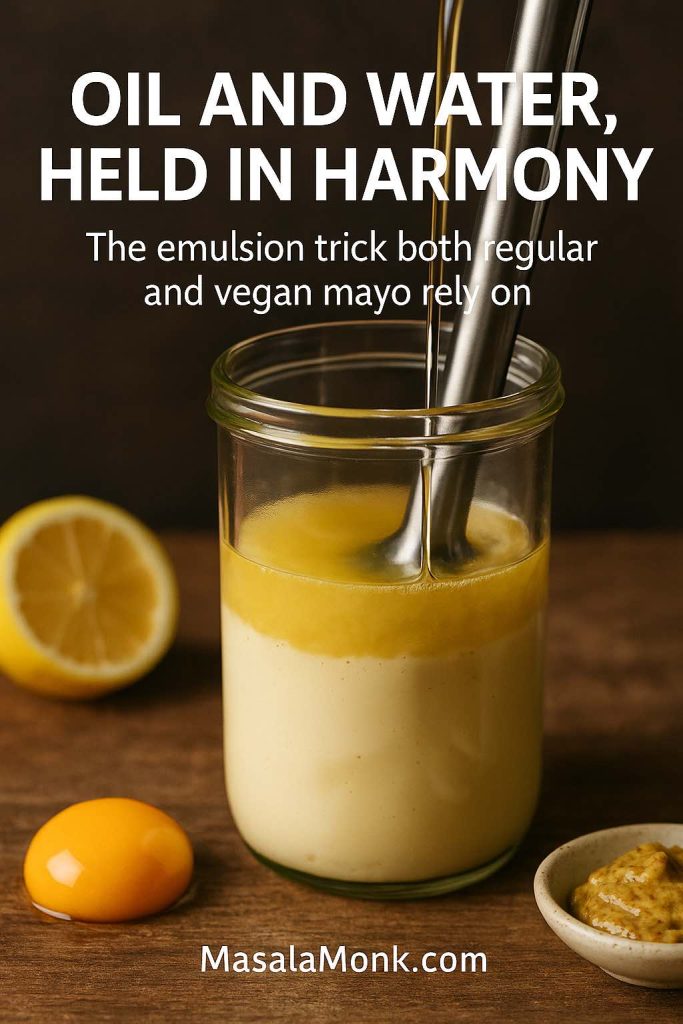
In regular mayo, egg yolk acts as the emulsifier. It keeps tiny droplets of oil suspended in water, which is what gives you that thick, creamy sauce that clings to a spoon.
Vegan Mayo Ingredients: What’s Really in Veg Mayonnaise?
Most vegan mayo ingredients lists look a lot like the classic ingredients of mayonnaise, just with plant-based swaps. When people look for veg mayonnaise ingredients, what they’re really asking is how to recreate that familiar mix of oil, acid, emulsifier and seasoning using soy milk, aquafaba, tofu, cashew cream or avocado instead of eggs.
To put it another way, classic mayo is basically:
- Oil
- A water-based liquid (often from the egg itself)
- Acid (like lemon juice or vinegar)
- An emulsifier (egg yolk)
- Seasonings (salt, mustard, sometimes a touch of sugar)
When all of these elements are in balance, the mixture turns glossy and stable. However, if the ratio shifts or the oil is added too fast, the emulsion can split and turn greasy or watery.
How a Vegan Mayo Recipe Recreates the Emulsion
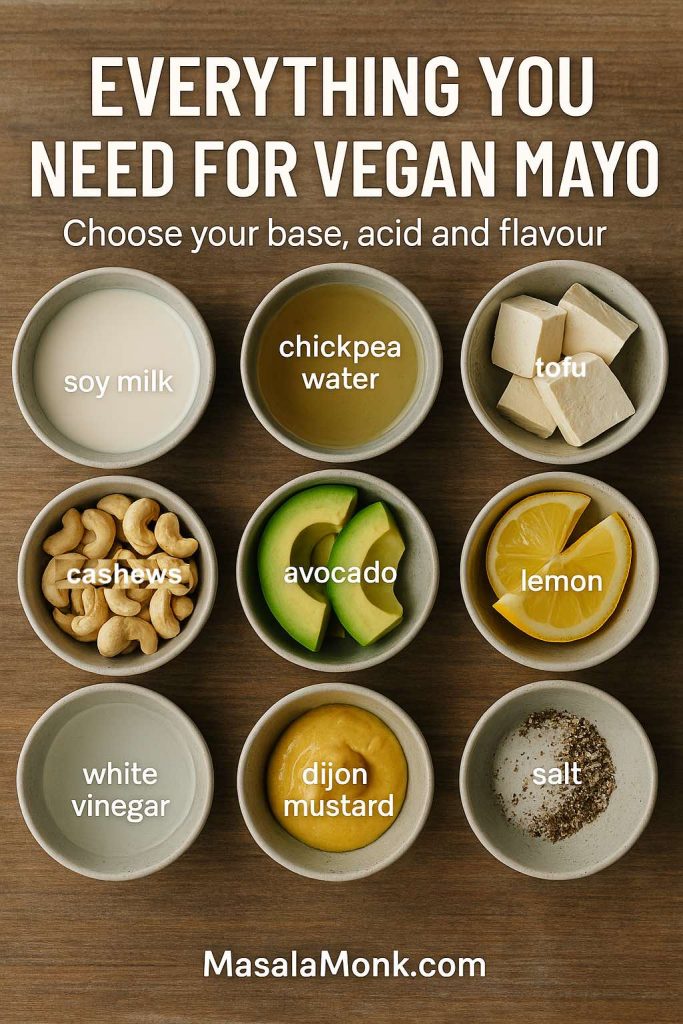
In a vegan mayonnaise recipe, the egg disappears completely. Even so, you still need something to do the emulsifying work. Instead of egg yolk, the structure comes from plant-based ingredients such as:
- Proteins and lecithins in soy milk
- Starches and proteins in aquafaba – the liquid from cooked or canned chickpeas
- The soft protein and fat structure of silken tofu
- The smooth fat and fibre mix of cashew cream
- The natural oils and emulsifiers inside avocado
Because of this, a good vegan mayo recipe is not simply “regular mayo without eggs.” Rather, it becomes a fresh balance of:
- Fat – usually oil, sometimes nuts or avocado
- Water-based liquid – from soy milk, chickpea water, tofu or nuts
- Acid – lemon juice, vinegar, or both
- Emulsifying compounds – plant proteins, starches and natural lecithins
- Seasonings – mustard, garlic, herbs, salt, pepper, and occasionally sugar
When these pieces work together, your sauce thickens and turns silky. If they drift out of balance, the mixture can separate or feel oily. Even then, vegan mayo is often easier to rescue than egg-based mayo, because you can simply blend the broken emulsion into a small amount of fresh base liquid and rebuild it.
Why Vegan Mayo Is Naturally Egg-Free and Dairy-Free
There’s also an important nutritional difference. Regular mayonnaise is technically dairy-free – it doesn’t contain milk – yet it does contain eggs and therefore cholesterol. As the breakdown on mayonnaise and whether it’s dairy from WebMD explains, most classic mayo is egg-based, not milk-based.
Vegan mayo, by contrast, relies only on plant ingredients. As a result, it is:
- Naturally egg-free
- Automatically cholesterol-free
- Completely dairy-free
- Often soy-optional, depending on which base you choose
In practice, that means a vegan mayonnaise recipe can slot easily into vegan, eggless and lactose-free diets, and even stand in for a more traditional vegetarian mayo wherever you’d usually use mayonnaise. If you need a soy free vegan mayo or a completely dairy and egg free mayo, the fix is simple: choose a base like aquafaba, cashew cream or avocado instead of soy milk. That way, your dairy free mayo recipe can be tweaked to suit soy-free, nut-free or multi-allergy households without losing the creamy, tangy feel.
Also Read: How to Make Eggless Mayo at Home (Egg Free Mayonnaise Recipe)
The Emulsion Blueprint Behind Every Vegan Mayo Recipe
Because recipes can sometimes feel overwhelming, it’s useful to build a mental blueprint first. You can think of almost every vegan mayo recipe as some variation of this formula:
Base liquid + Acid + Flavour + Oil = Vegan Mayo
Where:
- The base liquid might be soy milk, aquafaba, blended tofu, or blended cashews.
- The acid usually comes from lemon juice, white vinegar, apple cider vinegar, or rice vinegar.
- The flavour comes from mustard, garlic, herbs, black pepper, nutritional yeast, or spices.
- The oil is often a neutral vegetable oil (sunflower, canola, rice bran, grapeseed), or occasionally a mild olive oil.
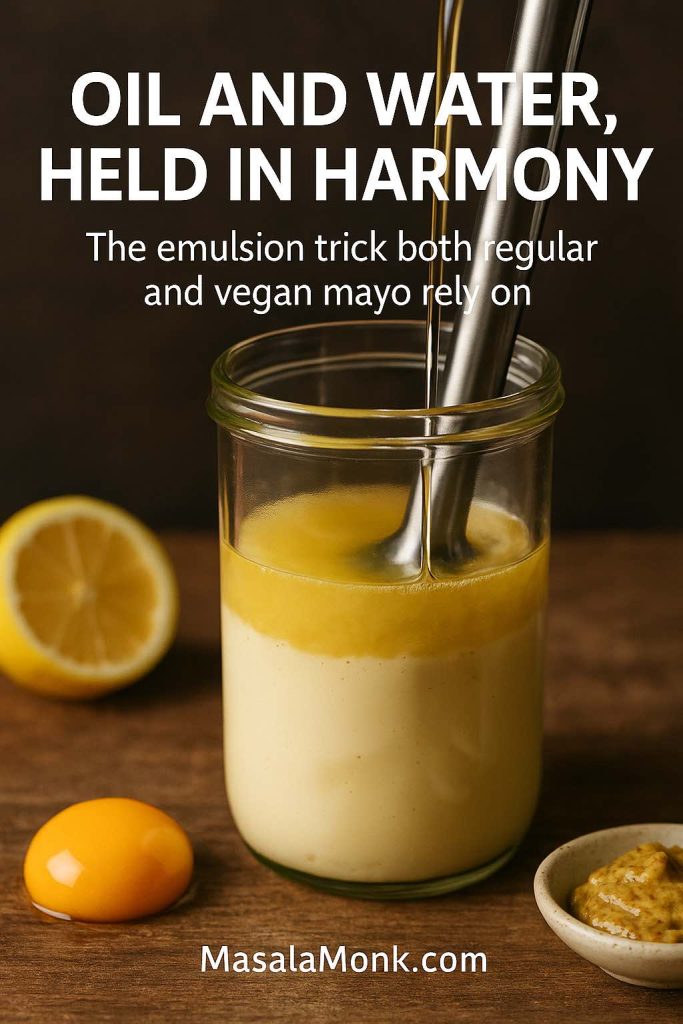
You can also switch up the oil depending on what you keep in your kitchen. Some people enjoy using avocado oil because it gives a soft, buttery flavour, while others like the mild fruitiness of light olive oil. Both options blend into the emulsion easily, so you can make a batch with avocado oil or a gentle olive-oil version whenever you want something slightly more aromatic. Once you understand that, you suddenly realise you can adapt almost any recipe of vegan mayo to your own needs. For instance:
- If soy is a problem, you simply use aquafaba or cashew cream as the base.
- If you want to reduce fat, you switch some of the oil for silken tofu.
- If you prefer whole-food fats, you choose cashews or avocado instead.
Because the structure is the same, you’re free to swap and experiment while still staying within the safe, stable emulsion framework.
Also Read: Upma Recipe: 10+ Easy Variations (Rava, Millet, Oats, Semiya & More)
Classic Soy Milk Vegan Mayo Recipe (Your Everyday Base)
Let’s start with the most familiar vegan mayo recipe – the soy milk version that behaves almost exactly like standard mayonnaise. This is the one to master first, because it’s an easy vegan mayo that many people end up treating as their best vegan mayo recipe: quick to blend, reliable, and neutral enough to work anywhere you’d use regular mayo.
If you don’t usually keep soy milk at home, you can make the same recipe with other plant milks too. Almond milk creates a slightly lighter version that still emulsifies well, and oat milk gives you a smooth, mellow flavour. Both work beautifully if you ever want to try a vegan mayo made with almond milk or an oat-milk version that stays completely dairy-free and egg-free. In fact you can make both Almond and Oat milk at home, do read our posts on How to make Almond Milk at Home & Easy Homemade Oats Milk with just One Ingredient- Non Slimy, at last.
Ingredients for the Classic Soy Milk Vegan Mayo
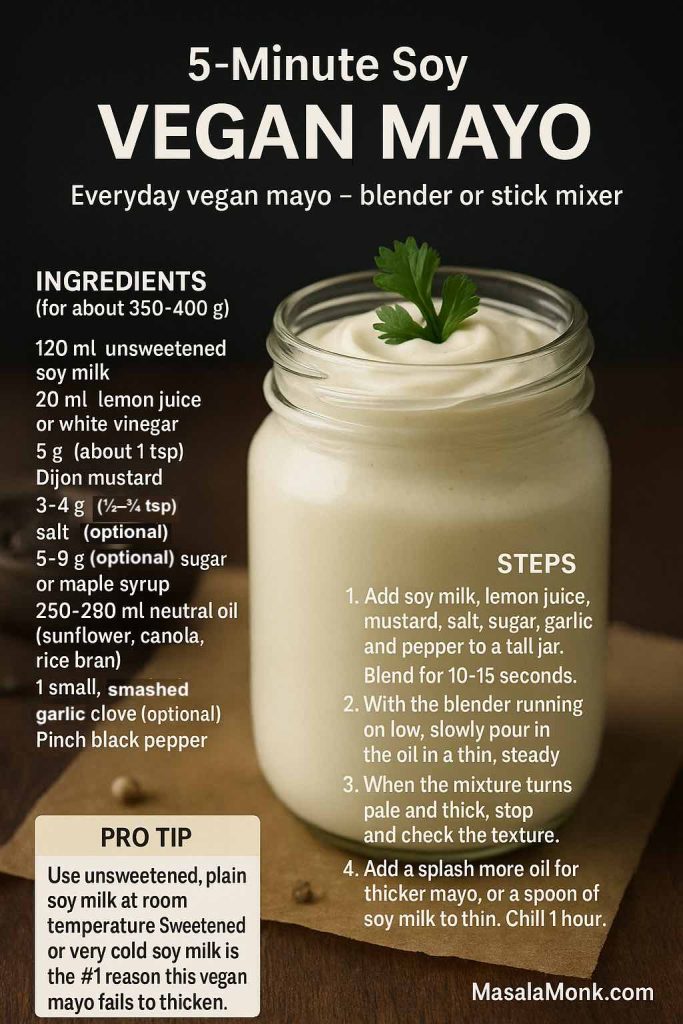
For about 1½ cups of mayonnaise:
- ½ cup unsweetened soy milk
- 1–2 tablespoons lemon juice or white vinegar
- 1 teaspoon Dijon mustard or mild yellow mustard
- ½–¾ teaspoon salt, plus more to taste
- 1–2 teaspoons sugar (or a mild sweetener), optional but helpful for balance
- 1–1¼ cups neutral oil (sunflower, canola, rice bran, or grapeseed)
- 1 small clove garlic, smashed (optional)
- A pinch of black pepper
Step-by-Step Vegan Mayonnaise with Soy Milk
First, make sure your soy milk and lemon juice are relatively close in temperature. They don’t need to be warm, however they shouldn’t be ice-cold if the oil is room temperature.
- Blend the soy milk base.
Pour the soy milk, lemon juice, mustard, salt, sugar, garlic and pepper into a tall jar or blender jug. Then blend for 10–15 seconds. The mixture will look thin, yet you’ll notice it already feels slightly thicker than plain soy milk. - Slowly add the oil.
With the blender running on low, start to drizzle in the oil in a thin, steady stream. As you continue, the mixture will gradually lighten in colour. Eventually, it will suddenly thicken and cling to the sides of the container. - Check thickness and adjust.
Stop the blender and check the texture. If it is too thin, blend in a little more oil. If it’s thicker than you like, blend in a teaspoon or two of soy milk. - Taste and refine.
Dip in a spoon and taste. Perhaps it needs more acid; maybe it wants a little more salt. Keep adjusting in small increments until it tastes balanced. - Chill before serving.
Finally, transfer the soy milk vegan mayonnaise to a clean glass jar, seal it, and refrigerate for at least one hour. It will firm up slightly as it chills.
Because this is the most neutral vegan mayonnaise recipe, it’s your best starting point for sandwiches, burgers, salads and dips. If you want to explore egg-free yet not fully vegan mayo options with curd or condensed milk versions as well, you can cross-reference MasalaMonk’s detailed guide on how to make eggless mayo at home, which covers non-vegan but egg-free methods too.
Also Read: Double Chocolate Chip Cookies – Easy Recipe with 7 Variations
Aquafaba Vegan Mayo Recipe: Eggless, Light, and Zero-Waste
Next, let’s turn to aquafaba – the liquid from cooked or canned chickpeas. At first glance it looks like something you’d pour down the sink. Yet, as many home cooks have discovered, it behaves in surprisingly egg-like ways. It can whip into meringue, foam for cocktails, and emulsify sauces.
If you’d like a broader introduction, you can read about what aquafaba is and how it works on The Vegan Society, where they explain the science behind its foaming and binding properties in eggless recipes.
Ingredients for the Aquafaba Based Vegan Mayo
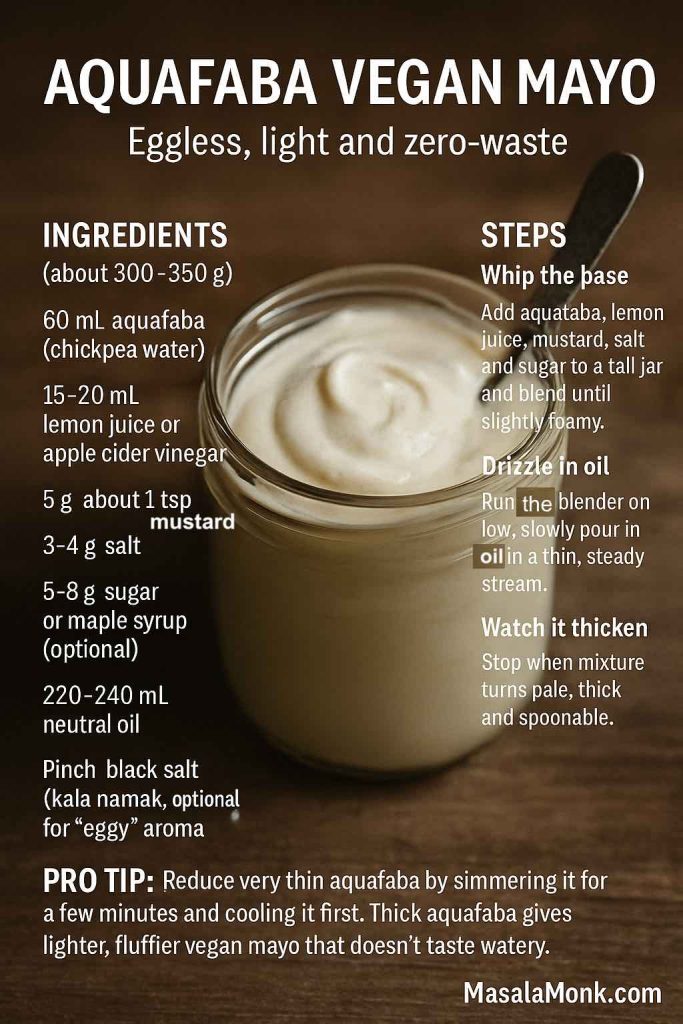
For around 1¼ cups of mayo:
- ¼ cup aquafaba (from a can of chickpeas, ideally thickened slightly by gentle reduction)
- 1–2 tablespoons lemon juice or apple cider vinegar
- 1 teaspoon mustard
- ½ teaspoon salt
- 1–2 teaspoons sugar or maple syrup
- 1 cup neutral oil
- A pinch of black salt (kala namak), optional, for an “eggy” aroma
Step-by-Step Recipe of Vegan Mayo Using Aquafaba
First, strain your chickpeas and catch the liquid. If it looks very thin, simmer it gently until it coats the back of a spoon, then let it cool fully.
- Blend the aquafaba base.
Combine aquafaba, lemon juice, mustard, salt and sugar in a tall jar. Then blend until slightly frothy. - Drizzle in the oil.
With the blender running, add the oil in a thin stream. Eventually, the mixture will thicken and turn into a pale, fluffy vegan mayonnaise. - Season and tweak.
Taste carefully. If it feels a little beany, add a touch more acid and sugar. If you want that classic eggy note without any actual egg, sprinkle in a pinch of black salt. - Chill and use.
Store in a jar in the fridge. It will often thicken a bit further as it cools.
Because this vegan mayo recipe with aquafaba is naturally egg-free, dairy-free and nut-free, it’s incredibly useful if you’re cooking for people with multiple allergies. Furthermore, it feels great to use an ingredient that many people treat as waste. You can also use the chickpeas themselves to make salads, patties, or hummus, so nothing is wasted.
Also Read: One-Pot Chicken Bacon Ranch Pasta (Easy & Creamy Recipe)
Tofu Vegan Mayo Recipe: High-Protein and Lower-Oil
After you’ve tried classic and aquafaba-based versions, you might start craving a vegan mayo recipe that feels a little lighter. In those moments, a tofu vegan mayonnaise recipe is a smart move. It still tastes creamy and satisfying, but the fat content usually ends up lower, which makes it a great base for a low fat vegan mayo recipe or a generally healthy vegan mayo you can use more regularly.
Ingredients for a Tofu Vegan Mayonnaise
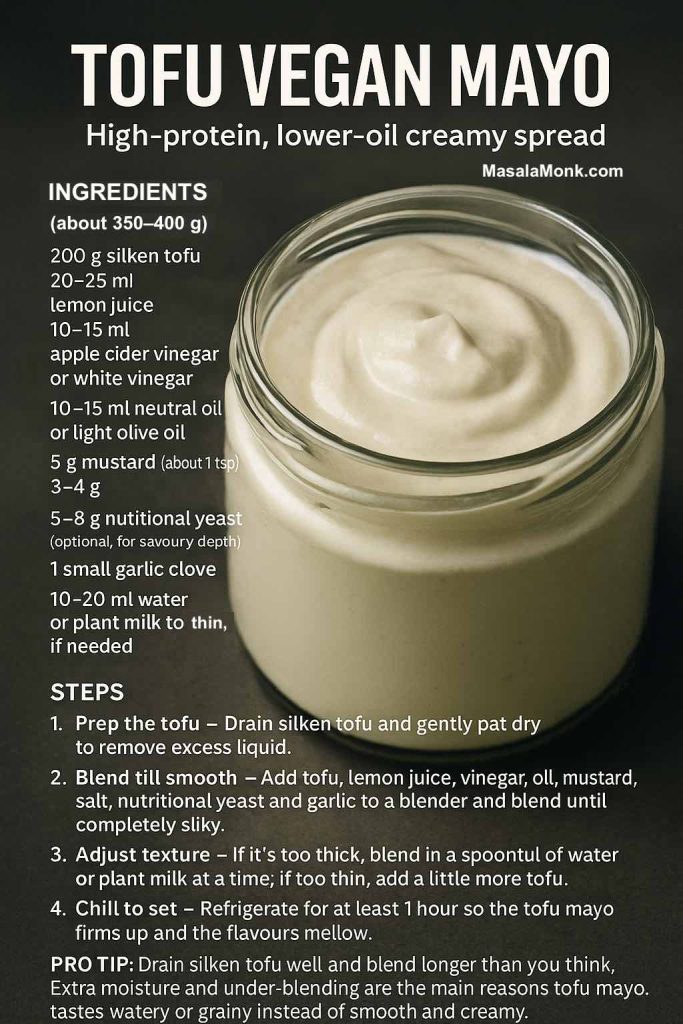
For roughly 1½–2 cups:
- 200 g silken tofu, drained
- 2–3 tablespoons neutral oil or mild olive oil
- 2–3 tablespoons lemon juice
- 1–2 teaspoons mustard
- 1 small clove garlic, optional
- ½–¾ teaspoon salt
- 1–2 teaspoons nutritional yeast, optional
- A bit of plant milk or water if necessary
Step-by-Step Vegan Mayonnaise Recipe with Tofu
First, pat the tofu dry. It doesn’t need to be perfectly dry, although removing excess water helps your vegan mayo recipe thicken more reliably.
- Add everything to the blender.
Combine tofu, oil, lemon juice, mustard, garlic, salt and nutritional yeast in a blender. - Blend until fully smooth.
Blitz until the mixture looks silky with no visible tofu pieces. If it’s extremely thick, add a tablespoon of plant milk or water and blend again. - Taste and balance.
Because tofu is neutral, it can handle plenty of acidity and salt. Adjust until it tastes bright, slightly tangy and savoury. - Chill to firm.
After chilling, tofu vegan mayo will set and feel somewhere between a dip and classic mayonnaise. For salad dressings, you can always thin it a bit later.
This style of vegan mayo recipe is ideal for wraps, grain bowls and salads where you want a creamy element that also contributes protein. For instance, you can use tofu mayo to dress a bowl similar to the Thai-style vegan bowl with peanut butter dressing, either mixing it into the peanut sauce or drizzling it alongside.
Also Read: Katsu Curry Rice (Japanese Recipe, with Chicken Cutlet)
Cashew Vegan Mayo Recipe: Rich, Tangy and Dairy-Free
If you enjoy sauces that feel indulgent, a cashew vegan mayo recipe may become your favourite. Soaked cashews blend into an ultra-smooth cream, which you can then season to resemble mayonnaise. The result is thick, tangy, and deeply satisfying.
Ingredients for a Cashew Vegan Mayonnaise Recipe
For around 1½ cups:
- 1 cup raw cashews, soaked in hot water for 20–30 minutes
- ½ cup water (plus more if needed)
- 3 tablespoons lemon juice
- 1 tablespoon apple cider vinegar or white vinegar
- 1–2 tablespoons oil (optional but adds silkiness)
- 1 teaspoon mustard
- 1 teaspoon salt
- ½ teaspoon garlic powder or 1 small clove garlic
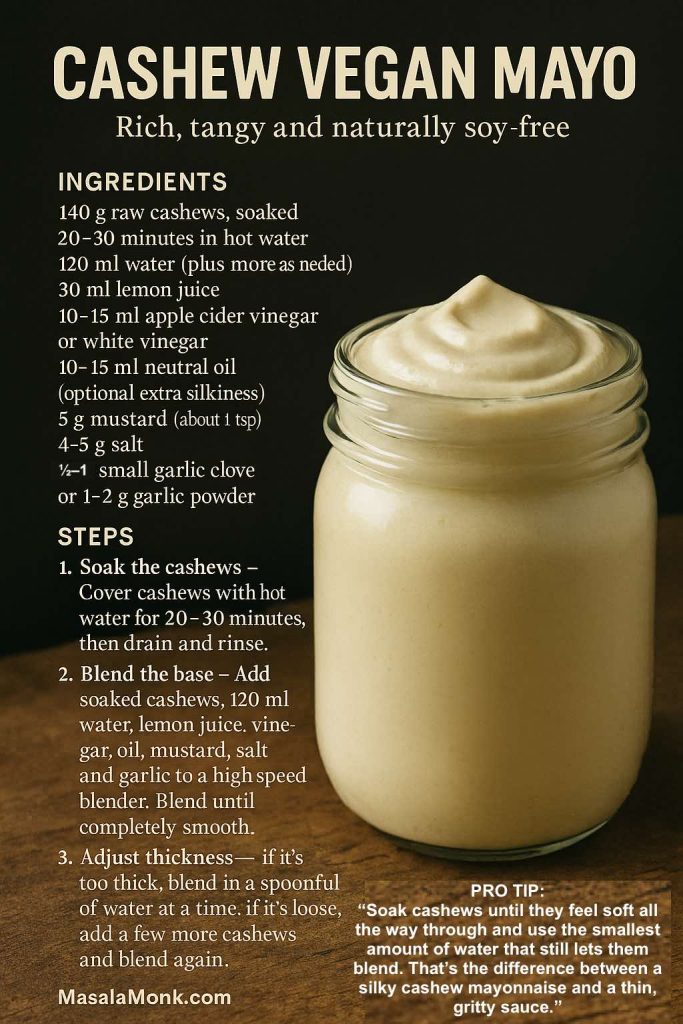
Step-by-Step Cashew Vegan Mayo Recipe
First, soak the cashews. That step softens them so they blend smooth.
- Drain and rinse the cashews.
After soaking, drain off the hot water and rinse the cashews in cold water. - Blend the cashew base.
Add cashews, water, lemon juice, vinegar, oil, mustard, salt and garlic to a high-speed blender. Blend until absolutely smooth, scraping down sides as needed. - Adjust thickness.
If it looks too thick, add a splash of water and blend again. If it feels thin, add a couple of extra cashews (or chill it to see if it sets). - Taste and refine.
Cashews love acid and salt. Therefore, don’t hesitate to sharpen the flavour with another small squeeze of lemon or a pinch of salt.
This cashew-based vegan mayonnaise recipe is naturally soy-free, so it’s a great option when you’re avoiding soy but still want something rich and creamy. It’s excellent as a topping for roasted vegetables and as a dressing for crunchy salads. It pairs especially well with bold, spicy dishes such as the vegan Som Tam raw papaya salad, where a cool cashew mayo drizzle provides contrast.
Also Read: Green Bean Casserole Recipe Ideas (Classic, Cheesy, Dairy-Free & More)
Avocado Vegan Mayo Recipe: Fresh, Green and Whole-Food Focused
Beyond all these emulsions, there is another kind of vegan mayo recipe that relies on whole-food fat: avocado. While it doesn’t behave exactly like classic mayo, it offers incredible creaminess, beneficial fats, and a bright flavour that feels perfect in many plant-based meals.
Ingredients for an Avocado based Vegan Mayonnaise
For about 1 cup:
- 2 ripe avocados
- 2–3 tablespoons lemon or lime juice
- 1–2 tablespoons olive oil or water
- ½ teaspoon salt
- 1 small clove garlic, minced (optional)
- A handful of fresh coriander or parsley, chopped (optional)
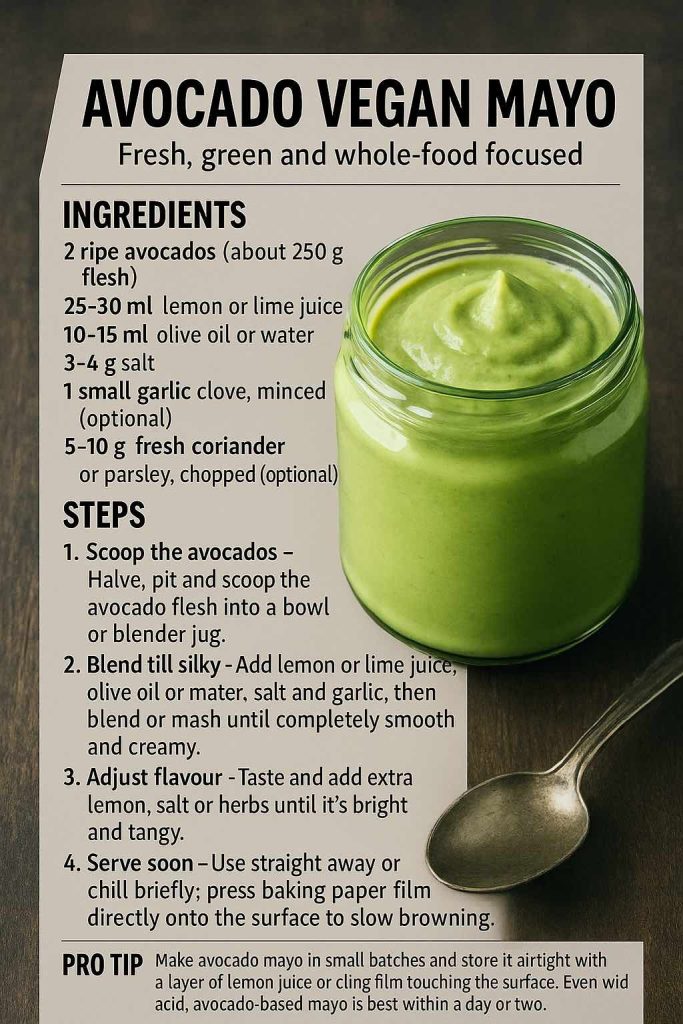
Step-by-Step Vegan Mayo Recipe with Avocado
First, choose avocados that give slightly when pressed. They should be ripe but not mushy.
- Scoop and mash.
Halve the avocados, remove the pits, and scoop the flesh into a bowl. Mash with a fork until mostly smooth. - Blend with flavour and acid.
Add lemon or lime juice, olive oil or water, salt and garlic. Then blend with a small blender or whisk well until smooth and creamy. - Adjust to taste.
Because avocados vary, keep tasting. Perhaps you need more lemon to brighten things or more salt to pop the flavour. If you like herbs, stir in coriander or parsley. - Use promptly.
Avocado-based sauces brown over time, even with acid. Therefore, try to make only as much as you’ll use within a day or two and store it tightly covered in the fridge.
This avocado-focused vegan mayo recipe suits burgers, wraps, tacos, and grain bowls, especially where other ingredients are fresh and crisp. It works particularly well in meals that already lean towards guacamole-style flavours.
Also Read: Crispy Homemade French Fries From Fresh Potatoes (Recipe Plus Variations)
Vegan Mayonnaise Variations: 15+ Flavours from Any Base
Once you’re comfortable with at least one recipe of vegan mayo, you can start treating it as a blank canvas. With a few extra ingredients, you can transform a plain vegan mayo recipe into many distinct sauces. Below, assume you’re starting with 1 cup of any base vegan mayo (soy, aquafaba, tofu, cashew or avocado, as appropriate).
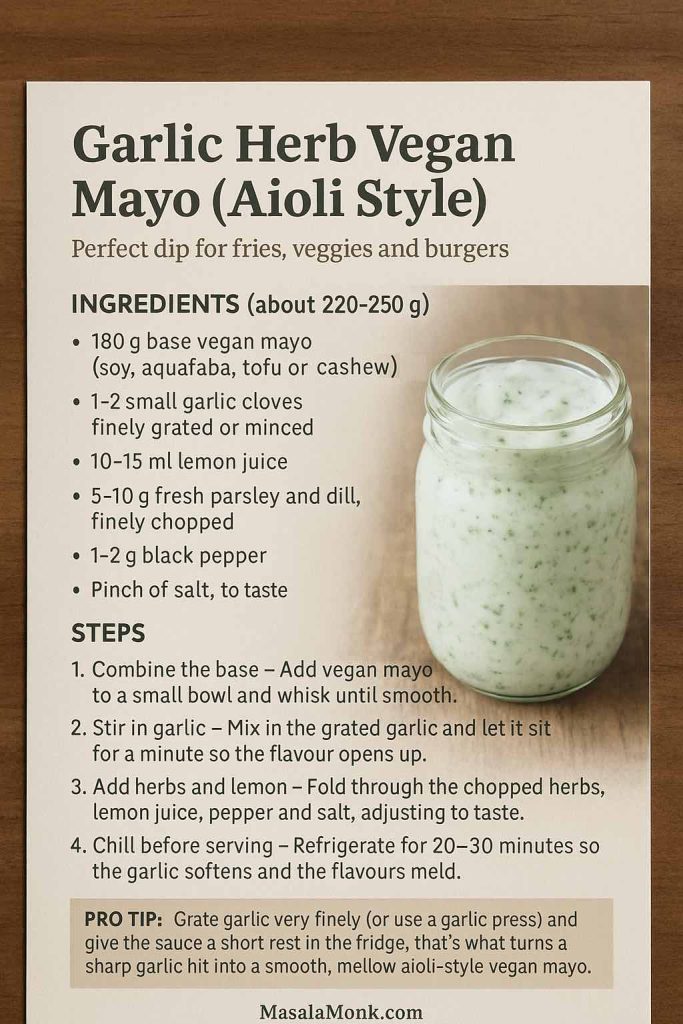
1. Garlic Vegan Mayonnaise (Aioli Style)
- 1 cup vegan mayo
- 1–2 cloves garlic, finely grated or mashed
- 1 tablespoon lemon juice
- 1 tablespoon chopped parsley
- Salt and pepper
This garlic version works beautifully as a dip for fries, roasted potatoes, steamed vegetables and crusty bread.
2. Herb and Dill Vegan Mayo Recipe
- 1 cup vegan mayo
- 2–3 tablespoons mixed fresh herbs (dill, parsley, chives, coriander)
- 1 tablespoon lemon juice or white wine vinegar
- ½ teaspoon garlic powder
- Salt and pepper
This version is perfect for potato salads, pasta salads and sandwiches. You can also thin it with a bit of water to create a pourable dressing inspired by the ideas in MasalaMonk’s potato salad recipes.
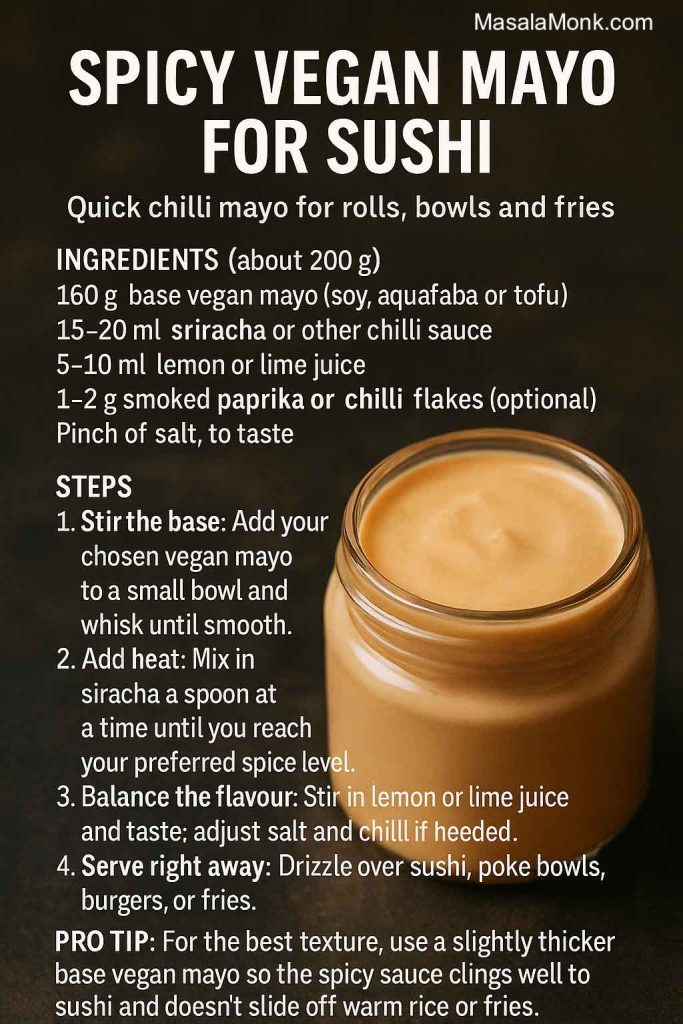
3. Spicy Vegan Mayonnaise Recipe with Sriracha or Peri-Peri
- 1 cup vegan mayo
- 1–2 tablespoons sriracha, peri-peri, or other chilli sauce
- ½ teaspoon smoked paprika
- A squeeze of lime
This spicy mayo, especially when made with sriracha, is excellent on burgers, in wraps, or drizzled over roasted cauliflower and crispy tofu. It also doubles as a simple vegan spicy mayo for sushi, giving you a quick vegan sushi mayo drizzle for poke bowls, rolls and rice bowls.
4. Curry Vegan Mayonnaise
- 1 cup vegan mayo
- 1–2 teaspoons curry powder or garam masala
- ½ teaspoon garlic powder
- 1 tablespoon lemon juice
- Pinch of sugar
You can use this with chickpea salads, roasted vegetables, or baked wedges. It also tastes great spread inside sandwiches with roasted potatoes or cauliflower.
5. Tahini Vegan Mayo
- ¾ cup vegan mayo
- ¼ cup tahini
- 2 tablespoons lemon juice
- 1 clove garlic, grated
- Cold water to thin
This Tahini-based vegan mayo recipe works wonderfully with falafel, roasted vegetables, and grain bowls. It can easily form the creamy heart of a Mediterranean-style bowl.
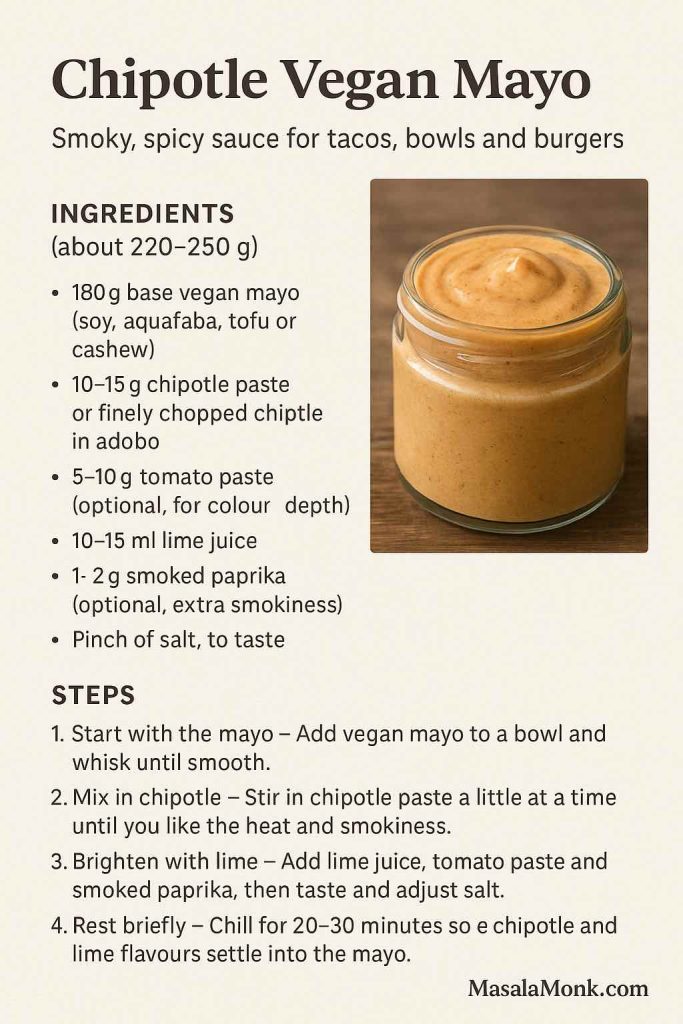
6. Chipotle-Style Vegan Mayo (Smoky Chipotle Version)
- 1 cup vegan mayo
- 1–2 teaspoons chipotle paste or smoked chilli paste
- 1 teaspoon tomato paste
- Lime juice to taste
This smoky chipotle version is the kind of vegan mayo that instantly lifts tacos, quesadillas, nachos and grilled vegetables, giving you a bold, warm flavour without any effort.
7. Japanese-Style Vegan Mayo Recipe
- 1 cup soy-based vegan mayo
- 1–1½ tablespoons rice vinegar
- 1 teaspoon sugar
- A small pinch of mustard powder
This Japanese-style twist is smooth, slightly sweet and tangy. You can drizzle it over sushi bowls, shredded cabbage salads or crispy tofu.
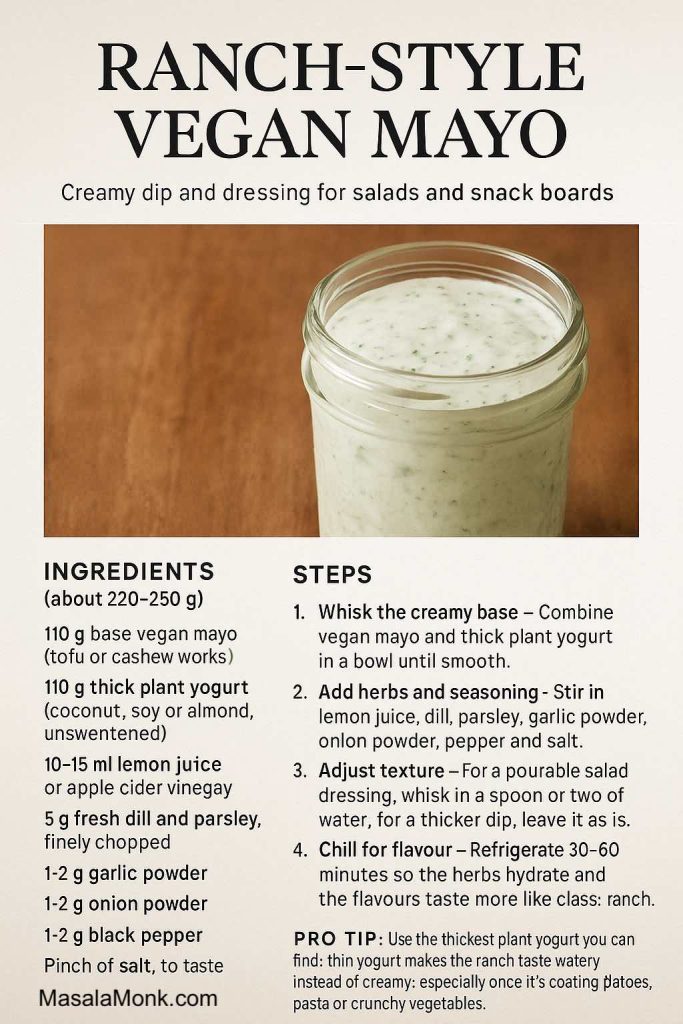
8. Ranch-Style Vegan Mayo Recipe
- ½ cup tofu or cashew mayo
- ½ cup thick plant-based yogurt
- 2 tablespoons chopped dill and parsley
- 1 tablespoon lemon juice
- Garlic powder, onion powder, salt and pepper
This ranch-style vegan mayo is ideal for dipping vegetables and chips, or for dressing crunchy salads.
9. Lemon-Pepper Vegan Mayo Recipe
- 1 cup vegan mayo
- Zest of 1 lemon
- 1–2 tablespoons lemon juice
- ½ teaspoon coarsely ground black pepper
This version feels bright, clean and elegant. You can serve it with steamed vegetables, asparagus, or oven-baked potato wedges.
10. Green “Chimichurri” Vegan Mayo
- ½ cup vegan mayo
- ½ cup finely chopped fresh herbs (parsley, coriander, a little oregano)
- Garlic, chilli flakes and lemon juice
This herb-heavy version is a great spread for sandwiches and burgers, especially when you want a punch of fresh green flavour.
11. Harissa Vegan Mayo Recipe
- 1 cup vegan mayo
- 1–2 tablespoons harissa paste
- Lemon juice to taste
This North African-style twist goes beautifully with roasted carrots, chickpeas, couscous and grilled flatbreads.
12. Pesto Vegan Mayo Recipe
- ¾ cup vegan mayo
- ¼ cup pesto
This is a brilliant way to stretch pesto further and make it sandwich-friendly. For more ideas on flavour, you can look at MasalaMonk’s pesto recipe variations.
13. Sweet Chilli Vegan Mayo Recipe
- 1 cup vegan mayo
- 2–3 tablespoons sweet chilli sauce
- 1 tablespoon lime juice
This rings all the right bells next to spring rolls, grilled corn, and vegetable fritters.
14. Mustard-Pickle “Burger Sauce” Vegan Mayo Recipe
- ½ cup vegan mayo
- 2 tablespoons mustard
- 2 tablespoons ketchup
- 1 tablespoon chopped pickles
- 1 tablespoon pickle brine
This burger-style vegan mayo works incredibly well on plant-based patties such as the lentil patties that are better than meat.
15. Garlic-Herb Spinach Vegan Mayo
- 1 cup vegan mayo
- 2 cloves garlic, grated
- 2 tablespoons chopped fresh spinach (squeezed dry)
- 2 tablespoons parsley
This variation becomes a natural base for spinach dips. If you want more ideas around textures and mix-ins, you can explore MasalaMonk’s spinach dip recipes.
How to Use Your Vegan Mayo in Everyday Meals
Once you’ve made a few jars of sauce, the most important question becomes simple: where do you actually use them? Thankfully, vegan mayo recipes fit into everyday meals in more ways than you might expect.
Burgers, Wraps and Sandwiches
First, consider burgers and wraps. A thin layer of vegan mayonnaise on the bread not only adds flavour, but also helps create a barrier against moisture.
- For burgers, use garlic or burger-sauce-style vegan mayo, then layer in patties, lettuce, tomatoes and onions.
- For wraps, spread herb mayo inside, then add roasted vegetables, beans and greens.
- For sandwiches, choose a milder vegan mayonnaise recipe and let ingredients such as tomato and cucumber shine.
Because the sauce is vegan, you can use it confidently alongside plant-based burger patties, grilled tofu or lentil patties without any clash of flavour.
Potato Salad, Coleslaw and “Creamy” Classics
Next, think about classic creamy salads. Vegan mayonnaise can replace regular mayo one-to-one in most recipes.
- Toss boiled potato cubes in a herb-heavy vegan mayonnaise recipe, plus a little extra vinegar and mustard, to create a comforting potato salad.
- Fold vegan mayo into shredded cabbage, carrots and onions to make coleslaw.
- Mix tofu or aquafaba mayo into chickpea, bean or pasta salads for easy meal prep.
For quick lunches, you can also mash chickpeas with spring onions, herbs and a few spoonfuls of mayo to make an easy vegan tuna mayo–style filling. Using aquafaba or tofu-based mayo turns it into a high-protein chickpea tuna mayo that works beautifully in sandwiches and wraps.
Moreover, if you want deeper guidance and variations, MasalaMonk’s potato salad recipe collection walks through multiple styles – classic, Russian, German and vegan – that you can easily adapt by swapping in your favourite vegan mayo.
Bowls and Meal Prep
Beyond salads, vegan mayo recipes shine in meal-prep bowls.
- Stir a spoonful of cashew or tofu mayo into a peanut dressing to make it feel extra silky for something like the Thai-style vegan bowl.
- Toss grains like quinoa or brown rice with a little vegan mayo, lemon, and herbs for a creamy grain salad.
- Use spicy mayo as a drizzle over roasted vegetables and beans to build quick dinner bowls.
Because the sauce keeps well for a few days, you can add it at the last moment, just before eating, so your grains and vegetables don’t get soggy.
Snack Boards and Dips
Vegan mayonnaise also works brilliantly as a base for dips on party boards.
- Combine garlic mayo with chopped spinach and herbs for a warm or cold spinach dip.
- Serve several flavoured vegan mayo recipes – such as garlic, spicy, and herb – in small bowls for dipping bread, chips and vegetable sticks.
- Mix vegan mayo into creamy dips inspired by MasalaMonk’s spinach dip recipes, replacing sour cream or regular mayo where necessary.
Because you can vary the base (soy, tofu, cashew), the same flavour profile can feel lighter or richer depending on the occasion.
Mayo-Free Contrasts
While vegan mayonnaise recipes are versatile, they are not the only creamy element in your toolkit. On days when you want something lighter or sharper, you might reach for:
- A bright mango-based dressing like the sweet and spicy mango salad dressing.
- A tangy, crunchy salad like the vegan Som Tam raw papaya salad.
Those mayo-free sides balance rich, creamy dishes very nicely.
Is a Vegan Mayo Really Healthier Than Regular Mayo?
Now that you have a whole collection of recipes, it’s fair to ask whether a vegan mayo recipe is “healthier” than traditional mayonnaise. The answer isn’t as simple as yes or no.
Regular mayonnaise is usually made from oil, egg yolk and acid. It is high in fat and it contains cholesterol from the egg yolk, although it usually has no milk and is technically dairy-free. As WebMD’s overview explains, the presence of eggs makes it non-vegan but still dairy-free.
Vegan mayonnaise recipes remove the egg yolk entirely. They typically use a plant-based emulsifier like soy milk or aquafaba plus oil. Therefore:
- They are free from cholesterol, since cholesterol comes only from animal products.
- They may still be high in calories and fat if oil is the main ingredient.
- They can be lighter when built around tofu, aquafaba with less oil, or avocado.
If you look at nutrition data for commercial vegan mayos, many sit in the range of 50–100 calories per tablespoon, almost all from fat. Healthline’s guide to mayonnaise substitutes notes that vegan versions often have a similar calorie count but no cholesterol and sometimes healthier fat profiles. That means a vegan mayo recipe isn’t automatically a “diet food”.
Even so, the healthiest versions tend to be the ones built on tofu, aquafaba or avocado, because they rely less on added oil and more on whole ingredients. Richer cashew-based batches often end up being the best-tasting ones for special meals, while the lighter options are ideal for everyday cooking.
How to make Vegan Mayo healthy or lighter?
That said, you can nudge things in a lighter direction if you want something closer to a low calorie vegan mayo, an almost fat free vegan mayo, or an oil free vegan mayo for everyday use. And if you ever need something even simpler—both low-oil and soy-free—you can combine aquafaba with a splash of lemon and a tiny amount of oil for a very light version that keeps the texture without relying on soy. You can make it much more aligned with your goals by:
- Choosing tofu or thick yogurt-style bases work well when you’re chasing a low fat vegan mayo recipe that still tastes rich.
- Using aquafaba with just a splash of oil gets you close to an oil free vegan mayonnaise.
- Treating full-oil or cashew versions can be treated as more indulgent options for burgers and special dinners
- Using mayonnaise as a flavour boost rather than as the main component of the meal.
If you’re following a particular way of eating, you can also adapt the base. A high-fat, low-carb blend with avocado or oil works well as a keto vegan mayo (a true vegan mayo keto option), while avocado-oil, egg-free versions without sugar can double as a paleo vegan mayo or even a vegan mayo Whole30 style sauce when you stick to compliant ingredients.
When you think about it that way, vegan mayo becomes one tool among many, rather than something you either avoid or overuse.
Also Read: What to Mix with Jim Beam: Best Mixers & Easy Cocktails
Storage, Safety and How Long Vegan Mayo Recipes Last
Even though these vegan mayo recipes are egg-free, they are still perishable. Because they contain water, plant proteins and sometimes fresh ingredients like garlic and herbs, they can spoil if left too long or stored badly.
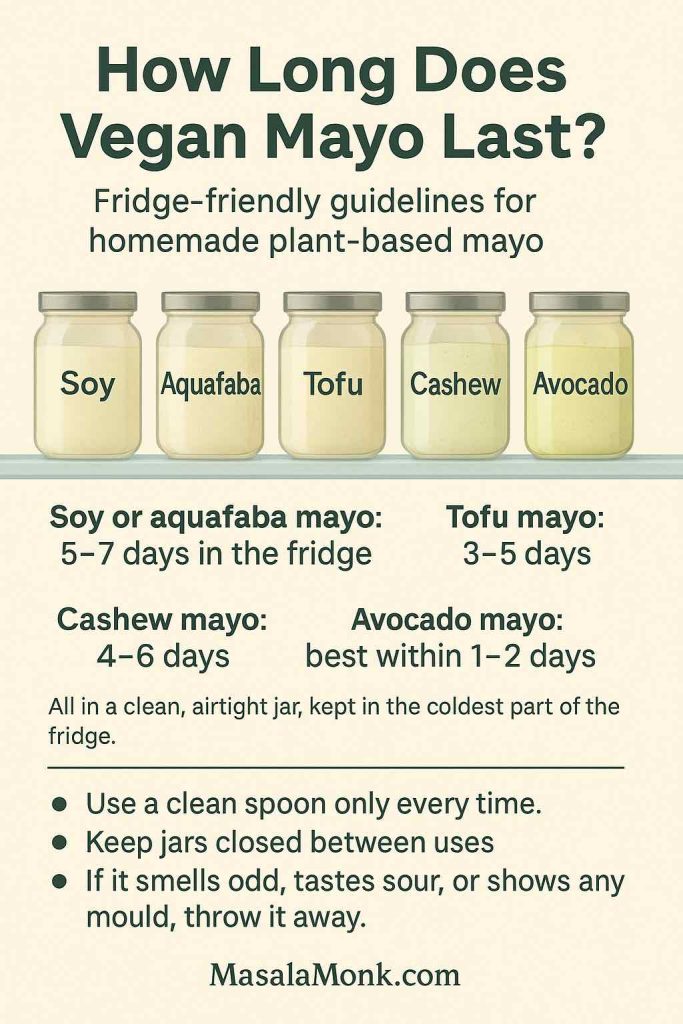
How Long Is Vegan Mayo Good For in the Fridge?
Food safety advice for homemade mayonnaise made with eggs usually recommends using it within a few days if it’s kept refrigerated, since it can be a risk for food-borne illness if mishandled. In simple terms, if you’re wondering how long vegan mayo is good for or how long vegan mayo is good after opening, the answer is that it keeps surprisingly well when chilled, but it’s still a fresh, perishable sauce that deserves a bit of care.
Vegan mayo, missing raw egg, tends to be a little safer in that specific regard. However, it can still develop off flavours and microbial growth. Because of that, a cautious and practical guideline for your homemade vegan mayo recipes is:
- 3–7 days in the refrigerator, in a tightly sealed jar
- Shorter (3–4 days) for avocado-heavy or herb-heavy versions
- Longer (up to a week) for plain soy or aquafaba-based versions using only dry spices
In addition, you should:
- Always use a clean spoon to scoop mayo from the jar, never one that has touched other foods.
- Keep jars in the coolest part of the fridge instead of the door.
- Discard any mayo that smells sour, yeasty or odd, or that shows any sign of mould.
Because these sauces are relatively cheap and quick to blend up, it isn’t worth trying to “save” a jar that seems questionable.
Also Read: 10 Best Espresso Martini Recipe Variations (Bar-Tested)
When You Don’t Want Mayo: Creamy Vegan Alternatives
Even in a vegan mayo guide, there will be days when you’d rather skip mayonnaise completely. It’s useful then to have a go-to vegan replacement for mayo – a few creamy options that can act as a vegan mayo replacement in sandwiches, salads and bowls when you want the same comfort but a different flavour profile.
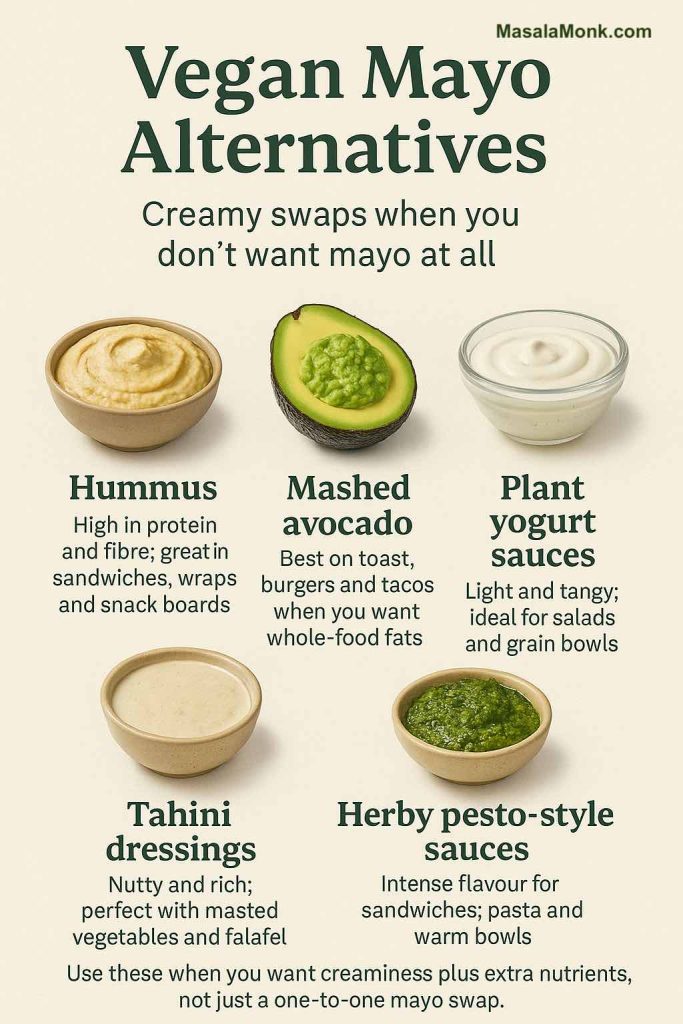
These options all work as easy replacements whenever you want a creamy spread or dressing without using mayonnaise at all.
For example:
- Hummus delivers creaminess plus protein and fibre. It’s excellent on sandwiches, in wraps, and as a dip. Healthline’s list of mayonnaise substitutes highlights hummus as one of the best alternatives, especially when you want a more nutrient-dense spread.
- Mashed avocado is perfect on toast or burgers. With a little lemon, salt and pepper, it often replaces mayonnaise completely in sandwiches.
- Plant-based yogurt sauces bring tang and lightness. You can add garlic, herbs and spices to make them more complex.
- Tahini dressings use sesame paste, lemon juice and water to produce a rich, nutty sauce. It behaves differently from mayo but plays a similar role in grain bowls and roasted vegetable dishes.
- Tzatziki-style dips, like the variations in MasalaMonk’s Greek tzatziki master recipe, combine yogurt, cucumber and herbs to create a cooling, refreshing element that works beautifully with pita, grilled vegetables and salads.
- Pesto-style sauces, such as those in the pesto recipe collection, give you intensely flavoured herb-based spreads that can stand in for mayonnaise in many sandwiches and bowls.
Having these alternatives in mind means you’re never forced to use mayo just because you want creaminess. Instead, you can match the sauce to the dish and your mood.
Also Read: Tres Leches – Mexican 3 Milk Cake Recipe
Bringing Your Vegan Mayo Recipe Collection Together
What You’ve Built So Far
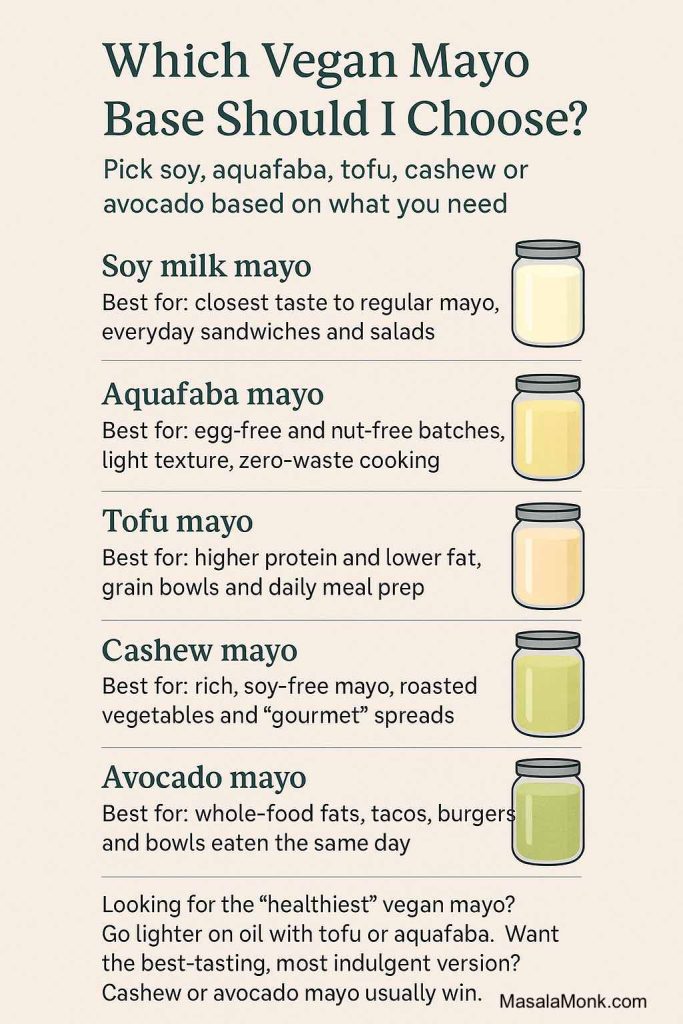
By now, you’re holding far more than one vegan mayo recipe. In fact, you’ve built a small toolkit. You have:
- A classic soy milk vegan mayonnaise recipe that behaves like the original
- An aquafaba vegan mayo recipe that reuses chickpea liquid and stays eggless
- A tofu vegan mayo recipe that leans high-protein and low-oil
- A cashew vegan mayonnaise recipe that feels rich, tangy and gourmet
- An avocado vegan mayo recipe that focuses on whole-food fats
Beyond the bases, you’ve also created:
- More than fifteen flavour variations you can apply to any recipe of vegan mayo
- A clear picture of where vegan mayo recipes fit into real meals: burgers, wraps, salads, bowls, dips and snacks
- A realistic sense of how vegan mayo compares nutritionally with regular mayo
- Practical storage rules to keep your jars safe, fresh and tasty
- Several non-mayo alternatives for days when you want creaminess from something else
At that point, it hardly matters whether you are looking for the best vegan mayonnaise, a simple vegan mayo for everyday sandwiches, or a detailed vegan mayonnaise recipe for a special occasion – you’ve built a set of bases and methods you can bend in whatever direction your week needs. Taken together, that’s not just one recipe – it’s an entire system you can lean on week after week.
Turning Your Vegan Mayo Recipes Into a Weekly Rhythm
From here, the easiest way to turn all of this from theory into daily cooking is to slide it into a simple rhythm. Instead of making vegan mayo at random, you can fold it into how you plan your meals.
For example, you might decide that each week you will:
- Choose one base – soy milk this week, tofu next week, cashew for a dinner party, or avocado when you want something especially fresh.
- Pick one or two flavours – perhaps garlic herb for everyday sandwiches, plus a spicy vegan mayo recipe for burgers, tacos or roasted potatoes.
- Plan two or three dishes around that batch – maybe lentil burgers with garlic mayo one night, a potato salad dressed with herb mayo the next, and a grain bowl finished with a drizzle of spicy vegan mayo later in the week.
- Make only as much as you’ll genuinely finish in a few days, then mix a fresh batch with a different twist the following week.
As you repeat this pattern, something subtle starts to happen. Gradually, you stop checking exact measurements for every vegan mayonnaise recipe. Instead, you begin to pour, taste, and adjust by instinct. You nudge the acid up when a sauce feels flat, ease the salt down when a dish already has salty elements, and tweak the thickness simply by feel.
Over time, vegan mayo stops feeling like a “special vegan product” you have to think about and starts behaving like what it truly is: a flexible, everyday, deeply useful part of how you cook – no eggs needed, and no stress attached.
FAQs
1. What is a vegan mayo recipe?
A vegan mayo recipe is a method for making mayonnaise without eggs or dairy, using plant-based ingredients like soy milk, aquafaba, tofu, cashews or avocado. The basic vegan mayo ingredients are the same each time – a base liquid, oil, acid, seasoning and an emulsifier – but all of them come from plants. Instead of egg yolk, it relies on plant proteins and natural emulsifiers to thicken the sauce, so you still get a creamy, tangy spread that behaves very much like traditional mayonnaise.
2. How is vegan mayonnaise different from regular mayo?
Regular mayo uses egg yolks as the emulsifier, while vegan mayonnaise uses plant-based ingredients such as soy milk or aquafaba. As a result, vegan mayo is egg-free and usually cholesterol-free, yet it still has that familiar creamy texture. Even so, both versions can be rich in fat if they are oil-based.
3. Is vegan mayo healthier than regular mayonnaise?
Often, vegan mayo is free from cholesterol and may use healthier oils, which can be a plus for heart health. Even so, many vegan mayo recipes still contain a good amount of fat and calories, especially if they are oil-heavy. Therefore, the healthiest option is usually a lighter base like tofu, aquafaba, or avocado with moderate portions.
4. What ingredients do I need for a basic vegan mayo recipe?
Generally, you need a base liquid (such as unsweetened soy milk or aquafaba), a neutral oil, an acid like lemon juice or vinegar, mustard, salt and sometimes a touch of sugar. Those are the classic vegan mayo ingredients, and they mirror the usual ingredients of vegan mayonnaise, just without eggs. Together, they create a stable emulsion that tastes very close to classic mayo. Additionally, you can add garlic, herbs or spices for extra flavour.
5. Can I make vegan mayonnaise without soy?
Yes, you absolutely can make a soy free vegan mayo. Instead of soy milk, you can use aquafaba, cashew cream, silken tofu made from other legumes, or even avocado as the main base. All of these still emulsify beautifully when blended with oil and acid. Consequently, you get a vegan mayonnaise recipe that fits a soy-free diet without sacrificing texture or flavour.
6. How do I make an aquafaba vegan mayo recipe?
To make aquafaba mayo, you blend chickpea liquid with lemon juice, mustard, salt and a little sweetener until frothy. Then you gradually stream in oil while blending until the mixture thickens into a creamy vegan mayonnaise. Finally, you chill it so the texture sets and the flavours meld.
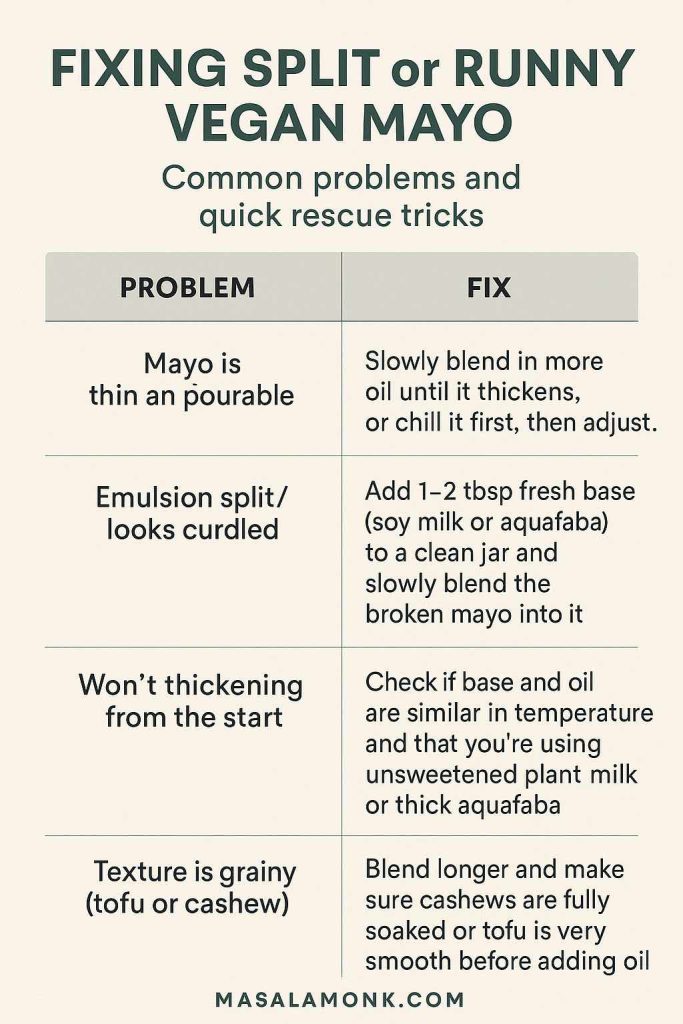
7. Why did my vegan mayo recipe split or stay runny?
Most of the time, vegan mayo splits because the oil was added too quickly or the ratio of oil to liquid was off. Sometimes, a big temperature difference between ingredients can also make the emulsion unstable. Instead of discarding it, you can often rescue it by starting with a spoon or two of fresh base liquid in a new jar and slowly blending the broken mixture into that.
8. How can I thicken a vegan mayo recipe that turned out too thin?
If your vegan mayonnaise recipe is too thin, you can blend in a little more oil slowly until it thickens. Alternatively, you can add more base ingredient, such as tofu or blended cashews, to give it more body. Afterwards, chilling the mayo in the fridge usually helps it firm up even more.
9. How long does homemade vegan mayonnaise last in the fridge?
Homemade vegan mayo is usually good for about 3–7 days in the fridge when stored in an airtight container. Shorter storage times make sense for avocado-based or fresh-herb-heavy versions, which spoil faster, while plain soy or aquafaba vegan mayo recipes can sometimes last closer to a week if handled carefully. In other words, if you’re wondering how long vegan mayo is good for after opening, treat it like any fresh sauce: keep it cold, use clean spoons only, and throw it out if the smell, taste or appearance seems off.
10. Can you freeze vegan mayo?
Freezing vegan mayo is not usually recommended, because the emulsion tends to break once it thaws. The texture often becomes grainy or watery, even if the flavour remains similar. Consequently, it’s better to make smaller batches of your favourite vegan mayonnaise recipe more frequently instead of freezing it.
11. Is vegan mayonnaise safe for people with egg allergies?
Yes, because a properly made vegan mayo recipe contains no egg at all, it is generally safe for people with egg allergies. Nevertheless, it is wise to check labels or recipe ingredients to make sure no egg-derived additives are used. In addition, cross-contamination in commercial kitchens can be an issue for very sensitive individuals.
12. Does vegan mayo taste like real mayonnaise?
A good vegan mayonnaise recipe can taste very close to regular mayo, especially when made with soy milk or aquafaba and seasoned well. Naturally, different bases bring slightly different flavours: tofu is neutral, cashews are a bit nutty, and avocado has its own distinct taste. Even so, once it’s inside a burger, salad or sandwich, most people find it just as satisfying.
13. What is the best oil to use for a vegan mayo recipe?
Neutral oils like sunflower, canola, rice bran or grapeseed work best because they let the other flavours shine. Occasionally, you can blend in a little light olive oil for aroma, although very strong olive oils may dominate the taste. Therefore, choosing a mild oil usually gives you the most versatile vegan mayonnaise recipe.
14. Can I make an oil-free vegan mayonnaise recipe?
Yes, you can create an oil-free vegan mayo recipe by relying on whole ingredients such as silken tofu, cashews or avocado instead of added oil. These ingredients provide natural fat and creaminess, so the sauce still feels rich. Of course, the texture may be slightly different from classic mayo, but many people enjoy the lighter feel.
15. How do I make a garlic vegan mayo recipe?
To make garlic mayo, you simply stir minced or grated garlic into a basic vegan mayo, along with a little extra lemon juice and perhaps some chopped herbs. Consequently, the flavour becomes bolder and more savoury, making it perfect for fries, burgers and roasted vegetables. For best results, let it sit for a while so the garlic softens and mellows.
16. Can I use vegan mayo in a potato salad recipe?
Absolutely, vegan mayo works beautifully in potato salad and other creamy salads. You just replace the regular mayonnaise with your chosen vegan mayo recipe in equal amounts, then adjust seasoning as needed. As a bonus, you can mix in herbs, mustard or pickles to match whatever style of potato salad you like.
17. How can I make a low-fat vegan mayo recipe?
To lower the fat content, you can use silken tofu or thick plant yogurt as most of the base and add only a small amount of oil. Alternatively, you can combine aquafaba with a modest splash of oil to keep calories in check. Over time, you can experiment with ratios until you find a lighter vegan mayonnaise recipe that still feels creamy enough.
18. Is vegan mayo gluten-free?
Most vegan mayo recipes are naturally gluten-free because they are based on oil, plant milks or legumes, plus acid and seasoning. Nonetheless, you should still check mustard, vinegars and any added flavourings in case they contain gluten or have been processed with gluten-containing ingredients. When in doubt, choosing certified gluten-free products keeps things safer.
19. How do I make a spicy vegan mayo recipe?
For a spicy vegan mayo recipe, you can mix chilli sauce, hot sauce, peri-peri, or sriracha into your base mayo. Additionally, you might add smoked paprika, cayenne pepper or chipotle paste for extra depth. Gradually increasing the heat lets you tailor the spice level to your own taste buds.
20. Can vegan mayo be used in baking?
Sometimes, vegan mayo can be used in baking to add moisture and richness, just like regular mayo in certain cake recipes. However, it’s best to choose a neutral-tasting vegan mayonnaise recipe so the flavour doesn’t overpower the dessert. As a guideline, start by replacing a portion of the fat or eggs in a recipe rather than all of them at once.
21. What is the difference between a vegan mayo recipe and an eggless mayo recipe?
An eggless mayo recipe may still include dairy products like milk or cream, while a vegan mayo recipe excludes all animal products completely. In other words, egg free mayonnaise isn’t always vegan, but vegan mayo is always both egg-free and dairy-free. As a result, vegan mayo is suitable for vegan and lactose-free diets, whereas eggless mayo might not be. Reading ingredient lists carefully helps you understand which category a recipe falls into.
22. How can I make a creamy vegan mayo recipe without nuts?
If you need a nut-free option, you can rely on soy milk, aquafaba or tofu as your base instead of cashews or other nuts. These ingredients still emulsify beautifully when blended with oil and acid. Therefore, you can enjoy a creamy vegan mayonnaise recipe that fits both nut-free and egg-free requirements.
23. Can I flavour vegan mayo with herbs and spices?
Yes, vegan mayo is a fantastic blank canvas for herbs and spices. You can fold in dill, parsley, coriander, basil, smoked paprika, curry powder, or garlic and onion powder to build any profile you like. Consequently, one basic vegan mayo recipe can become several different sauces without much extra work.
24. How do I make a lemon vegan mayo recipe for salads?
To make a lemon-focused vegan mayo recipe, you can increase the lemon juice, add some lemon zest, and keep the seasoning light and fresh. This style of mayo works particularly well on green salads, potato salads and grain bowls. In addition, you can thin it slightly with water or plant milk to turn it into a pourable dressing.
25. What equipment do I need for a vegan mayo recipe?
Usually, you just need a blender, immersion blender or small food processor, plus a tall jar or jug. You also need a measuring cup, a spoon, and a spatula for scraping the sides. Although you can whisk by hand, an electric tool makes the emulsion much easier and more consistent.
26. Can I make a vegan mayo recipe without mustard?
Yes, you can leave out mustard if you dislike it or are allergic, though the flavour and stability will change slightly. To compensate, you might add a bit more acid and salt, or a tiny pinch of garlic powder for complexity. Even without mustard, the vegan mayonnaise recipe can still work if the emulsion forms properly.
27. How can I make my vegan mayo recipe taste less “beany”?
If your aquafaba or tofu-based mayo tastes a bit beany, you can reduce that flavour by adding more lemon juice, a touch of sugar, and some garlic or herbs. Additionally, chilling the mayo overnight often softens any sharp notes. Over time, you can also experiment with different brands of chickpeas or tofu to find a milder base.
28. Is it possible to make a keto-friendly vegan mayo recipe?
Yes, it’s possible to create a keto-style vegan mayo recipe by focusing on high-fat, low-carb ingredients such as oil, avocado and certain nut or seed bases. However, you’ll want to avoid sugars and high-carb thickeners, using only low-carb flavourings instead. Consequently, you still get a rich, creamy sauce that fits within a keto framework.
29. Can I turn my vegan mayo into a dip or sauce for snacks?
Definitely, you can easily turn a plain vegan mayo recipe into a dip by adding garlic, herbs, roasted peppers, or caramelised onions. Then you can adjust the thickness: keep it thicker for dipping chips and veggies, or thin it slightly for drizzling over roasted potatoes and snack boards. In this way, one batch of vegan mayo can support several different snacks.
30. How do I know which vegan mayo recipe base is right for me?
Choosing a base depends on your taste, dietary needs and how you plan to use the mayo. If you want something closest to classic mayo, soy milk or aquafaba is a good starting point; if you prefer lighter or higher-protein options, tofu works well; if you enjoy richness, cashew or avocado is ideal. Eventually, trying each style once will show you which vegan mayonnaise recipe feels most at home in your own kitchen.








