
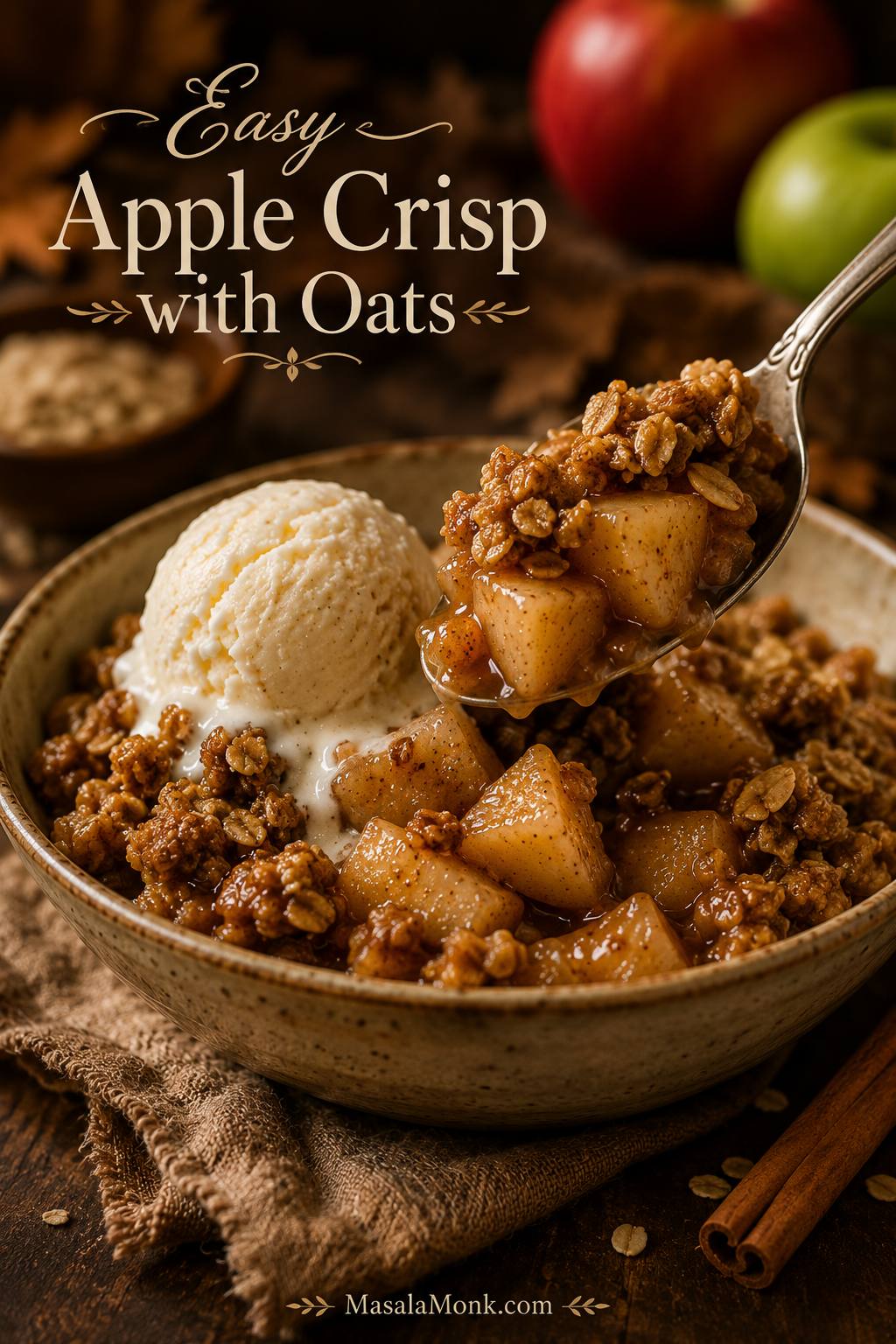
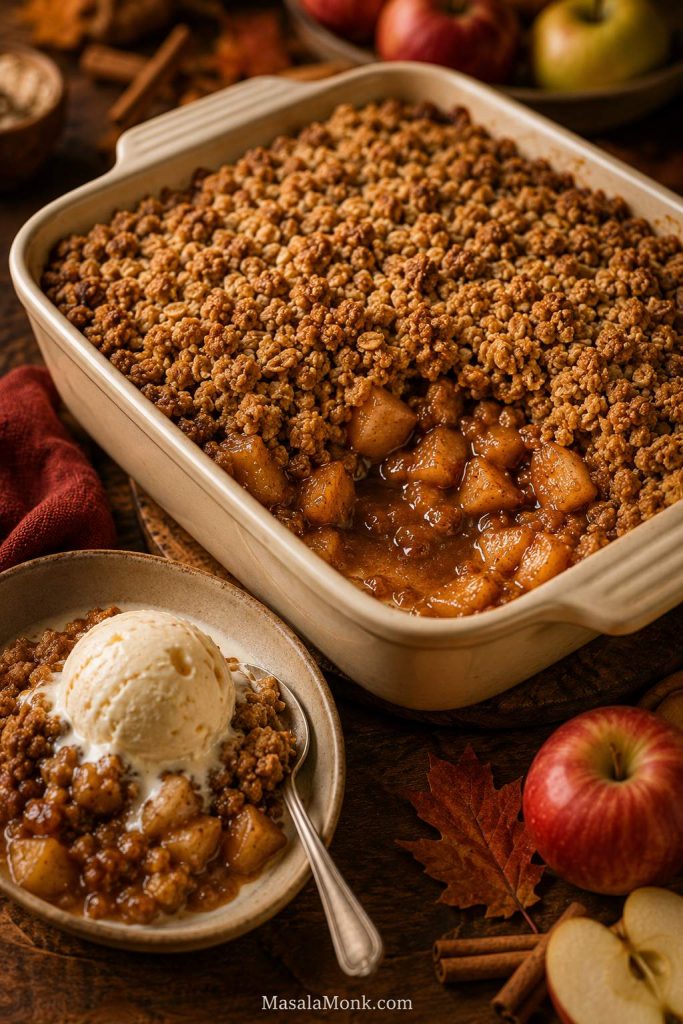
This easy apple crisp recipe is for the night when you want the house to smell like cinnamon, butter, and brown sugar without making pie crust. The apples bake down into glossy cinnamon juices, the oat topping turns craggy and golden, and the corners get just crisp enough that someone always tries to claim them first.
It gives you the cozy part of apple pie with much less work: no rolling dough, no chilling crust, and no worrying about perfect slices. Better still, this crisp is forgiving. An 8×8, 9×9, or 9×13 pan can all work with the right scaling, and you can slice the apples thin for a softer filling or chop them for more bite.
It is the kind of dessert that works on a random weeknight with apples you already have, but it also earns its place on a fall table, Thanksgiving spread, or potluck when pie feels like too much. And although it is good plain, it becomes the version people remember when vanilla ice cream melts into the cinnamon juices and catches in the oat topping.
The promise here is simple: the right apple amount, a generous brown sugar oat topping, clear doneness cues, and pan guidance for both small family desserts and bigger holiday-style bakes.
Most importantly, this version helps you avoid the usual apple crisp problems: watery filling, underbaked apples, sandy topping, or a pan that tastes like baked apples with a thin sprinkle of oats. The goal is warm fruit underneath, crisp topping on top, and enough structure that every scoop feels complete.
Serving tip: A good apple crisp should give you warm apples, oat crumble, and just enough glossy cinnamon juice for vanilla ice cream to melt into.
What You’ll Find Here
Quick Answer: What Makes a Good Apple Crisp?
A good apple crisp recipe has tender apples, a buttery oat topping, and enough thickener to keep the filling spoonable instead of watery. For a standard 8×8 or 9×9-inch baking dish, use about 2 1/2 pounds / 1.1 kg apples, which is about 8 cups sliced or chopped apples. For a larger holiday pan, see the apple crisp pan guide. Toss the apples with lemon, brown sugar, cinnamon, vanilla, and a little flour or cornstarch.
Then cover the apples with a topping made from old-fashioned oats, flour, brown sugar, cold butter, cinnamon, and salt. Bake at 350°F / 175°C until the apple juices are bubbling and the topping is golden. Finally, let the crisp rest for 15–20 minutes before serving so the filling thickens instead of running across the bowl.
Apple Crisp at a Glance
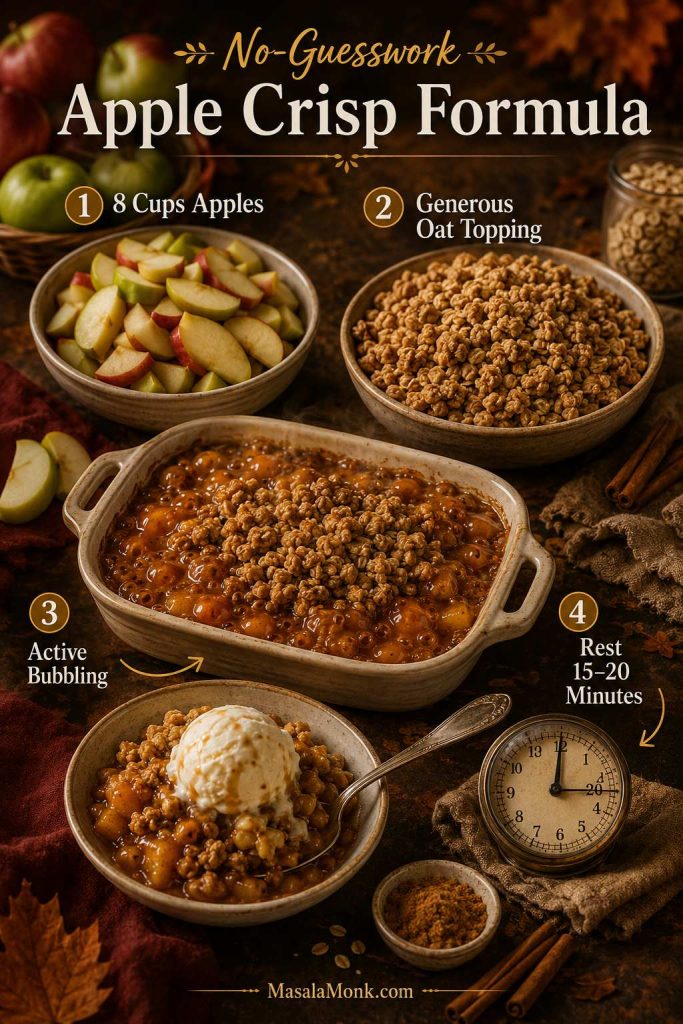
Texture cue: the crisp is done when the fruit is actively bubbling, the topping is golden and craggy, and a knife slides into the apples without resistance.
The no-guesswork formula: 8 cups apples, a generous oat topping, active bubbling, and a 15–20 minute rest. Those four details prevent most watery, underbaked, or thin-topped crisps.
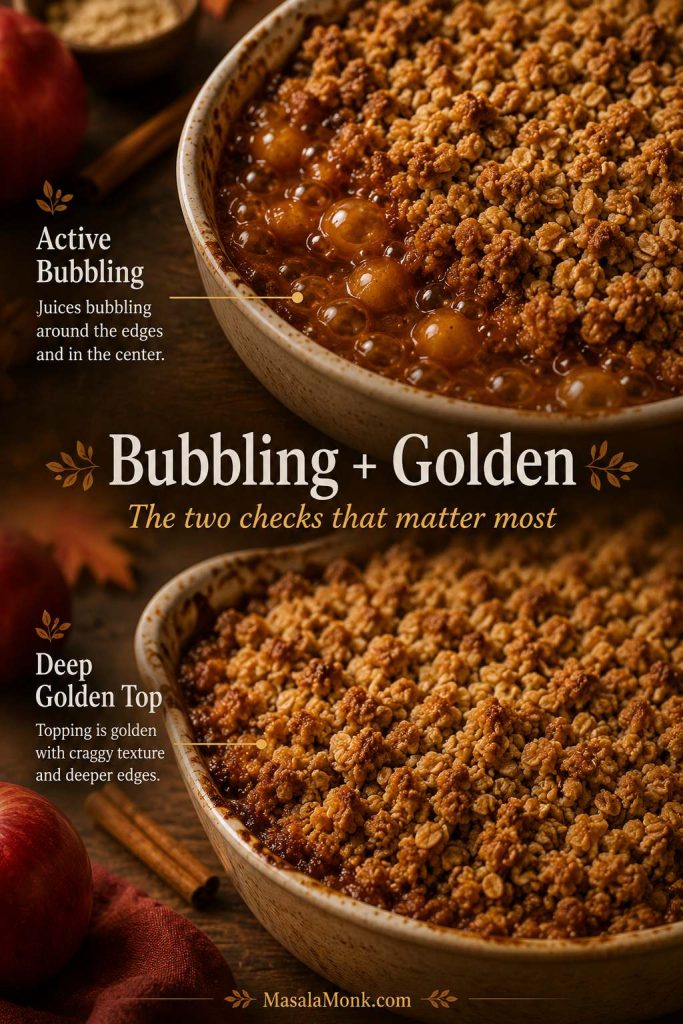
The two checks before you pull it from the oven: First, the apple juices should bubble at the edges and toward the center, not just around the sides. Second, the topping should look golden and craggy, with a few deeper brown-sugar edges. If the topping is brown but the middle still looks quiet, cover loosely with foil and keep baking a little longer.
Why This Apple Crisp Recipe Works
A good apple crisp is not just baked apples with crumbs on top. The filling has to bubble long enough for the juices to thicken, and the topping has to stay loose enough to brown instead of steaming against the fruit. This recipe is built around those two cues: glossy apple juices and a craggy, buttery oat topping.
Most disappointing apple crisps fail in the same few ways. The apples stay firm, the filling runs across the bowl, the topping turns sandy, or there simply is not enough crumble to make every scoop satisfying. So the goal here is simple: enough apples to feel generous, enough topping to cover every serving, and enough thickener to turn the cinnamon juices glossy instead of soupy.
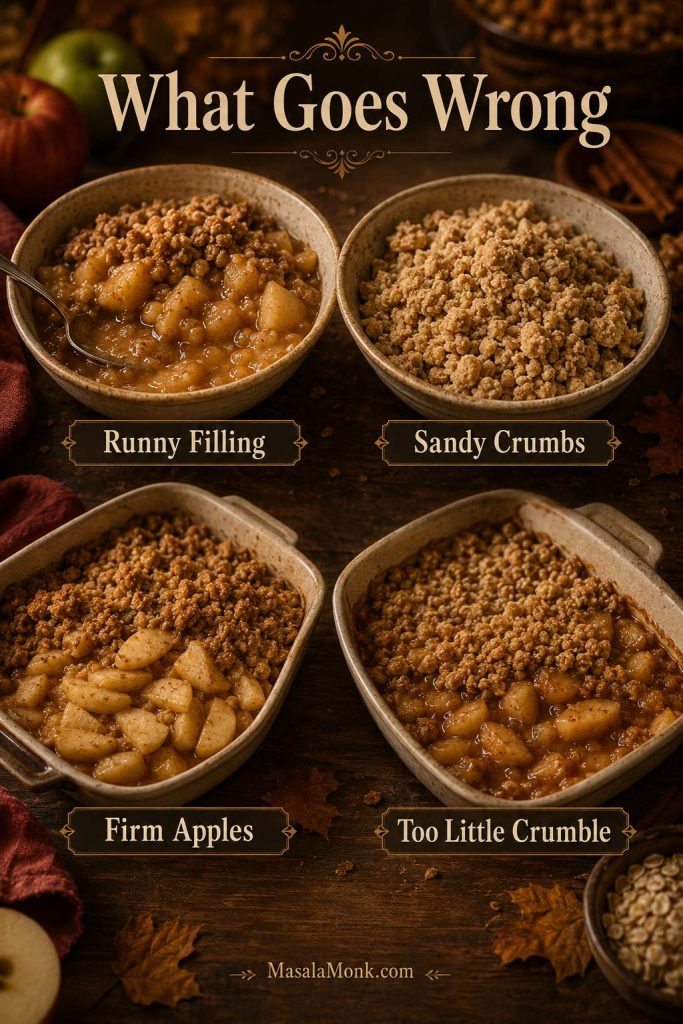
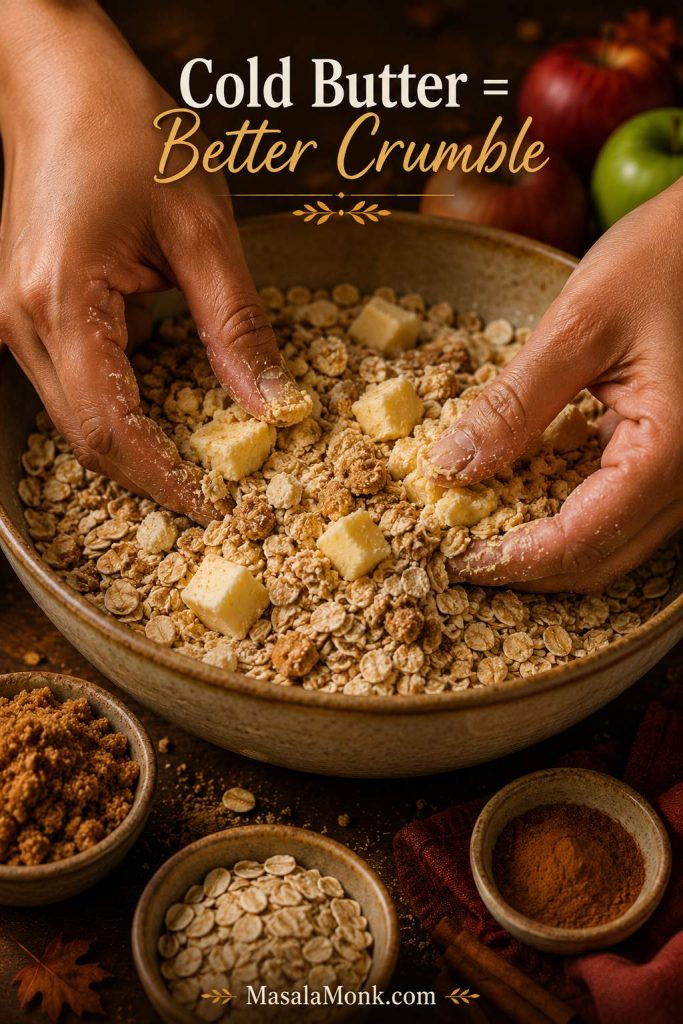
Cold butter is the key to the crumble. It helps the oats, flour, brown sugar, cinnamon, and salt bake into rough crumbs instead of melting into the apples. A small amount of flour or cornstarch in the filling catches the apple juices as they bubble, so the crisp sets up after a short rest.
It also gives you enough crumble. Apple crisp should not look like apples with a little dusting on top. The brown-sugar crumbs are part of the dessert, and the larger clumps are not mistakes; they are the pieces people go looking for.
Equipment You’ll Need
You do not need special equipment for this crisp, but the right dish makes the bake more predictable. The pan matters more than the tool list; a very deep dish bakes differently from a shallow metal pan, even with the same ingredients. A ceramic, glass, or light-colored metal baking dish works best for the main recipe because it gives the apples enough time to soften before the topping gets too dark.
- 8×8 or 9×9-inch baking dish: best for the base recipe.
- Large mixing bowl: for tossing the apples evenly with sugar, lemon, spice, and thickener.
- Medium bowl: for the oat topping.
- Pastry cutter, fork, or clean hands: for working cold butter into the topping.
- Peeler, knife, and cutting board: for prepping the apples.
- Rimmed baking sheet: useful under the dish in case the apple juices bubble over.
- Foil: helpful if the surface browns before the apples are tender.
The rimmed baking sheet is optional, but it is one of those small things you are grateful for if the apple juices start bubbling over at the edges.
Dish note: Glass and ceramic dishes give a steady, even bake. Metal pans can brown the edges faster. Cast iron works too, although it holds heat aggressively, so watch the top near the end of baking.
Ingredients for Apple Crisp with Oats
You only need fresh apples, butter, oats, sugar, and pantry baking ingredients. The list is simple, but the small choices matter: cold butter instead of soft, old-fashioned oats instead of instant oats, and enough lemon and salt to keep the filling from tasting flat.
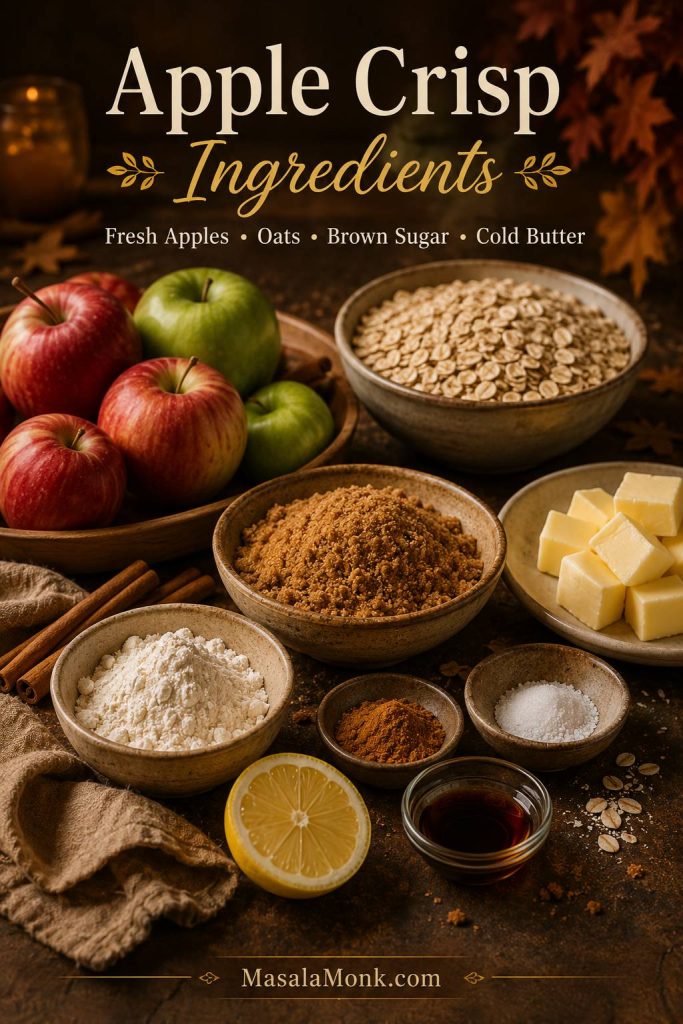
For the Apple Filling
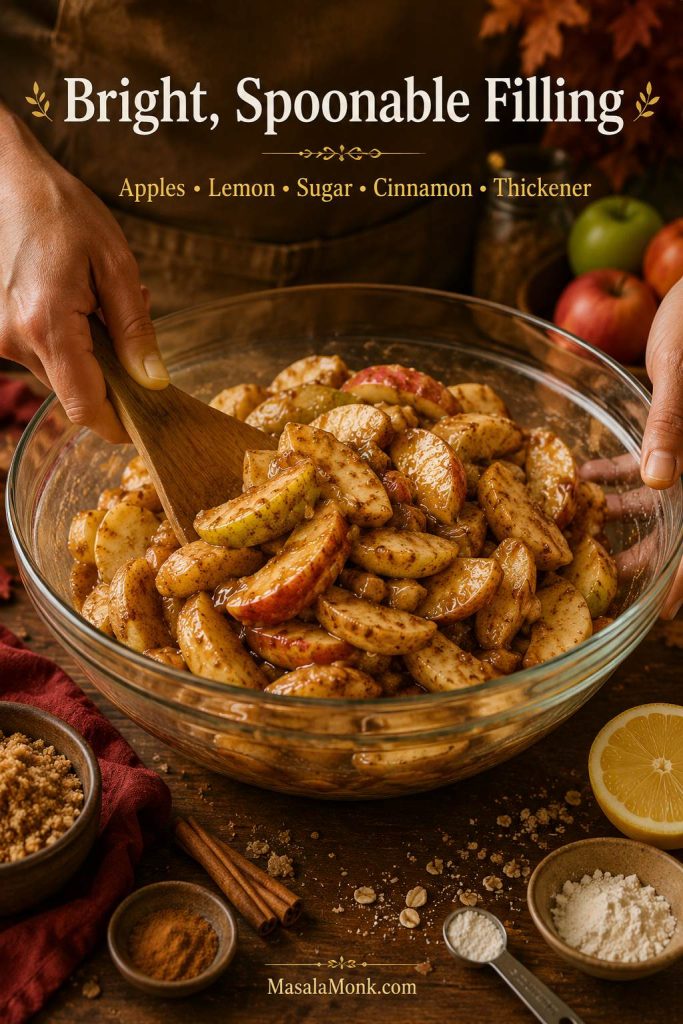
- Apples: Use about 2 1/2 pounds / 1.1 kg apples before peeling and coring. This gives you about 8 cups sliced or chopped apples.
- Lemon juice: Brightens the apples and keeps the filling from tasting flat.
- Brown sugar: Adds caramel warmth. Use less if your apples are very sweet and a little more if they are very tart.
- Flour or cornstarch: Use 2 tablespoons flour in the apple layer, or 1 tablespoon cornstarch for a glossier, slightly clearer filling.
- Cinnamon: The main spice. It should be present but not dusty or overpowering.
- Nutmeg: Optional, but a small pinch makes the filling taste warmer.
- Vanilla: Softens the sharpness of the apples and sugar.
- Salt: Makes the apples and topping taste more balanced.
Before it bakes, the filling should taste bright. If the apples taste flat in the bowl, they will taste flat after baking too, so do not skip the lemon juice and salt.
For the Brown Sugar Oat Topping
- Old-fashioned rolled oats: Best for a classic crisp texture.
- All-purpose flour: Helps the topping hold together in buttery crumbs.
- Brown sugar: Gives the topping its caramel flavor and golden color.
- Cinnamon: Ties the topping to the apple filling.
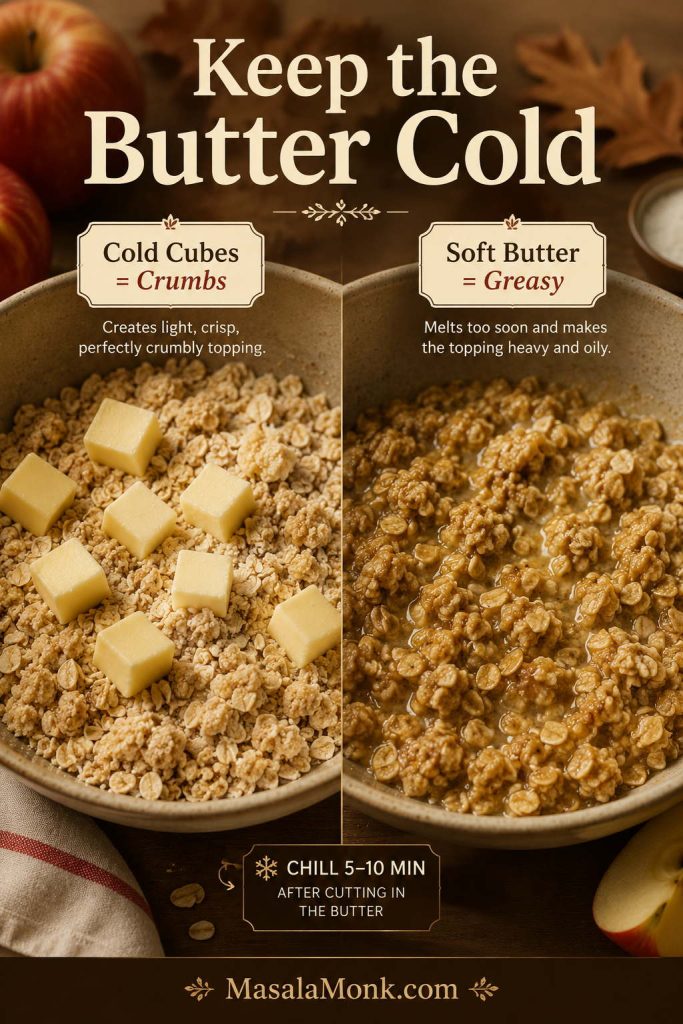
- Cold butter: The most important topping detail. Cold butter creates crumbly pieces instead of a greasy layer.
- Salt: Keeps the topping from tasting only sweet.
- Chopped nuts, optional: Pecans or walnuts add crunch, but the recipe works beautifully without them.
At this point, the topping should taste like a brown sugar oatmeal cookie before it ever goes into the oven. That is the flavor you want baking into the top layer.
No scale? Use about 8 cups of sliced or chopped apples for the base recipe. Very large apples may give you that amount with only 4–5 apples, while smaller apples may take 7–8.
Best Apples for Apple Crisp
The best apples for apple crisp hold their shape while baking and bring enough tartness to balance the brown sugar topping. In most cases, a mix is better than one apple variety because you get both structure and flavor.
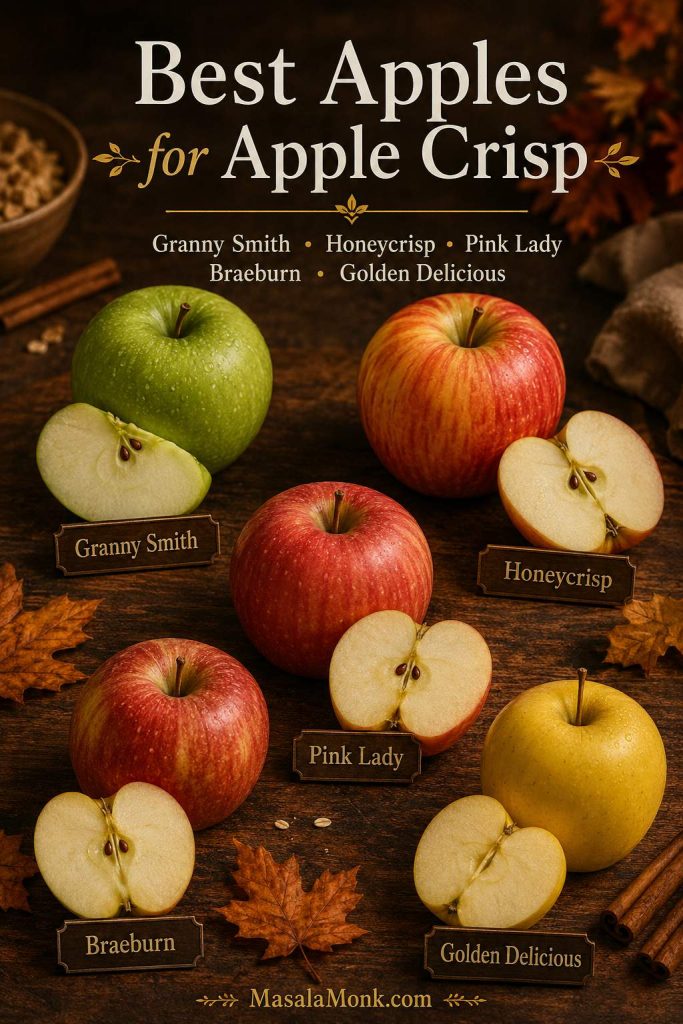
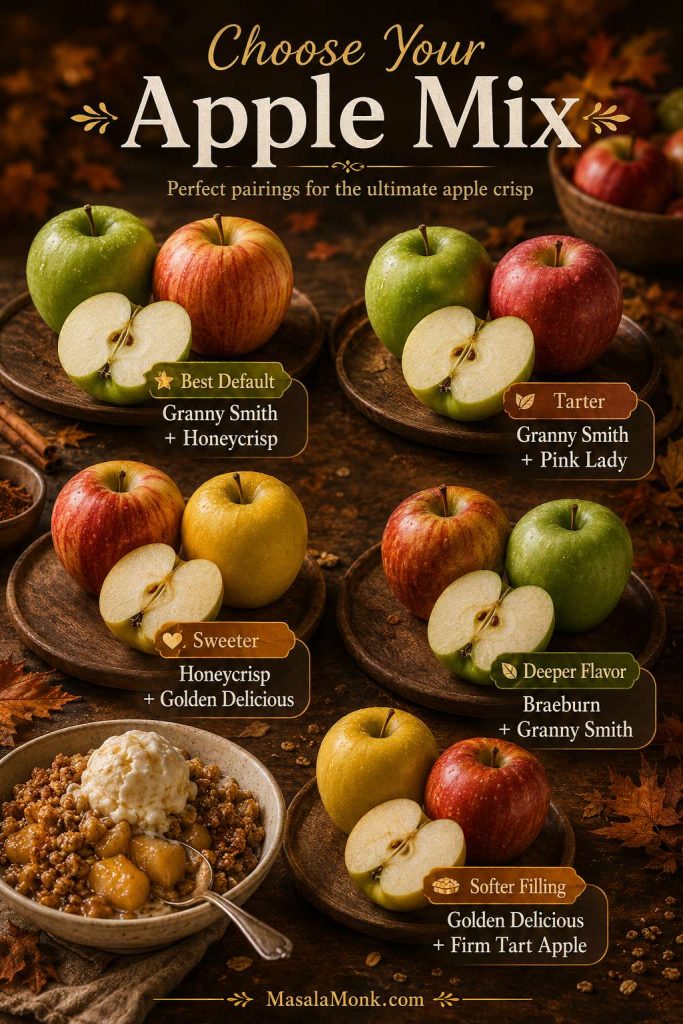
For an easy blend, use Granny Smith + Honeycrisp. Granny Smith apples bring tartness and structure, while Honeycrisp apples add sweetness and a juicy bite. Braeburn, Pink Lady, Golden Delicious, and Jonagold also work well.
Easy Apple Mixes for Apple Crisp
| Apple Mix | Best For | Flavor and Texture |
|---|---|---|
| Granny Smith + Honeycrisp | Best default mix | Tart, sweet, juicy, and sturdy |
| Granny Smith + Pink Lady | Tarter apple crisp | Bright, firm, and less sweet |
| Honeycrisp + Golden Delicious | Sweeter family-style crisp | Softer, sweeter, and very cozy |
| Braeburn + Granny Smith | Deeper baked flavor | Warm, aromatic, and balanced |
| Golden Delicious + a firm tart apple | Softer, saucier filling | Good when you want a more spoonable dessert |
If you use a local apple variety that bakes well, tell us which one. Apple crisp is one of those recipes where regional apples can completely change the flavor, and the underrated local ones are often the most interesting.
Once you choose the apples, the cut matters too; see the sliced vs chopped apple guide before you prep the fruit.
By contrast, very soft apples can break down quickly under a long bake. They still taste good, but they may create a saucier, almost applesauce-like filling and make the bottom of the crisp wetter.
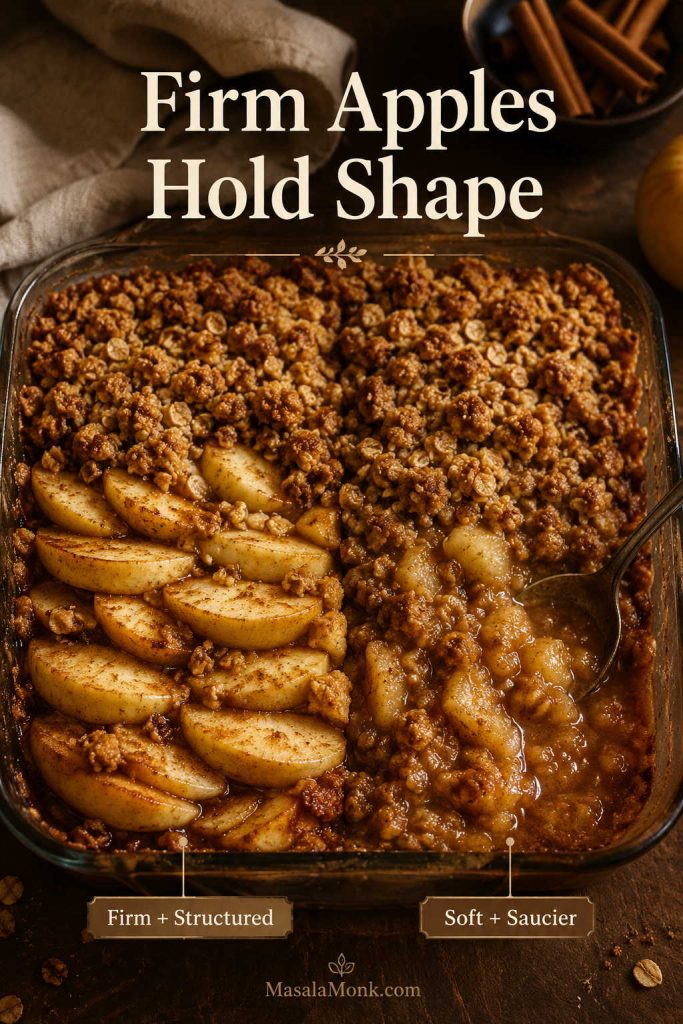
| Apple | Best Use | What to Expect |
|---|---|---|
| Granny Smith | Best tart backbone | Firm, bright, less sweet |
| Honeycrisp | Best sweet-tart flavor | Juicy, aromatic, holds well |
| Pink Lady | Balanced crisp filling | Tangy, firm, colorful |
| Braeburn | Warm baked flavor | Sweet-tart and sturdy |
| Golden Delicious | Softer, sweeter filling | Good when mixed with tart apples |
| Red Delicious | Not recommended | Often too soft and mild after baking |
For a deeper apple breakdown, the best apples for apple pie guide is also useful for apple crisp because the same basic rule applies: choose apples that taste good after baking and do not collapse too quickly.
Should Apples Be Sliced or Chopped for Apple Crisp?
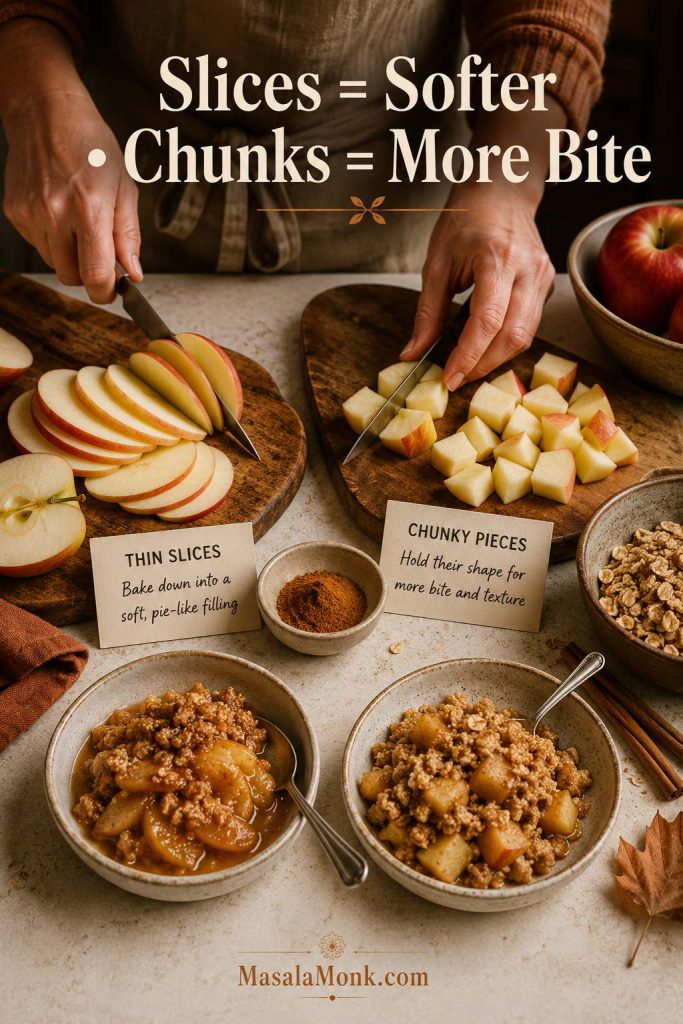
Both work, but they give different textures. Thin slices bake into a softer, more layered filling. Chunks give more bite and make the dessert feel fruitier. Either way, even cutting matters because uneven apples can leave you with mushy small pieces and firm large pieces in the same pan.
Cut-size tip: Keep slices and chunks even so the apple crisp filling bakes at the same pace.
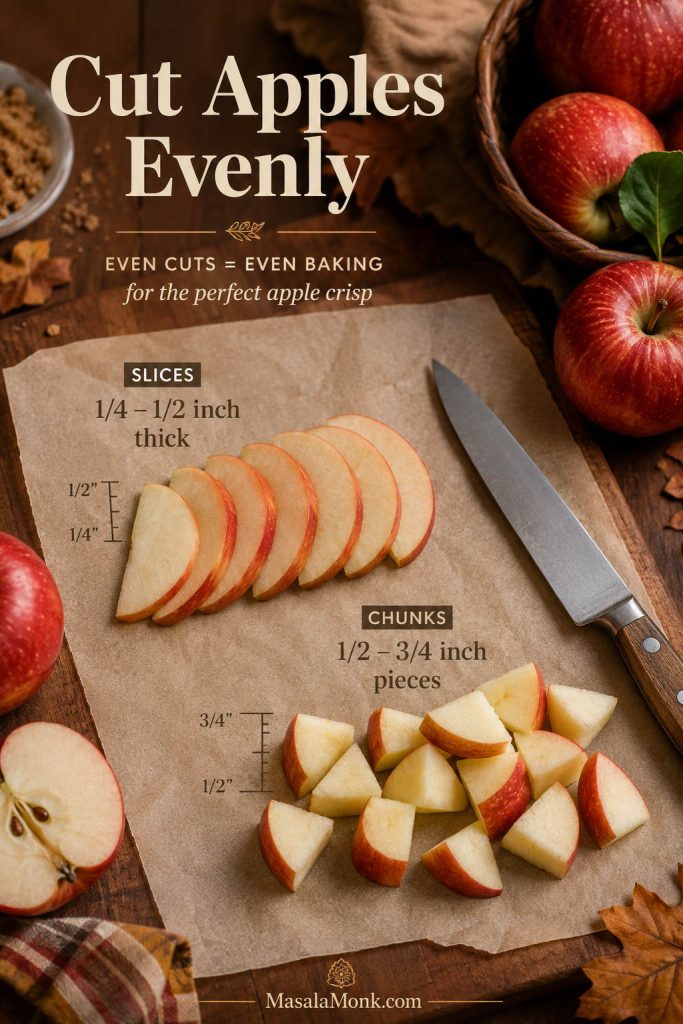
| Cut | Best Size | Result |
|---|---|---|
| Slices | 1/4–1/2 inch thick | Softer, layered, classic spoon-dessert texture |
| Chunks | 1/2–3/4 inch | More apple bite and a chunkier filling |
| Very thick pieces | Over 3/4 inch | May stay firm unless baked longer |
For the most classic texture, use mostly slices with a few slightly thicker pieces mixed in. As a result, some apples soften into the cinnamon juices, while others stay tender enough to bite.
Old-Fashioned Oats vs Quick Oats for Apple Crisp
Oat choice: Old-fashioned oats give the topping more visible texture, while quick oats make the crumble finer and softer.
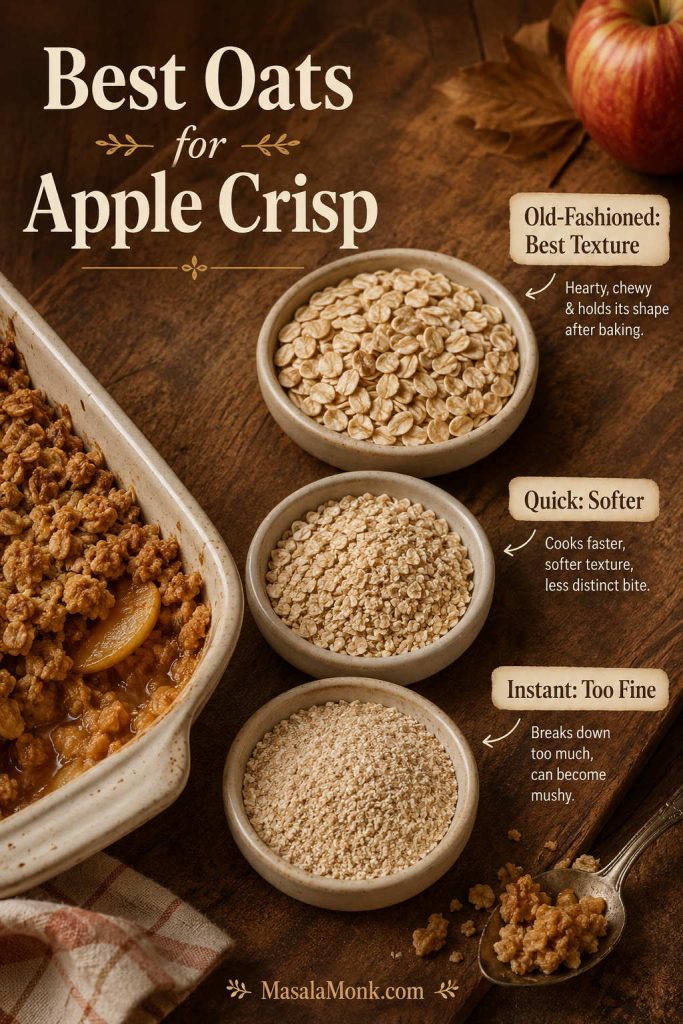
Old-fashioned rolled oats are the best oats for apple crisp. They hold their shape in the oven and give the topping the chunky, crisp texture people expect. Quick oats can work in an emergency, but they make a softer, finer topping. Instant oats are too powdery, and steel-cut oats are too hard for this kind of topping.
| Oat Type | Use in Apple Crisp? | Result |
|---|---|---|
| Old-fashioned rolled oats | Yes, best choice | Classic crisp topping with good texture |
| Quick oats | Yes, only if needed | Softer, finer topping with less chew |
| Instant oats | Not ideal | Can become too soft or powdery |
| Steel-cut oats | No | Too hard and chewy for this topping |
That little bit of chew is what makes apple crisp feel like apple crisp instead of baked apples with crumbs. Old-fashioned oats stay visible, toasty, and slightly chewy, so the topping has more texture than a plain crumble.
For a version without oats, make a flour-butter-brown-sugar crumble topping instead. That leans closer to apple crumble than classic apple crisp, and it needs slightly different handling because the topping does not have the same chewy oat structure. You can also jump to the apple crisp without oats variation below.
How to Make Apple Crisp
Method overview: The recipe is easiest when you follow the same order every time: prep, mix, crumble, scatter, bake, and rest.
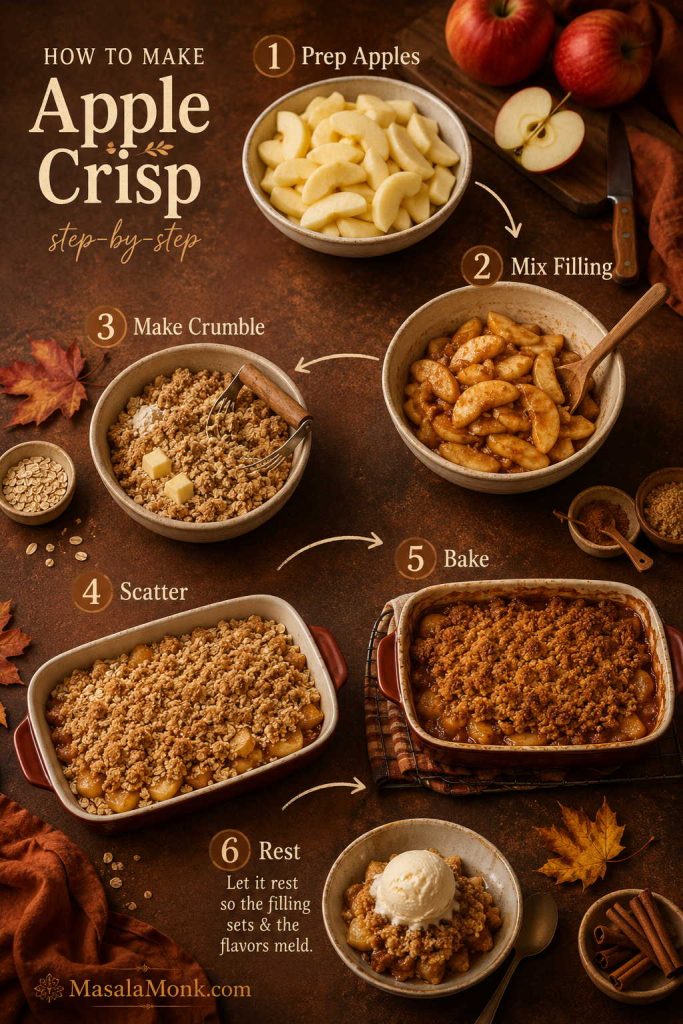
1. Prep the Apples
First, preheat the oven to 350°F / 175°C. Lightly butter an 8×8 or 9×9-inch baking dish, and place it on a rimmed baking sheet if the dish is quite full.
Next, peel the apples for a softer, more classic dessert texture. For a more rustic crisp with extra texture, leave the skins on. Core the apples, then cut them into even slices or chunks.
- Thin slices: softer, more layered filling
- 1/2-inch chunks: more apple bite and texture
- Uneven pieces: some apples may turn mushy while others stay firm
2. Mix the Apple Filling
Add the apples to a large bowl with lemon juice, brown sugar, flour or cornstarch, cinnamon, nutmeg, vanilla, and salt. Then toss until the apples are evenly coated. The thickener should disappear into the juices and sugar instead of sitting in dry patches.
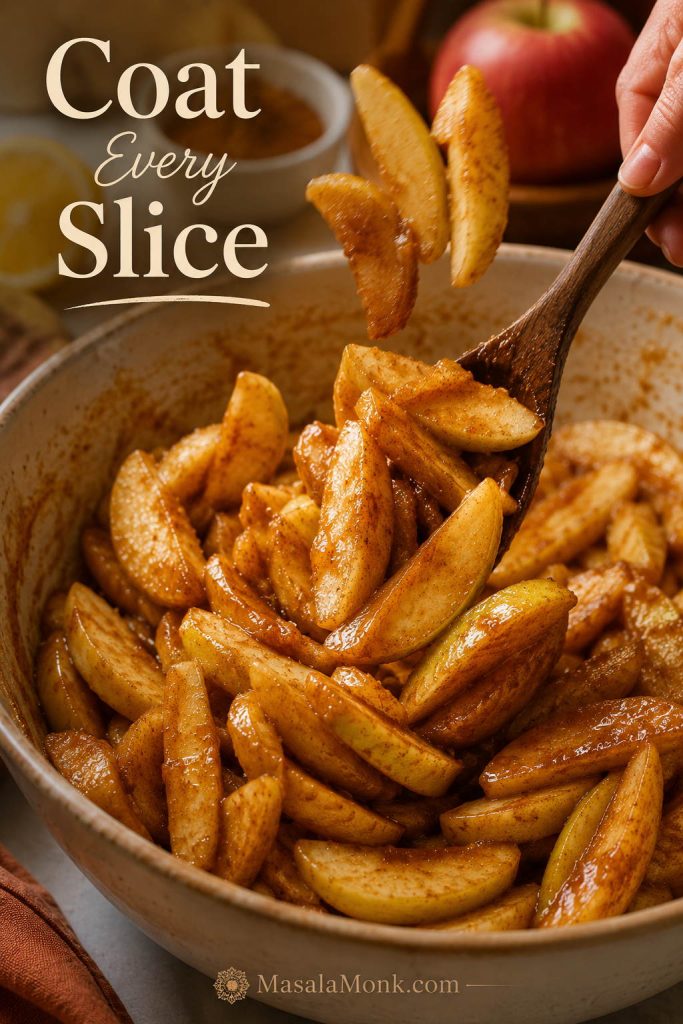
After mixing, spread the apples into the prepared baking dish. Do not worry if the dish looks full; the apples shrink as they bake.
3. Make the Oat Topping
In a separate bowl, mix the oats, flour, brown sugar, cinnamon, and salt. Add cold cubed butter. Then use your fingers, a fork, or a pastry cutter to rub the butter into the dry ingredients.
The mixture should look like uneven, buttery crumbs, not dry flour and not a smooth paste. When you squeeze a handful, it should hold together in rough clumps, then break apart easily. Leave some larger clumps on purpose; those become the crispest brown-sugar bites after baking.
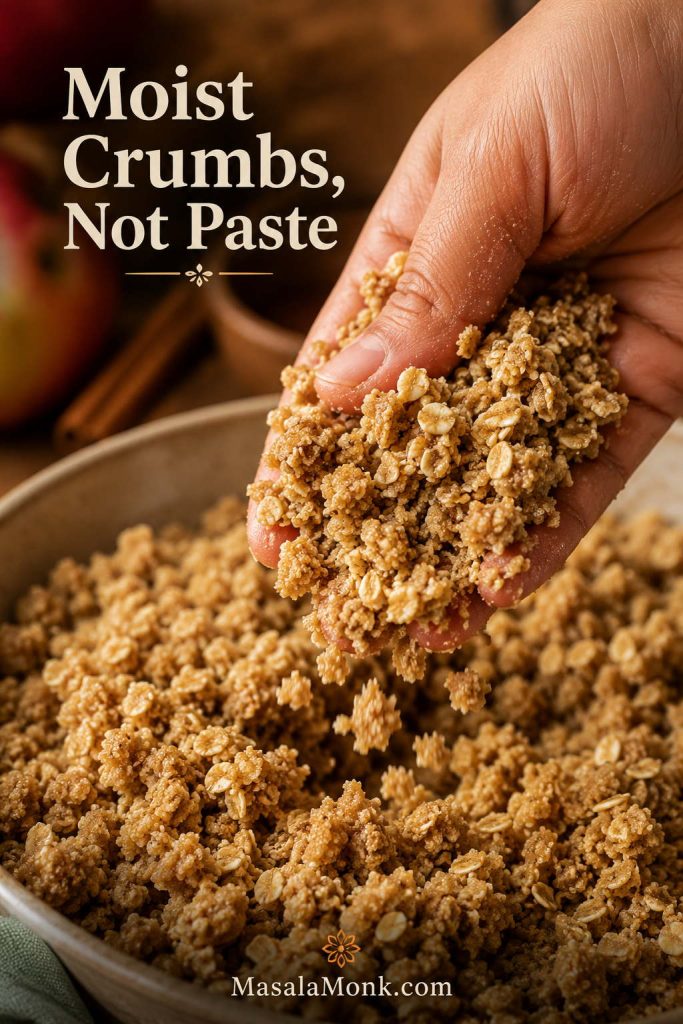
If the mixture still looks dusty, keep working in the butter. Dry crumbs bake up floury. If it looks wet or greasy before baking, the butter has softened too much; chill the bowl for 10 minutes before sprinkling the oat mixture over the apples.
Warm kitchen tip: In a warm kitchen, cube the butter and chill or freeze it for 5–10 minutes before making the topping. Cold butter helps the oat topping bake into distinct crumbs instead of melting into the apples.
4. Add the Topping
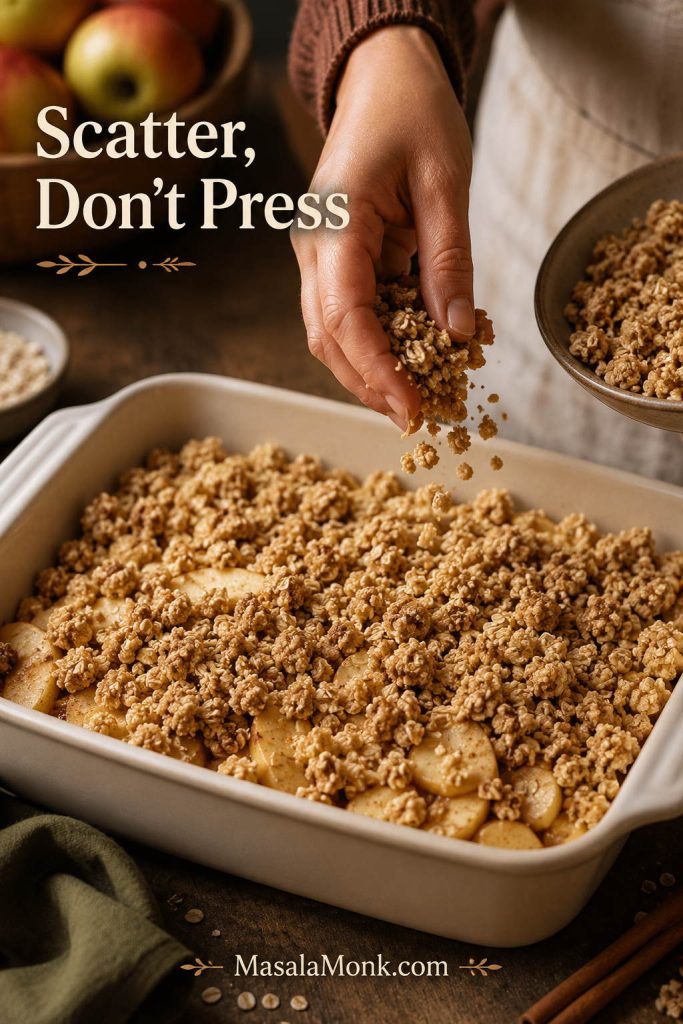
Scatter the oat mixture evenly over the apples. Do not press it down firmly. A loose crumb layer allows heat to move through the apples while the surface browns.
5. Bake Until Bubbling
Bake for 45–55 minutes, or until the oat layer is golden and the apple juices are visibly active beneath the surface. That heat is what wakes up the flour or cornstarch and turns the juices glossy instead of loose.
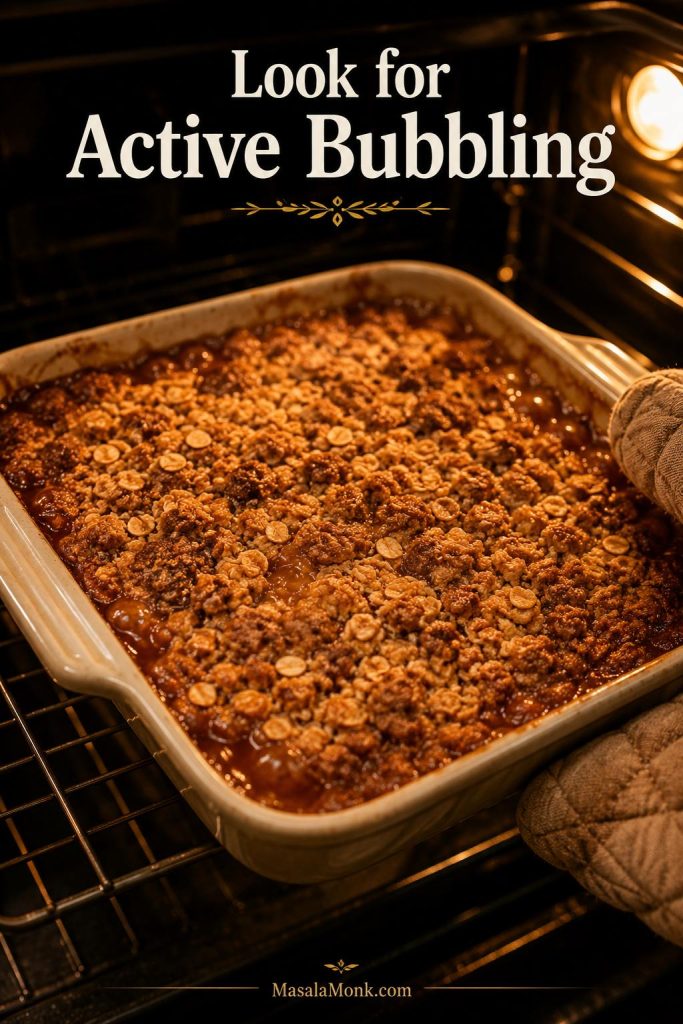
If the surface browns too quickly before the apples are tender, loosely cover the dish with foil and continue baking. Do not seal the foil tightly, because trapped steam can soften the crumb layer. If the crisp still looks off, use the troubleshooting chart before you pull it from the oven.
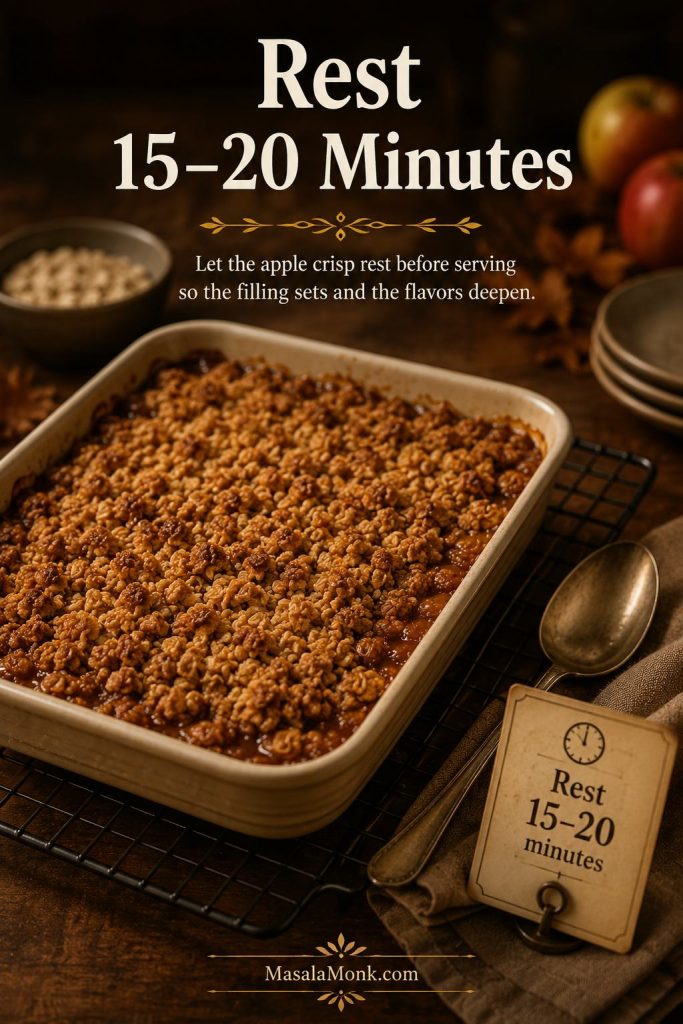
6. Let It Rest Before Serving
Once the crisp comes out of the oven, let it rest for at least 15–20 minutes before scooping. This short rest helps the juices settle so the filling is glossy and spoonable instead of runny.
Should Apple Crisp Be Baked Covered or Uncovered?
Bake apple crisp uncovered so the oat layer can brown and crisp. If the surface turns dark before the apples are tender, cover the dish loosely with foil for the last 10–15 minutes. Do not cover it from the beginning unless your oven runs very hot.
Once the apples are coated and the crumble is ready, the hardest part is already done. From here, the oven does most of the work: softening the apples, thickening the juices, and turning those rough oat clumps into the bites everyone wants first.
Easy Apple Crisp Recipe with Oats
Easy Apple Crisp Recipe with Oats
This easy apple crisp bakes tender cinnamon apples under a generous brown sugar oat topping, with clear doneness cues so the filling turns glossy instead of watery. Serve it warm with vanilla ice cream, especially if you want the corner pieces to disappear first.
Ingredients
For the apple filling
- 2 1/2 lb / 1.1 kg apples, weighed before peeling and coring; about 8 cups sliced or chopped apples
- 1 tablespoon / 15 ml lemon juice
- 1/3 cup / 65 g packed light brown sugar, or up to 1/2 cup / 100 g for very tart apples
- 2 tablespoons / 16 g all-purpose flour, or 1 tablespoon / 8 g cornstarch
- 1 teaspoon ground cinnamon
- 1/4 teaspoon ground nutmeg, optional
- 1 teaspoon / 5 ml vanilla extract
- 1/4 teaspoon fine salt
For the oat topping
- 1 cup / 90 g old-fashioned rolled oats
- 3/4 cup / 95 g all-purpose flour
- 3/4 cup / 150 g packed light brown sugar
- 1 teaspoon ground cinnamon
- 1/4 teaspoon fine salt
- 1/2 cup / 113 g cold unsalted butter, cut into small cubes
- Optional: 1/2 cup / 55–60 g chopped pecans or walnuts
Instructions
- Preheat the oven to 350°F / 175°C. Lightly butter an 8×8 or 9×9-inch baking dish. Place the dish on a rimmed baking sheet if it is very full.
- Add the apples to a large bowl. Toss with lemon juice, brown sugar, flour or cornstarch, cinnamon, nutmeg, vanilla, and salt until evenly coated.
- Spread the apple mixture into the prepared baking dish.
- In another bowl, stir together the oats, flour, brown sugar, cinnamon, and salt.
- Add the cold cubed butter. Rub it into the oat mixture with your fingers, a fork, or a pastry cutter until the topping forms moist crumbs and rough clumps.
- Sprinkle the topping evenly over the apples. Do not press it down firmly.
- Bake for 45–55 minutes, until the topping is golden and the apple juices are bubbling at the edges and toward the center.
- If the topping browns before the apples are tender, cover loosely with foil and continue baking.
- Let the crisp rest for 15–20 minutes before serving. Serve warm, plain or with vanilla ice cream.
Notes
- Use old-fashioned oats for the best topping texture.
- The crisp is not done just because the topping is brown. Look for bubbling juices near the center too.
- If the topping looks powdery before baking, work in the butter a little more or add 1–2 teaspoons extra cold butter.
- If using a 9×9 pan, check a few minutes early because it is slightly shallower than an 8×8.
- Use less sugar for sweet apples and more for very tart apples.
- For a glossier filling, use cornstarch instead of flour.
- For a thicker filling, let the crisp cool for at least 20 minutes before scooping.
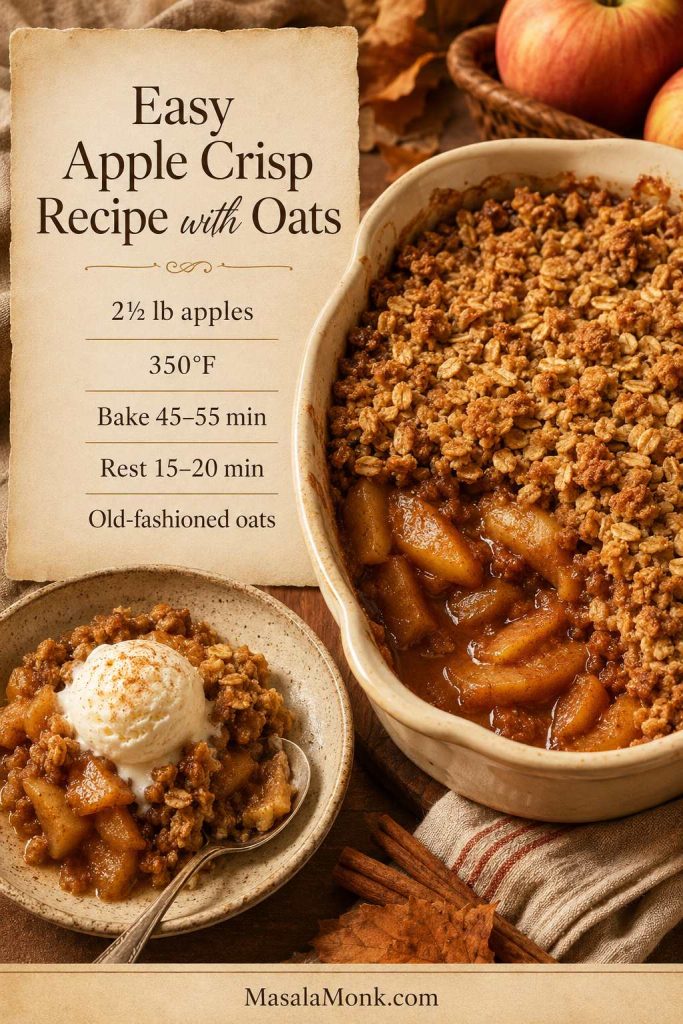
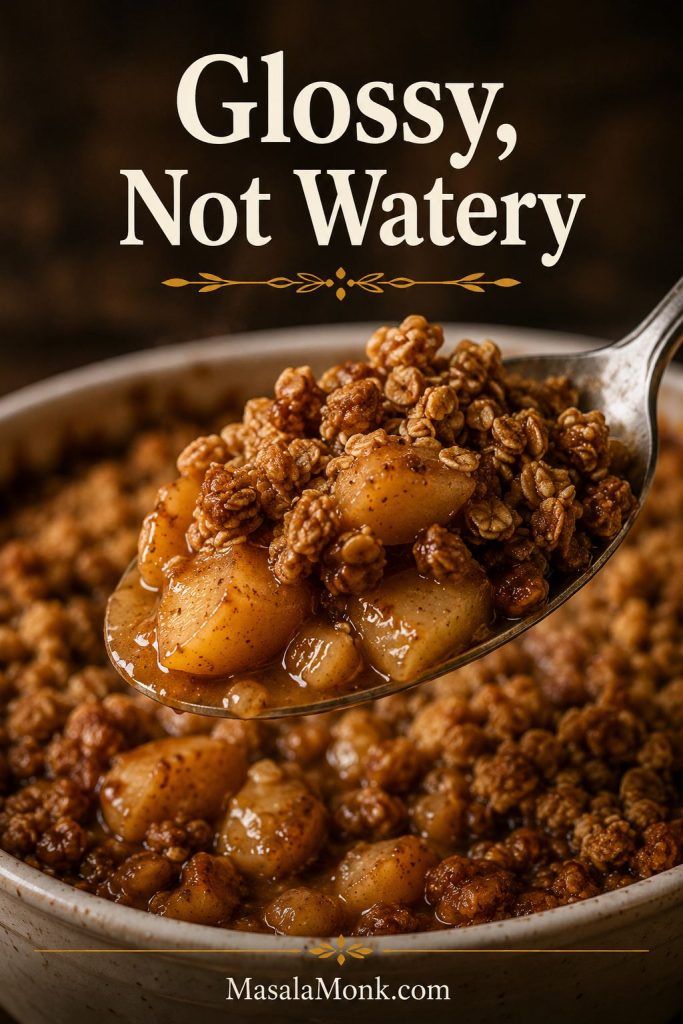
Finished texture: The best scoop holds glossy apples and crumble together without leaving a watery puddle behind.
Using a different dish? Check the pan guide before baking.
Apple Crisp Pan Guide: 8×8, 9×9, and 9×13
Pan size changes the depth of the apples, the bake time, and how much crumble you need. A deeper crisp feels softer and more spoonable, while a wider dish gives the oat layer more exposure and more golden edges.
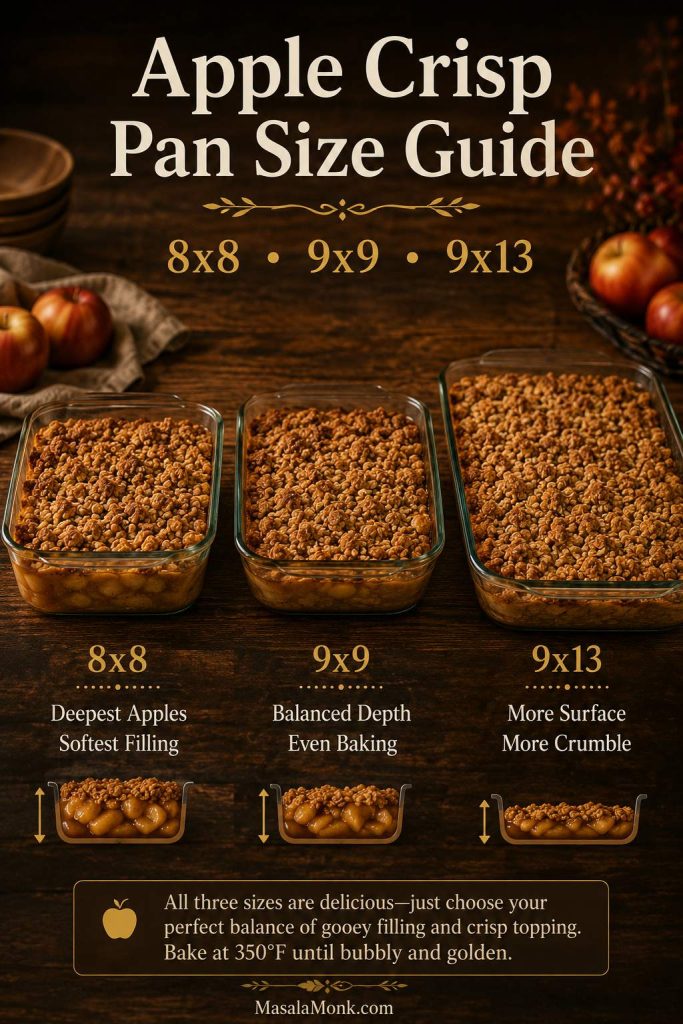
| Pan Size | Apple Amount | Topping Amount | Bake Time | Best For |
|---|---|---|---|---|
| 8×8 inch | 2–2 1/2 lb / 900 g–1.1 kg | Use full recipe | 45–55 minutes | Deeper family-style crisp |
| 9×9 inch | 2 1/2 lb / 1.1 kg | Use full recipe | 45–55 minutes | Best balanced default |
| 9×13 inch | 3 1/2–4 lb / 1.6–1.8 kg | Use 1 1/2x topping | 50–60 minutes | Holidays, potlucks, larger families |
How to Make a 9×13 Apple Crisp
A 9×13 apple crisp is the version to make for a holiday table, potluck, or family dinner where people will go back for seconds. The trick is not just adding more apples; the topping has to scale too, or the pan tastes like baked apples with a thin oat sprinkle.
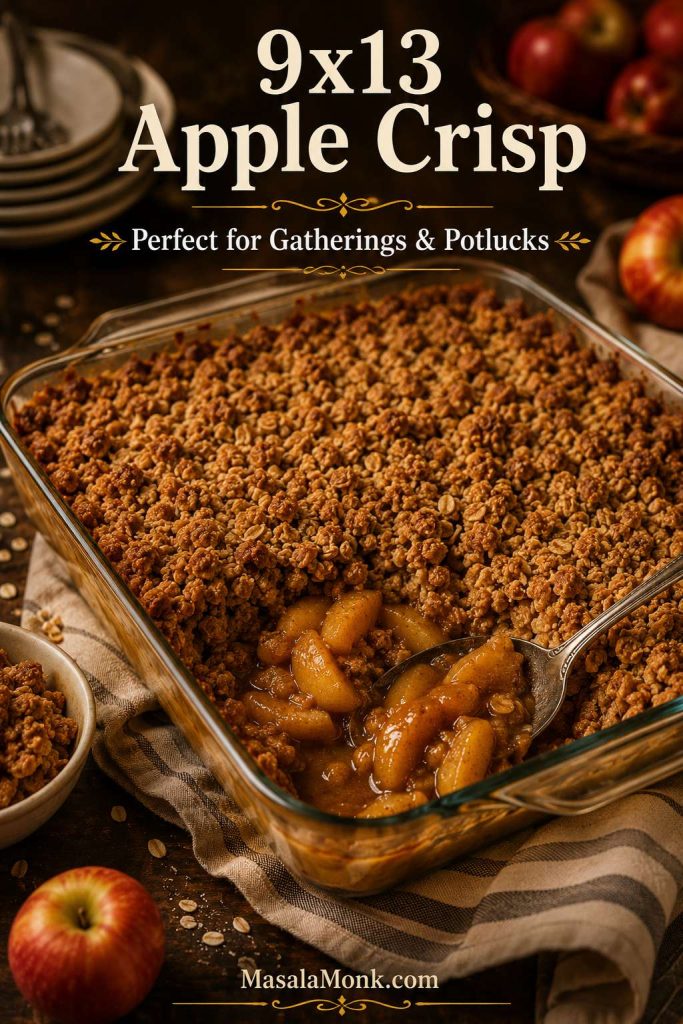
For a 9×13-inch apple crisp, increase the recipe so the pan still has enough fruit and topping. Otherwise, a thin layer of apples can dry out, while a thin topping makes the crisp feel unfinished.
| Ingredient | 9×13 Amount |
|---|---|
| Apples | 3 1/2–4 lb / 1.6–1.8 kg, about 11–12 cups sliced or chopped |
| Lemon juice | 1 1/2 tablespoons / 22 ml |
| Brown sugar for filling | 1/2 cup / 100 g, or less for sweet apples |
| Flour for filling | 3 tablespoons / 24 g, or 1 1/2 tablespoons cornstarch |
| Old-fashioned oats | 1 1/2 cups / 135 g |
| Flour for topping | 1 cup plus 2 tablespoons / about 140 g |
| Brown sugar for topping | 1 cup plus 2 tablespoons / about 225 g |
| Cold butter | 3/4 cup / 170 g |
| Bake time | 50–60 minutes at 350°F / 175°C |
For the 9×13 version, give the middle of the pan enough time to catch up with the edges, then rest it at least 20 minutes before serving. A larger pan holds more hot apple juice, so the short wait makes each scoop cleaner.
Pan texture tip: Think of dish size as a texture decision, not only a volume decision.
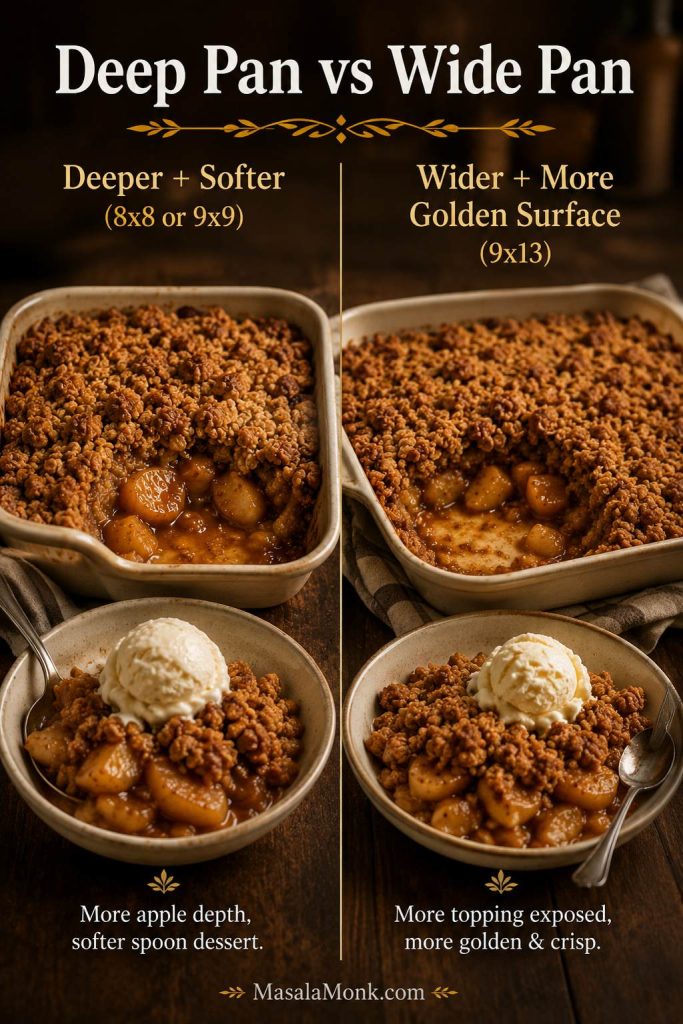
If you make this in a different dish size, share the pan and bake time. Someone else will absolutely be standing in their kitchen with a deep ceramic dish or shallow glass pan wondering if it will work.
Popular Apple Crisp Variations
This apple crisp recipe uses fresh apples and oats, but the basic ratio is flexible. Once you understand the filling, topping, and doneness cues, you can adjust the crisp for prepared apple pie filling, no oats, gluten-free flour, cranberries, pears, caramel, nuts, or a dairy-free topping.
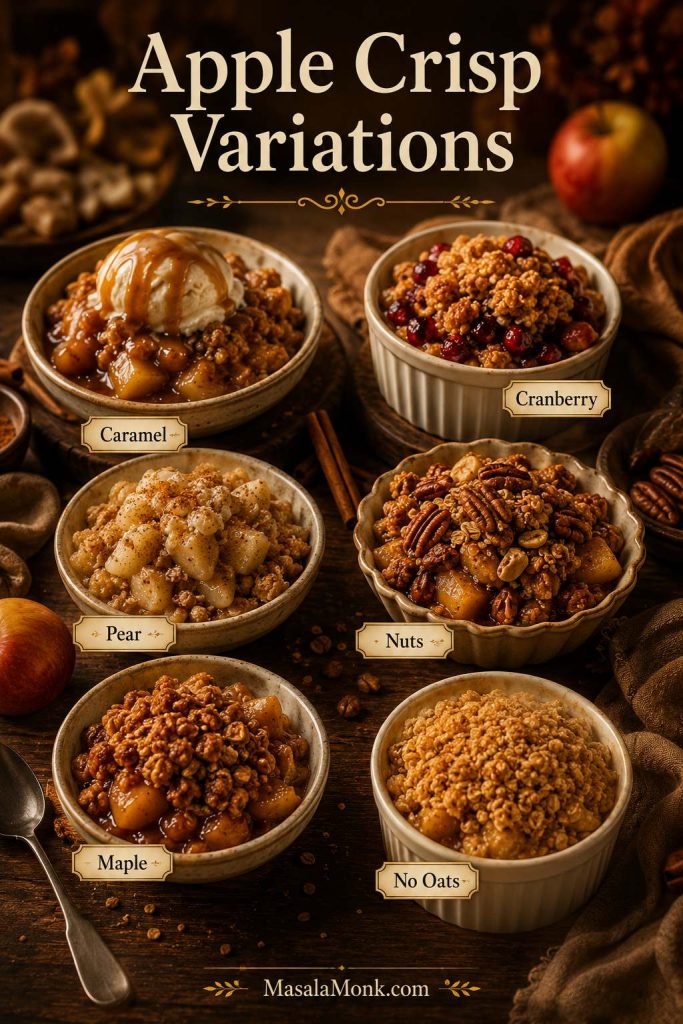
Start with the base apple crisp recipe, then choose the variation based on what you want the crisp to do: caramel makes it richer, cranberries make it sharper for a holiday table, pears make the fruit layer softer, nuts add crunch, and gluten-free or dairy-free swaps make the same base recipe work for more people.
Apple Crisp with Apple Pie Filling
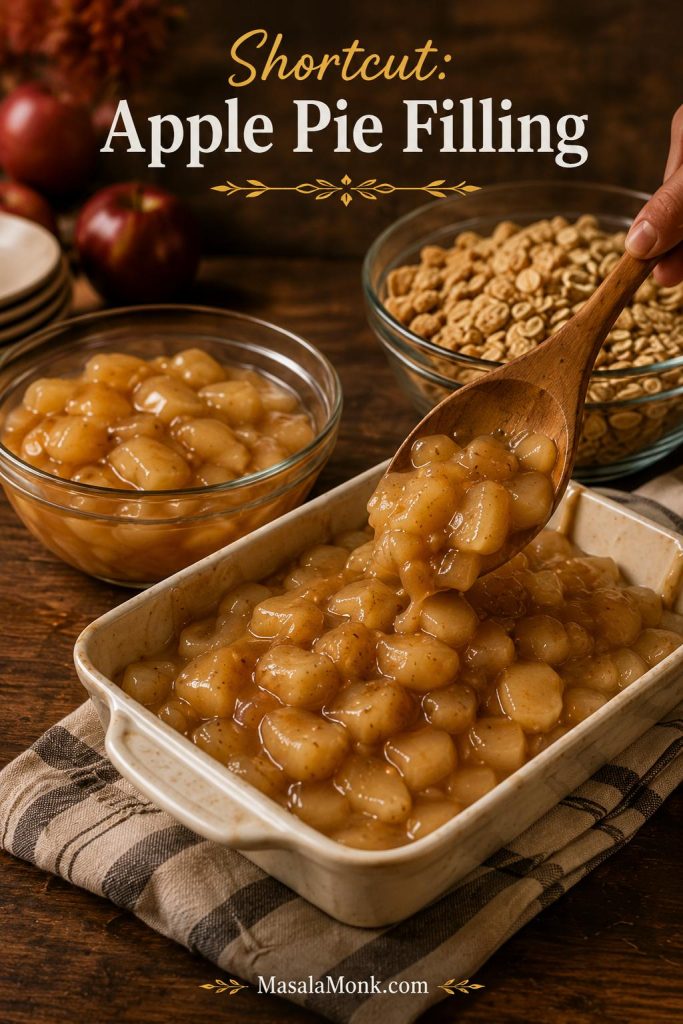
Use apple pie filling when you need a shortcut crisp with no peeling or slicing. Because the filling is already sweetened and thickened, skip the fresh-apple sugar, flour, lemon, and spice mixture. Spread 5–6 cups filling in the dish, add the oat topping, and bake until bubbling.
Homemade filling gives you more control over sweetness and texture. This apple pie filling recipe works for pies, crisps, hand pies, turnovers, and toppings, so it is useful to keep around when apples are in season.
Apple Crisp Without Oats
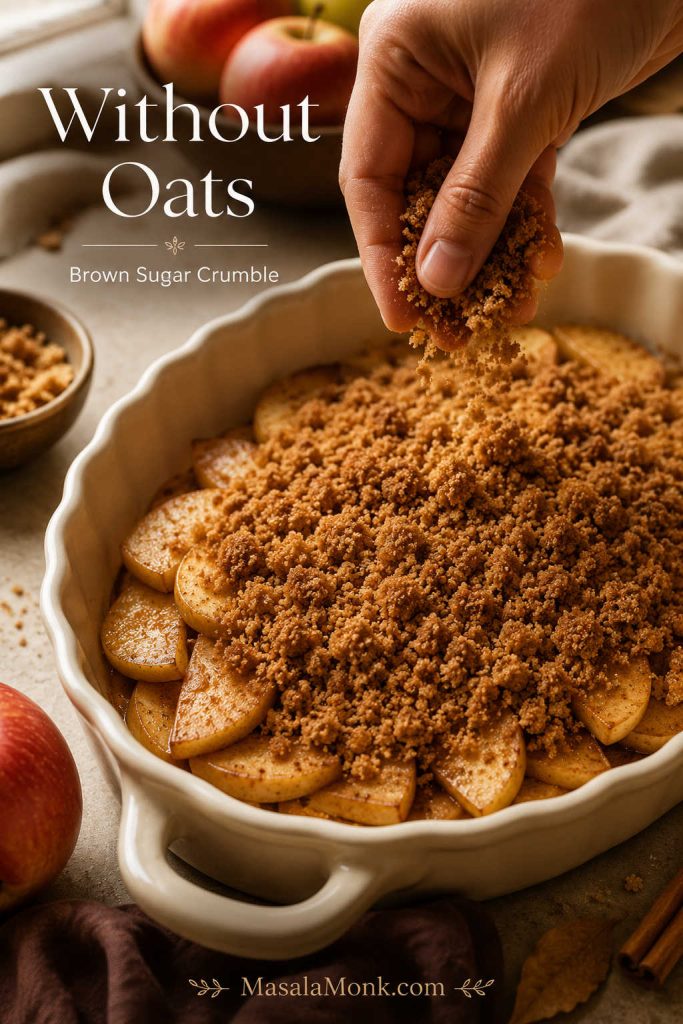
For a no-oat version, make a flour, brown sugar, butter, and cinnamon crumble topping. The texture is closer to apple crumble: buttery and tender rather than chewy-crisp. Keep the butter cold and work it in until the topping forms rough crumbs, not a smooth paste.
Caramel Apple Crisp
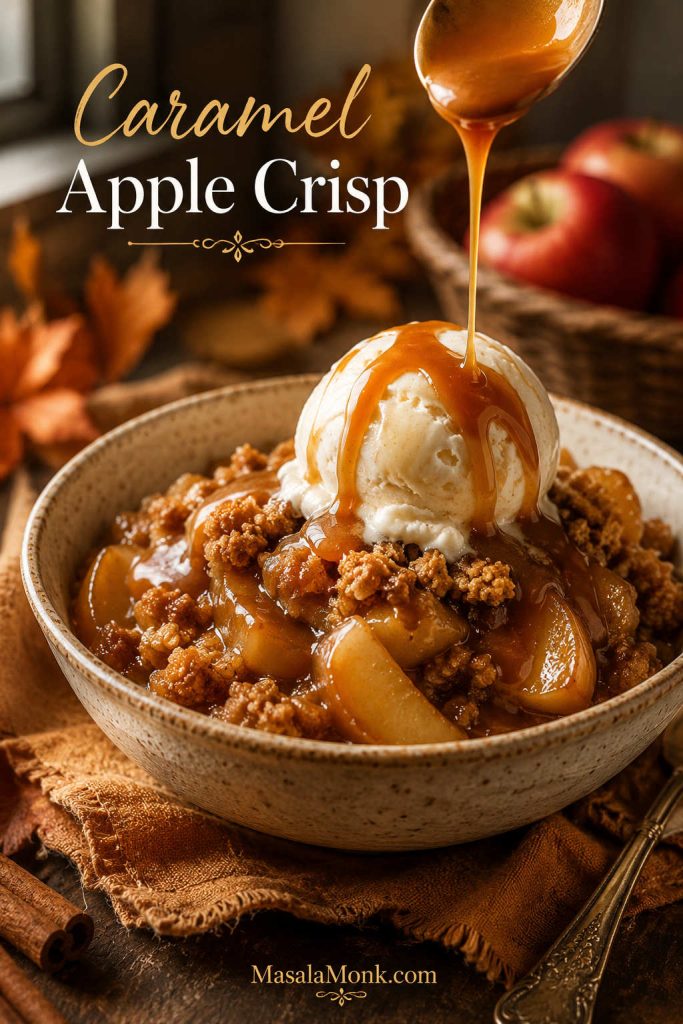
For caramel apple crisp, use the base recipe and drizzle caramel over each serving instead of stirring a lot of caramel into the filling. That keeps the apples from becoming overly sweet or sticky while still giving you the caramel-apple flavor people expect.
Apple Cranberry Crisp
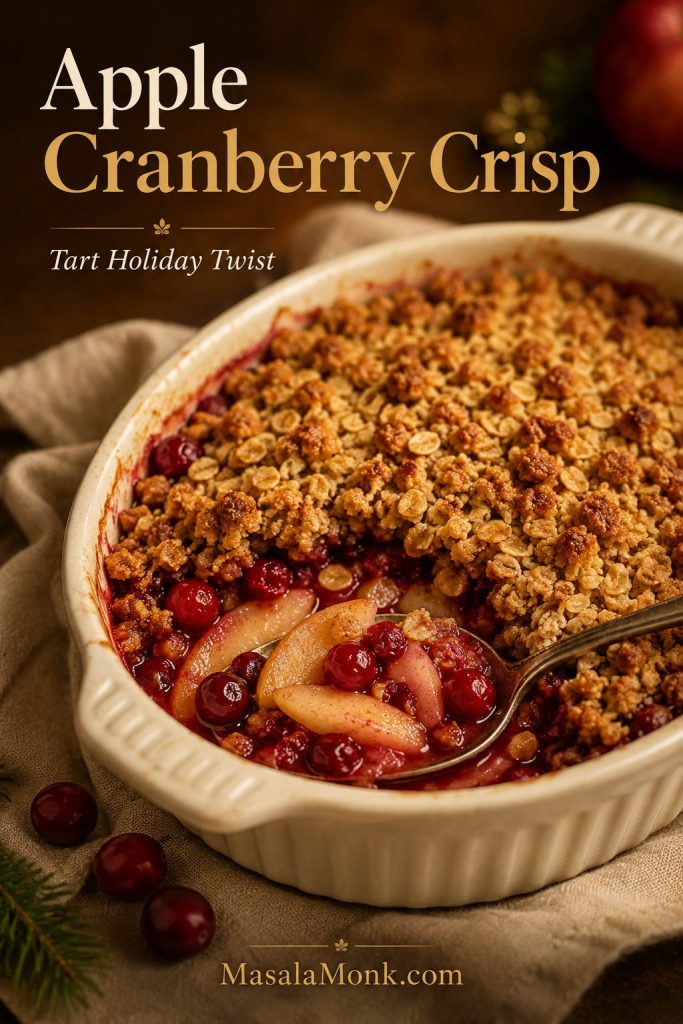
Add 3/4 to 1 cup fresh or frozen cranberries to the apples for a sharper holiday-style crisp. Because cranberries are tart, taste the apple mixture before baking and add 1–2 extra tablespoons of sugar if needed.
Apple Pear Crisp
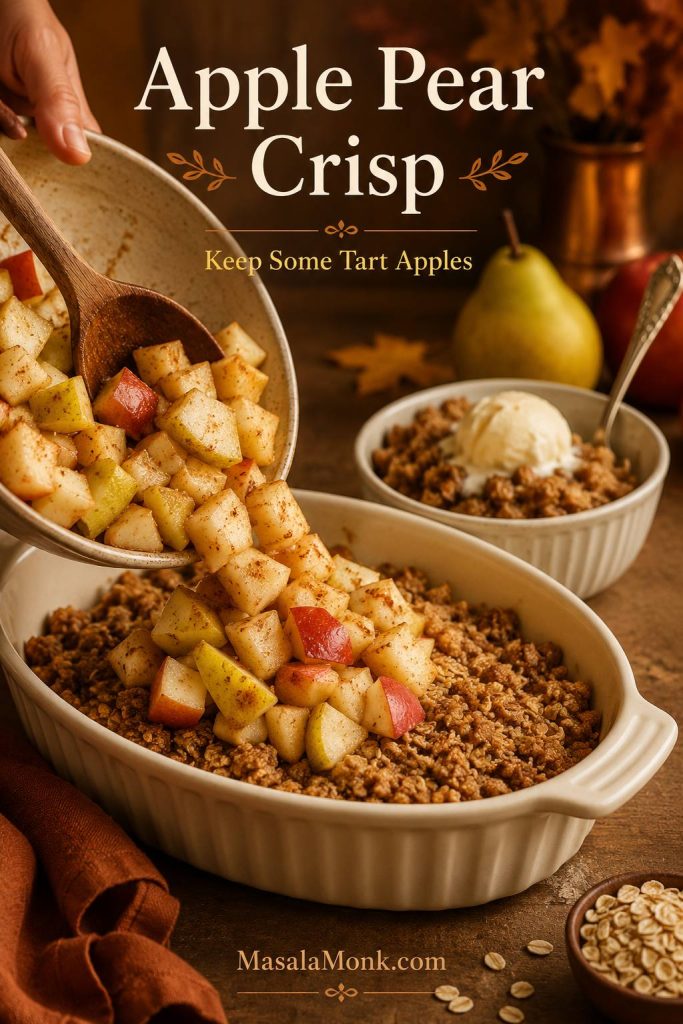
Replace about one-third of the apples with firm pears. Keep some tart apples in the mix so the filling does not taste flat. Softer pears can work, but they will make the filling more delicate and saucy.
Apple Crisp with Nuts
Add 1/2 cup chopped pecans or walnuts to the topping for extra crunch. If the nuts start browning before the apples are tender, cover the dish loosely with foil near the end of baking.
Maple Apple Crisp
Replace 1–2 tablespoons of the filling sugar with maple syrup for a deeper fall flavor. Do not add too much extra liquid; maple should support the apples, not make the filling loose.
Individual Apple Crisps
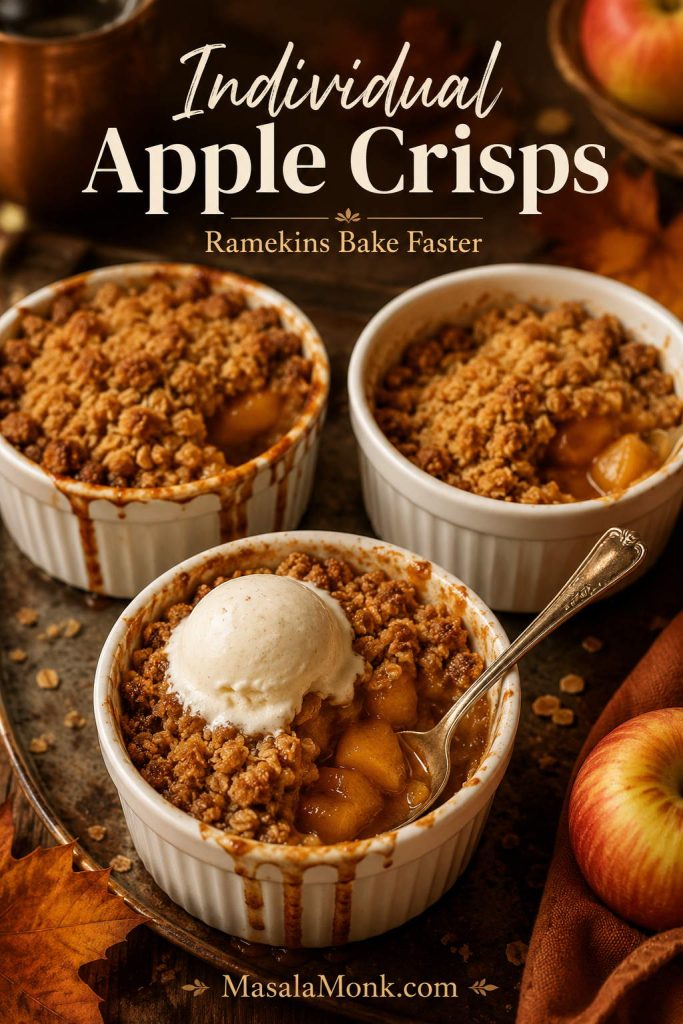
Divide the filling and topping among small ramekins and bake until the fruit bubbles and the topping is golden. Start checking around 25–30 minutes because smaller portions bake faster.
No-Peel Apple Crisp
Leave the skins on if your apples have thin, pleasant skins and you like a more rustic texture. Peel thick-skinned or waxy apples for a softer, more classic filling.
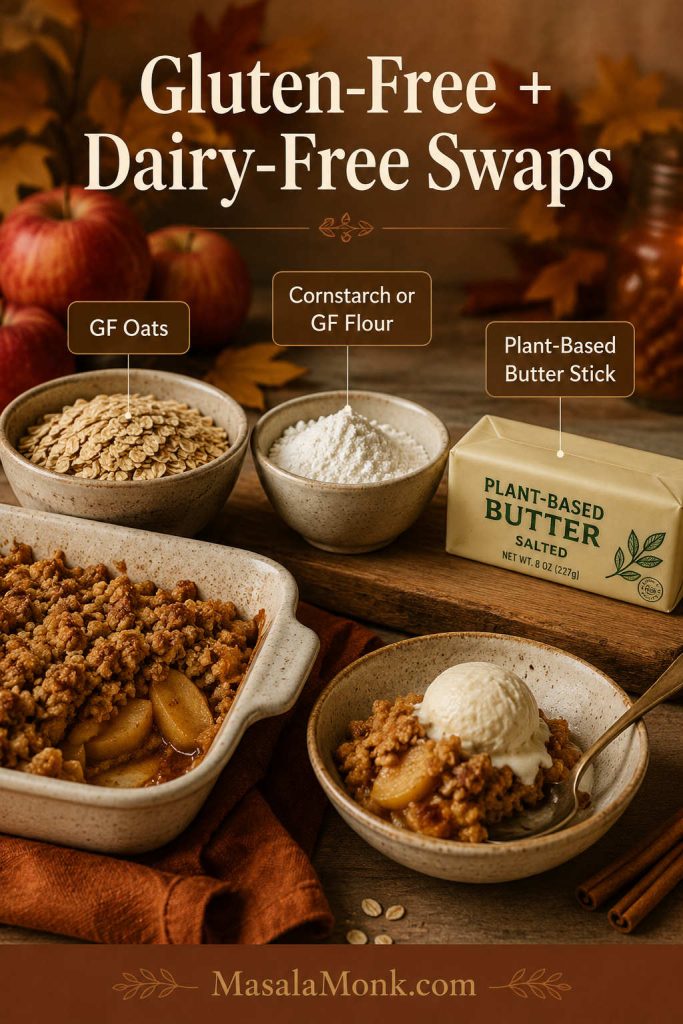
Gluten-free and dairy-free tip: Keep the base method, but choose certified gluten-free oats and a firm plant-based butter stick so the crumble still works.
Gluten-Free Apple Crisp
For a gluten-free apple crisp, use certified gluten-free oats and replace the flour with a gluten-free blend or cornstarch in the filling. The topping can use gluten-free all-purpose flour, oat flour, or almond flour, depending on the texture you want.
Dairy-Free Apple Crisp
Use a good plant-based butter stick instead of a soft tub spread. A firmer vegan butter works better because it can be cut into the topping and form crumbs, while softer spreads can make the topping greasy.
Lower-Sugar Apple Crisp
To make a lower-sugar apple crisp, start with naturally sweet apples and reduce the sugar in the apple layer first. Still, keep some sugar in the topping because it helps with browning, flavor, and crisp texture.
Apple Crisp vs Apple Crumble vs Dutch Apple Pie
Apple crisp, apple crumble, and Dutch apple pie all live in the same cozy dessert family, but the topping and crust make them different.
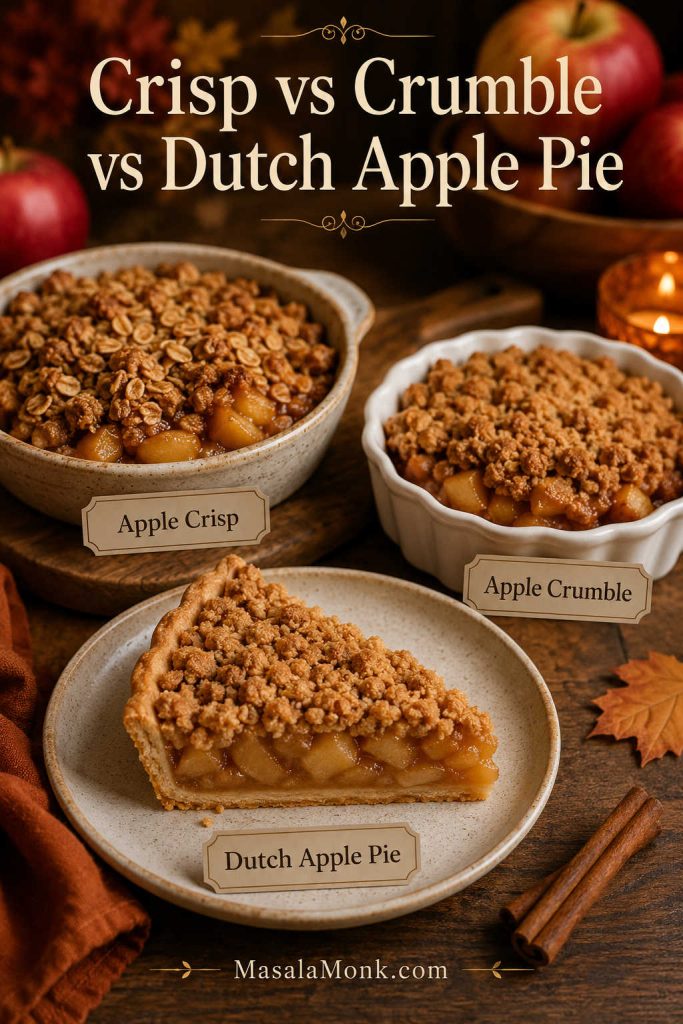
| Dessert | Has Oats? | Has Crust? | Texture |
|---|---|---|---|
| Apple crisp | Usually yes | No | Chewy, crumbly, oat-topped |
| Apple crumble | Usually no | No | Softer, buttery crumb topping |
| Dutch apple pie | Usually no oats | Yes, bottom crust | Slices like pie with a crumb top |
For the crumb-topped pie version, see this Dutch apple pie recipe. For the easiest spoon dessert, stay with apple crisp.
Troubleshooting Apple Crisp
Most apple crisp problems can be fixed or at least improved. If the apples are underbaked, the dish can go back in the oven. If the oat layer is pale, give it more uncovered time. A runny-looking filling may simply need time to rest; hot apple juices thicken as they cool.
Quick Fixes Before You Serve It
Trying to save it right now? If the topping is pale or powdery, put the crisp back in the oven uncovered. If the apples are still firm but the topping is already dark, cover loosely with foil and keep baking. If the filling looks runny, let it rest 20 minutes before deciding it failed; apple juices thicken as they cool.
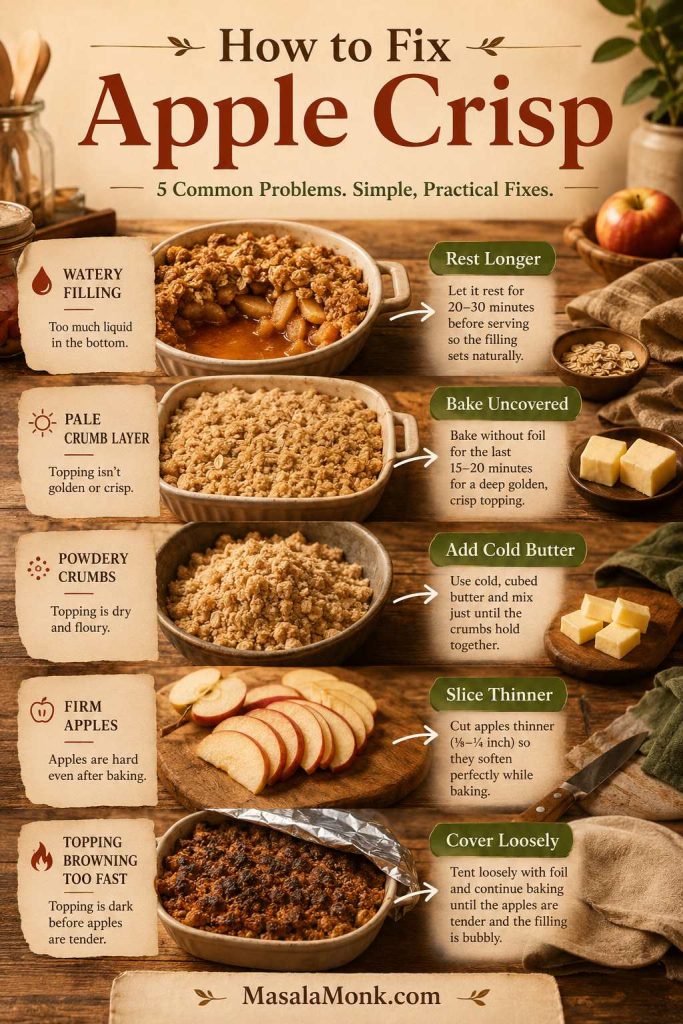
Apple Crisp Troubleshooting Chart
| Problem | Likely Cause | How to Fix It |
|---|---|---|
| Apple crisp is watery | Very juicy apples, too little thickener, underbaking, or not enough resting time | Use flour or cornstarch, bake until bubbling, and rest 15–20 minutes before serving |
| Crumb layer is soggy | Butter was too warm, crisp was covered while hot, or it was underbaked | Use cold butter, bake until golden, and reheat uncovered |
| Crumb layer is dry or floury | Not enough butter worked into the topping | Rub butter in until the mixture forms moist crumbs and clumps |
| Crumb layer is greasy | Butter was too soft or melted before baking | Use cold cubed butter; chill the topping briefly in a warm kitchen |
| Apples are still firm | Apple pieces were too thick or the crisp needed more time | Slice apples thinner next time; cover loosely with foil and continue baking |
| Apple crisp is too sweet | Sweet apples plus too much sugar | Use more tart apples, reduce filling sugar, and add lemon juice |
| Apple crisp tastes flat | Not enough salt, lemon, or spice | Add enough salt to both layers and use lemon juice in the apples |
If your crisp came out watery, too firm, or softer than expected, drop the apple variety and pan size in the comments. Those two clues usually explain what happened and make it much easier to adjust the next batch.
How Do You Keep Apple Crisp from Getting Watery?
Use a small amount of flour or cornstarch in the apple layer, cut the apples evenly, and bake until the juices are actively bubbling. The bubbling matters because the thickener needs heat to do its job. After baking, let the crisp rest before serving so the juices can settle.
How Do You Keep the Topping Crisp?
Use cold butter, do not overmix the topping into a paste, and do not cover the crisp while it is still hot. If the problem is leftover texture rather than fresh-baked texture, see storage and reheating.
Can You Put Apple Crisp Back in the Oven?
Yes. If the apples are still firm, the topping is pale, or the filling has not bubbled, return the dish to the oven at 350°F / 175°C. If the topping is already brown, cover it loosely with foil and keep baking until the apples are tender.
Make Ahead, Storage, Freezing, and Reheating
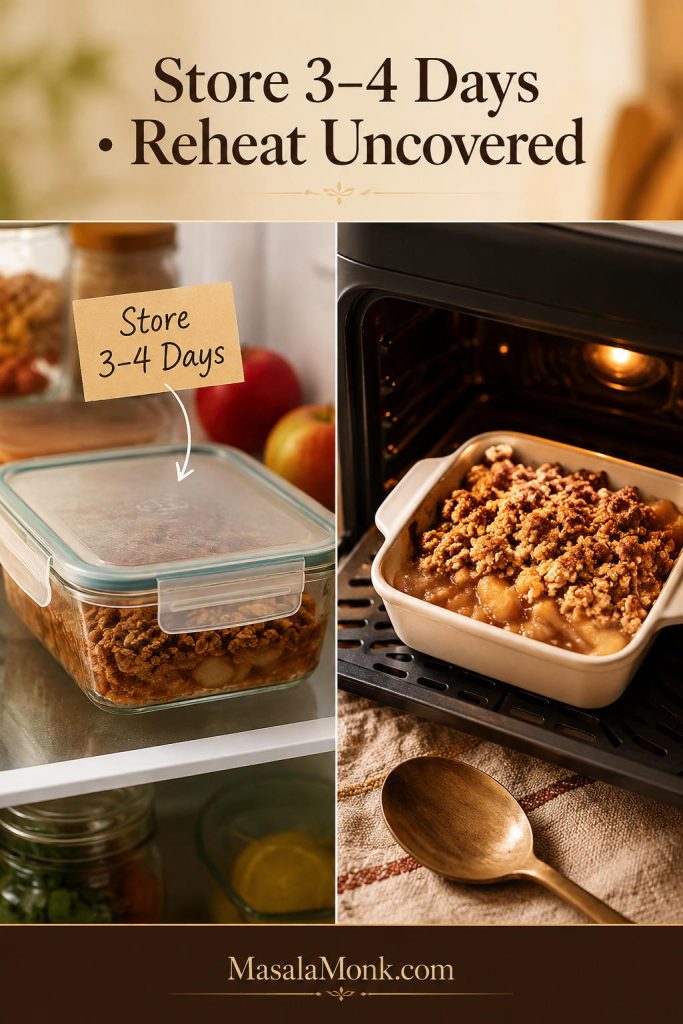
Leftover texture tip: Chill the extra crisp safely, then reheat single portions uncovered when you want the oat topping to recover some crunch.
Can You Make Apple Crisp Ahead?
Yes. For the best texture, prepare the apple filling and topping separately, refrigerate them, and assemble right before baking. This keeps the topping crumbly. If the whole dish is assembled ahead, the topping can absorb moisture from the apples and bake up softer.
How to Store Apple Crisp
Let the apple crisp cool after serving, then cover and refrigerate leftovers within 2 hours. Store in the refrigerator for 3–4 days. The topping softens as it sits, but the flavor stays good. For general leftover safety, the USDA recommends refrigerating leftovers promptly and using refrigerated leftovers within 3–4 days.
How to Reheat Apple Crisp
For the best topping texture, reheat apple crisp uncovered in a 325°F / 160°C oven until warm. Small portions can also be reheated in an air fryer. The microwave works for speed, but it softens the topping. For the best next-day texture, reheat only what you plan to eat and keep the rest covered in the fridge; repeated reheating softens the oat layer faster.
Can You Freeze Apple Crisp?
Yes, although the topping is best when baked fresh. You can freeze baked apple crisp tightly wrapped, then thaw overnight in the refrigerator and reheat uncovered. You can also freeze the apple filling and topping separately for a fresher result later.
What to Serve with Apple Crisp
Apple crisp is best warm, after a short rest, because the filling has time to settle while the topping still has texture. Vanilla ice cream is the classic pairing because the cold cream melts into the cinnamon apples. Whipped cream, caramel sauce, Greek yogurt, or a spoonful of custard also work.
For a holiday dessert table, apple crisp is easier to serve than pie because it does not need neat slices. Spoon it into bowls, add ice cream, and let the topping do the work.
For another soft, cozy apple dessert that starts with prepared filling, this apple cinnamon roll bake with apple pie filling is closer to a brunch-style bake than a crisp, but it scratches the same cinnamon-apple craving.
FAQs About Apple Crisp
Do you have to peel apples for apple crisp?
No. Peeled apples give a softer, more classic dessert texture. Unpeeled apples add color and texture. If the apple skins are thick or waxy, peeling is usually better.
Is it better to slice or chop apples for apple crisp?
Slices give you a softer, more layered filling, almost like the inside of apple pie. Chunks give you more bite and make the crisp feel fruitier. The best middle ground is thin slices with a few thicker pieces mixed in, so the filling has both softness and texture.
Can quick oats be used instead of old-fashioned oats?
Quick oats work if that is what you have, but they make the topping finer and softer, more like an oatmeal crumble than a chunky crisp. For the best golden, craggy topping, old-fashioned rolled oats are still the better choice.
Why is my apple crisp runny?
Apple crisp is usually runny because the apples were very juicy, the filling did not have enough thickener, the center did not bake long enough, or the crisp was served too soon. Bake until the filling is visibly bubbling, then let it rest for 15–20 minutes so the juices can thicken.
Why is my apple crisp topping powdery?
Powdery topping usually means the butter was not worked in enough. The oat mixture should look like moist crumbs and rough clumps before it goes over the apples. If it still looks dusty, rub in a little more cold butter before baking.
Can apple crisp be made with canned apples?
Yes, but canned apples are softer than fresh apples, so the filling will be more tender and less structured. Drain canned apples well, reduce added sugar if they are packed in syrup, and expect a softer scoop. Apple pie filling also works, although it is already sweetened and thickened, so it needs a shortcut-style method.
For a true shortcut pie rather than a crisp, this apple pie with apple pie filling keeps the focus on prepared filling inside a crust.
What is the difference between apple crisp and apple crumble?
Apple crisp usually has oats in the topping, which gives it more chew and texture. Apple crumble usually leans on flour, butter, and sugar without oats, so the topping is softer and more crumbly. The names overlap in everyday baking, but oats are the easiest clue.
How do you know when apple crisp is done?
The topping should be golden, the filling should be visibly active beneath the surface, and the apples should be tender when pierced with a knife. If the topping is brown but the apples are still firm, cover loosely with foil and bake longer.
Should apple crisp be served warm or cold?
Apple crisp is best warm after a short rest, when the cinnamon juices have settled but the topping still has texture. Cold leftovers are still delicious, especially for breakfast-style snacking, but the topping will be softer.
Can you double apple crisp?
Yes. For a 9×13-inch pan, use 3 1/2–4 pounds / 1.6–1.8 kg apples and increase the topping by about 1 1/2 times. The pan is wider, not just bigger, so give the middle enough time to bake through before serving.
Final Thoughts
Apple crisp is one of those desserts that proves simple baking can still feel generous. You do not need a perfect crust, a fancy pan, or a long ingredient list. You just need apples that hold their shape, cold butter in the topping, enough salt and lemon to wake up the filling, and the patience to let the juices bubble before you pull the pan from the oven.
Serve it warm, give it a few minutes to settle, and add vanilla ice cream if that is the kind of night you want. Then watch what happens to the corner pieces.
What apple mix did you use: Granny Smith and Honeycrisp, Pink Lady and Braeburn, or something local? Leave your combination in the comments, especially if you found an underrated apple that bakes beautifully.
That is the difference between a loose, forgettable apple dessert and a warm, spoonable crisp with a topping people quietly chase around the pan.








