
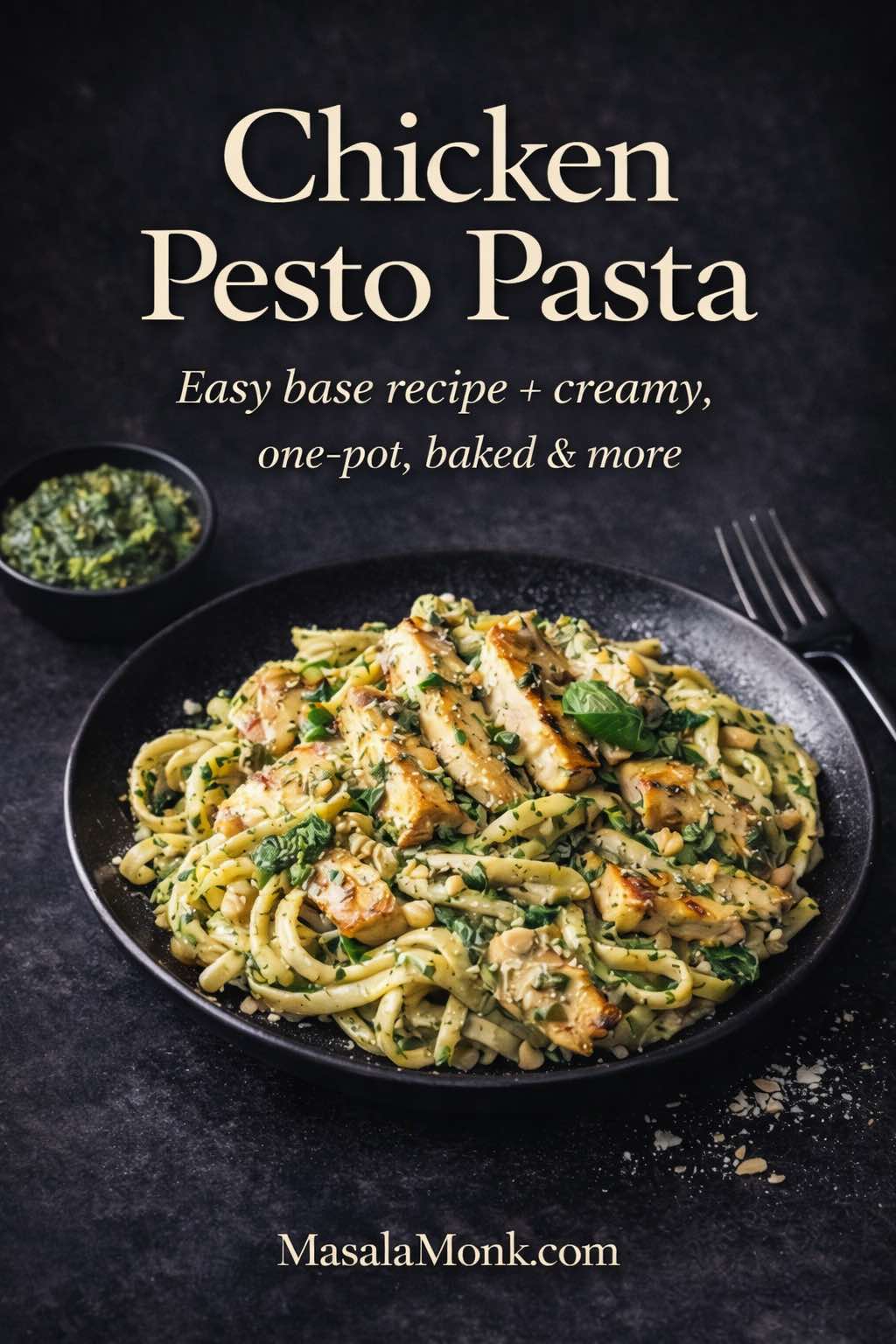
Some dinners earn a permanent spot in your rotation because they’re both effortless and deeply satisfying. Chicken pesto pasta is exactly that kind of meal. It’s bright without feeling “light,” comforting without being heavy, and flexible enough to match whatever’s in your fridge—mushrooms you need to use up, a handful of tomatoes getting soft, leftover grilled chicken, or a craving for something creamy and cozy.
Even better, once you understand one dependable base method, everything else becomes a variation you can steer with tiny choices. Want a weeknight sprint? Make the fast version with a quick sauté and a splash of starchy water. Prefer a richer plate? Turn it creamy with a gentle swirl of dairy (or a lighter trick that still feels lush). Need fewer dishes? A one-pan finish gives you the same restaurant-style gloss with less mess. Feeding a crowd? A baked version becomes a bubbling, golden pasta bake with almost no extra effort.
So instead of treating each version like a different recipe, this guide gives you one reliable foundation—then shows you how to pivot into the best version for the mood you’re in.
Chicken Pesto Pasta (Easy Base Recipe)
This is the anchor—the version you’ll make on repeat. Whether you’re using basil pesto from the store or pulling a jar of homemade pesto from the fridge, the method stays the same. Nail this once, and every other variation becomes a simple, confident detour rather than a whole new recipe.
If you want pesto that tastes vivid and fresh, homemade is worth it whenever you have ten minutes. MasalaMonk’s guide to classic basil pesto sauce plus easy variations is a handy starting point, especially when you want to change the personality of the sauce without changing dinner. If you’re aiming for a dairy-free approach, this fresh basil vegan pesto gives you a bold base that still feels lush.
And if you’re the kind of cook who likes understanding ingredients a little more deeply, it’s surprisingly useful to know what Parmesan brings to a dish beyond “salty cheese.” MasalaMonk’s Parmesan guide and varieties helps you pick the right style and use it well—especially when you’re finishing a sauce.
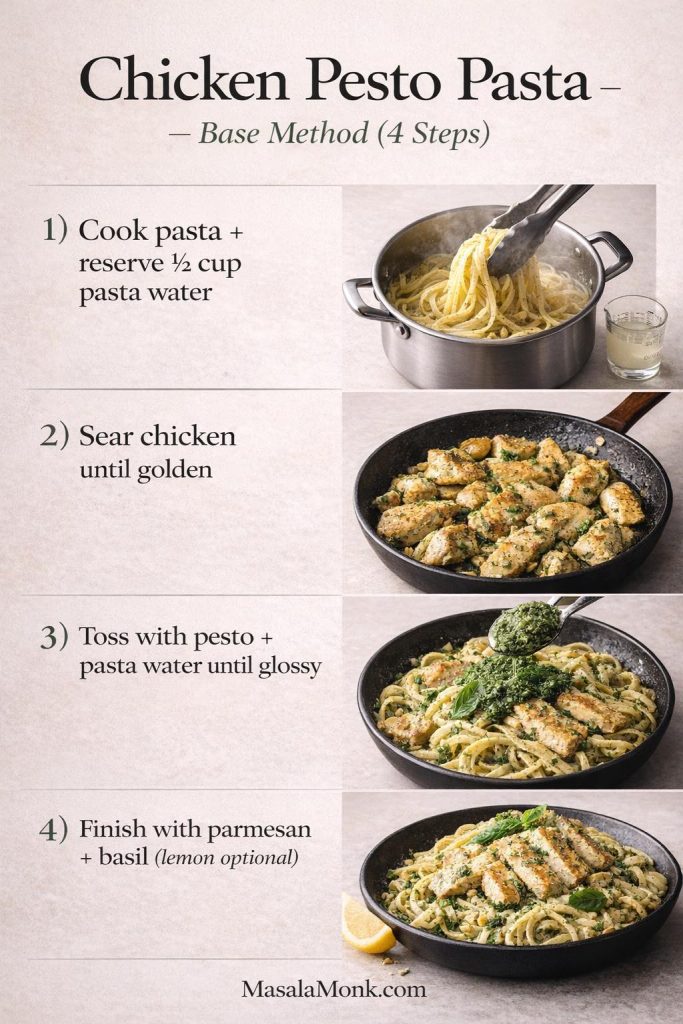
Base Recipe Card: Chicken Pesto Pasta (Serves 4)
Time: 25–35 minutes
Best for: weeknights, meal prep, “I want something comforting but not heavy” nights
Ingredients
- 400 g pasta (penne, linguine, spaghetti, fettuccine—choose what you love)
- 450–500 g chicken breast or chicken thighs, cut into bite-size pieces
- 2–3 tablespoons olive oil
- 3–4 garlic cloves, finely chopped (optional, but excellent)
- ½ cup pesto, plus more to taste
- ½ cup reserved pasta water, plus more as needed
- ¼–½ cup grated Parmesan (optional, but helps everything cling)
- Black pepper
- Lemon wedge (optional, but often perfect)
- Chili flakes (optional)
The one move that changes everything
Keep pesto bright. It tastes best when it’s warmed gently, not cooked aggressively. In other words, pesto goes in at the end, on low heat.
How to cook chicken for pesto pasta (juicy, browned, not dry)
Start with a simple truth: if the chicken is dry, the whole bowl feels dry—no matter how good the pesto is. Fortunately, the fix is straightforward, and it’s more about timing than fancy technique.
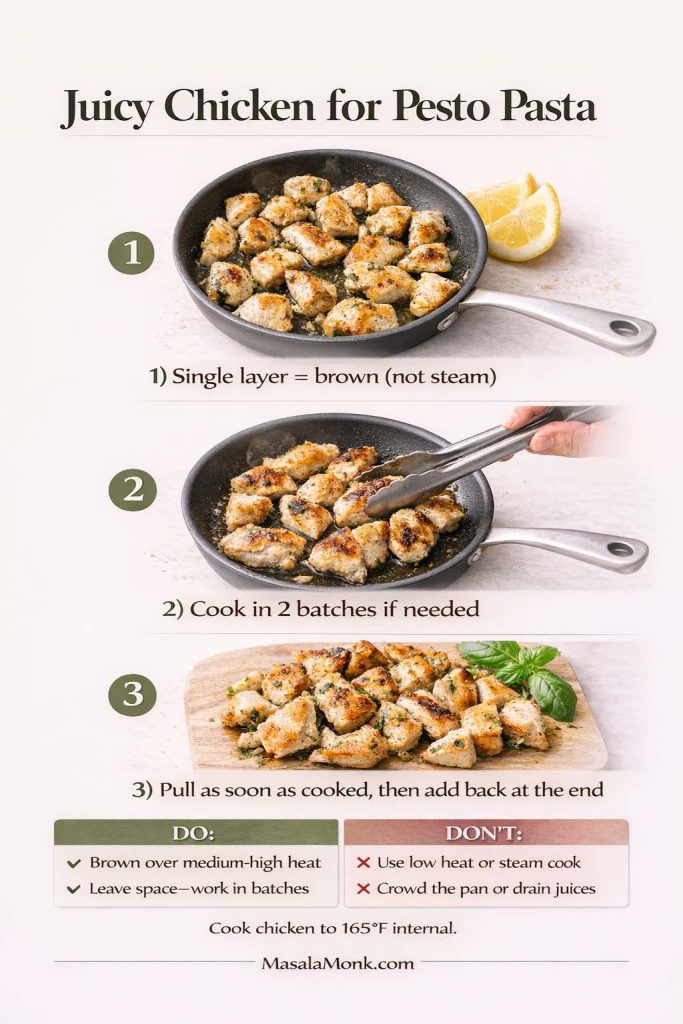
- Pat the chicken dry. This sounds minor, yet it’s the difference between browning and steaming. Dry surface browns; wet surface turns pale and watery.
- Season lightly. Pesto is often salty, so go easy with salt at first. Add black pepper generously.
- Brown, don’t crowd. Heat a large skillet until it’s properly hot, then add olive oil. Spread the chicken in a single layer. If the pan looks crowded, cook in two batches. That small bit of patience pays off because you’ll get color, and color equals flavor.
- Pull it early rather than late. As soon as the pieces are cooked through, move them to a plate. They’ll get a gentle warm-up later, and that’s how they stay tender instead of turning tough.
For a clear safety reference, chicken should reach a safe internal temperature of 165°F / 74°C. If you like referring to an authoritative standard, the USDA’s Safe Minimum Internal Temperature Chart is the one many cooks rely on.
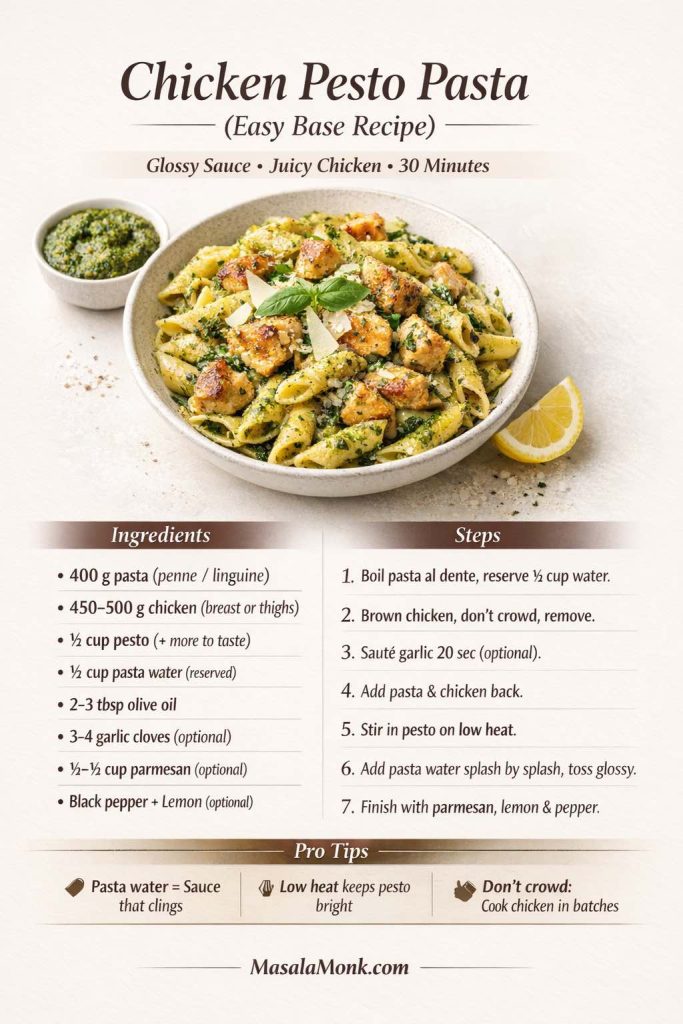
How to make chicken pesto pasta (base method)
- Cook the pasta. Bring a large pot of water to a boil and salt it well. Cook pasta until al dente. Before draining, scoop out ½ cup of pasta water and keep it nearby.
- Build flavor in the pan. While the pasta cooks, brown the chicken as described above. Once it’s done, remove it to a plate. If you’re using garlic, add it to the same pan for about 20–30 seconds—just until fragrant.
- Combine pasta + chicken. Add drained pasta to the skillet, followed by the chicken and any juices on the plate (those juices are flavor).
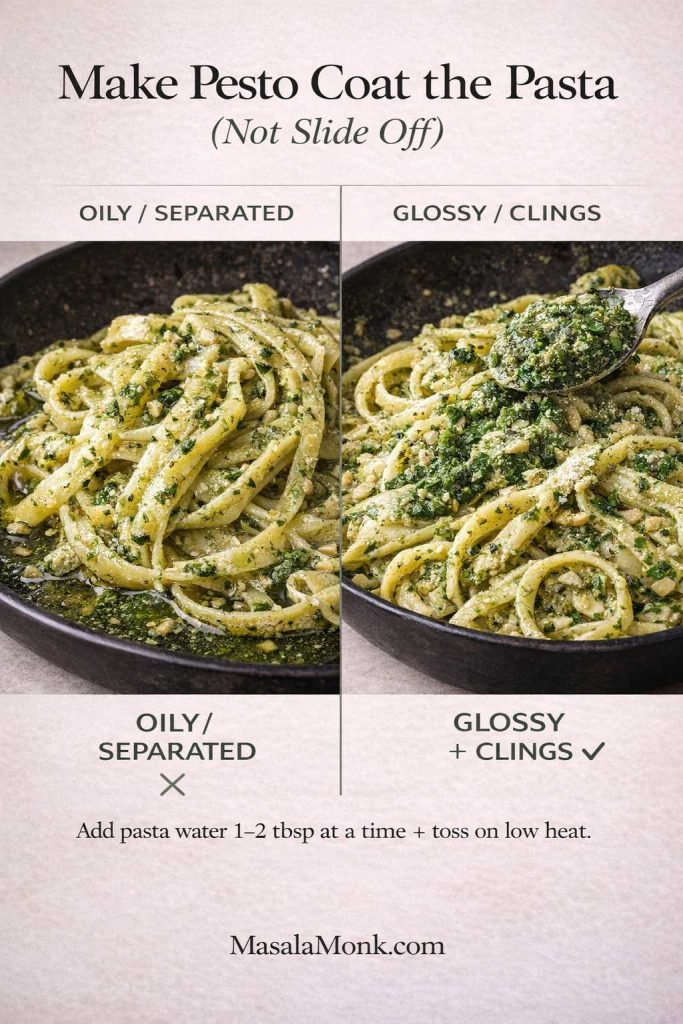
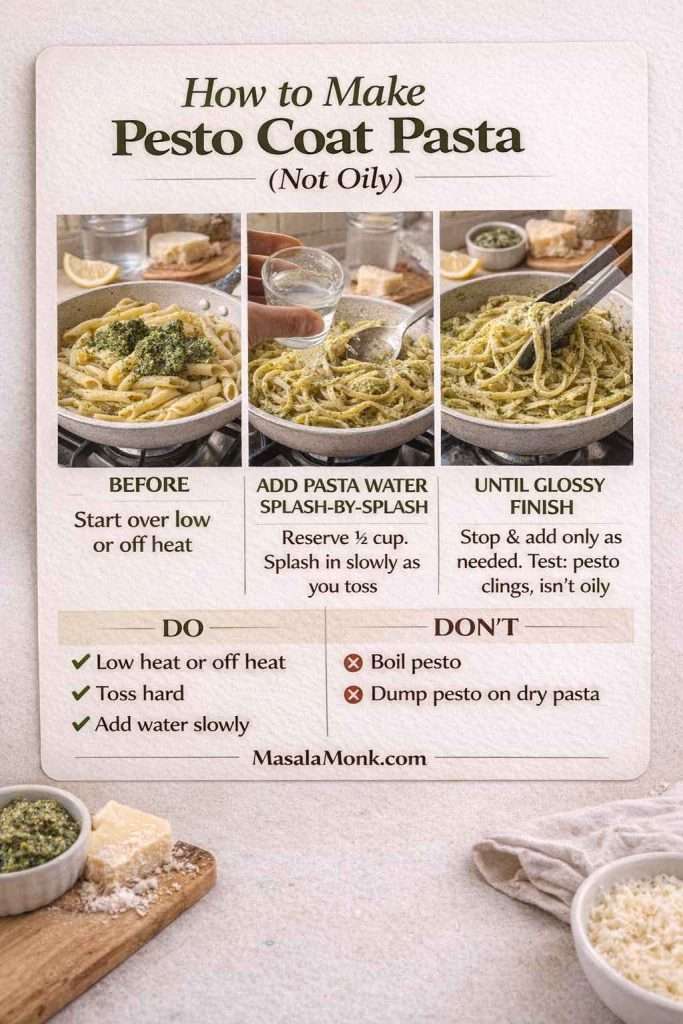
- Add pesto, then loosen with pasta water. Turn the heat low. Stir in pesto, then immediately add a splash of pasta water and toss. Keep adding small splashes as you toss until the sauce turns glossy and clings to every bite.
- Finish with Parmesan if using. Sprinkle in Parmesan and toss again. If it thickens too much, add another spoonful of pasta water.
- Taste and adjust. A squeeze of lemon can brighten everything if the pesto tastes heavy. Chili flakes wake up the bowl. Black pepper almost always helps.
That pasta-water step is not optional if you want the sauce to behave. It’s what keeps pesto chicken pasta from turning into oily noodles with green streaks. For those who enjoy technique writing, Serious Eats explains the logic beautifully in The Right Way to Sauce Pasta—and once you “get it,” you’ll use the same idea in countless dishes.
Simple swaps that keep it delicious
Even a “basic” pesto chicken pasta becomes more interesting when you know what swaps play nicely:
- Chicken thighs stay tender and forgiving, which makes them ideal for quick pasta on busy nights.
- A small spoon of butter added at the end can soften sharp edges if your pesto is very garlicky.
- Extra Parmesan helps emulsify if your pesto is oily.
- A squeeze of lemon balances rich pesto, especially when you turn it creamy.
Easy Chicken Pesto Pasta (Weeknight Fast)
There are nights when you want dinner to land quickly without losing its charm. This version is the fast route—minimal fuss, still full flavor, and it proves that “easy” doesn’t have to mean “meh.”
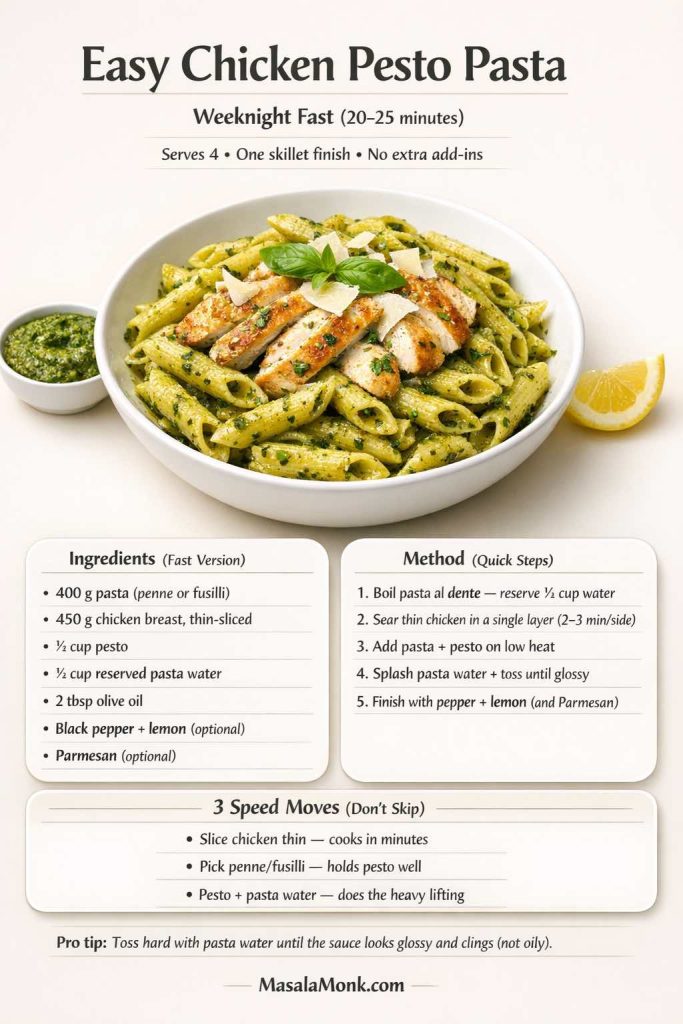
Recipe Card: Weeknight Fast Version (Serves 4)
Time: 20–25 minutes
Best for: busy nights, “I need dinner now,” last-minute guests
Do these three things to make it faster:
- Slice chicken thinly so it cooks quickly.
- Choose a pasta shape that cooks evenly and holds sauce well (penne, fusilli).
- Skip extra add-ins and let pesto + pasta water do the heavy lifting.
Even then, don’t rush the finish. Tossing pasta and sauce together until glossy is what makes an easy bowl feel like something you’d happily serve to company—because it tastes cohesive, not “assembled.”
Creamy Chicken Pesto Pasta (Three Ways)
Some evenings are calling for something richer. The creamy version is still bright and herbal, yet it has that soft, comforting body that makes everyone go quiet after the first bite. Importantly, “creamy” doesn’t have to mean heavy—so you can choose your lane.
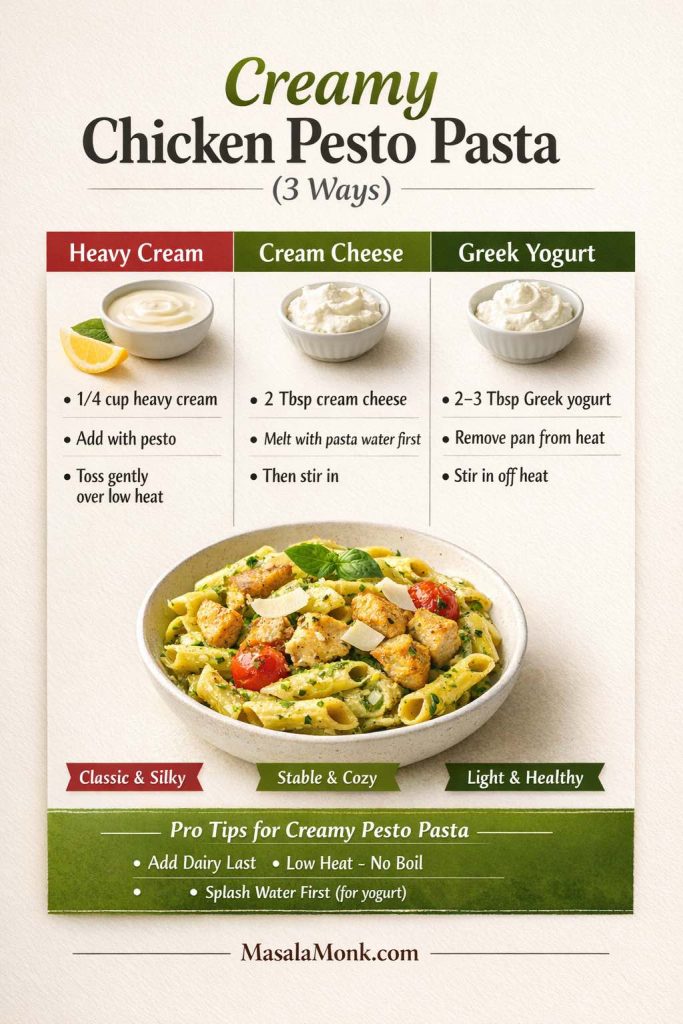
Recipe Card: Creamy Chicken Pesto Pasta (Core Method)
Start with the base recipe. Once pasta and chicken are in the pan and pesto is added, choose one of these creamy paths:
1) Chicken pesto pasta with cream (classic)
- Add ¼ cup heavy cream (or cooking cream).
- Add a small splash of pasta water.
- Toss gently over low heat for about a minute, just until silky.
Key point: Keep the heat gentle. Pesto tastes freshest when it isn’t cooked hard, and cream behaves best when it’s warmed rather than boiled.
2) Creamy without heavy cream (lighter but still lush)
If you want creamy texture without leaning hard on cream, these options work beautifully:
- Greek yogurt (bright and light): Remove the pan from heat. Add a splash of pasta water first (so the pan cools slightly), then stir in 2–3 tablespoons yogurt until smooth.
- Cream cheese (cozy and stable): Stir 1–2 tablespoons cream cheese into warm pasta water first, then toss it through. This is especially good with penne or “noodlier” shapes.
- Milk + Parmesan (simple and classic): Add a small splash of milk, then use Parmesan as your thickener while you toss until glossy.
Each version still tastes unmistakably like pesto chicken pasta—just softer around the edges.
3) Chicken pesto Alfredo pasta (comfort-forward)
If you love the idea of pesto Alfredo, treat it as a direction rather than a separate universe. Use the creamy method above, then increase Parmesan slightly and finish with a tiny knob of butter. Suddenly you’re in the territory of pesto Alfredo without turning dinner into a long project.
If you want to explore creamy pasta beyond this dish, MasalaMonk’s Alfredo twists make a fun companion read—especially if you enjoy playing with flavors.
One Pan Chicken Pesto Pasta (Skillet Style)
One-pan pesto chicken pasta is the version you make when you want the “real” result with fewer steps and less cleanup. It’s not a totally different dish—it’s the same idea, just streamlined.
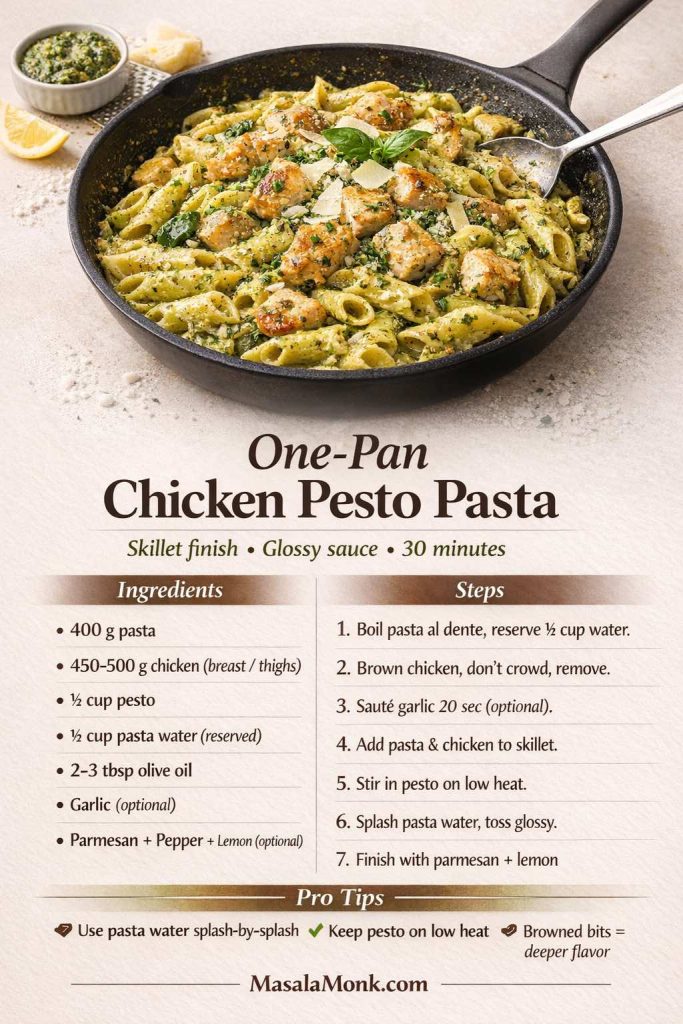
Recipe Card: One-Pan Finish (Serves 4)
How it works:
- Boil pasta in a pot as usual (because it’s faster and more reliable).
- Brown chicken in the skillet.
- Add drained pasta directly to the chicken pan.
- Stir in pesto on low heat, then finish with pasta water right there.
Because the skillet still holds those browned chicken bits, the flavor is deeper than you’d expect from such a simple method. Additionally, it’s the easiest way to control sauce texture because everything is already in one hot, wide surface where tossing is natural.
One Pot Chicken Pesto Pasta (Minimal Dishes, Big Reward)
One-pot pesto chicken pasta is a different style altogether. It’s not “pasta + sauce,” it’s a single-simmer approach where the cooking liquid turns into sauce. Done well, it tastes like a clever shortcut; done poorly, it can turn sticky. The good news? A few small rules keep it perfect.
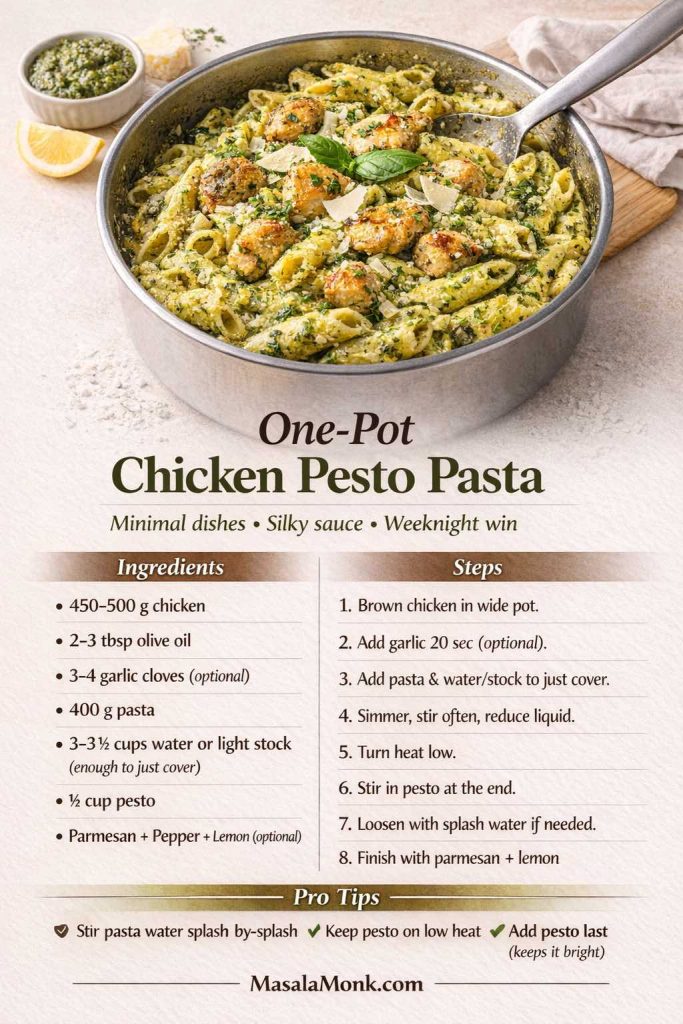
Recipe Card: One-Pot Method (Serves 4)
- Brown chicken in a wide pot or deep skillet. Remove it if you want more control, or leave it in for maximum convenience.
- Add garlic (optional) for 20–30 seconds.
- Add pasta and enough water (or light stock) to just cover.
- Simmer, stirring often, until pasta is al dente and the liquid is reduced.
- Turn heat down low, then stir pesto in at the end.
- Loosen with a splash of water until glossy.
- Add chicken back (if removed), then finish with Parmesan if you like.
Why it works: The starch that normally goes down the drain stays in the pot, which helps everything cling.
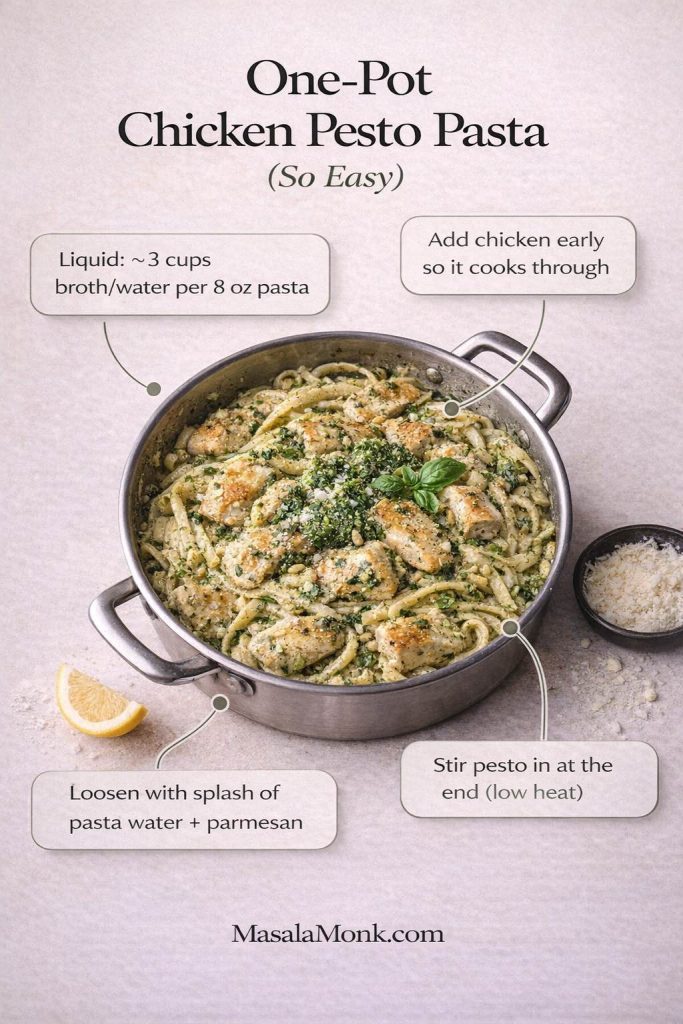
One-pot creamy pesto chicken pasta
Once pesto is stirred in, add one of these:
- 2–4 tablespoons cream, or
- a spoon of cream cheese, or
- Greek yogurt off heat (with a splash of water first)
Then toss until silky. That’s how the one-pot creamy version becomes something you’ll crave—not just a shortcut.
Chicken Pesto Pasta with Mushrooms (Deep, Savory, Balanced)
Mushrooms are the easiest way to make this pasta taste more “restaurant” without making it complicated. They add depth and make the pesto feel rounder, almost like the dish has been simmering longer than it has.
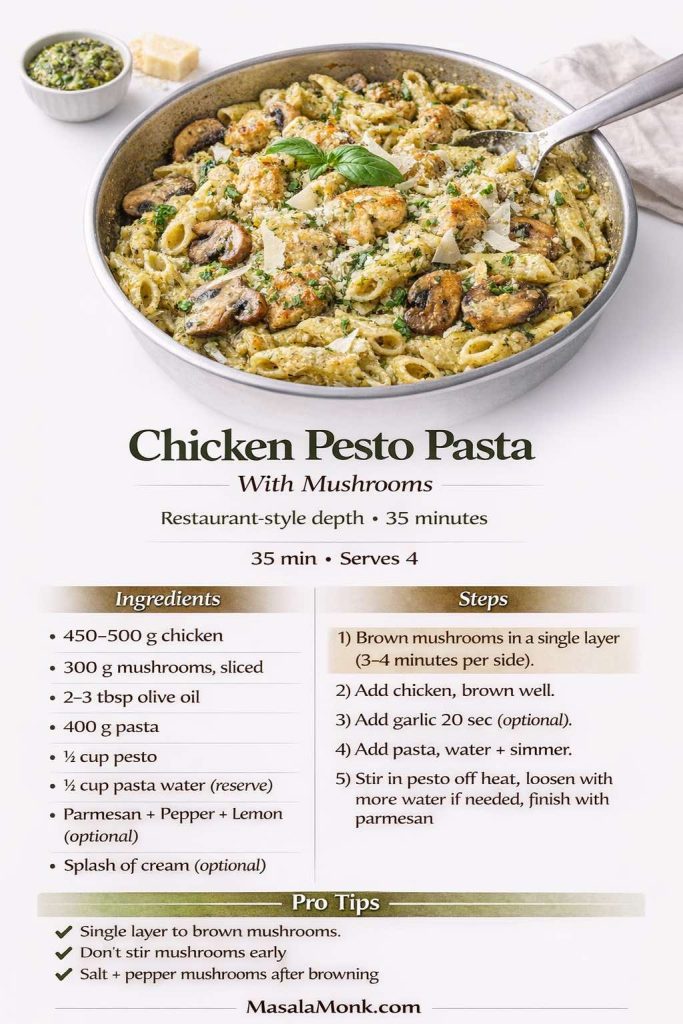
Recipe Card: Mushroom Add-In (Serves 4)
The essential rule: Don’t steam mushrooms. Brown them.
- Heat the pan properly.
- Add mushrooms and let them sit until they pick up color.
- Only then stir. Once they’re browned, they taste nutty and savory rather than watery.
From there, the flow stays familiar:
- Brown chicken (or brown it first and set aside).
- Cook pasta.
- Toss together with pesto and pasta water.
If you want a cozier bowl, this version transforms beautifully into a creamy mushroom pesto chicken pasta with a small splash of cream—no separate recipe required.
Chicken Tomato Pesto Pasta (Bright and Slightly Jammy)
Tomato and pesto can be magic together if you keep the balance right. Tomatoes bring sweetness and acidity, pesto brings richness and salt. When the two meet in the pan, you get a sauce that feels bright, not heavy.
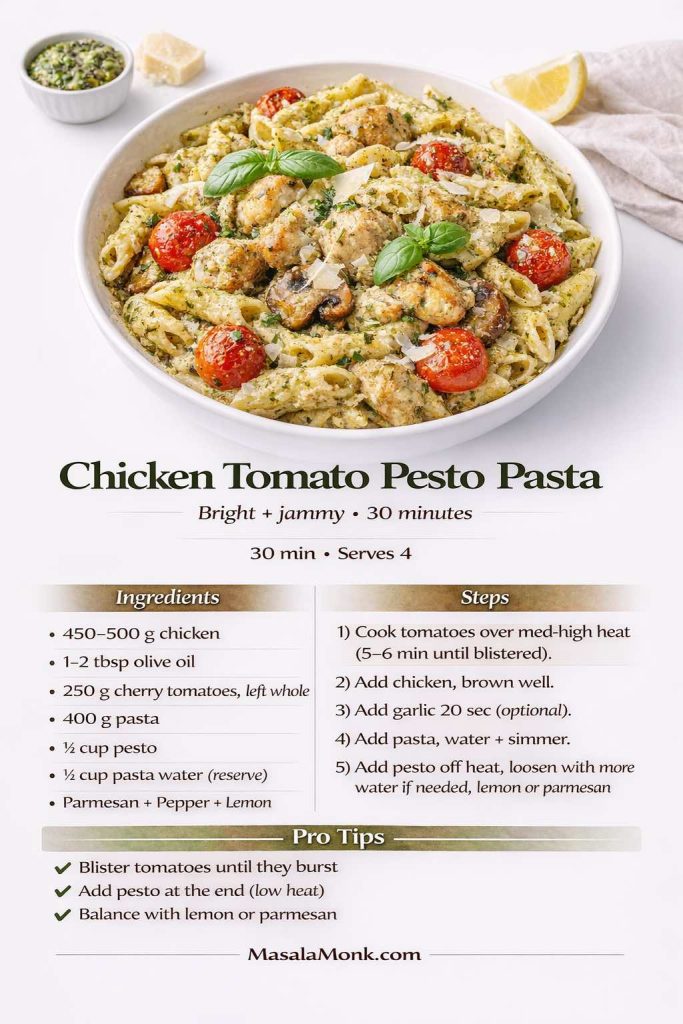
Recipe Card: Tomato Options
Option 1: Blistered cherry tomatoes (best flavor, easiest)
After browning the chicken, add cherry tomatoes to the same pan. Let them blister until they burst and soften. Then add pasta, pesto (on low heat), and pasta water.
Option 2: A little canned tomato (use as an accent)
If you’re using canned, think “accent,” not “marinara.” A few spoonfuls of crushed tomato simmered briefly is enough. Then turn the heat low before adding pesto so basil stays bright.
Balancing tomato + pesto
- If it tastes flat, lemon helps.
- If it tastes too sharp, Parmesan rounds it out.
- If it tastes too salty, more pasta water (and an extra handful of pasta or veg) fixes it quickly.
If you’d like another dinner idea that leans into the same flavor family, MasalaMonk’s tortellini cooking guide includes a pesto direction with tomatoes that adapts easily to this style.
Grilled Chicken Pesto Pasta (Smoky, Fast, Summery)
When grilling is already happening—or you have leftover grilled chicken—this becomes one of the best “second dinners” you can make. It tastes like you planned it, even if it was born from leftovers.
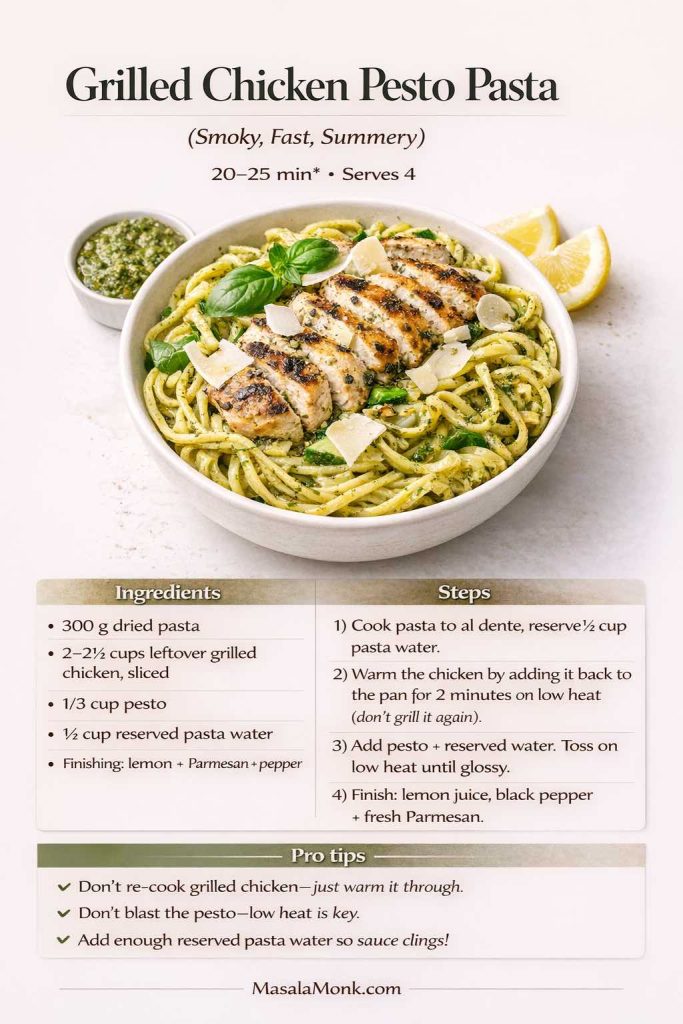
Recipe Card: Leftover Grilled Chicken Version
- Cook pasta.
- Make the sauce in the skillet with pesto + pasta water on low heat.
- Add sliced grilled chicken at the end and warm it gently.
Because grilled chicken already has smoke and char, keep the rest simple: lemon, black pepper, and a glossy toss. The result tastes like summer even on a random Tuesday.
BBQ Chicken Pesto Pasta (Sweet-Smoky Twist)
BBQ chicken pesto pasta sounds unusual until you remember that pesto loves sweet tomato notes and smoky flavors. The trick is keeping barbecue as a supporting actor—more glaze than sauce—so the pesto still tastes like pesto.
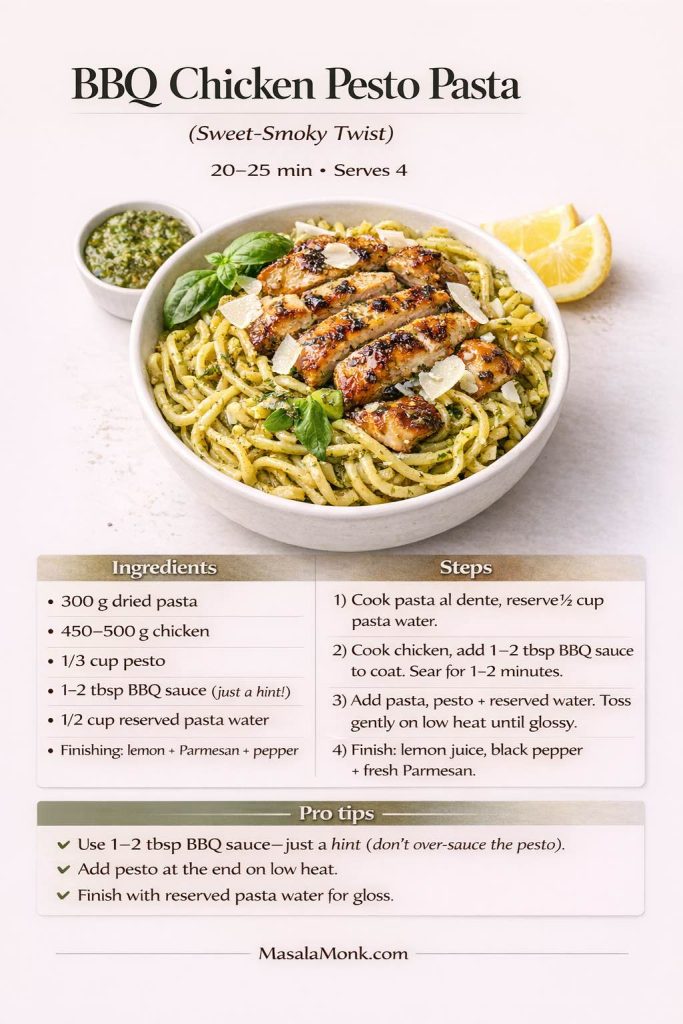
Recipe Card: BBQ Twist (Serves 4)
- Toss cooked chicken lightly with 1–2 tablespoons barbecue sauce.
- Add it to pasta and pesto at the end.
- Use pasta water to keep everything cohesive and glossy.
The result is a sweet-smoky bowl that’s surprisingly addictive, especially with penne or fusilli.
Baked Chicken Pesto Pasta (Pasta Bake)
When you want a dish that feels generous—something you can spoon into bowls and watch people go back for seconds—baked chicken pesto pasta delivers. It’s also one of the easiest ways to make dinner feel like an event without extra work.
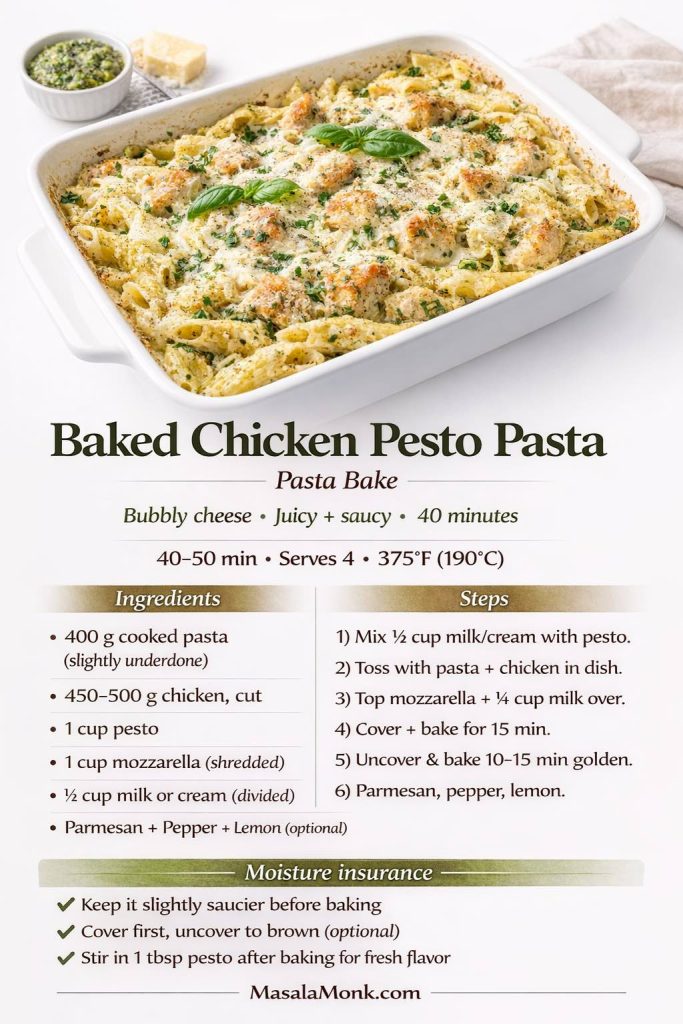
Recipe Card: Baked Pesto Chicken Pasta (Serves 6–8)
Time: 40–55 minutes
Oven: 200°C / 400°F
- Make the base chicken pesto pasta, but keep it slightly saucier than usual. That means extra pasta water and, if you like, a small splash of cream.
- Stir in cheese: mozzarella for melt, Parmesan for flavor.
- Transfer to a baking dish.
- Bake until bubbling and lightly golden.
Because pesto can lose its brightness under high heat, reserve a tablespoon of pesto and stir it in right after baking. That simple move makes the whole dish taste fresher instantly.
If you want extra baked-pasta technique—make-ahead tricks, moisture management, and how to keep a bake from turning dry—MasalaMonk’s baked ziti variations are a surprisingly relevant reference even when you’re not making ziti.
Best Pasta Shapes for Chicken Pesto Pasta
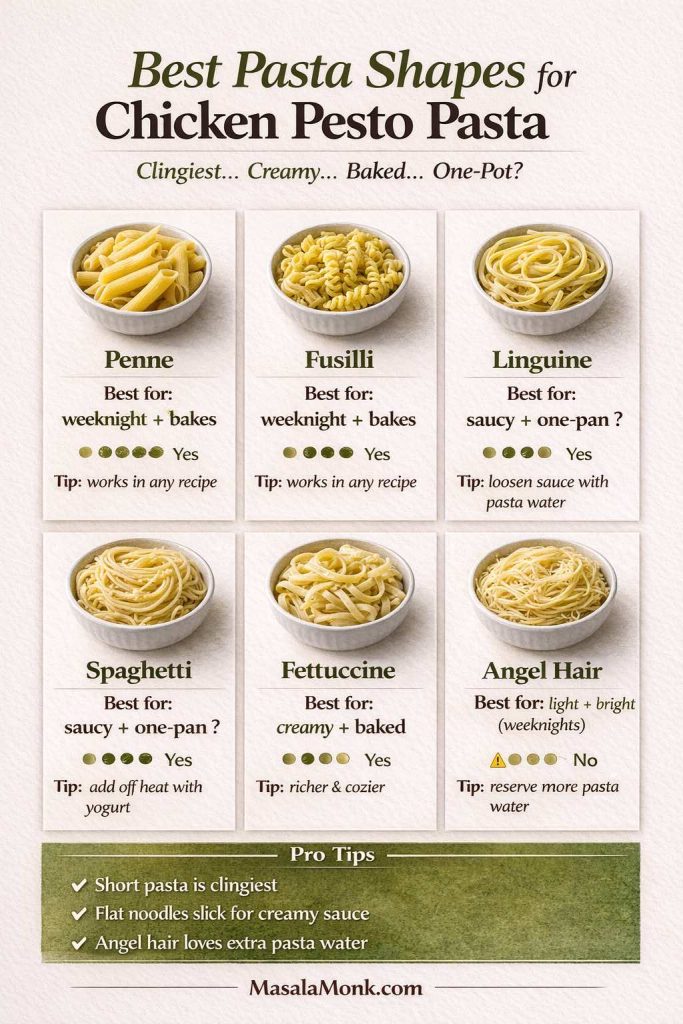
Pasta shape isn’t just aesthetics. It changes how sauce clings, how bites feel, and whether the dish reads “light and glossy” or “thick and cozy.” Once you notice this, you start choosing shapes with intention.
Penne (weeknight MVP)
Penne holds pesto in the tubes, which makes it ideal for pesto penne chicken pasta. It also holds up well to baking, so if you’re making a pasta bake, penne is a safe bet.
Linguine (silky and polished)
Linguine makes the sauce feel sleek. It’s especially good when you’re chasing that glossy finish and want the pesto to coat each strand evenly.
Spaghetti (simple and fast)
Spaghetti shines when you keep it clean—pesto, chicken, pasta water, Parmesan. It’s also a great “starter” shape because it shows off the base method without distractions.
Fettuccine (best for creamy)
Fettuccine is at its best when the sauce is slightly thicker. That’s why it feels so satisfying in creamy versions.
Angel hair (quick cook notes)
Angel hair cooks quickly, which makes it tempting on busy nights. However, it clumps if you don’t toss immediately with enough pasta water. Go generous with water and keep tossing until glossy.
Chicken Pesto Noodles (When You Want Comfort in a Bowl)
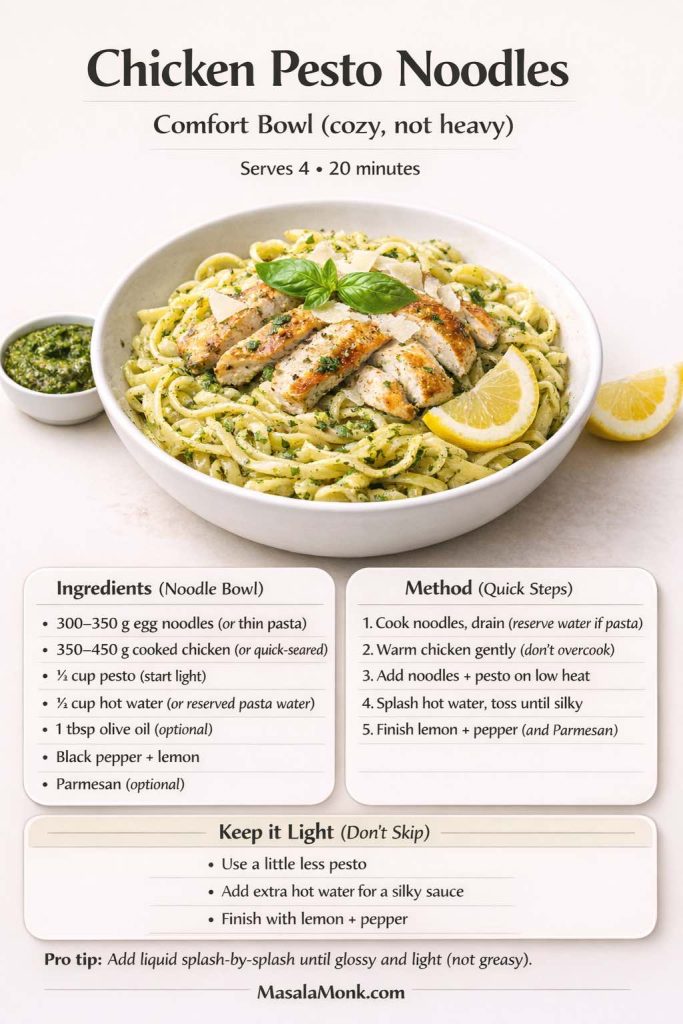
Sometimes you’re not craving “pasta” in the classic sense—you’re craving noodles and sauce. Chicken pesto noodles are perfect for that, especially with egg noodles or a thinner pasta shape.
Recipe Card: Noodle-Style Bowl
To keep it from feeling heavy:
- Use a little less pesto than usual.
- Add extra hot water (or reserved pasta water if you’re using pasta).
- Finish with lemon and pepper.
That combination makes the bowl feel bright again, even when the noodles are cozy.
Basil Pasta Chicken (A Fresh Finish That Changes Everything)
Even if your pesto is basil-based, an extra handful of basil at the end can make the dish smell brand-new. This isn’t a different recipe; it’s the same pasta, simply finished with fresh basil ribbons and, if you like, a tiny drizzle of olive oil.
It’s a small flourish, yet it makes the bowl feel intentional—like you planned it, even if you didn’t.
Healthy Chicken Pesto Pasta (Without Losing What Makes It Great)
“Healthy” is easiest to sustain when it still tastes indulgent. Fortunately, you can make this dish lighter and more balanced without stripping away what makes it comforting.
Healthy upgrades that actually stick
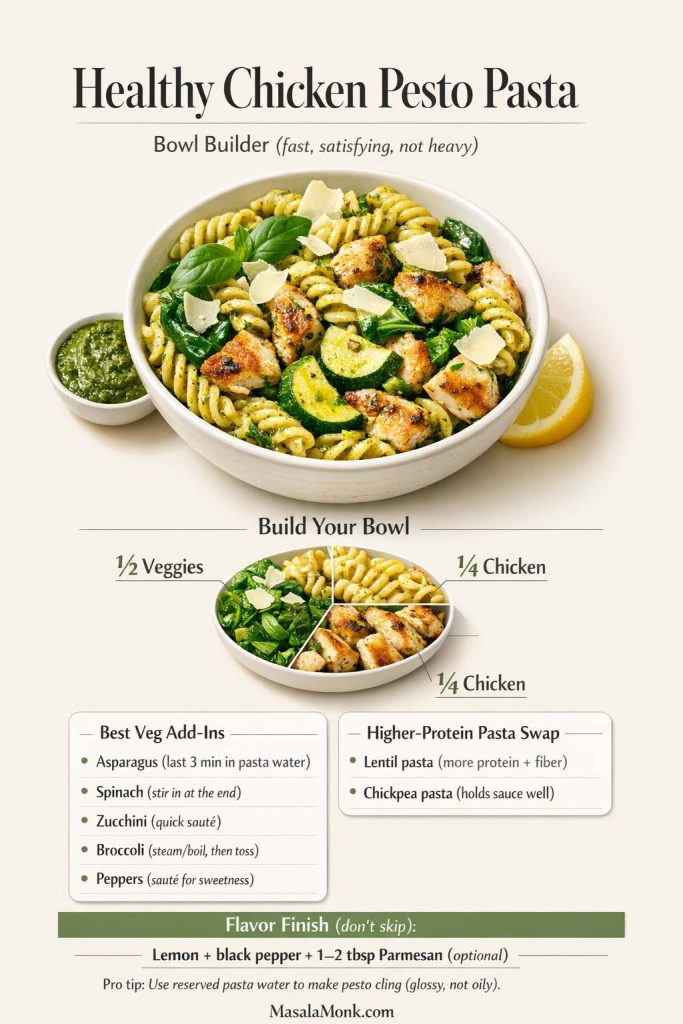
- Add vegetables for volume: asparagus, spinach, zucchini, peppers, broccoli.
- Choose chicken breast if you want leaner protein, but cook it carefully so it stays tender.
- Use pesto confidently, then stretch it with pasta water and brightness (lemon, pepper).
- Finish with a smaller amount of Parmesan rather than removing it entirely—flavor helps you stay satisfied.
If you want a simple portion strategy that still feels generous, build the bowl like this: half vegetables, a quarter pasta, a quarter chicken—then sauce everything with pesto + pasta water so it tastes cohesive.
Asparagus (easy add-in)
Asparagus is made for pesto. Add chopped asparagus to boiling pasta water during the last 2–3 minutes. Drain, then toss into the base recipe. The asparagus stays vibrant, and the bowl feels lighter without feeling “diet.”
Higher-protein pasta swaps
If you want extra protein and fiber, lentil pasta is a strong option. MasalaMonk’s lentil pasta guide goes deeper into how it behaves and what to pair it with, which is helpful when you’re experimenting.
The Small Moves That Make This Pasta Outstanding
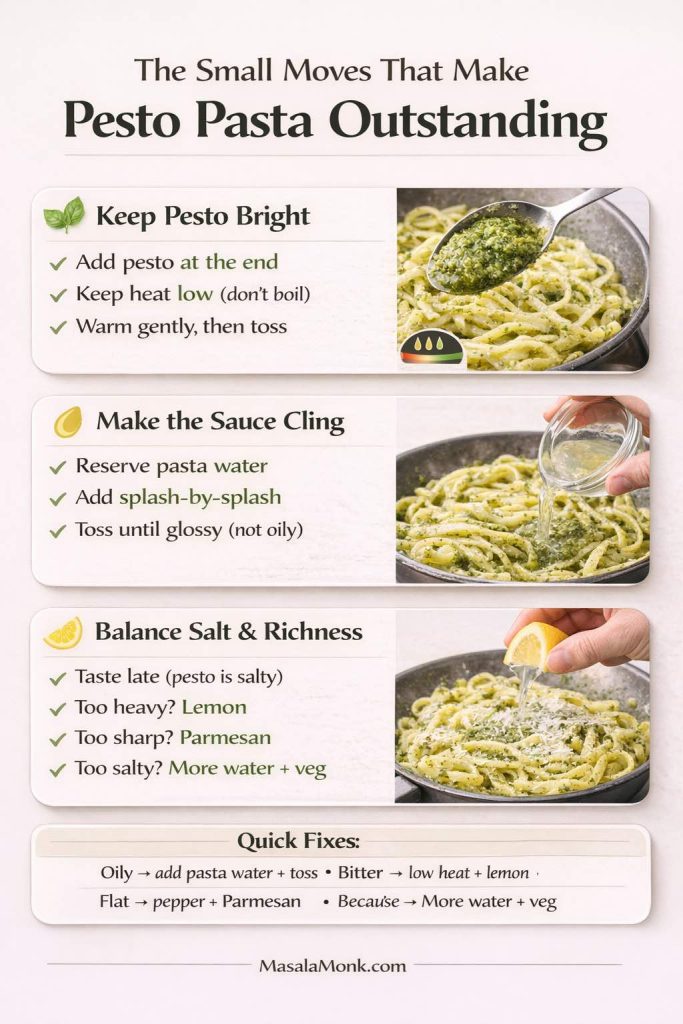
A great pasta dish isn’t about complicated ingredients. It’s about a few small moves that keep everything balanced, especially when pesto is involved.
Keep pesto bright
Pesto tastes best when it’s warmed gently rather than cooked hard. So, whether you’re making a clean spaghetti version or a creamy bowl, stir in pesto at the end and keep the heat low.
Make the sauce cling
Pasta water isn’t a garnish—it’s structure. Add it gradually while tossing until the pesto becomes a silky coating. That’s how the sauce goes from “thin” to “glossy.”
Balance salt and richness
Because pesto can be salty, taste late and adjust carefully. If it’s too salty, loosen with water and add a handful of vegetables. If it feels heavy, lemon fixes it fast. And if it tastes sharp, Parmesan softens it.
Chicken Pesto Pasta Salad (A Cold Version That Actually Works)
Even though this post focuses on hot versions, chicken pesto pasta salad deserves a spot because it’s one of the smartest ways to turn leftovers into tomorrow’s lunch. Better still, it’s genuinely delicious when you build it the right way.
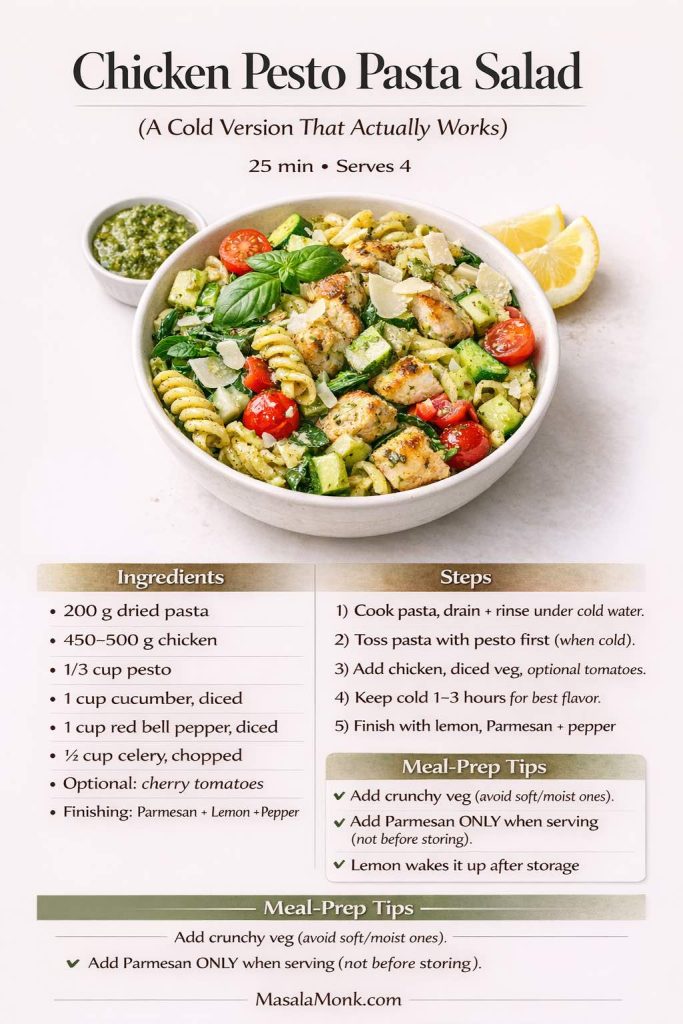
Recipe Card: Pesto Pasta Salad with Chicken
- Cook pasta, then rinse briefly under cool water and drain well.
- Toss pasta with pesto first, then add chicken.
- Add crunchy vegetables like cucumber, bell pepper, or celery.
- Finish with lemon and pepper.
- Add Parmesan right before serving.
Because cold pasta absorbs sauce, you’ll often want a little extra pesto or a drizzle of olive oil plus lemon to keep it lively.
If you plan to meal prep, it’s useful to keep safe storage windows in mind. FoodSafety.gov’s Cold Food Storage Charts is a strong reference, especially when you’re storing mixed dishes.
Storage and Reheating (So It Still Tastes Like Pesto)
Chicken pesto pasta tends to thicken in the fridge. The good news is the fix is easy, and you can bring back the glossy texture without turning the chicken rubbery.
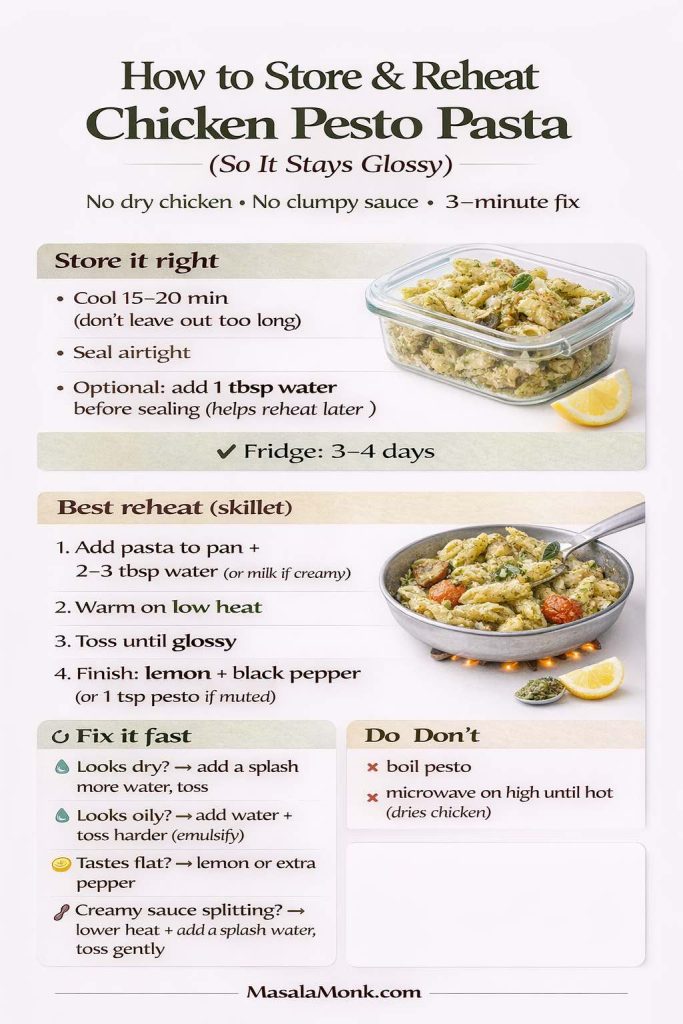
How to reheat without ruining it
- Reheat gently in a skillet (low to medium-low).
- Add a splash of water (or milk if it’s creamy).
- Toss until glossy again.
- If it tastes muted, add a tiny spoon of pesto or a squeeze of lemon at the end.
For general leftovers safety guidance, the USDA’s Leftovers and Food Safety page is a trustworthy reference worth bookmarking.
Pesto Storage (If You Make It in Batches)
If you start making pesto at home, you’ll quickly realize the real joy is batch-making and freezing portions. When pesto is ready in the freezer, dinner becomes a toss-and-go situation.
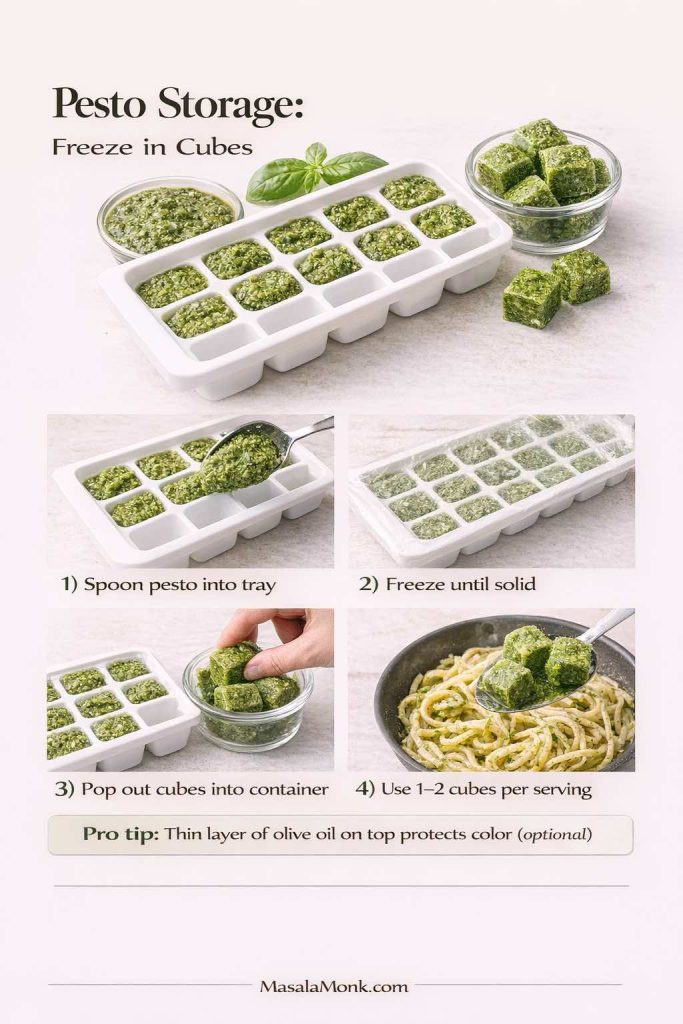
For specific guidance on freezing pesto safely, the National Center for Home Food Preservation’s page on freezing pesto is excellent—especially if you like freezing pesto in cubes, then transferring them to a container once solid.
A Few Delicious Next Steps (If You Want More Ideas)
If you’re in a pesto mood and want to keep the momentum going:
- Explore pesto variations in MasalaMonk’s pesto recipe collection so you can shift flavors without shifting dinner.
- For a fusion-friendly direction, try pesto pasta with Indian twists—it’s a fun way to make the same technique feel brand-new.
- If you like prepping chicken ahead, these crock pot chicken breast ideas set you up for fast weeknight pasta without starting from scratch.
Closing thought
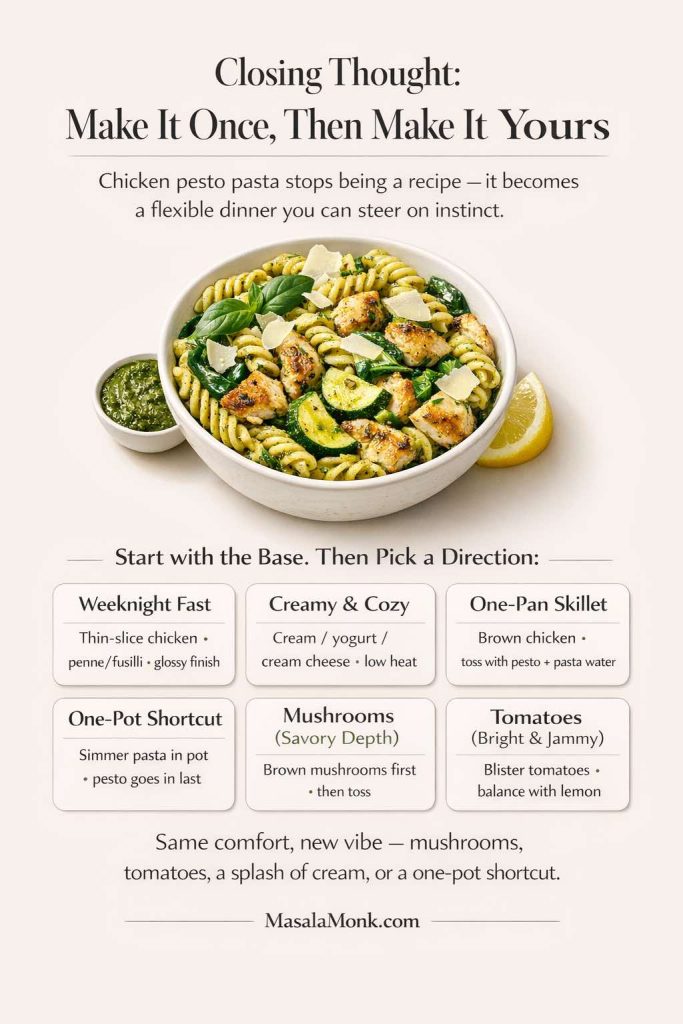
Chicken pesto pasta is the kind of recipe that rewards you every time you make it. Once you’ve cooked it a couple of ways—maybe the fast version on a rushed weeknight, the creamy version on a cozy evening, and a baked one when friends come over—you’ll notice something: it stops being “a recipe” and becomes a flexible dinner you can steer on instinct.
So start with the base. Then pick a direction. A handful of mushrooms, a few tomatoes, a splash of cream, or a one-pot shortcut can take you somewhere new—while still tasting unmistakably like pesto, chicken, and comfort in a bowl.
Chicken Pesto Pasta FAQs
1) How do I keep chicken juicy?
Pat it dry, cook it in a hot pan without crowding, and pull it as soon as it’s cooked through. Then add it back at the end so it warms up without overcooking.
2) What’s the best way to cook chicken breast so it doesn’t dry out?
Slice it thinner (or butterfly it), then cook quickly over medium-high heat. Because breast cooks fast, pulling it a minute early and letting carryover heat finish it prevents dryness.
3) Why does my pesto sauce look oily instead of coating the pasta?
This usually happens when there isn’t enough starchy water in the pan. Add reserved pasta water a splash at a time while tossing until the sauce turns glossy and clings. Also, keep the heat gentle once pesto goes in.
4) Which pasta shapes work best here?
Penne and fusilli grab sauce easily and hold up well to mix-ins. Linguine and spaghetti give a silkier feel. If you’re making a creamier version, fettuccine is especially satisfying.
5) How can I make this in under 25 minutes?
Use a fast-cooking pasta, cut chicken smaller, and cook both at the same time. Once the pasta drains, toss everything with pesto and a splash of reserved water right in the skillet for a quick finish.
6) Can I make a creamy version without heavy cream?
Yes. Stir in Greek yogurt off heat (with a splash of water first), add a spoon of cream cheese melted with pasta water, or use a small splash of milk plus Parmesan for body.
7) How do I keep a creamy sauce from splitting?
Lower the heat before adding dairy and avoid boiling once it’s in the pan. If using yogurt, add it off heat. If it starts to look grainy, add a little more pasta water and toss gently to bring it back together.
8) What’s the difference between one-pan and one-pot versions?
One-pan usually means pasta is boiled separately, then tossed in a skillet with chicken and pesto. One-pot means pasta simmers in the same pot as the chicken so the cooking liquid becomes part of the sauce.
9) How do I avoid gummy pasta in the one-pot method?
Stir often, keep enough liquid so the pasta can move freely, and stop cooking as soon as it reaches al dente. Then add pesto at the end and loosen with a splash of water if needed.
10) How do I cook mushrooms so they don’t turn watery?
Start with a hot pan, spread mushrooms out, and let them brown before stirring. Once they’ve released moisture and picked up color, they’ll taste deeper and won’t dilute the sauce.
11) What’s the easiest way to add tomatoes without making it too acidic?
Blister cherry tomatoes until they burst for natural sweetness. If using canned tomatoes, keep the amount small and simmer briefly before adding pesto at the end on low heat.
12) Can I turn it into a baked pasta dish?
Absolutely. Make the skillet version slightly saucier, mix in cheese, then bake until bubbling and lightly golden. For extra freshness, stir in a spoon of pesto right after baking.
13) How do I keep a pasta bake from drying out?
Add extra pasta water before baking and include enough cheese or a small splash of cream. If your oven runs hot, cover for part of the bake time, then uncover briefly to brown.
14) Can I use leftover grilled chicken?
Definitely. Slice it and warm it gently at the end. Since it’s already cooked, it only needs a brief heat-through to stay tender.
15) Does a BBQ twist work with pesto?
It can, as long as you use barbecue sauce lightly. Think of it as a glaze on the chicken, then combine with pesto and pasta water so the flavors stay balanced.
16) How do I store and reheat leftovers so it still tastes fresh?
Store in a sealed container in the fridge. Reheat gently with a splash of water (or milk for creamy versions), then finish with black pepper and a squeeze of lemon if it tastes muted.
17) Why does pesto sometimes taste bitter?
Bitterness can come from old basil, too much raw garlic, or overheating. Add pesto on low heat and avoid boiling it. If it still tastes sharp, Parmesan and a touch of lemon balance it quickly.
18) What should I serve on the side?
Go simple: a crisp salad, roasted vegetables, sautéed greens, or garlic bread. If your pasta is creamy, something bright and lemony on the side pairs especially well.









[…] Also Read: Chicken Pesto Pasta (Easy Base Recipe + Creamy, One-Pot, Baked & More) […]
[…] Also Read: Chicken Pesto Pasta (Easy Base Recipe + Creamy, One-Pot, Baked & More) […]
[…] Also Read: Chicken Pesto Pasta (Easy Base Recipe + Creamy, One-Pot, Baked & More) […]
[…] Also Read: Chicken Pesto Pasta (Easy Base Recipe + Creamy, One-Pot, Baked & More) […]
[…] Also Read: Chicken Pesto Pasta (Easy Base Recipe + Creamy, One-Pot, Baked & More) […]