Posted on 7 Comments

Steel Cut Oats vs Rolled Oats: Nutrition, Taste, Cooking & More

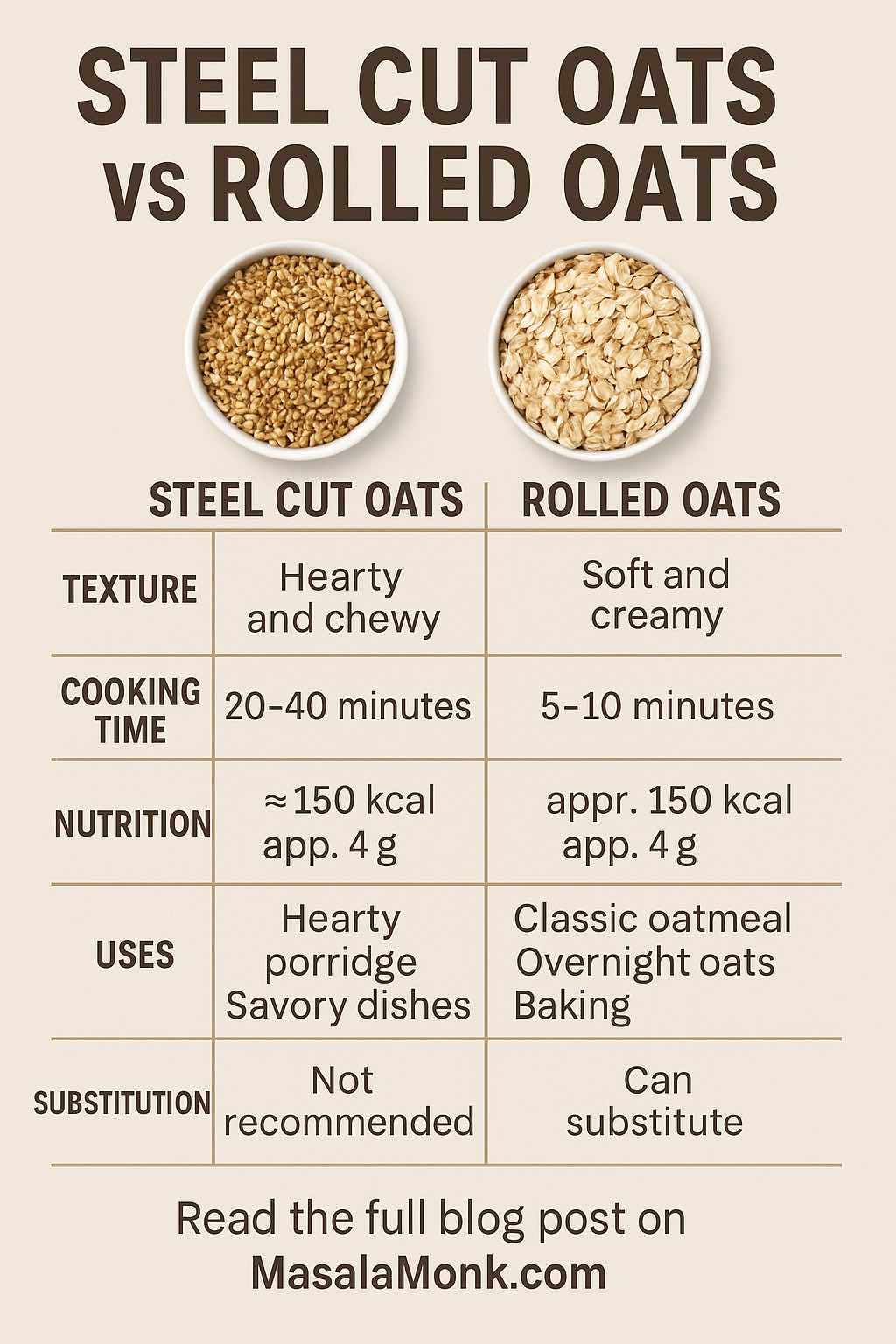
STEEL CUT OATS VS ROLLED OATS

Oats are one of the healthiest, most versatile whole grains you can buy, but the options—steel cut oats and rolled oats especially—can leave even experienced cooks scratching their heads. What actually makes them different? Does one have a real advantage for health, flavor, or recipes? Here’s a practical, detailed breakdown that will make you an oats expert, with links only where you truly need more detail.


What Sets Steel Cut Oats Apart?

Steel cut oats (sometimes called Irish oats or pinhead oats) are made by chopping the whole oat groat into coarse pieces with steel blades. That’s almost all the processing they get—no flattening, rolling, or steaming. What does this mean for you?

  • Texture: Extremely hearty and chewy, with a distinct, nubby bite
  • Cooking time: 20–40 minutes on the stovetop, unless you soak or use a pressure cooker
  • Flavor: Robust, nutty, and full-bodied

Practical tip:
Steel cut oats are perfect for those who want their breakfast to feel substantial and filling. They keep their shape well, making them ideal for meal prep—just cook a batch and reheat through the week. For those who love savory breakfast bowls (think sautéed veggies, a runny egg, spices), steel cut oats give you the structure to carry those flavors.


Why Choose Rolled Oats?

Rolled oats—also known as old-fashioned oats—start the same way, but get steamed and then flattened into thin flakes by heavy rollers. That bit of extra processing changes everything:

  • Texture: Creamy and soft, with just enough chew to stay interesting
  • Cooking time: Super quick—just 5–10 minutes on the stovetop, or no cooking at all for overnight oats
  • Flavor: Mild, sweet, and easy to pair with fruits, spices, or honey

When to use rolled oats:
Rolled oats are the MVP of breakfast for busy mornings and for anyone who loves classic oatmeal. They also star in overnight oats, muesli, granola, pancakes, muffins, and cookies—offering just enough bite without any toughness. If you want to know more about substituting old-fashioned oats and rolled oats, check out this post on swapping the two in recipes.


Nutrition: Is There a Winner?

Steel cut oats and rolled oats are almost identical nutritionally. Both are whole grains, rich in fiber (especially beta-glucan, which is great for heart health), protein, and slow-digesting carbs. Here’s how they compare per 40g (about 1/2 cup dry):

TypeCaloriesFiberProteinFatGlycemic Index
Steel Cut~150~4g~5g~2.5g52
Rolled~150~4g~5g~2.5g59
  • Steel cut oats: Slightly lower glycemic index, digest more slowly, so you feel fuller longer.
  • Rolled oats: Slightly higher GI, but still a slow carb compared to most grains.

Bottom line: If you want oats for blood sugar management, weight loss, or heart health, both options are equally smart. The biggest difference is in texture and cooking time, not nutrition.


Taste & Texture: What’s Best for You?

Steel cut oats deliver a truly hearty, chewy, and substantial experience—like a rice or barley porridge. Each spoonful holds its shape and soaks up flavor slowly.
Rolled oats create the classic, creamy oatmeal you might remember from childhood, and take on the flavor of whatever you add: cinnamon, cardamom, apple, banana, or berries.

Use steel cut oats if:

  • You want a breakfast that sticks with you
  • You meal-prep porridge or like making savory oat bowls
  • You love a chewy, substantial bite

Use rolled oats if:

  • You want something quick and creamy
  • You love overnight oats or make granola/muffins often
  • You want oats to absorb flavors fast (great for sweet or spiced bowls)

Cooking, Prep, and Everyday Tips

Steel Cut Oats:

  • Stovetop: Simmer 1 part oats to 3–4 parts liquid for 20–40 minutes
  • Pressure Cooker: 10–12 minutes, natural release
  • Soak overnight to cut cook time in half
  • Batch-cook for the week; they reheat beautifully with a little milk

Rolled Oats:

  • Stovetop: 1 part oats to 2 parts liquid, ready in 5–10 minutes
  • Overnight Oats: Soak in equal parts milk/yogurt and oats overnight in the fridge—no cooking!
  • Microwave: 2–3 minutes for a creamy bowl on busy mornings
  • Bake into cookies, bars, or granola for added fiber and texture

Pro tip:
If you bake with oats, always use rolled/old-fashioned oats—steel cut are too tough for most baked recipes. Rolled oats give you the best of both worlds: nutrition, speed, and a little bite.


Can You Substitute One for the Other?

Not really, except for simple porridge. Steel cut oats are just too dense and require too much liquid for most recipes that call for rolled oats—especially baking and overnight oats. If a recipe calls for steel cut oats, using rolled oats will make the result much softer and creamier. For traditional oatmeal bowls, you can swap in a pinch (just adjust cook time), but for baking or muesli, stick to rolled.

If you want a full breakdown on oat types and swaps (including quick and instant oats), you’ll love our complete oat guide.

Substitution Guide

Use/RecipeSteel Cut → RolledRolled → Steel Cut
Hot PorridgeNot recommended*Yes, but creamier
Overnight OatsOnly if pre-cookedYes
Cookies/GranolaNoYes (but more chewy)
Savory BowlsYesYes

*Steel cut oats won’t soften enough without long cooking—don’t use them raw for overnight oats or in quick bakes.


Practical Uses & Ideas

  • Steel Cut Oats:
    • Make a big batch, store in the fridge, and enjoy all week
    • Use in savory bowls with veggies, sautéed greens, and eggs
    • Try oat risotto: cook steel cut oats in broth and finish with Parmesan
  • Rolled Oats:
    • Prep overnight oats in jars for grab-and-go breakfasts
    • Bake into cookies or granola for easy snacks
    • Blend into smoothies for a creamy, fiber-rich boost
    • Add to pancake or muffin batter for extra nutrition

Conclusion

There’s no wrong answer in the steel cut vs rolled oats debate—just what fits your taste, lifestyle, and recipes.

  • Want chewy and hearty? Steel cut is for you.
  • Want quick and versatile? Rolled oats win.

Both will fill you up, boost your health, and make breakfast better.
Hungry for more oat insights? Read our Ultimate Guide to Oats for a deep dive on every oat type, nutrition, and the best ways to use them in your kitchen.

Related Reading

10 FAQs – Steel Cut Oats vs Rolled Oats

1. Which is healthier, steel cut oats or rolled oats?

Both are equally healthy; they have nearly identical nutrition. Steel cut oats have a slightly lower glycemic index, which means slower digestion.


2. Do steel cut oats and rolled oats taste the same?

No. Steel cut oats are chewier and nuttier, while rolled oats are softer and creamier.


3. Can I use steel cut oats in recipes that call for rolled oats?

Usually not. Steel cut oats take much longer to cook and won’t soften properly in most baking or overnight oats recipes.


4. Are steel cut oats better for weight loss?

Not necessarily. Both types support weight management due to high fiber content; steel cut oats may keep you full slightly longer.


5. Are rolled oats and old-fashioned oats the same?

Yes, they are exactly the same. The terms are used interchangeably.


6. Can I make overnight oats with steel cut oats?

Only if you cook them first, or soak them for at least 24 hours. Otherwise, they will remain too hard.


7. Which cooks faster: steel cut oats or rolled oats?

Rolled oats cook much faster—5 to 10 minutes. Steel cut oats require 20 to 40 minutes unless soaked or pressure cooked.


8. Are there any nutritional differences between steel cut and rolled oats?

Macros (protein, fiber, calories) are nearly identical. The main difference is in texture and cooking time, not nutrition.


9. Can I use rolled oats instead of steel cut oats in porridge?

Yes, but your porridge will be creamier and softer, with less chew.


10. Do both types of oats help lower cholesterol?

Yes, both are high in beta-glucan fiber, which is known to help lower cholesterol levels.
Posted on Leave a comment

Palm Oil: Is It Really Bad for Your Health?

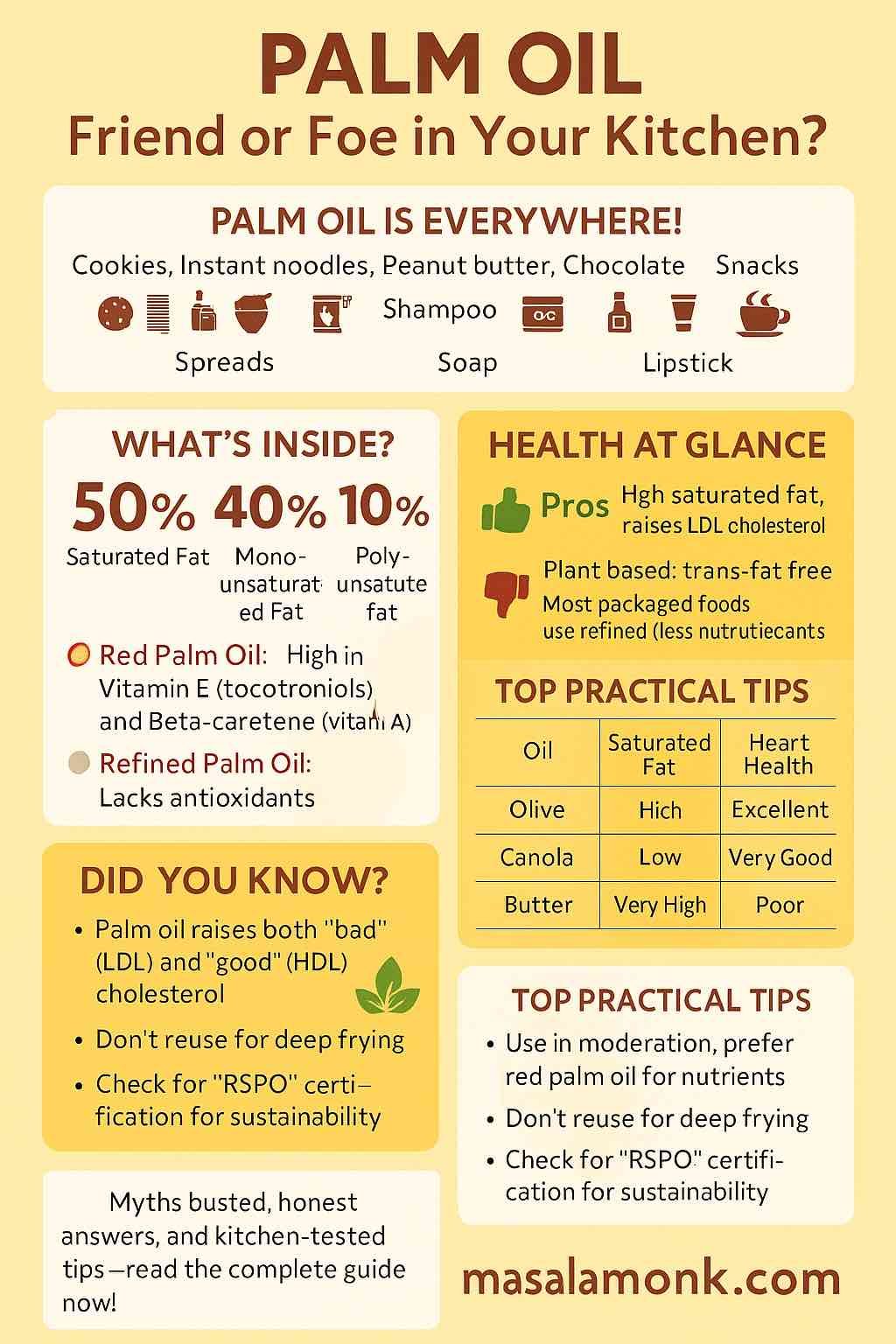
PALM OIL Friend or Foe in Your Kitchen

Open your pantry or your bathroom cabinet—there’s a good chance you’ll find palm oil somewhere. It’s in cookies, margarine, instant noodles, ice cream, peanut butter, lipstick, shampoo, and even soap. But is it a health hazard lurking in your food and beauty products? Or just another victim of online misinformation?

Let’s dig into the facts, the controversies, and—most importantly—what it means for you.


What Is Palm Oil, and Why Is It Everywhere?

Palm oil comes from the fruit of the oil palm tree (Elaeis guineensis), mostly grown in Indonesia and Malaysia. It’s cheap, versatile, and shelf-stable—all reasons it’s beloved by food manufacturers. It’s also incredibly high-yield, making it more land-efficient than almost any other oil crop.

But all this popularity comes with questions about health, ethics, and sustainability.


Palm Oil’s Nutritional Profile: What’s In It?

  • Fat Content: Roughly 50% saturated fat (mostly palmitic acid), 40% unsaturated fat, and 10% polyunsaturated fat.
  • Unrefined (“Red”) Palm Oil: Rich in carotenoids (pro-vitamin A) and tocotrienols (a powerful form of vitamin E).
  • Refined Palm Oil: The most common type in processed foods—lacks the vivid red color and much of the original antioxidants.

Is Palm Oil Bad for Your Heart?

This is the big question, and here’s what the science says:

1. Saturated Fat and Cholesterol

Palm oil is high in saturated fat, and saturated fat can raise your LDL (“bad”) cholesterol.
But it’s not black and white:

  • Studies show palm oil raises LDL less than animal fats (like butter or lard), but more than heart-healthy oils (olive, canola).
  • Palm oil also raises HDL (“good”) cholesterol, somewhat offsetting its impact.

Key takeaway:
Replacing trans fats or animal fats with palm oil is likely neutral or even beneficial. But if you swap olive oil for palm oil, your heart might not thank you.


2. Red Palm Oil: The Antioxidant Angle

Unrefined red palm oil is a different story. It contains:

  • Tocotrienols: These rare vitamin E forms are linked to lower cholesterol, brain protection, and reduced inflammation.
  • Carotenoids: Precursors to vitamin A, vital for vision and immunity.

Caveat: Most palm oil in processed foods is refined—it’s missing these benefits.


3. Population and Meta-Analysis Data

  • Ecological studies (large population data) show a small increase in heart disease risk in countries with high palm oil consumption—but this risk is far smaller than that posed by animal fats.
  • Recent meta-analyses confirm: Moderation is key. Palm oil is not a “superfood,” but it’s not the villain it’s sometimes made out to be.

Processing Matters: Contaminants and Frying Dangers

Here’s where things get nuanced:

  • Refined palm oil (the kind in most packaged foods) can contain heat-derived contaminants like glycidyl esters and 3-MCPD—possible carcinogens in high doses, especially concerning for infants.
  • Repeated heating (like deep-frying oil used again and again) forms more of these contaminants and oxidative products, which may promote inflammation and other chronic diseases.

Takeaway:
Fresh, unrefined, or lightly processed palm oil is far safer than repeatedly heated or heavily processed versions.


How Does Palm Oil Compare to Other Oils?

Oil TypeSaturated FatAntioxidantsImpact on Heart Health
Palm OilHigh (~50%)Medium (if unrefined)Neutral/moderate risk
Olive OilLowHighBest for heart health
Canola/Soybean OilLowMediumHeart healthy
Coconut OilVery HighLow/MediumWorse than palm oil for heart
ButterVery HighLowIncreases heart risk
Margarine (old)Trans fatsLowWorst (now mostly replaced)

So, Should You Avoid Palm Oil?

Let’s make it practical:

  • If you eat a balanced diet, palm oil in moderation is not a major concern—especially compared to animal fats or trans fats.
  • If you use red palm oil (unrefined), you get a bonus of antioxidants and vitamin A.
  • If you deep fry with palm oil, limit how many times you reuse it.
  • If you have high cholesterol or heart disease, favor olive oil, canola, or other unsaturated oils for daily cooking.
  • If you’re shopping for packaged foods, check labels—not just for palm oil, but for total saturated fat content.

Ethical and Environmental Footnote

It’s impossible to discuss palm oil without mentioning deforestation, habitat loss, and endangered wildlife. If you care about the planet:

  • Look for RSPO-certified (Roundtable on Sustainable Palm Oil) or similar sustainable certifications.
  • Favor brands transparent about sourcing.

Practical Tips: How to Live with Palm Oil

  • Rotate your oils: Use a variety of fats—olive oil for salad and low-heat cooking, canola for baking, a bit of red palm oil for flavor and nutrients.
  • Read your labels: Many “healthy” snack foods are still high in palm oil and saturated fat.
  • Don’t panic over a cookie: Occasional consumption in a balanced diet is fine.
  • If you supplement with tocotrienols: Seek out high-quality, tested products—research is promising but still evolving.

Conclusion: Not a Supervillain, Not a Superfood

Palm oil is neither a nutritional demon nor a miracle ingredient. Like most things in nutrition, context and moderation matter most. If you’re mindful about your total saturated fat intake, balance your fats, and choose unrefined or sustainably sourced palm oil when possible, you’re doing just fine.

Want to keep your heart healthy?
Prioritize unsaturated fats, lots of plants, and whole foods. Let palm oil be a supporting actor—not the star.


Further Reading


Have a question or want to learn more about specific oils, antioxidants, or label reading? Drop it in the comments!

10 FAQs About Palm Oil and Your Health


1. Is palm oil safe to eat every day?
Answer:
Yes, in moderation. For most healthy people, occasional consumption as part of a balanced diet is not a problem. However, try to keep overall saturated fat intake within health guidelines by rotating oils.


2. Is there a difference between red palm oil and regular palm oil?
Answer:
Absolutely! Red (unrefined) palm oil is high in antioxidants (like carotenoids and vitamin E tocotrienols), giving it a reddish color and more nutrients. Refined palm oil is pale and lacks most of these antioxidants.


3. Does palm oil really raise cholesterol?
Answer:
Palm oil contains about 50% saturated fat, which can raise LDL (“bad”) cholesterol, but also raises HDL (“good”) cholesterol. Its effect is less than butter or ghee, but more than olive or canola oil.


4. Can I use palm oil for deep frying?
Answer:
Yes, palm oil is stable at high temperatures, making it suitable for frying. However, avoid reusing oil multiple times to minimize harmful byproducts.


5. Is palm oil safe for children and infants?
Answer:
Small amounts are safe. Most infant formulas are regulated for palm oil contaminants. Focus on a varied diet for children and avoid excessive intake.


6. Is palm oil vegan or vegetarian friendly?
Answer:
Yes, palm oil is plant-based. But some vegetarians and vegans avoid it for environmental reasons—check for RSPO or other sustainable certifications if that’s important to you.


7. What health benefits does red palm oil offer?
Answer:
Red palm oil is a good source of vitamin A (from carotenoids) and vitamin E (from tocotrienols), which support vision, immunity, and antioxidant defenses.


8. How do I know if palm oil is in my food?
Answer:
Check ingredient lists for “palm oil,” “palmolein,” “palmitate,” or “vegetable oil (palm).” Many processed snacks, baked goods, and spreads contain it.


9. Does palm oil have any cancer risk?
Answer:
The oil itself isn’t carcinogenic, but when overheated or heavily processed, it can produce contaminants like glycidyl esters. Avoid reusing palm oil and opt for reputable brands.


10. How can I choose sustainable palm oil?
Answer:
Look for RSPO (Roundtable on Sustainable Palm Oil) or “certified sustainable” on labels. These products are produced with more attention to environmental impact.

Posted on 4 Comments

Buying a Cast Iron Skillet? 5 Warnings Before You Invest

Cast Iron Skillet - 5 Warnings

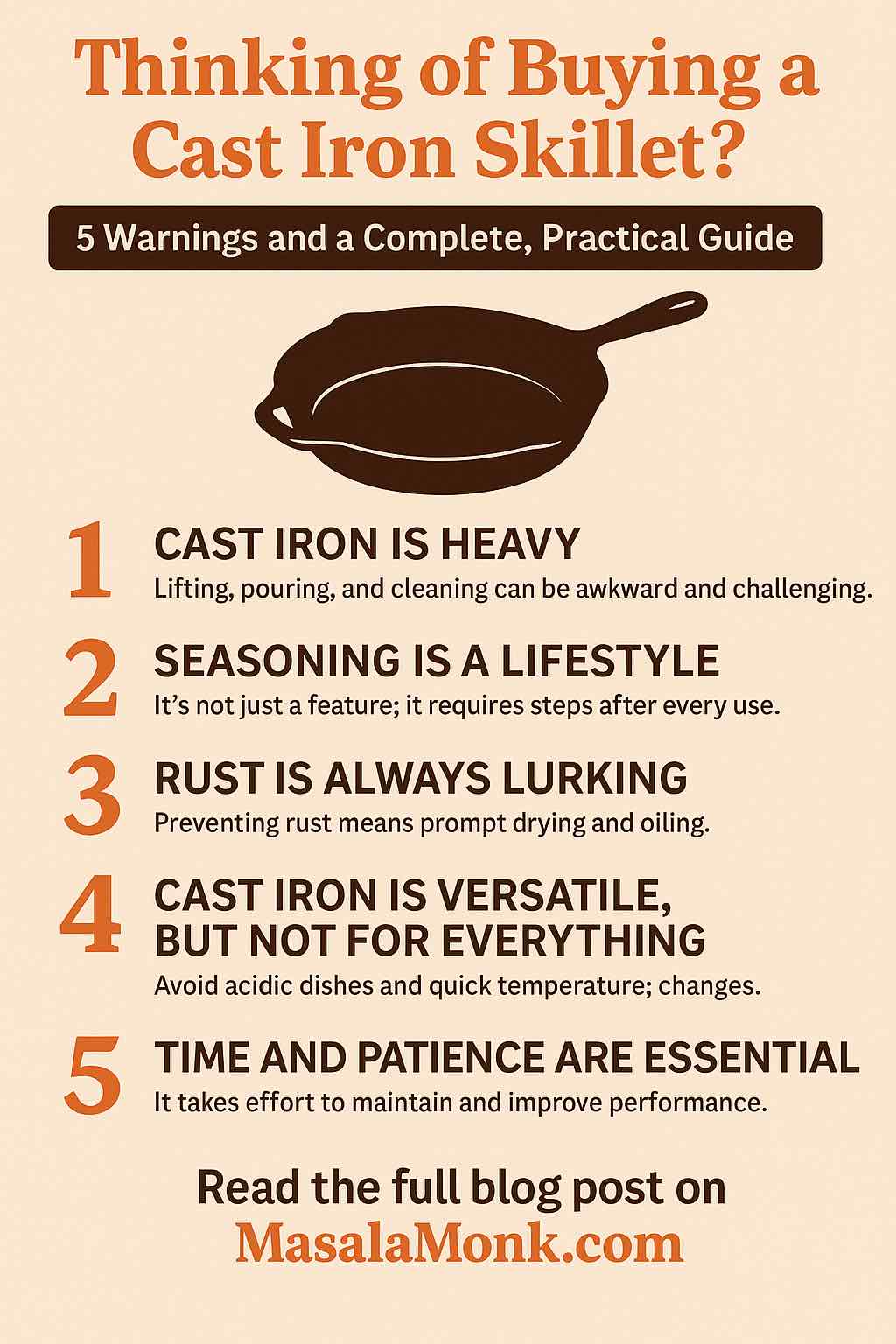
Cast iron skillets have an almost mythical status in the kitchen. People talk about them being “forever pans,” capable of making the best steak or cornbread of your life. But cast iron, for all its hype, isn’t for everyone—and even seasoned cooks sometimes get tripped up by classic mistakes.
If you’re considering buying your first (or next) cast iron skillet, read on. This post goes well beyond the marketing to give you real, practical advice—plus five honest warnings you need to know before making the commitment.


The Romance of Cast Iron—And the Reality

Owning a cast iron skillet feels like joining a secret club. The stories are true: with proper care, it can last generations, and it delivers incredible browning, searing, and oven-to-table versatility. But cast iron also requires a shift in habits. It’s not just a pan; it’s a relationship, and like all relationships, it comes with quirks you need to embrace—or at least understand.


1. Warning: Cast Iron Is Heavy—And That Matters More Than You Think

If you’re used to lightweight nonstick or stainless-steel pans, you may be surprised the first time you heft a cast iron skillet. These pans are solid metal, often weighing as much as a small bowling ball.
That heft is part of what makes cast iron great—it helps with heat retention and stability. But it can also make a difference in daily life:

  • Lifting and Pouring: Pouring off hot oil or moving a full skillet from stovetop to oven can be awkward or risky if you’re not prepared.
  • Cleaning: Scrubbing, rinsing, and drying a heavy, slippery pan isn’t trivial, especially if you have limited grip strength or wrist issues.
  • Storage: Cast iron pans take up space and can damage delicate surfaces if dropped or stacked carelessly.

Practical Tip:
Before you commit, try lifting a few pans in a store (if possible) or compare the weight to something you own. If you cook for just one or two people, consider a smaller skillet. Larger pans are great for volume but multiply the challenges.


2. Warning: Seasoning Isn’t One-and-Done—It’s a Lifestyle

One of the first things you’ll hear about cast iron is “seasoning.” This isn’t just a buzzword; it’s the heart of cast iron care.
Seasoning is a thin layer of polymerized oil that forms a protective, naturally nonstick coating on your skillet. While many pans are “pre-seasoned,” the reality is that maintaining and improving this seasoning is an ongoing responsibility.

What You’ll Actually Be Doing:

  • After Each Use: Rinse your pan promptly (avoid letting it soak), scrub away stuck-on bits (using coarse salt if needed), dry thoroughly, and rub on a very thin coat of cooking oil. Heat briefly to seal it in.
  • If Food Starts Sticking: It’s a sign your seasoning needs a boost. A few extra rounds of oiling and heating can help.
  • If Rust Appears: Don’t panic—rust can be scrubbed off and the pan re-seasoned.

Why This Matters:
Skipping these steps leads to rust, sticky food, or metallic flavors. Seasoning is a rhythm you get into—like making your bed or brushing your teeth.

Practical Tip:
Make seasoning a habit, not a chore. Keep a small bottle of oil near your stove and consider it part of the cooking process.


3. Warning: Cast Iron Isn’t for Everything—And That’s Okay

Cast iron is versatile, but it’s not a universal solution. There are foods and techniques that don’t play well with cast iron, especially with a newer or lightly-seasoned skillet:

  • Acidic Foods: Tomato sauce, vinegar, wine, and lemon juice can strip seasoning and cause off-flavors. Use another pan for these until your skillet is deeply seasoned.
  • Delicate Dishes: Eggs, fish, or pancakes may stick in a new pan until the seasoning is built up.
  • Quick-Change Cooking: Cast iron heats slowly and stays hot. If you’re making dishes that need fast temperature changes or precise control, another pan may be better.

Practical Tip:
Think of cast iron as a specialist—fantastic for searing, frying, baking, and roasting, but not the only pan you need. Let it excel at what it does best.


4. Warning: Rust Is Always Lurking—And It’s Your Job to Fight It

The flip side of cast iron’s durability is its vulnerability to moisture. Water is the enemy of cast iron.
Rust can show up overnight if a pan is left damp, air-dried, or stored in a humid environment. Even the most expensive or well-seasoned pan will rust if neglected.

How to Prevent Rust:

  • Always dry your skillet immediately after washing—ideally by heating it on the stove.
  • Store your pan in a dry place. If you live in a humid climate, consider placing a paper towel inside to absorb moisture.
  • Never put cast iron in the dishwasher or let it soak in the sink.

If Rust Appears:
Don’t panic. Scrub the rust with steel wool or a stiff brush, rinse, dry, and re-season. Rust is a setback, not a disaster.

Practical Tip:
Think of rust as feedback, not failure. If you see it, it just means the pan needs a little more attention. Fixing it is almost always possible.


5. Warning: Cast Iron Rewards the Patient—Not the Impulsive

The most beautiful thing about cast iron is how it gets better with time. Every meal, every oiling, every gentle scrub builds character and performance. But this is a long game.

  • Break-in Period: New pans are often a bit sticky, rough, or fussy. With regular use, they get smoother and slicker.
  • Appearance Changes: Don’t expect a glossy black patina immediately. Over months or years, your skillet will develop a deep, even finish and unique character.
  • Effort Up Front: The more you use and care for your skillet, the easier and better it gets.

Practical Tip:
Don’t be discouraged by imperfections or slow progress. Think of your skillet as something you grow with—it’s a tool and a project.


Beyond the Warnings: How to Get the Most Out of Your Cast Iron Skillet

Embrace Simplicity

Start with simple foods that help build seasoning and boost your confidence:

  • Fry bacon or sausages (the fat helps the pan).
  • Roast vegetables at high heat.
  • Try cornbread, biscuits, or skillet pizza.

Cleaning Simplified

  • Clean your skillet while it’s still warm—this makes removing residue easier.
  • Use hot water and a stiff brush. Avoid soap, or use it sparingly.
  • For stubborn spots, a paste of coarse salt and water works wonders.

Maintenance Routine

  • Oil lightly after every wash.
  • Heat briefly on the stove to finish drying and set the oil.
  • Store in a dry place, ideally with something between the pan and any lid to prevent moisture buildup.

Cooking Mastery

  • Preheat well: Allow the skillet to warm up for several minutes before adding food. This ensures even cooking and prevents sticking.
  • Don’t be afraid of high heat: Cast iron shines for searing and baking.
  • Let it cool gradually: Avoid shocking the pan with cold water or rapid temperature changes.

Mindset: It’s a Journey

  • The first months may include minor sticking, some uneven color, or a little rust. Don’t give up.
  • With use and patience, your skillet will become a prized tool, better than nonstick and longer lasting than stainless.

The Takeaway

Buying a cast iron skillet isn’t just about getting a new pan. It’s about adopting a time-tested way of cooking that values patience, care, and tradition. The rewards—superior flavor, deep browning, and a kitchen heirloom—are well worth the investment of time and a little effort.

Remember:

  • The weight is real—choose what you can handle.
  • Seasoning is a process, not a feature.
  • Use it for what it does best, and don’t force it for everything.
  • Rust is fixable—prevention is easier.
  • Cast iron is a journey, not a destination.

If you’re ready for a tool that grows with you, challenges you, and will one day be part of your family’s story, cast iron is a worthy investment. Treat it well, and it will repay you in unforgettable meals for decades to come.


Ready to begin? Let your cast iron journey start with knowledge, care, and confidence!

10 Cast Iron Skillet FAQs

1. Do I need to season my skillet if it says “pre-seasoned”?
Yes. Pre-seasoned skillets are ready to use, but regular seasoning after each use helps improve the nonstick surface and prevents rust. The more you cook (and oil it), the better it gets.

2. Why does food sometimes stick to my cast iron skillet?
Sticking can happen with new pans or if the seasoning is thin. Make sure the pan is well preheated, use enough oil, and keep building the seasoning layer over time. Acidic or watery foods may also loosen seasoning on newer skillets.

3. How do I clean my cast iron skillet after cooking?
Wipe out food residue while the pan is warm, rinse with hot water, scrub with a stiff brush (no soap or just a touch if needed), dry thoroughly, and lightly oil before storing.

4. What should I do if my cast iron skillet rusts?
Don’t worry! Scrub the rust off with steel wool or a stiff brush, rinse, dry completely, and re-season by applying a thin coat of oil and heating the pan.

5. Can I cook tomato sauce or other acidic foods in my cast iron?
Occasionally, yes—especially once the pan is well seasoned. Frequent or long cooking of acidic foods can strip seasoning, so use another pan for those until your skillet is well developed.

6. Is cast iron safe for all stovetops, including induction and glass?
Yes, but use care on glass or ceramic cooktops to avoid scratching or cracking the surface due to the pan’s weight and rough bottom.

7. How do I store my cast iron skillet to prevent rust?
Make sure it’s completely dry and lightly oiled. Store it in a dry place, with a paper towel or cloth inside to absorb moisture. Avoid putting the lid on tightly, which can trap humidity.

8. My skillet isn’t black and shiny yet—is that normal?
Absolutely. New or freshly re-seasoned pans often appear brown, gray, or matte. Over time, with regular use and oiling, it will darken and become glossy.

9. Can I use metal utensils with my cast iron skillet?
Yes. Metal spatulas, scrapers, and spoons won’t harm the seasoning. In fact, using them can help smooth out the surface over time.

10. Can I put my cast iron skillet in the dishwasher?
No. The dishwasher strips seasoning and encourages rust. Always wash by hand, dry right away, and re-oil before storing.

Posted on Leave a comment

How to Choose the Best Foods to Break a Fast for Optimal Fat Loss and Sustained Energy

Break a Fast for Optimal Fat Loss and Sustained Energy

Intermittent fasting has swept the health and fitness world in recent years—and for good reason. Study after study demonstrates that time-restricted eating and fasting can help with fat loss, metabolic health, cognitive function, and even longevity. But here’s a question that stumps even seasoned fasters:

“What’s the BEST way to break my fast for maximum fat loss and all-day energy?”

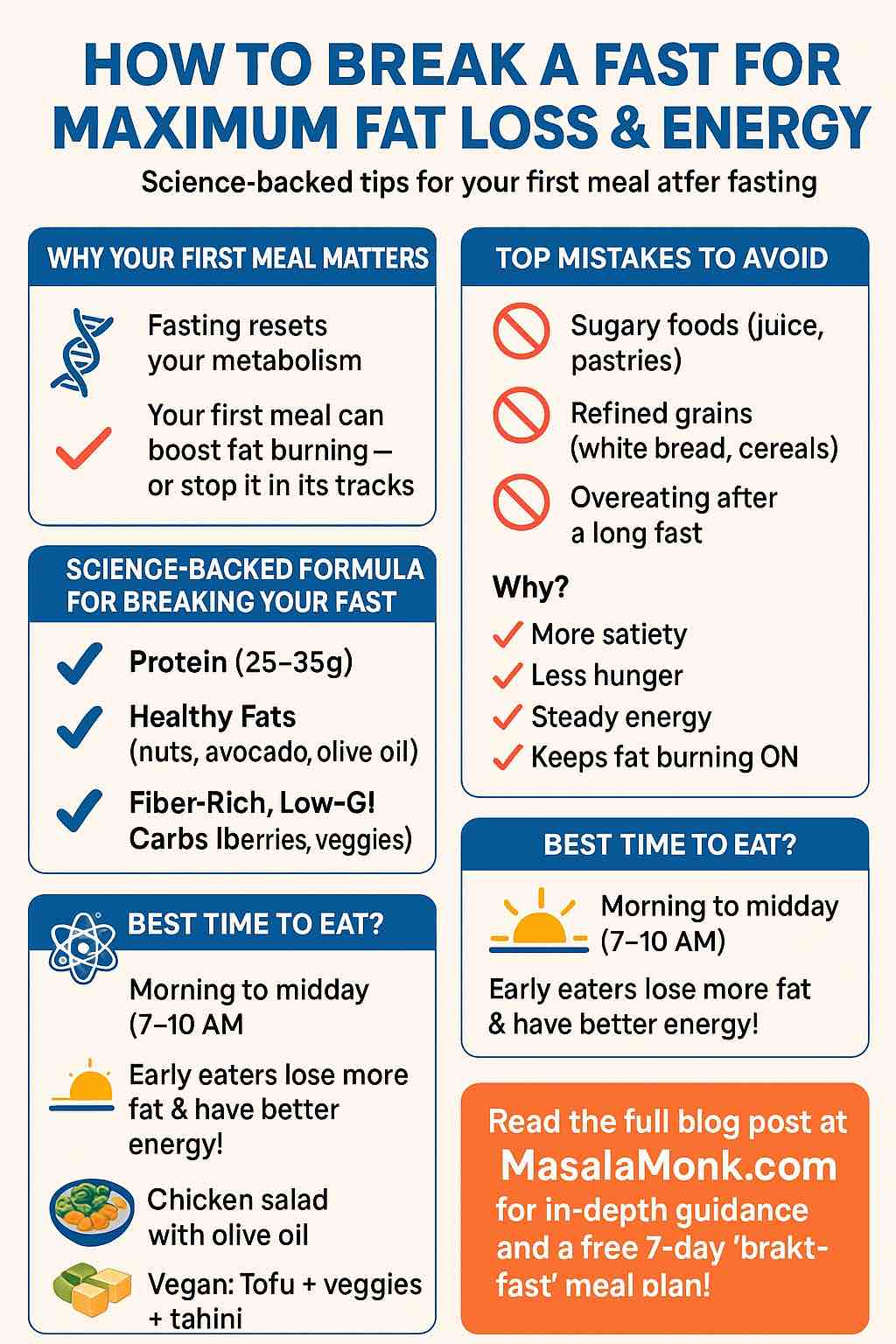
If you’ve ever agonized over this—or if you’ve ever felt weirdly sleepy, bloated, or ravenous after a meal that was supposed to leave you energized—you’re not alone. The truth is, how you break your fast matters just as much as when you fast. The latest research shows that your first meal after fasting can “set the tone” for your metabolism, fat burning, and energy for the rest of the day.

In this detailed guide, we’ll dive deep into the science and practice of breaking a fast for optimal fat loss and sustained energy. You’ll learn what actually happens in your body during a fast, which foods and combinations are best, common mistakes to avoid, and get real-life meal examples you can try today.


Section 1: The Science of Fasting—Why Breaking the Fast Matters

When you fast—whether it’s a simple overnight fast, intermittent fasting (like 16:8 or 18:6), or even an extended fast—your body undergoes major metabolic shifts:

  • Glycogen stores are depleted, and your body begins to mobilize fat for fuel.
  • Insulin levels drop, making your body more insulin-sensitive (a good thing for fat loss).
  • Autophagy (cellular cleaning) ramps up, especially after 16–24 hours.

But when you break your fast, your body becomes like a sponge—primed to absorb nutrients, restore glycogen, and recalibrate your metabolism for the hours ahead. The type of food you eat first can either:

  • Sustain fat burning and stable energy, or
  • Trigger a sharp blood sugar spike, leading to fatigue, hunger, and fat storage.

Why the First Meal is Critical

Research in 2025 confirms that:

  • The composition of your first meal after fasting determines your insulin and glucose response for hours.
  • Early time-restricted eating (eating more calories earlier in the day) leads to greater fat loss and metabolic benefits compared to late-night eating .
  • Protein and fat, consumed first, can dampen blood sugar spikes and keep you in a “fat-burning” mode longer .

Section 2: The Biggest Mistakes People Make When Breaking a Fast

Before we get practical, let’s bust a few myths and mistakes:

Mistake 1: Eating High-Sugar Foods or Juices First

Your gut and metabolism are sensitive after fasting. Starting with sweet foods, refined carbs, or fruit juices causes rapid glucose absorption, which spikes insulin and halts fat burning.

Mistake 2: Overeating or Bingeing

Many people feel ravenous after fasting and overdo it. Research shows this can cause bloating, GI distress, and a crash in energy as your body struggles to process a large meal all at once.

Mistake 3: Breaking Fast with “Fast” Foods

Ultra-processed foods (bars, pastries, “breakfast cereals”, etc.) are tempting but often loaded with sugar, unhealthy fats, and additives that sabotage metabolic health.

Mistake 4: Ignoring Protein and Healthy Fats

Meals that are too carb-heavy (even healthy carbs) can leave you hungry again soon. Protein and fats are key for satiety and energy.


Section 3: Research-Backed Principles for Breaking a Fast

Let’s translate the latest science into practical, simple rules:

1. Start with Protein

  • Protein triggers a lower insulin response than carbs, supports muscle maintenance, and signals satiety to your brain.
  • 2024–2025 studies show that 25–35g of high-quality protein in your first meal after fasting can help maintain lean mass while promoting fat loss.

2. Add Healthy Fats

  • Healthy fats (avocado, nuts, olive oil, fatty fish, seeds) help slow the absorption of nutrients and keep blood sugar stable.
  • They also provide longer-lasting energy, especially when you’re still using fat for fuel.

3. Include Fiber-Rich, Low-Glycemic Carbs

  • Fiber slows digestion and helps avoid sharp glucose spikes.
  • Low-GI carbs—like berries, leafy greens, legumes—support gut health and provide steady energy.

4. Sequence Meals Properly

  • After longer fasts (20+ hours), start gently: bone broth, a few nuts, or a small protein portion.
  • Wait 15–30 minutes, then eat a full, balanced meal.

5. Hydrate and Replenish Electrolytes

  • Water, herbal tea, or a pinch of sea salt can help offset any dehydration from fasting.
  • Especially important after 16+ hour fasts.

Section 4: What the Latest Research (2024–2025) Says

Let’s dig into new findings:

A. Intermittent Fasting Works—But Meal Timing is Key

A 2025 Annals of Internal Medicine study found that people practicing 4:3 fasting (three “fasting” days a week) lost more weight and improved their blood pressure, cholesterol, and glucose than those simply cutting daily calories . Interestingly, adherence (how well people stuck to the plan) was higher in the fasting group.

B. Early Eating Windows Enhance Fat Loss

Multiple studies (Spain, Iran, UK) confirm that eating most of your calories before 3–4 PM boosts fat loss, insulin sensitivity, and even mood .

C. Protein & Fat for Stable Energy

Research published in Nutrients (June 2025) demonstrates that starting your eating window with protein and fat (instead of just carbs) reduces the risk of reactive hypoglycemia (blood sugar crashes) and increases satiety throughout the day.

D. Fasted Exercise = More Fat Burn

A May 2025 clinical trial shows that people who work out in a fasted state (especially morning) burn more fat and have better triglyceride responses post-meal.


Section 5: Practical Steps—How to Break a Fast for Fat Loss & Energy

Let’s pull it all together. Here’s a step-by-step process you can follow, whether you’re fasting for 14 hours or doing occasional 24-hour fasts.

Step 1: Hydrate

  • Drink 8–16 oz (250–500 ml) of water upon waking and before your first meal.
  • Add a pinch of Himalayan salt or electrolyte powder if you’ve been fasting longer than 16 hours.

Step 2: Ease In (For Long Fasts)

  • If you fasted 20+ hours, start with something gentle:
    • A cup of bone broth
    • A few almonds or walnuts
    • 1 boiled egg

Step 3: Build Your Main Meal

  • Protein (25–35g):
    • 3–4 eggs
    • Greek yogurt or cottage cheese (unsweetened)
    • Chicken, turkey, fish, or tofu
  • Healthy Fat (15–25g):
    • 1/2 avocado
    • 1–2 tbsp olive oil
    • A small handful of nuts
  • Fiber/Low-GI Carbs (10–20g):
    • 1 cup berries
    • 2 cups spinach, kale, broccoli, or other non-starchy vegetables
    • 1/2 cup legumes (chickpeas, black beans) if tolerated

Optional: Add fermented foods (sauerkraut, kimchi, kefir) for gut health.

Step 4: Eat Slowly, Chew Well

Your digestive system is “waking up” after a break—give it time to signal fullness.

Step 5: Monitor Your Energy and Hunger

  • You should feel satisfied but not stuffed.
  • Energy should remain steady for 3–5 hours after eating.

Section 6: Sample Meal Ideas to Break Your Fast

Example 1: The “Power Plate”

  • 3 eggs scrambled with spinach and tomatoes (protein + fiber)
  • 1/2 avocado (healthy fat)
  • Small bowl of berries (low-GI carbs)
  • Sprinkle of pumpkin seeds (extra minerals and crunch)

Example 2: Savory Yogurt Bowl

  • 1 cup Greek yogurt (unsweetened, high protein)
  • 1 tbsp chia seeds + 1 tbsp walnuts (fiber & fat)
  • 1/2 cup mixed berries
  • Dash of cinnamon and a sprinkle of salt

Example 3: Simple Lunch-Style Break-Fast

  • 4 oz grilled chicken breast
  • 1–2 cups mixed salad greens + cherry tomatoes, cucumber, bell pepper
  • 2 tbsp olive oil vinaigrette
  • Small handful of almonds

Example 4: Vegan/Plant-Based

  • 1 cup cooked lentils with sautéed kale and red onion
  • Drizzle of tahini
  • Side of fresh orange slices or berries

Section 7: Foods to Avoid When Breaking a Fast

  • Sugary foods and drinks: Fruit juice, sweetened yogurt, pastries, candy.
  • Refined grains: White bread, white rice, most breakfast cereals.
  • Ultra-processed snacks: Chips, bars, crackers made with refined flour and oils.
  • Large fatty meals: (especially if fasting >24 hours) Too much fat can cause GI upset; add fats gradually.
  • Alcohol: Rapidly absorbed after fasting, impairs metabolism.

Section 8: What About Coffee, Supplements, and Other Diets?

Can I break my fast with coffee?

  • Black coffee is fine during a fast and won’t break it. To break your fast, pair coffee with a protein-rich meal or add a splash of unsweetened milk/cream.

Should I take supplements when breaking a fast?

  • Magnesium, potassium, and sodium are helpful if you fast >16 hours.
  • Multivitamins can be taken with your meal for best absorption.

What if I’m keto, paleo, or plant-based?

  • The same principles apply! Focus on protein, healthy fats, and fiber.
  • For keto: Stick to leafy greens and low-carb veggies; avoid grains/legumes.
  • For plant-based: Choose tofu, tempeh, lentils, beans as protein; add nuts and seeds for fat.

Section 9: Myth-Busting—Breaking a Fast

Myth: “Any calorie breaks my fast.”
Fact: Most metabolic benefits of fasting (fat burning, autophagy) aren’t reversed by a few calories—especially from protein or fat. However, carbs (especially sugar) rapidly end the fasted state.

Myth: “Fasting means skipping breakfast.”
Fact: Breakfast just means “breaking the fast”—the time of day is less important than the quality and timing of your first meal.

Myth: “Fruit juice is a healthy way to break a fast.”
Fact: Juice is mostly sugar with little fiber; it spikes blood sugar and halts fat burning.


Section 10: The Takeaway—A Simple Action Plan

To break your fast for optimal fat loss and sustained energy:

  1. Hydrate first.
  2. Prioritize protein (25–35g in your first meal).
  3. Add healthy fats for satiety and slow energy.
  4. Choose low-GI, fiber-rich carbs (berries, greens, legumes).
  5. Eat most calories earlier in the day—avoid late-night meals.
  6. Move your body—try a fasted morning walk or workout.
  7. Monitor your body—adjust portions and macros to your energy and hunger.

Section 11: Your Next Steps—A Week of Break-Fast Meals

To make it easy, here’s a simple 7-day “break-fast” meal plan you can rotate:

DayMeal Example
Monday3 eggs + spinach, tomato, olive oil + ½ avocado + berries
TuesdayGreek yogurt + chia + walnuts + berries + sprinkle of hemp seeds
WednesdayTofu scramble + kale + bell pepper + salsa + ½ avocado
ThursdayChicken breast + arugula salad + olive oil + pumpkin seeds
FridayCottage cheese + sliced cucumber + olive oil + cherry tomatoes
SaturdayLentil stew + broccoli + tahini drizzle
Sunday2 boiled eggs + small apple + almond butter

Adjust portion sizes for your goals and preferences.


Conclusion

Fasting can be a powerful tool for fat loss, health, and focus—but only if you break your fast wisely. New science shows the first foods you eat matter: protein, healthy fats, and fiber-rich carbs help you sustain energy, avoid hunger, and keep burning fat all day long.

Start slow, choose real foods, and listen to your body. The results? More energy, better moods, and—if that’s your goal—sustained, healthy fat loss.

Ready to try it? Let me know your favorite “break-fast” meal or questions in the comments!

If you enjoyed this post, share it with your friends—or try one of the meals above and tag us with your results!

10 Frequently Asked Questions (FAQs)

1. What should I absolutely avoid when breaking a fast?
Avoid sugary foods (like juice, pastries), refined grains (white bread, most cereals), and ultra-processed snacks. These spike your blood sugar, trigger hunger, and halt fat burning.

2. Is it okay to break a fast with fruit?
Whole fruit is better than fruit juice, but keep portions small and combine with protein/fat to blunt blood sugar spikes. Berries or half an apple with nuts or Greek yogurt work well.

3. Can I drink coffee or tea while fasting or to break my fast?
Black coffee and unsweetened tea are fine during fasting. To break your fast, enjoy them with your meal, but avoid adding sugar or high-calorie creamers.

4. How much protein should I aim for in my first meal after fasting?
Aim for 25–35 grams of high-quality protein (about 3–4 eggs, 1 cup Greek yogurt, or a palm-sized portion of meat/fish).

5. Should I eat carbs in my first meal after fasting?
Include low-glycemic, fiber-rich carbs like berries, legumes, or vegetables. Avoid high-sugar or starchy carbs when breaking your fast.

6. Can I break a fast with a workout shake or bar?
Most commercial shakes and bars are high in sugar and low in nutrients. If using, choose one with no added sugars, moderate protein, and healthy fats.

7. What’s the best time of day to break my fast?
Early morning to midday (e.g., 7–10 AM) aligns best with your body’s circadian rhythms and supports optimal fat loss and energy.

8. What if I feel weak or dizzy after breaking a fast?
This may be due to dehydration or rapid blood sugar changes. Hydrate before eating, eat slowly, and ensure you include some healthy fats and protein.

9. How can I break a fast if I follow a vegan or plant-based diet?
Opt for tofu, tempeh, lentils, beans, nuts, and seeds for protein and fat. Pair with leafy greens or non-starchy vegetables.

10. Will breaking my fast with fat (like bulletproof coffee) keep me in fat-burning mode?
Adding only fat (e.g., butter/MCT oil in coffee) provides energy but doesn’t offer protein or fiber. For best results, combine fats with protein and fiber for satiety and metabolic health.

Posted on 6 Comments

Morning Metabolism Boost: 5 Green Tea & Spice Infusions for Weight Loss

Green Tea & Spice Morning Boosters

Wake Up, Fire Up: Start Your Day with a Natural Metabolic Kick

Ever wished you could start your day with something that actually helps your metabolism wake up, not just your brain? You’re in good company. Science shows certain herbs, teas, and spices can give your morning routine the edge you need—supporting weight loss, boosting energy, and making those early hours a little more exciting.

If you’re looking for real results (not fad-diet hype), let’s explore 5 green tea and spice infusions that have stood up to recent scientific scrutiny and offer practical, tasty ways to jumpstart your day.


Why Green Tea & Spices?

Green tea isn’t just your grandmother’s beauty secret. Loaded with antioxidants called catechins (especially EGCG) and a gentle dose of caffeine, green tea supports thermogenesis (your body’s calorie-burning engine) and fat oxidation. But add a few choice spices—like ginger, cinnamon, turmeric, black pepper, and cayenne—and you unlock a blend of natural chemicals that work together for even better effects.

Here’s the Science in Simple Terms:

  • Thermogenesis: These teas & spices raise your internal body temperature, making your body burn more calories to maintain balance.
  • Fat Oxidation: Green tea catechins and capsaicin from cayenne help your body use fat as energy.
  • Appetite Regulation: Ginger, cinnamon, and mint can help curb those morning cravings, making it easier to stick to your goals.
  • Blood Sugar Balance: Cinnamon and turmeric stabilize glucose swings that can drive overeating.

Bottom Line: These ingredients don’t melt fat magically, but they nudge your metabolism in the right direction—especially when paired with good habits.


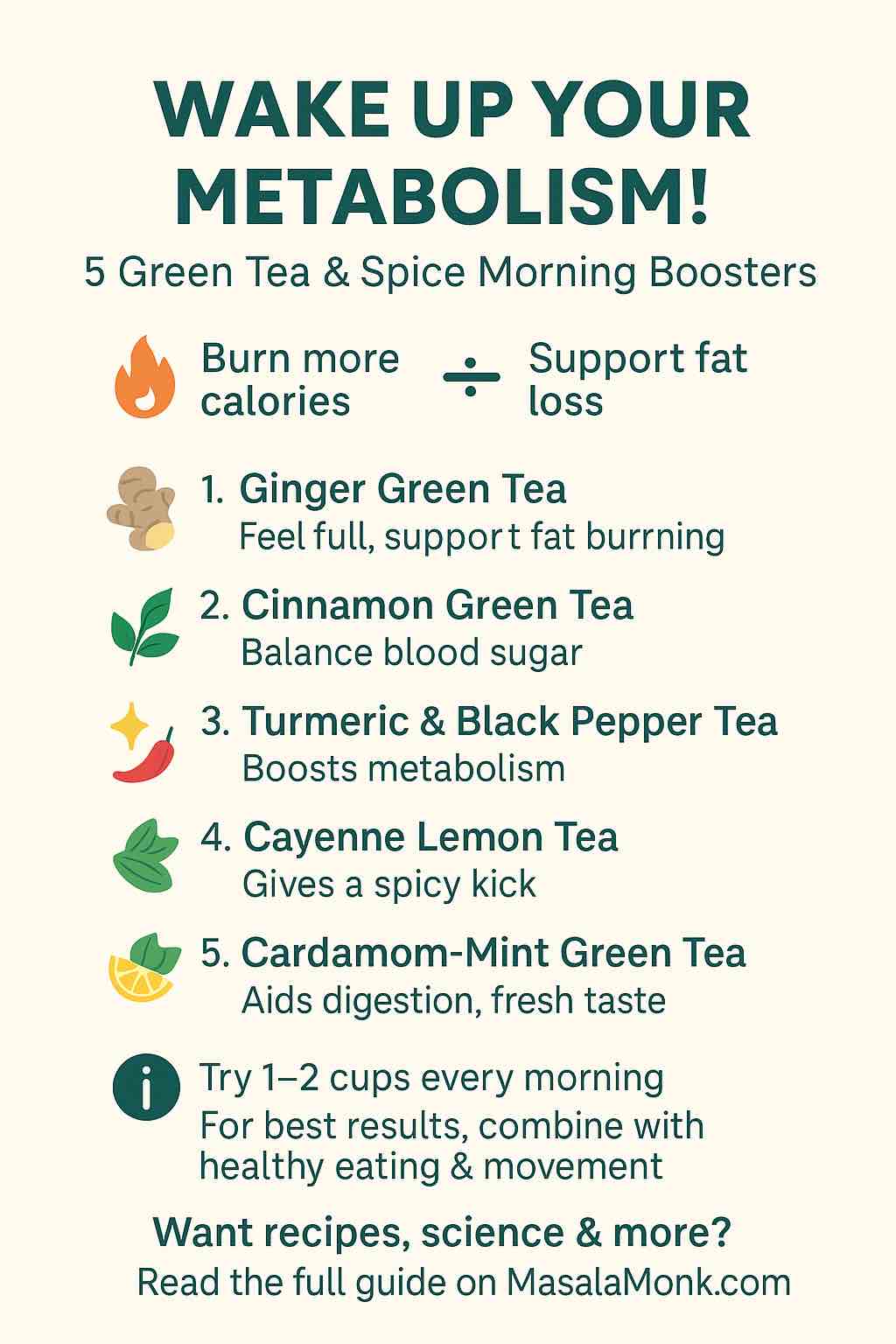
The Five Powerhouse Morning Infusions

Let’s get practical. Here are five easy, delicious, research-backed recipes for your morning mug. Each comes with its own science-backed edge, so you can rotate them or pick your favorite.


1. Ginger Green Tea

Why it works: Ginger boosts thermogenesis, tames inflammation, and helps you feel full.

Recipe:

  • 1 green tea bag or 1 tsp loose green tea
  • 1 tsp freshly grated ginger (or ½ tsp dried ginger)
  • 1 cup freshly boiled water

How-to:
Steep green tea and ginger together for 5 minutes. Add a squeeze of lemon for extra vitamin C.

Science Snap:
A 2024 meta-analysis (27 human trials!) showed ginger (2g/day) reduces body weight, waist size, and appetite when used consistently.


2. Cinnamon Green Tea

Why it works: Cinnamon helps control blood sugar and may curb fat storage.

Recipe:

  • 1 green tea bag
  • ½ to 1 tsp ground Ceylon cinnamon or 1 stick cinnamon
  • 1 cup hot water

How-to:
Steep the tea and cinnamon together for 5 minutes. Remove the stick if using. Sweeten with a little stevia or honey if desired.

Science Snap:
Meta-analyses confirm regular cinnamon intake reduces BMI and waist circumference, with effects visible in just a few weeks.


3. Turmeric & Black Pepper Green Tea

Why it works: Turmeric is anti-inflammatory; black pepper’s piperine increases the bioavailability of curcumin, turmeric’s active ingredient.

Recipe:

  • 1 green tea bag
  • ¼ tsp ground turmeric
  • Pinch of black pepper
  • 1 cup hot water

How-to:
Steep all together for 4–5 minutes. Add a dash of honey or a slice of orange for flavor.

Science Snap:
Clinical reviews up to 2025 show this combo improves metabolic health, aids fat loss, and even boosts mood in some participants.


4. Cayenne Lemon Green Tea

Why it works: Capsaicin from cayenne ramps up calorie burn and may reduce hunger.

Recipe:

  • 1 green tea bag
  • Pinch of cayenne pepper (start small!)
  • Juice of ½ fresh lemon
  • 1 cup hot water

How-to:
Steep tea and cayenne together for 3–5 minutes. Add lemon juice last. Sip slowly.

Science Snap:
RCTs suggest 2–4mg of capsaicin daily can decrease body fat over 8–12 weeks—but go easy to avoid stomach upset.


5. Cardamom-Mint Green Tea

Why it works: Cardamom supports digestion and metabolism; mint refreshes and may help curb appetite.

Recipe:

  • 1 green tea bag
  • 2 lightly crushed cardamom pods or ¼ tsp ground cardamom
  • Handful of fresh mint leaves
  • 1 cup hot water

How-to:
Steep tea, cardamom, and mint together for 5 minutes. Enjoy warm or as an iced tea.

Science Snap:
While not as heavily studied as the other spices, both cardamom and mint have shown benefits in digestion and appetite suppression.


How to Use These Infusions for Best Results

Consistency matters:
Drink one of these infusions every morning, ideally before breakfast or mid-morning. You can rotate recipes to keep things interesting and maximize benefits.

Keep it safe:

  • 2–3 cups per day is a reasonable upper limit for most people.
  • If you’re sensitive to caffeine, try decaf green tea—some benefits remain.
  • Pregnant/nursing, on blood thinners, or with gallstones? Check with your doctor before adding a lot of green tea, turmeric, or ginger.

Pair with:

  • A high-protein breakfast or balanced meal for lasting satiety and energy.
  • A few minutes of gentle movement (walk, stretches, yoga) to synergize metabolic effects.

What NOT to do:

  • Don’t over-sweeten. Try stevia, monk fruit, or a tiny drizzle of honey if needed.
  • Don’t expect miracles without healthy eating and movement.
  • Don’t use green tea extract supplements unless guided by a healthcare pro—stick with brewed tea.

Frequently Asked Questions

1. Can I use any type of green tea for these infusions?

Answer:
Yes, you can use any unsweetened green tea—loose leaf, bagged, or matcha. Just avoid flavored or pre-sweetened teas, which may have additives or sugar that reduce the health benefits.


2. Is it okay to add sweetener to these infusions?

Answer:
You can add a small amount of natural sweetener like honey, stevia, or monk fruit if needed. Try to limit added sugars, as they can counteract some weight loss benefits. Taste first; many find the spices provide enough flavor!


3. How long should I steep the spices with the tea?

Answer:
Most spices and green tea steep best together for 4–5 minutes. For a stronger flavor, let spices steep longer and add the tea bag in the last 2–3 minutes to avoid bitterness.


4. Can I drink these teas if I’m sensitive to caffeine?

Answer:
Absolutely! Use decaf green tea or even a mild white tea as a substitute. While some metabolic benefits come from caffeine, the spices themselves offer plenty of support.


5. How soon will I see results from drinking these infusions?

Answer:
Visible results typically occur after 8–12 weeks of consistent daily use, combined with a balanced diet and regular exercise. These infusions support healthy habits but aren’t quick fixes.


6. Are there any side effects I should be aware of?

Answer:
Most people tolerate these ingredients well in moderation. However, high amounts of green tea can cause jitteriness, and spices like cayenne may cause digestive discomfort if overused. Those on blood thinners, pregnant, or with certain medical conditions should consult a healthcare provider.


7. Can I prep these infusions ahead of time?

Answer:
Yes! You can brew a larger batch and refrigerate for up to 2 days. Just shake or stir before drinking, as some spices may settle.


8. Do I need to use fresh spices or are dried/powdered okay?

Answer:
Both fresh and dried spices work. Fresh may provide a more vibrant flavor and slightly higher antioxidant content, but powdered versions are very effective and convenient.


9. Can I drink more than one infusion a day?

Answer:
You can, but limit total green tea intake to 3–4 cups per day to avoid excess caffeine. Feel free to alternate different infusions on different days, or enjoy a cup in the morning and another in the afternoon.


10. Will these infusions interact with my medications?

Answer:
Some ingredients (especially green tea, turmeric, ginger, and cinnamon) can interact with certain medications, such as blood thinners, diabetes drugs, or blood pressure meds. Always check with your healthcare provider before starting any new herbal routine if you’re on medication.

The Bottom Line

Green tea and spice infusions are an easy, tasty, and research-backed way to give your metabolism a gentle nudge each morning. While none of these are “magic,” the habit itself is powerful—and you’ll get bonus benefits for your mood, gut, and immune system.

Why not pick your favorite and try it tomorrow morning?
If you’re looking for more tips, recipes, or science, leave a comment or reach out—I’m always happy to dig up more details for you!


Sources & Further Reading


Ready to supercharge your morning?
Pick a recipe, try it for a week, and notice how you feel—your metabolism just might thank you.