
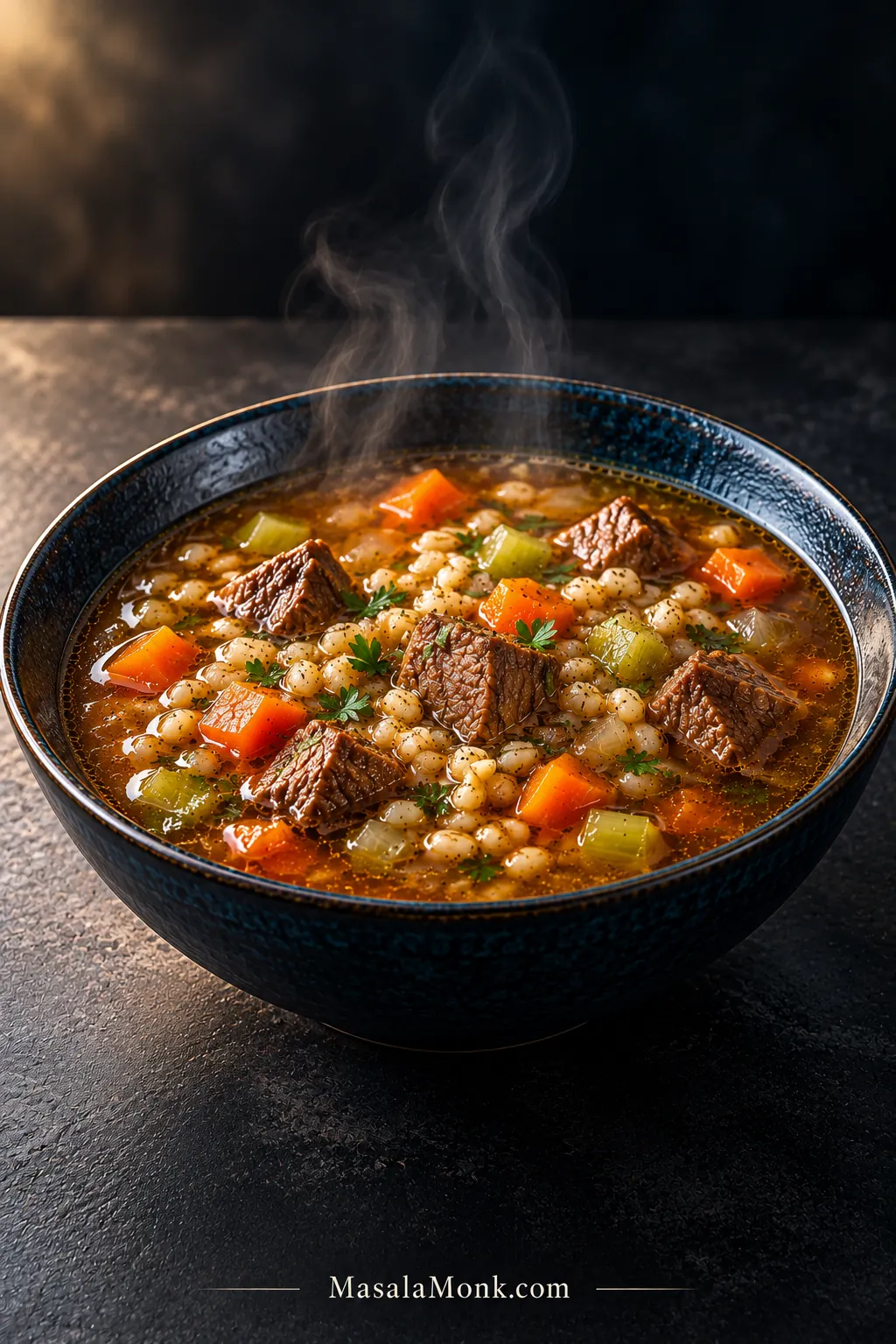
A good beef barley soup recipe should give you tender pieces of beef, plump pearl barley with a little chew, carrots and celery that keep their shape, and enough deeply savory broth for the bowl to remain unmistakably soup. The best spoonful catches a little of everything, with dark broth settling back around the beef and grain instead of disappearing into them.
The tricky part is that those ingredients do not finish on the same schedule. This version browns the chuck in batches, gives the beef a head start, then brings in the barley and vegetables according to how long they actually need. The flavors stay classic—beef, barley, onion, carrots, celery and herbs—but the timing is more deliberate, which helps prevent rubbery beef, overdone vegetables and a pot that quietly turns into barley stew.
Quick Answer: Give the Beef a Head Start
Brown the chuck and simmer until it has clearly begun softening. Add the pearl barley, then add the carrots and celery when the barley has about 20-25 minutes left to cook. Use 3/4 cup (about 160 g) barley for a substantial soup that remains brothy, and adjust the final consistency with reserved broth.
Before the Pot Goes On
- Beef: boneless chuck roast, cut into 3/4-inch (2 cm) pieces.
- Barley: regular pearl barley, sometimes sold as medium pearled barley; not quick-cooking barley.
- Pot: 5 1/2- to 6-quart (about 5.2-5.7 L) Dutch oven or heavy soup pot.
Make the Soup: Tender Beef Barley Soup
Ingredients
- 2 lb (900 g) boneless beef chuck roast, trimmed of thick hard exterior fat and cut into 3/4-inch (2 cm) pieces
- 1 1/4 teaspoons fine sea salt, divided, plus more to taste; this is a starting point for low-sodium broth
- 1 teaspoon freshly ground black pepper, divided
- 2 tablespoons (30 ml) neutral cooking oil, plus a little more if needed between batches
- 1 large yellow onion, about 8-9 oz (225-255 g), chopped
- 4 garlic cloves, minced
- 1 tablespoon (about 16 g) tomato paste
- 1/2 cup (120 ml) dry red wine, such as Cabernet Sauvignon, Merlot or Pinot Noir, optional; if omitted, use an additional 1/2 cup (120 ml) beef broth in addition to the 7 cups below
- 7 cups (1.65 L) low-sodium beef broth
- 1-2 cups (240-480 ml) additional low-sodium beef broth, kept in reserve
- 1 tablespoon (15 ml) Worcestershire sauce
- 1 teaspoon dried thyme or 4 fresh thyme sprigs
- 1 bay leaf
- 3 medium carrots, about 8-9 oz (225-255 g), cut into 1/2-inch (1.25 cm) pieces
- 3 celery ribs, about 5 oz (140 g), cut into 1/2-inch (1.25 cm) pieces
- 3/4 cup (about 160 g) regular pearl barley, rinsed and drained if directed on the package
- 1/4 cup chopped flat-leaf parsley
- Up to 1 teaspoon (5 ml) red wine vinegar or apple cider vinegar, optional, for final adjustment
Brown the Beef
- Dry and season the beef. Pat the chuck very dry. Season with about 3/4 teaspoon of the salt and 1/2 teaspoon of the black pepper.
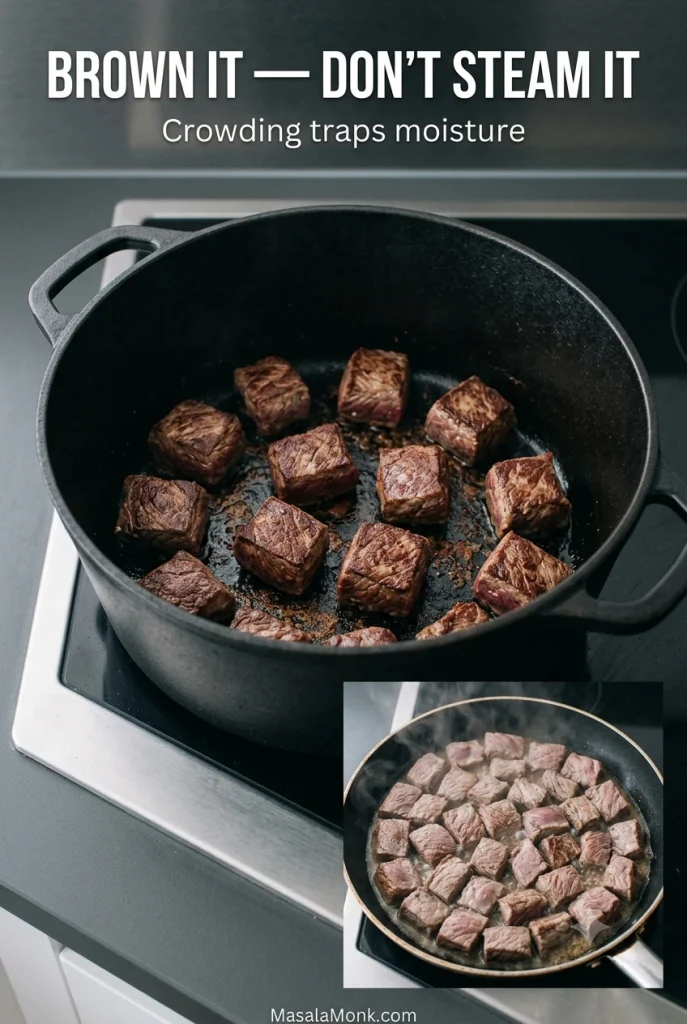
- Brown in batches. Heat 1 tablespoon oil over medium-high heat. Add enough beef for one uncrowded layer. Leave it undisturbed until the underside develops a dark brown crust and releases reasonably cleanly, then turn and brown additional sides. Transfer to a bowl and repeat with the remaining beef, adding the remaining oil as needed.
The beef does not need to cook through here. Look for dark brown patches on the meat and a brown film on the bottom of the pot. Pale, wet-looking beef needs more space. By the end of this step, the pot should smell roasted and beefy rather than steamed.
Build the Broth
- Cook the onion. Reduce the heat to medium. Add the onion and cook for 5-6 minutes, until softened and lightly golden, scraping loose browned bits from the pot.
- Build the savory base. Stir in the garlic and tomato paste and cook for about 1 minute, until fragrant and the paste has darkened slightly. If using wine, add it now, scrape the bottom of the pot well, and let it bubble for 2-3 minutes. Without wine, add 1/2 cup (120 ml) extra beef broth here; this is in addition to the 7 cups used in the next step.
- Start the beef simmer. Return the beef and accumulated juices to the pot. Add 7 cups broth, Worcestershire, thyme, bay leaf, the remaining black pepper and the remaining 1/2 teaspoon salt. Bring just to the edge of a boil, then reduce to a gentle simmer. Partially cover and cook for about 40-45 minutes.
Before You Add the Barley, Check One Piece of Beef
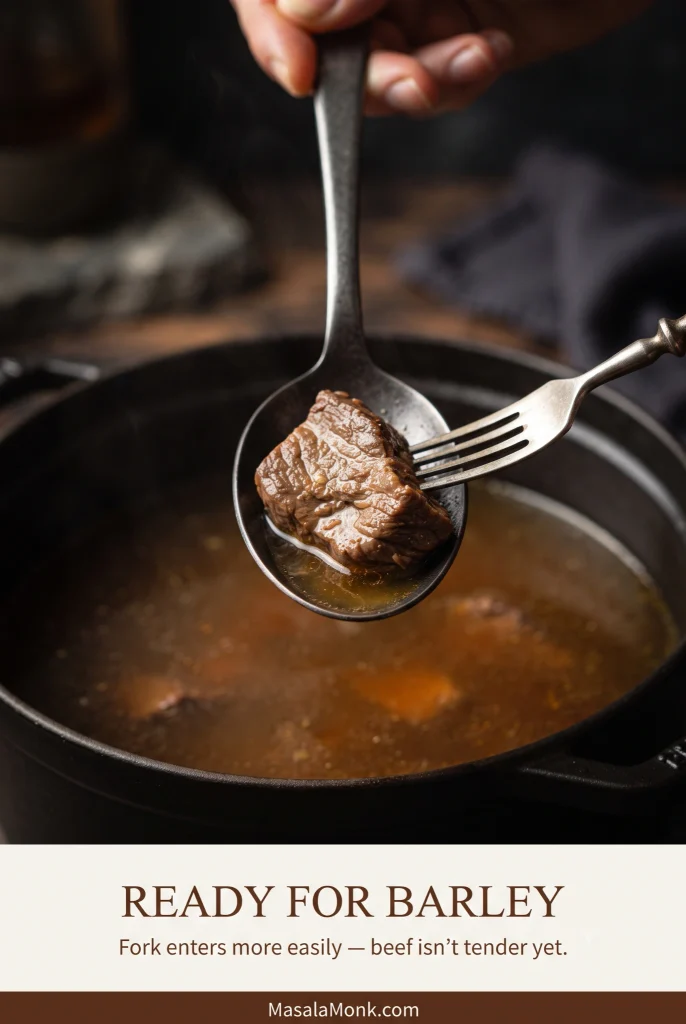
Test one beef cube after about 40-45 minutes. A fork should enter more easily than it did at the start, but the meat does not need to be fully tender yet. If the beef seems stubborn at this point, that is not unusual. Give it another 10-15 minutes, check again, and repeat as needed. Do not add the barley merely because another 15 minutes passed. Wait until the chuck has clearly begun to soften.
Do not rush the chuck.
Add the Barley, Then the Vegetables
- Add the barley. Stir in the pearl barley. The dry amount may look small. Do not add more by eye.
- Add the vegetables when the barley has about 20-25 minutes left to cook. Check the cooking time on your barley. For a 30-35 minute pearl barley, that usually means adding the carrots and celery about 8-10 minutes after the barley goes in. A slower barley simply gets a longer head start.
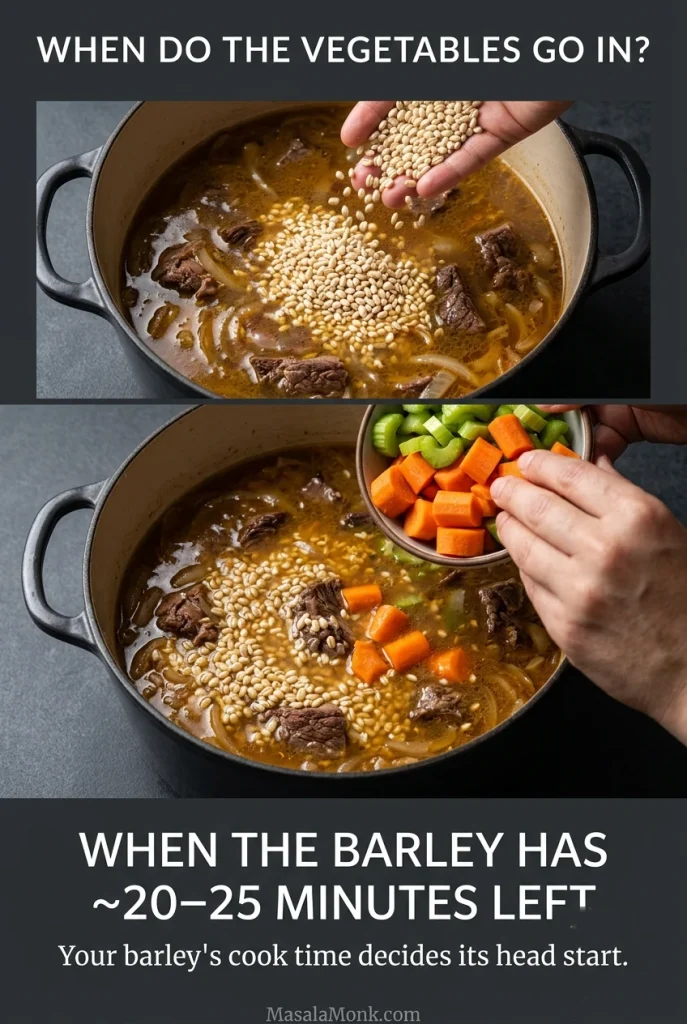
- Cook until the barley is ready. Keep the soup partially uncovered and stir across the bottom every 8-10 minutes so settled grain does not catch. Bite one grain as you approach its expected cooking time. It is ready when the center is tender with a little pleasant resistance left.
Finish the Soup
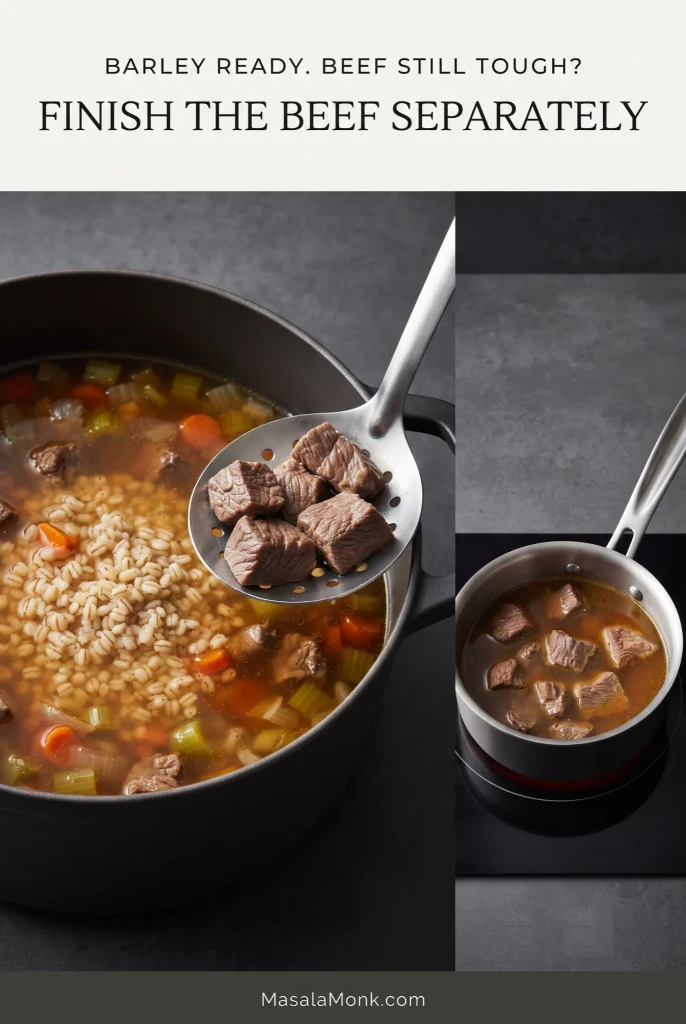
- Check the beef. Bite into a piece. It should give easily, without a rubbery center. If it needs only a few more minutes, leave the whole pot at the gentlest simmer. When the barley is already ready but the beef remains substantially tough, lift out the beef and finish it gently in a little hot broth before returning it to the pot.
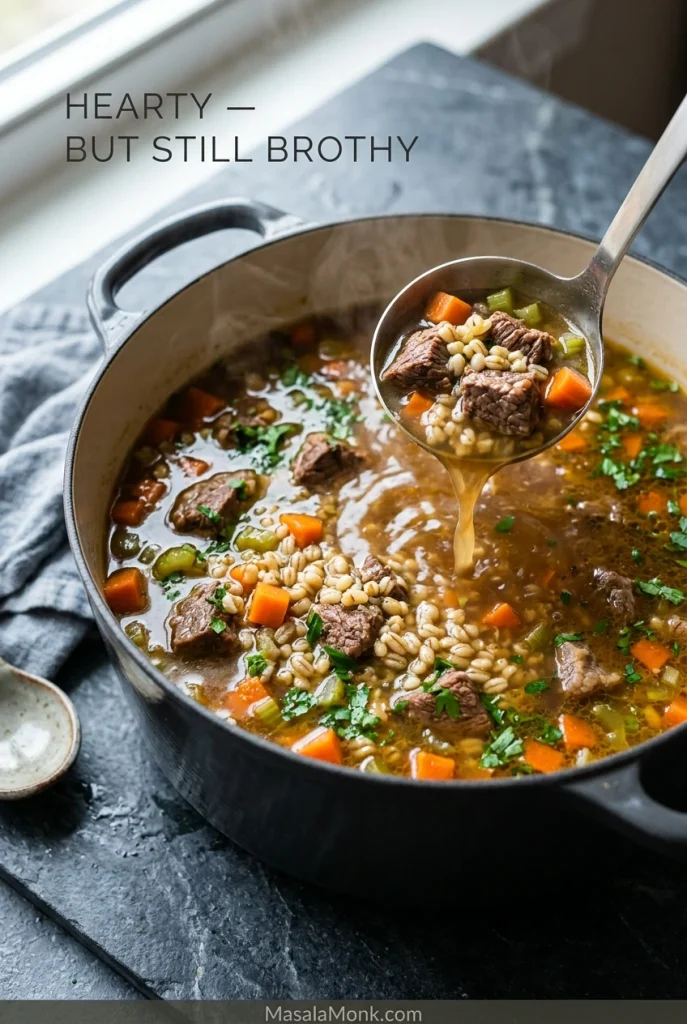
- Set the consistency. Remove the bay leaf and fresh thyme stems. Add hot reserved broth 1/4-1/2 cup (60-120 ml) at a time until liquid moves freely around the beef, vegetables and grain. Drag a ladle through the pot: the broth should close back in behind it instead of leaving a trench. If the soup is too thin, simmer uncovered for a few minutes.
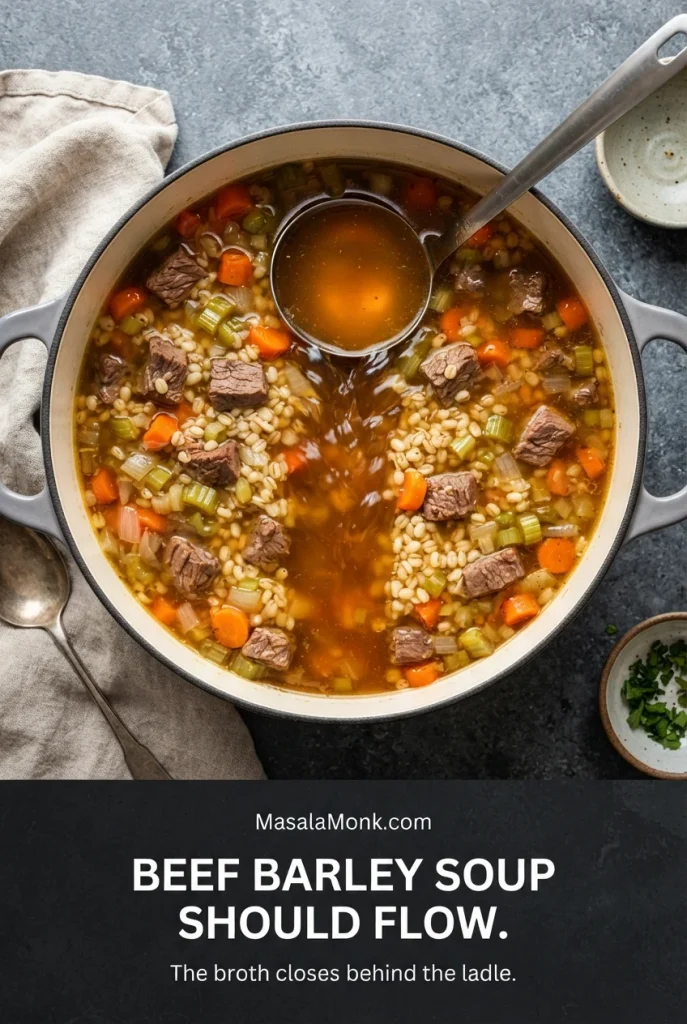
- Season and rest. Taste before adding more salt. Adjust salt and black pepper and stir in the parsley. If the broth is properly salted but tastes rich and dull, add 1/2 teaspoon vinegar, taste, and add more only if needed, up to 1 teaspoon total. Rest for about 5 minutes before serving.
Recipe Notes
- Use regular pearl barley. Different brands can cook at noticeably different speeds, so use the grain’s texture as the final judge.
- Keep broth in reserve. The exact amount needed depends on the barley, simmer and how long the soup stands.
- For multi-day leftovers, cook the barley separately. The make-ahead method below keeps the soup brothier for longer.
A finished spoonful is one last check on the whole pot: beef, barley and vegetables should all feel present, with broth still visible around them.
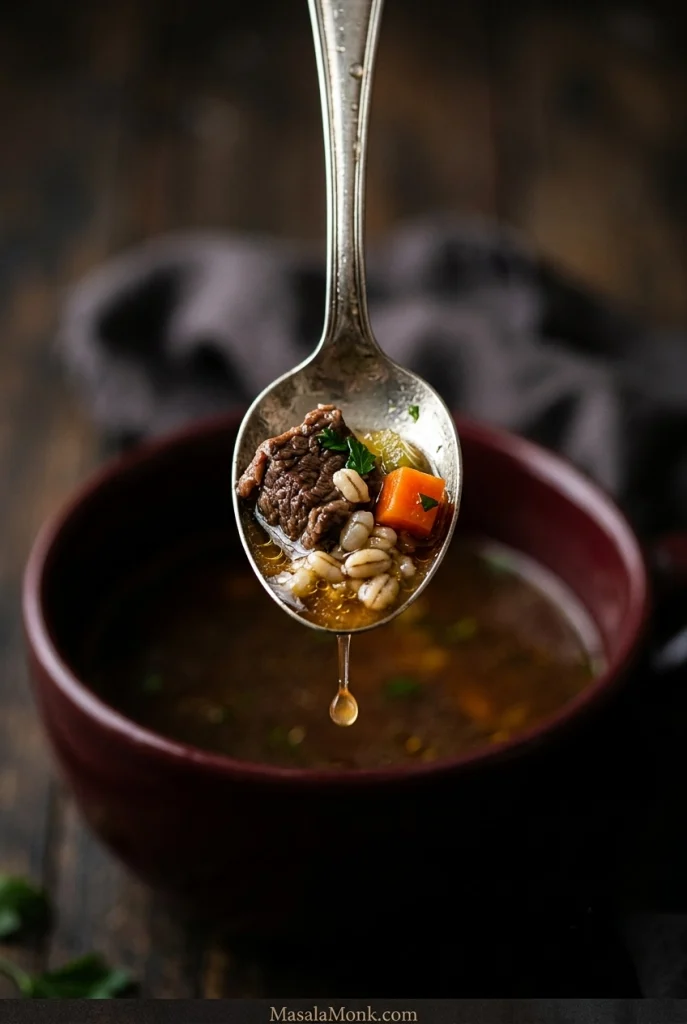
If you are cooking now, the recipe above is all you need. The guide below is for choosing beef and barley, adjusting the final texture, rescuing a pot that behaves differently from the ideal one, or adapting it for another kind of beef.
Beef Barley Soup Guide
What Beef Makes the Best Beef Barley Soup?
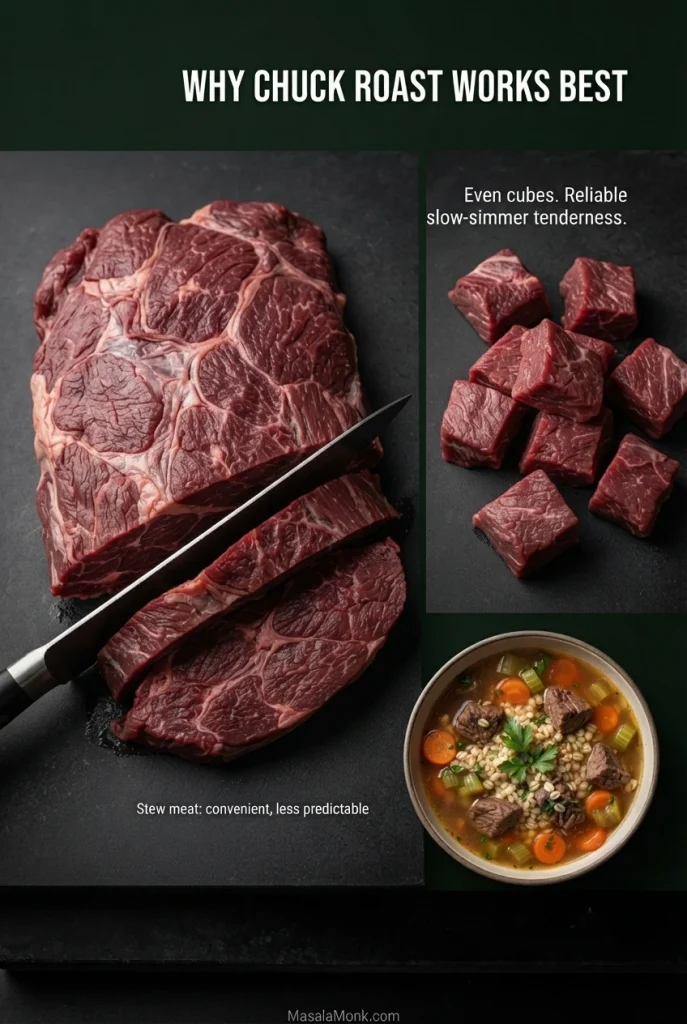
Boneless chuck roast is the best all-around choice because its marbling and connective tissue soften during a long, gentle simmer. Buying a whole roast also lets you cut pieces to a consistent size, which helps them reach tenderness more evenly.
Aim for pieces around 3/4 inch (2 cm). Smaller cubes can lose their presence in the finished bowl; much larger ones may still be firm when the barley is ready. Trim thick hard exterior fat and obvious silverskin, but leave the useful internal marbling.
| Beef | How it behaves here |
|---|---|
| Chuck roast | Preferred. Rich, predictable and suited to a long gentle simmer. |
| Packaged stew meat | Convenient, but less predictable than cutting a chuck roast yourself. |
| Boneless short rib | Rich and tender, but more expensive and often fattier. |
| Beef shank | Excellent beef flavor, but usually needs a longer cooking window. |
| Ground beef | A different, faster soup with browned beef crumbles instead of tender chuck pieces. |
| Cooked roast or brisket | Add near the end so already-tender beef does not dry out. |
| Cooked steak or prime rib | Warm only briefly at the end, especially if you want to preserve a pink center. |
Stew meat works too, but a package can contain several cuts. One cube may turn tender while the next still fights the fork, so check the meat itself instead of expecting every piece to finish together.
Pearl Barley: How Much to Use and When to Add It
Use regular pearl barley for this recipe. It needs no overnight soaking, but cooking time varies considerably with the grain and degree of pearling. Some pearl barley may be tender around the half-hour mark, while other medium pearled barley needs considerably longer. Check the package once, then let texture make the final decision. The Whole Grains Council’s barley guide explains the differences between hulled, pearl and quick barley.
- Regular pearl barley: the recipe default; add it after the beef has clearly begun softening.
- Quick-cooking barley: add it near the end and follow its shorter cooking time.
- Hulled barley: cook it separately according to its package directions, then add it near the end. Its longer cook makes it awkward to synchronize with this soup’s beef and vegetables.
Pearl barley contains gluten, so this soup is not gluten-free.
How Much Barley Changes the Whole Pot
| Dry pearl barley | What the soup becomes |
|---|---|
| 1/2 cup (about 105 g) | Brothier, with beef and vegetables dominating each spoonful. |
| 3/4 cup (about 160 g) | The balance used here: plenty of barley, with broth still moving freely around it. |
| 1 cup (about 210-215 g) | Much more grain-heavy and likely to become stew-like after resting. |
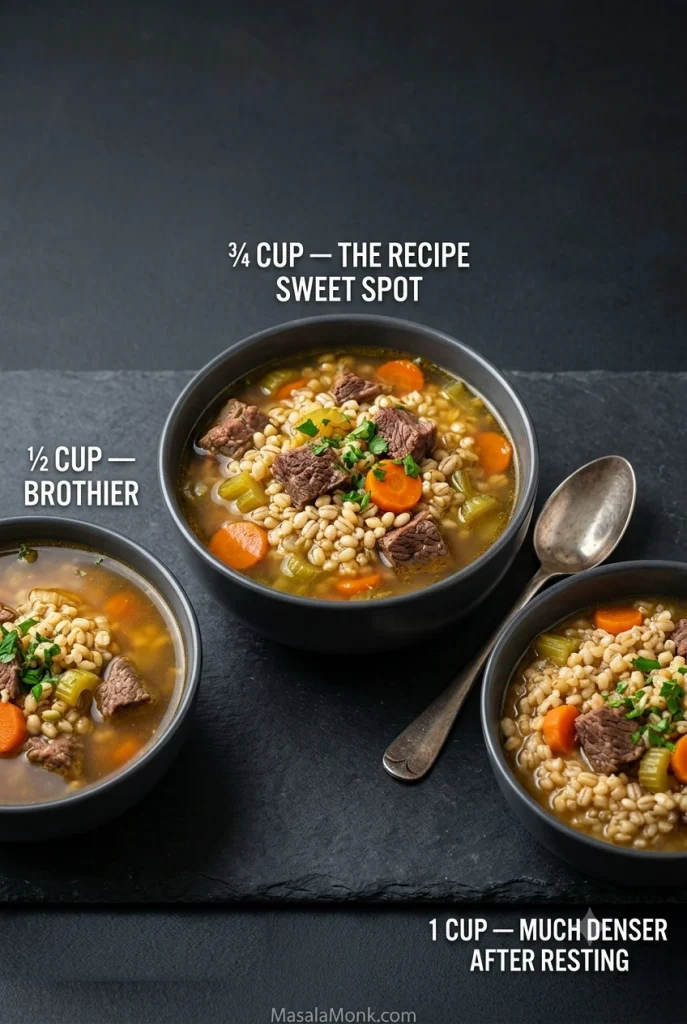
Three-quarters of a cup looks stingy when the barley is dry. It will not look stingy half an hour later. Leave it alone and let it expand before deciding the pot needs more grain.
How Thick Should Beef Barley Soup Be?
Beef barley soup should be hearty enough to satisfy, with broth moving freely between the solids. Tilt a full ladle and you should see liquid run around the beef, vegetables and barley rather than clinging like gravy.
- Too thick now: add hot broth 1/4-1/2 cup (60-120 ml) at a time and stir before deciding whether it needs more.
- Too thin now: simmer uncovered for a few minutes before changing the seasoning.
- Much thicker tomorrow: nothing went wrong. Loosen the soup with broth or water while reheating.
Troubleshooting
The Beef Is Still Tough
Tough does not mean ruined. Keep the soup at a gentle simmer and check another piece in 10-15 minutes. Repeat until the fork enters reasonably easily. A hard boil is not the fix; give the chuck time.
The Barley Is Ready but the Beef Is Still Tough
If the beef needs only a few more minutes, leave the whole pot at the gentlest simmer. Substantially tough beef needs its own finish: lift out the pieces, put them in a small saucepan with enough hot soup broth to come partway up the meat, simmer gently until tender, then return everything to the pot. The grain and vegetables can stop cooking while the chuck catches up.
The barley swallowed all the broth.
Add hot broth 1/4-1/2 cup (60-120 ml) at a time until the soup looks properly brothy again, then taste for salt.
The vegetables are falling apart.
There is no way to restore their shape once they are soft. Next time, add them when the barley has 20-25 minutes left to cook.
The broth tastes flat.
Check salt first. Properly salted but lacking savory depth? Add 1/2 teaspoon Worcestershire, taste, then add more only if needed. If the broth tastes rich and heavy, try 1/2 teaspoon red wine vinegar or apple cider vinegar instead. The vinegar should brighten the broth without announcing itself.
| Smaller problem | Likely fix |
|---|---|
| Barley is still hard | Keep simmering gently and add broth if needed. Give the grain the time it needs. |
| Barley is mushy | It cooked too long or quick barley was used. Loosen the soup with broth; the grain’s bite cannot be restored. |
| Soup is greasy | Skim surface fat. Next time trim thick hard exterior fat and avoid unnecessary extra oil. |
| Soup is too salty | Dilute with unsalted broth or water, then taste again. |
| Barley is sticking | Lower the heat and scrape across the bottom regularly after the grain goes in. |
| Broth looks cloudy or foamy | This is usually harmless coagulated protein from the beef. Skim it if you prefer a clearer-looking broth. |
Variations That Need Different Timing
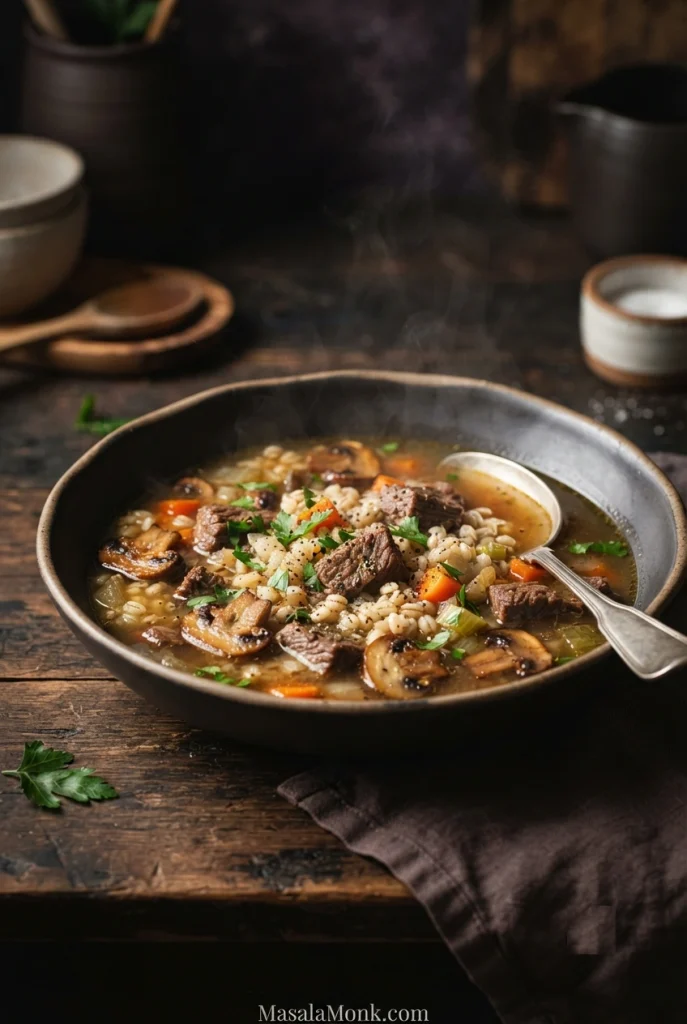
Beef Mushroom Barley Soup
For noticeable mushroom flavor without overwhelming the beef, use about 8 oz (225 g) sliced cremini or button mushrooms. Brown the beef first and remove it. If the pot looks dry, add 1-2 teaspoons oil, then cook the mushrooms until their released moisture has evaporated and real browning begins. Remove the mushrooms and cook the onion as written.
Continue with the broth and beef as written, then return the mushrooms for the final 10-15 minutes. Want mushrooms to play a bigger role? Increase them to 12-16 oz (340-450 g).
Using Leftover Roast Beef or Brisket
Use about 1 1/2 lb (680 g) chopped or cubed cooked roast beef or brisket. Build the broth without the long chuck-tenderizing phase, then cook the barley as directed.
Add the carrots and celery when the grain has about 20-25 minutes left. Stir in the cooked roast or brisket for only the final 5 minutes or so, just long enough to heat through.
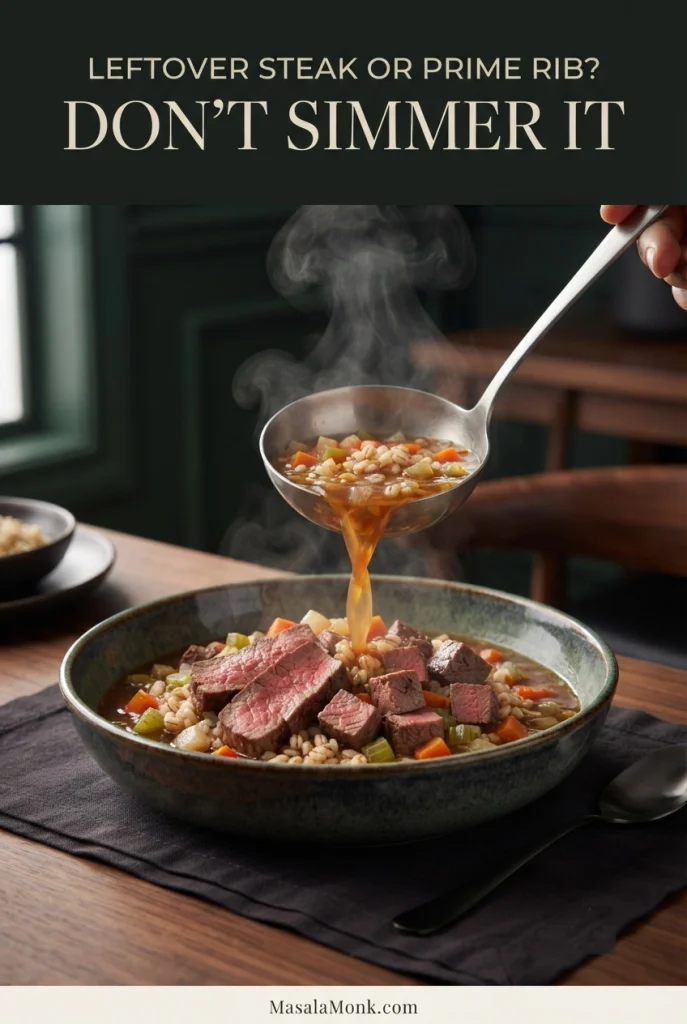
Using Leftover Steak or Prime Rib
Already-pink steak or prime rib needs much less heat. Slice or cube it and add it only at the very end, just long enough to warm through. To protect a medium-rare center, put the meat directly into individual bowls and ladle the steaming soup over it.
Ground Beef Barley Soup
Use about 1 1/2 lb (680 g) ground beef for a faster soup with browned beef crumbles instead of tender chuck pieces. Brown the meat thoroughly, drain excess fat if needed, and transfer it to a bowl. Cook the onion, garlic and tomato paste as written, then return the beef when you add the broth.
Add the barley, followed by the carrots and celery when the grain has about 20-25 minutes left to cook. There is no long tenderizing phase.
Easy Swaps
| Swap | Adjustment |
|---|---|
| No wine | Replace the 1/2 cup (120 ml) wine with the same amount of beef broth. |
| No tomato paste | Omit it if you want beef barley soup without tomato. The broth will be lighter in color and slightly less concentrated. |
| Quick-cooking barley | Add it near the end and follow its shorter cooking time. |
| Hulled barley | Cook separately according to package directions, then stir it into the soup near the end. |
Make-Ahead Beef Barley Soup
For several days of leftovers, cook and store the barley separately. For a pot you expect to finish within a day or so, cooking the grain directly in the soup is the better default because it takes on beef flavor and gives the broth natural body.
How to Cook the Barley Separately
- Bring 3 cups (710 ml) water or low-sodium broth to a boil.
- Add the recipe’s 3/4 cup (about 160 g) pearl barley and a small pinch of salt.
- Reduce to a steady simmer and cook until the grain is tender through the center with a little chew. Start checking around the time listed on the package rather than forcing one universal minute mark.
- Drain well, cool promptly and refrigerate separately from the soup.
- Add barley to individual bowls as the soup reheats.
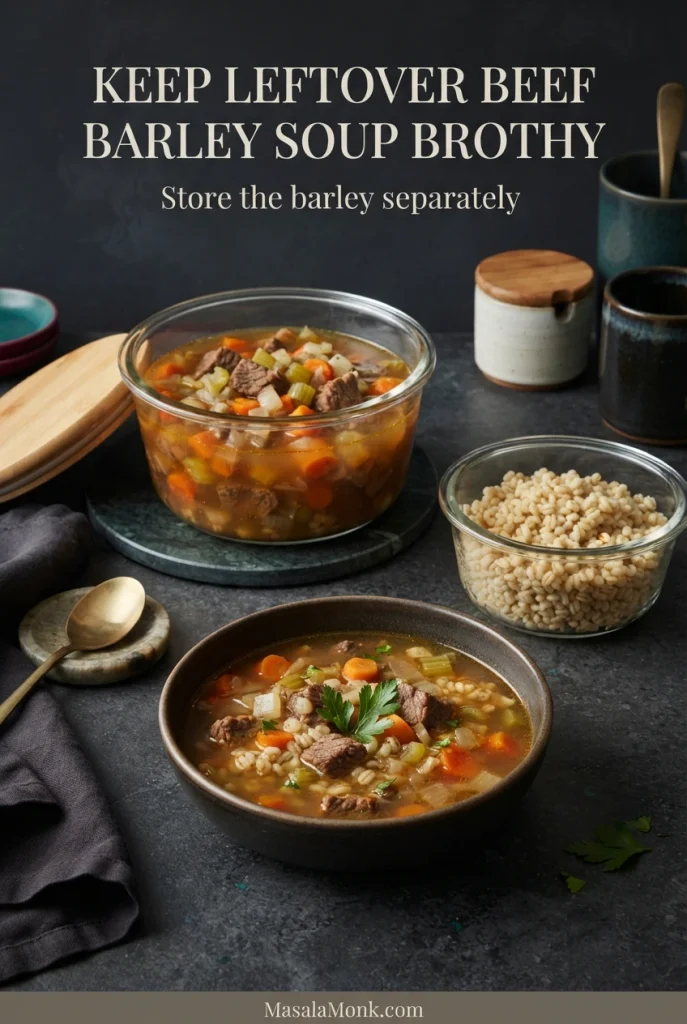
When the barley is staying out of the soup pot, continue simmering the beef until it is nearly tender—a fork goes in fairly easily, but there is still a little resistance. Add the carrots and celery at that point and cook for another 20-25 minutes, until the vegetables are tender and the beef is ready. Spoon barley into each bowl and ladle the hot soup over it.
If you like your beef barley soup especially brothy, portioning the barley bowl by bowl also lets each person control how grain-heavy their serving becomes. Our Minestrone Soup keeps its starch separate for the same practical reason: leftovers stay brothier.
Storage and Reheating
The flavors often settle and deepen overnight, while the soup itself becomes thicker. Add broth or water during reheating until it returns to the consistency you like.
Refrigerating. Divide the soup into shallow covered containers and refrigerate promptly. Use refrigerated leftovers within 3-4 days. If the barley was cooked separately, keep it in its own container and combine portions only as you reheat them. This follows USDA food-safety guidance on rapid cooling and leftover storage.
Freezing. Freeze chilled portions in airtight freezer-safe containers for best quality within about 2-3 months. Barley can be frozen in the soup, although keeping it separate gives you more control over the broth when freezing a batch for later.
Reheating. For about 2 cups of cold soup, start with 1/4 cup (60 ml) beef broth or water and add more as needed. Reheat leftovers to 165°F (74°C), stirring so the soup heats evenly.
Whenever you serve it, ladle the soup into warm bowls and scatter over a little parsley.
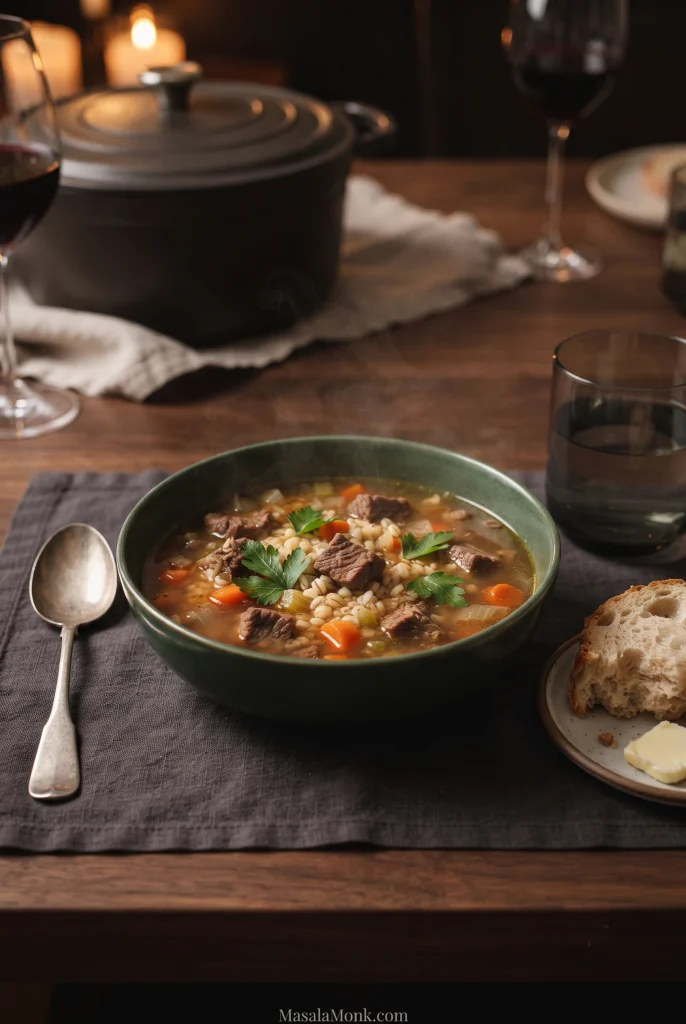
Bring it to the table while the broth is steaming and the beef is tender enough to meet the spoon without a fight. Crusty bread or soft dinner rolls are welcome alongside, but this is already dinner in the bowl.








