
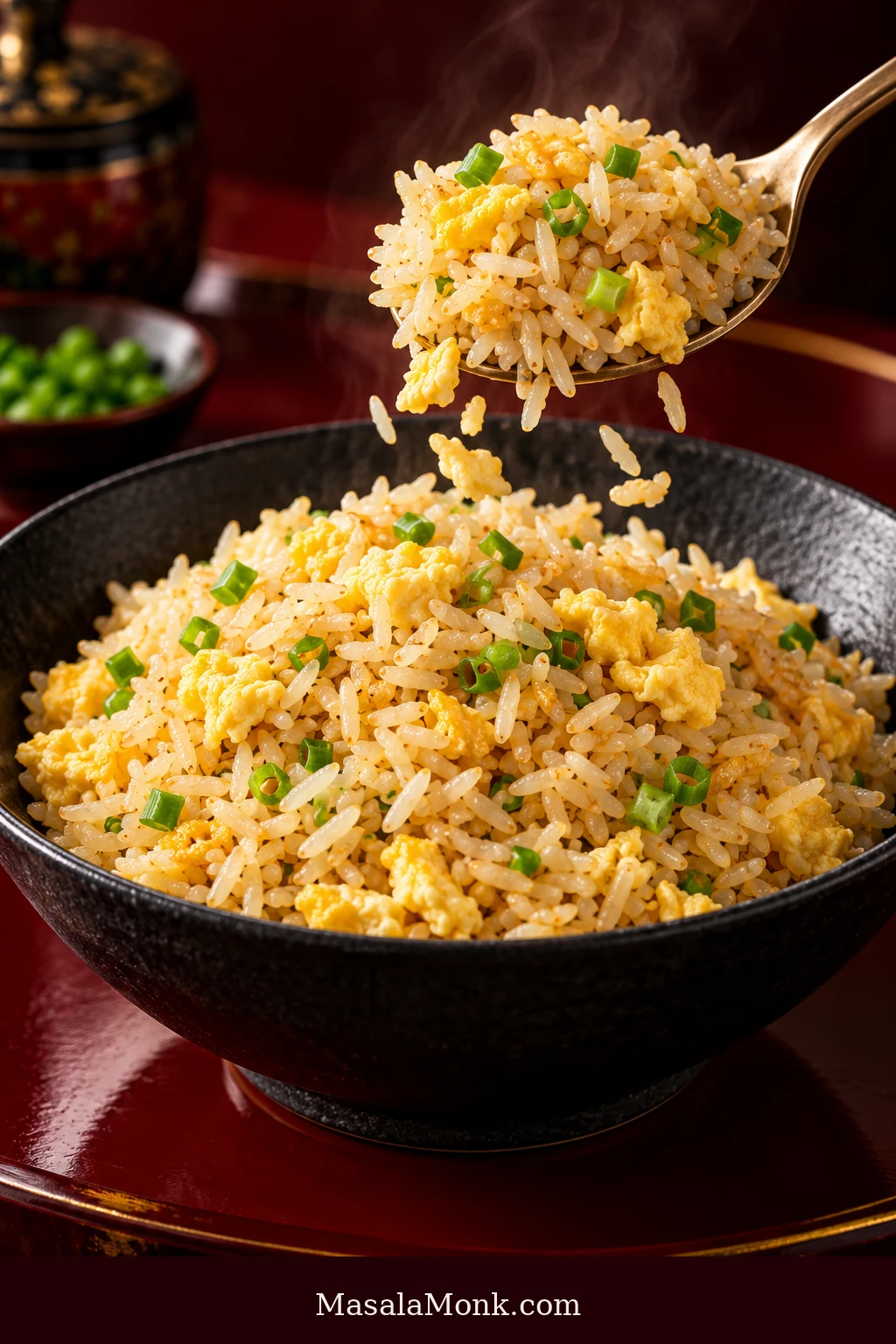
Good egg fried rice should feel light on the spoon: distinct grains, soft golden curds, fresh scallions and enough seasoning to make the rice savory without covering up the egg.
The easiest route is to soft-scramble the eggs first, fry firm cooled rice in a roomy hot pan, season it lightly, then fold the tender egg back in at the end.
And this is where fried rice can be annoying: rice that spent all night in the refrigerator can still turn mushy, while rice cooked this afternoon may fry perfectly. What matters most is how wet, firm and separate those grains are before they reach the pan.
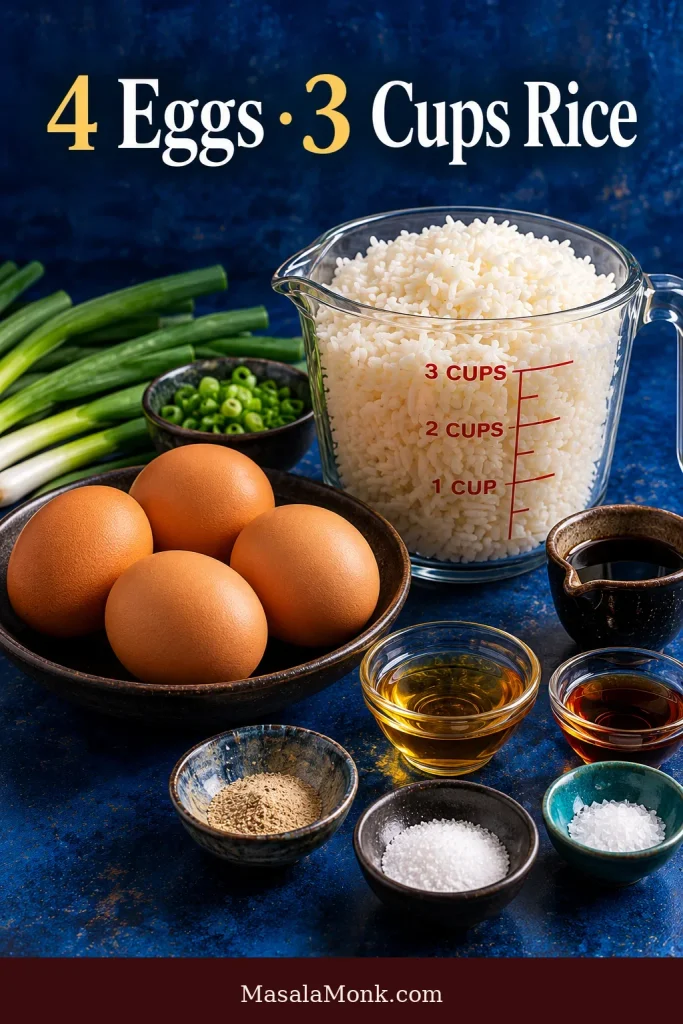
This version stays egg-forward: four eggs for three cups of rice, plenty of scallion, restrained soy sauce and just enough oil to fry the grains cleanly.
Separate the rice: firm and dry enough to loosen.
Keep the pan sizzling: visible water means wait.
Season without soaking: build flavor with minimal liquid.
Egg Fried Rice Recipe
Light, savory egg fried rice with separate jasmine grains, soft scrambled egg, scallions and just enough seasoning to keep the egg prominent.
Prep: 10 minutes with cooked rice ready
Cook: 8–10 minutes
Total: About 18–20 minutes
Serves: 2–3 as a main or 4 as a side
Pan: 12-inch skillet or 12–14-inch wok
Ingredients
- 3 cups cooked jasmine rice, loosely measured, about 17 oz / 480 g, with firm, surface-dry grains that separate easily
- 4 large eggs, lightly beaten
- 2½ tbsp / about 37 mL neutral high-heat oil, such as peanut, avocado, canola or vegetable oil, divided
- 4 scallions, thinly sliced, pale parts and green tops separated
- 1 tbsp / 15 mL Chinese light or all-purpose soy sauce
- ¼ tsp fine sea salt, divided, plus more only if needed after tasting
- ¼ tsp ground white pepper
- ⅛ tsp MSG, optional
- ½ tsp / 2.5 mL toasted sesame oil
Before You Start
Break the rice into loose grains before heating the pan. Beat the eggs with a pinch of the measured salt. Slice the scallions and keep the pale pieces separate from the green tops. Measure the soy sauce, white pepper and optional MSG. Once the cooking begins, there is very little downtime.
How to Make Egg Fried Rice
The order matters because the eggs and rice need different cooking windows. Pull the eggs early, then use the open pan to fry and season the rice before folding the tender curds back in.
Start With Egg and Rice
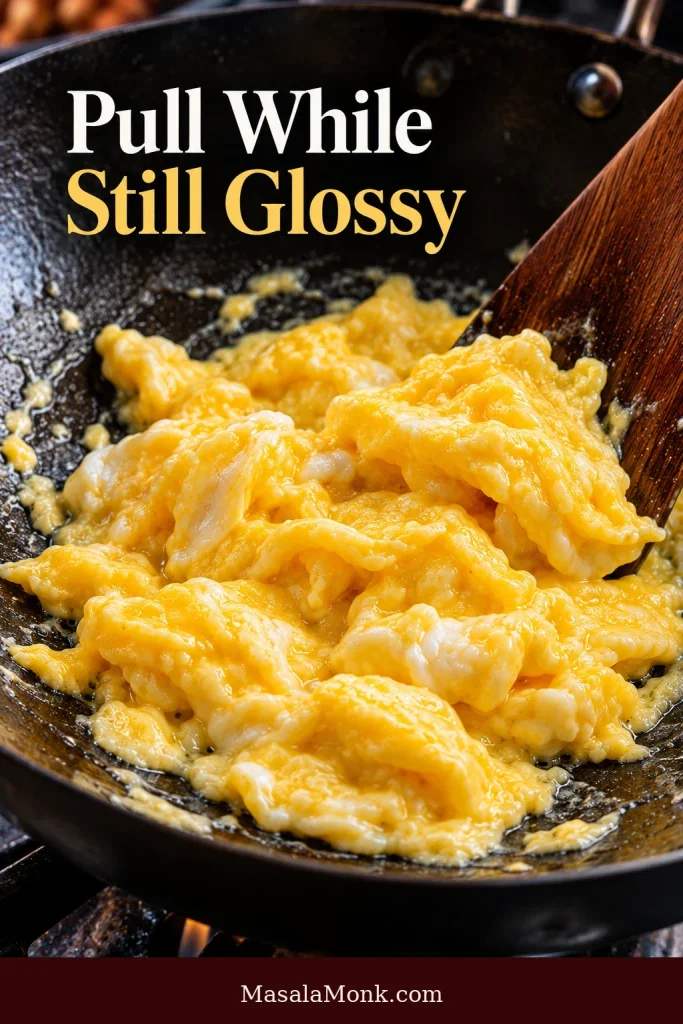
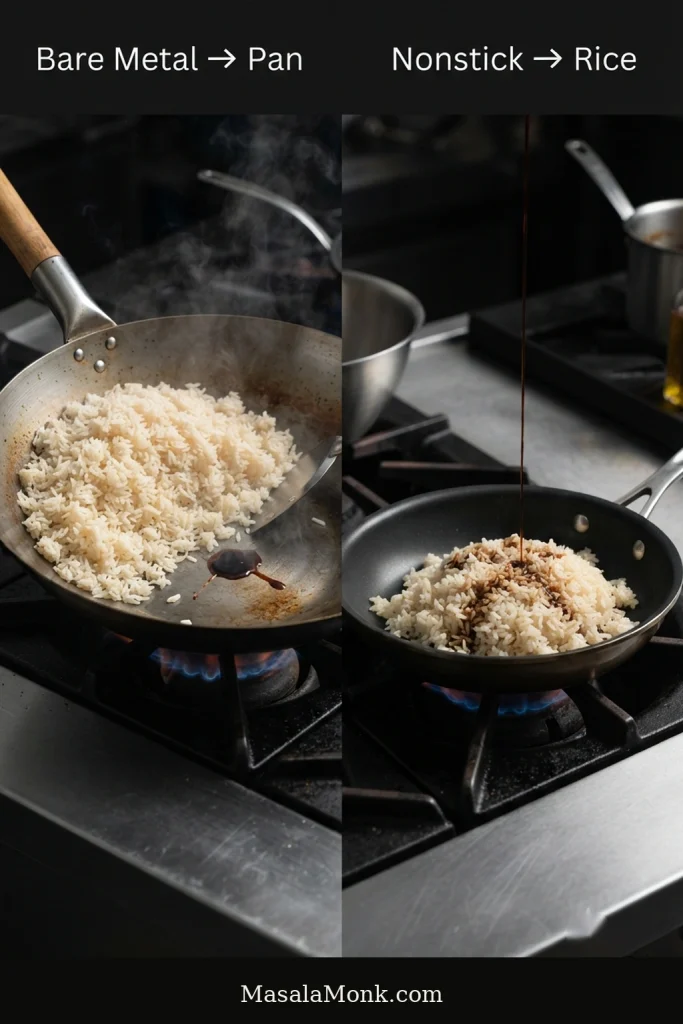
- Soft-scramble the eggs. For carbon steel, stainless steel or cast iron, preheat the pan over medium-high heat, then add 1 tbsp / 15 mL oil. With nonstick, add the oil as the pan heats and stay within the manufacturer’s recommended heat range. When the oil moves easily across the surface, add the eggs. Fold them into broad, soft curds and remove them at roughly 70–80% set.
- Add the scallions. Pour in the remaining 1½ tbsp / about 22 mL oil. Stir in the pale scallion pieces for about 15–20 seconds, just until fragrant.
- Add the rice. Tip in the prepared rice and gently press apart any final clumps. Spread the grains over as much hot surface as possible. You want to hear a clear, dry sizzle almost immediately.
Fry, Season and Finish
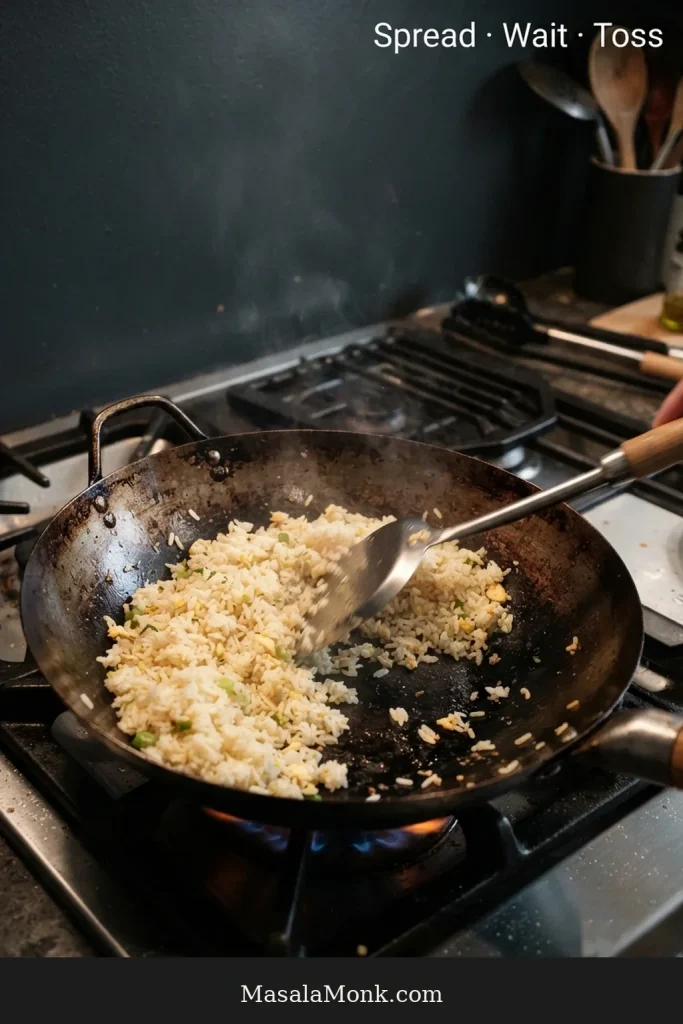
- Give the rice some pan contact. Leave it against the pan for about 20–30 seconds, then toss or turn it. Spread it again and repeat for roughly 2–3 minutes, until the grains are hot and loose with scattered lightly toasted spots.
- Season the rice. Sprinkle over the remaining salt, white pepper and optional MSG. For carbon steel, stainless steel or cast iron, pour the 1 tbsp / 15 mL soy sauce onto an exposed patch of hot pan and let it hiss briefly before tossing. Using nonstick? Drizzle the soy over the rice instead and toss right away.
- Return the egg. Fold the softly scrambled egg through the rice for about 30–45 seconds. Break only the largest curds. The egg should finish fully set, with no visible liquid remaining, while staying soft and tender.
- Finish. Turn off the heat. Fold in the green scallion tops and ½ tsp / 2.5 mL toasted sesame oil. Taste one spoonful and adjust the salt only if needed.
When It Is Ready
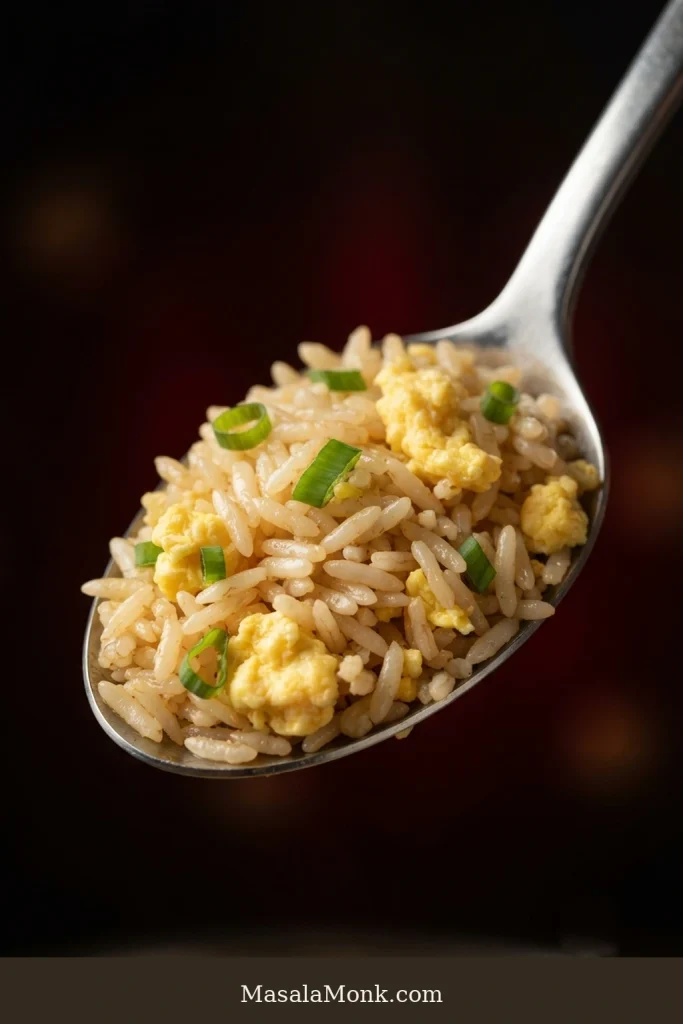
The grains should look distinct and loose, with a dry surface and a few lightly toasted spots. They should still be tender inside, while the egg stays in soft visible curds.
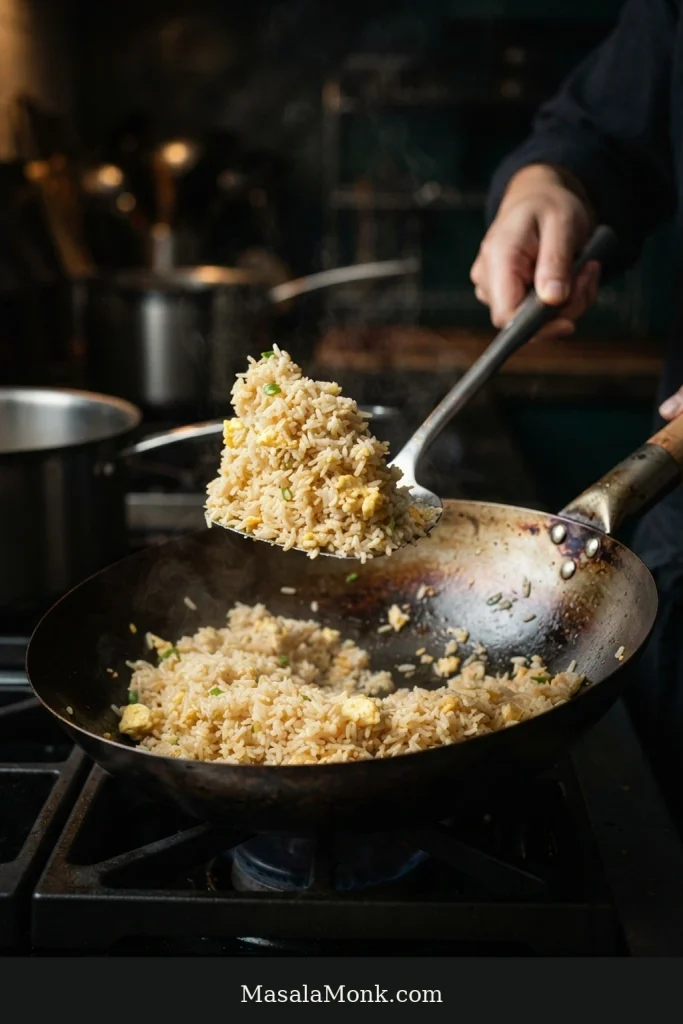
In a good spoonful, toasted rice and soft egg arrive together, followed by the fresh bite of scallion. The sesame should register as aroma rather than greasiness.
Recipe Notes
- Adding vegetables? After removing the eggs, add up to ½ cup / 75 g peas, finely diced carrots or mixed vegetables. If the pan is dry, use some of the remaining oil. Cook until hot and any visible moisture has evaporated, then add the rest of the oil and continue with the scallions. Frozen vegetables may add a minute or two to the cooking time.
- No day-old rice? Use the same-day method below. Firm, dry-enough, separate grains matter more than a specific age.
- Double batch: Cook two rounds in a 12-inch skillet rather than filling the pan with six cups of rice at once. See Choosing a Pan for why surface area matters.
- Chinese light soy: “Light” describes the thinner everyday Chinese seasoning soy sauce; it does not mean reduced-sodium soy sauce. Reduced-sodium soy also works, but you may need more salt at the end.
- Gluten-free: Use certified gluten-free tamari in place of the soy sauce.
Research note: This recipe is research-led rather than independently kitchen-tested by MasalaMonk. We cross-checked specialist Chinese cooking methods, home-stove techniques, common fried-rice problems and official food-safety guidance. Use the visual, sound and texture cues alongside the timings.
Egg Fried Rice Guide
Turn to this guide when the rice, pan or seasoning behaves differently in your kitchen.
Egg & Rice
Pan & Seasoning
Fix & Adapt
Best Rice for Egg Fried Rice
The grains need enough structure to survive tossing and enough surface dryness to fry cleanly. Jasmine rice is the first choice here because its aroma suits the simple egg-and-scallion profile and properly cooked grains stay tender while separating easily.
Long-grain white rice is an excellent substitute. Basmati stays naturally separate and gives the dish longer, more aromatic grains.
Brown rice gives a firmer, nuttier result. Short-grain rice makes a stickier, more cohesive fried rice than jasmine.
Cold, Dry and Separate Are Three Different Things
The familiar advice to use day-old rice works because refrigeration often gives you several useful changes at once. It does not guarantee them.
- Cold: the rice has cooled and firmed.
- Dry: excess surface moisture has escaped.
- Separate: the grains can be loosened without turning into paste.
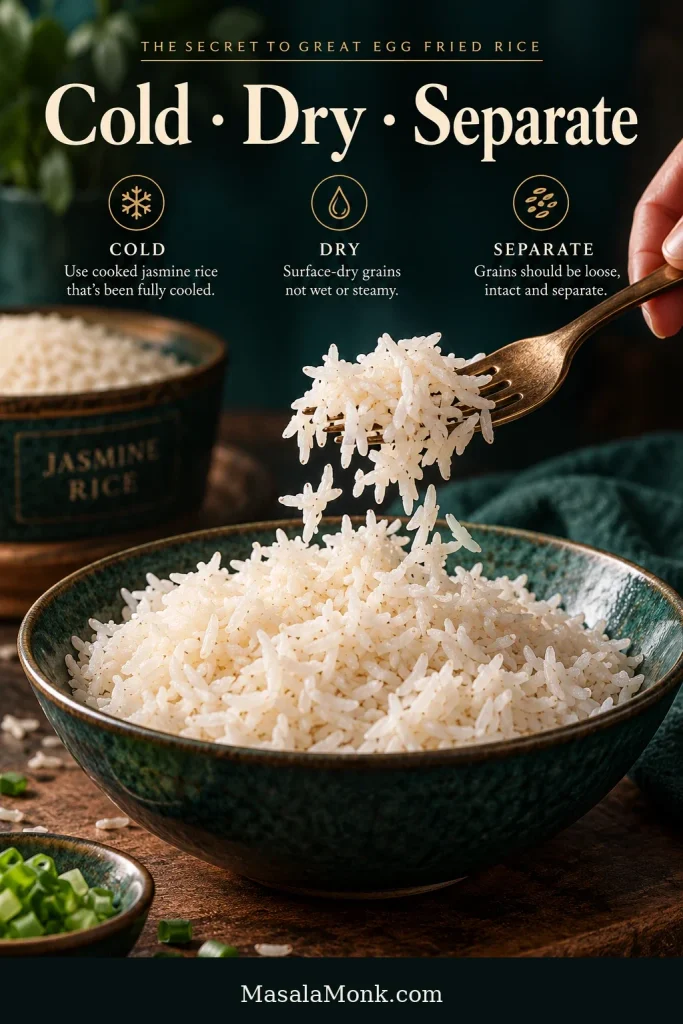
Rice can spend a night in the refrigerator and still be too wet because it absorbed too much water when it was first cooked. That is the maddening batch: you followed the usual “day-old rice” advice and it still softened in the pan.
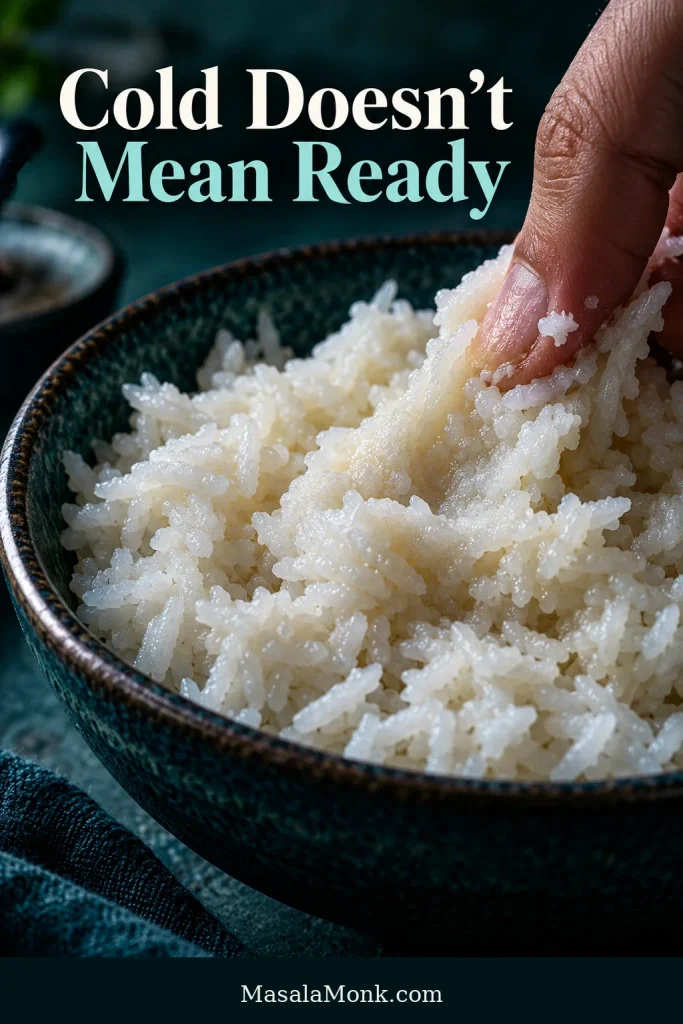
Loosen refrigerated rice with clean fingers or a fork before heating the pan. Gentle pressure should break clumps into intact grains. Rice that smears or crushes easily was probably too soft before it ever reached the refrigerator.
Using Freshly Cooked Rice
If your usual method already produces properly cooked rice, use about 5–10% less water when cooking a batch specifically for fried rice. The target is fully cooked rice that feels slightly firmer and drier than your everyday table rice.
Fluff it as soon as it is cooked, then spread it in a thin layer on a wide plate, tray or shallow container. Steam escapes quickly instead of staying trapped in a hot mound.
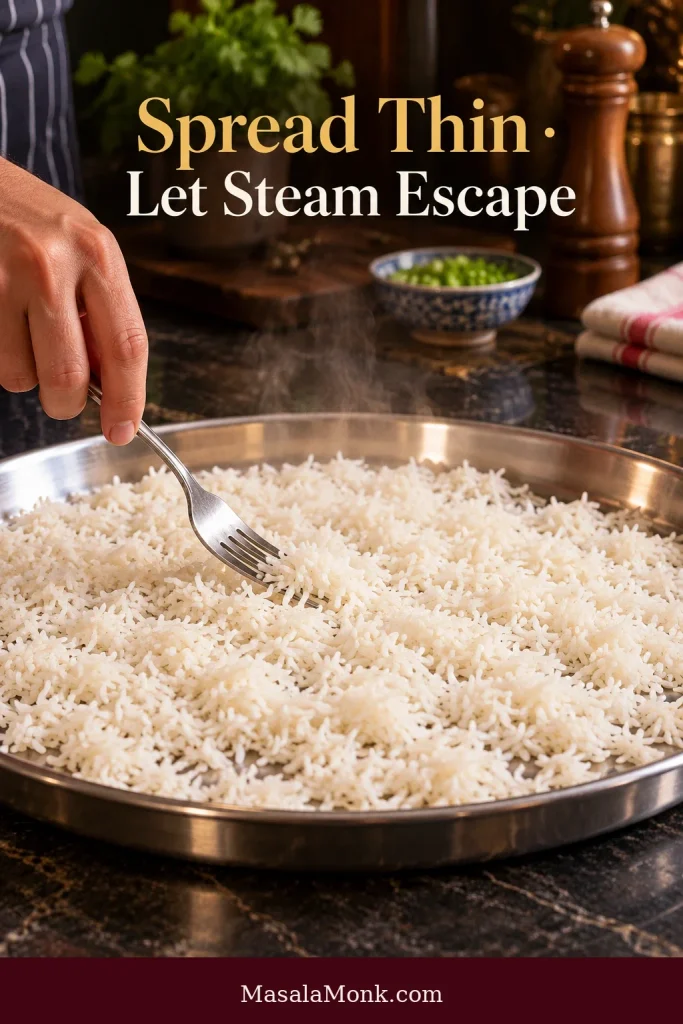
Once the heavy steam has gone, cool the rice promptly. If it still feels warm and soft, refrigerate the spread-out rice for about 20–30 minutes, or until it feels firm and dry on the surface.
Timing note: Cooking and cooling same-day rice is additional to the 18–20-minute recipe time shown above.
Starting from uncooked rice? MasalaMonk’s guide to how to cook rice covers jasmine, basmati, long-grain rice, stovetop methods and rice cookers in more detail.
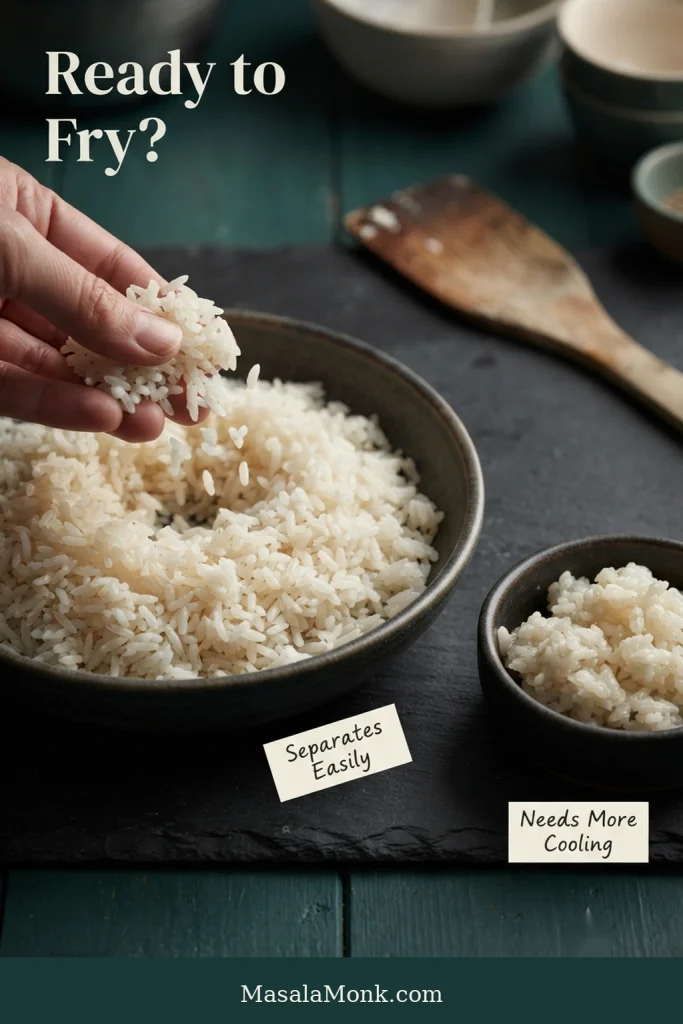
The Separation Check
Ready: grains hold their shape, look dry on the surface and separate with gentle pressure.
Needs more cooling: rice is still warm, steaming or surface-damp, but the individual grains remain intact.
Too soft for cooling to fix: grains smear, crush or mash under gentle pressure. Use the batch if you must, but cook the next rice slightly firmer.
Why Use Four Eggs?
In egg fried rice, the egg should be easy to taste and easy to see. Four large eggs for three cups of cooked rice give every serving plenty of soft curds without turning the dish into scrambled eggs with rice mixed through them.
Cooking the eggs separately is the forgiving route on a home stove. Pull the curds while they still look glossy; they cook again when they return to the rice. Fully setting them at the start makes rubbery egg much more likely.
Choosing a Pan
Use a wide pan you already know well. A 12-inch skillet is ideal for this batch; a 12–14-inch carbon-steel wok is equally good if you are comfortable cooking with one.
Stainless steel, cast iron and nonstick all have a place here. With nonstick, keep the heat within the manufacturer’s limits rather than chasing the temperatures used with bare metal.
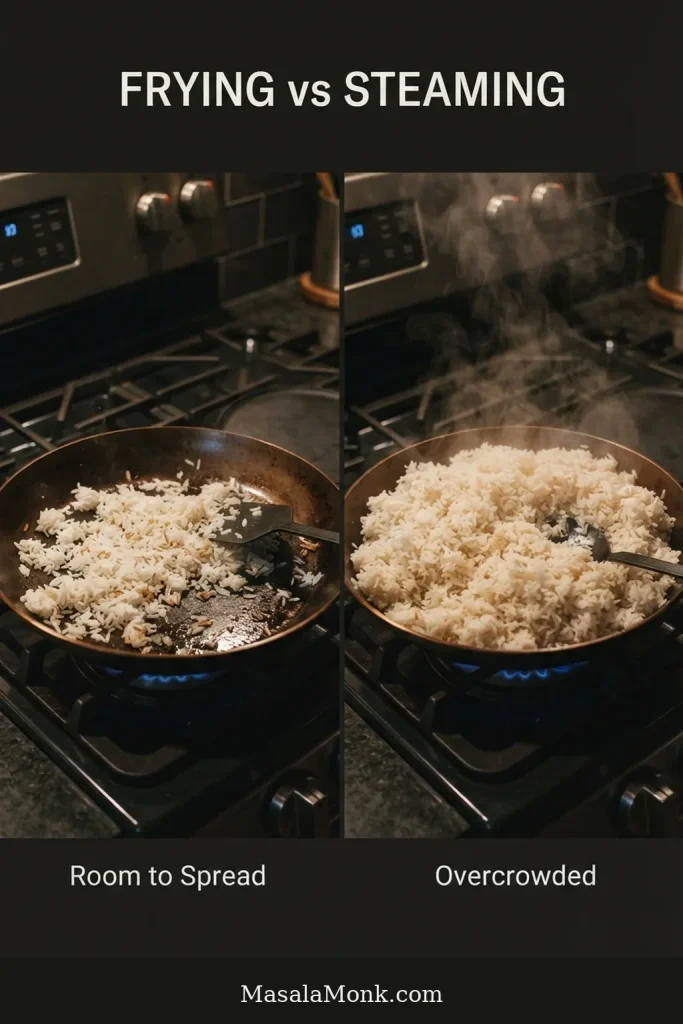
At three cups, the rice has room to spread and moisture somewhere to escape. Six cups crowd the same skillet, trap steam and make it harder for the pan to recover between tosses.
Frying on a Home Stove
Listen when the rice hits the pan. A lively, fairly dry crackle means it is frying; gentle bubbling or visible liquid underneath means water is building up.
You do not need restaurant wok hei to make excellent egg fried rice at home. Aim for loose grains, a dry frying sound and some light toast rather than chasing smoke.
Spread the rice out, leave it against the pan for roughly 20–30 seconds, then toss and repeat. Those short pauses give a home stove time to toast the surface without scorching the bottom.
Savory Does Not Mean Brown
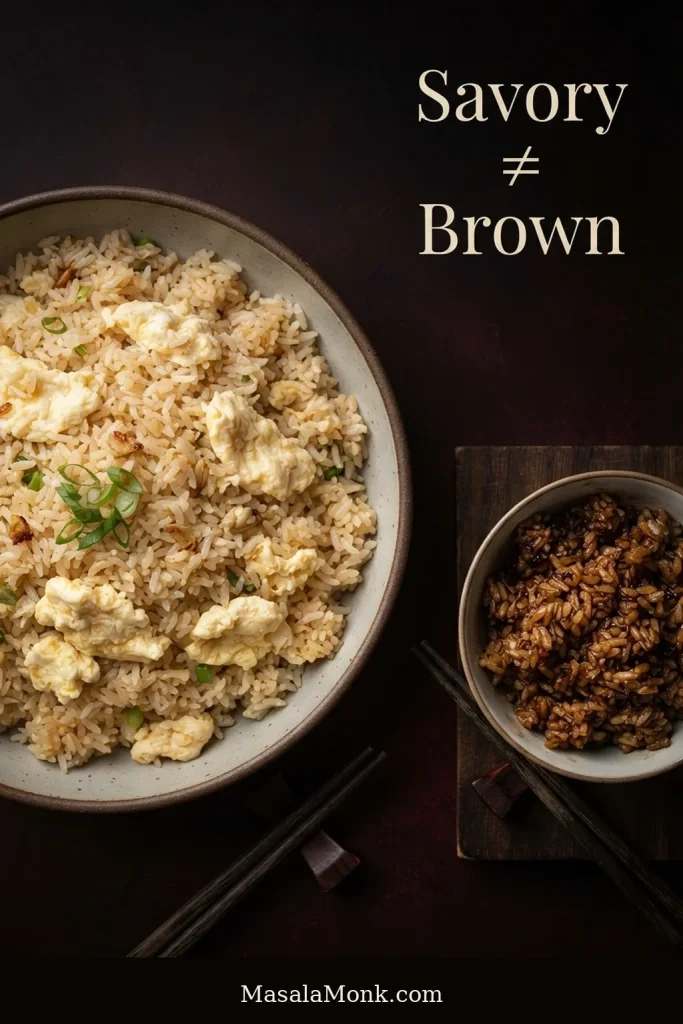
Fried rice can taste flat even when it already looks dark enough. More soy sauce adds fermented savoriness, but it also brings salt, color and liquid. Once the rice clearly tastes of soy, another spoonful may simply make it wetter.
Soy Sauce and Salt
That is why this recipe stops at 1 tbsp / 15 mL soy sauce. If the finished rice still needs seasoning, salt can supply it without adding more liquid or darkening the grains.
White pepper supplies the warm background heat, while scallion whites mellow in the pan and the green tops stay fresher at the finish. If you bought white pepper for this recipe, it is also one of the defining flavors in MasalaMonk’s Hot and Sour Soup.
MSG is optional; the ⅛ tsp used here adds savoriness without more liquid. Toasted sesame oil goes in after the high-heat cooking, where ½ tsp / 2.5 mL is enough to perfume the finished rice.
Without Soy Sauce
Leave the soy out and lean on salt, white pepper, scallions and optional MSG. The rice will be paler, but pale does not mean bland—the egg and scallion simply come through more clearly.
Adding Vegetables
With vegetables, water matters more than variety. Frozen peas are forgiving.
Dice firm carrots or green beans small enough to heat through quickly. Mushrooms and wetter mixed vegetables need more care because they cool the pan and release more moisture.
Keep the total around ½ cup / 75 g for three cups of rice. Beyond that, the vegetables begin to crowd the skillet and the dish starts behaving more like a mixed fried rice than an egg-first one.
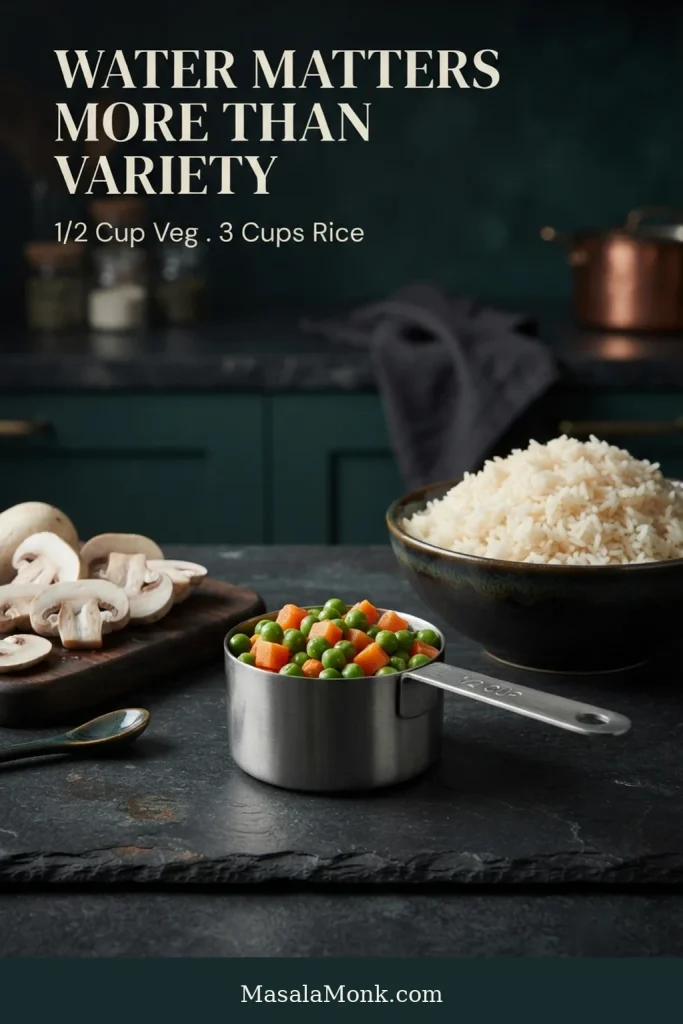
Canned vegetables start softer and wetter, so drain them well and expect less crisp texture.
If peas, carrots and onion are meant to be a bigger part of the dish rather than a modest add-in, MasalaMonk’s Fried Rice Recipe is built around that fuller Chinese-American takeout-style version.
Variations
Darker takeout-style. For deeper color, start with about ½ tsp dark soy sauce alongside the regular soy. If deeper savory flavor is the goal instead, add about 1 tsp oyster sauce. Reduce the added salt and keep the extra liquid modest.
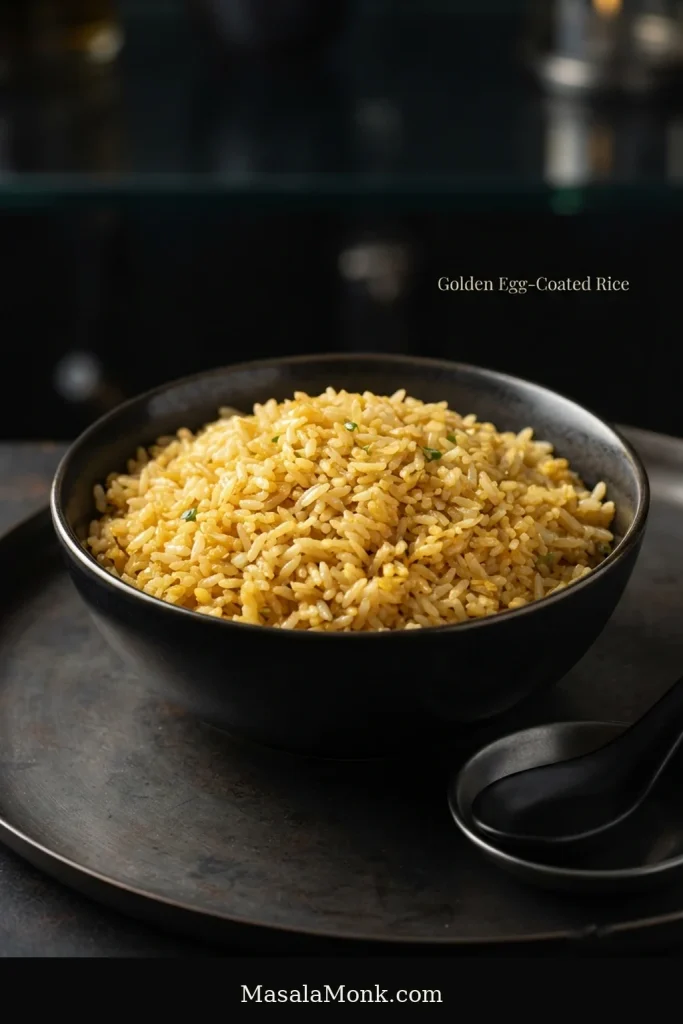
Golden egg-coated rice. Some Chinese techniques deliberately coat some or all of the grains with beaten egg before or during frying. The egg forms a thin golden layer around individual grains rather than remaining mainly as larger curds. It is a different technique, not a failed version of the separate-scramble method.
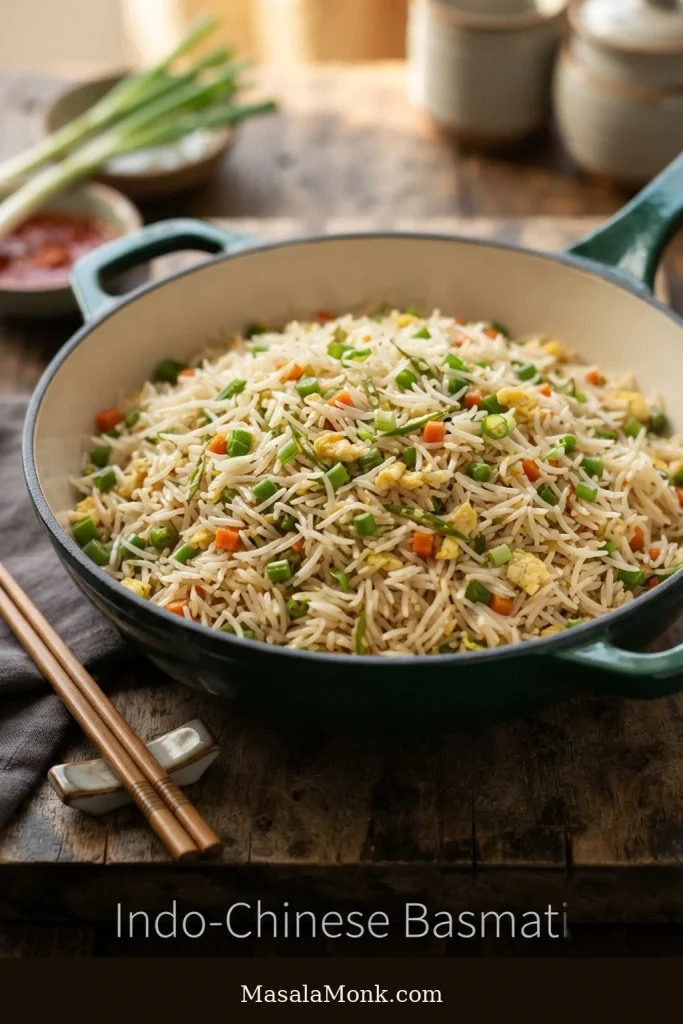
Indo-Chinese basmati. Use basmati for extra-long, naturally separate grains, with finely diced carrot or green beans and optional green chile. Finish with about 1 tsp / 5 mL plain white vinegar for acidity.
Chicken or shrimp. These proteins need different exits from the pan. Cook small chicken pieces to 165°F / 74°C before removing them; pull shrimp as soon as they are just opaque because they finish quickly when returned to the hot rice. For versions built around either protein, use MasalaMonk’s Chicken Fried Rice Recipe or Shrimp Fried Rice Recipe.
Fix What You See—Not What You Assume
A mushy batch needs a different fix from a bland one. Diagnose what you can actually see before changing several things at once.
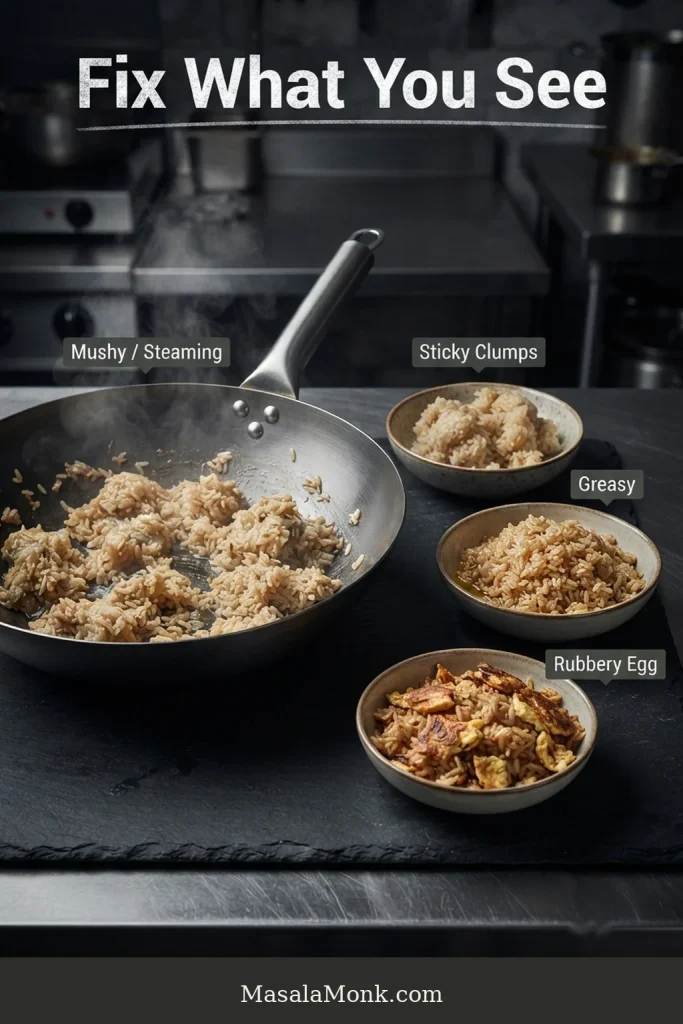
Moisture, Clumps and Seasoning
| What You See | Likely Cause | What to Do |
|---|---|---|
| Mushy even after overnight refrigeration | The rice probably started too wet or soft. | Cook the next batch slightly firmer. Chilling helps the surface, but it cannot rebuild overcooked grains. |
| The pan is steaming | Wet rice, wet vegetables or too much food cooled the pan and created too much steam. | Stop adding ingredients and let visible moisture evaporate. Use a smaller or drier batch next time if needed. |
| Rice stays in sticky clumps | The rice is compacted, overly soft or still too wet. | Break clumps apart before frying. Next time, rinse the raw rice well and avoid cooking it overly soft. |
| Rice turns wet when sauce goes in | Too much liquid, or the rice was not hot enough yet. | Fry the rice first and keep liquid seasoning restrained. |
| Looks right but tastes bland | It may need salt or aromatic seasoning. | Taste for salt, then consider more scallion, white pepper or optional MSG. |
| Too dark and soy-heavy | Too much regular soy or too much dark soy. | Use less next time. Extra frying will not remove excess soy. |
Oil, Egg and Pan Control
| What You See | Likely Cause | What to Do |
|---|---|---|
| Greasy | Too much oil, or a crowded, steamy pan that left oil coating the food instead of helping it fry. | Use the measured oil as a starting point and check moisture and batch size before cutting it dramatically. |
| Rice is dry and hard | The rice started unusually dry, or it stayed in the pan too long. | Fry only until hot and lightly toasted. Very firm, dry chilled rice needs less pan time. |
| Egg is rubbery | It was fully cooked at the beginning and then cooked again. | Remove the eggs while still softly set and return them only near the end. |
| Egg turns the rice sticky or pasty | Raw egg met the rice without enough heat or control. | Use the separate soft-scramble method before trying deliberate egg-coated techniques. |
| Frozen vegetables flood the pan | Ice and thawing vegetables released more water than the pan could evaporate. | Wait until visible water disappears and the strong sizzle returns before adding rice. |
| Rice sticks to the wok or skillet | Wet rice, poor preheat, too little oil or an overloaded pan can all contribute. | Check those variables before blaming your wok’s seasoning. |
Storage and Reheating
Spread freshly cooked rice so excess steam can escape, then refrigerate it promptly. Leaving cooked rice at room temperature for hours is not a safe shortcut to drier fried-rice grains.
FoodSafety.gov advises refrigerating cooked rice and other perishable leftovers within 2 hours, or within 1 hour when the surrounding temperature is above 90°F / 32°C. Refrigerated leftovers are generally best used within 3–4 days.
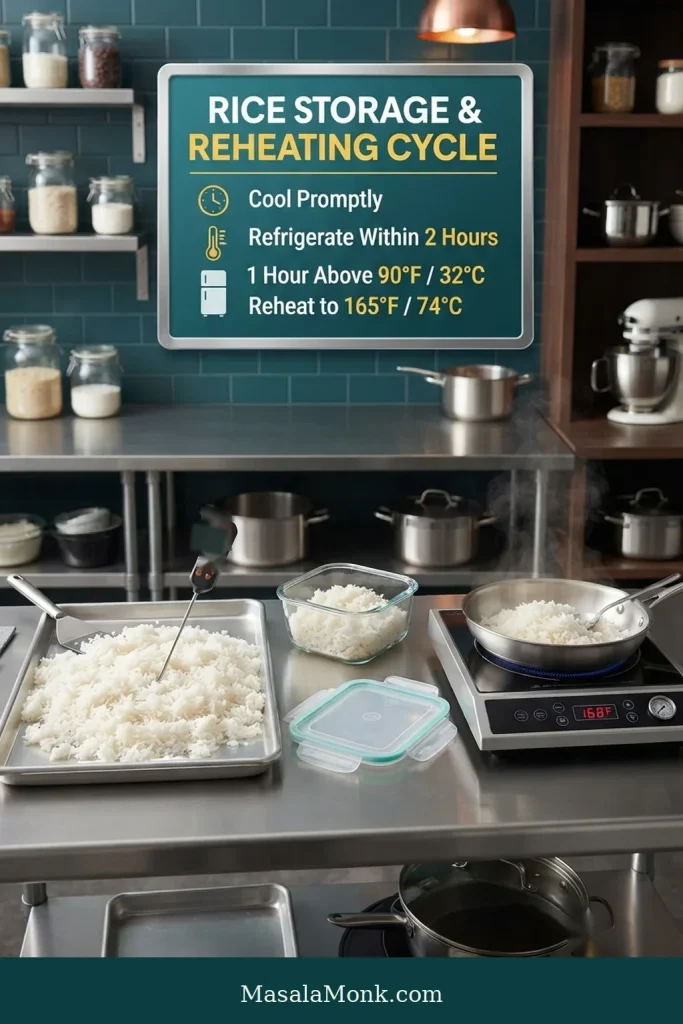
Skillet or wok: Heat a small amount of neutral oil, add the cold fried rice and stir-fry until thoroughly hot. If the rice has become unusually dry and hard, add only a splash of water—just enough steam to soften it.
Microwave: Cover loosely and heat until hot throughout. US food-safety guidance recommends reheating leftovers to 165°F / 74°C.
Frequently Asked Questions
Should I Rinse Rice Before Cooking It for Fried Rice?
For jasmine or long-grain white rice, rinsing away loose surface starch helps the cooked grains stay cleaner and easier to separate. It will not rescue rice that is then cooked with too much water.
Can I Fry Rice Straight From the Refrigerator?
Yes, as long as the grains are firm and surface-dry. Break compacted clumps apart first so the grains heat and fry evenly instead of steaming while a cold lump warms through.
What Oil Is Best for Egg Fried Rice?
Use a neutral oil that handles fairly high heat well, such as peanut, avocado, canola or vegetable oil. Toasted sesame oil belongs at the finish rather than serving as the main frying fat.
Why Does the Egg Disappear Into My Fried Rice?
If you want visible curds, scramble the egg separately before frying the rice. Raw egg added directly to rice can intentionally coat individual grains; that is the basis of some golden fried-rice techniques. Without enough heat and control, however, the same approach can turn wet or pasty.
Once you know what properly prepared rice feels like and what a frying pan should sound like, egg fried rice gets much easier to judge without watching the clock.
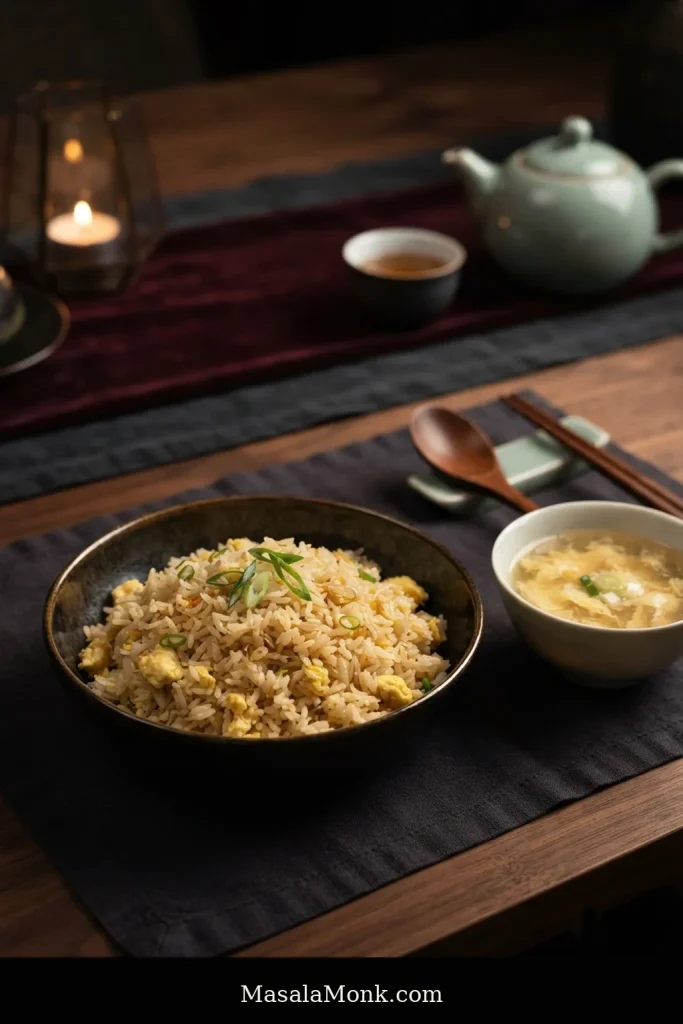
For a simple meal that keeps the fried rice at the center of the plate, a bowl of MasalaMonk’s Egg Drop Soup makes an easy pairing. After that, chicken, shrimp or vegetables become variations—not rescue missions.








