
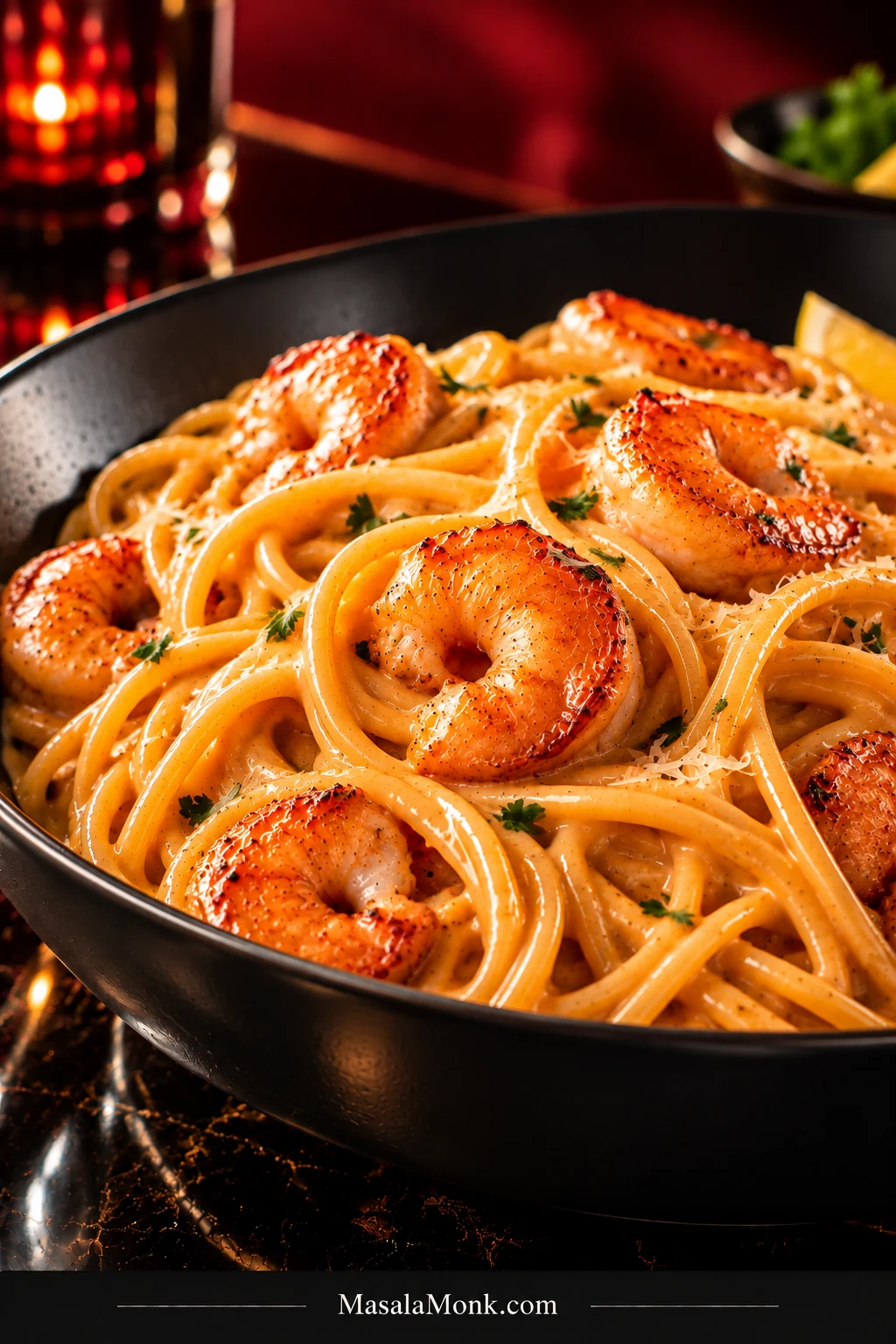
The shrimp should have dark Cajun-seared edges without turning rubbery. The linguine should lift with a glossy rust-orange cream sauce clinging to every strand, with browned shrimp tucked between the noodles instead of sitting in a pool of cream.
Those things happen on different clocks. Shrimp cook in minutes. Cream needs time to come together. Pasta keeps absorbing liquid even after the heat is off.
So the central rule of this Cajun shrimp pasta recipe is simple: shrimp out, pasta in, shrimp back. Sear the shrimp quickly, let the linguine cook while the sauce develops in the same skillet, then bring everything together at the end.
The goal is richness without burying the shrimp: enough cream and Parmesan to coat the linguine, enough pasta water to keep the sauce moving, and enough lemon to keep that richness from tasting heavy. Cajun seasoning supplies the spice and herb character, while cayenne lets you raise the heat without simply making the pasta saltier.
This is a modern creamy Cajun-seasoned pasta, not an old Louisiana classic. What matters here is the bowl in front of you: browned shrimp, lively seasoning and a sauce with enough body to cling without turning stodgy.
Cajun Shrimp Pasta at a Glance
| Stage | What you are aiming for |
|---|---|
| Shrimp | Dry surface, hot skillet, browned edges, tender center. |
| Sauce | Gently simmered and still flowing before the pasta finishes in it. |
| Finish | Noodles evenly coated with sauce; shrimp returned only at the end. |
Creamy Cajun Shrimp Pasta Recipe
Cajun Shrimp Pasta Recipe: Creamy, Spicy & Ready in 30 Minutes
Seared shrimp and linguine tossed in a garlic-Parmesan Cajun cream sauce. The shrimp get one quick sear, the pasta cooks while the sauce comes together, and everything meets in the skillet for the final toss.
To stay near 30 minutes: put the pasta water on first and prep the shrimp, shallot, garlic, Parmesan and sauce ingredients while it heats. Once the shrimp leave the skillet, the linguine goes into the boiling water and the sauce is built alongside it.
Equipment
- 5- to 6-quart / 4.7- to 5.7-liter pot
- 12-inch / 30 cm skillet, preferably high-sided
- Tongs
- Fine grater
- Wooden spoon or silicone spatula
- Liquid measuring cup
Ingredients
- 12 oz / 340 g linguine
- 1 lb / 454 g raw shrimp, preferably 21/25 or 26/30 count, peeled and deveined, tails removed for easiest eating
- 3½ to 4 tsp salt-free or lower-sodium Cajun seasoning, divided; if using a salty commercial blend, start with less and add only small corrective amounts after tasting
- ⅛ to ¼ tsp cayenne pepper, optional, plus more to taste
- 1 tbsp / 15 ml olive oil or neutral cooking oil
- 1 tbsp / 14 g unsalted butter
- 1 small shallot / about 40–50 g, finely chopped
- 4 garlic cloves / about 12–16 g, finely minced
- 1 tbsp / about 16 g tomato paste, optional
- ¼ cup / 60 ml low-sodium chicken or seafood stock
- 1 cup / 240 ml heavy cream
- 2½ to 3 oz / 70–85 g Parmesan, finely grated
- 1 cup / 240 ml hot pasta water, reserved as needed
- 2 tsp to 1 tbsp / 10–15 ml fresh lemon juice, to taste
- Freshly ground black pepper
- Salt, only as needed after tasting
- 2 tbsp chopped fresh parsley, for finishing
Instructions
Start the Pasta and Sear the Shrimp
- Get the water boiling and prep everything else. Bring a large pot of water to a boil. While it heats, dry the shrimp, chop the shallot and garlic, grate the Parmesan, and measure the cream and stock. Salt the water cautiously if your Cajun seasoning is already salty.
- Season and sear the shrimp. Pat the shrimp thoroughly dry. With a salt-free or lower-sodium blend, toss them with about 2½ teaspoons Cajun seasoning and the cayenne; with a salty blend, season more lightly and hold the rest back. Sear in one uncrowded layer over medium-high heat for about 1½–2 minutes on the first side and 45–90 seconds on the second. If liquid pools instead of sizzling away, pause before adding more shrimp and let the skillet recover. Transfer the shrimp when browned and almost opaque; the slightly underdone center is intentional.
- Start the linguine, then inspect the skillet. Add the pasta to the boiling water and cook it 1–2 minutes short of the package’s al dente time. Before adding anything else to the shrimp skillet, look at the residue left behind. Brown-red fond with a toasted smell stays. If it is black and smells acrid, wipe it out now.
Build and Finish the Sauce
- Build the sauce while the pasta cooks. Reduce the skillet to medium and add the butter and shallot. When the shallot softens, add the garlic and, if using a salt-free or lower-sodium blend, the remaining Cajun seasoning. Keep extra salty seasoning back. Stir for about 30 seconds, then cook the optional tomato paste briefly. Add the stock and scrape up the fond, followed by the cream. Simmer gently until the sauce lightly coats a spoon but still moves easily. If it gets there before the pasta is ready, take it off the heat.
- Bring pasta and sauce together. Before draining, reserve 1 cup / 240 ml pasta water. Transfer the slightly undercooked linguine to the skillet. If the cream is bubbling actively, take the pan off the heat for a moment. Add the Parmesan gradually while tossing, followed by about ¼ cup / 60 ml hot pasta water. Return the skillet to low heat only if needed.
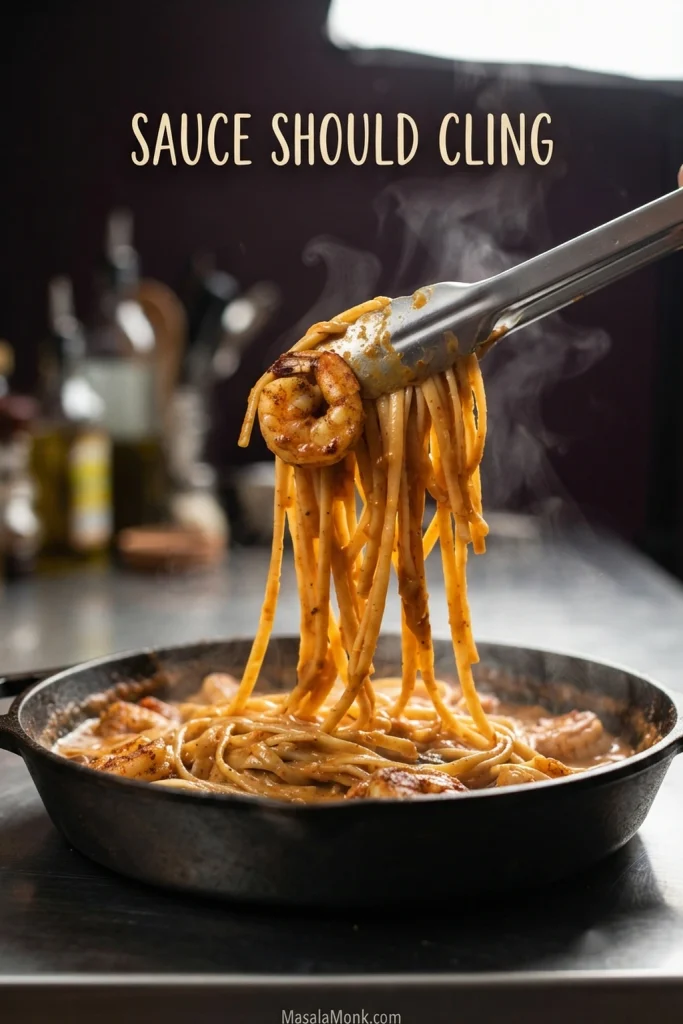
- Toss until the sauce coats the linguine. Keep the pasta moving for about 60–90 seconds, adding more pasta water a tablespoon or two at a time. It will probably look a little looser than expected at first. Don’t chase thickness yet. Lift a few strands with the tongs: the sauce should travel upward with the linguine rather than immediately draining back into the skillet.
Return the Shrimp and Serve
- Return the shrimp and balance the sauce. Add the shrimp and any juices from the plate and toss for only 30–60 seconds, until the shrimp are hot and pearly-opaque through the thickest part. Finish with 2 teaspoons / 10 ml lemon juice, black pepper and parsley. Taste. Add more lemon if the sauce feels heavy, cayenne if it needs heat, salt-free Cajun seasoning if the spice aroma feels muted, and salt only if it genuinely needs it.
- Serve while the sauce still moves. Stop before it looks as thick in the skillet as you ultimately want it on the plate. The linguine should be coated but still slide against itself, because the sauce will continue tightening on the way to the table.
Recipe Notes
- Shrimp count: 21/25 means roughly 21–25 shrimp per pound; 26/30 means about 26–30. Retail size names vary, so count is more useful than labels such as large, extra-large or jumbo.
- Pasta shape: linguine is the most balanced choice here. Fettuccine makes the dish feel more Alfredo-like, while penne gives you short pasta with sauce caught inside the tubes. Other medium or long shapes can work, but the amount of pasta water needed during the final toss may shift slightly.
- Tails: off is easier for pasta. Leave them on only if you prefer the presentation.
- Frozen shrimp: thaw fully and dry very well before seasoning.
- Tomato paste: optional. Use it for deeper color and savory depth; omit it for a cleaner cream-Parmesan profile.
- Parmesan: grate it finely for smoother melting.
- Doubling: sear the shrimp in batches, then finish the pasta in a wide Dutch oven, large sauté pan or two skillets. A single 12-inch / 30 cm skillet is too crowded for the doubled final toss.
The Shrimp Gets One Fast Trip Through the Pan
Dry shrimp brown. Wet shrimp don’t.
Thawed shrimp can look dry while still carrying a surprising amount of surface moisture, so blot them properly before seasoning. When dry shrimp hit a properly heated skillet, the pan should answer with a lively sear almost immediately. If liquid begins collecting around them instead, stop adding shrimp and give the skillet a chance to recover before the whole batch starts steaming.
A pound / 454 g of shrimp fits reasonably in a 12-inch / 30 cm skillet in one layer. Give them enough room for the edges to darken and the Cajun spices to toast rather than packing them shoulder to shoulder.
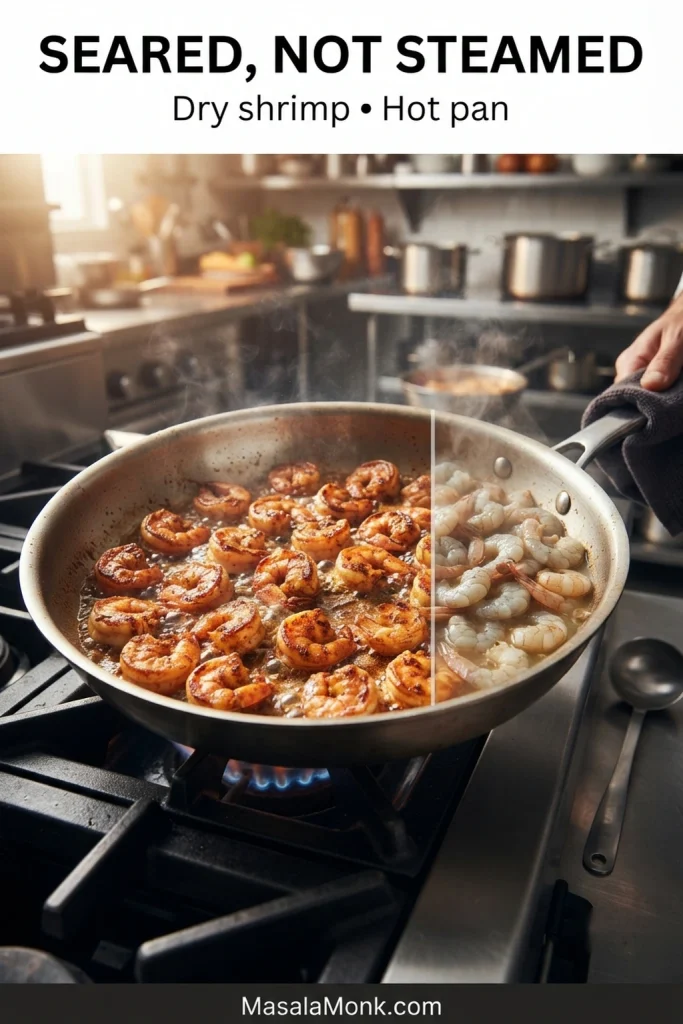
For this dish, 21/25 or 26/30 count shrimp give you a useful margin between browning and overcooking. The Cajun coating should deepen against the skillet while the edges turn opaque, before the center has time to tighten completely. If they look just shy of finished when they leave the pan, that is deliberate—the brief return at the end takes care of the rest. That quick, hot sear also works well in our shrimp scampi recipe, where the shrimp leave the heat before the pasta is finished.
At serving, the thickest part should be pearly and opaque, matching the FDA’s visual doneness guidance for shrimp. See the FDA seafood safety guidance.
Building the Cajun Cream Sauce
The sauce starts with what is left in the skillet. Butter softens the shallot, while garlic and Cajun seasoning need only a brief turn before the stock loosens the browned bits from the shrimp.
Brown-red = useful fond. Black and acrid = burnt. Make that decision as soon as the shrimp leave the pan, before the aromatics go in.
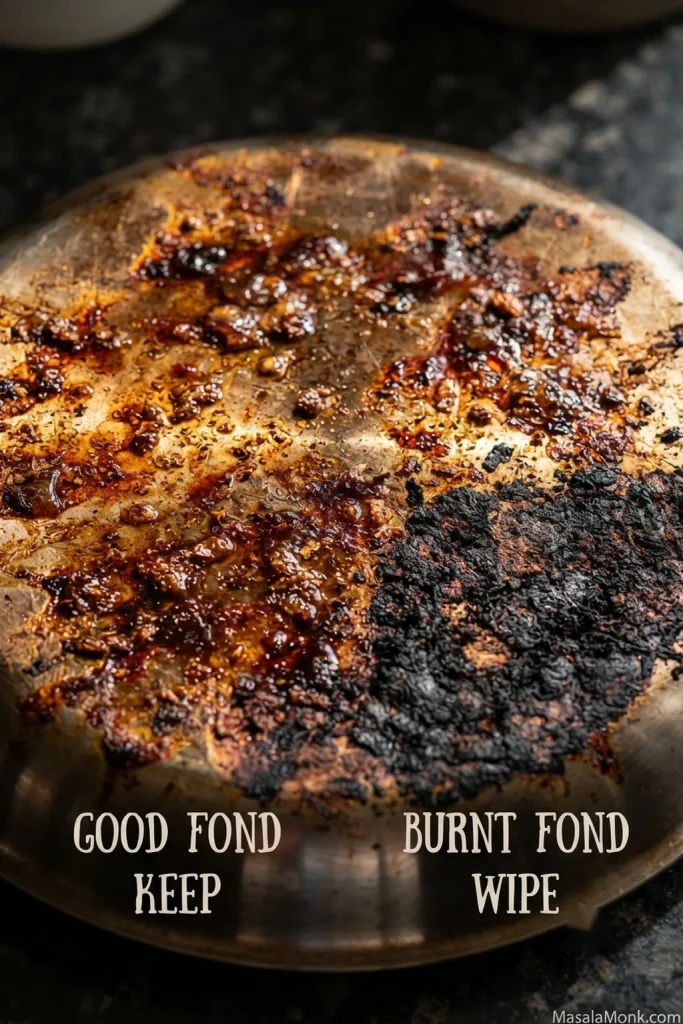
If you are using tomato paste, cook it briefly until it darkens slightly. As the stock loosens the fond and the cream follows, the sauce shifts from pale to coppery rust-orange, while the sharp smell of raw spice softens into something rounder and toastier. Tomato paste deepens that color and savory edge; without it, the Parmesan and shrimp come through more cleanly.
Once the cream enters, lower the drama. A gentle simmer is enough. You are not trying to finish the sauce here; give it enough body to meet the pasta, then take it off the heat if the linguine still needs another minute or two.
Make the Sauce Cling to the Linguine
The final toss is where cream, Parmesan and pasta starch stop behaving like separate ingredients and start coating the linguine as one sauce.
Move the pasta over while it still has a little firmness left. If the cream is bubbling hard, take the pan off the heat before adding Parmesan. Toss in the cheese gradually, add the first splash of pasta water, then keep everything moving.
It will probably look a little too loose at first. Don’t chase thickness yet. After a minute or so, lift a bundle with the tongs: the sauce should come up with the linguine rather than immediately draining back into the pan. If the strands begin sticking together, add another tablespoon or two of hot pasta water.
Finish the Sauce Looser Than You Think
Cajun shrimp pasta sauce should look slightly looser in the skillet than you want on the plate because the pasta and Parmesan continue thickening it as they sit.
Hot noodles keep absorbing liquid and Parmesan firms as it cools. If you wait for a thick, settled sauce over the burner, you can end up with something pasty five minutes later. Stop while there is still visible movement between the strands.
| Moment | What you should see |
|---|---|
| Before pasta | Lightly coats a spoon but runs back into the skillet easily. |
| During tossing | Mobile and beginning to cling to the linguine. |
| Just before serving | No watery pool underneath, yet the noodles still slide freely when lifted. |
Too thick already? Add a tablespoon or two of hot pasta water and toss again. Our creamy salmon pasta runs into a similar carryover problem: a cream sauce that looks settled over the heat can tighten surprisingly quickly once it leaves the pan.
No flour is needed here. Heavy cream, Parmesan and the starch carried in with the pasta provide enough body. Once the texture is right, taste before changing the seasoning.
Salt, Heat and Cajun Seasoning
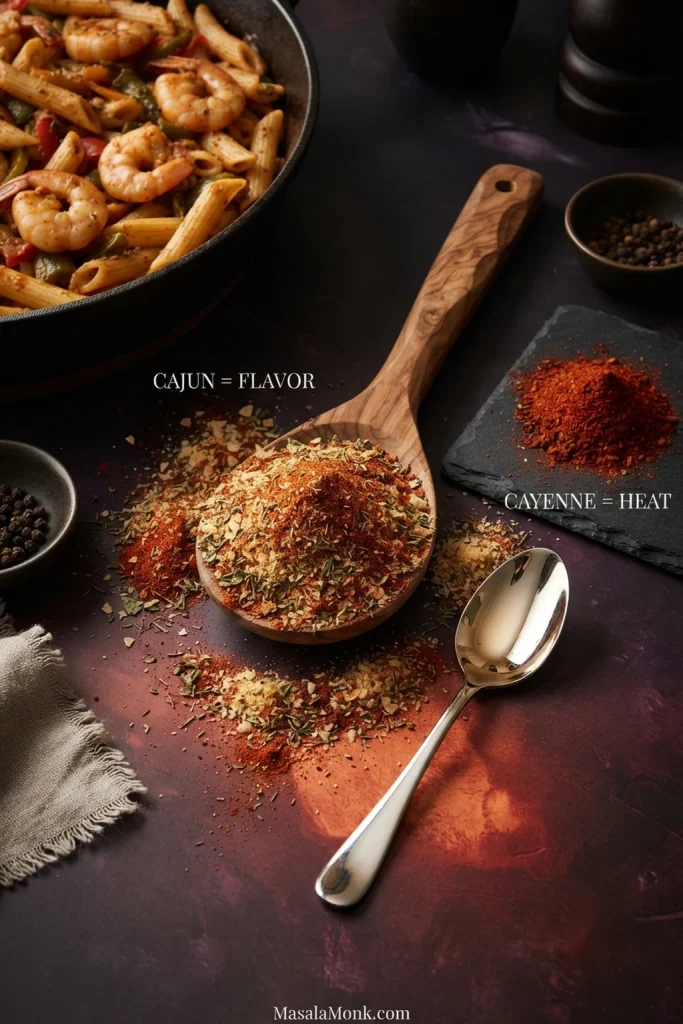
Cajun seasoning brings the paprika, garlic, herbs and pepper. Cayenne is the cleaner way to raise the heat. Salt comes last, after the stock and Parmesan have had their say.
That separation matters because commercial Cajun blends vary enormously. Some are mostly spices and herbs; others behave almost like seasoned salt. A measurement that works beautifully with a salt-free blend can push another version too far before the Parmesan even reaches the pan.
For medium heat, start with about ⅛ to ¼ teaspoon cayenne. If you want a hotter bowl, move toward ½ teaspoon and taste before adding more. Cayenne varies, and so does everyone’s idea of “hot.”
Salty but still flat?
Check what is actually missing. Lemon can wake up a heavy sauce. Cayenne fixes missing heat. A little salt-free Cajun seasoning brings back spice aroma. Only then decide whether the pasta genuinely needs more salt.
One-recipe salt-free Cajun blend
Mix 2 teaspoons paprika, ½ teaspoon garlic powder, ½ teaspoon onion powder, ¼ teaspoon dried oregano, ¼ teaspoon dried thyme and ¼ teaspoon black pepper. That makes about 3¾ teaspoons, which fits the recipe. Add cayenne and salt separately.
Cream and Dairy Substitutions
Can I make Cajun shrimp pasta without heavy cream?
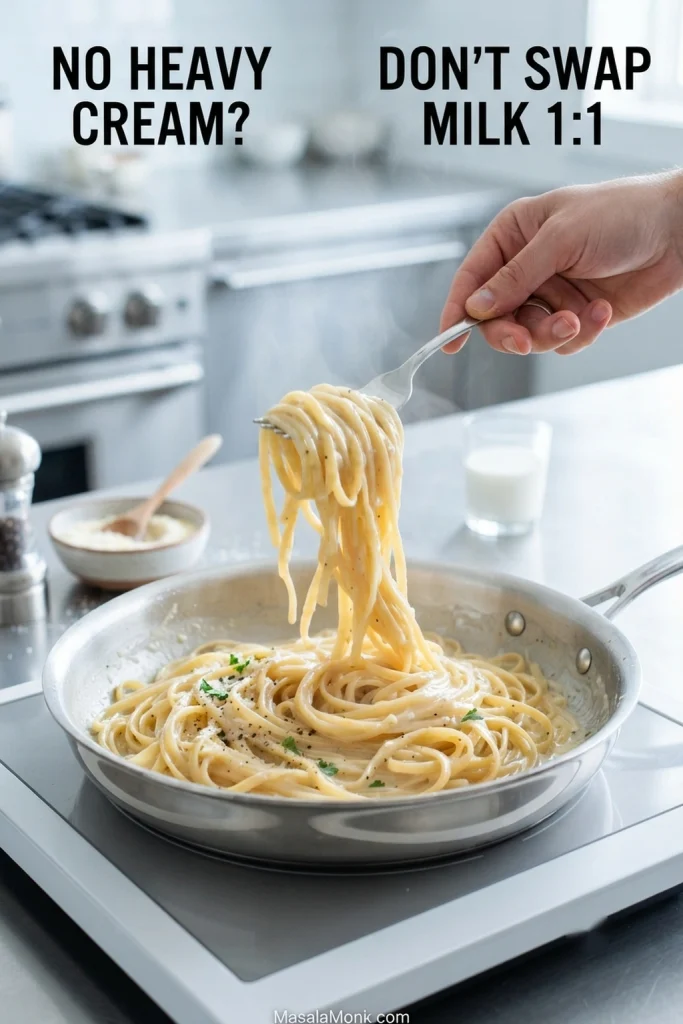
Yes. For Cajun shrimp pasta without heavy cream, use stock, Parmesan and starchy pasta water to build a lighter sauce instead of replacing heavy cream with milk 1:1.
After the shrimp comes out, start the linguine. Then follow the base method through the shallot, garlic, Cajun seasoning and optional tomato paste. Deglaze with ½ cup / 120 ml low-sodium stock instead of ¼ cup and omit the cream. When the pasta is 1–2 minutes shy of al dente, move it into the skillet and toss with 2½–3 oz / 70–85 g finely grated Parmesan and enough hot pasta water to bring the sauce together. Use the recipe’s 1 tbsp / 14 g butter, or replace it with 1 tbsp / 15 ml olive oil if preferred.
The result is lighter and less forgiving than the heavy-cream version, so pasta water matters more. It should still coat the noodles rather than collect underneath them. This version is cream-free, not dairy-free; a fully dairy-free pasta needs a sauce designed around different ingredients rather than a quick Parmesan swap. Our garlic Parmesan broccoli pasta without cream uses the same Parmesan-and-pasta-water style of coating without heavy cream.
What about half-and-half, milk or sour cream?
Half-and-half is the closest direct substitute for heavy cream. Use the same 1 cup / 240 ml, simmer it gently and begin the final toss with less pasta water because it starts thinner. Whole milk and sour cream are not 1:1 substitutes here: milk needs extra structure, while sour cream changes both the tang and the way the sauce handles heat.
Want it more Alfredo-style?
For Cajun shrimp Alfredo, use fettuccine, skip the optional tomato paste and increase the Parmesan to about 3½ to 4 oz / 100–115 g. The result is richer and more cheese-forward while the Cajun seasoning keeps the sauce distinct from plain shrimp Alfredo. Our guide to classic and American-style Alfredo goes deeper into the butter-and-Parmesan and cream-based approaches.
Cajun Pasta Variations That Change the Cooking Order
Cajun Shrimp and Sausage Pasta
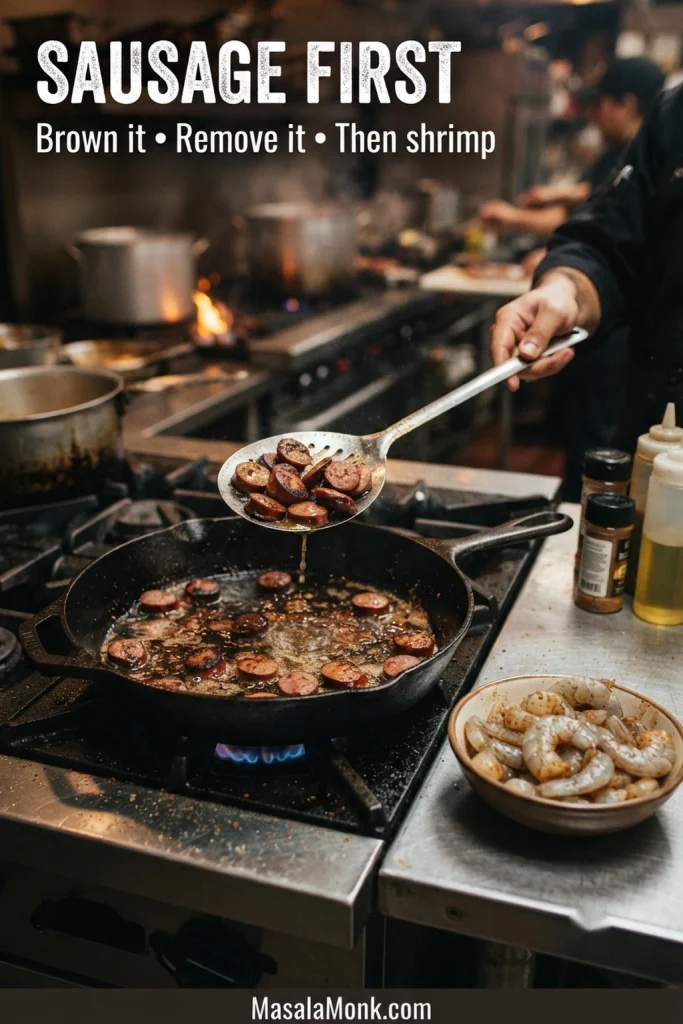
Add about 6 oz / 170 g sliced andouille sausage. Brown it first until the edges pick up color, transfer it to a plate, then sear the shrimp in the rendered fat with a little extra oil if needed. Return the sausage with the shrimp during the final toss.
Andouille brings salt, fat and smoke of its own, so taste before adding more salt. For a less protein-heavy plate, reduce the shrimp to around 12 oz / 340 g.
Cajun Chicken and Shrimp Pasta
Use roughly 8 oz / 225 g boneless skinless chicken breast or thigh, cut into bite-size pieces, with 12 oz / 340 g shrimp. Brown the chicken first and cook it through, then transfer it to a plate before searing the shrimp. Return the cooked chicken with the shrimp during the final toss.
The chicken should reach 165°F / 74°C at the thickest part, the USDA safe minimum temperature for poultry. See the USDA safe minimum internal temperature chart.
If chicken is what you really want to lead the bowl, our Creamy Cajun Chicken Pasta recipe gives it the longer cooking time and sauce balance it needs.
Using already cooked shrimp
Skip the initial shrimp sear and add cooked shrimp only during the final minute. Because there will be no shrimp fond, begin the skillet with the butter and shallot. Once the shallot softens, add the garlic, Cajun seasoning and optional tomato paste and let them cook briefly before adding the stock. That gives the sauce some toasted depth without heating the shrimp twice.
Bell peppers, spinach or broccoli
Thinly sliced bell pepper can go into the skillet after the shrimp comes out, where it can soften while keeping some bite. Baby spinach needs only the final minute or two in the sauce. Broccoli is easiest to control if it cooks separately or spends its last few minutes in the pasta water.
If the Pan Goes Sideways
Some problems can still be fixed before dinner reaches the plate. Others are next-time lessons.
Sauce Problems You Can Still Fix
| Problem | Status | Best move |
|---|---|---|
| Overly salty | Partly fixable | For mild oversalting, loosen with unsalted cream or a little hot unsalted water. Severe oversalting needs real dilution with more unsalted pasta and sauce. |
| Thin and loose | Usually fixable | If the pasta is still firm, keep tossing briefly over gentle heat. If it is already perfectly cooked, lift it out with tongs for a moment, reduce the sauce, then toss everything back together. |
| Thick and pasty | Fixable | Add hot pasta water 1–2 tablespoons at a time and toss. |
| Oily or separated | Sometimes fixable | Add a small splash of hot pasta water and toss vigorously over gentle heat. |
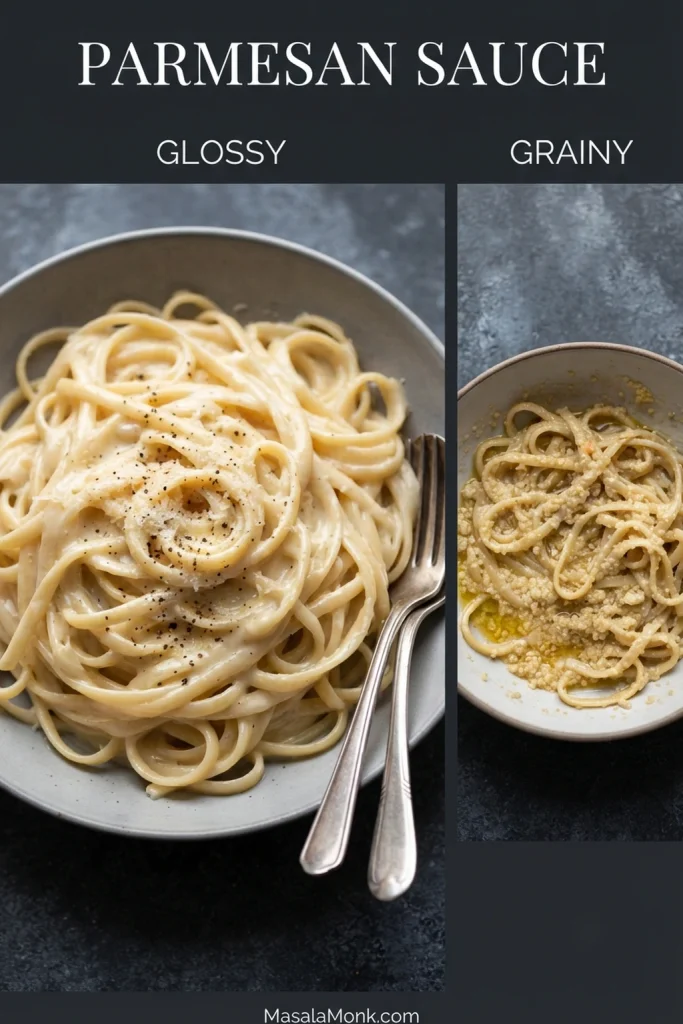
| Grainy texture | Sometimes fixable | Take the pan off the heat and stir in a splash of warm pasta water or cream. Severe separation may not fully reverse. |
| Heat is overpowering | Partly fixable | Add unseasoned cream or more plain pasta. Sugar is not the main fix here. |
| Salty but still bland | Fixable | Try lemon, cayenne or salt-free Cajun seasoning before adding anything salty. |
| Dries out after plating | Fixable | Loosen with warm pasta water. Next time stop cooking while the sauce is still visibly mobile. |
Shrimp and Burnt-Fond Problems to Fix Next Time
| Problem | Status | Best move |
|---|---|---|
| Shrimp are grey instead of browned | Next time | Dry them more thoroughly, preheat the skillet properly and give them more room. |
| Shrimp are rubbery | Next time | Truly overcooked shrimp cannot be made tender again. Pull them earlier and return them only after the sauce is ready. |
| Burnt, bitter sauce | Next time | Wipe away black, acrid spice residue immediately after the shrimp leave the pan. Good fond is brown-red and smells toasted, not scorched. |
Tomorrow’s Pasta Is a Different Sauce
This pasta is best straight from the skillet. The next day can still be good; it is simply softer and thicker. As it sits, the noodles keep absorbing liquid, Parmesan tightens, and cooked shrimp become firmer each time they are heated again.
Can I prep Cajun shrimp pasta ahead?
You can do most of the prep earlier in the day: peel and dry the shrimp, grate the Parmesan, chop the shallot and garlic, and measure the sauce ingredients. Cook the shrimp, pasta and cream sauce close to serving so the seafood stays tender and the sauce retains its best texture.
Refrigerate leftovers within 2 hours in a covered container and use them within 3–4 days. Reheat only the portion you plan to eat, using low heat and a small splash of water or cream to loosen the sauce.
For food safety, reheat leftovers to 165°F / 74°C. Once they are hot, stop; extra simmering will keep tightening the sauce and cooking the shrimp.
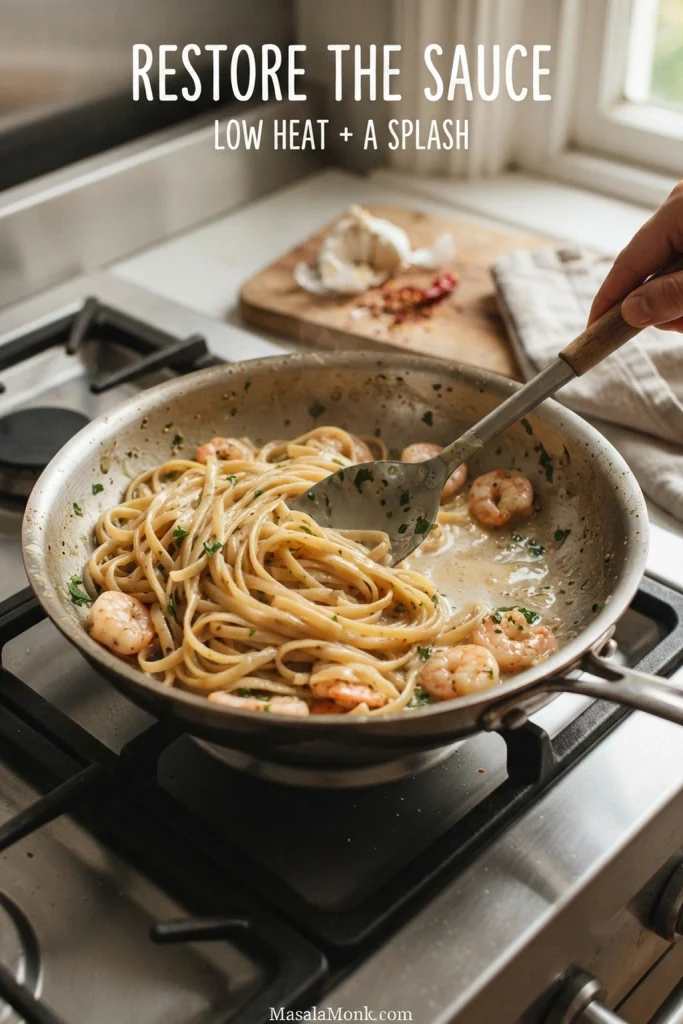
Freezing is less appealing here. Cream-and-Parmesan sauces can separate after thawing, and cooked shrimp do not improve after another full heating cycle.
What to Serve With Cajun Shrimp Pasta
This pasta already feels complete on its own, so the best sides do not need to compete with it. Roasted asparagus, green beans or broccoli all fit. For something cold and crisp, a cucumber salad with vinegar, dill and onion gives the rich sauce a sharp, fresh contrast.
Or lean fully into comfort food. A homemade garlic bread loaf gives the extra sauce somewhere worthwhile to go.
The finished pasta should still look glossy and mobile when it reaches the table, with browned shrimp sitting among the coated strands rather than above a pool of sauce.
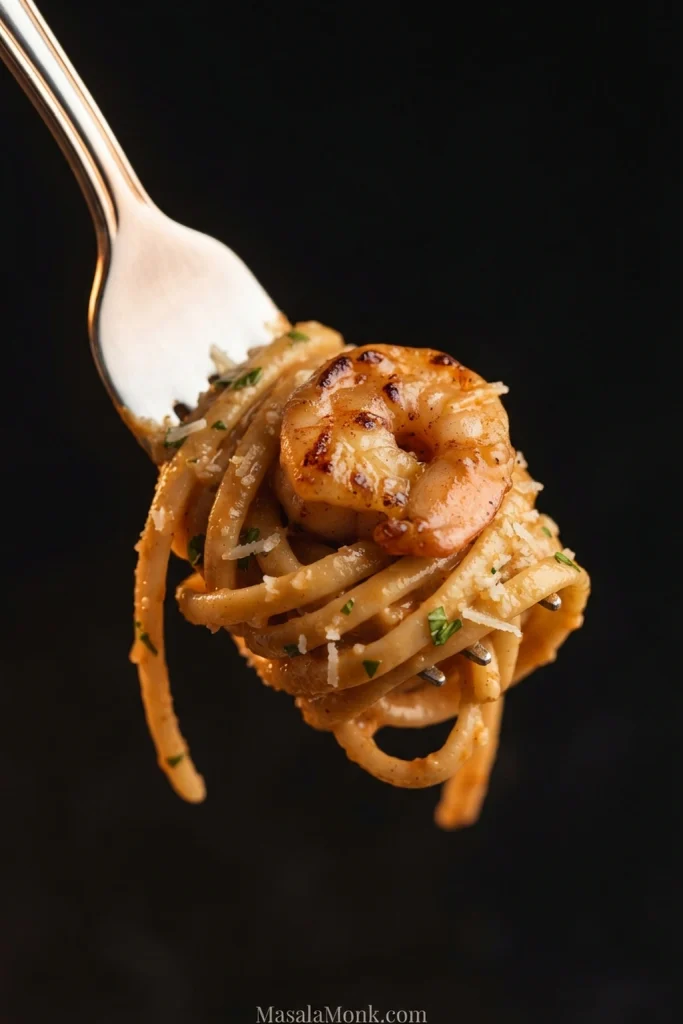
Keep the two ideas in mind while you cook: shrimp out, pasta in, shrimp back, and stop the sauce while it still looks a little looser than you ultimately want it. Then lift a forkful—browned shrimp against coated linguine, warm Cajun spice underneath it all, and just enough lemon to sharpen the cream. That’s the forkful the whole method is built around.








