
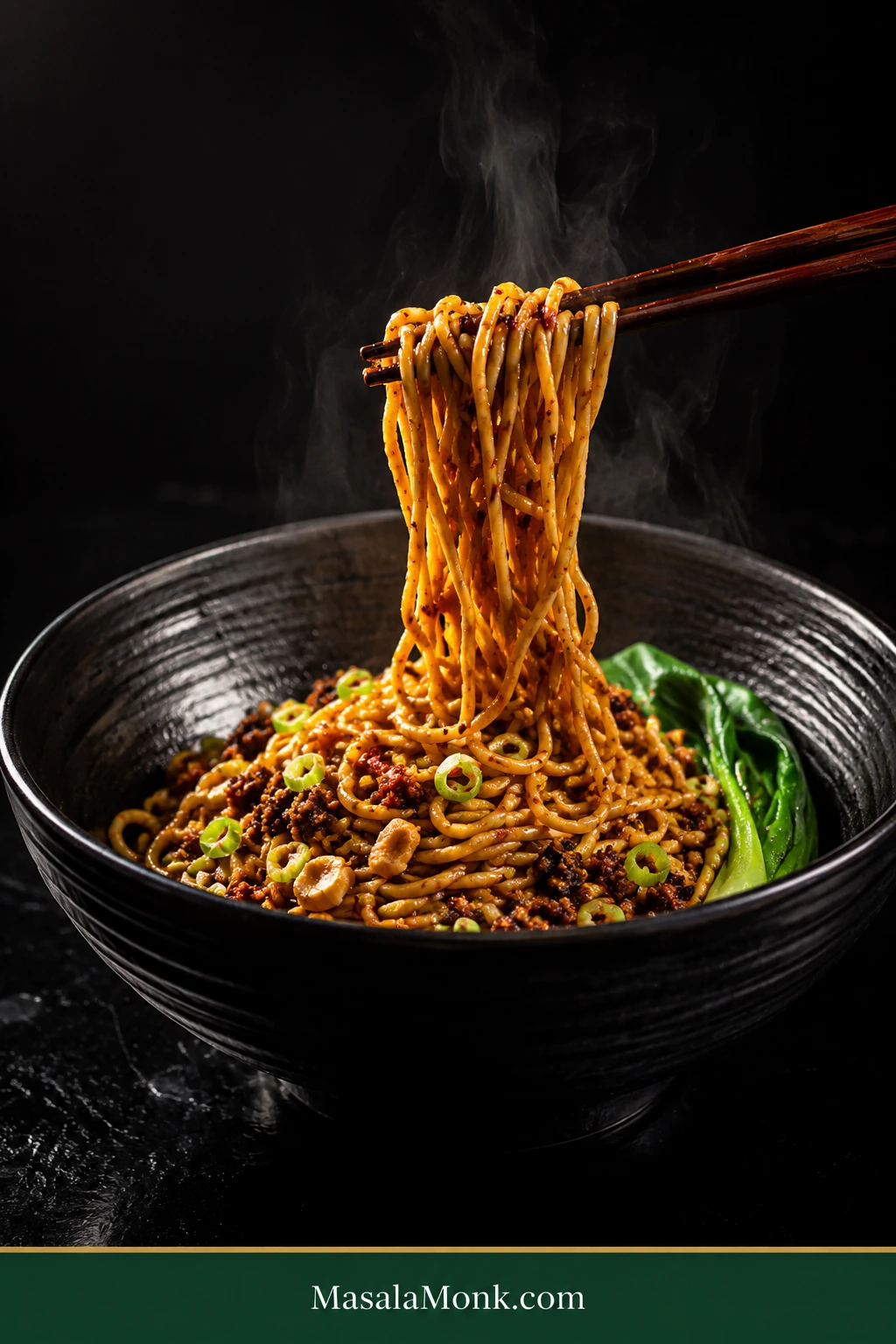
Good Dan Dan noodles should make you want the next bite before the first one has quite finished: springy wheat noodles slicked with a rusty-red sesame-chili sauce, crisp pieces of pork, salty-fermented mustard greens, scallions, and enough Sichuan pepper to leave a citrusy tingle on your lips.
Dan Dan noodles—dàndàn miàn (担担面)—are rooted in Sichuan street food: wheat noodles, chili oil, Sichuan pepper, preserved vegetables, and usually a modest savory pork topping, all packed into an intensely flavored serving.
A good bite changes as you eat it. Chili and dark vinegar arrive first; pork and ya cai bring the deep savory middle; roasted sesame softens the sharper edges; then Sichuan pepper leaves that unmistakable buzz behind after you’ve swallowed.
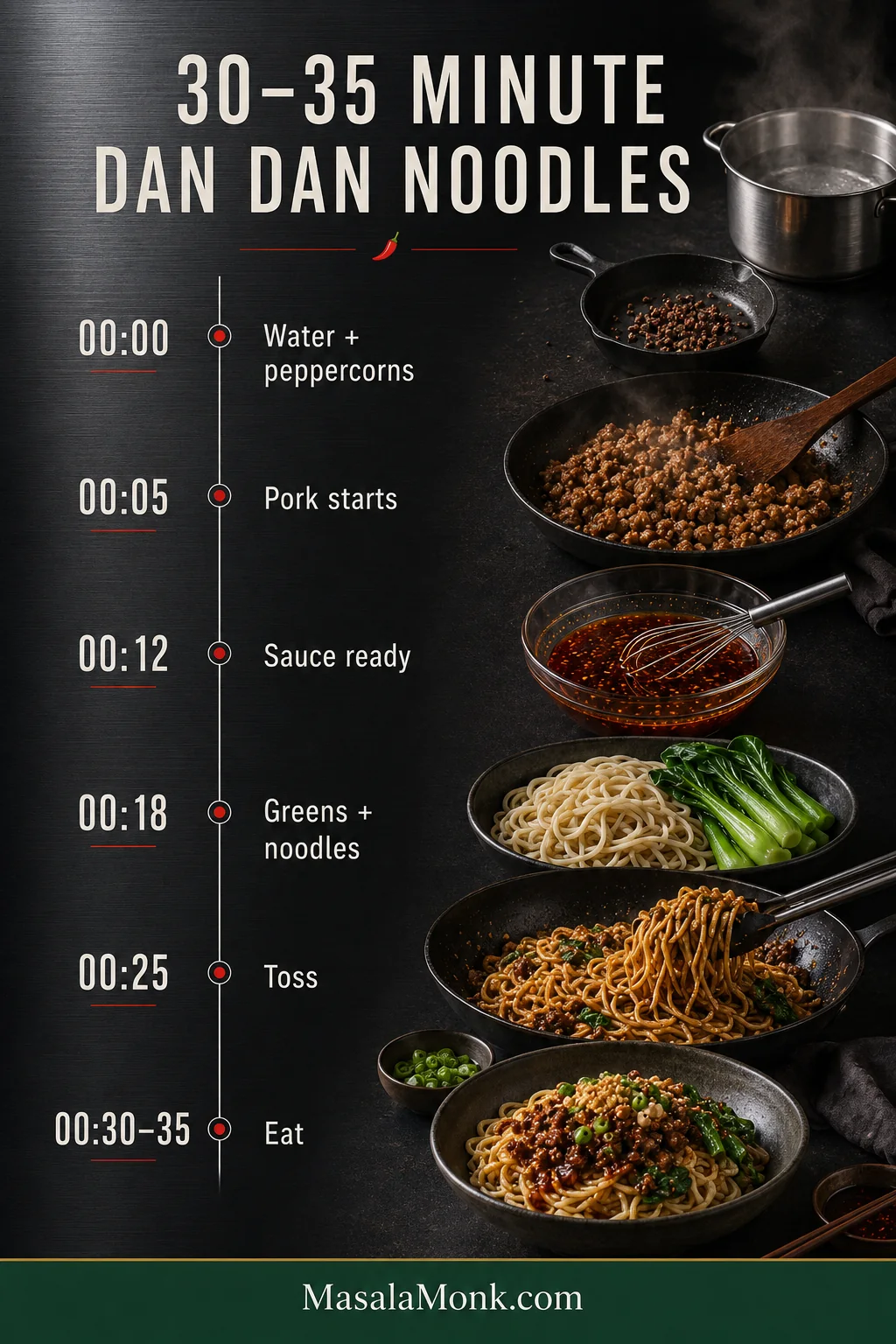
The ingredient list may contain a few unfamiliar jars, but once they’re in the pantry, this becomes a 30–35 minute dinner. This version keeps the bowl concentrated and sauce-clinging, uses prepared chili oil to keep the work manageable, and uses just enough sesame paste to round the sauce without hiding the black vinegar, ya cai, chili, or Sichuan pepper.
Coat the noodles, don’t drown them. The measurements get you close; the final toss tells you when to stop.
Quick Answer: How to Make Dan Dan Noodles
For 4 bowls in about 30–35 minutes, brown 225 g / 8 oz ground pork until its released moisture disappears and the crumbles begin frying. Season with Shaoxing wine, a little soy sauce, and 25–30 g / about 1 oz sui mi ya cai while you whisk the sesame-chili sauce.
Cook 500 g / about 18 oz fresh Chinese wheat noodles or 300–325 g / about 10½–11½ oz dried noodles until springy. Put sauce into four bowls, start each with 1 tbsp / 15 ml hot noodle water, add the noodles, and toss. Add more water only a teaspoon at a time if needed, then finish with pork, greens, scallions, chili oil, and Sichuan pepper.
Dan Dan Noodles Recipe
Spicy Sichuan wheat noodles with tangy sesame-chili sauce, browned pork, preserved mustard greens, and heat you can adjust at the table.
There are really only three main jobs here: brown the pork, mix the sauce, and cook the noodles.
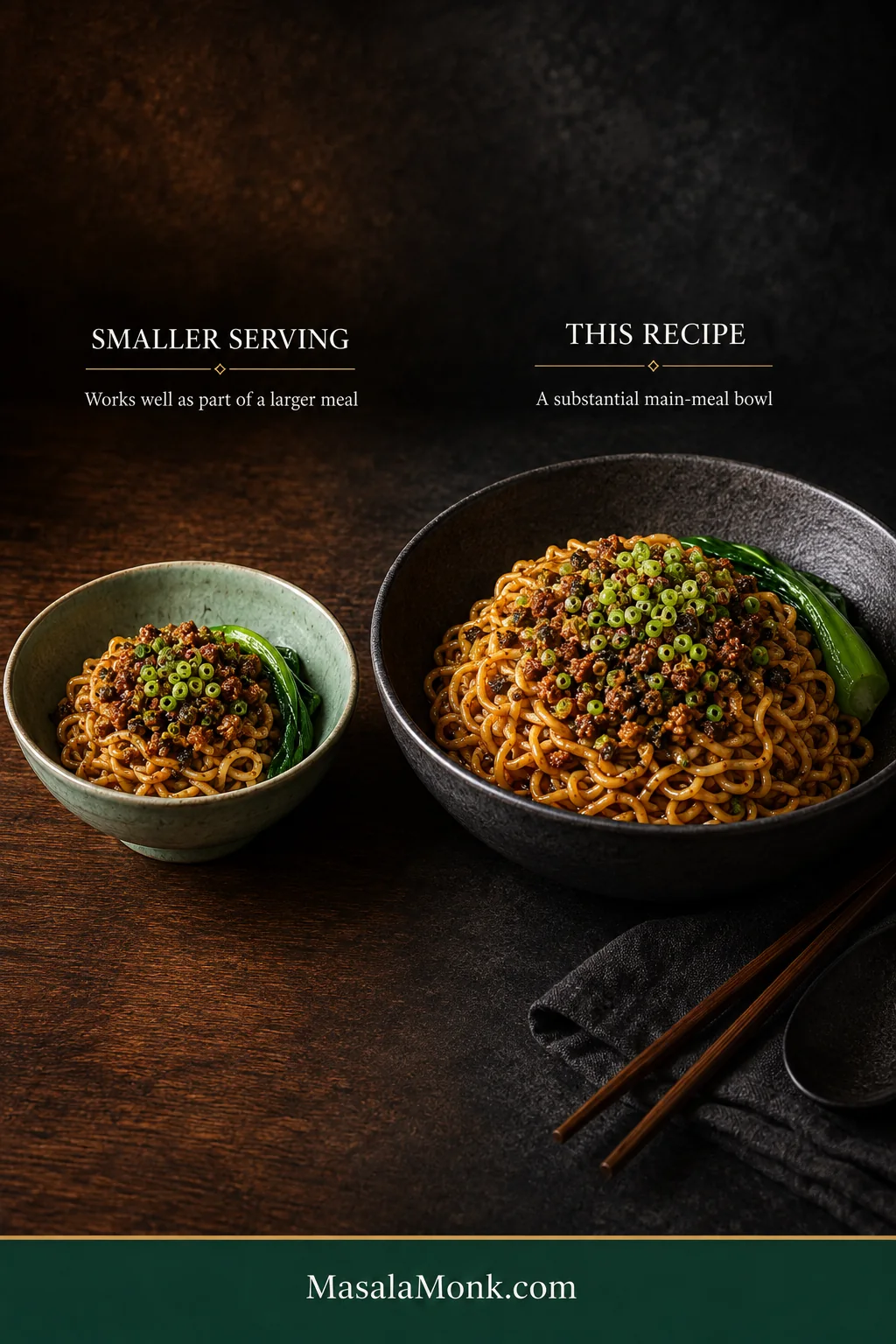
Serving note: With several other dishes on the table, this batch can make about 6 smaller portions. For six bowls, start with about 2 tsp / 10 ml noodle water per bowl, then adjust only as needed.
Heat: moderate as a starting point, with extra chili oil and Sichuan pepper available for individual bowls.
Equipment
- Large pot for the noodles
- 12-inch / 30 cm skillet or wok
- Medium mixing bowl
- Four serving bowls
- Strainer, spider, or tongs
- Mortar and pestle or spice grinder
Ingredients
Noodles & Finishing
- 500 g / about 18 oz fresh thin-to-medium Chinese wheat noodles, preferably alkaline if available
OR 300–325 g / about 10½–11½ oz dried Chinese wheat noodles - 150 g / about 5 oz baby bok choy, choy sum, or another tender Asian green, optional
- 2 scallions, thinly sliced
- 2 tbsp roasted peanuts, roughly chopped, optional
- Extra chili oil, for serving
- Extra freshly ground Sichuan pepper, for serving
- 1 cup / 240 ml hot noodle water, reserved before draining; you probably won’t use all of it
Pork & Ya Cai
- 225 g / 8 oz ground pork
- 1 tsp neutral oil, only if the pork is particularly lean or the pan needs it
- 1 tbsp / 15 ml Shaoxing wine — Shaoxing cooking wine is fine; dry sherry also works
- 1 tsp / 5 ml Chinese light soy sauce
- 25–30 g / about 1 oz sui mi ya cai (Sichuan preserved mustard greens), finely chopped
- 1 tsp finely grated fresh ginger, optional but recommended
Dan Dan Sauce
- 2 tbsp / about 32 g Chinese sesame paste, stirred smooth before measuring
- 3 tbsp / 45 ml Chinese light soy sauce
- 2 tbsp / 30 ml Chinkiang black vinegar
- 3 tbsp / 45 ml Chinese chili oil, stirred before measuring, plus more to taste
- 1½ tsp sugar
- 2 garlic cloves, finely grated or minced
- 1½ tsp whole Sichuan peppercorns
Before you cook, check three things.
- Ya cai: pleasantly salty is fine; aggressively salty needs a brief rinse and a very good squeeze.
- Chili oil: one jar may be mostly aromatic while another is genuinely fierce.
- Sesame paste: stir the separated oil completely back into the paste before measuring.
There’s usually no need to salt the noodle water. The soy sauce, preserved vegetables, and many bottles of Shaoxing cooking wine already bring plenty of seasoning.
Instructions
Prep the Pepper and Brown the Pork
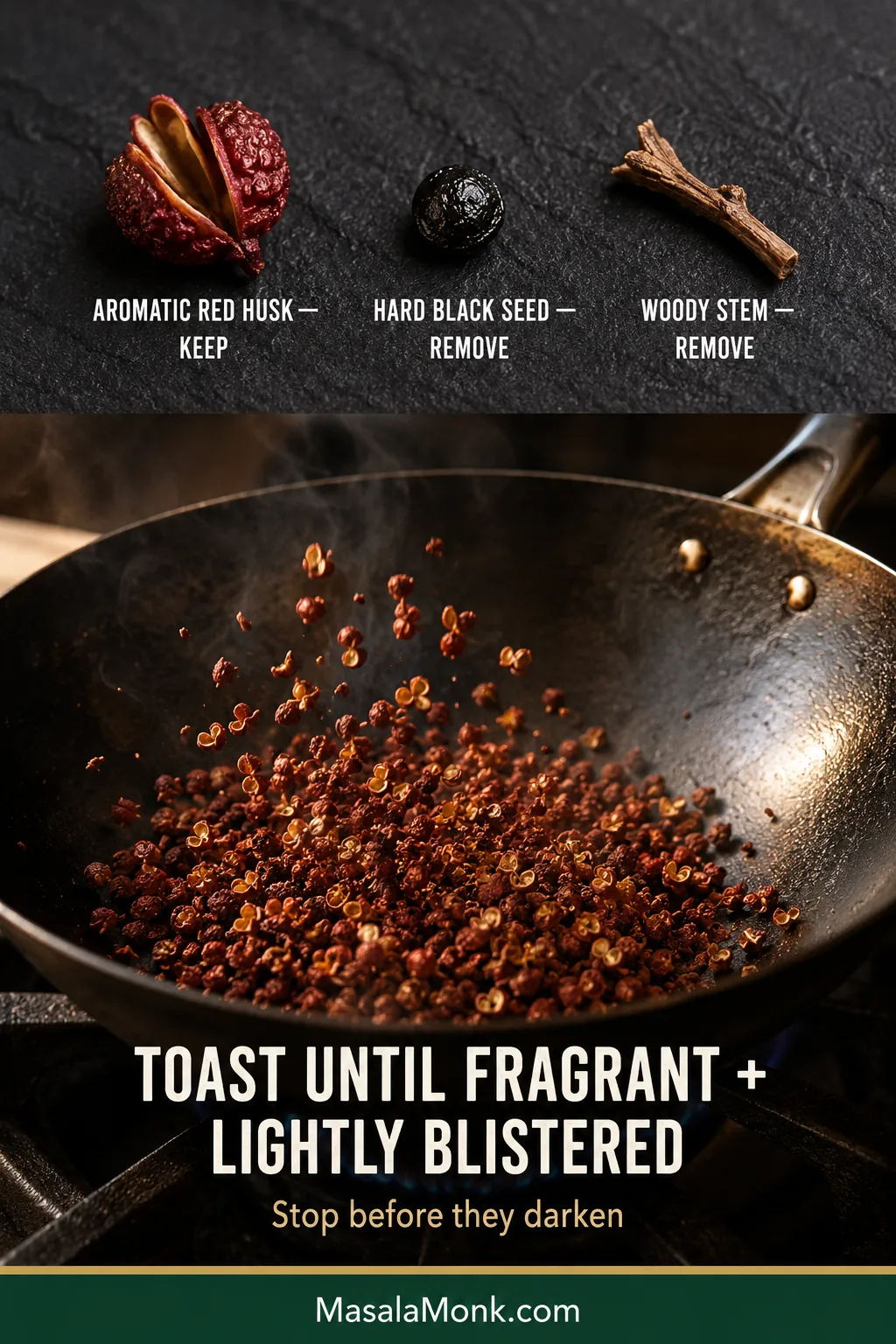
- Start the noodle water and toast the Sichuan peppercorns. Fill the noodle pot and set it over high heat. While the water comes toward a boil, pick out any obvious hard black seeds or woody stems from the peppercorns, then put the aromatic husks in the dry skillet you’ll later use for the pork. Toast over medium-low to medium heat for about 1–2 minutes, shaking frequently, until intensely citrusy and lightly blistered. Tip them out before they darken, grind reasonably fine, and reserve about half for the table.
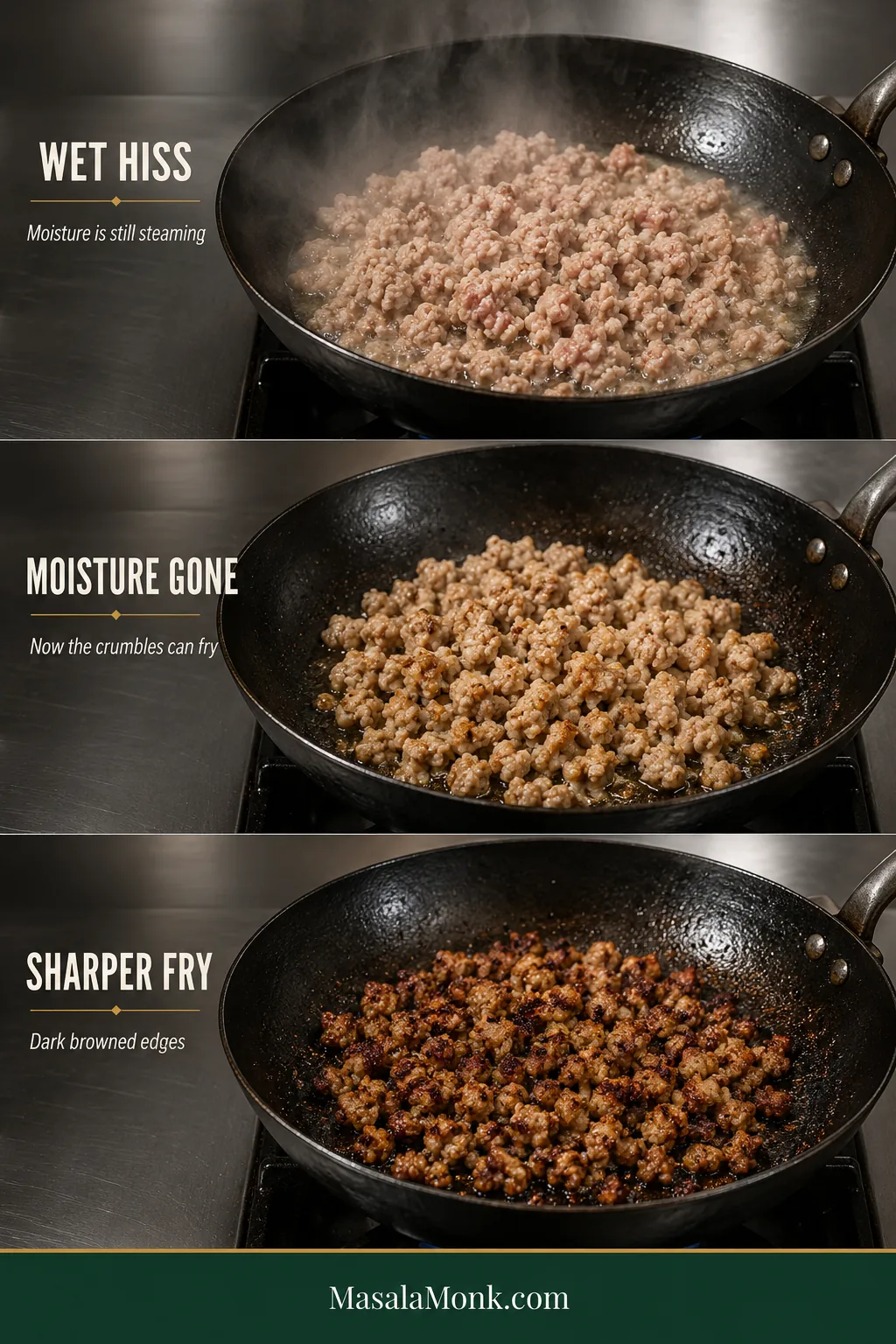
- Brown and season the pork. Return the skillet to medium-high heat. Add oil only if needed, then spread in the pork and break it into small irregular crumbles. At first you’ll hear a wet hiss. Keep cooking until the visible moisture disappears and the sound changes to a sharper fry. Continue until you see dark browned spots and crisp edges, usually 6–8 minutes total. Add the ginger for about 20 seconds, pour the Shaoxing wine around the hot edge of the pan, and add the teaspoon of soy sauce. Once that liquid has nearly disappeared, stir in the ya cai and fry for another 1–2 minutes. Ground pork should reach at least 160°F / 71°C; the finished topping should also look browned and relatively dry.
Mix the Sauce and Cook the Noodles
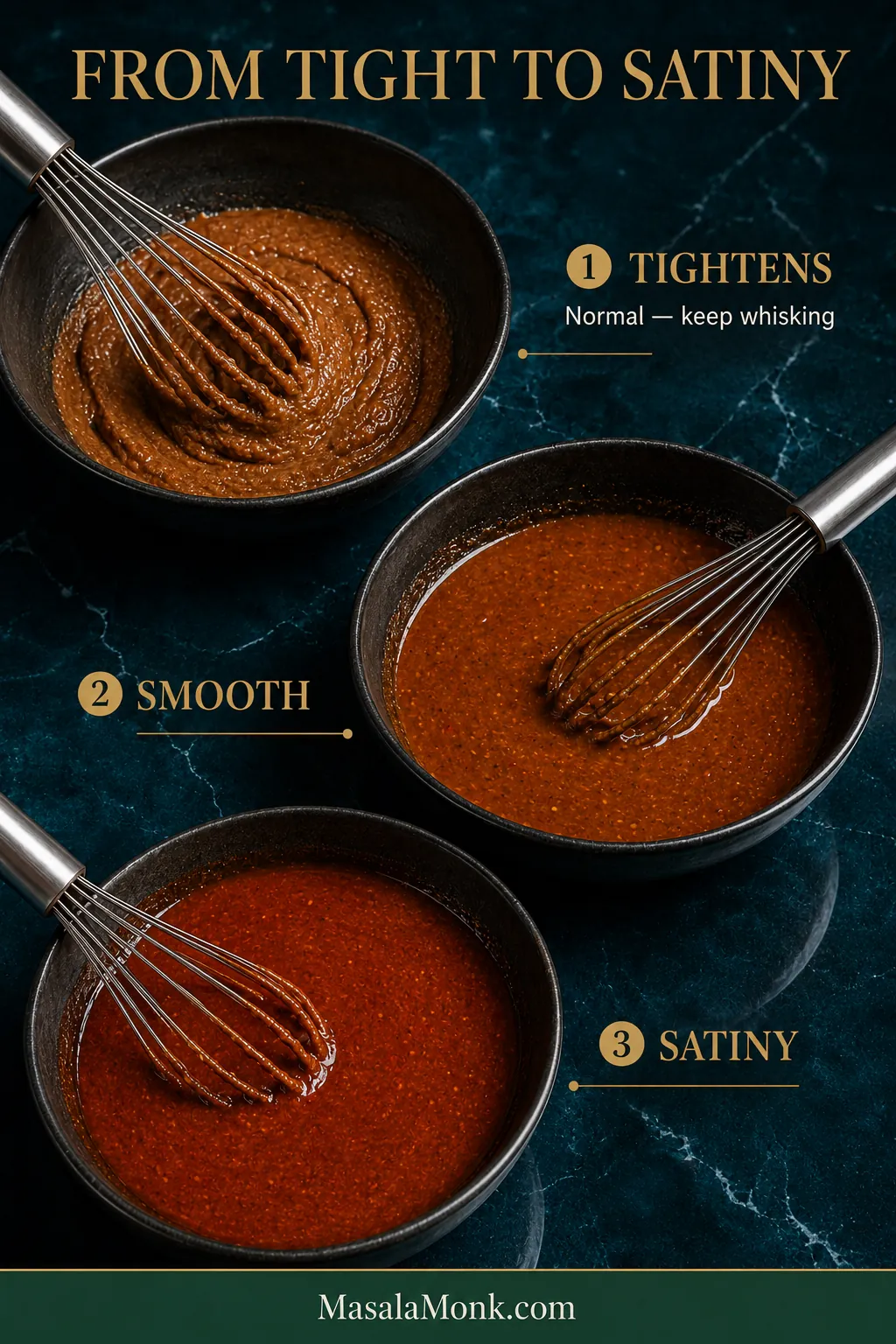
- Mix and taste the sauce. Put the sesame paste in a medium bowl and gradually whisk in the 3 tablespoons soy sauce. The paste may tighten briefly; keep whisking until it becomes smooth. Add the Chinkiang vinegar, sugar, garlic, and about half of the ground Sichuan pepper, then whisk in the chili oil until the sauce looks satiny and even. Taste a tiny dab. It should seem deliberately intense but balanced because the plain noodles will soften every flavor.
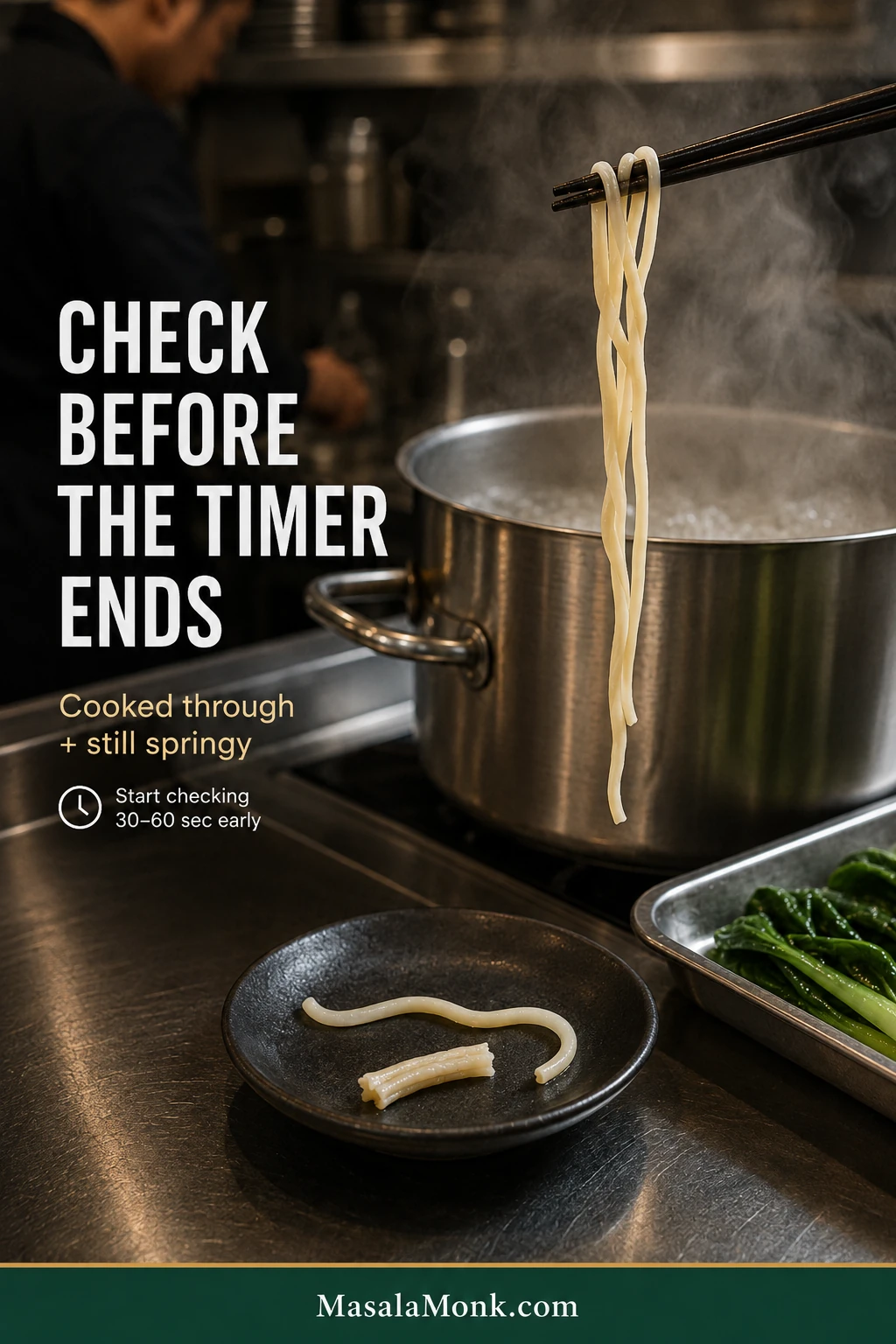
- Cook the greens and noodles. Blanch tender leafy greens for about 30–45 seconds; halved baby bok choy may need closer to 60–90 seconds. Lift them out when the leaves are bright and the stems crisp-tender. Add the noodles and begin checking 30–60 seconds before the package time ends. Bite one: it should be cooked through but still push back slightly between your teeth. Reserve 1 cup / 240 ml noodle water before draining.
Assemble and Finish
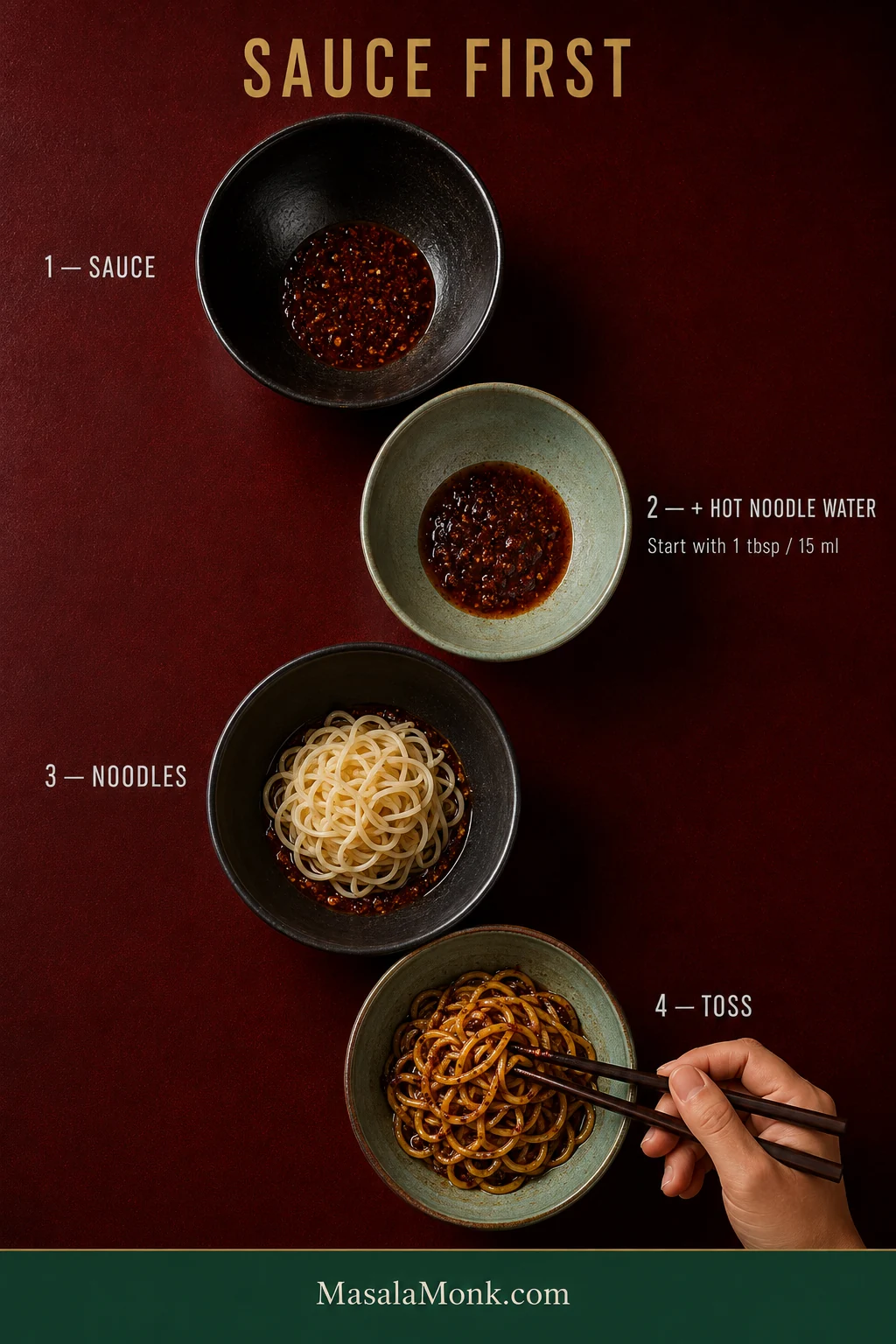
- Sauce the noodles bowl by bowl. Divide the concentrated sauce among four bowls and whisk about 1 tbsp / 15 ml hot noodle water into each. Drain the noodles well, divide them among the bowls, and toss thoroughly from the bottom. If the strands remain heavy or clumped, add more hot water only 1 tsp / 5 ml at a time. They’re ready when the noodles lift cleanly and the sauce comes with them.
- Top, toss, and adjust. Add the pork and ya cai, greens, scallions, and peanuts if using. Toss enough topping through the noodles that pork and preserved greens show up throughout the serving. Taste. More chili oil increases the burn; freshly ground Sichuan pepper increases the citrusy buzz; a few drops of Chinkiang vinegar can wake up a bowl that feels heavy. Eat while the noodles are hot and lively.
Recipe Notes
- Use the listed fresh or dried noodle weight. Fresh noodles carry substantially more water, so equal package weights produce different amounts of noodle.
- For this hot version, drain and sauce the noodles immediately. An unusually starchy fresh noodle that begins sticking can have a very quick rinse; shake it extremely dry and move straight to the sauce.
- Prepared chili oil keeps this weeknight-friendly. Homemade oil is excellent when you already have it.
- Start modestly with Sichuan pepper. Anyone who wants a stronger buzz can add more to their own serving.
The Finished Noodles: What You’re Looking For
- Noodles: springy and easy to lift in separate strands.
- Sauce: clinging to the strands with no thin pool underneath.
- Pork: dark in spots, relatively dry, and crisp around some of the smaller edges.
- Flavor: layered and lively, without one ingredient flattening everything else.
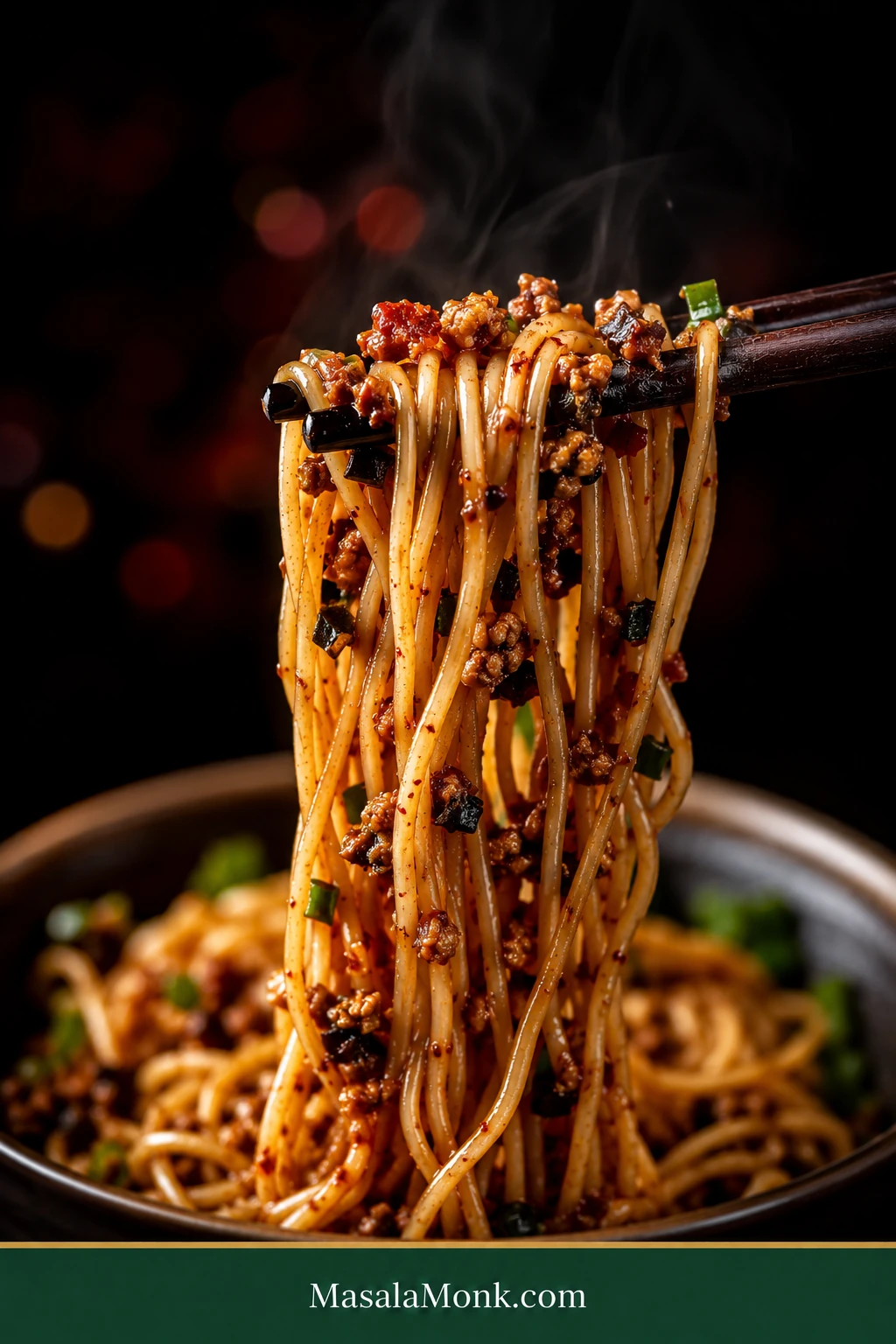
Now take a bite. The noodles should be hot and slippery, black vinegar should give the first mouthful a quick acidic snap, browned pork and ya cai should keep appearing between strands, and the peppercorn tingle should build gradually, leaving the vinegar, pork, sesame, and preserved mustard easy to notice.
Something cold and crisp is especially good beside all that richness. A simple cucumber salad gives the meal an easy vinegary counterpoint.
Cooking right now? You can stop here. Everything below is for choosing ingredients, understanding why versions differ, or fixing something that didn’t behave as expected.
Explore the Dan Dan Noodles Guide
What Are Dan Dan Noodles? Name, Street-Food Roots & Variations
Dan Dan noodles are a Sichuan wheat-noodle dish traditionally associated with street vendors and a concentrated mix of chili, Sichuan pepper, preserved vegetables, and savory toppings. The name dàndàn miàn comes from the dàn, or carrying pole, associated with vendors who sold the noodles.
You may also see Szechuan Dan Dan noodles. Szechuan is an older English romanization that remains common on menus and in recipe searches.
How Traditional Is This Version?
Dan Dan noodles vary considerably from cook to cook and shop to shop, so there isn’t one modern formula that defines every Sichuan bowl. Some servings are drier, others carry more seasoned liquid; sesame paste appears in some versions and not others, and pork quantities range from a light topping to much more substantial portions.
This version keeps wheat noodles, chili oil, Sichuan pepper, preserved mustard greens, Chinkiang vinegar, and dry-fried pork at the center while making the portions substantial enough for a main meal.
For broader context on Sichuan cooking and the many forms dishes like Dan Dan noodles can take, Fuchsia Dunlop’s The Food of Sichuan is an excellent English-language reference.
Why Good Dan Dan Recipes Look So Different
Compare a few good recipes and you’ll quickly run into doubanjiang, fermented black beans, sweet bean sauce or hoisin, dark soy, five-spice, sesame paste, peanuts, stock—or none of the above.
The variations are not random. Different cooks build fermented depth, sweetness, savoriness, heat, and richness in different ways.
Here, the pork stays fairly simple so chili oil, Sichuan pepper, ya cai, black vinegar, and roasted sesame remain easy to pick out. Doubanjiang adds another powerful fermented-bean note and more salt. It belongs comfortably in other versions; this one gets its fermented depth elsewhere.
Are Dan Dan Noodles Dry or Soupy?
Dan Dan noodles range from quite dry to noticeably more saucy. Many Sichuan and Chengdu-style bowls use only a modest amount of intensely seasoned liquid, while other traditional versions are looser.
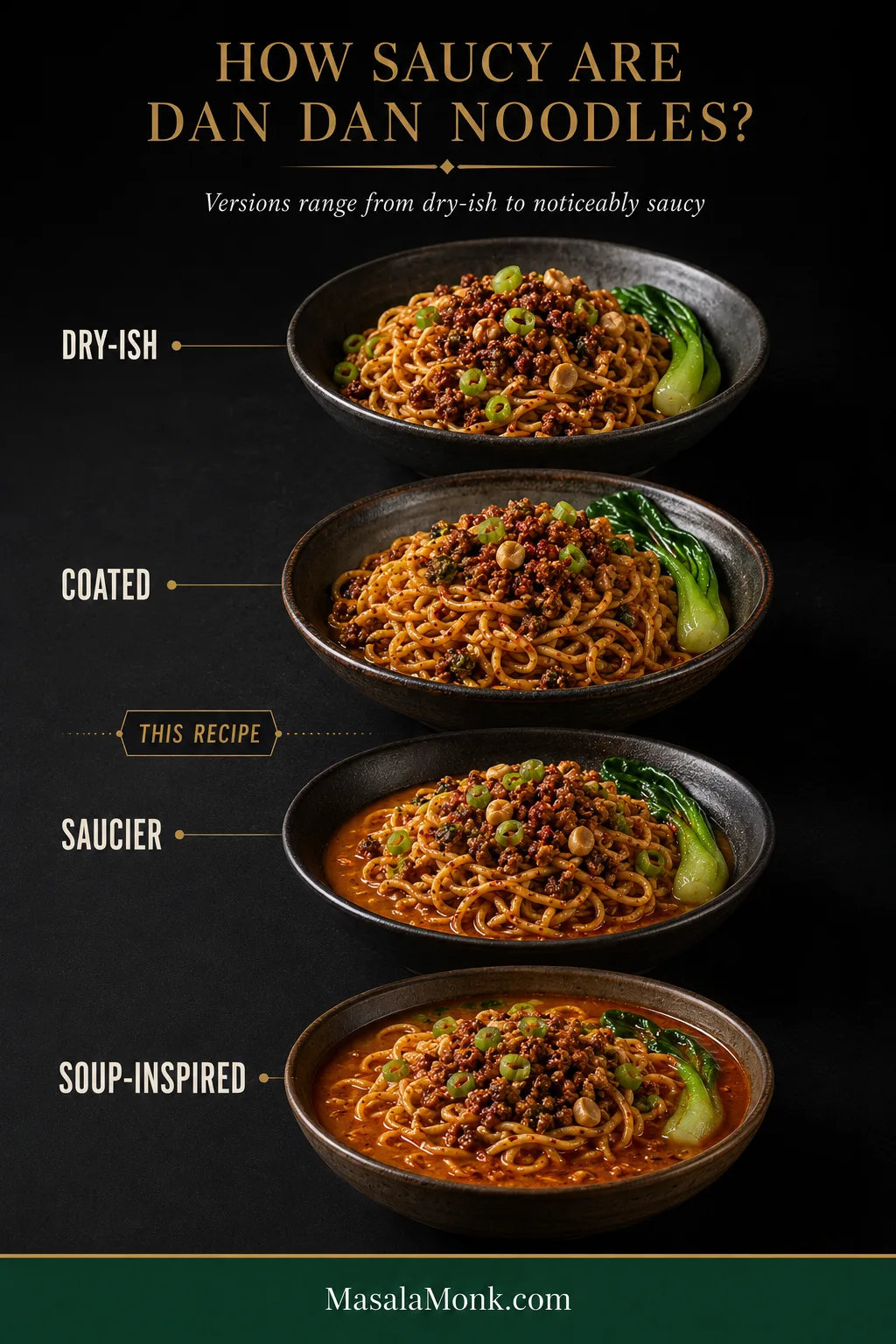
Even a dry-ish bowl still carries plenty of chili oil and concentrated seasoning. Japanese tantanmen and Dan Dan-inspired noodle soups take this flavor family much farther toward a full broth, which produces a distinctly different eating experience.
What Noodles Are Best for Dan Dan Noodles?
Thin-to-medium Chinese wheat noodles are the best fit. Fresh alkaline noodles are especially springy, while dried Chinese wheat noodles make an excellent pantry option.
In a Chinese or well-stocked Asian grocery, look for fresh noodles in the refrigerated case. The strands should be thin enough to tangle easily around chopsticks, with much less heft than udon.
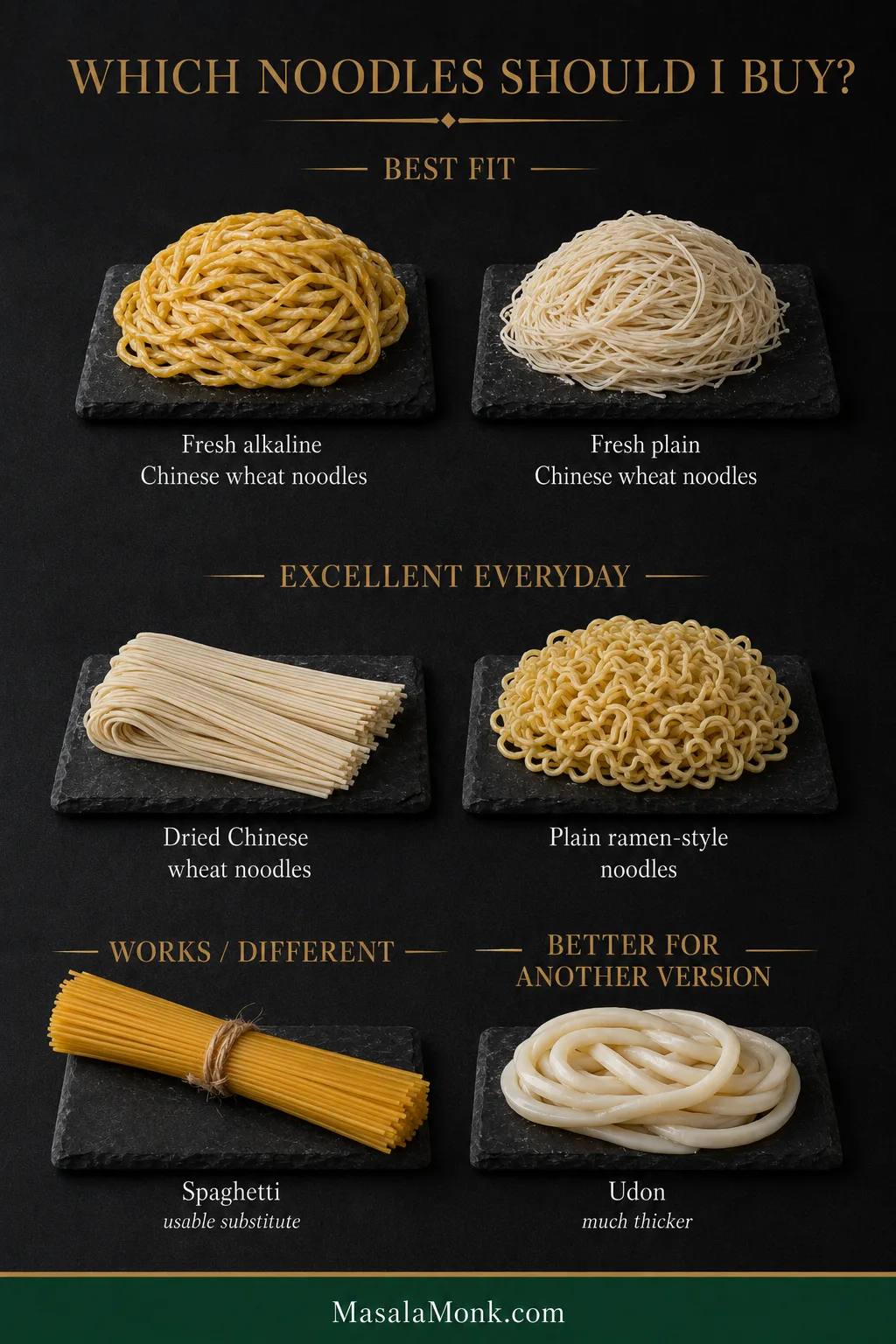
| Noodle | How it behaves | Verdict |
|---|---|---|
| Fresh alkaline wheat noodles | Springy, slippery, resilient | Excellent when available |
| Fresh plain Chinese wheat noodles | Slightly softer chew | Excellent |
| Dried Chinese wheat noodles | Reliable and easy to keep in the pantry | Excellent everyday option |
| Plain ramen-style noodles | Good chew and enough structure for the sauce | Good substitute |
| Spaghetti | Less springy, but carries the sauce surprisingly well | Use it if that’s what you have |
| Rice noodles | Different absorption and texture | A bigger departure |
| Udon | Much thicker and asks for a different sauce balance | Better saved for another version |
If all you can find is spaghetti, make dinner. The noodles didn’t come from the Chinese aisle, but the sauce still has plenty to hold onto.
Why Fresh and Dried Noodles Need Different Weights
About 500 g / 18 oz fresh or 300–325 g / 10½–11½ oz dried gives you the intended four-bowl batch. Fresh noodles already carry substantial water weight, so equal package weights produce very different amounts of actual noodle.
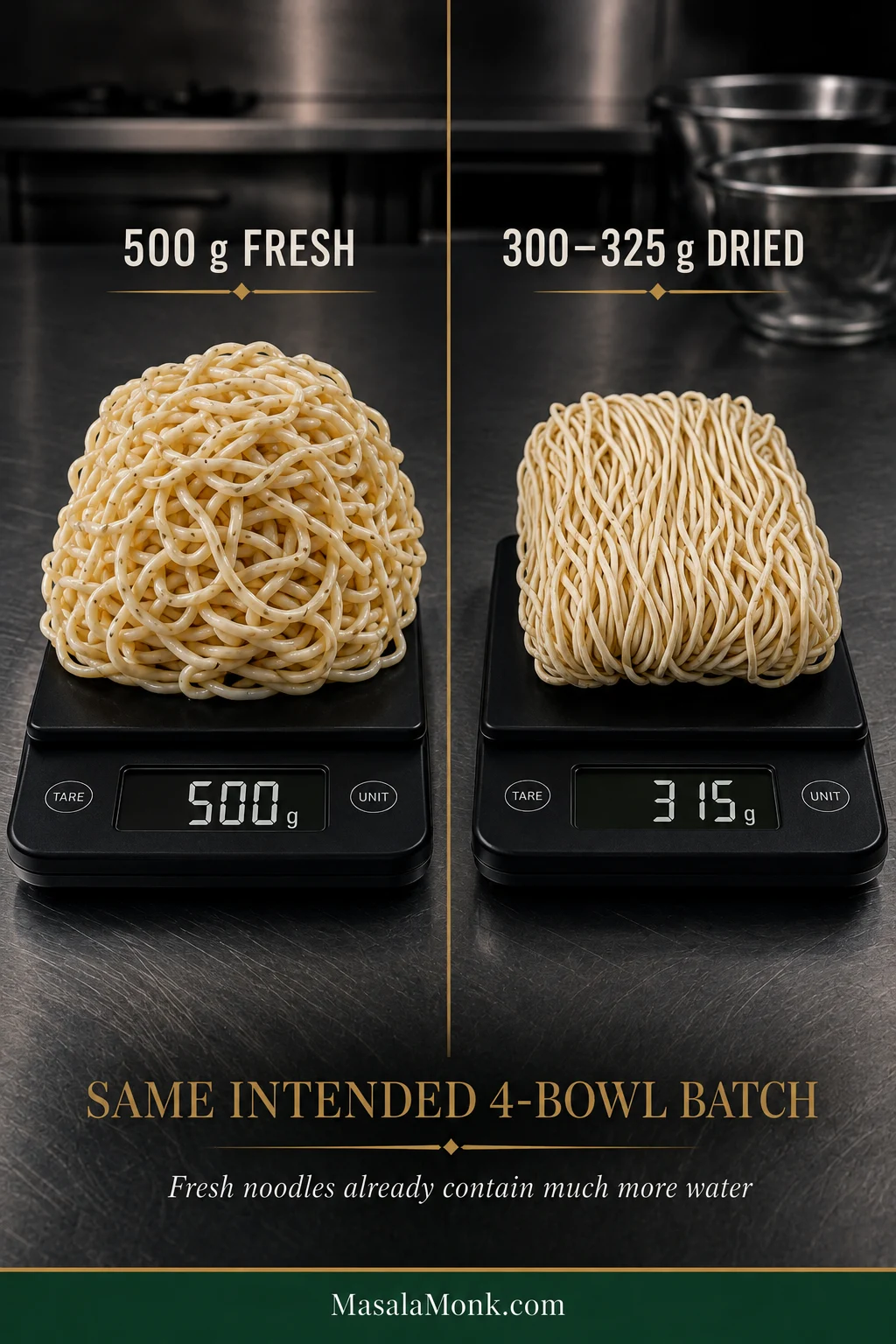
Whatever you buy, begin checking before the printed cooking time ends. Let the clock tell you when to check; let the noodle decide when it’s done.
Get the Dan Dan Sauce Right
Dan Dan sauce is built from chili oil, soy sauce, Sichuan pepper, black vinegar and, in this version, Chinese sesame paste, garlic, and a little sugar.
It starts concentrated because the noodles soften both flavor and texture. Sesame paste also varies considerably from jar to jar, which makes noodle water more useful as a final adjustment than as a fixed quantity.
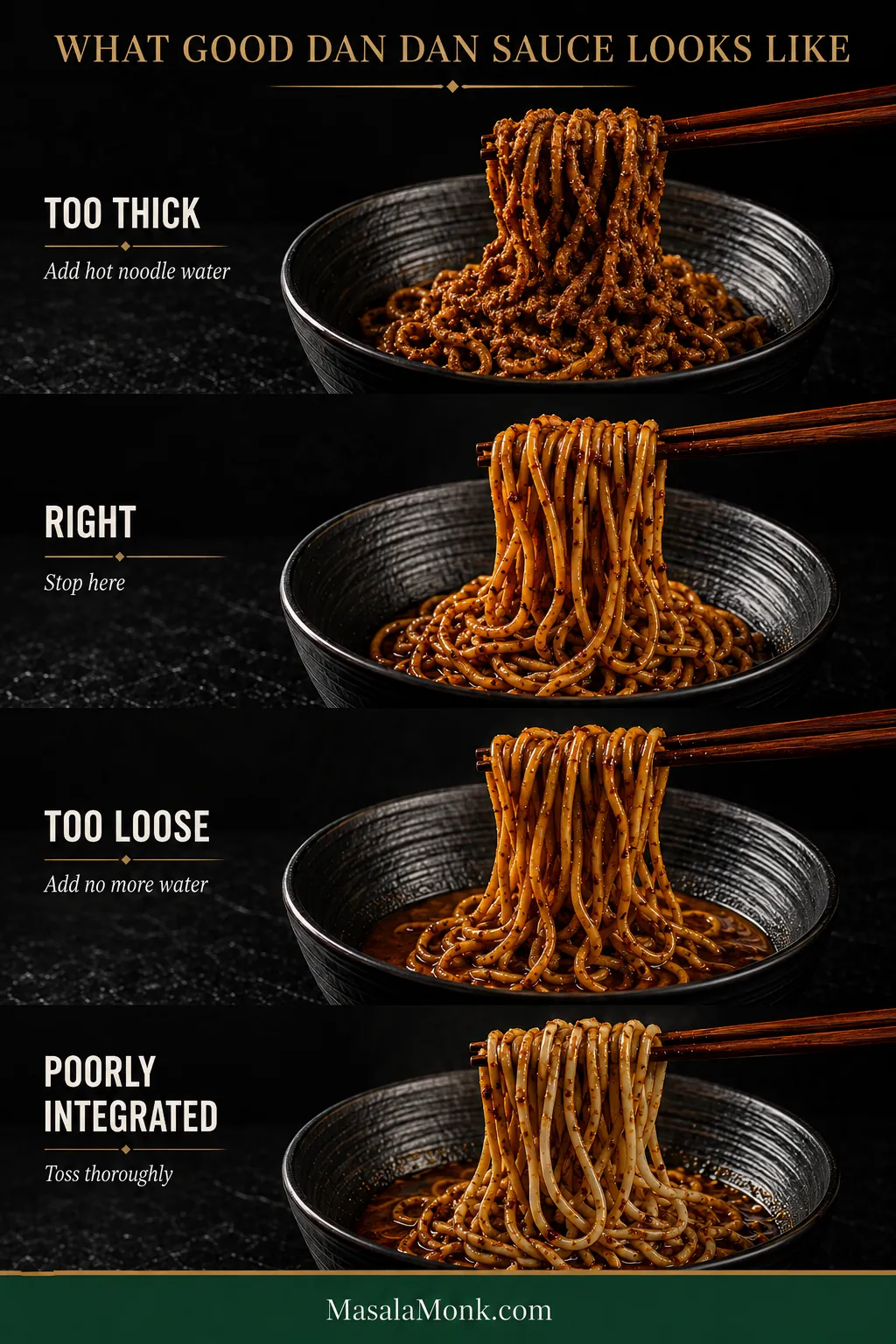
Start each serving with about a tablespoon of hot noodle water. Toss completely, then add another teaspoon only when the strands still feel heavy.
| What you see | What’s happening | What to do |
|---|---|---|
| Strands stick in a heavy clump and sauce sits in thick patches | Too thick | Add hot noodle water a teaspoon at a time |
| The sauce coats the strands and lifts cleanly with them | Right | Put the measuring spoon down |
| Thin liquid slips off the strands and gathers underneath | Too loose | Add no more water; toss thoroughly |
| An oil slick surrounds noodles that still seem poorly coated | Poorly integrated | Toss vigorously and let the sauce come together |
What the Concentrated Sauce Should Taste Like
Before the noodles go in, the sauce should taste deliberately bold: roasted sesame underneath, clear black-vinegar acidity, aromatic chili warmth, assertive saltiness, and a noticeable Sichuan-pepper hum. None of those flavors should erase the others.
An obvious imbalance is easiest to correct now. A heavy sauce often needs brightness; a nearly heatless one may simply be meeting a mild chili oil. Sesame should round the sharper flavors, not become the whole story.
That roasted richness comes from a deliberately modest amount of Chinese sesame paste.
Chinese Sesame Paste vs Tahini vs Peanut Butter
Sesame paste is common in many Dan Dan noodle versions, but it isn’t universal across Sichuan. This recipe uses enough to add roasted depth while leaving room for chili, black vinegar, ya cai, and Sichuan pepper.
Chinese sesame paste has a darker, toastier character than most tahini because its sesame seeds are roasted more deeply. A substitute still makes excellent noodles without requiring a large dose of extra sesame oil.
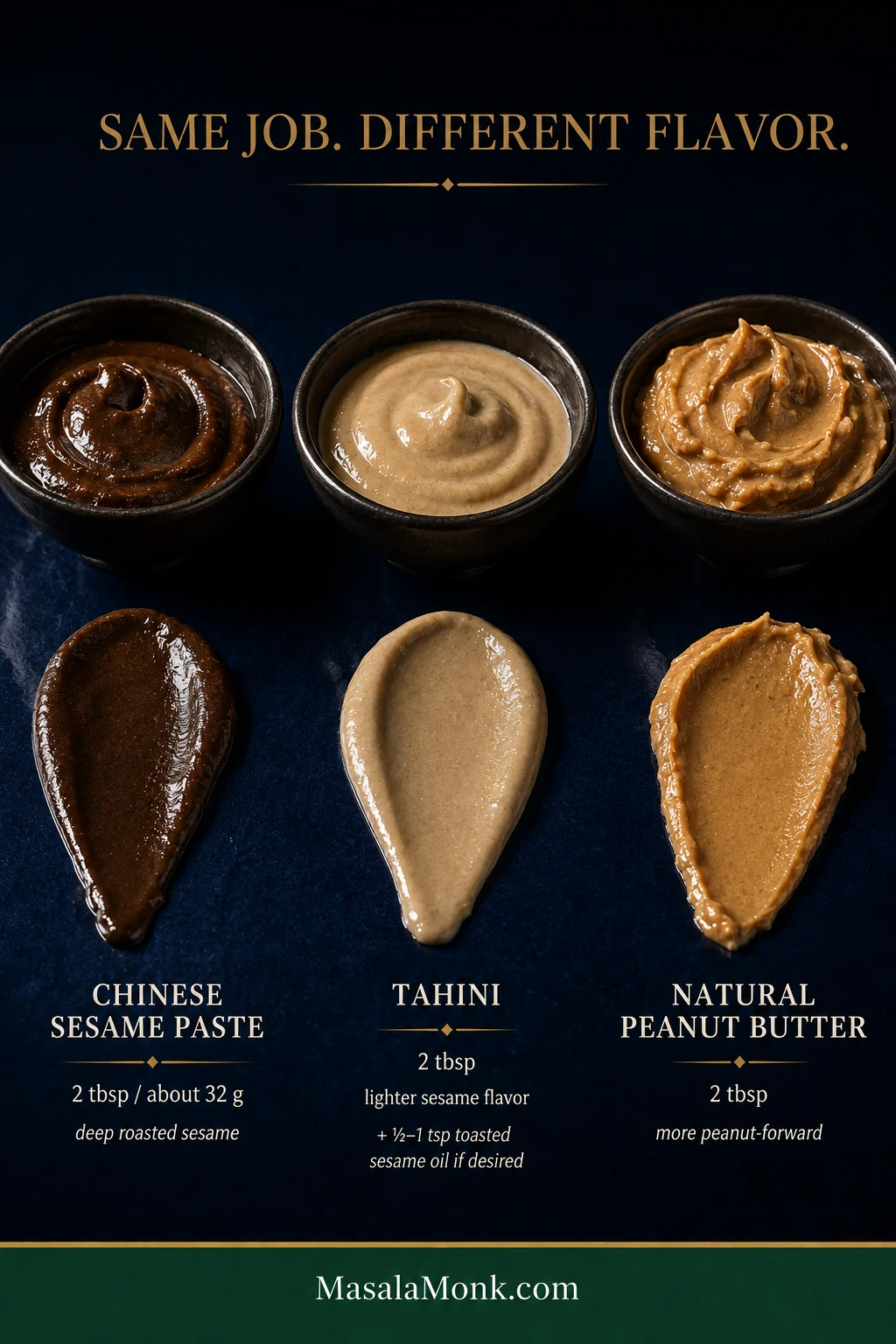
| What you have | Starting point | Expect |
|---|---|---|
| Chinese sesame paste | 2 tbsp / about 32 g | Deep roasted sesame flavor |
| Tahini | 2 tbsp tahini; optionally add about ½–1 tsp toasted sesame oil | A lighter sesame flavor |
| Natural unsweetened peanut butter | 2 tbsp | A clearer peanut note; extra sesame oil isn’t required |
| Sweetened peanut butter | Start with no added sugar; add some only after tasting the finished sauce | Sweeter, more peanut-forward noodles |
No Chinese sesame paste today? Dinner is still very much on. These are starting points, and the finished sauce gets the final say.
Make Sure the Jar Is Actually Sesame Paste
Imported labels can be confusing. A jar translated as “sesame sauce” may contain plain sesame paste, or it may already include soy, sugar, vinegar, and other seasonings.
Check the ingredient list. A pre-seasoned sesame sauce changes the salt, sweetness, and acidity of the recipe before you add anything else.
Prefer a creamier noodle where peanut butter is meant to lead? Our peanut noodles recipe starts from that balance.
Pork & Ya Cai: Get the Topping Right
How to Get Crisp Pork Instead of Gray Pork
If the pork still sounds wet, it isn’t really browning yet.
Ground pork normally goes through a steamy stage first. Then the visible moisture disappears, the sound becomes sharper, and the crumbles begin frying in their own rendered fat. That’s when the color deepens and crisp edges start to appear.
Add Shaoxing wine and soy after browning begins. The hot pan reduces them quickly around the meat and preserves those fried edges.
For food safety, ground pork should reach at least 160°F / 71°C. The temperature tells you the meat is safe; the browned dry edges tell you it has reached the texture worth putting on the noodles.
Once those crumbles are browned and dry around the edges, ya cai gives them the salty-fermented bite that makes the topping much more than plain ground pork.
What Is Sui Mi Ya Cai?
Sui mi ya cai is a Sichuan preserved mustard vegetable with salty, fermented, slightly sweet depth. Its chewy-crisp pieces are especially good tucked among the browned pork.
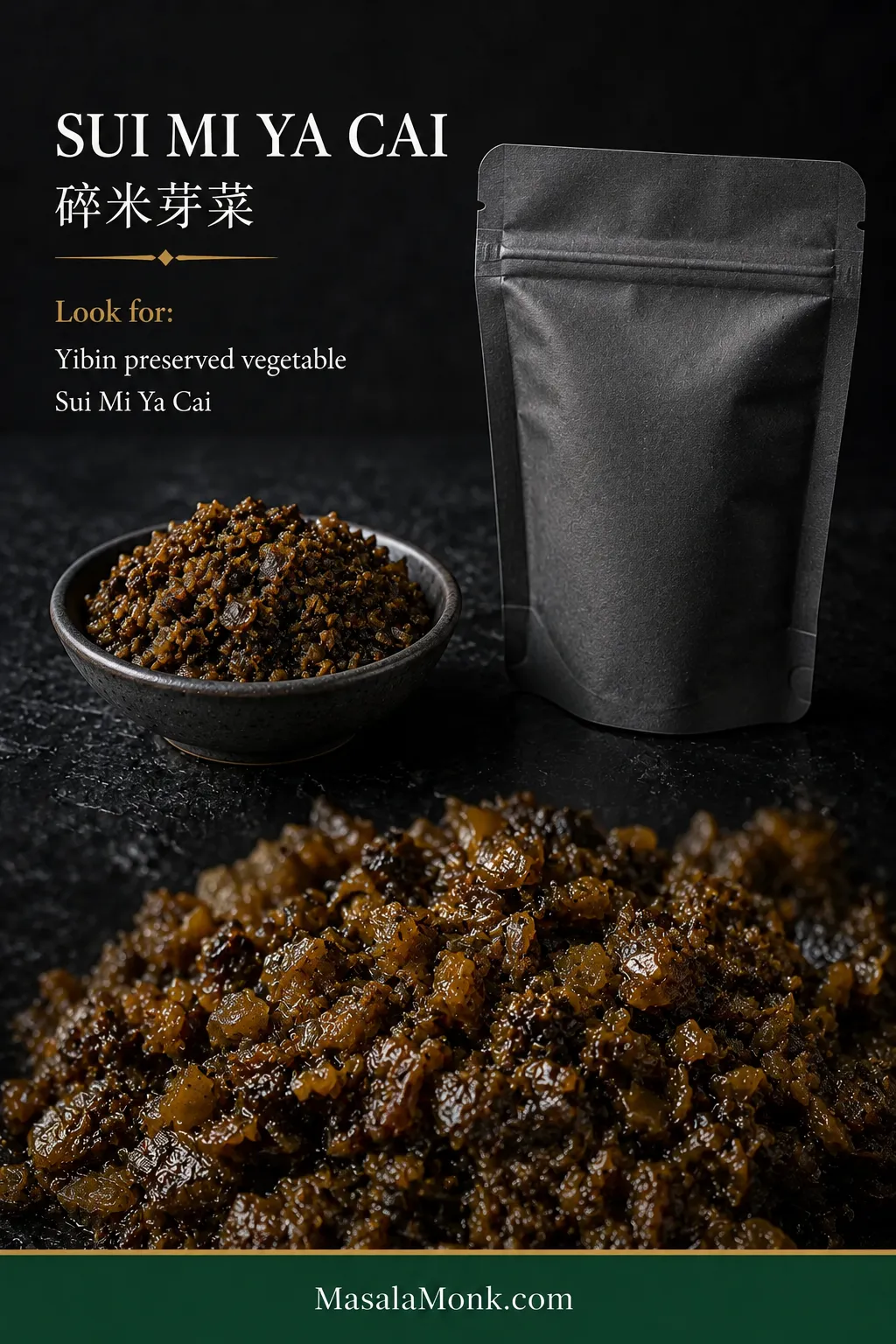
At a Chinese grocery, look for Sui Mi Ya Cai, Yibin preserved vegetable, or 碎米芽菜, often in small vacuum-sealed packets. No Chinese grocery nearby? Search those exact names online; generic “pickled mustard greens” can lead to several different preserved vegetables.
Should You Rinse Ya Cai?
Do not make rinsing automatic. Make tasting automatic. Packets differ in saltiness and seasoning. Use pleasantly salty ya cai as it is. Aggressively salty ya cai gets a brief rinse and a thorough squeeze before chopping.
Best Substitutes for Sui Mi Ya Cai
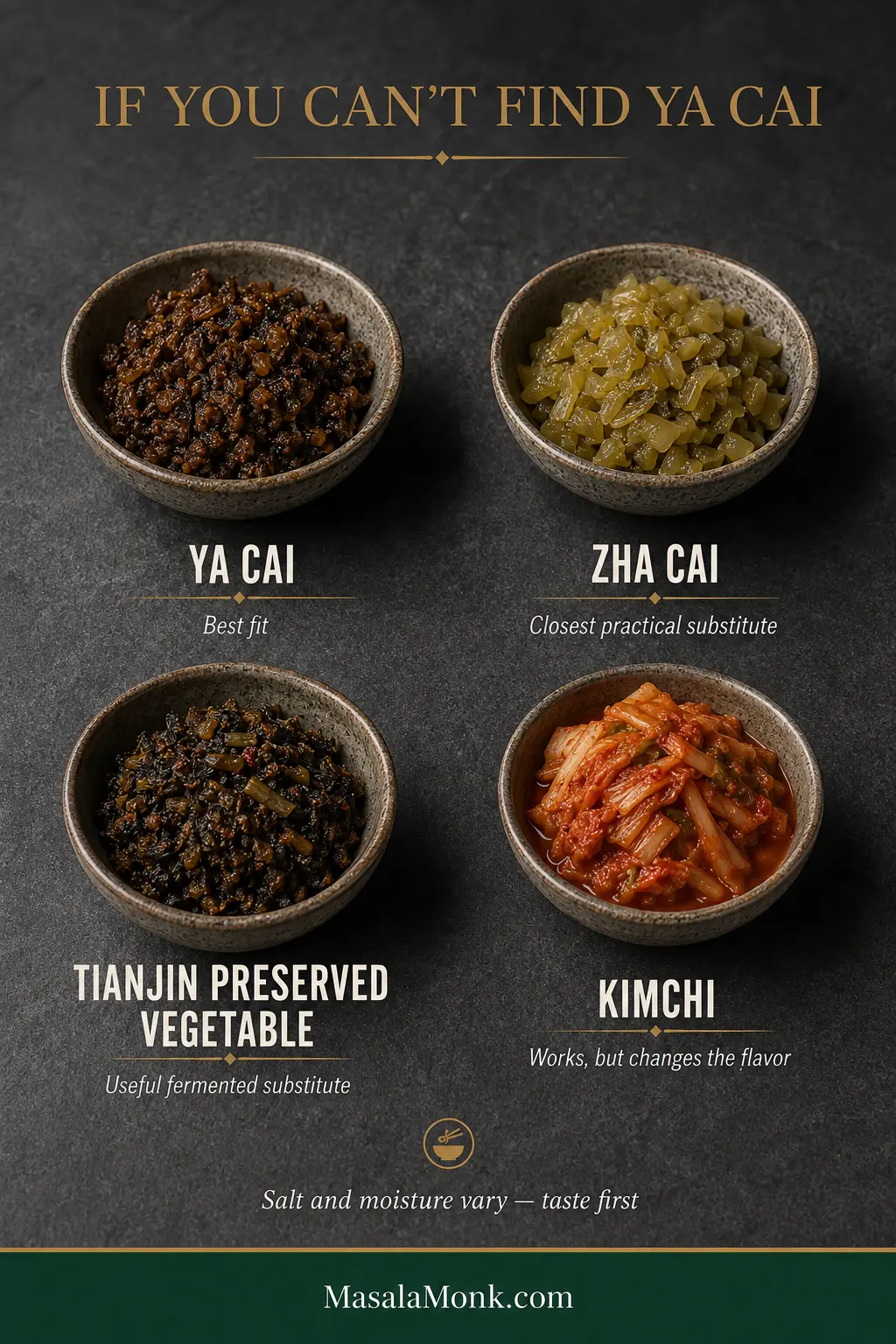
- Zha cai: the closest practical substitute here. Chop it finely and account for its saltiness.
- Tianjin preserved vegetable or another Chinese preserved mustard: different in character, but still useful for salty fermented depth.
- Kimchi: changes the flavor noticeably but works in an emergency. Drain or squeeze it very well, chop finely, and cook off the remaining moisture after adding it to the pork.
- Nothing: the noodles still work, but you’ll lose one of the salty-fermented notes that makes Dan Dan noodles immediately recognizable.
How Spicy Are Dan Dan Noodles? Má vs Là
Dan Dan noodles range from moderately spicy to fiercely hot depending on the chili oil and Sichuan pepper. More importantly, they contain two distinct sensations: là is chili heat, while má is the citrusy, lightly numbing effect of Sichuan peppercorns.
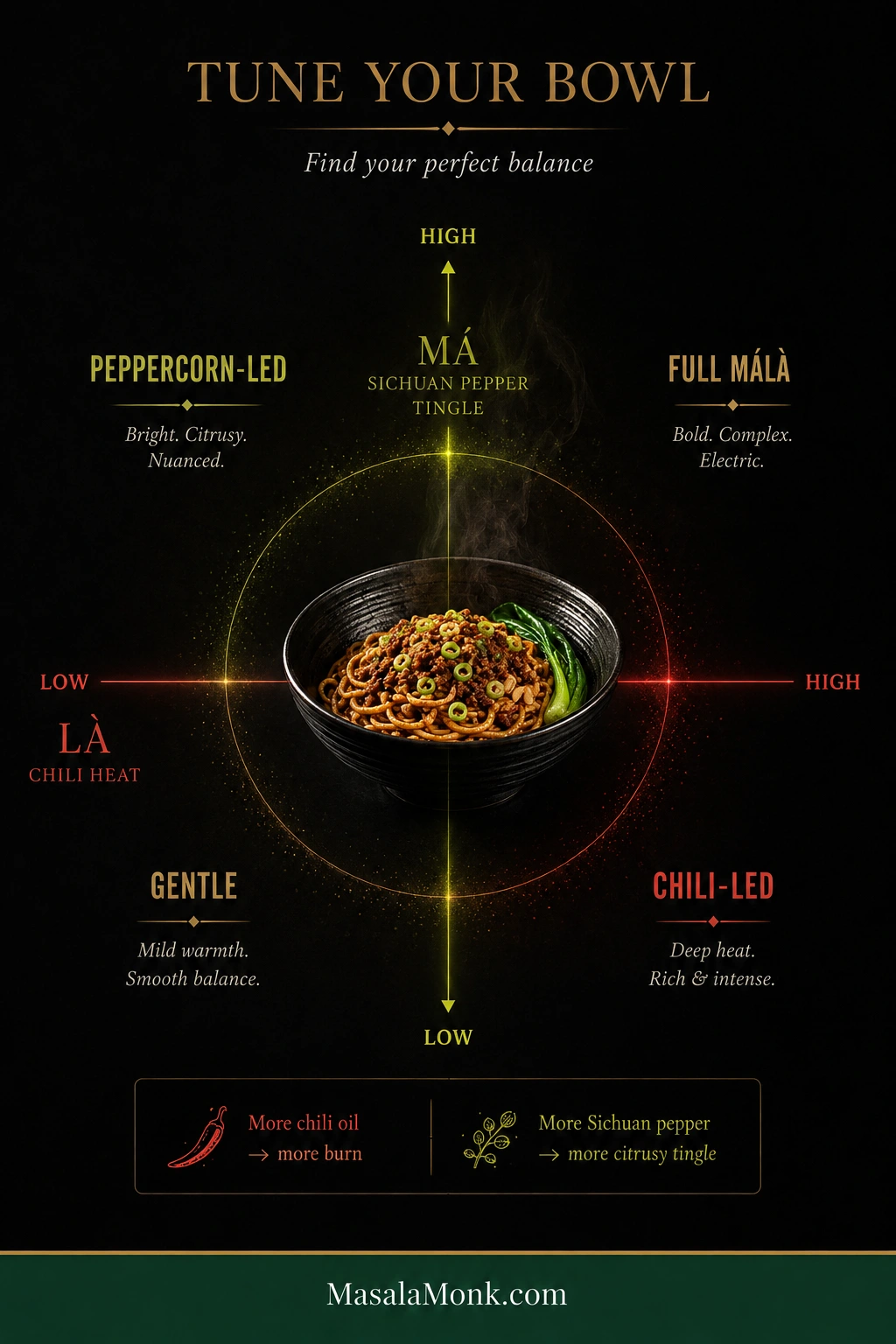
- Less heat overall: reduce both chili oil and Sichuan pepper.
- More burn with roughly the same tingle: add chili oil.
- More citrusy tingle with roughly the same chili heat: add freshly ground Sichuan pepper at the table.
- Full-on málà: increase both gradually.
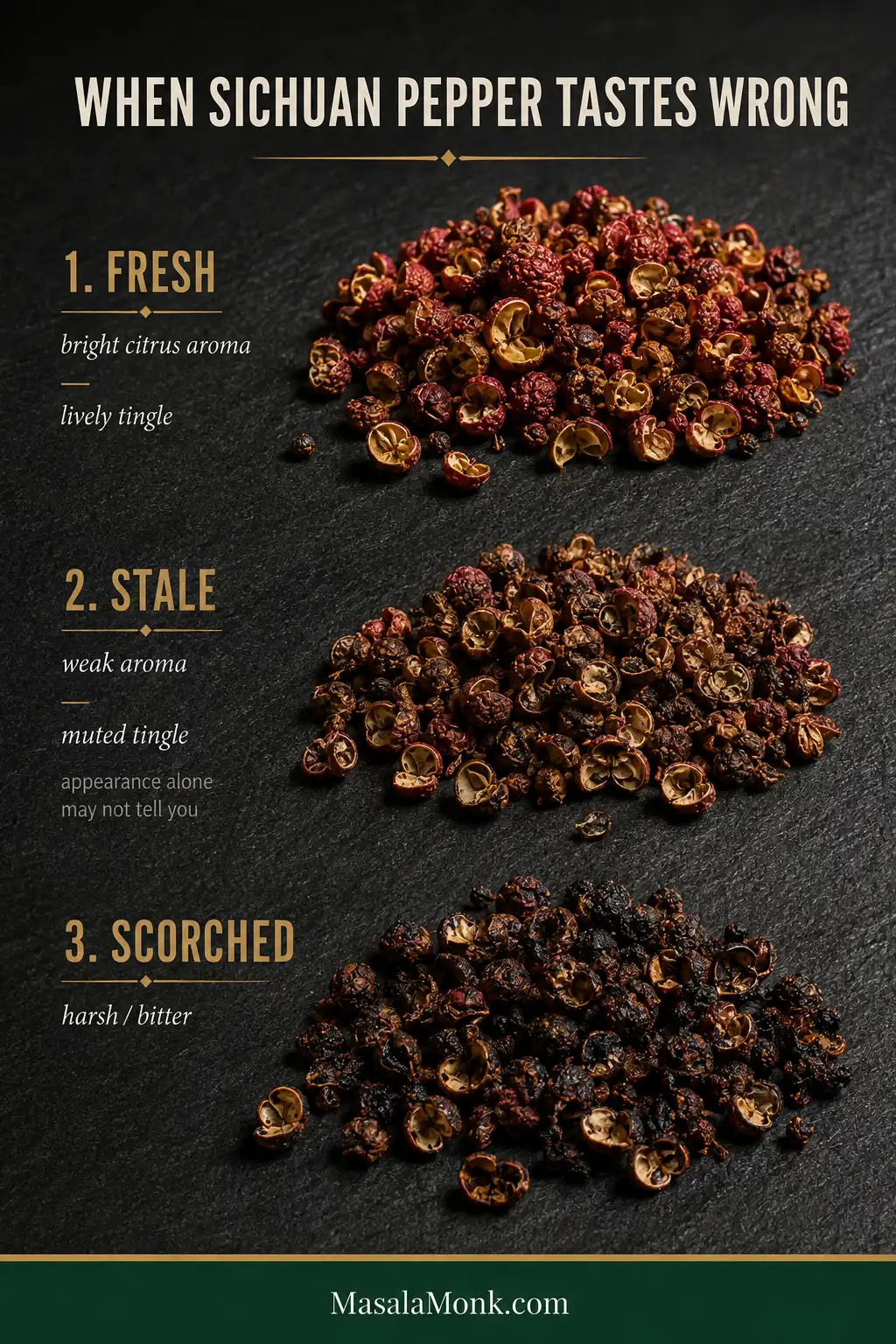
The first proper hit of Sichuan pepper can be surprising. That electric, citrusy sensation is part of the pleasure. A dull, woody pepper may simply be stale; harsh bitterness more often points to scorching, an excessive amount, or too much hard dark seed material in the grind.
Part of what makes the bowl so satisfying is the contrast: slippery noodles, dry-crisp pork, chewy preserved mustard, and a red chili-oil sheen carrying all that heat and aroma through the strands.
Shaoxing Wine, Vinegar, Soy Sauce & Chili Oil
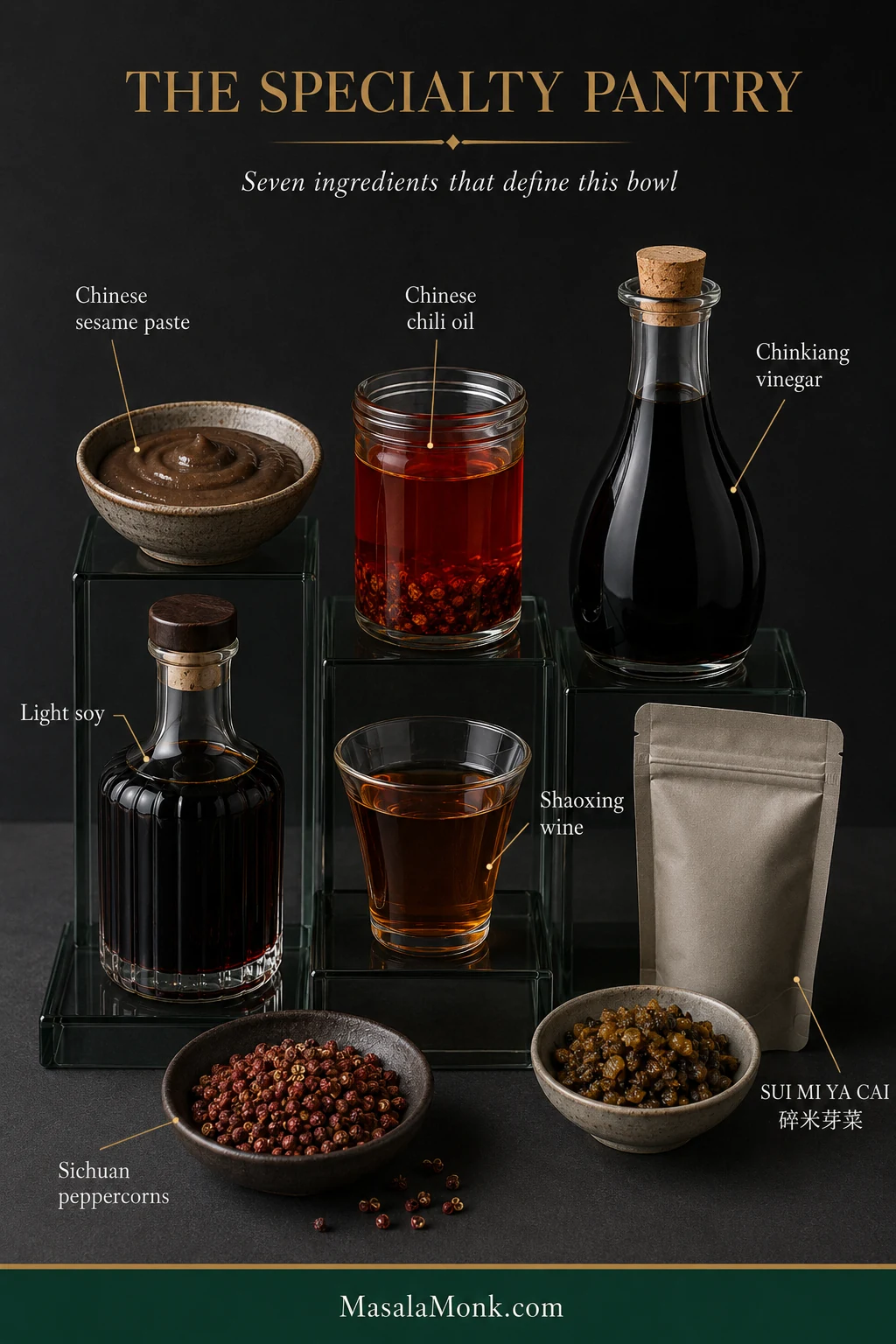
These aren’t one-recipe purchases. Chinkiang vinegar, Shaoxing wine, chili oil, and Sichuan pepper all earn their place quickly if Chinese food appears regularly in your kitchen.
Shaoxing Cooking Wine
A bottle labeled “Shaoxing cooking wine” is completely normal. Many inexpensive cooking versions contain added salt, which is one reason this recipe doesn’t automatically add salt to the pork or noodle water.
No Shaoxing wine? Use dry sherry in the same 1 tbsp / 15 ml amount.
Chinkiang Black Vinegar
Use another dark Chinese rice vinegar in the same starting amount. Chinkiang has a particularly deep, malty character, so the flavor will change slightly, but the sauce will still have the acidity it needs.
Light Soy vs Dark Soy
Chinese light soy sauce is ideal. Start with the same quantity of ordinary all-purpose soy sauce when that’s what you have, keeping in mind that some bottles are noticeably saltier than others.
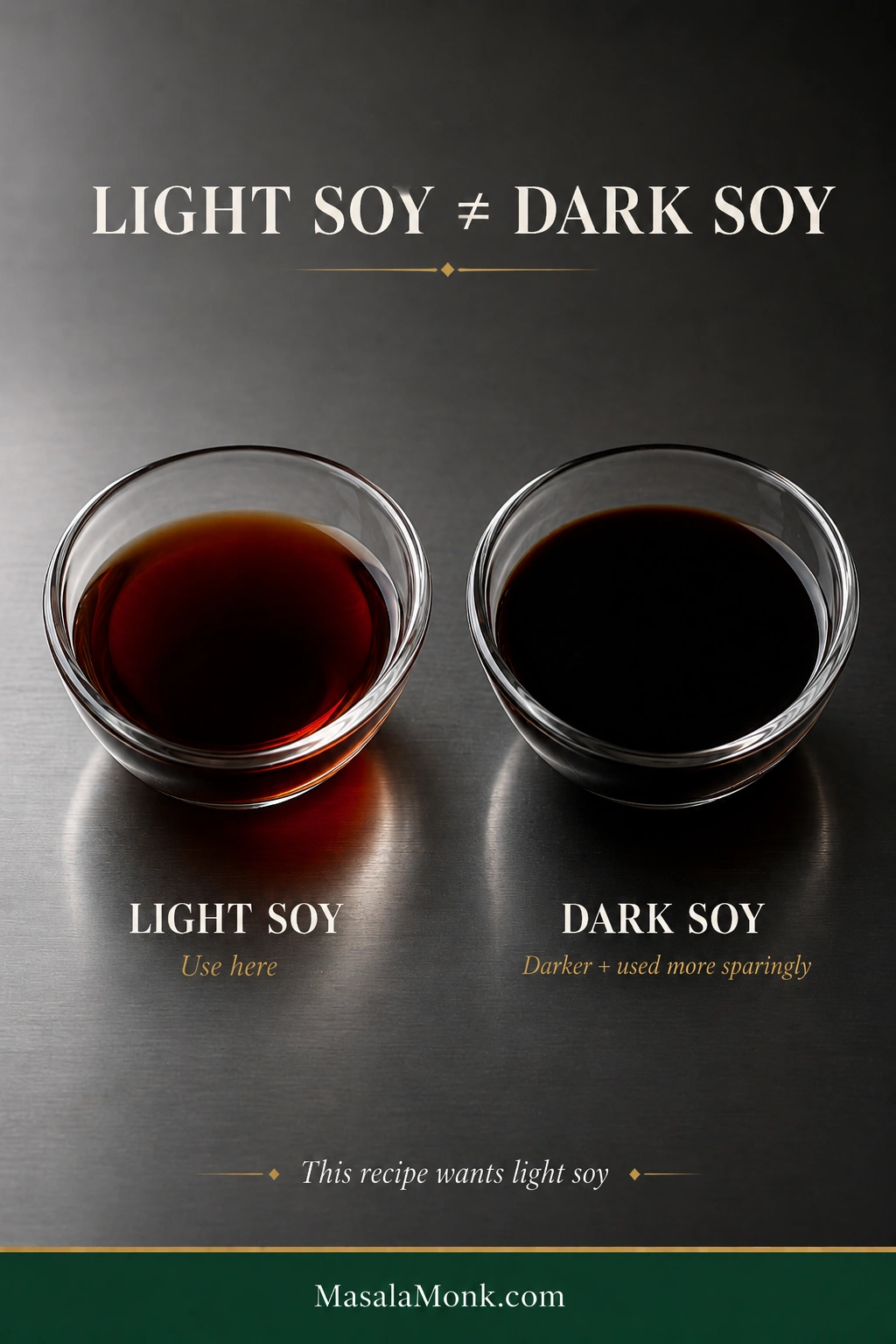
Dark soy is much deeper in color and normally used more sparingly. It changes both the appearance and balance of the sauce, so use light or all-purpose soy here when possible.
Choosing the Chili Oil
Look for a fragrant Chinese or Sichuan-style red chili oil with visible chili sediment. Stir the jar before measuring so some of those aromatic solids reach the sauce too.
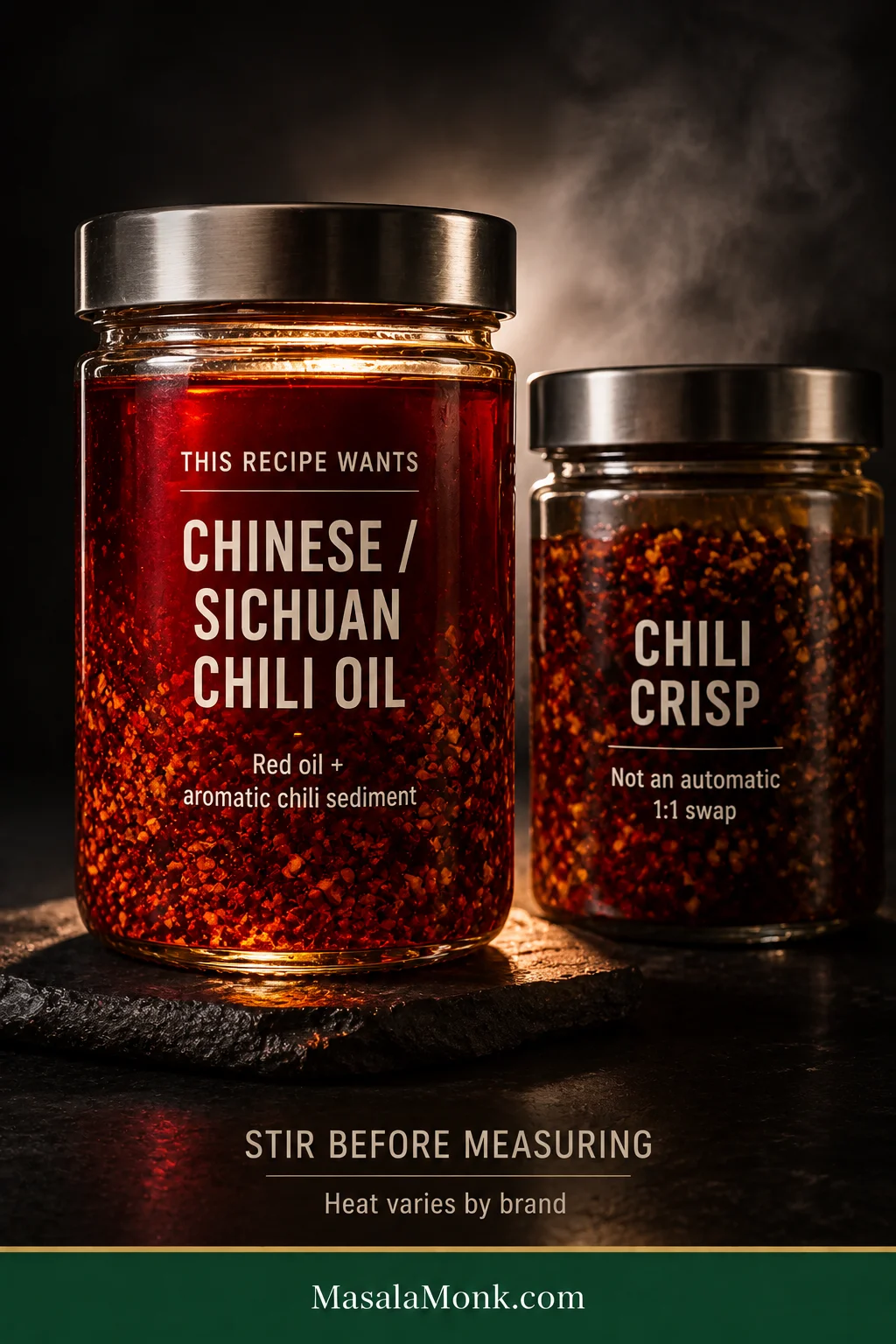
Heat varies enormously by brand. Three tablespoons of one can be pleasantly warm; three tablespoons of another can be an entirely different evening.
Homemade Sichuan chili oil is another option. The Sichuan chili oil section in our pepper sauce guide gives you the from-scratch route when you want it.
Chili crisp needs a more conservative starting amount. Its garlic, sweetness, salt, oil-to-solids ratio, and heat vary too much between brands for a dependable spoon-for-spoon swap. Add some, toss the noodles, then decide whether the bowl wants more.
Dan Dan Noodles Troubleshooting
Already tossed everything together and something tastes wrong? Don’t start throwing ingredients at it. Find the problem first. Most of these are fixable.
Flavor Problems
| Problem | Save it now | Next time |
|---|---|---|
| Too salty | Add unseasoned noodles or greens; a little hot water can soften the intensity | Check the ya cai, soy sauce, and cooking wine before adding extra salt |
| Too sour | Add more noodles or a little sesame component; use a tiny pinch of sugar only if needed | Use slightly less vinegar if your bottle is particularly sharp |
| Too sweet | Add a little vinegar and chili oil | Reduce the sugar, especially with sweetened peanut butter |
| Too spicy | Add noodles, greens, and a little sesame component | Use less of a particularly hot chili oil in the base |
| Too numbing, bitter, or medicinal | Dilute with more noodles or sauce without extra Sichuan pepper | Use less pepper and toast gently; avoid scorching it |
| Too sesame- or peanut-heavy | Add noodles, vinegar, and chili to restore balance | Measure the paste instead of using a heaped spoonful |
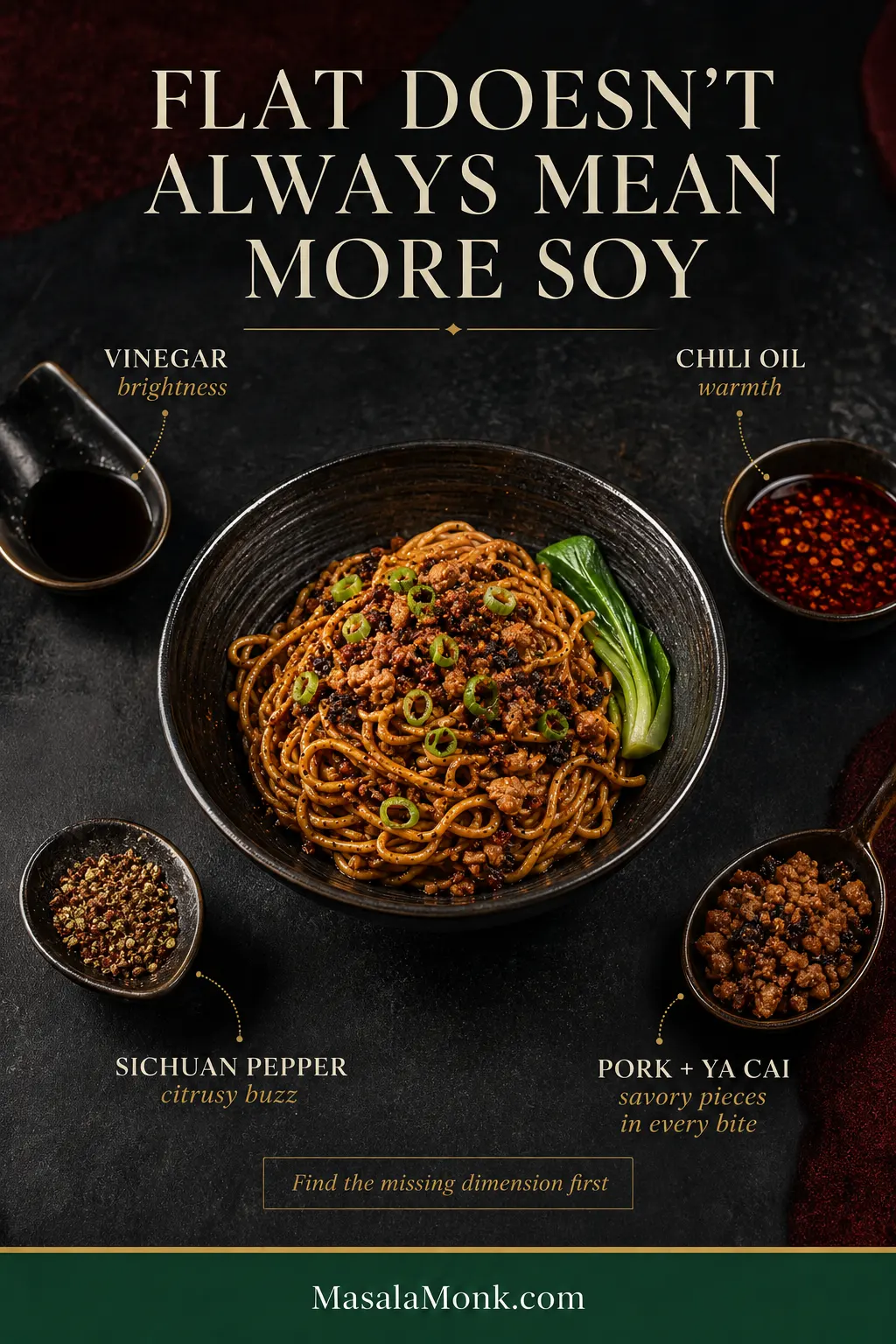
| Flat or bland | Don’t assume it needs more soy; use the diagnostic below | Build the bowl from fresh peppercorns, flavorful chili oil, and properly seasoned pork |
Texture Problems
| Problem | Save it now | Next time |
|---|---|---|
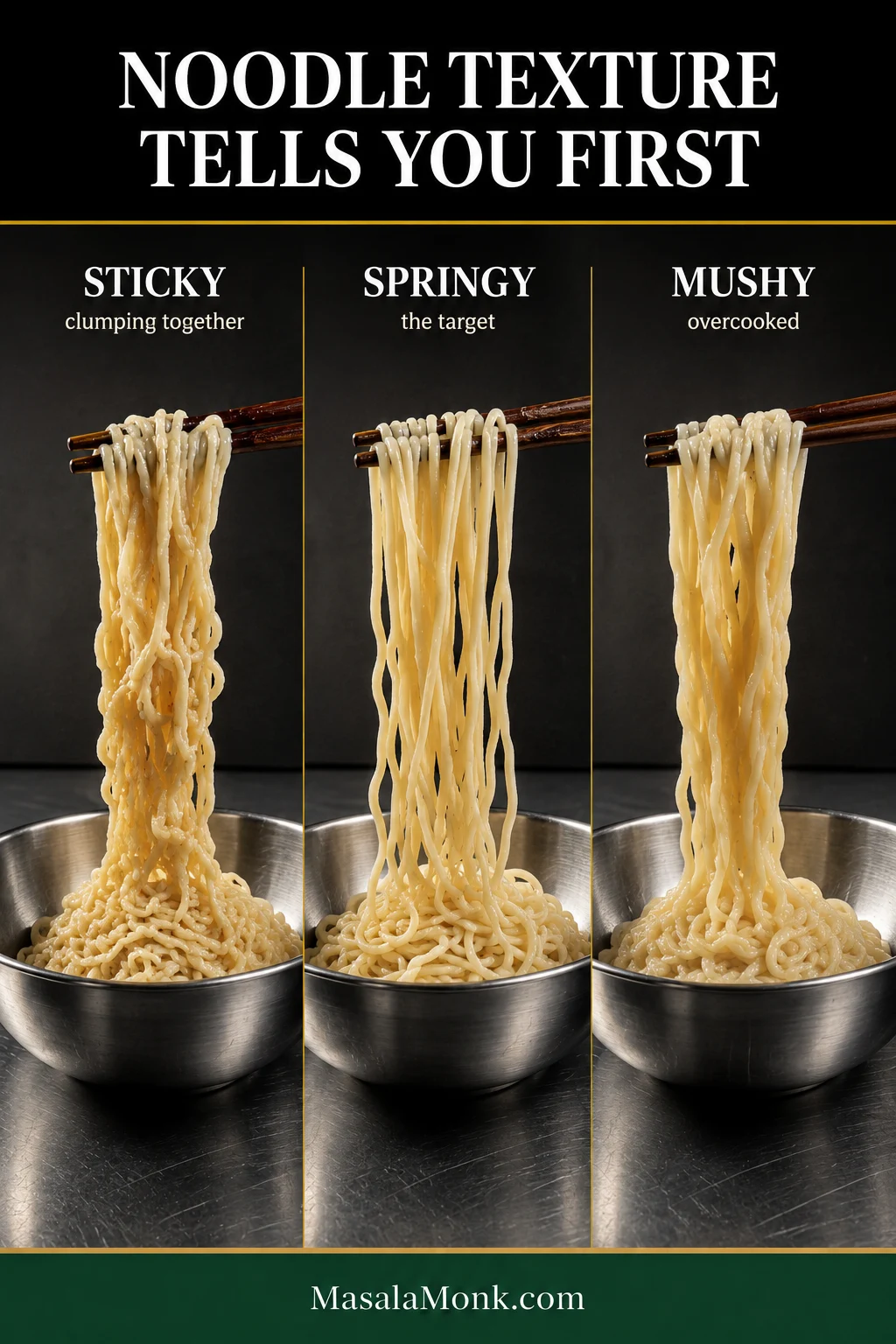
| Sticky noodles | Loosen gently and toss immediately; add only as much water as necessary | Start checking the noodles earlier and sauce them promptly |
| Mushy noodles | Serve immediately; the texture cannot really be reversed | Pull them 30–60 seconds earlier |
| Gray, soft pork | Keep frying until released moisture disappears and browning develops | Use a wider hot pan and add liquid seasonings later |
Before You Reach for More Soy Sauce
A bowl can taste flat without needing more salt. A few drops of Chinkiang vinegar may supply the missing brightness. Fresh Sichuan pepper brings back the citrusy buzz; chili oil restores warmth; tossing the pork and ya cai properly through the noodles can bring the savory pieces into every bite.
Make Ahead, Store & Reheat
Planning to cook right now instead? Jump back to the recipe card; the storage section is here when you want the make-ahead route.
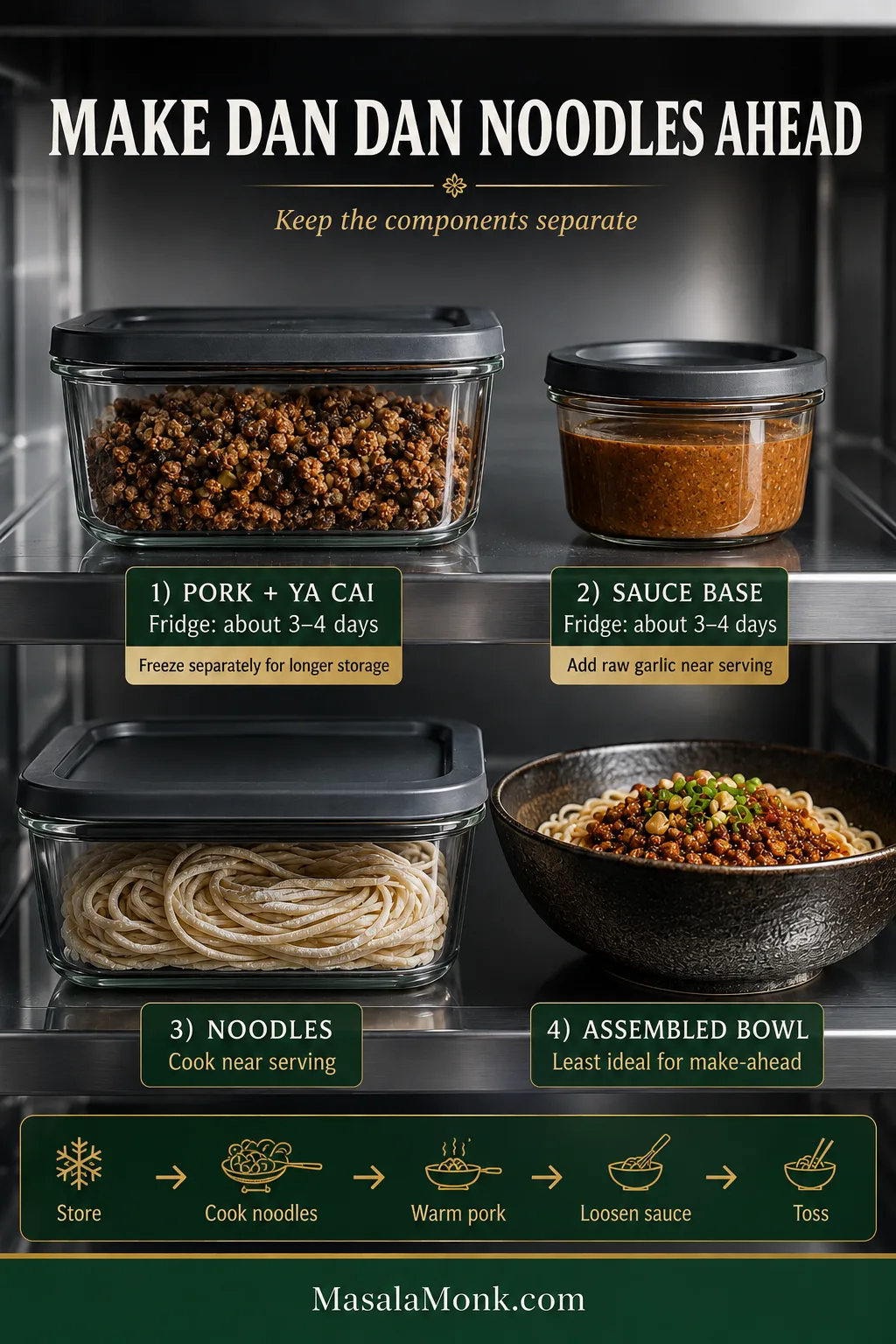
For fast Dan Dan noodles later in the week, make the pork topping and a garlic-free sauce base ahead. Another serving then comes down to fresh noodles, a quick blanch of greens, warmed pork, a spoonful of sauce, and the final chili-oil/Sichuan-pepper adjustment.
Keep the components separate when possible. Pork and sauce wait much more gracefully than cooked noodles do.
- Chili oil: store according to the jar label or the instructions for the homemade chili-oil recipe you used.
- Sauce base: refrigerate for up to about 3–4 days. Leave the raw garlic out and stir it in shortly before serving.
- Pork and ya cai: refrigerate promptly in a covered container and use within about 3–4 days.
- For longer storage: freeze the cooked pork topping separately, thaw it in the refrigerator, then reheat it in a skillet. Cook fresh noodles for serving.
- Noodles: cook near serving whenever possible. Refrigerated noodles lose their spring and separation sooner than the other components.
- Fully assembled noodles: least ideal for make-ahead because the strands continue absorbing sauce as they sit.
How to Reheat Dan Dan Noodles
Already assembled: Cover one leftover bowl loosely with a damp paper towel and microwave in short bursts, tossing once or twice. Add a teaspoon of water only if the noodles seem dry.
Components stored separately: Warm the pork in a skillet, loosen the cold sauce with a small splash of warm water, and combine everything with freshly cooked noodles when possible. This gives you the best texture.
Whichever route you use, wake the serving back up with fresh scallions, chili oil, vinegar, or Sichuan pepper as needed. Reheat leftovers to 165°F / 74°C.
Easy Ways to Change the Recipe
Ground Chicken
Ground chicken gives you a lighter topping. Its lower fat content often benefits from a little neutral oil. Cook away the released moisture before adding the Shaoxing wine and soy, and bring ground chicken to at least 165°F / 74°C.
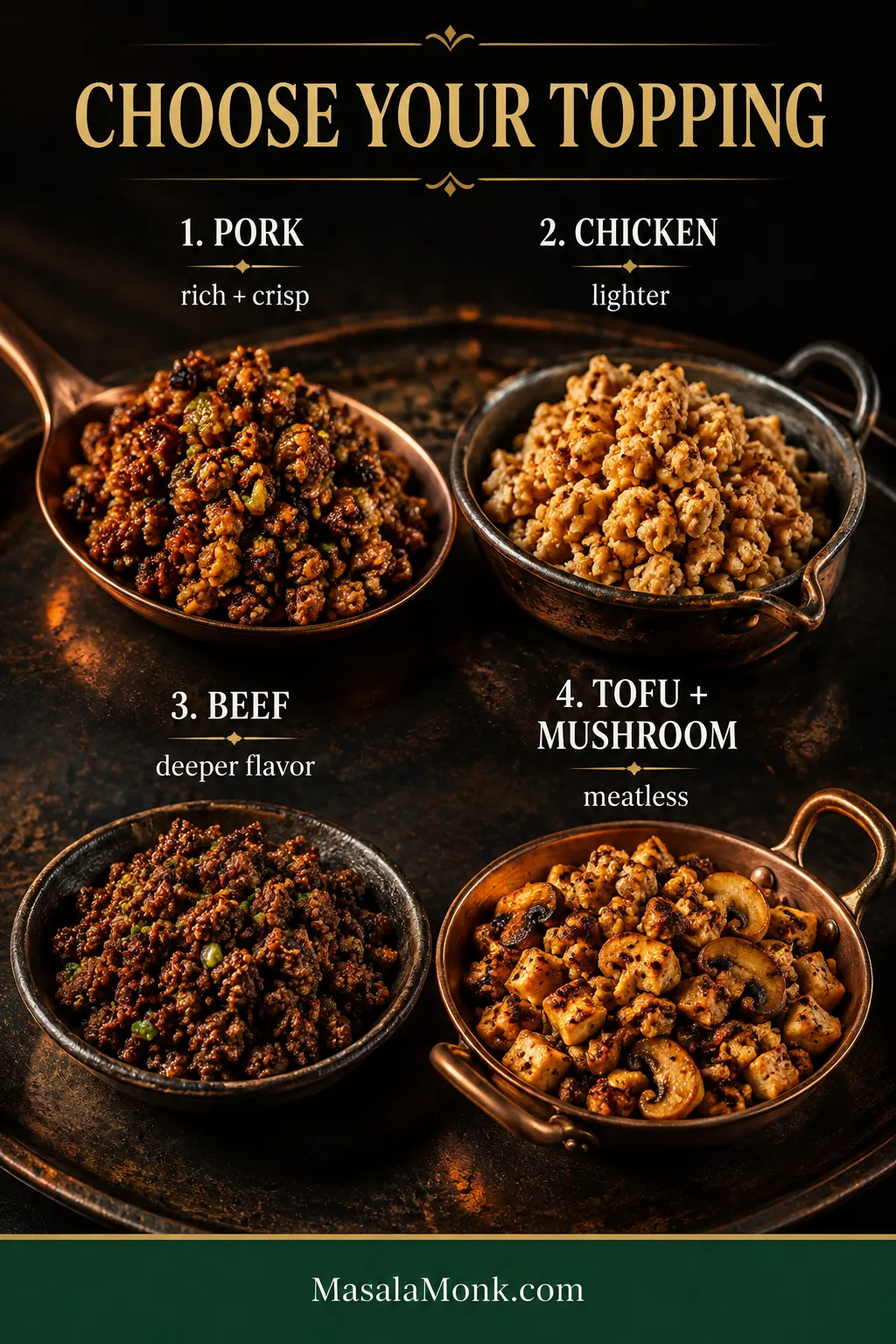
Ground Beef
Ground beef brings deeper meat flavor and more richness. Choose a fairly lean grind so rendered beef fat doesn’t overwhelm the chili oil. Brown it until relatively dry before adding the liquid seasonings, and cook ground beef to at least 160°F / 71°C.
Tofu & Mushrooms
Finely chopped firm tofu and mushrooms make a good meatless topping. Cook the mushrooms until their moisture is gone, then give the tofu time to pick up some color before seasoning. Browning and mushroom savoriness supply some of the depth that pork normally contributes.
A full 1 lb / 454 g package of pork will leave roughly half for another meal. That’s an excellent excuse to make Pad Kra Pao another night: browned pork, garlic, chili, basil, and rice.
Make It Milder
Use less chili oil and Sichuan pepper in the base sauce, then put both on the table. One person can keep their serving gentle while somebody else adds another spoonful of chili oil and a fresh pinch of pepper.
A Cold Dan Dan Noodle Adaptation
This particular recipe is at its best hot, when the sauce is fluid and the pork is at its crispest, but it also adapts well to a cool or room-temperature bowl.
Hot bowl: normally leave the noodles unrinsed. Cold bowl: rinse deliberately. For the cold version, cook until just springy, rinse thoroughly under cool water to stop the cooking and remove excess surface starch, then drain extremely well.
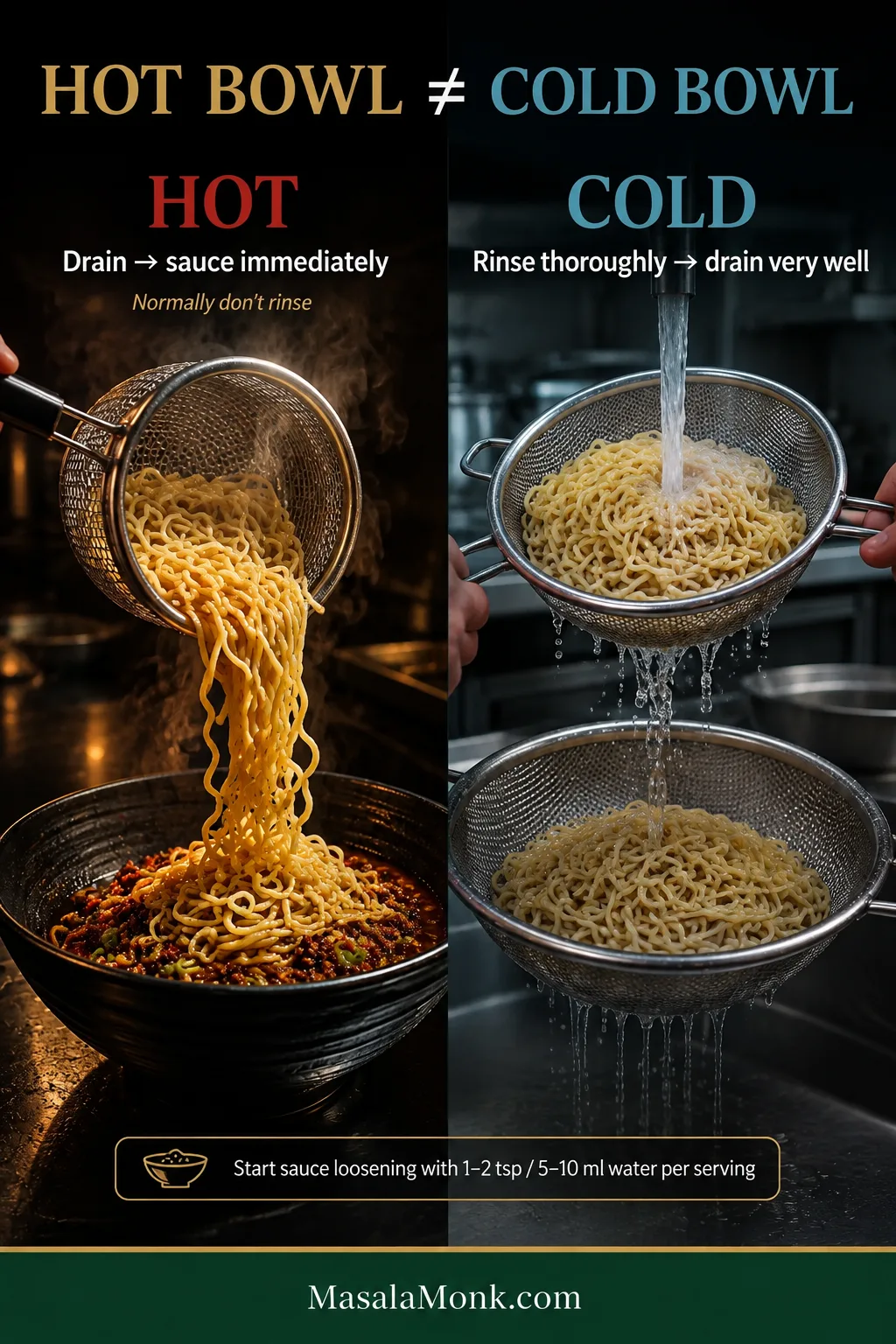
Loosen the sauce with cooled reserved noodle water or room-temperature water. Start with roughly 1–2 tsp / 5–10 ml per serving, toss, and add a little more only when the sauce still feels heavy.
For a larger spread, vegetable spring rolls add another crisp texture alongside the noodles.
Made these? Tell us which noodles and chili oil you used—and whether you kept the bowl gentle or pushed the málà.
The first batch may have you reading labels on sesame paste, ya cai, and black vinegar. By the second, those jars are already familiar and your attention has moved where it belongs—to the pork in the pan and the noodles in the bowl.
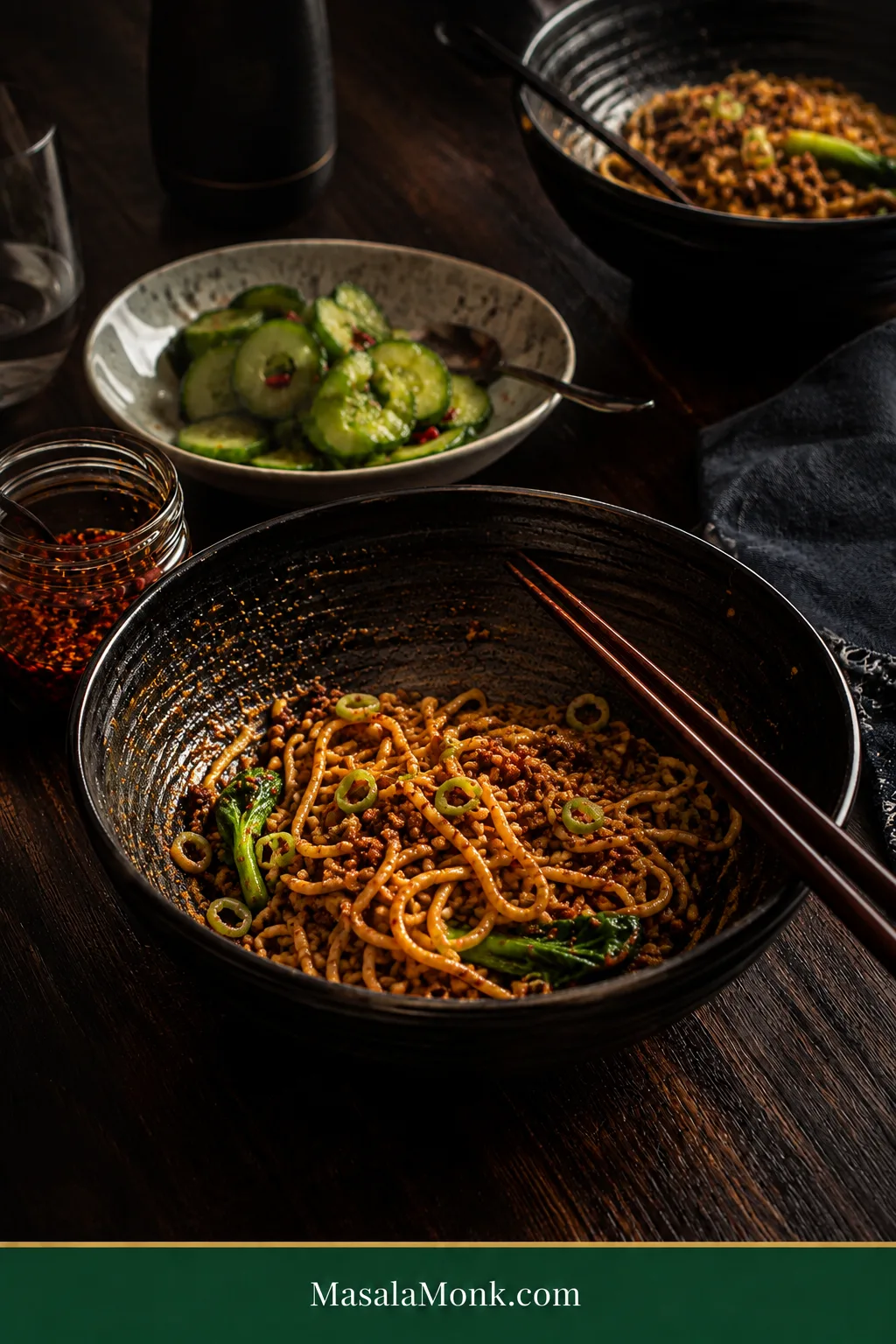
If the noodles still have spring and those crisp pork-and-ya-cai bits keep turning up between bites, stop tinkering and eat.








