
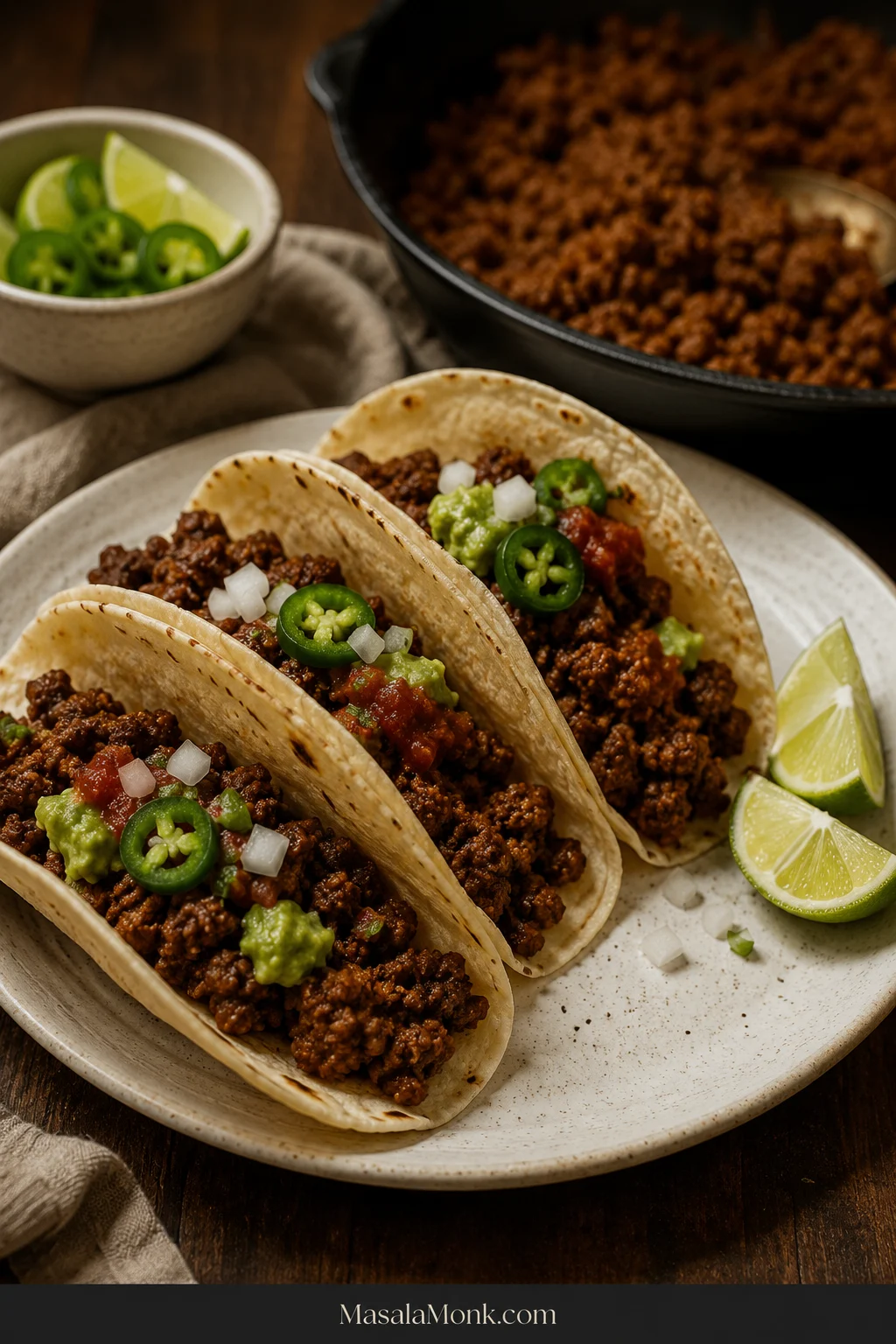
Ground beef is ready for dinner, the tortillas are waiting, and the taco seasoning packet you thought you had is nowhere to be found. This recipe is for exactly that moment.
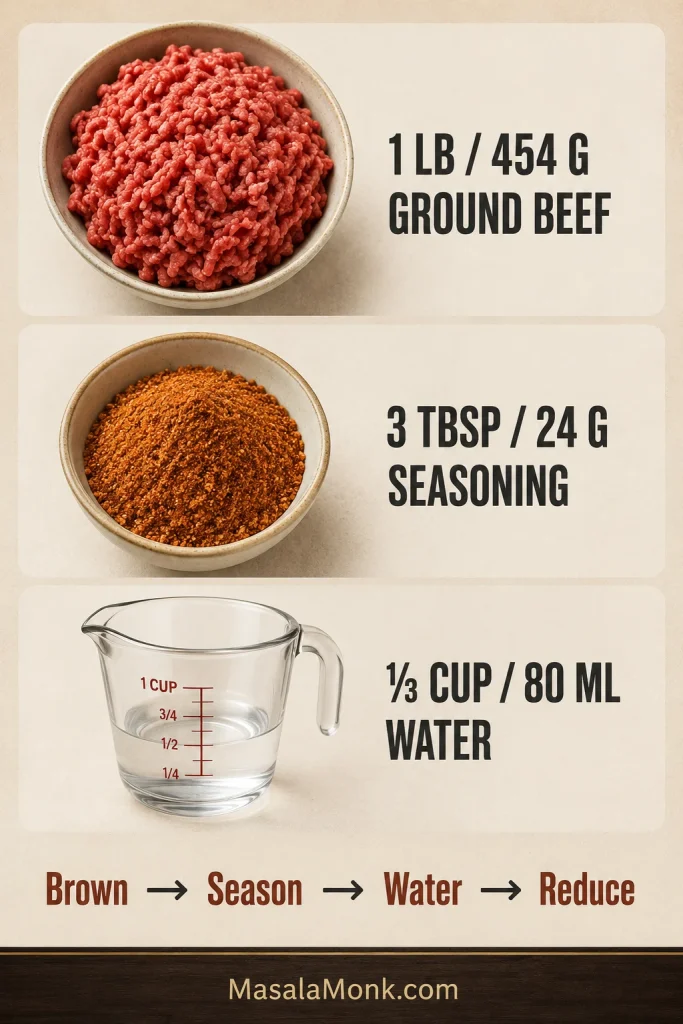
One batch seasons 1 lb / 16 oz / 454 g ground beef. Mix it and use the whole thing. The water amount is here too, so there is nothing else to work out once the beef hits the pan.
The finished beef should taste warmly spiced and savory, with browned edges and small crumbles that stay moist enough to scoop. Keep the base mild when several people are eating, then let salsa, jalapeños or hot sauce bring extra heat at the table.
Quick Answer: Taco Seasoning for 1 lb Ground Beef
For 1 lb / 454 g ground beef, use about 3 tablespoons / 24 g of this homemade taco seasoning plus ⅓ cup / 80 mL water to start. That is the full seasoning batch below.
Brown the beef first and spoon away only the excess pooled fat. Stir in the seasoning for 30–60 seconds, until it smells fragrant, then add the water and simmer uncovered for roughly 3–5 minutes.
Brown → remove excess fat → season → add water → cook until the loose puddle is gone.
The crumbles should stay moist and easy to scoop. Very lean beef may need another tablespoon of water. Beef, burners and pans vary. Watch the meat rather than chasing the minute exactly.
Using chilli powder outside the U.S.? This recipe means mild American-style chili powder, which is a seasoning blend. It does not mean pure cayenne, pure chile powder or a hot Indian red chilli powder. Read the chili powder note before measuring a full tablespoon.
Taco Seasoning for 1 lb Ground Beef Recipe
This batch is sized for one pound of beef. Mix it, use all of it, and get the skillet going.
Recipe at a Glance
| Ground beef | 1 lb / 16 oz / 454 g |
|---|---|
| Seasoning | About 3 Tbsp / 24 g |
| Water | ⅓ cup / 80 mL to start |
| Total time | About 20 minutes |
| Yield | About 8–10 small tacos |
| Pan | 10–12 inch / 25–30 cm skillet |
You’ll need: a 10–12 inch skillet, a wooden spoon or sturdy spatula, a small bowl and measuring spoons. An instant-read thermometer is useful for checking the beef by temperature.
Cooking more than one pound? Jump to the scaling guide before you start browning.
Ingredients
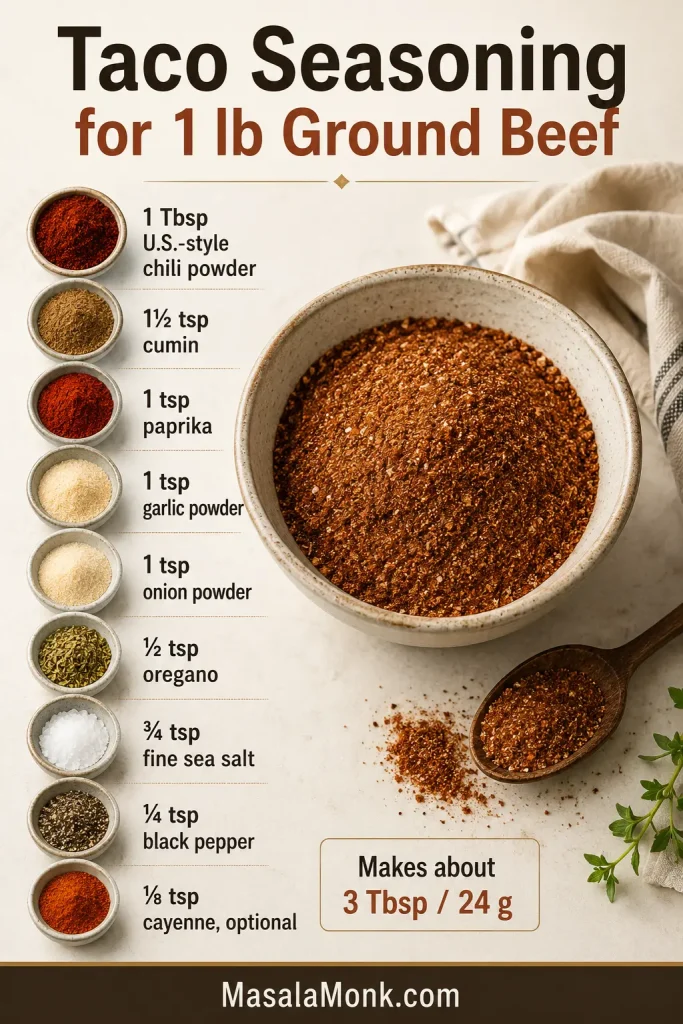
- 1 tablespoon U.S.-style chili powder
- 1½ teaspoons ground cumin
- 1 teaspoon sweet or regular paprika
- 1 teaspoon garlic powder
- 1 teaspoon onion powder
- ½ teaspoon dried oregano
- ¾ teaspoon fine sea salt
- ¼ teaspoon ground black pepper
- ⅛ teaspoon cayenne, optional, for a noticeable warm kick
- 1 lb / 454 g ground beef, preferably around 85/15
- ⅓ cup / 80 mL water, plus more only as needed
- 1–2 teaspoons neutral oil, optional for very lean beef or a pan that tends to stick
The dry blend comes to roughly 3 tablespoons / 24 g. Measure the individual spices by teaspoon; their weights shift between brands and grinds, so tiny gram conversions for each one suggest more precision than this recipe needs.
A Few Ingredient Notes
Regular paprika gives the most familiar flavor; smoked paprika makes the blend smokier. For a less cumin-forward batch, use 1 teaspoon cumin instead of 1½. Check the chili-powder label too. Some blends already contain salt, which may mean you need less added salt.
The ¾ teaspoon salt measurement is for fine sea salt. Coarser salts measure differently by volume, so adjust those to taste.
Give the cumin and chili powder a quick smell before mixing. If the aroma is faint when you open the jar, the finished seasoning will taste muted too.

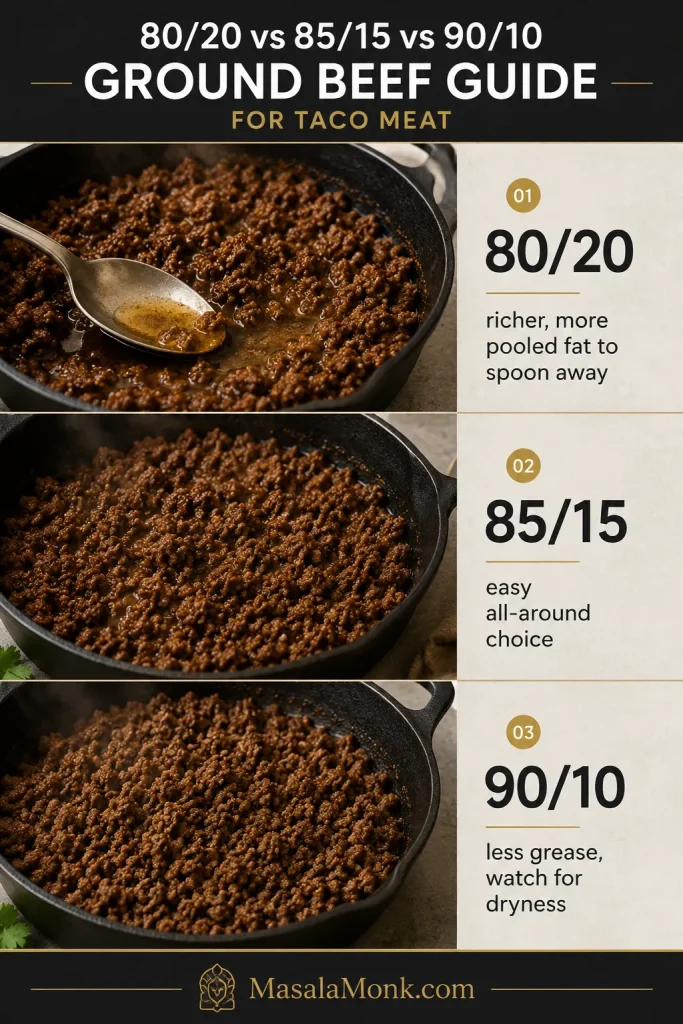
80/20 ground beef works too; expect a little more pooled fat to spoon away before seasoning.
How to Make Taco Meat
- Mix the seasoning. Stir the chili powder, cumin, paprika, garlic powder, onion powder, oregano, salt, pepper and optional cayenne together in a small bowl.
- Heat the pan. Set the skillet over medium-high heat and let it get properly hot. Beef around 85/15 or 90/10 generally needs no extra oil. For very lean beef, add a teaspoon or two of oil if the pan tends to stick.
- Give the beef time to brown. Add the meat and spread it into a loose layer. Leave sections against the hot surface before breaking everything apart. Once browned edges begin to form, work the meat into small irregular crumbles and continue until it is mostly cooked through and browned in spots, about 5–7 minutes.
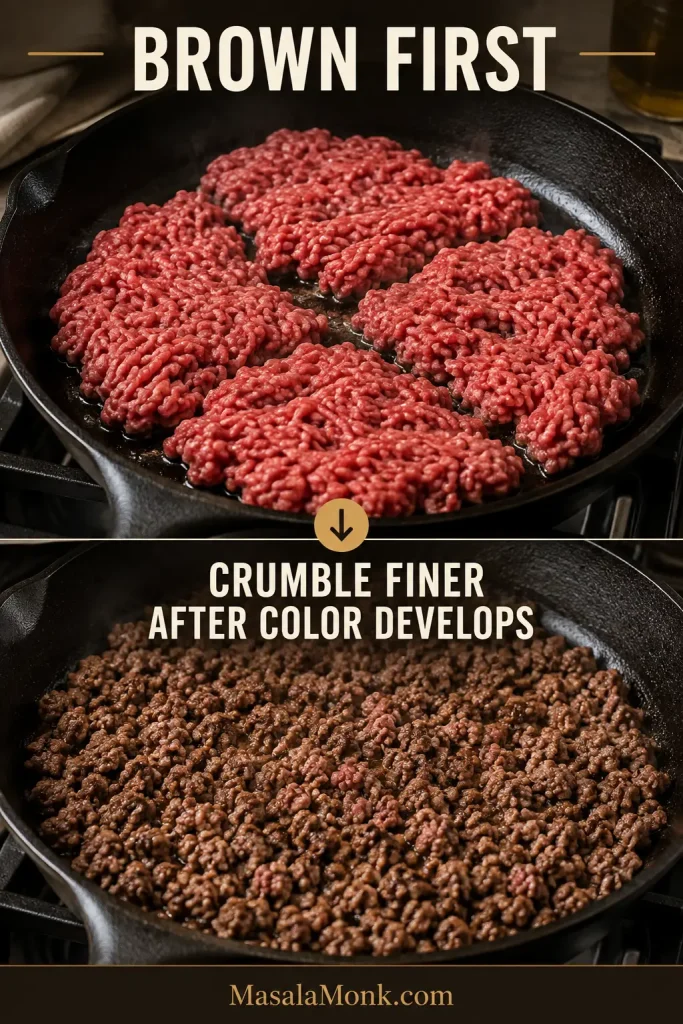
- Remove excess grease and cook off released water. Spoon out any obvious pool of fat, but leave a thin sheen around the beef. Let bubbling moisture cook away uncovered. When the bubbling settles and the stronger sizzle returns, the pan is ready for the seasoning.
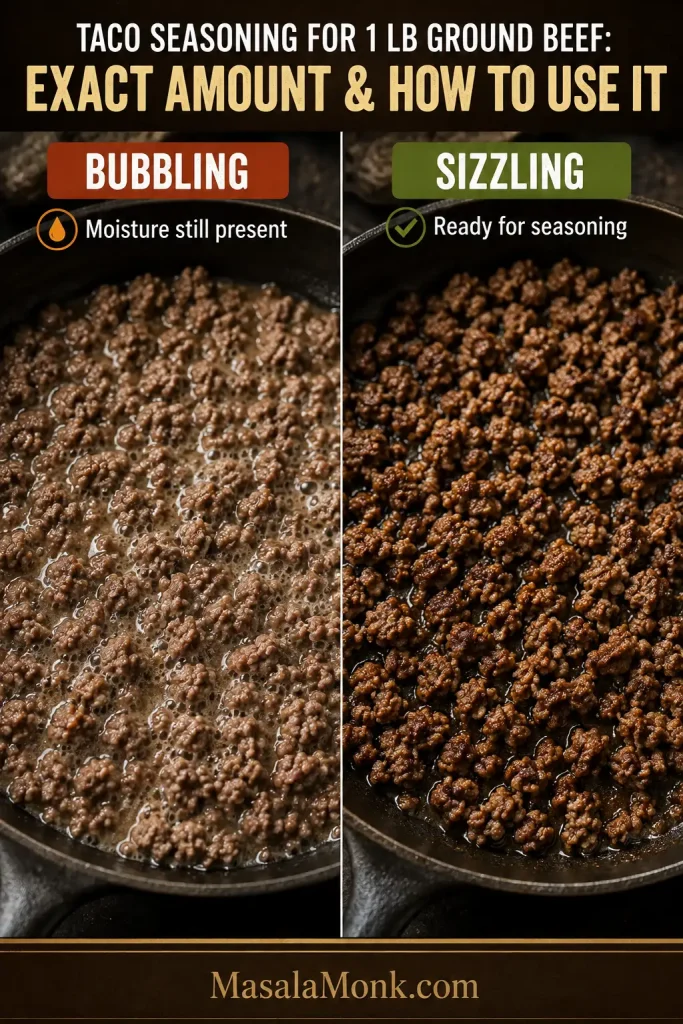
Season and Simmer
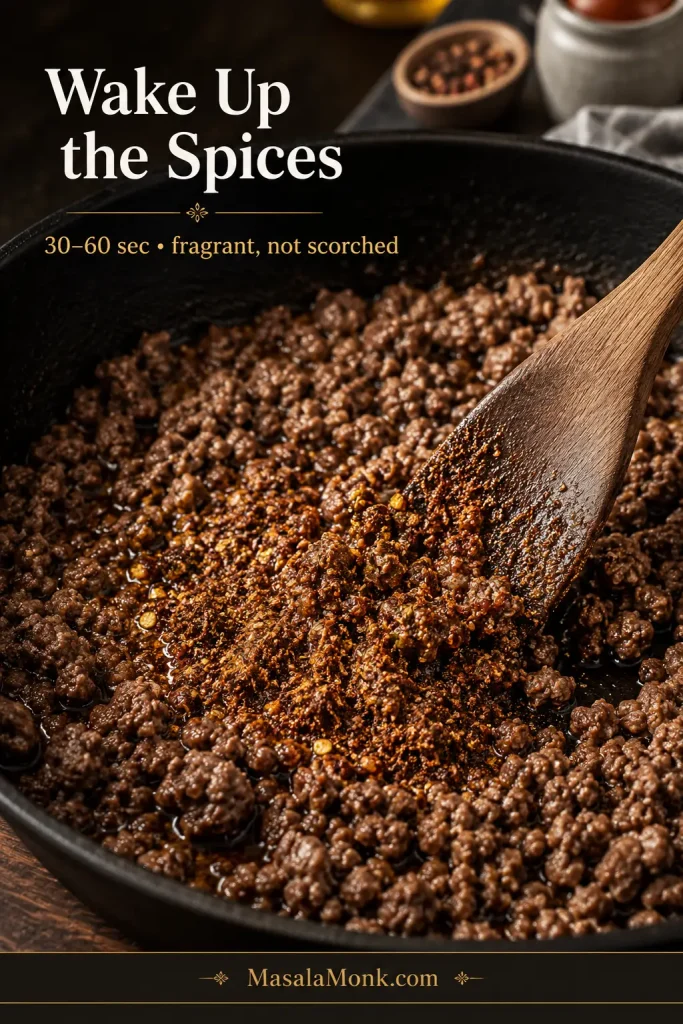
- Wake up the spices. Reduce the heat to medium and stir the seasoning into that thin film of rendered fat. After about 30 seconds, the raw dusty smell should shift toward warm cumin, chile and garlic. If the pan is completely dry, add about 1 teaspoon neutral oil before the seasoning. Add the water before the spices begin to darken.
- Add the water. Pour in ⅓ cup / 80 mL and scrape up the browned bits from the bottom of the pan.
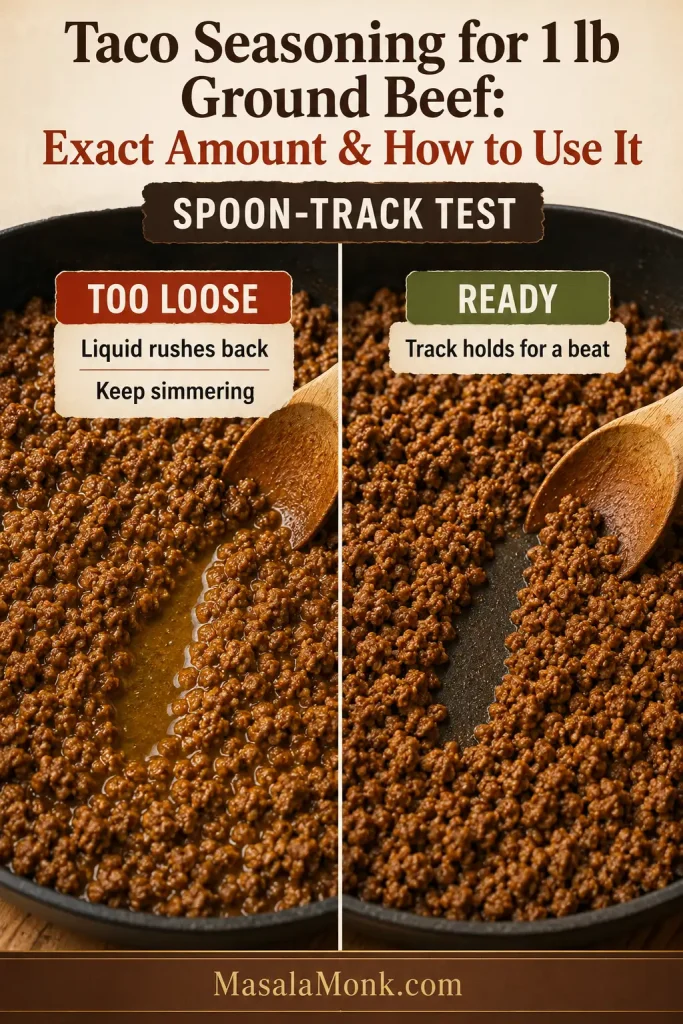
- Cook until the loose water is gone. Simmer uncovered for roughly 3–5 minutes. Drag the spoon across the pan. Thin liquid rushing straight back into the track needs longer. When the track stays visible for a beat and the crumbles remain moist, take the pan off the heat.
Taste, Check, and Serve
- Taste it the way you are going to eat it. Put a little beef on a piece of the tortilla you are serving, then decide whether the pan needs more salt or heat. A tortilla softens the seasoning, and salty cheese or salsa can change the final bite again.
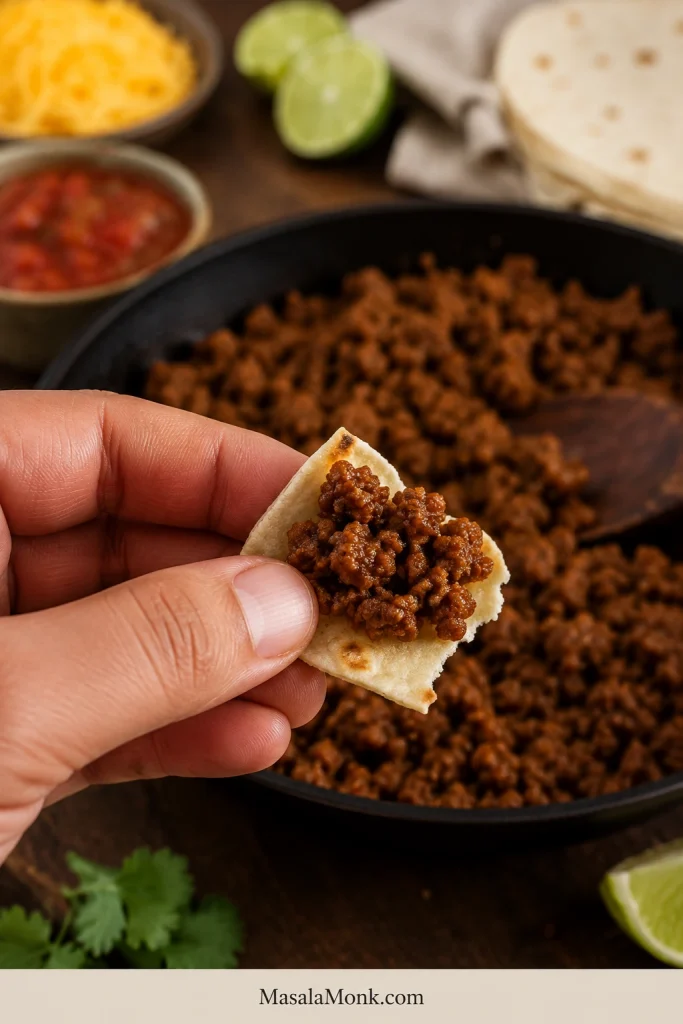
Ground beef should reach 160°F / 71°C when checked with an instant-read thermometer. See the USDA ground-beef food-safety guidance.
The thermometer answers the safety question; the pan still answers the texture question. Before serving, use the finished crumbles as the final visual check.
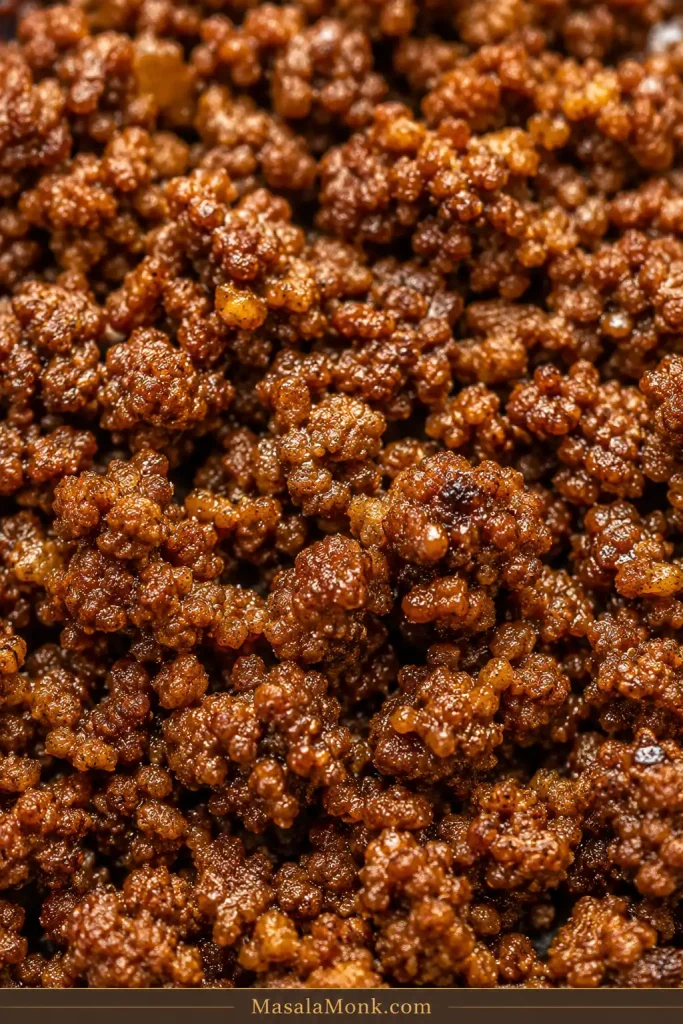
Warm the tortillas during those last few minutes. These soft homemade corn tortillas are especially useful when you want a small tortilla that bends around the beef without cracking.
If your pan looks different from the finished texture above, jump to Taco Meat Troubleshooting before adding anything else.
Need More Help With the Taco Meat?
The recipe above is all you need for one pound. The sections below cover scaling, ingredient swaps, troubleshooting and the small details that make the beef better.
- Amounts, packet replacement and scaling
- Chili powder, heat and salt
- Why the cooking method works
- Variations and substitutions
- Troubleshooting
- Serving and filling tacos
- Storage and reheating
How Much Taco Seasoning for 1 lb of Ground Beef?
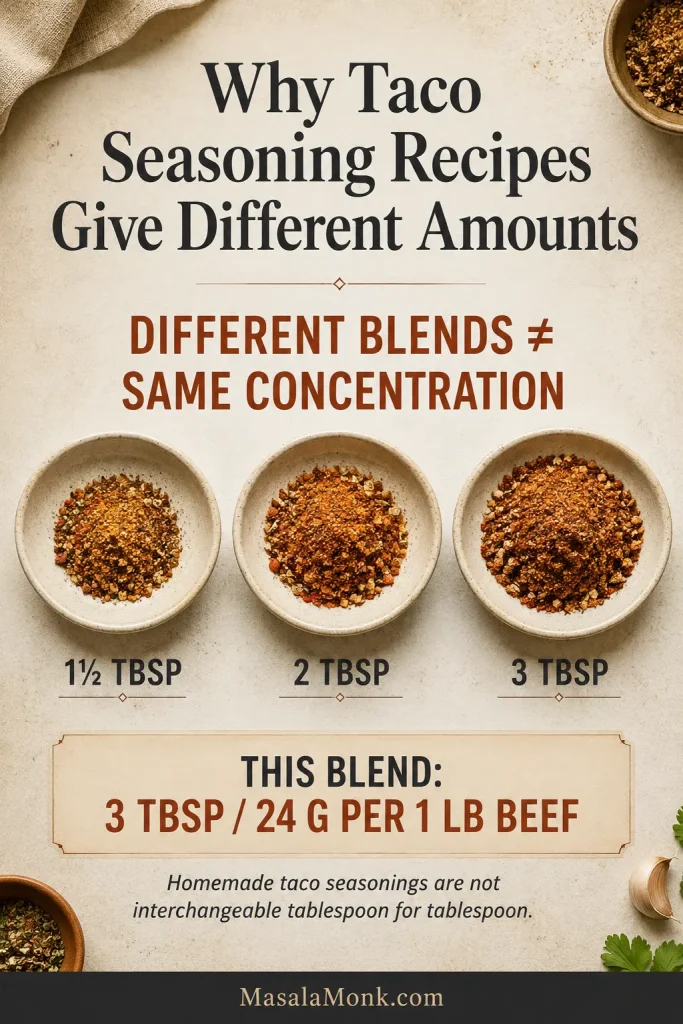
For this blend, the answer is the same 3 tablespoons / 24 g per pound used in the recipe above. What changes from recipe to recipe is the blend itself.
Homemade taco seasonings are not interchangeable tablespoon for tablespoon. The amounts of chile, cumin, salt and other spices vary, and some mixes contain starch as well. That is why another recipe may call for 1½, 2 or 3 tablespoons and still be internally consistent.
Does This Replace One Taco Seasoning Packet?
Yes. For 1 pound of taco meat, use this whole batch in place of one seasoning packet. It replaces the packet by intended use, not gram-for-gram.
Commercial packets can weigh differently, contain thickeners and call for more liquid, so use this recipe’s water amount rather than the packet directions.
Taco Seasoning for ½ to 5 lb Ground Beef
| Ground beef | Seasoning | Approx. seasoning weight | Water to start |
|---|---|---|---|
| ½ lb / 227 g | ½ batch / about 1½ Tbsp | 12 g | 2 Tbsp + 2 tsp / 40 mL |
| 1 lb / 454 g | 1 batch / about 3 Tbsp | 24 g | ⅓ cup / 80 mL |
| 1½ lb / 680 g | 1½ batches / about 4½ Tbsp | 36 g | About ½ cup / 120 mL |
| 2 lb / 907 g | 2 batches / about 6 Tbsp | 48 g | About ⅔ cup / 160 mL |
| 3 lb / 1.36 kg | 3 batches | 72 g | Add gradually after browning |
| 4 lb / 1.81 kg | 4 batches | 96 g | Add gradually after browning |
| 5 lb / 2.27 kg | 5 batches | 120 g | Add gradually after browning |
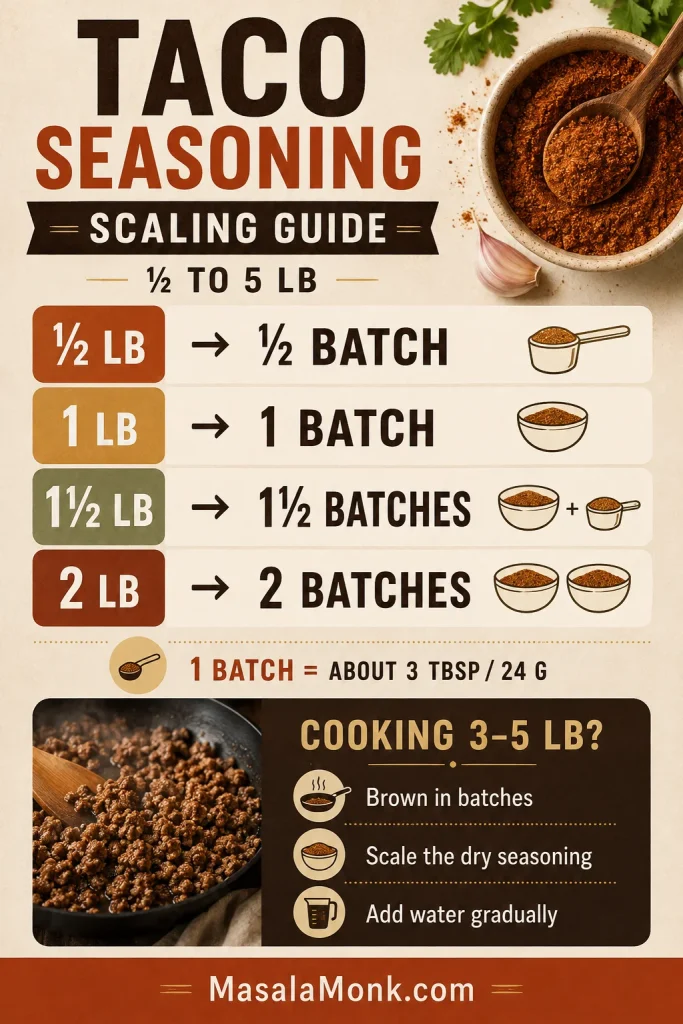
Spice weights are approximate because brands and grinds vary. Measuring spoons are perfectly practical for one or two pounds. A scale becomes more useful when several batches need to taste the same.
Cooking for a crowd changes the pan more than it changes the spices. Brown several pounds of beef in batches, combine them, then add the scaled seasoning and enough water to distribute it through the meat.
For the most consistent large batches, scale the dry seasoning by weight; let the meat tell you how much liquid it needs.
Chili Powder, Heat and Salt
This is the familiar American/Tex-Mex ground-beef profile: chili, cumin, garlic, onion and oregano around browned beef. Tacos across Mexico use many different meats, chiles, marinades and cooking styles.
In this recipe, chili powder means the mild American seasoning blend. Chile powder means powder made primarily from a particular dried chile. Products labeled chilli powder or lal mirch in India and elsewhere can be far hotter than American chili powder.
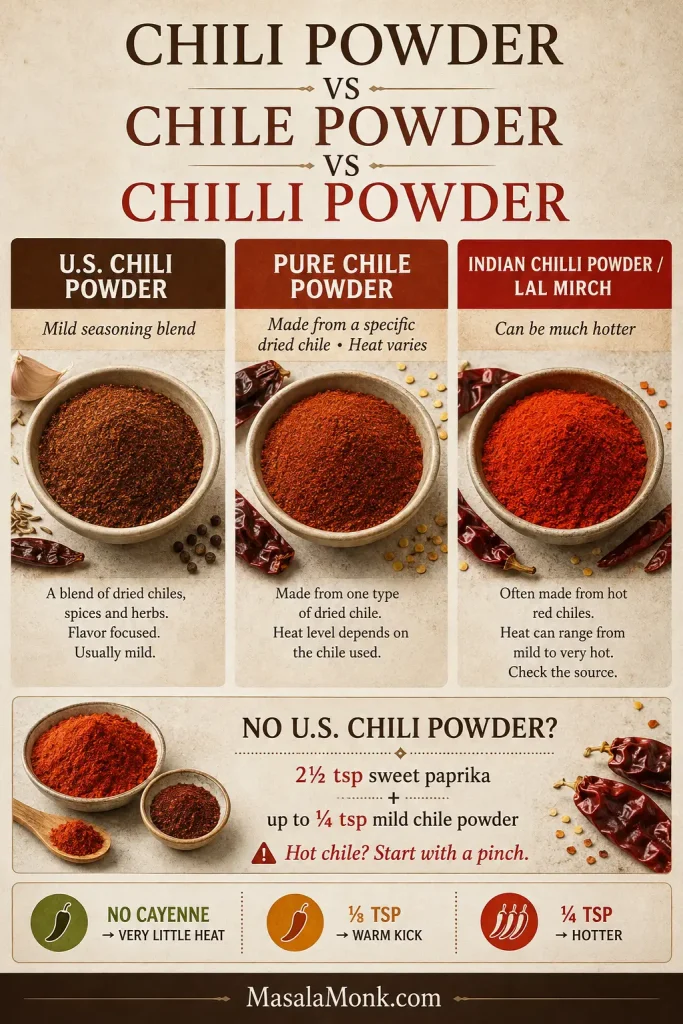
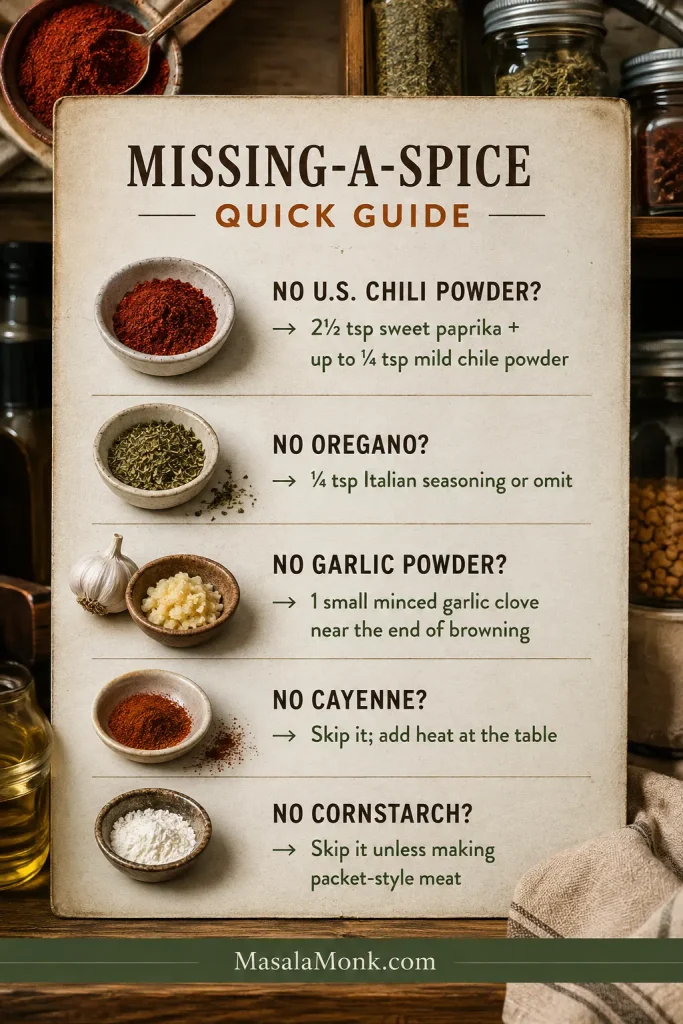
When American-style chili powder is unavailable, replace the tablespoon with about 2½ teaspoons sweet paprika plus up to ¼ teaspoon mild chile powder. The recipe already contains cumin, garlic, onion and oregano. With a genuinely hot chile, begin with a pinch.
Adjust the Heat and Salt
Leave out the cayenne for very little heat. About ⅛ teaspoon gives a noticeable warm kick. Want it hotter? Start with ¼ teaspoon, cook the beef and taste before adding more.
Keeping the pan fairly mild works well when several people are eating. A spoonful of roasted tomatillo salsa verde can bring chile, acidity and freshness to one taco without changing everyone else’s.
To reduce the salt, begin with ½ teaspoon fine sea salt rather than ¾ teaspoon and adjust after cooking. Cheese, salsa and other toppings may bring plenty of salt themselves.
Once the chili powder is sorted, the rest gets much simpler. Missing another spice? Jump to the substitution guide.
Why This Method Makes Better Taco Meat
Surface contact creates browning. Give larger pieces of beef some time against the hot skillet before breaking them smaller. Prefer very fine taco-shop-style meat? Keep crumbling once those browned surfaces have developed. Starting fine can cost you browning; finishing fine is completely okay.
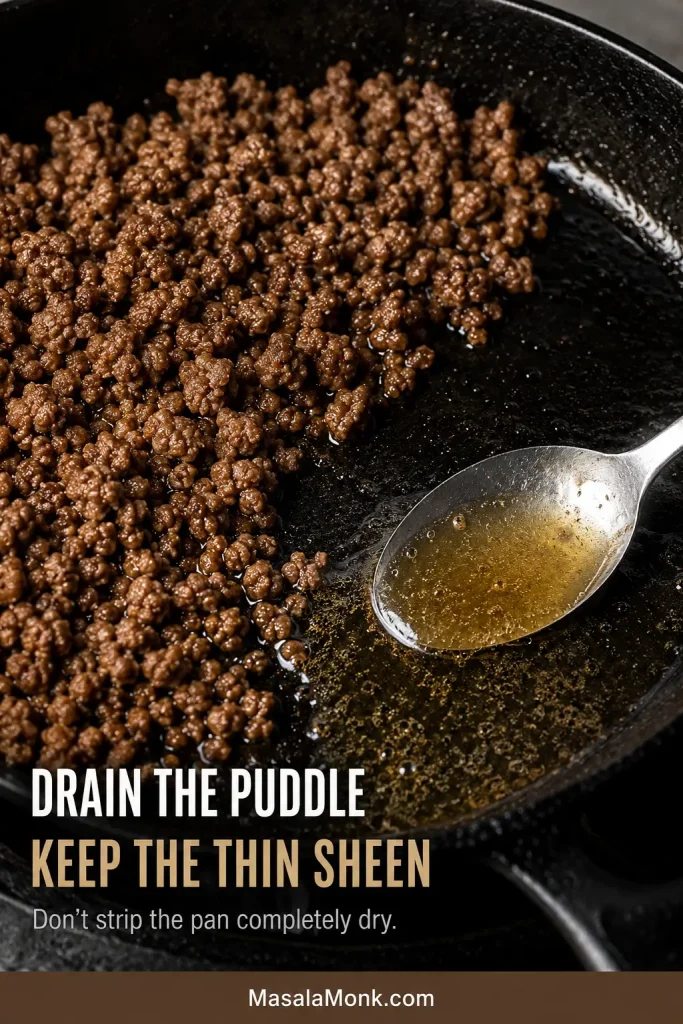
Drain the puddle, not every trace of fat. A thin sheen of rendered fat helps the seasoning turn fragrant. Released water needs to evaporate first; the stronger sizzle tells you the pan is ready again.
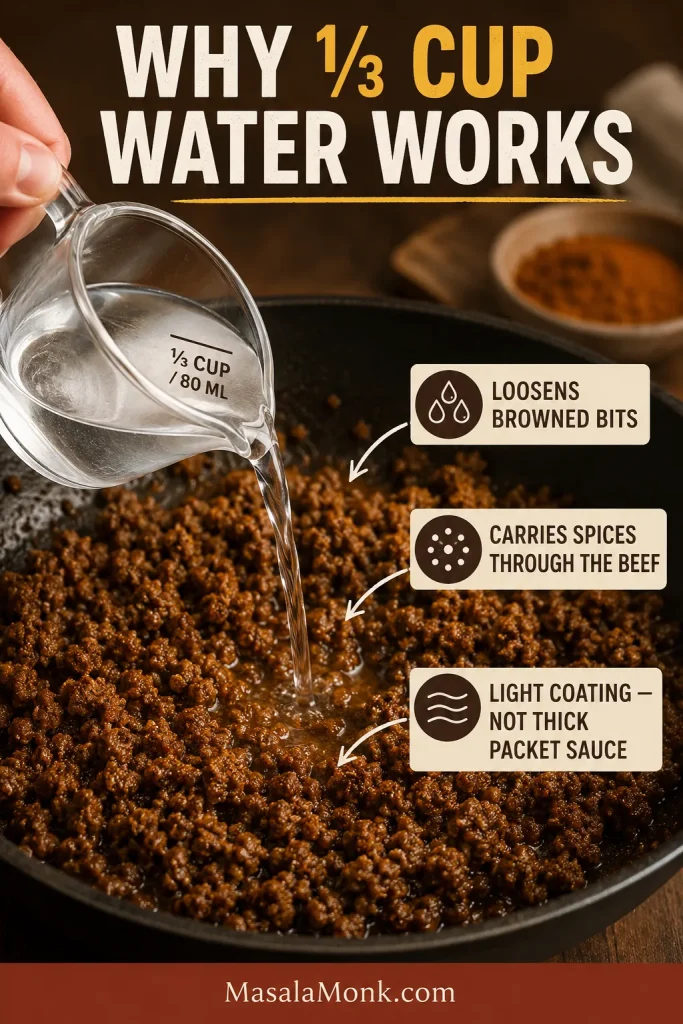
Water distributes the seasoning; evaporation finishes the texture. The ⅓ cup / 80 mL is intentional. This version needs enough liquid to loosen the browned bits and carry the spices through the beef, not enough to create a thick packet-style sauce.
There is no prize for hitting the simmer time exactly. Once the loose water is gone, the spoon track holds briefly and the meat remains moist, you’re there.
Taco Meat Variations and Substitutions
For Packet-Style Taco Meat
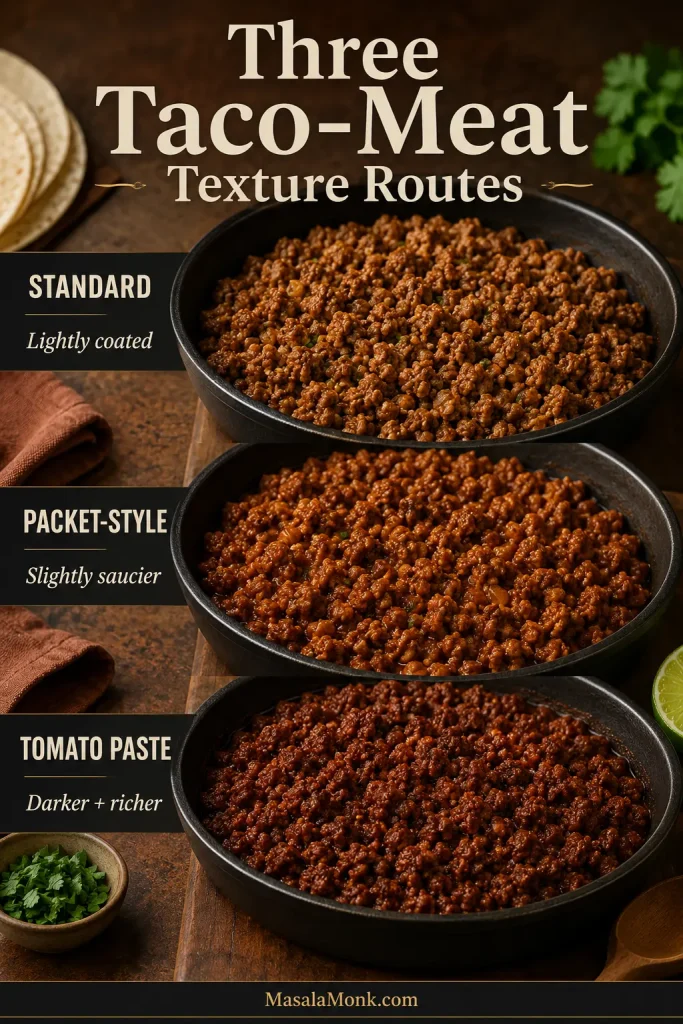
Mix ½ teaspoon cornstarch into the dry seasoning and increase the water to ½ cup / 120 mL.
Simmer uncovered until the sauce lightly hugs the crumbles. Drag a spoon through the pan; the track should stay visible for a moment before slowly filling. Stop before the coating becomes gummy.
For Richer Taco Meat Without Starch
Stir 1 tablespoon / about 16 g tomato paste into the browned beef with the seasoning, then add the usual water. It makes the filling darker and richer without turning it into tomato sauce. A spoonful of extra water will loosen a pan that tightens too quickly.
Missing a Spice?
This is pantry food. One empty spice jar usually does not need to stop dinner.
| If you do not have… | Try this |
|---|---|
| U.S.-style chili powder | Use about 2½ tsp sweet paprika plus up to ¼ tsp mild chile powder |
| Regular paprika | Use 1 tsp smoked paprika for a smokier result |
| Cumin | Leave it out if necessary; the flavor will be less earthy |
| Oregano | Use about ¼ tsp Italian seasoning or leave it out |
| Onion powder | Omit it; fresh onion adds moisture and changes the browning |
| Garlic powder | Use 1 small finely minced garlic clove during the final minute of browning |
| Cayenne | Leave it out and add heat at the table |
| Cornstarch | Skip it unless you want the packet-style version |
Taco Meat Troubleshooting
Taco meat is forgiving. Most problems can still be fixed while the pan is warm. Start with what actually went wrong before adding more seasoning.
| What happened? | Likely reason | What to do |
|---|---|---|
| Gray instead of browned | Cool or crowded pan; constant stirring | Let released moisture evaporate, then give the beef more contact with the hot pan |
| Bland | Low salt, excess liquid, stale spices or weak browning | Reduce loose liquid, taste for salt, then add a small amount of seasoning only if it remains flat |
| Hot but bland | Heat without enough savory balance | Check salt and overall seasoning before adding more cayenne |
| Too spicy | Too much hot chile or the wrong chili powder | Dilute with unseasoned beef or another unsalted ingredient |
| Too salty | Too much salt or excessive reduction | Dilute with unsalted ingredients |
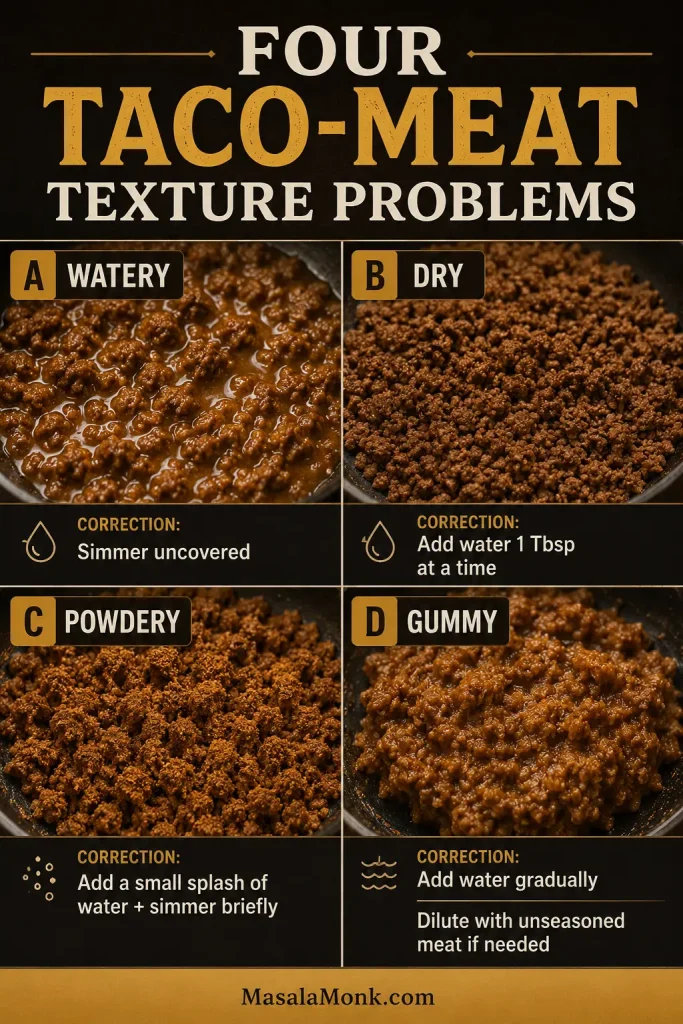
| Watery | Released meat moisture or too much added water | Simmer uncovered until the loose liquid reduces |
| Dry | Overcooked, very lean or over-drained | Add water a tablespoon at a time |
| Powdery | Seasoning has not hydrated | Add a small splash of water and simmer briefly |
| Gummy | Too much starch | Add water 1 Tbsp at a time; if needed, dilute with more unseasoned meat |
| Bitter | Spices scorched in the pan | Take the pan off the heat and dilute if possible |
When the Beef Will Not Brown
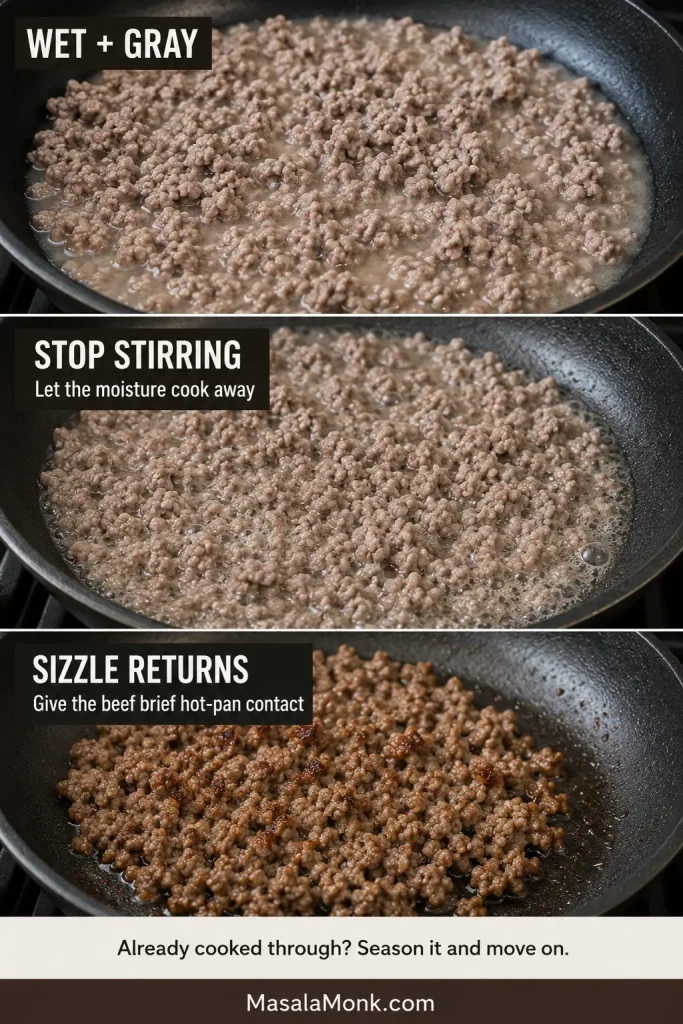
Liquid pooling before you add any water means the pan is struggling to evaporate what the beef is releasing. Stop stirring and leave it uncovered. When the bubbling quiets and the stronger sizzle comes back, the meat can begin picking up color.
Already cooked through? Do not keep frying the beef just to force darker browning. That opportunity has mostly passed. Season it well, finish the texture and move on to the tortillas.
When the Flavor Is Off
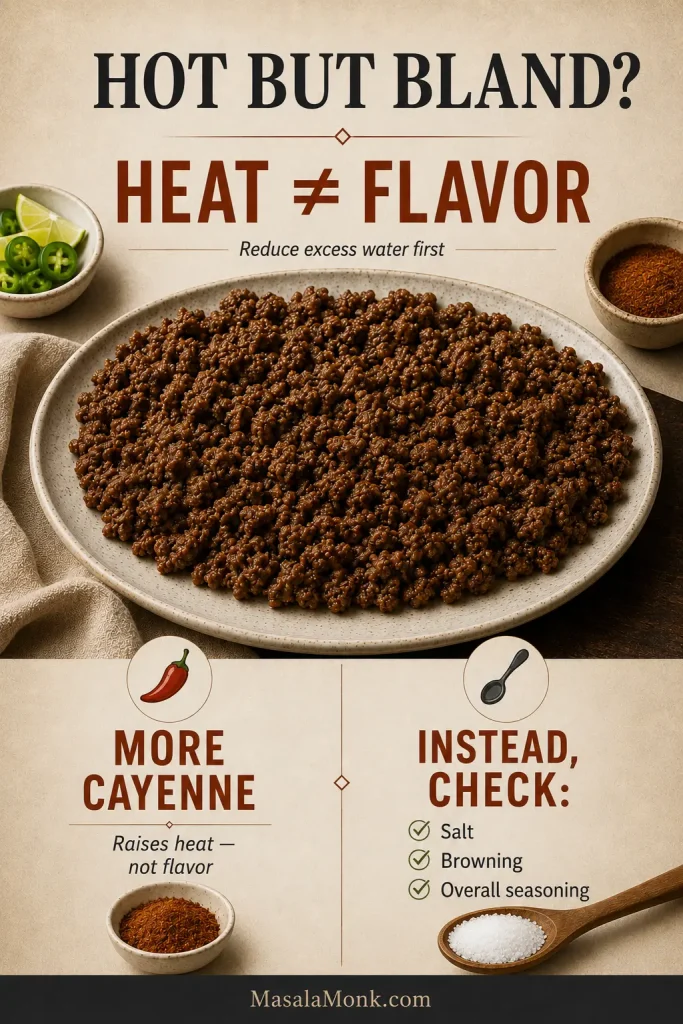
Judge bland meat after excess water has reduced. Still flat? Check the salt before reaching for more chile. Older spices and weak browning can dull the flavor too.
Hot but bland is different. Cayenne raises heat, not savory depth. More of it usually pushes the pan farther from what it needs.
A taco that is salty enough but feels heavy may simply need brightness. Try lime or a sharper salsa on one bite before changing the whole pan.
Too much salt or chile needs dilution. Add unseasoned beef, beans or another unsalted ingredient that belongs in the meal. At the table, sour cream, avocado or a spoonful of fresh guacamole can soften an overly hot bite.
A bitter edge usually means the powdered spices caught too much heat. Take the pan off the burner. Mild bitterness may soften with extra unseasoned beef or beans; more cooking will not help.
Turn the Pan Into Tacos
The beef already brings plenty of warmth and savory flavor. Give it some contrast.
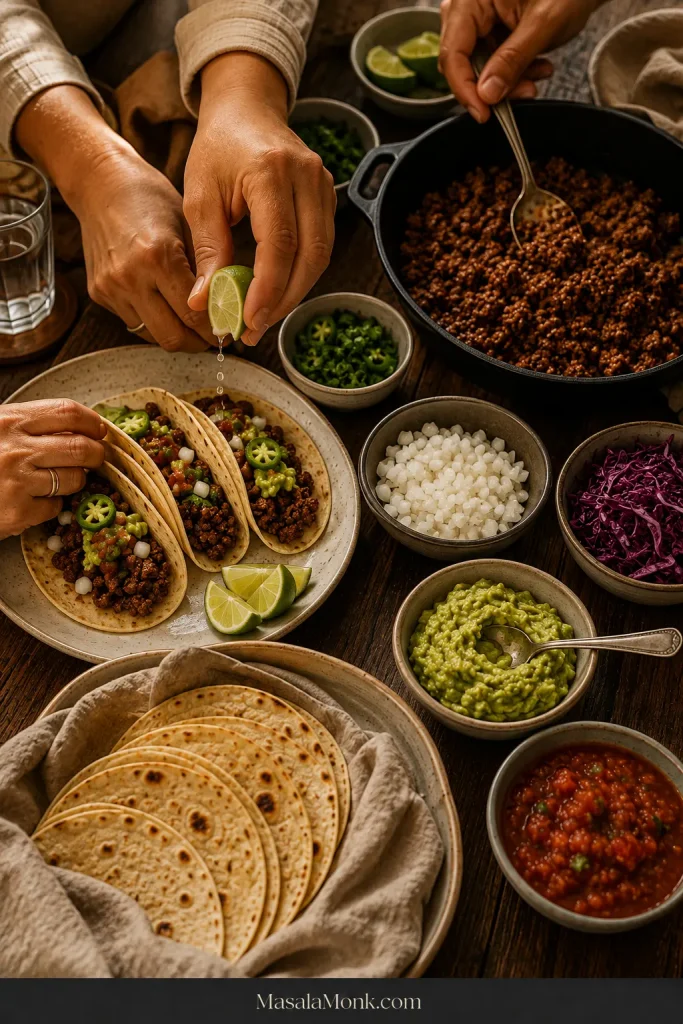
Crisp cabbage and lime work beautifully. So does avocado with salsa verde. Cheese or sour cream takes the taco richer; fresh onion and jalapeño pull it brighter.
For something fruitier, fresh mango salsa gives the warm beef a sweet-sharp hit of mango, lime, onion and jalapeño.
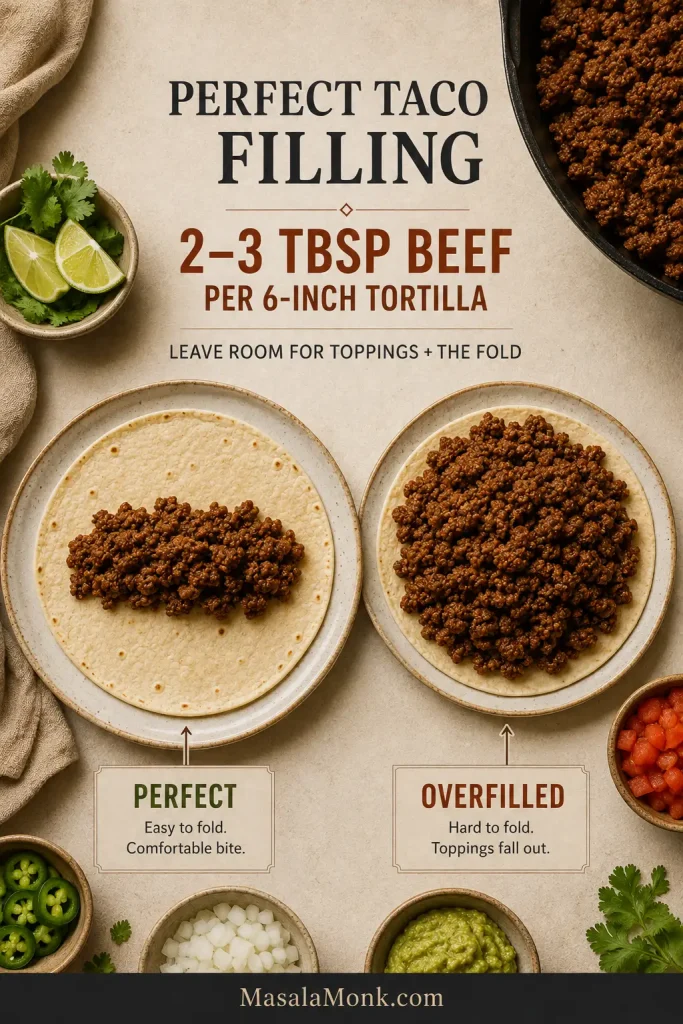
Do not overfill the first tortilla. On a 6-inch tortilla, start with about 2–3 tablespoons cooked beef. That leaves room for toppings—and enough tortilla to fold without losing half your dinner on the first bite.
Packet-style meat is wetter, so give it a minute off the heat before filling soft tortillas. That short rest helps the sauce settle around the crumbles.
Storage and Reheating: Taco Seasoning and Taco Meat
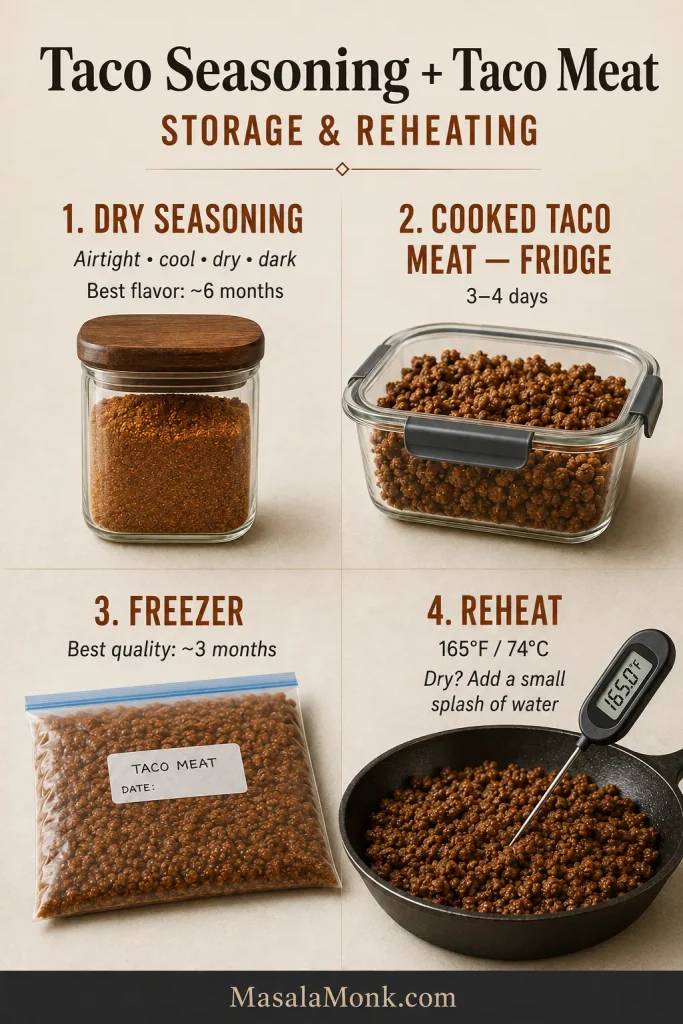
The dry seasoning can be mixed ahead and stored in an airtight container in a cool, dry, dark place. For the brightest flavor, use it within about 6 months, sooner when the spices you started with were already old.
Cool cooked taco meat promptly and refrigerate it in a covered container. USDA guidance generally recommends using cooked leftovers within 3–4 days. See the USDA leftovers and food-safety guidance.
Freeze cooled taco meat in meal-size portions. Flattened freezer bags freeze quickly, stack neatly and make it easy to thaw only what you need. For best flavor and texture, use frozen cooked taco meat within about 3 months.
Thaw overnight in the refrigerator when convenient. Reheat gently in a skillet or microwave. Dry-looking leftovers can be loosened with a tablespoon of water, adding more only as needed. Reheated leftovers should reach 165°F / 74°C when checked with a thermometer.
Leftovers do not have to mean another identical round of tacos. Once thoroughly cooled and well drained, the meat can make this easy 7 layer dip heartier without loosening the chilled layers underneath.
Dinner Is Back on Track
Dinner never needed that last-minute trip to the store after all.
Put the salsa and lime on the table and let everyone make the taco they actually want—mild for one person, extra jalapeños for another, guacamole for whoever gets there first.
By then, the packet you could not find is probably the least interesting thing about dinner.








