
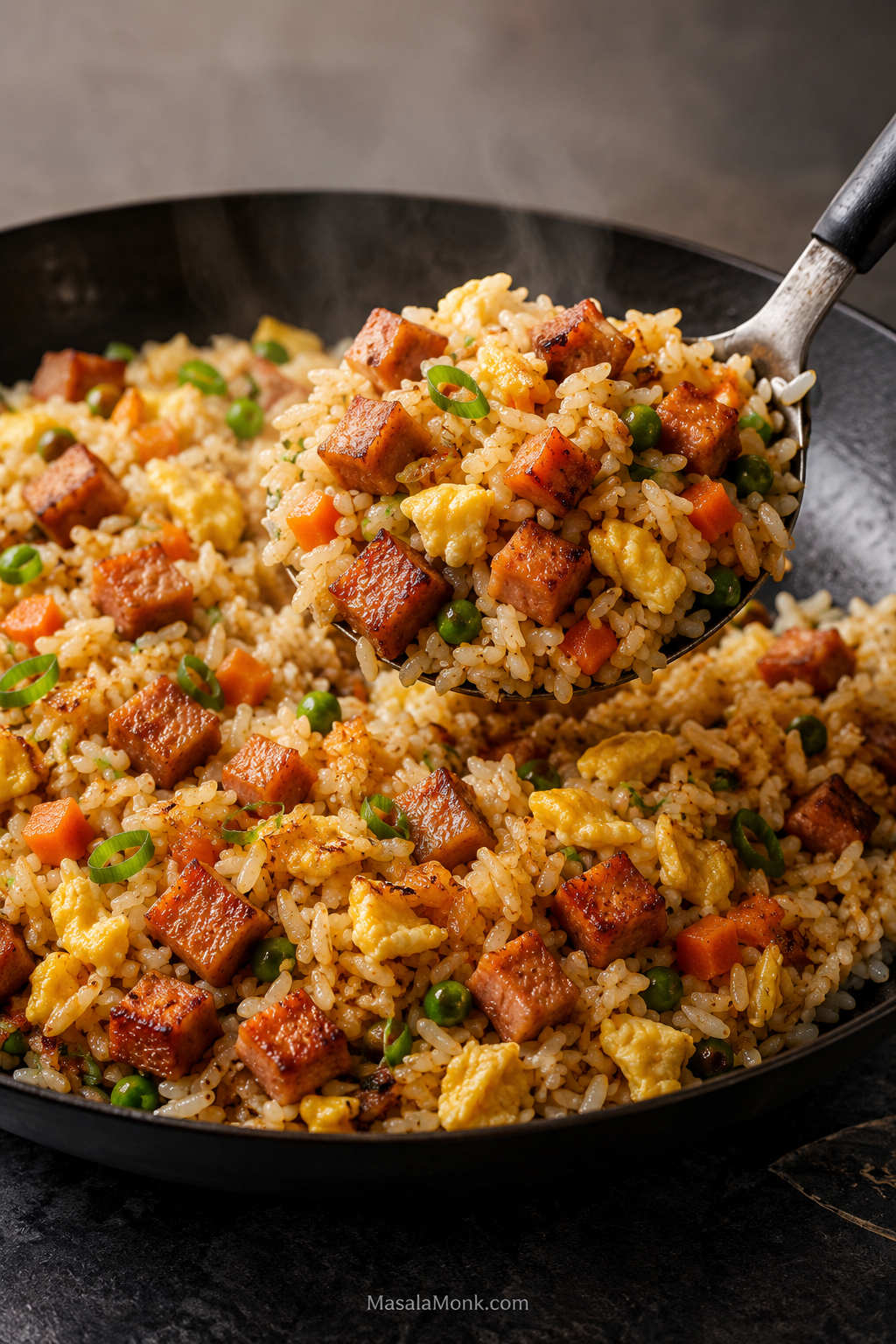
This Spam fried rice recipe is for the night you have cold rice in the fridge, a can of Spam in the pantry, and no patience for a complicated dinner. The pan does the heavy lifting: crisp salty cubes, soft egg, garlic, scallions, vegetables, and loose grains tossed with just enough soy-oyster-sesame seasoning to make everything savory and glossy.
The trick is not adding everything at once. Brown the Spam until the edges crisp, cook the egg gently, let the rice loosen in a hot pan, and season near the end so the grains stay separate instead of turning soft and salty. Once everything is prepped, the cooking part takes about 12–15 minutes.
After that base makes sense, you can take the same method toward kimchi Spam fried rice, Hawaiian pineapple Spam fried rice, garlic-heavy Filipino-style rice, or a spicy chili-crisp version without losing the texture that makes the dish work.
Spam Fried Rice Guide
Start with the quick method, then use the rice, sauce, egg, variation, serving, and troubleshooting sections to adjust the pan you are actually cooking.
Make the Recipe
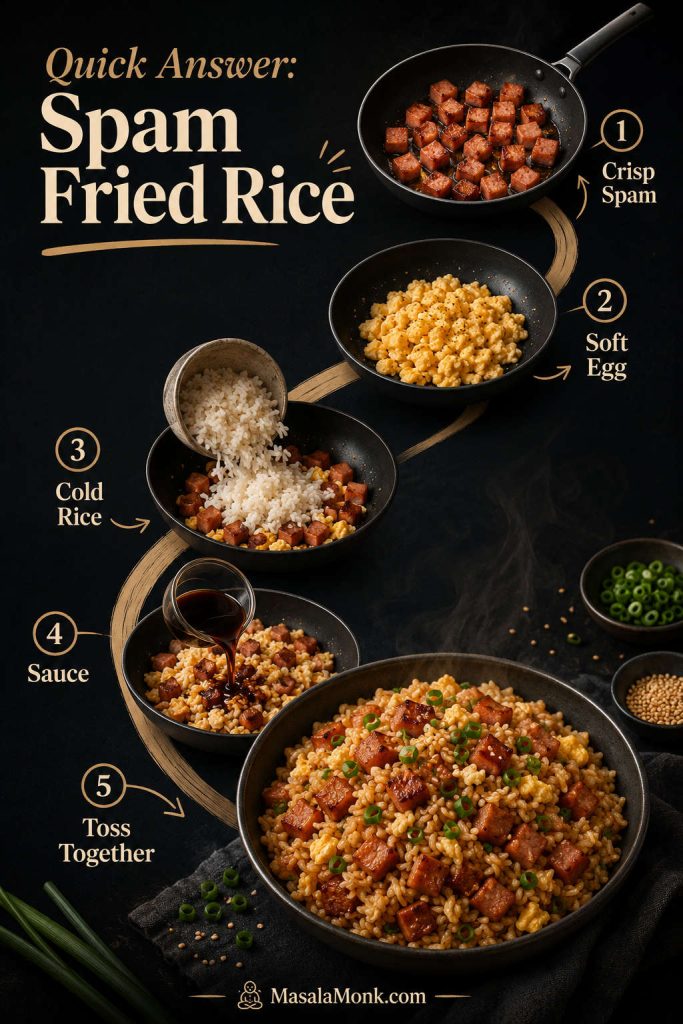
Quick Answer: How to Make Spam Fried Rice
Dice the Spam and brown it in a hot wok or large skillet until the edges look crisp and toasted. Scramble the eggs and set them aside. Stir-fry garlic, scallion whites, vegetables, and cold cooked rice, then add a simple sauce of soy sauce, oyster sauce, sesame oil, and pepper. Fold the crispy Spam and soft egg back through the rice and finish with scallion greens.
Spam Fried Rice at a Glance
- Main ratio: 1 can Spam + 4 cups cold cooked rice + 3 eggs
- Base sauce: 2 tbsp soy sauce + 1 tbsp oyster sauce + 2 tsp toasted sesame oil
- Rice to start with: cold day-old jasmine, long-grain, or medium-grain rice
- Spam cut: ½-inch cubes for crisp edges and visible bites
- Pan choice: wok, carbon-steel skillet, cast iron, or large nonstick skillet
- Heat level: medium-high to high
- Cook time: 12–15 minutes once everything is prepped
The rice does most of the texture work here. Because chilled rice has less surface moisture, it separates and fries instead of clumping into soft, steamy pockets. If your rice is freshly cooked, there is a quick fix in the rice section below.
Why This Version Works
This dish works best when every ingredient gets a quick moment in the pan before everything comes together. The Spam needs time against the hot surface, the rice needs enough heat to loosen, and the sauce should season the grains without drowning them.
- Browned Spam comes first. Crisp edges give the finished rice salty-crisp bites instead of soft, barely warmed pieces.
- Chilled rice keeps the texture loose. Drier grains separate more easily and give you a fluffier pan.
- Soft egg goes back in near the end. Scrambling it first keeps it tender instead of dry or rubbery.
- A measured sauce keeps the salt in check. Spam already brings salt, so the soy sauce and oyster sauce need a lighter hand.
- Vegetables bring contrast. Peas, carrots, scallions, corn, cabbage, or bell pepper help lighten the richness.
Flavor balance: Spam brings salt and richness, rice softens everything, egg adds body, vegetables add relief, and scallions wake the pan up at the end. If the dish tastes heavy, do not add more sauce first. Add freshness, heat, acid, or crunch.
Texture cue: The rice should look glossy and separate, not wet. The Spam should stay visible in browned cubes, and the egg should be soft pieces folded through the rice rather than tiny dry crumbs.
Ingredients You Need
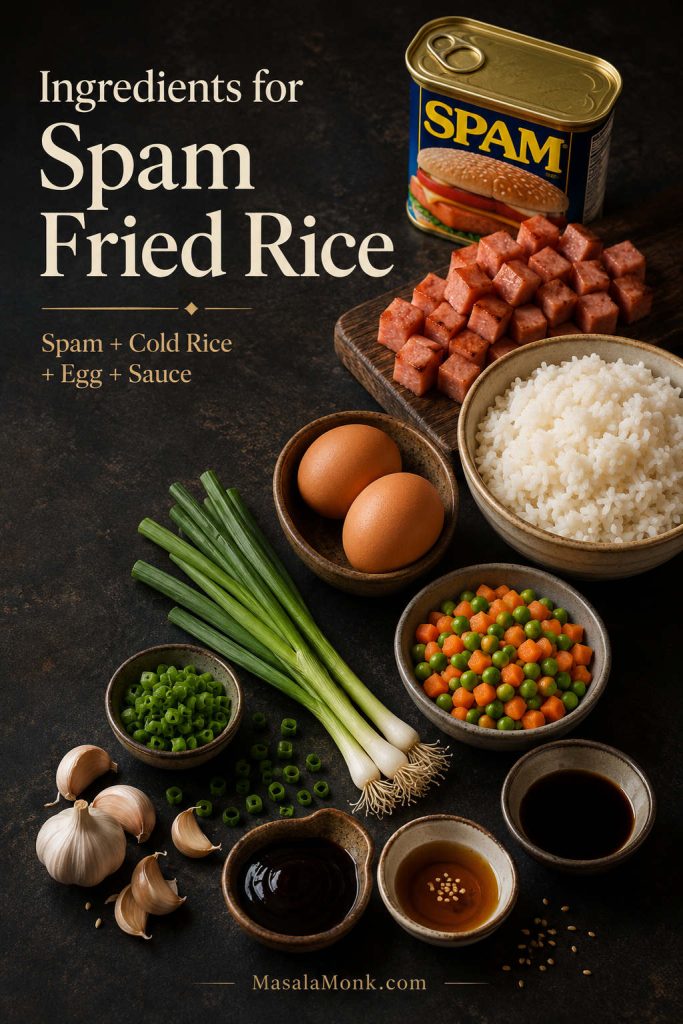
The ingredient list is short, but each piece matters. For the first batch, keep the base simple. After that, use the variation section to move toward kimchi, pineapple, garlic-heavy, spicy, or teriyaki-style fried rice.
Spam
Use one 12 oz / 340 g can of Spam. SPAM 25% Less Sodium is helpful if you have it, especially because the sauce also includes soy sauce and oyster sauce. Cut the Spam into ½-inch cubes so the pieces brown quickly while still staying chunky enough to notice in the rice.
For extra texture, dice most of the Spam and roughly mash or crumble a small portion. The cubes give you crisp bites, while the rough pieces spread more savory flavor through the rice.

Cold Cooked Rice
Use 4 cups cold cooked rice, about 680–730 g depending on the rice type and how tightly it is packed. Jasmine rice, long-grain white rice, and medium-grain rice all work well once chilled.
Eggs
Three large eggs are the most balanced amount for 4 cups of rice. Use 2 eggs for a lighter pan or 4 eggs if you want a more breakfast-style Spam egg rice.
Vegetables
Frozen peas and carrots are the easiest classic choice. Before adding them, rinse them briefly under warm water and drain them well. Corn, cabbage, bell pepper, onion, edamame, and extra scallions also work, but avoid adding too many watery vegetables at once.
Aromatics
Garlic and scallions are enough for the base recipe. Add garlic after the Spam has browned so it does not burn before the meat gets crisp. Use the scallion whites while cooking and save the green tops for the finish.
Sauce
The base sauce uses soy sauce, oyster sauce, toasted sesame oil, a little sugar, and white pepper. Soy sauce seasons the rice, oyster sauce adds depth, sesame oil brings aroma, sugar rounds the edges, and white pepper gives the rice a gentle fried-rice finish without making it hot.
The Rice That Gives You Separate Grains
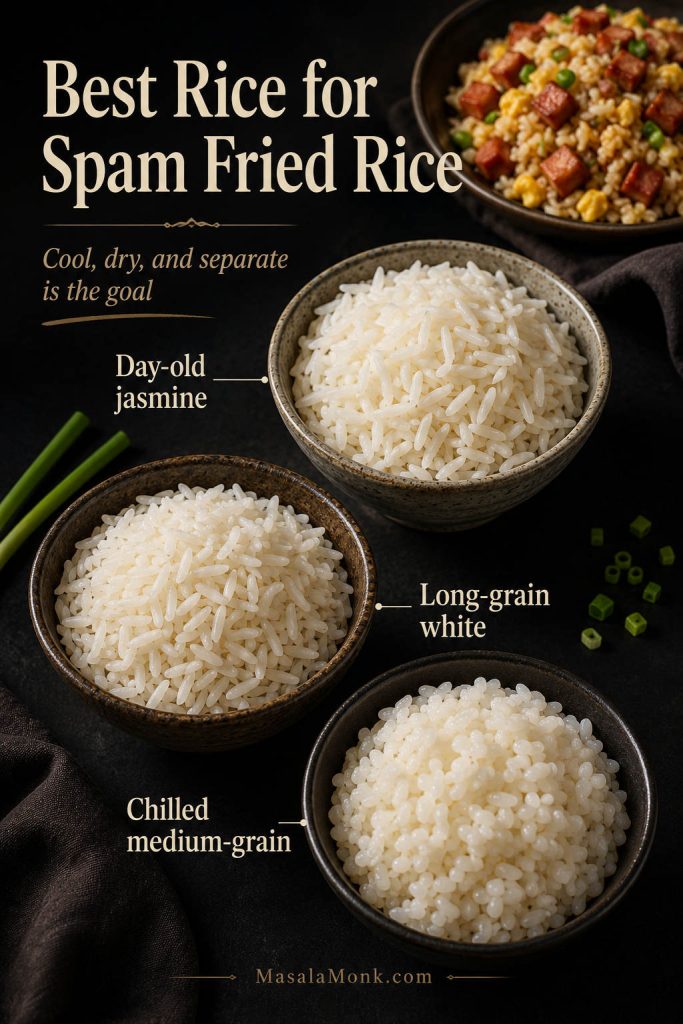
The easiest rice to work with is cold, cooked, and slightly dry on the surface. It should not be hard or stale, but it should not be hot and steamy when it hits the pan.
If you are starting from uncooked rice, this guide on how to cook rice perfectly is useful for getting the base right before you chill it for fried rice.
Cold Day-Old Rice
Day-old rice is the most forgiving option at home. After a night in the refrigerator, the grains lose some surface moisture and separate more easily in a hot pan.
Jasmine Rice
Jasmine rice is the easiest everyday choice because it separates well once chilled but still tastes soft and fragrant.
Long-Grain White Rice
Long-grain white rice gives you a fluffier, more separate pan, especially if you want the grains to stay distinct.
Medium-Grain Rice
Medium-grain rice works well when it is fully chilled. It gives the dish a slightly chewier, more cohesive texture. Before cooking, break up the clumps so the rice does not go into the pan in large blocks.
Fresh Rice Emergency Fix
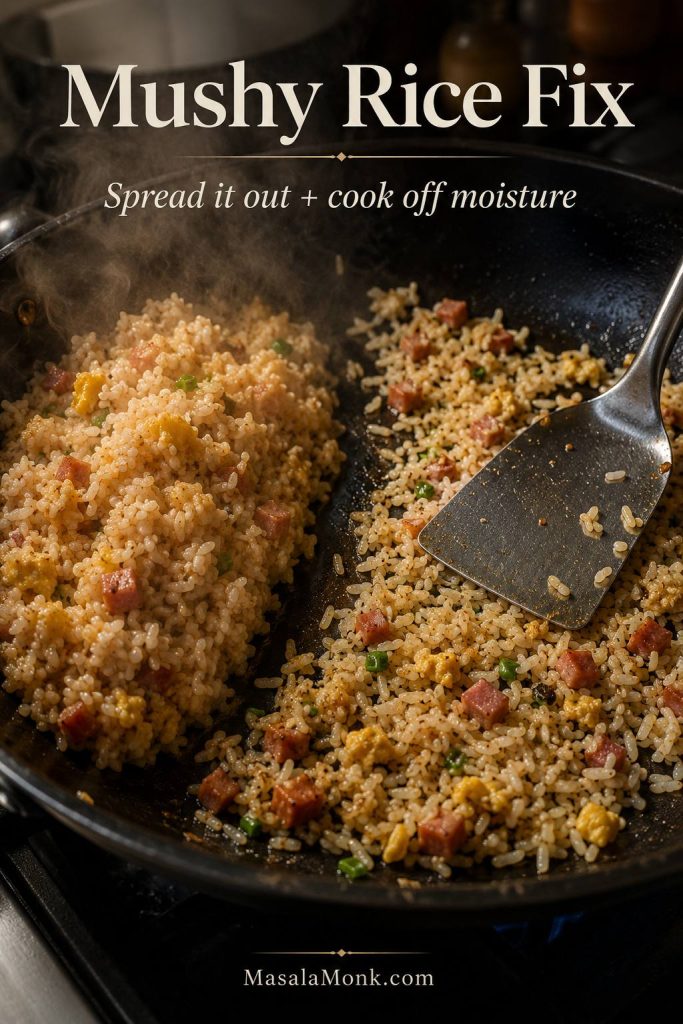
No day-old rice? You can still make this work. Spread freshly cooked rice in a thin layer on a tray or large plate, let the steam escape, and chill it uncovered until the surface feels cooler and drier. Even 20–30 minutes of cooling is better than adding hot rice straight from the cooker.
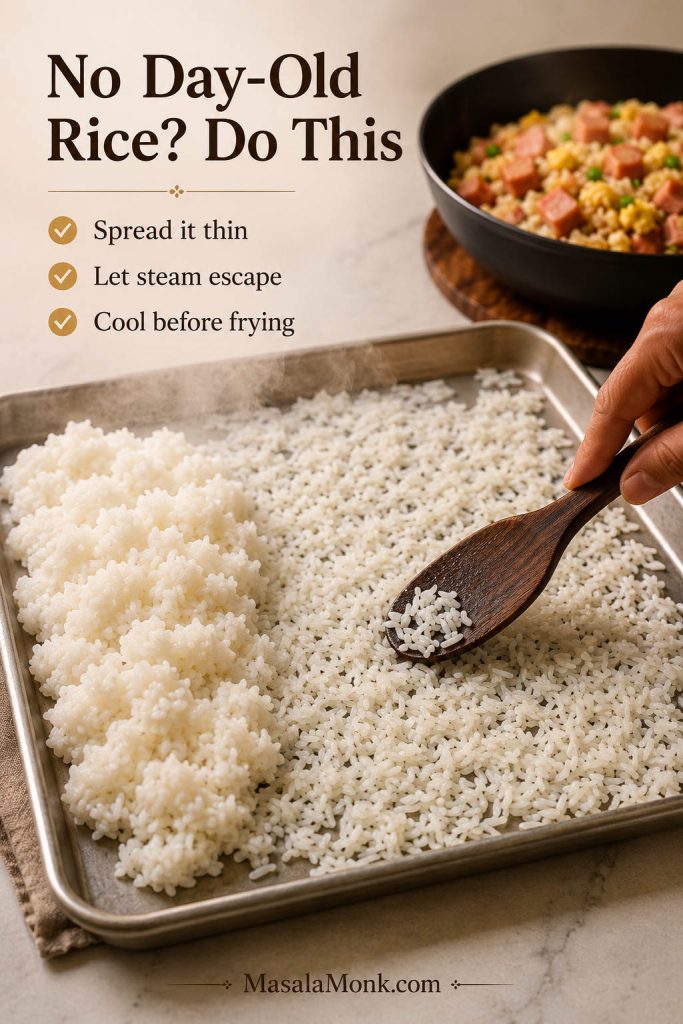
If the rice still feels damp, use a slightly wider pan, give it more time before adding the sauce, and avoid stirring nonstop. The pan should sound active, not steamy. Also, if you have more cooked rice than you need, save the rest for something sweet like rice pudding with cooked rice.
Avoid this: Very wet rice, overcooked rice, and hot rice straight from the pot. Those are the main reasons fried rice goes soft.
How to Make It
The basic rhythm is simple: crisp the Spam, scramble the egg, fry the rice, season lightly, and fold everything together.
Once the pan is hot, everything moves quickly, so dice the Spam, break up the rice, beat the eggs, drain the vegetables, and mix the sauce before you turn on the stove.
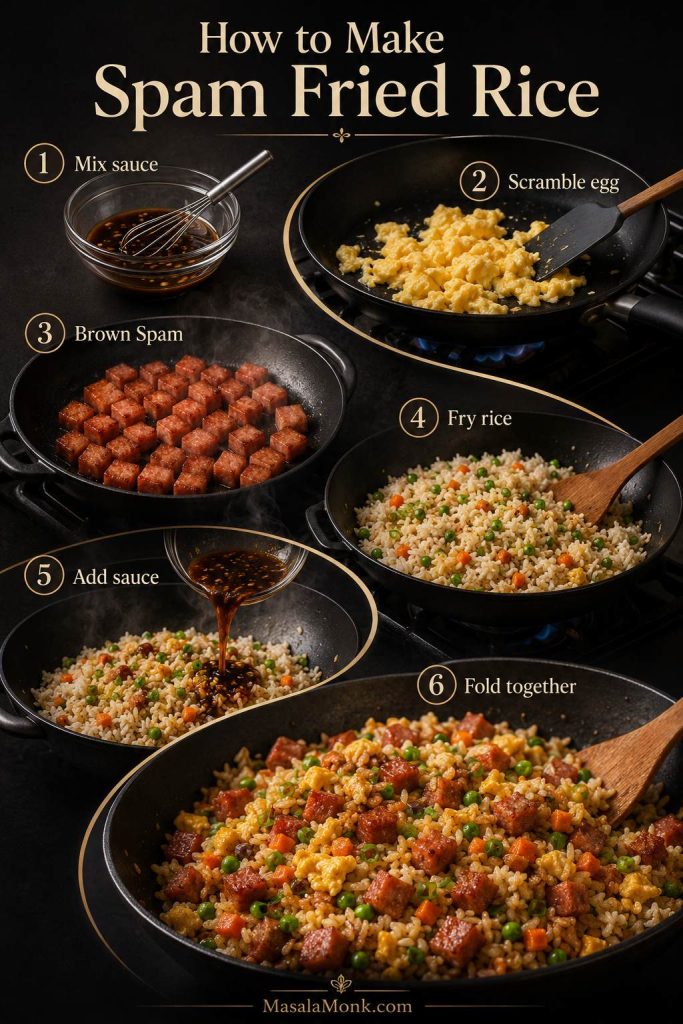
1. Mix the Sauce
In a small bowl, stir together soy sauce, oyster sauce, toasted sesame oil, sugar, white pepper, and optional water, broth, or Shaoxing wine. This gives you one seasoning mix to add later, instead of measuring bottles over a hot pan.
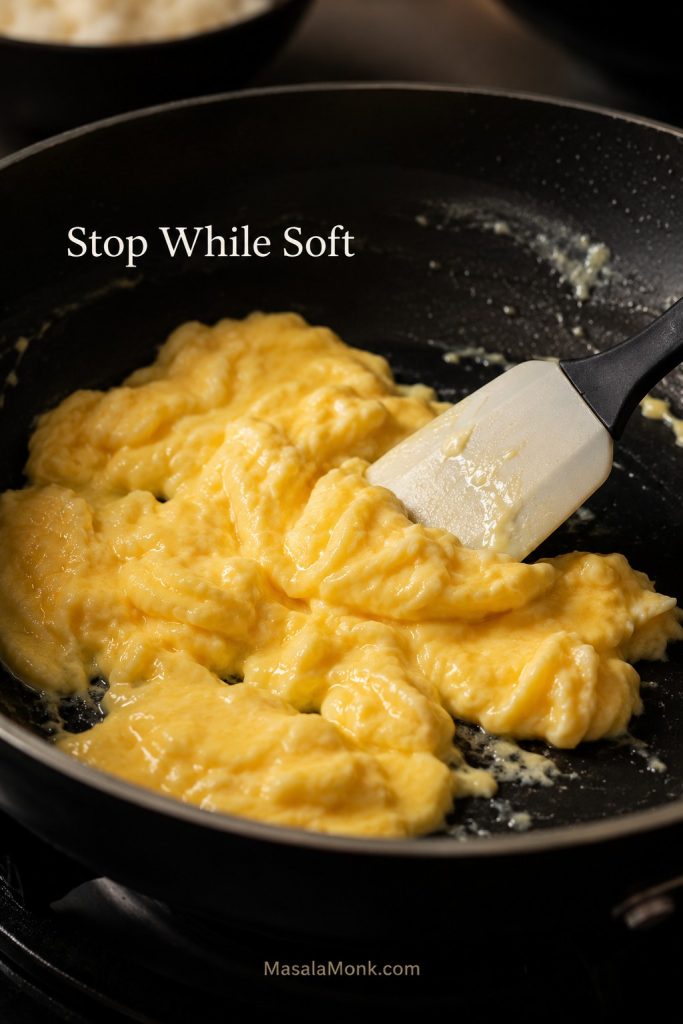
2. Scramble the Eggs
Heat 1 teaspoon of the neutral oil in a wok or large skillet over medium-high heat. Add the beaten eggs and scramble just until softly set. They should still look tender when you move them to a plate, because they will warm through again at the end.
3. Brown the Spam
Add another teaspoon or two of oil only if the pan looks dry, then add the diced Spam. Spread it into a single layer and let it sit long enough to brown before stirring. The pieces should look darker at the edges and smell toasted, not just warmed through.
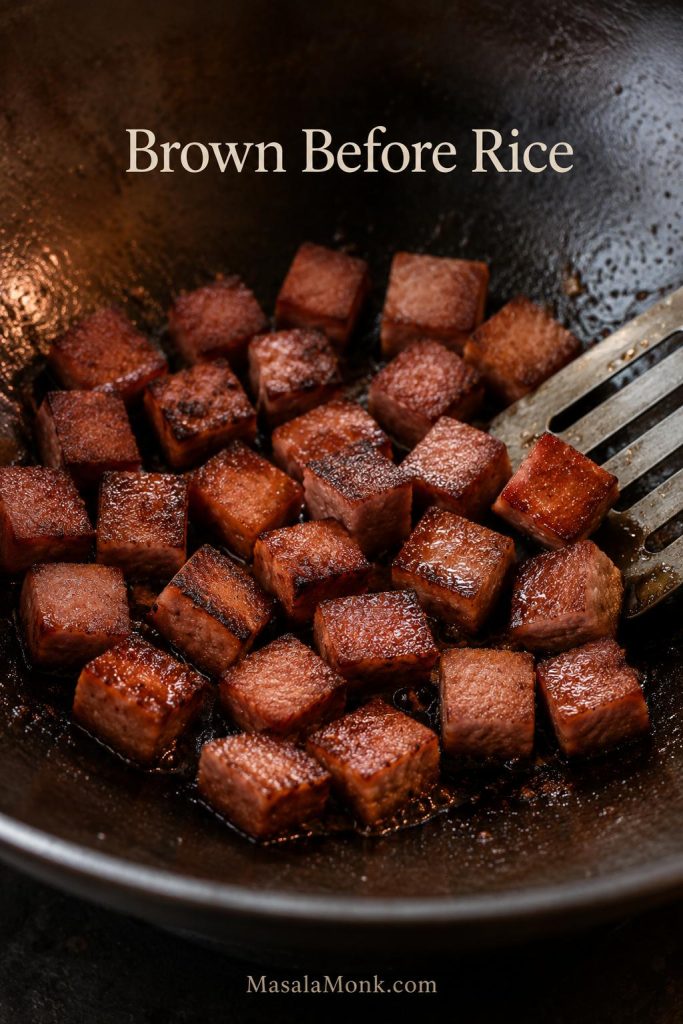
This step gives the finished rice its best salty-crisp bites. If your pan is crowded, transfer the browned Spam to a plate and add it back with the eggs near the end. In a wide wok, you can leave it in the pan or push it to one side.
4. Add Garlic, Scallion Whites, and Vegetables
Scatter in the garlic and scallion whites and stir for about 20–30 seconds, just until fragrant. Add the peas and carrots and cook until they are hot and dry. If the vegetables release water, pause and let that moisture cook off before adding the rice.
5. Add the Rice
Add the cold rice and press gently on any clumps with the spatula. At first, the grains may feel firm from the fridge. Keep tossing and pressing until they loosen, turn hot, and start to separate. If the pan sounds steamy instead of sizzling, give the rice another minute before adding the sauce.
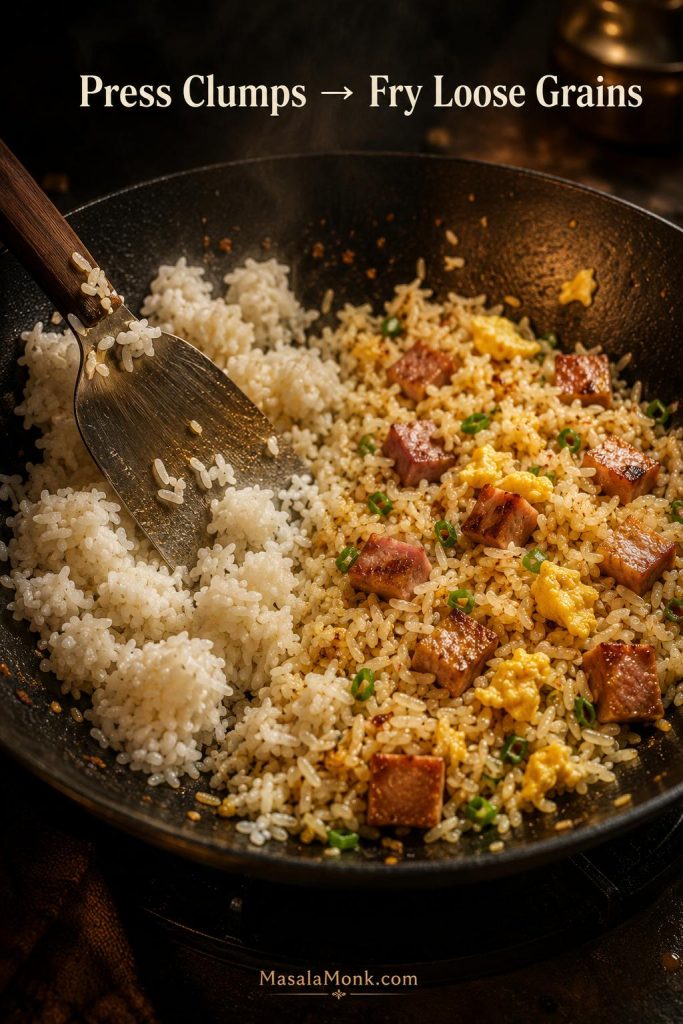
For a few crisp bits, spread the rice across the pan and let it sit undisturbed for 30–60 seconds before tossing again.
6. Add the Sauce Around the Pan Edge
In a wok, stainless skillet, or cast-iron pan, pour the sauce around the hot edge so it sizzles briefly before you toss it through the rice. If you are using nonstick, drizzle the sauce evenly over the rice and toss right away. Either way, stop and taste before adding more soy sauce; the Spam will keep seasoning the dish as you eat.

7. Fold the Egg Back In
Add the soft scrambled eggs back to the pan and fold them through the rice with the crispy Spam. The finished pan should taste salty-savory, a little rich, and balanced by scallions or vegetables. Finish with scallion greens, extra white pepper, sesame seeds, chili crisp, or a tiny drizzle of sesame oil.
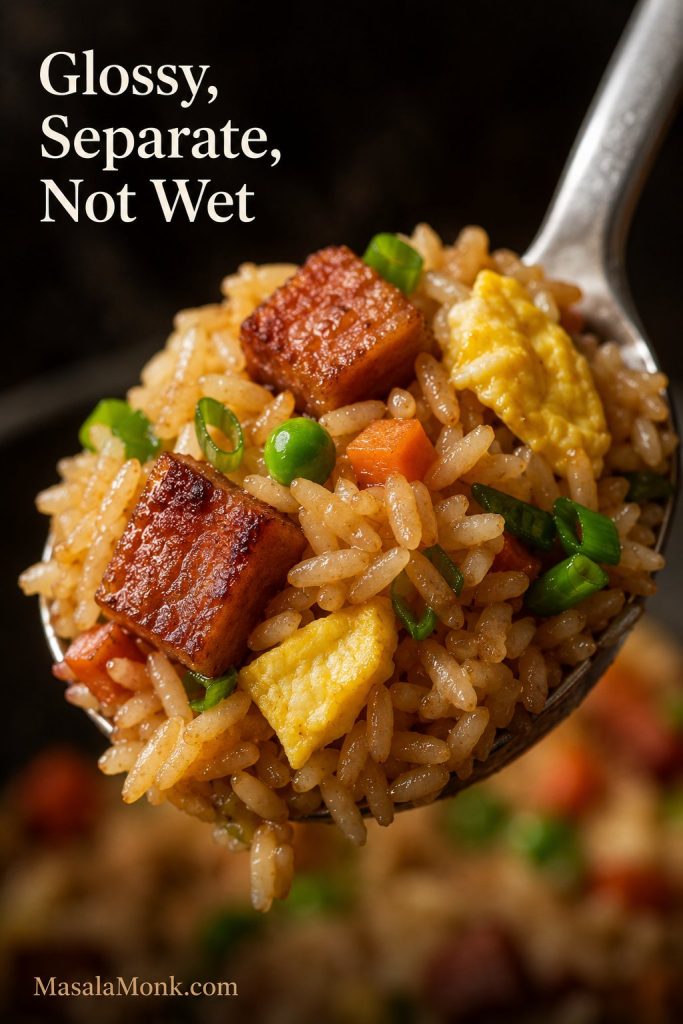
Spam Fried Rice with Egg
Egg belongs in the base version because it balances the salty Spam and makes the rice more filling. It also gives the dish that familiar Spam-and-eggs comfort without turning the whole pan into a breakfast scramble.
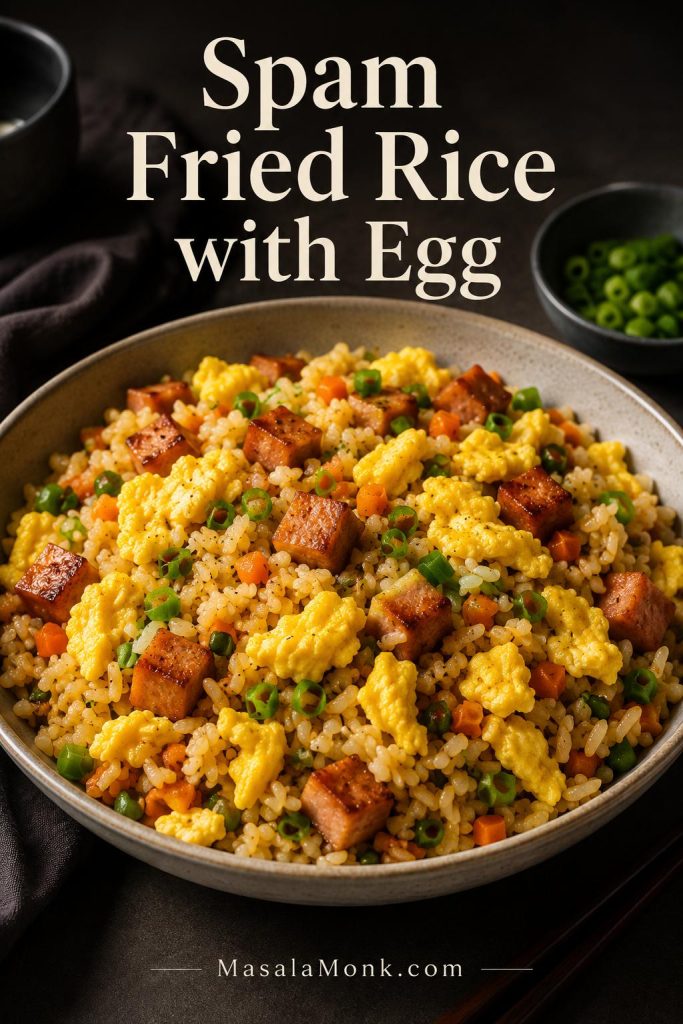
For 4 cups of cooked rice, 3 large eggs give you visible pieces of egg without overwhelming the grains. Use 2 eggs if you want a lighter pan, or 4 eggs if you want the dish more protein-heavy.
The easiest method is to scramble the eggs first, remove them while still soft, and fold them back in at the end. You can also push the rice aside and scramble the eggs in an open space in the pan, but that works best in a wide wok or large skillet.
If you often have eggs to use up, these easy egg dishes are useful for quick meals beyond fried rice.
Best egg texture: Take the eggs off the heat when they are just set. If they cook all the way through at the start, they can turn dry by the time the rice is finished.
Spam and Rice vs Spam Fried Rice
People use “Spam and rice” to mean a few different meals, from a simple bowl to a full fried rice pan. The difference matters because the cooking method changes the texture.
- Spam and rice is usually browned Spam served over plain white rice.
- Spam egg rice is often a simple bowl or plate with Spam, egg, and rice.
- Spam fried rice means the rice itself is stir-fried with Spam, egg, sauce, aromatics, and vegetables.
- Spamsilog is a Filipino-style plate with Spam, garlic rice, and egg, usually served as separate components.
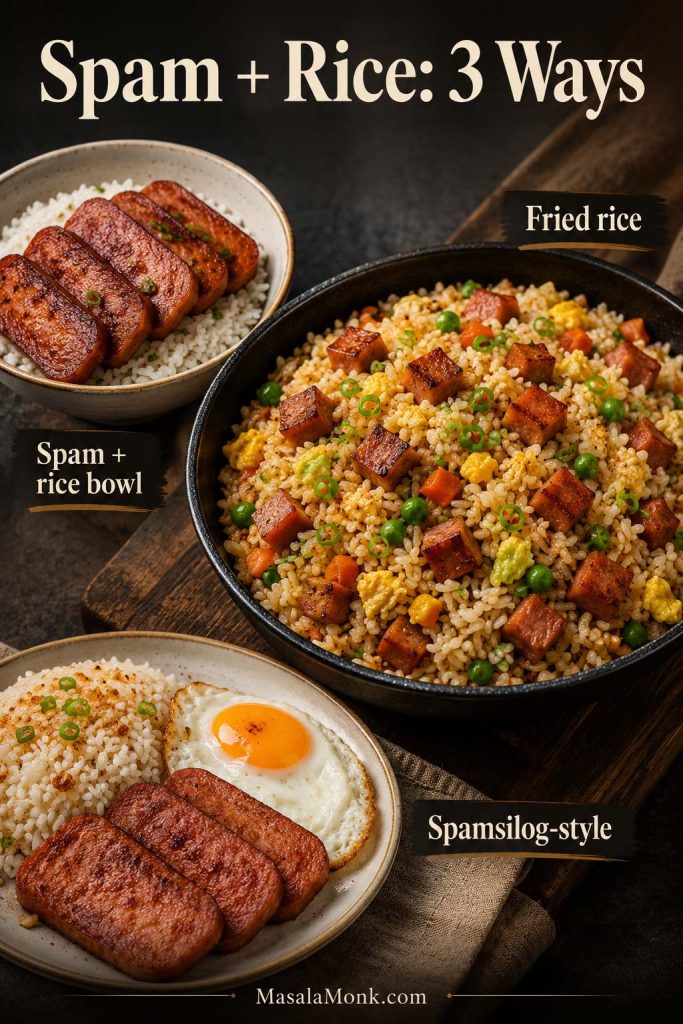
In this version, the rice actually fries with the Spam, egg, sauce, and aromatics, so every grain picks up flavor. If you want a simpler bowl instead, brown Spam slices, fry an egg, and serve both over hot white rice with scallions and chili crisp.
Sauce Guide
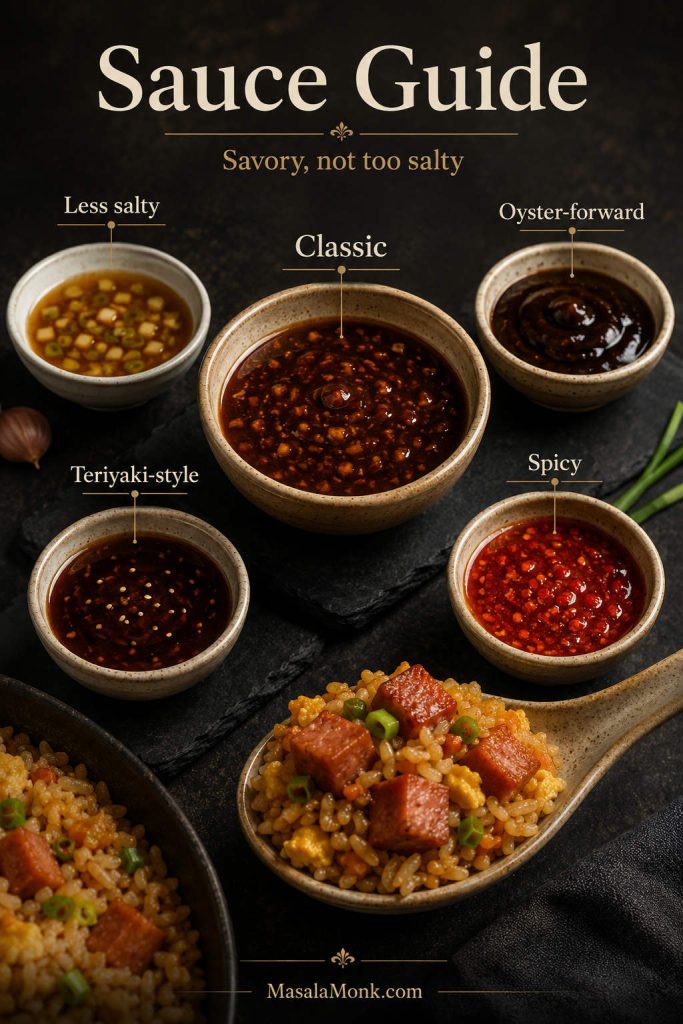
The sauce should make the rice savory, not salty for the sake of being salty. Start with the measured amount, toss well, then taste. It is much easier to add a splash more soy sauce at the end than to fix a pan that has gone too far.
| Sauce Style | Formula | Best For |
|---|---|---|
| Balanced classic | 2 tbsp soy sauce + 1 tbsp oyster sauce + 2 tsp toasted sesame oil | The main recipe and most everyday versions. |
| Less salty | 1½ tbsp low-sodium soy sauce + 1 tbsp oyster sauce + 1 tbsp water or broth | Regular Spam, salty rice, or anyone sensitive to salt. |
| Oyster-forward | 1 tbsp soy sauce + 1½ tbsp oyster sauce + white pepper | A deeper, rounder, more savory fried rice. |
| Teriyaki-style | 2 tbsp soy sauce + 1 tbsp mirin + 1 tsp sugar | A slightly sweeter Spam fried rice variation. |
| Garlic-butter | Base sauce + 1 tbsp butter at the end + extra garlic | Richer comfort-food style fried rice. |
| Spicy | Base sauce + chili crisp, sriracha, gochujang, gochugaru, or sliced chilies | Heat lovers and kimchi-style variations. |
No Oyster Sauce?
You can make this without oyster sauce. Use 2 tablespoons low-sodium soy sauce, 1 teaspoon sugar, and a small splash of water or broth. For more depth, add a few drops of fish sauce, a small spoon of hoisin, or a little chili crisp. Start light, because Spam already brings plenty of salt.
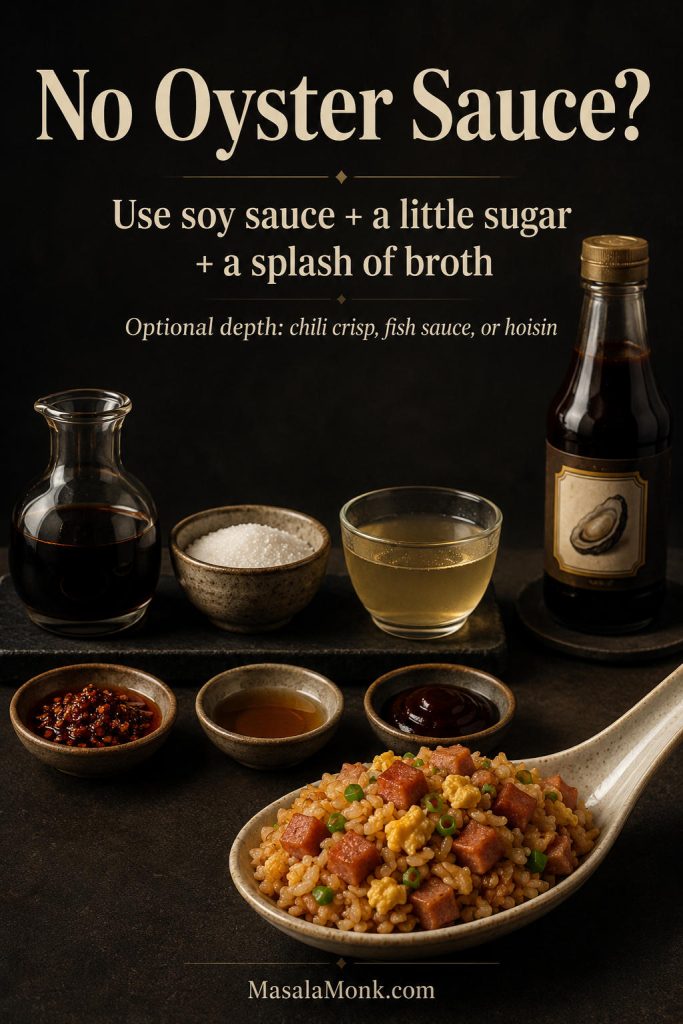
Start with the less-salty formula when your Spam is regular or the rice already tastes seasoned. When the rice tastes flat, go with the balanced classic. For a deeper, takeout-style flavor, lean slightly more oyster-forward.
Use a neutral oil for stir-frying and save toasted sesame oil for the sauce or final drizzle. Otherwise, the sesame oil can taste flat before the rice is finished. Added near the end, it keeps its aroma fresher.
Variations: Kimchi, Pineapple, Garlic, and Spicy
Choose the variation based on what you want from the bowl. Kimchi makes it tangy and bold, while pineapple pushes it sweet-salty. Extra garlic makes it more comforting, chili crisp makes it louder, and teriyaki-style sauce gives you a slightly sweeter weeknight version.
Kimchi Spam Fried Rice
Kimchi is the boldest direction here. Use ripe kimchi with good sourness, chop it into small pieces, and drain or squeeze it lightly if it is very wet. Fry the kimchi after browning the Spam and before adding the rice so the flavor deepens and extra moisture cooks off.
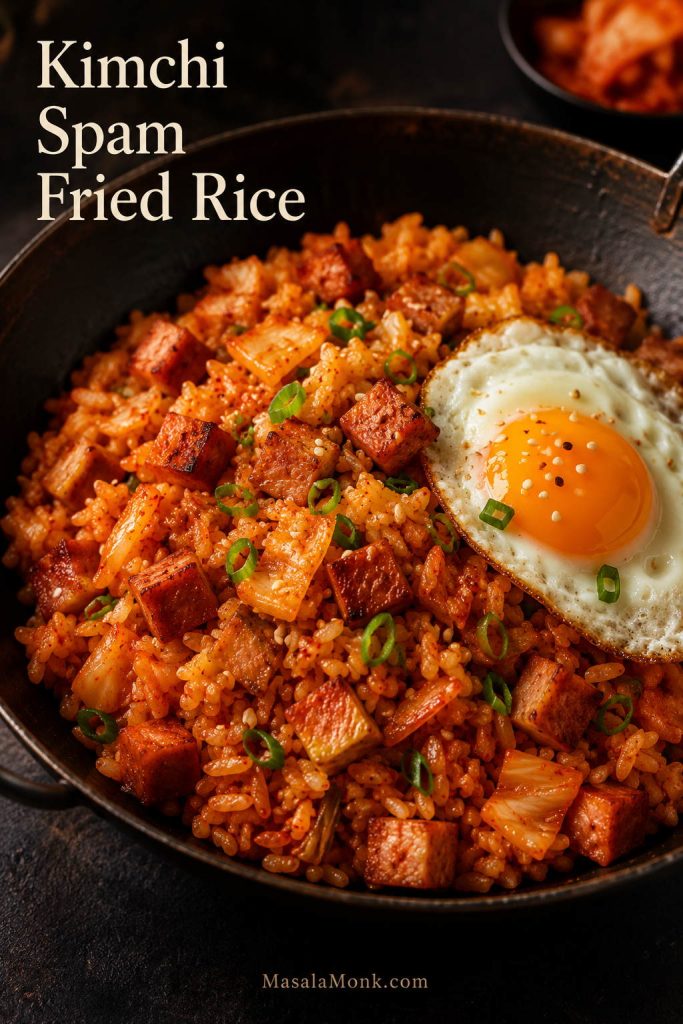
If you want stronger kimchi flavor without soggy rice, squeeze the chopped kimchi over a small bowl, fry the kimchi until it smells deeper and less raw, then add a spoonful of the reserved juice only after the rice is hot and separate.
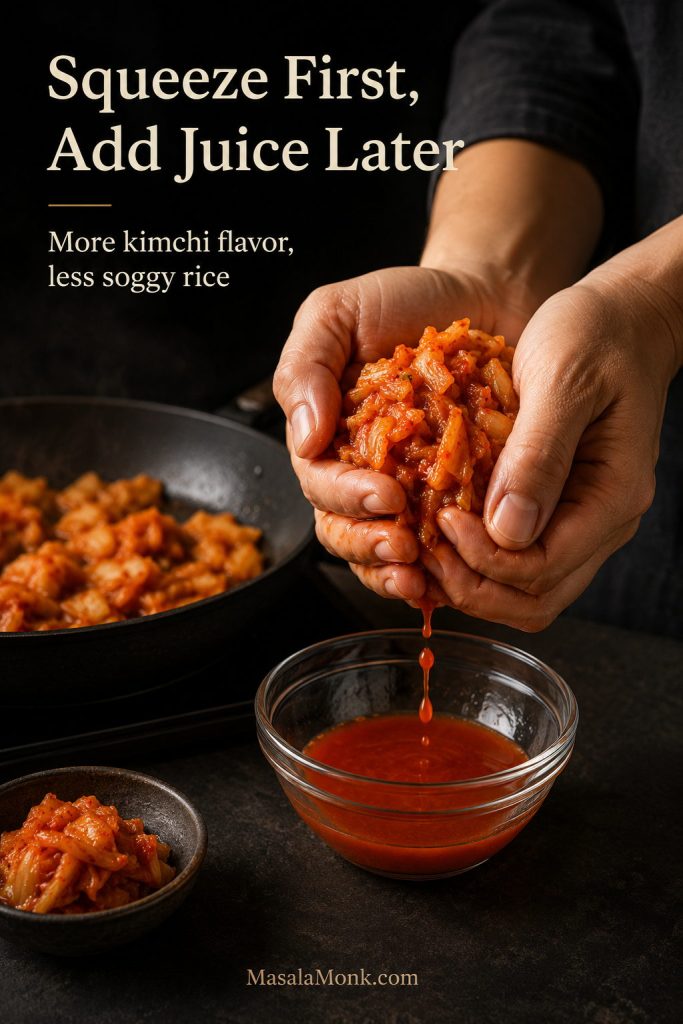
Use less soy sauce than the base recipe because both Spam and kimchi bring salt. Add a spoonful of kimchi juice only if the rice is dry enough to handle it. For more heat, add gochujang, gochugaru, chili crisp, or sliced chilies. A fried egg on top works especially well.
Hawaiian Spam Fried Rice with Pineapple
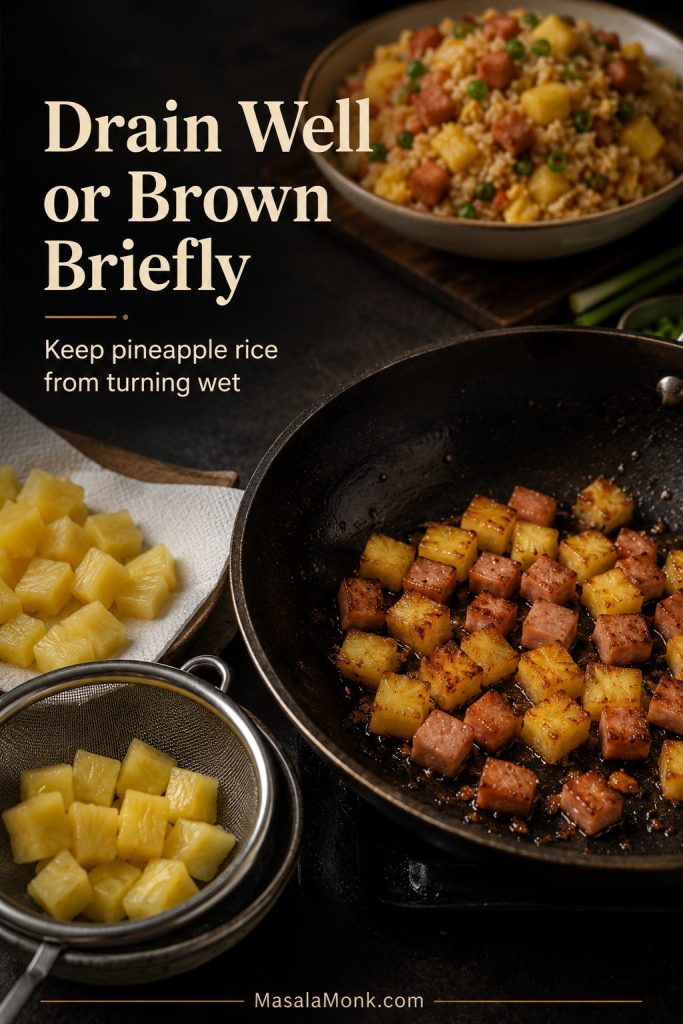
For a Hawaiian-style pan, add ½ to 1 cup diced pineapple. Fresh pineapple gives the cleanest texture, but canned pineapple works if it is drained very well. Add pineapple near the end for juicy pieces, or brown it briefly with the Spam if you want caramelized edges.

A lighter hand with sauce works better here. Too much soy sauce plus pineapple juice can make the rice wet. Bell pepper, scallions, peas, carrots, and a little ginger all fit nicely with the sweet-salty flavor.
Filipino Garlic Spam Fried Rice
For a Filipino-inspired garlic version, use extra garlic and keep the seasoning simple. Brown the Spam, fry plenty of minced garlic until fragrant, then add cold rice and season lightly with soy sauce or a small splash of fish sauce. Finish with scallions and serve with a fried egg if you want a spamsilog-style plate.
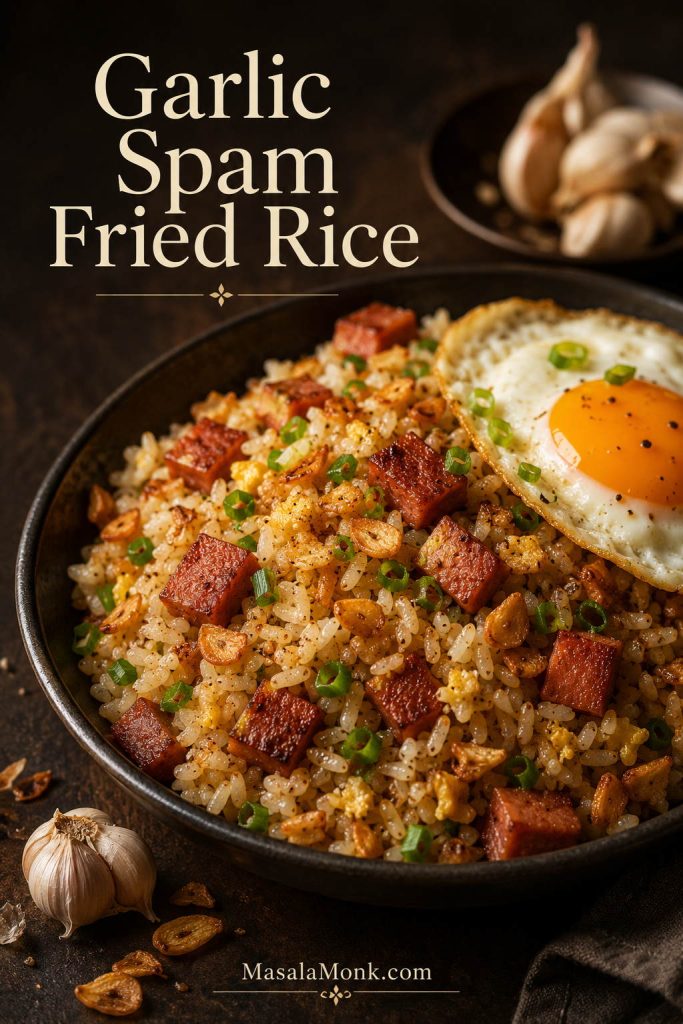
The difference is mostly in the format. Garlic Spam fried rice mixes diced Spam into the rice, while spamsilog usually serves fried Spam slices, garlic rice, and egg as separate parts on the same plate.
Spicy Spam Fried Rice
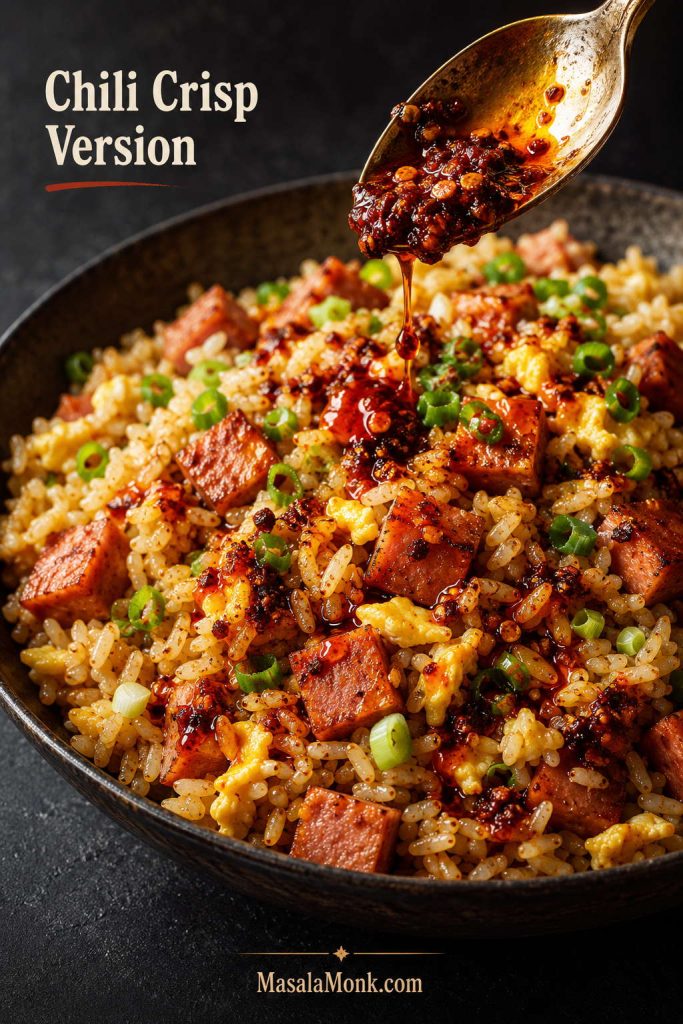
For heat, add chili crisp, sriracha, gochujang, gochugaru, sambal, sliced fresh chilies, or extra black pepper. Chili crisp is the easiest option because it brings heat, oil, crunch, and savoriness at the same time. Start small if your Spam and sauce are already salty.
Spam Fried Rice with Peas and Carrots
Peas and carrots are the classic low-effort vegetable mix. Use ¾ to 1 cup for 4 cups of rice. Before adding them, rinse frozen vegetables briefly under warm water, drain them well, and add them before the rice so excess moisture can cook off.

If you like the same leftover-rice logic with a different protein, MasalaMonk’s ground pork recipes include budget-friendly weeknight ideas that fit the same quick-dinner mood.
Teriyaki Spam Fried Rice
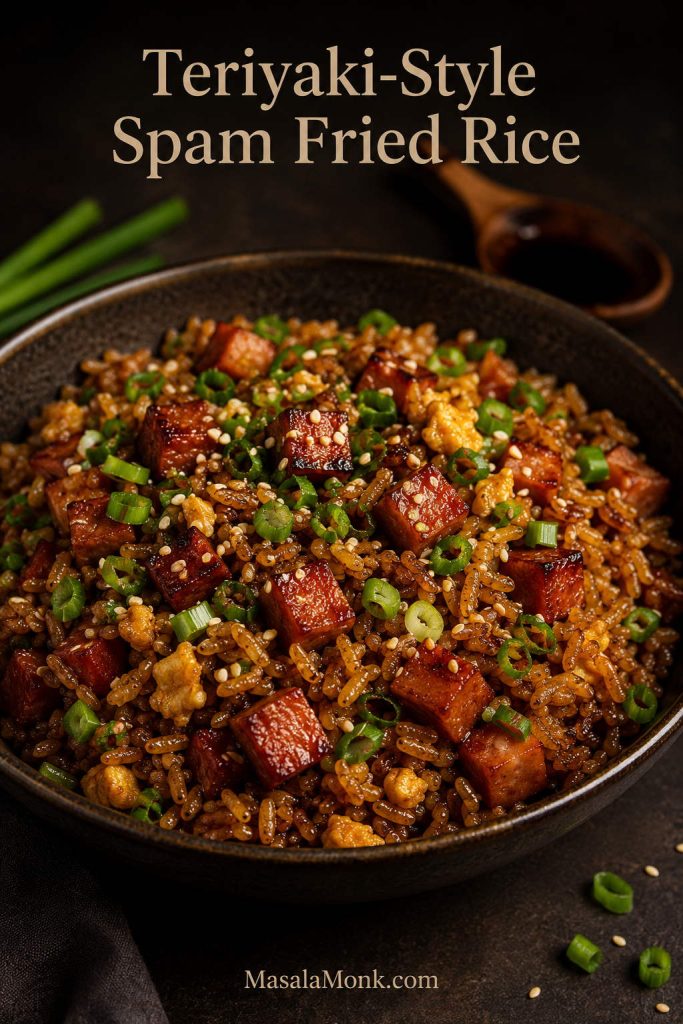
For a teriyaki-style version, replace the oyster sauce with a simple mix of soy sauce, mirin, and a little sugar. Ginger works nicely here. Keep the sweetness controlled so the rice still tastes savory, not sticky or glazed like a teriyaki bowl.
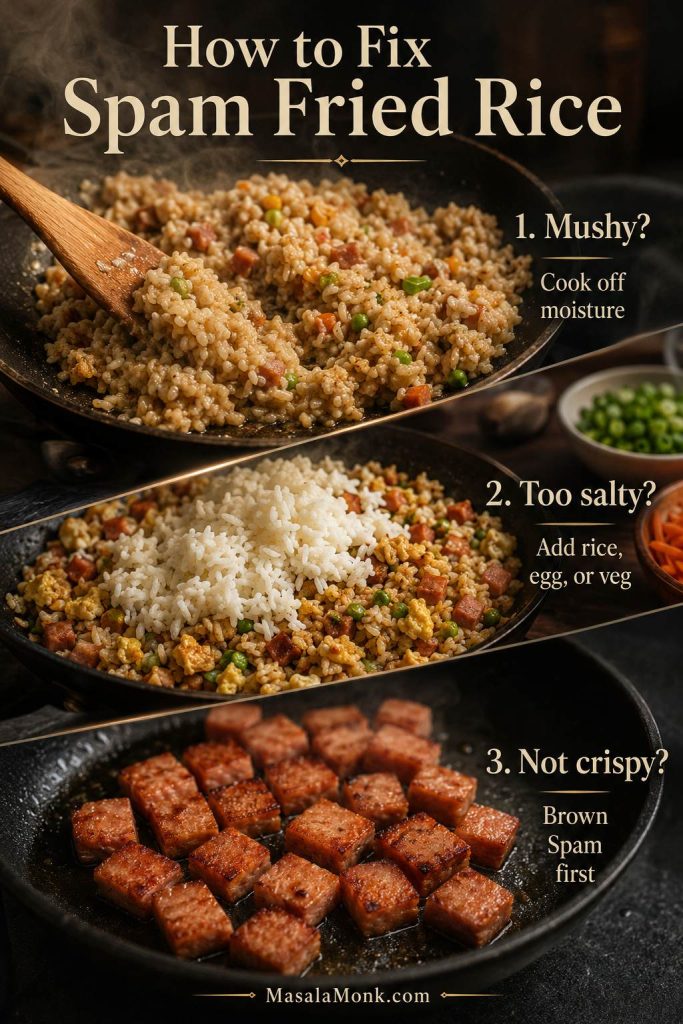
How to Fix Spam Fried Rice
If the pan is not perfect the first time, it is usually easy to understand what happened. Most problems come from moisture, heat, salt, or crowding. First, check the texture. Then, adjust the seasoning only after the rice has had enough time in the pan.
Texture Problems
| Problem | What Happened | How to Fix It |
|---|---|---|
| Rice is mushy | The rice was too warm, wet, or freshly cooked. | Spread it out in the pan and let moisture cook off without stirring constantly. Next time, use cold day-old rice or chill fresh rice on a tray first. |
| Rice is dry | The rice was very old or cooked too long after adding sauce. | Add 1–2 tablespoons water or broth and toss quickly over heat. |
| Rice is clumping | The rice was not broken up before cooking, or the pan was too small. | Break up cold rice before adding it. Also, use a wide pan and enough heat to fry the grains. |
Seasoning Problems
| Problem | What Happened | How to Fix It |
|---|---|---|
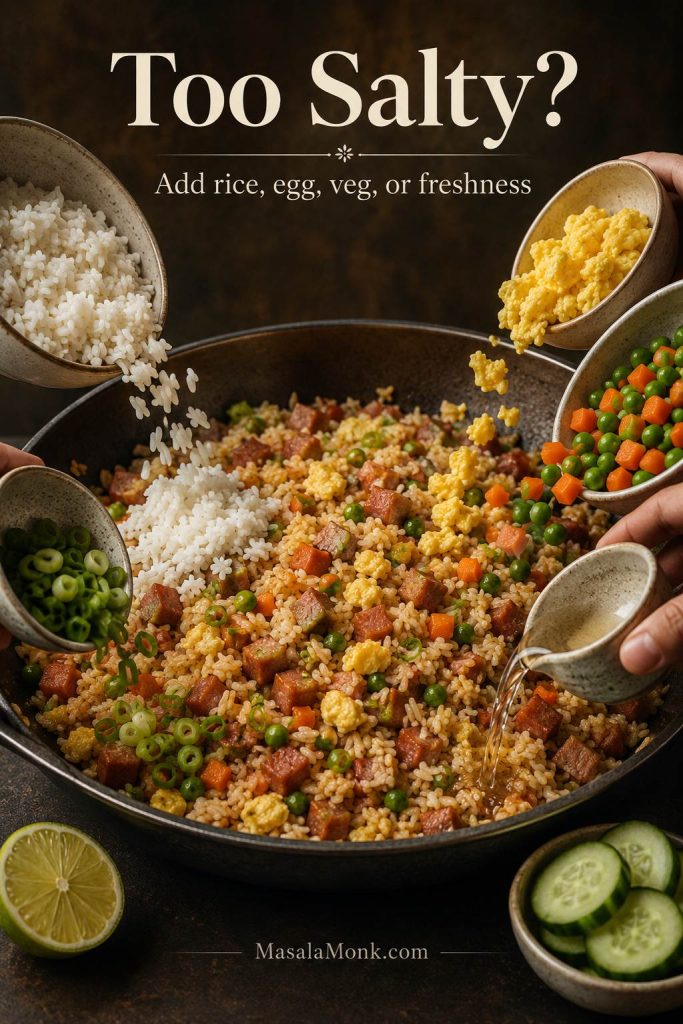
| Fried rice is too salty | The Spam, soy sauce, and oyster sauce added up quickly. | Add more plain rice, egg, or vegetables. Then finish with scallions or a tiny splash of rice vinegar instead of more soy sauce. |
| Rice tastes bland | The sauce did not spread evenly, or the rice needed a little more seasoning. | Add a small splash of soy sauce around the hot pan edge, toss, and taste again before adding more. |
| Fried rice is greasy | Too much oil was added before the Spam rendered. | Use less oil next time and let the Spam release some fat before adding more oil. |
Spam, Egg, and Add-In Problems
| Problem | What Happened | How to Fix It |
|---|---|---|
| Spam is not crispy | The pan was crowded or the Spam was stirred too often. | Brown the Spam before adding rice. Let it sit in contact with the pan so the edges can crisp. |
| Egg is rubbery | The eggs cooked too long at the beginning. | Scramble eggs separately and remove them while still soft. Then fold them back in at the end. |
| Pineapple made it wet | The pineapple was too juicy or added too early. | Drain pineapple well and add it near the end. Alternatively, brown it briefly with the Spam before the rice goes in. |
| Kimchi made it soggy | The kimchi carried too much liquid into the pan. | Squeeze or drain very wet kimchi. Then fry it before adding rice so the extra moisture cooks off. |
What to Serve with Spam Fried Rice
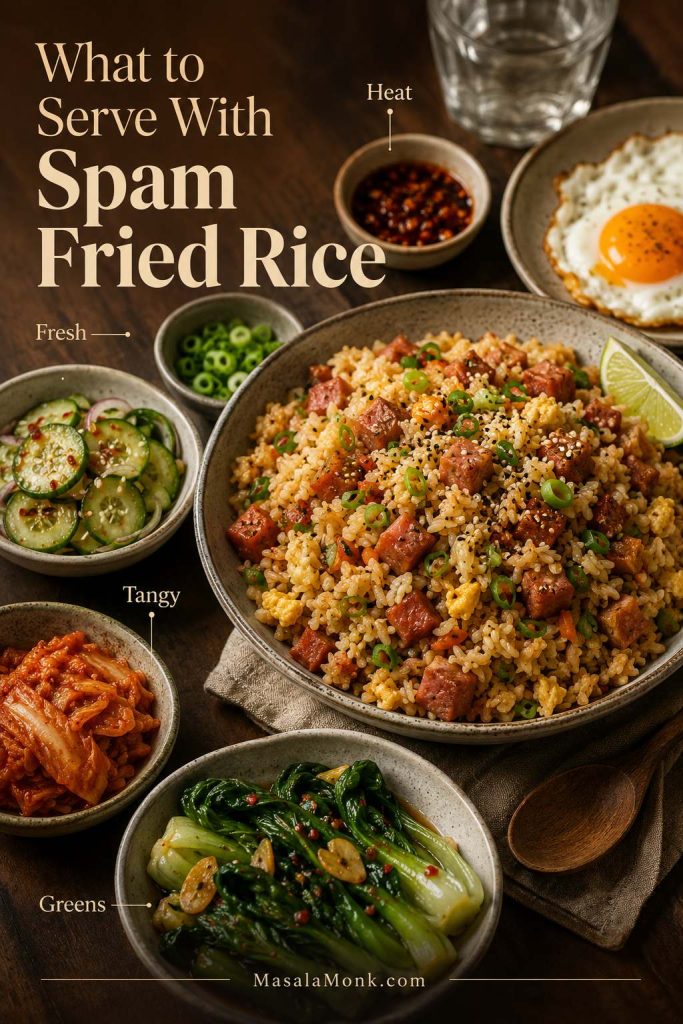
This fried rice can be dinner on its own, especially with egg and vegetables, but a fresh or tangy side makes the plate feel brighter.
Choose the side based on what the pan needs. For a rich-tasting pan, add cucumber salad, kimchi, or pickled vegetables. To make dinner fuller, add garlicky greens, bok choy, broccoli, or a fried egg. When the bowl needs more energy, finish with chili crisp, sesame seeds, scallions, or a squeeze of lime.
For another pantry-friendly dinner built around a canned protein, these salmon croquettes with canned salmon are a good next recipe to keep in rotation.
- Cucumber salad, kimchi, or quick pickled vegetables
- A fried egg on top
- Chili crisp, hot sauce, sesame seeds, or extra scallions
- Steamed bok choy, broccoli, or garlicky greens
- Sliced avocado with lime or sesame seeds
- A simple broth, miso soup, or clear vegetable soup
Storage and Reheating
Store leftover Spam fried rice in an airtight container in the refrigerator and use it within 3–4 days. That matches the USDA leftover guidance for cooked leftovers. You can also freeze portions, though the texture is best when the rice is freshly made or reheated from the fridge.
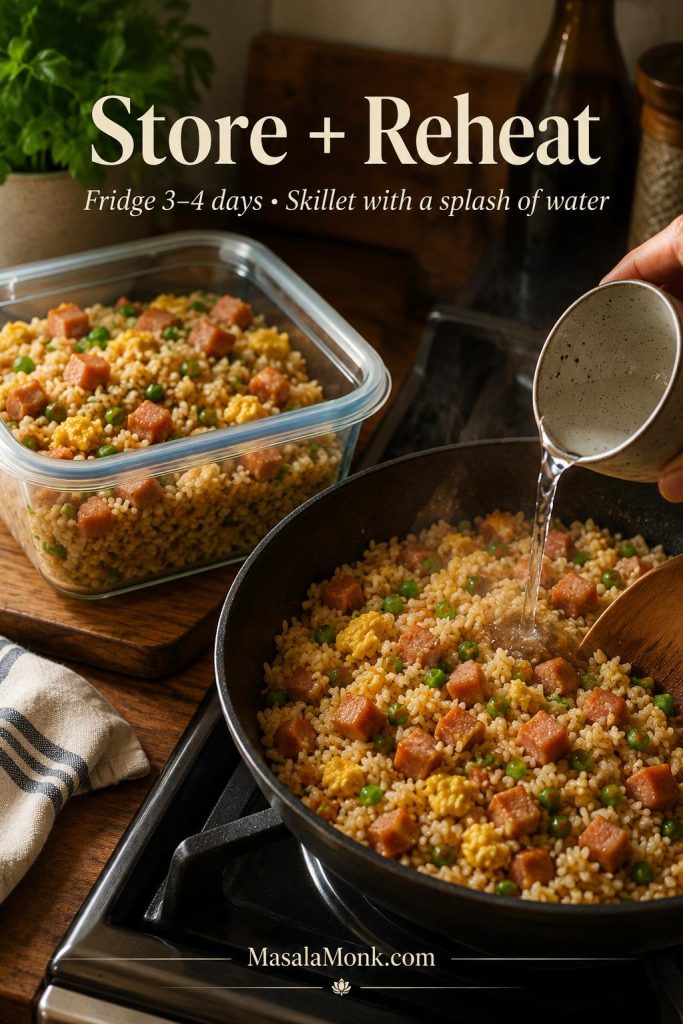
For the best texture, reheat fried rice in a skillet over medium heat with a small splash of water or broth. Stir until hot, then let it sit briefly in the pan if you want the rice to regain a few crisp edges.
For a faster option, microwave the rice in a covered bowl with a damp paper towel. Stir halfway through so it heats evenly. After reheating, add scallions, sesame oil, or chili crisp to freshen it up.
The finished fried rice should not feel heavy or wet. You want separate grains, crisp-edged Spam, soft pieces of egg, and enough scallion or vegetable freshness to balance the salty richness. Once you know that texture, the recipe becomes easy to adjust with whatever is already in your fridge.
Spam Fried Rice Recipe
Crispy browned Spam, cold leftover rice, soft scrambled egg, vegetables, and a quick soy-oyster-sesame sauce come together in this easy one-pan fried rice.
Equipment
- Wok, carbon-steel wok, cast-iron skillet, or large 12-inch nonstick skillet
- Wide spatula
- Small bowl for sauce
- Plate or bowl for holding cooked egg and Spam if needed
Ingredients
- 1 can Spam, 12 oz / 340 g, preferably low sodium, cut into ½-inch cubes
- 4 cups cold cooked rice, about 680–730 g
- 3 large eggs, beaten
- 2 tablespoons / 30 ml neutral oil, divided, plus a little more only if the pan looks dry
- 2 cloves garlic, minced
- 2 green onions, whites and greens separated
- ¾ to 1 cup frozen peas and carrots, thawed or rinsed and drained
- Optional: ½ cup corn, diced bell pepper, cabbage, or edamame
Sauce
- 2 tablespoons / 30 ml soy sauce, preferably low sodium
- 1 tablespoon / 15 ml oyster sauce
- 2 teaspoons / 10 ml toasted sesame oil
- 1 teaspoon sugar, optional
- ¼ teaspoon white pepper or black pepper
- Optional: 1 tablespoon / 15 ml water, broth, or Shaoxing wine
Instructions
- Mix the sauce. In a small bowl, stir together soy sauce, oyster sauce, sesame oil, sugar, pepper, and optional water, broth, or Shaoxing wine.
- Scramble the eggs. Heat 1 teaspoon neutral oil in a wok or large skillet over medium-high heat. Add the beaten eggs and scramble until softly set. Then transfer to a plate.
- Brown the Spam. Add another teaspoon or two of oil only if the pan looks dry, then add the diced Spam. Cook until browned and crisp at the edges, about 4–6 minutes. If the pan is crowded, transfer the Spam to a plate and add it back near the end.
- Add aromatics and vegetables. Stir in garlic and scallion whites for 20–30 seconds, then add peas and carrots and cook until hot and dry.
- Add the rice. Add cold cooked rice and break up clumps with a spatula. Stir-fry until the rice is hot and the grains separate.
- Add the sauce. In a wok, stainless skillet, or cast-iron pan, pour the sauce around the hot edge and let it sizzle briefly. If using nonstick, drizzle it evenly over the rice and toss right away.
- Finish. Fold the scrambled egg and browned Spam back through the rice. Add scallion greens, taste, and adjust only if needed.
- Serve hot. Top with sesame seeds, chili crisp, extra scallions, or a fried egg if desired.
Notes
- Cold day-old rice gives the best texture.
- Use low-sodium Spam or low-sodium soy sauce if you are worried about saltiness.
- Taste before adding extra soy sauce at the end.
- If you skip oyster sauce, use the no-oyster-sauce option in the sauce section above.
- For kimchi Spam fried rice, use ripe chopped kimchi and reduce the soy sauce.
- For pineapple Spam fried rice, drain pineapple well and add it near the end.
Storage
Refrigerate leftovers in an airtight container and use within 3–4 days. Reheat in a skillet with a splash of water or broth for the best texture.
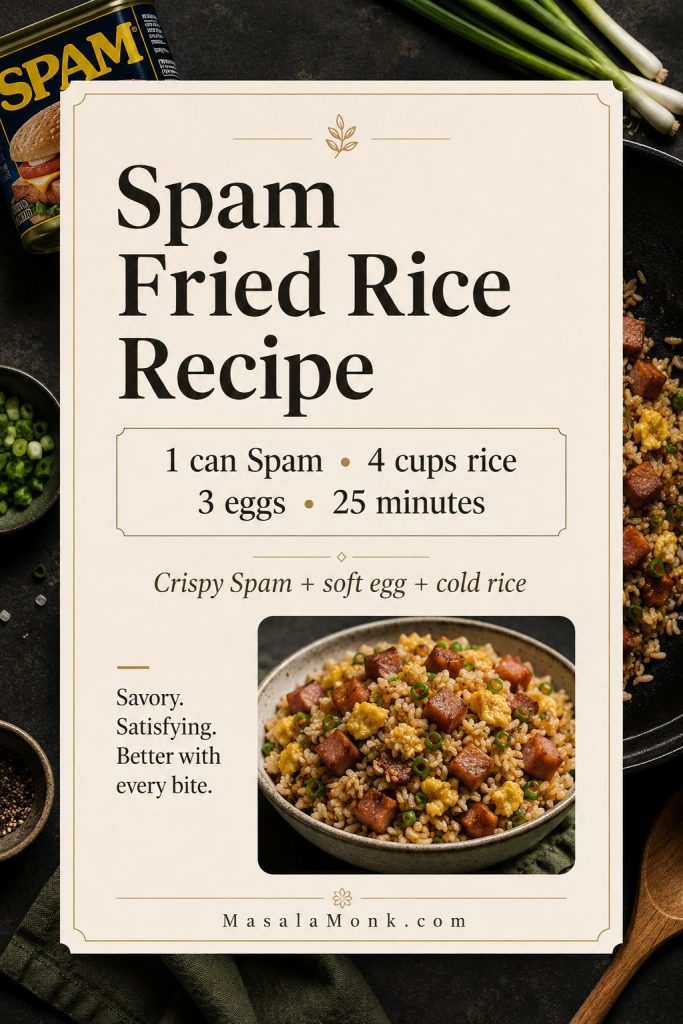
Before the FAQs, use the final serving cue as a quick check: the bowl should look loose, glossy, crisp-edged, and balanced by something fresh or spicy.

For saving or sharing, this version is the simplest promise of the recipe: cold rice, crisp Spam, soft egg, vegetables, and a fast savory sauce.
FAQs
What rice is best for Spam fried rice?
Cold day-old jasmine rice is the easiest everyday choice because it separates well and stays fragrant. Long-grain white rice gives a fluffier texture, while medium-grain rice works if it is fully chilled and broken up before cooking.
Can I make Spam fried rice with fresh rice?
Yes, but do not add hot rice straight from the cooker. Instead, spread fresh rice on a tray, let the steam escape, and chill it uncovered until the surface feels cooler and drier. Fresh rice needs more help because it can steam in the pan instead of frying.
Is egg necessary in Spam fried rice?
Egg is not mandatory, but it makes the pan feel more complete. It softens the salty edges of the Spam, adds protein, and gives the rice those tender golden pieces people expect in fried rice.
Can I make Spam fried rice without oyster sauce?
Yes. Use low-sodium soy sauce, a little sugar, and a small splash of water or broth. For more depth, add a few drops of fish sauce, a small spoon of hoisin, or chili crisp. Start lightly because Spam is already salty.
Why is my Spam fried rice mushy?
Mushy fried rice usually starts before the sauce ever goes in. Hot, wet, or overcooked rice steams in the pan instead of frying, so the grains collapse together. Cold rice, a hot pan, and a light hand with sauce fix most of the problem.
How do I make Spam fried rice less salty?
Use low-sodium Spam or low-sodium soy sauce, start with less sauce, and add more rice, egg, or vegetables if the pan already tastes too salty. After that, scallions, cucumber, or a tiny splash of rice vinegar can help balance the flavor.
What vegetables go well with Spam fried rice?
Peas, carrots, corn, cabbage, bell pepper, onion, scallions, and edamame all work well. Keep vegetables cut small and avoid adding too many watery ingredients at once.
How do I make kimchi fried rice with Spam?
Brown the Spam first, then fry chopped ripe kimchi before adding the rice. Since kimchi and Spam are both salty, use less soy sauce than the base recipe. Finish with sesame oil, scallions, and egg.
How do I make Hawaiian Spam fried rice?
Add ½ to 1 cup diced pineapple, keep the sauce slightly lighter, and drain the pineapple well. Then add it near the end for juicy pieces, or brown it briefly with the Spam for caramelized edges.
If you make it, choose your direction: classic egg, kimchi, pineapple, garlic-heavy, or chili crisp. Leave a comment with the version you tried and whether you like your Spam cubed, sliced, or extra crispy.








