
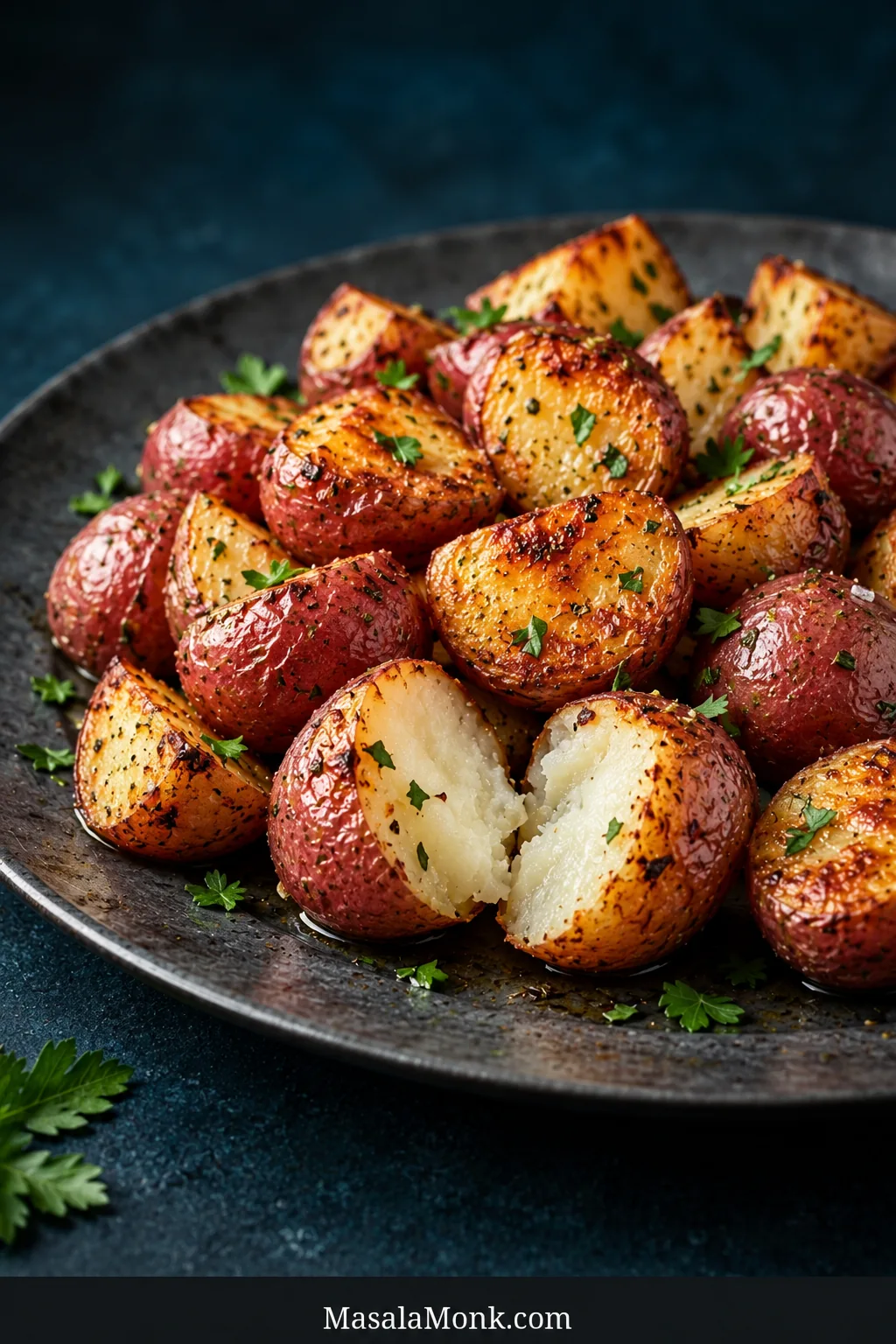
These oven roasted red potatoes have deeply browned cut sides, lightly crisp edges and smooth, creamy centers. The thin red skins stay on. After cutting and seasoning, the potatoes go straight into the oven—no soaking or boiling needed.
You do not need an extra trick to get good color. Dry the cut surfaces and coat them lightly with oil. Give each piece room on the pan, then leave a flat side against the hot metal until it browns. Once the tray is arranged, most of the cooking is hands-off.
Very small reds can stay whole. This sheet-pan method is built around cut potatoes, though, because halving exposes more surface to the pan. That creates more of the bronzed underside around a creamy middle. For a whole crisp-skinned potato with a fluffy center, use the Baked Potato Recipe instead.
Your Red Potatoes in 30 Seconds
Cut: Keep the tiniest reds whole. Halve small or baby potatoes, quarter medium ones, and cut larger potatoes into roughly 1-inch / 2.5 cm chunks.
Skin: Leave it on. Scrub the potatoes well rather than peeling them.
Oven: 425°F / 220°C. Start checking around 25 minutes. Most small halves and roughly 1-inch / 2.5 cm pieces finish in about 30–40 minutes.
Tray: Dry the potatoes well, spread them in one layer, and put the broadest cut sides against the pan.
Oven Roasted Red Potatoes Recipe
An easy raw-to-oven method for red potatoes with well-browned cut sides and tender, creamy centers.
Servings: 4–6 side servings
Prep: about 15 minutes
Roast: about 30–40 minutes
Total: about 45–55 minutes
Oven: 425°F / 220°C
Equipment: Large rimmed metal baking sheet, ideally about 13 × 18 inches / 33 × 46 cm. A thin spatula is helpful for checking the underside.
Ingredients
- 2 lb / 32 oz / 900 g red potatoes
- 3 tablespoons / 45 ml olive oil
- 1 teaspoon garlic powder
- 1 teaspoon dried rosemary, lightly crushed between your fingers
- 1 teaspoon fine sea salt, plus more to taste
- ½ teaspoon freshly ground black pepper
- 2 tablespoons chopped fresh parsley, optional, for finishing
- Optional finish: lemon zest, or 1–2 teaspoons / 5–10 ml lemon juice or mild wine vinegar
Method
- Heat the oven. Position a rack in the middle and heat the oven to 425°F / 220°C. Meanwhile, have a large rimmed metal baking sheet ready. Bare metal gives the strongest browning; parchment is fine when easier cleanup matters more. If you use foil, grease it first.
- Cut the potatoes. Scrub them well and leave the skins on. Leave the smallest reds whole if you like; halve small or baby reds, quarter medium potatoes, and cut larger ones into roughly 1-inch / 2.5 cm chunks. They do not need to match perfectly, but keep the thickness close.
- Dry them well. Pat the potatoes dry, paying attention to the freshly cut sides. They should look matte rather than wet before you add the oil.
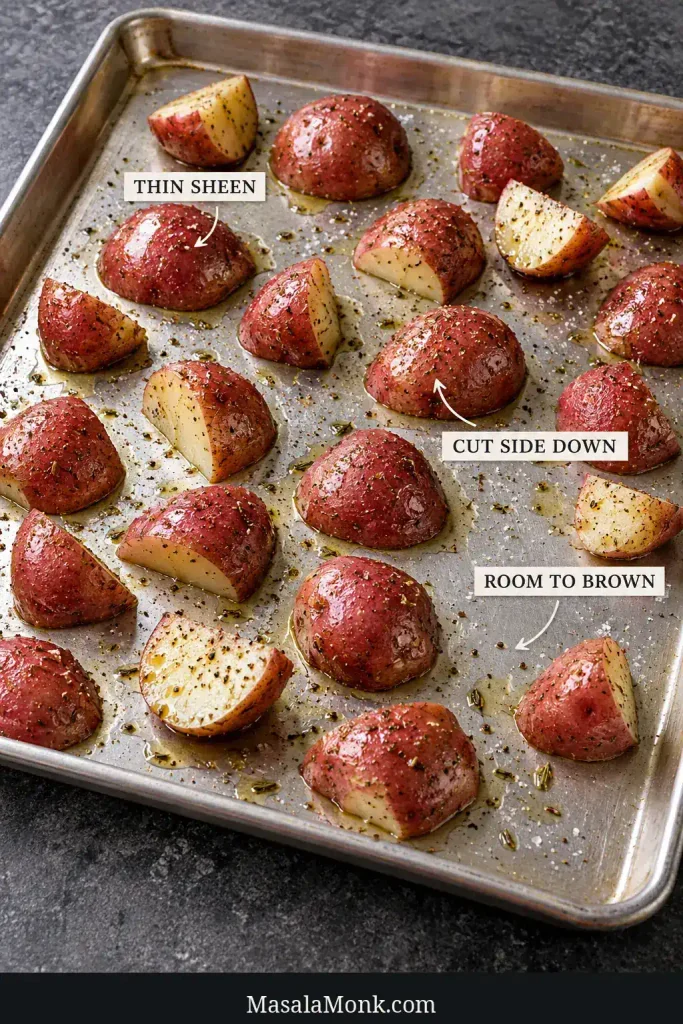
- Oil and season. Toss with the olive oil, garlic powder, rosemary, salt and black pepper until the potatoes have a thin, even sheen. There should not be a pool of oil left in the bottom of the bowl.
- Arrange the tray. Spread the potatoes in one uncrowded layer. Place the broadest flat sides against the pan wherever possible.
Roast and finish
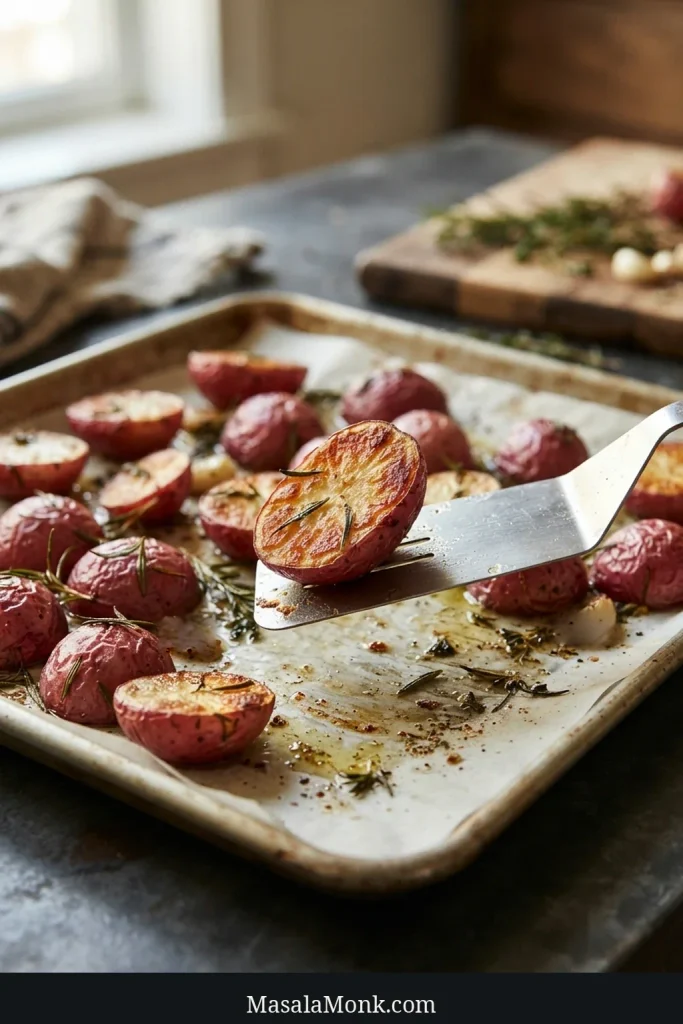
- Let the first side brown. At about 25 minutes, lift one potato before touching the rest of the tray. A pale underside needs a few more minutes. If the test potato is richly browned underneath and releases fairly cleanly, turn the pieces that would benefit from color on another side.
- Check the middle. Continue roasting until the thickest pieces are tender all the way through, usually about 30–40 minutes total. A small knife or fork should slide into the center with very little resistance.
- Season and serve. Taste while the potatoes are hot and add more salt if needed. Finish with parsley if using. For a brighter finish, add lemon zest or 1–2 teaspoons / 5–10 ml lemon juice or mild wine vinegar, if using.
Recipe Notes
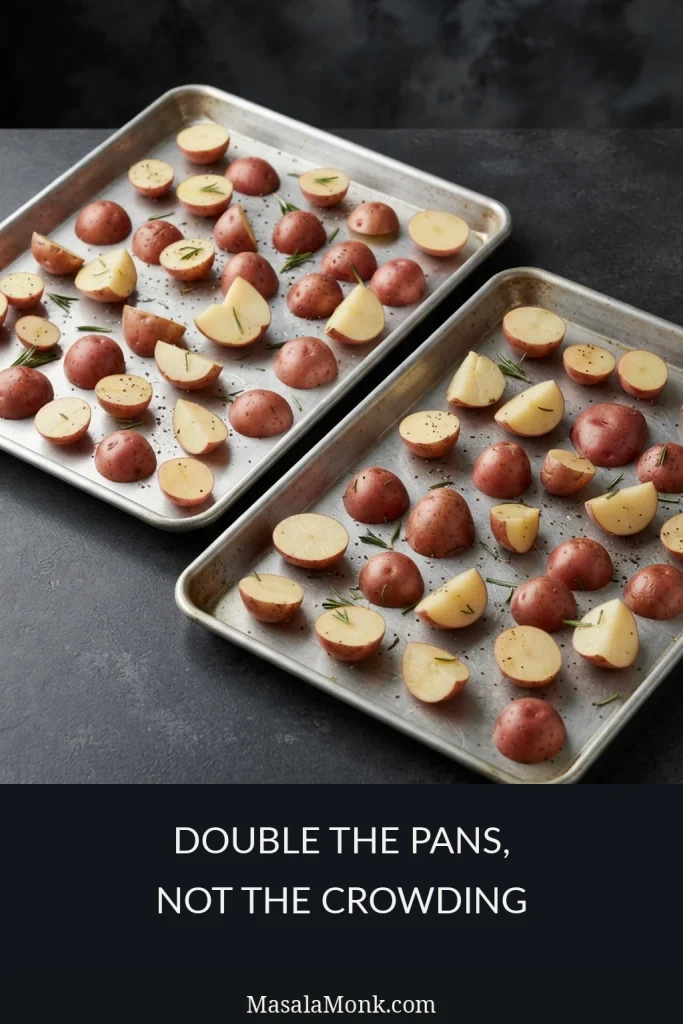
- Use two trays when needed. A crowded sheet is much more likely to give you soft, pale potatoes.
- If smaller pieces finish first, take them off. There is no reason to leave a browned, tender potato in the oven while a larger piece catches up.
- Garlic powder is deliberate. For fresh minced garlic, add it during the final 3–5 minutes so the small pieces do not spend the full roast exposed to high heat.
- Rosemary is flexible. About 1 teaspoon Italian seasoning works well in its place.
If the recipe is all you need, you can stop there. The rest of this guide tackles the questions that come up with a real tray. Find help for mixed potato sizes, pale bottoms, temperature changes and uneven browning. Go straight to the doneness checks, temperature options or troubleshooting whenever you need them.
Find What You Need
Cooking the Potatoes
When You Want to Change Something
Fit Them Around Dinner
Using Small, Baby and Larger Red Potatoes
Bags of red potatoes rarely contain perfectly matched sizes, and that is fine. Cut the larger ones down so the pieces are close in thickness. They do not need to be identical.
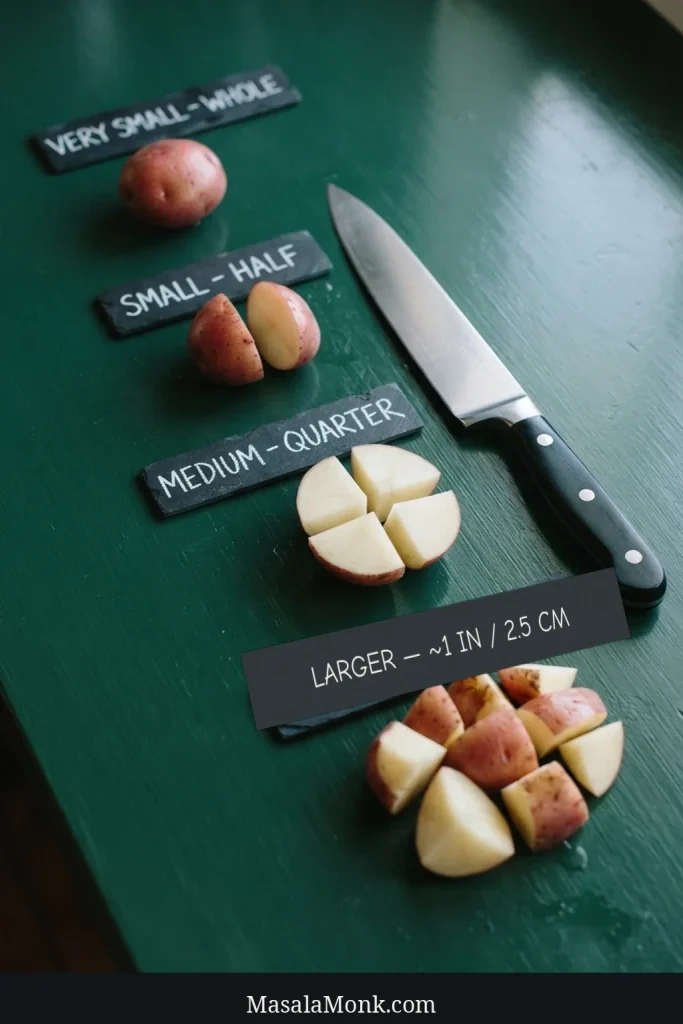
Keeping the smallest potatoes whole gives you more creamy center and roasted skin. Halving creates a broad cut face against the pan. If good browning matters more than keeping them whole, make the cut.
Don’t bother peeling them. Red potato skins are thin, roast nicely around the edges, and help the pieces stay intact. A good scrub is enough.
“New potatoes” are potatoes harvested young rather than one specific variety. Small red new potatoes work well here. Cut them by their actual size rather than the label on the bag.
How to Tell When Roasted Red Potatoes Are Done
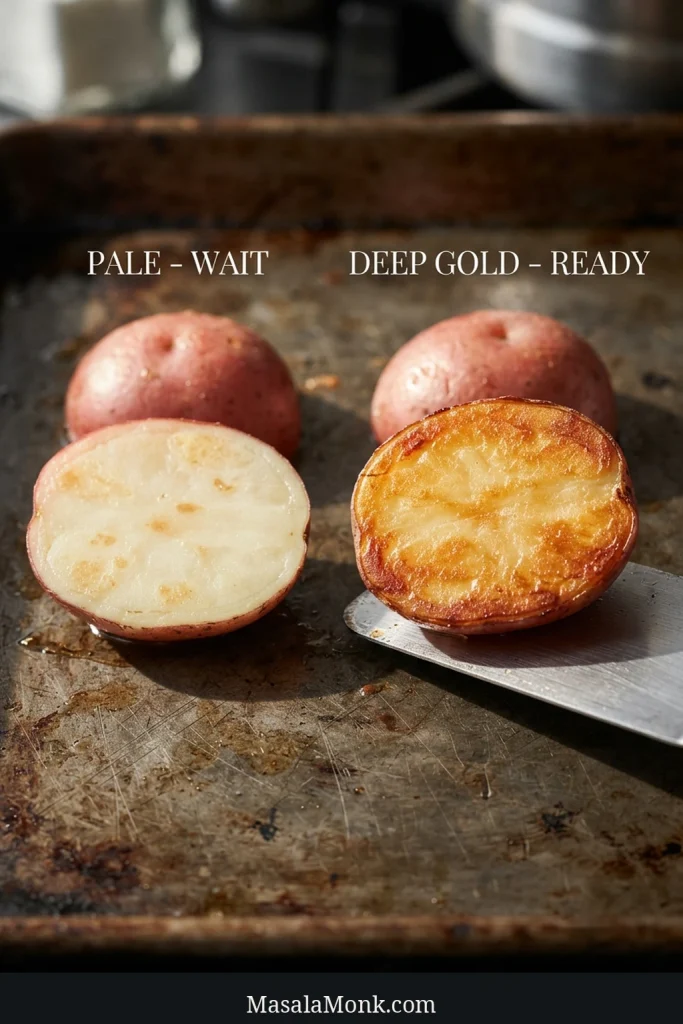
Roasted red potatoes are done when the cut sides are deep golden. The thickest pieces should also be fork-tender all the way through.
If you left very small potatoes whole, they will not have the same broad browned cut face. Look for lightly wrinkled skin and a center that is completely tender.
A beautifully browned potato can still be firm in the middle, particularly when the pieces are large.
Check the underside
At about 25 minutes, lift one potato with a thin spatula. The surface touching the tray should be noticeably darker than the skin—golden brown rather than pale tan. It is tempting to turn the whole tray because enough time has passed; however, check one potato first. If it is still pale underneath, leave the rest alone for a few more minutes.
Check the center
Push a small knife or fork into one of the thickest pieces. It should slide through with very little resistance, with no firm or chalky core when you cut it open.
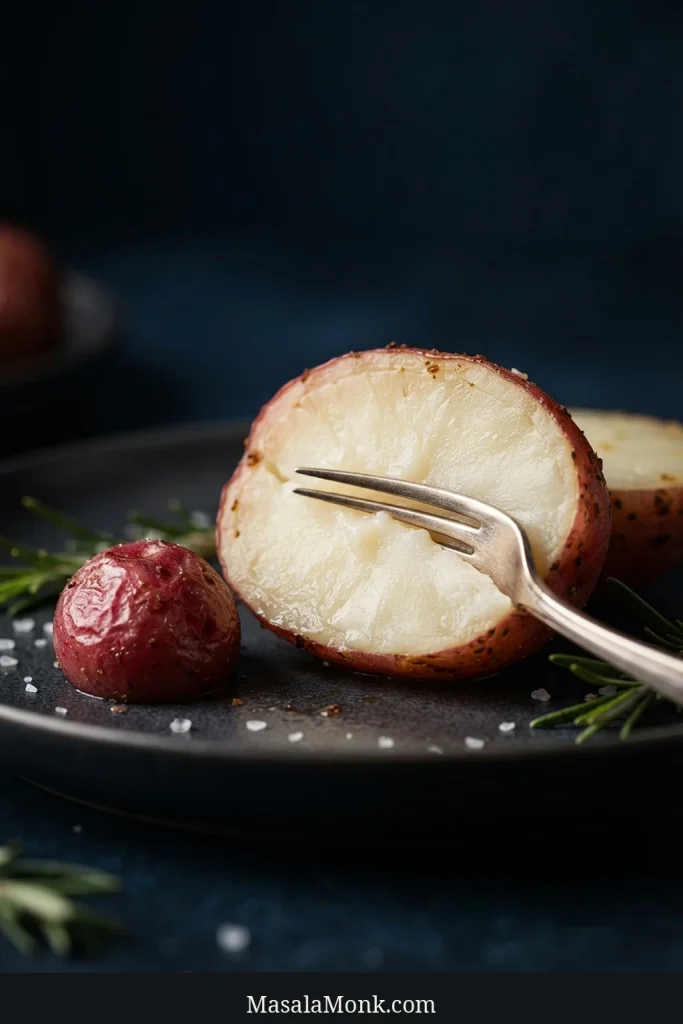
The ideal interior is smooth, moist and creamy. Penn State Extension describes round red-skinned potatoes as moister and creamier. They do not need to become dry or dramatically fluffy to be properly cooked.
Look for a dark-gold flat side and lightly wrinkled red skin. The center should give way easily when you bite into it. Red potatoes can become genuinely crisp where they meet the pan. Their crust stays smoother than that of starchier potatoes, such as russets. If the outside and center seem out of step, use the troubleshooting guide to work out what to change.
Roasting Red Potatoes at 400°F, 425°F or 450°F
425°F / 220°C is the best default here, but there is no need to reorganize dinner around the potatoes. Baked Chicken Breast uses the same 425°F oven, so the two are easy to cook together.
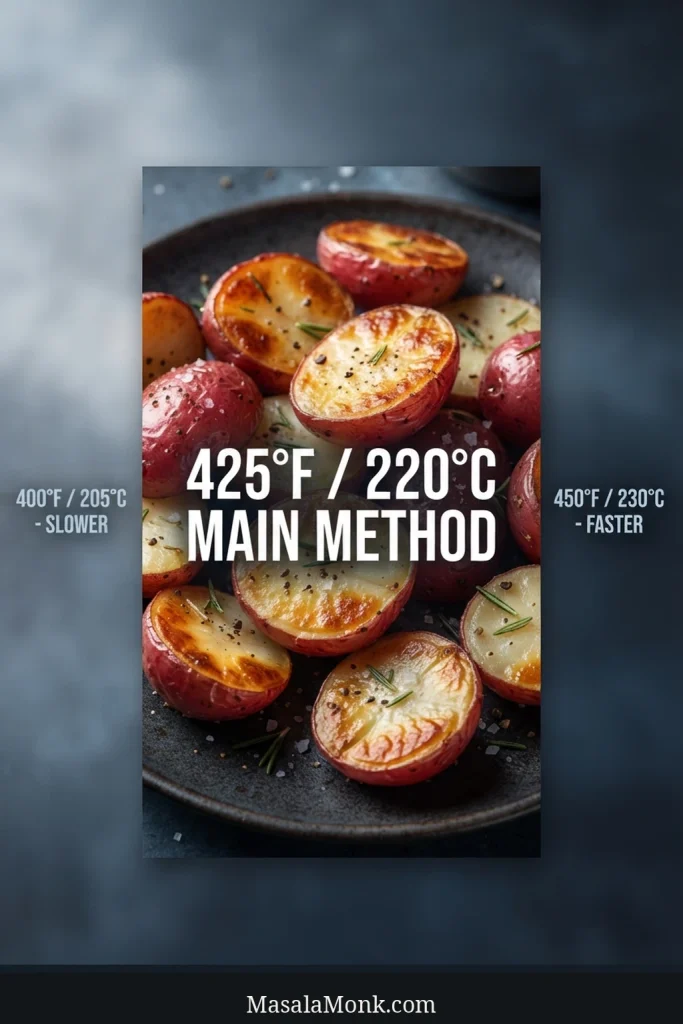
| Oven Temperature | When to Start Checking | What to Expect |
|---|---|---|
| 400°F / 205°C | Start checking around 30 minutes. | Browning develops more slowly, so the potatoes will usually need longer than the 425°F batch. Let the underside and center decide when they are done. |
| 425°F / 220°C | Start checking around 25 minutes. | This is the main method. Most small halves and roughly 1-inch / 2.5 cm pieces finish in about 30–40 minutes. |
| 450°F / 230°C | Start checking around 20 minutes. | Browning moves faster. Watch small halves closely and pull the tray when the cut sides are deeply golden and the centers are tender. |
Sharing the Oven
If Oven-Roasted Pork Tenderloin already has the 400°F oven, the potatoes can share it.
With convection or a fan oven, use about 400°F / 205°C instead of 425°F / 220°C. Start checking earlier if your oven browns quickly. If the potatoes still turn dark before the centers soften, jump to the troubleshooting table.
Fix Pale, Soft or Unevenly Browned Potatoes
Start by separating two questions: has the center cooked through, and has the outside browned enough? Those clues point to different fixes.
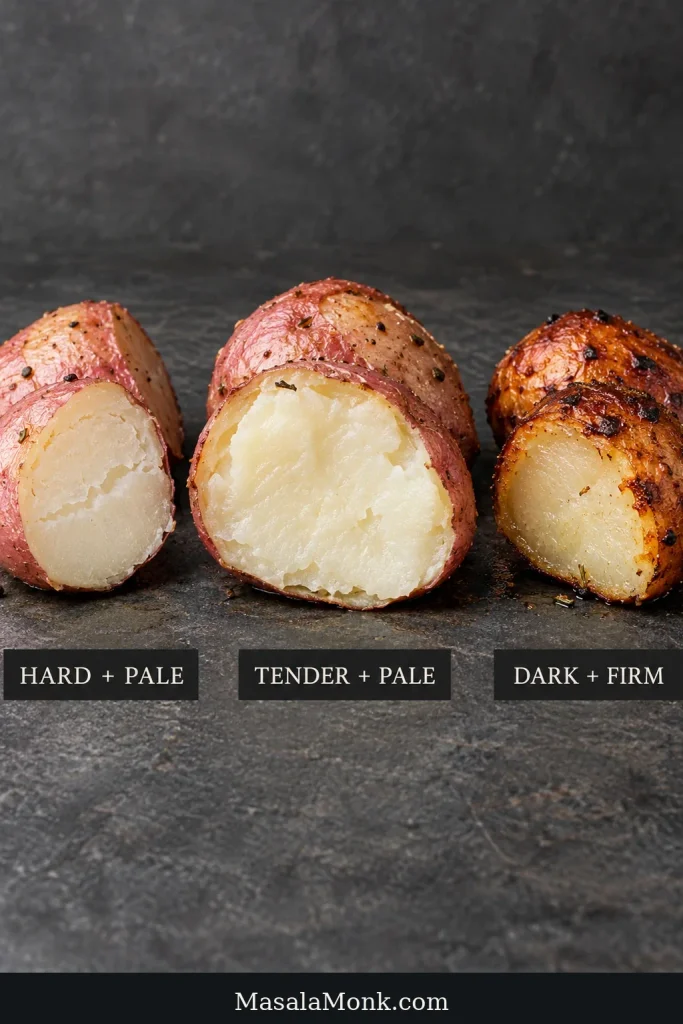
Read the outside and center together
Match the symptom to the fix
| Symptom | Likely Cause | Next Step |
|---|---|---|
| Hard inside + pale outside | The potatoes are still undercooked, often because the pieces are large. | Keep roasting. Next time, cut the largest pieces a little smaller. |
| Tender + pale or soft | The potatoes went in wet, the tray is crowded, or the cut sides have not had enough uninterrupted contact. | Give them more room and let the flat sides stay against the pan longer. |
| Dark outside + firm middle | The pieces are large relative to the heat, or the oven runs hot. | Lower the heat slightly if the outside is already very dark and let the middle catch up. Cut the next batch smaller. |
Fix Texture and Handling Problems
| Symptom | Likely Cause | Next Step |
|---|---|---|
| Brown but not very crisp | Red potatoes keep a smoother surface than russets, or the cut sides may have gone onto the tray damp. | Dry them more thoroughly and leave the flat sides against the pan longer. Aim for a crisp browned face and creamy center rather than a thick, craggy shell. |
| Greasy | The potatoes have more oil than they need. | Use enough for a light, even coating. Better spacing and drying will help more than adding extra oil. |
| Sticking badly | The potatoes may be wet, lightly oiled, or being lifted before the underside has browned. | Leave one test piece for another few minutes and use a thin spatula. Parchment is an easy option next time if sticking remains a problem. |
Prevent Burnt Garlic and Uneven Browning
| Symptom | Likely Cause | Next Step |
|---|---|---|
| Burnt garlic | Finely minced fresh garlic spent too long in the hot oven. | Use garlic powder from the start, or add fresh minced garlic only near the end. |
| Some pieces burn while others stay pale | The potatoes are too different in size. | Trim the largest pieces before roasting so the batch cooks more evenly. |
After identifying the cause, return to the recipe method and apply the fix on your next tray.
Doubling the recipe? Double the pans, not the crowding.
Want a Rougher, Crispier Crust?
Small red-potato halves and quarters can brown beautifully without parboiling. For a more rugged crust, partially cooking the potatoes first gives you more surface to rough up before roasting.
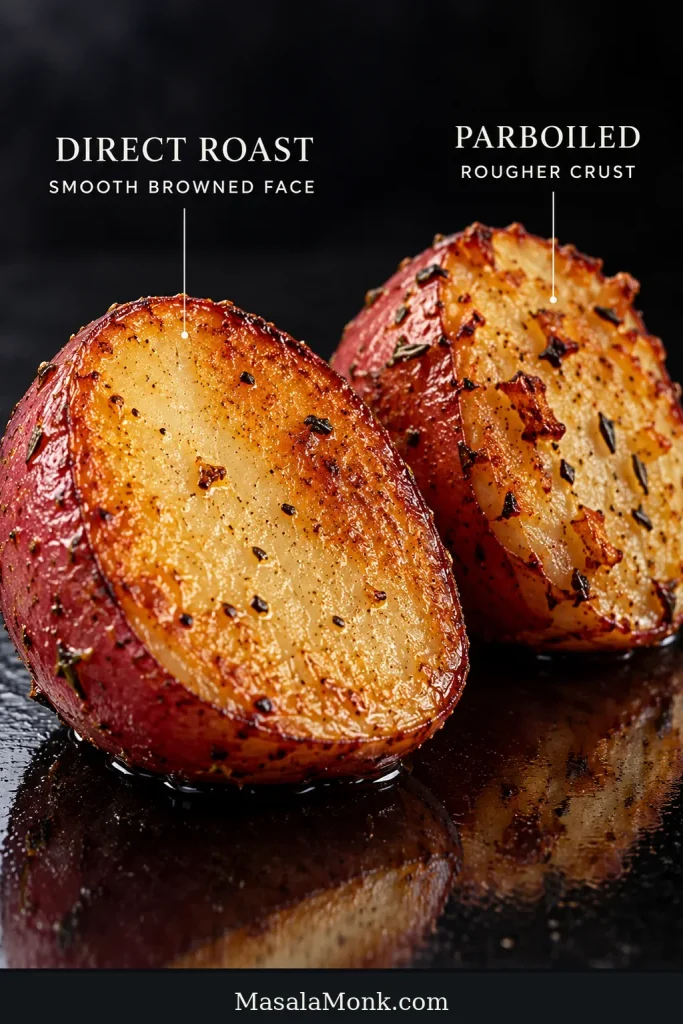
The Crispy Oven Roasted Potatoes Recipe uses that approach. It starts with Yukon Golds, parboiling and roughened surfaces.
A cold-water soak isn’t necessary here. If you do soak the potatoes, dry them thoroughly afterward.
For an ordinary dinner, the no-boil method is simpler. Save the parboiled version for the times when that rougher crust is specifically what you want. If you are changing the potato rather than the method, compare the results in the Yukon Gold and russet guide.
Using Yukon Golds or Russets Instead
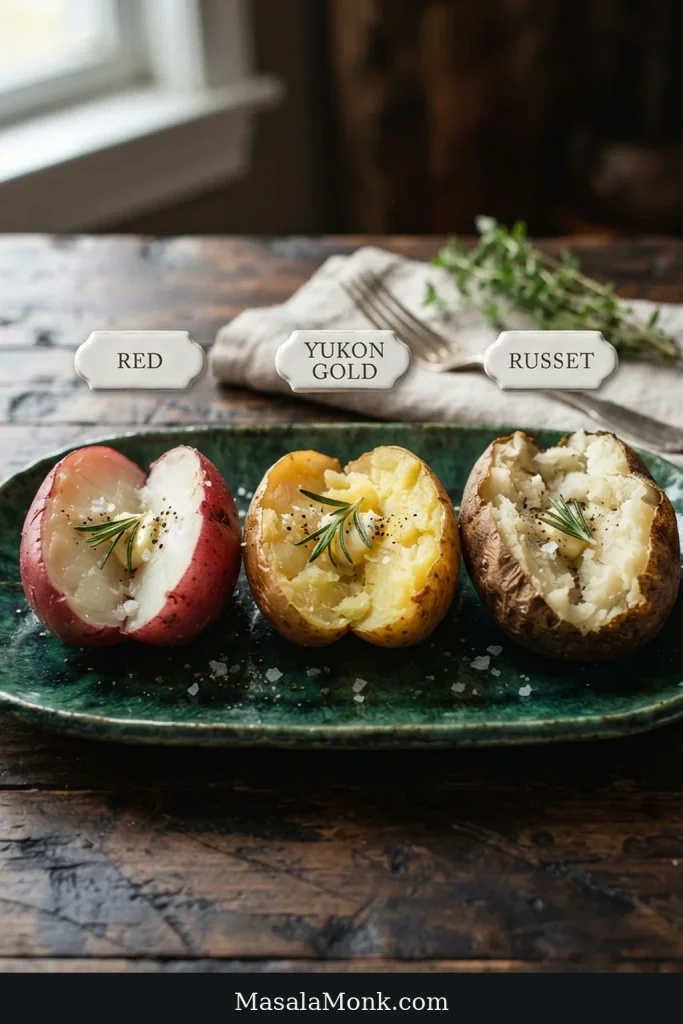
Yukon Golds can use essentially the same raw-to-oven method. Cut them to a similar size and use the same 425°F / 220°C oven. Begin checking in the same window. They brown well and have a richer, more buttery interior than red potatoes.
Russets can also be roasted this way, but expect a different result: a starchier, fluffier center and rougher edges. Keep the pieces around 1 inch / 2.5 cm and judge the finish by browning and tenderness. If what you really want is a craggy, deeply crisp crust, the parboiled method suits that texture better.
Red potatoes suit this version particularly well. They hold their shape and stay creamy. Cut faces also brown deeply where they meet the pan.
Easy Ways to Change the Flavor
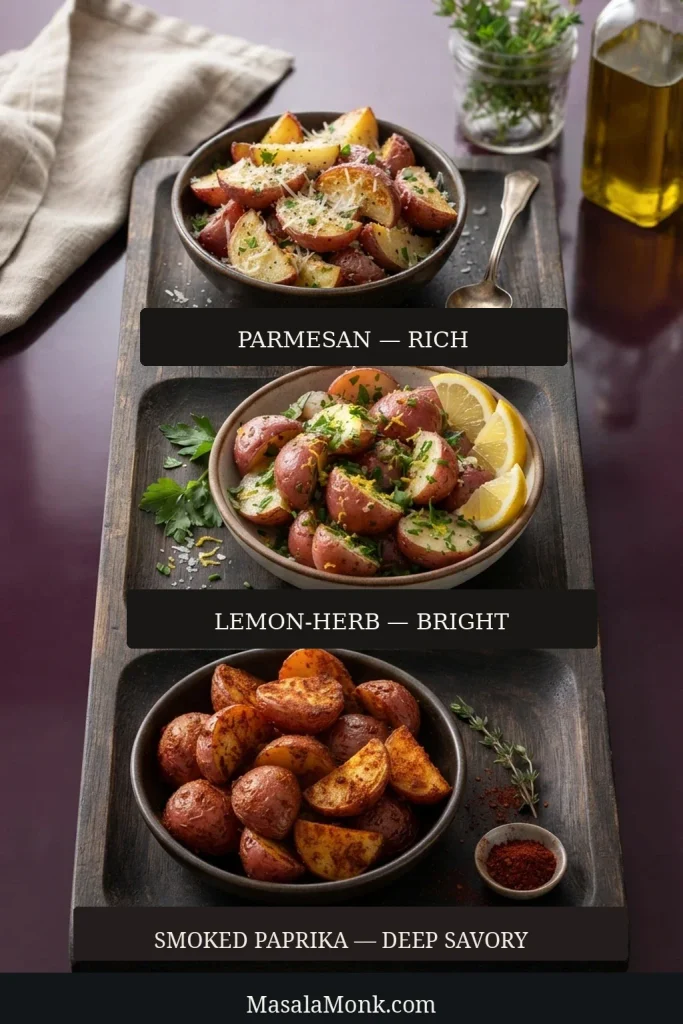
- Garlic Parmesan: This is the richest version. Roast with the garlic powder as written, then toss finely grated Parmesan through the potatoes while they are still hot. Because Parmesan brings salt with it, season a little more cautiously at the beginning.
- Lemon herb: Use this when the rest of dinner is rich or buttery. Finish with lemon zest, a squeeze of lemon and fresh parsley, chives or dill. It is an easy match for Chicken Piccata.
- Smoky paprika: Add ½–1 teaspoon smoked paprika with the garlic powder before roasting. It gives a simple roast dinner a deeper, savory edge and works well beside beef, including Meatloaf.
For ranch seasoning, use the dedicated Ranch Roasted Potatoes version so the salt and ranch mix stay properly balanced. To choose a finish around the rest of the meal, jump to what to serve with roasted red potatoes.
Making Them Fit the Rest of Dinner
Prep ahead. Cut the potatoes a few hours in advance, submerge them in cold water and keep them in the refrigerator. The water here is for holding the cut potatoes until cooking, not a required soaking step. When you are ready to roast, drain and dry them thoroughly before adding the oil and seasonings.
Finishing early. When the potatoes finish before dinner, leave them uncovered or use a loose foil tent. A tight cover traps steam and softens the browned surfaces.
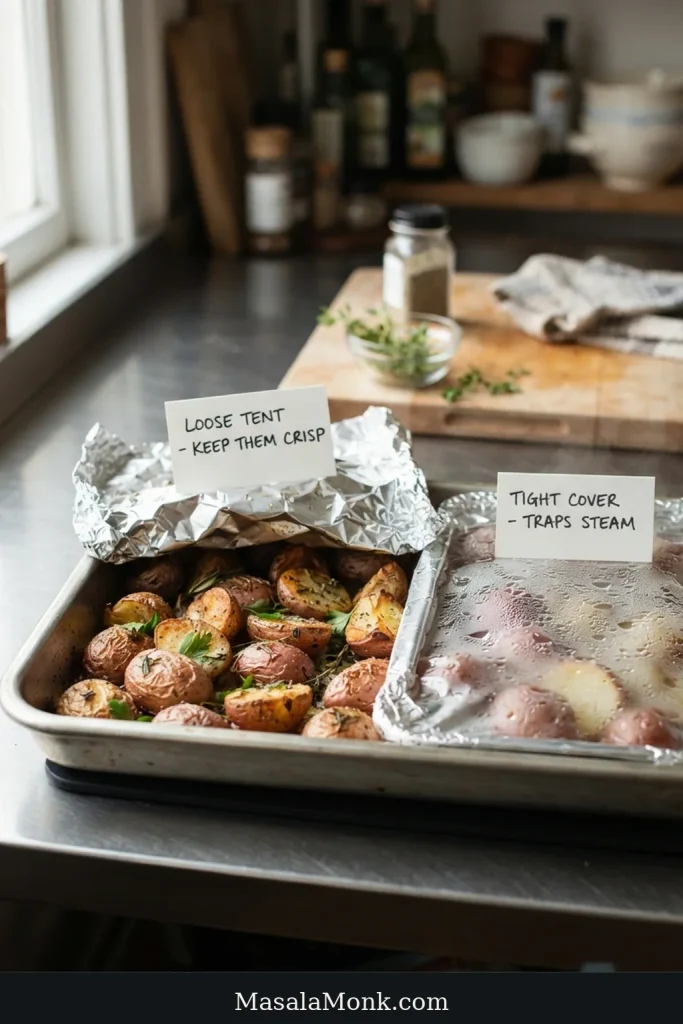
Doubling the batch. For 4 lb / about 1.8 kg potatoes, use two large baking sheets. Rotate the pans or swap rack positions if your oven browns unevenly.
Leftovers and reheating. Refrigerate cooked potatoes within 2 hours and keep them covered. USDA leftovers guidance recommends using refrigerated leftovers within 3–4 days. A hot oven, air fryer or skillet restores more of the browned exterior than a microwave. The microwave is still fine when you just want them hot. For serving ideas, continue to what to serve with the potatoes.
What to Serve with Roasted Red Potatoes
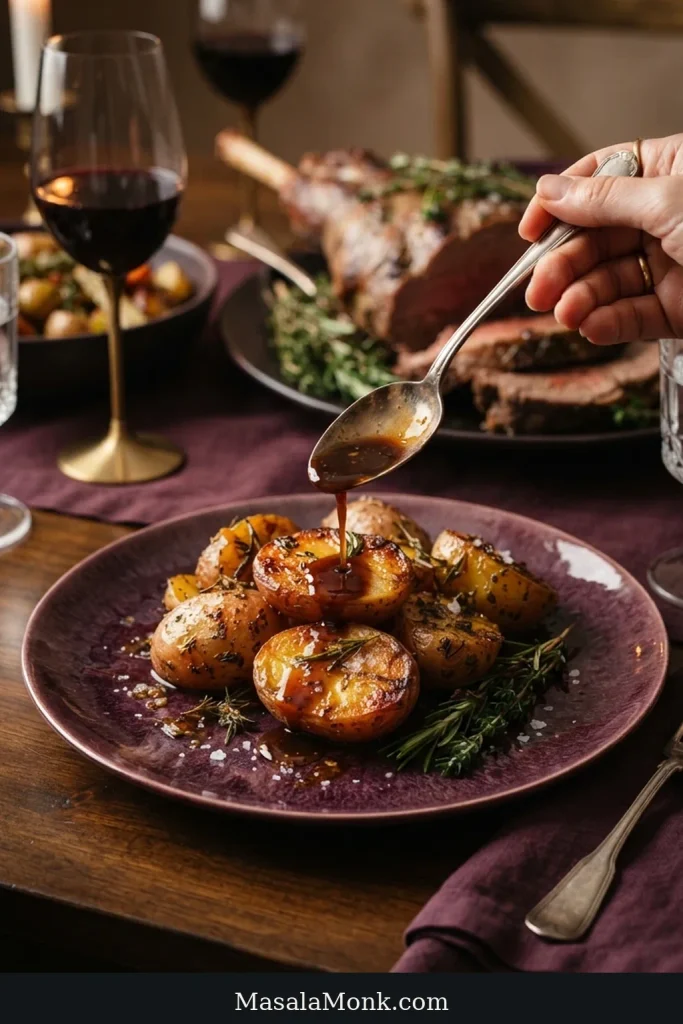
These potatoes fit naturally beside roast meats, chicken, salmon and anything with gravy or a pan sauce. Something creamy works particularly well. Marry Me Chicken, for example, has garlic-Parmesan sauce for the tender potato centers to catch.
About this recipe: This research-led recipe draws on established roasting methods and common home-cook problems. MasalaMonk has not tested it in-house.
Fresh from the oven, each piece should have a crisp browned side and a soft center underneath. The center catches gravy or pan juices. If the main dish is already rich, keep the potatoes close to the base seasoning. With a simpler dinner, Parmesan, lemon-herb or smoky paprika can do more of the work.
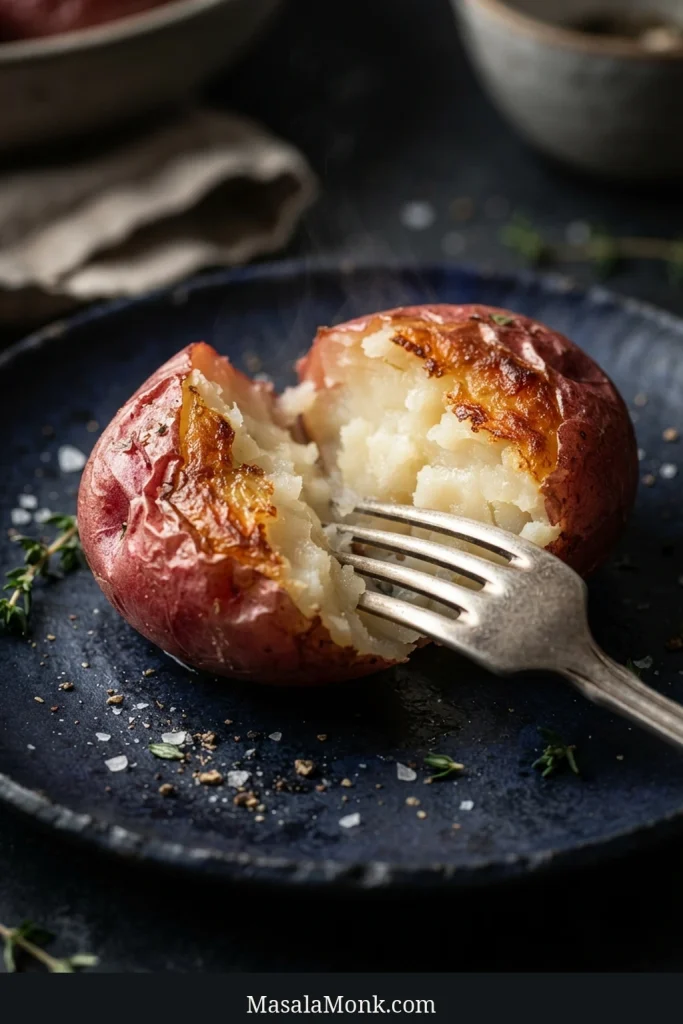
Once you have made them this way once or twice, you stop needing much of a recipe. Give them room, check one browned underside before moving the tray, and wait until the centers are tender and creamy.








