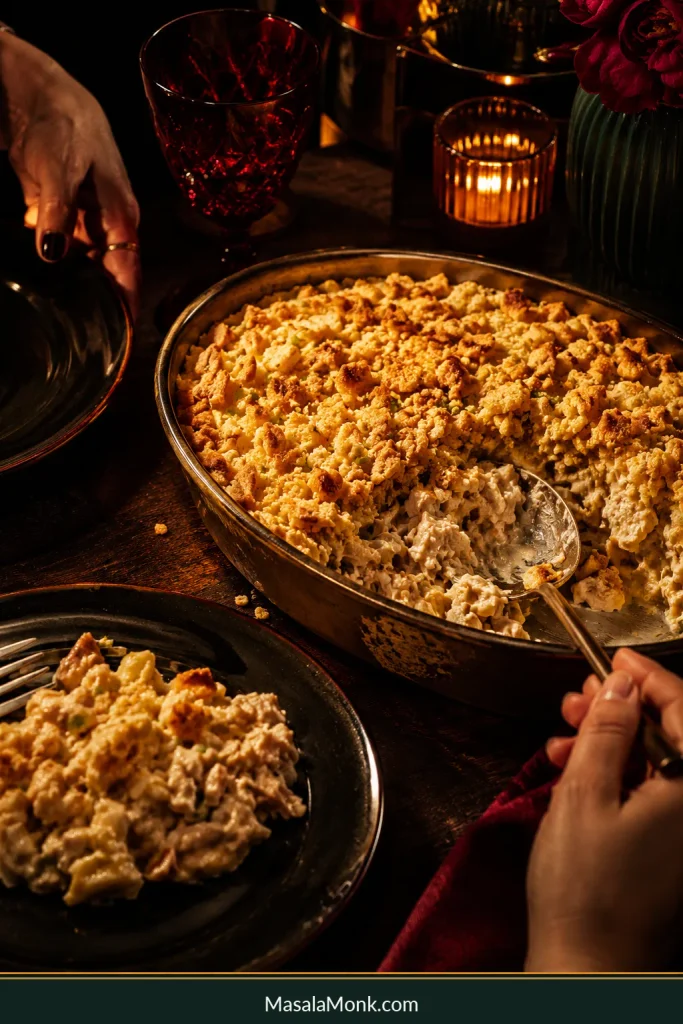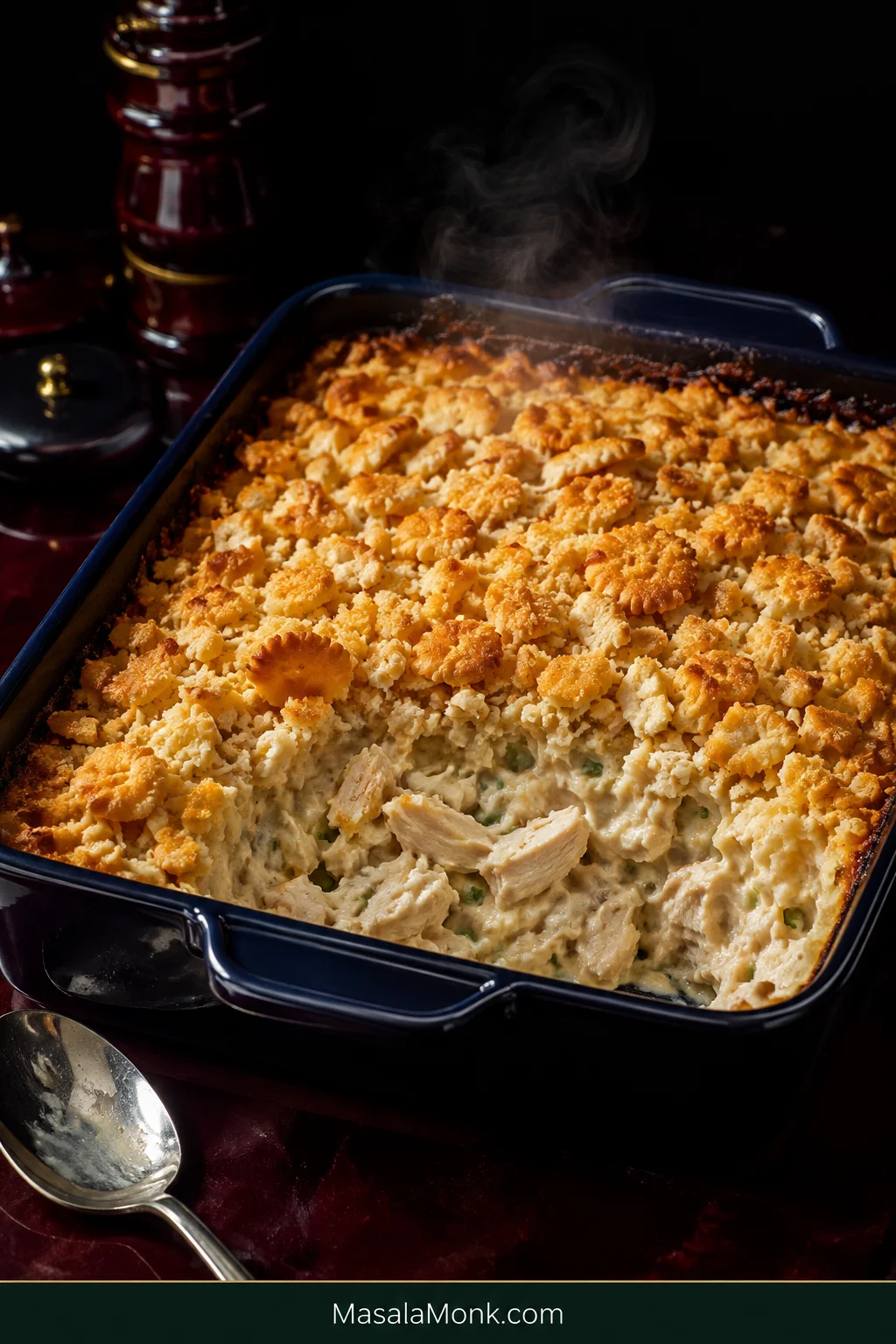
Million Dollar Chicken Casserole brings tender chicken, a rich, savory sauce and buttery golden crackers together in the kind of dinner that asks very little from you.
The best version isn’t the one with the most dairy piled into it. It’s the one where everything lands in balance: chicken with some texture, enough sauce to coat every piece, plenty of savory flavor, and crisp crumbs breaking through all that softness.
That balance is especially handy when there’s cooked chicken in the fridge and you want tonight’s dinner to feel like a new meal rather than leftovers again.
With the chicken ready, plan on about 15 minutes of prep. Mix, spread, top and bake at 350°F / 175°C. Then give the casserole 10 minutes before you scoop it so the bubbling sauce has time to settle around the chicken.
Quick Answer: How to Make Million Dollar Chicken Casserole
- Mix: Combine 4½ loosely packed cups cooked shredded chicken, about 1⅓ lb / 600 g, with softened cream cheese, cottage cheese, sour cream, undiluted condensed cream of chicken soup and savory seasonings.
- Spread: Spoon the thick chicken mixture into a 9×9-inch baking dish.
- Top: Coarsely crush 3½ oz / 100 g buttery round crackers—roughly 30–32 Ritz crackers—and toss with 4 tbsp / 57 g melted unsalted butter.
- Bake: Bake uncovered at 350°F / 175°C for 35–40 minutes, until the edges bubble, the crackers are golden and the center reaches 165°F / 74°C.
- Rest: Leave the casserole for 10 minutes before serving.
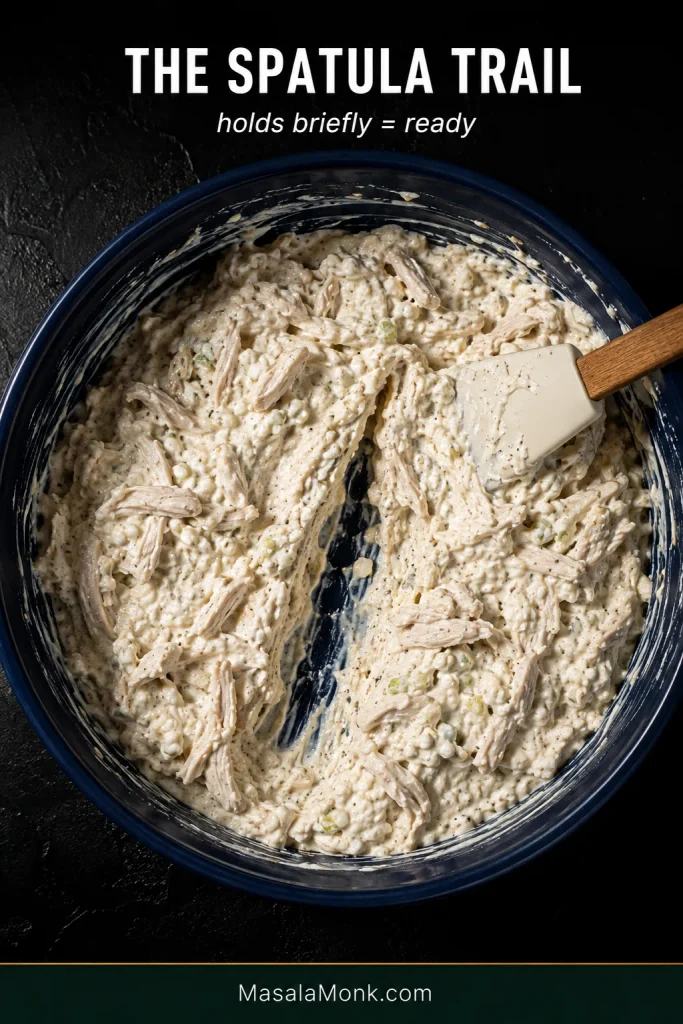
Before baking, drag a spatula through the mixture. The trail should remain visible for a moment. After resting, the finished casserole should be creamy and easy to scoop, without liquid pooling around the serving.
Million Dollar Chicken Casserole Recipe
Recipe at a Glance
| Prep | 15 minutes |
|---|---|
| Bake | 35–40 minutes |
| Rest | 10 minutes |
| Oven | 350°F / 175°C |
| Best dish | 9×9 in / 23×23 cm / roughly 2 qt |
| Yield | 6 hearty main-dish servings or up to 8 smaller portions with substantial sides |
| Look for | Bubbling edges, golden crackers and sauce that settles around the chicken after resting |
Equipment
- 9×9-inch / 23×23 cm baking dish, roughly 2-quart capacity
- Large mixing bowl
- Small bowl for the cracker topping
- Spatula or sturdy spoon
An instant-read thermometer helps with the center, especially when the casserole starts refrigerator-cold. If the dish is filled close to the rim, a sheet pan underneath can catch bubbling drips.
Ingredients
For the chicken filling
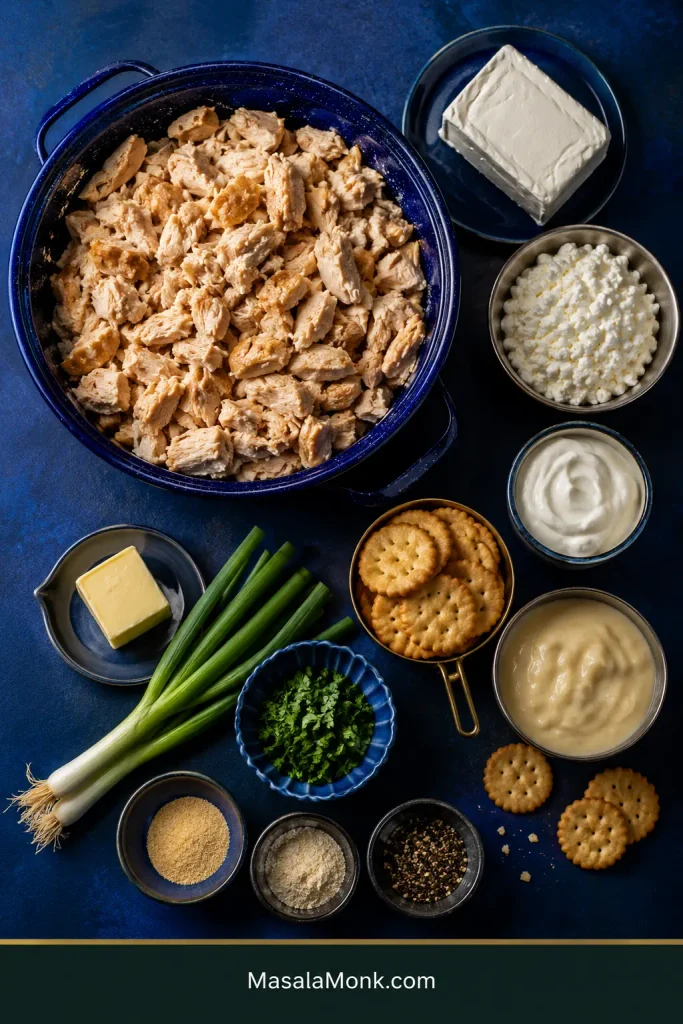
- 4½ loosely packed cups cooked shredded chicken, about 1⅓ lb / 600 g
- 1 can condensed cream of chicken soup, 10.5 oz / 298 g, undiluted; reduced-sodium is helpful when the chicken is already fairly salty
- 4 oz / 113 g cream cheese, fully softened
- ¾ cup / about 170 g small-curd cottage cheese
- ½ cup / about 120 g sour cream
- ¾ tsp garlic powder
- ¾ tsp onion powder
- ½ tsp freshly ground black pepper
- 2 tbsp thinly sliced scallions, optional but recommended
- 1 tbsp chopped fresh parsley, optional
- Fine salt, only if needed after tasting
- ½ cup / 2 oz / 55–60 g shredded mozzarella, Monterey Jack or mild cheddar, optional for a more visibly cheesy casserole
For the buttery cracker topping
- 3½ oz / 100 g buttery round crackers, roughly 30–32 Ritz crackers
- 4 tbsp / 2 oz / 57 g unsalted butter, melted
Before you start: use the condensed soup straight from the can, without added water or milk. The cream cheese needs to be soft enough for a spatula to press through easily, while remaining creamy rather than melted or oily.
Method
- Heat the oven to 350°F / 175°C and lightly grease a 9×9-inch baking dish.
- Mix the sauce. Stir the softened cream cheese, sour cream and condensed cream of chicken soup until mostly smooth. Stir in the cottage cheese, garlic powder, onion powder, black pepper, scallions and parsley.
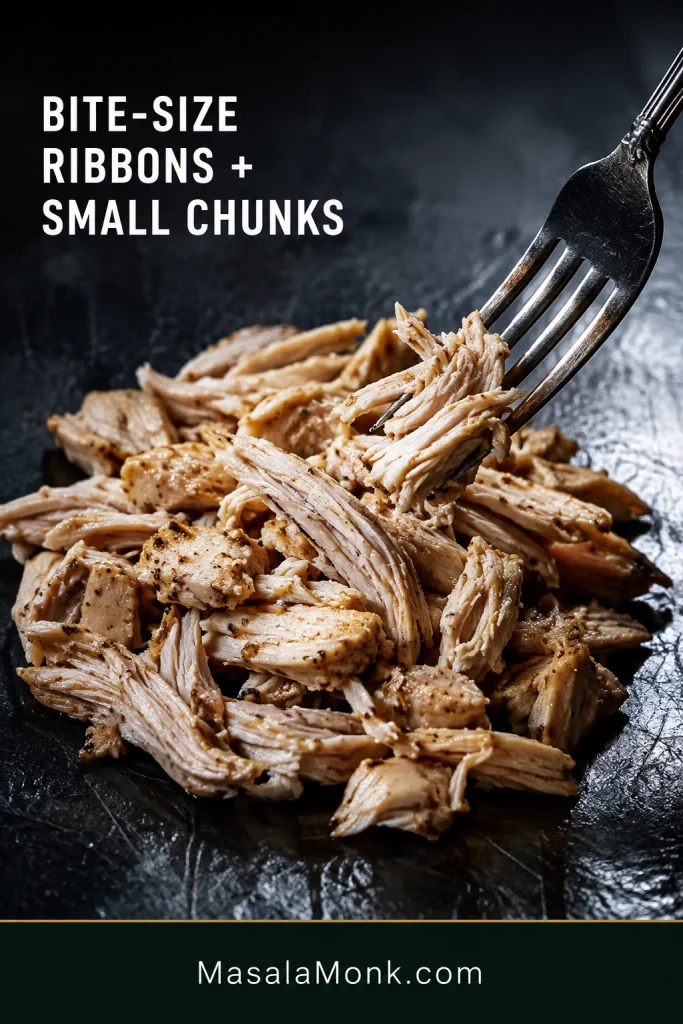
- Add the chicken and taste. Keep the chicken in bite-size ribbons and small chunks so you get distinct pieces in every scoop. Fold it through the sauce gently. Taste before adding salt; if the filling is salty enough but tastes dull, pepper, garlic, onion or herbs can bring more flavor without adding more salt.
- Check the Spatula Trail. Drag the spatula through the bowl once. The path needs to stay open briefly. If thin liquid immediately runs back in, check for obvious cottage-cheese whey, wet chicken or another ingredient carrying excess moisture. Spread the thick mixture evenly into the baking dish. Sprinkle the optional shredded cheese over the filling now, if using.
Top, Bake & Rest
- Add the cracker topping. Crush the crackers coarsely so fine crumbs sit alongside small irregular pieces. Toss with the melted butter and scatter over the chicken.
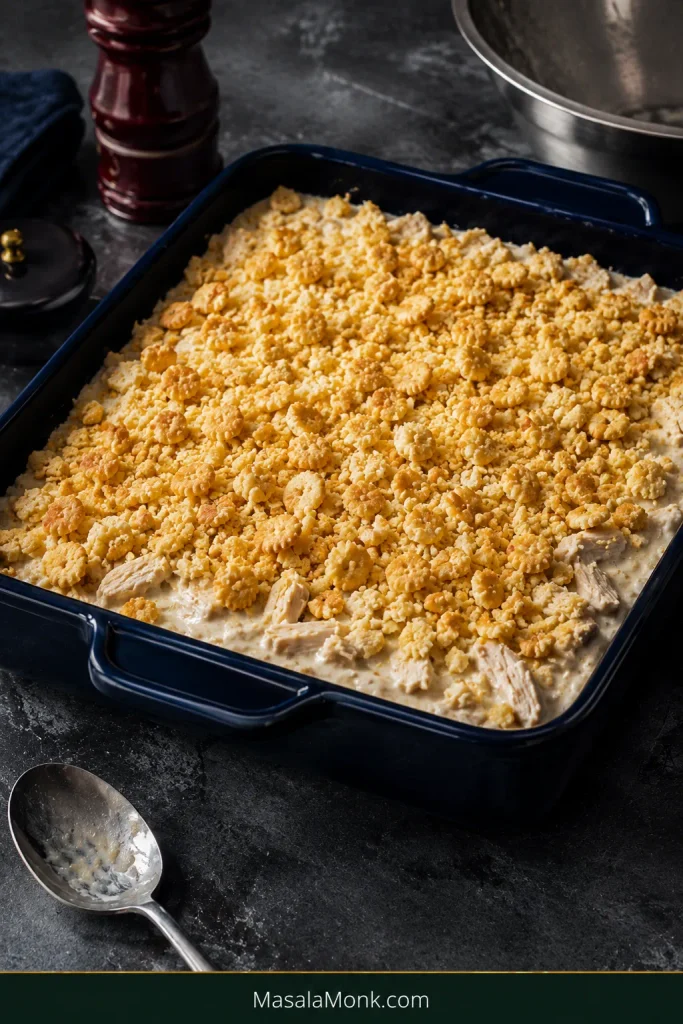
- Bake uncovered for 35–40 minutes. Look for bubbling around the edges and crackers that have turned golden and toasted.
- Check the center. It needs to reach 165°F / 74°C. If the topping gets deeply browned first, cover the dish loosely with foil and keep baking.
- Rest for 10 minutes, then scoop and serve.
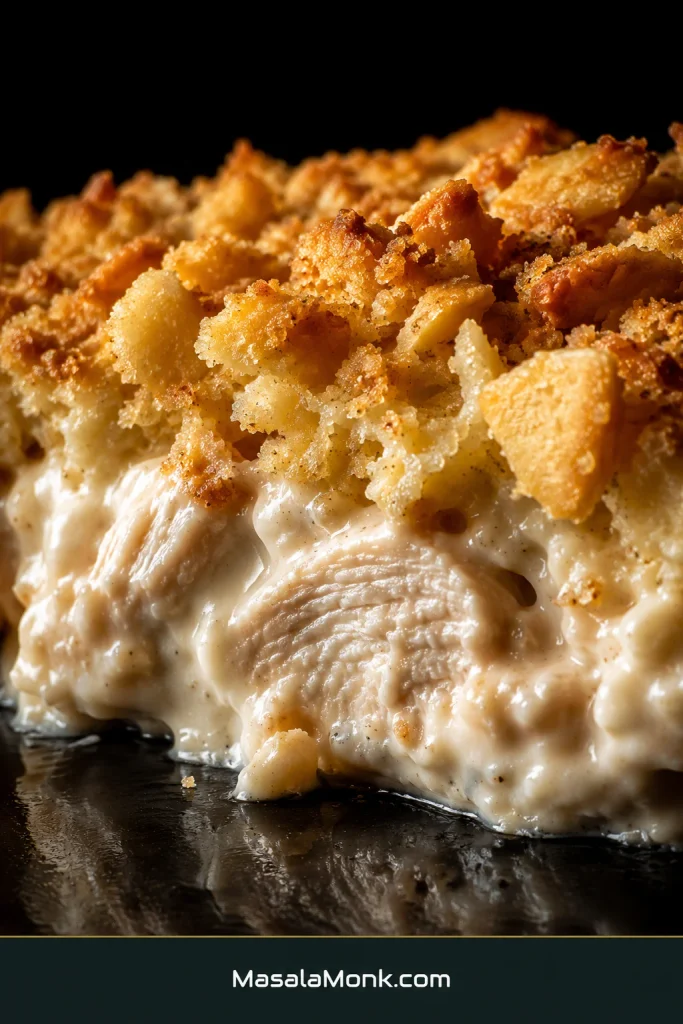
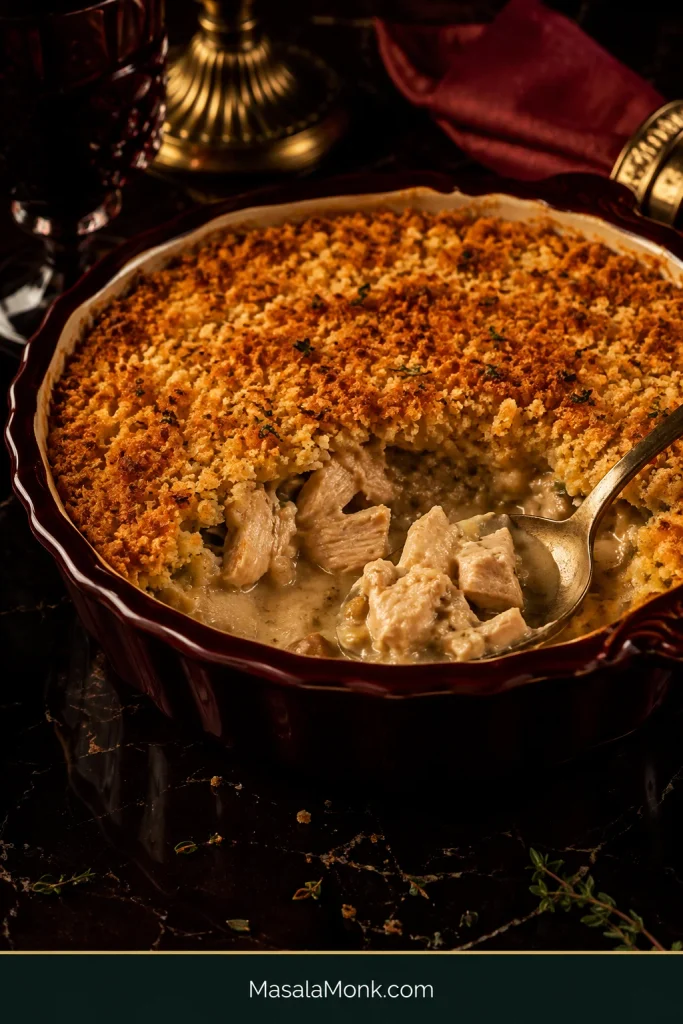
When it is right, a spoon breaks through crisp golden crumbs into tender pieces of chicken coated in a thick, pale sauce. The serving can relax a little on the plate; what you don’t want is a puddle of liquid left around it.
Cooking right now? Stop here—you have everything you need. The rest is optional help for substitutions, make-ahead cooking and anything that looks different from what you expected.
In This Guide
Make it right
- Choose Your Chicken
- The Cottage Cheese Question
- The 3 Controls: Moisture, Flavor & Crunch
- How to Know When It’s Done
Change it safely
Plan & fix
What Is Million Dollar Chicken Casserole?
Million Dollar Chicken Casserole is cooked shredded chicken baked in a rich sauce of cream cheese, cottage cheese, sour cream and condensed cream of chicken soup, with buttery cracker crumbs across the top.
The “million dollar” name signals indulgent comfort food made from ordinary ingredients. Creamy dairy coats the chicken, while the toasted crackers break up all that softness with a crisp, buttery bite.
Choose Your Chicken: Rotisserie, Leftovers or Freshly Cooked
Rotisserie chicken, cooked breast, thigh and leftovers all work here. Measure the cooked meat instead of relying on “one rotisserie chicken,” since whole birds vary widely in size.
Rotisserie chicken is the quickest route. Plain or lightly seasoned meat gives you the most control; a strongly flavored bird brings those seasonings into the casserole too. Remove the skin before shredding and taste the mixture before adding salt.
Leftover roasted or baked chicken works just as well. Leave excess pan juices behind so yesterday’s chicken doesn’t carry unnecessary liquid into tonight’s dinner.
Canned chicken can work in a pinch too. Drain it very well, expect a softer texture, and taste the filling before adding salt.
Freshly cooked breast is milder and leaner; thigh is richer and more forgiving. Let either cool until comfortable to handle, then tear or shred it into bite-size ribbons with a few small chunks.
Cooking chicken specifically for this dish? This baked chicken breast recipe gives you juicy cooked meat that is easy to cool and shred.
Can You Use Raw Chicken?
Not in this version. The timing assumes the chicken is already cooked. Here, the oven’s job is to heat the creamy filling through and brown the cracker topping.
Raw chicken breasts baked under cream cheese, cheddar or bacon belong to a different Million Dollar Chicken Bake style with its own timing and proportions.
The Cottage Cheese Question
If you’re already looking suspiciously at the tub of cottage cheese, this is usually the ingredient that makes people pause.
Can You Taste the Cottage Cheese?
Usually not as a distinct cottage-cheese flavor. Baked with the cream cheese, sour cream, soup and chicken, it blends into the sauce and contributes mild tang and richness.
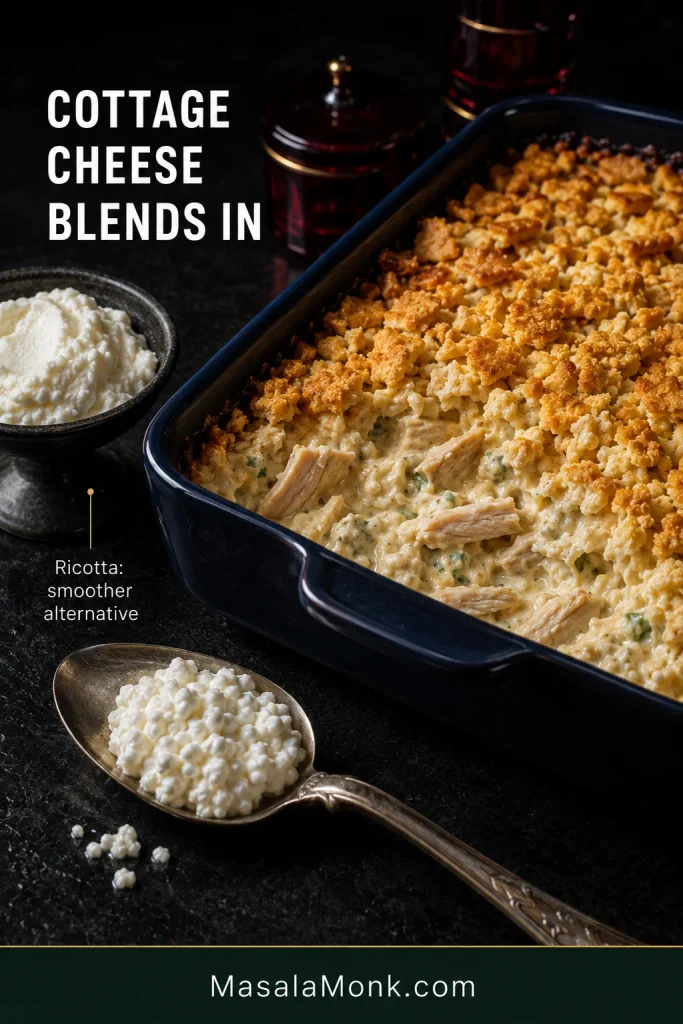
Small-curd cottage cheese is the easiest choice because the curds disappear more readily among the chicken. See a puddle of watery whey in the container? Leave the obvious liquid behind. There’s no need to squeeze the cottage cheese dry.
No Cottage Cheese? Use Ricotta
Whole-milk ricotta is a practical replacement. Start with roughly the same volume, leave behind obvious excess liquid and check that the chicken mixture remains thick and spreadable before baking.
Ricotta produces a smoother, slightly denser casserole. Simply omitting the cottage cheese removes a substantial part of the creamy base.
Blending cottage cheese is another option when you mainly want to hide the curds, although brands vary in moisture. Ricotta is the simpler choice when a completely smooth texture matters most.
The 3 Controls of a Better Casserole
For a recipe this simple, three details do most of the work: moisture, flavor and cracker texture.
1. Moisture: Creamy, Not Watery
Broccoli isn’t the problem. Cottage cheese isn’t the problem. Even rotisserie chicken isn’t the problem. Free water is.
Condensed soup stays undiluted. Obvious cottage-cheese whey stays in the container. Cooking juices stay out of the bowl. Watery vegetables get drained or cooked before they go in.
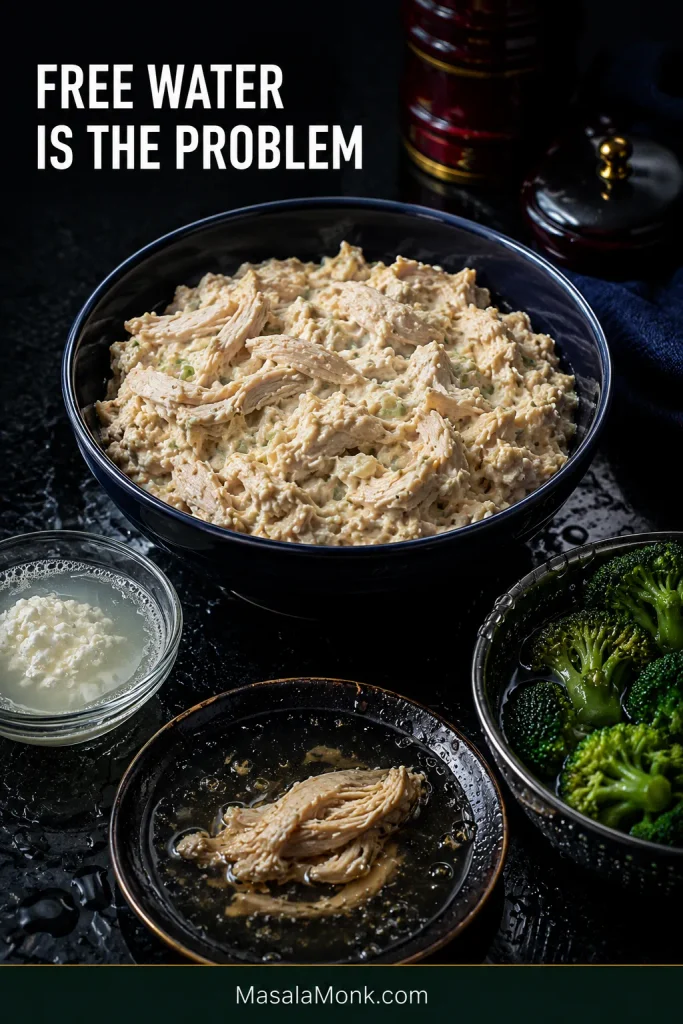
The same Spatula Trail from the recipe is your quickest final check before the bowl is scraped clean. A thick mixture keeps the path visible briefly; a thin mixture closes over almost immediately.
Already baked and looking watery? Jump to Troubleshooting and judge it after the 10-minute rest.
2. Flavor: More Salt Isn’t Always the Answer
Rotisserie chicken arrives seasoned. Condensed soup and crackers bring seasoning of their own. Taste the mixed filling before adding more salt.
If the filling is salty enough but tastes dull, wake it up with pepper, garlic, onion, scallions, parsley or another salt-free seasoning.
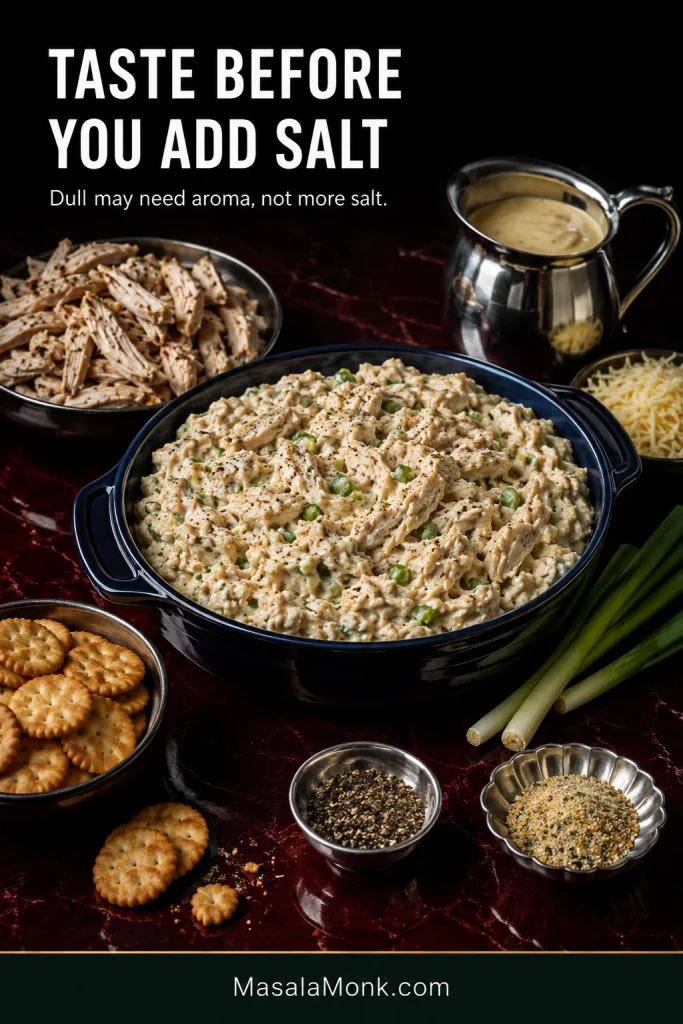
For a little extra spice, ½–1 tsp Creole or Cajun seasoning works well. Check the label first because the salt level varies considerably between blends.
3. Cracker Crunch: Butter Them Late
Crush and butter the crackers when you’re ready to bake. A mixture of fine crumbs and small irregular pieces gives the top a better bite than pulverized crumbs alone.
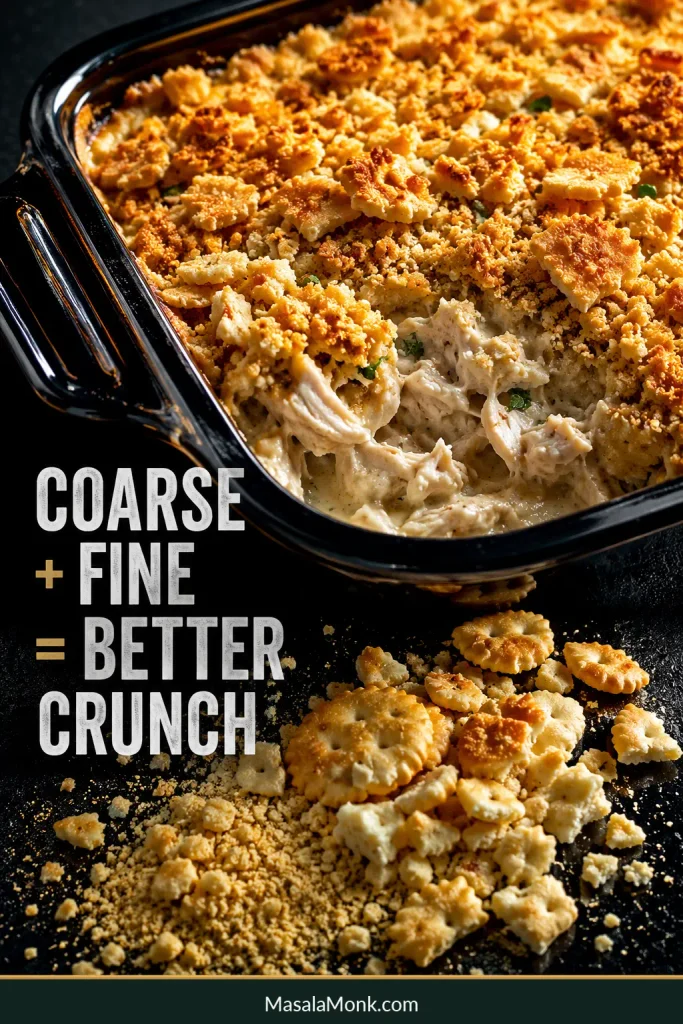
For make-ahead and freezer versions, store the cracker topping separately until baking day.
None of this makes the casserole delicate. Cooked chicken, condensed soup, a thick filling and freshly buttered crackers will take you most of the way there.
Quick jumps: Recipe · Doneness · Troubleshooting · Back to Top
How to Know When It’s Done
Look for bubbling edges, a golden cracker topping and a center temperature of 165°F / 74°C.
By then the kitchen smells buttery and toasted, and the sauce underneath has noticeably more body than it did when it first began bubbling.
| Stage | What Success Looks Like |
|---|---|
| Before baking | Thick filling with a brief spatula trail |
| Near the end | Bubbling edges and a golden cracker topping |
| Center | 165°F / 74°C |
| After resting | Creamy, scoopable filling with no puddle around the serving |

Golden top, cool center? Cover the casserole loosely with foil and keep baking until the middle catches up. This comes up most often with a refrigerator-cold or unusually deep dish.
What You Can Change—and What Needs Another Recipe
Some substitutions leave the basic casserole intact. Others change moisture, starch or cooking time enough to need a different formula.
| Change | Use It Here? | What to Know |
|---|---|---|
| Cooked breast ↔ cooked thigh | Yes | Both work; thigh gives a richer result |
| Ritz ↔ similar buttery crackers | Yes | Match approximately by weight because sleeve sizes vary |
| Sour cream → thick plain Greek yogurt | Usually | Start with roughly the same amount; choose a genuinely thick plain Greek yogurt and expect a tangier, slightly less rich result |
| Gluten-free soup + crackers | Yes | Check every packaged ingredient when strict gluten avoidance matters |
| Cottage-cheese replacement | Needs adjustment | Use another dairy such as whole-milk ricotta instead of simply omitting it |
| Homemade cream-of-chicken replacement | Needs adjustment | Keep it thick like condensed soup |
| Raw chicken | Different recipe | Cooking time and method change substantially |
| Pasta, noodles or rice inside the casserole | Different recipe | Those starches need additional liquid and their own cooking plan |
Can You Make It Without Canned Cream of Chicken Soup?
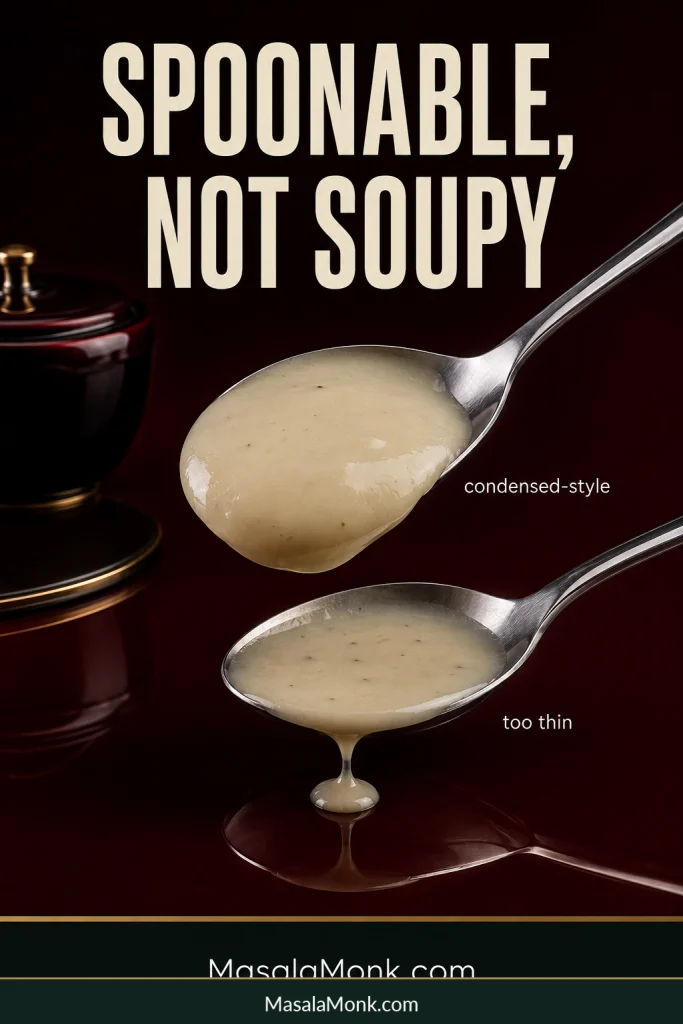
Yes, but keep the replacement thick and spoonable. Prepared cream soup is generally too loose for a direct swap.
Use about 10½ oz / 300 g of a condensed-style homemade chicken sauce with enough body to cling to a spoon.
Adding Vegetables Without Making It Watery
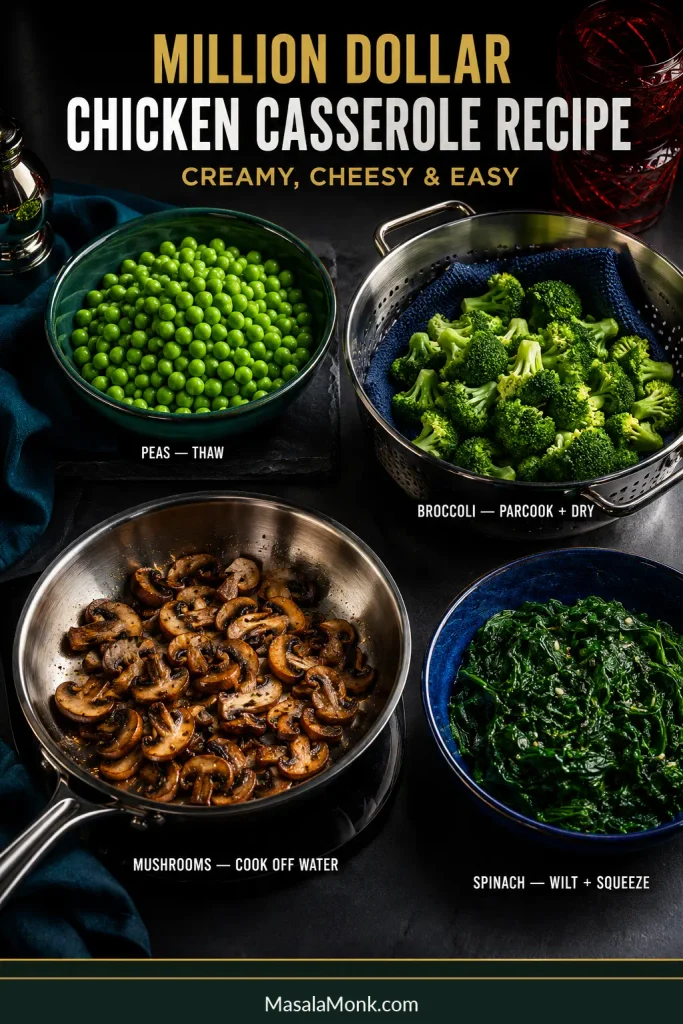
Peas are the easiest addition. Broccoli, mushrooms and spinach work too once any excess water is dealt with before they reach the casserole.
For a first try, around 1 cup of prepared vegetables is a sensible starting point for the base batch. That adds color and texture without pushing the chicken into the background.
- Peas: fold them straight in; thaw first if they’re heavily coated in ice.
- Broccoli: cut into small florets, blanch or parcook for 1–2 minutes, drain and pat dry.
- Mushrooms: sauté until the moisture they release has cooked away.
- Spinach: wilt first and squeeze well.
If broccoli and rice are what you really want for dinner, cheesy chicken broccoli rice is built for that combination from the start.
Or keep the vegetable beside the casserole. Crispy roasted Brussels sprouts bring dark caramelized edges and a little bitterness that works especially well with the creamy chicken.
Troubleshooting
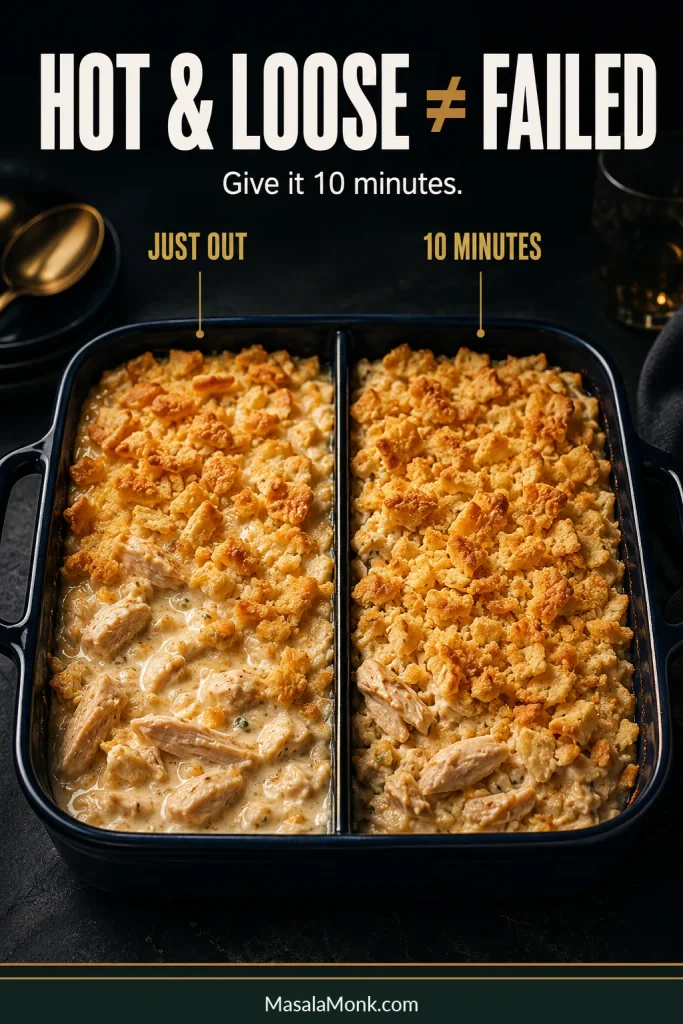
A casserole that looks loose while it is still bubbling may only need its 10-minute rest. Give it that time first. If something is still off afterward, the pattern usually points to the cause.
| Problem | Likely Cause | What to Do |
|---|---|---|
| Still watery after resting | Extra whey, wet chicken, diluted soup or a watery add-in | Serve it if needed; next time remove that excess moisture before baking |
| Too salty | Seasoned chicken, soup, crackers, cheese or spice blends have stacked their sodium | Use unsalted butter, consider reduced-sodium soup and taste the filling before adding salt |
| Salty enough but still bland | The casserole needs more aromatic seasoning | Add pepper, garlic, onion, scallions, parsley or another salt-free seasoning |
| Soggy cracker topping | The crackers sat on the moist filling too long or softened during reheating | Add the buttered topping just before baking; use the oven when restoring crunch matters |
| Cream-cheese lumps | The cream cheese went into the bowl too cold | Soften it fully and mix it into the sour cream and soup before adding chicken |
| Looser after reheating | Chilled dairy can release a little moisture as it reheats | Heat gently and let the portion stand briefly before serving |
Quick jumps: Recipe · 3 Controls · Make Ahead & Reheat · Pan Size · Back to Top
Make Ahead, Freeze & Reheat
Can You Make It Ahead?
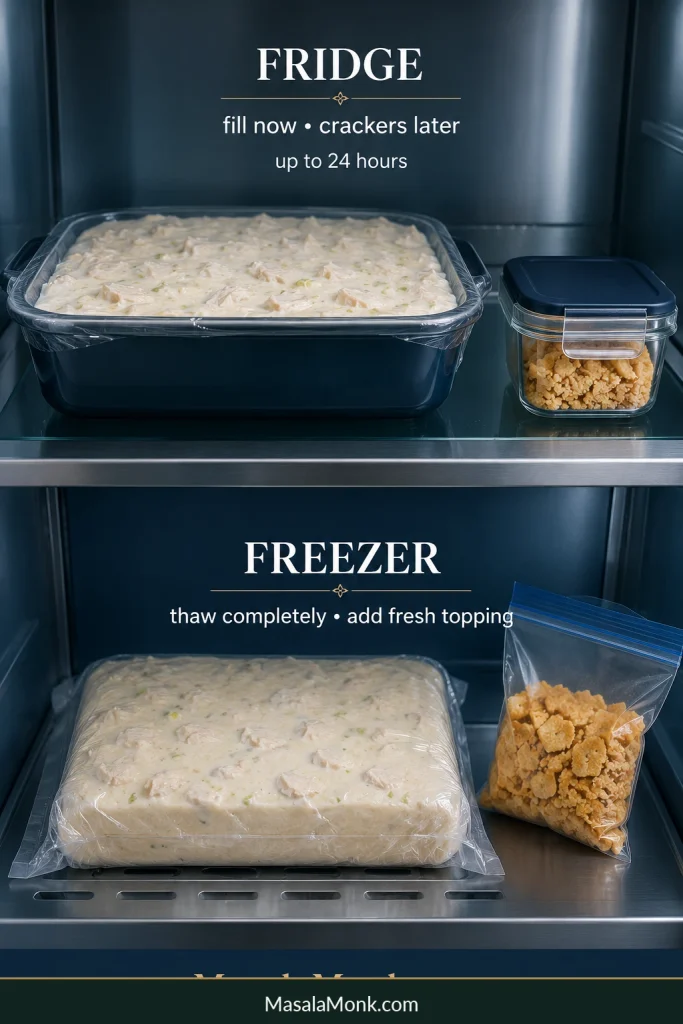
Yes. Assemble the chicken filling up to 24 hours ahead, cover and refrigerate it, then add the buttered cracker topping just before baking.
This is the useful kind of make-ahead dinner: the messy part can be finished before anyone is hungry.
A refrigerator-cold casserole often needs about 5–10 extra minutes, and a deeper dish can take longer. Start checking in that range, then let the center temperature and visual cues decide when dinner is ready.
Using glass bakeware? Follow the manufacturer’s guidance on moving the dish between refrigerator and oven temperatures.
Can You Freeze It?
The casserole freezes best without the cracker topping. Wrap it well and use it within about 3 months for best quality.
Thaw completely in the refrigerator; depending on the depth of the casserole, allow overnight or longer. Add freshly buttered crackers before baking.
Fresh gives you the smoothest sauce and crispest top. Freezing makes sense when having dinner ready matters more than getting the very crispiest topping.
Store and Reheat Leftovers
Refrigerator: refrigerate leftovers within 2 hours and use them within about 3–4 days.
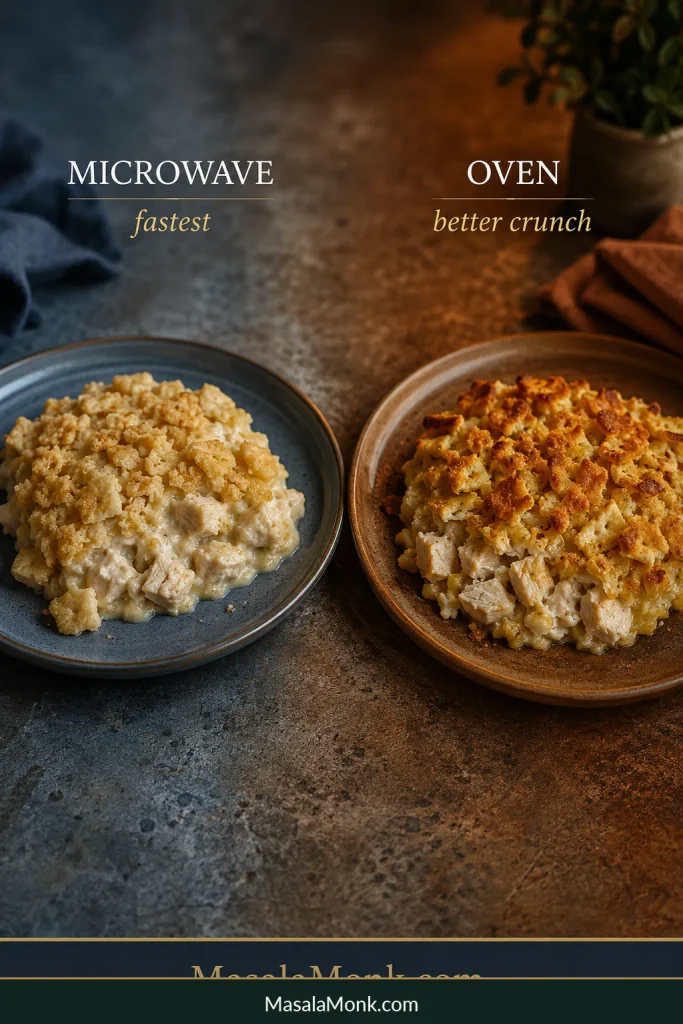
The microwave is fastest for individual portions, although the crackers soften. Oven reheating takes longer but brings back more of that toasted texture. Reheated leftovers should reach 165°F / 74°C.
Pan Size, Doubling & Feeding a Crowd
For one batch, use a 9×9-inch baking dish. When doubling, two 9×9 dishes give the most predictable result because each casserole keeps roughly the same depth as the original.
| Pan / Batch | Recommendation | What Changes |
|---|---|---|
| 9×9 in / ~2 qt | Best for one batch | Good filling depth and topping-to-chicken balance |
| 11×7 in | Good alternative when capacity is similar | Result stays close to the base recipe |
| 9×13 with one batch | Possible but not preferred | The casserole becomes noticeably shallower and may heat faster |
| Two 9×9 dishes, doubled recipe | Most predictable double batch | Depth and bake behavior stay closest to the original |
| Deep 9×13, doubled recipe | One-pan option | The casserole is deeper, needs good headroom and usually takes longer to heat through |
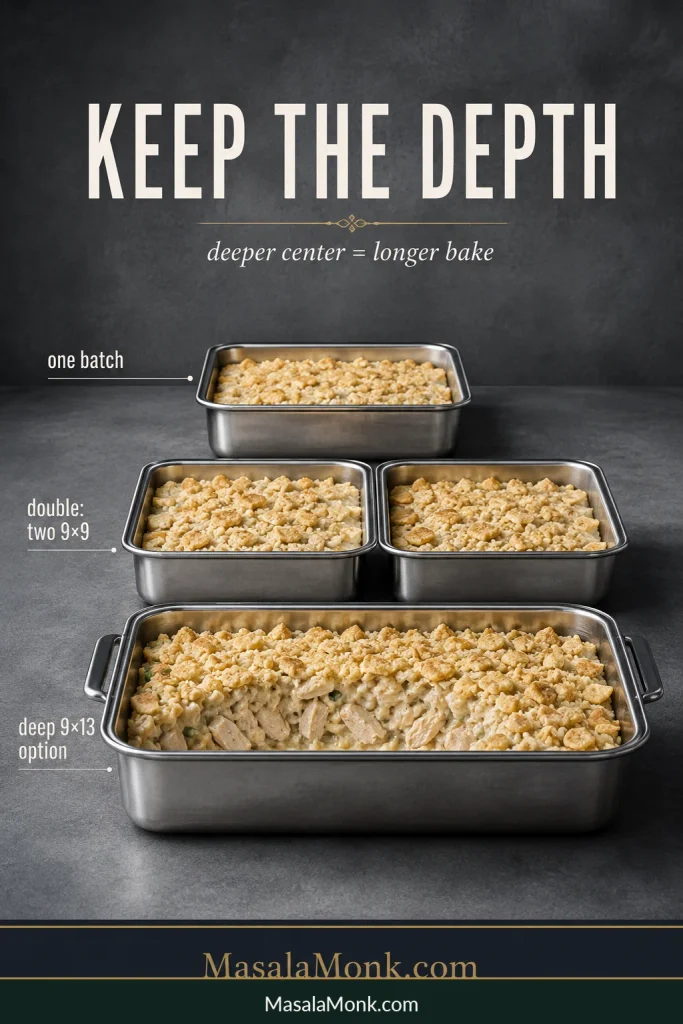
The ingredients double; the baking time usually doesn’t. Two 9×9 dishes can stay close to the original timing. A doubled batch in one deep 9×13 needs longer because the center has farther to heat.
For dinner, count on roughly 6 hearty main-course portions from the base batch. With substantial sides, it can stretch to around 8 smaller servings. A basket of soft dinner rolls makes an easy addition when you’re feeding a larger table.
What to Serve With It
Serve Million Dollar Chicken Casserole with a crisp salad or green vegetable for contrast, or add rice, rolls, egg noodles or bread for a fuller comfort-food meal.
The casserole already brings plenty of richness, so smaller portions often feel better beside something fresh, green or lightly acidic.
A cold cucumber salad with vinegar and dill is especially good here: crisp, cool and bright against the warm sauce.

Roasted broccoli, green beans, asparagus or a simple green salad work for the same reason. They don’t compete with the casserole; they give it some space.
For the full comfort-food plate, mashed potatoes, buttered egg noodles or crusty bread all fit naturally beside it.
Rice works beautifully too. Keep it on the side; if you need help with the pot itself, this guide to cooking rice covers stovetop, rice-cooker and Instant Pot methods. Dry rice or noodles baked into the casserole need their own liquid and cooking plan.
Easy Comfort Food Should Still Be Reliable
There is a reason casseroles like this get assembled before busy evenings, carried to potlucks and dropped off when somebody could use a dinner they don’t have to think about.
After you’ve made it once, most of the details turn into routine: bowl, baking dish, buttery crumbs, oven.
Then comes the best part—the smell of those crackers turning buttery and toasted, the sauce bubbling around the edges, and a few quiet minutes on the counter before the serving spoon goes in.