
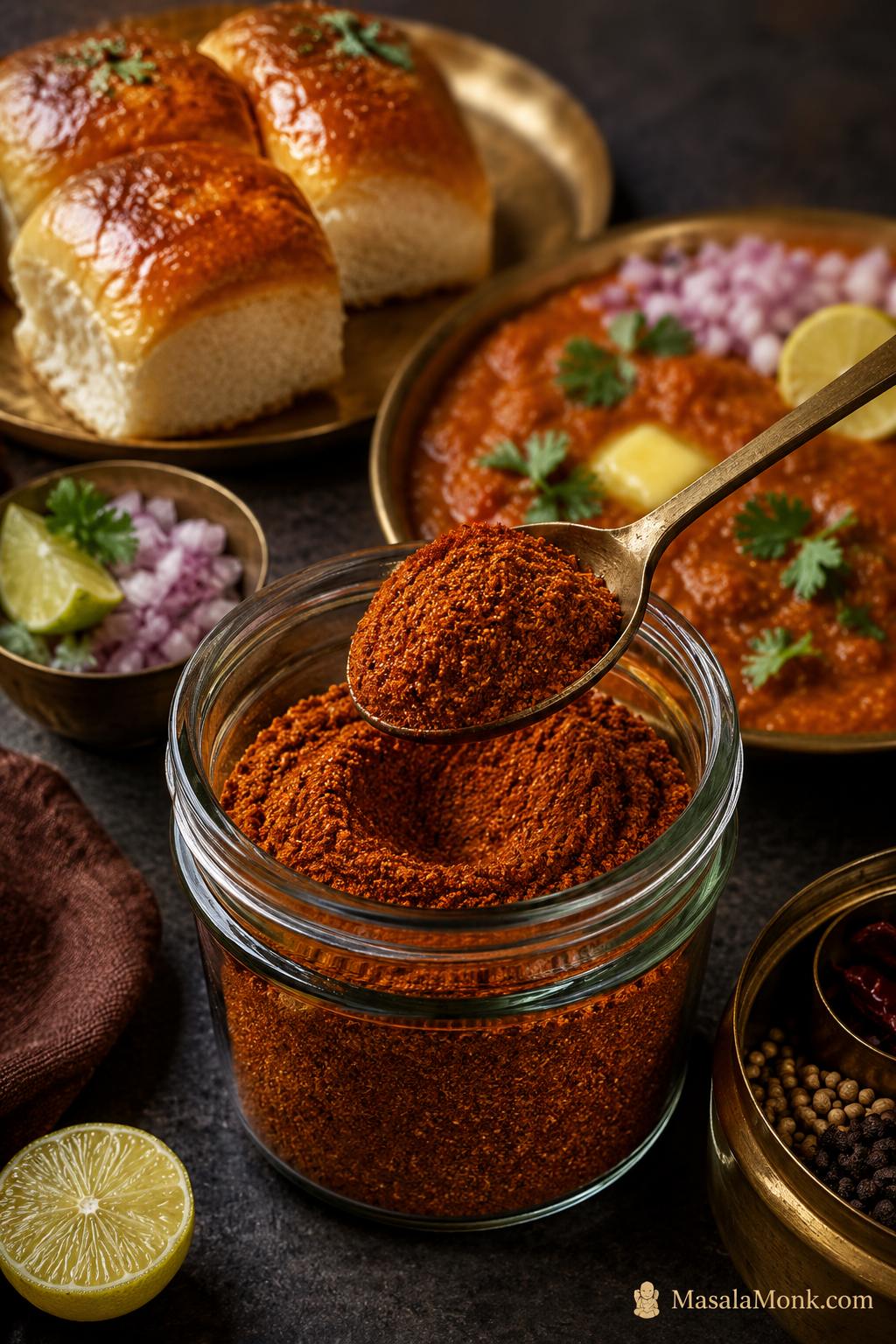
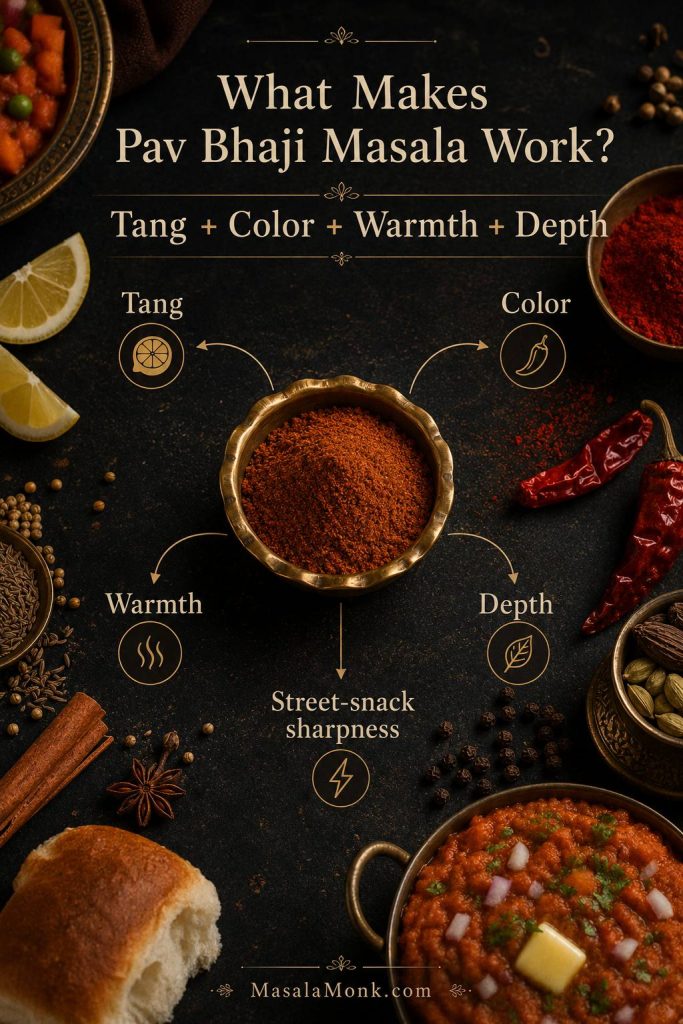
A good pav bhaji masala recipe is often the difference between a pan of mashed vegetables and bhaji that actually tastes like pav bhaji. With the right blend, the dish gets its tang, color, warmth, Mumbai-style aroma, and that buttery, chatpata depth people keep trying to recreate at home.
The confusing part is that this masala is not one fixed thing. One packet may taste too salty. Another may taste flat. A homemade batch can smell wonderful but turn bitter if the spices are roasted too hard. Sometimes the bhaji looks pale, tastes dusty, or never gets that deep snack-shop finish no matter how much powder you add.
So instead of stopping at a spice list, let’s solve the whole problem: how to make the blend fresh, how much to use, which store-bought options are worth trying, what to use in an emergency, and how to get bhaji that tastes warm, tangy, buttery, and rounded instead of flat, dusty, or over-spiced.
The good news is that pav bhaji is forgiving. You do not need the “one true” packet or a perfect spice shelf. You need a blend with warmth and tang, enough butter and tomato to carry it, and the patience to let the bhaji simmer before you decide what is missing.
The goal is that familiar first bite: soft pav, glossy bhaji, butter on top, onion and lemon on the side, and a masala flavor that feels deep without tasting muddy.
Contents
Quick Answer: Homemade or Store-Bought Pav Bhaji Masala?
The best choice depends on what you need. If you want the freshest aroma and full control over salt, heat, and tang, make the homemade blend below. If you want convenience, a good packet works well, but every brand has a different strength.
| Best choice | Use it when |
|---|---|
| Homemade blend | Best for fresh aroma, less hidden salt, and better control over chilli, tang, and warmth. |
| Everest Pav Bhaji Masala | Familiar, easy to find, and useful as a first packet. |
| Badshah Pav Bhaji Masala | Bolder and more Mumbai-style in direction. |
| MDH Pav Bhaji Masala | Classic household masala-box choice. |
| Organic Tattva or Pure & Sure | Useful for kitchens that already prefer organic spice blends. |
For 4 servings of pav bhaji, start with 2–3 teaspoons homemade masala or about 1 tablespoon store-bought masala. Cook it into the tomatoes and butter, simmer with the vegetables, then add more only in small ½-teaspoon steps if the flavor still feels weak.
What Is Pav Bhaji Masala?
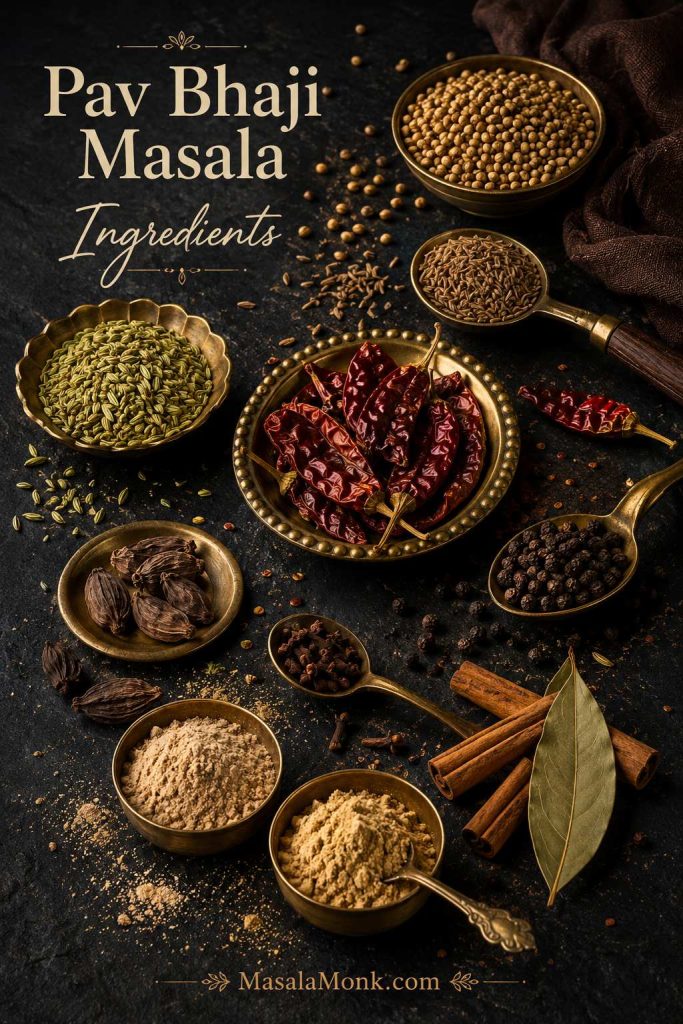
Pav bhaji masala is a spice blend made for pav bhaji, the Mumbai street-food dish of mashed vegetables cooked with tomatoes, butter, chillies, and spices, then served with toasted pav. The blend usually includes coriander, cumin, fennel, dried red chillies, black pepper, cinnamon, cloves, black cardamom, bay leaf, amchur, dry ginger, and sometimes stone flower, black salt, mace, nutmeg, turmeric, or other warming spices.
Garam Masala vs Pav Bhaji Masala
It is not the same as garam masala. Garam masala can make bhaji warm, but it will not give the same tangy, red-orange, street-snack profile on its own. This blend is sharper, brighter, and built to stand up to potatoes, tomatoes, butter, and bread.
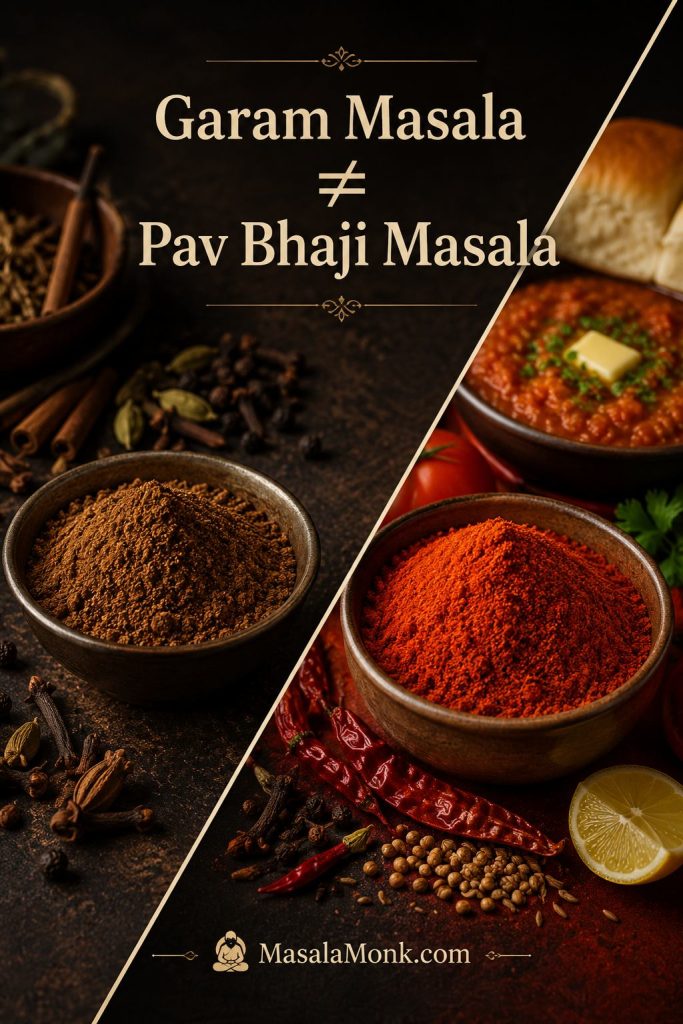
If garam masala is all you have, do not use it alone; jump to the emergency pav bhaji masala substitute for a better balance of color, tang, and warmth.
If you want to understand the broader warm-spice base first, MasalaMonk’s authentic Indian garam masala recipe is a helpful companion. Some spices overlap, but the goal here is tangier, sharper, and more snack-focused.
Homemade vs Store-Bought Pav Bhaji Masala
Both homemade and store-bought masala can make excellent bhaji. Homemade gives you freshness and control. A ready-made blend gives you speed and consistency. The bigger question is how often you cook pav bhaji and how much control you want over salt, chilli, and tang.
| Option | Why it works | Watch out for |
|---|---|---|
| Homemade | Fresh aroma, adjustable chilli, no mandatory salt, and better control over tang and heat. | Needs whole spices and a grinder. Over-roasted spices can turn bitter. |
| Store-bought | Convenient, consistent, easy for quick cooking, and practical if you make pav bhaji casually. | Brand strength varies across salt, heat, color, and tang. |
Frequent pav bhaji cooks will get more value from a small homemade batch. For occasional cooking, a good packet is practical. Either way, the flavor depends not just on the spice mix but on whether it is cooked properly into the bhaji.
If you enjoy making spice blends from scratch, MasalaMonk’s authentic sambar masala recipe follows a similar make-ahead logic: roast carefully, cool fully, grind fresh, and store the powder dry.
Pav Bhaji Masala Ingredients
A good powder needs body, heat, tang, color, and depth. The ingredient list looks long, but most of the flavor comes from a few core spices. The optional spices are there for a deeper packet-style flavor or a more Mumbai-style finish.
Think of the blend in layers: coriander and cumin build the body, chilli and amchur bring color and tang, and the darker spices add that deep background aroma that makes the bhaji taste rounded instead of plain.
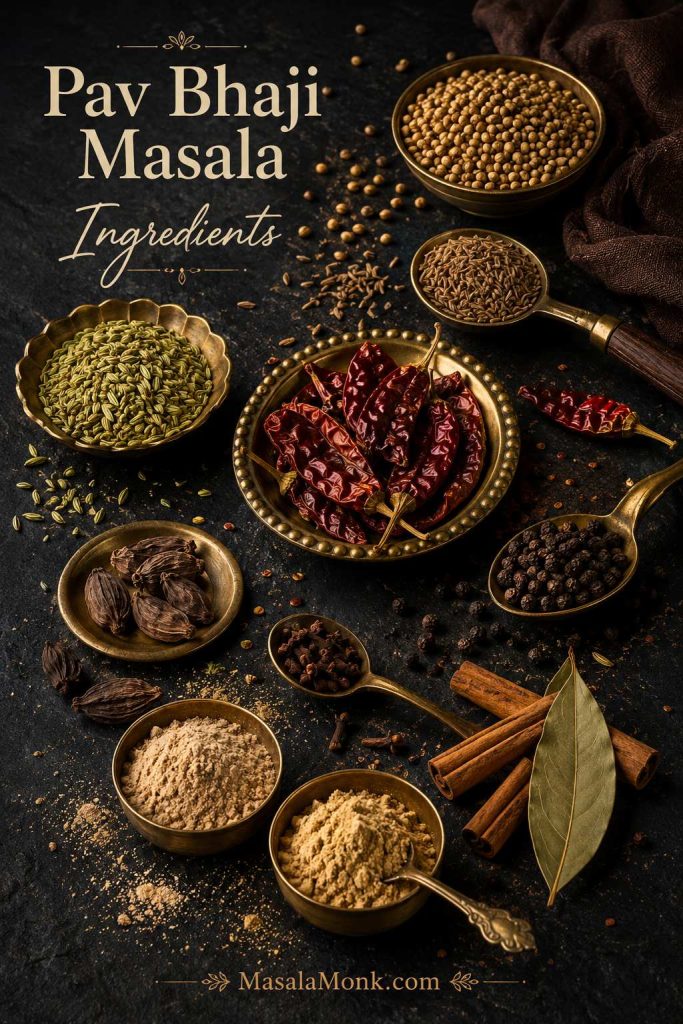
Already have the spices ready? Go straight to the grams and spoon measurements or the step-by-step method.
Core Spices
| Ingredient | What it does |
|---|---|
| Coriander seeds | Forms the body of the blend with citrusy, warm, slightly sweet flavor. |
| Cumin seeds | Brings earthy tawa-style depth. |
| Fennel seeds | Lifts the powder with a sweet aromatic note so it does not taste too heavy. |
| Kashmiri dried red chillies | Gives red-orange color and mild heat. Use hotter chillies only if you want a spicier batch. |
| Black peppercorns | Sharpens the heat in a way that works well with butter and potatoes. |
| Cinnamon and cloves | Bring warm, sweet, intense spice notes. Both are strong, so use them carefully. |
| Black cardamom | Creates smoky depth and a more pav bhaji stall-style aroma. |
| Bay leaf | Builds background warmth and savory complexity. |
| Amchur powder | Supplies the tang that separates this masala from garam masala. |
| Dry ginger powder | Finishes the blend with warmth and a subtle dry spice note. |
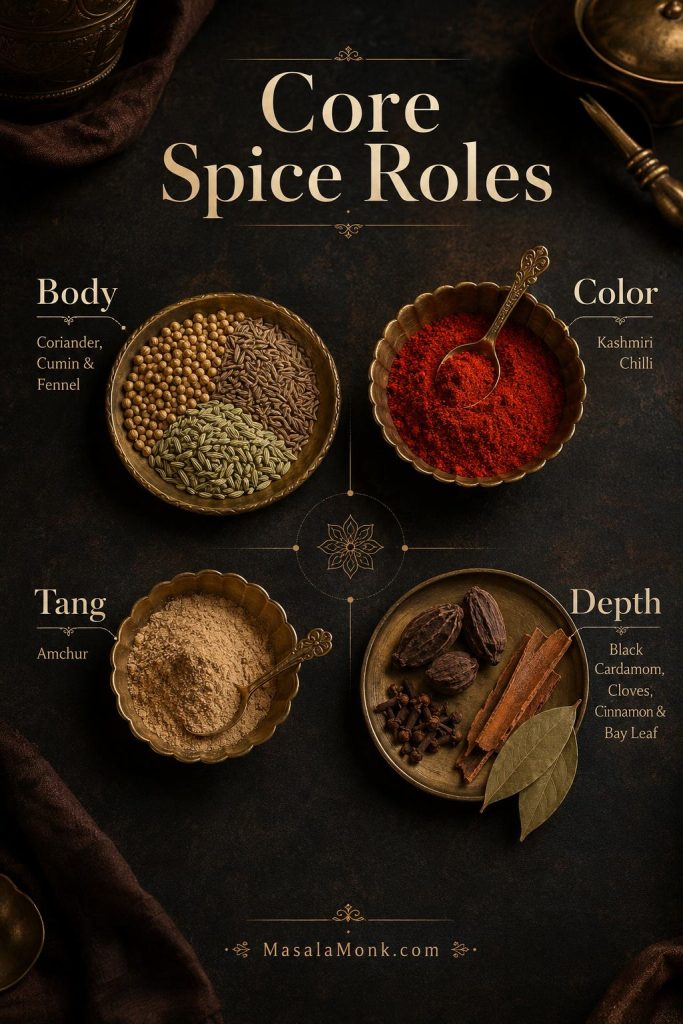
This blend is coriander-forward because pav bhaji needs body before it needs heat. Cumin and fennel keep the base earthy but not heavy, Kashmiri chillies give color without harshness, and amchur is added after roasting so the tang stays clean. The darker spices — black cardamom, cloves, cinnamon, bay leaf, and optional stone flower — should stay in the background. If they dominate, the bhaji tastes more like generic heavy masala than pav bhaji.
Street-Style Spices: Stone Flower, Amchur and Black Cardamom
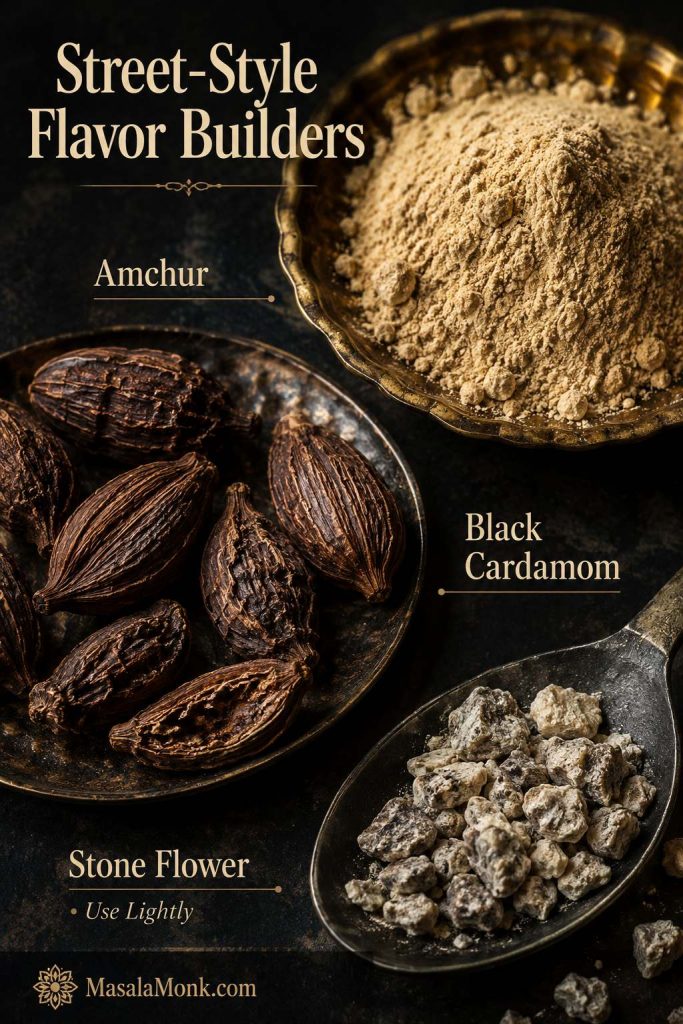
If you want the blend to lean more Mumbai-style, three ingredients matter most: amchur, black cardamom, and a tiny amount of stone flower, also called dagad phool or pathar phool.
Amchur gives tang. Black cardamom adds smoky depth. Stone flower gives a slightly smoky, earthy, restaurant-style note, but it is powerful and not always easy to use. If your stone flower smells dusty, muddy, or stale, skip it.
Optional Spices You Can Skip
- Stone flower: good for depth, but optional and easy to overdo.
- Mace or nutmeg: adds packet-style depth; use only a tiny pinch.
- Black salt: gives a chaat-like savory note, but can make the blend salty.
- Turmeric: helps color, but too much can taste earthy.
- Star anise: adds sweet depth; one small piece is enough.
Do not let the long spice list scare you. Get the coriander-cumin base right, use Kashmiri chilli for color, add amchur for tang, and avoid burning the spices. That will get you much closer than simply adding garam masala to mashed vegetables.
Homemade Pav Bhaji Masala Recipe
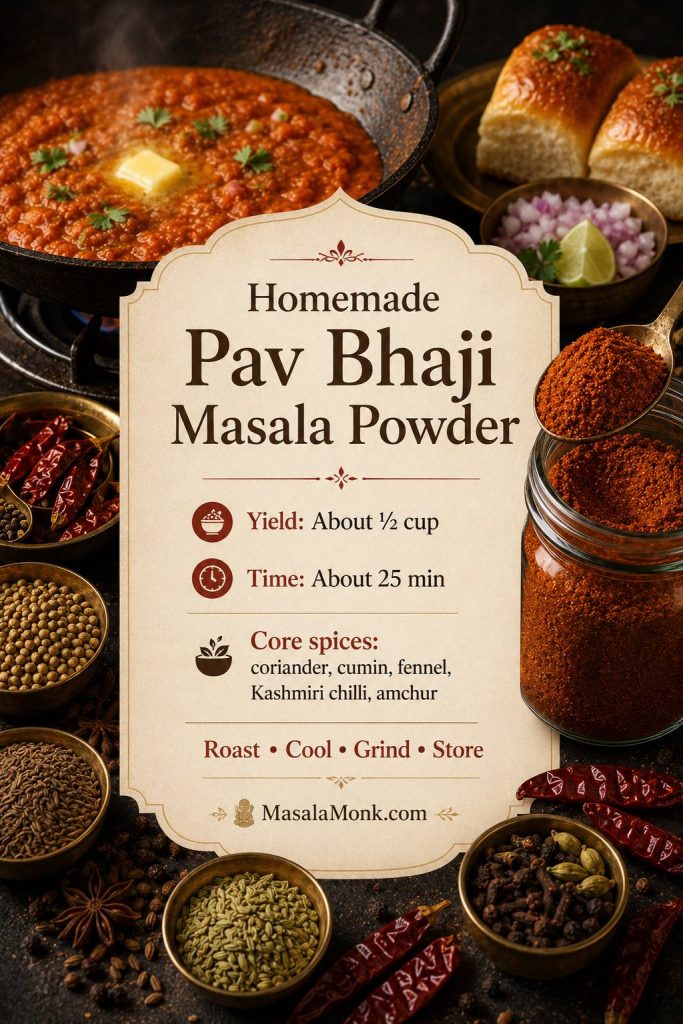
This homemade pav bhaji masala recipe makes a practical small batch: enough for several rounds of pav bhaji, but not so much that the jar sits around until the aroma fades. The spoon measures are the working recipe; the gram weights are approximate because whole spices vary in size and freshness.
I prefer making this as a small batch because the aroma is noticeably better in the first few weeks. Bigger batches are convenient, but once the powder starts smelling dull in the jar, the bhaji needs more help from butter, lemon, and fresh coriander.
Measurements in Grams and Spoons
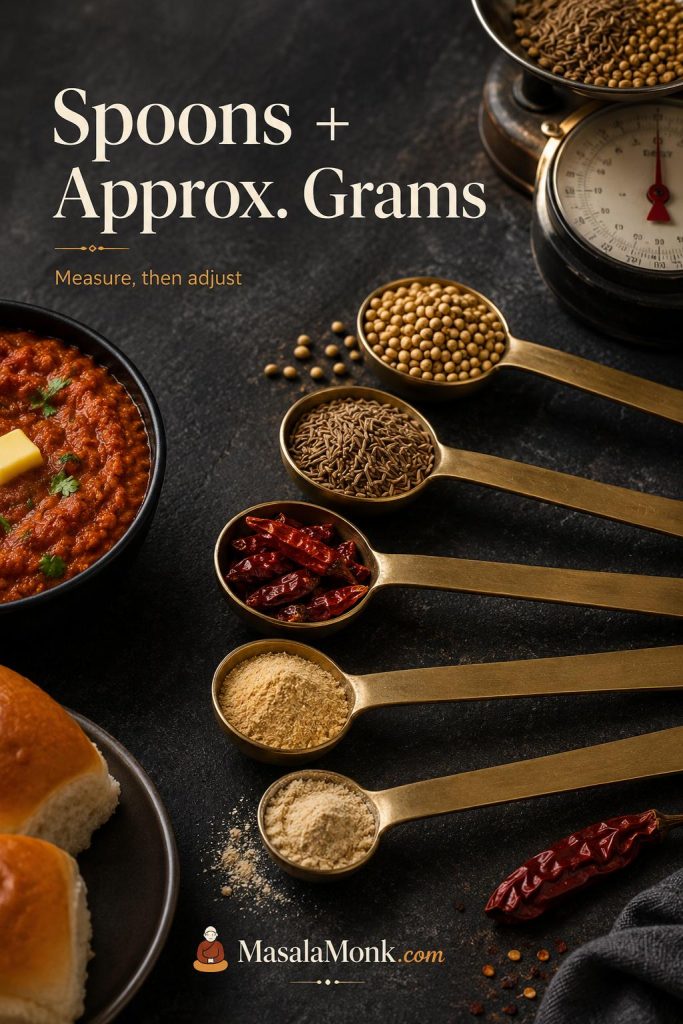
| Ingredient | Spoon measure | Approximate grams |
|---|---|---|
| Coriander seeds | 4 tbsp | 20–24g |
| Cumin seeds | 2 tbsp | 12–14g |
| Fennel seeds | 1 tbsp | 6g |
| Dried Kashmiri red chillies | 6–8 whole chillies | 8–12g, depending on size |
| Black peppercorns | 1½–2 tsp | 4–5g |
| Cinnamon | 1 stick, about 2 inches | 2–3g |
| Cloves | 8–10 cloves | 2g |
| Black cardamom | 2 pods | 3–4g |
| Bay leaf | 1–2 leaves | 1g |
| Star anise | 1 small piece | 1g |
| Amchur powder | 1 tbsp | 7–8g |
| Dry ginger powder | ½–1 tsp | 1–2g |
| Turmeric powder, optional | ½ tsp | 1–2g |
| Black salt, optional | ½ tsp | 2–3g |
| Stone flower / dagad phool, optional | Tiny pinch | Less than 1g |
| Mace or nutmeg, optional | Tiny pinch | Less than 1g |
Step-by-Step Method
1. Check and clean the spices
Pick through the whole spices and remove any stones, stems, dust, or stale pieces. Wipe chillies if needed. Avoid washing the spices unless you plan to dry them completely afterward, because moisture can make the powder clump or spoil faster.
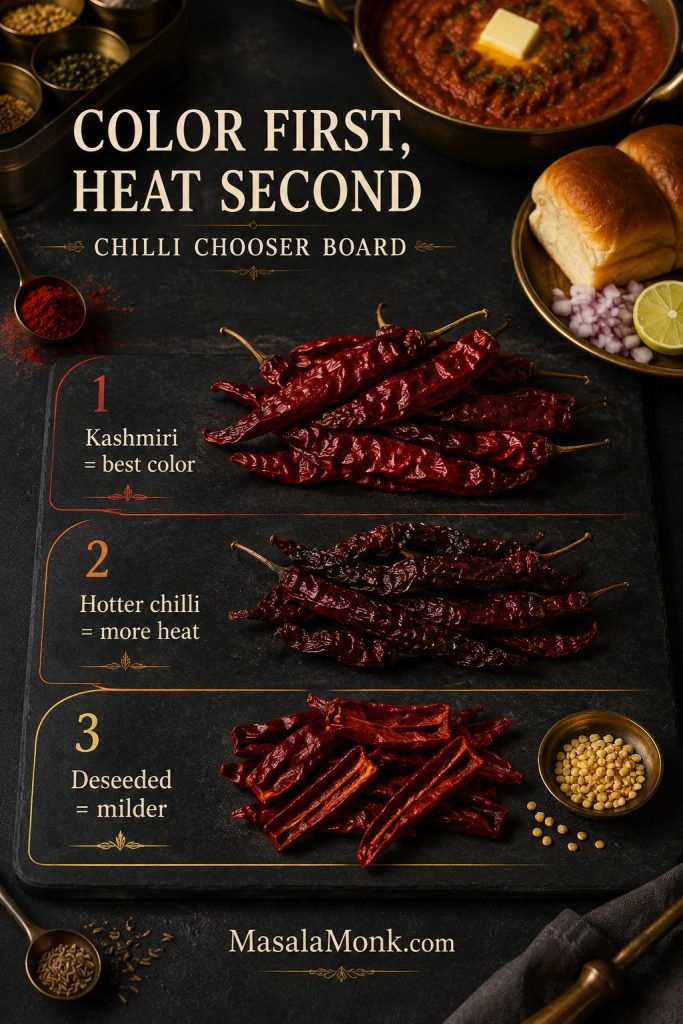
2. Choose the chillies based on color and heat
Use Kashmiri dried red chillies if you want good color with mild heat. For a spicier batch, replace 1–2 Kashmiri chillies with a hotter dried chilli. For a family-friendly version, shake out some of the chilli seeds before roasting.
3. Dry roast the whole spices on low heat
Heat a thick-bottomed pan on low to low-medium heat. Add coriander seeds, cumin seeds, fennel seeds, dried red chillies, black peppercorns, cinnamon, cloves, black cardamom, bay leaf, star anise, and optional stone flower.
Roast gently for 5–7 minutes, stirring often. Stop when the spices smell awake, not when they look dark. The coriander should smell warm, the chillies should look slightly deeper, and the whole pan should smell lively rather than smoky or scorched.
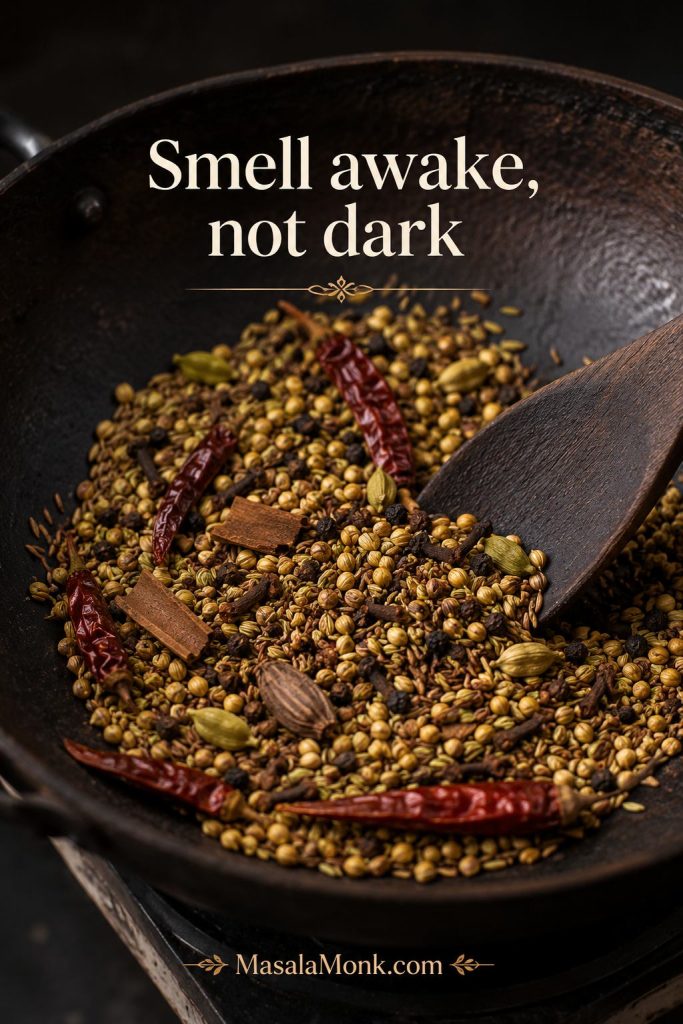
If the chillies darken faster than the other spices, remove them from the pan early and keep roasting the coriander, cumin, and larger spices for another minute or two.
4. Cool completely before grinding
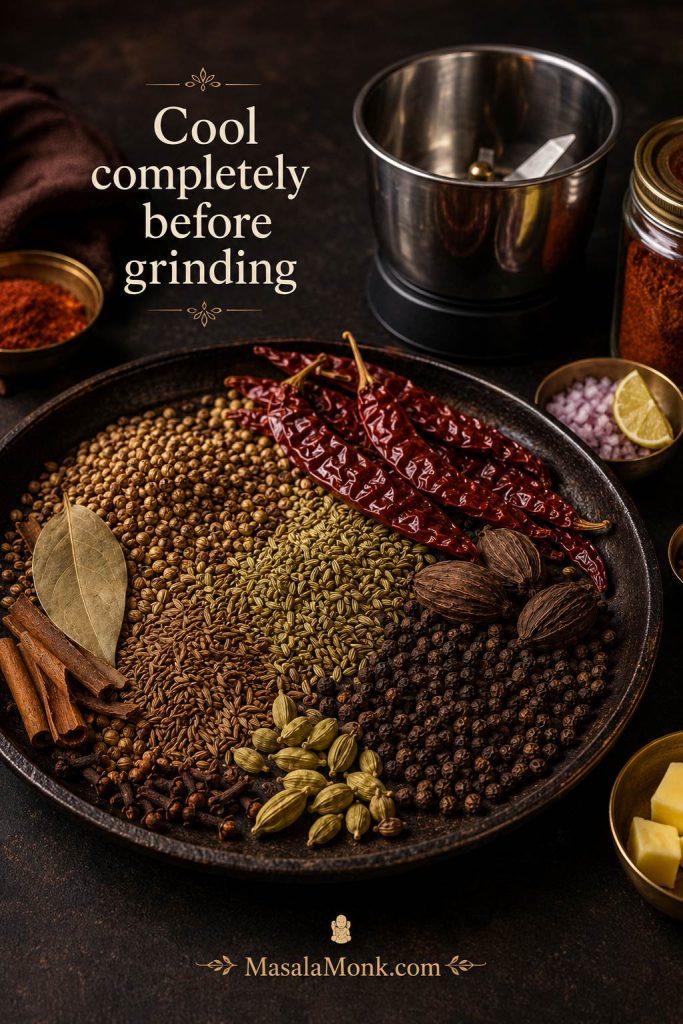
Transfer the roasted spices to a plate and let them cool fully for about 10 minutes. This is not a fussy step. Warm spices can trap steam in the grinder, dull the aroma, and make the powder clumpy.
5. Add the powdered spices after cooling
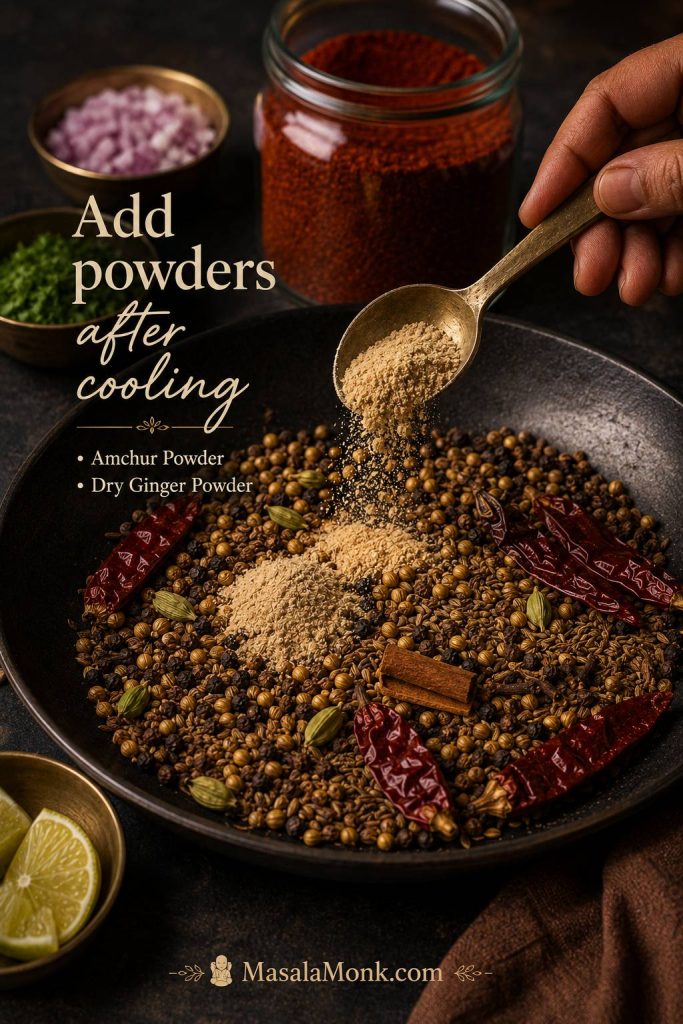
Once the roasted spices are cool, add amchur powder, dry ginger powder, optional turmeric, optional black salt, and optional mace or nutmeg. These powdered spices can scorch quickly, so they are better added after the pan step.
6. Grind in short pulses
Grind the mixture in a dry spice grinder or the dry jar of a mixer grinder. Pulse a few times first, then grind until fine. Avoid running the grinder continuously for too long because heat can dull the aroma.
The finished powder should smell warm, tangy, and rounded. If it smells harsh, burnt, or dusty, the spices were likely stale or roasted too aggressively.
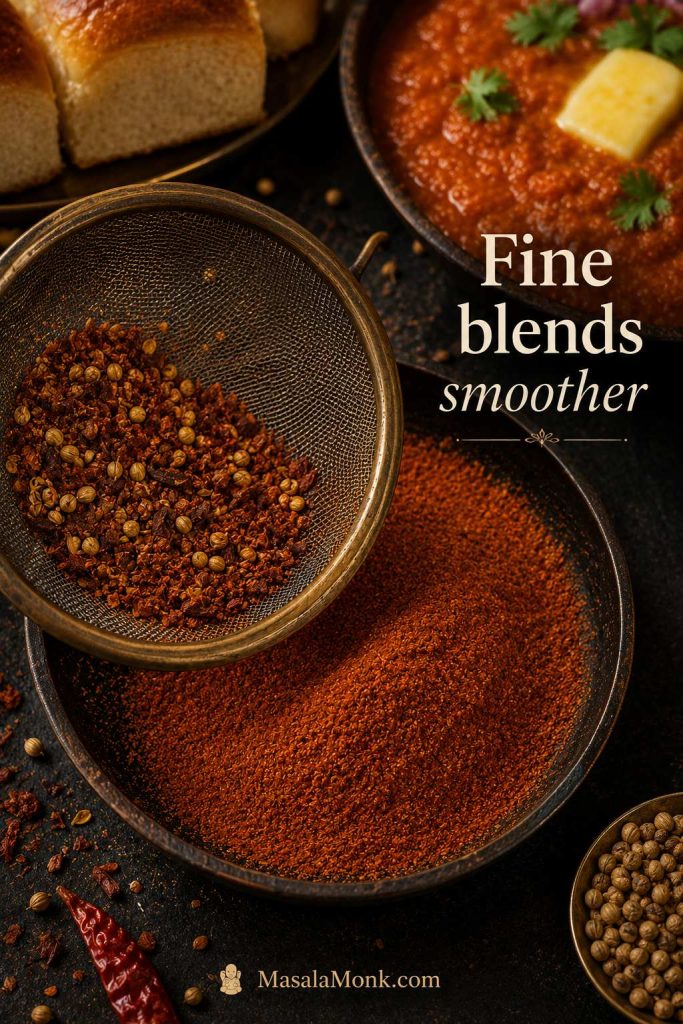
7. Sieve if needed
If the powder is coarse, pass it through a sieve and regrind the larger bits. A slightly coarse texture is still usable, but a finer powder blends more smoothly into bhaji.
8. Store in an airtight jar
Transfer the powder to a clean, dry, airtight glass jar. Keep it away from heat, sunlight, steam, and wet spoons.
Recipe Card: Homemade Pav Bhaji Masala Powder
Ingredients
- 4 tbsp coriander seeds
- 2 tbsp cumin seeds
- 1 tbsp fennel seeds
- 6–8 dried Kashmiri red chillies
- 1½–2 tsp black peppercorns
- 1 cinnamon stick, about 2 inches
- 8–10 cloves
- 2 black cardamom pods
- 1–2 bay leaves
- 1 small star anise
- 1 tbsp amchur powder
- ½–1 tsp dry ginger powder
- ½ tsp turmeric powder, optional
- ½ tsp black salt, optional
- Tiny pinch stone flower / dagad phool, optional
- Tiny pinch mace or nutmeg, optional
Method
- Check and clean the spices.
- Choose Kashmiri chillies for color and adjust seeds for heat.
- Dry roast the whole spices on low to low-medium heat for 5–7 minutes.
- Cool the roasted spices completely for about 10 minutes.
- Add amchur, dry ginger, and optional powdered spices.
- Grind in short pulses until fine and aromatic.
- Sieve and regrind coarse bits if needed.
- Store in a clean airtight glass jar.
Notes
- For 4 servings of pav bhaji, start with 2–3 teaspoons of this homemade blend.
- Use Kashmiri chillies for color and mild heat. Add hotter chillies only if you want a spicier version.
- If the chillies darken too quickly while roasting, remove them early and continue roasting the sturdier spices.
- Add amchur, dry ginger, turmeric, black salt, mace, and nutmeg only after the roasted whole spices cool. Powdered spices can scorch quickly in the pan.
- The final weight can vary because dried chillies, bay leaves, cardamom pods, and grind fineness all change the volume and weight of the powder.
- Skip black salt if you prefer to adjust salt separately in the bhaji.
- For a brighter red-orange bhaji, use Kashmiri chilli rather than extra turmeric.
How Much Pav Bhaji Masala to Use
This is where many pav bhaji recipes become confusing. Homemade powder, Everest-style masala, Badshah-style masala, MDH-style masala, and organic blends do not all have the same strength. One packet may be saltier, another may taste sharper, a third may run hotter, and milder blends may need more quantity to show up in the bhaji.
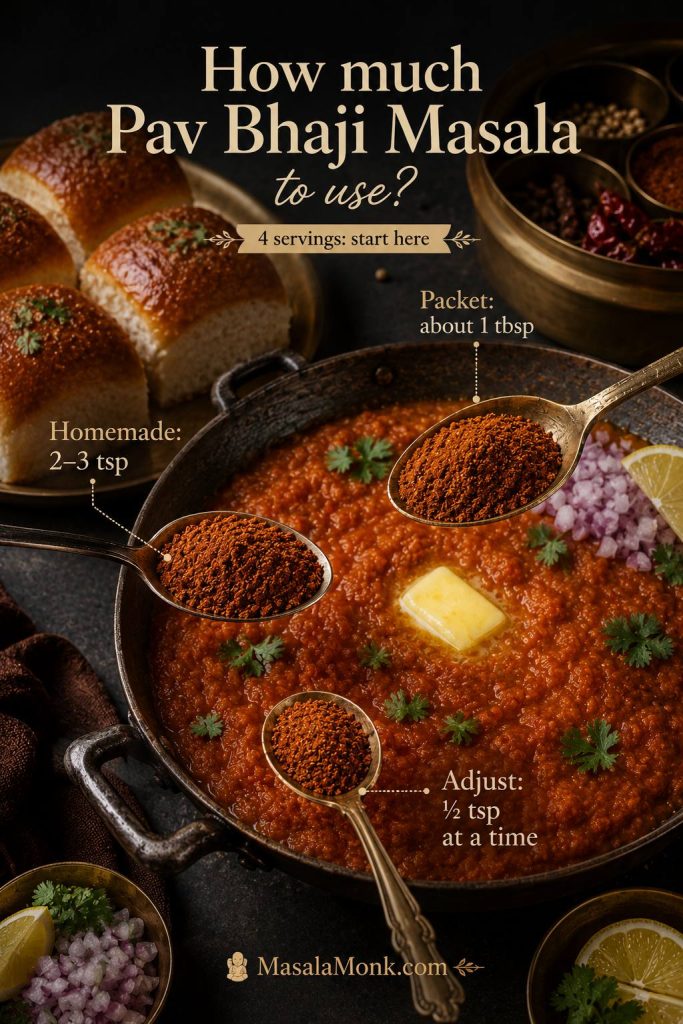
| Masala type | Starting amount for 4 servings | Adjustment note |
|---|---|---|
| Fresh homemade blend | 2–3 tsp | Use ½ tsp more only if the bhaji still tastes flat after simmering. |
| Store-bought blend | 1 tbsp | Start lower if the brand is salty, hot, or very strong. |
| Strong/chatpata brand | 2 tsp–1 tbsp | A little can dominate quickly, so build the flavor gradually. |
| Milder brand | 1 tbsp | The bhaji may need ½–1 tsp more after the vegetables cook down. |
| Final adjustment | ½ tsp at a time | Use only after the raw spice taste has cooked out. |
If the bhaji tastes almost right but still dull, pause before adding another spoon of powder. Usually the missing piece is butter, salt, lemon, or simmering time. When the pan is already salty, reach for butter, tomato, lemon, coriander, or unsalted homemade powder before adding more packet masala.
If the amount looks right but the bhaji still tastes flat, raw, dusty, or too salty, go to the flavor and texture fixes before adding more powder.
The same measured-spice logic works in simple vegetable dishes too. For example, a dry potato-and-cauliflower dish like MasalaMonk’s easy aloo gobi recipe also depends on letting spices coat the vegetables properly instead of tasting raw on the surface.
How to Bloom Pav Bhaji Masala in the Bhaji
The timing matters. The blend tastes best when it is cooked into the bhaji, not sprinkled over the finished dish like a garnish.
- Cook onions, garlic, tomatoes, and capsicum until the tomatoes soften and the pan looks glossy.
- Add butter or oil, then add the masala.
- Fry for 30–60 seconds on medium-low heat so it blooms without burning.
- Add the boiled vegetables and mash everything together.
- Simmer for 5–10 minutes before deciding whether the flavor needs anything else.
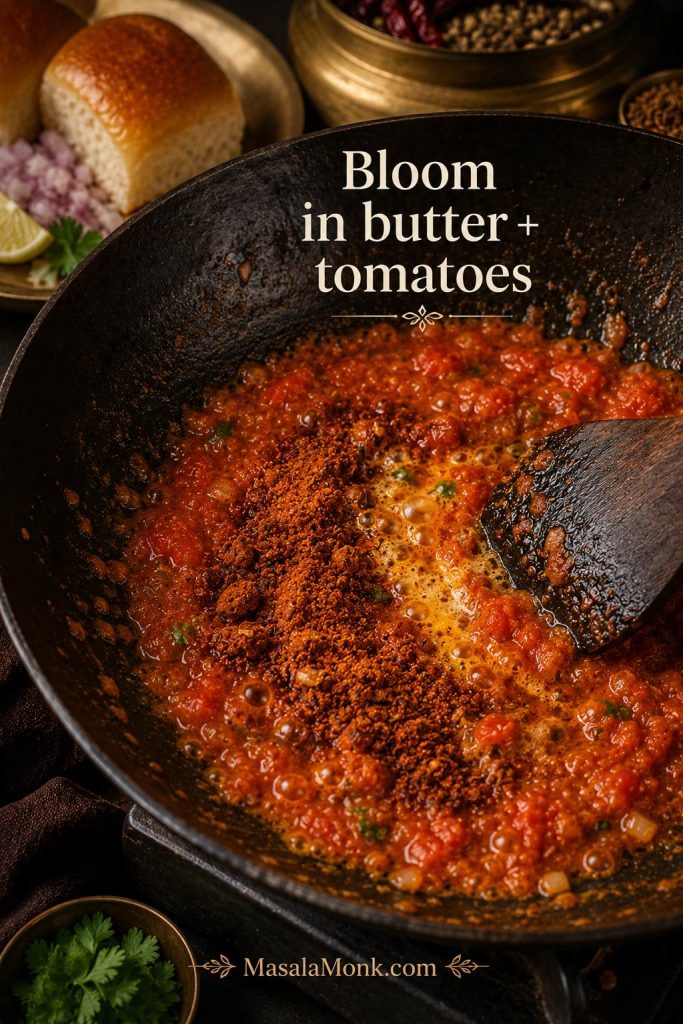
This is the moment the powder turns into bhaji flavor: the tomatoes look glossier, the butter carries the spice, and the raw edge disappears. If the bhaji tastes like raw spice powder, the masala was probably added too late or not cooked long enough with the tomatoes and butter.
When it is right, the pan stops smelling like separate tomato and spice powder and starts smelling like pav bhaji.
What Good Pav Bhaji Masala Should Do in Bhaji
When the masala is working, the bhaji should not taste like separate potatoes, tomatoes, and spice powder. It should taste cohesive: warm from the whole spices, tangy from amchur or lemon, rounded by butter, and bright enough that one buttered pav is never quite enough.
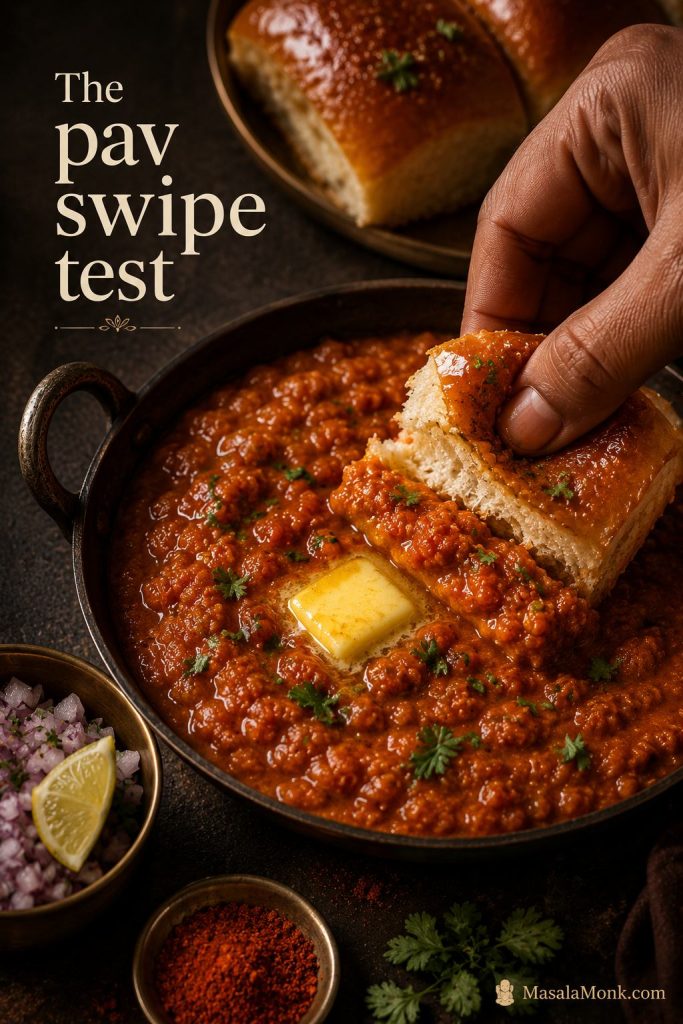
A heavy-tasting bhaji usually needs acid or freshness. Sharp, powdery flavor means the powder needs more time in the pan. When the bhaji tastes rich but sleepy, add lemon, coriander, or a tiny final pinch after the main cooking is done.
The moment it comes together is easy to recognize: the bhaji looks glossy, the masala stops smelling raw, the butter rounds the edges, and the lemon-onion-coriander finish makes the whole pan taste brighter.
How to Store Pav Bhaji Masala
A homemade batch tastes best when it is fresh. Whole spices keep their aroma longer than ground spices, so once you grind the blend, storage matters.
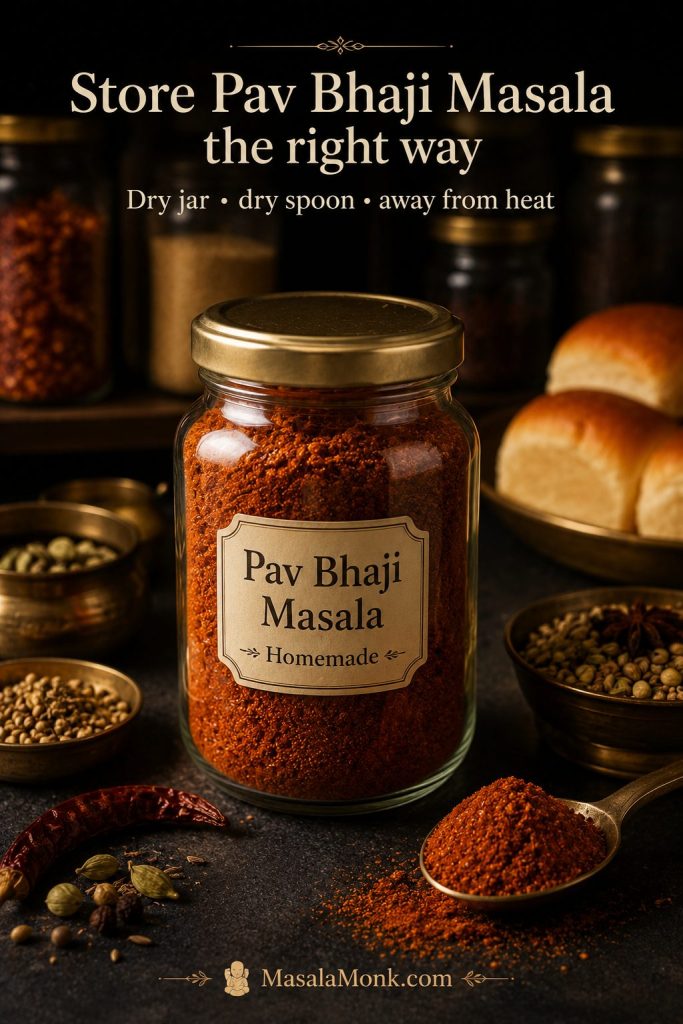
- Use a clean, dry, airtight glass jar.
- Keep the jar away from stove heat, sunlight, and steam.
- Always use a dry spoon.
- Make smaller batches if you do not cook pav bhaji often.
- Use within 2–3 months at room temperature for best aroma.
- Refrigerate up to about 6 months if tightly sealed.
- If freezing, seal well so the powder does not absorb freezer smells.
A dull-smelling masala will taste dull in the bhaji too. For freezer storage, let the container come closer to room temperature before opening it so condensation does not hit the powder.
If your stored masala has clumped, faded, or started tasting bitter, check the color, bitterness, and storage fixes.
Best Pav Bhaji Masala Brands in India
A packet can still make excellent bhaji when it suits your taste and you cook it properly. The trick is not chasing the loudest masala on the shelf, but choosing one that matches the kind of bhaji you like: mild and familiar, bolder and more Mumbai-style, lower-salt, organic, or simply easy to find.
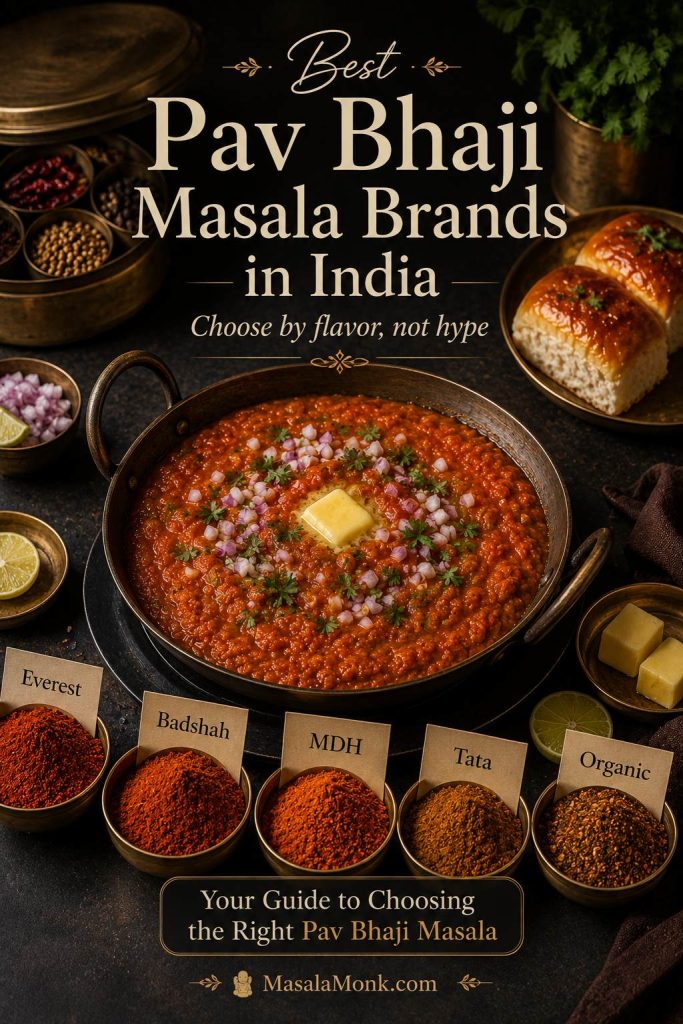
Store-bought pav bhaji masala is useful when you want convenience or do not keep many whole spices at home. Choose by flavor style, not by hype: familiar all-rounder, bolder Mumbai-style, classic household, organic option, or easy backup. This is a practical buying guide, not a blind taste-test ranking, so treat these as starting points.
Everest and Badshah are the strongest starting recommendations: Everest for the most familiar all-rounder direction, Badshah when your bhaji usually tastes too mild. MDH fits the classic pantry lane, while Tata, Catch, MTR, Suhana, Shan, and Zoff are better treated as availability or preference picks. Even the best packet still needs the same basics: cooked tomatoes, enough butter, proper mashing, and a final lift of lemon or coriander.
Whichever packet you buy, choose sealed, clearly labelled masala from a source you trust. Avoid loose ground spice blends if you cannot judge freshness, storage, or handling; FSSAI’s safe ground spices guidance is a useful reminder that ground spices need proper packaging and quality control.
Choose by Flavor Problem
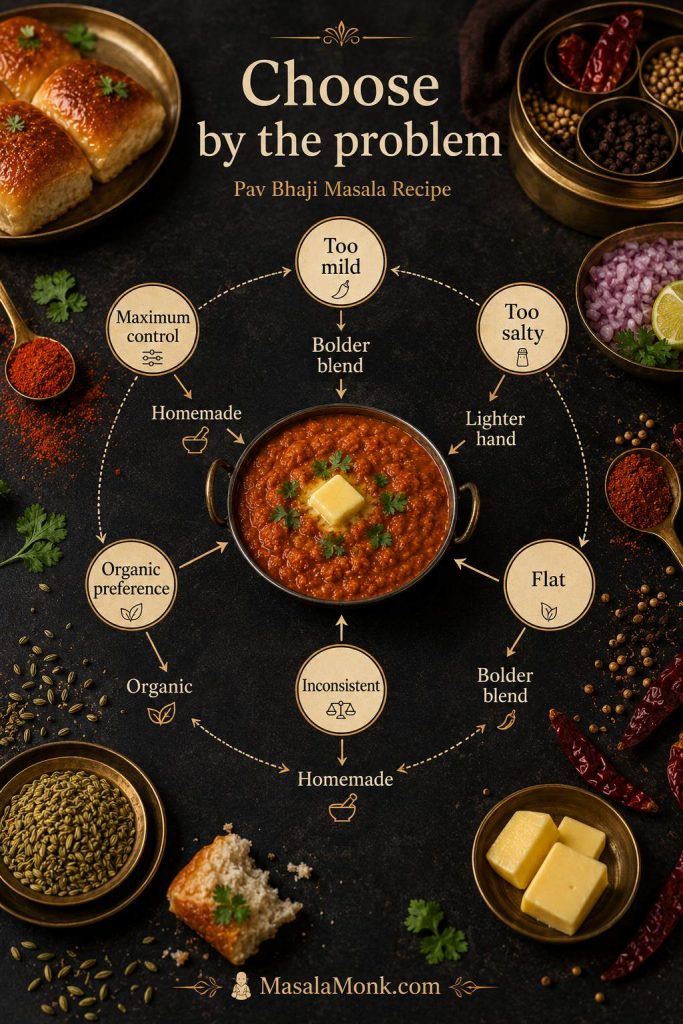
| If your bhaji usually tastes… | Choose this direction |
|---|---|
| Too mild or too home-style | Badshah-style bolder blend |
| Flat but not especially spicy | Everest or Badshah direction |
| Too salty with packets | Homemade blend, or use a lighter hand with any packet |
| Good but inconsistent | Everest/MDH/Tata-style familiar packet |
| Organic matters more than a street-style profile | Organic Tattva or Pure & Sure |
| You want maximum salt and heat control | Homemade batch |
Quick Brand Picks
| Quick pick | Brand | Best for |
|---|---|---|
| Familiar all-rounder | Everest Pav Bhaji Masala | One easy, recognizable first packet. |
| Bolder Mumbai-style direction | Badshah Pav Bhaji Masala | For bhaji that needs a stronger masala push. |
| Classic household option | MDH Pav Bhaji Masala | A traditional Indian masala-box brand. |
| Easy mainstream backup | Tata Sampann Pav Bhaji Masala | A convenient pantry option for occasional use. |
| Organic option | Organic Tattva / Pure & Sure | For kitchens that already prefer organic spices. |
Use Everest when you want the safest familiar profile, Badshah when your bhaji usually tastes too mild, MDH when you want a classic pantry option, and Tata or other backups when availability matters more than a specific street-style profile.
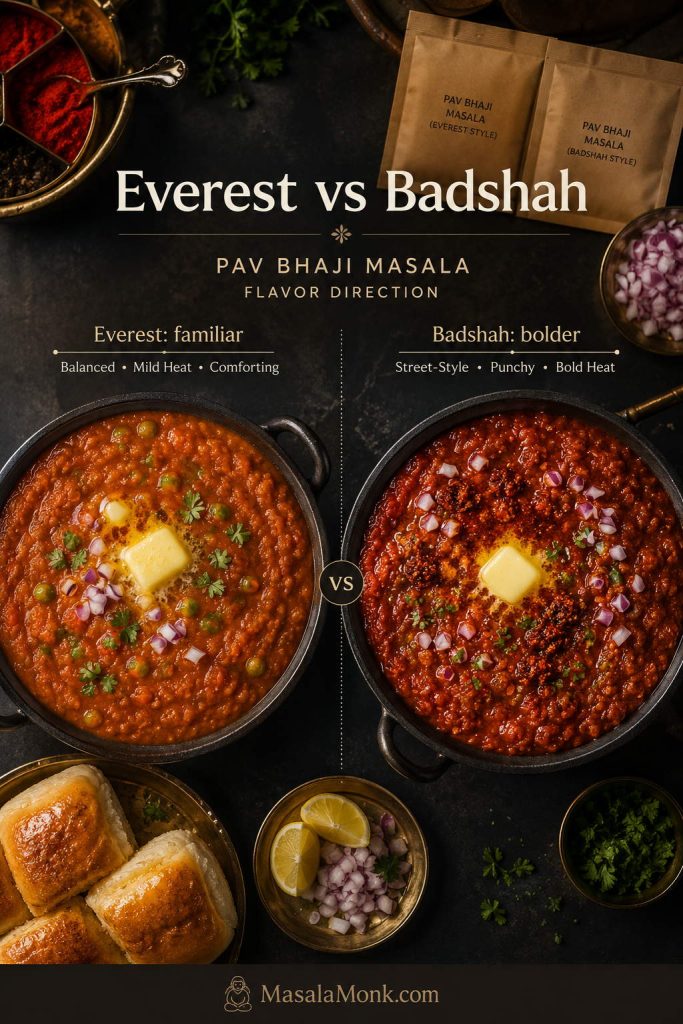
Everest vs Badshah Pav Bhaji Masala
Use this comparison as a flavor-direction shortcut, not as a hard ranking. Everest is the safer familiar lane, while Badshah is better when the bhaji needs a stronger snack-shop push.
Main Store-Bought Options
Everest is the familiar all-rounder to start with if you want a recognizable, easy-to-find packet. Check Everest Pav Bhaji Masala 100g on Amazon.
Badshah is the better direction if you want a bolder, more snack-shop profile. Check Badshah Pav Bhaji Masala 100g on Amazon.
MDH fits the classic masala-box lane: familiar, straightforward, and easy to keep in the pantry. Check MDH Pav Bhaji Masala 100g on Amazon.
Tata Sampann is an easy mainstream backup for occasional pav bhaji, tawa pulao, or quick masala pav. Check Tata Sampann Pav Bhaji Masala 100g on Amazon.
Other Store-Bought Options
Catch, MTR, Suhana, Shan, and Zoff are useful backup options when they are easier to find, better priced, or already familiar in your pantry. They are not essential to buy if you already have a fresh packet that works for your taste.
Backup options: Catch, MTR, Suhana, Shan, and Zoff.
Organic Pav Bhaji Masala Options
Choose Organic Tattva or Pure & Sure if you already buy organic spices and want the same approach here. They are preference picks, not shortcuts to a stronger or more street-style pav bhaji flavor.
Check Organic Tattva Pav Bhaji Masala 100g on Amazon
Check Pure & Sure Organic Pav Bhaji Masala 100g on Amazon
If you do not want to use a packet today, use the emergency substitute or build the flavor from scratch in the without ready-made masala section.
Pav Bhaji Masala Substitute
If you do not have the blend, you can make an emergency substitute from common spices. It will not taste identical because the original has a specific tangy, smoky, snack-style profile, but it will move your bhaji in the right direction.
Emergency Substitute for 1 Tablespoon Pav Bhaji Masala
- 1½ tsp coriander powder
- ¾ tsp cumin powder
- ½ tsp Kashmiri chilli powder or paprika
- ¼ tsp garam masala
- Pinch black pepper
- Pinch amchur powder, or finish the bhaji with lemon/lime juice
- Optional tiny pinch fennel powder
- Optional tiny pinch black salt
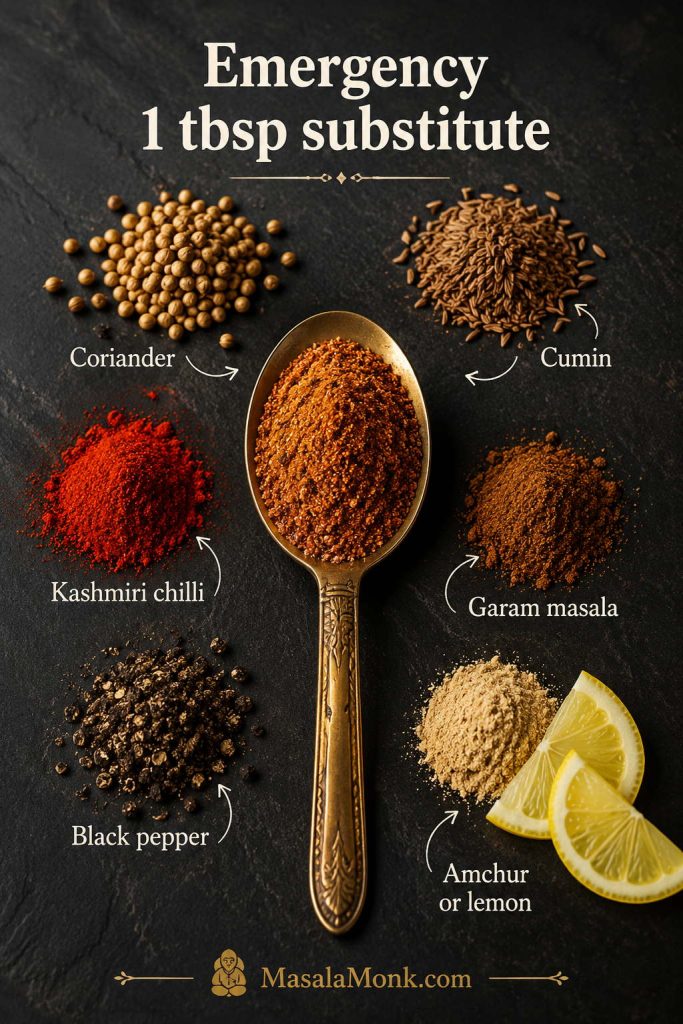
Mix these together and add them while the bhaji is cooking. Fry or simmer the substitute with the tomatoes, butter, and vegetables so it does not taste raw.
If you have chaat masala, use it carefully. It can help with tang, but it can also be salty and sour, so add only a pinch and taste before adding more.
If the bhaji tastes heavy even after the spice balance is fixed, serve it with something fresh on the side. MasalaMonk’s green chutney recipe gives that bright coriander-mint lift that works well with street-style snacks, sandwiches, and pav-based dishes.
How to Make Pav Bhaji Without Ready-Made Masala
If you want pav bhaji without a packet, use the homemade recipe above or build the flavor directly in the pan. The goal is to create four things: warmth, tang, color, and savory depth.
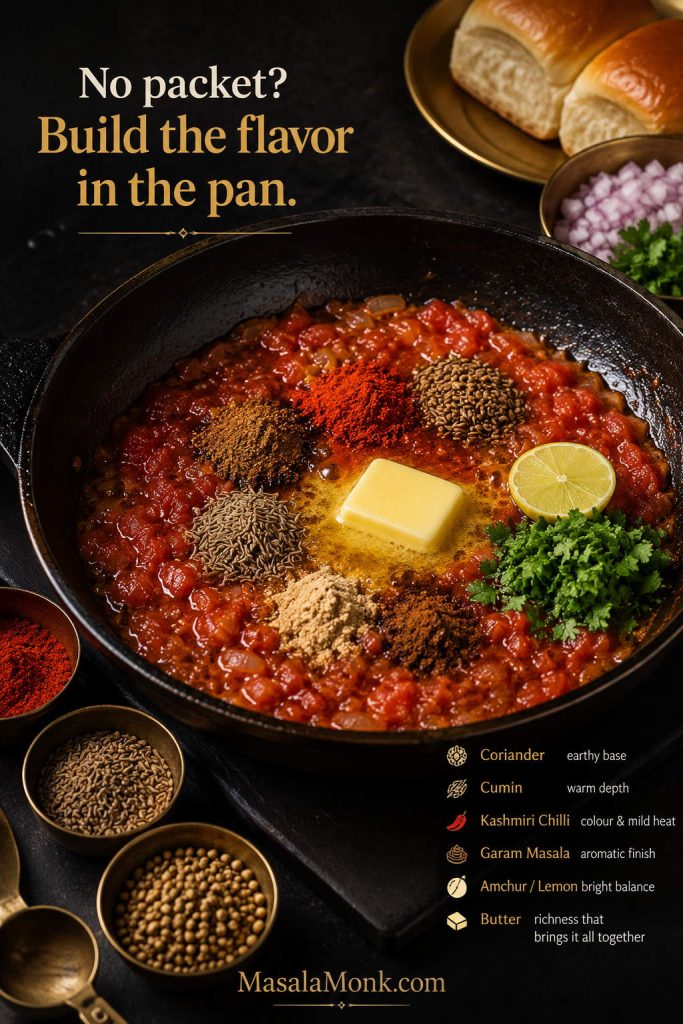
For a quick bhaji without packaged masala, use coriander powder, cumin powder, Kashmiri chilli powder, a small amount of garam masala, amchur or lemon, black pepper, and enough butter. Cook these into tomatoes and mashed vegetables until the raw spice smell disappears.
The result will be more home-style than packet-masala Mumbai-style, but it can still taste excellent if the vegetables are well mashed and the tomato-butter masala is cooked properly.
How to Fix Pav Bhaji Masala Problems
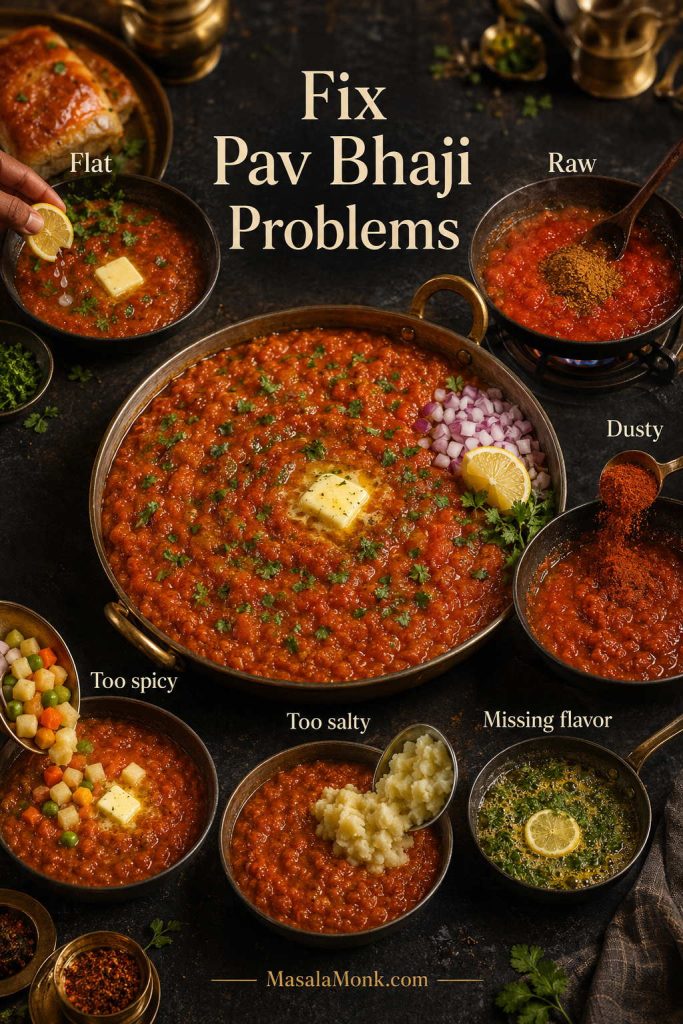
Most pav bhaji problems are fixable once you identify the real issue: salt, acid, raw spice, weak aroma, poor mashing, or over-roasting. Unless the masala is badly burnt, adjust slowly with simmering, fat, acid, or unsalted vegetable bulk instead of adding more powder blindly.
Flavor and Texture Fixes
| Problem | Likely reason | Fix |
|---|---|---|
| Flat flavor | Not enough salt, acid, butter, or cooked masala | Add a little salt, butter, lemon, or ½ tsp more masala after simmering. |
| Raw masala taste | Added too late or not fried into the tomatoes | Cook it with butter/oil and tomatoes for a few minutes. |
| Dusty or powdery bhaji | Too much dry powder added at once, or masala added late | Fry the masala in butter and tomatoes, add a splash of water, simmer, then finish with butter and coriander. |
| Spices show, but pav bhaji flavor is missing | Butter, tomato reduction, mashing, or final brightness may be missing | Mash more, simmer longer, add butter, and finish with coriander and lemon. |
| Too spicy | Chilli level is too high, or the packet is very strong | Soften the heat with mashed potato/vegetables, butter, and a little tomato. |
| Overly sour | Too much amchur, lemon, or tomato | Round it out with more potato/vegetables and butter; avoid more tangy masala. |
| Too salty | Packet masala may contain salt, or salt was added twice | Dilute with unsalted mashed potato or vegetables. Avoid adding more packet masala. |
Color, Bitterness and Storage Fixes
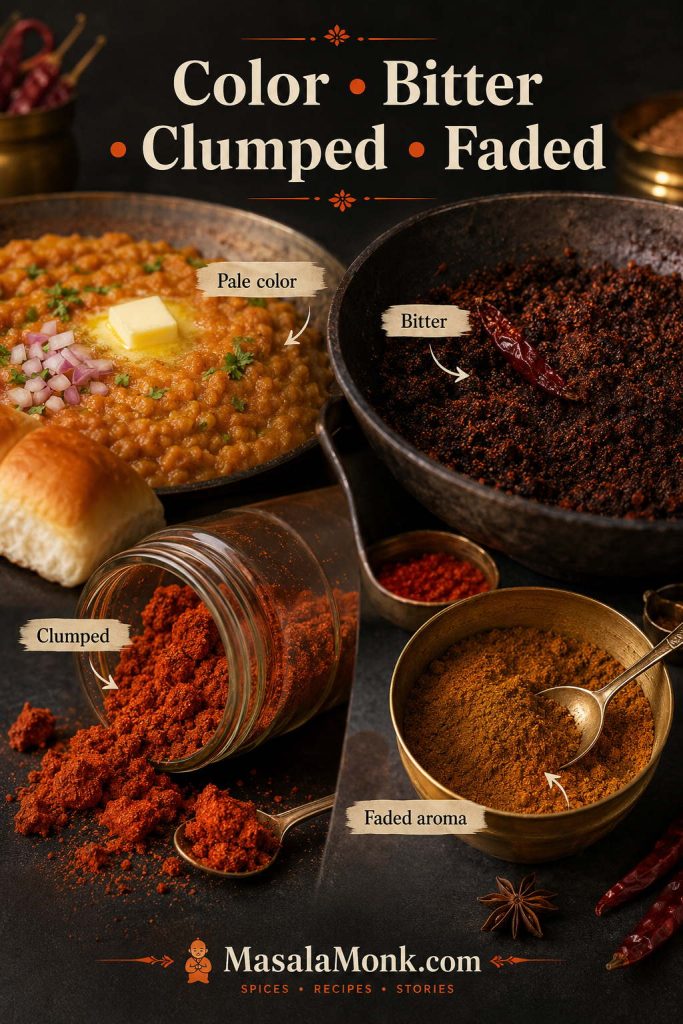
| Problem | Likely reason | Fix |
|---|---|---|
| Bitter masala | Spices were roasted too hard or burnt | Use low heat next time. For the current bhaji, soften with potato, butter, and tomato. |
| Pale or weak color | Kashmiri chilli, tomato, or proper cooking may be missing | Boost color with Kashmiri chilli powder, tomato paste, or better chillies. Avoid relying only on food color. |
| Clumped homemade powder | Moisture entered the jar or spices were ground warm | Store airtight, use a dry spoon, and cool spices fully before grinding. |
| Faded aroma | Old spices or poor storage | Make smaller batches and store away from heat, light, and steam. |
Most fixes work better when the masala is cooked into the tomato-butter base first, so revisit how to bloom pav bhaji masala if the flavor still tastes raw or separate.
For a different Mumbai-style dry spice hit, MasalaMonk’s vada pav dry chutney recipe is a useful contrast. It is roasted, garlicky, peanut-coconut based, and meant to be sprinkled rather than cooked into a bhaji.
Useful Tools for Homemade Pav Bhaji Masala
Once the blend is chosen, equipment matters only if it changes the result: a finer grind, drier storage, or smoother bhaji. You only need three basics — a dry pan, a grinder, and an airtight jar — but these tools can help if you cook this often.
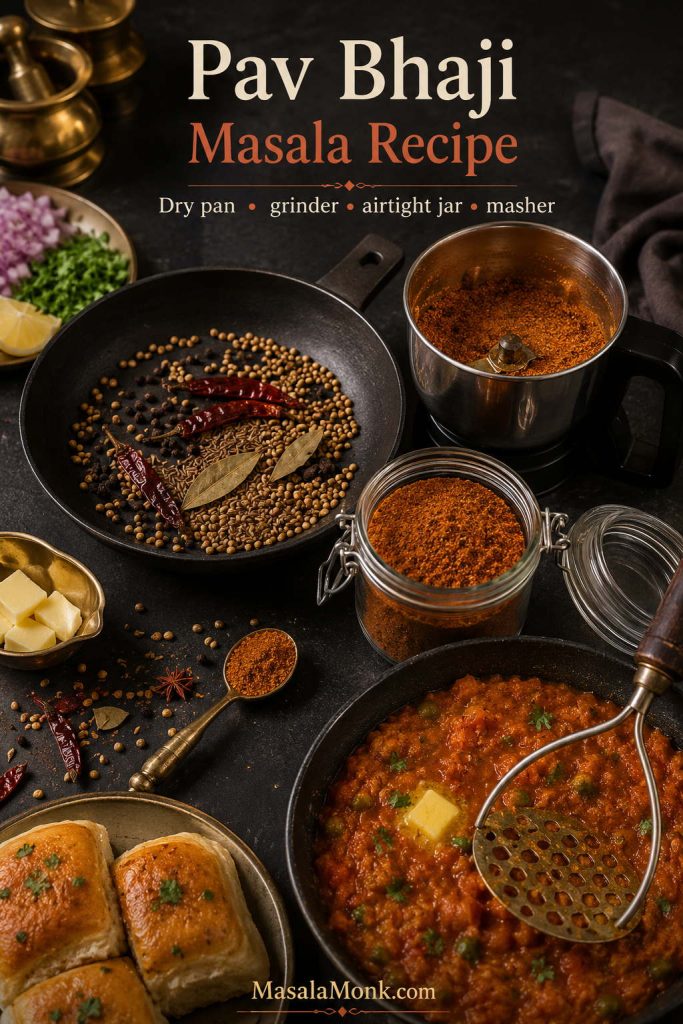
For Making the Masala
Sujata Supermix Mixer Grinder: the main practical grinder pick for turning roasted whole spices into a fine, aromatic powder.
Check Sujata Supermix Mixer Grinder on Amazon
Nestasia Airtight Glass Jars: helpful for storing homemade masala away from steam, heat, and moisture.
Check Nestasia Glass Jars on Amazon
For Making Pav Bhaji with the Masala
Wonderchef Ambrosia Potato Masher: useful when cooking pav bhaji because it helps mash potatoes, peas, tomatoes, capsicum, and cooked vegetables directly in the pan.
Check Wonderchef Ambrosia Potato Masher on Amazon
Optional upgrades: a heavier mixer grinder or cast iron tava can help if you cook Indian snacks often, but they are not necessary for this homemade masala. For this post, the most useful tools are still a reliable grinder, a dry airtight jar, and a masher for the bhaji itself.
That same tawa-and-butter style also shows up in Mumbai sandwiches. If you want another snack built around chutney, vegetables, butter, and heat, MasalaMonk’s authentic grilled Bombay sandwich recipe fits naturally beside this pav bhaji masala guide.
Other Ways to Use Pav Bhaji Masala
This blend is not only for pav bhaji. Once you have a fresh homemade jar or a good store-bought mix, use it in small amounts to add Mumbai street-food flavor to quick dishes.
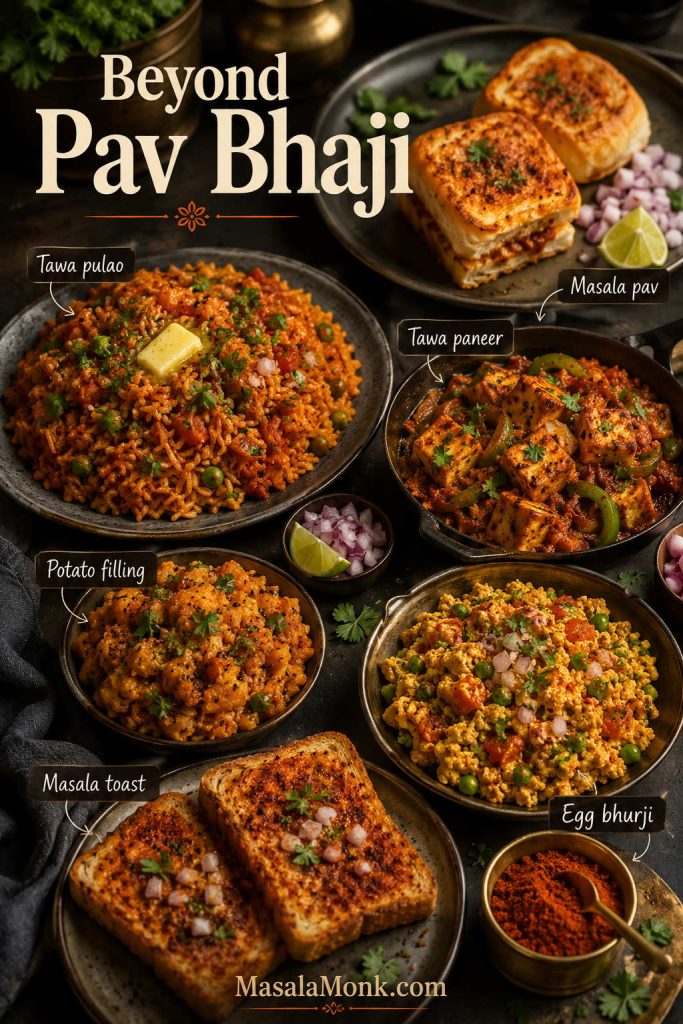
- Masala pav: cook onions, tomatoes, capsicum, butter, and pav bhaji masala until glossy, then toss pav in the mixture.
- Tawa pulao: add a small spoon to rice with vegetables, tomato, butter, and coriander.
- Masala upma: use just a pinch when you want everyday upma to taste fuller and more lunch-like; MasalaMonk’s upma recipes already include a masala-upma direction.
- Tawa paneer: use a little in a tomato-capsicum masala.
- Potato filling: add a little to mashed potatoes for sandwiches, rolls, toasties, or snack fillings. For more snack-style potato ideas, see MasalaMonk’s potato appetizers guide.
- Egg bhurji: use a small pinch for a tawa-style twist.
- Vegetable stir-fry: add near the end, but cook briefly so it does not taste raw.
- Masala toast: mix with butter, onions, tomatoes, and capsicum.
- Quick spiced rice: add a small amount to leftover rice with butter and vegetables.
FAQs
What is pav bhaji masala made of?
It is usually made from coriander seeds, cumin, fennel, dried red chillies, black pepper, cinnamon, cloves, black cardamom, bay leaf, amchur, dry ginger, and sometimes stone flower, black salt, turmeric, mace, or nutmeg.
Which pav bhaji masala brand is best?
Everest is a good familiar first packet, Badshah leans bolder, and MDH fits the classic household masala lane. Choose the rest based on availability, price, heat level, salt level, and whether you prefer organic spices.
Is homemade better than store-bought?
Homemade is better for freshness and control. Store-bought is better for convenience. Both can make good bhaji if used correctly.
How much should I use for 4 servings?
Start with 2–3 teaspoons homemade powder or about 1 tablespoon store-bought masala for 4 servings. Add more only after the bhaji has simmered.
What can I use instead of pav bhaji masala?
Use coriander powder, cumin powder, Kashmiri chilli powder, a little garam masala, black pepper, and amchur or lemon juice. It will not taste identical, but it gives warmth, color, and tang.
Does pav bhaji masala contain salt?
Some store-bought blends may contain salt. Homemade versions do not need to. Taste before adding extra salt, especially when using a packet.
Is it the same as garam masala?
No. Garam masala is warmer and more general-purpose. Pav bhaji masala is tangier, more savory, and built specifically for pav bhaji-style flavor.
Why does my pav bhaji not taste street-style?
The usual reasons are weak masala, undercooked tomatoes, not enough butter, poor mashing, not enough salt or acid, or adding the powder too late. Cook it into the tomatoes and butter, mash well, then finish with butter, coriander, onion, and lemon.
How long does homemade masala last?
For best aroma, use it within 2–3 months at room temperature. It can last longer if refrigerated or frozen tightly, but the flavor is brightest when fresh.
Can I use it in other recipes?
Yes. Use it in masala pav, tawa pulao, tawa paneer, egg bhurji, vegetable stir-fries, potato fillings, sandwiches, and spiced rice. Start small because the blend is strong.
Which spices are optional in homemade pav bhaji masala?
Stone flower, mace, nutmeg, black salt, turmeric, and star anise are optional. The core blend can still work without them.
Should I roast store-bought masala before using it?
No. Do not dry-roast store-bought powder in an empty pan because it can burn quickly. Bloom it briefly in butter or oil with tomatoes instead.
Final Thoughts
The best pav bhaji masala is not the packet with the loudest flavor or the homemade blend with the longest spice list. It is the one that makes the bhaji taste whole: warm, tangy, buttery, bright, and deep enough that the potatoes, tomatoes, vegetables, and spices feel like one glossy pan of pav bhaji.
Once you learn that rhythm, pav bhaji stops feeling like a packet-masala gamble and starts feeling like something you can control from the pan.
That is the real win: bhaji that tastes glossy, tangy, buttery, and whole, not like vegetables trying to hide under spice powder.








