
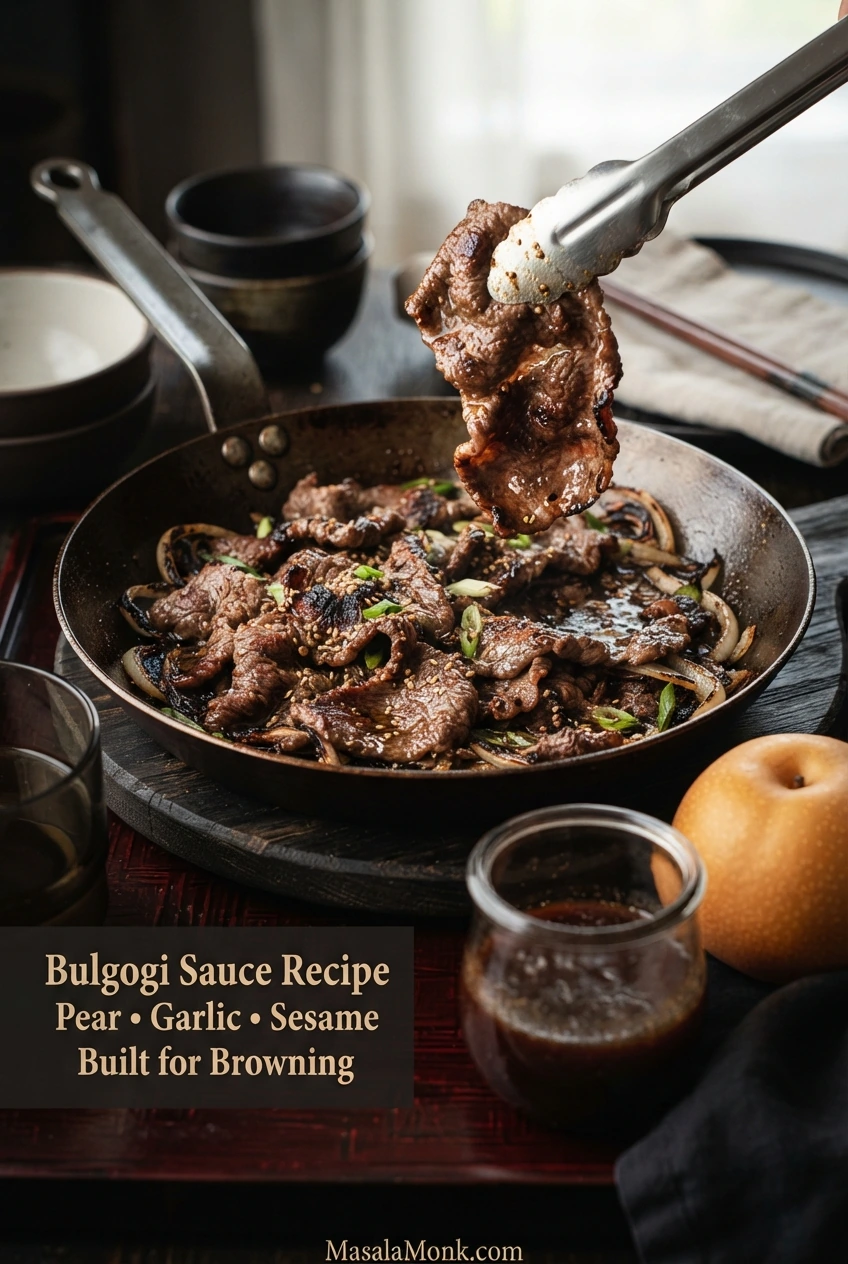
Pour bulgogi sauce over very thinly sliced beef and several things start happening at once. Soy seasons the meat. Pear and onion bring moisture and mild sweetness. Sugar waits for the hot pan, where it can help brown the edges beautifully—or scorch if too much wet marinade follows the beef into the skillet.
Bulgogi sauce is a thin soy-based Korean barbecue marinade flavored with garlic, toasted sesame and fruit. This version uses Asian pear, plenty of garlic and enough sugar to help the beef develop deeply browned edges once moisture can escape. Cooked well, the meat comes off glossy and garlicky, with toasted-sesame aroma rising from the pan.
Bulgogi Sauce Recipe
A soy-based bulgogi marinade with Asian pear, garlic, mirin and toasted sesame oil for thinly sliced beef.
Yield varies with the pear and onion. Straining reduces the final volume, so a heavily strained batch will leave less extra sauce after marinating.
Ingredients
- ⅓ cup / 80 ml regular soy sauce
- 90 g finely grated Asian pear
- 60 g finely grated onion
- 3 tablespoons / about 40 g packed light brown sugar
- 2 tablespoons / 30 ml mirin
- 2 tablespoons / 30 ml toasted sesame oil
- 18 g garlic, about 4–6 cloves depending on size, finely grated or minced
- 2 teaspoons / about 5 g finely grated fresh ginger
- 2 scallions, thinly sliced
- ½ teaspoon freshly ground black pepper
- 1 teaspoon toasted sesame seeds, optional
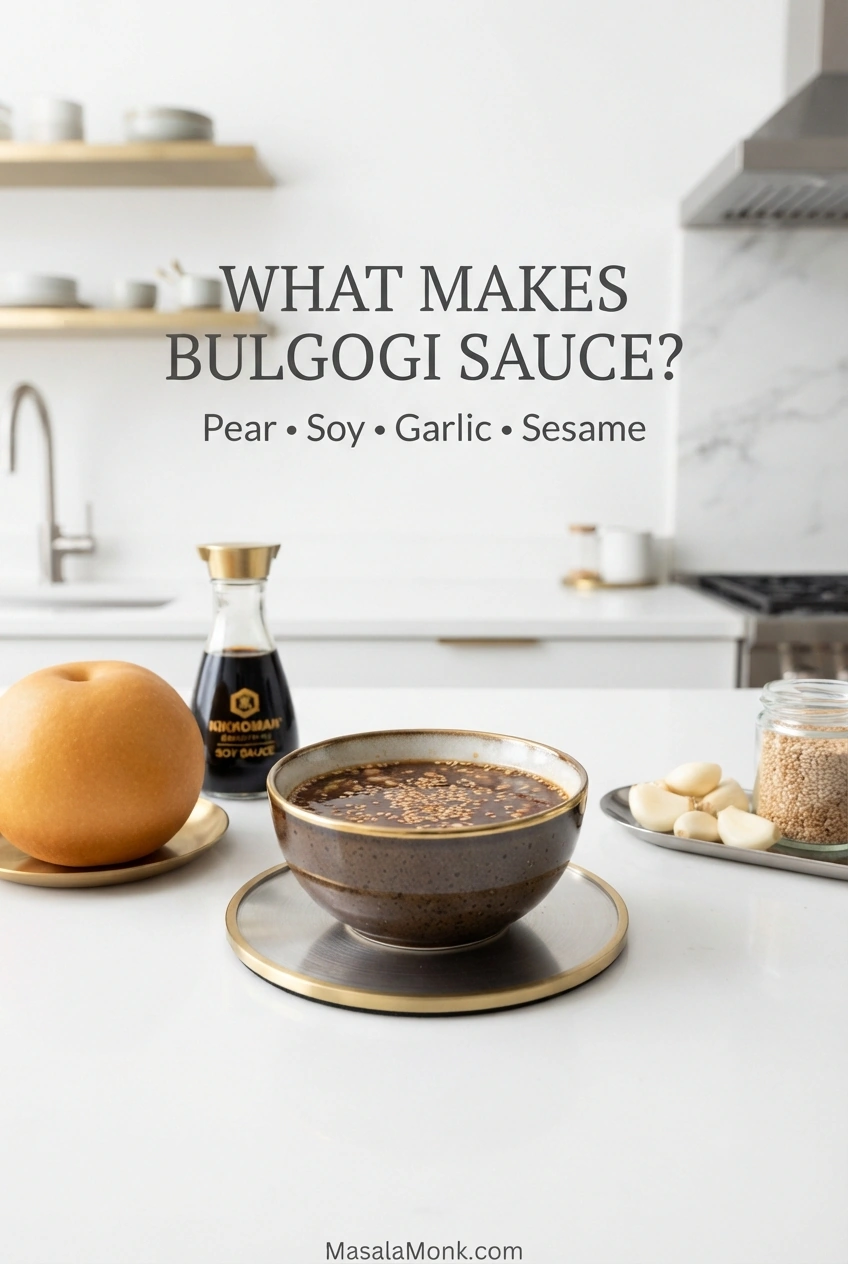
Before You Start
- Use regular or all-purpose soy sauce. Low-sodium soy and tamari can work too, though saltiness varies by brand. Korean soup soy is much saltier, while kecap manis is much sweeter, so neither is a direct substitute. If you are comparing soy styles, our soy sauce guide explains the differences.
- No mirin? Use 2 tablespoons / 30 ml unsweetened apple juice for an alcohol-free option. Rice vinegar is much sharper and is not a 1:1 replacement.
- Want clean sauce for dipping or glazing later? Set that portion aside before raw meat goes into the bowl.
Make the Sauce
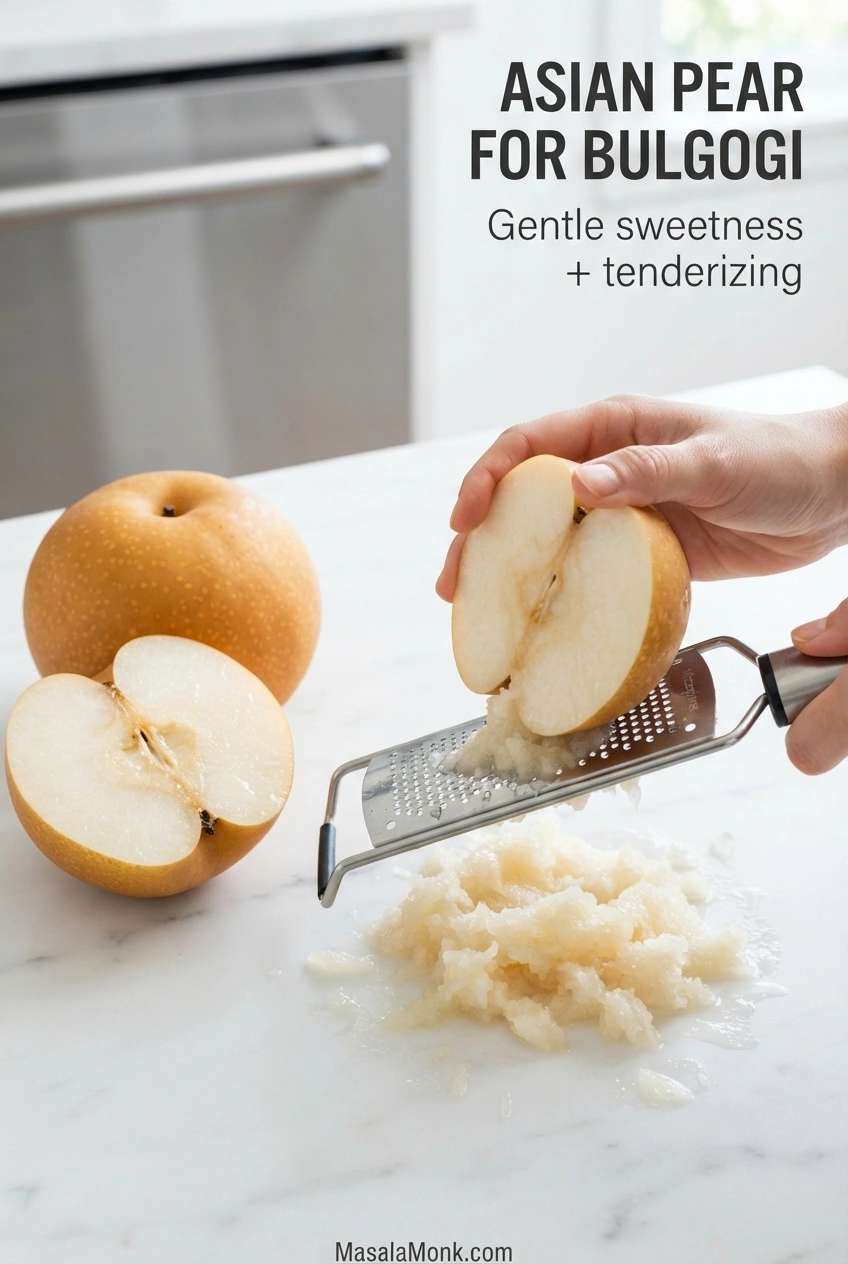
- Grate the pear and aromatics. Finely grate the Asian pear, onion, garlic and ginger into a medium bowl. For a smoother sauce, put them directly into a blender instead.
- Mix the sauce. Add the soy sauce, brown sugar, mirin, toasted sesame oil and black pepper. Whisk until the sugar dissolves. If using a blender, blend until smooth.
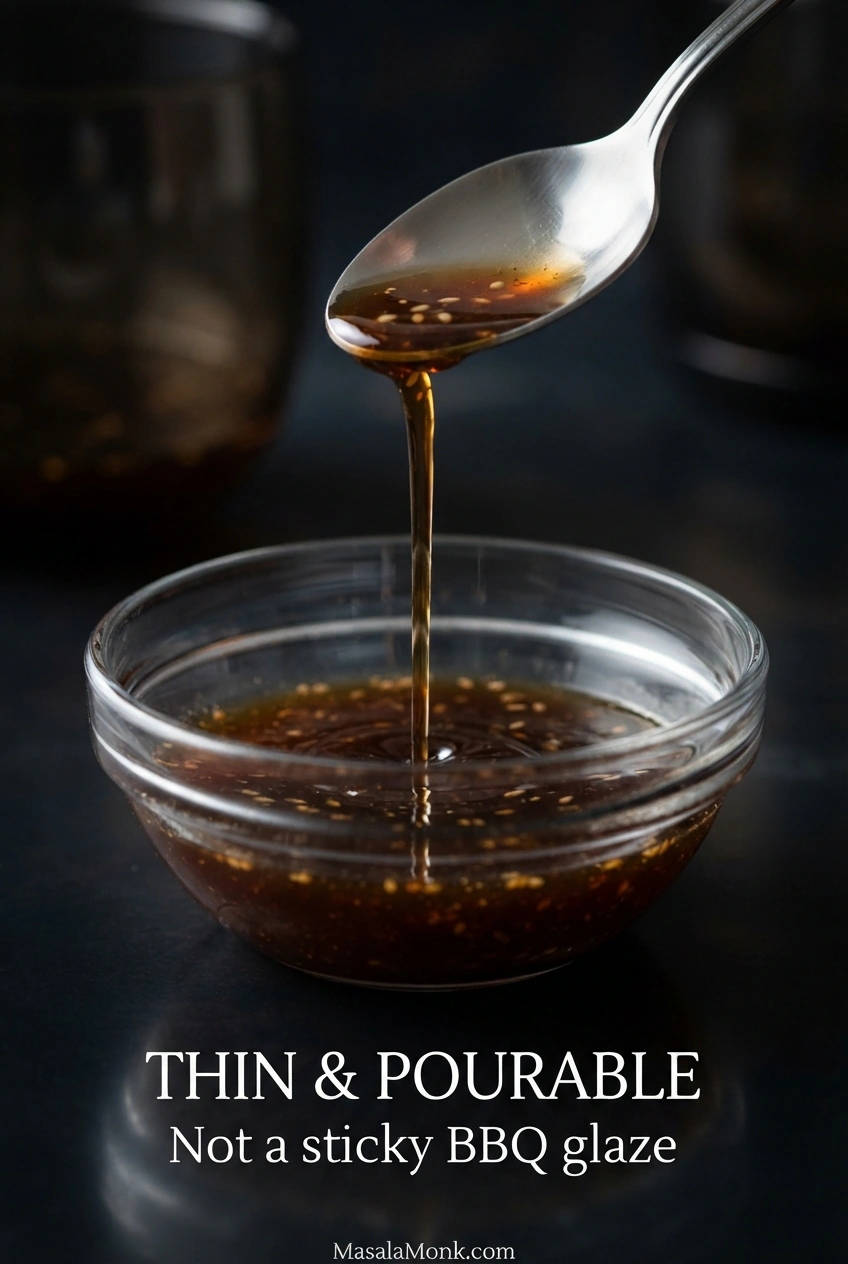
- Finish and taste. Stir in the scallions and sesame seeds, if using. The sauce should run easily from a spoon. Taste it as a marinade rather than a finished dipping sauce: soy should lead, garlic and sesame should be clear, and sweetness should sit behind them.
To Use on Beef
- Marinate. For 1 lb / 450 g finely sliced meat, start with about ½ cup / 120 ml. Toss and separate the slices so the sauce reaches them evenly. Add another spoonful only if some pieces still look barely coated. Cover and refrigerate for 30 minutes to 4 hours; overnight is optional when using pear, apple or no strong enzyme tenderizer.
- Cook for browned bulgogi. Lift the thin beef from the marinade and let obvious excess drip away. Cook in batches on a well-preheated skillet or griddle so the beef sizzles as soon as it lands. Turn as needed and cook until the thin slices are cooked through with browned edges.
Recipe Notes
- Less sweet: reduce the brown sugar to 2 tablespoons / about 25 g.
- No Asian pear: use the same weight of ripe regular pear or sweet apple.
- Spicy variation: add 1 tablespoon gochujang; use gochugaru for more heat.
About this recipe: This formula follows established Korean bulgogi methods and has not been independently kitchen-tested by MasalaMonk. Because soy sauces, pears and stovetops vary, use the taste and pan cues alongside the measurements.
Bulgogi Sauce Guide
Balance the Sauce
Adapt & Keep It
How Bulgogi Sauce Should Taste
Bulgogi marinade should taste savory first, gently sweet, garlicky and nutty with sesame. It should taste stronger from the spoon than a finished dipping sauce because that seasoning still has to spread across the meat.
Soy gives the marinade its savory backbone. Pear and brown sugar soften the salt, mirin brings sweetness and aroma, toasted sesame oil announces itself quickly, and garlic can be bolder. If sweetness is the first thing you notice and the soy and garlic disappear behind it, the balance has gone too far toward sugar.
Taste a clean spoonful before the sauce touches raw meat. An assertive marinade is normal; harsh saltiness is not. If it still tastes overwhelmingly salty after allowing for its job as a marinade, add water a tablespoon at a time. When sweetness is the problem, reduce the brown sugar in the next batch instead of automatically adding more soy.
Asian Pear, Apple—or No Fruit?
No Asian pear? Ripe regular pear or sweet apple both work, and naturally tender beef cut very thinly can also be marinated without fruit.
Asian pear brings plenty of moisture, mild sweetness and gentle tenderizing without making the marinade taste obviously fruity.
| Choice | What to know |
|---|---|
| Asian or Korean pear | Juicy, mildly sweet and gently tenderizing; the best all-round choice when available. |
| Ripe regular pear | Similar moisture and mild sweetness, with a familiar pear flavor. |
| Sweet apple | Good for moisture and sweetness and can help with tenderizing, although it does not behave exactly like Asian pear. |
| No fruit | Still workable with naturally tender beef cut very thinly, especially when the meat itself does not need much tenderizing help. |
How Much Bulgogi Sauce Should You Use?
For 1 lb / 450 g meat, start with about ½ cup / 120 ml. Toss. Separate the slices. Look at them before adding more.
Every piece should have a glossy coating. A few spoonfuls of marinade in the bottom of the bowl are fine; the beef does not need to swim.
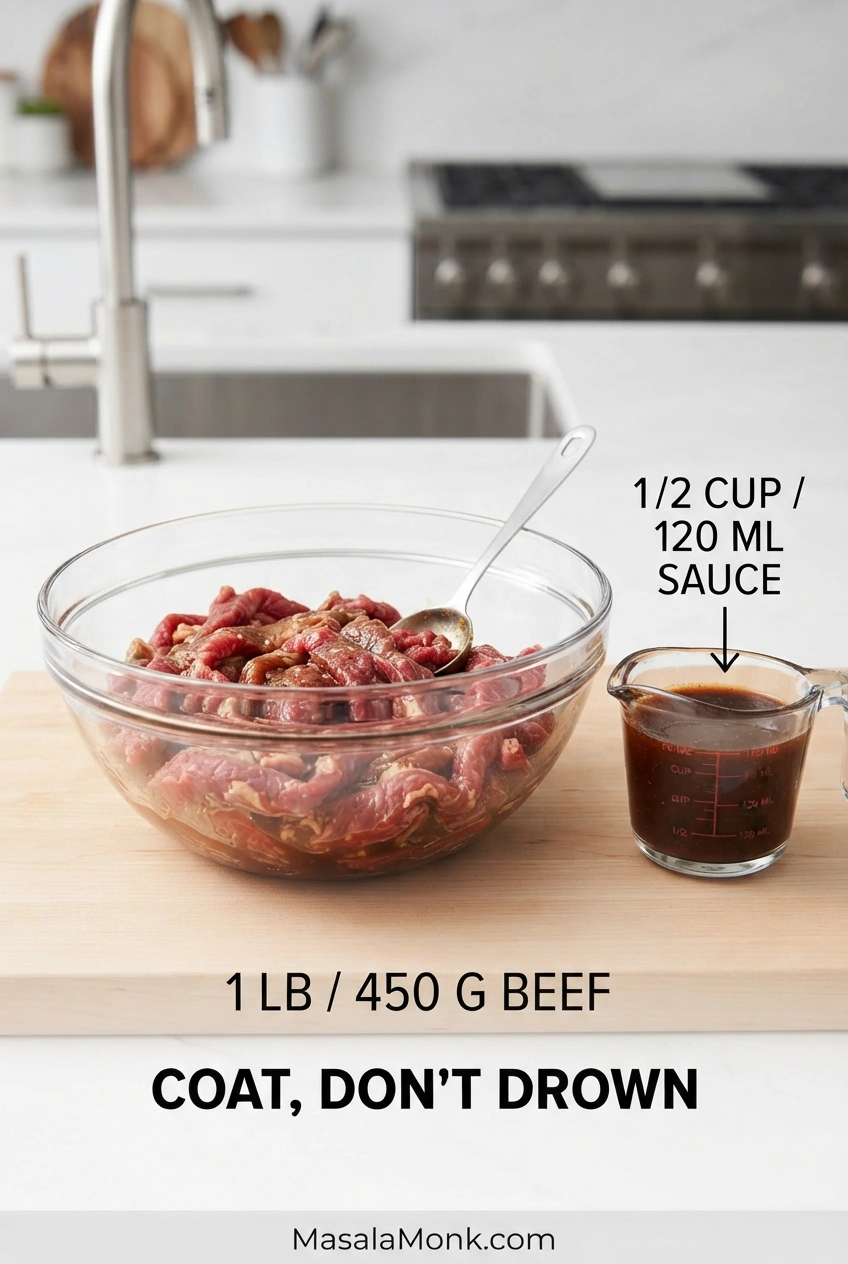
For 2 lb / 900 g, begin with about 1 cup / 240 ml and add more only if the meat needs it.
Using bottled sauce? Follow its label; “Korean BBQ sauce” can describe products much thicker or more concentrated than this homemade marinade.
Planning on browned edges? Lift the beef with tongs or a slotted utensil and let obvious excess marinade drip away before it hits the skillet.
If the skillet still fills with bubbling liquid, see Read the Pan troubleshooting before changing the sauce itself.
How Long Should Bulgogi Marinate?
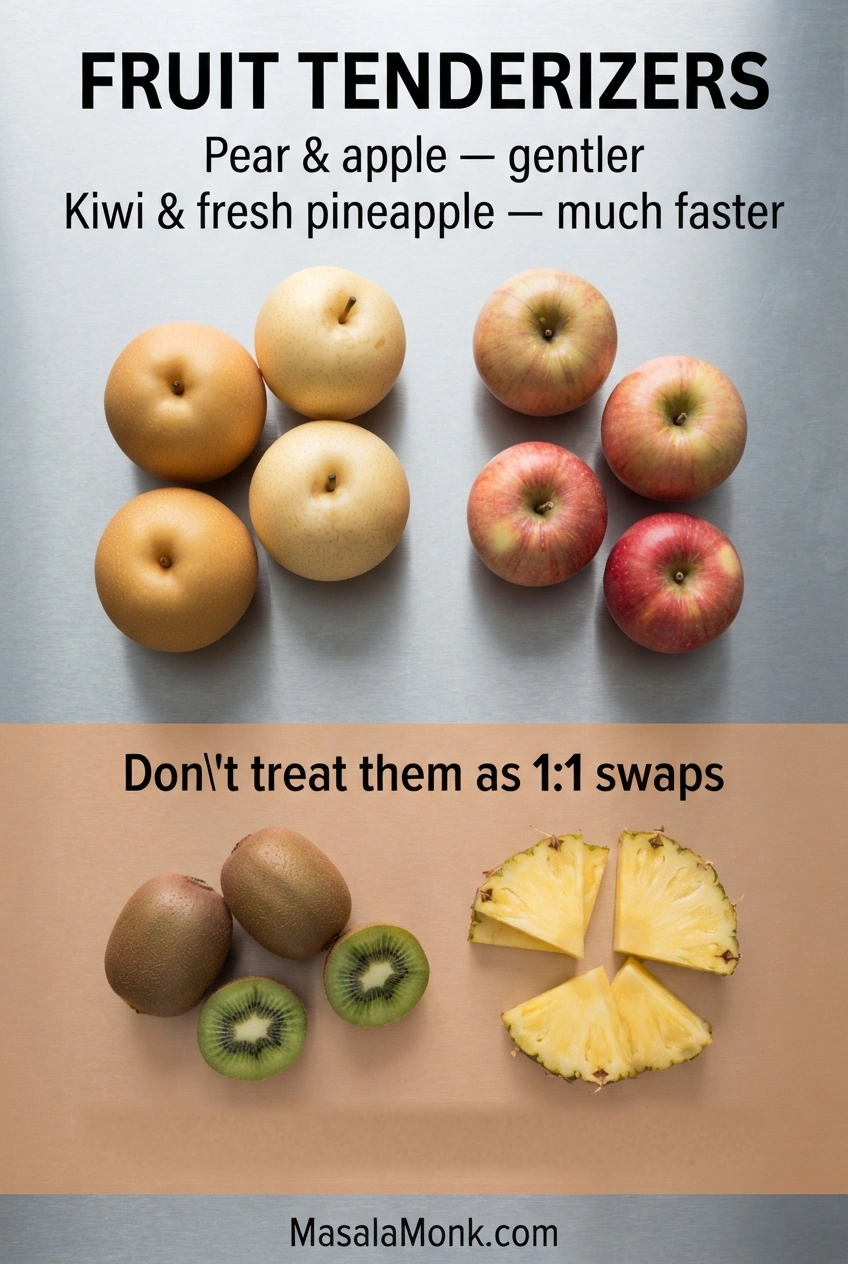
Thirty minutes is enough for thin beef; 1–4 hours gives deeper seasoning, and overnight is optional. Those timings assume Asian pear, regular pear, apple or no strong enzyme tenderizer—not kiwi or fresh pineapple.
Stronger Fruit Tenderizers Need Less Time
Kiwi and fresh pineapple are different tools. They tenderize much more aggressively than pear or apple, so do not use the same amount and then follow the longer timing above. Thin beef can move from tender to oddly soft surprisingly quickly.
Keep raw meat cold while it marinates. The FDA recommends marinating food in the refrigerator, not on the counter.
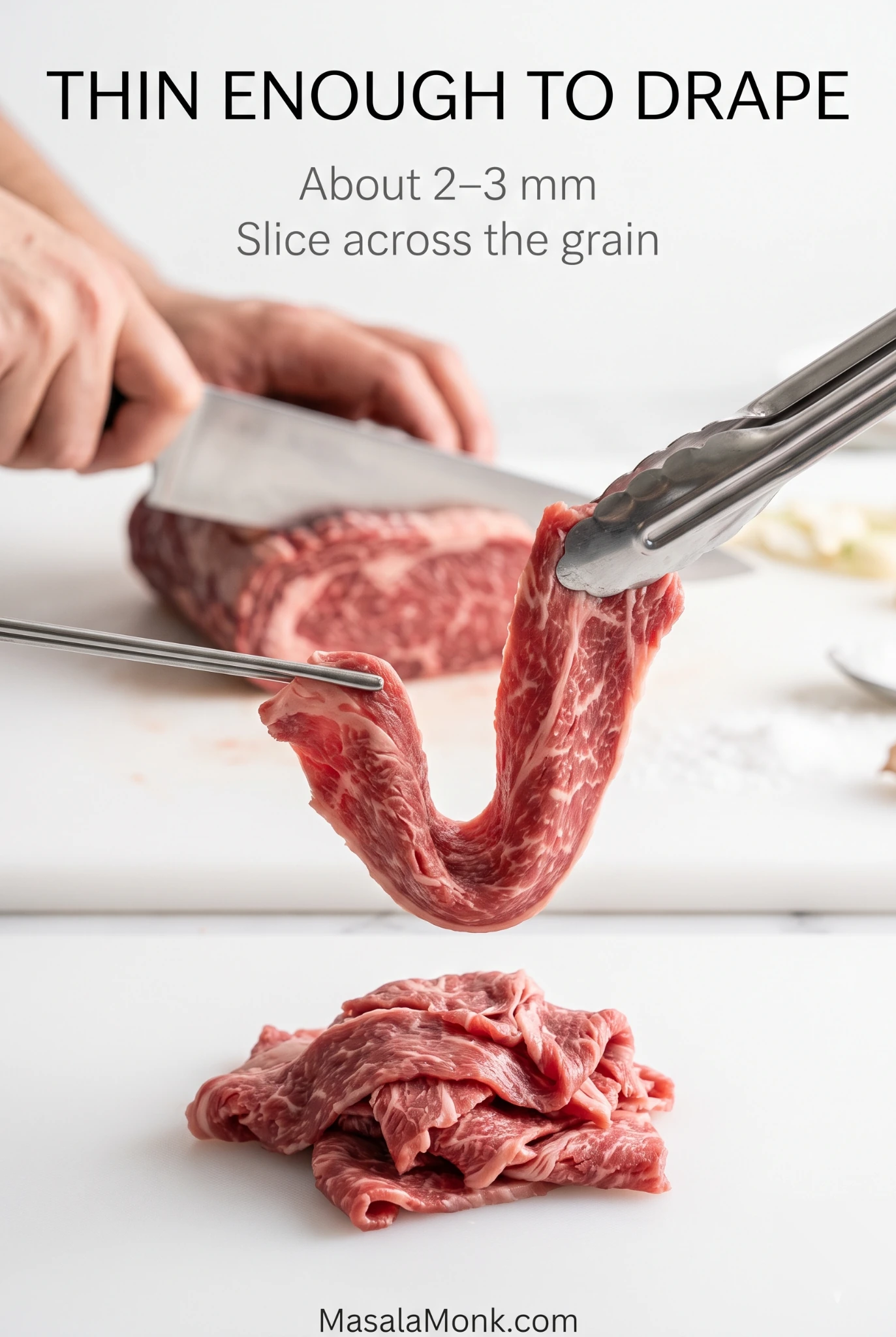
Chewy beef is not automatically asking for stronger tenderizer. Ribeye and sirloin are easy choices for beef bulgogi, but whichever cut you use, slicing matters: aim for about 2–3 mm thick, around ⅛ inch or a little thinner, and cut across the grain. The slicing guide in our Beef and Broccoli recipe shows how to identify the grain for fast, hot cooking.
Grated, Blended or Strained?
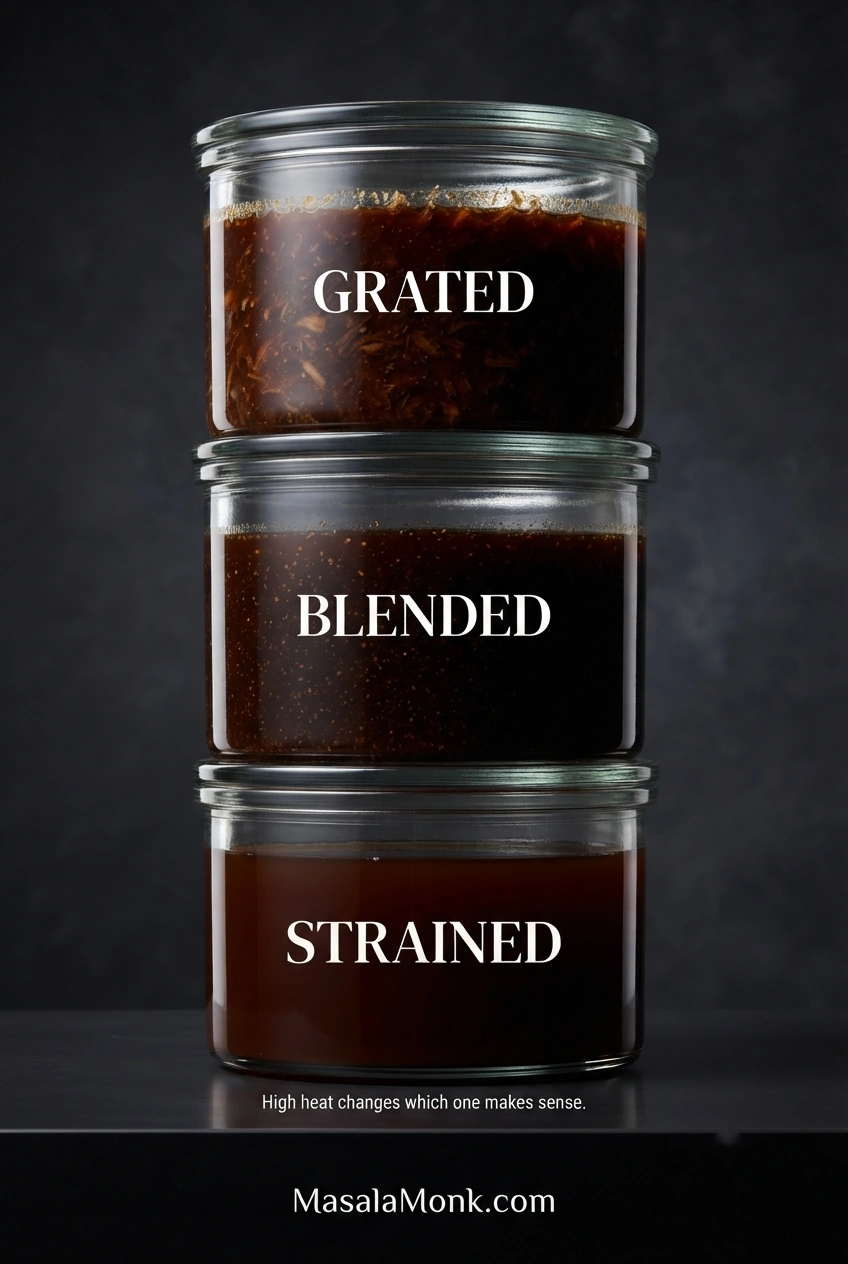
Grating is the simplest route and leaves a little texture. Blending gives you a more uniform sauce. Straining is most useful when you want fewer pear, onion and garlic solids hitting a very hot pan or grill.
Those solids carry flavor, and there is no need to strain them out for most skillet cooking. At very high heat, though, removing most of them leaves fewer sugary fruit and onion bits sitting directly against hot metal while the beef is still trying to brown.
Bulgogi marinade stays thin even when blended. If you actually want a sauce that thickens around the food, that is a different job; our Stir Fry Sauce Recipe uses that approach. For bulgogi itself, grated or blended sauce works well—strain only when the smoother texture or very high heat makes it useful.
Read the Pan: Bulgogi Sauce Troubleshooting
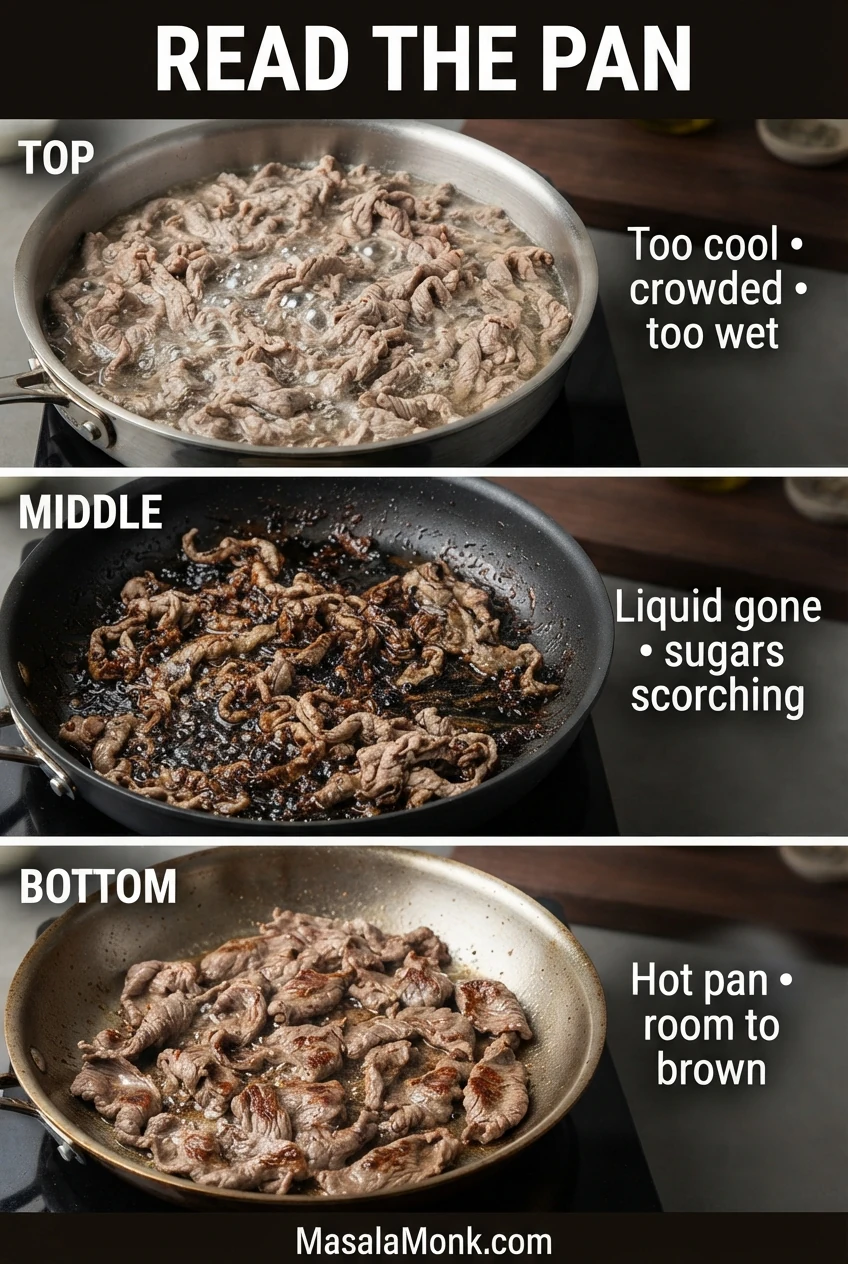
The same marinade can give one cook browned edges and another a skillet full of pale beef, bubbling liquid or blackened sugary residue. Usually the pan is telling you exactly what changed.
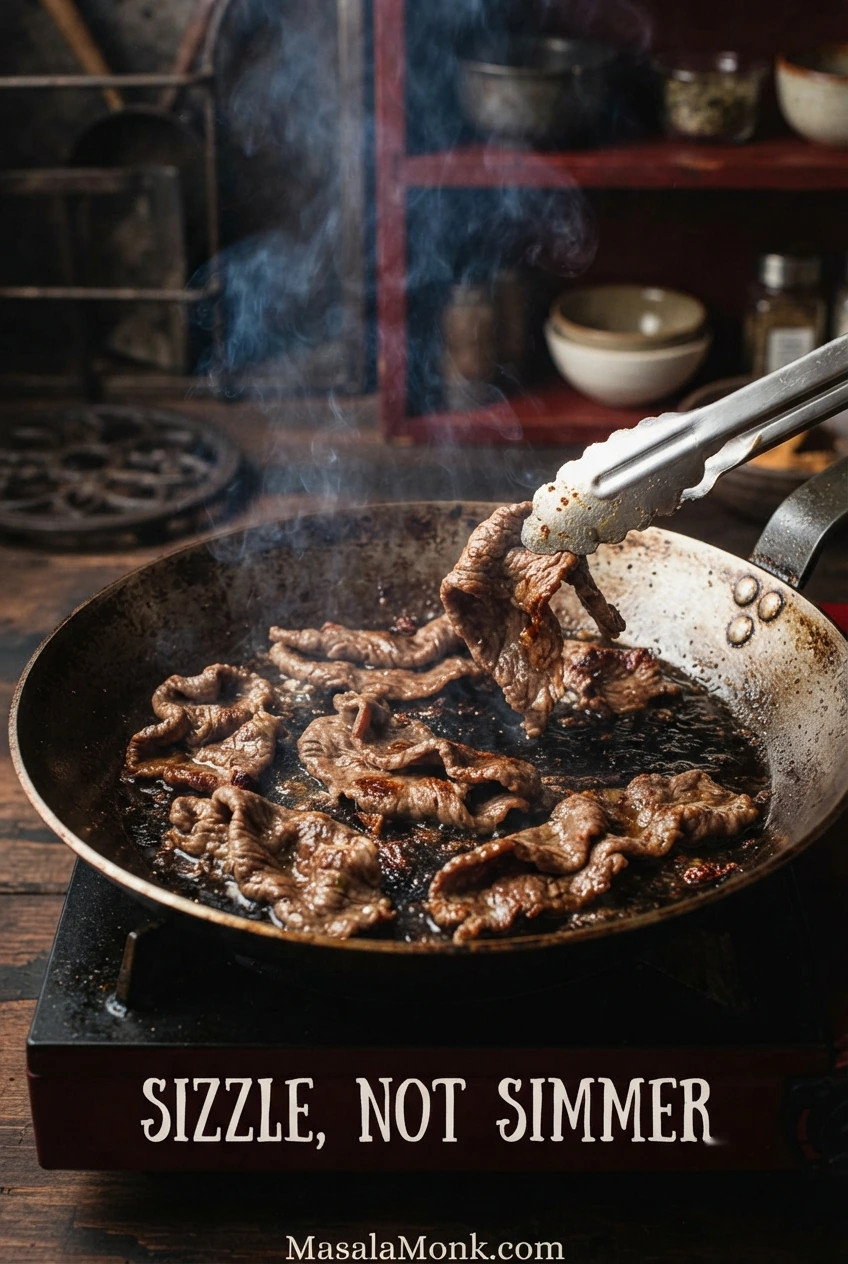
When it is working, you hear a sizzle instead of a simmer. The sauce clings instead of pooling, the edges begin to brown, and the pan smells of garlic and toasted sesame rather than burnt sugar.
Match the Pan to the Fix
| What you see | Why it happens & how to fix it |
|---|---|
| Pale or grey beef in bubbling liquid | The pan may not have been hot enough, or too much meat or wet marinade cooled it. Preheat well, let excess sauce drip away and cook smaller batches. |
| Black sticky residue with grey meat | The pooled liquid evaporated before the beef browned, leaving concentrated sugar and fruit solids to scorch. Transfer less marinade, give the beef more room and ease the heat as browning develops. |
| Brown edges with little liquid around them | Moisture is leaving fast enough for the meat to sear. Keep working in similarly sized batches. |
| Beef stays tough | The meat may be too thick, cut with the grain, naturally tough or simply cooked too long. Fix the slicing and cut before reaching for stronger tenderizer. |
| Meat turns strangely soft or mushy | A strong fruit tenderizer or excessive marinating has broken down the surface too far. Use pear or apple for gentler tenderizing and shorten the marinating time. |
Browned vs Saucy Bulgogi
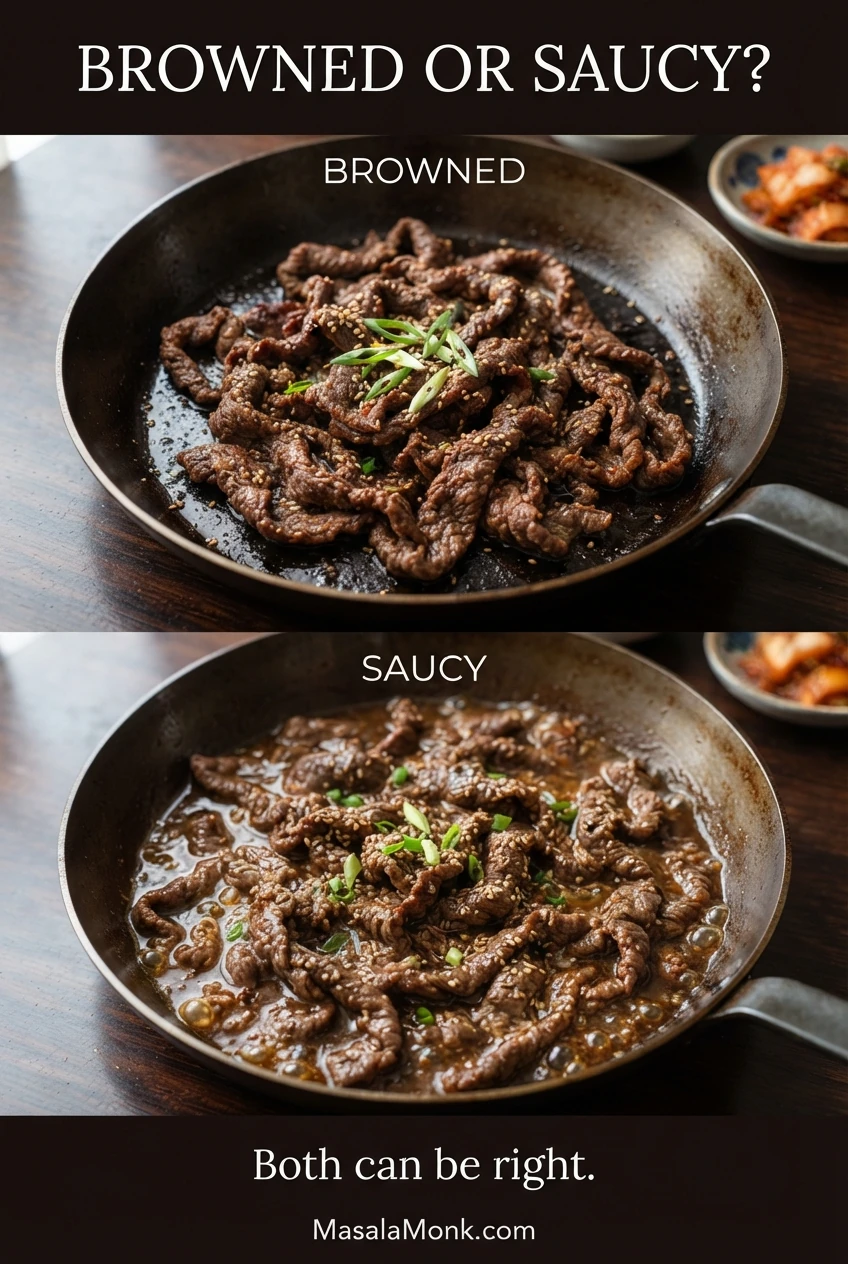
The troubleshooting above assumes you are aiming for browned skillet-style bulgogi. A deliberately juicier style is different.
That means a wet pan is not always a failed pan. Some bulgogi is meant to leave you with savory juices to spoon over rice.
Deeper browning starts with a drier trip to the pan. Let excess marinade drip away, heat the cooking surface properly and give the beef enough room for moisture to escape.
A juicier style goes the other direction. Let more marinade and vegetables cook with the meat, trading some deeply browned surface for flavorful cooking juices.
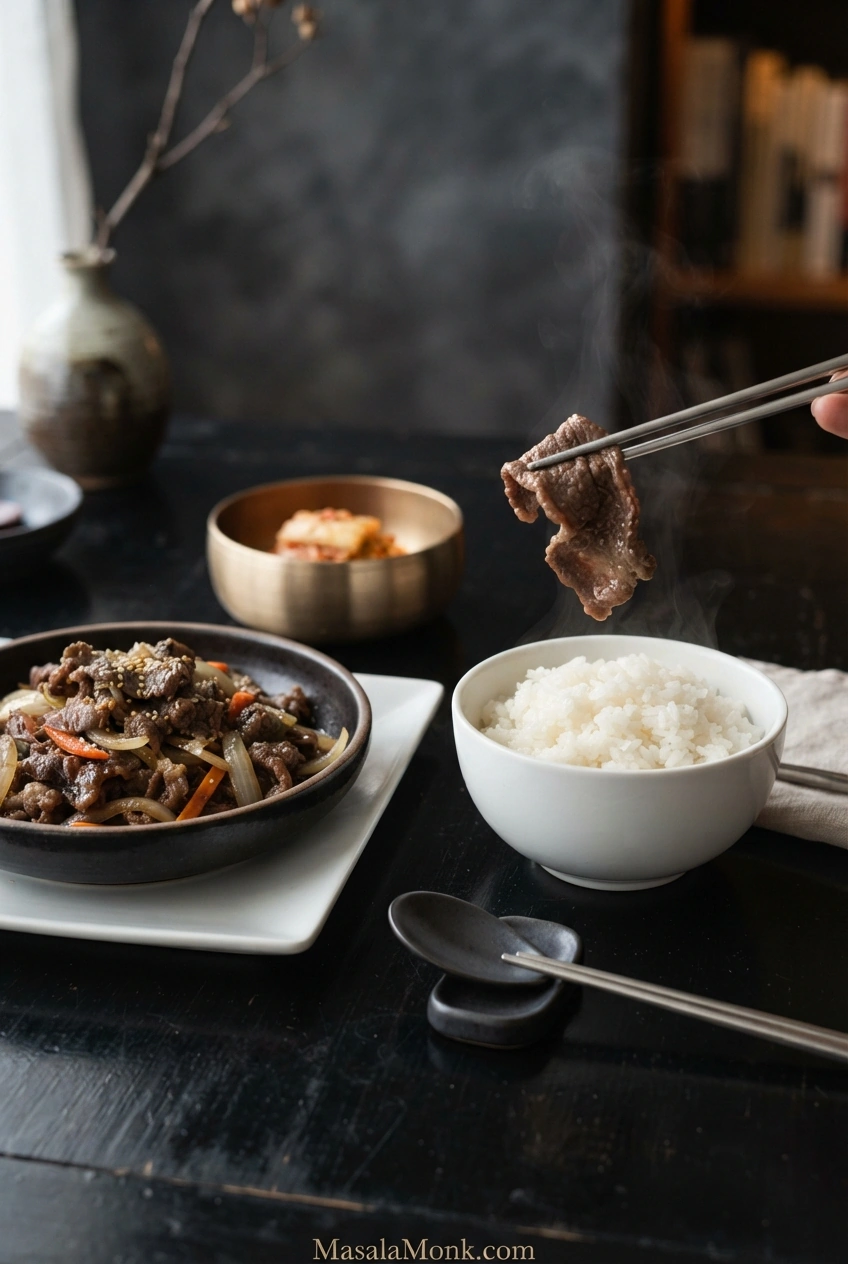
Serve either style over hot rice. If rice is the unreliable part of dinner, our guide to cooking rice can help.
Want Spicy Bulgogi Sauce?
Classic beef bulgogi is sweet-savory rather than chile-hot. One tablespoon of gochujang in this full batch gives mild warmth, fermented chile flavor and a little extra body.
For noticeably hotter bulgogi, build the heat with gochugaru. It raises the chile level without adding as much extra sweetness, salt and thickness as several more spoonfuls of gochujang would.
Can You Use Bulgogi Sauce as a Dip or Glaze?
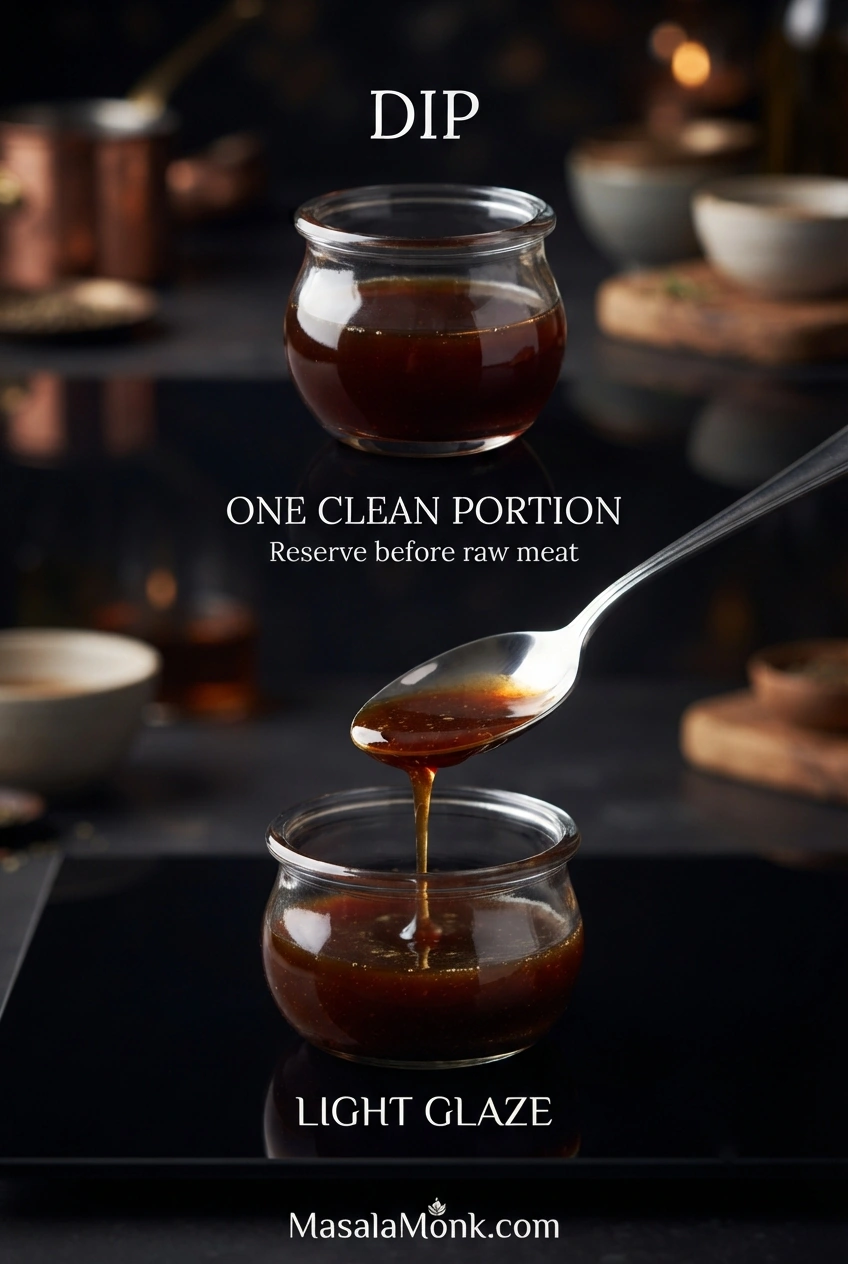
Bulgogi sauce is a marinade first. Reserve some before the raw meat goes in; leave that clean portion thin for dipping, or simmer it gently until it lightly coats a spoon for a glaze.
As the sauce reduces, both salt and sweetness become stronger. A thick, glossy sweet-soy sauce from the start is closer to our Teriyaki Sauce Recipe.
Marinade that has already touched raw meat should not be served uncooked; the USDA advises bringing used marinade to a boil before reusing it.
What Else Can You Use Bulgogi Sauce On?
Chicken and thinly sliced pork both take this marinade well. Cooking time depends on the cut, so do not borrow the timing for very thin beef.
Tofu needs flavor rather than tenderizing, so a long fruit soak adds little. Brown it first if you want firmer edges, then add sauce. Mushrooms only need a coating; cook them until browned and juicy.
How to Store and Freeze Bulgogi Sauce
Refrigerate unused sauce that has not touched raw meat in an airtight container for up to 4 days. This fresh homemade sauce does not have the long refrigerator life you might expect from a commercially bottled sauce.
Freeze anything you will not use within that window in small airtight portions. For best quality, use it within about 2 months, then thaw it in the refrigerator and stir before using.
Once you know how the sauce should taste and how the pan should sound, the next batch gets much easier to judge by sight, smell and instinct.








