Imagine a hot afternoon—sweat on your brow, energy dipping, and your water bottle just isn’t cutting it. Now, picture a cold, vibrant drink bursting with pineapple, coconut, and mango, instantly reviving you with the taste of the tropics and the science of smart hydration. Welcome to the world of Tropical Twist electrolyte drinks!
Why the Hype? The Power of Tropical Fruits in Hydration
The global thirst for tropical flavors is exploding. Walk into any gym, café, or supermarket, and you’ll spot brightly colored bottles and sachets promising “island vibes” and “ultra hydration.” But this isn’t just a trend. Combining coconut, pineapple, and mango isn’t just delicious—it’s scientifically smart.
Let’s break down the benefits:
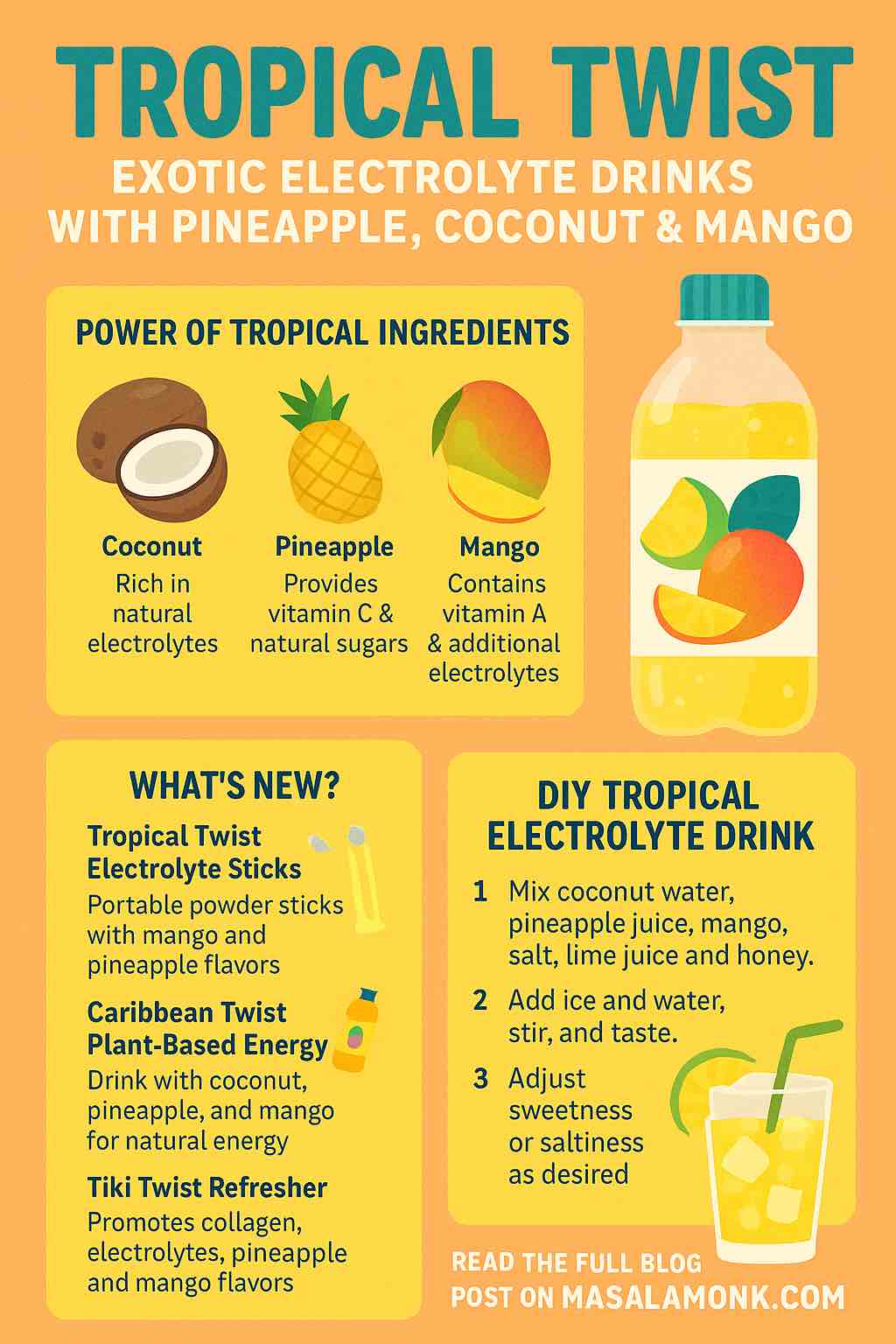
- Coconut water is naturally rich in potassium, magnesium, and sodium—electrolytes crucial for hydration, nerve function, and muscle recovery.
- Pineapple adds vitamin C, manganese, and natural sugars for quick energy, with a tangy punch that makes any drink irresistible.
- Mango brings a creamy texture, vitamin A, and additional electrolytes, along with that unmistakable sweetness.
Put together, they offer a refreshing drink that hydrates, energizes, and delights your taste buds—all at once.
What’s New? The Latest in Tropical Electrolyte Drinks (2025)
Fresh on the Shelves
- Tropical Twist Electrolyte Sticks: These portable powders launched just weeks ago, blending mango and pineapple with a science-backed mix of electrolytes. Perfect for gym bags, travel, or work commutes—just rip, pour, and shake into water.
- Caribbean Twist Plant-Based Energy: Combining coconut, pineapple, and mango for a new kind of “clean energy,” these drinks hit the market as plant-based, natural alternatives to traditional energy drinks.
- Tiki Twist Refresher: The latest “functional beverage” trend, these mix pineapple, mango, and coconut water with added collagen and extra electrolytes for a beautifying, hydrating pick-me-up.
Trending DIY Recipes
On platforms like TikTok and Lemon8, homemade recipes are trending hard. Influencers show off mixes like:
- Pineapple juice + coconut water + fresh mango cubes (sometimes with a squeeze of lime or a hint of Himalayan salt)
- Kombucha-based “dirty energy” twists using pre-made tropical kombucha, coconut creamer, and fruit chunks for flavor and probiotics
Why the DIY love? People want control over ingredients, less sugar, and the satisfaction of making something vibrant and healthy at home.
How Do They Stack Up? Nutrition, Taste, and Performance
Here’s what sets these drinks apart from regular sports drinks or plain water:
| Drink Type | Electrolytes | Sugar Content | Add-ons | Caffeine? | Best For |
|---|---|---|---|---|---|
| Ready-to-Drink | High (medical) | Low | B-vitamins, collagen | None/Optional | Intense workouts, rehydration |
| Powdered Mixes | Moderate/High | Low/None | Organic, vegan, vitamins | None | Everyday use, travel |
| Sparkling/Energy | Moderate | Moderate | Caffeine, natural flavor | 70–110 mg | Midday pick-me-up, focus |
| DIY Blends | Customizable | As per mix | Fresh fruit, probiotics | Optional (tea) | Families, home hydration |
Key practical tip: Always check the nutrition label for sodium and potassium levels—these are the main electrolytes you lose through sweat. For intense workouts or summer days, drinks with 300–600mg sodium per serving are ideal. If you’re avoiding added sugars, look for “unsweetened” or “no added sugar” options or make your own.
How to Make Your Own Tropical Electrolyte Drink (DIY Guide)
You don’t need to spend big bucks or search specialty stores to enjoy a Tropical Twist. Here’s a practical, tried-and-tested recipe anyone can make at home:
DIY Tropical Twist Electrolyte Drink
Ingredients:
- 1 cup coconut water (the fresher, the better)
- 1/2 cup pineapple juice (preferably fresh or 100% juice)
- 1/2 cup mango (pureed or diced small)
- 1/8 teaspoon Himalayan pink salt or sea salt (for sodium)
- 1–2 teaspoons honey or agave (optional, for sweetness)
- Juice of 1/2 lime (for a tangy kick and added potassium)
- 1 cup cold water or ice
Instructions:
- Blend mango and pineapple juice until smooth (skip this step if using pure juice).
- Mix in coconut water, lime juice, salt, and sweetener.
- Add cold water and ice, stir, and taste. Adjust sweetness or saltiness as needed.
- Pour into your favorite bottle or glass, garnish with a pineapple wedge or mint, and enjoy!
Pro Tip: For extra electrolytes, add a splash of orange juice or a pinch of magnesium powder. For a “sports drink” effect, use more salt (up to 1/4 teaspoon) and less honey.
Who Needs These Drinks? (Hint: Probably You!)
- Athletes & Fitness Fans: Rapid rehydration, less muscle cramping, and quick energy after runs, yoga, or the gym.
- Kids & Families: Natural, tasty alternative to sodas and commercial sports drinks (plus, you can sneak in more fruit!).
- Travelers & Office Warriors: Beat jet lag, hot days, and air conditioning with a bottle of tropical hydration.
- Anyone in a Heatwave: Electrolytes + tropical flavor = the perfect summer rescue.
Where to Find the Best? (And What to Watch For)
Ready-to-Drink & Powdered Options
- ROAR Complete Hydration Powder Plus (Tropical Twist)
- Biolyte Tropical
- Remedy Drinks Tropical Twist Energy
- Sunshine Beverages Tropical Pineapple
- Caribbean Twist by Tropical Sno
Look for these online or in supermarkets—many ship internationally.
DIY: Make It Your Signature Drink
- Experiment with ratios, use sparkling water for fizz, add chia seeds for texture, or infuse with mint or basil.
- Try freezing into popsicles for kids!
Final Thoughts: Bring Paradise to Your Hydration Routine
Whether you’re sipping a store-bought mix, shaking up a homemade blend, or exploring the latest “Tiki Twist” creation, these pineapple, coconut, and mango electrolyte drinks are more than a trend. They’re a practical, delicious, and healthy way to support hydration and bring a taste of the tropics wherever you are.
Ready to try your own Tropical Twist? Grab your ingredients, shake it up, and let the sunshine in!
Have a favorite tropical recipe, a question about hydration, or a product you want reviewed? Drop it in the comments! Let’s keep the conversation fresh, fun, and—most importantly—hydrated.
Want more? Subscribe for updates on the latest in functional beverages, wellness recipes, and smart hydration hacks!
FAQs: Tropical Twist Electrolyte Drinks
1. What are electrolyte drinks, and why are they important?
Electrolyte drinks help replenish minerals like sodium, potassium, and magnesium that you lose through sweat. They’re vital for hydration, muscle function, and preventing cramps, especially during hot weather or after intense exercise.
2. Why combine pineapple, coconut, and mango in an electrolyte drink?
Pineapple, coconut, and mango not only taste great together but each contributes natural electrolytes, vitamins, and antioxidants, making the drink both flavorful and effective for hydration.
3. Are Tropical Twist electrolyte drinks good for kids?
Yes, homemade versions with minimal added sugar and natural ingredients are safe and enjoyable for kids. Avoid high-caffeine or artificial varieties for young children.
4. How much should I drink after exercise or on a hot day?
Most adults benefit from 300–600ml after exercise, or as needed for thirst. For intense sweating, one serving after activity is a good starting point. Always listen to your body and adjust accordingly.
5. Can I make a sugar-free version at home?
Absolutely. Simply omit honey or agave and use pure fruit juices. Coconut water provides a hint of natural sweetness even without added sugar.
6. Are these drinks suitable for people with diabetes?
Use caution: opt for low-sugar or unsweetened versions, and consult your doctor if you’re unsure. Homemade blends let you control the amount and type of sweetener.
7. What’s the best time to drink a Tropical Twist electrolyte beverage?
These drinks are ideal before or after workouts, during outdoor activities, when you’re feeling dehydrated, or just for a refreshing afternoon pick-me-up.
8. How do Tropical Twist drinks compare to traditional sports drinks?
Tropical Twist drinks can be lower in added sugar, free of artificial dyes/flavors, and provide extra vitamins and antioxidants from real fruit—making them a healthier choice for many.
9. How long can I store homemade electrolyte drinks?
Homemade drinks are best enjoyed within 24–48 hours when refrigerated. Shake well before drinking, as ingredients may settle.
10. Where can I find ready-made Tropical Twist electrolyte drinks?
Look in supermarkets, health food stores, or online retailers for brands like ROAR, Biolyte, Remedy, and Sunshine Beverages. Always check the ingredient label for the best options.