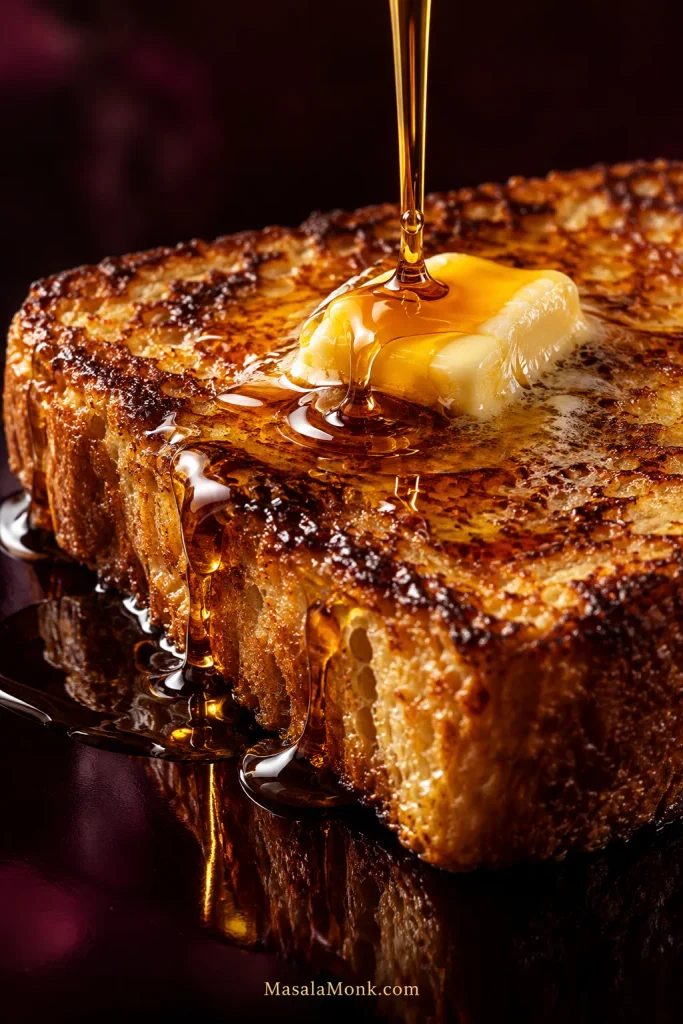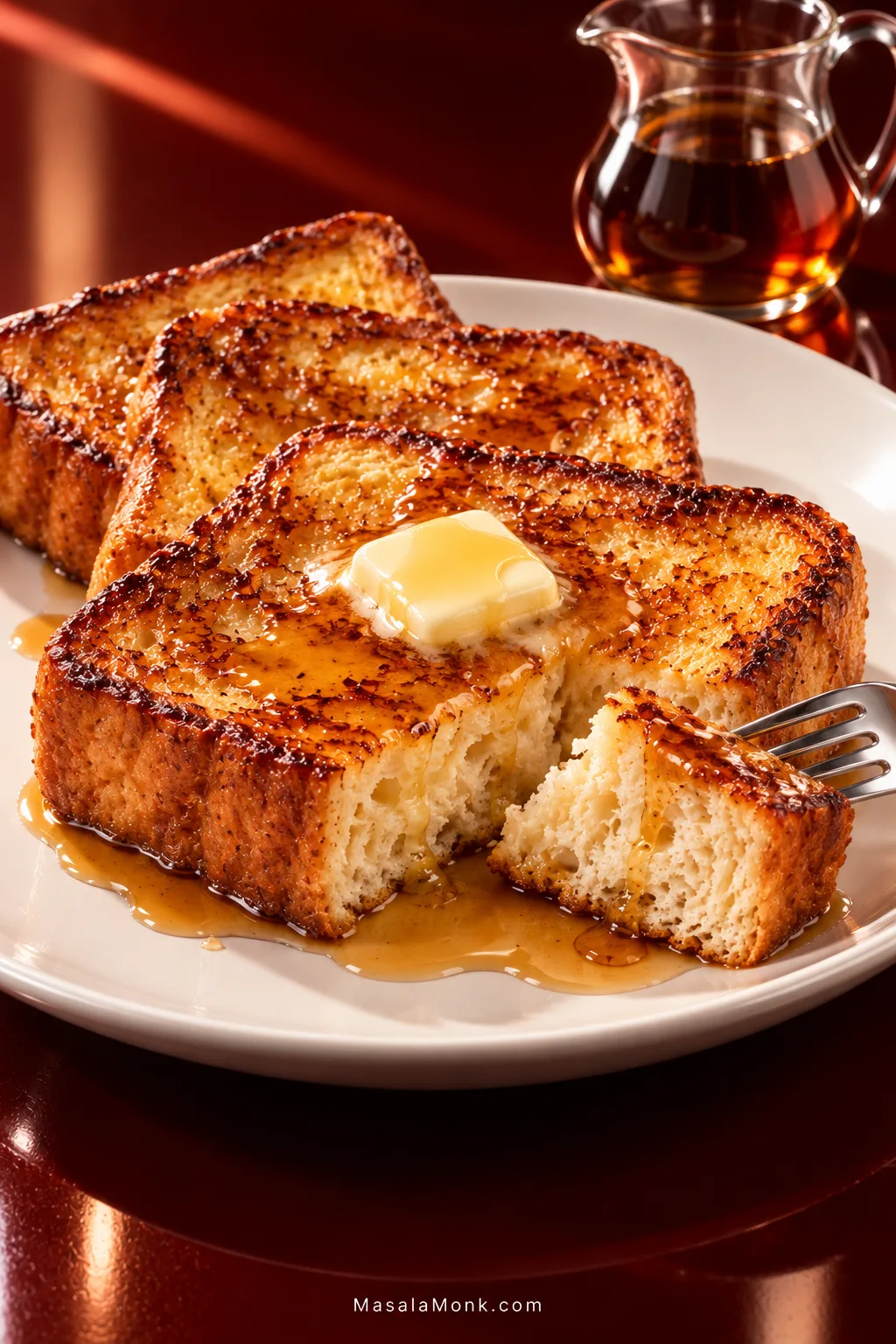
Good French toast should give a little when you cut into it: deeply golden outside, buttery around the edges, and warm and softly custardy through the middle. It should not taste like scrambled eggs wrapped around bread, and the center should never collapse into something wet and pasty.
The tricky part is that different breads reach that point differently. A thin, soft sandwich slice can turn fragile after only a few seconds in custard, while thick sourdough may still be plain bread at the center after the same dip.
So this French toast recipe starts with the bread in front of you. Soak it according to how sturdy and dry it is, cook one slice, cut it open, and adjust the rest. With everyday ingredients, breakfast is usually on the table in about 20–35 minutes.
Before the Skillet: Read the Bread
Thickness. Around ¾ inch / 2 cm is easy to work with: enough depth for a soft middle while the surface still has time to brown. Slices closer to 1 inch / 2.5 cm also work when you want a deeper center.
Moisture and structure. A fresh slice that holds its shape can go straight into the custard. Very soft, floppy bread benefits from brief drying so it absorbs liquid without tearing.
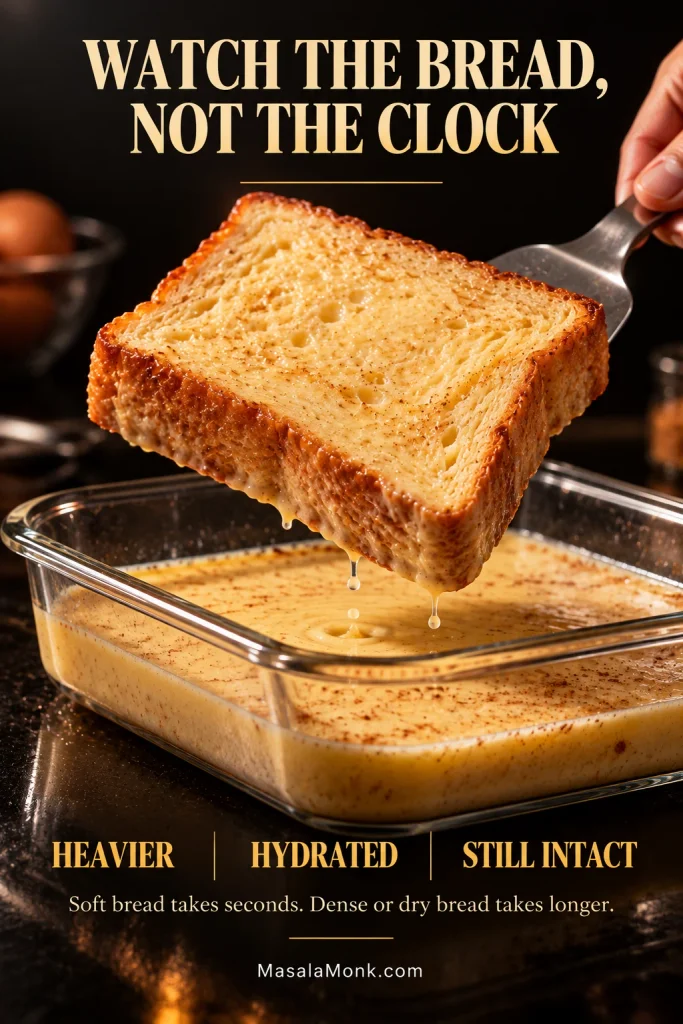
In the custard. Watch the bread more closely than the clock. Once a slice feels noticeably heavier but still lifts cleanly without sagging or tearing, it is ready for the skillet.
Easy Classic French Toast Recipe
This classic French toast uses a simple egg-and-milk custard for deeply golden slices with a warm, softly custardy center that stays moist without turning soggy. Thick white bread, Texas toast, brioche and challah all work well.
A large griddle puts you toward the shorter end of the cooking time.
Equipment
- Wide shallow bowl or baking dish
- Whisk or fork
- 10–12 inch / 25–30 cm skillet or electric griddle
- Wide spatula
- Optional wire rack and sheet pan for holding finished slices
Ingredients
The custard—sometimes called the batter or egg mixture—is simply eggs, milk, vanilla, cinnamon, salt and a little optional sugar.
- 6–8 sturdy bread slices, preferably about ¾ inch / 2 cm thick
- 4 large eggs
- 1 cup / 240 ml whole milk (2% milk also works)
- 1 tablespoon / 12 g granulated sugar, optional
- 2 teaspoons / 10 ml vanilla extract
- 1 teaspoon ground cinnamon
- ¼ teaspoon fine salt
- 2–3 tablespoons / 28–42 g unsalted butter, for cooking
- Maple syrup, additional butter, powdered sugar or fruit, for serving
How to Make French Toast
- Dry very soft fresh bread if needed. Heat the oven to 300°F / 150°C. Arrange the slices in one layer and bake for 10–15 minutes, flipping halfway, until they feel a little drier and sturdier but have barely colored. Skip this step when the slices already hold their shape well.
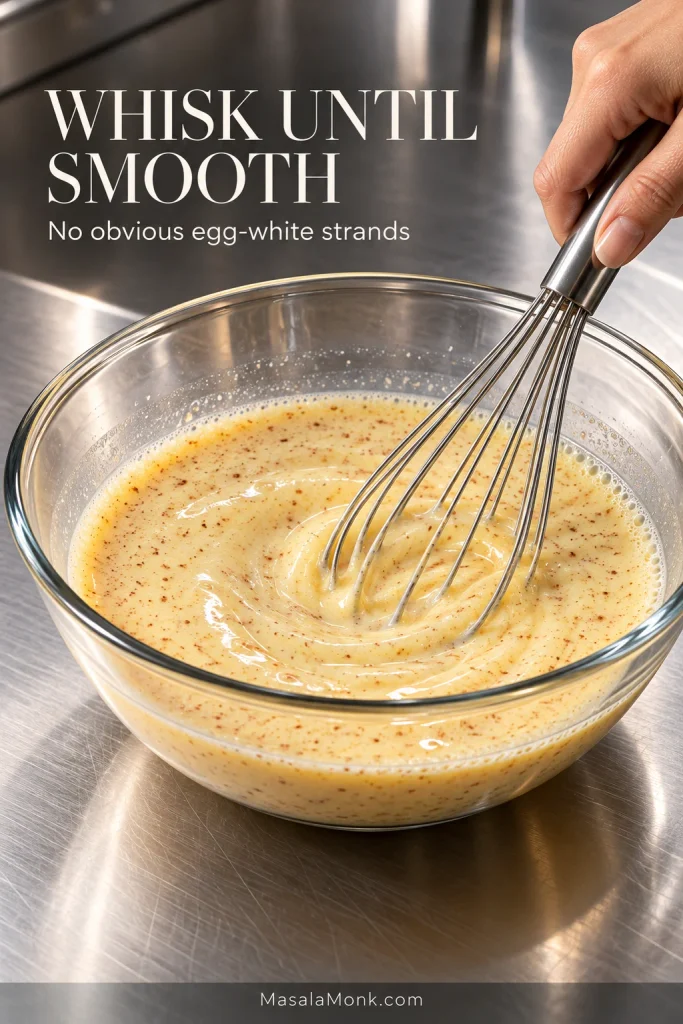
- Make the custard. Whisk the eggs thoroughly in a wide shallow bowl until no obvious strands of white remain. Then whisk in the sugar, if using, along with the cinnamon and salt. Add the milk and vanilla and whisk again until evenly combined.
- Heat the skillet. Set it over medium to medium-low heat, or heat an electric griddle to roughly 325–350°F / 165–175°C. Add a little butter once the cooking surface is hot.
- Soak the first slice. Coat both sides in custard. Thin, soft bread may need only a few seconds per side; thick, dry bread needs longer. Lift it once the bread feels heavier and hydrated but still holds together.
- Let it drip. Hold the slice over the bowl for about 2–3 seconds so loose custard falls away. Do not press or squeeze the bread. Support a fragile or deeply soaked slice from underneath with a wide spatula.
Cook, Check and Adjust
- Cook until golden. Work in batches that fit comfortably in the pan. Cook for roughly 3–4 minutes on the first side, then flip and cook for another 2–4 minutes. Lower the heat if the surface gets dark before the middle has time to set.
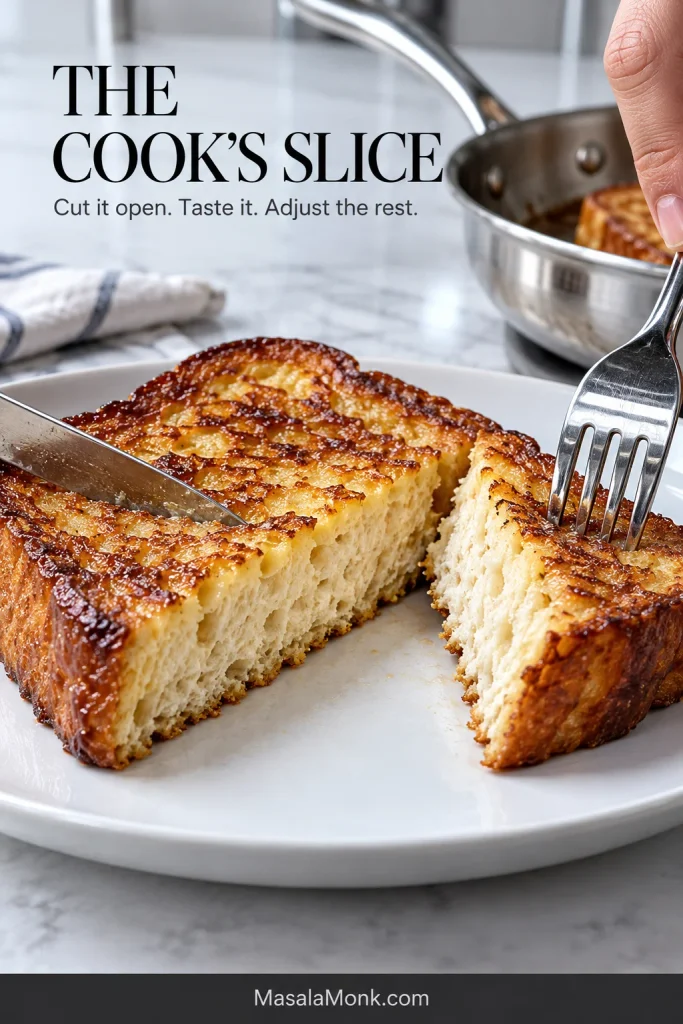
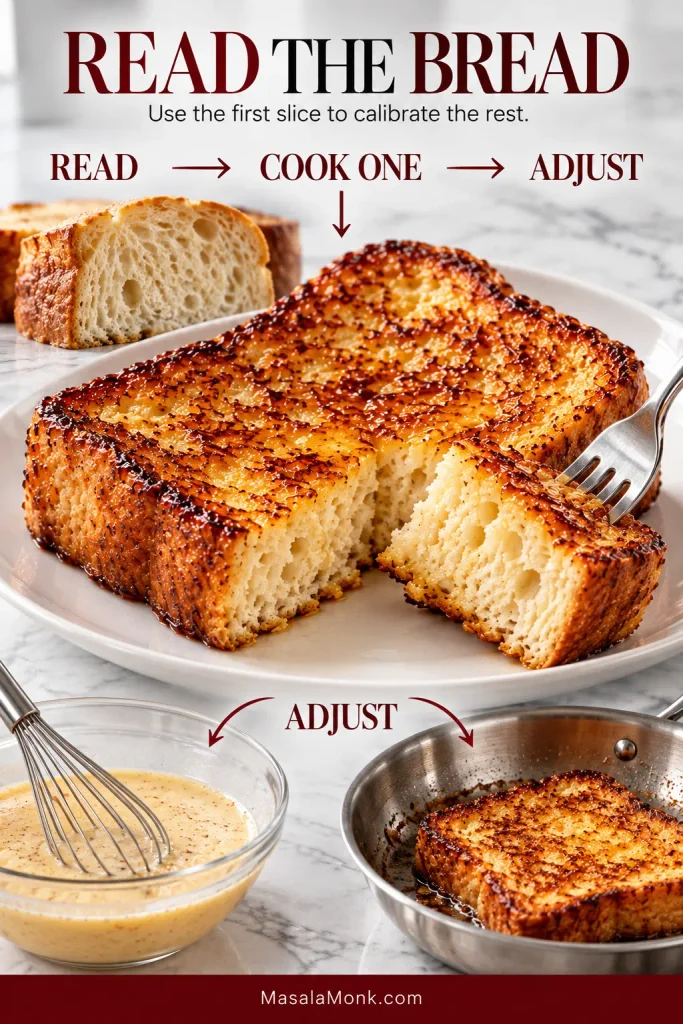
- Check the center. Make the first slice the cook’s slice. Cut it open while it is still hot. Taste it. A dry bread center means the next slice needs a longer soak. If the middle is fully set but softer than you like, shorten the soak. A wet or pasty middle, however, needs more time over gentler heat. Once the center is where you want it, you know how to treat the rest of the loaf.
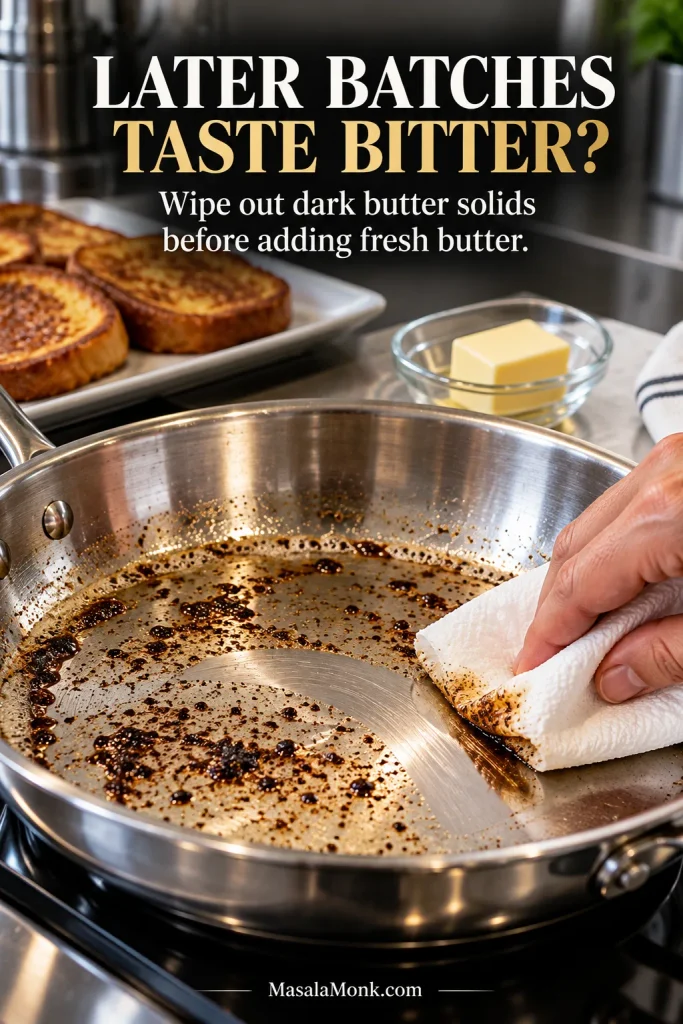
- Reset between batches. Re-whisk the custard to redistribute the cinnamon. Add fresh butter as needed, and wipe away very dark butter solids before they make the next batch taste bitter.
- Serve while hot. Let butter melt into the surface and add maple syrup, powdered sugar or fruit at the table. To keep earlier batches warm, place them in a single layer on a wire rack in a 200°F / 95°C oven only as long as needed to finish cooking.
Recipe Notes
- Scaling: use 1 large egg + ¼ cup / 60 ml milk for about 2 substantial slices.
- Yield: thick, dry or porous bread may use more custard, so this batch makes about 6–8 slices.
- Vanilla and cinnamon: no vanilla or cinnamon? Leave either out—the French toast will still turn out fine.
- Thick toast still wet inside? See Custardy, Not Soggy; once the outside is golden, finish it for a few minutes in a 275°F / 135°C oven.
French Toast Guide
Once the basic method is working, use the guide below to fine-tune the bread, center texture and browning.
Cooking & Texture
Variations & Storage
Need an egg-free version? The eggless French toast recipe uses a different binding system, so you do not have to guess at replacing the eggs one-for-one.
Best Bread for French Toast
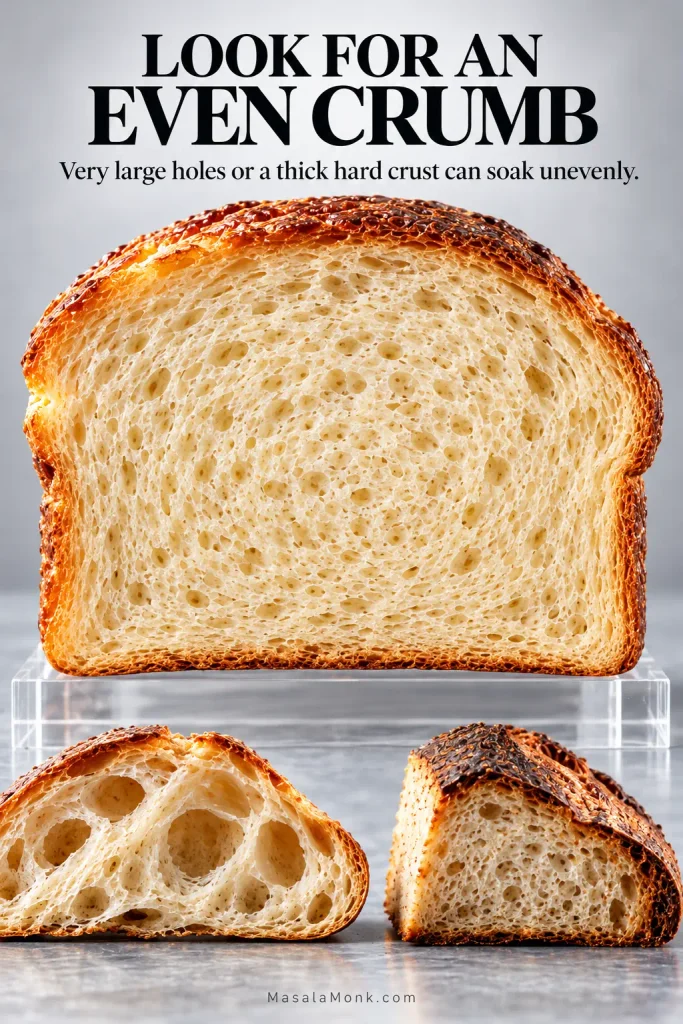
The easiest bread to work with is sturdy and thick-sliced. A fairly even crumb soaks more predictably; very large holes or a thick, hard crust can leave parts of the slice under-hydrated while others soften too far. Slices up to about 1 inch / 2.5 cm work when you want a deeper middle.
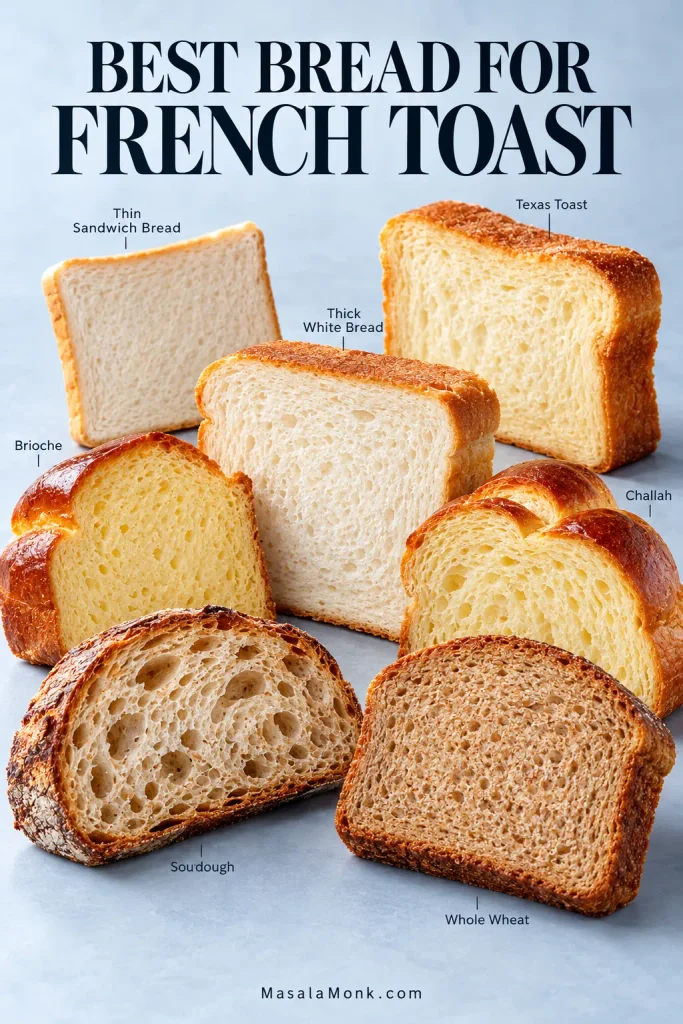
| Bread | What to Expect |
|---|---|
| Thin sandwich bread | Fragile when very soft; dry briefly if needed. The result is thin and tender. |
| Thick white bread | An easy everyday choice with reliable structure and a tender, classic center. |
| Texas toast | Thick but often fairly soft, giving a fluffy, substantial slice. |
| Brioche | Rich, tender and highly absorbent, with a soft custardy center. |
| Challah | A light crumb with enough structure for a generous soak; tender and custardy. |
| Sourdough | Firmer and chewier with a tangier result. Very open holes can hydrate unevenly. |
| Whole-wheat bread | Denser than soft white bread, with a heartier, firmer result. |
Sourdough makes the role of structure especially obvious. A softer sandwich-style loaf usually hydrates more evenly than a very open, crusty boule; these sourdough bread recipes include both styles.
Gluten-free bread varies enormously from brand to brand. Start with a brief soak and increase only while the bread continues to hold its shape.
Fresh Bread Can Work—Structure Matters More Than Age
Both fresh and day-old bread can make excellent French toast; what matters most is that the slice holds together as it absorbs the custard. Very soft or floppy fresh slices benefit from brief drying so they are easier to soak and transfer without tearing.
Day-old bread often works well because staling firms the crumb, making the slices easier to soak and transfer.
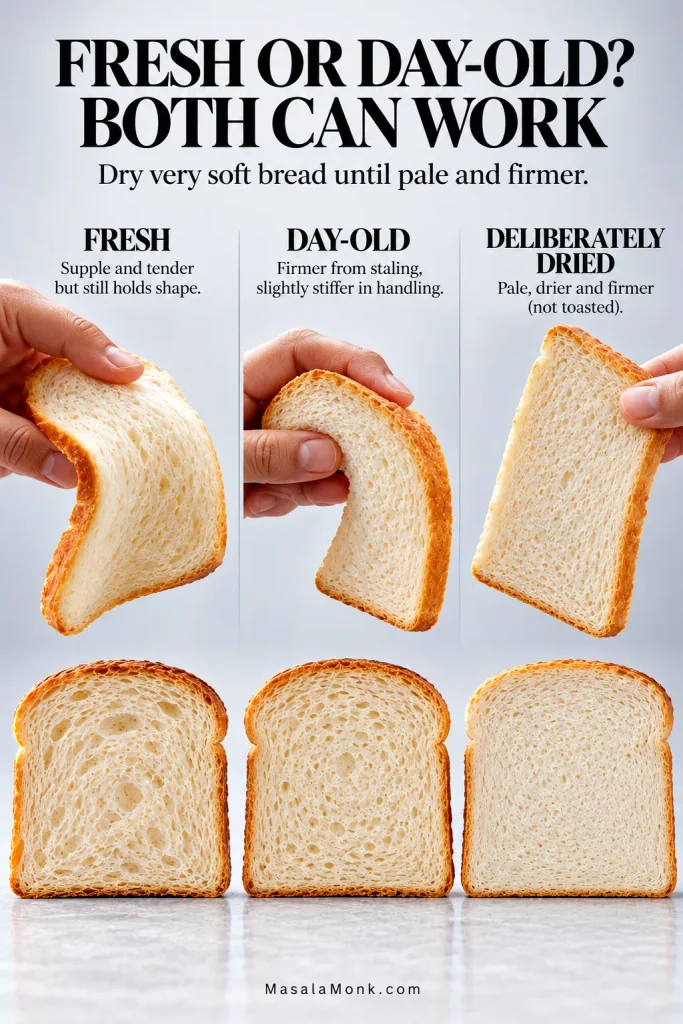
If the bread needs drying, use a 300°F / 150°C oven for about 10–15 minutes, flipping halfway. Stop while the slices are still pale. For one or two servings, the lowest toaster setting is a faster shortcut.
Once the bread is ready, the custard is simple to scale.
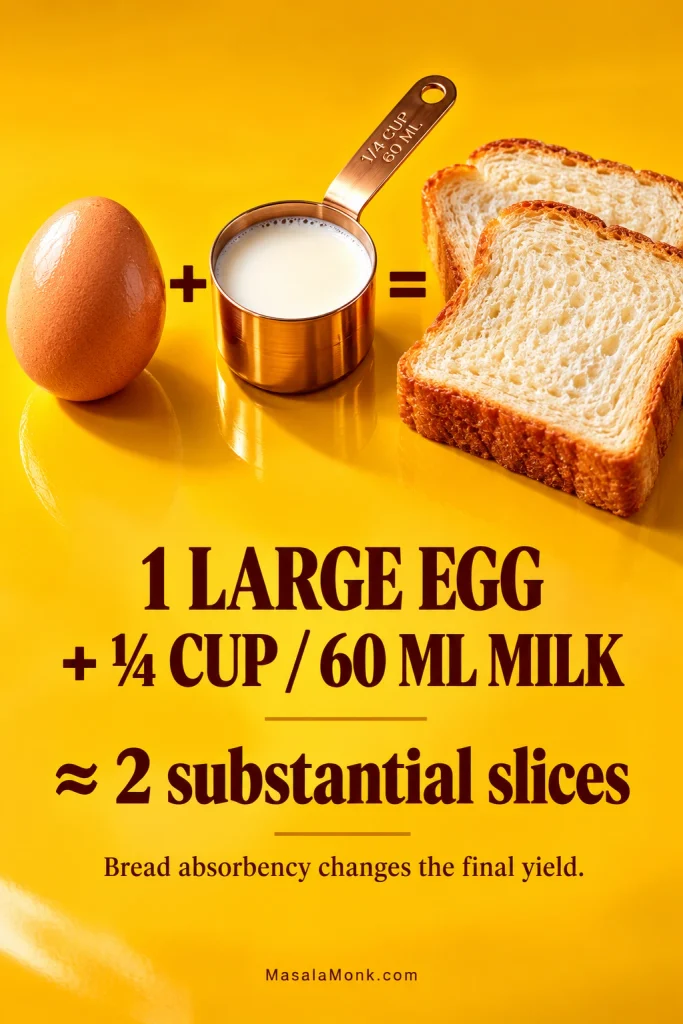
Egg-to-Milk Ratio for French Toast
1 large egg + ¼ cup / 60 ml milk for about 2 substantial slices.
| Batch | Custard |
|---|---|
| French toast for 1 About 2 slices | 1 egg + ¼ cup / 60 ml milk |
| French toast for 2 About 4 slices | 2 eggs + ½ cup / 120 ml milk |
| French toast for 4 About 6–8 slices, depending on bread | 4 eggs + 1 cup / 240 ml milk |
Dry or especially porous bread may use more custard. If the bowl runs low, mix another egg with ¼ cup / 60 ml milk and season it lightly.
How Long Should French Toast Soak?
Most everyday breads need seconds rather than minutes in the custard, but density, dryness and crumb structure can shift the timing substantially. Treat the ranges below as rough starting points, not targets.
| Bread Condition | Rough Starting Point |
|---|---|
| Thin, fresh or very soft | About 2–5 seconds per side |
| Thick white bread or Texas toast | About 10–20 seconds per side |
| Slightly dry brioche or challah | About 20–30 seconds per side |
| Very dry thick bread or dense sourdough | About 30–60 seconds per side to start; very dense loaves may need substantially longer |
Stop when the bread feels heavier but still lifts cleanly. A thick slice that still feels light needs more time.
When the balance is right, the fork meets a lightly crisp surface first and then a warm, softly set center underneath.
Custardy, Not Soggy
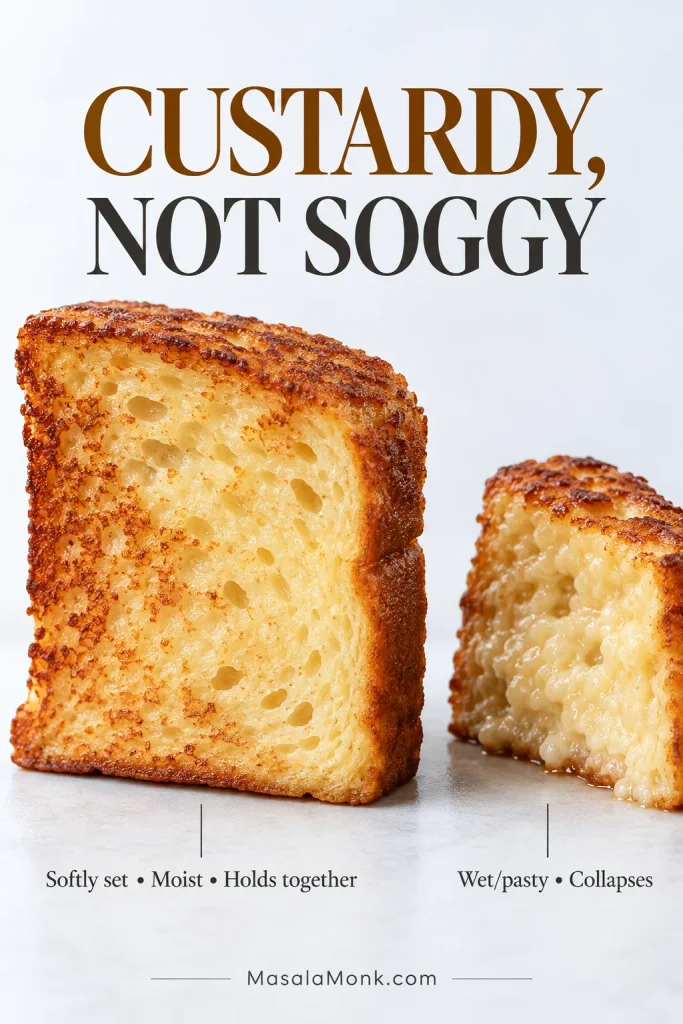
A custardy center is moist, warm and softly set. It yields under the fork but still holds together when you cut through it.
Soggy or undercooked French toast feels pasty or watery in the middle; the bread may collapse, and visibly wet egg mixture may remain in the crumb.
With very thick, deeply soaked slices, an instant-read thermometer helps when appearance alone leaves you unsure. The USDA safe-temperature guidance lists 160°F / 71°C for egg dishes.
Skillet Heat and Browning
Use medium to medium-low heat for most skillets. An electric griddle should sit around 325–350°F / 165–175°C.
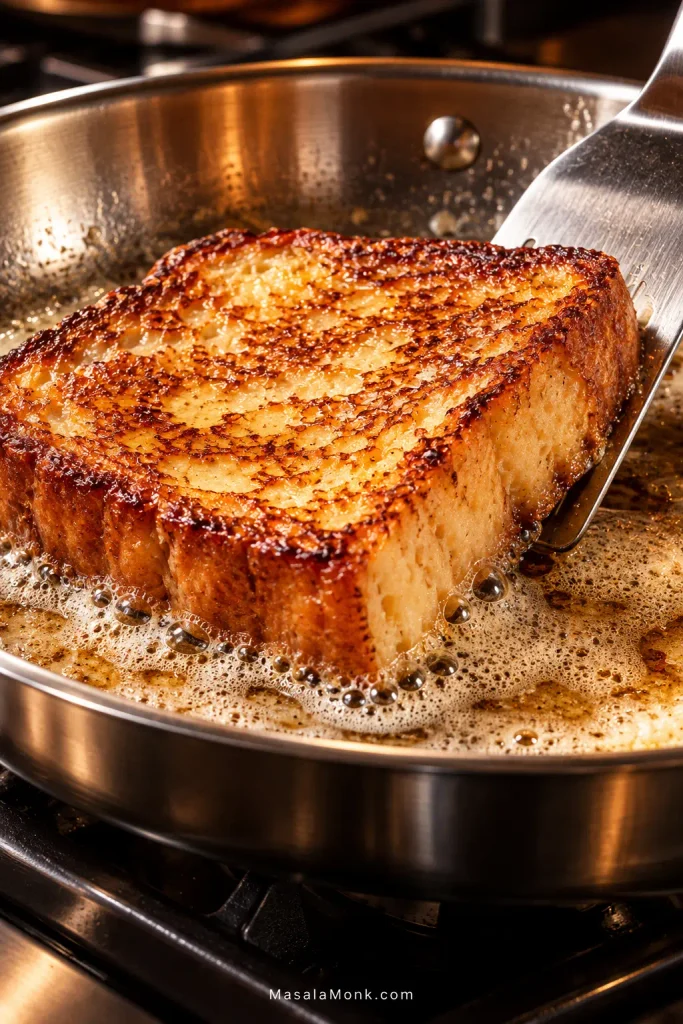
Let the color tell you what the pan is doing. At the right heat, butter foams around the edges and the first side comes up bronzed rather than scorched. A slice that goes dark in the first minute or two needs gentler heat; bread that sits for several minutes looking pale and greasy needs a hotter pan before the next batch.

For Crisper Edges
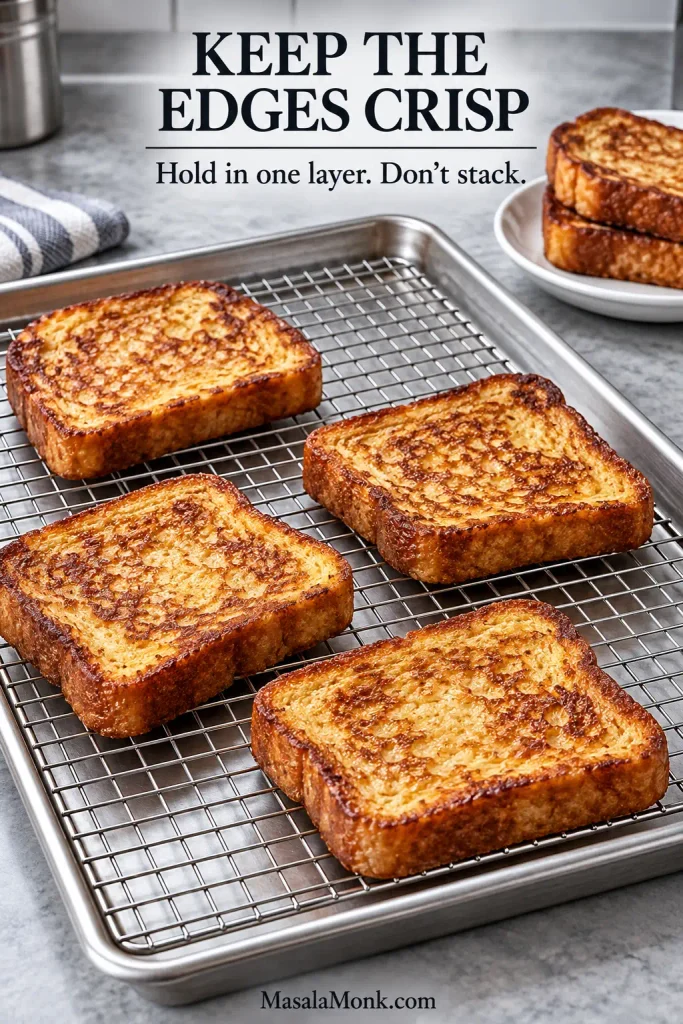
Let loose custard drip away before the bread reaches the skillet, start with a properly preheated pan, and leave space between slices so steam can escape. Once cooked, keep the slices in one layer. Don’t stack them.
Butter gives French toast its familiar skillet flavor, but its milk solids eventually brown and turn bitter. Wipe away dark specks and add fresh butter between batches. You can combine butter with a little neutral oil; clarified butter or ghee is the more heat-tolerant option.
Using stainless steel? Preheat the pan, add the fat, let the fat heat, then add the wet bread. Nonstick, seasoned cast iron and a well-seasoned griddle are more forgiving.
If a thick or deeply soaked slice becomes golden before the middle is ready, move it to a 275°F / 135°C oven for a few minutes to finish.
French Toast Troubleshooting
An imperfect slice tells you what to change next. Match what happened to the fix below, make one adjustment, and keep cooking.
Soaking and Texture Problems
| What Happened? | What to Change |
|---|---|
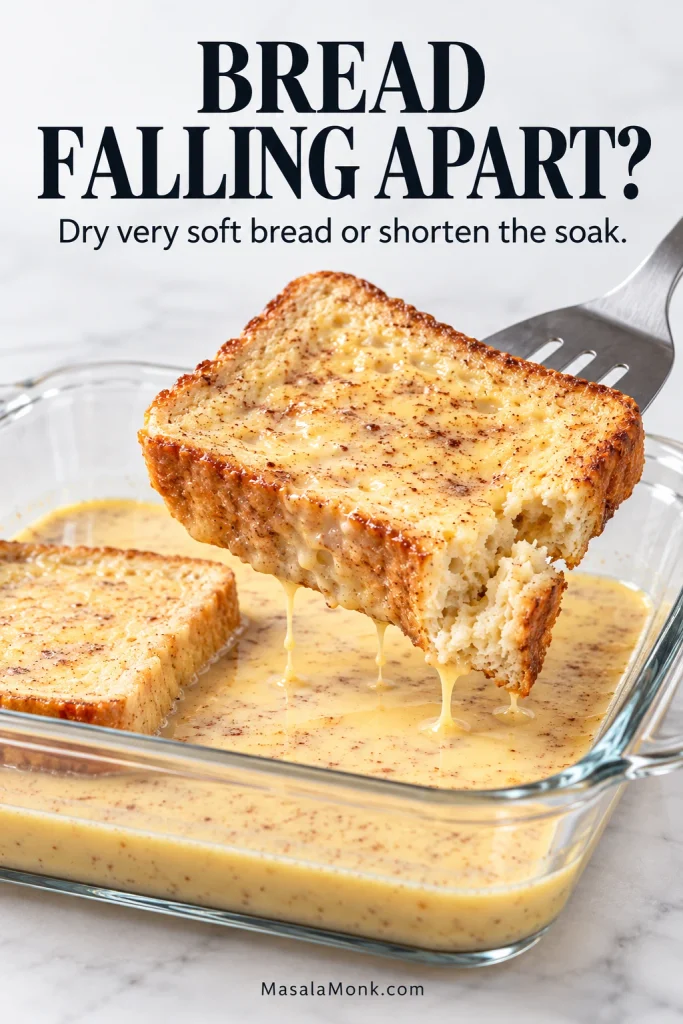
| Soggy and floppy | The bread absorbed more custard than its structure could support. Dry very soft bread first or shorten the soak. |
| Wet or raw-looking center | Lower the skillet heat and cook longer. Very thick slices can use the gentle oven finish above. |
| Dry bread in the center | Give the next slices more time in the custard. |
| Bread falls apart before cooking | Dry it briefly, shorten the soak, and support the slice from underneath when you transfer it. |
| Strong egg flavor | If you added extra egg, return to the base ratio. Whisk thoroughly and let excess surface custard drip away before cooking. |
| Scrambled-egg coating | Whisk until the egg whites are fully broken up and let the mixture soak into the bread instead of sitting thickly on the surface. |
Browning and Batch Problems
| What Happened? | What to Change |
|---|---|
| Burns before the center cooks | Lower the heat. Extra custard sugar and very dark butter solids speed up browning. |
| Pale and greasy | Give the pan time to get hotter before adding the next batch. |
| Cinnamon concentrated on a few slices | Re-whisk the custard before each batch. |
| Sticks to stainless steel | Make sure both the pan and cooking fat are hot before adding the wet bread. |
| Later batches taste bitter | Wipe away dark butter solids and start the next batch with fresh butter. |
| Custard runs out early | Return to the base egg-to-milk ratio: mix another egg with ¼ cup / 60 ml milk and season it lightly. The loaf is simply more absorbent. |
Substitutions and Variations
Once the basic texture is right, the recipe is easy to adapt.
Changing the Milk
Making French toast without dairy milk? Unsweetened oat or soy milk are the easiest swaps. Water works in a pinch, although the finished toast tastes leaner and more egg-forward.
Whole milk gives a rich everyday custard, while 2% works with no other changes. Buttermilk can replace the milk cup for cup for a noticeable tang against the maple syrup.
If both eggs and dairy need to go, use a dedicated vegan French toast recipe instead.
Fluffy Diner-Style French Toast
Some diner-style French toast uses flour for a thicker, fluffier coating. If you want that style, use a formula designed with flour rather than stirring flour into this custard to fix sogginess.
A Richer Version
For a richer center, replace up to half the milk with half-and-half or heavy cream. Or add an extra egg yolk. Brioche and challah bring richness through the bread itself, so if you are using either one, you may not need both cream and an extra yolk.
Serving
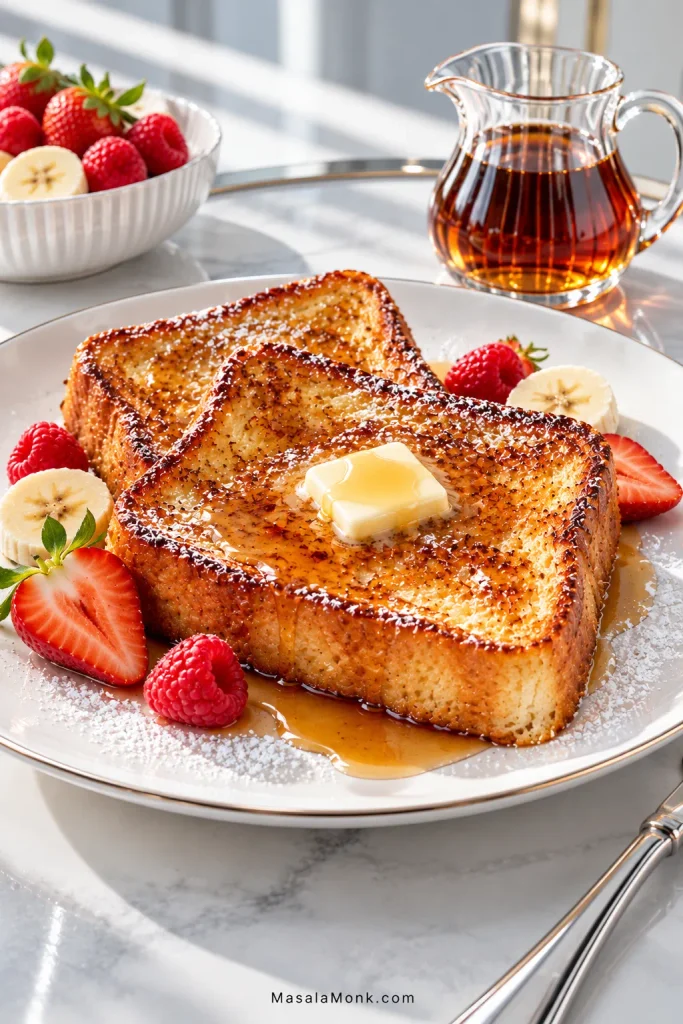
Finish with powdered sugar, berries or sliced banana, and let everyone add maple syrup at the table so the toast does not sit underneath it and soften.
Keeping a Batch Warm
Set finished slices in one layer on a wire rack over a sheet pan and hold them in a 200°F / 95°C oven only while you finish the remaining batches. Stacking traps steam and softens the browned surfaces.
Store, Freeze and Reheat French Toast
Refrigerate
Let hot slices vent on a rack for about 10–15 minutes, then refrigerate them well within the food-safety window.
The FDA’s egg-safety guidance says cooked egg dishes should be refrigerated within 2 hours, or within 1 hour above 90°F / 32°C. Keep the slices covered and use them within 3–4 days.
Freeze
Lay the slices flat in a single layer to freeze, then transfer them to a freezer bag or airtight container once firm. Wrap them well and use them within a few months for the best texture.
French toast sticks are especially convenient for the freezer because they are easy to portion and reheat.
Reheat for Crisp Edges
A toaster oven brings back the most surface crispness; thinner, firm slices may also fit a regular toaster. Frozen slices can go straight into a toaster oven or oven without thawing, and a skillet also works. The microwave is fastest, but the bread comes out softer.
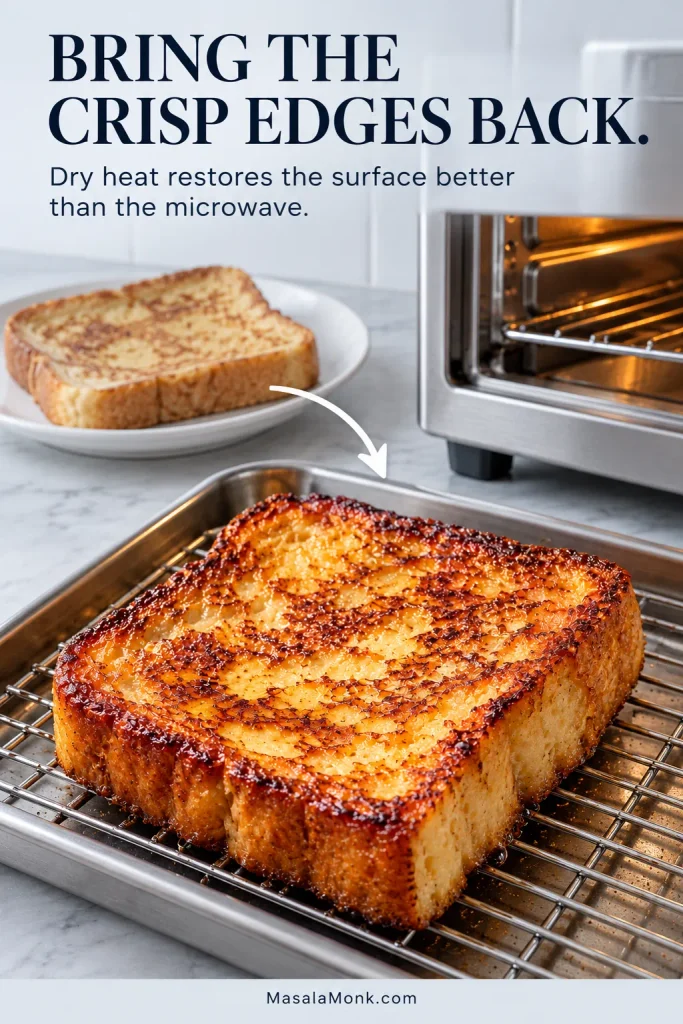
The same FDA guidance recommends reheating cooked egg dishes thoroughly to 165°F / 74°C.
However you reheat it, serve French toast while the edges still have a little crispness. Butter melts straight into the hot surface; add the maple syrup at the table so those golden slices stay that way until the first bite.