Posted on Leave a comment

Chai Latte Recipe

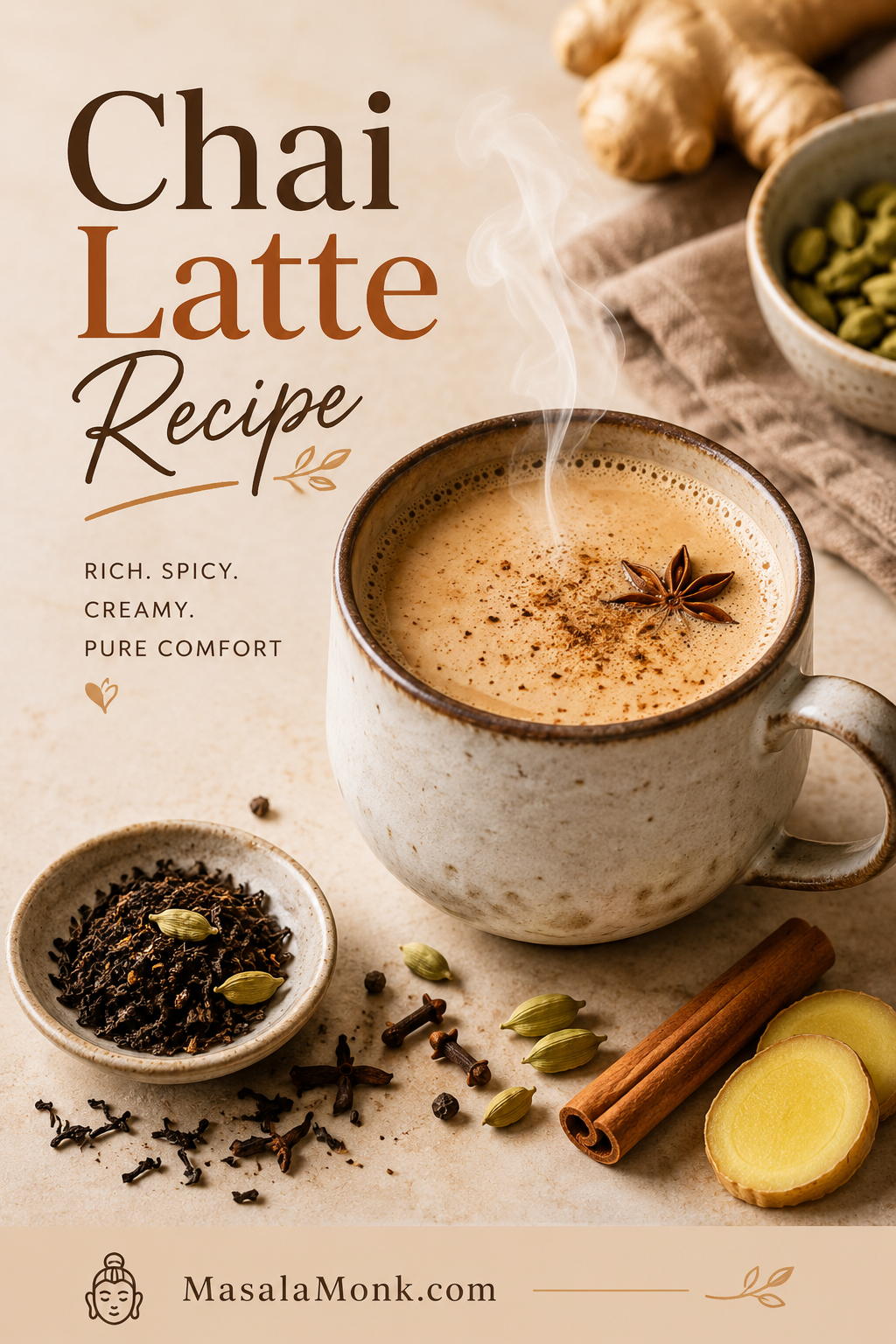
Creamy hot chai latte in a speckled mug with foam, cardamom pods, ginger, cinnamon sticks, cloves, peppercorns, and loose black tea on a warm neutral surface.

A good chai latte should smell like crushed cardamom and ginger before you even take the first sip. It should land creamy and smooth, but still taste like spiced black tea — not warm milk with cinnamon dust on top.

Many homemade versions go wrong in small ways: too much water, too little tea, gritty ground spices, or a bottled concentrate that tastes more like syrup than chai. Iced chai makes those problems even more obvious because melting ice weakens the drink quickly.

This chai latte recipe gives you the creamy drink many cafés call a chai latte or chai tea latte, but built with real chai logic: full-bodied tea first, warm spices next, and milk only after the tea and spices can hold their own.

The result is soft and café-style, but still tastes like cardamom, ginger, black tea, and warmth.

Quick Answer: How to Make a Chai Latte

To make a chai latte, simmer crushed spices in water for 3–5 minutes, steep black tea off heat or on very low heat for 4–5 minutes, strain, then mix ½ cup / 120 ml chai concentrate with ¾ cup / 180 ml steamed milk.

Sweeten with 1–2 teaspoons sugar, honey, maple syrup, or jaggery syrup to start, then add more after tasting for a sweeter coffeehouse-style cup. For iced chai, use ½ cup / 120 ml cold chai concentrate, ½ cup / 120 ml cold milk, and 1 cup / about 120–140g ice.

If you already have chai concentrate, the drink takes about 5 minutes. If you are making the base fresh, expect about 7 minutes for the tea-bag version and about 15 minutes for the whole-spice version.

Need the fastest path? Go to the tea-bag method. Want the best aroma? Use the whole-spice method. Making drinks for the week? Start with the make-ahead chai concentrate.

At a Glance

These are the numbers and choices that keep the drink from becoming pale, watery, or syrup-heavy.

Best teaAssam, CTC Assam, or another full-bodied black tea
Best milkWhole milk for richness; barista oat milk for dairy-free creaminess
Hot ratio½ cup / 120 ml chai base + ¾ cup / 180 ml milk
Iced ratio½ cup / 120 ml chai base + ½ cup / 120 ml milk + 1 cup / 120–140g ice
Final hot drinkAbout 10 oz / 300 ml
Fastest method2 chai tea bags steeped well
Best flavor methodWhole spices + loose black tea
Biggest mistakeAdding milk before the tea and spices taste strong enough

Once the ratio makes sense, the drink stops feeling fussy. You can make it stronger for ice, sweeter for a coffeehouse-style cup, less milky for dirty chai, or softer when you want a creamier evening drink.
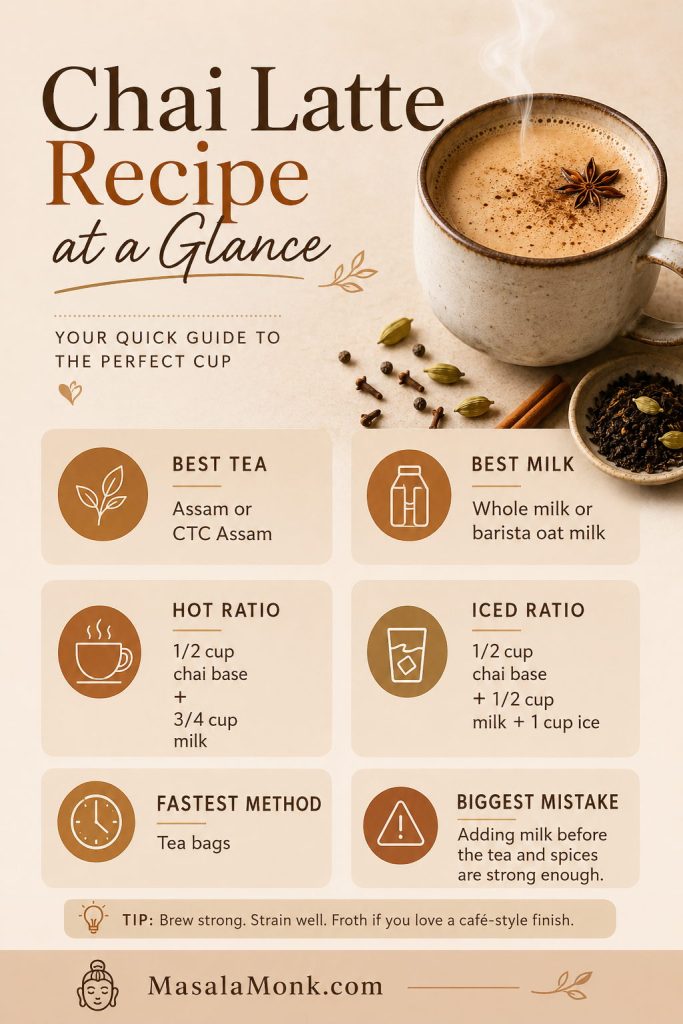
Chai Latte Recipe at a Glance board showing best tea, best milk, hot ratio, iced ratio, fastest method, and the mistake of adding milk too early.
This chai latte recipe snapshot keeps the key choices in one place: tea, milk, hot ratio, iced ratio, timing, and the mistake that weakens the drink.

For the full hot, iced, creamier iced, and dirty chai measurements, see the chai-to-milk ratio guide.

Why This Recipe Works

In good chai, milk should round the flavor, not erase it. That is why the tea and spices are extracted before milk enters the picture. The tea-spice mixture should taste slightly more intense than the final drink because milk, ice, oat milk, and espresso all change the balance once they enter the cup.

  • The tea has body. The drink does not collapse into warm milk.
  • The spices are well extracted. Cardamom, ginger, cinnamon, cloves, and pepper actually show up in the cup.
  • The tea is not overboiled. Spices can simmer longer, but black tea turns bitter when pushed too hard.

The best check is simple: before milk, the chai should taste slightly too strong. After milk, it should taste balanced. If it tastes balanced before milk, it will taste weak after.

Chai Latte Mistakes That Make It Taste Weak

Most disappointing chai lattes fail before the milk is added. The tea is too dilute, the spices are barely extracted, or the drink is built over ice before the chai has enough flavor to survive dilution.

  • Too much water for one tea bag gives you color without enough body.
  • Boiling black tea hard for too long makes it bitter; simmer spices first, then steep tea gently.
  • Milk should come after the tea and spices have real flavor, not before.
  • Too-sweet concentrate needs unsweetened black tea, not only more milk.
  • If the tea already tastes weak, ice will only make the problem louder.
  • Ground spices are convenient, but they need a light hand and a good strain.

Already made a weak, bitter, gritty, or too-sweet cup? Jump to the troubleshooting guide for quick fixes.

The Best Chai-to-Milk Ratio

If you remember only one thing, remember this: milk hides weak tea. Start with a tea-forward chai concentrate, then soften it with milk.

The exact ratio matters more than the garnish. Once the base is right, cinnamon on top is optional.
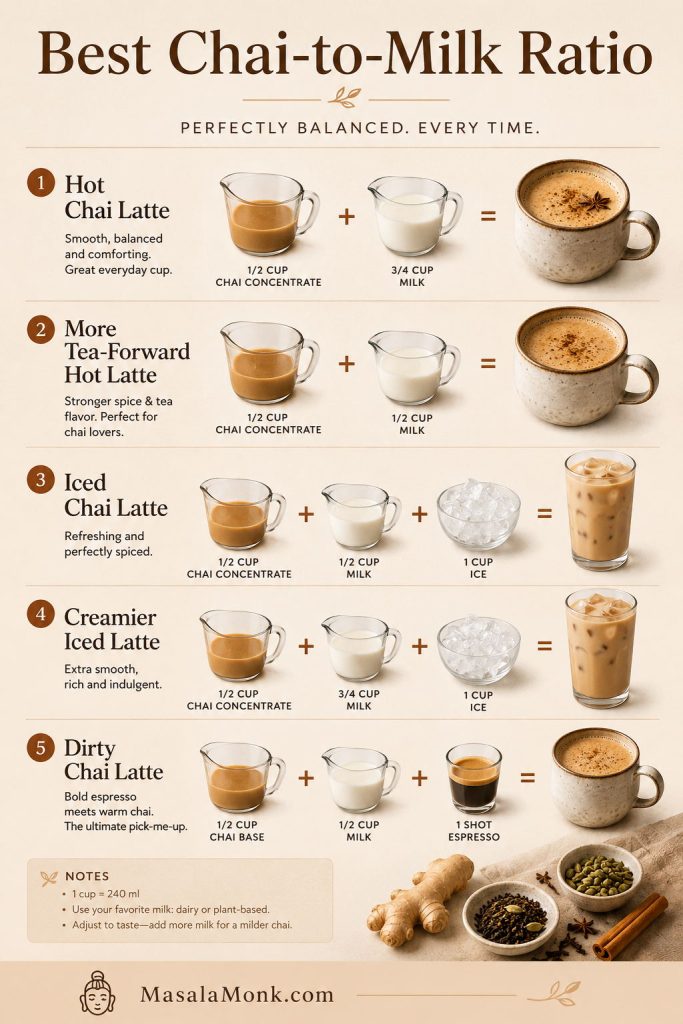
Best Chai-to-Milk Ratio guide comparing hot chai latte, tea-forward hot latte, iced chai latte, creamier iced latte, and dirty chai latte measurements.
Ratios change by style: hot chai can take more milk, while iced chai needs a tighter balance before the ice starts melting.
DrinkChai concentrateMilkIceBest result
Hot chai latte½ cup / 120 ml¾ cup / 180 mlNoneCreamy and balanced
More tea-forward hot latte½ cup / 120 ml½ cup / 120 mlNoneMore tea-forward, less milky
Iced chai latte½ cup / 120 ml½ cup / 120 ml1 cup / 120–140gHolds up to ice
Creamier iced latte½ cup / 120 ml¾ cup / 180 ml1 cup / 120–140gSofter and milkier
Dirty chai latte½ cup / 120 ml½ cup / 120 mlOptionalAdd 1 espresso shot / 30 ml

Hot chai can handle a little more milk because there is no ice dilution. Iced chai needs a tighter ratio, so taste the base and milk before adding ice; it should taste a little more tea-forward than your final target.

Which Method Should You Use?

Pick your path first. You do not need every version today — just the one that fits the drink you want right now.

Reader situationBest pathWhy it works
I want one hot chai latte nowTea-bag methodReady in about 5–7 minutes with minimal equipment
I want the best homemade flavorWhole-spice methodFreshly crushed spices taste brighter and cleaner
I want iced chai all weekMake-ahead concentrateOne batch works for hot, iced, dirty, and Starbucks-style drinks
I want Starbucks-style iced chaiStore-bought or sweetened concentrate pathClosest to the coffeehouse concentrate-and-milk format
I want coffee in itDirty chai pathA well-spiced base keeps the coffee from taking over
I want dairy-freeWater-based base + oat or soy milkCreamy without dairy, and easier to heat gently

First time making it? Use the whole-spice single-serve method for the most fragrant cup. In a hurry, use the tea-bag method. For weekday drinks, make the concentrate batch.

How to Make Chai Latte at Home

All three methods follow the same principle: brew the chai first, then add milk. That is what keeps the finished drink creamy without becoming flat, pale, or watery.

How to Make It With Tea Bags

This is the version for the afternoon when you want comfort now, not a spice project.

Use this ratio for one quick cup

  • ½ cup / 120 ml water
  • 2 black-tea-based chai tea bags
  • ¾ cup / 180 ml milk
  • 1–2 teaspoons sugar, honey, maple syrup, or jaggery syrup to start
  • ¼ teaspoon vanilla, optional

Method

  1. Bring the water to a boil, then turn off the heat.
  2. Add the chai tea bags and steep for 4–5 minutes.
  3. Remove the tea bags gently. Do not squeeze them hard, or the drink may taste harsh.
  4. Warm the milk until steaming, not boiling.
  5. Froth the milk with a frother, whisk, French press, or jar.
  6. Pour the tea into a mug, add sweetener, then pour in the milk.
  7. Taste and adjust sweetness.

Two tea bags give the cup body without forcing one bag to oversteep into bitterness. Choose a black-tea-based chai bag, not a delicate herbal chai, unless you intentionally want a caffeine-free drink.
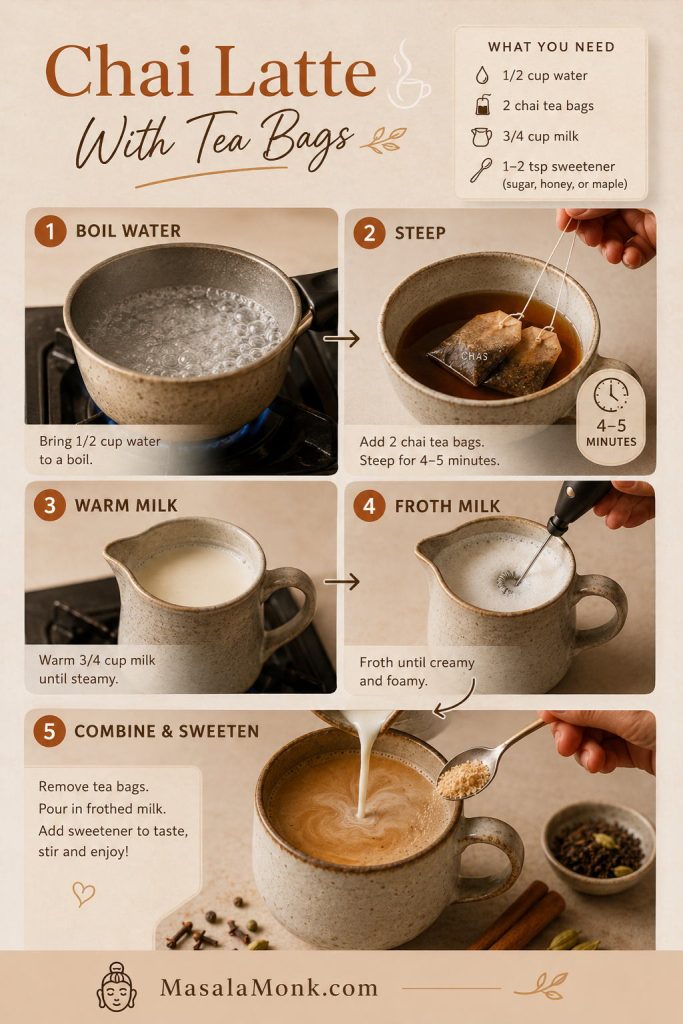
Step-by-step chai latte with tea bags guide showing boiling water, steeping two chai tea bags, warming milk, frothing milk, and combining the drink.
Tea bags are the fastest path, but using two bags and a controlled steep gives better flavor than forcing one bag to do all the work.

Whole-Spice Single-Serve Method

This is the cup to make when you have five extra minutes and want the kitchen to smell like chai, not just tea. Freshly crushed spices give a cleaner aroma and a deeper cup than most powdered spice blends.

For one large latte

  • ⅔ cup / 160 ml water
  • 2 teaspoons / about 4g loose black tea, or 2 black tea bags
  • 3–4 green cardamom pods
  • 1 small piece cinnamon stick, about 1 inch / 2.5 cm
  • 2 cloves
  • 3–4 black peppercorns
  • ½ inch / 5g fresh ginger, sliced or lightly crushed
  • ¾ cup / 180 ml milk
  • 1–2 teaspoons sugar, honey, maple syrup, or jaggery syrup to start
  • ¼ teaspoon vanilla, optional

Method

  1. Lightly crush the cardamom, cinnamon, cloves, peppercorns, and ginger.
  2. Add the spices and water to a small saucepan.
  3. Bring to a boil, then simmer for 3–5 minutes, until the water smells clearly of cardamom and ginger.
  4. Add the tea, turn off the heat or keep it very low, and steep for 4–5 minutes.
  5. For a deeper cup, let it sit off heat for another 2–3 minutes before straining.
  6. Strain into a mug. You should have about ½ cup / 120 ml dark, fragrant chai that tastes slightly too strong before milk.
  7. Warm the milk until steaming, then froth it.
  8. Combine the chai and milk. Sweeten to taste.

The timing matters. Spices can simmer longer, but black tea becomes bitter if boiled too hard for too long. Extract the spices first, then add the tea.
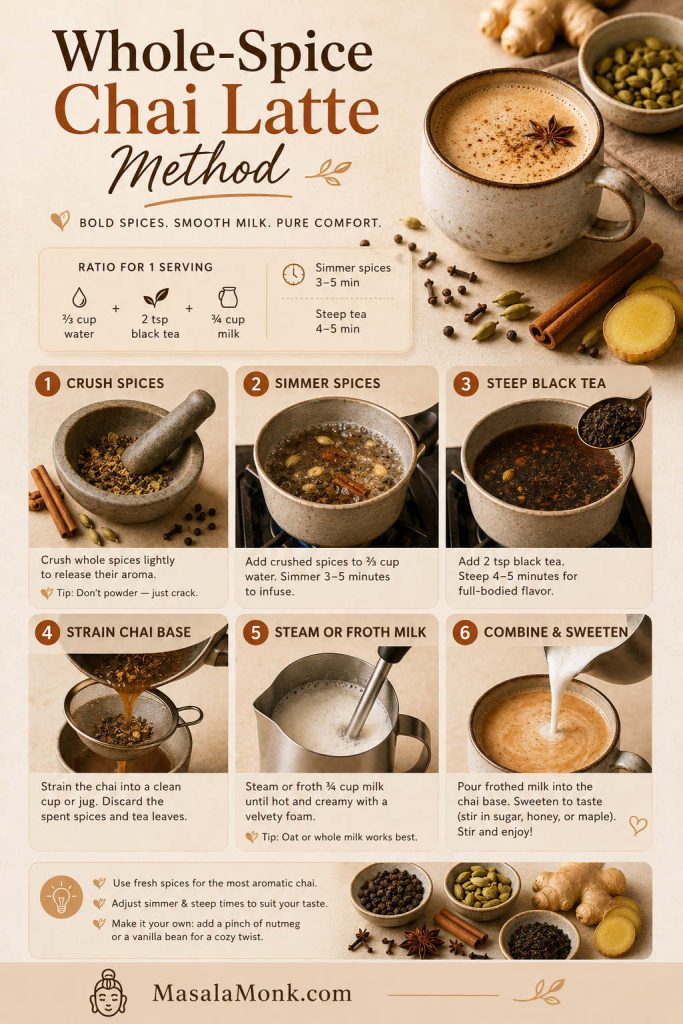
Whole-Spice Chai Latte Method board showing crushed spices, simmered spices, steeped black tea, strained chai base, frothed milk, and the final latte.
Let the spices bloom in water first; then steep the black tea gently so the whole-spice chai latte tastes aromatic instead of harsh.

Make-Ahead Chai Concentrate

Make-ahead chai concentrate keeps the hard part ready: a strong spiced tea base that can become a hot latte, iced chai, dirty chai, vegan chai, or Starbucks-style drink in minutes.

This batch starts with 2½–2⅔ cups / 600–640 ml water and yields about 2 cups / 480 ml concentrate after simmering, steeping, absorption, and straining. That is enough for about 4 lattes if you use ½ cup / 120 ml per drink.

If you are making this for iced chai, dirty chai, or different milk types, keep the batch unsweetened the first time. Sweeten each glass after mixing so you can adjust without weakening the tea.
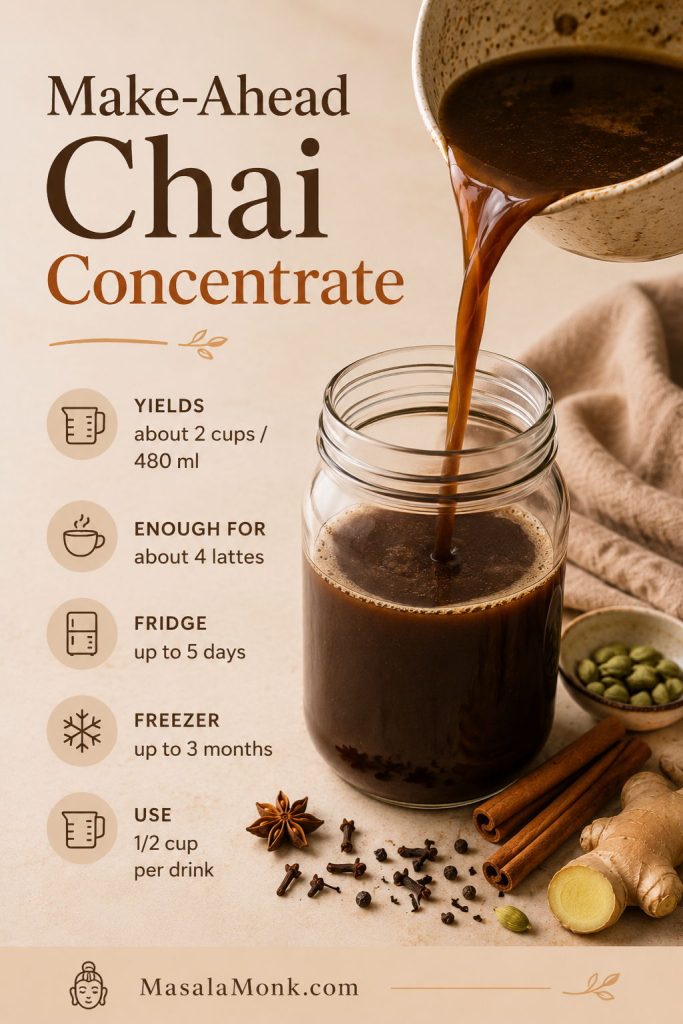
Make-ahead chai concentrate in a glass jar with cardamom, ginger, cinnamon, black tea, and callouts for yield, storage time, and use per drink.
A jar of chai concentrate gives you a flexible base for hot chai lattes, iced chai, dirty chai, and dairy-free versions throughout the week.

Ingredients for 4 lattes

  • 2½–2⅔ cups / 600–640 ml water
  • 6–8 teaspoons / about 12–16g loose black tea, or 6–8 black tea bags
  • 10–12 green cardamom pods
  • 2 small cinnamon sticks, about 2–3 inches / 5–7.5 cm each
  • 5–6 cloves
  • 10–12 black peppercorns
  • 15–20g fresh ginger, sliced or crushed
  • 2–4 tablespoons sugar, optional
  • ½ teaspoon vanilla, optional

Method

  1. Lightly crush the cardamom, cinnamon, cloves, peppercorns, and ginger.
  2. Add the spices and water to a saucepan.
  3. Bring to a boil, then simmer for 3–5 minutes, until the water smells clearly spiced.
  4. Add the tea, turn off the heat or keep it very low, and steep for 4–5 minutes.
  5. Let the mixture sit off heat for another 5 minutes if you want a deeper concentrate.
  6. Strain through a fine mesh strainer.
  7. You should have about 2 cups / 480 ml. If you are only a little short, top it up with a splash of hot water. If you have much less, leave it as-is and use slightly less per drink.
  8. Stir in sugar while the chai is warm, if you want a sweetened batch.
  9. Add vanilla, if using.
  10. Cool completely, then refrigerate in a clean jar.

Sweetened or unsweetened? Sweeten the whole batch if everyone likes the same sweetness. Leave it unsweetened if you want to use it for lower-sugar drinks, dirty chai, different milk types, or people with different sweetness preferences.

After that, the daily choice is simple: tea bags for speed, whole spices for aroma, and a fridge jar when you want the same good cup tomorrow.

Chai Latte vs Masala Chai

A chai latte is not trying to replace masala chai. It borrows the tea-and-spice soul, then changes the format: more milk, a softer texture, easier iced versions, and a café-style feel. The mistake is not making it latte-like; the mistake is making it so milky that the chai disappears.

You may also see it called a chai tea latte. Technically, chai already means tea, but “chai tea latte” is the common café phrase for the same style of drink.

  • Masala chai: Indian spiced milk tea, usually simmered or boiled with tea, milk, spices, and sweetener. It is more direct, warming, and tea-forward.
  • Chai latte: spiced tea concentrate or brewed chai mixed with more milk. It is creamier, softer, and easier to serve hot or iced.
  • Dirty chai: chai latte with espresso. It keeps the creamy spiced base, but adds a coffee edge.
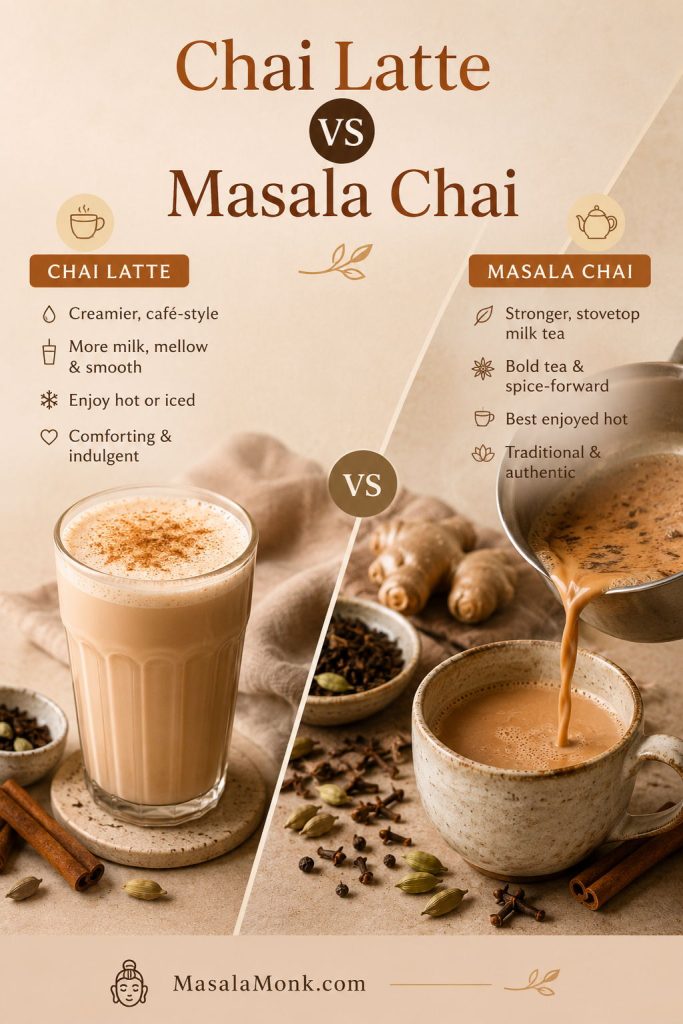
Split comparison of chai latte and masala chai, with a creamier cafe-style chai latte on one side and stronger stovetop masala chai on the other.
Masala chai is usually stronger and more direct, while a chai latte is softer, milkier, and easier to serve hot or iced.

For a more traditional stovetop cup, MasalaMonk’s masala chai masterclass goes deeper into Indian chai technique.

Ingredients That Matter

Here is how each ingredient changes the final cup: tea gives backbone, spices give warmth, milk turns it into a latte, and sweetener rounds the edges.

Tea

Start with a full-bodied black tea. Assam is excellent because it has the weight to stand up to milk, but any full-bodied black tea works. Loose tea usually gives a more robust result than delicate tea bags, though tea bags are perfect for the quick version.

If you have CTC Assam, it gives the most chai-shop-style body because it extracts quickly and stands up well to milk. Tea bags are fine for speed, but use two for one latte so the milk does not flatten the drink.

If your drink tastes weak, do not fix it by steeping one tea bag forever. Use more tea, less water, or crush the spices more thoroughly before simmering. Oversteeping can make the tea bitter without making the latte taste richer.
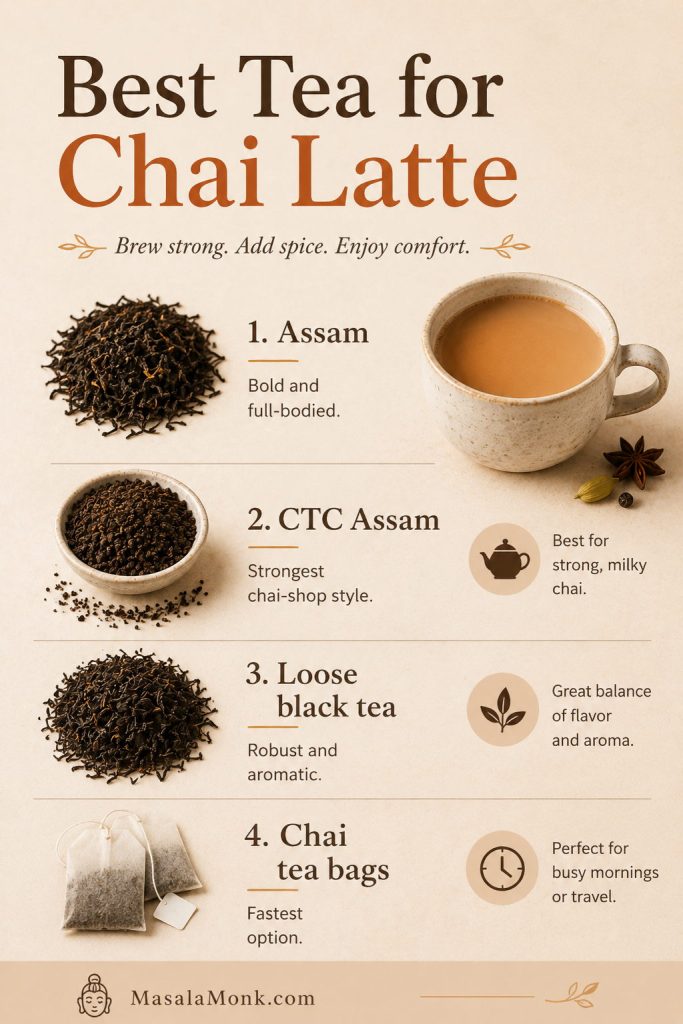
Best Tea for Chai Latte board showing Assam tea, CTC Assam, loose black tea, chai tea bags, and brewed tea as labeled tea choices.
Full-bodied black tea matters because delicate tea can disappear under milk; as a result, Assam, CTC Assam, and strong loose tea are safer choices.

Spices

The core spices are cardamom, cinnamon, cloves, black pepper, and ginger. Star anise is optional. Vanilla is also optional, but it gives the drink a softer finish.

  • Cardamom: gives the classic fragrant chai aroma.
  • Cinnamon: adds warmth and natural sweetness.
  • Cloves: bring depth, so use them carefully.
  • Black pepper: gives the drink a gentle lift.
  • Fresh ginger: makes the cup brighter and more warming.
  • Star anise: adds a polished spiced note, but too much can dominate.
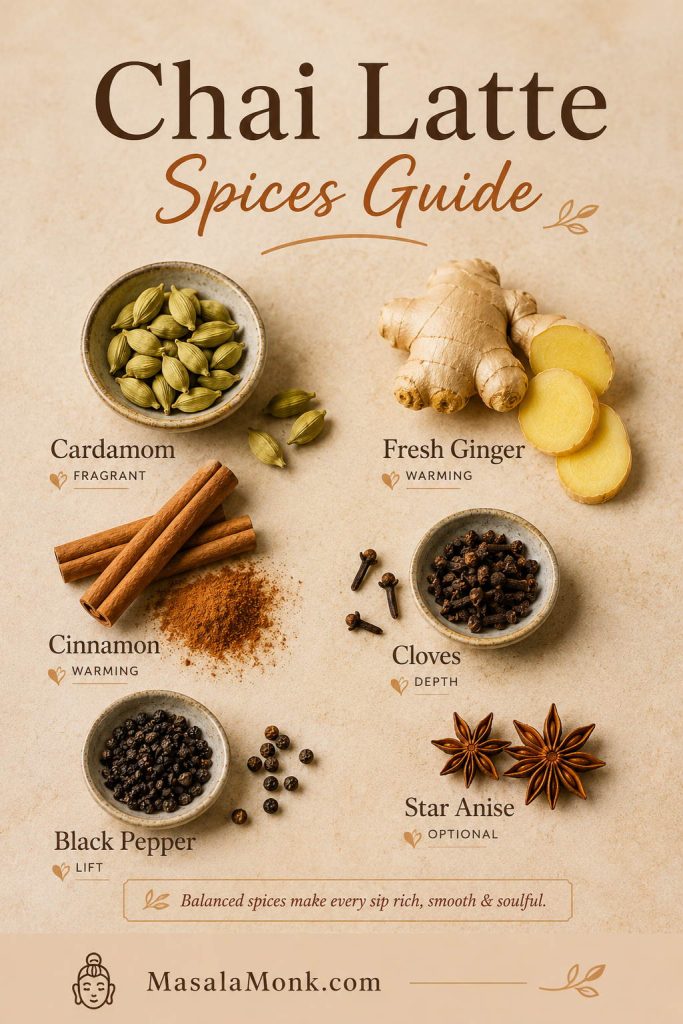
Chai Latte Spices Guide with labeled cardamom, fresh ginger, cinnamon, cloves, black pepper, and optional star anise on a warm neutral background.
Cardamom gives fragrance, ginger adds heat, cinnamon rounds the cup, and a little pepper keeps the chai latte from tasting flat.

Milk

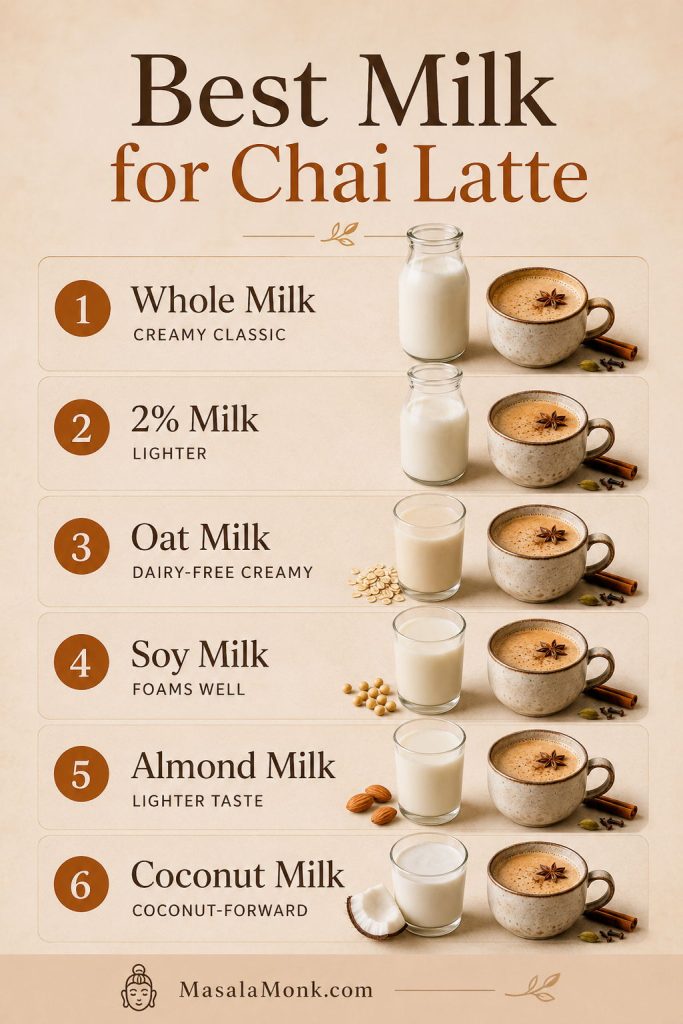
Choose milk for body, not just foam. Whole milk gives plushness, oat milk gives dairy-free creaminess, almond milk tastes lighter, soy milk foams well, and coconut milk changes the flavor completely.

MilkBest useWatch out for
Whole milkClassic hot chai latteCan taste heavy if the chai base is weak
2% milkCoffeehouse-style hot or iced chaiLess plush than whole milk
Barista oat milkVegan or iced chai latteCan soften spice slightly
Soy milkHot vegan chai with foamHeat gently to avoid splitting
Almond milkLighter iced chaiCan taste thin
Coconut milkCoconut chai variationCan dominate cardamom and ginger
Best Milk for Chai Latte comparison board showing whole milk, 2 percent milk, oat milk, soy milk, almond milk, and coconut milk with short use notes.
Choose milk for both body and flavor: whole milk feels plush, oat milk makes a creamy dairy-free chai latte, and almond milk needs a bolder brew.

Sweetener

Sugar keeps the sweetness clean, while brown sugar adds a warmer caramel note. Honey gives floral warmth, maple syrup works beautifully in dairy-free cups, and jaggery brings a deeper Indian-style sweetness. For a lower-sugar version, keep the tea and spice layer flavorful so the drink does not need extra syrup to feel complete.

Cold drinks need sweetness that dissolves easily, so vanilla syrup, brown sugar syrup, or simple syrup work better than dry sugar once the chai is chilled. Granulated sugar works best while the chai base is still warm.

  • White sugar: clean and classic.
  • Brown sugar: warm and caramel-like.
  • Honey: floral and cozy, best in hot drinks.
  • Maple syrup: soft and rounded, good for dairy-free drinks.
  • Jaggery: deeper, earthier, and more Indian-style.
  • Date syrup: rich and fruity for a no-refined-sugar version.
  • Vanilla syrup: sweeter and more coffeehouse-style.

Whole Spices, Ground Spices or Chai Mix?

Whole spices give the cleanest flavor and texture, but they need crushing and straining. Ground spices are fast, but they can settle at the bottom and make the drink feel gritty. Chai spice mix is convenient for busy mornings, but the result depends heavily on the blend.

For the smoothest cup, use whole spices and strain the concentrate. If using ground spices, chai powder, or a homemade chai masala, use a small amount and strain before adding milk.

Using ground spices? For one latte, start with ¼ teaspoon cinnamon, ⅛ teaspoon ground ginger, ⅛ teaspoon ground cardamom, and the tiniest pinch each of clove and black pepper. Simmer with the water, then strain before adding milk. A little sediment may remain, so use less than you think; ground spices turn intense and gritty fast.

Equipment You Need

You do not need an espresso machine. A saucepan and strainer are enough. A frother helps with the silky top, but you can still make a very good cup without one.

  • Small saucepan
  • Fine mesh strainer
  • Spoon or whisk
  • Milk frother, French press, immersion blender, or clean jar
  • Mortar and pestle, optional, for crushing whole spices

Froth Milk Without a Frother

No frother? Warm the milk, pour it into a clean jar with empty space at the top, close the lid tightly, and shake for 20–30 seconds. You can also pump warm milk in a French press for 15–20 seconds or whisk it hard in the saucepan.

For more no-machine milk foam tips, MasalaMonk’s cappuccino recipe is useful too.
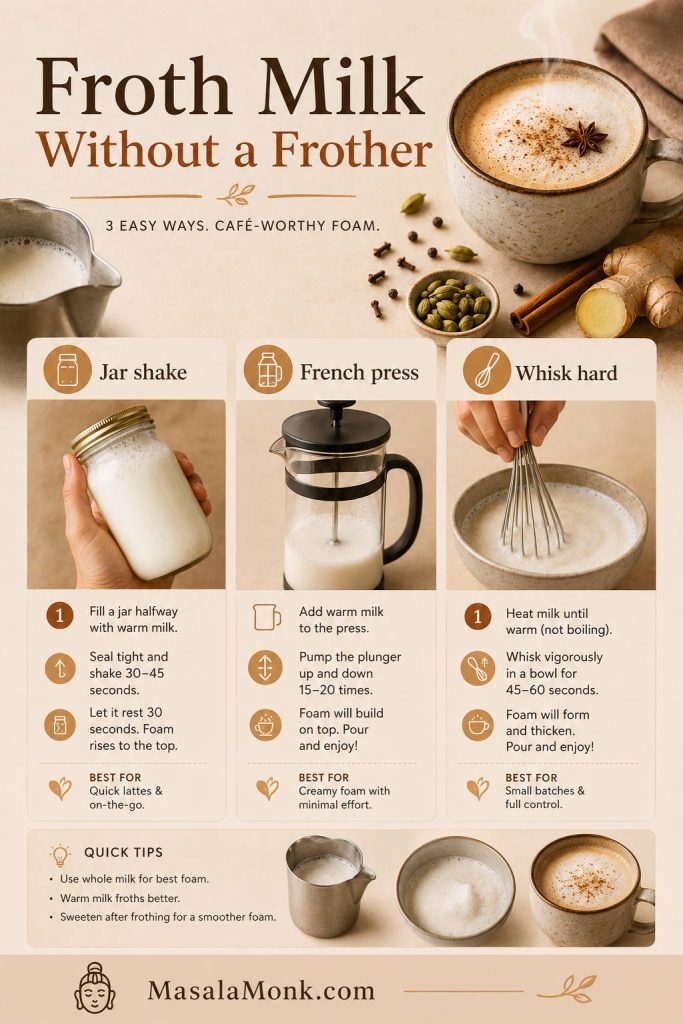
Froth Milk Without a Frother guide showing jar shaking, French press pumping, whisking warm milk, a milk pitcher, and a finished chai latte.
A frother helps, but a jar, French press, or whisk can still give warm milk enough foam for a café-style finish.

How to Make an Iced Chai Latte

If your iced chai tastes good for two sips and watery by the fifth, the base was not strong enough before the ice went in. Cold dulls spice, ice dilutes tea, and milk softens the edges, so iced chai should taste a little too strong before the ice is added.
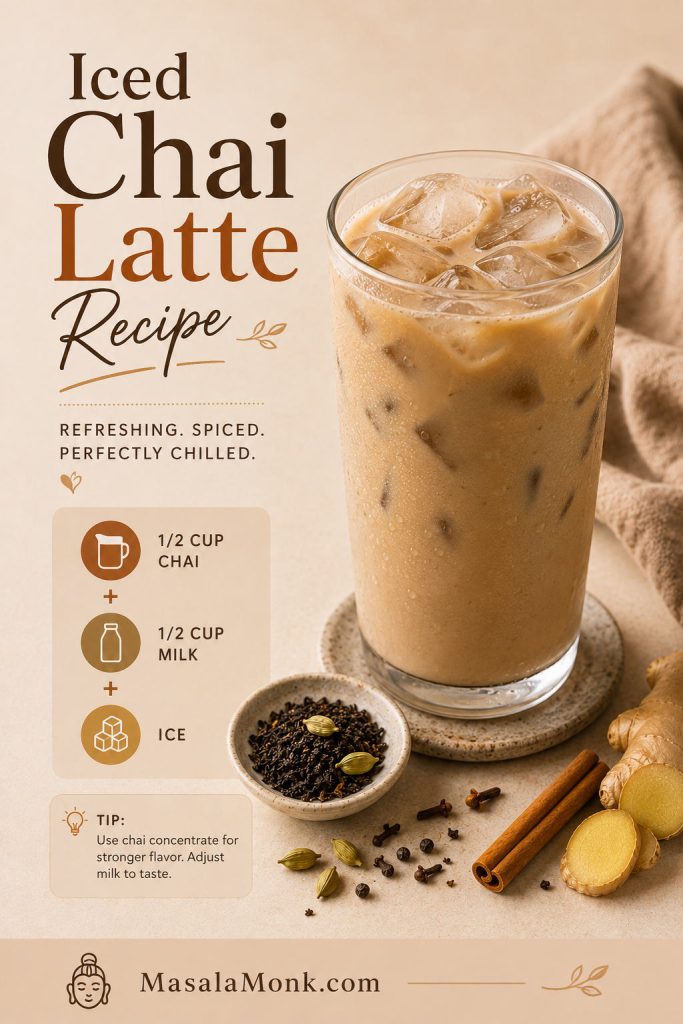
Tall glass of iced chai latte with ice, condensation, black tea leaves, cardamom pods, ginger, cinnamon, and a formula for chai, milk, and ice.
For iced chai latte, stir the cold chai and milk first; then add ice only after the flavor tastes slightly stronger than your final target.

Iced ratio

  • ½ cup / 120 ml cold chai concentrate
  • ½ cup / 120 ml cold milk
  • 1 cup / about 120–140g ice
  • Sweetener only if needed

Method

  1. Start with the cold chai base in a tall glass.
  2. Add cold milk and stir well.
  3. Taste before adding ice. It should taste a little more tea-forward than you want the final drink.
  4. Add ice last.
  5. Stir again and serve immediately.

How to Keep Iced Chai From Turning Watery

For iced chai that still tastes clear after a few minutes, taste the chai and milk before adding ice. If it already tastes perfect, it will usually taste weak once the ice starts melting.
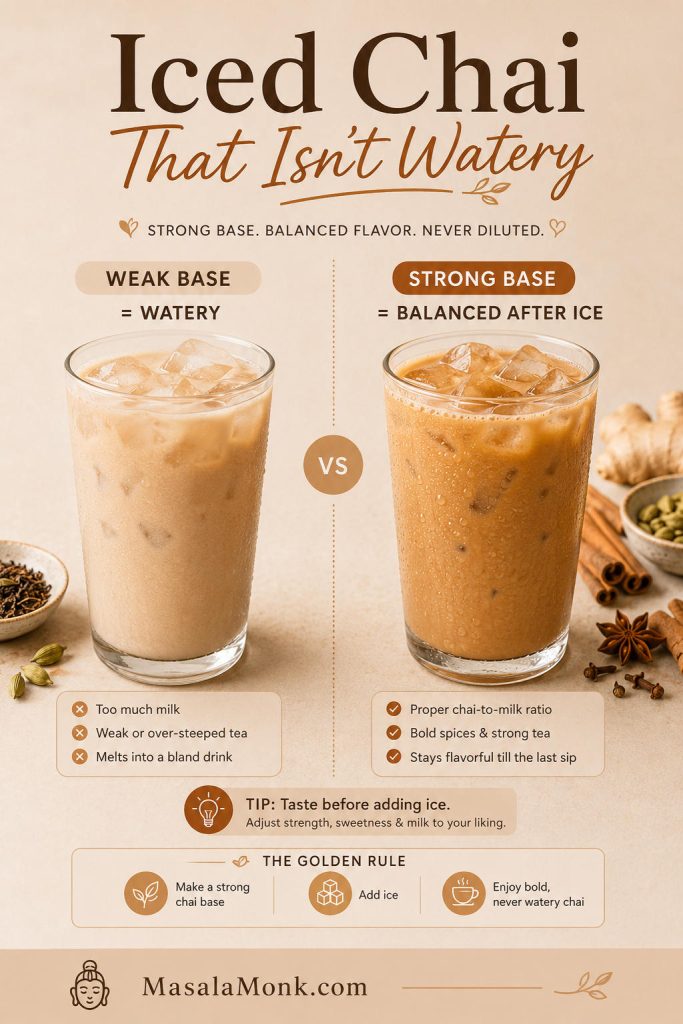
Comparison graphic showing a pale weak iced chai labeled watery beside a darker strong iced chai labeled balanced after ice, with a tip to taste before adding ice.
Ice always dilutes the drink, so the best iced chai latte starts a little stronger and settles into balance as the glass chills.

For more weak, watery, or bitter chai fixes, see the troubleshooting table.

StyleConcentrateMilkIce
Classic iced chai latte½ cup / 120 ml½ cup / 120 ml1 cup / 120–140g
Creamier iced chai latte½ cup / 120 ml¾ cup / 180 ml1 cup / 120–140g
More tea-forward iced chai latte¾ cup / 180 ml concentrate½ cup / 120 ml milk1 cup / 120–140g

Iced chai is where body matters most: whole milk tastes round, 2% feels coffeehouse-balanced, barista oat gives dairy-free creaminess, and almond milk keeps the drink lighter.

For iced chai that still tastes alive after the ice melts: freeze leftover chai in an ice cube tray and use those cubes instead of plain ice.

Starbucks-Style Chai at Home

This is not an official Starbucks recipe, but it gives you the same sweet, cold, café-style comfort with more control over how much chai and how much sweetness you actually want.

2-Minute Starbucks-Style Iced Chai With Store-Bought Concentrate

For the fastest Starbucks-style iced chai, use ½ cup / 120 ml sweet chai concentrate, ½ cup / 120 ml cold milk, and 1 cup / 120–140g ice. Stir the concentrate and milk first, then add ice so the drink mixes evenly. If it tastes too sweet, cut the concentrate with unsweetened black tea instead of adding more milk.
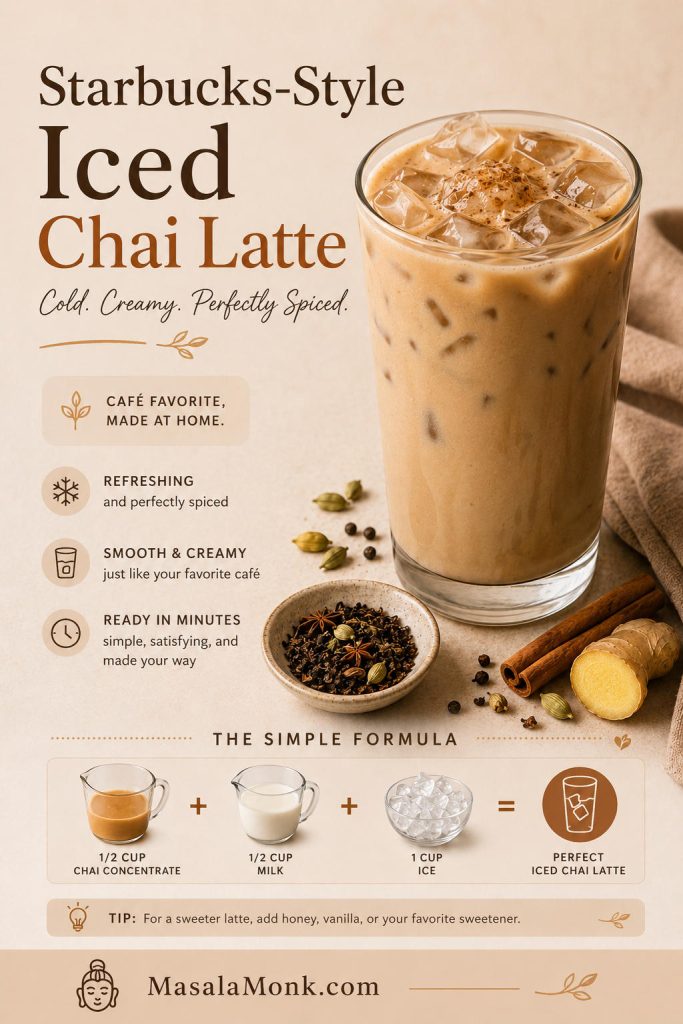
Starbucks-style iced chai latte in a tall clear glass with ice, chai concentrate, milk, spice cues, and a homemade formula without any brand logos.
For a Starbucks-style iced chai latte at home, start with equal parts sweet chai concentrate and milk, then add ice last.

That is the coffeehouse shortcut. The home advantage is control: make the tea-spice base clear first, then sweeten only as much as you want.

For a less syrupy homemade version, use the make-ahead chai concentrate and sweeten each glass after mixing.

Hot coffeehouse-style ratio

  • ½ cup / 120 ml sweet chai concentrate
  • ¾ cup / 180 ml steamed milk
  • Foam on top, optional
  • Pinch cinnamon, optional

Using store-bought concentrate? Taste it first. If it is mostly sweet spice syrup, cut it with unsweetened black tea before adding more milk.

Dirty Chai Latte

A dirty chai latte is chai with espresso. It is the drink to make when you want the warmth of chai and the deeper edge of coffee in the same cup.
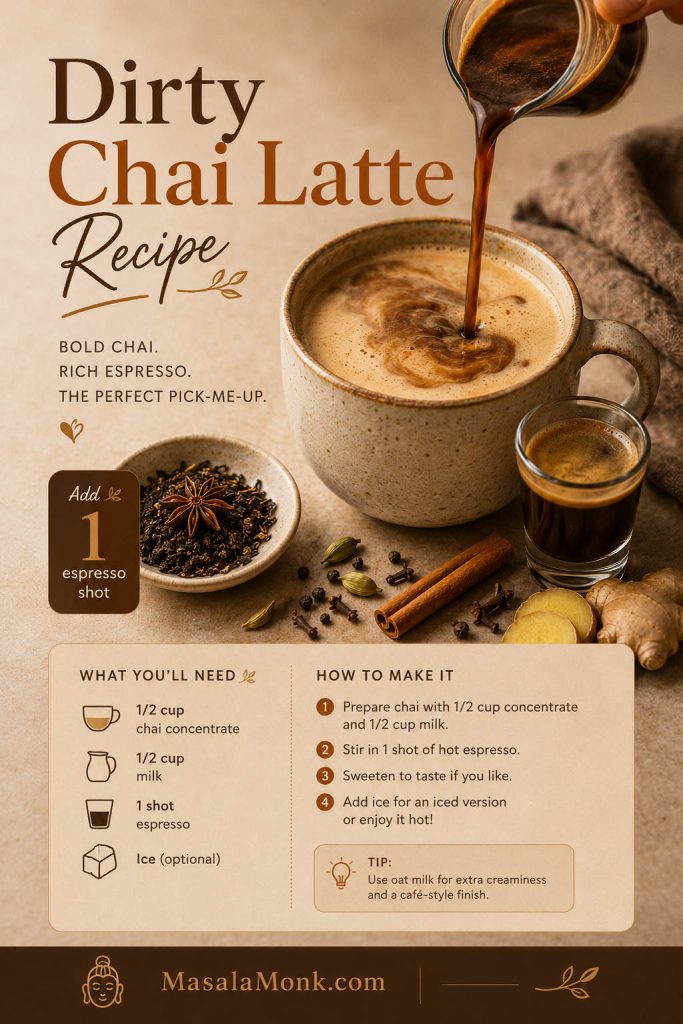
Dirty chai latte with espresso being poured into a creamy chai latte, plus a small espresso shot glass, loose black tea, cardamom, cinnamon, and ginger.
Espresso gives dirty chai its coffee edge, but the best cup still starts with a chai base that tastes spiced before the shot goes in.

Hot dirty chai ratio

  • ½ cup / 120 ml chai base
  • ½ cup / 120 ml steamed milk
  • 1 espresso shot / 30 ml
  • Sweetener to taste

Iced dirty chai ratio

  • ½ cup / 120 ml cold chai base
  • ½ cup / 120 ml cold milk
  • 1 espresso shot / 30 ml, cooled slightly
  • 1 cup / about 120–140g ice
  • 1 espresso shot / 30 ml: balanced dirty chai.
  • 2 espresso shots / 60 ml: double dirty chai with more coffee edge.
  • 2–3 tablespoons very strong coffee: gentle coffee note without an espresso machine.
  • Cold brew concentrate: smoother iced dirty chai.
  • Regular brewed coffee: milder and thinner coffee flavor.

Espresso does not hide weak chai; it exposes it. Start with a well-spiced base before adding coffee. No espresso machine? Use 2–3 tablespoons very strong brewed coffee for a gentle coffee note, or 2–3 oz strong coffee for a milder coffee-shop drink.

For the base measurement before espresso, use the dirty chai ratio or make a stronger batch from the chai concentrate section.

If you like chilled café drinks, MasalaMonk’s iced coffee recipes are useful when you want the coffee side of dirty chai.

Vegan, Dairy-Free and Lower-Sugar Versions

Vegan Chai Latte

Plant milk cannot rescue weak chai. For a vegan chai latte that still tastes full, make the tea-spice base with water first, then let oat milk, soy milk, almond milk, or coconut milk soften it.

  • Use ½ cup / 120 ml chai base.
  • Add ¾ cup / 180 ml oat milk for a hot vegan latte.
  • For iced, use ½ cup chai base + ½ cup oat milk + 1 cup ice.
  • Sweeten with sugar, maple syrup, brown sugar, jaggery, or date syrup; skip honey for a strictly vegan cup.

Oat milk gives the creamiest dairy-free cup, soy milk gives good body and foam, almond milk tastes lighter, and coconut milk works when you want coconut to become part of the flavor. Heat plant milk gently and avoid boiling it, because some dairy-free milks split or turn chalky when overheated.
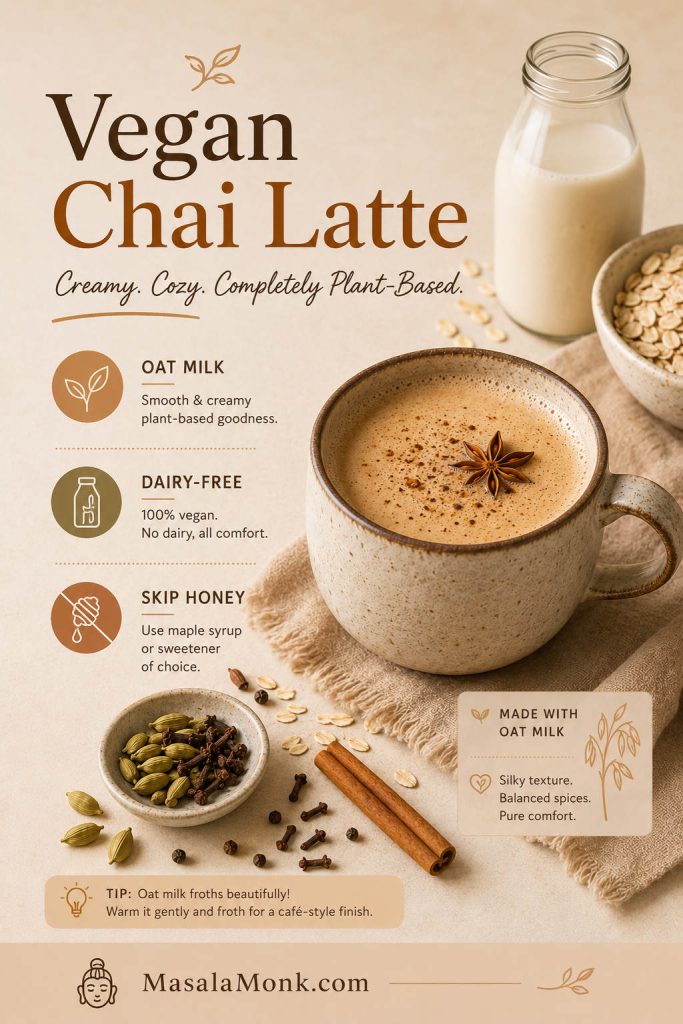
Vegan chai latte made with oat milk, shown with a creamy chai mug, oats, an unbranded plant milk bottle, cardamom, cinnamon, cloves, and ginger.
Oat milk gives vegan chai latte a creamy body; even so, gentle heating matters because plant milks can split or turn chalky when overheated.

For how oat, soy, almond, coconut, and dairy milk behave in chai, use the milk guide above; for homemade oat milk, MasalaMonk’s easy homemade oat milk guide is the best starting point.

Lower-Sugar Version That Still Tastes Complete

Less sugar only works when the spice layer is doing its job. Keep the tea and spice layer full, sweeten by the teaspoon, and add ginger or cardamom before reaching for more syrup.

  • Make the base unsweetened.
  • Use full-bodied black tea and freshly crushed spices.
  • Sweeten the finished drink by the teaspoon after milk is added.

When the cup tastes flat, spice usually helps more than extra syrup. Add more ginger, cardamom, or a tiny pinch of salt before adding more sweetener.

Flavor Variations

Once the base is strong, variations are simple: change the milk, sweetener, or add-in without letting the chai disappear.

Vanilla Chai Latte

Add ¼ teaspoon vanilla extract to one hot drink, or use vanilla syrup for a sweeter coffeehouse-style cup.

Brown Sugar Chai Latte

Brown sugar gives the drink a warmer caramel note, especially in iced chai and dirty chai. Start with 1–2 teaspoons and adjust after the milk is added.

Iced Oat Milk Chai Latte

Equal parts cold chai concentrate and barista-style oat milk make the easiest iced oat milk version. Oat milk turns the drink creamy without dairy, but a little extra ginger or cardamom helps the spice stay clear.

Coconut Chai Latte

Coconut milk works best when you want its flavor to become part of the drink. Because coconut can dominate delicate spices, use a slightly stronger tea-spice base and consider adding extra ginger or cardamom.

Pumpkin Chai Latte

Add 1–2 tablespoons pumpkin purée and a small pinch of homemade pumpkin pie spice to the hot version. For a more classic fall drink, MasalaMonk’s healthy pumpkin spice latte is another useful guide.

Caffeine-Free Chai Latte

For a lower-caffeine cup, decaf black tea keeps the flavor closest to the original. Rooibos works for a naturally caffeine-free spiced latte, although it tastes softer and less tea-forward than black tea, so use extra ginger, cardamom, and cinnamon for a more chai-like flavor.

How to Store and Reheat Chai Concentrate

Let the chai base cool completely, then store it in a clean jar or bottle in the refrigerator for up to 5 days. Shake before using because fine spice particles may settle.

For longer storage, freeze the chai base in ice cube trays for up to 3 months. Frozen chai cubes are especially useful for iced chai because they chill the glass without watering down the flavor.

To reheat, warm the base gently on the stove or in the microwave. Heat the milk separately if you want better foam. Do not boil the finished drink after milk is added, because it can taste cooked and lose the fresh spice aroma.

Troubleshooting

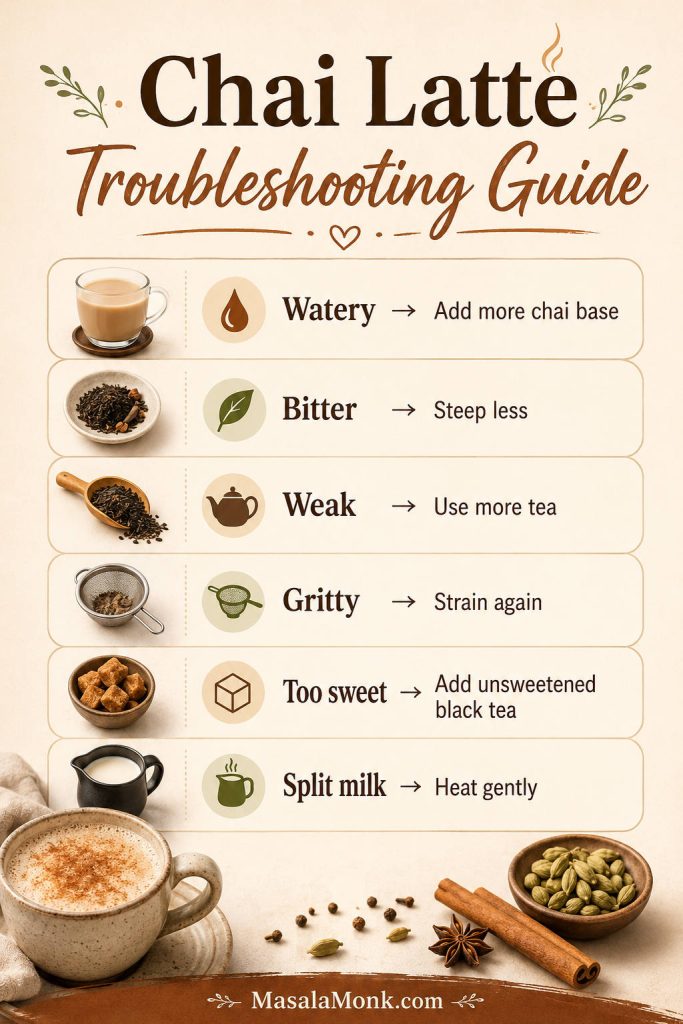
If your first cup is not perfect, it is usually easy to rescue. Most failed chai lattes are not really failures — they are ratio problems. Once you know what is off, the fix is usually simple.

ProblemFix nowFix next time
WateryAdd more concentrate or a splash of unsweetened black teaUse less water, more tea, or frozen chai cubes for iced drinks
BitterAdd milk and a little sweetener to soften itSteep tea for less time and avoid boiling it hard
WeakAdd more chai base or a second steeped tea bagUse 2 tea bags, loose black tea, or freshly crushed spices
GrittyStrain again through a fine mesh strainerUse whole spices or less ground spice
Too sweetAdd unsweetened black tea, not just more milkStore the base unsweetened and sweeten each cup
Too spicy or pepperyAdd milk and a little sweetenerUse fewer peppercorns and cloves
Bland but not weakAdd ginger, cardamom, or a tiny pinch of saltUse fresher spices and crush them before simmering
Milk splitStop heating and strain if neededHeat plant milk gently and avoid boiling
Chai Latte Troubleshooting Guide listing watery, bitter, weak, gritty, too sweet, and split milk with fixes such as add more chai base and strain again.
Most chai latte problems come from small ratio, steeping, or straining mistakes; fortunately, the fix is usually quick once you know what changed.

Why does it taste watery?

This usually means the tea was too dilute before milk or ice was added. For iced chai, mix the base and milk first, taste, then add ice last.

Why does it taste bitter?

The tea may have steeped too long or boiled too hard. Simmer the spices first, then add the tea off heat or on very low heat for 4–5 minutes.

Why did the milk split?

The milk may have overheated, especially if it was plant milk. If using a thermometer, dairy milk is usually best around 140–155°F / 60–68°C. Without one, stop when the milk is steaming and hot to the touch, but not boiling. For plant milk, use gentle heat and stop before it bubbles hard.

FAQs

Is chai latte the same as masala chai?

Not exactly. Masala chai is usually a stovetop spiced milk tea with a more direct tea-and-spice flavor, while a chai latte is milkier, softer, and more latte-style.

What tea works best for this drink?

A full-bodied black tea works best, especially one with enough weight to hold up under milk. Assam is a great choice; CTC Assam gives the most chai-shop-style body if you have it.

Is chai latte coffee?

No. A regular chai latte is a tea drink made with spiced black tea and milk. If you add espresso, it becomes a dirty chai.

How much caffeine is in it?

It depends on the tea and steeping time. As a general reference, Mayo Clinic lists brewed black tea at about 48 mg caffeine per 8 oz / 237 ml serving. Dirty chai has more because espresso joins the cup too.

Is chai latte sweet?

It can be, especially when made with bottled concentrate. Homemade chai lets you keep sweetness separate from spice: make the tea-spice base clear first, then sweeten the finished drink by the teaspoon.

How do I make iced chai that is not weak?

Use equal parts cold chai base and milk, then add ice last. If it tastes perfect before ice, it will taste weak after five minutes. Frozen chai cubes help.

What makes it dirty chai?

Espresso makes it dirty chai. One shot gives a balanced coffee edge; two shots make it coffee-forward, so the chai base needs to be bold.

Can I make it without a frother?

Yes. Shake warm milk in a tightly closed jar, whisk it in the saucepan, pump it in a French press, or use an immersion blender. The foam will be softer than café foam, but the drink will still taste creamy.

Can I use store-bought chai concentrate?

Yes. Taste it first because bottled concentrates vary widely: some are tea-forward, while others are mostly sweet spice syrup. If yours is too sweet, dilute it with unsweetened black tea rather than only adding more milk.

Can I use chai powder or chai spice mix?

Yes, but use less than you think. Ground spices bloom quickly and settle easily, so simmer them with the tea base and strain before adding milk.

How long does homemade concentrate last?

It keeps in the refrigerator for up to 5 days in a clean jar. For longer storage, freeze the chai base in ice cube trays for up to 3 months.

Chai Latte Recipe Card

The card below gives you the most fragrant version first, because whole spices make the cup feel alive. The shortcuts are in the notes when speed matters more than ceremony.
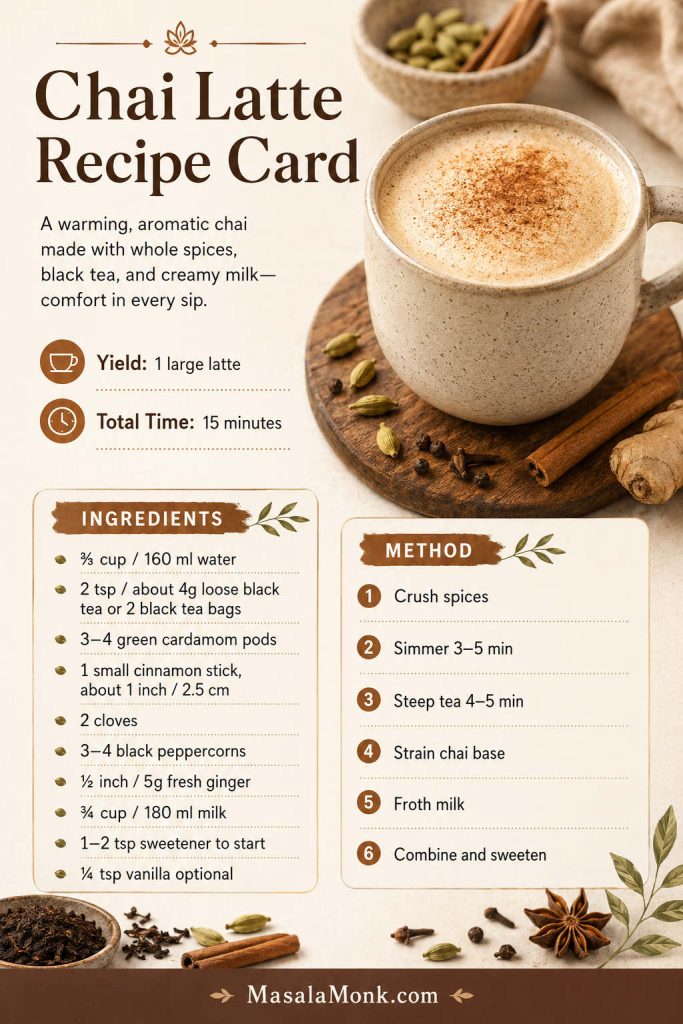
Chai Latte Recipe Card with a finished latte, yield, total time, exact ingredients, and method steps for simmering spices, steeping tea, straining, frothing, and combining.
Keep this chai latte recipe card handy when you want the whole-spice version: simmer spices, steep tea gently, strain, froth, and combine.

Chai Latte Recipe: Whole-Spice Method

This recipe card uses the whole-spice method for the best flavor. The strained chai is your concentrate or chai base; tea-bag, iced, dirty chai, Starbucks-style, vegan, and make-ahead notes are below.

Yield1 large latte, about 10 oz / 300 ml
Prep Time5 minutes
Cook Time10 minutes
Total Time15 minutes

Ingredients

For the chai concentrate
  • ⅔ cup / 160 ml water
  • 2 black tea bags, or 2 teaspoons / about 4g loose black tea
  • 3–4 green cardamom pods
  • 1 small piece cinnamon stick, about 1 inch / 2.5 cm
  • 2 cloves
  • 3–4 black peppercorns
  • ½ inch / 5g fresh ginger, sliced or lightly crushed
  • 1–2 teaspoons sugar, honey, maple syrup, or jaggery syrup to start
  • ¼ teaspoon vanilla, optional
For the latte
  • ½ cup / 120 ml chai concentrate, from above
  • ¾ cup / 180 ml milk of choice
  • Extra sweetener, if needed
  • Pinch cinnamon, optional

Instructions

  1. Lightly crush the cardamom, cinnamon, cloves, peppercorns, and ginger.
  2. Add the spices and water to a small saucepan.
  3. Bring to a boil, then simmer for 3–5 minutes, until the water smells clearly of cardamom and ginger.
  4. Add the tea, turn off the heat or keep it very low, and steep for 4–5 minutes.
  5. Strain into a mug. You should have about ½ cup / 120 ml dark, fragrant chai that tastes slightly too strong before milk.
  6. Stir in sweetener while the chai is warm.
  7. Heat the milk until steaming but not boiling.
  8. Froth the milk using a frother, whisk, French press, or jar.
  9. Pour the milk into the chai.
  10. Taste and adjust sweetness. Finish with a pinch of cinnamon if desired.

Notes

  • Tea-bag shortcut: Steep 2 black-tea-based chai bags in ½ cup / 120 ml hot water for 4–5 minutes, then add ¾ cup / 180 ml steamed milk.
  • Iced chai: Use ½ cup / 120 ml cold chai base, ½ cup / 120 ml cold milk, and 1 cup / about 120–140g ice.
  • Dirty chai: Add 1 espresso shot / 30 ml, or 2 shots for a coffee-forward double dirty chai.
  • Starbucks-style: Use sweet chai base with milk; for iced, start with equal parts chai and milk before adding ice.
  • Vegan: Use oat or soy milk and avoid honey if you want it strictly vegan.
  • Low sugar: Keep the base unsweetened, then sweeten each cup lightly after mixing.
  • Milk temperature: Heat dairy milk to about 140–155°F / 60–68°C, or stop when steaming but not boiling.
  • Scaling and make-ahead: Double for 2 lattes. For more, use the make-ahead batch; refrigerate the base up to 5 days or freeze it up to 3 months.

Make-Ahead Concentrate for 4 Lattes

For 4 lattes, use the make-ahead concentrate formula. It yields about 2 cups / 480 ml, enough for 4 drinks at ½ cup / 120 ml per latte.

Once you learn to make the chai louder than the milk, the whole drink changes. It tastes creamy without going flat, sweet without turning syrupy, and spiced enough that the cardamom and ginger are still there at the last sip.
Back to top

Posted on 2 Comments

Strawberry Matcha Latte Recipe

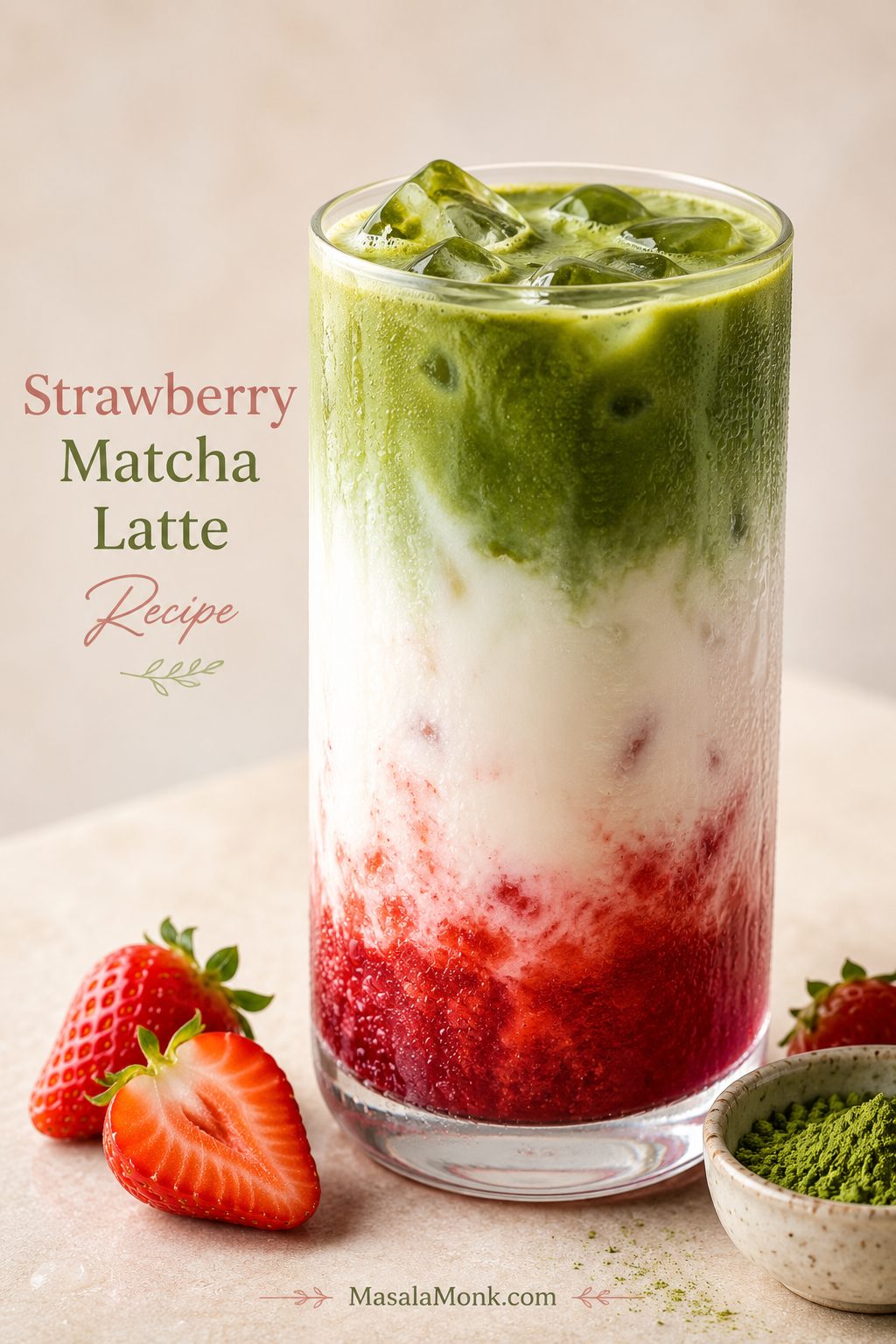
Tall iced strawberry matcha latte in a clear glass with red strawberry base, cold milk, green matcha, ice, strawberries, and matcha powder nearby.

The first thing you notice is the color: juicy red strawberry at the bottom, cold milk turning pale and creamy in the middle, and a glossy green matcha pour floating over the top. Then you stir it, take a sip, and the drink finally makes sense: fresh strawberry, smooth milk, and earthy green tea all in one cold glass.

It is the kind of iced drink that feels like a small afternoon reset: pretty enough to slow down for, but simple enough to make before the ice in your glass even thinks about melting.

This strawberry matcha latte recipe is for the drink you want when a plain iced matcha feels a little too serious and strawberry milk feels a little too sweet. It gives you the pretty layered look, but more importantly, it gives you a balanced glass that tastes creamy, fruity, refreshing, and smooth.

It takes about 10 minutes, needs no cooking for the main version, and feels much more special than the effort suggests. Make the strawberry base, whisk the matcha separately, build the glass over ice, and pour slowly. Warm—not boiling—water keeps the matcha gentler, a thicker berry mixture helps the colors stay separated, and enough ice slows the pour.

Quick Answer: Best Ratio

For one tall iced strawberry matcha latte, use 4–5 strawberries, 2 teaspoons to 1 tablespoon sweetener, 1½ teaspoons matcha, 3 tablespoons hot water, ¾ cup milk, and plenty of ice.

At a glance: 10 minutes, no cooking for the main version, 1 tall glass, fresh or frozen strawberries, dairy or non-dairy milk.

Quick method

Muddle or blend the strawberries with sweetener, spoon them into the bottom of a clear glass, add ice, pour in the milk, then slowly pour whisked matcha over the top. The gentlest flavor comes from whisking the matcha with hot water around 175°F / 80°C, not boiling water.

Matcha strength

A milder drink works best with 1 teaspoon matcha. For a stronger, more matcha-forward latte, use 2 teaspoons. Serve it layered if you want the dramatic red-white-green look, then stir before drinking so the strawberry, milk, and matcha taste balanced in every sip.

16 oz ratio

For 1 tall 16 oz drink Use this amount Why it works
Strawberries 4–5 medium / 70–90 g Enough fruit for a visible base and real strawberry flavor.
Sweetener 2 tsp to 1 tbsp Start lower. Add more only if the berries are tart.
Matcha 1½ tsp / about 3 g Balanced strength for milk and strawberry.
Hot water 3 tbsp / 45 ml Makes a concentrated matcha pour without thinning the latte.
Milk ¾ cup / 180 ml Creamy enough for a tall iced latte.
Ice 1 cup, or enough to fill the glass halfway to three-quarters full Helps keep the strawberry, milk, and matcha separated.

Keep the simple rule in mind: thick berries, warm-not-boiling matcha, plenty of ice, a slow pour, and one good stir before judging the flavor.

After one round, you will know exactly where your taste sits: more strawberry if you want it fruitier, more milk if you want it softer, or a little more matcha if you want that green tea finish to lead.

Need to scale the drink up or down? See the 12 oz, 16 oz, and café-style ratio guide.

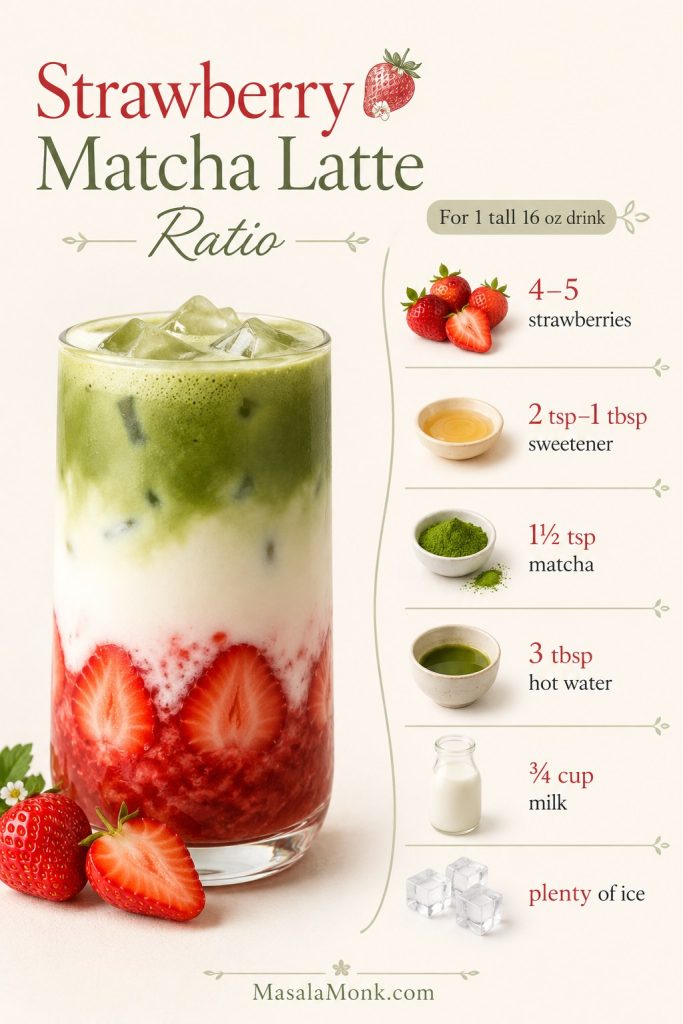
Strawberry matcha latte ratio guide showing one layered drink with strawberries, sweetener, matcha, hot water, milk, and ice amounts.
Start with this 16-ounce strawberry matcha latte ratio, then adjust sweetness, berry flavor, or matcha strength after tasting the drink stirred.

Strawberry Matcha Latte Recipe

Creamy Iced Strawberry Matcha Latte

A layered café-style latte with a bright berry base, cold milk, and glossy whisked matcha — pretty enough for a café moment, easy enough for home.

Yield1 tall drink
Prep Time10 minutes
Cook Time0 minutes
Total Time10 minutes

Ingredients

  • 4–5 medium strawberries, hulled and chopped, about 70–90 g
  • 2 teaspoons sweetener, plus up to 1 tablespoon total if the berries are tart
  • 1½ teaspoons matcha powder, about 3 g
  • 3 tablespoons / 45 ml hot water, about 175°F / 80°C
  • ¾ cup / 180 ml cold milk, dairy or non-dairy
  • 1 cup ice, or enough to fill the glass halfway to three-quarters full

Instructions

  1. Make the strawberry base. Add chopped strawberries and sweetener to a small bowl or glass. Muddle until juicy, or blend for a smoother base.
  2. Prepare the matcha. Sift matcha into a small bowl. Add hot water and whisk until glossy and lightly frothy.
  3. Build the drink. Spoon the strawberry mixture into a tall clear glass. Add ice. Pour milk slowly over the ice.
  4. Pour the matcha. Slowly pour the whisked matcha over the back of a spoon or directly over the ice so it settles on top.
  5. Serve and stir. Serve layered, then stir before drinking so the strawberry, milk, and matcha taste balanced.

Notes

  • Use 1 teaspoon matcha for mild, 1½ teaspoons for balanced, or 2 teaspoons for strong.
  • For clear layers, keep the berry base thick and pour over plenty of ice.
  • If using jam, start with 1 tablespoon and reduce the added sweetener.
  • The matcha is concentrated on purpose; more water makes the latte thinner.

If the matcha turns clumpy, bitter, watery, or the layers mix too fast, use the troubleshooting guide.

What Is a Strawberry Matcha Latte?

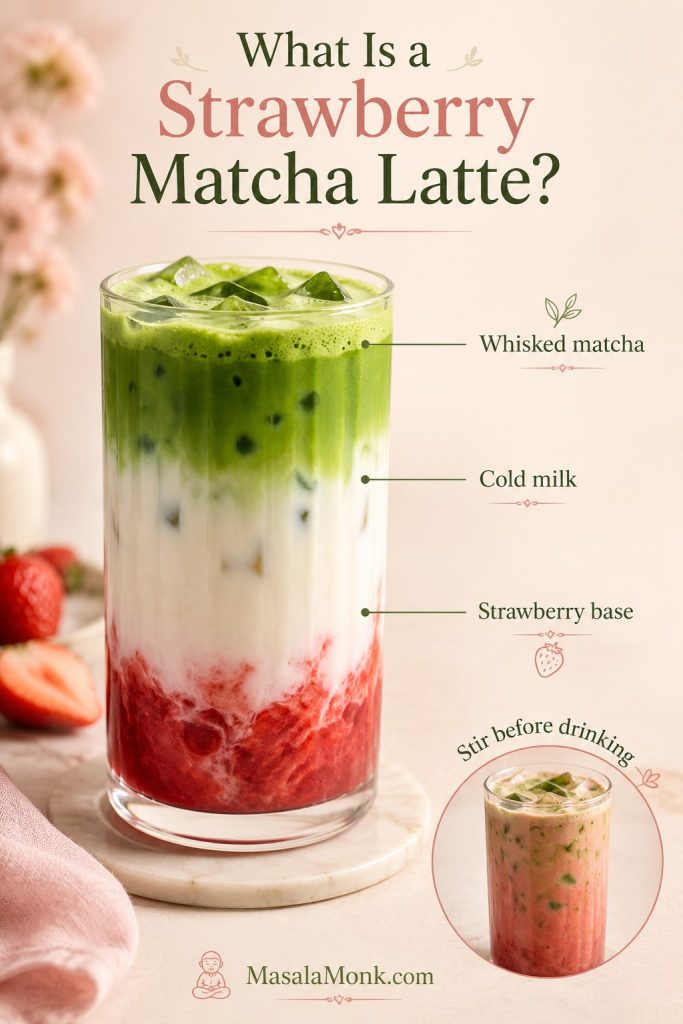
A strawberry matcha latte is an iced matcha drink made with a strawberry base, milk, ice, and whisked matcha. The popular version is layered: red strawberry at the bottom, white milk in the middle, and green matcha on top.

Labeled strawberry matcha latte showing strawberry base, cold milk, whisked matcha, and a small stirred drink inset.
Think of the layers as a map: fruit gives the base, milk softens the middle, and matcha brings the green tea finish.

It is not just strawberry milk with matcha poured over it, and it is not only a plain iced matcha with syrup. The best version keeps each part doing a job: strawberry brings fruit and color, milk softens the sip, and matcha gives the clean green tea finish.

The layered look is mostly for the first impression; the real flavor happens after stirring.

Homemade also gives you control. You can keep the strawberry base fresh instead of candy-sweet, make the matcha stronger or softer, and choose a milk that makes the whole glass taste the way you like it.

Why This Latte Works

This latte works because it is pretty without being fussy, sweet without becoming syrupy, and creamy without hiding the matcha. You get the pretty layered look, but the real win is the way the flavors come together after stirring.

  • The fruit base is thick enough to stay visible. It gives the drink real strawberry flavor instead of a candy-syrup taste.
  • The sweetness starts low. You can adjust based on your berries instead of making the latte syrupy from the start.
  • The matcha is whisked separately. That keeps dry green clumps out of the milk.
  • The water is warm, not boiling. This helps the matcha taste smoother and less harsh.
  • The ice does real work. It slows the milk and matcha as they pour, which helps the colors stay separated.

The best part of making it at home is control: the strawberry can taste like real fruit, the matcha can stay smooth instead of harsh, and the sweetness does not have to hit like a syrup pump.

That balance is the goal; here is what to taste for once the drink is stirred.

What It Should Taste Like

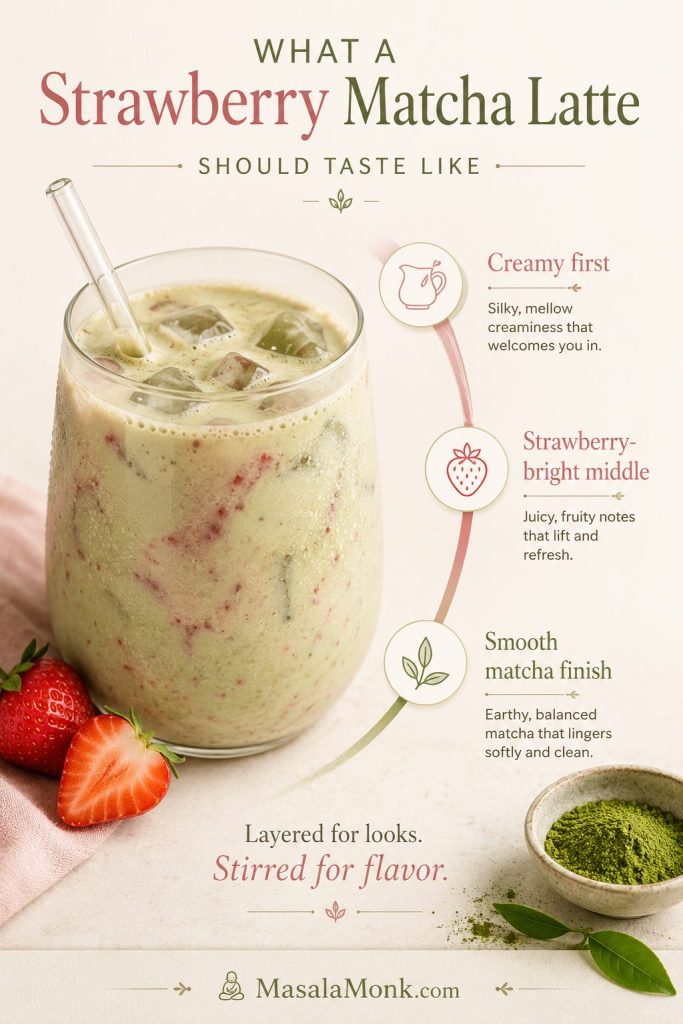
Once stirred, the latte should taste cold and creamy first, then bright with strawberry, with matcha finishing gently instead of taking over. It should not taste like strawberry syrup with green tea on top, or like bitter matcha hiding behind milk. The sweet spot is fruit, creaminess, and a smooth green-tea finish in the same sip.

Stirred strawberry matcha latte with flavor callouts for creamy first, strawberry-bright middle, and smooth matcha finish.
A balanced strawberry matcha latte should taste like one drink after stirring, not three separate layers competing in the glass.

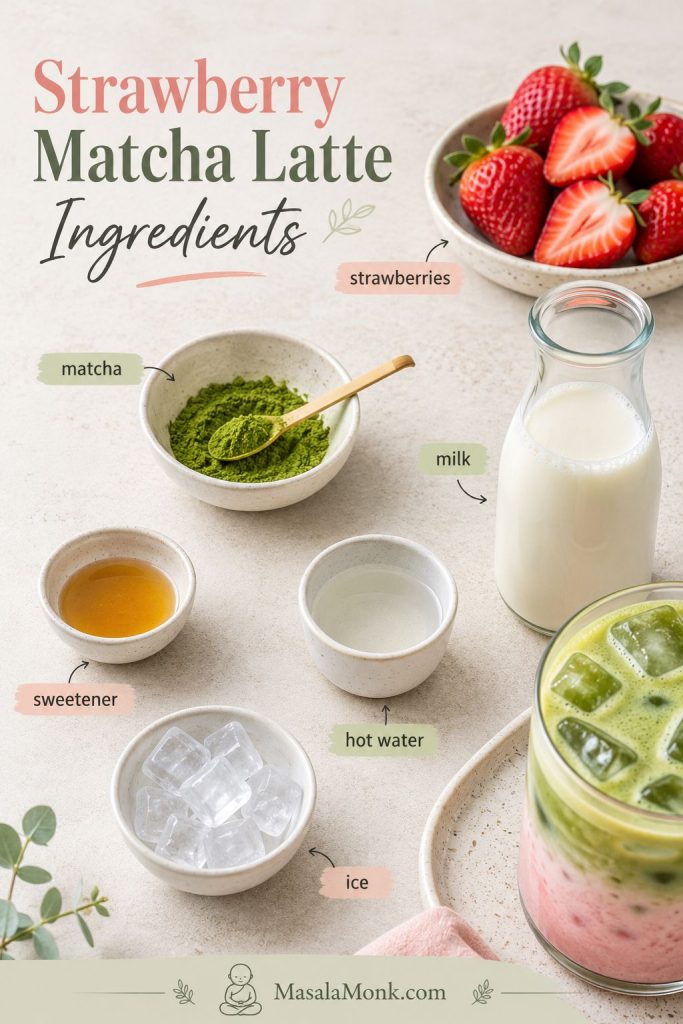
Ingredients You Need

You only need a few ingredients, but each one changes the final latte. Choose the strawberries, matcha, milk, and sweetener with the kind of sip you want in mind.

Ingredients for strawberry matcha latte including strawberries, matcha powder, milk, sweetener, hot water, ice, and a partial finished drink.
Because the ingredient list is short, each choice matters: ripe berries, fresh matcha, cold milk, and restrained sweetness shape the final sip.

Strawberries

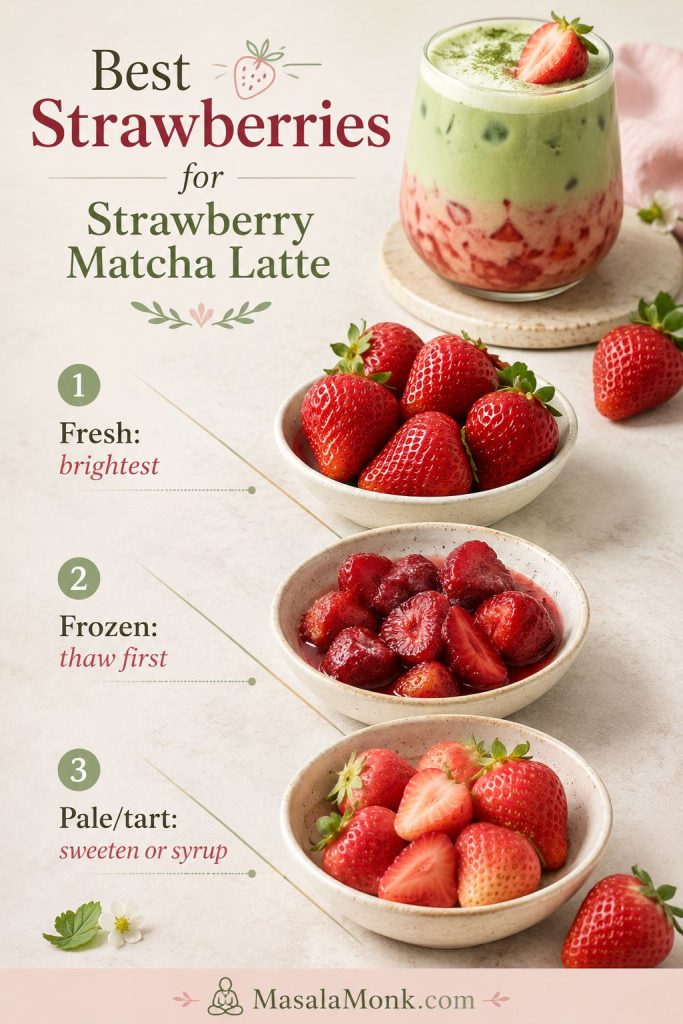
Fresh strawberries give this latte the brightest flavor and color. If the berries smell sweet before you cut them, the drink will taste fresher and need less sugar. Pale, watery, or tart berries can still work, but they usually need a little more sweetener or a quick syrup treatment.

Frozen strawberries are useful when fresh berries are out of season. Thaw them first, then blend or mash them with sweetener. For the silkiest red base, strain the puree so it sits evenly at the bottom of the cup.

For a deeper comparison of muddled berries, puree, syrup, and jam, see the strawberry base options.

Comparison of fresh ripe strawberries, thawed frozen strawberries, and pale tart strawberries for strawberry matcha latte.
Ripe fresh strawberries give the brightest flavor, while frozen berries need thawing and pale berries usually need extra sweetness or syrup.

If your strawberries are especially ripe and you have extra, this strawberry shortcake recipe is another simple way to use them while they are still fresh and juicy.

Matcha powder

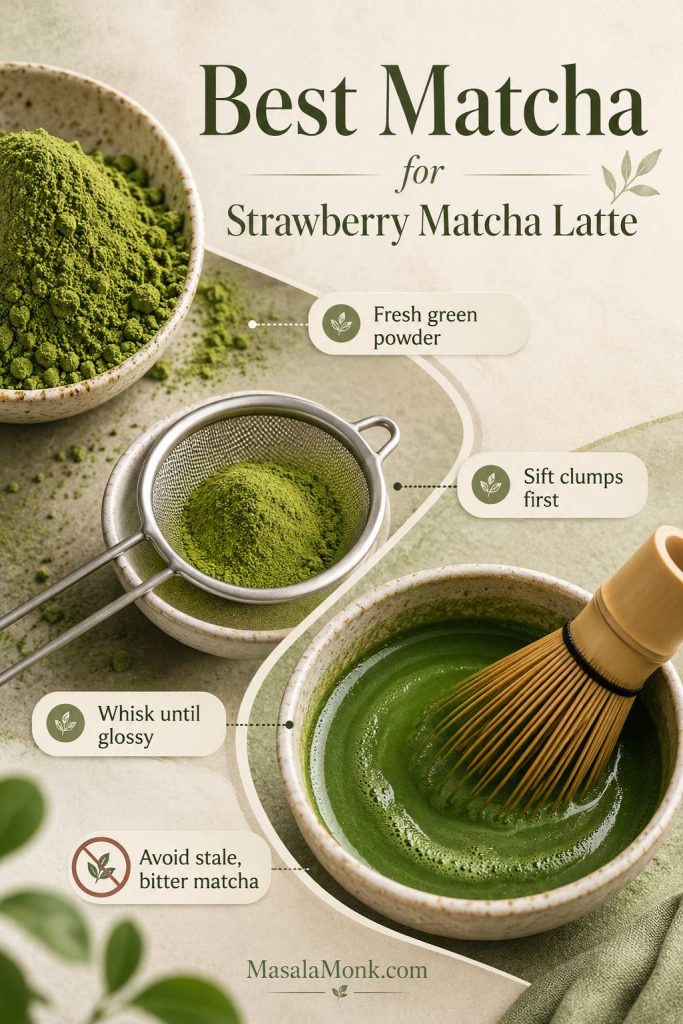
Choose a matcha powder you enjoy drinking, not the stale green powder hiding at the back of the pantry. Ceremonial-style matcha gives the smoothest flavor, but a good latte-grade matcha is usually enough for an iced drink with milk and strawberry.

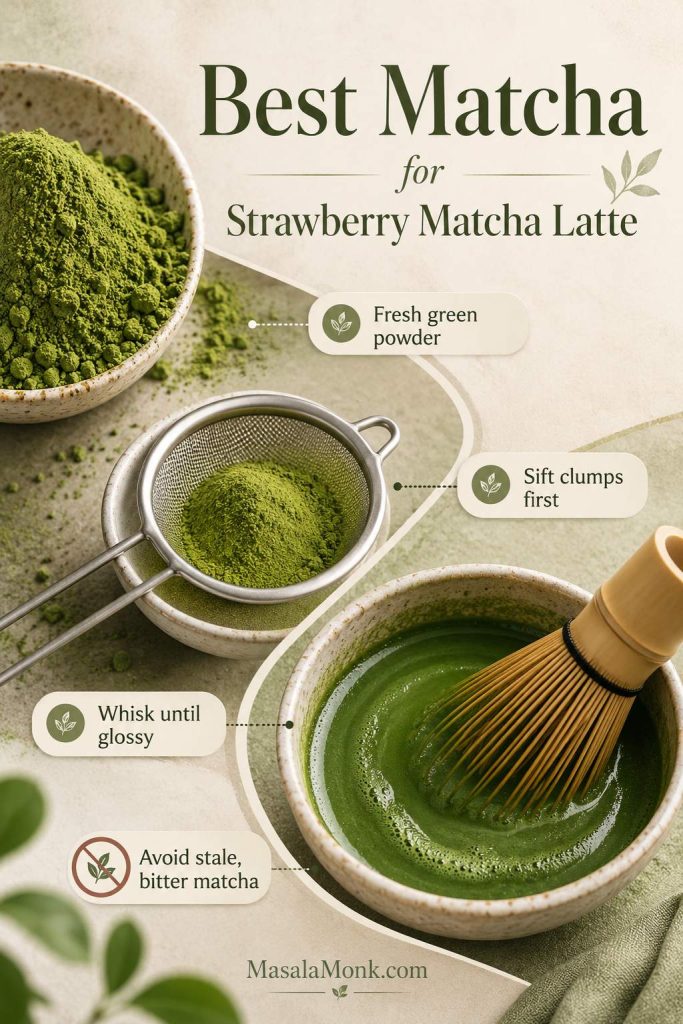
Sift the matcha before whisking if it looks clumpy. Matcha does not dissolve like instant coffee; it suspends in water, so whisking matters. The goal is a smooth, balanced sip, not a bitter powdery one.

Matcha guide with fresh matcha powder, sifted matcha, glossy whisked matcha, and a clump-prevention cue.
Fresh matcha and proper whisking matter because milk can soften bitterness, but it cannot fully hide stale powder or dry green clumps.
Matcha temperature tip: Use hot water around 175°F / 80°C, not boiling water. This keeps the matcha smoother and less sharp; Ippodo’s matcha latte guide uses the same 80°C / 176°F benchmark.

If matcha usually tastes harsh to you, this one change helps most: let boiling water cool for a minute before whisking. The finished latte should taste fresh instead of flat or sharp.

Why the main recipe uses only 3 tablespoons water: This is a concentrated matcha pour for one 16 oz iced strawberry latte, not a full plain matcha tea. The drink already has strawberry, milk, and ice, so less water keeps the final glass creamy instead of thin. If you use 2 teaspoons matcha for a larger glass, you can increase the water to ¼ cup / 60 ml.

If clumps are your main problem, the step-by-step matcha whisking section is the fastest fix.

Milk

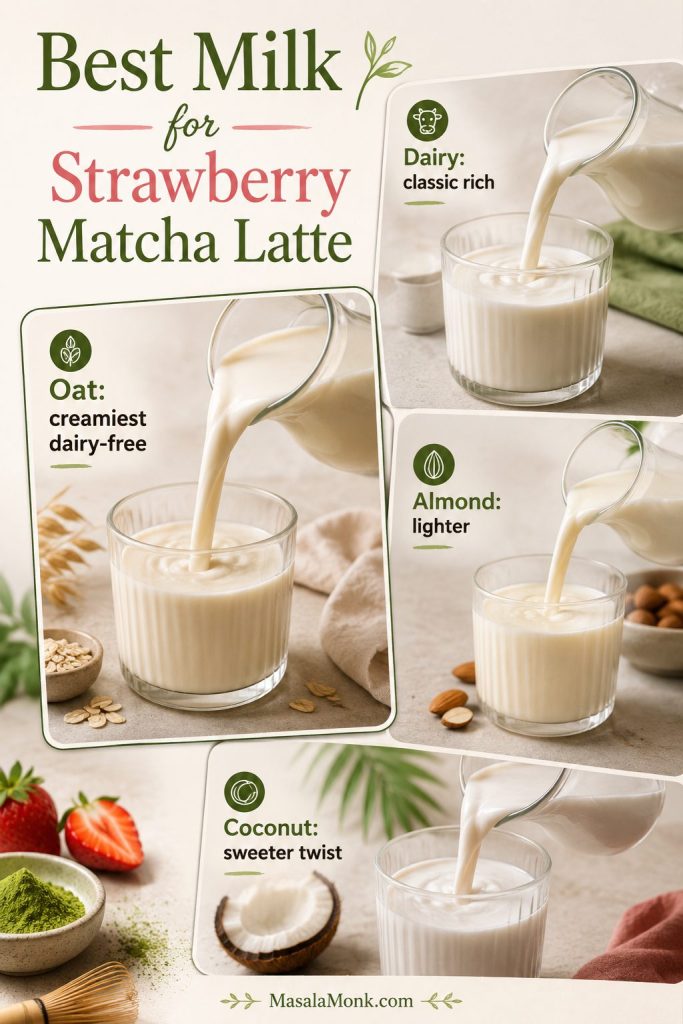
Oat milk gives the creamiest dairy-free version. Dairy milk tastes clean and rich. Almond milk makes a lighter drink, while coconut milk gives a sweeter, more tropical flavor that works well with strawberry.

Think of the milk as the soft middle. It should round out the fruit and matcha without making the latte taste flat. Cold milk and plenty of ice also help the colors stay separated.

Milk comparison for strawberry matcha latte with dairy milk, oat milk, almond milk, and coconut milk options.
Milk changes the body of the latte: oat milk tastes creamiest, dairy feels classic, almond keeps it lighter, and coconut adds a sweeter twist.

Sweetener

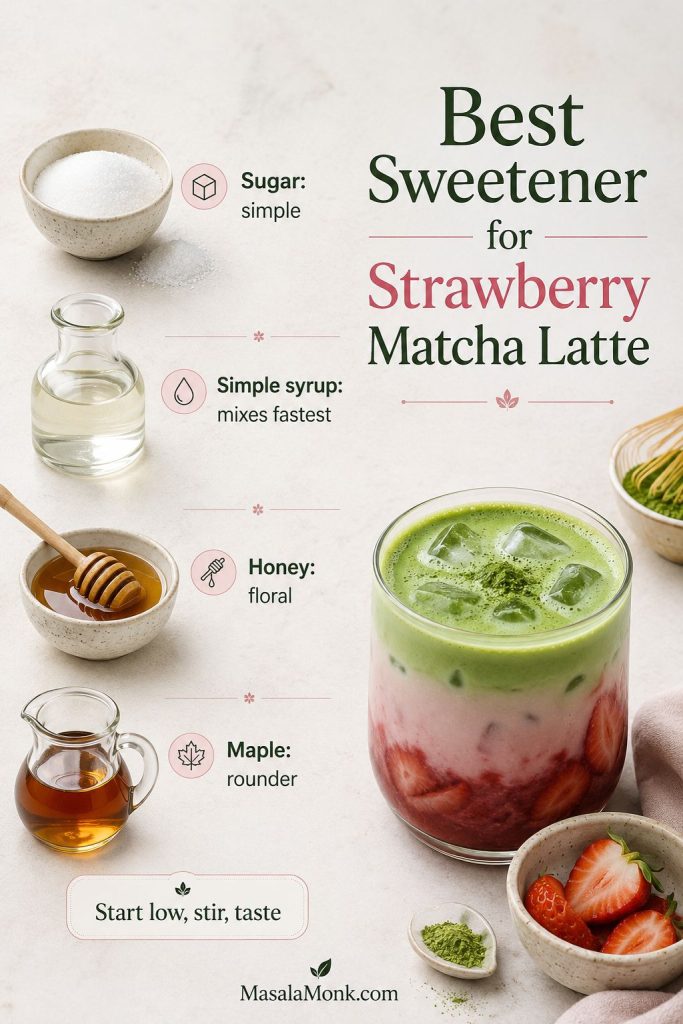
Sugar, honey, maple syrup, or simple syrup all work. Granulated sugar is fine if you muddle it into juicy strawberries. Simple syrup mixes fastest. Honey and maple syrup add their own flavor, so they are better when you want a softer, rounder sweetness.

Start with 2 teaspoons for one drink. Add more only after tasting the fruit. Many café-style versions are very sweet, but this homemade latte tastes better when the berries, milk, and matcha stay in balance.

Before adding more sweetener, stir and taste once. The strawberry tastes sweetest at the bottom, the matcha tastes strongest at the top, and the final flavor only makes sense after everything is mixed.

Sweetener guide for strawberry matcha latte with sugar, simple syrup, honey, maple syrup, and a small drink cue.
Start with less sweetener than you think, because the strawberry base tastes stronger once the latte is fully stirred.

If the latte still tastes too sweet, weak, or flat after stirring, check the troubleshooting table before changing the whole recipe.

Helpful Tools

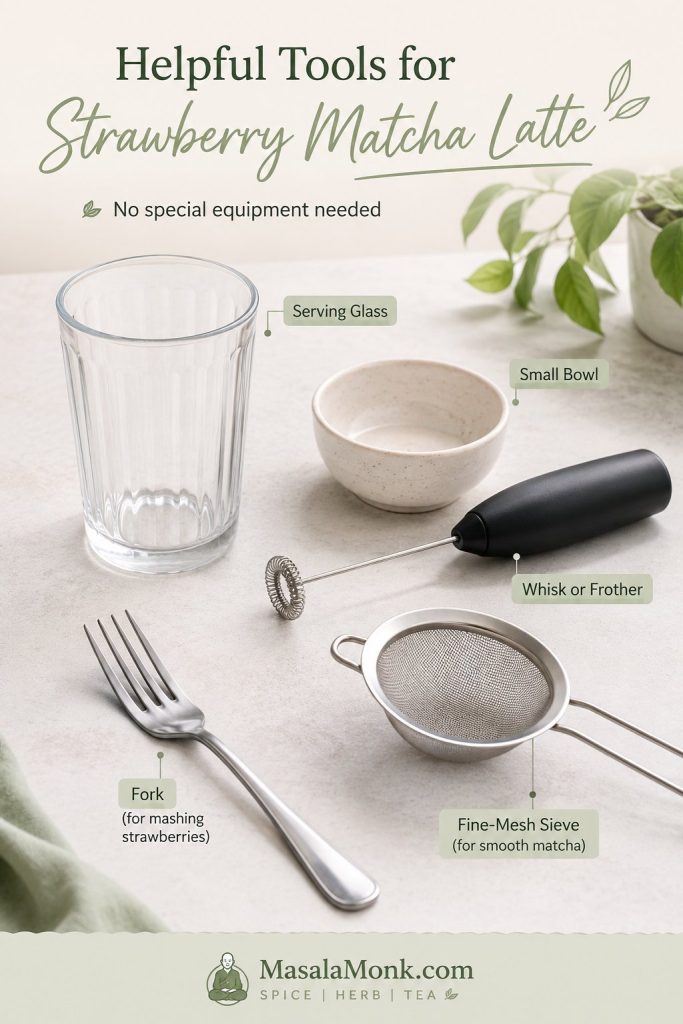
You do not need special equipment for this drink. A clear glass, small bowl, and whisk or frother are enough; a sieve, blender, thermometer, and long spoon simply make the finish smoother and neater.

  • Clear glass: Shows the layers and gives you room for ice.
  • Small bowl: Makes it easier to whisk matcha before pouring.
  • Whisk or frother: Helps prevent dry green clumps.
  • Muddler, fork, or blender: Use whichever fits the strawberry texture you want.
  • Fine-mesh sieve: Optional, but useful for sifted matcha or smoother puree.
No matcha whisk? Use a handheld frother or shake the sifted matcha with hot water in a small jar. The goal is a glossy matcha pour with no dry green clumps.
Tools for making strawberry matcha latte including clear glass, small bowl, whisk or frother, fork, and fine-mesh sieve.
You do not need café equipment; a clear glass, small bowl, and whisk or frother are enough to build clean layers.

Ratio Guide for 12 oz, 16 oz, and Café-Style Drinks

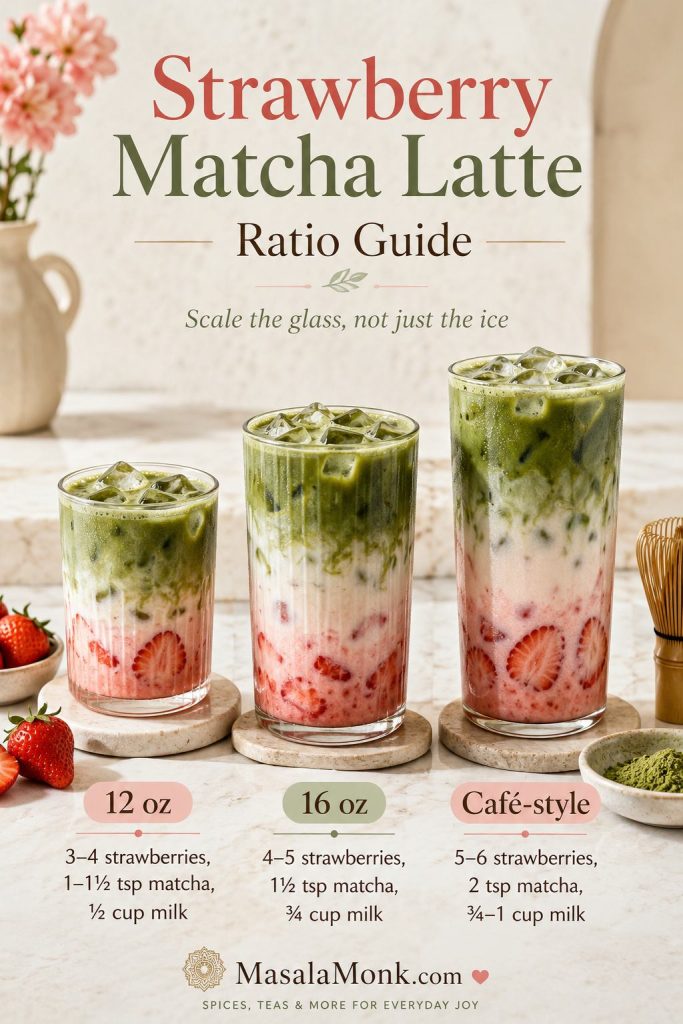
The right ratio depends on your cup size and how strong you like matcha. A 12 oz serving needs less milk and ice. A 16 oz serving gives you more room for dramatic colors and a creamier drink.

Glass size Strawberry base Matcha Hot water Milk Ice
12 oz 3–4 strawberries + 1½–2 tsp sweetener 1–1½ tsp 2½–3 tbsp / 37–45 ml ½ cup / 120 ml About ¾ cup
16 oz 4–5 strawberries + 2 tsp–1 tbsp sweetener 1½ tsp 3 tbsp / 45 ml ¾ cup / 180 ml About 1 cup
Large café-style 5–6 strawberries + 1 tbsp sweetener 2 tsp ¼ cup / 60 ml ¾–1 cup / 180–240 ml Enough to fill the glass
Three strawberry matcha lattes in 12-ounce, 16-ounce, and café-style sizes with ratio labels for berries, matcha, and milk.
Once the 16-ounce strawberry matcha latte tastes right, scaling up or down is easier than guessing with extra ice.

Do not treat the numbers like a test. The 16 oz version is your baseline; the next glass is where you make it yours.

To make two drinks, double the strawberries, milk, matcha, and sweetener, but whisk the matcha in one slightly larger bowl so it stays even. Build each serving separately if you want the colors to stay clear.

Mild, Balanced, or Strong Matcha?

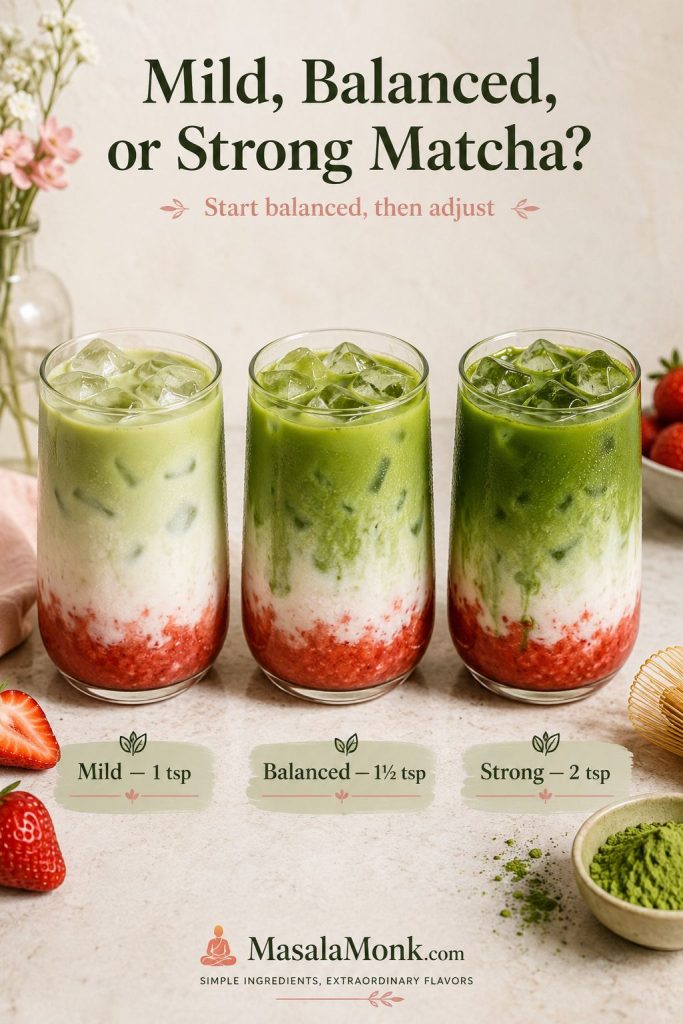
New to matcha? Start mild. Already love iced matcha? Use the balanced amount. Want the green tea flavor to lead even after milk and strawberry are added? Go stronger.

Matcha strength Amount for 1 drink Works well for
Mild 1 tsp / about 2 g Beginners, sweeter strawberry drinks, lighter almond milk versions.
Balanced 1½ tsp / about 3 g Most 16 oz iced strawberry matcha lattes.
Strong 2 tsp / about 4 g Oat milk drinks, extra ice, and stronger matcha flavor.

Start with the balanced 16 oz version once, then adjust by taste: more berries for a fruitier sip, more milk for a softer sip, or more matcha when you want the green tea flavor to lead.

Three strawberry matcha lattes showing mild, balanced, and strong matcha levels from 1 teaspoon to 2 teaspoons.
Matcha strength changes the whole drink, so begin balanced and move stronger only when you want the green tea flavor to lead.

How to Make an Iced Strawberry Matcha Latte

The order matters. If everything goes in at once, the drink will taste fine but look muddy. For clear separation, build from heaviest to lightest: strawberry, ice, milk, then matcha.

There is also a small pleasure in the pour: the milk softens the red strawberry base, then the matcha slides over the ice and settles into green. It looks fancy, but it is really just a few careful steps.

Build it like a little stack: fruit first, ice next, milk slowly, matcha last.

Step-by-step strawberry matcha latte process showing strawberry base, ice, milk pour, and matcha pour ending with a finished drink.
Build from heavy to light so the strawberry stays low, the milk cushions the middle, and the matcha finishes on top.

Step 1: Make the strawberry base

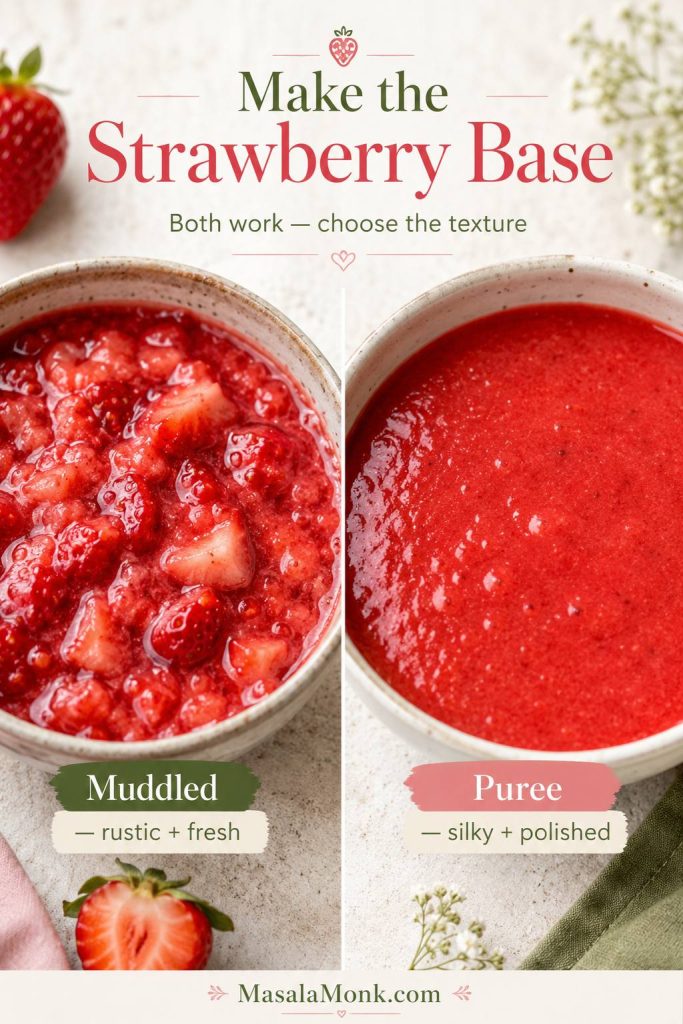
Hull and chop 4–5 medium strawberries. Add them to a small bowl or directly to the bottom of a sturdy glass with 2 teaspoons sweetener. Muddle until the berries release their juice and look saucy.

For a smoother base, blend the strawberries with the sweetener, then spoon the puree into the cup. Strain it if you want the neatest red stripe at the bottom.

Close-up comparison of muddled strawberry base with fruit pieces and smooth strawberry puree in bowls.
Muddled berries taste fresh and rustic, while puree gives a smoother strawberry base for cleaner layers and a more polished finish.

Step 2: Whisk the matcha

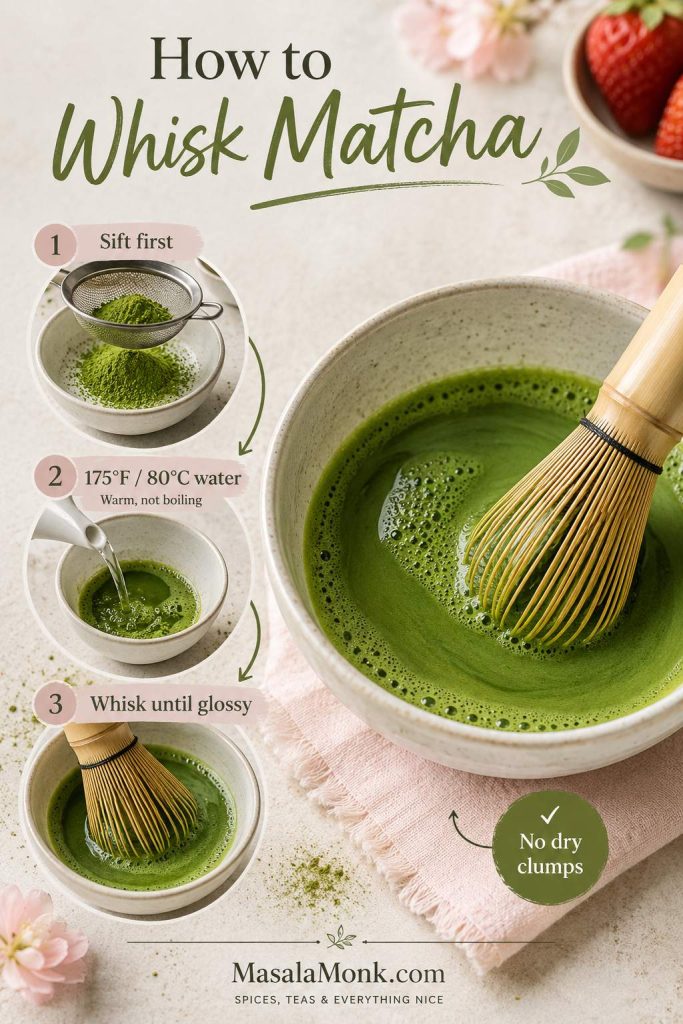
Sift 1½ teaspoons matcha into a small bowl. Add 3 tablespoons hot water around 175°F / 80°C. Whisk until the matcha is glossy and lightly frothy. There should be no dry clumps left at the bottom of the bowl.

A bamboo whisk works beautifully, but a small whisk, handheld frother, or shaker jar can also do the job. With a frother, keep the head fully submerged at first so the matcha does not splash.

Matcha whisking guide showing sifted matcha, warm water, whisking, glossy matcha, and no dry clumps.
Sift first and use warm-not-boiling water, because smooth matcha before pouring means a better latte after stirring.

Step 3: Build the drink

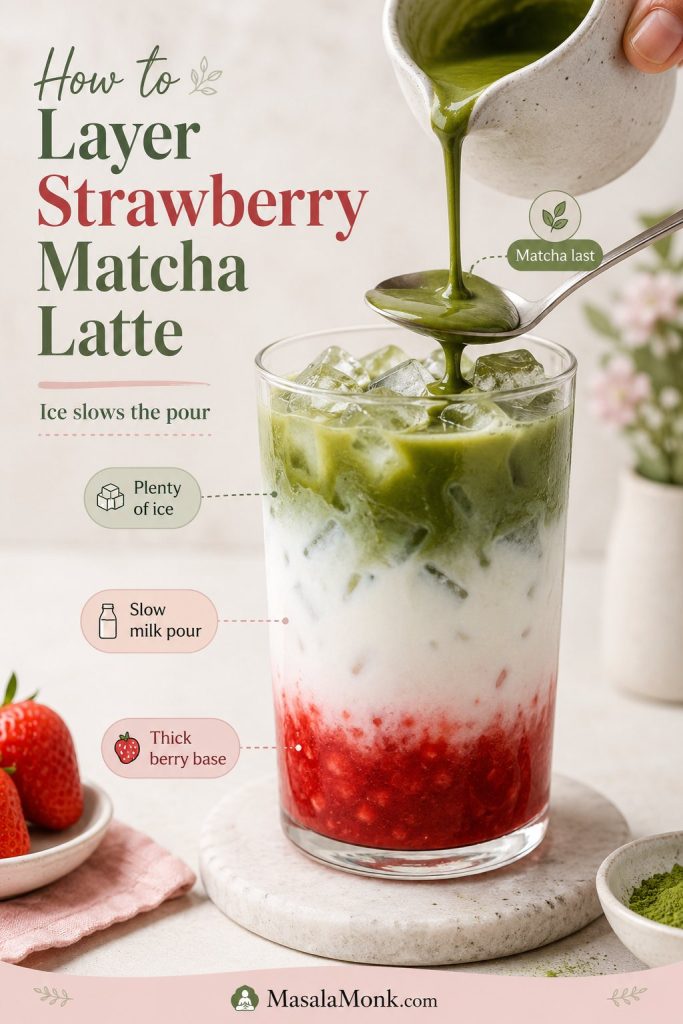
Spoon the strawberry mixture into the bottom of a tall clear glass. Add ice until the glass is at least halfway full. Pour the milk slowly over the ice, not directly into the fruit.

Finally, pour the whisked matcha over the ice or over the back of a spoon. This slows the pour and helps the green matcha sit above the milk for that red-white-green look.

Tall strawberry matcha latte being layered with strawberry base, milk, ice, and matcha poured slowly over a spoon.
Plenty of ice slows the pour, which helps the milk and matcha settle into layers instead of turning muddy immediately.

Step 4: Serve, then stir

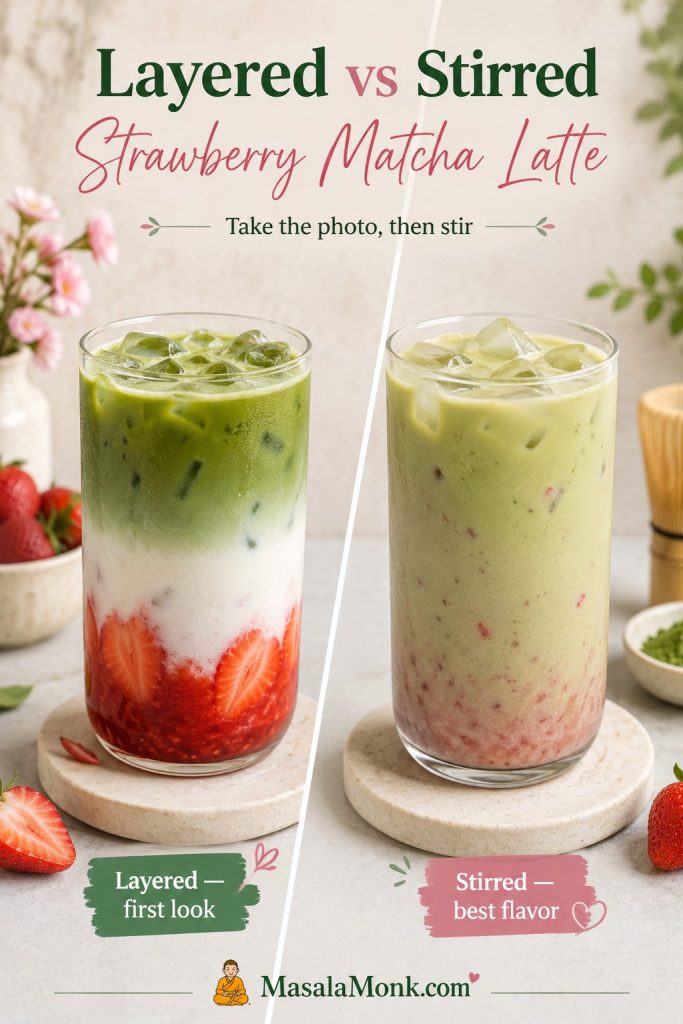
Serve it layered for the first beautiful moment, then stir before drinking. The sip gets better once the berry, milk, and matcha stop sitting in separate lanes.

If you do not care about visible colors, simply stir the strawberry, milk, and matcha together after building the drink. The flavor will be just as good, and the drink is easier to sip evenly from the start.

Do not worry if the first pour is not perfect. The colors are fun, but this latte is forgiving; once you stir it, the flavor matters much more than the stripes.

Side-by-side comparison of a layered strawberry matcha latte and a stirred strawberry matcha latte ready to drink.
The layered version wins the first look, while the stirred version gives you strawberry, milk, and matcha in one balanced sip.

If the layers disappear too quickly, the fixes section covers ice, pouring speed, and berry thickness.

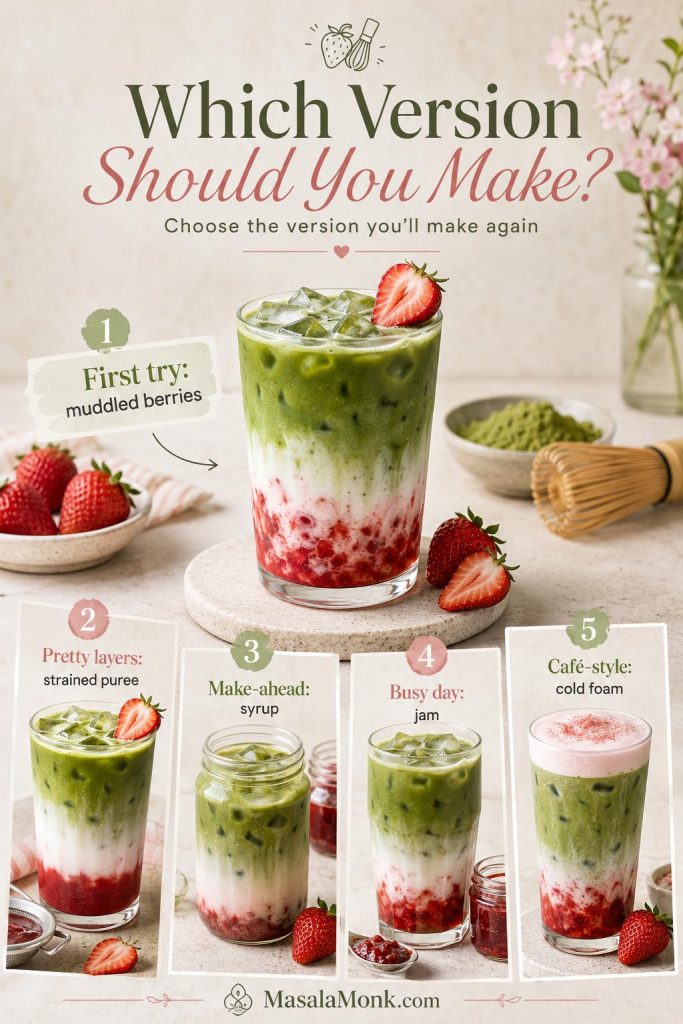
Which Version Should You Make?

For your first try, start with muddled berries. For the cleanest layers, strain the puree. On a busy day, jam is completely fine; the point is a balanced latte you would actually make again.

  • Best everyday version: fresh muddled berries for the brightest, quickest flavor.
  • Best pretty layered version: strained strawberry puree for a cleaner red base.
  • Best make-ahead version: cooked strawberry syrup chilled in a jar.
  • Best busy-day shortcut: 1–2 tablespoons strawberry jam with less extra sweetener.
  • Best café-style version: smooth puree or syrup with oat milk, stronger matcha, and optional cold foam.
Version chooser for strawberry matcha latte with first try, pretty layers, make-ahead syrup, busy-day jam, and café-style cold foam.
Choose the version that fits the moment: fresh berries for everyday, puree for layers, syrup for prep, jam for speed, or cold foam for café style.

Strawberry Base Options

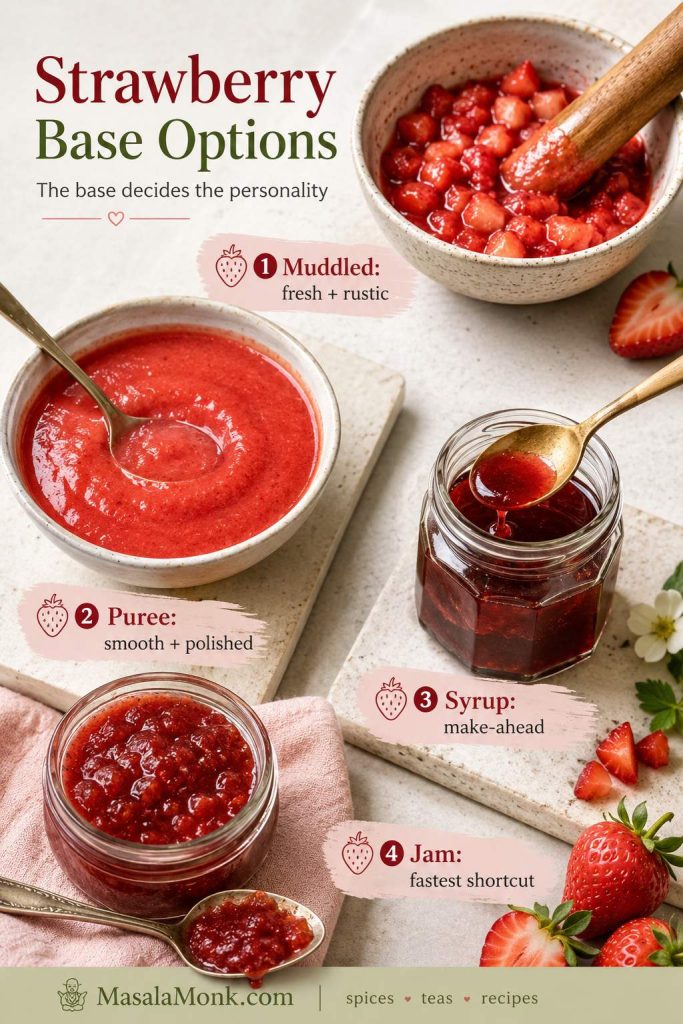
Once you know which direction you want, the strawberry base is where the latte gets its personality: rustic and fresh, smooth and polished, syrupy and make-ahead, or fast and jammy.

Four strawberry base options for strawberry matcha latte including muddled berries, puree, syrup, and jam shortcut.
The strawberry base decides the personality of the drink, from fresh and rustic to silky, syrupy, or fast and jammy.

Fresh muddled strawberries

Ripe strawberries are where this version shines. It tastes fresh, takes only a few minutes, and keeps the drink from feeling too syrupy. The texture is slightly rustic, which can be lovely if you enjoy real fruit in the glass.

Smooth strawberry puree

Blend strawberries with sweetener for a silkier fruit base. This gives the latte a more polished look and makes the strawberry flavor spread more evenly once stirred. If seeds bother you, strain the puree before adding it to the glass.

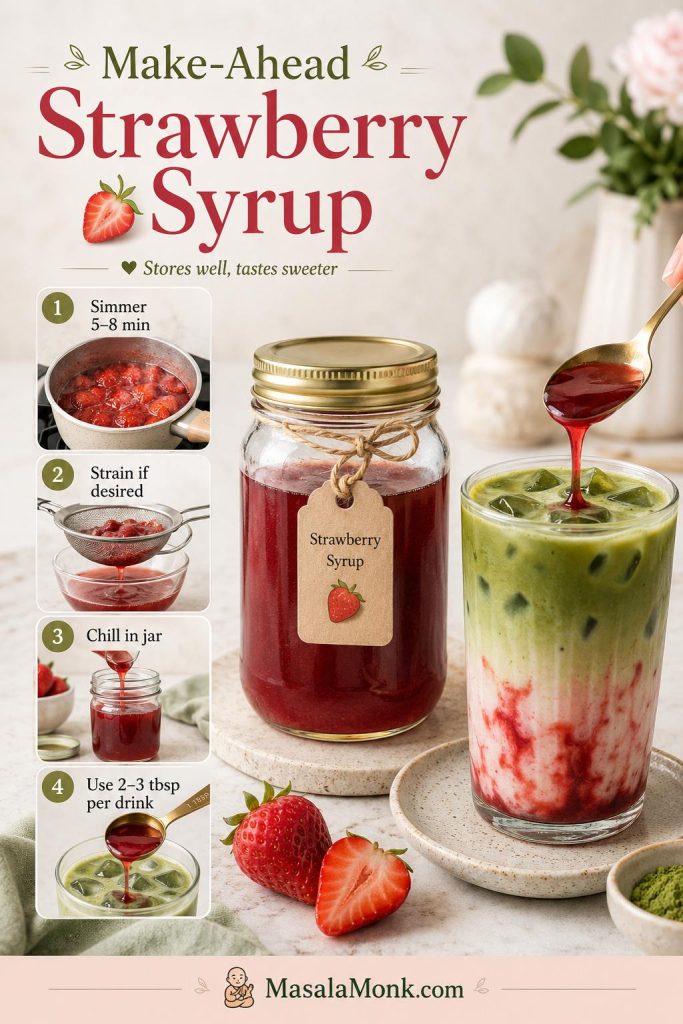
Make-ahead strawberry syrup

To make syrup ahead, simmer 1 cup chopped strawberries, about 140–160 g, with ¼ cup sugar and ¼ cup water for 5–8 minutes, until the fruit softens and the liquid turns red. Mash, strain if desired, cool, and refrigerate. Use 2–3 tablespoons syrup per drink.

This makes roughly enough syrup for 3–4 drinks, depending on how much you reduce it. Syrup stores well and gives stronger strawberry flavor, but it tastes sweeter and less fresh than muddled berries. Store-bought syrup can work in a pinch; start with less than you think you need.

That jammy berry flavor also works beautifully in desserts; this strawberry ice cream recipe uses the same idea of concentrating juicy strawberries before they water things down.

Make-ahead strawberry syrup guide with simmered strawberries, straining, syrup in a jar, and syrup spooned into a matcha latte.
Use strawberry syrup when convenience matters more than fresh berry texture, especially for repeat lattes during the week.

Strawberry jam shortcut

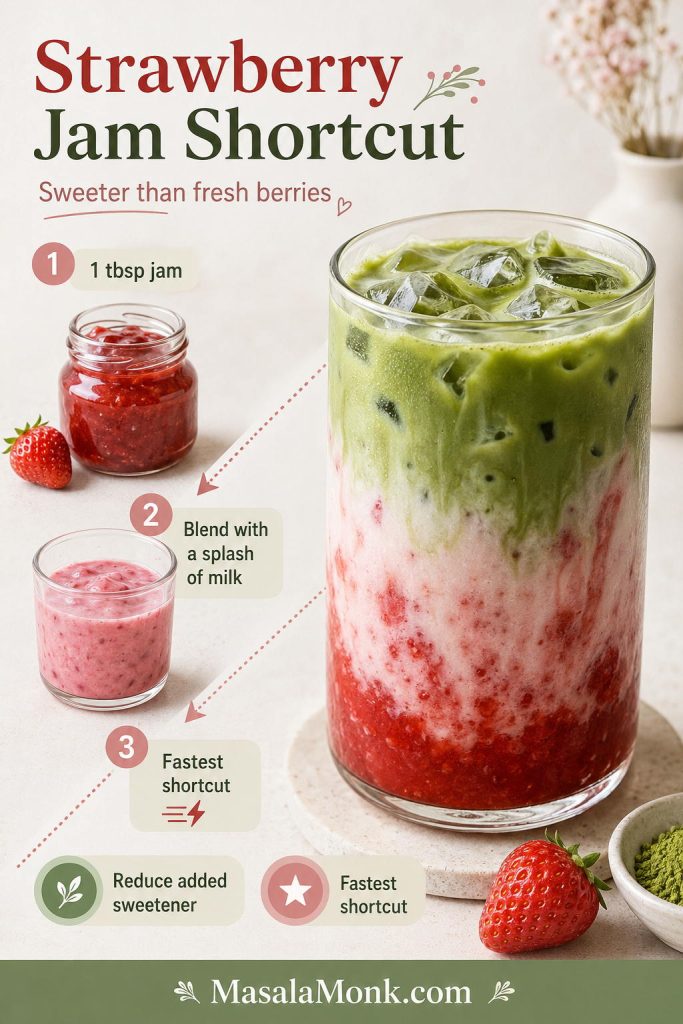
Jam works when speed matters, but it gives the drink more candy-shop sweetness than fresh berry lift. Start with 1 tablespoon, stir or blend it with a spoonful of milk, then add the rest of the milk and matcha.

Strawberry jam shortcut guide showing jam, jam mixed with milk, and a finished strawberry matcha latte.
Jam is the fastest shortcut when fresh berries are not available, but reduce added sweetener because the base is already sweet.

Starbucks-Style Notes

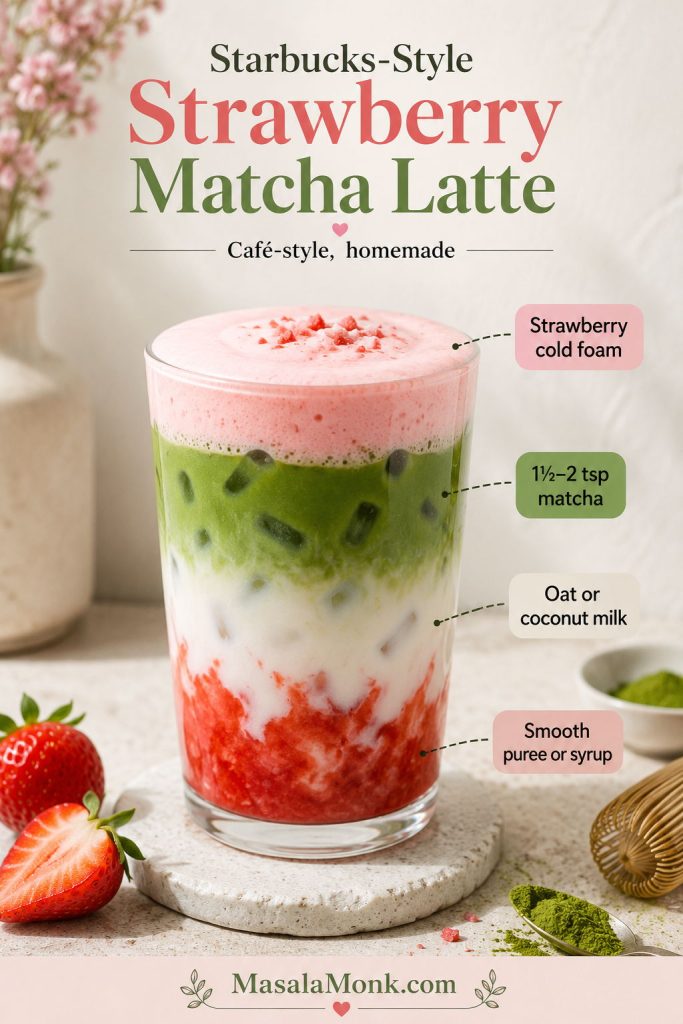
For a Starbucks-style strawberry matcha latte, use smooth strawberry puree or syrup, oat milk or coconut milk, 1½–2 teaspoons matcha, and strawberry cold foam if you want the café-style finish.

Puree or syrup gives you more café polish; muddled berries give you the fresher homemade sip.

For the homemade version that fits your situation, compare the fresh, syrup, jam, and café-style options.

The exact Starbucks version can vary by country, season, and custom order. Starbucks EMEA announced an Iced Strawberry Matcha Tea Latte with strawberry cream cold foam, while in other places people often recreate the flavor through custom orders or homemade copycat versions.

Café-style strawberry matcha latte with strawberry cold foam, matcha layer, milk, strawberry base, and callouts for puree, milk, and matcha.
For a Starbucks-style direction, use a smoother strawberry base, slightly stronger matcha, creamy milk, and strawberry cold foam on top.

Variations

Once you know the base ratio, this iced matcha drink is easy to adapt. Keep the same building order, then change the milk, fruit base, or topping.

For the basic build before changing the milk, foam, or fruit base, start with the main method.

Strawberry Milk Matcha

Blend strawberries or strawberry jam directly into the milk, then pour whisked matcha over the top. Choose this when you care more about a creamy, evenly fruity latte than the dramatic red-white-green layers.

Creamiest Dairy-Free Version

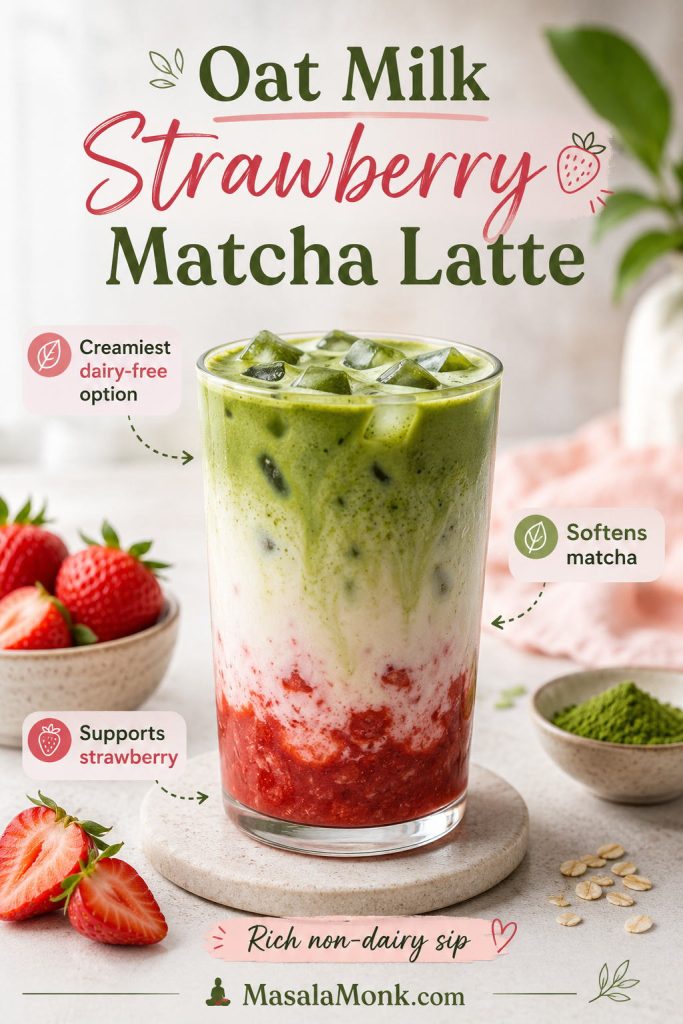
Oat milk gives you the creamiest dairy-free glass. Because it is naturally a little sweet and rich, it works especially well with 1½–2 teaspoons matcha and a lightly sweetened strawberry base.

Oat milk strawberry matcha latte in a clear glass with strawberry base, milk, matcha, ice, and dairy-free callouts.
Oat milk is usually the easiest dairy-free choice because it softens matcha while keeping the strawberry layer creamy and full.

Strawberry Cold Foam Matcha

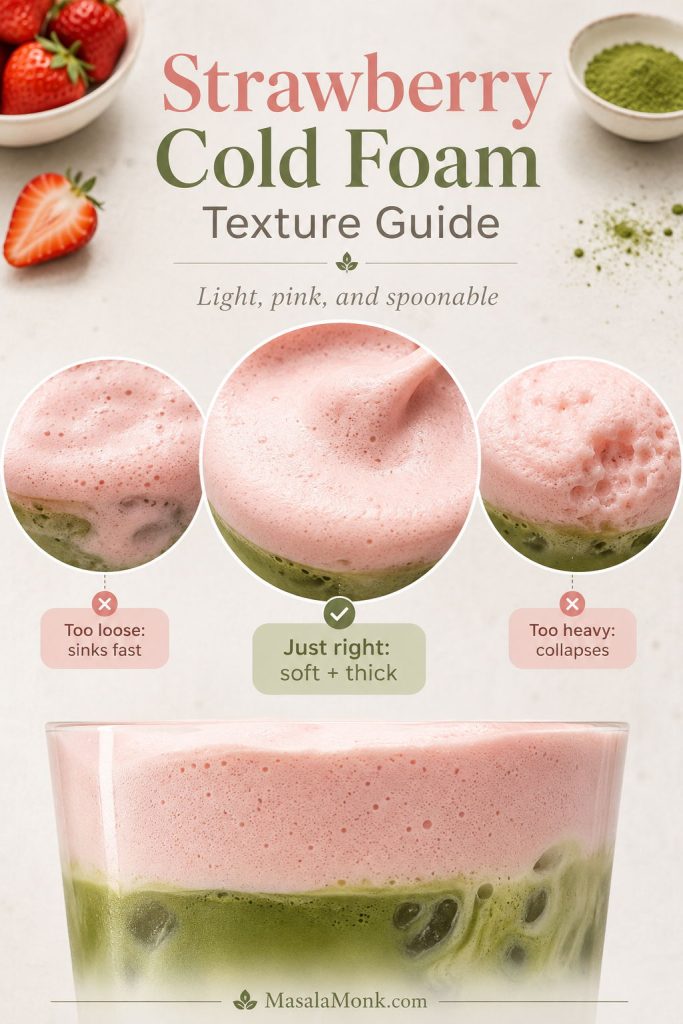
For a creamier cold foam variation, froth 3 tablespoons heavy cream or barista-style milk with 1 tablespoon strawberry puree or jam and ½ teaspoon vanilla. Spoon it over an iced matcha latte, or use it on top of the layered strawberry-matcha drink.

If fresh strawberry puree makes the foam too loose, use freeze-dried strawberry powder or a small amount of thick strawberry jam instead. The goal is a pink, lightly sweet foam that tastes like strawberry without sinking straight into the glass.

For a thicker topping, the same timing cues from this whipped cream recipe can help you stop before the foam turns heavy.

Strawberry cold foam texture guide showing too loose, just right, and too heavy foam on matcha drinks.
Good strawberry cold foam should be light and spoonable, not runny enough to sink or heavy enough to feel like frosting.

Boba-Shop Style Strawberry Matcha

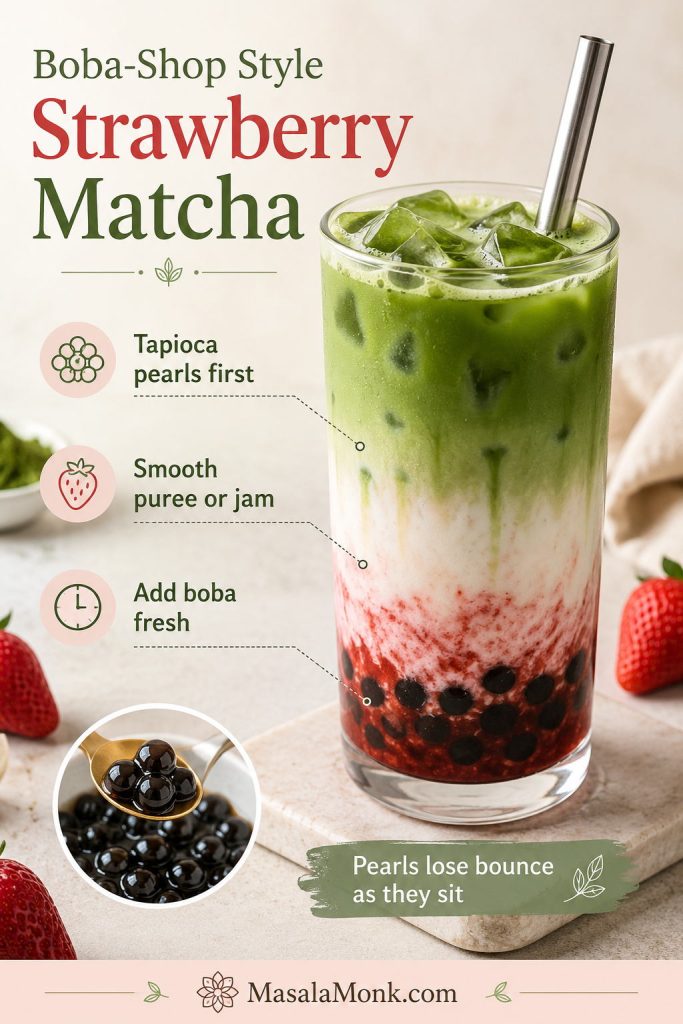
Add cooked tapioca pearls to the bottom before the strawberry base, then build with ice, milk, and matcha. Use a smooth puree or jam so the cup does not feel too busy, and add boba fresh because cooked tapioca pearls lose their bounce as they sit.

Boba-style strawberry matcha drink with tapioca pearls, strawberry base, milk, matcha, ice, and a wide straw.
Add tapioca pearls fresh and keep the strawberry base smooth, because boba already brings plenty of texture to the glass.

Strawberry Matcha Lemonade, Not a Latte

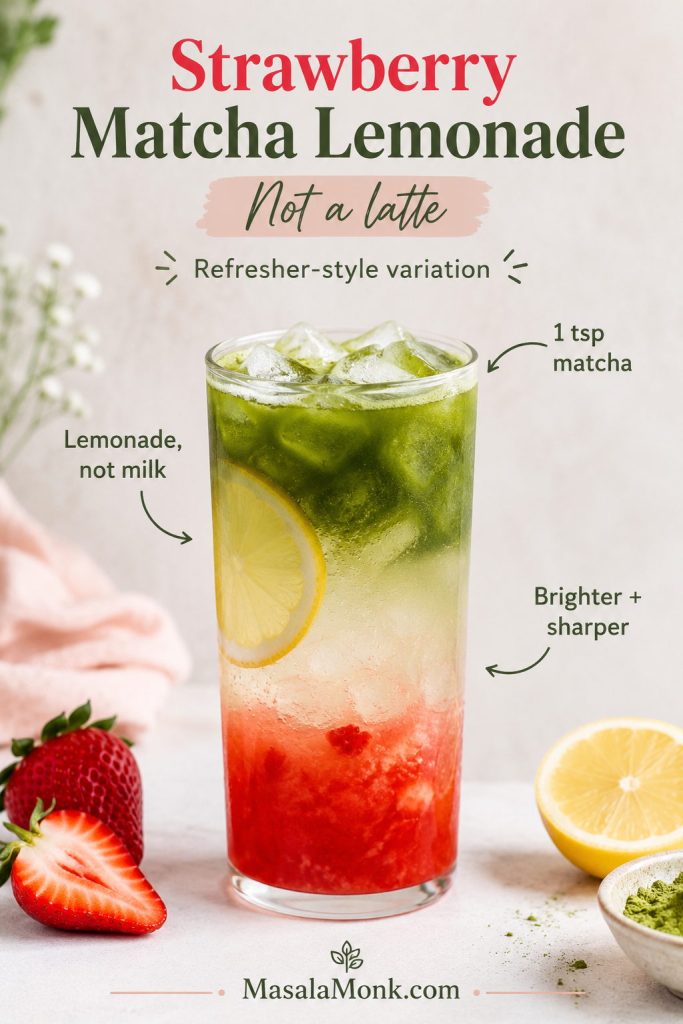
For a brighter refresher-style variation, replace the milk with cold lemonade and keep the strawberry base at the bottom. This is a separate summer drink, not a creamy latte. Use 1 teaspoon matcha because the acidity makes the green tea taste stronger.

Strawberry matcha lemonade with strawberry base, lemonade layer, matcha top, ice, lemon slice, and not-a-latte label.
This variation leaves latte territory; instead of creamy milk, lemonade makes the drink brighter, sharper, and more refreshing.

More Filling Protein Version

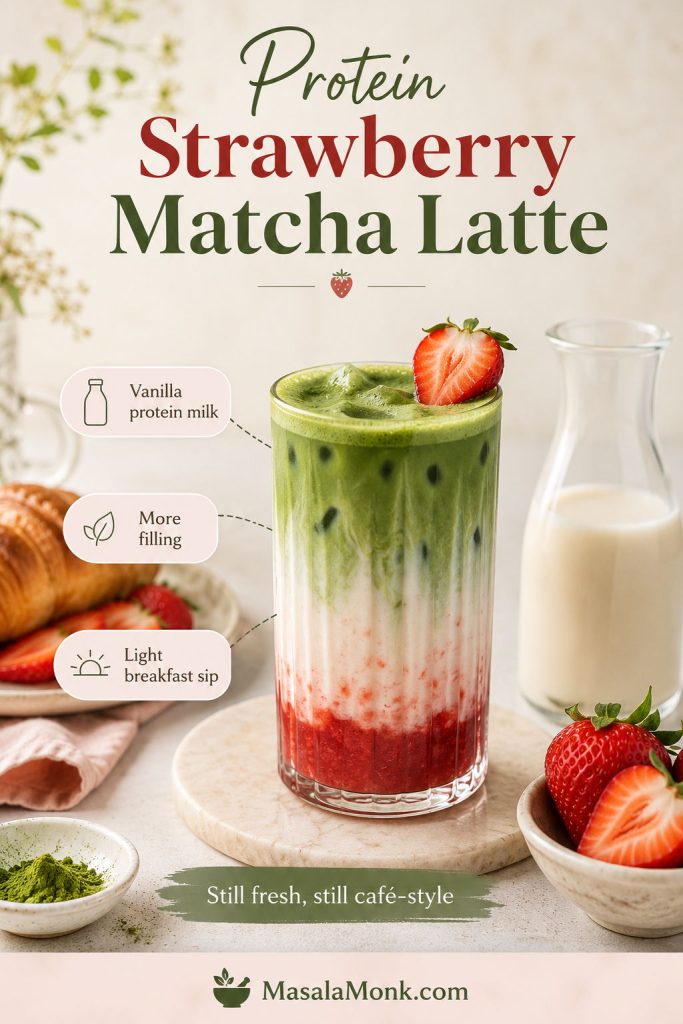
Use vanilla protein milk or a vanilla protein shake for part of the milk. This is the version to make when you want the drink to act more like a light breakfast than a pretty afternoon sip. For a more fruit-forward breakfast drink, this berry smoothie recipe is a better direction.

Protein strawberry matcha latte with vanilla protein milk, strawberry base, milk layer, matcha, ice, strawberries, and breakfast props.
Vanilla protein milk turns the drink into a more filling option, while the strawberry and matcha keep it tasting fresh rather than heavy.

Make-Ahead and Storage

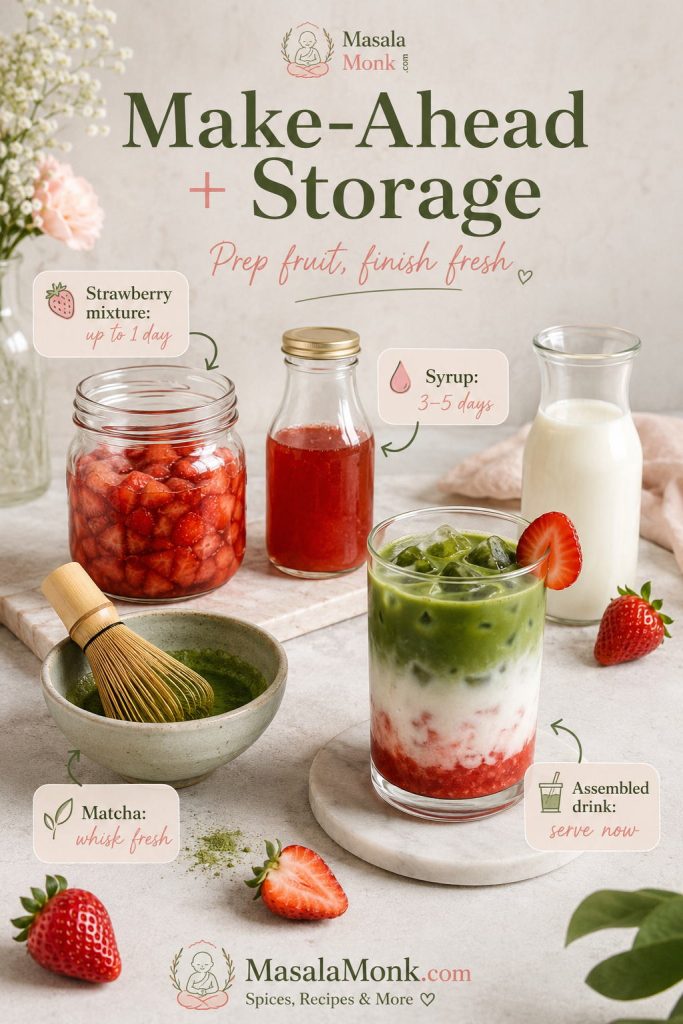
This drink tastes best right after it is assembled, but you can prepare the parts ahead. Keep the strawberry mixture and matcha separate until you are ready to build the glass.

The best make-ahead plan is simple: prep the strawberry part, chill the milk, and leave the matcha for the last minute. The matcha is the part worth making fresh; whisk it at the end so the top tastes bright instead of dull.

Component Make-ahead timing Storage tip
Fresh strawberry mixture Up to 1 day Refrigerate in a covered jar. Stir before using.
Cooked strawberry syrup 3–5 days Refrigerate in a clean jar and use a clean spoon each time.
Whisked matcha Best fresh Whisk right before serving for the smoothest texture.
Fully assembled drink Serve immediately The colors fade and the ice waters it down over time.

If you want to make several drinks for guests, prepare the strawberry base ahead and chill the milk. Whisk the matcha fresh, then assemble each serving just before serving.

Make-ahead and storage guide with strawberry mixture, strawberry syrup, milk, fresh-whisked matcha, and assembled strawberry matcha latte.
Make-ahead works best when the fruit is ready and the matcha is fresh, so the drink still tastes bright when assembled.
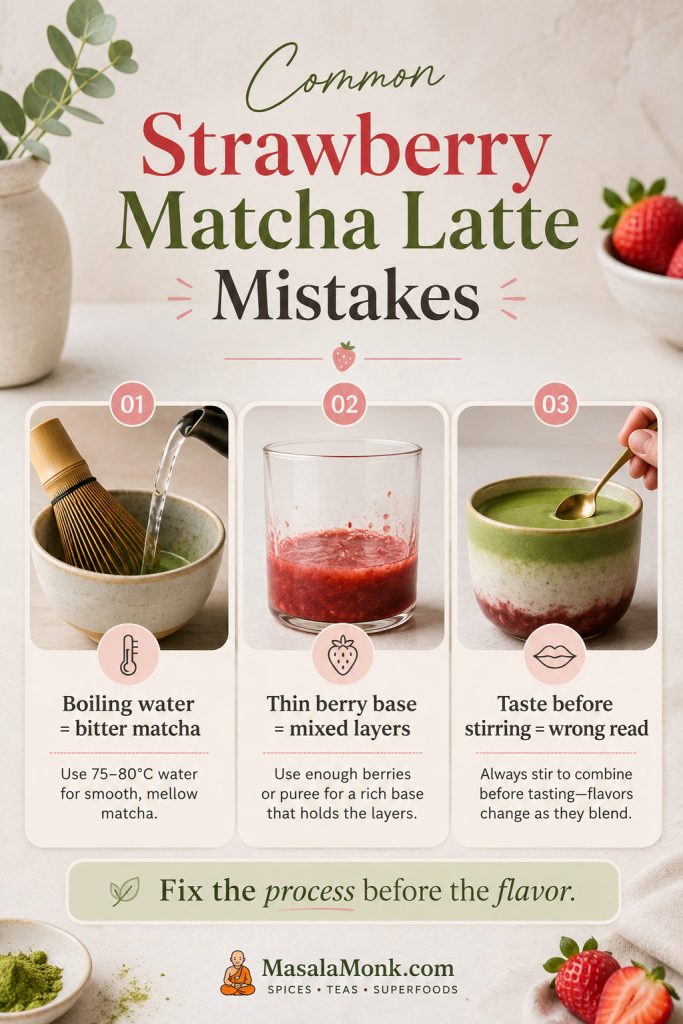
Avoid the three easiest mistakes: do not use boiling water for matcha, do not pour milk directly into a thin strawberry mixture if you want visible separation, and do not judge the sweetness until the drink has been stirred.
Common strawberry matcha latte mistakes showing boiling water, thin berry base, and tasting before stirring.
Most mistakes happen before the first sip, so fix the process: avoid boiling water, thicken the berry base, and stir before judging.

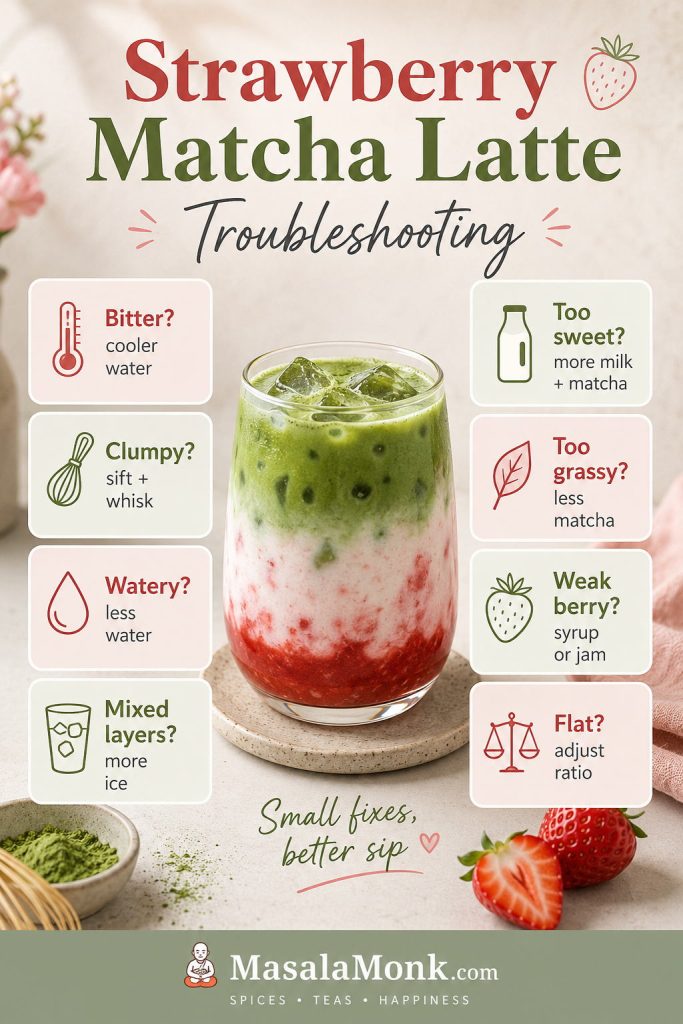
Troubleshooting: Bitter, Clumpy, Watery, or Mixed Layers

Even if the glass does not look perfect, it is usually easy to fix the flavor. Most problems come down to heat, sweetness, ice, or how fast everything was poured.

A messy glass is not a failed latte. If the flavor is balanced, you are already close.

Fix matcha problems first

When a strawberry matcha latte tastes bitter, clumpy, or watery, start with the matcha. The water temperature, whisking, and dilution usually explain the problem.

Problem Likely cause How to fix it
Matcha tastes bitter Water was too hot, matcha was low quality, or too much matcha was used. Use water around 175°F / 80°C, start with 1 tsp matcha, and add more milk if needed.
Matcha is clumpy Powder was not sifted or whisked enough. Sift first, add hot water gradually, and whisk until glossy before pouring.
Drink tastes watery Too much water in the matcha or too much melted ice. Use 3 tbsp water for the matcha and serve immediately after building.

Fix layers, sweetness, and berry flavor

If the matcha is smooth but the latte still feels off, check the strawberry base, ice, sweetness, and milk balance next.

Problem Likely cause How to fix it
Colors disappeared Not enough ice, thin strawberry mixture, or pouring too fast. Use more ice, make the fruit base thicker, and pour milk and matcha slowly over the ice.
Too sweet Too much syrup, jam, or sweetened milk. Use fresh strawberries next time. For this glass, add more milk and a little extra matcha.
Too grassy Matcha is too strong for your taste. Use 1 tsp matcha, add more milk, or sweeten the fruit base slightly.
Not enough strawberry flavor Berries were pale or watery. Use a cooked syrup, add 1 extra strawberry, or mix in 1 tsp strawberry jam.
Drink tastes flat Not enough strawberry, weak matcha, or too much milk. Add a spoonful of strawberry mixture, use 1½–2 tsp matcha, or reduce the milk slightly next time.
Troubleshooting guide for strawberry matcha latte with fixes for bitter, clumpy, watery, mixed layers, too sweet, too grassy, weak berry, and flat flavor.
If the latte tastes off, the fix is usually small: cooler water, more ice, better whisking, or a quick adjustment to sweetness and matcha.

When it is right, the first sip is creamy and cool, then berry-bright, with just enough matcha to keep the sweetness in check.

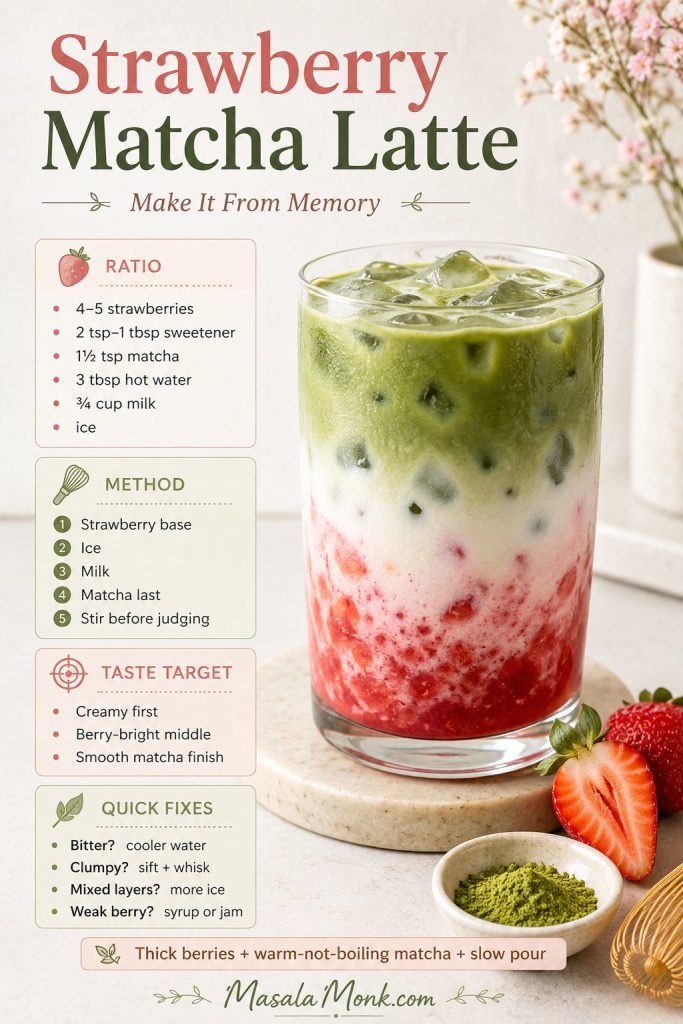
Make it from memory

After the troubleshooting guide, this saveable card brings the core ratio, build order, taste target, and quick fixes into one easy reference.

Saveable strawberry matcha latte recipe card with ratio, method order, taste target, quick fixes, and a layered drink.
This card turns the full recipe into a memory system: ratio, build order, flavor target, and the fixes that matter most.

FAQs

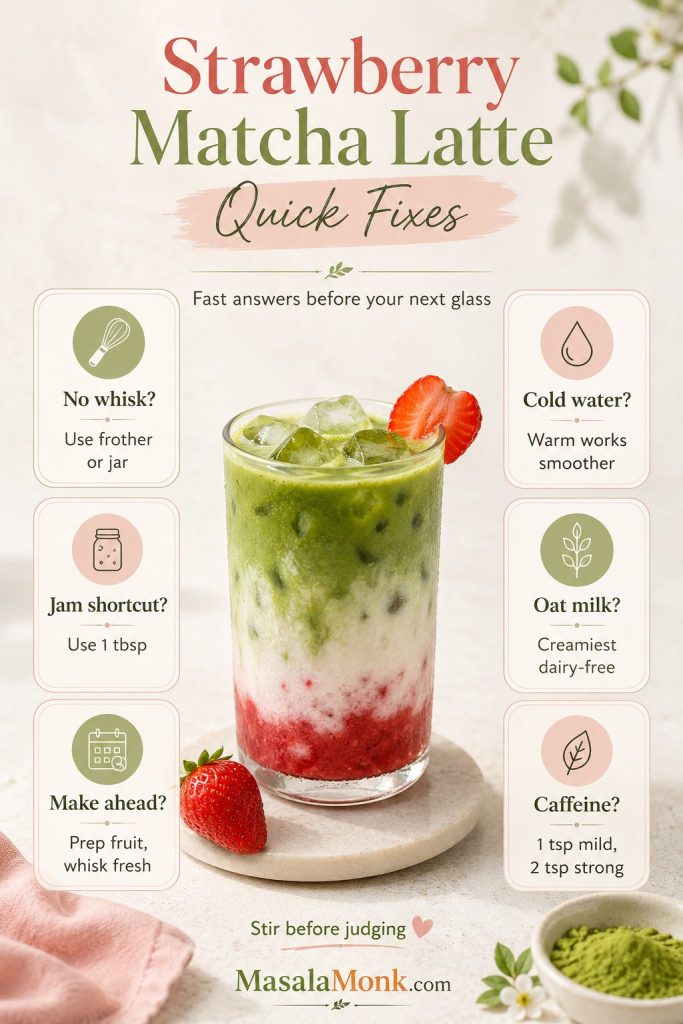
These quick answers cover the practical questions readers usually have once they start making the drink, from whisking matcha to using jam, oat milk, and make-ahead parts.

Quick fixes board for strawberry matcha latte with answers about whisking, warm water, jam, oat milk, make-ahead prep, and caffeine strength.
These quick answers help the next glass taste better, especially if you need a no-whisk method, jam shortcut, oat milk option, or caffeine adjustment.

Does strawberry taste good with matcha?

Strawberry works well with matcha because its sweet-tart flavor softens matcha’s grassy edge. Milk brings the two together, so the drink tastes fruity, creamy, and lightly earthy instead of sharp.

No bamboo whisk?

A bamboo whisk gives the best traditional texture, but a small whisk, handheld milk frother, blender, or shaker jar can also make glossy matcha. Sifting the powder first helps no matter which tool you use.

Cold water or warm water for matcha?

Cold water can work with a shaker or handheld frother, but warm water usually makes matcha easier to whisk smooth. For this recipe, a small amount of hot water gives the matcha a smoother texture before it hits the ice.

Fresh strawberries or jam?

Fresh berries or puree usually taste brighter and less sugary. Strawberry jam is the fastest shortcut. Use 1–2 tablespoons and blend or stir it with a little milk before adding the rest.

Why is my latte bitter?

The matcha may have been whisked with water that was too hot, or you may have used too much matcha for your taste. Use hot water around 175°F / 80°C, avoid boiling water, and start with 1 teaspoon matcha if you are new to the flavor.

Why did the colors mix together?

The glass probably needed more ice, a thicker strawberry mixture, or a slower pour. Add the strawberries first, fill the glass with ice, pour milk slowly over the ice, then pour matcha gently over the top.

Do I have to layer the drink?

No. The layered look is pretty, but the best flavor comes after stirring. Take the beautiful first look, then mix it so the strawberry, milk, and matcha land in the same sip.

If you want a fully blended matcha drink instead of an iced latte, these matcha smoothie recipes are a better fit.

Oat milk and vegan options

Oat milk works especially well because it is creamy enough to soften the matcha and naturally sweet enough to pair with strawberries. For a vegan version, use oat milk, almond milk, coconut milk, or another non-dairy milk, and sweeten the strawberries with sugar, maple syrup, or simple syrup instead of honey.

Is this the same as strawberry milk matcha?

Not exactly. A layered version keeps the strawberry at the bottom, milk in the middle, and matcha on top. Strawberry milk matcha blends the strawberry into the milk first, so the drink tastes creamier and more evenly fruity but looks less dramatic.

How strong is the caffeine?

The caffeine depends on the matcha powder and how much you use, but this is definitely a caffeinated latte. A 1-teaspoon version is gentler; a 2-teaspoon version tastes closer to the stronger café-style matcha people expect when they want the green tea to show up.

Make-ahead plan

Prepare the strawberry mixture or syrup ahead, but whisk the matcha and assemble the latte fresh. Once ice, milk, fruit, and matcha sit together, the colors fade and the texture turns watery.

How to double it

Double the strawberry mixture, milk, matcha, and sweetener, then build two glasses separately. If everything goes into one pitcher, the flavor will still be good, but the layered look will disappear.

Start with the fresh strawberry version first. Stir before judging, then adjust only one thing in the next glass: more berry, stronger matcha, oat milk, cold foam, or the jam shortcut on a busy day. Once the balance clicks, this becomes the kind of small café drink you can make from memory.

Back to top

Posted on Leave a comment

Why is Oat Milk so popular?

As the dawn breaks over the horizon of health and sustainability, a new hero emerges in the world of plant-based alternatives: oat milk. Not just a trend but a testament to the evolving consumer palate and environmental consciousness, oat milk is setting the stage for a revolution in what we pour into our morning coffees, cereals, and smoothies. But what’s the real scoop behind this oat-based phenomenon? Let’s milk it for all it’s worth.

 From Oats to Oat Milk: The Creamy Transformation

At its core, oat milk is a simple concoction: water and oats. Yet, the journey from field to frothy glass is a marvel of modern food science. The process begins with soaking oats, blending them with water, and then straining the mixture to achieve that smooth, creamy liquid gold. However, the commercial production of oat milk adds a layer of complexity, incorporating enzymes to break down the starches, resulting in a naturally sweet taste without added sugars.

Nutritional Nirvana or Just Hype?

Oat milk’s rise to fame isn’t just due to its creamy consistency and eco-friendly badge. It’s also packed with a nutritional punch – or is it? Yes, oat milk is enriched with vitamins and minerals, making it a formidable contender to cow’s milk. It boasts a low-fat content while providing a decent dose of fiber and being naturally free of cholesterol. However, it’s essential to navigate the sea of options wisely – opting for unsweetened varieties can steer you clear of unnecessary sugars.

 The Green Glass of Goodness

Perhaps the most compelling narrative for oat milk’s popularity is its environmental sustainability. Compared to almond, soy, or cow’s milk, oat milk requires significantly less water, land, and emits fewer greenhouse gases. This plant-based milk’s carbon footprint is a gentle step on the planet, aligning perfectly with the growing demand for sustainable food choices.

Not Without Controversy

Yet, oat milk’s journey isn’t without its bumps. The conversation around additives like oils and gums for texture and stability raises eyebrows among purists. Moreover, the packaging and transportation of commercial oat milk invite scrutiny over its green credentials. The key? Look for brands committed to sustainability from production to packaging.

Making the Oat Milk Choice

With oat milk, the power is in your hands. Whether you’re blending up a homemade batch or scouting the supermarket shelves, consider your health goals and environmental values. For the DIY enthusiasts, making oat milk at home is a simple and satisfying way to control what goes into your glass.

To Sip or Not to Sip?

In the end, oat milk is more than just a fad. It’s a reflection of a collective shift towards healthier, sustainable living. As we embrace plant-based diets and eco-conscious choices, oat milk stands out as a versatile, delicious, and responsible option for the modern consumer.

So, the next time you enjoy that creamy, dreamy oat milk latte, remember: you’re not just savoring a delicious drink; you’re part of a global movement towards a healthier planet and a healthier you.

10 FAQs for “The Oatstanding Truth: Health Fad or Future of Dairy?”

What exactly is oat milk?

Oat milk is a plant-based milk alternative made by blending oats with water and straining the mixture to create a creamy, dairy-free beverage.

Is oat milk healthier than cow’s milk?

Oat milk is lower in cholesterol and can be enriched with vitamins and minerals. However, it may have less protein than cow’s milk, making it different rather than outright healthier.

Can I make oat milk at home?

Absolutely! Blend 1 cup of rolled oats with 4 cups of water, strain through a cheesecloth, and enjoy. Feel free to add vanilla or dates for sweetness.

Does oat milk have any environmental benefits?

Yes, oat milk production typically requires less water and land and generates fewer greenhouse gases compared to dairy milk production.

Is oat milk suitable for people with allergies?

Yes, it’s a great option for those allergic to nuts, soy, or lactose. However, ensure the oats are gluten-free if you have a gluten sensitivity.

Can oat milk be used in cooking and baking?

Yes, it’s a versatile substitute for dairy milk in most recipes, offering a slightly sweet flavor and creamy texture.

Why does some oat milk contain oil?

Oils are sometimes added to commercial oat milk to improve texture and mouthfeel, mimicking the richness of dairy milk.

Is oat milk good for weight loss?

Oat milk can be part of a weight management diet if unsweetened varieties are chosen as part of a balanced diet.

How do I choose the best oat milk?

Look for unsweetened varieties with minimal additives. Checking the label for fortification with calcium and vitamins can also be beneficial.

Will oat milk curdle in coffee?

Like many plant-based milks, oat milk can curdle in coffee due to acidity and temperature, but barista blends are formulated to be more stable.

Blog Tags

oat milk, dairy alternative, plant-based milk, sustainable living, nutrition, home recipes, environmental impact, food allergies, cooking and baking, product selection

Posted on 1 Comment

Benefits from Coconut Milk

fresh coconut

Guide to Coconut Milk: Nutrition, Benefits, and More


1. What is Coconut Milk?

Definition and Origin:
Coconut milk is a creamy, rich liquid extracted from the grated pulp of mature coconuts. It’s a staple in many tropical and Asian cuisines, offering a distinct flavor and texture to a variety of dishes.

Extraction Process:
To make coconut milk, the white flesh from a brown coconut is grated and soaked in warm water. The coconut cream rises to the top and can be skimmed off, while the remaining liquid is squeezed through a cheesecloth to extract a white liquid, which is the coconut milk. This process might be repeated several times to produce lighter coconut milk.

Difference from Other Coconut Products:

  • Coconut Water: This is the clear liquid found inside a young, green coconut. It’s a refreshing drink, rich in electrolytes.
  • Coconut Cream: A thicker, richer version of coconut milk, coconut cream contains less water and has a more intense flavor.
  • Coconut Oil: Extracted from the meat or kernel of mature coconuts, it’s used in cooking and beauty products.

2. Nutritional Profile of Coconut Milk:

Caloric Content:
A typical serving of coconut milk contains a high amount of calories, primarily from its fat content.

Fats:

  • Saturated Fat: Coconut milk is rich in saturated fats, particularly medium-chain triglycerides (MCTs), which are believed to be metabolized differently than other saturated fats.
  • Polyunsaturated & Monounsaturated Fats: Present in smaller amounts, these fats can offer various health benefits.

Carbohydrates:
Coconut milk contains a moderate amount of carbohydrates, with a portion coming from dietary fibers beneficial for digestion.

Protein:
While not a significant source of protein, coconut milk does offer a small amount in each serving.

Micronutrients:

  • Vitamins: Coconut milk contains essential vitamins like C, E, and several B vitamins.
  • Minerals: It’s a source of vital minerals such as magnesium, potassium, phosphorus, and iron.

Comparison with Almond Milk:
While both are popular dairy alternatives, almond milk typically has fewer calories and fats than coconut milk. However, coconut milk offers a creamier texture and a distinct flavor, making it preferable in specific recipes.


3. Health Benefits of Coconut Milk:

Weight Loss Potential:
The MCTs in coconut milk can increase energy expenditure and help in reducing appetite, potentially aiding in weight loss.

Heart Health and Cholesterol:
Despite its high saturated fat content, some studies suggest that coconut milk might improve the cholesterol profile by increasing HDL (good cholesterol) levels.

Boosting Immunity:
Lauric acid, a type of MCT found in coconut milk, has antimicrobial and anti-inflammatory properties, which can help in boosting immunity.

Cognitive Function Improvement:
MCTs are also believed to provide an alternative energy source for the brain, which can enhance cognitive functions, especially in people with memory disorders.

Digestive Health:
The dietary fibers in coconut milk can promote healthy digestion and prevent constipation.

Bone Health:
Coconut milk contains minerals like phosphorus and magnesium, essential for bone health.

Skin and Hair Benefits:
Rich in vitamins C, E, and many B vitamins, coconut milk can nourish the skin and hair, offering hydration and reducing signs of aging.


4. Coconut Milk in Cooking:

Versatility in the Kitchen:
Coconut milk’s creamy texture and unique flavor make it a versatile ingredient in the kitchen. It can be used in both savory and sweet dishes, adding richness and depth to the flavor profile.

Popular Recipes and Dishes:

  • Curries: From Thai green curry to Indian korma, coconut milk is a staple in many curry recipes, giving them a creamy consistency.
  • Desserts: Think of tropical treats like coconut rice pudding, panna cotta, or even coconut ice cream.
  • Soups: Coconut milk adds a creamy touch to soups like the famous Tom Kha Gai (Thai coconut soup) or a simple butternut squash and coconut soup.
  • Smoothies: Blend coconut milk with fruits, greens, and seeds for a tropical twist on your morning smoothie.
  • Sauces and Dips: Coconut milk can be the base for many sauces, from spicy satay sauce to sweet caramel sauce.

Benefits of Cooking with Coconut Milk:

  • Dairy-Free Alternative: For those who are lactose intolerant or following a vegan diet, coconut milk is an excellent substitute for dairy in many recipes.
  • Flavor Enhancer: Its unique taste can elevate the flavor of many dishes.
  • Richness and Texture: It adds a creamy, rich texture to dishes, making them more indulgent.

5. Potential Risks and Side Effects:

High Saturated Fat Content:
While coconut milk is rich in beneficial MCTs, its high saturated fat content can be a concern for those watching their cholesterol levels.

Caloric Density:
Due to its high-fat content, coconut milk is calorie-dense, which might not be suitable for those on a calorie-restricted diet.

Allergies:
Though rare, some individuals might be allergic to coconuts and should avoid coconut milk.

Digestive Issues:
In some people, especially when consumed in large quantities, coconut milk might cause digestive issues like diarrhea or an upset stomach.

Canned Coconut Milk Concerns:
Some cans might be lined with BPA, a chemical that can leach into the milk. It’s advisable to choose BPA-free cans or opt for fresh or carton-packed coconut milk.


6. Buying Recommendations:

Types of Coconut Milk:

  • Canned: Typically used in cooking, it’s thicker and richer. It can be full-fat or light.
  • Carton: Found in the refrigerated section, it’s more diluted and often used as a milk substitute in cereals or coffee.

Choosing the Best Product:

  • Ingredients: Opt for products with minimal ingredients. Ideally, it should only contain coconut and water.
  • BPA-Free: If buying canned coconut milk, ensure the can is BPA-free.
  • Organic: Organic coconut milk ensures no pesticides or harmful chemicals were used in the coconut’s cultivation.
  • Preservatives and Additives: Avoid brands that contain unnecessary additives, thickeners, or preservatives.
  • Unsweetened vs. Sweetened: For a healthier option, choose unsweetened coconut milk. Sweetened versions contain added sugars.

Storing Recommendations:

  • Unopened: Store in a cool, dry place.
  • Opened: Refrigerate and consume within 4-5 days. Coconut milk can also be frozen for longer shelf life.

7. FAQs:

Is drinking coconut milk daily good for you?
While coconut milk offers various health benefits, moderation is key due to its high saturated fat content. It’s essential to balance its consumption with other nutrient-rich foods.

What are the benefits of unsweetened vs. sweetened coconut milk?
Unsweetened coconut milk is free from added sugars, making it a healthier choice. Sweetened versions, while tastier for some, contain additional calories and sugars that might not be suitable for everyone, especially those watching their sugar intake.

How does coconut milk compare to coconut water in terms of nutrition?
Coconut milk is creamier and higher in calories and fat, while coconut water is a clear, hydrating liquid with fewer calories, rich in electrolytes. They serve different purposes in both cooking and consumption.

Can coconut milk replace dairy in all recipes?
While coconut milk is a popular dairy substitute in many recipes, the unique flavor and consistency might not work for all dishes. It’s best to experiment or find recipes specifically designed for coconut milk.

Is coconut milk keto-friendly?
Yes, due to its high-fat and low-carb content, coconut milk can be a suitable option for those following a ketogenic diet.


Conclusion:

Coconut milk, with its rich flavor and creamy texture, has carved a niche for itself in global cuisines. Its myriad health benefits, coupled with its versatility in the kitchen, make it a favorite among many. However, like all foods, it’s essential to consume it in moderation, considering both its benefits and potential risks. Whether you’re using it in a spicy curry, a refreshing smoothie, or simply enjoying a glass, coconut milk is undoubtedly a delightful addition to one’s diet.


Call to Action (CTA):

If you’ve found this guide helpful, please share it with friends and family. Dive into the world of coconut milk recipes and discover its magic for yourself! And don’t forget to leave a comment below with your favorite coconut milk dishes or any tips you might have.

Posted on Leave a comment

Is Oat Milk the New Health Trend? Exploring Its Benefits

In recent years, oat milk has gained significant popularity and has become a go-to choice for individuals seeking a delicious and nutritious dairy alternative. Made from oats and water, this creamy plant-based milk has made its way into coffee shops, grocery store shelves, and kitchen pantries worldwide. But what exactly sets oat milk apart, and what are its potential health benefits? In this post, we’ll delve into the world of oat milk, exploring its nutritional composition, reasons for its rising popularity, and the advantages it offers for your health and well-being. Get ready to discover why oat milk has become the new health trend worth exploring! 🥛🌾🌱✨

🌾 A Nutritional Powerhouse: Oat milk boasts an impressive nutritional profile that makes it a nutritious addition to any diet. Here are some key nutrients found in oat milk:

1️⃣ Fiber: Oat milk is rich in dietary fiber, both soluble and insoluble, which is essential for maintaining a healthy digestive system. Fiber aids in digestion, promotes regular bowel movements, and helps regulate blood sugar levels.

2️⃣ Vitamins and Minerals: Oat milk contains essential vitamins and minerals, including vitamin D, vitamin B12, calcium, and iron. These nutrients play a vital role in supporting overall health, immune function, and energy production.

3️⃣ Low in Saturated Fat: Oat milk is naturally low in saturated fat, which is known to contribute to heart disease. By choosing oat milk as a dairy alternative, you can reduce your intake of saturated fats and support heart health.

4️⃣ Lactose-Free and Cholesterol-Free: Oat milk is free from lactose, making it suitable for individuals with lactose intolerance. Additionally, it is cholesterol-free, which can be beneficial for maintaining healthy cholesterol levels.

The Rising Popularity of Oat Milk: Several factors have contributed to the surge in oat milk’s popularity:

1️⃣ Taste and Texture: Oat milk offers a creamy and slightly sweet taste, making it a delightful addition to various beverages and recipes. Its smooth texture and versatility have made it a favorite among coffee enthusiasts and home cooks alike.

2️⃣ Dairy-Free Alternative: Oat milk has gained traction as a dairy-free alternative to cow’s milk. It has a similar consistency to dairy milk, making it an easy swap in recipes and a perfect complement to your morning coffee or cereal.

3️⃣ Environmental Considerations: Oat milk is often considered a more sustainable choice compared to other milk alternatives. Oats require fewer resources, such as water and land, to produce, making oat milk a greener option for environmentally conscious consumers.

4️⃣ Allergen-Friendly: Oat milk is naturally free from common allergens such as soy, nuts, and gluten (when labeled gluten-free). This makes it an ideal choice for individuals with food allergies or intolerances.

🥛🌾🌱✨ Potential Health Benefits: Incorporating oat milk into your diet may offer several potential advantages:

1️⃣ Heart Health: Oat milk’s low saturated fat content and cholesterol-free nature make it a heart-healthy choice. Consuming foods low in saturated fats can help reduce the risk of heart disease and promote overall cardiovascular well-being.

2️⃣ Digestive Health: The fiber content in oat milk can support a healthy digestive system by promoting regular bowel movements and aiding in the prevention of constipation.

3️⃣ Bone Health: Oat milk fortified with calcium and vitamin D can contribute to strong bones and teeth. Adequate calcium intake is essential for maintaining bone density and preventing conditions such as osteoporosis.

4️⃣ Vegan and Plant-Based Lifestyle: Oat milk is suitable for those following a vegan or plant-based lifestyle. It provides a nutritious alternative to animal-based milk and can be used in various recipes without compromising taste or texture.

🥛🌾🌱✨ Incorporating Oat Milk into Your Routine: There are numerous ways to enjoy the benefits of oat milk:

1️⃣ Morning Rituals: Start your day with a splash of oat milk in your coffee or tea for a creamy and dairy-free twist. Its mild sweetness and smooth texture pair perfectly with the rich flavors of your favorite morning beverages.

2️⃣ Smoothies and Shakes: Add oat milk to your favorite smoothie or shake recipes to enhance their creaminess and provide a nutritional boost. The mild flavor of oat milk allows other ingredients to shine while creating a velvety texture.

3️⃣ Cereal and Oatmeal: Pour a generous amount of oat milk over your cereal or use it to cook a warm and comforting bowl of oatmeal. Oat milk adds a subtle sweetness and creaminess that perfectly complements your breakfast grains.

4️⃣ Baking and Cooking: Replace cow’s milk with oat milk in your favorite recipes, including pancakes, muffins, and sauces. Oat milk adds moisture, flavor, and a delicate richness to baked goods and savory dishes.

5️⃣ Alternative Treats: Enjoy oat milk-based desserts such as ice cream, puddings, or creamy vegan hot chocolates. Oat milk’s natural sweetness and creamy texture make it an ideal ingredient for creating delectable dairy-free treats.

🥛🌾🌱✨ Discover the Benefits of Oat Milk: Oat milk has gained popularity for good reason. With its impressive nutritional profile, delicious taste, and potential health benefits, oat milk offers a dairy-free and environmentally friendly alternative to traditional milk options. By incorporating oat milk into your routine, you can enjoy its creamy texture, versatility, and potential advantages for your overall well-being. So why not embrace the oat milk trend and discover a delicious and nutritious way to enhance your favorite beverages and recipes? 🥛🌾🌱✨