
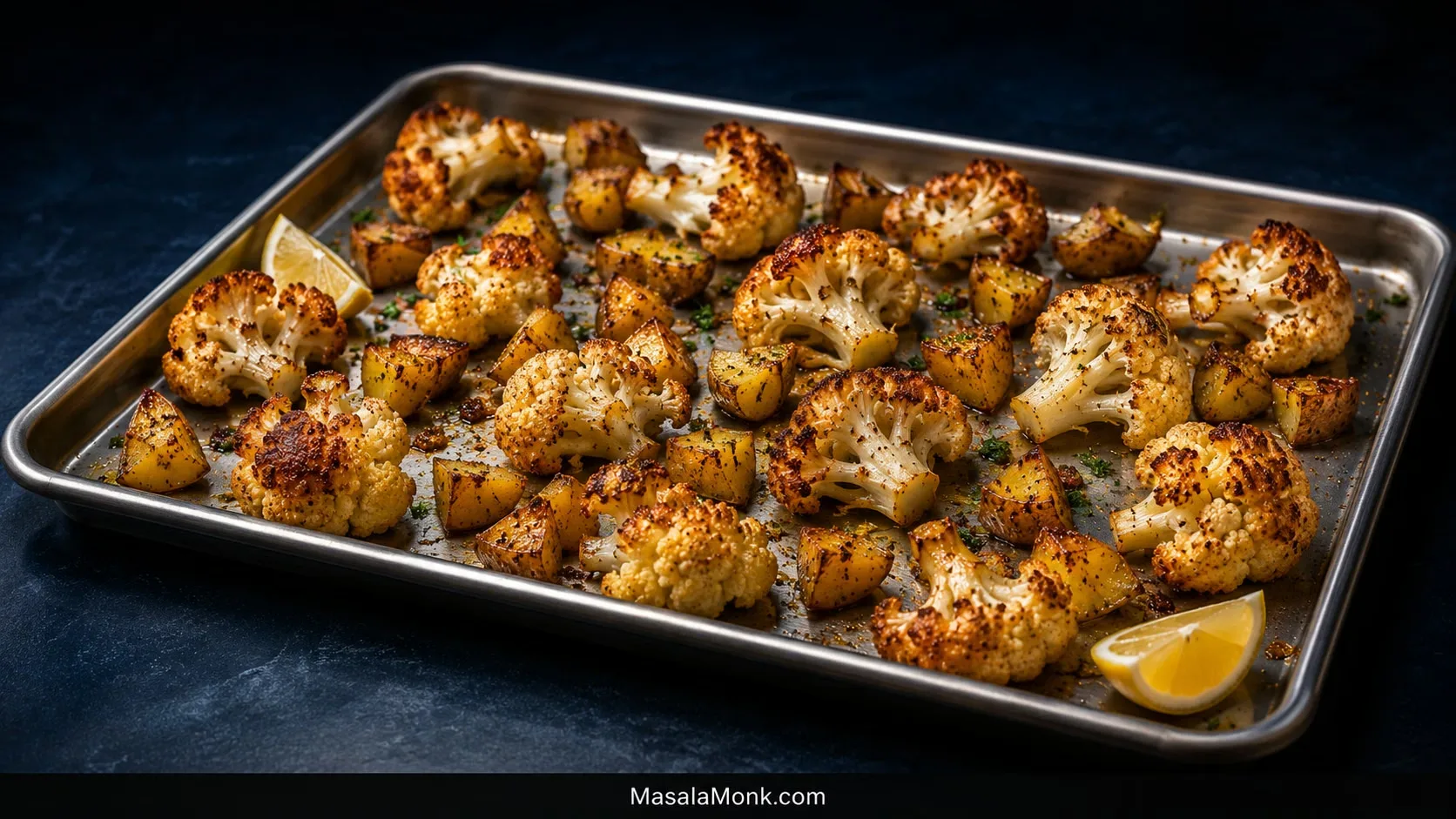
The best pieces on this tray are usually the ones touching the metal: potatoes with properly browned bottoms and cauliflower with deeply golden edges. Inside, the potatoes should be creamy and the cauliflower tender while still holding its shape.
The frustrating version is familiar: the cauliflower looks ready, you test a potato, and the middle is still firm. Cauliflower softens faster than a dense chunk of potato, so the two vegetables do not need to be cut the same size.
Keep the potato pieces noticeably smaller than the cauliflower florets and they can roast together on the same sheet pan at 425°F (220°C). That one difference lets both vegetables start raw and reach the right texture at about the same time.
Quick Answer: How to Roast Cauliflower and Potatoes Together
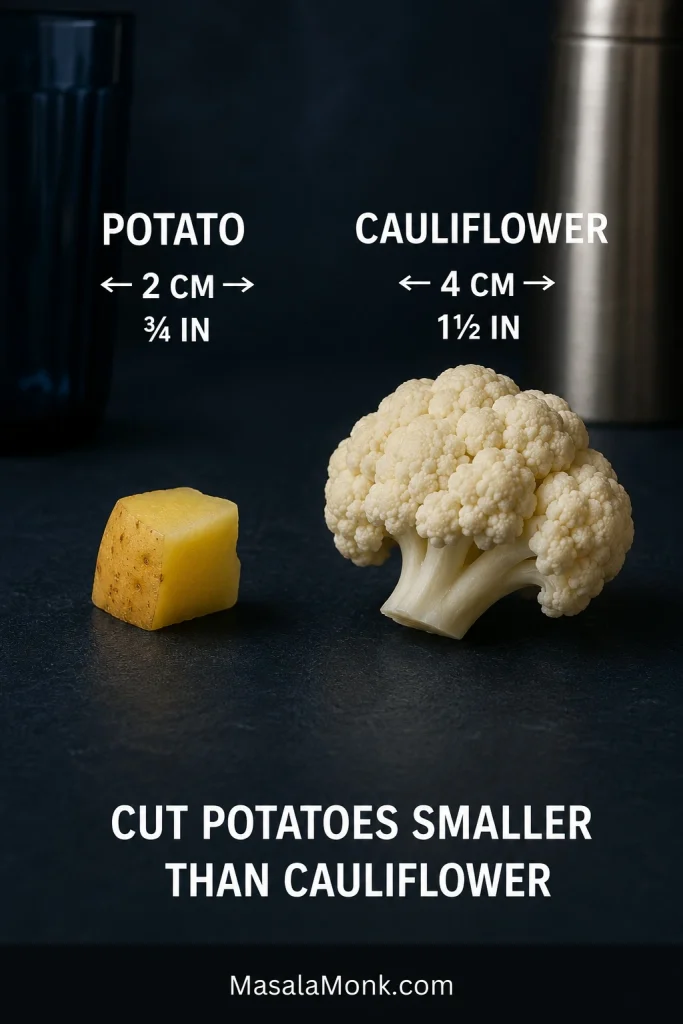
Heat the oven to 425°F (220°C). Cut the potatoes into ¾-inch (2 cm) pieces and keep the cauliflower florets larger, about 1½ inches (4 cm) across. At those sizes, both vegetables can start raw together—no boiling, soaking or parboiling is needed.
Toss with olive oil and seasonings, then spread the vegetables in a roomy single layer on a large rimmed sheet pan. Turn once after the undersides begin to brown.
Start checking at 25 minutes; typical total roasting time is 28–35 minutes. Test one of the largest potato pieces before you pull the pan. The center should be completely tender.
The Cut Sizes That Make This Work
That size difference is the timing trick: keep the dense potato chunks smaller than the cauliflower so both can go onto the pan raw and finish together.
Make It Now: Roasted Cauliflower and Potatoes
Allow 15–20 minutes for prep. Dry freshly washed cauliflower well. For roasting the whole batch on one pan, a sturdy rimmed metal half-sheet measuring about 13 × 18 inches (33 × 46 cm) is the minimum. Cauliflower varies a lot in bulk, so if the vegetables fill the pan edge to edge with almost no visible gaps, split them between two pans rather than crowding them.
The recipe makes 4 generous side servings and is vegan, dairy-free and naturally gluten-free as written.
Ingredients
- 700 g (24–25 oz) cauliflower florets, weighed after trimming (about 1 large cauliflower)
- 450 g (1 lb) Yukon Gold potatoes, scrubbed
- 3 tablespoons (45 ml) olive oil
- 7 g fine sea salt (about 1¼ teaspoons; volume varies somewhat by brand), plus more to taste
- 1½ teaspoons garlic powder
- 1½ teaspoons sweet paprika
- ½ teaspoon freshly ground black pepper
- 1 tablespoon (15 ml) fresh lemon juice, plus more to taste
- 2 tablespoons chopped fresh parsley, optional
How to Roast Them
1. Heat the oven
Heat the oven to 425°F (220°C) with a rack near the middle. For a fan oven, use 200°C.
2. Cut the vegetables
Cut the potatoes into about ¾-inch (2 cm) pieces. Keep the cauliflower florets about 1½ inches (4 cm) across.
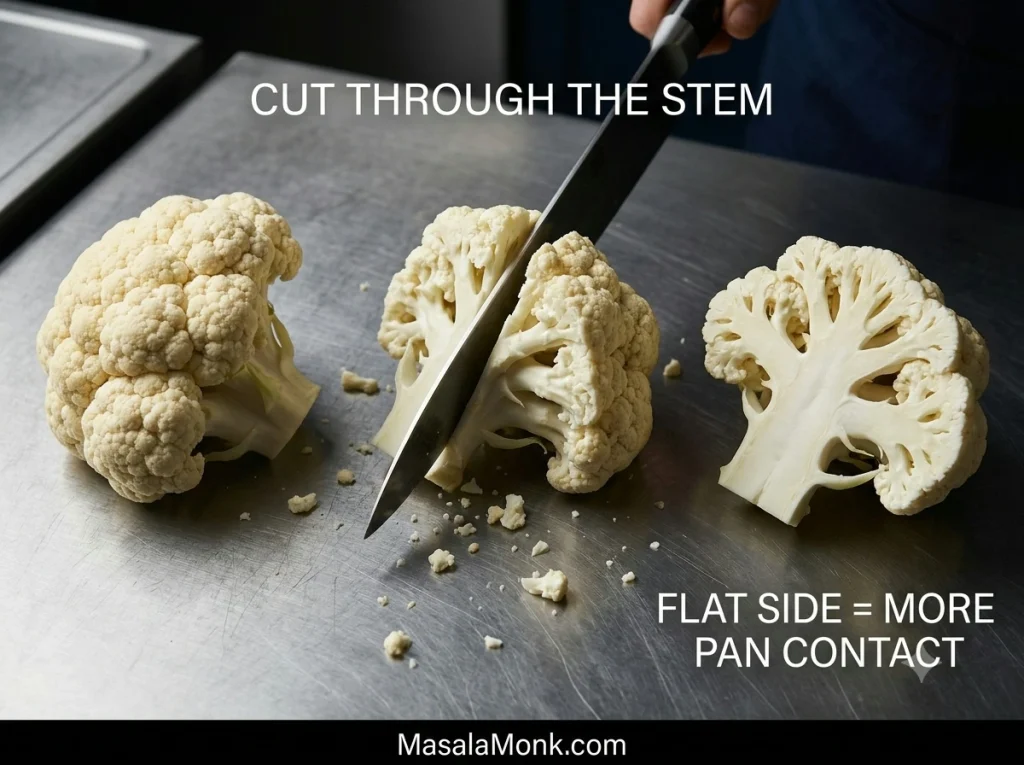
For better browning, make a flat side. Halve some of the larger florets through the stem. The broad cut surface sits flush against the pan and browns much better than a rounded floret.
If your potato pieces are closer to 1 inch (2.5 cm), use the head-start method under Potato Size and Variety below.
3. Oil and season
Put the cauliflower and potatoes in a large bowl. Add the olive oil, salt, garlic powder, sweet paprika and black pepper. Toss until the potatoes are lightly glossy and the seasoning has worked its way into the cauliflower’s crags. There should not be a puddle of oil left at the bottom of the bowl.
Prefer fresh garlic? Finely chop 3 medium cloves and scatter them over the tray for the final 5–10 minutes. Skip the garlic powder for this version. Fresh garlic gives a sharper garlic flavor and can turn bitter if roasted for the full time.
4. Give everything room
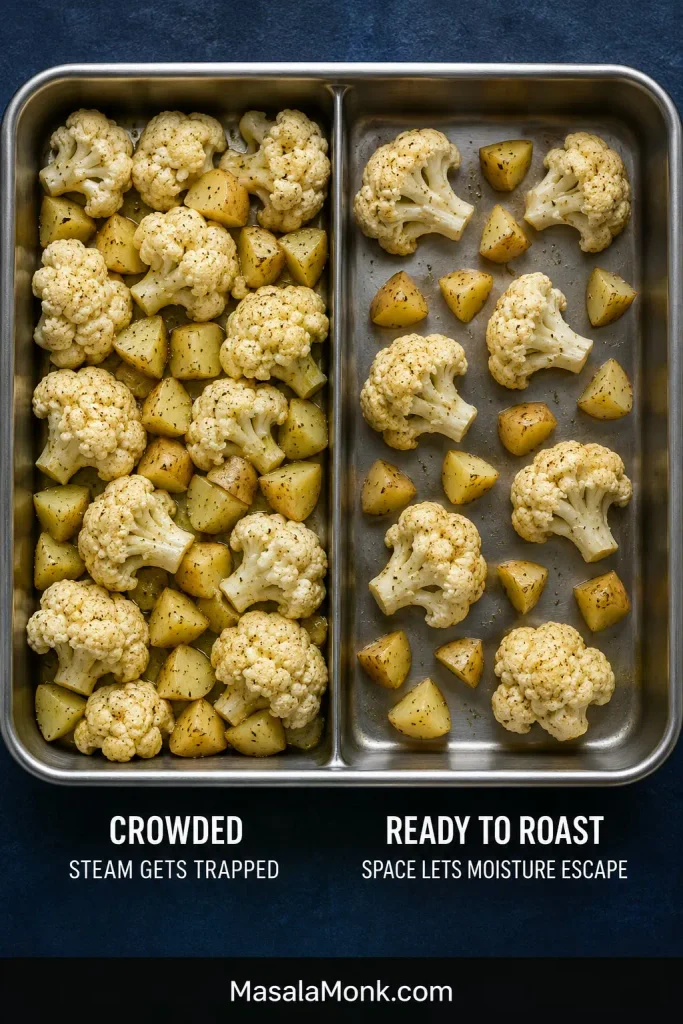
Spread the vegetables into one open layer. Leave visible metal between many of the pieces and put some flat potato faces and cauliflower cut sides directly against the pan.
If the last handful only fits by closing those gaps and packing the pieces together, grab another tray or save it for later. A little empty metal does more for the roast than squeezing in one more floret.
5. Let the first side brown
Roast undisturbed for 18–20 minutes. Use a spatula to lift one potato. You should see a proper golden-brown patch underneath. Completely pale bottoms need another couple of minutes before you turn the vegetables.
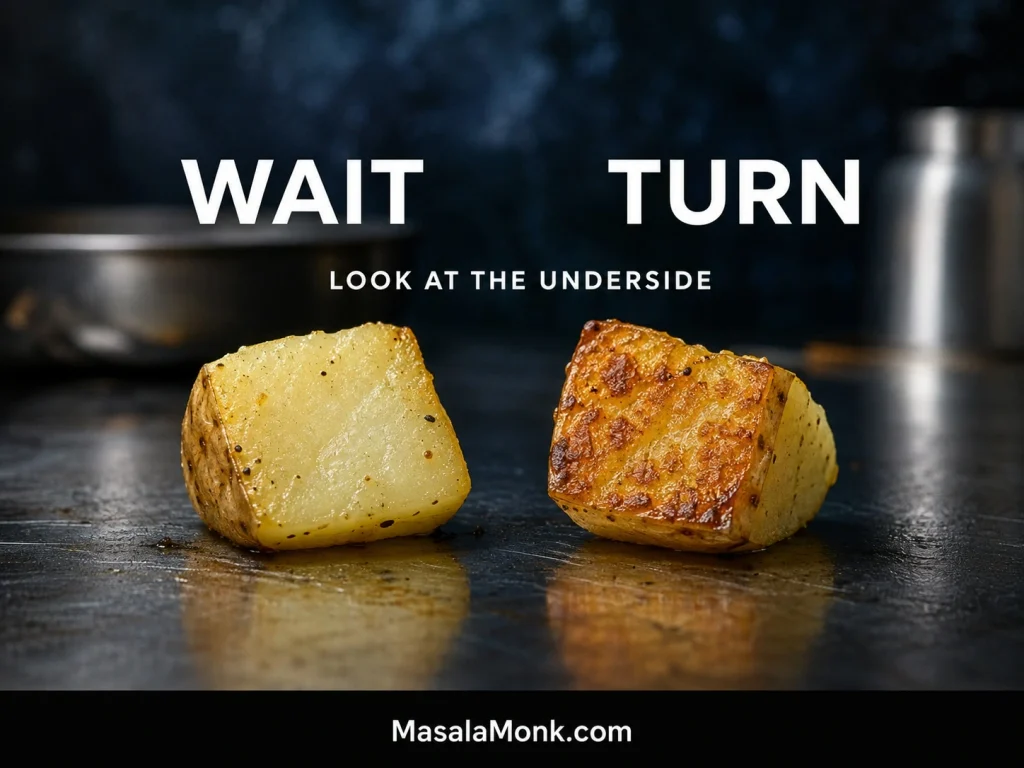
Turn once and continue roasting. Start checking at 25 minutes. Dark-colored pans and fan/convection ovens can brown the vegetables more quickly, so judge the food rather than waiting for minute 35.
Ready when: a thin knife slides through one of the largest potato pieces with very little resistance. The cauliflower stems should be tender and the florets should still hold together. Deeply browned tips are fine. A potato that looks done outside but remains firm in the middle needs more time.
If the vegetables are tender but still pale, see How to Get Crisp, Golden Edges. For a tray that has gone off track, jump to Fix My Tray.
6. Finish while the vegetables are hot
Add the lemon juice and parsley, if using, as soon as the pan comes out of the oven. You’ll smell the lemon immediately against the warm garlic and paprika. Taste a potato and a piece of cauliflower, then add more salt or another squeeze of lemon if needed.
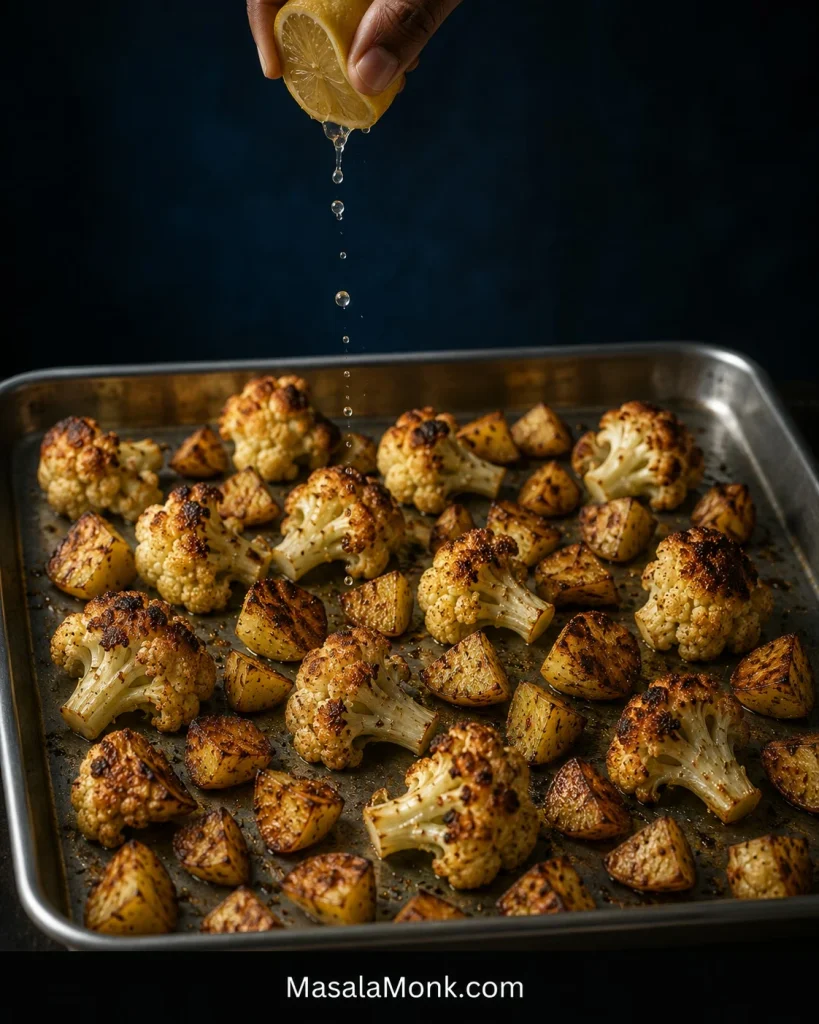
Serve straight away while the browned sides still have some crispness.
Potato Size and Variety
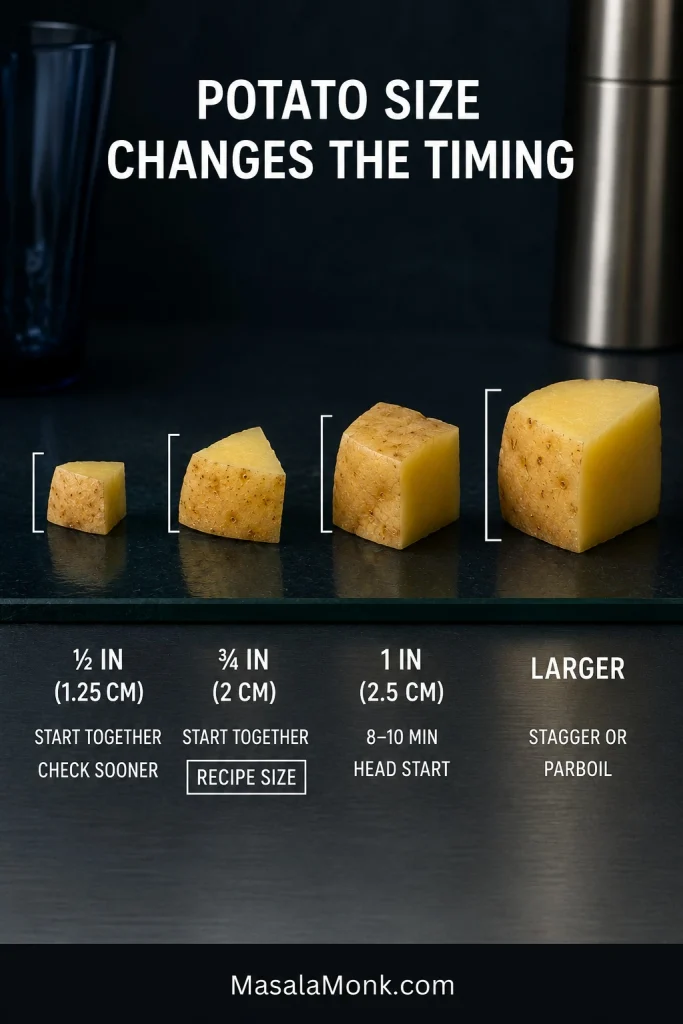
The ¾-inch (2 cm) potatoes in the main recipe are small enough to keep pace with the cauliflower. Bigger pieces need more time; smaller ones reach tenderness sooner.
| Potato size | Best approach |
|---|---|
| ½ inch (1.25 cm) | Start both vegetables together and begin checking sooner |
| ¾ inch (2 cm) | Both vegetables can start together |
| 1 inch (2.5 cm) | Give the potatoes an 8–10 minute head start |
| Larger than 1 inch (2.5 cm) | Use a longer head start, parboil briefly or roast separately |
For 1-inch (2.5 cm) potato pieces: toss the potatoes with half the oil and seasonings and roast for 8–10 minutes. Toss the cauliflower with the remaining oil and seasoning, add it to the hot pan, then continue with the main method.
Whatever size you use, check one of the biggest pieces before deciding the potatoes are done. The center should be creamy and tender, never chalky or crunchy.
Yukon Golds are the easiest all-round choice: creamy inside, sturdy enough to hold together and good at picking up color underneath. Red potatoes can be substituted 1:1 by weight at the same ¾-inch (2 cm) size. Russets work too, but their fluffier pieces become more delicate as they cook, so turn them gently. Yukon Gold and red potatoes can stay unpeeled after a good scrub.
Baby potatoes still need to be judged by their actual size; a larger one may need quartering. If potatoes are the main attraction, these ranch roasted potatoes take the browned-cut-side idea further.
How to Get Crisp, Golden Edges
What Good Browning Looks Like
Here, “crispy” means crisp edges and well-browned flat sides around tender centers. Expect good color where the vegetables meet the pan, not a crust over every surface.
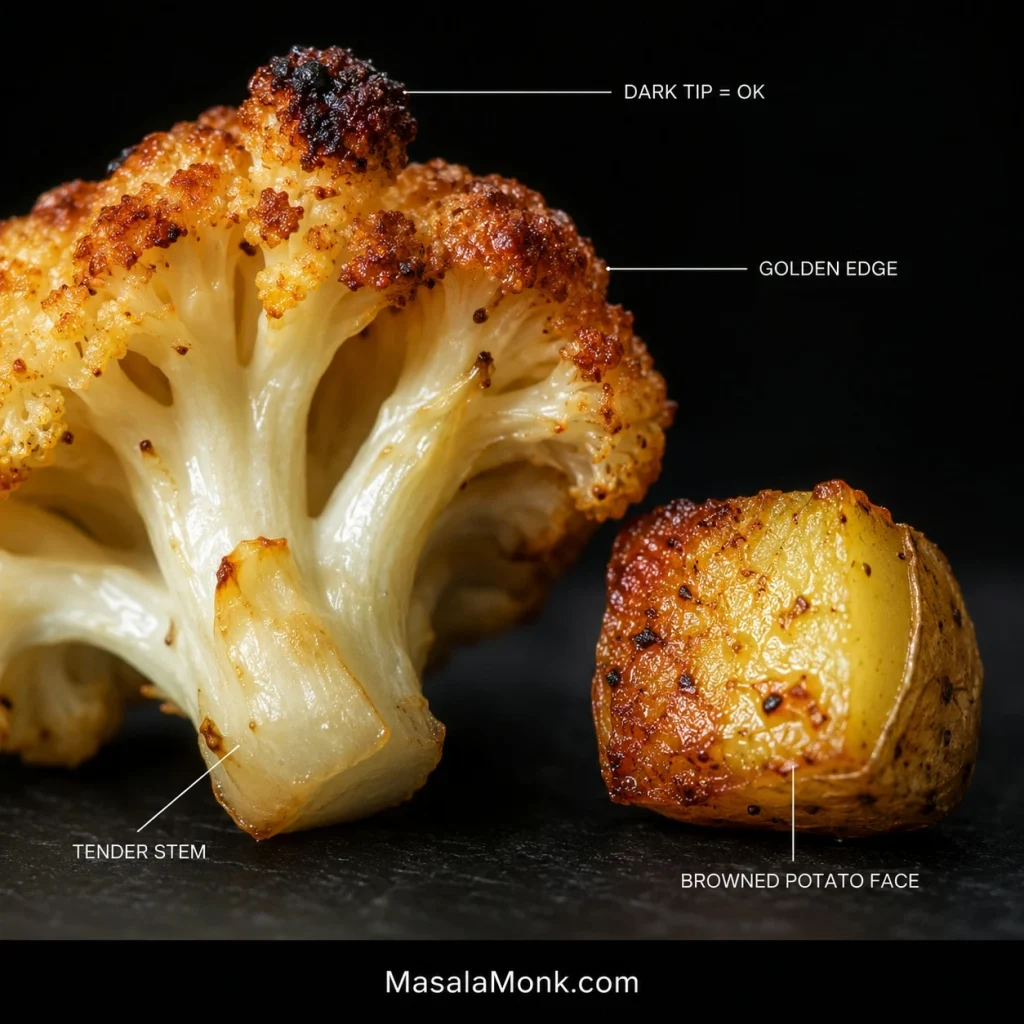
Dry cauliflower and open space do most of the early work. Surface water has to evaporate before the florets can brown, while a crowded sheet pan traps steam around them. A thin film of oil helps the cauliflower’s uneven edges and the cut potato faces brown more evenly.
Bare Metal, Foil or Parchment?
Flat sides against the pan supply the strongest color, so give them time before turning. Bare, lightly oiled metal browns best; foil works well too, though the vegetables may stick. Parchment releases more easily and usually gives gentler color underneath. A side-by-side roasting comparison from Serious Eats found the same general pattern.
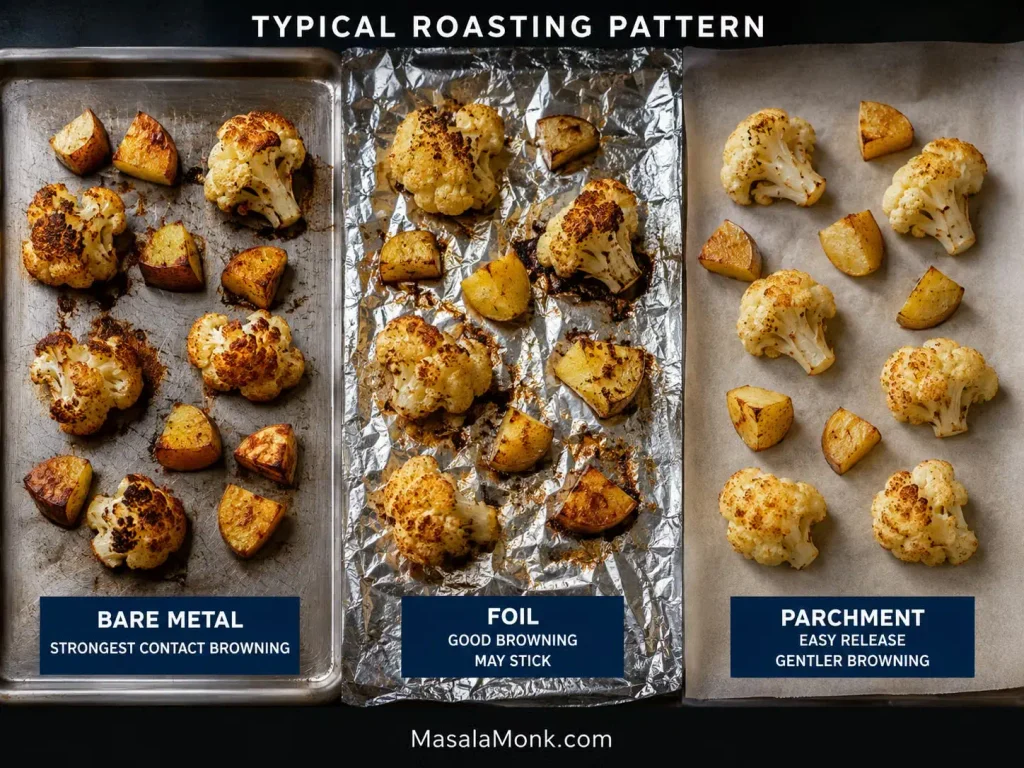
If you use parchment, choose one rated for at least 425°F. For deeper color, you can also preheat an empty bare sheet pan before adding the vegetables, but the regular method does not depend on that extra step.
Fix My Tray
Once dinner is already in the oven, the clock is not always the best guide. Look at what the vegetables are doing and fix that problem.
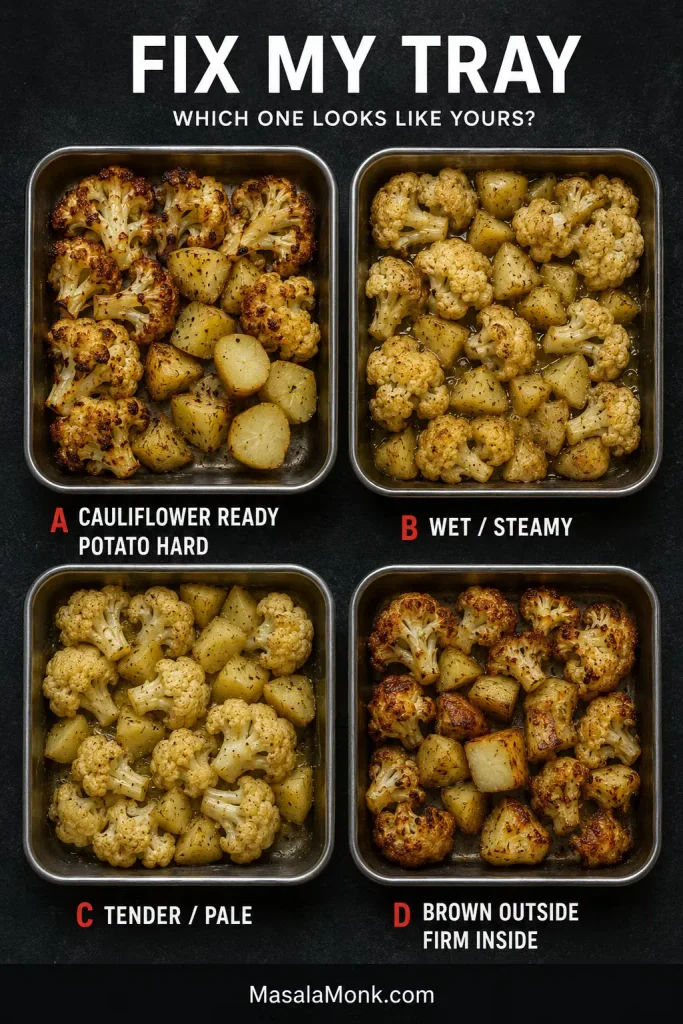
Common Roasting Problems and Quick Fixes
| What you see | Why it happened | What to do now |
|---|---|---|
| Cauliflower is ready but potatoes are hard | The two vegetables are no longer finishing together | Take the cauliflower off the tray and roast the potatoes another 5–10 minutes. Dinner gets no bonus points because everything left the oven together. |
| Potatoes are deeply brown but still firm inside | The outside browned faster than the middle cooked | Turn the darkest sides upward and keep roasting. If the edges are already close to scorching, lower the oven to about 400°F (200°C conventional; about 180°C fan) and continue until the centers are tender. |
| Everything is tender but pale | The vegetables cooked through before developing enough color | Keep roasting a little longer. If the vegetables are on a bare broiler-safe pan, 1–2 minutes under the broiler can help. Watch constantly. If you used parchment, stay with the regular oven instead. |
| Cauliflower is soft or falling apart | The florets were too small, crowded or overcooked | Remove the cauliflower now. More heat will only soften it further. |
| The tray looks wet or steamy | Crowding is trapping moisture around the vegetables | Split the vegetables between two trays and keep roasting. |
| Potatoes are tender but the edges are soft | They had poor pan contact or too much surrounding moisture | Put the cut sides against the metal and give them a little longer. |
| Fresh garlic tastes bitter | It scorched | Remove badly blackened pieces; add fresh garlic later next time. |
| The vegetables are browned but taste flat | They need more salt or acidity | Season while hot and add another squeeze of lemon. |
Deeply Browned or Actually Burned?
A few very dark cauliflower tips are normal. Acrid black garlic, dry scorched florets and smoke are much better signs that something has actually burned.
Ways to Change the Flavor
The garlic-paprika base can move in several directions without changing the roasting method.
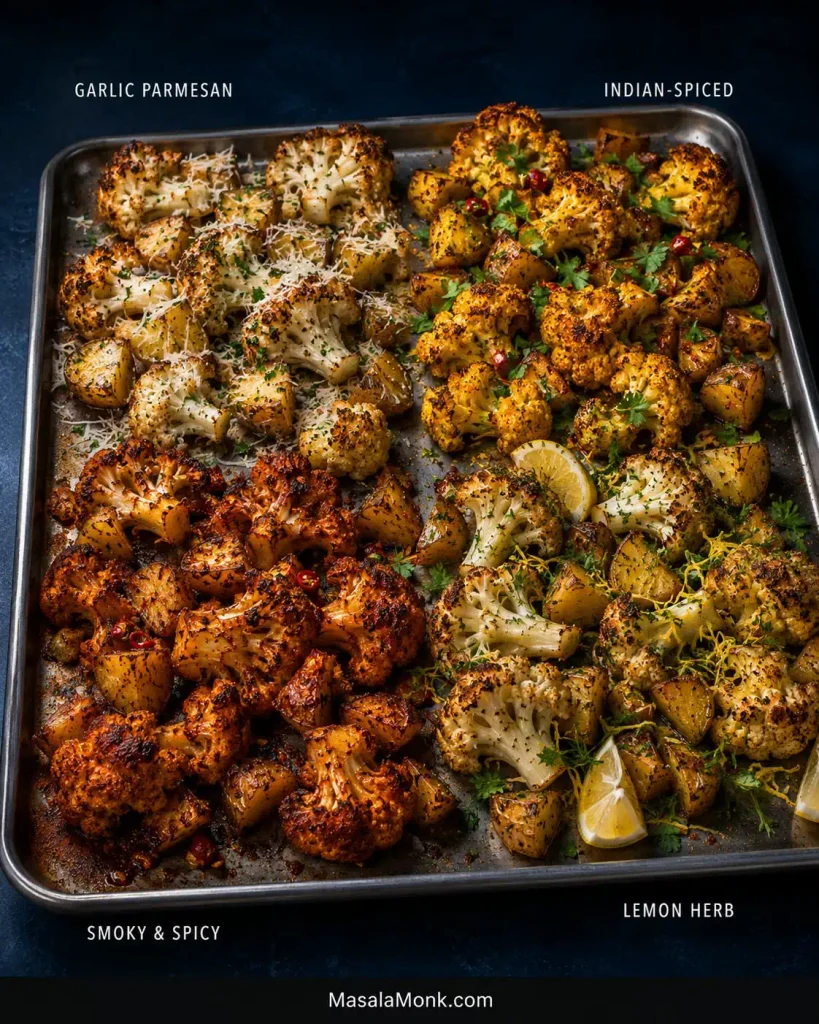
Garlic Parmesan
Parmesan is especially good where it catches on the rough cauliflower edges and potato corners, melting into little browned patches. Use 5–6 g fine sea salt instead of the full 7 g, then scatter over 35 g (about ⅓ cup) finely grated Parmesan during the final 5–8 minutes. Taste before adding more salt.
Indian-Spiced
Skip the sweet paprika and use 1 teaspoon ground cumin, 1 teaspoon ground coriander and ½ teaspoon turmeric. For color and mild warmth, add ½ teaspoon Kashmiri chilli powder; for more heat, use up to ¼ teaspoon cayenne. Finish the hot vegetables with ½ teaspoon garam masala, cilantro and lemon or lime.
For cauliflower and potatoes cooked as the fuller Indian dish with onion, tomato and masala, use a classic aloo gobi recipe.
Smoky and Spicy
Replace the sweet paprika with 1½ teaspoons smoked paprika and add up to ¼ teaspoon cayenne or red pepper flakes. Finish generously with lemon so the smoky seasoning stays lively rather than heavy.
Lemon Herb
Add 1 teaspoon dried oregano or thyme with the garlic powder. Finish with 1 teaspoon finely grated lemon zest, lemon juice and parsley or dill for a brighter version.
Adding Other Vegetables
A small handful of onion or Brussels sprouts will not change the pan much. Once you’re adding cups of extra vegetables—or a full can of chickpeas—replace some of the cauliflower or potatoes or bring in a second pan. The base recipe already takes up most of one half-sheet while leaving enough room to brown.
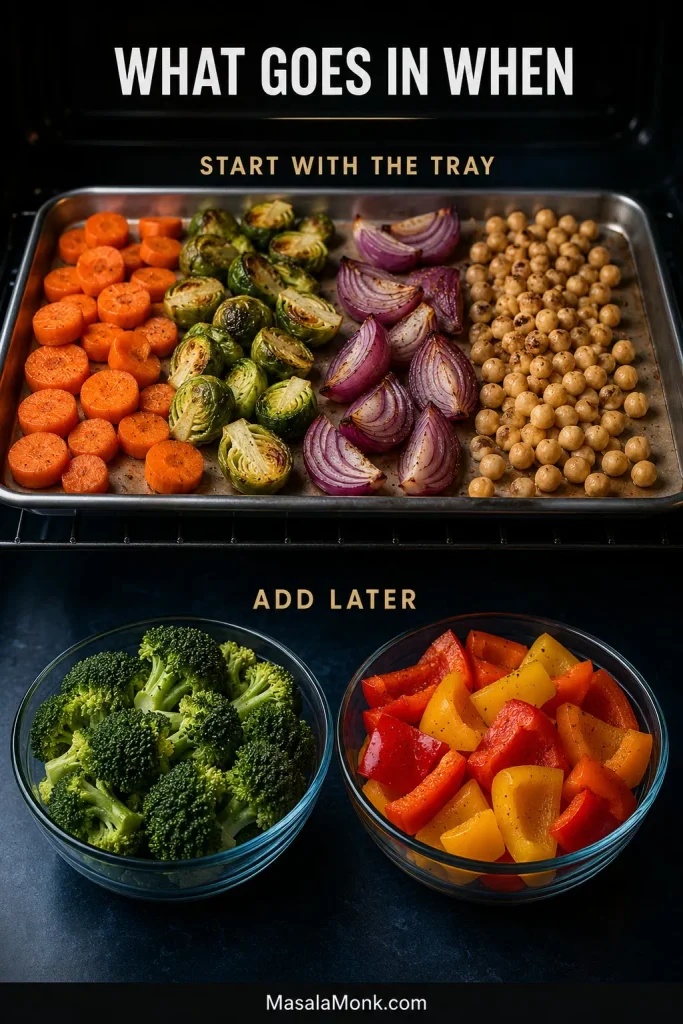
| Addition | Cut / prep | When it goes in |
|---|---|---|
| Carrots | About ⅓ inch (8 mm) slices | From the beginning |
| Brussels sprouts | Halve small sprouts; quarter large ones | From the beginning |
| Onion | Thick wedges, with a little root end attached if possible | From the beginning |
| Broccoli | Medium florets | For the final 15–20 minutes |
| Chickpeas | 1 × 400 g (14–15 oz) can, about 240 g drained; rinse and dry thoroughly | From the beginning; reduce some of the base vegetables or use another pan |
| Bell peppers | Broad 1-inch (2.5 cm) pieces | For the final 15–20 minutes |
Making a Double Batch
To make eight side servings, use two half-sheet pans. Put them on separate racks; when you turn the vegetables, swap the upper and lower pans and rotate them front to back if your oven browns unevenly. Trying to fit a double batch onto one tray turns the central problem from roasting into steaming.
What to Serve With Them
For a vegetarian dinner, spoon the hot vegetables over extra-creamy hummus. The cool, smooth hummus works particularly well against the browned cauliflower and hot potatoes; chickpeas or lentils can make the plate more substantial.
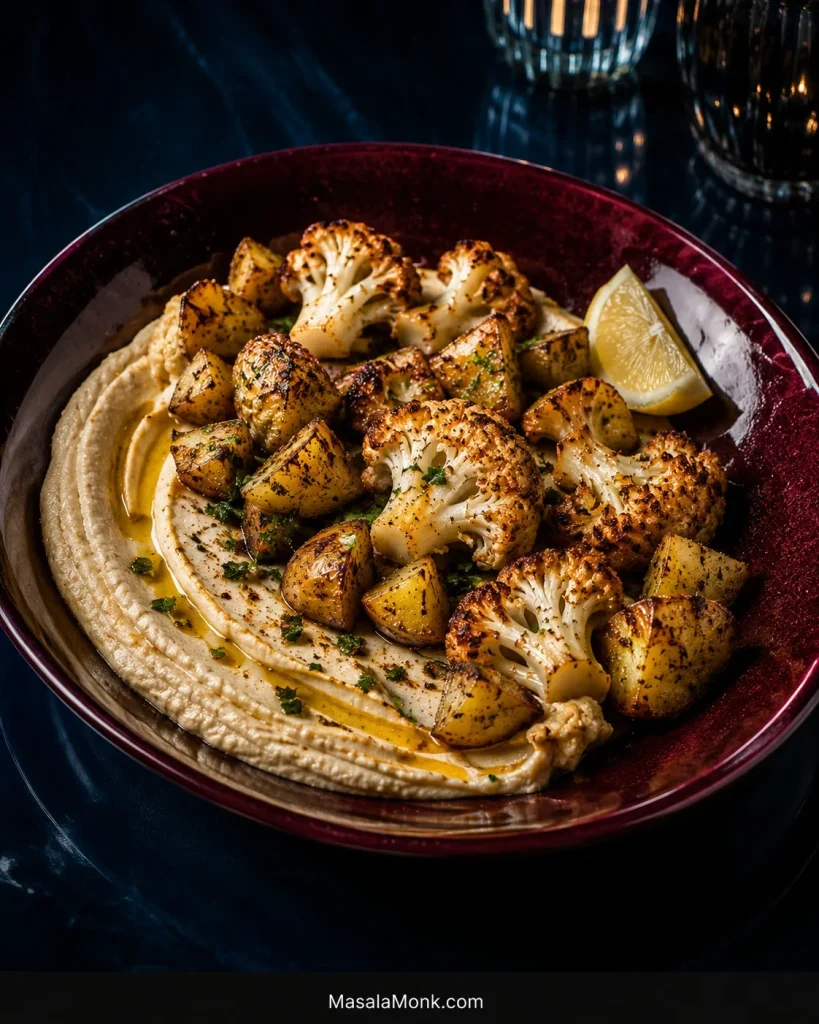
As a side, baked chicken breast can share the same oven temperature. If the rest of dinner is rich, go the other way with something cold and acidic: a crisp cucumber salad cuts nicely through the potatoes and roasted edges.
Storage, Reheating and Leftovers
The vegetables keep well; the crisp edges do not. Refrigerate leftovers within 2 hours and use them within 3–4 days, in line with USDA leftovers guidance.
Best Way to Reheat Roasted Cauliflower and Potatoes
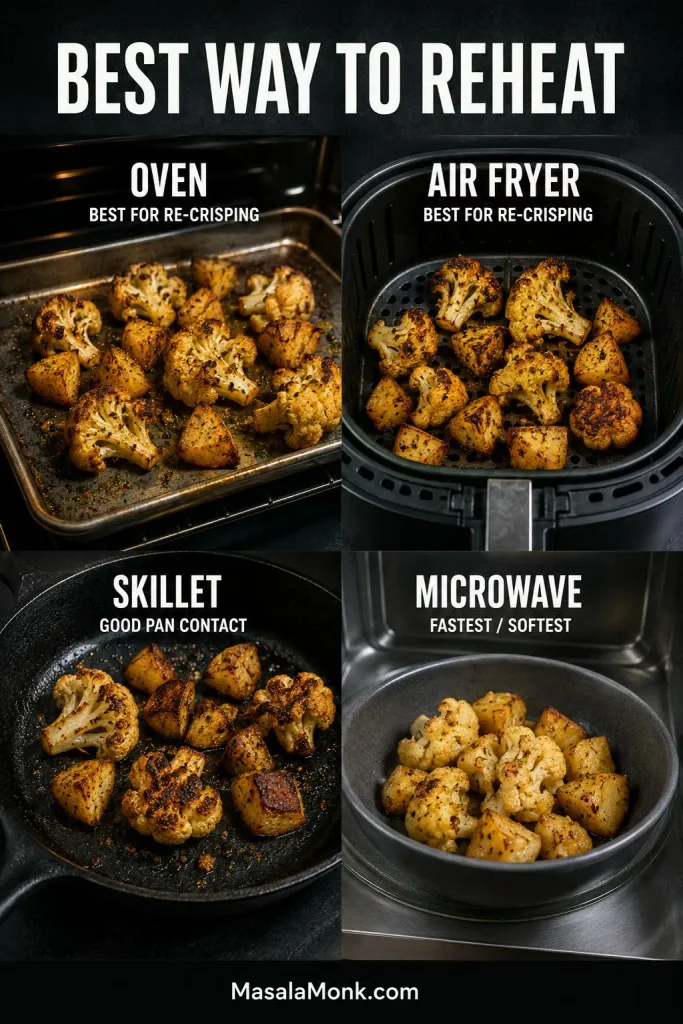
- Oven or toaster oven: spread the vegetables in one layer and reheat at 375°F (190°C) until hot and the surfaces have dried again. Start checking after about 8 minutes.
- Air fryer: reheat a loose single layer at 350°F (175°C). Start checking at about 3 minutes; a potato-heavy portion may need a few minutes more.
- Skillet: warm over medium heat, turning occasionally and letting some potato cut sides sit against the pan again. A small portion usually heats through within a few minutes.
- Microwave: heat one serving in short bursts until hot. It is the quickest option and gives the softest texture.
Freezing is possible, but it is hard on the texture of both vegetables. Refrigerating and reheating within a few days gives a better result.
Leftovers are good chopped into a breakfast hash, folded into a frittata, tucked into wraps or added to a grain bowl. A pot of fluffy rice turns the remaining vegetables into an easy lunch without asking them to become crisp all over again.
A Few Common Questions
Can I bake cauliflower and potatoes together?
Yes. Cut the potatoes smaller than the cauliflower so the two vegetables cook at similar rates. At the sizes used here, both can go onto the same sheet pan raw and roast together at 425°F (220°C).
Do I need to boil or soak the potatoes first?
No. Yukon Gold potatoes cut to ¾ inch (2 cm) can roast from raw alongside the larger cauliflower florets. Larger pieces are where a head start or brief parboil becomes worthwhile.
Is 400°F, 425°F or 450°F better?
All three can work. 425°F (220°C) works especially well here: it is hot enough for strong browning while still giving the potato centers time to soften. At 400°F (200°C), expect a longer roast and lighter color. Move up to 450°F (230°C), and you should begin checking sooner because cauliflower tips and dry spices can darken quickly.
Can I use frozen cauliflower?
Yes, although fresh cauliflower browns more easily. Do not thaw the frozen cauliflower first. Shake off any obvious loose ice before it goes onto the pan.
Toss the potatoes with half of the oil and seasonings and roast for 8–10 minutes. Meanwhile, toss the still-frozen cauliflower with the remaining oil and seasoning just before it goes onto the hot pan. Continue roasting until the potatoes are tender and the cauliflower has browned.
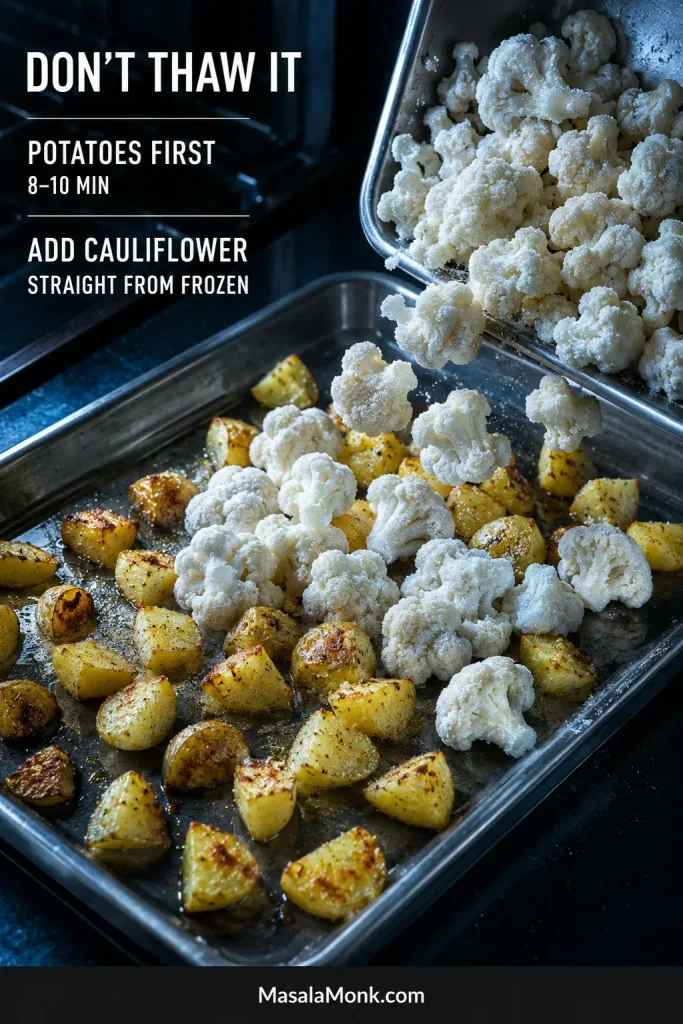
Frozen cauliflower releases more water than fresh, so give it generous space. If liquid starts collecting around the vegetables, split them between two pans and keep roasting.
Serve while the potato bottoms still have their crust. One last squeeze of lemon is usually enough.








