
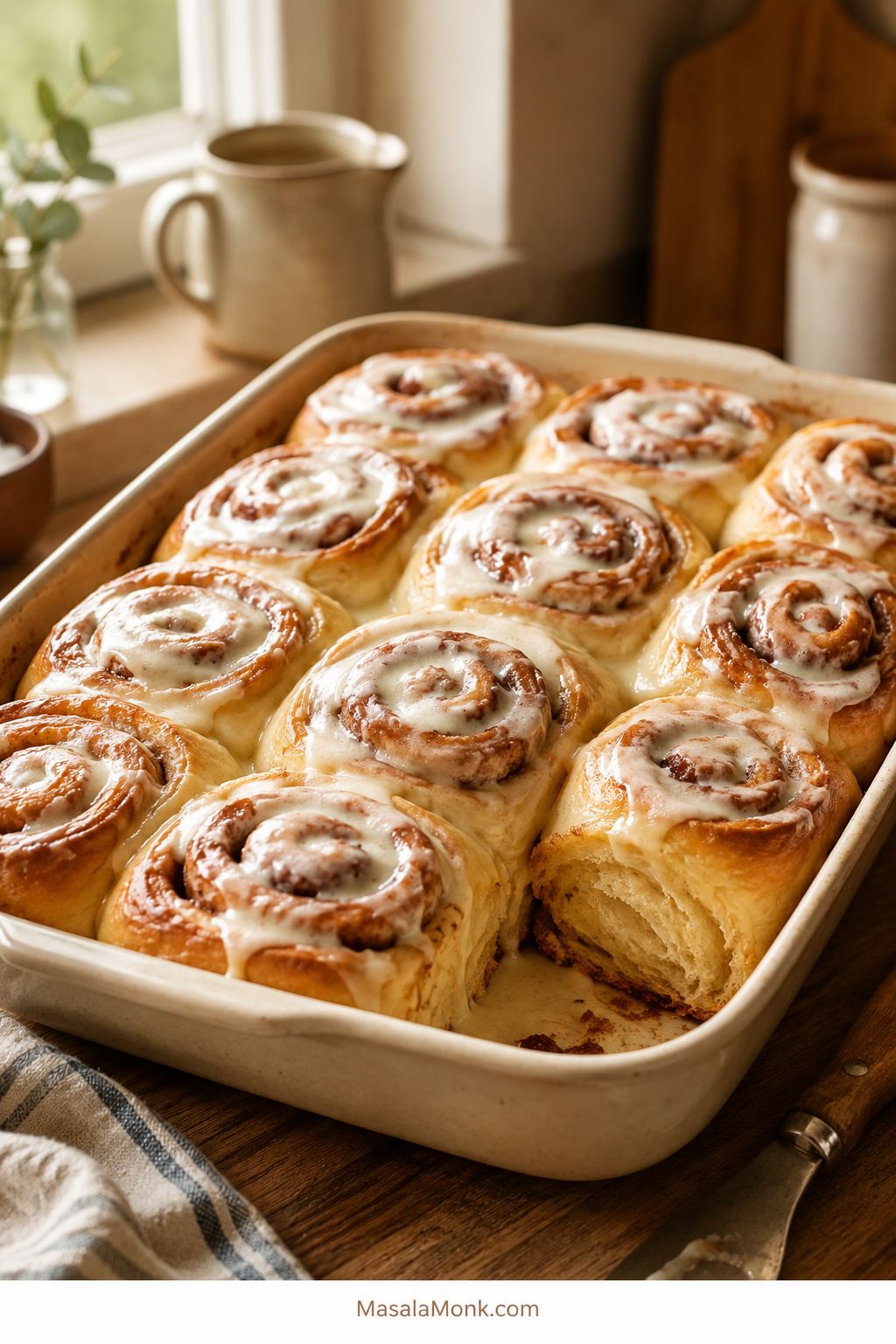
These homemade cinnamon rolls are for the exact moment you want warm, pull-apart rolls with gooey cinnamon centers, tender edges, and cream cheese icing melting into the swirls — without the raw-dough gamble in the middle of the pan.
Most cinnamon rolls go wrong in two quiet ways: the dough gets over-floured, or the pan comes out when the tops look done but the center is still underbaked. This recipe keeps both in check with soft elastic dough, a full second rise, and a clear center-roll doneness cue.
You can make them the same day for a cozy baking project, or shape them at night and bake them fresh in the morning. They fit a slow weekend, a holiday morning, a birthday breakfast, or any day when a warm pan of cinnamon rolls is the whole point.
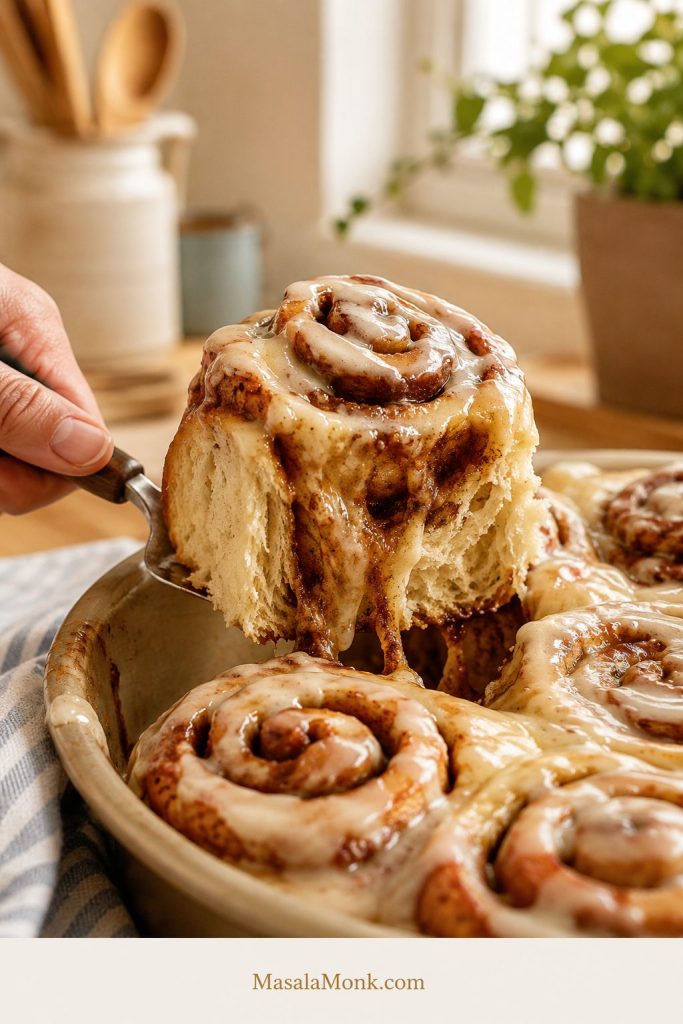
Quick Answer: How to Make Soft Cinnamon Rolls
To make soft homemade cinnamon rolls, mix a rich yeast dough with warm milk, butter, egg, sugar, flour, and yeast. Knead until the dough is smooth and a little tacky, then let it rise until doubled. Roll it out, spread with softened-butter cinnamon sugar filling, cut into 12 rolls, and let the shaped rolls rise again until rounded and puffy.
Bake in a 9×13-inch pan at 350°F / 175°C for 24–28 minutes. Look for lightly golden tops, but use the center roll as the better cue. The best target is about 190°F / 88°C, which means the rolls are baked through while staying tender.
Spread cream cheese icing over the warm rolls after 5–10 minutes. For extra-moist centers, pour ⅓ cup / 80 ml warm heavy cream around the risen rolls just before baking, or use up to ½ cup / 120 ml for a richer, gooier pan.
Cinnamon Roll Recipe Card
Soft, gooey homemade cinnamon rolls that bake through in the center, with plush yeast dough, a brown sugar cinnamon swirl, optional warm cream for extra-moist centers, and cream cheese icing that melts into the rolls while they are still warm. Serve them while the icing is still soft and the centers are warm enough to pull apart in ribbons.
Ingredients
Dough Ingredients
- 1 cup / 240 ml warm whole milk
- 2¼ teaspoons / 7 g instant yeast or active dry yeast
- ⅓ cup / 65–70 g granulated sugar
- 5 tablespoons / 70 g unsalted butter, melted and slightly cooled
- 1 large egg
- 1 large egg yolk
- 4 cups / about 480 g flour, preferably bread flour for taller rolls or all-purpose flour for a softer homemade texture, plus 1–2 tablespoons only if needed
- 1 teaspoon / 6 g fine salt
- Butter or neutral oil, for greasing the bowl and pan
Cinnamon Filling
- ⅓ cup / 75 g unsalted butter, softened
- ¾ cup / 150 g packed brown sugar
- 2 tablespoons / 14–16 g ground cinnamon
- ¼ teaspoon fine salt
- Optional: 1 teaspoon flour or cornstarch to help hold the filling together
Cream Cheese Icing
- 4 oz / 113 g cream cheese, softened
- 4 tablespoons / 55 g unsalted butter, softened
- Powdered sugar, 1 cup / 120 g, plus ¼ cup / 30 g more for thicker icing
- Vanilla extract, 1 teaspoon
- Milk or cream, 1–3 tablespoons as needed
- Pinch of salt
Optional Heavy Cream Upgrade
- ⅓ cup / 80 ml heavy cream for softer rolls, or up to ½ cup / 120 ml for a richer, gooier pan
Instructions
Dough, Filling, and First Rise
- Warm the milk. The milk needs to feel comfortably warm, not hot. For active dry yeast, stir the yeast into the warm milk with a pinch of sugar and rest for 5–10 minutes, until foamy. Instant yeast can go directly into the dough.
- Make the dough. In a large bowl or stand mixer bowl, combine warm milk, yeast, sugar, melted butter, egg, and egg yolk. Add flour and salt. Mix until a rough dough forms.
- Knead. Knead for 8–10 minutes by hand or 5–7 minutes in a stand mixer on low-medium speed, until the dough is smooth, stretchy, and slightly tacky. Add extra flour only 1 tablespoon at a time if the dough is sticking heavily.
- First rise. Place the dough in a lightly greased bowl. Cover with plastic wrap, a damp clean towel, or a lid so the surface does not dry out. Let rise for 60–90 minutes, or until doubled. Active dry yeast may rise a little more slowly than instant yeast, so give the dough extra time if needed.
Shape, Bake, and Ice
- Make the filling. Mix softened butter, brown sugar, cinnamon, and salt into a thick paste. When the filling is hard to spread, let it sit at room temperature for a few minutes rather than melting it.
- Roll and fill. Roll the dough into a rectangle about 12×18 inches. Spread the filling evenly, leaving a small border on one long edge.
- Shape. Roll from the long side into a snug log. Cut into 12 even rolls using unflavored dental floss, clean thread, or a sharp knife. Aim for pieces about 1½ inches thick.
- Second rise. Place rolls in a greased 9×13-inch pan. Cover and let rise for 45–60 minutes, until puffy and lightly touching.
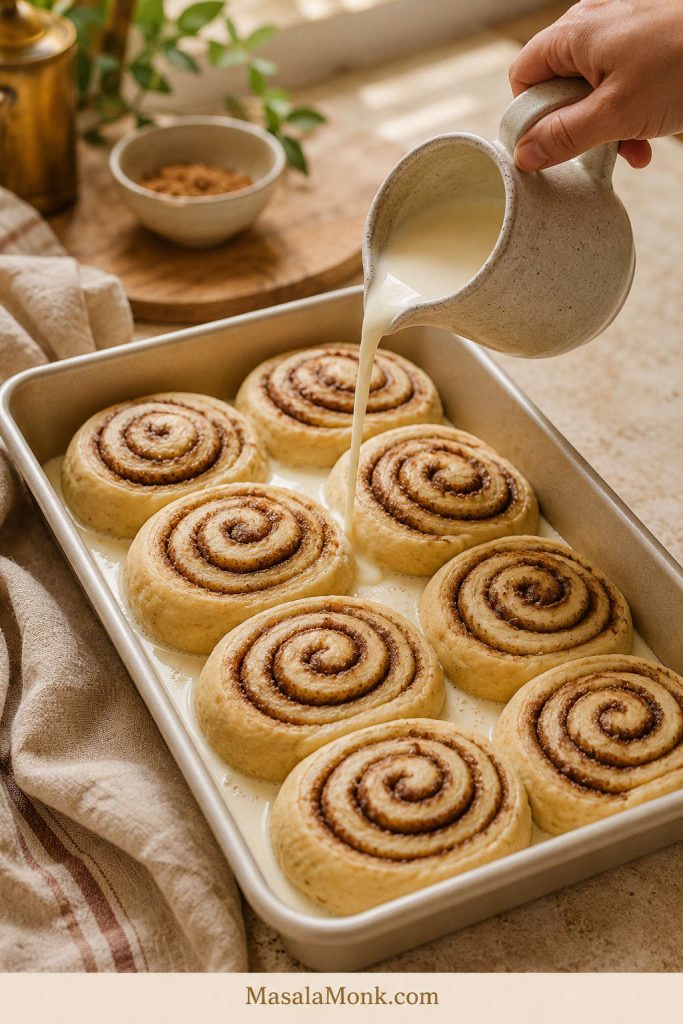
- Add heavy cream, if using. Pour warm heavy cream around the risen rolls. You should see cream around the base, not a flooded pan.
- Bake. Bake at 350°F / 175°C for 24–28 minutes, until lightly golden and the center roll reaches about 190°F / 88°C.
- Make icing. Beat cream cheese and butter until smooth. Add powdered sugar, vanilla, salt, and enough milk or cream to make a soft, spreadable icing.
- Ice and serve. Cool rolls for 5–10 minutes, then spread icing over the warm rolls.
Success Notes
- Softer rolls: Start with the listed flour and add more only if the dough is sticking heavily.
- Extra-gooey rolls: Use the warm heavy cream option, but keep it to ½ cup / 120 ml or less.
- Thicker frosting: Wait 10–15 minutes before icing.
- Overnight option: Shape, cover, refrigerate, then let the rolls become puffy at room temperature before baking.
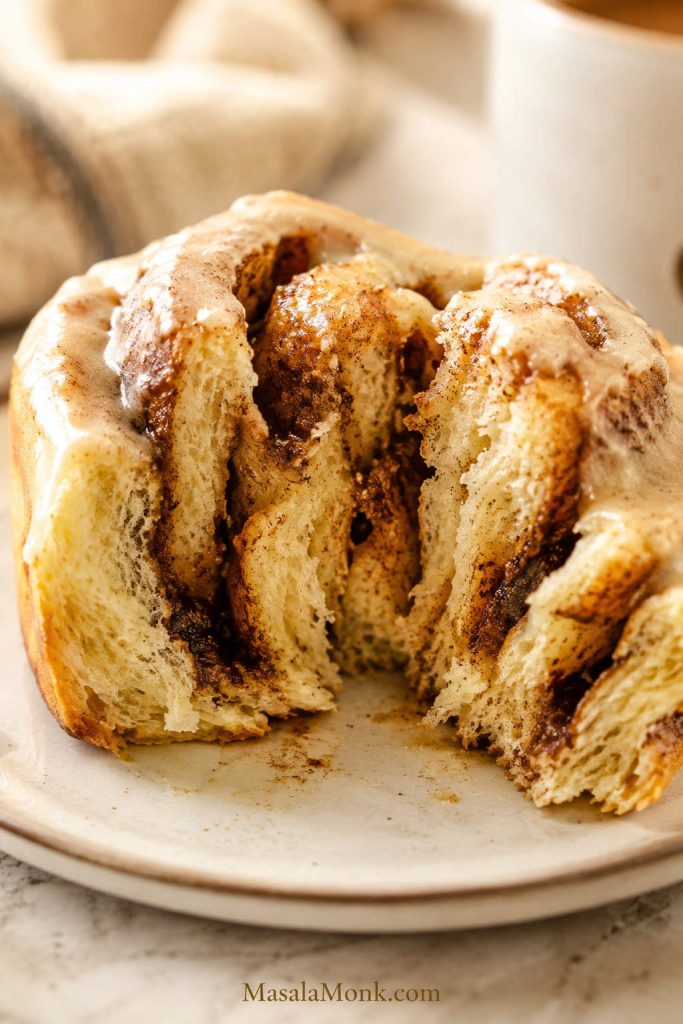
This is the finished serving cue: soft dough, a visible cinnamon swirl, and cream cheese icing that still looks creamy rather than dry.
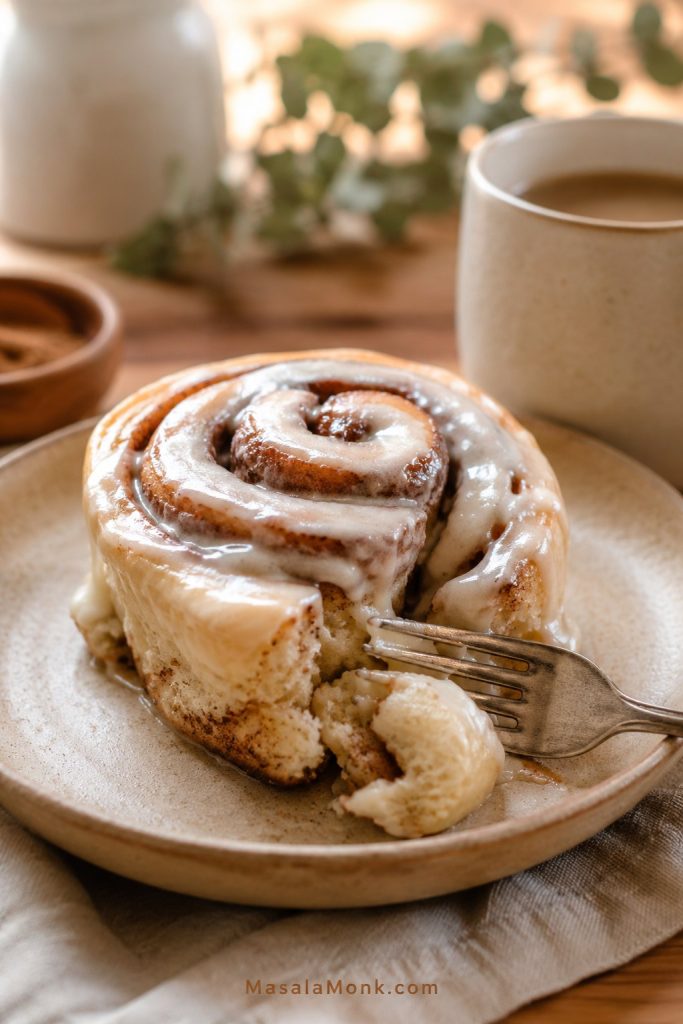
Cinnamon Rolls at a Glance
| Question | Answer |
|---|---|
| Yield | 12 cinnamon rolls |
| Pan size | 9×13-inch baking dish |
| Oven temperature | 350°F / 175°C |
| Bake time | 24–28 minutes |
| Total time | About 2 hours 50 minutes to 3 hours 45 minutes, including cooling before icing |
| Doneness cue | Center roll reaches about 190°F / 88°C |
| Flour choice | Bread flour for taller rolls; all-purpose flour for a softer homemade texture |
| Yeast choice | Instant yeast for ease; active dry yeast also works |
| Filling style | Softened-butter brown sugar cinnamon paste |
| Icing | Cream cheese icing, with a no-cream-cheese option below |
| Make-ahead option | Shape and refrigerate overnight before baking |
Choose Your Cinnamon Roll Path
Use the same base recipe, then adjust the timing or finish depending on the kind of cinnamon rolls you want today. Pick the path that matches what you care about most: a same-day bake, brunch timing, extra-gooey centers, thicker frosting, or avoiding a doughy middle.
| If you want… | Do this |
|---|---|
| Same-day soft cinnamon rolls | Start earlier in the day and bake after two complete rises. |
| Overnight cinnamon rolls for brunch | Shape tonight, chill, then bake once puffy in the morning. |
| Gooey cinnamon rolls with heavy cream | Pour warm cream around the risen rolls before baking. |
| Cinnamon rolls with thick cream cheese frosting | Cool the rolls 10–15 minutes before icing. |
| Cinnamon rolls without a doughy middle | Check the center roll; golden tops are not enough. |
Table of Contents
Start Here
Dough & Baking
Make It Your Way
Fixes & Questions
What This Recipe Is Built Around
Recipe notes: this cinnamon roll recipe is built around a 9×13-inch pan, 12 rolls, a soft enriched dough, and a center-roll doneness cue. Bread flour gives taller rolls; all-purpose flour gives a softer homemade crumb. The heavy cream option is kept moderate so the rolls stay gooey without turning soggy at the bottom.
This is not a no-yeast shortcut roll and not a canned-roll hack. It is a soft yeast cinnamon roll recipe built for a gooey swirl, tender edges, and a center that bakes through properly.
The goal is simple: gooey, not doughy. Look for rolls that smell warm and cinnamon-sweet, pull apart softly, and have a center that feels baked and plush instead of wet or heavy.
Why This Cinnamon Roll Recipe Works
This recipe works because it protects both sides of the cinnamon-roll problem: enough moisture for gooey swirls, but enough structure and bake time for the middle to finish properly.
Enriching the dough with milk, butter, egg, and egg yolk gives you tenderness without turning the bread part heavy. The lightly sweet dough still has enough strength to rise well, hold its shape, and support the cinnamon filling.
Careful flour guidance prevents dry rolls. Starting with the listed amount and adding more only when the dough is truly sticking heavily keeps the dough soft enough to bake into pull-apart rolls instead of dense, dry spirals.
A softened-butter filling helps prevent leaks. When butter, brown sugar, cinnamon, and salt are mixed into a paste, the swirl stays more even. The optional spoonful of flour or cornstarch helps bind the filling so it does not immediately run into the bottom of the pan.
Pan size and oven temperature protect the center. A 9×13-inch pan gives 12 rolls enough room to rise while keeping them close enough to stay tender. Baking at 350°F / 175°C gives the center time to finish before the tops over-brown.
For the heavy cream option, the amount is controlled rather than flooded. A moderate pour adds moisture and a gooey finish while keeping the pan from turning soggy at the bottom.
Ingredients You Need
Every good cinnamon roll comes down to three parts working together: dough that rises soft, filling that stays in the swirl, and icing that melts just enough into the warm rolls.
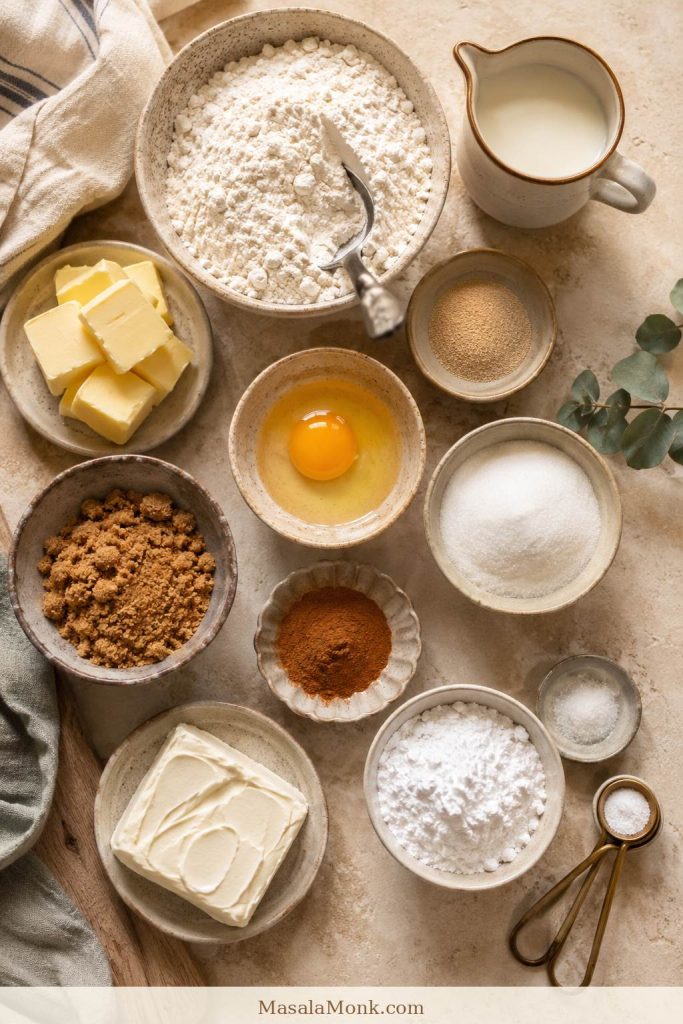
Dough Ingredients
The dough uses flour, milk, yeast, sugar, butter, egg, egg yolk, and salt.
Milk makes the dough softer than water. Butter adds richness. The egg and yolk help the rolls bake up tender, while sugar lightly sweetens the dough and helps the yeast work.
Together, they make the kind of dough that bakes up soft enough to pull apart, but strong enough to hold the cinnamon swirl.
Salt is small but important. It balances the sweetness and makes the cinnamon flavor taste fuller.
Filling Ingredients
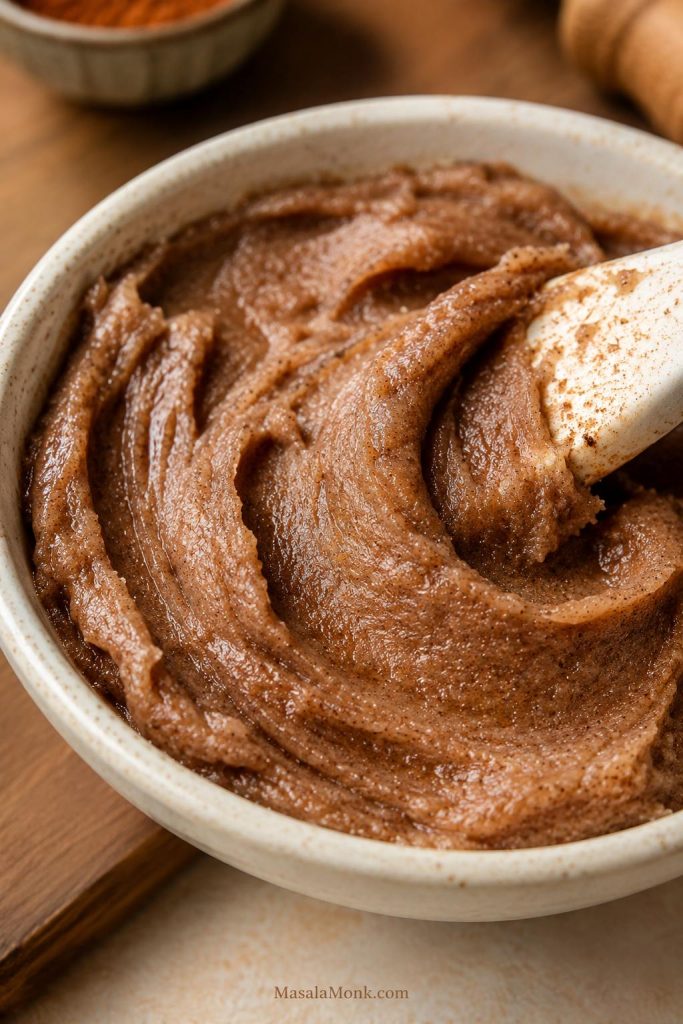
The filling uses softened butter, brown sugar, cinnamon, and a pinch of salt.
Softened butter is easier to spread and less likely to leak out. Brown sugar gives the filling a deeper, caramel-like sweetness. Light or dark brown sugar both work, though dark brown sugar gives a stronger molasses flavor.
When the filling is right, it should spread like soft cinnamon butter, not pour like syrup.
Icing Ingredients
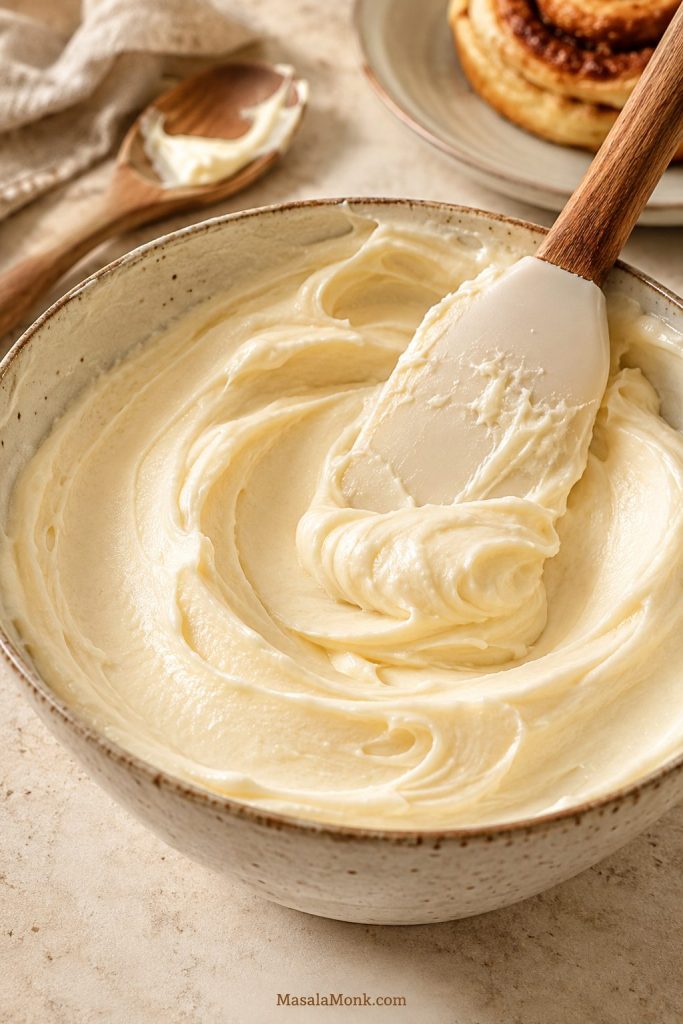
Cream cheese icing uses cream cheese, butter, powdered sugar, vanilla, milk or cream, and salt.
It gives the icing its tang, while butter makes it smooth. Powdered sugar thickens it, and milk or cream lets you adjust the texture.
Useful Equipment
You do not need a professional bakery setup for homemade cinnamon rolls, but a few tools make the recipe easier and more reliable.
- Large mixing bowl or stand mixer: either works; a mixer saves effort, but hand-kneading is fine.
- 9×13-inch pan: the most reliable size for 12 rolls that bake evenly.
- Rolling pin: helps roll the dough into an even rectangle.
- Unflavored dental floss, clean thread, or a sharp knife: gives clean cuts without squashing the spirals.
- Instant-read thermometer: useful for checking warm milk and the center roll.
- Foil: helpful if the tops brown before the center is done.
Flour Choice for Cinnamon Rolls
Before you start mixing, flour is the one ingredient worth slowing down for. An over-floured dough is the fastest way to lose that pull-apart cinnamon roll texture.
Bread flour and all-purpose flour both work in this recipe. The choice depends on the texture you like.
| Flour | Works well for | What to expect |
|---|---|---|
| Bread flour | Taller, bakery-style rolls | More structure, slightly chewier texture, good rise |
| All-purpose flour | Plush homemade rolls | More tender texture, easy everyday option |
| Excess flour | Dry rolls | Heavy dough, dry edges, dense texture |
| Gluten-free flour | Separate gluten-free recipe | Not a simple 1:1 swap for this dough |
Think of flour as the difference between a roll that tears softly and one that feels heavy. The goal is not a dry, easy-to-handle dough; the goal is a dough that bakes up tender.
Start with the listed amount and give the dough a minute to come together before adding more. If you measure by cups, spoon flour into the cup and level it instead of scooping directly from the bag. A little tackiness is what keeps the finished rolls soft.
Instant Yeast vs Active Dry Yeast
Instant yeast keeps the dough simple because it can be mixed straight in, with no separate proofing step.
Active dry yeast also works. For reliable results, proof it first by stirring it into warm milk with a pinch of sugar. After 5–10 minutes, look for foam on the surface. If it stays flat, the yeast may be old or the milk temperature may be off.
Aim for milk around 105–115°F / 40–46°C. Warm milk helps yeast wake up, while hot milk can damage it and slow or stop the rise. In a cold kitchen, slow movement does not mean failure; the dough just needs more time. Wait for puffiness, not the timer.
How the Dough Feels When It Is Right
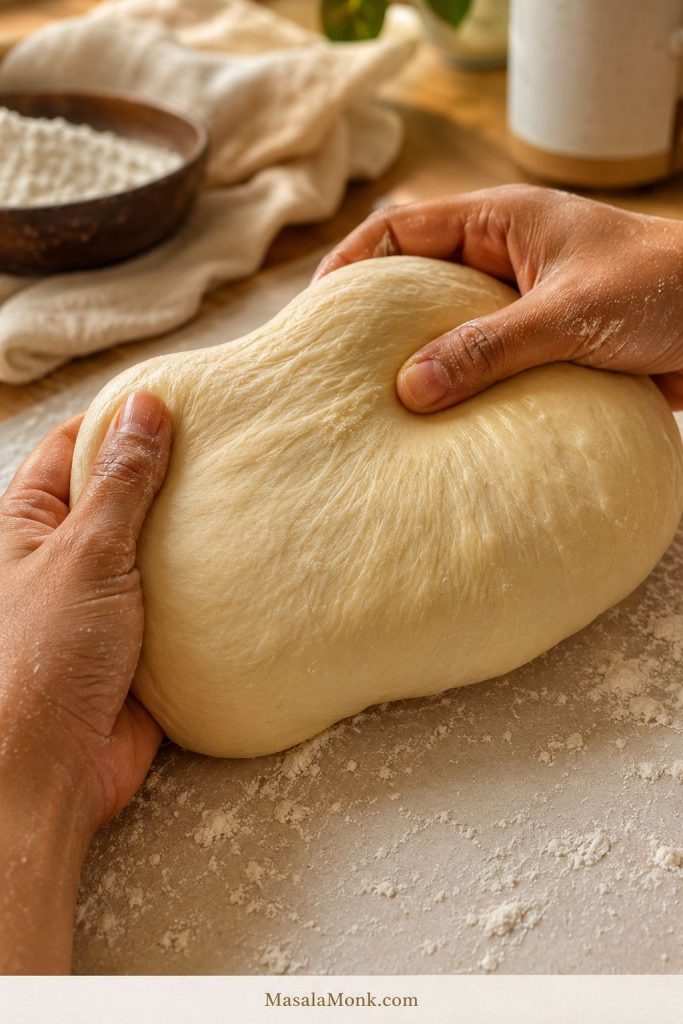
Dough texture is one of the biggest clues in this recipe. A soft, elastic dough gives the rolls their pull-apart texture; a dry, over-floured dough makes them heavy.
| Dough cue | What it means | What to do |
|---|---|---|
| Soft, smooth, slightly tacky | Ideal dough | Keep going with the recipe |
| Sticking heavily to hands or bowl | Slightly wet | Add flour 1 tablespoon at a time only after kneading |
| Dry, stiff, or tearing | Excess flour | Stop adding flour and give the dough enough rise time |
| Tight and shrinking while rolling | Gluten needs to relax | Rest the dough for 5–10 minutes, then continue |
| Not rising after 90 minutes | Cold kitchen, weak yeast, or overheated milk | Move to a warmer spot and wait longer; if there is no movement, the yeast may be inactive |
A little tackiness is your friend here. If the dough feels slightly messier than expected, that is usually better than a dough that feels dry and stiff.
Once the dough feels soft and elastic, the recipe gets easier. From here, you are not fighting the dough anymore — you are shaping it into the warm, cinnamon-filled pan you actually came for.
How to Make Cinnamon Rolls Step by Step
The method is simple once you know what to look for. The clock is only a guide; risen dough and a properly baked center matter more than exact minutes.
1. Make the Dough
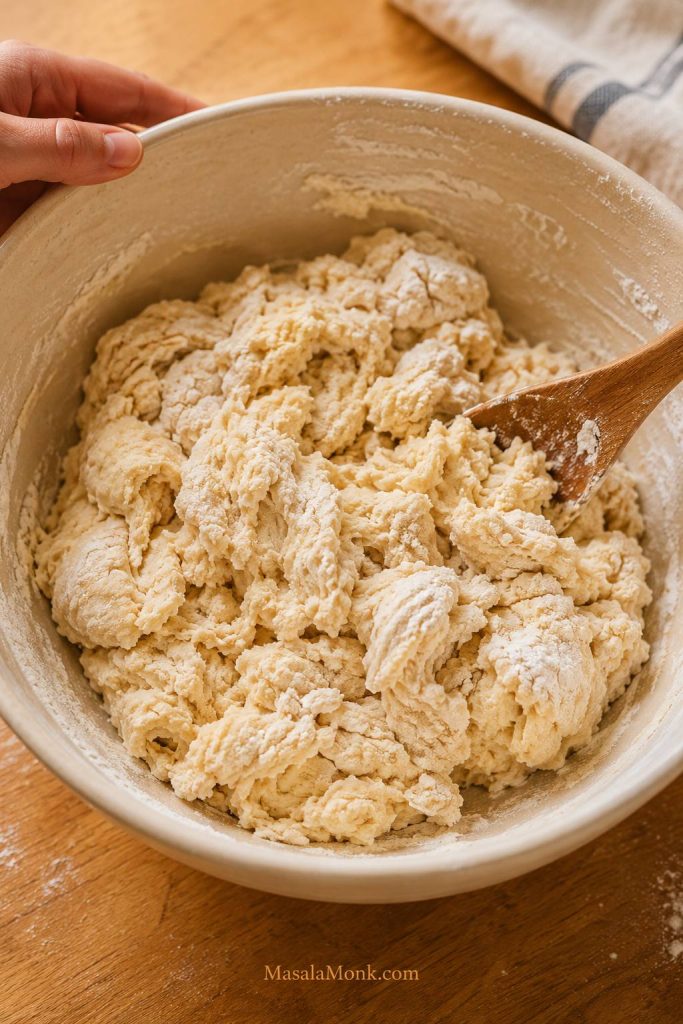
Warm the milk until it feels comfortably warm, not hot. Combine the milk, yeast, sugar, melted butter, egg, and egg yolk. Add the flour and salt, then mix until a rough dough forms.
At first, the dough may look shaggy. As it kneads, it will become smoother and more elastic.
2. Knead Until Smooth
Knead by hand for 8–10 minutes, or use a stand mixer for 5–7 minutes on low-medium speed.
You are aiming for dough that feels soft, stretchy, and slightly tacky — not dry and stiff. This is the moment many bakers reach for extra flour, so pause before you do. If the dough is soft but manageable, you are probably on the right track.
When the dough is ready, it stretches a little before tearing and feels elastic, responsive, and light rather than stiff.
3. Let the Dough Rise
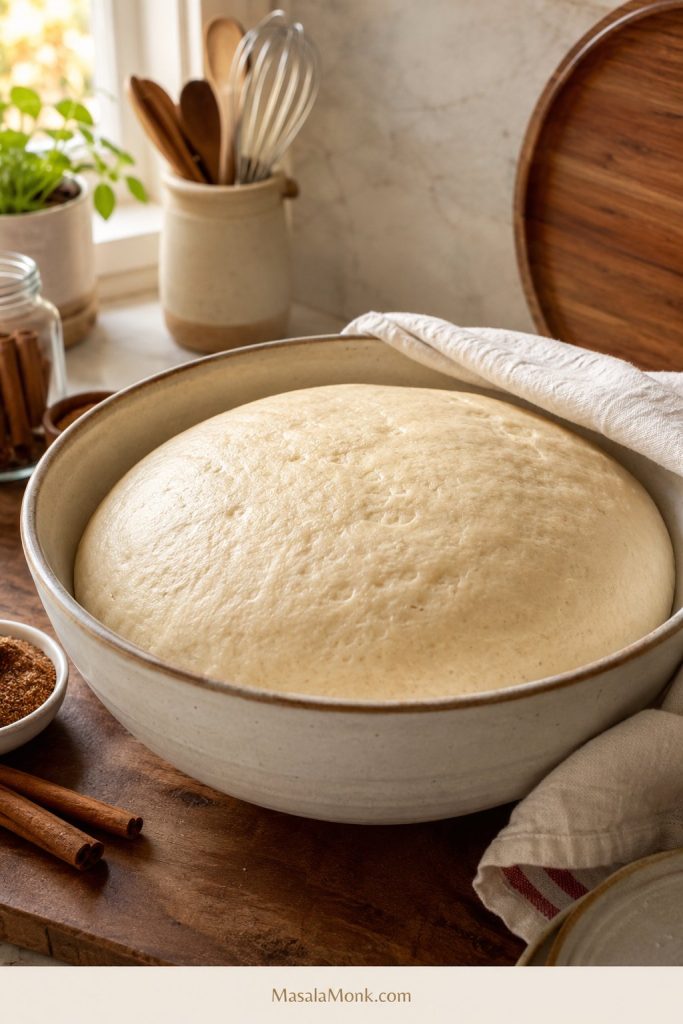
Place the dough in a lightly greased bowl. Cover the bowl with plastic wrap, a damp clean towel, or a lid so the surface does not dry out. Let it rise until doubled. This usually takes 60–90 minutes, but the dough matters more than the clock.
A cold kitchen slows the rise, while a warm kitchen speeds it up. The dough should look airy, expanded, and relaxed before you move on.
4. Make the Cinnamon Filling
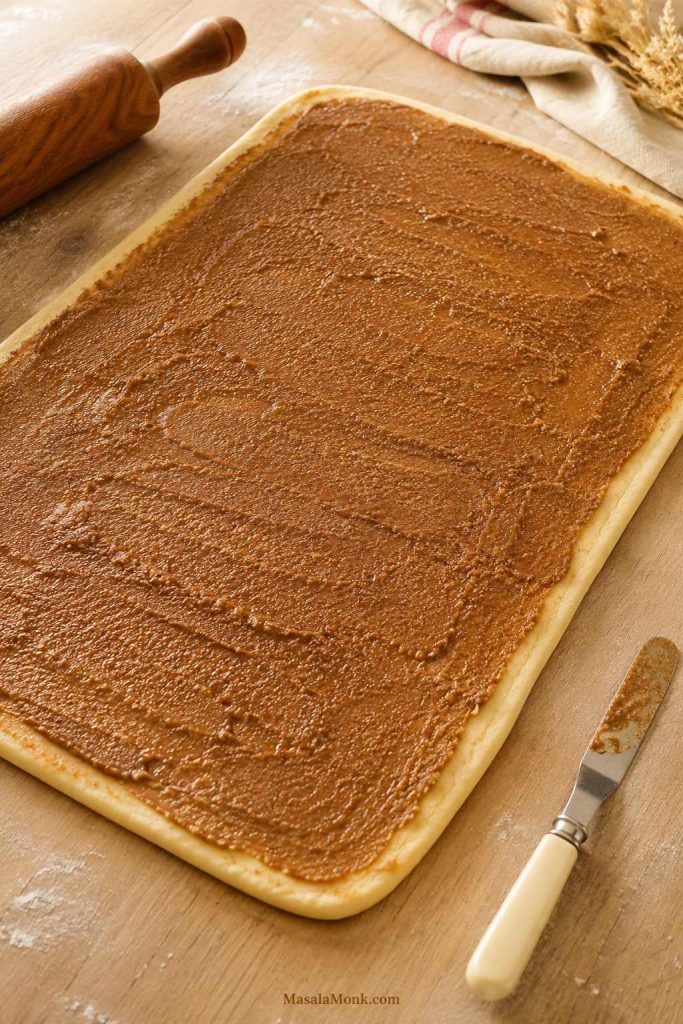
Mix softened butter, brown sugar, cinnamon, and salt into a spreadable paste.
Softened butter keeps the filling thick enough to stay in place. When the filling is hard to spread, let it sit at room temperature for a few minutes. Avoid melting it, because melted butter is more likely to leak out.
5. Roll Out the Dough
Lightly flour the counter and roll the dough into a rectangle about 12×18 inches.
The rectangle does not need perfect corners. Even thickness matters more. If the dough keeps shrinking back, let it rest for 5–10 minutes, then continue rolling.
6. Fill, Roll, and Cut
Spread the filling evenly over the dough, leaving a small border along one long edge so the log seals cleanly.
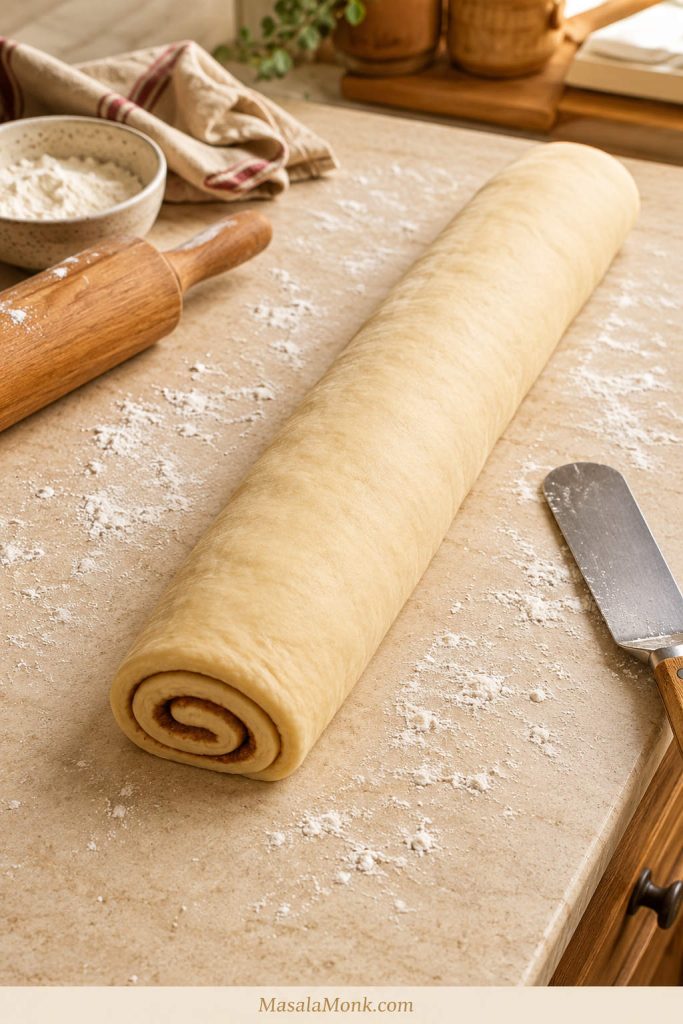
Roll from the opposite long side into a snug log, then turn the seam down before cutting so the rolls hold their shape.
Cut into 12 even rolls. Dental floss or clean thread gives the neatest cuts, but a sharp knife also works. Each roll will be about 1½ inches thick, which helps the batch bake at the same pace.
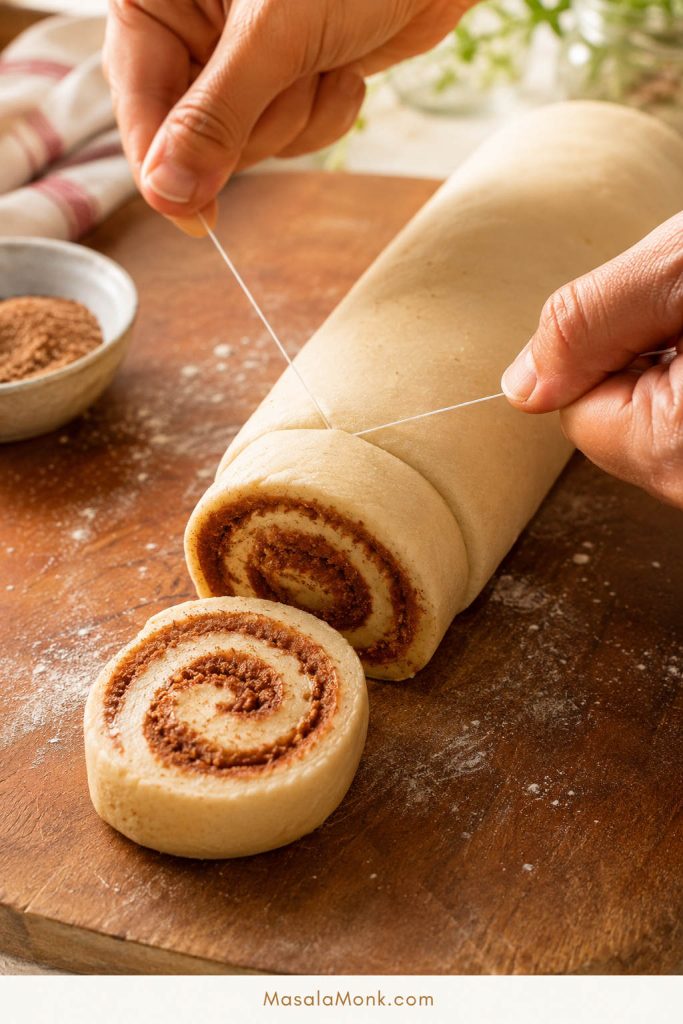
The spirals do not need to look bakery-perfect before they rise. Even rolls and a little breathing room matter more than perfect swirls.
7. Let the Rolls Rise Again
Place the rolls in a greased 9×13-inch pan. Cover and let them rise until rounded and lightly touching, about 45–60 minutes.
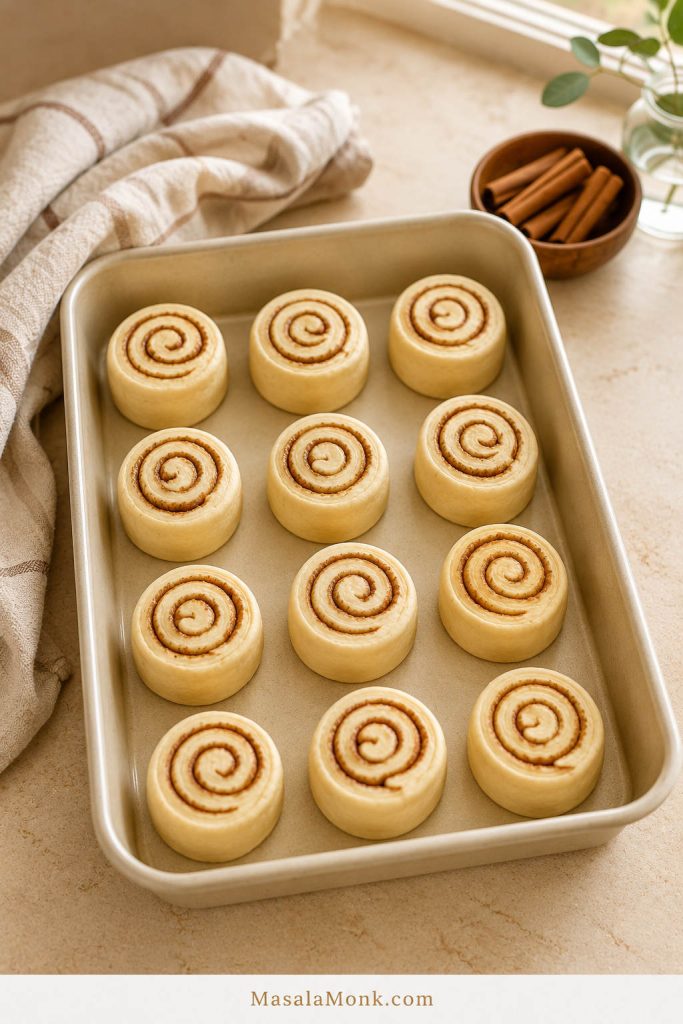
If the rolls still look tight and small, give them more time. Look for rolls that have relaxed, expanded, and lightly pressed against each other.
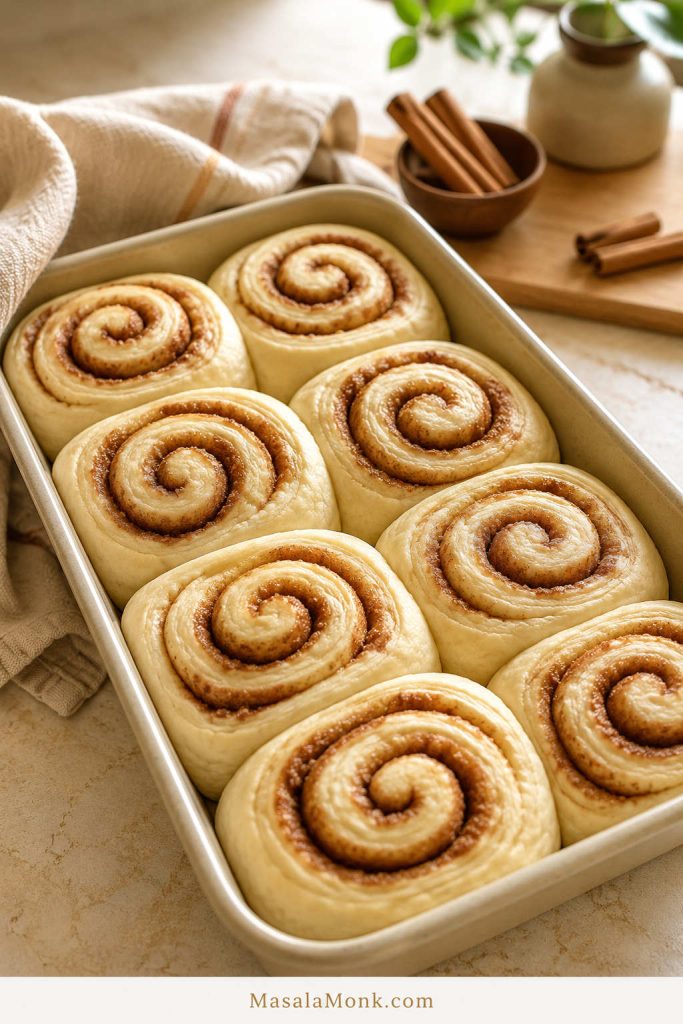
Once the dough has risen, the hard part is mostly over. From here, you are shaping, waiting for puffiness, and protecting the center of the pan.
8. Bake
Bake at 350°F / 175°C for 24–28 minutes. Look for lightly golden tops and a center roll at about 190°F / 88°C.
A better doneness moment is not just when the tops turn golden. It is when the center roll gives you a soft, steamy pull instead of a wet doughy tear.
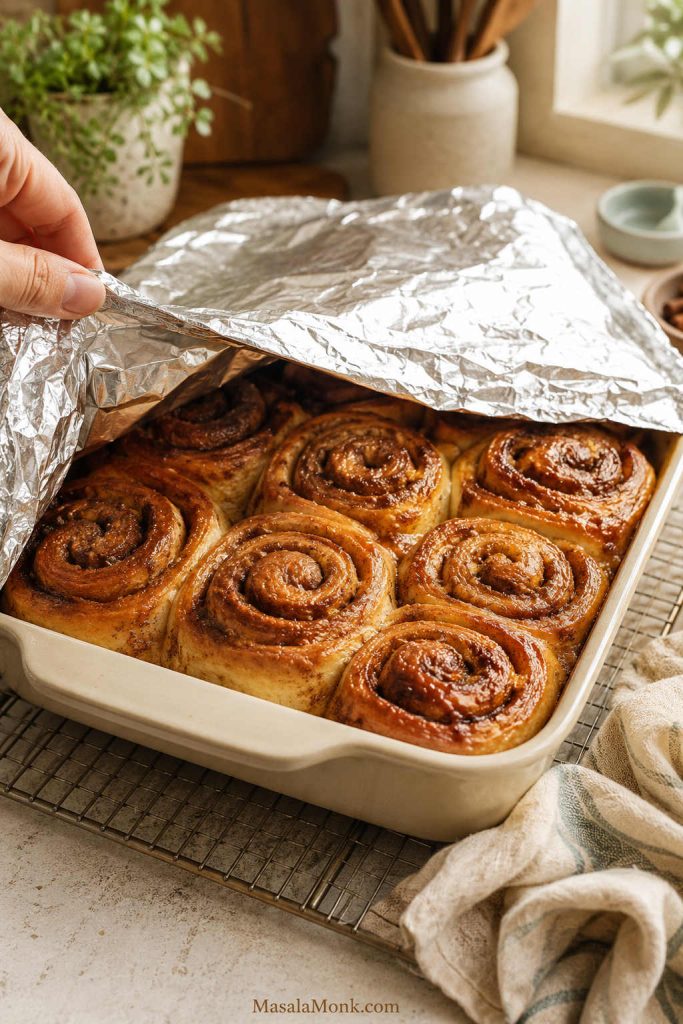
If the tops are golden but the center is not done, cover the pan loosely with foil and bake for a few more minutes. A few extra minutes under foil is better than serving rolls that look golden on top but stay underbaked in the middle.
The kitchen will smell warm and cinnamon-sweet before the tops get deeply browned.
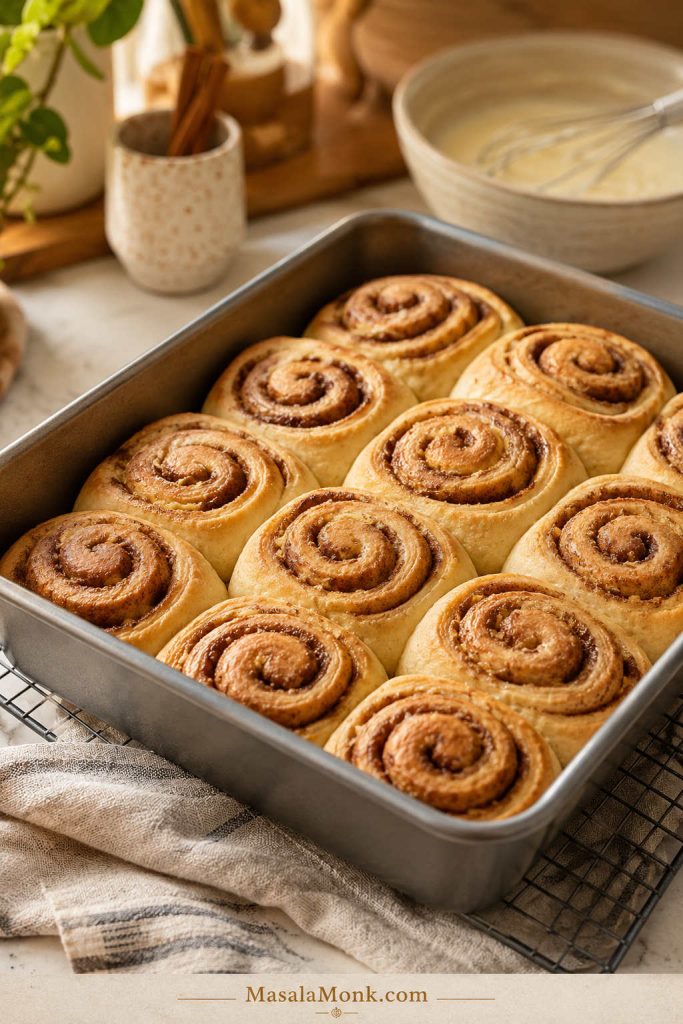
9. Ice While Warm
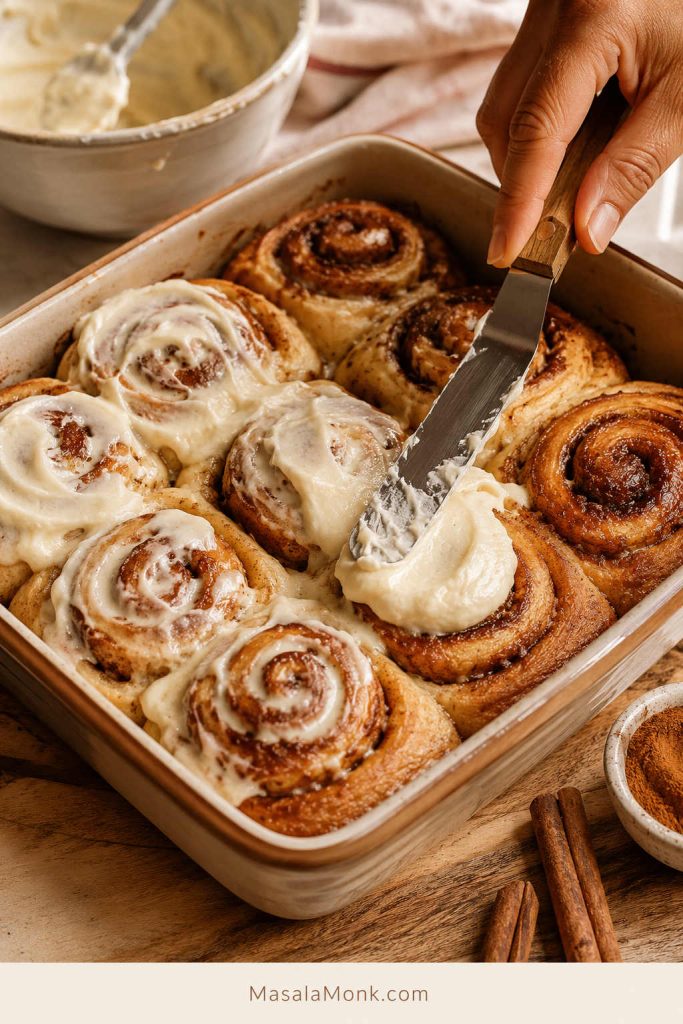
Let the rolls cool for 5–10 minutes before icing. The icing softens into the warm spirals, leaving some creamy pockets on top and some melted sweetness in the cinnamon layers.
Pan Size, Bake Time, and Internal Temperature
The pan affects how quickly the edges brown and how long the center needs to bake. For this recipe, a 9×13-inch pan is the safest default.
| Pan | Result | Note |
|---|---|---|
| 9×13-inch pan | Even bake for 12 rolls | Recommended for this recipe |
| 9×9-inch pan | Taller, gooier rolls | Centers may need more time because the pan is crowded |
| Two 9-inch round pans | Good for gifting or freezing | Split the batch evenly |
| Dark metal pan | Faster browning | Check early and tent with foil if needed |
| Glass or ceramic dish | Softer edges | May need a few extra minutes |
A reliable internal temperature for homemade cinnamon rolls is about 190°F / 88°C in the center roll. Check the middle of the pan, not an edge roll, because the outside rolls bake faster and can look done while the center still needs a few minutes.
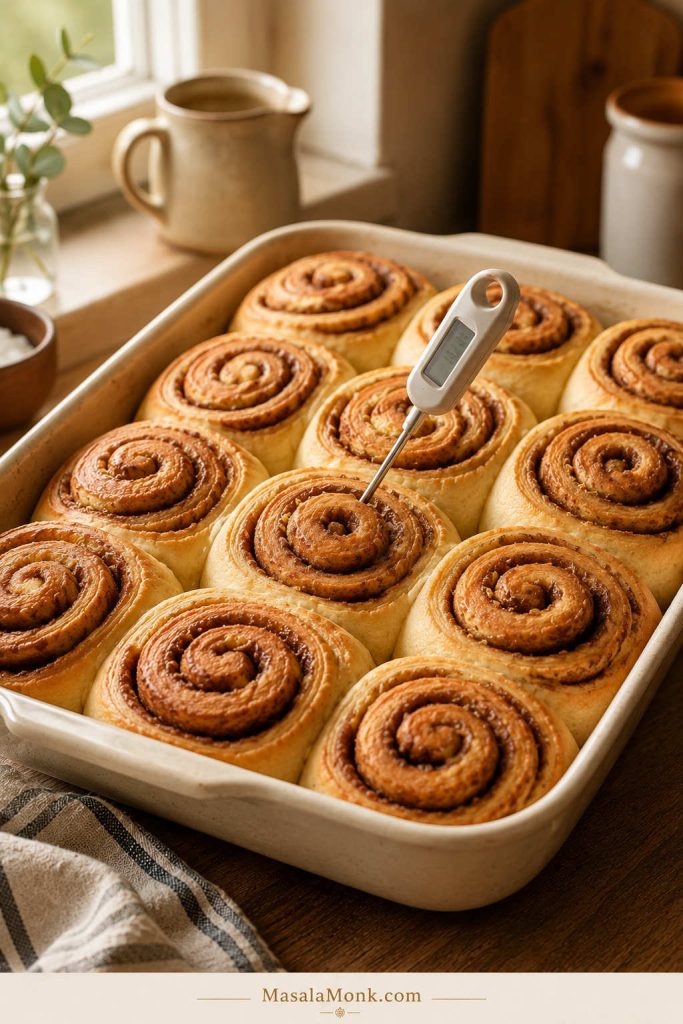
If you do not have a thermometer, check the middle roll by gently pulling at a seam. Look for a baked, bread-like center, not shiny, wet, or paste-like. A gooey cinnamon swirl is good; raw-looking dough in the center is not.
If the tops are browning before the center is done, tent the pan loosely with foil and keep baking for a few more minutes. This lets the middle finish without drying out the top.
Gooey Cinnamon Rolls with Heavy Cream
Warm heavy cream is a popular way to make cinnamon rolls richer and more moist. It helps soften the rolls as they bake and can turn some of the cinnamon sugar into a syrupy bottom layer. The key in this recipe is using a moderate amount so the rolls stay gooey without turning soggy.
After the second rise, warm ⅓ cup / 80 ml heavy cream until just warm. Pour it around the risen rolls before baking. For extra-gooey rolls, you can use up to ½ cup / 120 ml.
| Heavy cream question | Answer |
|---|---|
| Cold cream? | No. Warm it first so it does not slow the dough or shock the risen rolls. |
| Milk instead of cream? | Yes, but it will be less rich and less gooey than cream. |
| Where to pour it | Pour it around and lightly over the risen rolls. Do not flood the pan. |
| Skipping the cream | The rolls still work; cream is only for a softer, gooier finish. |
This works best in the 9×13-inch pan because the cream can spread evenly around the rolls. When it works well, you get a softer center and a little cinnamon-sugar syrup at the bottom without losing the shape of the rolls.
Cream Cheese Icing for Cinnamon Rolls
Cream cheese icing is the classic finish for homemade cinnamon rolls. It is creamy, tangy, and rich enough to balance the sweet cinnamon filling.
Beat the softened cream cheese and butter together first. Once smooth, add powdered sugar, vanilla, salt, and a little milk or cream. Add the liquid slowly so the icing stays spreadable instead of runny.
For that bakery-window look, wait longer. If you want icing that slips into the cinnamon seams and makes the center taste almost custardy, ice earlier. When some of the frosting disappears into the warm rolls, that is not a mistake — that is the part people go back for.
When to Ice Cinnamon Rolls
| Desired result | When to ice | What happens |
|---|---|---|
| Gooey, melted icing | About 5 minutes after baking | Icing melts into the spirals |
| Thick, visible frosting | 10–15 minutes after baking | Icing stays creamier on top |
| Gooey with visible frosting | Thin layer warm, second layer before serving | Gooey center with visible frosting |
Cinnamon Roll Icing Without Cream Cheese
For a simple vanilla icing, whisk together:
- 1 cup / 120 g powdered sugar
- 2 tablespoons / 28 g melted butter
- 1 teaspoon vanilla extract
- 1–2 tablespoons milk or cream
- Pinch of salt
Add more milk for a thinner drizzle or more powdered sugar for thicker icing. This version is sweeter and lighter than cream cheese icing, and it works well when you want a quick glaze. For a fuller butter-based frosting that can be spread or piped, use this Buttercream Frosting Recipe.
Overnight Cinnamon Rolls
Overnight cinnamon rolls are perfect when you want fresh rolls in the morning without making the dough from scratch at sunrise.
This is the easiest way to make cinnamon rolls feel relaxed for brunch: the messy work is done the night before, and the morning is mostly rise, bake, and ice.
In the morning, your job is mostly patience: let the rolls lose their chill, puff up, and then bake into something that feels fresh instead of rushed.
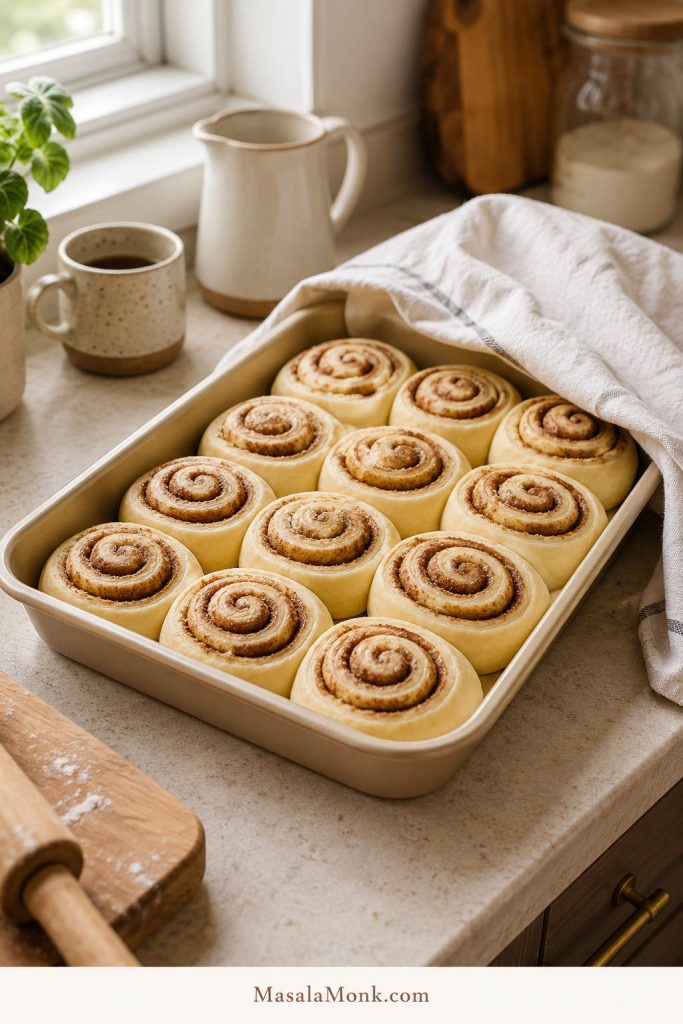
Make the dough, let it complete the first rise, roll it out, add the filling, cut the rolls, and place them in the pan. Cover tightly and refrigerate for 8–12 hours.
Do Overnight Cinnamon Rolls Need to Come to Room Temperature?
Not always. If the rolls already look puffy, relaxed, and lightly touching when they come out of the refrigerator, let them sit while the oven preheats. When they still look tight, cold, and small, give them 45–90 minutes at room temperature before baking. The goal is puffy rolls, not a fixed clock time.
For reliable overnight results:
- Do not refrigerate the shaped rolls much longer than 12 hours.
- Let the cold rolls puff before baking instead of putting tight, cold rolls straight into the oven.
- Bake at 350°F / 175°C for 24–28 minutes, checking the center before serving.
Very long refrigeration can overproof the rolls, making them weaker or syrupy at the bottom. For the softest texture, bake them the next morning.
How to Store, Freeze, and Reheat Cinnamon Rolls
| Need | Method |
|---|---|
| Bake tomorrow morning | Shape, cover, and refrigerate overnight after the first rise. |
| Save leftovers | Refrigerate cream-cheese-iced rolls and reheat gently. |
| Freeze for later | Freeze baked rolls for the easiest serving later. |
| Fresh-baked texture | Freeze shaped unbaked rolls before the second rise, then thaw and proof before baking. |
Room Temperature
Un-iced rolls or rolls with simple vanilla glaze can sit covered at room temperature for 1–2 days if your kitchen is cool.
Refrigerator
Because cream cheese icing is dairy-based, refrigerate iced rolls within 2 hours of serving. They keep for 3–4 days, though the refrigerator can dry them out a little, so reheat gently before eating.
Freezer
Freeze baked cinnamon rolls with or without icing. Let them cool completely, wrap tightly, and freeze for up to 2 months.
You can also freeze shaped unbaked rolls before the second rise. Thaw overnight in the refrigerator, then let them sit at room temperature until puffy before baking.
Reheating
Reheat individual rolls in the microwave for 10–15 seconds at a time. For a full pan, cover loosely with foil and warm in a low oven.
If a roll seems dry, add a small spoon of milk or cream near the roll before reheating. It helps soften the bread without making it soggy.
Troubleshooting Cinnamon Rolls
If something looks off, do not panic. Cinnamon rolls usually give you clues before they fail: stiff dough, tight-looking rolls, filling that starts to run, or tops that brown before the middle is done.
Even careful bakers get a batch that rises slowly, leaks filling, or browns early. Use these cues to understand what happened and what to change next time.
Quick Cinnamon Roll Fixes
| Problem | Likely cause | Fix |
|---|---|---|
| Cinnamon rolls are dry | Excess flour, overbaking, dark pan, or not enough icing while warm | Weigh flour, keep dough slightly tacky, bake until the middle is set, and tent if tops brown early |
| Cinnamon rolls are dense | Weak yeast, short rise, under-kneading, or cold kitchen | Use fresh yeast, knead until smooth, rise until doubled, and let shaped rolls get puffy |
| Centers are doughy | Crowded pan, thick cuts, short second rise, or underbaking | Use a 9×13 pan, cut evenly, finish the second rise, and bake until the center is done |
| Filling leaked out | Melted butter, loose roll, filling spread to edge, or overfilled dough | Use softened butter paste, leave a border, roll snugly, and place seam side down |
| Rolls did not rise | Old yeast, hot milk, or cold room | Use fresh yeast, keep milk warm not hot, and give dough more time in a warm spot |
| Icing disappeared | Rolls were very hot | Wait 10–15 minutes for visible frosting or use a thin warm layer plus a second layer |
| Centers popped up | Tight rolling or a small pan | Roll snugly but gently, and use a 9×13 pan |
| Bottoms are soggy | Heavy cream overload, underbaking, or overproofing overnight | Use less cream, bake until the center is done, and avoid very long refrigeration |
Use the table for a quick diagnosis, then read the notes below for the problems that most often affect texture.
The good news: most of these problems are easy to prevent next time once you know the cue to watch for.
Dry Cinnamon Rolls
Dry rolls usually mean the dough was over-floured or the pan baked too long. Keep the dough soft and slightly tacky after kneading.
A dark pan can also brown the edges quickly. If the tops or edges are browning before the center is done, cover the pan loosely with foil and keep baking.
Doughy Middle in Cinnamon Rolls
The center rolls bake last. Crowded rolls, thick cuts, or an early pull from the oven can leave the middle doughy.
Check the center of the pan instead of relying only on the edge rolls. A center temperature of about 190°F / 88°C is the clearest sign that the pan is done.
Filling Leaking Out
The butter may have melted, or the dough may have been rolled loosely. A softened-butter filling paste stays in place better.
Leaving a small border along one long edge also helps seal the log.
Rolls Not Rising
Old yeast, overheated milk, or a cold room can slow the rise. When the dough is slowly expanding, give it more time. No movement at all usually means the yeast was probably inactive.
Cinnamon Roll Variations
These are flavor and format ideas, not full conversion formulas. The base dough is designed for classic soft yeast cinnamon rolls, so bigger changes may need their own tested recipe.
Pumpkin Cinnamon Rolls
Add pumpkin puree and warm spices to the dough or filling, then finish with maple cream cheese icing. Pumpkin adds moisture, so use a tested pumpkin version or adjust flour carefully.
Apple Cinnamon Rolls
Add finely chopped apples or a controlled amount of apple pie filling. A heavy apple layer can make the centers wet, so keep the filling modest. For homemade filling, use this Apple Pie Filling Recipe and keep the amount modest inside the rolls.
Sourdough Cinnamon Rolls
Use active sourdough starter or discard for a tangier dough and longer fermentation. Sourdough timing depends on starter strength and room temperature. If you are still building your starter, start with this Sourdough Starter Recipe.
For more starter-based bakes, this Sourdough Recipe guide covers loaves, rolls, buns, and bagels.
Cinnamon Roll Cookies
For cookies, use cinnamon sugar swirl flavor in a buttery cookie dough. This gives you cinnamon roll flavor without yeast or rise time, but it will not have the soft pull-apart crumb of this recipe.
Puff Pastry Cinnamon Rolls
Puff pastry works when you want fast, flaky cinnamon rolls instead of soft yeast rolls. Bake them spaced apart, not crowded like this dough, because puff pastry needs room to expand.
Vegan Cinnamon Rolls
For vegan cinnamon rolls, use plant-based milk and butter, and replace the egg carefully rather than simply leaving it out. This Flax Egg guide explains the classic flaxseed meal ratio for vegan baking, though a fully vegan cinnamon roll still needs its own dough balance.
Cinnamon Rolls vs Cinnamon Buns vs Cinnamon Scrolls
Whatever you call them — cinnamon rolls, cinnamon buns, or cinnamon scrolls — the craving is usually the same: soft spiral dough, warm cinnamon sugar, and something sweet on top.
In the US, “cinnamon rolls” is the most common term. “Cinnamon buns” may mean the same thing, though some versions include sticky toppings, nuts, or caramel. “Cinnamon scrolls” is common in some regions outside the US.
For this recipe, the method is the same: soft yeast dough, cinnamon sugar filling, spiral shape, and icing or glaze.
Shortcut Cinnamon Roll Questions
Yeast-Free Cinnamon Rolls
You can, but the texture changes. Yeast gives these rolls their fluffy, stretchy, pull-apart crumb. No-yeast cinnamon rolls are faster, but they usually bake up more like soft biscuits or scones.
For these bakery-style rolls, yeast is worth using. If you want something faster, a biscuit-style cinnamon roll is a better direction, but it will not have the same pull-apart crumb.
Using Canned Cinnamon Rolls Instead
Canned cinnamon rolls are great when you want a shortcut brunch or dessert. They will not have the same homemade yeast-dough texture, but they can still be turned into a cozy bake with fruit filling, cream, or extra cinnamon sugar.
For a quick dessert using refrigerated rolls, try this Apple Cinnamon Roll Bake with Apple Pie Filling. It is better for shortcut baking, while this recipe is better when you want homemade cinnamon rolls from scratch.
What to Serve with Cinnamon Rolls
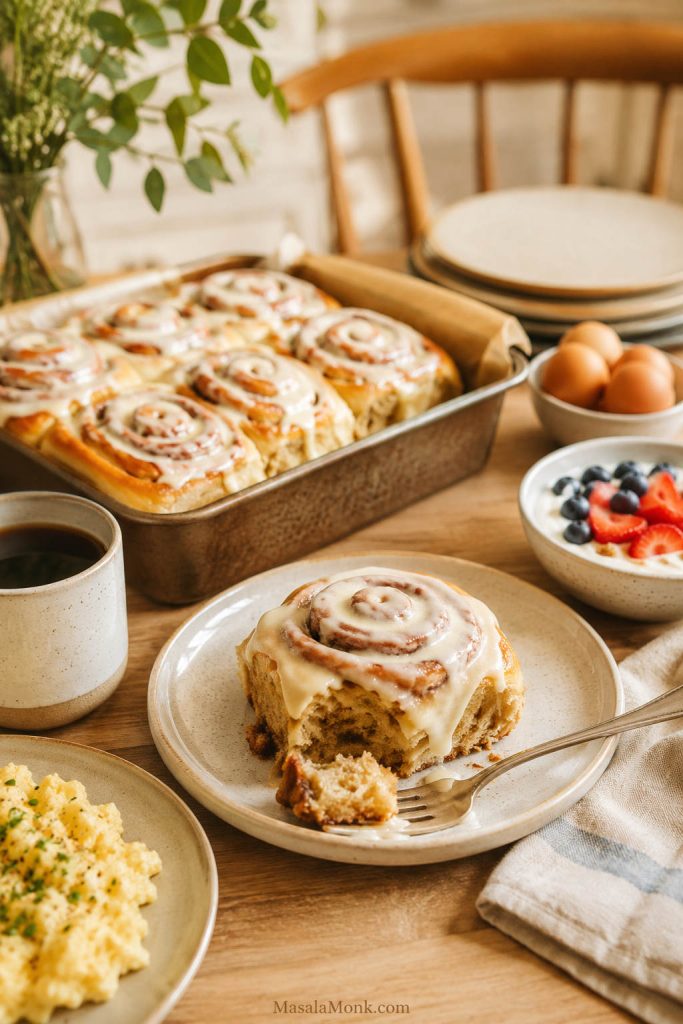
At brunch, cinnamon rolls work well beside something simple and lightly sweet. Serve them with coffee, fruit, eggs, yogurt, or something cool and café-style like an Iced Matcha Latte. With a sweeter spread, keep the sides fresh and light; for a more balanced breakfast, add something savory.
Frequently Asked Questions
All-Purpose Flour for Cinnamon Rolls
Absolutely. All-purpose flour gives a softer homemade texture and works well when extra flour is kept under control.
Is bread flour better for cinnamon rolls?
Bread flour gives taller, slightly chewier rolls with more structure. Use it if you want a more bakery-style result.
Active Dry Yeast Instead of Instant Yeast
Use the same amount, but proof active dry yeast in warm milk with a little sugar for 5–10 minutes before mixing the dough.
Milk Temperature for Yeast
Aim for milk around 105–115°F / 40–46°C. It should feel warm, not hot.
Using 2% Milk Instead of Whole Milk
Whole milk gives a richer dough, but 2% milk works. Avoid skim milk if you want the softest texture.
Internal Temperature for Cinnamon Rolls
Aim for about 190°F / 88°C in the center roll. This helps confirm the middle is baked through even if the tops already look golden.
How do I tell if cinnamon rolls are done without a thermometer?
Gently pull at a seam in the middle roll. Look for a baked, bread-like center, not wet, shiny, or paste-like.
Dry Cinnamon Rolls
They were likely over-floured, baked too long, or browned quickly in a dark pan. Keep the dough soft and avoid pulling the pan before the middle is done.
Dense Cinnamon Rolls
Dense rolls usually come from weak yeast, short rise time, under-kneading, or excess flour. Let the dough double and let the shaped rolls puff before baking.
Doughy Middle
They may be underbaked, crowded, cut thick, or not risen enough. The center should look set before serving.
Preventing Doughy Centers
Use a 9×13-inch pan for 12 rolls, cut the rolls evenly, let them complete the second rise, and check the center roll before pulling the pan from the oven.
Cinnamon Rolls Popping Up in the Center
The log may have been rolled tightly, the pan may have been crowded, or the rolls may have needed more room to expand.
Adding Heavy Cream Before Baking
You can. Warm heavy cream makes the rolls richer and gooier. Use ⅓ cup / 80 ml for a softer pan or up to ½ cup / 120 ml for extra-gooey rolls.
Overnight Cinnamon Rolls
For overnight cinnamon rolls, make the dough, complete the first rise, shape the rolls, cover the pan tightly, and refrigerate for 8–12 hours. In the morning, let the rolls sit until puffy if they still look tight and cold, then bake.
Freezing Cinnamon Rolls
Freezing works well. Baked rolls can be frozen after cooling, or you can freeze shaped unbaked rolls before the second rise. Thaw and let them get puffy before baking.
Doubling This Recipe
To double the recipe, use two 9×13-inch pans and rotate them if your oven has hot spots.
Choosing Cinnamon Roll Icing
Cream cheese icing is the classic choice because it is creamy, tangy, and rich. A simple vanilla glaze without cream cheese also works.
Icing Without Cream Cheese
For a simple glaze, mix powdered sugar, melted butter, vanilla, milk or cream, and a pinch of salt. Add more milk for a thin glaze or more powdered sugar for thicker icing.
No Stand Mixer Method
A stand mixer helps, but hand kneading works. Mix the dough in a large bowl and knead for 8–10 minutes, until it turns smooth and stretchy.
Final Tips for Soft, Gooey Cinnamon Rolls
Great cinnamon rolls are not about rushing the dough or baking until the tops are dark. Once you understand the cues, homemade cinnamon rolls stop feeling like a gamble. You are not just waiting for a timer; you are watching the dough, the rise, and the center of the pan.
The goal is gooey, not doughy: fluffy edges, cinnamon-rich swirls, creamy icing, and a middle that pulls apart warm instead of feeling heavy, wet, or underbaked.








