
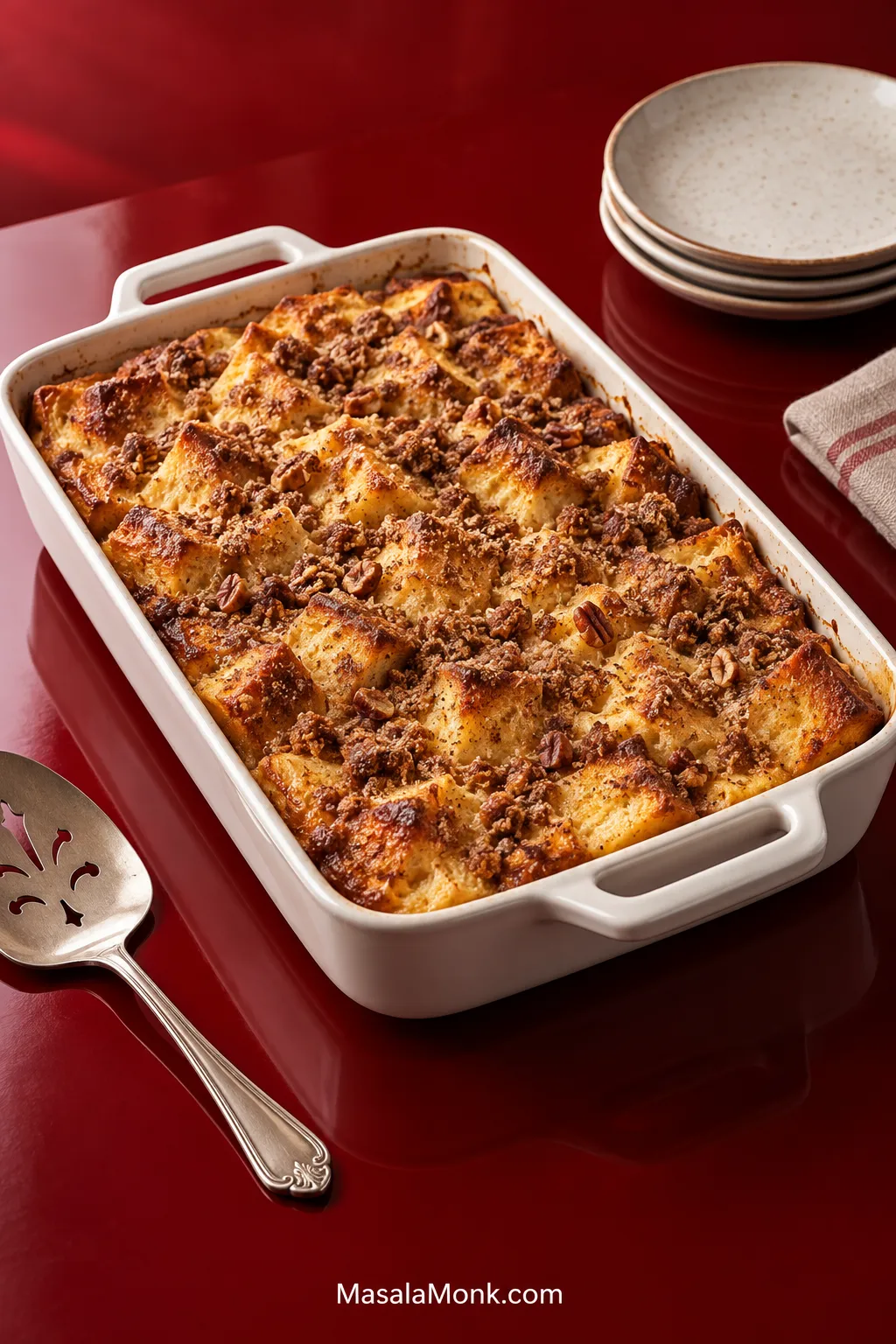
French toast casserole should make the morning easier. Assemble it the night before, wake up, scatter on the cold cinnamon crumble, and let the oven handle breakfast while you set the table and get the rest of the meal ready.
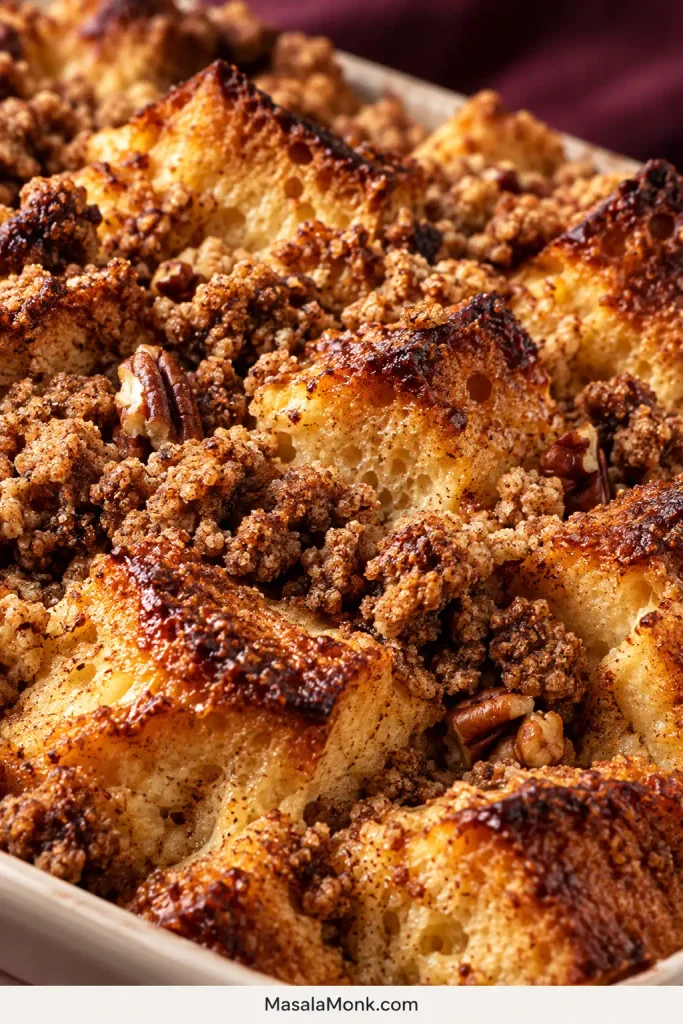
The reward is the contrast: crisp cinnamon-buttery pieces across the top, softer vanilla-soaked bread underneath, and browned corner pieces with more bite. You get the comfort of French toast for a whole table without spending breakfast at the stove flipping one batch after another.
The part worth getting right is how the custard reaches the bread. Leave dry pieces sticking up while liquid gathers underneath and you can end up with a browned top over a wet bottom. Later, the surface can look finished before the middle has had enough time in the oven. So focus on two things: even soaking before the bake and a fully cooked center before it comes out.
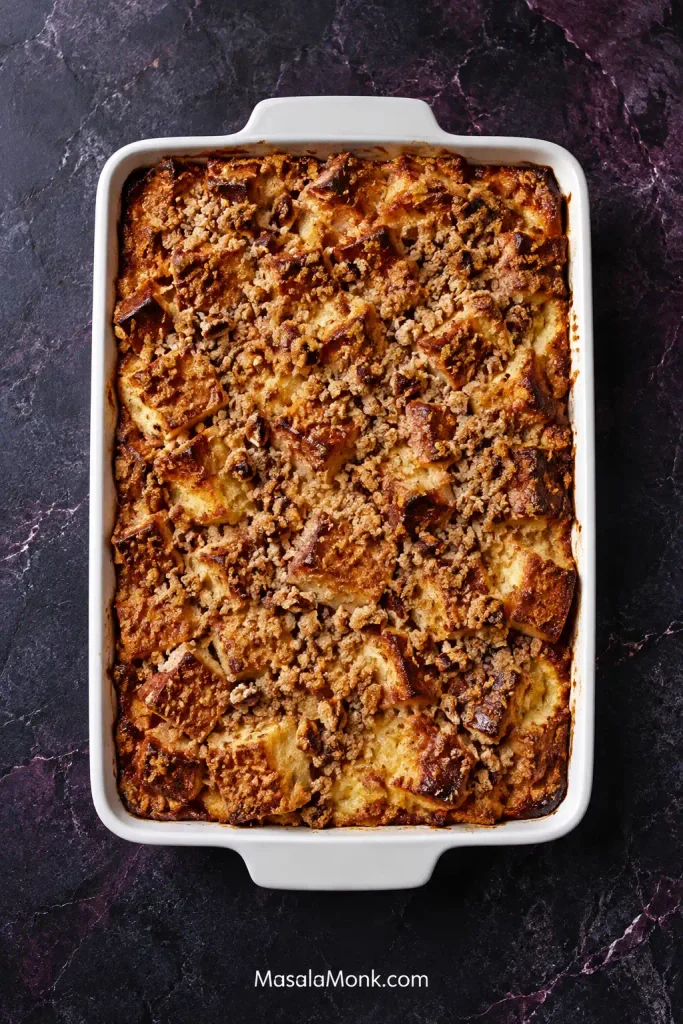
French Toast Casserole Recipe
Oven-baked French toast with a soft cinnamon-vanilla center, golden edges and a crisp brown-sugar crumble. Assemble it overnight or use the same-day method when breakfast is happening sooner.
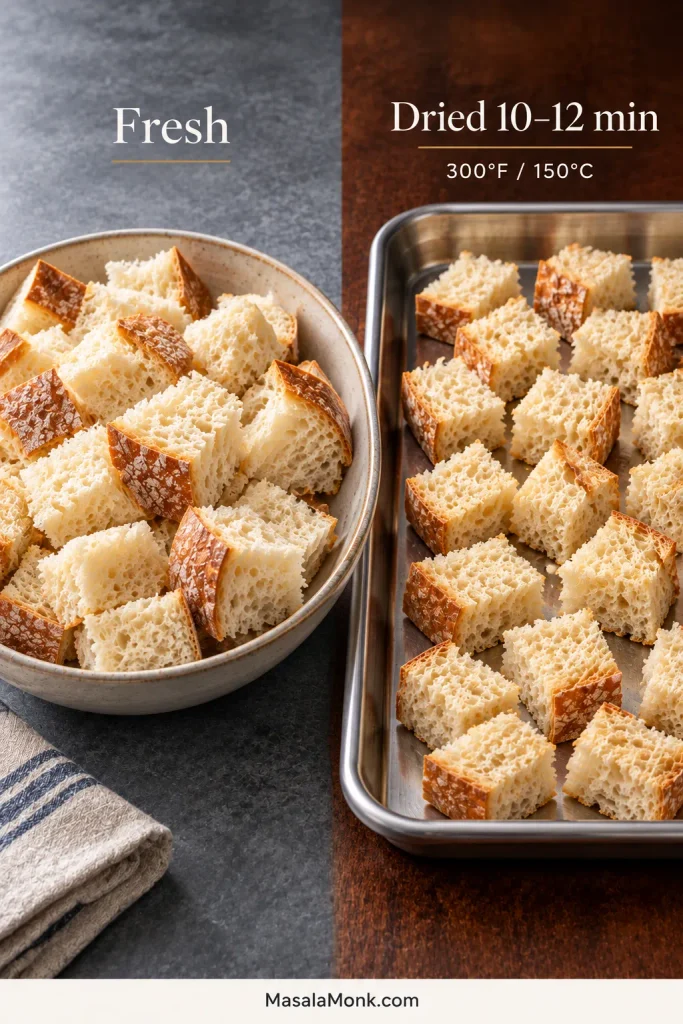
Using fresh bread? Allow about 10–15 extra minutes for drying and cooling it before assembly.
Equipment
- 9×13-inch / 23×33-cm baking dish
- Large mixing bowl
- Whisk
- Serrated bread knife
- Rimmed baking sheet, if the bread needs drying
- Kitchen scale, strongly recommended
- Instant-read thermometer, optional but useful
Ingredients
For the French toast
- 16 oz / 1 lb / 450 g sturdy French bread or country-style bread, cut into roughly 1-inch / 2.5-cm pieces
- 1 tablespoon / 14 g unsalted butter, softened, for the baking dish
- 6 large eggs
- 2 cups / 480 ml whole milk
- ½ cup / 120 ml heavy cream
- ⅓ cup packed / 70 g light brown sugar
- 2 teaspoons vanilla extract
- 1½ teaspoons ground cinnamon
- ¼ teaspoon ground nutmeg, optional
- ½ teaspoon fine sea salt
For the cinnamon crumble
- ⅔ cup / 80 g all-purpose flour
- ⅓ cup packed / 70 g light brown sugar
- 1 teaspoon ground cinnamon
- ¼ teaspoon fine sea salt
- 5 tablespoons / 70 g cold unsalted butter, cut into small cubes
- ½ cup / 55–60 g chopped pecans, optional
Method
1. Check the bread
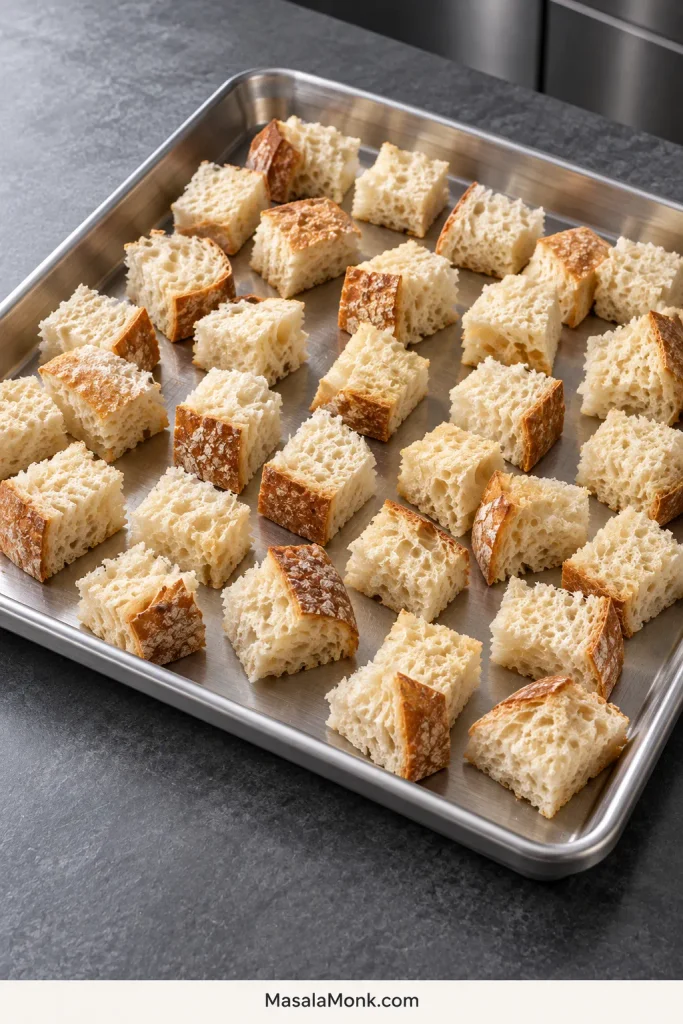
Day-old bread that already feels dry and slightly firm at the surface can go straight into the casserole. With a fresh, soft loaf, spread the pieces over a rimmed baking sheet and bake at 300°F / 150°C for about 10–12 minutes, tossing once halfway through.
Stop when the surface feels dry and a little firmer while the middle of each piece is still tender. Let the bread cool until it is no longer warm before assembling the casserole.
2. Make the crumble
Combine the flour, brown sugar, cinnamon and salt. Rub or cut in the cold butter until coarse crumbs form, then stir in the pecans if using.
If the butter softens enough that the mixture starts smearing together, chill it briefly and break it back into crumbs.
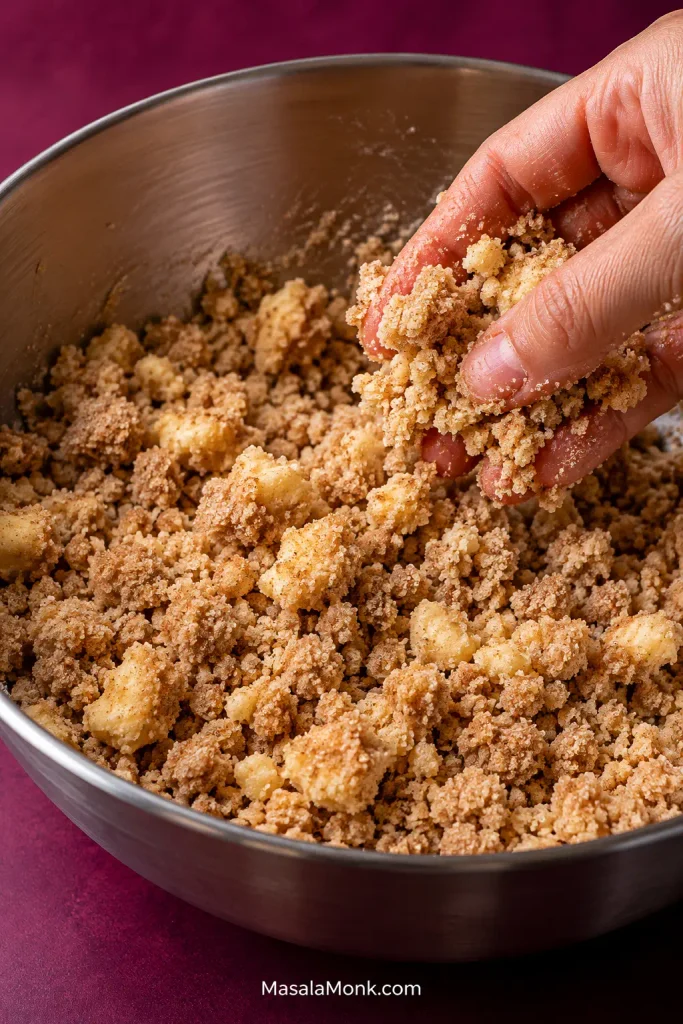
Cover and refrigerate the crumble while you prepare the casserole. Add it just before baking.
3. Arrange the bread and make the custard
Butter a 9×13-inch / 23×33-cm baking dish with the tablespoon of softened butter, coating the base and sides. Add the bread.
Whisk the eggs, then add the milk, cream, brown sugar, vanilla, cinnamon, nutmeg and salt. Continue whisking until the custard looks even and no obvious strands of egg white remain.
Pour the custard slowly over the whole dish, moving around as you go so it reaches bread across the pan rather than collecting in one spot.
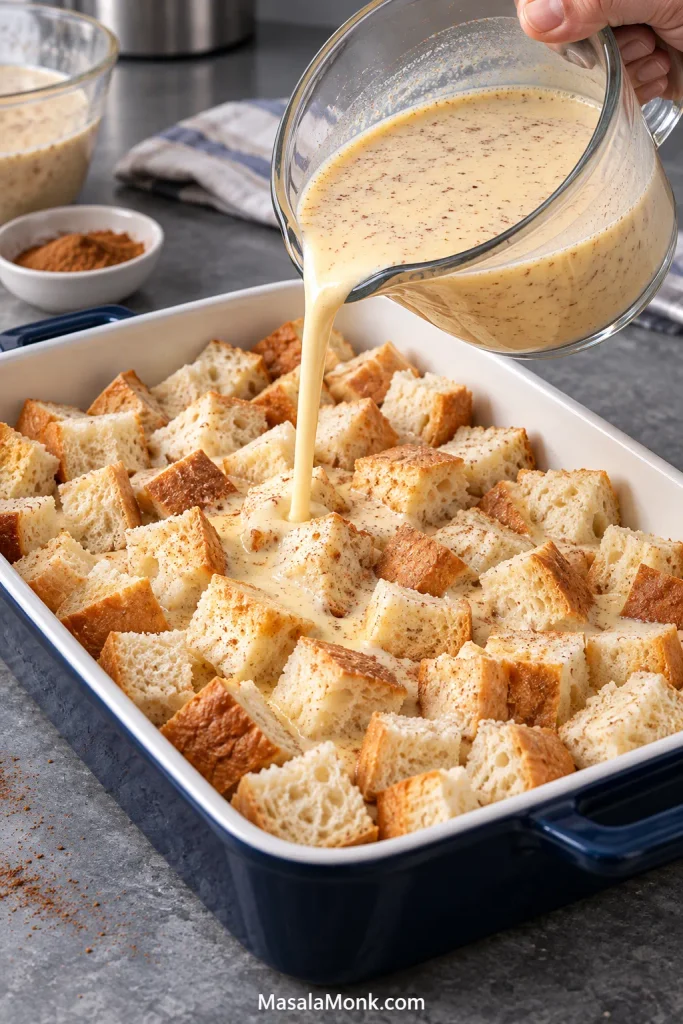
Gently lift and turn the bread several times, then press it down lightly. Pay attention to the highest pieces, whose exposed faces are easiest to miss.
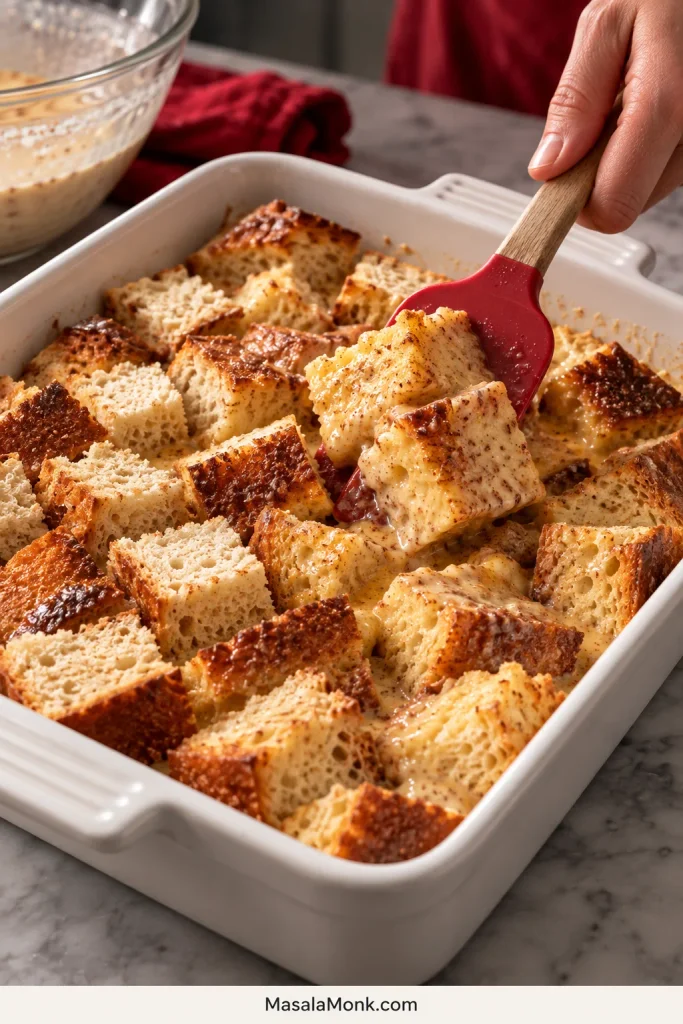
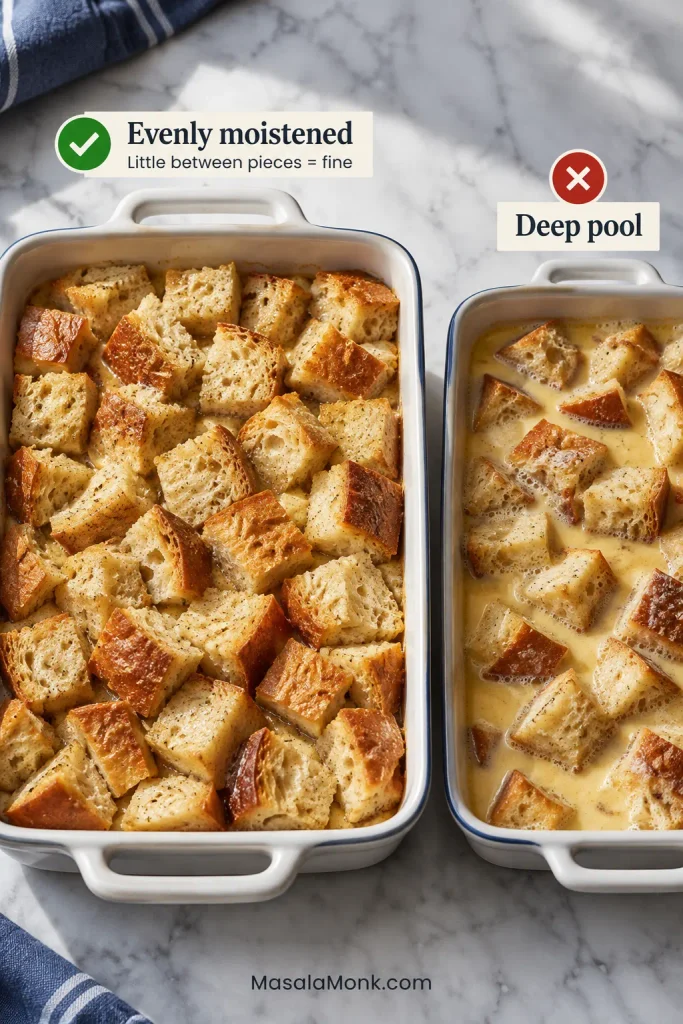
Look across the whole pan: every piece should appear moistened. A little custard between the bread is expected; a deep pool underneath is not.
4. Soak overnight or make it today
Overnight: cover the dish tightly and refrigerate for 8–12 hours. The longer soak gives the bread more time to absorb the custard and produces a softer, more cohesive center after baking.
Same day: cover and refrigerate until the total time since adding the custard reaches 45–60 minutes. The bread pieces usually keep more definition with the shorter soak.
5. Bake
Heat the oven to 350°F / 177°C. If you’re using glass bakeware, follow the manufacturer’s guidance for moving a refrigerated dish into the oven.
Before topping, check the bread once more. Turn any dry-looking piece or spoon a little custard over it.
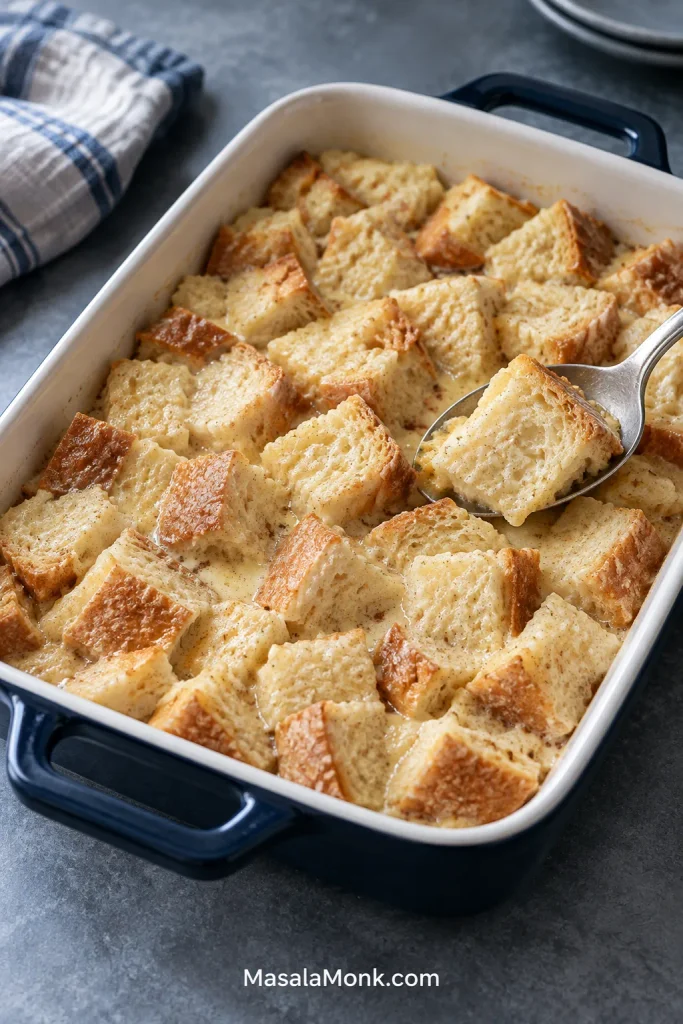
Once the bread is evenly hydrated, scatter the cold crumble loosely across the top. Keep it separate until this point so the topping stays crumbly rather than absorbing custard during the soak.
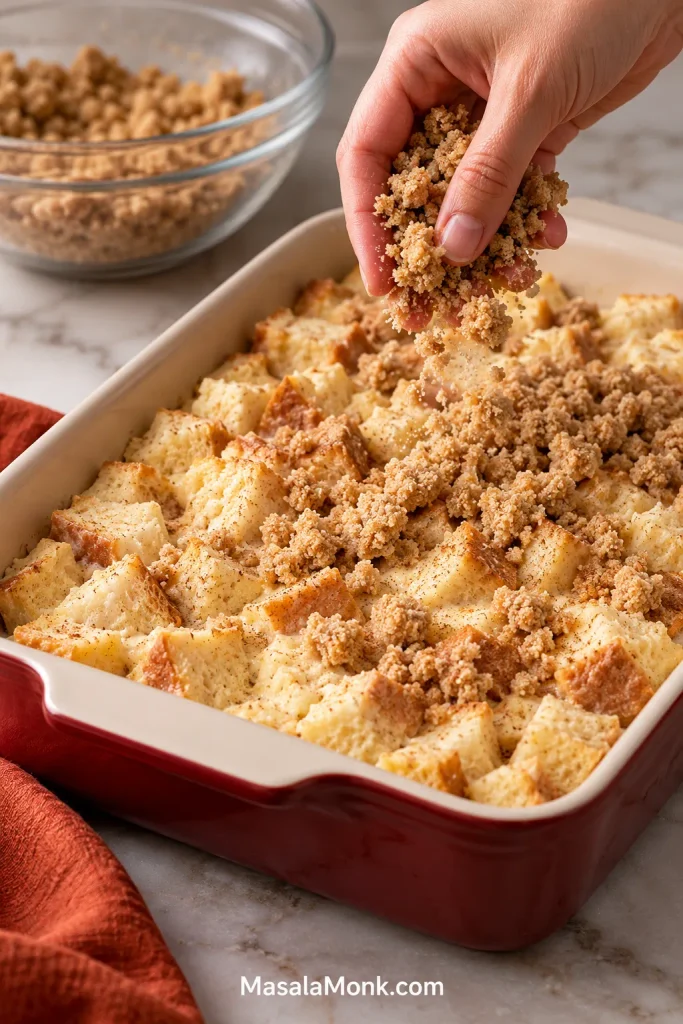
Bake at 350°F / 177°C for approximately 45–55 minutes. The exposed bread should be golden, and the center should look puffed and no longer loose or sloshy. If the top reaches your preferred color before the middle is ready, tent it loosely with foil.
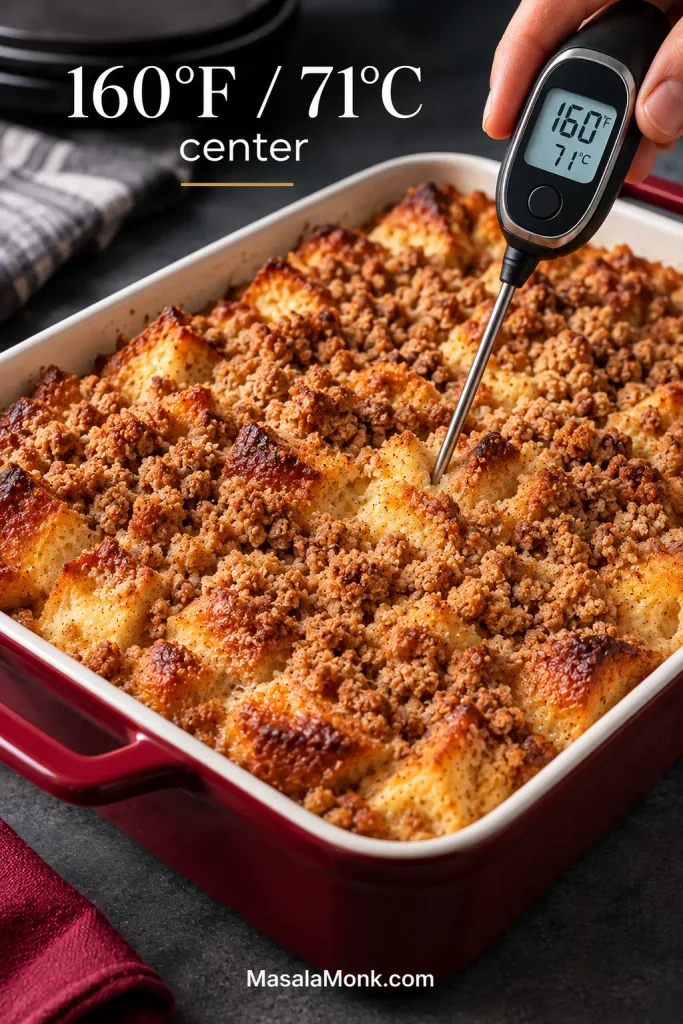
Once the casserole looks ready, check the center and one or two nearby spots with an instant-read thermometer; each should reach at least 160°F / 71°C.
6. Rest before serving
Let the casserole rest for 10–15 minutes before scooping. It may settle slightly as it rests; the center should remain soft and moist.
Before You Let It Soak
Before the soak, check three things across the whole pan: bread preparation, even custard coverage and the amount of free liquid underneath.
| Check | What You Want |
|---|---|
| Bread | Dry at the surface but still tender inside. |
| Custard | Every piece visibly moistened, including the bread sitting highest in the dish. |
| Bottom of the pan | A little custard between the pieces is normal. The bread should not be floating in a deep pool. |
French Toast Casserole Guide
Bake & Texture
Plan Breakfast
Which Bread Holds Up Best Overnight?
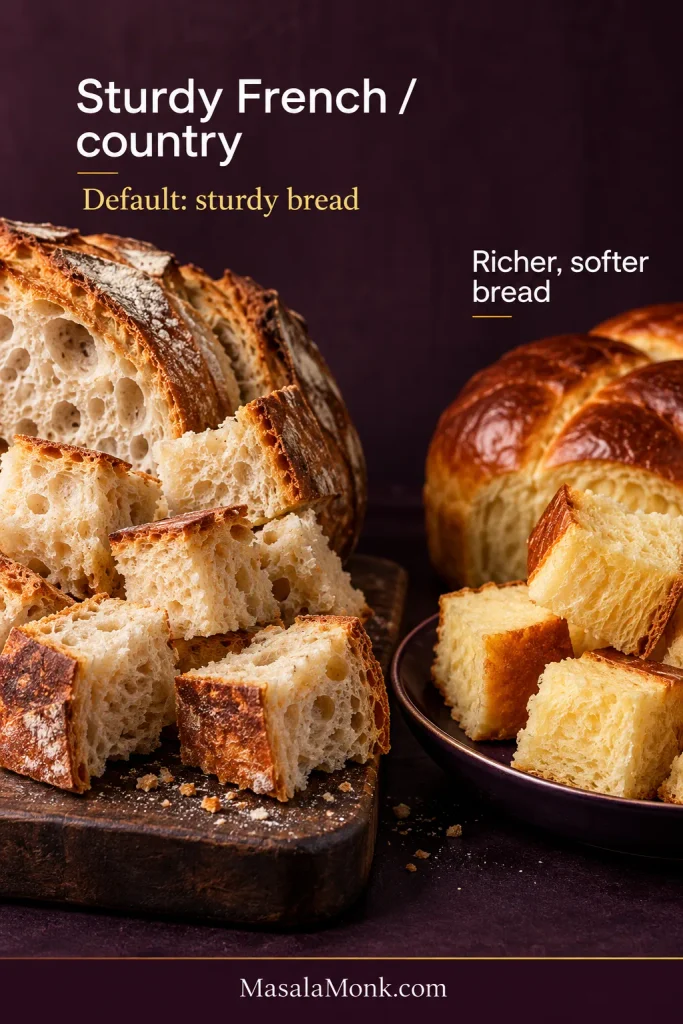
Sturdy French or country-style bread is the easiest all-around choice for an overnight casserole. Sourdough gives you more structure, while dried challah or brioche makes the center richer and softer.
| Bread | What to Expect |
|---|---|
| French or country loaf | Sturdy, forgiving and tender once baked. This is the bread used for the main recipe. |
| Sourdough | Holds its shape especially well and brings a mild tang that balances the sweet topping. |
| Challah | Rich and tender. A very fresh loaf benefits from extra drying before an overnight soak. |
| Brioche | Rich and usually the softest option. Dry it well and handle the soaked pieces gently. |
| Texas toast | A convenient thick-sliced option with enough body to work well after drying. |
| Sandwich bread | Usable, though less forgiving during a long soak because thin, soft slices lose structure quickly. |
Want individual slices with crisp skillet edges? Use the classic French Toast Recipe. That method soaks and cooks one slice at a time, so the bread behaves quite differently.
Why Fresh Bread Needs Drying
“Day-old” really means bread that has already lost some moisture. Fresh bread softens faster once custard is added, so it is more likely to lose its shape during a long soak. Drying the surface first gives it more capacity to absorb the custard without becoming fragile too quickly.
Overnight or Same-Day?
You don’t have to leave it overnight. An 8–12 hour soak gives this casserole a softer, more cohesive center, while a 45–60 minute same-day soak leaves the individual bread pieces more distinct.
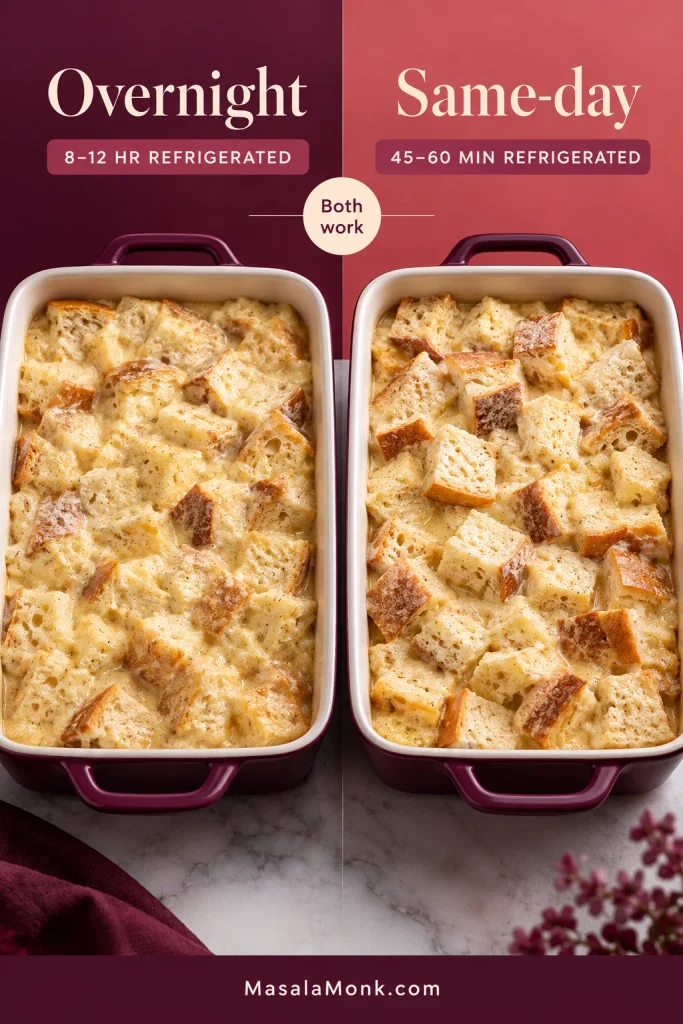
Keep the casserole refrigerated during the soak. The USDA advises refrigerating dishes containing raw eggs and cooking them within 24 hours.
Golden on Top, Set in the Center
The casserole is ready when the center is cooked through, has a softly set texture and reaches at least 160°F / 71°C. When lifted with a serving spoon, the bread should hold together rather than break down into wet paste.
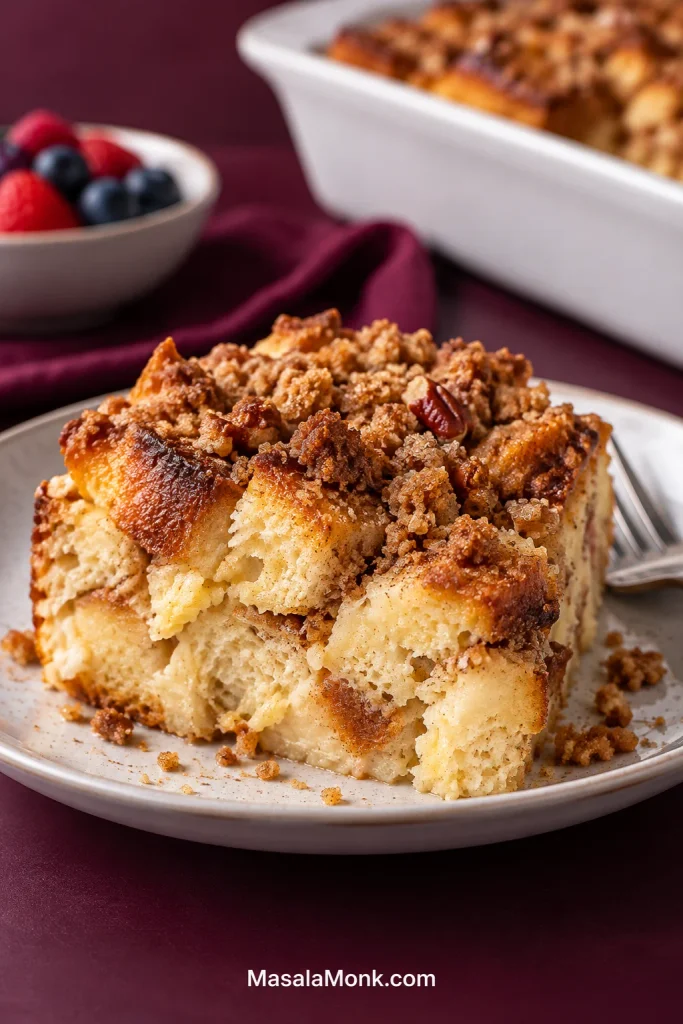
Check more than one spot near the center because the dish may heat unevenly. If you are unsure, give it more time and cover the top loosely with foil if it is already browned enough.

Custardy vs Soggy
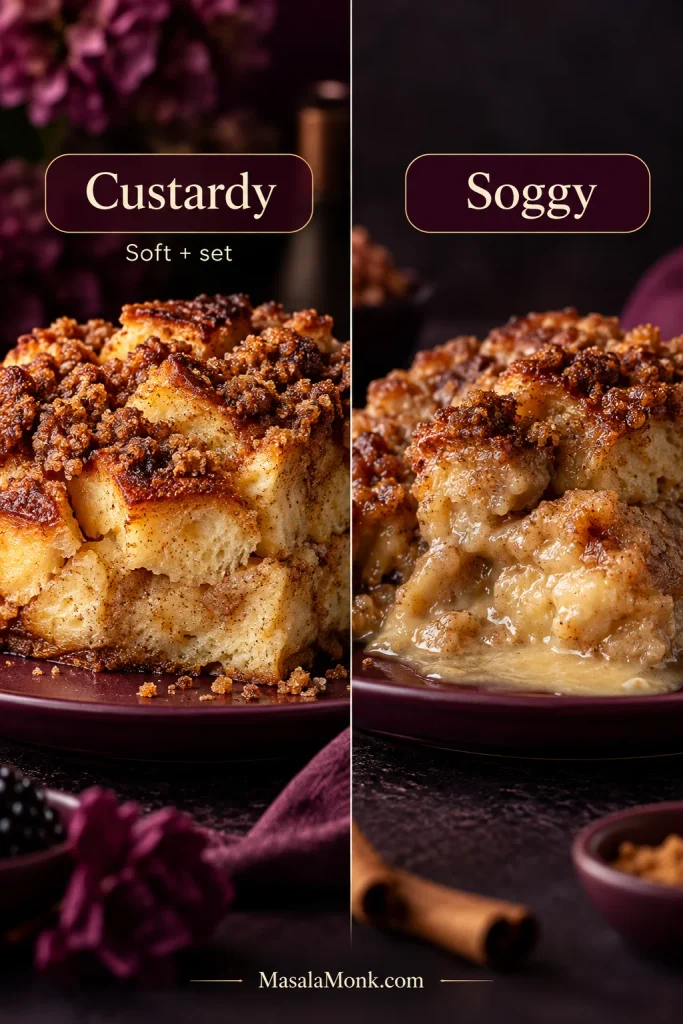
A custardy casserole is soft beneath the browned surface but still holds together when served. Sogginess looks different: loose liquid may collect underneath, the bread can collapse into wet paste, or the middle may still be underbaked.
The scoop test: serve a portion from near the center. Ideally, the bread looks moist and custardy, but shiny liquid should not run into the space left by the serving spoon.
When the Casserole Goes Wrong
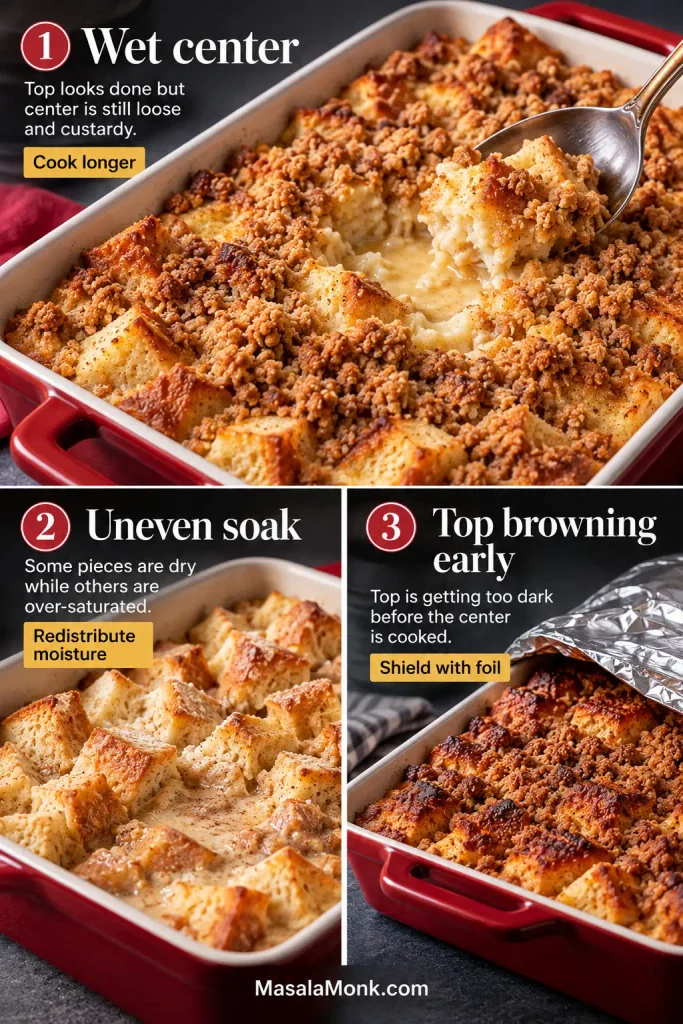
Start with the symptom you can see. A wet center, uneven moisture across the bread and an over-browned top point to different problems, so identify where the casserole is going wrong before changing the recipe.
| What You See | What to Check |
|---|---|
| Dry bread on top, wet bread underneath | The custard was unevenly distributed. Next time, turn the bread several times and make sure the higher pieces are moistened before the soak. |
| Wet or liquid center | Continue baking. A deep or very cold casserole often takes longer. Cover the top loosely with foil once it is browned enough, and check the center temperature again. |
| Cooked through but mushy | The bread was probably too soft or too moist for the length of the soak. |
| Dry casserole | Check the bread weight, how thoroughly it was dried and whether the casserole stayed in the oven longer than necessary. |
| Dry pieces after the same-day soak | Before baking, turn those pieces and give them more time to absorb the custard already in the pan. |
| Too eggy | Stick with the egg and dairy amounts in the recipe; extra eggs can make the casserole taste more eggy without solving an underbaked center. |
| Top getting too dark | Cover loosely with foil while the center finishes. |
Pan Size and Scaling
Use a 9×13-inch / 23×33-cm pan for the full recipe. For a double batch, use two 9×13-inch pans rather than one deeper dish.
Depth matters because a thicker layer of soaked bread takes longer to heat through, even when the exposed top already looks finished.

Using glass bakeware? Follow the care instructions for your particular dish. Pyrex advises avoiding sudden temperature changes and placing its glassware only into a fully preheated oven.
Half batch
An 8×8-inch pan is the closest match for half the recipe. A 9×9 spreads the bread more thinly, so begin checking it sooner. In either pan, use the same center cues rather than relying on a fixed shortened bake time.
One full casserole serves about 8 generously or around 10 people when fruit, eggs, bacon or other dishes are sharing the table.
Small Add-Ins and Swaps
The base recipe is written without fruit. If you experiment with blueberries or apple, keep the addition restrained; fruit brings extra moisture and can change the texture of the baked center.
- Blueberries: rinse and dry fresh berries thoroughly before scattering them through the bread. A heavy layer can make the center wetter.
- Apple: dice the apple and cook it briefly until some moisture has evaporated and the pieces have softened. Let it cool before adding.
- All whole milk: replace the ½ cup / 120 ml cream with the same amount of whole milk for a slightly lighter custard.
Make Ahead, Storage and Leftovers
Tonight for tomorrow
Assemble the bread and custard, cover the dish and refrigerate it. Keep the crumble in a separate container. Tonight the pan goes into the fridge pale and soaked; by morning, all that remains is the cold crumble, a hot oven and enough time for the top to turn golden.
If you’d rather have breakfast completely ready with no morning baking, overnight oats take the make-ahead idea in another direction. Homemade cinnamon rolls are another baked option: shape and chill them overnight, then bake them fresh the next morning.
Taking it to brunch
Baking where the casserole will be served gives you the crispest topping. If you cover it for a short trip after baking, trapped steam may soften the crumble slightly. Uncover it at the destination; a few minutes in the oven can help crisp the top again. If it will not be served within 2 hours—or within 1 hour when the temperature is above 90°F / 32°C—refrigerate it promptly and reheat before serving.
Leftovers and freezing
Refrigerate leftovers within 2 hours of cooking, or within 1 hour if the temperature is above 90°F / 32°C. Divide the casserole into shallow portions so it cools more quickly, then cover and refrigerate for 3–4 days.
To freeze, portion the casserole into suitable containers and refrigerate promptly while it cools. Once chilled, seal well and freeze. Thaw overnight in the refrigerator before reheating. The middle may be softer after freezing, but a few minutes uncovered in the oven can help the topping crisp again.
Reheating
To reheat several servings, cover and warm in a 325°F / approximately 163°C oven until the center reaches 165°F / 74°C. Uncover for the last few minutes if the crumble needs crisping. For individual portions, microwave in short intervals, stirring or repositioning where practical, until the center reaches 165°F / 74°C. Check more than one spot to account for uneven heating.
Serving Ideas
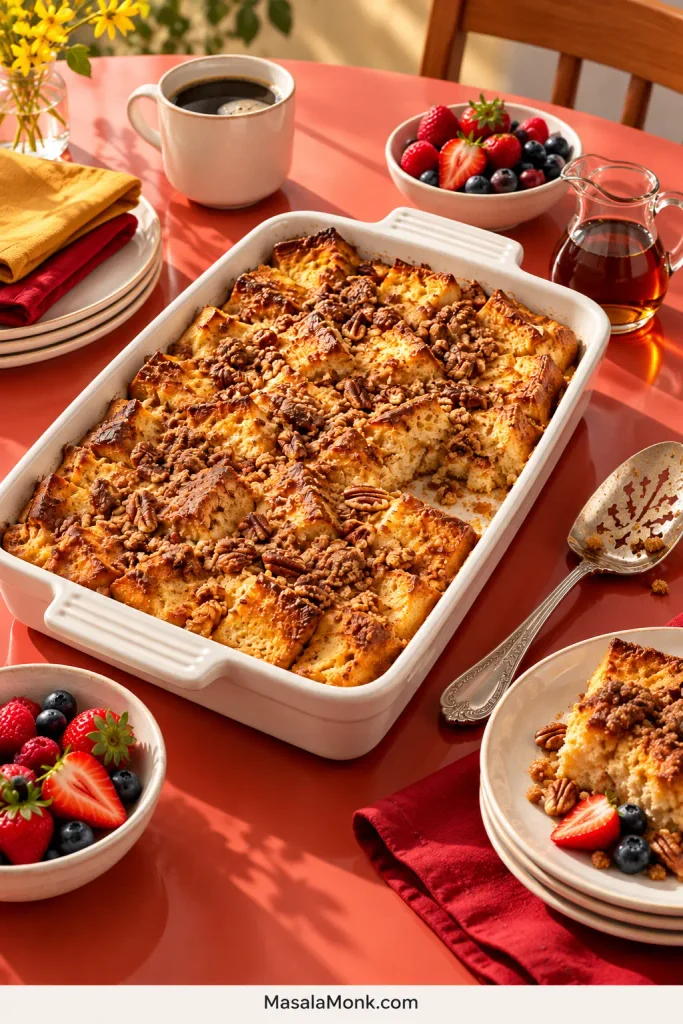
Fresh berries or sliced fruit give the rich casserole some contrast. For something savory, air fryer bacon is especially convenient because the casserole already has the oven occupied. A tray of sausage balls is another easy option when you want something that portions neatly and travels well. Put maple syrup on the table and let everyone add as much as they want.
Want a savory make-ahead breakfast instead? This Breakfast Casserole with Hash Browns combines eggs, potatoes, sausage and cheese in another crowd-friendly 9×13 pan.
For this breakfast, though, let the French toast casserole have the table. Bring the pan out while the crumble is still crisp and the middle is warm and soft. The corner pieces will be firmer, the center more custardy, and the maple syrup can stay on the side for whoever wants it.








