
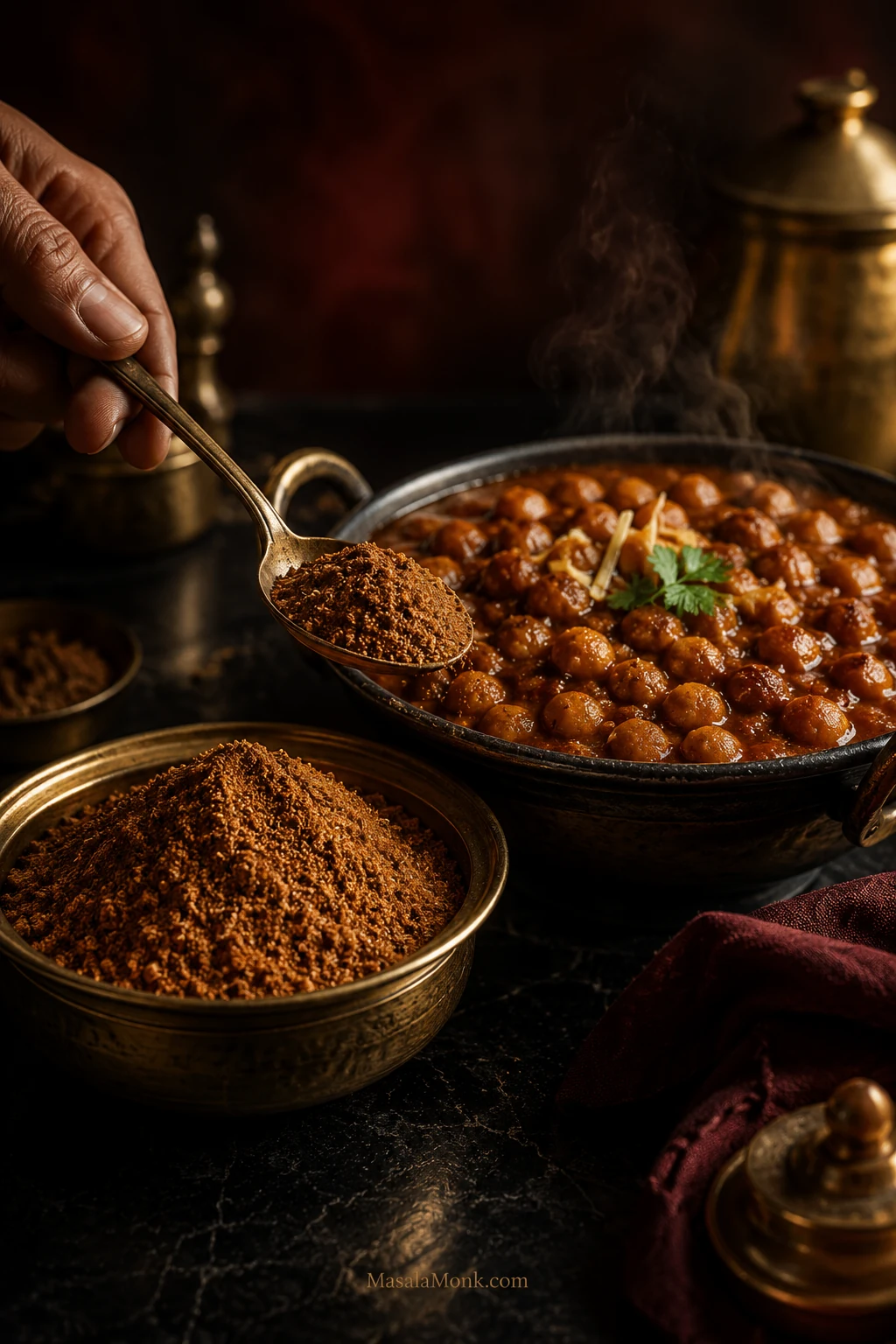
Your chole can smell wonderfully spicy and still taste strangely flat. Maybe the first spoonful is mostly tomato and chickpea, then the chilli arrives afterwards. Or perhaps it is plenty hot but somehow doesn’t taste like the chole you were trying to make.
If you’ve already reached for more cumin, another spoonful of garam masala or a hotter chilli, you probably don’t need a mystery ingredient. The balance between the spices you already have matters more.
This homemade chana masala powder recipe, also called chole masala powder, is built for the common “hot but flat” problem. Coriander and cumin get the longer toast, quicker aromatics join later, and amchur stays out of the pan so the blend keeps its depth without letting one note take over.
The result is earthy, tangy and warmly aromatic without letting chilli dominate. Heat is only one dial. Once you separate it from tang, earthiness and aroma, a disappointing pot becomes much easier to understand.
Homemade Chana Masala Powder Recipe
Making the powder is straightforward. Keep the pan gentle and the spices moving; aroma matters more than chasing a darker colour.
Starting dose: about 5 g per 100 g dried chickpeas, or around 2 g per 100 g cooked or drained chickpeas.
Ingredients
Use the gram weights when you can. Spoon and count measures are rough guides, but chillies, cinnamon sticks, cardamom pods and dried leaves don’t come in standard sizes.
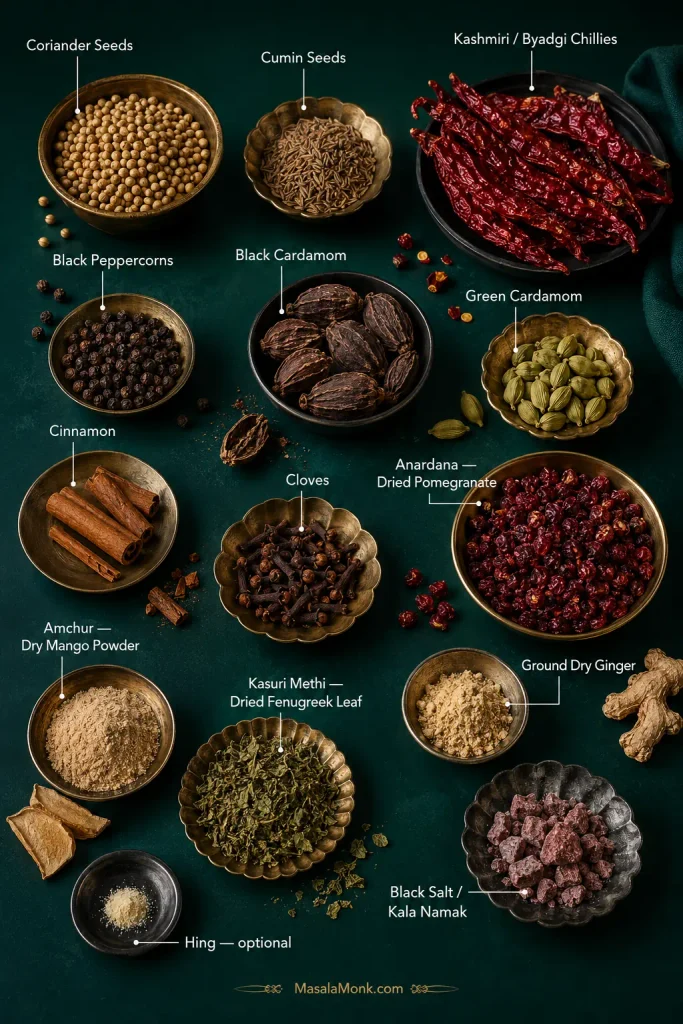
- 30 g coriander seeds — about 6 tablespoons
- 18 g cumin seeds — about 3 tablespoons
- 8 g Kashmiri or Byadgi dried red chillies, stems removed — roughly 6–10 depending on sizeA hotter chilli needs a smaller amount.
- 4 g black peppercorns — about 1½ teaspoons
- 2 g black cardamom — roughly 1–2 large pods or about 2 smaller podsUse the weight if yours are unusually large.
- 1 g green cardamom — roughly 5 pods
- 3 g cinnamon — roughly one moderate 2-inch / 5-cm pieceA thin curl and a thick cassia stick can weigh very differently.
- 2 g cloves — about 1 teaspoon
- 10 g dried anardana / dried pomegranate seeds — roughly 1–1½ tablespoons
- 6 g amchur / dry mango powder — about 2½–3 teaspoons
- 2 g kasuri methi / dried fenugreek leaves — about 1–2 tablespoons, loosely crumbledThis is dried fenugreek leaf, not fenugreek seed.
- 2 g ground dry ginger — about 1 teaspoon
- 2 g black salt / kala namak — about ⅓ teaspoon
- Optional: a tiny pinch of ordinary compounded hing / asafoetida, added after grindingAvoiding gluten? Check the label; some compounded asafoetida contains wheat flour.
Before You Start
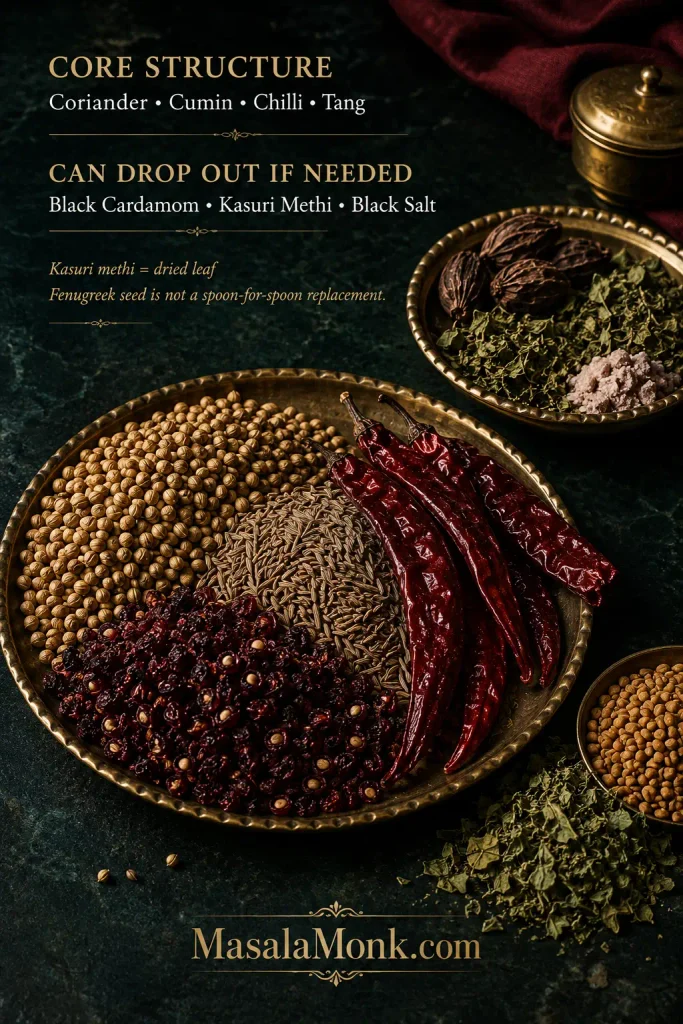
Don’t have every last spice? Keep going. The heart of the blend is coriander, cumin, chilli and tang. Black cardamom, kasuri methi and black salt can drop out when necessary and you’ll still have a perfectly workable chole masala. See what you can leave out and what not to substitute.
Turmeric and regular cooking salt are left out deliberately. Both are easier to adjust in the finished chole.
You’ll need a dry skillet or kadai, a cooling plate, a spice grinder or mixer grinder, and a dry airtight jar. A fine sieve helps when cinnamon or anardana refuses to grind cleanly.
Method
For this blend, don’t chase dark colour in the pan. Some chole formulas deliberately roast their spices more deeply, but this recipe uses a gentler roast. For darker Pindi- or chole-bhature-style chickpeas, build the colour while cooking the chickpeas—some methods use dried amla (Indian gooseberry) or black tea—instead of scorching this powder.
Roast the Spices in Stages
- Measure everything first. Check the coriander, cumin and anardana for grit, stones or damaged pieces, especially if the spices were bought loose. Remove the chilli stems and keep a cool plate beside the stove.
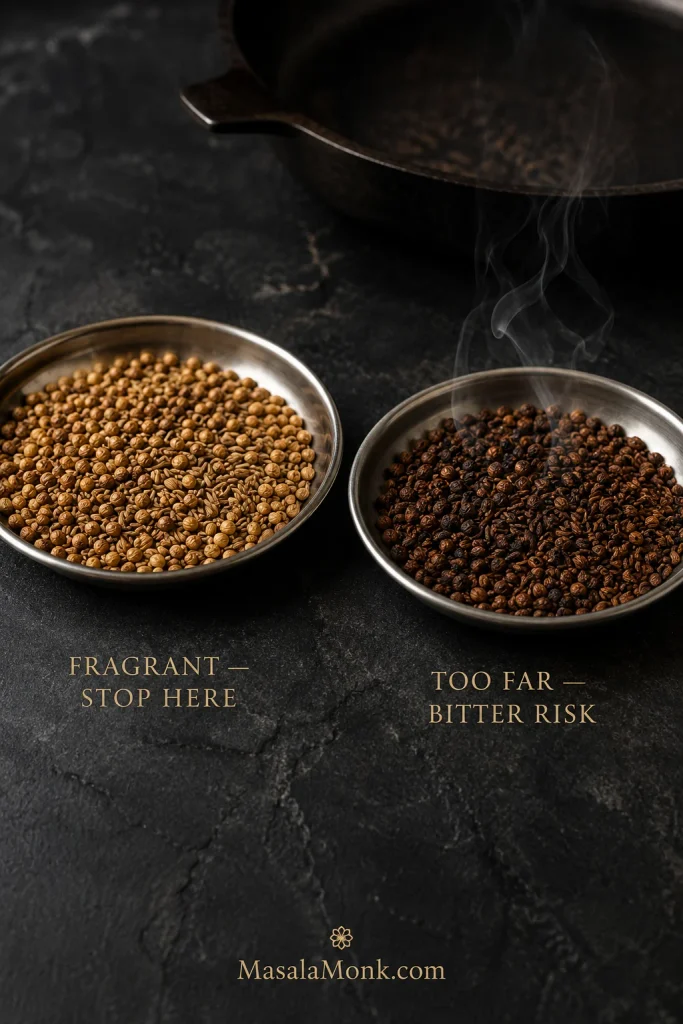
- Heat a dry skillet over low to medium-low heat. Add the coriander and cumin and stir or shake the pan frequently for about 3–4 minutes. They should smell clearly fragrant before they change much colour. Smoke or very dark cumin means the pan is too hot.
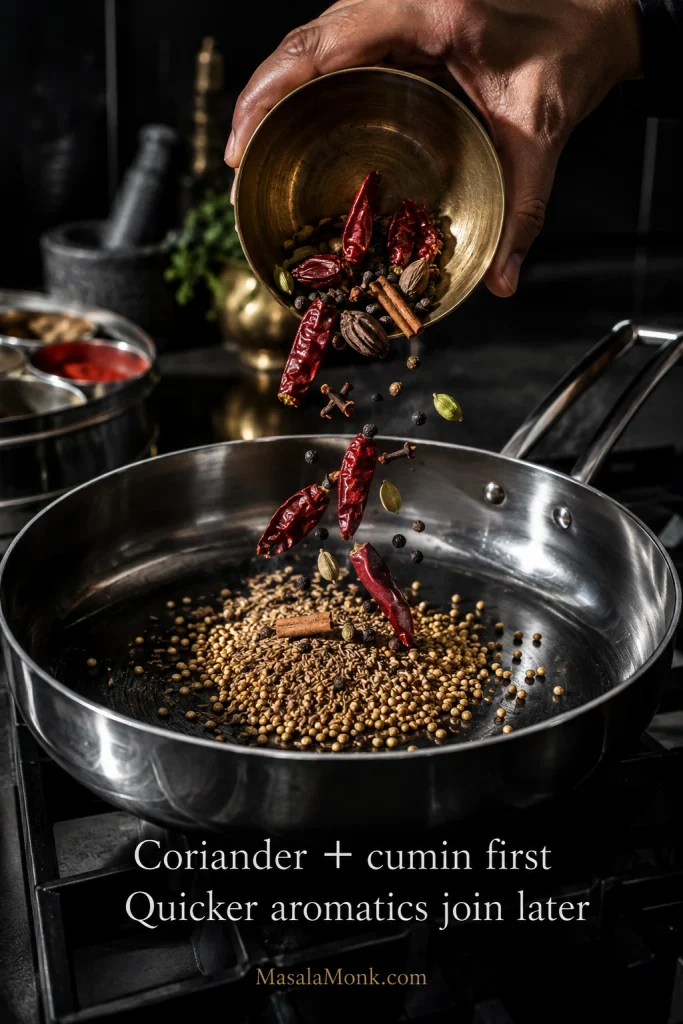
- Add the chillies, pepper, black cardamom, green cardamom, cinnamon and cloves. Stir continuously for another 1–2 minutes. The chillies should feel drier and may puff slightly. Once the aroma becomes vivid, tip everything onto the cool plate.
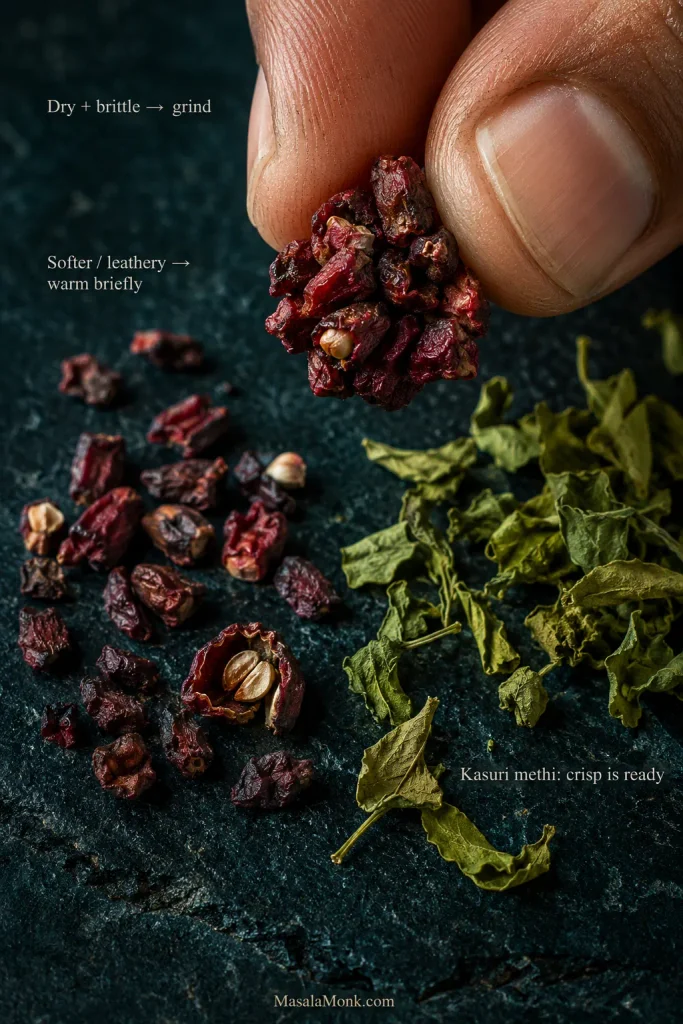
- Check the anardana and kasuri methi. Very dry, brittle anardana can go straight to the grinder. Softer or leathery seeds benefit from a brief warming over low heat so they grind more cleanly. Crisp kasuri methi can go in as-is; softer leaves only need a few seconds of gentle heat. Cool anything you warmed.
Cool, Grind and Jar the Blend
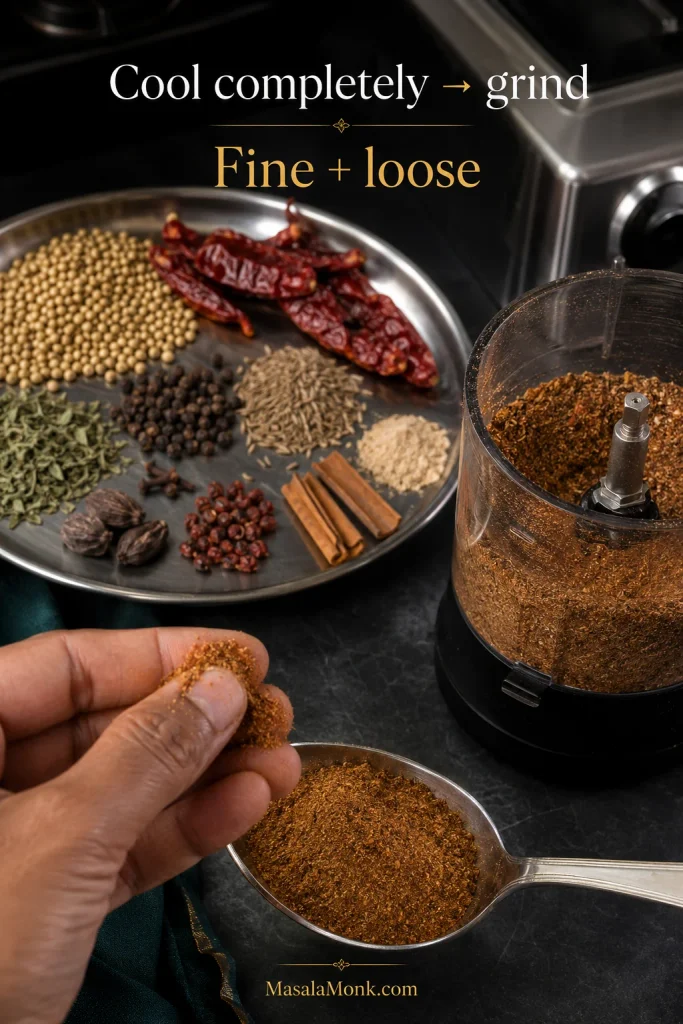
- Let everything cool completely, usually 10–15 minutes. There shouldn’t be obvious warmth left when you pick up the spices.
- Pulse the cooled whole spices until fairly fine. Add the amchur, dry ginger, black salt, cooled kasuri methi and optional hing, then pulse again just until evenly mixed. A noticeably hot grinder needs a break before you continue.
- Rub a little powder between your fingers. It should feel fine and loose, never damp or pasty. Tiny flecks are fine; obvious cinnamon or pomegranate pieces need another grind. Let the dust settle for a few seconds before opening the grinder. With hotter chillies, keep your face back, avoid touching your eyes and wash your hands well after handling them; good ventilation helps.
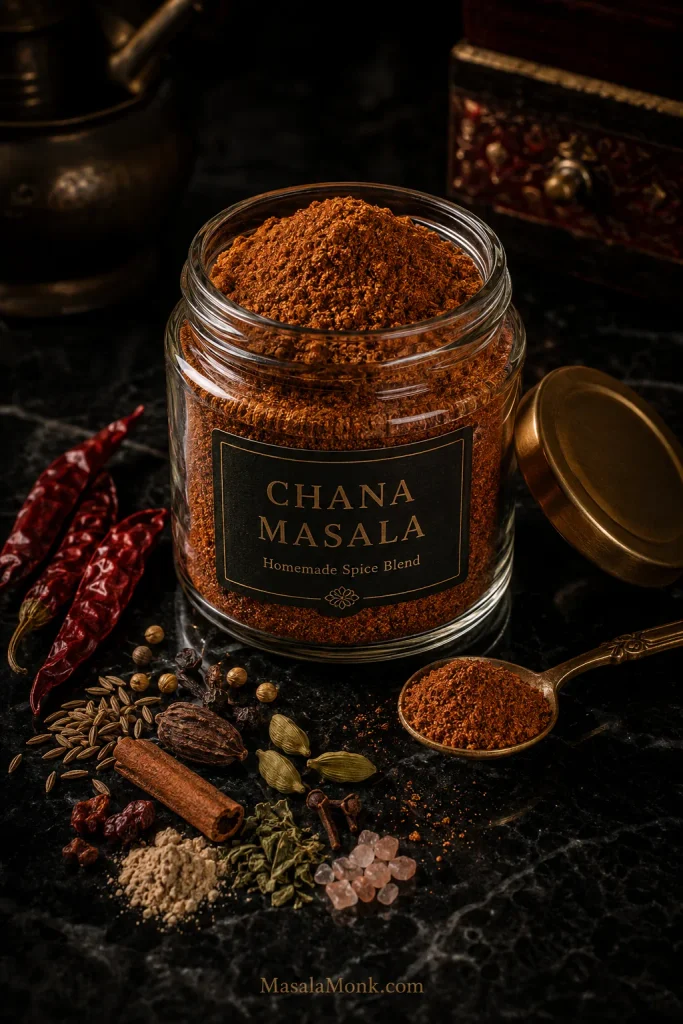
- Transfer the completely cool powder to a clean airtight jar. Smell it before you close the lid. Coriander and cumin should come first, followed by fruity anardana, pepper and chilli. Cloves and black cardamom should remain in the background.
How Much Chana Masala Powder Should You Use?
Starting Dosage by Chickpea Weight
One recipe tells you to use a couple of teaspoons; another seems to want tablespoons. Both can make sense when the powders themselves aren’t equally concentrated.
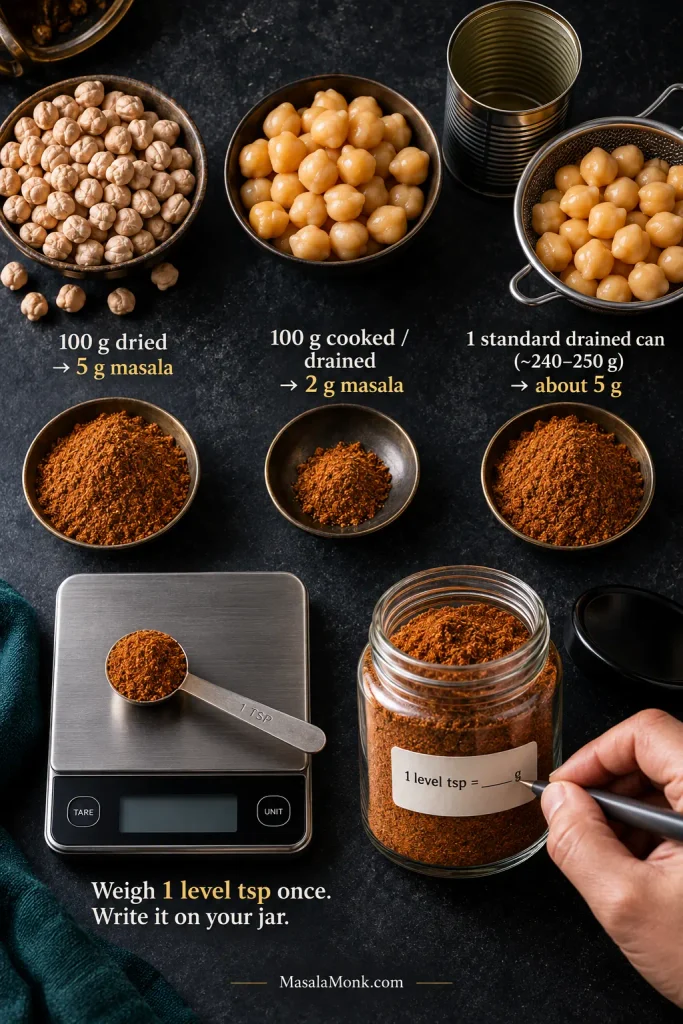
For this homemade masala, start with 5 g for every 100 g dried chickpeas, or roughly 2 g for every 100 g cooked or drained chickpeas.
The blend is not your pot’s total salt adjustment. Season the finished chole separately, especially when using canned chickpeas or a packet spice blend.
| Chickpeas | Start with this blend |
|---|---|
| Starting with dried chickpeas | |
| 100 g / 3.5 oz dried | About 5 g |
| 200 g / 7 oz dried, roughly 1 cup | About 10 g |
| 250 g / 8.8 oz dried | About 12–13 g |
| Starting with cooked or canned chickpeas | |
| 400 g / 14 oz cooked | About 8 g |
| About 3 cups cooked, roughly 450–500 g | About 9–10 g |
| 1 standard 15-oz / 425-g can, about 240–250 g after draining | About 5 g |
| 2 standard cans, about 480–500 g drained | About 10 g |
Calibrate Your Teaspoon
No scale beside the stove? Weigh one level teaspoon from your finished batch once and write that weight on the jar. Grind fineness changes density, so your own teaspoon conversion is more reliable than a universal spoon measure.
Let the first dose simmer into the gravy before deciding it is weak. If the pot really needs salt, a direct adjustment to tang, or a few more minutes of reducing, fix that directly instead of using extra masala as a catch-all.
Using a packet? Follow that packet first. Commercial chole masalas vary enormously in salt, chilli, acidity and concentration, so the table above belongs to this homemade blend. See why packet and homemade measurements don’t transfer directly.
When to Add the Powder
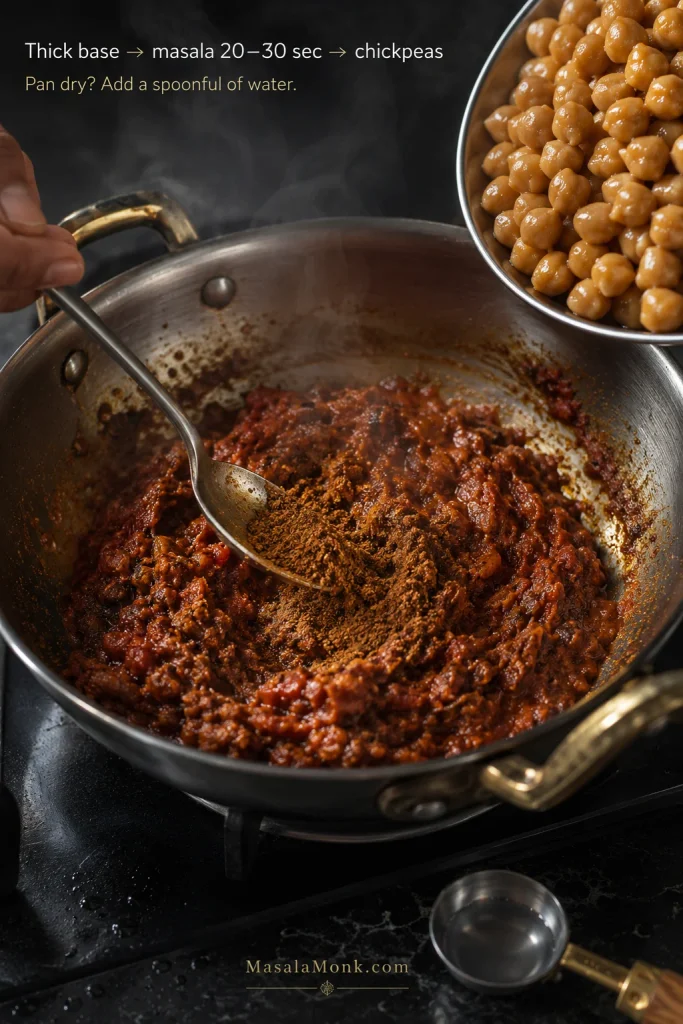
Cook the onion-tomato base until it is thick and no longer smells raw. Lower the heat, stir in most of the masala and give it about 20–30 seconds. A dry pan needs a spoonful of water before the spices catch. Add the chickpeas and cooking liquid straight afterwards.
When the chole tastes balanced but the aroma seems quiet, a small finishing dose works better than another long cook.
Made the Powder? Here’s Dinner
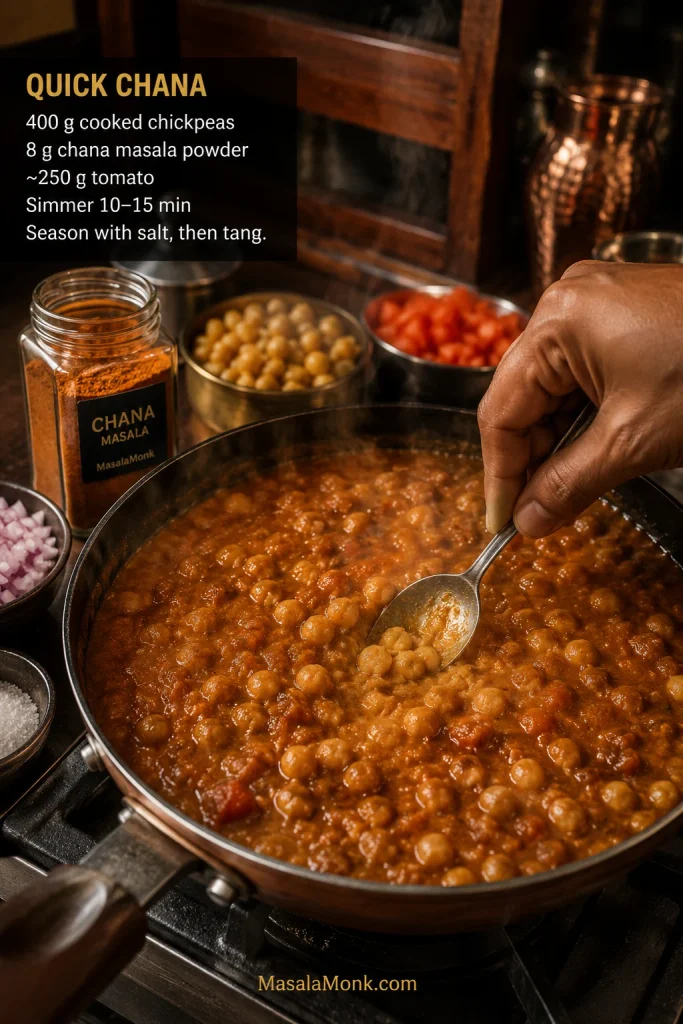
For an easy everyday chana, soften and lightly brown 1 medium chopped onion, about 120–140 g, in 1–2 tablespoons oil or ghee. Add about 1 teaspoon each of grated ginger and garlic, if using, then about 250 g chopped or puréed tomato. Cook until the tomato has reduced into a thick base.
Lower the heat and stir in 8 g of this chana masala powder for 400 g / 14 oz fully tender cooked chickpeas. Give it 20–30 seconds, adding a spoonful of water when the pan looks dry, then add the chickpeas and enough water or cooking liquid for the consistency you like.
Finish the Chole
Simmer for 10–15 minutes and mash a small spoonful of chickpeas into the gravy for body. Season with salt, then taste for tang. Only after those are right should you decide whether the pot needs another little dose of masala.
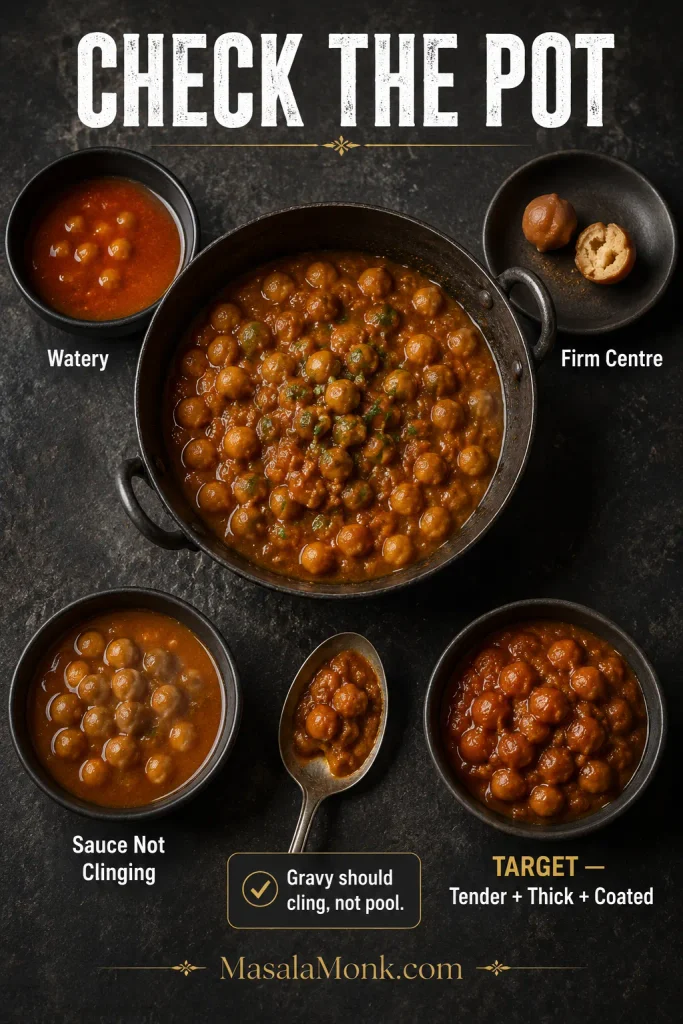
What are you aiming for? Tender chickpeas coated in gravy that clings instead of pooling around them. The first bite should taste savoury and tangy, and the chilli should warm the finish instead of arriving afterwards as a separate blast.
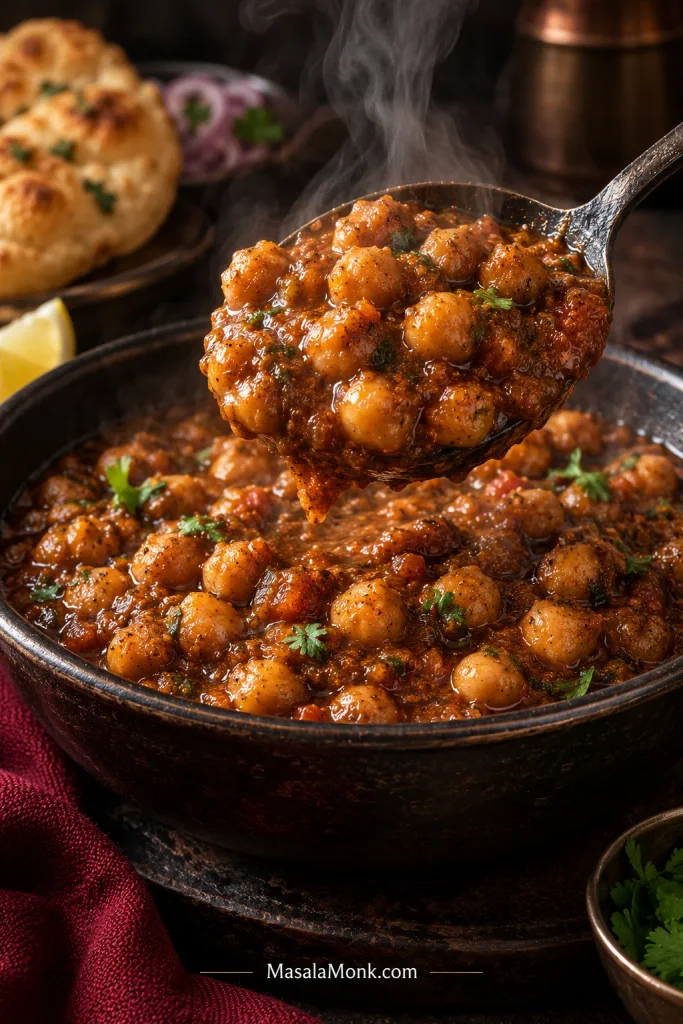
That is enough for a dependable everyday chana. The rest of the guide is about understanding the blend and changing it when you want something different.
What Is Chana Masala Powder?
Chana masala powder and chole masala powder usually refer to the same broad family of spice blends made for chickpeas. There is no single fixed formula.
This version leaves onion and garlic for the curry base instead of putting them into the stored powder; some commercial chana masalas include dried garlic.
Chana masala powder is also not besan or chickpea flour. “Chana powder” can sometimes mean ground chickpeas or gram flour; here we’re talking about a spice mixture.
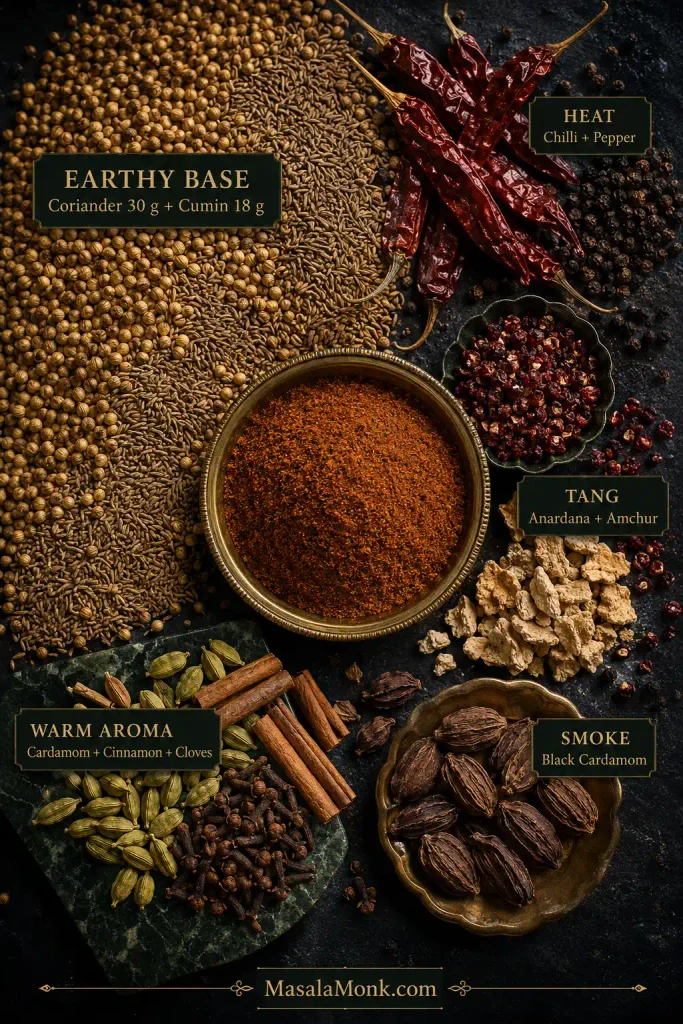
The easiest way to remember the blend is by the job each group does. Coriander and cumin form the earthy base. Chilli and pepper control heat. Anardana and amchur bring tang. Cardamom, cinnamon and cloves supply warm aroma, while black cardamom adds smoke. Most of the salt stays in the curry.
How the Blend Is Balanced
The 30 g coriander to 18 g cumin ratio keeps coriander in front. It brings a fresh, citrusy earthiness; cumin takes the flavour deeper. Together they give the masala enough body to settle into the gravy instead of leaving only warm spice on top.
Chilli and pepper have different jobs too. Kashmiri or Byadgi chilli carries colour and a broad warmth; pepper catches up later with a sharper heat.
Cardamom, cinnamon and cloves should remain in the background.
Why Chole Masala Recipes Look So Different
Compare five good recipes and you may find five convincing formulas. Some nearly match coriander and cumin. Others lean much harder on coriander. One uses amchur, another anardana, while plenty use both. Kasuri methi, black salt, turmeric, fennel, ajwain, mace and nutmeg come and go.
The grind changes as well. A coarse masala can feel pleasantly rustic; a finer one disappears more easily into gravy and is easier to dose consistently.
Punjabi chole isn’t one rigid template. Pindi and Amritsari styles alone can differ noticeably in method, gravy and seasoning, and family versions move again. One family’s spice tin may smell smokier, another’s fruitier with anardana, and both can taste immediately like chole.
Adjusting the Tang: Anardana and Amchur
Tang is one of the biggest reasons two chole masalas can taste so different. Anardana and amchur aren’t identical: anardana gives a deeper, fruitier tang, while amchur is sharper and hits sooner on the tongue.
This recipe uses 10 g anardana with 6 g amchur so the tang has both depth and lift.
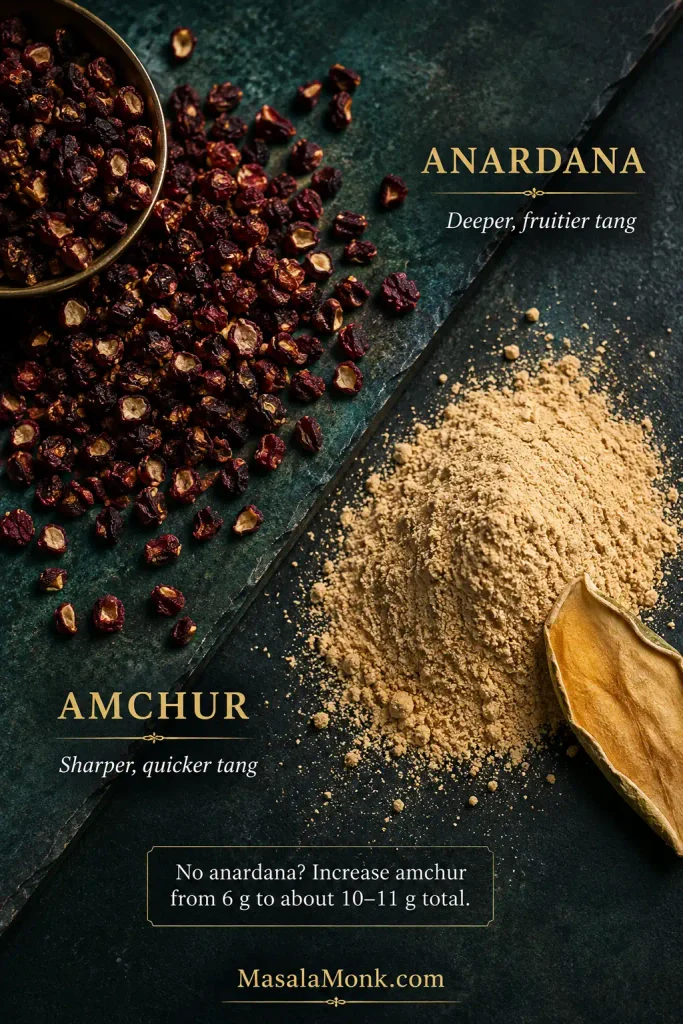
Out of anardana? Skip the 10 g anardana and increase the amchur from 6 g to about 10–11 g total. The blend will taste sharper and less fruity. No amchur? Leave it out and let the anardana carry the dry tang, then finish the cooked chole with lemon if it needs more lift.
Count the sour ingredients already in the pot. Tomato, anardana, amchur, lemon, tamarind and acids in some packet masalas can pile up faster than you expect.
Chana Masala Powder vs Garam Masala
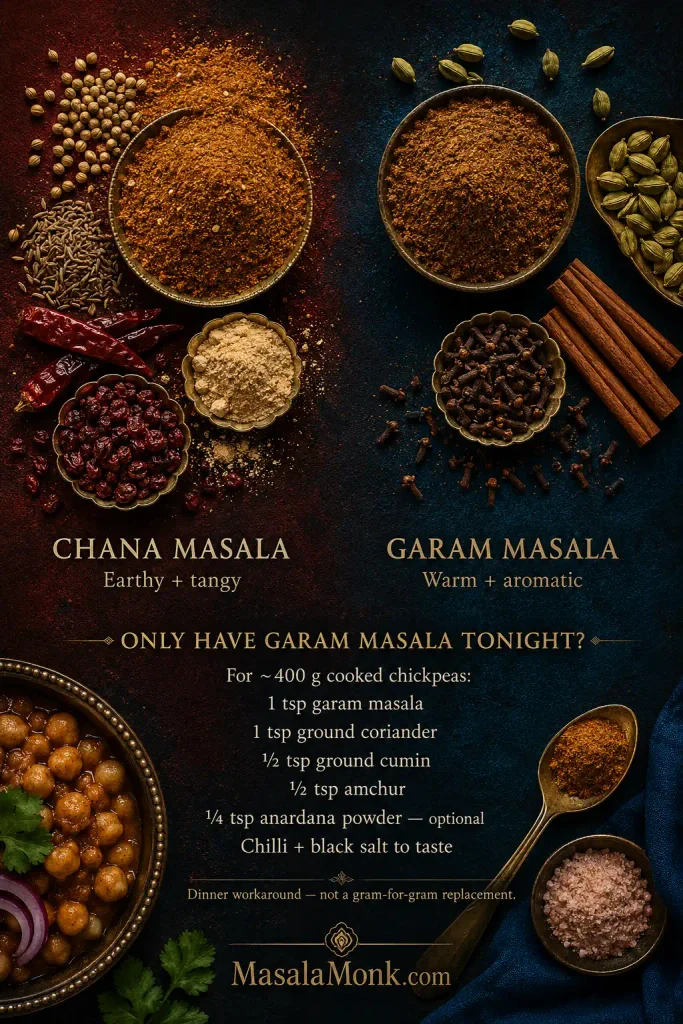
Garam masala can stand in for chana masala powder in a pinch, but it usually needs help from coriander, cumin and something tangy.
The two blends share several warm spices. Garam masala generally leans much more towards aroma, while chole masala usually has a clearer coriander-cumin base and often gets part of its character from anardana or amchur. Chickpeas seasoned only with garam masala can smell wonderful yet miss the earthy, tangy flavour you were chasing.
Our homemade garam masala makes that contrast easy to see ingredient by ingredient.
A Garam Masala Workaround
For about 400 g cooked chickpeas, start with:
- 1 teaspoon garam masala
- 1 teaspoon ground coriander
- ½ teaspoon ground cumin
- ½ teaspoon amchur
- ¼ teaspoon anardana powder, optional
- chilli and black salt to taste
Think of this as a dinner workaround, not a gram-for-gram copy of the blend above. Simmer it into the gravy before deciding whether it needs more; the result will depend on the garam masala you started with. Making dinner now? Jump back to the quick chana method.
Using Ground Spices Instead of Whole
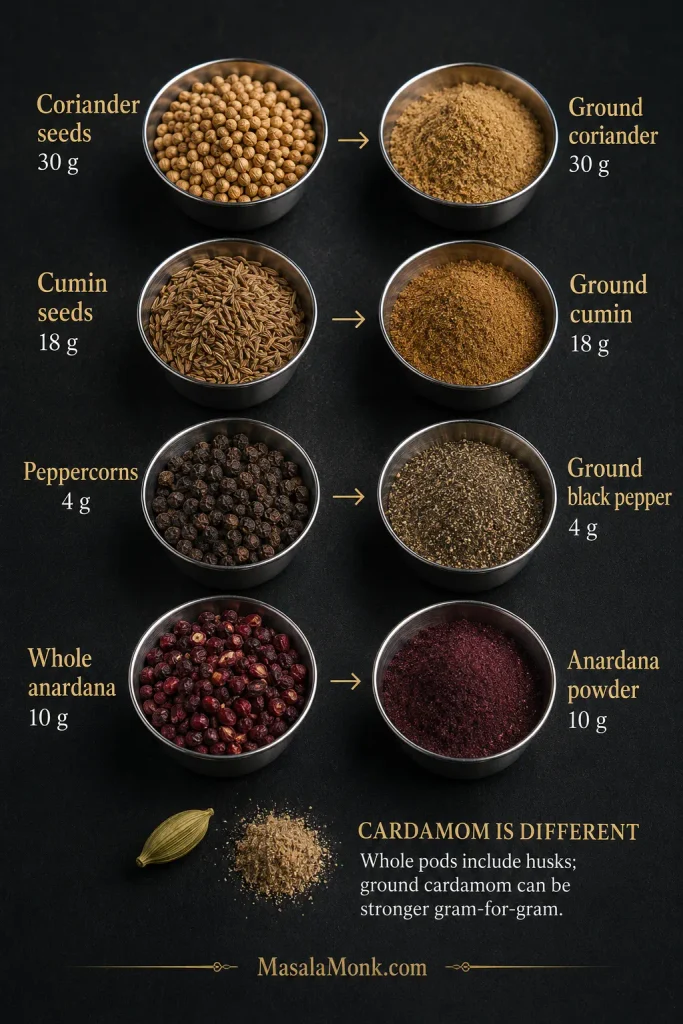
For coriander, cumin, pepper and anardana, approximately equal weight is a sensible starting point. Pre-ground spices vary in freshness and strength, so equal weight does not promise identical flavour.
- 30 g coriander seeds → about 30 g ground coriander
- 18 g cumin seeds → about 18 g ground cumin
- 4 g peppercorns → about 4 g ground black pepper
- 10 g whole anardana → about 10 g anardana powder
Pre-ground coriander, cumin and pepper don’t need the same dry-roasting treatment as whole spices. Mix them in unheated when finishing the blend, or toss them for a few seconds in the pan’s residual warmth after taking it off the stove. They scorch quickly.
Old ground cumin or coriander is a different problem. A jar that has been open for months may smell much quieter even at the same weight. Judge the cooked chole before automatically adding more.
Cardamom is the exception to the easy weight swap. Whole pods include husks; ground cardamom may contain mostly seed and can be much stronger gram-for-gram.
What You Can Leave Out
Black cardamom adds a distinctive low smoky note, but the masala works without it. Don’t compensate with extra green cardamom; that takes the blend in a sweeter, more floral direction.
Kasuri methi can go too. Fenugreek seed is much more bitter, so don’t replace the leaf spoon-for-spoon with seed.
No black salt? Salt the finished chole normally.
Tune the Next Batch
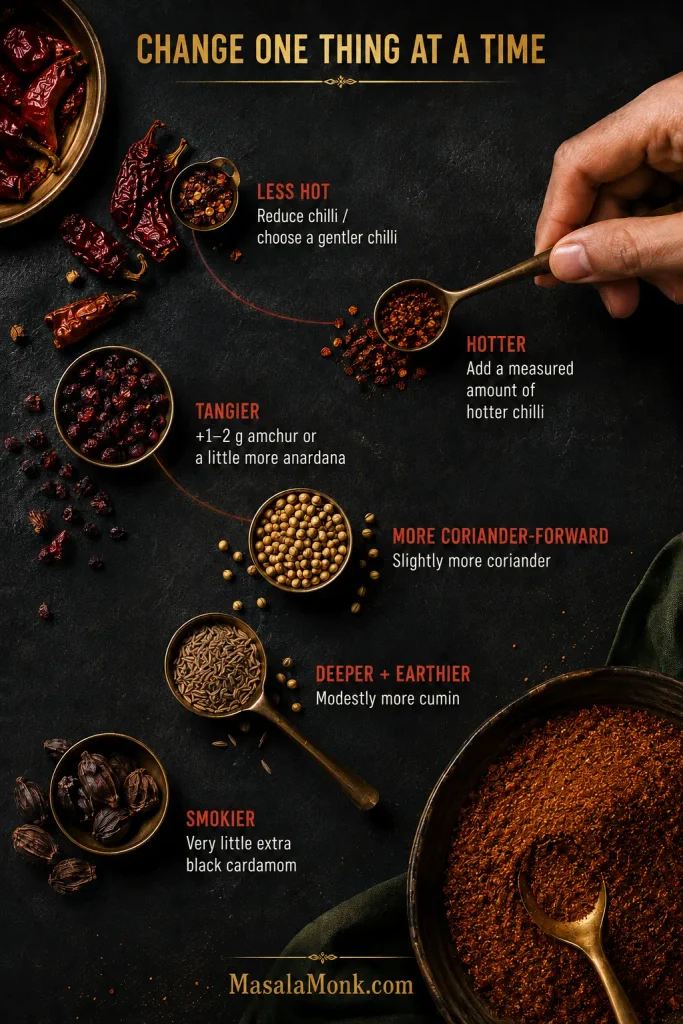
Changing one part of the blend changes one part of the flavour. More chilli makes the next batch hotter; it doesn’t make it tangier or more aromatic. Change one thing at a time so you know which adjustment actually improved the blend.
When you make the next batch, small changes are enough:
- Less hot: reduce the chilli or choose a gentler variety.
- Hotter: keep Kashmiri/Byadgi chilli for colour and add a measured amount of something hotter.
- Tangier: add another 1–2 g amchur or a little more anardana.
- More coriander-forward: increase the coriander slightly.
- Deeper and earthier: increase the cumin modestly.
- Smokier: add very little black cardamom at a time.
A jar that smells more perfumed than appetising already has plenty going on. Check the cloves, cinnamon and cardamom before reaching for more chilli.
Trying to repair this batch rather than change the next one? Go to the powder troubleshooting section.
Homemade vs Packet Chana Masala
Homemade gives you control over chilli, tang and salt. A packet gives you consistency—and sometimes that consistency is exactly what you’re trying to reproduce.
A packet can be part of the flavour memory too.
Shan Chana Masala shows why packet and homemade measurements don’t transfer neatly. Its ingredient list starts with salt and includes dried garlic, and its directions call for 25 g mix with 250 g dried chickpeas. This entire homemade recipe contains only 2 g black salt. Equal spoonfuls clearly aren’t equivalent.
Use the packet’s own directions as your first guide. Draining and rinsing canned chickpeas also gives you more control over salt before the gravy reduces.
If a packet gives you exactly the chole you like, use it. Homemade matters when you want to choose the balance yourself.
My Chana Masala Powder Tastes Wrong
First decide whether the problem is in the jar or in the pot. Taste a tiny pinch of the powder and notice what arrives first: chilli, clove, tang, smoke—or almost nothing. The jar itself can tell you a lot.
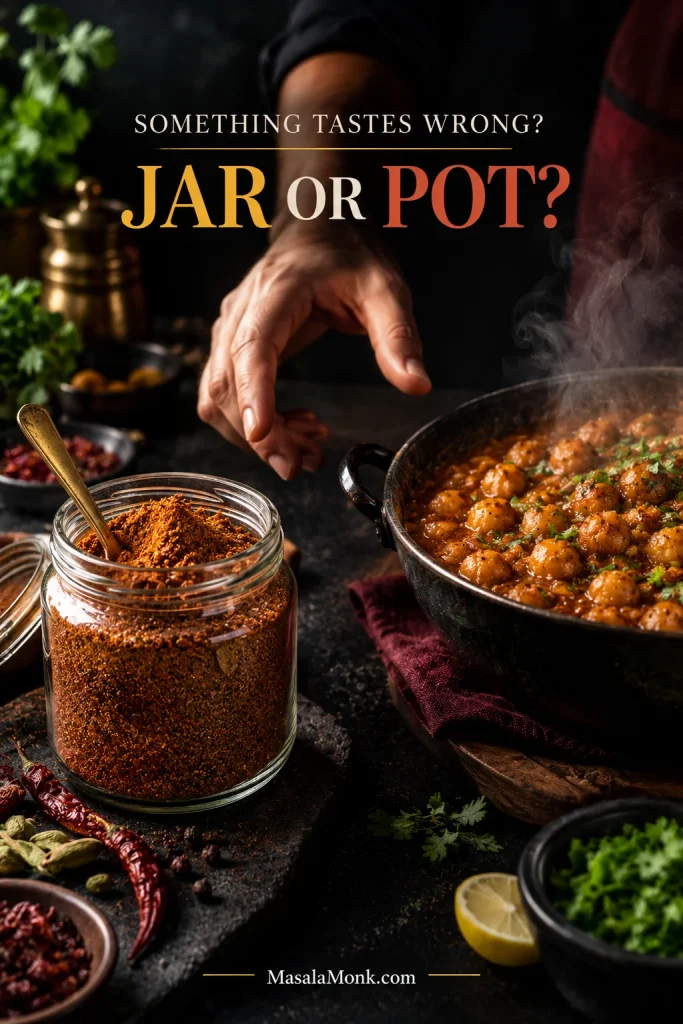
Match the Symptom to the Fix
When a batch needs diluting, make a small fresh portion built mainly around coriander and cumin. Leave out whichever ingredient is dominating, then mix the fresh portion into the original powder gradually, tasting as you go.
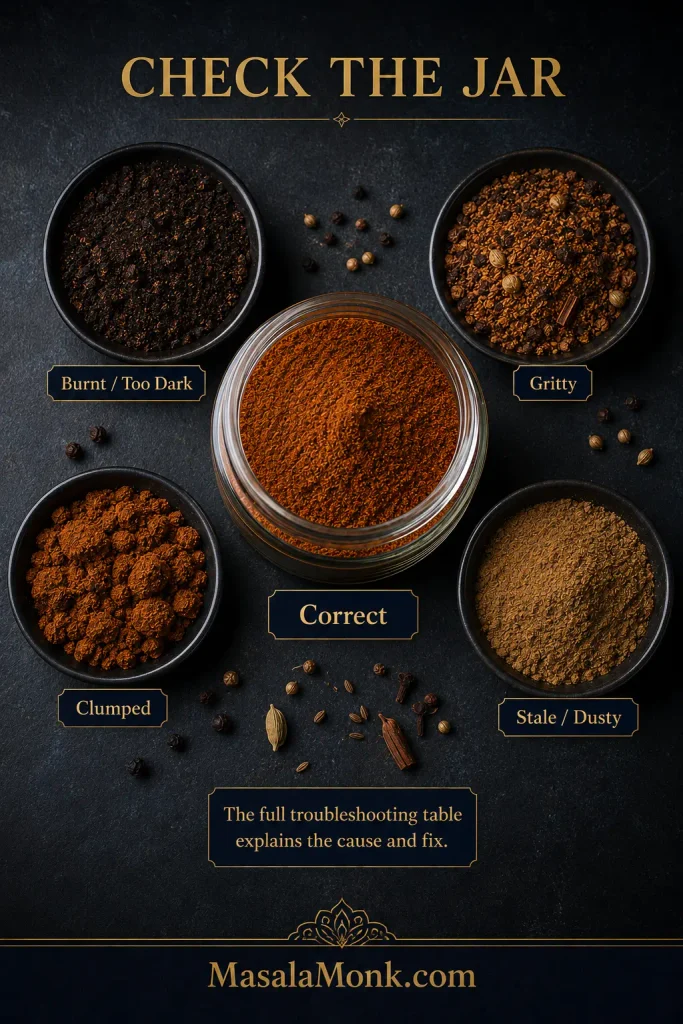
| Problem | Likely cause | Try this |
|---|---|---|
| Bitter | Scorched spices, overheated pepper or a hot grinder | Burnt: discard. Mild bitterness: add the fresh coriander-cumin-heavy portion gradually. |
| Hot but flat | Chilli is too far ahead of the earthy base or tang | Add a chilli-free coriander-cumin-heavy portion, then reassess the tang. |
| Too tangy | Too much anardana or amchur | Add fresh coriander-cumin-heavy masala with no extra souring ingredients. |
| Too smoky | Black cardamom dominates | Add the fresh portion with no extra black cardamom. More chilli won’t hide the smoke. |
| Perfumed or medicinal | Clove, cinnamon or cardamom is too strong | Add fresh coriander-cumin-heavy masala with no extra clove, cinnamon or cardamom. |
| Flat or dusty | Old spices or prolonged hot grinding | A fresh batch will help more than doubling stale powder in the curry. |
| Gritty | Anardana, cinnamon or cardamom husk hasn’t ground finely | Sieve and regrind the coarse pieces. |
| Clumpy | Moisture, warm powder, a wet spoon or steam | Fix the storage problem; discard if you see clear signs of spoilage. |
Before You Blame the Masala, Check the Chole
And sometimes there is nothing wrong with the jar at all. A perfectly good masala cannot rescue chickpeas that are chalky in the centre or gravy that hasn’t reduced enough.
| Your chole is… | More masala? | Check first |
|---|---|---|
| Bland overall | Maybe | Salt and gravy concentration |
| Hot but one-note | Usually no | Tang, warm-spice balance and salt |
| Watery | No | Reduce the gravy; mash a few chickpeas if useful |
| Chickpeas are firm | No | Cook them until fully tender |
| Beans taste separate from the sauce | No | Simmer longer; mash a small portion into the gravy |
| Too tangy | No | Count tomato, amchur, anardana, lemon, tamarind and packet acidity together |
| Bitter or oddly soapy | No | Check scorched aromatics or masala, excess hing, and too much baking soda/alkalinity |
| Too salty | No | Packet masala, chickpea brine and added cooking salt |
| Balanced, but aroma is quiet | A little | Add a small finishing dose |
Press one chickpea between your fingers. A properly tender centre should crush easily instead of feeling chalky or springing back.
If the gravy tastes weak at first but leaves a strong spice aftertaste, it often needs time more than another spoonful. Once the sauce clings and the chickpeas are tender, the seasoning becomes much easier to judge.
If the curry’s texture and seasoning seem right but the powder itself tastes wrong, check the jar instead.
How to Store Chana Masala Powder
For the liveliest aroma, aim to use the powder within about 2–3 months. That is a freshness target, not a hard spoilage deadline. A dry blend kept clean and properly stored may remain usable longer, but coriander, chilli and cardamom gradually lose their lift.
Keep it in an airtight jar in a cool, dark cupboard away from the stove. Jar the powder only when it is completely cool, use a dry spoon, don’t hold the open container over a steaming pan, and date the jar when you make it.
Cook chole only occasionally? Halve the recipe. The full batch seasons roughly 9–11 batches made with about 400–500 g / 14–18 oz cooked chickpeas each, so a half batch is more likely to stay aromatic right to the bottom.
The masala also works with kala chana, aloo chana, pindi chole, chole bhature and other drier chickpea preparations. Start a little lighter when there is less gravy to absorb the tang and spice.
Doubling the recipe? Roast and grind it in two batches so neither the pan nor the grinder is crowded.
Once You Know the Balance
The recipe gives you a dependable place to begin. After a few pots, the useful part isn’t remembering every gram. It’s knowing what you want more of—and what to leave alone.
Then make the chole you remember, the one your family makes, the restaurant bowl you’ve been chasing, or simply the bowl you want tonight.








