
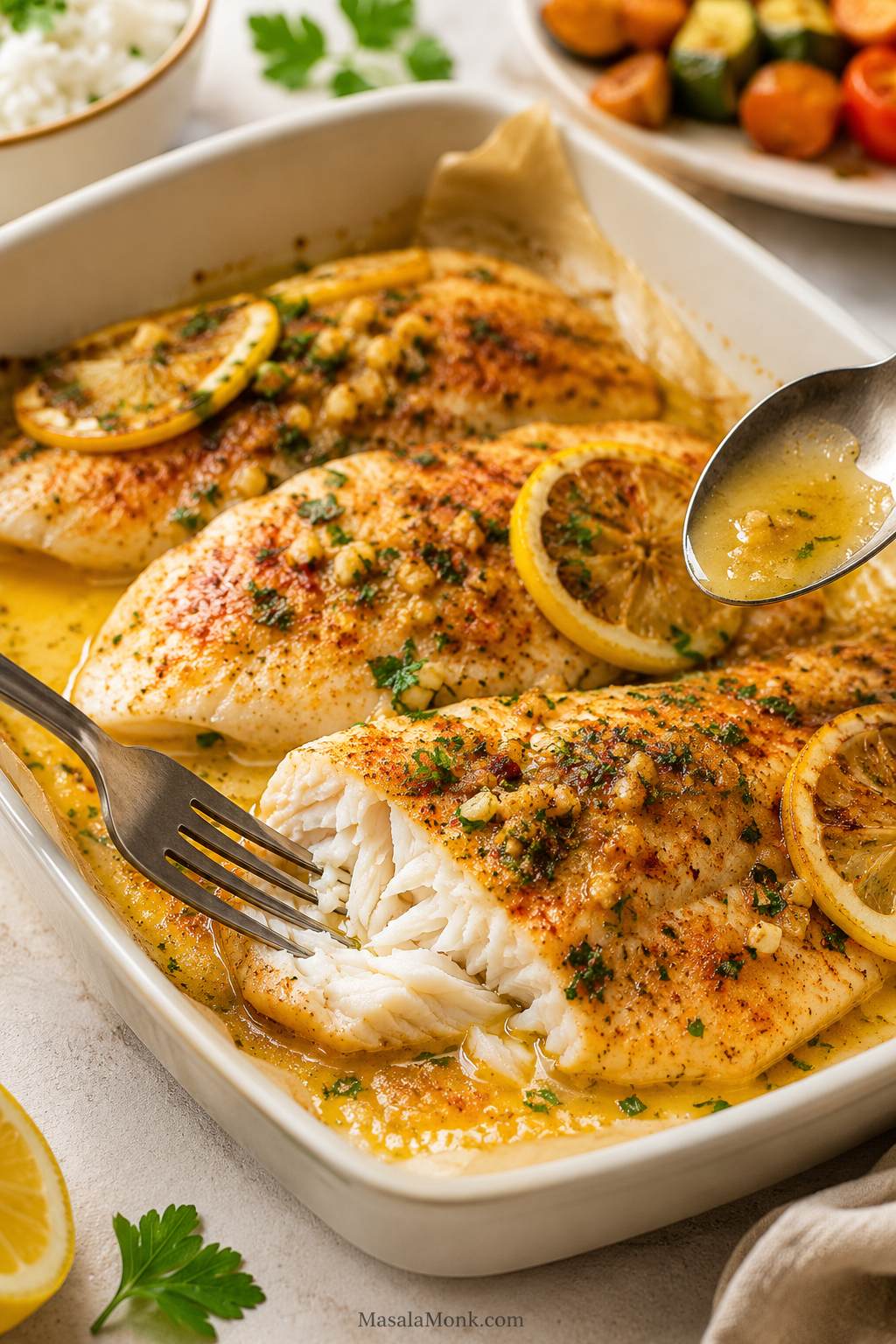
This baked tilapia recipe is for the nights when dinner needs to feel easy but still taste like you tried: tender white fish, lemony garlic butter, a little paprika, and a spoonable pan sauce for rice, potatoes, or vegetables. Tilapia is mild, quick, and easy to dress up, which is exactly why it can become one of the most useful weeknight fish recipes in your rotation.
The trick is not to overthink it — but also not to underseason it. This fish is lean and delicate, so it needs enough salt, lemon, garlic, and butter or olive oil to taste bright instead of bland. It also cooks fast, which means a few extra minutes can turn flaky fish into dry fish.
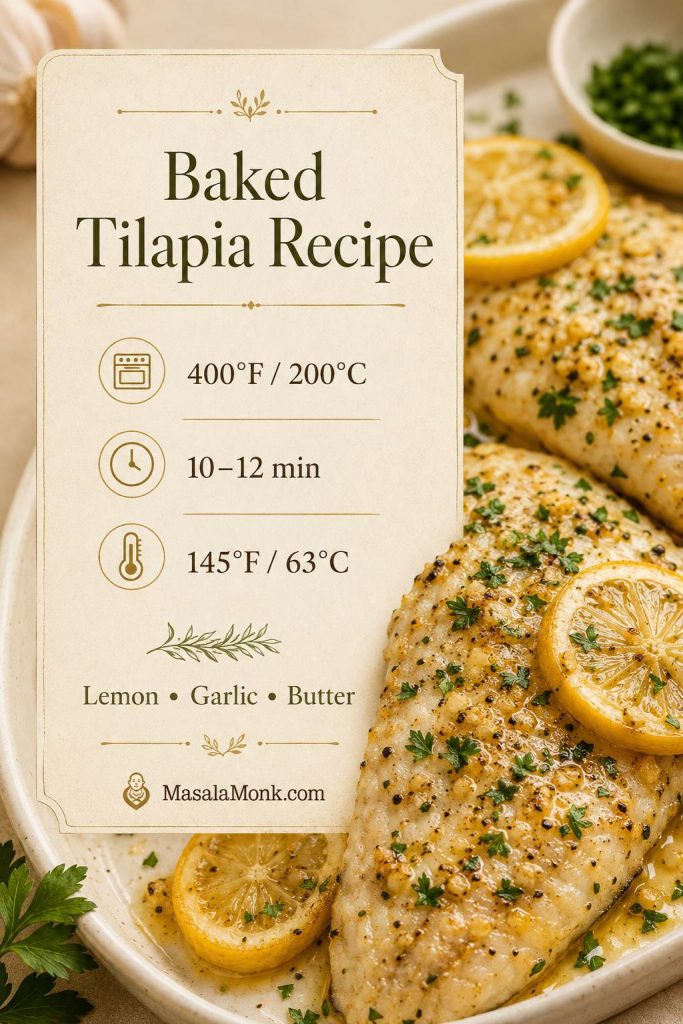
For most thawed tilapia fillets, bake at 400°F / 200°C for 10–12 minutes, or until the fish is opaque, flakes easily with a fork, and reaches 145°F / 63°C in the thickest part. For more exact timing by oven temperature and fillet thickness, see the time and temperature chart. Once the timing is familiar, this baked tilapia recipe becomes one of those simple dinners you can repeat with lemon garlic butter, spicy seasoning, crispy parmesan topping, vegetables, tacos, or rice bowls.
In This Baked Tilapia Guide
Cook It Right
Quick Answer: Best Way to Bake Tilapia
For the most reliable baked tilapia recipe, keep things simple: dry the fillets, season them well, spoon lemon garlic butter or olive oil over the top, and bake them uncovered at 400°F / 200°C for 10–12 minutes. The fish should come out moist and flaky, not browned like chicken or crispy like fried fish. You are looking for tender fish with a bright sauce, not a dry fillet that has been pushed too far.
Baked Tilapia Time, Temperature, and Doneness
Use this quick visual when you need the core timing before you start cooking: 400°F, 10–12 minutes, and 145°F in the thickest part.
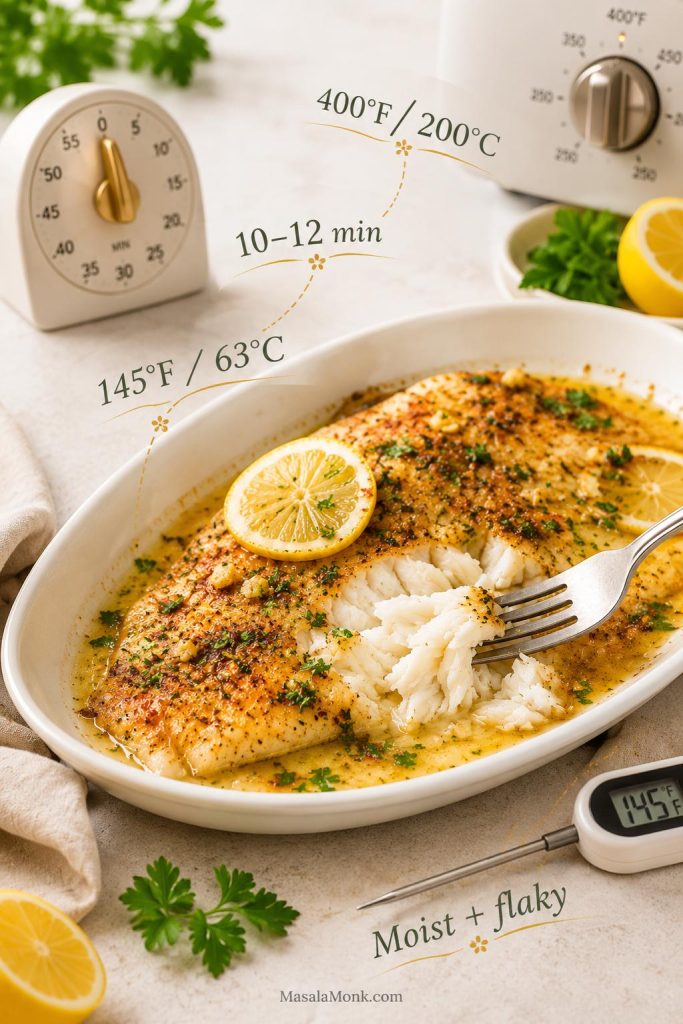
Use a 9×13-inch baking dish for this lemon garlic butter version because the dish holds the sauce around the fish. For crispier parmesan or panko tilapia, use a rimmed sheet pan so the topping stays drier and lightly crisp.
Tilapia is done when it turns opaque, flakes easily, and reaches 145°F / 63°C in the thickest part. Thin fillets may be ready closer to 9–10 minutes, while thicker fillets may need 12–15 minutes.
If your fish is still frozen, jump to the fresh vs frozen tilapia section before you start so you know what texture and timing changes to expect.
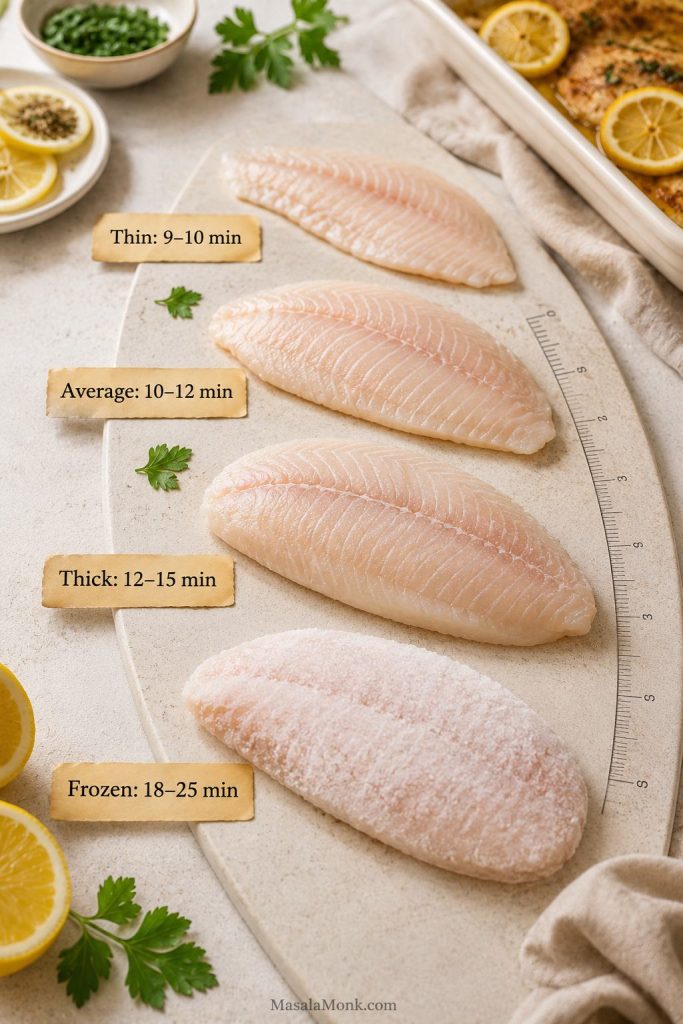
Tilapia Fillet Timing Guide
Use this timing guide when your fillets look especially thin, thick, uneven, or still frozen. Thickness changes the bake time more than the package label does.
Baked Tilapia at a Glance
Here is the simple version of this baked tilapia recipe before we get into the details. For most thawed fillets, remember this first: 400°F, 10–12 minutes, and 145°F inside.
| Detail | Use this as your default |
|---|---|
| Oven temperature | 400°F / 200°C |
| Cook time | 10–12 minutes for most thawed fillets |
| Internal temperature | 145°F / 63°C |
| Pan | 9×13-inch baking dish for saucy tilapia; rimmed sheet pan for crispy topping |
| Flavor base | Lemon, garlic, butter or olive oil, paprika, black pepper, parsley |
| Frozen fillets | Best thawed first; no-thaw option takes about 18–25 minutes |
| Texture cue | Opaque, flaky, moist, and easy to separate with a fork |
If you are unsure whether the fish is fully cooked, the doneness section shows the fork-flake and 145°F cues together.
What This Baked Tilapia Tastes Like
This baked tilapia recipe should taste light, lemony, and savory, with soft flakes of fish and a warm garlic-butter sauce you can spoon over rice, potatoes, or vegetables. The paprika gives the pale fish a little warmth and color, while the parsley and final squeeze of lemon keep the whole plate fresh instead of heavy.
Soft Flakes and Bright Lemon Garlic Sauce
The best texture is moist and easy to separate with a fork. You are not trying to create a dark crust here; you are looking for gentle flakes and a sauce that keeps the fish bright.
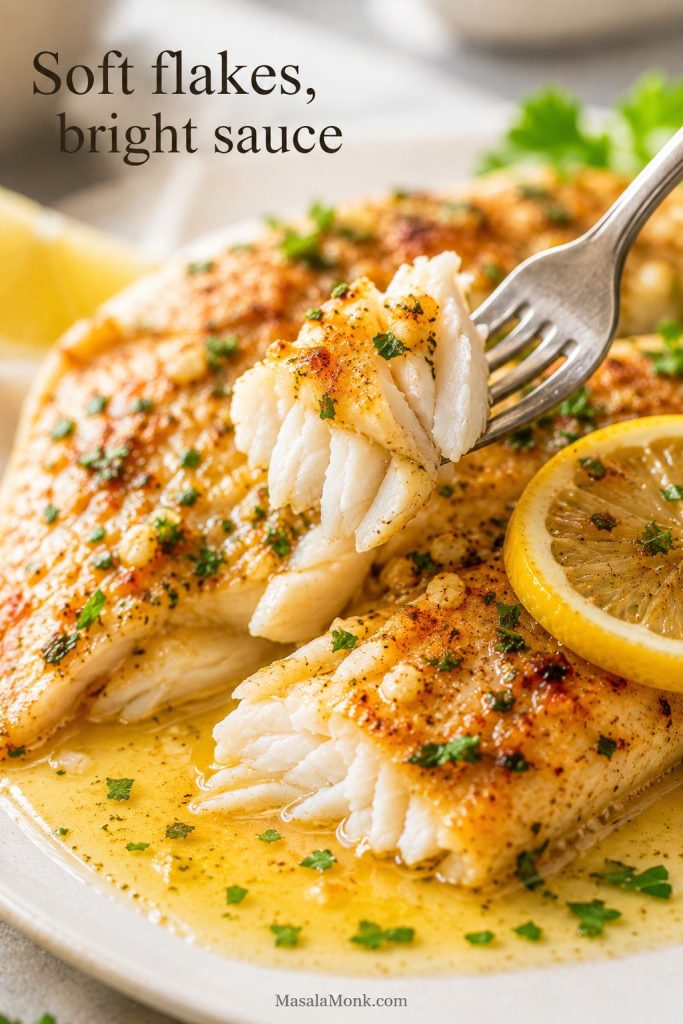
For a stronger flavor, use the spicy, lemon pepper, masala-spiced, or crispy parmesan variations later in the post. The base recipe is intentionally simple, so it can work with rice, vegetables, salad, tacos, or grain bowls.
Why This Baked Tilapia Recipe Works
Tilapia does not need a complicated marinade or a long oven time. In fact, those are usually where things go wrong. The fish is thin and lean, so it does best with direct seasoning, a little fat, a bright finish, and a short bake.
The lemon garlic butter does most of the heavy lifting here. Lemon juice wakes up the mild fish, zest adds aroma without extra liquid, garlic brings savory depth, paprika adds warmth and color, and butter or olive oil helps the fillets stay tender.
- 400°F is a reliable default: it cooks tilapia quickly without forcing you into a long bake that can dry out thin fillets.
- The sauce adds moisture and flavor: butter or olive oil keeps the fish tender, while lemon and garlic make it taste fresh.
- Drying the fish helps: this is especially important if your tilapia was frozen and thawed.
- The recipe is flexible: keep it lemon garlic, make it spicy, add a parmesan-panko topping, or bake it with quick-cooking vegetables.
- Doneness is easy to check: look for opaque flesh, easy flaking, and 145°F / 63°C in the thickest part.
Ingredients for Baked Tilapia
Because this baked tilapia recipe uses only a few ingredients, each one has a clear job. Fresh lemon, enough garlic, and a balanced amount of salt and fat help the finished fish taste bright instead of plain.
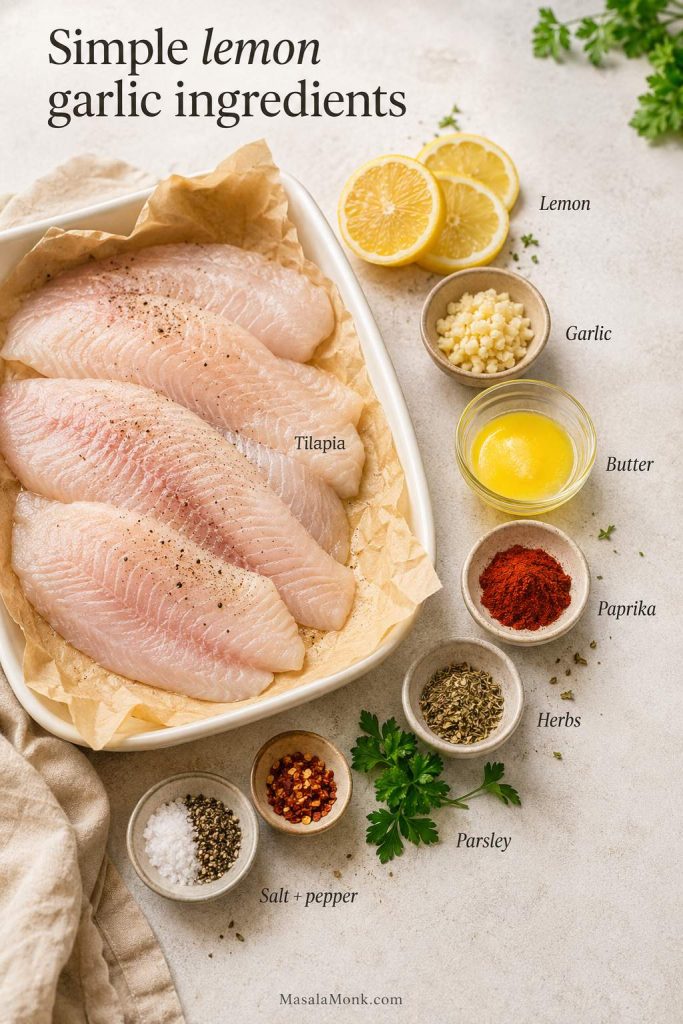
| Ingredient | US measure | Metric | Why it matters |
|---|---|---|---|
| Tilapia fillets | 4 fillets, 5–6 oz each | 560–680 g total | Main protein. Thaw and pat dry for best texture. |
| Unsalted butter, melted | 4 tbsp | 56 g | Adds richness, moisture, and classic lemon garlic flavor. |
| Fresh lemon juice | 1½ tbsp | 22 ml | Brightens the mild fish and keeps the flavor lively. |
| Lemon zest | 1 tsp | From about 1 lemon | Adds lemon aroma without making the sauce watery. |
| Garlic, minced | 3 cloves | About 9 g | The main savory flavor in the sauce. |
| Fine salt | ¾ tsp | About 4–5 g | Seasons the fish directly. Adjust if using salted butter. |
| Black pepper | ¼ tsp | About 0.5 g | Adds gentle heat and balance. |
| Paprika | ½ tsp | About 1 g | Adds warm color and mild flavor. |
| Dried oregano or thyme | ½ tsp | About 0.5 g | Gives the fish a more complete savory flavor. |
| Red pepper flakes | ⅛–¼ tsp | Optional | Use for a little heat. |
| Lemon slices or wedges | 1 lemon | 1 lemon | Use slices while baking or wedges for serving. |
| Fresh parsley | 1–2 tbsp | 4–8 g | Adds freshness and color after baking. |
Once the basic lemon garlic version makes sense, the seasoning guide shows how to take the same baked tilapia method toward Cajun, blackened, parmesan-panko, Mediterranean, or masala-spiced flavors.
Butter or Olive Oil?
Butter gives the richest lemon garlic flavor. Olive oil makes the recipe lighter and works well for a fresher, less buttery dinner. You can also use half butter and half olive oil for a balanced version that still tastes rounded.
Equipment for Oven Baked Tilapia
Although this baked tilapia recipe does not need special equipment, the pan you choose changes the texture. A baking dish keeps the fish saucy and moist, while a sheet pan is better when you want crisp edges or a breadcrumb topping.
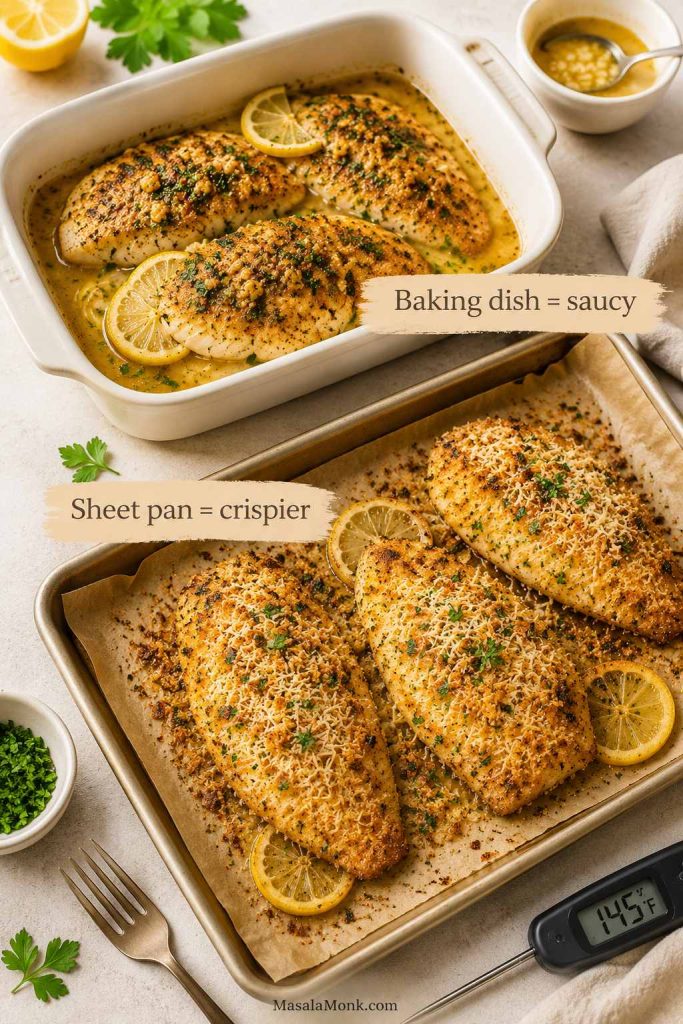
- 9×13-inch baking dish: best for saucy lemon garlic baked tilapia because it holds the butter and lemon around the fillets.
- Rimmed sheet pan: better for parmesan, panko, or crispier baked tilapia.
- Parchment paper or foil: useful for cleanup, especially when using a sheet pan.
- Paper towels: important for drying thawed fillets before seasoning.
- Small bowl: for mixing the lemon garlic butter.
- Instant-read thermometer: the most reliable way to check for 145°F / 63°C.
If you are using a sheet pan because you want crunch, the crispy parmesan baked tilapia variation is the better path than trying to brown plain tilapia deeply.
Best Seasoning for Tilapia
Tilapia takes seasoning well, so you do not have to stay locked into lemon garlic. The fish has a gentle flavor, which means it can go bright and buttery, spicy, herby, crispy, or lightly masala-spiced without much effort.
For the main recipe, lemon, garlic, paprika, pepper, herbs, and parsley are the easiest starting point. They keep the fish bright, clean, and flexible enough for rice, vegetables, tacos, or bowls.
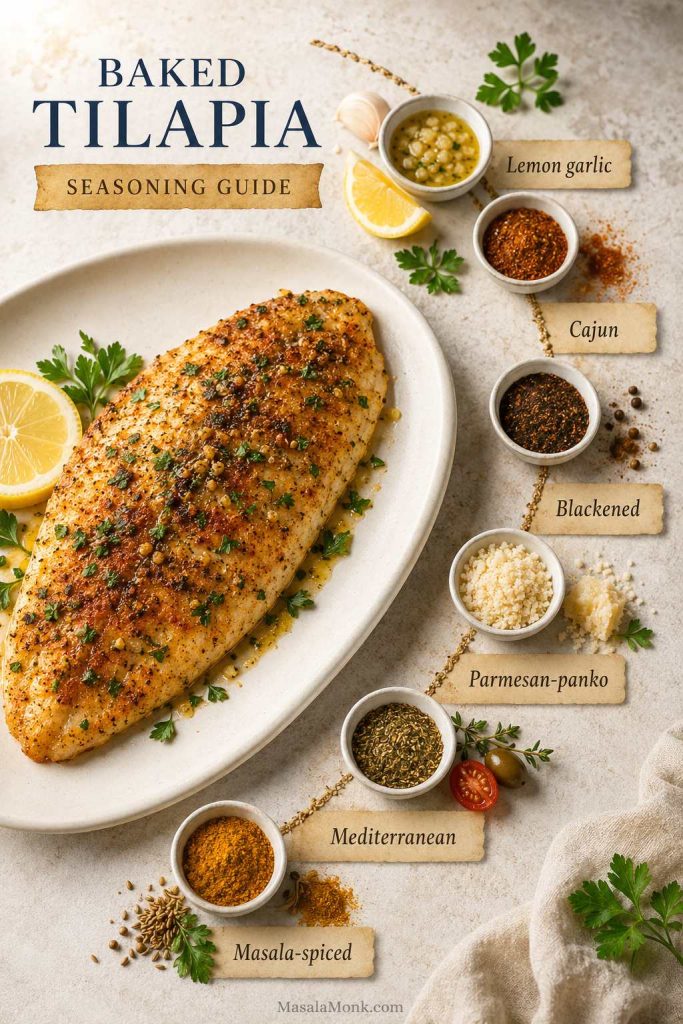
| Flavor direction | Use this seasoning | Best with |
|---|---|---|
| Lemon garlic | Lemon juice, lemon zest, garlic, paprika, parsley, black pepper | Rice, potatoes, salad, roasted vegetables |
| Lemon pepper | Lemon pepper seasoning, extra lemon, butter or olive oil | Green beans, asparagus, couscous |
| Cajun or Old Bay-style | Cajun seasoning or Old Bay-style seasoning, lemon, butter, parsley | Slaw, corn, potatoes, tacos |
| Blackened | Paprika, garlic powder, onion powder, thyme, oregano, cayenne | Rice bowls, tacos, creamy sauce |
| Parmesan-panko | Parmesan, panko, garlic powder, paprika, parsley, melted butter | Sheet-pan dinners, kids’ plates, crispy fish nights |
| Mediterranean | Olive oil, lemon, garlic, oregano, parsley, za’atar-style seasoning | Tomatoes, zucchini, cucumber salad, couscous |
| Masala-spiced | Paprika, cumin, turmeric, black pepper, lemon, light garam masala | Rice, kachumber-style salad, yogurt sauce |
If you are baking the fish for fish tacos, season it a little more boldly with paprika, cumin, garlic, lime, and black pepper. This gentle white fish needs enough flavor to stand up to slaw, sauce, and fresh toppings.
How to Bake Tilapia
This is a short baked tilapia recipe, so the small steps carry a lot of weight. Dry fillets, even seasoning, a single layer, and an early check are what keep the fish tender instead of watery or dry.
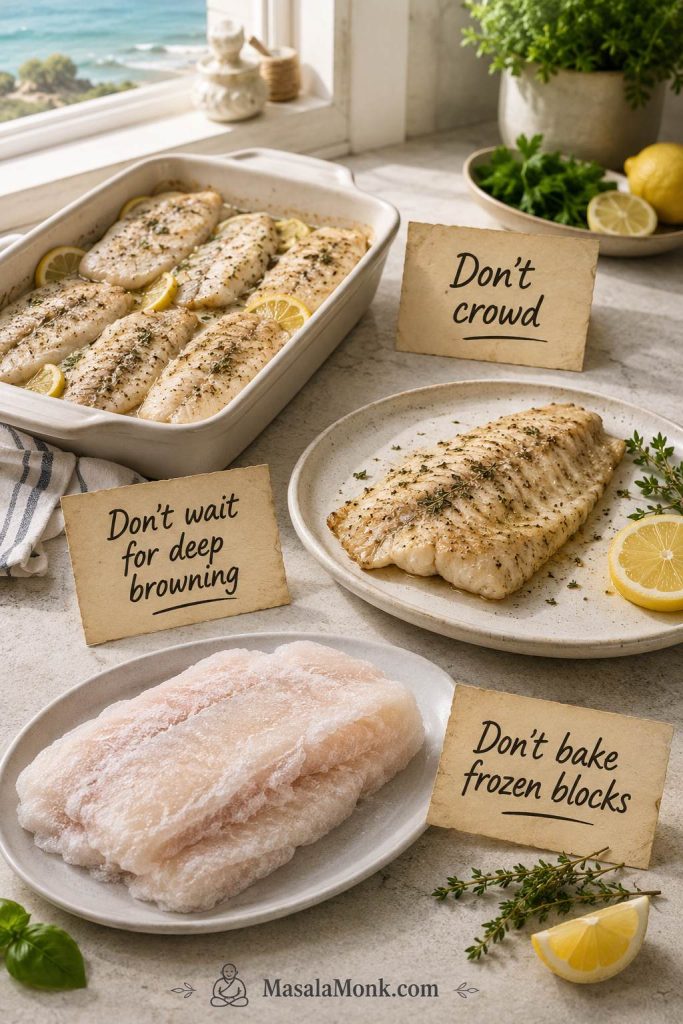
If your fish usually turns dry, watery, or bland, check the troubleshooting section before you bake; most problems come from wet fillets, crowding, or waiting too long for browning.
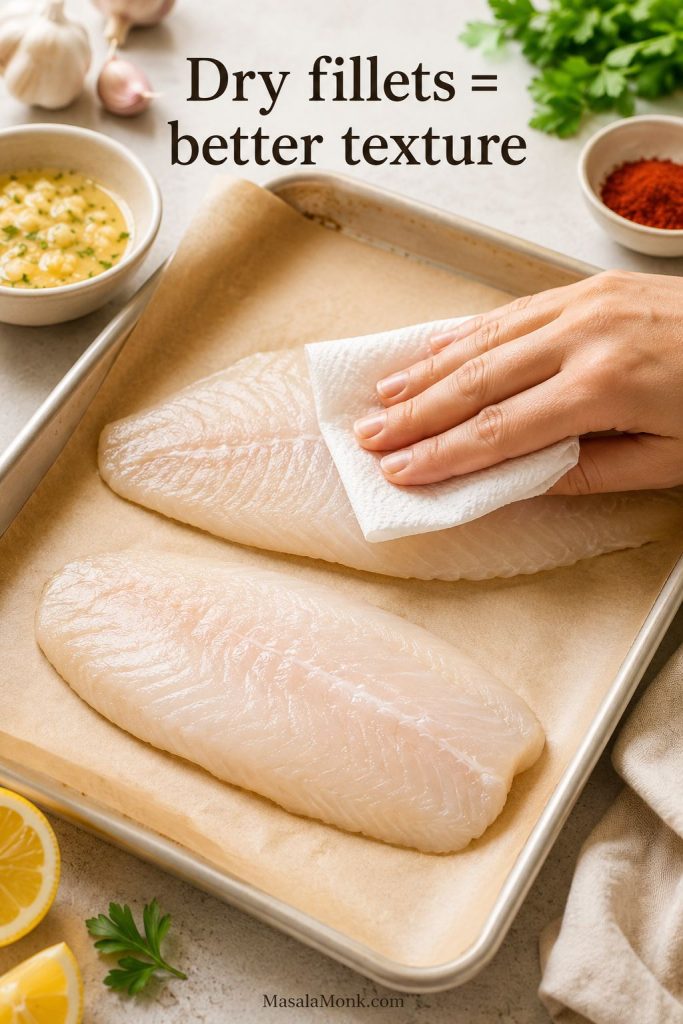
Pat Dry the Tilapia Before Baking
This is the quiet prep step that prevents watery sauce and helps the seasoning stay where you put it.
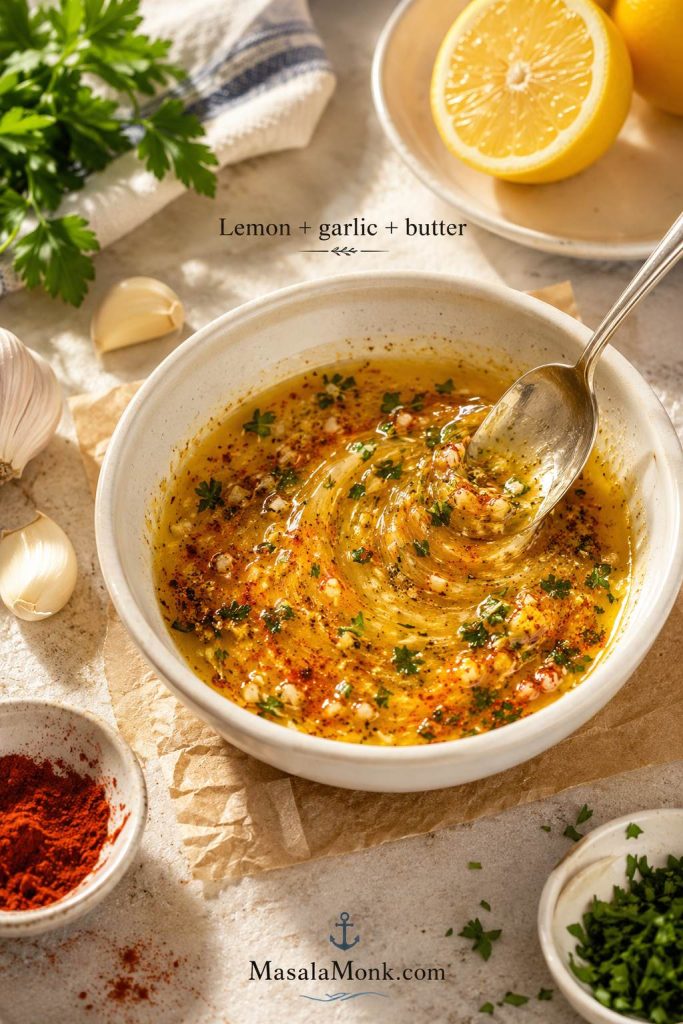
Mix the Lemon Garlic Butter Sauce
The sauce should be glossy, fragrant, and easy to spoon over the fish. Because tilapia is mild, this simple mixture carries most of the flavor.
- Preheat the oven. Set the oven to 400°F / 200°C. Lightly grease a 9×13-inch baking dish.
- Dry the fish. Pat the tilapia fillets dry with paper towels. This helps the seasoning stick and reduces watery sauce.
- Mix the sauce. In a small bowl, stir together melted butter, lemon juice, lemon zest, garlic, salt, pepper, paprika, oregano or thyme, and optional red pepper flakes.
- Arrange the fillets. Place the tilapia in a single layer in the baking dish. Do not stack or overlap the fish.
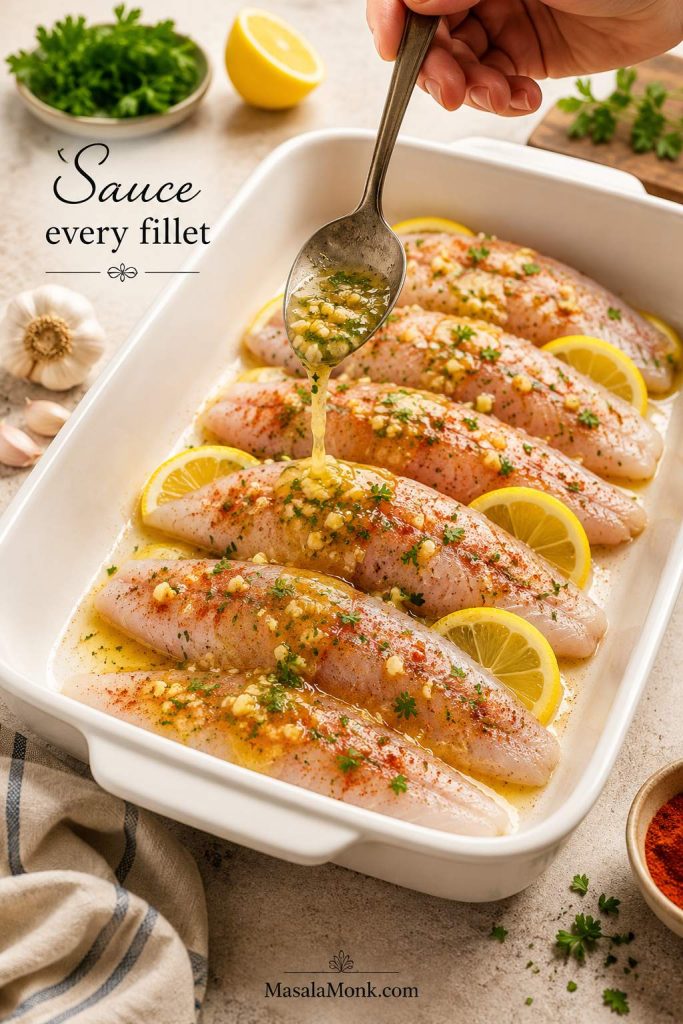
- Add flavor. Spoon the lemon garlic butter evenly over the fillets. Add lemon slices for a stronger lemon aroma.
- Bake. Bake for 10–12 minutes, or until the fish is opaque, flakes easily, and reaches 145°F / 63°C in the thickest part.
- Finish fresh. Sprinkle with parsley and serve with extra lemon wedges. Spoon a little pan sauce over the top as needed.
Spoon Sauce Over Every Fillet
Once the fillets are in a single layer, cover each one with the lemon garlic butter so the fish bakes evenly and tastes seasoned from edge to edge.
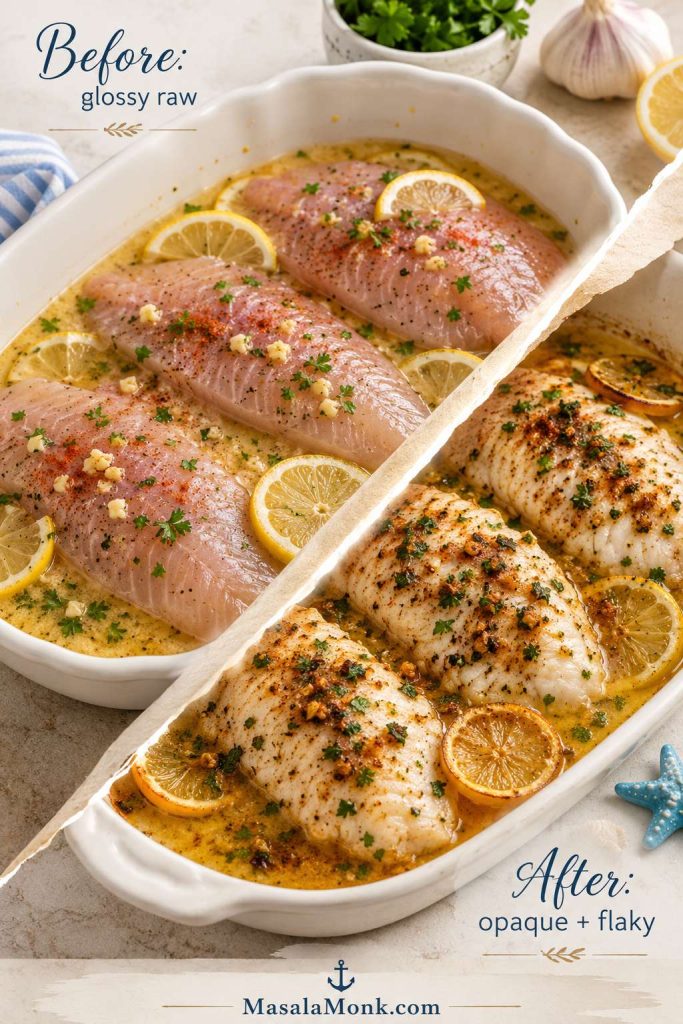
Before and After Baked Tilapia
Use the visual change as a cue, but do not expect the fish to look deeply roasted. Tilapia is done when it turns opaque and begins to flake.
Do You Need to Flip Tilapia While Baking?
No. Tilapia fillets are thin and delicate, so flipping is not necessary. Arrange them in one layer, spoon the seasoning over the top, and let the oven do the work. Flipping can make the fillets break apart, especially once they are fully cooked.
Baked Tilapia Mistakes to Avoid
How Long to Bake Tilapia: Time and Temperature Chart
For this baked tilapia recipe, 400°F / 200°C is the easiest weeknight default. However, different oven temperatures can work depending on your fillets, your pan, and whether you want a softer baked finish or a little more color on top.
Use the chart below as a practical guide, then check the fish itself. Tilapia is ready when it is opaque, flakes easily, and reaches 145°F / 63°C. If your pieces look especially thin, thick, or uneven, use the fillet timing guide near the top of the post as a quick reference.
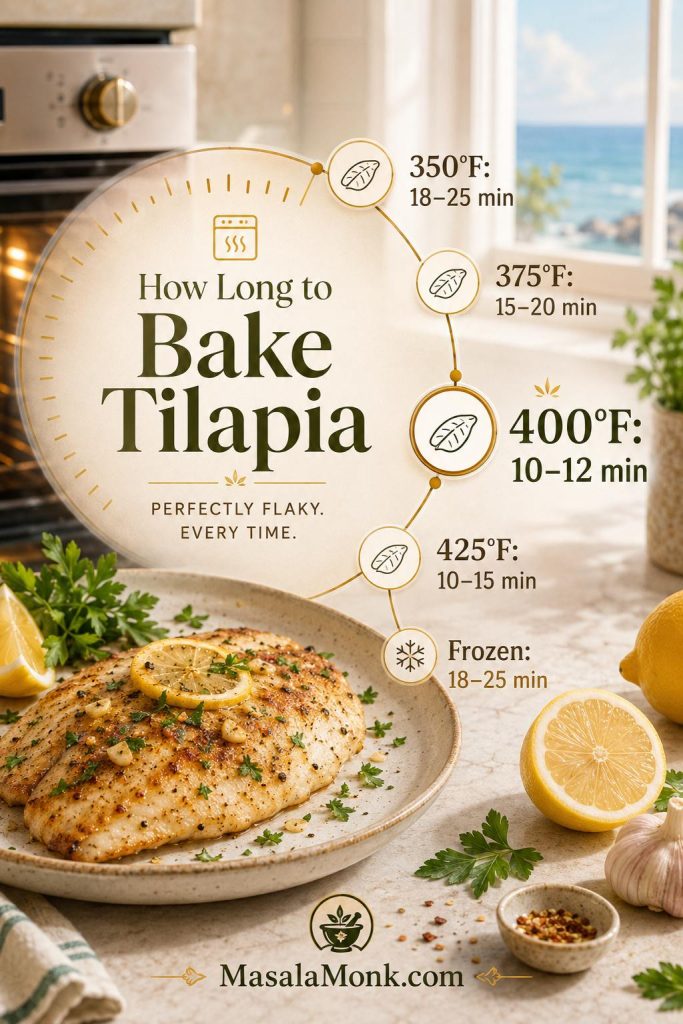
| Oven temperature | Best for | Approximate time | Notes |
|---|---|---|---|
| 350°F / 175°C | Gentle baking, foil packets, covered fish | 18–25 minutes | Useful for softer steamed-style methods, but not the fastest option. |
| 375°F / 190°C | Older/simple baked tilapia methods | 15–20 minutes for average fillets | Thicker or covered fillets may need closer to 25 minutes. |
| 400°F / 200°C | Everyday oven baked tilapia | 10–12 minutes, or 12–15 for thicker fillets | The most reliable balance of speed, moisture, and easy timing. |
| 425°F / 220°C | Faster browning, panko, parmesan topping | 10–15 minutes | Check early because thin fillets can overcook quickly. |
| 400°F / 200°C from frozen | No-thaw frozen tilapia fillets | 18–25 minutes | Expect extra liquid; check 145°F / 63°C in the center. |
When in doubt, start checking early. Because the fillets are usually thin, one or two extra minutes can change the texture more than you expect.
Tilapia Thickness Chart at 400°F
Because tilapia fillets are not all the same size, thickness matters more than the package label. A thin fillet can finish before the timer reaches 10 minutes, while a thicker fillet may need a few extra minutes.
| Fillet thickness | Approximate cook time at 400°F / 200°C | What to watch for |
|---|---|---|
| Thin fillets | 9–10 minutes | Check early; they can dry out fast. |
| Average fillets | 10–12 minutes | Most 5–6 oz fillets land here. |
| Thicker fillets | 12–15 minutes | Check the thickest part, not the edge. |
| Frozen fillets | 18–25 minutes | Expect more liquid and check the center carefully. |
How Long to Bake Tilapia at 400°F
At 400°F / 200°C, most thawed tilapia fillets take 10–12 minutes. Very thin fillets may finish closer to 9 minutes. Thicker fillets may need 12–15 minutes. Start checking early, because tilapia can move from moist to dry quickly.
How Long to Bake Tilapia at 425°F
At 425°F / 220°C, tilapia usually takes 10–15 minutes. This hotter temperature is useful for panko, parmesan, or sheet-pan versions where you want a little more color. Watch closely if the fillets are thin.
How Long to Bake Tilapia at 375°F
At 375°F / 190°C, tilapia usually takes 15–20 minutes for average fillets, though thicker or covered fillets may need closer to 25 minutes. This lower temperature works, but the longer bake can make thin fillets drier.
How to Know When Tilapia Is Done
The most reliable way to check baked tilapia is to use both visual cues and temperature. The fish should look opaque, separate easily with a fork, and reach 145°F / 63°C in the thickest part.
According to FoodSafety.gov’s safe minimum internal temperature chart, fish such as tilapia should reach 145°F / 63°C, or be cooked until the flesh is no longer translucent and separates easily with a fork.
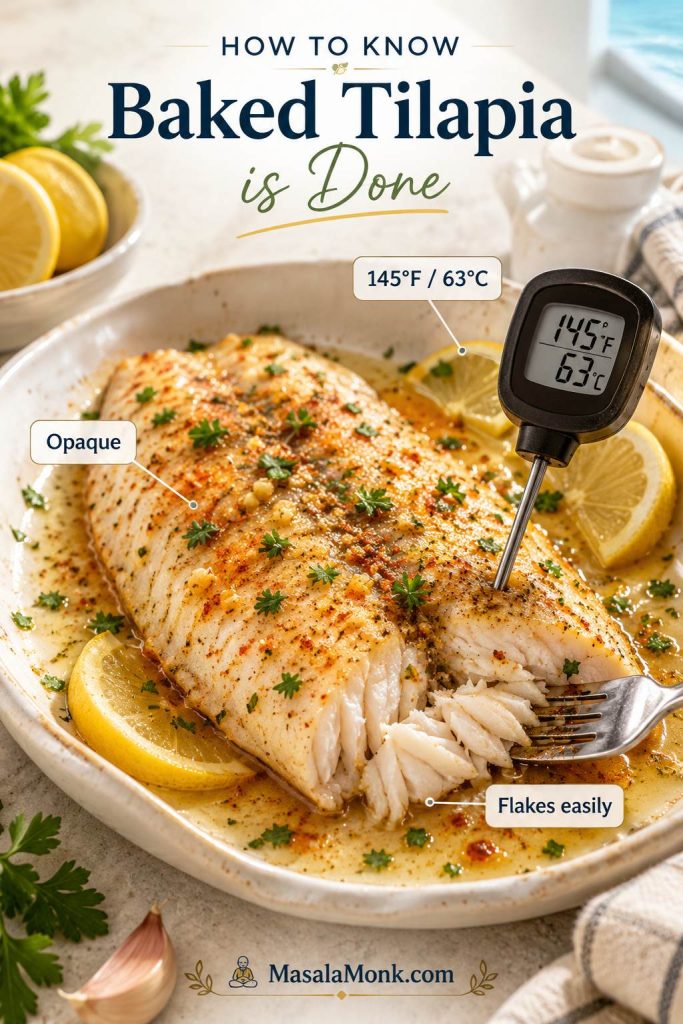
- Opaque: the center should look white and cooked through, not glassy or translucent.
- Flaky: the fish should separate easily with gentle pressure from a fork.
- Moist: the fish should look tender, not dry and tight.
- 145°F / 63°C: this is the safest final check if you have a thermometer.
Fresh vs Frozen Tilapia
Frozen tilapia works in this baked tilapia recipe, but the cleanest texture comes from thawing it first. Once thawed, the fillets are easier to dry, season, and bake evenly. They also release less liquid into the baking dish. For the cleanest texture, use the thawing method below, then pat the fillets dry before seasoning.
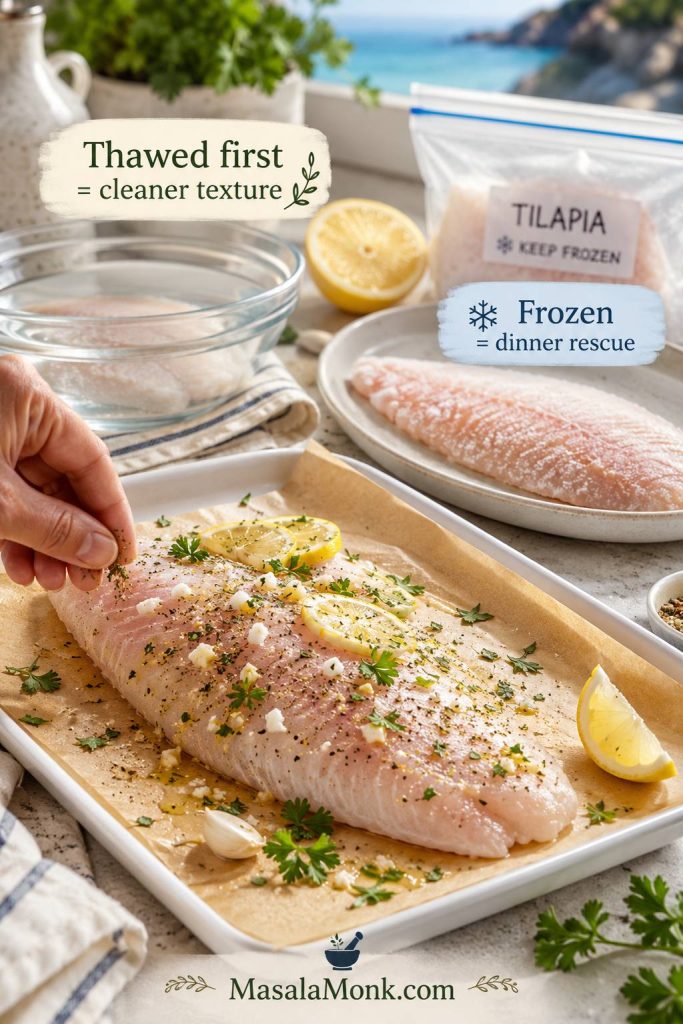
When it is 6 p.m. and the fish is still frozen, you still have a path. Frozen tilapia can go straight into the oven, although the texture will be cleaner if you thaw it first. The pan may collect more liquid, but you can still get a workable dinner when you forgot to thaw anything.
| Method | Best use | Cook time | Texture notes |
|---|---|---|---|
| Thawed first | Most reliable everyday baked tilapia | 10–12 minutes at 400°F / 200°C | Cleaner texture, less liquid, better seasoning contact. |
| Baked from frozen | Emergency no-thaw dinner | 18–25 minutes at 400°F / 200°C | More liquid in the pan; check the center carefully. |
How to Thaw Frozen Tilapia
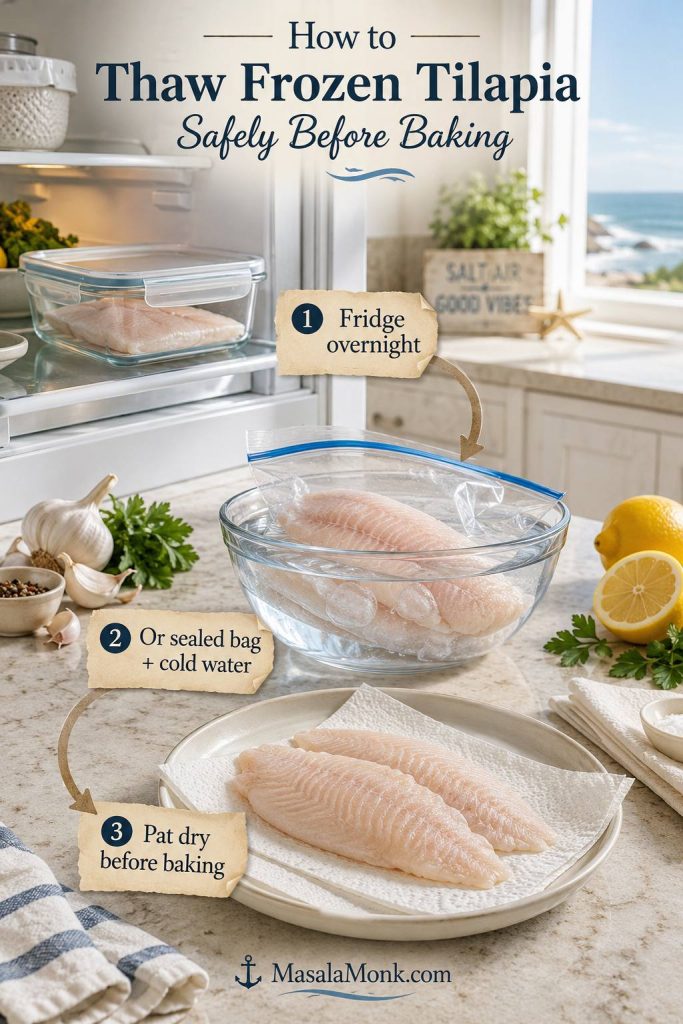
The FDA seafood safety guidance recommends thawing frozen seafood gradually in the refrigerator overnight when possible. For a quicker method, keep the fish sealed in a bag and place it in cold water until flexible, then pat it very dry before seasoning. Do not bake fillets that are stuck together in a frozen block, because the outside can overcook before the center is done.
How to Bake Frozen Tilapia
For the best result, thaw frozen tilapia first. To bake from frozen, place the frozen fillets in a greased baking dish, season them well, and bake at 400°F / 200°C for about 18–25 minutes, or until the center reaches 145°F / 63°C.
When the frozen fillets release a lot of liquid, carefully spoon off some of the excess before serving. Then add a little fresh lemon juice, parsley, or a small spoon of melted butter at the end to bring the flavor back.
Should You Bake Tilapia Covered or Uncovered?
For this baked tilapia recipe, bake the fish uncovered. As a result, the top stays less steamy and the lemon garlic butter tastes brighter instead of diluted.
Covered baking or foil packets are useful when you want an extra-soft, steamed texture, especially with vegetables. However, the fish will not brown, and any sauce inside the packet may taste lighter because the moisture stays trapped.
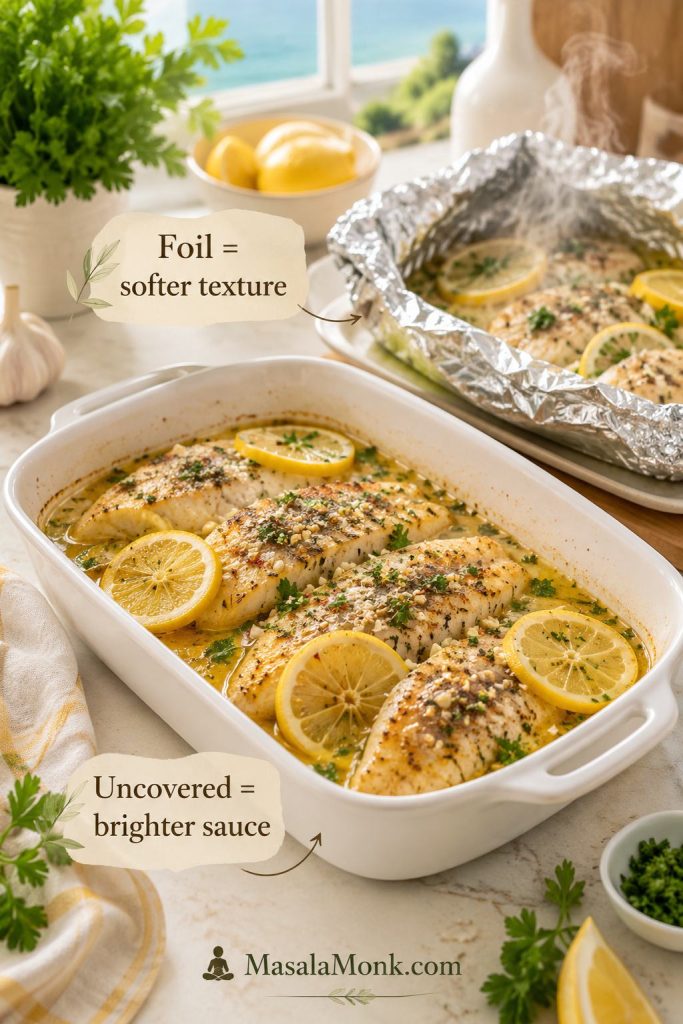
| Method | Texture | Best for |
|---|---|---|
| Uncovered baking | Cleaner baked finish, less steamed, better flavor concentration | Lemon garlic butter tilapia, parmesan tilapia, weeknight fillets |
| Covered baking | Softer and more steamed | Very delicate fillets or recipes with more liquid |
| Foil packets | Moist, soft, no browning | Vegetables, easy cleanup, individual portions |
Baked Tilapia Variations
Once you know the basic time and temperature, baked tilapia becomes easy to bend toward whatever dinner needs to be: bright and lemony, spicy for tacos, crisp on top, lighter with vegetables, or warmer with masala-style spices. Keep the same core method, then change the seasoning, topping, or sides around it.
After choosing a flavor direction, use the serving ideas section to turn the fish into a full dinner with rice, vegetables, tacos, salad, potatoes, or bowls.
Lemon Pepper Baked Tilapia
Use lemon pepper seasoning in place of the paprika and oregano. Then add extra lemon zest to the butter or olive oil and finish the baked fish with fresh lemon juice. This is one of the easiest variations because it keeps the flavor bright and simple.
Garlic Butter Baked Tilapia
For a stronger garlic butter tilapia, increase the garlic to 4 cloves and spoon a little extra melted butter over the fish right after baking. This version is especially good with rice, mashed potatoes, roasted vegetables, or crusty bread to catch the sauce.
Crispy Parmesan Baked Tilapia
For a crispier baked tilapia, use a sheet pan instead of a baking dish and add a parmesan-panko topping. This gives the delicate fish more texture without needing to fry it.
For 4 fillets, mix ¼ cup panko, 2–3 tablespoons grated parmesan, 1 tablespoon melted butter or olive oil, ½ teaspoon paprika, ½ teaspoon garlic powder, parsley, and black pepper. Spoon the topping over the fillets and bake at 400°F / 200°C for 12–15 minutes. Broil for 30–60 seconds at the end for more color.

If you broil at the end, watch closely. Broiling is for color, not for finishing undercooked fish. For a true fried-fish texture instead of a baked topping, use a separate fish batter recipe. The parmesan-panko version gives you crunch on top, while batter is the better route when you want a full crispy coating.
Tilapia with Quick-Cooking Vegetables
For a vegetable version, use cherry tomatoes, zucchini, thin bell pepper strips, asparagus, broccolini, or thin onion slices. Toss the vegetables with olive oil, salt, pepper, and a little garlic before arranging them around the fish.
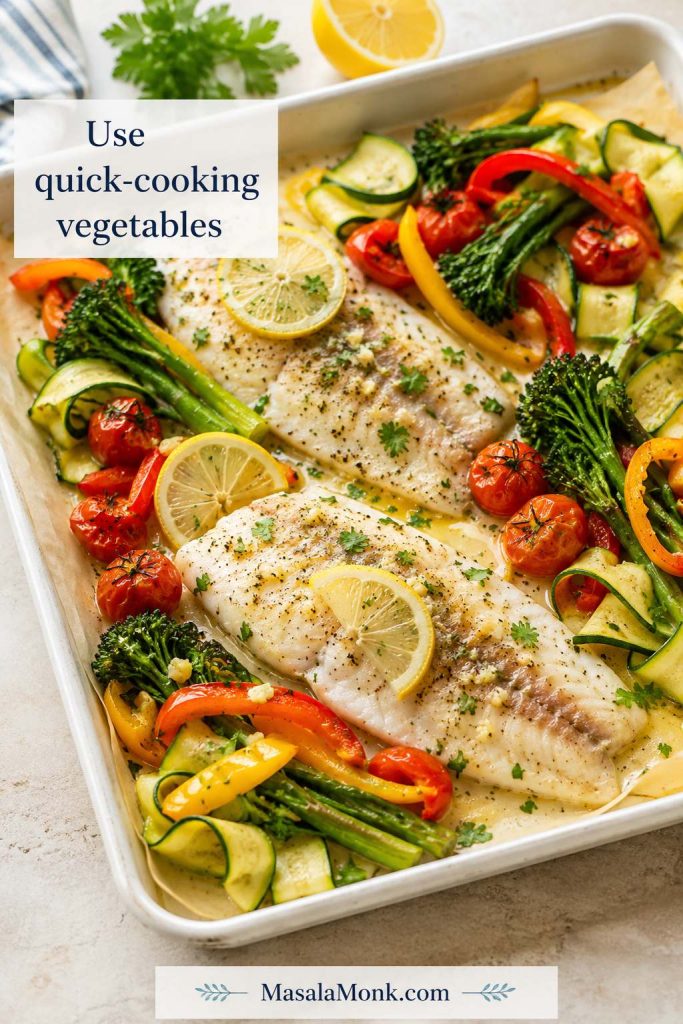
Avoid thick potatoes, large carrot pieces, or dense vegetables unless they are par-cooked first. Tilapia cooks much faster than those vegetables, so the fish can dry out while you wait for the vegetables to soften.
Spicy Baked Tilapia
For a spicy baked tilapia, add cayenne, chili powder, smoked paprika, Cajun-style seasoning, or crushed red pepper to the lemon garlic butter. Finish with lime instead of lemon for a sharper, brighter flavor. For a sweet-hot finish on tacos or rice bowls, drizzle a little mango habanero sauce over the fish after baking rather than before.

Masala-Spiced Baked Tilapia
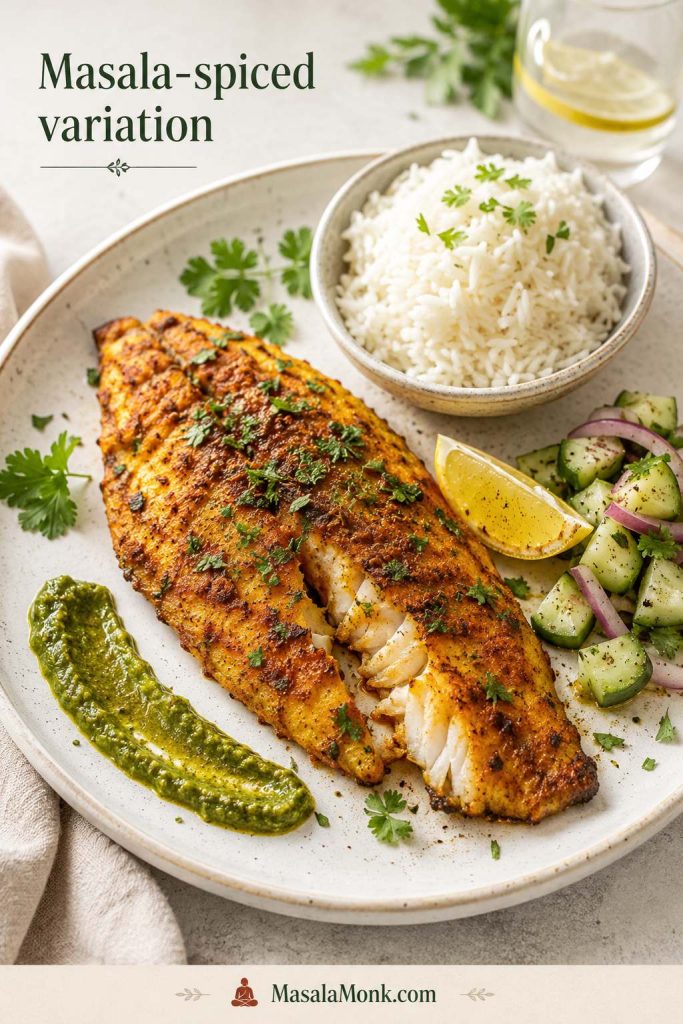
For a masala-spiced variation, season the fish with paprika, cumin, turmeric, black pepper, lemon juice, and a light pinch of garam masala. Keep the spice blend balanced so the tilapia still tastes fresh and delicate, not heavy. Serve it with rice, cucumber salad, or a spoonful of green chutney for a brighter herb finish.
What to Serve with Baked Tilapia
Baked tilapia is mild enough to go with many sides. For a fast dinner, pair it with rice, roasted vegetables, salad, potatoes, or a simple grain bowl. Meanwhile, something crisp and cool next to the warm fish — like a vinegar-dill cucumber salad — keeps the plate fresh.

- Rice or pilaf: good with lemon garlic butter from the baking dish. For fluffy plain rice as the base, this how to cook rice guide helps with stovetop, cooker, and Instant Pot timing.
- Roasted vegetables: asparagus, zucchini, broccoli, carrots, or bell peppers.
- Potatoes: mashed potatoes, roasted potatoes, baby potatoes, or a simple potato mash.
- Salad: cucumber salad, green salad, tomato salad, slaw, or a lemony bean salad when you want the meal to feel more filling.
- Tacos: flake the baked tilapia into tortillas with slaw and sauce.
- Grain bowls: couscous, quinoa, rice, vegetables, lemon yogurt sauce, or plenty of fresh herbs.
- Pasta: keep it light with olive oil, lemon, parsley, garlic, and vegetables.
Leftovers can also become a different meal. The fish works beautifully in tacos with slaw, lime, salsa, and a creamy sauce. A spoonful of mango salsa is especially good when the fillets are seasoned with lime, cumin, paprika, or chili powder.
Troubleshooting Baked Tilapia
If your baked tilapia did not come out the way you hoped, you are not alone. This fish cooks quickly, and small things — a wet fillet, a few extra minutes, not enough lemon or salt — can change the whole plate. The fixes below help you rescue the current batch and make the next one easier.
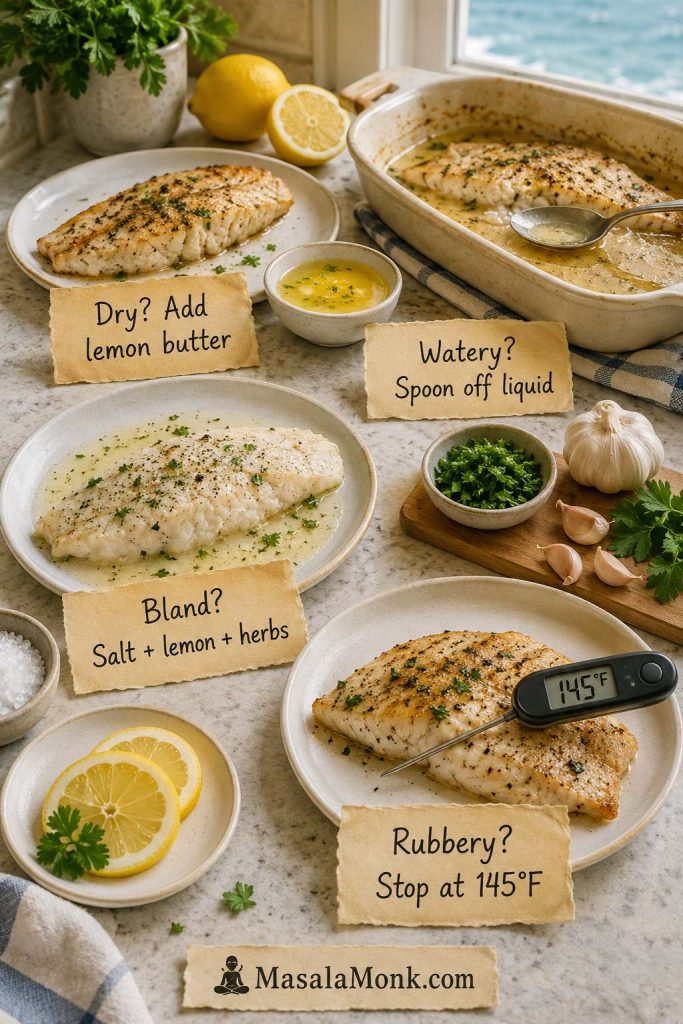
| Problem | Why it happened | How to fix it |
|---|---|---|
| Dry tilapia | Overbaked, fillets were thin, or not enough fat/sauce | Check earlier next time, use 400°F / 200°C, and add butter or olive oil before baking. |
| Watery baking dish | Frozen fish was not fully thawed or dried | Pat fillets very dry. Spoon off excess liquid before serving. |
| Bland fish | Not enough salt, acid, garlic, or seasoning | Add lemon juice, parsley, pepper, and a pinch of salt after baking. |
| Fishy smell | Older fish, poor thawing, or too little lemon/seasoning | Use fresh-smelling fillets, thaw properly, pat dry, and season boldly. |
| Rubbery texture | Overcooked | Use an instant-read thermometer and stop at 145°F / 63°C. |
| Sticking | Pan was not greased or fish was too wet | Grease the dish, use parchment on sheet pans, and dry the fish first. |
| No browning | Tilapia is lean and cooks quickly | Use a parmesan-panko topping or broil briefly at the end. |
How to Fix Dry Baked Tilapia After Cooking
If the tilapia is already dry, do not put it back in the oven. Spoon a little melted butter, olive oil, lemon juice, or warm pan sauce over the top. Fresh parsley, black pepper, and a small pinch of salt can also help revive the flavor.
How to Fix Bland Baked Tilapia
Bland tilapia usually needs acid and salt. Add a squeeze of lemon, a pinch of salt, fresh herbs, and a little black pepper right before serving. If you are using the fish for tacos, add a stronger sauce, slaw, or salsa to bring the whole dish together.
Once the fixes make sense, use the recipe card for the simple bake time, ingredients, and method.
How to Store and Reheat Baked Tilapia
Although baked tilapia is best right after it comes out of the oven, leftovers can still work if you reheat them gently. The main goal is to warm the fish without cooking it all over again.
- Fridge: Store leftover baked tilapia in an airtight container for up to 3 days.
- Reheat gently: Warm in a low oven, covered skillet, or microwave at reduced power until just heated through.
- Add moisture: A small spoon of butter, olive oil, lemon sauce, or broth helps prevent dryness.
- Avoid repeated reheating: Tilapia is lean, so reheating it more than once can make it rubbery.
- Use leftovers creatively: Flake into tacos, rice bowls, salads, wraps, or quick fish sandwiches.
Baked Tilapia Recipe Card
Baked Tilapia Recipe
This easy baked tilapia recipe uses lemon, garlic, butter, paprika, and a 400°F oven for flaky fish in about 20 minutes. It is simple enough for a weeknight dinner, but seasoned well enough to avoid bland, dry fish.
Ingredients
- 4 tilapia fillets, 5–6 oz each / 560–680 g total
- 4 tbsp / 56 g unsalted butter, melted
- 1½ tbsp / 22 ml fresh lemon juice
- 1 tsp lemon zest
- 3 garlic cloves, minced
- ¾ tsp fine salt, or to taste
- ¼ tsp black pepper
- ½ tsp paprika
- ½ tsp dried oregano or thyme
- ⅛–¼ tsp red pepper flakes, optional
- 1 lemon, sliced or cut into wedges
- 1–2 tbsp chopped fresh parsley
Instructions
- Preheat the oven to 400°F / 200°C. Lightly grease a 9×13-inch baking dish.
- Pat the tilapia fillets dry with paper towels and arrange them in a single layer in the baking dish.
- In a small bowl, mix melted butter, lemon juice, lemon zest, garlic, salt, pepper, paprika, oregano or thyme, and optional red pepper flakes.
- Spoon the lemon garlic butter evenly over the tilapia. Add lemon slices if using.
- Bake for 10–12 minutes, or until the fish is opaque, flakes easily, and reaches 145°F / 63°C in the thickest part.
- Sprinkle with parsley and serve with extra lemon wedges.
Notes
- This baked tilapia recipe is written for thawed 5–6 oz fillets; adjust timing for very thin, thick, or frozen fillets.
- Cook time depends on thickness. Thin fillets may finish in 9–10 minutes, average fillets in 10–12 minutes, and thicker fillets in 12–15 minutes.
- The fish should look opaque and separate easily with a fork. Do not wait for deep browning.
- If you do not have a thermometer, use the opaque-and-flaky test, but a thermometer is the most reliable check.
- If there is a lot of liquid in the dish, spoon off the excess before serving and finish with lemon, parsley, or a little melted butter.
- For frozen fillets, thaw first for best texture. To bake from frozen, cook at 400°F / 200°C for about 18–25 minutes and check the center carefully.
- For a lighter version, replace some or all of the butter with olive oil.
- For crispy parmesan tilapia, use the panko-parmesan topping in the variations section.
FAQs About Baked Tilapia
What makes this baked tilapia recipe easy?
This baked tilapia recipe is easy because the fish cooks quickly, the seasoning is simple, and you do not need to flip, fry, marinate, or guess. Most thawed fillets need only 10–12 minutes at 400°F / 200°C.
What temperature is best for baking tilapia?
400°F / 200°C is the most reliable everyday temperature for baked tilapia because it cooks the fillets quickly without drying them out as easily as a hotter oven can. It is also easy to adjust: thin fillets may need only 9–10 minutes, while thicker fillets may need 12–15 minutes.
How long does tilapia take in the oven?
Most thawed tilapia fillets take 10–12 minutes at 400°F / 200°C. The exact time depends on thickness, so check for opaque flesh, easy flaking, and an internal temperature of 145°F / 63°C.
Can you bake frozen tilapia?
You can bake frozen tilapia, but thawing first gives better texture and less liquid in the pan. When baking from frozen, use 400°F / 200°C and start checking around 18 minutes. Thicker frozen fillets may need closer to 25 minutes.
Is baked tilapia healthy?
Baked tilapia can be a light, high-protein dinner, especially when you use olive oil or a smaller amount of butter and serve it with vegetables, rice, salad, or potatoes. The main thing is to season it well so it tastes bright and satisfying without needing a heavy sauce.
Should tilapia be covered while baking?
Uncovered baking works best for this lemon garlic version because it keeps the top from getting too steamy and lets the sauce taste brighter. Foil packets are still useful when you want a softer, more steamed texture or easier cleanup.
What seasoning goes well with tilapia?
Lemon, garlic, paprika, black pepper, parsley, Cajun seasoning, lemon pepper, parmesan, chili powder, cumin, oregano, and thyme all work well because tilapia is gentle and takes on flavor easily.
Why is my baked tilapia watery?
Baked tilapia usually turns watery when frozen fillets are not fully thawed or dried before cooking. Pat the fish very dry before seasoning, and spoon off excess liquid if needed after baking.
How do you keep tilapia from drying out?
Use enough butter or olive oil, avoid overbaking, and check doneness early. Tilapia is lean and thin, so a few extra minutes can change it from flaky to dry.
Is baked tilapia good for tacos?
It works especially well for tacos because baked tilapia flakes easily and has a mild flavor that welcomes slaw, lime, salsa, and creamy sauce. Season it slightly bolder than you would for a plain dinner plate so the fish does not disappear under the toppings.
Can I use this recipe with another white fish?
This same lemon garlic method works with other mild white fish fillets, including cod, haddock, basa, swai, and pollock. Just adjust the cook time for thickness and check the thickest part for opaque flesh, easy flaking, and 145°F / 63°C.
The goal of this baked tilapia recipe is not just cooked fish. It is tilapia that tastes bright, juicy, and easy enough to make again on a busy night. Once you know the timing, the doneness cues, and how to fix watery or bland fish, this becomes one of those simple oven dinners you can trust when you need something fast, light, and actually satisfying.








