Posted on Leave a comment

5-Minute Yoga for Instant Stress Relief (Perfect for Busy Days)

5-Minute Yoga for Instant Stress Relief (Perfect for Busy Days)

In today’s non-stop world, stress has become almost inevitable. Whether it’s work deadlines, personal responsibilities, or simply the constant digital noise, most of us carry some level of daily tension. But what if you could reset your body and mind — in just five minutes?

Welcome to 5-minute yoga for instant stress relief — a quick, effective, and accessible practice that anyone can do, anytime, anywhere.


Why Just 5 Minutes of Yoga Can Be Powerful

Many people believe yoga requires long sessions and special gear, but modern research shows even brief practices can:

  • Lower cortisol (the stress hormone).
  • Reduce anxiety and blood pressure.
  • Relax tense muscles.
  • Improve mental clarity and mood.
  • Activate the parasympathetic nervous system (your body’s “rest and digest” mode).

Short yoga sessions integrate mindful breathing and gentle movement, helping to break the stress cycle quickly and efficiently.


The 5-Minute Instant Stress Relief Yoga Sequence

General Setup

  • Location: Quiet space — office, home, or outdoors.
  • Equipment: None required. A yoga mat or soft surface is optional.
  • Attire: Comfortable clothing that allows free movement.

Minute 1 — Box Breathing (4-4-4-4 Method)

Instructions:

  1. Sit comfortably — cross-legged on the floor or upright in a chair.
  2. Keep your spine tall, shoulders relaxed.
  3. Inhale through your nose for a count of 4.
  4. Hold your breath for 4 counts.
  5. Exhale slowly through your mouth for 4 counts.
  6. Hold your breath empty for 4 counts.
  7. Repeat this cycle for 60 seconds.

Purpose:
Calms the nervous system, reduces heart rate, and centers your mind. This is one of the fastest ways to activate your body’s relaxation response.

Tips:

  • If holding the breath feels uncomfortable, shorten the holds or skip them.
  • Keep breaths smooth and gentle — avoid straining.

Minute 2 — Seated Neck Rolls

Instructions:

  1. Remain seated.
  2. Gently drop your chin toward your chest.
  3. Slowly roll your head to the right, bringing the right ear towards the right shoulder.
  4. Continue the circle, rolling the head back and to the left.
  5. Complete 2-3 slow circles in one direction.
  6. Reverse and repeat on the other side.

Purpose:
Releases tension in the neck and shoulders — areas where most people carry stress.

Tips:

  • Move slowly and mindfully.
  • If any movement feels uncomfortable, reduce the range of motion.

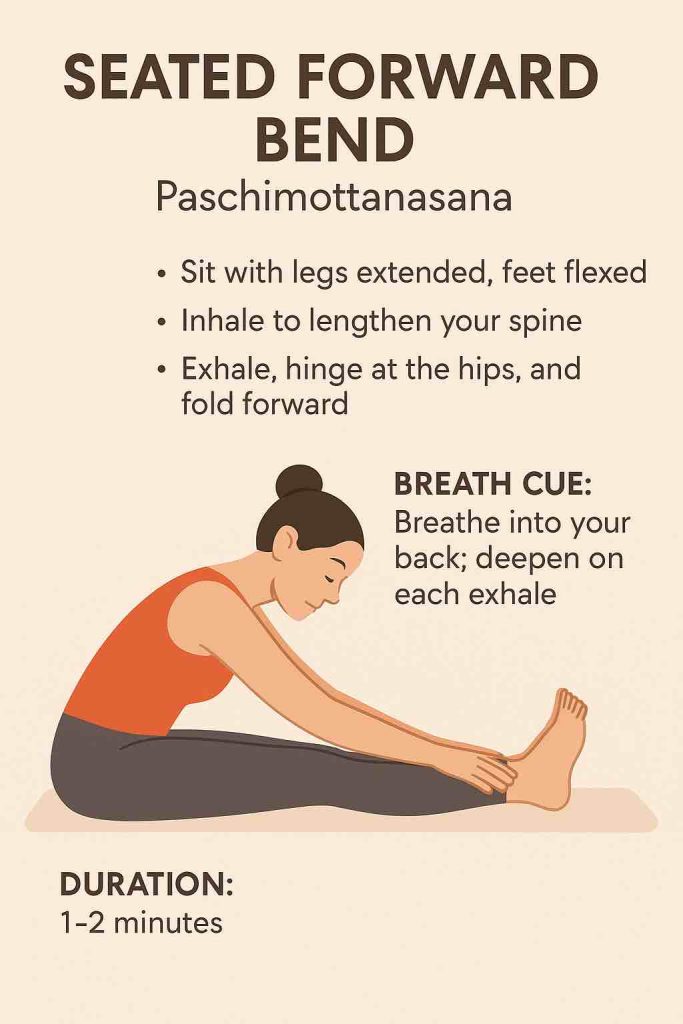
Minute 3 — Seated Forward Fold (Paschimottanasana)

Instructions:

  1. Extend both legs forward while seated.
  2. Inhale, lengthening your spine and reaching your arms up.
  3. Exhale, gently fold forward from your hips, keeping your back straight.
  4. Let your hands rest comfortably — on your shins, ankles, or feet.
  5. Relax your neck and jaw.
  6. Hold for 60 seconds, breathing deeply.

Purpose:
Gently stretches the spine, hamstrings, and back while grounding the nervous system.

Tips:

  • Avoid forcing yourself deeper into the stretch.
  • Use a cushion or rolled towel under your knees if needed.
  • Keep your breath slow and steady.

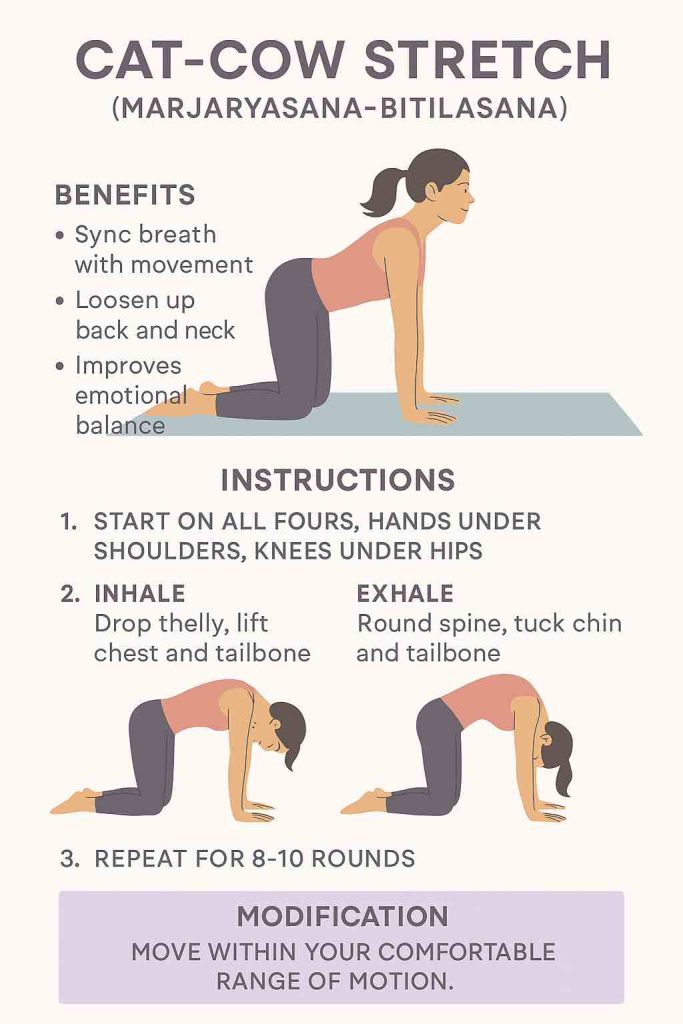
Minute 4 — Cat-Cow Flow (Marjaryasana-Bitilasana)

Instructions:

  1. Come onto hands and knees in tabletop position (shoulders over wrists, hips over knees).
  2. Inhale: Drop your belly, lift your chest and tailbone towards the ceiling (Cow Pose).
  3. Exhale: Round your spine, tuck your chin to your chest (Cat Pose).
  4. Flow between Cat and Cow slowly, matching your breath.
  5. Continue for 60 seconds.

Purpose:
Mobilizes the spine, releases back tension, and synchronizes movement with breath — a key to calming the mind.

Tips:

  • Keep movements smooth.
  • Avoid hyperextending your neck — gaze softly forward during Cow Pose.

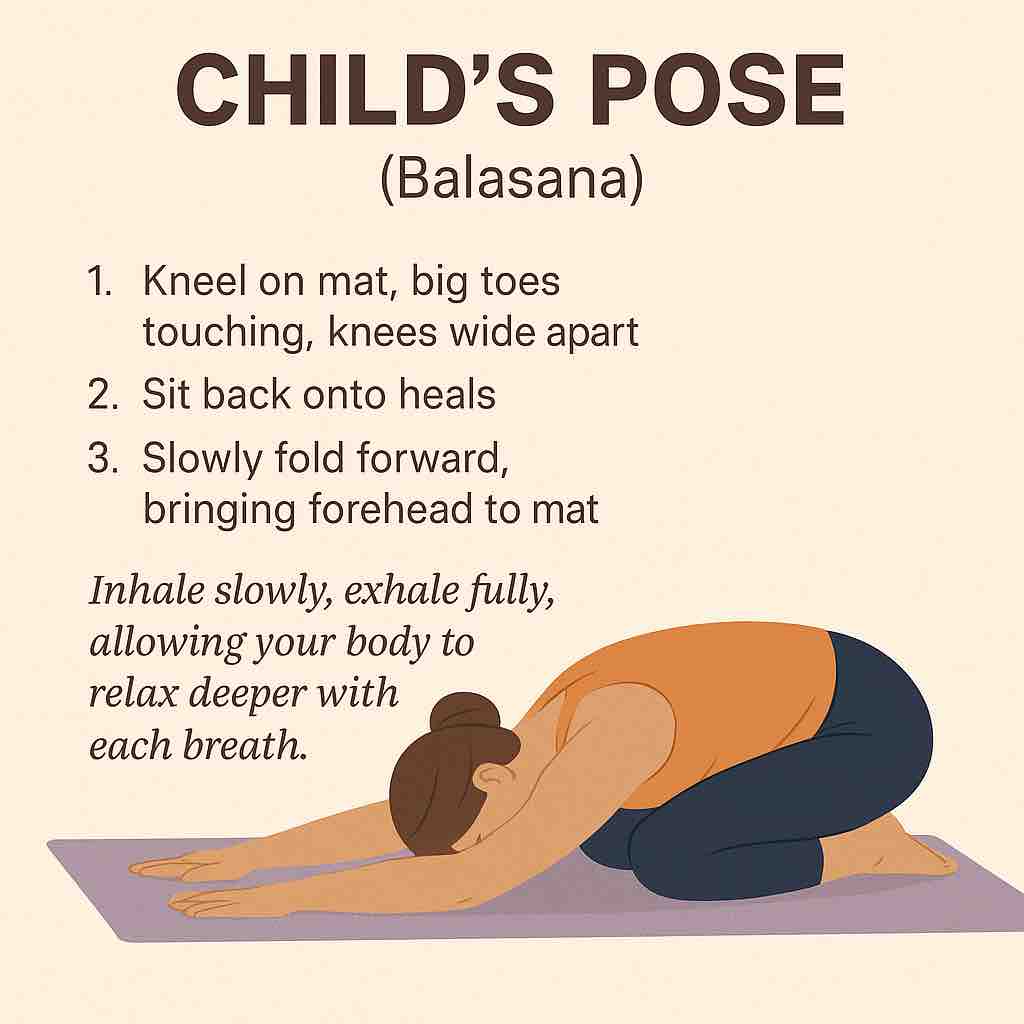
Minute 5 — Child’s Pose (Balasana) with Affirmation

Instructions:

  1. Sit back on your heels, knees slightly apart.
  2. Stretch your arms forward and bring your forehead to the mat or stacked fists.
  3. Close your eyes.
  4. As you breathe, silently repeat an affirmation:
    “I am calm, I am safe, I release what I cannot control.”
  5. Stay in this pose for 60 seconds.

Purpose:
Deep relaxation, grounding, and mental reset. Allows the body and mind to fully absorb the calming effects of the previous poses.

Tips:

  • If knees are uncomfortable, place a cushion between thighs and calves.
  • If forehead doesn’t reach the floor, stack fists or use a pillow.

Safety Considerations

  • Avoid any movements that cause pain or discomfort.
  • Those with specific injuries (spinal, neck, knee) should modify or skip poses as needed.
  • Consult a healthcare professional if you have medical concerns before beginning any new exercise program.

Enhancing Your 5-Minute Practice

  • Consistency is key. Practice daily, even during busy schedules.
  • Environment matters. Dim lights, calming music, or aromatherapy can enhance relaxation.
  • Mindset is everything. Approach the practice with full presence; even five minutes of mindful attention can work wonders.

The Power of Micro-Practices

When stress hits, many people feel trapped — waiting for the “right” time to relax or for stress to resolve on its own. But small, intentional practices like this 5-minute yoga sequence can quickly shift your state of mind and body, creating pockets of calm even during the busiest days.

Remember:
You don’t need an hour. You just need five mindful minutes.


Try this today — your nervous system will thank you.


Bonus: Quick Summary Chart

MinutePracticeKey Benefit
1Box BreathingImmediate calm
2Neck RollsTension release
3Forward FoldGrounding & stretch
4Cat-CowSpinal release
5Child’s PoseDeep relaxation

10 FAQs for the Blog

1️⃣ Can 5-minute yoga really reduce stress?

Yes. Even brief yoga practices activate your parasympathetic nervous system, lower cortisol, calm your mind, and release muscle tension. Research confirms that short, mindful breathing and movement can significantly reduce perceived stress levels.

2️⃣ Is 5 minutes of yoga enough if I’m very stressed?

While longer sessions offer deeper benefits, 5 minutes can provide immediate relief and help interrupt the stress cycle. You can always repeat the sequence multiple times if you need a longer practice.

3️⃣ Can I do this yoga routine at my desk or workplace?

Yes! Most of the poses can be easily modified for a seated position at your desk. Box breathing and neck rolls are especially office-friendly.

4️⃣ Do I need to warm up before starting?

For this gentle routine, no formal warm-up is needed. The sequence is designed for low-intensity movement with a gradual build-up of flexibility and relaxation.

5️⃣ What if I can’t touch my toes in the forward fold?

That’s perfectly fine. The goal is not to force flexibility but to create a comfortable stretch. Rest your hands on your shins, ankles, or thighs—wherever feels right for your body.

6️⃣ Is this routine suitable for beginners?

Absolutely. This 5-minute yoga sequence is beginner-friendly, requires no prior experience, and includes simple, low-impact poses.

7️⃣ How often should I practice this?

Daily practice is ideal, but even 2-3 times per week can provide noticeable stress relief. Consistency is more important than duration.

8️⃣ Can this routine help with anxiety or sleep?

Yes. The breathing techniques and calming postures help quiet the mind, making it a helpful tool for managing anxiety and improving sleep quality.

9️⃣ Are there any risks or precautions?

Listen to your body. Avoid poses that cause discomfort or pain. If you have existing injuries or health conditions, consult your doctor or a certified yoga instructor before beginning.

🔟 Can I combine this 5-minute routine with other workouts?

Definitely. This routine works well as a warm-up, cool-down, or standalone stress reliever. You can also pair it with meditation, walking, or strength training.

Posted on 1 Comment

Embark on a Calisthenics Journey with This 30-Day Workout Guide

30-DAY CALISTHENICS CHALLENGE

When you start looking for ways to build strength, mobility, and endurance without the need for expensive equipment or complicated routines, calisthenics stands out as one of the most effective methods available.

And if you’re like thousands of others searching for:

  • “30 day calisthenics challenge”
  • “30 day calisthenics workout plan”
  • “calisthenics 30 day program for beginners”

— this guide is exactly for you.

In this post, we’ll walk through a complete, practical, and detailed 30-day calisthenics workout challenge, designed specifically for beginners to intermediate practitioners who want to see real results in just one month.


Why Choose a 30 Day Calisthenics Challenge?

Before we dive into the program, it’s important to understand why calisthenics works so well for body transformation:

  • Bodyweight-Based: You’re training with your own body weight, which promotes balanced muscle development, joint health, and functional strength.
  • No Equipment Needed: You can start right now — no gym, no machines, no excuses.
  • Progressive & Adaptable: The exercises grow with you. As you build strength, you’ll naturally progress to more advanced variations.
  • Efficient: Sessions can be completed in 30-45 minutes, making it easy to fit into a busy schedule.
  • Full-Body Focused: You’ll target every major muscle group, while also improving flexibility and endurance.

Now, let’s get practical.


The Structure of the 30 Day Calisthenics Challenge

The program follows a progressive overload model, which means each week builds on the previous one — gradually increasing intensity, volume, and difficulty.

We’ll divide your 30 days into 4 weeks:

  • Week 1 — Establish foundation & technique
  • Week 2 — Build volume & consistency
  • Week 3 — Introduce progressions
  • Week 4 — Challenge your strength

Each week includes:

  • 4 workout days
  • 1 optional active rest day
  • 2 full rest days

Weekly Breakdown

WEEK 1: The Foundation Phase

Focus: Learn proper form, engage muscles, avoid injury.

Workout Days: Full-Body Routine

Warm-up (5 mins):

  • Jumping jacks (30 sec)
  • Arm circles (30 sec)
  • Leg swings (10 per leg)
  • Dynamic lunges (10 reps)
  • Wrist mobility (30 sec)

Main Workout (3 rounds):

  • Push-Ups: 8-10 reps (knees or full)
  • Bodyweight Squats: 15 reps
  • Plank: 20-30 sec
  • Glute Bridges: 15 reps
  • Superman Hold: 20 sec
  • Wall Push-Ups or Incline Push-Ups: 10 reps
  • Bird Dog: 10 per side

Cool-down (5 mins):

  • Forward fold (30 sec)
  • Hip flexor stretch (30 sec per side)
  • Chest opener (30 sec)

WEEK 2: Volume & Endurance Phase

Focus: Start adding volume to stimulate strength gains.

Workout Days: Full-Body Split

Day 1 & 3 – Upper Focus

  • Standard Push-Ups: 10-12 reps
  • Assisted Pull-Ups or Rows: 5-8 reps
  • Pike Push-Ups: 8-10 reps
  • Triceps Dips (bench or floor): 10-12 reps
  • Side Plank: 20 sec per side
  • Leg Raises: 10-15 reps

Day 2 & 4 – Lower & Core Focus

  • Bodyweight Squats: 20 reps
  • Lunges: 10 per leg
  • Glute Bridges: 20 reps
  • Calf Raises: 25 reps
  • Plank Shoulder Taps: 10 per side
  • Russian Twists: 20 reps

Cool-down: Same as Week 1.


WEEK 3: Progression & Strength Phase

Focus: Introduce slightly more challenging variations.

Workout Days: Upper/Lower Split

Day 1 & 3 – Upper Body Strength

  • Decline Push-Ups: 10 reps
  • Negative Pull-Ups or Full Pull-Ups: 4-6 reps
  • Pike Push-Ups: 10 reps
  • Dips (more range): 10-12 reps
  • Hollow Body Hold: 20-30 sec
  • Side Plank Reach Through: 10 reps

Day 2 & 4 – Lower Body Strength

  • Bulgarian Split Squats: 10 per leg
  • Jump Squats: 10 reps
  • Glute Bridges (single leg if possible): 10 reps
  • Calf Raises (weighted if possible): 20 reps
  • Plank with Arm Lift: 30 sec
  • Reverse Crunches: 15 reps

Cool-down: Extend stretches to 1 min holds.


WEEK 4: Max Effort & Skill Phase

Focus: Test limits, increase strength, refine form.

Workout Days: Advanced Full-Body

Day 1 & 3 – Strength & Control

  • Diamond Push-Ups: 12-15 reps
  • Pull-Ups: 5-8 reps
  • Elevated Pike Push-Ups: 8-10 reps
  • Triceps Dips: 12-15 reps
  • Hollow Body Rocks: 20 reps
  • Side Plank with Leg Raise: 10 per side

Day 2 & 4 – Power & Mobility

  • Pistol Squats (assisted): 5-8 per leg
  • Jump Squats: 15 reps
  • Glute Marches: 20 reps
  • Wall Handstand Hold (against wall): 10-20 sec
  • Plank to Elbow: 15 reps
  • V-Ups: 15 reps

Cool-down: Full body stretching routine, 10 minutes.


What to Expect After 30 Days

By the end of this challenge, you can expect:

✅ Increased upper and lower body strength
✅ Stronger core and better posture
✅ Improved mobility and flexibility
✅ Boosted stamina and work capacity
✅ Solid foundation for advanced calisthenics skills


Realistic Notes Before You Start

  • You won’t become an elite calisthenics athlete in 30 days — but you will build the foundation that makes advanced training possible.
  • Progress will depend on your starting point — beginners will see more noticeable gains in strength, coordination, and endurance.
  • Consistency is king. Missing workouts will slow down progress. Stick to the plan.

Common Mistakes to Avoid

  • Rushing progressions before mastering form.
  • Skipping rest days and overtraining.
  • Poor nutrition and inadequate hydration.
  • Not tracking reps and sets to monitor improvement.

After The 30 Days: What’s Next?

  • Skill Work: Start learning handstands, L-sits, muscle-ups.
  • Strength Progressions: Move to harder push-up, pull-up, and squat variations.
  • Mobility Work: Incorporate regular stretching and joint mobility drills.
  • Join a Community: Calisthenics communities online can keep you motivated.

Inspiration Credit

This 30-day calisthenics challenge is inspired by tried-and-tested protocols, including insights from the Calisthenic Movement 30-Day Program. You can check out their excellent video guide here for demonstrations and additional instruction.


Final Thoughts

The 30 Day Calisthenics Challenge isn’t a gimmick or quick-fix — it’s a structured approach to get stronger, move better, and build confidence in your body. With proper technique, consistency, and patience, you’ll be amazed at how far you can progress using just your bodyweight.

👉 Bookmark this page, print the workouts, track your progress — and let’s get started.

🔥 10 FAQs for 30-Day Calisthenics Challenge


1️⃣ Is this 30-day calisthenics challenge suitable for complete beginners?

Yes. This program is specifically designed for beginners, starting with basic movements and gradually increasing intensity each week. It emphasizes learning proper form before progressing to more advanced variations.


2️⃣ Do I need any equipment to complete this challenge?

No equipment is required to start. However, having access to a pull-up bar or resistance bands can be helpful for certain pulling exercises, but you can substitute with bodyweight rows or assisted movements.


3️⃣ How long will each workout take?

Most workouts will take 30 to 45 minutes, including warm-up and cool-down. As you advance in the later weeks, sessions may extend slightly depending on rest time between sets.


4️⃣ Can I modify the workouts if I find them too easy or too hard?

Absolutely. The program is designed to be scalable. If exercises feel too easy, increase reps, sets, or use more advanced variations. If too difficult, reduce reps or substitute with regressions to match your current ability.


5️⃣ Will this challenge help me lose weight?

Yes — if combined with proper nutrition. Calisthenics burns calories, builds lean muscle, and improves metabolism, but weight loss primarily depends on maintaining a calorie deficit through balanced diet and exercise.


6️⃣ Can I repeat the 30-day challenge after completing it?

Yes, repeating the challenge is a great idea. On your second round, you can push for harder variations, more reps, or reduced rest periods to continue progressing.


7️⃣ What if I can’t do pull-ups or push-ups yet?

That’s normal for many beginners. You can start with assisted pull-ups (bands, chair support, or rows under a table) and incline or knee push-ups to build strength progressively.


8️⃣ What should I eat during the challenge?

Focus on whole foods: lean protein (chicken, fish, tofu), complex carbs (rice, oats, quinoa), healthy fats (avocados, nuts), and plenty of vegetables. Stay hydrated and avoid processed, high-sugar foods.


9️⃣ Will this challenge help me build muscle?

Yes — especially for beginners, calisthenics is highly effective at building functional, lean muscle across the entire body. Over time, progressive overload will continue to drive muscle growth.


🔟 Can I do this challenge alongside other forms of exercise?

Yes, but monitor your recovery. Light cardio, yoga, or mobility work can complement the program. Avoid heavy weightlifting or intense workouts that might cause overtraining during this challenge.

Posted on Leave a comment

Exploring the Connection Between Eating Apples and Weight Loss

EXPLORING THE CONNECTION BETWEEN EATING APPLES AND WEIGHT LOSS

When it comes to weight loss, many people search for natural, easy-to-implement solutions. Among the countless options available, one humble fruit consistently stands out: the apple. Packed with fiber, low in calories, and rich in beneficial compounds, apples may offer more than just a tasty snack — they may actively support your weight-loss journey. But how strong is the science behind this claim? Let’s explore.


🍏 Nutritional Powerhouse: Why Apples Are a Weight-Loss Friendly Food

At first glance, apples check many of the boxes often recommended for weight management:

  • Low in calories: A medium apple contains approximately 80–130 calories depending on variety.
  • High in fiber: Around 4–5 grams of fiber, primarily soluble pectin.
  • High water content: Promotes fullness without adding excess calories.
  • Low glycemic index: Helps stabilize blood sugar levels.

Combined, these properties make apples particularly effective at promoting satiety. Eating an apple before or between meals may help you feel fuller, potentially leading to a reduction in total calorie intake throughout the day.


🔬 What Does the Research Say?

1️⃣ Clinical Trials Show Modest but Meaningful Weight Loss

Multiple randomized clinical trials have studied the effects of apples on weight management:

  • In a 12-week Brazilian study, overweight women who ate three apples per day lost an average of 1.2 kg (2.6 lbs) compared to minimal changes in those consuming oat cookies instead.
  • Another trial reported similar results, with participants who regularly consumed apples or pears losing 0.9–1.2 kg over 10 weeks.

While the weight loss may seem modest, these changes occurred without any other major dietary or lifestyle adjustments — a promising sign of apples’ standalone benefits.

2️⃣ Reduction in Inflammation and Metabolic Improvement

A 6-week study involving daily Gala apple consumption found improvements in inflammatory markers commonly associated with obesity. Chronic low-grade inflammation plays a key role in weight gain and metabolic disease; by addressing this, apples may offer an indirect but powerful tool for long-term weight management.

3️⃣ The Flavonoid Connection

Beyond fiber and calories, apples are rich in flavonoids — plant compounds with antioxidant and anti-inflammatory properties. A 2025 UK Biobank study following over 120,000 individuals for nearly a decade revealed that:

  • Higher flavonoid variety (including apples) was associated with a 14% lower risk of death.
  • Risk reductions were observed for cardiovascular disease, type 2 diabetes, and certain cancers.

Although not strictly focused on weight loss, these results reinforce the role apples can play in promoting overall metabolic health — often intertwined with weight management.


⚖️ Understanding Apples’ Role in a Weight Loss Diet

While apples offer clear advantages, it’s important to keep perspective:

  • They support — not replace — a healthy diet: Apples can help reduce calorie intake when used to replace high-calorie, low-nutrient snacks.
  • They’re most effective as part of a broader dietary pattern: Diets rich in diverse flavonoid sources (such as berries, tea, dark chocolate, and leafy greens) amplify these health benefits.
  • They are not a magic bullet: No food alone can cause significant weight loss without overall caloric control and lifestyle changes.

🥗 Practical Tips: How to Include Apples for Weight Loss

  • Snack smart: Eat a whole apple between meals to curb hunger.
  • Pre-meal strategy: Having an apple 15-30 minutes before meals may help you consume fewer calories during your meal.
  • Pair with protein: Combine apple slices with nut butter or yogurt for balanced blood sugar control.
  • Choose whole apples: Juices and sauces may lack fiber and lead to blood sugar spikes.

🧬 The Road Ahead: Ongoing Research

Emerging studies are exploring:

  • The role of specific apple varieties on gut microbiome and metabolism.
  • Long-term randomized trials with more diverse populations.
  • The optimal daily intake and variety to maximize weight-loss benefits.

As science continues to evolve, apples remain a simple, affordable, and evidence-supported choice for those looking to lose weight naturally.


🔎 Bottom Line

Eating apples can support weight loss thanks to their fiber content, low calorie density, and rich supply of bioactive compounds like flavonoids. While not a stand-alone solution, apples are a smart addition to any balanced, calorie-conscious diet aimed at long-term weight management and metabolic health.


References:

  • UK Biobank Study (2025), Nature Food
  • Brazilian Apple Trial (12 weeks)
  • Gala Apple Inflammation Study (6 weeks)
  • Meta-analysis of apple intake and metabolic markers
  • EatingWell, RealSimple, Times of India (2025 summaries)

10 FAQs with Answers

1️⃣ Can eating apples really help with weight loss?

Yes. Apples are low in calories, high in fiber, and promote satiety, which can help reduce overall calorie intake. Studies have shown modest weight loss in participants who regularly consume apples.


2️⃣ How many apples should I eat daily for weight loss?

Clinical trials have used 1–3 apples daily. Even 1 apple a day can contribute to improved satiety and metabolic benefits. However, always balance apple intake within your overall calorie and nutrient needs.


3️⃣ Are certain apple varieties better for weight loss?

While most apples offer similar benefits, some studies (like the Gala apple trial) have explored variety-specific effects. Generally, all apples are beneficial due to their fiber, polyphenols, and low energy density.


4️⃣ Is apple juice as effective as whole apples for weight loss?

No. Whole apples contain fiber which slows digestion and increases fullness. Apple juice often lacks fiber, has more concentrated sugars, and doesn’t provide the same satiety benefits.


5️⃣ When is the best time to eat apples for weight loss?

Before meals or as a snack between meals. Eating an apple 15–30 minutes before meals may help reduce overall calorie intake by increasing feelings of fullness.


6️⃣ Do apples boost metabolism?

Indirectly. Apples’ fiber, antioxidants, and polyphenols may support metabolic processes, improve insulin sensitivity, and reduce inflammation — factors that can help regulate metabolism over time.


7️⃣ Can apples cause weight gain if eaten in excess?

While unlikely due to their low calorie density, consuming very large quantities without accounting for total calorie intake may contribute to excess calories. Moderation is key.


8️⃣ Do apples help reduce belly fat specifically?

There is no strong evidence that apples target belly fat directly. However, by supporting weight loss overall and reducing inflammation, apples may contribute to healthier fat distribution over time.


9️⃣ Are dried apples or apple chips good for weight loss?

Dried apples are more calorie-dense and easier to overeat compared to fresh apples. For weight loss, whole fresh apples are generally the better choice due to their higher fiber and water content.


🔟 Can people with diabetes eat apples while trying to lose weight?

Yes. Apples have a low to moderate glycemic index and are generally safe for people with diabetes when eaten in moderation. The fiber helps regulate blood sugar levels, supporting both diabetes management and weight control.

Posted on Leave a comment

Urinary Tract Infections (UTIs) : Food & Beverage Guide

CAN FOOD HELP PREVENT UTIs?

Urinary Tract Infections are deceptively simple yet incredibly frustrating. More than 50% of women will experience at least one UTI in their lifetime, and 20-30% will face recurrent episodes. While antibiotics work for acute infections, overreliance fuels rising antibiotic resistance, potential gut dysbiosis, and leaves many patients caught in a vicious cycle.

Today, nutrition science, microbiome research, and clinical trials are opening new doors. What you eat and drink can influence:

  • The adhesion of bacteria like E. coli in the bladder
  • The strength of your immune response
  • The resilience of your vaginal and gut microbiome
  • The inflammatory state of your bladder lining

This guide combines cutting-edge research, practical dietary advice, and holistic strategies to empower you.


🔬 The Microbiology of UTIs: Setting the Stage

To fully appreciate how food helps, we need to understand how infections take hold.

  • 90% of uncomplicated UTIs are caused by uropathogenic Escherichia coli (UPEC).
  • UPEC attaches to the bladder lining via fimbriae (hair-like structures) and forms biofilms, making them harder to flush or kill.
  • Other pathogens include Klebsiella, Enterococcus, Proteus, and Staphylococcus saprophyticus.
  • Women are more prone due to a shorter urethra, hormonal factors, and anatomical proximity to the rectum.

👉 Disrupting adhesion and biofilm formation is one of the key ways foods like cranberries, probiotics, and certain teas exert their protective effects.


🍒 The Star Player: Cranberries and Their Powerhouse Compounds

What’s in Cranberries?

  • Proanthocyanidins (PACs) – specifically A-type PACs, unique to cranberries.
  • Flavonoids & Polyphenols – antioxidant, anti-inflammatory.
  • Quinic Acid – contributes to urinary acidity, creating an unfavorable environment for bacteria.

Latest Evidence: 2025 Highlights

  • RCT on Pacran™ (500 mg daily, 6 months): 52% fewer culture-confirmed UTIs.
  • Meta-analysis (50 studies): Meaningful reductions in recurrence, particularly in women with frequent UTIs.
  • Mechanism: PACs physically prevent E. coli fimbriae from latching onto bladder cells.

Bioavailability Matters

  • PACs are poorly absorbed into the bloodstream but act directly within the urinary tract.
  • Many commercial juices lack therapeutic PAC levels due to dilution and processing.

How Much Cranberry Is Enough?

ProductPAC ContentDosage
Pure cranberry juice (unsweetened)~36 mg per 240 ml1-2 servings daily
Cranberry capsules (standardized)36-72 mg PACs1-2 capsules daily
Cranberry teaVariableDaily routine

Note: Sweetened cranberry cocktails offer little benefit and add unnecessary sugars, potentially feeding harmful bacteria.


🧬 Probiotics: Restoring the Microbial Defense

Our body has natural “good bacteria” that help maintain urinary health. Disruptions (from antibiotics, stress, poor diet) can allow bad bacteria to flourish.

Vaginal Microbiome Defense

  • Healthy vaginal flora dominated by Lactobacillus crispatus and Lactobacillus jensenii lowers pH, produces hydrogen peroxide, and inhibits pathogens.
  • Women with depleted vaginal lactobacilli have higher UTI rates.

Gut Microbiome Link

  • Gut dysbiosis can increase fecal shedding of UPEC, raising UTI risk.

Probiotic Research

  • Some small studies show up to 50% fewer recurrences with oral or vaginal probiotics.
  • Optimal strains include: L. crispatus, L. rhamnosus GR-1, L. reuteri RC-14.

Food Sources of Probiotics

  • Plain yogurt (unsweetened, live cultures)
  • Kefir
  • Kimchi, sauerkraut
  • Miso, natto, tempeh

Probiotic Supplements

  • Look for refrigerated capsules with at least 10 billion CFUs.
  • Vaginal probiotics may offer direct urinary benefits for some women.

💧 Hydration: The Simplest, Cheapest, Overlooked Tool

One 2018 clinical trial showed that increasing fluid intake by 1.5 liters daily reduced recurrent UTIs by 50%.

  • Hydration promotes frequent urination, flushing bacteria before they can adhere.
  • Dehydration concentrates urine, creating an environment for bacterial growth.

Smart Hydration Options

  • Water (best)
  • Hibiscus tea
  • Weak green tea
  • Unsweetened barley water
  • Watermelon juice
  • Coconut water

Avoid:

  • Highly sweetened drinks
  • Caffeinated energy drinks
  • Sugary sodas

🌿 Plant Allies Beyond Cranberries

🍵 Green Tea

  • Catechins inhibit bacterial growth.
  • Anti-inflammatory.
  • Potential mild diuretic.

🌺 Hibiscus Tea

  • Contains hibiscus acid with antimicrobial properties.
  • In one study, elderly catheterized patients saw 36% fewer UTIs.

🧄 Garlic

  • Contains allicin, a potent antimicrobial shown to inhibit E. coli in vitro.
  • Can be used in cooking or as aged garlic extract.

🌿 Dandelion & Parsley

  • Mild natural diuretics, sometimes included in “bladder cleanse” teas.

🚫 Dietary Irritants to Minimize

During active infection or high-risk periods, reducing bladder irritants may help:

FoodWhy Avoid?
Coffee & CaffeineBladder stimulant, worsens urgency
AlcoholDehydration, bladder irritant
Spicy FoodsHeightens inflammation
Artificial SweetenersLinked to bladder discomfort
Carbonated DrinksGas, acidity
High SugarMay feed bacteria
Citrus FruitsAcidic, can irritate sensitive bladders

Not everyone reacts the same. Keeping a bladder diary helps identify personal triggers.


💊 Non-Food Interventions (That Pair Well with Nutrition)

1️⃣ Methenamine Hippurate

  • Converts to formaldehyde in acidic urine.
  • Prevents bacterial growth, very effective for recurrent UTIs.
  • Equal efficacy to antibiotics in recent large trials.

2️⃣ Uromune (MV-140)

  • Sublingual vaccine exposing immune system to inactivated UTI bacteria.
  • Shown to reduce recurrences by up to 70% in early studies.
  • Limited availability; still under regulatory review in many countries.

3️⃣ d-Mannose

  • Popular sugar thought to block E. coli adhesion.
  • Recent 2024 JAMA study found no significant benefit vs placebo.
  • May help select patients, but not strongly recommended as first-line.

⚖ Integrating Lifestyle, Nutrition & Medical Care

Prevention StrategyEvidence Strength
Hydration⭐⭐⭐⭐⭐
Cranberry PACs⭐⭐⭐⭐
Probiotics⭐⭐⭐
Avoiding bladder irritants⭐⭐⭐
Methenamine Hippurate⭐⭐⭐⭐⭐
Uromune Vaccine⭐⭐⭐⭐
d-Mannose⭐⭐

Always involve your doctor when:

  • You have multiple UTIs yearly.
  • UTIs are associated with fever, kidney pain, or systemic symptoms.
  • You are pregnant, diabetic, or immunocompromised.

📅 Enhanced 3-Day Food Plan for UTI Prevention

Day 1

  • Breakfast: Kefir with chia seeds & blueberries
  • Mid-Morning: Parsley tea + handful almonds
  • Lunch: Grilled salmon, steamed broccoli, quinoa
  • Snack: Hibiscus iced tea + Greek yogurt
  • Dinner: Garlic-lemon chicken, roasted sweet potatoes, asparagus
  • Before bed: Cranberry PAC supplement

Day 2

  • Breakfast: Oatmeal with ground flaxseed & kiwi
  • Mid-Morning: Coconut water
  • Lunch: Lentil soup, whole-grain bread, cucumber salad
  • Snack: Watermelon cubes, green tea
  • Dinner: Stir-fried tofu with garlic, ginger & bok choy
  • Before bed: Plain yogurt + probiotic capsule

Day 3

  • Breakfast: Scrambled eggs with spinach and avocado
  • Mid-Morning: Barley water
  • Lunch: Turkey wrap with arugula & hummus
  • Snack: Herbal chamomile tea + pumpkin seeds
  • Dinner: Grilled cod, sautéed zucchini, brown rice
  • Before bed: Hibiscus tea

🔬 Final Thoughts: The Food-Microbiome-UTI Triangle

UTIs are not simply infections—they are complex imbalances of host immunity, bacterial biofilms, microbiome composition, and behavioral factors. This is why diet, hydration, and microbiome support offer a multi-layered defense.

Small daily choices stack up. From your morning cup of hibiscus tea to that evening spoonful of yogurt, you’re actively reshaping your body’s defenses.

👉 Empower yourself with evidence-based strategies. Eat to nourish not just your body, but your urinary tract too.

🔎 Frequently Asked Questions (FAQs)

1️⃣ Can diet alone prevent UTIs?

Diet plays a powerful supportive role but isn’t a guaranteed prevention method for everyone. Hydration, cranberry PACs, probiotics, and bladder-friendly foods can lower your risk significantly, but certain medical or anatomical factors may still predispose some people to UTIs. Always combine dietary strategies with good hygiene and medical care if needed.


2️⃣ How much cranberry juice should I drink for UTI prevention?

Clinical studies suggest aiming for cranberry products that deliver at least 36 mg of PACs daily. This usually requires:

  • ~240 ml (1 cup) of pure, unsweetened cranberry juice, or
  • 1-2 capsules of standardized cranberry extract.

Most commercial cranberry “cocktails” don’t contain enough PACs and have added sugars—avoid those.


3️⃣ Is d-Mannose effective for UTIs?

While some smaller studies suggested possible benefits, a large 2024 JAMA study found no significant difference between d-Mannose and placebo for preventing recurrent UTIs. It may still help select individuals, but it’s not as strongly supported as cranberry PACs or methenamine hippurate.


4️⃣ Which probiotics are best for preventing UTIs?

Probiotics containing Lactobacillus crispatus, L. rhamnosus GR-1, and L. reuteri RC-14 show the most promise. These can help restore vaginal and gut microbiota balance, indirectly reducing UTI risk. Both oral and vaginal probiotic options are available.


5️⃣ How much water should I drink daily to prevent UTIs?

Studies show that increasing your daily water intake by 1.5 liters (about 6 extra cups) can cut UTI recurrence by nearly 50%. Total fluid intake should be around 2–2.5 liters/day, unless restricted for medical reasons.


6️⃣ Are there specific foods that worsen UTI symptoms?

Yes. Foods that may irritate the bladder include:

  • Caffeine (coffee, black tea)
  • Alcohol
  • Spicy foods
  • Artificial sweeteners
  • Carbonated drinks
  • Citrus fruits
  • Sugary desserts

These don’t cause UTIs but can exacerbate symptoms during an active infection or in sensitive individuals.


7️⃣ Is cranberry tea as effective as cranberry juice or capsules?

Cranberry tea may provide some PACs and hydration benefits but generally contains lower PAC levels than concentrated juice or supplements. It’s a good supportive beverage, but for therapeutic effects, standardized PAC supplements are usually more reliable.


8️⃣ What is methenamine hippurate and how does it help?

Methenamine hippurate is a non-antibiotic UTI prevention option that releases formaldehyde in the bladder, killing bacteria. Clinical studies show it’s as effective as daily antibiotics for preventing recurrent UTIs—without contributing to antibiotic resistance.


9️⃣ What is Uromune, and is it available everywhere?

Uromune (MV-140) is a sublingual bacterial vaccine that helps train the immune system against common UTI-causing bacteria. Early studies show up to 70% reduction in recurrent UTIs. It’s available in some countries but not yet widely approved worldwide.


🔟 Can men use dietary prevention methods too?

Yes. While UTIs are far more common in women, men (especially older men with prostate issues) can also benefit from:

  • Hydration
  • Cranberry PACs
  • Probiotics
  • Avoiding bladder irritants
  • Good urological care

Always consult a healthcare provider for recurrent infections, especially in men.

Posted on 1 Comment

Amla for Face and Skin

AMLA FOR GLOWING SKIN

In the world of skincare, few natural ingredients can boast both thousands of years of Ayurvedic tradition and the backing of modern clinical studies. Amla (Emblica officinalis), also known as Indian Gooseberry, stands out as one such rare gem. Revered for centuries in India as a healing powerhouse, Amla is now gaining well-deserved global recognition for its profound benefits for facial skin health and overall dermal wellness.

In this comprehensive guide, we will dive into:

  • The rich nutritional profile of Amla
  • Its scientifically validated skin benefits
  • How it works on a cellular level
  • Various ways to incorporate Amla into your skincare routine
  • Precautions, tips, and real-world application advice

What is Amla?

Amla is a small, green fruit native to India and parts of Southeast Asia. The fruit has a tart, slightly bitter taste and is traditionally consumed fresh, dried, pickled, or as juice or powder.

In Ayurveda, Amla is classified as a Rasayana — a rejuvenating tonic believed to promote longevity, immunity, and vitality. But it’s not just traditional medicine singing its praises — recent scientific studies have validated many of Amla’s skin-friendly properties.


The Nutritional Powerhouse

At the heart of Amla’s remarkable skin benefits lies its unmatched nutritional content:

CompoundBenefits
Vitamin C (ascorbic acid)Potent antioxidant, collagen synthesis booster
Emblicanin A & BLong-lasting antioxidant protection
Gallic acid, ellagic acid, quercetinAnti-inflammatory, brightening, DNA protection
Tannins, polyphenols, flavonoidsNeutralize free radicals, support skin health
Amino acids, mineralsCellular repair, hydration, and metabolic balance

With up to 20 times more vitamin C than oranges, Amla is one of the richest natural sources of ascorbic acid, making it a superb agent for skin health.


Summary of research-backed skin benefits

BenefitEvidence Source
↓ Wrinkles, ↑ elasticity/hydration84-day topical gel clinical trial
↑ Collagen / ↓ collagen breakdownIn vitro studies on procollagen & MMP inhibition
↓ UV-induced damage, ↓ pigmentationPeptide combination study
↑ Skin brightness, ↓ acneOral juice + blood purification
↑ Hydration, thickness, ↓ fine linesOral supplementation studies

The Science-Backed Skin Benefits of Amla

1️⃣ Potent Antioxidant and Anti-Aging Agent

  • Amla combats oxidative stress by neutralizing free radicals that cause premature aging, sagging, and wrinkles.
  • It inhibits matrix metalloproteinases (MMPs), the enzymes that break down collagen and elastin fibers in the skin.
  • Amla extract has been shown to stimulate procollagen synthesis, promoting youthful skin structure.

📊 Clinical studies on topical application of Amla extract demonstrated significant improvement in skin elasticity, hydration, and reduction of fine lines over a 12-week period.

2️⃣ Brightening and Pigmentation Control

  • Amla inhibits melanin production by downregulating the enzyme tyrosinase.
  • Its polyphenols, such as gallic acid and ellagic acid, contribute to a more even skin tone and reduced dark spots.

📊 In a controlled clinical trial, a 0.1% Amla extract gel visibly lightened skin pigmentation and improved overall complexion.

3️⃣ Hydration and Skin Barrier Support

  • Amla helps improve epidermal hydration by supporting natural moisturizing factors (NMF) and lipids.
  • It strengthens the skin barrier, reducing transepidermal water loss and maintaining plumpness.

4️⃣ UV Protection and DNA Repair Support

  • Combined with collagen peptides, Amla has shown photoprotective properties in studies, reducing UVB-induced damage, DNA fragmentation, and sun-related aging.
  • It also minimizes epidermal thickening caused by chronic sun exposure.

5️⃣ Acne Reduction and Anti-Inflammatory Benefits

  • Its anti-inflammatory, antibacterial, and astringent properties help calm acne-prone skin.
  • Amla purifies the blood when consumed orally, indirectly benefiting skin clarity and reducing breakouts.

6️⃣ Holistic Skin Wellness from Within

  • Ingesting Amla as a supplement, juice, or powder delivers internal support:
    • Promotes collagen synthesis
    • Improves skin thickness and elasticity
    • Reduces fine lines
    • Brightens overall complexion

How to Incorporate Amla into Your Skincare Routine

🧴 Topical Application

  • Serums & Creams: Choose professionally formulated products where “Emblica officinalis extract” appears high on the ingredient list.
  • DIY Masks: Mix Amla powder with ingredients like yogurt, honey, or rose water for a brightening and calming face mask.
    • Example Recipe:
      • 1 tsp Amla powder
      • 2 tsp plain yogurt
      • 1 tsp honey
      • Apply for 10-15 minutes, rinse with lukewarm water.
  • Toners or Mists: Amla-infused water can be used as a hydrating mist.

📝 Tip: Always patch-test any new topical application to check for sensitivity.

🥤 Oral Consumption

  • Amla Powder: 1–3 grams daily mixed with warm water or smoothies.
  • Amla Juice: 15–30 ml daily on an empty stomach for maximum absorption.
  • Capsules/Tablets: Follow recommended dosages on certified supplement brands.

📝 Note: Consistency is key for noticeable skin benefits — results often appear after 8-12 weeks of daily use.


Precautions and Safety

  • Generally well-tolerated for most people.
  • Those on blood thinners, diabetic medication, or hypotensive drugs should consult a healthcare provider before starting regular Amla consumption.
  • Excessive intake may cause mild gastrointestinal discomfort in some individuals.

Real People, Real Results

Many skincare enthusiasts who’ve incorporated Amla into their routine report:

  • Brighter, more even-toned complexion
  • Reduced appearance of fine lines and pigmentation
  • Softer, plumper skin texture
  • Fewer acne breakouts and clearer skin

The combination of antioxidant power + anti-inflammatory action + collagen support makes Amla uniquely multi-functional — working both at the surface and deep within the skin layers.


The Final Word

In an era where people are increasingly seeking safe, effective, and natural skincare alternatives, Amla stands out as a gold standard botanical ingredient. Its synergy of ancient wisdom and cutting-edge science offers a holistic path to radiant, youthful skin.

Whether applied topically or consumed orally, Amla delivers a range of benefits unmatched by most single-ingredient solutions. If you’re looking to elevate your skincare game naturally — with real scientific backing — Amla might just be your skin’s best new friend.


🌿 Pro Tip: Combine Amla with…

  • Hyaluronic Acid for extra hydration
  • Vitamin E to boost antioxidant synergy
  • Niacinamide for pigmentation and pore refinement
  • Collagen supplements to maximize firming benefits

FAQs

1️⃣ Is Amla safe for all skin types?

Yes, Amla is generally safe for most skin types including sensitive, oily, and dry skin. However, due to its high vitamin C content, some individuals with very sensitive skin may experience mild irritation. Always do a patch test before applying any new Amla-based product to your face.


2️⃣ How long does it take to see visible results on the skin with Amla?

Clinical studies and anecdotal reports suggest noticeable improvements in skin brightness, hydration, and elasticity within 8 to 12 weeks of consistent use, either topically or orally.


3️⃣ Can I use Amla directly on my face?

Yes, you can apply Amla powder mixed with other soothing agents like yogurt, honey, or aloe vera. However, pure Amla juice or undiluted powder may be too strong and acidic for some people, so always dilute it and do a patch test.


4️⃣ Can I take Amla supplements for better skin?

Absolutely. Oral supplementation of Amla — whether as powder, juice, or capsules — provides internal antioxidant support, improves collagen production, hydration, and can reduce pigmentation and acne from within.


5️⃣ Is Amla good for acne-prone skin?

Yes. Thanks to its antibacterial, anti-inflammatory, and astringent properties, Amla can help reduce acne breakouts, calm inflammation, and promote clearer skin when used both topically and orally.


6️⃣ Can Amla help with hyperpigmentation and dark spots?

Yes. Amla inhibits the enzyme tyrosinase, which reduces melanin production. Regular use can help fade hyperpigmentation, dark spots, and even out skin tone.


7️⃣ Does Amla protect against sun damage?

Yes, Amla provides antioxidant protection against UV-induced oxidative stress. While it is not a replacement for sunscreen, using Amla alongside SPF can provide an extra layer of defense against photoaging and sun damage.


8️⃣ Is it safe to use Amla daily?

For most people, daily use is safe both orally and topically when used in appropriate amounts. However, consult a healthcare provider if you have any medical conditions or are on medications (especially for diabetes, blood pressure, or blood thinning).


9️⃣ Can pregnant or breastfeeding women use Amla for skin care?

In small dietary amounts, Amla is typically considered safe, but pregnant or breastfeeding women should consult their healthcare provider before starting any supplements or new skincare products.


🔟 What is the best time to take Amla for skin benefits?

Taking Amla first thing in the morning on an empty stomach maximizes nutrient absorption. For topical use, applying Amla-based products in the morning can enhance antioxidant protection throughout the day.