
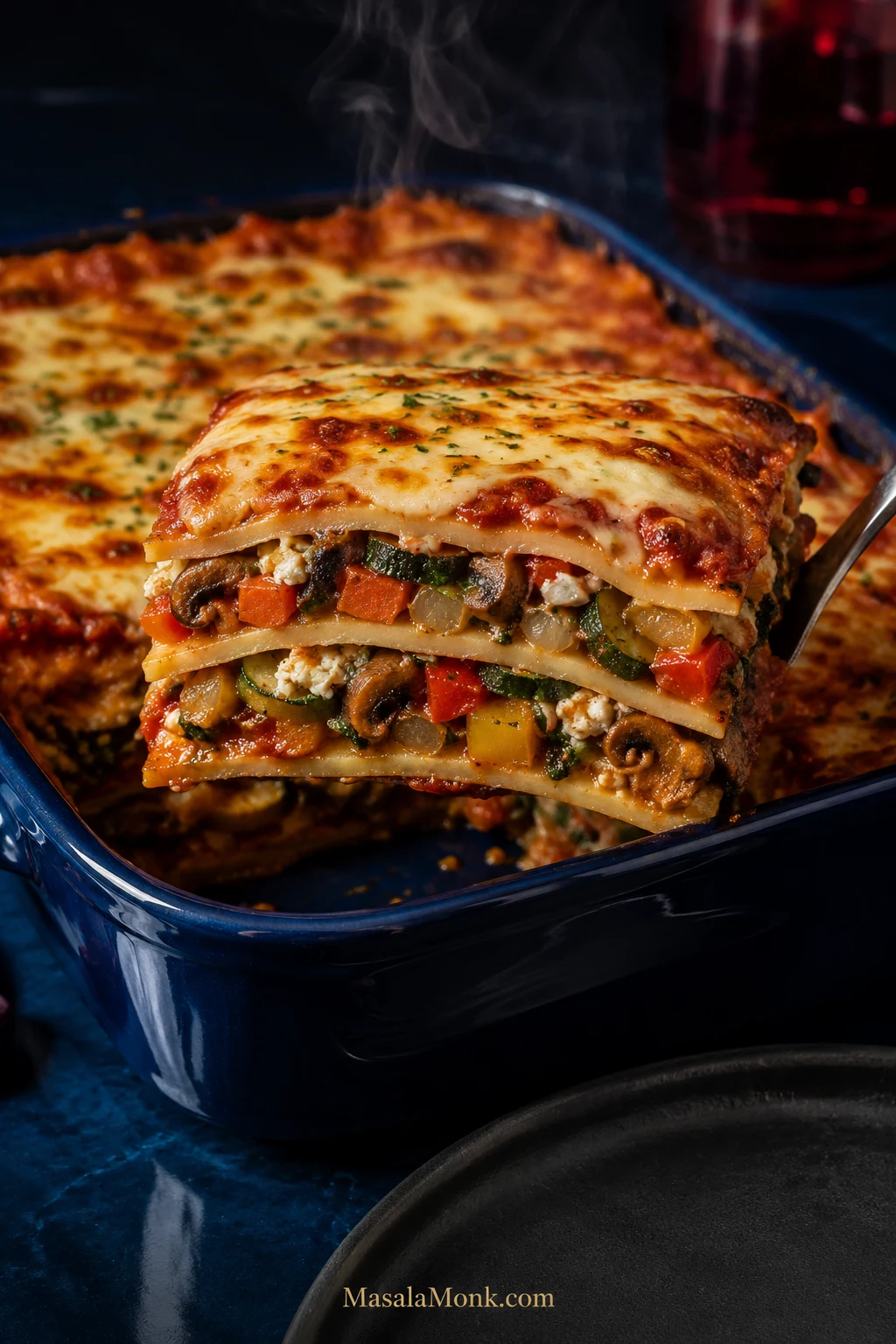
Before this becomes lasagna, the vegetables should already taste worth eating. The mushrooms need to be dark and savory, the zucchini smaller and browned at the edges, the onion sweet, and the peppers and carrots properly tender. If the filling tastes flat before it goes between the noodles, another layer of cheese will not magically make it exciting.
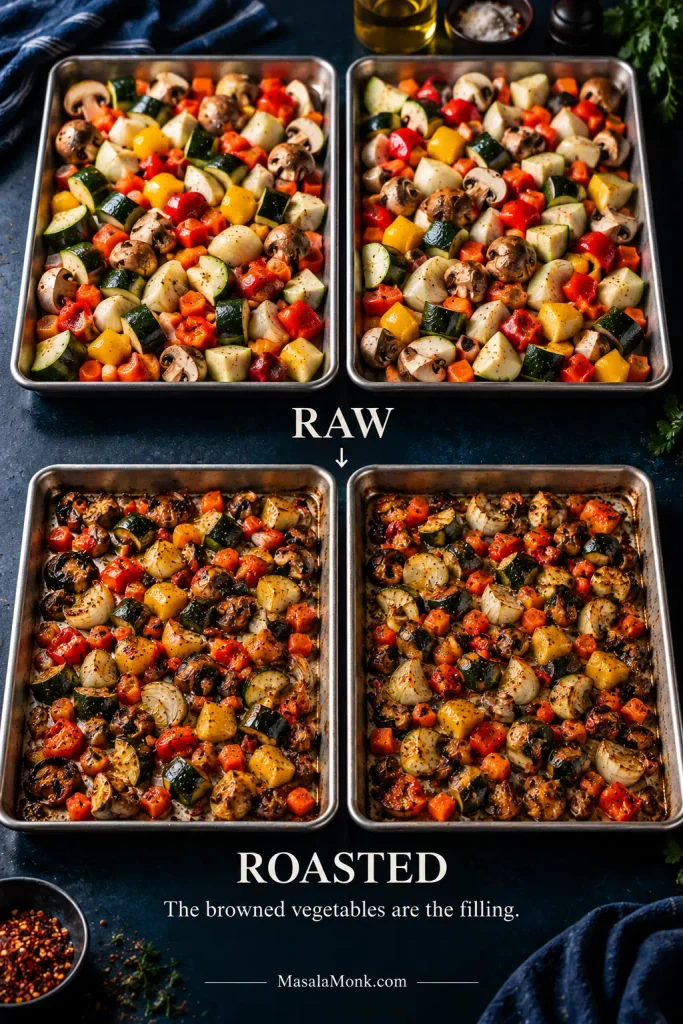
A deep 9 × 13-inch pan holds about 2 pounds / 910 g of roastable vegetables, plus spinach, layered with ricotta, mozzarella, tomato sauce and pasta. The finished lasagna is deeply cheesy, but the roasted vegetables are what give each layer its character. The browned vegetables are the filling.
Timings help, but watch the food too: mushrooms that release their water and begin browning again, marinara that clings to a spoon, and a knife that passes through the middle without catching on firm pasta.
Jump to: Make the lasagna · Choose your vegetables · Why it gets watery · Troubleshoot the pan
Open the full table of contents
Vegetable Lasagna Recipe
This version uses roasted vegetables, ricotta, low-moisture mozzarella, tomato sauce and oven-ready lasagna sheets. There is no separate pot of noodles to boil.
Allow about 2 hours from the first chop to the first slice, with a little extra breathing room the first time you make it. You are not working for all of that: the ricotta, spinach and sauce can be handled while the vegetables roast, and the final 20 minutes belong to the lasagna, not you.
| Pan | 9 × 13 inches / 23 × 33 cm, ideally at least 2½ inches / 6 cm deep |
| Yield | 8 main-dish servings or 10–12 smaller servings with sides |
| Hands-on prep | About 45–50 minutes, with some work happening while the vegetables roast |
| Vegetable roast | 20–25 minutes using two pans; add about 20–25 minutes if you need to roast in two batches |
| Covered bake | 40 minutes, then check; some pans need another 5–10 minutes |
| Uncovered bake | 10–15 minutes |
| Rest | 20 minutes; 25–30 minutes for particularly neat slices |
Cooking for more people? Make two regular 9 × 13-inch pans rather than one unusually deep double batch. They bake more evenly, are easier to move, and give you more browned edges.
Ingredients
Vegetables
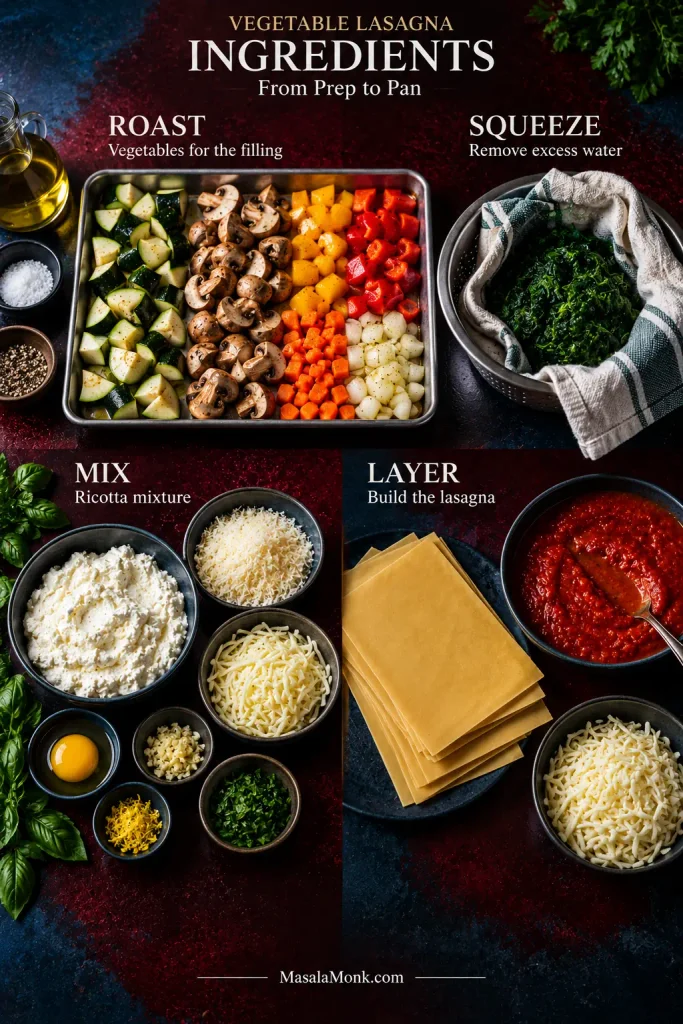
- 9 oz / 250 g zucchini, about 1 medium-large or 2 small, unpeeled and cut into roughly ½-inch / 1–1.5 cm pieces
- 8 oz / 225 g mushrooms, about one 8-ounce package, quartered if small or thickly sliced if larger
- 6 oz / 170 g red or yellow bell pepper, about 1 large, cut into roughly ½-inch / 1–1.5 cm pieces
- 5 oz / 150 g yellow onion, about 1 medium, cut into roughly ½-inch / 1–1.5 cm pieces
- 4 oz / 115 g carrot, about 1 large or 2 small, cut into smaller ¼-inch / 6 mm dice
- 5 oz / 140 g frozen chopped spinach, thawed; or about 8 oz / 225 g fresh spinach
- 3 tablespoons / 45 ml olive oil
- 1 teaspoon fine salt
- 1 teaspoon Italian seasoning
- ½ teaspoon garlic powder
- ½ teaspoon freshly ground black pepper
Ricotta Filling
- 15 oz / 425 g whole-milk ricotta, drained if whey is visibly pooling around it
- 1 large egg
- 1½ oz / 42 g Parmesan or another hard Italian-style cheese, finely grated
- 1 small garlic clove, finely grated
- 1 teaspoon finely grated lemon zest
- 2 tablespoons finely chopped fresh basil or flat-leaf parsley
- ¼ teaspoon fine salt, or to taste depending on the cheese
- ¼ teaspoon black pepper
For the Layers
- 4 cups / 950 ml thick marinara sauce, homemade or jarred
- 8–9 oz / 225–255 g oven-ready/no-boil lasagna sheets, or enough for 3 complete pasta layers; sheet count varies by brand
- 12 oz / 340 g low-moisture mozzarella, shredded, about 3 cups
- ½ oz / 14 g Parmesan or another hard Italian-style cheese, finely grated, for the top
- Optional: red pepper flakes and fresh basil for serving
If you avoid animal rennet, check the cheese labels. Traditional Parmigiano Reggiano uses animal rennet, while vegetarian alternatives may use microbial or other non-animal coagulants. The Vegetarian Society’s guide to vegetarian cheese can help when the label is unclear.
Lightly oil the bottom and sides of a deep 9 × 13-inch / 23 × 33 cm baking dish. You will also need two large rimmed sheet pans; half-sheet pans, roughly 13 × 18 inches / 33 × 46 cm, are ideal. Have a mixing bowl, clean kitchen towel and foil ready too.
If the trays need separate oven racks, you will swap their positions halfway through roasting. Only one suitably large tray? Roast the vegetables in two batches rather than crowding them, and allow another 20–25 minutes.
Lasagna can bubble over as it bakes. If the assembled filling sits close to the rim, put the baking dish on a rimmed sheet pan before it goes into the oven.
1. Roast the Vegetables Until They Taste Finished
Heat the oven to 425°F / 220°C.
Divide the zucchini, mushrooms, bell pepper, onion and carrot between the two sheet pans. Add the olive oil, salt, Italian seasoning, garlic powder and black pepper. Toss well and spread everything out.
Crowded vegetables steam. Give these some room.
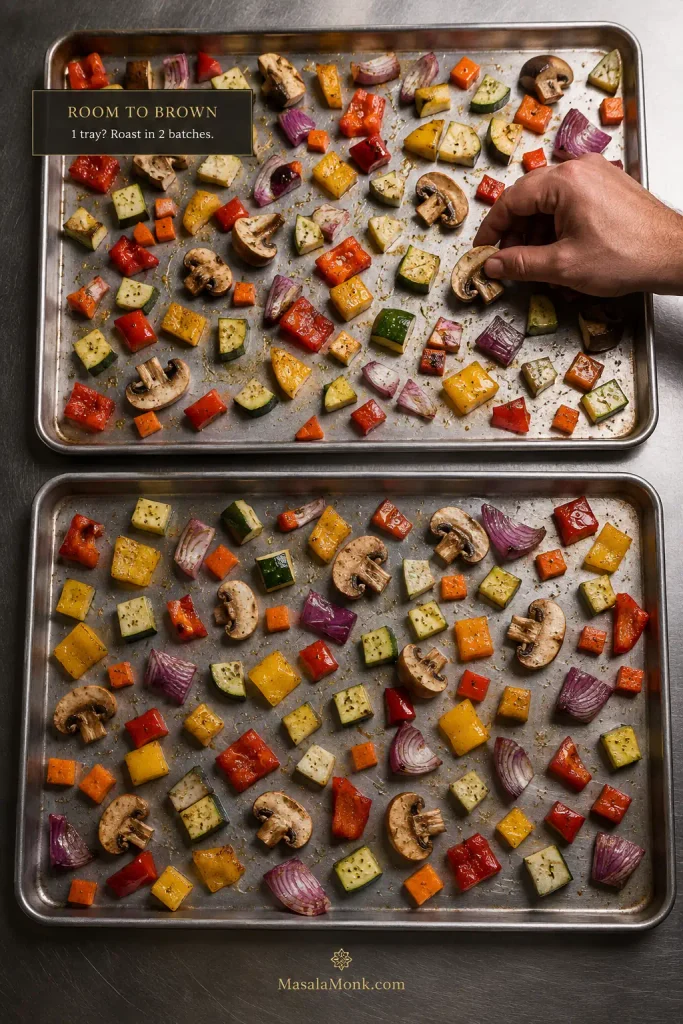
Roast for 20–25 minutes, stirring once. If the pans are on separate racks, swap the upper and lower pans and turn them front-to-back when you stir.
How to Know the Vegetables Are Ready
What looked like an unreasonable amount of vegetables at the beginning will look much more manageable now. The onion smells sweeter and the zucchini has shrunk. Peppers are tender, carrot pieces nearly cooked through, and dark edges have started appearing across both trays.
Mushrooms are especially easy to read. First they soften. Then they release enough liquid to make the pan look wetter than it did before. Keep going. The liquid disappears, the pan dries, and the mushrooms begin to brown again.
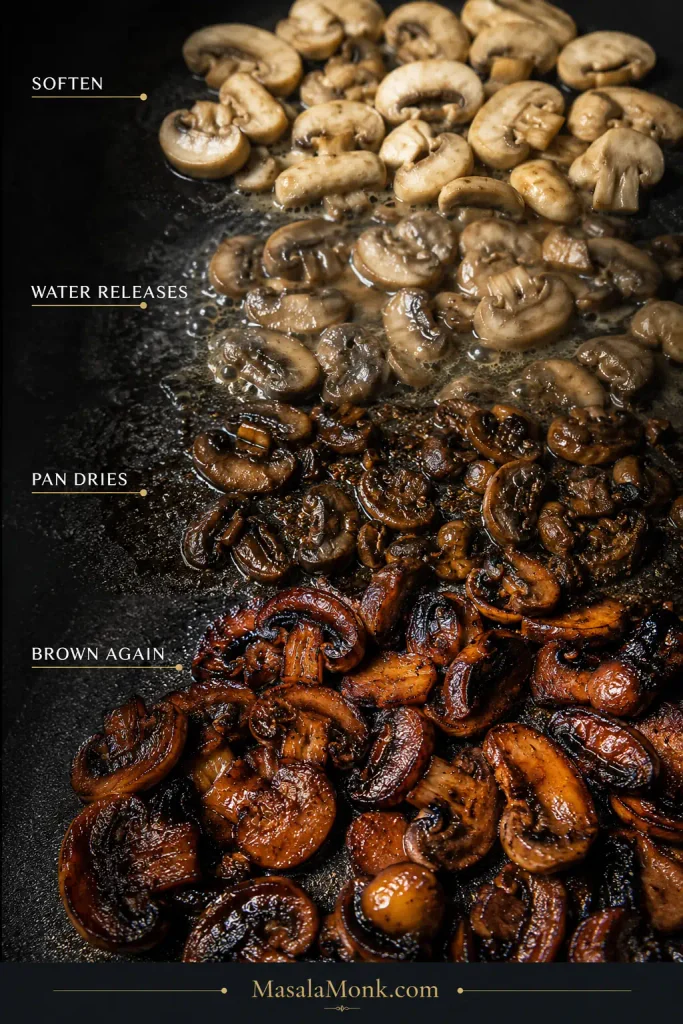
Taste one.
Then taste a piece of zucchini and some onion. If those bites are not good now, fix the seasoning before they disappear between pasta and cheese.
Reduce the oven to 375°F / 190°C.
2. Dry the Spinach
Put the thawed spinach in the center of a clean kitchen towel, gather the towel around it and twist firmly over the sink. Keep squeezing until very little more liquid comes out.
Using fresh spinach? Wilt the 8 oz / 225 g in a large pan, let it cool enough to handle, squeeze out the excess liquid and chop it.
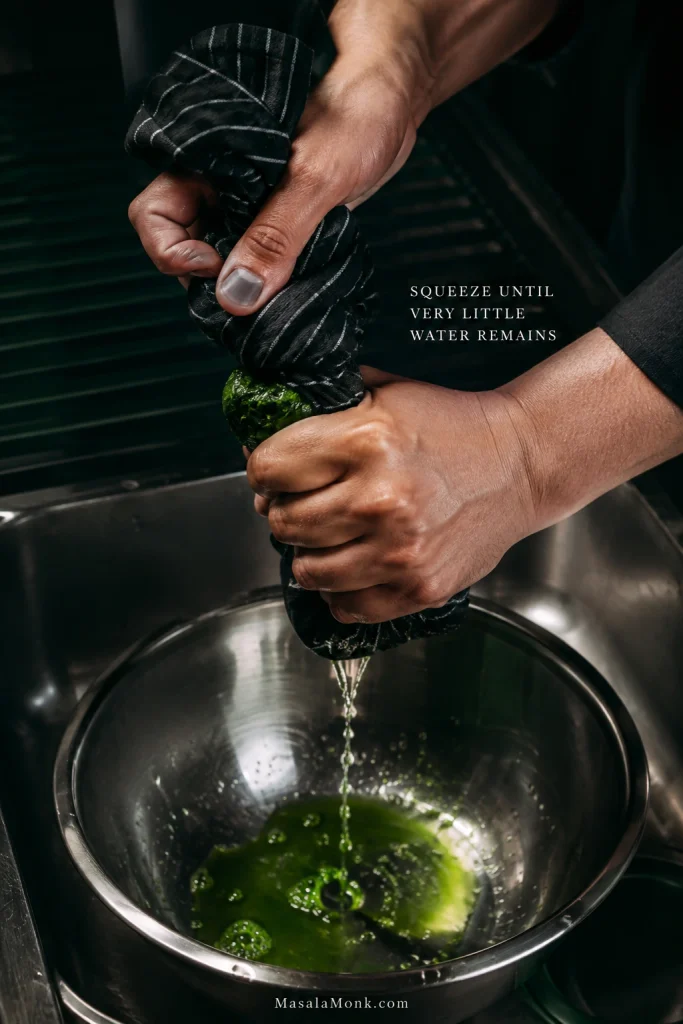
Break the spinach apart and mix it through the roasted vegetables.
3. Check the Sauce
A good jarred marinara keeps this dinner practical.
Drag a spoon through the sauce. The trail should remain for a moment before slowly closing, and the sauce needs to be loose enough to spread easily across the dry noodles. If it runs like tomato juice, simmer it uncovered for a few minutes.

Stop before it becomes heavily reduced or pasty. Oven-ready sheets need enough sauce around them to become tender.
Taste the sauce too. Ricotta, mozzarella and pasta soften its seasoning once everything is layered.
Making the sauce from fresh tomatoes? They carry more water, so reduction matters. The fresh tomato sauce recipe shows the consistency to look for before measuring the 4 cups / 950 ml.
4. Mix the Ricotta
Stir together the ricotta, hard cheese, garlic, lemon zest, herbs, salt and pepper without the egg first.
Taste it. The ricotta needs enough seasoning to remain noticeable once it is surrounded by pasta, vegetables and tomato sauce. The lemon zest is there for brightness rather than obvious lemon flavor.
Once the seasoning is right, stir in the egg. It helps the cheese layer set; without it, the ricotta simply stays softer.
The messy part is mostly over now. The trays are roasted, the spinach is squeezed, the sauce is ready and the ricotta is mixed.
From here, you’re building.
5. Build the Layers
The vegetables, sauce and ricotta should each taste properly seasoned on their own before you layer them.
Divide the vegetables and ricotta mixture roughly in half. Keep the marinara, noodles and mozzarella beside the baking dish. You are making three pasta layers and two filling layers.
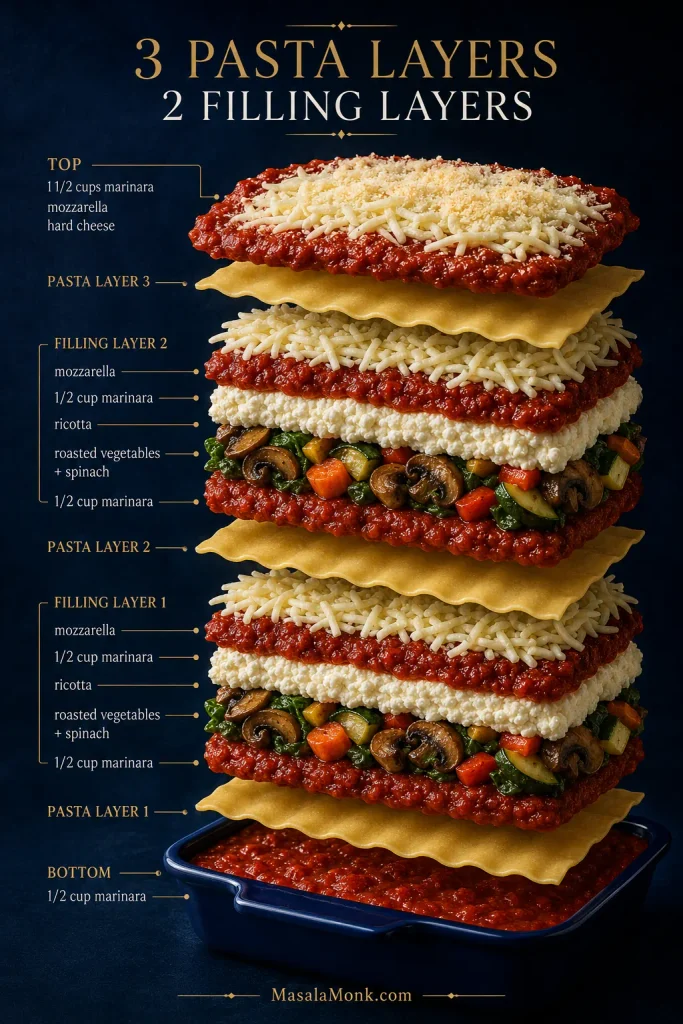
Bottom
- ½ cup marinara
- Enough oven-ready pasta to cover the pan
First Filling Layer
- ½ cup marinara, spread over the noodles
- Half the ricotta filling
- Half the vegetables
- Another ½ cup marinara
- About 1 cup mozzarella
Second Filling Layer
- A second complete pasta layer
- ½ cup marinara
- Remaining ricotta filling
- Remaining vegetables
- Another ½ cup marinara
- About 1 cup mozzarella
Top
- Final complete pasta layer
- Remaining 1½ cups marinara
- Remaining mozzarella
- ½ oz / 14 g grated hard cheese
Dollop the ricotta onto the sauced noodles and spread it before adding the vegetables. It is much easier to move ricotta across a flat sheet of pasta than across a pile of zucchini and mushrooms.
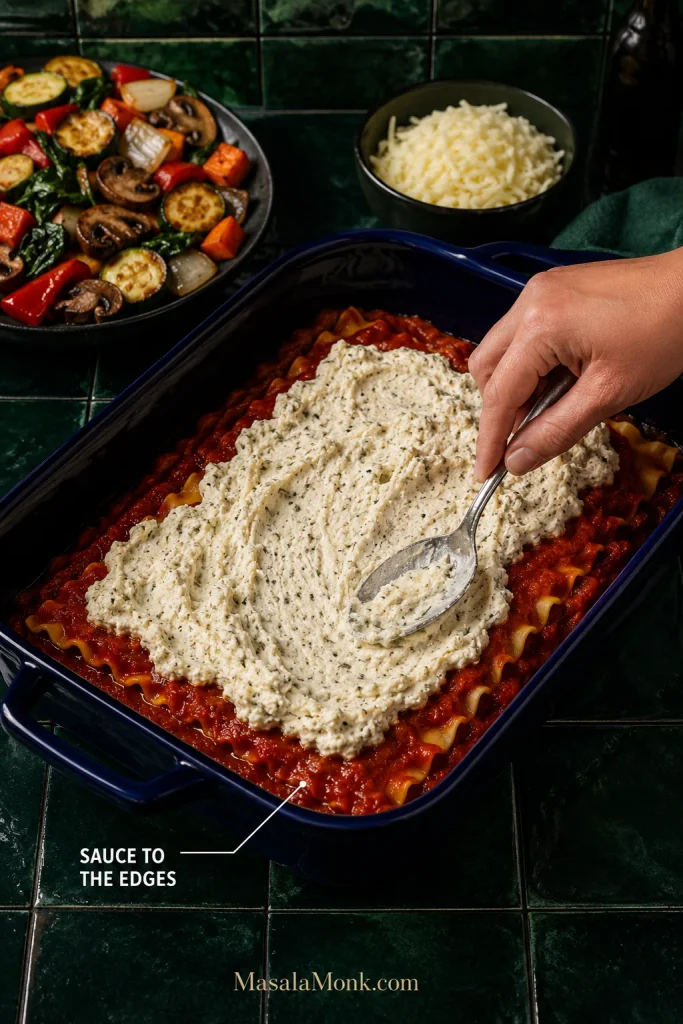
Set the next pasta layer down and press gently over any obvious vegetable mounds. Don’t pack the filling.
Sheet sizes vary, sometimes a lot. Three complete pasta layers are the useful target. Break sheets to fill a real gap, but avoid thick patches of overlapping dry pasta.
Cover the final noodle layer completely with the last 1½ cups of marinara, right into the corners. Pasta left exposed here is likely to stay hard.
The two trays of vegetables, bowl of ricotta and stack of pasta have finally become one pan of lasagna.
6. Cover and Cook the Pasta
Cover the dish tightly with foil. Lightly oil the underside if it sits close to the cheese.
Bake at 375°F / 190°C for 40 minutes.
Forget about browning for now. The middle of the pan and the dry noodles need the covered heat first.
7. Check the Middle, Then Brown the Top
Push a thin knife through the middle after 40 minutes.
If it slides through without catching on firm pasta, you’re ready to uncover. If the knife catches, nothing has gone wrong. Cover the pan again and give it another 5–10 minutes.
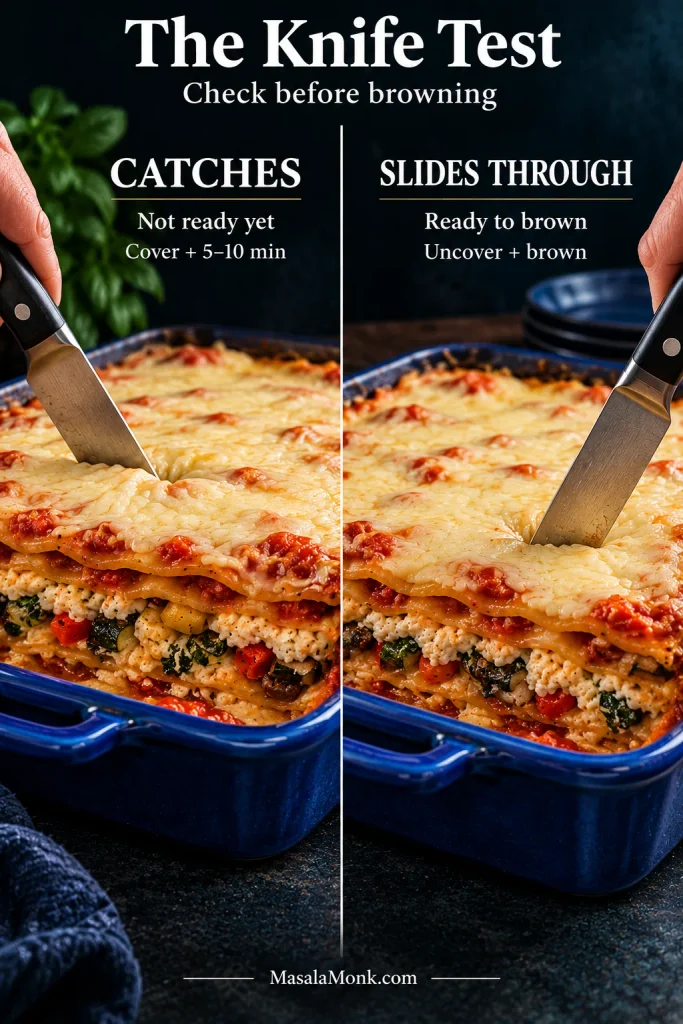
A refrigerator-cold pan or thicker oven-ready sheets may need closer to 50 minutes covered.
Once the pasta is tender, remove the foil and bake for another 10–15 minutes. Tomato sauce will bubble around the perimeter. The mozzarella picks up golden patches, darker freckles and, here and there, a crisp edge.
If your baking dish is broiler-safe, a pale but fully cooked top can have a brief broil. Stay close—the distance between bronzed mozzarella and burned cheese is surprisingly short.
8. Give It 20 Minutes Before You Ask It to Be a Slice
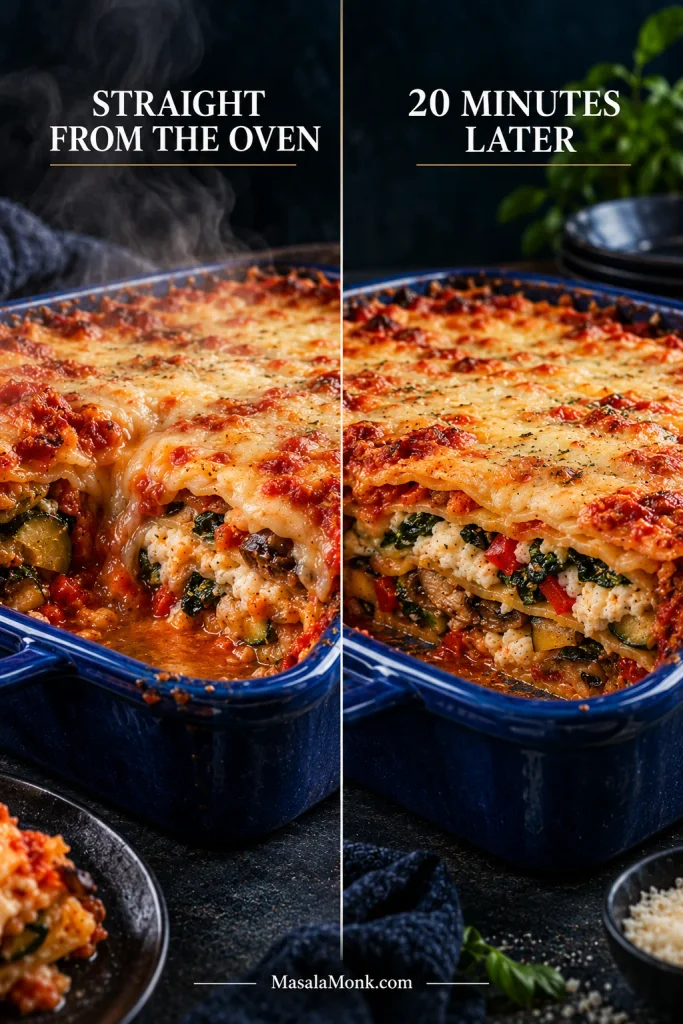
Take the pan out and leave it alone for 20 minutes.
The furious bubbling subsides, the ricotta firms a little and the sauce stops running quite so freely when you cut.
For particularly clean slices, wait 25–30 minutes. The middle will remain plenty hot.
Need help with the pan? Choose or swap vegetables · Make it ahead · Fix excess moisture · Troubleshoot what you see
Easy Shortcuts
This is not a 30-minute dinner. It does not need to become an all-afternoon project either.
- Jarred marinara: use one that passes the consistency check above and move on.
- Oven-ready noodles: no boiling, draining or handling floppy sheets.
- Frozen spinach: excellent here once thoroughly squeezed.
- Pre-shredded low-moisture mozzarella: a perfectly reasonable place to save a few minutes.
- Vegetables roasted a day ahead: the most useful shortcut when tomorrow’s assembly needs to be quick.
Best Vegetables for Lasagna
For this style of lasagna, cook the vegetables before layering them. Raw zucchini and mushrooms can release too much liquid in the pan, while dense vegetables may still be firm by the time the pasta is done.
Zucchini can become eggplant without much trouble. Carrot is different. It carries far less water and takes longer to soften, so replacing vegetables cup-for-cup can change the filling more than expected.
The base recipe uses about 2 pounds / 910 g of trimmed roastable vegetables, plus spinach. Raw weight is a useful rough guide for substitutions; then account for how dense and watery the replacement is.
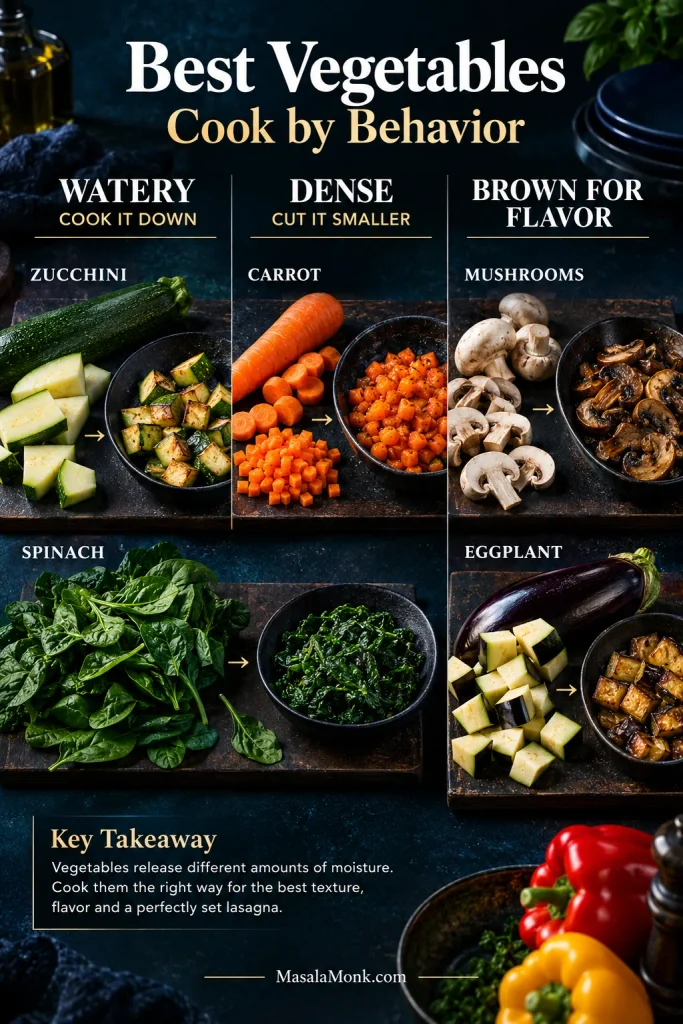
How to Swap Vegetables Without Throwing Off the Filling
| Vegetable | How to Use It |
|---|---|
| Zucchini | Tender and fairly watery. Roast until smaller and browned. Eggplant is an easy replacement. |
| Mushrooms | Deeply savory. Keep cooking until their released liquid is gone and browning starts again. |
| Spinach | Wilt fresh or thaw frozen, then squeeze firmly. Kale works too but needs more cooking. |
| Bell peppers | Sweet and forgiving. Roast until tender. Well-drained roasted red peppers also work. |
| Carrots | Sweet and relatively dry. Cut them smaller so they become tender at roughly the same time as the other vegetables. |
| Onion | Give it enough time to soften and brown. Large undercooked pieces are distracting in the finished slice. |
| Eggplant | Silky and savory after roasting. Excellent in place of some or all of the zucchini. |
| Butternut squash | Dense and sweet. Use small cubes and roast until nearly tender. |
| Broccoli or cauliflower | Use small pieces and roast first. Better as part of a mixed filling than the entire filling. |
| Kale | More robust than spinach. Remove tough stems and cook it until properly tender. |
No mushrooms? Replace their 8 oz / 225 g with eggplant, extra pepper, zucchini or a mixture. You lose some savory depth, so give the tomato sauce a final taste before assembly.
For a smoother, more hidden-vegetable filling, grate zucchini into the marinara and simmer until tender and its extra moisture has cooked away. Browned mushrooms can be chopped very finely, and spinach can simply be minced before mixing it through.
Vegetable Lasagna With Frozen Vegetables
Frozen spinach is excellent here. Frozen zucchini is not. Most other frozen vegetables fall somewhere between those two.
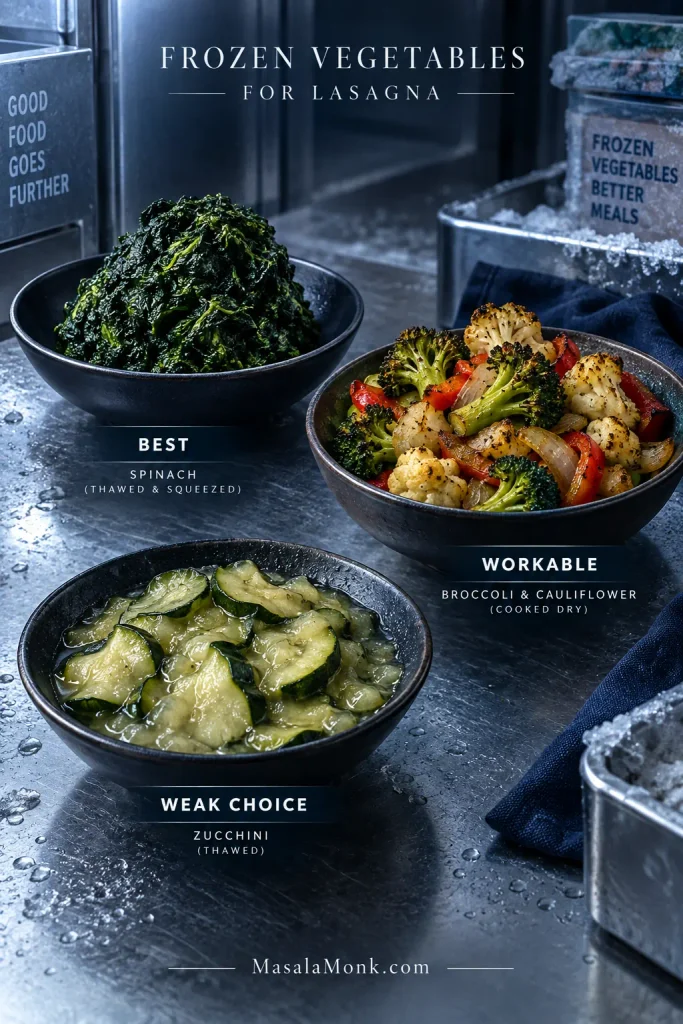
| Frozen Vegetable | Best Approach |
|---|---|
| Spinach | Thaw completely and squeeze firmly until very little more water comes out. |
| Broccoli or cauliflower | Thaw, drain and blot. Roast or sauté briefly if the pieces still look wet. |
| Peppers or pepper-and-onion mixes | Sauté until released water evaporates and some color starts developing. |
| Mixed vegetables | Thaw, then sauté until the pan no longer looks wet. Choose the blend for flavor as well as convenience. |
| Zucchini | It can be used, but the texture is considerably softer and wetter. Fresh zucchini is much better here. |
If most of the filling comes from frozen vegetables, cook and drain them before assembly. Aim for about 5 cups total cooked, well-drained vegetables across the two filling layers, including spinach if you’re using it.
The volume does not need to be exact. Two full, fairly level layers are enough.
Still dealing with excess liquid? See why vegetable lasagna gets watery.
Ricotta and Cottage Cheese in Vegetable Lasagna
Ricotta leaves soft, creamy pockets between the roasted vegetables, sauce and pasta. A very loose tub needs draining first.
Using Cottage Cheese Instead
Cottage cheese is tangier, with visible curds unless you blend it. Swap it for the ricotta by weight—15 oz / 425 g—and make the rest of the filling exactly the same way. Blend the cottage cheese before adding the other ingredients when you want a smoother texture, and drain off obvious liquid first.

The cottage cheese lasagna is built around that cheese from the start rather than treating it as a substitution.
For a different style altogether, béchamel gives you a softer, silkier lasagna with creaminess spread more evenly through the layers. The béchamel sauce for lasagna is the better starting point for that version.
No-Boil and Regular Lasagna Noodles
This version is built for oven-ready/no-boil sheets. Keep every sheet well covered with sauce and give the pan the full covered bake before checking the pasta.
Using Pre-Cooked Regular Noodles
Cook enough regular noodles for the same three complete pasta layers; sheet dimensions and package sizes vary. Boil them only until flexible and a little firmer than you would serve as finished pasta.
For cooked noodles, reduce the sauce over each vegetable layer from ½ cup to ¼ cup. Keep every other sauce amount the same; this uses 3½ cups in the lasagna and leaves ½ cup to warm for serving if you want extra sauce at the table.
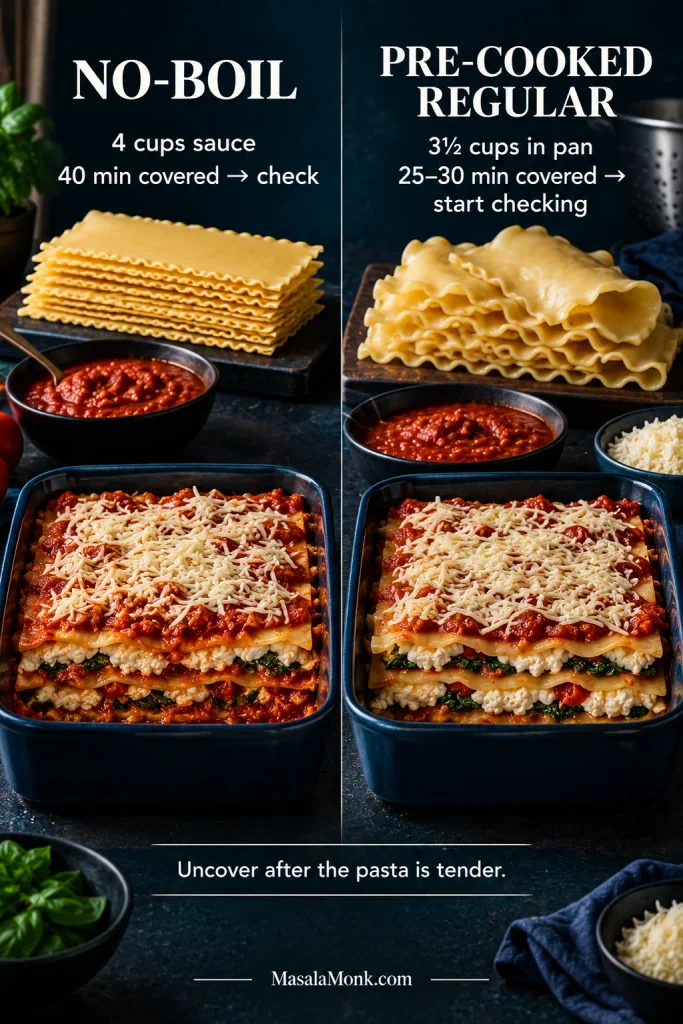
Pre-cooked noodles do not need the full 40–50 minute hydration stage. Cover the freshly assembled lasagna and start checking it after 25–30 minutes at 375°F / 190°C. Once the middle is hot and bubbling, uncover and brown the cheese for another 10–15 minutes.
A refrigerator-cold pan will take longer. Judge it by a thoroughly hot, bubbling middle rather than the clock alone.
Gluten-free sheets vary too much by brand for one universal method. Follow the package directions, keep dry sheets well sauced and check the pasta before uncovering.
Pasta still firm? Return to the knife doneness test · ↑ Back to top
Why Vegetable Lasagna Gets Watery
Most watery lasagnas are not ruined by one dramatic mistake. They get there by accumulation: spinach that still held water, mushrooms that never reached the browning stage, unusually loose ricotta and thin tomato sauce all meeting in the same pan.
- Vegetables: zucchini, mushrooms and spinach can release plenty of water. Roasting, sautéing and squeezing deal with much of it before layering.
- Cheese: ricotta and cottage cheese vary by brand. If whey is pooling, drain it. Fresh mozzarella contains considerably more water than low-moisture mozzarella and is not a straightforward 1:1 substitute here unless it is drained and blotted extremely well.
- Sauce: very thin marinara loosens the whole pan. Sauce reduced too far creates the opposite problem when dry noodles need liquid.
- Pasta: oven-ready sheets absorb liquid while they cook. Boiled noodles arrive in the pan already hydrated.
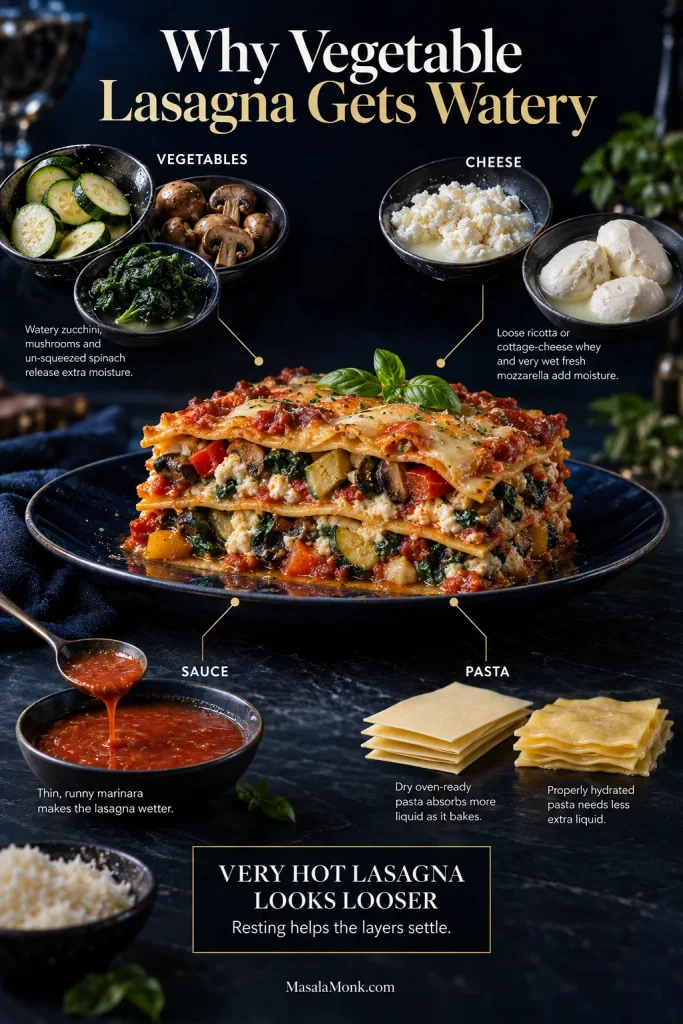
A lasagna also looks looser when it is extremely hot. Straight from the oven, the sauce moves more freely; after 20 minutes, the layers hold themselves together much better.
A spoonful of juices around a very hot first slice is not a failed lasagna.
A lake underneath it is something worth fixing.
Already have a pan in front of you? Troubleshoot what you’re seeing.
Make Ahead, Freeze and Reheat
Assemble It the Night Before
Cover the assembled pan tightly and refrigerate overnight. The next day, start checking the pasta after about 45 minutes covered. The whole dish begins cold, so it usually needs longer than a freshly assembled pan.
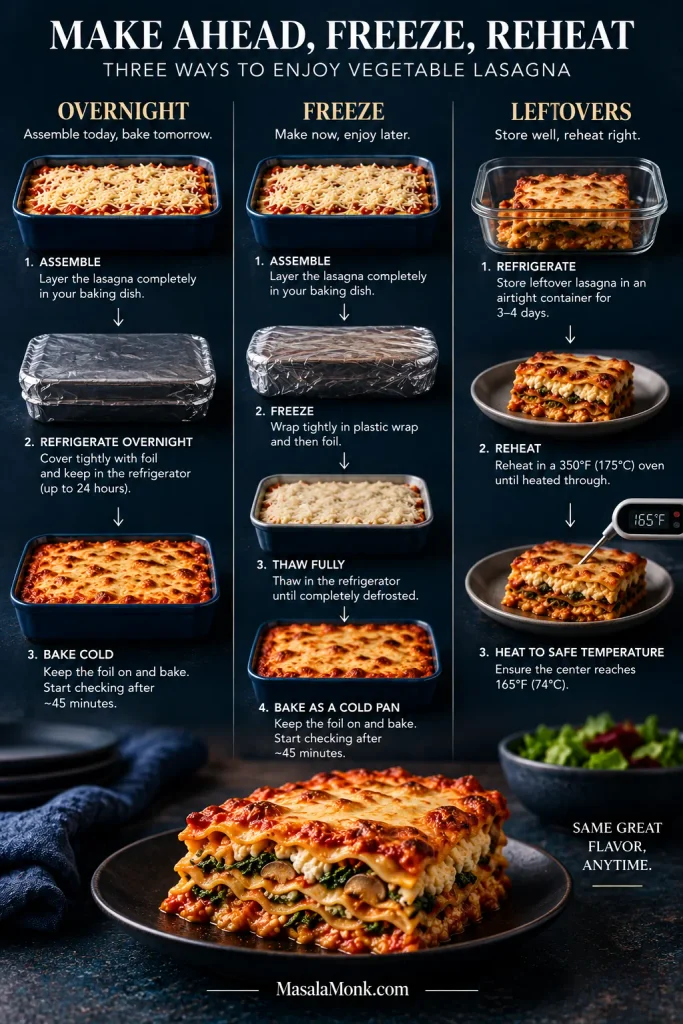
Opening the refrigerator and finding dinner already built is one of the better rewards for doing the chopping a day early.
Prep the Components Earlier
The roasted vegetables and tomato sauce can be made up to 2 days ahead and refrigerated separately. Mix the ricotta and assemble closer to baking.
Freeze the Whole Pan or Individual Slices
A tightly wrapped assembled lasagna can be frozen before baking. Thaw it fully in the refrigerator; a deep frozen 9 × 13-inch pan may take longer than one night to thaw through.
Once fully thawed, treat it like any other refrigerator-cold assembled lasagna: bake covered at 375°F / 190°C and start checking the pasta after about 45 minutes. Uncover once the noodles are tender and brown the top.
For leftover slices, cool the lasagna first, divide it into individual portions, wrap well and freeze. Thawing in the refrigerator gives the most even reheating.
Leftovers and Reheating
Refrigerate leftovers promptly in covered containers and use them within 3–4 days, or freeze them for longer storage. The USDA’s leftover-safety guidance has additional storage and reheating advice.
For several refrigerated slices or a larger portion, cover and reheat at about 350°F / 175°C until hot through the middle. Uncover for the last few minutes if you want to refresh the cheese on top.
For a measurable food-safety endpoint, USDA recommends reheating leftovers to 165°F / 74°C in the center.
A single slice usually does better with gentler staged microwave heating than one long blast at maximum power. Chilled lasagna has another advantage: the layers often cut even more cleanly the next day.
Cooking it now? Return to the main recipe · ↑ Back to top
Read the Pan: What Went Wrong?
Do not chase architectural perfection.
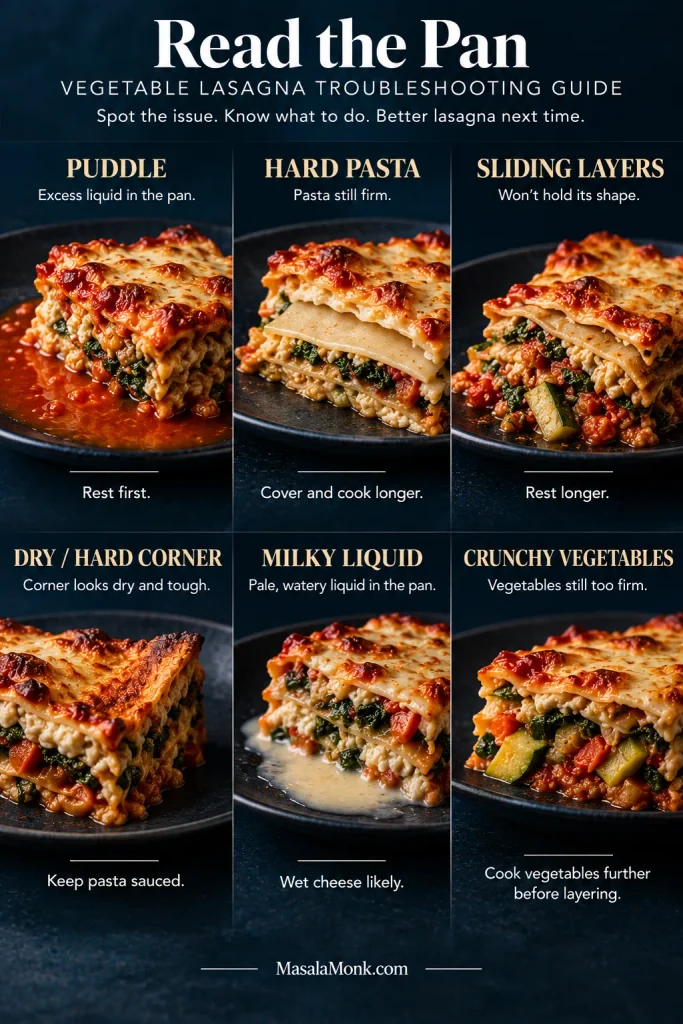
A good lasagna can slump a little at the edge of the plate and still be exactly right. What deserves attention is a real pool of liquid, genuinely hard pasta, a dry top, a cold middle or vegetables that never became tender.
If the first slice collapses, give the pan another few minutes before deciding anything dramatic. The first piece out of a very hot lasagna is often the least tidy one.
| What You See | What to Do |
|---|---|
| Thin puddle around the edges | Rest the pan first. If a genuine pool remains, carefully spoon off a little before serving. Next time, cook more moisture out of the vegetables or reduce an unusually thin sauce. |
| Noodles hard throughout | Cover the pan again and give the pasta another 5–10 minutes, then check once more. |
| Mushy pasta | There is no real rescue once pasta is over-softened. Next time, boil regular noodles less or adjust the amount of liquid or baking time for very thin oven-ready sheets. |
| Lasagna slides apart | Give it more time to rest before cutting another slice. Very wet cheese, loose sauce and excessively thick filling layers can make the problem worse. |
| Lasagna is dry | Serve it with warm marinara. Next time, keep the pasta fully covered and check the bake earlier. |
| Everything tastes flat | Add grated hard cheese, herbs, black pepper or chile at the table. Next time, brown and season the vegetables properly and taste the sauce and ricotta before layering. |
A Few Other Clues
- Hard top corners: pasta was probably left exposed above the sauce.
- Milky liquid: unusually wet ricotta, cottage cheese or mozzarella is often involved.
- Crunchy vegetables: dense vegetables were cut too large or did not cook far enough before assembly.
Should a Watery Lasagna Stay in the Oven Longer?
Only if the pasta still needs cooking.
A slightly loose lasagna often improves more from ten minutes on the counter than ten more minutes in the oven. A flooded one can remain wet underneath while the cheese and exposed pasta get drier and drier.
What to Serve With Vegetable Lasagna
Lasagna already brings soft pasta, roasted vegetables, tomato and plenty of creamy cheese. Something crisp, green or sharply dressed beside it gives the next bite a useful contrast.
- Cucumber salad: cold cucumber, onion, dill and vinegar cut through the richness; this cucumber salad recipe is a natural fit.
- Roasted broccoli or broccolini: charred edges and a greener, slightly bitter contrast to the sweeter tomato sauce.
- Garlic bread: for a full comfort-food dinner; this homemade garlic bread loaf works well alongside it.
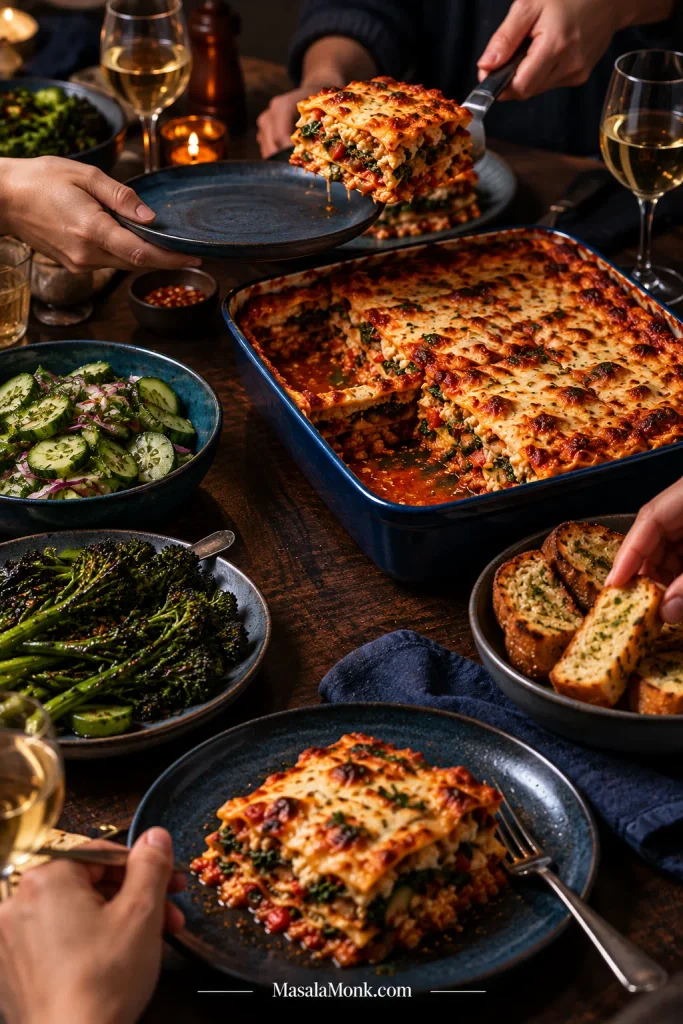
Cut through a browned corner and lift the first piece. The cheese at the edge may be a little crisp while the layers underneath stay soft, with creamy ricotta between zucchini, mushrooms and peppers and enough tomato sauce to keep the pasta tender without running across the plate.
The vegetable lasagna worth making again is the one where the vegetables taste good before they become filling, the pasta is tender, and the whole generous pan still knows how to become a slice.








