
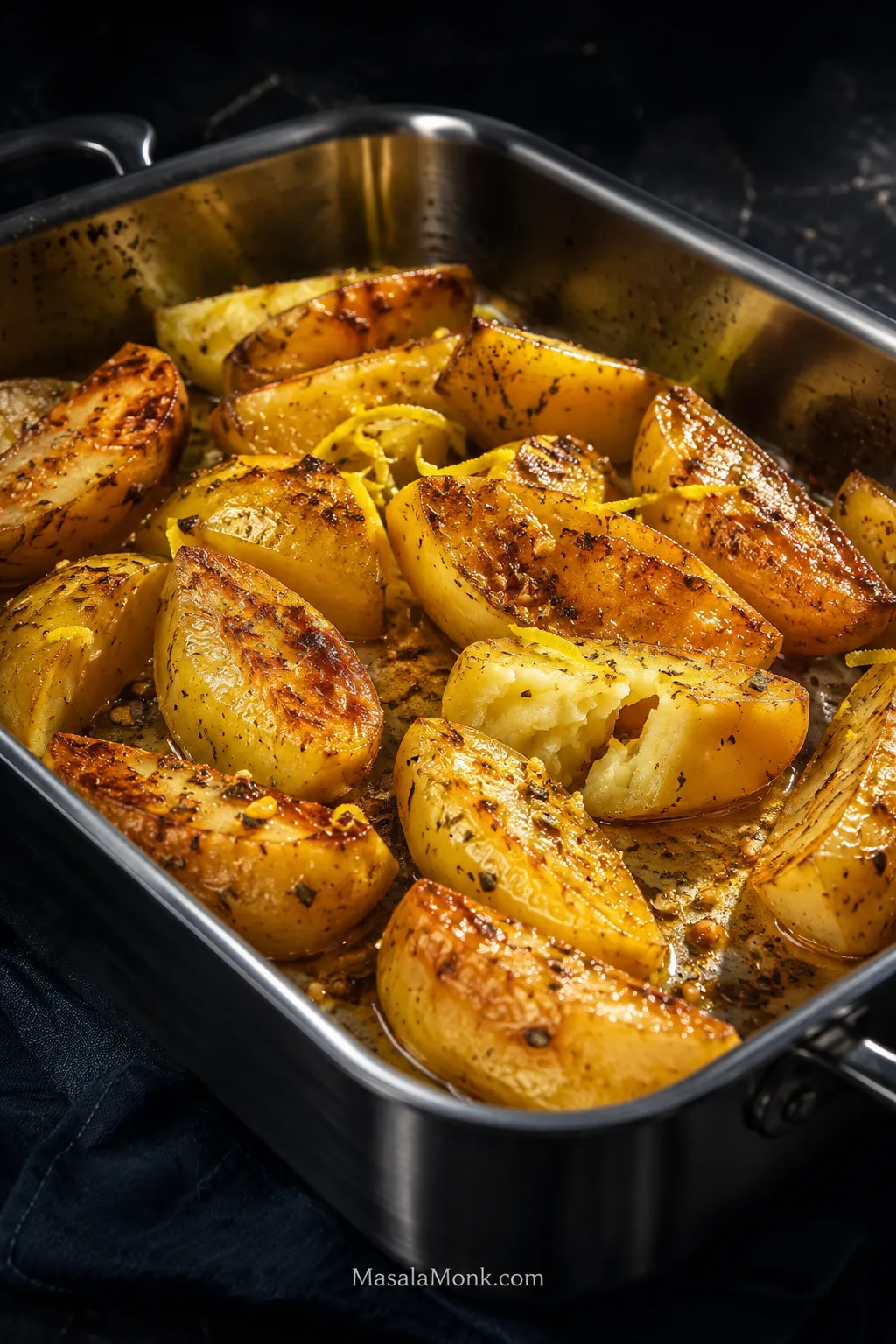
Greek lemon potatoes don’t just taste lemony on the surface. Break open a wedge and the middle is seasoned too—creamy potato carrying lemon, garlic, oregano and olive oil all the way through. A few cut faces and corners go deeply golden where the juices reduce against them.
Maybe the potatoes you remember from a Greek restaurant, taverna or a meal on a trip were crisp around the edges. Maybe they were almost spoon-soft and sitting in lemony juices. Both versions exist. What matters is getting that flavor into the potato rather than leaving it on top.
Quick Answer
Greek lemon potatoes use a wet-to-dry roast. Thick wedges soften first with olive oil and stock; fresh lemon goes in partway through; then the tray dries enough for the exposed surfaces to brown. For 2 lb 10 oz / 1.2 kg potatoes, use ⅓ cup + 2 tablespoons / 110 ml olive oil and ¾ cup / 180 ml hot stock or water. Roast uncovered at 400°F / 205°C, add ¼ cup / 60 ml lemon juice after about 30 minutes, and finish with another 1 tablespoon / 15 ml once the centers are creamy and the remaining liquid has cooked down to lemon-garlic juices.
Greek Lemon Potatoes Recipe
These patates lemonates roast with olive oil, garlic, oregano, stock and fresh lemon, then get one last squeeze of lemon while the tray is still hot.
| Serves | 6 as a side dish |
| Prep | About 15 minutes |
| Cook | About 60–75 minutes, depending on the potatoes and final browning |
| Oven | 400°F / 205°C conventional 365°F / 185°C fan/convection |
| Pan | Large rimmed metal roasting pan; around 12×16 in / 30×40 cm is a useful guide |
| Cut | 1–1¼ in / 2.5–3 cm thick wedges |
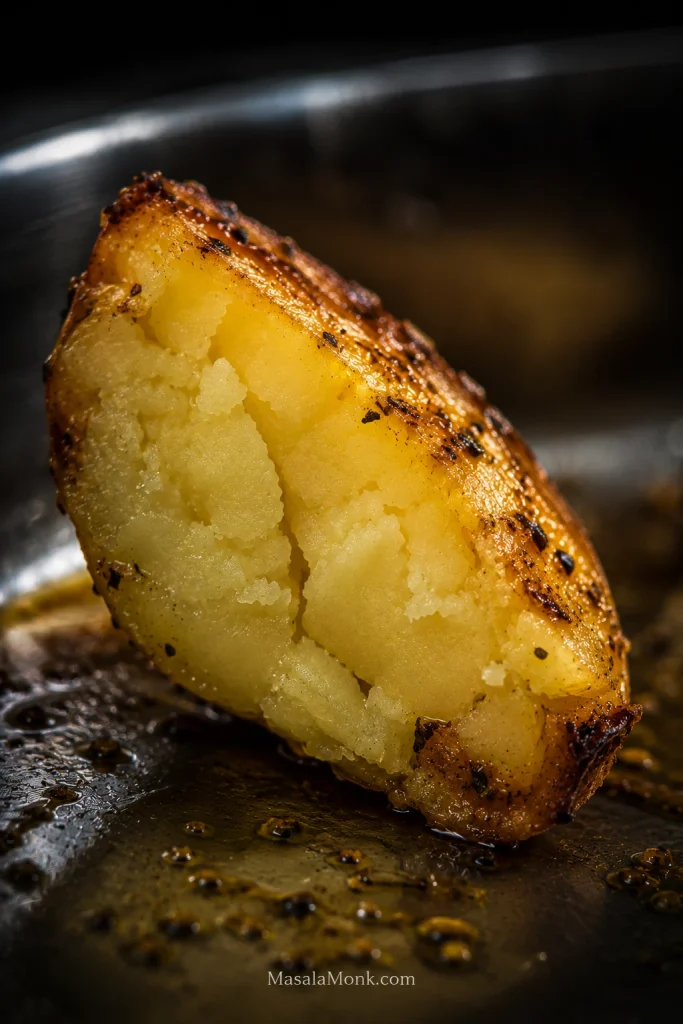
Texture: creamy, well-seasoned centers with crisp, deeply browned patches around the edges. Because part of the roast happens in liquid, these stay softer than a completely dry-roasted potato.
Ingredients
- 2 lb 10 oz / 1.2 kg Yukon Gold or similar all-purpose potatoes
- ⅓ cup + 2 tablespoons / 110 ml extra-virgin olive oil
- 5 garlic cloves, very finely grated or Microplaned
- 1 tablespoon dried oregano, preferably Greek oregano
- About 9 g fine sea salt / 1½ teaspoons, plus more if needed
- ½ teaspoon freshly ground black pepper
- ¾ cup / 180 ml hot low-sodium chicken or vegetable stock, or water
- ¼ cup / 60 ml freshly squeezed lemon juice, for roasting
- 1 tablespoon / 15 ml freshly squeezed lemon juice, for finishing, plus up to another tablespoon to taste
- Finely grated zest of ½ lemon, optional
- Fresh oregano or parsley, optional, for serving
Chicken stock gives the deepest savory flavor. Use vegetable stock for a vegan version, or water when you want the lemon and olive oil to come through most clearly.
You’ll usually need 2–3 medium lemons. Use fresh juice here; lemon is one of the main flavors, and bottled juice tends to taste flatter after a long roast. The 9 g of salt assumes low-sodium stock or water, so start with less if your broth, bouillon or stock concentrate is already salty.
Method
- Heat the oven. Set a rack in the middle and preheat to 400°F / 205°C conventional or 365°F / 185°C fan/convection.
- Prepare the potatoes. Peel them for a softer surface, or leave thin Yukon Gold skins on. Cut into wedges about 1–1¼ inches / 2.5–3 cm thick at the widest point. No soaking or parboiling is needed when you’re cooking them straight away.
- Season. Put the potatoes in the roasting pan with the olive oil, finely grated garlic, oregano, salt and pepper. Toss well, spread them into one layer and leave visible gaps between the wedges. Set one broad cut face down against the metal.
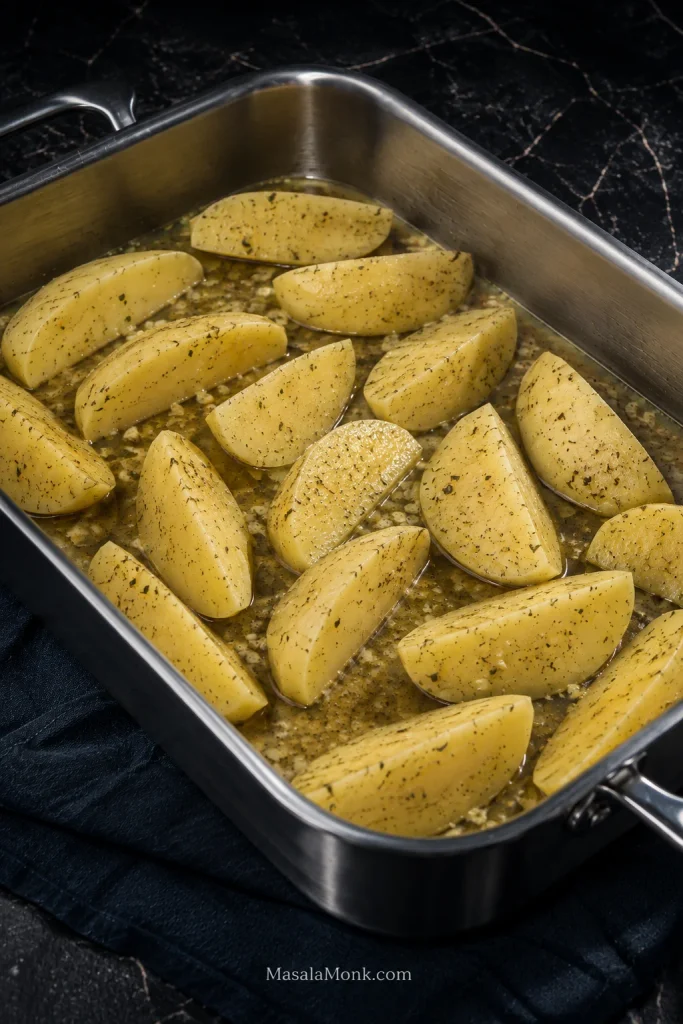
- Add the stock. Pour the hot liquid into the gaps rather than washing it over the seasoned tops. It should spread across the base and come only partway up the wedges. Most of each potato stays above the liquid.
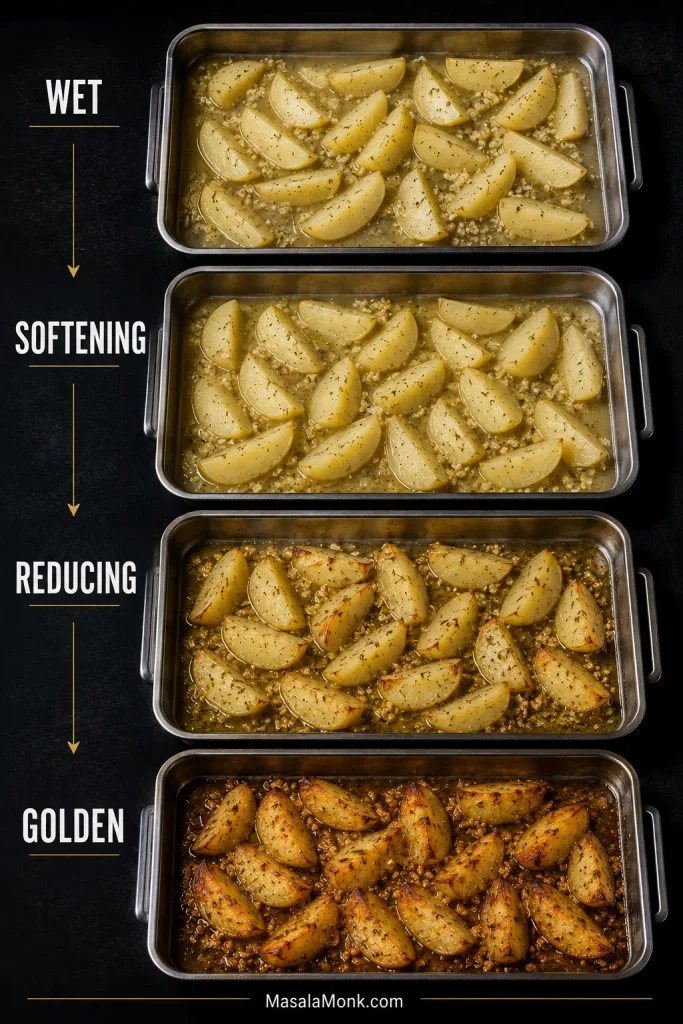
What the Pan Should Look Like After Adding Stock
Use this stage as a calibration point rather than an exact liquid line. A wider pan can make the same amount of stock look shallower; what matters is that the wedge bases meet the liquid without the potatoes being submerged.
- Roast uncovered for about 30 minutes. The tray may still look pale and wet. Some loose stock will usually remain, and one of the larger wedges should be softening around the outside while still offering some resistance in the center. If the tray is nearly dry and the largest pieces are still hard, add about ¼ cup / 60 ml hot stock or water.
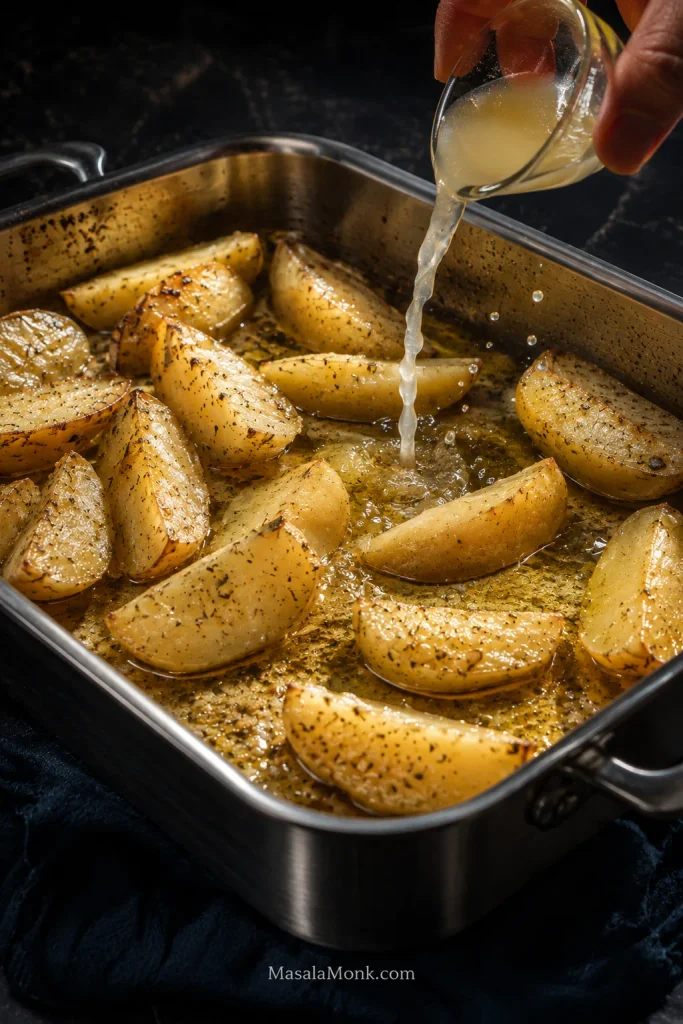
- Add the lemon and turn once. Pour ¼ cup / 60 ml lemon juice around the potatoes and carefully turn the wedges. That head start in the stock lets the centers begin softening before the main lemon goes in. Then leave them alone. Repeated stirring knocks soft edges off just as those surfaces are ready to start browning.
When the Lemon Goes In
Use the potato and pan state, not the 30-minute mark alone. The wedges should be softening, still fairly pale, with cooking liquid left in the pan.
- Roast uncovered for another 30–40 minutes. Start checking at 30 minutes. Push a thin knife into one of the thickest wedges, not the little corner piece. It should slide through easily. Break one open if you’re unsure: the middle should look moist and creamy, not chalky or dry.
- Look at the tray. Tip it gently. Thin stock should no longer rush into the corner. Drag a spoon through the bottom; it should pick up oily, garlicky juices instead of a pool of thin cooking liquid. The smell should be more roasted garlic and oregano than steam.
- Brown if needed. Already well colored? Stop there. Pale but tender wedges can stay in the dry oven for a few more minutes or go under the broiler/grill for 2–4 minutes. Don’t chase perfectly even browning. Darker corners and softer sides are part of a good tray.
- Finish and taste. Squeeze over 1 tablespoon / 15 ml fresh lemon juice while the potatoes and oil are still hot. The tray should smell noticeably brighter almost immediately. Taste one for lemon and salt before adding more juice, zest or fresh herbs.
Check the Potato and the Pan
| Potato | Pan | What to do next |
|---|---|---|
| Hard | Wet | Keep roasting. The middle needs more time. |
| Hard | Nearly dry | Add about ¼ cup / 60 ml hot stock or water. |
| Tender | Still wet | Let the excess liquid cook away, or move the wedges to a wider hot tray. |
| Pale but tender | Mostly dry | Give them dry heat or a quick broil. |
| Golden and tender | Reduced | Finish with lemon and serve. |
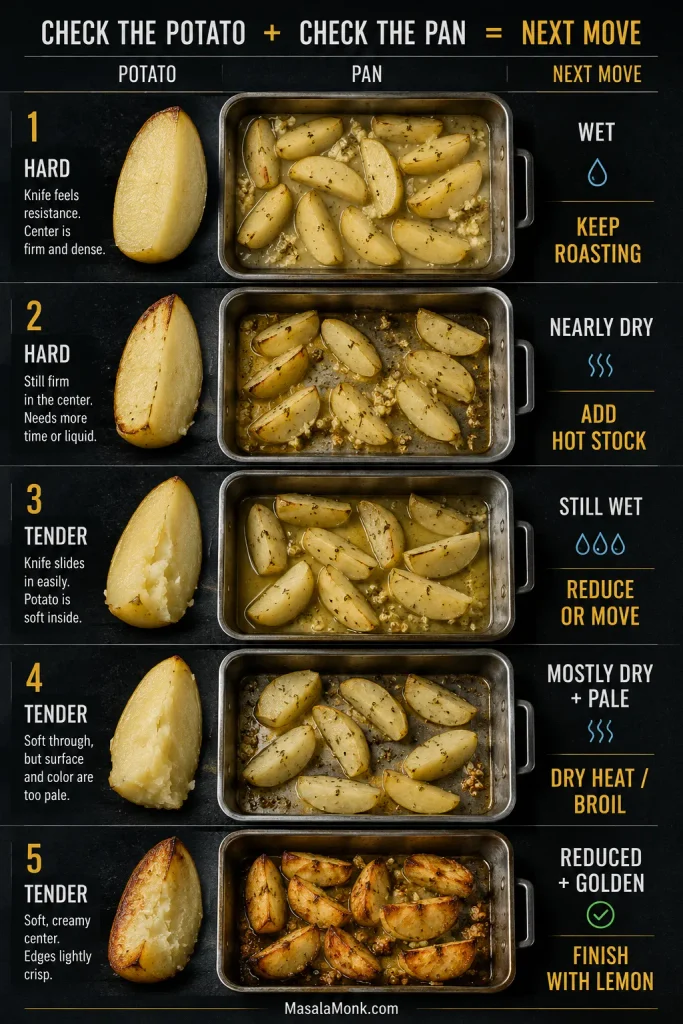
Done looks like this: a knife slips easily through a thick wedge, the thin broth has cooked away, and a few cut faces and corners are deeply golden. One wedge may split when you turn it. Keep it. Those craggy broken edges often become some of the best bits in the pan.
More help: What makes them different · Best potatoes · Crisp edges · Troubleshooting · Storage & reheating · Serving ideas
What Makes Greek Lemon Potatoes Different?
Ordinary roast potatoes rely mainly on dry heat. Greek lemon potatoes spend part of the cook in seasoned liquid, giving the flavor time to reach farther into each wedge before the exposed surfaces brown. That’s how you can end up with a creamy, lemony middle and roasted edges on the same potato.
Patates means potatoes, while lemonates roughly means lemony or lemon-flavored. Olive oil, lemon and oregano sit at the heart of the dish, usually with garlic and water, stock or roasting juices. You may also see related names such as patates fournou for oven potatoes or patates riganates when oregano is emphasized. Greek kitchens don’t all arrive at exactly the same tray.
Best Potatoes for Greek Lemon Potatoes
Yukon Gold is the easiest all-round choice. It holds together well, but the middle turns creamy and takes on plenty of the lemony cooking juices.
For an especially fluffy middle, try Maris Piper or Russet. Keep the wedges thick and handle them gently once tender; both become more fragile than Yukon Gold. Very waxy potatoes stay neat but hold onto a firmer, smoother interior.
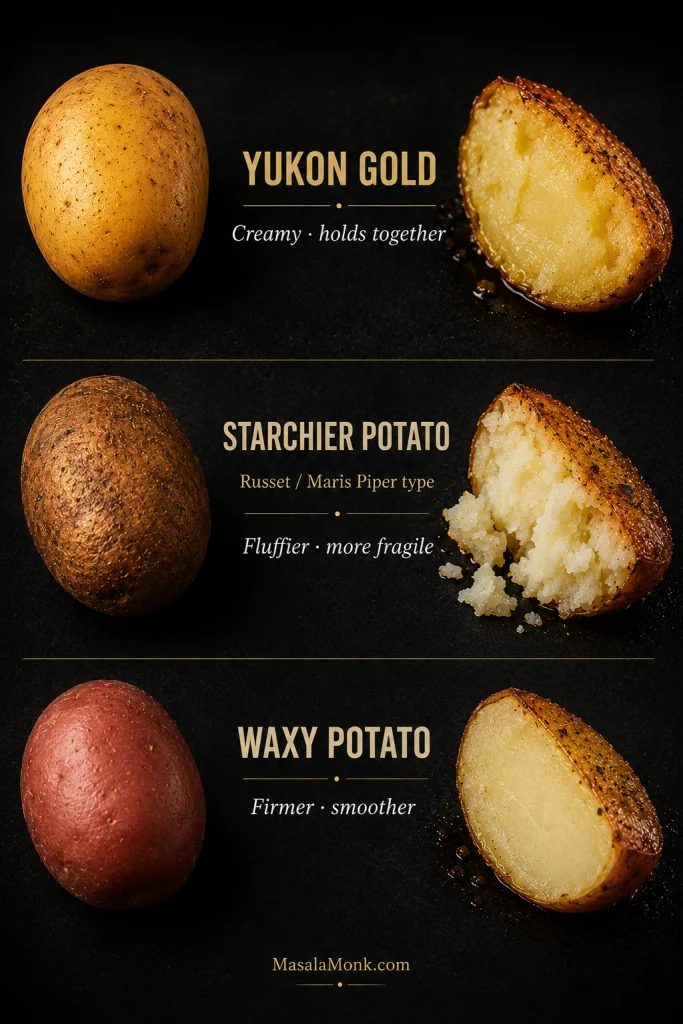
In the US, Yukon Gold is the easy default. UK cooks can reach for Maris Piper. In Australia, Désirée or Sebago work well. Elsewhere, choose a potato sold for roasting, baking or general-purpose cooking rather than a very waxy salad potato.
Peeling is optional. Peeled wedges expose more potato to the seasoned liquid and develop a softer surface. Thin skins give the pieces a little more structure.
The Cut, the Pan and the Liquid
Cut the potatoes thick: about 1–1¼ inches / 2.5–3 cm at the widest point. Small pieces can start breaking before the juices have finished reducing. Huge wedges risk a firm or lightly seasoned middle.
Give them room. Steam has to get out. A broad metal roasting pan exposes more potato to hot metal and gives moisture somewhere to escape. A deep glass or ceramic casserole can keep the dish wetter for longer, so browning may arrive later.
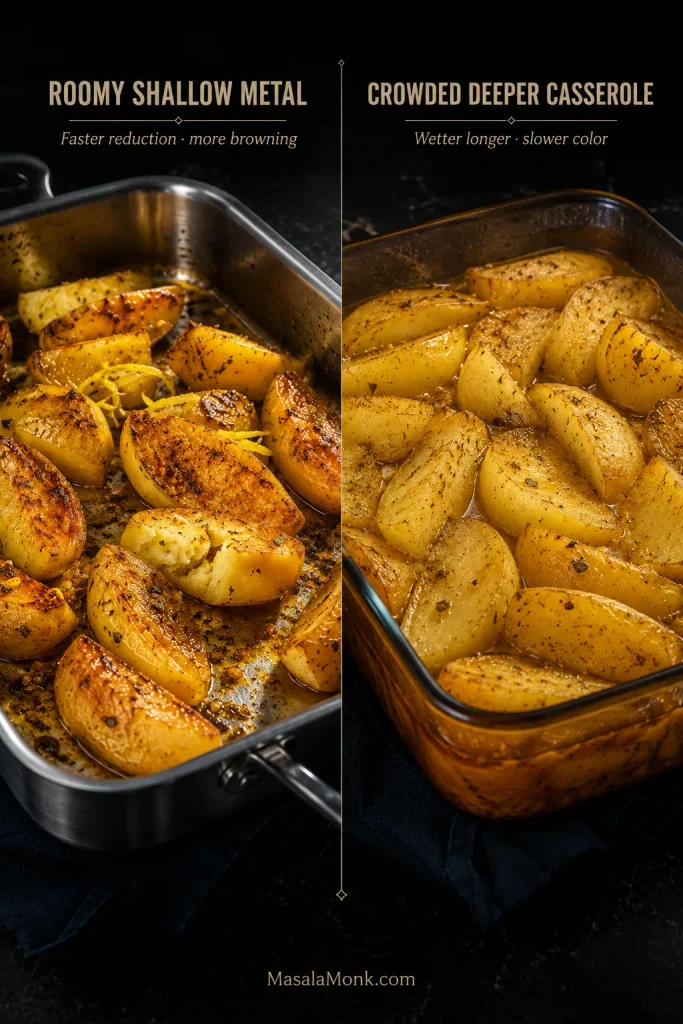
Pan shape matters more than chasing an exact dimension. What matters is enough surface area for the wedges to sit in one layer with visible gaps between them.
Tray not matching the timing? Jump to troubleshooting and diagnose the wedge and pan together.
Lemon, Garlic and Oregano
Use fresh lemon. The juice added during roasting mellows into the garlic, stock and olive oil. The final squeeze restores the fresh citrus aroma that long oven heat softens. If you’ve kept adding juice and still can’t find the lemon aroma you remember, fresh zest often helps more than another splash of acid.
Leave thick lemon slices and squeezed halves out of the pan during the long roast; the pith and rind can become bitter. Grate the garlic very finely so it disappears into the cooking juices instead of leaving large pieces exposed once the liquid recedes.
Dried oregano handles the long roast beautifully. Greek oregano is excellent if you have it. Save fresh oregano or parsley for the finished tray.
The generous olive oil is intentional. As the stock cooks away, the oil takes over as the roasting fat and stays behind as part of the lemon-garlic sauce you spoon over the potatoes at the end.
These potatoes are particularly good beside chicken souvlaki, where the same lemon, garlic and oregano meet juicy chicken and charred edges.
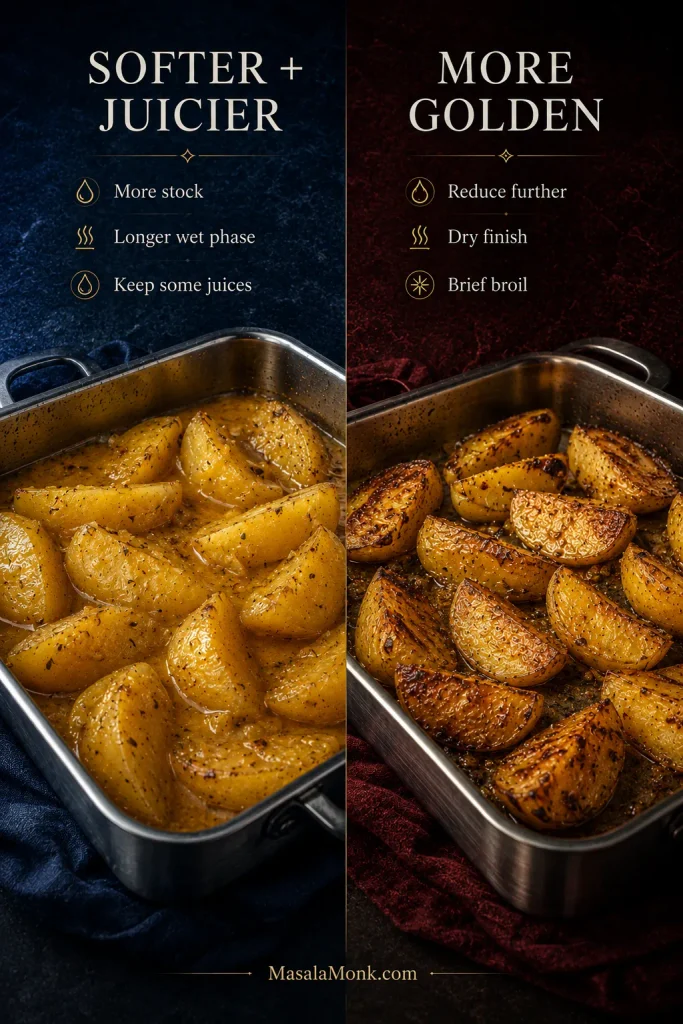
Getting More Golden, Crisp Edges
Once the thickest wedges are tender, stop protecting the moisture and start chasing color. The broad cut faces and rough corners brown first, giving you some of the darkest, best-tasting patches.
Keep Them in the Same Pan
Tender potatoes in an almost-dry pan can stay exactly where they are. Give them a few more minutes of roasting or a 2–4 minute broil.
Move Them When the Pan Is Holding Them Back
A wet pan can keep already-tender potatoes from browning. Move the wedges to a clean, hot metal sheet when they’re still sitting in plenty of liquid, or when the garlic-rich juices are getting too dark. Brown the potatoes on the clean tray, reduce the juices separately, then spoon them back over.
If all-over crunch is what you’re after, use a dry-roasted method instead; these ranch roasted potatoes are built for that texture.
Trying to Recreate Softer Restaurant Potatoes?
If the potatoes you remember were almost spoon-soft, with more lemony juice than crisp crust, you may be trying to recreate a softer style.
Use stock rather than water and increase the starting liquid toward 1 cup / 240 ml. Let the wetter phase run longer. Stop while there is still a spoonable amount of concentrated juice in the pan and skip the aggressive broiler finish.
That softer style is especially good beside a roast leg of lamb, where the lemony potato juices can mingle with the richer meat juices on the plate.
When the Potatoes Go Wrong
If the tray doesn’t match the clock, forget the clock for a moment. Check one of the larger wedges and look at what’s left in the pan.
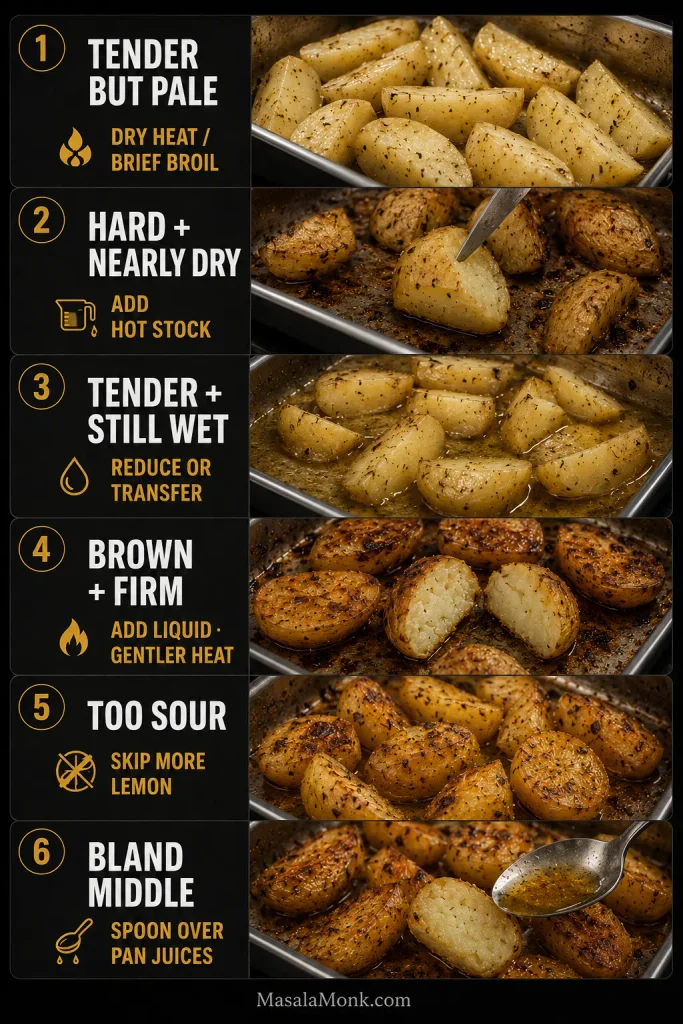
| What you see | What to do now |
|---|---|
| Tender but pale | Give them a few more minutes of dry oven heat or a quick broil. |
| Garlic or juices getting too dark | Stop the aggressive heat or move the potatoes to a clean tray. |
| Wedges falling apart | Stop turning them and finish the remaining pieces undisturbed. |
| Too sour | Skip the extra finishing lemon and spoon over the savory juices instead. |
| Tart enough but not lemony enough | Add fresh zest rather than more juice. |
The Pan Is Dry but the Center Is Still Hard
That’s fixable. Add about ¼ cup / 60 ml hot stock or water around the wedges and keep roasting. Your pan or oven has lost moisture faster than the potatoes could soften. A broad pan or hot-running oven may need a little more liquid next time.
The Potatoes Are Tender but Still Swimming
The difficult part is already done. A little thin liquid can simply cook away uncovered. If the potatoes are genuinely sitting in a deep pool, move them to a broad hot tray and brown them there while the original juices reduce separately. Spoon those juices back over before serving.
They Are Brown Outside but Firm Inside
Add a little hot liquid and back away from aggressive top heat. Keep cooking until a knife slips easily through one of the thickest wedges. You can always add more color later.
The Middle Tastes Bland
A squeeze of lemon over the top can brighten a bland potato, but it can’t completely replace seasoning that never reached the middle. Very waxy potatoes, oversized wedges, under-seasoned liquid or a tray that dried too quickly can all contribute. Spoon the reduced juices over this batch; next time, focus on the potato choice, wedge size and first part of the roast.
Doubling the Recipe for a Crowd
A bigger batch needs more pan space, not twice as much time.
- Use two pans and keep each tray in one layer.
- If your oven browns unevenly, swap the pans between racks during cooking. Judge each tray separately by tenderness and how much liquid remains.
- Broil one pan at a time unless your broiler heats the full oven evenly.
Make Ahead, Store and Reheat
To cut the potatoes ahead: prepare them several hours in advance and keep them fully submerged in cold water in the refrigerator. Drain and dry them well before seasoning.
To cook them ahead: you can roast Greek lemon potatoes in advance and reheat them. Expect softer edges. As the potatoes sit, they continue absorbing the pan juices, so cook them reasonably close to serving when crispness matters most.
Cool leftovers promptly and refrigerate them, together with any remaining juices, in a covered container for 3–4 days. USDA leftovers guidance gives the same refrigerator window.
Reheat in a 425°F / 220°C oven for about 10–15 minutes, until hot throughout. An air fryer is also useful for restoring browned edges; reheat the potatoes in a single layer until hot and crisp around the edges. The microwave works, but the browned surfaces will soften.
Freezing is possible, though the texture usually suffers. Potatoes can become grainier or more watery after thawing.
What to Serve With Greek Lemon Potatoes
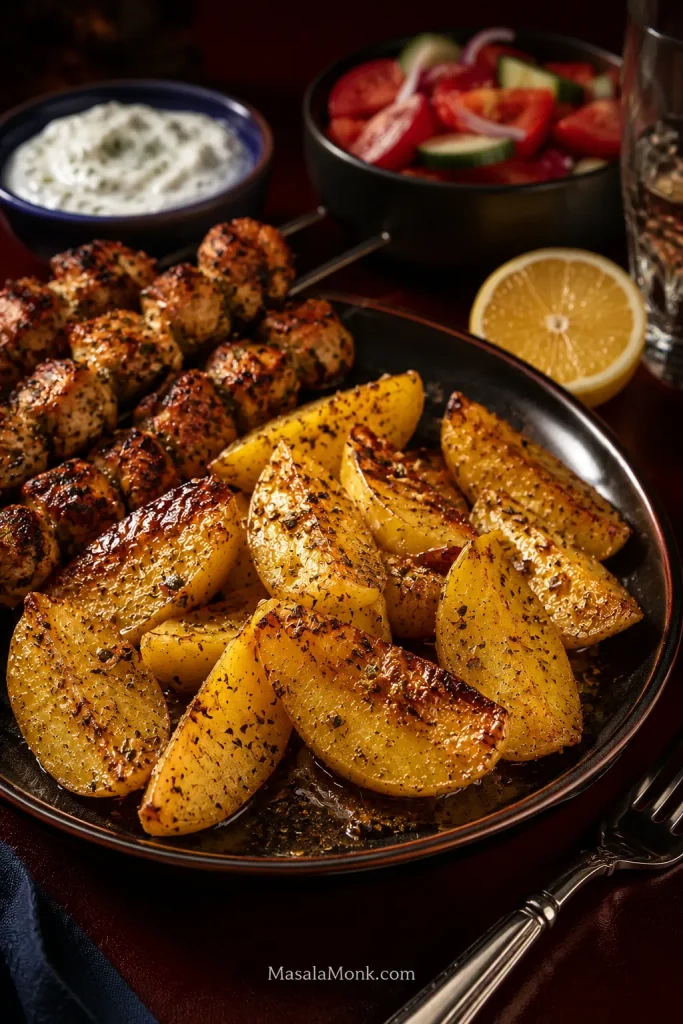
Cold Greek tzatziki is a particularly good contrast: cool cucumber and yogurt against roasted garlic, lemon and browned potato edges.
For a lighter main, try lemon-garlic baked tilapia. The potatoes also sit naturally beside roast chicken, lamb chops, souvlaki or kebabs, grilled vegetables, and a crisp tomato-cucumber salad.
One last spoonful: the pan juices.
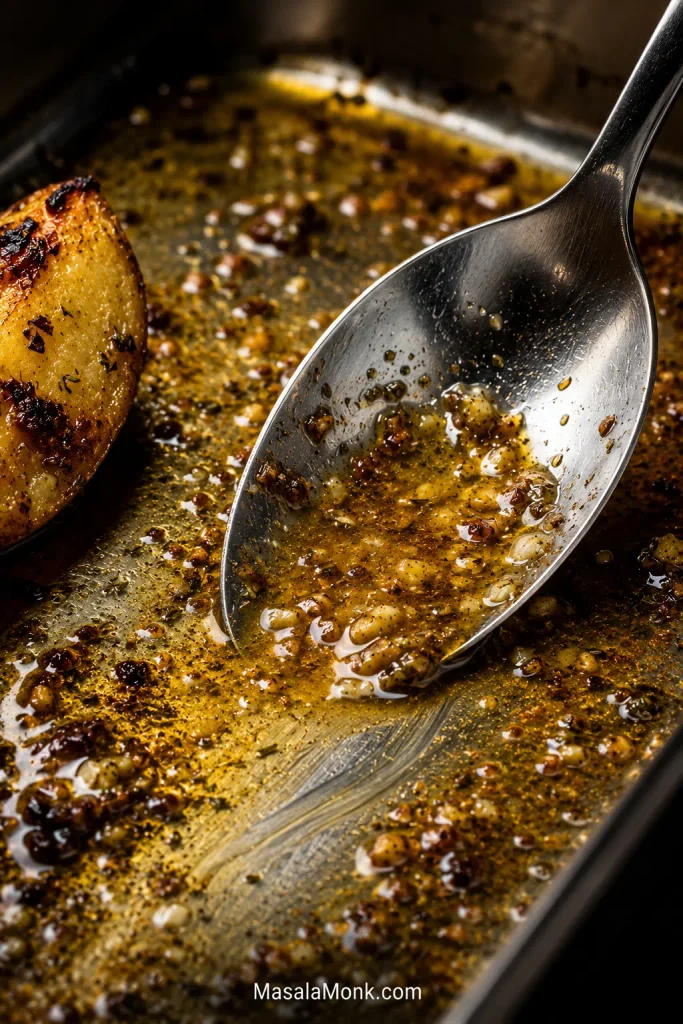
Once the potatoes are creamy inside and the liquid in the tray has cooked down to salty lemon-garlic juices, you’re there. Add the last squeeze of lemon, spoon everything from the bottom of the pan over the potatoes, and get them to the table hot. Those browned edges are good; the last garlicky spoonful in the pan may be even better.








