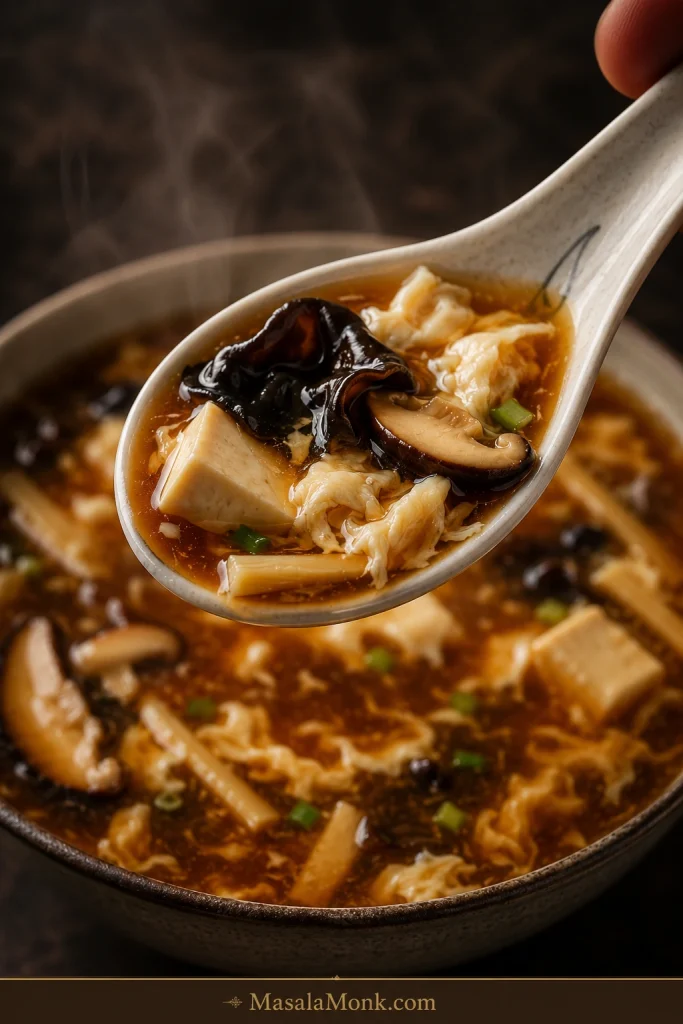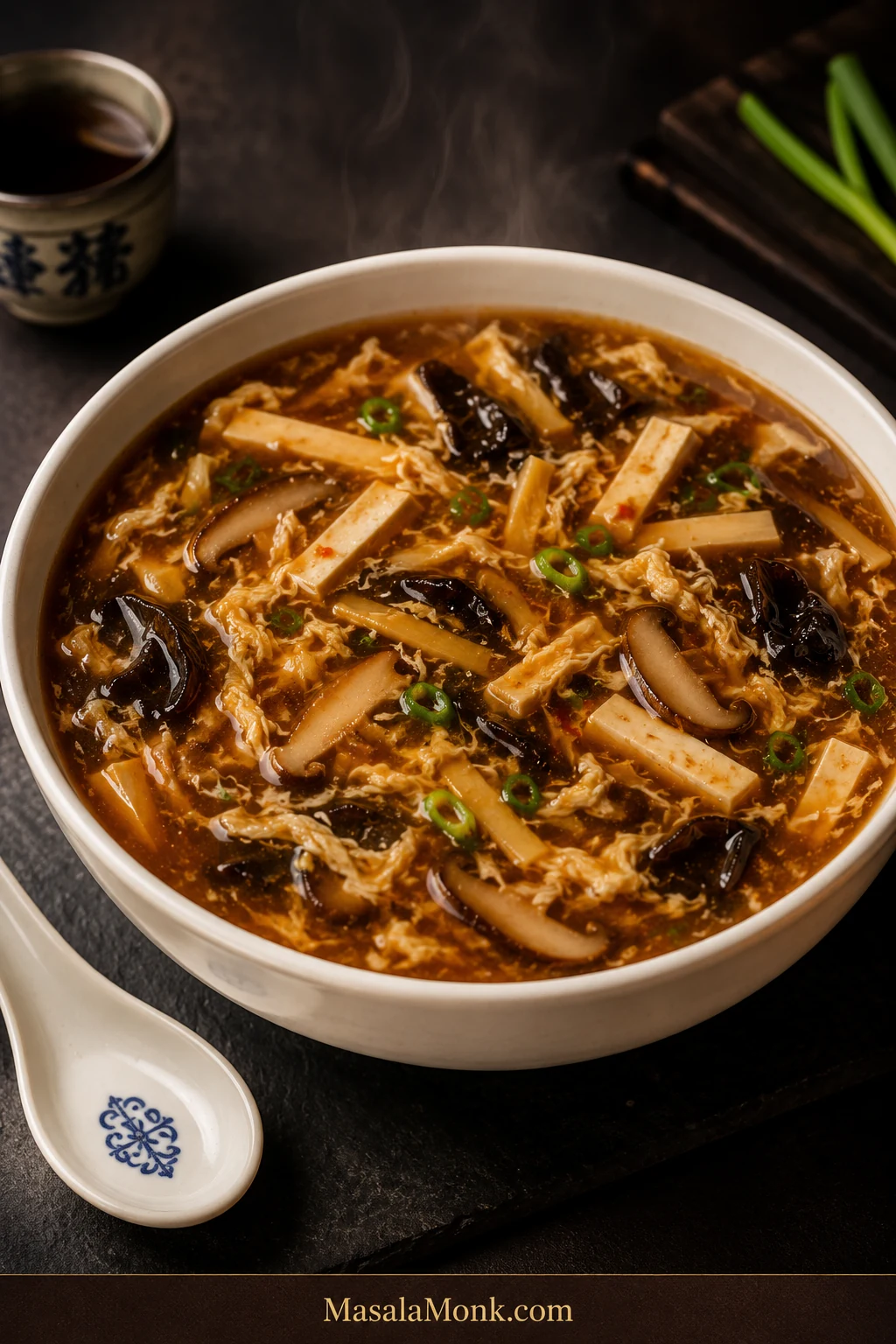
Hot and sour soup is one of those bowls you notice before the first spoonful. Vinegar rises with the steam, white pepper catches gently at the back of your throat, and underneath it all is savory broth threaded with mushrooms, tender tofu and silky ribbons of egg.
It is also surprisingly easy to get almost right. Plenty of chilli makes the soup spicy without necessarily giving it that familiar white-pepper warmth. Too much starch turns the broth gluey. Let the vinegar cook too long and some of its brightness fades. Pour the egg too quickly and it disappears into cloudy flecks instead of ribbons.
The simplest way to make restaurant-style hot and sour soup is to build it in layers: make the broth savory first, thicken only until it looks right, set the egg, then adjust sourness and peppery heat separately at the end.
Maybe the bowl in your head is thin and sharply peppery. Maybe it is darker and glossy, with enough vinegar to catch in your nose over the first spoonful. This method gives you a reliable place to start—and enough room to take the pot toward whichever version you remember.
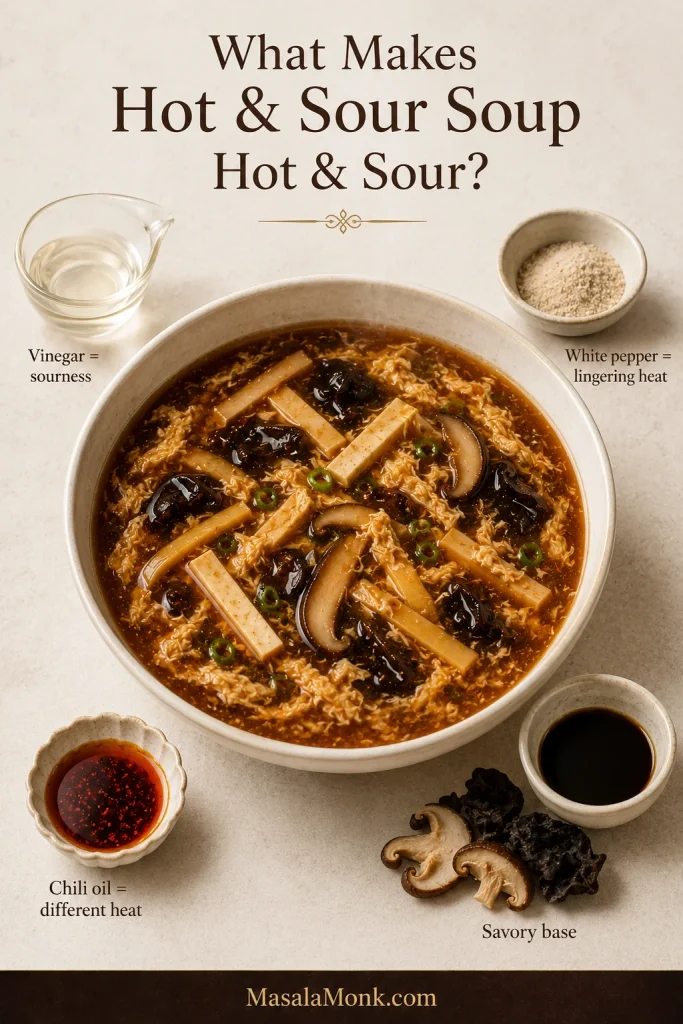
Quick Answer: What Makes Hot and Sour Soup Hot and Sour?
White pepper gives hot and sour soup its characteristic peppery heat. Vinegar supplies the sourness. Chilli oil gives a more immediate chilli burn. White pepper leaves the cleaner warmth that lingers after each sip.
Broth, mushrooms and soy sauce provide the savory foundation. Cornstarch controls the body of the soup, while egg provides the silky strands.
Check one thing at a time. Is the broth savory enough? Then judge the heat, sourness and thickness. Finally, look for some contrast—soft tofu or egg against something chewy or crisp. Fix only what is missing.
Which Hot and Sour Soup Are You Looking For?
Hot and sour soup is a Chinese soup built around peppery heat and vinegar sourness, usually with ingredients such as mushrooms, tofu and egg; restaurant versions vary considerably in thickness and supporting ingredients.
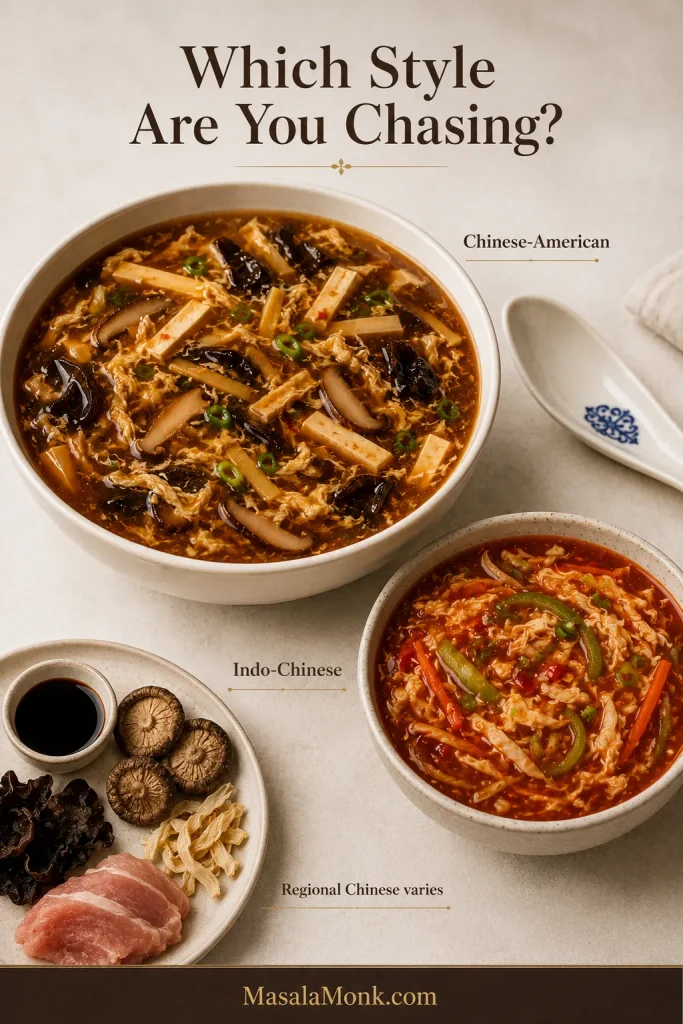
Two excellent hot and sour soups can look surprisingly different. It helps to know which style you are chasing before you start changing the vinegar, chilli or starch.
| Style | What to Expect |
|---|---|
| Chinese-American restaurant style | Brownish, glossy, peppery and tangy, usually with mushrooms, tofu and egg. This is the style made below. |
| Regional Chinese versions | Recipes vary widely and may use black vinegar, dried shiitake, wood ear, dried lily buds and pork, with thickness varying considerably by style. |
| Indo-Chinese restaurant style | Often redder and more chilli-forward, with vegetables such as cabbage, carrot and capsicum/bell pepper, and sometimes chicken. |
This recipe makes the first style: savory broth with a clear vinegar tang, white-pepper warmth, a glossy broth that still pours freely and enough contrast between mushrooms, tofu and egg to keep the soup interesting.
Many Chinese-American restaurant versions also include thin strips of pork or chicken. Here, added meat is optional, with an easy chicken or pork variation later.
Hot and Sour Soup Recipe
Using fresh mushrooms, this takes about 30–35 minutes from prep to bowl. Dried mushrooms need soaking time but give the broth more depth. Keep some vinegar and white pepper in reserve either way so you can make the final adjustment by taste.
Recipe Snapshot
- Prep: about 15 minutes
- Cook: about 15–20 minutes
- Total with fresh mushrooms: about 30–35 minutes
- Total with dried mushrooms: about 40–50 minutes, depending on how much soaking overlaps with prep
- Makes: 4 generous bowls or about 6 appetizer servings
No specialty market tonight? Fresh shiitake or cremini, ordinary low-sodium broth and distilled white or unseasoned rice vinegar still make a very good soup. Wood ear and bamboo are optional.
Equipment: a 4–5 quart / 4–5 litre saucepan or Dutch oven, a few small prep bowls, and a fine-mesh strainer if using shiitake soaking liquid.
Ingredients and Measurements
Broth & Solids
- Mushrooms: 15 g dried shiitake, about 4 medium mushrooms, or 5 oz / 140 g fresh shiitake or cremini. Use up to 6 oz / 170 g fresh mushrooms for a mushroom-heavy soup.
- Wood ear: ¼ oz / 7 g dried wood ear mushrooms (black fungus), dry weight, optional.
- Broth: 6 cups / 1.4 litres total low-sodium chicken or vegetable broth. If using strained shiitake soaking liquid, substitute up to ½ cup / 120 ml for the same amount of broth.
- Tofu: 8 oz / 225 g firm or medium-firm tofu, cut into thin strips or small spoon-sized cubes.
- Bamboo: ½ cup / about 70 g bamboo shoots, drained, rinsed and cut into strips, optional.
- Ginger: 1 teaspoon finely grated fresh ginger.
Broth Seasoning
- 1½ tablespoons / 22 ml Chinese light soy sauce or regular soy sauce; start with 1 tablespoon / 15 ml if your broth or bouillon is already quite salty
- 1 teaspoon / 5 ml dark soy sauce, optional
- ½ teaspoon sugar
- Fine salt, only if needed after tasting
Thickening & Egg
- 3 tablespoons / about 24 g cornstarch (UK: cornflour). Make the full slurry but expect to begin with about two-thirds.
- ¼ cup / 60 ml cold water or cold broth
- 2 large eggs
- 1 teaspoon water, optional, to loosen the beaten eggs slightly
Hot-Sour Finish
- ¼ cup / 60 ml distilled white vinegar or unseasoned rice vinegar, divided: 3 tablespoons / 45 ml to start, plus up to 1 tablespoon / 15 ml more to taste
- 1 teaspoon ground white pepper, divided: ¾ teaspoon to start, plus up to ¼ teaspoon more to taste
- 1 teaspoon toasted sesame oil
- 2 scallions, thinly sliced, optional
- Chilli oil, optional, for serving
1. Soak and Prep Before the Pot Gets Hot
Using fresh mushrooms? Skip the soaking instructions below, slice them, and continue with the rest of the prep.
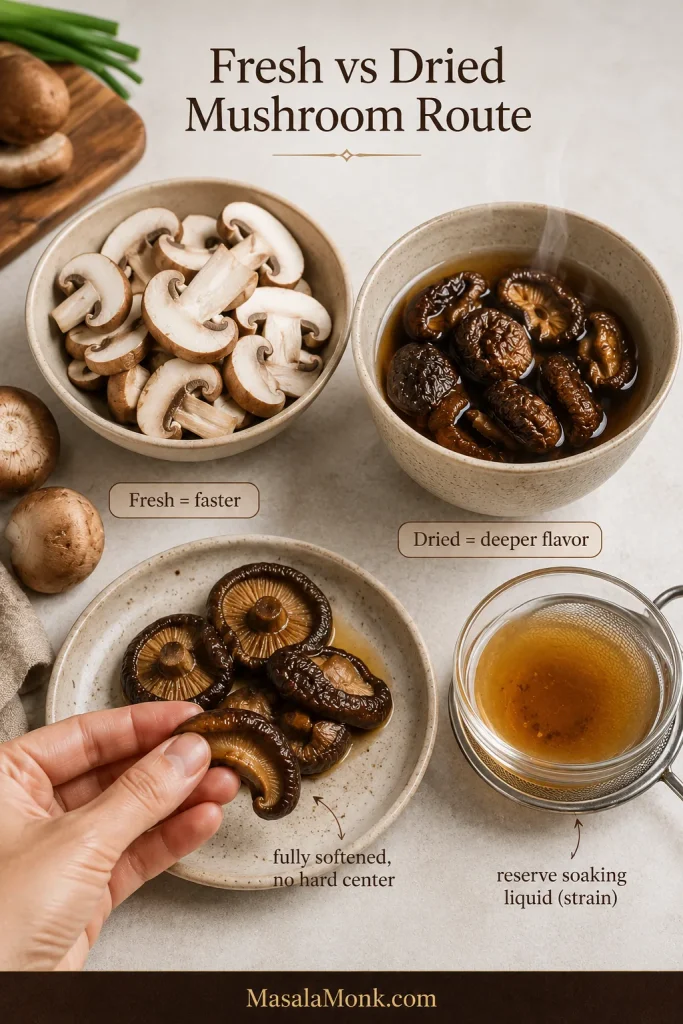
If using dried mushrooms, cover them with very hot water and soak until completely pliable. Most soften in about 20–30 minutes, but the mushrooms get the final say: there should be no hard, dry center left.
If you plan to use shiitake soaking liquid in the broth, soak the dried shiitake separately from the wood ear. Lift the softened mushrooms from the water, trim any tough stems and slice thinly. Strain the shiitake liquid through fine mesh or carefully pour off only the clear upper portion. Leave the sediment behind.
For a more restaurant-like spoonful, cut the mushrooms, tofu and bamboo into fairly thin pieces of similar length. Measure the seasonings, beat the eggs and mix the cornstarch with cold water or cold broth.
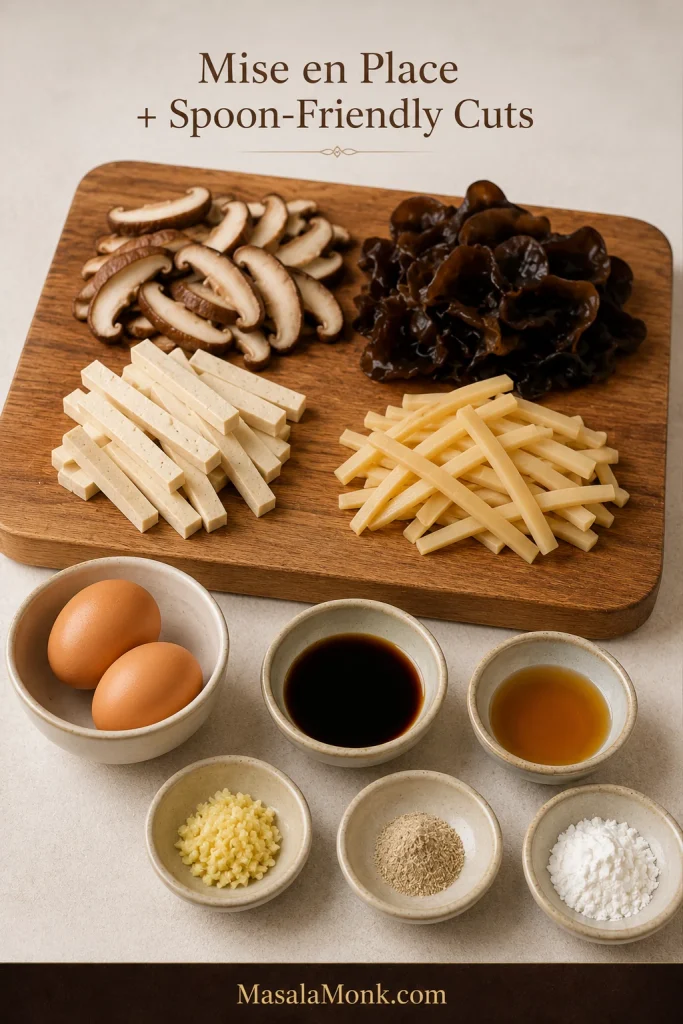
In another small bowl, whisk together 3 tablespoons / 45 ml vinegar and ¾ teaspoon white pepper for the finish. Once the broth starts simmering, the remaining steps move quickly, so have everything within reach.
2. Build a Broth That Already Tastes Good
Add the broth, mushrooms, bamboo shoots, ginger, soy sauce, optional dark soy and sugar to the pot. Bring to a gentle simmer over medium-high heat, then lower the heat and cook for about 5 minutes.
Add the tofu and simmer for another 2–3 minutes. Firm tofu tolerates stirring well. With softer tofu, sweep the spoon around the pieces so they stay intact.
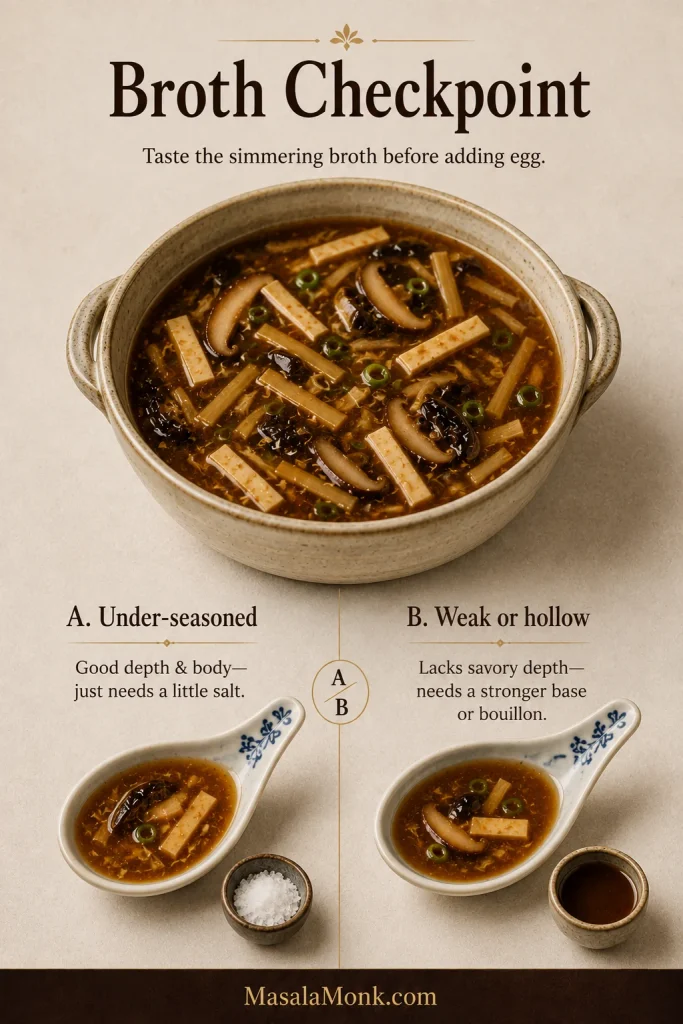
Check the broth here. It should already be savory enough to drink on its own, even though the vinegar and white pepper are still missing.
If the broth has good depth but simply needs more seasoning, add salt a small pinch at a time. If it tastes weak or hollow, deepen the base with a small amount of concentrated broth or bouillon. Extra soy alone can push the salt too far. Starch can change a watery texture; it cannot fix watery flavor.
3. Add the Slurry Gradually
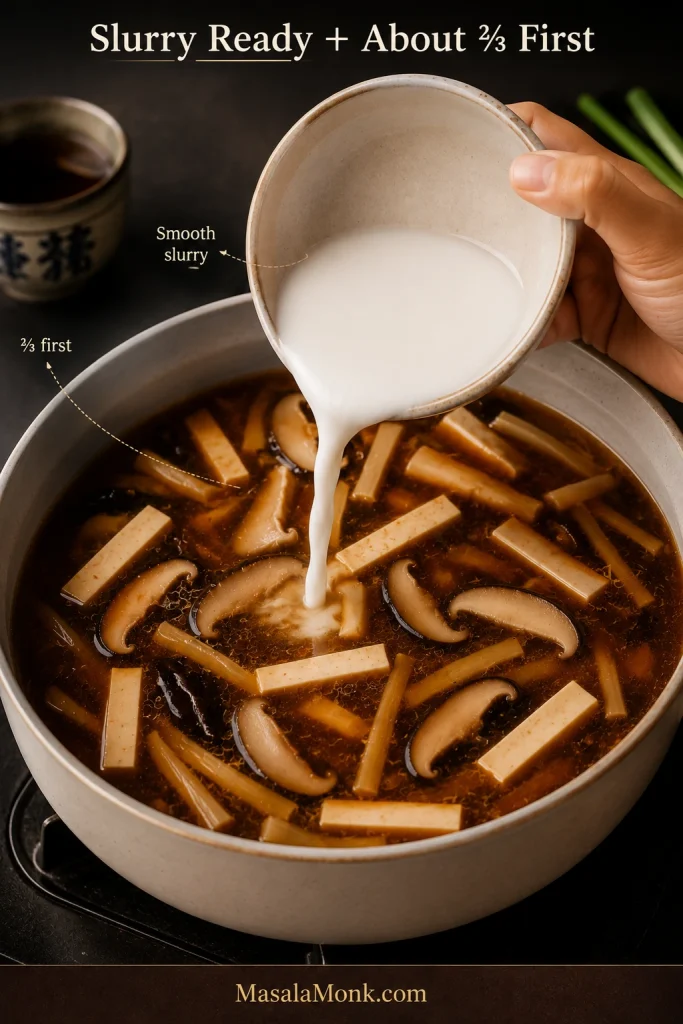
Cornstarch has a habit of settling the moment you stop looking at it, so stir the slurry thoroughly just before it goes into the soup.
While stirring, pour in about two-thirds of the slurry. Return the soup to a simmer and wait 20–30 seconds before judging the texture.
Lift some with a spoon and tip it back. The broth should leave a glossy trace, then fall away cleanly. It should still move like soup, not gravy.
Still too light? Remix the remaining slurry and add it in stages. Bring the soup back to a simmer each time before deciding whether it needs more.
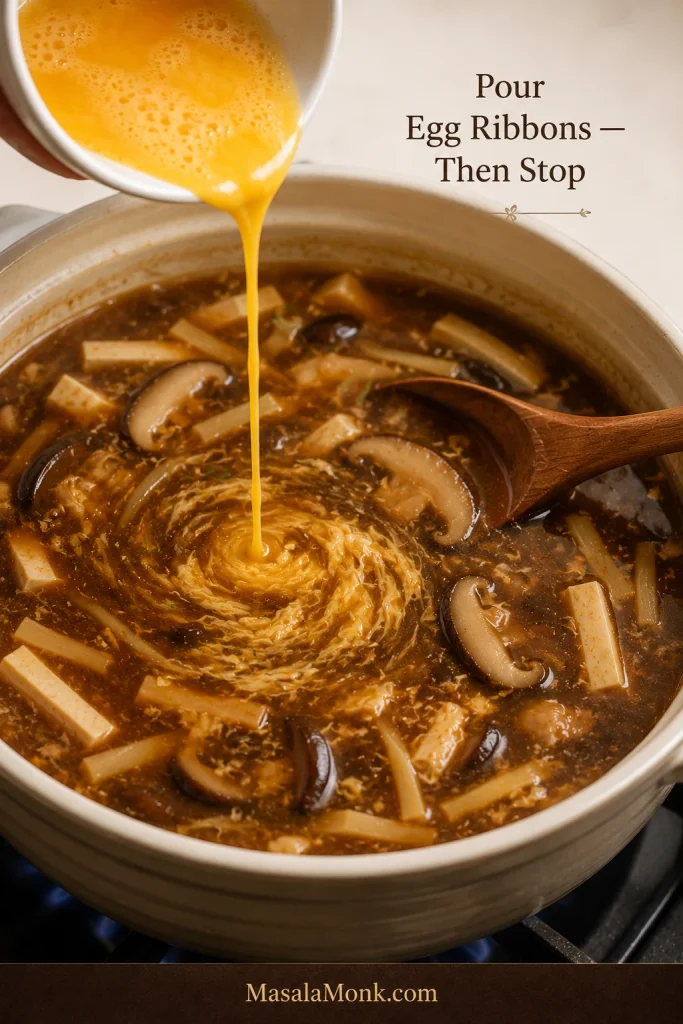
4. Pour the Egg Ribbons
Beat the eggs until the whites and yolks are completely combined. A teaspoon of water makes them slightly easier to pour in a fine stream, but it is optional.
Keep the thickened soup at a gentle simmer. Stir slowly in one direction to create a mild current, then pour the beaten egg in a thin stream as you move your hand around the pot.
Then stop.
Once all the egg is in, leave the pot unstirred until the strands look set. Stir once or twice afterward to separate them without breaking them into tiny flecks.
5. Turn Off the Heat—Then Make It Hot and Sour
Add the vinegar and white pepper after the heat is off. Stir in the prepared vinegar-and-pepper mixture, then add the toasted sesame oil.
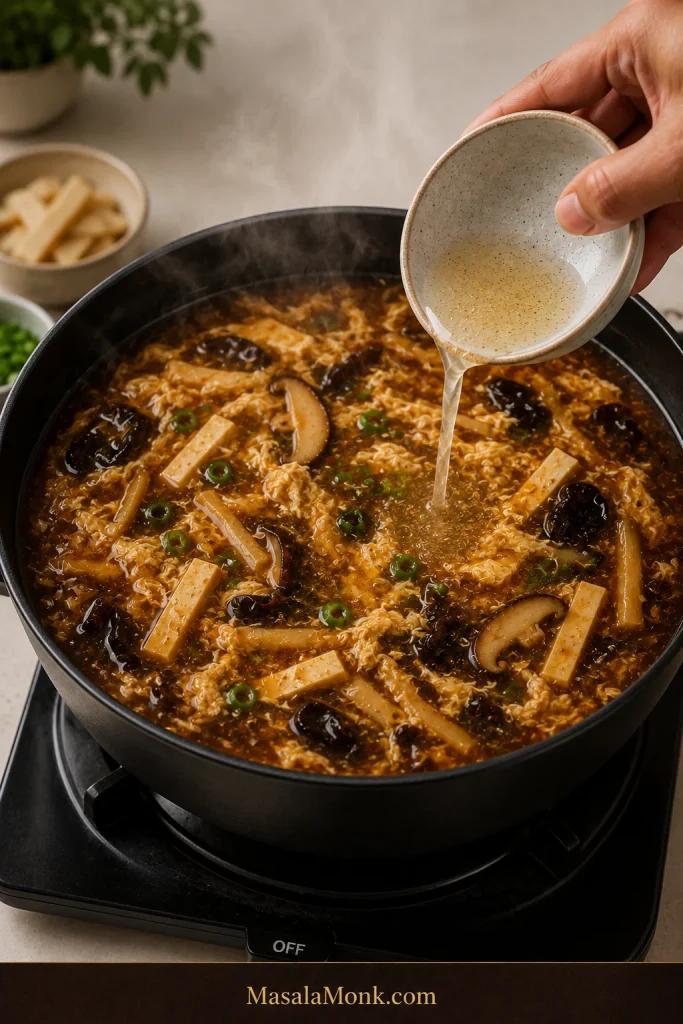
Taste, Adjust and Stop
Now taste. This is where you steer the soup toward the one you remember. For more sourness, add the remaining vinegar 1 teaspoon / 5 ml at a time. For stronger peppery warmth, add the reserved white pepper in small pinches. If it tends to clump, first mix it with a teaspoon of vinegar or broth.
The vinegar should brighten the broth without erasing the mushrooms and soy underneath it. White pepper should become more noticeable toward the finish than on the first instant of the sip.
Add scallions if using and put extra vinegar, white pepper and chilli oil on the table.
Try one complete spoonful before serving. Check the savory base first, then the vinegar and white pepper, then the body and textures.
Change one thing at a time. A pale soup may already taste right. A glossy soup does not need more starch just because another restaurant serves theirs thicker.
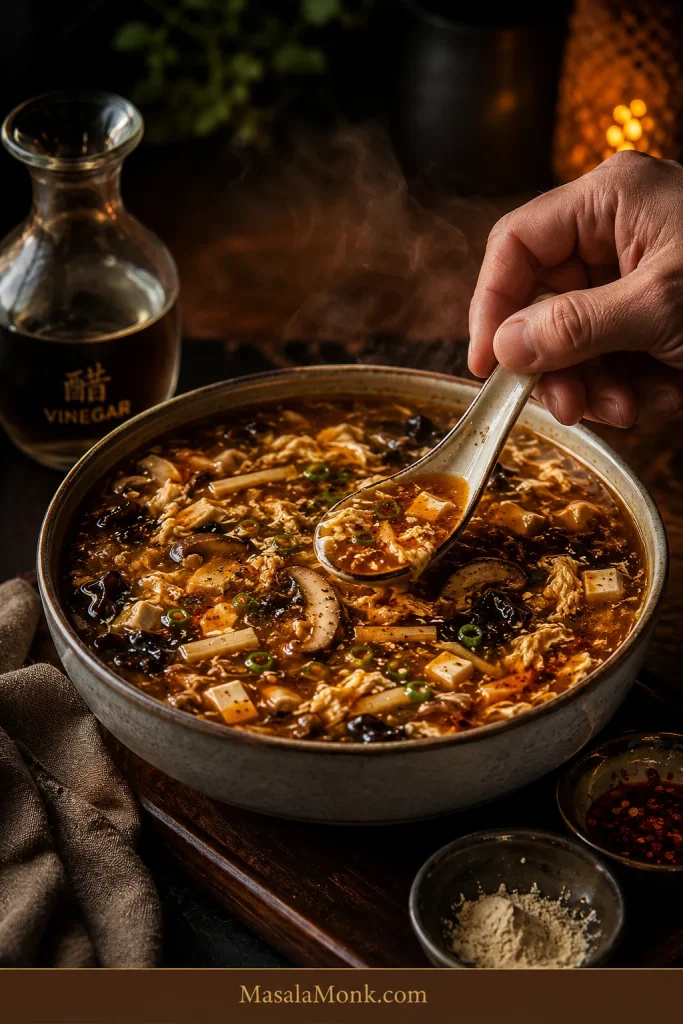
Something crisp is lovely beside the soft tofu and egg. Crispy vegetable spring rolls make an especially good contrast.
Dial in the soup you want:
- Too flat, too sharp or not peppery enough? Choose and adjust the vinegar and heat.
- Wrong texture? Dial in the thickness.
- Egg went cloudy or clumpy? Understand the egg ribbons.
- Good soup, but not like your takeout place? Diagnose the restaurant-flavor gap.
- Something went wrong? Troubleshoot the soup.
- Want the measurements and method again? Back to the recipe.
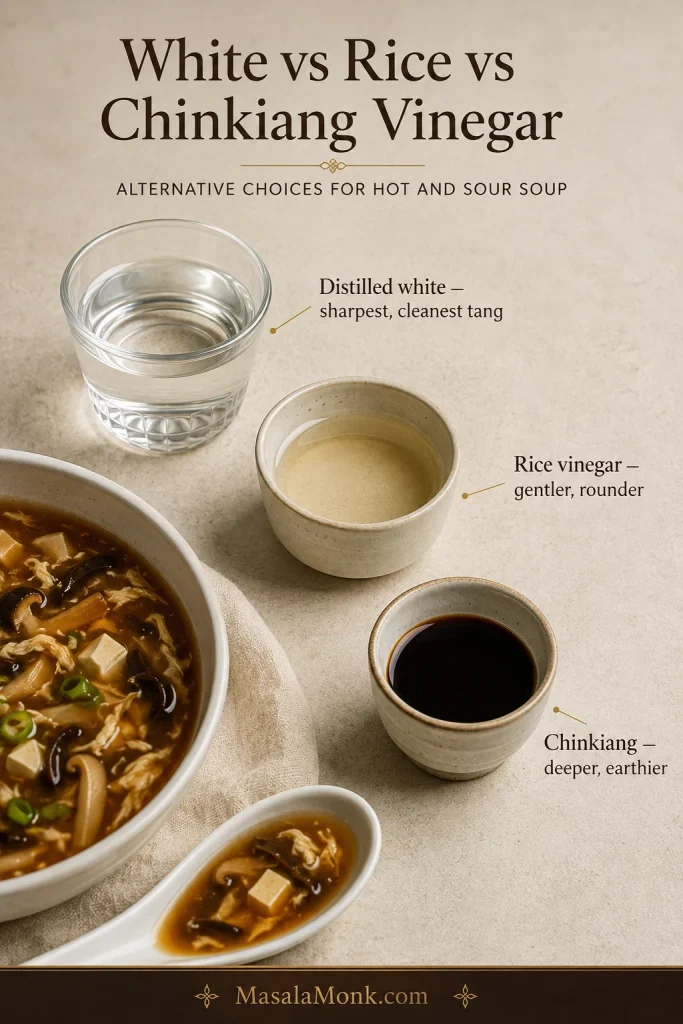
White Vinegar, Rice Vinegar or Black Vinegar?
For Chinese-American takeout-style soup, distilled white vinegar gives the sharpest, cleanest tang. Use unseasoned rice vinegar for gentler acidity, or Chinkiang black vinegar for a deeper, earthier sourness.
Distilled white vinegar is direct and bright. If the soup you remember has a nose-tingling takeout tang, this will usually get you there fastest.
Unseasoned rice vinegar is softer and rounder. The soup remains distinctly sour, but the acidity lands less sharply.
Chinkiang or Chinese black vinegar brings earthy, slightly malty flavor along with acidity. Use it in place of the white or rice vinegar, starting with the same 3 tablespoons / 45 ml off heat, then adjust by taste because brands vary.
If Chinkiang vinegar is new to you, this guide to Chinese black vinegar from The Woks of Life explains how it differs from lighter rice vinegars.
Adding most of the vinegar after cooking keeps the acidity lively. Prolonged boiling makes its sharp edge less noticeable.
White Pepper vs Chilli
White pepper delivers the sharp warmth that builds toward the end of the sip. Chilli oil hits sooner with a more obvious chilli burn.
Black pepper will still add heat, but its aroma is different; white pepper gives the more familiar Chinese-American restaurant-style finish.
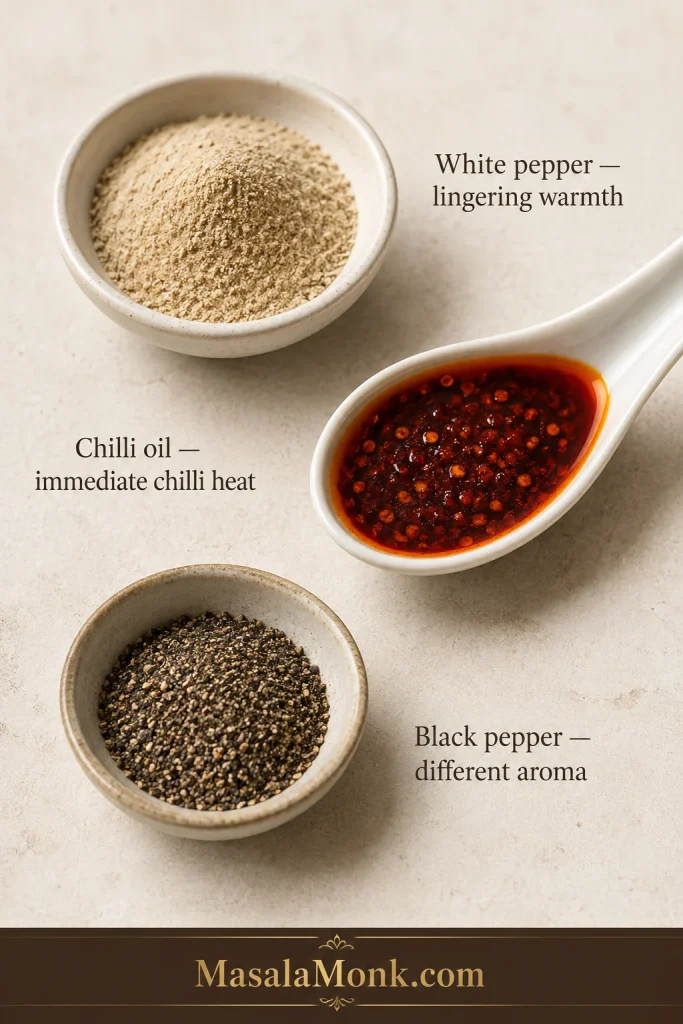
If you know you prefer gentler heat, start with ½ teaspoon white pepper instead of ¾ teaspoon in the finishing mixture. The standard recipe starts with ¾ teaspoon and keeps the final ¼ teaspoon in reserve.
Keep chilli at the table unless everyone wants it. One serving may be fiery while another stays purely peppery.
How Thick Should Hot and Sour Soup Be?
Hot and sour soup should be glossy and lightly spoon-coating while still flowing freely. It should not move like gravy.
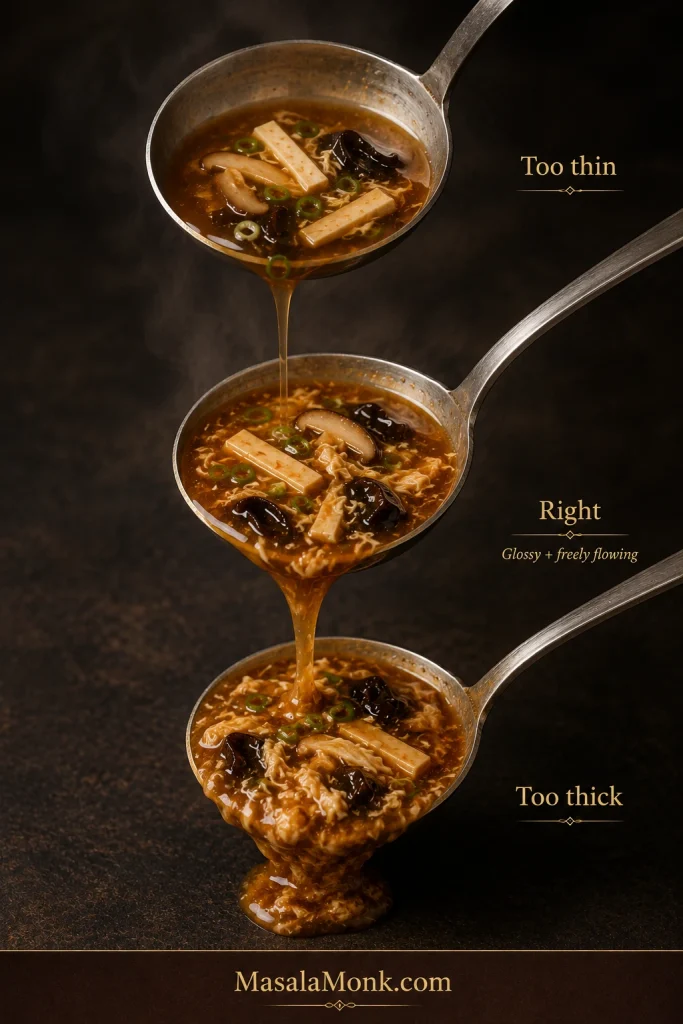
Restaurants disagree on exactly where that line sits. Some versions are almost brothy. Others are thick enough to keep strips of tofu and mushroom suspended.
If the takeout soup you love is particularly dense, take this one thicker too. The staged slurry lets you stop early or keep building body without committing the entire pot at once.
Used all the slurry and still want it very thick? Mix another 1 tablespoon cornstarch with 1 tablespoon cold water. Add it gradually, return the soup to a simmer and reassess before making another batch.
If you overshoot, loosen the soup with hot broth and check the seasoning again.
How to Make Silky Egg Ribbons
Why do some bowls have broad egg ribbons while others have fine wisps? Broth thickness, pour speed and movement all affect the shape.
A broth with some body supports the egg better than a completely thin liquid. A calm current encourages broader ribbons. More movement breaks the egg into finer strands.
The pause matters too. Stir before the egg has set and the strands break into flecks. Pour too much into one place and you get larger clumps.
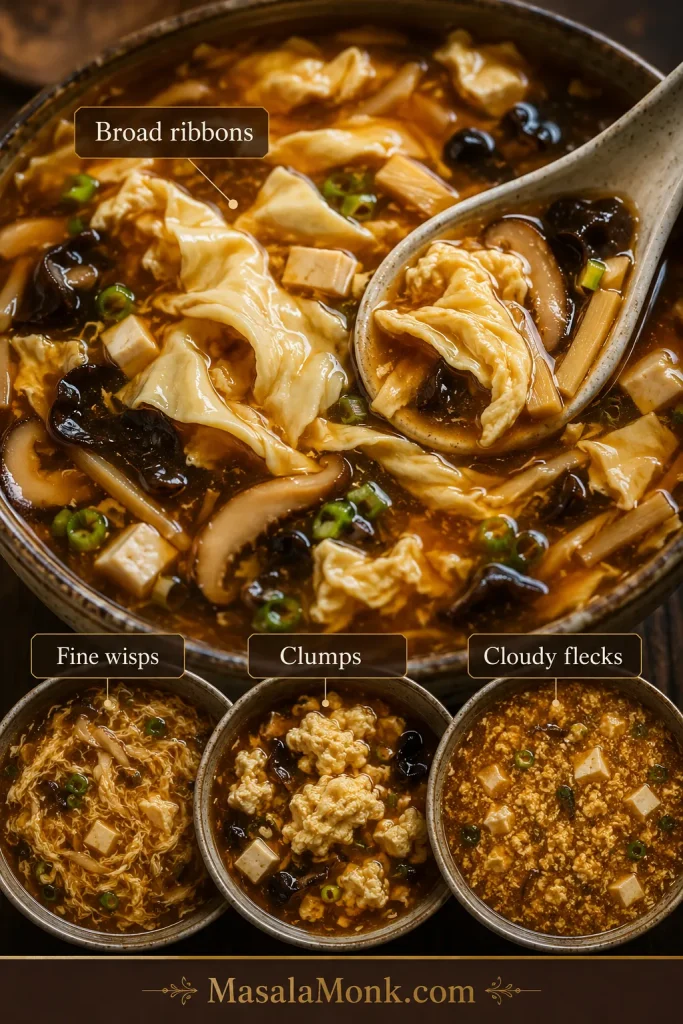
Imperfect ribbons do not ruin dinner. The technique helps you get the shape you prefer more consistently.
Why Doesn’t My Homemade Hot and Sour Soup Taste Like Chinese Takeout?
You can make a perfectly good hot and sour soup and still know after the first taste that it is not the restaurant soup you were trying to make.
The usual differences are a weaker broth base, not enough fresh vinegar or white-pepper heat, and a starch level that does not match the restaurant version you remember.
- The base tastes weak. Some restaurants start with a more concentrated broth or bouillon-style base.
- The heat is mostly chilli. Chilli burn does not taste the same as white-pepper warmth.
- The vinegar has gone quiet. A fresh splash after cooking brings the sourness back into focus.
- The texture is wrong. Your favorite place may use considerably more—or less—starch.
- The soup lacks mushroom depth or contrast. Dried shiitake brings savoriness. Wood ear or bamboo adds a firmer bite beside the soft tofu and egg.
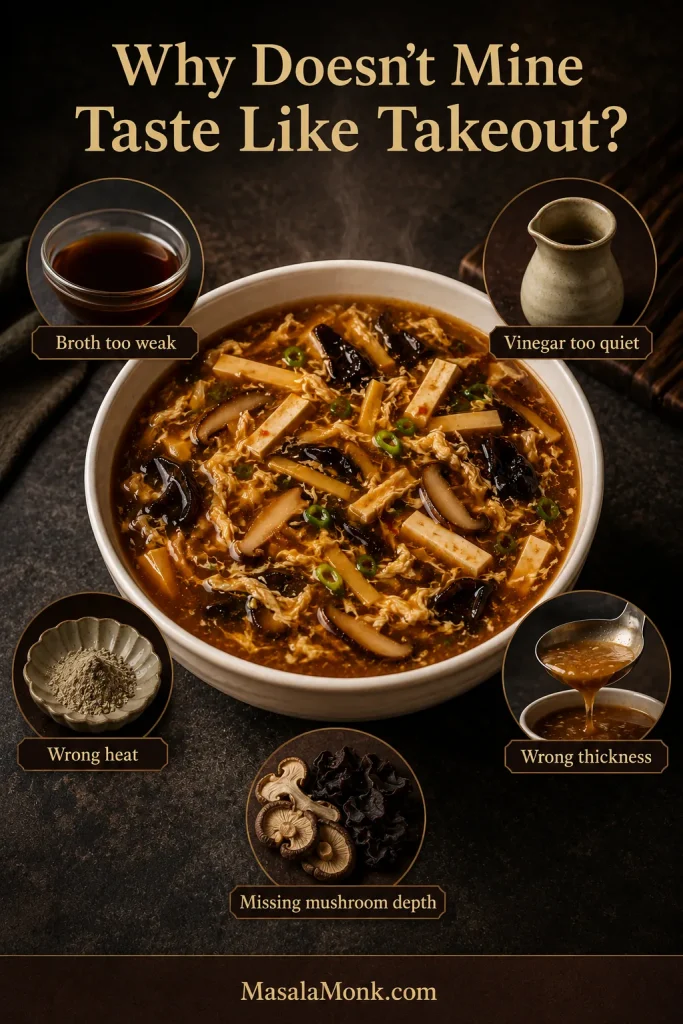
Restaurant kitchens may also lean on more sodium or MSG. Our guide to MSG and umami explains what MSG does to savory perception. It is optional here; if you use it, count it as part of the overall seasoning so the broth does not become overly salty.
Once the soup is where you want it, shrimp fried rice turns it into a fuller takeout-style meal without making the soup itself heavier.
Hot and Sour Soup Ingredients: What Each One Adds
The ingredient list looks less intimidating once flavor and texture are separated. Some ingredients deepen the broth; others are there for chew, crunch or softness.
| Ingredient | Main Job | If You Skip It |
|---|---|---|
| Dried shiitake | Deep mushroom savoriness | The broth tastes lighter |
| Wood ear | Springy chew | Less textural contrast |
| Tofu | Soft body | The soup feels less substantial |
| Bamboo | Clean crunch | Little change to the broth itself |
| Dark soy | Deeper color | The soup looks lighter |
Broth: Mild Homemade or Deeper Takeout Flavor?
Chicken broth gives the most familiar base, while vegetable broth works well for a meatless version. Mild carton broth makes a lighter soup. A more concentrated chicken or bouillon-style base gets closer to the savory intensity of many Chinese-American takeout versions.
You should still be able to taste the broth after the vinegar goes in. If all you notice is sourness, the foundation was probably too weak. Concentrated broth also brings more sodium, so start with less soy and salt and adjust once everything is hot.
Mushrooms: Flavor and Texture Are Separate Jobs
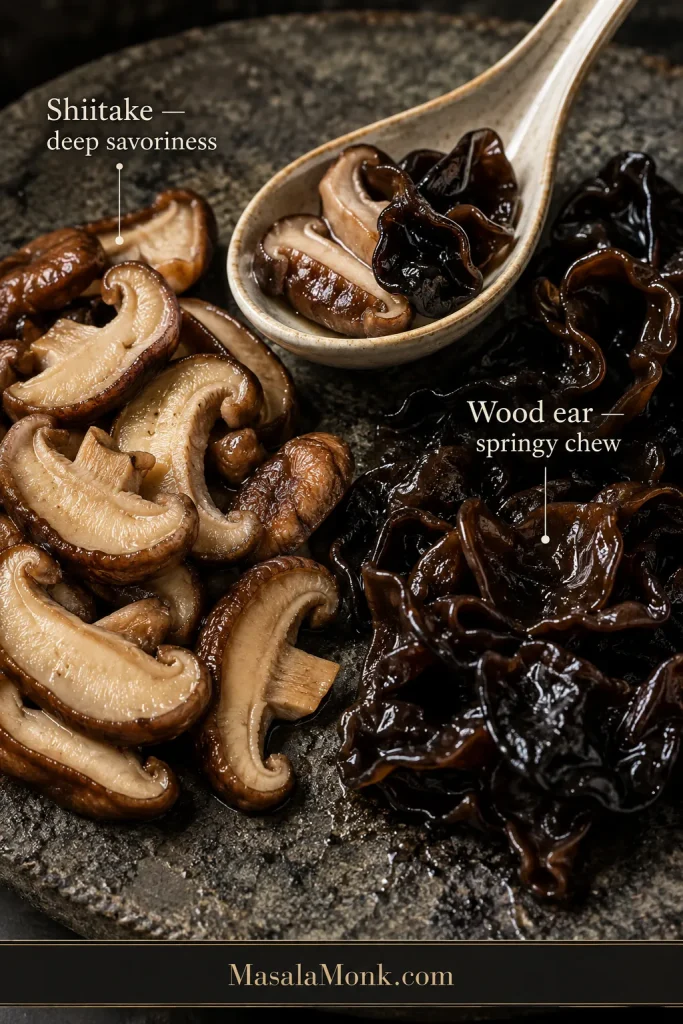
Dried shiitake deepens both the smell and flavor of the broth as it simmers. Its brown soaking liquid is intensely mushroomy too, which is why a strained portion is useful in the pot.
Wood ear does something different. It brings a springy bite against the softer tofu and egg. If you omit it, bamboo or water chestnuts restore some crunch.
Dried lily buds are another traditional addition in some Chinese versions, bringing an earthy, slightly chewy element. They are optional and not needed for the restaurant-style recipe above.
Tofu: Firm Is Easiest
Firm or medium-firm tofu is easiest because it holds its shape. Soft tofu gives the soup a silkier, more delicate texture but is more fragile.
A partly used block can go into Mapo tofu, which takes the same ingredient in a much bolder, spicier direction.
Bamboo Shoots: Taste Before They Go In
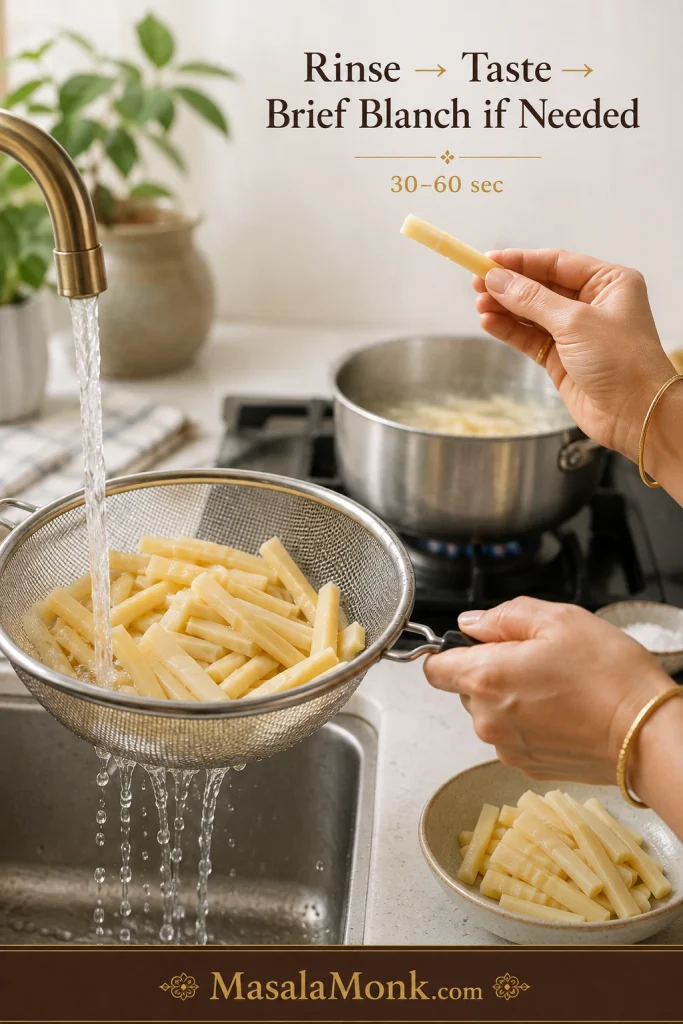
Some canned bamboo carries a strong aroma straight from the tin. Drain and rinse it well. If a piece still tastes unpleasant, blanch the bamboo in boiling water for 30–60 seconds and drain it before adding it to the soup.
Soy, Ginger, Sugar and Final Aromatics
Chinese light soy sauce or regular soy sauce supplies salt and savoriness. Dark soy is mainly useful for deeper color and is entirely optional.
A lighter-colored soup may already taste exactly right. Adding regular soy merely to darken the liquid risks making the soup saltier than intended. No need to chase the color.
Ginger gives the base a fresh aromatic edge. The small amount of sugar rounds the soy and vinegar without making the soup sweet. Toasted sesame oil goes in after cooking so its nutty aroma remains noticeable.
Making the soup without onion or garlic? Neither is required. Omit the scallions, avoid garlic-containing chilli condiments, and check packaged broth and sauce labels because some brands include onion or garlic.
Where next? Need an ingredient swap? See substitutions and variations. Trying to fix a bowl that already tastes off? Go to troubleshooting.
Hot and Sour Soup Substitutions & Variations
Missing one ingredient rarely ruins the soup. Most substitutions change flavor, texture or both.
- No dried shiitake? Use fresh shiitake or cremini. The mushroom flavor will be lighter.
- No wood ear? Leave it out, or use bamboo or water chestnuts for some crunch.
- No cornstarch? Leave it out for a brothier soup. The egg ribbons may not stay suspended as evenly. Potato starch is another option; add it gradually because it thickens differently.
- No tofu? Omit it or use cooked chicken or pork for a firmer, meatier result.
Adding Chicken or Pork
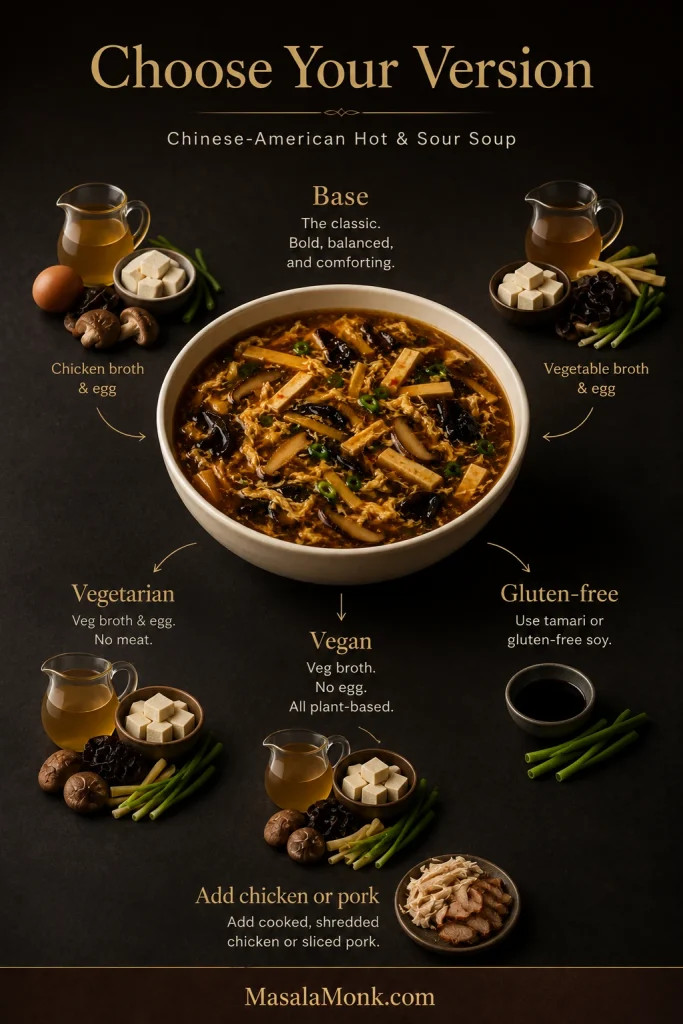
Stir about 4 oz / 115 g cooked shredded chicken or thinly sliced cooked pork into the soup with the tofu, or use the meat in place of tofu. Heat it through briefly before finishing the soup.
Vegetarian, Vegan & Gluten-Free
For vegetarian hot and sour soup, use vegetable broth and keep the tofu, mushrooms and egg. For a vegan version, omit the egg as well. A mushroom-forward broth becomes especially useful once the chicken broth and egg are gone.
For a gluten-free version, use certified gluten-free tamari or soy sauce and check the broth, vinegar and chilli-condiment labels. Chinese black vinegars vary by brand, and some contain wheat-derived ingredients.
Keep additions in proportion to the broth. Pile in too many extras and the vinegar and white pepper start getting lost among all the solids.
You want soft tofu or egg, something with bite, and enough broth around both for the soup to remain lively.
What About Indo-Chinese Hot and Sour Soup?
Indo-Chinese hot and sour soup is usually redder, more vegetable-heavy and more chilli-driven than this Chinese-American version. It works better as its own style than as this soup with extra chilli sauce.
Common additions include cabbage, carrot, capsicum/bell pepper, chicken, chilli sauce or chilli paste and sometimes tomato or ketchup, with green-chilli vinegar alongside. When that is the soup you want, those ingredients should shape the pot from the beginning.
Chosen your version? Back to the recipe and method.
Hot and Sour Soup Troubleshooting
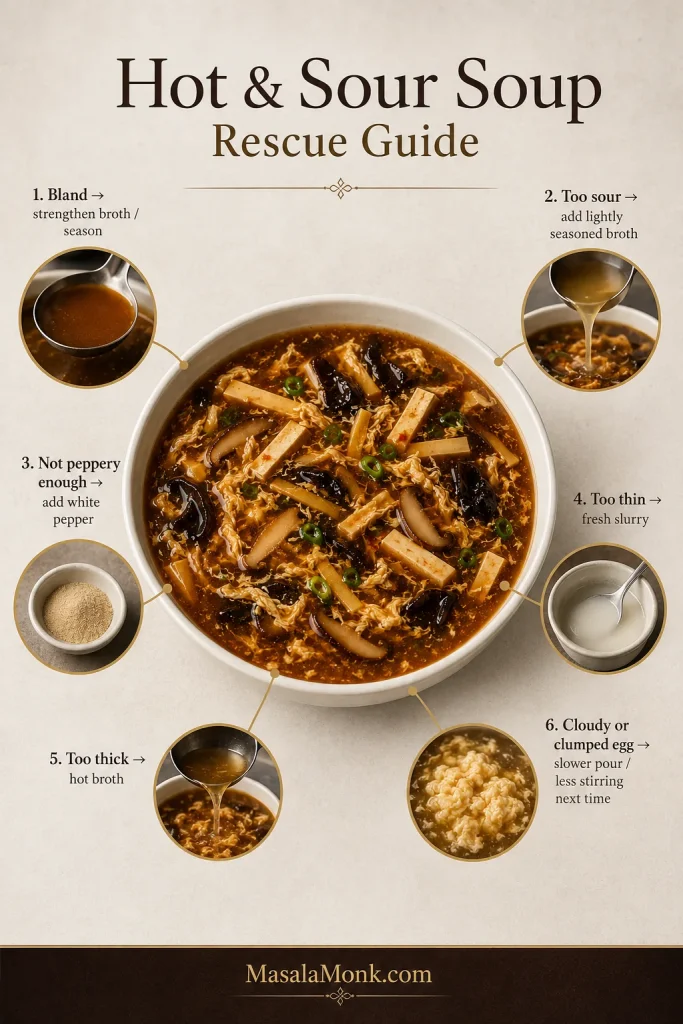
Most problems become much easier to fix once you identify which part of the soup actually went wrong.
| What Happened? | Likely Reason | Quick Fix |
|---|---|---|
| Bland | The savory base is weak | Strengthen the broth; then adjust soy or salt |
| Not sour enough | Too little fresh acidity | Add vinegar 1 tsp / 5 ml at a time |
| Too sour | Too much vinegar | Add lightly seasoned broth gradually, then reassess seasoning and body |
| Not peppery enough | Too little white pepper | Add small pinches after cooking |
| Too chilli-hot | Too much chilli | Dilute gradually with lightly seasoned broth, then rebalance |
| Too thin | Not enough starch | Add a small fresh slurry and return to a simmer |
| Too thick | Too much starch | Add hot broth gradually, then reseason |
| Cloudy egg | The egg dispersed before setting | Pour more slowly and wait before stirring next time |
| Big egg clumps | Too much egg entered one spot | Use a finer stream around the pot next time |
| Broken tofu | Hard boiling or too much stirring | Use a softer simmer and less movement |
| Gritty or grainy | Sediment or a starch problem | Check the soaking liquid and slurry; see below |
What the Egg Shape Tells You
Large clumps usually mean too much egg reached one area at once. Very fine flecks suggest too much movement before the egg set. A milky or cloudy broth means the egg dispersed through the liquid before distinct strands formed.
There is nothing urgent to rescue—the soup will still taste good. The shape tells you what to change next time.
Gritty, Grainy or Muddy-Tasting Soup
Visible or earthy grit often points to sediment from shiitake soaking liquid. A powdery or starchy mouthfeel may mean the slurry was not mixed smoothly, the soup did not return to a simmer after the starch went in, or the wrong corn product was used.
For thickening, use the fine white starch sold as cornstarch in the US and cornflour in the UK—not cornmeal or coarser US-style corn flour.
Poorly rinsed bamboo sometimes carries an unpleasant canned flavor. White pepper varies by brand; if yours tastes stale or unpleasantly harsh to you, try a fresher or different one before increasing the amount. Too much dark soy added only for color may make the broth taste muddy.
If one ingredient tastes wrong on its own, piling on extra vinegar or chilli usually just hides it.
Make Ahead, Storage and Reheating
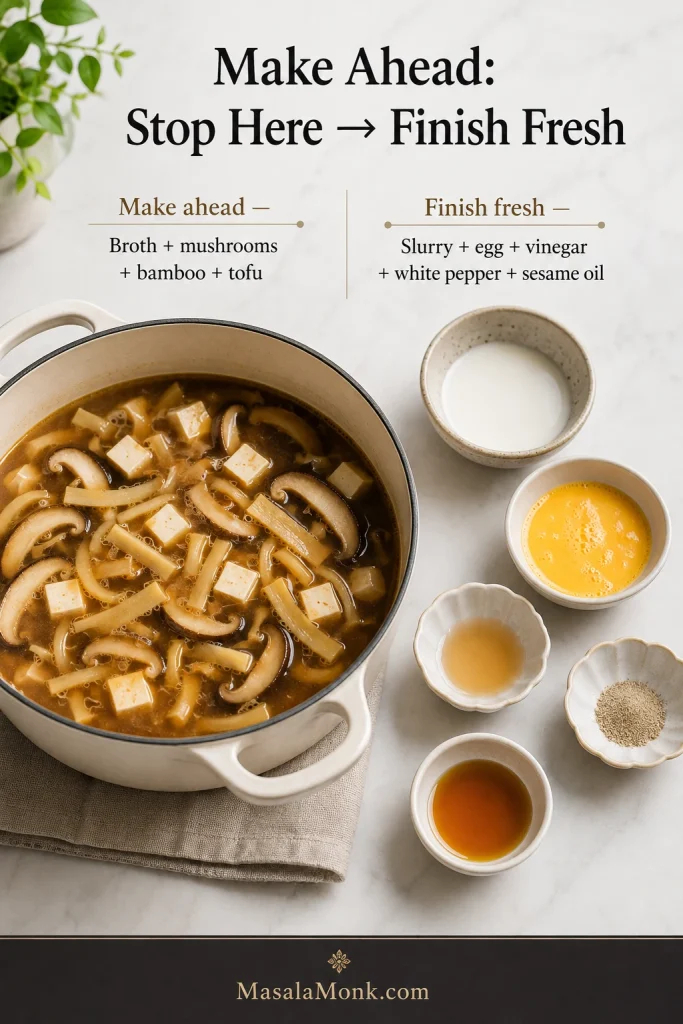
For make-ahead prep, prepare the broth, mushrooms, bamboo and tofu in advance. Reheat the base before serving, then do the final starch adjustment, egg ribbons, vinegar, white pepper and sesame oil close to serving time for the freshest texture and aroma.
Storage, Reheating and Freezing
Cool leftovers promptly and refrigerate them in a covered container for 3–4 days. The USDA leftovers guidance recommends reheating leftovers thoroughly to 165°F / 74°C and bringing soups to a boil during reheating.
After the soup is thoroughly reheated, lower the heat and check it again. If it has loosened, stir in a small fresh slurry and briefly return it to a simmer. If the flavor seems dull, fresh vinegar and white pepper are often more useful than extra salt.
You can freeze hot and sour soup, but the tofu, egg and starch-thickened broth may not return to exactly the same texture after thawing. Correct the body and seasoning after reheating.
Leftovers also make a quick noodle soup. Add cooked noodles or ramen, loosen with broth if needed, and refresh the vinegar and white pepper just before eating.
One Last Taste
A good hot and sour soup should feel lively rather than heavy: savory broth underneath, vinegar bright in the steam, white pepper warming the finish, and soft tofu and egg interrupted now and then by the springy bite of wood ear or the crunch of bamboo.
Some people will want another splash of vinegar. Others will reach for more white pepper. Keep both on the table, taste once more, and stop when the bowl tastes like the one you were hoping for.