
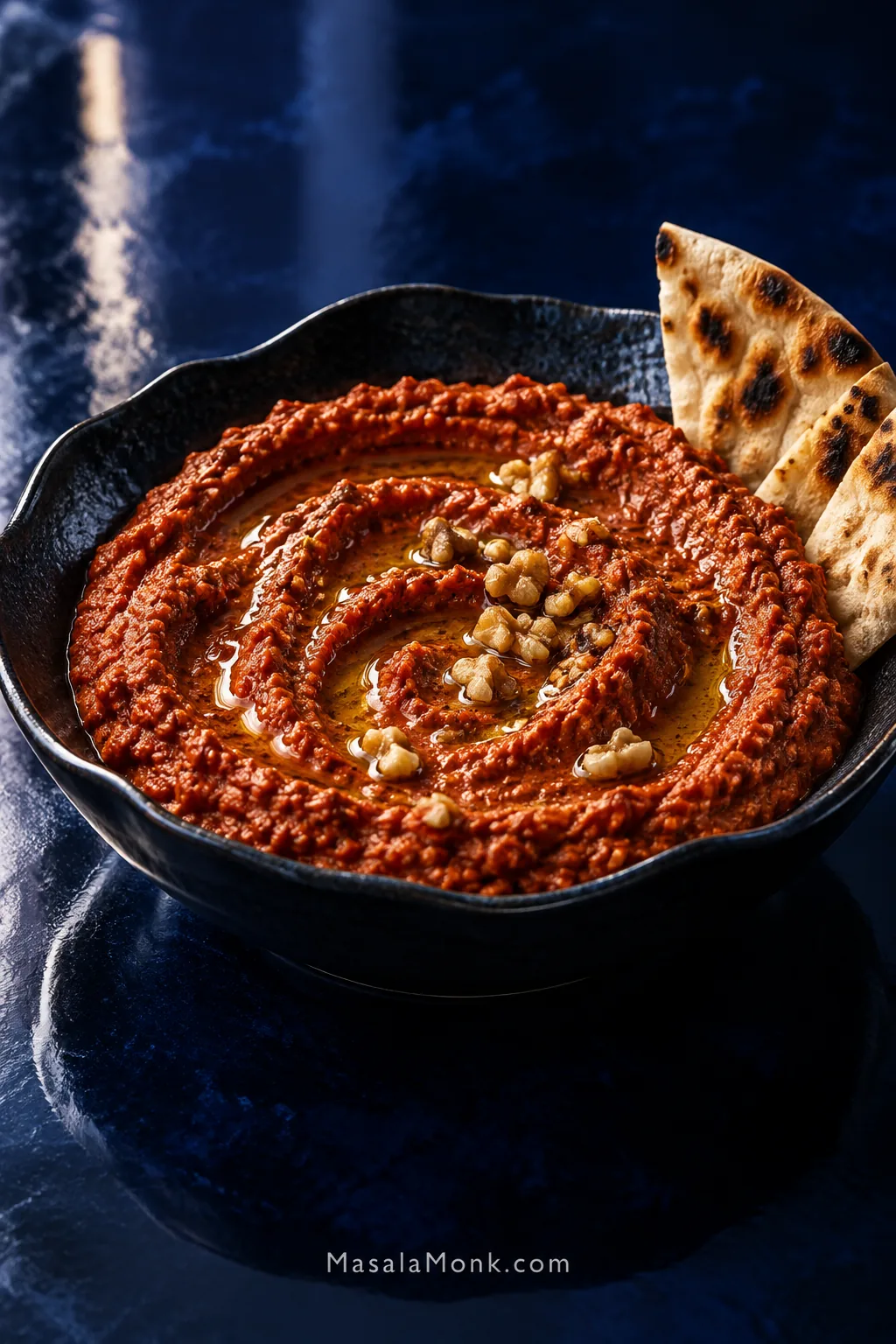
Muhammara is a thick Syrian roasted red pepper and walnut dip from Aleppo, traditionally made with pomegranate molasses, breadcrumbs, olive oil and gently warming Aleppo pepper. It is rich and savory but still bright enough to keep you reaching for the bread.
When it is right, a spoon leaves a groove through the dip and a piece of warm homemade pita picks it up cleanly. Roasted pepper comes through first, followed by walnut richness, fruity pomegranate tang and mild chile warmth.
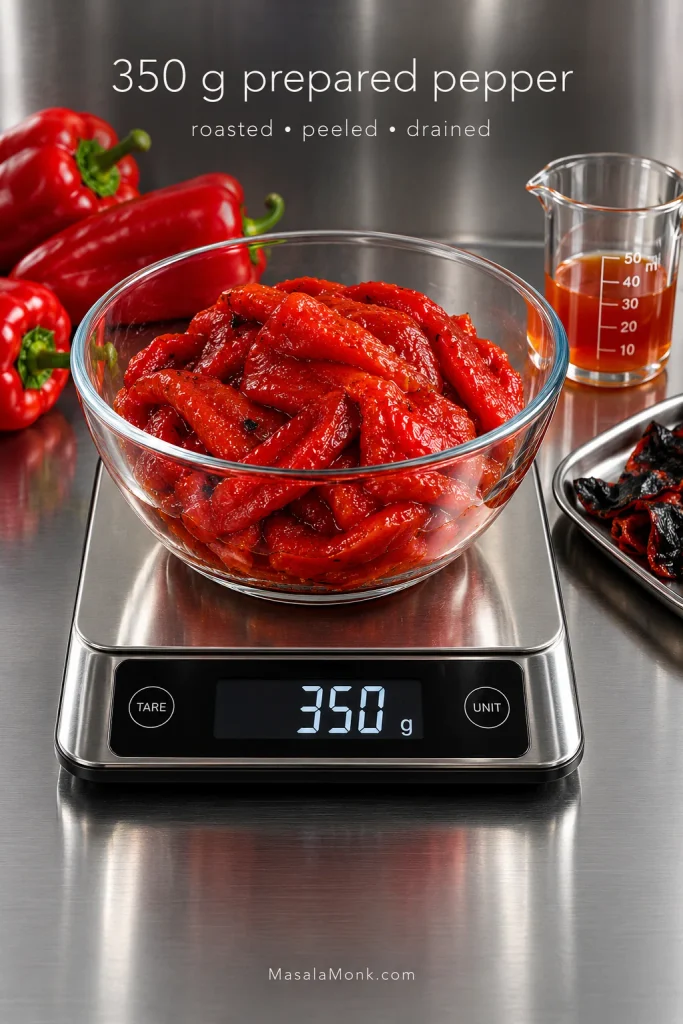
The number that matters in this muhammara recipe is not how many peppers you buy. It is 350 g / about 12 oz of roasted, peeled and well-drained pepper flesh. Starting there makes the rest of the recipe much easier to control.
Muhammara at a Glance
| Origin | Aleppo, Syria |
|---|---|
| Hands-on time | About 20–25 minutes with fresh peppers |
| Fresh-pepper route | About 1 hour before resting |
| Jarred-pepper route | About 15 minutes of prep before resting |
| Recommended rest | At least 30 minutes when possible |
| Yield | About 2 cups; 6–8 mezze servings |
| Taste & texture | Roasted, walnut-rich, sweet-tart and mildly spicy; thick and lightly coarse |
Syrian-Style Muhammara Recipe
This version keeps roasted pepper firmly in front. The walnuts add depth and the breadcrumbs help the dip cling to bread, but neither should take over. Muhammara is forgiving; the two things most worth watching are excess pepper moisture and how far you process the walnuts.
Muhammara Ingredients
- 900 g–1 kg / about 2–2¼ lb ripe red peppers; exact pepper count varies considerably by size. After roasting, peeling, seeding and draining, you need 350 g / about 12 oz prepared pepper flesh
- 85 g / 3 oz walnuts, about ¾ cup loosely measured
- 30 g / 1 oz plain dry breadcrumbs or panko, plus up to another 10 g if needed; fresh breadcrumbs also work but absorb differently
- 1½ tbsp / about 22 ml pomegranate molasses, plus more to taste if needed
- 2 tbsp / 30 ml extra-virgin olive oil, plus a little extra for adjusting and serving
- 1½–2 tsp Aleppo pepper, the dried crushed chile seasoning, to taste
- ¾ tsp ground cumin
- 1 small garlic clove, finely grated or minced
- 1 tbsp / 15 ml fresh lemon juice
- ½ tsp fine salt, then more as needed
The raw pepper weight is a shopping estimate. Different peppers lose very different amounts of water as they roast, which is why the prepared weight matters more than pepper count.
No added sugar is needed here; ripe peppers and pomegranate molasses provide enough sweetness, though molasses brands vary.
Missing something? See the ingredient substitutions →
How to Make Muhammara
Moisture → structure → balance. Drain the peppers well, add just enough body, then adjust the seasoning. That is the method in miniature.
1. Roast the Peppers
Heat the oven to 425°F / 220°C conventional / 200°C fan. Put the whole peppers on a rimmed baking sheet and roast for about 30–35 minutes, turning once or twice, until they are soft and slumped with blistered skins and plenty of dark patches.
Ready when: the peppers have collapsed and smell deeply roasted. They do not need to be black from end to end.
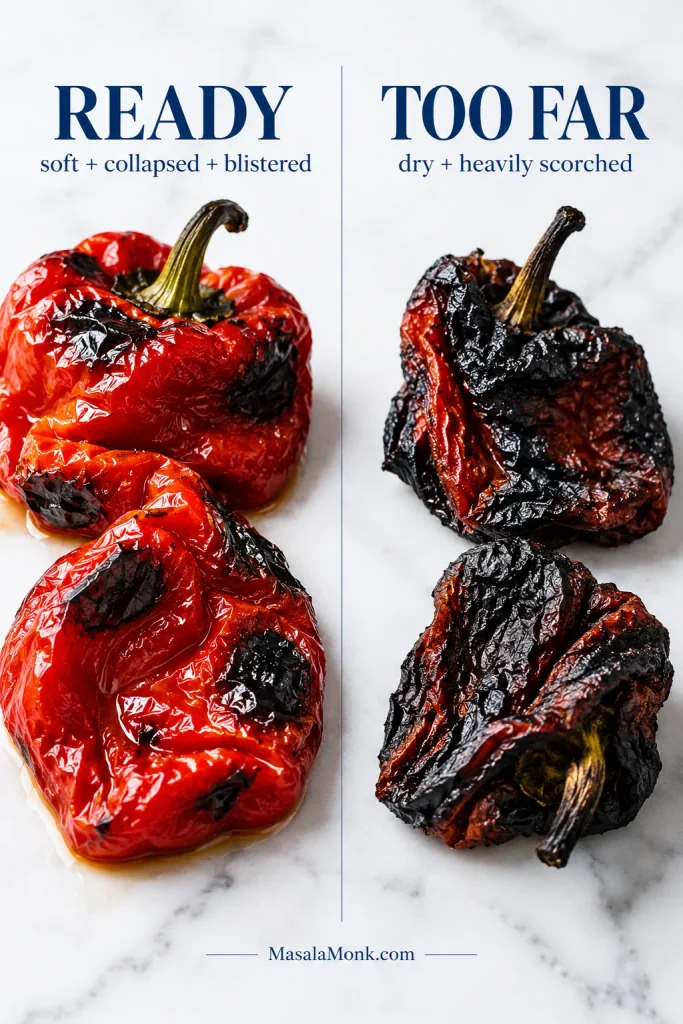
For a faster route, char them beneath a very hot broiler/grill, turning as the skins blacken, usually for 12–15 minutes in total. Direct flame works too if that is already a method you use comfortably.
2. Steam, Peel, Drain and Weigh
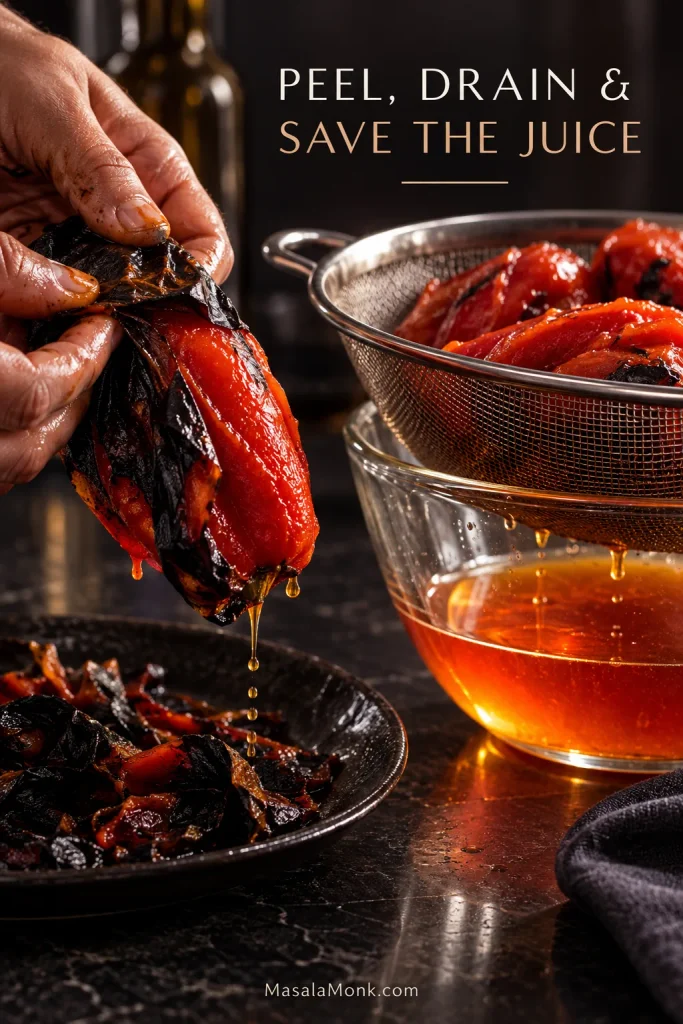
Move the hot peppers to a bowl and cover for 10–15 minutes. The trapped steam loosens the skins. Remove the stems and seeds, then peel away most of the blackened skin.
Peeling roasted peppers is messy, and they do not need to look immaculate. Don’t chase every last black fleck. A little char belongs here; large sheets of burnt skin do not.
Avoid rinsing the peppers under running water; it washes away some of the concentrated roasted flavor. Set the cleaned flesh in a sieve over a bowl for several minutes, then blot away obvious surface moisture.
Save the pepper juice underneath. It may be exactly what you need if the fresh batch becomes too stiff.
Now weigh 350 g / about 12 oz roasted, peeled, seeded and well-drained pepper flesh. Anything around 325–375 g is close enough; the breadcrumb adjustment later absorbs that small difference.
The fiddly part is over. From here, the dip comes together quickly.
3. Toast the Walnuts and Prepare the Garlic
Taste one walnut before using the batch. If it tastes stale or rancid, replace the nuts. Check briefly for stray shell fragments too.
Toast the walnuts in a dry skillet over medium-low heat for 3–5 minutes, stirring often, just until fragrant and lightly darkened. Or toast them at 350°F / 175°C conventional / 160°C fan for 8–10 minutes. Let them cool.
Raw walnuts work too; light toasting gives this version a deeper walnut flavor. For particularly pungent garlic, stir it into the lemon juice for about 5 minutes to soften the raw edge.
4. Build the Muhammara
Add the peppers, garlic and lemon juice, 1½ tbsp pomegranate molasses, Aleppo pepper, cumin and salt to the food processor. Pulse until the peppers have broken down into a thick, fairly even mixture, scraping down the sides when needed.
For a more distinct walnut texture, finely chop the toasted walnuts by hand and keep them aside. Process the pepper base with the breadcrumbs and olive oil, then fold the chopped walnuts in at the end.
For the simpler food-processor route, add the cooled walnuts, 30 g breadcrumbs and 2 tbsp olive oil to the pepper base. Pulse in short bursts until everything comes together and small walnut flecks remain.
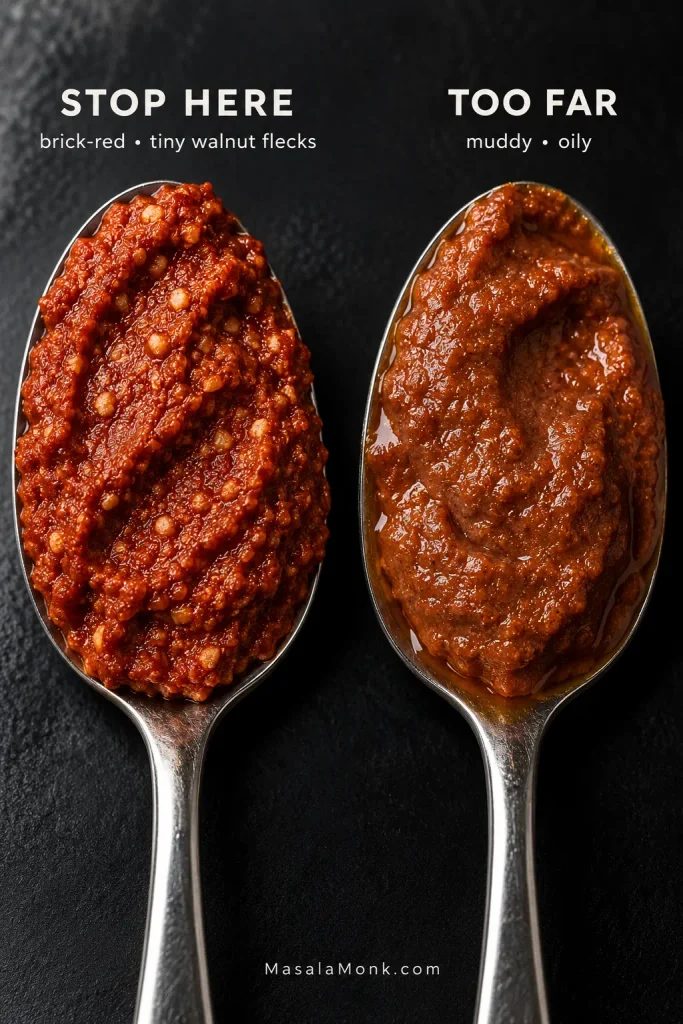
This is the point where it should begin to look unmistakably like muhammara: deep brick-red, cohesive and softly glossy, with tiny walnut flecks still visible. It should look like a spread, not a silky purée.
Stop there. Taking the walnuts much further can release more oil, making the dip heavier and its color muddier.
5. Wait and Check the Texture
Leave the muhammara for 5–10 minutes before deciding whether it needs more bread. The breadcrumbs are still absorbing pepper juice, and a mixture that initially looks loose may settle perfectly on its own.
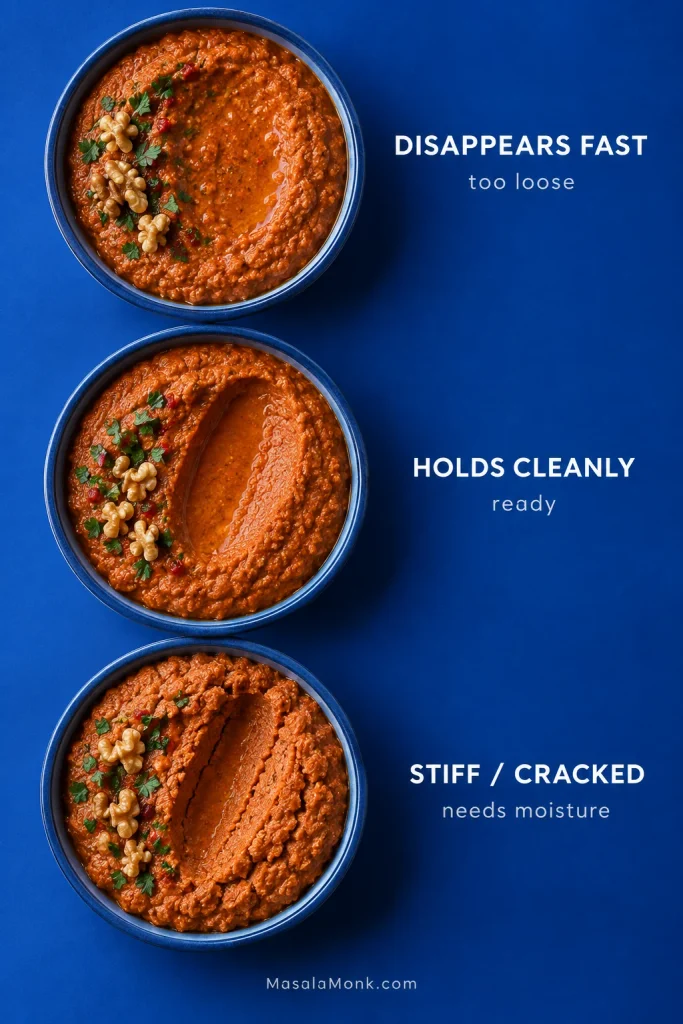
Drag the back of a spoon through it.
- A groove that disappears quickly means the dip still needs more body. Add some of the reserved breadcrumbs, pulse briefly and wait again.
- A stiff fresh batch needs moisture. Add reserved roasted-pepper juice 1 teaspoon at a time.
- A groove that already holds means no more breadcrumbs are needed.
The last spoonful of breadcrumbs should earn its way in.
6. Season and Rest
A sweet, flat dip usually needs salt before anything else. Add a pinch, taste, and then use a small squeeze of lemon if it still feels heavy. Add more Aleppo pepper if you want a warmer finish; it should still taste of roasted pepper first.
The muhammara should already be close. Cover it and let it rest for at least 30 minutes when possible; the flavors settle and the crumbs finish hydrating as it sits.
Before You Serve It
Drag a spoon through the muhammara once more. The groove should hold while the dip still scoops easily. Before you add the finishing olive oil, the dip itself should look cohesive, not oily or separated.
Muhammara is best after it has lost the refrigerator chill. The roasted pepper should still lead, with walnut underneath and enough pomegranate acidity to keep the sweetness lively. If you’re close, leave it alone.
If the texture or balance still feels wrong, jump to Fix My Muhammara →
Quick Muhammara With Jarred Roasted Peppers
Jarred roasted peppers cut the preparation to about 15 minutes, plus resting time. Fresh peppers give you more control over the char, but the texture can be every bit as good with jarred peppers when they are drained thoroughly.
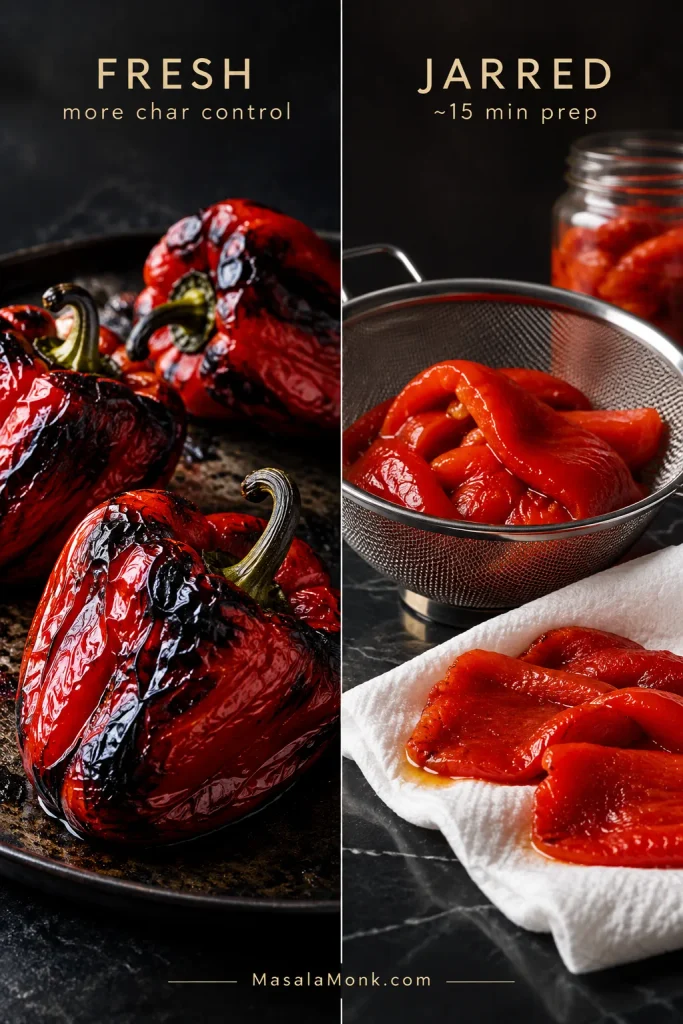
Taste a pepper first. If the packing liquid has left it unusually salty, acidic or strongly flavored, rinse the peppers briefly. Then drain thoroughly, blot dry and weigh 350 g / about 12 oz. Oil-packed peppers should be drained especially well so they do not bring extra oil into the dip.
For more char, blister the drained peppers briefly beneath a hot broiler/grill or in a dry grill pan, then continue with the walnut step.
Continue at Step 3: Toast the walnuts →
What to Eat With Muhammara
Muhammara makes the most sense as shared food: a shallow plate in the middle, warm bread within reach and a few other dishes around it.
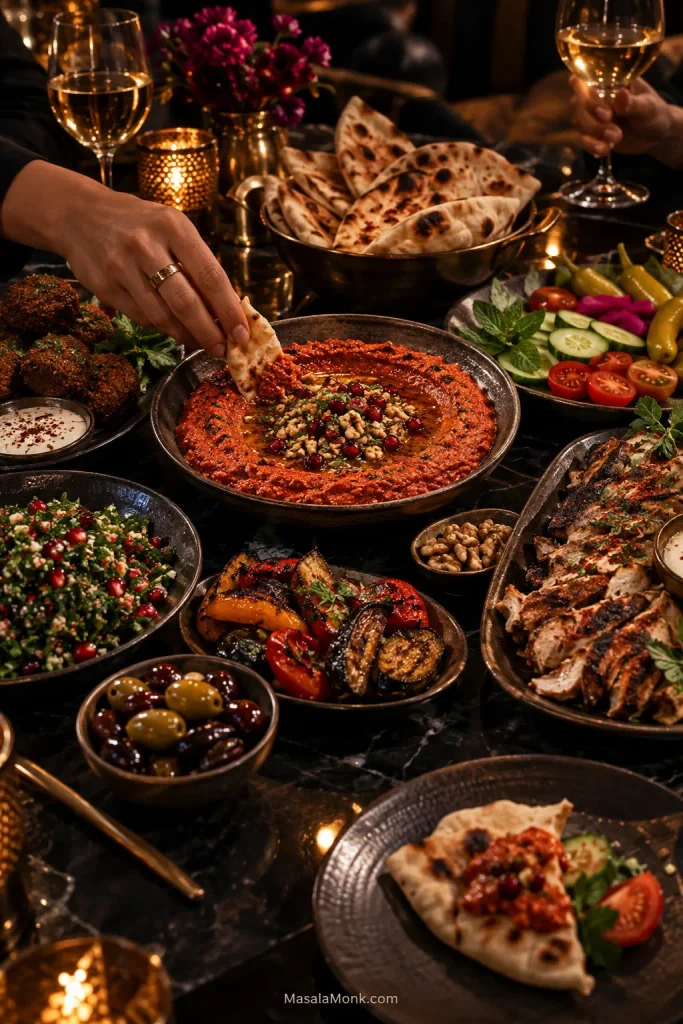
Pita is the classic choice. On a larger mezze table, muhammara’s richer sweet-tart flavor works especially well beside something fresh and herb-heavy such as tabbouleh, plus olives, pickles, cucumber, tomato and other crisp vegetables.
Spread it inside pita or flatbread with homemade falafel, herbs and pickles. One spoonful gives the sandwich pepper, walnut, tang and chile without needing several separate sauces.
It is equally good beside chicken shawarma, grilled chicken or lamb. The pomegranate cuts through richer bites while the walnuts give the dip enough weight to sit beside charred meat.
Roasted eggplant, cauliflower, carrots and squash work well too. Spread the muhammara beneath the vegetables and let the hot browned edges pick up the cooler dip as you eat.
Leftovers belong on toast and sandwiches, in grain or lentil bowls, swirled through labneh or thick yogurt, or thinned with a splash of pasta water into a quick sauce.
For serving, spread the muhammara over a shallow plate and make loose ridges with the back of a spoon. Add a small drizzle of olive oil. Chopped walnuts, Aleppo pepper or pomegranate seeds are optional.
Fix My Muhammara
Most batches are fixable. Change one thing at a time so you do not lose the roasted pepper while chasing the problem.
| Problem | Quick diagnosis & fix |
|---|---|
| Too thin | Rest it first. Still loose after 5–10 minutes? Add breadcrumbs gradually. |
| Too thick immediately | The crumbs may be very absorbent or the peppers unusually dry. Loosen a fresh batch with reserved pepper juice, 1 teaspoon at a time. |
| Perfect yesterday, thick today | Breadcrumbs kept absorbing moisture. Let it warm slightly, stir, then loosen with water a teaspoon at a time. |
| Too sweet | Add a pinch of salt first, then a small squeeze of lemon if needed. |
| Too sour | Fold in more roasted pepper and walnut if available. Once the dip is sharply sour, there is no clean way to take that acidity back out. |
| Too hot | Add more roasted pepper, walnut and a little breadcrumb to dilute the heat. Without more of the base ingredients, a big correction is difficult. |
| Bitter | Check for stale walnuts, burnt nuts or too much scorched pepper skin. |
| Greasy | The walnuts may have been processed too far or too much oil was added. More pepper mixture can help if available. |
| Brown or muddy | Very finely ground walnuts can darken the dip. The flavor may still be fine. |
| Harsh garlic | Let the dip rest. Use a smaller or fresher clove next time. |
Why Is My Muhammara Too Runny?
First make sure it is actually too runny. Breadcrumbs need time to hydrate, so a loose-looking dip straight from the processor can become properly scoopable after a 5–10 minute rest.
Still flowing instead of holding a spoon mark? The pepper flesh probably carried in more water than usual. Add a small amount of the reserved breadcrumbs, wait again and stop as soon as the groove holds. A large handful added all at once can take the dip from loose to heavy very quickly.
Why Did It Get Thicker Overnight?
This is different from muhammara that starts out too thick. Dry breadcrumbs and panko can continue taking up moisture for hours, and refrigeration firms the dip further.
Let it lose some of its chill and stir before changing anything. If you refrigerated some of the reserved roasted-pepper juice, use that first; otherwise loosen the dip with water, 1 teaspoon at a time. Use olive oil when it needs more richness as well as a softer consistency.
Why Does My Muhammara Taste Bitter?
Bitterness has several possible sources, and they do not taste the same. Fresh walnuts naturally have a mild tannic edge; rancid walnuts can taste stale, soapy, chemical or paint-like. Darkly burnt nuts and large pieces of scorched pepper skin create a harsher bitterness.
A slight walnut bitterness can sit comfortably inside the finished dip. Rancid nuts or strongly burnt flavors are much harder to disguise, which is why tasting one walnut before you begin is worth the few seconds it takes.
Ingredient Substitutions
What Can I Use Instead of Pomegranate Molasses?
Nothing quite duplicates pomegranate molasses. If you need a homemade substitute, reduced unsweetened pomegranate juice is the closest route worth making. Simmer ½ cup / 120 ml until you have roughly 2 tablespoons / 30 ml and the juice is lightly syrupy. Cool it before using; it will thicken further as it cools.
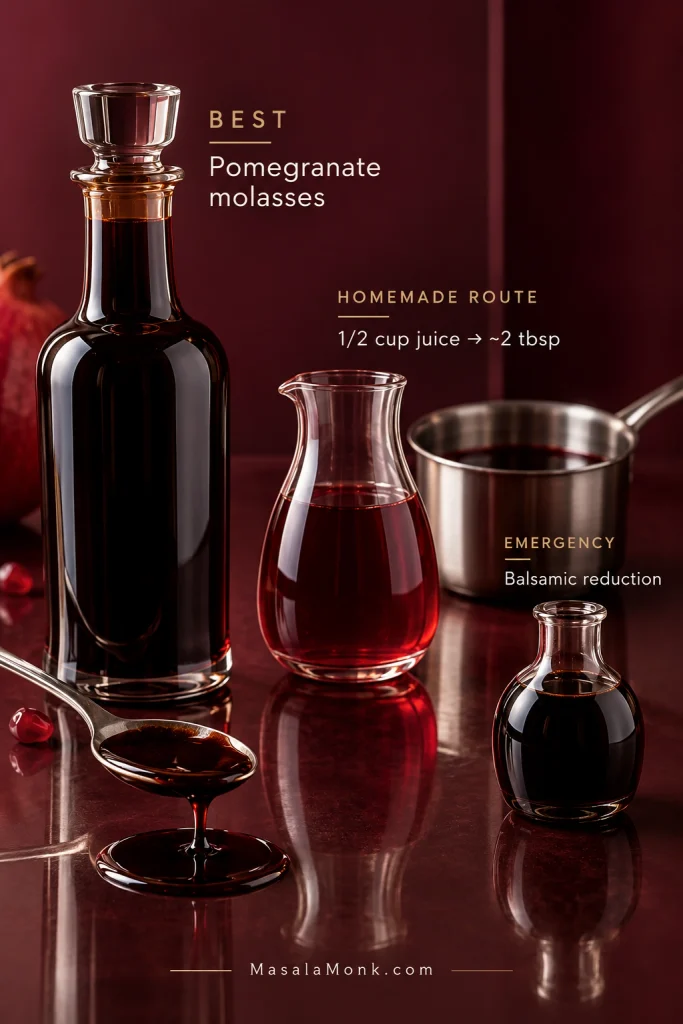
A small amount of balsamic reduction is the emergency option. It provides sweet-sour intensity, although the flavor is different. Plain molasses, maple syrup and date syrup are not direct substitutes because they bring sweetness without the same acidity.
What Can I Substitute for Aleppo Pepper?
Use mostly sweet paprika with a very small pinch of cayenne or ordinary chile flakes. That comes closer to Aleppo pepper’s fruitiness, color and gentle heat than replacing it 1:1 with a much hotter chile.
Kashmiri chile powder or gochugaru can also work, but start cautiously because products vary.
Gluten-Free or Bread-Free Muhammara
For gluten-free muhammara, use gluten-free dry breadcrumbs or panko in the same gradual way as regular breadcrumbs.
For a bread-free version, replace the 30 g breadcrumbs with about 25–30 g ground almonds, or begin with roughly 15–20 g additional walnuts. Either route makes the dip more nut-forward, so keep the peppers in front and judge the final thickness after a short rest.
Why Muhammara Recipes Vary
This version starts from fresh-roasted peppers rather than concentrated pepper paste. Turkish preparations related to acuka often lean much more heavily on pepper paste, so two related recipes can look surprisingly different before they even reach the walnuts.
Muhammara itself has strong roots in Aleppo and Syrian cooking, but variation from kitchen to kitchen is normal. Some versions use fresh bread, others dry crumbs or panko. Walnuts may be raw or toasted, and the texture can range from coarse to nearly smooth. Tahini, onion, tomato paste, concentrated pepper paste or sumac appear in some recipes and not in others.
Sami Tamimi describes muhammara as Syrian in origin while also placing it within the wider cooking of Palestine and Lebanon. That overlap helps explain why one family’s muhammara can look quite different from another’s and still be recognizably the same dish.
Muhammara vs Hummus: What’s the Difference?
Muhammara is built from roasted peppers and walnuts; hummus is built from chickpeas and tahini. That difference changes the flavor and texture completely.
Hummus is usually smooth, creamy and mellow. Muhammara is fruitier, tangier and more textured. That texture is part of the distinction: hummus is usually served silky-smooth, while this muhammara is better with a little walnut and pepper texture still intact.
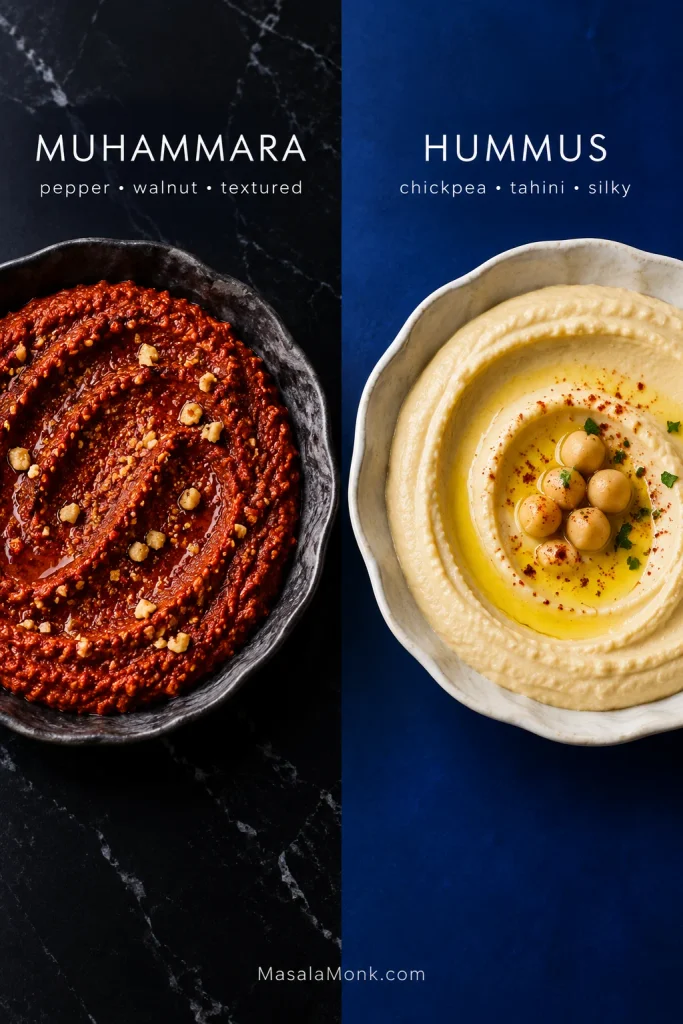
Put both on the table and they do very different jobs. Our extra-creamy hummus supplies the cool, smooth side of that contrast while muhammara brings roasted pepper, walnut and pomegranate tang.
Make Ahead, Storage & Freezing
Make Ahead
Muhammara benefits from resting. Thirty minutes helps; several hours give the flavors more time to settle. Making it the day before works well too, although the breadcrumbs may make it slightly firmer overnight.
Refrigerate
Store the dip in a clean airtight container in the refrigerator for about 3–4 days, in line with USDA guidance for refrigerated leftovers.
Let it warm slightly before serving. Stir first; a dip that is still too firm can be loosened with water 1 teaspoon at a time, or with a small amount of olive oil when it also needs more richness.
Freeze
Finished muhammara can be frozen, although it may be slightly softer after thawing. Defrost it in the refrigerator, stir well and check the consistency before serving.
Another option is to freeze roasted, peeled and drained pepper flesh in 350 g portions. Thaw one, drain any liquid released during freezing and make the muhammara fresh.
A Few Common Questions
1. How Do You Pronounce Muhammara?
English pronunciations vary slightly, but moo-HAM-ma-ra is a good approximation. The Arabic name is commonly glossed as “reddened” or “reddish.”
2. Is Muhammara Spicy?
Usually only mildly. Aleppo pepper brings gentle warmth and fruity chile flavor rather than aggressive heat.
3. Should Muhammara Be Served Warm or Cold?
Cool room temperature is ideal. Straight-from-the-fridge muhammara feels firmer and its flavors are more muted, so give it a little time before serving.
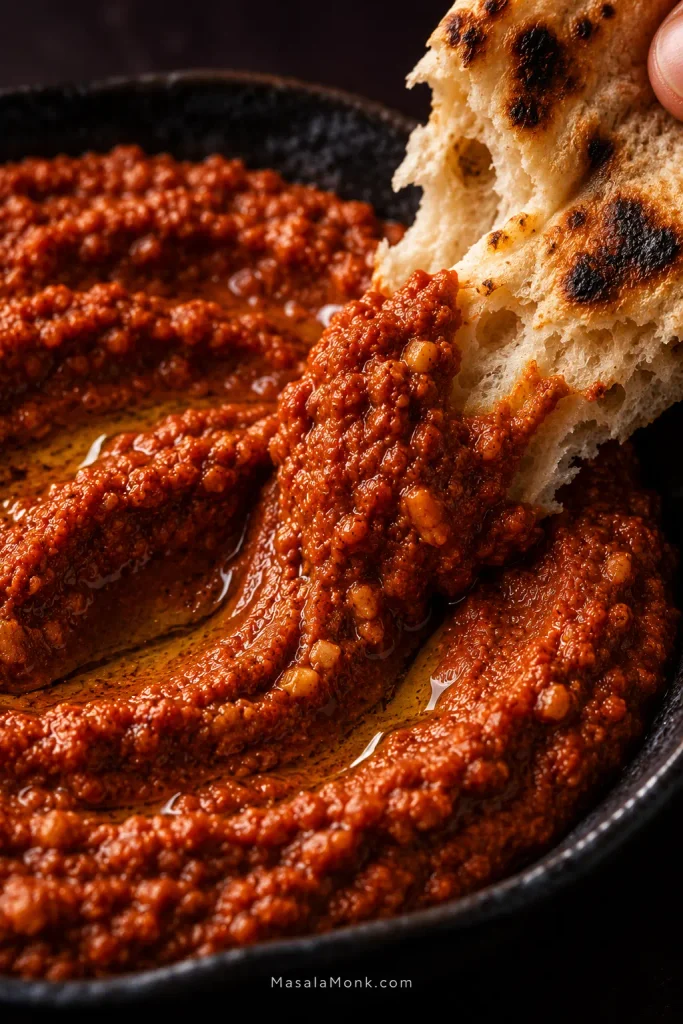
Tear the bread, set the muhammara in the middle of the table and eat it while the flavors are awake.








