
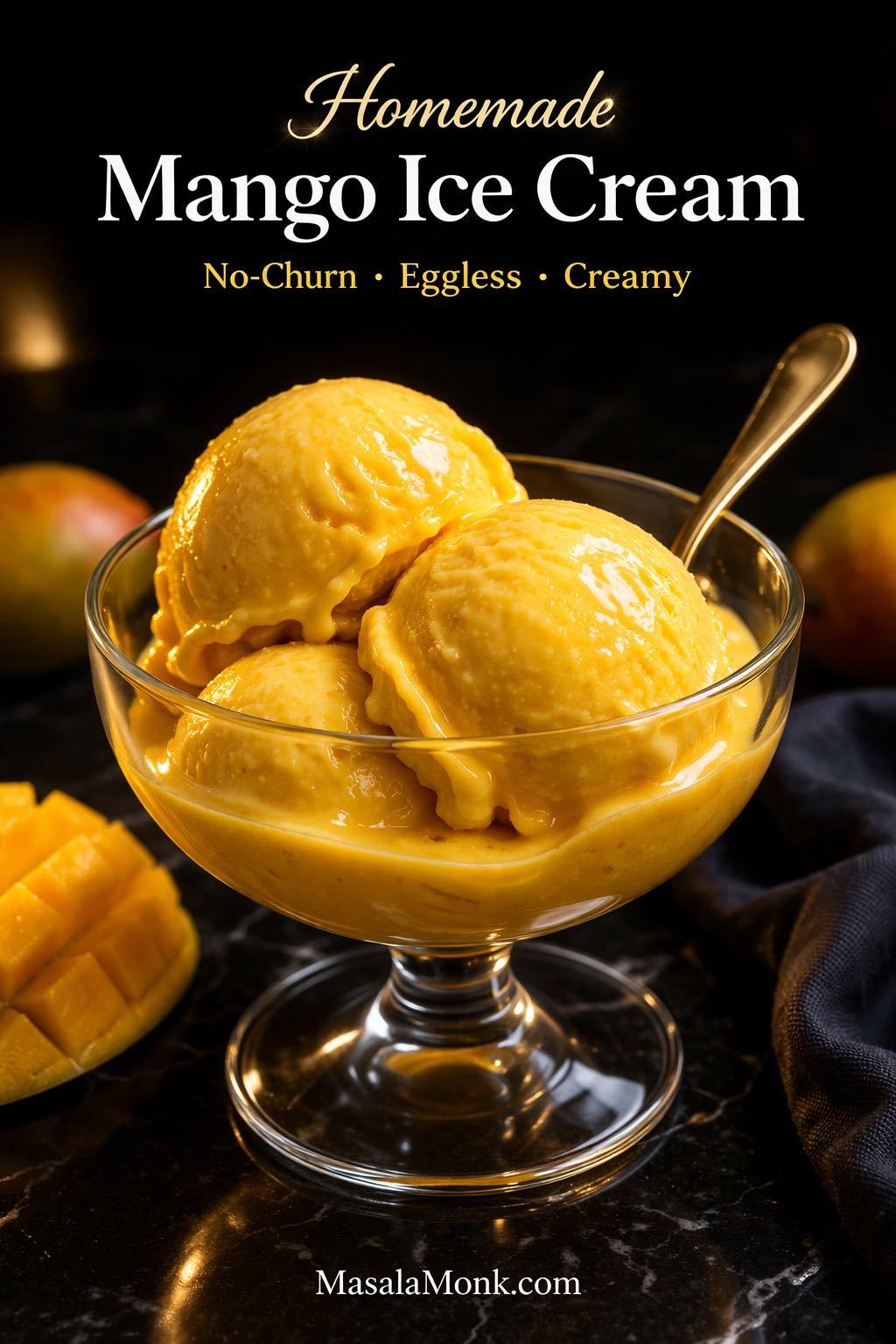
If you want homemade mango ice cream that is no-churn, eggless, creamy instead of icy, and full of real mango flavor, this is the version to make. It is for home cooks who want an easy recipe without ending up with a frozen block that tastes more like sweet cream than mango. The method is simple, the ingredient list is manageable, and the result is soft enough to scoop, rich enough to feel indulgent, and fruity enough to earn a repeat spot in your freezer.
That matters because mango ice cream can go wrong in predictable ways. Sometimes the puree is too thin, so the dessert freezes harder than it should. Sometimes the mango itself is weak, so the cream takes over. At other times, the base is overmixed, the airy texture drops, and the final scoop feels dense rather than lush. It sounds easy on paper. In practice, a few small choices decide whether it feels special or merely cold.
So this post is built to solve those problems before they happen. It shows you how to make mango ice cream at home with better odds from the start: use good mangoes, keep the puree thick, whip the cream to the right stage, fold gently, freeze in the right container, and soften slightly before serving. Get those parts right, and the recipe becomes far more dependable. More importantly, it becomes the kind of mango ice cream recipe you actually want to repeat.
This homemade mango ice cream gives you:
- a no-churn method with no ice cream maker required
- an eggless base that stays simple and approachable
- creamy, scoopable texture instead of icy hardness
- real mango flavor rather than diluted sweetness
- clear fixes for watery puree, fibrous fruit, and weak flavor
- enough flexibility for Alphonso, coconut, vegan, and no-condensed-milk variations
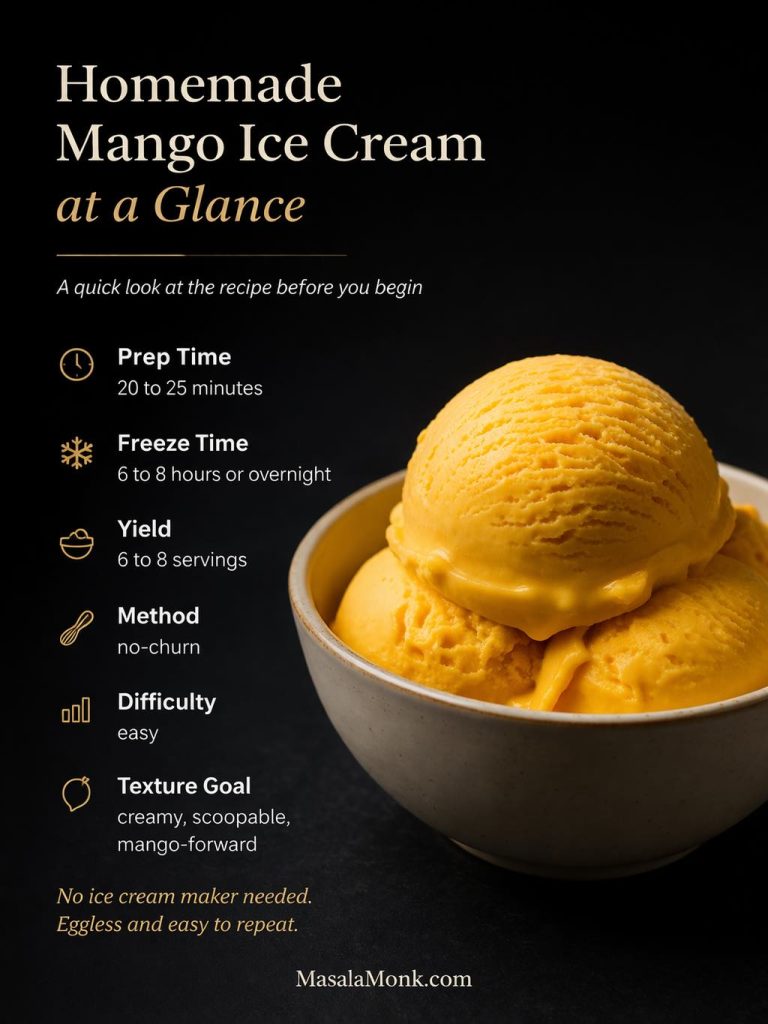
Homemade Mango Ice Cream Recipe at a Glance
Before getting into the full method, it helps to know what kind of recipe this is. It is not a churned custard or a sorbet, and it is not a technical project that asks you to babysit a machine. It is a practical, home-friendly route to creamy mango ice cream with a richer texture than fruit-only frozen desserts and a stronger fruit identity than many shortcut versions.
Quick recipe facts:
- Prep time: about 20 to 25 minutes
- Freeze time: 6 to 8 hours, or overnight
- Yield: about 1 loaf-pan-sized batch, roughly 6 to 8 servings
- Method: no-churn
- Difficulty: easy
- Texture goal: creamy, scoopable, and mango-forward
This is a no-churn mango ice cream recipe, an eggless mango ice cream, and an easy dessert for home cooks who do not want to rely on special equipment. If you enjoy lighter frozen fruit desserts too, you can always explore mango sorbet or read the broader comparison between sherbet and sorbet. Here, though, the goal is different: a creamy scoop that still tastes unmistakably of mango.
Why This Homemade Mango Ice Cream Recipe Works
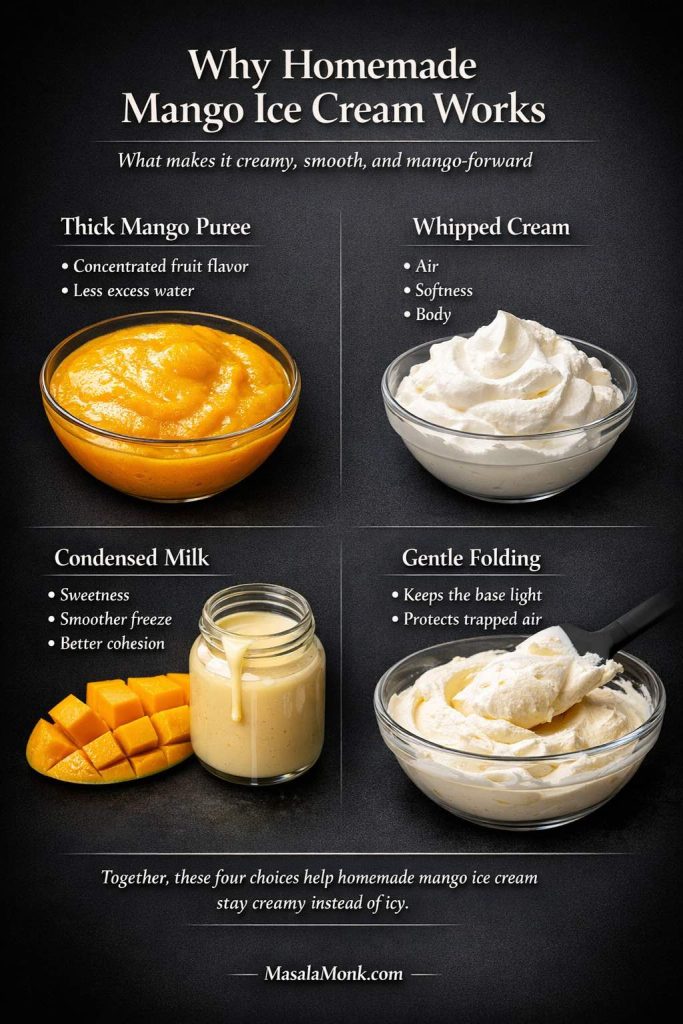
A good homemade mango ice cream recipe succeeds because it balances fruit, richness, sweetness, and air. Mango provides the flavor that makes the dessert memorable. Cream brings body and softness. Condensed milk adds sweetness, but it also helps the frozen texture stay smoother and more forgiving. Then the whipped cream gives the mixture air, which is why a no-churn base can still feel plush and light.
The fruit, however, is the real deciding factor. Thick mango puree gives you concentrated flavor and a better frozen texture, while thin puree weakens both. That is the central rule of this recipe.
At its best, this recipe works because it balances:
- thick mango puree for concentrated fruit flavor
- whipped cream for lift, softness, and body
- condensed milk for sweetness and a smoother freeze
- gentle folding for a lighter final texture
That combination is what turns a short ingredient list into something much more satisfying. Mango ice cream should still taste clearly of mango, but the fruit should arrive wrapped in richness rather than icy sharpness.
Ingredients for Homemade Mango Ice Cream
One reason how to make homemade mango ice cream appeals to so many home cooks is that the ingredient list is short. Still, a short list only works when each ingredient is doing the right job. This recipe depends less on complexity and more on choosing the right form of a few important things.
Best Mangoes for Mango Ice Cream
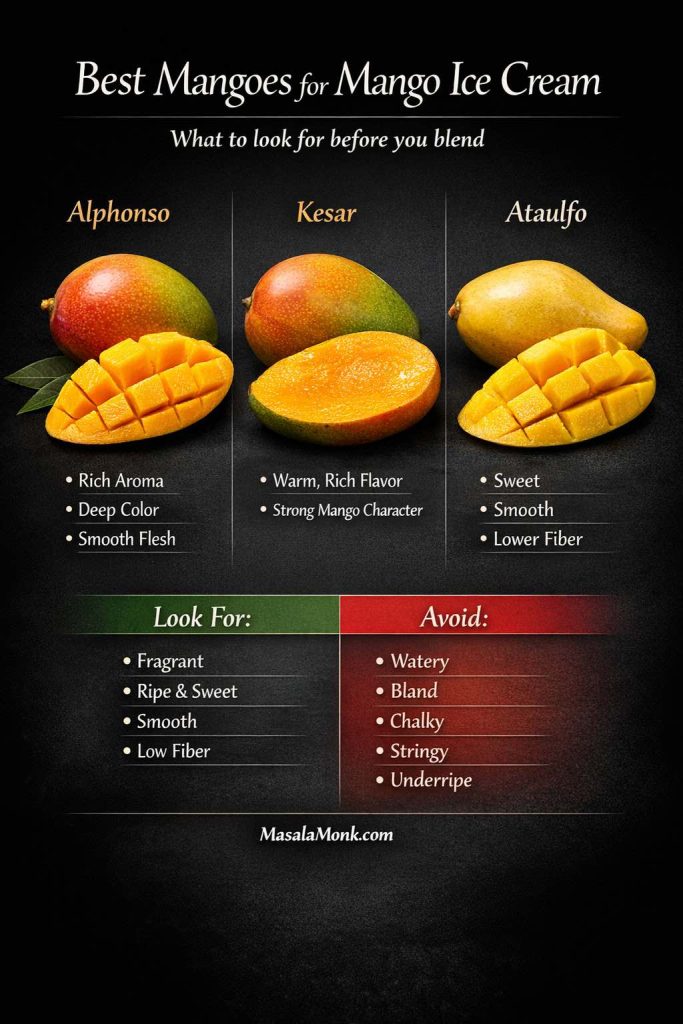
The best mangoes for mango ice cream are ripe, sweet, fragrant, and thick-fleshed. You want fruit that smells fruity near the stem, yields slightly when pressed, and tastes excellent on its own. If a mango is bland, watery, or chalky, the final dessert will never feel as vivid as it should.
Alphonso mangoes are especially good here because they usually bring strong aroma, rich color, and smooth flesh. That is exactly why Alphonso mango ice cream is such a compelling variation. Kesar mangoes can also work beautifully when you want deep mango character and a warm, rich profile. Ataulfo, often called honey mango, is another strong choice because it is usually sweet, smooth, and relatively low in fiber.
More broadly, the best mangoes for homemade mango ice cream tend to share the same qualities:
- dense, smooth flesh
- strong fragrance
- natural sweetness
- low fiber
- good flavor even before blending
Avoid mangoes that smell weak, taste flat, feel watery, or leave a lot of stringy fiber behind. Overly fibrous mangoes can still be used, but only if you blend and strain them well. Unripe mangoes are not a good shortcut here either. They may give acidity, but they will not deliver the rich fruit depth this dessert depends on.
In practical terms, a ripe mango for ice cream should feel slightly soft rather than hard, smell appealing rather than faint, and taste good enough to eat plain. That test matters more than any label.
Fresh Mango vs Canned Pulp vs Frozen Mango for Mango Ice Cream
Fresh mango is often the most satisfying route because it gives you full control over ripeness, sweetness, and flavor. When the fruit is excellent, fresh puree makes mango ice cream at home feel intensely seasonal and rewarding.
Canned mango pulp can be genuinely useful. It is convenient, often smoother than home-blended fruit, and usually more consistent than whatever fresh mangoes happen to be available that week. Frozen mango is useful too, especially when fresh fruit is poor or out of season, but it still needs thawing, blending, and texture checking.
The simplest way to think about the three options is this:
- Fresh mango is best when the fruit is truly ripe, fragrant, and in season.
- Canned pulp is best when you want consistency, convenience, and often smoother texture.
- Frozen mango is best when fresh fruit quality is disappointing but you still want a homemade result.
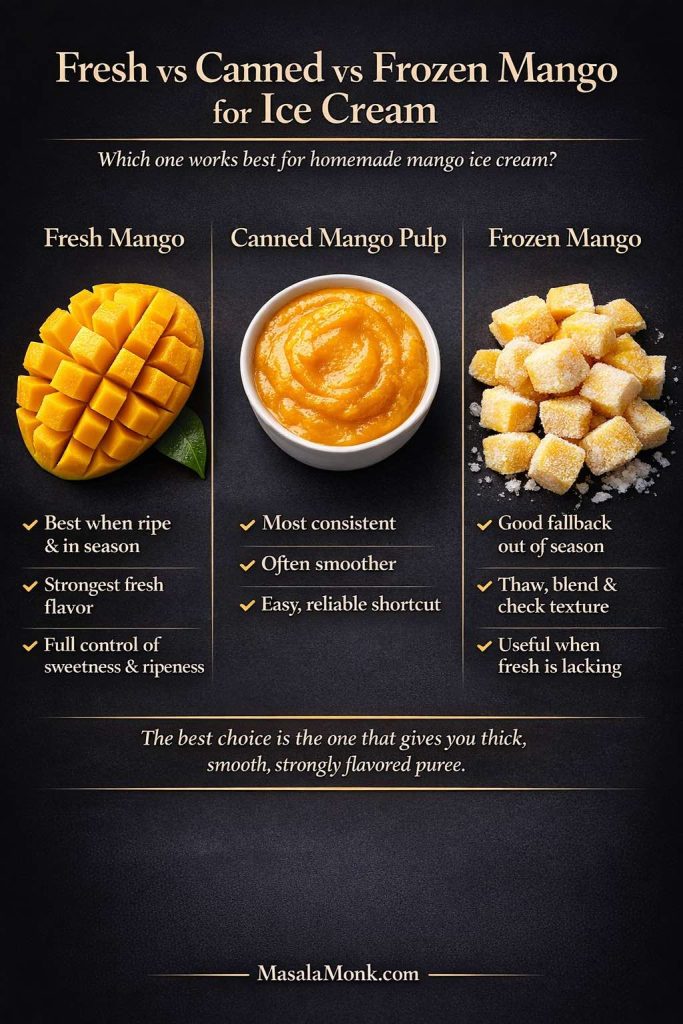
For most readers, the best choice is the one that gives you thick, smooth, strongly flavored puree most reliably. Excellent fresh mango is wonderful. Good canned Alphonso pulp is often easier than people expect. Frozen mango is a respectable fallback when handled properly.
Why Cream and Condensed Milk Matter in Mango Ice Cream
Cream gives the dessert richness, volume, and softness. Once whipped, it also introduces air, which helps the finished creamy mango ice cream feel lighter and easier to scoop.
Condensed milk is just as important. It sweetens the base, yes, but it also improves body and makes the no-churn texture much more forgiving. That is one reason so many successful homemade ice cream recipes rely on it. If you already enjoy the way it works in other sweetened condensed milk desserts or milk-rich favorites like tres leches cake, the same principle applies here.
Mango ice cream with condensed milk works so well because condensed milk is doing more than one job at once. It adds sweetness, contributes to a smoother freeze, and helps the dessert feel cohesive rather than harsh from the freezer.
A pinch of salt matters too. It does not make the dessert salty. Instead, it sharpens the sweetness and makes the mango feel more vivid.
Flavor Boosters for Homemade Mango Ice Cream
Once the main structure is in place, a few optional additions can shape the flavor beautifully.
- Vanilla smooths the flavor and rounds the dessert out.
- Lime or lemon juice brightens the mango and keeps the sweetness from feeling flat.
- Cardamom gives the dessert a warmer Indian-style character.
- Saffron adds a richer, more festive depth.
- Coconut opens the door to a softer tropical version, especially if you already enjoy mango with coconut milk.
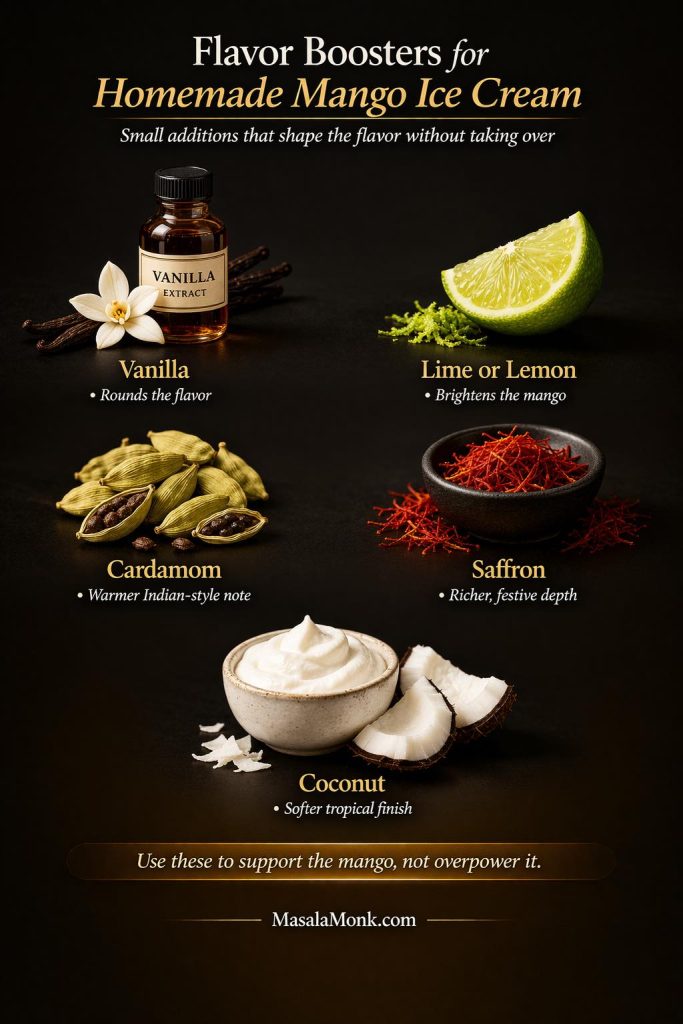
These are optional accents, not required for the best basic mango ice cream recipe. Use them to support the fruit, not distract from it. Mango should still stay in charge.
Exact Ingredients for the No-Churn Mango Ice Cream Recipe
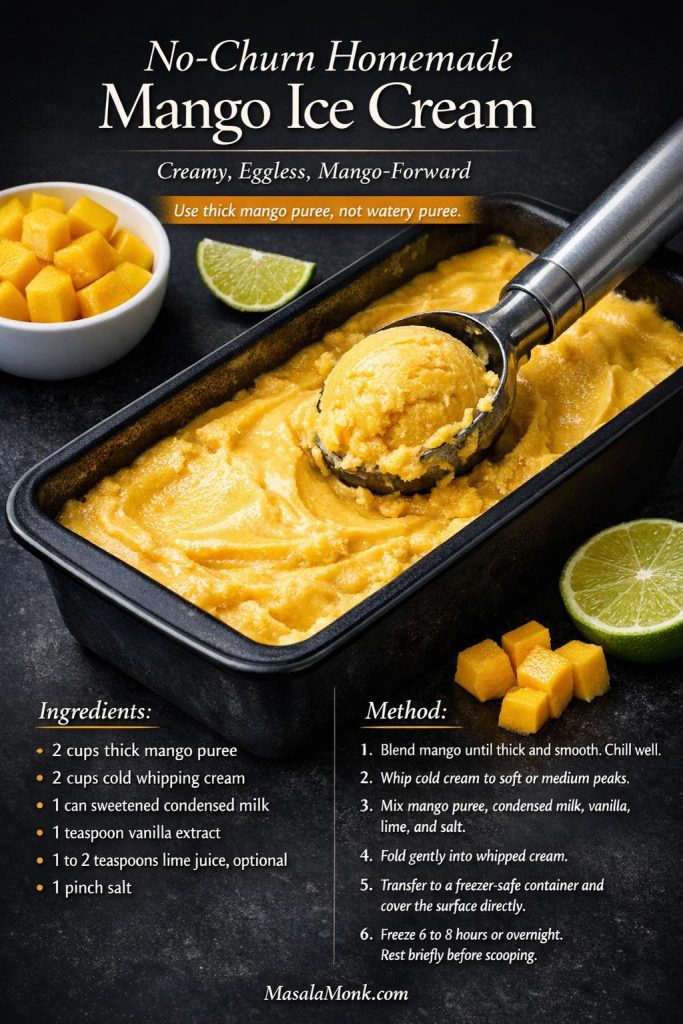
For the main no-churn base, gather:
- 2 cups thick mango puree, measured after blending
- 2 cups cold whipping cream
- 1 can sweetened condensed milk
- 1 teaspoon vanilla extract
- 1 to 2 teaspoons lime juice, optional
- 1 small pinch of salt
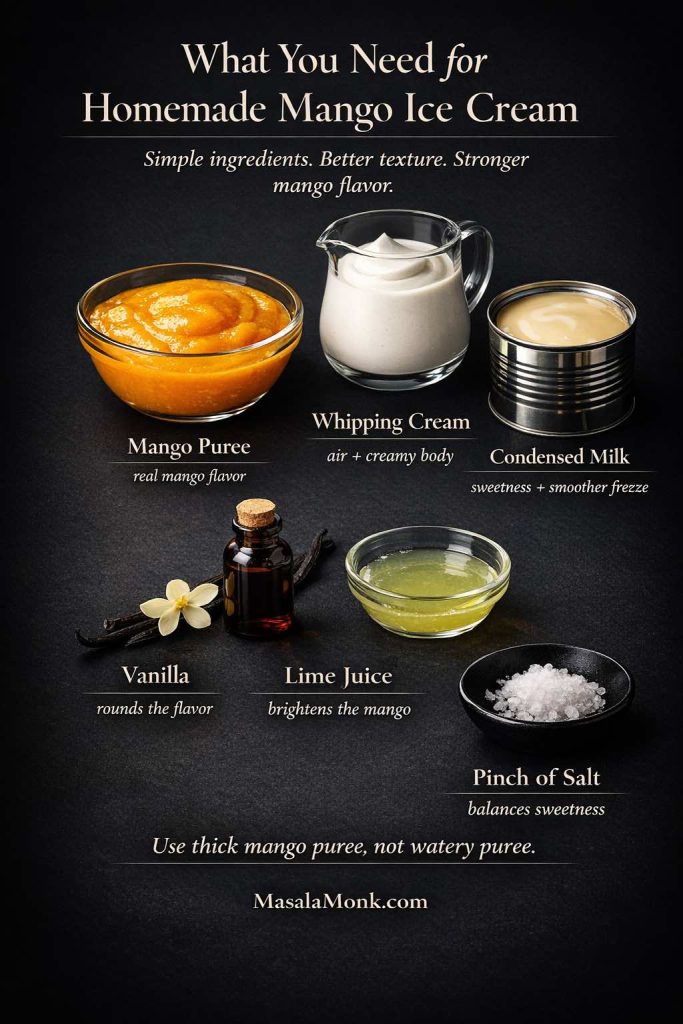
Optional flavor accents:
- a pinch of cardamom
- a few strands of saffron, bloomed in a teaspoon of warm milk or cream
- 2 to 3 tablespoons thick coconut cream for a tropical edge
This list stays intentionally simple. The point is not to complicate the dessert. The point is to build a base that gives you strong flavor and reliable texture with as little friction as possible.
A few ingredient notes make this recipe easier to get right:
- Use thick mango puree, not watery blended fruit.
- Use cold whipping cream straight from the fridge.
- Use sweetened condensed milk for the easiest creamy no-churn texture.
- Add lime only to brighten the fruit, not to make the dessert taste citrusy.
- Use Alphonso pulp when you want a richer, more perfumed mango result.
Check the Mango Puree Before You Start
Before you whip the cream or mix the base, stop and look carefully at the puree. This is the most important decision point in the whole recipe.
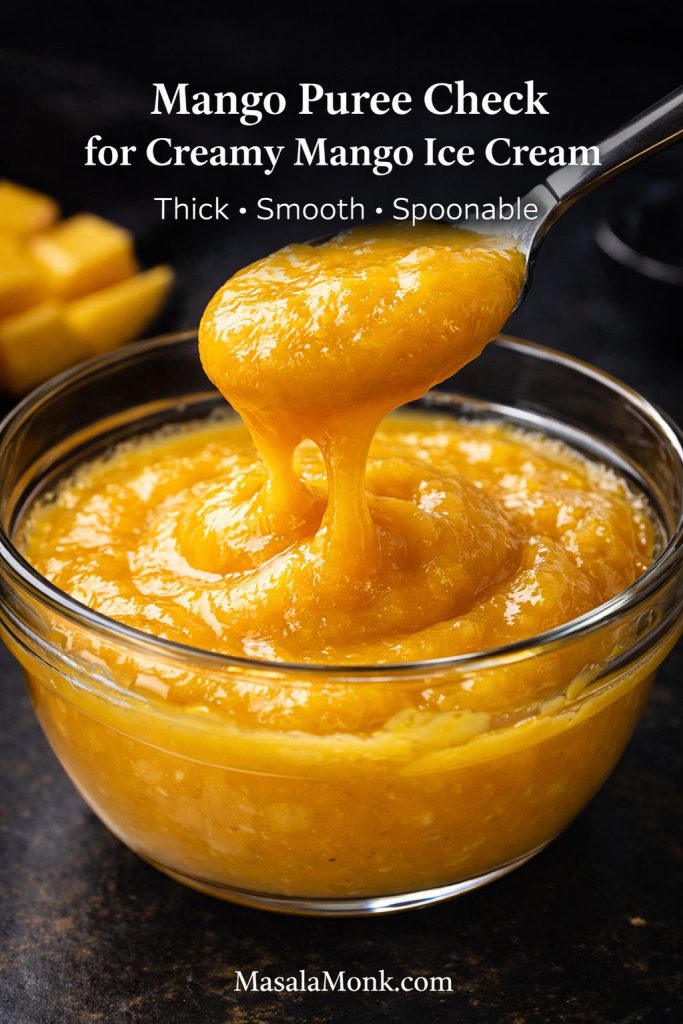
A good puree should be:
- thick
- smooth
- spoonable
- strongly flavored
Most importantly, it should mound lightly on a spoon and fall slowly rather than pour off like juice.
If it is too thin, simmer it gently for a few minutes to cook off excess water, then chill it fully before using. If it is fibrous, press it through a fine sieve. And if it is a little too sweet, a small amount of lime can often bring back balance.
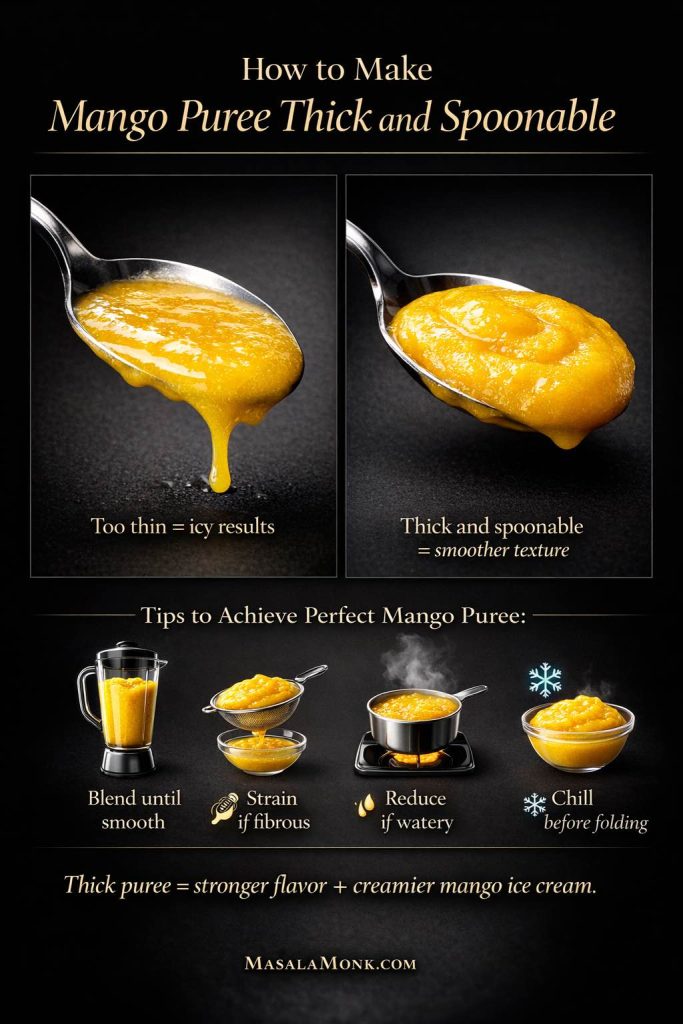
This one checkpoint changes a lot. Thick puree gives you stronger mango flavor and a softer frozen texture. Thin puree makes the whole recipe more fragile.
How to Make Mango Ice Cream at Home
This is the full method. It is easy, but each stage has a purpose. Once you understand that sequence, how to make mango ice cream becomes much less intimidating.
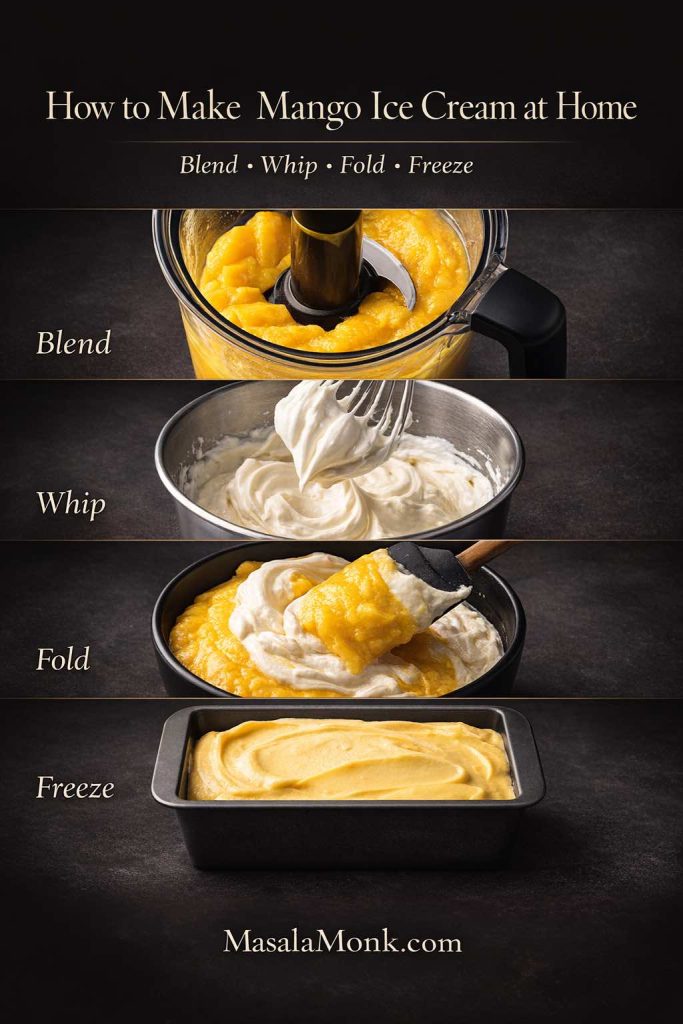
Make the Mango Puree Thick, Smooth, and Cold
Peel and chop the mangoes, then blend until completely smooth. After that, assess the puree honestly. It should sit thickly on a spoon rather than pour easily. If it looks loose, reduce it gently over low heat for a few minutes or strain it, then chill it well.
The puree also needs to taste good before it enters the base. The final mango ice cream recipe can only taste as vivid as the fruit you start with. If the puree is weak or watery, the finished dessert will lean more toward sweet cream than real mango.
Once the puree is thick enough, chill it fully. Cold puree is much easier to fold into the whipped base without disturbing its structure.
Chill Your Bowl and Keep the Cream Cold
A chilled bowl is not absolutely required, but it helps more than many people expect. Cold cream whips faster, holds better, and gives you more control, especially if your kitchen is warm. So if you have a few minutes, chill the mixing bowl and beaters first.
Whip the Cream to Soft or Medium Peaks
Pour the cold cream into the chilled bowl and whip until it reaches soft or medium peaks. The cream should look fluffy and plush, not stiff or grainy. When you lift the whisk, the tip should curl over softly rather than stand rigidly upright.
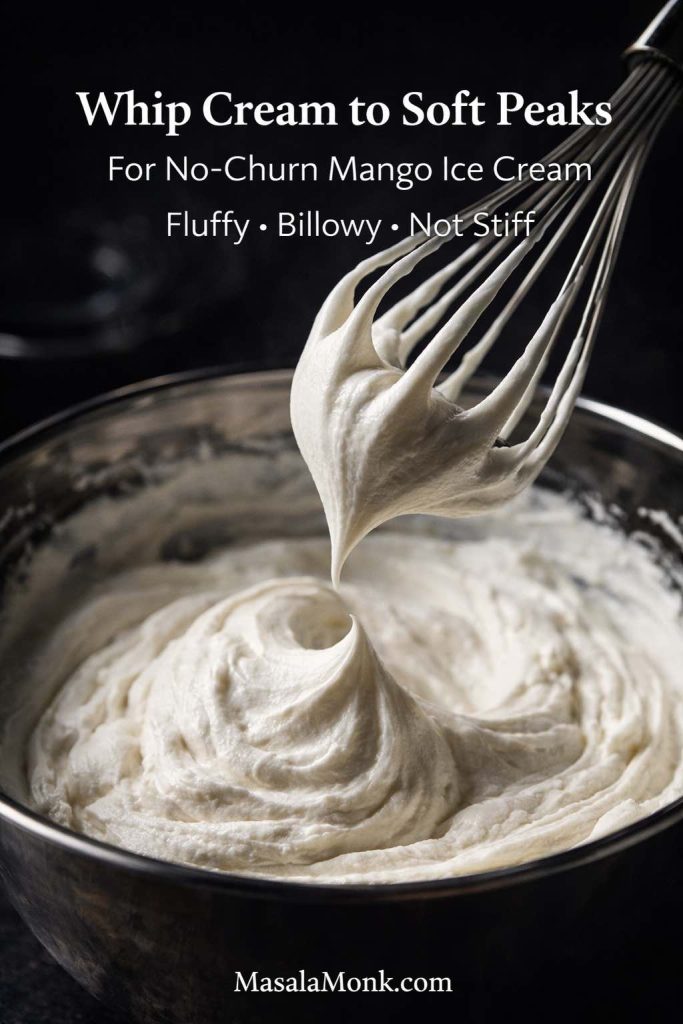
That visual cue matters. Underwhipped cream does not give the base enough structure. Overwhipped cream gets heavy and can make the final dessert feel denser than it should.
The right stage looks smooth, billowy, and flexible. Once you reach it, stop.
Mix the Mango Base Separately
In a second bowl, stir together the chilled mango puree, condensed milk, vanilla, salt, and lime juice if using. Mix until smooth, then taste.
At this point, the base should taste slightly stronger and a little sweeter than the final frozen dessert will seem. Freezing softens flavor, so this is your chance to correct it early. If the mango tastes flat, add a touch more lime. If it already tastes bright and balanced, leave it alone.
Fold Gently to Keep the Base Airy
Add the mango mixture to the whipped cream in batches. Fold slowly by sweeping down through the bowl and lifting upward rather than stirring hard. Keep going just until the mixture looks thick, airy, and evenly colored.
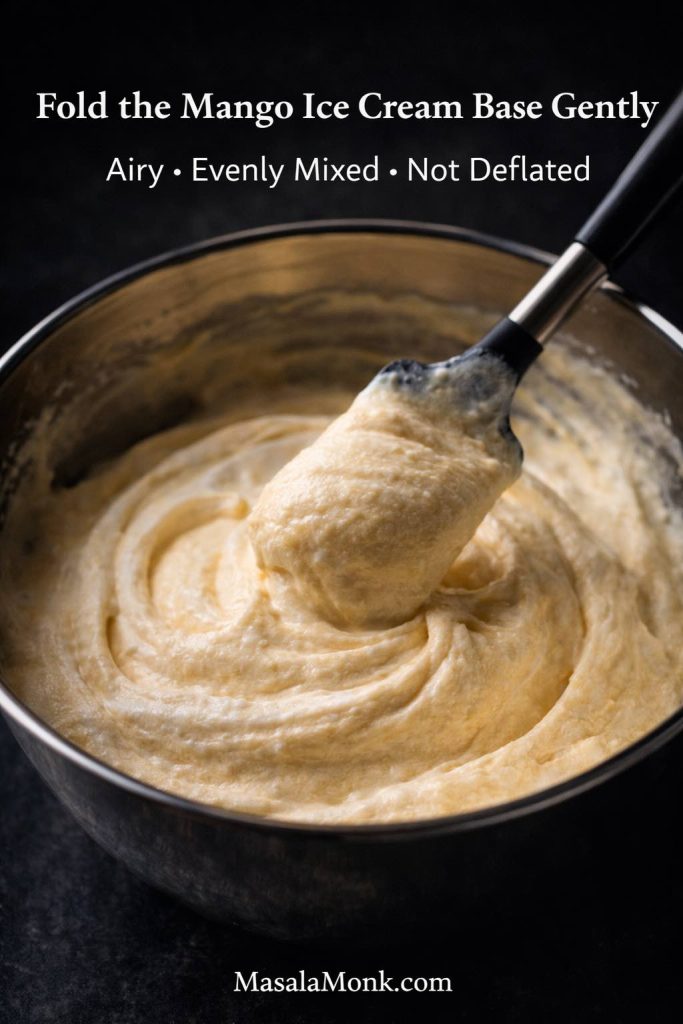
This is where separate ingredients become true homemade mango ice cream. The base should look soft, billowy, and uniform. It should not look runny, deflated, or aggressively smoothed out.
Do not keep folding just to make it look perfect. Once the color is even, stop.
Transfer and Freeze
Spoon the mixture into a freezer-safe container and smooth the top. A shallow container often gives a better serving texture than a very deep one. Then press parchment paper or plastic wrap directly against the surface before sealing with a lid. That extra layer helps reduce ice crystals.
For general freezer-storage best practices, the FDA’s frozen food storage guidance and Illinois Extension’s freezer storage advice are helpful references. In practical terms, the main point is simple: use a good container, cover the surface directly, and keep the batch steadily cold.
Freeze for at least 6 to 8 hours, though overnight is easiest. When ready to serve, let the ice cream sit out for a few minutes first. That short rest is usually all it needs to become properly scoopable.
If you later want a churned version, this guide on how to make ice cream with a KitchenAid mixer fits naturally into that next step.
What Mango Ice Cream Should Look Like at Every Stage
This is one of the most useful practical sections in the whole post because it helps you catch mistakes before they harden into the final dessert.
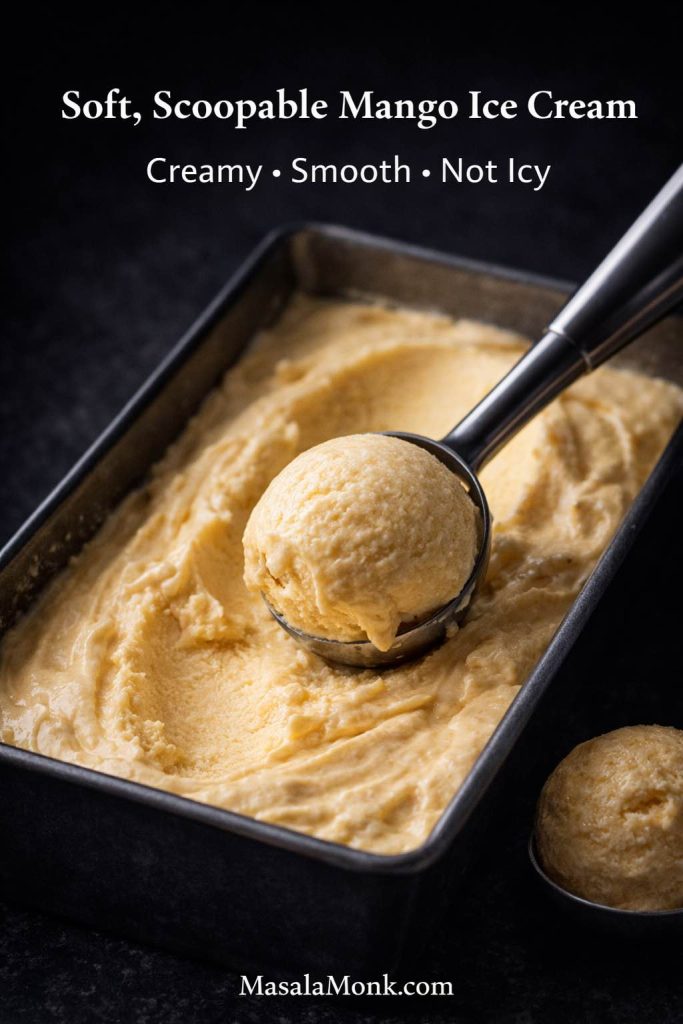
Here is what you want to see:
- Mango puree: thick, smooth, and spoonable
- Whipped cream: soft to medium peaks that look fluffy and supple
- Mango base: bright, balanced, and slightly sweeter than the final frozen dessert will taste
- Folded mixture: airy, evenly colored, and softly billowy with no cream streaks
- Frozen ice cream: firm, but scoopable after a short rest at room temperature
If one stage looks wrong, fix it before moving on rather than hoping the freezer will correct it later.
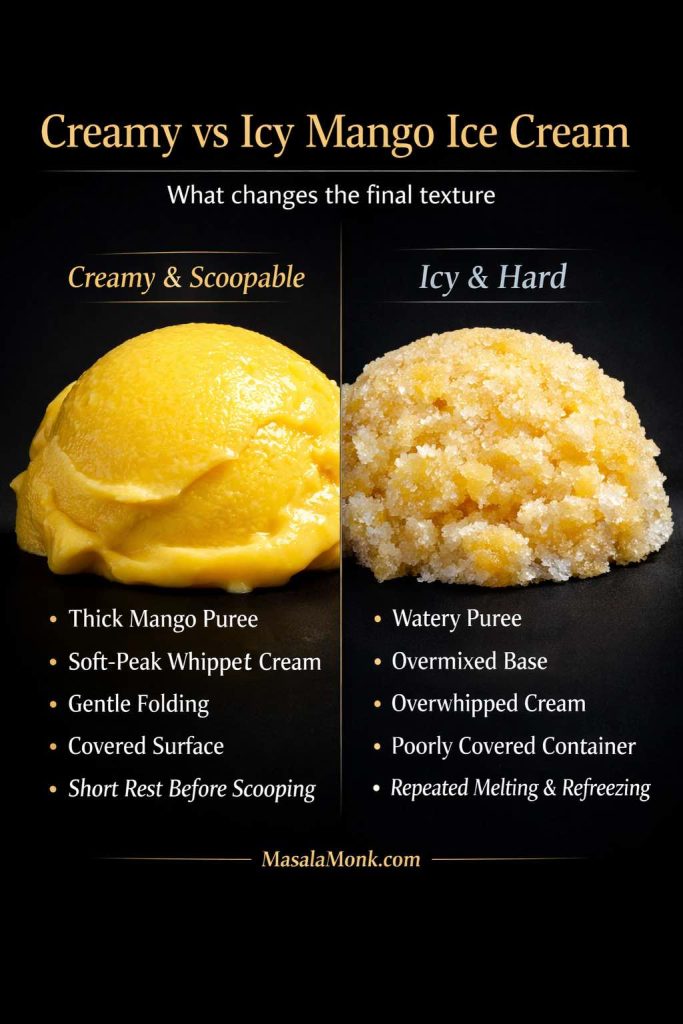
Final Pre-Freezing Checklist
Before the container goes into the freezer, check these five things:
- the mango puree was thick, not runny
- the cream was whipped only to soft or medium peaks
- the folded mixture still looks airy
- the surface is covered directly
- the container is sealed tightly
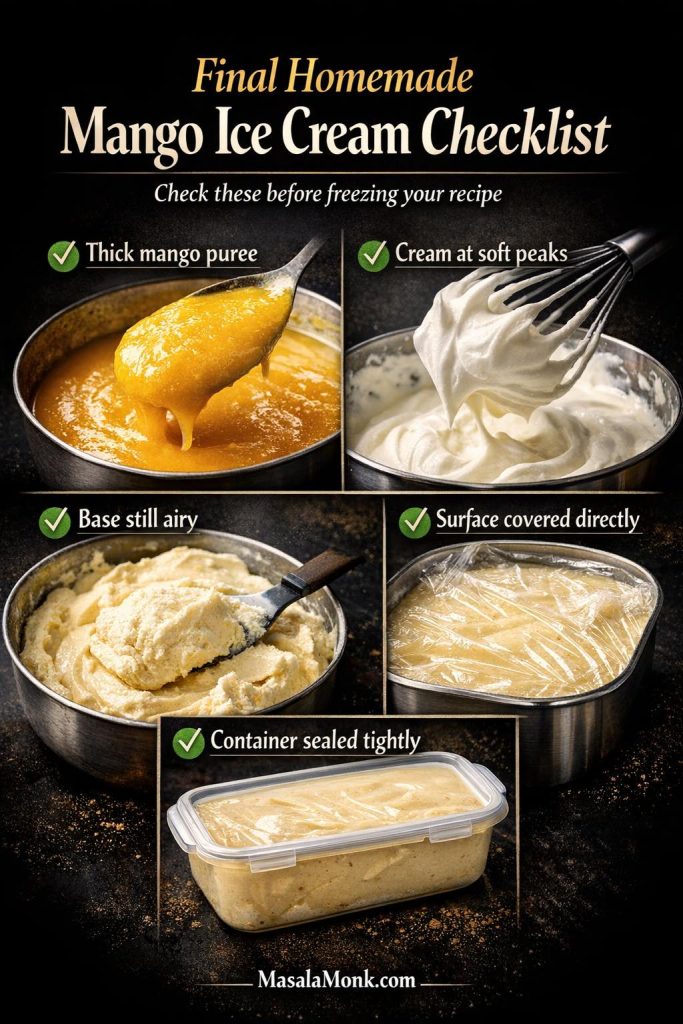
If all five look right, the freezer is far less likely to surprise you later.
Tips for Creamy Homemade Mango Ice Cream
The difference between a decent batch and truly creamy mango ice cream usually comes down to a few quiet choices. None of them are dramatic, but together they shape the final result.
- Use thick mango puree, not watery puree. This is the single biggest texture decision in the recipe.
- Keep all the ingredients cold. Cold cream whips better, and chilled puree folds in more cleanly.
- Do not overwhip the cream. Soft to medium peaks give you structure without heaviness.
- Fold with patience. Gentle folding preserves the trapped air in the mixture.
- Choose the right container. A snug freezer-safe container protects the texture better than a loosely packed tub.
- Let the ice cream sit for a few minutes before scooping. Serving straight from the freezer can make even a good batch feel firmer than it really is.
Taken together, these choices are what make the recipe feel reliable rather than lucky.
Common Homemade Mango Ice Cream Mistakes and How to Fix Them
Many recipe pages rush this part, yet it is exactly where a post becomes more useful than a basic formula. Real readers do not only need the ideal method. They also need help when the first batch teaches them something.
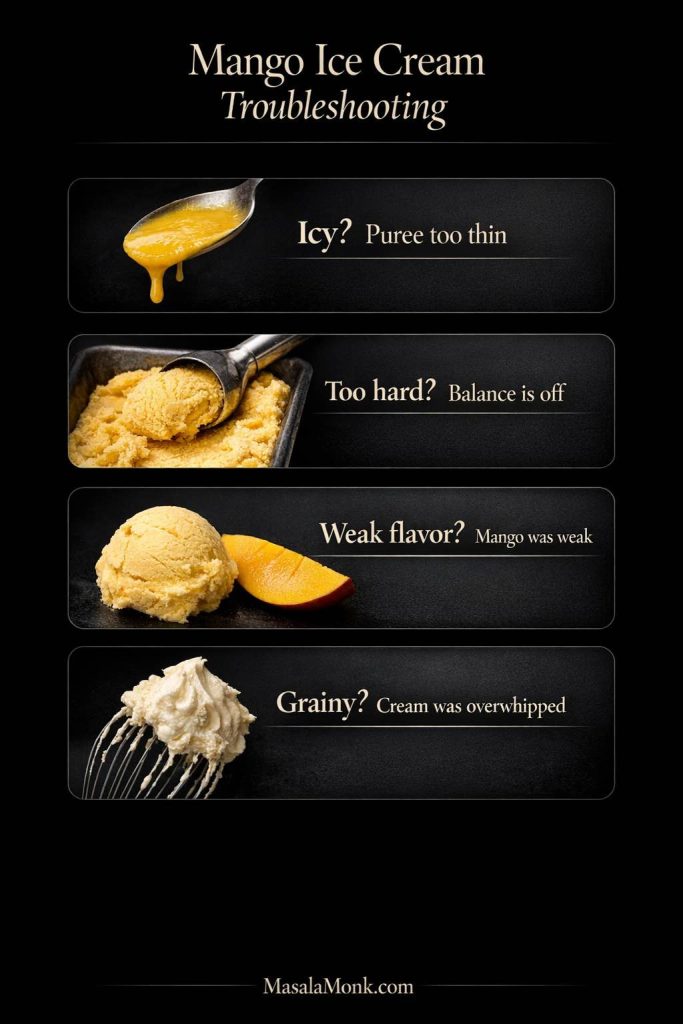
Why Homemade Mango Ice Cream Turns Icy
The most common reason is excess water. Either the mango puree was too thin, the container was not covered properly, or the dessert softened and refroze too often.
To fix it next time:
- reduce or strain watery puree before mixing
- press a layer directly onto the surface before sealing
- return the container to the freezer promptly after scooping
In most cases, icy texture starts with excess water in the fruit.
Why Homemade Mango Ice Cream Freezes Too Hard
This usually means the balance shifted too far toward fruit water and away from sugar or fat. It can also happen if your freezer runs extremely cold.
To fix it next time:
- let the ice cream rest briefly before scooping
- check whether the puree was too loose
- avoid reducing the cream or condensed milk without replacing their role in the base
Sometimes the formula is fine and the serving temperature is the real issue.
Why the Mango Flavor Tastes Weak
Weak mango flavor usually points to weak fruit or diluted puree. If the mango itself was bland or the puree was too loose, the cream will dominate.
To fix it next time:
- choose more fragrant mangoes
- reduce watery puree slightly
- add a little lime to brighten the fruit
This matters because readers searching for real mango ice cream are usually after fruit flavor first.
Why Homemade Mango Ice Cream Tastes Too Creamy and Not Mango-Forward
Sometimes the mango is not bad, yet the balance still tips too heavily toward dairy. This usually happens when the fruit is mild, the puree lacks concentration, or the base never gets brightened before freezing.
To fix it next time:
- use mangoes that taste vivid before blending
- make sure the puree is concentrated, not merely smooth
- taste the mango-condensed-milk mixture before folding
- add a little lime or lemon only if the fruit tastes flat
Mango ice cream should feel rich, but mango should still lead the dessert.
Why the Texture Looks Grainy
Graininess usually comes from overwhipped cream or from working with a base that lost its smoothness.
To fix it next time:
- stop whipping at soft or medium peaks
- chill the puree fully before mixing
- fold gently instead of stirring hard
Those corrections solve most grainy batches.
What to Do if the Mangoes Are Fibrous
Fibrous mangoes can still be used, but only after a little cleanup.
To fix it next time:
- blend the fruit very thoroughly
- press the puree through a sieve
- discard the stringy residue before mixing with the cream
Smooth puree is far more important than perfect mango variety.
What to Do if the Ice Cream Feels Too Sweet
A little extra lime or a pinch more salt can sometimes bring the flavor back into balance. More importantly, taste the mango base before folding so you can correct sweetness early.
To fix it next time:
- taste the fruit base before combining it with cream
- brighten with lime instead of only reducing sugar
- remember that frozen desserts taste softer and less vivid straight from the freezer
The base should taste a little bolder before it freezes than you want the final scoop to taste.
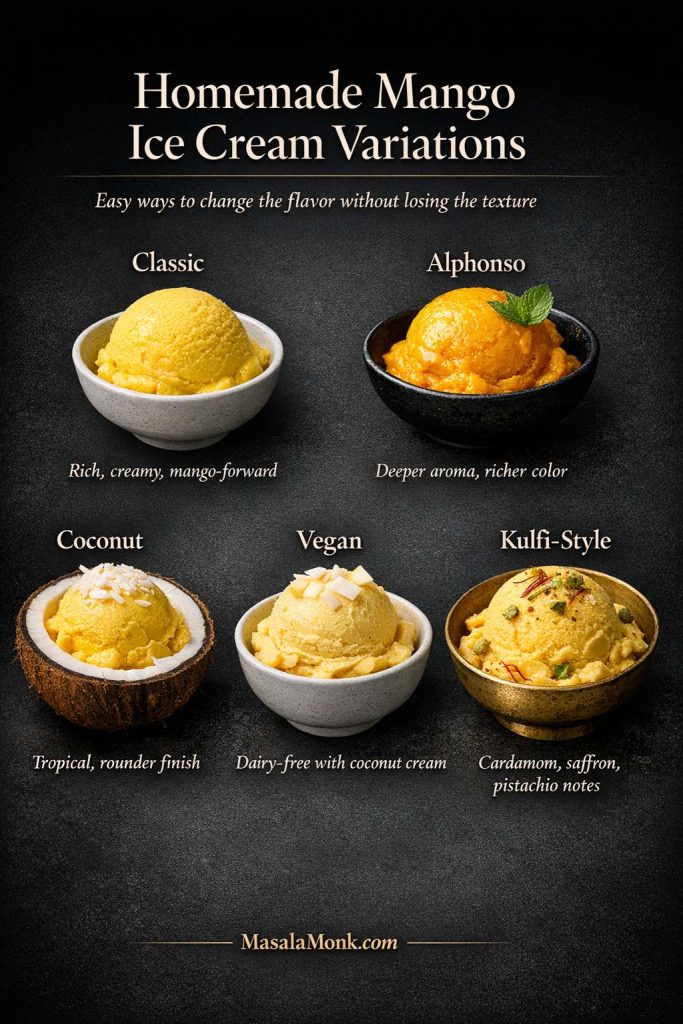
Homemade Mango Ice Cream Variations
One reason homemade mango ice cream is worth mastering is that it adapts beautifully once the texture logic is in place. You can change the flavor direction without losing what makes the dessert work.
Alphonso Homemade Mango Ice Cream
If you can get Alphonso mangoes or Alphonso pulp, this is the variation to make when you want maximum perfume, color, and richness. Alphonso mango ice cream tends to feel deeper, fuller, and more luxurious almost immediately.
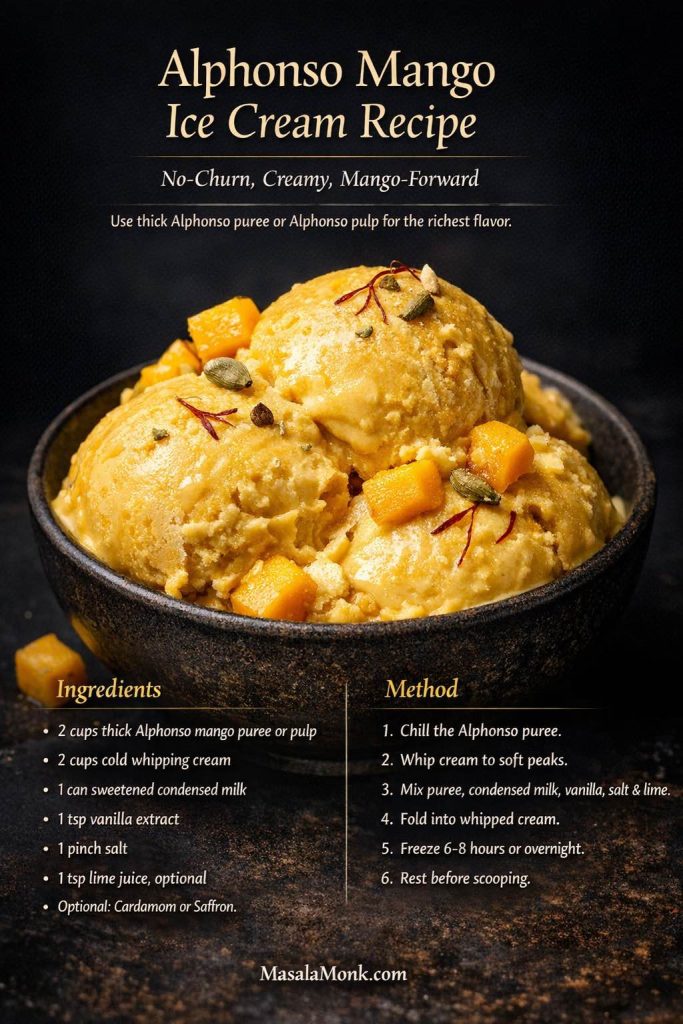
Cardamom and saffron are especially lovely here. If you enjoy mango desserts with a richer Indian milk-based character, instant mango rasmalaai sits in a similar flavor world.
Mango Coconut Homemade Mango Ice Cream
For mango coconut ice cream, replace part of the dairy with coconut cream or add a little thick coconut milk to the mango base. The flavor becomes rounder and more tropical while the mango still stays clear.
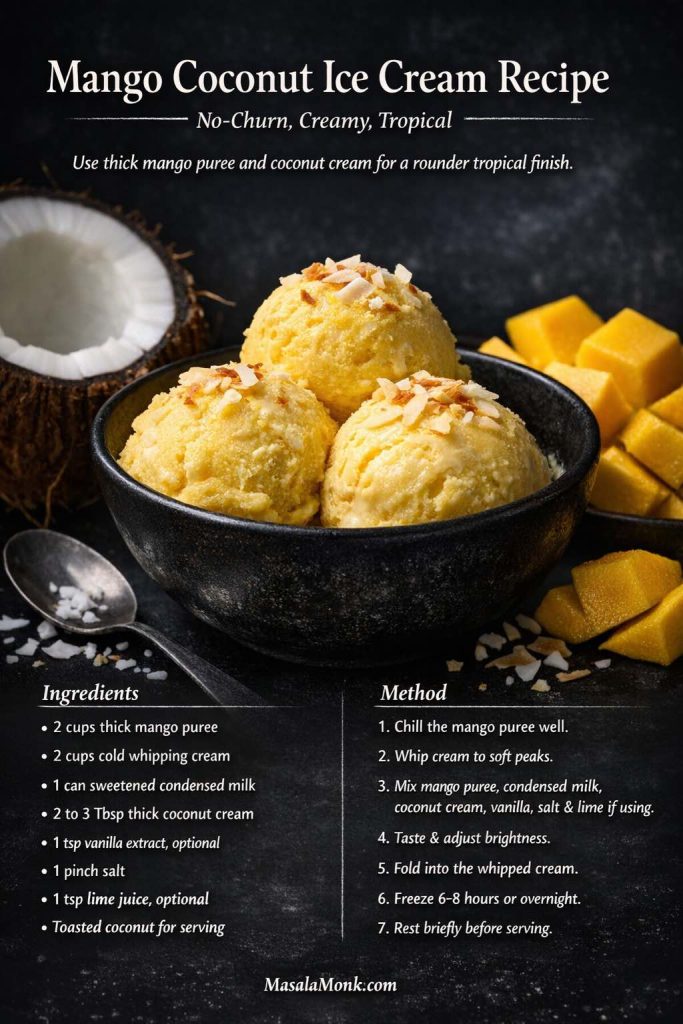
This version is especially nice when the mangoes are slightly tart, because coconut smooths the edges beautifully.
Can You Make Mango Ice Cream Without Condensed Milk?
Yes, homemade mango ice cream without condensed milk can be made, but the recipe becomes less forgiving. Condensed milk is not only providing sweetness. It is also helping with body, softness, and texture in a no-churn base.
Once you remove it, you need another way to replace those jobs, whether that means a cooked milk base, a more deliberate sugar balance, or a custard-style method.
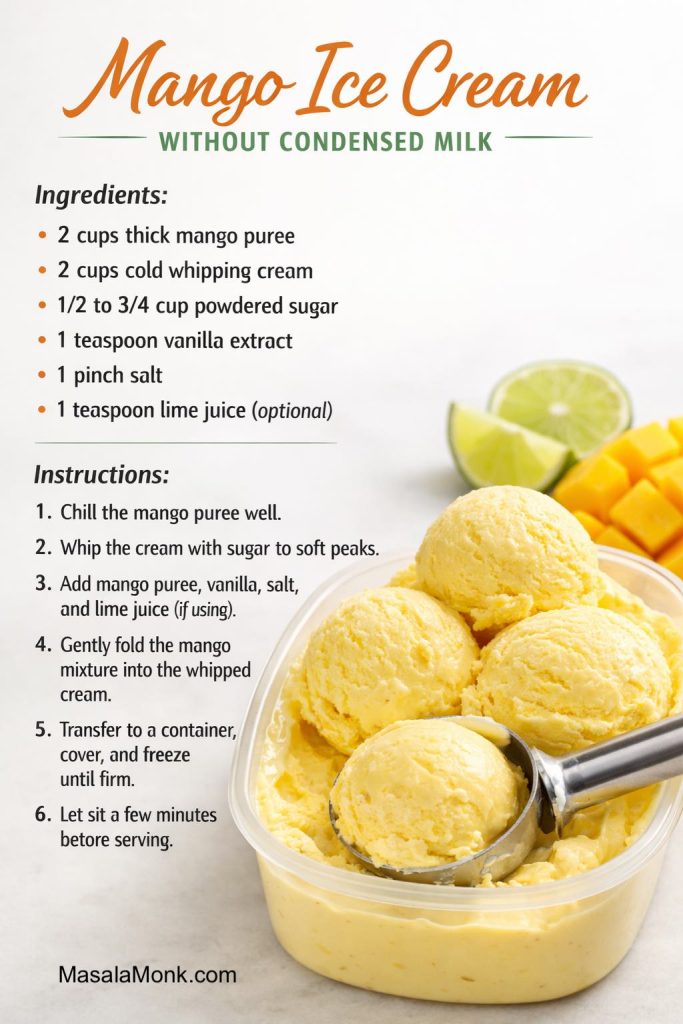
That does not make the variation bad. It simply makes it less beginner-friendly. For most readers, the main recipe remains the easiest place to begin.
Homemade Mango Ice Cream Without an Ice Cream Maker
The main recipe here is already a mango ice cream without ice cream maker method, which is one of its biggest strengths. You do not need specialized equipment to get a satisfying result.
That said, if you already own a churner or stand mixer attachment, a machine-based route can create an even more classic texture. This is where the KitchenAid ice cream guide becomes a useful internal next step.
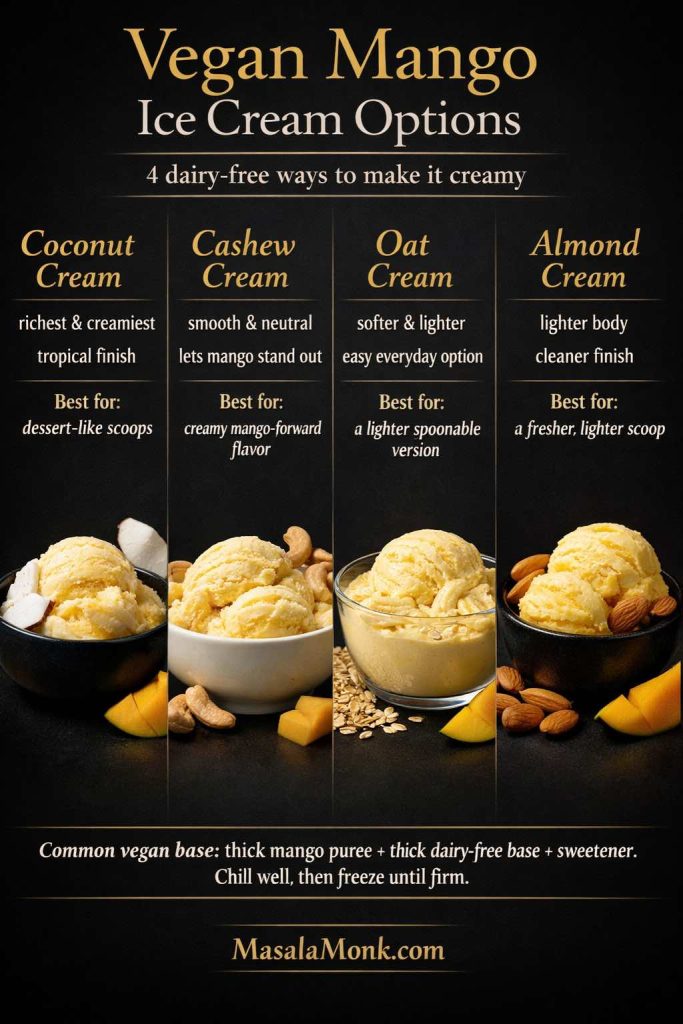
Vegan Mango Ice Cream
A vegan version can be made with coconut cream instead of dairy cream. The flavor profile changes slightly, but it can still be rich and deeply mango-forward. If you also enjoy lighter mango desserts, mango chia pudding is another natural branch.
Can You Use Frozen Mango?
Yes, you can use frozen mango for homemade mango ice cream, but thaw it first, then blend it and check the texture just as you would with fresh fruit. The same rule still applies: the puree should be thick, smooth, and strongly flavored before it goes into the base.
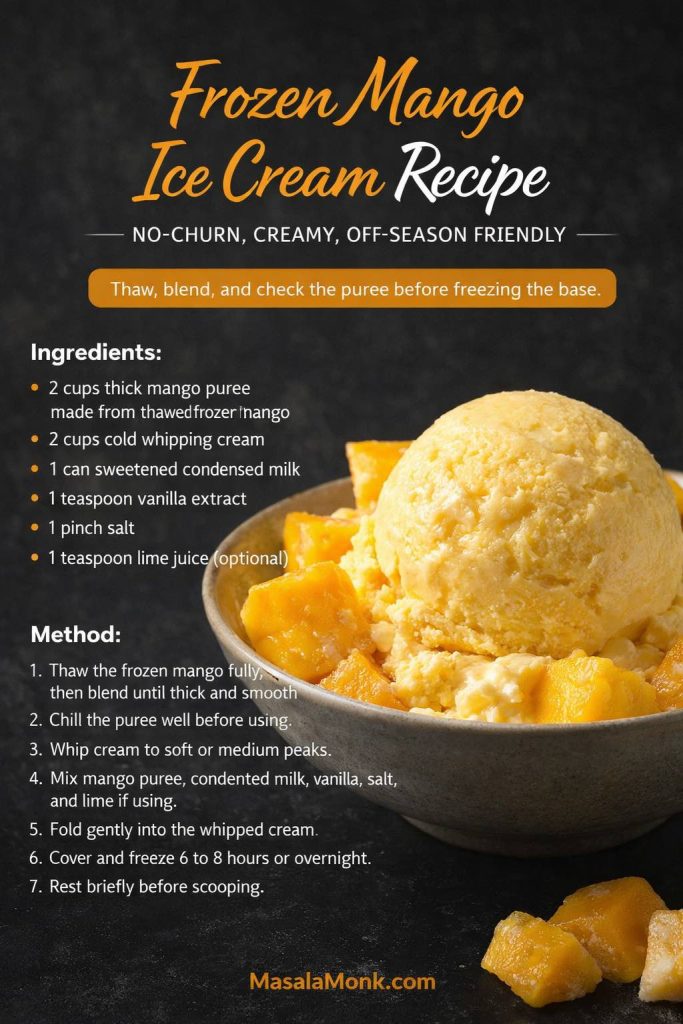
That makes frozen mango a useful option when fresh fruit is not ideal, but it does not remove the need to judge the puree properly.
Mango Kulfi-Style Ice Cream
If you want a slightly more Indian-style flavor profile without turning this into a full kulfi recipe, add cardamom, saffron, and a few chopped pistachios. The result still behaves like this mango ice cream recipe, but the flavor moves in a richer festive direction.
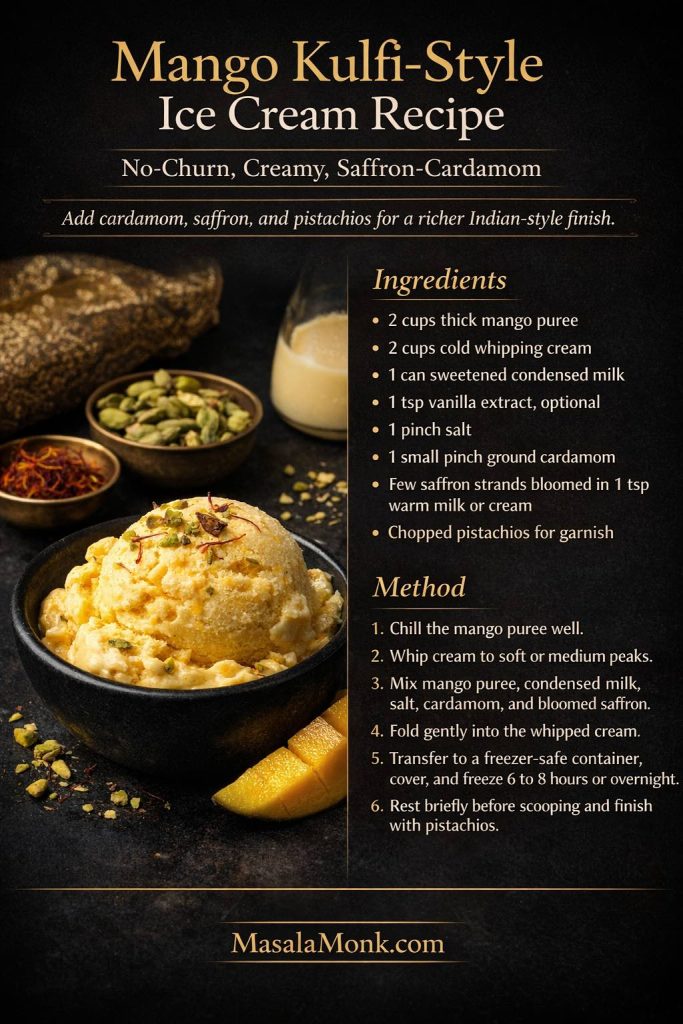
It is an especially good variation when using Alphonso pulp.
How to Store Homemade Mango Ice Cream
Store the ice cream in a tightly sealed freezer-safe container, ideally with a layer pressed directly against the surface before the lid goes on. That helps reduce air exposure and protect the texture. It also helps to use a container that fits the batch well rather than one with lots of empty air above the dessert.
For the best texture in storage:
- use a freezer-safe container with a tight lid
- cover the surface directly
- keep the batch in the coldest stable part of the freezer
- scoop quickly and return it promptly
- avoid repeated melting and refreezing
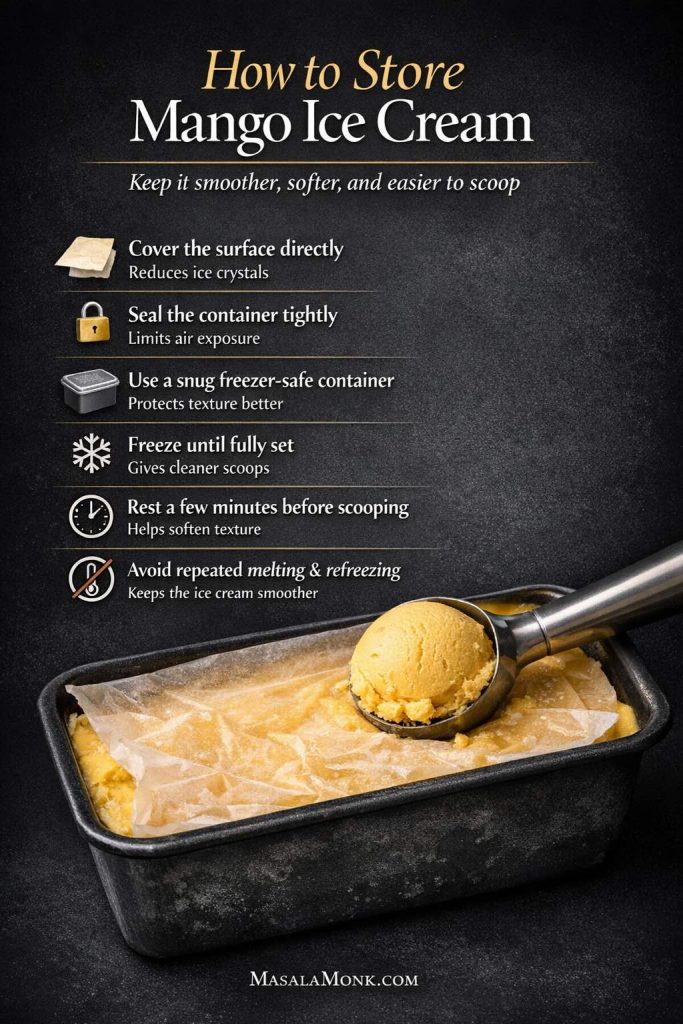
As a practical rule, this ice cream is at its best within the first several days, when the mango still tastes bright and the texture remains especially soft. For broader freezer-care guidance, Colorado State University’s discussion of ice cream storage is also useful.
Serving Ideas for Mango Ice Cream at Home
Serve mango ice cream at home in chilled bowls, crisp waffle cones, or small dessert cups. Fresh mango cubes on top make the fruit feel even more immediate.
Simple toppings:
- fresh mango cubes
- lime zest
- toasted coconut
- chopped pistachios
- a tiny pinch of cardamom
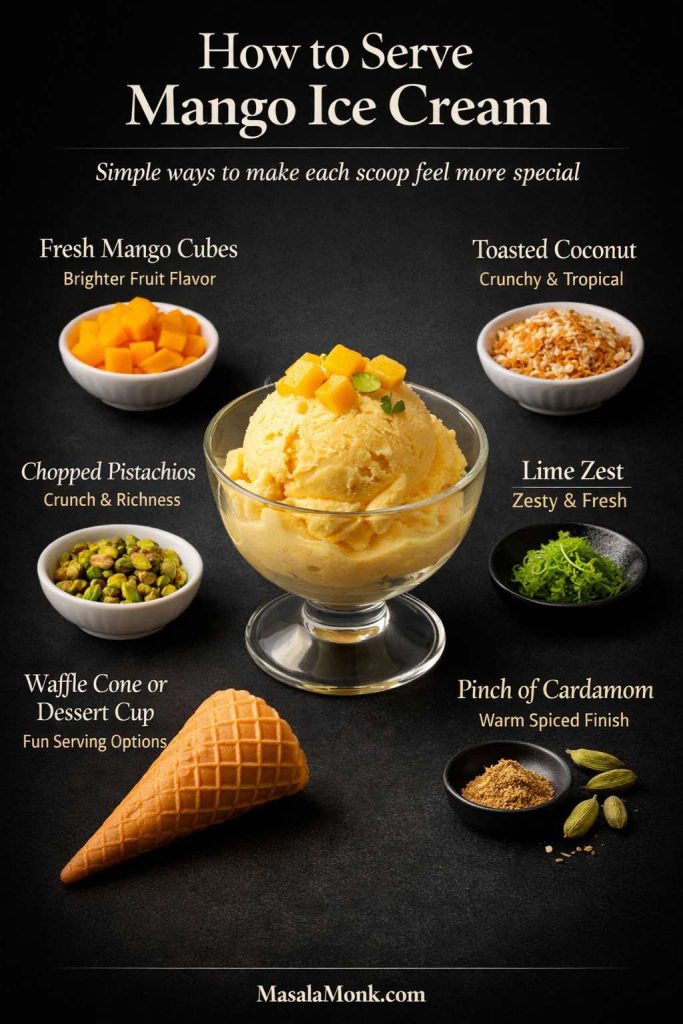
Richer serving ideas:
- waffle cones
- shortbread or crisp butter cookies
- alongside sticky-rice-inspired coconut elements
- with chilled pudding-style desserts
- as part of a mango dessert spread
If you want to build it into a broader dessert table, it pairs naturally with mango pudding, mango cheese mousse cake, or creamy chilled desserts like banana pudding. The main goal of this post, though, is to help you get the mango ice cream right first.
Why This Homemade Mango Ice Cream Is Worth Making Again
This recipe is built for readers who want real mango flavor, a creamy, scoopable texture, and clear fixes for watery puree or icy results. Once you understand what matters most, making homemade mango ice cream becomes much less about luck and much more about sequence.
Use good mangoes. Keep the puree thick. Chill the base properly. Whip the cream to the right stage. Fold gently. Freeze it well. Let it soften briefly before serving.
That is the rhythm.
Follow it, and you get a dessert that feels more luxurious than the effort suggests: rich, fruity, soft enough to scoop, and genuinely full of mango flavor. More importantly, you get a recipe that solves the real failure points from the start and earns a place in mango season after mango season.
Frequently Asked Questions About Homemade Mango Ice Cream
1. Can I make mango ice cream without an ice cream maker?
Yes. This recipe is already designed as a no-churn mango ice cream, so you do not need an ice cream maker to get a good result. The structure comes from whipped cream, condensed milk, and thick mango puree rather than from churning. That is why texture control matters so much here. If the puree is thick, the cream is whipped to the right stage, and the base is folded gently, the final dessert can still freeze soft enough to scoop and rich enough to feel properly indulgent.
2. Which mango is best for mango ice cream?
The best mangoes for mango ice cream are ripe, fragrant, sweet, and relatively low in fiber. Alphonso is excellent when you want a deeper aroma, richer color, and a more luxurious finish. Kesar also works well, and Ataulfo is a very good choice when you want smooth texture and dependable sweetness. More important than the variety, though, is the fruit itself. If the mango tastes bland or watery before blending, the ice cream will never taste as vivid as it should.
3. Can I use frozen mango for homemade mango ice cream?
Yes, you can. Frozen mango works well when fresh fruit is out of season or disappointing, but it still needs proper handling. Thaw it first, then blend it and check the texture just as you would with fresh mango. The puree should be thick, smooth, and strongly flavored before it goes into the base. Frozen fruit is convenient, but it does not remove the need to judge the puree properly.
4. Why is my homemade mango ice cream icy?
Icy mango ice cream usually comes down to excess water. The most common cause is thin puree, but poor surface covering and repeated softening and refreezing can also make things worse. If you want a creamier result, start by fixing the fruit. Reduce watery puree slightly if needed, chill it fully, and cover the surface of the ice cream directly before sealing the container. In most cases, the problem starts before the batch ever reaches the freezer.
5. Why does mango ice cream freeze too hard?
Usually because the balance has shifted too far toward fruit water and away from enough sweetness and fat. Thin puree is a common cause. Very cold freezers can also make the texture feel harder than expected. Letting the container sit out for a few minutes before scooping often solves part of the problem. If it still freezes too hard every time, look first at the puree rather than assuming the whole recipe is wrong.
6. Can I make mango ice cream without condensed milk?
Yes, but it becomes less forgiving. Condensed milk is not only sweetening the mixture. It is also helping with body and smoother texture in a no-churn base. Once you remove it, you need another way to replace those jobs, whether that means a cooked milk base, a more deliberate sugar balance, or a custard-style method. It can be done, but it is no longer the easiest version of the recipe. For most readers, the condensed milk route is still the best place to begin.
7. How long does homemade mango ice cream last in the freezer?
It will keep longer than a few days, but for the best texture and brightest mango flavor, it is usually nicest within the first several days after freezing. Over time, homemade ice cream can lose some of its softness and develop a rougher texture, especially if it softens and refreezes repeatedly. A tight container, direct surface covering, and steady freezer temperature all help it hold up better.
8. Can I make vegan mango ice cream?
Yes. A vegan version can be made by replacing the dairy cream with coconut cream. The flavor changes slightly, but it can still be rich, smooth, and very mango-forward. This works especially well if you already like mango with coconut. Just keep the same core rule in mind: the puree still needs to be thick and strongly flavored, because that is what keeps the dessert tasting like mango rather than just cold sweetness.








