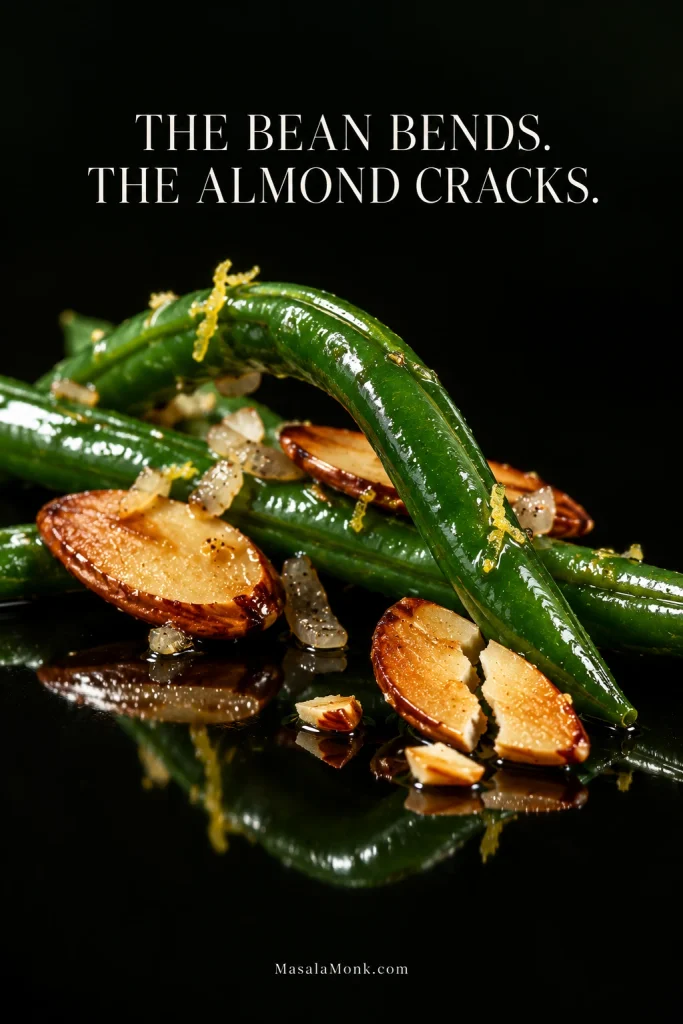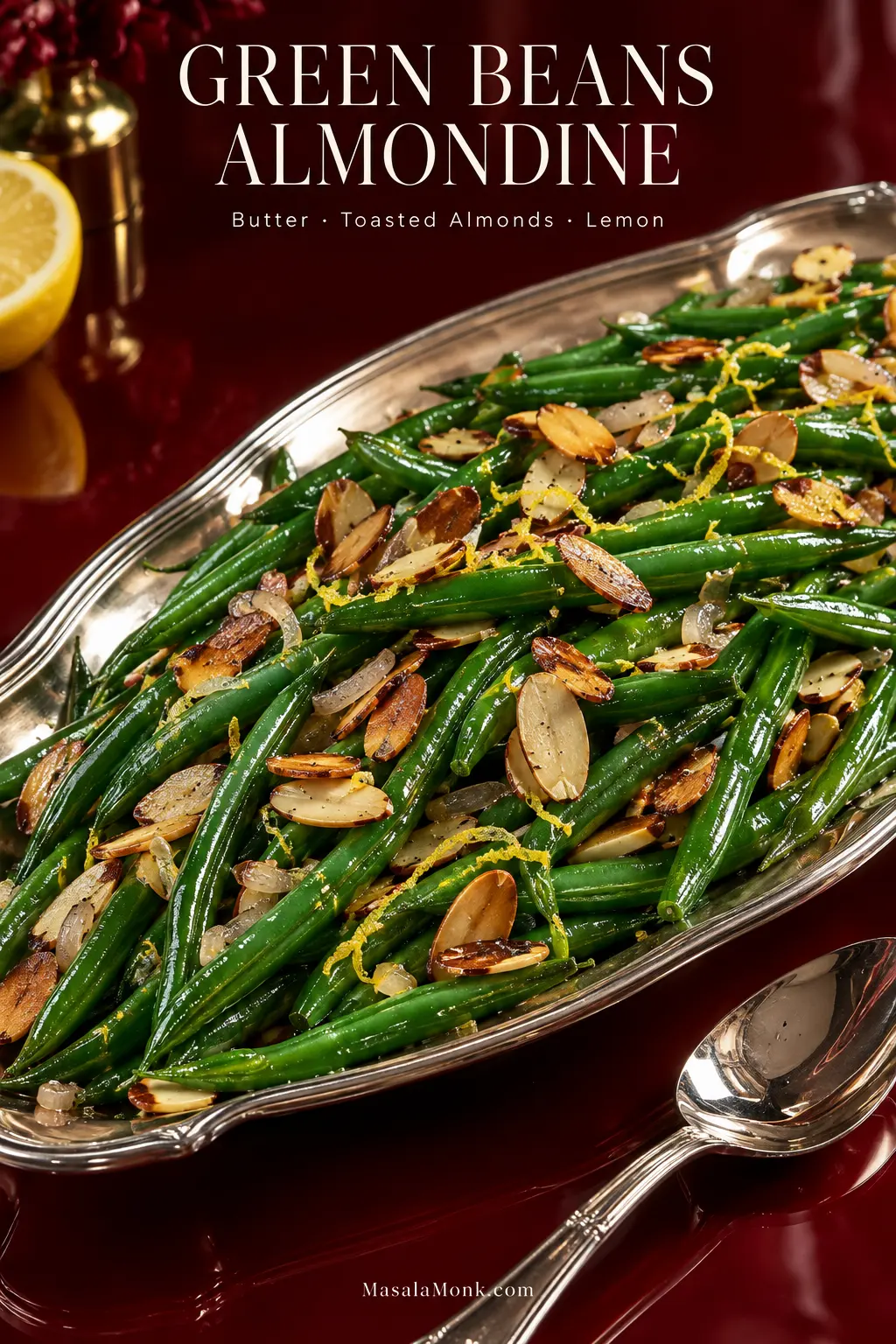
At its best, green beans almondine gives you two textures in the same bite. The beans bend easily when you pick them up, while the toasted almonds still crack between your teeth. Butter coats everything lightly, and lemon comes through at the end to keep the beans tasting fresh.
It comes together in about 25–30 minutes. Beside roast meat, creamy potatoes, gravy, or a rich casserole, almondine gives the plate something green and fresh without asking you to make another heavy side.
Green beans almondine, or amandine, is the classic French combination of cooked green beans, butter, and toasted almonds. In this version, the beans and almonds stay at the center. Shallot adds gentle sweetness, garlic stays in the background, and lemon keeps the butter lively rather than heavy.
There isn’t much to manage, but the few moments that matter happen quickly. A brilliantly green bean can still be too firm in the middle. Almonds can move from light golden to bitter surprisingly fast, and beans that reach the skillet wet make it harder for the butter to cling properly.
Table of Contents
Make it now
- Quick answer
- Classic green beans almondine recipe
- Green bean doneness guide
- Frozen or canned green beans
- Make it ahead
- Green beans almondine for a crowd
- One-pan method
Plan, fix and serve
Quick Answer: How to Make Green Beans Almondine
Blanch green beans in salted boiling water until tender to your liking, then drain them well. Toast sliced almonds in butter and set them aside. Soften shallot, briefly cook garlic, add the beans, then add lemon before returning the almonds. Start tasting thin beans early; thickness matters more than one fixed cooking time.
Make It Now: Green Beans Almondine
Recipe at a Glance
| Serves | 4 generously or about 6 with several holiday sides |
|---|---|
| Prep | About 10 minutes |
| Cook | About 15–20 minutes |
| Total | About 25–30 minutes |
| Make ahead | Blanch beans 1–2 days ahead; bring the dish together close to serving |
Ingredients
- 1 lb / 450 g fresh green beans, trimmed
- ⅓ cup / 30–35 g raw sliced almonds
- 2 Tbsp / 28 g unsalted butter, divided
- 1 medium shallot, finely diced
- 2 medium garlic cloves, finely minced
- 1 tsp finely grated lemon zest
- 2 tsp / 10 ml fresh lemon juice, plus more to taste
- 20 g kosher salt, for 4 qt / 3.8 L blanching water
- ¼ tsp freshly ground black pepper, plus more to taste
If measuring the blanching salt by volume, 20 g is roughly 1⅓ Tbsp Morton Coarse Kosher Salt or 2⅓ Tbsp Diamond Crystal. Kosher salt crystals vary considerably by brand, so weight is more reliable here.
Sliced almonds spread through the beans more evenly and give a lighter crunch. Slivered almonds work too and are a little more forgiving while toasting.
Put the blanching water on first. While it heats, trim the beans, chop the shallot and garlic, zest the lemon, measure the almonds, and set a plate beside the skillet for the toasted nuts.
1. Blanch the Beans
Bring 4 qt / 3.8 L water to a rolling boil in a 6-quart / about 6-liter pot or larger. Add the kosher salt, followed by the green beans.
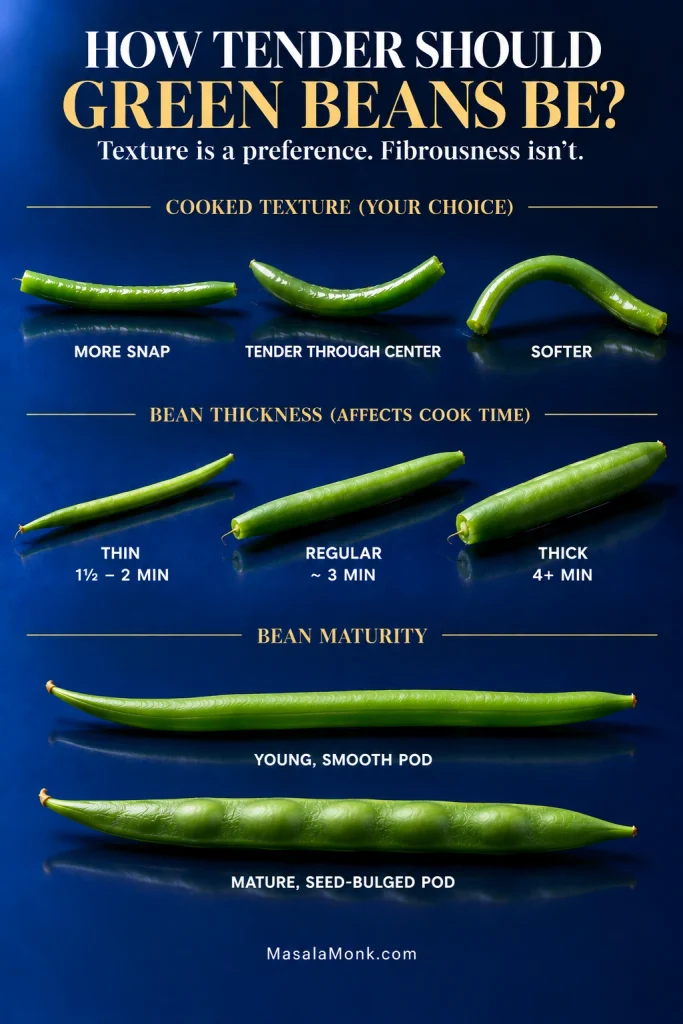
- Very thin haricots verts: start checking at 1½–2 minutes.
- Slender regular green beans: start checking at 3 minutes; many are ready in 3–4 minutes.
- Thicker beans: start checking at 4 minutes and expect that they may need 5 minutes or longer.
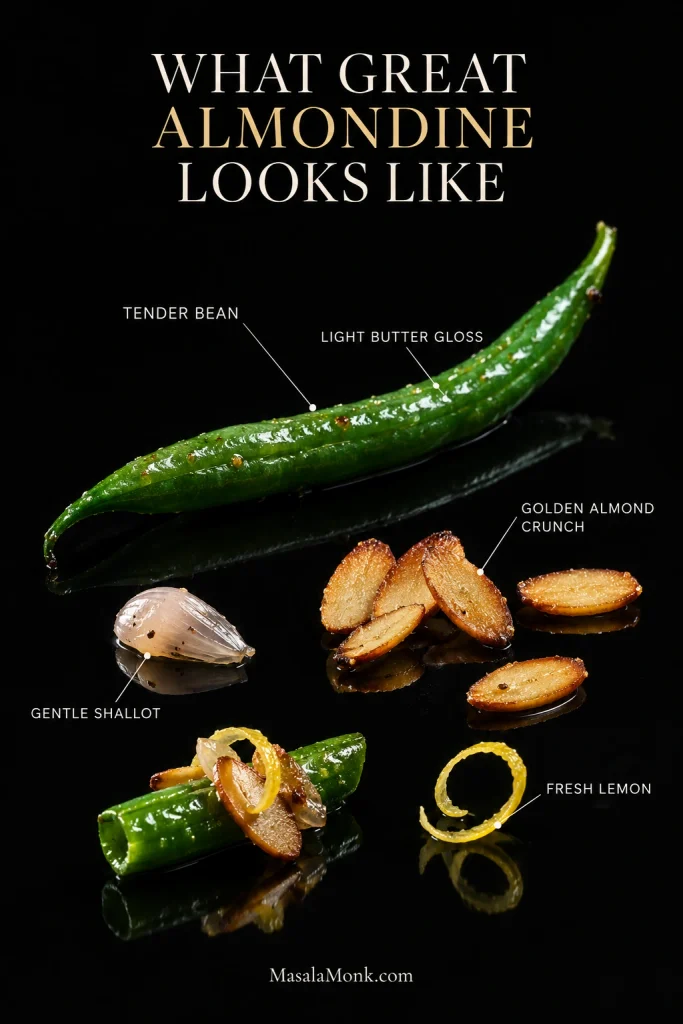
Bite one before draining. It should be tender through the center with gentle resistance. Prefer softer green beans? Give them another minute and taste again rather than draining only because the clock says so.
Before draining, scoop out 2 Tbsp / 30 ml hot cooking water and set it beside the stove.
The timer tells you when to check. The bean tells you when it is ready.
Drain the beans thoroughly and spread them briefly over a clean kitchen towel so surface moisture can escape. If you’re cooking them ahead, transfer them to ice water instead, drain as soon as they are cold, and dry them well before refrigerating.
2. Toast the Almonds
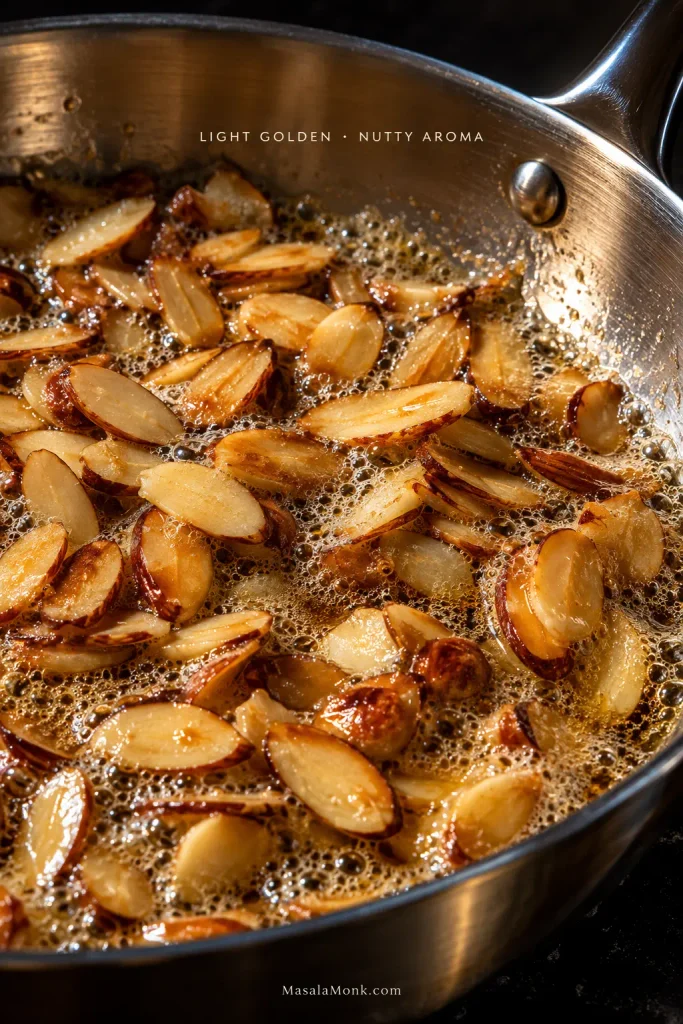
Heat a 12-inch / 30 cm skillet over medium-low heat. Add 1 Tbsp / 14 g butter and the almonds. Stir frequently until the almonds are light golden and fragrant, with a nutty aroma, 2–3 minutes. Scoop them onto a plate with a slotted spoon, leaving most of the butter in the skillet.
The butter picks up some of that toasted-almond flavor too, so the nuttiness carries into the beans later.
3. Shallot, Garlic and Butter
Add the remaining 1 Tbsp / 14 g butter. Cook the shallot over medium heat until softened without taking on much color, 1–2 minutes. Add the garlic for 20–30 seconds.
Once the garlic smells good, the rest moves quickly. Add the drained beans and toss until hot, 1–2 minutes for freshly blanched beans and slightly longer if they are chilled.
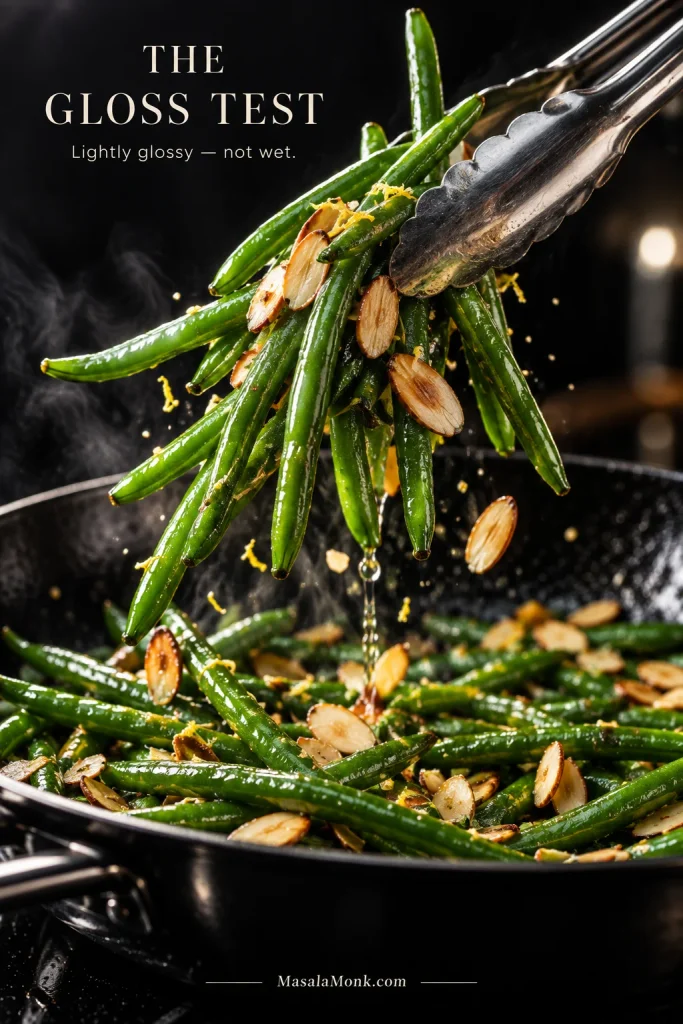
If the butter sits separately instead of coating the beans, add 1 Tbsp / 15 ml cooking water and toss. Use another teaspoon or two only if needed. The beans should look lightly glossy, not wet.
Beans blanched a day or two earlier do not need yesterday’s cooking water. A spoonful of fresh hot water does the same job.
4. Add Lemon, Almonds and Serve
Reduce the heat or move the skillet off the burner. Add the lemon zest and 2 tsp / 10 ml lemon juice, then toss and taste. If you want the lemon to come through more clearly, add another squeeze.
Return the toasted almonds to the skillet, including any butter on the plate. Add black pepper, taste for salt, toss once more, and serve while the almonds are still crisp.
How Tender Should Green Beans Be?
Aim for green beans that are tender through the center with gentle resistance. If they still taste raw or squeak more than you enjoy, cook them longer.
“Crisp-tender” sounds precise until two people bite the same bean. Some people want a noticeable snap. Others dislike the waxy squeak of a firmer bean and would rather have it tender all the way through. Cook them to the texture you actually enjoy.
A bean that needs another minute is also different from one that is simply fibrous. Tender flesh inside a stubborn, stringy pod often points to an older bean. Large seed bulges, thick pods, and leathery skin are useful clues. University of Maine guidance on choosing green beans likewise recommends young, tender pods because over-mature beans can become tough and stringy.
Using Frozen or Canned Green Beans
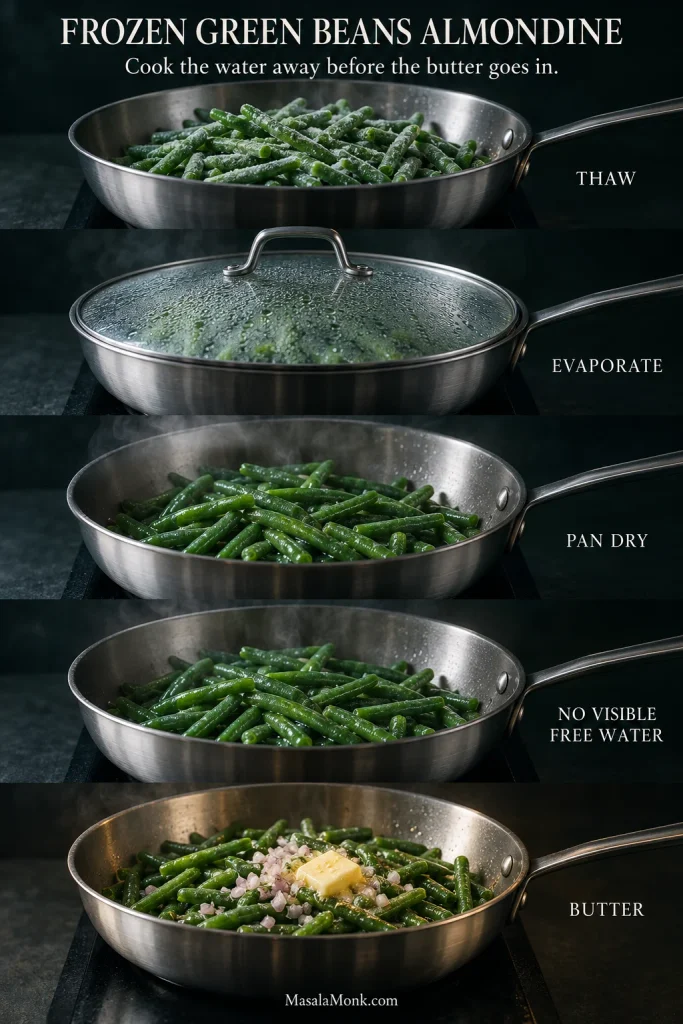
Frozen beans work, though they’ll usually be softer and release more water than fresh beans. The important part is dealing with that extra moisture before the butter goes in: heat the beans first, cook the water away, and only then add the butter and aromatics.
Green Beans Almondine With Frozen Green Beans
For 1 lb / 450 g petite frozen green beans, use ⅓ cup / 30–35 g raw sliced almonds, 2 Tbsp / 28 g unsalted butter, 1 medium shallot, 2 garlic cloves, 1 tsp lemon zest, 2 tsp / 10 ml lemon juice, ¼ tsp black pepper, and salt to taste.
Dry-toast the almonds over medium-low heat until golden, then move them to a plate. Here, the butter waits until the excess moisture is gone.
Raise the skillet to medium-high. Add the frozen beans and 2 Tbsp / 30 ml water, cover, and cook for 3–4 minutes until the beans have thawed and heated through. Remove the lid and keep cooking, stirring occasionally, until the pan looks dry with no visible free water. Expect another 4–6 minutes, depending on the beans and pan.
Finish With Butter, Lemon and Almonds
Lower the heat to medium. Push the beans toward the sides and clear a space in the center. Add the butter and shallot there and cook until the shallot softens, 1–2 minutes. After that, cook the garlic for 20–30 seconds, toss everything together, then add the lemon zest, lemon juice, black pepper, and toasted almonds. Taste for salt before serving.
If the beans are already thawed, skip the covered stage. Pat away obvious surface moisture and begin by cooking off whatever water reaches the skillet.
Canned beans are softer still. Drain them thoroughly, skip blanching, and warm them only until hot. In that version, the toasted almonds provide most of the texture.
Using fresh beans instead? Go to the classic recipe →
How to Make Green Beans Almondine Ahead
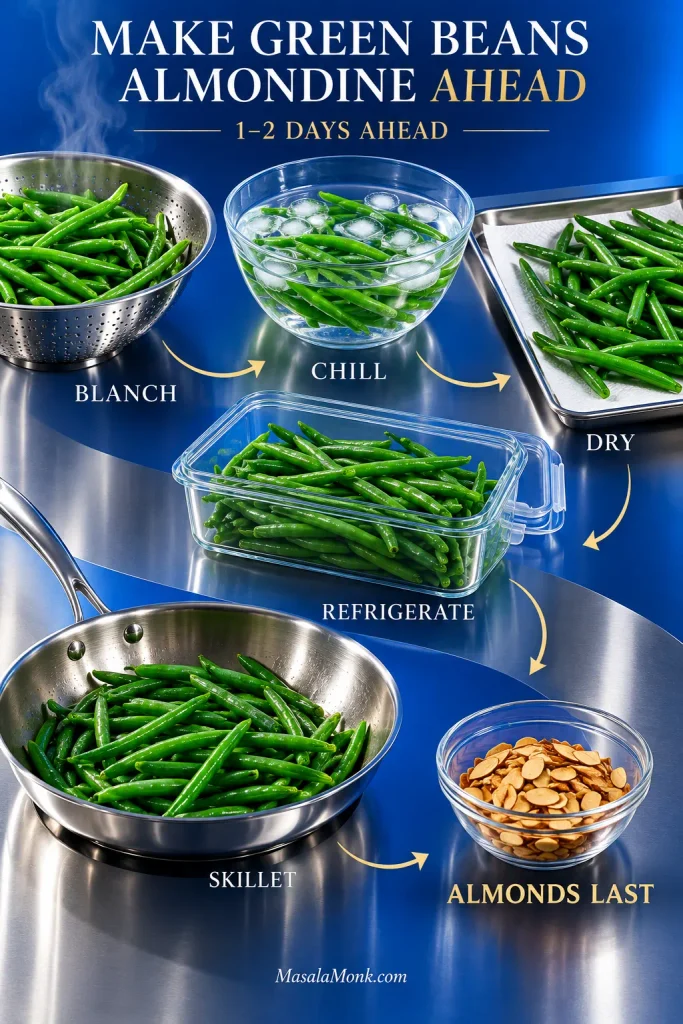
Blanch the beans 1–2 days ahead, chill and dry them well, and keep the toasted almonds separate. Bring everything together in the skillet shortly before serving.
On a busy holiday, that is one of almondine’s nicest advantages. Most of the work can happen before the kitchen gets crowded, and you still get crisp almonds at the table instead of nuts that have been softening against damp beans overnight.
When prepping ahead, blanch the beans slightly firmer than you want them at dinner, chill them in ice water, then drain and dry them thoroughly before refrigerating. Toasted almonds can be prepared ahead too; let them cool completely and keep them airtight at room temperature.
If a sweet potato casserole is already assembled and waiting for the oven, those last few stovetop minutes can belong to the beans.
Just before dinner, warm the chilled beans with shallot, garlic, butter, and lemon, then add the almonds. Chilled beans may need an extra minute or two in the skillet.
Green Beans Almondine for Thanksgiving, Christmas or a Crowd
With several other sides on the table, plan about 1 lb / 450 g green beans for every six guests. For a simpler dinner with only one or two sides, that pound serves about four generously.
| Guests | Good starting amount with several sides |
|---|---|
| 6 | 1 lb / 450 g |
| 8 | 1½ lb / 680 g |
| 12 | 2 lb / 900 g |
| 20 | 3½ lb / 1.6 kg |
Ingredient quantities scale. Skillet surface area does not.
A 12-inch / 30 cm skillet is comfortable with about a pound of beans. Finish larger quantities in batches instead of letting several pounds steam together. When prime rib, potatoes, and several other sides are already on the table, err toward the smaller serving amount rather than crowding the skillet.

For transport, keep the almonds separate. A tightly covered hot container traps steam, so leave the beans slightly firmer if they have to travel. Reheat briefly at the destination when possible, then add lemon and almonds.
Lower-Fuss Ways to Make Green Beans Almondine
The blanch-and-sauté method gives you the most control over doneness and is the better choice for make-ahead beans. When fewer dishes or a crowded stovetop matter more, these alternatives make sense.
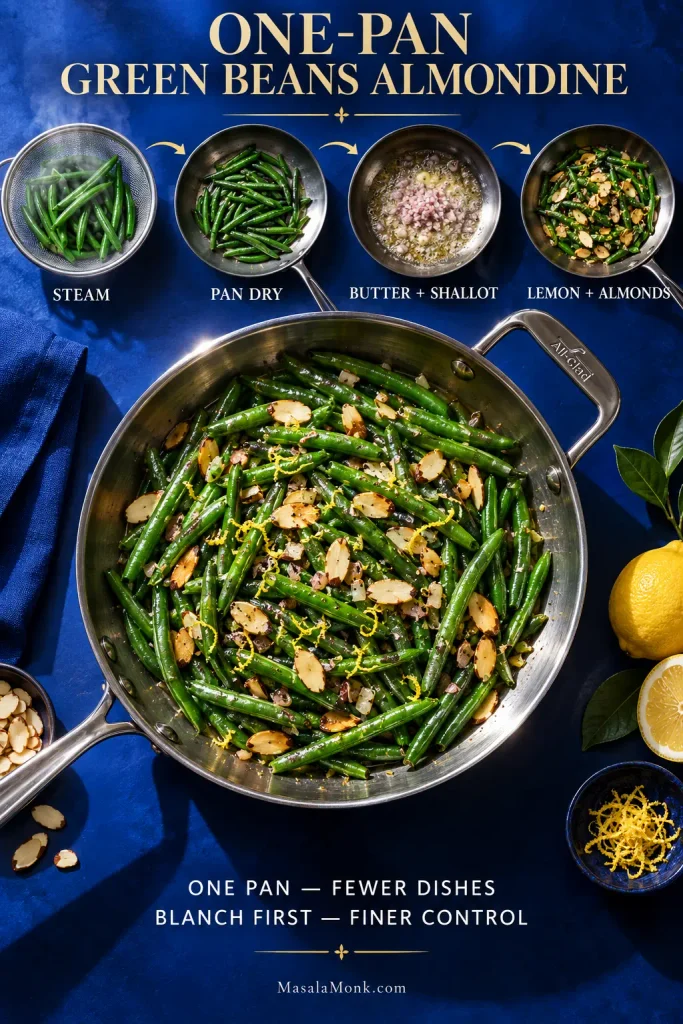
One-Pan Green Beans Almondine
The one-pan method saves a pot, although separate blanching gives you slightly finer control over the final texture. Use the same amounts of beans, almonds, butter, shallot, garlic, lemon, and pepper as in the main recipe. For this method, use only a pinch of salt in the steaming water, then season to taste at the end.
Toast the almonds in 1 Tbsp / 14 g butter over medium-low heat, then set them aside. Raise the heat to medium-high, add the beans, ⅓ cup / 80 ml water, and a pinch of salt, then cover. Cook for 7–10 minutes, depending on bean thickness. Add another splash of water only if the pan dries before the beans are nearly tender.
Remove the lid and let the remaining water evaporate. Once the pan is dry, lower the heat to medium, push the beans aside, and add the remaining butter and shallot to the cleared space. Cook until the shallot softens, then add the garlic for 20–30 seconds. Toss the beans with the lemon zest, lemon juice, black pepper, and toasted almonds. Taste for salt before serving.
Want the most control over texture? Back to the classic recipe →
Microwave-First Green Beans Almondine
When the blanching pot would compete with garlic mashed potatoes or another stovetop side, the microwave can handle the first stage instead. Put trimmed beans in a covered microwave-safe bowl with 2 tsp / 10 ml water. Start checking thin beans at 4 minutes and continue in short bursts until tender, then drain well before moving to the butter-and-almond skillet step.
Roasted Green Beans Almondine
Roasting makes sense when the oven is already running. The trade-off is texture: the beans become browner and slightly drier around the edges than classic almondine. Toss dry beans with just enough olive oil to coat, season lightly with salt, and roast at 425°F / 220°C for 15–20 minutes, until tender with browned spots.
Toast the almonds separately, then toss the hot beans with melted butter, lemon, and almonds. A tray of ranch roasted potatoes can share the oven if both pans have enough room for hot air to circulate.
Green Beans Almondine Troubleshooting
Most almondine problems are easy to diagnose once you know whether the issue is doneness, moisture, browning, or seasoning. Some can be fixed in the skillet; a few are simply lessons for the next batch.
Texture and Moisture Problems
| What happened? | Likely reason | What to do |
|---|---|---|
| Beans are tough or squeaky | They are not tender enough for their thickness or your preference | Add a small splash of water, cover briefly, and cook another minute or two. Taste again. |
| Beans are mushy | They cooked too long before or during the skillet toss | You cannot make them crisp again. Fresh toasted almonds can still add contrast; pull the next batch from the water sooner. |
| Beans are tender inside but stringy | The pods may be older and over-mature | More cooking can soften them somewhat but cannot remove mature fiber. Look for younger, smoother pods next time. |
| Beans are watery or soggy | Fresh beans went into the skillet wet, frozen beans released water, or the pan is crowded | Keep the almonds out and cook the beans uncovered until the excess water has evaporated. Return the almonds only at the end. |
Almond, Coating and Seasoning Problems
| What happened? | Likely reason | What to do |
|---|---|---|
| Almonds taste burnt or bitter | They toasted too far | Discard badly burnt almonds and toast a fresh handful. Pull them from the pan while golden next time. |
| Almonds have gone soft | They sat against moist beans too long | Toast a fresh handful for the top. Store and transport the almonds separately next time. |
| The dish looks greasy | The butter is sitting separately instead of coating the beans | Add a teaspoon or two of hot water and toss until the beans look lightly glossy. |
| The flavor seems flat | It may need salt or more lemon | Taste first. Adjust the salt, then add lemon gradually. |
| It tastes too tart | Too much lemon juice went in at once | Extra butter and a small pinch of salt can soften the acidity. Use more zest and less juice next time. |
Green Beans Almondine Variations
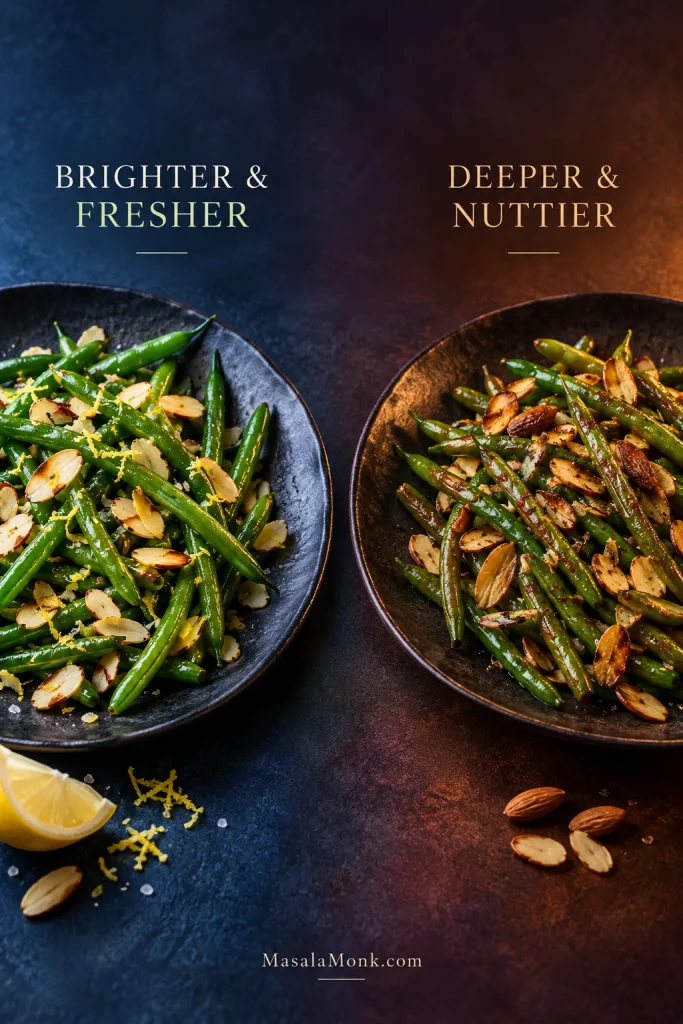
For a cleaner, more classical almondine, skip the shallot and garlic and let butter, almonds, lemon, salt, and pepper carry the dish. If you want deeper nuttiness, let the butter take on some light brown color as the almonds toast. Watch the nuts closely and pull them from the skillet as soon as they are golden; the base version stays lighter and more lemon-forward.
Extra-virgin olive oil or plant-based butter makes the same basic method dairy-free. Bacon works too: cook 3–4 strips until crisp and use some of the rendered fat in the skillet. It makes the side richer, though, and shifts it away from the fresh contrast that gives almondine much of its appeal.
If you’re cooking for someone with a serious nut allergy, prepare their portion separately with clean cookware and utensils appropriate to their allergy needs instead of simply removing a few beans before the almonds go in.
Almondine vs. Amandine: What’s the Difference?
Amandine is the French culinary term for food prepared or garnished with almonds; almondine is the familiar English spelling. Green beans amandine and green beans almondine therefore refer to essentially the same dish.
Haricots verts are the thinner French-style green beans often used for the dish, but they are not required. Ordinary green beans work just as well. Their thickness matters more to the cooking time than the name on the package.
What to Serve With Green Beans Almondine
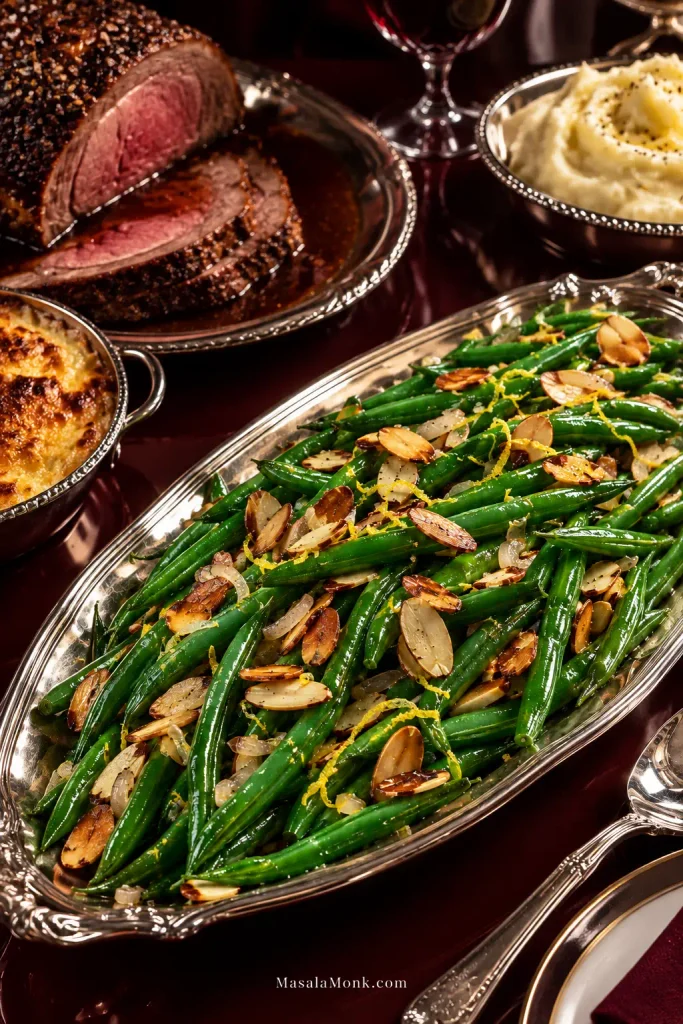
However you spell it, almondine earns its place beside richer food. Lemon and green beans cut through roast meat, creamy potatoes, gratins, or a baked vegetarian main without introducing another heavy sauce. On a plate full of soft, rich food, the toasted almonds are a small thing that makes a noticeable difference.
It works particularly well with lemon-garlic sockeye salmon. On a holiday table, the choice between almondine and classic green bean casserole mostly comes down to what the rest of dinner needs: creamy and comforting, or fresher with more texture.
How to Store and Reheat Green Beans Almondine
Freshly cooked green beans almondine will keep 3–4 days in the refrigerator. If the beans were blanched earlier, count that 3–4 day window from the first cooking day, not from the final skillet toss. The USDA gives the same general 3–4 day refrigerated window for cooked leftovers.
A skillet gives the nicest reheated texture for a small portion. For a larger chilled batch, cover it and reheat at 350°F / 175°C, starting to check around 15 minutes; deeper or larger batches will take longer. Stored leftovers should reach 165°F / 74°C throughout, in line with USDA reheating guidance. Add the almonds and some fresh lemon after reheating.
A short delay before dinner is manageable; prolonged hot holding is where the texture begins to suffer. The beans continue to soften and the almonds lose their crunch, so bringing the dish together close to serving gives the best result.
Planning ahead instead of storing leftovers? See the make-ahead method →
Green beans almondine does not need many ingredients to be memorable. Pick up a bean with a few golden almond pieces clinging to it. It should bend easily, and the almond should still crack when you bite it. That’s the texture worth aiming for.