
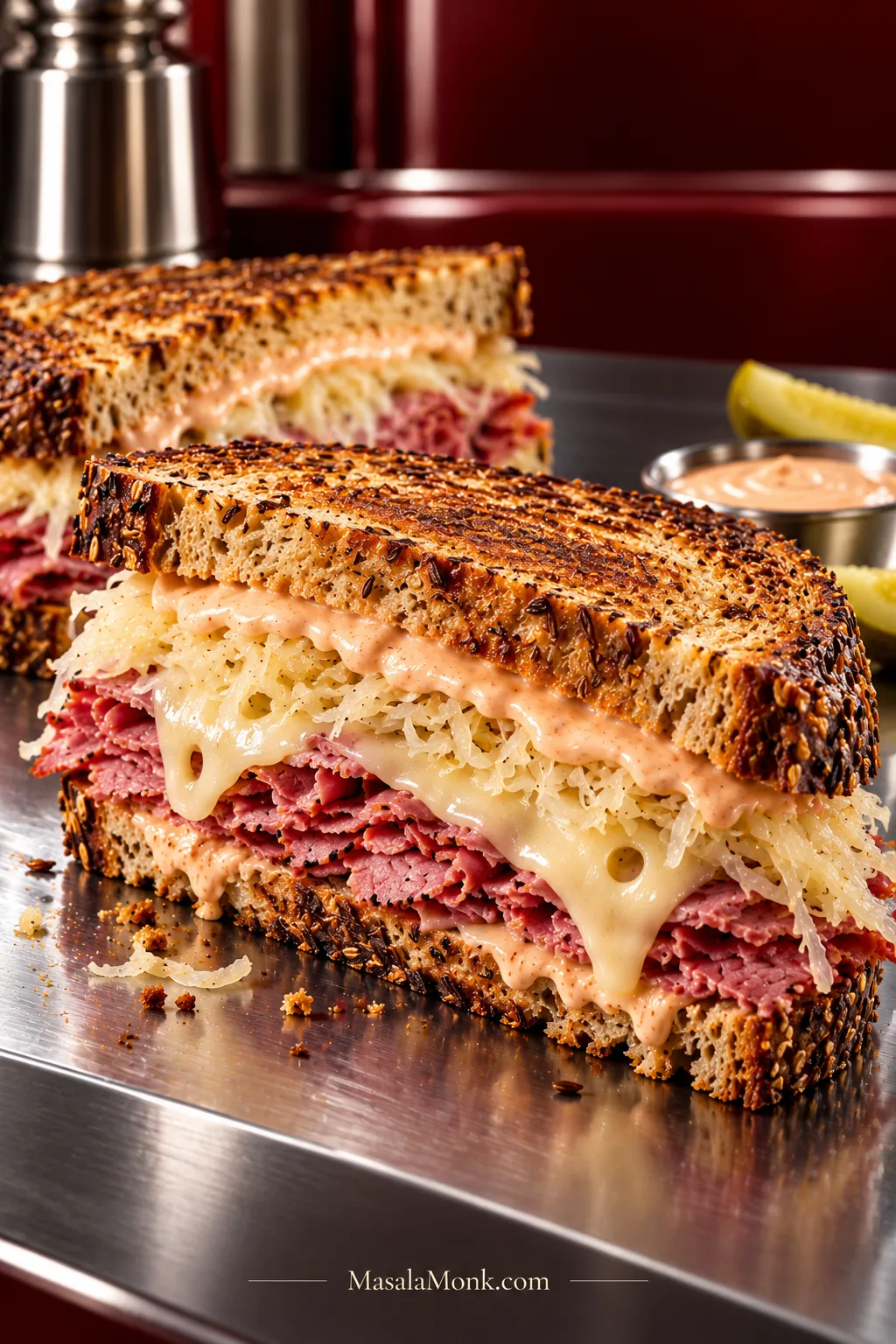
A Reuben can look finished before it actually is. The rye turns beautifully golden, then you cut through the middle and find cool corned beef, barely melted Swiss or enough sauerkraut steam to soften the crust.
When it works, the contrast is immediate: crisp rye first, then hot, supple corned beef, melted Swiss, sharp sauerkraut and creamy Russian dressing all arriving together.
This Reuben sandwich recipe gets there by warming the fillings before the sandwich reaches the skillet. The classic stack stays familiar—corned beef, Swiss cheese, sauerkraut and Russian dressing on rye—but now the bread can brown properly without racing against a refrigerator-cold middle. Thousand Island is the sweeter alternative if that is the Reuben you prefer.
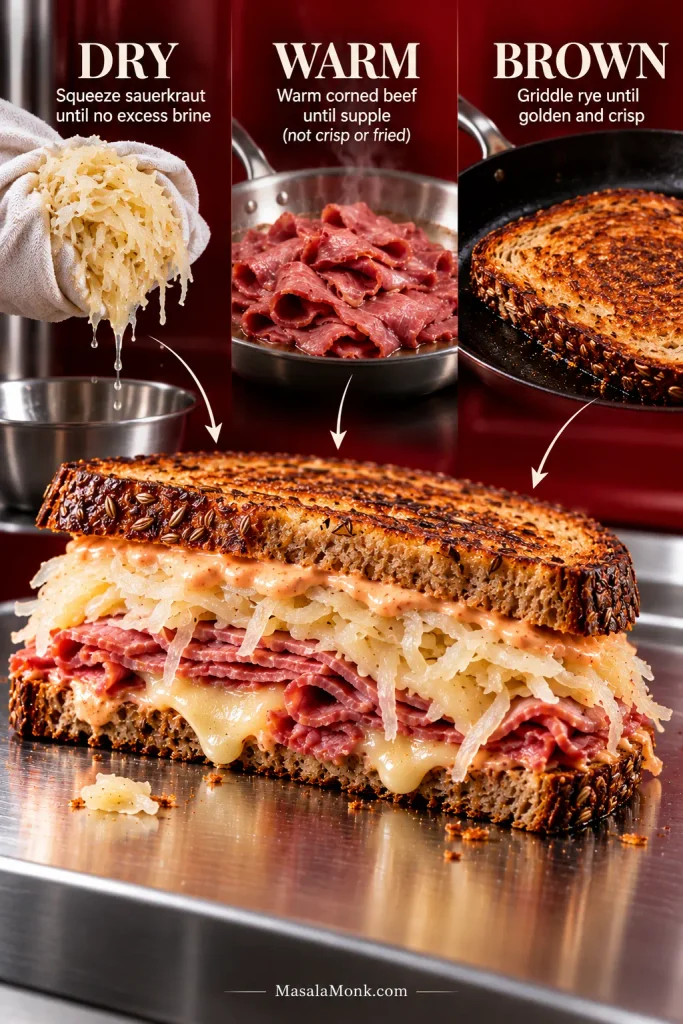
DRY
Squeeze the sauerkraut until pressing it no longer releases obvious brine.
WARM
Get the corned beef and kraut warm through before they go between the bread.
BROWN
Use the final skillet cook to crisp the rye and finish melting the Swiss.
Make the Reuben: Classic Skillet Method
This makes four Reubens, with the rye turning crisp and golden at about the same time the center becomes hot, soft and melty.
Per sandwich
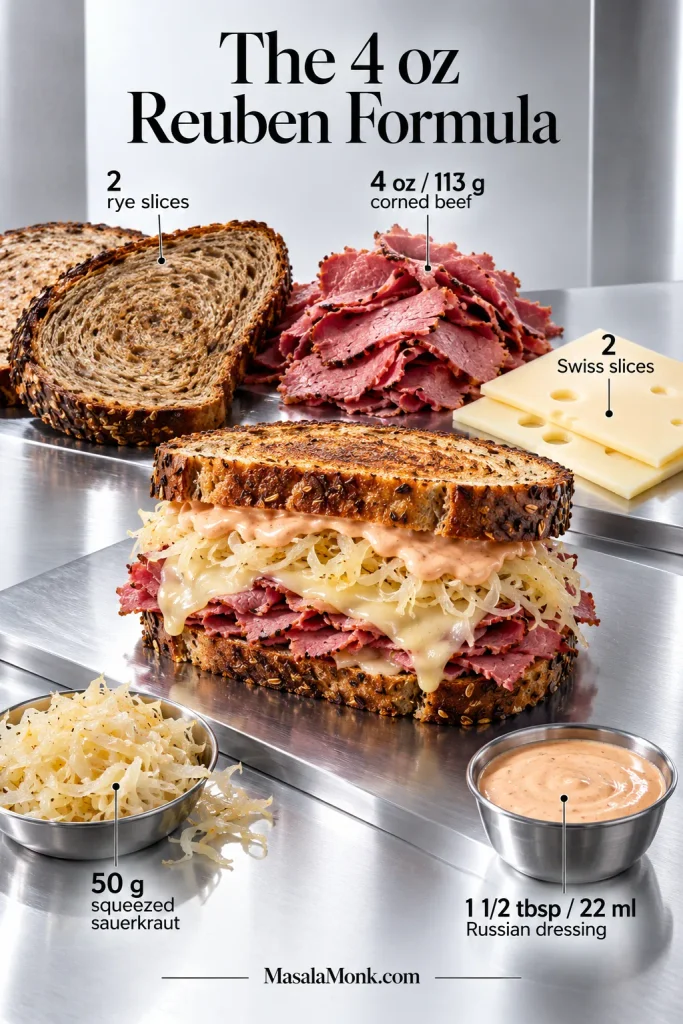
2 sturdy rye slices
4 oz / 113 g corned beef
2 slices / about 40–50 g Swiss
about 1¾ oz / 50 g well-drained, firmly squeezed sauerkraut
1½ tbsp / 22 ml Russian dressing
Useful equipment: a 12-inch / 30 cm heavy skillet or large griddle, a wide spatula and a lid large enough to cover the sandwiches.
Quick Russian Dressing
- Mayonnaise — ½ cup / 120 ml
- Heinz-style bottled chili sauce — 2 tbsp / 30 ml, the tomato-based kind, not sweet Asian chili sauce
- Ketchup — 1 tbsp / 15 ml
- Prepared horseradish — 2 tsp / 10 ml, not creamy horseradish sauce, plus more to taste
- Finely chopped dill pickle or dill relish — 1 tbsp / 15 ml
- Worcestershire sauce — 1 tsp / 5 ml
- Fresh lemon juice — 1 tsp / 5 ml
- Sweet paprika — ¼ tsp
- Freshly ground black pepper — to taste
This makes about ¾–⅞ cup / roughly 200 ml, with plenty left for dipping. Taste before adding salt; corned beef, Swiss, sauerkraut and Worcestershire already bring plenty.
For the Reuben Sandwiches
- 8 slices sturdy rye bread, preferably about ⅜–½ inch / 1–1.3 cm thick
- 16 oz / 454 g thinly sliced cooked corned beef, roughly 1/16–1/8 inch / 2–3 mm thick when slicing it yourself
- 8 slices Swiss cheese / about 160–200 g total
- About 7 oz / 200 g well-drained, firmly squeezed sauerkraut
- 6 tbsp / 90 ml Russian dressing for the sandwiches, plus extra for serving
- 3 tbsp / 42 g unsalted butter, softened, plus more as needed for unusually large bread
1. Mix the Russian dressing
Stir the mayonnaise, bottled chili sauce, ketchup, horseradish, pickle, Worcestershire, lemon juice, paprika and black pepper until smooth.
Taste, then add a little more horseradish or black pepper if needed. It should be creamy and tangy, with the horseradish clearly present but not dominating the beef and Swiss.
2. Squeeze the sauerkraut, then warm it
Drain the sauerkraut thoroughly, then squeeze it firmly with clean hands, paper towels or a clean kitchen towel. If obvious brine still comes out when you press it, keep squeezing.
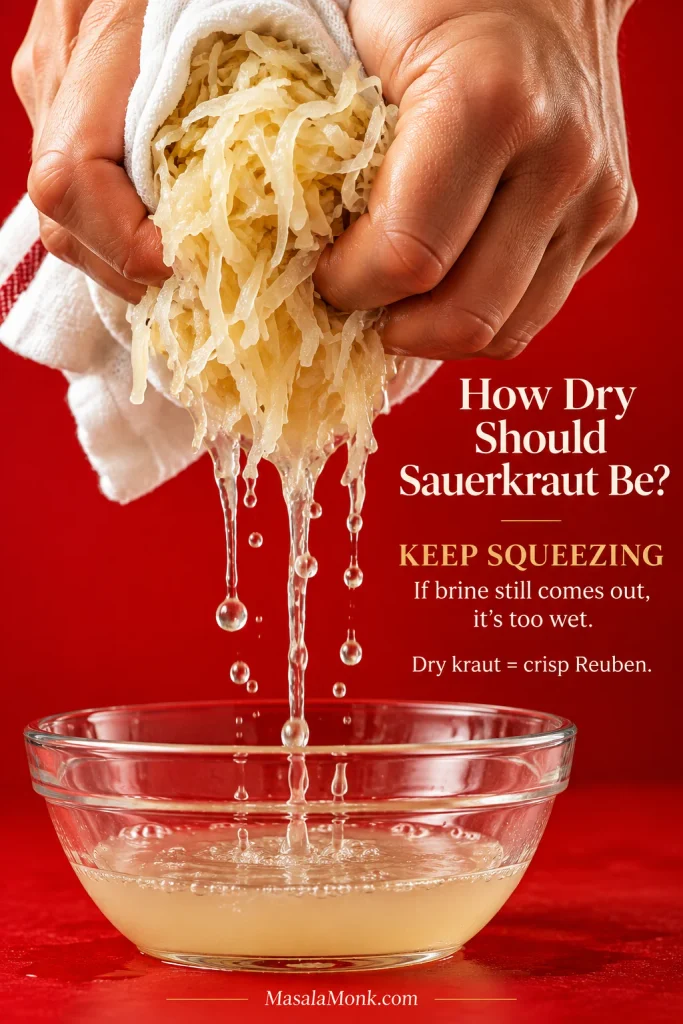
Measure about 7 oz / 200 g after squeezing. Warm it in the skillet over medium heat for about 1–2 minutes, stirring once or twice, until the refrigerator chill is gone and the surface no longer looks wet.
Keep some life in it. The kraut should stay sharp and juicy rather than turning dry or fried.
3. Warm the corned beef without drying it
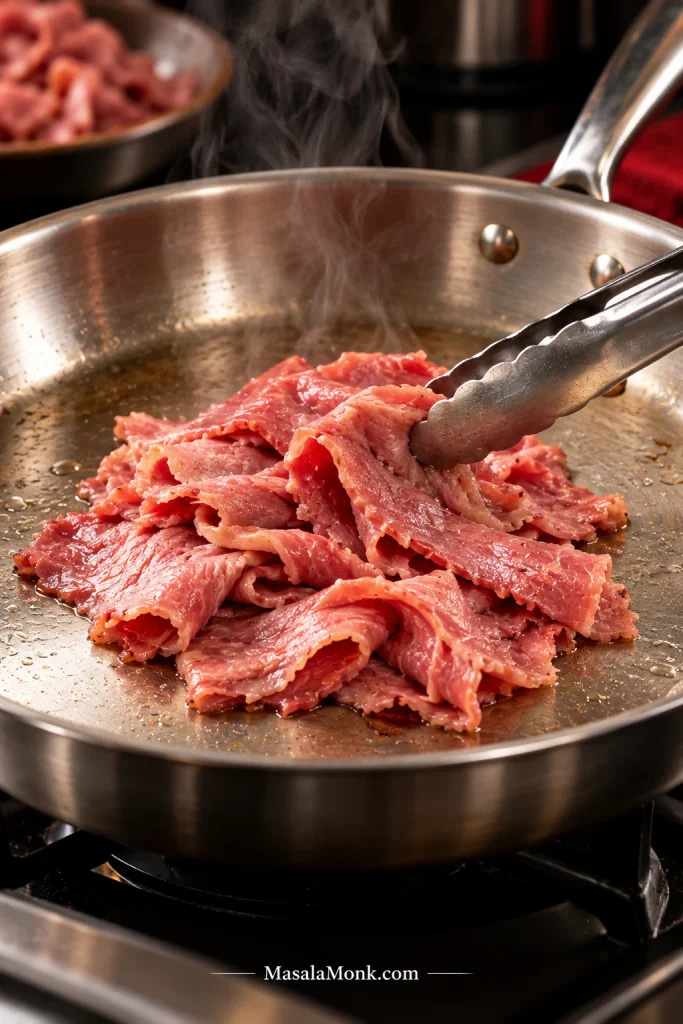
Move the kraut to a plate and wipe away any visible liquid from the skillet. Add the corned beef in loose folds instead of one compact mound.
A crowded skillet warms the beef unevenly, so work in two loose batches when necessary. Give each batch about 1 minute, turning gently, until the slices are supple and have lost their refrigerator chill. Meat that seems dry can use about 1 tsp / 5 ml water added to an empty area of the skillet; cover briefly and let the steam do the work.
That quick warm-up assumes ready-to-eat deli corned beef; previously cooked leftovers should be reheated to 165°F / 74°C before assembly.
Warm corned beef should bend and fold easily. Crisp, fried edges are a sign it has gone farther than a Reuben needs.
4. Build every sandwich in the same order
For each Reuben, stack:
- 1 slice rye bread
- 1 slice Swiss cheese
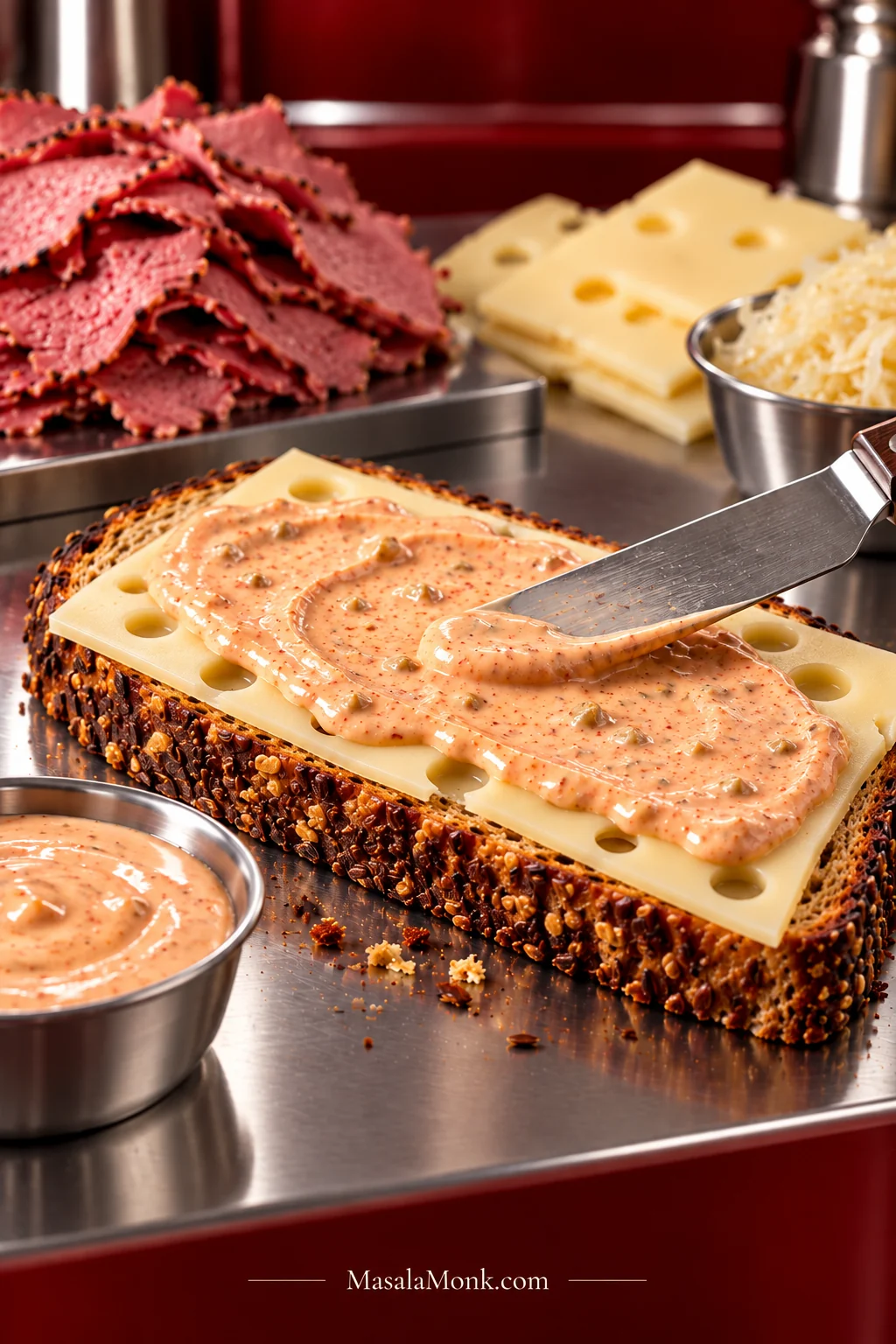
- About half of the 1½ tbsp / 22 ml Russian dressing
- 4 oz / 113 g corned beef
- About 1¾ oz / 50 g firmly squeezed sauerkraut
- The remaining half of the dressing
- 1 more slice Swiss cheese
- Second slice rye bread
Spread a thin, even layer of softened butter over the two outside bread surfaces.
5. Brown the rye over moderate heat
Wipe the skillet clean and dry, then return it to medium-low to medium heat. For an electric griddle, start around 350°F / 177°C.
Add the sandwiches without crowding the pan. A 12-inch / 30 cm skillet will usually hold two comfortably. For four at once, use a large griddle or two skillets so the first sandwiches are not sitting around while the last ones cook.
Press gently with a wide spatula so the bread makes good contact. There is no need to flatten the sandwich.
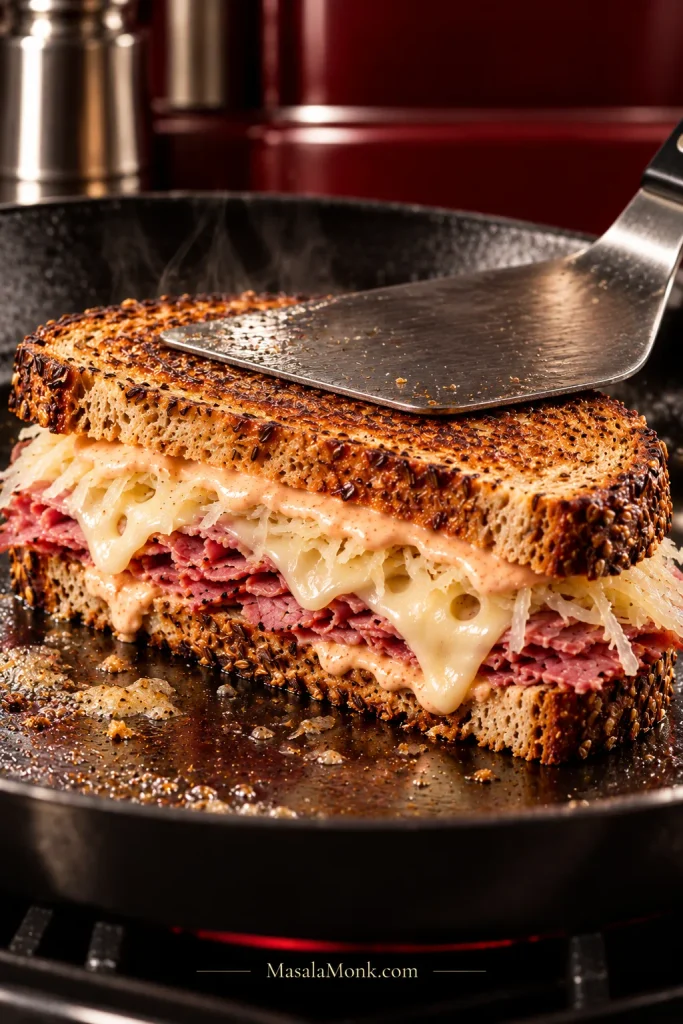
Cook the first side for roughly 3–4 minutes. Flip when the rye is evenly golden, then cook the second side for another 2–4 minutes.
Ideally, the rye reaches deep gold just as the Swiss sinks into the folds of beef. When the bread gets there first, lower the heat and cover for 30–60 seconds. Two rubbery squares of cheese mean the center still needs help; rapidly darkening rye means the pan is running too hot.
6. Check the center, then rest for one minute
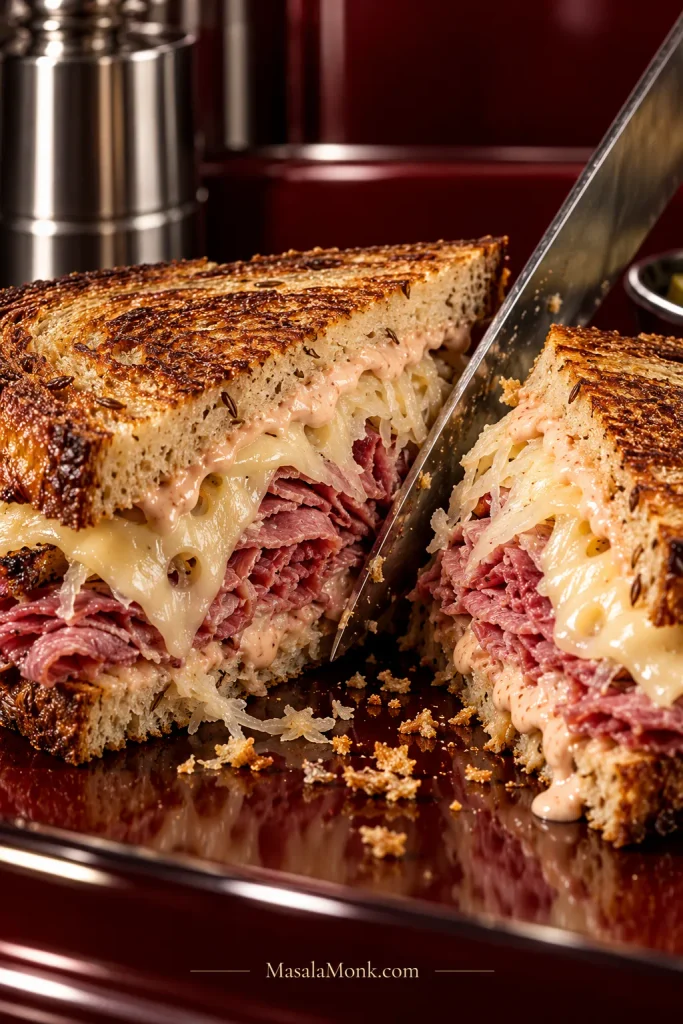
The Reuben is ready when the rye is crisp and deeply browned, the Swiss has melted into the filling, and the corned beef in the center is properly hot.
Transfer to a cutting board and rest for about 1 minute. Then cut in half and serve. Wait much longer and steam begins stealing back some of that crisp crust.
Recipe Notes
- Want a larger deli stack? Increase the corned beef to 5–6 oz / 142–170 g per sandwich, but use sturdy bread and give the extra meat more time to lose its refrigerator chill before assembly.
- Using mayonnaise outside? Replace the butter with a very thin coating of mayonnaise for easy, even browning.
- Very sour kraut? Rinse an unusually sharp or salty batch briefly in cold water, then squeeze it thoroughly before warming.
- Do not overpress. Gentle pressure improves pan contact; crushing the sandwich compresses the bread and pushes filling out around the edges.
Cooking now? You can stop here. The guide below is for choosing the best rye and corned beef, understanding why the proportions matter, fixing a Reuben that comes out soggy or cold, or adapting the sandwich without losing what makes it a Reuben.
Reuben Sandwich Guide
Build the Reuben
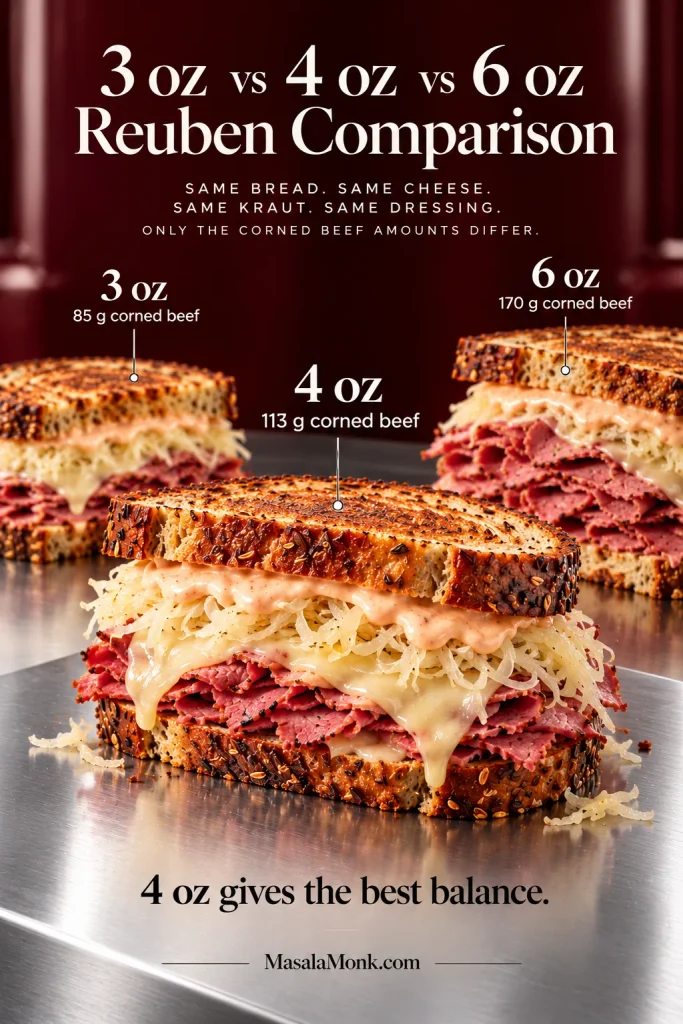
Why 4 oz / 113 g of Corned Beef Works
Four ounces / 113 g is deliberate. It gives you a generous fold of corned beef without turning the center into a dense block that takes much longer to heat than the rye takes to brown.
Reuben recipes vary widely. Lighter versions sit around 3 oz / 85 g of meat, while large deli sandwiches can climb past 6 oz / 170 g. Bigger stacks have their fans, but they become harder to heat evenly, hold and bite through.
The best Reuben is not necessarily the tallest one. At 4 oz / 113 g, beef, sharp kraut, melted Swiss, dressing and rye can still meet in the same bite instead of making you chew through a wall of meat first.
Cooking now? Jump to the exact per-sandwich formula.
Best Rye Bread for a Reuben Sandwich
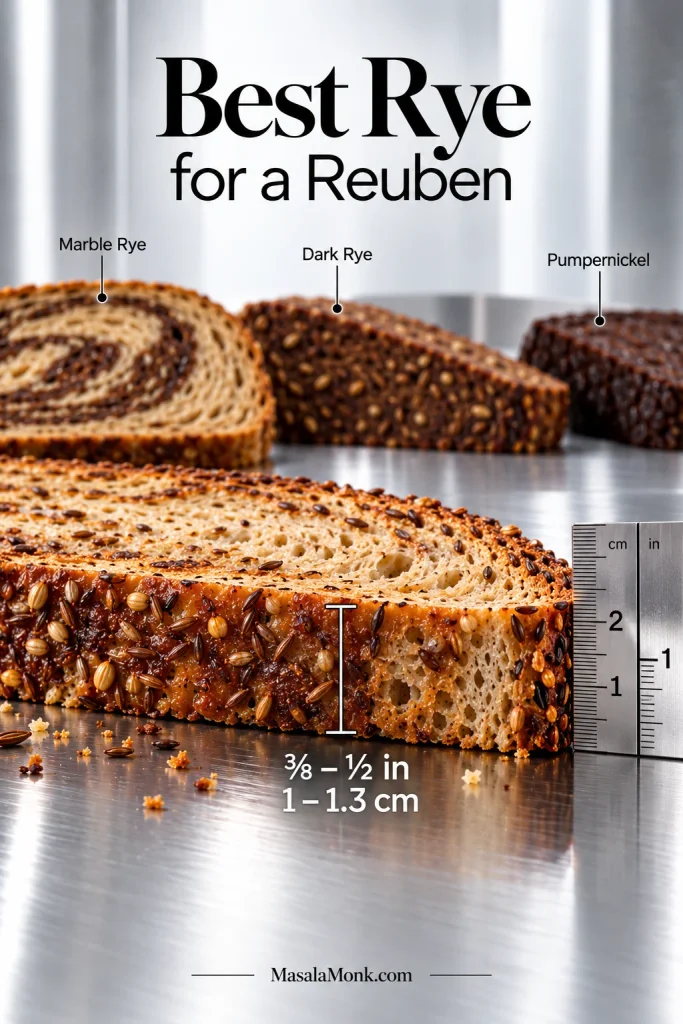
Seeded or Jewish rye is the clearest choice for a classic Reuben. It has familiar deli character and enough structure for the filling without making the bread the loudest flavor in the sandwich.
Marble rye works beautifully too, especially if you like that dark swirl against the corned beef when the sandwich is cut on the diagonal. Dark rye pushes the rye flavor harder; pumpernickel makes the whole sandwich denser and earthier.
Aim for slices around ⅜–½ inch / 1–1.3 cm thick. Thin, soft bread can bend under the filling, while very thick slices need gentler cooking so the center and crust finish together.
When rye is not available, sturdy sourdough can still make an excellent grilled corned beef sandwich. Our sourdough bread guide includes a sandwich loaf designed to slice cleanly and toast well.
Corned Beef for Reuben Sandwiches: Deli, Leftover or Homemade?
Thin deli corned beef is the practical starting point
Around 1/16–1/8 inch / 2–3 mm gives you slices that still taste substantial but heat quickly and bite cleanly.
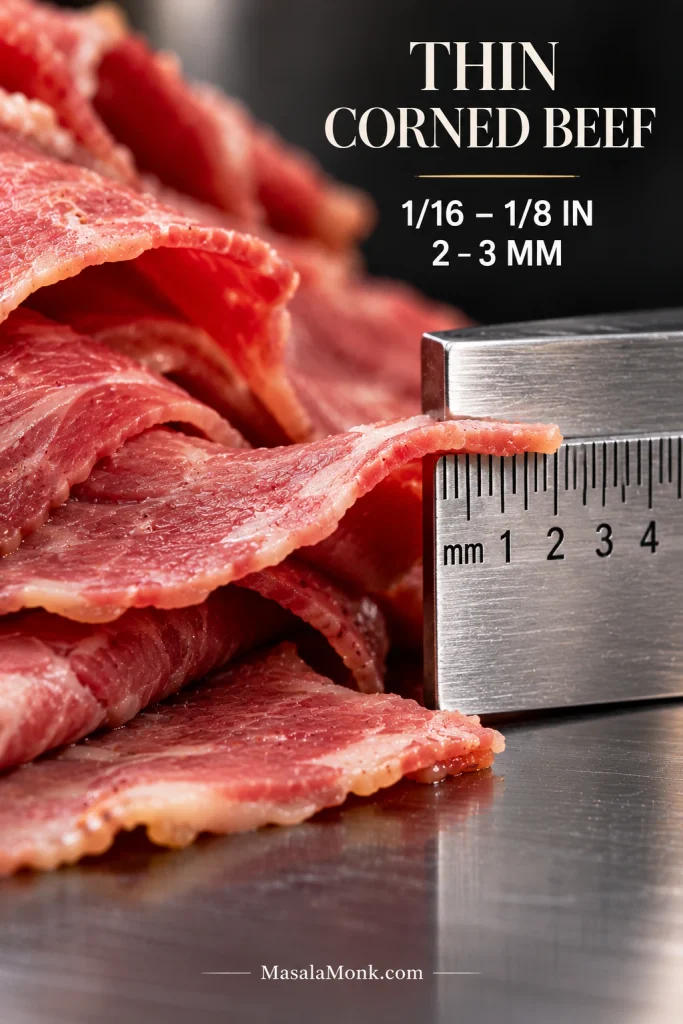
Fold the meat loosely. Those folds leave a softer, less compact center than pressing the slices into one dense rectangle.
Using deli corned beef now? Jump to the warming step.
For leftover homemade corned beef, cool first and slice across the grain
Very tender hot brisket can fall apart as soon as the knife reaches it. Let leftover corned beef cool enough to firm up, then slice across the grain.
For sandwich meat, aim for tender but sliceable. Neat slices are easier to stack, heat and eat than brisket that falls apart into shreds.
Choosing raw corned beef for Reuben sandwiches
If sandwiches are the goal, the flat cut is usually the better raw choice because its even shape gives you cleaner slices. The point cut is fattier, richer and less regular, so expect a looser stack.
Follow the package directions or a trusted full corned-beef recipe for cooking. Once done, cool the brisket enough to firm it up, slice across the grain and reheat those slices gently for the sandwich.
“Drained” and “Ready for a Reuben” Are Not the Same Thing
For one sandwich, use about 1¾ oz / 50 g sauerkraut after draining and squeezing. By eye, that is roughly a generous ¼ cup, although the volume changes with the kraut and how firmly you pack it.
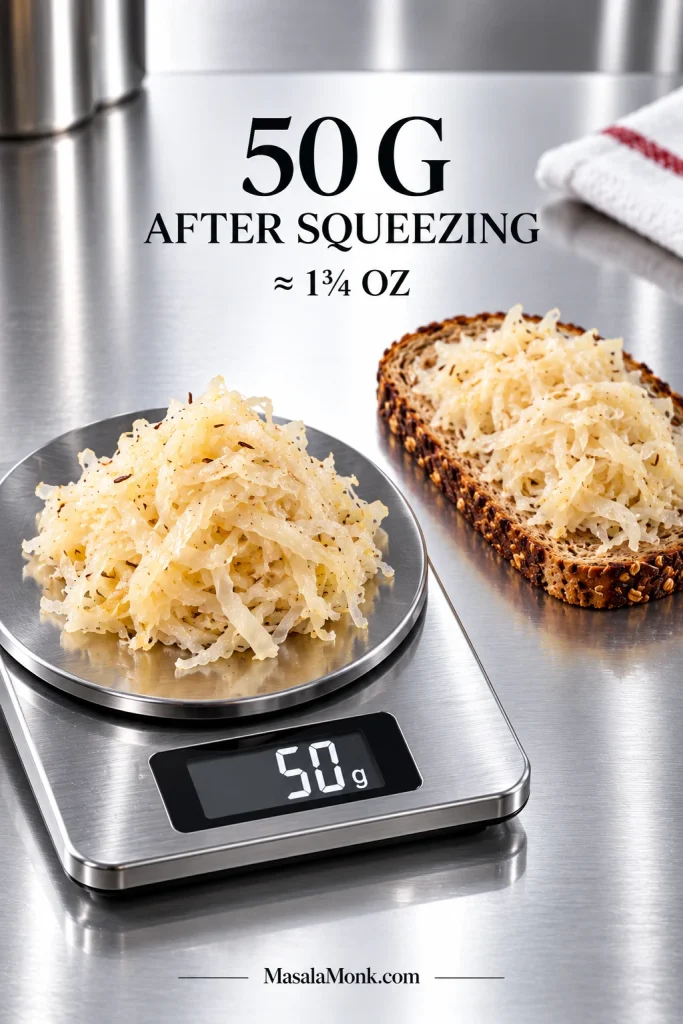
A spoonful of jar-wet kraut brings more brine than the rye can afford. What you want is cabbage that still tastes sharp and juicy but no longer sheds obvious liquid when pressed.
An unusually sour or salty batch can be rinsed briefly before another thorough squeeze. For deeper flavor, let a few strands begin to brown during warming; stop before the kraut turns dry.
Ready to cook it? Go to the squeeze-and-warm step.
Cheese and Dressing for a Reuben
Why Swiss Works So Well
Swiss melts easily without taking over the corned beef and kraut. Use about 2 slices / 40–50 g per Reuben, with one slice beside each piece of bread.
Emmental is an especially natural choice when available. Gruyère melts beautifully too, though its nuttier flavor changes the sandwich more noticeably.
Russian Dressing or Thousand Island?
Russian dressing is the default here because its sharper horseradish profile cuts through the corned beef and Swiss. Thousand Island gives you a sweeter, milder sandwich.
Use about 1½ tbsp / 22 ml per sandwich. The dressing should show up in the bite without leaking onto the plate. Extra can go at the table for dipping.
For homemade Russian dressing from the ground up, our homemade mayonnaise recipe gives you a neutral creamy base for the horseradish, pickle and tomato.
The Reuben Layer Order Is Doing Real Work
Build the sandwich in this order:
Rye → Swiss → Russian dressing → corned beef → sauerkraut → Russian dressing → Swiss → rye
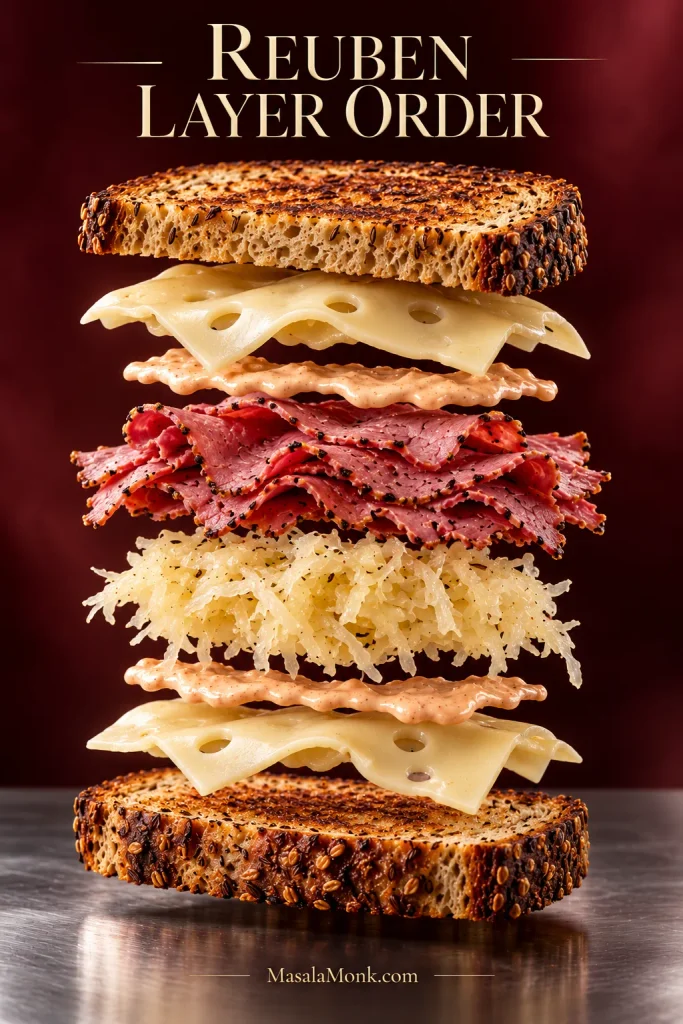
The Swiss sits beside the bread, the wetter dressing and kraut stay farther inside, and the meat remains loose rather than compressed into a dense slab.
Building the sandwich now? Jump to the assembly step.
If the Skillet Has to Heat a Cold Center, the Rye Usually Loses
By the time the sandwich reaches the skillet, most of the difficult work is already done. Now you are watching for two things to happen together: well-browned rye and Swiss melting into the beef.

On an electric griddle, about 350°F / 177°C is a useful starting point. On the stovetop, steady, even browning is the better guide. Rapid dark spots while the cheese stays firm mean the pan is too hot.
A lid can finish stubborn cheese without forcing the rye to keep frying. When necessary, add about a teaspoon of water to an empty area of the skillet—not onto the sandwich—and cover briefly for a burst of steam.
Pan already hot? Go straight to the skillet step.
Reuben Troubleshooting: What Went Wrong?
If your Reuben looks right but eats wrong, the symptom usually tells you what happened.
Moisture & Heat Problems
| Problem | What happened + how to fix it |
|---|---|
| The rye is soggy immediately | The sauerkraut was still wet or there was too much dressing. Squeeze the kraut harder, warm off the surface moisture and use less dressing inside. |
| The bread was crisp, then softened | Steam was trapped after cooking. Serve promptly and do not wrap a piping-hot Reuben tightly. |
| The bread is golden but the center is cold | The fillings started too cold. Give the beef and sauerkraut more of a head start before assembly. |
| The Swiss is still firm | The middle needs more gentle heat. Lower the burner and cover the skillet briefly so the cheese can catch up. |
| The rye burns before the cheese melts | The pan is running too hot. Turn it down and let color, rather than a fixed timer, tell you when to flip. |
| The corned beef is dry | It was fried rather than gently reheated. Use loose folds and a little steam instead of browning the meat. |
Structure, Balance & Flavor Problems
| Problem | What happened + how to fix it |
|---|---|
| The filling slides out | There is too much wet filling or the stack is oversized. Pull back on the dressing or kraut and keep the sandwich easy to pick up. |
| The rye bends, tears or collapses | The bread is too thin for the filling. Use sturdier rye that can carry the sandwich without folding underneath it. |
| Every bite tastes mostly of beef | The sandwich is overstuffed. Pull the meat back toward the recipe amount so the rye, Swiss, kraut and dressing still show up. |
| The kraut dominates everything | There is too much of it or the batch is unusually sour. Use a little less and rinse only when the flavor truly needs taming. |
| The sandwich tastes too salty | The beef, kraut and Swiss are stacking salt on top of one another. Taste the components before assembly and adjust the kraut or corned-beef preparation rather than automatically seasoning more. |
| The dressing feels too sweet | Switch from a sweet Thousand Island-style sauce to sharper Russian dressing with horseradish. |
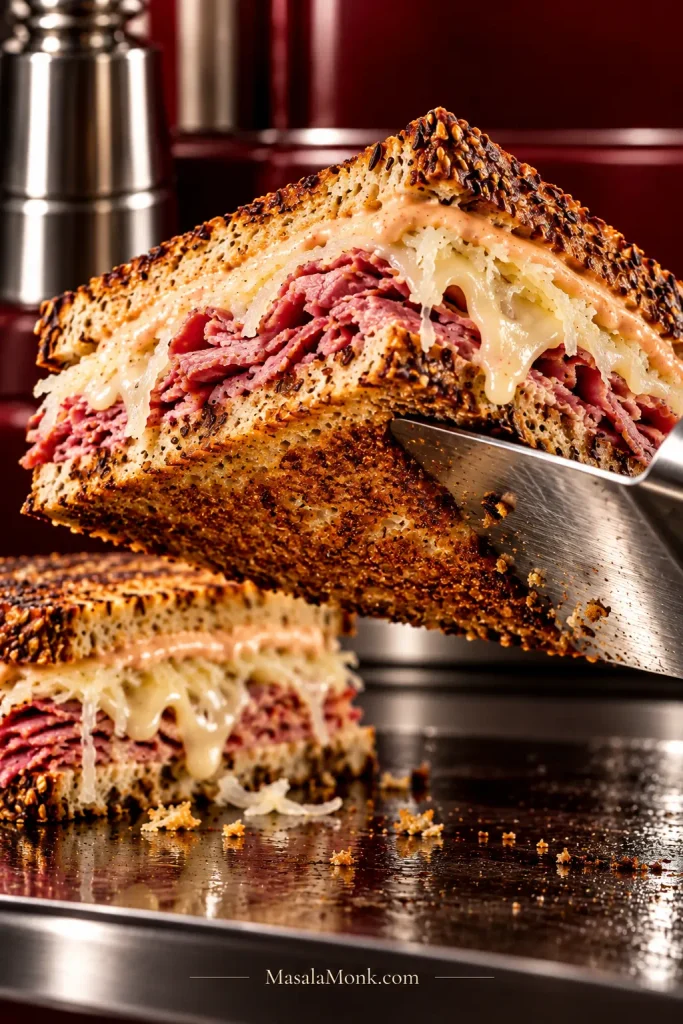
Reuben Variations That Actually Change the Sandwich
Pastrami Reuben. Pastrami makes the sandwich smokier and more peppery. Keep the slices thin and the stack manageable.
Rachel sandwich. A Rachel usually swaps the corned beef for turkey and commonly replaces sauerkraut with coleslaw. Our creamy coleslaw recipe can be chopped a little finer for sandwich use. Expect a sweeter, crunchier sandwich.
Mustard. A very thin swipe of spicy brown or Dijon mustard gives the Reuben another sharp edge.
Without sauerkraut. The sandwich will still be good, but it stops tasting fully Reuben-like once that sharp fermented cabbage disappears.
Other Ways to Cook a Reuben
Keep the same dry-kraut and prewarmed-filling setup. Only the final browning method changes. The skillet remains the primary method; these are useful alternatives when another appliance suits the situation better.
Prefer the classic version? Return to the skillet method.
Electric griddle
Use about 350°F / 177°C and cook as you would in the skillet. A broad griddle is particularly useful when several sandwiches need to finish together.
Air fryer
Air fry around 375–390°F / 190–200°C, turning halfway. Start checking at about 5–6 minutes and continue until the rye is well browned and the cheese has softened; many machines land around 6–8 minutes total. Secure the top slice with a toothpick if strong airflow lifts it.
Oven or toaster oven
Heat to around 375°F / 190°C. Build the sandwich as two open halves, with both bread slices butter-side down on the baking sheet.
On the bottom slice, layer Swiss → half the dressing → corned beef → sauerkraut. On the second slice, put the Swiss directly against the bread, then spread the remaining dressing over it.
Start checking after about 3 minutes. Once the meat is hot and the Swiss is visibly softening, close the sandwich and return it to the oven until the bread edges are golden and crisp and the cheese is fully melted into the filling.
Using a panini press? Moderate heat and light pressure are enough. Good contact is useful; crushing the sandwich is not.
Make Ahead, Store and Reheat Without Sacrificing the Rye
Make the components ahead, not the complete sandwich. Russian dressing can be mixed a day ahead and refrigerated. Corned beef can be portioned, and sauerkraut can be drained and squeezed before you need it.
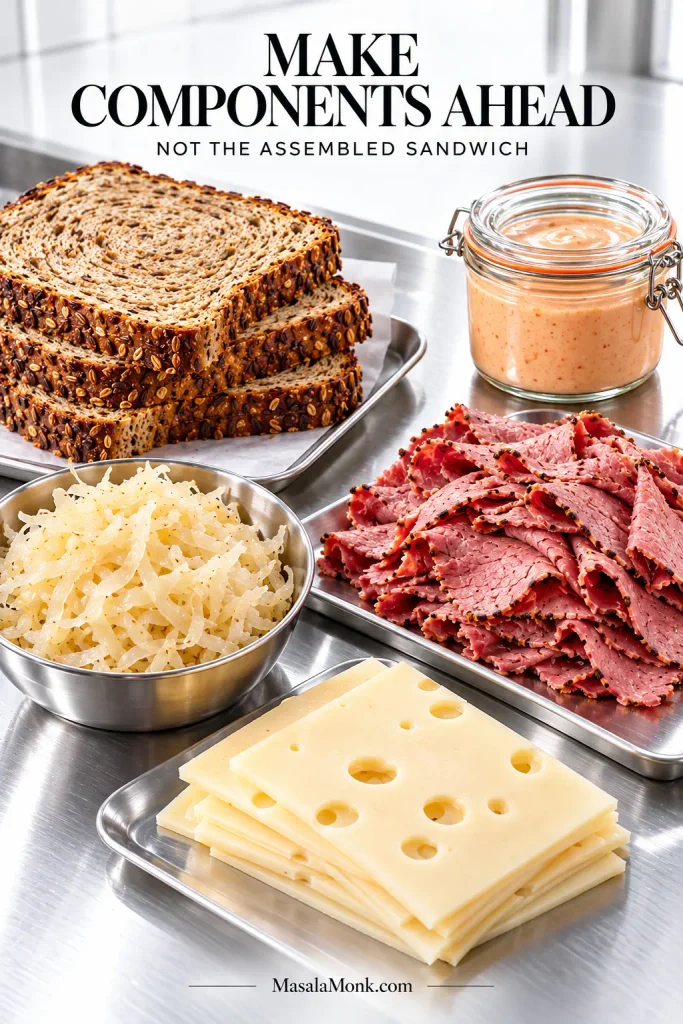
Prepared kraut sometimes releases more liquid while it sits. Give it another squeeze before warming whenever moisture has collected underneath.
Reheating a leftover Reuben
Use a skillet, toaster oven or air fryer when possible. They can heat the middle while giving the rye a chance to crisp again. A microwave is fast, but trapped steam softens the bread.
The gentle warming in the main recipe assumes ready-to-eat deli corned beef. When reheating previously cooked leftovers, the USDA Food Safety and Inspection Service advises prompt refrigeration, generally using refrigerated leftovers within 3–4 days, and reheating them to 165°F / 74°C.
What to Serve With a Reuben
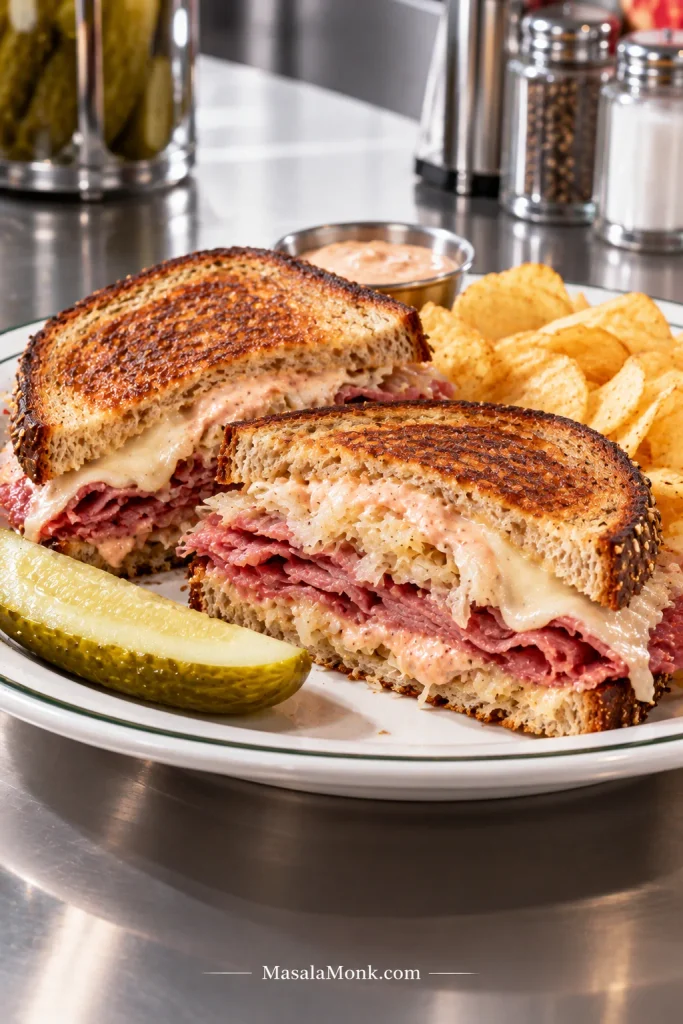
A Reuben is rich, salty and tangy, so crisp or acidic sides make sense beside it. Dill pickles and potato chips need almost no thought. For a larger deli-style plate, add crispy homemade French fries, or serve potato salad when you want something cool beside the hot sandwich.
A Brief Note on the Reuben’s Origins
The Reuben’s origin is disputed. One prominent account places an early version at Omaha’s Blackstone Hotel and connects it with Reuben Kulakofsky; another tradition points to New York restaurateur Arnold Reuben.
History Nebraska documents the Omaha account and surviving early menu evidence while also discussing the competing New York claim.
However the sandwich got its name, the goal on the plate is simpler: golden rye and a genuinely hot center arriving together.








