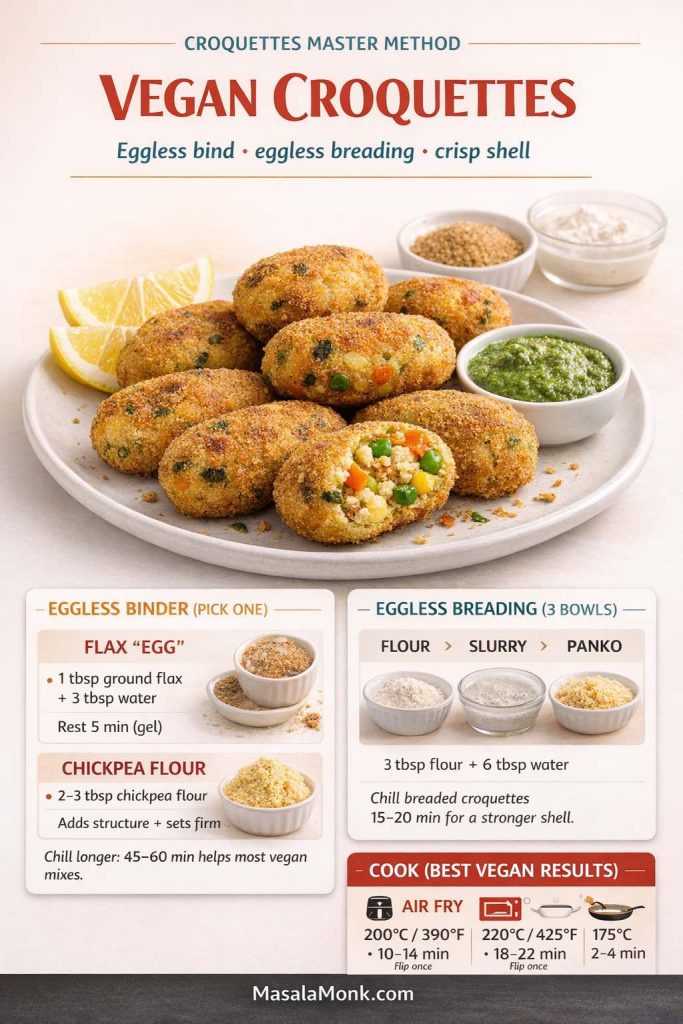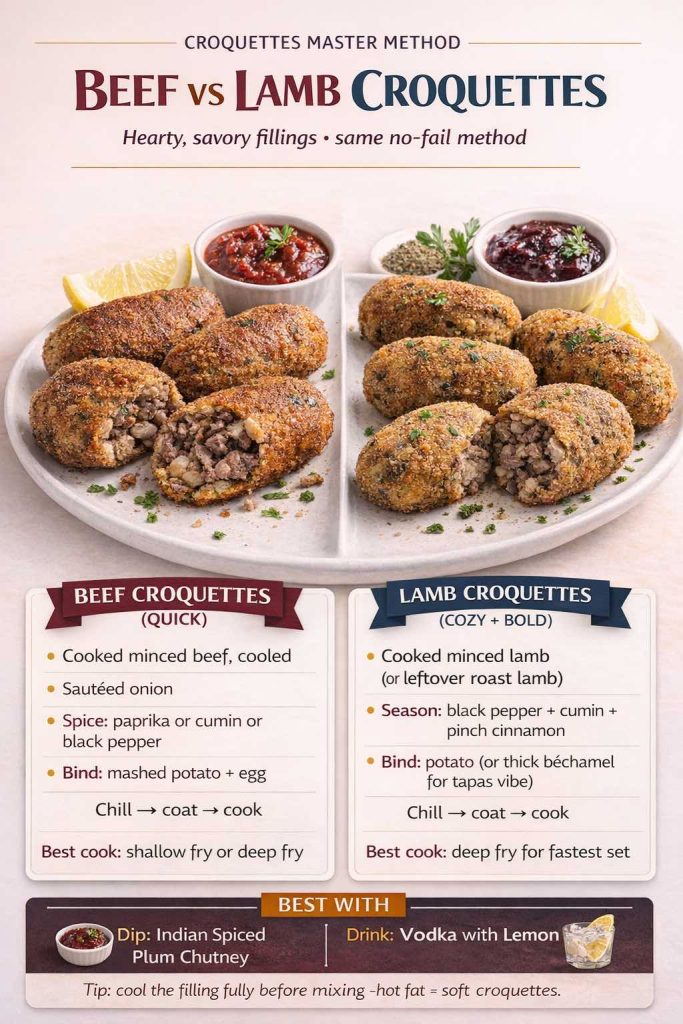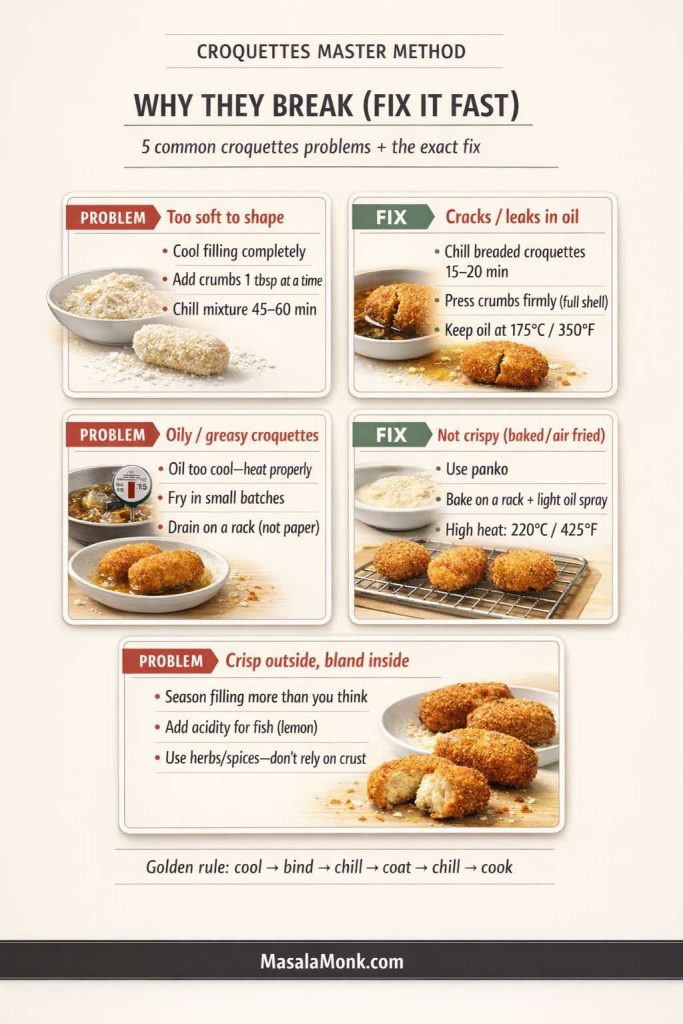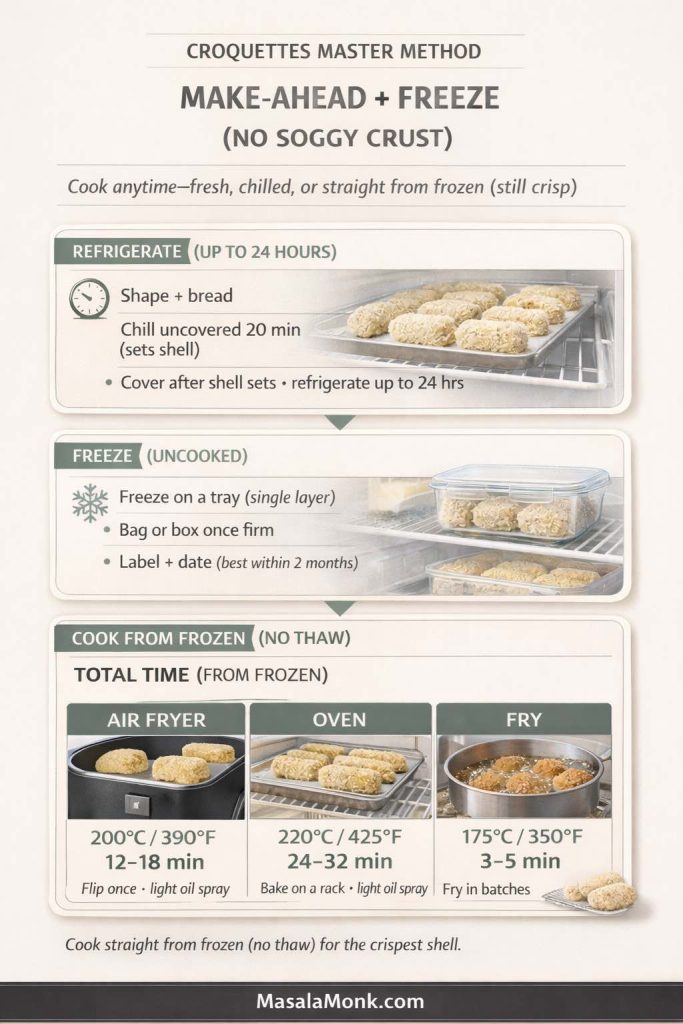
Posted on Leave a comment

Tapas Recipe With a Twist: 5 Indian-Inspired Small Plates

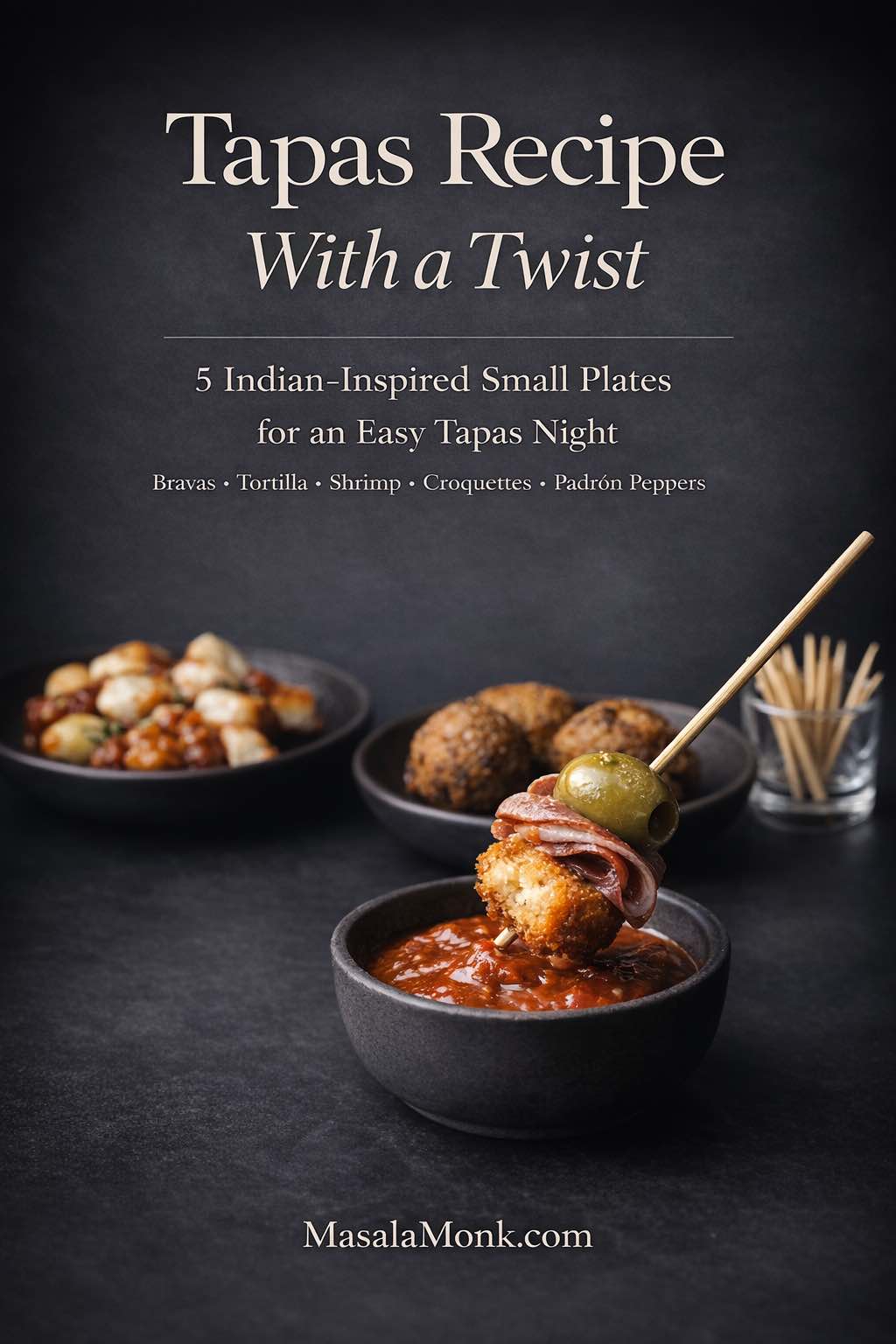
Pintxo-style skewer dipped in bravas sauce with tapas plates in the background, cover image for Tapas Recipe With a Twist featuring 5 Indian-inspired small plates for an easy tapas night.

A great Tapas Recipe night is never about one big centerpiece. Instead, it’s about a table full of small plates that arrive in waves—crispy potatoes first, then something warm and garlicky, then a soft tortilla wedge, then a peppery bite, and finally a platter that vanishes before you can refill it. Because of that rhythm, tapas feel generous without feeling heavy, and a casual evening at home suddenly turns into a celebration.

At its heart, tapas are meant to be shared, and that spirit is what makes them perfect for an Indian-inspired spread. You still get the familiar shape of Spanish small plates—patatas bravas, tortilla española, croquettes, garlic shrimp, blistered peppers—but now the flavor path moves through cumin, Kashmiri chili, green chutney, curry leaves, coriander, and lime. As a result, the table feels rooted in tapas culture while still sounding unmistakably like MasalaMonk.

If you’re planning a tapas dinner, looking for easy tapas recipes for a weekend gathering, or simply want tapas party food ideas that don’t feel repetitive, this spread is built to be practical, bold, and deeply shareable. Moreover, every dish here can be adjusted for vegetarian, gluten-free, or mixed-party preferences, so you can host confidently without making two separate meals.
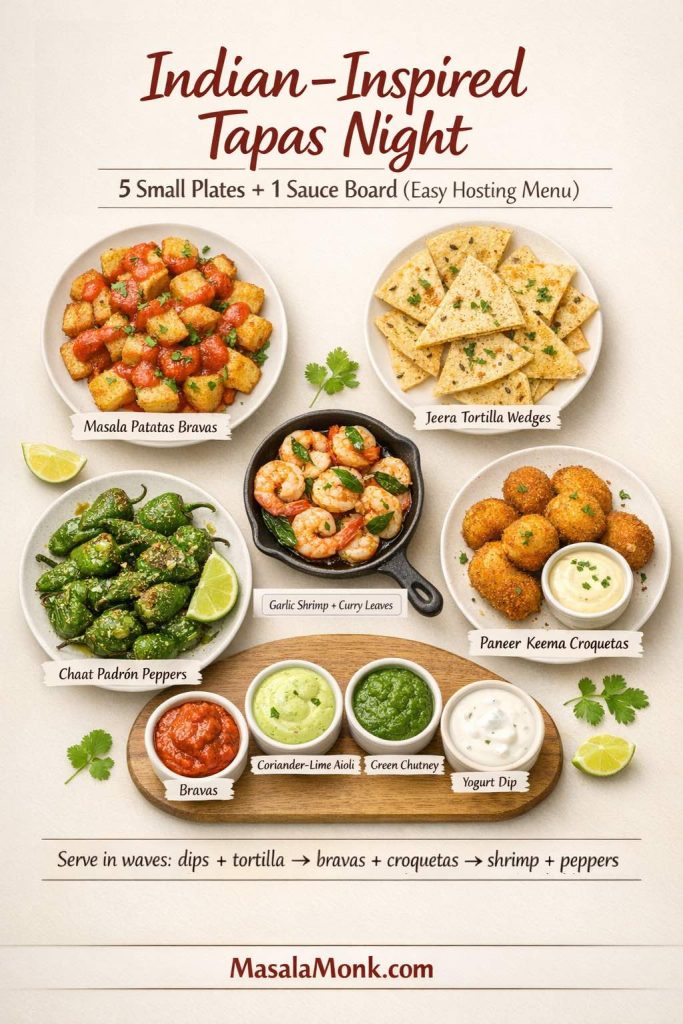
Overhead tapas spread showing Indian-inspired Spanish small plates: masala patatas bravas, jeera tortilla wedges, garlic shrimp with curry leaves, chaat padrón peppers, and paneer-keema croquetas with dips. A four-sauce board includes bravas sauce, coriander-lime aioli, green chutney, and yogurt dip, with a “serve in waves” hosting note and MasalaMonk.com footer branding.
Planning a tapas night at home? This Indian-inspired tapas menu is built around 5 small plates plus a simple sauce board that makes the whole table feel intentional—masala patatas bravas, jeera tortilla wedges, garlic shrimp with curry leaves, chaat padrón peppers, and croquetas. Use the “serve in waves” line to time your cooking so everything hits the table fresh. Keep scrolling for each tapas recipe, the sauce board setup, and the make-ahead plan—and save this image so your next tapas dinner party is effortless.

Tapas roots and the idea behind a real tapas table

Tapas work so well at home because they’re naturally flexible. You can serve hot tapas dishes, cold tapas ideas, quick bites, and small bowls all on the same table without forcing everything into one flavor profile. At the same time, the spread still feels cohesive when you build it around contrast: crispy and creamy, spicy and cooling, rich and bright, hot and room temperature.

If you enjoy the cultural side of the meal, the guide to tapas in Spain is a lovely read. It captures the social side of tapas beautifully and explains why these small plates feel so relaxed and festive. Likewise, the roundup of popular Spanish tapas is a helpful way to see the classic lineup that inspired this post—especially patatas bravas, tortilla, croquettes, and pintxos.

For this Indian-inspired tapas recipe spread, we’ll build the table around five anchors:

  • a potato tapa with bold bravas sauce
  • an egg-based tapa that slices neatly
  • a seafood tapa that cooks fast
  • a pepper tapa that adds brightness
  • a croquette tapa with a crisp shell and creamy center

Then, just as importantly, we’ll use a small sauce board to connect the whole table. That one move makes the meal feel thoughtfully designed rather than random.

Also Read: Baked Ziti Recipe Collection: 15 Easy Variations


How to plan an easy tapas night at home

Before the first potato hits the pan, decide what kind of evening you want. That choice shapes everything else.

For a quick tapas dinner, keep the spread small and nimble. In that case, make three plates and two sauces, and let the meal stay casual. On the other hand, if you want a full tapas dinner party menu, plan on five plates and a slightly slower pace so the table builds over time.

A good home setup usually includes:

  • one filling starch dish
  • one fast-cooking protein
  • one vegetable or pepper dish
  • one rich finger-food plate
  • one make-ahead item
  • two or three dips or sauces

That balance gives you the “best tapas ideas” feeling without overloading your kitchen.
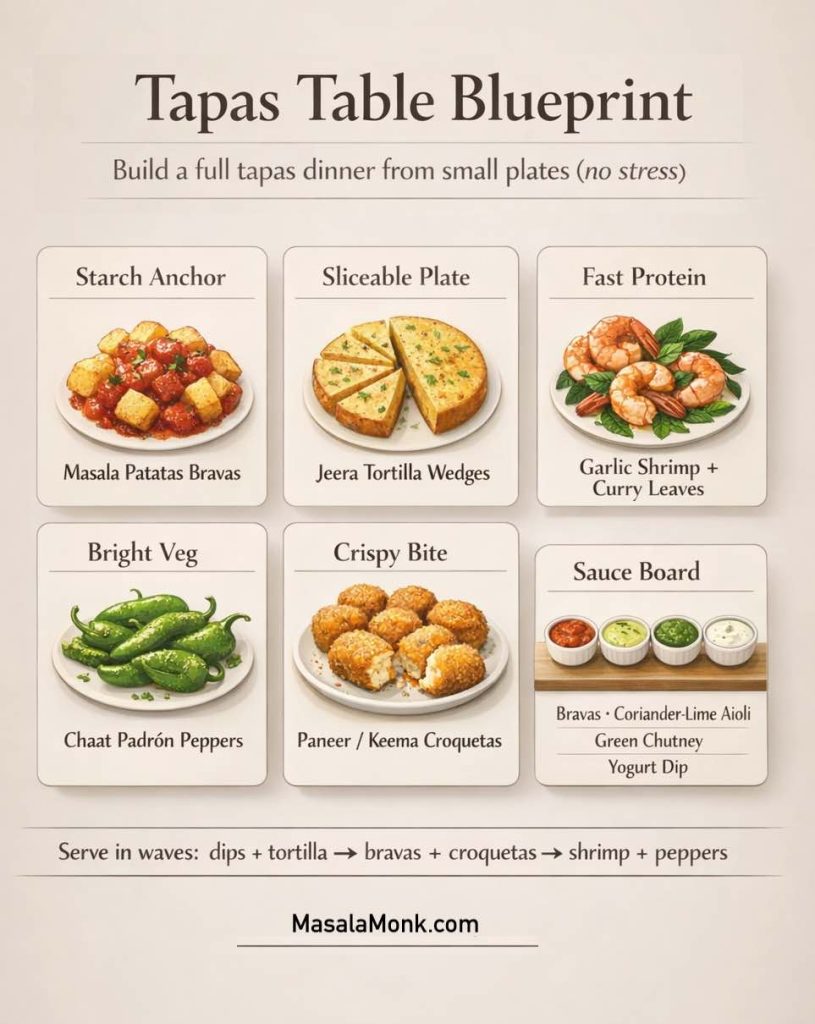
Infographic titled “Tapas Table Blueprint” showing how to build a full tapas dinner from small plates: masala patatas bravas (starch anchor), jeera tortilla wedges (sliceable plate), garlic shrimp with curry leaves (fast protein), chaat padrón peppers (bright veg), paneer/keema croquetas (crispy bite), plus a sauce board with bravas, coriander-lime aioli, green chutney, and yogurt dip. MasalaMonk.com footer.
Use this blueprint when you want tapas dinner ideas that actually feel like a full meal, not random snacks. The table works because each plate has a role: one starch anchor, one sliceable make-ahead dish, one fast protein, one bright vegetable plate, and one crispy bite—then a simple sauce board connects everything. Follow the “serve in waves” line so the food lands hot and fresh without stressing the host. Keep scrolling for the full tapas recipes, dips, and make-ahead plan, and save this blueprint for your next tapas night at home.

Meanwhile, if you’re serving a mixed crowd, this structure helps even more. You can keep one vegetarian tapas recipe, one seafood tapas recipe, and one meat option on the same table, and everyone still gets a full meal. In other words, tapas dinner ideas become much easier when you stop treating them like a single-course dinner and start treating them like a sequence of small wins.
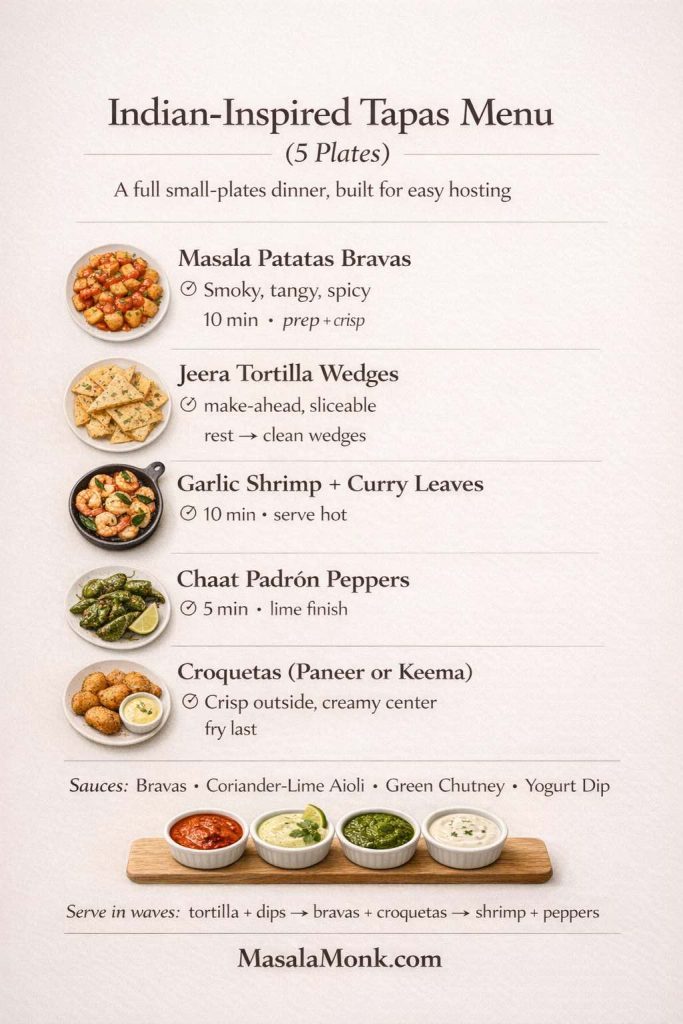
Menu-style infographic titled “Indian-Inspired Tapas Menu (5 Plates)” listing masala patatas bravas, jeera tortilla wedges, garlic shrimp with curry leaves, chaat padrón peppers, and croquetas (paneer or keema), with quick notes like make-ahead, serve hot, lime finish, and fry last. Includes a sauce row (bravas, coriander-lime aioli, green chutney, yogurt dip) and a “serve in waves” order. MasalaMonk.com footer.
Here’s the full Indian-inspired tapas menu at a glance—five small plates plus a simple sauce board, built to feel like a complete dinner. Use the notes to cook smarter: tortilla is make-ahead, shrimp is best served hot, padrón peppers are a quick lime-finished plate, and croquetas should be fried last for maximum crunch. The sauce row keeps every bite flexible, and the “serve in waves” line makes hosting easier. Keep reading for the full recipes, sauce details, and step-by-step timing plan—and save this menu card for your next tapas night at home.

Tapas Recipe 1: Masala Patatas Bravas with smoky bravas sauce

Patatas bravas belong on almost every tapas table for a reason. They’re crisp, saucy, comforting, and easy to scale. Even better, they’re one of the best tapas recipes to make at home because most of the work can happen before guests arrive.

For a classic Spanish reference, this version of patatas bravas from Foods & Wines from Spain is a great place to see the traditional spirit of the dish. Here, we keep that same idea—crisp potatoes with bravas sauce—but shift the flavor toward an Indian-style finish.
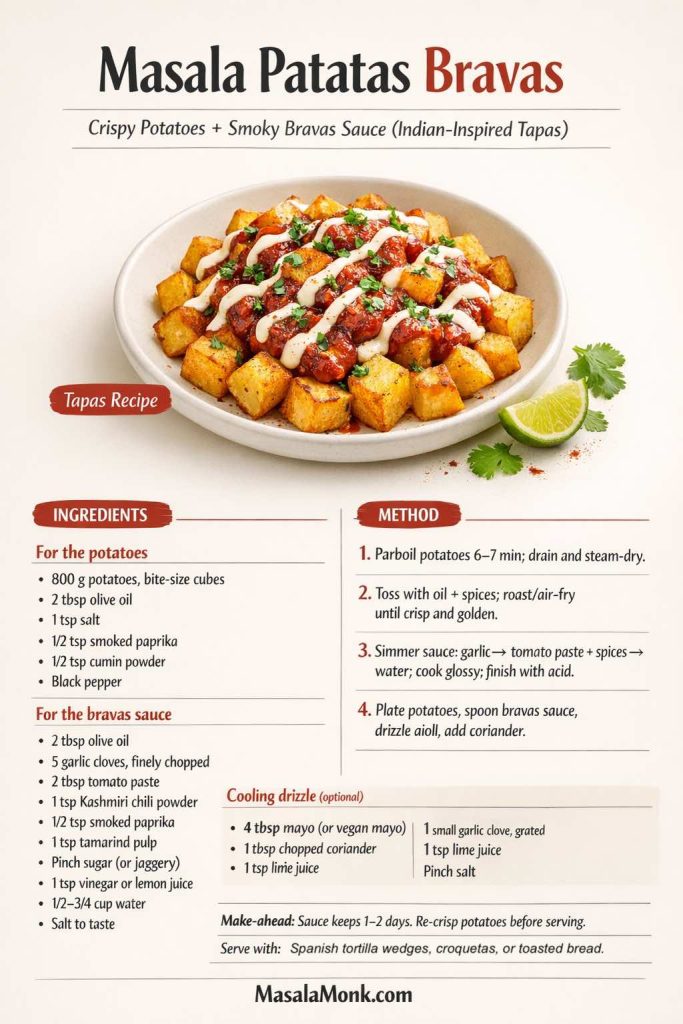
Recipe card for Masala Patatas Bravas showing crispy potato cubes topped with glossy smoky bravas sauce and a light creamy drizzle, plus ingredient lists (potatoes, bravas sauce, optional cooling drizzle), short method steps, and a make-ahead note. MasalaMonk.com footer.
Masala patatas bravas is the crowd-pleaser tapas plate—crispy potatoes, smoky-spicy bravas sauce, and an optional cooling drizzle. Use the quick method steps on the card (parboil → crisp → simmer sauce → assemble), then serve with Spanish tortilla wedges, croquetas, or toasted bread. Save this recipe card for parties and weekend tapas nights, and use the make-ahead note so the table stays easy.

Flavor profile for this bravas tapas recipe

The twist here is subtle but clear. Instead of leaning only on paprika and chili, the sauce brings in a little extra depth with cumin and tamarind. Consequently, the potatoes stay recognizably patatas bravas, yet the sauce tastes warmer and more layered.

This version works especially well if you like:

  • bravas potato recipes with a sharper kick
  • potato tapas dishes that hold up on a buffet
  • simple tapas ideas that still look restaurant-worthy

Ingredients for Masala Patatas Bravas tapas recipe

For the potatoes

  • 800 g potatoes, cut into bite-size chunks
  • 2 tbsp olive oil
  • 1 tsp salt
  • 1/2 tsp smoked paprika
  • 1/2 tsp cumin powder
  • black pepper

For the bravas sauce

  • 2 tbsp olive oil
  • 5 garlic cloves, finely chopped
  • 2 tbsp tomato paste
  • 1 tsp Kashmiri chili powder
  • 1/2 tsp smoked paprika
  • 1/4 tsp cayenne (optional)
  • 1 tsp tamarind pulp
  • a pinch of sugar or jaggery
  • 1 tsp vinegar or lemon juice
  • 1/2–3/4 cup water
  • salt to taste

And for the cooling drizzle

  • 4 tbsp mayonnaise (or vegan mayonnaise)
  • 1 small garlic clove, grated
  • 1 tbsp chopped coriander
  • 1 tsp lime juice
  • pinch of salt

If you want to make the sauce board feel special, the creamy drizzle is a perfect place to use MasalaMonk’s homemade mayo recipe or, for a plant-based version, this vegan mayo recipe.

Method for Masala Patatas Bravas

First, parboil the potatoes for 6 to 7 minutes. Then drain them well and let them steam dry for a few minutes. That pause matters because dry potatoes crisp more beautifully than wet ones.

Next, toss them with olive oil, salt, smoked paprika, cumin, and pepper. Roast at a high temperature until golden and crisp, or air-fry in batches if that’s easier.

Meanwhile, make the bravas sauce. Warm olive oil in a small pan, add garlic, and cook only until fragrant. After that, stir in tomato paste, Kashmiri chili, smoked paprika, cayenne, tamarind, and a pinch of sugar. Add water gradually, simmer until glossy, and then finish with vinegar or lemon juice.

Finally, stir together the cooling drizzle and assemble the plate. Spoon the potatoes into a shallow bowl, add the bravas sauce, and finish with a light drizzle plus chopped coriander.

Make-ahead note for bravas

This dish is ideal for make ahead tapas nights. The sauce can be made one or two days in advance, and the potatoes can be par-cooked earlier, then re-crisped before serving. Because of that flexibility, patatas bravas are one of the strongest anchors in a tapas dinner party menu.

Also Read: Easy and Healthy Oat Cookies- No Sugar | No Butter | No Refined Flour


Tapas Recipe 2: Tortilla Española wedges with jeera, green chili, and coriander

Tortilla española is one of the most dependable tapas recipes because it can be cooked ahead, sliced cleanly, and served warm or at room temperature. It’s also one of the easiest places to add an Indian-inspired twist without changing the soul of the dish.

If you want the classic point of reference, this Spanish tortilla recipe from Foods & Wines from Spain is useful. The core remains the same here: potatoes, eggs, olive oil, and patience. However, cumin, coriander, and green chili add just enough lift to make it feel distinct.
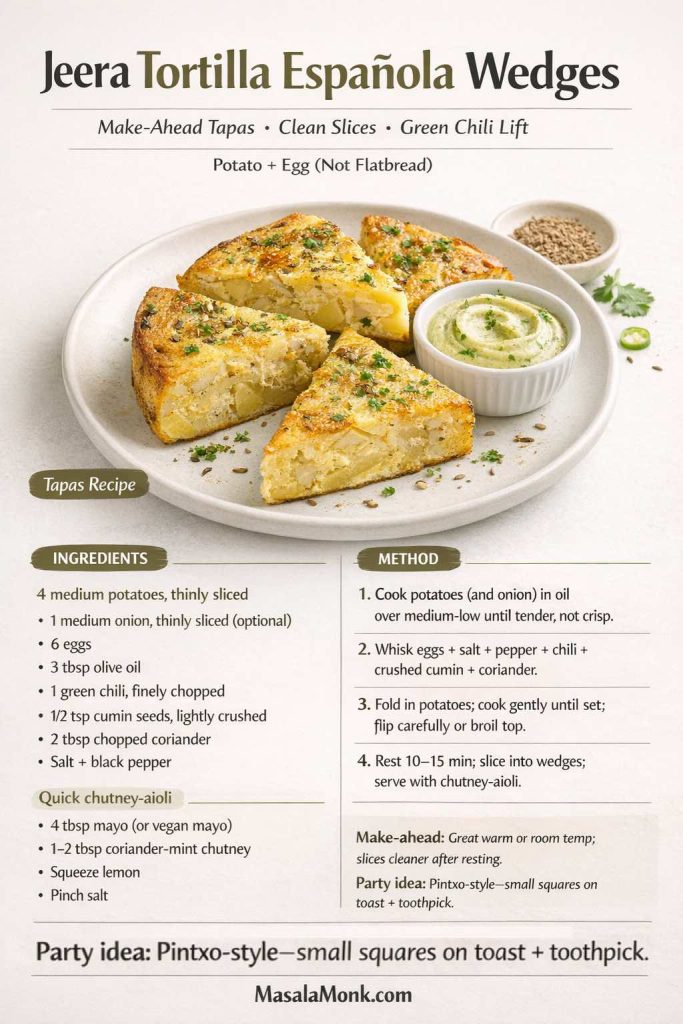
Recipe card for Jeera Tortilla Española Wedges (potato + egg, not flatbread) showing a thick Spanish potato omelette cut into wedges with herbs and cumin seeds, served with a ramekin of chutney-aioli. Includes ingredients, gentle method steps, and make-ahead and pintxo-style party notes. MasalaMonk.com footer.
These are Spanish tortilla wedges—potato + egg (not flatbread)—lifted with jeera, green chili, and coriander. It’s one of the best make-ahead tapas recipes because it slices cleanly after resting and serves beautifully warm or at room temp. Pair with chutney-aioli for a bright finish, then use the pintxo-style note for party bites. Save this card and scroll for the full tapas spread.

Texture and serving style for tortilla wedges tapas recipe

The goal is not a dry omelette. Instead, you want soft potatoes suspended in gently set eggs, with enough structure to slice into small wedges. Once plated, those wedges become excellent tapas appetizer recipes because they’re tidy, satisfying, and easy to pick up.

Moreover, tortilla wedges fit into:

  • tapas for lunch spreads
  • tapas style dinner menus
  • make ahead tapas party food

Ingredients for Green Chili Tortilla Española

  • 4 medium potatoes, thinly sliced
  • 1 medium onion, thinly sliced (optional, but lovely)
  • 6 eggs
  • 3 tbsp olive oil
  • 1 green chili, finely chopped
  • 1/2 tsp cumin seeds, lightly crushed
  • 2 tbsp chopped coriander
  • salt and black pepper

Quick chutney-aioli

  • 4 tbsp mayo or vegan mayo
  • 1–2 tbsp coriander-mint chutney
  • squeeze of lemon
  • pinch of salt

For the herb chutney, MasalaMonk’s green chutney recipe is a natural fit here and doubles as a dip for croquettes later.

Method for tortilla wedges

To begin, heat olive oil in a skillet and cook the potatoes (plus onions if using) over medium-low heat until tender and silky. You don’t want crisp browning here; rather, you want soft slices that melt into the eggs.

Meanwhile, whisk the eggs with salt, pepper, green chili, crushed cumin seeds, and chopped coriander. Once the potatoes are ready, fold them into the egg mixture and return everything to the skillet.

Cook the tortilla gently until the bottom sets. Then either flip it carefully or finish the top under a broiler. Afterward, let it rest before slicing. That short rest makes the wedges cleaner and more attractive on the plate.

Stir together the chutney-aioli, and serve either a small dot on each wedge or a bowl on the side.

Pintxo-style variation for parties

For larger gatherings, you can turn this into a pintxo-style bite. Cut the tortilla into smaller pieces, place each one on a toast square, and secure with a toothpick. If you’re curious about the Basque-style format, Britannica’s entry on pintxo offers a quick background and explains why this style is so popular for Spanish finger food.

Also Read: Double Chocolate Chip Cookies – Easy Recipe with 7 Variations


Tapas Recipe 3: Garlic shrimp with curry leaves and chili oil

A seafood tapas plate changes the energy of the table. Suddenly, the spread feels vivid and aromatic, and everyone reaches for bread to mop up the pan. That’s exactly why gambas al ajillo is such a classic.

For a traditional baseline, this gambas al ajillo reference from Foods & Wines from Spain shows the essence of the dish. Here, the Indian-inspired version keeps the garlic-and-oil backbone while adding curry leaves and a mild spice blend.
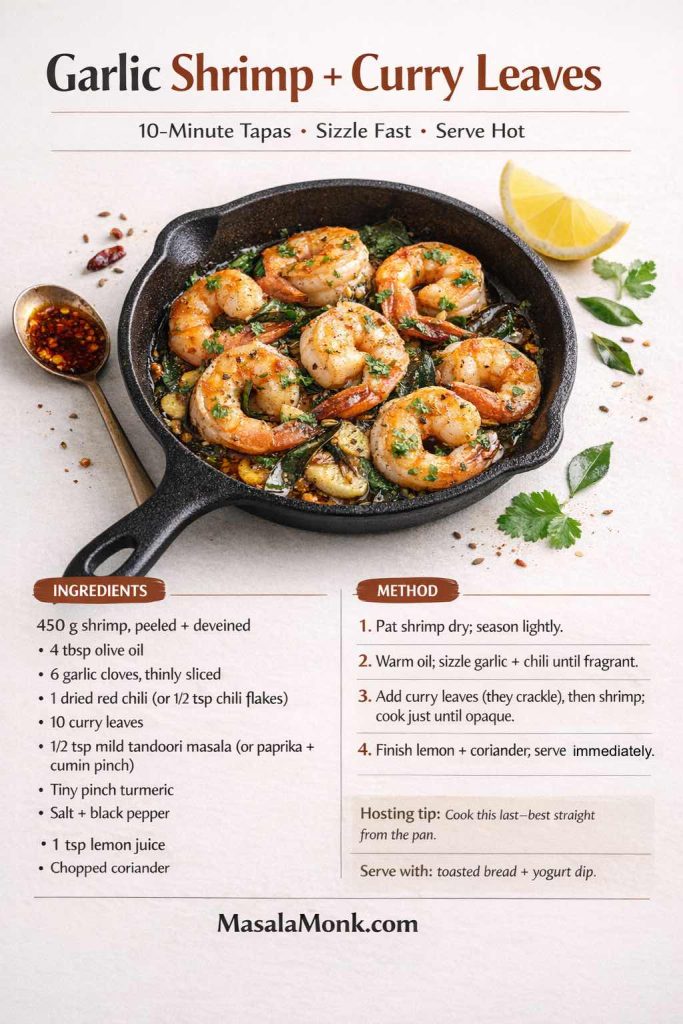
Recipe card for Garlic Shrimp with Curry Leaves showing shrimp cooked in olive oil with sliced garlic, chili, curry leaves, and herbs in a small skillet. Includes ingredient list, four-step method, hosting tip to cook last, and serving suggestion with toasted bread and yogurt dip. MasalaMonk.com footer.
This is the fast, hot-pan tapas dish that changes the energy of the table—garlic sizzling in oil, curry leaves crackling, shrimp cooked just until juicy, then finished with lemon and coriander. It’s best made right before serving, so it lands hot and aromatic. Save this card for tapas night, and pair it with yogurt dip and toasted bread to catch every drop.

Reasons this seafood tapas recipe works so well

This is one of the fastest tapas recipes in the entire spread, which is a huge advantage while hosting. In addition, it brings a very different texture from the tortilla and croquettes, so the meal doesn’t feel repetitive.

It’s also perfect for:

  • seafood tapas ideas
  • shrimp tapas recipe nights
  • quick tapas dishes for dinner parties

Ingredients for Garlic Shrimp with Curry Leaves

  • 450 g shrimp or prawns, peeled and deveined
  • 4 tbsp olive oil
  • 6 garlic cloves, thinly sliced
  • 1 dried red chili or 1/2 tsp chili flakes
  • 10 curry leaves
  • 1/2 tsp mild tandoori masala (or paprika + cumin pinch)
  • tiny pinch turmeric
  • salt and black pepper
  • 1 tsp lemon juice
  • chopped coriander

Method for garlic shrimp

First, pat the shrimp dry and season lightly with salt, pepper, spice blend, and turmeric. Dry shrimp sear better, so this step is worth the extra minute.

Next, warm olive oil in a small skillet. Add sliced garlic and the dried chili, and let them sizzle gently until fragrant. Then add the curry leaves carefully—they crackle as soon as they hit the oil.

After that, add the shrimp and cook quickly over medium-high heat until opaque and just curled. Finish with lemon juice and chopped coriander.

Serve immediately, ideally in the same pan or a warm dish, with toast on the side.

Food-safety rhythm for seafood hosting

Because this dish cooks so quickly, it’s easy to make fresh even during a busy evening. Still, keep raw shrimp separate during prep and cook close to serving time. If you like having a clear reference nearby, FoodSafety.gov’s safe cooking temperature chart is helpful for general guidance, and the FDA’s safe food handling guide is practical for party prep and leftovers.

Cooling dip pairing for shrimp

This shrimp dish becomes even better with a cool dip nearby. For that reason, a yogurt-based sauce works beautifully. MasalaMonk’s tzatziki sauce recipes make a great companion, especially if your bravas sauce and croquettes are on the spicier side.

Also Read: How to Cook Tortellini (Fresh, Frozen, Dried) + Easy Dinner Ideas


Tapas Recipe 4: Blistered Padrón peppers with chaat masala and lime

Every great tapas table needs one plate that feels almost effortless. Padrón peppers are that plate. They cook in minutes, they bring brightness to the table, and they make the spread feel complete even though the ingredient list is tiny.

The classic version is wonderfully simple, and this padrón peppers recipe from Foods & Wines from Spain captures it well. Here, the only twist is the finish: chaat masala and lime instead of only salt.
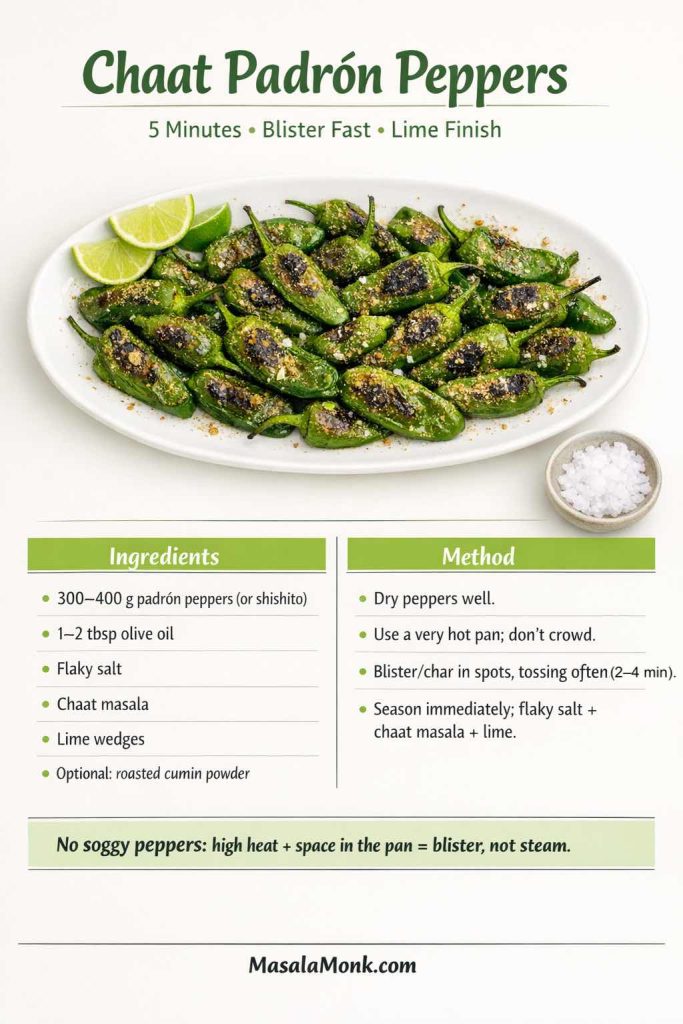
Recipe card for Chaat Padrón Peppers showing blistered padrón (or shishito) peppers on a platter with charred spots, chaat masala dusting, flaky salt, and lime wedges. Includes ingredients, quick high-heat method steps, and a tip to avoid soggy peppers. MasalaMonk.com footer.
Chaat padrón peppers are the bright “reset” plate on a tapas table—fast blistered peppers finished with flaky salt, chaat masala, and lime. The key is high heat and space in the pan so they blister instead of steaming. Save this card for quick tapas nights, then use it to balance richer plates like bravas and croquetas.

Role of peppers in a full Tapas spread

After a saucy potato plate and a rich croquette, the peppers act like a reset. They’re quick, bright, and lightly bitter in the best way. As a result, the whole meal feels more balanced.

This plate fits beautifully into:

  • vegetarian tapas ideas
  • vegan tapas ideas
  • healthy tapas recipes
  • quick and easy tapas dishes

Ingredients for Chaat-Spiced Padrón Peppers tapas recipe

  • 300–400 g padrón peppers (or shishito peppers)
  • 1–2 tbsp olive oil
  • flaky salt
  • chaat masala
  • lime wedges
  • optional roasted cumin powder

Method for peppers

Start with a hot skillet and a little olive oil. Once the oil shimmers, add the peppers and blister them quickly, tossing often so they char in spots without collapsing completely.

As soon as they’re done, move them to a plate and season immediately with flaky salt, a pinch of chaat masala, and a squeeze of lime. If you like a deeper spice note, add a little roasted cumin powder too.

Serve hot or warm.

Optional pintxo-style add-on beside the peppers in a tapas recipe

If you want an extra cold bite without cooking another full dish, add a simple anchovy-olive-pepper skewer on the same platter. That gives you a classic pintxos recipes feel and expands the spread without much effort. Spain’s roundup of popular tapas dishes is a good place to read about these iconic combinations and how they appear on tapas menus.

Also Read: 19 Essential Kitchen Tools That Make Cooking Easier


Tapas Recipe 5: Indian-inspired croquetas with paneer-potato or keema filling

Croquettes are one of the most beloved tapas appetizer ideas because they deliver exactly what people want from party food: a crisp shell, a creamy center, and a flavor that lingers. Spanish croquetas are often made with ham, and the classic croquetas de jamón from Foods & Wines from Spain is the perfect example.

This tapas recipe version offers two filling paths. One stays vegetarian with paneer and potato. The other goes toward meat tapas with a spiced keema center.
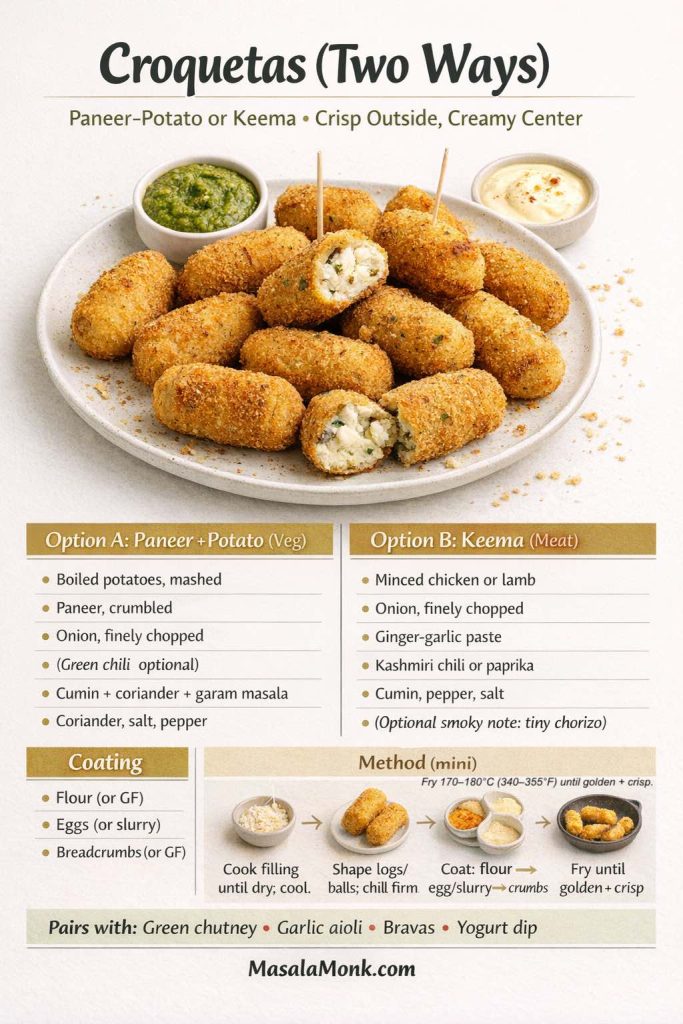
Recipe card titled “Croquetas (Two Ways)” showing golden croquetas with a cut-open creamy center, with two filling options (paneer-potato vegetarian and keema meat). Includes coating steps (flour, egg or slurry, breadcrumbs), mini method flow (cook filling, shape/chill, coat, fry), and dip pairings (green chutney, garlic aioli, bravas, yogurt dip). MasalaMonk.com footer.
Croquetas are the “disappear first” tapas bite—crisp outside, creamy center. This card gives you two filling paths: paneer-potato (veg) or spiced keema (meat), plus the simple coating flow and mini-method so you can prep ahead and fry right before serving. Pair with green chutney, garlic aioli, bravas, or yogurt dip and let guests mix-and-match. Save this for dinner parties and holiday tapas nights.

Option A: Paneer and potato croquetas recipe for tapas

This version feels very natural in an Indian-inspired spread because paneer and potato already behave beautifully in a croquette-style format.

Ingredients

  • 2 medium potatoes, boiled and mashed
  • 150 g paneer, grated or crumbled
  • 1 small onion, finely chopped
  • 1 green chili, finely chopped (optional)
  • 1/2 tsp cumin powder
  • 1/2 tsp coriander powder
  • pinch garam masala
  • chopped coriander
  • salt and black pepper

For coating

  • flour (or gluten-free flour)
  • 2 eggs (or a flour slurry for egg-free)
  • breadcrumbs (or gluten-free crumbs)

Option B: Keema croquetas recipe for meat tapas dishes

This filling is ideal if you want a more robust party plate. It also fits nicely if you’re building a table that includes chorizo tapas or other meat-forward small plates.

Ingredients

  • 250 g minced chicken or lamb
  • 1 small onion, finely chopped
  • 1 tsp ginger-garlic paste
  • 1 tsp Kashmiri chili powder or paprika
  • 1/2 tsp cumin powder
  • black pepper
  • salt
  • optional: a little finely chopped chorizo for a smoky note

Croqueta method for both fillings

First, cook the filling until dry and flavorful. If you’re making paneer-potato croquetas, simply mix and season thoroughly. If you’re making keema croquetas, cook the mince fully and let it cool.

Then shape the mixture into small logs or balls and chill until firm. After that, coat each piece in flour, then egg or slurry, then breadcrumbs.

Finally, fry in hot oil until golden and crisp.

Dips for croquetas that tie the whole table together

Croquettes love options, so serve at least two dips:

If you want a cooler, more refreshing contrast as well, a bowl from MasalaMonk’s tzatziki recipe collection works beautifully alongside spicy croquetas.

Make-ahead flow for croquetas

These are ideal make ahead tapas. You can shape and bread them in advance, refrigerate for several hours, and fry right before serving. Better yet, you can freeze them breaded and cook in batches later. That makes croquettes one of the easiest tapas recipes for dinner party planning, even though they look fancy on the table.

Also Read: Garlic & Paprika Cabbage Rolls (Keto-Friendly Recipes) – 5 Bold Savory Twists


Sauce board: the easiest way to make a tapas recipe feel complete

A tapas table gets better when sauces echo across multiple plates. Instead of creating one sauce for each dish, build a compact sauce board that everyone can mix and match.
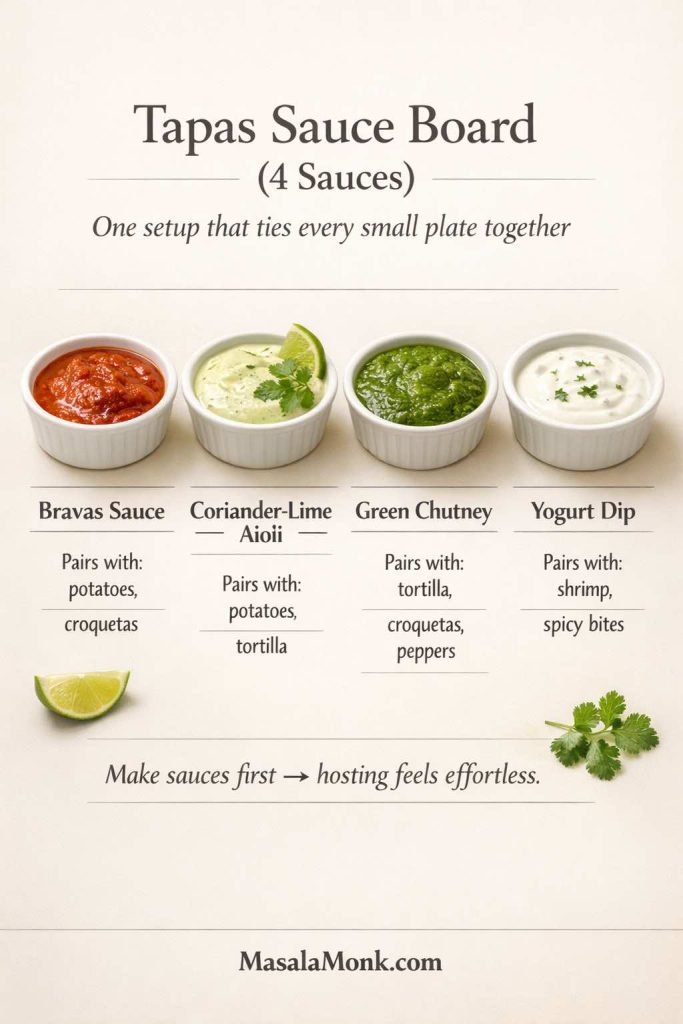
Infographic titled “Tapas Sauce Board (4 Sauces)” showing four dips for a tapas night: bravas sauce, coriander-lime aioli, green chutney, and yogurt dip. Each sauce includes pairing notes—potatoes and croquetas, potatoes and tortilla, tortilla/croquetas/peppers, and shrimp or spicy bites—plus a tip to make sauces first for effortless hosting. MasalaMonk.com footer branding.
A tapas table feels “complete” when sauces echo across multiple plates. Use this 4-sauce board to connect the whole menu: bravas for potatoes and croquetas, coriander-lime aioli for potatoes and tortilla, green chutney for tortilla/croquetas/peppers, and a cooling yogurt dip for shrimp and spicy bites. Make these first (or the day before) and hosting instantly becomes easier—guests can mix and match every bite. Keep reading for the full Indian-inspired tapas recipes, plus the timing plan that serves everything in waves.

Here’s a simple four-sauce setup that works with the entire spread:

  1. bravas sauce for potatoes and croquetas
  2. coriander-lime aioli for potatoes and tortilla
  3. green chutney for tortilla, croquetas, and even peppers
  4. cooling yogurt dip or tzatziki for shrimp and spicy bites

Because the sauces overlap, the table feels layered without becoming complicated. Also, guests can customize each bite, which makes the meal more interactive.

If you want one larger “party bowl” dip to anchor the spread, MasalaMonk’s spinach dip recipes are excellent, especially for holiday tapas ideas or bigger groups.

Also Read: Eggless Yorkshire Pudding (No Milk) Recipe


Menu ideas for a relaxed tapas dinner at home

Once you have the five anchor dishes, you can shape the evening in different ways depending on your crowd. That flexibility is exactly why tapas dinner ideas work so well for hosting.

Menu idea: an easy tapas dinner for 2 to 4

If you’re cooking for a smaller table, don’t make all five dishes at once. Instead, choose a focused trio and let the night stay easy.

A lovely combination is:

  • Masala Patatas Bravas
  • Tortilla Española wedges
  • Garlic shrimp with curry leaves

Then add one sauce board and a plate of olives. That’s enough for a satisfying tapas dinner without turning the evening into a production.

Menu idea: a full tapas dinner party menu for 6 to 8

For a bigger group, use all five featured tapas plates:

  • patatas bravas
  • tortilla wedges
  • garlic shrimp
  • padrón peppers
  • croquetas

Serve them in waves rather than all at once. Begin with tortilla and sauces, then bring out potatoes and croquetas, and finally finish with shrimp and peppers. As a result, the meal feels lively and fresh, and you don’t get stuck trying to hold everything at the perfect temperature.

Menu idea: tapas for lunch or a lighter spread

For a daytime table or a relaxed lunch tapas plan, make it simpler:

  • tortilla wedges
  • padrón peppers
  • a smaller bravas bowl
  • one dip and some bread

It still feels complete, yet it stays light enough for an afternoon meal.

Also Read: Mozzarella Sticks Recipe (Air Fryer, Oven, or Fried): String Cheese, Shredded Cheese, and Every Crunchy Variation


Variations & Ideas for vegetarian and vegan tapas recipes

One of the best things about tapas is how naturally it supports different dietary preferences. Small plates make it easy to swap one or two dishes without rebuilding the entire menu.

Vegetarian tapas ideas that feel substantial

A vegetarian tapas spread can be deeply satisfying if you mix textures well. For example:

  • patatas bravas for crunch and comfort
  • tortilla española for softness and richness
  • padrón peppers for brightness
  • paneer-potato croquetas for a crisp, hearty bite

That combination covers starch, protein, and vegetables beautifully.

If you want to expand beyond the Spanish-inspired core while keeping the same small-plates energy, MasalaMonk’s falafel with Indian twists makes an excellent add-on plate.

Vegan tapas ideas that still feel festive

A vegan tapas table is easy to build if you lean into potatoes, peppers, mushrooms, chickpeas, and good sauces.

A simple vegan spread could include:

  • patatas bravas with vegan coriander-lime mayo
  • chaat-spiced padrón peppers
  • garlic mushrooms with smoked paprika
  • marinated chickpeas with lemon and herbs
  • olives and toasted almonds

For the creamy element, MasalaMonk’s vegan mayo recipe helps keep the table rich without eggs.

Healthy tapas ideas without losing flavor

If you want lighter plates, the easiest changes are method-based:

  • roast or air-fry instead of deep-fry
  • keep one creamy dip and one yogurt-based dip
  • add more peppers and mushrooms
  • make smaller croquetas rather than skipping them entirely

That way, the table still feels abundant, but the meal doesn’t become overly heavy.

Also Read: Sourdough Starter Recipe: Make, Feed, Store & Fix Your Starter (Beginner Guide)


Tapas Recipe variations for gluten free and mixed groups

Gluten free tapas are much easier than people expect because many classic tapas dishes are already built on potatoes, eggs, vegetables, seafood, and olive oil.

Gluten free base plates

These four are naturally close to gluten-free:

  • patatas bravas
  • tortilla española
  • padrón peppers
  • garlic shrimp

The only places to watch are sauces and bread accompaniments.

Gluten free croquetas and swaps

Croquettes are the one dish that usually needs adjustment, but it’s a simple fix:

  • use gluten-free flour in the coating
  • use gluten-free crumbs
  • keep the filling the same

Alternatively, if you don’t want to bread anything at all, add a crisp lentil patty or tikki plate instead. MasalaMonk’s moong dal ki tikki is a fantastic option here and fits naturally into a tapas-style spread with chutney and yogurt dips.

Mixed-table planning for easy hosting

If you’re feeding a group with mixed preferences, label the plates lightly and keep sauces separate. For instance, place vegan mayo in one ramekin and dairy-based sauce in another. Similarly, keep bread on the side so gluten-free guests can build a plate around the naturally gluten-free dishes.

Because tapas are served in separate small dishes, this kind of hosting feels seamless instead of restrictive.

Also Read: Keto Hot Chocolate Recipe (Sugar-Free Hot Cocoa) + Best Homemade Mix


Make-ahead plan for stress-free Tapas dinner parties

The biggest difference between a calm tapas night and a frantic one is timing. Fortunately, this tapas recipe spread is easy to break into stages.
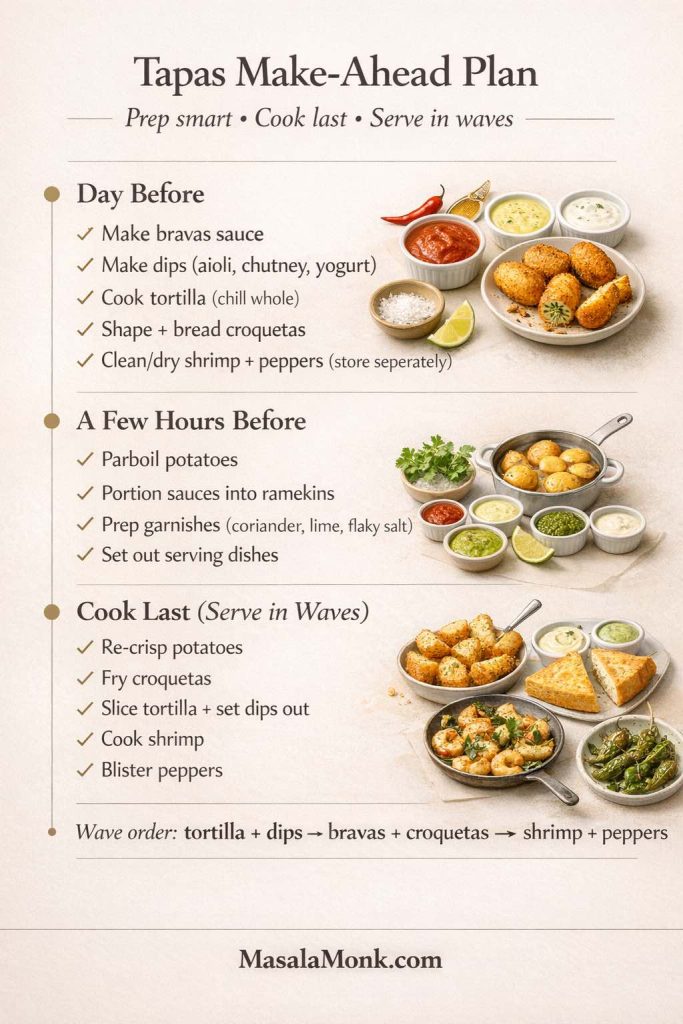
Infographic titled “Tapas Make-Ahead Plan” with a three-step timeline for hosting a tapas night: Day Before (make bravas sauce, make dips, cook tortilla, shape and bread croquetas, prep shrimp and peppers), A Few Hours Before (parboil potatoes, portion sauces, prep garnishes, set serving dishes), and Cook Last (re-crisp potatoes, fry croquetas, slice tortilla, cook shrimp, blister peppers). Includes wave order and MasalaMonk.com footer.
This is the easiest way to host tapas without living in the kitchen. Prep the day before (sauces, tortilla, croquetas), do a quick setup a few hours before (parboil potatoes, portion dips, prep garnishes), then cook the fast dishes last so everything tastes fresh. Follow the “serve in waves” order at the bottom—dips + tortilla first, then bravas + croquetas, and finish with shrimp + peppers. Keep scrolling for each tapas recipe and the sauce board details, and save this timeline for your next tapas dinner party at home.

Day before Prep for Tapas

A day ahead, you can:

  • make the bravas sauce
  • make the chutney-aioli and other dips
  • cook the tortilla and chill it whole
  • shape and bread the croquetas
  • clean and dry the shrimp
  • wash and dry the padrón peppers

With those steps done, the actual hosting window becomes much easier.

Prep a few hours before guests arrive

A few hours before serving:

  • parboil potatoes for bravas
  • set out serving bowls and plates
  • slice bread and prep garnish bowls
  • cut lemons or limes
  • portion sauces into ramekins

At this point, the evening is mostly assembly and finishing.

Last-minute cooking sequence for a Tapas recipe

Right before serving:

  1. re-crisp the potatoes
  2. warm the bravas sauce
  3. fry the croquetas
  4. slice and plate the tortilla
  5. cook shrimp
  6. blister peppers

This sequence works because the longest-cooking items (potatoes and croquetas) can hold briefly, while shrimp and peppers are fastest and best fresh.

Hosting rhythm that keeps you at the table

Serve in waves. Start with tortilla and dips while the potatoes finish crisping. Then bring out bravas and croquetas. Finally, serve the shrimp and peppers hot.

That pacing feels natural, and it also gives the meal the “tapas at home menu” energy people love—plates arriving one after another instead of all at once.

Also Read: Dirty Martini Recipe (Classic, Extra Dirty, No Vermouth, Spicy, Blue Cheese, Tequila + Batched)


Small plate and serving dish ideas that make the tapas table look special

Presentation matters with tapas, but it doesn’t need to be expensive. In fact, the table usually looks better when the dishes are simple.

If you like the classic look, one or two terracotta or clay-style bowls instantly add warmth. The Spain tapas guide even mentions clay pots as part of the tapas tradition, so that style suits the meal beautifully.

Plate setup for a balanced table

Here’s an easy layout:

  • one shallow bowl for patatas bravas
  • one warm skillet or oven-safe dish for shrimp
  • one plate for tortilla wedges
  • one plate for croquetas
  • one bowl for peppers
  • three or four small ramekins for sauces

Spread the dishes out rather than clustering everything in the center. As a result, the table looks abundant and easy to navigate.

Garnish ideas that don’t overwhelm a Tapas Recipe

Keep garnish light and purposeful:

  • chopped coriander
  • flaky salt
  • lemon and lime wedges
  • a little smoked paprika dusting
  • tiny drizzle of sauce instead of heavy pooling

Too much garnish makes tapas look busy. By contrast, a few clean finishing touches make the table look polished and still relaxed.

Also Read: Ravioli Recipe Reinvented: 5 Indian-Inspired Twists on the Italian Classic


Add-ons in a different direction for a bigger small-plates night

Sometimes you want a tapas style dinner that stretches beyond Spanish-inspired plates while still keeping the shared-plates format. In that case, a few MasalaMonk dishes fit beautifully as “second-wave” options.

A vegetarian small-plate extension with a Tapas Recipe

If you want another vegetarian bite, MasalaMonk’s falafel with Indian twists works wonderfully alongside the chutney and yogurt dips already on the table. Because falafel are small, crisp, and dip-friendly, they slide naturally into the tapas format.

A crisp seafood extension

If your guests love seafood tapas, you can add a more substantial crisp fish plate later in the evening. MasalaMonk’s fish and chips with Indian twists offers great flavor inspiration, and even a small batch of fish bites can feel like a special “bonus tapa.”

Easy party snacks for larger groups

For a bigger crowd, a plate of MasalaMonk’s cheese balls with Indian-inspired variations can act like a second croquette-style dish. They’re crisp, bite-size, and extremely party-friendly, so they fit right into tapas party food ideas without much explanation.

These add-ons aren’t necessary, of course. Still, they’re a lovely way to turn one tapas dinner into a full small-plates evening when guests linger longer than expected.

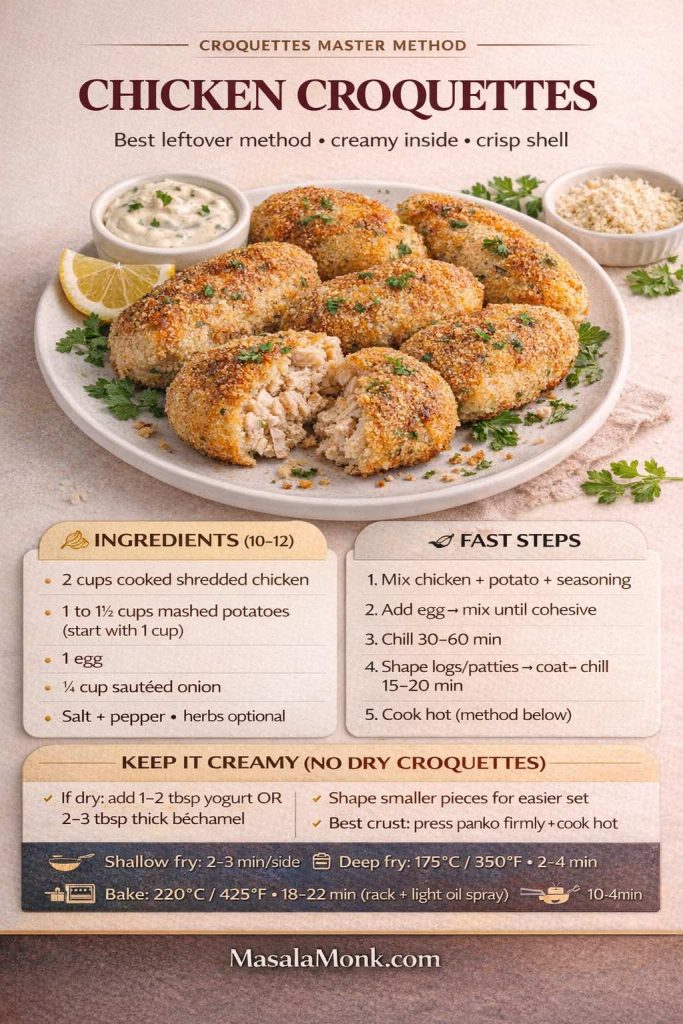
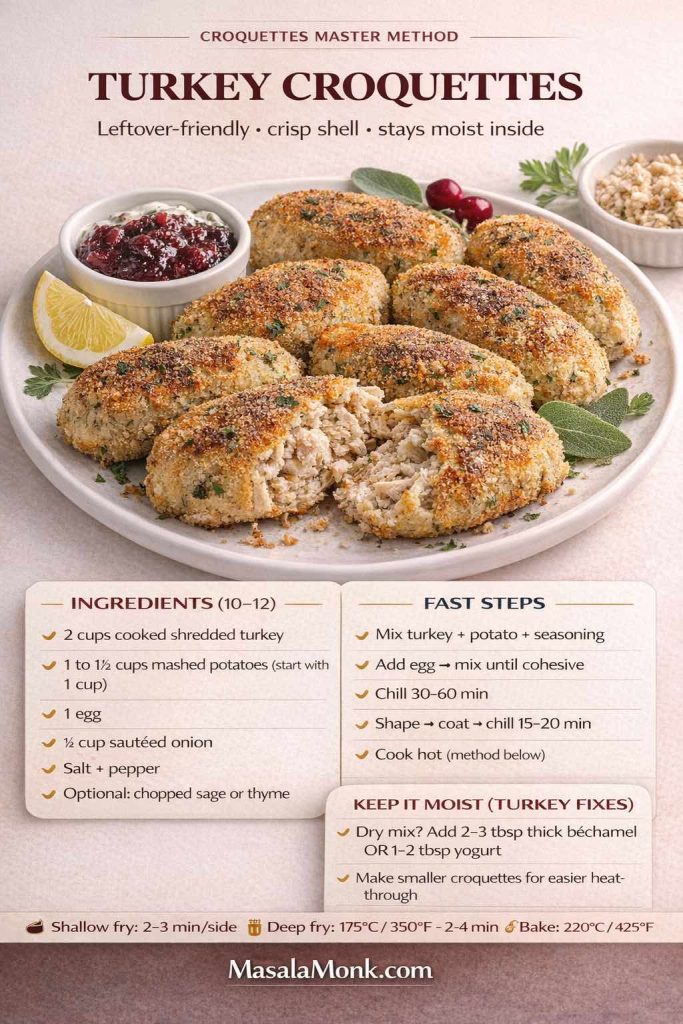
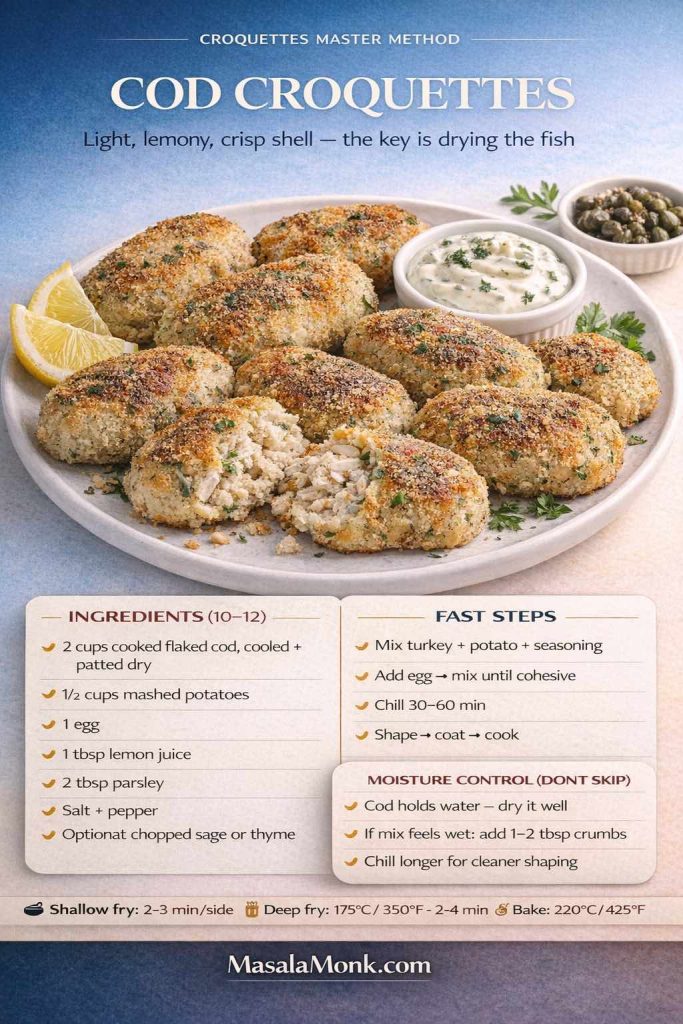
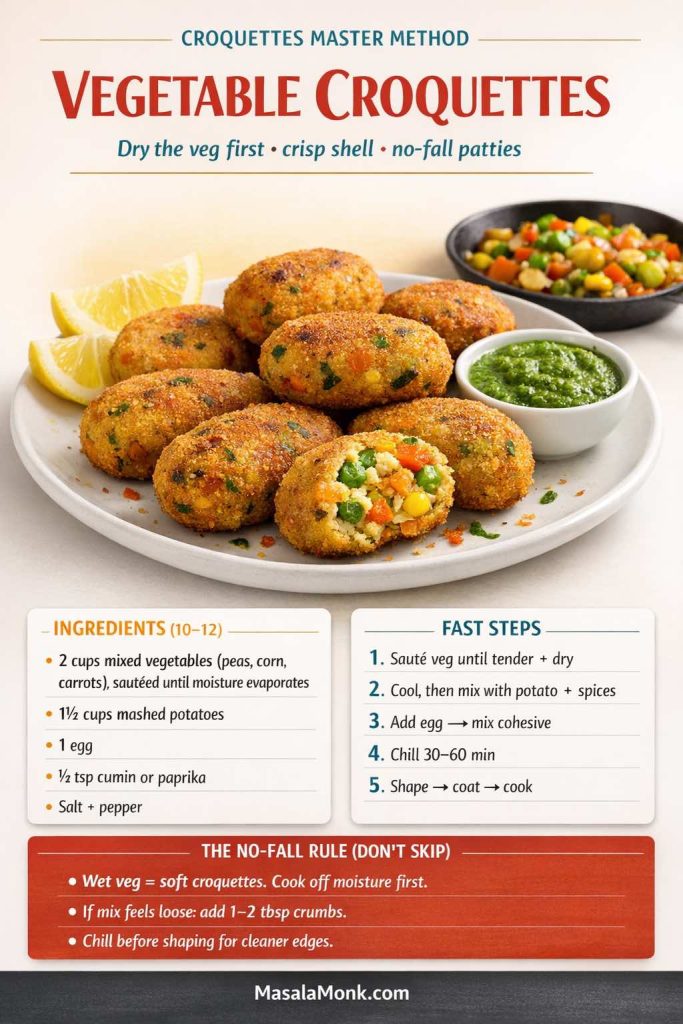
Also Read: Croquettes Recipe: One Master Method + 10 Popular Variations


Ready-made add-ons to a Tapas Recipe that still feel intentional

Not everything on a tapas table needs a recipe. In fact, “ready made tapas” elements are part of what makes the meal feel relaxed and generous.

Simple no-cook plates to add

You can round out the spread with:

  • olives and pickled vegetables
  • toasted almonds
  • sliced cured meat for a serrano ham tapas plate
  • cheese cubes or wedges
  • anchovy and olive skewers for a pintxo-style bite

These additions are especially useful for holiday tapas ideas because they fill the table quickly while you finish the hot dishes.

Anchovy and olive pintxo as a quick classic nod

For a fast cold bite, skewer an olive, an anchovy, and a pickled pepper on a toothpick. It takes minutes, yet it adds a distinctly Spanish touch to the meal. Spain’s popular tapas guide describes these classic combinations beautifully and can inspire a few more easy Spanish tapas dishes if you want to expand later.

Also Read: How to Make a Flax Egg (Recipe & Ratio for Vegan Baking)


Drinks and finishing touches for a complete evening

Tapas are as much about pace as they are about flavor, so drinks matter. You want something that refreshes between bites and keeps the table feeling lively.

Drink pairing ideas for a non-alcohol spread

Citrusy, low-sugar drinks pair especially well with spicy potatoes and garlic shrimp. For that reason, MasalaMonk’s keto mocktail recipes are a great place to pull a couple of options for a party-friendly drinks tray.

Warm-finish idea for cooler evenings

If your evening leans cozy—think winter tapas ideas or a Christmas tapas gathering—you can finish with something warm instead of jumping straight to dessert. A pot from MasalaMonk’s masala chai masterclass turns the meal into a long, relaxed hang, especially after a table full of salty, crispy tapas.

Dessert follow-up that stays easy

When you do want dessert, keep it simple and soft. A no-bake option is perfect after a tapas spread because you’re already juggling several dishes. MasalaMonk’s banana pudding without an oven is an easy crowd-pleaser and a gentle finish after the garlic, chili, and bravas sauce.

Also Read: Chicken Pesto Pasta (Easy Base Recipe + Creamy, One-Pot, Baked & More)


Tapas Recipe timing recap for a smooth, enjoyable night

Tapas feel fancy when the host looks relaxed. Therefore, the goal is not to cook everything at once. The goal is to set up the evening so each plate arrives at the right time with minimal stress.

What to cook first

Start with the dishes that hold:

  • tortilla
  • sauces
  • dips
  • ready-made add-ons

These can wait happily while you finish the hot plates.

What to cook second

Next, move to the items that can crisp and hold briefly:

  • patatas bravas potatoes
  • croquetas

Keep them warm while you prep the last two fast dishes.

What to cook last in a Tapas Recipe

Finish with:

  • garlic shrimp
  • padrón peppers

Both are at their best right out of the pan, and they bring a burst of aroma that makes the table feel freshly made.

Because of this sequence, a five-plate tapas dinner party menu becomes genuinely manageable, even on a regular weeknight.

Also Read: Keto Mocktails: 10 Low Carb, Sugar Free Recipes


Variations for meat tapas, chorizo tapas, and heartier appetites

If your guests want a more protein-heavy table, you can shift the spread without losing the tapas feel.

Chorizo and meat add-ons in a Tapas Recipe

A quick chorizo pan dish is one of the easiest meat tapas recipes:

  • slice chorizo
  • warm in a skillet until lightly crisp
  • finish with black pepper and lemon

Serve it in a small dish with toothpicks, and it instantly feels like a proper tapas bar bite.

Likewise, the keema croquetas version already gives you a hearty meat option. If you want even more, you can add small meatballs or skewers later, but in most cases chorizo and keema croquetas are more than enough.

Pork-friendly direction for a different kind of tapas night

For a fuller tapas style dinner, sliced pork can work as a warm platter in place of one of the vegetarian items. If you want ideas that translate well to small plates, MasalaMonk’s slow cooker pork tenderloin and pork tenderloin in oven both offer great starting points for a tapas-style sliced meat plate.

Just slice thinly, serve with sauce, and keep the portions small so the table still feels like tapas rather than a plated main course.

Also Read: Masterclass in Chai: How to Make the Perfect Masala Chai (Recipe)


Final serving flow: how to make a Tapas meal feel generous and relaxed

Now that the dishes are ready, the last step is simply how you serve them. This part is easy to overlook, but it changes the whole feel of the evening.

Start by putting out the sauce board, olives, and tortilla wedges. Then, once people are settled, bring the patatas bravas and croquetas. A little later, finish the table with garlic shrimp and padrón peppers straight from the pan.

That sequence matters. First, it gives guests something to snack on while the hot plates finish. Next, it creates a natural rhythm, which is what makes tapas nights feel social. Finally, it keeps the food tasting better because not everything is sitting on the table for too long.

The beauty of a Tapas Recipe spread like this is that it feels layered without being complicated. You get traditional Spanish tapas shapes—patatas bravas, tortilla española, croquetas, pintxo-style bites, and seafood tapas—while the Indian-inspired seasonings and dips make the whole meal feel new.

So set out the small plates, let the sauces do some of the heavy lifting, and serve in waves. Before long, you’ll have one of those rare meals that feels both festive and easy: a full tapas dinner at home, built from simple small plates that invite everyone to take one more bite.

Also Read: Air Fryer Salmon Recipe (Time, Temp, and Tips for Perfect Fillets)

FAQ: Tapas Recipe, Small Plates, and Indian-Inspired Tapas Ideas

1. What is a tapas recipe, exactly?

A tapas recipe is any small-plate dish designed to be served as part of a shared spread rather than as a single main course. Traditionally, tapas can be hot or cold, simple or elaborate, and often appear in combinations so the table feels varied. In this post, the tapas recipe concept stays true to that format, yet the flavors lean Indian-inspired through spices, chutneys, curry leaves, and bright herb finishes. In other words, the structure is Spanish small plates, while the flavor direction adds a new personality.

2. Are tapas and appetizers the same thing?

They overlap, but they are not always the same. Appetizers usually come before a main meal, whereas tapas can become the meal itself. That distinction matters when you plan portions. For example, one or two small bites may work as appetizers, but a tapas dinner needs a fuller mix of potatoes, protein, vegetables, and dips. So, if you are building a tapas dinner at home, think beyond starters and aim for a complete small-plates menu.

3. Can tapas be a full dinner, not just snacks?

Absolutely. In fact, a tapas dinner often feels more satisfying than a single plated meal because you get contrast in every round. A good tapas-style dinner includes at least one hearty dish, one quick protein, one vegetable plate, and a sauce or dip element. As a result, the table feels abundant without becoming too heavy. For a home setup, four to five dishes usually create a complete dinner, especially when bread, olives, or a no-cook plate are included.

4. What are the easiest tapas to make at home for beginners?

The easiest tapas recipes are the ones that need simple ingredients and quick finishing: patatas bravas, blistered peppers, tortilla wedges, garlic shrimp, and marinated olives. Among these, patatas bravas and padrón peppers are especially beginner-friendly because the methods are straightforward and forgiving. Meanwhile, tortilla española is also approachable once you understand that the potatoes should be tender, not crisp. If you are new to tapas, start with one potato dish, one pepper dish, and one dip, then expand from there.

5. How many tapas dishes should I make for a dinner party?

For a small gathering of 4 to 6 people, 4 to 5 tapas dishes is a very good target. For a bigger group, 6 to 8 dishes works better, but not all of them need to be cooked. Ideally, combine hot tapas dishes with a few ready-made tapas plates such as olives, cheese, or cured meats. That way, your menu feels generous while your kitchen stays manageable. As a rule of thumb, variety matters more than quantity per dish, because guests enjoy trying more than one flavor.

6. What are good tapas dinner party menu ideas for mixed groups?

A balanced tapas dinner party menu should include at least one vegetarian dish, one seafood or meat dish, one potato or starch dish, and one bright vegetable plate. For instance, a strong mix is patatas bravas, tortilla española, garlic shrimp, padrón peppers, and croquetas. Beyond that, you can add olives, bread, and a sauce board to make everything feel complete. This approach works well because everyone can build a plate they like without needing a separate meal.

7. Which tapas recipes are best for make-ahead prep?

Tortilla española, croquetas, bravas sauce, and most dips are excellent make-ahead tapas options. Tortilla can be cooked earlier and sliced before serving, while croquetas can be shaped and breaded in advance, then fried at the last minute. Likewise, bravas sauce often tastes better after a little rest because the flavors settle. By comparison, garlic shrimp and blistered peppers are best cooked close to serving time. So, a smart tapas plan combines dishes that hold well with a couple of fast-cook plates.

8. What are good hot tapas dishes for a home party?

Hot tapas dishes are usually the stars of the table because they bring aroma and energy. Great choices include patatas bravas, croquetas, garlic shrimp, chorizo in a skillet, and blistered peppers. If you want a more filling spread, tortilla wedges can also be served warm. Even so, the best hot tapas menu still benefits from one or two cold plates to balance the meal. That contrast keeps the table lively and prevents everything from tasting too rich.

9. What are easy cold tapas ideas to add without extra cooking?

Cold tapas ideas can be wonderfully simple: olives, marinated chickpeas, cheese cubes, anchovy skewers, sliced cured meats, and pickled vegetables. In addition, a chilled dip or aioli instantly makes the spread feel bigger. These no-cook additions are especially useful for tapas party food because they fill the table while you finish the hot plates. Put differently, cold tapas are not just backups—they are part of what makes a tapas spread feel relaxed and complete.

10. Are there gluten free tapas recipes that still feel substantial?

Yes, many classic tapas are naturally close to gluten-free, including patatas bravas, tortilla española, garlic shrimp, and blistered peppers. The main things to watch are bread, breadcrumbs, and any packaged sauces. Croquetas can still be included if you use gluten-free flour and gluten-free crumbs. Therefore, a gluten free tapas spread is usually easy to build without changing the core menu. If needed, you can also add roasted vegetables or lentil patties for an extra hearty plate.

11. What are the best vegetarian tapas ideas for a full meal?

A satisfying vegetarian tapas table should mix crispy, creamy, and bright elements. A strong combination includes patatas bravas, tortilla española, padrón peppers, and paneer-potato croquetas. Then, to round out the spread, add one herb dip and one creamy dip. This works well because potatoes and eggs provide substance, while peppers and chutneys keep the meal from feeling heavy. If you want one more plate, marinated chickpeas or mushrooms fit naturally into a vegetarian tapas menu.

12. Can I make vegan tapas that still feel festive?

Definitely. Vegan tapas recipes can be just as fun and flavorful when you build them around potatoes, peppers, mushrooms, chickpeas, and bold sauces. For example, vegan patatas bravas, chaat-spiced peppers, garlic mushrooms, and marinated beans make a great base. Then add a vegan mayo or herby dip so the table still has that creamy element people expect from tapas. Consequently, the spread feels celebratory instead of “diet” or restricted.

13. Are tapas healthy, or are they usually too heavy?

Tapas can be as light or as rich as you want. Some tapas dishes, such as croquetas and fried potatoes, are definitely indulgent; however, others like peppers, seafood, olives, and tortilla wedges can be quite balanced. If you want healthy tapas ideas, use more roasting and air-frying, serve smaller portions of fried dishes, and add more vegetable plates. Another helpful trick is to include one yogurt-based dip alongside richer sauces. That way, the table still feels abundant but not overly heavy.

14. What is the difference between patatas bravas and other potato tapas dishes?

Patatas bravas are specifically potatoes served with a bold, spicy bravas sauce, often with an aioli-style drizzle. Other potato tapas dishes may be roasted or fried potatoes with herbs, garlic, or cheese, but they do not necessarily include bravas sauce. So, the sauce is what makes patatas bravas distinct. If you are planning a tapas recipe spread, patatas bravas are a strong choice because they are crowd-friendly, easy to scale, and pair well with both vegetarian and meat tapas plates.

15. What is bravas sauce made of, and can I make it ahead?

Bravas sauce is typically built from oil, garlic, tomato, paprika, and chili, then thinned to a spoonable consistency. Some versions are sharper, while others are smokier or more tomato-forward. In an Indian-inspired tapas recipe, cumin, tamarind, or Kashmiri chili can add depth without changing the identity of the dish. Fortunately, bravas sauce is one of the best make-ahead components on a tapas table. In fact, making it a day early often improves the flavor.

16. What is tortilla española, and is it the same as a regular omelette?

Tortilla española is a Spanish potato-and-egg dish, often called Spanish omelette, but it is not the same as a quick breakfast omelette. The texture is denser, the potatoes are cooked until soft, and the whole dish is sliced into wedges. Unlike a fluffy omelette, tortilla española is meant to hold its shape and serve beautifully at room temperature. For that reason, it is one of the most reliable tapas recipes for parties and make-ahead menus.

17. Can I serve tortilla española cold or at room temperature?

Yes, and that is one of its biggest advantages. Tortilla española tastes great warm, room temperature, or lightly chilled, which makes it ideal for tapas party food and lunch spreads. Moreover, it slices more cleanly after resting, so the presentation is often better when you do not serve it straight from the pan. If you want extra flavor, add a small chutney-aioli or herb dip on the side. That keeps the wedges neat while giving guests an optional finish.

18. What is gambas al ajillo, and how is it different from gambas pil pil?

Gambas al ajillo is a classic Spanish garlic shrimp dish cooked quickly in olive oil with garlic and chili. Gambas pil pil, depending on the region or menu, can also refer to a garlicky shrimp preparation, often with a more pronounced chili-oil character and bubbling pan presentation. In practice, many home cooks use the names loosely. What matters most is the method: hot oil, garlic, chili, quick-cooked shrimp, and immediate serving. For an Indian-inspired version, curry leaves fit beautifully into that same format.

19. How do I cook padrón peppers for tapas without making them soggy?

The key is high heat and a quick cook. First, dry the peppers well. Then cook them in a hot skillet with a little oil so they blister rather than steam. Once they char in spots, remove them promptly and season right away. If the pan is too cool or crowded, the peppers soften without getting that signature blistered finish. A squeeze of lime and a light spice dusting can be added afterward, but the technique matters more than the seasoning.

20. What are croquetas, and can I make them without ham?

Croquetas are small breaded and fried bites with a creamy or soft filling. Traditional Spanish croquettes often use ham, but you can absolutely make them with other fillings. Paneer-potato, chicken keema, mushrooms, spinach, or even cheese-based fillings all work well. Therefore, croquetas are one of the most adaptable tapas dishes for mixed groups. Just keep the filling flavorful and not too wet, then chill before breading so they hold their shape while frying.

21. What is the difference between tapas and pintxos?

Tapas are small plates served in bowls, plates, or little dishes, while pintxos are often bite-size items assembled on bread and secured with a toothpick. Pintxos are especially associated with the Basque region and tend to be more “built” or stacked. Meanwhile, tapas can include anything from saucy potatoes to shrimp skillets to croquetas. Both styles work beautifully together on a home table, so you can mix them freely if you want more variety.

22. Can I use ready-made tapas items and still call it a tapas night?

Absolutely. A great tapas night does not need every item to be homemade. In fact, ready-made tapas elements such as olives, cheese, cured meats, pickles, and nuts are part of what makes hosting feel easy. The trick is to pair them with a few hot dishes so the table still feels fresh and intentional. For example, make patatas bravas and garlic shrimp, then fill the rest of the spread with simple no-cook plates. That combination is practical and still feels special.

23. What are good tapas ideas for lunch instead of dinner?

For tapas lunch ideas, keep the menu lighter and a little simpler than a dinner spread. Tortilla wedges, padrón peppers, a small bowl of bravas, olives, and one dip make a great midday table. Since lunch usually calls for less richness, you can skip heavier fried dishes like croquetas or serve a smaller portion. As a bonus, many lunch-friendly tapas dishes are make-ahead friendly, so the meal comes together quickly.

24. What serving dishes work best for tapas at home?

Small plates, shallow bowls, ramekins, and one or two warm serving dishes are usually all you need. Terracotta dishes look beautiful and suit the tapas style, especially for potatoes or baked items, but plain white bowls work just as well. The main goal is to keep each dish separate so the table looks abundant and easy to navigate. Rather than crowding everything onto one platter, spread the dishes across the table so guests can reach and build their own plate comfortably.

25. How do I keep a tapas dinner from feeling stressful to cook?

Plan the menu in layers. Start with make-ahead items like tortilla, sauces, and prepared croquetas. Then, cook the dishes that can hold for a few minutes, such as potatoes. Finally, finish with quick-cook tapas like garlic shrimp and blistered peppers. This sequence keeps the kitchen calm and gives the meal a natural flow. Most importantly, serve in waves instead of trying to put every dish out at the same time. That one change makes tapas hosting much easier.
Posted on 5 Comments

Croquettes Recipe: One Master Method + 10 Popular Variations

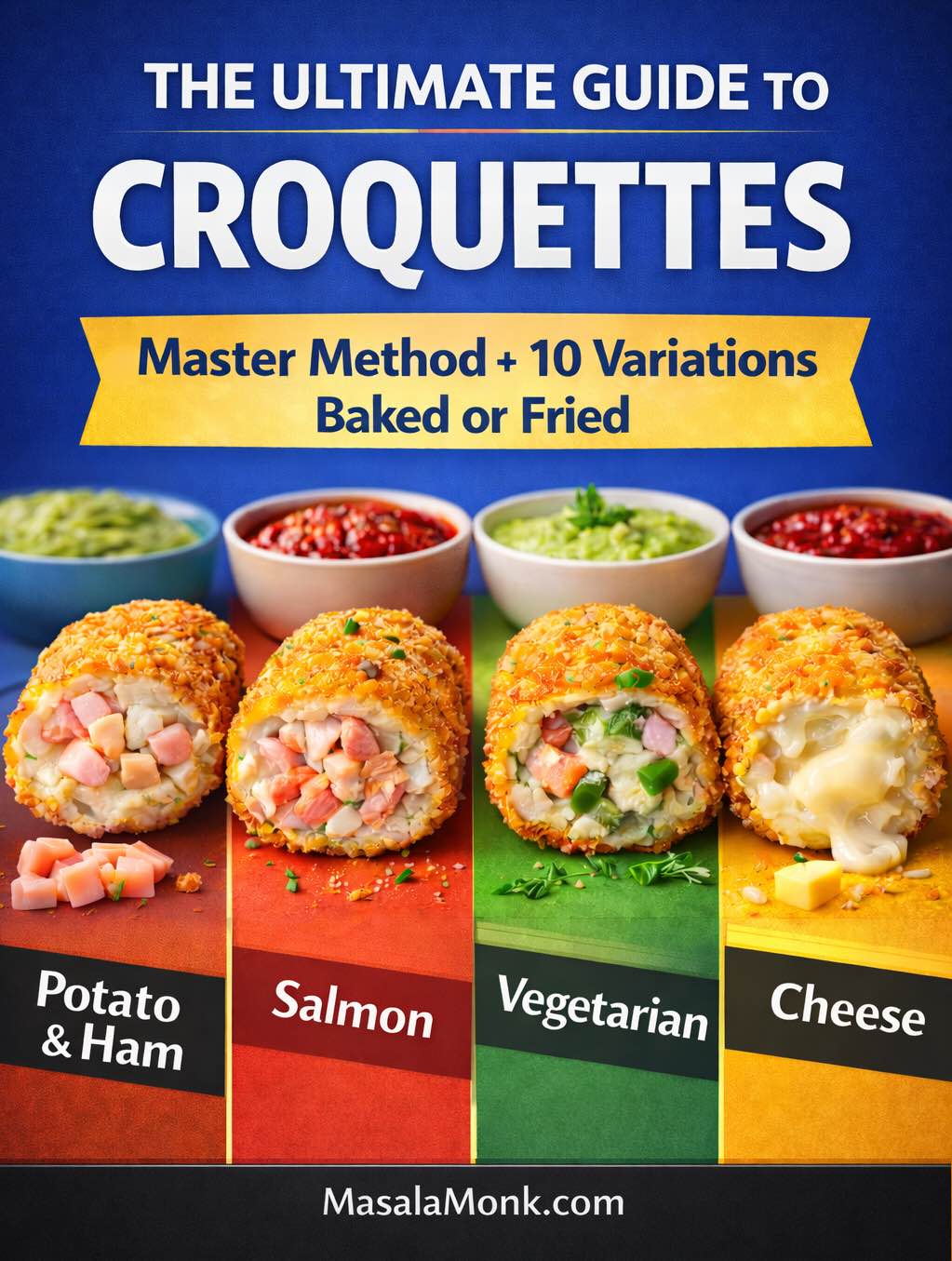
Magazine-style cover graphic titled “The Ultimate Guide to Croquettes” showing four colored lanes—Potato & Ham, Salmon, Vegetarian, and Cheese—with croquettes cut open to reveal fillings, plus “Master Method + 10 Variations (Baked or Fried)” and MasalaMonk.com at the bottom.

Croquettes have a way of making an ordinary day feel a little more celebratory. The outside turns crisp and golden, the inside stays soft and savory, and suddenly a handful of simple ingredients becomes something you’d happily serve to guests. Even so, a lot of people hesitate to try a croquettes recipe because they’ve had the frustrating version: croquettes that crack in the oil, croquettes that taste bland inside, croquettes that go oily, or croquettes that collapse the moment you flip them.

Fortunately, once you learn one reliable croquettes recipe method, everything clicks. After that, you can make easy croquettes on a weeknight, bake them when you want healthy croquettes, or go all-in with Spanish croquetas that are creamy enough to feel like a tapas bar at home. You can also work through the classics—potato croquettes, ham croquettes, chicken croquettes, tuna croquettes, salmon croquettes (canned or fresh salmon croquette), cod croquettes, vegetarian croquettes, vegan croquettes—without learning a new technique every time.

This post is exactly that: a single, detailed, step-by-step guide that covers croquette fish styles, croquette veggie options, and the “perfect croquettes” approach—plus the oven baked croquettes route when you want crunch with less fuss.

And because croquettes are at their best when they’re part of a spread, you’ll also get natural pairings: cooling chutneys, fiery chutneys, and a few drink and dessert ideas to finish the meal without feeling heavy.


Croquettes Recipe: The Four Rules That Make Them Work Every Time

Before you pick a variant, it helps to understand what croquettes really are. Whether you call it a croquette, a croqueta recipe, a kroket (you’ll see “chicken kroket” and “dutch croquettes” used in different places), or even a Japanese potato croquette style, the structure is the same:

  1. A flavorful filling
  2. A binder that holds it together
  3. A coating that creates crunch
  4. A chill step that turns “hope” into “confidence”

If you keep those four rules steady, you can change almost everything else.

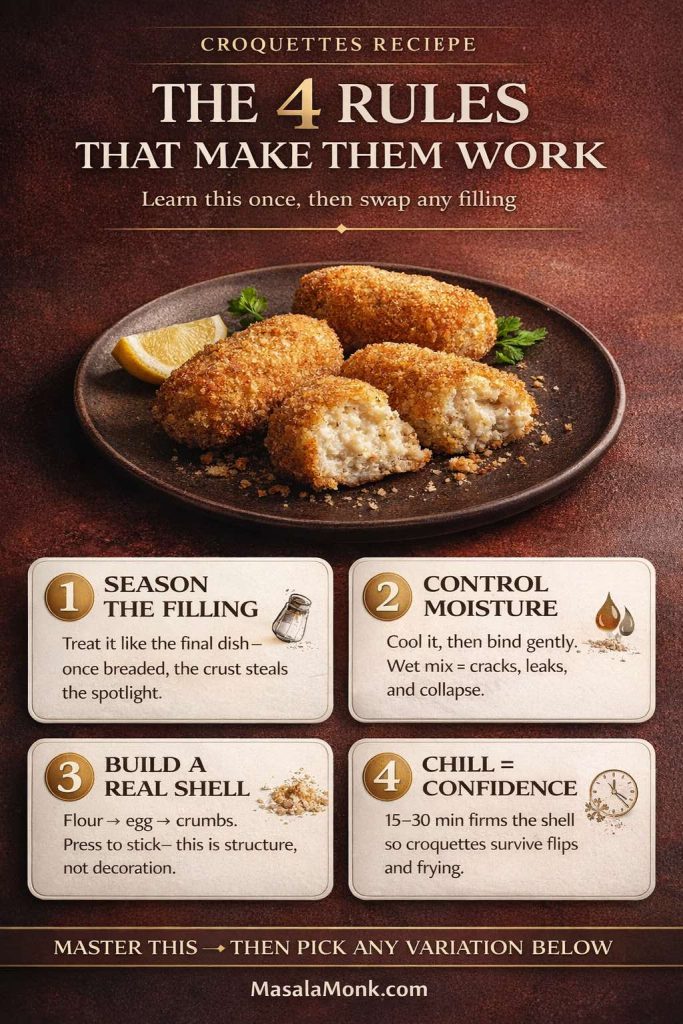
Infographic showing the four rules for a croquettes recipe: season the filling, control moisture, build a strong flour–egg–crumb shell, and chill 15–30 minutes for croquettes that don’t crack, leak, or fall apart. Includes a croquette hero photo and MasalaMonk.com footer.
Croquettes falling apart? This is the “save it forever” checklist. Season the filling like it’s the final dish, cool and control moisture, build a real shell (flour → egg → crumbs), then chill so the coating firms up before you cook. Once these four rules click, you can swap in potato, salmon (canned or fresh), ham & cheese, chicken, tuna, cod, vegetarian, or vegan fillings without changing the method. Bookmark this guide, pin it for later, and use it as your quick reset before frying, baking, or air frying.

Rule 1: Season the filling like it’s the final dish.
Once croquettes are breaded, the outside becomes the star. That means the inside must be seasoned enough to hold its own.

Rule 2: Control moisture, don’t fight it.
Wet fillings are the number one reason croquettes fall apart. Instead of adding more egg (which can make them softer), you remove or offset moisture: cool the mixture, add just enough dry binder, and chill properly.

Rule 3: The coating is a shell, not decoration.
Flour → egg → crumbs isn’t tradition for tradition’s sake. It builds a sturdy exterior so the inside can stay creamy.

Rule 4: Chilling is non-negotiable for perfect croquettes.
Chilling firms fat and starches, reduces steam pressure, and makes shaping easier. It’s the difference between croquettes that survive the pan and croquettes that become snack-flavored chaos.

Keep these rules in mind, and suddenly “how do you make croquettes” becomes a calm question rather than a stressful one.

Also Read: Ravioli Recipe Reinvented: 5 Indian-Inspired Twists on the Italian Classic


How to Make Croquettes: The Master Step-by-Step (Works for Every Variant)

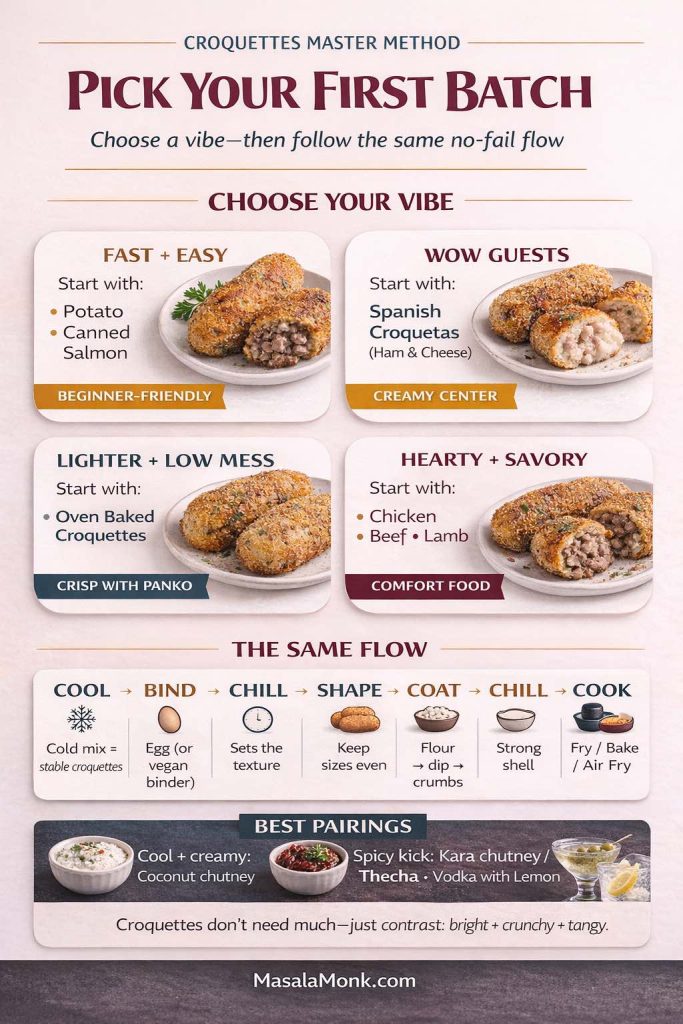
This is the core croquettes recipe method you’ll use for everything in the post—potato, fish, chicken, turkey, vegetarian, vegan, Spanish croquetas, and more.

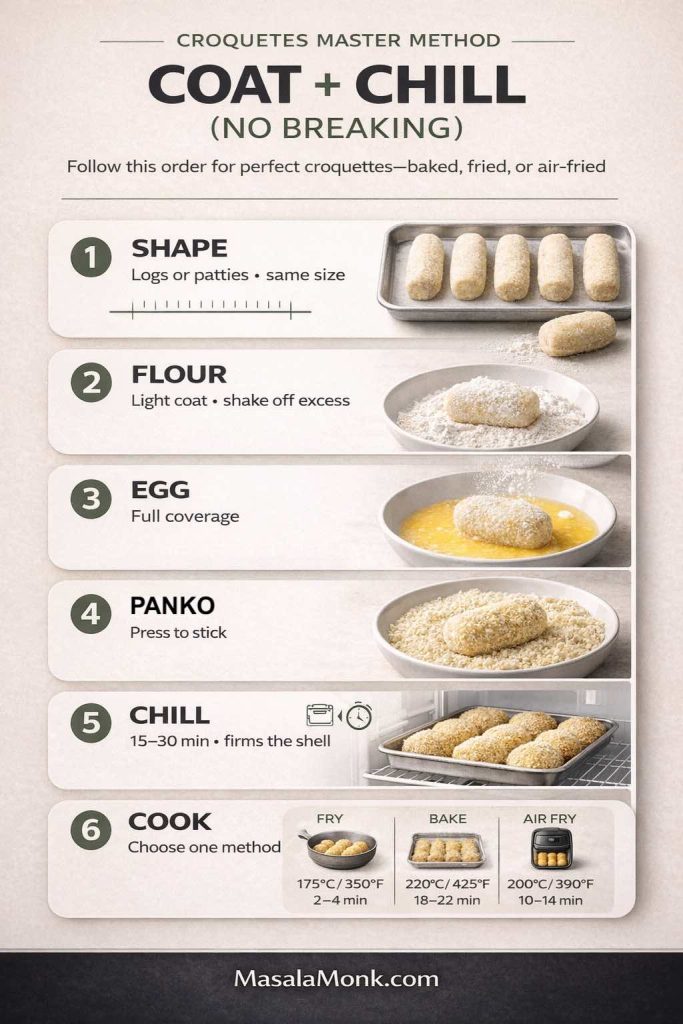
Step-by-step croquettes master method infographic showing how to shape croquettes, coat in flour, dip in egg, press into panko, chill 15–30 minutes, then cook by frying (175°C/350°F 2–4 min), baking (220°C/425°F 18–22 min), or air frying (200°C/390°F 10–14 min), with MasalaMonk.com at the bottom.
If your croquettes crack, leak, or fall apart, this is the fix: shape → flour → egg → panko → chill. That 15–30 minute chill firms the coating so you can fry for max crunch or bake/air-fry for a lighter batch—then plug in any filling from the post (potato, salmon, ham & cheese, tuna, chicken, cod, or vegan) without changing the method.

What you’ll need

  • 3 shallow bowls (for breading)
  • A tray (for chilling shaped croquettes)
  • A rack (for draining fried croquettes or baking with airflow)
  • Optional but helpful: a food thermometer for meat and fish variants

Base quantities (Recipe makes 10–12 croquettes)

Think of these as the “croquettes template.” Your filling changes, the structure stays.

For the croquette mixture

  • 2 packed cups prepared filling (pick a variant below)
  • 1 large egg (binder)
    Vegan binder method is included later
  • 2–6 tablespoons breadcrumbs or flour, only as needed (moisture control)
  • Salt and pepper (plus any spices/herbs your filling wants)

For the coating

  • ½ cup flour
  • 2 eggs, beaten with a pinch of salt
  • 1½ cups breadcrumbs or panko (panko gives the crispest bite)

Step 1: Prepare the filling, then cool it completely

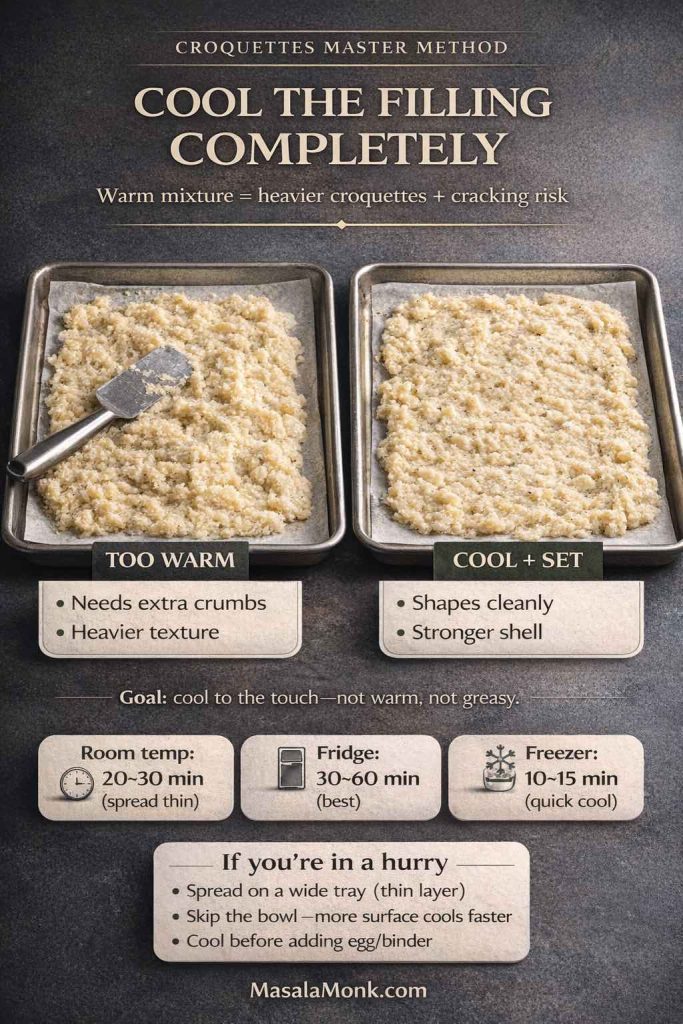
Make your filling according to the variant recipe you’re using. When it’s done, spread it out on a plate or tray and let it cool. If you rush and mix while it’s warm, you’ll need more breadcrumbs, the texture will be heavier, and shaping will feel like wrestling mashed clouds.

Croquettes filling spread on two trays showing why the mixture must cool completely before shaping and breading croquettes. Left tray is too warm and needs extra crumbs; right tray is cool and sets firm for a stronger shell. Includes cooling options: room temp, fridge, quick-freeze, with MasalaMonk.com.
Warm croquette mixture is the fastest way to end up with heavy croquettes that crack or soak up oil. Spread your filling thin, cool it fully, then bind and bread—your croquettes shape cleanly, hold their coating, and cook with less drama whether you fry, bake, or air fry. Save this card for every potato, salmon, chicken, veg, or vegan batch.

Step 2: Bind the mixture

Add your egg and mix thoroughly. Then test the texture:

  • If it holds together when you press a small handful, you’re good.
  • If it feels loose or wet, add breadcrumbs 1 tablespoon at a time until it firms up.

This step is where people often over-correct. Slow down. You’re aiming for a mixture that is cohesive, not dry.

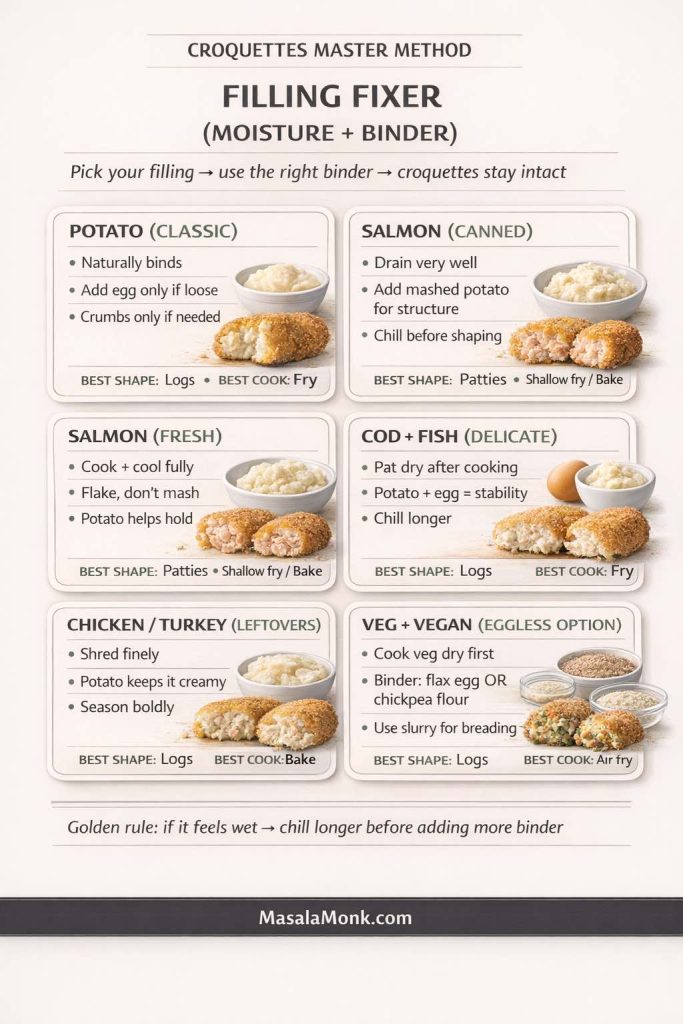
Croquettes master method ‘Filling Fixer’ infographic showing how to keep croquettes from falling apart by matching moisture level to the right binder for six fillings: potato, canned salmon, fresh salmon, cod/fish, chicken/turkey, and veg/vegan, with best shape and best cooking method tips plus a note to chill longer if the mixture feels wet.
Use this quick ‘filling fixer’ before you shape anything: it shows the one adjustment that saves a batch—drain/pat dry where needed, then choose the right binder so croquettes stay intact. It’s especially handy for fish croquettes (salmon/cod) and vegan croquettes, where moisture control makes or breaks the crust.

Step 3: Chill the mixture (30–60 minutes)

This single step makes shaping easier and prevents cracking. In addition, it helps the mixture set so it survives turning.

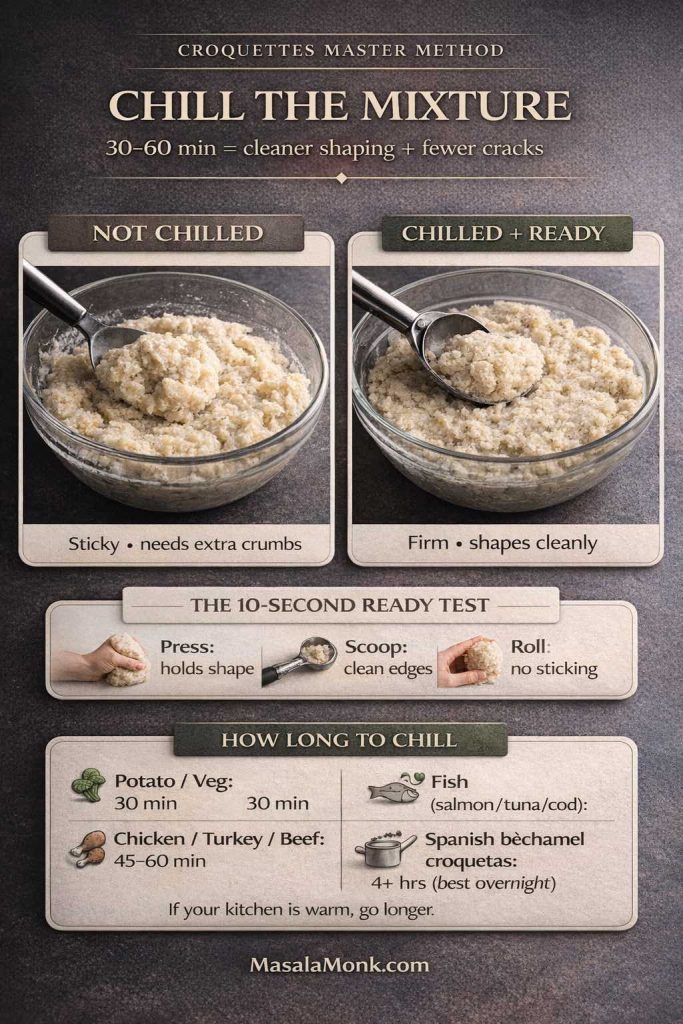
Infographic showing why to chill croquettes mixture 30–60 minutes before shaping: not chilled mixture is sticky, chilled mixture shapes cleanly. Includes a 10-second readiness test (press, scoop, roll) and a “how long to chill” guide for potato/veg, fish (salmon/tuna/cod), chicken/turkey/beef, and Spanish béchamel croquetas, with MasalaMonk.com footer.
Chilling the croquettes mixture is the quiet step that prevents most disasters. A cold mix holds its shape, needs fewer extra crumbs, and is far less likely to crack once it hits hot oil. Use the quick ready test here (press → scoop → roll), then match the chill time to your filling—potato/veg sets fast, fish benefits from a steady firm-up, and béchamel-based Spanish croquetas really shine with a longer rest. Keep this guide nearby before shaping so every batch stays tidy, crisp, and confident.

Step 4: Shape your croquettes

You can shape croquettes as:

  • Logs (classic croquette shape)
  • Thick patties (great for salmon croquettes, tuna croquettes, and easy croquettes you want to flip quickly)
  • Small cylinders (perfect for Spanish croquetas, which are often bite-sized)

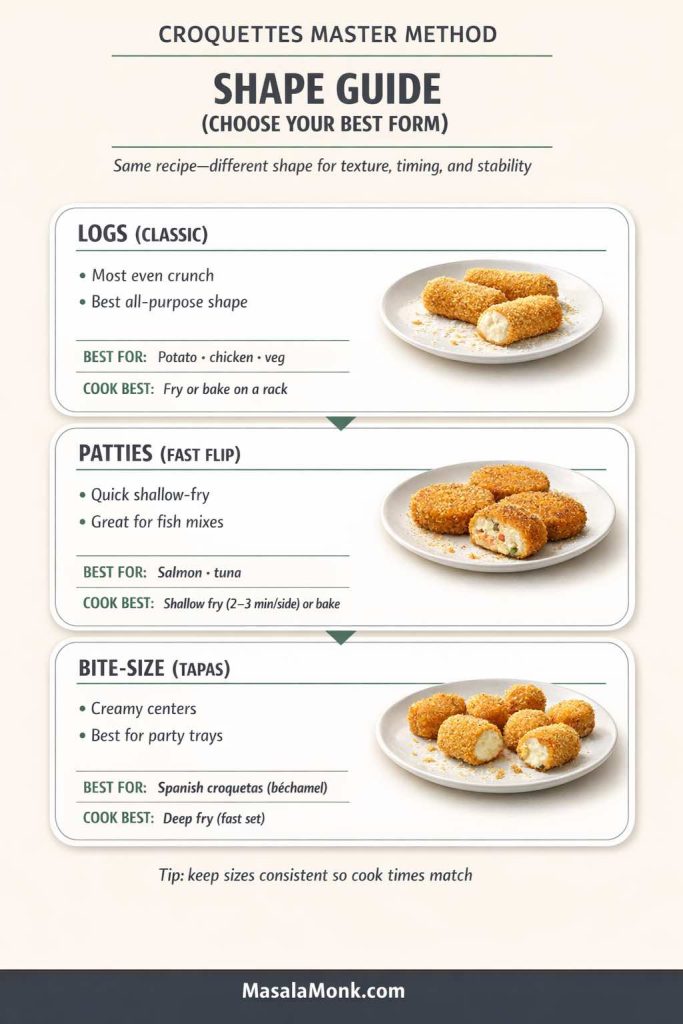
As you shape, keep the sizes consistent so cook times match.

Infographic titled “Croquettes Master Method: Shape Guide” showing three croquette shapes—logs (classic), patties (fast flip), and bite-size (tapas). Each card lists what the shape is best for (potato/chicken/veg; salmon/tuna; Spanish croquetas béchamel) and the best cooking method (fry or bake on a rack; shallow fry 2–3 minutes per side or bake; deep fry fast set). Footer reads MasalaMonk.com.
Not sure which croquettes shape to make? Use this quick shape guide: logs cook evenly (great for potato, chicken, veg), patties are perfect for salmon croquettes and tuna croquettes when you want a quick shallow-fry, and bite-size croquetas are the tapas-style choice for creamy béchamel centers. Keep sizes consistent so every batch cooks evenly—then bake, air fry, shallow fry, or deep fry with confidence.

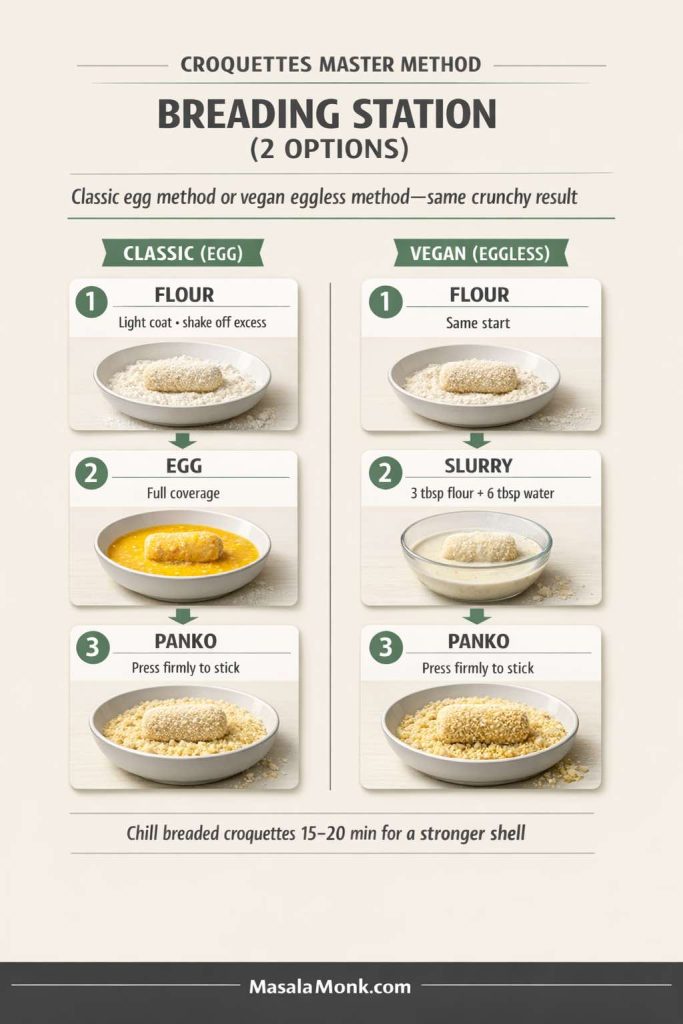
Step 5: Bread the croquettes (flour → egg → crumbs)

Set up a breading station:

  1. Flour bowl
  2. Egg bowl
  3. Breadcrumb bowl

Coat each croquette in flour first, shaking off excess. Then dip in egg. Finally, press into breadcrumbs so the crumbs actually stick rather than merely dust the surface.

Infographic showing a croquettes breading station with two methods: classic (egg) and vegan (eggless). Both use flour then panko; the classic method dips in egg, while the vegan method uses a slurry (3 tbsp flour + 6 tbsp water). Note says to chill breaded croquettes 15–20 minutes for a stronger shell. MasalaMonk.com in the footer.
Want croquettes that stay sealed and crisp? Use this breading station every time: flour → egg (or eggless slurry) → panko, then chill 15–20 minutes so the coating sets like a shell before you fry, bake, or air fry. The right side is perfect for vegan croquettes or when you’re out of eggs—same crunch, less stress.

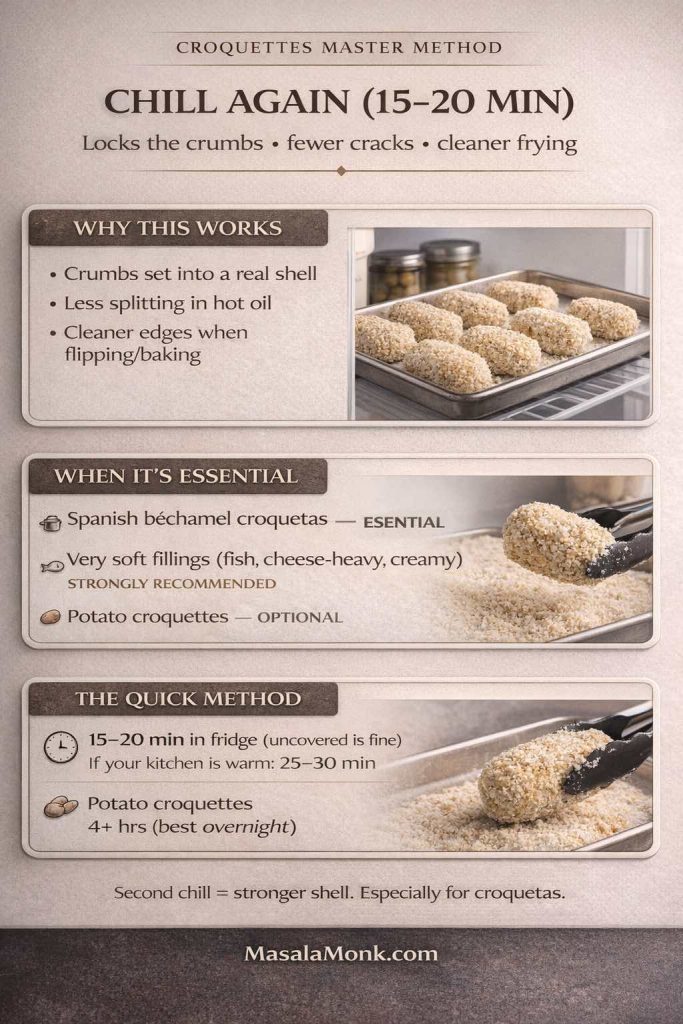
Step 6: Chill again (15–20 minutes)

This second chill is optional for potato croquettes, yet extremely helpful for béchamel-based Spanish croquetas and any very soft filling. It firms the exterior and helps the coating adhere.

Recipe card infographic showing breaded croquettes on a tray chilling in the fridge for 15–20 minutes to lock in crumbs and reduce cracks. Includes quick notes on why the second chill helps coating adhesion and when it’s most useful (soft fillings like béchamel-based Spanish croquetas), with MasalaMonk.com in the footer.
That “second chill” is the quiet upgrade that stops croquettes from cracking or shedding crumbs. After flour → egg/slurry → panko, refrigerate the breaded croquettes for 15–20 minutes so the coating hydrates, firms up, and grips the surface—especially for very soft fillings like béchamel-style Spanish croquetas, fish, or cheese-heavy centers. Then cook with confidence: the shell sets faster, edges stay cleaner, and frying feels far less stressful. Keep this card saved as your quick reminder whenever your coating feels fragile.

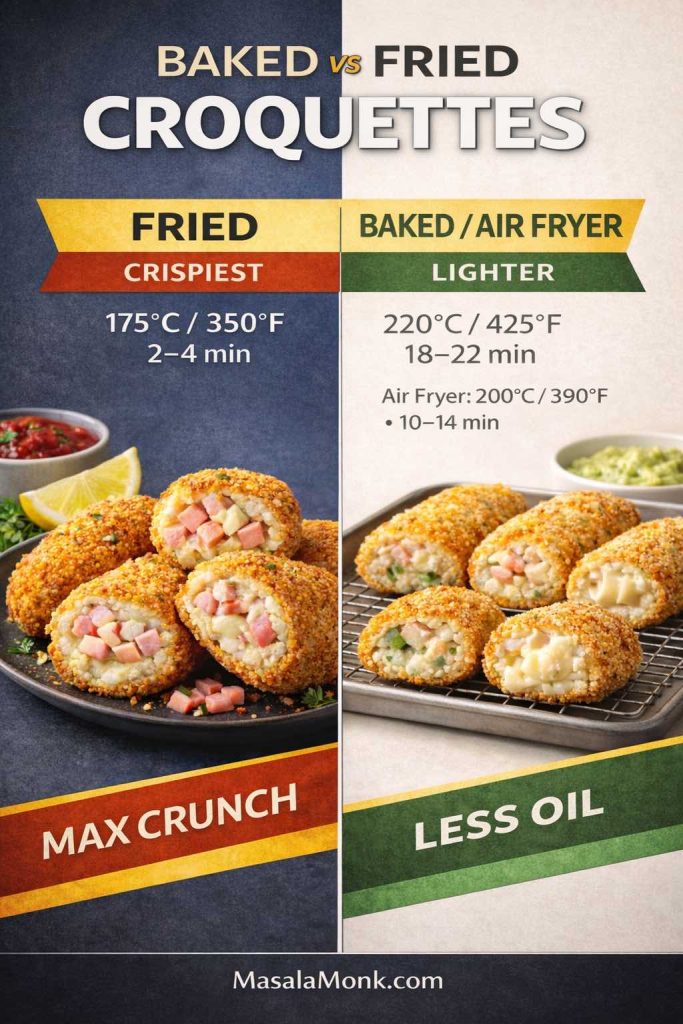
Step 7: Cook using your method of choice (fry, shallow fry, bake, or air fry)

You’ve got options. None of them are “wrong,” so choose based on your time and your mood.

Split infographic comparing croquettes baked vs fried: left shows fried croquettes with 175°C/350°F cook time 2–4 minutes and “Max Crunch,” right shows baked/air fryer croquettes with 220°C/425°F 18–22 minutes plus air fryer 200°C/390°F 10–14 minutes and “Less Oil,” with MasalaMonk.com in the footer.
Baked vs fried croquettes at a glance: fry at 175°C/350°F for 2–4 minutes for maximum crunch, or bake at 220°C/425°F for 18–22 minutes (air fryer 200°C/390°F for 10–14 minutes) for a lighter option. Use this as your quick timing guide before you jump into the master croquettes recipe and pick a variation.

Also Read: Fish and Chips Reimagined: 5 Indian Twists (Recipe + Method)


Croquettes Cooking Methods (Fried, Shallow-Fried, Oven Baked, Air Fryer)

Deep-fried croquettes recipe (crispiest and fastest)

  • Heat oil to 175°C / 350°F
  • Fry in batches, 2–4 minutes, until deep golden
  • Drain on a rack so they stay crisp
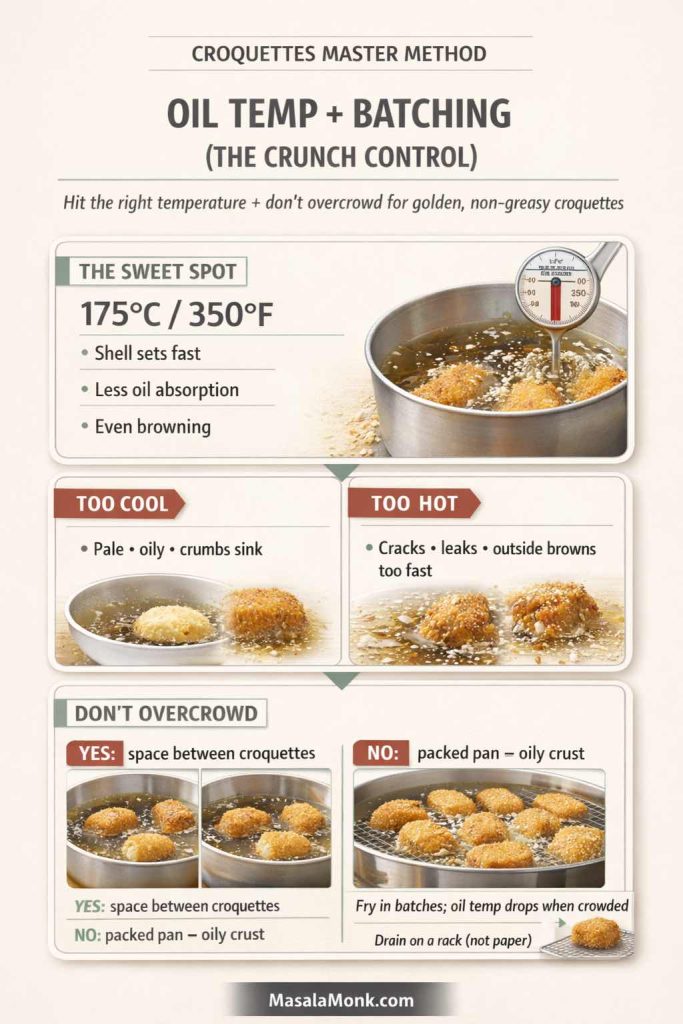
A croquettes master method infographic about oil temperature and batching for crisp, non-greasy croquettes. It highlights the sweet spot of 175°C/350°F, shows what happens when oil is too cool (pale, oily, crumbs sink) or too hot (cracks, leaks, outside browns too fast), and compares spaced frying vs overcrowding. It also notes frying in batches and draining on a rack, with MasalaMonk.com in the footer.
If your croquettes ever turn greasy or crack in the oil, this is the reset: aim for 175°C / 350°F and fry in small batches so the shell sets fast and browns evenly. Use the “too cool vs too hot” cues here to troubleshoot in seconds, then drain on a rack (not paper) to keep the crust crunchy—whether you’re making potato croquettes, salmon croquettes, chicken croquettes, or Spanish croquetas.

Because the shell sets quickly, deep frying is surprisingly forgiving—provided the oil is hot enough and you don’t overcrowd the pot.

Shallow-fried croquettes (easier, still crisp)

  • Add about 1 cm of oil to a skillet
  • Medium heat
  • Fry 2–3 minutes per side

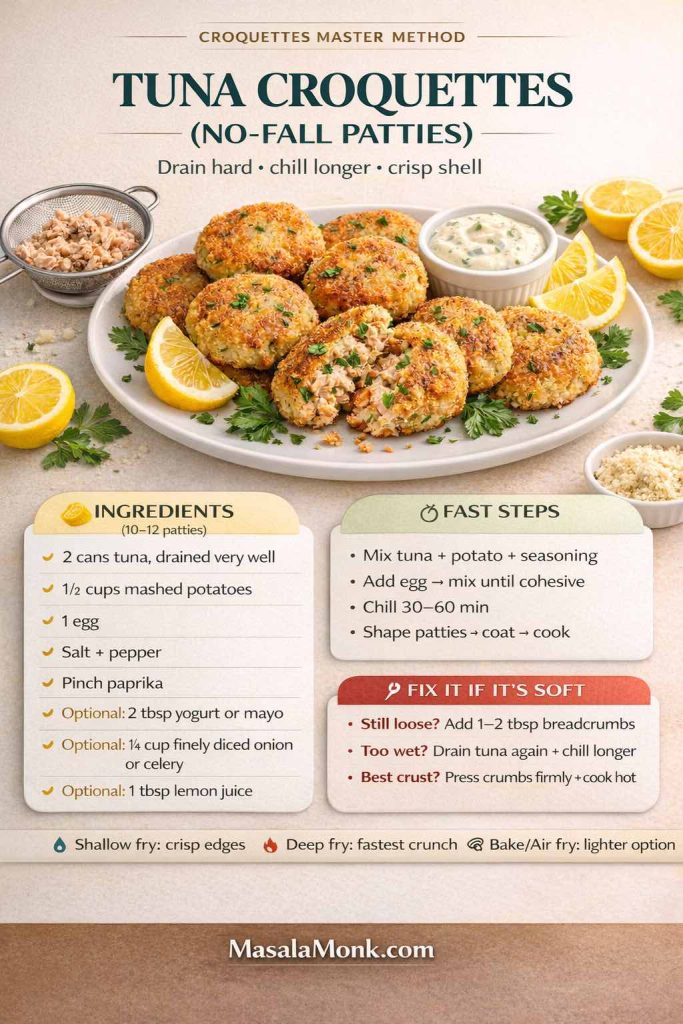
Shallow frying is excellent for salmon croquette patties and old fashioned tuna croquettes where you want more surface browning.

Croquettes oven baked (the best “healthy croquettes” recipe)

If you want croquettes oven baked without losing that crunch, do this:

  • Preheat oven to 220°C / 425°F
  • Place croquettes on a rack over a tray
  • Lightly spray or brush with oil
  • Bake 18–22 minutes, flipping once

Baked croquettes won’t taste “fried,” but they can be crisp and satisfying when you use panko and high heat.

Air fryer croquettes (fast, crisp, low mess recipe)

  • Preheat if your air fryer benefits from it
  • Cook at 200°C / 390°F
  • Spray lightly with oil
  • Air fry 10–14 minutes, flipping once

Air frying is fantastic for frozen croquettes you’ve made ahead, because it re-crisps without drying out the center too harshly.

Also Read: Dirty Martini Recipe (Classic, Extra Dirty, No Vermouth, Spicy, Blue Cheese, Tequila + Batched)


Croquettes and Sauces: The Secret to Keeping Every Batch Exciting

Croquettes are rich by design. Therefore, they love sauces that bring contrast: bright, spicy, tangy, or herbaceous.

For an Indian-inspired spread, you can rotate between:

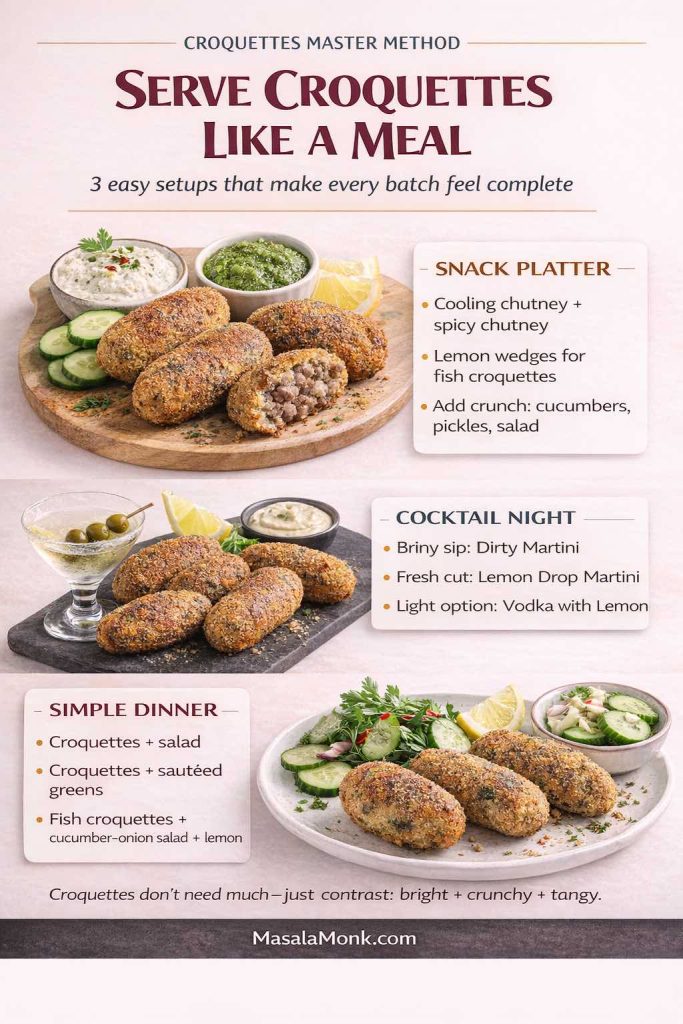
Meanwhile, if you’re turning croquettes into cocktail snacks, the pairing is almost too natural: salty croquettes with a briny drink, or crispy croquettes with a citrusy drink. A crisp Dirty Martini fits especially well with Spanish croquetas and ham and cheese croquettes, while a bright Lemon Drop Martini works beautifully when you want freshness to cut richness. If you prefer something lighter and longer, Vodka with Lemon is an easy match.

Now that the method is clear, let’s cook through the variants properly.

Also Read: Keto Hot Chocolate Recipe (Sugar-Free Hot Cocoa) + Best Homemade Mix


Potato Croquettes (Classic, Leftover Mash Friendly, and Japanese Potato Croquette Recipe)

Potato croquettes are the easiest place to start because potatoes naturally bind. That’s why “mashed potato croquette” and “how to make potato croquettes with leftover mashed potatoes” are such popular queries—this version welcomes leftovers.

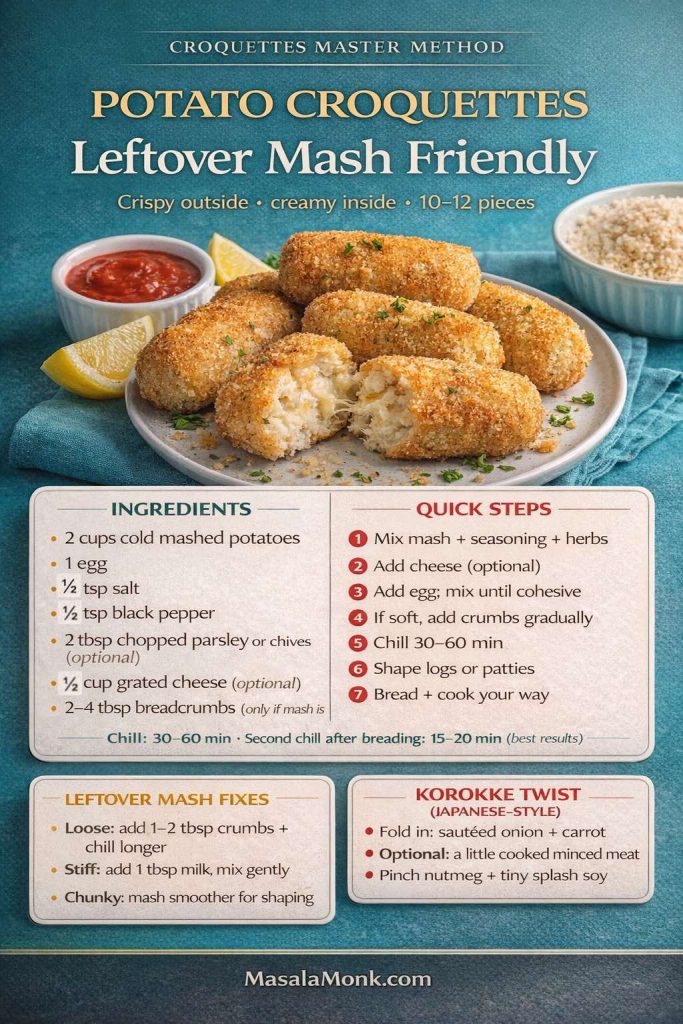
Potato croquettes are the easiest starting point because mashed potatoes bind naturally. This quick card gives you the exact ingredient ratios, the chill window (30–60 minutes), and the 3 “leftover mash” fixes (loose/stiff/chunky), plus a Japanese korokke-style twist—so you can get crisp, golden croquettes without guessing.

Easy potato croquettes recipe (makes 10–12)

Ingredients

  • 2 cups cold mashed potatoes
  • 1 egg
  • ½ teaspoon salt
  • ½ teaspoon black pepper
  • 2 tablespoons chopped parsley or chives (optional)
  • ½ cup grated cheese (optional, great for cheese croquettes vibes)
  • 2–4 tablespoons breadcrumbs if needed (only if your mash is loose)

Step-by-step

  1. Mix the mashed potatoes with salt, pepper, and herbs.
  2. Stir in cheese if you want a richer center.
  3. Add the egg and mix until cohesive.
  4. If it feels too soft to shape, add breadcrumbs gradually.
  5. Chill 30–60 minutes.
  6. Shape into logs or patties.
  7. Bread and cook using your preferred method.

If you like checking a classic baseline, BBC Good Food’s potato croquettes are a handy reference for the traditional approach.

Recipe for leftover mashed potato croquettes: making them sturdier

Leftover mash varies a lot. Some is buttery, some is stiff, some has milk or cream. Consequently, the fix also varies:

  • If your mash is loose: add 1–2 tablespoons breadcrumbs and chill longer
  • If your mash is stiff: add 1 tablespoon milk, mix gently, then chill
  • If your mash is chunky: mash a bit more so shaping is smoother

Japanese potato croquette direction (korokke vibe recipe)

If you want Japanese potato croquette style, keep the potato base, then fold in one of these:

  • sautéed onions and carrots
  • a little cooked minced meat (beef croquettes style)
  • a pinch of nutmeg plus a tiny splash of soy for depth

Shape into patties, bread with panko, then shallow fry or bake hot for a crisp shell.

Also Read: 10 Low Carb Chia Pudding Recipes for Weight Loss (Keto, High-Protein, Dairy-Free)


Spanish Croquetas (Ham, Jamón, and Ham and Cheese Croquettes recipe)

Spanish croquetas are the ones people describe as “perfect croquetas” because the interior is creamy in a way potato croquettes simply aren’t. Instead of mash, you build a very thick béchamel that sets in the fridge, then you bread and fry.

This is the point where “how do you make ham croquettes” becomes a real cooking question, because béchamel croquetas reward patience. Luckily, the steps are straightforward.

Jamón croquetas recipe (classic Spanish croquetas)

Makes: about 15–20 small croquetas

Ingredients

  • 3 tablespoons butter
  • ⅓ cup flour
  • 2 cups milk, warmed
  • 1 cup finely chopped ham or jamón (tiny dice)
  • ¼ teaspoon nutmeg
  • black pepper (generous)
  • salt only if needed

Step-by-step

  1. Melt butter in a pan over medium heat.
  2. Whisk in flour and cook 1–2 minutes so it loses its raw taste.
  3. Slowly pour in warm milk while whisking constantly.
  4. Keep stirring until it thickens dramatically; you want it thick enough that it pulls away from the pan.
  5. Stir in ham, nutmeg, and pepper. Taste before adding salt.
  6. Spread the mixture into a shallow tray so it cools quickly.
  7. Cool at room temp, then refrigerate at least 4 hours (overnight is better).
  8. Scoop and shape quickly, then bread carefully.
  9. Chill the breaded croquetas 15–20 minutes, then fry at 175°C / 350°F until golden.

For external references that echo this traditional Spanish food croquettes method, you can use:

Ham and cheese croquettes (extra creamy recipe)

If you want ham and cheese croquettes (also written as ham and cheese croquetas), do the same base, then stir in:

  • ¾ cup shredded cheese (manchego is classic; cheddar is excellent)

Chill overnight, bread, then fry. Because cheese browns quickly, keep the oil steady and don’t overcook.

Also Read: Garlic & Paprika Cabbage Rolls (Keto-Friendly Recipes) – 5 Bold Savory Twists


Salmon Croquettes (Canned, Fresh, Southern Style, and Baked Salmon Croquette Recipe)

Salmon croquettes are popular because they hit the sweet spot: inexpensive enough for regular meals, yet special enough for guests. They also adapt well to baking, so “baked salmon croquette recipe” and “easy salmon croquette” versions fit nicely alongside fried.

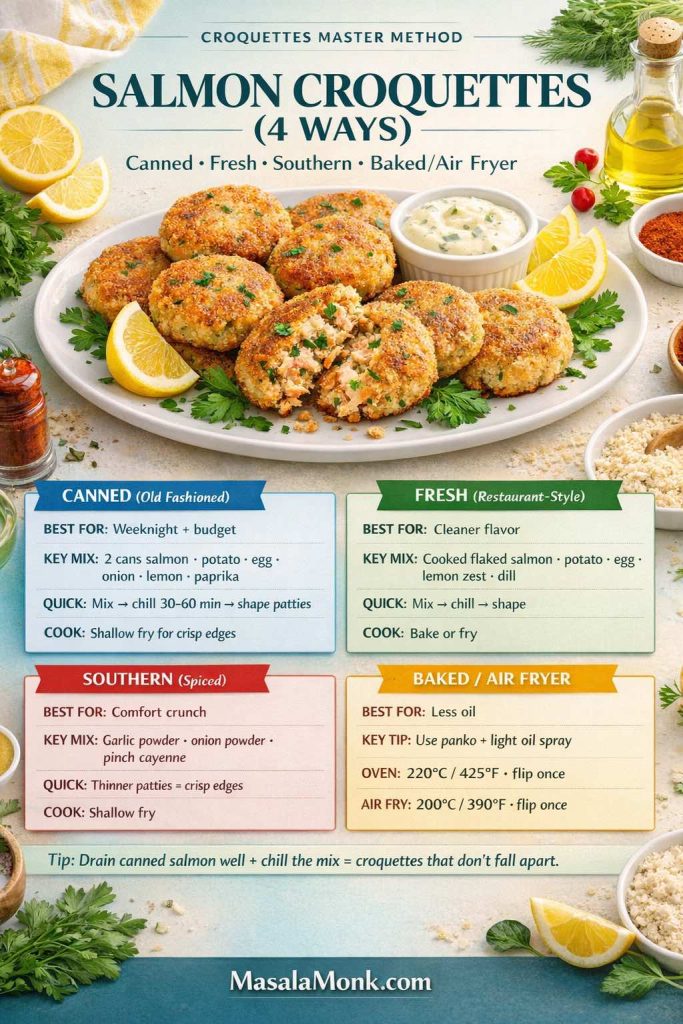
Salmon croquettes recipe card showing four options—canned (old fashioned), fresh (restaurant-style), southern (spiced), and baked/air fryer—with a platter of crispy salmon croquette patties, lemon wedges, creamy dip, and quick notes for key mix, chill time, and cooking temperatures, plus MasalaMonk.com footer.
Use this as your salmon croquettes shortcut: canned for weeknight budget patties, fresh for a cleaner “restaurant” bite, southern for crisp, spiced edges, or baked/air fryer when you want less oil. The big wins are the same across all four—drain well, chill the mix, and keep patties consistent—so they hold together whether you shallow fry, bake hot, or air fry.

Canned salmon croquettes recipe (old fashioned, reliable)

Makes: 10–12 patties

Ingredients

  • 2 cans salmon, drained well
  • 1½ cups mashed potatoes (best structure)
  • 1 egg
  • ¼ cup finely minced onion (or scallions)
  • 1 tablespoon lemon juice
  • 1 teaspoon paprika (or Old Bay)
  • black pepper
  • salt to taste
  • 2 tablespoons parsley

Step-by-step

  1. Flake salmon into a bowl.
  2. Add mashed potatoes, onion, lemon juice, and seasoning.
  3. Stir in the egg until cohesive.
  4. Chill 30–60 minutes.
  5. Shape into patties.
  6. Bread, then shallow fry, deep fry, bake, or air fry.

If you want the crispest shell with minimal mess, shallow frying is a wonderful middle ground.

Fresh salmon croquette (more “restaurant” recipe)

Ingredients

  • 2 cups cooked flaked salmon, cooled
  • 1½ cups mashed potatoes
  • 1 egg
  • zest of ½ lemon + 1 tablespoon lemon juice
  • 2 tablespoons dill or parsley
  • salt and pepper

Step-by-step

  1. Mix salmon, potato, herbs, lemon.
  2. Add egg; chill.
  3. Shape, bread, then cook.

Southern salmon croquettes (southern fried salmon croquettes recipe feel)

For southern-style salmon croquettes, keep the canned salmon base, then add:

  • ½ teaspoon garlic powder
  • ½ teaspoon onion powder
  • pinch of cayenne

Shape thinner patties and shallow fry for crisp edges. This style leans into that “recipe salmon croquettes soul food” comfort.

Salmon croquettes oven baked

To do salmon croquettes oven baked:

  • Use panko for the coating
  • Spray lightly with oil
  • Bake hot at 220°C / 425°F
  • Flip once for even browning

This is a great route when you want healthy croquettes that still feel satisfying.

Also Read: Eggless Yorkshire Pudding (No Milk) Recipe


Tuna Croquettes (Easy, Budget-Friendly, and Sturdy)

Tuna croquettes are simple, but they demand one thing: dry tuna. If you drain it aggressively, the rest is easy.

Tuna croquettes recipe card showing crispy tuna croquette patties with lemon wedges and creamy dip, plus a no-fail guide: ingredients for 10–12 patties, fast steps (mix, chill 30–60 minutes, shape, coat, cook), and fixes if the mixture is soft (add breadcrumbs, drain tuna again, press crumbs firmly), with MasalaMonk.com footer.
Tuna croquettes only ask for one thing: drain the tuna hard, then chill the mix so patties stay intact. Use this card as your quick reference—basic tuna + mashed potato + egg, plus the simple “fix-it” moves (breadcrumbs, extra draining, firm crumb press) that stop croquettes from turning mushy or breaking when you fry, bake, or air-fry.

Easy tuna croquette recipe (makes 10–12)

Ingredients

  • 2 cans tuna, drained very well
  • 1½ cups mashed potatoes
  • 1 egg
  • 2 tablespoons yogurt or mayo (optional)
  • 1 tablespoon lemon juice
  • ¼ cup finely diced onion or celery (optional)
  • salt and pepper
  • pinch paprika

Step-by-step

  1. Mix tuna with mashed potatoes and seasoning.
  2. Add egg and mix until cohesive.
  3. Chill, shape, bread, cook.

If you’re asking “how do you make tuna croquettes” without them falling apart, the answer is nearly always the same: drain more, chill more, and don’t rush the breading.

Also Read: Crock Pot Chicken Breast Recipes: 10 Easy Slow Cooker Dinners (Juicy Every Time)


Chicken Croquettes and Turkey Croquettes (Best Use of Leftovers)

Chicken croquettes are a brilliant leftover solution because shredded chicken gives texture and protein while the binder creates creaminess. Turkey croquettes follow the same pattern, and they’re especially useful after a roast dinner.

Chicken croquettes recipe (makes 10–12)

Ingredients

  • 2 cups cooked shredded chicken
  • 1 to 1½ cups mashed potatoes (start with 1 cup)
  • 1 egg
  • ¼ cup sautéed onion (or finely minced onion)
  • salt and pepper
  • optional: thyme or mixed herbs
Chicken croquettes are the best leftover upgrade: mix shredded chicken with mashed potatoes and egg, chill so they hold shape, then choose your cook method—shallow fry for crisp edges, deep fry for fastest crunch, or bake/air fry for a lighter batch. Use this card as your quick reference when you reach the chicken/turkey croquettes section, especially if your mixture feels dry or you want that creamy center every time.

Step-by-step

  1. Mix chicken with potatoes, onion, and seasonings.
  2. Add egg and mix well.
  3. If it feels loose, add breadcrumbs 1 tablespoon at a time.
  4. Chill, shape, bread, then fry or bake.

For a restaurant-style croquetas de pollo approach, Food & Wine’s chicken croquettes is a solid external reference.

Turkey croquettes (leftover-friendly recipe)

Use the chicken method, then lean into turkey flavors:

  • add chopped sage
  • add black pepper generously
  • optionally tuck a tiny cranberry center inside each croquette for a sweet-savory surprise

Because turkey can be drier than chicken, the potato ratio often helps: aim for the higher end (closer to 1½ cups potato).

Turkey croquettes recipe card infographic showing golden, crispy turkey croquettes on a plate with lemon wedges, herbs, and cranberry sauce, plus ingredient list (shredded turkey, mashed potatoes, egg, onion, seasonings), fast mixing and chilling steps, tips to keep turkey croquettes moist, and cooking options for shallow fry, deep fry, bake, or air fry.
These turkey croquettes are the easiest way to turn leftover roast turkey into a crisp, restaurant-style snack: bind shredded turkey with mashed potatoes, chill so the mixture firms up, then coat well for a sealed shell that stays moist inside. Use the “keep it moist” fixes if your mix feels dry, and pick your cook style—shallow fry for crisp edges, deep fry for fastest crunch, or bake/air fry when you want a lighter batch with less mess. Save this card as your quick reference when you’re making turkey (or chicken) croquettes again.

Also Read: Mozzarella Sticks Recipe (Air Fryer, Oven, or Fried): String Cheese, Shredded Cheese, and Every Crunchy Variation


Cod Croquettes Recipe and Croquette Fish Variants (Moisture Control Wins)

Cod croquettes are delicate, light, and surprisingly elegant. However, cod holds water, which is why “croquettes cod” attempts sometimes go wrong.

Cod fish croquettes (Recipe for 10–12 pieces)

Ingredients

  • 2 cups cooked flaked cod, cooled and patted dry
  • 1½ cups mashed potatoes
  • 1 egg
  • 1 tablespoon lemon juice
  • 2 tablespoons parsley
  • salt and pepper
Cod croquettes recipe card showing crispy cod patties with lemon wedges and dipping sauce, plus ingredients, fast steps, and moisture-control tips to pat cod dry, chill the mix, and keep croquettes from falling apart.
Cod croquettes are delicate because cod holds water—so the “secret” isn’t more binder, it’s drying the fish properly. Pat the cooled cod dry, mix with mashed potatoes + lemon + herbs, then chill before shaping so the patties stay firm. Use this card as your quick guide whenever you want light, lemony fish croquettes that don’t crack, leak, or turn mushy.

Step-by-step

  1. Pat cod dry after it cools.
  2. Mix cod with potatoes, lemon, herbs, seasoning.
  3. Add egg; chill.
  4. Shape, bread, then cook.

If you’re cooking fresh and frozen seafood, the FDA’s guidance is a helpful safety reference, especially for handling and storage: Selecting and Serving Fresh and Frozen Seafood Safely.

Also Read: Sourdough Starter Recipe: Make, Feed, Store & Fix Your Starter (Beginner Guide)


Vegetarian Croquettes (Croquette Veggie, Veg Croquettes Recipe)

Vegetarian croquettes work best when vegetables are flavorful and dry. In other words, cook out moisture before you ever add potato.

Veg croquettes recipe (makes 10–12)

Ingredients

  • 2 cups mixed vegetables (peas, corn, carrots), sautéed until moisture evaporates
  • 1½ cups mashed potatoes
  • 1 egg
  • ½ teaspoon cumin or paprika
  • salt and pepper
Vegetarian croquettes recipe card showing golden mixed-vegetable croquettes with visible peas, corn, and carrots, plus ingredients, quick steps, and the key tip to sauté vegetables until moisture evaporates before mixing with mashed potatoes.
Vegetarian croquettes succeed or fail on one detail: dry vegetables. Sauté peas, corn, and carrots until the pan looks dry (no steam, no watery shine), then mix with mashed potatoes, season well, and chill before shaping. This card is your quick guide for crisp, sturdy veg croquettes that don’t crumble—perfect for weeknight snacks, lunchboxes, or party platters.

Step-by-step

  1. Sauté vegetables until they’re tender and relatively dry.
  2. Cool, then mix with potatoes and spices.
  3. Add egg; chill.
  4. Shape, bread, cook.

These are especially good with South Indian Coconut Chutney because the creamy chutney doubles down on comfort without overpowering the filling.

Also Read: How to make No-Bake Banana Pudding: No Oven Required Recipe


Vegan Croquettes (Croquettes Vegan, Eggless Binding and Coating)

These croquettes can be just as crisp, yet the vegan version needs a binder that sets and a coating that sticks without eggs.

Vegan croquettes recipe infographic showing eggless binding options (flax egg or chickpea flour), eggless breading station (flour, slurry, panko), and cooking options for air fryer, oven, or frying, with MasalaMonk.com in the footer.
Vegan croquettes don’t fail because they’re vegan—they fail because the coating doesn’t set. Use one strong binder (flax egg or chickpea flour), then bread the smart way (flour → slurry → panko) and chill the breaded croquettes 15–20 minutes so the shell holds. This card gives you the full eggless workflow plus the best cook options (air fryer, oven, or quick fry) for a crisp crust and a center that stays together.

Vegan binder options

  • Flax “egg”: 1 tablespoon ground flax + 3 tablespoons water (rest 5 minutes)
  • Chickpea flour: 2–3 tablespoons stirred into the mixture for structure

Eggless breading method

  • Bowl 1: flour
  • Bowl 2: slurry (3 tablespoons flour + 6 tablespoons water)
  • Bowl 3: breadcrumbs or panko

Vegan croquettes recipe (makes 10–12)

Ingredients

  • 2 cups mashed potatoes (or half mashed chickpeas + half potato)
  • flax egg or chickpea flour binder
  • salt, pepper, paprika/garlic powder
  • breadcrumbs as needed

Step-by-step

  1. Mix the base, add binder, then adjust with breadcrumbs if the mixture is soft.
  2. Chill longer than usual—45–60 minutes helps.
  3. Shape, bread with slurry method, then bake or air fry for the best texture.

For dipping, vegan croquettes pair beautifully with Spicy Peanut Chutney (no onion, no garlic) because it brings richness without dairy.

Also Read: Chicken Adobo — Step-by-Step Recipe — Classic Filipino Adobong Manok


Beef Croquettes and Lamb Croquettes (When You Want Something Heartier)

Even though potato and fish croquettes get most of the attention, beef croquettes and lamb croquette versions are excellent when you want deeper savoriness.

Beef vs lamb croquettes comparison card showing two plates of crispy croquettes and two recipe panels: beef croquettes with minced beef, sautéed onion, spices and mashed potato binder, and lamb croquettes with minced lamb, cumin and a pinch of cinnamon, plus serving suggestions with plum chutney and vodka with lemon.
Craving something heartier than potato croquettes? This quick beef vs lamb croquettes guide helps you pick the vibe: beef croquettes for fast, savory comfort and lamb croquettes for a cozier, bolder batch (cumin + a pinch of cinnamon). Either way, the method stays the same—cool the filling, bind, chill, coat, then cook hot—so you get a crisp shell without the “fall apart” drama. Serve these with a sweet-tangy chutney (plum is perfect) and something bright like vodka with lemon to keep the plate feeling balanced.

Beef croquettes (quick recipe)

  • Use cooked minced beef, cooled
  • Add sautéed onions and a pinch of spice (paprika, cumin, or black pepper)
  • Bind with mashed potato and egg
  • Chill, bread, cook

Lamb croquette (cozy, bold recipe)

  • Use cooked minced lamb or finely chopped leftover roast lamb
  • Season with black pepper, cumin, and a small pinch of cinnamon
  • Bind with potato (or a thicker béchamel if you want a tapas vibe)
  • Serve with a sweet-tangy chutney like Indian Spiced Plum Chutney for contrast

These richer croquettes also pair nicely with a bright drink. Even a simple citrus-forward Vodka with Lemon can lighten the overall feel.

Also Read: Sourdough Recipe: 10 Easy Bread Bakes (Loaves, Rolls & Bagels)


Making Croquettes That Don’t Fall Apart (Without Overcomplicating It)

It’s tempting to treat croquettes like a mysterious technique. In reality, croquettes fail for a few predictable reasons. Once you can spot them, you can fix them quickly.

Troubleshooting infographic for croquettes showing five common problems and fixes: too soft to shape (cool filling, add crumbs, chill), cracks/leaks in oil (chill breaded croquettes, press crumbs, keep oil 175°C/350°F), oily croquettes (oil too cool, fry small batches, drain on rack), not crispy baked/air fried (use panko, rack + light oil spray, 220°C/425°F), and crisp outside but bland inside (season filling, add lemon for fish, use herbs/spices). MasalaMonk.com footer.
Croquettes cracking, going oily, or turning soft? Save this “fix it fast” guide. It covers the 5 issues that ruin a croquettes recipe—too-wet filling, weak coating, wrong oil temp, baked croquettes not crisp, and bland centers—plus the exact quick fixes (including the key chill steps). Use it right before you cook potato croquettes, salmon croquettes (canned or fresh), ham and cheese croquetas, chicken croquettes, cod croquettes, or vegan croquettes so every batch comes out golden and sturdy.

If your croquettes are too soft to shape

  • Cool the mixture fully
  • Add 1–2 tablespoons breadcrumbs
  • Chill 45–60 minutes
  • Shape smaller pieces (large croquettes are harder to stabilize)

Croquettes crack or leak while frying

  • Your oil may be too hot
  • Your croquettes may not be chilled enough
  • The mixture might be too wet
  • The coating may be too thin (press crumbs in firmly)

And if croquettes are crisp outside but bland inside

Season more than you think. Croquettes are not a stew. The crust dilutes the perceived seasoning, so the filling needs confidence: salt, pepper, acidity (lemon in fish croquettes), and aromatics.

If croquettes oven baked are not crisp

  • Use panko
  • Bake at high heat
  • Oil-spray the crumbs
  • Place on a rack so air circulates
  • Leave space between croquettes

Baked croquettes can be genuinely crunchy. They just need structure and heat rather than hope.

Also Read: Peanut Butter Fudge: Recipes & Guide (8 Methods + Easy Variations)


Food Safety for Croquettes (Simple, Practical, Calm)

Croquettes often start with cooked ingredients—leftover chicken, canned salmon, cooked mashed potatoes—then get chilled and cooked again. That’s normal. Still, it’s worth cooking to safe internal temperatures and reheating leftovers properly.

For authoritative temperature guidance, you can reference:

If you’re dealing with fish croquettes and you want handling guidance for fresh and frozen seafood, the FDA resource is helpful: Selecting and Serving Fresh and Frozen Seafood Safely.

Also Read: Cold Brew Espresso Martini: How to Make It (Step-by-Step Recipe)


Make-Ahead, Freezing, and “Frozen Croquettes” Without Store-Bought Anything

Even though “frozen croquettes” and “croquetas frozen” often show up as shopping intent, freezing homemade croquettes is one of the smartest ways to keep this recipe in your regular rotation. In fact, croquettes are almost designed for batch cooking.

Infographic titled “Croquettes Master Method: Make-Ahead + Freeze (No Soggy Crust)” showing how to refrigerate breaded croquettes up to 24 hours, freeze uncooked croquettes on a tray, and cook croquettes from frozen without thawing. It lists frozen cook times: air fryer 200°C/390°F 12–18 min, oven 220°C/425°F 24–32 min, and fry 175°C/350°F 3–5 min, plus tips like flip once and light oil spray.
Croquettes are made for batch cooking. Shape and bread a double batch, freeze them uncooked, then cook straight from frozen whenever you want easy croquettes—no soggy crust, no defrosting drama. Use this quick guide for frozen croquettes: air fryer 200°C/390°F (12–18 min), oven baked croquettes 220°C/425°F (24–32 min), or fry at 175°C/350°F (3–5 min). Flip once and add a light oil spray for the crispiest shell—then pair with your favorite chutney, dip, or sauce from the post.

Make-ahead (best texture)

  1. Prepare filling
  2. Shape croquettes
  3. Bread them
  4. Refrigerate up to 24 hours before cooking

This keeps the coating intact and gives you that “ready whenever” flexibility.

Freeze croquettes (uncooked, breaded)

  1. Place breaded croquettes on a tray in a single layer
  2. Freeze until firm
  3. Transfer to a freezer bag or container

Cook from frozen

  • Air fryer: add 2–4 minutes
  • Oven: add 6–10 minutes
  • Frying: lower into oil carefully, fry slightly longer at steady temperature

Frozen homemade croquettes are also a lifesaver when you want easy croquettes for guests without spending the whole evening at the stove.

Also Read: 19 Essential Kitchen Tools That Make Cooking Easier


Serving Croquettes Like a Complete Meal (Not Just a Snack)

Croquettes can be appetizers, lunch, or dinner. The difference is what you serve around them.

Infographic titled ‘Serve Croquettes Like a Meal’ showing three serving ideas: a snack platter with cooling chutney, spicy chutney, lemon wedges, and crunchy sides like cucumbers/pickles/salad; a cocktail night pairing croquettes with a dirty martini, lemon drop martini, or vodka with lemon; and a simple dinner with croquettes plus salad or sautéed greens, including a fish croquettes option with cucumber-onion salad and lemon.
Croquettes are rich and crispy—so the easiest way to make them feel like a complete meal is to add contrast. Use this serving guide for three go-to setups: a snack platter with a cooling chutney + spicy chutney, lemon wedges (especially for fish croquettes), and something crunchy like cucumbers, pickles, or salad; a cocktail-night spread with salty-sip pairings (Dirty Martini, Lemon Drop Martini, or Vodka with Lemon); or a simple dinner with croquettes alongside salad or sautéed greens. Keep the rule simple: bright + crunchy + tangy makes every croquettes recipe taste sharper and more satisfying.

For a snack platter

  • A cooling chutney + a spicy chutney
  • Lemon wedges for fish croquettes
  • Something crunchy on the side (salad, pickles, sliced cucumbers)

Try a duo like South Indian Coconut Chutney and Thecha—one soothing, one loud. Alternatively, Kara Chutney adds a sharp, spicy note that makes potato croquettes feel brighter.

For a cocktail night

Croquettes were practically made for a salty sip. A briny Dirty Martini pairs especially well with ham croquettes, jamon croquettes, and ham and cheese croquettes because the flavors reinforce each other instead of competing. On the other hand, if you want the opposite effect—freshness that cuts richness—a citrusy Lemon Drop Martini is a fun counterpoint. And when you want something lighter, Vodka with Lemon keeps the whole spread breezy.

For a simple dinner

  • Croquettes + salad
  • Croquettes + sautéed greens
  • Fish croquettes + a quick cucumber-onion salad with lemon

Croquettes don’t need much. They just need contrast.

Also Read: 10 Vegan Chocolate Cake Recipes (Easy, Moist, & Dairy-Free)


A Sweet Finish That Doesn’t Feel Heavy

After croquettes, most people want dessert that’s clean and easy rather than overly rich. That’s why a fruit-forward finish works so well.

If you’re keeping it simple, Quick Mango Pudding (10 minutes) is an easy win. If you’re building a full menu, you can also browse these mango dessert recipes and pick something that matches your mood.


Putting It All Together: Choose Your Croquettes Recipe, Then Follow the Same Flow

At this point, you’ve got everything you need:

  • a single croquettes recipe method
  • detailed recipes for the most common variants
  • a baked option for healthy croquettes
  • make-ahead and freezing guidance
  • sauces, drinks, and dessert pairings that turn croquettes into a full experience

So the only question left is what you’re making first.

Croquettes master method infographic titled ‘Pick Your First Batch’ with four starter options—fast and easy (potato or canned salmon), wow guests (Spanish croquetas ham and cheese), lighter low mess (oven baked croquettes), and hearty savory (chicken, beef, lamb)—plus a simple flow: cool, bind, chill, shape, coat, chill, cook, and a best pairings bar with coconut chutney, kara chutney/thecha, and vodka with lemon.
Not sure which croquettes recipe to start with? Use this “pick your first batch” guide to match your mood—potato croquettes or canned salmon croquettes for fast weeknights, Spanish croquetas (ham & cheese) to wow guests, oven baked croquettes for a lighter, low-mess option, or chicken/beef/lamb croquettes when you want hearty comfort. Whichever you choose, the success formula is the same: cool → bind → chill → shape → coat → chill → cook—then finish with contrast (coconut chutney for cool creaminess, kara chutney/thecha for heat, and a bright drink like vodka with lemon).

For a fast, no-drama batch, potato croquettes or canned salmon croquettes are the easiest place to begin. Planning to wow guests? Spanish croquetas—especially ham and cheese croquettes—feel instantly special alongside coconut chutney and a dirty martini. On busy nights when you’d rather skip splatter and cleanup, croquettes oven baked with a punchy kara chutney keep things crisp, flavorful, and wonderfully low-effort.

Whichever path you pick, the method stays the same—and that’s the real upgrade.

Also Read: Hot Chocolate Coffee: 3 Easy Recipes (Cocoa, Mix, or Espresso)


FAQs about Croquettes Recipe

1) What are croquettes, exactly?

Croquettes are crispy, breaded bites with a soft, savory center—usually made from mashed potato, béchamel, flaked fish, or shredded meat. In other words, a croquette is less about one “fixed” ingredient and more about the method: a seasoned filling, a binder, and a crunchy coating.

2) How do you make croquettes so they don’t fall apart?

Start by cooling the filling completely, then add just enough binder to make it hold its shape. After that, chill the shaped croquettes before cooking. Finally, keep the oil at a steady temperature (or bake hot on a rack) so the shell sets quickly instead of soaking.

3) How to make a croquette with the classic flour–egg–breadcrumbs coating?

First, roll each croquette in flour and shake off the excess. Next, dip in beaten egg. Then press firmly into breadcrumbs (panko if you want extra crunch). Afterward, chill briefly so the coating adheres, and cook.

4) What’s the easiest croquettes recipe for beginners?

Potato croquettes are the simplest starting point because mashed potatoes naturally bind and shape easily. Alternatively, canned salmon croquettes are very forgiving when you combine drained salmon with mashed potatoes and a single egg.

5) Can I make croquettes oven baked instead of fried?

Yes—croquettes oven baked can be crisp when you use panko, bake at a high temperature, and lightly oil the surface. Even so, spacing matters; if croquettes touch, steam builds and the coating softens.

6) Are baked croquettes actually “healthy croquettes”?

Compared with deep-frying, baking uses less oil, so it’s often a lighter option. However, “healthy” still depends on the filling and portion size—especially for ham and cheese croquettes or béchamel-based Spanish croquetas.

7) How do I make potato croquettes with leftover mashed potatoes?

Use cold mashed potatoes, mix in an egg, then adjust with a little breadcrumb only if needed. After that, chill the mixture, shape, bread, and cook. If your mash is very buttery or loose, chilling longer makes a big difference.

8) What’s the difference between potato croquettes and mashed potato croquette patties?

Potato croquettes are often shaped as logs, while mashed potato croquette patties are flattened and typically pan-fried. Because patties have more surface area, they brown quickly and feel extra crisp around the edges.

9) What are Spanish croquetas and how are they different from regular croquettes?

Spanish croquetas usually use a thick béchamel base instead of mashed potato. As a result, the center is creamier and softer. That said, they need more chilling time so they’re firm enough to bread and fry cleanly.

10) How do you make ham croquettes the Spanish way?

Make a very thick béchamel, stir in finely chopped ham or jamón, then chill until solid. Next, shape quickly, bread thoroughly, and fry at a steady temperature until golden. In practice, patience during chilling is what separates perfect croquetas from messy ones.

11) How to make ham and cheese croquettes without the filling leaking out?

Let the béchamel cool completely, then chill overnight if possible. Also, dice ham finely and use grated cheese that melts smoothly. Finally, keep the croquettes small and the coating firm so the shell seals before the cheese gets too runny.

12) Can I make cheese croquettes without ham?

Absolutely. Swap ham for grated cheese, sautéed mushrooms, spinach, or finely chopped herbs. Even so, avoid watery fillings; otherwise, the mixture turns loose and needs more binder.

13) What’s the best salmon croquette recipe: canned salmon or fresh salmon croquette?

Canned salmon croquettes are quicker and more consistent, especially for weeknights. Meanwhile, a fresh salmon croquette tastes cleaner and more “restaurant-like,” particularly when you add lemon zest and herbs.

14) How do I make old fashioned salmon croquettes?

Use drained canned salmon, mashed potatoes (or a small amount of breadcrumbs), egg, onion, and seasoning. Then shape into patties and shallow-fry until deeply golden. Traditionally, this style is simple, crisp, and comfort-forward.

15) How to make southern salmon croquettes (southern fried salmon croquettes recipe style)?

Season more boldly—think garlic powder, onion powder, and a pinch of cayenne—then shape thinner patties for extra crunch. After that, shallow-fry until the edges brown well. As a result, you get that classic southern-style crispness without a deep fryer.

16) Can I use fresh salmon for salmon croquettes southern style?

Yes—cook and flake the salmon first, then cool it completely before mixing. Still, add mashed potatoes for stability; fresh salmon can be softer than canned once it’s flaked.

17) How do you make tuna croquettes that aren’t mushy?

Drain tuna extremely well, then bind it with mashed potatoes and egg. Additionally, chill the mixture before shaping. If needed, add a small amount of breadcrumbs, but don’t overdo it or the croquettes turn dry.

18) How do you make chicken croquettes so they stay creamy inside?

Use shredded chicken plus a creamy binder like mashed potato (or a thick béchamel-style base). Then chill before shaping so the mixture firms up. Finally, cook until the crust is deeply golden, which helps seal in moisture.

19) How do you make turkey croquettes from leftovers?

Combine shredded turkey with mashed potatoes, seasoning, and an egg. Next, chill, shape, bread, and cook. For extra flavor, add herbs like sage or a little minced onion, and keep the croquettes slightly smaller so they heat through evenly.

20) What’s the best method for cod croquettes or cod fish croquette?

Pat the cooked cod dry after it cools, then mix with mashed potatoes, egg, lemon, and herbs. Afterward, chill thoroughly. Because cod holds moisture, that drying step is the quiet key to croquettes cod that hold together.

21) Can I make croquettes vegetarian without them crumbling?

Yes—use a sturdy base like mashed potatoes and cook vegetables until most moisture evaporates. Then add egg and chill before shaping. Consequently, vegetarian croquettes stay cohesive and fry or bake neatly.

22) How do I make croquettes vegan without eggs?

Use a binder such as a flax “egg” (ground flax + water) or chickpea flour. For breading, replace the egg dip with a simple flour-and-water slurry. Then chill longer before cooking to help everything set.

23) Why are my croquettes not crispy?

Usually, the oil wasn’t hot enough, the pan was overcrowded, or the coating was too thin. For oven baked croquettes, the most common issue is low heat or skipping oil on the crumbs. In contrast, using panko and baking on a rack improves crispness dramatically.

24) Why do croquettes crack while frying?

Cracking often happens when the mixture is too wet or not chilled, or when oil is too hot and the outside sets before the inside stabilizes. Therefore, chilling and steady oil temperature solve most cracking problems.

25) Can I freeze croquettes?

Yes—freeze breaded croquettes on a tray, then transfer to a container once firm. Later, bake, air-fry, or fry from frozen with a slightly longer cook time. This is especially handy for easy croquettes on busy days.

26) How do I reheat croquettes so they stay crisp?

Reheat in an oven or air fryer rather than the microwave. That way, the exterior re-crisps while the center warms through. If you must microwave, finish in a hot pan or oven for a quick crisping boost.

27) What can I serve with croquettes?

Pair croquettes with bright, tangy sides or sauces—something that cuts richness. Also, salads, pickles, citrus wedges, and herby dips all work well. Meanwhile, for party food, croquettes fit beautifully on snack platters alongside other small bites.

28) What’s the single biggest tip for perfect croquettes?

Chill twice: chill the mixture before shaping, and chill the breaded croquettes before cooking. Ultimately, that one habit makes croquettes easier to handle, cleaner to cook, and far more consistent.