
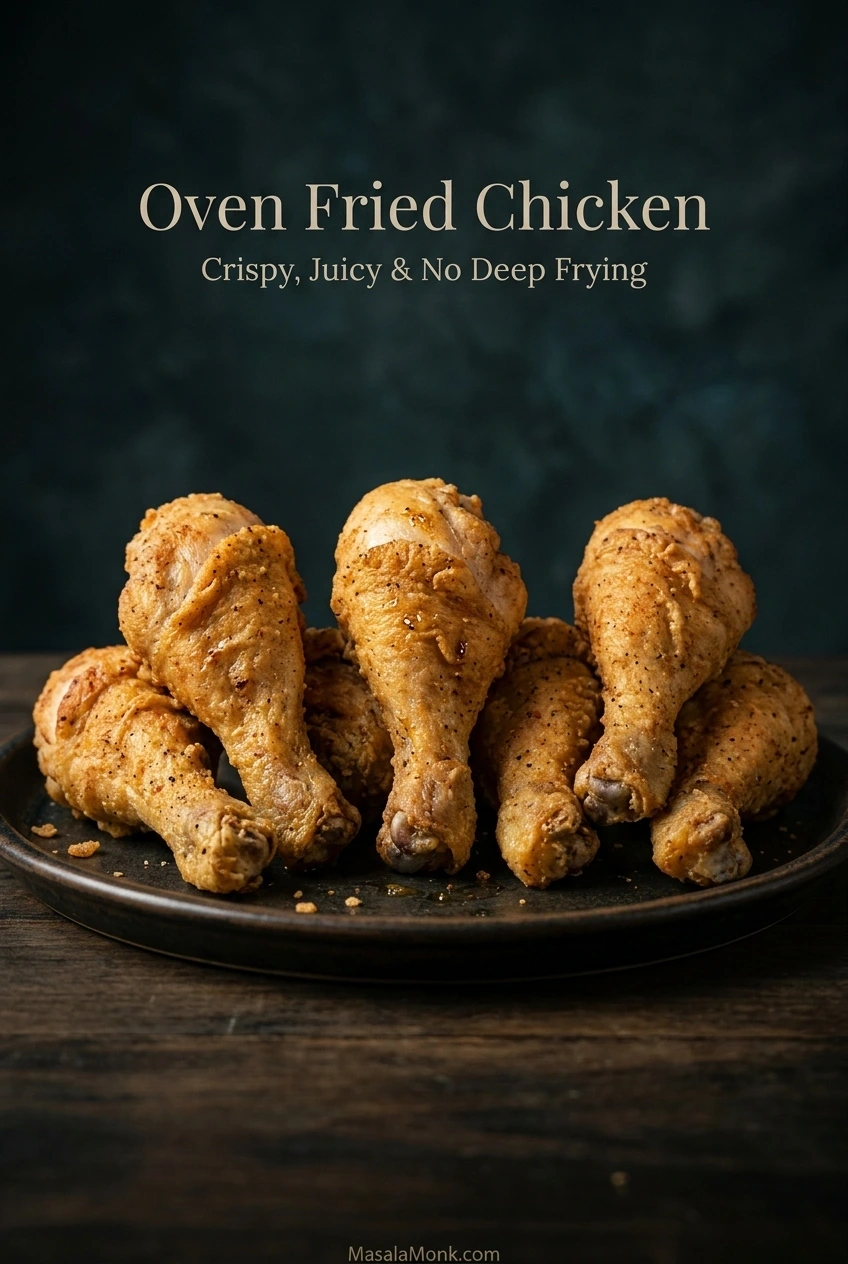
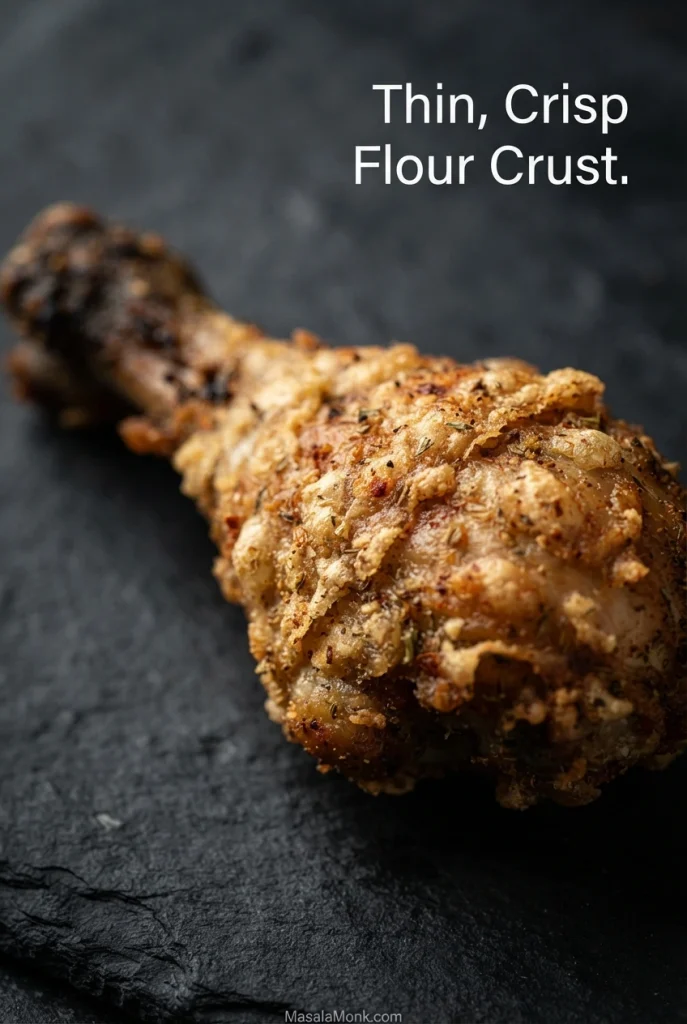
Oven fried chicken gives you juicy, buttermilk-marinated drumsticks beneath a lightly craggy, paprika-and-garlic-seasoned crust—without standing over a pot of frying oil. This oven fried chicken recipe relies on a hot, oiled metal baking sheet to brown its flour coating. The result is tender dark meat with a thinner, savoury crust than traditional deep-fried chicken.
One light dredge keeps the breading manageable, and most of the baking time is hands-off. You can prepare coleslaw or potatoes while the drumsticks cook, then give the chicken your attention for the turn and the final temperature check.
Jump to: Full Recipe · Coating & Substitutions · Cooking Times · Panko & Cornflake Versions · Troubleshooting · Storage & Reheating
How the Hot-Pan Method Makes Oven Fried Chicken Crispy
A dry rack and a hot, oiled metal surface do different jobs. On the metal sheet, the underside of each flour-coated drumstick touches cooking fat and develops golden patches. After the turn, the other side can brown against the fat left in the pan. A rack is better suited to larger, lightly oiled crumbs, such as panko or cornflakes.
The aim here is a crisp flour coating, not independently crisp skin underneath the flour. Colour will be less uniform around the curved sides than it is on a flat cutlet. If you want a thicker, rugged crust from cooking chicken surrounded by oil, use our classic buttermilk fried chicken recipe.
Oven Fried Chicken Recipe
Use eight medium, bone-in, skin-on drumsticks weighing approximately 1.2 kg (2 lb 10 oz) altogether. This serves four with sides. Choose similarly sized pieces when you can, since the smaller drumsticks may finish first.
| Servings | 4 (8 medium drumsticks) |
|---|---|
| Active preparation | About 20 minutes |
| Marinating | 30 minutes to 4 hours, refrigerated |
| Baking | Approximately 40–55 minutes |
| Resting | 5 minutes |
| Oven temperature | 425°F (220°C), conventional |
| Minimum safe internal temperature | 165°F (74°C) |
Plan ahead: Allow roughly 1½–2 hours with a short marinade, including preparation, baking and resting. A longer marinade can be done earlier in the day while the chicken remains refrigerated.
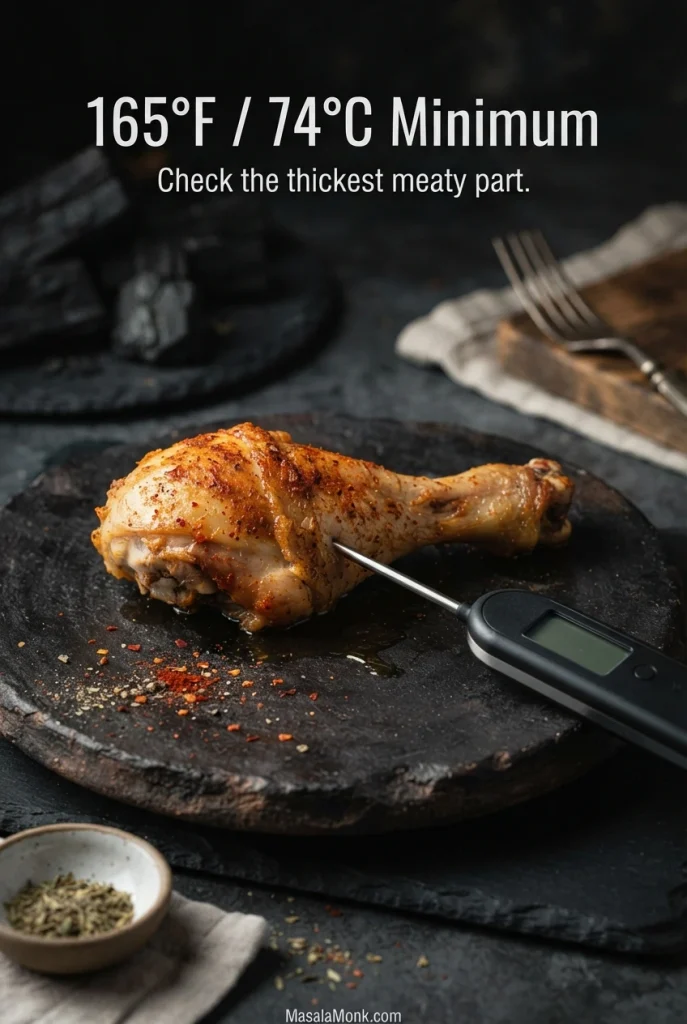
Know your doneness target before cooking: Chicken must reach at least 165°F (74°C). Drumsticks can develop a more yielding texture around 175–185°F (79–85°C); that higher range is a preference for dark meat, not an additional safety requirement. Use the thermometer to judge the meat, not the colour of a stubborn flour patch. The FoodSafety.gov poultry temperature chart (opens in a new tab) confirms the safety minimum.
Ingredients
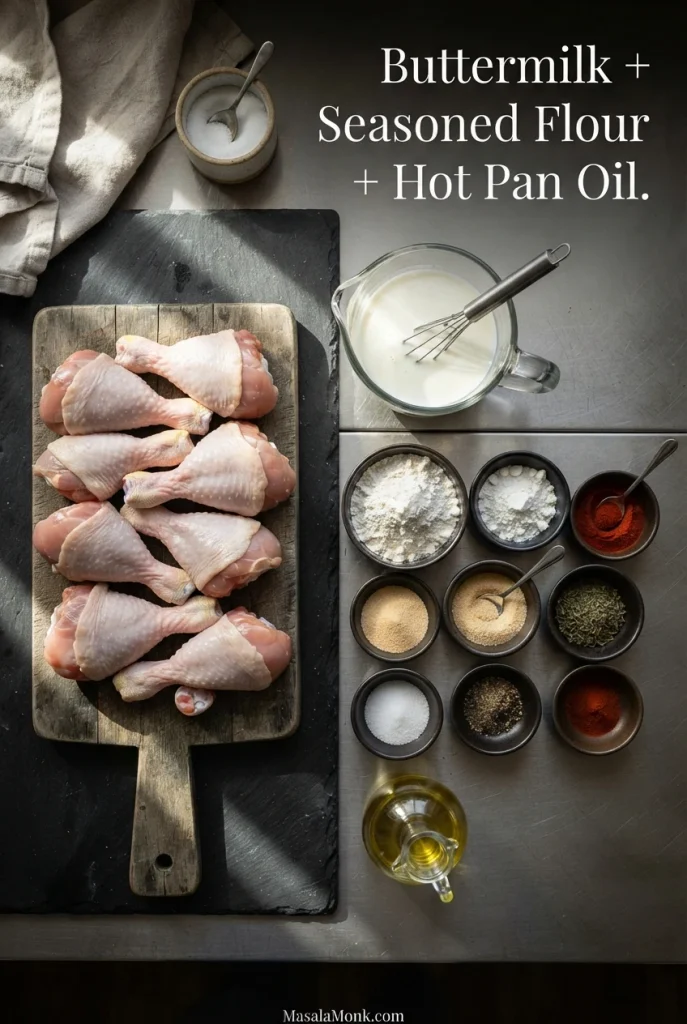
The ingredients are grouped by purpose: marinade, seasoned dredge and cooking oil. These quantities cover eight medium drumsticks.
Chicken and buttermilk marinade
- 1.2 kg (approximately 2 lb 10 oz) bone-in, skin-on chicken drumsticks, about 8 medium pieces
- 240 ml (1 US cup) plain, unsweetened buttermilk
- 6 g fine table salt (approximately 1 tsp)
- 15 ml (1 tbsp) hot sauce, optional
Seasoned flour coating
- 120 g (approximately 1 US cup) all-purpose flour
- 25 g (approximately 3 tbsp) cornstarch
- 2 tsp sweet or regular paprika
- 1 tsp garlic powder
- 1 tsp onion powder
- 4 g fine table salt (approximately ⅔ tsp)
- ½ tsp freshly ground black pepper
- ½ tsp dried thyme
- ¼ tsp cayenne pepper, optional
For oven frying
- 60 ml (¼ US cup / 4 tbsp) neutral high-heat oil, such as refined sunflower or canola oil
- Up to 5 ml (1 tsp) additional oil, only if the pan is dry when turning the chicken
Salt note: The teaspoon equivalents are for fine table salt. Coarse kosher salt and some sea salts weigh less per teaspoon, so use grams when changing salt types. Not all the marinade and flour mixture will remain on the chicken; discard any that has contacted raw poultry.
Equipment
- Heavy-duty rimmed metal baking sheet, approximately 18 × 13 inches (46 × 33 cm), approved for high-heat preheating
- Large bowl and shallow dish for the coating
- Heat-resistant oven mitts, tongs and a thin metal spatula
- Instant-read food thermometer
- Clean wire rack for resting the cooked chicken
How to Make Oven Fried Chicken
Marinate and coat the drumsticks
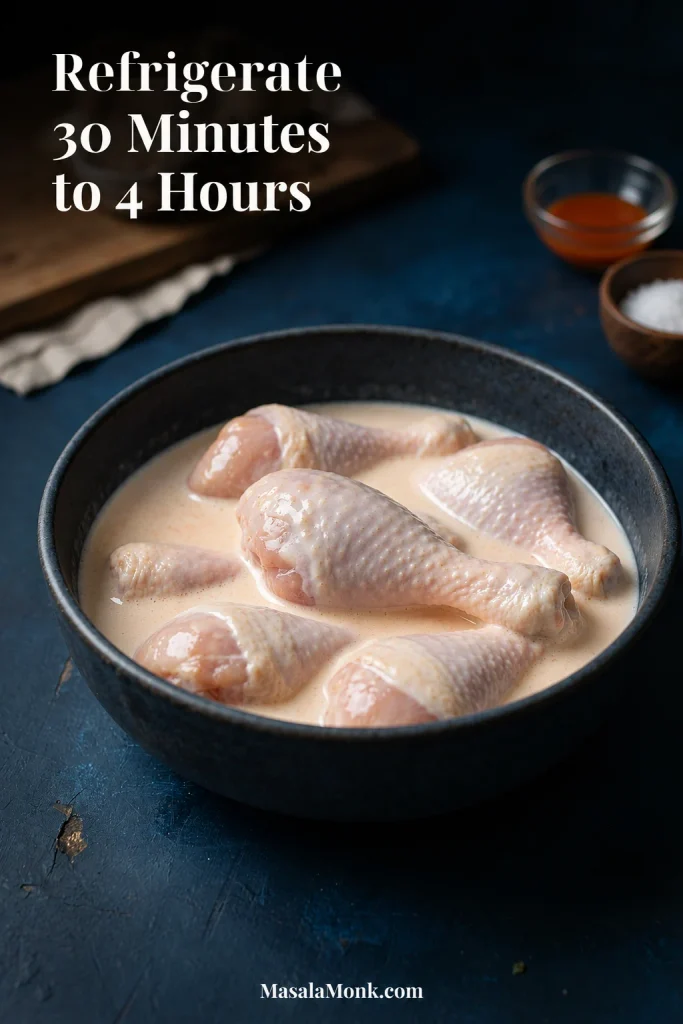
- Marinate the chicken. Stir together the buttermilk, 6 g salt and optional hot sauce. Add the drumsticks and turn to coat. Cover and refrigerate for 30 minutes to 4 hours. There’s no need to wash raw chicken.
- Preheat and season the flour. Heat a conventional oven to 425°F (220°C), with a rack in the middle. In a shallow dish, mix the flour, cornstarch, paprika, garlic powder, onion powder, remaining 4 g salt, pepper, thyme and optional cayenne.
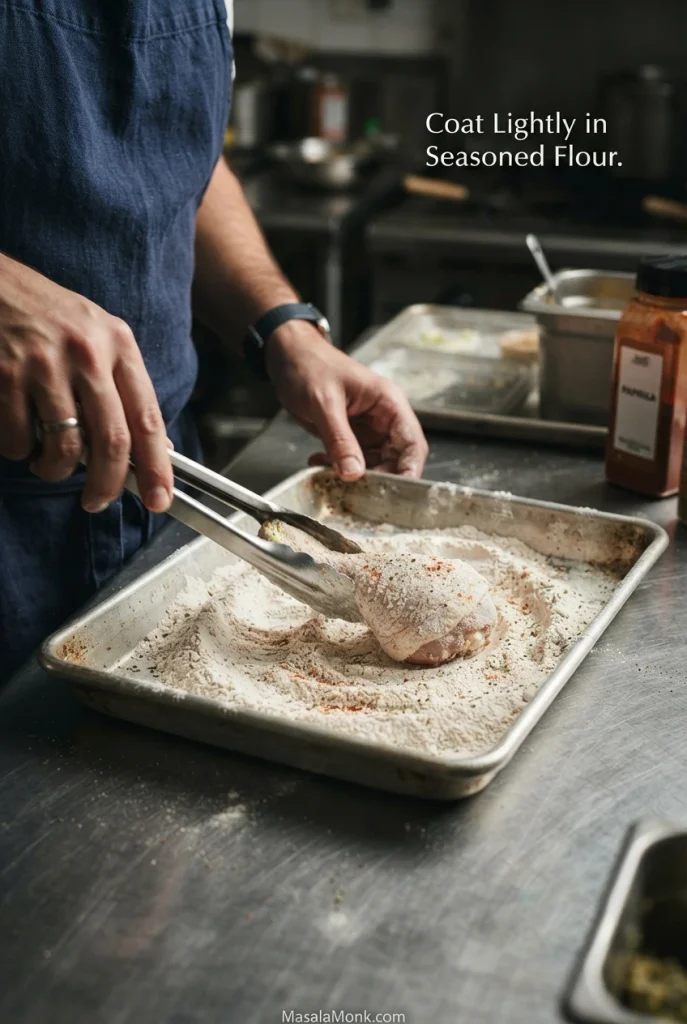
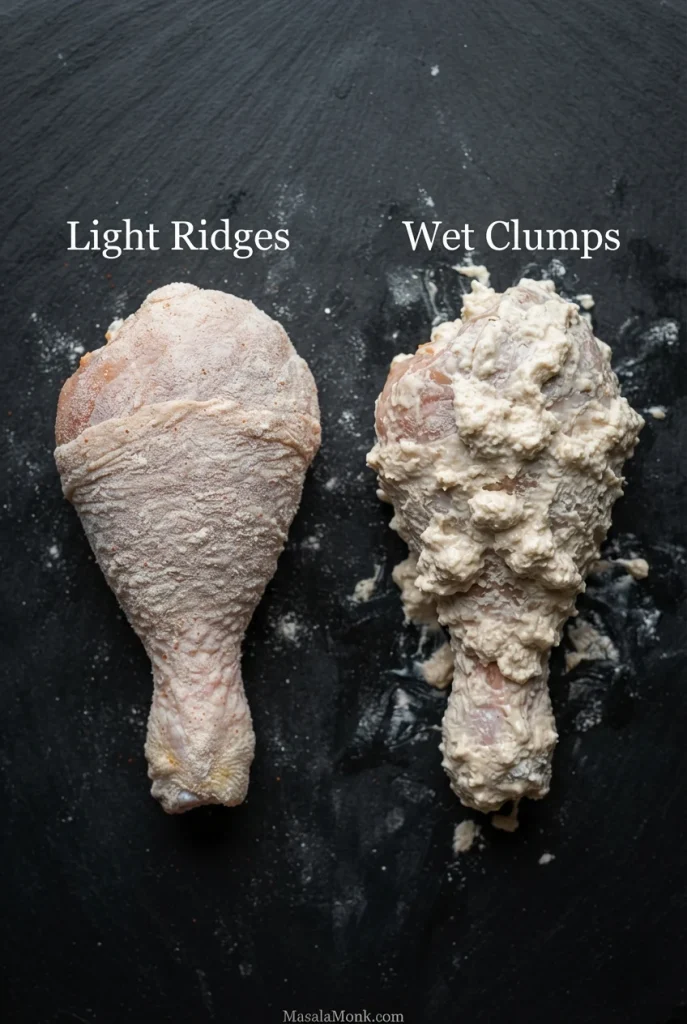
- Coat the drumsticks. Lift each piece from the buttermilk and let the excess drip away. Press gently into the seasoned flour, turn to coat and shake off loose clumps. Place the chicken on a clean tray. Look for small flour ridges rather than thick, wet lumps.
Heat the sheet and bake the first side
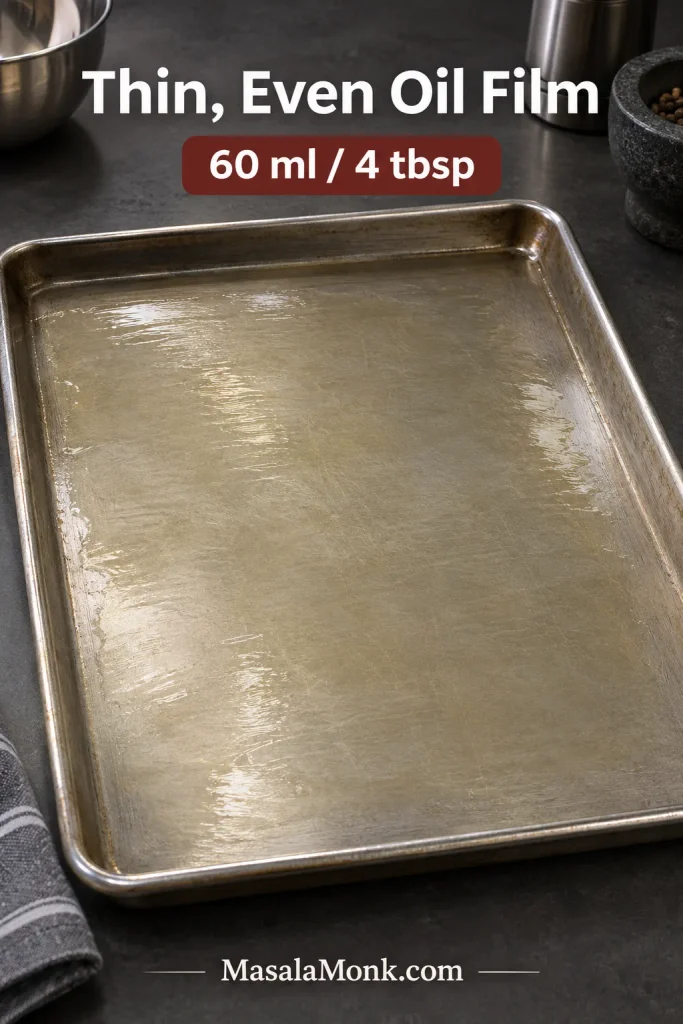
- Heat the pan while the coating settles. Spread all 60 ml oil in an even film across the part of the baking sheet where the chicken will sit. Heat the pan in the fully preheated oven for about 3 minutes. During that time, the dredged chicken can settle briefly; around 5 minutes after coating is sufficient. The oil should be hot, not smoking.
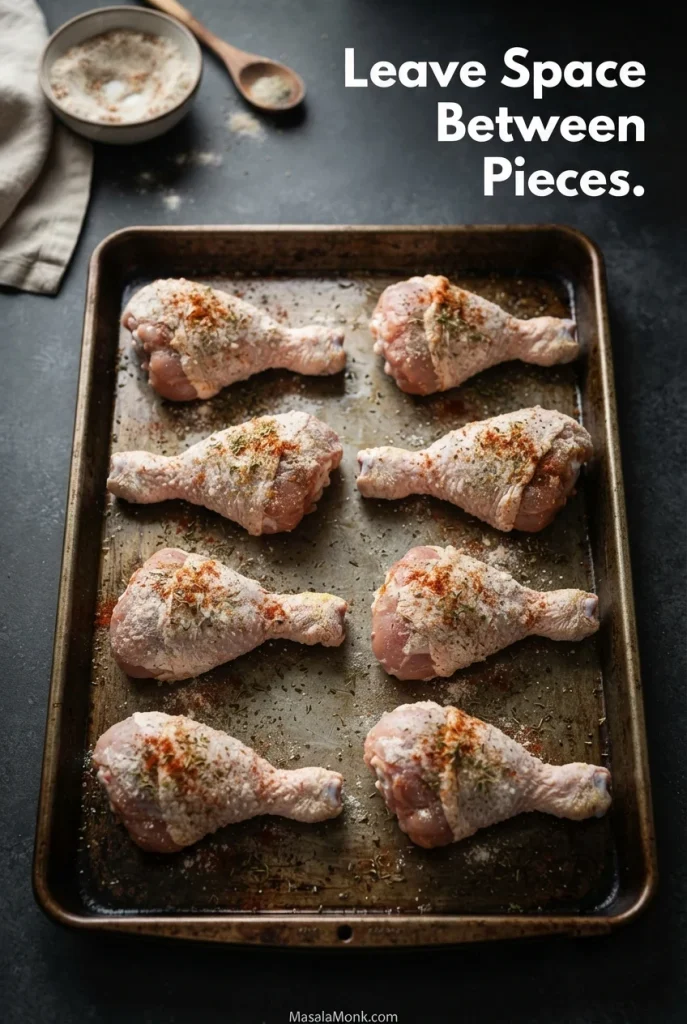
- Place the chicken carefully. With oven mitts, move the sheet to a stable, heat-safe surface and keep it level. Lower the drumsticks into the hot oil with tongs, broad skin-covered side down where practical. Leave at least 1 inch (2.5 cm) between pieces. Hot oil may splatter.
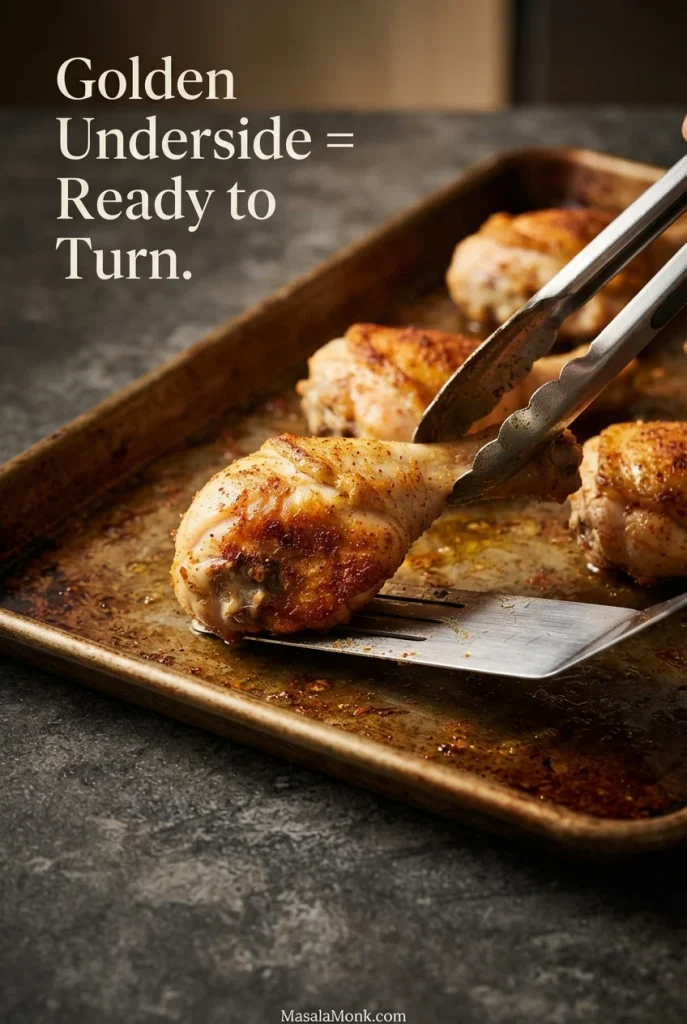
- Bake the first side. Return the sheet to the middle rack. Bake for about 25 minutes without moving the chicken. The underside should develop a set coating and golden patches.
Turn, check and finish the chicken
- Check, then turn. Take out the pan and check the temperature of a smaller drumstick. If it is ready at or above 165°F (74°C), remove it or continue briefly only if you prefer the more yielding dark-meat texture described above. Gently slide a thin spatula under the remaining pieces; when the underside releases, support each piece with the spatula and guide it over with tongs.
- Finish baking. Return the remaining drumsticks to the oven. Begin checking smaller pieces before another 15 minutes have passed, then check the others as they approach doneness. Remove each piece when its thickest meaty part reaches at least 165°F (74°C), keeping the thermometer tip away from bone. The second side may brown differently. If the coating darkens too quickly, reduce the oven to around 400°F (200°C).
Rest without softening the crust
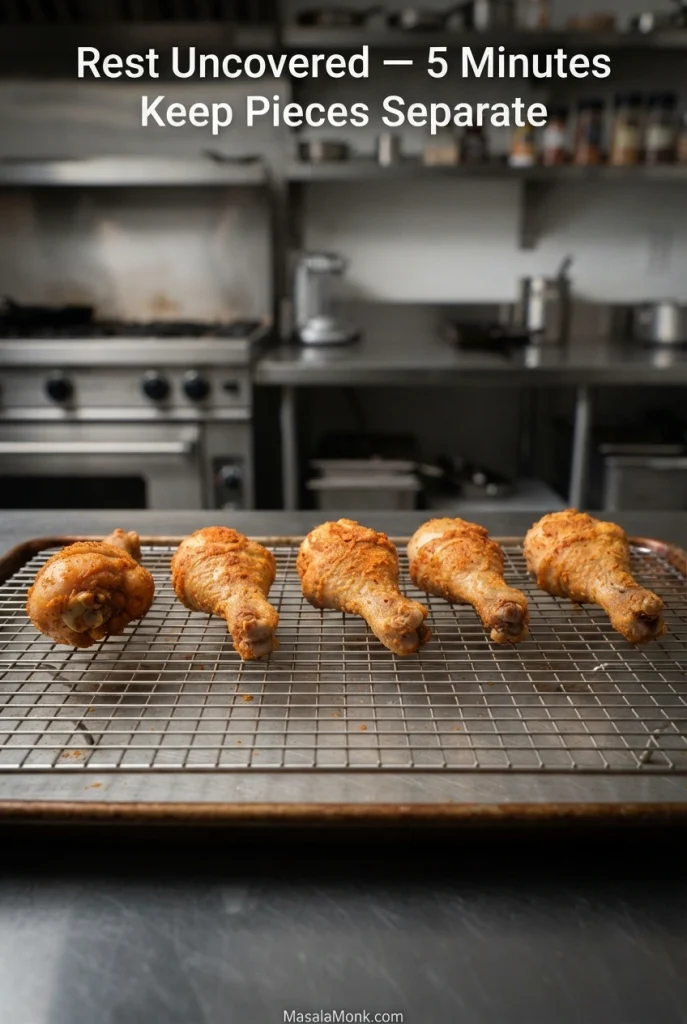
- Rest and serve. Transfer cooked drumsticks to a clean wire rack, keeping them apart and uncovered for about 5 minutes. Serve while the seasoned coating still has its crisp edges.
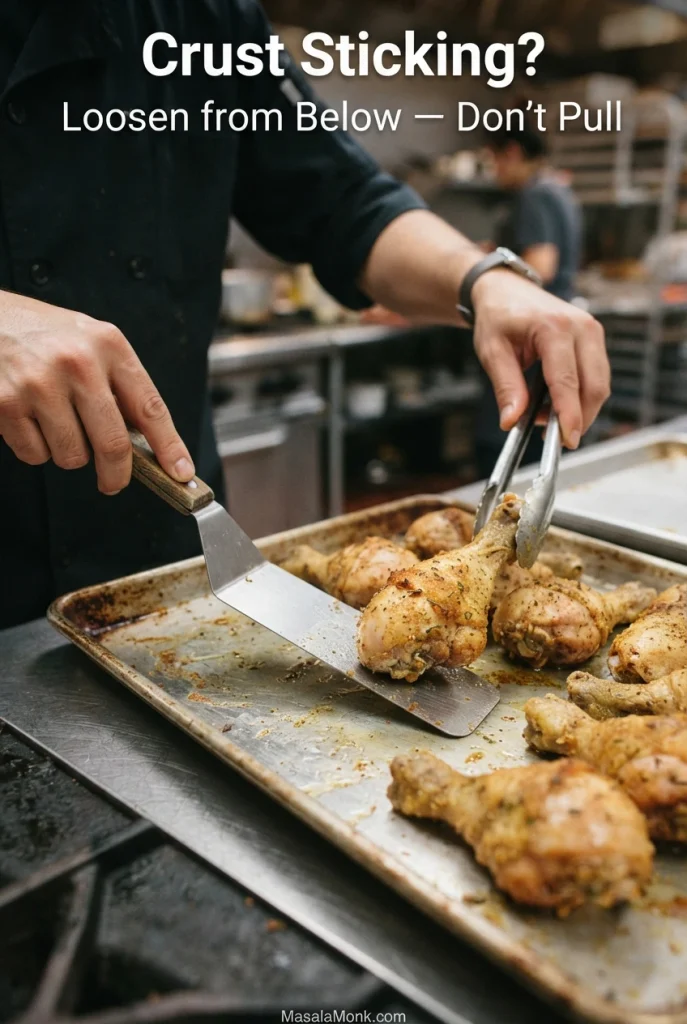
If the coating won’t release at the turn: Don’t pull harder with tongs. If the meat needs more cooking, give it a few extra minutes before sliding the spatula underneath. Do not overcook finished chicken simply to free or darken the breading.
If the crust still looks pale, gummy or wet after cooking, use the troubleshooting guide to identify the cause before changing the recipe.
Getting the Buttermilk and Flour Coating Right
In oven fried chicken, buttermilk adds a gentle tang and leaves enough moisture for seasoned flour to adhere. The flour forms the main crust; cornstarch reduces the proportion of wheat flour in the mixture and can help produce a lighter, crisper finish where the dredge browns against hot fat.
Season the flour well because it’s the coating you taste first. Paprika adds colour, while garlic, onion, thyme and black pepper give it savoury flavour.
Should You Double-Dredge Oven Fried Chicken?
One light dredge is enough for this hot-pan method. A second dip in buttermilk and flour builds a thicker, wetter coating that can remain soft under the browned surface. For a heavier fried cutlet crust, chicken fried chicken with country gravy uses a different preparation.
Prefer a coarser crust? Compare the panko and cornflake methods, which use a different baking surface and shorter-cooking boneless cuts.
What Can You Use Instead of Buttermilk?
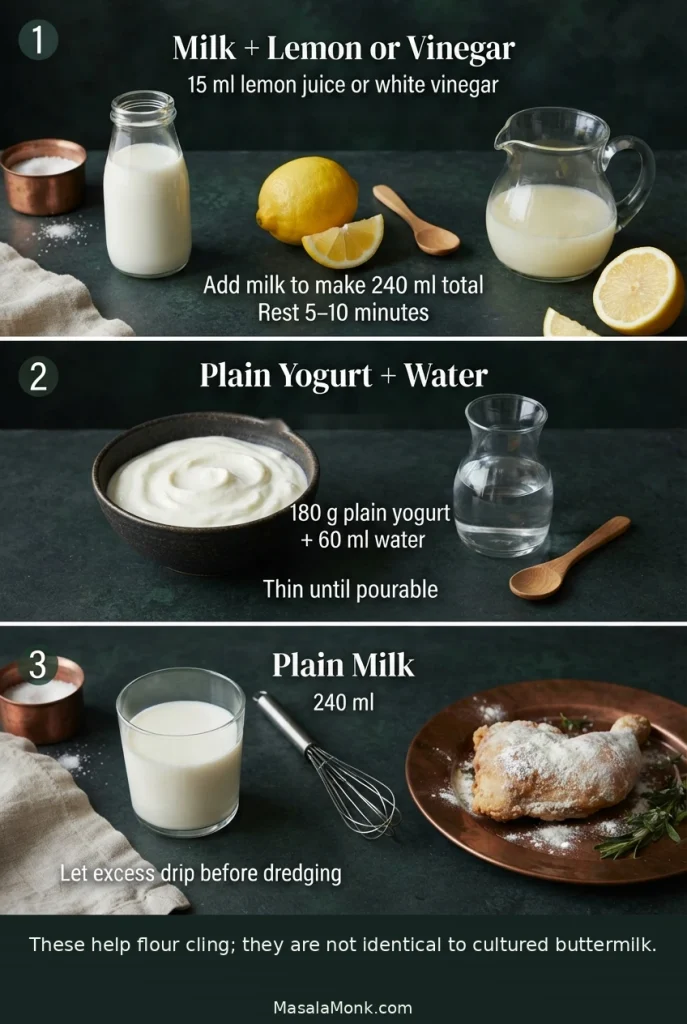
These substitutions moisten the surface enough for flour to cling, but they won’t taste or behave exactly like cultured buttermilk.
- Milk and lemon juice: Put 15 ml (1 tbsp) lemon juice or white vinegar in a measuring cup, then add milk to reach 240 ml (1 cup). Stir and leave for 5–10 minutes.
- Plain yogurt: Thin approximately 180 g unsweetened yogurt with 60 ml water until pourable.
- Plain milk: Use 240 ml for a milder result; let excess liquid drip away before dredging.
Other Ingredient and Seasoning Adjustments
No cornstarch? Replace it with another 25 g all-purpose flour. The crust may be a little heavier.
Gluten-free? Choose a gluten-free flour blend suitable for savoury breading. Apply a light coating that doesn’t turn into a sticky paste, and shake away excess. For the boneless alternatives, use gluten-free flour and certified gluten-free crumbs or cereal; texture and browning may differ.
Prefer a mild batch? Omit the cayenne and hot sauce. Offer homemade hot honey sauce at the table for anyone who wants sweetness and heat.
Want to use less oil? Choose a lightly oiled breadcrumb preparation rather than trying to bake this flour coating completely dry. It produces a different, lighter crumb crust.
Baking Sheet, Wire Rack or Cast Iron?
For oven fried chicken, use a sturdy rimmed metal sheet for the main drumsticks. A rack works better for the panko and cornflake alternatives; a cast-iron skillet can handle a smaller flour-coated batch if it has room for the pieces.
| Cooking surface | Best use |
|---|---|
| Rimmed metal baking sheet | Main flour-coated drumsticks |
| Oven-safe wire rack | Lightly oiled panko or cornflake coating |
| Cast-iron skillet | Smaller flour-coated batches with enough room |
| Deep roasting dish | Less suitable if juices collect around the breading |
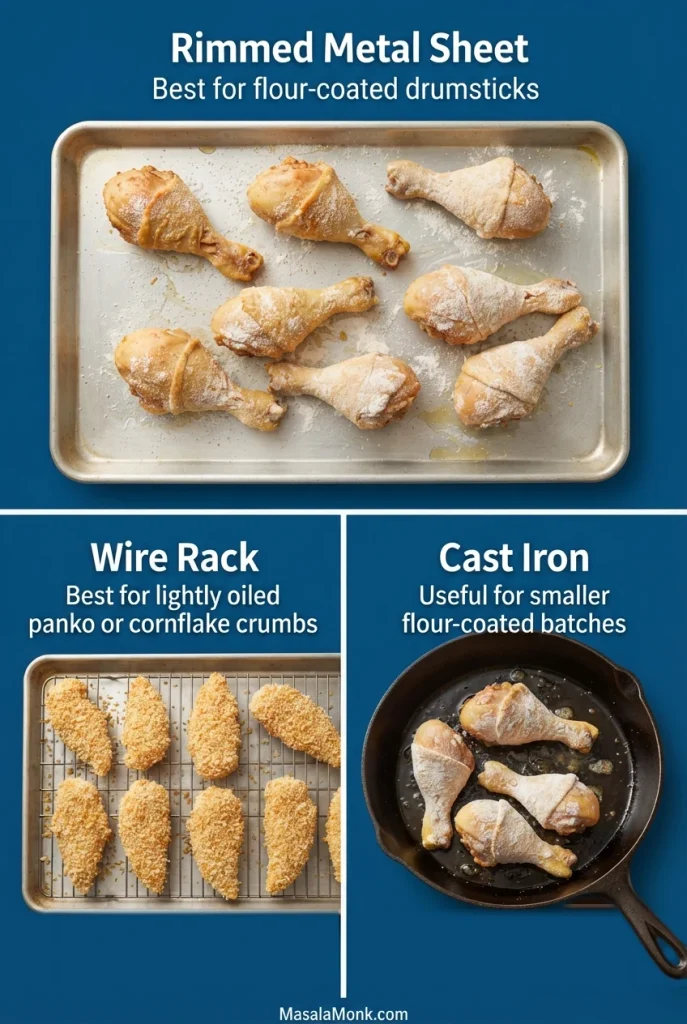
Use cookware approved for high-heat preheating. Thin sheets can warp, while dark metal may brown the underside faster. Keep hot oil level whenever moving the pan. For the main method, skip parchment or foil beneath the chicken: both alter direct contact with the metal and oil. Don’t preheat glassware or cookware not designed for it.
Oven Fried Chicken Cooking Times by Cut
Medium bone-in drumsticks generally take 40–55 minutes at 425°F (220°C) with the main hot-pan method, but check doneness at the first turn instead of assuming every piece needs the full range. Chicken thickness, oven performance and starting temperature can change the timing.
| Chicken cut and oven temperature | Approximate total baking time |
|---|---|
| Medium bone-in drumsticks, 425°F — main recipe | 40–55 minutes |
| Large bone-in drumsticks, 425°F | 50–60 minutes or longer |
| Bone-in thighs, 400–425°F | 40–55 minutes |
| Bone-in breasts, 400–425°F | 35–50 minutes |
| Boneless thighs, 400–425°F | 20–35 minutes |
| Boneless breasts, 400–425°F | 20–30 minutes |
| Chicken tenders, 400–425°F | 12–22 minutes |
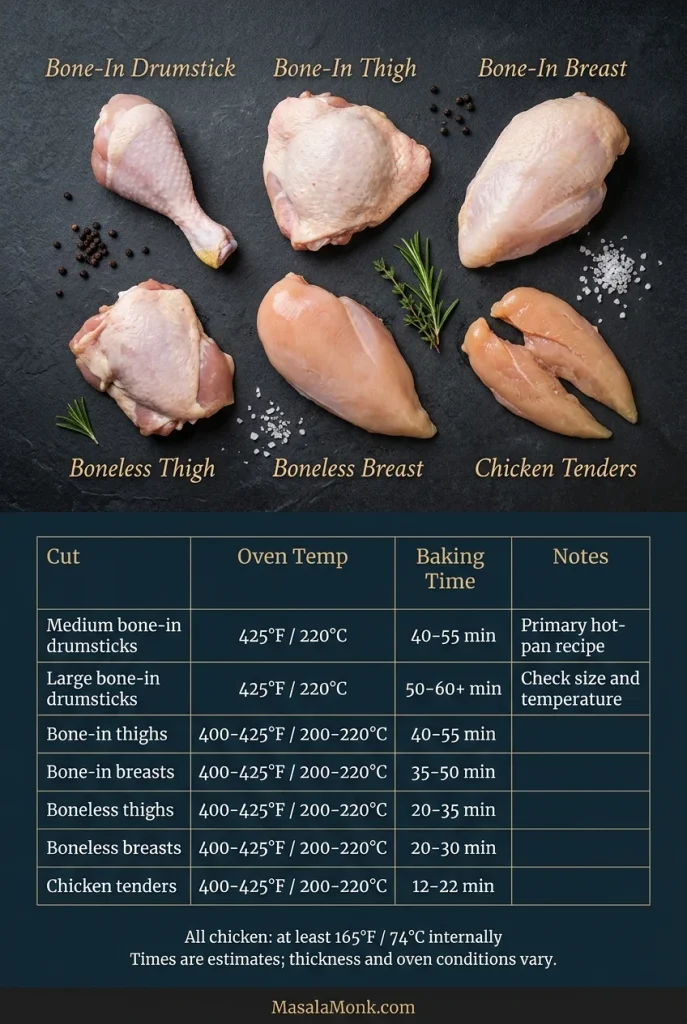
Only the medium drumsticks have a complete, cut-specific hot-pan recipe here. The other rows are general oven-baking estimates, not directions to reuse the same coating, oil quantity or turning schedule. If you want a dedicated boneless preparation, baked honey mustard chicken tenders use a panko coating suited to their shorter cooking time.
Making the original eight drumsticks? Return to the complete hot-pan recipe.
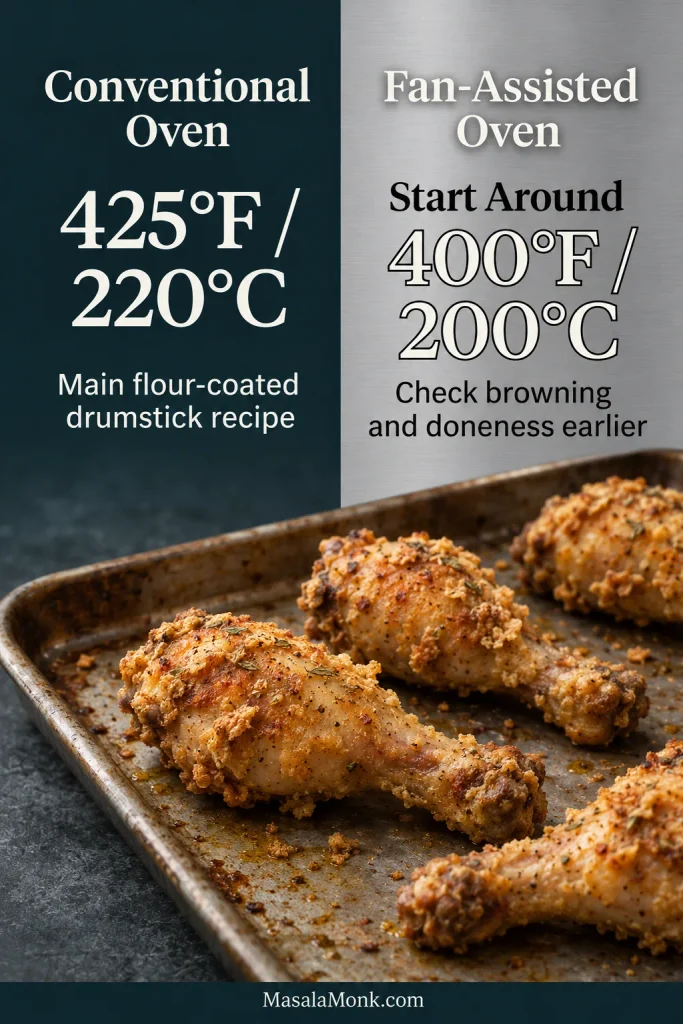
400°F vs 425°F: Which Temperature Is Better?
Use 425°F (220°C) in a conventional oven for the main flour-coated drumsticks. At 400°F (200°C), browning is gentler and cooking may take longer. For a fan-assisted oven, begin around 400°F (200°C) and check the crust and meat sooner because moving hot air can change the browning rate.
Adjusting for Chicken Size and Batch Size
Different-sized drumsticks: The recipe uses pieces averaging approximately 150 g each, including bone and skin. Small drumsticks may finish sooner; very large ones may take more than 55 minutes. Remove them individually as they finish.
Skinless drumsticks: This oven fried chicken recipe is designed for skin-on pieces, which contribute some fat as they bake. Skinless pieces can use a similar light dredge, but their browning may be less predictable. Begin checking temperature earlier rather than assuming the same timing or appearance.
Half batch: Use four medium drumsticks, half the marinade and coating ingredients, and 30 ml (2 tbsp) oil in a sturdy 9 × 13-inch (23 × 33 cm) metal pan. Leave space between pieces.
Two smaller pans: To cook eight drumsticks divided between two comparable 9 × 13-inch metal pans, put four pieces and 30 ml (2 tbsp) oil in each pan. Check them separately; oven rack position may affect browning.
Double batch: Double the ingredients and allow enough pan area for 16 pieces without crowding. Cooking successive batches takes extra time; begin each batch with a clean pan.
Can You Cook These Drumsticks in an Air Fryer?
Not with this method unchanged. In this oven fried chicken recipe, the flour dredge browns against hot oil in a metal pan; exposed dry flour in an air-fryer basket can stay pale without enough fat. For an air-fryer-specific preparation, our crispy air fryer chicken tenders use a coating developed for smaller boneless pieces.
Panko and Cornflake Oven-Fried Chicken
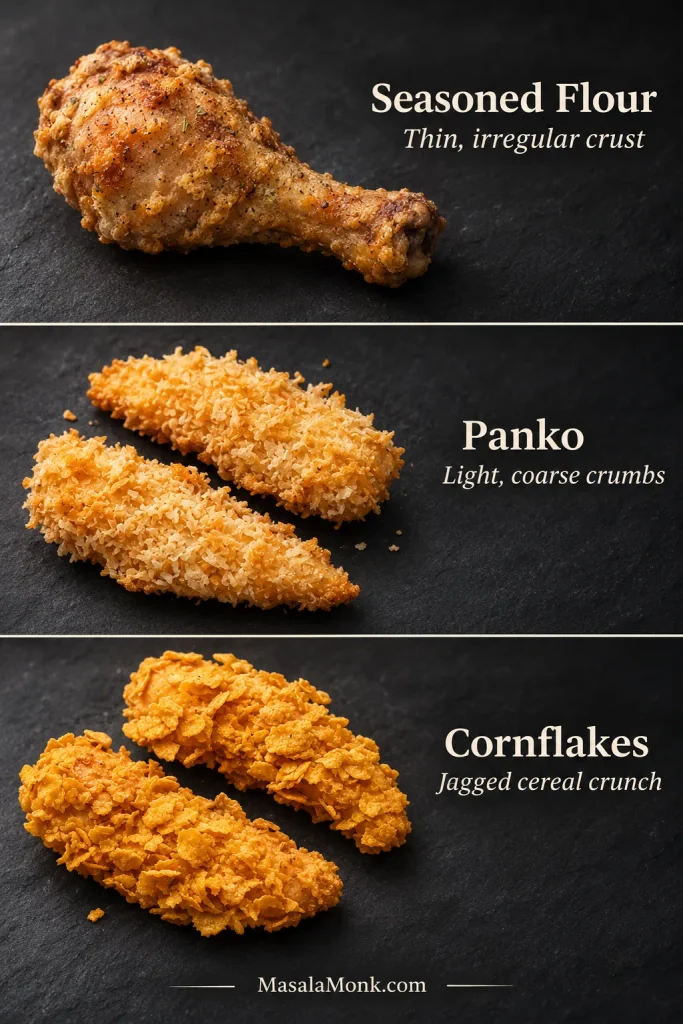
For a crumb-coated oven fried chicken variation, lightly oiled crumbs on a wire rack offer a different kind of crunch with thinner boneless cuts. Choose a coating by the texture you want:
| Coating | Finished texture |
|---|---|
| Flour and cornstarch | Thin savoury crust around drumsticks |
| Panko breadcrumbs | Light, coarse breadcrumb crunch |
| Crushed cornflakes | Jagged flakes with a firmer bite |
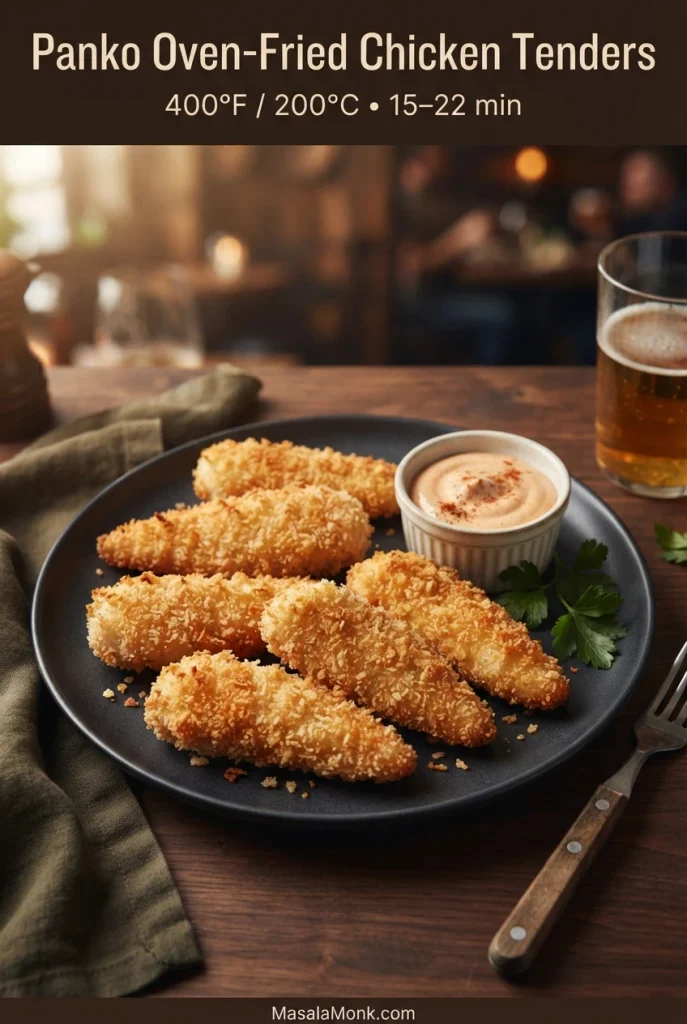
Crispy Panko Oven Chicken Tenders
Use 600 g (approximately 1 lb 5 oz) boneless tenders around 1.3–2 cm (½–¾ inch) thick. Makes three to four servings.
Ingredients
- 600 g boneless chicken tenders
- 40 g all-purpose flour
- 1 large egg, beaten; use another only if necessary
- 120 g panko breadcrumbs
- 25 ml neutral oil: 20 ml for the crumbs and 5 ml for the rack
- 1 tsp paprika
- ½ tsp garlic powder
- ½ tsp fine table salt
- ¼ tsp black pepper
Coat and bake the panko tenders
- Heat the oven to 400°F (200°C). Set an oven-safe wire rack over a rimmed baking sheet and lightly grease it with 5 ml oil.
- Toss the panko with 20 ml oil. For deeper colour, optionally toast now: stir the oiled crumbs in a skillet over medium-low heat until lightly golden, then let them cool. Whether toasted or not, mix the paprika, garlic powder, salt and pepper into the crumbs before coating.
- Pat the tenders dry. Dust lightly with flour, dip into beaten egg, then press into the seasoned crumbs. Arrange on the rack in one layer without overlapping.
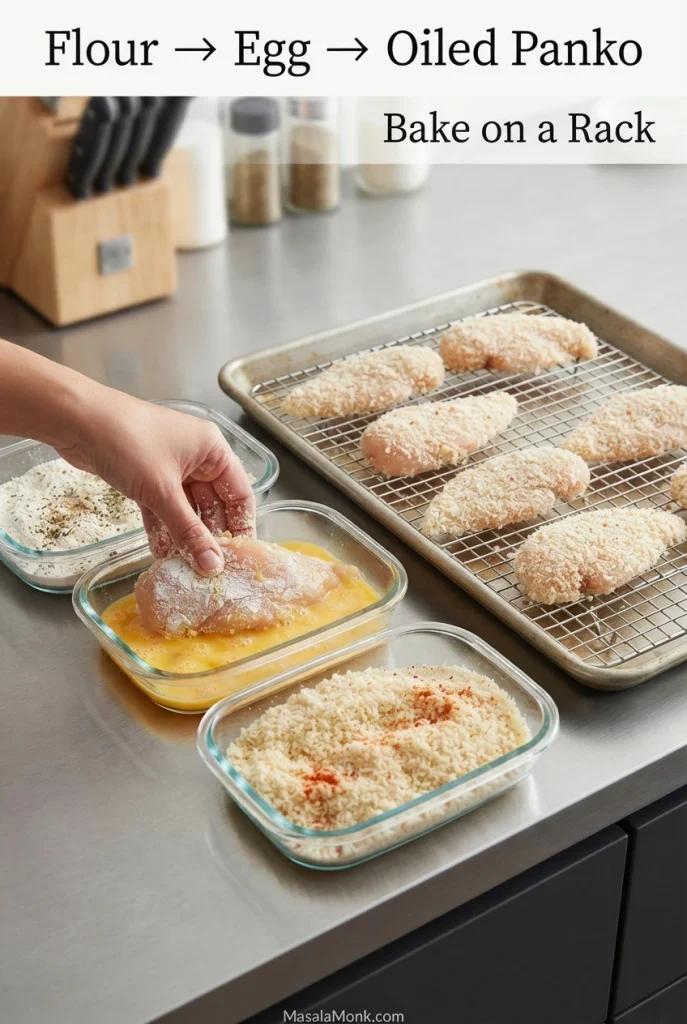
- Bake approximately 15–22 minutes, checking thinner pieces sooner, until the thickest part reaches 165°F (74°C). Discard egg and crumbs that contacted raw poultry.
Untoasted panko may finish lighter in colour even when crisp. Serve with creamy honey mustard dressing, thick enough for dipping.
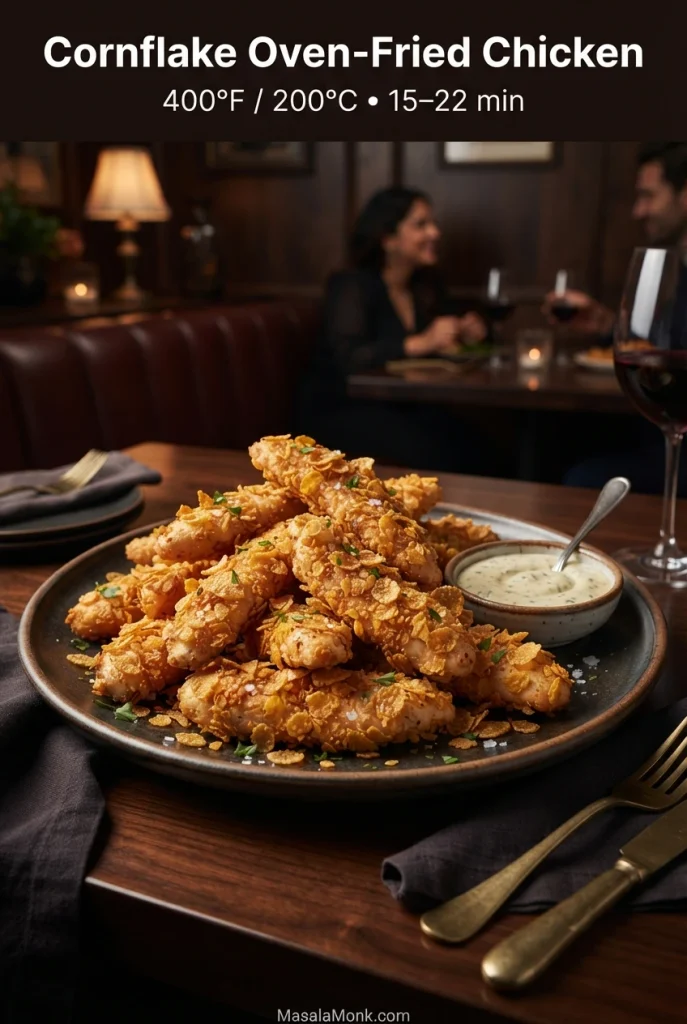
Crunchy Cornflake Oven Chicken
Keep cornflakes in visible, small pieces rather than crushing them into powder. Their uneven edges create the distinct crunch. Makes three to four servings.
Ingredients
- 600 g boneless chicken strips, approximately 1.3–2 cm (½–¾ inch) thick
- 100 g plain, unsweetened cornflakes, coarsely crushed
- 30 g all-purpose flour
- 1 large egg, beaten
- 15 ml neutral oil: 10 ml for the flakes and 5 ml for the rack
- ½ tsp paprika
- ½ tsp garlic powder
- ½ tsp fine table salt
- ¼ tsp black pepper
Coat and bake the cornflake strips
- Heat the oven to 400°F (200°C). Place an oven-safe wire rack over a rimmed baking sheet and grease with 5 ml oil.
- Toss the crushed cornflakes with the remaining 10 ml oil, paprika, garlic powder, salt and pepper.
- Pat the chicken dry, coat lightly in flour, dip in beaten egg and press the flakes onto each piece. Arrange in one layer on the rack.
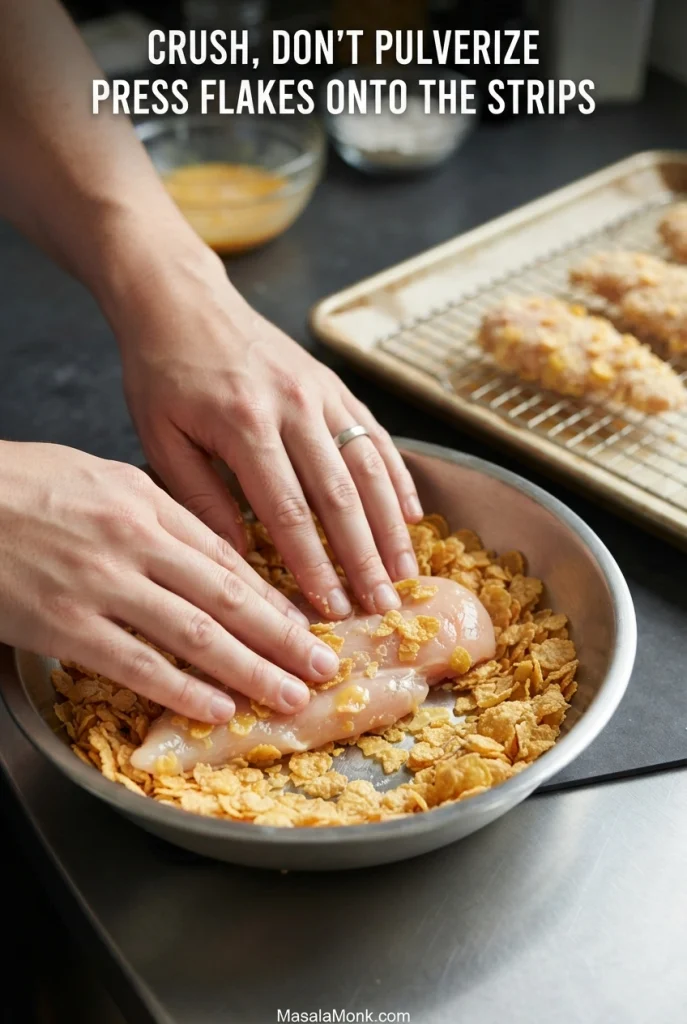
- Bake approximately 15–22 minutes, checking thin strips earlier, until the chicken reaches 165°F (74°C). The flakes should be crisp and golden in places. Discard used egg and coating that contacted raw poultry.
If you’re avoiding gluten, check the cereal label. Some cornflakes contain barley malt even when corn is the main ingredient.
Want the original bone-in version instead? Go back to the hot-pan drumstick recipe, which uses flour rather than panko or cornflakes.
Why Isn’t My Oven Fried Chicken Crispy?
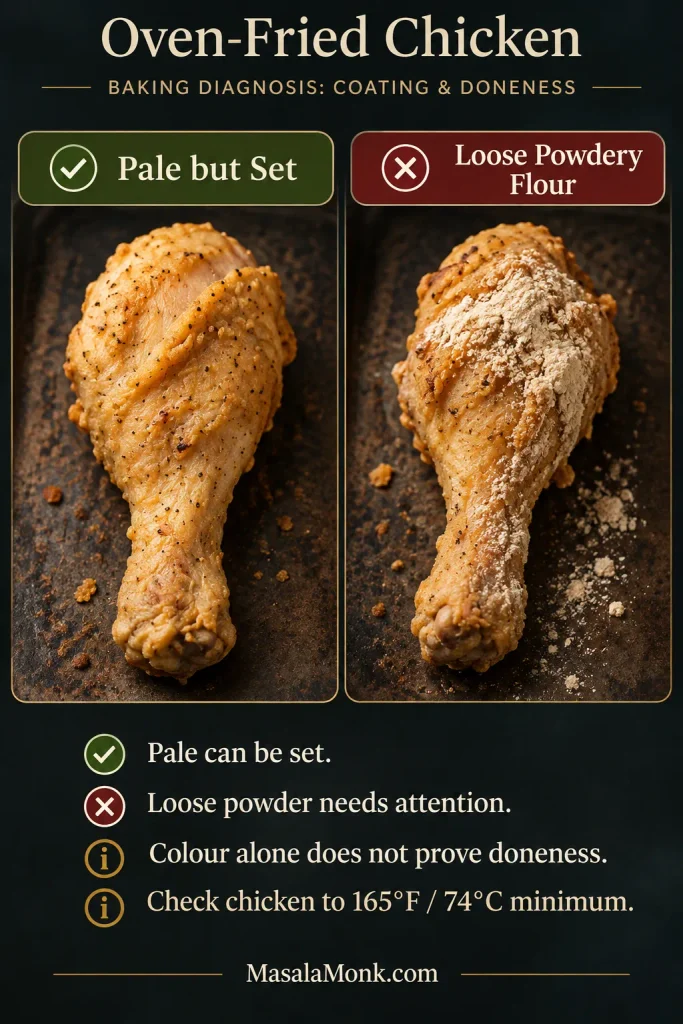
Pale but set coating, loose powdery flour and a wet underside are different problems. Use the table to decide what can still help this batch—and what to change next time.
| Problem | What to do now | Next time |
|---|---|---|
| White, powdery flour | Check meat doneness; don’t overbake for colour. | Use a lighter dredge and better hot-fat contact. |
| Thick, gummy breading | Finish cooking safely; further baking may not fix the crust. | Drain excess marinade and dredge once. |
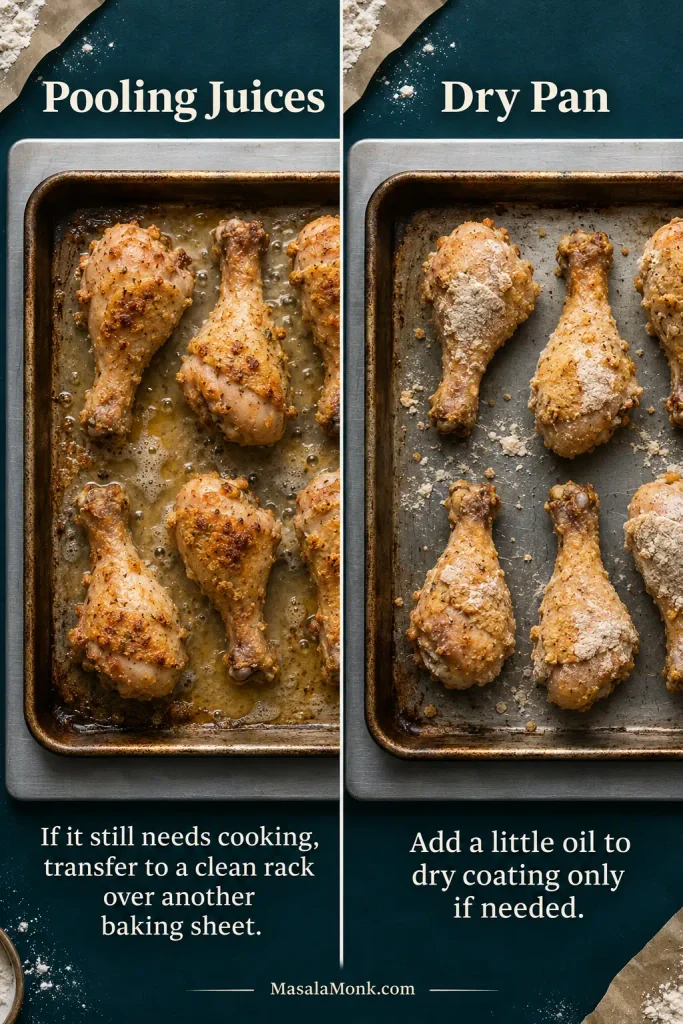
| Wet underside | If more baking is needed, move away from pooled juices. | Leave more space between drumsticks. |
| Crust sticks | Release gently from below with a thin spatula. | Let the underside set before turning. |
| Coating falls off | Support remaining crust when moving the chicken. | Keep loose skin smooth and handle gently. |
| Crust darkens early | Reduce oven temperature and cook meat to a safe temperature. | Monitor pan position and coating thickness. |
| Chicken is dry | Remove cooked pieces; serve with sauce if desired. | Check small pieces earlier. |
| Crust softens after cooking | Move to a clean rack to let steam escape. | Avoid stacking or tightly covering. |
Why Does the Flour Stay White?
Raised areas on curved drumsticks don’t touch the oiled pan as closely as the underside, so lighter patches can remain even when the coating has set. Loose, dry-looking powder is a different problem: the dredge may be too thick or insufficiently coated with fat. If the meat has already reached a safe temperature, don’t keep baking simply to chase colour.
What If the Breading Sticks When You Turn It?
Don’t pull harder with the tongs. That can tear off a large patch of crust. Work a thin spatula beneath the chicken, close to the metal, and loosen it gradually. If the coating is still soft and the meat needs more cooking, return the pan to the oven briefly before trying again. Remove chicken that has finished instead of cooking it further solely to force the breading loose.
What If Juices Collect or the Pan Looks Dry?
If watery juices are pooling: Avoid dragging the drumsticks through them. Never tip or pour out a hot pan containing oil and juices. If the meat still needs cooking, transfer it carefully to a clean oven-safe rack over another baking sheet. This prevents more soaking, although it may not restore the original underside’s crispness.
If the pan is genuinely dry: When the meat still needs cooking and the newly positioned underside has little fat contact, carefully add up to 5 ml (1 tsp) extra oil around the pieces. Keep the pan level. Skip the addition if cooking fat remains.
If repeated batches develop thick or loose breading, revisit the buttermilk and flour coating guidance before changing oven temperature.
Make Ahead, Store and Reheat
Preparing Ahead
For make-ahead oven fried chicken, mix the dry coating ingredients and store them sealed in a cool, dry place. Marinate chicken in the refrigerator for 30 minutes to 4 hours, then dredge shortly before baking.
Wash hands, utensils and work surfaces after handling raw poultry. Discard used marinade and flour that touched raw chicken, and use clean equipment for cooked pieces.
How Long Does Cooked Oven Fried Chicken Last?
Refrigerate leftovers promptly in shallow containers. Don’t leave cooked chicken at room temperature longer than 2 hours, or longer than 1 hour when the surrounding temperature is above 90°F (32°C).
Use refrigerated chicken within 3–4 days. For longer storage, freeze in airtight packaging; 2–6 months is a useful quality guideline for cooked poultry kept continuously frozen at 0°F (-18°C) or lower, not an expiration date. See the FoodSafety.gov cold food storage chart (opens in a new tab).
How to Reheat Oven Fried Chicken
To reheat oven fried chicken, use an oven or air fryer when you want the coating to firm up again. Thaw frozen leftovers safely in the refrigerator before following these instructions for refrigerated chicken.
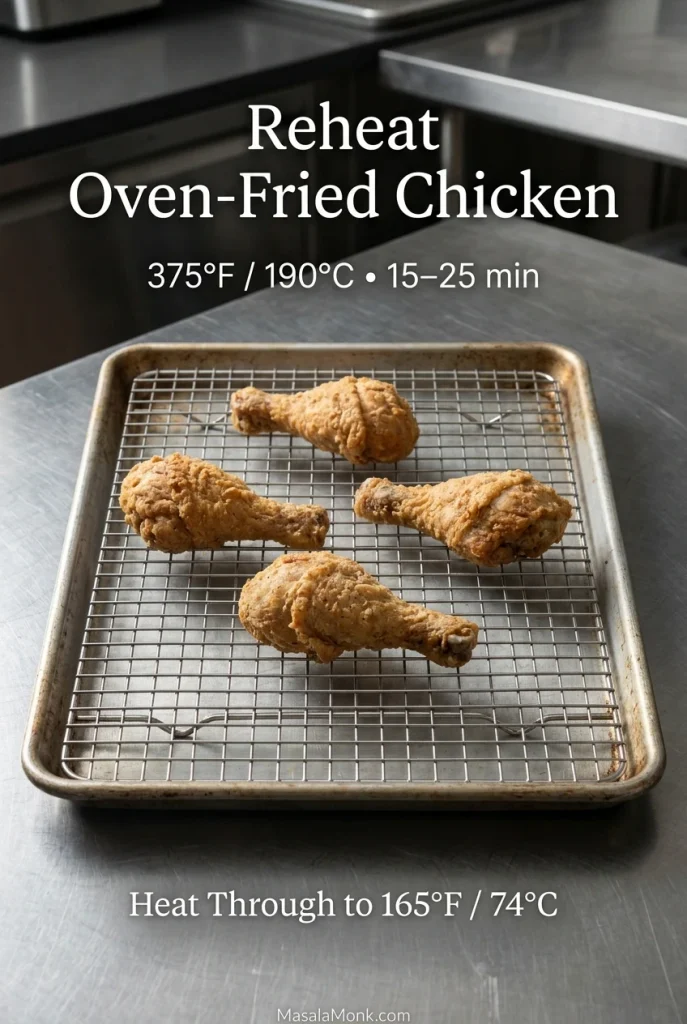
- Preheat the oven to 375°F (190°C).
- Arrange chicken in one layer on an oven-safe wire rack over a rimmed baking sheet.
- Reheat approximately 15–25 minutes, checking small pieces sooner.
- Check that the thickest meaty part reaches 165°F (74°C) before serving.
In an air fryer, begin around 350–375°F (175–190°C), keep pieces separated and check frequently until fully reheated. A microwave is convenient but usually leaves breading softer.
Keeping Chicken Crisp Until Dinner
For a short wait, keep cooked pieces separated on a clean wire rack rather than stacked or tightly covered; trapped steam softens the crust. For longer delays, keep chicken safely hot at 140°F (60°C) or above, or refrigerate promptly and reheat when needed. Serving soon after cooking gives the best texture.
What to Serve with Oven Fried Chicken
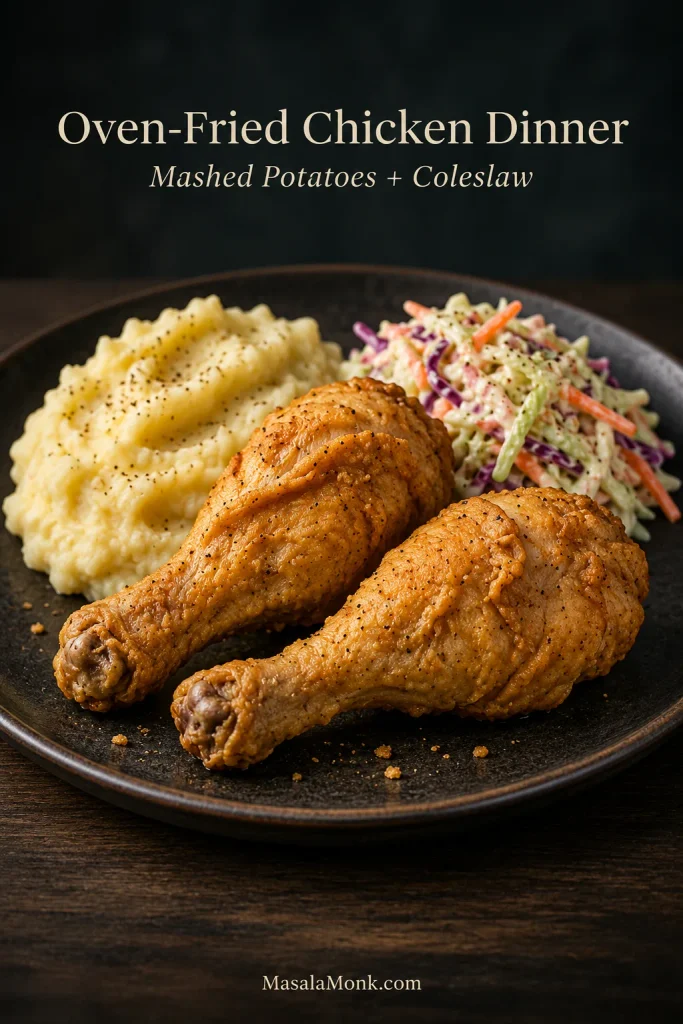
Oven fried chicken drumsticks, creamy mashed potatoes and homemade coleslaw make a comforting dinner. The cabbage’s tang and crunch balance the rich chicken, while the potatoes go well with its juices.
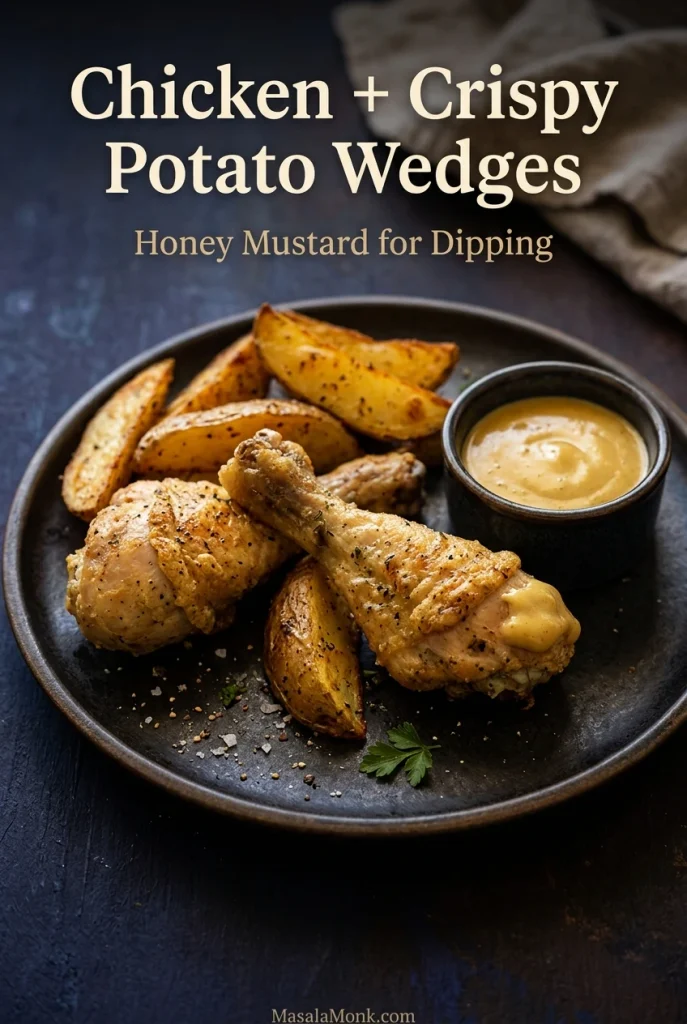
For dipping, serve crispy oven-baked potato wedges alongside the chicken and a bowl of honey mustard. Give the wedges their own baking space and aim to finish them as the drumsticks come out to rest.
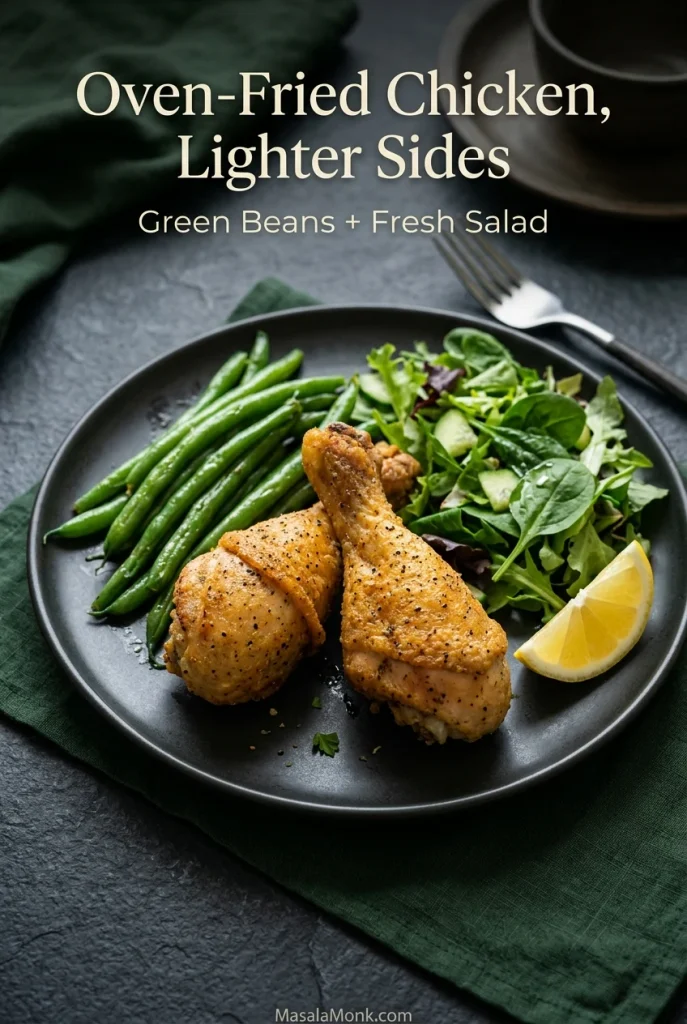
Sweet corn, a green salad or lemony green beans almondine with toasted almonds are fresher accompaniments. Offer hot sauce, honey mustard or lemon-garlic aioli in separate bowls so each person can add sauce without softening the entire tray of crusty chicken.
Back to the full drumstick recipe · Back to the article overview








