
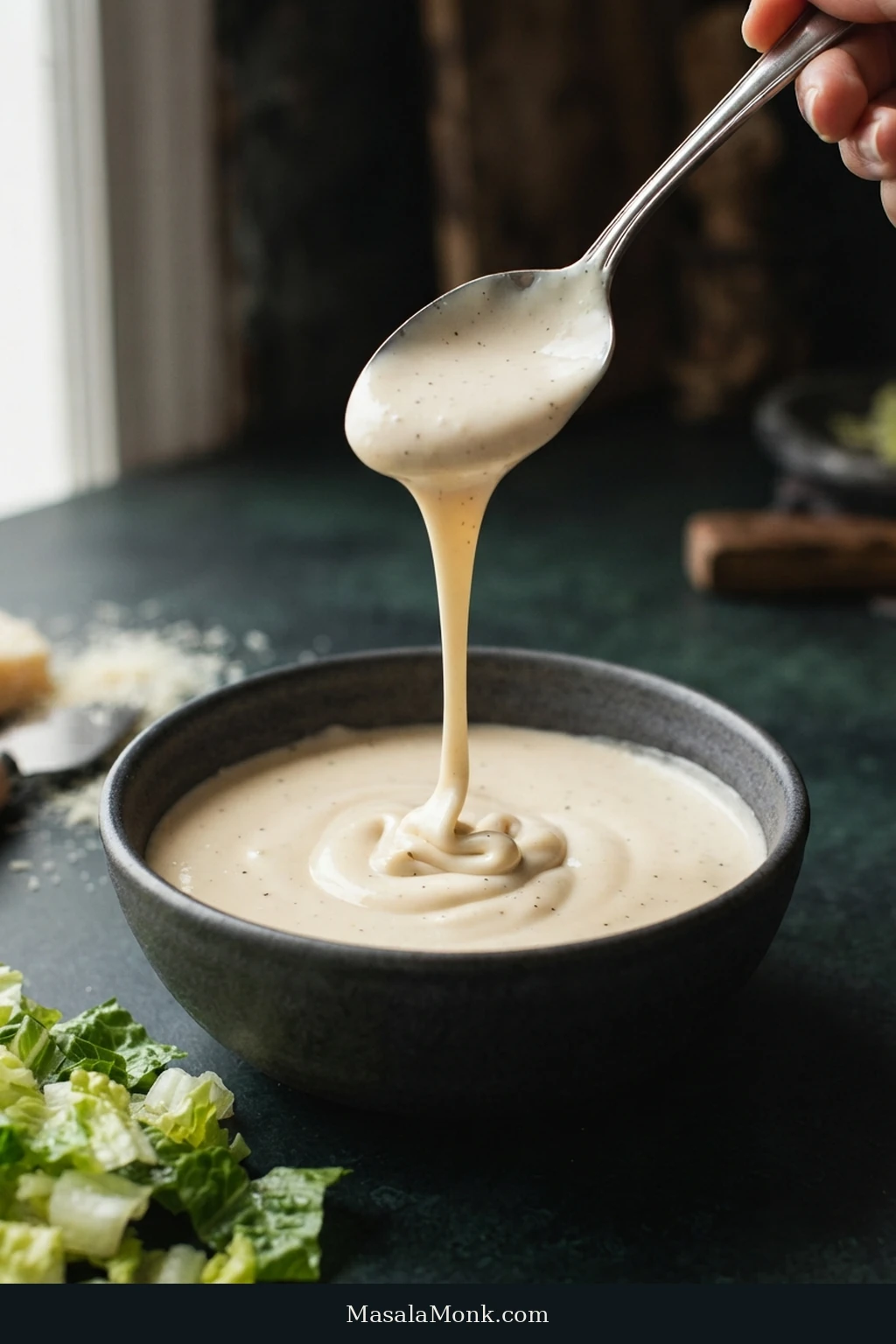
Good Caesar salad dressing should coat romaine in a thin, creamy layer. You should taste Parmesan, pepper, lemon and savory depth in every bite—not blobs of mayonnaise, harsh raw garlic or anchovy that overwhelms everything else.
This homemade Caesar dressing recipe starts with mayonnaise because the emulsion is already built. That makes the process straightforward: balance the savory ingredients, add enough lemon for brightness, then loosen the dressing until it coats the lettuce without weighing it down.
When the balance is right, the dressing almost disappears into the salad. Every leaf tastes seasoned, but nothing feels plastered in sauce.
The main method uses prepared mayonnaise, so you do not need to build a new egg-and-oil emulsion. A classic yolk-and-oil version and practical adaptations follow if you prefer to make it from scratch or need a different version.
Caesar Dressing Recipe
You need a medium bowl, a whisk and a fine grater. There is no blender or slow oil drizzle to manage for this mayonnaise-based version.
Prep: 10 minutes
Cook: 0 minutes
Total: 10 minutes, plus an optional 15–30 minute chill
Yield: About 1⅛ cups / 9 fl oz / 270 ml, depending on final thinning
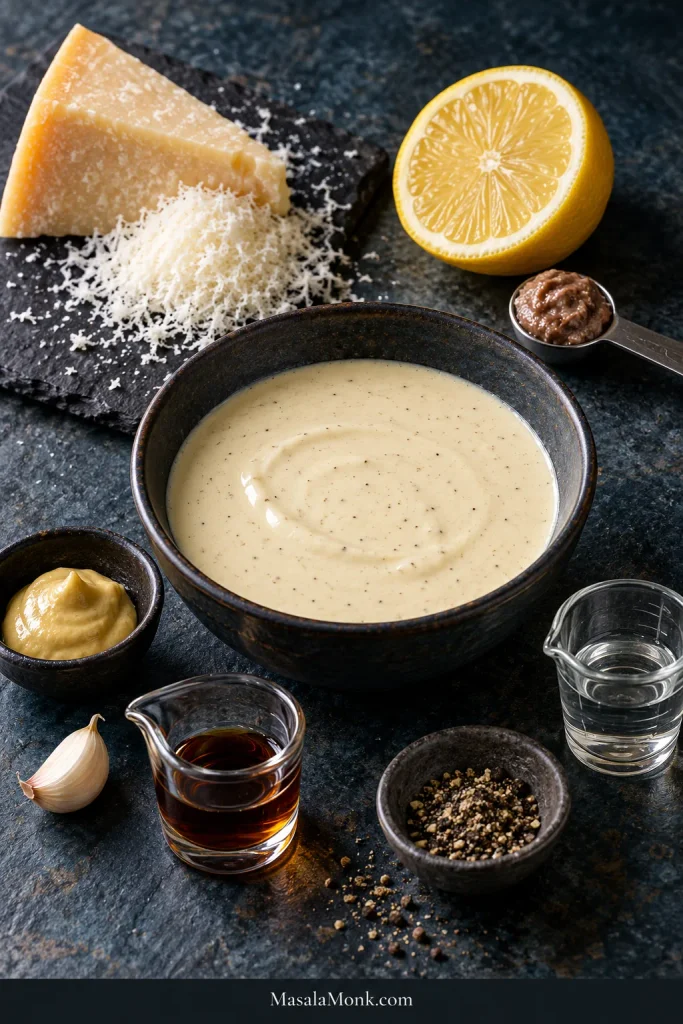
Caesar Dressing Ingredients
- ¾ cup / 6 fl oz / 180 ml full-fat mayonnaise
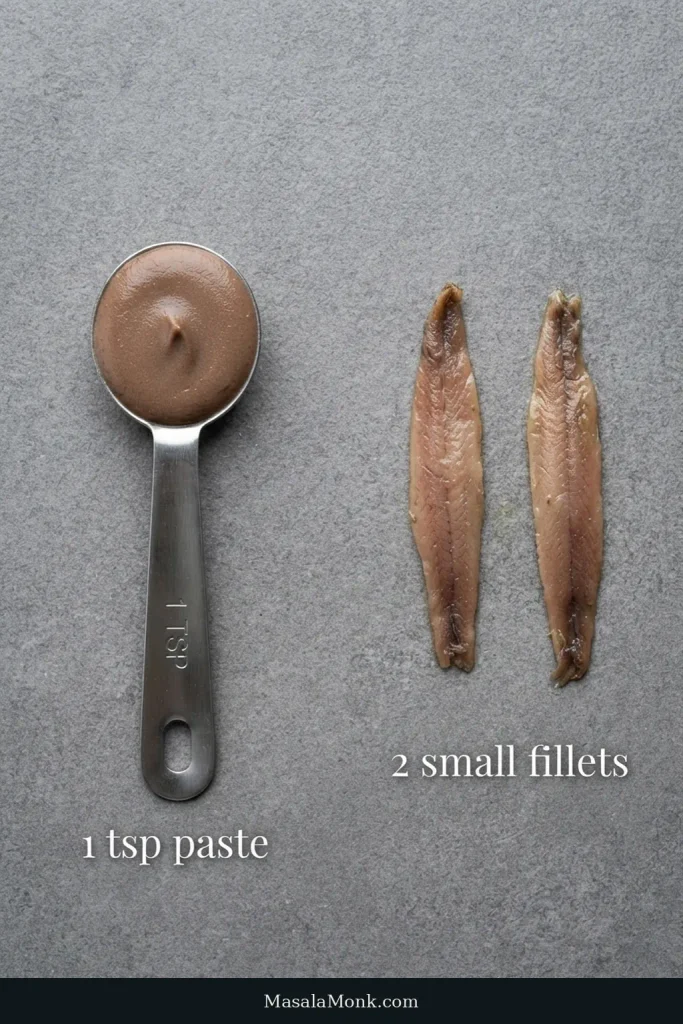
- 1 teaspoon / 5 ml anchovy paste, or 2 small brown oil-packed anchovy fillets, mashed smooth
- 1 small garlic clove, finely grated
- 2 tablespoons / 1 fl oz / 30 ml fresh lemon juice, divided
- 1 teaspoon / 5 ml Dijon mustard
- 1 teaspoon / 5 ml Worcestershire sauce
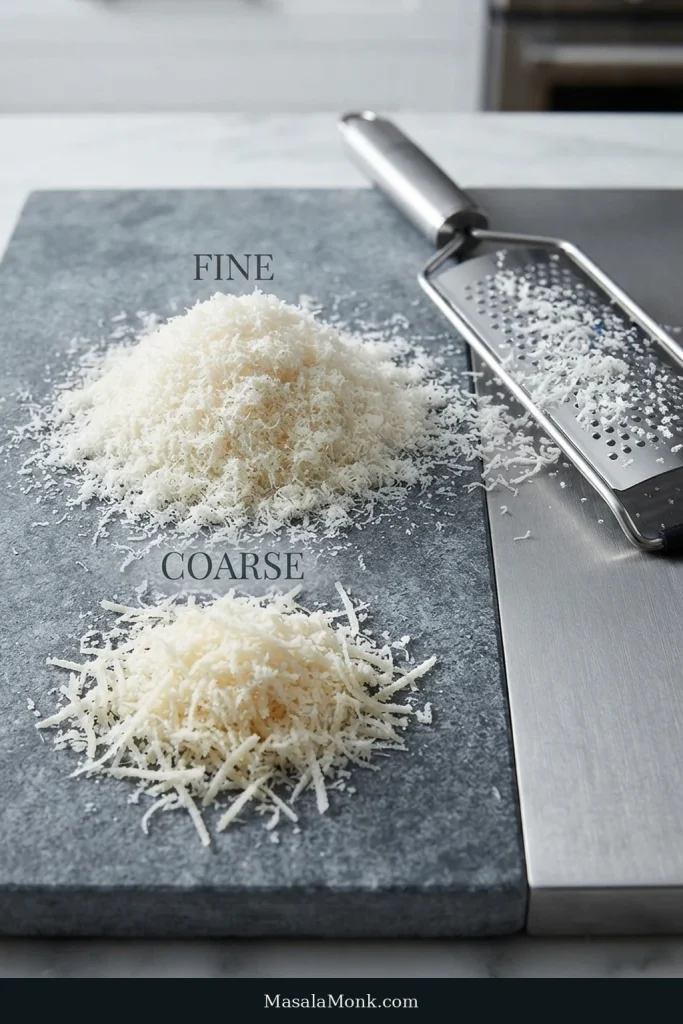
- 1 oz / 28 g Parmesan, very finely grated
- ¼ teaspoon freshly ground black pepper, plus more if needed
- 2–4 teaspoons / 10–20 ml cold water to start, added 1 teaspoon at a time, plus more as needed for consistency and after chilling
- Fine salt, only if needed at the end
How to Make Caesar Dressing
- Whisk the base. Add the mayonnaise, anchovy paste, garlic, Dijon, Worcestershire, black pepper and 1½ tablespoons / about 22 ml of the lemon juice to a medium bowl. Keep the remaining lemon juice aside. Whisk until smooth.
- Add the Parmesan. Whisk in the finely grated cheese until it is evenly dispersed through the creamy base. A very fine grate helps it integrate more smoothly than long shreds.
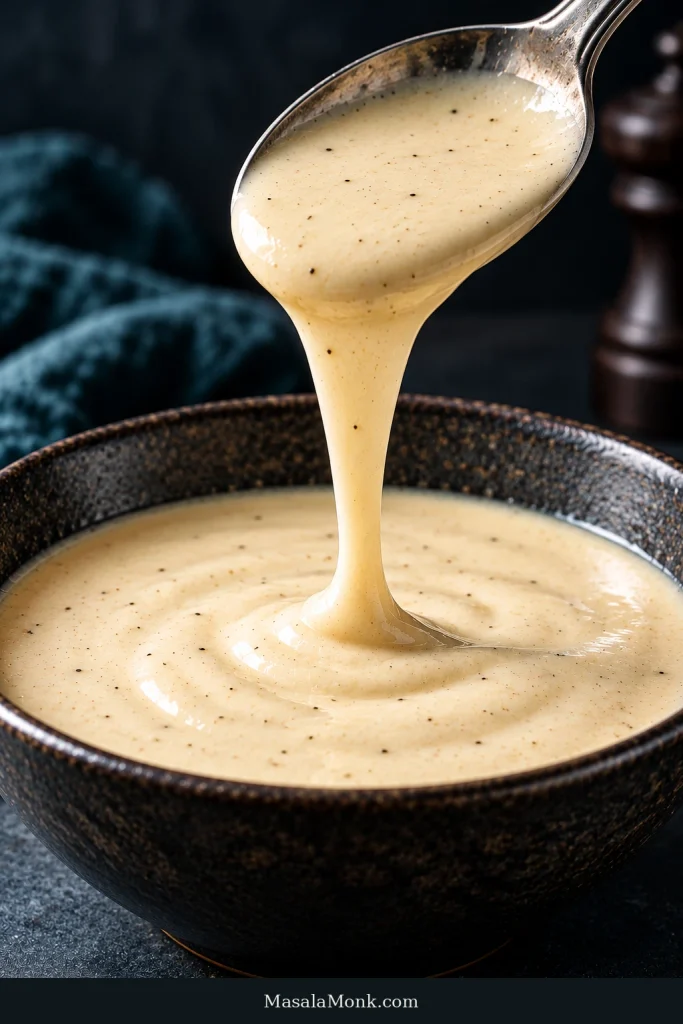
- Loosen it gradually. Whisk in 1 teaspoon / 5 ml cold water. Lift the whisk or spoon and watch how the dressing falls. Continue adding water a teaspoon at a time until it flows in a thick ribbon instead of dropping in a heavy mound.
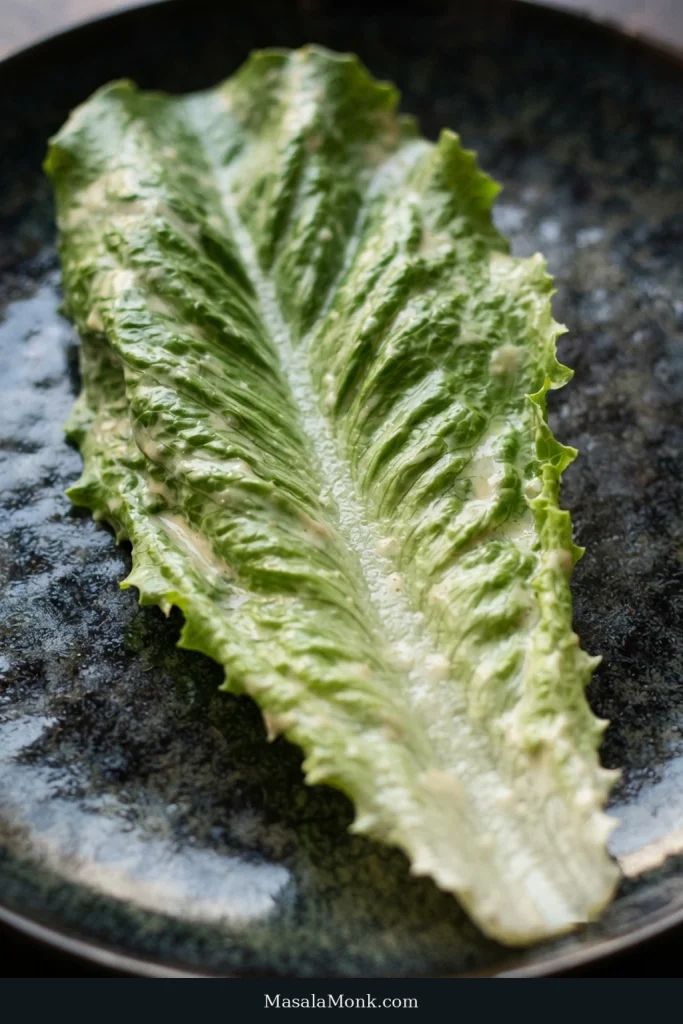
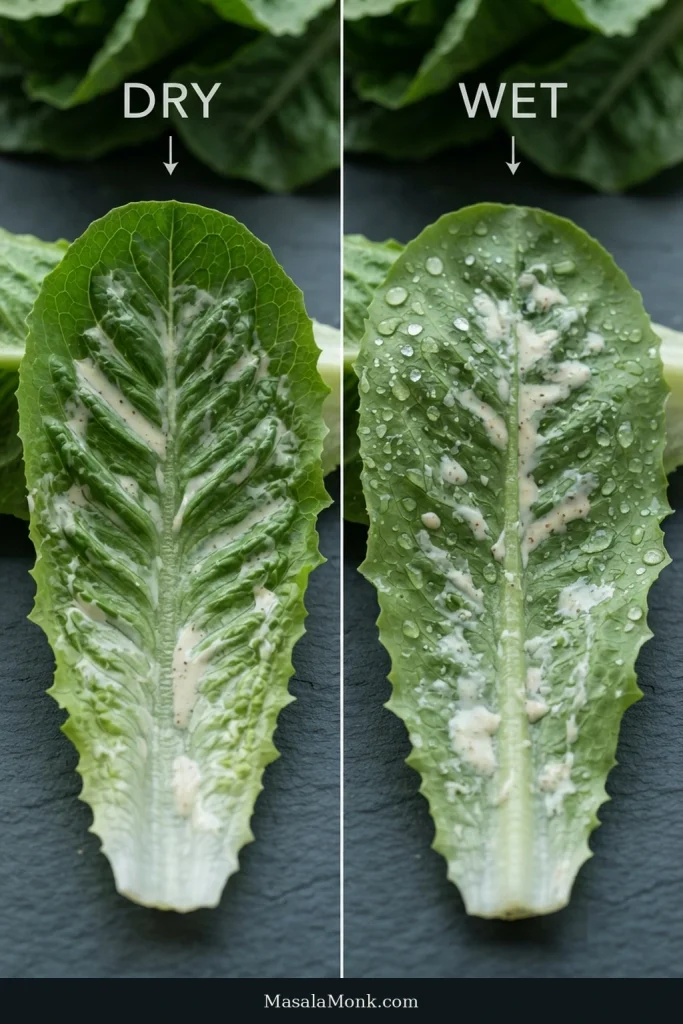
- Test one leaf. Coat a completely dry piece of romaine with a little dressing. It should spread in a thin, creamy layer and cling to the leaf without pooling.
- Finish the flavor. On dressed romaine, lemon should brighten the first bite, Parmesan and pepper should come through clearly, and anchovy should sit underneath rather than announce itself. Add reserved lemon, pepper or a little more anchovy paste or Worcestershire only where needed. Salt last.
- Serve or chill. Use immediately or refrigerate for 15–30 minutes. Stir before serving, then add another teaspoon or two of cold water if chilling has made the dressing too thick to coat the lettuce easily.
Recipe Notes
- Mayonnaise: Use regular full-fat mayonnaise with a neutral flavor. Sweet salad dressing such as Miracle Whip makes the result sweeter and sharper. If you use homemade mayonnaise and want to avoid uncooked shell egg, make it with pasteurized egg.
- Anchovies: Brown oil-packed fillets suit this recipe better than pale, vinegar-marinated white anchovies, which bring a brighter, more acidic flavor.
- Parmesan: Weigh 1 oz / 28 g if possible and grate it very finely so it blends smoothly into the dressing.
- Eggs: The main recipe uses prepared mayonnaise and does not require an additional uncooked egg yolk. Regular mayonnaise still contains egg, so use egg-free mayonnaise if that distinction matters for your needs.
Recipe note: This recipe was developed from established Caesar techniques, published recipes, food-safety guidance and recurring home-cook problems. MasalaMonk has not independently kitchen-tested this exact version.
A useful rule: adjust consistency in the bowl; make the final flavor adjustment on the lettuce. If the dressing seems too thick, revisit the ribbon test. If its flavor seems muted once tossed, check the romaine dryness guide.

If the dressing coats the leaf well and the flavor is balanced, you’re done.
Need an ingredient answer, variation or fix? The guide below covers the rest.
Caesar Dressing Guide
Flavor & Ingredients
Versions
Use, Fix & Store
Anchovy Paste, Fillets & the Fishiness Question
This recipe starts with 1 teaspoon / 5 ml anchovy paste, enough to bring salt and savory depth without making fish the dominant flavor.
Worried the whole bowl will taste fishy? At this amount, the anchovy should blend into the dressing rather than sit apart from it. Finish the rest of the seasoning before deciding whether it needs more.
Anchovy paste measures cleanly and blends straight into the mayonnaise, so you don’t need to open a whole tin for two fillets. If you need a genuinely fish-free version, jump to Fish-Free Caesar; leaving out the paste alone may not be enough.
Whole fillets work too: use about 2 small brown oil-packed anchovy fillets and mash them until no obvious pieces remain. Pale white anchovies marinated in vinegar taste brighter and more acidic, so they behave differently here.
What About “Authentic” Caesar?
Caesar history is messy enough that “authentic” can become a frustrating word. Accounts of the earliest salads do not all agree about separate anchovy fillets. For dinner tonight, the more useful question is whether the dressing tastes like the Caesar you want to eat.
Getting the Flavor in Balance
Caesar dressing is concentrated. Too much lemon makes it sharp, too much raw garlic takes over, and too much anchovy becomes obvious. None of those flavors should dominate the first bite.
Lemon & Salt
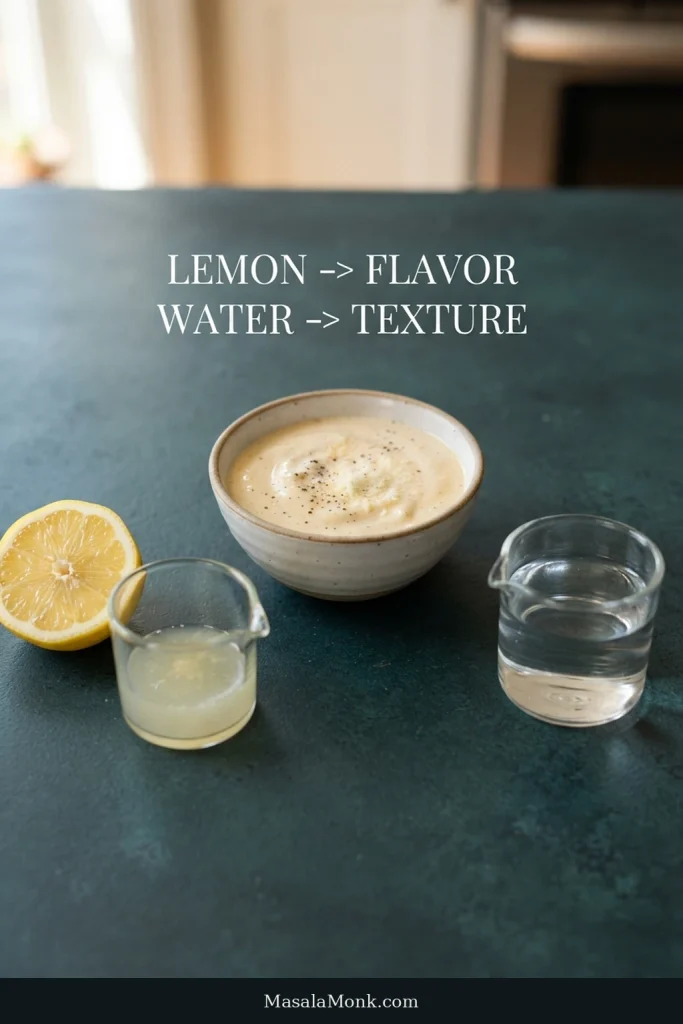
Measure 2 tablespoons / 30 ml fresh lemon juice and begin with 1½ tablespoons / about 22 ml. Reserve the remaining lemon, adding it only if the dressed romaine needs more brightness.
If you’ve ever thinned a thick Caesar with extra lemon and ended up with a sour dressing, this is why the water matters. Worcestershire, anchovy, Parmesan and mayonnaise already bring plenty of flavor and salt; extra lemon should be a flavor decision, not a texture fix. For a visual cue that tells you when the thickness is right, revisit the ribbon test in the main method.
Parmesan, Garlic & Pepper
Parmesan adds nuttiness, salt and body. Measuring by weight avoids the large difference between a fluffy pile of finely grated cheese and the same volume of more densely packed shreds.
One finely grated garlic clove is enough for this batch. Raw garlic is difficult to pull back once it takes over, so try the dressing on romaine before adding more.
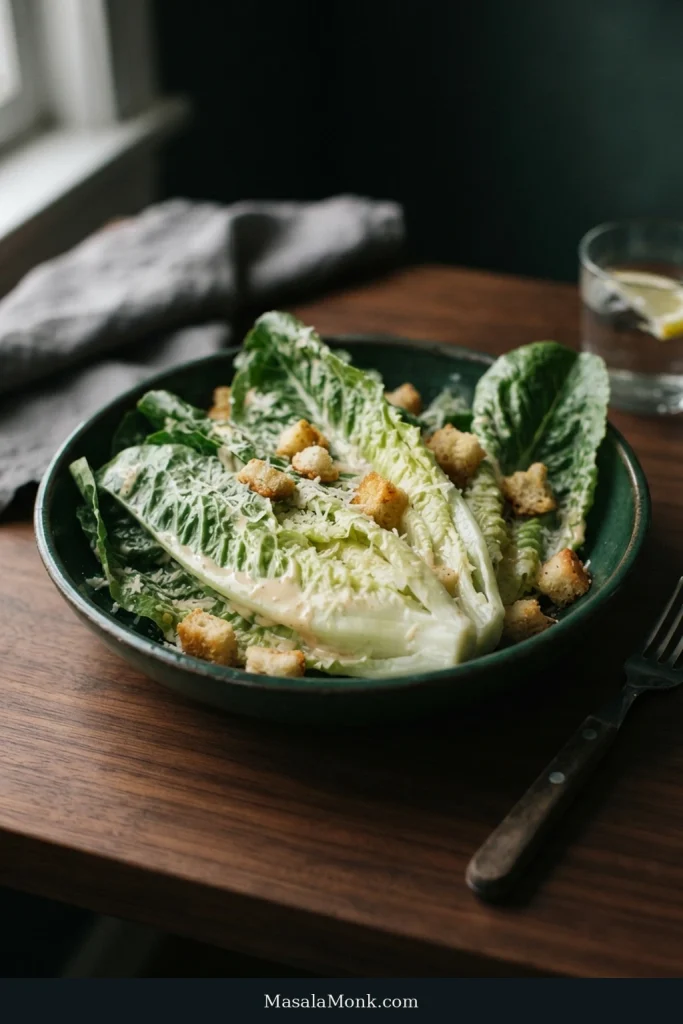
The starting ¼ teaspoon black pepper gives the dressing a clear peppery finish. Once the flavor is balanced, the finished salad should show crisp romaine beneath a light creamy coating.
Classic Caesar Dressing Without Mayo
Prefer to build the emulsion yourself? This classic-style version uses pasteurized egg yolk and oil instead of prepared mayonnaise. The first minute takes patience; once the emulsion catches, the rest becomes easier. For the quicker version, return to the main Caesar dressing recipe.
Because the yolk remains uncooked, use a pasteurized egg yolk. The U.S. Food and Drug Administration recommends pasteurized eggs or pasteurized egg products for uncooked preparations such as Caesar dressing.
Approximate yield: About ¾–⅞ cup / 6–7 fl oz / 180–210 ml, depending on final thinning. This is a smaller batch than the mayonnaise-based version.
Classic No-Mayo Ingredients
- 1 pasteurized egg yolk
- 2 small brown oil-packed anchovy fillets, mashed smooth
- 1 small garlic clove, mashed or finely grated
- 2 tablespoons / 1 fl oz / 30 ml fresh lemon juice, divided
- 1 teaspoon / 5 ml Dijon mustard
- 1 teaspoon / 5 ml Worcestershire sauce
- ½ cup / 4 fl oz / 120 ml neutral or mild-flavored oil
- 1 oz / 28 g finely grated Parmesan
- ¼ teaspoon freshly ground black pepper
- Cold water, as needed
- Fine salt, only if needed
How to Build the Emulsion
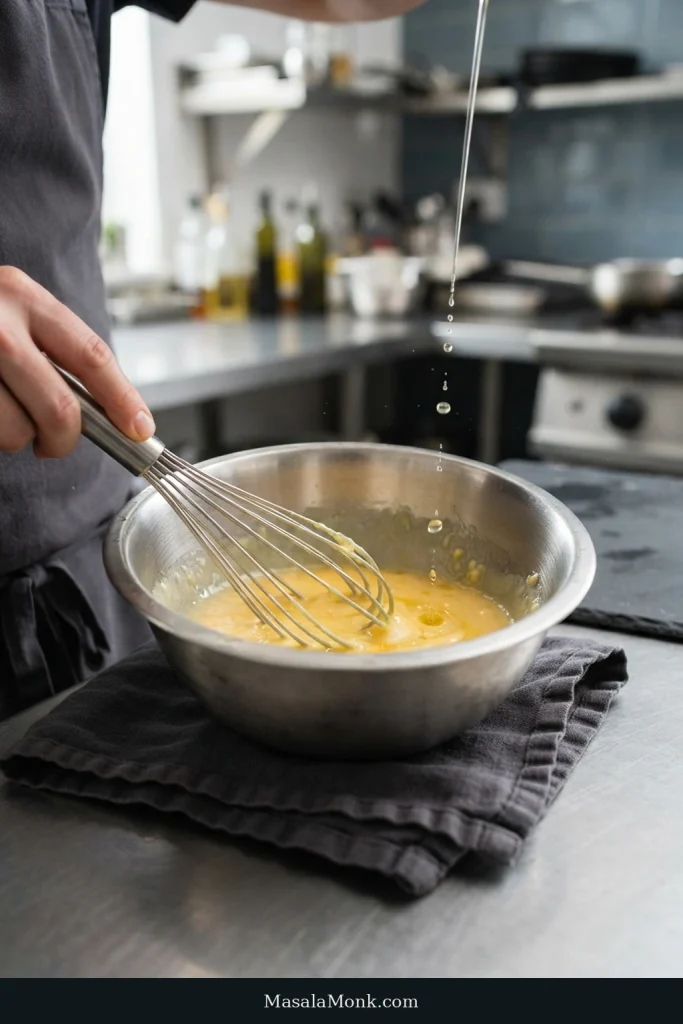
- Set the bowl on a damp folded towel so it stays steady. Whisk the pasteurized yolk, Dijon, Worcestershire and 1½ tablespoons / about 22 ml lemon juice; then add the mashed anchovy and garlic.
- Add the oil drop by drop at first while whisking constantly. Give the emulsion time to establish before speeding up.
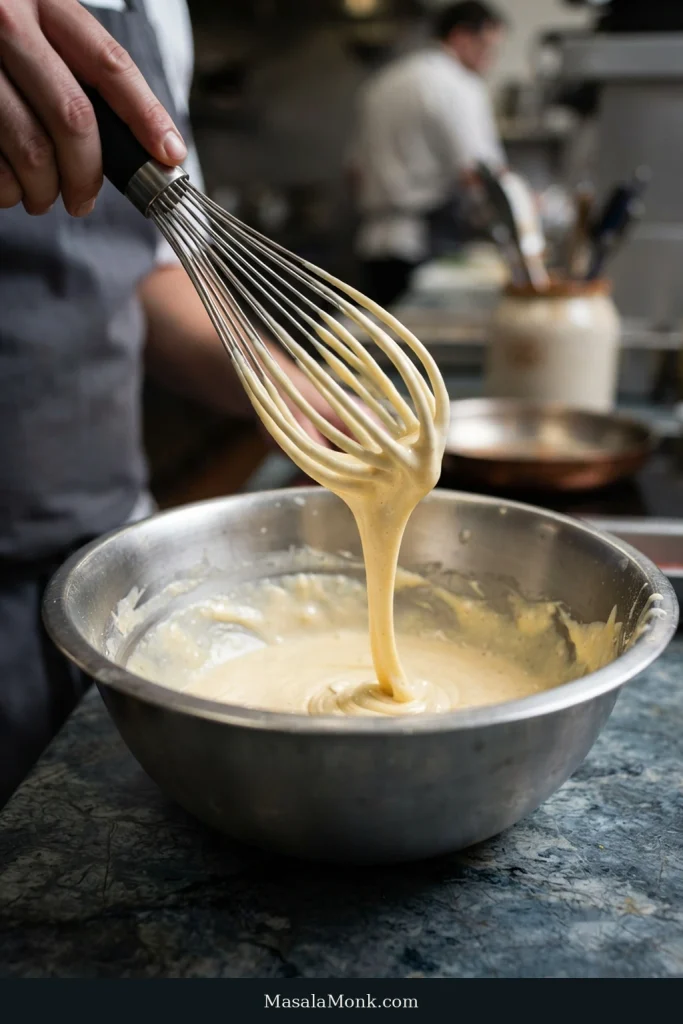
- Watch for the mixture to turn paler, glossier and thicker, leaving fine whisk trails. Once it looks cohesive rather than oily, pour in the remaining oil as a very thin, steady stream while whisking.
- Whisk in the Parmesan and pepper. Add cold water in small amounts until the dressing reaches the same easy-pouring consistency as the mayonnaise-based version.
- Finish it on lettuce, adding reserved lemon or salt only where needed.
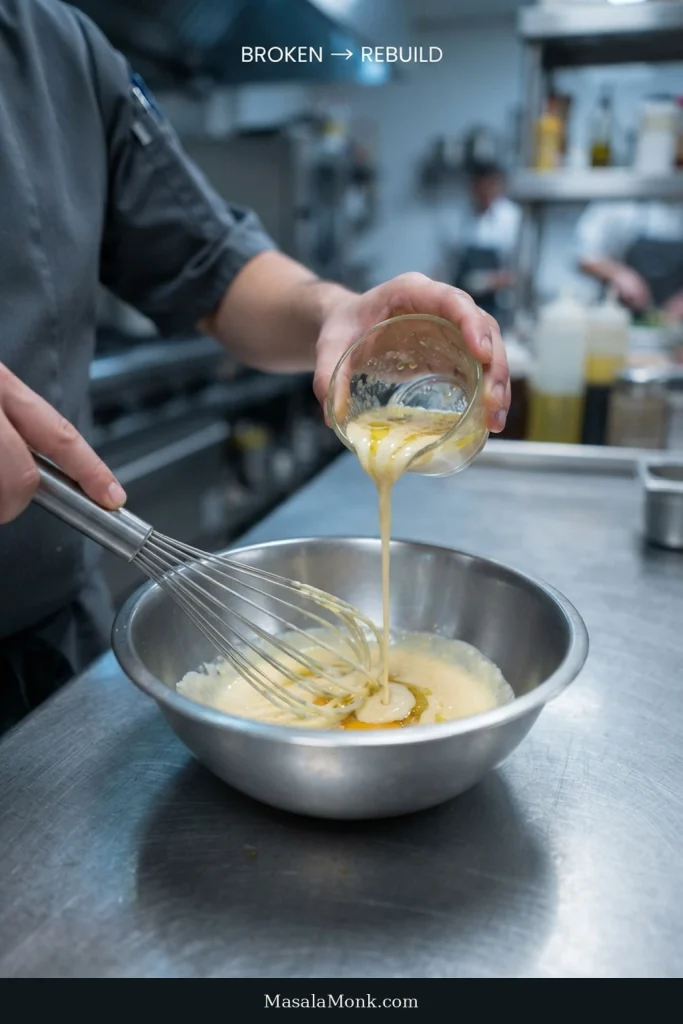
If the emulsion breaks: Stop adding oil. In a clean bowl, whisk a fresh pasteurized yolk or a small spoonful of Dijon, then slowly whisk the broken dressing into it. Rebuild the emulsion gradually.
Use a neutral or mild oil for the cleanest flavor. To add olive-oil character, replace only part of it with extra-virgin olive oil; strongly flavored oil can dominate or turn bitter when blended hard. This small batch is easier to emulsify by hand than in a large blender.
↑ Return to the main recipe card
Ways to Adapt Caesar Dressing
These swaps keep the basic method, but each changes the balance a little differently.
Skip the Anchovy Paste or Fillets
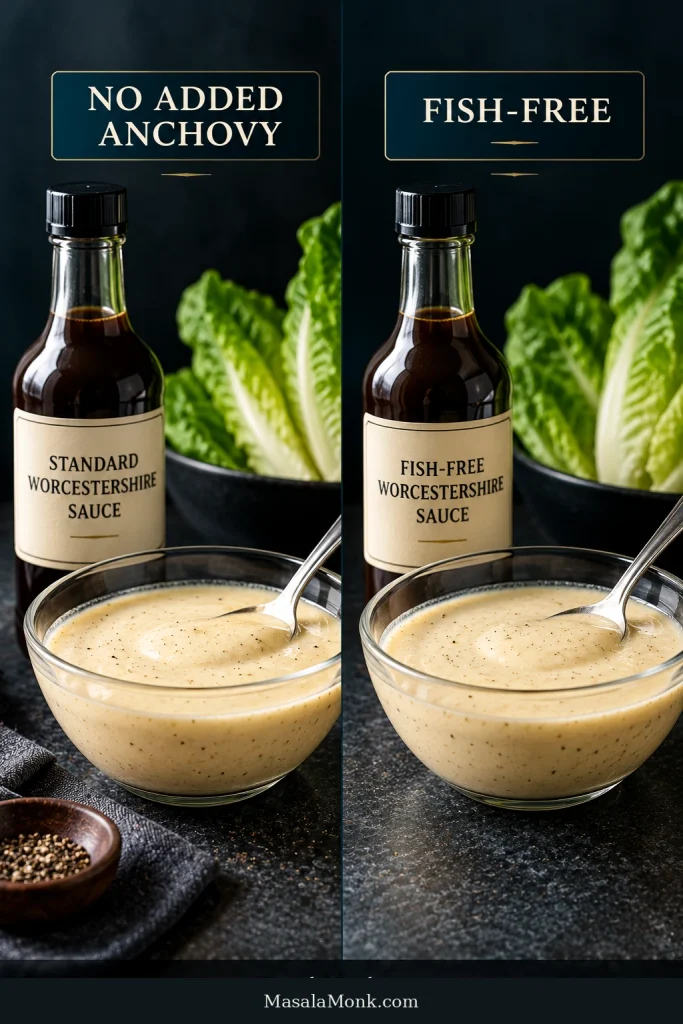
Leave out the added anchovy paste or fillets and keep the Worcestershire and Parmesan. This removes the separately added anchovy, not necessarily all fish: many Worcestershire sauces contain anchovy, so check the label if the dressing needs to be fish-free. If the finished dressing seems flat, a small extra splash of Worcestershire may restore some depth.
Fish-Free Caesar
You can keep much of Caesar’s salty, savory character without trying to imitate anchovy exactly. Use fish-free Worcestershire and omit the anchovy. If the dressing still tastes flat, whisk in about ½ teaspoon / 2.5 ml white miso. Finely minced capers or caper brine add a different salty, briny note; use them cautiously.
For a vegetarian Caesar, check the cheese too. Traditional Parmigiano-Reggiano uses animal rennet, so choose a Parmesan-style hard cheese labeled suitable for vegetarians when needed.
Egg-Free Caesar
Use an egg-free mayonnaise, or make eggless mayonnaise and use it as the base. Add the Parmesan first because some plant-based mayonnaises are already quite thick.
Greek-Yogurt Caesar
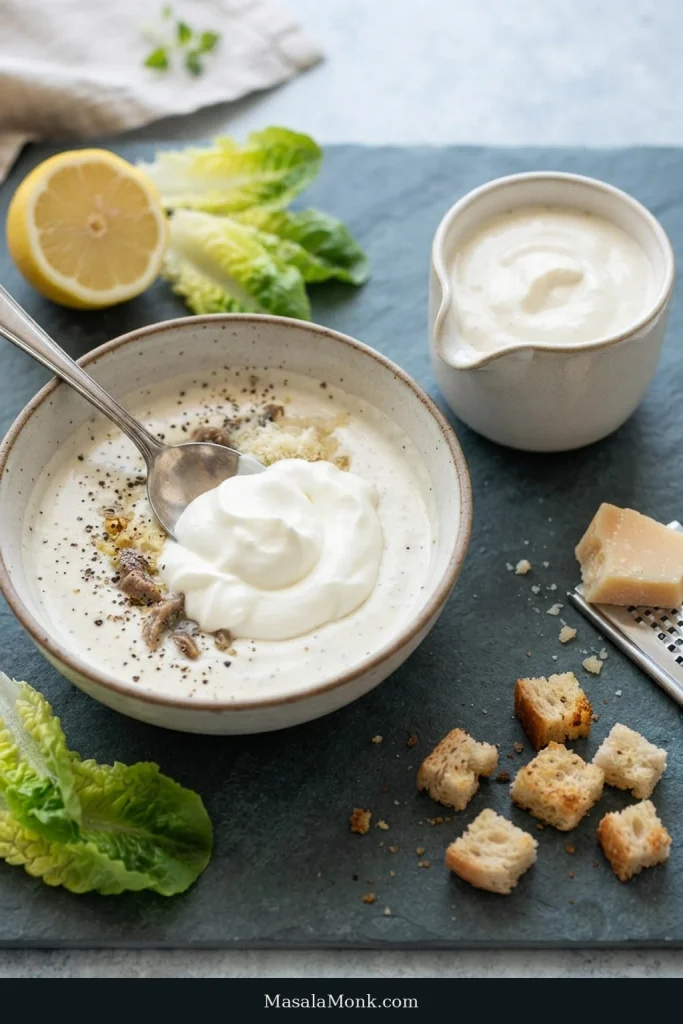
This version is tangier and less mayo-rich. Replace up to about half the mayonnaise with thick plain Greek yogurt. Begin with only 1 tablespoon / 15 ml lemon juice, since the yogurt brings its own tang. A fully yogurt-based Caesar needs different proportions; a straight one-for-one swap will not give the same result.
↑ Return to the main recipe card
How Much Caesar Dressing to Use
For about 5 oz / 140 g romaine, thoroughly dried, start with roughly 2 tablespoons / 30 ml dressing. Toss thoroughly, then add another 1 tablespoon / 15 ml only if the salad needs it.
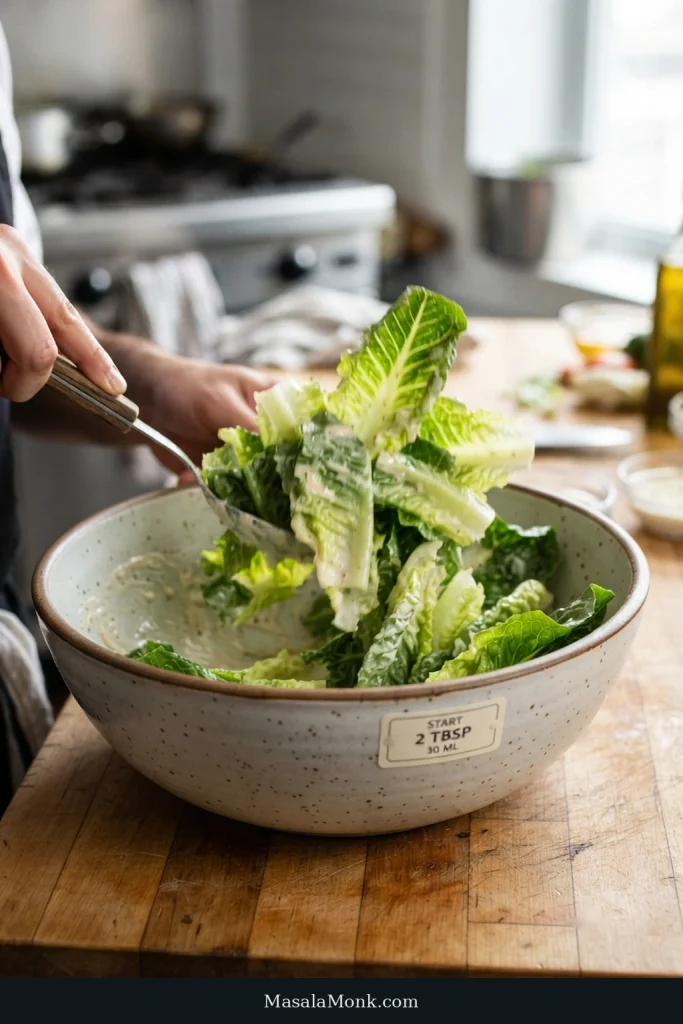
A thick dressing may look sparse before tossing because it has not spread over the leaves yet. After a thorough toss, the romaine should look lightly glossed rather than visibly loaded with sauce. Starting lighter is much easier than trying to rescue an overdressed salad.
Adding baked chicken breast? Let surface juices drain or settle before the chicken goes into the bowl; extra liquid can thin the dressing and make the salad seem underdressed. If the salad still tastes muted, check the dry-versus-wet romaine guide before adding more seasoning.
Caesar Dressing Troubleshooting
Don’t fix texture and flavor at the same time. First identify which problem you actually have.

| Problem | Try This First |
|---|---|
| Too thick | Whisk in cold water, 1 tsp / 5 ml at a time. |
| Too thin | Whisk in more mayonnaise; use Parmesan sparingly if the flavor can take more. |
| Too salty | Add more mayonnaise and a little water. |
| Too sour | Add mayonnaise and Parmesan. |
| Too fishy | Add more mayonnaise and Parmesan, then retest on lettuce. |
| Too garlicky | Add more mayonnaise, then retest. |
| Bitter | Check the lemon, oil, Parmesan and anchovies before seasoning further. |
| Tastes like mayo | Retest on lettuce; strengthen Parmesan and anchovy or Worcestershire first. |
| Good from the spoon, bland on salad | Dry the romaine; adjust one dressed leaf before tossing. |
| Chunky or grainy | Whisk thoroughly; use finer Parmesan next time. |
| Classic version broke | Rebuild from a fresh yolk or Dijon base. |
Too Salty or Too Sour
For a mildly oversalted batch, add more mayonnaise and a little water. Mayonnaise, anchovy, Parmesan and Worcestershire can all contribute, so check the balance before adding anything else salty.
When lemon has taken over, add mayonnaise and Parmesan to soften the sharpness. Sugar is rarely necessary.
Bitter
Bitterness can come from more than one place. An individual lemon can taste unusually bitter, while stale Parmesan, old anchovies or rancid oil can spoil a batch.
In the yolk-and-oil version, strongly flavored extra-virgin olive oil is another possible source of bitterness, especially after vigorous blending.
↑ Back to the main recipe · Back to top
Great on a Spoon, Muted on the Salad
A dressing that seems full-flavored from the spoon but loses its punch once tossed can be frustrating. Check the romaine first: it needs to be thoroughly dry. If it is, strengthen the dressing on one leaf before committing the whole bowl. For a consistency problem, compare it with the consistency guide above and adjust texture before changing flavor.
If the dressing tastes genuinely spoiled or rancid: don’t try to season around it. Check the cheese, anchovies and oil, and discard the batch if an ingredient is off.
↑ Back to the main recipe card · Back to top
Make Ahead, Storage & Leftovers
How Long Does Homemade Caesar Dressing Last?
For best quality, use the mayonnaise-based dressing within about 3–4 days, refrigerated in a clean, airtight container at 40°F / 4°C or colder. Stir before serving and loosen with cold water if needed.

For the classic version, use a pasteurized yolk, refrigerate promptly and make the dressing on the day you plan to serve it.
Do not leave either version unrefrigerated for more than 2 hours, or more than 1 hour when the temperature is above 90°F / 32°C.
Freezing isn’t recommended; thawing can leave the emulsion watery or separated. For the starting amount of water when adjusting a fresh batch, return to the main recipe card.
Using Leftover Dressing
A spoonful of leftover dressing turns cooked chicken, romaine and Parmesan into an easy chicken Caesar sandwich with crisp bread. It also works as a spread for wraps or as a dip for crunchy vegetables.
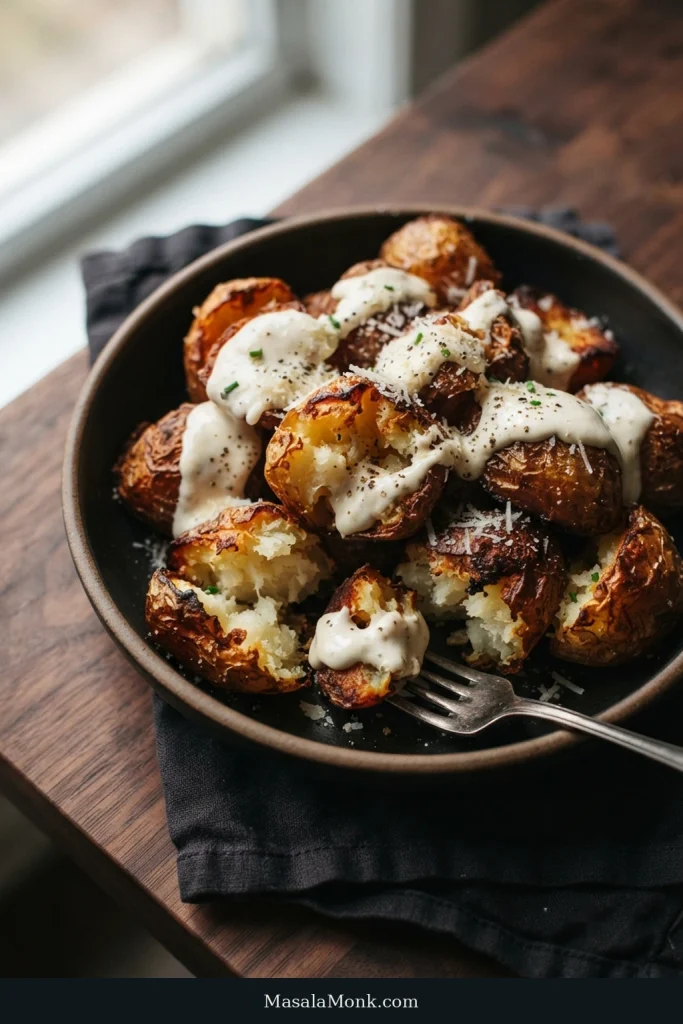
Leftover Caesar also works over crispy roasted potatoes and other roasted vegetables. Keep it thicker for dipping; thin it again when using it on greens.
If the dressing coats the leaves lightly and tastes of Parmesan, lemon and pepper before you really notice the anchovy, you’re there. Maybe it needs another teaspoon of water or another squeeze of lemon; maybe it doesn’t. Taste the salad and stop when it tastes right.








