Posted on — Leave a comment

Caesar Dressing Recipe: Creamy, Savory & Easy

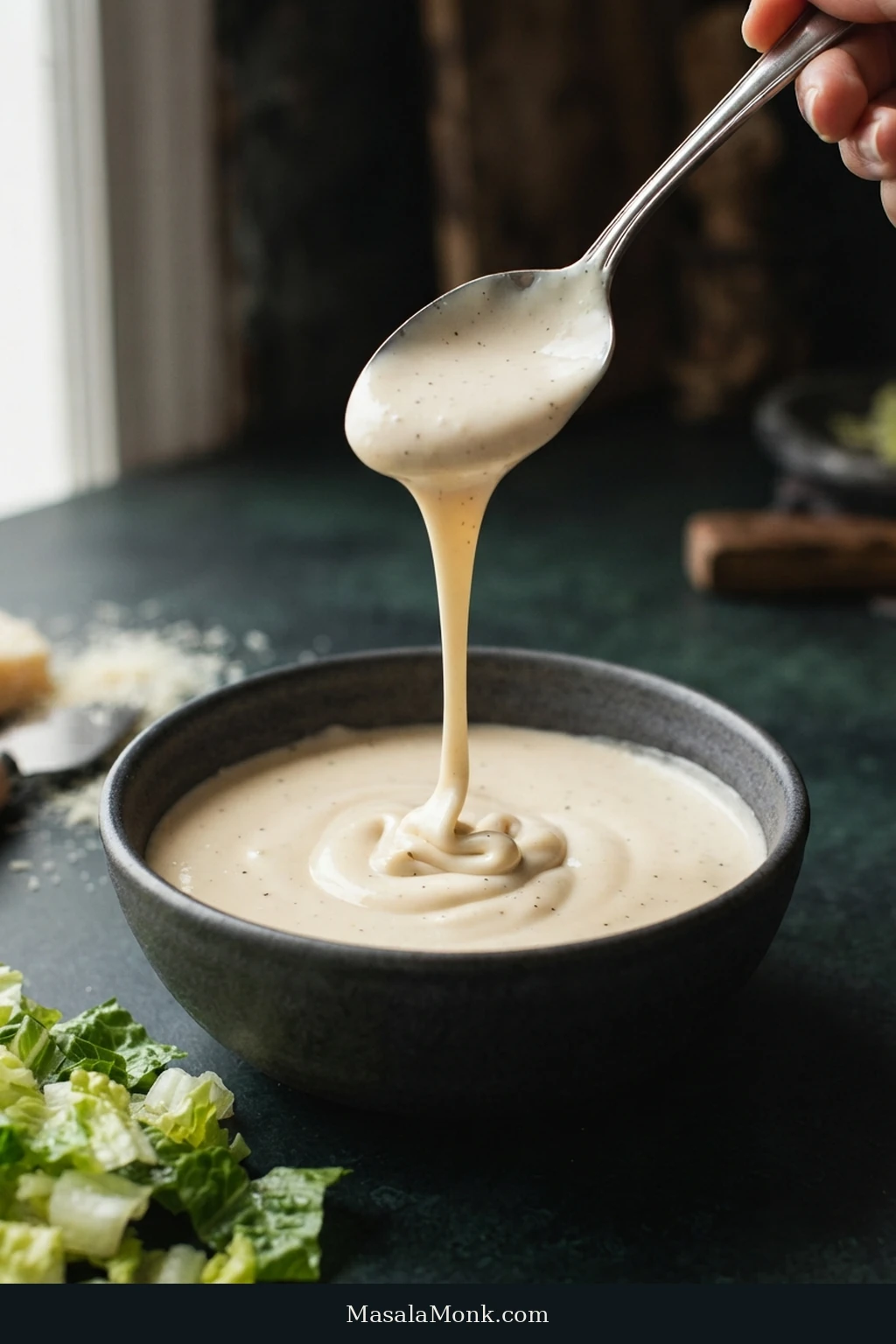
A spoon lifts a ribbon of ivory Caesar dressing above a dark bowl, with romaine and Parmesan nearby.

Good Caesar salad dressing should coat romaine in a thin, creamy layer. You should taste Parmesan, pepper, lemon and savory depth in every bite—not blobs of mayonnaise, harsh raw garlic or anchovy that overwhelms everything else.

This homemade Caesar dressing recipe starts with mayonnaise because the emulsion is already built. That makes the process straightforward: balance the savory ingredients, add enough lemon for brightness, then loosen the dressing until it coats the lettuce without weighing it down.

When the balance is right, the dressing almost disappears into the salad. Every leaf tastes seasoned, but nothing feels plastered in sauce.

The main method uses prepared mayonnaise, so you do not need to build a new egg-and-oil emulsion. A classic yolk-and-oil version and practical adaptations follow if you prefer to make it from scratch or need a different version.

Caesar Dressing Recipe

You need a medium bowl, a whisk and a fine grater. There is no blender or slow oil drizzle to manage for this mayonnaise-based version.

Prep: 10 minutes
Cook: 0 minutes
Total: 10 minutes, plus an optional 15–30 minute chill
Yield: About 1⅛ cups / 9 fl oz / 270 ml, depending on final thinning

Caesar Dressing Ingredients

  • ¾ cup / 6 fl oz / 180 ml full-fat mayonnaise
  • 1 teaspoon / 5 ml anchovy paste, or 2 small brown oil-packed anchovy fillets, mashed smooth
  • 1 small garlic clove, finely grated
  • 2 tablespoons / 1 fl oz / 30 ml fresh lemon juice, divided
  • 1 teaspoon / 5 ml Dijon mustard
  • 1 teaspoon / 5 ml Worcestershire sauce
  • 1 oz / 28 g Parmesan, very finely grated
  • ¼ teaspoon freshly ground black pepper, plus more if needed
  • 2–4 teaspoons / 10–20 ml cold water to start, added 1 teaspoon at a time, plus more as needed for consistency and after chilling
  • Fine salt, only if needed at the end
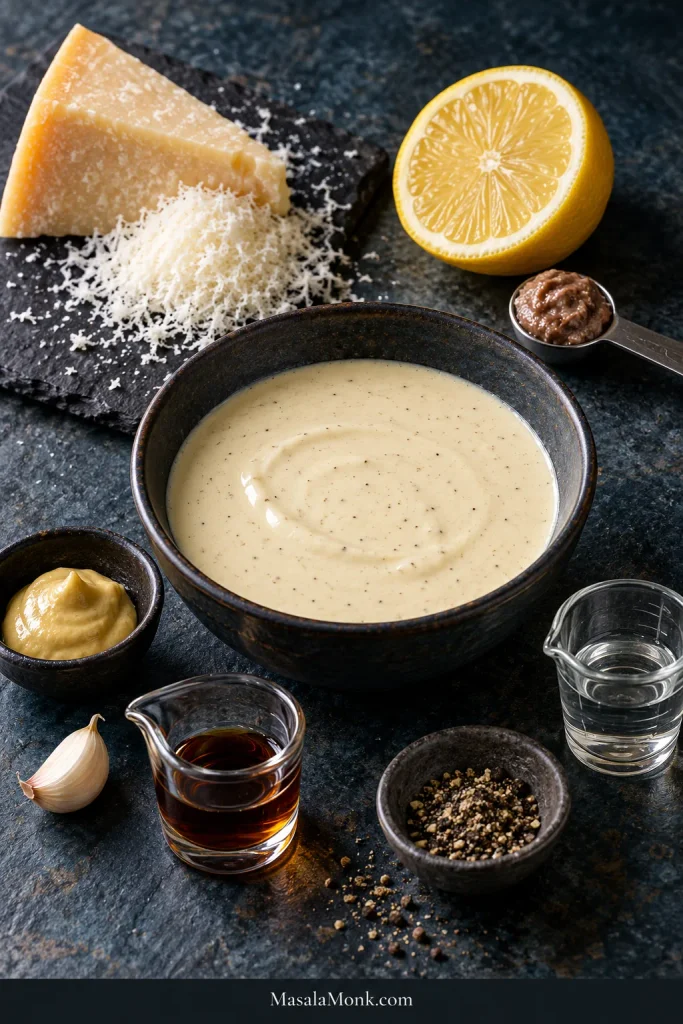
A bowl of ivory Caesar dressing arranged with Parmesan, lemon, anchovy paste, garlic, Dijon, Worcestershire, black pepper and small measures of water.
Anchovy and Worcestershire provide savory depth, while lemon keeps it bright. Taste the combined dressing before adding salt because Parmesan and the sauces contribute their own, and brands vary in saltiness.

How to Make Caesar Dressing

  1. Whisk the base. Add the mayonnaise, anchovy paste, garlic, Dijon, Worcestershire, black pepper and 1½ tablespoons / about 22 ml of the lemon juice to a medium bowl. Keep the remaining lemon juice aside. Whisk until smooth.
  2. Add the Parmesan. Whisk in the finely grated cheese until it is evenly dispersed through the creamy base. A very fine grate helps it integrate more smoothly than long shreds.
  3. Loosen it gradually. Whisk in 1 teaspoon / 5 ml cold water. Lift the whisk or spoon and watch how the dressing falls. Continue adding water a teaspoon at a time until it flows in a thick ribbon instead of dropping in a heavy mound.
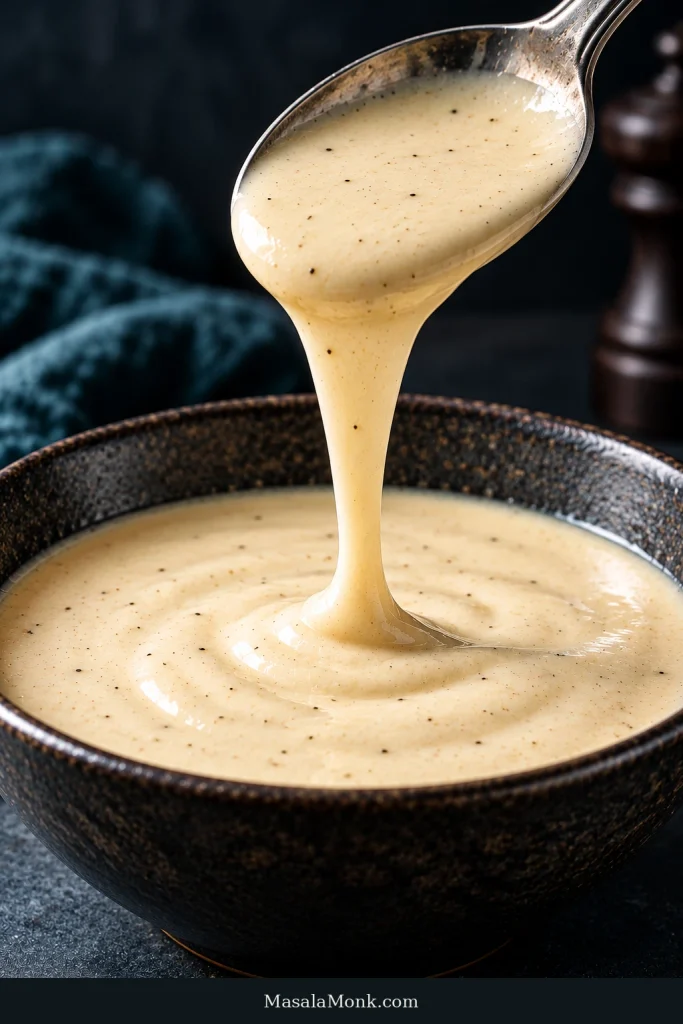
A spoon releases a continuous ribbon of ivory Caesar dressing into a dark bowl.
A ribbon that stays piled up needs thinning; one that immediately runs flat has been loosened too far. Aim for a soft fold that begins to settle.
  1. Test one leaf. Coat a completely dry piece of romaine with a little dressing. It should spread in a thin, creamy layer and cling to the leaf without pooling.
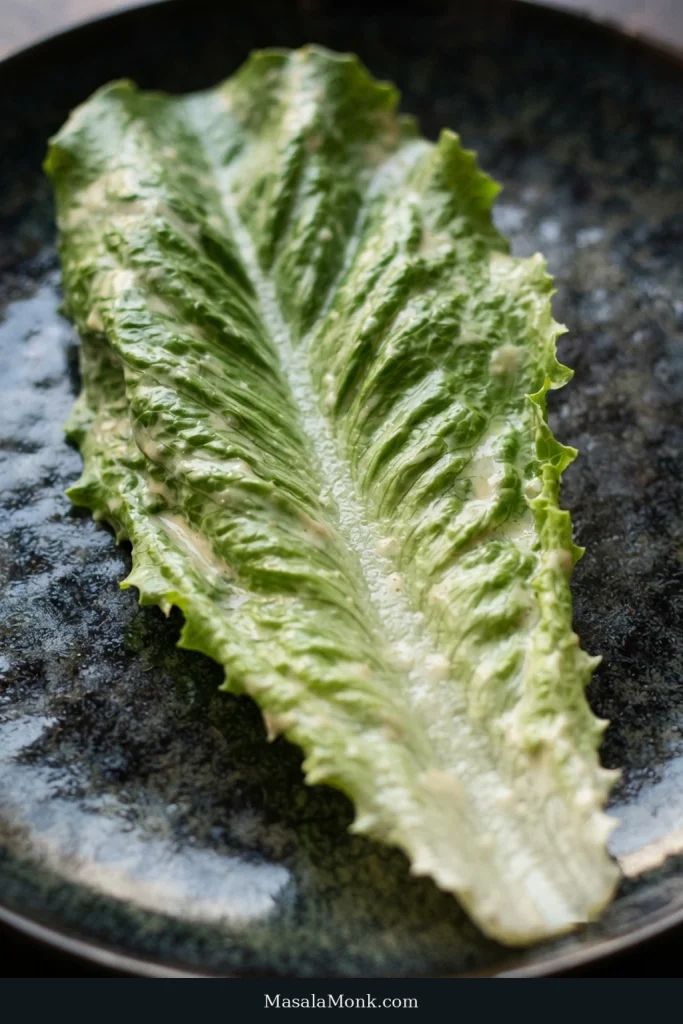
A crisp romaine leaf carries a thin, irregular coating of Caesar dressing, with the central rib and veins still visible.
The dressing should cling in a thin film, with the green veins still visible and no white pool collecting along the central rib.
  1. Finish the flavor. On dressed romaine, lemon should brighten the first bite, Parmesan and pepper should come through clearly, and anchovy should sit underneath rather than announce itself. Add reserved lemon, pepper or a little more anchovy paste or Worcestershire only where needed. Salt last.
  2. Serve or chill. Use immediately or refrigerate for 15–30 minutes. Stir before serving, then add another teaspoon or two of cold water if chilling has made the dressing too thick to coat the lettuce easily.

Recipe Notes

  • Mayonnaise: Use regular full-fat mayonnaise with a neutral flavor. Sweet salad dressing such as Miracle Whip makes the result sweeter and sharper. If you use homemade mayonnaise and want to avoid uncooked shell egg, make it with pasteurized egg.
  • Anchovies: Brown oil-packed fillets suit this recipe better than pale, vinegar-marinated white anchovies, which bring a brighter, more acidic flavor.
  • Parmesan: Weigh 1 oz / 28 g if possible and grate it very finely so it blends smoothly into the dressing.
  • Eggs: The main recipe uses prepared mayonnaise and does not require an additional uncooked egg yolk. Regular mayonnaise still contains egg, so use egg-free mayonnaise if that distinction matters for your needs.
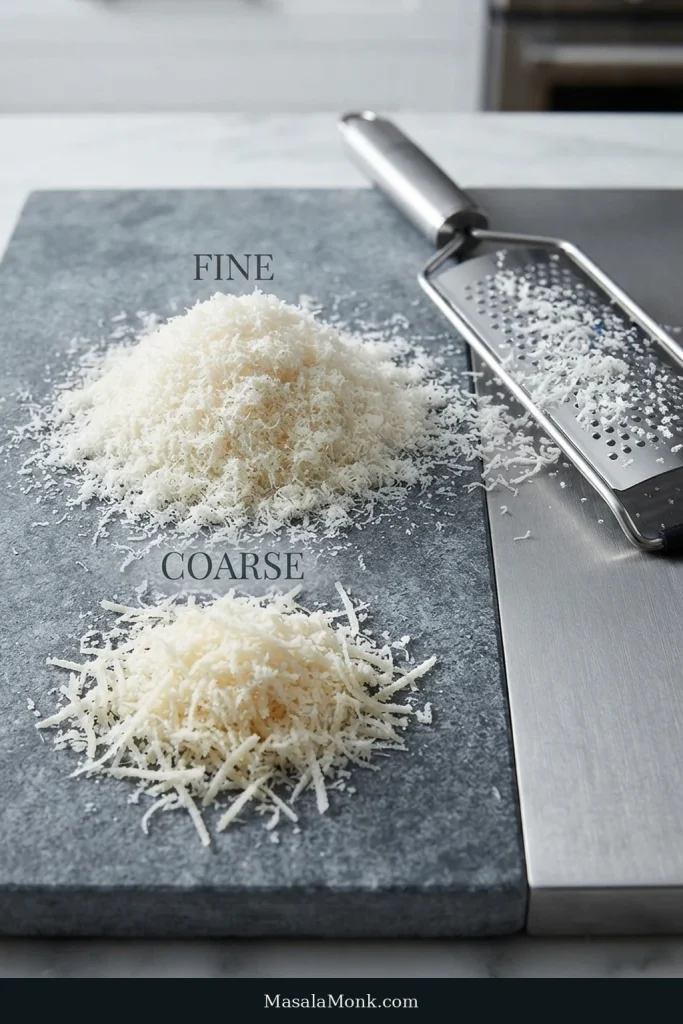
Fine, fluffy Parmesan and coarser Parmesan shreds sit beside a fine grater on a dark surface.
Use the fine grate in the dressing; save longer Parmesan shreds for a garnish where their texture can stay distinct.

Recipe note: This recipe was developed from established Caesar techniques, published recipes, food-safety guidance and recurring home-cook problems. MasalaMonk has not independently kitchen-tested this exact version.

A useful rule: adjust consistency in the bowl; make the final flavor adjustment on the lettuce. If the dressing seems too thick, revisit the ribbon test. If its flavor seems muted once tossed, check the romaine dryness guide.

A bowl of Caesar dressing and a whisk appear above one dressed romaine leaf, labeled “Texture” and “Flavor.”
The bowl shows consistency; the dressed leaf shows whether the seasoning carries through the salad. These checks are related, but they answer different questions.

If the dressing coats the leaf well and the flavor is balanced, you’re done.

Need an ingredient answer, variation or fix? The guide below covers the rest.

Anchovy Paste, Fillets & the Fishiness Question

This recipe starts with 1 teaspoon / 5 ml anchovy paste, enough to bring salt and savory depth without making fish the dominant flavor.

Worried the whole bowl will taste fishy? At this amount, the anchovy should blend into the dressing rather than sit apart from it. Finish the rest of the seasoning before deciding whether it needs more.

Anchovy paste measures cleanly and blends straight into the mayonnaise, so you don’t need to open a whole tin for two fillets. If you need a genuinely fish-free version, jump to Fish-Free Caesar; leaving out the paste alone may not be enough.

Whole fillets work too: use about 2 small brown oil-packed anchovy fillets and mash them until no obvious pieces remain. Pale white anchovies marinated in vinegar taste brighter and more acidic, so they behave differently here.
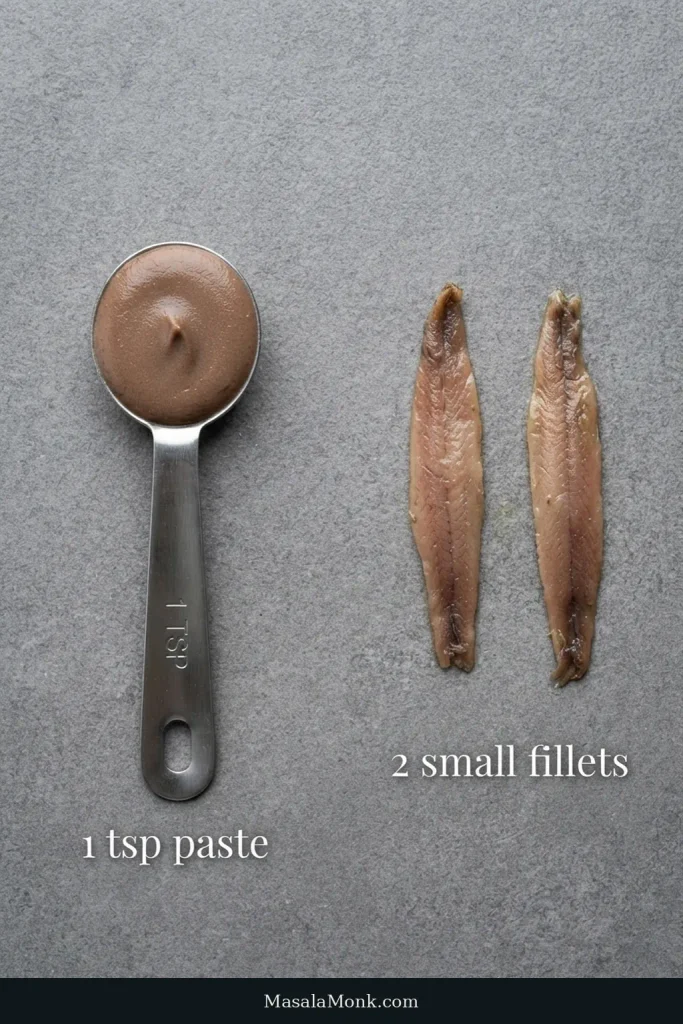
A measuring teaspoon of anchovy paste sits beside two small brown oil-packed anchovy fillets.
One teaspoon of anchovy paste is the starting point; two small brown, oil-packed fillets are an alternative. Both should add savory depth without making the dressing overwhelmingly fishy.

What About “Authentic” Caesar?

Caesar history is messy enough that “authentic” can become a frustrating word. Accounts of the earliest salads do not all agree about separate anchovy fillets. For dinner tonight, the more useful question is whether the dressing tastes like the Caesar you want to eat.

Getting the Flavor in Balance

Caesar dressing is concentrated. Too much lemon makes it sharp, too much raw garlic takes over, and too much anchovy becomes obvious. None of those flavors should dominate the first bite.

Lemon & Salt

Measure 2 tablespoons / 30 ml fresh lemon juice and begin with 1½ tablespoons / about 22 ml. Reserve the remaining lemon, adding it only if the dressed romaine needs more brightness.

If you’ve ever thinned a thick Caesar with extra lemon and ended up with a sour dressing, this is why the water matters. Worcestershire, anchovy, Parmesan and mayonnaise already bring plenty of flavor and salt; extra lemon should be a flavor decision, not a texture fix. For a visual cue that tells you when the thickness is right, revisit the ribbon test in the main method.
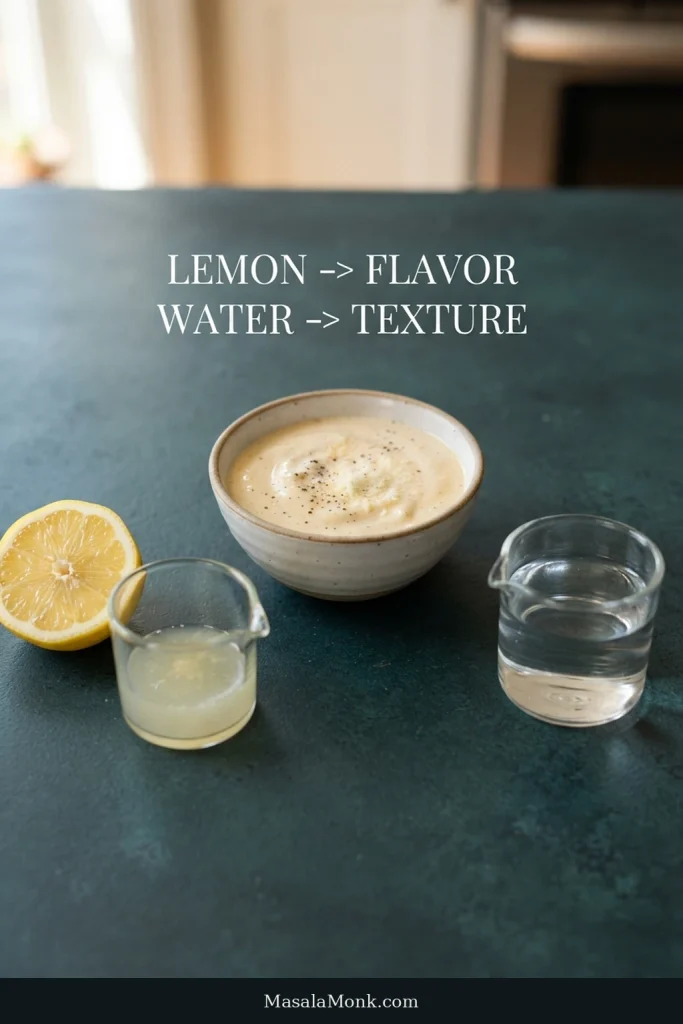
A bowl of Caesar dressing sits between lemon juice and water, labeled “Lemon → Flavor” and “Water → Texture.”
Change one thing at a time. After thinning or brightening the dressing, recheck it on romaine before adding more.

Parmesan, Garlic & Pepper

Parmesan adds nuttiness, salt and body. Measuring by weight avoids the large difference between a fluffy pile of finely grated cheese and the same volume of more densely packed shreds.

One finely grated garlic clove is enough for this batch. Raw garlic is difficult to pull back once it takes over, so try the dressing on romaine before adding more.

The starting ¼ teaspoon black pepper gives the dressing a clear peppery finish. Once the flavor is balanced, the finished salad should show crisp romaine beneath a light creamy coating.
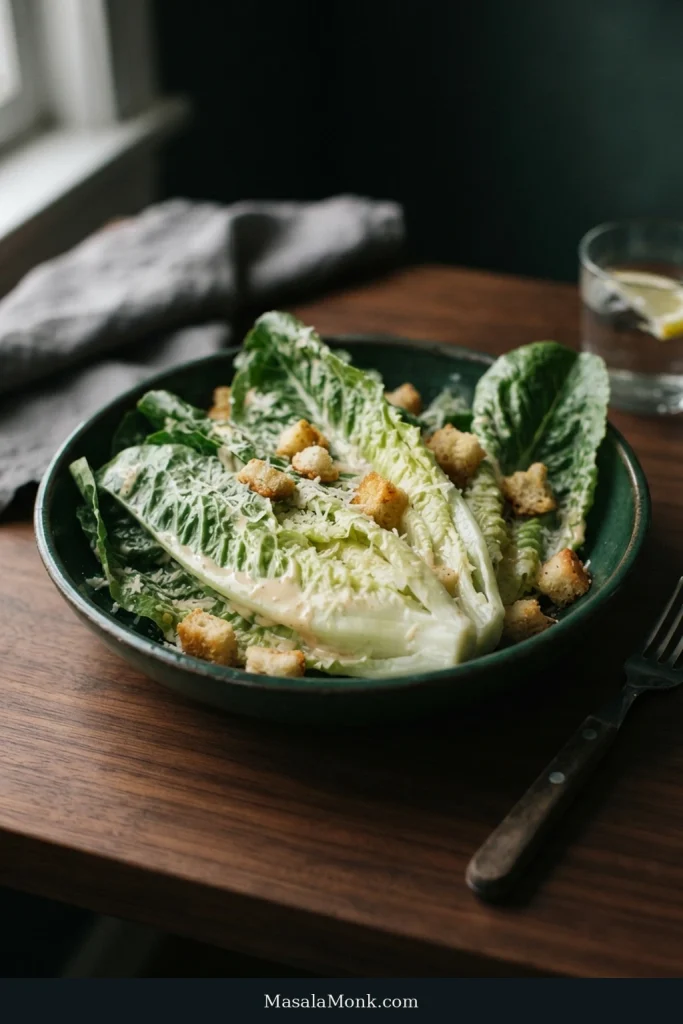
Crisp romaine leaves in a Caesar salad are lightly coated with dressing and topped with Parmesan and a few croutons.
Toss the romaine just before serving so the leaves stay crisp and the croutons retain their crunch.

Classic Caesar Dressing Without Mayo

Prefer to build the emulsion yourself? This classic-style version uses pasteurized egg yolk and oil instead of prepared mayonnaise. The first minute takes patience; once the emulsion catches, the rest becomes easier. For the quicker version, return to the main Caesar dressing recipe.

Because the yolk remains uncooked, use a pasteurized egg yolk. The U.S. Food and Drug Administration recommends pasteurized eggs or pasteurized egg products for uncooked preparations such as Caesar dressing.

Approximate yield: About ¾–⅞ cup / 6–7 fl oz / 180–210 ml, depending on final thinning. This is a smaller batch than the mayonnaise-based version.

Classic No-Mayo Ingredients

  • 1 pasteurized egg yolk
  • 2 small brown oil-packed anchovy fillets, mashed smooth
  • 1 small garlic clove, mashed or finely grated
  • 2 tablespoons / 1 fl oz / 30 ml fresh lemon juice, divided
  • 1 teaspoon / 5 ml Dijon mustard
  • 1 teaspoon / 5 ml Worcestershire sauce
  • ½ cup / 4 fl oz / 120 ml neutral or mild-flavored oil
  • 1 oz / 28 g finely grated Parmesan
  • ¼ teaspoon freshly ground black pepper
  • Cold water, as needed
  • Fine salt, only if needed

How to Build the Emulsion

  1. Set the bowl on a damp folded towel so it stays steady. Whisk the pasteurized yolk, Dijon, Worcestershire and 1½ tablespoons / about 22 ml lemon juice; then add the mashed anchovy and garlic.
  2. Add the oil drop by drop at first while whisking constantly. Give the emulsion time to establish before speeding up.
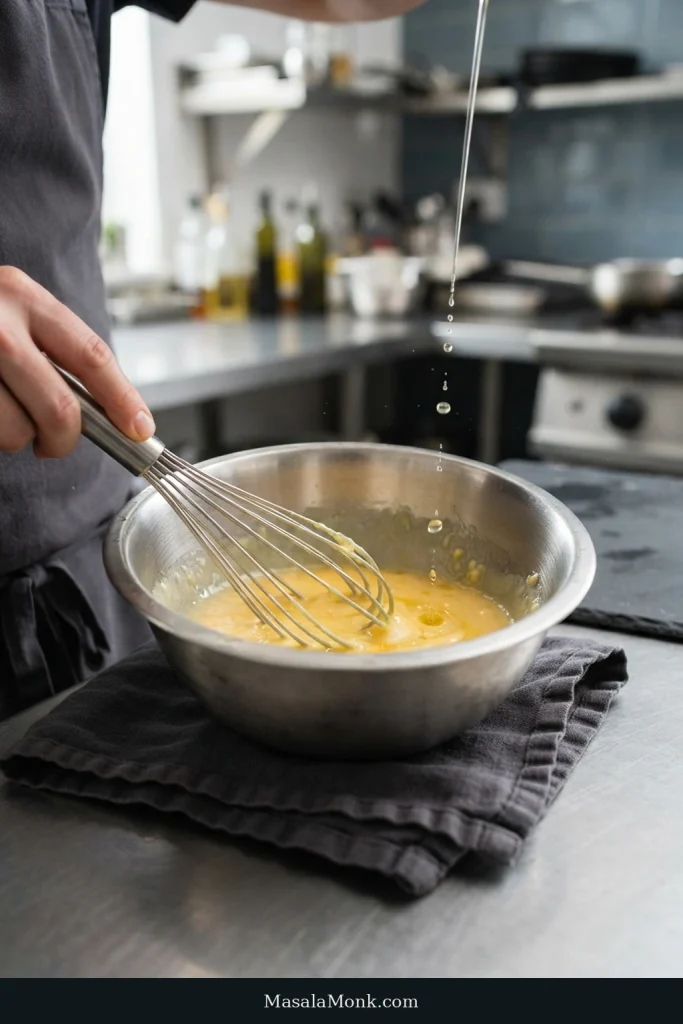
Oil falls in small drops into a yellow yolk mixture in a stainless-steel bowl as a whisk incorporates it.
Keep the whisk moving as each drop goes in. If free oil gathers at the edge, pause the addition until the mixture looks uniform again.
  1. Watch for the mixture to turn paler, glossier and thicker, leaving fine whisk trails. Once it looks cohesive rather than oily, pour in the remaining oil as a very thin, steady stream while whisking.
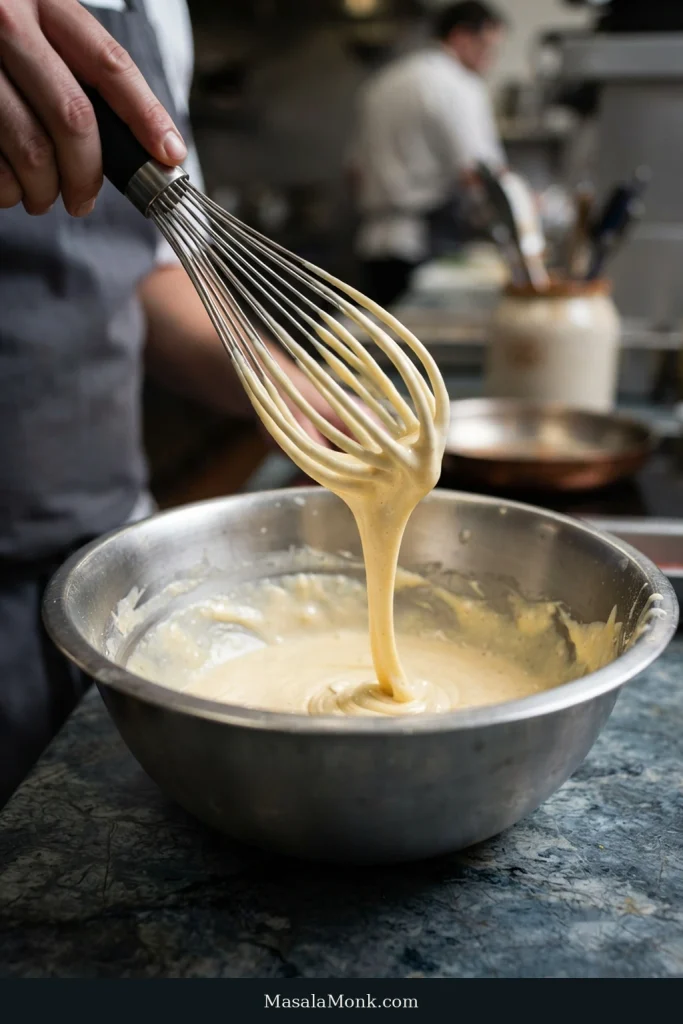
A whisk lifts pale, glossy Caesar emulsion from a stainless-steel bowl, leaving thick trails in the mixture.
Check the bowl’s edge as well as the whisk; a smooth, glossy center can still hide free oil around the rim.
  1. Whisk in the Parmesan and pepper. Add cold water in small amounts until the dressing reaches the same easy-pouring consistency as the mayonnaise-based version.
  2. Finish it on lettuce, adding reserved lemon or salt only where needed.

If the emulsion breaks: Stop adding oil. In a clean bowl, whisk a fresh pasteurized yolk or a small spoonful of Dijon, then slowly whisk the broken dressing into it. Rebuild the emulsion gradually.
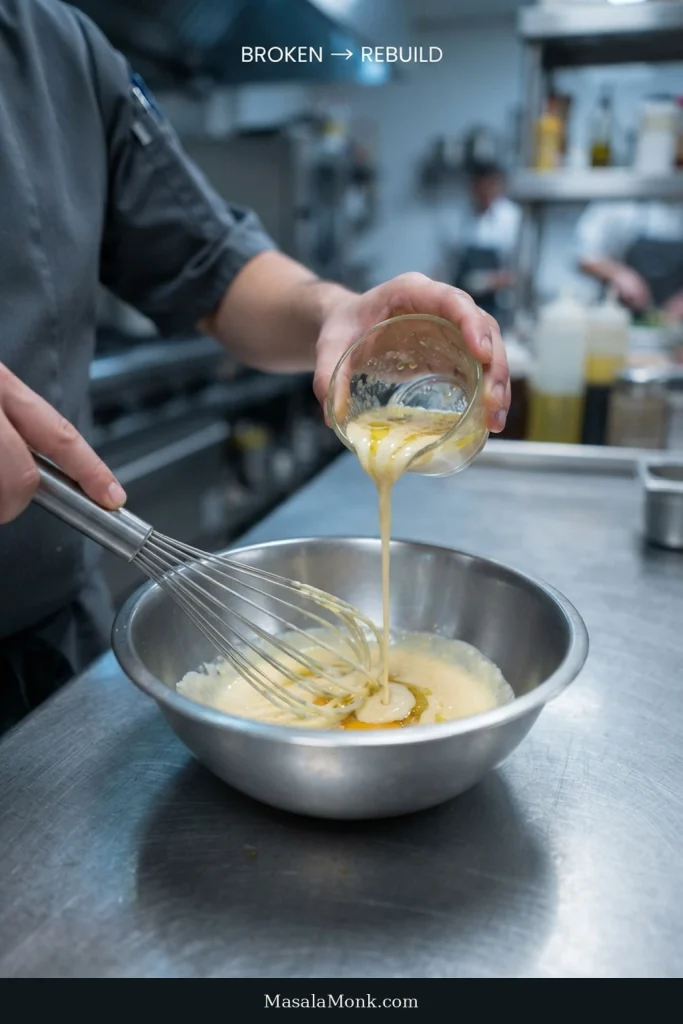
Separated Caesar dressing is added from a small glass vessel to a clean bowl with a fresh yolk base while a whisk mixes it.
Start with a small fresh base. If oil begins pooling again, pause the addition and whisk until the mixture becomes cohesive before continuing.

Use a neutral or mild oil for the cleanest flavor. To add olive-oil character, replace only part of it with extra-virgin olive oil; strongly flavored oil can dominate or turn bitter when blended hard. This small batch is easier to emulsify by hand than in a large blender.

↑ Return to the main recipe card

Ways to Adapt Caesar Dressing

These swaps keep the basic method, but each changes the balance a little differently.

Skip the Anchovy Paste or Fillets

Leave out the added anchovy paste or fillets and keep the Worcestershire and Parmesan. This removes the separately added anchovy, not necessarily all fish: many Worcestershire sauces contain anchovy, so check the label if the dressing needs to be fish-free. If the finished dressing seems flat, a small extra splash of Worcestershire may restore some depth.
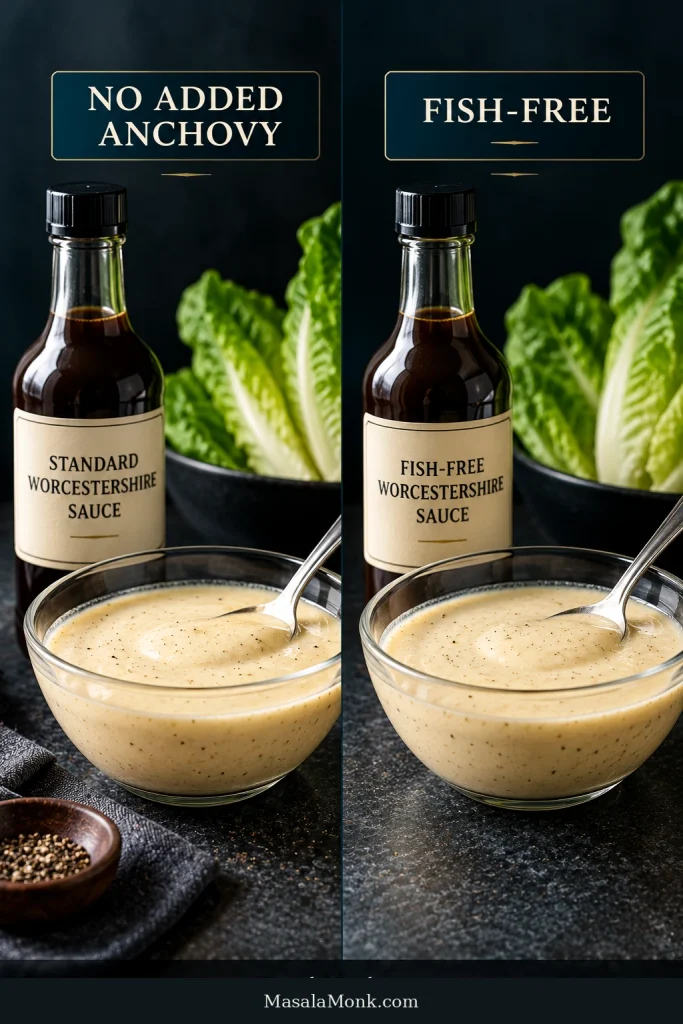
Two bowls of Caesar dressing sit beside standard and fish-free Worcestershire bottles under “No Added Anchovy” and “Fish-Free” labels.
The bowls can look identical, so check the Worcestershire label whenever serving someone who avoids fish.

Fish-Free Caesar

You can keep much of Caesar’s salty, savory character without trying to imitate anchovy exactly. Use fish-free Worcestershire and omit the anchovy. If the dressing still tastes flat, whisk in about ½ teaspoon / 2.5 ml white miso. Finely minced capers or caper brine add a different salty, briny note; use them cautiously.

For a vegetarian Caesar, check the cheese too. Traditional Parmigiano-Reggiano uses animal rennet, so choose a Parmesan-style hard cheese labeled suitable for vegetarians when needed.

Egg-Free Caesar

Use an egg-free mayonnaise, or make eggless mayonnaise and use it as the base. Add the Parmesan first because some plant-based mayonnaises are already quite thick.

Greek-Yogurt Caesar

This version is tangier and less mayo-rich. Replace up to about half the mayonnaise with thick plain Greek yogurt. Begin with only 1 tablespoon / 15 ml lemon juice, since the yogurt brings its own tang. A fully yogurt-based Caesar needs different proportions; a straight one-for-one swap will not give the same result.
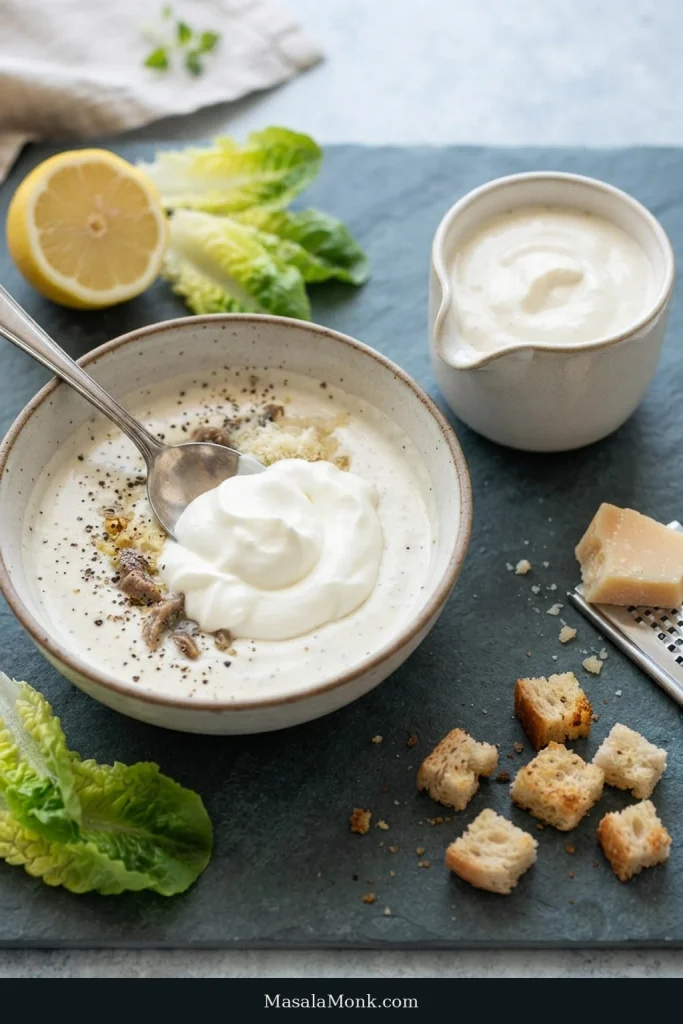
Thick Greek yogurt is folded into creamy Caesar dressing, with a bowl of the finished variation nearby.
Taste the mixed dressing before adding more lemon; Greek yogurt may provide enough tang on its own.

↑ Return to the main recipe card

How Much Caesar Dressing to Use

For about 5 oz / 140 g romaine, thoroughly dried, start with roughly 2 tablespoons / 30 ml dressing. Toss thoroughly, then add another 1 tablespoon / 15 ml only if the salad needs it.
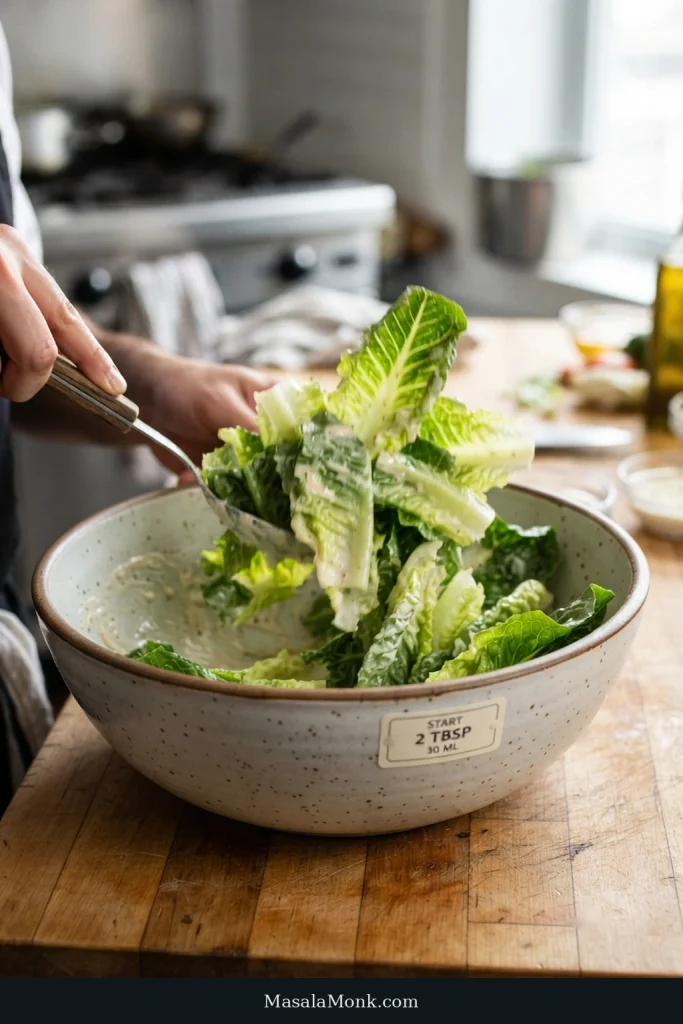
Romaine is being tossed with Caesar dressing in a bowl beside the label “Start: 2 Tbsp / 30 ml.”
Use a bowl with room to lift and turn the leaves from the bottom. Dressing poured on top alone can leave the upper leaves coated and the rest bare.

A thick dressing may look sparse before tossing because it has not spread over the leaves yet. After a thorough toss, the romaine should look lightly glossed rather than visibly loaded with sauce. Starting lighter is much easier than trying to rescue an overdressed salad.

Adding baked chicken breast? Let surface juices drain or settle before the chicken goes into the bowl; extra liquid can thin the dressing and make the salad seem underdressed. If the salad still tastes muted, check the dry-versus-wet romaine guide before adding more seasoning.

Caesar Dressing Troubleshooting

Don’t fix texture and flavor at the same time. First identify which problem you actually have.

Three bowls compare smooth Caesar dressing that is too thick, flowing at the right consistency, and too thin, with matching labels.
A smooth mound that holds its shape needs thinning, not emulsion rescue. Lumps or visible oil separation point to a different problem.
ProblemTry This First
Too thickWhisk in cold water, 1 tsp / 5 ml at a time.
Too thinWhisk in more mayonnaise; use Parmesan sparingly if the flavor can take more.
Too saltyAdd more mayonnaise and a little water.
Too sourAdd mayonnaise and Parmesan.
Too fishyAdd more mayonnaise and Parmesan, then retest on lettuce.
Too garlickyAdd more mayonnaise, then retest.
BitterCheck the lemon, oil, Parmesan and anchovies before seasoning further.
Tastes like mayoRetest on lettuce; strengthen Parmesan and anchovy or Worcestershire first.
Good from the spoon, bland on saladDry the romaine; adjust one dressed leaf before tossing.
Chunky or grainyWhisk thoroughly; use finer Parmesan next time.
Classic version brokeRebuild from a fresh yolk or Dijon base.

Too Salty or Too Sour

For a mildly oversalted batch, add more mayonnaise and a little water. Mayonnaise, anchovy, Parmesan and Worcestershire can all contribute, so check the balance before adding anything else salty.

When lemon has taken over, add mayonnaise and Parmesan to soften the sharpness. Sugar is rarely necessary.

Bitter

Bitterness can come from more than one place. An individual lemon can taste unusually bitter, while stale Parmesan, old anchovies or rancid oil can spoil a batch.

In the yolk-and-oil version, strongly flavored extra-virgin olive oil is another possible source of bitterness, especially after vigorous blending.

↑ Back to the main recipe · Back to top

Great on a Spoon, Muted on the Salad

A dressing that seems full-flavored from the spoon but loses its punch once tossed can be frustrating. Check the romaine first: it needs to be thoroughly dry. If it is, strengthen the dressing on one leaf before committing the whole bowl. For a consistency problem, compare it with the consistency guide above and adjust texture before changing flavor.
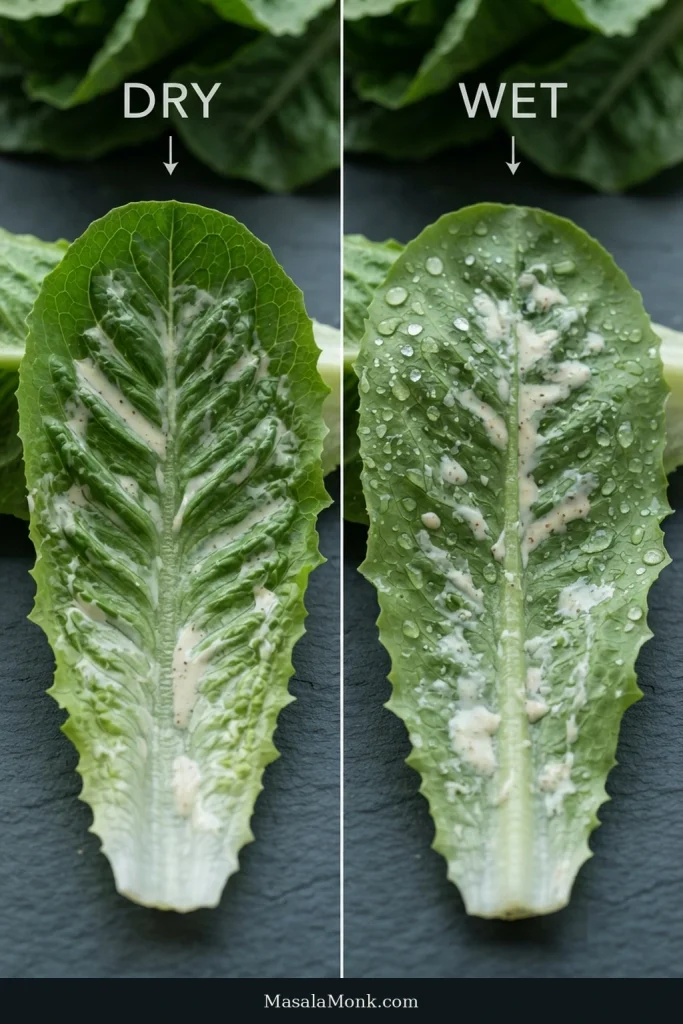
A romaine leaf with a thin coating of dressing is compared with a water-speckled leaf where the dressing looks patchier.
Dry the central ribs and cupped inner curves too; droplets can hide there even when the broad leaf surface looks dry.

If the dressing tastes genuinely spoiled or rancid: don’t try to season around it. Check the cheese, anchovies and oil, and discard the batch if an ingredient is off.

↑ Back to the main recipe card · Back to top

Make Ahead, Storage & Leftovers

How Long Does Homemade Caesar Dressing Last?

For best quality, use the mayonnaise-based dressing within about 3–4 days, refrigerated in a clean, airtight container at 40°F / 4°C or colder. Stir before serving and loosen with cold water if needed.

A jar of chilled Caesar dressing sits in a refrigerator while a spoon lifts the thickened sauce beside a small measure of water.
Loosen only the portion you plan to serve; adding water to the whole jar can leave the remaining dressing thinner than you need later.

For the classic version, use a pasteurized yolk, refrigerate promptly and make the dressing on the day you plan to serve it.

Do not leave either version unrefrigerated for more than 2 hours, or more than 1 hour when the temperature is above 90°F / 32°C.

Freezing isn’t recommended; thawing can leave the emulsion watery or separated. For the starting amount of water when adjusting a fresh batch, return to the main recipe card.

Using Leftover Dressing

A spoonful of leftover dressing turns cooked chicken, romaine and Parmesan into an easy chicken Caesar sandwich with crisp bread. It also works as a spread for wraps or as a dip for crunchy vegetables.

Leftover Caesar also works over crispy roasted potatoes and other roasted vegetables. Keep it thicker for dipping; thin it again when using it on greens.

Golden roasted potatoes with crisp browned edges are drizzled with Caesar dressing, Parmesan and black pepper.
Add the dressing just before serving. That preserves the cool, creamy contrast while giving the browned potato edges the best chance of staying crisp.

If the dressing coats the leaves lightly and tastes of Parmesan, lemon and pepper before you really notice the anchovy, you’re there. Maybe it needs another teaspoon of water or another squeeze of lemon; maybe it doesn’t. Taste the salad and stop when it tastes right.
↑ Back to the recipe card · Back to top

Posted on — 1 Comment

Safe Apple Cider Vinegar Salad Dressing for Expecting Moms

Introduction:

Pregnancy is a journey of transformation and discovery, a time when the body’s needs and cravings take a front seat, steering dietary choices towards health, safety, and nourishment. Among the myriad of nutritional advice and dietary do’s and don’ts, one simple yet significant aspect often overlooked is the choice of salad dressing. Enter the world of apple cider vinegar (ACV) – a culinary staple revered not just for its tangy zest but for its myriad of health benefits. But, when you’re eating for two, is apple cider vinegar just as wonderful? And how can you incorporate it safely and deliciously into your diet?

ACV has long been celebrated in the wellness world for its potential health benefits. From aiding digestion to possibly helping with blood sugar regulation, it’s a versatile ingredient that adds not just flavor but a punch of goodness to your meals. But, for expectant mothers, the narrative takes a slightly different turn – it’s not just about the benefits but also about ensuring safety and moderation.

As we embark on this flavorful exploration, we’ll dive into the heart of what makes ACV a great choice for pregnant women, how to use it safely, and most importantly, we’ll unveil an exclusive recipe for a homemade apple cider vinegar salad dressing that’s not just safe but an absolute delight for your taste buds. So, whether you’re a salad enthusiast or just looking to add a healthy twist to your pregnancy diet, this guide is tailored to add that extra zing to your meals while keeping you and your little one’s well-being in mind. Let’s whisk together health, safety, and flavor in a bottle of homemade dressing, shall we?

The Essence and Safety of Apple Cider Vinegar During Pregnancy

Understanding Apple Cider Vinegar

Apple cider vinegar, a household name in the world of natural health remedies, is made from fermented apple juice. Its key ingredient, acetic acid, imparts a distinctive sour taste and aroma. Beyond its culinary use as a salad dressing and a flavor enhancer, ACV is often touted for its health benefits, including aiding digestion, managing blood sugar levels, and even contributing to weight management strategies.

Pregnancy and Apple Cider Vinegar: A Safe Combination?

When it comes to pregnancy, every ingredient in your diet is scrutinized for its safety and benefit. The primary concern with ACV during pregnancy revolves around its acidity and potential bacterial content, especially in unpasteurized forms. Pasteurized apple cider vinegar, however, undergoes a process that eliminates harmful bacteria, making it a safer choice for expectant mothers. Despite the safety profile of pasteurized ACV, moderation remains key. Its high acidity can sometimes cause or exacerbate digestive discomfort, a common issue during pregnancy.

Balancing the Acidity

One of the fundamental ways to enjoy ACV safely during pregnancy is by balancing its acidity. This is particularly important for women who experience heightened sensitivity to acidic foods or have a history of gastric issues. Diluting ACV with water or incorporating it into recipes can mitigate its acidic nature, making it more palatable and stomach-friendly.

Nutritional Profile of Apple Cider Vinegar

ACV is not just about tang and flavor; it brings along a modest nutritional footprint. It contains small amounts of potassium, amino acids, and antioxidants. These components contribute to its health-promoting properties. While ACV isn’t a significant source of vitamins or minerals, its value lies in its potential to enhance the nutritional quality of foods it’s paired with, such as salads rich in vegetables and greens.

Crafting the Perfect Pregnancy-Safe Apple Cider Vinegar Dressing

Recipe Philosophy: Simple, Safe, Savory

The beauty of homemade salad dressings lies in their simplicity and the ability to control ingredients. For a pregnancy-safe ACV dressing, the focus is on using pasteurized vinegar and complementing it with ingredients that are both nutritious and gentle on the stomach.

Ingredients: Choosing Quality and Flavor

  • Base: Pasteurized apple cider vinegar serves as the foundation. Its robust flavor profile sets the stage for a delightful dressing.
  • Oil: A good quality oil like extra virgin olive oil not only balances the acidity of vinegar but also adds a smooth texture and healthy fats to the dressing.
  • Sweetness: To counter the sharpness of ACV, a natural sweetener like honey or maple syrup can be added. This not only enhances the flavor but also contributes a touch of natural sweetness without overpowering the dressing.
  • Herbs and Spices: Fresh herbs like basil or parsley add a burst of freshness and color, while spices like garlic powder, mustard, and a hint of salt and pepper round off the flavor profile, making the dressing a delightful concoction of flavors.

Method: Simplicity in Preparation

The method of preparing this dressing is as straightforward as its ingredients. It involves whisking together the vinegar and oil in a preferred ratio, then gently blending in the sweetener and spices. For an even consistency and thorough mixing, using a blender can be effective, especially when emulsifying the oil and vinegar.

Personalization: Adjusting to Taste

The joy of homemade dressings is in their versatility. You can adjust the quantities of ingredients to suit your taste preferences. If you prefer a milder dressing, increase the oil ratio. For more sweetness or herbaceousness, adjust the sweetener and herbs accordingly. The recipe is forgiving and encourages experimentation.

Creating your apple cider vinegar salad dressing during pregnancy is not just about eating safely; it’s about indulging in flavors that delight your palate while nourishing your body. This simple, adaptable recipe offers a way to enjoy the benefits of ACV while ensuring that you and your baby are consuming something that is both safe and delicious. Each ingredient has been chosen for its safety profile, nutritional value, and ability to create a harmonious blend of flavors that elevate your meals from ordinary to extraordinary.

Enhancing Your Salad with the Perfect Dressing

The Art of Salad Making During Pregnancy

Salads, often a staple in a health-conscious diet, especially during pregnancy, are more than just a mix of greens and vegetables. They are a canvas for culinary creativity, a way to combine a myriad of textures, flavors, and nutrients in one bowl. The dressing, in this context, is not just a flavor enhancer; it’s a vital component that binds these elements together, adding depth and richness to the salad.

Pairing Dressings with Salads

  • Green and Leafy Salads: For salads dominated by greens like spinach, kale, or arugula, the apple cider vinegar dressing adds a bright, tangy contrast that highlights the freshness of the leaves.
  • Grain-Based Salads: If you’re incorporating grains like quinoa, farro, or bulgur, the dressing can provide a necessary acidic balance, cutting through the earthiness of the grains.
  • Fruit and Nut Salads: For salads that feature fruits and nuts, the dressing’s sweetness and acidity can enhance the natural flavors of the fruits while complementing the crunch of the nuts.

Customizing Your Salad Dressing

  • Adjusting Consistency: Depending on the salad, you may prefer a thinner or thicker dressing. Adjust the oil and vinegar ratio for a lighter or richer texture.
  • Experimenting with Herbs and Spices: Herbs like dill, cilantro, or mint can offer a refreshing twist. Spices like crushed red pepper or cumin can introduce a new flavor dimension.
  • Adding Creaminess: For a creamy variant, consider blending in a small amount of Greek yogurt or avocado, ensuring they align with your dietary preferences during pregnancy.

Nutritional Considerations for Pregnant Women

When crafting salads and dressings during pregnancy, the focus is not just on flavor but also on nutritional value.

  • Folate-Rich Greens: Opt for greens like spinach or kale, known for their high folate content, crucial during pregnancy.
  • Protein Addition: Add a source of protein such as grilled chicken, boiled eggs, or beans to make the salad more filling and nutritionally balanced.
  • Healthy Fats: The inclusion of olive oil in the dressing, along with ingredients like avocados or nuts in the salad, ensures a healthy dose of essential fats that are beneficial for both the mother and the developing baby.

Serving and Storage Tips

  • Dressing the Salad: It’s best to dress the salad just before serving to maintain the freshness and crispness of the ingredients.
  • Storing the Dressing: If there’s leftover dressing, store it in an airtight container in the refrigerator. Homemade dressings, without preservatives, generally keep well for up to a week.

Engaging the Senses

Remember, eating during pregnancy is as much about nourishment as it is about enjoyment. Each bite of your salad, coated in the homemade apple cider vinegar dressing, should be a delightful experience that engages the senses. The aroma of the fresh herbs, the tanginess of the vinegar, the richness of the oil, and the subtle sweetness all come together to create a symphony of flavors that make eating healthy an enjoyable endeavor.

In conclusion, this journey into creating a pregnancy-safe apple cider vinegar salad dressing goes beyond just mixing ingredients. It’s about understanding and respecting the needs of your body during this special time, about bringing together flavors and textures in a way that delights and satisfies, and about making every meal an opportunity to nourish both you and your baby with love, care, and flavor. As you drizzle this dressing over your next salad, take a moment to appreciate the simple joys of eating well, for it’s these little things that make the journey of motherhood even more beautiful.

Embracing a Healthy Pregnancy Lifestyle Through Salad Dressings

The Role of Diet in Pregnancy Wellness

Pregnancy is a transformative period where diet plays a pivotal role in the health of both the mother and the developing baby. It’s a time to focus on nutrient-rich foods that provide the essential vitamins and minerals needed for fetal growth and maternal well-being. In this context, salads dressed in homemade apple cider vinegar dressing emerge not just as a dietary choice, but as a commitment to a healthier lifestyle.

Beyond the Bowl: The Impact of What You Eat

  • Mental and Emotional Well-being: Eating well-balanced, flavorful meals like a well-dressed salad can uplift your mood and contribute to overall emotional well-being. The act of preparing and enjoying a nutritious meal can be incredibly satisfying and empowering during pregnancy.
  • Physical Health Benefits: The combination of leafy greens, fresh vegetables, wholesome grains, and a dressing rich in healthy fats and probiotics can have a positive impact on physical health. This includes better digestion, improved energy levels, and essential nutritional intake.

Salad Dressings: A Gateway to Diverse Nutrients

  • Micro-nutrient Diversity: The versatility of salad dressings allows for the incorporation of various ingredients like citrus juices, different types of vinegar, herbs, and spices, each bringing its unique set of nutrients.
  • Flavor and Appetite: Pregnancy can sometimes bring changes in appetite and taste preferences. A delicious salad dressing can make nutritious foods more appealing, ensuring that you’re more likely to consume the nutrients needed.

The Joy of Cooking: An Emotional Journey

  • Connecting with Your Pregnancy: Cooking during pregnancy can be a way to connect with the journey you are on. Preparing a meal becomes more than just a routine; it’s a nurturing act of love for the child you are waiting to meet.
  • Sharing with Family: This period is also about sharing experiences with your partner or family. Cooking and enjoying meals together can be a bonding experience, fostering a supportive environment.

Mindful Eating: Listening to Your Body

  • Understanding Cravings and Needs: Pregnancy is a time to tune into your body’s signals. Cravings might indicate a need for certain nutrients. By preparing your meals, like a salad with a homemade dressing, you can address these cravings healthily.
  • Balance and Moderation: Mindful eating also involves understanding and practicing moderation and balance. While it’s important to indulge occasionally, maintaining a balanced diet is key for the health of both mother and baby.

Closing Thoughts: Nourishing the Future

As you embark on this journey of pregnancy, remember that every food choice you make has the potential to affect your health and that of your baby. A simple act like preparing an apple cider vinegar salad dressing becomes symbolic – it’s about taking charge of your health, indulging in the joys of eating well, and nurturing the new life within. Let each salad dressed in your homemade concoction be a reminder of the love, care, and thoughtfulness you’re pouring into your pregnancy journey.

In the end, it’s not just about eating; it’s about celebrating life, embracing health, and preparing for the joyous journey of motherhood. So, as you whisk together the ingredients of your dressing, envision the positive impact this small act has in the grand narrative of your pregnancy, a story of health, happiness, and the anticipation of new beginnings.

10 FAQs for Apple Cider Vinegar Salad Dressings During Pregnancy

  1. Is apple cider vinegar safe to consume during pregnancy?
    • Yes, apple cider vinegar is safe during pregnancy if it’s pasteurized. It’s important to use it in moderation and dilute it to reduce its acidity.
  2. Can apple cider vinegar dressings help with pregnancy symptoms?
    • Anecdotally, apple cider vinegar may help alleviate symptoms like morning sickness and heartburn, but it’s best to consult your healthcare provider for personalized advice.
  3. How do I make a pregnancy-safe apple cider vinegar dressing?
    • Combine pasteurized apple cider vinegar with a healthy oil like olive oil, add a natural sweetener like honey, and season with fresh herbs and spices.
  4. What salads go well with apple cider vinegar dressing during pregnancy?
    • Leafy green salads, grain-based salads, and even fruit and nut salads pair wonderfully with apple cider vinegar dressing.
  5. Can I use any type of apple cider vinegar for my dressing?
    • It’s recommended to use pasteurized apple cider vinegar to ensure it’s free from harmful bacteria.
  6. How long can homemade apple cider vinegar dressing be stored?
    • Store it in an airtight container in the refrigerator for up to a week.
  7. What are the benefits of making my own salad dressing during pregnancy?
    • Homemade dressings allow you to control the ingredients, ensuring they are safe and healthy for pregnancy.
  8. Can I add creamy elements to my apple cider vinegar dressing?
    • Yes, you can blend in Greek yogurt or avocado for a creamy texture, but make sure these additions align with your dietary needs during pregnancy.
  9. Are there any ingredients I should avoid in salad dressings while pregnant?
    • Avoid unpasteurized ingredients and excessive use of strong herbs and spices that might not be recommended during pregnancy.
  10. Can I make the dressing less acidic?
  • Yes, you can adjust the oil-to-vinegar ratio or add a bit more sweetener to balance the acidity to your liking.

Blog Tags for the Post

pregnancy nutrition, healthy eating, homemade dressings, apple cider vinegar, pregnancy-safe recipes, salad ideas, cooking during pregnancy, nutritious meals, DIY dressings, wholesome ingredients

Posted on — Leave a comment

Beyond Chicken: 5 Tempting Tempeh Salad Dinner Meal Prep Ideas, Plant-Powered and Protein-Rich

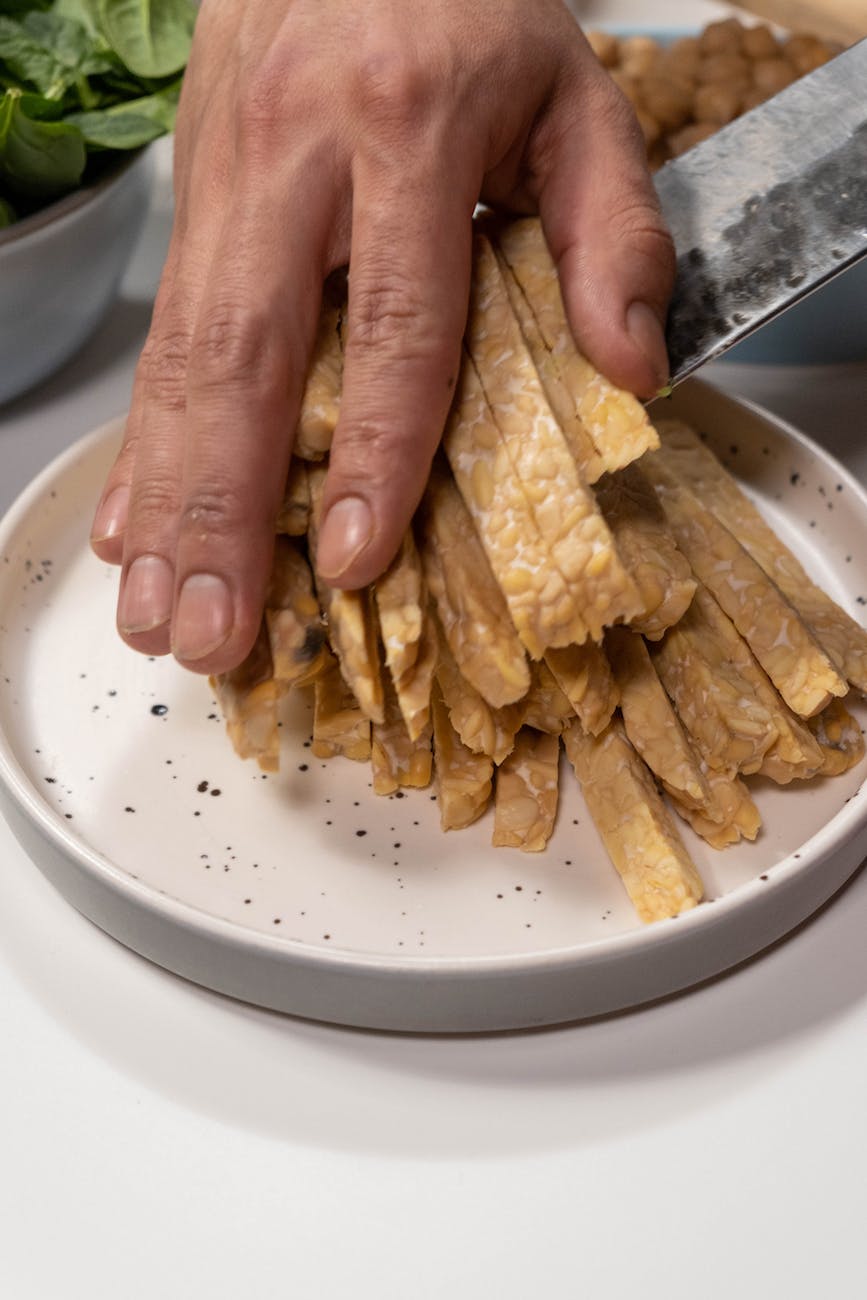
a person holding tempeh slices

Explore the world of plant-based protein with these tempting tempeh salad dinner meal prep ideas. Tempeh, a fermented soybean product, is a nutritional powerhouse that provides a satisfying texture and a boost of protein to your salads. Say goodbye to chicken and hello to these flavorful and protein-rich tempeh salads that will leave you feeling nourished and energized. Get ready to indulge in the goodness of plant-powered meals with these delightful tempeh creations.🌿🥗🌱


🥗 Asian Tempeh Salad: Experience the vibrant flavors of Asia with an Asian-inspired tempeh salad. Start by marinating tempeh strips in a mixture of soy sauce, ginger, garlic, and a touch of sweetness. Pan-fry the marinated tempeh until golden and crispy. Toss a combination of mixed greens, shredded carrots, sliced cucumbers, and bean sprouts together. Drizzle with a tangy sesame ginger dressing and top with the pan-fried tempeh. Garnish with chopped green onions, toasted sesame seeds, and crushed peanuts for an added crunch. This Asian tempeh salad is a refreshing and protein-packed meal that will transport you to the vibrant flavors of the East.


🥗 Mediterranean Tempeh Salad: Take your taste buds on a Mediterranean journey with a flavorful tempeh salad. Start by marinating tempeh cubes in a mixture of olive oil, lemon juice, garlic, and a blend of Mediterranean herbs such as oregano, thyme, and rosemary. Sauté the marinated tempeh until golden and fragrant. Assemble a bed of mixed greens, cherry tomatoes, cucumber slices, Kalamata olives, and crumbled feta cheese. Drizzle with a tangy balsamic vinaigrette and top with the sautéed tempeh. Finish with a sprinkle of fresh parsley and a few dollops of creamy tzatziki sauce. This Mediterranean tempeh salad is a burst of flavors and textures that will transport you to the sunny shores of the Mediterranean.


🥗 Southwest Tempeh Salad: Spice things up with a zesty and protein-packed Southwest tempeh salad. Start by marinating tempeh in a mixture of lime juice, chipotle seasoning, garlic, and cumin. Grill or pan-fry the marinated tempeh until it develops a smoky char. Combine a variety of mixed greens, black beans, corn kernels, cherry tomatoes, diced avocado, and thinly sliced red onions. Drizzle with a creamy avocado dressing or a tangy lime cilantro dressing. Top with the grilled tempeh and finish with a sprinkle of chopped fresh cilantro and a squeeze of lime juice. This Southwest tempeh salad is a fiesta of flavors that will satisfy your cravings for bold and vibrant dishes.


🥗 Quinoa and Tempeh Salad: Combine the power duo of quinoa and tempeh to create a wholesome and protein-packed salad. Cook quinoa according to the package instructions and let it cool. Cut tempeh into cubes and pan-fry until golden and crispy. In a large bowl, combine cooked quinoa, chopped fresh vegetables like cherry tomatoes, cucumber, bell peppers, and shredded carrots. Add in cooked chickpeas or black beans for extra fiber and protein. Drizzle with a lemon-herb dressing and toss everything together. Top with the pan-fried tempeh and garnish with fresh parsley or mint leaves. This quinoa and tempeh salad is a complete and nutritious meal that will keep you fueled and satisfied.


🥗 Buddha Bowl with Tempeh: Create a nourishing and well-balanced Buddha bowl with the goodness of tempeh. Start by marinating tempeh in a mixture of tamari or soy sauce, maple syrup, and your favorite spices. Sauté or grill the marinated tempeh until golden and caramelized. Assemble your Buddha bowl with a variety of components such as cooked quinoa or brown rice, roasted sweet potatoes or butternut squash, steamed greens, sliced avocado, and pickled vegetables. Drizzle with a creamy tahini dressing or a zesty lemon-tahini sauce. Top with the cooked tempeh and garnish with a sprinkle of sesame seeds or chopped nuts. This tempeh Buddha bowl offers a combination of flavors, textures, and nutrient-dense ingredients to nourish your body and keep you feeling satisfied.


Embrace the versatility of tempeh and its ability to elevate your salads into satisfying and protein-rich meals. These tempeh salad dinner meal prep ideas are perfect for those looking to incorporate more plant-based proteins into their diet without compromising on taste or nutrition. Don’t forget to capture your creations and share them with us! 📸 Tag your tempeh salad dishes with #MasalaMonk and @Masala.Monk on Instagram or Pinterest to join our community of food enthusiasts.

Save this post for future meal prep inspiration and embark on your own culinary adventure with these tempeh-powered salad ideas.