Posted on Leave a comment

Cappuccino Recipe: How to Make a Perfect Cappuccino at Home

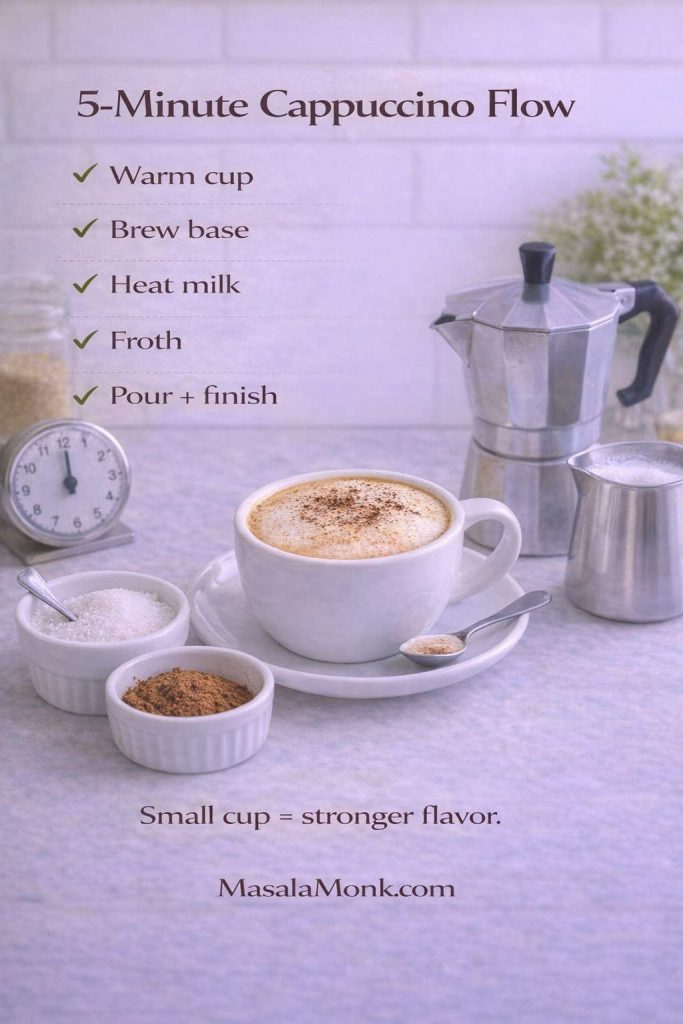
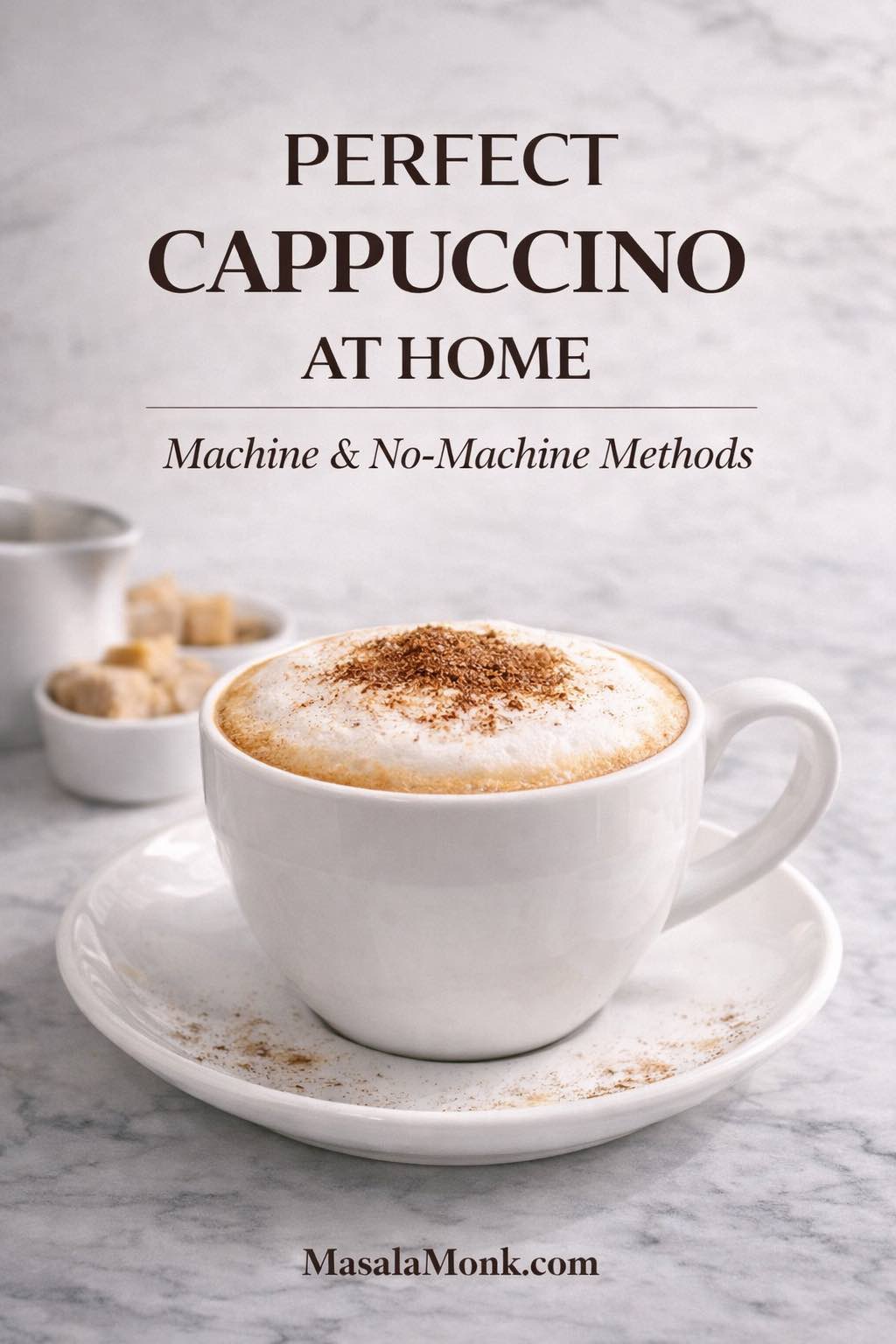
Perfect cappuccino at home in a white cup on a marble counter with cocoa-dusted foam, plus text overlay: Machine & No-Machine Methods (MasalaMonk.com).

A cappuccino recipe can feel deceptively simple: coffee, milk, foam. Yet when it’s done well, it tastes like more than the sum of its parts—deep, fragrant espresso wrapped in sweet, warm milk, finished with a cap of foam that holds long enough for you to draw a spoon through it and still find coffee underneath.

This cappuccino recipe is written for real kitchens, not showroom counters. You’ll learn how to make cappuccino coffee at home whether you have an espresso setup, a moka pot, or nothing more than a saucepan and a jar. Along the way, you’ll also see how to make an iced cappuccino at home, how to make a cold cappuccino that stays creamy, and how to make homemade cappuccino mix for the mornings when you want “easy cappuccino” energy without sacrificing taste.

If you want a tidy, competition-style reference point, the cappuccino is typically described as a 5–6 oz (roughly 150–180 ml) coffee-and-milk drink with a clear foam layer and a balanced espresso-to-milk profile—an idea echoed in specialty definitions such as those discussed in this overview of cappuccino standards and evolution: What is a cappuccino & how has it developed over time? and in the official competition language inside the World Barista Championship rules and regulations PDF. That said, you don’t need to “compete” to make the perfect cappuccino. You just need a repeatable method.

Let’s build that method from the cup up.


Cappuccino recipe basics: what makes it taste “right”

Cappuccino ingredients (and why each one matters)

At its cleanest, cappuccino ingredients are short:

  • espresso (or a strong espresso-like coffee base)
  • milk
  • foam (made from that same milk)
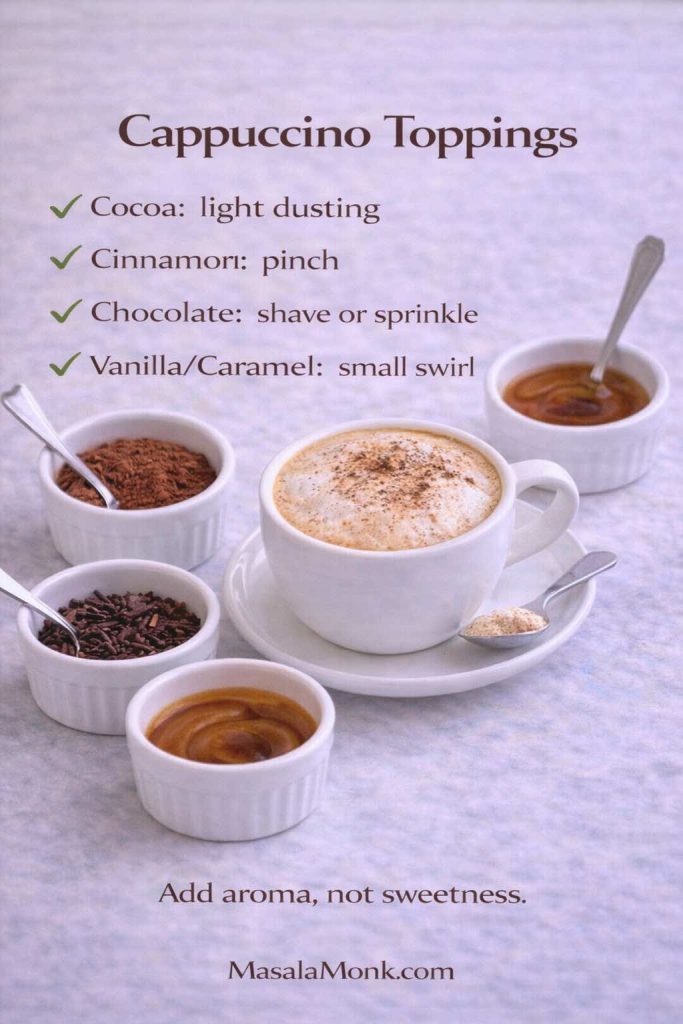
  • optional toppings like cocoa powder, cinnamon, or chocolate sprinkles

What’s missing from that list is the thing that makes cappuccino tricky: technique. The drink relies on contrast—concentrated coffee against sweet milk; silky liquid under a foam blanket. When that contrast disappears, you end up with something closer to a milky coffee than a cappuccino coffee recipe worth repeating.

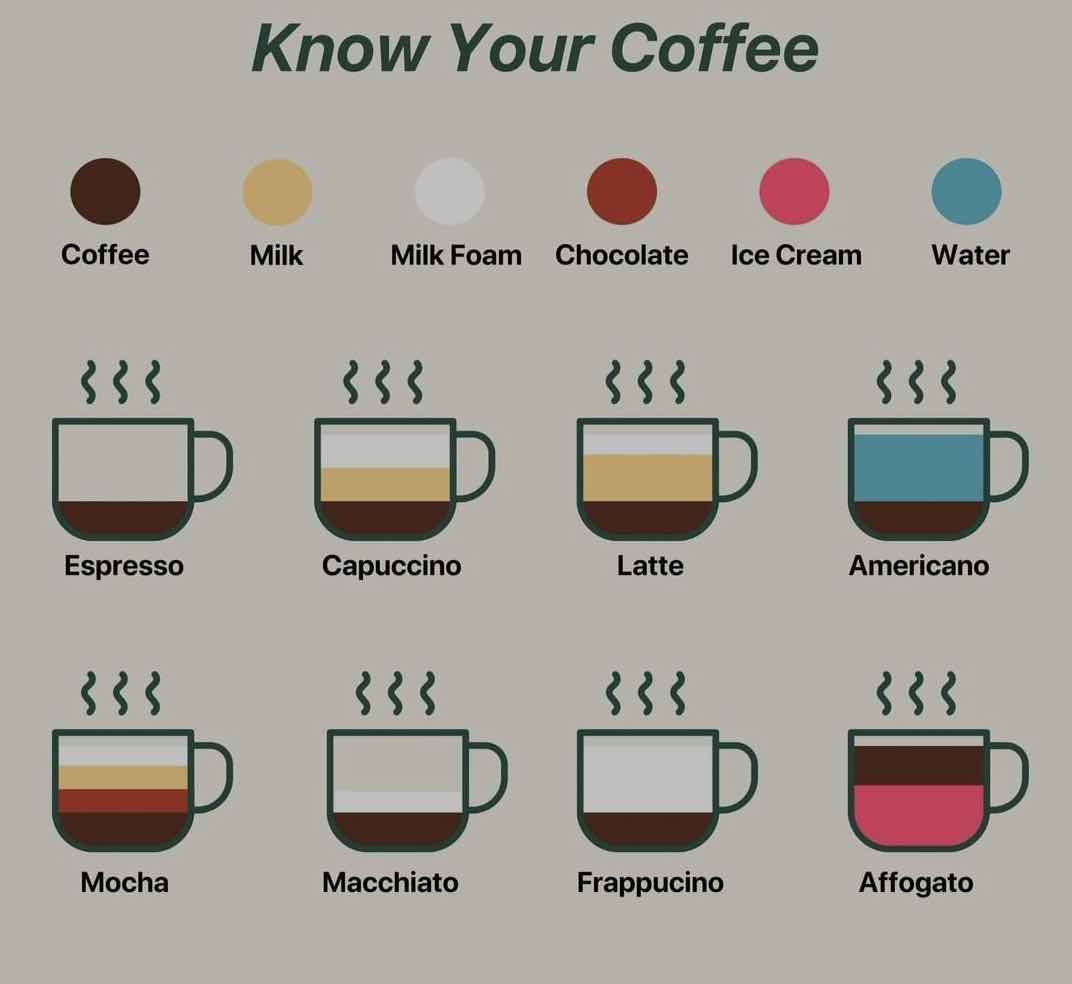
If you like a quick orientation on espresso itself (what it is, how it behaves in milk drinks, and why it anchors the whole experience), this internal guide is a helpful companion: Quick Espresso Guide – Know Your Coffee. It’s especially useful if you’re still deciding whether your base tastes “espresso-forward” enough for cappuccino.

Cappuccino recipe ratio: espresso, milk, and foam

You’ll see “equal thirds” mentioned often: one-third espresso, one-third steamed milk, one-third milk foam. That picture is useful because it nudges you toward the cappuccino’s signature structure.
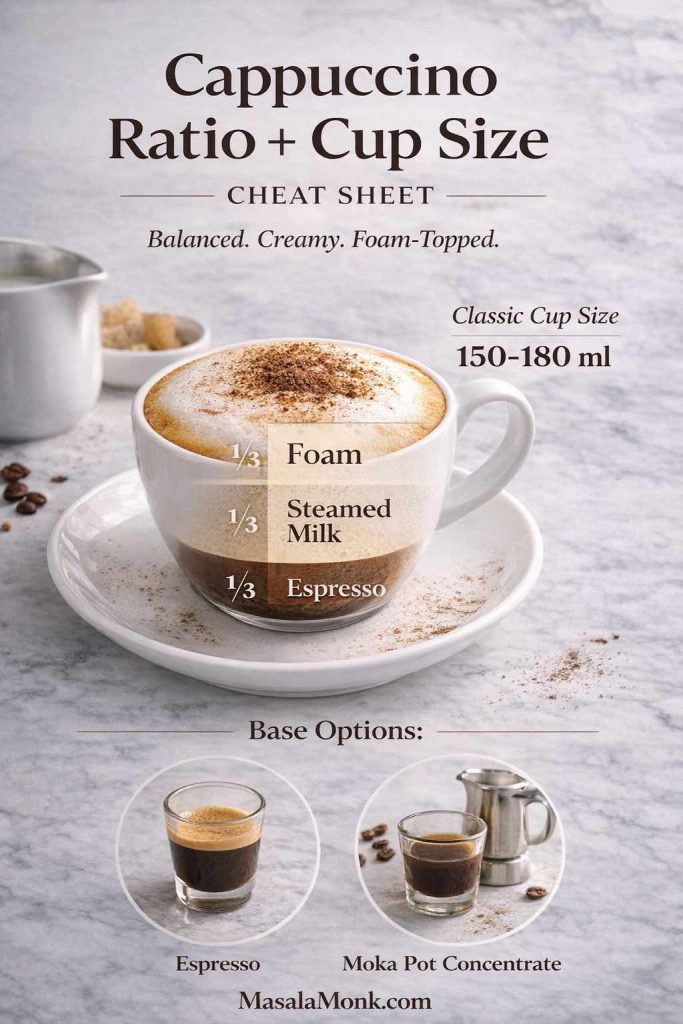
In practice, the best way to make cappuccino at home is to think in cup size first, then fill it with the right balance:

  • Choose a 150–180 ml cup if you want a classic feel.
  • Use one strong espresso base (single or double depending on your preference and cup size).
  • Add enough milk to soften the espresso without burying it.
  • Finish with foam that sits confidently on top.

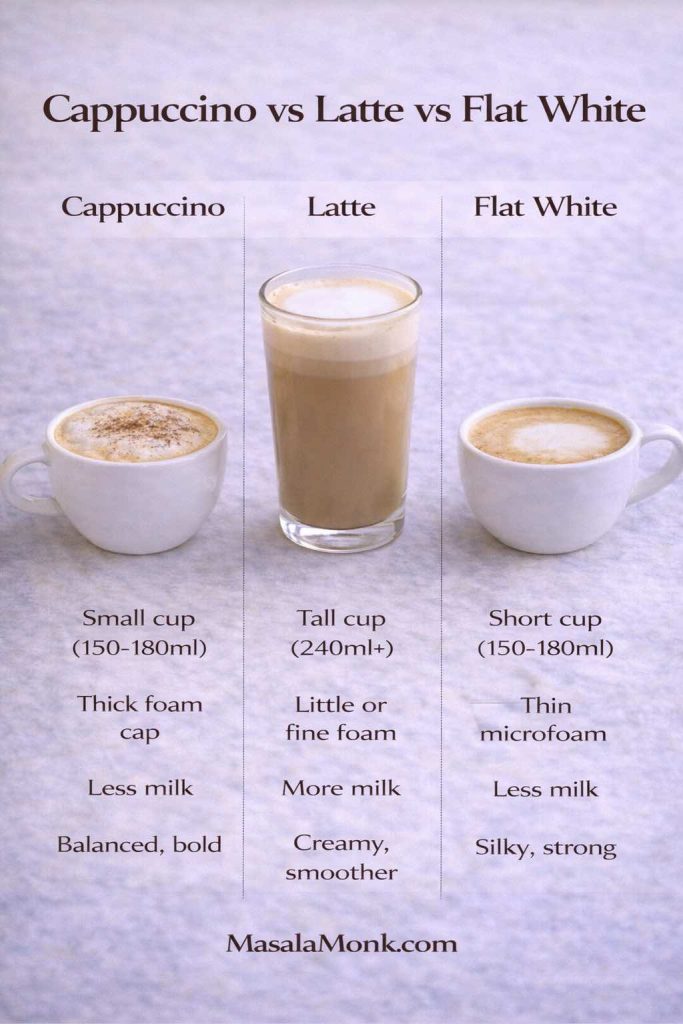
If your cup is much larger, the drink will drift toward latte territory unless you increase espresso and keep the total volume controlled. Conversely, if you keep the cup small, the cappuccino stays intense and aromatic—exactly what many people mean when they say “the perfect cappuccino.”
What coffee to use for cappuccino (and why roast matters)

“What coffee to use for cappuccino” is less about a single best bean and more about choosing a profile that still tastes like coffee after milk enters the room.

  • If you prefer chocolatey, nutty comfort: medium to medium-dark roasts tend to shine.
  • If you like fruitier brightness: lighter roasts can work, although you may want a slightly smaller milk volume to keep clarity.
  • If your cappuccino tastes thin: the problem is often the base, not the milk. A stronger extraction or a more concentrated brew method helps.

For a practical overview of brew variables—grind, ratio, brew time—MasalaMonk’s foundational explainer is worth a skim: Coffee Brewing Methods: A Fusion of Art, Science, and Flavor. Even if you’re not obsessing over numbers, it helps you recognize why one cup tastes full and another tastes flat.

Also Read: Cold Brew Espresso Martini: How to Make It (Step-by-Step Recipe)


What do you need to make a cappuccino at home?

There’s a version of this drink for every setup. So instead of asking, “Do I have the right gear?”, ask, “Which cappuccino style am I making today?”
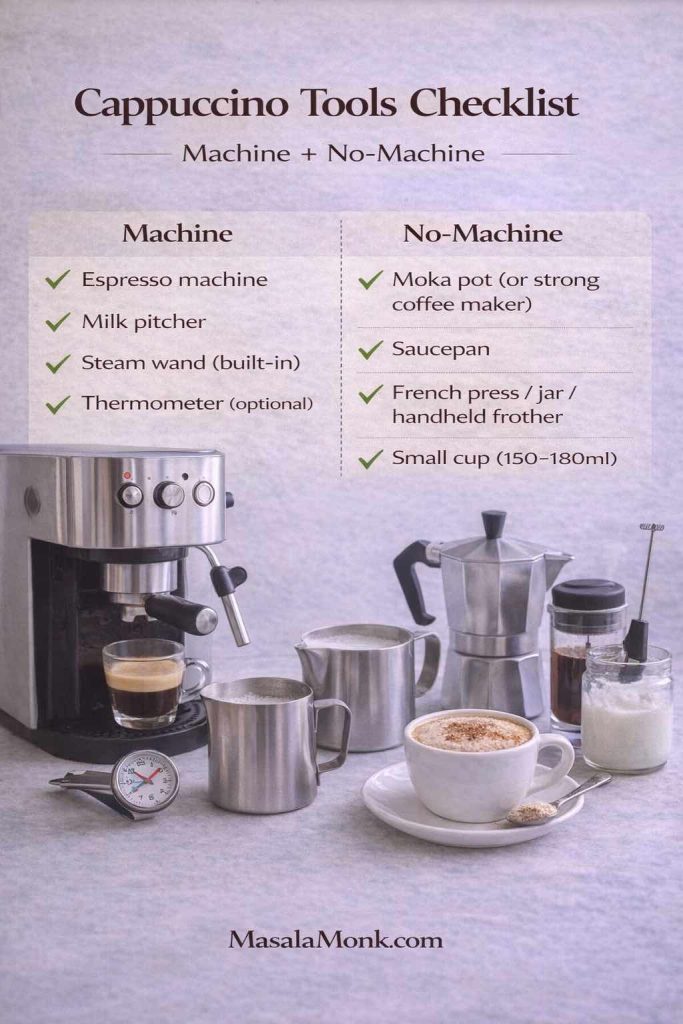
Option 1: Espresso machine + steam wand (classic)

If you have a machine to make cappuccino with a steam wand, you’re closest to café method:

  • espresso machine (or espresso-capable machine)
  • milk pitcher
  • thermometer (optional but helpful early on)

Option 2: Moka pot + DIY milk foam (best no-machine taste)

If you’re aiming for “cappuccino recipe without machine” but still want a bold base, the moka pot is a standout. It’s beloved precisely because it makes an espresso-like concentrate that holds up beautifully in milk drinks. For an in-depth walkthrough, see: Moka Pot Mastery: Elevate Your Coffee Game. If you want an outside perspective on why the moka pot works so well as a cheap espresso alternative, this piece captures the spirit: Why We Love the Bialetti Moka Pot.

Option 3: Strong brewed coffee + foam (gentler, still satisfying)

If you don’t have espresso tools, you can still make a coffee that tastes like cappuccino in spirit:

  • brew strong coffee (reduce water, increase coffee, or brew a concentrate)
  • heat milk
  • foam milk with a French press, jar, whisk, or handheld frother

It won’t be identical to espresso-based cappuccino, but it can be delicious—especially when your milk texture is on point.

Option 4: Instant cappuccino mix or homemade cappuccino mix (fastest)

This is the “instant cappuccino mix” route—simple, sweet, and quick. It’s also the route where ingredient choices matter most, because the mix itself becomes the personality of the cup. We’ll cover a good homemade cappuccino mix recipe later.

If you’re still deciding what coffee maker for cappuccino fits your home—espresso machine, pod system, semi-automatic, or fully automatic coffee machine for home—keep your cappuccino recipe post focused on making the drink, then point readers to a separate gear overview when needed. MasalaMonk’s internal machine explainer is a neat, non-salesy link for that: A Coffee Lover’s Guide to Machines.

Also Read: Baked Ziti Recipe Collection: 15 Easy Variations


Cappuccino recipe method: how to make a cappuccino at home (step by step)

This is the heart of it: cappuccino recipe step-by-step, from base to foam to pour.
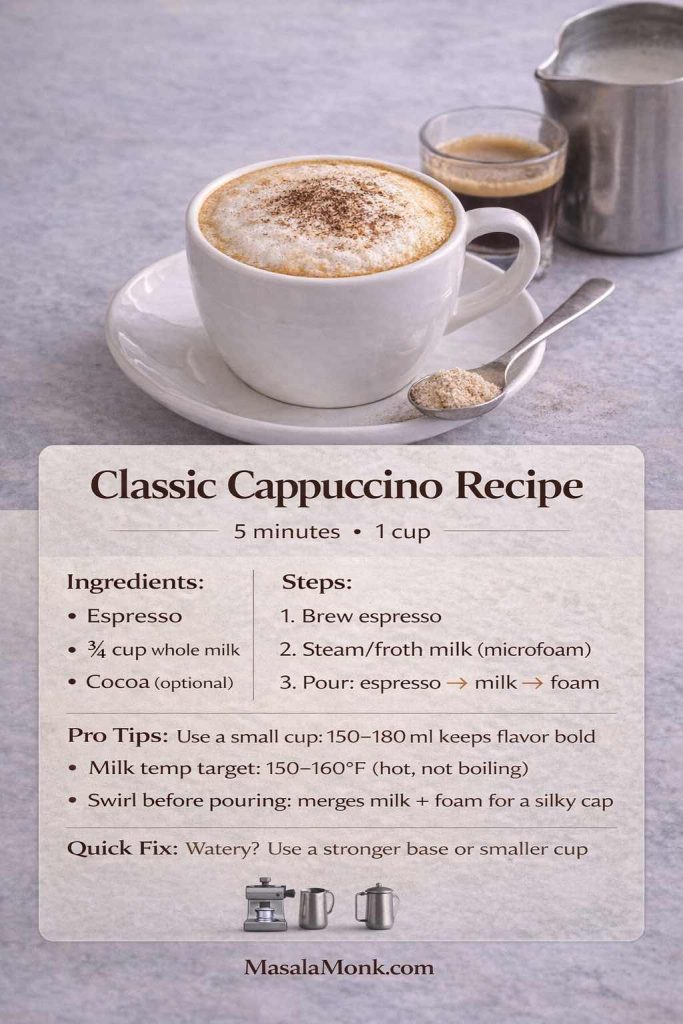
Step 1: brew the coffee base (espresso or espresso-like)

If you have an espresso machine

Pull a shot into a warmed cup. If you’re making a traditional cappuccino size (150–180 ml), a single shot can work; a double shot gives a deeper coffee presence. If you love bolder cappuccino, the double shot is often the best cappuccino recipe starting point.

A small detail makes a bigger difference than it should: warm your cup with hot water while the machine heats. That warmth preserves aroma and keeps the milk from cooling too quickly.
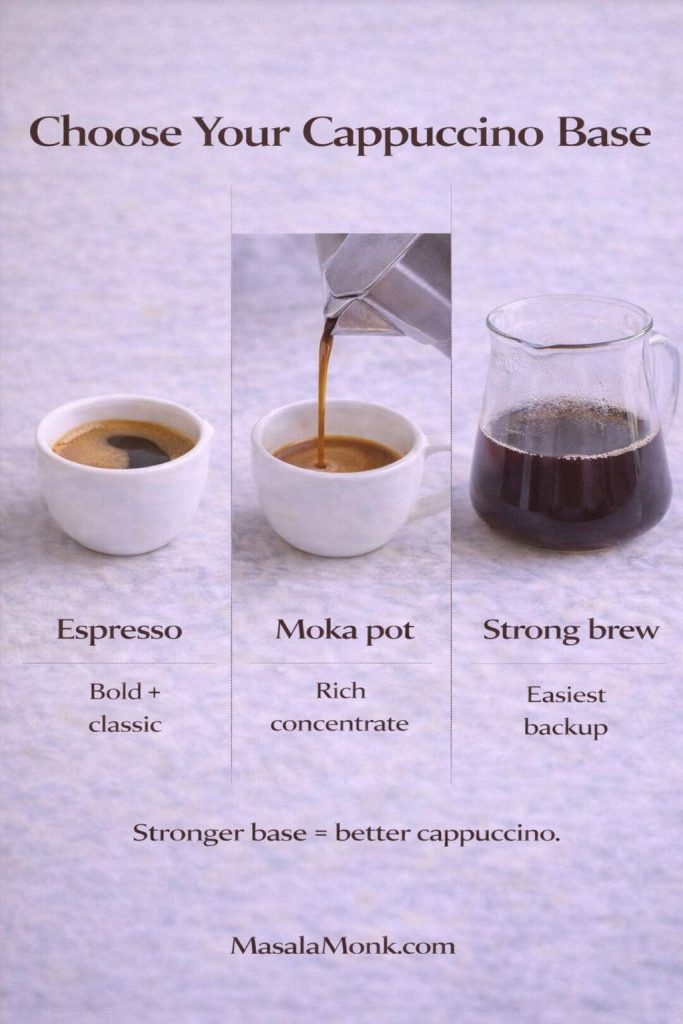
If you’re using a moka pot (best way to make cappuccino at home without an espresso machine)

The moka pot’s strength is that it produces concentrated coffee with enough intensity to remain recognizable under milk. Follow your moka pot routine, then pour the coffee into your cappuccino cup immediately.

If you’d like to refine your moka pot technique—heat management, grind, and how to avoid harsh bitterness—the internal guide is genuinely useful: Moka Pot Mastery: Elevate Your Coffee Game.

If you’re brewing strong coffee (French press, drip, etc.)

Brew it stronger than usual. That could mean:

  • using less water
  • increasing coffee
  • steeping slightly longer (where appropriate)

If your base tastes like “normal coffee,” it’s likely to disappear once milk arrives. A stronger base is the difference between “home made cappuccino” and “coffee with milk.”

Step 2: texture and heat milk (the foam is the point)

If espresso is the backbone, foam is the signature. Milk that’s merely hot isn’t enough; cappuccino wants milk that’s sweet, glossy, and stable.

A widely referenced target range for steaming milk is about 55–65°C, which helps preserve sweetness and avoid scalding; this overview discusses the recommended range and why it matters: What temperature should your cappuccino milk be?.
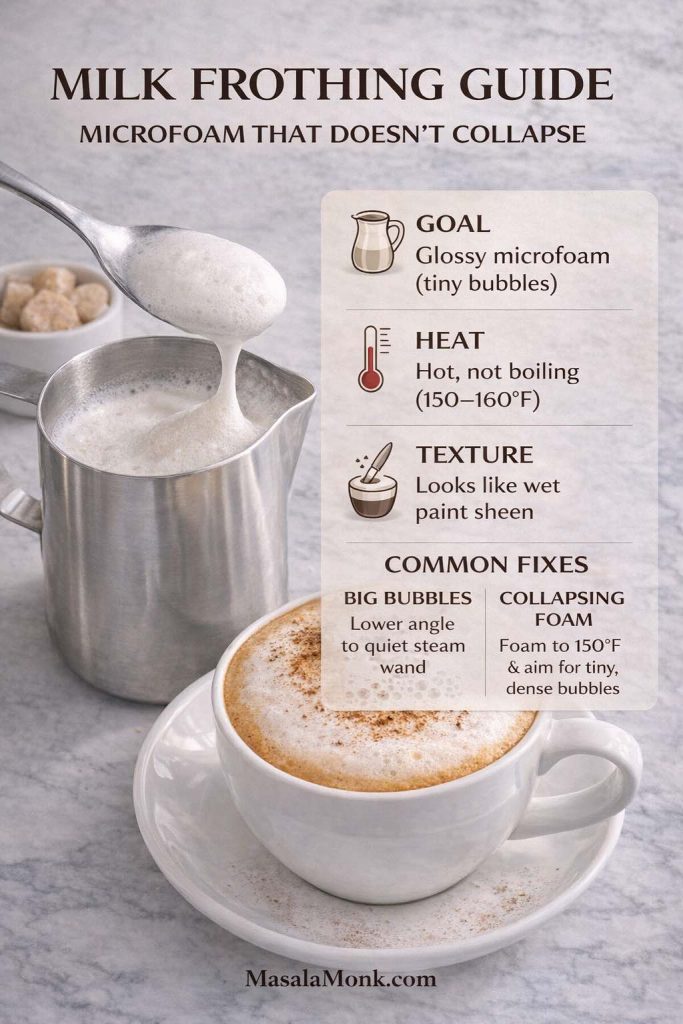
If you’re using a steam wand: how to steam milk for cappuccino

Milk texturing is often taught as a two-part motion: introduce air early, then mix and heat to create microfoam. Barista Hustle breaks that “two-part” idea down clearly here: Making microfoam (the two-part heuristic) and also in their general microfoam lesson: Making microfoam.

Here’s the home-friendly version:

  1. Start with cold milk in a cold pitcher.
  2. Purge the steam wand briefly.
  3. Keep the tip near the surface just long enough to add air—listen for a gentle paper-tearing sound, not loud splashing.
  4. Then sink the tip slightly deeper to create a rolling motion that polishes the foam into a glossy texture.
  5. Stop when the pitcher feels hot but still touchable; if you use a thermometer, aim roughly within the 55–65°C zone.

If your milk ends up with large bubbles, aeration was too aggressive or too long. On the other hand, if it’s silky but completely foam-less, you didn’t add enough air at the beginning.

If you don’t have a wand: how to froth milk for cappuccino without a frother

This is where “cappuccino recipe without machine” becomes practical rather than aspirational. You have several good paths:

French press foam (reliable and surprisingly good)
Heat milk on the stove until it’s hot but not boiling. Pour it into a French press and pump the plunger briskly until it becomes foamy. Then let it rest briefly so the biggest bubbles rise and settle.

Serious Eats even calls out the French press as a handy tool for frothing milk in its moka pot piece: Why We Love the Bialetti Moka Pot. If you want a broader love letter to the French press (including why it stays useful even if you later upgrade), this is a fun read: Don’t forget about the French press.

Jar shake (fast, no special tools)
Heat milk, pour it into a jar (leave headspace), seal tightly, shake vigorously, then pour milk first and spoon foam on top. It’s simple, which is exactly why it’s still one of the best ways to make cappuccino at home when you’re traveling or short on tools.

Handheld frother (quick texture with minimal cleanup)
A handheld whisk-style frother makes foam quickly, although the foam can be a bit “drier” depending on your milk and technique. If you’re choosing a countertop frother, this Serious Eats guide gives a helpful sense of what makes good foam at home: We tested milk frothers and landed on favorites.

Step 3: pour and assemble (where cappuccino becomes cappuccino)

Now the fun part—making cappuccino feel like a real drink rather than two layers fighting.

  1. Pour espresso into your cup.
  2. Swirl your milk pitcher (or stir your foamed milk gently) so foam and liquid are integrated, not separated.
  3. Pour steamed milk first to blend with espresso.
  4. Finish with a deliberate foam layer on top.
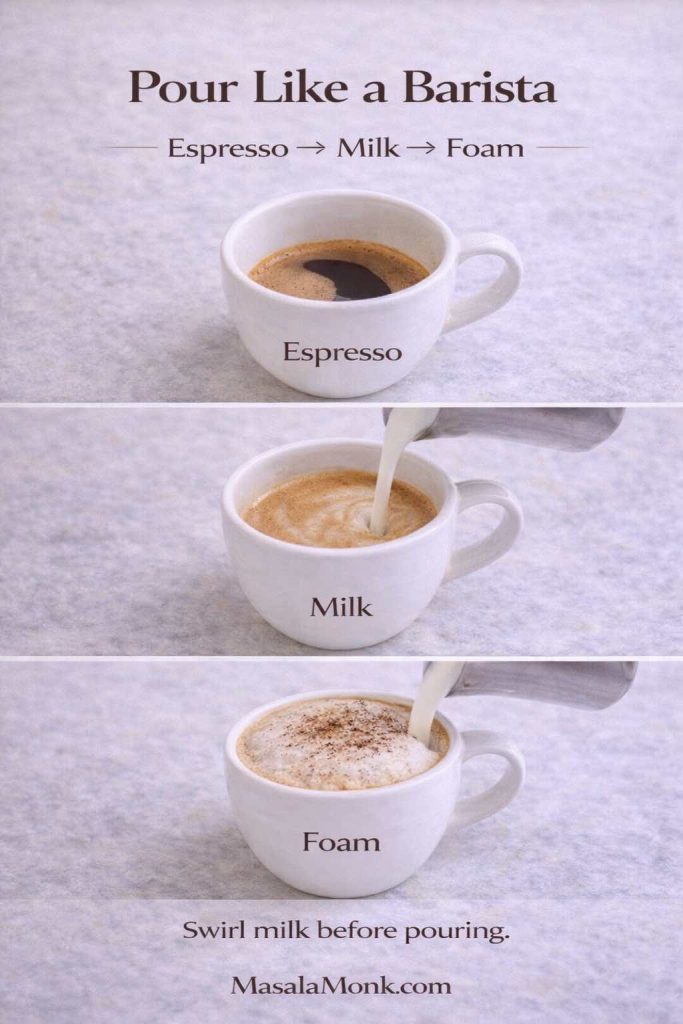
If you’re after a classic look, you can dust the foam with cocoa powder. If you want a slightly more playful finish, cappuccino chocolate sprinkles are a simple touch that reads like a café garnish without changing the drink itself.

Pause for a moment before sipping. The aroma from the foam carries upward, and that first breath is half the experience.

Also Read: Cranberry Moscow Mule Recipe: A Festive Holiday Cocktail With Easy Variations


How to make perfect cappuccino at home: small adjustments that change everything

A cappuccino can be “good” in a forgiving way, yet the perfect cappuccino is a different creature—balanced, sweet, and structured.

Make it smaller than you think

A cappuccino drink that’s too large often becomes indistinguishable from a latte. Keeping the cup modest helps the espresso stay present and the foam stay meaningful.

Strengthen the base before you add more milk

If the coffee tastes weak, the fix is not always “less milk.” Sometimes it’s:

  • a finer grind (for espresso)
  • a more concentrated moka pot brew
  • a stronger brewed coffee ratio

That’s why “best coffee to make cappuccino” is often a coffee that’s comfortable being intense.

Heat milk to the sweet spot, not the scorch point

Milk sweetness peaks before it tastes cooked. If you frequently get “hot milk” rather than “sweet milk,” aim for that 55–65°C zone discussed here: What temperature should your cappuccino milk be?. It’s the simplest way to upgrade a hot cappuccino recipe without changing anything else.

Also Read: Green Chutney Recipe (Coriander–Mint / Cilantro Chutney)


Cappuccino recipe without machine: a complete no-machine cappuccino you’ll actually want again

Let’s put it together as a full method.
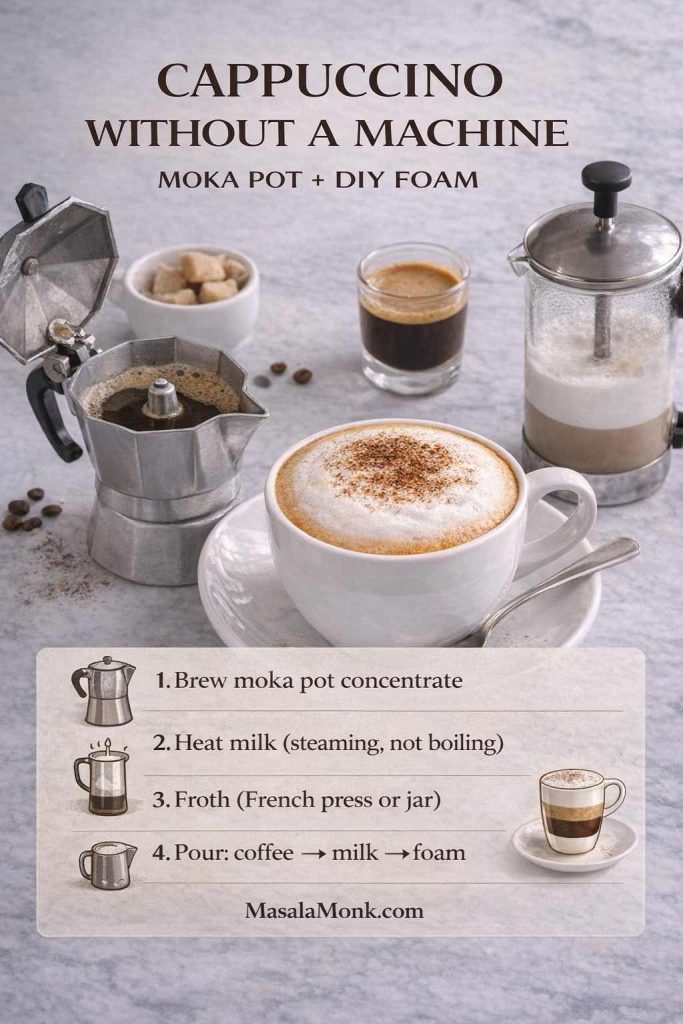
Cappuccino home recipe (moka pot + French press foam)

  1. Brew moka pot coffee.
  2. Heat milk in a small pan until steaming (not boiling).
  3. Froth milk in a French press until foamy.
  4. Pour coffee into your cup.
  5. Add hot milk first, then spoon foam on top.

This method nails the feeling of “real cappuccino” because the base is concentrated and the foam is generous. It’s also flexible: you can make a cappuccino for one or scale it for guests, and the texture remains consistent.

If you want more home-brewing inspiration beyond cappuccino—French press, pour-over, or other methods—MasalaMonk’s internal guide is a nice sidebar without stealing focus from this recipe: Art of Home Coffee Brewing: A Quick Guide.

Easy cappuccino at home (strong brew + jar foam)

If you don’t have a moka pot, make your strongest brewed coffee, then build foam with the jar method. It won’t be identical to espresso-based cappuccino, although it can still hit that “comforting café drink” note. In particular, this approach is friendly for anyone who wants to do a cappuccino at home without buying a new coffee machine.

Also Read: Paper Plane Cocktail Recipe + Best Amaro Substitutes & Tips


Iced cappuccino recipe: make iced cappuccino at home without watery disappointment

An iced cappuccino recipe has one enemy: dilution. Ice melts, flavor thins, and suddenly your “iced coffee cappuccino recipe” tastes like vague sweetness.

The solution is to use a strong base and treat foam as a topping rather than something you stir away.
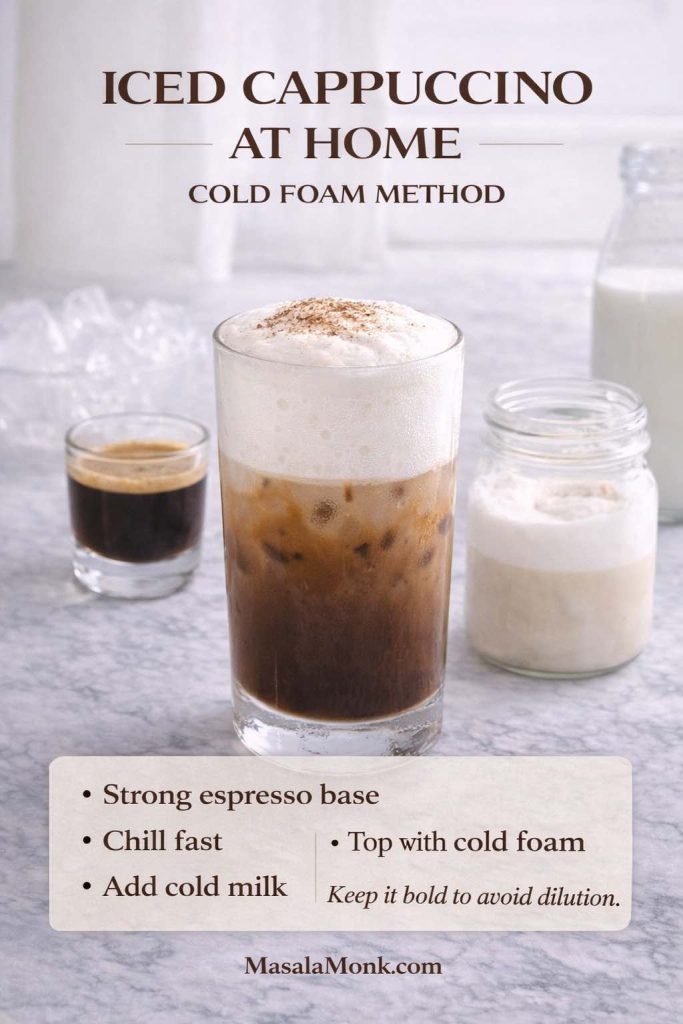
How to make a cold cappuccino that stays creamy

  1. Brew espresso or moka pot coffee.
  2. Cool it quickly (a short stir over ice works, or a brief chill in the fridge).
  3. Add cold milk to taste.
  4. Top with cold foam.

Cold foam can be made in a jar, with a handheld frother, or in some countertop frothers that include a cold setting. The key is that you want the foam to sit like a cap—so each sip moves from airy to creamy to coffee.

For a broader menu of cold coffee drinks—because sometimes you want to rotate beyond cappuccino—this internal roundup is easy to weave in: Iced Coffee: 15 Drink Recipes—Latte, Cold Brew, Frappe & More. If you’re curious about the differences between cold brew, iced latte, and frappe (especially when you’re deciding what texture you want), this explainer also fits naturally: Iced Coffee Simplified: Cold Brew vs Iced Latte vs Frappe & More.

Iced cappuccino at home (quick shaker method)

If you want a frothier iced coffee cappuccino, shake:

  • espresso + milk + ice in a sealed jar for 10–15 seconds
  • strain into a glass
  • top with fresh foam (optional, but lovely)

This creates tiny bubbles and a slightly thicker feel, which is why it reads as “iced cappuccino” rather than simply “iced coffee with milk.”

Cappuccino with ice cream (dessert-style, still balanced)

Sometimes you want the drink to feel like a treat. In that case, pour hot espresso over a small scoop of vanilla ice cream, then add a little foamed milk. It lands somewhere between an affogato mood and a frozen cappuccino recipe, without turning into an overly sweet milkshake.

Also Read: Sandwich for Breakfast: Breakfast Sandwich Recipe + 10 Variations


Cappuccino mix recipe: homemade cappuccino mix that tastes clean, not chalky

Instant cappuccino mix is convenient, yet it’s often either too sweet or oddly flat. A homemade cappuccino mix recipe lets you control sweetness, coffee strength, and the “creaminess” that makes the drink satisfying.
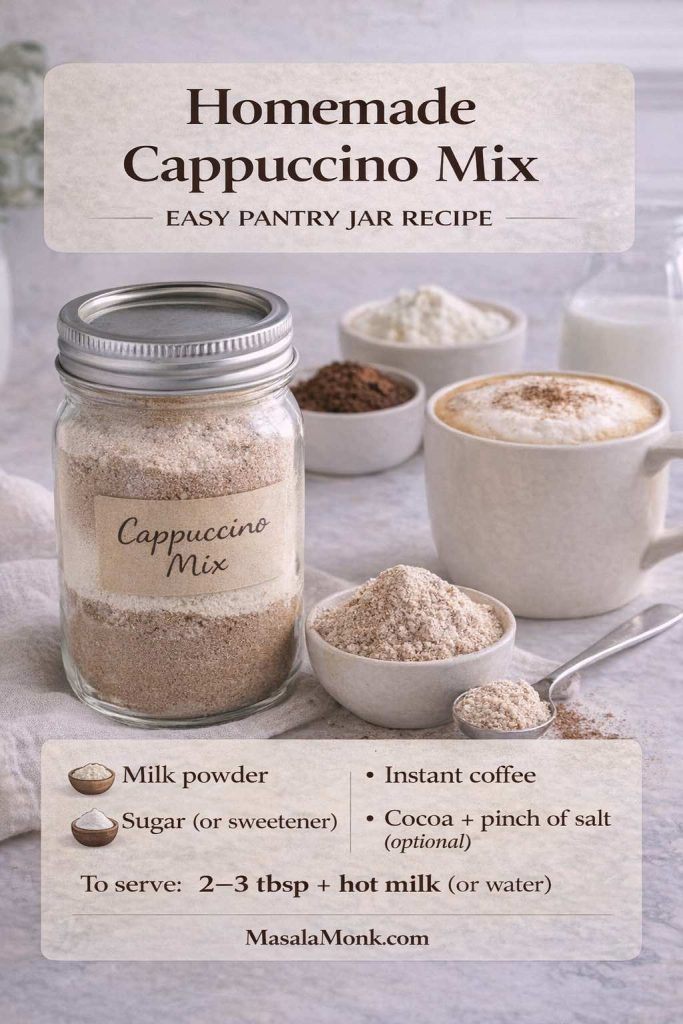
Homemade cappuccino mix recipe (base blend)

A good mix has three jobs:

  1. provide coffee flavor (instant coffee)
  2. add body (milk powder or a non-dairy creamer powder)
  3. balance sweetness (sugar or a chosen sweetener)

A simple homemade cappuccino mix formula can look like this:

  • milk powder (largest portion, for body)
  • instant coffee (enough to taste like coffee, not cocoa)
  • sugar (or a low-cal substitute)
  • optional cocoa powder (for roundness)
  • a pinch of salt (tiny, but it makes the flavors pop)

Because cocoa quality varies widely, it helps to understand cocoa behavior in hot drinks. MasalaMonk’s internal recipe is great for that: Homemade Hot Chocolate with Cocoa Powder Recipe. It’s not a cappuccino post, of course, yet it teaches you why one cocoa tastes smooth and another tastes dusty.
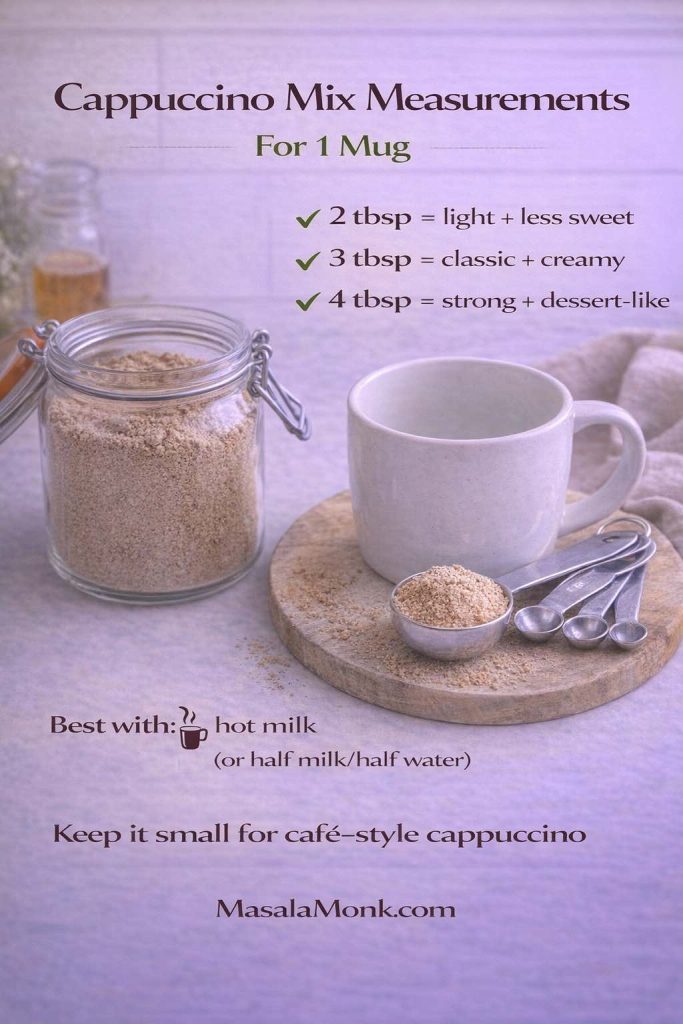
How to make your own cappuccino mix (and actually enjoy it)

To use your mix:

  • Add 2–3 tablespoons to hot water, or better yet hot milk.
  • Whisk thoroughly so it dissolves without clumps.
  • Finish with a small spoon of foam if you want the cappuccino look and mouthfeel.

If you want a mocha-style drizzle that’s quick and glossy, this internal recipe can be linked naturally right where readers would want it: 3 Minutes Homemade Chocolate Syrup. It’s an easy way to turn a cappuccino powder mix recipe into something that feels café-like.
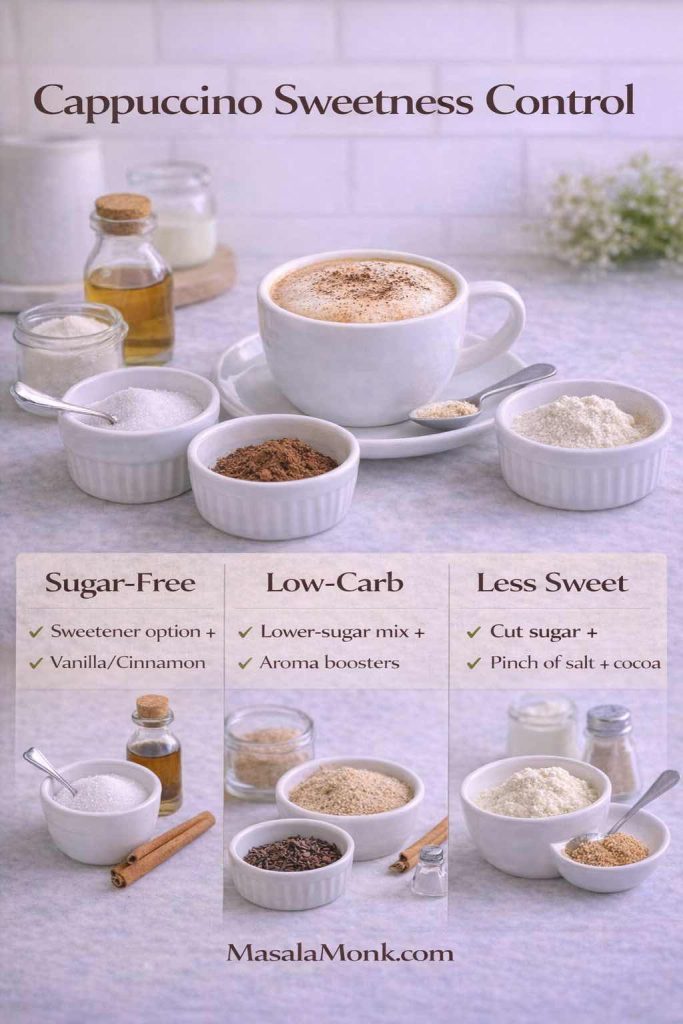
Sugar free decaf cappuccino mix and low carb cappuccino mix (simple swaps)

If you want a sugar free decaf cappuccino mix, the idea is the same:

  • use decaf instant coffee
  • swap sugar for your preferred sweetener
  • choose milk powder or a low-carb creamer option that suits your diet

Likewise, a low carb cappuccino mix usually comes down to milk choice and sweetener. The drink can still taste indulgent; it just relies on aroma (vanilla, spice) rather than sugar to create that “dessert-like” feeling.

Also Read: Classic Rum Punch + 9 Recipes (Pitcher & Party-Friendly)


Cappuccino and latte recipes: how to keep your cappuccino from turning into a latte

Cappuccino and latte recipes share ingredients but differ in structure. A latte tends to be larger, milk-forward, and built with thinner microfoam integrated into the drink. A cappuccino is typically smaller and more foam-capped.
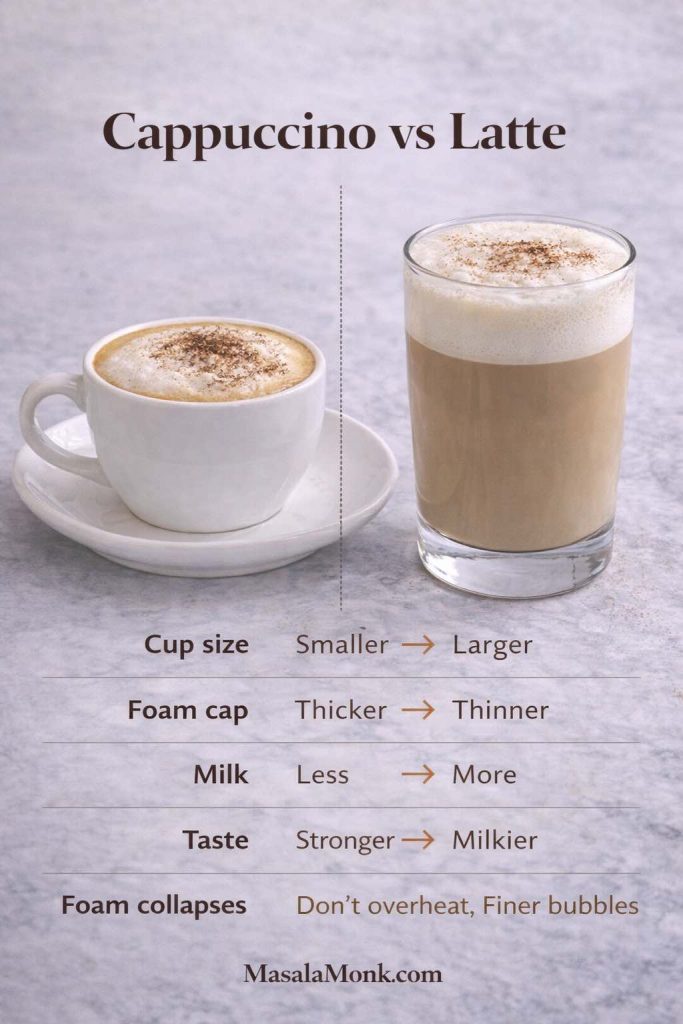
If you want a deeper context piece (history, size, and how modern versions drifted larger over time), this overview is a good reference: What is a cappuccino & how has it developed over time?. Even if you never think about definitions again, it’s reassuring to know why your “cappuccino latte recipe” sometimes feels confused: you’re really choosing between two valid styles.

A simple rule keeps you aligned:

  • If you want cappuccino: keep it smaller and foam-forward.
  • If you want latte: make it larger and more integrated.

Also Read: Rob Roy Drink Recipe: Classic Scotch Cocktail (Perfect + Dry + Sweet Variations)


Flavored cappuccino recipe variations (without losing the cappuccino soul)

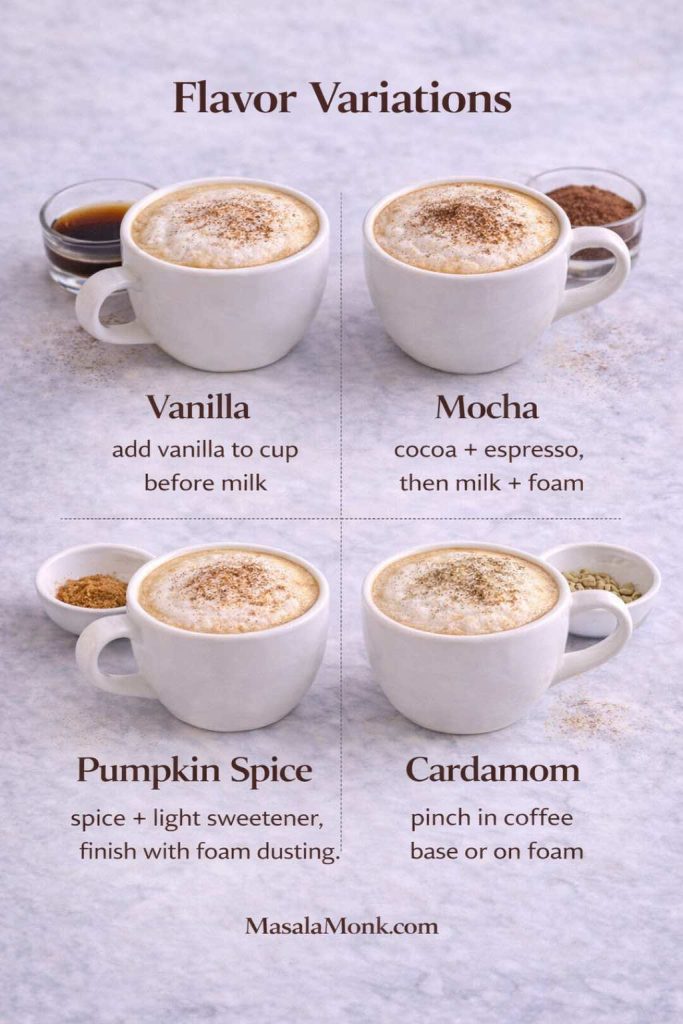
Once your base method is solid, flavored cappuccino becomes playful rather than chaotic. The goal is to add flavor without drowning coffee.
Vanilla cappuccino recipe (clean, not perfumey)

Vanilla can taste artificial if you overdo it. Instead:

  • add a small amount of vanilla extract or vanilla syrup to the cup before pouring milk
  • keep sweetness restrained so espresso still shows up

This is especially good when you’re making a cappuccino with instant coffee at home, because vanilla can smooth rough edges without turning the drink into candy.

Mocha cappuccino recipe (chocolate that complements coffee)

Mocha cappuccino works best when coffee leads and chocolate follows.

  • Use cocoa powder + a little sugar, or a thin drizzle of chocolate syrup.
  • Avoid heavy chocolate sauces that make the drink feel thick and syrupy.

If you’d like an internal link that supports a more “from-scratch” vibe, this one fits naturally: Exploring the combination of coffee and hot chocolate. It gives readers ideas for chocolate-coffee balance without turning your cappuccino post into a dessert manifesto.

Pumpkin spice cappuccino recipe (cozy and balanced)

Pumpkin spice is easiest to love when it doesn’t taste like pure sweetness. A more grounded approach uses real pumpkin purée, warm spices, and a controlled sweetener.

MasalaMonk’s internal recipe is already structured around those principles, so it’s a natural link inside a pumpkin spice cappuccino paragraph: Healthy Pumpkin Spice Latte (Hot or Iced). If readers want to mix their own spice blend, this companion guide makes the flavor feel intentional rather than random: Homemade Pumpkin Pie Spice.

Even if you keep pumpkin spice as an occasional variation, the same idea improves any flavored cappuccino recipe: build aroma first, then add sweetness only as needed.

Italian cappuccino recipe twist: a hint of spice (cardamom works beautifully)

If you want a subtle “Italian cappuccino recipe meets warm spice” direction, add a tiny pinch of cardamom to the coffee base or dust the foam lightly. It doesn’t need to be loud; it just needs to be present enough to make the aroma feel a little more layered.

For a deeper look at how cardamom and coffee pair (and why it’s such a natural fit), this internal piece is a lovely addition: Cardamom in Coffee: A Delightful Fusion of Aromas.

Also Read: 7 Pizza Sauce Recipes | Marinara, White Garlic, Alfredo, Buffalo, BBQ, Vodka & Ranch


Making a cappuccino with a coffee machine: keeping automatic drinks from tasting watery

Automatic machines can be a joy: press a button, get a drink. Still, “coffee machine make cappuccino” often translates to a larger, milkier beverage unless you guide it.
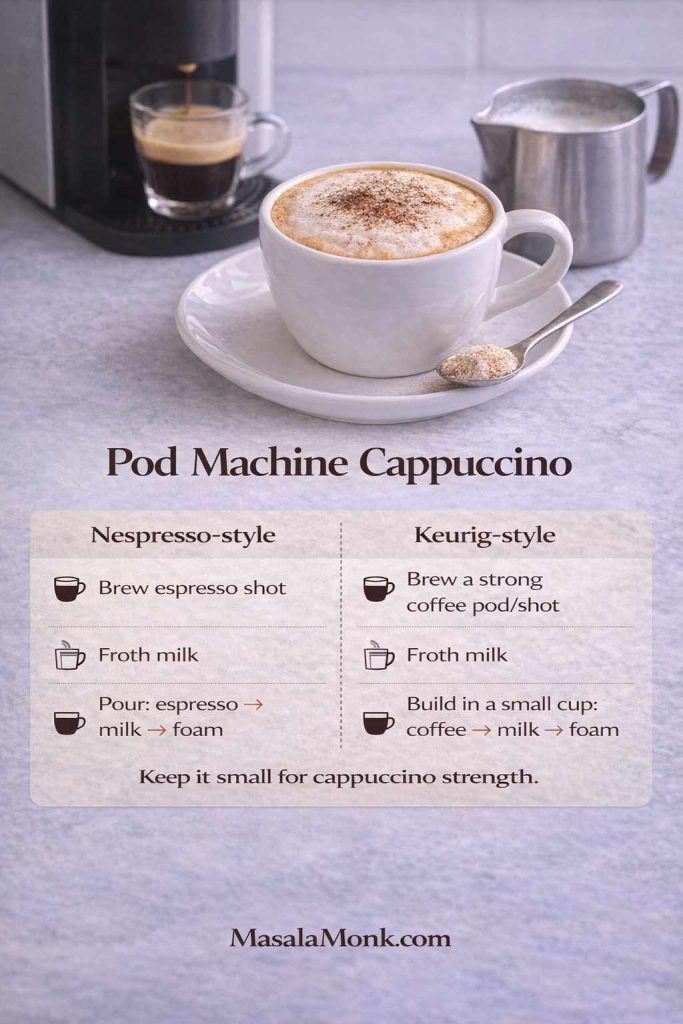
If your cappuccino from a coffee machine tastes diluted, try this sequence:

  • Choose the smallest cappuccino size setting.
  • Use the strongest coffee intensity option.
  • Reduce the milk volume slightly (even 10–20 ml less can bring espresso back into focus).
  • If the machine lets you customize ratios, prioritize coffee first, then milk.

This is also where the “best way to make a cappuccino” might look like making less drink rather than adding more settings. A smaller cup and a stronger base create cappuccino structure instantly.

If you’re deciding between a small cappuccino machine for home, a fully automatic coffee machine for home, or something more manual, keep your priorities clear: the best cappuccino at home is the one you’ll actually make often. For a broader overview of how different machines behave, this internal explainer is a natural place to send readers without derailing the recipe: A Coffee Lover’s Guide to Machines.

Also Read: Vodka Pasta (Penne alla Vodka) + Spicy Rigatoni, Chicken, and Gigi Recipes


Best cappuccino recipe troubleshooting: how to fix taste and foam fast

Even a good cappuccino recipe has a few predictable failure points. Fortunately, most fixes are quick.
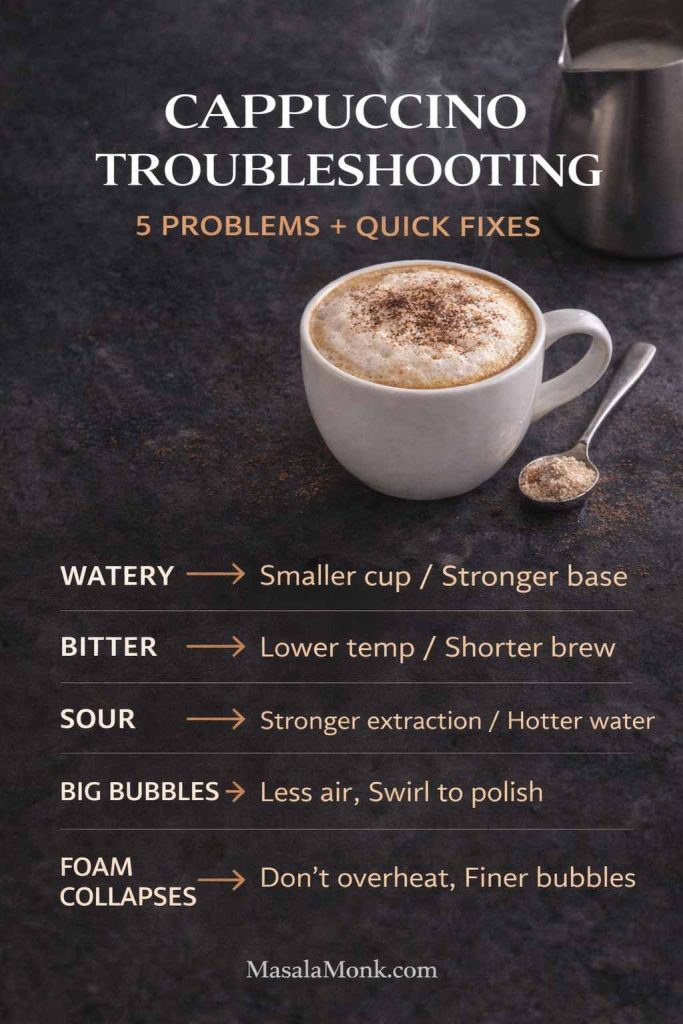
If your cappuccino tastes bitter

This can come from over-extracted coffee or overheated milk.

  • Shorten extraction slightly (espresso) or adjust grind.
  • With moka pot, avoid blasting heat; steady heat tends to taste smoother.
  • Keep milk in the sweet zone rather than letting it scorch.

If you want to zoom out and understand how extraction variables create bitterness (or sourness), revisit the fundamentals here: Coffee Brewing Methods: A Fusion of Art, Science, and Flavor.

If it tastes sour or thin

This usually means the base is underpowered.

  • Strengthen the coffee base.
  • Reduce milk volume.
  • Use a smaller cup.

In other words, if you’re thinking “what coffee to use for cappuccino,” the immediate answer might be: use coffee that’s brewed strong enough to stand up to milk.

If your foam is big and bubbly

Large bubbles make cappuccino feel like it has “bath foam” instead of creamy foam.

  • Aerate less aggressively.
  • Swirl the milk to integrate foam and liquid.
  • If using a jar method, let it rest briefly so big bubbles pop.

Barista Hustle’s microfoam explanations are especially useful if you want to understand why bubble size matters and how “drainage” affects foam stability: Microfoam (concepts and stability).

If your foam collapses immediately

This often happens when milk overheats or when there isn’t enough protein structure to hold bubbles.

  • Try a different milk (whole dairy milk is typically easiest).
  • Keep temperature controlled.
  • For plant-based milks, “barista” blends often foam more predictably.

Also Read: Belgian Waffle Recipe + 5 Indian Twists on a Breakfast Classic


A few satisfying cappuccino directions to keep in rotation

Once you can make cappuccino at home reliably, it’s worth having a handful of variations that feel distinct without requiring a new learning curve.

Simple cappuccino recipe (weekday version)

  • strong coffee base
  • milk heated and foamed with your easiest method
  • no toppings, no syrup

It’s the version you’ll make most often, which is why it deserves to taste good.

Cappuccino easy recipe (guest-friendly batch approach)

If you’re making cappuccino for a few people:

  • brew bases back-to-back (espresso shots or moka pot)
  • foam milk in larger batches (a countertop frother helps here)
  • pour coffee first, then milk, then foam

The rhythm makes it feel effortless, and the results look impressive without extra work.

Healthy-ish cappuccino (less sugar, same comfort)

If you like sweetness but don’t want a sugar-heavy drink, lean on aroma: vanilla, cinnamon, or cardamom. For cold coffee days with a lighter approach, this internal recipe is a natural link for readers who want a plant-based direction: Vegan and Sugar Free Creamy Cold Coffee.

Also Read: Oat Pancakes Recipe (Healthy Oatmeal Pancakes)


Closing thought: the perfect cappuccino is the one you can repeat

The most satisfying cappuccino recipe isn’t the one that demands perfect tools. It’s the one you can make on a random Tuesday, half-awake, and still feel proud of after the first sip.

Start with a strong base, keep your milk sweet and controlled, and give foam the respect it deserves. From there, everything opens up: cappuccino recipe at home becomes second nature, cappuccino without machine stops being a compromise, and iced cappuccino at home becomes a summer staple rather than a watery disappointment.

Whenever you want to deepen a specific part of the craft, these reads fit naturally alongside the sections above:

FAQs

1) What is the best cappuccino recipe for beginners?

A beginner-friendly cappuccino recipe starts with a strong coffee base and focuses on milk texture rather than fancy techniques. Brew espresso if you have it; otherwise, use a concentrated moka pot coffee or extra-strong brewed coffee. Then heat milk until steaming (not boiling), froth it, and pour so you finish with a visible foam cap. The simplest path is: strong base + hot milk + stable foam.

2) How do you make a cappuccino at home step by step?

To make a cappuccino at home, brew a strong espresso (or espresso-like concentrate), heat milk, froth it into fine foam, then assemble: coffee first, milk second, foam last. Keep the cup size moderate so the drink stays bold and structured rather than drifting into latte territory.

3) How can I make cappuccino without a machine?

For a cappuccino without machine, choose a strong coffee base (moka pot works especially well). Next, heat milk in a saucepan and froth it using a French press, jar-shake method, whisk, or handheld frother. Finally, pour the milk into the coffee and spoon foam on top. This cappuccino recipe without machine still delivers the classic layered feel.

4) How do I froth milk for cappuccino without a frother?

If you don’t have a frother, you can still froth milk for cappuccino using everyday tools. A French press is reliable: pour hot milk in and pump until foamy. Alternatively, shake hot milk in a sealed jar, then pour milk first and add the foam on top. In a pinch, vigorous whisking can also create foam, although it’s usually lighter and less stable.

5) How do I steam milk for cappuccino without a machine?

Without a steam wand, “steaming” becomes gentle heating plus aeration. Warm milk until it’s steaming but not boiling, then create foam with a French press, jar, or whisk. Aim for smaller bubbles rather than large froth; that smoother texture makes the drink taste closer to a classic cappuccino coffee recipe.

6) What coffee should I use for cappuccino?

What coffee to use for cappuccino depends on the flavor you enjoy, yet the key is strength. Espresso is ideal; if you’re using brewed coffee, make it concentrated so it doesn’t vanish under milk. Medium to medium-dark roasts often read well in milk drinks because they keep chocolatey, nutty notes even after dilution.

7) What do I need to make a cappuccino at home?

At minimum, you need coffee, milk, a way to heat milk, and a way to create foam. With an espresso machine, you’ll use a steam wand and pitcher. Without one, you can rely on a moka pot (or strong coffee), a saucepan, and a French press or jar for foaming. In other words, what do you need to make cappuccino? A strong base and a workable foam method.

8) What are the basic cappuccino ingredients?

Cappuccino ingredients are straightforward: espresso (or concentrated coffee), milk, and foam made from the milk. Optionally, you can add cocoa powder, cinnamon, or chocolate sprinkles on top. Still, the texture—especially the foam—is what makes it feel like a cappuccino rather than regular coffee with milk.

9) What is the perfect cappuccino ratio?

Many people describe the perfect cappuccino ratio as equal parts espresso, steamed milk, and foam. In everyday home terms, that usually means one strong espresso base and enough milk to balance it, finished with a noticeable foam layer. If you want a “perfect cappuccino” feel, keep the total drink smaller so espresso remains the lead voice.

10) Why does my cappuccino taste watery?

A watery cappuccino usually happens when the coffee base is too weak, the cup size is too large, or too much milk is added. Strengthen the espresso (or brew more concentrated coffee), reduce the drink volume, and keep the milk-to-coffee balance tighter. Often, the best cappuccino at home comes from making a smaller cup with a stronger base.

11) Why is my cappuccino foam too bubbly?

Big bubbles typically mean the milk was aerated too aggressively or for too long. Instead, aim for finer foam by adding only a little air at first, then mixing it into a smooth texture. Additionally, swirling the milk before pouring helps collapse oversized bubbles and improves consistency.

12) Why does my foam collapse so quickly?

Foam collapses when milk overheats, when bubbles are too large, or when the milk doesn’t have enough structure to hold air well. Keep the milk hot but not boiling, focus on smaller bubbles, and try a different milk if needed. With practice, your cappuccino foam will become thicker, glossier, and longer-lasting.

13) How do I make iced cappuccino at home?

To make iced cappuccino at home, start with a strong espresso or concentrate, cool it, add cold milk, then top with cold foam. This method keeps the drink creamy even as ice melts. If you shake coffee and milk with ice, you’ll get a frothier texture—then you can finish with an extra spoon of foam for a true iced cappuccino feel.

14) What’s the easiest iced cappuccino recipe that still tastes good?

An easy iced cappuccino recipe is: strong coffee concentrate + cold milk + ice + a foam topping. The main trick is concentration—if the coffee is strong, the drink won’t taste diluted. For extra body, shake the coffee and milk briefly with ice, strain, and add foam on top.

15) How do I make a cold cappuccino that stays frothy?

A cold cappuccino stays frothy when the foam is added last and treated like a cap, not stirred away. Use cold milk foam made with a handheld frother, jar, or French press method. Meanwhile, keep your coffee base strong and cooled so the foam doesn’t melt into the drink immediately.

16) Can I make cappuccino with instant coffee?

Yes—cappuccino with instant coffee works best when you build it like a milk drink rather than a watered-down cup. Dissolve instant coffee in a small amount of hot water first, add hot milk (or mostly hot milk), then top with foam. This approach tastes closer to homemade cappuccino than simply mixing instant coffee into a full mug of water.

17) What is a good homemade cappuccino mix recipe?

A good homemade cappuccino mix recipe typically combines milk powder (for creaminess), instant coffee (for flavor), sugar or sweetener (for balance), and optional cocoa (for roundness). For use, whisk a few spoonfuls into hot water or hot milk. If you want the best homemade cappuccino mix, keep the coffee strong enough that it still tastes like cappuccino after mixing.

18) How do I make my own cappuccino mix less sweet?

To make your own cappuccino mix less sweet, reduce sugar and boost aroma instead. A little cocoa, vanilla, cinnamon, or a pinch of salt can make the mix feel richer without relying on extra sweetness. You can also increase the instant coffee portion slightly so the drink tastes more robust.

19) How do I make a low carb cappuccino mix?

A low carb cappuccino mix usually swaps sugar for a low-carb sweetener and uses a milk powder or creamer option that fits your carb goals. Beyond that, the method stays the same: mix into hot water or hot milk and finish with foam if you want the classic cappuccino texture.

20) What’s the difference between cappuccino and latte?

A cappuccino is generally smaller and foam-forward, while a latte is typically larger with more steamed milk and a thinner foam layer. Consequently, if you prefer a stronger coffee presence and a thicker foam cap, cappuccino is the better fit. If you want a milkier drink with a smoother, integrated texture, latte may suit you more.

21) How do I make a vanilla cappuccino at home?

For a vanilla cappuccino at home, add a small amount of vanilla extract or vanilla syrup to the cup, brew your coffee base, then pour steamed milk and finish with foam. Keep vanilla subtle so the drink remains a cappuccino rather than a dessert beverage.

22) How do I make a mocha cappuccino at home?

To make a mocha cappuccino at home, add cocoa (or a light chocolate syrup) to the coffee base, stir until smooth, then add steamed milk and top with foam. The best mocha cappuccino keeps chocolate supportive, not overpowering, so coffee flavor still comes through.

23) How do I make a pumpkin spice cappuccino?

A pumpkin spice cappuccino can be made by adding pumpkin spice flavor (spice blend and a touch of sweetener) to your coffee base, then pouring steamed milk and finishing with foam. If you want it more aromatic, sprinkle spice lightly on top rather than stirring in too much at once.

24) How can I make cappuccino taste like a café drink?

To make cappuccino taste like a café drink, keep the coffee base strong, control milk temperature, and aim for fine, glossy foam rather than big bubbles. Also, use a smaller cup and pour with intention—milk first to integrate, then foam to finish. Over time, these small choices add up to a noticeably better cappuccino recipe result.

Posted on 1 Comment

Iced Coffee: 15 Drink Recipes—Latte, Cold Brew, Frappe & More

Photorealistic magazine-style cover of an iced coffee with citrus garnish and ice, titled “15 Iced & Cold Coffee Recipes,” with MasalaMonk.com in the footer.

There’s a particular kind of relief that only an iced coffee can deliver—the first clink of ice, the quick bloom of aroma, the way bitterness softens into something bright and drinkable. Some days you want a plain iced coffee that tastes clean and snappy. On other days, you want a creamy iced latte that feels like dessert but still counts as “just coffee.” And then there are afternoons when only a blended coffee frappé—thick, frosty, almost milkshake-like—will do.

Instead of treating all cold coffee as the same drink with different names, it helps to think in styles. The method you choose changes everything: body, aroma, sweetness, even how quickly the drink becomes watery. For a simple overview of how the big families differ, this MasalaMonk guide to cold brew vs iced latte vs frappé lays it out clearly.

What follows is a full, reader-first collection of iced coffee drinks you can actually rotate through: quick flash-brew for “right now” mornings, pitcher cold brew for busy weeks, espresso-forward drinks for crisp clarity, and a few indulgent options—caramel, mocha, condensed milk, and the inevitable coffee-and-ice-cream drink for when you want the day to feel a little more like a holiday.


The small things that make iced coffee taste “best”

Before the recipes, it’s worth understanding why one iced coffee tastes like a café drink while another tastes like cold brown water. The good news is that the difference usually comes down to a few small decisions—ice, sweetness, method, milk, and how you store what you make. Once those are dialed in, even a simple drink starts tasting “intentional.”

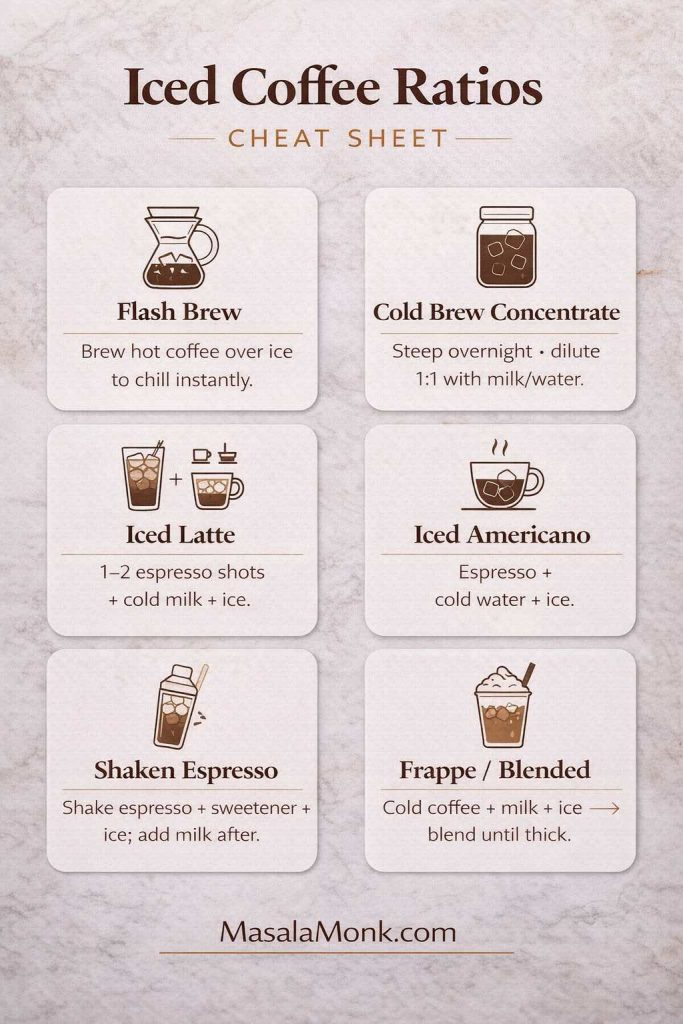
Iced coffee ratios cheat sheet infographic with six methods: flash brew, cold brew concentrate, iced latte, iced Americano, shaken espresso, and blended frappe, with MasalaMonk.com branding.
Keep this iced coffee ratios cheat sheet handy—six café-style cold coffee methods at a glance, from flash brew and cold brew concentrate to iced latte, Americano, shaken espresso, and blended frappe.

1. Ice is an ingredient with a timer

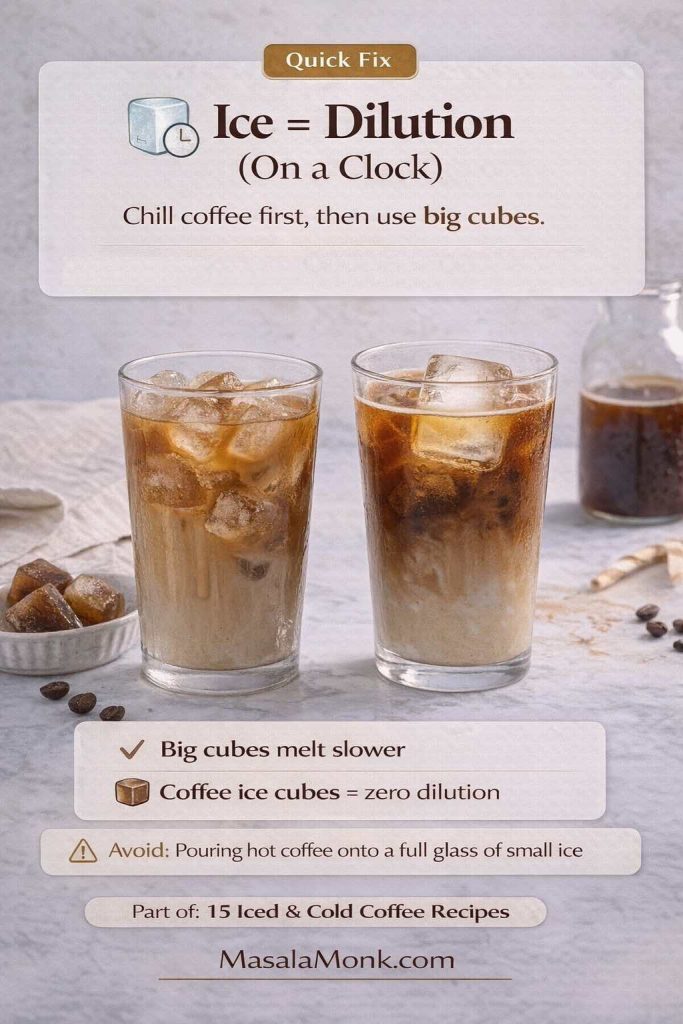
Ice isn’t a garnish—it’s dilution in slow motion. The faster your ice melts, the quicker your drink goes from bold to bland.

If you want a strong iced coffee that holds its flavor, use larger cubes whenever possible. They melt more slowly, which means your drink stays concentrated for longer. If you want the “why didn’t I do this earlier?” upgrade, freeze leftover coffee into coffee ice cubes. They keep the drink cold without watering it down, so your last sip can be as satisfying as the first.

Pinterest-style tip card showing iced coffee with small ice vs big ice cubes, explaining that large cubes melt slower and coffee ice cubes prevent dilution, with MasalaMonk.com footer.
Watery iced coffee fix: chill your coffee first, then use large ice cubes—or coffee ice cubes—for a stronger, better-tasting iced coffee from first sip to last.

A useful habit is to think in two stages:

  • Chill the coffee first (even briefly), so the ice doesn’t do all the cooling work.
  • Use better ice (bigger cubes or coffee cubes), so the drink doesn’t collapse halfway through.

2. Cold sweetening needs a different strategy

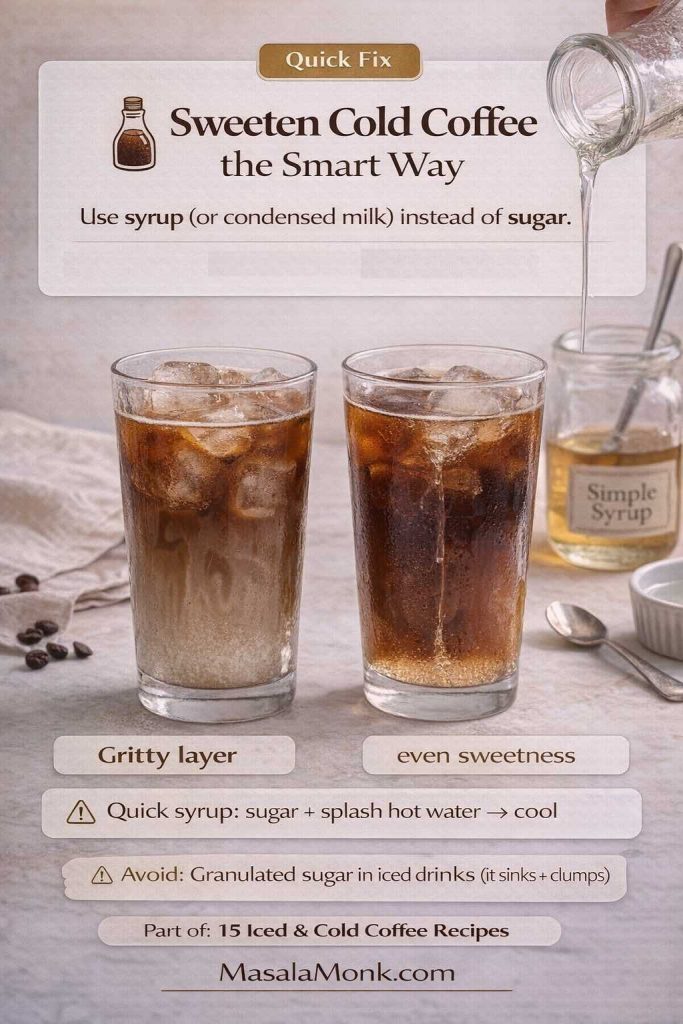
Sweetness behaves differently in cold drinks. Granulated sugar is stubborn in an iced glass—it can sink, clump, and refuse to dissolve, which creates that “sweet at the bottom, bitter at the top” problem.

Tip card showing two iced coffees comparing sugar settling at the bottom versus simple syrup dissolving evenly, with advice to sweeten cold coffee using syrup and MasalaMonk.com branding.
For smoother iced coffee, skip granulated sugar—use simple syrup (or condensed milk) so sweetness blends evenly instead of sinking and clumping at the bottom.

Syrup is the easiest fix because it blends instantly. Even a quick homemade “coffee syrup” can be as simple as stirring sugar with a splash of hot water until clear, then cooling it. From there, you can steer flavor in small, controlled ways—vanilla, caramel, cinnamon—without turning the whole drink into a sugar rush.

Condensed milk is its own category. It doesn’t just sweeten; it changes texture. That’s why Vietnamese-style iced coffee feels so smooth and rich: condensed milk adds sweetness and body at the same time, creating something closer to a dessert-coffee hybrid than a standard iced latte.

3. Method is the real lever

Two iced coffees can use the same beans and still taste like totally different drinks—because extraction changes everything.

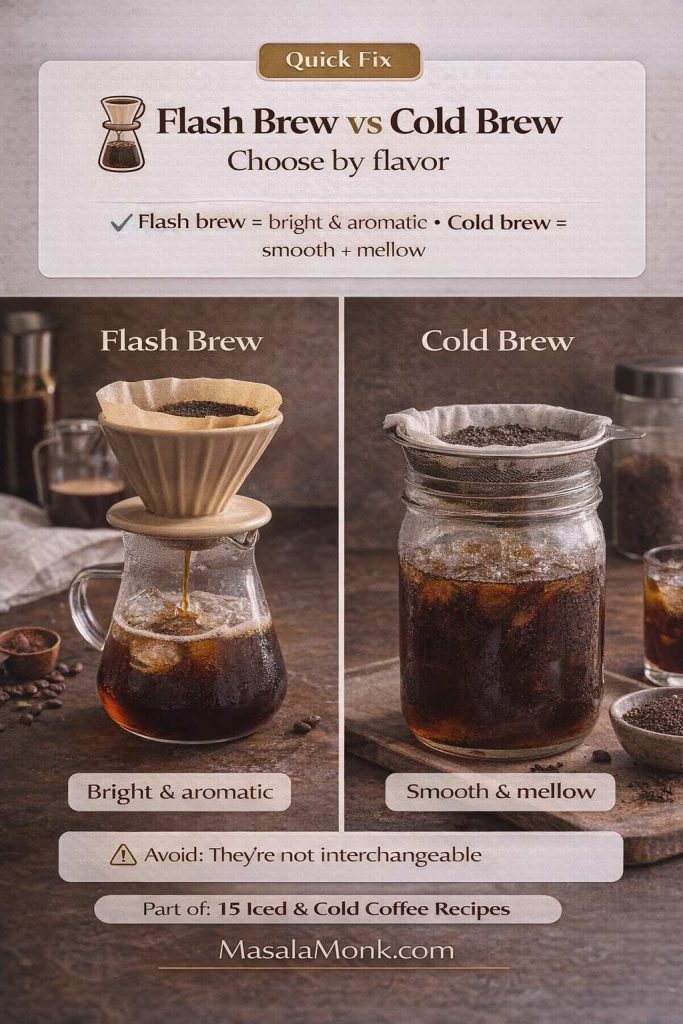
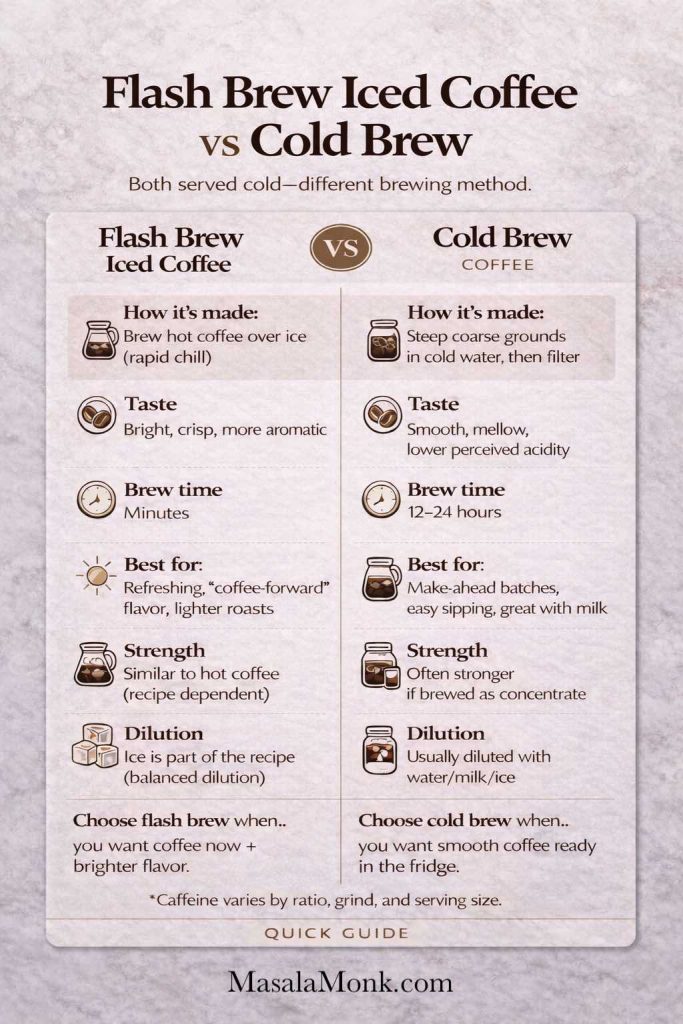
Flash brew vs cold brew: flash brewing keeps iced coffee bright and aromatic, while cold brew leans smooth and mellow—pick the method that matches the flavor you want.

Cold brew is steeped slowly, which tends to emphasize smoothness and mute sharp edges. Chilled hot coffee (whether flash-brewed over ice or cooled and refrigerated) holds onto more of the aromatic “top notes” you notice in a fresh cup. Both are great, but they’re not interchangeable. The Specialty Coffee Association breaks down that difference clearly in How cold brew differs from chilled hot brew, and it’s worth reading if you’ve ever wondered why one cold coffee tastes mellow while another tastes bright.

Infographic comparing flash brew iced coffee (hot coffee brewed over ice) and cold brew coffee (steeped cold then filtered), including taste differences, brew time, and when to choose each.
Flash brew vs cold brew (quick guide): Flash brew is hot coffee brewed over ice for a brighter, more aromatic iced coffee in minutes; cold brew is steeped in cold water for 12–24 hours for a smoother, mellower cup—choose based on flavor, time, and how you like it with milk.

A simple way to choose:

  • If you want smooth and forgiving, cold brew is your friend.
  • If you want aroma and clarity, hot-brewed coffee cooled quickly usually wins.

4. Milk changes the finish more than you expect

Milk isn’t just “creaminess.” It changes the entire ending of a sip—how long flavors linger, whether bitterness feels sharp or softened, and whether the drink tastes light, rich, or dessert-like.

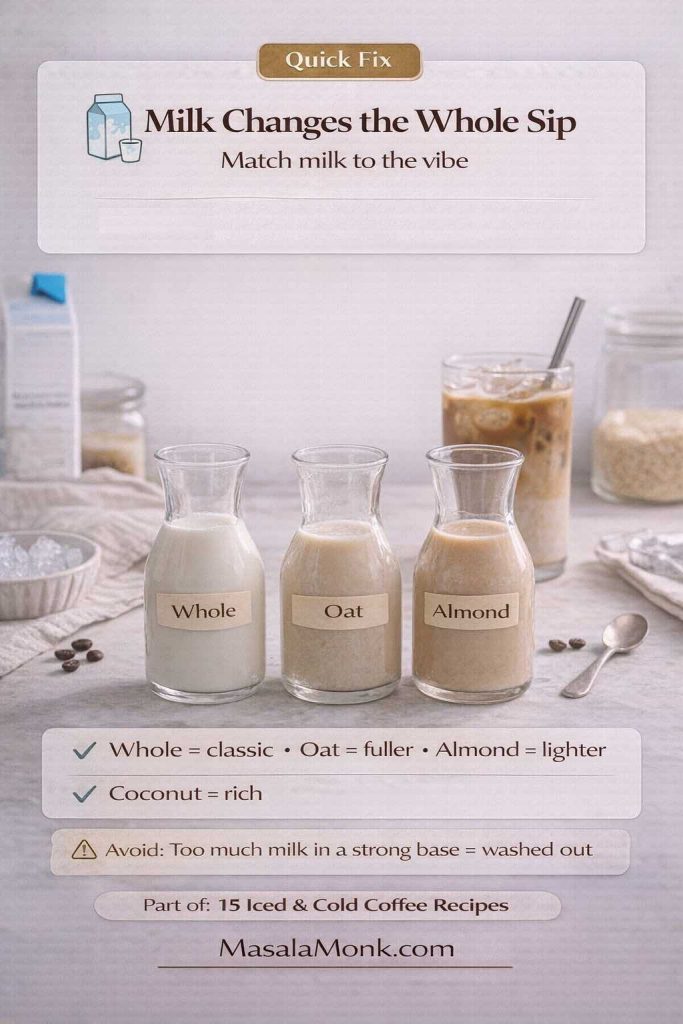
Milk can change an iced coffee completely: whole milk tastes classic and rounded, oat milk feels fuller, and almond milk stays lighter—start with less milk in strong coffee and add gradually.

Whole milk tends to make iced coffee feel rounded and classic. Oat milk often reads sweeter and fuller without needing much sugar, which is why it’s so popular in shaken espresso-style drinks. Almond milk stays lighter and nutty, especially if it’s unsweetened. Coconut milk brings a soft richness and a subtle tropical note that can be surprisingly good with chocolate or caramel.

If you like having options ready for different moods, a small “milk bar” at home is a game-changer. MasalaMonk’s guides to homemade almond milk, easy oats milk, and homemade coconut milk make it easy to keep a few styles on hand.

One extra trick: if you’re adding milk to a very strong coffee base (like espresso or concentrate), start smaller than you think. You can always add more, but you can’t take “washed out” back.

5. Make-ahead drinks deserve a quick food-safety moment

Batch-making iced coffee is one of the best ways to make mornings easier. Still, it helps to treat make-ahead coffee like a perishable beverage—especially when milk, cream, or flavored creamers enter the picture.

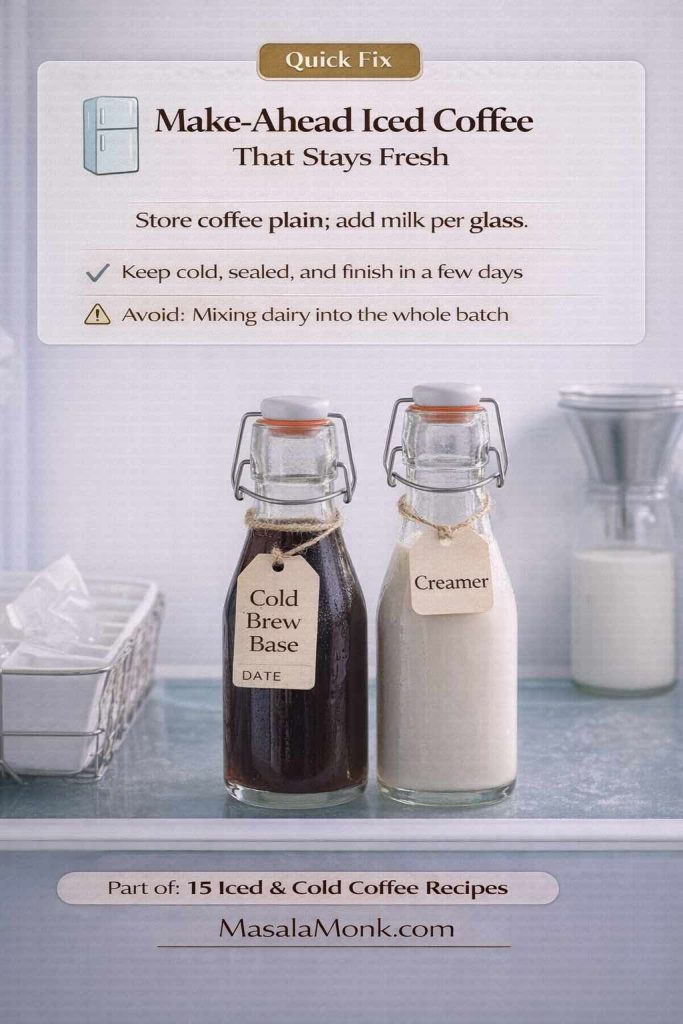
Tip card showing two bottles labeled cold brew base and creamer with fridge styling, advising storing coffee plain and adding milk per glass, with MasalaMonk.com footer.
Make-ahead iced coffee that tastes fresher: store coffee plain, keep it cold and sealed, and add milk only when you pour a glass.

Keep brewed coffee refrigerated once it cools, store it in a clean, closed container, and plan to finish it within a short window. For quick reference charts, FoodSafety.gov’s cold storage guide is practical, and the USDA’s leftovers guidance is a helpful companion—particularly for milk-based mixtures and creamers.

If you’re making a pitcher of cold brew concentrate, store the concentrate plain, then add milk and sweeteners in the glass. It tastes fresher, and it keeps the “dairy clock” from starting early.

With that foundation, you’re ready to build iced coffee drinks that don’t taste watery, flat, or accidentally bitter. If you enjoy the “why” behind brewing, MasalaMonk’s coffee brewing methods guide adds useful context. Then, when espresso is in the picture, this quick espresso guide keeps things approachable—and Moka Pot Mastery is perfect for days you don’t want to pull out a machine.

Also Read: Cranberry Moscow Mule Recipe: A Festive Holiday Cocktail With Easy Variations


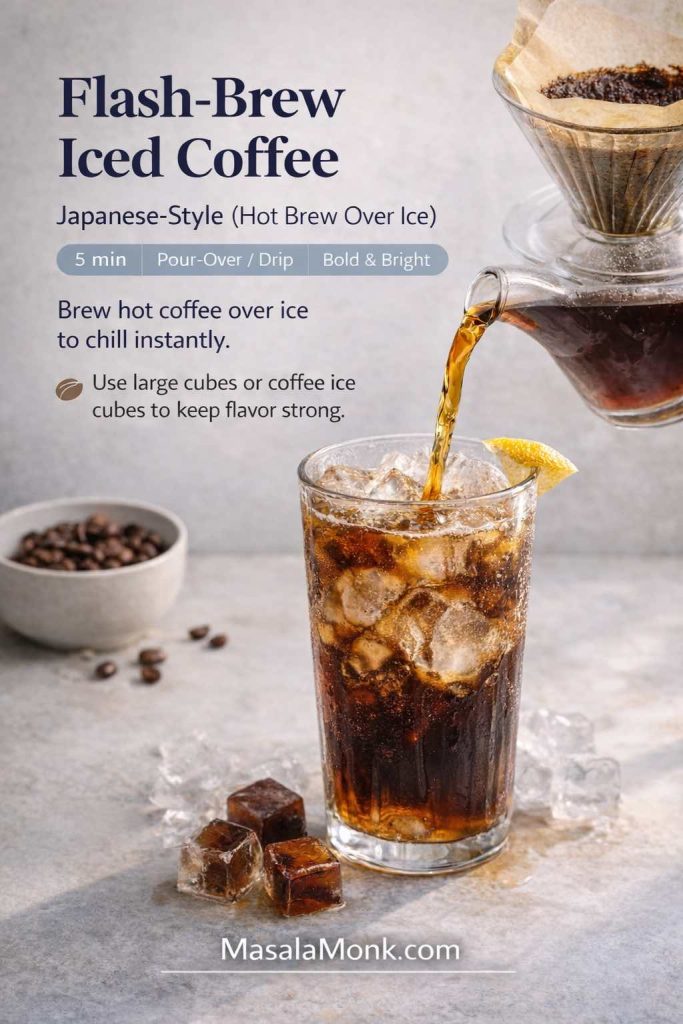
1) Flash-Brew Iced Coffee (Japanese-Style Cold Coffee)

If you want iced coffee with almost no waiting, flash brew is the fastest path to a cup that still tastes aromatic. Hot coffee blooms on the way down; ice locks that aroma in. As a result, the drink tastes vivid rather than dull—closer to a fresh pour-over, just cold.

Ingredients (2 drinks)

  • Ice (enough to fill a carafe or sturdy glass)
  • Fresh coffee grounds (medium-coarse)
  • Near-boiling water
Recipe card showing Japanese-style flash-brew iced coffee made by brewing hot coffee over ice, with a pour-over dripper and a tall glass of iced coffee.
Flash-brew iced coffee (Japanese-style) chills hot coffee instantly over ice, keeping the flavor bright and bold—especially with large cubes or coffee ice cubes.

Method

  1. Add ice to a carafe or heatproof server.
  2. Brew directly over the ice (pour-over, drip, or any method that lets you control flow).
  3. Swirl gently, then pour over fresh ice if you want it colder.

For a clean reference version, Serious Eats explains the technique in Japanese-Style Iced Coffee, and their companion piece What’s the Best Way to Brew Iced Coffee? helps you choose a method that fits your gear.

Make it your own

  • For a “strong iced coffee” feel, use slightly less water and slightly more coffee.
  • For a cleaner finish, skip milk and add a thin citrus peel twist.
  • For a creamy version, add a small splash of milk after brewing, not before.

Also Read: Baked Ziti Recipe Collection: 15 Easy Variations


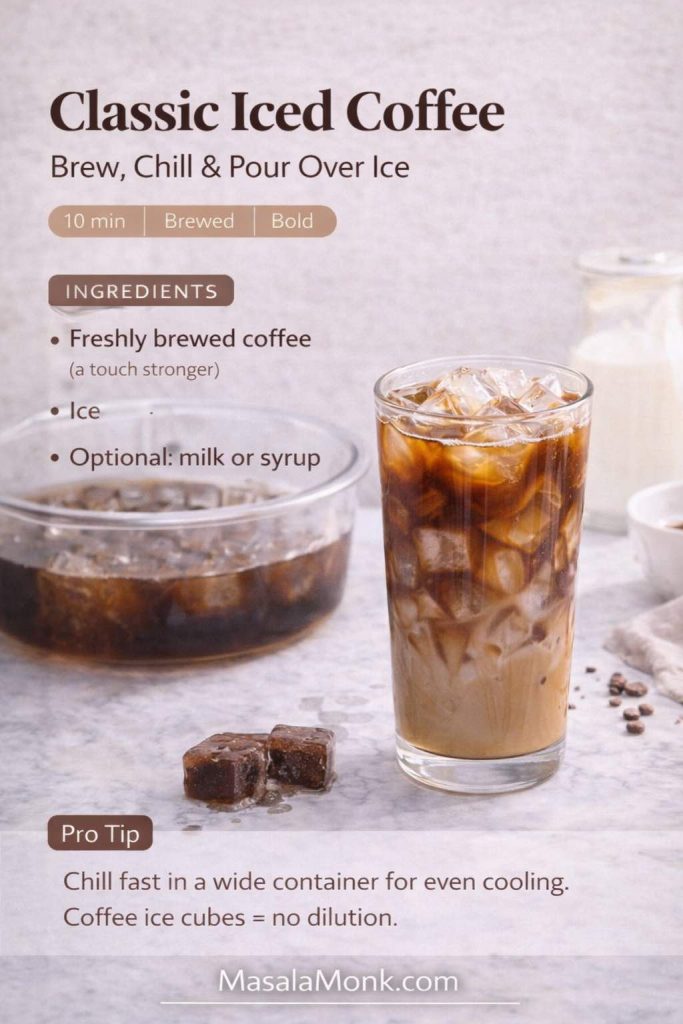
2) Classic Iced Coffee Recipe (Brew, Chill, Pour Over Ice)

Flash brew is about capturing aroma fast. Classic iced coffee is about building a steady base you can pour anytime—especially if you already brew coffee in the morning. Here, the goal is simple: make coffee that tastes good cold, then chill it properly so ice doesn’t turn it thin.

Ingredients (2–3 drinks)

  • Freshly brewed coffee (make it slightly stronger than usual)
  • Ice
  • Optional: milk or cream
  • Optional: syrup (vanilla, caramel, or simple syrup)
Classic iced coffee recipe card showing brewed coffee chilled and poured over ice, with coffee ice cubes and a pro tip for preventing dilution.
Classic iced coffee (brew, chill, pour over ice): brew slightly stronger, chill fully, then pour over ice. Bonus upgrade: coffee ice cubes keep it bold to the last sip.

Method

  1. Brew coffee a touch stronger than your normal cup.
  2. Cool it to room temperature, then refrigerate until truly cold.
  3. Fill a glass with ice and pour the cold coffee over it.
  4. Add milk or syrup if you like, then stir once and taste.

Two upgrades that change everything

  • Coffee ice cubes: freeze leftover coffee in an ice tray; use those cubes for a no-dilution drink.
  • Chill fast: pour warm coffee into a wide container before refrigerating so it cools quickly and evenly.

For a straightforward baseline, The Pioneer Woman’s Perfect Iced Coffee shows the classic “brew then ice” approach in a simple way.

Also Read: Manhattan Cocktail Recipe (Classic + 6 Variations)


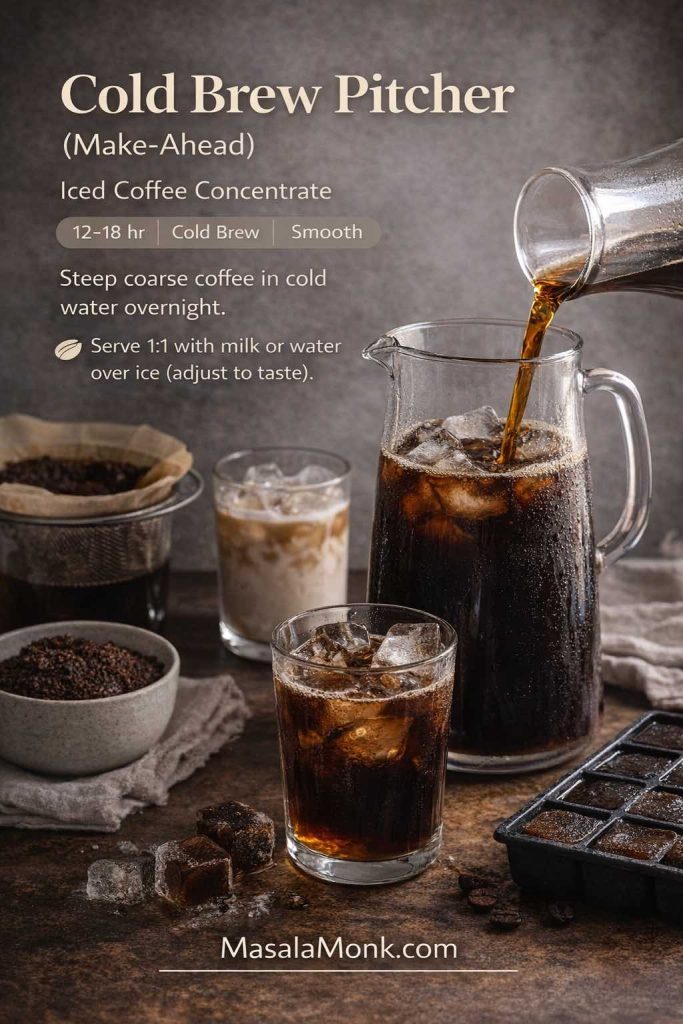
3) Iced Coffee Pitcher Recipe (Make-Ahead Cold Brew)

This is the answer to “easy homemade iced or cold coffee” when mornings are busy. You do the work once, then you’re pouring iced coffee all week. Better still, cold brew is the easiest route to iced coffee concentrate—ideal for milk drinks, foam, syrups, or ice cream.

Ingredients (about 1 quart / 1 liter)

  • Coarsely ground coffee
  • Cold water
  • A jar or pitcher
  • A strainer (fine mesh + filter works best)
Recipe card showing a cold brew pitcher of iced coffee concentrate being poured over ice, with coffee ice cubes and a serving glass with milk.
Cold brew concentrate is the easiest make-ahead iced coffee base—brew once, then pour over ice and dilute with milk or water until it tastes just right.

Method

  1. Combine coffee and cold water in a pitcher. Stir to fully saturate grounds.
  2. Cover and steep in the fridge (or a cool place) for 8–18 hours.
  3. Strain thoroughly until the liquid looks clean, not muddy.
  4. Store cold. Pour over ice as-is, or dilute if you brewed it as a concentrate.

For a detailed baseline, Serious Eats’ Cold Brew Iced Coffee is a reliable reference, and their Guide to Cold Brew Coffee helps you adjust steep time and strength.

Serve it as iced coffee concentrate

  • Pour a smaller amount of concentrate over ice.
  • Add water or milk until it tastes right.
  • Use coffee ice cubes when you want it bold from start to finish.

Also Read: Green Chutney Recipe (Coriander–Mint / Cilantro Chutney)


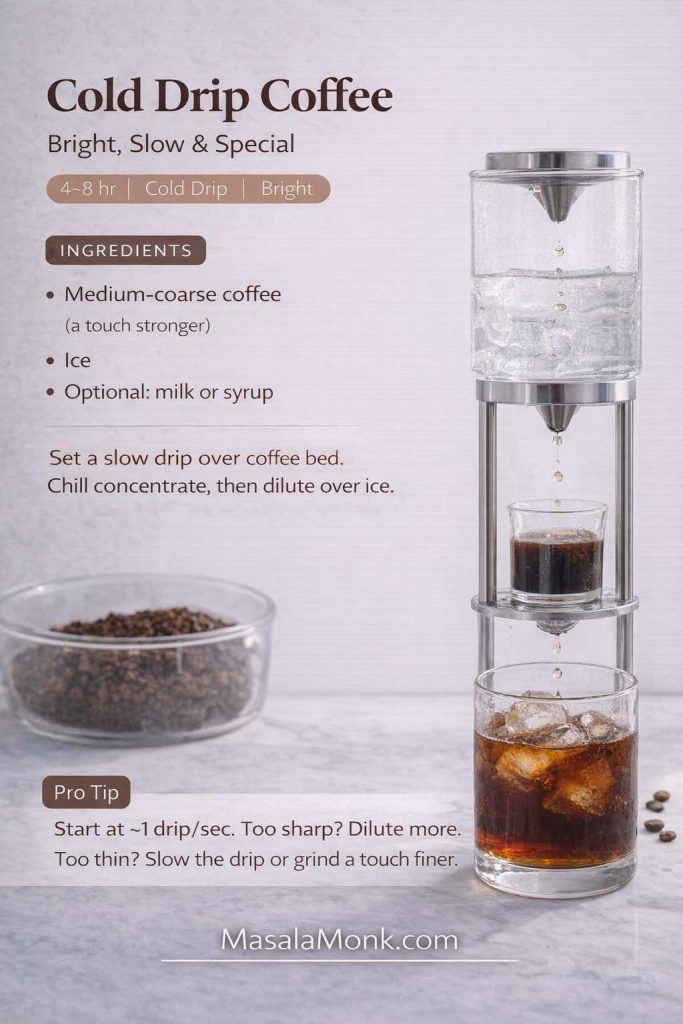
4) Cold Drip Coffee (Bright, Slow, and Special Recipe)

Cold drip is the slow-brew cousin of cold brew. Instead of immersing grounds in water, you let water drip over coffee bit by bit for hours. Consequently, the cup can taste bright and clean—often with a lighter, more perfumed profile than immersion cold brew.

Ingredients (makes a concentrate)

  • A cold drip tower (or any cold drip setup you already own)
  • Medium-coarse ground coffee
  • Room-temperature water
  • Ice (for serving)
Cold drip coffee recipe card showing a cold drip tower brewing coffee over ice with simple ingredients, drip timing, and dilution tips.
Cold Drip Coffee (Bright, Slow & Special): A clean, aromatic cold coffee made by slow dripping water over coffee grounds. Use a medium-coarse grind, aim for ~1 drip/second, then chill and dilute over ice to taste.

Method (general approach)

  1. Add ground coffee to the middle chamber (or coffee bed area) of your dripper.
  2. Fill the top chamber with water.
  3. Set a slow drip rate and let it brew for several hours.
  4. Chill the concentrate, then dilute with water or milk over ice.

For a practical, step-by-step guide to drip rate and timing, Padre Coffee’s Cold Drip Coffee – The Definitive Guide is a helpful reference.

Small adjustments that help

  • If it tastes sharp, dilute a little more and serve with extra ice.
  • If it tastes thin, tighten the grind slightly or slow the drip rate.
  • If you want creaminess without heaviness, finish with oat milk.

Also Read: Rob Roy Drink Recipe: Classic Scotch Cocktail (Perfect + Dry + Sweet Variations)


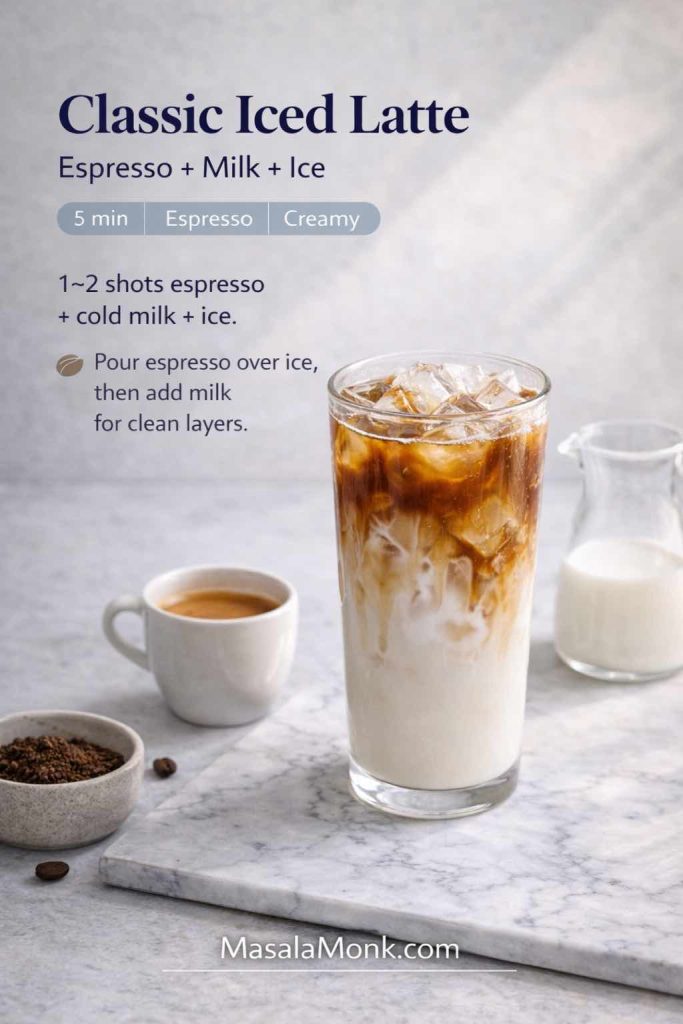
5) Classic Iced Latte (Espresso + Milk)

An iced latte is the cleanest “creamy” iced coffee drink: espresso for structure, milk for softness, ice for snap. Because the build is so simple, it’s also the easiest to customize without losing the coffee’s backbone.

Ingredients (1 drink)

  • 1–2 shots espresso (or strong moka pot coffee)
  • Cold milk
  • Ice
  • Optional: syrup for sweetness
Recipe card for a classic iced latte showing espresso poured over ice and finished with cold milk in a tall glass, with step tip text overlay.
Classic iced latte is the clean, café-style staple: pour espresso over ice, add cold milk, and keep the layers crisp for a smooth, balanced sip.

Method

  1. Fill a tall glass with ice.
  2. Add espresso.
  3. Pour in cold milk and stir.

Milk choices that change the drink

  • For a lighter profile, try homemade almond milk (especially unsweetened).
  • For café-style creaminess, oats milk is an easy win.
  • For a richer, tropical note, coconut milk is surprisingly good with iced coffee.

For beans, medium roasts usually read sweet and balanced when chilled; nonetheless, taste wins—so follow your preference and adjust strength with the coffee-to-milk ratio.

Also Read: Sandwich for Breakfast: Breakfast Sandwich Recipe + 10 Variations


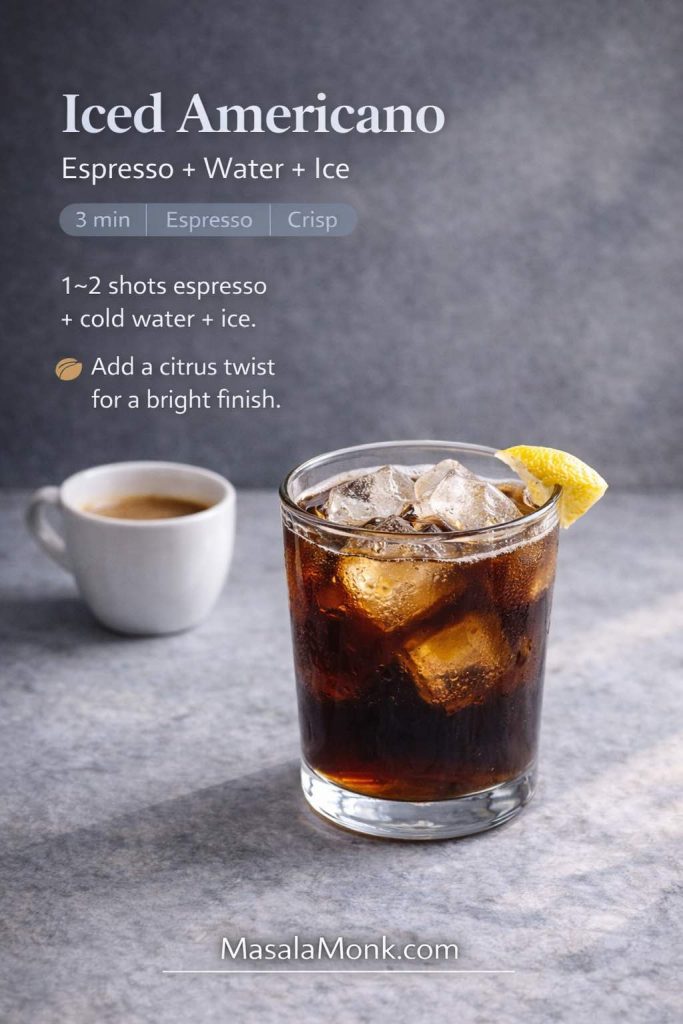
6) Iced Americano (The Crisp, Black-Ice Coffee Lane)

Sometimes you don’t want milk at all—you want clarity. An iced Americano is espresso + cold water + ice: bold, clean, and refreshing. It lands between plain iced coffee and straight espresso, which makes it especially good on hot days.

Ingredients (1 drink)

  • 1–2 shots espresso
  • Cold water
  • Ice
  • Optional: a lemon peel
Recipe card for an iced Americano made with espresso, cold water, and ice in a rocks glass with a citrus twist, with MasalaMonk.com in the footer.
Iced Americano is pure, crisp coffee flavor—espresso topped with cold water and plenty of ice, finished with a citrus twist for a brighter, cleaner sip.

Method

  1. Fill a glass with ice.
  2. Add espresso.
  3. Top with cold water to taste.

Espresso tonic (a bright detour) If you like bitter-bright drinks, espresso tonic is oddly addictive—sparkling, layered, and summer-ready. Serious Eats’ Espresso Tonic is a great reference build.

Also Read: Paper Plane Cocktail Recipe + Best Amaro Substitutes & Tips


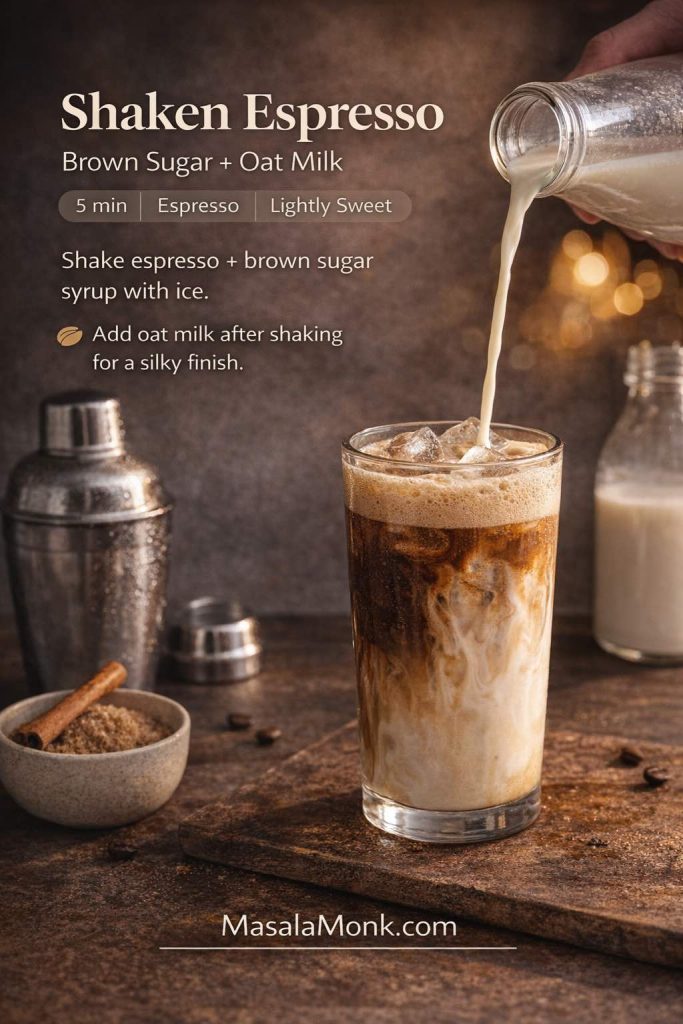
7) Shaken Espresso (Brown Sugar Oat Milk Style)

A shaken espresso tastes different from a stirred espresso. The reason is texture: shaking chills fast, aerates the coffee, and creates a light foam that makes the drink feel lively. Add brown sugar syrup and a splash of oat milk, and suddenly the glass tastes like a café treat—without being cloying.

Ingredients (1 drink)

  • 1–2 shots espresso (or strong moka pot coffee)
  • Ice
  • Brown sugar syrup (or brown sugar dissolved in a little hot water)
  • Optional: oat milk
Recipe card for a homemade iced shaken espresso with brown sugar and oat milk, showing espresso shaken with ice and topped with oat milk in a tall glass.
Shaken espresso turns a quick shot into a café-style iced drink—shake espresso with ice and brown sugar for foam, then finish with oat milk for a silky, lightly sweet balance.

Method

  1. Add ice to a cocktail shaker or tight-lidded jar.
  2. Pour espresso over the ice.
  3. Add syrup.
  4. Shake vigorously for 10–20 seconds.
  5. Strain into a glass. Add oat milk if you want it creamy.

For a classic Italian reference, Serious Eats’ Caffè Shakerato is a great technique anchor, even if you flavor it differently.

Flavor steering, without losing balance

  • Add a pinch of cinnamon for a brown-sugar-cinnamon latte vibe.
  • Use vanilla syrup for a softer, rounder finish.
  • Drizzle caramel in the glass first for a caramel-macchiato mood.

If you don’t own an espresso machine, a moka pot is a strong substitute; MasalaMonk’s Moka Pot Mastery makes it easy to dial in.

Also Read: Strawberry Smoothie Recipes (12 Easy Blends + Bowls & Protein Shakes)


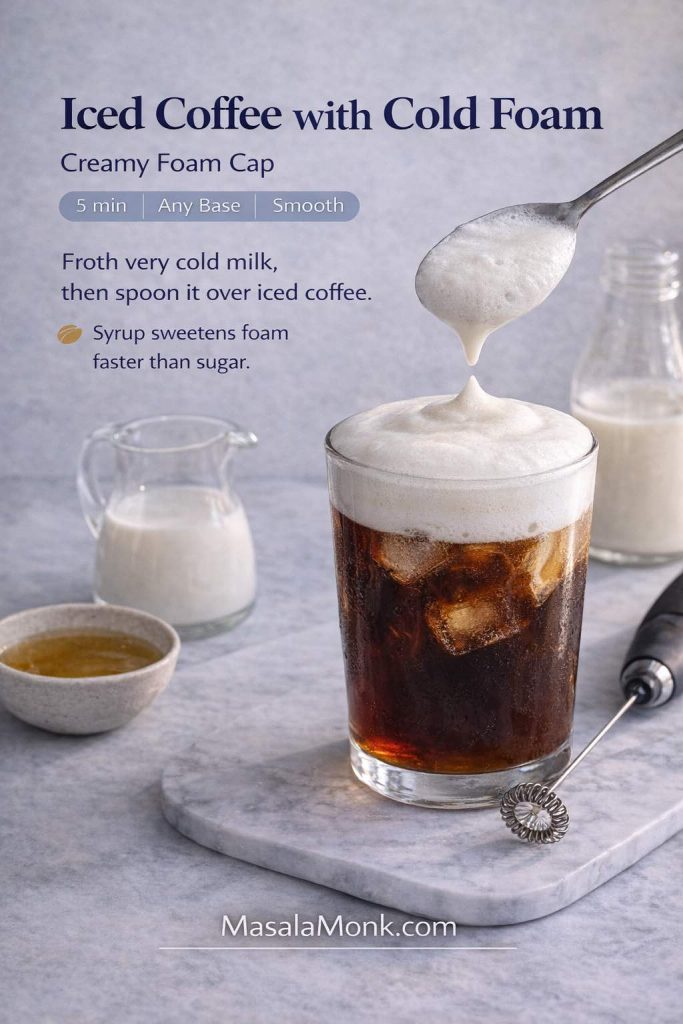
8) Iced Coffee with Cold Foam (Texture on Top)

Cold foam makes iced coffee feel layered rather than flat. Even a simple black iced coffee changes personality when topped with a soft cap of foam. The best part is how little equipment you need: a hand frother works, a blender works, and a French press works surprisingly well.

Ingredients (1 drink)

  • Iced coffee or cold brew
  • Cold milk (or half-and-half for extra richness)
  • Sweetener (syrup dissolves best)
  • Ice
Recipe card of iced coffee topped with thick cold foam, showing milk frothing and spooning foam over iced coffee in a glass.
Iced coffee with cold foam adds a creamy, café-style finish—froth very cold milk until silky, then spoon it over iced coffee for a smooth, layered sip.

Method

  1. Froth very cold milk with a hand frother, blender, or French press.
  2. Pour iced coffee over ice.
  3. Spoon foam on top so it floats.

For a simple walkthrough, Better Homes & Gardens explains how to make cold foam. Then, if you’re curious why the French press works so well for foaming, Serious Eats’ essay Why I Love the French Press is a good read.

A small trick: sweeten the foam, not the coffee. That way, each sip starts creamy and ends clean.

Also Read: Best Vermouth for a Negroni Cocktail Drink Recipe


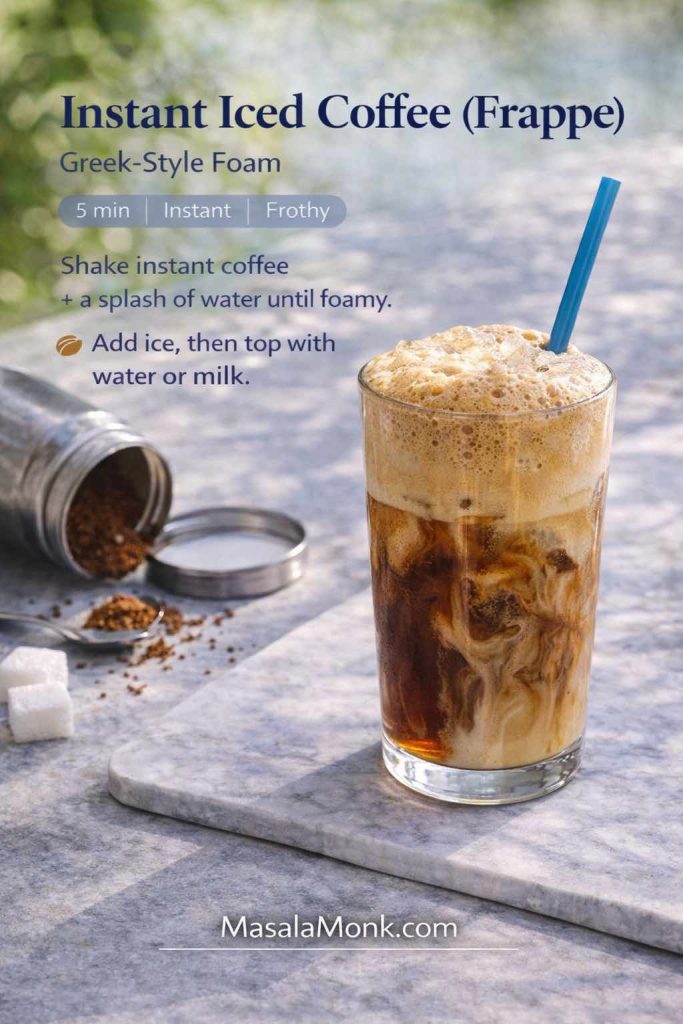
9) Instant Iced Coffee (Greek-Style Frappé)

Instant coffee doesn’t have to taste flat. In a Greek-style frappé, instant coffee becomes the point: it foams dramatically, turning into a drink that feels playful, cold, and refreshing. When you want speed and texture at the same time, this is the move.

Ingredients (1 drink)

  • Instant coffee
  • A small splash of water
  • Sugar (optional)
  • Ice
  • Optional: milk
Recipe card for instant iced coffee (Greek-style frappe) showing a tall glass with thick foamy top, ice, and coffee layers, plus instant coffee and sugar cubes on the table.
Greek-style instant iced coffee (frappe) is all about the foam—shake instant coffee with a splash of water until frothy, then add ice and top with water or milk.

Method

  1. Add instant coffee and a splash of water to a jar.
  2. Shake hard until thick foam forms.
  3. Add ice and shake again briefly.
  4. Pour into a glass; top with water or milk.

Serious Eats has a clear reference recipe: Foamy Greek-Style Iced Coffee (Frappé).

Make it taste more “premium”

  • Add a dash of vanilla.
  • Use coffee ice cubes so it stays bold.
  • Top with a small cap of cold foam for a café finish.

Also Read: 7 Pizza Sauce Recipes | Marinara, White Garlic, Alfredo, Buffalo, BBQ, Vodka & Ranch


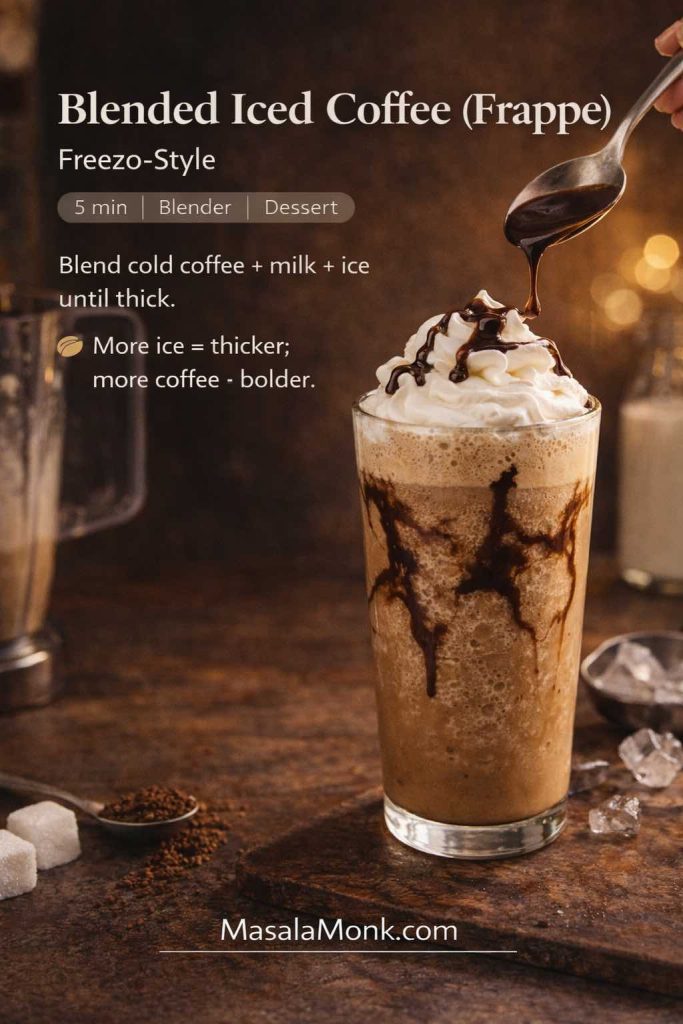
10) Blended Iced Coffee (Frappe-Style, Thick and Frosty)

This is the frozen iced coffee you make when it’s too hot to think. Texture is everything here: you’re aiming for thick-but-sippable—somewhere between a slush and a milkshake. Once you have the base right, variations become effortless.

Ingredients (1 large drink)

  • Strong chilled coffee or concentrate
  • Ice
  • Milk (or a dairy-free option)
  • Sweetener (optional)
  • Optional: caramel or chocolate
Recipe card for blended iced coffee (frappe) showing a thick frozen coffee drink in a tall glass with whipped cream and chocolate drizzle, with a blender in the background.
Blended iced coffee (frappe) is the frozen, café-style treat—blend cold coffee, milk, and ice until thick, then finish with whipped cream and a drizzle for a dessert-like sip.

Method

  1. Add coffee, ice, and milk to a blender.
  2. Blend until thick and smooth.
  3. Taste, then adjust thickness (more ice = thicker; more coffee = bolder).

Two easy variations

  • Frozen caramel coffee: add caramel and a tiny pinch of salt; drizzle caramel inside the glass first.
  • Chocolate frappé: add chocolate syrup and a small pinch of instant coffee for depth.

If you like a quick homemade chocolate component that blends smoothly, MasalaMonk’s 3-minute chocolate syrup is a handy add-in.

Also Read: Classic Rum Punch + 9 Recipes (Pitcher & Party-Friendly)


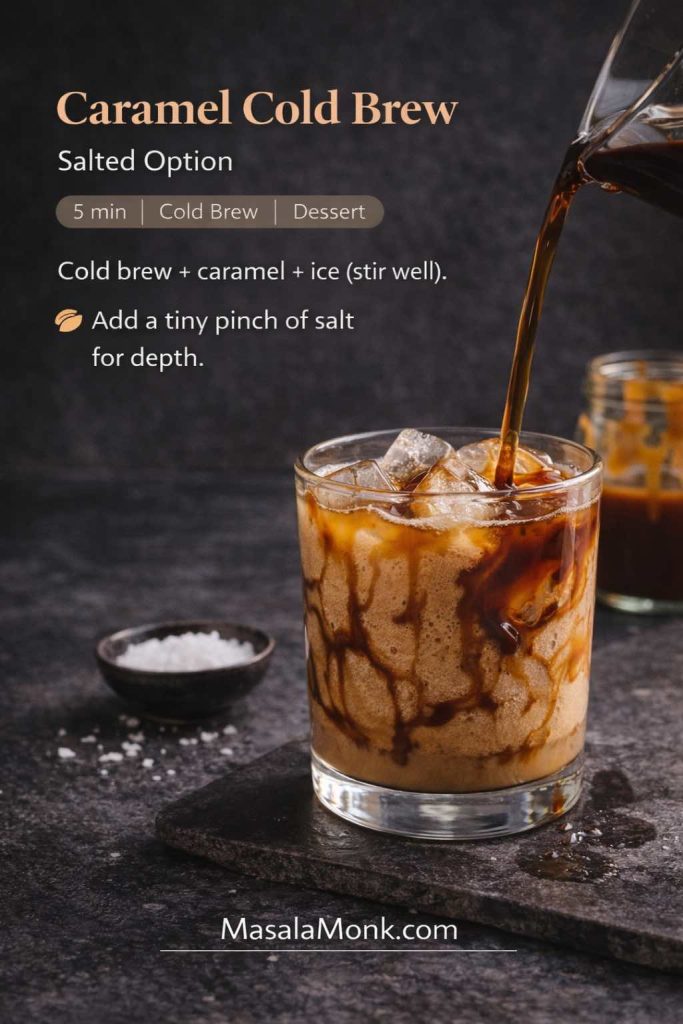
11) Caramel Cold Brew (Including Salted Caramel)

Caramel and coffee are old friends. Still, caramel can quickly turn an iced coffee into dessert—so the trick is restraint, plus a little balance from milk or cold brew. When done well, the flavor reads “toffee and roast” instead of “sticky sweet.”

Ingredients (1 drink)

  • Cold brew or iced coffee concentrate
  • Ice
  • Caramel (syrup or sauce)
  • Optional: milk or cream
  • Optional: pinch of salt
Recipe card for caramel cold brew with a salted option, showing cold brew poured over ice in a caramel-drizzled glass with a small bowl of sea salt and MasalaMonk.com footer.
Caramel cold brew turns smooth concentrate into a dessert-like iced coffee—stir caramel into cold brew over ice, then add a tiny pinch of salt for a deeper, less-sweet finish.

Method

  1. Drizzle caramel inside the glass.
  2. Add ice.
  3. Pour in cold brew.
  4. Add milk/cream if desired; stir well.
  5. For salted caramel, add a tiny pinch of salt and stir again.

A crème brûlée-ish variation Add vanilla, then finish with a whisper of cinnamon. Suddenly the drink reads like toasted sugar rather than pure caramel.

If you like keeping flavor jars in the fridge, MasalaMonk’s DIY coffee creamer guide offers a lot of directions that pair naturally with iced coffee.

Also Read: Vodka Pasta (Penne alla Vodka) + Spicy Rigatoni, Chicken, and Gigi Recipes


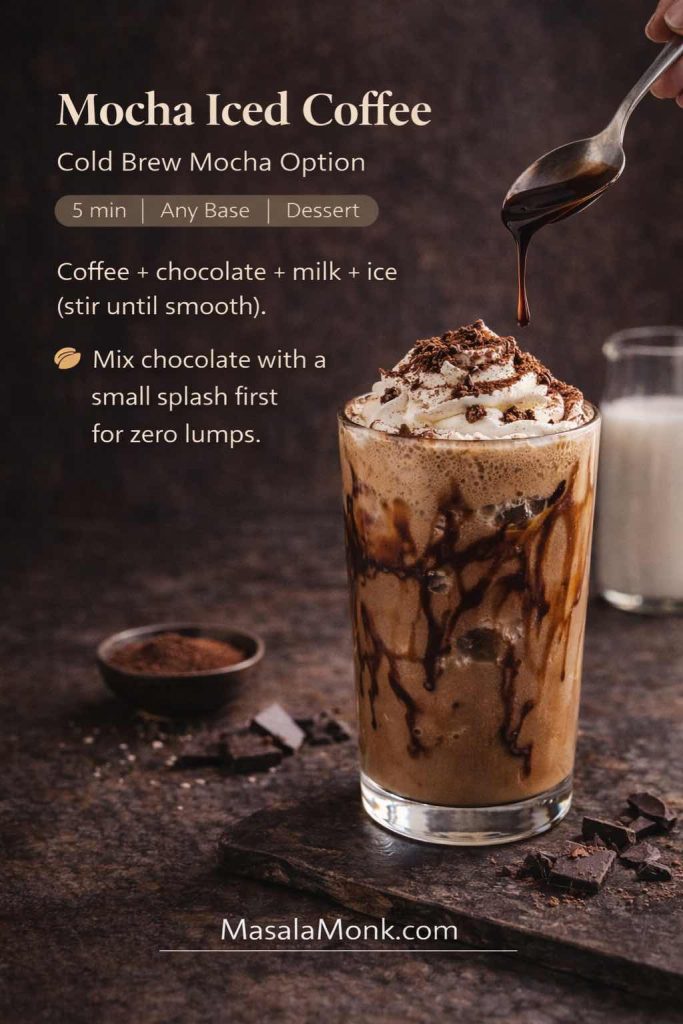
12) Mocha Iced Coffee (Classic, Cold Brew Mocha, and White Chocolate Twist)

Mocha is where coffee meets chocolate and decides to be charming. It’s also the easiest upgrade from plain iced coffee into something richer. The key is dissolving chocolate fully so it tastes smooth, not gritty.

Ingredients (1 drink)

  • Cold brew or strong iced coffee
  • Milk
  • Chocolate syrup (or cocoa + syrup)
  • Ice
Recipe card for mocha iced coffee with a cold brew mocha option, showing an iced mocha topped with whipped cream and cocoa, with chocolate drizzle in the glass.
Mocha iced coffee is coffee and chocolate in one glass—stir coffee with chocolate until smooth, add ice and milk, then finish with cocoa and chocolate shavings for a rich café-style treat.

Method

  1. Add chocolate syrup to the glass first.
  2. Add ice.
  3. Pour in coffee and stir until the chocolate fully blends.
  4. Top with milk and stir again.

For syrup that tastes “real” and blends cleanly into cold drinks, MasalaMonk’s 3-minute chocolate syrup is a great staple.

White chocolate twist For a gentler, creamier mocha lane, use a white chocolate sauce, or build the sweetness with vanilla creamer and call it a day.

If you enjoy coffee-and-chocolate combinations beyond syrup, MasalaMonk’s piece on coffee and hot chocolate together is a cozy way to think about mocha as a flavor family.

Also Read: Moscow Mule Recipe (Vodka Mule): The Master Formula + 9 Variations


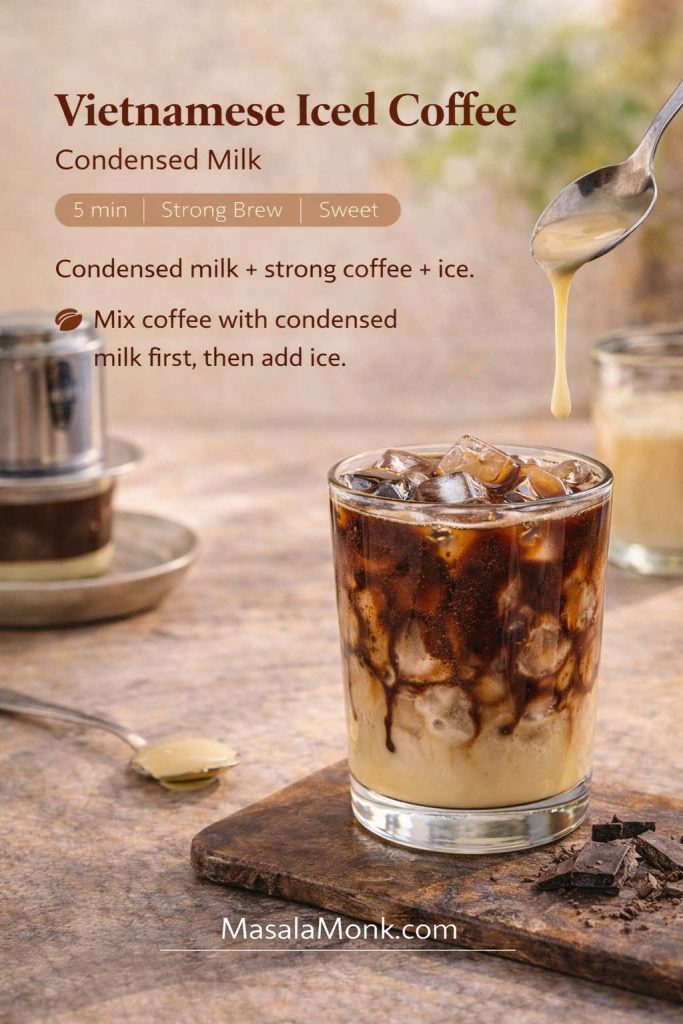
13) Vietnamese Iced Coffee (Condensed Milk Cold Coffee)

Vietnamese iced coffee is the drink you make when you want sweetness, depth, and an almost caramelized richness—all in one glass. Condensed milk doesn’t just sweeten; it creates a thick, silky texture that turns strong coffee into something plush.

Ingredients (1 drink)

  • Strong coffee (espresso, moka pot, or strong drip)
  • Sweetened condensed milk
  • Ice
Recipe card for Vietnamese iced coffee with condensed milk, showing layered coffee over ice with condensed milk at the bottom and a spoon drizzling condensed milk.
Vietnamese iced coffee (condensed milk) is sweet, strong, and creamy—stir hot strong coffee into condensed milk first, then add ice for a smooth, café-style finish.

Method

  1. Add condensed milk to the bottom of a glass.
  2. Pour in hot coffee and stir until fully blended.
  3. Add ice and stir again.

For a classic reference, Serious Eats’ Vietnamese Coffee (Cà phê sữa đá) lays out the essentials.

Where this style goes next

  • Add cocoa syrup for a mocha-condensed milk hybrid.
  • Add a pinch of cinnamon for a warmer, rounder finish.
  • Serve it with coffee ice cubes so it stays bold as it melts.

If you like building bases—creamers, flavor jars, mix-ins—MasalaMonk’s coffee creamer flavors guide pairs nicely with this style because condensed milk is essentially a built-in creamer.

Also Read: Marinara Sauce Recipe: Classic Homemade Marinara


14) Thai Iced Coffee (Sweet, Creamy, and Brisk Recipe)

Thai iced coffee sits in a beautiful middle ground: bold coffee, gentle sweetness, and a creamy finish that still tastes refreshing. The profile is often made with condensed milk, sometimes paired with evaporated milk, and occasionally finished with a small pinch of salt for balance.

Ingredients (1 drink)

  • Strong brewed coffee (hot)
  • Sweetened condensed milk
  • Optional: evaporated milk (or regular milk)
  • Ice
  • Optional: tiny pinch of salt

Method

  1. Stir condensed milk into hot coffee until fully dissolved.
  2. Let the coffee cool slightly so it doesn’t melt all your ice instantly.
  3. Fill a glass with ice and pour the coffee over.
  4. Top with evaporated milk (or regular milk) if you want extra creaminess.
  5. Add a tiny pinch of salt if the sweetness needs rounding.

For a traditional, approachable reference, The Spruce Eats shares an Easy Thai Iced Coffee recipe. For more Thai coffee context beyond one drink, Hot Thai Kitchen’s Thai Coffee (4 Ways) is a fun exploration.

Small variation: if you like spice warmth, add a light dusting of cinnamon on top—just enough to perfume the first sip.

Also Read: Oat Pancakes Recipe (Healthy Oatmeal Pancakes)


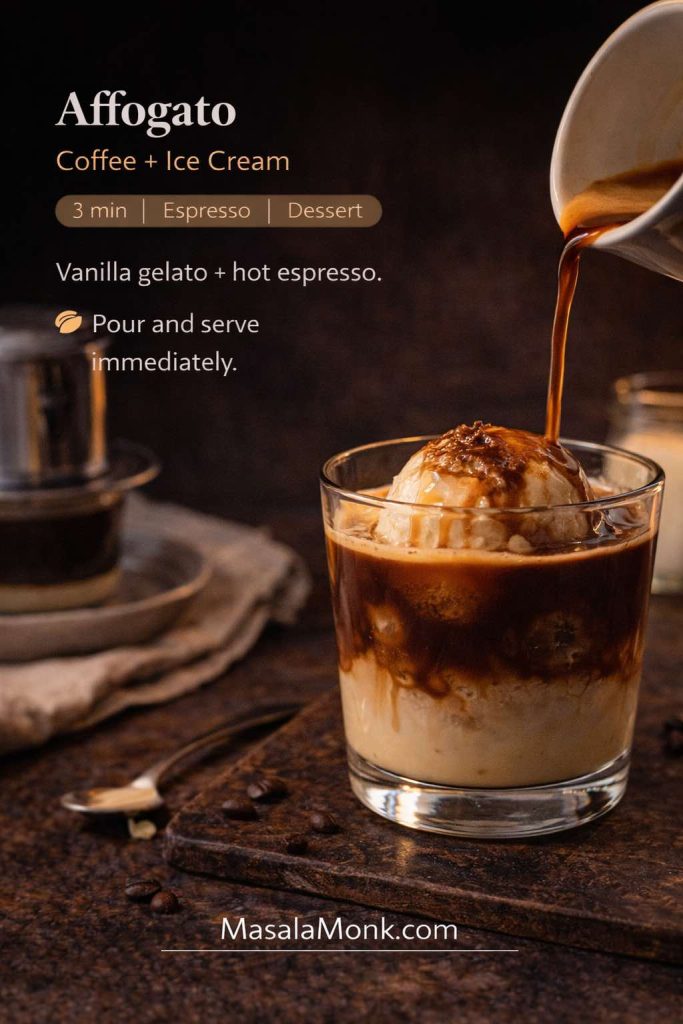
15) Affogato (Coffee + Ice Cream, the Holiday-in-a-Glass)

At some point, iced coffee stops being a drink and becomes dessert. That’s not a problem; it’s a feature. An affogato is the simplest coffee-and-ice-cream drink: ice cream in a glass, espresso poured over it, immediate happiness.

Ingredients (1 dessert drink)

  • Vanilla gelato or ice cream
  • Fresh espresso (or very strong hot coffee)
Recipe card showing an affogato made by pouring hot espresso over vanilla gelato in a glass, with “Affogato: Coffee + Ice Cream” text overlay and MasalaMonk.com in the footer.
Affogato is the quickest coffee-dessert: a scoop of vanilla gelato topped with hot espresso—pour, serve immediately, and enjoy the creamy coffee melt.

Method

  1. Scoop ice cream into a small glass.
  2. Pour espresso over the top.
  3. Eat immediately while it’s half-melted and dramatic.

For a classic reference, Serious Eats has an affogato recipe that keeps it simple.

Dessert variations that still taste like coffee

  • Cookies-and-cream direction: crumble a chocolate cookie on top.
  • Cookie dough mood: add tiny cookie dough bites for a playful finish.
  • Chocolate chip energy: sprinkle mini chips on the melting foam.
  • Gelato lane: swap ice cream for gelato for a denser, silkier melt.

If you want an “iced coffee with whipped cream” moment, affogato is the easiest place to do it. A small swirl on top turns it into a sundae that still tastes like coffee.

Also Read: Belgian Waffle Recipe + 5 Indian Twists on a Breakfast Classic


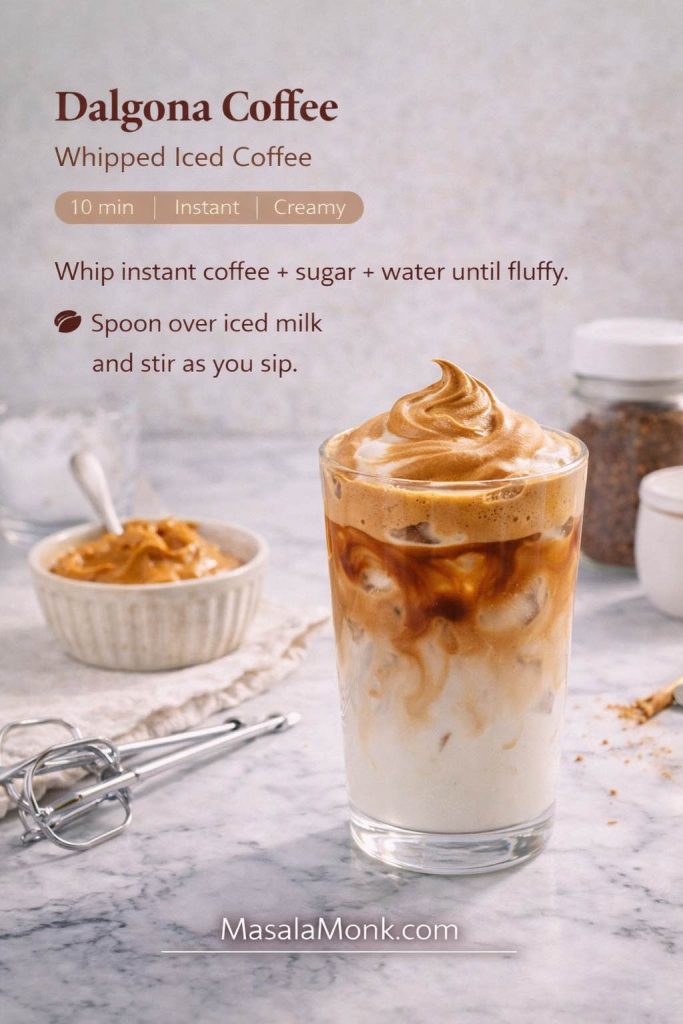
Bonus: Dalgona Iced Coffee (Whipped Coffee on Ice)

Dalgona is pure texture: a fluffy coffee cream that sits on cold milk like a cloud, then slowly dissolves as you sip. It’s playful, dramatic, and surprisingly satisfying when you want an iced coffee that feels like an event.

Ingredients (1 drink)

  • Instant coffee
  • Sugar
  • Hot water
  • Cold milk (any milk you like)
  • Ice
Recipe card for Dalgona coffee showing whipped iced coffee foam spooned over iced milk in a tall glass, with “Whipped Iced Coffee” text overlay and MasalaMonk.com in the footer.
Dalgona coffee is whipped instant coffee piled over iced milk—fluffy, dramatic, and easy to stir into a creamy cold coffee as you sip.

Method

  1. In a bowl, combine instant coffee, sugar, and hot water.
  2. Whisk until thick, pale, and fluffy (a hand mixer makes this fast).
  3. Fill a glass with ice and cold milk.
  4. Spoon the whipped coffee on top, then swirl gently as you drink.

For a simple reference ratio and method, Allrecipes’ Dalgona Coffee (Whipped Coffee) is a clear baseline.

Also Read: How to Cook Tortellini (Fresh, Frozen, Dried) + Easy Dinner Ideas


Seasonal detours that still belong in the iced coffee universe

Seasonal cravings are real. Rather than building one-off recipes that only work for a few weeks each year, it’s easier to thread seasonal flavors into the styles you already make. That way, your “core” method stays steady while the mood changes.

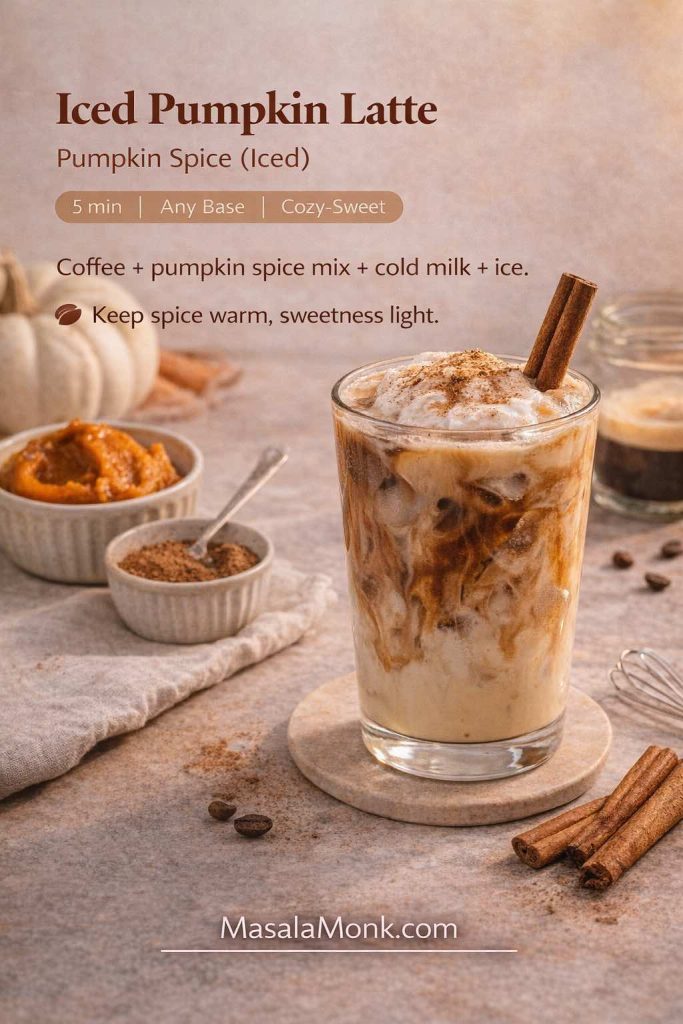
Iced pumpkin latte (and the chai-leaning version)

Pumpkin spice tastes best when it’s anchored by real ingredients and balanced spice, not just sweetness. MasalaMonk’s Healthy Pumpkin Spice Latte (Hot or Iced) works beautifully over ice, especially when finished with cold foam. For a pumpkin chai mood, swap espresso for strong chai concentrate, pour over ice, then top with a soft cap of milk foam.

Recipe card for an iced pumpkin latte (pumpkin spice iced) showing a swirled iced latte topped with foam and cinnamon, with pumpkin purée and spices in the background.
Iced pumpkin latte brings cozy spice to cold coffee—stir pumpkin spice mix into coffee, add cold milk and ice, then finish with a cinnamon-dusted foam cap.

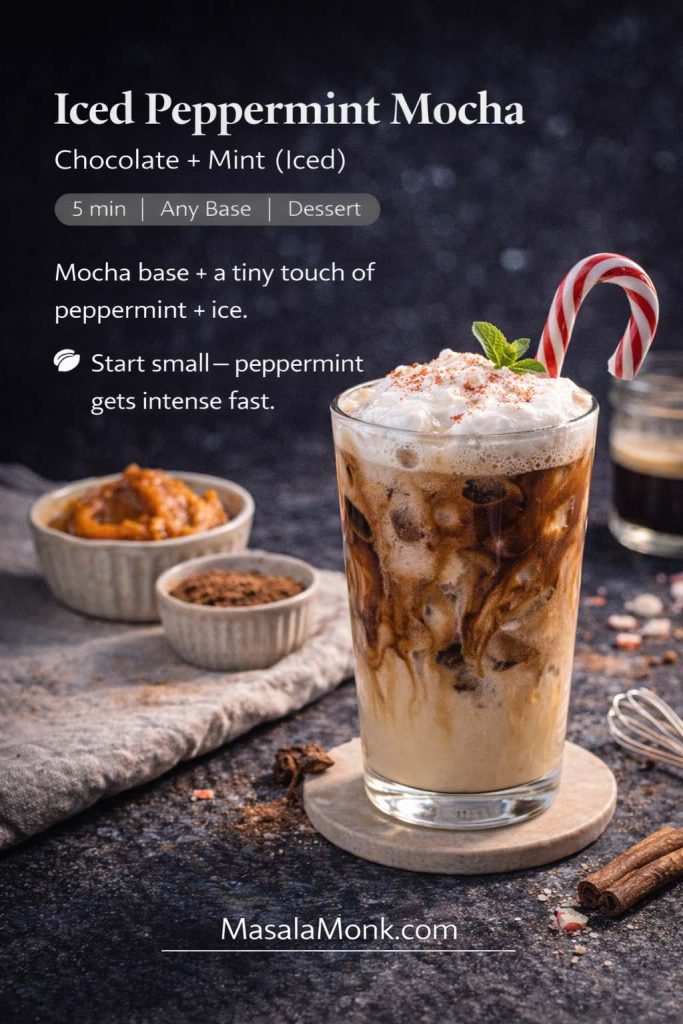
Iced peppermint mocha

Peppermint mocha is simply iced mocha with a clean mint lift. Start with the mocha method above, then add peppermint extract with a careful hand (peppermint is intense), or use a mint syrup for a gentler finish.

Recipe card for iced peppermint mocha showing an iced mocha topped with whipped cream and a candy cane stirrer, with chocolate and mint notes and MasalaMonk.com in the footer.
Iced peppermint mocha is a cool chocolate treat with a clean mint lift—build a mocha base over ice, then add just a tiny touch of peppermint so the coffee stays in charge.

Also Read: 10 Best Espresso Martini Recipe Variations (Bar-Tested)


A gentle at-home guide to bottled iced coffee

Bottled cold brew can be convenient; still, it often tastes flatter than fresh coffee. Even so, you can upgrade it quickly with a few smart moves—especially when you treat the bottle as a base rather than a finished drink.

  • Prevent dilution: add coffee ice cubes instead of plain ones.
  • Add texture: top with cold foam for a café feel.
  • Bring aroma forward: shake it with ice to aerate, then pour.
  • Steer flavor: add a small spoon of caramel or chocolate syrup, then stir well.

If you enjoy taste-test style reading, Serious Eats has covered store-bought cold brew comparisons in Cold Brew Coffee Taste Test.

Also Read: Béchamel Sauce for Lasagna: Classic, Vegan & Ricotta Sauce Recipe


Spiked iced coffee (for nights that want a little sparkle)

Spiked iced coffee works best when it tastes like coffee first and cocktail second. A strong base matters, so cold brew concentrate or a shaken espresso is usually the right starting point. From there, the drink becomes easy to shape: a little spirit, a little sweetness, a creamy finish if you want it.

Recipe card for spiked iced coffee showing cold brew over ice in a rocks glass with amber spirit being poured in, plus an orange twist garnish and MasalaMonk.com footer.
Spiked iced coffee is a simple coffee cocktail—pour cold coffee over a big ice cube, add a splash of bourbon or whiskey, and keep sweetness light so the coffee stays the star.

A simple blueprint

  • Start with cold brew concentrate or strong flash-brew iced coffee.
  • Add a small pour of whiskey, bourbon, vodka, or a cream liqueur.
  • Sweeten lightly if needed.
  • Finish with a small cap of cold foam or whipped cream.

If you like espresso-martini flavor ideas for inspiration, MasalaMonk’s spiced espresso martini recipe ideas offer fun combinations you can translate into iced builds.

Also Read: Whole Chicken in Crock Pot Recipe (Slow Cooker “Roast” Chicken with Veggies)


Closing thought: the best iced coffee is the one you’ll actually make again

It’s tempting to hunt for one ultimate method until you realize something simpler: the “best” iced coffee is the one that fits your day. On impatient mornings, that might be an instant frappé shaken into foam. On slow weekends, it might be flash-brew iced coffee that tastes like a fresh pour-over—only colder. During busy weeks, it’s a pitcher of cold brew that turns into a week of easy wins. When you want comfort, caramel cold brew with cold foam feels like a small reward. When you want dessert, it’s affogato with gelato. Either way, the glass in your hand should feel like a yes.

If you want to keep exploring techniques, it’s worth bookmarking MasalaMonk’s Art of Home Coffee Brewing alongside the method overview in Iced Coffee Simplified. Then, when curiosity strikes about why different cold methods taste different, the Specialty Coffee Association’s cold brew vs chilled hot brew piece is a fascinating deep dive.

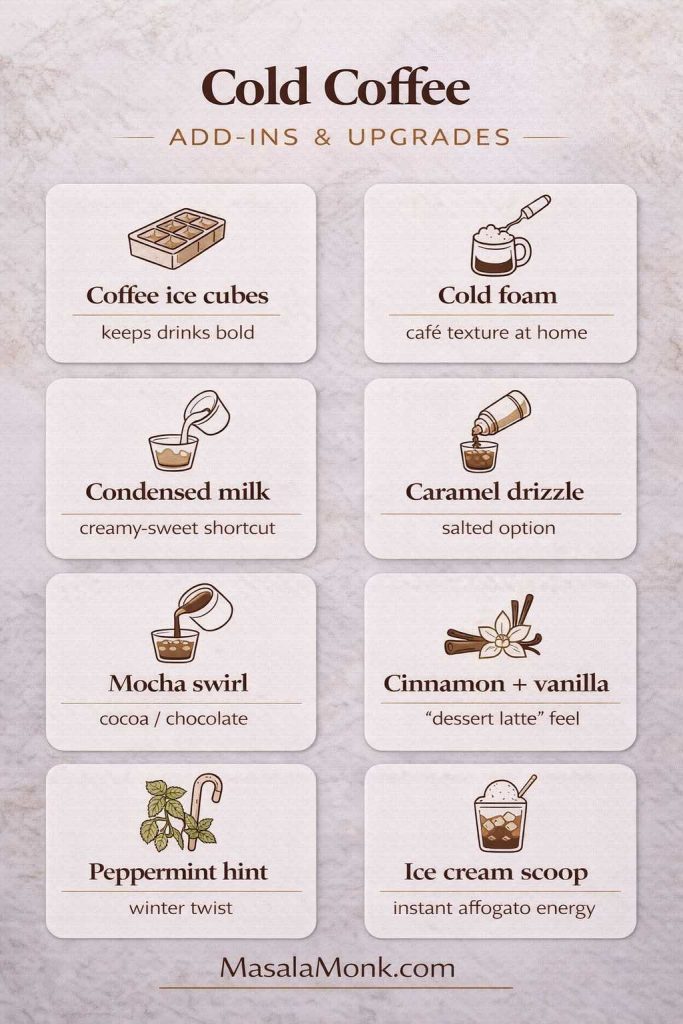
Cold coffee add-ins and upgrades infographic showing coffee ice cubes, cold foam, condensed milk, caramel drizzle, mocha swirl, cinnamon and vanilla, peppermint hint, and an ice cream scoop, with MasalaMonk.com branding.
Save this cold coffee add-ins guide—eight quick upgrades (from cold foam and caramel drizzle to condensed milk and coffee ice cubes) that instantly change flavor and texture.

Also Read: How to Make Churros (Authentic + Easy Recipe)

FAQs

1) What’s the easiest way to make iced coffee at home?

If you want the simplest route, brew coffee slightly stronger than usual, cool it fully, then pour it over a glass packed with ice. After that, adjust with a splash of milk, a pinch of salt, or a little syrup. This “brew–chill–ice” approach is quick, reliable, and doesn’t require special equipment.

2) What’s the difference between iced coffee and cold brew coffee?

Iced coffee is usually hot-brewed coffee that’s cooled and served over ice. Cold brew, by contrast, is brewed cold over many hours. Because the extraction is different, cold brew often tastes smoother and less sharp, while iced coffee can taste brighter and more aromatic.

3) How do I make iced coffee without it tasting watery?

First, chill the coffee before it hits the ice. Next, use large ice cubes so they melt more slowly. Even better, freeze leftover coffee into coffee ice cubes so the drink stays bold as it chills.

4) How can I make “smooth cold brew” that doesn’t taste bitter?

Start with coarse grounds and clean, cold water. Then steep until the flavor is full but not harsh—most people land somewhere between 12 and 18 hours. Finally, strain thoroughly; muddy sediment is one of the quickest paths to bitterness.

5) What’s the best way to make cold brew coffee if I want it strong?

Make it as a concentrate: use more coffee relative to water, steep as usual, then dilute in the glass with water or milk. That way, you can dial strength precisely instead of guessing after the fact.

6) How do I make iced coffee concentrate for busy mornings?

Brew a strong batch of cold brew or strong chilled coffee, store it cold, and pour smaller amounts over ice as needed. Then dilute with milk, water, or a mix until it tastes balanced. In other words, concentrate gives you flexibility without sacrificing speed.

7) How do I make a good iced Americano at home?

Fill a glass with ice, add espresso, then top with cold water to taste. If you want extra lift, a twist of citrus peel can make the drink feel brighter without adding sweetness.

8) Can I make iced coffee with an espresso machine?

Absolutely. Pull a shot (or two), pour it over ice, then add cold milk for an iced latte—or cold water for an iced Americano. For a softer finish, shake the espresso with ice before pouring; it chills faster and adds a light foam.

9) How do I make a shaken espresso at home that tastes café-style?

Combine espresso, ice, and sweetener in a sealed jar or shaker, then shake vigorously for 10–20 seconds. Afterward, strain into a glass and top with milk (often oat milk) if you want it creamy. The shaking step matters because it creates that airy, foamy texture.

10) How do I make a homemade brown sugar oat milk shaken espresso?

Dissolve brown sugar in a small splash of hot water (or use a brown sugar syrup), add espresso and ice, then shake until frothy. Pour into a glass and top with oat milk. If you want a warmer profile, a pinch of cinnamon turns it into a brown-sugar-cinnamon style drink.

11) What’s the best milk for iced coffee?

It depends on the finish you want. Whole milk is rounded and classic, oat milk is naturally creamy and slightly sweet, almond milk stays light, and coconut milk feels richer with a subtle tropical note. If you’re aiming for a “dessert-adjacent” iced coffee without extra sugar, oat milk is usually the easiest win.

12) How do I make iced coffee with cold foam at home?

Froth very cold milk until it turns thick and spoonable, then float it on top of iced coffee. To keep the drink balanced, sweeten the foam lightly rather than over-sweetening the coffee underneath.

13) How do I make instant iced coffee that actually tastes good?

Mix instant coffee with a small splash of water and shake (or whisk) until foamy, then pour over ice and add milk or water. This method creates texture, which makes instant coffee feel less flat.

14) What’s the difference between a Greek frappé and a blended coffee frappé?

A Greek-style frappé uses instant coffee shaken into foam, so it’s airy and light. A blended frappé uses a blender with ice and brewed coffee (or concentrate), so it’s thicker and more slushy—closer to a frozen drink.

15) How do I make a frozen iced coffee recipe in a blender?

Blend strong chilled coffee, ice, and milk until thick. Then adjust: more ice for thickness, more coffee for boldness, and a little syrup if you want it sweeter. For a frozen caramel coffee, add caramel plus a tiny pinch of salt.

16) How do I make caramel cold brew and salted caramel cold brew?

Add caramel to the glass first, add ice, then pour cold brew over it and stir. For salted caramel, add the smallest pinch of salt—just enough to make the caramel taste deeper rather than simply sweeter.

17) How do I make a mocha cold brew or cold brew mocha recipe?

Stir chocolate syrup (or a cocoa-sugar mix) into a small splash of warm coffee or warm water first, then add cold brew and ice. This prevents gritty chocolate and keeps the drink smooth.

18) How do I make iced coffee with condensed milk?

Add condensed milk to the glass first, pour in hot strong coffee and stir until fully blended, then add ice. The condensed milk sweetens and thickens at the same time, which is why this style tastes so silky.

19) What’s the easiest way to make iced coffee “creamy” without tons of sugar?

Start with cold brew or a strong coffee base, add milk of choice, then sweeten lightly with syrup if needed. A small pinch of salt can also make the drink taste rounder without adding more sweetness.

20) How do I make a vanilla caramel iced coffee at home?

Use a cold coffee base, add a little vanilla syrup and caramel, then finish with milk or cold foam. If it starts tasting too dessert-like, dilute with a splash of cold water to bring the coffee flavor back forward.

21) How do I make a cinnamon iced coffee without it tasting dusty?

Mix cinnamon into syrup (or into a small amount of warm coffee) before adding it to the cold drink. That way, the spice blends smoothly instead of floating in gritty clumps.

22) How do I make an iced caramel brûlée-style coffee at home?

Combine caramel and vanilla first, then add coffee and milk. To mimic that toasted-sugar feeling, add a very small pinch of cinnamon and a tiny pinch of salt. The result tastes richer and more “baked” rather than simply sweet.

23) How do I make iced pumpkin coffee and iced pumpkin chai latte at home?

For iced pumpkin coffee, stir pumpkin spice flavoring (pumpkin + warm spices + sweetener) into the coffee base, then add milk and ice. For iced pumpkin chai, use a strong chai concentrate instead of espresso, then pour over ice and finish with milk or foam.

24) How do I make an iced peppermint mocha?

Make a mocha iced coffee first, then add peppermint in tiny amounts. Peppermint can take over quickly, so start with less than you think, taste, and increase slowly.

25) How do I make an affogato or a coffee drink with ice cream?

Scoop vanilla ice cream or gelato into a glass and pour hot espresso over it. For a thicker “coffee-and-ice-cream drink,” add a splash of cold brew too, then eat it as it melts.

26) What are some dairy-free coffee ice cream ideas for affogato-style drinks?

Use dairy-free vanilla ice cream, then pour espresso over it as usual. You can also add chocolate chips, cookie pieces, or cookie dough bites for a dessert feel while keeping it dairy-free.

27) What’s a simple “coffee gelato” style dessert at home?

Use gelato instead of ice cream, then add espresso or strong coffee over the top. Gelato melts more densely, so the final bite tastes extra coffee-forward.

28) How do I make “bulletproof” iced coffee?

Blend iced coffee with a fat source (often butter or a neutral oil) until it emulsifies and turns creamy. For an iced version, blend the mixture first, then add ice and blend briefly again so it stays smooth rather than separating.

29) Can I add collagen or protein powder to iced coffee?

Yes—however, it helps to dissolve powders in a small amount of room-temperature or slightly warm coffee first, then add the rest of the cold coffee and ice. That prevents clumps and keeps the drink smooth.

30) Does iced coffee help with weight loss?

Iced coffee can fit into a weight-loss plan if it stays low in added sugar and heavy add-ins. Black iced coffee or lightly sweetened cold brew is typically easier to keep lighter, while blended drinks and syrup-heavy builds add calories quickly.

31) How do I make decaf iced coffee that still tastes satisfying?

Brew decaf a little stronger than you would drink it hot, cool it fully, then serve over ice. Because chilling can mute flavor, stronger brewing and better ice make a bigger difference with decaf.

32) What’s the best ground coffee for iced coffee?

Medium roasts often taste balanced cold—sweet enough, not too sharp. Coarser grounds work best for cold brew, while medium grind suits drip or pour-over. If you notice bitterness, go slightly coarser or reduce brew time.

33) What’s the best coffee to make cold brew with?

A medium or medium-dark roast is usually forgiving and chocolatey in cold brew. If you prefer fruitier notes, try a lighter roast but keep the brew time in check so it doesn’t turn astringent.

34) How long does homemade cold coffee last in the fridge?

Plain brewed coffee or cold brew lasts longer than milk-mixed drinks. For best flavor, aim to finish plain coffee within a few days, and finish milk-based versions sooner. When in doubt, store coffee plain and add milk in the glass.

35) How do I upgrade pre-made iced coffee or canned iced coffee so it tastes better?

Pour it over coffee ice cubes, shake it briefly with ice to refresh the aroma, then add a small cap of cold foam. If it tastes flat, a tiny pinch of salt can make the coffee flavor pop.

36) How do I make iced Irish coffee or cold Irish coffee at home?

Start with a strong cold coffee base, add Irish cream (or a mix of cream + sweetener + a splash of spirit), then pour over ice. For a cleaner style, use whiskey plus lightly sweetened cream instead of a heavy liqueur pour.

37) What’s a simple boozy iced coffee recipe that doesn’t taste harsh?

Use cold brew concentrate, add a modest amount of spirit, then soften with milk, cream, or cold foam. A little sweetness helps, but too much can bury the coffee—so keep the balance coffee-forward.

38) How do I make iced coffee with whipped cream without making it overly sweet?

Use a strong coffee base and keep the drink lightly sweetened. Then add a small swirl of whipped cream as a finish rather than mixing it in heavily. That way, the drink stays coffee-like while still feeling indulgent.

39) What are the best cold coffee drinks for different moods?

For something clean, go iced Americano or flash-brew iced coffee. If you are looking for something smooth, choose cold brew. Want something creamy? Reach for an iced latte or shaken espresso. And for dessert, go mocha, caramel cold brew, blended coffee, or affogato.

40) How do I make iced coffee taste “best” without overcomplicating it?

Chill the coffee before serving, use better ice, sweeten with syrup instead of sugar, and keep the ratios simple. Once those basics are steady, every variation—caramel, mocha, cinnamon, condensed milk, or even ice cream—starts tasting like a deliberate recipe rather than a happy accident.

Posted on 2 Comments

Quick Espresso Guide – Know Your Coffee

Ever felt confused with barrage of options presented to you at the coffee shop? And then for those who are ‘noobs’ to the scene the entire thing can be overwhelming if not embarrassing. Well here is a quick guide you can save, which would help you bail out from such situations

What makes your favorite coffee drink unique? Whether you’re a seasoned coffee enthusiast or just starting your journey into the world of coffee, understanding the different types of coffee drinks can enhance your appreciation and enjoyment. From the bold and strong espresso to the creamy and sweet Frappuccino, each coffee drink has its own story and character. Let’s dive into the delightful world of coffee, and don’t forget to share your favorites and experiences in the comments below!

Also read Moka Pot Mastery: Elevate Your Coffee Game

Espresso

Espresso is the heart and soul of many coffee drinks. It’s a strong, bold shot of coffee that packs a punch of pure coffee essence. Often the base for many other drinks, espresso is enjoyed by coffee purists and adventurous drinkers alike. There’s nothing quite like the intense flavor of a well-pulled espresso shot to kickstart your day.

Personal Tip: Enjoy your espresso with a splash of cold water to cleanse your palate before each sip.

What’s your first espresso experience like? Share in the comments!

Cappuccino

Cappuccino is a perfect blend of equal parts espresso, steamed milk, and milk foam, creating a creamy and balanced cup. It’s a favorite morning pick-me-up for many, offering a harmonious combination of coffee and milk. The foam on top adds a delightful texture, making each sip a pleasure.

Fun Fact: Did you know that cappuccino gets its name from the Capuchin friars, whose robes are the same color as the drink?

What’s your favorite cappuccino variation? Tell us below!

Latte

Lattes are smooth and milky, consisting of espresso with more steamed milk and a light layer of foam. They are highly customizable with syrups and flavors, making them a popular choice for those who enjoy experimenting with their coffee.

Pro Tip: Making a perfect latte at home is easier than you think! Start with a strong espresso and gradually add steamed milk, finishing with a light froth.

What’s your favorite latte art design? Share your creations!

Americano

An Americano is simply espresso diluted with hot water, creating a coffee that is milder than a straight espresso but still full of flavor. It’s similar to drip coffee but with the distinct taste of espresso.

History: The Americano is said to have originated during World War II when American soldiers in Europe would dilute their espresso to make it last longer.

Do you prefer Americanos or regular coffee? Let’s discuss!

Mocha

Mocha combines espresso, steamed milk, and chocolate, resulting in a rich and indulgent coffee drink. It’s perfect for those who love the combination of coffee and chocolate.

Recipe: For a homemade mocha, mix a shot of espresso with steamed milk and a generous spoonful of chocolate syrup. Top with whipped cream for extra decadence.

What’s your go-to mocha recipe? Share it with us!

Macchiato

A macchiato is a shot of espresso “marked” with a small amount of milk foam. It offers a strong coffee flavor with a touch of creaminess, making it a favorite for those who enjoy their coffee bold but not too intense.

Variations: Traditional macchiato is simple, but the popular caramel macchiato includes vanilla syrup and caramel drizzle.

Which macchiato style do you prefer? Traditional or caramel?

Frappuccino

Frappuccino is a blended iced coffee drink, often flavored and topped with whipped cream. It’s cold, refreshing, and perfect for hot days or as a sweet treat.

Fun Fact: The Frappuccino was created by Starbucks in the 1990s and has since become a global sensation with countless flavor variations.

What’s your favorite Frappuccino order? Let’s hear it!

Affogato

Affogato is a delightful dessert-coffee hybrid, consisting of a shot of espresso poured over a scoop of ice cream. It’s a perfect blend of hot and cold, sweet and strong.

Tips: Vanilla ice cream is a classic choice, but try experimenting with different flavors like caramel or chocolate for a unique twist.

Share your unique affogato creations with us!

Conclusion

Exploring the variety of coffee drinks can be a fun and rewarding experience. Whether you’re making them at home or ordering at your favorite café, each drink offers a unique taste and experience. We’d love to hear your coffee stories, recipes, and photos, so join the conversation and share your coffee love in the comments below!

Suggested Reads:
How Roasting Defines Your Coffee!
Decoding the Buzz: Is Your Coffee High in Oxalates?
Discover the 5 Most Expensive Coffees in the World
Vegan and Sugar Free Creamy Cold Coffee