
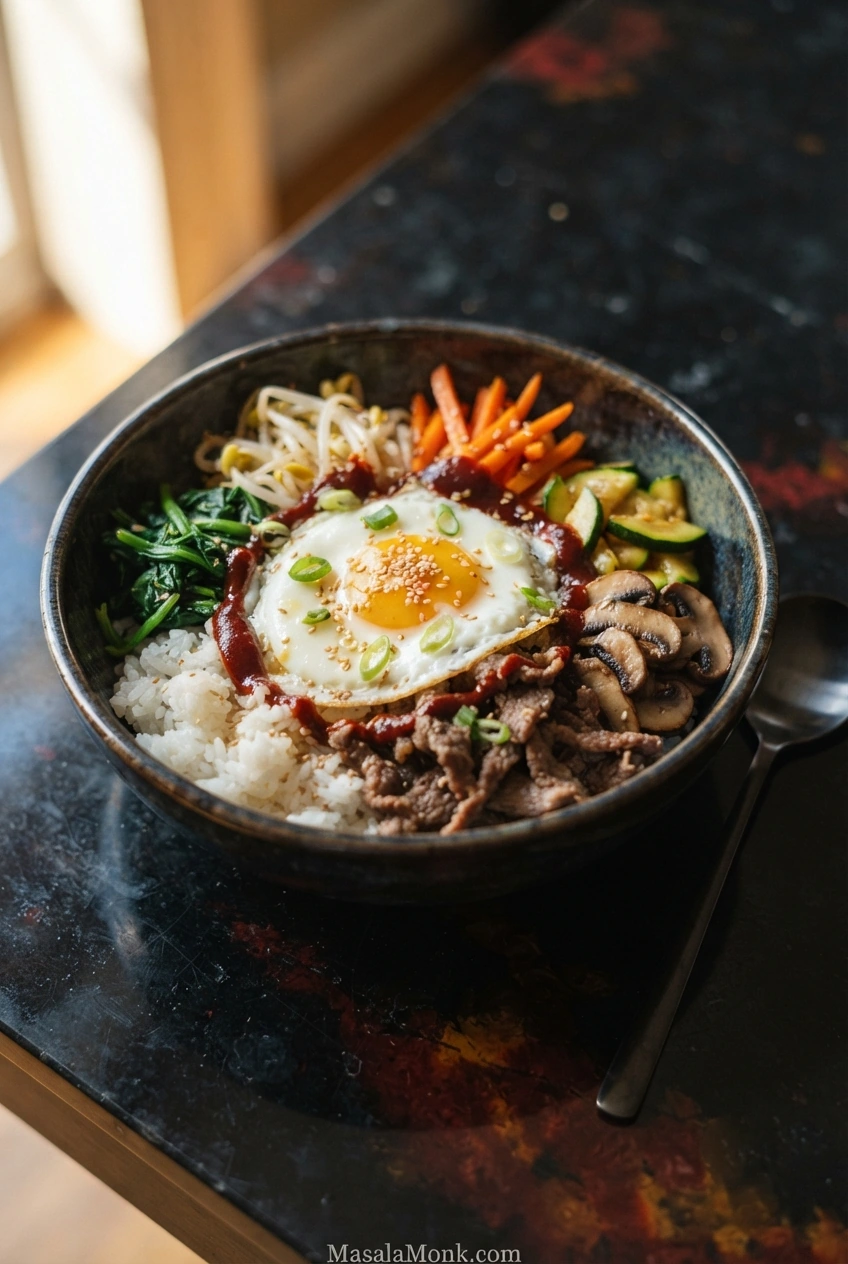
A bowl of bibimbap looks lovely before you touch it, but the best part comes when you stir. Warm rice takes on a little gochujang and sesame, while the vegetables, beef, and egg bring something different to each spoonful.
This bibimbap recipe makes four generous Korean mixed-rice bowls on an ordinary stovetop. Preparing five vegetables separately takes time, but it lets each keep its own texture before everything meets in the rice. Finish with savory beef, eggs, and gochujang sauce; no stone bowl is needed.
For dinner with less preparation, the easy bibimbap versions start with cooked rice and use either prepared side dishes or just three vegetables.
Bibimbap Recipe
Prepare the vegetables first, then finish the rice, beef, and eggs near serving time. The spinach and sprouts can cool slightly; meanwhile, warm rice and freshly cooked toppings bring the bowl together.
Equipment: Use two lidded saucepans, one wide skillet (26–30 cm / 10–12 inches), a colander, a knife, and small plates for the toppings. You will also need four large serving bowls, ideally about 1 litre / 4 cups or larger, with room to mix.
Measurements: A US cup is 240 ml; many rice-cooker cups are 180 ml. A tablespoon is 15 ml and a teaspoon is 5 ml. Rice is weighed dry; meat and vegetables are weighed raw. Divide the finished rice evenly among four bowls; its cooked weight will vary slightly.
Rice
- 300 g / 10.6 oz Korean or Japanese-style short-grain white rice (about 1½ US cups dry, or two 180 ml rice-cooker cups)
- 400 ml / 1⅔ US cups cool water, for the stovetop method below
Beef and Marinade
- 280 g / about 10 oz sirloin, ribeye, or other tender beef, thinly sliced across the grain (about 2–3 mm / ⅛ inch)
- 1 tbsp / 15 ml regular soy sauce
- 2 tsp / about 8 g sugar
- 2 tsp / 10 ml toasted sesame oil
- 2 garlic cloves / about 6 g, minced
- ⅛ tsp ground black pepper
- 1 tsp / about 5 g fresh grated ginger, optional
- 1 tsp / 5 ml neutral oil, for the skillet
Vegetables and Seasonings
- 200 g / 7 oz spinach, washed
- 225 g / 8 oz mung bean sprouts (sukju), rinsed; soybean-sprout method follows Step 4
- 150 g / 5.3 oz carrots, cut into fine matchsticks
- 200 g / 7 oz zucchini, thin matchsticks or half-moons
- 150 g / 5.3 oz fresh shiitake, cremini, or button mushrooms, thinly sliced
- 2 tsp / 10 ml toasted sesame oil: 1 tsp each for the spinach and sprouts
- 1 garlic clove / about 3 g, finely minced: half for spinach, half for sprouts
- Fine salt: start with ⅛ tsp for each of the five vegetables (⅝ tsp in all). If using coarse or flaky salt, season to taste rather than measuring the same volume
- 1 tsp / about 3 g toasted sesame seeds: half for spinach, half for sprouts
- 1 tbsp / 15 ml neutral oil: 1 tsp each for carrots, zucchini, and mushrooms
Gochujang Sauce
- 60 g plain gochujang paste (roughly 3–4 tbsp; thickness and weight vary by brand)
- 1 tbsp / 15 ml toasted sesame oil
- 1 tbsp / 15 ml water, plus a teaspoon more at a time only if needed
- 2 tsp / about 8 g sugar, reduced if the paste is already sweet
- 1 tsp / about 3 g toasted sesame seeds
- 1 tsp / 5 ml rice vinegar, optional
Eggs and Finishing
- 4 large eggs
- 2 tsp / 10 ml neutral oil for frying the eggs
- 1 tsp / 5 ml toasted sesame oil for finishing the four bowls
- 1 tsp / about 3 g toasted sesame seeds for garnish
- 2 scallions, thinly sliced, optional
Get Everything Ready
Before the rice soak: wash and cut the vegetables and slice the beef using the guide below. Refrigerate the sliced beef and keep its knife and board separate from ready-to-eat food. Set out plates for finished toppings. Divide the minced vegetable garlic into two portions, one for the spinach and one for the sprouts. For each of these two toppings, also measure 1 tsp sesame oil and ½ tsp sesame seeds. Then begin Step 1.
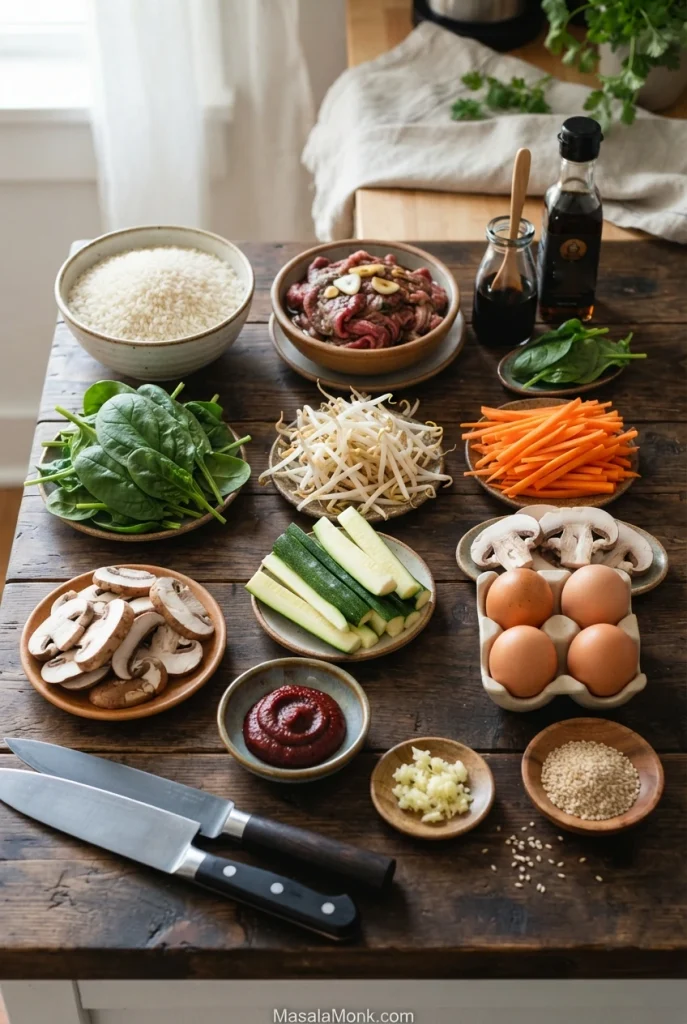
Cutting guide: The photograph below shows the distinct shapes to prepare for carrots, zucchini, mushrooms and beef. Use the table beneath it for each ingredient’s target thickness.
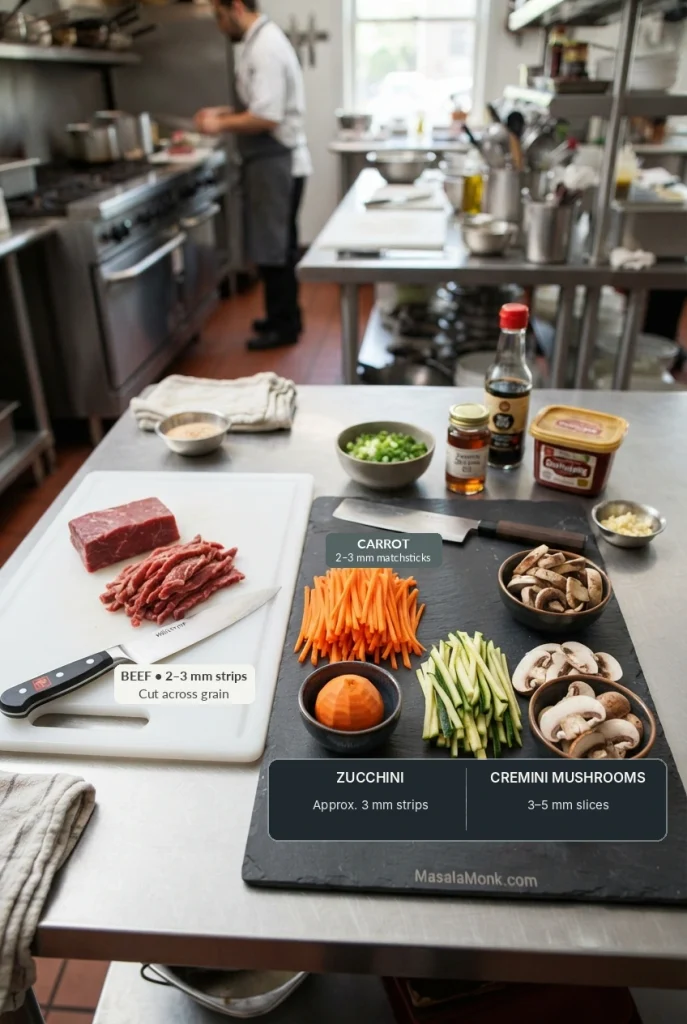
| Prepare | Target cut | Why |
|---|---|---|
| Carrots | 2–3 mm matchsticks | They soften quickly but retain a little bite. |
| Zucchini | About 3 mm thin strips or half-moons | They cook evenly without disintegrating. |
| Mushrooms | 3–5 mm slices | They brown and lose moisture at a similar rate. |
| Beef | 2–3 mm strips across the grain | A brief hot cook is less likely to make them chewy. |
Step 1 — Rinse and Soak the Rice
Rinse 300 g rice several times in cool water, swirling and draining until the water becomes much less cloudy. Drain well, then combine it with 400 ml fresh water in a heavy-bottomed pot. Soak for 20–30 minutes in that measured water; do not drain it again. While the rice soaks, marinate the beef, mix the sauce, and cook the first two vegetables in Steps 2–4.
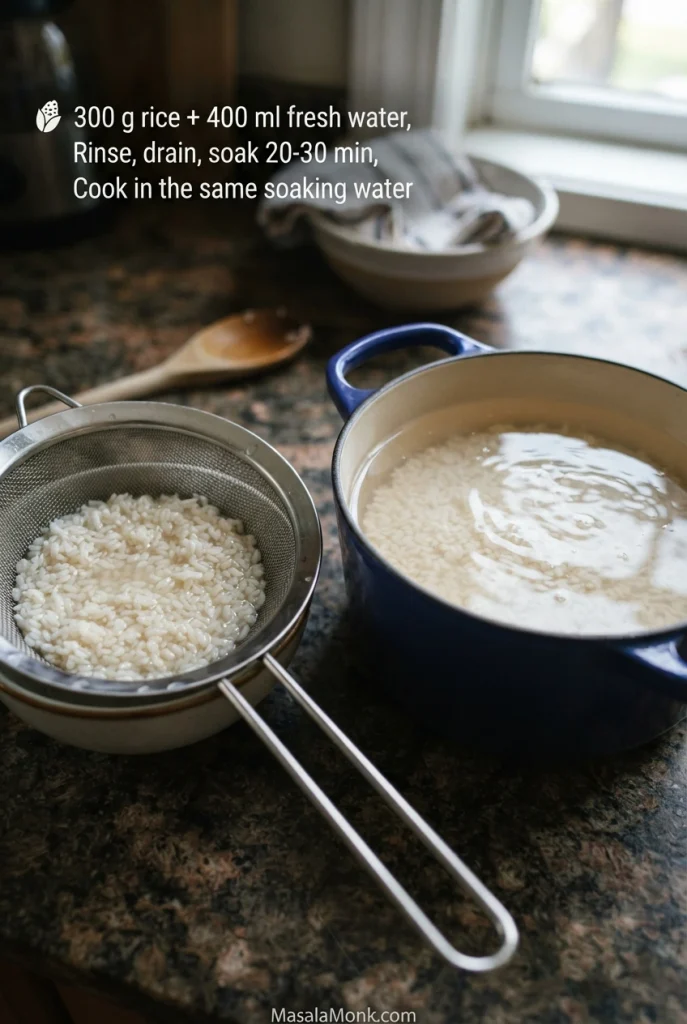
Start heating the rice in Step 5, after the spinach and sprouts are ready. A slightly longer soak while you finish those toppings is fine. These water measurements are for short-grain white rice.
Step 2 — Marinate the Beef and Mix the Sauce
Mix the sliced beef with 15 ml soy sauce, 8 g sugar, 10 ml sesame oil, 2 minced garlic cloves, black pepper, and optional ginger. Cover and refrigerate while you blanch the vegetables and cook the rice; the beef will have at least 20 minutes to marinate before it reaches the skillet.
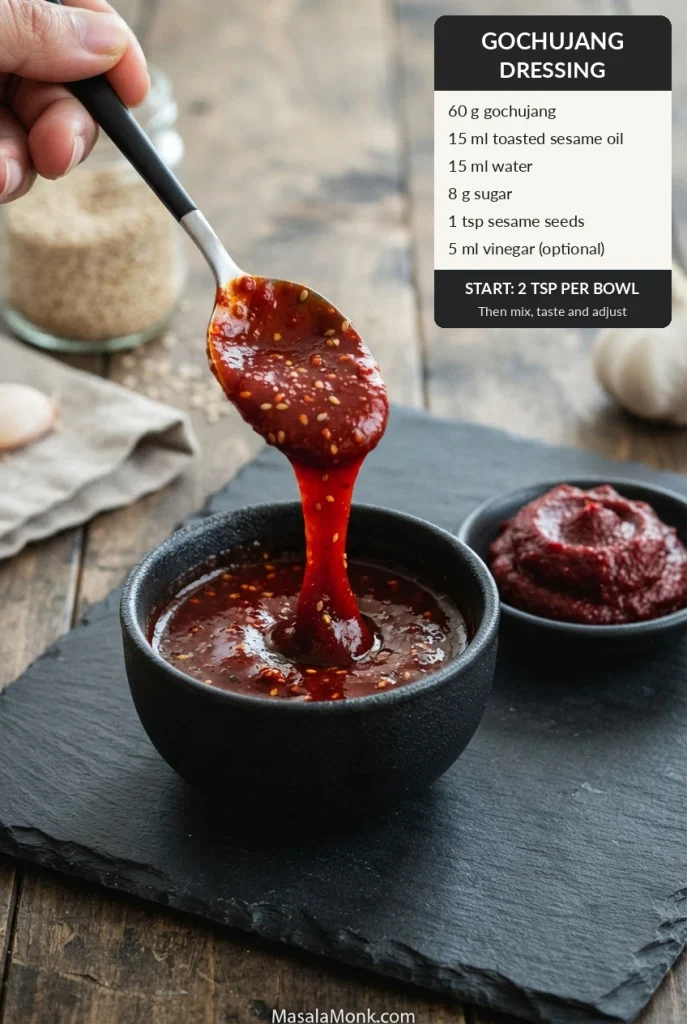
In a separate bowl, stir the 60 g gochujang, 15 ml sesame oil, 15 ml water, 8 g sugar, and 1 tsp sesame seeds until smooth. Add the optional rice vinegar for a little acidity. The sauce should fall slowly from a spoon; if it is stiff, add water 1 tsp at a time. Taste before serving, since gochujang brands vary in sweetness and heat. If your jar says bibimjang rather than plain gochujang, check how the prepared dressing differs before adding these seasonings.
Step 3 — Blanch, Squeeze, and Season the Spinach
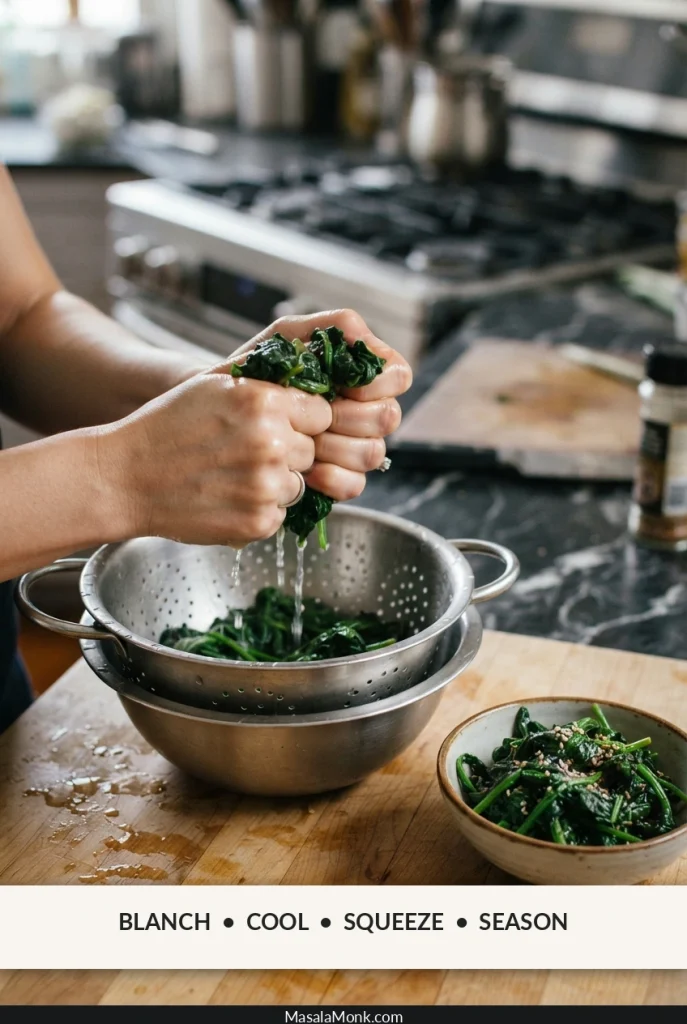
Boil a pot of water, add 200 g spinach, and cook until wilted, about 30–60 seconds. Drain and briefly cool under clean cold water. Squeeze in small handfuls until no water drips out; the greens should be soft, not waterlogged. Cut long strands into manageable lengths, then toss with 1 tsp / 5 ml sesame oil, one portion of the prepared garlic, ⅛ tsp salt, and ½ tsp sesame seeds. Set aside on its own plate.
Step 4 — Cook and Season the Sprouts
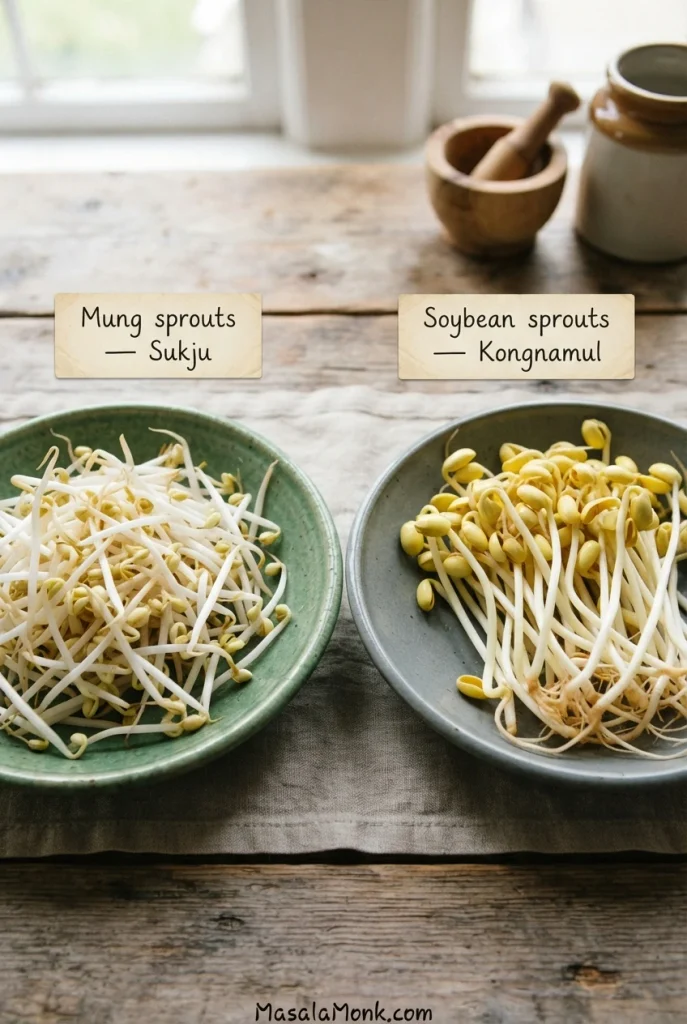
Bring the pot back to a boil. Add 225 g mung bean sprouts and cook for about 3–5 minutes, until thoroughly cooked but still pleasantly firm; thicker sprouts may take longer. Drain well, let steam escape, and toss with the remaining 1 tsp / 5 ml sesame oil, the second portion of garlic, ⅛ tsp salt, and ½ tsp sesame seeds. Transfer to their own plate.
Soybean-sprout alternative (kongnamul): Instead of using the mung-sprout blanch, put 225 g rinsed soybean sprouts into a small saucepan with ½ US cup / 120 ml fresh water. Cover and bring to a boil over medium-high heat. Once boiling, cook 3–4 minutes more with the lid closed. Drain and check that the sprouts are fully cooked yet tender-crisp; cook a little longer if needed. Season with the same reserved garlic, 1 tsp sesame oil, ⅛ tsp salt, and ½ tsp sesame seeds. This is a half-batch adaptation of Korean Bapsang’s covered soybean-sprout method.
That’s two toppings finished. Set them aside while you cook the rice and remaining vegetables; the beef and eggs will come hot from the pan nearer serving time.
Step 5 — Start the Rice, Then Sauté the Remaining Vegetables
Work across two pans: start the rice, then cook the carrots, zucchini, and mushrooms in the skillet. The 12–13-minute rice alarm is a checkpoint, not the final doneness test. If it rings while you’re cooking a vegetable, attend to the covered pot briefly, then return to the skillet. Judge the rice’s final texture after its 10-minute rest.
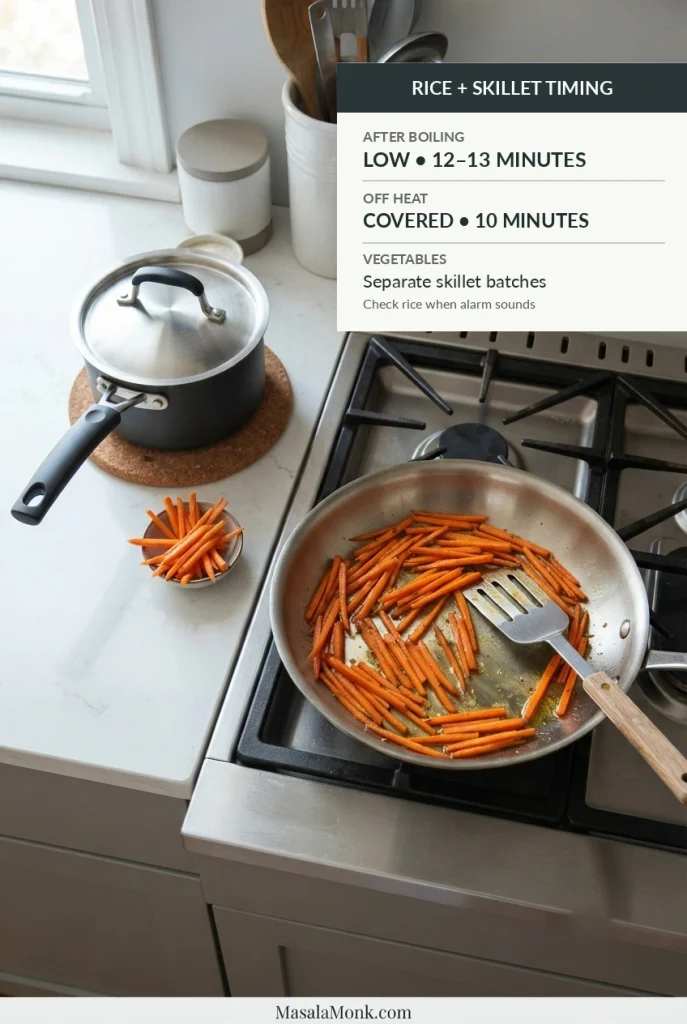
Rice pot — start: Heat the soaked rice in its measured soaking water over medium heat with the lid slightly ajar. At a steady boil, cover tightly, turn the heat low, and set an alarm for 12–13 minutes.
Rice pot — when the alarm rings: Even if you are midway through a vegetable, check the rice briefly. If liquid is still visibly bubbling at the surface, cover and give it another 1–2 minutes on low. Otherwise turn off the heat, move the covered pot away from a still-hot burner, and let it rest undisturbed for 10 minutes. Continue the skillet vegetables while the rice rests; you will check the grains afterward.
Sauté the Carrots, Zucchini and Mushrooms
Skillet — carrots: Heat the skillet over medium-high heat. Add 1 tsp / 5 ml neutral oil and the carrots. Sauté for 2–3 minutes, until bright and just tender. Season with ⅛ tsp fine salt and transfer to their own plate.
Skillet — zucchini: Add another 1 tsp / 5 ml oil. Cook the zucchini for 2–4 minutes, stirring, until tender but still holding its shape. Let any pooled liquid evaporate before adding ⅛ tsp fine salt and transferring it to a separate plate.
Skillet — mushrooms: Add the final 1 tsp / 5 ml oil. Sauté for 3–5 minutes, or until most moisture evaporates and the slices begin to brown. Season with the remaining ⅛ tsp fine salt. If the pan is crowded, cook the mushrooms in batches so they brown instead of steaming.
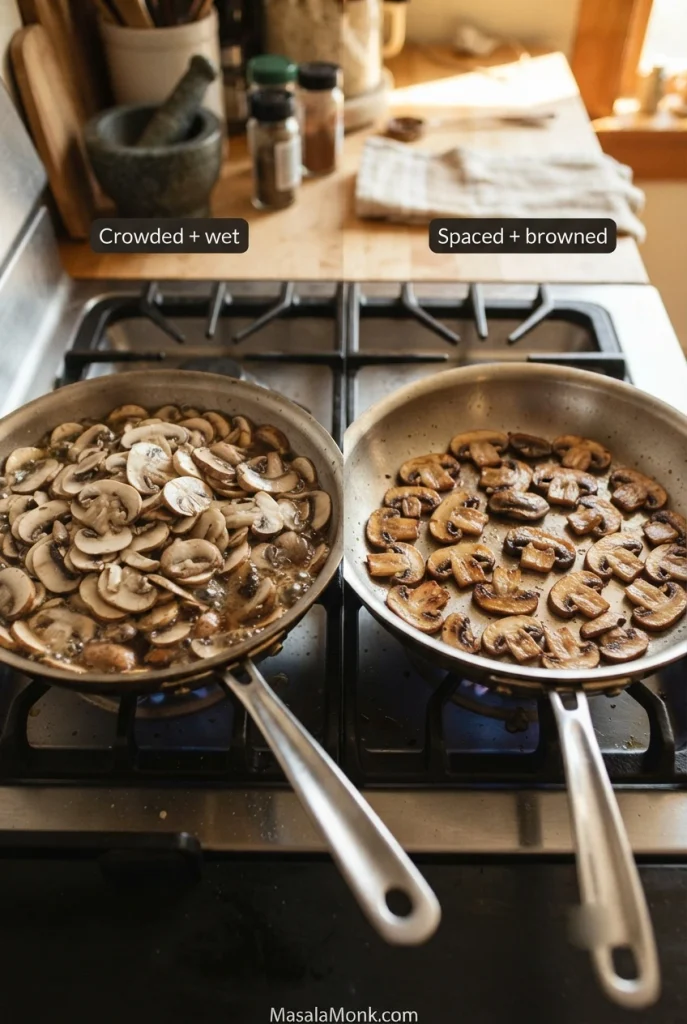
Rice pot — after resting: Fluff and taste a few grains. They should be tender, without standing water. If firm, sprinkle in 1–2 tbsp hot water, cover, cook briefly over low heat, and rest again. Otherwise, leave the rice covered and warm while you finish the beef and eggs. Serve promptly rather than leaving cooked rice standing at room temperature.
Step 6 — Cook the Beef Without Steaming It
Wipe the skillet if necessary and heat it over medium-high to high heat. Divide the reserved 1 tsp / 5 ml neutral oil between two batches. Lift the beef from the marinade, let excess drip off, and spread the strips loosely across the pan. Cook until browned and cooked through—about 2–4 minutes per batch for very thin slices, but judge by thickness and actual doneness rather than the clock alone. Transfer to a clean plate.
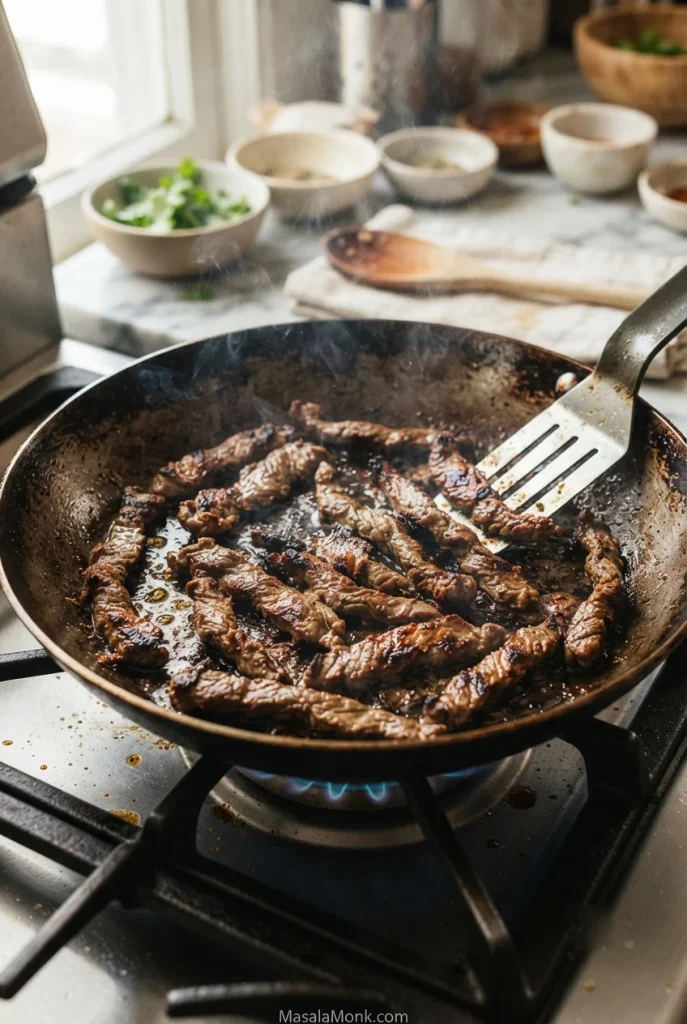
Discard the leftover raw-beef marinade. Do not pour it over cooked food or return cooked beef to the marinade bowl. If you’re using ground beef instead, follow the ground-beef substitution instructions.
Keep the cooked beef loosely covered while you fry the eggs.
Step 7 — Fry the Eggs Near Serving Time
Use a clean nonstick skillet, or wash and reuse the beef skillet at a lower heat. Add the 2 tsp / 10 ml neutral oil and fry all four eggs together if they fit comfortably. Otherwise, cook two at a time, using half the oil for each batch. Fry over medium to medium-low heat until the whites set, about 2–4 minutes per batch. Keep the first two eggs briefly on a warm, clean plate, loosely covered, while the second batch finishes; then assemble the bowls promptly.
A soft yolk enriches the rice when you mix the bowl. For a safer option—especially for pregnant people and others at higher risk from foodborne illness—cook both the whites and yolks firm.
Step 8 — Portion and Arrange Four Bowls
Divide the warm rice evenly among four large bowls. Arrange a quarter of each vegetable and the cooked beef around the rice, then add an egg to each bowl. Finish with the reserved sesame oil, sesame seeds, and optional scallions.
Step 9 — Add Sauce, Mix, Taste
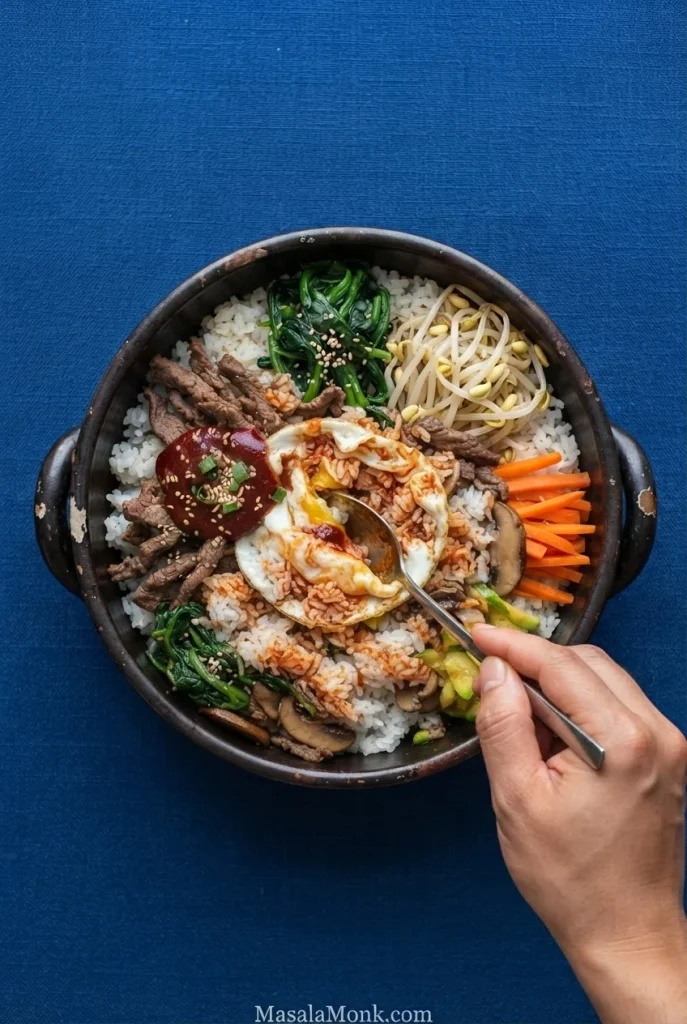
Start with 2 tsp / 10 ml sauce per bowl. Break the egg, then fold the vegetables, beef, and sauce through the rice from the bottom up. Taste before adding more, 1 tsp at a time. The recipe makes about 100 g sauce, leaving extra for anyone who wants more; refrigerate unused sauce promptly.
Need a shorter method? See the easy bibimbap versions. Adjusting a bowl that went wrong? Go to troubleshooting. Back to top.
Bibimbap Cooking Guide
The five-topping version is one way to make bibimbap, not the only one. Korean home cooking also makes use of seasoned vegetables already on hand. The guide below explores ingredient choices, quicker approaches, and the problems worth knowing how to fix.
Ingredients and Eating
- What bibimbap is and how it differs
- How to prepare and judge the vegetables
- Rice, beef, and gochujang balance
- How to mix and eat bibimbap
Shortcuts and Substitutions
- Easy bibimbap with or without leftovers
- Rice, protein, and vegetable substitutions
- A mild sesame-soy sauce
Troubleshooting and Storage
What Is Bibimbap?
Bibimbap (비빔밥) means “mixed rice” in Korean. Cooked rice is topped with vegetables—often individually seasoned as namul—and sometimes meat and egg. Sauce or seasoning is added, and the bowl is mixed before eating.
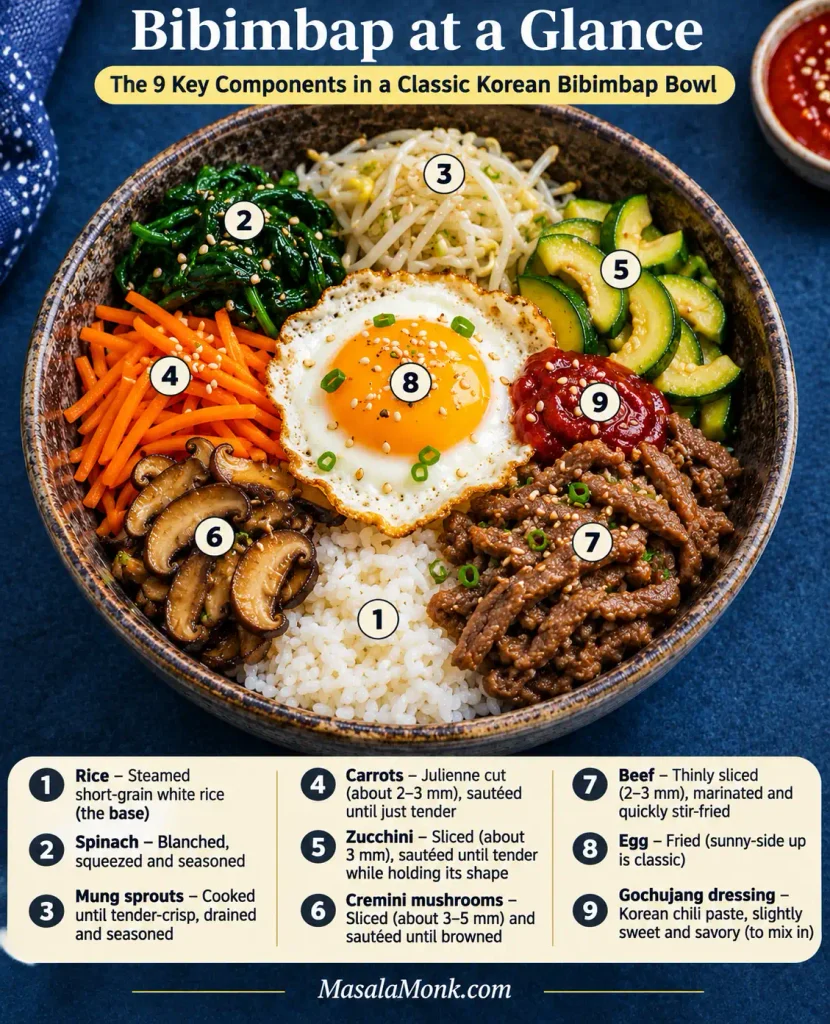
There is no fixed list of five vegetables. Bibimbap often makes use of seasoned vegetable side dishes (banchan) already in the fridge, while more elaborate versions prepare the toppings from scratch. Korean Bapsang’s bibimbap guide explains both approaches and the range of vegetables traditionally used.
An ordinary bowl of bibimbap is different from dolsot bibimbap, where a properly heated stone bowl develops a crackling rice crust. It also differs from egg fried rice: here the rice and separately prepared toppings come together in the bowl rather than being fried together in the pan.
How to Prepare Bibimbap Vegetables
Preparing the vegetables separately gives you control over seasoning, moisture, and texture. Soft spinach, gently crisp sprouts, tender zucchini, and browned mushrooms remain distinct even when stirred into warm rice. That contrast is one reason the full version is worth the extra preparation.
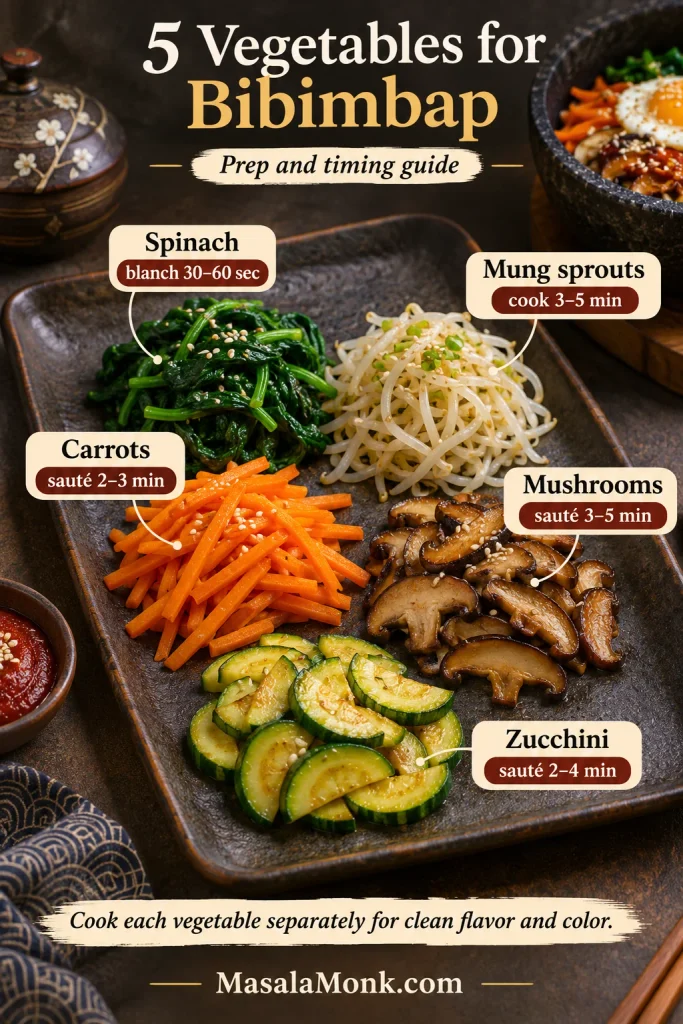
Cut the toppings small enough to catch with a spoonful of rice. Before transferring zucchini or mushrooms, look at the skillet: if liquid is collecting, cook it off first. Our mushroom and zucchini stir-fry has more detail on handling that moisture. Use the full method above for exact quantities; this table shows the texture to aim for.
| Topping | What you want at serving | Common misstep |
|---|---|---|
| Spinach | Seasoned strands with no liquid dripping from them | Leaving blanching water trapped inside |
| Mung sprouts | Cooked, drained, gently crunchy-tender | Using the wrong sprout timing |
| Carrots | Thin pieces that bend with a little resistance | Cutting thick sticks, then undercooking |
| Zucchini | Soft-tender pieces that hold their shape | Overcrowding or cooking until watery |
| Mushrooms | Tender, concentrated flavor, almost no pan liquid | Steaming them in a crowded pan |
Choosing Rice, Beef, and Gochujang
Best Rice for Bibimbap: Cohesive, Not Wet
Short-grain white rice has the slight stickiness bibimbap needs: the grains hold sauce and bits of topping without becoming a wet mash. Medium-grain white rice also works. Jasmine and basmati are looser-textured alternatives, while brown and instant rice need different water and cooking times. Use the stovetop rice method in the recipe above, or choose a different one from our rice-cooking guide if you change varieties.
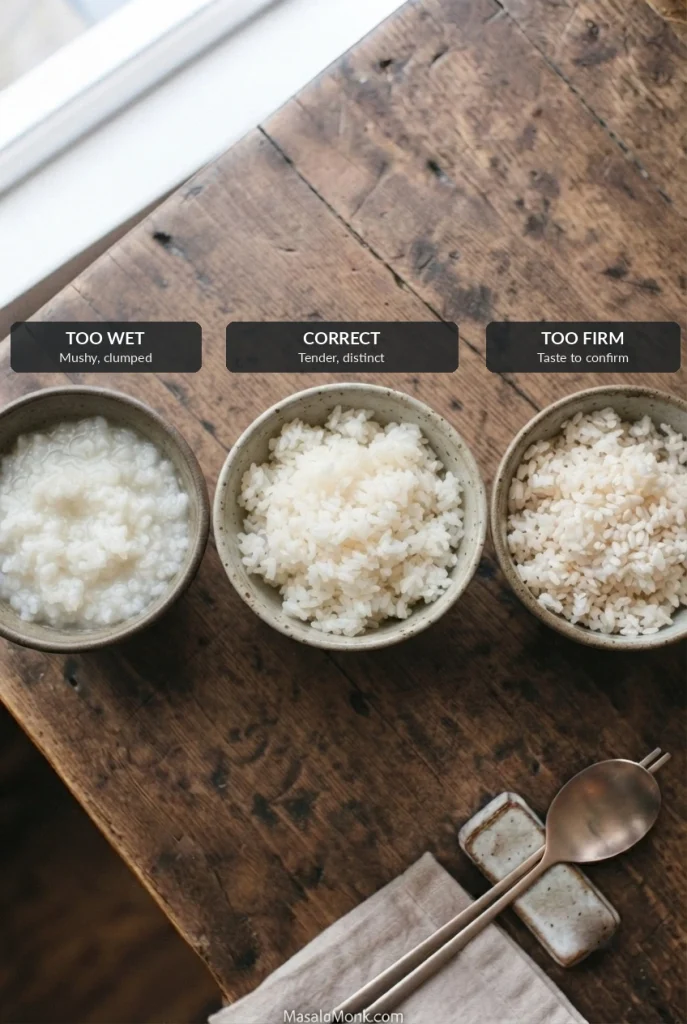
With a rice cooker, use its white-rice program and the manufacturer’s water markings instead of transferring the stovetop water ratio directly.
How Much Beef Do You Need?
The 280 g raw beef adds savory richness to four vegetable-forward bowls. Thin slices brown quickly; if you want a meat-heavier meal, increase the beef and marinade proportionately. Our bulgogi sauce recipe offers a different pear-and-soy seasoning.
Gochujang vs. Bibimbap Sauce: What to Buy
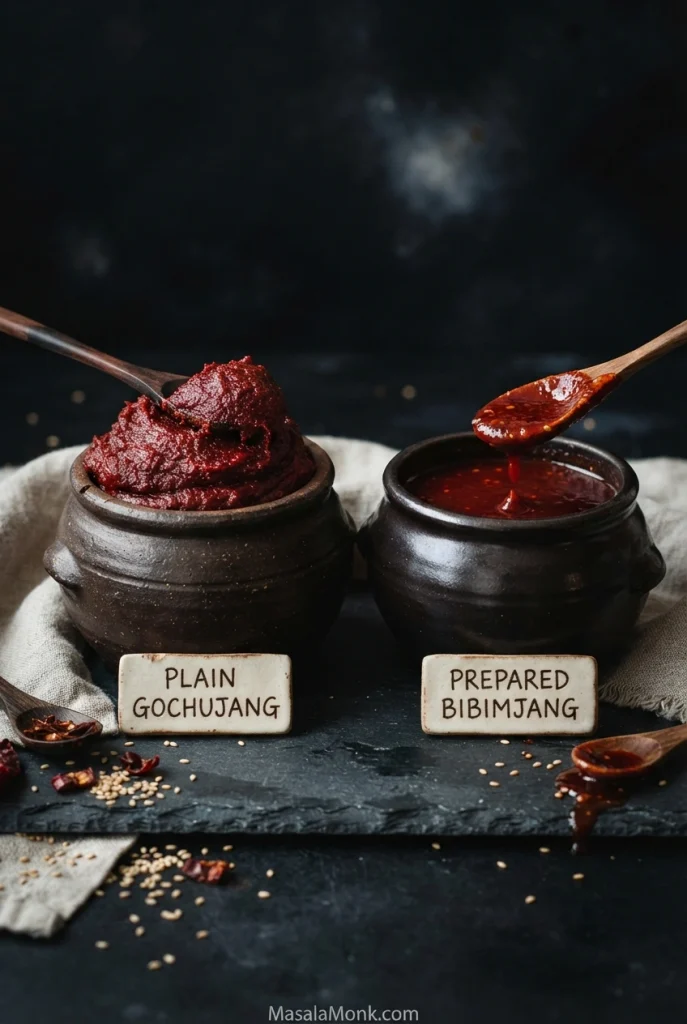
For the red sauce in this recipe, buy plain gochujang paste, the thick Korean fermented chili paste. It is already salty and a little sweet, and brands vary in heat. Prepared bibimbap dressing (bibimjang) is a different product. If that is what you bought, use a little as the dressing and taste before adding more. Do not add the full sugar, oil, and water intended for plain gochujang. Bulgogi marinade is for meat; gochugaru is chili flakes.
How to Mix and Eat Bibimbap
Mixing is part of the experience, not simply a way to combine toppings. The gochujang and egg season the rice, while the vegetables keep enough individual texture that each spoonful is a little different. Taste the mixture before deciding how much more sauce it needs.
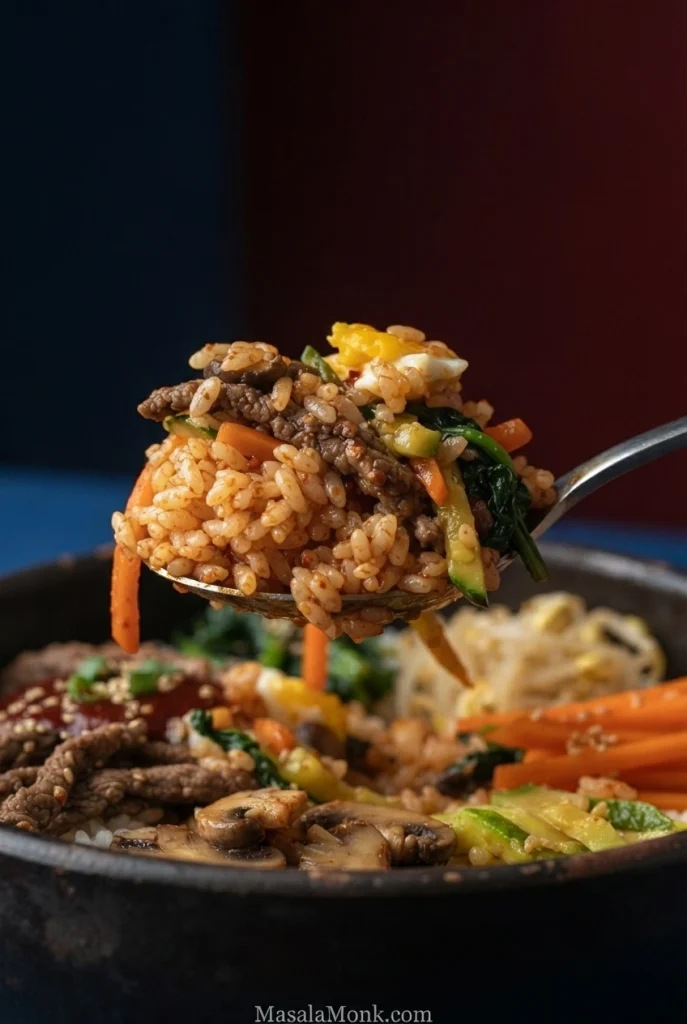
A large bowl makes mixing easier. For something cool alongside, our cucumber salad recipe includes a Korean-style variation.
Easy Bibimbap: With or Without Leftover Banchan
The full version cooks each vegetable on its own, giving you more control over texture and seasoning. These shortcuts trade some of that separation for fewer pans and less time. Choose the first when rice and seasoned sides are already ready; use the second when you have rice but need to cook the toppings.
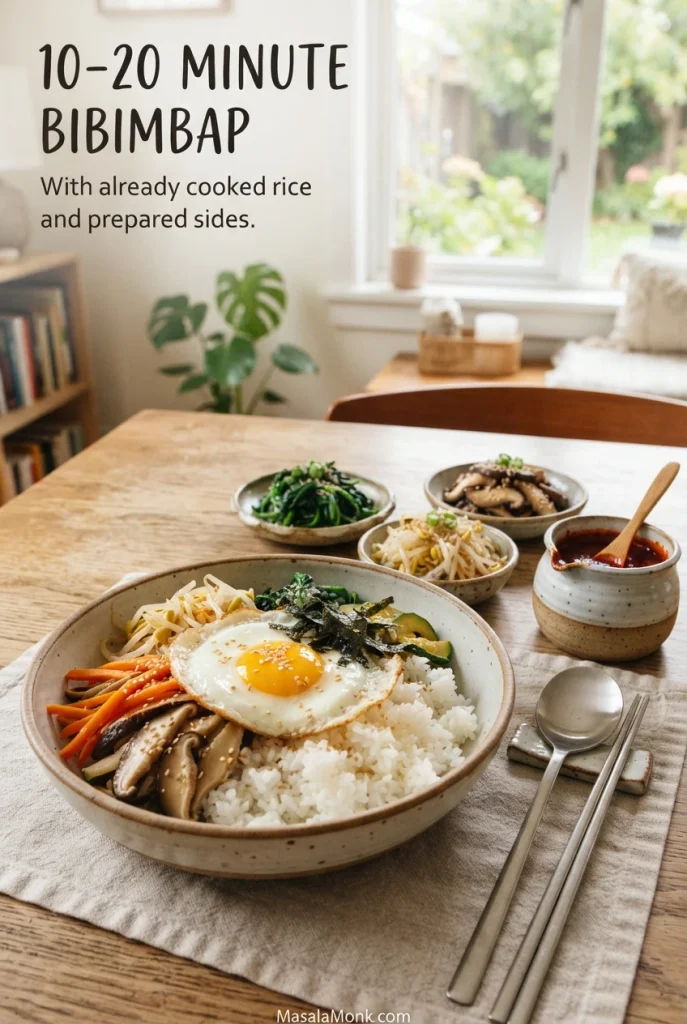
With Cooked Rice and Prepared Vegetable Sides (10–20 Minutes)
Most of the preparation is already done. The 10–20-minute version starts with safely stored cooked rice, seasoned vegetables, and optional cooked protein; you reheat what needs warming and fry the eggs.
What you need for four bowls:
- 660 g cooked short-grain rice
- 500–700 g cooked seasoned vegetables (prepared namul or other suitable sides)
- 200–250 g cooked beef or tofu, optional; this is the cooked weight
- 4 eggs and 2 tsp / 10 ml neutral oil for frying
- Quick sauce: 60 g plain gochujang, 1 tbsp / 15 ml water, and 2 tsp / 10 ml toasted sesame oil; optional 1 tsp sugar. Or use ready-to-serve bibimjang instead.
Reheat and Assemble the Prepared-Banchan Bowls
- Heat the rice: if promptly cooled and refrigerated within its safe storage window, reheat until steaming hot throughout. A small splash of water helps separate clumps. Do not reheat rice more than once.
- Prepare the toppings: reheat cooked protein thoroughly if serving hot (165°F / 74°C where measured). Properly cooked, safely chilled namul may be served cold. Keep everything refrigerated until needed.
- Finish: fry the eggs in the measured oil, divide rice and toppings among four bowls, and begin with 2 tsp quick sauce per bowl. Mix, taste, then add more as needed; the batch allows for adjustment.
Easy Bibimbap with Three Vegetables (About 30–40 Minutes with Cooked Rice)
With cooked rice but no ready-made vegetable sides, cook three toppings in one skillet. The 30–40-minute estimate assumes the rice is already cooked and the tofu, if chosen, is pressed or ready to cook.
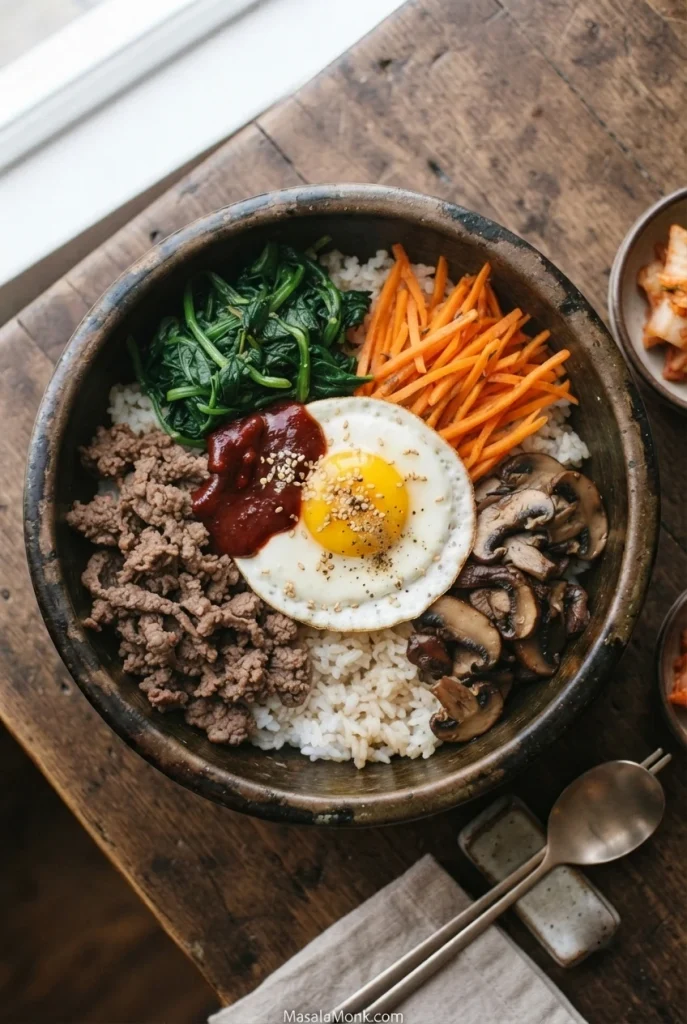
What you need for four bowls:
- 660 g cooked rice
- 150 g carrots, 150 g mushrooms, and 100 g baby spinach
- 280 g ground beef or 300 g pressed firm tofu (or well-drained extra-firm tofu)
- 4 eggs
- For vegetables and protein: 1 tbsp / 15 ml neutral oil, 1 tbsp / 15 ml soy sauce, 1 tsp / 5 ml toasted sesame oil, 1 minced garlic clove, and ⅛ tsp fine salt
- For eggs: another 2 tsp / 10 ml neutral oil
- Quick sauce: 60 g plain gochujang, 1 tbsp / 15 ml water, and 2 tsp / 10 ml toasted sesame oil; optional 1 tsp sugar
Cook and Assemble the Three-Vegetable Shortcut
- Vegetables: cut the carrots into fine matchsticks and slice the mushrooms. Heat 1 tsp of the neutral oil in a wide skillet. Cook mushrooms over medium-high heat for 3–4 minutes, until their liquid begins to evaporate. Add carrots for another 4–6 minutes, until tender; then add spinach for the final 1–2 minutes. Let any new moisture evaporate. Season with the ⅛ tsp salt and transfer to a clean plate.
- Protein: add the remaining 2 tsp neutral oil. Brown ground beef in small crumbles until it reaches 160°F / 71°C, or cook cubed tofu for about 7–10 minutes until browned. Add the measured soy sauce, sesame oil, and garlic near the end to coat.
- Serve: reheat refrigerated rice until steaming hot throughout, fry four eggs with the reserved oil, and divide everything among four bowls. Start with 2 tsp quick sauce per bowl, then mix and adjust.
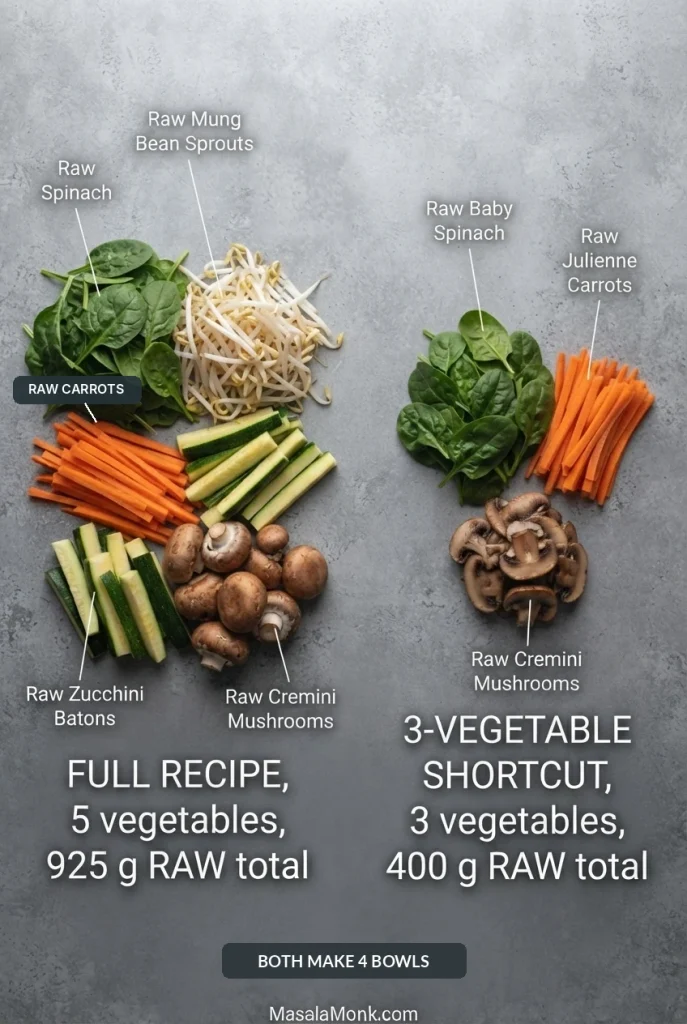
This version uses 400 g raw vegetables, compared with 925 g in the full recipe, so the vegetable portion is lighter as well as quicker. Add more vegetables if you like, cooking in batches when needed so the pan can dry out. The shared skillet also makes the mushrooms softer. Pressing tofu or cooking rice from dry adds time; our tofu meal-prep guide can help with tofu preparation.
Trying the shortcut? Compare it with the full recipe. If the rice or toppings need fixing, see the troubleshooting guide.
Bibimbap Substitutions and Variations
| Change | Use instead | What to expect |
|---|---|---|
| No beef | 300–350 g pressed firm tofu or 150–200 g extra mushrooms | A lighter bowl; keep the egg or omit it for a vegan variation |
| Ground beef | 280 g ground beef | Less slicing and a crumbled topping |
| Different rice | Medium-grain white rice; jasmine or basmati as adaptations | Long-grain rice is less cohesive; adjust cooking water |
| Different vegetables | Cucumber, daikon, extra mushrooms, or prepared namul | Prepare and season for each vegetable’s moisture and texture |
| No gochujang | The mild sesame-soy dressing below | Savory and sesame-forward rather than fermented chili flavor |
Tofu, Ground Beef and Other Toppings
For tofu: press 300–350 g firm tofu, cut into 1–2 cm cubes, and brown in 1 tbsp / 15 ml neutral oil for about 7–10 minutes. Add 2 tsp / 10 ml soy sauce and 1 tsp / 5 ml toasted sesame oil near the end. For a mushroom-only bowl, cook another 150–200 g mushrooms until their moisture evaporates.
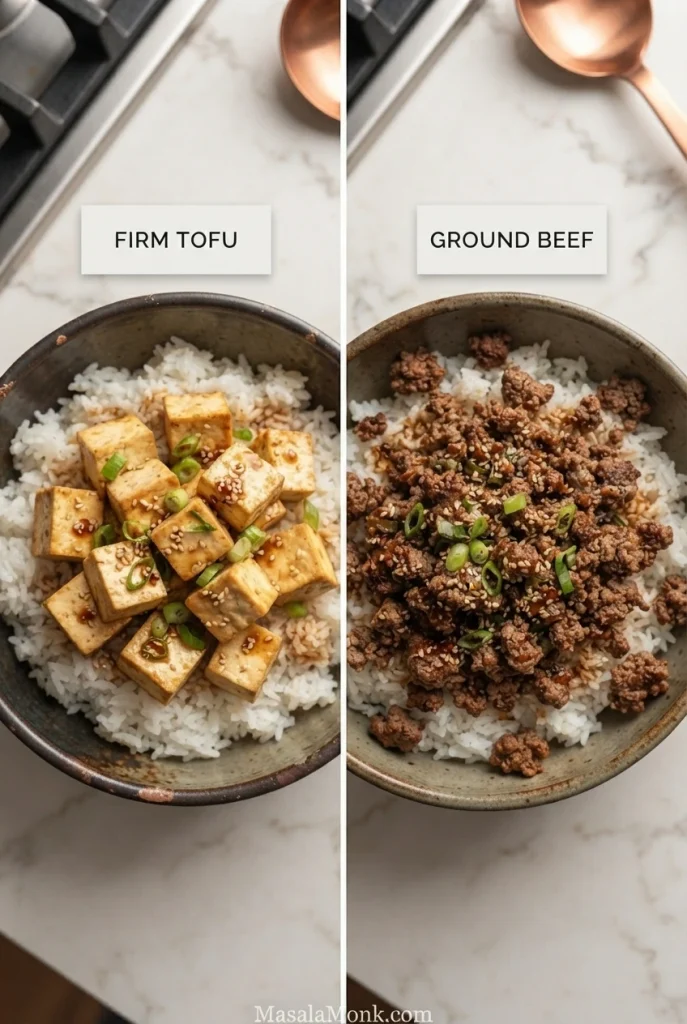
For ground beef: heat the main recipe’s 1 tsp / 5 ml neutral cooking oil in the skillet, brown 280 g ground beef in small crumbles, and cook to 160°F / 71°C. Near the end, stir in the sliced-beef marinade’s 15 ml soy sauce, 8 g sugar, 10 ml sesame oil, 2 minced garlic cloves, and ⅛ tsp black pepper; cook briefly to coat. Use the optional ginger if you like.
Traditional extras: Bibimbap can include gosari (fernbrake), doraji (bellflower root), radish namul, and other prepared vegetables. Dried fernbrake and bellflower root need their own soaking and cooking methods; Maangchi’s classic bibimbap recipe demonstrates both. For a different beef style, our bulgogi guide covers a fuller marinade and skillet finish.
A Non-Spicy Sesame-Soy Dressing
For four bowls, mix 2 tbsp / 30 ml regular soy sauce, 1 tbsp / 15 ml water, and 2 tsp / 10 ml toasted sesame oil. Add 1 tsp / 4 g sugar and 1 tsp sesame seeds, then stir until the sugar dissolves. This is a concentrated, salty seasoning sauce: start with 2 tsp per bowl, mix, and add more only after tasting. It brings sesame and soy flavor without chili heat.

For a vegan bowl, omit beef and egg, use the tofu or mushroom option, and check the labels of gochujang, soy sauce and any prepared vegetable sides. To make it gluten-free, use appropriately labeled sauces: standard soy sauce and some gochujang products contain wheat.
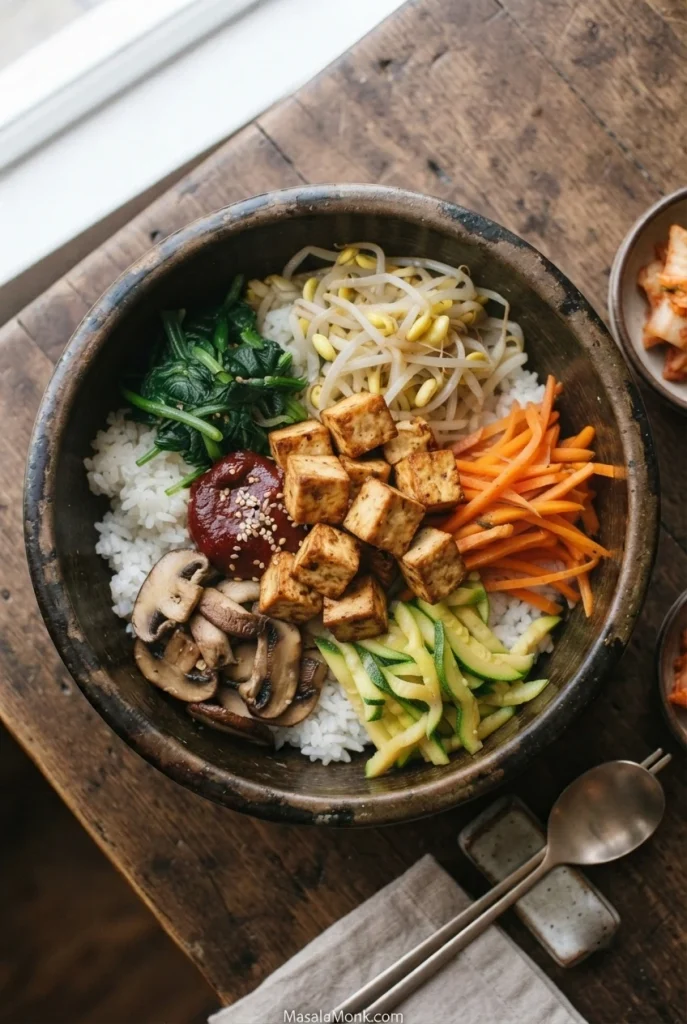
Fix Your Bibimbap: Troubleshooting by Cooking Stage
If the toppings are still separate, you can usually correct their texture in the pan. Once everything has been mixed into the rice, concentrate on practical adjustments to the finished bowl.
Before Assembly: Texture and Moisture
Check the cooked toppings while they are still separate from the rice. Compare the drained and watery examples below, then use the specific texture fixes that follow before you assemble the bowls.
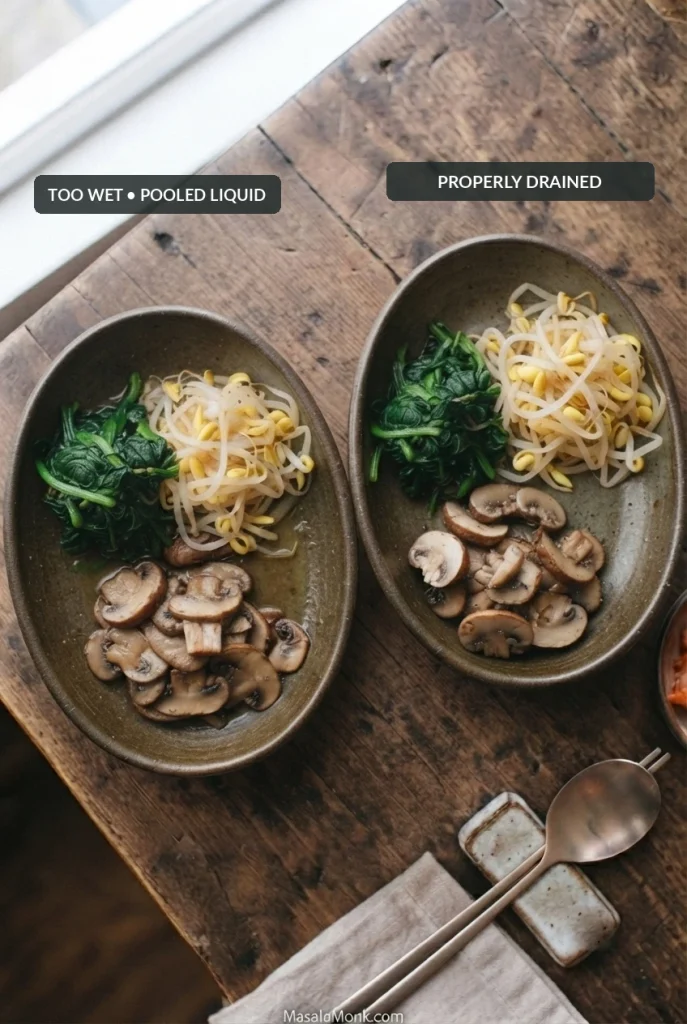
Correct Wet or Uneven Toppings
- Why is my bibimbap watery? Spinach and sprouts may be carrying blanching water, or the zucchini and mushrooms may still be wet. Before assembly, squeeze spinach, drain sprouts, and let skillet vegetables cook off their liquid. Do not put visibly wet toppings onto the rice.
- Rice is mushy: excess cooking water or a rice variety needing a different ratio may be responsible. You cannot restore separate, springy grains by frying them; use the correct rice-and-water method next time.
- Rice is firm in the middle: while it is still freshly cooking, add a tablespoon or two of hot water, cover, cook briefly on low, and rest again. Taste before serving; the rice texture comparison can help you judge the result.
- Carrots are hard while zucchini collapses: before mixing, give the carrots more skillet time and move tender zucchini off the heat. Cooking them in successive batches helps each reach its own doneness.
- Mushrooms are pale and wet: they probably steamed in a crowded skillet. While they are still separate, spread them in a hotter pan and let the moisture cook away before adding them to rice.
After Mixing: Flavor and Balance
Once bibimbap is mixed, the fixes involve adjusting the whole bowl rather than recooking separate toppings. The example below shows a spicy bowl being adjusted with plain rice; the guidance that follows covers other flavor and temperature problems.
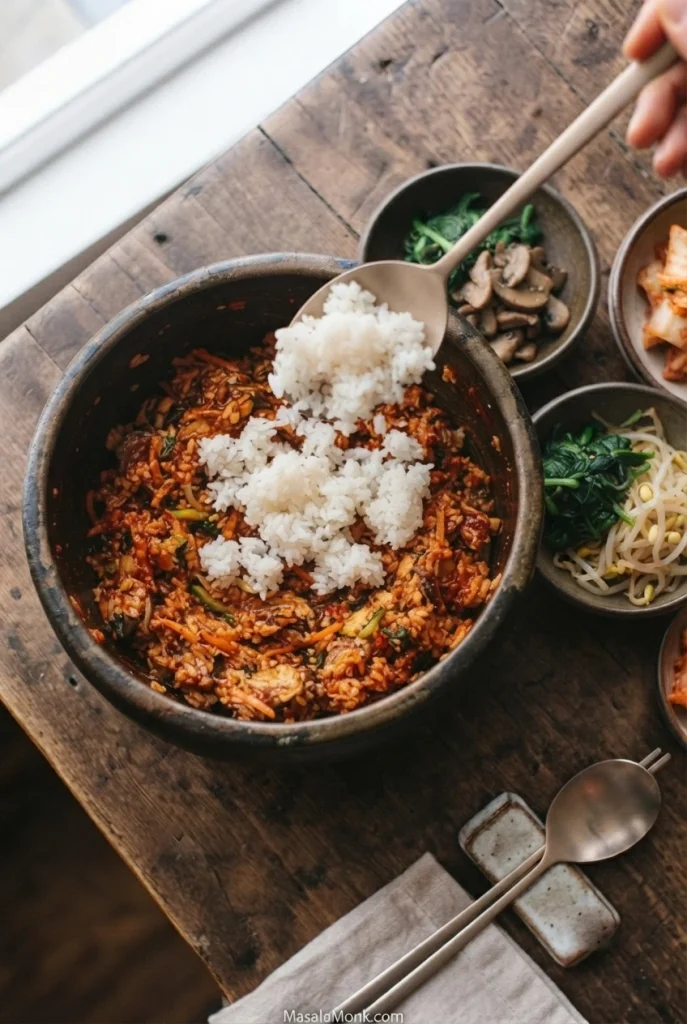
Fixes for Water, Seasoning and Temperature
- The finished bowl is watery: spoon away pooled liquid and add a little extra hot, unsauced rice if available. Once mixed, you cannot dry the individual vegetables in a skillet.
- The bowl tastes bland: mix completely first. Then add sauce in small amounts and check toasted sesame aroma. Extra chili is not always the solution; lightly salted vegetables may need seasoning.
- The bowl is too spicy: stop adding gochujang and mix in more unsauced rice or cooked vegetables if available. An extra egg or plain tofu can also spread the heat across more food. For the next bowl, use less red sauce or choose the mild sesame-soy dressing from the outset; adding it to an already spicy bowl will not undo the chili heat.
- The bowl tastes too sweet or salty: gochujang and soy sauce may already be strongly seasoned. More plain rice and vegetables can dilute the effect. Next time taste the paste and reduce added sugar.
- The beef is dry or tough: thin slices cannot be made juicy again by simmering them longer. Cut them smaller, mix with the moist rice, and next time use a tender cut in short batches.
- Everything is lukewarm: before assembly, make sure the rice is hot and the beef has just finished cooking; fry the eggs last. If the bowl is already mixed and has been handled safely, reheat the portion thoroughly if necessary, knowing the egg and vegetables will soften. Do not repeatedly reheat cooked rice.
Food Safety Notes
Cooking and storage are different safety issues. Meat or sprouts that are undercooked but have been handled safely can be cooked further. Rice or other food left unrefrigerated too long may need to be discarded; reheating won’t reliably make mishandled rice safe. Fully cooked, safely refrigerated sprouts can be served cold.
Safe temperatures: US guidance lists 160°F / 71°C for ground beef, 145°F / 63°C plus a 3-minute rest for whole beef cuts, and 165°F / 74°C for reheated leftovers. Very thin beef strips can be difficult to probe; cook them thoroughly and don’t judge by color alone. Firmly cooked egg yolks and whites are safer for higher-risk diners. See FoodSafety.gov’s cooking-temperature chart.
Need to retry a cooking step? Return to the full method. Or back to the introduction.
Make Ahead Without Losing the Good Texture
Seasoned vegetables and sauce can be prepared a day ahead. Cool and refrigerate each cooked topping promptly in its own shallow container. Cut and chill the beef ahead, then marinate it in the refrigerator before cooking; fry the eggs fresh when serving.
| Ahead of time | Just before serving |
|---|---|
| Wash and cut vegetables; make sauce | Cook or reheat rice properly |
| Cook and refrigerate spinach, sprouts, carrots, zucchini and mushrooms separately | Bring safe-to-serve toppings to the temperature you prefer |
| Slice and refrigerate beef in a covered container | Marinate for about 20 minutes in the fridge, cook in batches, then fry eggs |
| Set out bowls and clean utensils | Arrange, sauce lightly, and mix at the table |
How to Store and Reheat Bibimbap Safely
Store rice, cooked vegetables, beef, and sauce in separate, clean, covered containers so the rice stays dry. Keep the refrigerator at 40°F / 4°C or below. Refrigerate perishable food within 2 hours of cooking, or within 1 hour if the surrounding temperature is above 90°F / 32°C.
For a conservative approach, use cooked beef and vegetables within 48 hours if promptly cooled and refrigerated, or freeze them. Reheat leftovers thoroughly if serving hot. Zucchini and spinach may soften after freezing and thawing; fried eggs are best made fresh.
Cooked Rice: Cool, Refrigerate and Reheat Once
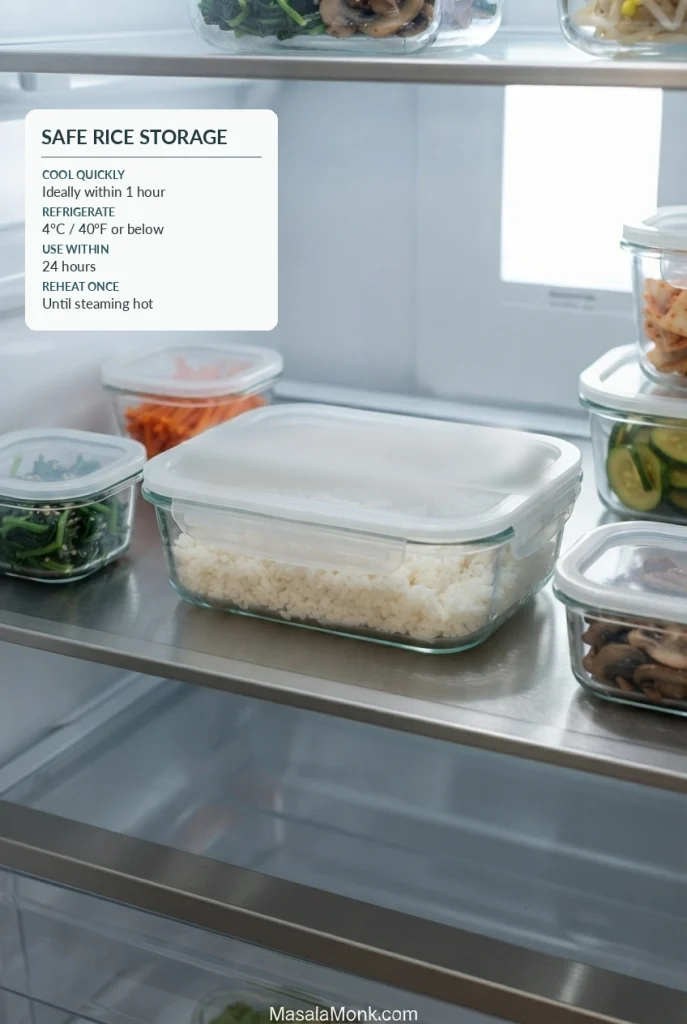
Be especially careful with cooked rice. Following the conservative UK Food Standards Agency guidance, cool it quickly—ideally within one hour—and refrigerate promptly. Use it within 24 hours and reheat only once until steaming hot throughout. Do not leave a pot of cooked rice sitting at room temperature while preparing toppings. Freeze promptly in shallow portions if not using it within that window. Read the UK government’s rice-handling advice.
Mixed gochujang sauce: as a conservative home-storage guideline, refrigerate the prepared, water-thinned sauce promptly in a clean, covered container at 40°F / 4°C or below and use it within 3 days. Use a clean spoon each time. This isn’t the shelf life of the original tub of paste.
Packed lunches: chill all cooked components promptly and keep them at 40°F / 4°C or below until eating, using a refrigerator or an insulated bag with at least two cold sources. Firmly cook the egg if including it, but proper refrigeration is still essential. Without reliable cold storage, choose a shelf-stable lunch instead.
Ready to cook again? Back to the recipe and measurements · Back to top.
Bibimbap Questions
Can I use frozen spinach?
Yes. Cook it according to the package instructions, drain, and squeeze out as much water as possible before the sesame-garlic seasoning. Its texture will be softer than freshly blanched spinach, but it works well in a mixed bowl.
Can I add kimchi to bibimbap?
Yes. Add a little chopped, well-drained kimchi just before mixing. Its tang and chili heat can be strong, so start with less gochujang and adjust after tasting. Kimchi is optional; the bowl doesn’t depend on it.
The final stir brings the separately seasoned toppings into one meal. Make all five vegetables from scratch when you have time, or start with cooked rice and a few prepared sides. Did you take the full route or the quicker one? Tell us what went into your bibimbap.








