
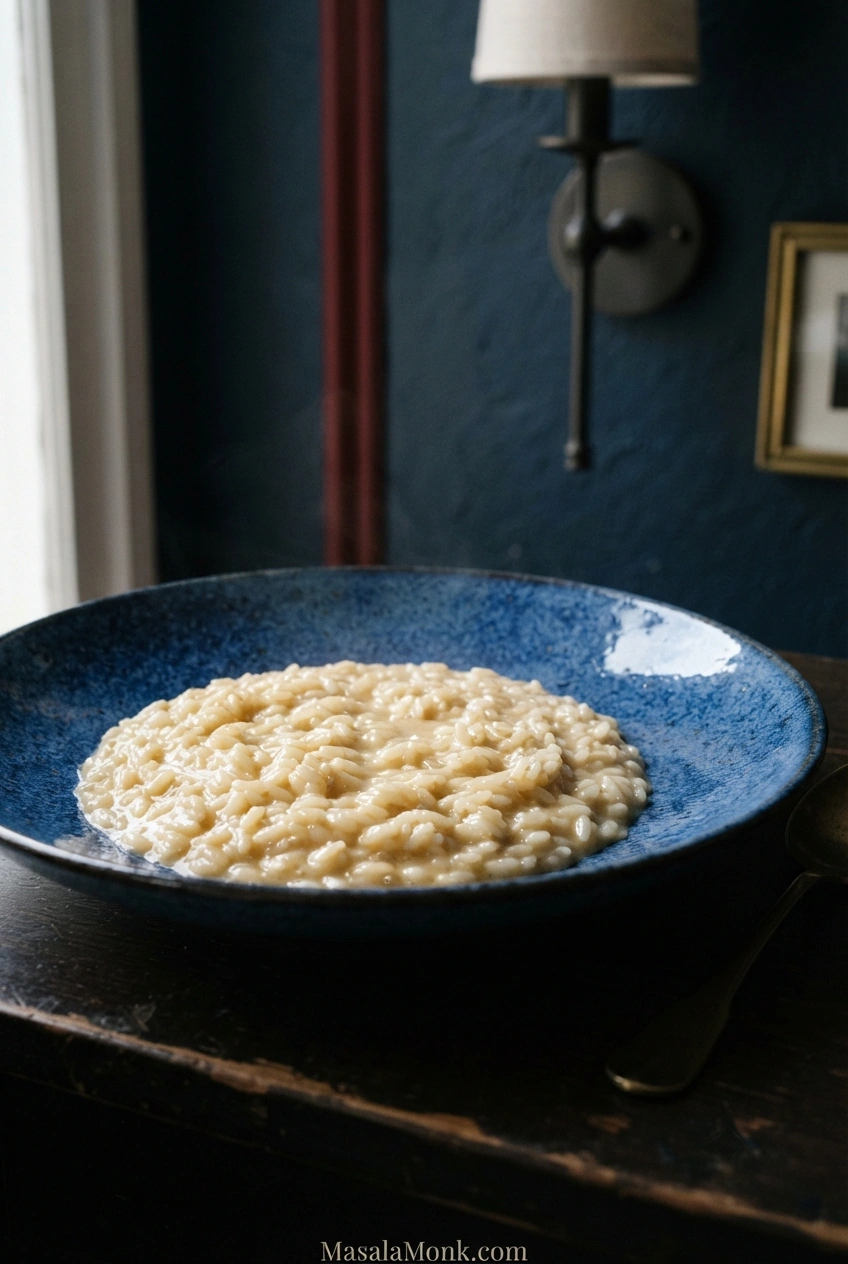
Good Italian risotto arrives at the table loose and glossy. The rice is tender with a little bite, the onion has mellowed into the background, and the Parmesan gives the sauce its savoury finish. Spoon it onto a warm plate and it should spread softly instead of sitting in a stiff mound.
This stovetop risotto recipe uses Arborio or Carnaroli rice, warm stock, onion, butter and Parmesan; white wine is optional, and there’s no need for heavy cream. Allow about 40–60 minutes from preparation to serving for four modest first courses or three generous mains.
Find What You Need
Start cooking
Fix or understand
- Fix crunchy, thick or watery risotto
- Why risotto gets creamy without cream
- Best rice varieties and substitutes
Adapt, serve and save
- Wine, cheese and dairy-free options
- Portions and risotto for two
- Add-ins and serving ideas
- Storing and reheating leftovers
Risotto Recipe: Ingredients and Equipment
Yield: 4 moderate first-course portions or about 3 generous mains. Prep: 10–15 minutes. Cooking: roughly 30–45 minutes, including the onion and final finish. Total: about 40–60 minutes. The rice typically simmers for 18–30 minutes, though its tenderness matters more than the timer. Cooking for two? Find the lighter and main-course quantities here.
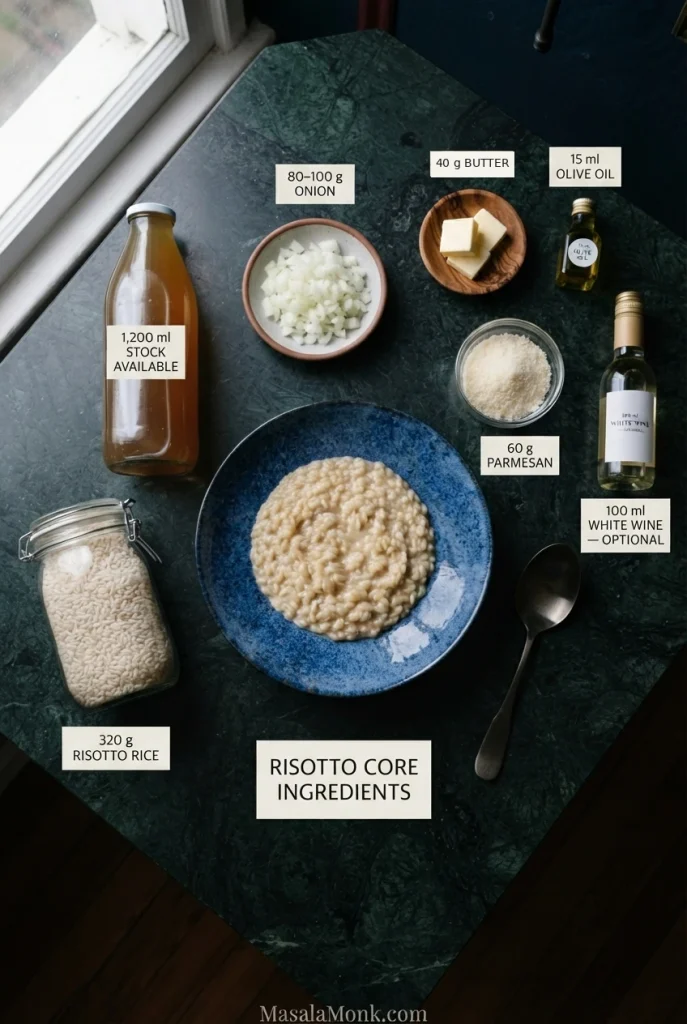
Ingredients for the full risotto batch
- 320 g (11.3 oz) Arborio or Carnaroli rice — roughly 1⅔ US cups of dry Arborio as a guide. Brand and measuring differences make gram weights more reliable than cups. Do not rinse.
- 1,200 ml (about 5 US cups) mild, low-sodium chicken or vegetable stock — a supply to keep hot, not an amount you must force into the rice.
- 250 ml (about 1 US cup) extra water, to heat if needed — useful if the rice still needs cooking after the stock runs low.
- 80–100 g (2.8–3.5 oz) onion or shallot — about 1 small onion, finely chopped.
- 15 ml (1 tbsp) olive oil.
- 40 g (1.4 oz; roughly 3 tbsp) unsalted butter — 10 g for the onion and 30 g, preferably cold, for finishing.
- 100 ml (a little under ½ US cup) dry white wine, optional.
- 60 g (2.1 oz) finely grated Parmesan — preferably grated from a block for a smoother finish. For a vegetarian version, choose a comparable hard cheese made with vegetarian or microbial rennet.
- Fine salt and freshly ground black pepper — add to taste, mindful of the stock and cheese.
- Optional: up to ½ tsp (2.5 ml) fresh lemon juice — only for a final flavour adjustment if needed.
Choosing the pan, cheese and stock
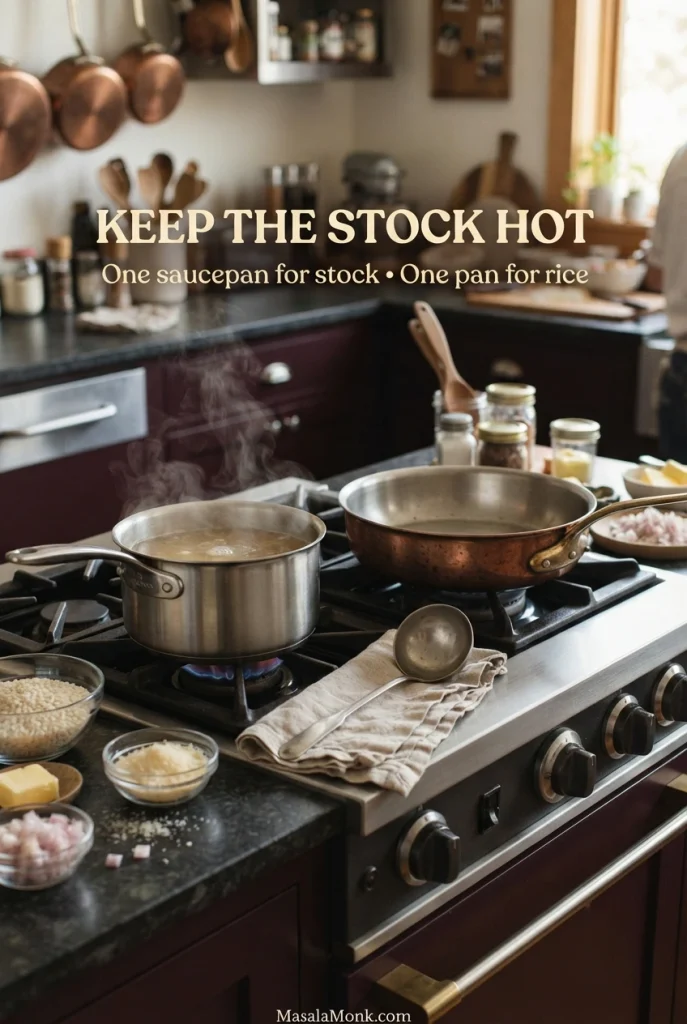
Equipment: Use a heavy-bottomed, high-sided 26–28 cm (10–11 inch) sauté pan holding about 3–4 litres. Keep a separate saucepan for hot stock, plus a wooden spoon or spatula, a ladle and a fine grater. A sturdy saucepan also works; no special risotto pan is needed.
This is a classic Parmesan risotto in the style of risotto alla Parmigiana. Butter and cheese enrich the rice without turning it into a heavy cheese sauce. For help choosing the cheese, see our guide to Parmesan varieties.
Taste the stock before you start. It should be pleasant and lightly seasoned on its own. A very salty or strongly herbal broth will dominate the rice as the liquid reduces, so choose a mild one.
Not sure which rice or finishing ingredients to use? Compare the rice varieties or check wine-free and dairy-free alternatives before heating the pan.
How to Make Risotto on the Stovetop
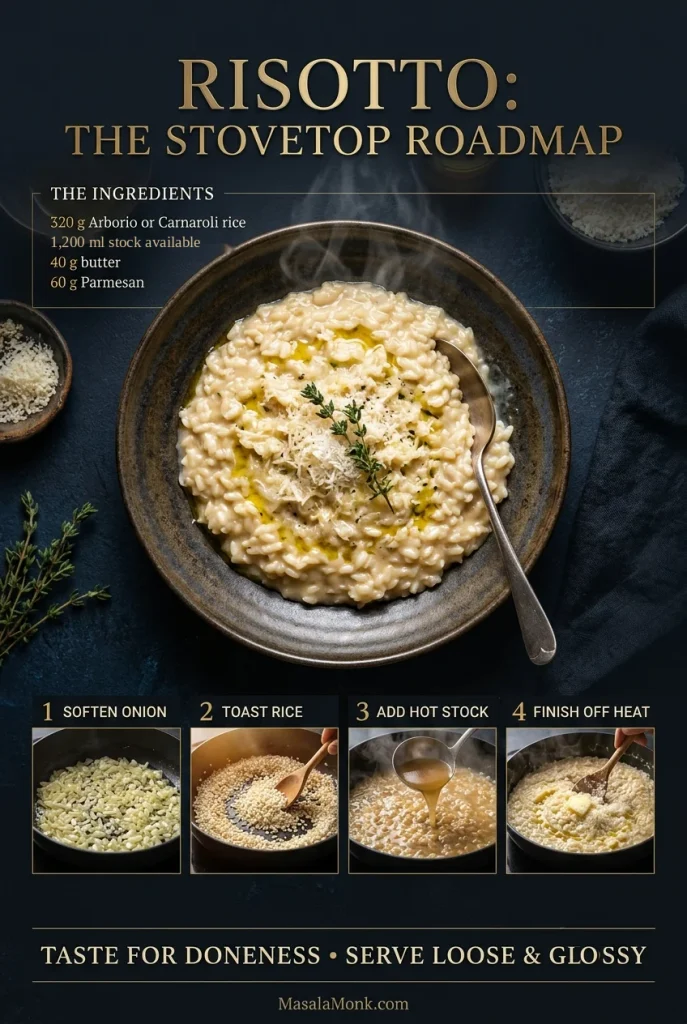
To make risotto, soften the onion, toast the unrinsed rice, then add hot stock in stages while it simmers. Taste until the grains are tender, and stir in butter and Parmesan off the heat. Keep the pan uncovered and stir regularly, but not nonstop.
Already cooking? Jump to stock additions, the off-heat finish or texture fixes.
Step 1: Prepare ingredients and warm the stock
Finely chop the onion, weigh the rice and grate the Parmesan. Heat the 1,200 ml stock in a separate saucepan until steaming, then keep it hot over low heat without letting it boil away. Keep 250 ml water nearby; heat it if the stock runs low before the rice is tender. With everything measured, you can concentrate on the pan.
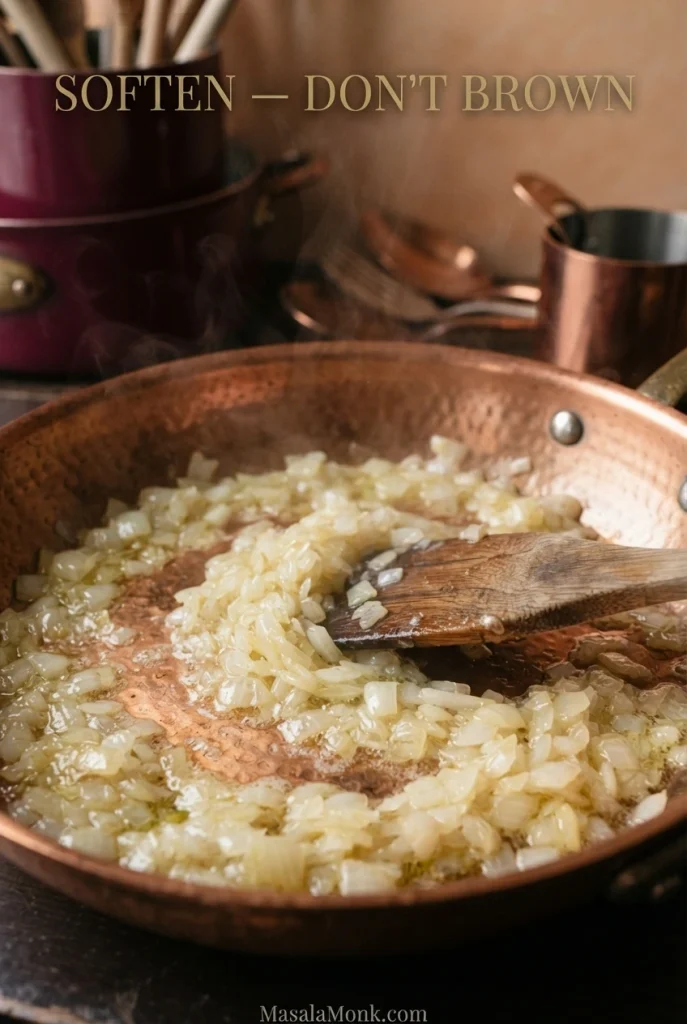
Step 2: Soften the onion without browning it
Heat 15 ml olive oil and 10 g butter in the main pan over medium-low to medium heat. Add the 80–100 g chopped onion or shallot and a small pinch of salt. Stir occasionally for 5–8 minutes, until soft, pale and translucent. Lower the heat if it colours too quickly. The onion should taste gently sweet, not deeply caramelised.
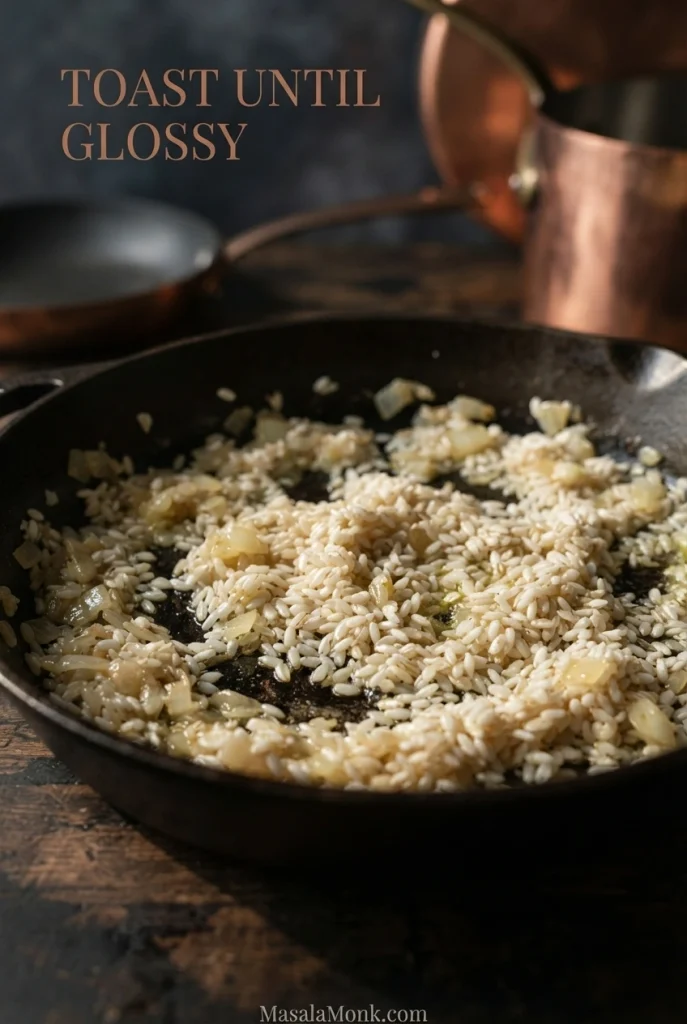
Step 3: Toast the rice until glossy
Add the 320 g dry, unrinsed Arborio or Carnaroli rice. Stir to coat the grains in the fat, then cook for 2–3 minutes over medium heat. Look for glossy grains with slightly translucent edges and pale centres. You may hear a faint, dry rustle as the rice moves through the pan. If the grains turn golden quickly or start sticking, lower the heat.
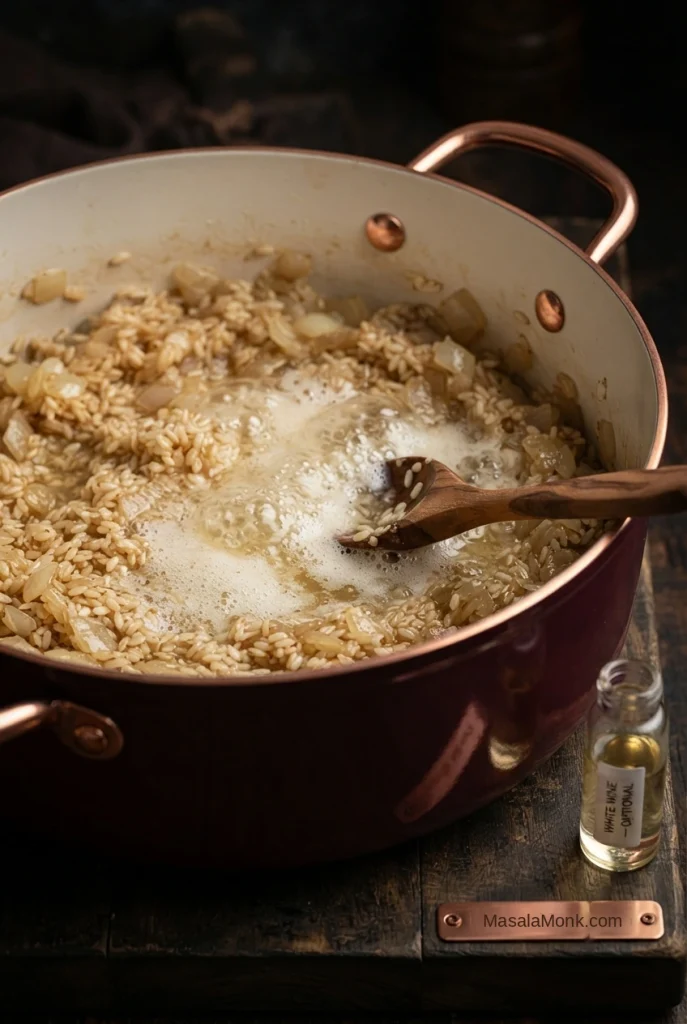
Step 4: Add wine, or go straight to stock
Using wine? Pour in 100 ml dry white wine and let it bubble, stirring, until mostly reduced and the sharp aroma has mellowed, usually a couple of minutes. Skipping wine? Begin adding hot stock in the next step.
Step 5: Add hot stock and simmer the rice
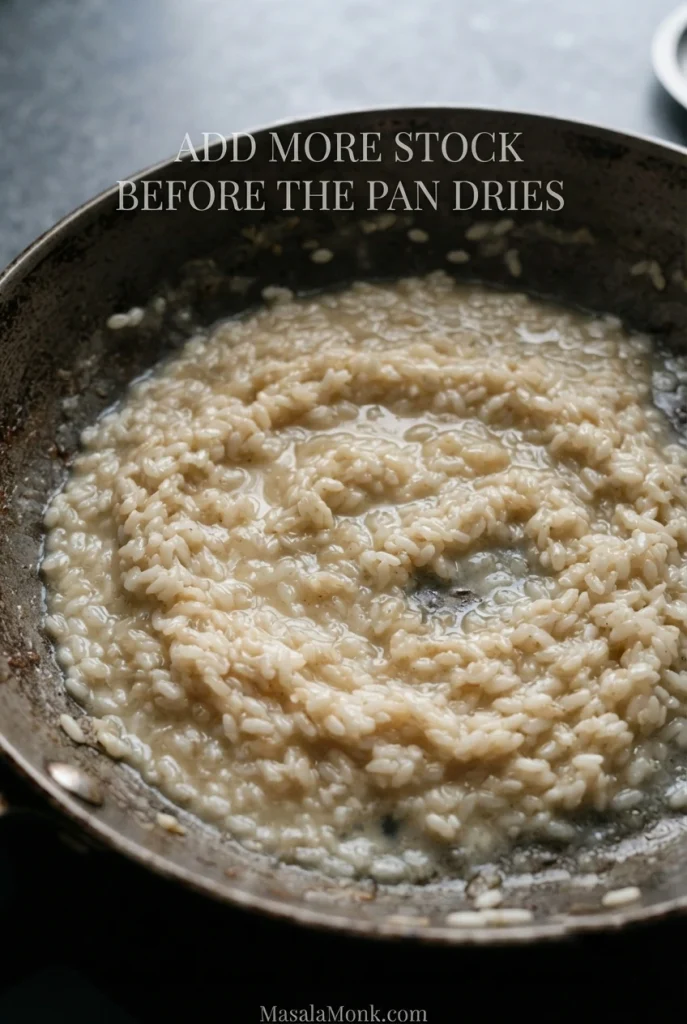
Add about 150–200 ml hot stock, enough to surround the grains with liquid. Stir across the bottom of the pan and let the rice simmer gently. As the stock is absorbed, add another ladle before the pan becomes dry. Stir regularly, sweeping the base more often as the sauce thickens.
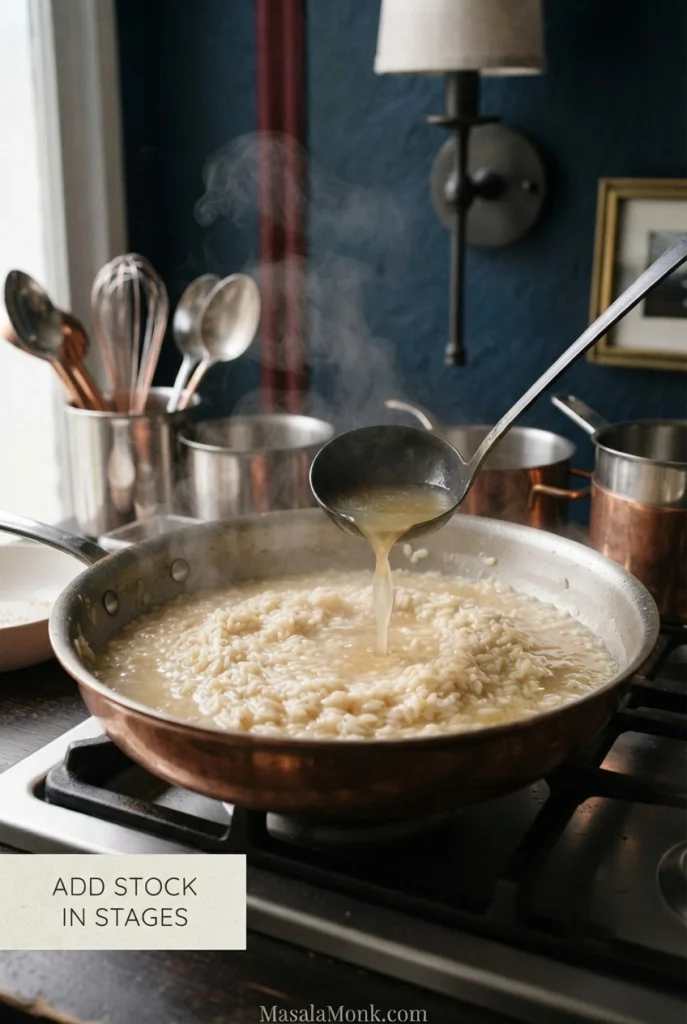
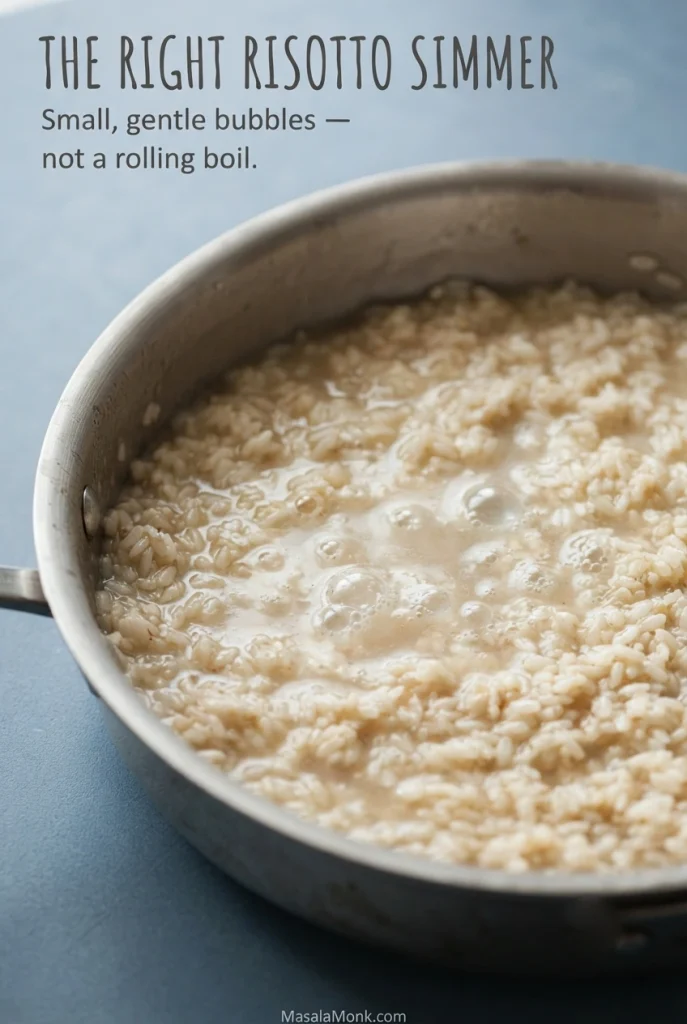
As the rice cooks, the liquid turns cloudier and begins to form a light sauce around the grains. Keep it gently bubbling and add another ladle before the pan dries out. If the liquid vanishes almost at once, lower the heat slightly; if nothing bubbles, turn it up a touch.
What a gentle risotto simmer looks like
Small bubbles should rise around the grains without the rice jumping or splashing. If the pan boils hard, the liquid may disappear faster than the rice centres soften; lower the heat before increasing the amount of stock.
Step 6: Taste the rice for doneness
About 15 minutes after the first stock addition, taste a few grains from different parts of the pan. If the centres feel hard or chalky, keep the rice at a gentle simmer, add more hot liquid and taste again after a few minutes. It often takes 18–30 minutes of simmering, but your rice and stove may need longer.

Stop when the grains are tender, with a slight bite, and still hold their shape. You may have stock left or need extra hot water. Both are normal; use the amount your rice needs.
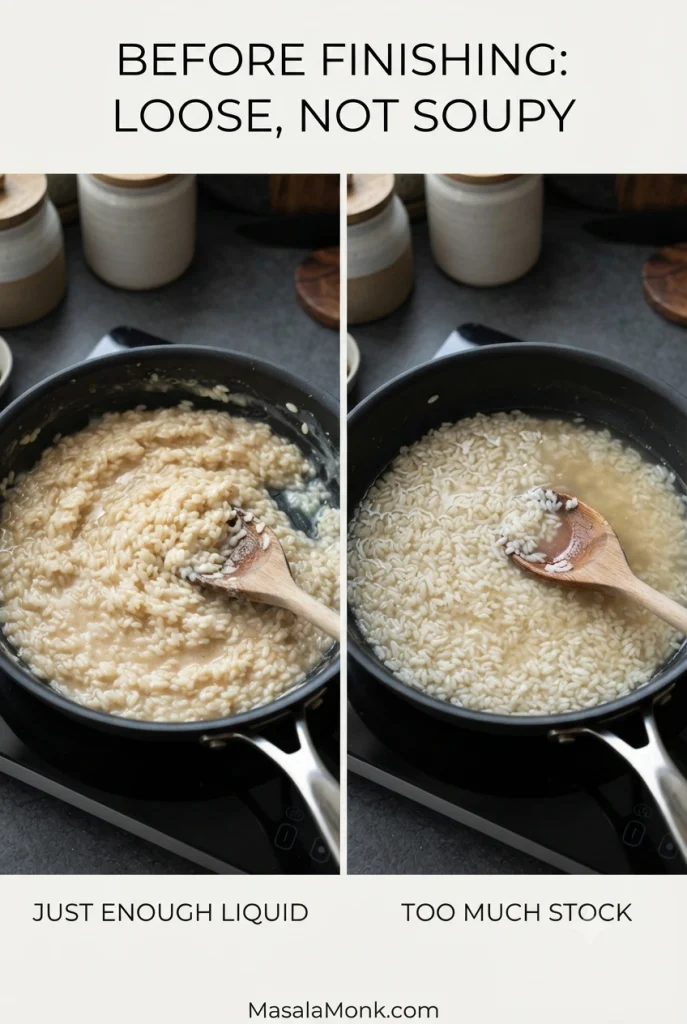
The tender rice should still have a little loose, starchy liquid around it. It shouldn’t be dry or sitting in a deep pool of stock. If you have added too much, see the watery-risotto fix rather than overcooking the grains.
Step 7: Finish off heat with butter and Parmesan
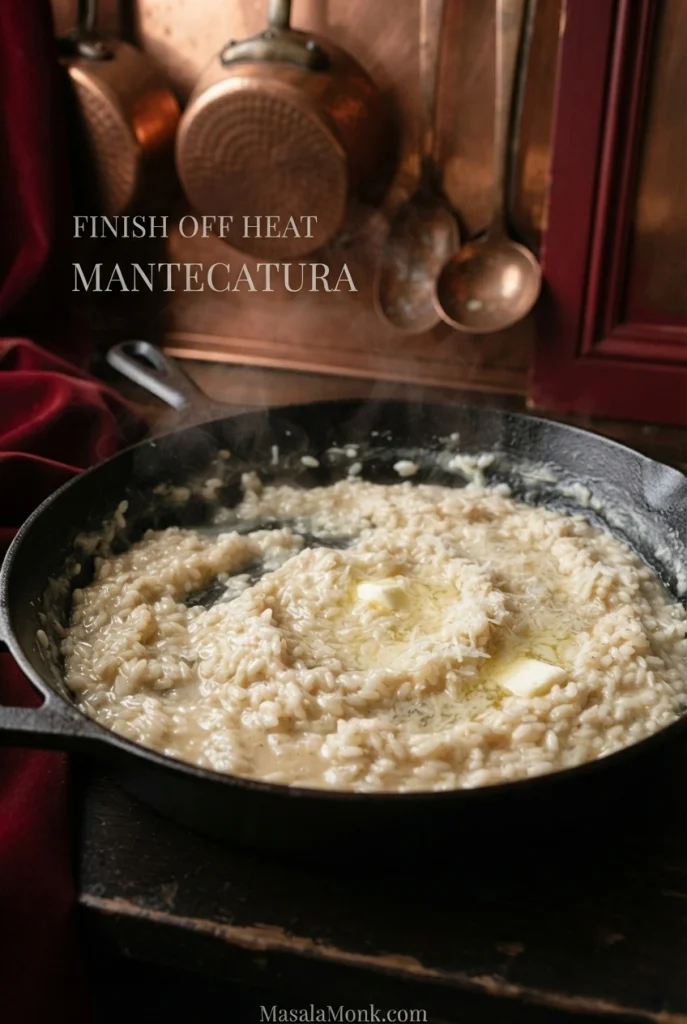
Take the pan off the heat. Add the remaining 30 g cold butter and 60 g finely grated Parmesan. Stir or gently shake the pan until both are incorporated and the grains are coated in a smooth, glossy sauce. This off-heat finish is called mantecatura.
Taste before adding more salt; the stock and Parmesan may already provide enough. Add black pepper if you like. If the seasoning is right but the risotto tastes a little heavy, a few drops of optional lemon juice can brighten it. Taste again before adding more.
Step 8: Check the consistency and serve
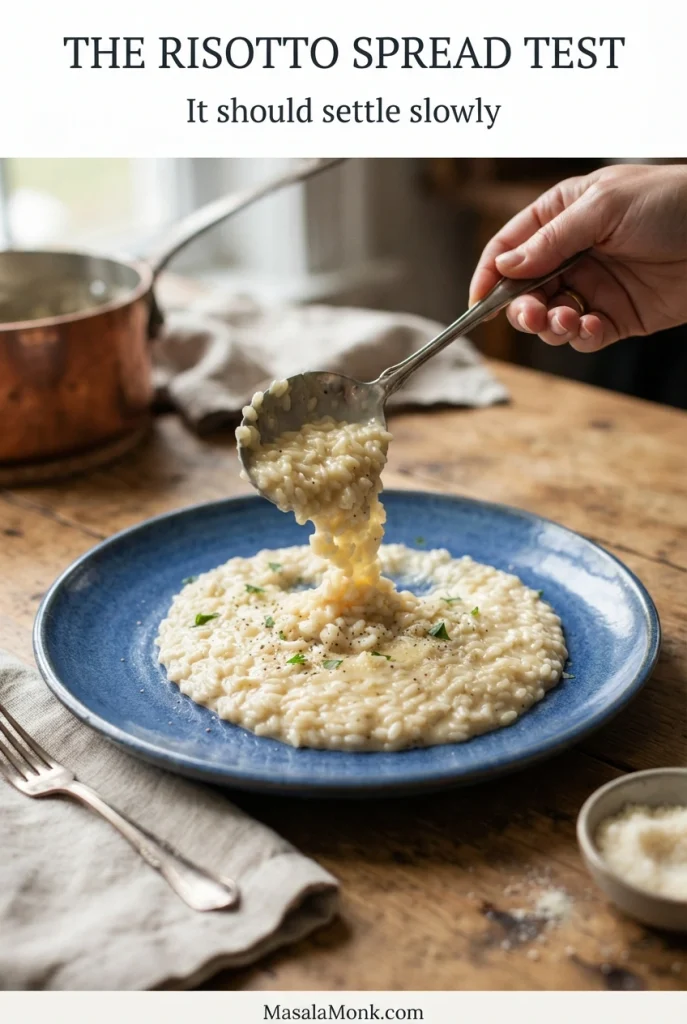
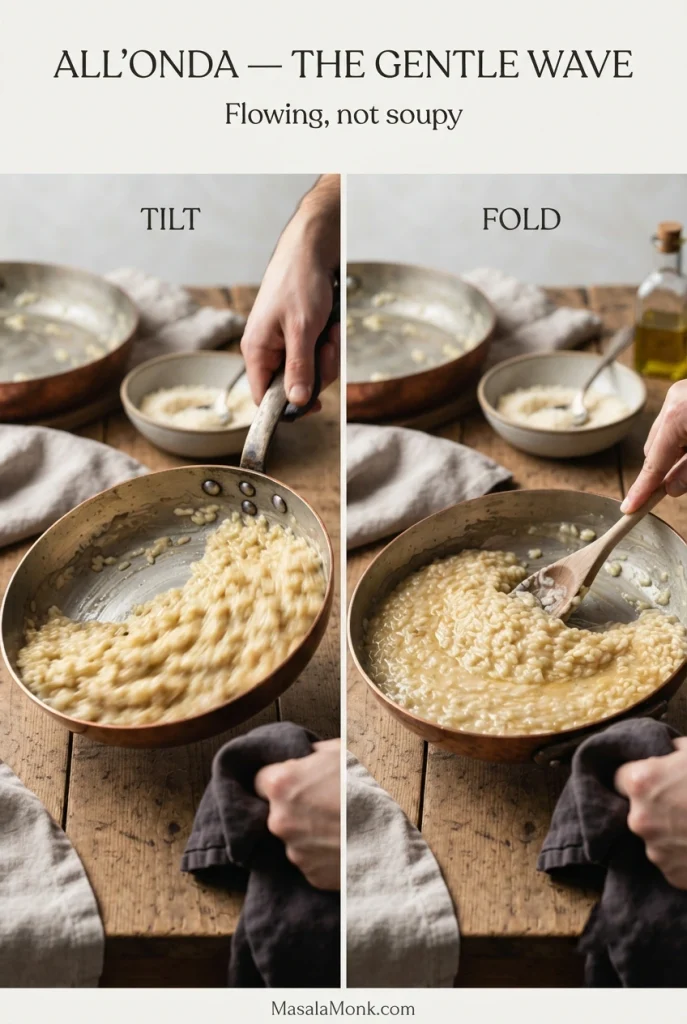
Tilt the pan or spoon a little risotto onto a warm, shallow plate. It should settle and spread slowly, with distinct grains in a glossy sauce. If it sits in a mound, stir in hot stock or water a splash at a time off heat. A quick swirl can bring a slightly separated sauce back together. Serve immediately.
How to Tell When Risotto Is Done
Risotto is ready when the grains are tender with a slight bite and the sauce settles into a gentle spread on a warm plate. Italian cooks call these qualities al dente and all’onda—“like a wave.” Taste grains from different parts of the pan rather than judging by colour alone. If the rice is still hard, keep simmering; if it is tender but stiff, loosen the sauce off heat.
Risotto Troubleshooting: How to Fix Common Problems
Taste a grain first. Is it hard, tender or mushy? Then match what you see in the pan to the quickest useful fix.
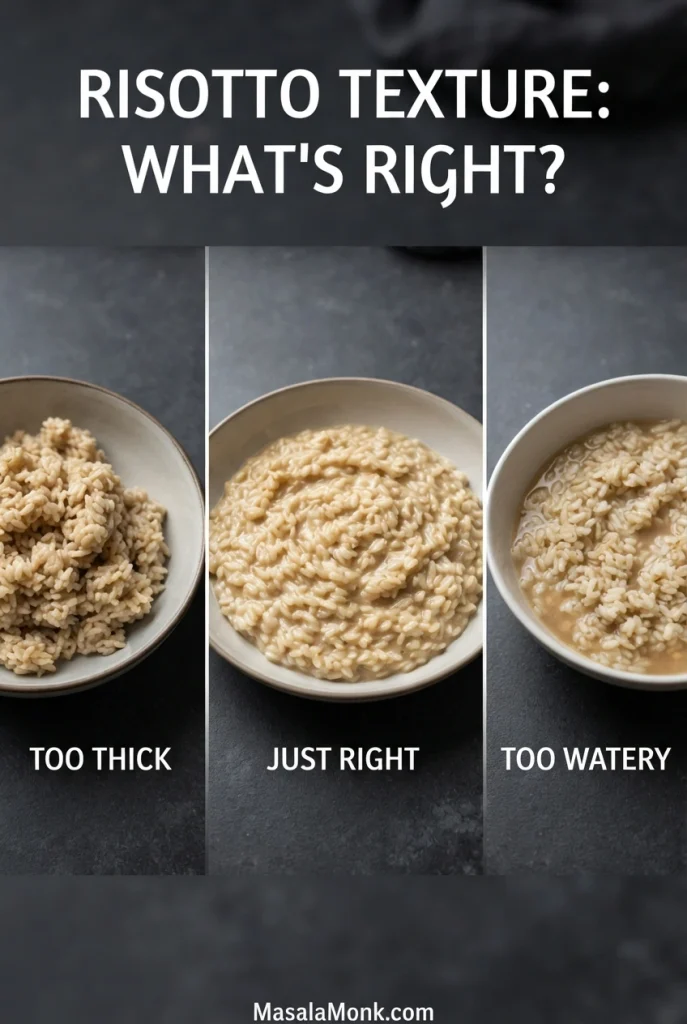
Risotto texture and sauce fixes
| Problem | What to do |
|---|---|
| Rice is still crunchy | Keep it gently simmering with hot stock or water. Taste again in a few minutes. |
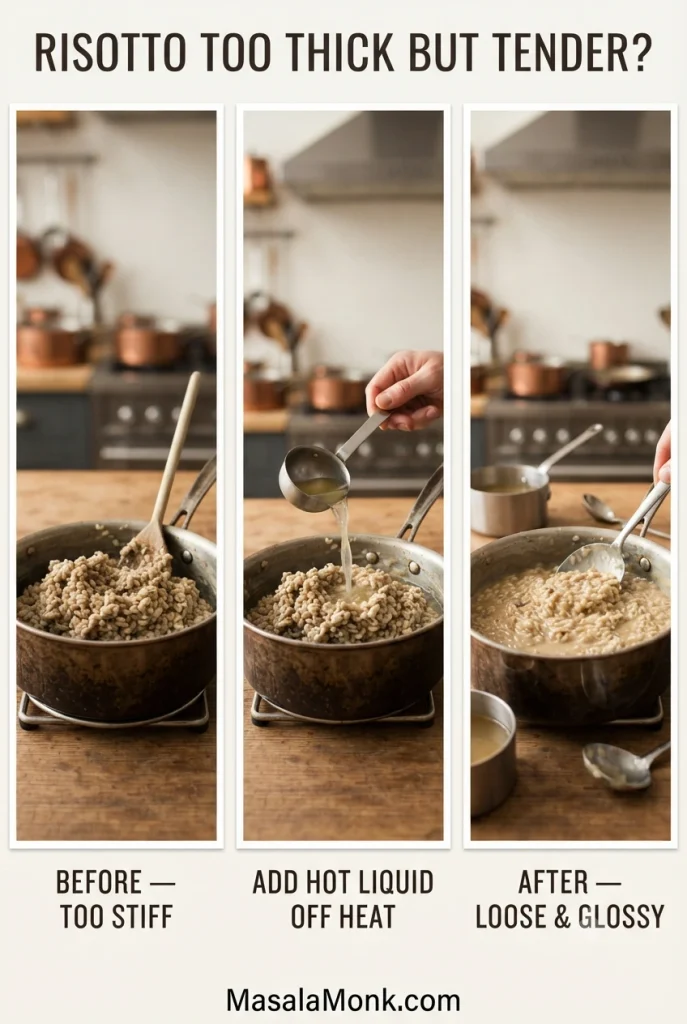
| Rice is tender but too thick | Take the pan off the heat and loosen with a splash of hot stock or water. More cooking will only soften the grains. |
| Too watery before finishing | If the grains are firm, simmer gently. If they are tender but swimming, take the pan off the heat. As a last resort, ladle a little pooled liquid into a cup and reserve it in case you need it back. Removing too much starch-rich stock will weaken the sauce. |
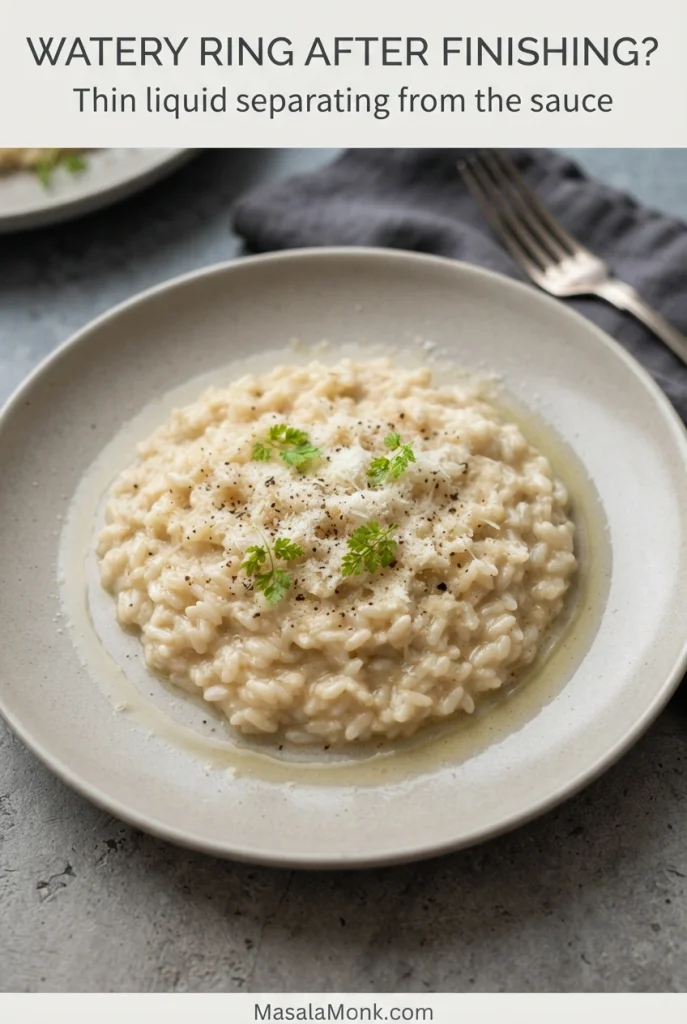
| Watery ring after finishing | Swirl or stir gently off the heat to bring a mildly separated sauce back together. A deep pool of liquid may not be recoverable without overcooking. |
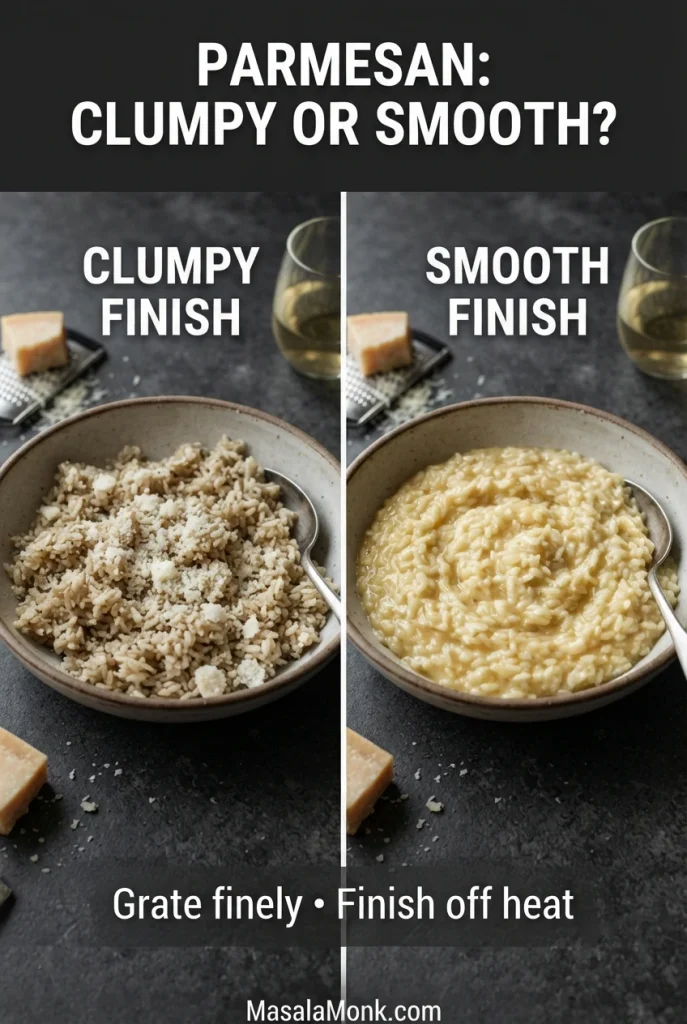
| Clumpy cheese or oily sauce | Move off the heat, add a splash of warm stock and stir gently. Finely grate the cheese and finish off heat next time. |
Uneven cooking and flavour problems
| Problem | What to do |
|---|---|
| Some grains hard, others mushy | Check for dry patches and uneven heat. Add hot liquid and stir gently across the base; softened grains won’t firm up again. |
| Scorched bottom | Lower the heat and transfer only the unburnt rice to a clean pan, without scraping the bottom. |
| Bland flavour | Taste after adding Parmesan. Adjust salt in small amounts; optional lemon can brighten the finish. |
| Too salty | Stop adding salty stock or cheese. A little plain hot water can soften mild saltiness, but it also thins the sauce. |
| Too much wine flavour | If the rice still needs cooking, continue with mild stock. If it is already tender, further simmering is more likely to soften the grains than fix a strong wine taste. |
| Bitter flavour | Check whether the onion scorched or the stock or wine tastes bitter. Severe burnt flavour is rarely salvageable. |
| All the grains are mushy | Stop cooking. Extra liquid may loosen the sauce but cannot restore the grain texture; cool leftovers promptly for another use. |
Is the problem the grain or the sauce?
The texture of the sauce cannot tell you if the grain centre is cooked. Use the grain test to choose between continued simmering and an off-heat adjustment.
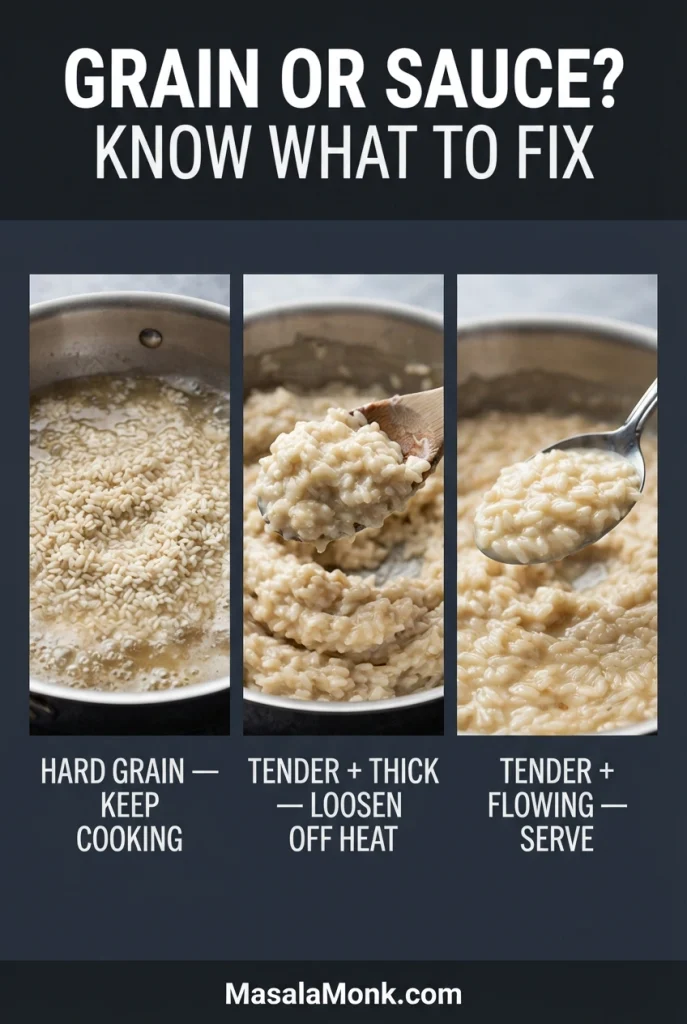
Still hard after 35–40 minutes of simmering? First check that the stock is hot and the rice is gently bubbling. A wide pan, unfamiliar rice or high altitude may demand more liquid and time. Keep going gently and taste again.
Rescue risotto that is tender but too thick
Add hot liquid in small splashes, folding after each one, so you can stop as soon as the sauce moves freely. Extra cooking will not restore firmness to grains that are already tender.
Recognize a watery ring after finishing
A thin halo of separated liquid is a different problem from a bowl that is simply loose. Before adding more cheese or heat, try gently bringing the rice and sauce back together off the burner.
Prevent and fix clumpy Parmesan
A very hot, concentrated pan can make grated cheese seize into visible patches. Remove the pan from the burner and add the cheese gradually while stirring, rather than trying to melt clumps over high heat.
Still working on the batch? If the rice remains firm, go back to adding hot stock. If the grains are tender, check the final consistency instead. Back to contents.
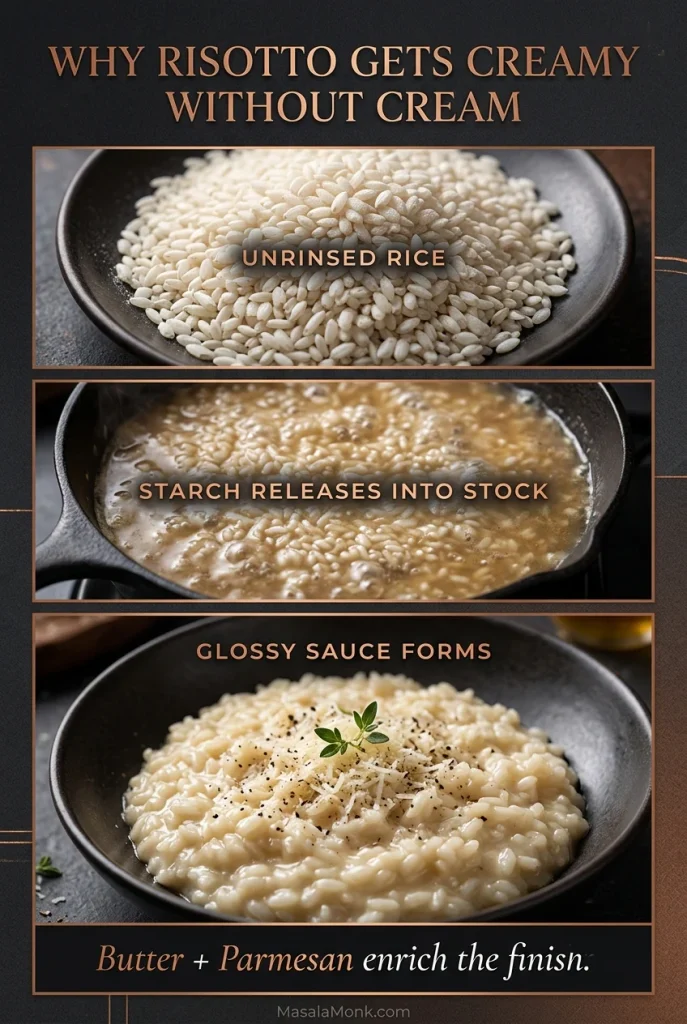
Why Risotto Becomes Creamy Without Cream
Risotto gets its creamy texture from the rice itself. As unrinsed Arborio or Carnaroli cooks, released starch thickens the surrounding stock. Gradual additions of hot liquid and regular stirring help the sauce come together; butter and Parmesan enrich it at the end.
Best Rice for Risotto: Arborio, Carnaroli and Alternatives
Both Arborio and Carnaroli work with this recipe. Arborio is often easier to find; Carnaroli is a good choice if you prefer firmer, more distinct grains.
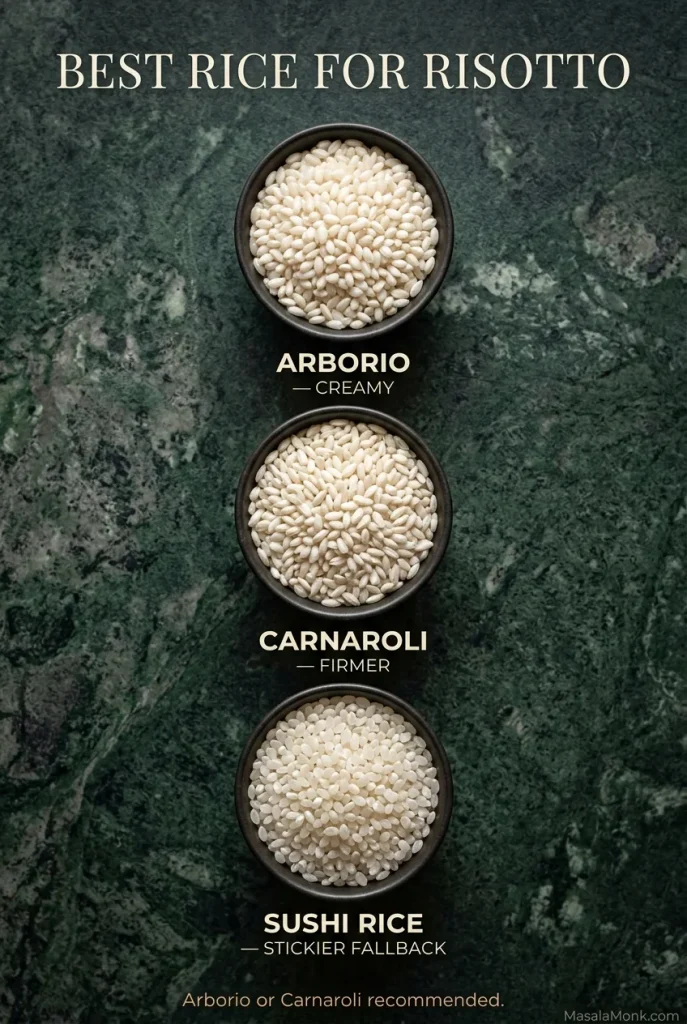
- Arborio: Releases starch readily for a generous sauce. Begin tasting early toward the finish, as the grains can turn soft if left simmering too long.
- Carnaroli: Usually holds together well during stirring and stock additions, giving you a little more latitude near the end. Still check tenderness by tasting.
- Vialone Nano: A traditional Italian variety often used for a looser risotto. Its smaller grains may need a different amount of stock, so taste as you cook.
- Basmati or jasmine: These long-grain varieties do not behave like Italian risotto rice. A creamy rice dish made with them can be enjoyable, but it is not an equivalent swap for this texture.
- Other short- or medium-grain white rice: Japanese short-grain rice, often sold as sushi rice, can make a creamy risotto-style dish when Arborio or Carnaroli is unavailable. It may be stickier and cook differently, so judge liquid additions and doneness by texture rather than assuming the timing will match.
- Brown rice: Its bran layer changes hydration and cooking time substantially. Do not substitute it directly into this 18–30-minute risotto method.
Should you rinse Arborio or Carnaroli rice?
For this risotto recipe, leave Arborio or Carnaroli unrinsed. Rinsing removes some loose starch that helps the sauce develop; more starch is released as the grains cook. That differs from the rinse-and-absorption method for fluffy basmati or jasmine. Our guide to cooking rice covers those methods.
Chosen your rice? Return to the ingredients and quantities.
Wine, Cheese and Other Ingredient Alternatives
Choose the adaptation before cooking: wine is optional, but vegetarian, dairy-free and vegan risotto call for different choices of stock, cheese and finishing fat. Compare the options below, then follow the relevant ingredient notes without changing how you judge the rice for doneness.

Without wine: Simply skip the wine in Step 4 and begin adding stock in Step 5. Taste the finished risotto for salt first. If it is seasoned but needs a little brightness, add a few drops of optional lemon juice. Use no more than about ½ teaspoon (2.5 ml) for the batch, tasting as you go. To avoid alcohol entirely, omit the wine; cooking does not guarantee complete alcohol removal.
With vegetable stock: Choose a mild, low-sodium version rather than one dominated by tomato or dried herbs. Plain water works in a pinch, though the finished rice will taste less savoury and need more careful seasoning.
For a vegetarian risotto: Use vegetable stock and a hard cheese labelled as made with vegetarian or microbial rennet. Traditional Parmigiano Reggiano contains calf rennet, as explained in the official Parmigiano Reggiano specifications.
With another cheese: Start with about 60 g finely grated aged hard cheese in place of the Parmesan, but remember that saltiness and melting behaviour will vary. Add it gradually and taste before salting.
Dairy-free, vegan and gluten-free choices
For a dairy-free variation: Chicken or vegetable stock both work, provided the stock itself contains no dairy. A vegan version requires vegetable stock. Cook the onion in 20 ml (4 tsp) olive oil instead of the usual 15 ml oil and 10 g butter.
Off the heat, stir in 15–20 ml (1–1⅓ tbsp) olive oil instead of the remaining 30 g butter, and omit the Parmesan. The result will have less of the cheese’s salty, nutty flavour; taste and adjust the seasoning before serving.
For gluten-free cooking: Rice is naturally gluten-free, but check the stock, any added seasonings and cross-contact if avoiding gluten strictly.
How Much Risotto Rice Per Person?
For a first course, allow around 70–80 g (2.5–2.8 oz) dry rice per person. As a main, plan 90–110 g (3.2–3.9 oz), depending on appetite and sides. Our 320 g batch therefore makes four moderate first courses or about three generous mains.
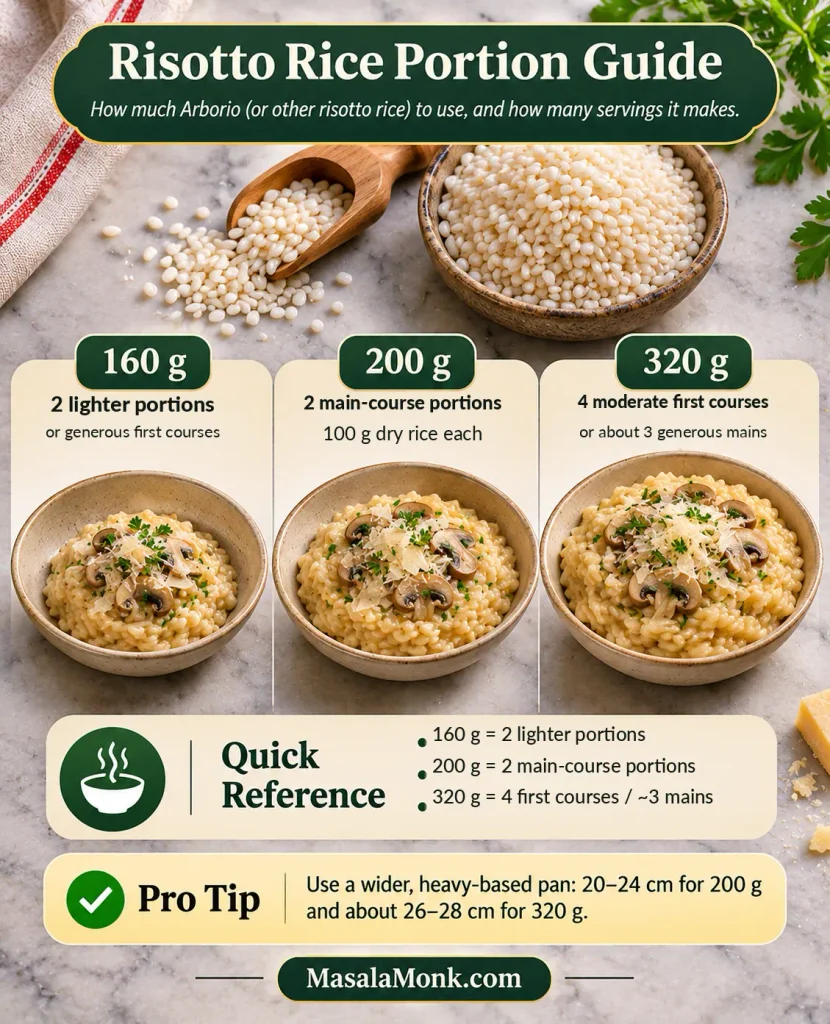
For two lighter portions or generous first courses, halve the main recipe:
- Rice and liquid: 160 g dry risotto rice and 600 ml hot stock available, plus extra hot water if needed.
- Aromatics: 40–50 g onion or shallot, 7.5 ml (1½ tsp) olive oil and 5 g butter.
- To finish: 15 g butter and 30 g finely grated Parmesan, plus salt and pepper to taste.
- Wine, if using: 50 ml. Without wine, skip that step and begin adding stock.
Two main-course portions and pan size
For two main-course portions, use 200 g rice, 750 ml stock available, 50–65 g onion and 10 ml olive oil. Add 25 g butter (5 g for the onion, 20 g to finish) and about 40 g Parmesan. Wine is optional; use roughly 60 ml if you like. Follow the same method and taste the rice to judge its cooking time.
A heavy 20–24 cm (8–9½ inch) pan suits the smaller batches better than a huge skillet. Halving the ingredients does not halve the rice-cooking time.
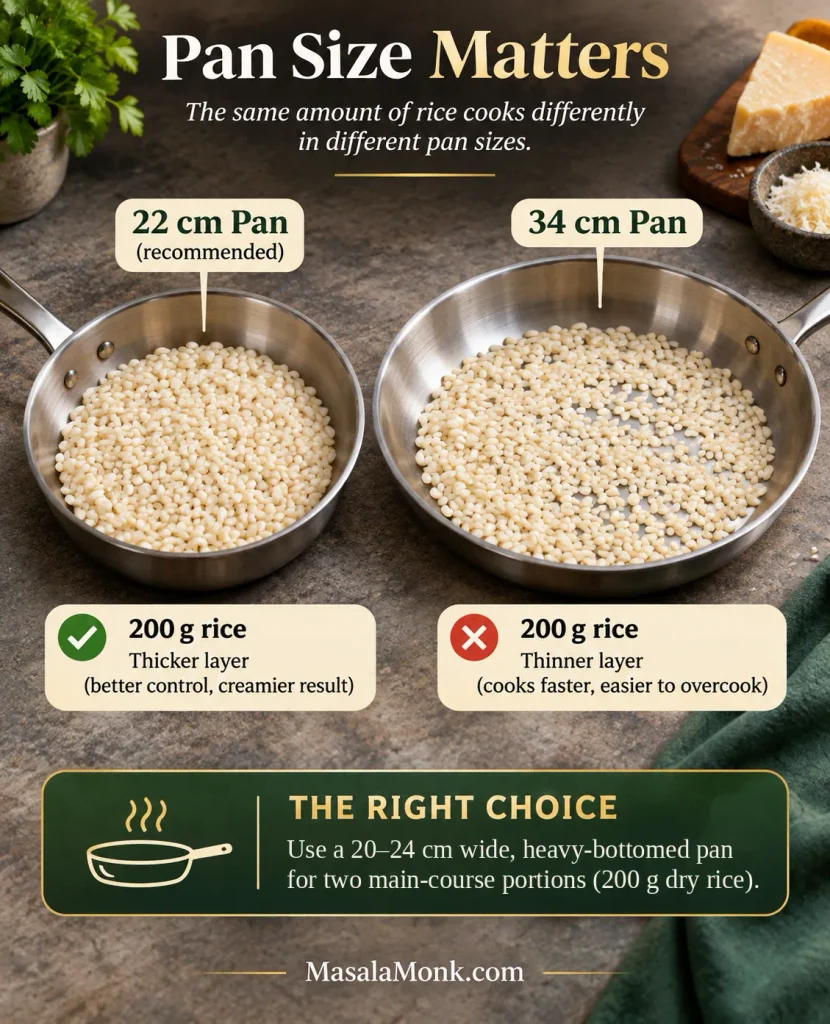
For a larger group, use a pan with enough space to stir and add stock without crowding the rice; split a very large batch between two pans if necessary. Chop and grate the ingredients in advance so you can give the finish your attention.
Cooking a smaller batch now? Start at Step 1; follow the same method and judge the rice by tenderness.
Add-Ins and What to Serve with Risotto
The Parmesan risotto is good on its own, but it also makes a base for mushrooms, peas, shrimp or a little saffron. For the full 320 g batch, try these starting amounts:
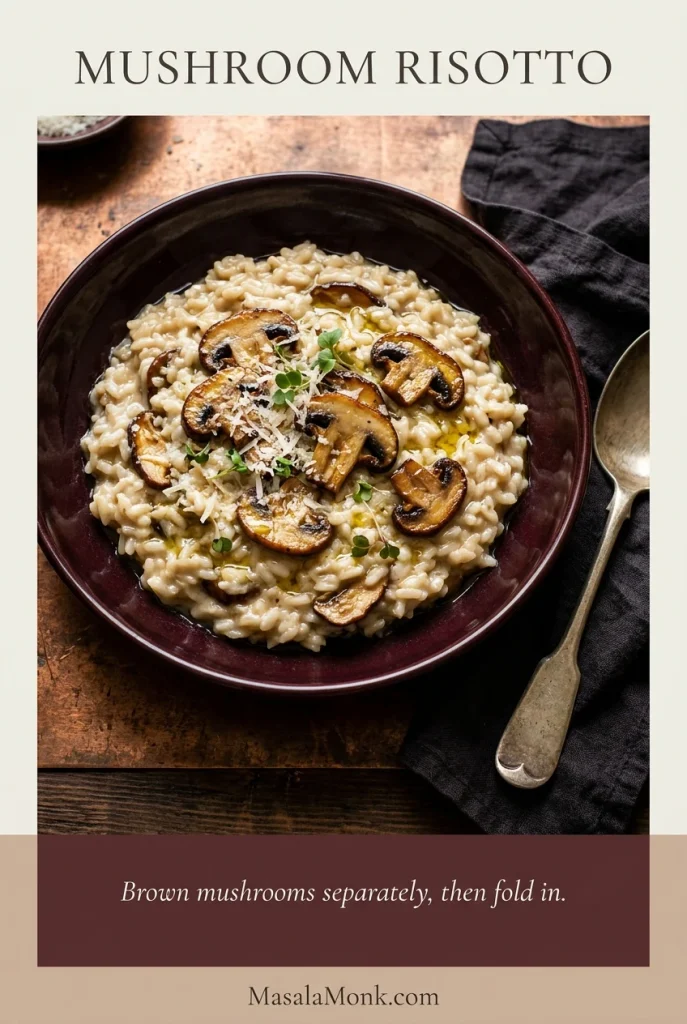
Mushroom risotto
Sauté about 150–200 g sliced mushrooms separately until their moisture evaporates and the edges brown; fold in near the end.
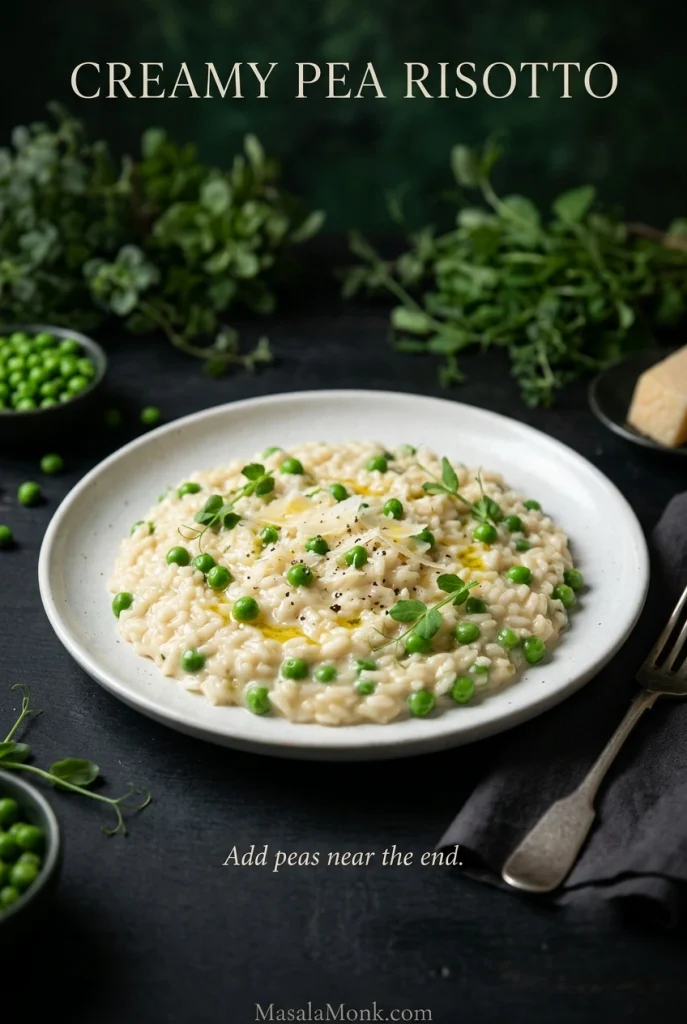
Pea risotto
Stir in about 75–100 g frozen peas during the last few minutes of rice cooking and let them heat through.
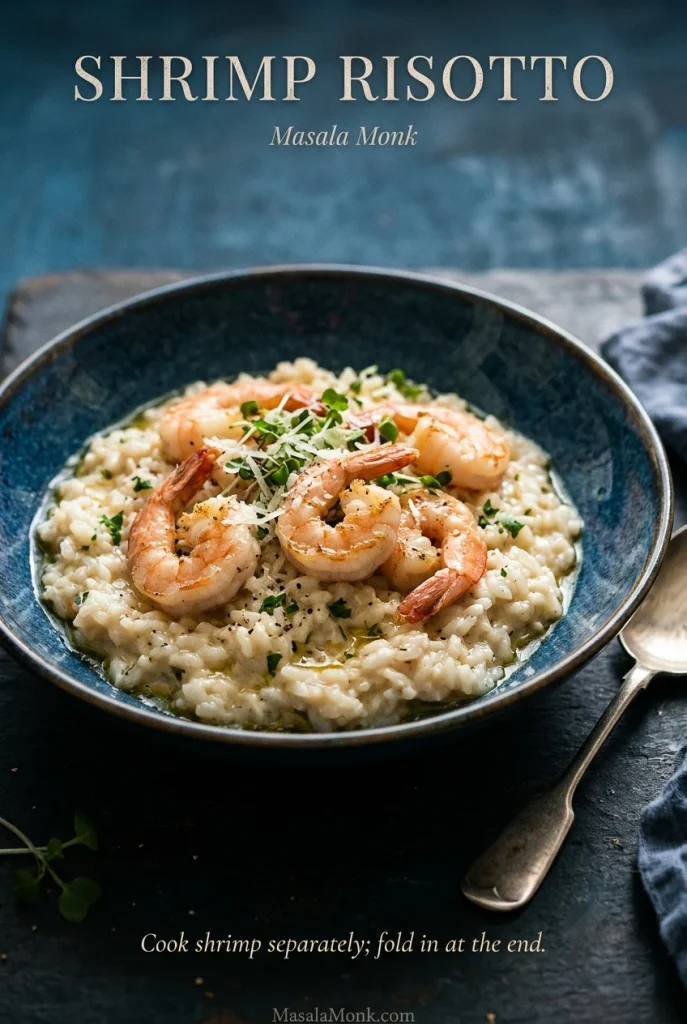
Shrimp risotto
Cook about 200–250 g peeled shrimp separately until opaque and cooked through, then fold in at the end. Alternatively, serve grilled shrimp alongside the risotto.
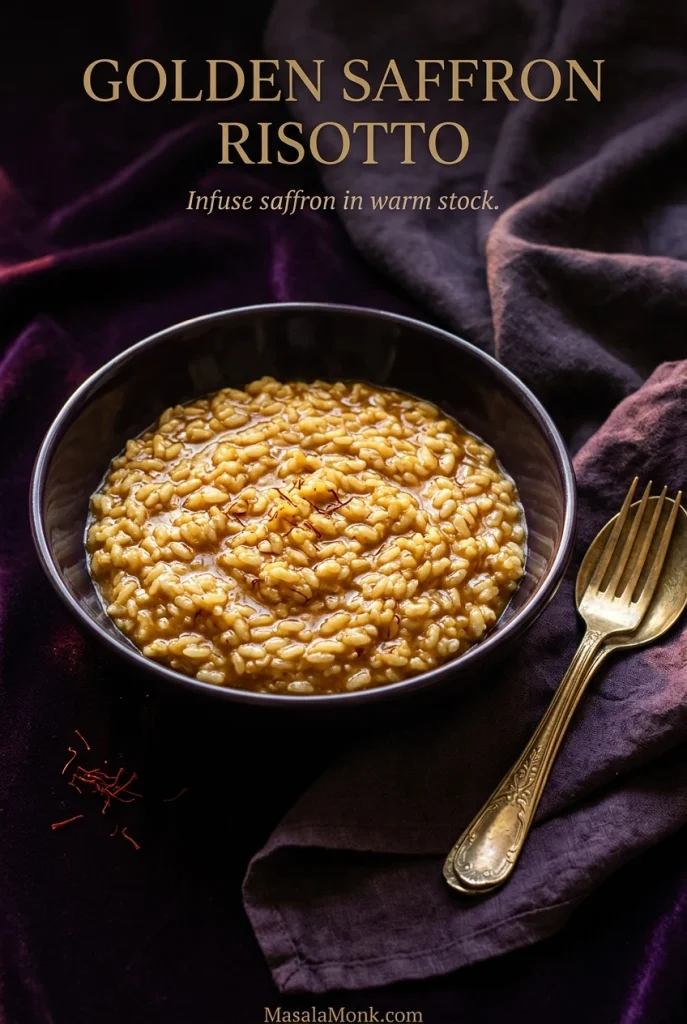
Saffron risotto
Steep a small pinch in warm stock and add it during the rice-cooking stage for a fragrant golden variation.
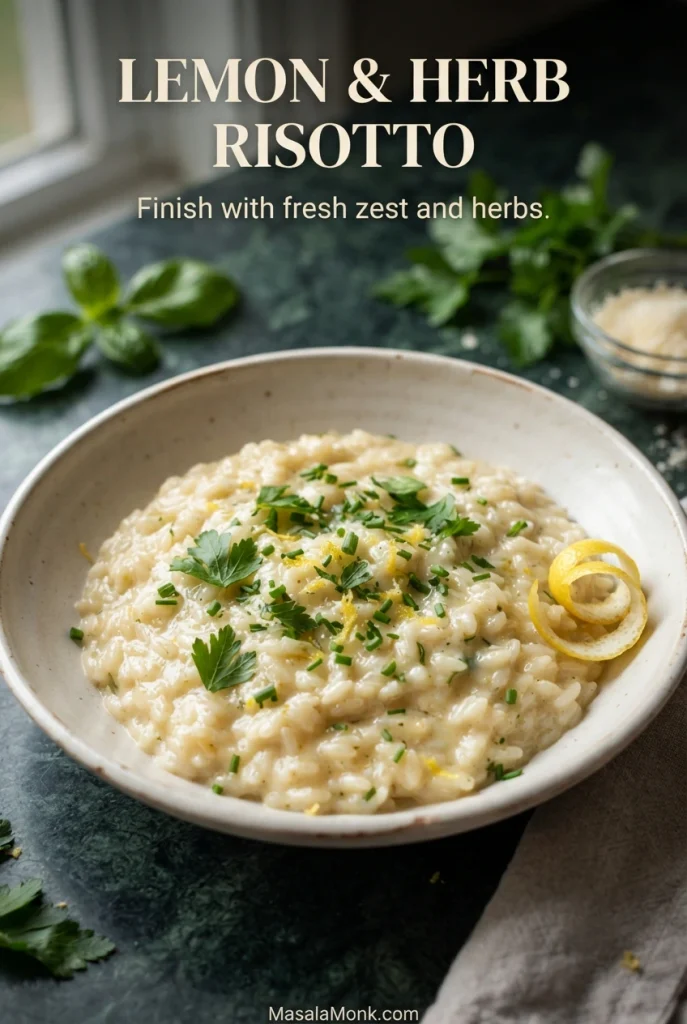
Lemon and herb risotto
For a lemon-and-herb variation, keep the risotto base unchanged until the finish. Once the pan is off the heat, add a little finely grated lemon zest and a small scattering of chopped fresh herbs. Start modestly so the Parmesan remains balanced; adding these ingredients at the end preserves their aroma.
For a meal around the risotto, add roasted vegetables, fish or chicken. Green beans almondine or a crisp Caesar salad offers a fresh contrast.
Serve risotto while it is loose and glossy
Have the plates and the people ready before you finish the risotto. Give the rice its final stir only when everyone is ready to eat, because it continues thickening as it stands. Serve straight from the pan while the grains still settle gently in the sauce.

How to Store, Freeze and Reheat Risotto Safely
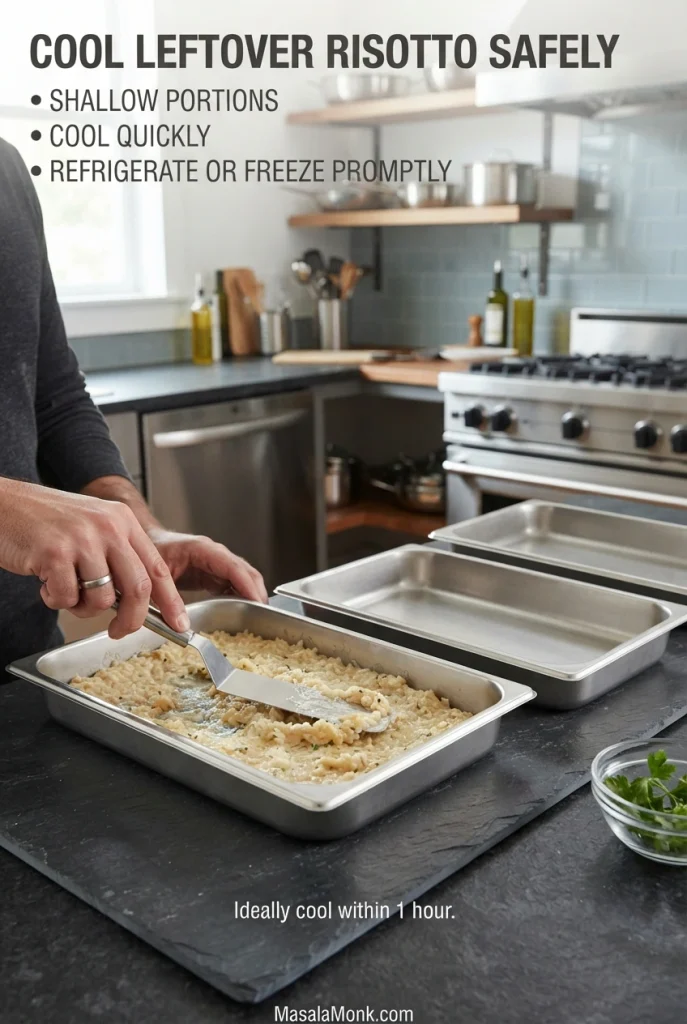
Cool any leftover risotto promptly. Cooked rice can contain Bacillus cereus spores that survive cooking; leaving rice sitting warm or at room temperature can allow unsafe growth. Spread leftovers into shallow portions and cool quickly, ideally within one hour, then refrigerate or freeze. Do not leave the pan on the stove to cool slowly.
Reheat leftover risotto safely
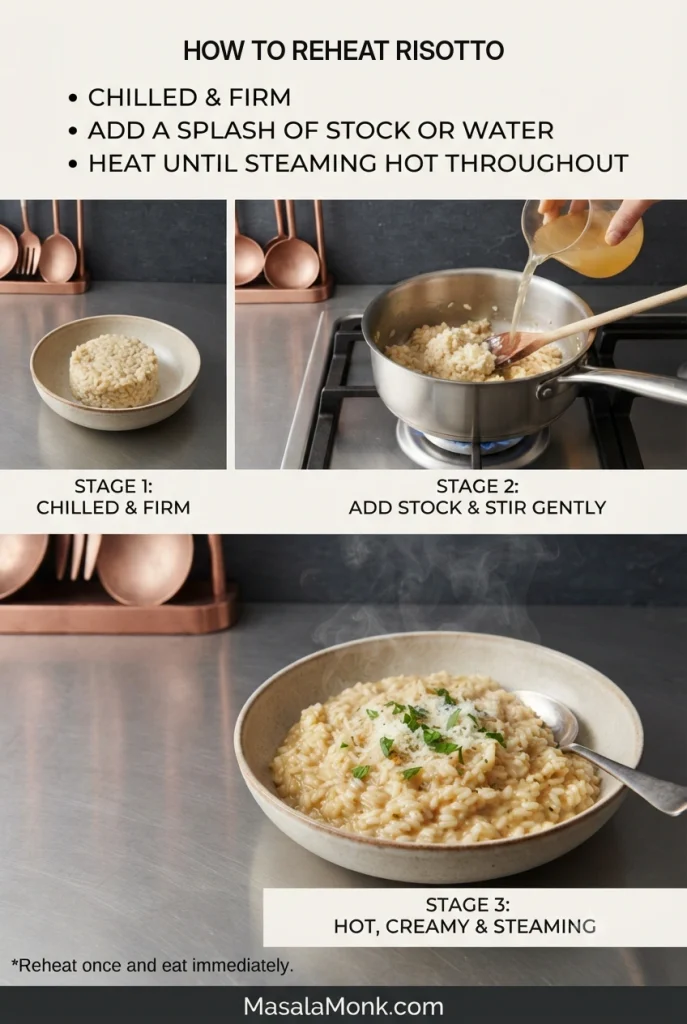
The UK Food Standards Agency’s rice guidance recommends refrigerating cooked rice for no longer than 24 hours before reheating. It also advises reheating rice only once and making sure it is steaming hot throughout.
To reheat: Put a chilled portion in a pan with a splash of stock or water. Stir over gentle heat until steaming hot throughout and eat immediately. In a microwave, stir between intervals so no cold spots remain. Reheated risotto will usually be softer and less silky than freshly made.
Freeze leftovers or make arancini
To freeze: Cool quickly, divide into portions and freeze promptly. Thaw in the refrigerator, then reheat thoroughly once. A splash of liquid can loosen the sauce, although it won’t restore the original grain texture.
For safely chilled leftovers, rice balls are another possibility. Our arancini-inspired rice balls show how cooked rice can become a crisp second meal. If rice has been left out too long, discard it; tasting cannot establish safety.

Made this risotto? Tell us whether you chose Arborio or Carnaroli, and roughly how much stock your pan needed.








