

In a good ham and potato soup, the potatoes should give easily under the spoon without dissolving into the broth. You should get smoky ham and creamy potato in the same spoonful, with enough savory broth around them that the bowl still feels unmistakably like soup.
The ingredients move at different speeds. Potatoes need a proper simmer, while cooked ham and dairy only need gentle finishing heat. Separate those stages, and it becomes much easier to keep the potatoes tender and the broth creamy.
This one-pot version uses a light roux and a small portion of mashed potato for a creamy broth without relying on heavy cream. Most of the potato stays in tender chunks, while the ham and milk join once those chunks are ready.
Leftover baked ham is ideal. Better still, the soup changes it enough that dinner does not feel like another plate of yesterday’s leftovers. No holiday ham around? A thick-cut ham steak works just as well.
Before the Pot Goes On
Before cooking this ham and potato soup, check the potato size, the salt level of your broth, and when the ham and dairy will go in. Those details have the biggest effect on the finished pot.
- Potatoes: Cut Yukon Golds into roughly ¾-inch / 2 cm cubes so they cook at about the same rate.
- Ham: Keep already-cooked ham out of the potato simmer. Add it near the end; refrigerated leftover ham should be reheated to 165°F / 74°C.
- Broth: Start with low-sodium chicken broth so the ham gets a chance to contribute its salt before you season the pot.
- Dairy: Add the milk near the end and keep the heat controlled afterward.
Still choosing your potatoes? See why Yukon Gold works well here. When you start cooking, use the doneness and broth checkpoints to judge the pot rather than relying on the timer alone.

Ham and Potato Soup Recipe
This ham and potato soup stays creamy without needing heavy cream, with tender Yukon Gold chunks and plenty of cooked ham. A light roux starts the thickening, while a small portion of mashed potato lets you fine-tune the consistency before serving.
Prep Time: about 20 minutes
Cook Time: about 35–45 minutes
Total Time: about 55–65 minutes
Yield: about 6 hearty main-course servings or 8 smaller bowls
Equipment
- 5½- to 6-quart / roughly 5.2- to 5.7-L Dutch oven or heavy soup pot
- Wooden spoon or heat-safe spatula
- Whisk
- Potato masher or sturdy fork
- Instant-read food thermometer
Ingredients
- 3 tablespoons / 42 g unsalted butter
- 1 medium yellow onion, diced, about 1 cup
- 2 medium carrots, diced, about 1 cup
- 2 celery ribs, diced, about ¾ cup
- 3 garlic cloves, minced
- ¼ cup / 30 g all-purpose flour
- 4 cups / 950 ml low-sodium chicken broth, plus more if needed
- 1¾ lb / 800 g Yukon Gold potatoes, cut into roughly ¾-inch / 2 cm cubes
- ½ teaspoon dried thyme
- ½ teaspoon freshly ground black pepper, plus more to taste
- 2 cups / 475 ml whole milk
- 14 oz / 400 g cooked ham, cut into ½- to ¾-inch / 1.3- to 2 cm pieces
- Fine salt, only as needed after tasting
Instructions
Build the Potato Base
- Soften the vegetables. Melt the butter in a Dutch oven or heavy soup pot over medium heat. Add the onion, carrots and celery and cook for 5 to 7 minutes, stirring occasionally, until the onion is translucent and the vegetables have lost their raw edge. Add the garlic and cook for about 30 seconds, just until fragrant.
- Cook the flour briefly. Sprinkle the flour over the vegetables and stir for about 1 minute. The dry flour should disappear into a moist coating. There is no need to brown it.
- Add the broth. Pour in about 1 cup / 240 ml first, stirring or whisking until the flour-coated vegetables loosen into a smooth base. Gradually stir in the remaining broth.
- Simmer the potatoes. Add the potatoes, thyme and black pepper. Bring just to a boil, then reduce to a steady simmer. Start checking after about 12 minutes; many batches need 15 to 18. They are ready when a fork slides easily through the center but most cubes still have defined edges.
Finish and Adjust the Soup
- Mash only some of the potatoes. Scoop out about one-fifth of the cooked potato pieces—roughly a generous cup—with a small splash of broth. Mash by hand until mostly smooth and stir them back into the pot. Leave the rest intact.
- Add the milk and ham. Turn the heat to low and stir in the milk, then the ham. Heat gently until the soup is steaming throughout. Refrigerated leftover ham should reach 165°F / 74°C; for packaged fully cooked ham, follow the label reheating directions. Avoid holding the soup at a hard boil.
- Check the consistency. The broth should lightly coat a spoon and run easily back into the pot. If it is too thick, add warm broth or milk ¼ cup / 60 ml at a time. If it seems loose, mash a little more potato and give the starch a minute to work before adding another thickener.
- Season after the ham is in. Add more black pepper if needed, then taste before reaching for the salt. A salty ham may have already done the job.
Recipe Notes
- Russet potatoes: In ham and potato soup, Russets soften more around the edges and release more starch. Start checking them early so the smaller pieces do not break down first.
- Ham steak: Use it exactly as you would other fully cooked ham, following any reheating directions on the package.
- Glazed ham: A normal glaze is usually fine. Trim unusually thick, sticky or candy-like coating if you are concerned about sweetness.
- Half-and-half: Replace the whole milk one-for-one for a richer ham and potato soup without adding heavy cream.
- Evaporated milk: This is another one-for-one substitute in ham and potato soup when you want a pantry-friendly option.
- Skip the blender: Overworking cooked potatoes can release enough starch to make the soup sticky or gluey.
- Research note: This recipe was developed from published cooking methods and food-safety guidance; MasalaMonk has not independently kitchen-tested this exact formula.
Cooking now? Keep the three visual checkpoints nearby as you simmer. If the texture goes off course, jump straight to Fix My Soup.
Read the Pot: Three Checkpoints
The timer tells you when to start checking. Potato variety, cube size and simmer strength decide when the food is actually ready.
| Checkpoint | What You Should See |
|---|---|
| Potatoes ready | A fork slides through the center easily, but most cubes still have defined edges. |
| Broth ready | It coats the spoon lightly, then runs back into the pot rather than sitting like sauce. |
| Soup finished | The milk is fully incorporated and the soup is steaming throughout. If the ham is leftover, it should have reached 165°F / 74°C. |

The spoon gives you a better signal than the clock: the finished broth should cling lightly, then pour off easily. If it falls in a heavy blob, loosen the soup with warm broth or milk a little at a time; if it looks loose just after the mash goes back in, let the starch work before adding more thickener.

Ready to cook rather than troubleshoot? Return to the recipe card. If the broth is still too loose once the mash has had time to work, continue to Set the Thickness Before You Serve.
Beyond the Recipe
Build the Soup
Change the Method
Fix & Keep It
Choose the Potato—and Don’t Overcook the Ham
Potatoes and cooked ham may share the same pot, but they are on completely different cooking clocks. The potatoes need time to become tender all the way through; the ham is already cooked and needs only the finishing heat.
Why Yukon Gold Works Here
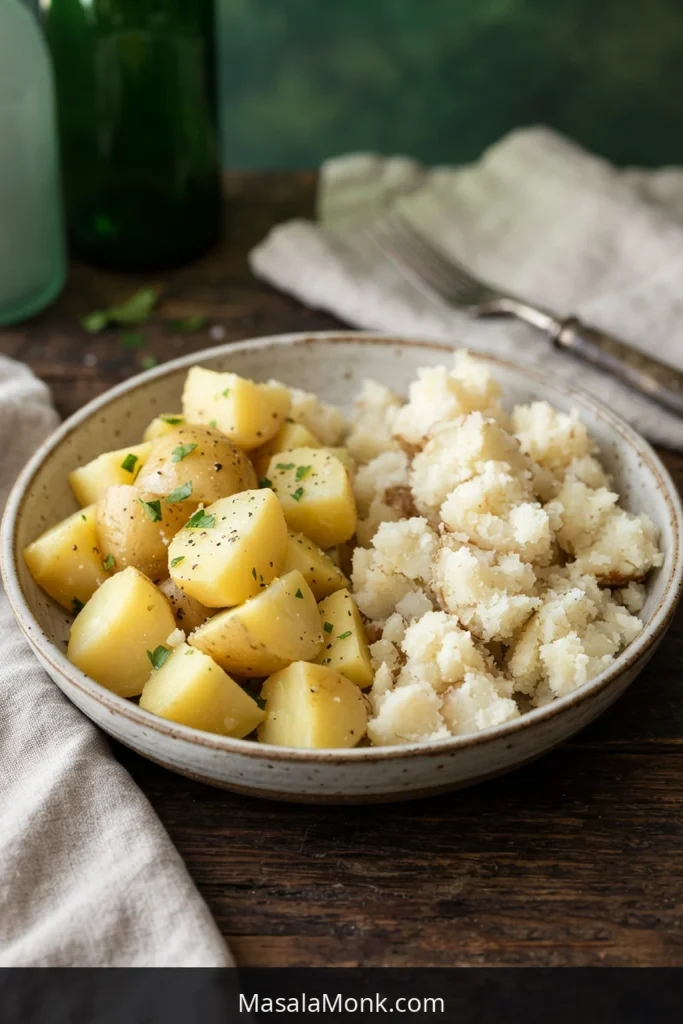
For ham and potato soup, Yukon Gold potatoes are the best fit because they become creamy while holding their shape better than Russets. You get tender potato pieces and still have control over how much of the pot gets mashed.
Don’t have Yukon Golds? Russets still make good soup; they simply produce a softer, starchier result. That fluffier texture is also why they work so well in a Baked Potato Recipe.
With either variety, keep the cut reasonably even. A roughly ¾-inch / 2 cm cube gives you a substantial bite without demanding an especially long simmer.
Peel Them or Leave the Skins On?
Either works. Yukon Gold skins are thin enough to leave on after a thorough scrub. Keeping them gives the bowl a slightly more rustic look; peeling gives you smoother-looking pieces and a cleaner pale broth.
Which Ham Works Best?
Fully cooked leftover baked ham or a thick-cut ham steak are the best fits. Add either near the end so the meat does not spend the whole potato simmer in the pot. Leftover ham is especially useful when you want yesterday’s centerpiece to feel like a completely different dinner.

Smoked ham brings a stronger smoky flavor and often more salt. Taste the finished soup before adding extra seasoning.
Honey, maple and brown-sugar glazed hams work too. A normal glaze usually won’t make a large pot noticeably sweet. Trim some off only when the coating is unusually thick, sticky or candy-like.
If yesterday’s ham was already a little dry, give it even less cooking today. Let the potatoes become tender first and warm the meat at the end. Soup can surround dry ham with creamy broth; another long simmer cannot put moisture back inside it.
Creamy, Not Pasty
In this ham and potato soup, creaminess comes from three modest things working together: a light roux, a little mashed potato and whole milk. That gives the broth body while most of the potatoes remain in chunks.
Thin is not the same as light, and rich is not the same as thick. More cream can make the soup richer without correcting a broth that needs more structure.
A Light Roux Is Enough
Use ¼ cup / 30 g flour. Stir it directly into the softened vegetables, cook for about a minute, then loosen the mixture gradually with the first cup of broth. The finished broth should stay fluid rather than turning sauce-like.

Mash Only Part of the Potatoes
Once the potatoes are tender, take roughly one-fifth of them from the pot, mash them by hand and stir them back in. Most of the pieces stay intact.

A blender can overwork cooked potatoes quickly, releasing enough starch to make the soup sticky or gluey. A completely smooth soup is a different job; Potato Leek Soup uses brief, controlled blending for a silky finish.
Milk Is for Richness, Not Rescue
Once the milk goes in, there is no reason to push the heat. The potatoes are already cooked, and the ham only needs its final reheating.

Half-and-half gives a fuller result, while evaporated milk works well as a pantry substitute. Replacing part of the milk with heavy cream makes the bowl richer.
Finish the base soup and lower the heat before adding cheddar. About 4 oz / 115 g gives a restrained cheddar finish; closer to 8 oz / 225 g makes the soup distinctly cheesy.
Add freshly grated sharp cheddar a handful at a time. It generally melts more smoothly than pre-shredded cheese, which often carries anti-caking powders.

Sour cream is happiest at the end. Spoon it over individual bowls, or temper it before adding it to the pot: stir a little hot soup into the sour cream first, then mix that warmed sour cream back in off strong heat.
Making It Without Flour
For flour-free ham and potato soup, skip the roux and let the potatoes do more of the thickening. Mash about 1½ to 2 cups of the tender potatoes rather than the smaller amount used in the main recipe, stir them back in and give the starch a minute to work.
If the broth remains loose, whisk 1 tablespoon cornstarch with 2 tablespoons cold water or cold milk until smooth, stir it in and let it thicken before deciding whether you need more.
For a dairy-free version, soften the vegetables in olive oil or a neutral cooking oil. Leave the soup broth-forward or finish with an unsweetened neutral plant milk for a creamier result.
Flour-free does not automatically mean gluten-free. If that matters for your kitchen, check the labels on the broth, ham or glaze, and any thickener you use.
Set the Thickness Before You Serve
To thicken ham and potato soup, mash a little more cooked potato first. The finished broth should lightly cling to the spoon and potato pieces but pour easily.

If the bowl already has as many potato chunks as you want, don’t keep mashing just to chase thickness. Plain instant potato flakes are handy here: add 1 tablespoon, stir well and wait briefly before adding more.
Leftover mashed potatoes can help too, especially when both ham and mash survived the same holiday meal. Add them gradually. Finished mash may already contain butter, milk, sour cream, cream cheese and salt, so it changes more than the consistency.
Finish the Bowl
Before serving ham and potato soup, choose the finish the bowl actually needs. Chives or scallions add freshness; croutons or crisp fried onions add crunch. Cheddar or a little sour cream makes it richer. For dipping, Irish Soda Bread gives you a sturdy crust without a yeast dough. A sharply dressed green salad works well on the side too.

For the main ingredient amounts and stovetop sequence, return to the recipe card. For a deeper broth, the next option is using a ham bone.
Using a Ham Bone
A meaty ham bone can deepen the broth for ham and potato soup. Give it a 20- to 30-minute head start before adding the potatoes, then let it continue simmering while the potatoes cook. You can still make a very good pot without one.

On a weeknight, that gives it roughly 35 to 50 minutes in the broth without turning dinner into a stock-making project.
Remove the bone before mashing any potato or adding the milk. Once it is cool enough to handle, pull off the useful meat and return it near the end. If the bone gives you a substantial amount of meat, count that toward the recipe’s 14 oz / 400 g total ham rather than adding the full amount on top.
If you want a deeper stock, simmer the bone separately in water or unsalted broth for an hour or more, then use that liquid in the soup.
Already have ham stock? It can replace some or all of the chicken broth. Taste it first because homemade batches can be quite salty.
Slow Cooker Version
This ham and potato soup also works in a Crock-Pot or other slow cooker, but the method changes slightly. Omit the flour, cook the potato base for about 6 to 7 hours on LOW or 3 to 4 hours on HIGH, then mash some of the potatoes and add the milk.
If the vegetables go into the slow cooker raw, you do not need the butter either. If you prefer to soften the onion, carrots and celery first, sauté them in 1 tablespoon / 14 g butter for 5 to 6 minutes before transferring them to the cooker.

Cook the Potato Base
- Add the 1¾ lb / 800 g potatoes, onion, carrots, celery, garlic, thyme, pepper and 4 cups / 950 ml low-sodium broth to the slow cooker.
- Cook on LOW for about 6 to 7 hours or HIGH for about 3 to 4 hours, until a fork passes easily through the potato centers.
- Mash about 1½ cups of the potatoes by hand and stir them back through the broth.
- Stir in the 2 cups / 475 ml whole milk. Cover and cook on HIGH for about 15 to 20 minutes, until the soup base is thoroughly hot.
- Check the consistency. If the soup is loose and you can spare a few more potato chunks, mash a little more first. If the potato-to-broth balance already feels right, whisk 1 tablespoon cornstarch with 2 tablespoons cold water or cold milk and stir it in. Cook for 10 minutes; add another tablespoon of slurry only if needed.
Finish and Reheat the Ham Safely
- Reheat the ham separately. USDA FSIS does not recommend reheating leftovers in a slow cooker. If you are using leftover ham, reheat it on the stovetop or in the microwave until it reaches 165°F / 74°C, then stir it into the hot soup just before serving. For a freshly opened fully cooked ham steak, follow its package reheating directions.
- Give the finished soup a taste before adding any salt.
Slow Cooker Potato Soup starts with the slow cooker from the beginning and takes the bowl in a loaded direction with cheddar, bacon, sour cream and green onions.
For the reheating guidance behind that leftover-ham step, see USDA FSIS safe reheating guidance.
Returning to the stovetop version? Jump back to the main recipe card. If your current pot needs a correction, go to Fix My Soup.
Fix My Soup
If something has gone wrong, start with what you can actually see in the pot.
| Problem | What to Do |
|---|---|
| Sticky or gluey | The potato was probably overworked. Dilute cautiously if practical; a severely gluey texture is difficult to reverse. |
| Milk looks grainy | Take the pot off strong heat and stir gently. Do not keep boiling it. |
| Too salty | Dilute with unsalted liquid and, if needed, additional unsalted ingredients. |
| Salty but still flat | Add pepper first. If the soup tastes rich and dull, try a tiny amount of acid rather than more salt. |
| Potato centers are hard | Keep simmering. Trust the fork more than the timer. |
| Potatoes are disappearing | Stop simmering. Extra time, hard boiling or a starchier potato has pushed them too far. |
Why Did My Potato Soup Turn Gluey?
Overworking the cooked potatoes is usually the culprit. A blender or aggressive mashing can release enough starch to take the texture from creamy to sticky or gummy.

Once the soup is severely gluey, there is no perfect reversal. Dilute it cautiously with warm broth or milk if that improves the texture. Next time, mash only a small portion by hand and stop as soon as it is smooth enough.
How to Fix Ham and Potato Soup That’s Too Salty
To fix overly salty ham and potato soup, dilute it with unsalted broth, milk or water, then restore the thickness if needed. Adding a raw potato does not selectively pull salt from the pot; it absorbs surrounding liquid along with everything dissolved in it.
It Is Salty Enough but Still Tastes Bland
A soup can have enough salt and still not have enough flavor. Start with another grind of black pepper. If the broth tastes rich and dull, stir in ½ teaspoon lemon juice and taste again. Start small; it should brighten the soup rather than make it taste lemony.
A heavily glazed ham that has pulled the soup slightly sweet can respond to about ¼ teaspoon Dijon mustard to start. Stir it in, taste, and add more only if needed.
Tomorrow’s Soup Will Be Thicker
Do not be alarmed when refrigerated ham and potato soup looks almost scoopable the next day. Potato starch keeps binding water as the soup cools, while dairy and fat firm in the refrigerator. Cold consistency is not reheated consistency.

Reheat It Safely
When reheating ham and potato soup, use medium-low heat and stir often. A small splash of milk or low-sodium broth can loosen a very stiff pot, but wait until the soup is hot before making a larger adjustment.
Reheat leftovers to 165°F / 74°C; USDA FSIS also advises bringing reheated soups to a boil. Once this soup reaches that point, take it off the heat rather than continuing to boil it.
How Long Does It Keep?
Cool the soup promptly, refrigerate it at 40°F / 4°C or below, and generally use cooked leftovers within about 3 to 4 days.
A large batch cools faster when divided among shallow containers. The USDA’s Leftovers and Food Safety guidance covers cooling and reheating in more detail.
When the ham was already near the end of its refrigerated storage window before it became soup, use the soup promptly rather than automatically planning on another full four days.
Can You Freeze Ham and Potato Soup?
You can freeze the finished soup, but the texture may change. Potatoes can become softer or slightly grainy after thawing, and dairy may separate.
When freezing ham and potato soup, freeze the potato-and-broth base before adding milk. Thaw it in the refrigerator, reheat it safely, then add fresh dairy and adjust the thickness before serving.









