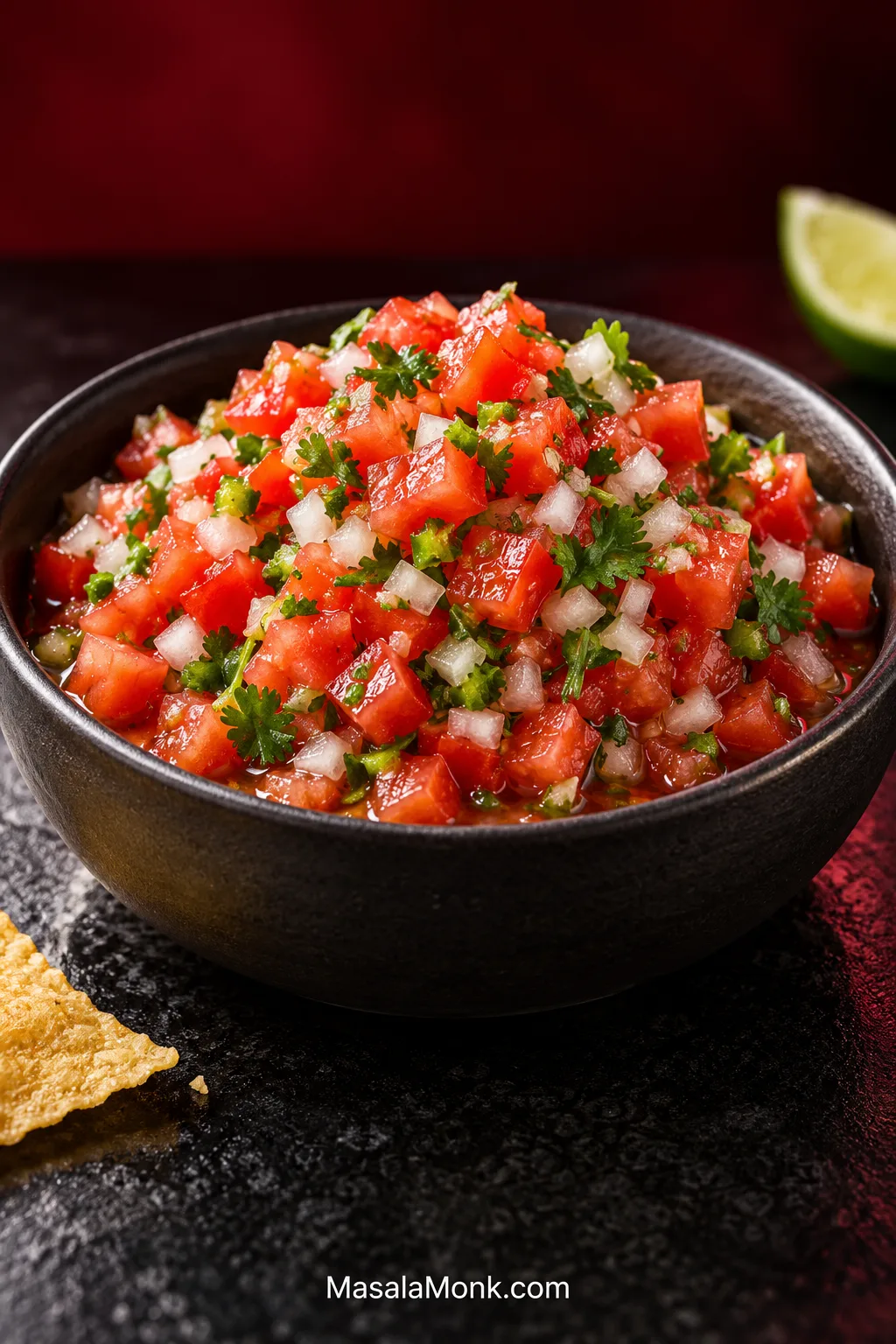
Good pico de gallo tastes like ripe tomato first. A good scoop should bring tomato, onion and chile together, with just enough seasoned juice to gloss the edge of a chip. White onion gives it crunch, chile brings a clean flicker of heat, cilantro keeps it lively, and lime sharpens the tomatoes.
The short ingredient list can be deceptive. Tomatoes may be sweet and firm one week, pale and watery the next. One white onion is gentle; another takes over every bite. Chiles vary wildly in heat, and limes do not all taste equally sharp.
Use the measurements here as your starting point, then let the salsa tell you what it needs. You can eat it as soon as it is mixed, but give it about 15 minutes if you can. Then taste again: salt first, lime second, heat last.
Before You Chop
- Tomatoes: ripe and flavorful, but firm enough to stay in distinct pieces.
- Texture: tomato around ¼ inch / 6 mm, onion slightly finer, chile finely minced.
- What you’re aiming for: tomato-led, properly seasoned pico with some juice underneath instead of vegetables floating in liquid.
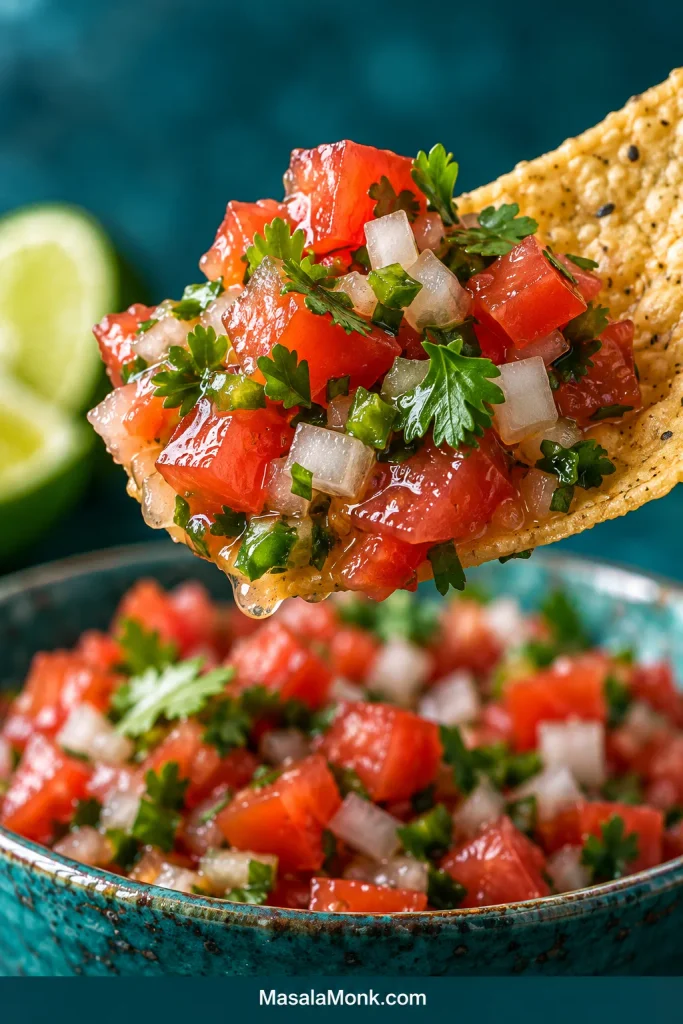
Pico de Gallo Recipe
15 minutes active, plus a 15-minute recommended rest. Fresh, chunky Mexican tomato salsa with white onion, serrano or jalapeño, cilantro, lime and salt.
Yield: about 3½–4 cups
Serves: about 8–12 as a dip or condiment
Equipment
- Sharp chef’s knife
- Cutting board
- Medium mixing bowl
A fine-mesh strainer and slotted spoon are handy if your tomatoes are especially juicy.
Ingredients
- 1½ lb / 680 g ripe, firm tomatoes, Roma/plum or another flavorful firm tomato
- 4 oz / 115 g white onion, about ¾ cup finely diced
- 1 medium serrano chile, finely minced, or 1 small-to-medium jalapeño for a milder batch
- ½ cup loosely packed fresh cilantro leaves and tender stems / about 8–10 g, then chopped
- 2 tablespoons / 30 ml fresh lime juice, usually from 1–2 limes, plus more if needed
- ½ teaspoon / about 3 g fine sea salt, plus more if needed
Method
- Start with the onion, chile and lime. Finely dice the white onion and mince the serrano or jalapeño. Taste a tiny piece of chile before deciding whether to use all of it. Put the onion and chile in a medium bowl, add 2 tablespoons / 30 ml lime juice and stir. Hold the salt for now. Let this sit for about 5 minutes while you chop the tomatoes.
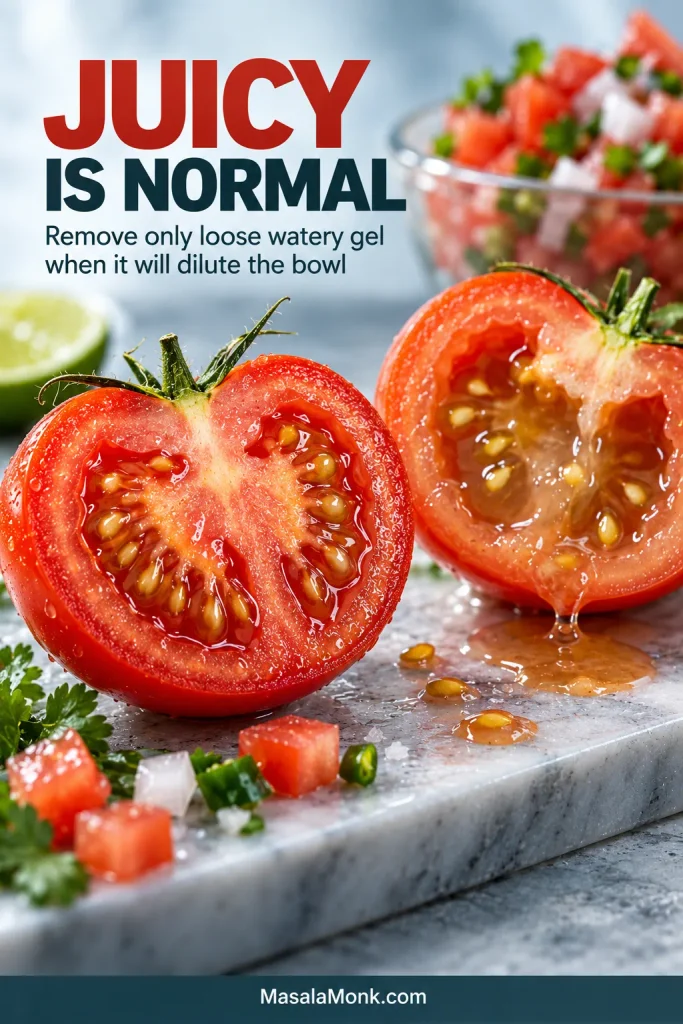
- Prepare the tomatoes. Remove the hard cores and dice the tomatoes into roughly ¼-inch / 6 mm pieces. If a tomato has an especially loose, watery seed cavity, scoop out some of the free gel. Otherwise, leave it.
- Drain only if needed. Look at the chopped tomatoes before deciding. A large puddle is a good reason to drain them briefly in a fine-mesh strainer. Firm tomatoes with a normal amount of juice can go straight into the bowl.
- Mix and season. Add the tomatoes and cilantro to the onion mixture. Fold gently, add ½ teaspoon / about 3 g fine sea salt, and fold again.
- Rest, then taste. You can eat the pico immediately, but a 15-minute rest makes the final seasoning easier to judge. By then, you may see pink-red tomato-lime juice collecting underneath. Fold once from the bottom, then taste a spoonful with tomato, onion and chile together. Check salt first, lime second and heat last.
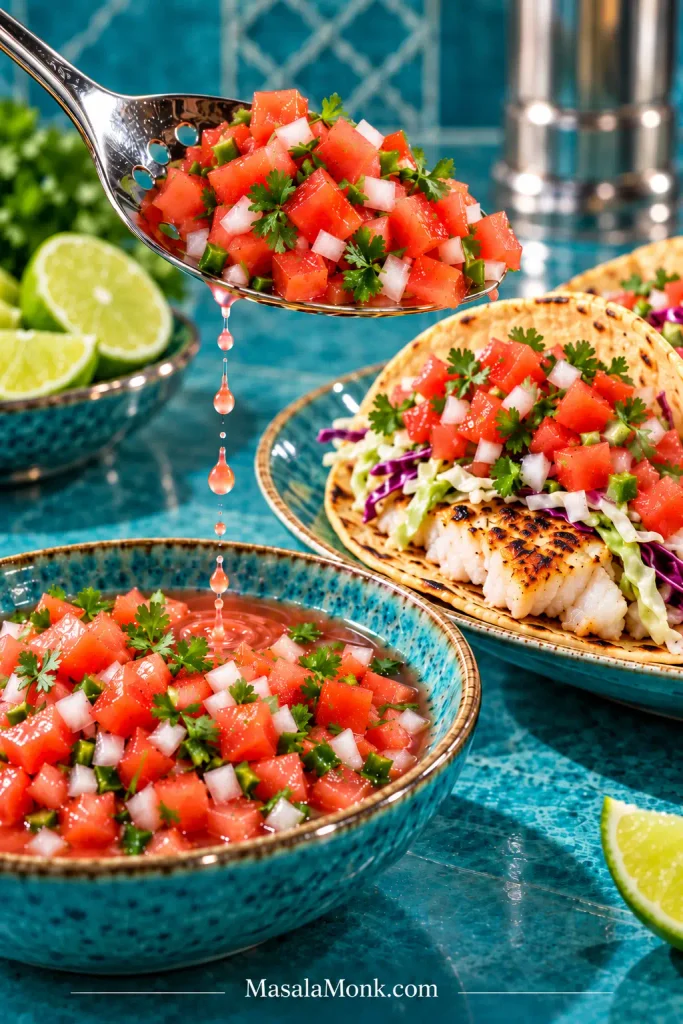
- Serve. Keep some of the seasoned juice when pico is a dip. For tacos, burritos, quesadillas or nachos, lift out mostly solids with a slotted spoon if the salsa is particularly juicy.
Recipe Notes
- Taste a tomato before chopping the whole batch. If it is sweet, fragrant and juicy, you are already most of the way there.
- When the onion burns hotter than the chile, rinse the diced pieces briefly under cold water and drain very well.
- For less heat, use jalapeño instead of serrano, scrape away the pale inner ribs and tissue around the seeds, or start with only part of the chile.
Pico de Gallo Guide
Build a Better Batch
Serve, Fix & Save It
Choosing Ingredients for Better Pico de Gallo
Tomatoes
Roma or plum tomatoes are the easiest everyday choice because they’re usually firm and meaty. But the best tomato for pico de gallo is simply a ripe, flavorful one that still holds a clean dice.
Taste one before you chop the whole batch. In summer, a ripe slicing, vine or heirloom tomato may make much better salsa. If it smells like tomato before you cut it and tastes sweet and full, use it. A bland tomato has nowhere to hide here.
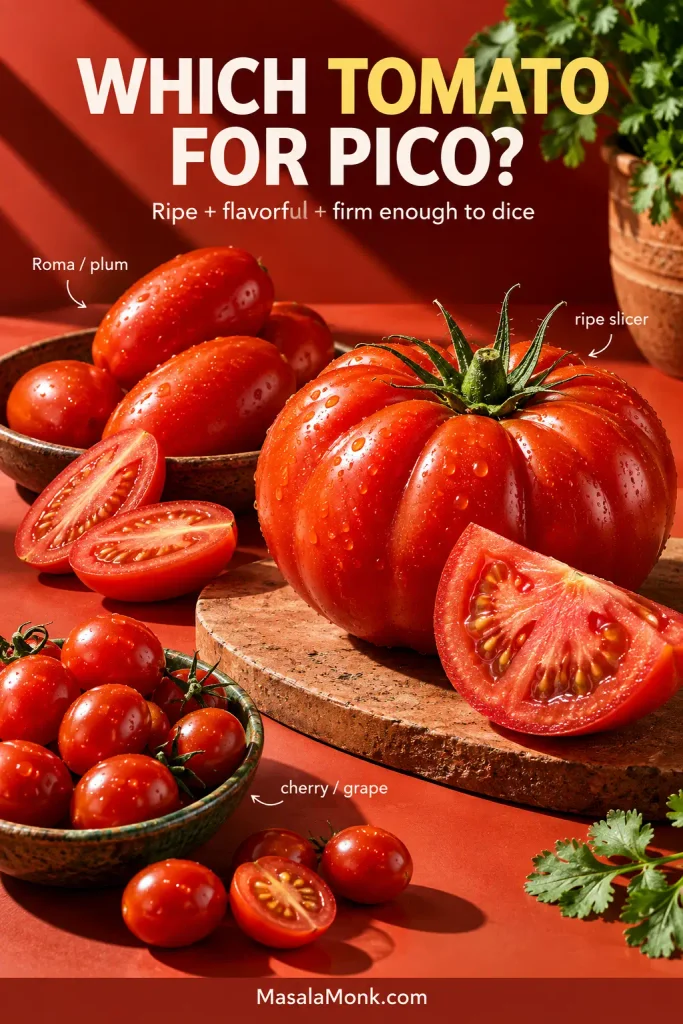
In winter, grape or cherry tomatoes may beat large tomatoes that look good but taste pale or mealy. Whatever type you buy, look for ripe flavor and flesh that still holds its shape. Remove the hard core. Scoop out loose, watery seed gel only when there is enough of it to dilute the salsa.
Onion, Chile and Cilantro
White onion gives pico its crisp raw-onion bite. Dice it slightly finer than the tomato so no single chunk takes over a mouthful. If the onion burns hotter than the chile, give the diced pieces a quick cold-water rinse and drain them thoroughly before adding the lime.
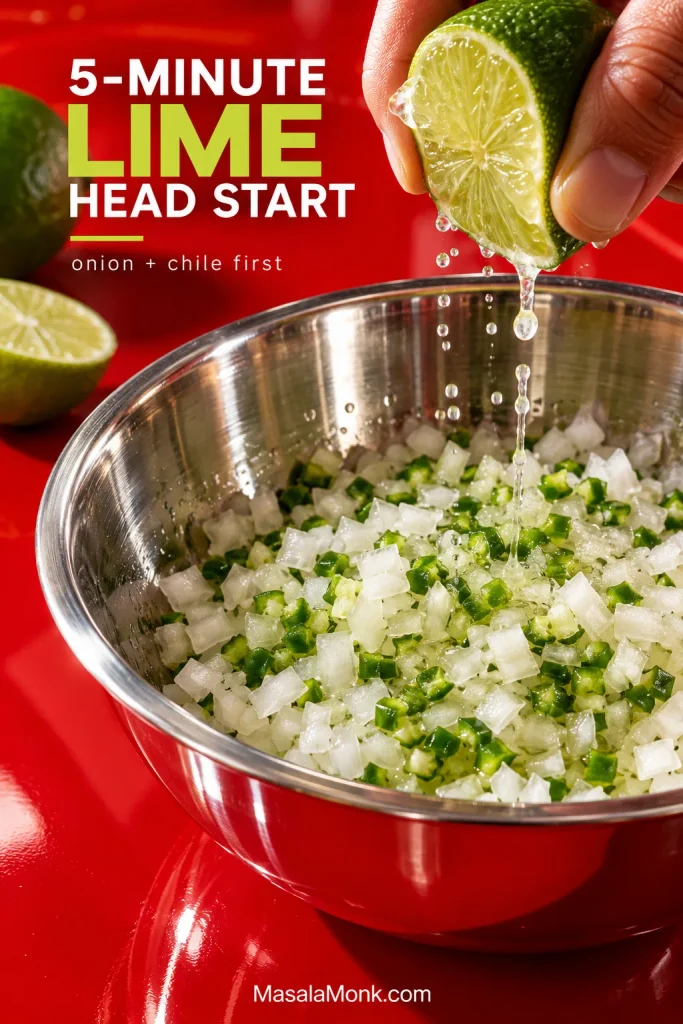
Serrano is usually hotter than jalapeño, so use serrano for a sharper chile kick or jalapeño when you want gentler heat. Individual peppers vary enough that checking a tiny piece tells you more than the pepper count ever will. For less heat, scrape away the pale inner ribs and tissue around the seeds before mincing, or simply start with less chile.
Use the tender upper cilantro stems along with the leaves; once chopped, they are full of flavor and disappear into the salsa. Discard the thick lower stems.
Lime and Salt
Start with 2 tablespoons / 30 ml fresh lime juice and ½ teaspoon / about 3 g fine sea salt for 1½ lb / 680 g tomatoes. Tomatoes and limes vary enough that the final adjustment belongs after the salsa has rested.
There is no single sacred lime quantity. Larousse Cocina’s classic salsa mexicana or pico de gallo even lists lime juice as optional, noting that some traditionalists leave it out when ripe tomatoes already provide enough acidity. Starting with 30 ml leaves room to taste the rested salsa and add more only if it needs it.
Salt does something different: it wakes up the tomato and draws out some of its juice. That is why the final salt decision is easier after the short rest rather than the moment everything first hits the bowl.
Cut Everything for the Same Bite
Tomato, onion, chile and cilantro should still look like separate ingredients, but one chip should pick up several of them together rather than a mouthful of onion followed by a lonely tomato cube. Aim for roughly ¼ inch / 6 mm for the tomato, cut the onion finer and mince the chile. Perfect cubes aren’t the goal; a balanced bite is.
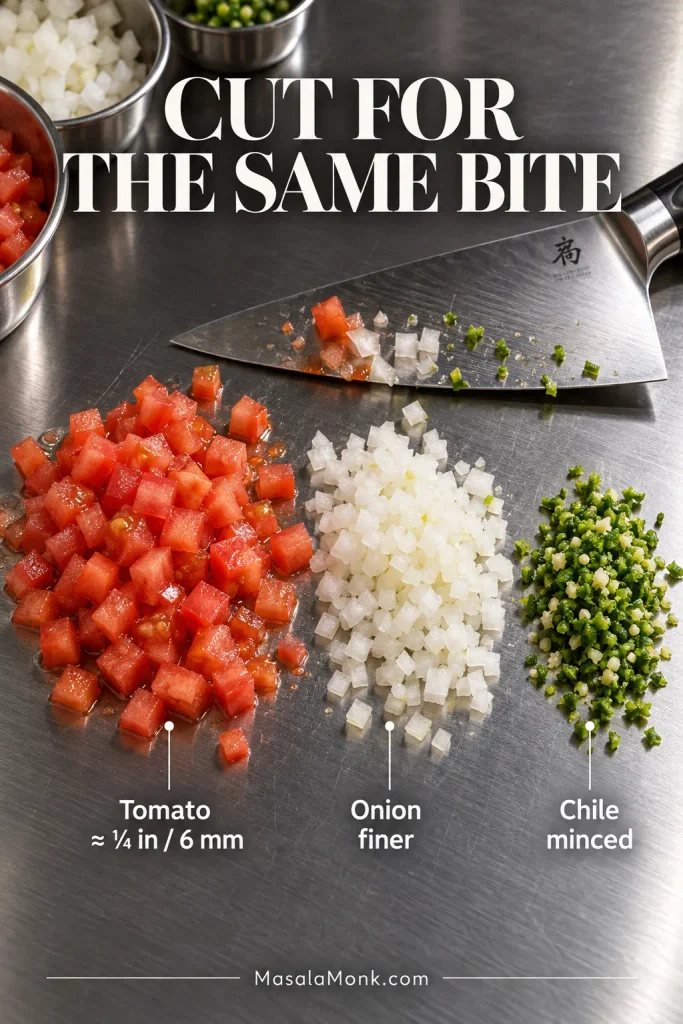
A sharp knife helps the tomato keep its shape. Repeated crushing or chopping releases more juice and gives the salsa a softer texture.
Can You Use a Food Processor?
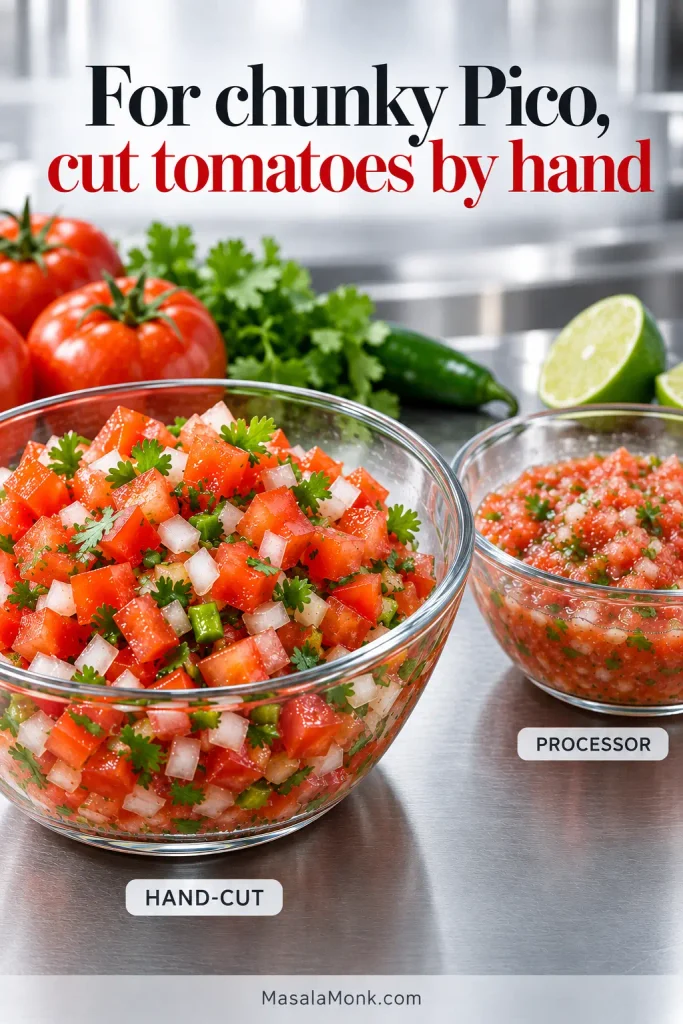
For classic chunky pico de gallo, cut the tomatoes by hand. A standard food processor tends to make the onion very fine before the tomato is evenly chopped, and every extra pulse releases more juice. The exception is a true dicing attachment. Otherwise, process the onion and chile cautiously if you need the shortcut, then cut the tomatoes by hand.
Season, Rest and Taste Again
Pico de gallo can be eaten immediately, but a 15-minute rest makes the final seasoning easier to judge. While you chop the tomatoes, give the onion and chile about 5 minutes with the lime. Add the tomatoes and cilantro, season with salt, then let everything sit.
After the rest, you may see pink-red tomato-lime juice underneath. The onion will lose some of its raw edge, and the seasoning will be easier to judge once that juice is folded back through the bowl.
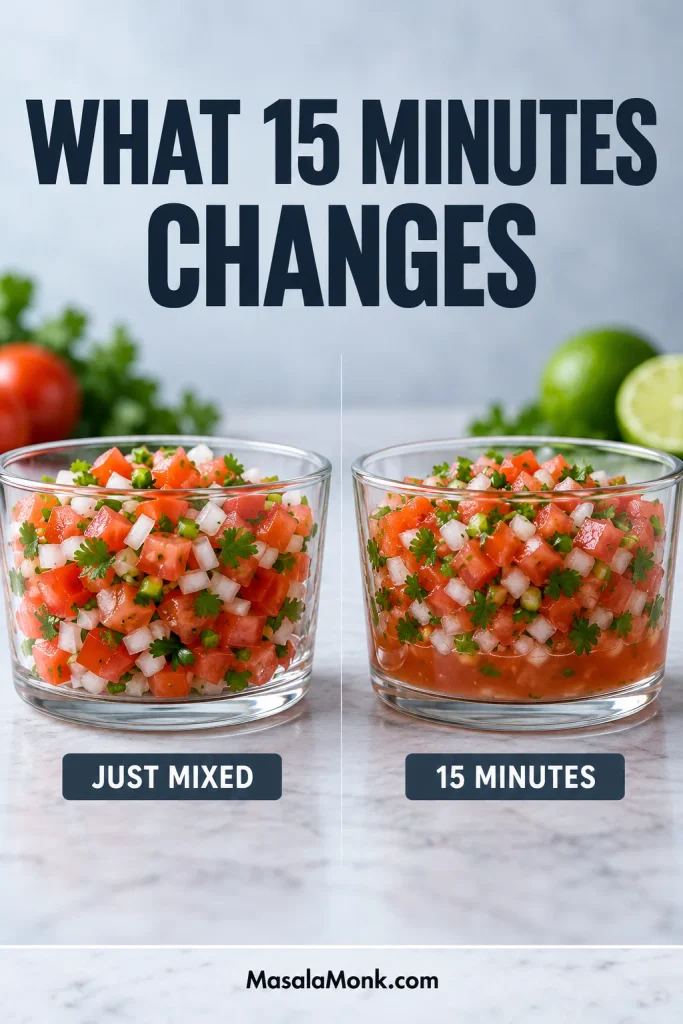
Take a spoonful with tomato, onion, chile and some of the juice. If the tomato tastes muted, add a small pinch of salt. Once the salt tastes right, add lime 1 teaspoon / 5 ml at a time only if the salsa still needs brightness. Add more serrano last if you want more heat.
If you have ever kept squeezing lime into a batch that somehow still tasted flat, check the salt first. Under-seasoned tomato can fool you into thinking it needs more acid.
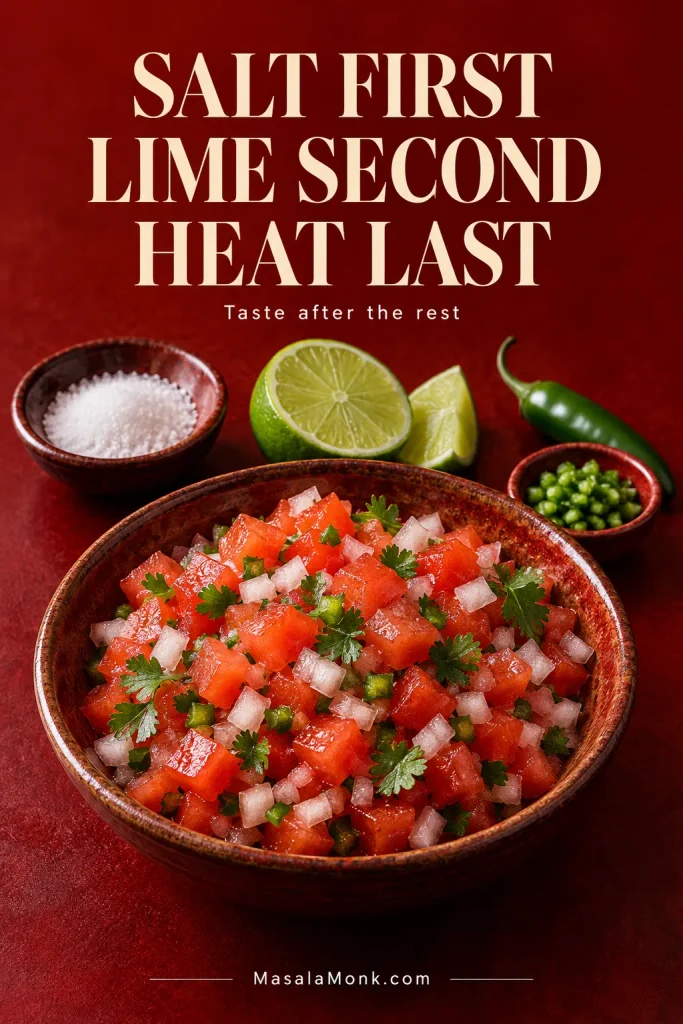
When the balance is right, tomato still leads, onion gives the bite some crunch, chile follows with heat, and lime sharpens the whole bowl without taking over.
Juicy Isn’t the Same as Watery
Some seasoned tomato-lime juice is normal. Pico becomes watery when there is enough liquid to drown the chopped ingredients or work against the food underneath it.
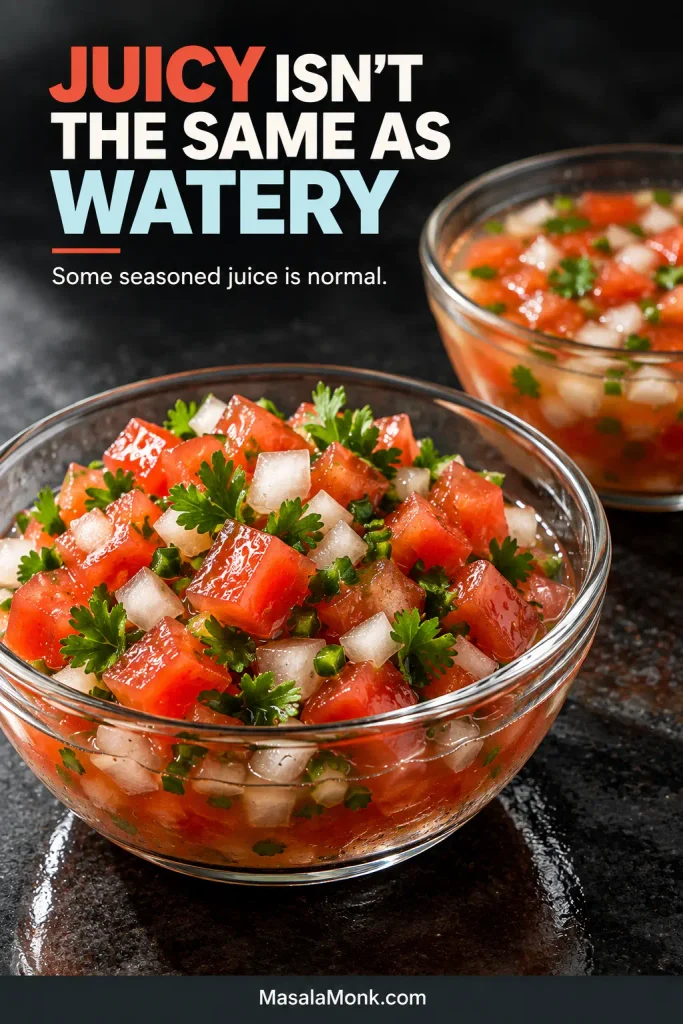
With chips, the juice is part of the pleasure. For fish tacos, lift mostly solids from the bowl so the fish, slaw and warm tortilla keep their own textures. The liquid that tastes great on a tortilla chip can work against you once it starts soaking into a tortilla.
| Where It’s Going | What to Do |
|---|---|
| Tortilla chips | Keep some seasoned juice in the bowl. |
| Tacos or fajitas | Spoon mostly solids so the tortilla stays intact. |
| Burritos | Drain the portion going inside. |
| Quesadillas | Serve it over the cooked quesadilla or alongside it. |
| Nachos | Use a slotted spoon or drain briefly before topping. |
The same rule applies to a 7 layer dip: drain the portion you’re adding so loose tomato juice doesn’t soften the layers underneath.
When the Tomatoes Really Are Too Wet
A puddle forming immediately after chopping is a good reason to drain the tomatoes briefly. For something that needs especially dry pico, such as nachos, lightly salt the diced tomatoes and leave them in a fine-mesh strainer for about 10 minutes.
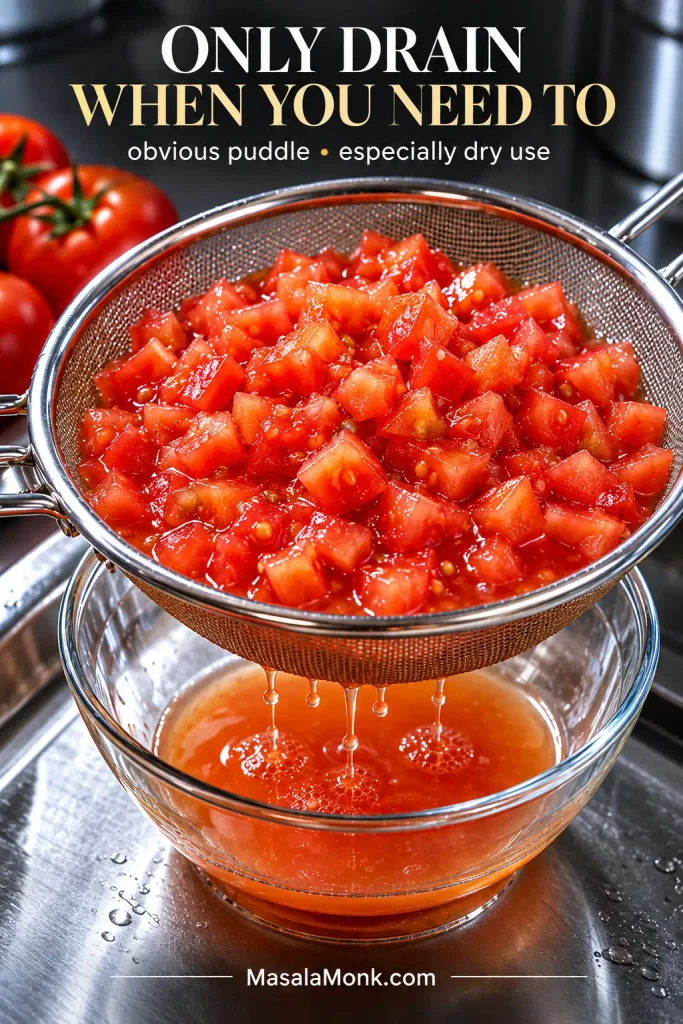
If you salt the tomatoes before draining, do not automatically add the recipe’s full ½ teaspoon / 3 g salt afterward. Assemble the pico, let it rest, taste, then add only what it needs.
Firm tomatoes with a normal amount of juice can skip this entirely.
What to Serve With It
Spoon pico onto hot carne asada or sheet-pan chicken fajitas at the table. The cool tomato and lime wake up browned meat and roasted peppers; use mostly solids, then let some seasoned juice reach the food underneath.
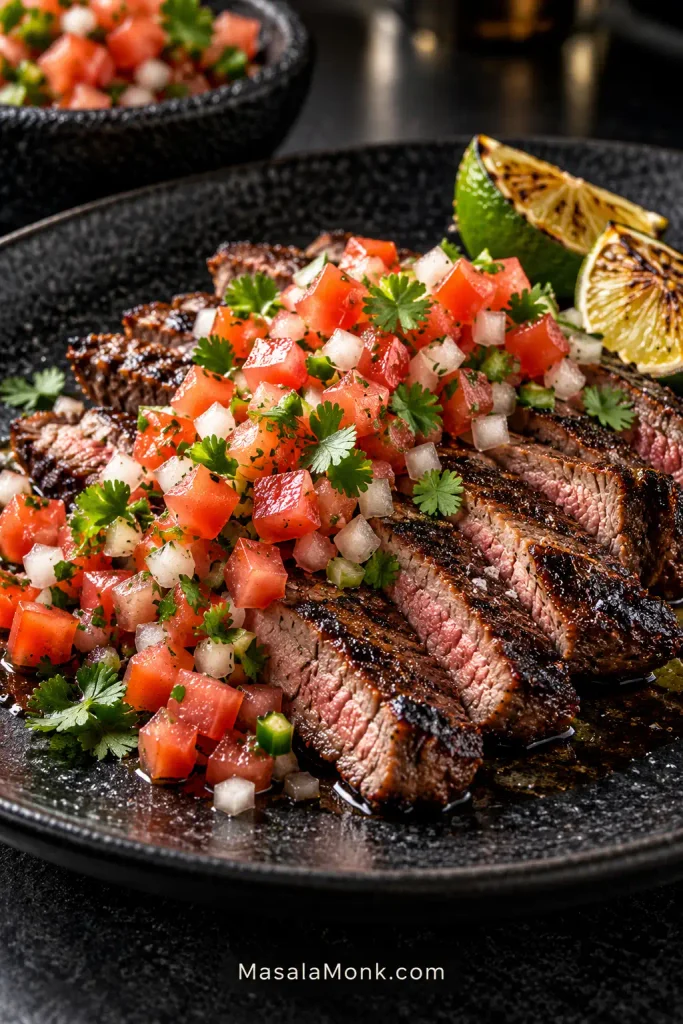
It also fits naturally into a rice-and-beans plate. A spoonful beside Mexican rice and creamy refried beans gives the plate something cold, crisp and sharp.
For chips, put it beside homemade guacamole. One is chunky and juicy; the other cool and creamy.
Troubleshooting
Most pico problems are easy to fix before the bowl reaches the table. Take a spoonful with tomato, onion, chile and some of the juice, then correct the thing you can actually taste.
| Problem | What to Do |
|---|---|
| Bland or muted | Add a small pinch of salt, wait a minute and try another spoonful before adding more lime. |
| Salt tastes right, but it still needs brightness | Add fresh lime 1 teaspoon / 5 ml at a time. |
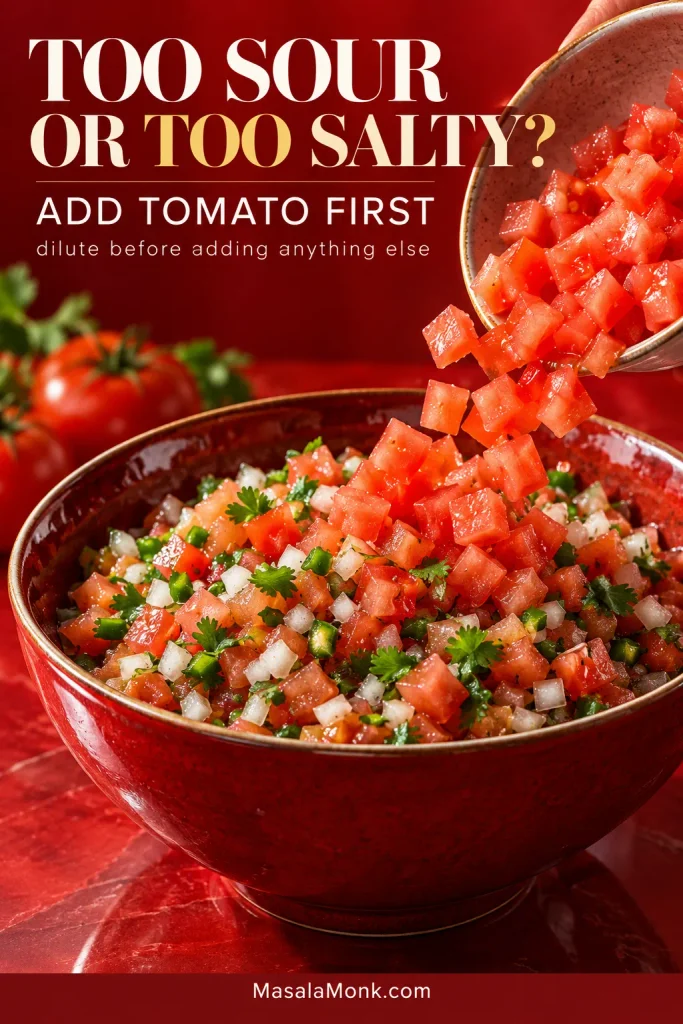
| Too sour | Add plain tomato first. Taste again before adding anything else. |
| Too salty | Add plain tomato first, then retaste. |
| Raw onion dominates | Add tomato now. Next time use less onion, cut it smaller or rinse a particularly harsh one. |
| Swimming in liquid | See when to drain the tomatoes, or use a slotted spoon. |
| Mushy or slushy | Serve it as a looser salsa. Next time use firmer tomatoes and chop them by hand. |
| Too hot or too mild | If the bowl is too hot, add tomato. To add more heat, use finely minced serrano a little at a time. |
A Few Useful Substitutions
No cilantro. Leave it out.
Different onion. White onion is the first choice here, but red or yellow onion can work if that is what you have. Expect a slightly different raw-onion flavor.
Canned tomatoes in a pinch. Drain canned diced tomatoes very well. They can make a usable salsa when fresh tomatoes are poor, but the result will be softer and more salsa-like than classic fresh pico.
Pico de Gallo, Salsa Fresca and Salsa Mexicana
Pico de gallo is a fresh salsa made from raw, diced ingredients rather than cooked or blended ones. Salsa is the broader category and may be raw or cooked, chunky or smooth. Roasted salsa verde, for example, takes tomatillos and chiles through heat before blending, so it eats very differently from fresh pico.
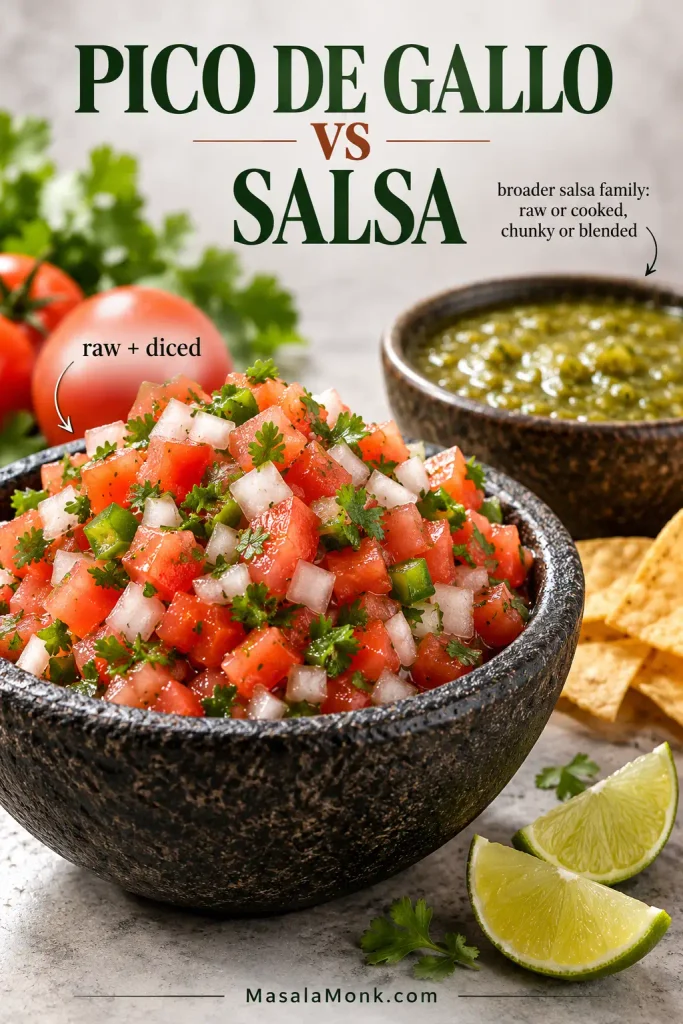
You may also see pico described as salsa fresca or salsa cruda. The classic combination of tomato, white onion, green chile and cilantro is also commonly called salsa mexicana.
Pico de gallo literally translates as “rooster’s beak,” although the exact origin of the name is uncertain. In Mexico, the term can also refer to other chopped chile-and-lime preparations, including versions with fruit or jícama.
Make Ahead and Storage
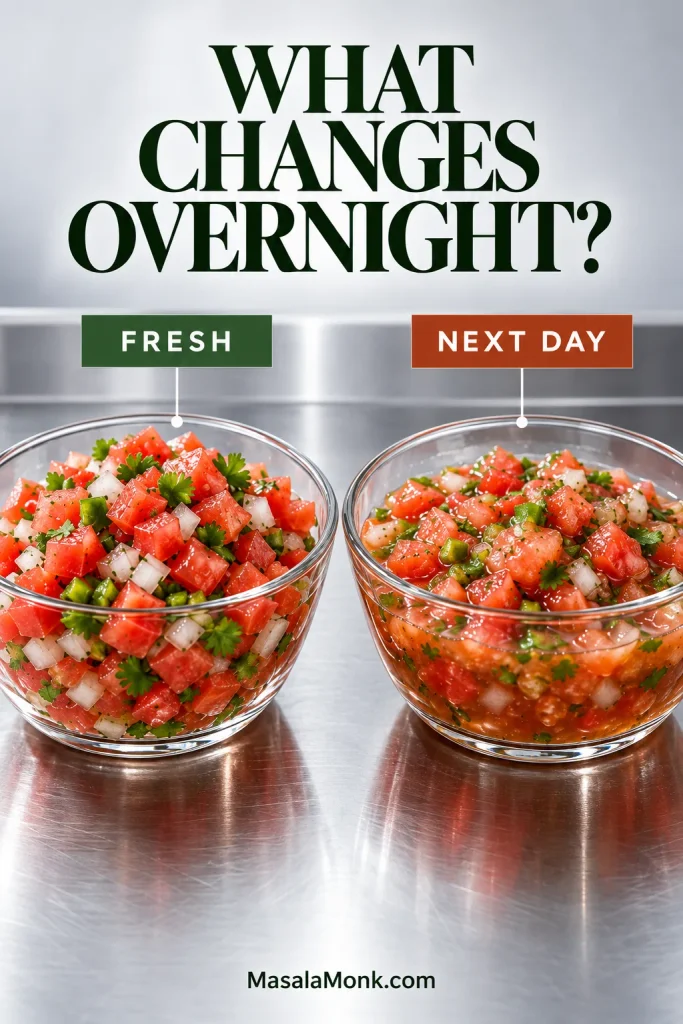
Pico de gallo is best the day it is made, but making it a few hours ahead is completely fine. A short rest helps the ingredients come together; as the hours pass, the tomatoes gradually soften and more juice collects underneath.
| When You Eat It | What to Expect |
|---|---|
| 15–30 minutes after mixing | Crisp vegetables with seasoning that has had time to settle in. |
| A few hours later | More juice and slightly softer tomatoes. |
| Next day | Still flavorful, but noticeably softer and wetter. |
| Prep ahead | Keep tomatoes whole until closer to serving; onion and chile can be chopped ahead. |
For advance prep, keep the tomatoes whole or store chopped tomatoes separately. Shortly before assembly, combine the onion and chile with the lime for about 5 minutes, then add the tomatoes, cilantro and salt. This preserves the brief lime rest without leaving chopped tomatoes to soften in lime and salt for hours.
How Long Does It Keep?
For the best texture, eat refrigerated pico de gallo within about 3 days. Keep it covered and refrigerate it promptly. If you made it ahead, take out only the portion you plan to eat about 10–15 minutes before serving so the tomato, chile and lime lose the hardest refrigerator chill.
Keep it at 40°F / about 4°C or below. At a party, taco bar or cookout, don’t leave pico unrefrigerated for more than 2 hours. Above 90°F / about 32°C, that limit drops to 1 hour, following USDA food-safety guidance.
Can You Freeze It?
Pico de gallo does not freeze well if you want to serve it fresh because thawed tomato and onion become soft and watery. If you’d rather freeze leftovers than waste them, use the thawed mixture in something cooked—rice, beans, soup, eggs or a quick tomato-chile sauce.
When Leftovers Lose Their Crunch
Soft next-day pico still has plenty of flavor. Cook it briefly into scrambled eggs or migas, stir it into refried beans or rice, add it to taco meat, or simmer it into a quick salsa. By day two or three, eggs, beans and rice are usually a better home for it than the chip bowl.