
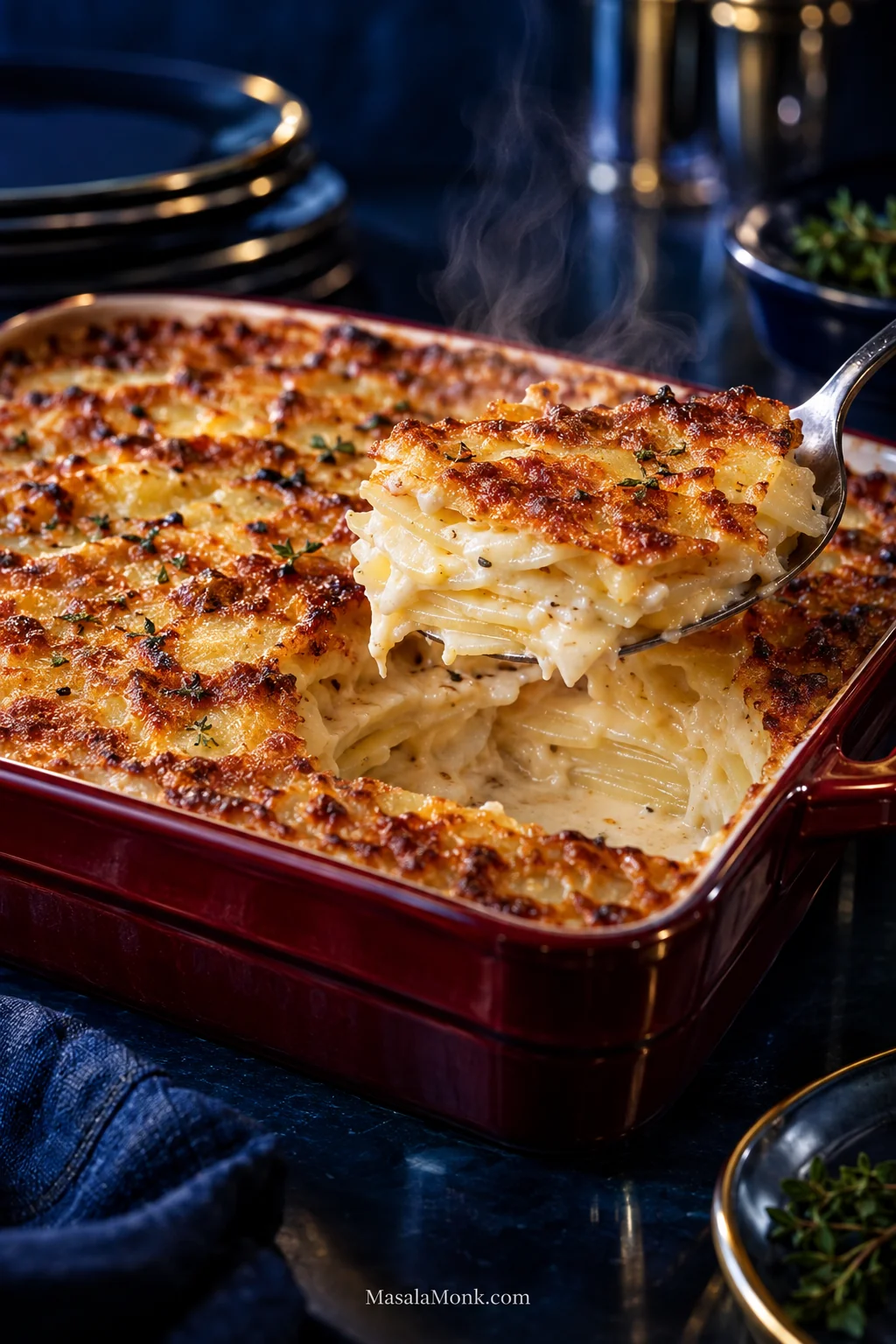
A good spoonful of potatoes au gratin breaks through a deeply browned top and lifts tender layers with silky cream caught between them. The potatoes still hold their shape, the sauce clings, and the space left by that first serving does not immediately flood with thin cream.
The frustrating part is that gratin can look finished before it actually is. Cheese colors quickly; a stack of potatoes takes longer. A beautiful top can hide a firm middle, and adding more cream does not automatically make the finished dish creamier.
This from-scratch potatoes au gratin recipe uses Russets sliced to ⅛ inch (3 mm), a short simmer in garlic-thyme cream, Gruyère and Parmesan, then a covered bake until the center is tender before the final browning.
The timer helps. The potatoes get the final say.
Jump To
- Before You Slice the Potatoes
- Potatoes, Cream and Cheese
- How to Make Potatoes Au Gratin
- If the Gratin Isn’t Behaving
- Making Potatoes Au Gratin Ahead? Do This Tonight
- Reheating and Freezing
- Scalloped Potatoes vs. Au Gratin
- What to Serve With Potatoes Au Gratin
- Potatoes Au Gratin Recipe
Before You Slice the Potatoes
| For This Gratin | Use |
|---|---|
| Potato | Russet |
| Slice thickness | ⅛ inch / 3 mm |
| Baking dish | Shallow 9 × 13 in / 23 × 33 cm, about 3 qt / 2.8 L |
| Oven | 350°F / 175°C conventional / 160°C fan |
| Oven rack | Center |
| Rest before serving | 15 minutes |
Slice thickness is only half of the story. Even perfectly sliced 3 mm potatoes cook more slowly in a deep casserole because the center takes longer to heat through. If your dish is noticeably smaller than 9 × 13 inches, move some potatoes to a second dish rather than piling them higher.

A mandoline makes those thin slices easy to repeat, but use the hand guard; a cut-resistant glove adds another layer of protection. Alternatively, a sharp chef’s knife works too.
Put the casserole on a rimmed sheet pan before it goes into the oven. Bubbling cream is much easier to clean from a tray than from the oven floor.
Potatoes, Cream and Cheese
Russet or Yukon Gold?
Russets are the better fit for this method because starch released from their cut surfaces helps the cream gain body while the layers soften. Yukon Golds work too, but stay firmer and more defined.
You can taste the same contrast in our creamy mashed potatoes, where Russets turn out lighter and Yukon Golds naturally stay denser and more buttery.
Why the Potatoes Go Into the Cream First
The short stovetop simmer starts cooking the potatoes and brings some of their surface starch into the cream, so the sauce begins gaining body before the casserole reaches the oven.
Don’t rinse the slices. We want that starch here.
Heavy cream brings richness and enough fat for a smooth sauce, while a smaller amount of whole milk keeps it from feeling quite so rich. Replacing all the cream with low-fat milk would give you a much thinner result because there is no roux to compensate.
Gruyère for Melt, Parmesan for the Top
Gruyère has enough nutty, savory character to flavor a whole pan of potatoes without overwhelming them, and it melts smoothly into the sauce as the gratin bakes. Parmesan is stronger and saltier, so a smaller amount on top brings extra depth and better browning.
Sharp cheddar can stand in if Gruyère is difficult to find; the flavor will shift noticeably toward cheddar. Whichever cheese you use, grate it from a block if you can.
Before the potatoes go in, taste the hot cream. More than two pounds of potato can turn seasoning surprisingly quiet once everything is baked, while Gruyère and Parmesan bring salt of their own.
How to Make Potatoes Au Gratin
The oven has two jobs. Covered, it cooks the potatoes through. Uncovered, it concentrates the sauce and browns the cheese.
1. Slice the Potatoes and Warm the Cream
Peel the Russets; their thicker skins interrupt the soft layered texture we’re after. Slice the potatoes ⅛ inch (3 mm) thick. A few noticeably thicker pieces can remain firm after everything around them is ready, so consistency matters here.

Combine the heavy cream, milk, garlic, thyme, salt, black pepper and nutmeg in a wide saucepan or Dutch oven. Warm over medium-low heat until steaming, with the first gentle bubbles appearing around the edge. The raw edge of the garlic will soften as the cream heats and the thyme becomes more noticeable.
2. Give the Potatoes a Head Start
Add the potatoes and gently separate the slices in the hot cream. Keep everything at a quiet simmer for about 5–7 minutes, lifting and turning them once or twice so the bottom doesn’t catch.
At first the cream moves freely around the slices. After a few minutes it becomes silkier and leaves a light coating when you lift a potato from the pan. The slice itself bends more easily than it did raw without becoming fragile.

3. Build the Gratin
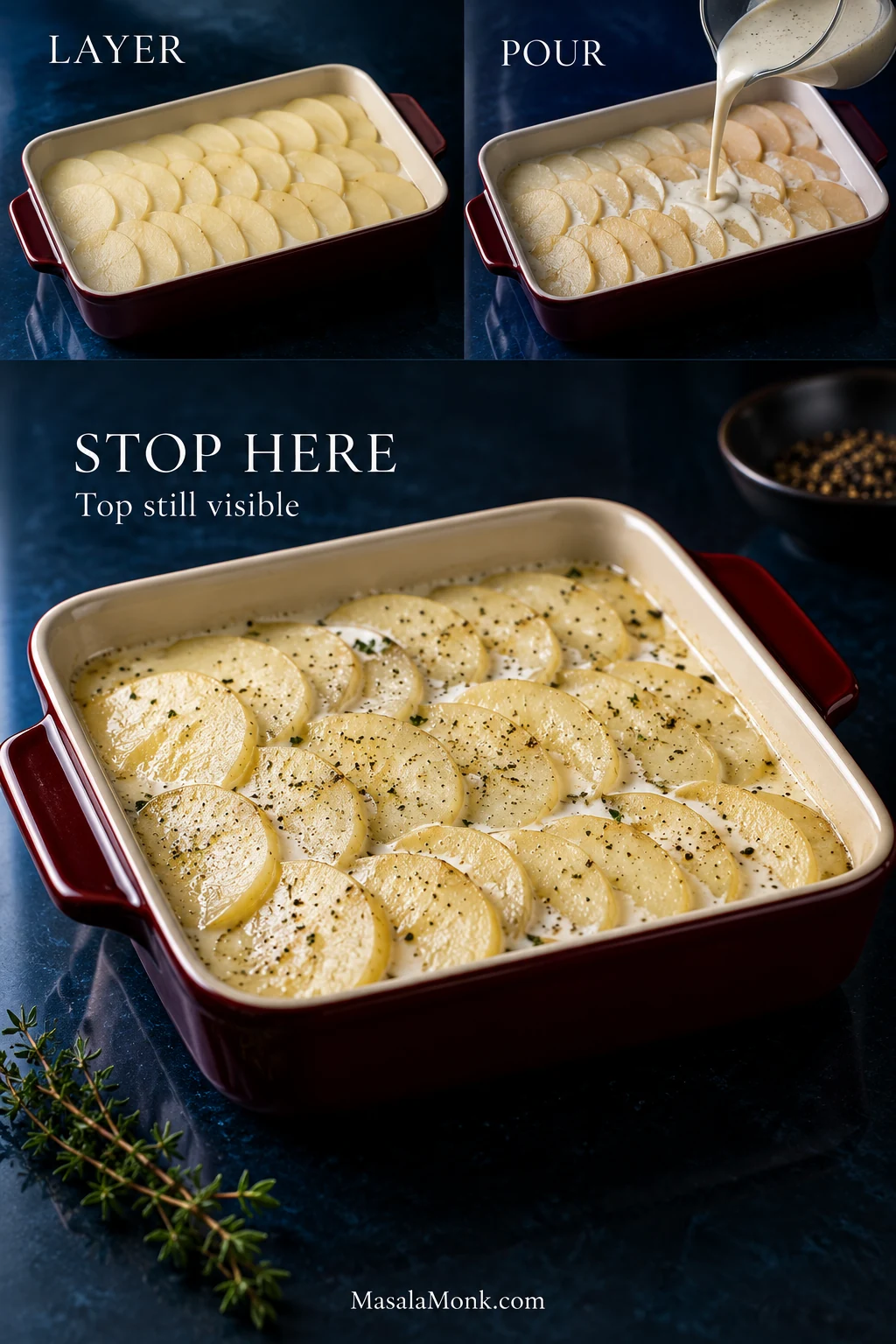
Butter the baking dish. Arrange roughly half of the potatoes in overlapping layers, close together without packing them into a solid mass. Scatter over half of the Gruyère, then add the remaining potatoes.
Pour the cream mixture over and between the slices. The potatoes need to be well surrounded, but the uppermost layer should remain visible. If a smaller or deeper dish would force you to bury the top just to use every last drop, stop pouring.
Making it ahead? Jump to the overnight make-ahead plan →
4. Cook Until the Middle Is Tender
Cover tightly with foil and bake on the center rack at 350°F (175°C; 160°C fan). Begin checking at 35 minutes.
The covered bake is finished when a thin knife slides through the very center with almost no resistance. The potatoes around the outside soften first, so don’t use an easy edge test to judge the middle.
If the middle is still firm, nothing has gone wrong.
This stage is especially tempting to rush when the rest of dinner is nearly ready. But a few extra covered minutes are much better than carrying a casserole to the table with crunchy potatoes hidden underneath.

Center still firm? See what to check before changing the heat →
5. Brown the Cheese and Let the Gratin Settle
Once the potatoes are tender, remove the foil and scatter over the remaining Gruyère and Parmesan. Bake uncovered for about 20–25 minutes, until the sauce bubbles slowly around the edges and the cheese develops deep golden patches rather than simply looking melted.
If everything underneath is ready but the surface is still pale, a brief blast under the broiler/grill can finish the color—but only if your baking dish is broiler-safe. Watch closely.
Now wait 15 minutes.
The sauce is at its loosest straight from the oven. After the rest, the first serving should lift with glossy cream clinging around the potatoes rather than leave thin sauce rushing into the space behind it.

Sauce still looks loose or oily? Start with the sauce troubleshooting guide →
If the Gratin Isn’t Behaving
Why Are My Au Gratin Potatoes Still Hard?
Usually the slices are thicker than expected, the casserole is deeper, the foil isn’t sealing well, or the oven is running a little cool. Cover the dish again, give it another 10–15 minutes, then test the middle.
If the potatoes are still firm and the edges look visibly dry, moisten those dry areas with a little warm cream or milk before covering the dish again. The center needs time more than it needs a hotter oven.
Why Is My Potato Gratin Watery?
First check the potatoes. If they are tender but thin cream is still pooling, leave the gratin uncovered a little longer so more moisture can evaporate. Then give it the full rest before deciding the sauce is too loose.
A deeper pan, lower-starch potatoes, too much liquid for the dish or simply too little uncovered baking can all leave excess sauce behind.
The Sauce Looks Oily or Grainy
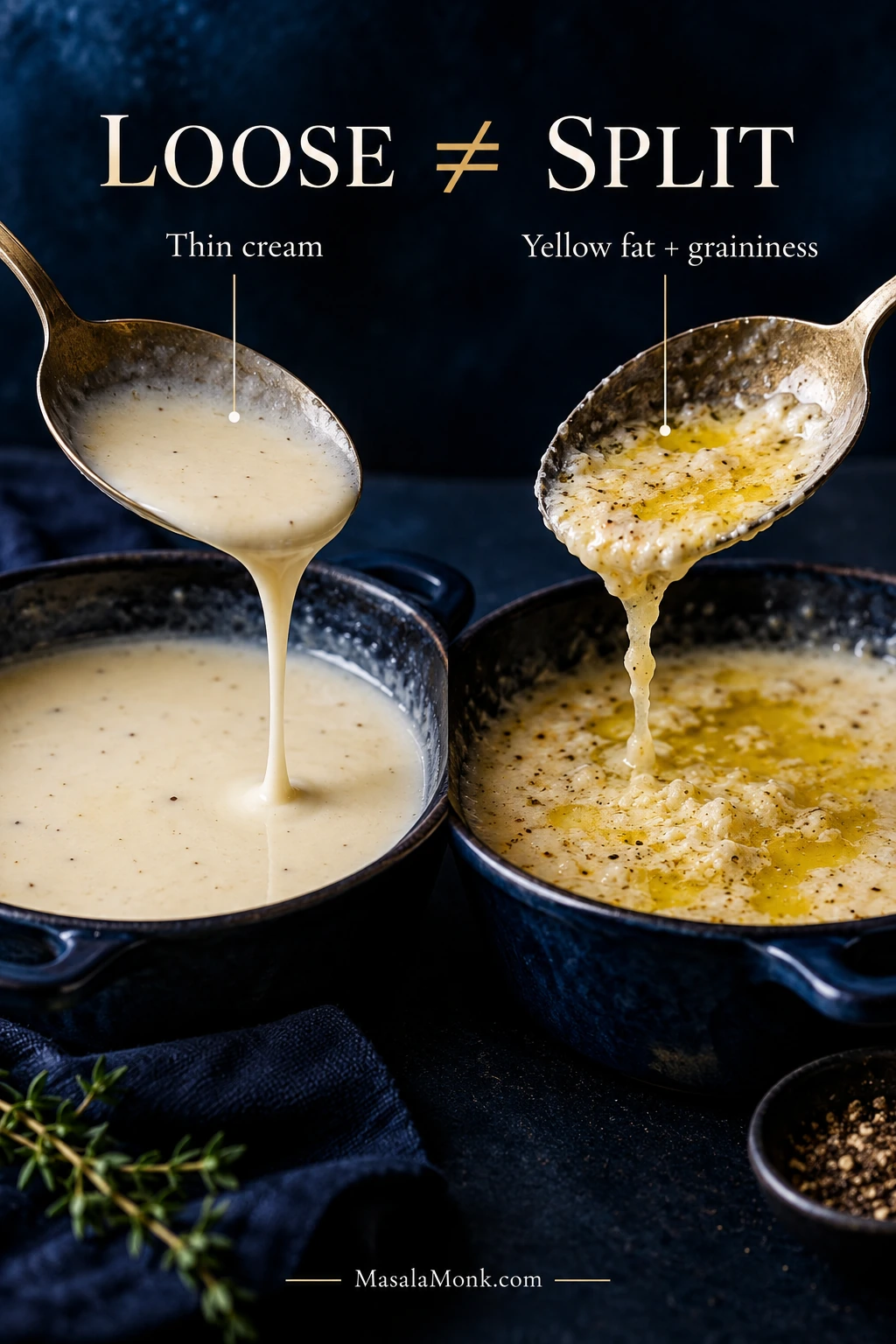
Clear yellow fat around a grainy-looking sauce points toward separation rather than simple looseness. Excessive heat, too much cheese or aggressive reheating can all encourage it; pre-shredded cheese may also melt less smoothly.
A badly split sauce is difficult to make completely smooth again, so prevention matters more here: keep the heat moderate and grate the cheese fresh when you can.
The Potatoes Taste Bland
Potatoes mute seasoning quickly. Taste the hot cream before adding the slices, especially if you change either cheese. A particularly salty Parmesan may call for less added salt; a mild Gruyère substitute may need a little more.
Making Potatoes Au Gratin Ahead? Do This Tonight
For this method, the cleanest place to stop is after the short stovetop cook and assembly, before the gratin goes through its full oven bake. You finish the actual tenderizing and browning on the day it is served.
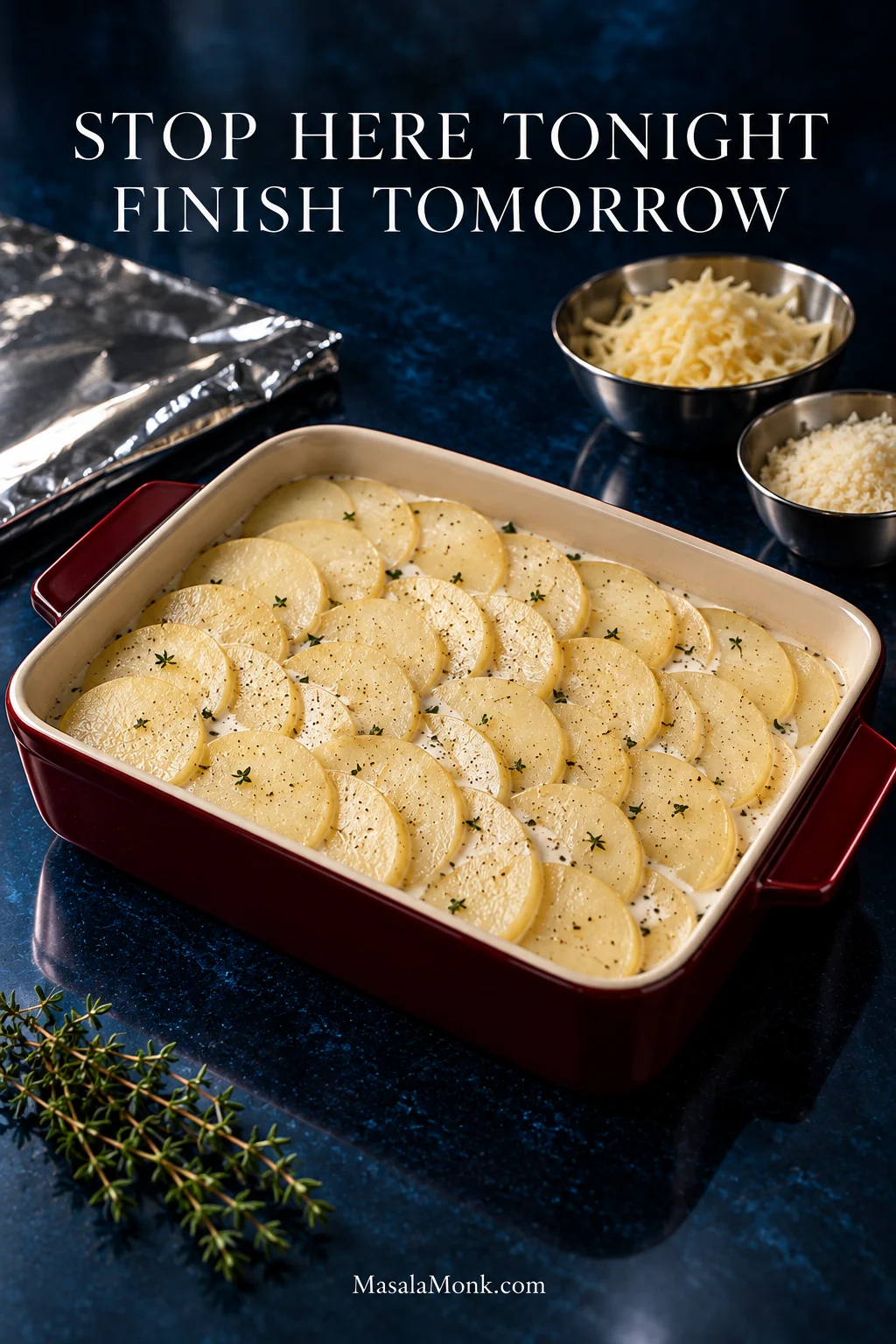
- Simmer the sliced potatoes in the seasoned cream for 5–7 minutes and assemble the gratin as directed.
- Add the first half of the Gruyère, keeping the remaining Gruyère and Parmesan refrigerated separately.
- Let the most vigorous steaming subside briefly, then cover and refrigerate promptly for up to 24 hours. Don’t leave the casserole at room temperature to cool completely.
- If you’re using glass or ceramic bakeware, follow the manufacturer’s guidance before moving a refrigerator-cold dish into a hot oven.
- Bake covered and begin checking at 50 minutes. Continue until a thin knife passes through the middle with almost no resistance.
- Add the reserved Gruyère and Parmesan, uncover and brown as usual.
Already baked it? Jump to reheating and freezing →
Reheating and Freezing Potatoes Au Gratin
USDA leftovers guidance recommends using refrigerated cooked leftovers within 3–4 days and reheating them to 165°F / 74°C. Reheat a larger portion covered at 325–350°F (165–175°C), then uncover briefly if you want to refresh the top.
If the gratin looks dry before reheating, add a spoonful or two of cream around the edge. Individual portions can be reheated gently in short microwave intervals.
Freezing is possible, but it is not my first choice if texture matters. Potatoes can become grainier or release water after thawing, and cream-and-cheese sauces are more likely to separate.
Is This the Same as Scalloped Potatoes?
In modern American recipe usage, potatoes au gratin usually include cheese and a browned top, while classic scalloped potatoes are generally baked in milk or cream without cheese.
Modern recipe names are much less tidy. Plenty of dishes called scalloped potatoes contain cheese, and many families use the two names almost interchangeably. With Gruyère between the potatoes and a browned cheese crust on top, this one sits comfortably on the au gratin side.
Gratin dauphinois is another close French relative, centered on potatoes and dairy and not necessarily the generous cheese topping common in modern American au gratin recipes.
What to Serve With Potatoes Au Gratin
A rich gratin does not need an equally complicated main course. A prime rib roast gives you deeply browned beef and pan juices against the soft potatoes. Ham, lamb, pork or a simple roast chicken are equally at home beside it.
Something green keeps the plate from becoming one long note of richness. Roasted Brussels sprouts bring caramelized edges and a little bitterness, while green beans, asparagus, broccoli or a sharp leafy salad work just as well.

Potatoes Au Gratin Recipe
Tender 3 mm slices of Russet potato baked in garlic-thyme cream with Gruyère and Parmesan. A brief stovetop simmer starts cooking the potatoes and brings their starch into the cream before the casserole reaches the oven.
Serves: 8 as a side
Prep: about 25 minutes
Cook: usually about 65–90 minutes; occasionally longer if the middle needs extra covered time
Rest: 15 minutes
Total: usually about 1 hour 45 minutes to 2 hours 10 minutes

Equipment: shallow 9 × 13-inch (23 × 33 cm), approximately 3-quart / 2.8-liter ceramic or glass baking dish; rimmed sheet pan; wide saucepan or Dutch oven; mandoline or sharp chef’s knife; foil; cheese grater.
Ingredients
- 2½ lb / 40 oz / 1.13 kg Russet potatoes, weight before peeling
- 1½ cups / 12 fl oz / 360 mL heavy cream
- ½ cup / 4 fl oz / 120 mL whole milk
- 2 garlic cloves, finely grated or minced
- 1 teaspoon fresh thyme leaves
- 8 g fine sea salt, about 1½ teaspoons depending on brand
- ½ teaspoon freshly ground black pepper
- ⅛ teaspoon freshly grated nutmeg, optional
- 6 oz / 170 g Gruyère, freshly grated and divided
- 1½ oz / 43 g Parmesan, finely grated
- 1 tablespoon / 14 g unsalted butter, for the baking dish
Instructions
- Heat the oven. Set a rack in the center and heat to 350°F / 175°C conventional / 160°C fan. Butter a shallow 9 × 13-inch (23 × 33 cm) baking dish and place it on a rimmed sheet pan.
- Slice the potatoes. Peel the Russets and cut them evenly to ⅛ inch / 3 mm. Leave the slices unrinsed.
- Warm the cream. Combine the heavy cream, milk, garlic, thyme, salt, pepper and nutmeg in a wide saucepan or Dutch oven. Bring to a gentle simmer over medium-low heat.
- Give the potatoes a head start. Add the slices and separate them gently in the cream. Simmer for 5–7 minutes, lifting and turning once or twice. They should bend easily and carry a light coating of cream without becoming fragile.
- Assemble. Layer half the potatoes, half the Gruyère, then the remaining potatoes. Pour the cream around them, keeping the uppermost slices visible. Reserve the remaining Gruyère and all of the Parmesan.
- Cover and cook until tender. Cover tightly with foil and bake for 35 minutes, then test the center with a thin knife. If the potatoes resist, cover again and continue in 10–15 minute increments until the knife passes through with almost no resistance.
- Brown the top. Remove the foil, add the remaining Gruyère and Parmesan, and bake uncovered for 20–25 minutes until the sauce bubbles slowly at the edges and the cheese is deeply golden in patches. If needed, broil/grill briefly only in broiler-safe bakeware, watching closely.
- Rest. Leave the gratin for 15 minutes before serving so the sauce can settle around the potatoes.
Recipe Notes
- Keep the slices close to 3 mm. Thicker pieces can stay firm long after their neighbors are ready.
- Yukon Golds give a firmer result. They hold cleaner layers and release less starch into the cream than Russets.
- No flour is used. The recipe contains no added gluten as written; if you need it strictly gluten-free, check labels on packaged ingredients such as cheese and seasonings.
- For a double batch, use two pans. Keeping the gratin shallow makes the cooking much more predictable.








