
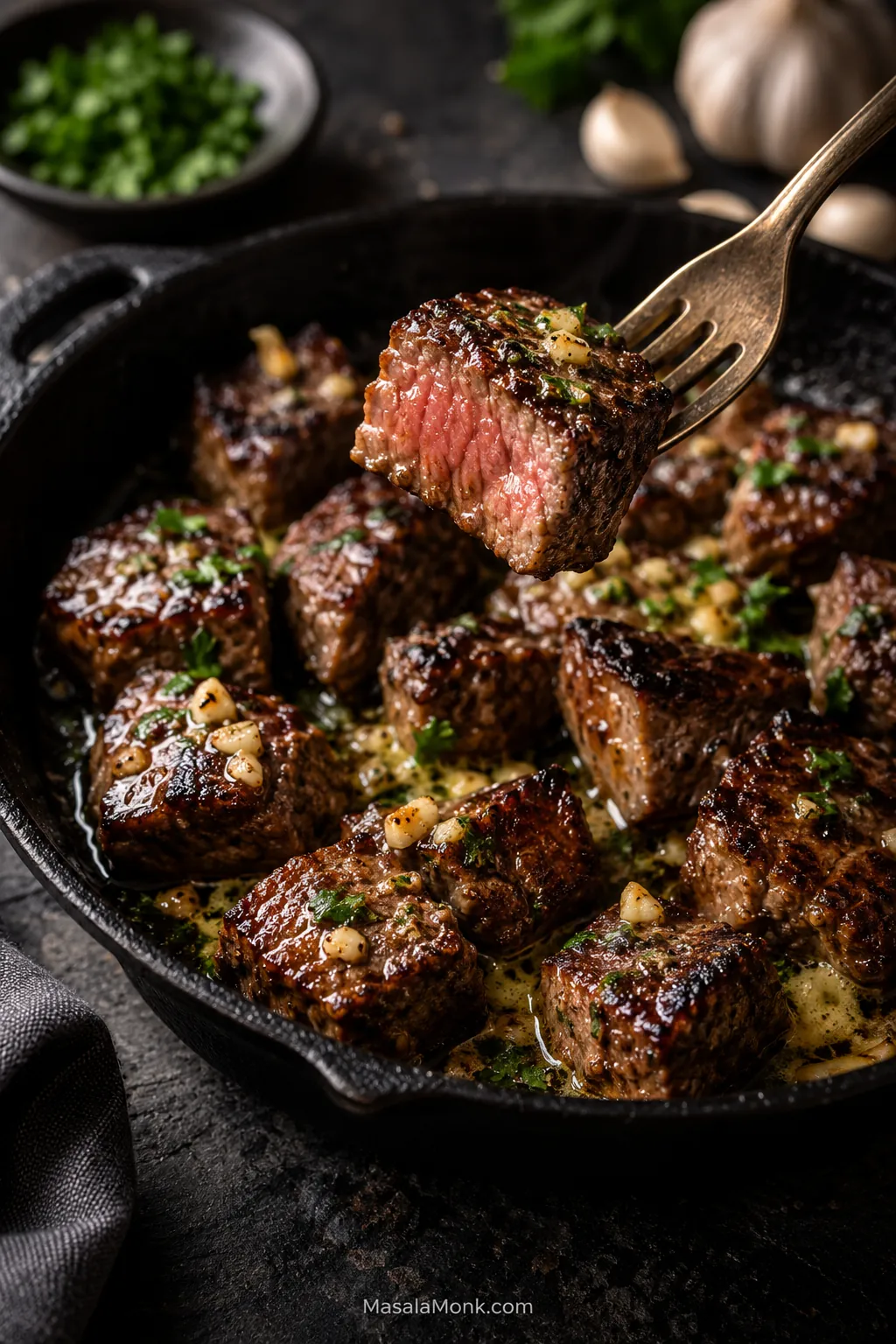
Garlic butter steak bites are really a two-temperature recipe disguised as a one-pan dinner. The beef wants a hot skillet so its cut surfaces can brown while the centers stay juicy. Butter and finely minced garlic want that heat turned down before they ever reach the pan.
Get the handoff right and you get deeply browned, savory edges, a tender center and warm garlic butter glossing the steak instead of drowning it. There is a sharp sizzle at the pan, then that unmistakable smell of garlic hitting melted butter a few minutes later.
Steak is also expensive enough that turning a good piece of sirloin gray or chewy is particularly annoying. Fortunately, most of the risk comes down to one easy rhythm: Sear hot. Steak out. Butter low. There is no marinade to remember hours ahead and no long room-temperature wait.
Think of the pan in four moves:
- Hot panDry steak meets shimmering oil and gets a chance to brown.
- Steak outMove those small pieces away from the stored heat before they overshoot.
- Heat downThe butter should melt and foam, not race straight toward brown.
- Quick returnToss the steak through the glossy garlic butter and get dinner onto the plate.
Garlic Butter Steak Bites Recipe
The skillet can preheat while you mince the garlic and chop the parsley, so there is very little dead time. Cut and dry the steak first; season it when the pan is nearly ready.
Useful equipment: a 12-inch / 30 cm cast-iron or heavy stainless-steel skillet, sharp knife, cutting board, paper towels and tongs or a sturdy spatula. An instant-read thermometer is useful for checking doneness without cutting into several pieces.
Ingredients
- 1¼ lb / 20 oz / about 570 g top sirloin steak, preferably about 1 inch / 2.5 cm thick or thicker
- ¾ tsp / about 4 g fine sea salt, plus more to season at the end if needed
- ½ tsp freshly ground black pepper
- 1 tbsp / 15 ml high-smoke-point oil, such as avocado, grapeseed, canola or vegetable oil
- 3 tbsp / about 42 g unsalted butter
- 5 large garlic cloves
- Small handful fresh parsley leaves, chopped to make about 2 tbsp
Method
Prep the Steak and Pan
- Cut and dry the steak. Trim away any hard exterior gristle, then cut the sirloin into reasonably even pieces about 1 inch across. If the grain is obvious, make your last cut across it. A few cubes will inevitably be smaller than the others. Pick one of the largest as your test piece, then pat all of the beef thoroughly dry with paper towels.
- Heat the skillet while you finish the prep. Put a 12-inch cast-iron or heavy stainless-steel skillet over medium-high heat. Mince the garlic and chop the parsley while the pan heats. High-heat steak searing can create some smoke, so get the vent hood running or open a nearby window before the pan is fully hot.
- Season just before cooking. Sprinkle the dry steak evenly with the salt and black pepper. Add the oil and swirl it around the hot skillet. It should shimmer. Touch one piece of beef to the pan—you want an immediate, energetic sizzle—then add the rest.
Sear and Pull the Steak
- Give the first face time to brown. Arrange the steak in a loose single layer with visible space around most of the pieces. If it does not fit comfortably, cook in two batches. Leave the first side alone for about 1½–2 minutes, until the underside has a deep brown crust. Turn or toss and cook for roughly another 1–2 minutes. Start checking that larger cube after about 3 minutes total. Your skillet may move faster or slower, so trust the color and the steak more than the stopwatch. Six perfectly browned faces are not the goal.
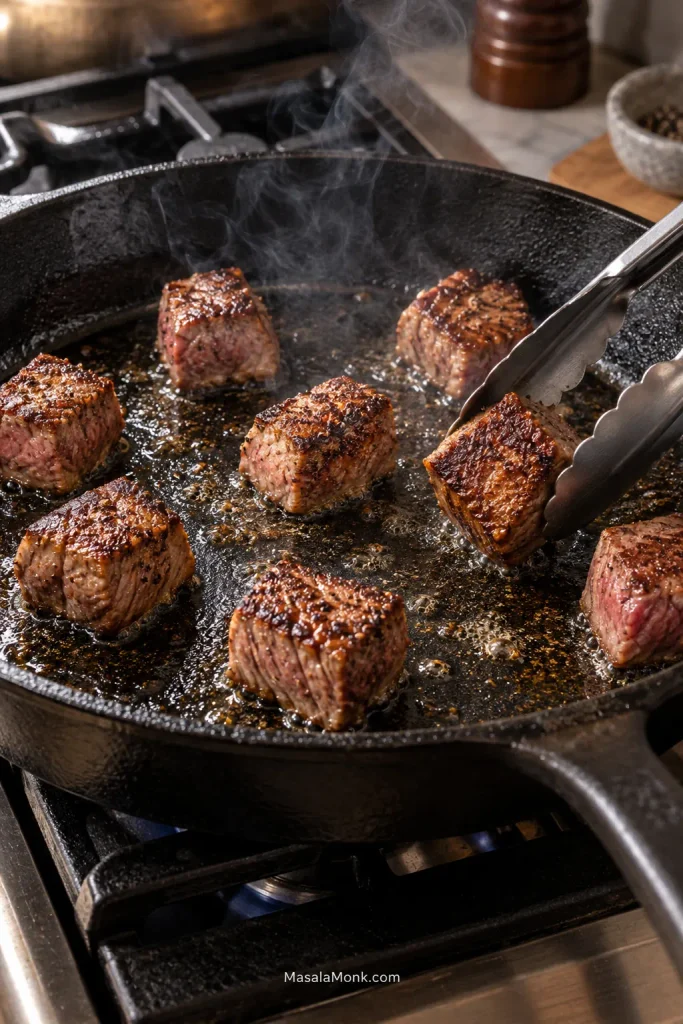
- Move the steak to a clean plate. Take the pieces out while they are still slightly shy of the doneness you want; you will check again after the garlic-butter toss. Once the steak is safely off that hot metal, the stressful part is basically over. Cast iron in particular stays fiercely hot even after the burner is turned down.
Finish With Garlic Butter
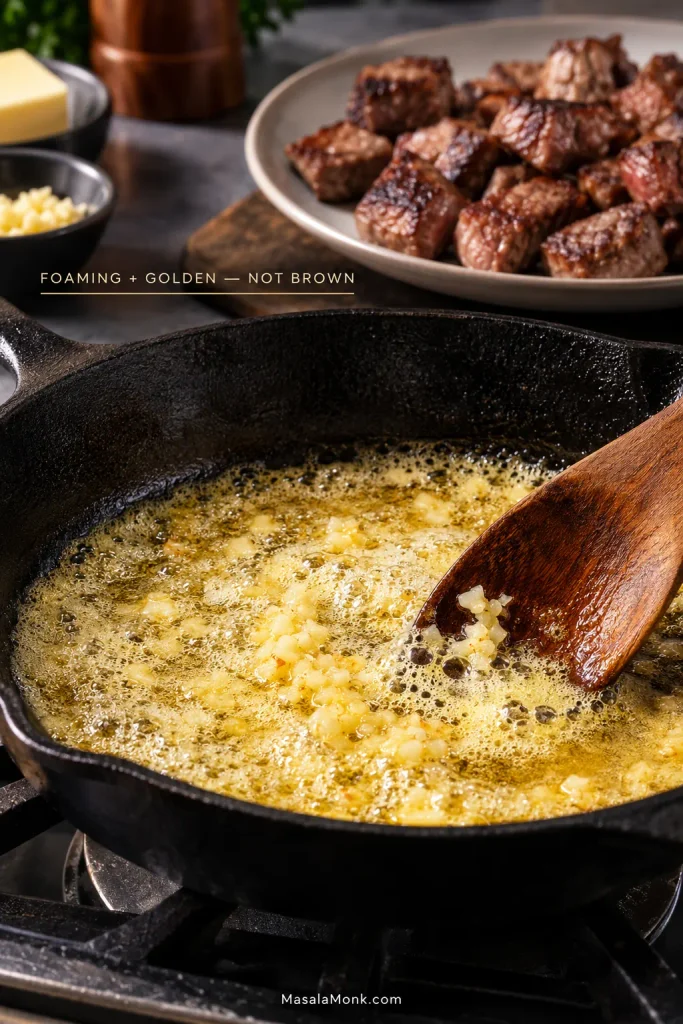
- Lower the heat and make the garlic butter. Turn the burner to low and add the butter. It should melt and foam while staying golden. If it starts turning brown almost as soon as it hits the skillet, pull the pan off the heat until things calm down before adding the garlic. Scrape the browned steak bits into the foaming butter, then stir in the garlic for about 30–45 seconds. You want a sweet, fragrant garlic smell and pieces that are pale to lightly golden—not dark brown.
- Coat and serve. Return the steak and any juices from the plate. Toss just long enough to gloss the browned surfaces with garlic butter, then take the skillet off the heat. Add the parsley and check that larger cube again. Taste one while everything is hot and add a small pinch of salt if the batch needs it.
Doneness at a glance: use one of the larger cubes for your thermometer check. About 130–135°F / 54–57°C is a common final medium-rare range; roughly 135–140°F / 57–60°C is a common medium range. These are culinary targets; see the USDA guidance below.
Let spacing decide whether you need two batches. A 12-inch pan is a useful starting point, but cooking surfaces vary. If most of the steak cannot sit in one loose layer with visible room around it, split the batch and allow a few extra minutes. Two browned batches beat one steaming pan.
What Is the Best Steak for Steak Bites?
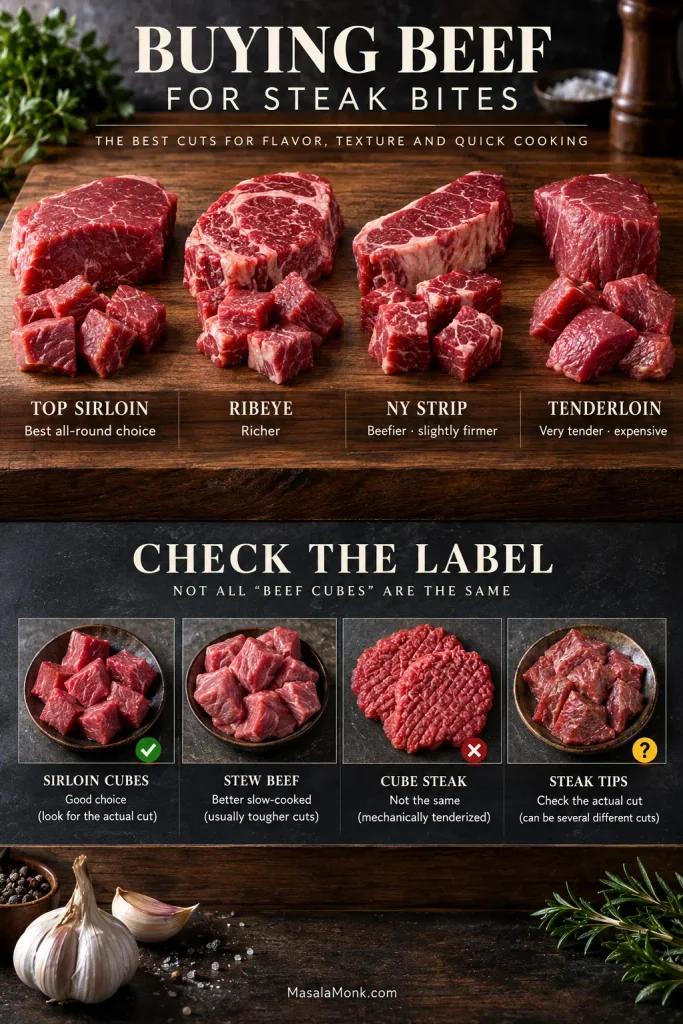
Top sirloin is the practical sweet spot. It is tender enough for a short, hot sear, but it still tastes properly beefy once the garlic butter goes on. You also avoid paying tenderloin or ribeye prices for meat that is about to be cut into small pieces.
| Cut | What it gives you | How it works here |
|---|---|---|
| Top sirloin | Beefy, reasonably tender, moderately lean and comparatively affordable | The best all-round choice |
| Ribeye | More marbling, richness and juicy fat | Excellent for a richer batch |
| New York strip | Strong beef flavor with a slightly firmer texture | Very good |
| Tenderloin | Very soft, lean and mild | Beautifully tender, but expensive for cubing |
| Skirt or flank | Pronounced grain and strong flavor | Usually better cooked whole and sliced thinly across the grain |
| Chuck / stew meat | More connective tissue and a firmer quick-cooked texture | Better suited to long, moist cooking |
If you’ve got top sirloin, you can stop thinking about cuts and cook. Flank is usually happier in thin cross-grain slices, as in beef and broccoli. For steak bites, buy something thick enough to make roughly 1-inch cubes.
Before You Buy Pre-Cut Beef, Check the Label
Sirloin cubes can save knife work. Stew beef may contain tougher pieces chosen because they soften during long cooking, and a three- or four-minute sear will not give them that time.
Cube steak is something else again: usually a thin piece of beef that has been mechanically tenderized. “Steak cubes” means steak cut into chunks. By contrast, steak tips is a looser term and can refer to small pieces of steak or particular regional cuts and preparations. Similar names, different beef—check the actual cut on the package when you can.
Do Steak Bites Need a Marinade?
No. With top sirloin, salt, pepper, a good sear and the garlic butter are enough. That is part of the appeal: you can decide to make these at dinnertime instead of planning hours ahead.
Marinated steak can still work. Drain it well and pat the surface dry before searing; wet beef spends its first minutes steaming off liquid instead of browning. A salty marinade also means you will need less added salt.
For herbs and acidity without wetting the raw steak, spoon chimichurri over the cooked bites. The cold, bright sauce is excellent against warm beef and garlic butter.
In this 15-minute version, season immediately before searing. Salting ahead can work too; give the steak at least 45 minutes. Serious Eats goes into the timing in detail. For dinner tonight, though, season and cook.
Steak-Bite Doneness Moves Fast
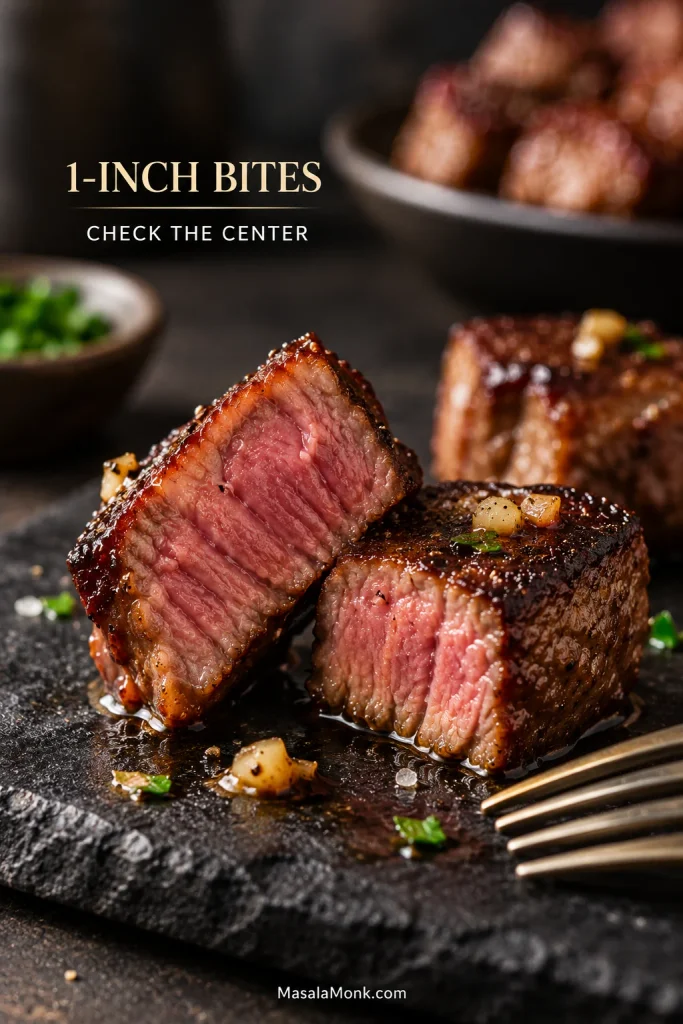
For 1-inch steak bites, expect roughly 3–4 minutes of initial searing in a properly hot skillet, followed by only a brief garlic-butter toss. Pan heat and cube size vary, so treat that window as a guide and use the crust and internal temperature to decide when the steak is ready.
Steak bites have very little runway between pink and overdone. A small cube has only a short distance between its browned surface and its center, so one of the larger pieces makes the most useful thermometer check.
Slide an instant-read thermometer into that cube from the side toward the center. For reference, about 130–135°F / 54–57°C is a common final medium-rare range and roughly 135–140°F / 57–60°C is a common medium range. The garlic-butter toss adds another small burst of heat, so check again afterward.
Once that cube is where you want it, the batch is done. Do not trade the center you wanted for one more patch of crust.
USDA food-safety guidance for beef steak: cook to at least 145°F / 63°C before removal from heat, followed by a 3-minute rest. Lower steak temperatures commonly used for rare or medium-rare are culinary choices below that recommendation. Count the garlic-butter toss as part of the cooking before beginning that rest.
Cooking now? Back to the Searing Step · Full Recipe
Cast Iron Holds Heat Longer Than You Think
Cast iron is excellent when you want a hard sear because it hangs onto heat after the cool beef hits the pan. Heavy stainless steel works beautifully too, and it usually responds a little faster when you lower the burner.
The catch with cast iron comes after the steak leaves. Even with the flame low, the skillet itself can still be extremely hot. Butter tells you what the dial cannot: if it melts into a golden foam, you are in much better territory for garlic; if it races straight toward brown, the pan needs more time away from the heat.
When the temperature is right, the browned steak bits loosen into the foaming butter and the garlic stays sweet and fragrant. That is the handoff the whole recipe is built around.
A large nonstick skillet can do the job in a pinch, though the crust may be less aggressive. Treat it more gently during preheating than cast iron or stainless steel.
At the skillet? Garlic Butter Step · Troubleshooting
Give Mushrooms and Onions the Empty Pan First
Mushrooms with browned beef and garlic butter are a great combination. What they are not good at is sharing the steak’s searing stage: as they soften, they release the water the beef is trying to avoid.
Cook mushrooms first until most of that moisture has disappeared, then move them out and sear the steak. Onions can be softened the same way. Bring either one back when the steak returns to the garlic butter.
For a saucier version, keep the mushrooms in their own cooking stage and serve the beef with creamy mushroom sauce.
Fix My Steak Bites: Tough, Gray, Watery or Burned
A disappointing batch does not always have the same cause. Start with what you can actually see, hear and taste.
| What happened | Likely cause | What to do |
|---|---|---|
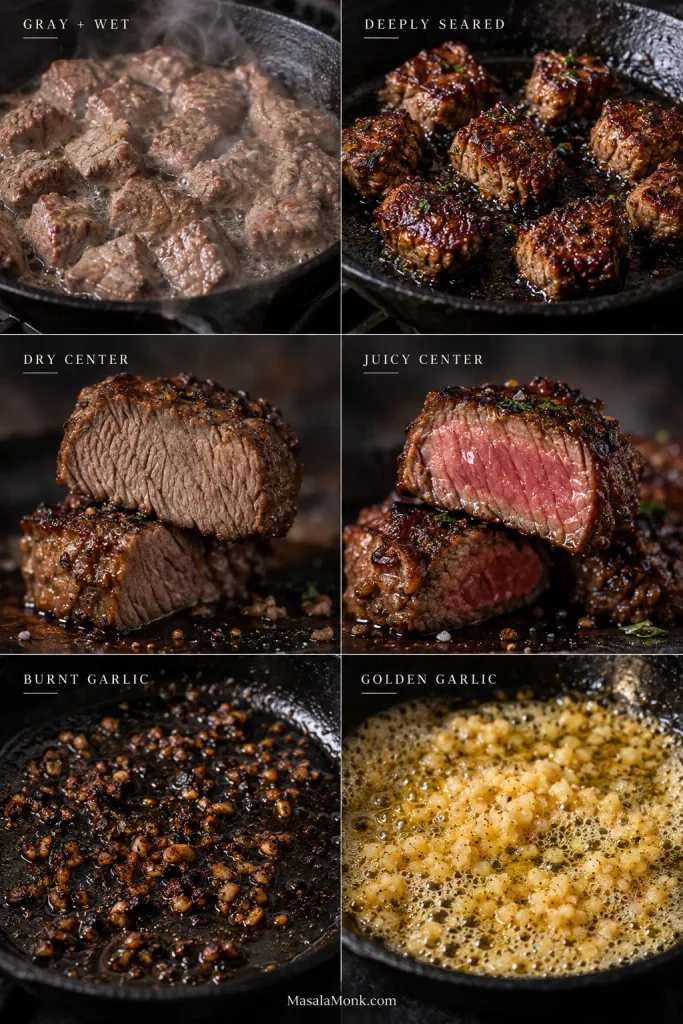
| Gray or watery | Wet beef or crowded pan | Dry well; give the pieces room |
| No real crust | Moved too soon or pan too cool | Wait for a strong sizzle; leave the first face alone |
| Brown but dry | Uneven pieces or too much pan time | Cut more evenly; pull smaller cubes sooner |
| Pink but chewy | Cut, grain or connective tissue | Choose tender steak; cut across grain |
| Stew meat stays tough | Wrong cut for a quick sear | Use sirloin here; slow-cook stew beef |
| Garlic tastes bitter | Pan still too hot | Keep the steak out; make the garlic butter again |
| Butter blackens | Too much heat stored in skillet | Take the pan off heat before starting again |
| Steak overcooks in garlic butter | Stayed in the hot pan too long | Return only long enough to coat |
| It tastes flat | Needs more seasoning | Taste hot; add a little salt |
Gray and Wet?
Listen as well as look. Proper searing sounds sharp and energetic. When liquid pools around the beef and the sound softens toward bubbling, the pan is busy boiling water instead of building crust. Dry steak and more space fix most of the problem.
Brown but Dry?
Look at the pieces themselves. If the smallest cubes are dry while the bigger ones are still juicy, size—not seasoning—is probably the problem. Cut the next batch more evenly, and do not be afraid to pull an undersized piece out before the rest.
Pink but Chewy?
Pink does not guarantee tenderness. Cut and grain still matter. A tender piece of sirloin cut across its muscle fibers will eat very differently from a tougher piece cooked to exactly the same temperature.
Garlic or Butter Burned?
If the garlic is already dark and bitter, do not toss the steak through it and hope the beef will hide the taste. Leave the steak on its clean plate, discard the burned garlic butter and let the skillet lose some heat. Then make the garlic butter again. That small reset is a much better trade than giving the whole batch a bitter coating.
Back to Recipe · Choosing Steak · Back to Top
Turn the Steak Bites Into Dinner
For a steakhouse-style plate, put the bites next to creamy mashed potatoes and something green—beans, asparagus or a simple salad. The potatoes catch the garlicky butter left on the plate particularly well.
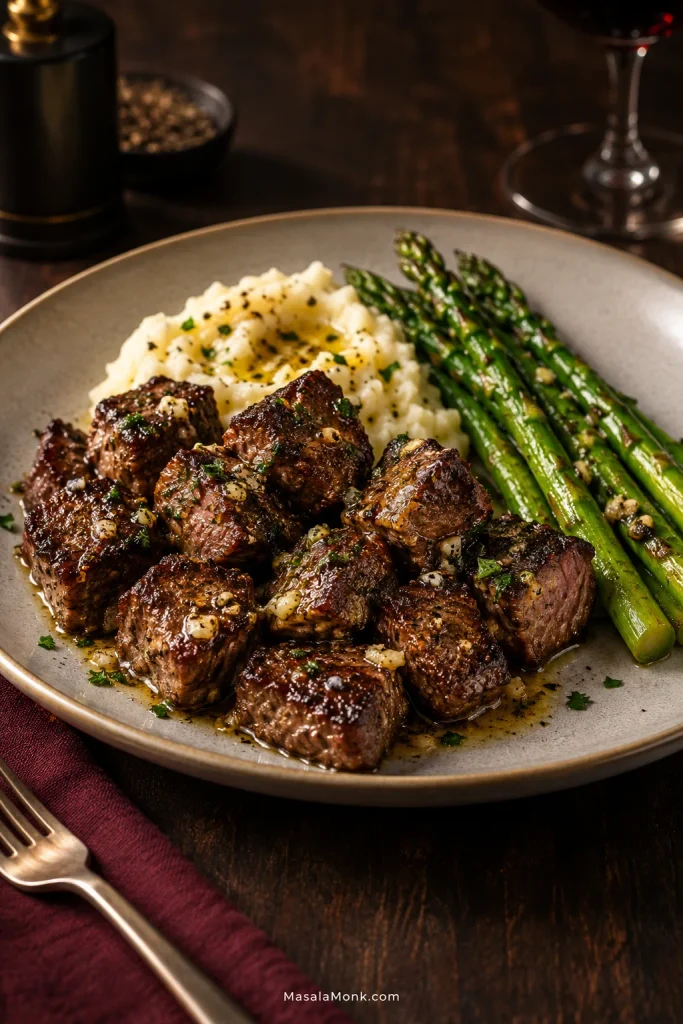
On an ordinary weeknight, rice and broccoli are hard to beat. The rice stretches the steak and catches whatever buttery juices reach the bottom of the bowl. Cauliflower mash, zucchini or crisp-edged vegetables make a lighter plate without leaving dinner feeling spare.
They also work well as a warm appetizer. Put out toothpicks and something bright or sharp alongside—chimichurri or horseradish cream is plenty.
A Couple of Good Finishes
For a darker, more steakhouse-like version, lower the heat after the steak comes out. If the skillet is still fiercely hot, move it off the burner for a moment. Splash in a little Worcestershire, let it sizzle down briefly to a thin glaze, then add the butter and continue with the garlic.
A richer option is to leave the skillet method alone and spoon béarnaise over the cooked steak. Tarragon and acidity give you a very different plate without interfering with the sear.
Leftovers: Reheating Cooks the Steak Again
Refrigerate cooked steak bites promptly and use them within about 3–4 days. Planning leftovers? Cook the steak fully the first time rather than deliberately half-cooking it for later.
Reheat the bites in a skillet over medium-low to medium heat with a small knob of butter or a splash of oil. Turn them often and keep the reheating brief. USDA guidance calls for leftovers to reach 165°F / 74°C, which will push the centers further toward well done.
Cold steak is genuinely good rather than a consolation prize. Slice it thin and pile it over a crisp cucumber salad with vinegar, dill and onion, tuck it into a sandwich or wrap, or add it to a leafy salad with something sharp and crunchy.
The best moment is still the first one: steak just out of the garlic butter, browned edges fresh, garlic fragrant and the surface still glossy. Get it onto the plate while that contrast between crust, tender center and warm butter is still there.








