
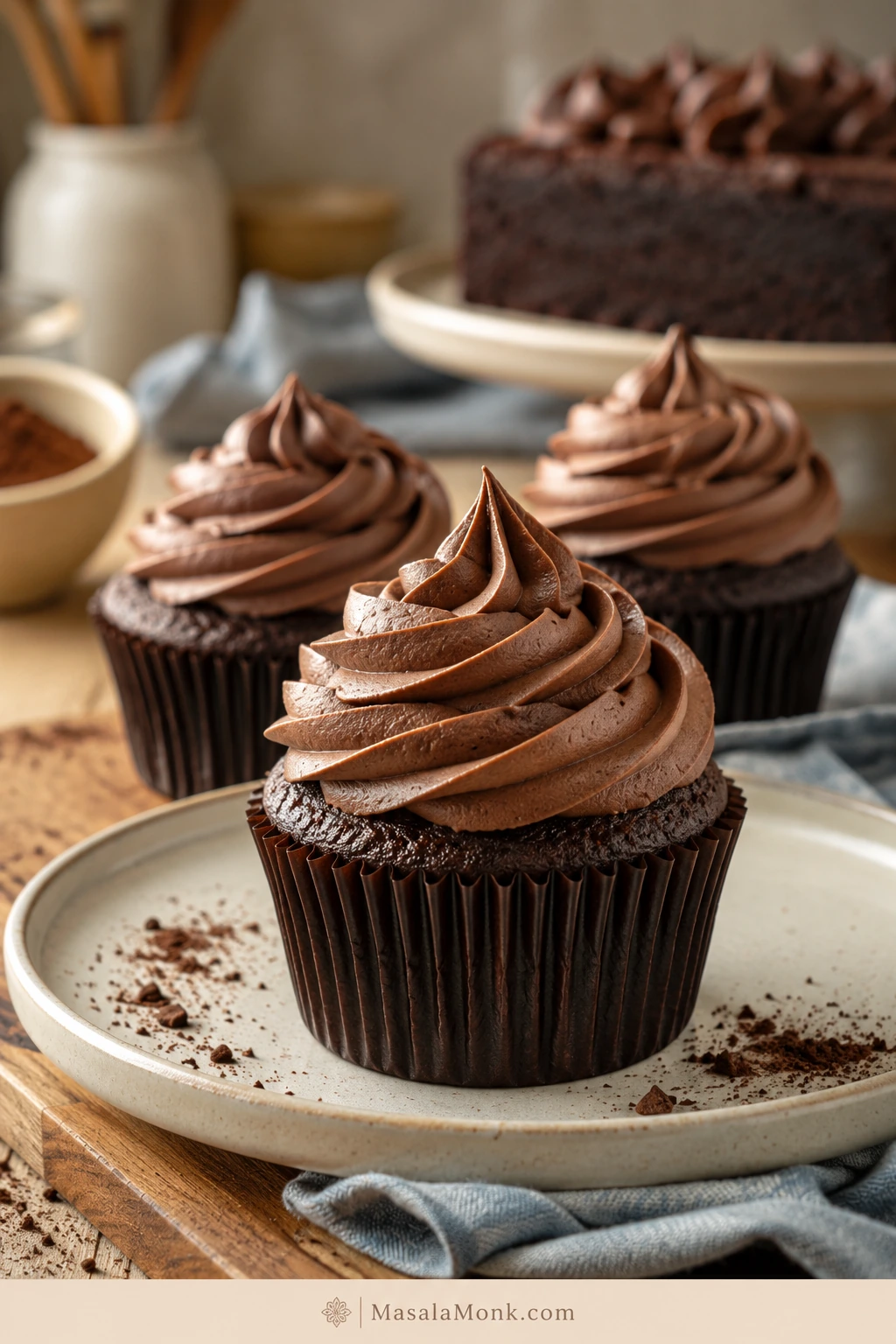
Frosting is the part everyone sees first, which is why it can make even a simple cake feel a little high-pressure. This chocolate cream cheese frosting keeps that final step calm: smooth enough to spread, thick enough to chill and pipe, and chocolatey without tasting like straight sugar.
The finished topping is thick and creamy, with deep cocoa flavor, a gentle cream cheese tang, and a soft matte finish. At its best, each bite tastes like chocolate first, cream cheese second, and sugar last.
This version is built for the frosting problems people actually run into: cream cheese that turns loose, chocolate that tastes flat, cupcake swirls that slump, and “not-too-sweet” frosting that still needs enough structure to behave.
It is not sugar-free, and it is not trying to be. It is balanced instead of candy-sweet: less sugary than classic chocolate buttercream, with enough powdered sugar to stay smooth, spreadable, and pipeable.
Use it right away when you want a spreadable frosting. A short chill turns the same bowl from creamy and spreadable to swirl-ready. The recipe itself takes about 10 minutes; the extra time is only for cleaner cupcake swirls or a firmer layer-cake finish.
Need the fast path? Jump to the recipe. Trying to fix soft frosting? Start with the Texture Rule.
It is especially useful for birthday cupcakes, simple sheet cakes, bake-sale brownies, red velvet cake, and casual layer cakes where you want chocolate frosting that tastes rich but not candy-sweet.
Contents
- Jump to Recipe
- Before You Start
- The Texture Rule
- Ingredients You Need
- Why This Frosting Works
- Cocoa Powder vs Melted Chocolate
- How to Make It
- Success Cues
- How to Make It Pipeable
- How Much Frosting You Need
- Best Uses
- Troubleshooting
- Storage and Make-Ahead
- Variations
- FAQs
Chocolate Cream Cheese Frosting Recipe
This recipe makes a smooth, chocolatey cream cheese frosting for cupcakes, brownies, 9×13 cakes, and simple layer cakes. It spreads as soon as it is mixed and becomes firm enough for soft swirls after 15 to 30 minutes in the refrigerator.
The mixing is quick; the chill is only there when you want cleaner piping. For a generously frosted 9-inch layer cake or bakery-style cupcake swirls, make extra because piping always uses more than it looks like.
| Prep | Chill | Yield | Best For |
|---|---|---|---|
| 10 minutes | Optional 15 to 30 minutes | About 3½ to 4 cups | Cupcakes, brownies, 9×13 cakes, casual layer cakes |
Choose your texture: 3 cups powdered sugar gives a softer, tangier frosting. 3½ cups gives firmer swirls. Chill before piping, and reach for milk or cream only when the frosting is truly too thick. For visual checkpoints, see the Success Cues.
Recipe Ingredients
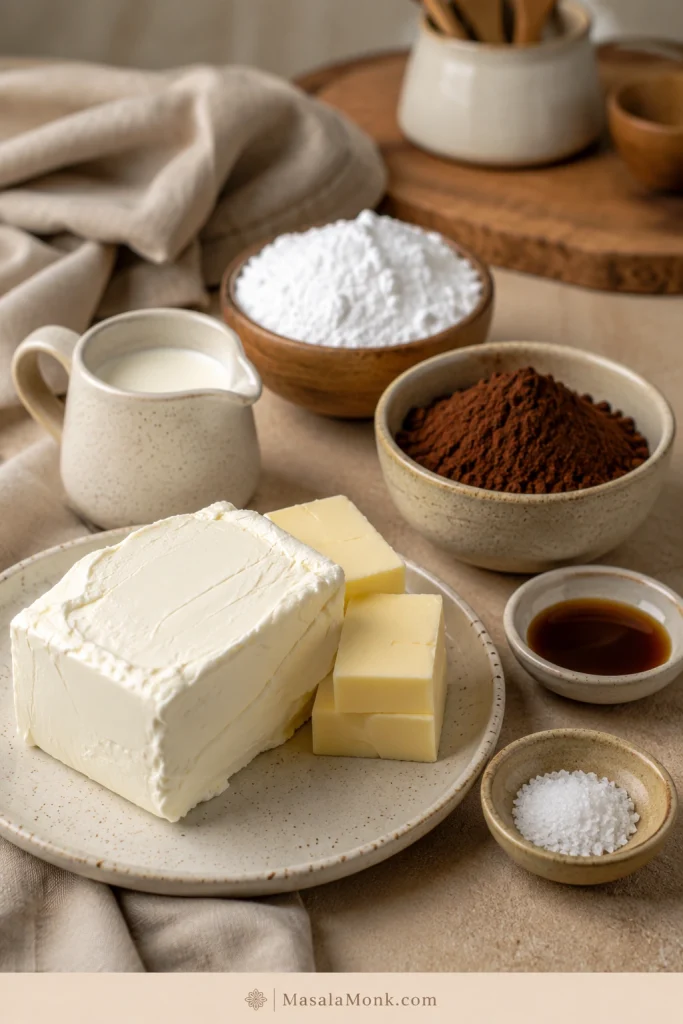
- 8 oz / 226 g full-fat brick cream cheese, softened but still cool
- ½ cup / 113 g unsalted butter, softened but not melted
- 3 to 3½ cups / 360 to 420 g powdered sugar / icing sugar, sifted if lumpy
- ½ cup / about 50 g unsweetened cocoa powder, natural or Dutch-process
- 1 teaspoon vanilla extract
- ¼ teaspoon fine salt, plus a tiny pinch more to taste
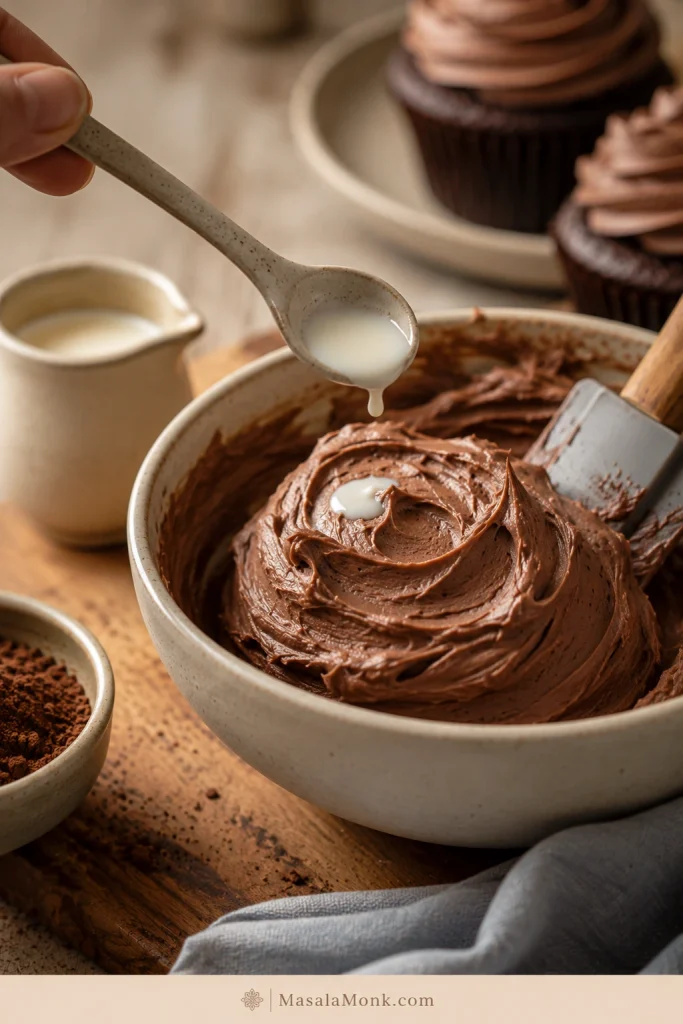
- 1 to 4 teaspoons milk or cream, only when the mixture is too thick; many batches need none
Note: Depending on the brand and how tightly it is packed, ½ cup cocoa powder may weigh around 45 to 55 g. About 50 g is a reliable working amount here.
Optional: For a fudgier version, beat in 3 to 4 oz / 85 to 115 g cooled melted dark chocolate after the base is smooth.
Before Mixing Checkpoint
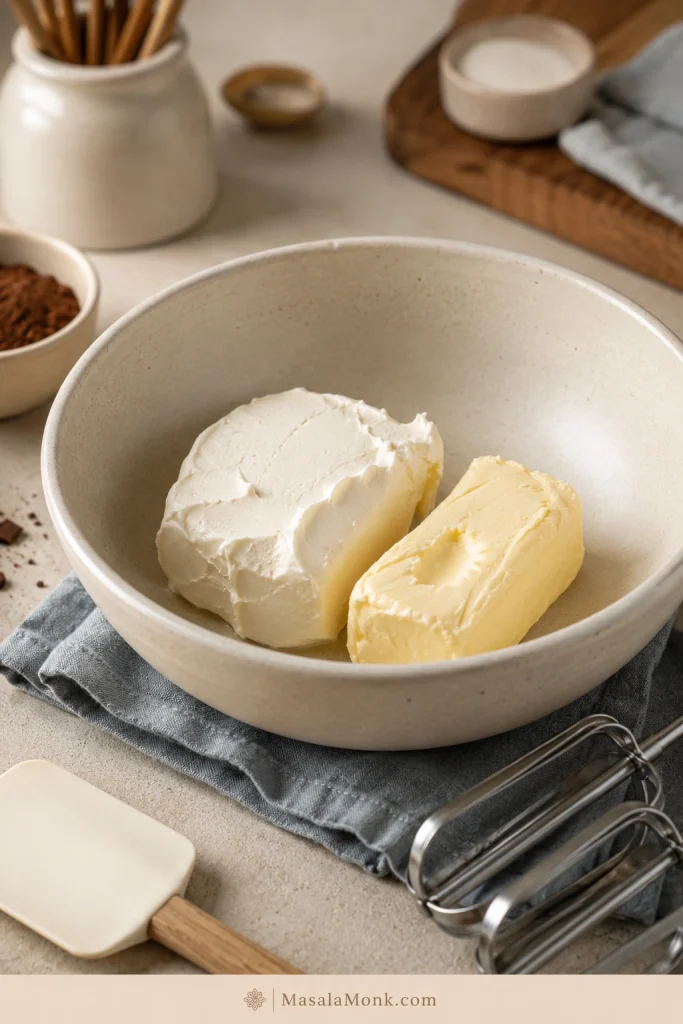
The cream cheese should press in but still hold its block shape. The butter should dent but not shine. If either one looks greasy, chill it briefly before starting.
Recipe Instructions
- Add the softened cream cheese and softened butter to a large mixing bowl. Beat on medium speed until completely smooth and creamy, about 1 to 2 minutes. Scrape down the sides and bottom of the bowl.
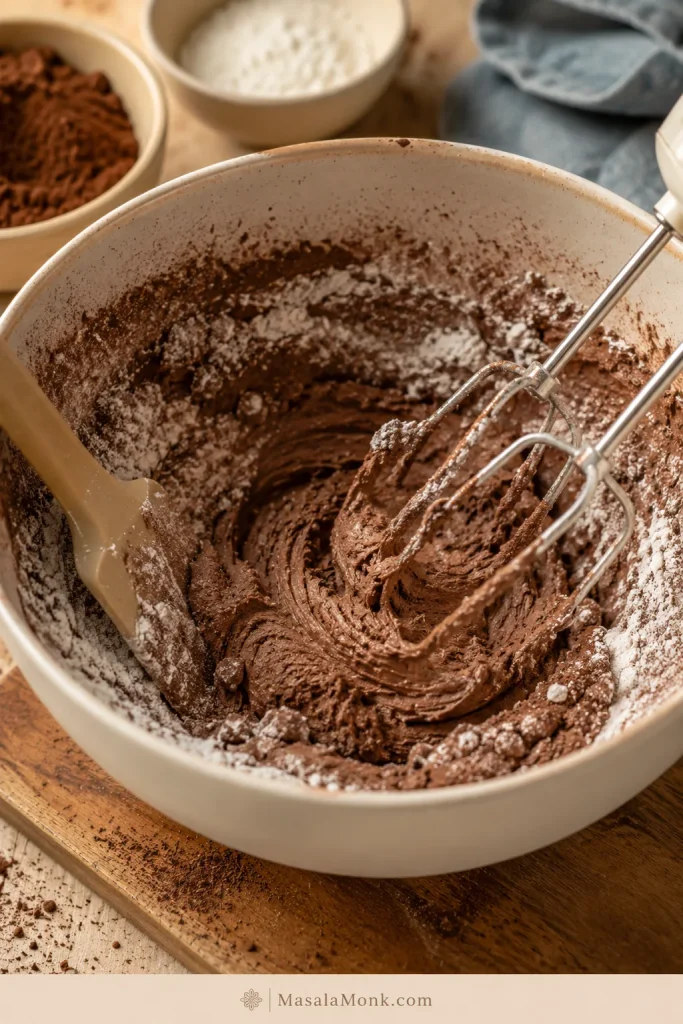
- Add the cocoa powder, 3 cups powdered sugar, salt, and vanilla. Mix on low speed until the dry ingredients are mostly absorbed.
- Increase to medium-low or medium speed and beat just until smooth. Scrape again so no cocoa, sugar, or cream cheese is hiding at the bottom or sides.
- Beat until the cocoa and sugar disappear and the mixture turns creamy. Add milk or cream only when it still feels too thick.
- Taste before adding the last ½ cup powdered sugar. Add it only for a sweeter or stiffer texture. When the mixture tastes sweet but flat, add a tiny pinch more salt.
- Use it right away when you want a spreadable frosting. To pipe soft swirls, chill it for 15 to 30 minutes before filling the bag.
- To make the optional fudgy version, mix in the cooled melted chocolate after the base is smooth. Beat briefly, just until combined.
- If the mixture is fridge-firm, let it sit for 10 to 15 minutes so it softens enough to mix smoothly before re-beating.
Recipe Notes
- Full-fat block-style cream cheese gives the frosting its most reliable structure.
- Sift cocoa powder and powdered sugar when they look lumpy, especially for piping.
- Milk or cream should go in slowly. Most batches need little or no added liquid.
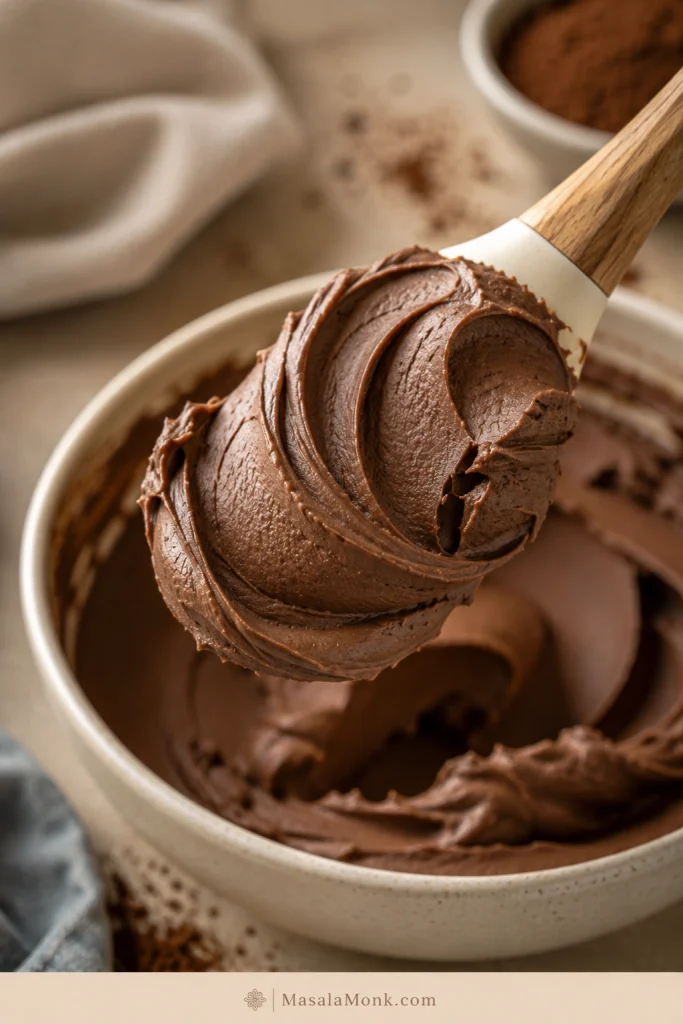
- The mixture is ready when it looks smooth, thick, and holds soft ridges from the beaters.
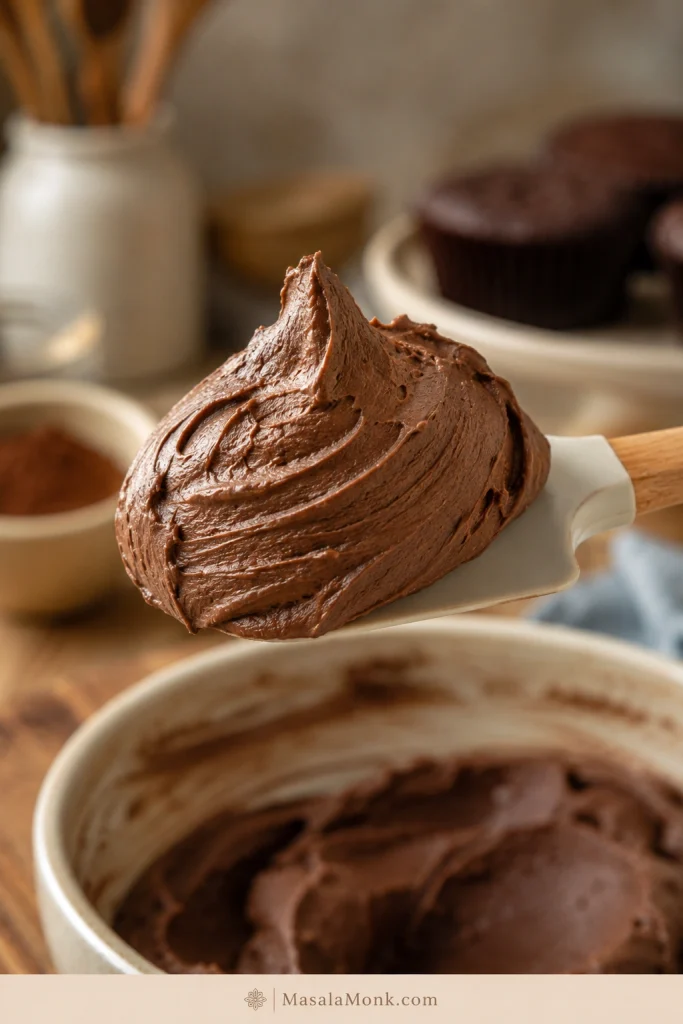
- On a spatula, it should mound softly instead of running off.
- Let cakes, cupcakes, and brownies cool completely so the chocolate layer sits on top instead of melting in.
When spread thinner over brownies or sheet cakes, some bakers call this chocolate cream cheese icing. In everyday use, frosting usually means a thicker topping that can be spread or piped, while icing often means something thinner. This recipe sits on the frosting side, but the same creamy, tangy topping may be called icing when it is spread over a pan dessert.
Before You Start
This is a simple recipe, but texture matters. Soft frosting is not a disaster. Most of the time, you are adjusting temperature, not rescuing a ruined batch.
The biggest difference in testing was not the cocoa or the mixer. It was temperature. When the cream cheese and butter were cool-soft, the frosting turned thick and smooth without much help. When either one was warm, the same recipe softened quickly and needed chilling before it behaved again.
The mixture should look thick before you decide it needs liquid. Many batches look too stiff at first and then turn creamy once the sugar and cocoa fully mix in.
The Thick Swoop Test
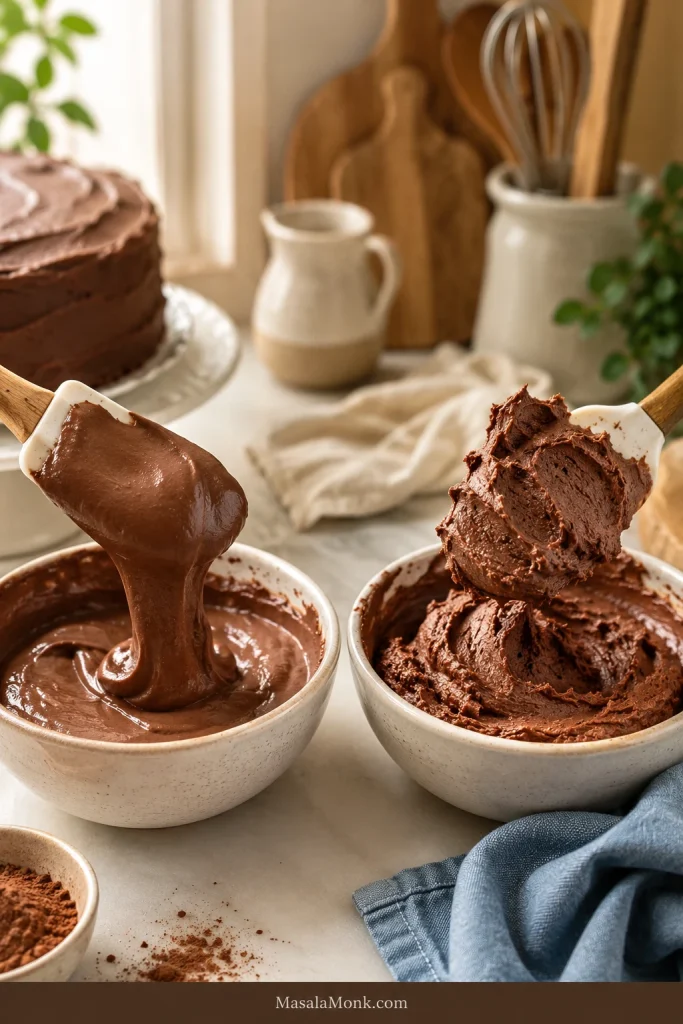
Before you decide the frosting needs more sugar or liquid, lift a small amount with a spatula. A good batch should mound softly and hold a clean swoop for a moment.
The Texture Rule: Spread, Chill, or Fix
Chocolate cream cheese frosting changes with temperature. Before adding more sugar or liquid, look at the bowl and decide what you need it to do next.
| If it looks like this | Do this | Why it works |
|---|---|---|
| Thick, creamy, and mounds on a spatula | Use it for spreading | It is ready for brownies, sheet cakes, and simple cakes |
| Smooth but too soft for swirls | Chill 15 to 30 minutes | Cold firms the butter and cream cheese without adding sweetness |
| Dry or stiff after mixing | Add milk or cream 1 teaspoon at a time | Small amounts loosen the texture without making it runny |
| Loose even after chilling | Add powdered sugar or cocoa gradually | Only adjust after temperature has had a chance to help |
The whole recipe comes down to one rhythm: mix until smooth, pause before adding liquid, chill before fixing softness, and stop once it holds its shape.
Is This the Right Frosting for You?
Think of it as the middle ground between chocolate buttercream and cheesecake: richer than whipped cream, tangier than buttercream, and softer than ganache.
It is made for soft swirls, creamy layers, and tangy chocolate balance. For sharp decorative edges, tiny detailed piping, or long room-temperature display cakes, a firmer buttercream or ganache will be easier to manage.
- Use this frosting for cupcakes, brownies, sheet cakes, yellow cake, chocolate cake, red velvet cake, and casual layer cakes.
- Choose buttercream frosting when you want a sweeter, firmer, classic birthday-cake topping.
- Use homemade whipped cream when pies, fruit desserts, hot chocolate, or no-bake desserts need something lighter.
- Reach for ganache when you need a glossy drip or smooth cake covering.
- Pick royal icing when cookie icing needs to dry hard for stacking.
Ingredients You Need
Good frosting starts before the mixer turns on. The texture is mostly decided by the cream cheese, butter, and how quickly you add liquid.
Cream Cheese for Frosting
Full-fat brick cream cheese gives the topping body and stability, mixes smoothly with butter and powdered sugar, and helps the finished texture hold after chilling.
Outside the US, look for full-fat block-style cream cheese or the firmest full-fat cream cheese available. Avoid whipped, spreadable, low-fat, or very soft cream cheese when you want piping.
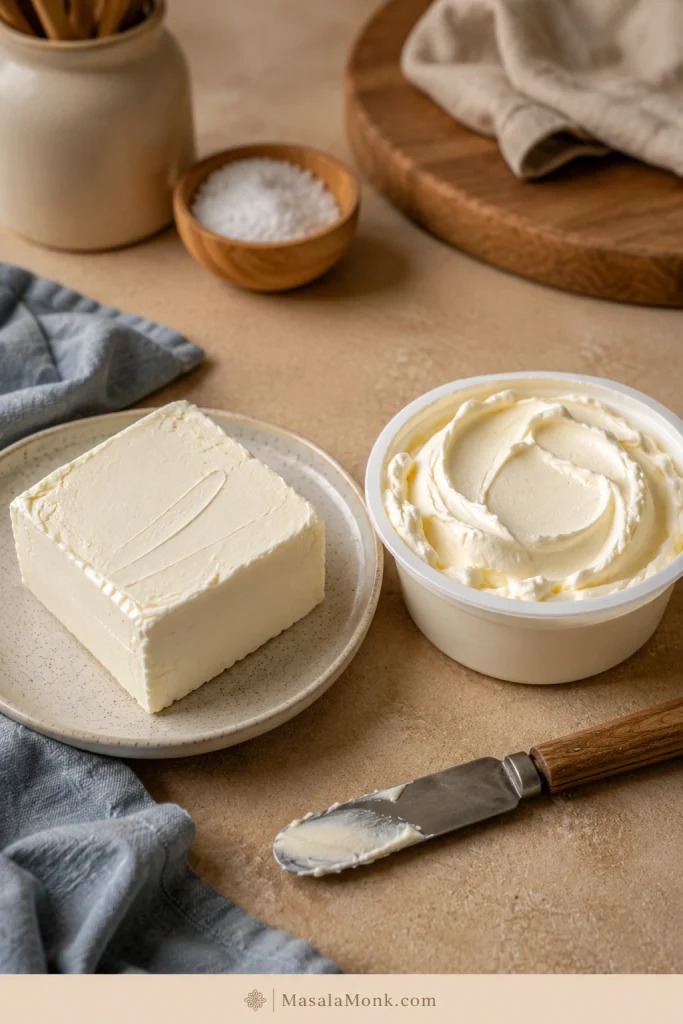
If your cream cheese comes in a tub but feels firm and dense rather than airy or spread-like, keep it cold, skip extra liquid, and chill the frosting before piping. The issue is moisture and structure: spreadable cream cheese is usually softer, so the mixture can loosen before it ever gets cold enough to hold a swirl.
If the frosting has already turned loose, jump to the runny frosting fix before adding more sugar.
The same full-fat cream cheese logic shows up in chilled desserts too. This no bake cheesecake recipe is a good example of how cream cheese structure and chilling decide the final texture.
Butter
Butter makes the mixture smoother, richer, and more stable. It should dent when pressed but should not look oily. Overly warm butter makes the bowl soft before you even start.
Unsalted butter gives you the cleanest control over flavor. If using salted butter, reduce the added salt to a small pinch and taste before adding more.
Powdered Sugar / Icing Sugar
Powdered sugar, also called icing sugar in many countries, does more than sweeten here. It helps the cream cheese hold a swirl, gives the chocolate layer body, and keeps the finished texture from sliding.
Three cups gives a tangier, less sweet result. Closer to 3½ cups gives firmer cupcake swirls, borders, or layer-cake decorating. Sift it first when it looks clumpy.
Cocoa Powder
Unsweetened cocoa powder gives the chocolate flavor and helps thicken the texture. Natural cocoa gives a familiar, slightly sharper flavor and a lighter brown color. Dutch-process cocoa tastes smoother, darker, and less sharp.
Both work here because this is frosting, not cake batter. The more important step is sifting the cocoa when it looks lumpy. Cocoa lumps can hide in the bowl and show up later as dry specks.
Vanilla, Salt, and Liquid
Vanilla rounds out the chocolate. Salt makes the chocolate taste stronger and keeps the sweetness from feeling flat. Milk or cream is optional and should be added only after the mixture has fully come together.
Heavy cream gives a richer finish, while milk thins the texture more quickly. Sweetened whipped topping and non-dairy topping belong to a different frosting style.
Equipment You Need
A hand mixer or stand mixer gives the smoothest texture, but you can still make this with a sturdy spatula if the ingredients are properly softened and the dry ingredients are sifted.
- Electric mixer: Best for the smoothest result.
- Rubber spatula: Essential for scraping the bowl.
- Fine-mesh sieve: Helpful for cocoa and powdered sugar.
- Offset spatula or piping bag: Use for spreading or soft swirls.
When using a stand mixer, choose the paddle attachment over the whisk. It keeps the mixture creamy without whipping in too much extra air.
Why This Frosting Works
This frosting works because it balances water, fat, sugar, and temperature. Cream cheese gives tang, but it also brings softness. Butter adds body. Cocoa thickens while deepening the chocolate flavor. Powdered sugar stabilizes the mixture, but too much can make the taste flat and overly sweet.
That is why this recipe uses enough powdered sugar to hold shape, then relies on cocoa, salt, and chilling for balance. You get a frosting that tastes chocolate-first and cream-cheese-tangy, not one that is dominated by powdered sugar.
The most reliable batches came from controlling temperature before changing ingredients. Cool-soft cream cheese mixed smoothly without turning loose; butter that dented but did not look oily gave the frosting body; and waiting before adding milk kept the mixture from thinning too early.
Cocoa Powder vs Melted Chocolate
Use cocoa powder for the easiest, steadiest batch. Add cooled melted chocolate when you want a deeper, fudgier version.
Cocoa powder keeps the base simple, stable, and deeply chocolatey. Melted chocolate makes the topping silkier and richer, but the chocolate needs to be cool enough that it does not melt the butter.
| Chocolate Option | Result | Best For |
|---|---|---|
| Cocoa powder only | Quick, stable, chocolatey, easy to pipe after chilling | Everyday cupcakes, cakes, brownies |
| Melted chocolate only | Smooth, silky, richer, slightly more delicate | Bakery-style frosting and fillings |
| Cocoa powder + melted chocolate | Deepest and fudgiest chocolate flavor | Special cakes, brownies, richer desserts |
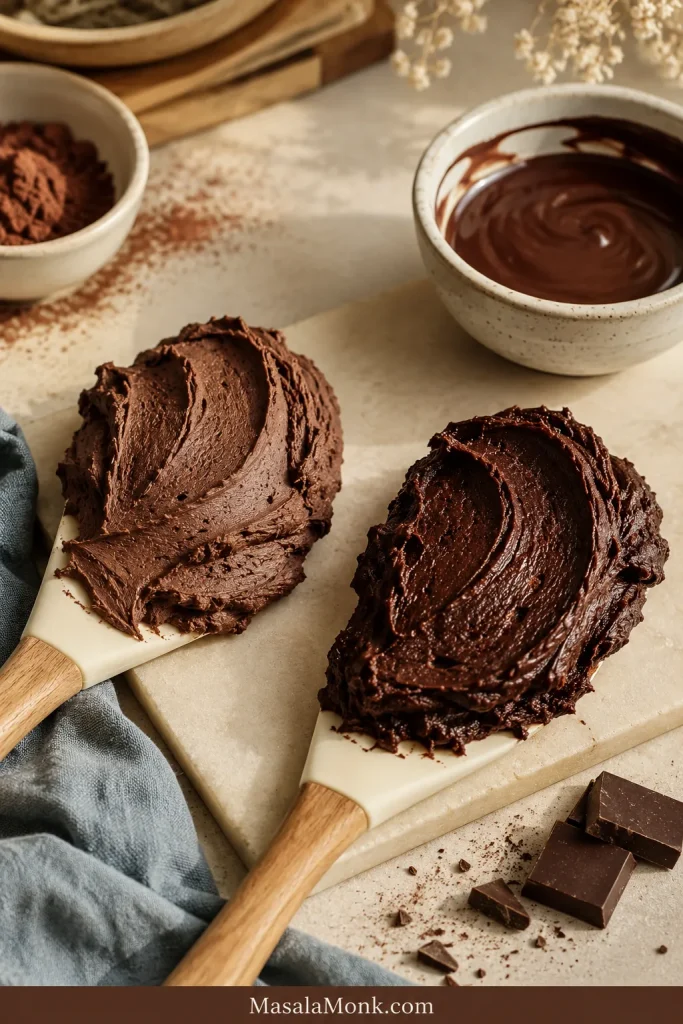
For the most reliable version, make the cocoa powder base first. For a darker, fudgier finish, add cooled melted dark chocolate at the end. A 55% to 70% dark chocolate works well; very bitter chocolate can taste harsh, while very sweet chocolate can push the frosting closer to buttercream sweetness. Want the richer path? Use the dark chocolate variation below.
Still choosing between cocoa, cacao, and dark chocolate? This cacao vs chocolate vs dark chocolate guide explains how those ingredients differ in everyday cooking.
Need something pourable instead of creamy? This 3-minute homemade chocolate syrup is better for drizzling over cake, ice cream, pancakes, or dessert plates.
How to Make Chocolate Cream Cheese Frosting
For the smoothest frosting, beat the cream cheese and butter first, then mix in the cocoa, powdered sugar, salt, and vanilla before making any texture adjustments.
Not sure whether to chill, thicken, or loosen it? Use the Texture Rule before changing the ingredients.
1. Beat the Cream Cheese and Butter First
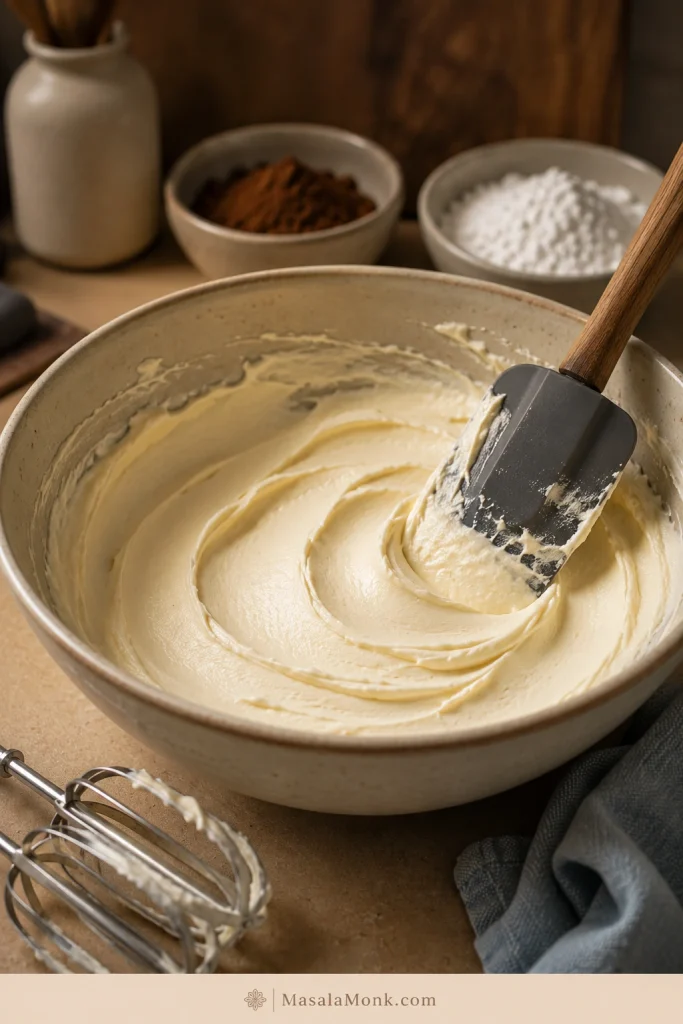
Add the softened cream cheese and softened butter to a mixing bowl. Beat on medium speed until smooth before adding anything else. Scrape more than you think you need to; cream cheese likes to hide under the paddle and along the sides of the bowl.
The base should look creamy, pale, and smooth before you move on.
2. Add Cocoa Powder and Powdered Sugar Gradually
Add the cocoa powder, powdered sugar, salt, and vanilla. Start the mixer on low speed so the dry ingredients do not puff out of the bowl.
If it looks dusty for a minute, stay with it. That dry stage is normal before the frosting turns creamy. Keep mixing on low, scrape the bowl, and give it a moment before adding liquid.
3. Mix Until Smooth
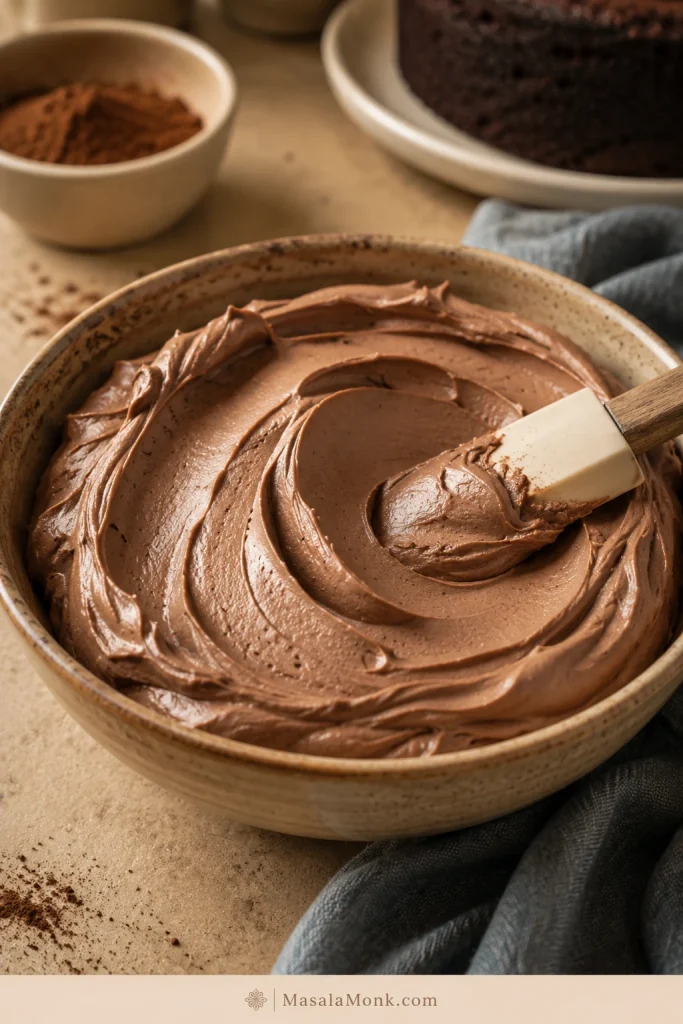
Once the dry ingredients disappear, increase to medium-low or medium speed and beat only until smooth.
4. Adjust the Texture Carefully
Once the base is made, the rest is adjustment. Use the Texture Rule above: spread it when it mounds, chill it when it is too soft, loosen it only when it is truly stiff, and thicken it only after temperature has had a chance to help.
- A soft, spreadable finish works best with 3 cups powdered sugar and little or no chill.
- Cleaner swirls usually need closer to 3½ cups powdered sugar plus a short chill.
- Cooled melted dark chocolate makes the texture darker, smoother, and more fudgy.
- Dutch cocoa, salt, and the lower sugar amount create a more balanced, less sugary result.
- To thicken the frosting, add powdered sugar 2 tablespoons at a time.
- To soften the frosting, add milk or cream 1 teaspoon at a time.
At the right texture, the frosting should look like soft chocolate cheesecake filling: creamy, cool, and thick enough to sit in a mound on the spatula.
Success Cues
This is the section to check when you are staring into the bowl wondering if it looks right.
| Stage | What you should see |
|---|---|
| After beating cream cheese and butter | Smooth, pale, creamy, with no visible lumps |
| After adding cocoa and powdered sugar | Dry at first, then creamy as it mixes |
| Ready to spread | Thick, smooth, and mounding on a spatula |
| Ready to pipe | Cool, firm but squeezable, and holding soft ridges |
| Too soft | Glossy, loose, and sliding off the spatula |
How to Make It Pipeable
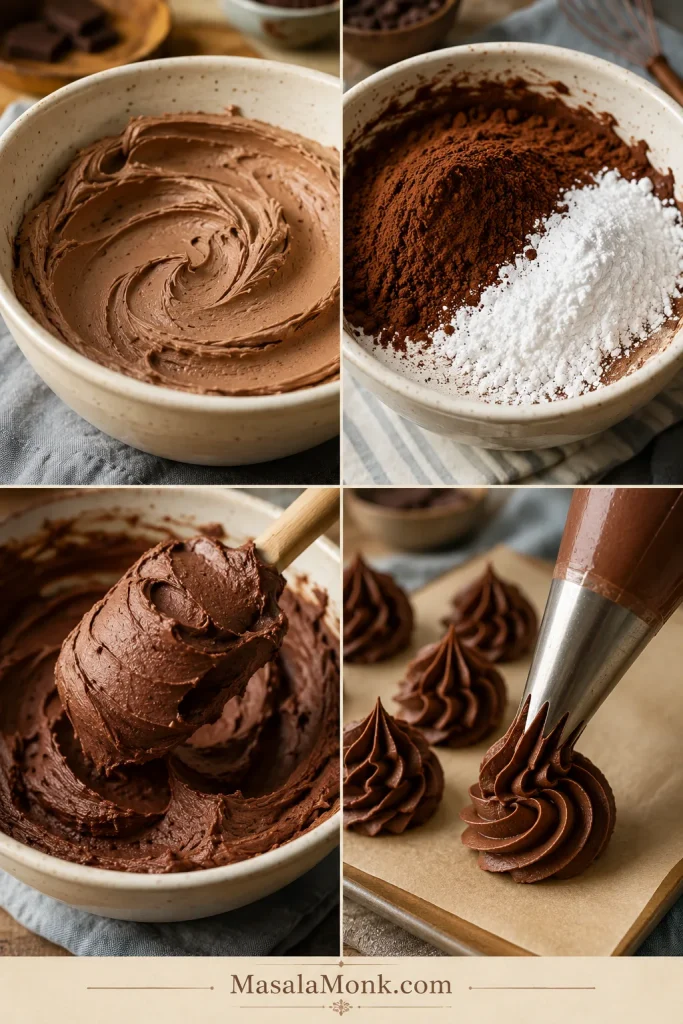
For soft, reliable swirls, use full-fat block-style cream cheese, the higher amount of powdered sugar, and chill the frosting for 15 to 30 minutes before piping.
This is a soft-swirl frosting, not a sharp-edge decorating buttercream. After chilling, it works well for cupcake swirls, simple borders, filling a casual layer cake, and generous swoops.
It is not the best choice for flowers, tiny detailed piping, or a cake that has to sit warm for hours. For tall cupcake swirls, sift the cocoa and sugar well, and choose a large star tip, open star tip, or large round tip.
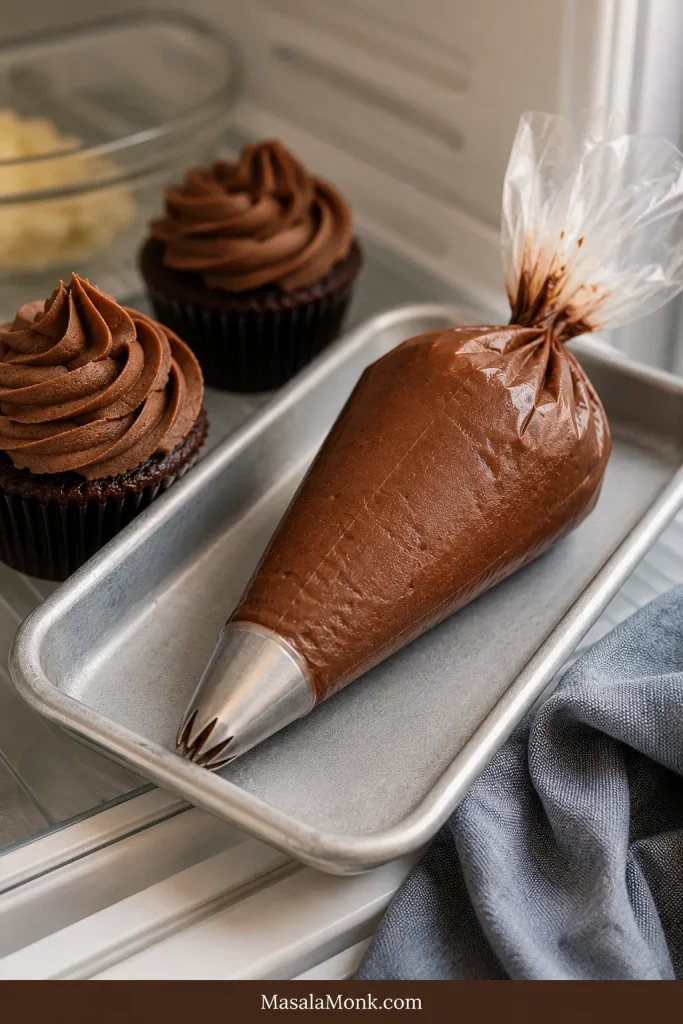
When it is ready to pipe, the bag should feel cool in your hands and the frosting should move with pressure, not pour. A short chill gives you soft matte swirls that look finished without turning stiff or crusty.
If the piping bag starts to feel soft in your hands, use the short chill reset before continuing.
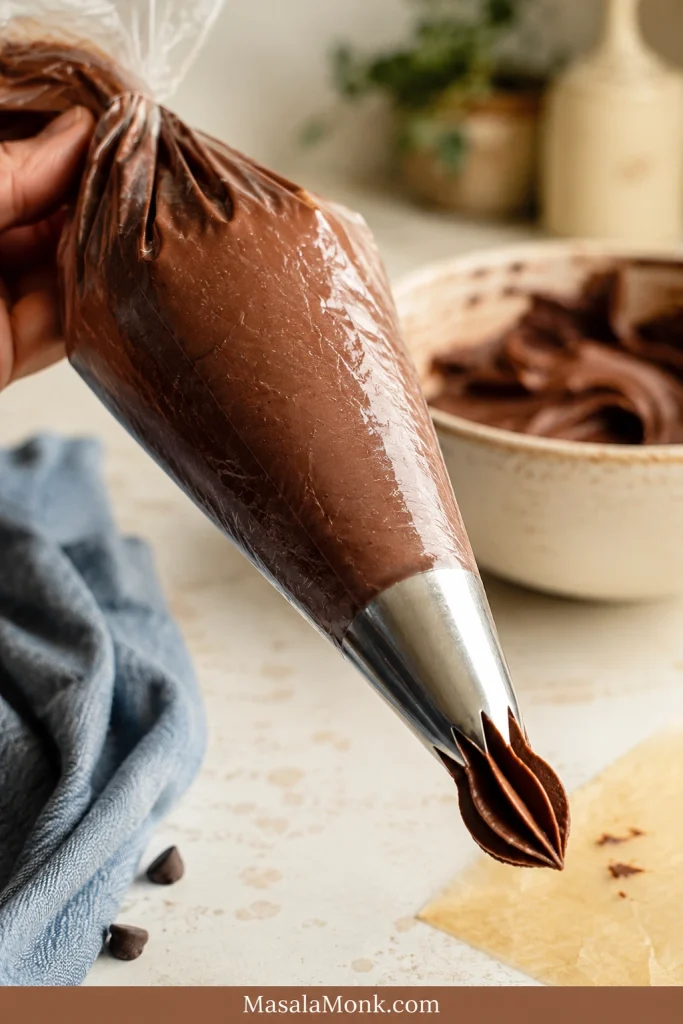
Once the mixture looks smooth and holds soft ridges, stop mixing. It can look perfect, then loosen if you keep beating.
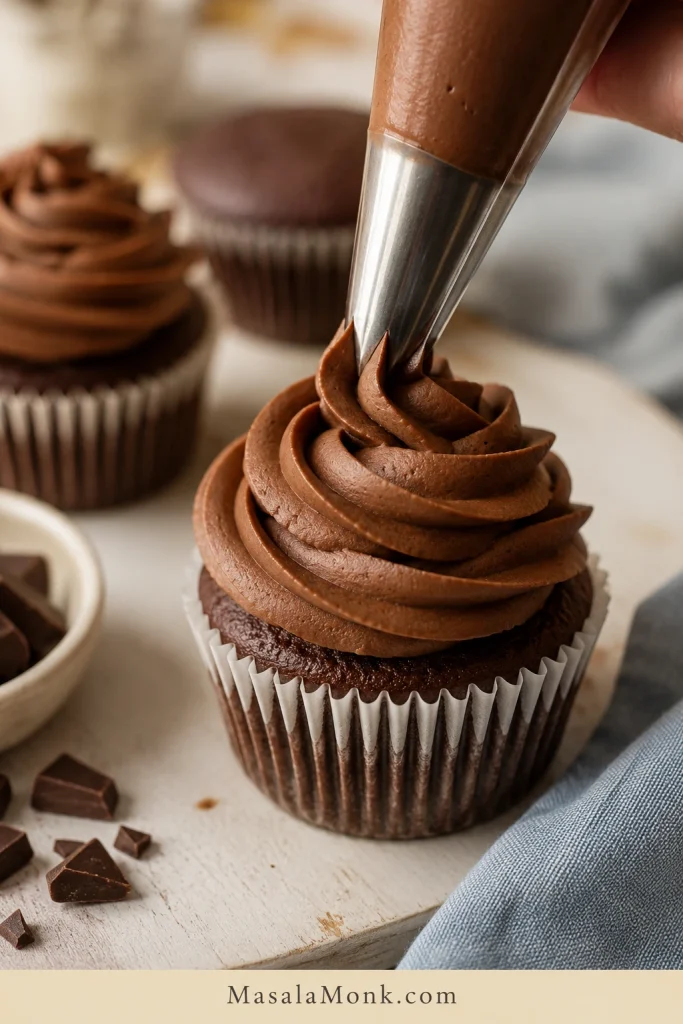
How the Frosting Should Pipe on Cupcakes
Use a large star tip or large round tip for soft swirls. The frosting should move with steady pressure and keep rounded ridges after you lift the tip.
How to Make It Less Sweet
This is not a low-sugar frosting. It is less sugary than classic chocolate buttercream because cream cheese, cocoa, and salt keep the sweetness balanced.
| Adjustment | What it changes |
|---|---|
| Add salt first | Makes chocolate taste fuller without changing the texture |
| Add 1 to 2 tablespoons cocoa | Deepens flavor and slightly thickens the mixture |
| Use Dutch-process cocoa | Makes the chocolate taste smoother and darker |
| Use 3 cups powdered sugar | Tangier, softer, less sweet |
| Use 3½ cups powdered sugar | Firmer, sweeter, better for tall swirls |
For tall cupcake swirls, avoid reducing the powdered sugar too far. Powdered sugar is not only for sweetness; it also gives structure.
How Much Frosting Do You Need?
The right amount depends less on the cake and more on how generous you want the finished dessert to look. If you love big cupcake swirls, make more than you think; piping always eats frosting faster than spreading.
This recipe makes about 3½ to 4 cups of chocolate cream cheese frosting, depending on how much powdered sugar you use and whether you add melted chocolate.
| Dessert | Amount Needed | Notes |
|---|---|---|
| 12 cupcakes with tall swirls | 3 to 3½ cups | One batch works well |
| 24 cupcakes with light swirls | 3½ to 4 cups | Pipe modestly |
| 9×13 sheet cake | About 3 cups | Spread with an offset spatula |
| 8×8 or 9×9 brownies | 1½ to 2 cups | Half batch is usually enough |
| 8-inch 2-layer cake | 3½ to 4 cups | Enough for filling and outside |
| 9-inch 2-layer cake | 4 to 5 cups | Make 1.25x when decorating heavily |
| 3-layer cake | 4½ to 5 cups | Make extra for safety |
Use a half batch for brownies, a small cake, or 6 to 8 cupcakes. Use the full batch for 12 tall cupcake swirls, 24 lighter cupcake swirls, or a 9×13 sheet cake. Make 1.25x for a 9-inch two-layer cake with decoration, or 1.5x for a heavily frosted layer cake.
Where This Frosting Tastes Best
Use this frosting when you want chocolate flavor without the heavy sweetness of buttercream. It works especially well on desserts that are already sweet and need a little tang to balance them.
Once you know where you want to use it, check how much frosting you need before you start decorating.
The best matches are soft cakes, fudgy brownies, and cupcakes that need a cool, creamy swoop instead of a stiff sugar crust.
Chocolate Cupcakes
On chocolate cupcakes, the tang keeps the cocoa from feeling heavy. The swirl should taste like a cool chocolate cheesecake cap on top of soft cake, not a pile of powdered sugar.
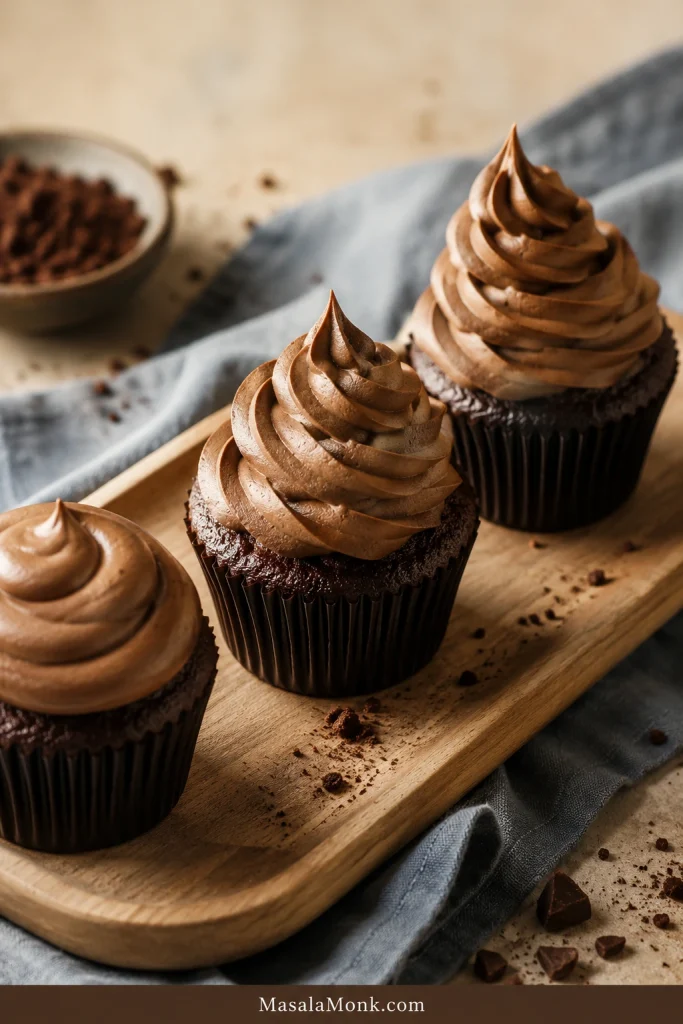
What the Frosting Should Feel Like on a Cupcake
The best bite is cool, creamy, and lightly tangy against the cake. It should feel like a soft cap of chocolate cheesecake, not a hard sugar crust.
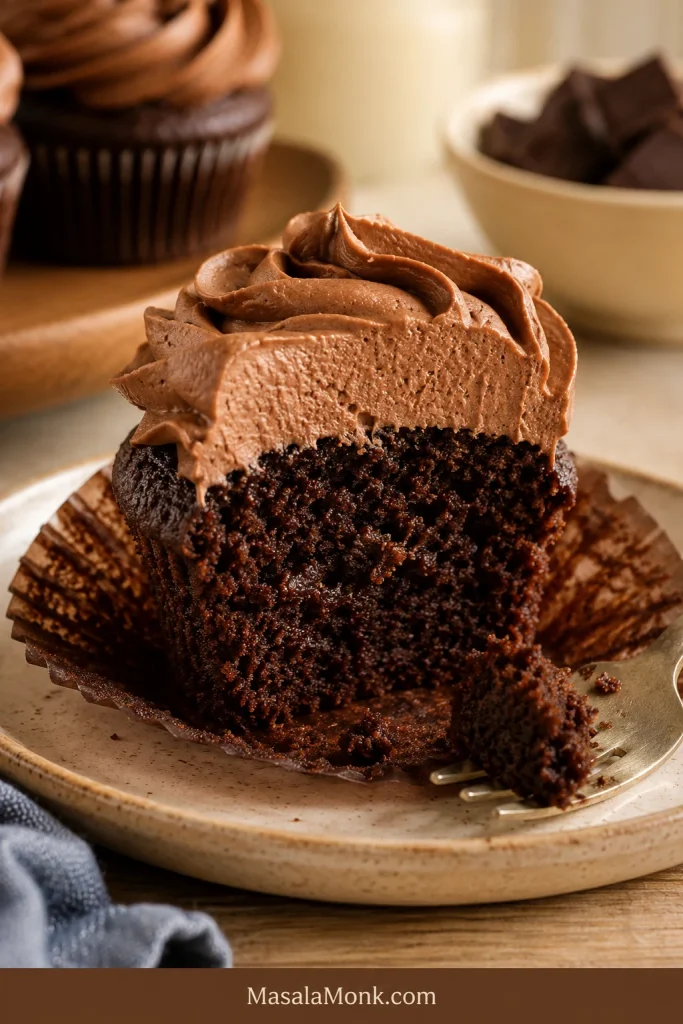
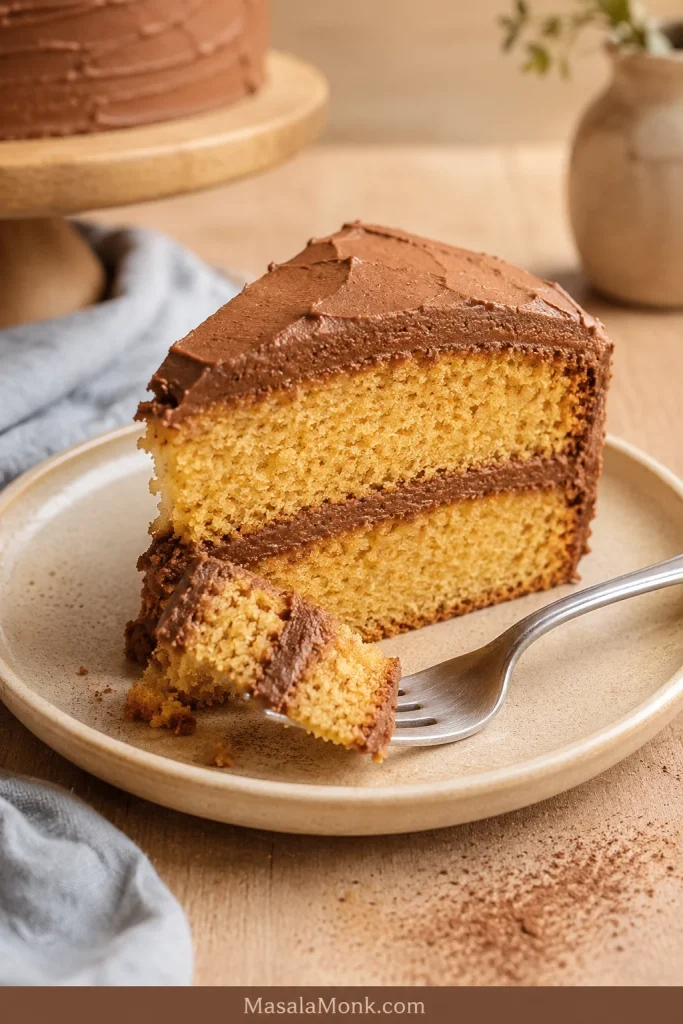
Yellow Cake with Chocolate Cream Cheese Frosting
This is where the frosting really shines: soft yellow cake, cool tangy chocolate, and just enough cocoa bitterness to keep the bite from turning candy-sweet.
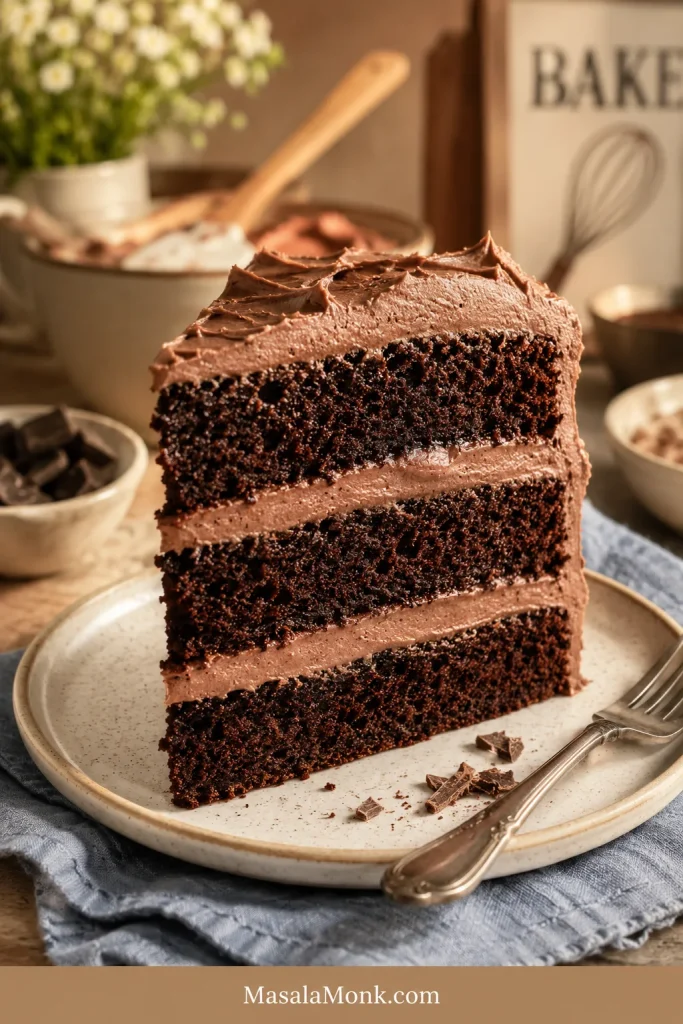
Chocolate Layer Cake with Chocolate Cream Cheese Frosting
Use it on chocolate cake when you want a deeper, less sugary finish than chocolate buttercream. The cream cheese tang keeps the cocoa from feeling too heavy, so the slice still tastes rich without becoming overwhelming.
Red Velvet or Spice Cake
Cream cheese already belongs with red velvet, and cocoa makes it a stronger chocolate version. That same tang works beautifully with warm spices too. This spice cake recipe uses cream cheese frosting to balance brown sugar and baking spices.
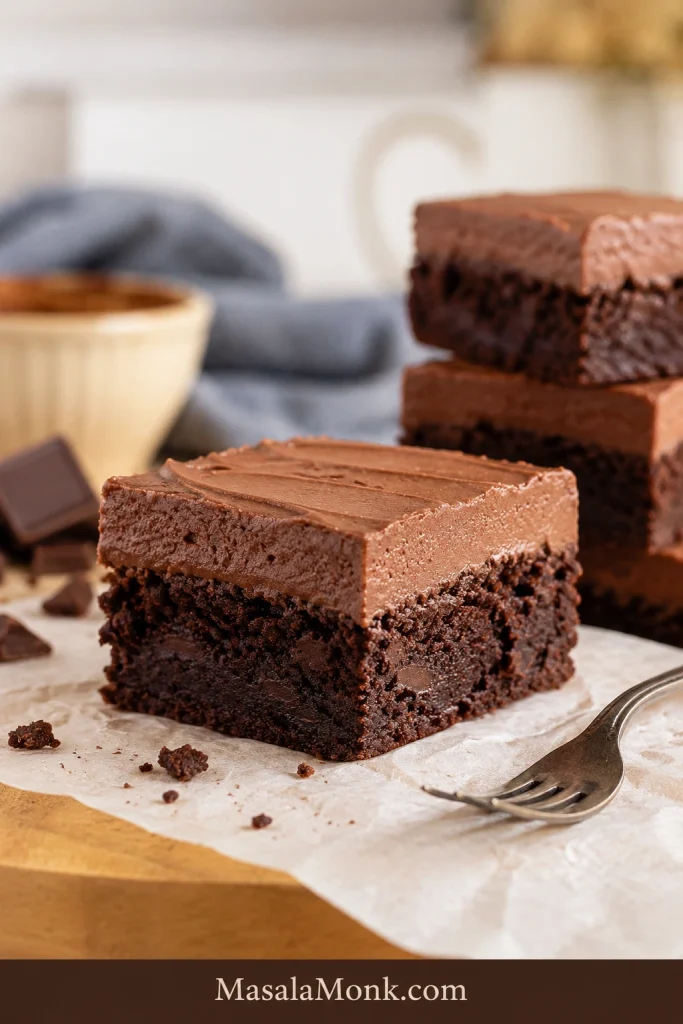
Brownies with Chocolate Cream Cheese Frosting
On brownies, it tastes like a thin chocolate cheesecake layer over a fudgy base. Let the pan cool fully before frosting, because brownies hold heat longer than they look.
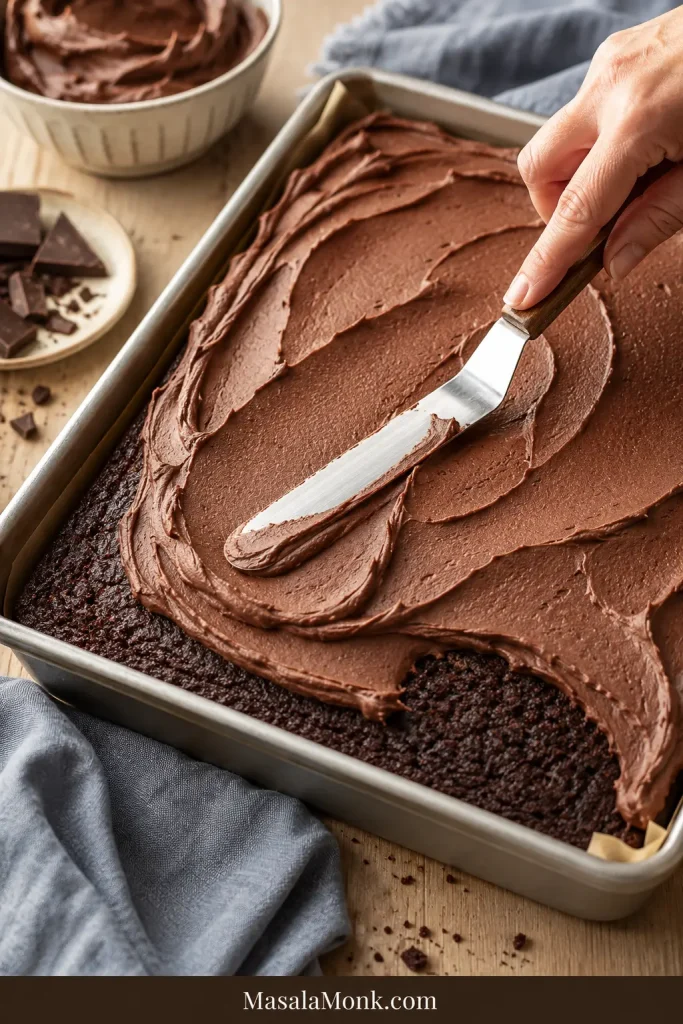
Sheet Cake with Chocolate Cream Cheese Frosting
A 9×13 sheet cake is one of the easiest places to use this frosting. It spreads smoothly, chills into clean slices, and gives a simple pan cake enough tang to balance the sweetness. For another soft pan cake that benefits from cream cheese frosting, this applesauce cake recipe is a better match than a delicate sponge.
How Much Filling to Use in a Layer Cake
For a casual layer cake, chill the frosting and use a moderate filling. It gives the cake a creamy chocolate layer that cuts through sweetness without making the slice feel heavy.
After assembling the cake, check the storage and serving timing so the frosting is cool but not cold-hard.
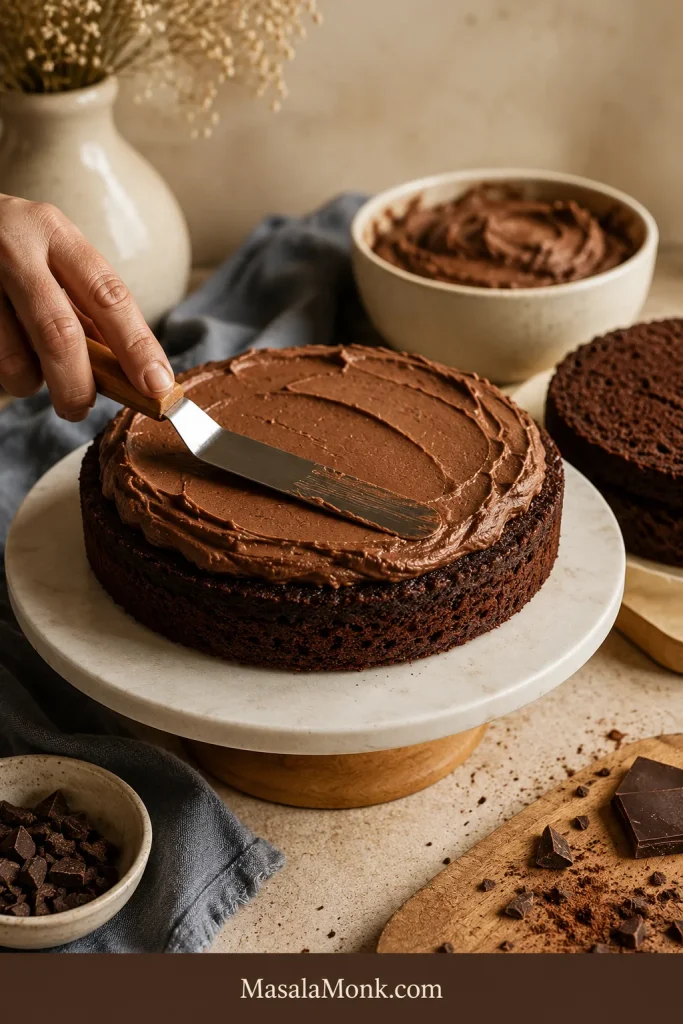
- Make sure the cake layers are completely cool.
- Chill the frosting for 15 to 30 minutes before filling if it feels soft.
- Add a moderate layer between the cakes. Very thick, soft filling can squeeze out when the top layer goes on.
- For a taller cake, pipe a thicker ring around the edge before filling the center.
- Apply a thin crumb coat, chill for 20 to 30 minutes, then add the final coat.
- Refrigerate the finished cake until closer to serving.
For cleaner slices, chill the finished cake before cutting, then let slices sit briefly before serving so the texture becomes creamy again.
Cookies
This frosting works for soft sandwich cookies or chilled frosted cookies, but it does not dry hard like royal icing. Use it when the cookies will be served chilled or kept in a single layer.
Troubleshooting
If something looks off, start with temperature before assuming the recipe has gone wrong. Cream cheese frosting often looks loose before chilling brings it back.
If you are not sure whether the frosting is actually too soft, compare it with the Success Cues before adding more sugar.
Quick fix: when the texture is too soft, refrigerate the bowl for 20 minutes before changing anything else.
Use this order when the texture feels off: chill first, re-beat briefly, add powdered sugar for structure, add cocoa for thickness and chocolate flavor, and add liquid only when the mixture is too stiff.
| Problem | Likely Cause | Fix |
|---|---|---|
| Runny texture | Tub cream cheese, warm butter, overmixing, too much liquid, or warm melted chocolate | Chill 20 to 30 minutes, then re-beat briefly. Add powdered sugar only when needed. |
| Lumps | Cream cheese was too cold or cocoa/sugar was not sifted | Beat cream cheese and butter smooth before adding dry ingredients. Sift cocoa and powdered sugar next time. |
| Grainy texture | Powdered sugar lumps, overmixing, or melted chocolate added badly | Sift powdered sugar. When using melted chocolate, cool it before adding. |
| Too thick | Too much powdered sugar or cocoa | Add milk or cream 1 teaspoon at a time. |
| Too sweet | Too much powdered sugar or weak cocoa flavor | Add a pinch of salt or a little more cocoa. |
| Not chocolatey enough | Mild cocoa or too little cocoa | Add 1 to 2 tablespoons more cocoa, or add cooled melted dark chocolate. |
| Will not hold piping | Too warm, too soft, or not enough powdered sugar | Chill the mixture and piping bag. Add more powdered sugar only when chilling does not help. |
| Split or loosened | Overbeaten cream cheese or warm melted chocolate | Chill until firmer, then re-beat gently on low speed. |
Why Did My Frosting Turn Runny?
Chocolate cream cheese frosting usually turns runny because the cream cheese or butter was too warm, the cream cheese was too soft, too much liquid was added, or the mixture was overbeaten. Start with chilling before changing the recipe.
How to Thicken It Without Making It Too Sweet
To thicken chocolate cream cheese frosting without making it too sweet, chill it first, then add a little cocoa powder before adding more powdered sugar. Add powdered sugar 2 tablespoons at a time only when the frosting still feels too soft after chilling.
How to Fix Lumps for a Smoother Texture
Lumps usually start at the beginning. Cream cheese that is too cold does not beat smoothly, and once powdered sugar and cocoa are added, the lumps become harder to remove. Beat the cream cheese and butter until completely smooth before adding anything else, and sift dry ingredients when they look clumpy.
6 Small Mistakes That Make Frosting Soft
- Using tub cream cheese when you want clean piping.
- Letting the butter become oily or melted.
- Adding milk or cream before the mixture has fully come together.
- Adding warm melted chocolate.
- Keeping the mixer running after the texture is smooth.
- Frosting warm cakes, cupcakes, or brownies.
Storage, Freezing, and Making Ahead
Because this has cream cheese in it, keep the frosting and frosted desserts refrigerated. It tastes best cool but not cold-hard.
How to Store Chocolate Cream Cheese Frosting
As a practical rule, do not leave it at room temperature for more than about 2 hours, or more than about 1 hour when the room is very warm, such as above 90°F / 32°C. The FDA’s two-hour rule for refrigerated foods is a good safety reference here.
For leftovers, transfer the mixture to an airtight container and refrigerate for up to 5 days. Before using, let it sit at cool room temperature until it softens slightly, then re-beat gently until smooth.
For frosted cakes, cupcakes, or brownies, refrigerate the finished dessert in a covered container. Cover it well so the surface does not dry out or pick up fridge odors.
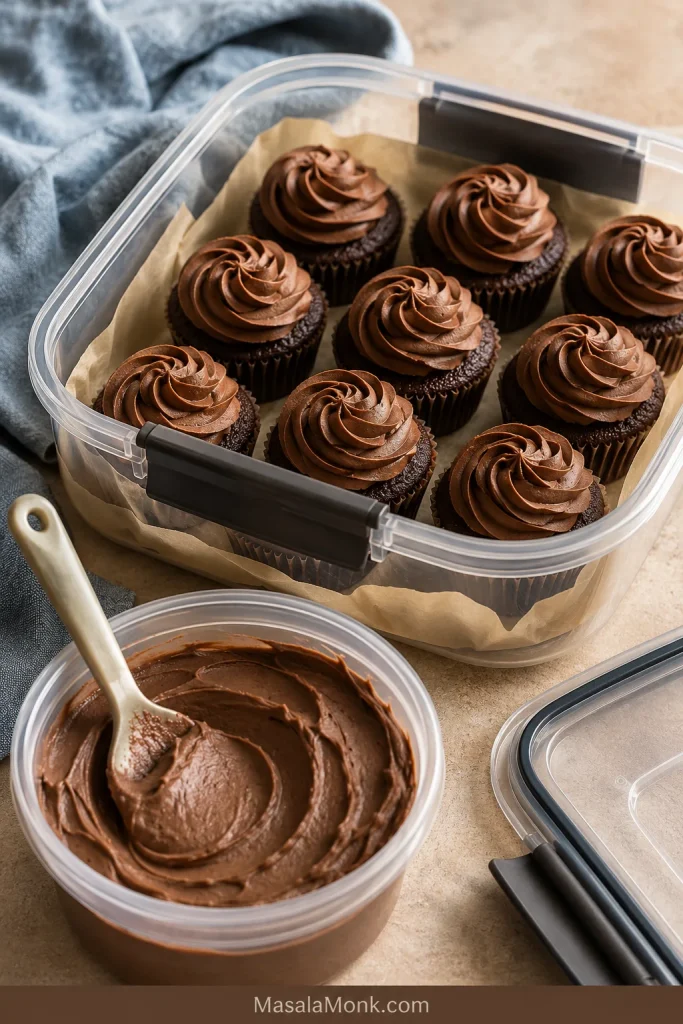
Serve cool, not cold-hard. For the best texture, take frosted cupcakes or cake slices out of the refrigerator about 15 to 25 minutes before serving, depending on room temperature.
You can make the frosting 1 to 2 days ahead. On decorating day, let it soften slightly, re-beat gently, and chill again if it feels too soft for piping. The chocolate flavor often tastes a little more rounded after a night in the fridge.
Decorating in a warm kitchen? Use the chill reset whenever the bag or swirls start to soften.
Can You Freeze It?
Yes. Chocolate cream cheese frosting freezes well in an airtight container for up to 2 to 3 months. Thaw overnight in the refrigerator, then let it soften slightly and re-beat gently before spreading or piping.
Warm Weather Chill Reset
Warm hands, warm rooms, and sunny tables soften this frosting faster than the recipe itself does.
- Start with chilled frosting before piping.
- Rest the filled piping bag in the refrigerator when it starts feeling soft in your hands.
- Keep frosted cake or cupcakes cold until closer to serving.
- Avoid direct sunlight and long outdoor buffet conditions.
- Transport cakes cold when possible.
- Choose a firmer chocolate buttercream or ganache when a cake must sit outside for hours.
Variations
Dark Chocolate Version for Rich Cakes
Choose this when you want the frosting to taste more like a bakery chocolate layer than a simple cocoa frosting. Add 3 to 4 oz / 85 to 115 g melted dark chocolate, cooled until barely warm.
Chocolate bars usually melt more smoothly than chocolate chips, but chips work when melted gently. Compound chocolate also works in a pinch, though the flavor and texture will be slightly different from real dark chocolate.
Mocha Version for Deeper Chocolate Flavor
Use this when the frosting tastes chocolatey but a little flat. Espresso powder makes the cocoa taste deeper without turning the frosting into coffee frosting. Add ½ to 1 teaspoon instant espresso powder with the cocoa.
Extra Tangy Version for Sweet Cakes
This version works best with yellow cake, vanilla cake, red velvet cake, or very sweet cupcakes that need balance. Use the lower amount of powdered sugar and skip extra liquid.
Stiffer Version for Cupcake Swirls
Choose this when looks matter as much as flavor: birthday cupcakes, party trays, or anything that needs to hold a soft swirl. Use the full 3½ cups powdered sugar, skip extra milk or cream, and chill for 20 to 30 minutes before piping.
Softer Brownie Frosting
Choose this when you want the frosting to eat like a creamy chocolate layer, not a tall decoration. Use 3 cups powdered sugar and add 1 to 2 teaspoons cream only when needed. Make sure the brownies are completely cool before frosting.
A whipped chocolate cream cheese frosting is a different style made with cream. It is lighter and softer. This butter-based version is the one to use when you want a topping that spreads cleanly, chills well, and holds soft swirls. For that softer spreadable style in a natural context, this cinnamon roll recipe shows how cream cheese icing behaves when it is meant to be looser.
Save watery flavorings and fruit purees for another frosting style; they can loosen this one faster than you expect.
FAQs
Can chocolate cream cheese frosting be piped?
Yes. Use full-fat block-style cream cheese, softened butter, enough powdered sugar, and chill for 15 to 30 minutes before piping. A large star tip works especially well for cupcakes.
Why did my frosting turn runny?
Usually, it is too warm, overmixed, made with very soft cream cheese, or loosened with too much liquid. Chill first; add powdered sugar only when it still feels loose after 20 to 30 minutes.
What is the fastest way to thicken it?
Chill it for 20 to 30 minutes first. If it is still soft, beat briefly and add powdered sugar 2 tablespoons at a time. For a less sweet fix, add a little cocoa powder first.
Is tub cream cheese okay?
Tub cream cheese is not ideal when you want piping because it is usually softer. If it is firm and dense, keep it cold, skip extra liquid, and chill before piping.
Can I make it without an electric mixer?
You can, but the texture will be smoother with a mixer. If mixing by hand, use very soft but not warm butter, cool-soft cream cheese, sifted cocoa and powdered sugar, and a sturdy spatula. Beat the cream cheese and butter completely smooth before adding dry ingredients.
Does it need to be refrigerated?
Yes. Because it contains cream cheese, store it in the refrigerator. Let refrigerated cake or cupcakes sit briefly before serving so the topping tastes creamy, not fridge-hard.
How long can frosted cupcakes sit out?
Keep them out for no more than about 2 hours, or about 1 hour in very warm conditions above 90°F / 32°C. Refrigerate covered cupcakes until closer to serving.
When should I add melted chocolate?
Add melted chocolate only after the base is already smooth. Cool it until barely warm first, because warm chocolate can loosen the texture.
What happens if I skip the butter?
You can make a softer spread-style version without butter, but it will not behave like this recipe. Butter is strongly recommended for piping or holding shape.
Can I make it less sweet and still pipe it?
Yes, but do not reduce the powdered sugar too far if you want tall swirls. Use 3 cups powdered sugar for a tangier, less sweet frosting, then rely on Dutch cocoa, salt, and chilling for balance. For the firmest cupcake swirls, use closer to 3½ cups.
What happens without powdered sugar?
Powdered sugar thickens and stabilizes this style of frosting. Granulated sugar can make it gritty; for a no-powdered-sugar chocolate frosting, use a cooked ermine-style frosting instead.
How well does it freeze?
It freezes well in an airtight container for up to 2 to 3 months. Thaw overnight in the refrigerator, then let it soften slightly and re-beat gently before using.
If you make it, I’d love to know where you used it: cupcakes, brownies, a sheet cake, or a layer cake. Also tell me whether you stayed with cocoa only or added melted chocolate for the fudgier version.
The best version of this frosting comes from not rushing the bowl. Let the cream cheese and butter stay cool-soft, let the dry stage turn creamy before adding liquid, and let a short chill do its work before you reach for more sugar.
Once you know that rhythm, chocolate cream cheese frosting becomes easy to trust: creamy, tangy, chocolate-first, and firm enough to sit where you put it.








