
A good Boulevardier recipe should give you a cocktail that feels balanced from the first sip: bitter but not harsh, rich but not heavy, and strong without losing its polish. This version is built around whiskey, Campari, and sweet vermouth, with a house ratio that works especially well for most home bars.
The Boulevardier recipe is often described as a whiskey Negroni, which is a useful starting point. Yet the ratio, the whiskey, and the serving style change the drink more than that shorthand suggests. So this guide gives you the best make-now version first, then helps you understand the classic equal-parts build, the official IBA-style formula, and the choices that shape the drink most.
If you already enjoy a Negroni recipe or a Manhattan cocktail recipe, this Boulevardier will feel like the natural bridge between those two classics.
Boulevardier Recipe Quick Answer
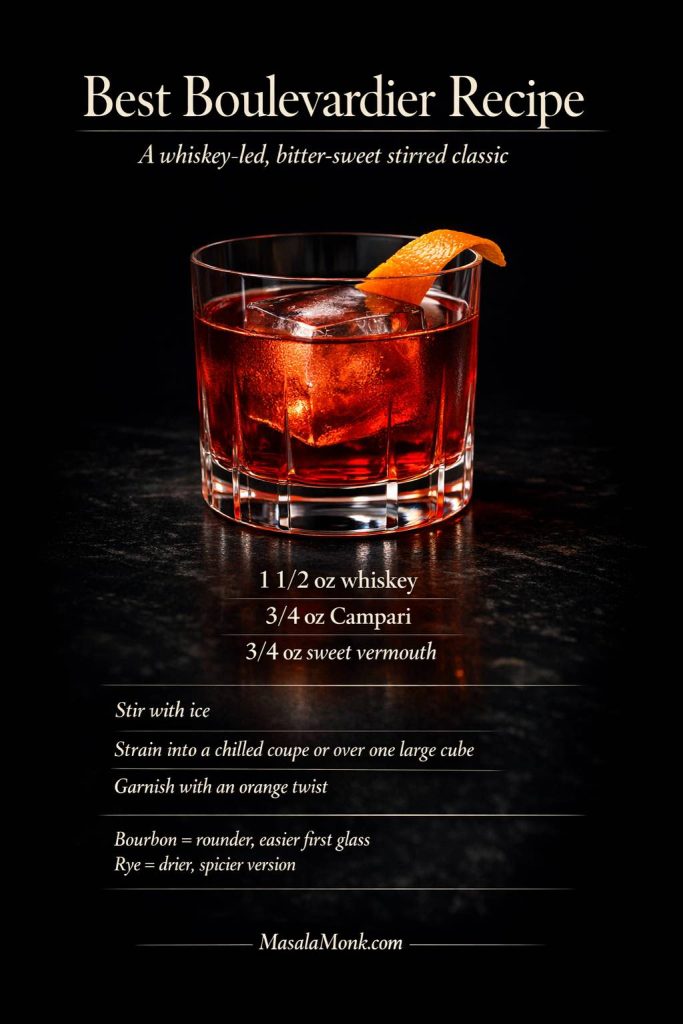
Best default Boulevardier recipe: 1 1/2 ounces whiskey, 3/4 ounce Campari, and 3/4 ounce sweet vermouth, stirred with ice and finished with an orange twist.
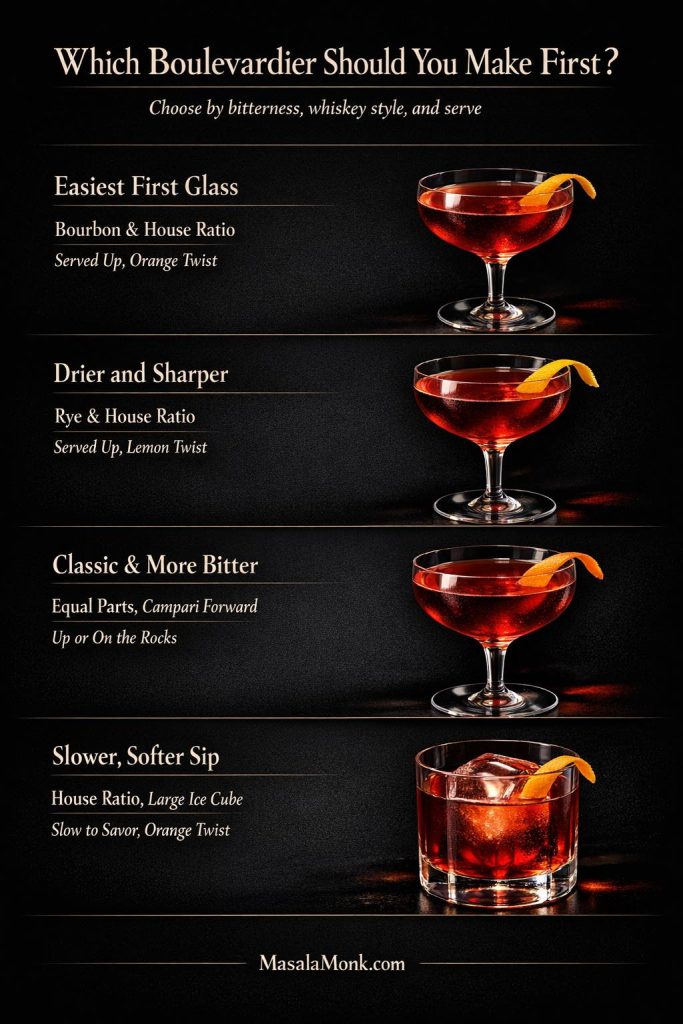
This is the Boulevardier recipe I recommend first because it keeps the whiskey clearly in front while still tasting unmistakably like the classic drink. Bourbon is the easiest place to start because it makes a rounder, softer version. Rye works better when you want something drier, spicier, and more structured.
Classic equal-parts Boulevardier recipe: 1 ounce whiskey, 1 ounce Campari, and 1 ounce sweet vermouth. Serve it up for the cleanest classic feel, or pour it over one large cube for a slower, slightly softer home-bar version.
Boulevardier Recipe Card
Best Boulevardier Recipe
Yield: 1 drink
Prep time: 5 minutes
Method: Stirred
Glass: Coupe or rocks glass
Garnish: Orange twist
Ingredients
- 1 1/2 ounces rye or bourbon
- 3/4 ounce Campari
- 3/4 ounce sweet vermouth
- Ice
- Orange twist
Method
- Fill a mixing glass with ice.
- Add the whiskey, Campari, and sweet vermouth.
- Stir until the drink is very cold and lightly diluted.
- Strain into a chilled coupe, or pour over one large cube in a rocks glass.
- Express an orange twist over the surface and garnish.
Notes
- For the classic version, use 1 ounce each whiskey, Campari, and sweet vermouth.
- Use bourbon for a rounder drink, while rye gives a drier, spicier result.
- Serve it up for a sharper classic feel or on a large cube for a slower, softer sip.
- For the official modern spec, see the IBA Boulevardier formula.
If you are new to this Boulevardier recipe, start with bourbon, an orange twist, and an up serve. Then try rye when you want a drier, spicier edge, or make the equal-parts version when you want to taste the more bitter, more symmetrical classic shape.
↓ Jump to ingredients explained | ↓ Jump to the full method guide | ↓ Jump to taste adjustments
What Is a Boulevardier?
At its core, a Boulevardier is a stirred cocktail made with whiskey, Campari, and sweet vermouth. Although it belongs to the same bitter-cocktail family as the Negroni, whiskey changes the drink’s center of gravity and gives it a warmer, deeper feel.
What a Boulevardier Tastes Like
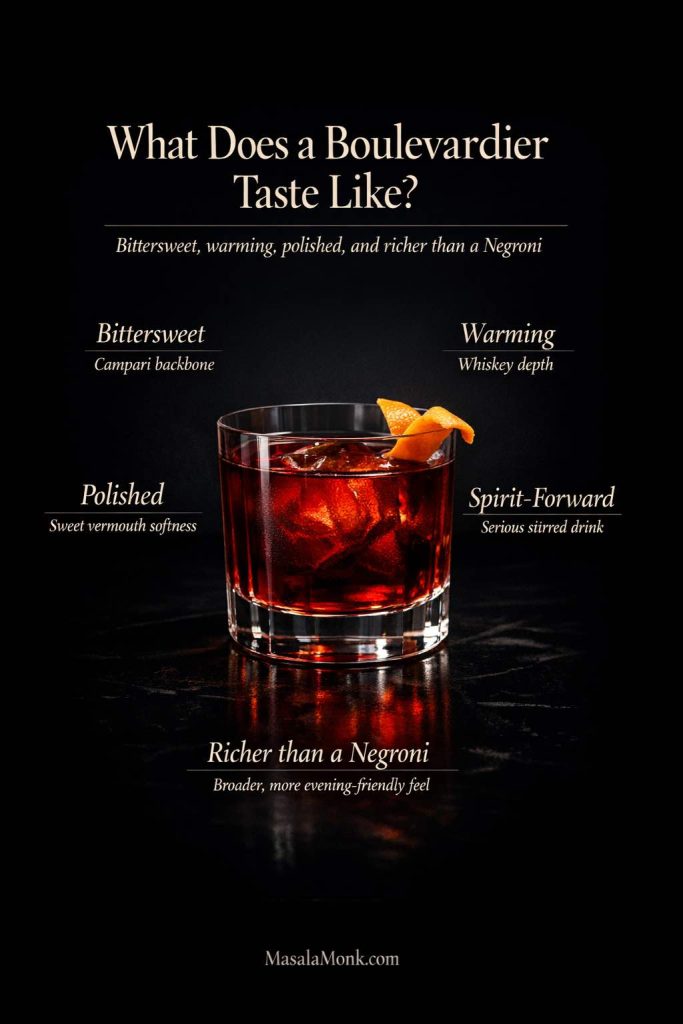
A Boulevardier tastes bittersweet, warming, and richer than a Negroni. Campari still gives it bitterness and citrus-peel tension, but whiskey replaces gin’s botanical snap with grain, spice, oak, caramel, or vanilla depending on the bottle you choose. As a result, the drink often feels more evening-ready and more autumnal than a classic gin-based aperitivo.
Is It Basically a Whiskey Negroni?
Yes, that is the fastest useful shorthand. If you already know the shape of a Negroni recipe, the Boulevardier makes immediate sense. Still, the swap from gin to whiskey changes more than the ingredient list. The drink becomes broader, sturdier, and more grounded, so “whiskey Negroni” is the doorway, not the whole story.
When This Drink Fits Best
Choose a Boulevardier when you want something richer than a Negroni, especially if you already prefer whiskey to gin. It is a very good fit for evening drinking, cooler weather, or any time you want a bitter classic that feels more warming than bright.
Boulevardier Recipe Ingredients
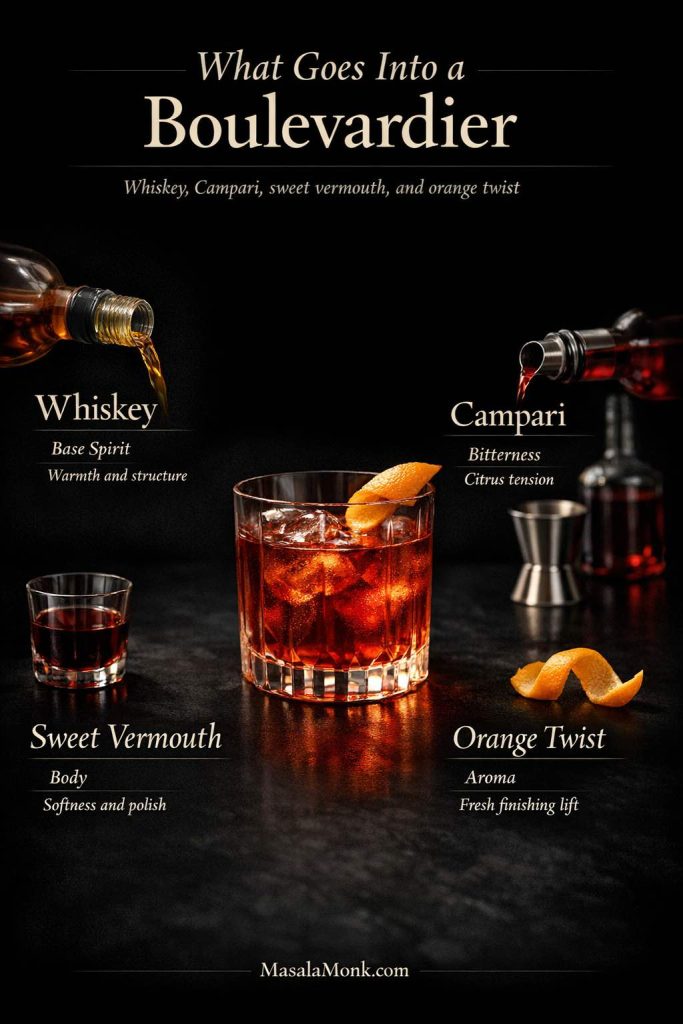
Whiskey in a Boulevardier: Bourbon or Rye
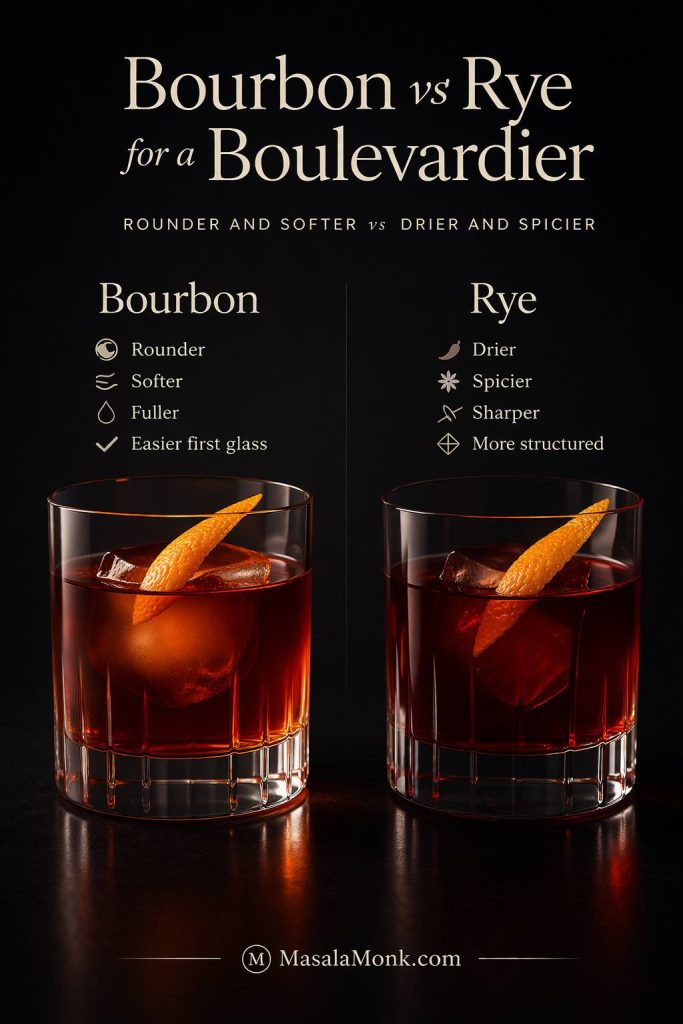
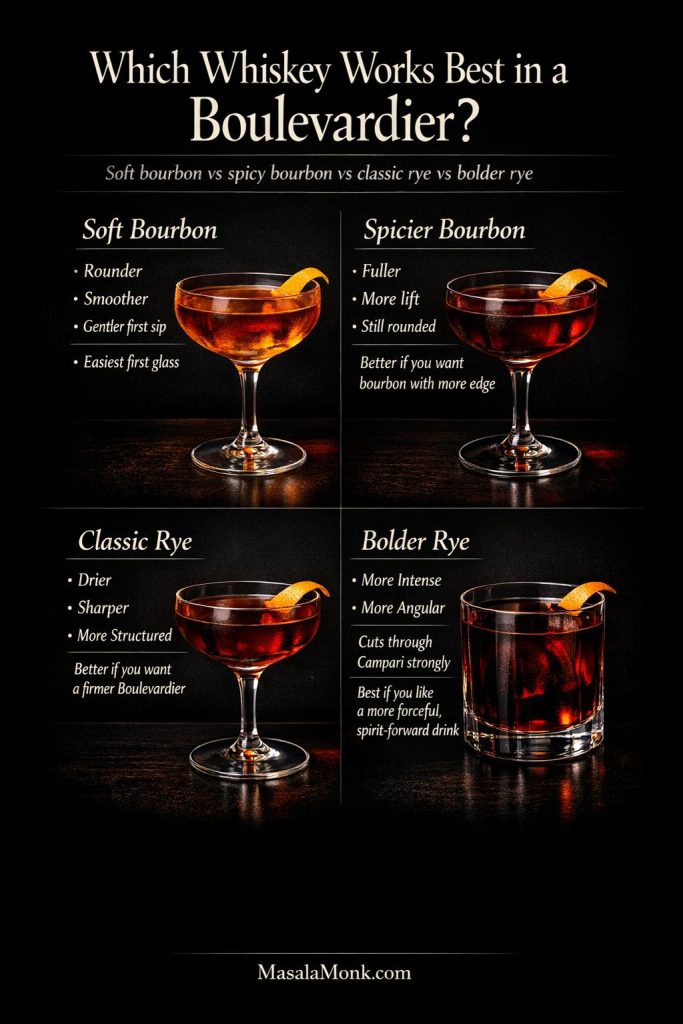
Your first ingredient choice is bourbon or rye. Bourbon makes the drink rounder, broader, and a little easier on first sip. Rye makes it drier, spicier, and more sharply defined. Both are classic choices, so the best starting point depends less on rules and more on whether you want a softer Boulevardier or a firmer one.
How Campari Shapes a Boulevardier Recipe
Campari is the ingredient that keeps a Boulevardier tasting like a Boulevardier rather than a sweet whiskey-and-vermouth drink. It brings bitter orange, herbal tension, and that red-fruit bitterness that cuts through the richness of the whiskey. Pull it too far back and the drink may become easier, but it also loses some of its identity.
Why Sweet Vermouth Matters
Sweet vermouth is the bridge that pulls the whiskey and Campari into one composed drink. It softens the point where bitterness and alcohol would otherwise clash, and its style changes the final impression more than many home bars expect. A richer sweet vermouth makes the drink rounder and darker, a lighter one keeps it brighter, and a slightly more bitter one makes the Boulevardier feel tighter and more serious. For a deeper bottle guide, MasalaMonk’s guide to the best sweet vermouth is the natural companion.
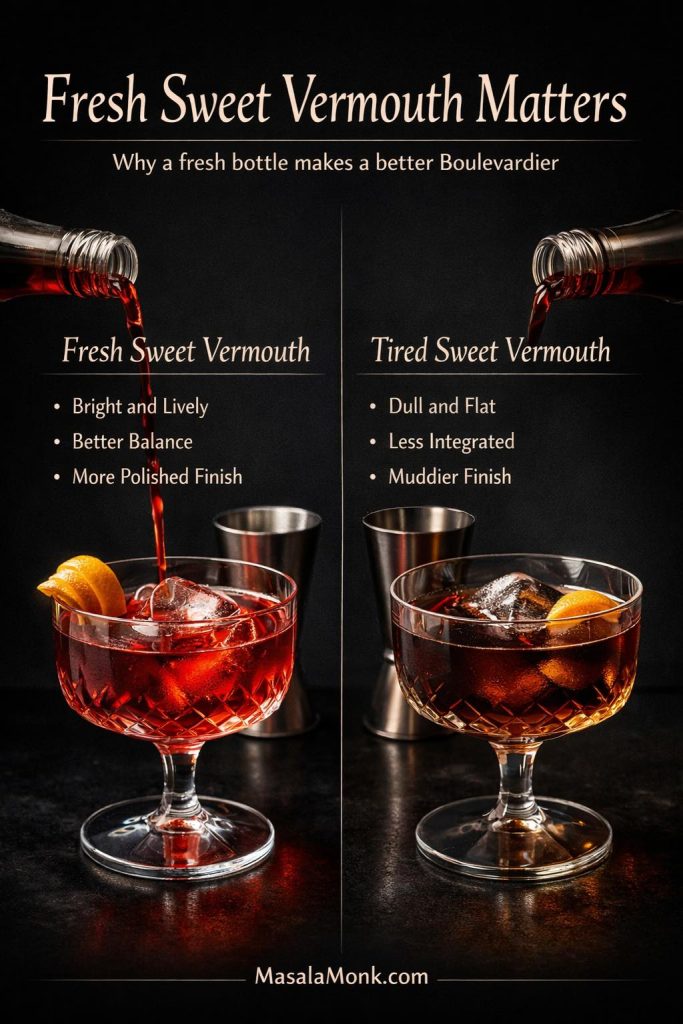
One practical detail matters just as much as bottle choice: once you open sweet vermouth, refrigerate it and use it while it still tastes fresh and lively. Even a good Boulevardier can turn dull and muddy surprisingly quickly when the vermouth is tired.
Best Citrus Twist for a Boulevardier Recipe
Orange twist is the best default garnish because it echoes Campari’s bitter-citrus profile and makes the drink smell rounder before the first sip. Lemon twist works when you want a leaner, brighter top note, especially with rye. In a spirit-forward cocktail like this, expressed citrus oil is part of the flavor, not just decoration.
↓ Jump to the method | ↓ Back to the recipe card
Boulevardier Recipe Ratio Guide
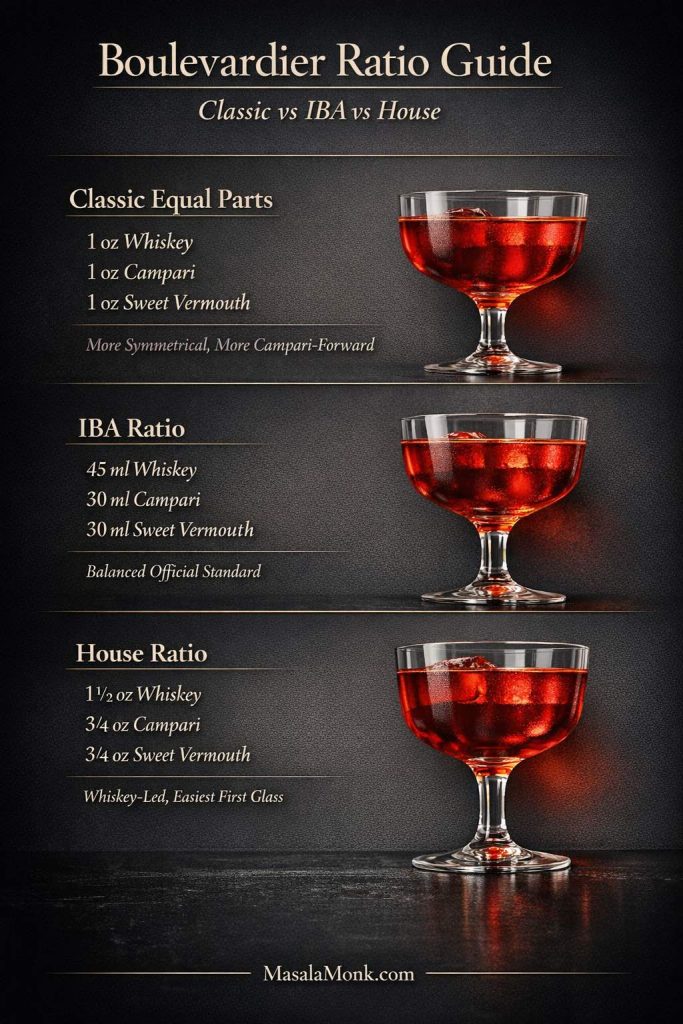
Classic Equal-Parts Boulevardier Recipe
1 ounce whiskey, 1 ounce Campari, 1 ounce sweet vermouth.
This is the version many readers think of first because it mirrors the familiar Negroni template. It is memorable, easy to build, and still worth making. Even so, it produces a more symmetrical, more Campari-forward drink, which some people love.
IBA Boulevardier Recipe
45 ml whiskey, 30 ml Campari, 30 ml sweet red vermouth.
The official IBA Boulevardier spec nudges the cocktail toward the whiskey without losing the classic structure. It is also served up in a chilled cocktail glass with orange zest, optionally lemon zest. So it becomes a useful bridge between the older equal-parts version and the more spirit-led modern style.
House Boulevardier Recipe for Most Readers
1 1/2 ounces whiskey, 3/4 ounce Campari, 3/4 ounce sweet vermouth.
This is the best starting point for most home bars. It keeps the drink clearly whiskey-led, smooths the bitterness, and still feels unmistakably like a Boulevardier. As a result, it is easier to enjoy on first try than a stricter equal-parts build if you are still learning how much Campari bitterness you like.
Which Ratio Should You Start With?
Start with the house ratio if you are new to the drink: 1 1/2 ounces whiskey, 3/4 ounce Campari, and 3/4 ounce sweet vermouth. It shows the Boulevardier as a whiskey-led cocktail first while still keeping the bitter-sweet structure intact.
Try equal parts next if you already enjoy more bitter classics and want the most symmetrical version. Use the IBA build when you want the official modern spec served up in its clearest, most polished form. For a modern bartender-focused take on that split, Punch’s Boulevardier tasting panel is a useful reference.
Best Whiskey for a Boulevardier Recipe
Choose Bourbon If…
Bourbon is the better place to start when you want a Boulevardier that lands rounder and a little more generously. It gives the drink a softer middle and makes Campari feel less angular, which is why bourbon is often the easier first choice for readers who are still learning how much bitterness they enjoy.
Choose Rye If…
Rye makes more sense when you want the drink to feel drier, spicier, and more tightly structured. It cuts through the sweetness of vermouth and the bitterness of Campari with more edge, so the finished cocktail usually feels leaner and more exact.
What Bourbon Works Best?
For most home bars, the best bourbon for a Boulevardier is not the sweetest one on the shelf. A softer wheated bourbon can make the drink very approachable, while a higher-rye bourbon adds a little more lift and spice without leaving bourbon territory. In general, bottles that feel balanced, lightly spicy, and not overly oaky tend to work better here than bourbons that taste syrupy or heavily charred.
What Rye Works Best in a Boulevardier Recipe?
A classic rye usually makes the cleanest, firmest Boulevardier. Look for a rye that tastes structured and spicy rather than aggressively woody, because the drink already has bitterness and herbal weight from Campari. When the rye is too oaky or too sharp, the cocktail can start feeling hard instead of composed.
What Proof Works Best?
The sweet spot for most Boulevardiers is roughly 90 to 100 proof. That gives the whiskey enough backbone to stay present after stirring without making the drink feel hot or heavy. Below that, the cocktail can lose shape. Far above that, the alcohol can start crowding the bitterness and vermouth instead of integrating with them.
Which Whiskey Should You Try First?
Start with bourbon if you want the easiest entry point. Start with rye if you already enjoy drier stirred drinks and want a Boulevardier with more tension from the first sip. Once you know which side you prefer, the drink becomes much easier to tune to your taste.
Once that difference clicks, drinks like a Rob Roy recipe become even more interesting, because you start tasting how base spirit and vermouth style reshape an entire family of stirred classics.
How to Make a Boulevardier Recipe
Make-Now Method
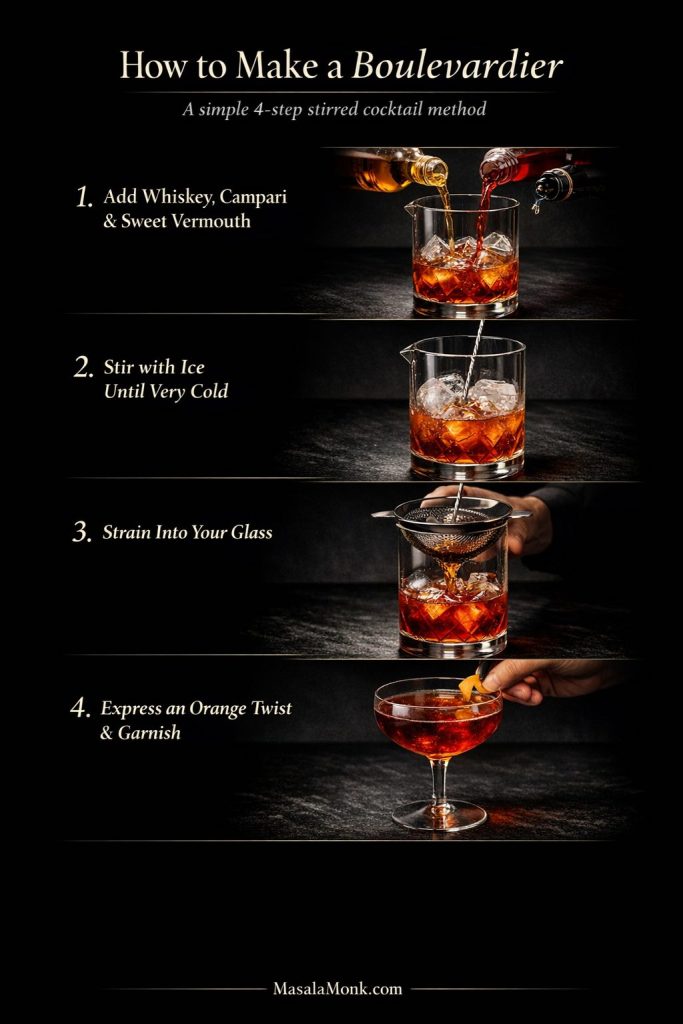
- Add whiskey, Campari, and sweet vermouth to a mixing glass filled with ice.
- Stir until very cold and lightly diluted.
- Strain into a chilled coupe or over one large cube.
- Express an orange twist over the drink and garnish.
Why It Is Stirred, Not Shaken
A Boulevardier is stirred because you want clarity, chill, and controlled dilution. Shaking would add unnecessary aeration and cloudiness, which is not what this cocktail wants.
How Long to Stir
Stir until the drink is fully cold and the hard edge of the alcohol has softened. In most home setups, that means about 20 to 30 seconds of steady stirring. In other words, proper dilution is part of the recipe, not an afterthought.
How to Know It Is Properly Diluted
You are looking for a drink that feels fully cold, slightly softened, and more integrated than it did when first built. The mixing glass should feel very cold in your hand, the raw alcoholic edge should settle down, and the first sip should taste composed rather than hot, sticky, or sharply bitter.
Common Mistakes in a Boulevardier Recipe
The most common misses are tired vermouth, under-stirring, weak ice, and a lazy garnish. Old vermouth makes the drink feel dull, while too little stirring makes it taste hotter and more bitter than it should. Small wet ice can dilute it too fast. Finally, skipping a properly expressed orange twist removes one of the details that makes the drink feel finished.
Served Up vs on the Rocks
Serve it up if you want the clearest classic presentation. In that form, it will taste sharper, colder, and more focused from the first sip. Serve it on one large cube if you want a slower, friendlier home-bar version that opens gradually as it sits.
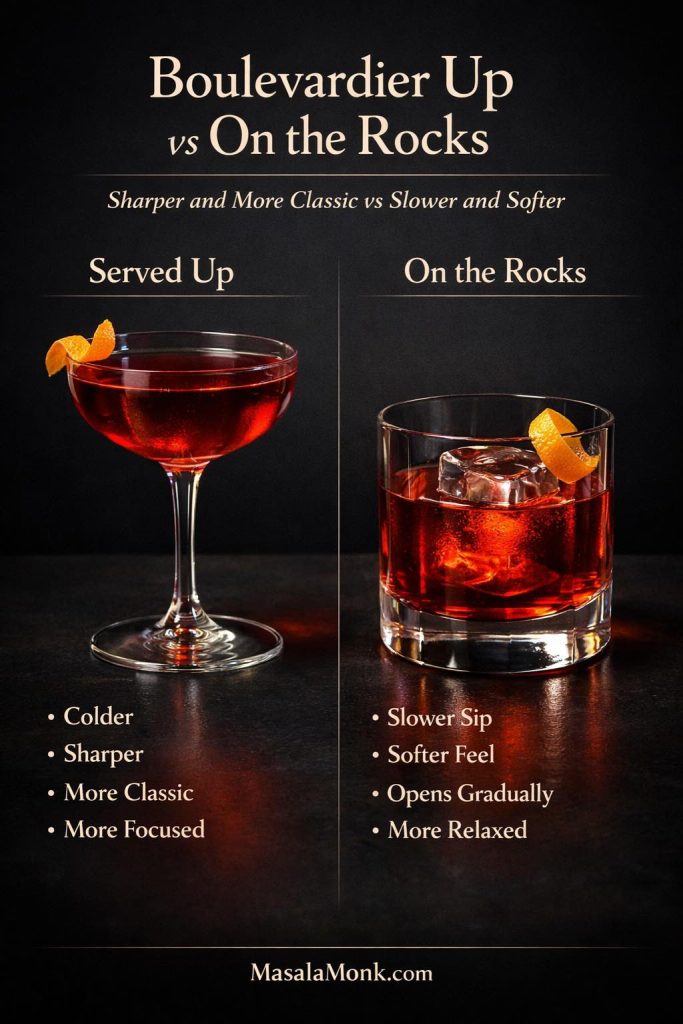
The official IBA standard is served up, but both styles are common and both can be excellent.
How to Adjust It to Your Taste
If It Tastes Too Bitter
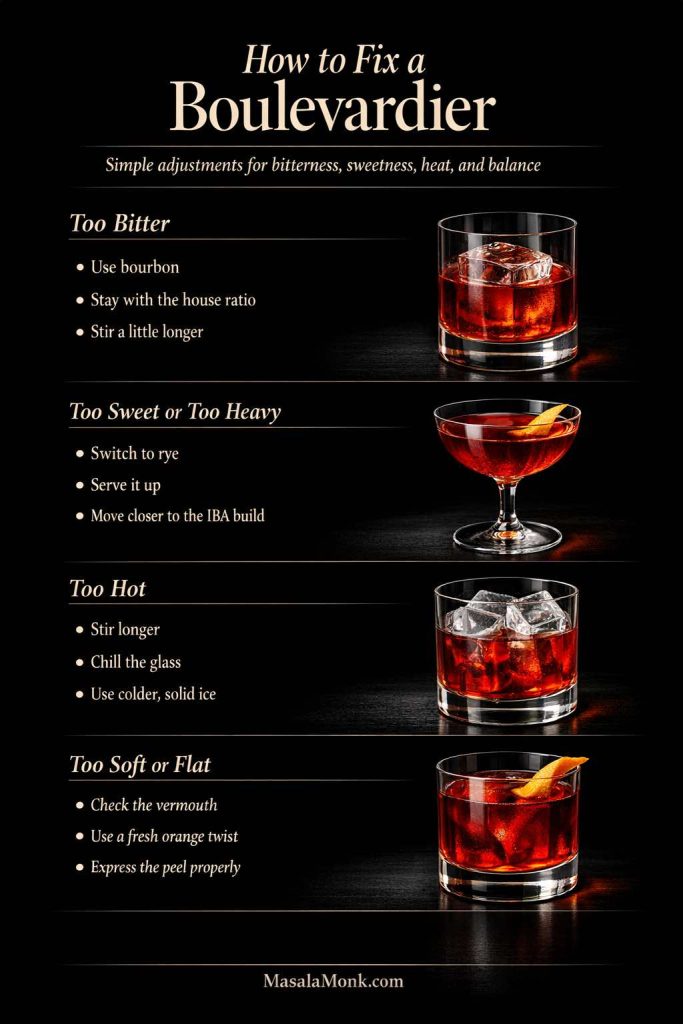
Use bourbon instead of rye, stay with the house ratio rather than equal parts, and make sure you are not under-diluting the drink. In practice, a Boulevardier that has not been stirred enough can feel more aggressive than it really is.
If It Tastes Too Sweet or Too Heavy
Switch to rye, serve the drink up, or edge closer to the IBA build. Together, those changes tighten the cocktail and bring bitterness and structure back into focus.
If It Tastes Too Hot
Stir longer, chill your glass first, and use colder, solid ice in the mixing glass. Spirit-forward cocktails depend on correct temperature and dilution more than many home bars expect.
If It Tastes Soft or Flat
Check the vermouth first, then the garnish. Very often, fresh vermouth and a properly expressed orange twist do more for a Boulevardier than chasing a more expensive bottle of whiskey.
↓ Back to the ratio guide | ↓ Back to the recipe card
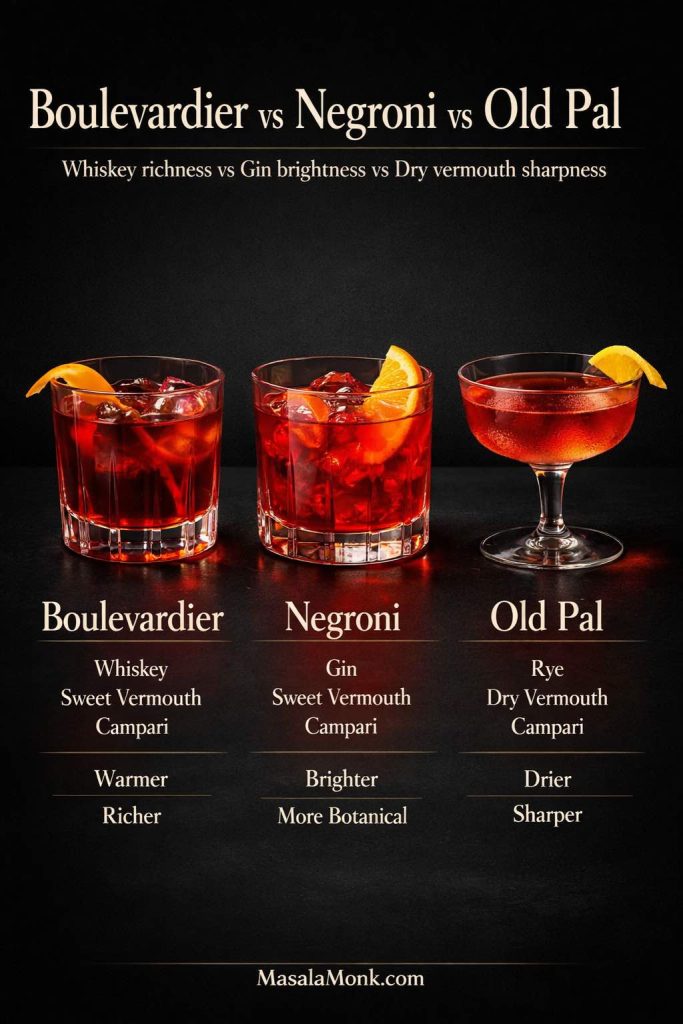
Boulevardier vs Negroni
The core structural difference is simple: the Negroni uses gin and the Boulevardier uses whiskey. That one swap changes the mood of the drink dramatically. Gin makes a Negroni brighter, more botanical, and more aperitivo-like. By contrast, whiskey makes the Boulevardier feel deeper, warmer, and more grounded.
The bitterness does not disappear in a Boulevardier, but it often feels broader and less piercing because whiskey gives it more body. Readers who enjoy the idea of a bitter classic but never fully fall for gin often find their way in through the Boulevardier. That is exactly why a Negroni recipe makes sense as the most natural companion read.
For a compact outside explainer on that contrast, Tales of the Cocktail’s Boulevardier vs Negroni guide is a good companion read.
Boulevardier vs Old Pal
The fastest way to separate these two cocktails is vermouth. Whereas the Boulevardier uses sweet vermouth, the Old Pal uses dry vermouth. As a result, the Old Pal tastes drier and sharper.
The Old Pal is also more tightly associated with rye, which pushes it further toward a dry, spicy profile. By contrast, the Boulevardier has more room to move between bourbon and rye without losing its identity. If the Boulevardier feels plush and bittersweet, the Old Pal usually feels crisper and sharper.
That is another reason your guide to the best sweet vermouth fits naturally into the wider classic-cocktail cluster around this post.
Best Boulevardier Recipe Garnish
Orange twist is the default garnish because it fits the drink naturally. It reinforces Campari’s bitter-citrus profile, softens the first aroma, and makes the whole cocktail feel more integrated. Most importantly, express the peel over the surface so the oil becomes part of the drink’s first impression.
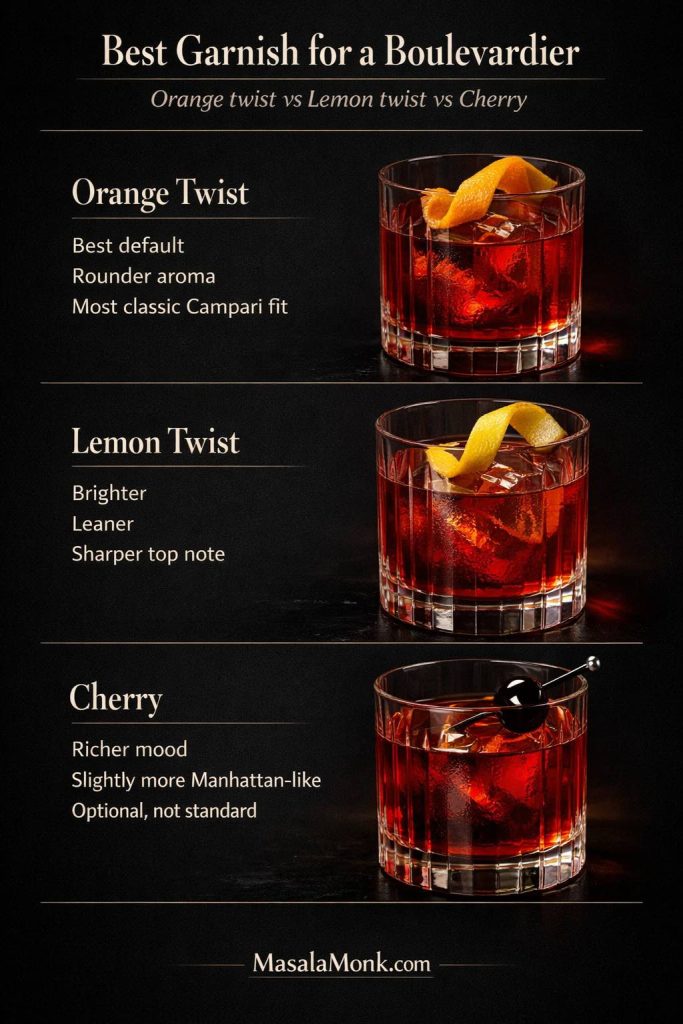
Lemon twist works when you want a brighter, leaner expression, especially with rye. Cherry can work, but it should feel deliberate rather than automatic. A cherry pulls the drink slightly toward a Manhattan-like mood, while orange keeps it rooted in its Campari identity.
History of the Boulevardier
Historically, the Boulevardier is tied to Erskine Gwynne and 1920s Paris drinking culture, and it appears in Harry MacElhone’s 1927 Barflies and Cocktails. That combination of expatriate style, hotel-bar culture, and printed cocktail history helps explain the drink’s lasting cachet.
For many years, it sat in the shadow of the Negroni. Then the modern cocktail revival brought bitter stirred classics back into focus, and the Boulevardier returned as one of the most appealing whiskey-based standards in the canon. For a fuller history note, Imbibe’s Boulevardier history piece is the cleanest supporting reference.
Easy Boulevardier Recipe Variations
Bourbon Boulevardier
This is the easiest first version for most readers. It rounds the drink out, softens the edges, and makes the bitter-sweet structure feel more generous without losing the drink’s identity.
Rye Boulevardier
Swap bourbon for rye and keep everything else the same for a drier, spicier, more sharply drawn Boulevardier.
Equal-Parts Boulevardier
Use 1 ounce each whiskey, Campari, and sweet vermouth when you want the most symmetrical, most classically Negroni-like expression. It is a more Campari-forward drink and a useful reference point even if you later prefer a whiskey-led version.
IBA-Style Boulevardier, Served Up
Use the 45 ml, 30 ml, 30 ml structure and serve it in a chilled cocktail glass with orange zest. That version feels compact, polished, and closer to the modern official standard.
Boulevardier on a Large Cube
Choose this version when you want the drink to open more slowly and feel more relaxed at home. It is especially good for readers who enjoy watching a spirit-forward drink soften across ten or fifteen minutes.
Softer First-Time Boulevardier
Use bourbon, the house ratio, a well-chilled coupe, and an orange twist. Together, those choices give most first-time drinkers the clearest path into the style without sanding away what makes the drink interesting.
Once you know which direction you prefer, the next natural branch-outs are a Paper Plane cocktail recipe for a brighter modern whiskey bitter and a Whiskey Sour recipe when you want whiskey in a fresher, more citrus-led format.
Boulevardier Recipe FAQs
What are the ingredients in a Boulevardier?
A Boulevardier is made with whiskey, Campari, and sweet vermouth. The official IBA version uses 45 ml whiskey, 30 ml Campari, and 30 ml sweet red vermouth.
What is the best ratio for a Boulevardier?
For most readers, the best place to start is 1 1/2 ounces whiskey, 3/4 ounce Campari, and 3/4 ounce sweet vermouth. It keeps the whiskey clearly in front while still tasting unmistakably like a Boulevardier.
Is a Boulevardier made with bourbon or rye?
Either works. Bourbon gives you a rounder, softer Boulevardier, while rye gives you a drier, spicier, more structured one. Both are classic choices.
Is the classic Boulevardier equal parts?
Many classic versions are discussed as equal parts, and that build is still worth making. However, the official IBA specification is not equal parts and shifts the drink slightly toward the whiskey.
Is a Boulevardier served up or on the rocks?
Both are common. Serve it up for a colder, sharper, more classic feel, or on a large cube for a slower, slightly softer drink that opens as it sits.
What garnish goes on a Boulevardier?
Orange twist is the best default garnish. Lemon twist gives the drink a leaner, brighter edge, while cherry is more optional than standard.
What sweet vermouth works best?
That depends on the style you want. A richer sweet vermouth makes the drink rounder and darker, a lighter one keeps it brighter, and a slightly more bitter one makes it feel firmer and more serious. Whatever bottle you use, refrigerate it after opening and use it while it still tastes fresh.
Is a Boulevardier stronger than a Negroni?
Not necessarily in a dramatic way, but it often tastes weightier because whiskey gives it more body and warmth than gin. The bigger difference is usually mood and texture rather than raw strength.
What is the difference between a Boulevardier and a Negroni?
A Negroni uses gin, while a Boulevardier uses whiskey. That change makes the Boulevardier richer and warmer, while the Negroni stays brighter and more botanical.
What is the difference between a Boulevardier and an Old Pal?
The Boulevardier uses sweet vermouth, while the Old Pal uses dry vermouth. As a result, the Old Pal tastes drier and sharper, while the Boulevardier stays rounder and more bittersweet.
Final Notes for Making the Best Boulevardier Recipe
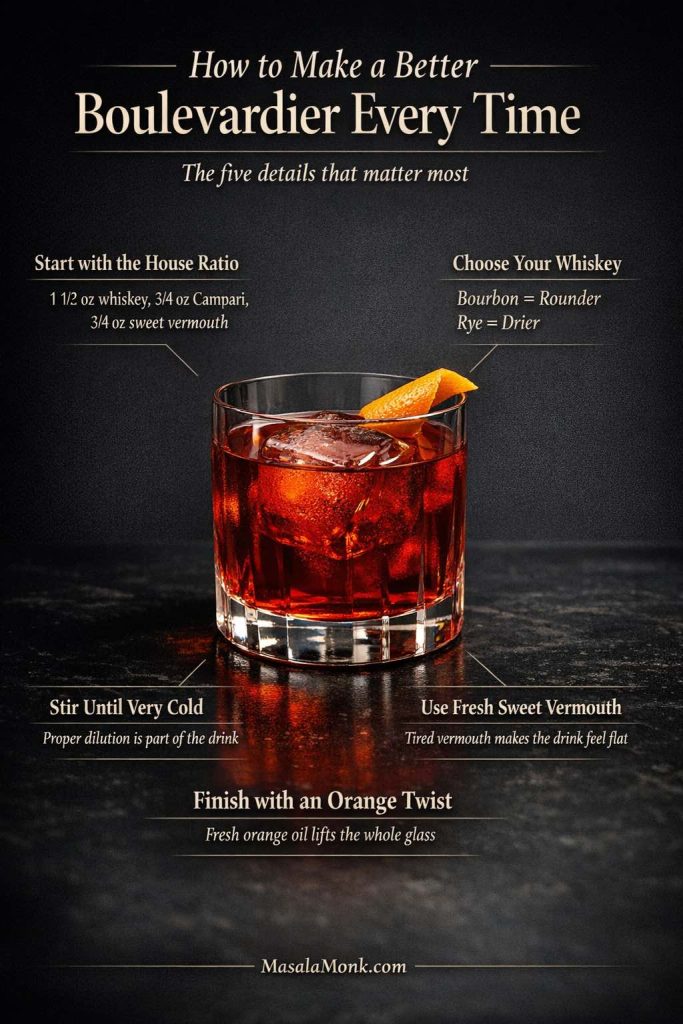
The best Boulevardier usually comes down to four things.
- Start with a ratio that lets the whiskey lead clearly.
- Choose bourbon for a rounder drink or rye for a drier, sharper one.
- Stir until the drink is properly cold and lightly diluted.
- Finish with an orange twist and let the aroma do part of the work.
Start with the house ratio and bourbon if you are new to the drink. Then try rye if you want a drier, sharper Boulevardier. From there, the most natural next reads are a Negroni recipe, a Manhattan cocktail recipe, or a Rob Roy recipe.
The Boulevardier recipe that wins most readers is usually the one that feels composed on the first try. That is why a whiskey-led ratio, proper stirring, fresh vermouth, and an orange twist matter so much here. Once those pieces click, the Boulevardier recipe stops feeling like a niche bitter classic and starts feeling like one you will actually make again.








