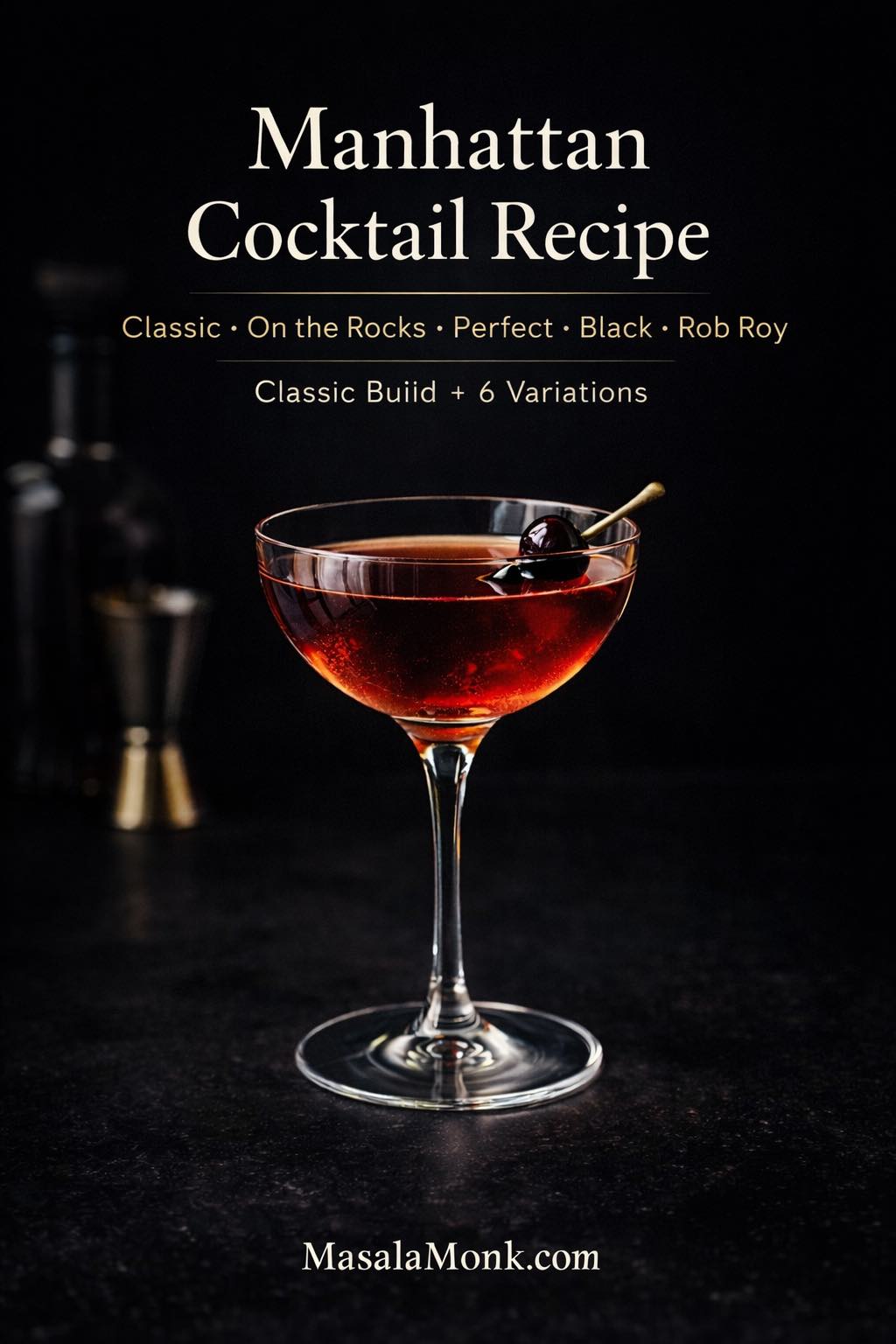
A Manhattan cocktail recipe is one of those rare classics that feels both special and practical. It’s strong without being harsh, aromatic without being fussy, and satisfying in a way that lingers long after the glass is empty. Whiskey sets the backbone, sweet vermouth adds herbal depth, bitters sharpen the outline, and a steady stir turns those separate parts into one cohesive drink.
Because the Manhattan is so simple on paper, it’s also honest in the glass. Fresh vermouth matters. Dilution matters. Even the garnish matters, because aroma hits before flavor. Once you get the small details right, the Manhattan becomes an easy default—an elegant manhattan drink recipe you can repeat for weeknights, celebrations, and everything in between.
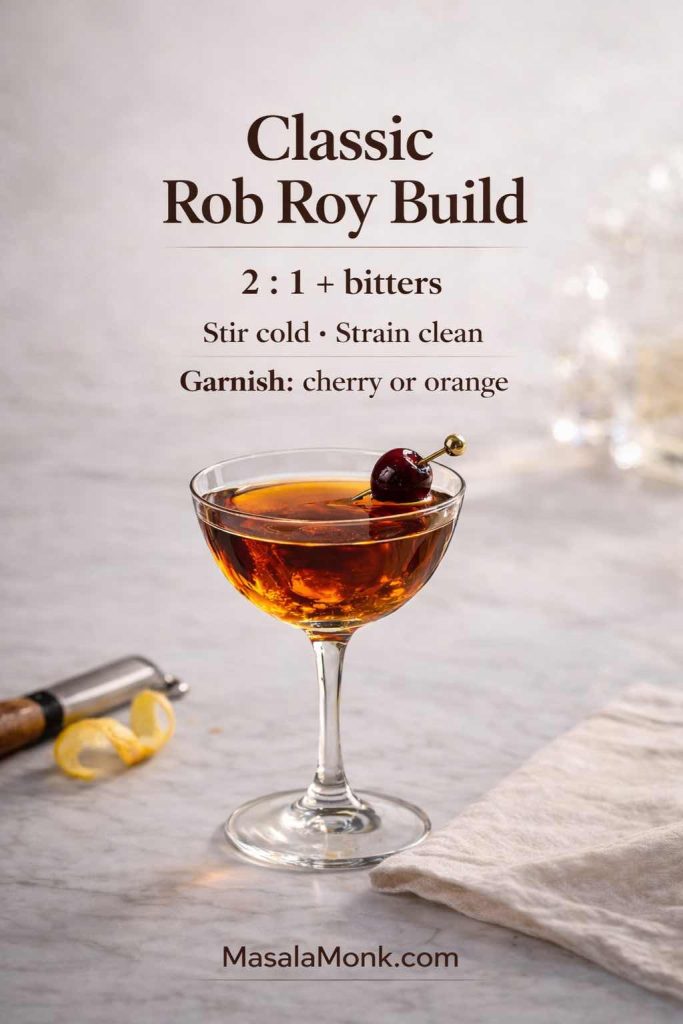
When you’re ready to branch out later, a few cousins make natural sense: our Negroni recipe for another stirred classic built on balance, and our Rob Roy drink recipe for the Scotch version of the Manhattan’s structure. For now, let’s build a Manhattan you’ll genuinely want to make again.
Manhattan Cocktail Recipe: The Classic Build
A traditional Manhattan is whiskey + sweet vermouth + bitters, stirred with ice and served up. The official reference spec is the International Bartenders Association Manhattan. For a clear, bar-aligned home method, Liquor.com’s Manhattan recipe is a dependable baseline. If you enjoy a technique-minded explanation, Serious Eats’ Manhattan recipe is also worth bookmarking.
Manhattan cocktail ingredients for one drink
Here’s the essential list—also the simplest answer to “ingredients for a Manhattan” and “Manhattan drink ingredients”:
- 2 oz (60 ml) rye whiskey (or bourbon)
- 1 oz (30 ml) sweet vermouth (rosso/red)
- 2 dashes aromatic bitters (Angostura is the classic baseline)
- Garnish: cocktail cherry or orange twist
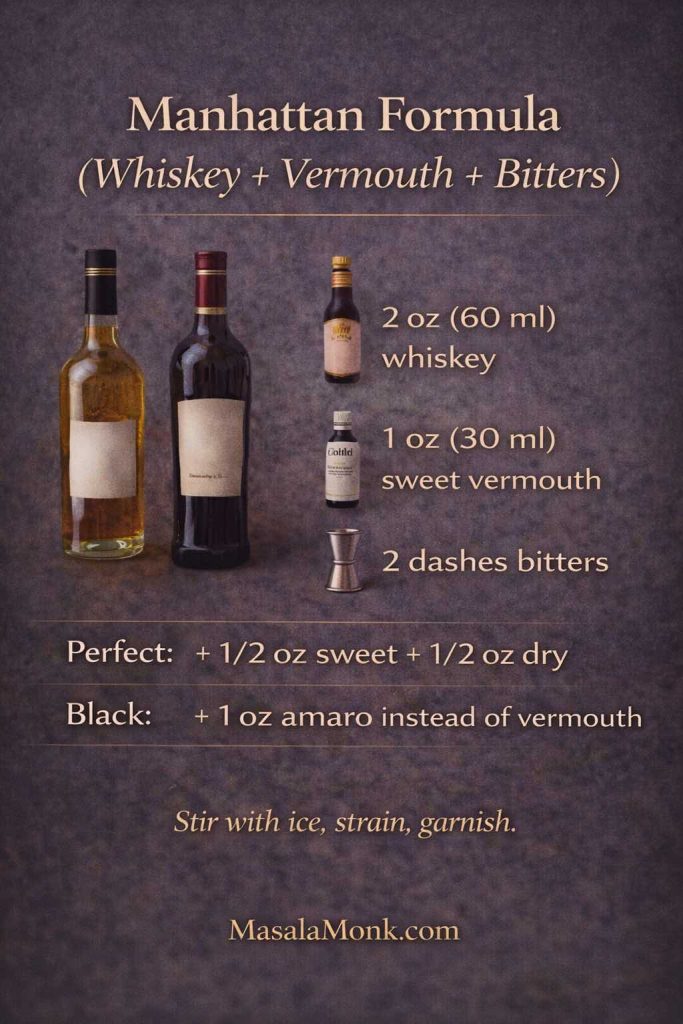
That short list is why the recipe is so repeatable. Still, the Manhattan isn’t a “mix and hope” situation. The method is part of the flavor, and each ingredient has a job:
- Whiskey is the backbone: it carries the main flavor and structure.
- Sweet vermouth is the aroma and depth: it contributes sweetness, herbs, gentle bitterness, and wine-like brightness.
- Bitters provide definition: they tighten the edges and keep sweetness from drifting.
- Garnish is the first impression: cherry leans dark and rich; orange twist leans bright and lifted.
Also Read: Green Chutney Recipe (Coriander–Mint / Cilantro Chutney)
Manhattan Cocktail Recipe: How to Make It (Step-by-Step)
A Manhattan is meant to be stirred. Shaking adds air and tiny ice shards—perfect for citrus drinks, less ideal for a Manhattan’s clear, silky texture. If you want a solid technique explanation you can use for every stirred cocktail, Serious Eats’ guide to stirring lays it out beautifully.
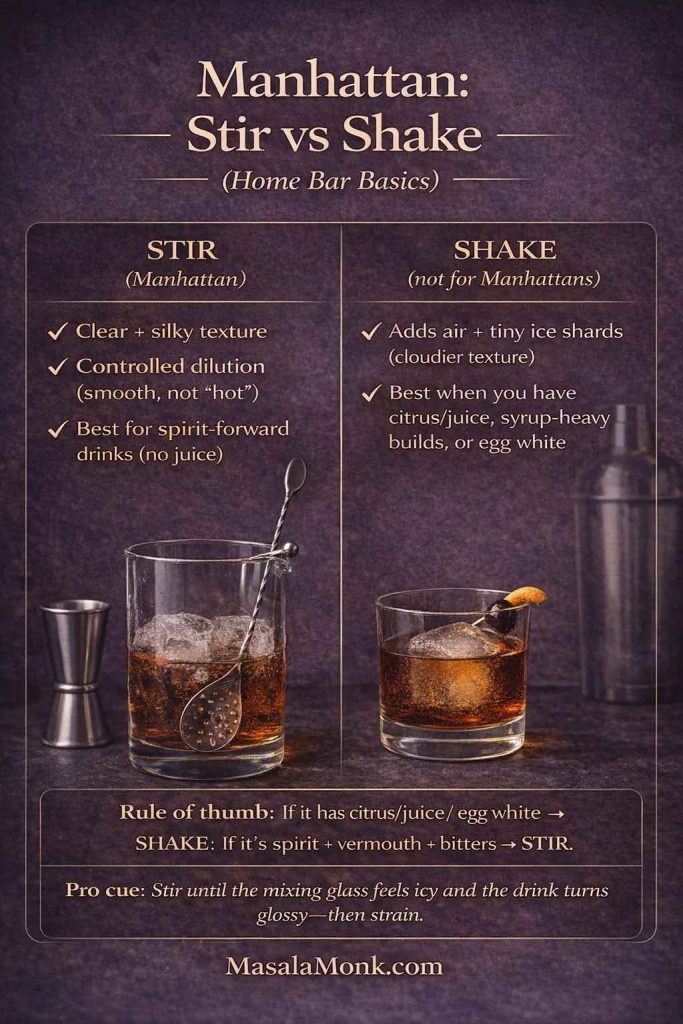
How to make a Manhattan
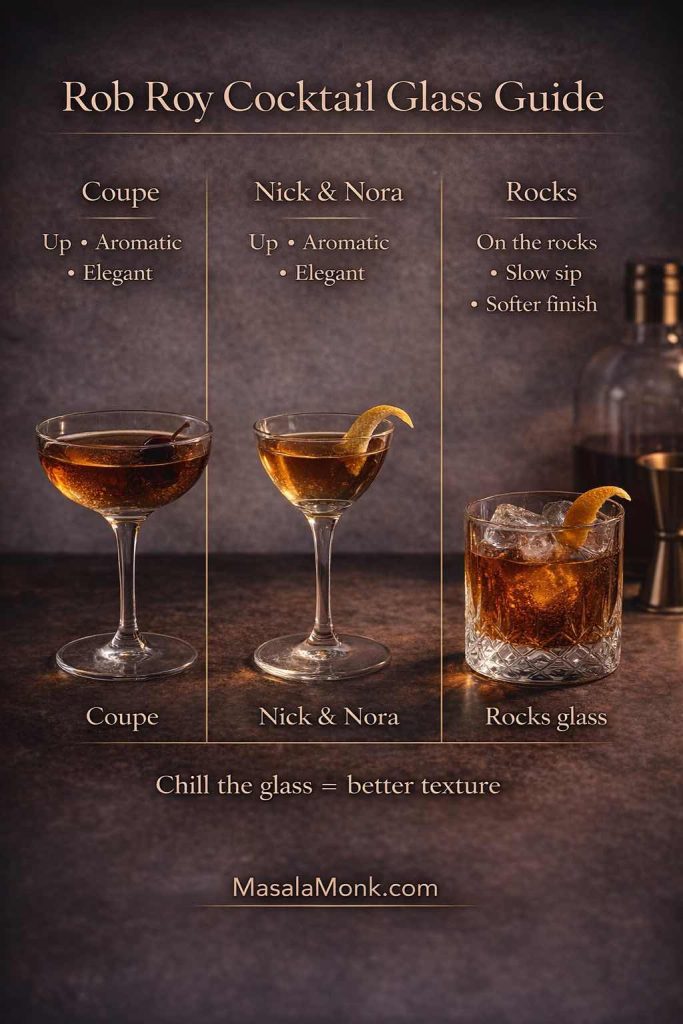
- Chill your serving glass (a coupe or Nick & Nora is classic).
- Add whiskey, sweet vermouth, and bitters to a mixing glass (or any sturdy glass).
- Fill the mixing glass well with ice.
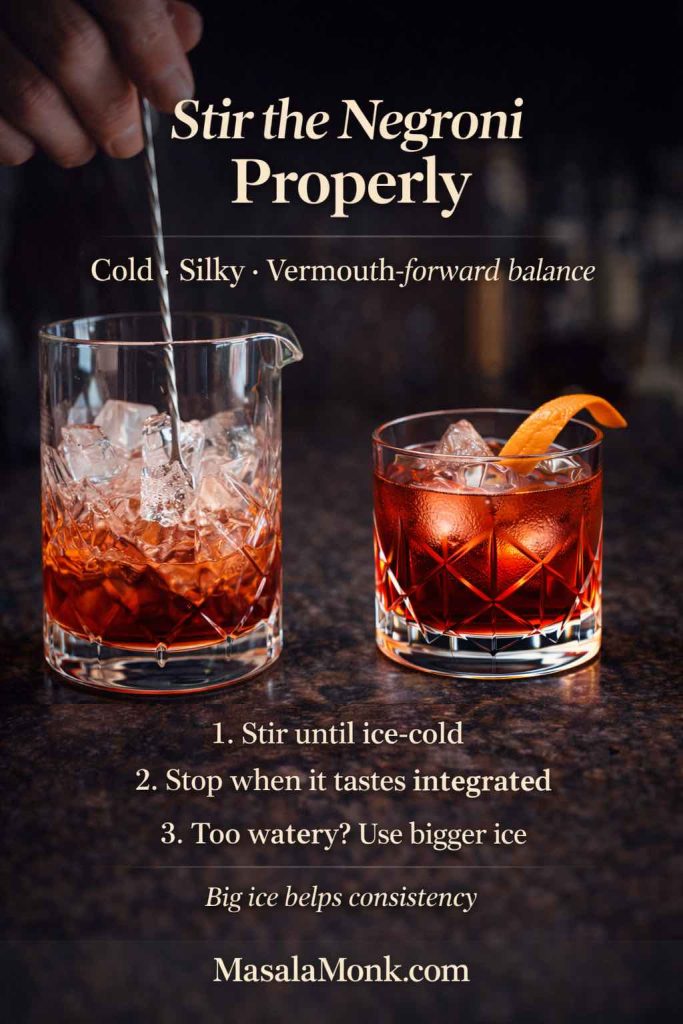
- Stir until the drink is very cold and integrated.
- Strain into the chilled glass.
- Garnish and serve immediately.
This covers the core “Manhattan mixed drink recipe” need without requiring special tools. A mixing glass is nice; a sturdy pint glass works. A bar spoon is helpful; any long spoon will do. What matters most is the stir and the strain.
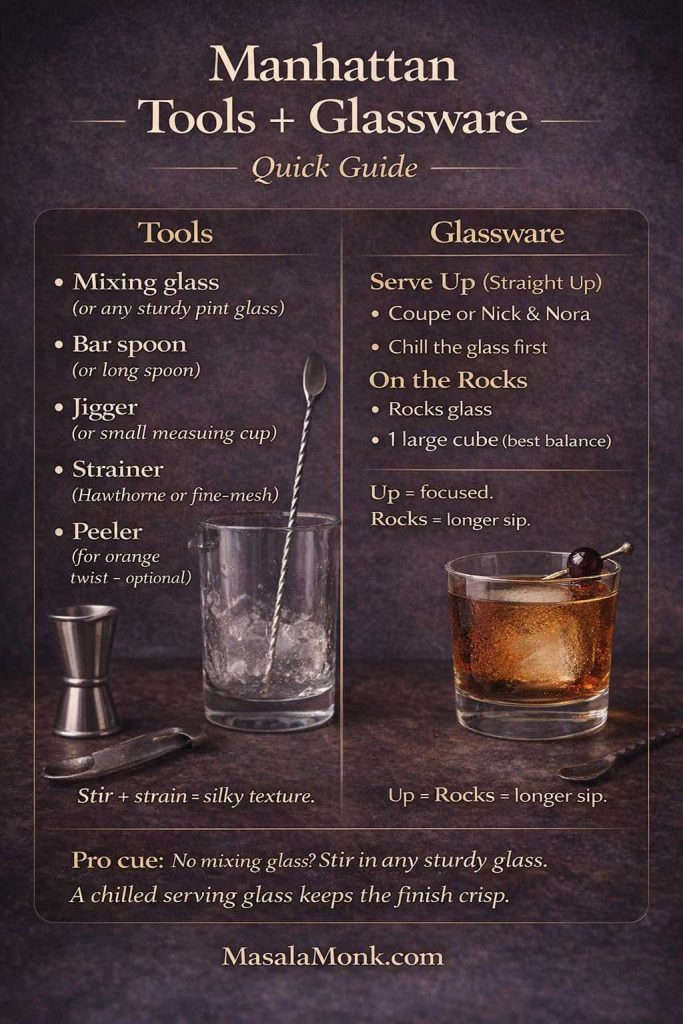
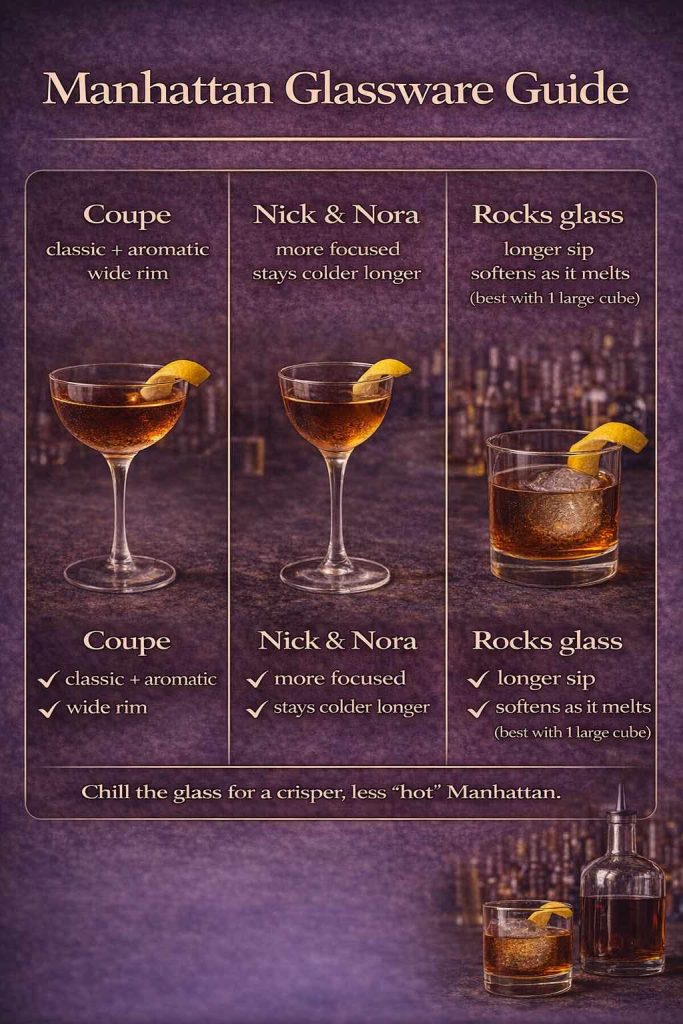
Manhattan Cocktail Recipe: The stir that makes it smooth
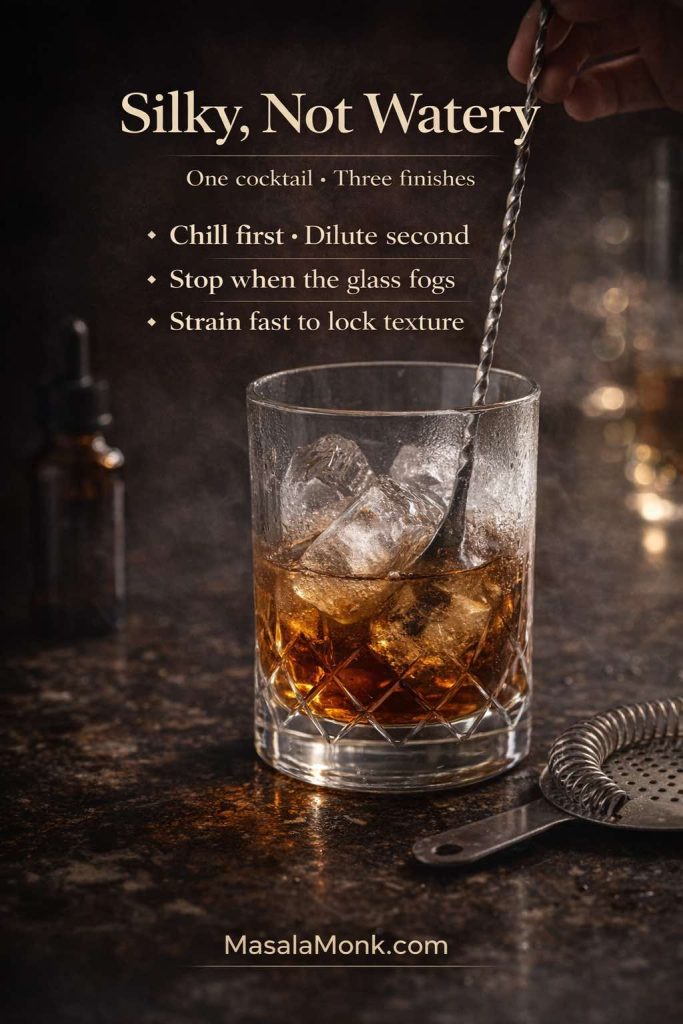
A Manhattan tastes “hot” when it’s under-diluted and not cold enough. It tastes watery when it’s over-diluted. Between those extremes is a sweet spot where the drink becomes silky and cohesive.
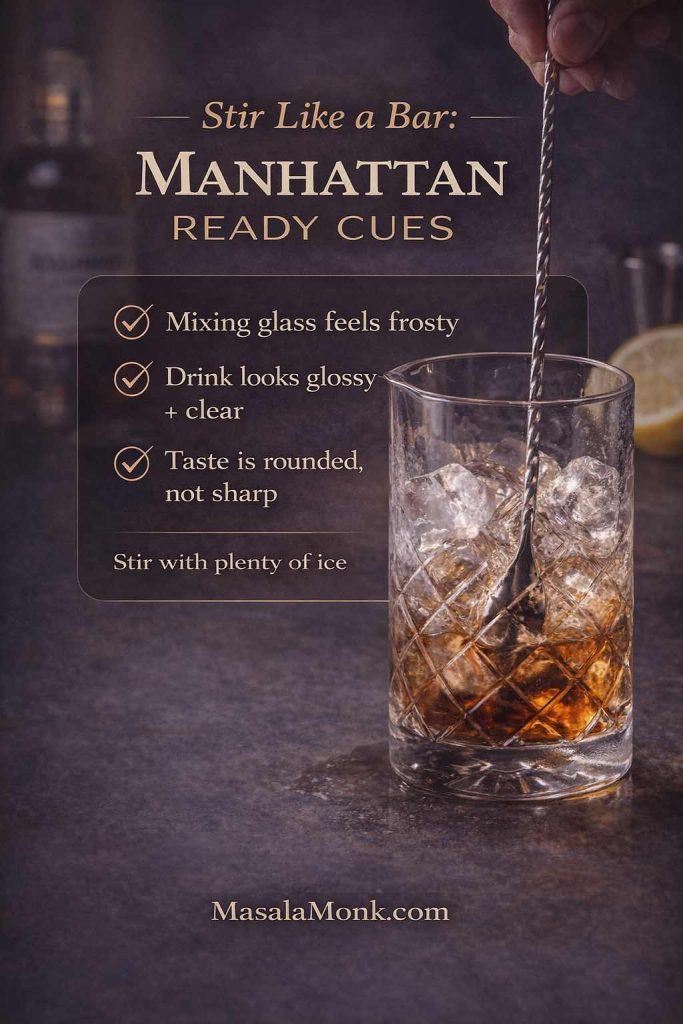
Instead of counting seconds, watch for cues:
- The mixing glass feels icy cold to the touch.
- The liquid looks clear and glossy rather than cloudy.
- A tiny taste from the spoon feels rounded, not sharp.
Once you recognize that moment, consistency gets much easier.
Ice choice: why generous ice helps
A well-filled mixing glass chills more efficiently and gives you more control. Paradoxically, more ice often means less unpredictable melt because the drink cools quickly, then stabilizes.
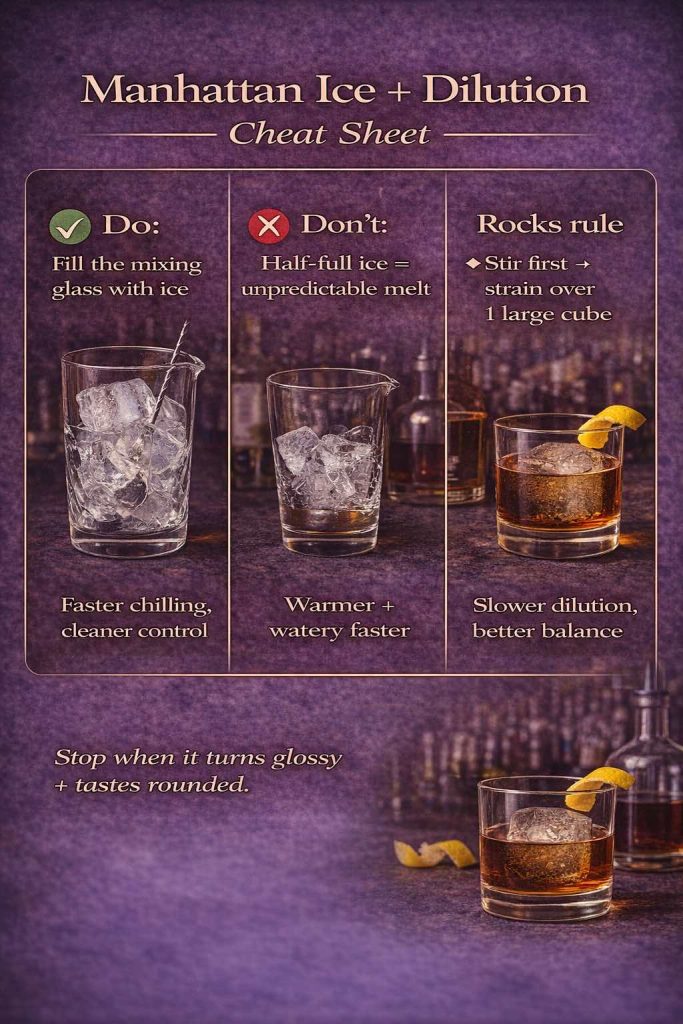
- Larger cubes are easier to control because they melt more slowly.
- Smaller ice works fine too; simply use plenty of it and stir with intention.
No matter what, avoid a half-empty mixing glass. A small handful of ice melts quickly and makes dilution harder to predict.
Glass chilling: the quiet upgrade
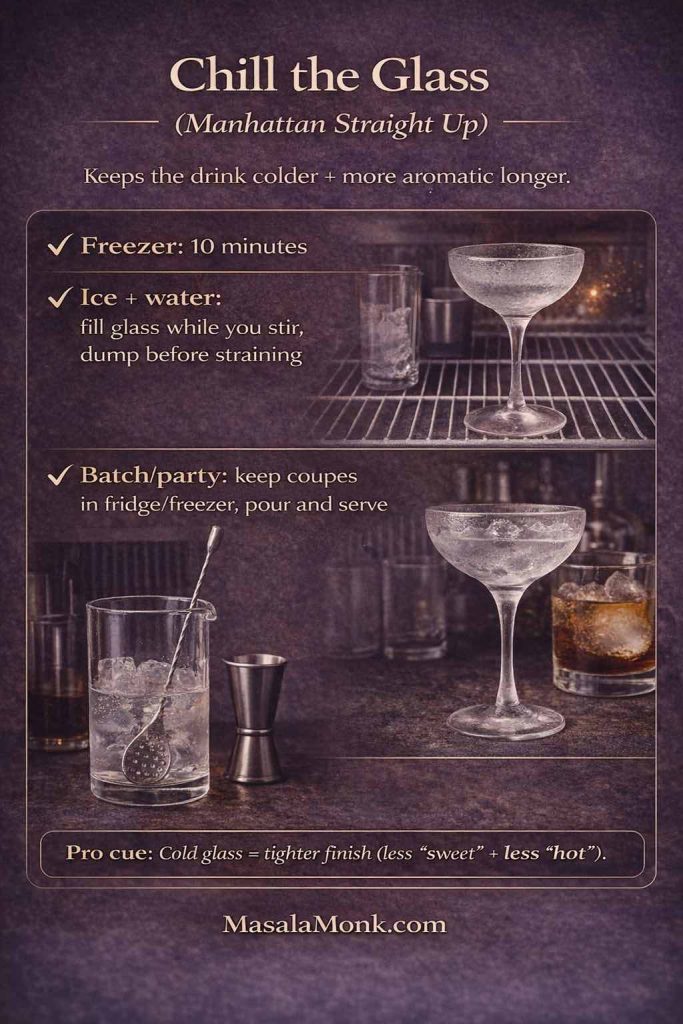
A chilled glass keeps the Manhattan crisp longer. Without that chill, the drink warms quickly and can taste sweeter and boozier at the same time. If you’re serving a Manhattan straight up, this step is worth it every single time.
Also Read: Sandwich for Breakfast: Breakfast Sandwich Recipe + 10 Variations
Manhattan Cocktail Recipe vs “Manhattan Martini” (A Quick Clarification)
The phrase “manhattan martini” shows up a lot because both drinks are strong, stirred, and often served up in similar glassware. Even so, their foundations are different:
- A classic martini is typically gin (or vodka) with dry vermouth.
- A Manhattan is whiskey with sweet vermouth and bitters.
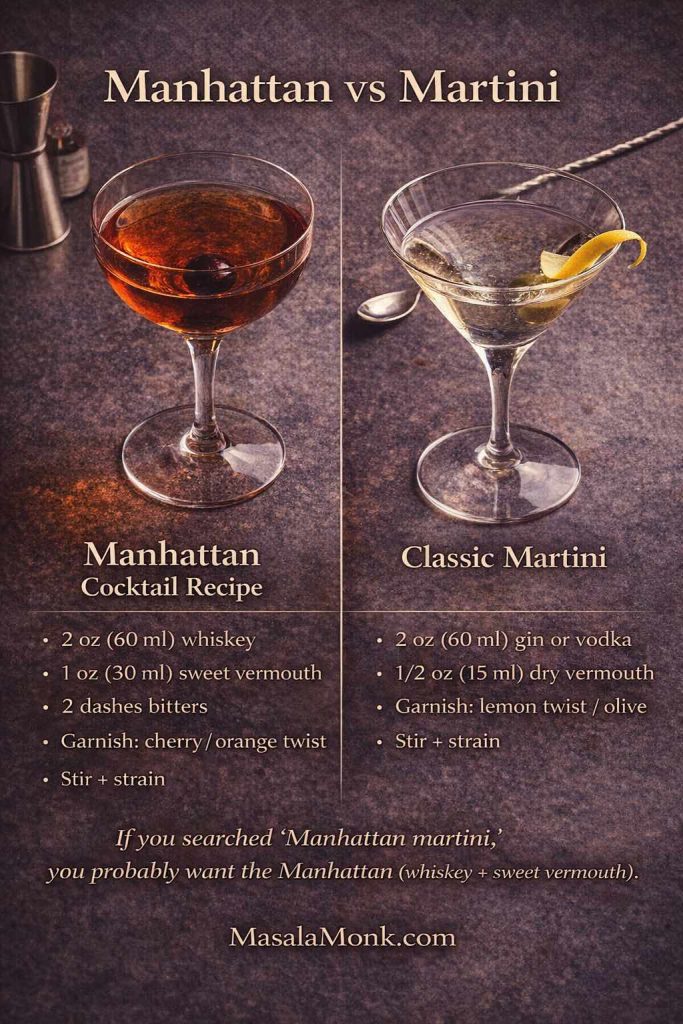
So if you’ve called it a manhattan martini drink, you’re not alone—just aiming for a whiskey-and-vermouth classic with a richer, darker profile.
Also Read: 10 Best Espresso Martini Recipe Variations (Bar-Tested)
Manhattan Cocktail Recipe: Ratio, Serve Style, and the “Right” Finish
Manhattan ratio (classic + useful adjustments)
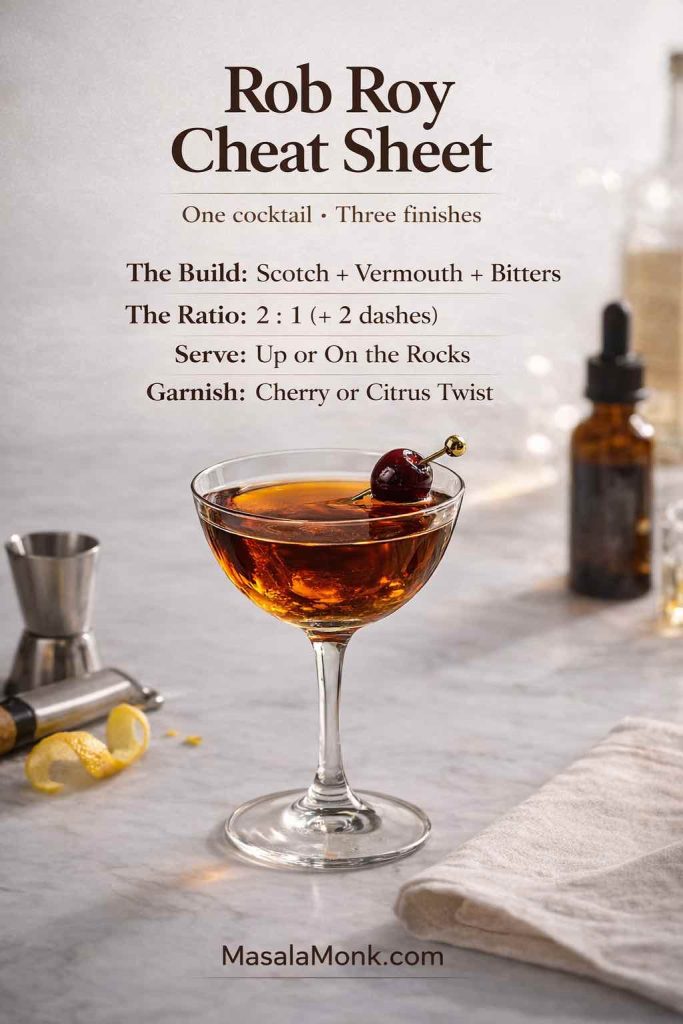
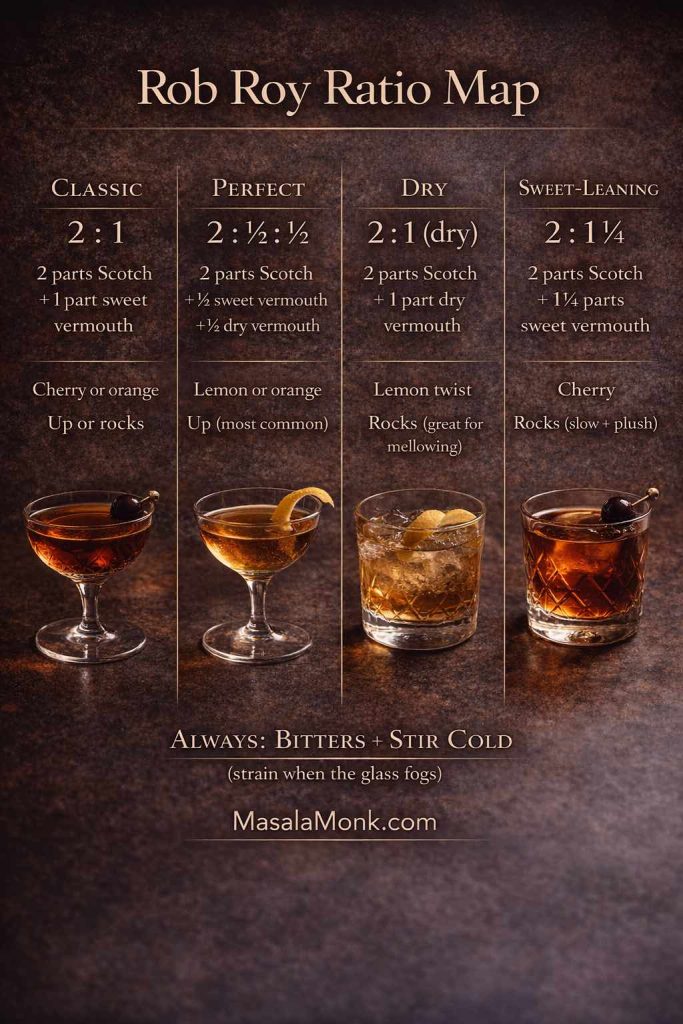
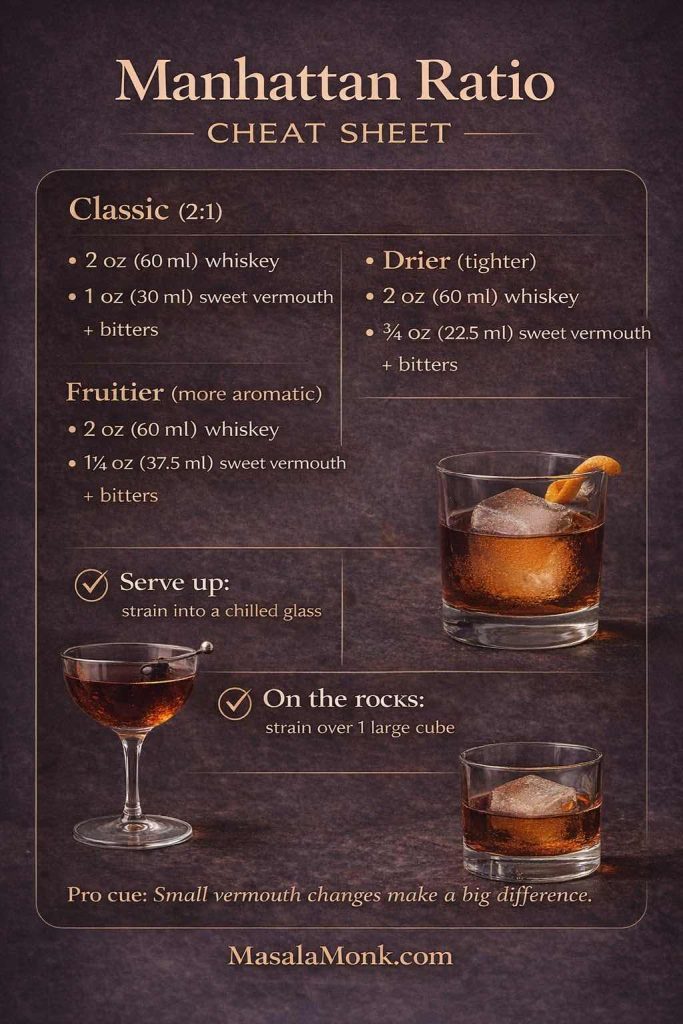
The classic Manhattan ratio is 2:1 whiskey to sweet vermouth, plus bitters. It works because it balances spirit strength with vermouth aroma. From there, small adjustments do more than dramatic changes:
- Classic: 2 oz whiskey + 1 oz sweet vermouth
- Drier finish: 2 oz whiskey + 3/4 oz sweet vermouth
- Wetter, more aromatic: 2 oz whiskey + 1 1/4 oz sweet vermouth
Because the Manhattan is concentrated, quarter-ounce shifts are noticeable. When you’re dialing in your preferred balance, change one thing at a time—ratio, bitters, garnish, or base spirit—so you can actually taste what changed.
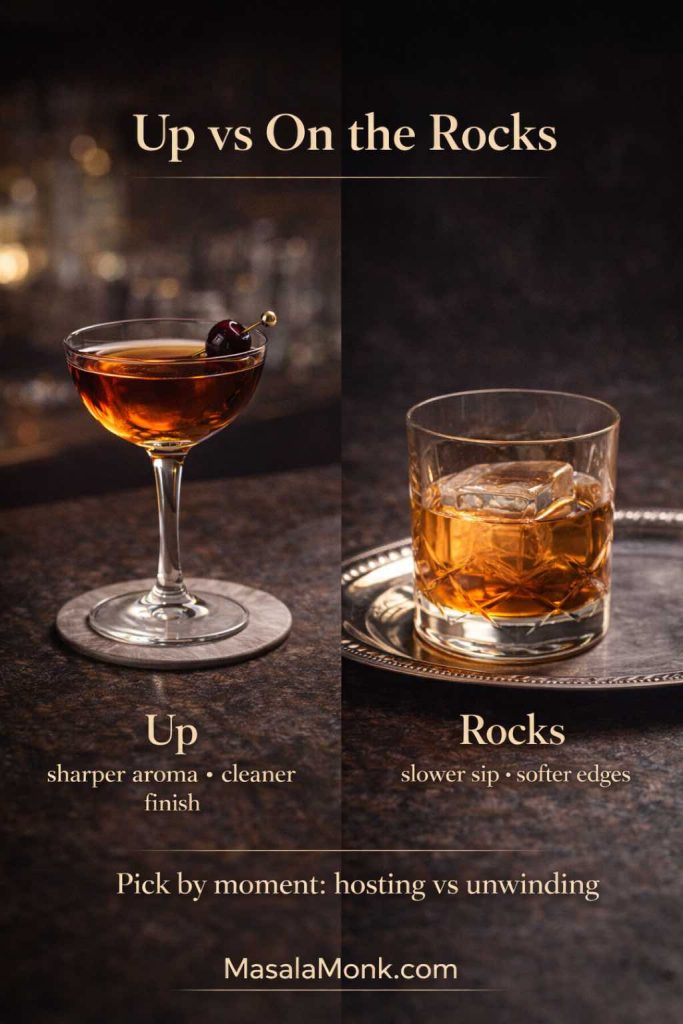
Manhattan straight up vs Manhattan drink on the rocks
Serving style changes the pacing of the drink.
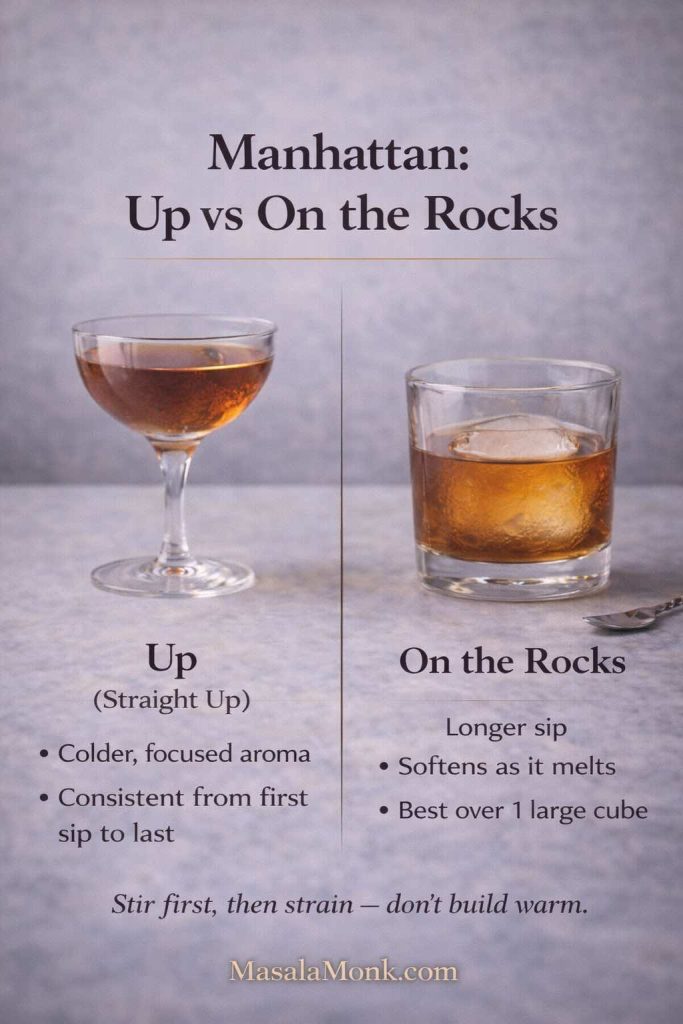
- A Manhattan straight up (also called a straight up Manhattan) is strained into a chilled glass with no ice. It’s focused and aromatic, and it stays fairly consistent from first sip to last.
- A Manhattan drink on the rocks evolves in the glass as the ice melts. It softens gradually, which can feel relaxed and gentle.
If you’re aiming for the classic experience, serve it up. If you want a longer sip, serve it over a large cube—ideally after stirring first, so it’s balanced right away.
Manhattan drink neat
A Manhattan drink neat is uncommon because dilution is part of the finished cocktail. Without that added water from stirring, the drink tends to taste sharper and less integrated. If you want “neat” intensity, you might prefer a pour of whiskey neat—or an Old Fashioned—rather than skipping the Manhattan’s finishing step.
Also Read: Strawberry Smoothie Recipes (12 Easy Blends + Bowls & Protein Shakes)
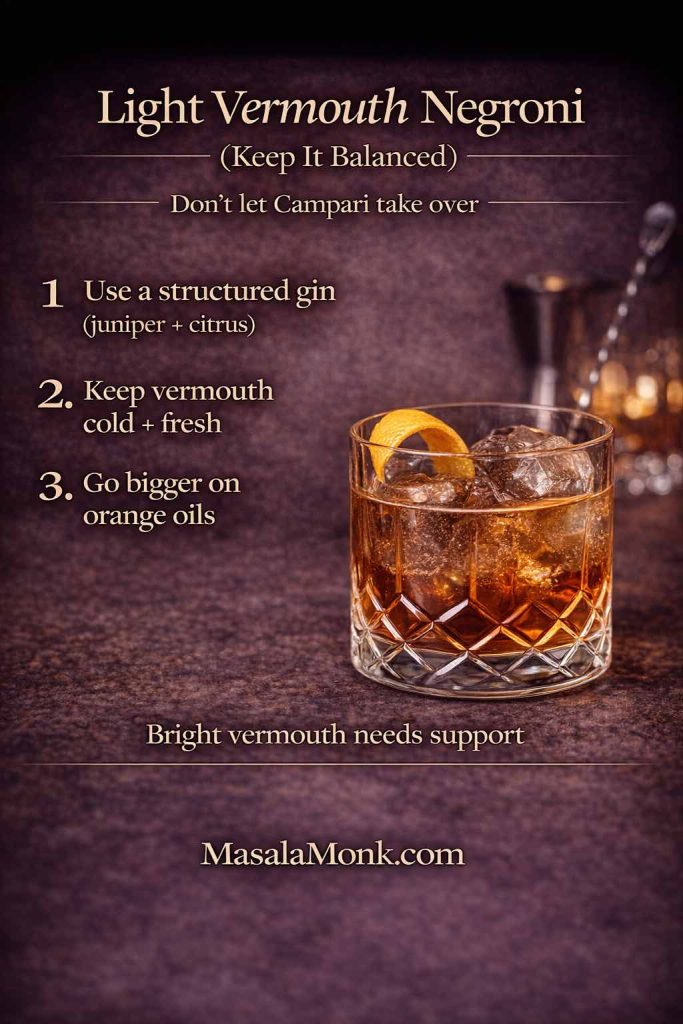
Sweet Vermouth for Manhattan: Freshness, Style, and Storage
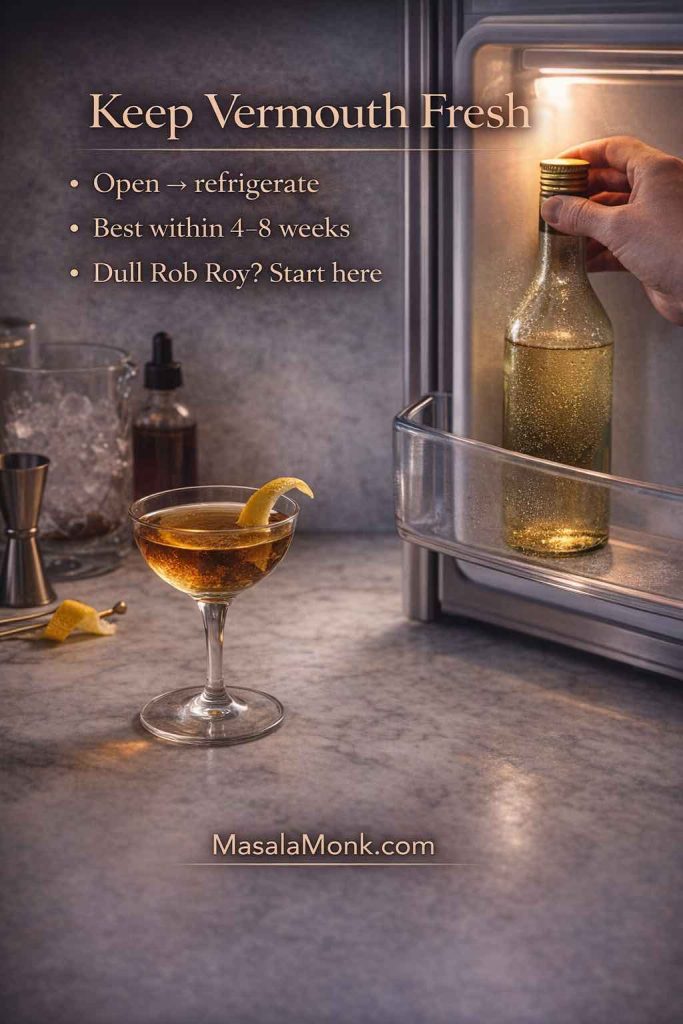
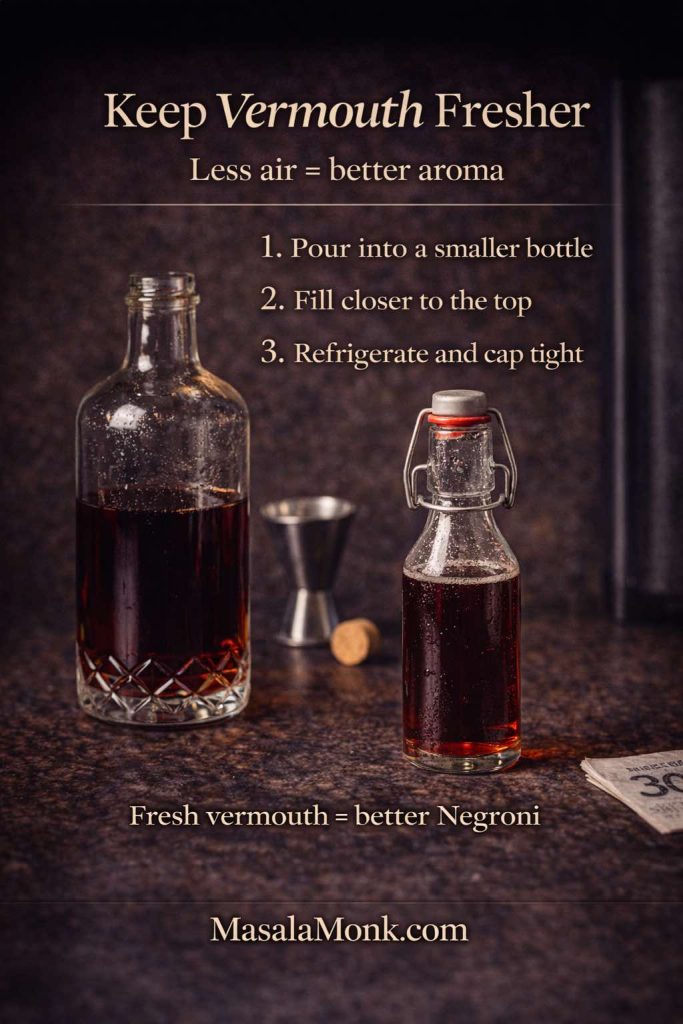
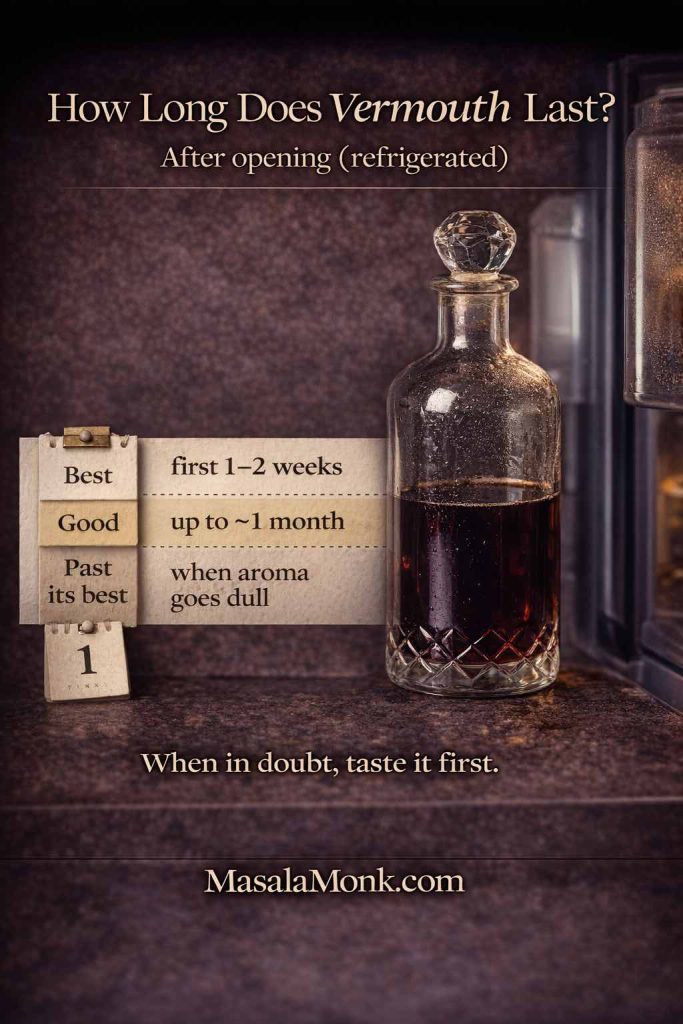
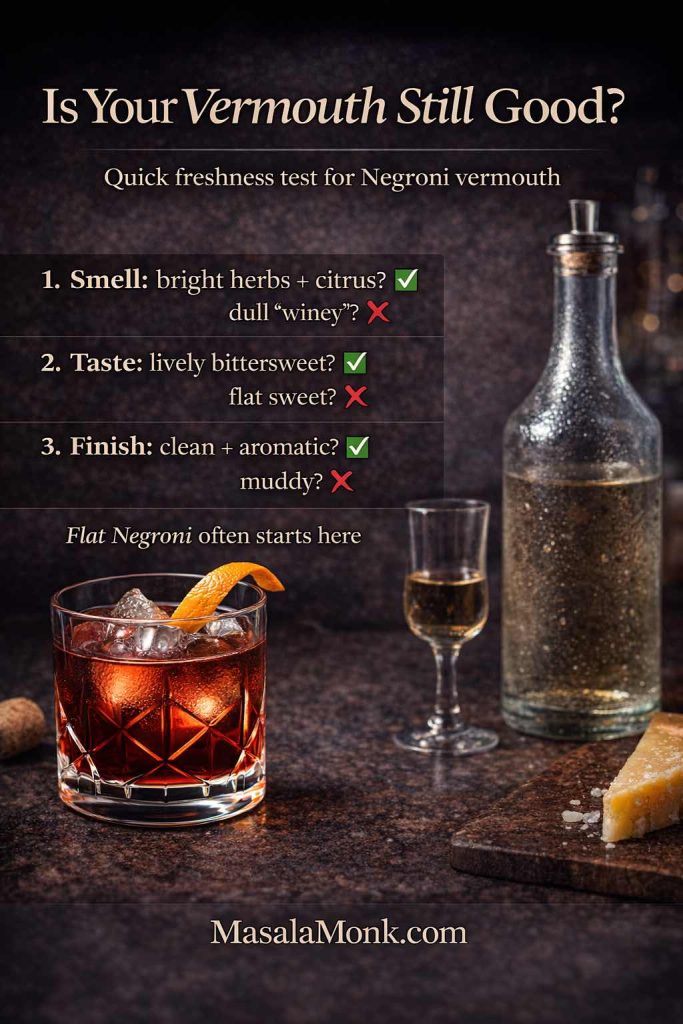
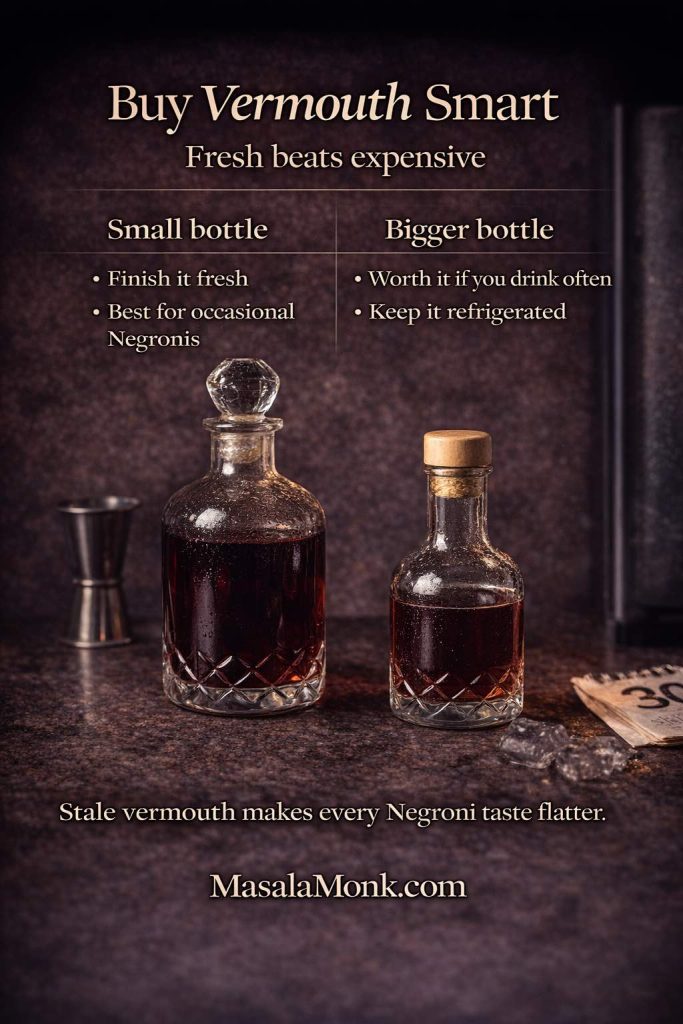
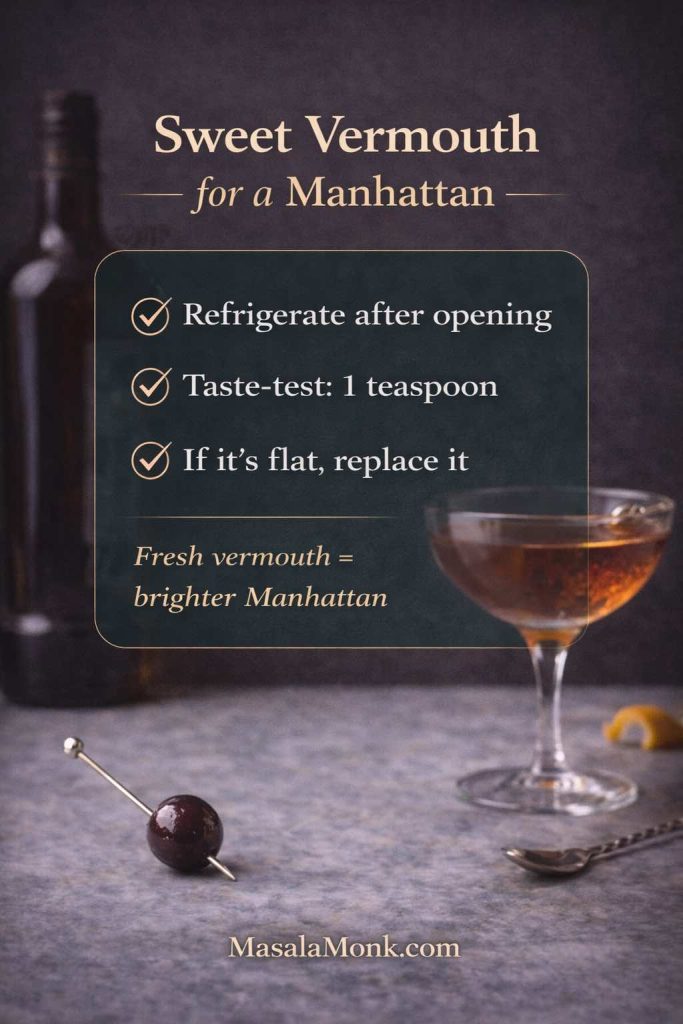
Sweet vermouth is wine-based. That means it changes after opening. Refrigerate it and keep the cap tight. If you want a clear explanation of why that matters, this Serious Eat’s guide on refrigerating vermouth makes the case simply.
Fresh vermouth makes the drink smell alive
Fresh sweet vermouth contributes herbal lift, gentle bitterness, and wine-like brightness. Tired vermouth often tastes flat and oddly sweet at the same time, which can make the Manhattan feel muddy.
A quick check: taste a teaspoon of vermouth on its own.
- If it tastes pleasant—herbal, lightly bitter, wine-like—it will likely shine.
- If it tastes dull, flat, or strangely “sticky,” it will drag the whole cocktail down.
Rosso/red vermouth Manhattan and “best vermouth” choices
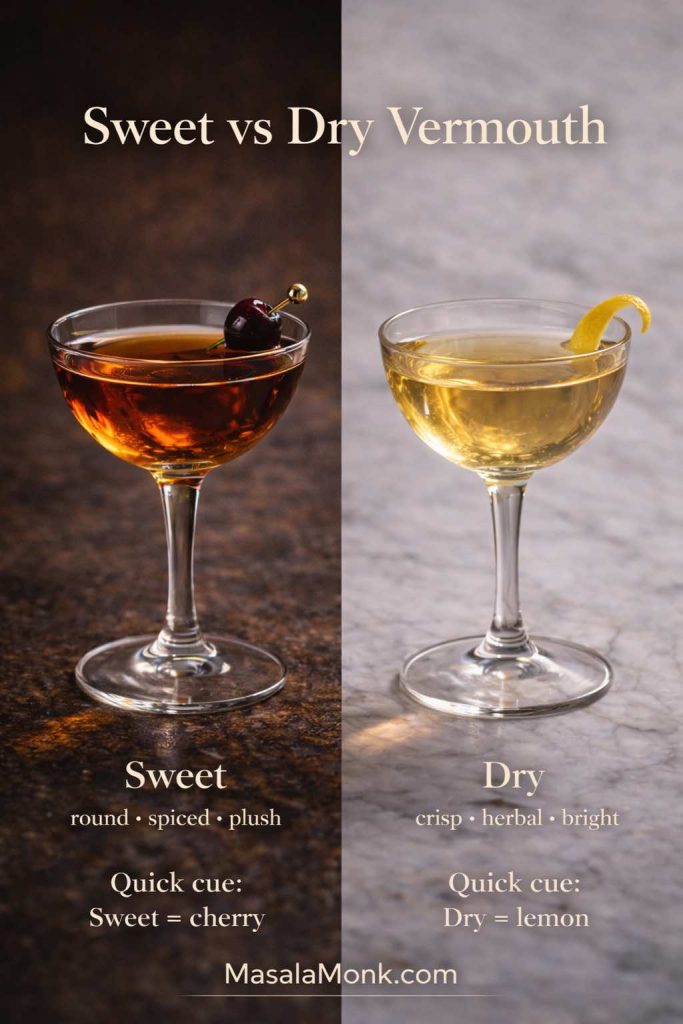
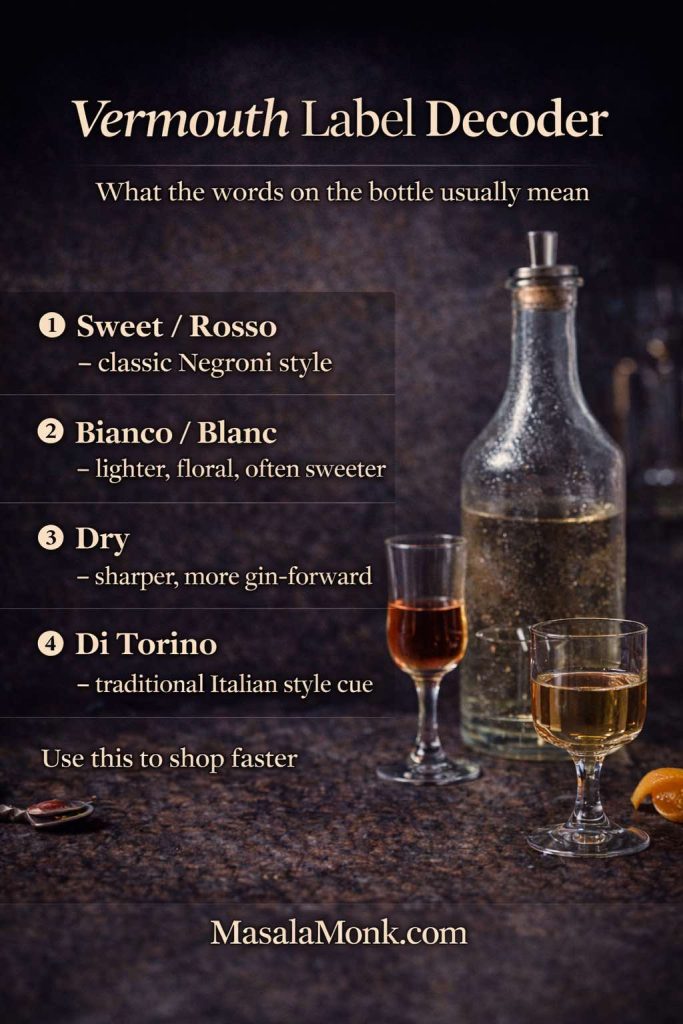
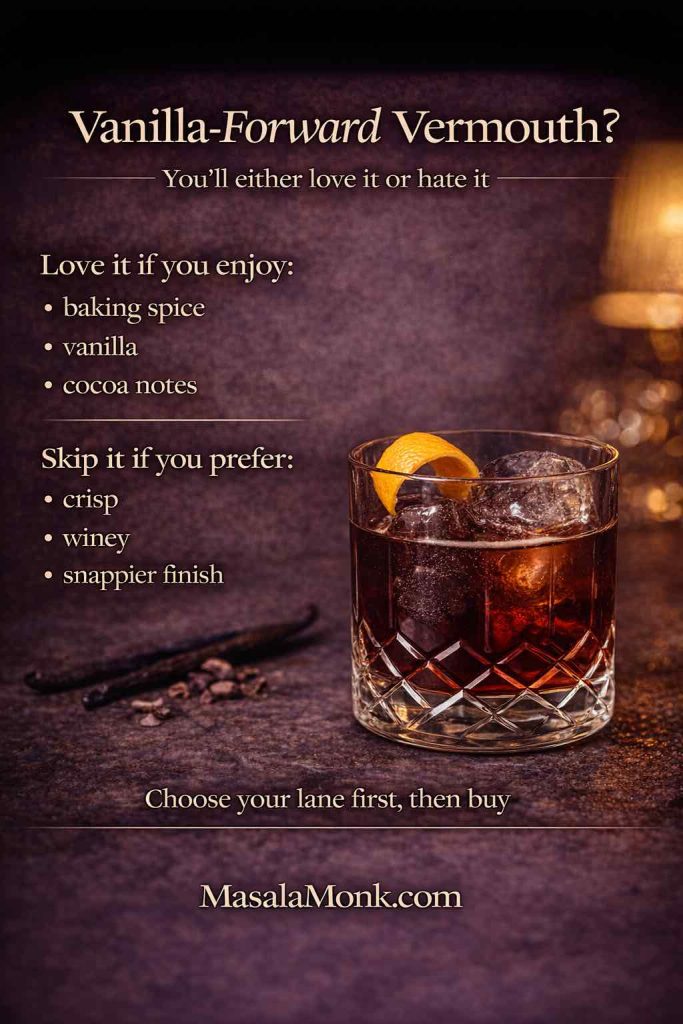
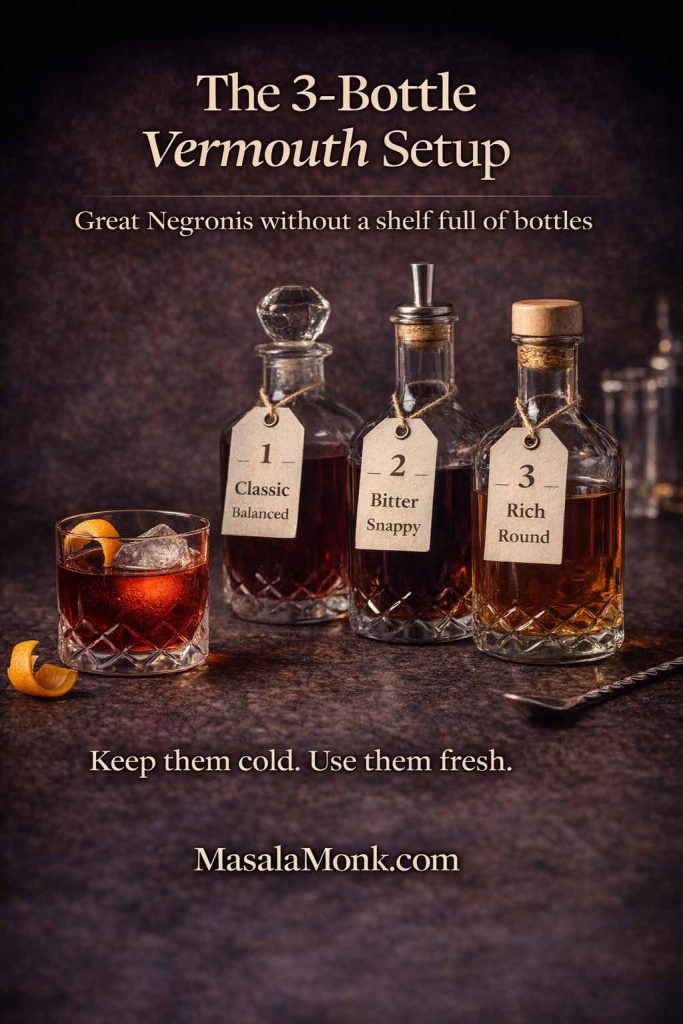
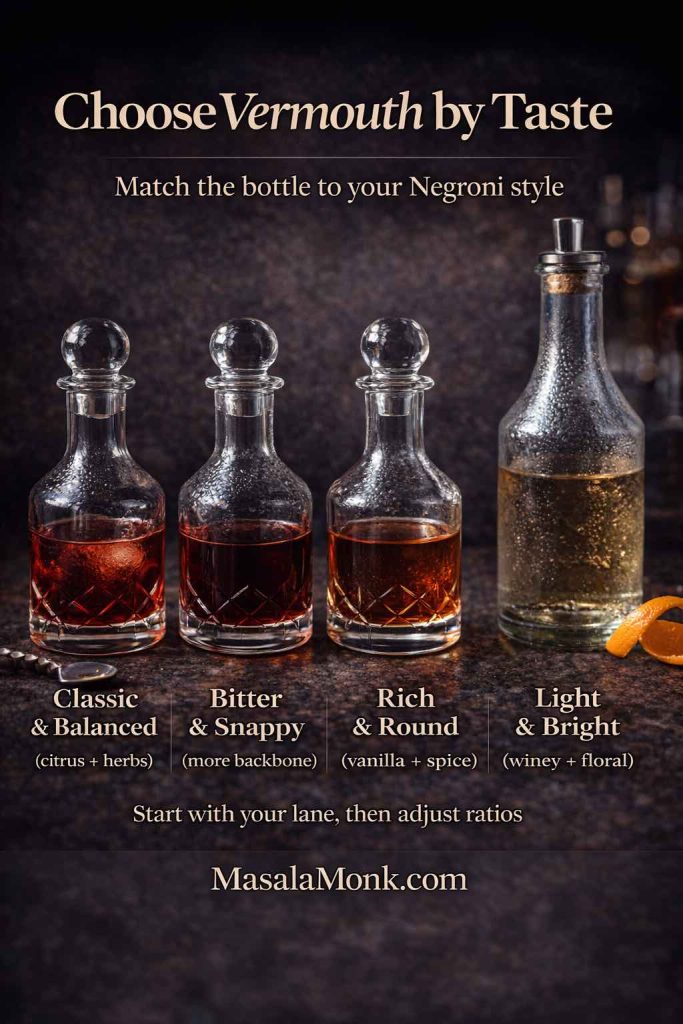
A classic Manhattan uses sweet red vermouth (often called rosso). When people talk about the best vermouth for Manhattan or the best manhattan vermouth, they’re usually describing a profile preference.
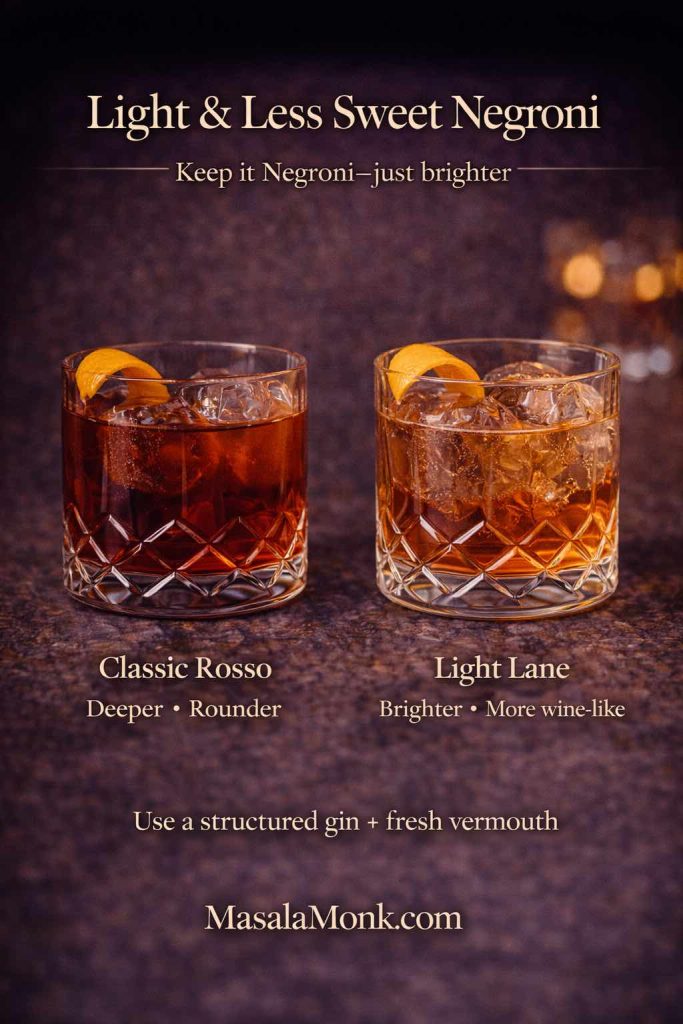
Broadly speaking, sweet vermouth tends to lean two ways:
- Richer, darker profiles with warm spice and deeper sweetness.
- Brighter profiles that feel a bit lighter and more floral, with a cleaner edge.
Neither is universally better. Instead, match the vermouth style to your whiskey and your preferred finish:
- Rye can carry richer vermouth without losing definition.
- Bourbon sometimes benefits from a brighter vermouth style to keep the drink from feeling too lush.
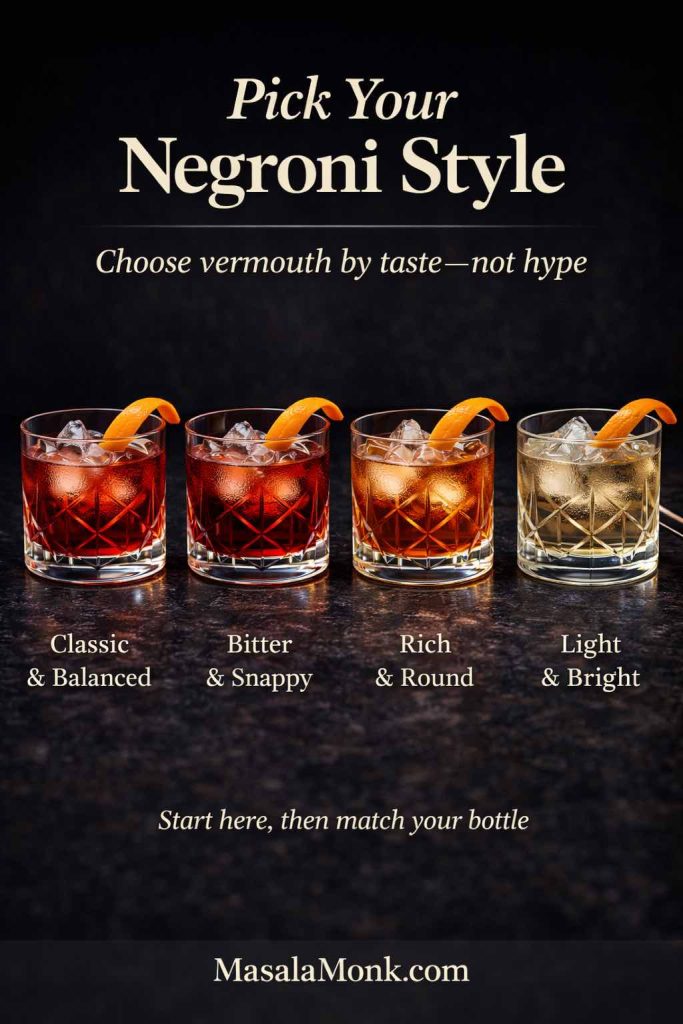
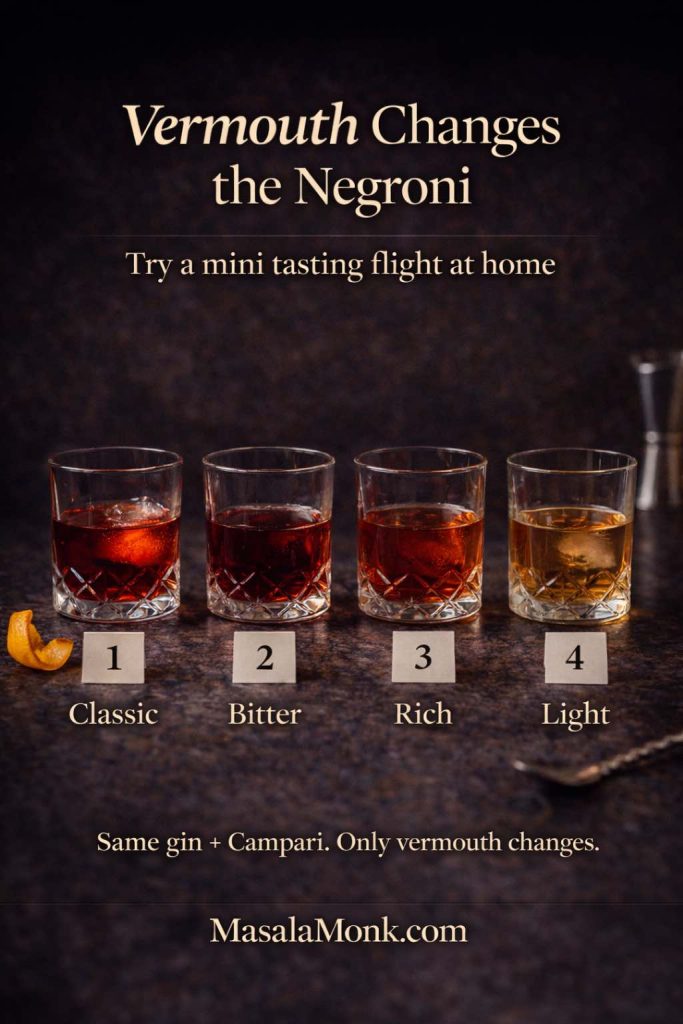
If you want a handy palate trainer for vermouth styles, our best vermouth for a Negroni guide helps you notice sweetness, bitterness, and herbal intensity—exactly the same levers you’re balancing in a Manhattan.
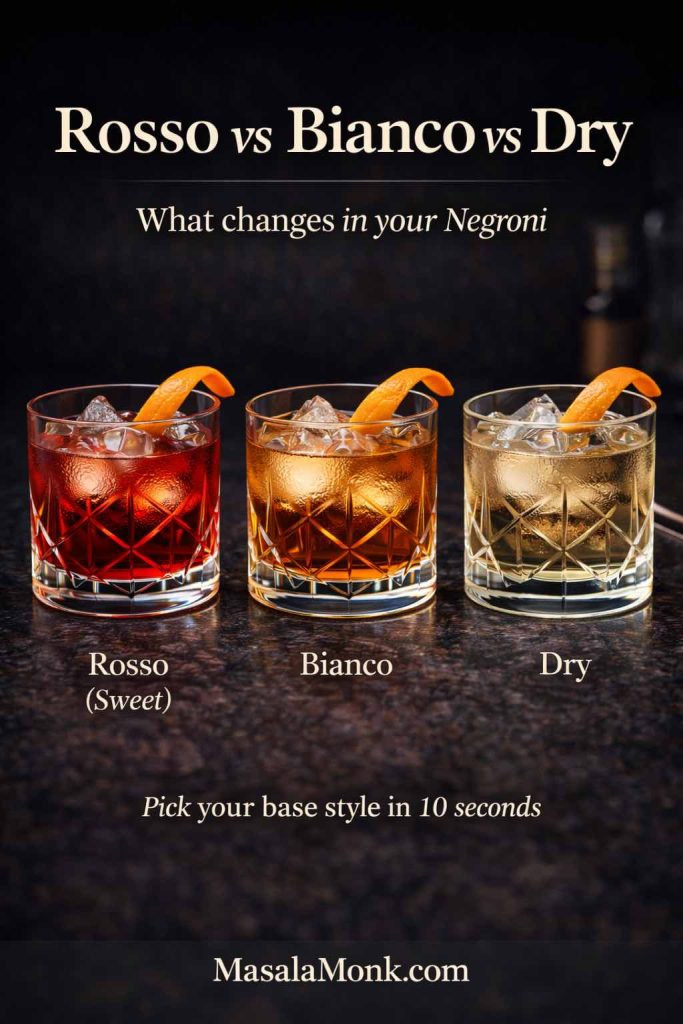
White vermouth Manhattan
A white vermouth Manhattan (or a white Manhattan recipe) is generally a modern riff using a lighter vermouth style. It can be delicious if you want something less dark-fruit-forward, though it won’t taste like the classic Manhattan most people expect.
Also Read: Classic Rum Punch + 9 Recipes (Pitcher & Party-Friendly)
Bitters and Garnish: The Details That Make It Taste Like a Manhattan
Bitters: definition in two dashes
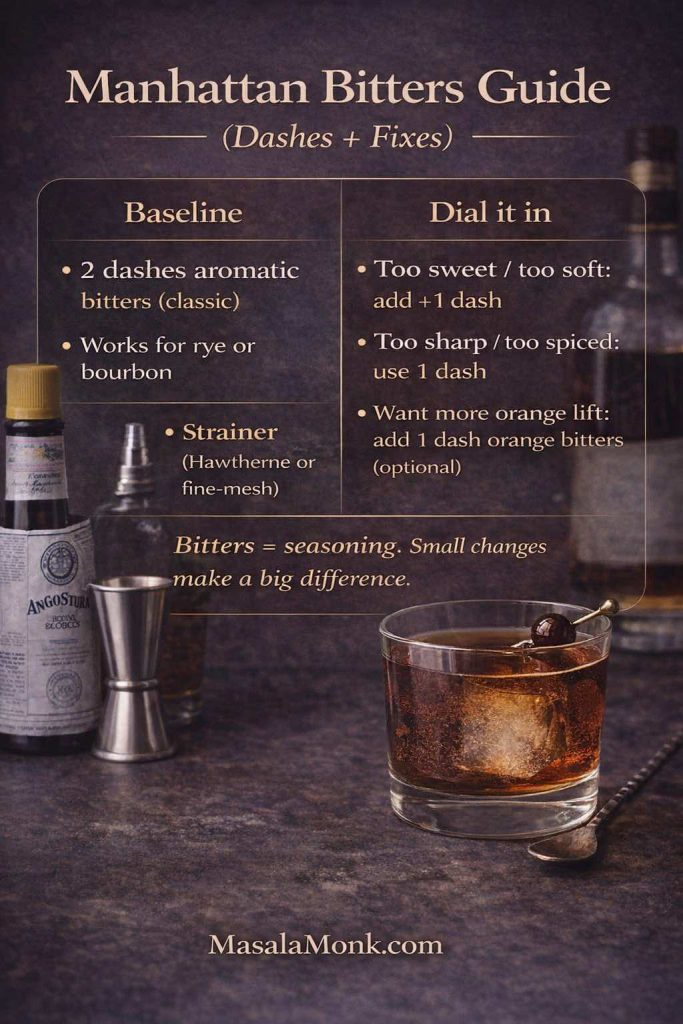
Two dashes of aromatic bitters is the classic baseline. From there, minor adjustments go a long way:
- If your Manhattan tastes too sweet or too soft, add one extra dash.
- If it tastes overly sharp or too spiced, reduce by one dash.
Bitters act like seasoning. A little makes everything taste more complete.
A Manhattan recipe without bitters is possible, yet it usually tastes flatter. If you’re out of bitters, you’ll get a better drink by tightening the vermouth slightly and using an orange twist to lift the aroma.
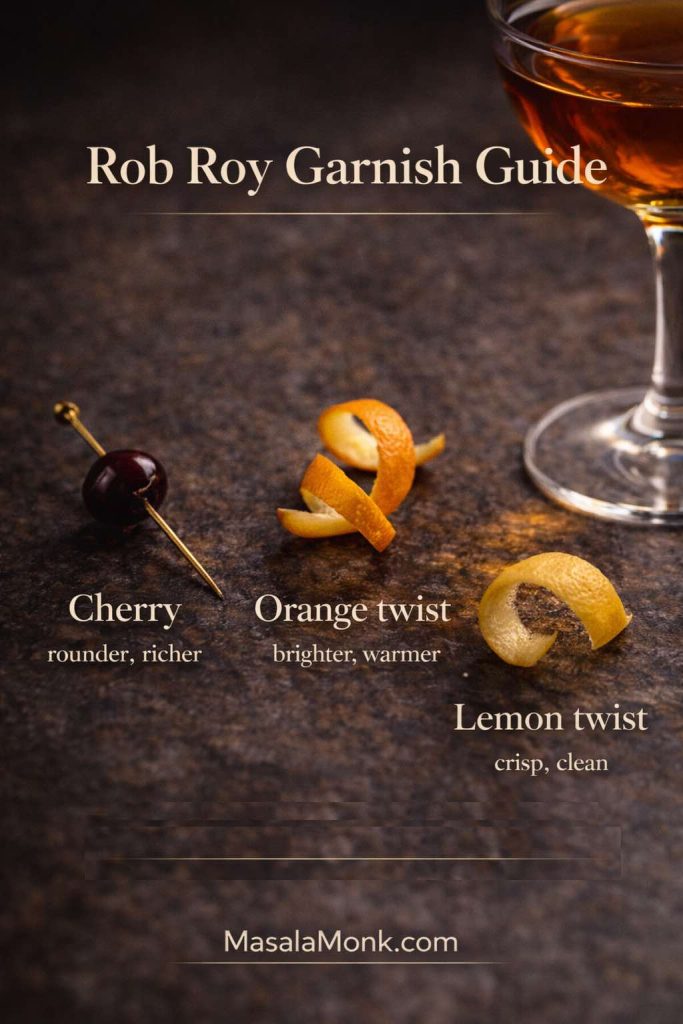
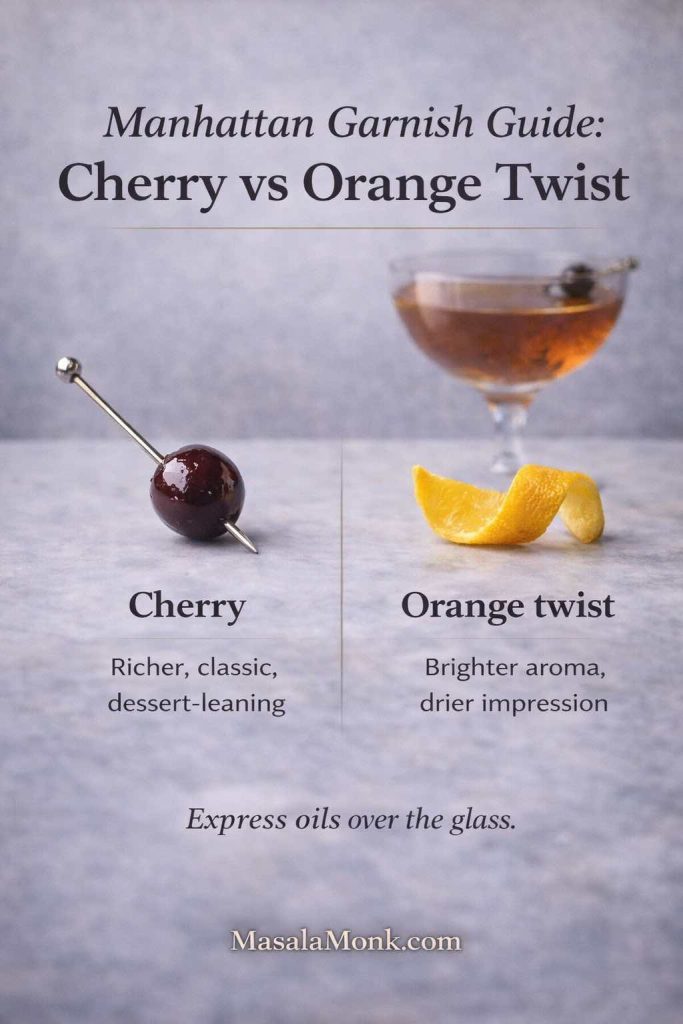
Manhattan cocktail standard garnish: cherry vs orange twist
A Manhattan’s garnish matters because it shapes what you smell. Those aromatics become part of the drink.
- A cherry leans rich and classic. It reinforces dark-fruit notes, especially in bourbon Manhattans.
- An orange twist adds brightness and often makes the drink feel drier in impression.
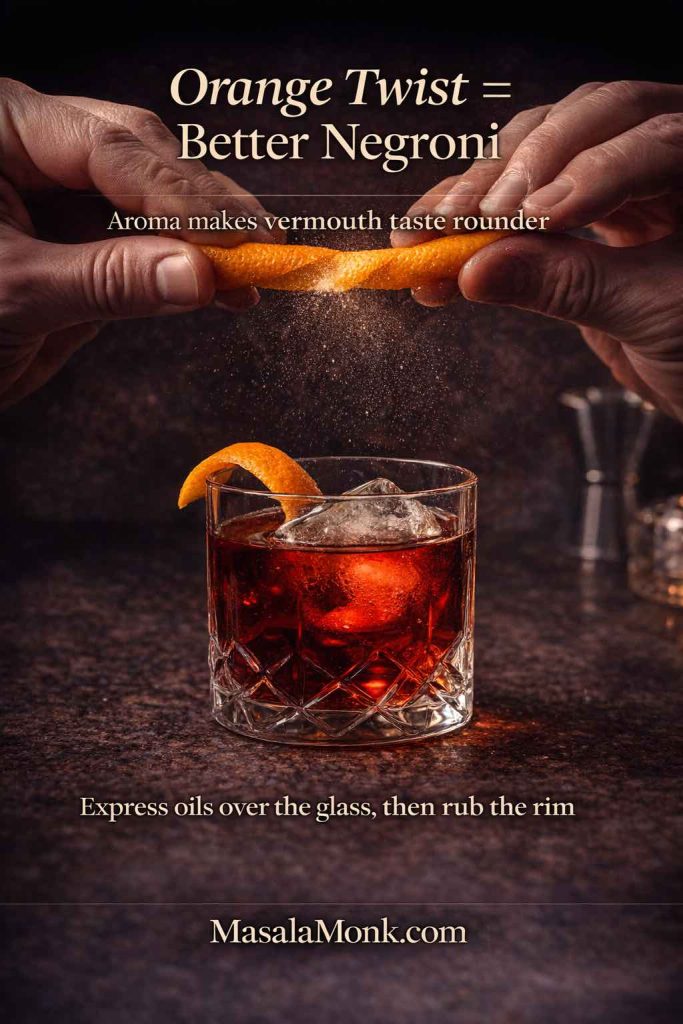
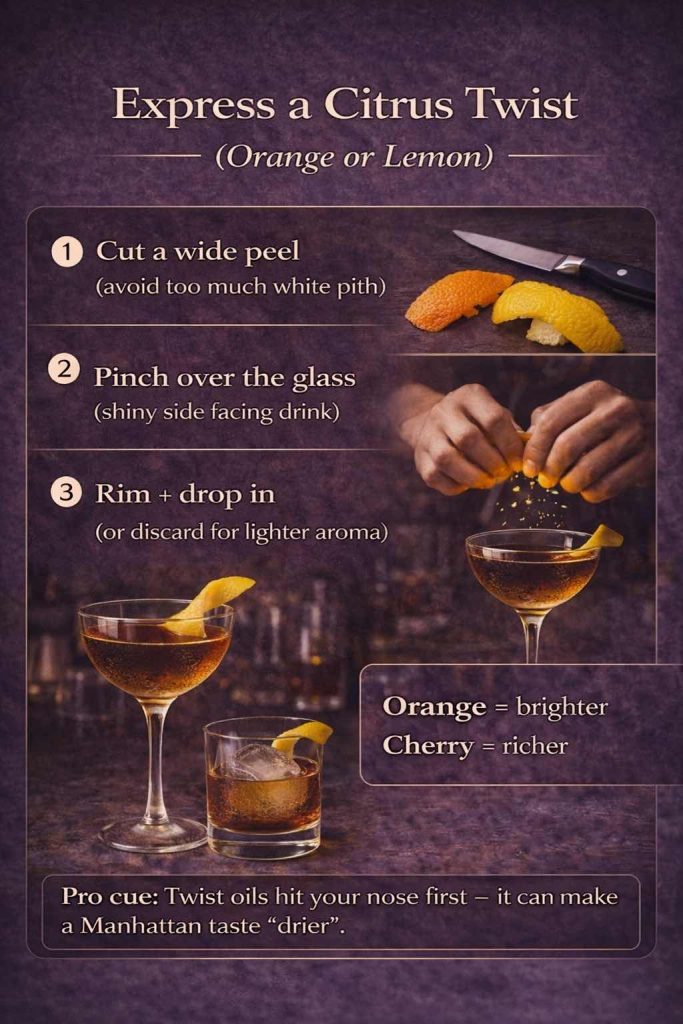
To use a twist well, express the peel over the drink so the oils mist the surface, then drop it in.
You’ll see “manhattan maraschino cherry” mentioned often. In practice, what matters is flavor: a cherry that tastes like fruit rather than candy will keep the cocktail from tilting too sweet.
Also Read: 7 Pizza Sauce Recipes | Marinara, White Garlic, Alfredo, Buffalo, BBQ, Vodka & Ranch
Manhattan Cocktail Recipe: Choosing Whiskey (Rye, Bourbon, Scotch, and More)
The Manhattan doesn’t hide the base spirit. That’s why the questions never end: best whiskey for Manhattan, best rye whiskey for Manhattans, good bourbon for Manhattan, and so on. A practical rule works well: use a whiskey you’d happily sip neat.
Rye Manhattan recipe: crisp, spicy, classic
Rye tends to bring peppery spice and a drier impression. It often makes the Manhattan feel structured and “classic bar.” If you want a tidy finish, rye is usually the most Manhattan-shaped choice.
A few rye bottles that frequently show up in home bars and conversation include Sazerac Rye and Rittenhouse, both of which can make an excellent Manhattan. If you’re pouring a higher-proof rye, simply stir a touch longer so the final texture becomes silkier.
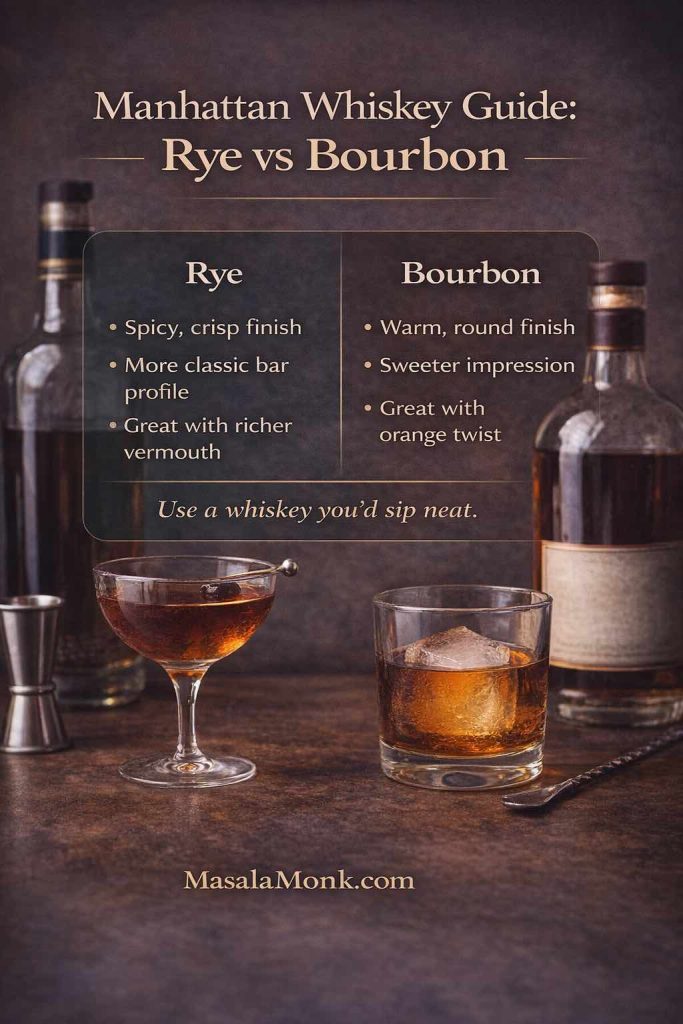
Manhattan recipe bourbon: warm, round, crowd-friendly
Bourbon brings vanilla and caramel notes that can make the cocktail feel plush. This is why bourbon Manhattans often feel welcoming for people new to stirred whiskey cocktails.
Still, bourbon can magnify vermouth sweetness. When a bourbon Manhattan starts feeling too rich, a small change usually fixes it: reduce vermouth to 3/4 oz, choose an orange twist, or add one extra dash of bitters.
Bottles that people commonly reach for include Elijah Craig, Four Roses, Woodford, and Maker’s Mark. You don’t need a trophy bottle—consistency matters more than prestige.
A note on “high end Manhattan cocktail”
A Manhattan can taste premium without being complicated. Fresh vermouth, a chilled glass, proper stirring, and a garnish that matches the drink do more than an expensive bottle alone. Once those basics are dialed in, even mid-range whiskey can produce a Manhattan that feels “high end.”
Also Read: Vodka Pasta (Penne alla Vodka) + Spicy Rigatoni, Chicken, and Gigi Recipes
Manhattan Cocktail Recipe Variations (7 Recipe Cards)
These seven variations keep the Manhattan’s elegant structure while shifting one meaningful lever—vermouth structure, base spirit, bittersweet profile, serve style, or format. Each recipe card is written to be repeatable, not gimmicky.
Classic Manhattan Cocktail Recipe (Rye or Bourbon)
Ingredients (1 drink)
- 2 oz (60 ml) rye whiskey (or bourbon)
- 1 oz (30 ml) sweet vermouth
- 2 dashes aromatic bitters
- Garnish: cherry or orange twist
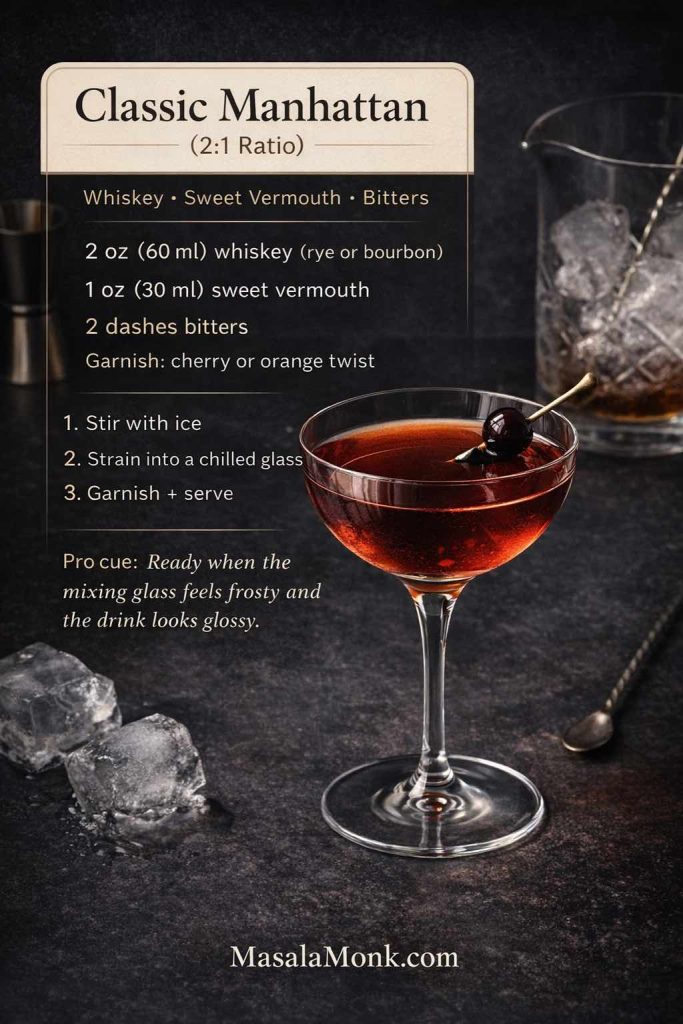
Method
Stir with ice until very cold and integrated. Strain into a chilled glass. Garnish.
How it tastes
Rich, aromatic, and structured. Rye reads crisp and spicy; bourbon reads round and warm.
If you want a reference
Compare your build with the IBA Manhattan or Liquor.com’s Manhattan recipe.
A few bottle examples that work well
- A Bulleit Manhattan tends to read bold and spicy; the classic ratio usually holds up well.
- A Basil Hayden Manhattan can feel lighter; a slightly drier pour (3/4 oz vermouth) keeps the whiskey present.
- A Maker’s Mark Manhattan often feels plush; an orange twist can lift the finish.
Also Read: How to Make Eggless Mayo at Home (Egg Free Mayonnaise Recipe)
Manhattan on the Rocks Cocktail Recipe
Ingredients (1 drink)
- 2 oz (60 ml) whiskey
- 1 oz (30 ml) sweet vermouth
- 2 dashes bitters
- Garnish: cherry or orange twist
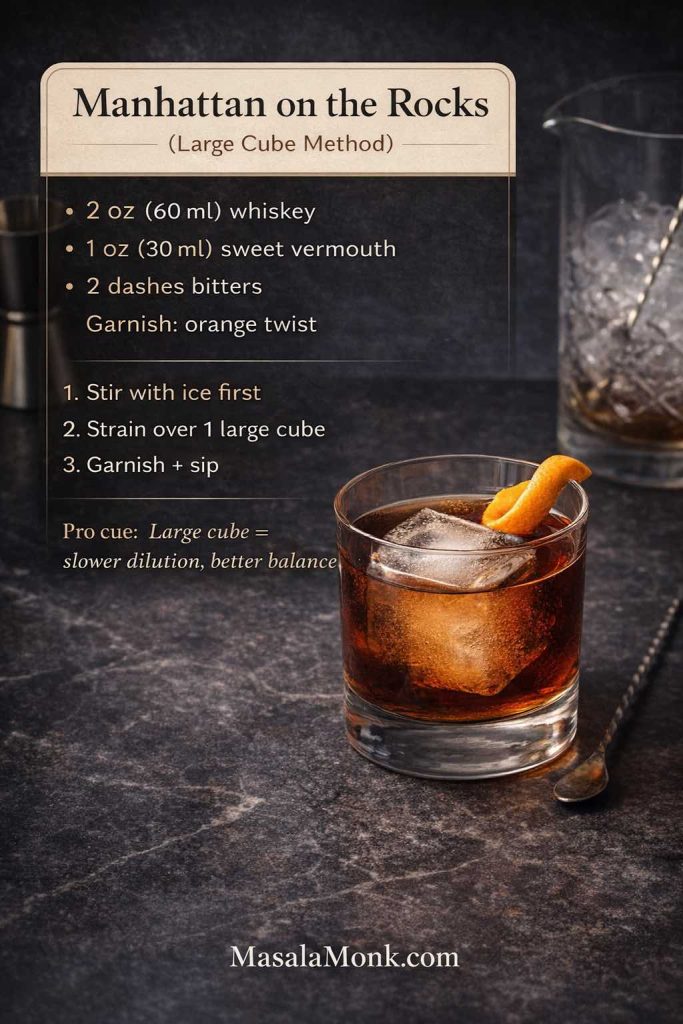
Method (best practice)
Stir the cocktail with ice in a mixing glass first. Then strain over one large cube in a rocks glass. Garnish.
Rocks-friendly ratio (optional)
For a drink that holds its shape longer as ice melts:
- 2.5 oz (75 ml) whiskey
- 3/4 oz (22.5 ml) sweet vermouth
- 2 dashes bitters
How it tastes
Relaxed and gradual. The first sip is balanced, and the drink softens slowly over time.
When it shines
This is a great choice when you want a longer drink, or when you’re serving guests who like whiskey but prefer a gentler pace.
Also Read: Oat Pancakes Recipe (Healthy Oatmeal Pancakes)
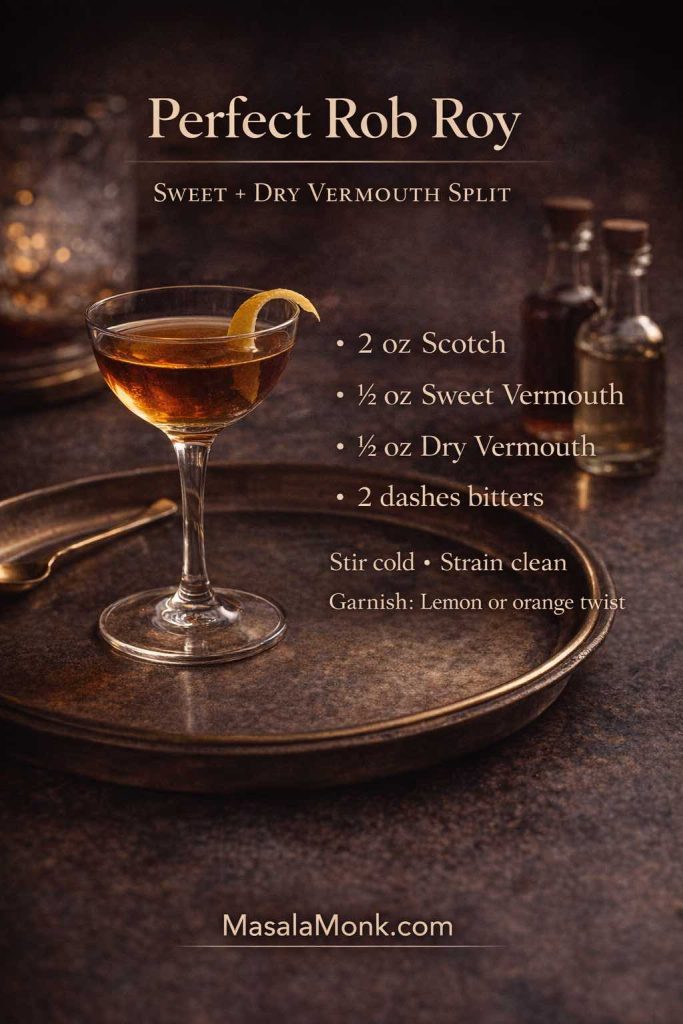
Perfect Manhattan Cocktail Recipe (oz + ml)
Ingredients (oz)
- 2 oz whiskey (rye or bourbon)
- 1/2 oz sweet vermouth
- 1/2 oz dry vermouth
- 2 dashes bitters
- Garnish: cherry or citrus twist
Ingredients (ml)
- 60 ml whiskey
- 15 ml sweet vermouth
- 15 ml dry vermouth
- 2 dashes bitters
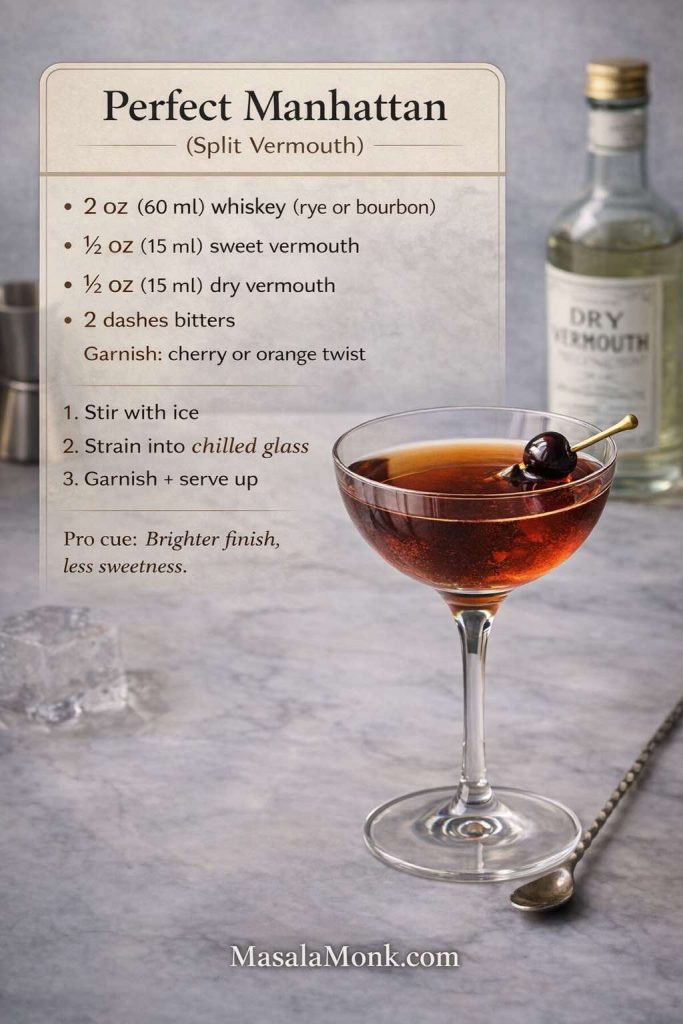
Method
Stir with ice, strain into a chilled glass, garnish.
How it tastes
Brighter and cleaner than the classic, with a slightly crisper finish.
References
See Liquor.com’s Perfect Manhattan and Difford’s Perfect Manhattan.
When it’s the right call
Choose it when you want vermouth aroma without leaning too sweet, or when bourbon is feeling a bit too plush in the classic ratio.
Also Read: Blueberry Pancakes (6 Recipes) + Homemade Pancake Mix
Recipe for Black Manhattan Cocktail (Black Manhattan Cocktail Recipe)
Ingredients (1 drink)
- 2 oz (60 ml) rye whiskey
- 1 oz (30 ml) amaro (often Averna)
- 1 dash aromatic bitters
- Optional: 1 dash orange bitters
- Garnish: cherry
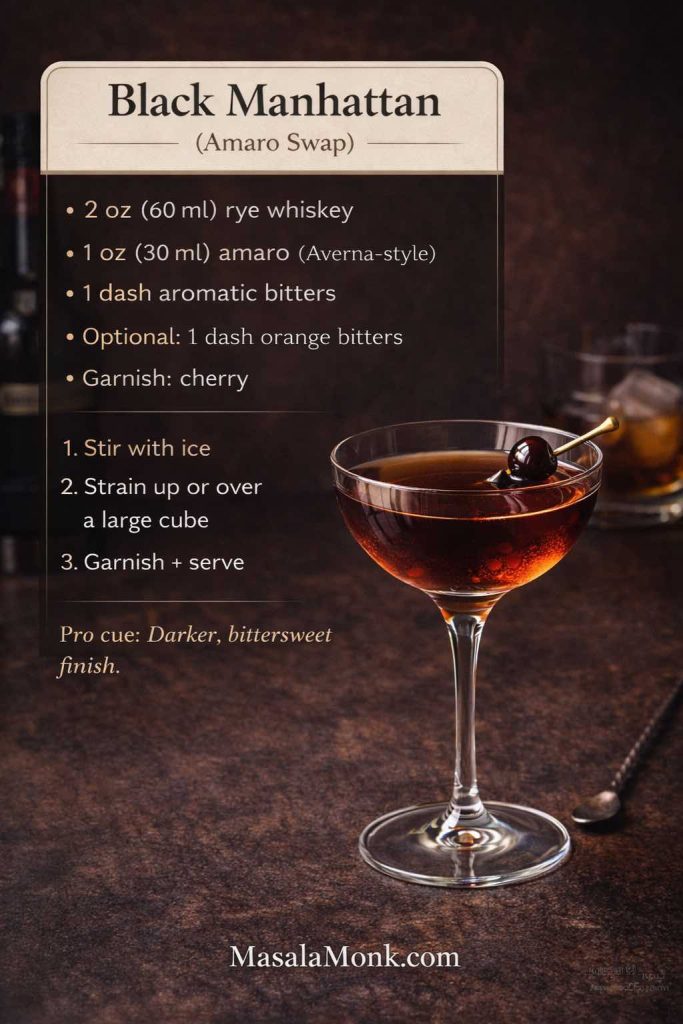
Method
Stir with ice, strain into a chilled glass (or over a large cube), garnish.
How it tastes
Darker and more bittersweet than the classic, with an herbal depth that feels especially good after dinner.
Reference
For a clear published build, see Food & Wine’s Black Manhattan.
Where to go next
If you enjoy bittersweet amaro cocktails, our Paper Plane cocktail recipe is a great follow-up—still amaro-forward, just brighter and more playful.
Also Read: Chicken Salad Sandwich: Classic Base + 10 Global Variations
Dirty Manhattan Cocktail Recipe (Savory Variation)
Ingredients (1 drink)
- 2 oz (60 ml) rye or bourbon
- 3/4 oz (22.5 ml) dry vermouth
- 2 dashes aromatic bitters
- 1 barspoon to 1/4 oz (5–7 ml) olive brine, to taste
- Garnish: green olive
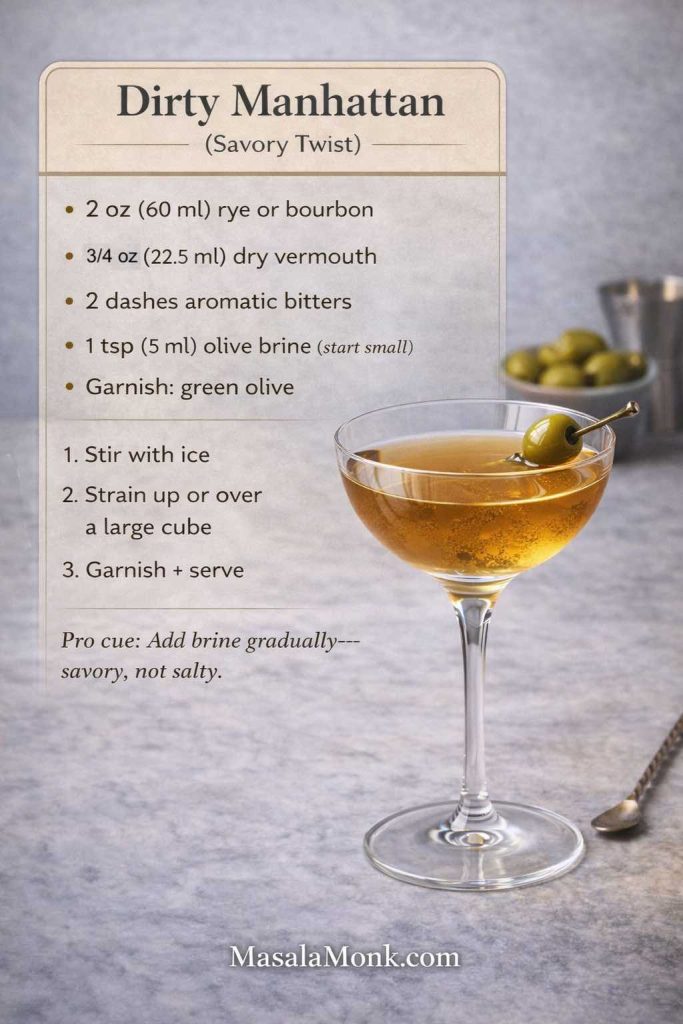
Method
Stir with ice, strain up or over one large cube, garnish.
How it tastes
Savory, crisp, and surprisingly elegant when the brine is kept in check.
How to dial it in
Start with a small amount of brine. If you want more savory character, increase brine slightly next time rather than dumping more in mid-drink.
Also Read: How to Cook Perfect Rice Every Time (Recipe)
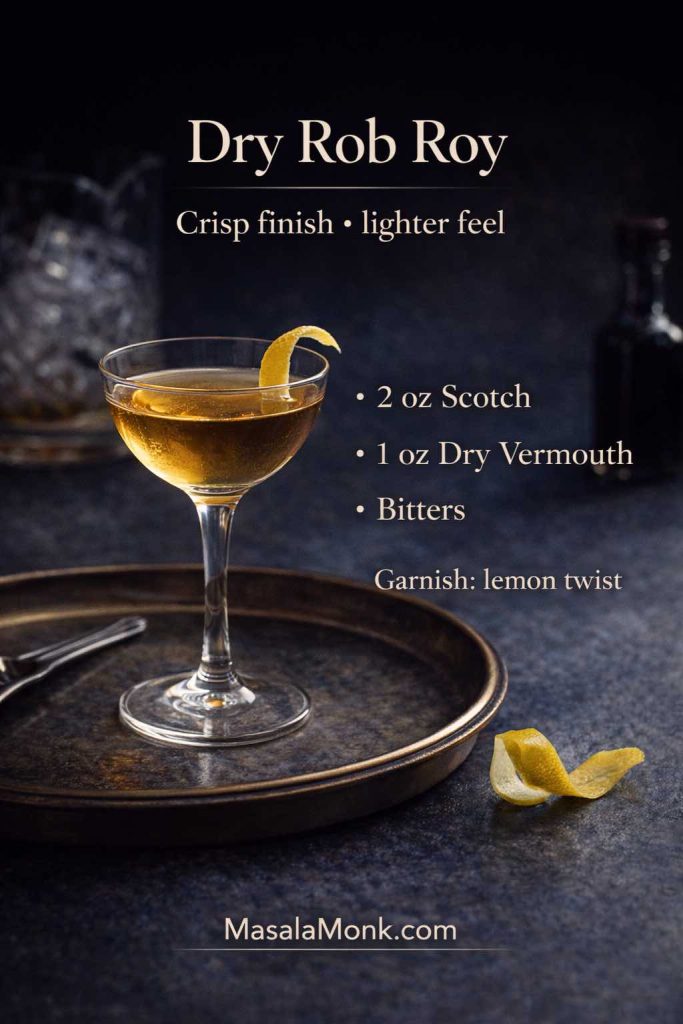
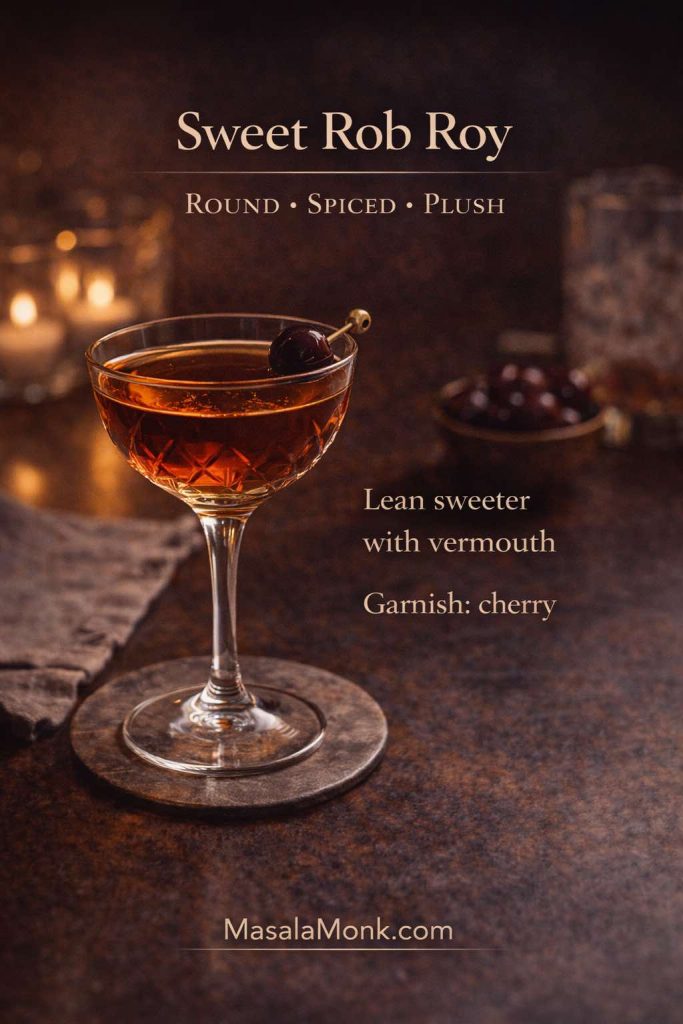
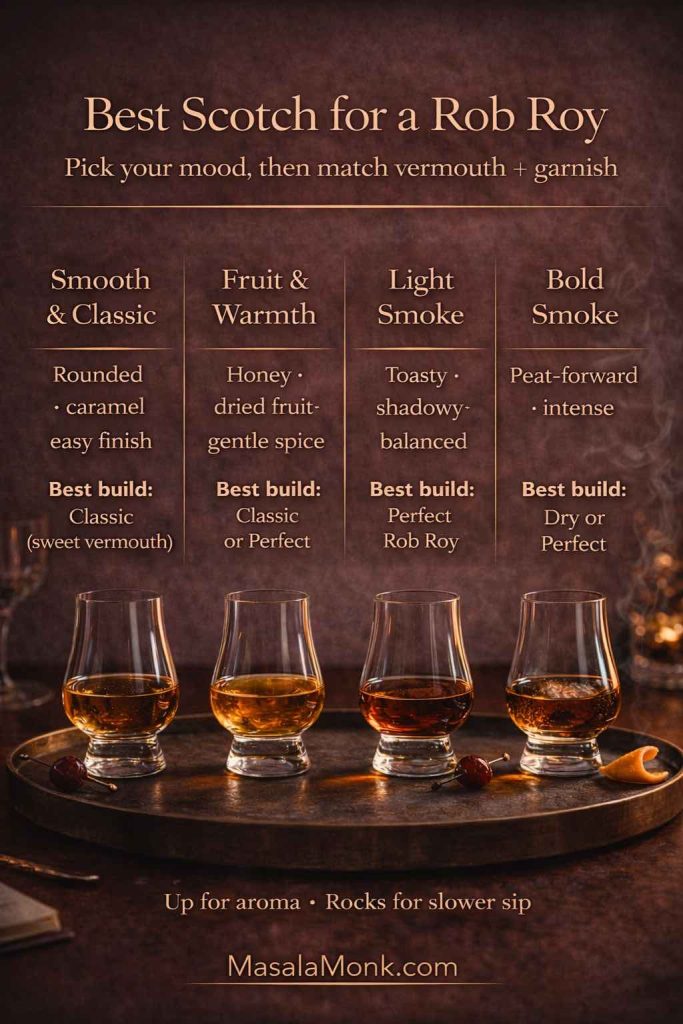
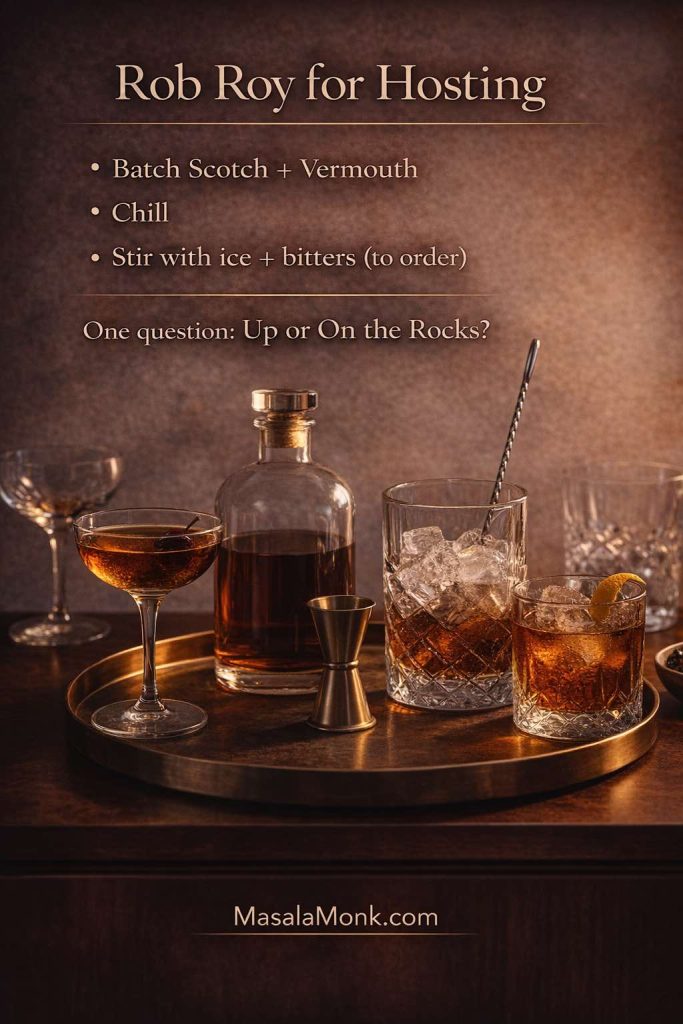
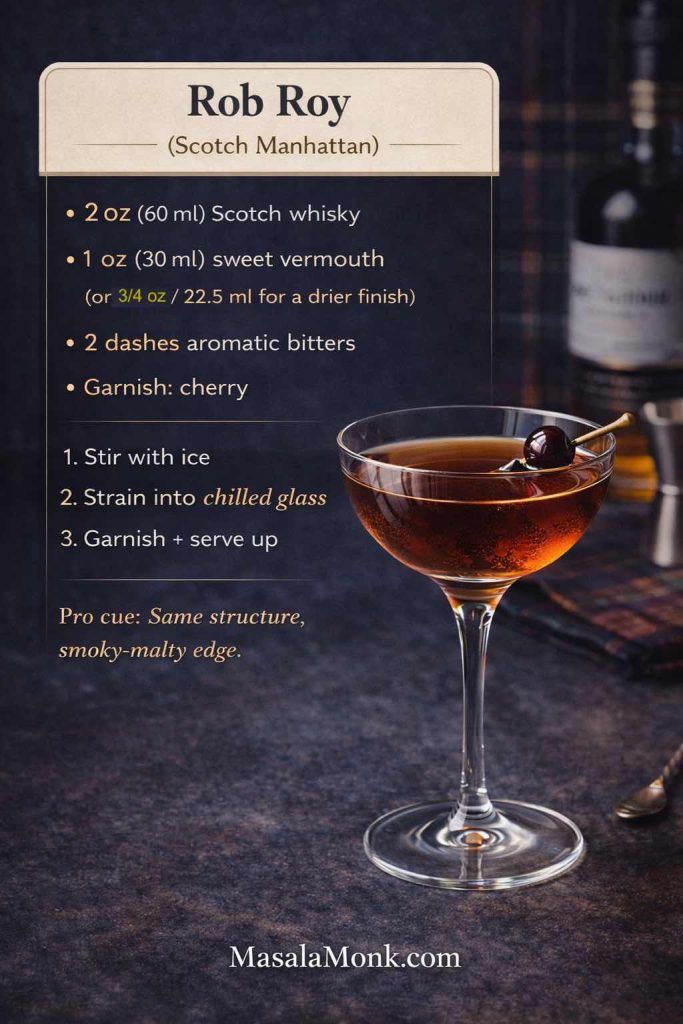
Rob Roy Recipe (Scotch Manhattan Cocktail)
Ingredients (1 drink)
- 2 oz (60 ml) Scotch
- 3/4–1 oz (22.5–30 ml) sweet vermouth
- 2–3 dashes aromatic bitters
- Garnish: cherry
Method
Stir with ice, strain into a chilled glass, garnish.
How it tastes
Same elegant structure, different personality. Depending on the Scotch, it can read malty, honeyed, lightly smoky, or subtly savory.
References
For a published baseline, see Liquor.com’s Rob Roy. For a deeper internal companion with more context, use our Rob Roy drink recipe.
Also Read: How to Cook Bacon in the Oven (Crispy, No-Mess, Crowd-Ready Recipe)
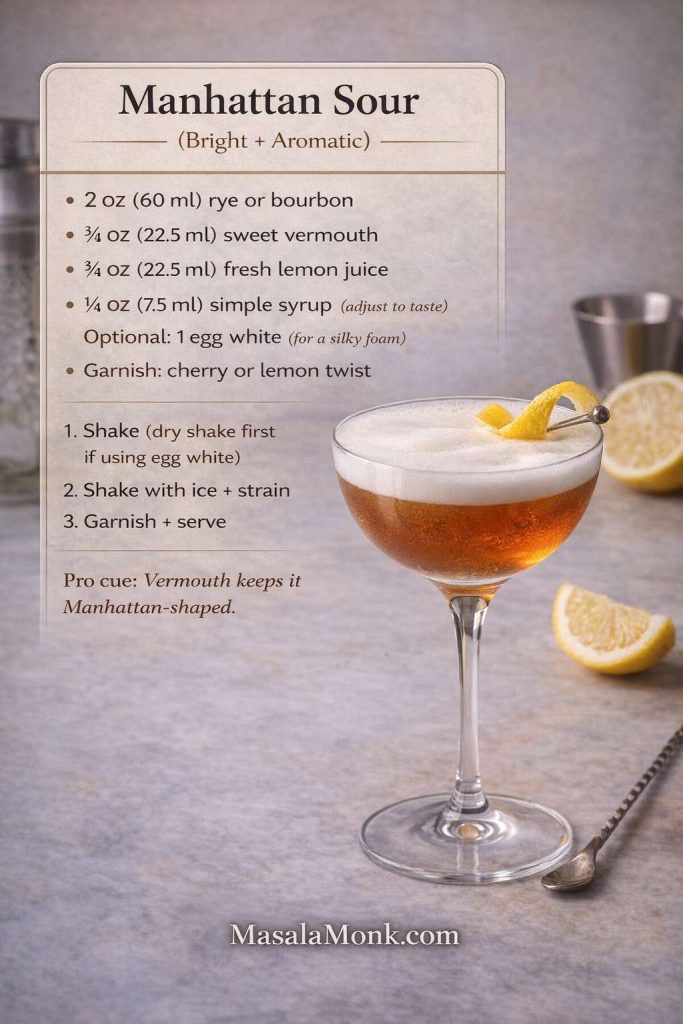
Manhattan Sour Cocktail Recipe
Ingredients (1 drink)
- 2 oz (60 ml) rye or bourbon
- 3/4 oz (22.5 ml) sweet vermouth
- 3/4 oz (22.5 ml) fresh lemon juice
- 1/4–1/2 oz (7.5–15 ml) simple syrup, to taste
- Optional: 1 egg white (for a silky foam)
- Garnish: cherry or lemon twist
Method
Shake with ice (dry shake first if using egg white), then strain up or over fresh ice.
How it tastes
Bright and aromatic, with Manhattan depth still present beneath the citrus.
A natural companion
If you love this direction, our Whiskey Sour cocktail recipe is the classic template worth mastering.
Also Read: Double Chocolate Chip Cookies – Easy Recipe with 7 Variations
Manhattan Cocktail Recipe for a Crowd (Batch Manhattan Recipe)
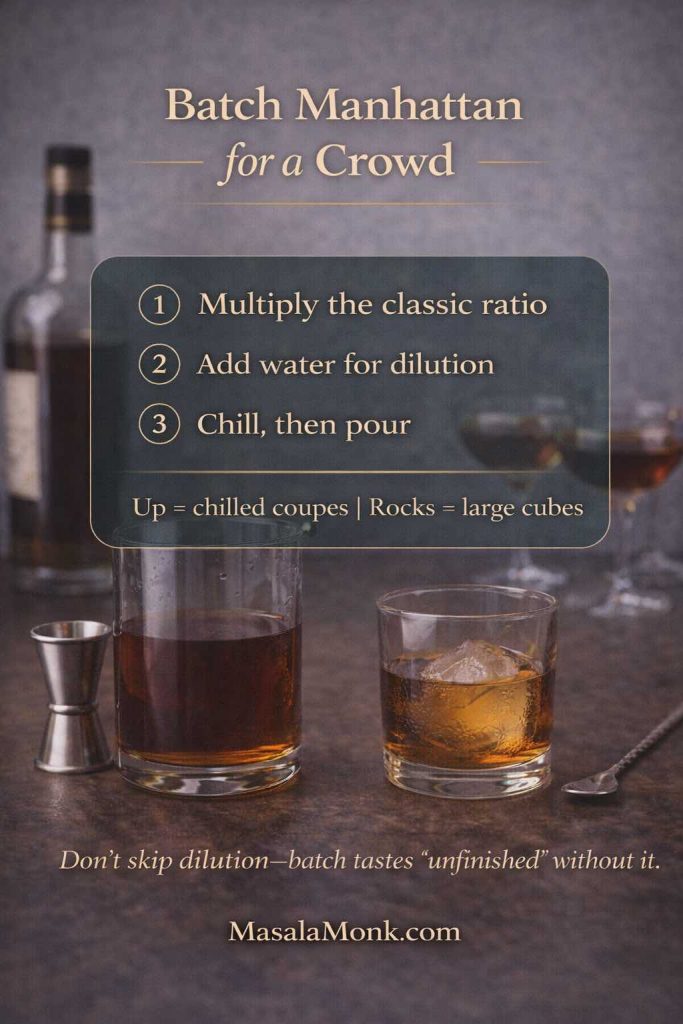
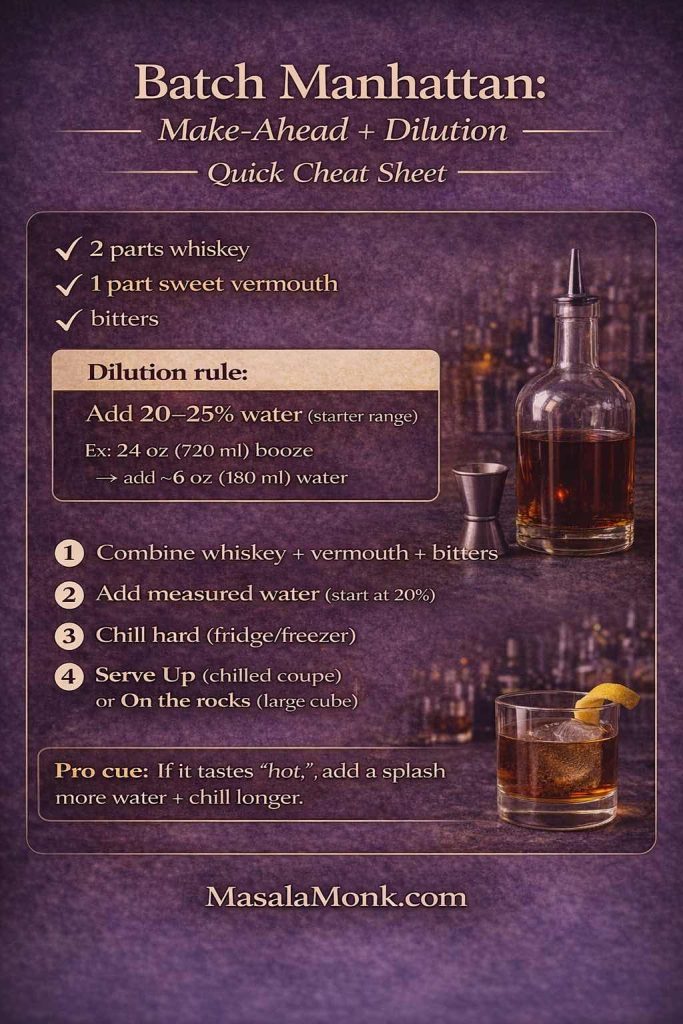
Batching a Manhattan is one of the best hosting moves you can make. Because there’s no citrus, you can prepare it ahead of time and serve quickly. The one concept to respect is dilution: stirring adds water, so batching needs water too.
For a trustworthy method, see Serious Eats’ big-batch Manhattan. For broader hosting technique, their guide on how to batch cocktails is also excellent.
Batch Manhattan recipe: a practical approach
Start with the classic structure:
- 2 parts whiskey
- 1 part sweet vermouth
- bitters to taste
Then account for dilution and chill thoroughly.
Rather than forcing a single “perfect” water number, it’s often easier to add water gradually, tasting as you go, until it drinks like a properly stirred Manhattan. Once it tastes right, chill it hard.
Manhattan mix recipe for 2
For two cocktails, a simple approach is to double the standard build, stir with plenty of ice, then strain into two chilled glasses:
- 4 oz (120 ml) whiskey
- 2 oz (60 ml) sweet vermouth
- 4–6 dashes bitters
From there, garnish each glass individually.
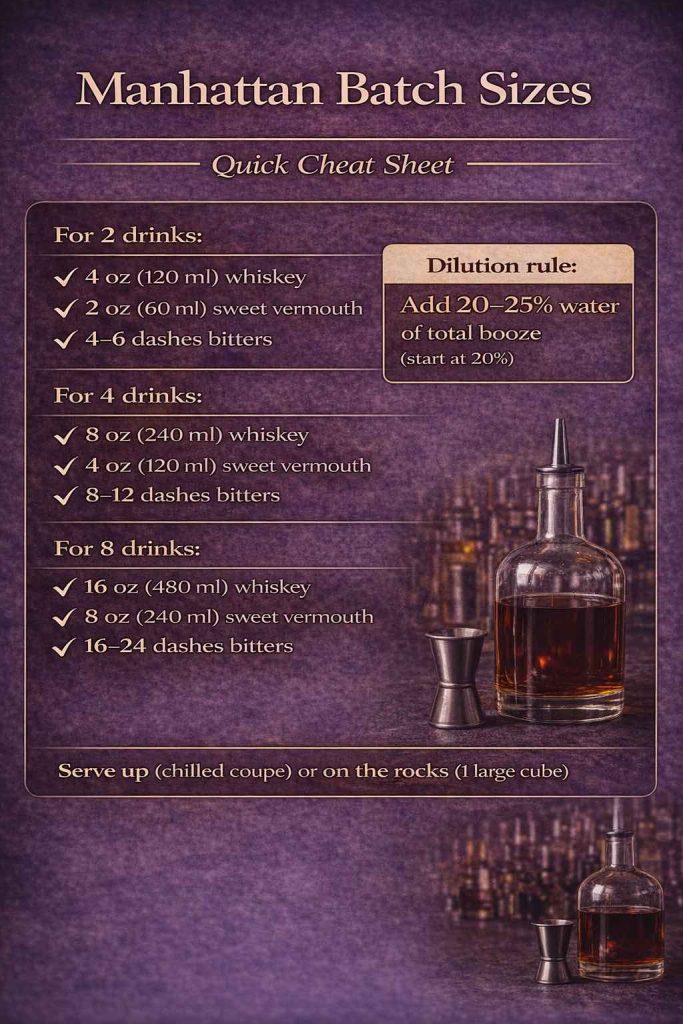
Manhattan beverage recipe for 8
For a crowd-friendly batch:
- 16 oz (480 ml) whiskey
- 8 oz (240 ml) sweet vermouth
- 16 dashes bitters
Once diluted to taste and chilled, it’s easy to pour.
Bottled Manhattan recipe notes
A bottled Manhattan is simply a chilled batched Manhattan stored cold and ready to pour. Keep it sealed and refrigerated. When serving, garnish per drink so it still feels fresh.
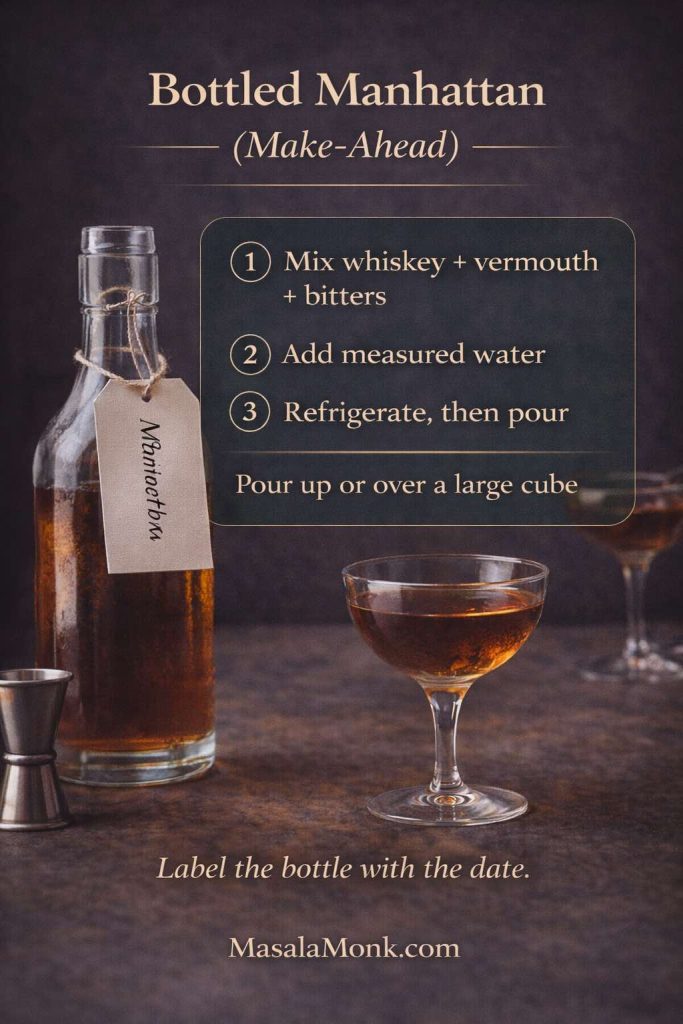
For parties, Manhattan on the rocks service is especially forgiving. Pour the batched cocktail over a large cube, garnish, and let the drink open slowly.
Also Read: Katsu Curry Rice (Japanese Recipe, with Chicken Cutlet)
What to Serve with a Manhattan (Simple Pairings That Work)
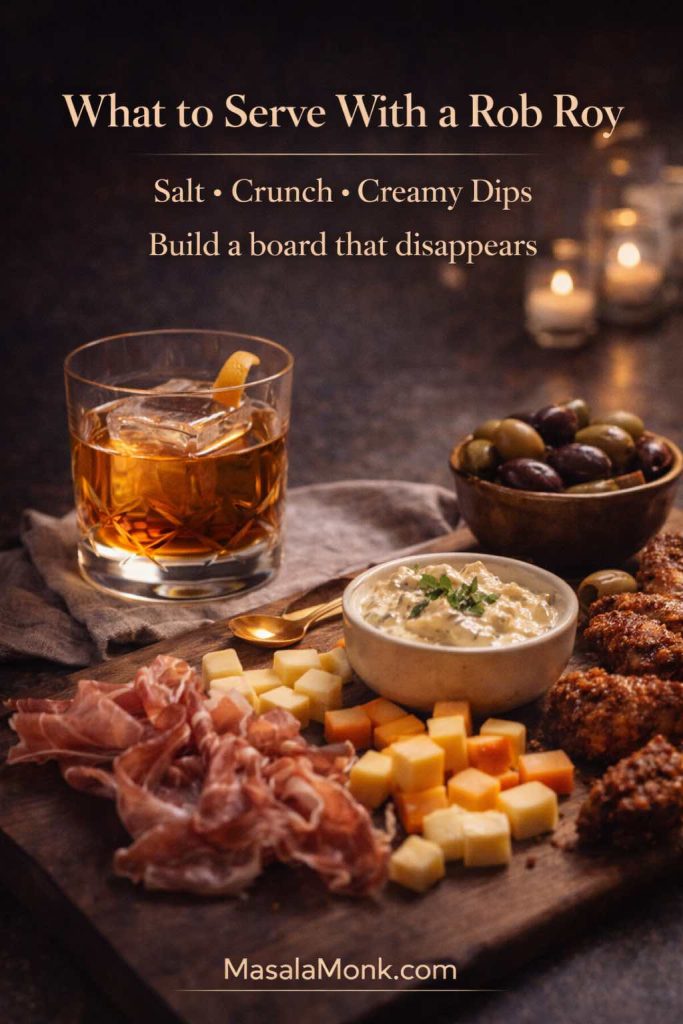
A Manhattan is aromatic, whiskey-forward, and slightly sweet. Because of that, it loves salty, creamy, crunchy, spicy, and tangy foods—anything that makes the next sip feel cleaner.
For an effortless spread, the 3-3-3-3 charcuterie board rule gives you a structure that works even when you’re improvising.
When you want a bold crowd-pleaser, buffalo chicken dip pairs beautifully with rye. If you’d prefer a calmer option with multiple directions, these spinach dip recipes cover classic and more adventurous variations.
For game nights and louder gatherings, air fryer chicken wings plus a tangy blue cheese dip for wings creates a perfect salty-spicy contrast.
Meanwhile, if you want something universally comforting, these potato appetizer ideas scale easily. For a spicy bite that’s especially good alongside bourbon Manhattans, baked jalapeño poppers are hard to beat.
Dry Manhattan Cocktail Recipe and Other Less-Sweet Directions
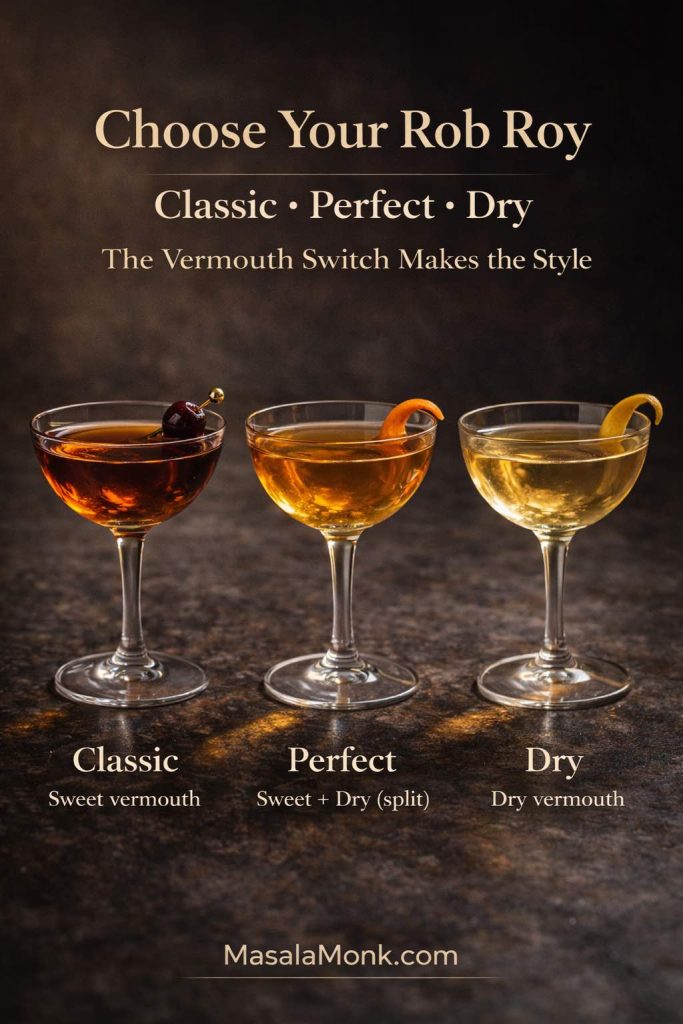
Sometimes you want the Manhattan structure but a cleaner finish. Two paths work well: the Perfect Manhattan (split vermouth) and the Dry Manhattan (mostly dry vermouth).
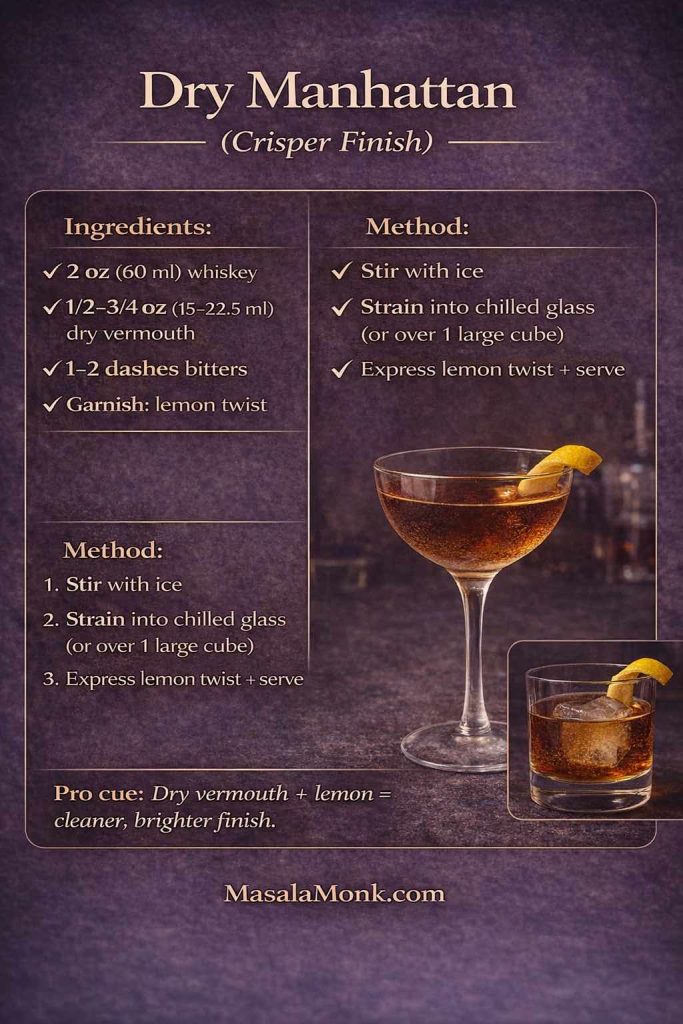
Dry Manhattan cocktail recipe (quick build)
- 2 oz (60 ml) whiskey
- 1/2–3/4 oz (15–22.5 ml) dry vermouth
- 1–2 dashes bitters
- Lemon twist
For a published baseline, Difford’s Dry Manhattan is a useful reference.
Dry Manhattan on the rocks
A dry Manhattan on the rocks can feel especially crisp because dilution softens the edges while dry vermouth keeps the finish clean. If you go this route, consider slightly increasing the whiskey so the structure holds as the ice melts.
Also Read: Pesto Recipe: Classic Basil Pesto Sauce & 10 Variations
Manhattan-Style Swaps That Still Taste Manhattan-Shaped
The Manhattan is a template. Once you understand the roles—spirit, vermouth, bitters, garnish—you can make small swaps that still feel coherent. The key is restraint: a Manhattan tolerates accents far better than it tolerates heavy-handed additions.
Cognac vermouth cocktail (Manhattan-style)
A cognac vermouth cocktail in Manhattan form is a gorgeous nightcap: rich, aromatic, and slightly more fruit-forward than whiskey.
Try:
- 2 oz cognac
- 1 oz sweet vermouth
- 1–2 dashes bitters
Stir, strain, garnish with an orange twist.
This direction also overlaps with brandy Manhattan on the rocks preferences—simply strain over a large cube instead of serving up.
Japanese Manhattan cocktail
Japanese whisky often reads clean and elegant in a Manhattan. Use the classic build, then choose an orange twist for lift. It’s a subtle change, yet the finish can feel especially polished.
Manhattan with cherry liqueur or maraschino liqueur
A tiny amount of cherry liqueur can be lovely. The operative word is tiny: a barspoon is often enough to deepen the fruit note without turning the drink into candy. It works particularly well with bourbon.
Orange Manhattan cocktail recipe (without losing the structure)
For an orange-leaning Manhattan, it’s usually better to use an orange twist and, if you have it, a small dash of orange bitters. If you still want a Manhattan recipe with Cointreau, keep it minimal—again, barspoon territory—so the Manhattan framework remains intact.
Manhattan apple drink (a simple accent)
An apple accent can feel seasonal without becoming a sugary liqueur drink. Keep the structure, then add a whisper of apple:
- Classic Manhattan build
- Plus a barspoon of apple brandy or apple liqueur
Stir, strain, garnish with orange.
Coffee Manhattan recipe (after-dinner direction)
A coffee note can be wonderful after dinner. Use a small accent (coffee liqueur or a coffee-amaro style ingredient if you have one), then keep the rest classic. In this case, a cherry garnish often fits better than orange.
Smoked Manhattan cocktail (method over gimmick)
A smoked Manhattan can be fantastic when the smoke is a brief aromatic layer rather than a full campfire. If you’re smoking the glass, keep it quick and light so it doesn’t bury the vermouth and bitters.
Also Read: Healthy Oat Protein Bars – 5 Easy No Sugar Recipes for Snacks
Barrel-Aged Manhattan Cocktail Recipe (A Practical Home Approach)
Barrel aging isn’t required, yet it can create an unusually smooth Manhattan—more integrated, softer on the edges, and often a touch more vanilla-oak aromatic. If you’ve been curious about the best barrel aged Manhattan recipe, the simplest way to think about it is “batch first, then add gentle oak influence.”
A practical approach:
- Start with a batched classic Manhattan (2 parts whiskey to 1 part sweet vermouth, plus bitters).
- Age it in a small barrel or with a small amount of food-safe oak, following product guidance carefully.
- Taste periodically and stop early—small barrels and oak can move quickly.
- Serve up or on a large cube, garnish as usual.
The goal is polish, not wood tea. When the drink smells rounder and tastes more integrated, it’s ready.
Also Read: Healthy Tuna Salad – 10 Easy Recipes (Avocado, Mediterranean, No Mayo & More)
A Few Bottle-Specific Notes (So You Can Use What You Have)
It’s common to build Manhattans around whatever whiskey is already on the shelf. That’s a good habit. The Manhattan is flexible, and small adjustments let you keep the structure while adapting to the bottle.
Maker’s Mark Manhattan ingredients and an easy tweak
A Maker’s Mark Manhattan is often plush and friendly. If it starts leaning too sweet, reduce sweet vermouth to 3/4 oz and use an orange twist. That one change keeps it bright without losing its cozy bourbon character.
Bulleit Manhattan cocktail ingredients
Bulleit tends to read bold and spicy. The classic ratio usually works well, and a cherry garnish often reinforces that “classic bar” impression. If the finish feels too intense, stir a little longer rather than changing the recipe.
Basil Hayden Manhattan recipe
Basil Hayden can feel lighter and more delicate. To keep the whiskey present, a slightly drier ratio (3/4 oz sweet vermouth) often helps. A twist can also lift the aroma without adding sweetness.
Jack Daniels Manhattan drink
A Jack Daniels Manhattan can be excellent, reading a bit sweeter and rounder than rye. If you want extra lift, use an orange twist. If you want a deeper, richer impression, go cherry.
Crown Royal Manhattan drink
Crown Royal tends to be smooth and approachable. If you’re serving a group with mixed whiskey comfort levels, it can make an easy crowd-friendly Manhattan—especially on the rocks with a large cube.
Southern Comfort Manhattan
Southern Comfort Manhattans exist as a nostalgic riff. If you try one, keep vermouth modest and bitters present so the drink doesn’t drift into overly sweet territory. An orange twist can help it feel brighter.
Also Read: Homemade & DIY Coffee Creamer: 16 Flavor Recipes (French Vanilla, Pumpkin Spice & More)
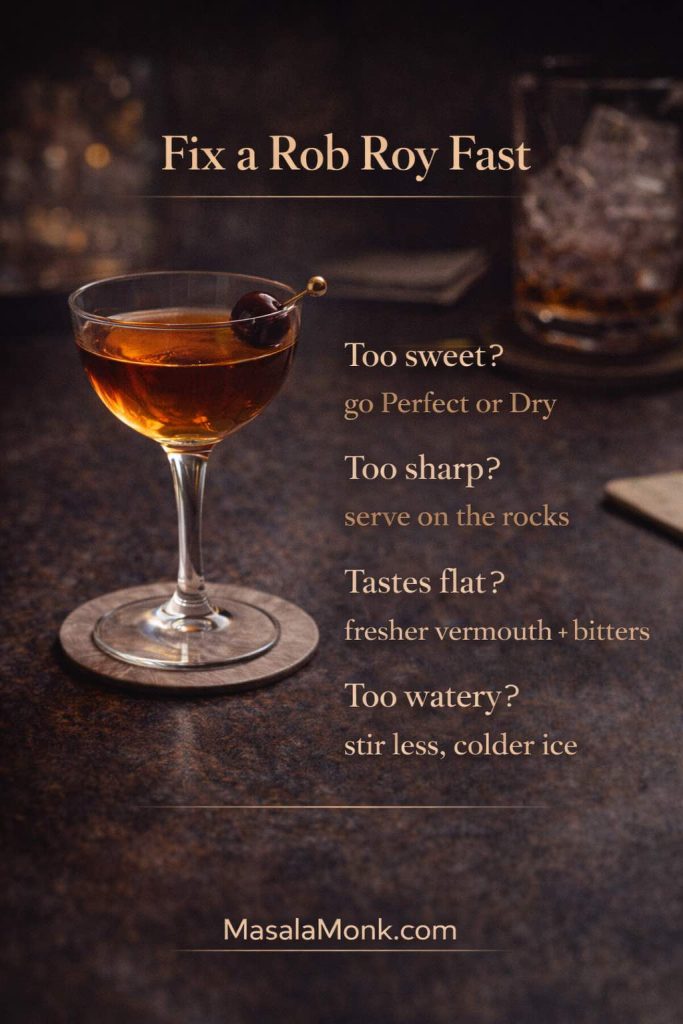
Common Problems (And the Small Fix That Works)
Even a simple cocktail can miss the mark. Fortunately, Manhattan fixes are usually small and immediate.
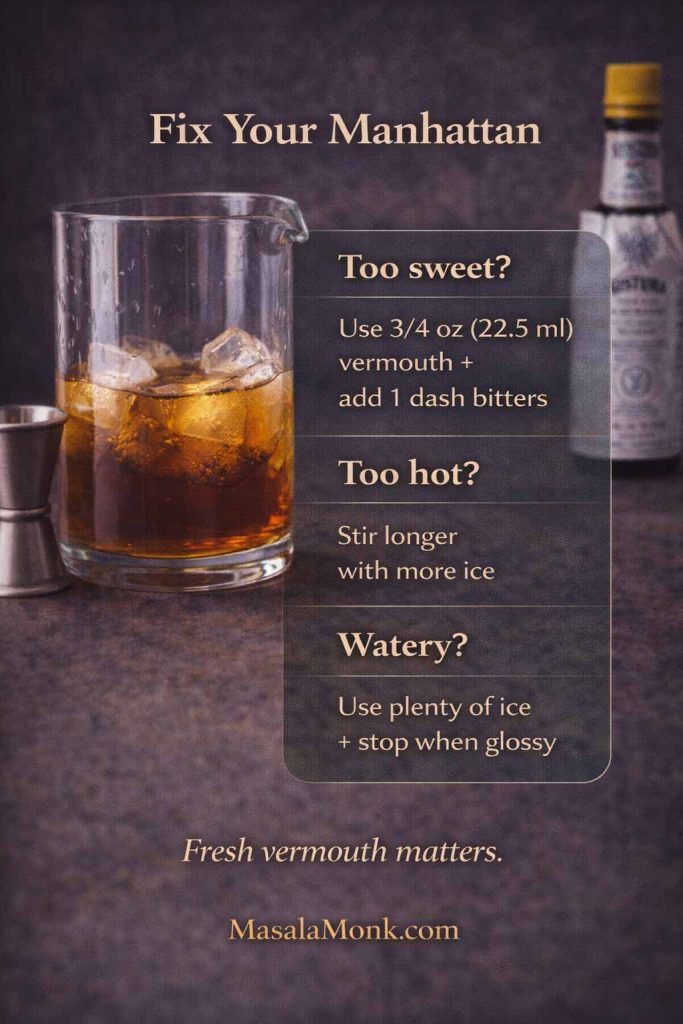
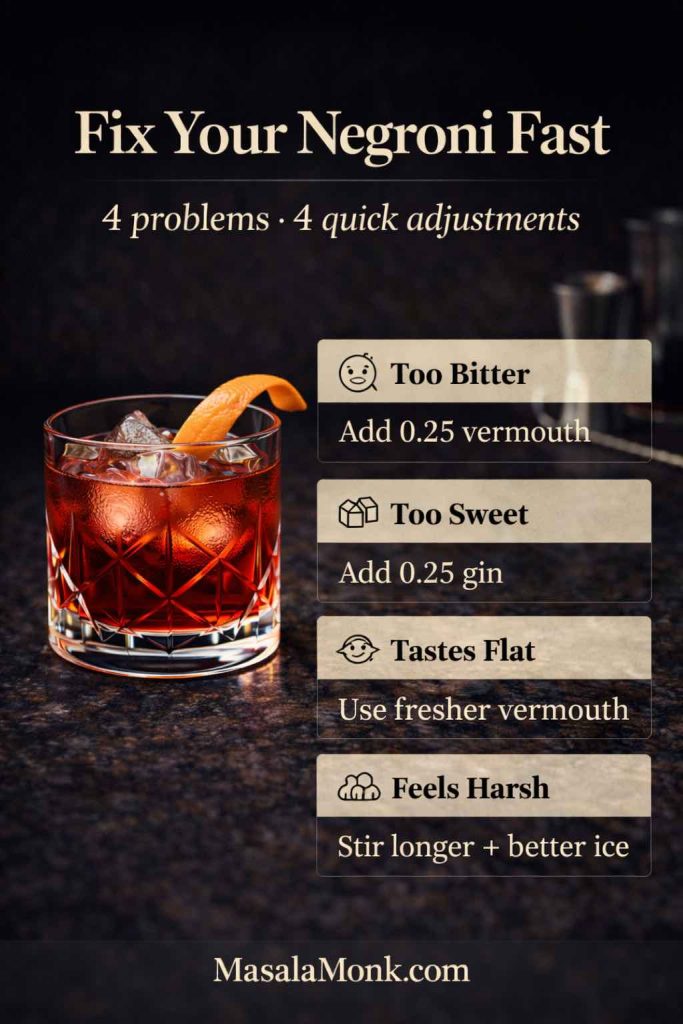
Too sweet
This often comes from rich vermouth, a sweet-leaning bourbon, or a ratio that needs tightening. Try one move at a time:
- Reduce sweet vermouth to 3/4 oz.
- Add one extra dash of bitters.
- Switch to rye if you used bourbon.
- Use an orange twist instead of a cherry.
Too sharp or “hot”
Under-dilution is the usual culprit. Stir a bit longer and use plenty of ice so you chill efficiently. If your whiskey is high-proof, that extra integration can turn intensity into elegance.
Flat or dull
Often it’s tired vermouth. Keep it refrigerated, use it regularly, and replace it when it no longer tastes lively on its own.
Watery
Use more ice in the mixing glass and stop once the drink tastes integrated. For rocks service, a large cube slows dilution and keeps the drink structured longer.
Also Read: Healthy Pumpkin Spice Latte (Low Cal, Real Pumpkin)
Where to Go Next
Once you’ve nailed a Manhattan cocktail recipe, you’ve learned a transferable skill: how dilution and temperature turn strong ingredients into a smooth, integrated drink.
If you want nearby classics to explore:
- For the Scotch cousin, revisit the Rob Roy card or our full Rob Roy drink recipe.
- For a bittersweet stirred classic with a totally different palette, try our Negroni recipe.
- For a bright, celebratory contrast, the French 75 cocktail recipe changes the mood completely.
- If the sour variation hooked you, our Whiskey Sour cocktail recipe is a natural follow-up.
- If you loved the Black Manhattan direction, our Paper Plane cocktail recipe keeps the bittersweet theme while shifting into a brighter register.
A Manhattan cocktail recipe is short enough to memorize and deep enough to refine. Keep sweet vermouth fresh, stir until the texture turns silky, and choose rye or bourbon based on the finish you want in the glass. Do that consistently, and the Manhattan becomes exactly what it should be: classic, flexible, and quietly worth making well.
FAQs
1) What is the classic Manhattan cocktail recipe ratio?
The classic ratio is 2 oz whiskey to 1 oz sweet vermouth, plus bitters. In many home bars, that 2:1 structure becomes the “house Manhattan” because it’s easy to remember, easy to scale, and reliably balanced. If you want a drier finish, reduce vermouth slightly; if you want more herbal depth, increase it a touch.
2) What are the Manhattan cocktail ingredients in the most traditional version?
A traditional Manhattan uses whiskey, sweet vermouth, and aromatic bitters, then finishes with a garnish. Typically that means rye whiskey (or bourbon), sweet red vermouth, two dashes of aromatic bitters, and either a cocktail cherry or an orange twist.
3) How do you make a Manhattan that doesn’t taste “hot” or harsh?
Most often, a harsh Manhattan is under-diluted. To fix that, stir longer with plenty of ice until the drink is thoroughly chilled and tastes rounded. Additionally, chilling the serving glass helps the cocktail stay crisp rather than warming quickly in the first minute.
4) Should a Manhattan be shaken or stirred?
A Manhattan should be stirred. Stirring chills and dilutes while keeping the drink clear and silky. Shaking introduces air and tiny ice shards, which can make the texture feel rougher and the flavor read more aggressive than it needs to.
5) What’s the best rye whiskey for Manhattans?
The best rye for Manhattans is one that tastes good on its own and still holds up once vermouth and bitters enter the mix. Generally speaking, a rye with a confident spice profile makes the Manhattan feel structured and classic. Even so, if you prefer a softer finish, a lower-proof rye can be a more relaxed choice.
6) What’s the best bourbon for a Manhattan?
The best bourbon for a Manhattan is typically a balanced bourbon you’d happily sip neat. Bourbon’s vanilla and caramel notes can make the drink feel round and welcoming. However, if the final sip feels too sweet, a small reduction in vermouth or a switch to an orange twist usually brings the balance back.
7) What’s the best vermouth for a Manhattan?
“Best” depends on the finish you want. Some sweet vermouth styles feel richer and darker, while others feel brighter and more floral. Consequently, rye often pairs beautifully with richer vermouth, while bourbon frequently benefits from a slightly brighter vermouth profile to keep the drink from feeling too lush.
8) Do you need to refrigerate sweet vermouth for a Manhattan?
Yes—refrigeration is one of the simplest upgrades you can make. Because vermouth is wine-based, it loses freshness after opening if it’s stored warm. In turn, a fresher bottle gives your Manhattan more aroma, more lift, and a cleaner finish.
9) What is a Perfect Manhattan recipe?
A Perfect Manhattan uses both sweet and dry vermouth, split evenly. In practice, that means 2 oz whiskey, 1/2 oz sweet vermouth, 1/2 oz dry vermouth, and bitters. As a result, it tastes brighter and slightly cleaner than a classic Manhattan while still staying unmistakably Manhattan-shaped.
10) What is a Black Manhattan cocktail recipe?
A Black Manhattan replaces sweet vermouth with amaro. Most versions use rye whiskey plus an amaro such as Averna, along with bitters and a cherry garnish. Compared to the classic, it reads darker, more bittersweet, and more herbal, making it especially popular as an after-dinner drink.
11) How do you make a Manhattan on the rocks?
For the best result, stir the Manhattan with ice first, then strain it over a large cube in a rocks glass. That approach makes the drink balanced immediately rather than starting overly strong and only tasting right after a lot of melting. Alternatively, if you expect the drink to sit longer, slightly increasing the whiskey and reducing the vermouth helps it hold its shape.
12) What does “Manhattan straight up” mean?
“Straight up” means the cocktail is served chilled without ice in the glass. In other words, you stir it with ice to chill and dilute it, then strain it into a chilled coupe or Nick & Nora glass.
13) Is a Manhattan the same as a Manhattan martini?
Not exactly. A martini is typically gin (or vodka) with dry vermouth, while a Manhattan is whiskey with sweet vermouth and bitters. That said, people often use “Manhattan martini” informally because both drinks are strong, stirred, and served up.
14) Can you make a Manhattan with Scotch?
Yes. A Manhattan made with Scotch is commonly associated with the Rob Roy style: Scotch, sweet vermouth, and bitters. Depending on the Scotch you choose, it can taste malty, lightly smoky, or subtly honeyed, while keeping the same elegant Manhattan structure.
15) What’s the difference between a dry Manhattan and a Perfect Manhattan?
A Perfect Manhattan splits sweet and dry vermouth, giving a balanced, aromatic brightness. By contrast, a dry Manhattan leans more heavily on dry vermouth and typically tastes crisper and less sweet overall. Therefore, Perfect is often the best choice when you want a cleaner finish without going fully dry.
16) Can you make a Manhattan without bitters?
You can, although the drink usually tastes less complete. Bitters act like seasoning, so removing them can make the Manhattan feel flatter or overly sweet. If you’re skipping bitters, adjusting the vermouth slightly and choosing an orange twist can help restore some definition.
17) Can you make a Manhattan without vermouth?
Without vermouth, the drink is no longer a traditional Manhattan. Even so, you can still make a spirit-forward whiskey cocktail with bitters; it just won’t have the same herbal depth and wine-like aroma that vermouth brings.
18) What garnish is standard for a Manhattan cocktail?
The standard garnish is either a cocktail cherry or an orange twist. A cherry emphasizes richness, whereas an orange twist adds brightness and can make the cocktail feel drier in impression.
19) How do you scale a Manhattan mix recipe for two or four drinks?
For two drinks, double the whiskey, vermouth, and bitters, then stir with plenty of ice and strain into two chilled glasses. For four drinks, you can either quadruple the ingredients and use a larger mixing vessel or make two quick rounds to keep dilution consistent and easy to control.
20) What is a batched or bottled Manhattan recipe?
A batched (or bottled) Manhattan is a make-ahead Manhattan prepared in a larger quantity. The crucial detail is accounting for dilution—when you stir a single Manhattan, ice melt adds water, so batching requires adding measured water (or chilling and stirring each serving briefly) to make the cocktail taste finished the moment it’s poured.
21) What’s the easiest way to make a “high end” Manhattan at home?
Start with fresh vermouth, a whiskey you enjoy neat, and a properly chilled serving glass. Then focus on a good stir until the drink tastes silky and integrated. Finally, choose a garnish that matches your goal—cherry for richness or orange twist for lift.
22) How do you make a Manhattan with Maker’s Mark?
Use the classic Manhattan template: Maker’s Mark, sweet vermouth, bitters, and a garnish. Because Maker’s Mark can read warm and round, many people prefer a slightly drier vermouth pour or an orange twist to keep the finish lively rather than overly plush.
23) How do you make a Manhattan with Bulleit?
Build it like a classic Manhattan: Bulleit, sweet vermouth, bitters, then stir and strain. Since Bulleit often tastes bold and spicy, stirring thoroughly can smooth the edges, and a cherry garnish can reinforce the classic dark profile.
24) How do you make a Manhattan with Jack Daniel’s?
Treat it as a classic Manhattan build: Jack Daniel’s, sweet vermouth, and bitters. Because Tennessee whiskey can read slightly sweeter, an orange twist often keeps the drink bright, while a cherry garnish makes it feel richer and more traditional.
25) What is a Manhattan Sour cocktail?
A Manhattan Sour blends Manhattan-style depth with sour-style brightness. Typically it includes whiskey, sweet vermouth, fresh lemon juice, and a touch of sweetener, sometimes with egg white for a silky texture. As a result, it tastes brighter and tangier than a classic Manhattan while still keeping that vermouth-driven aroma.